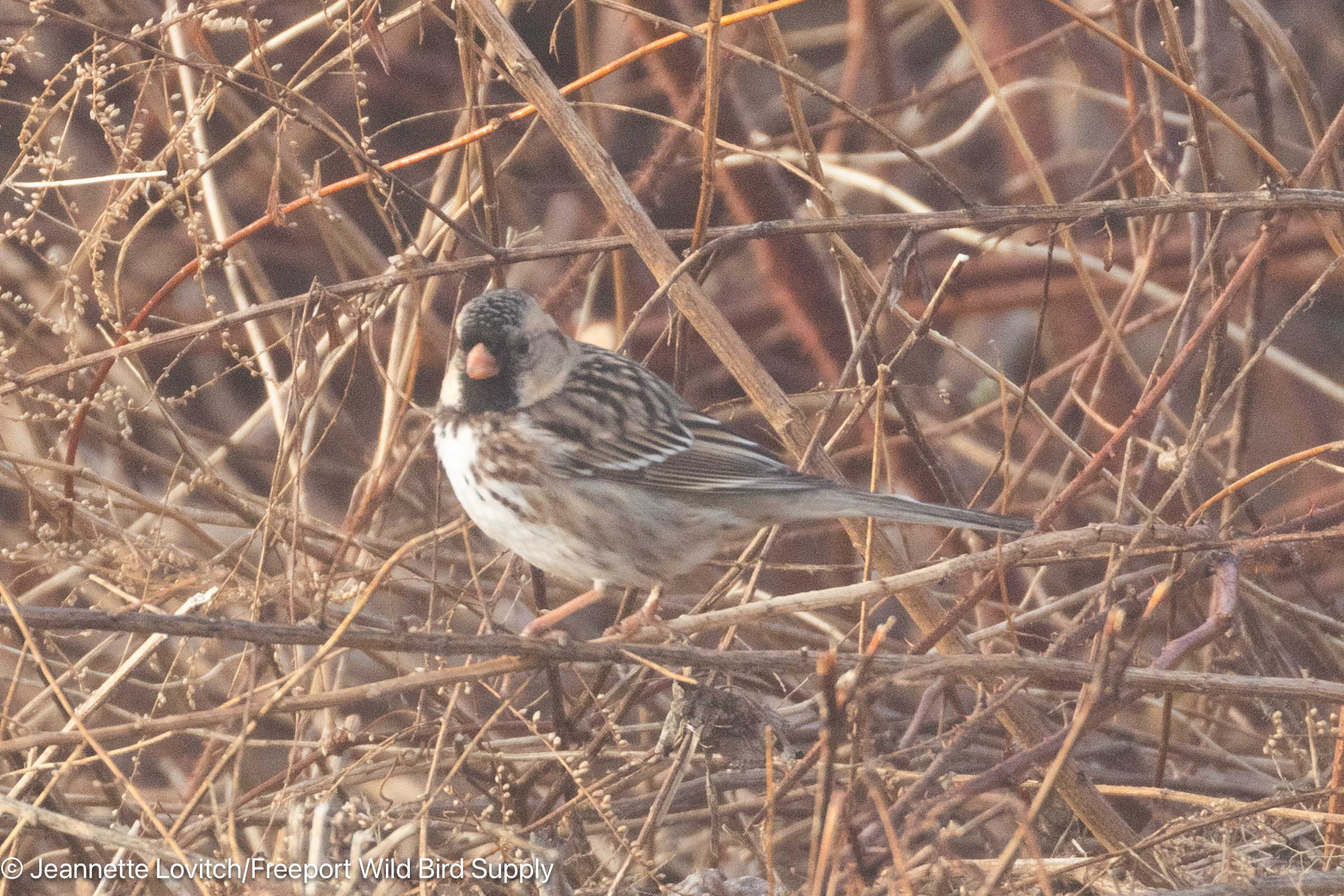
While I didn’t look at many birds in Maine this week, we drove a whole 6 minutes from our regular motel in New Jersey to chase this spiffy Harris’s Sparrow in Wall Township, my 352nd species in my native state! Does 6 minutes even count as a chase?
Much has changed since we left for our vacation on February 23rd. Immediately upon our return, we had to depart the state for a few more days for a family matter. In the meantime, the vanguard of spring migration both literally and figuratively passed over our heads. Here are a few observations of note over the past four days since returning to the state.
8 Common Grackles (Maine FOY), Over Exit 25, Kennebunk, 3/10.
In the following days blackbird numbers continued to increase, as did migrant Song Sparrows.
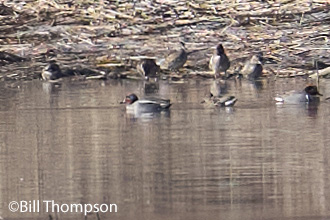
10 Green-winged Teal, Bernard Lown Peace Bridge, Auburn-Lewiston, 3/12.
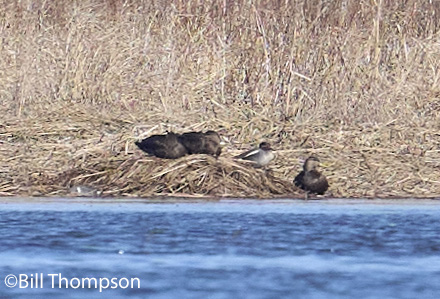
1 drake Gadwall, 11 Northern Pintails, 5 Red Crossbills (including 1-2 singing males), etc, Reid State Park, Georgetown, 3/13.
Bradbury Mountain Spring Hawkwatch gets underway on Sunday!
But the main reason I am posting this week despite the few days of observation is that Sunday, March 15th begins the 20TH YEAR of the Bradbury Mountain Spring Hawkwatch! Join Zane Baker and project volunteers at the summit from 9-5 every day (weather permitting) from March 15th through May 15th. Can we reach least year’s record count?
March 28th or 29th. This tour is currently sold out. Please contact us to be added to the waiting list.
Portland Explorer Collab Tours.
Our collaboration with Portland Explorer has expanded once again, with the 12th season of the Birds on Tap – Roadtrip! series, but also new Birding and History tours. All of the 2026 outings are now posted and are open for registration. To learn more about these unique experiences, check out my recent blog entry.
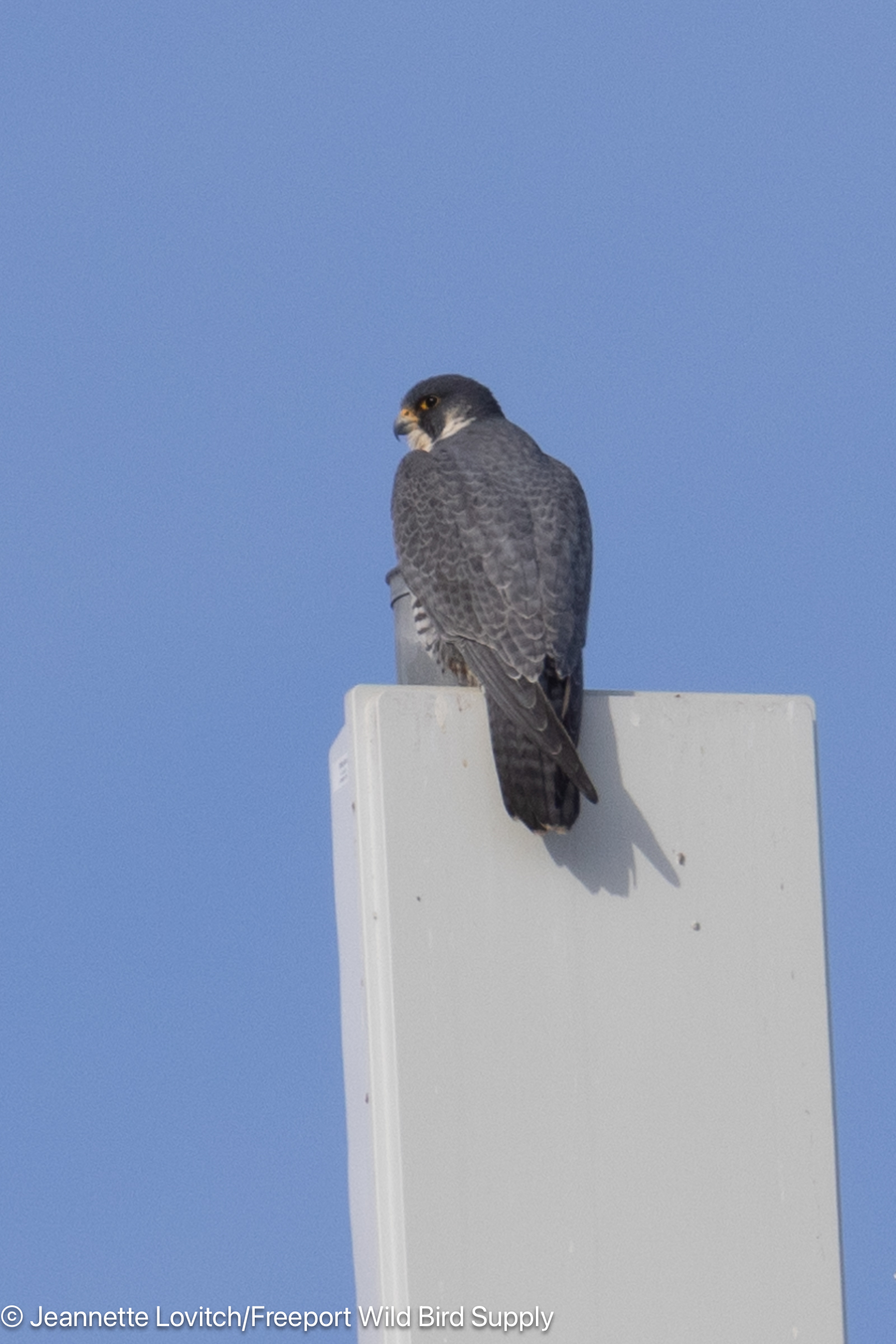
The pair of Peregrine Falcons that have been overwintering in Lewiston-Auburn for the past decade or so continue to frequent the area around the Bernard Lown Peace Bridge and Cedar Street, as here on the 10th.
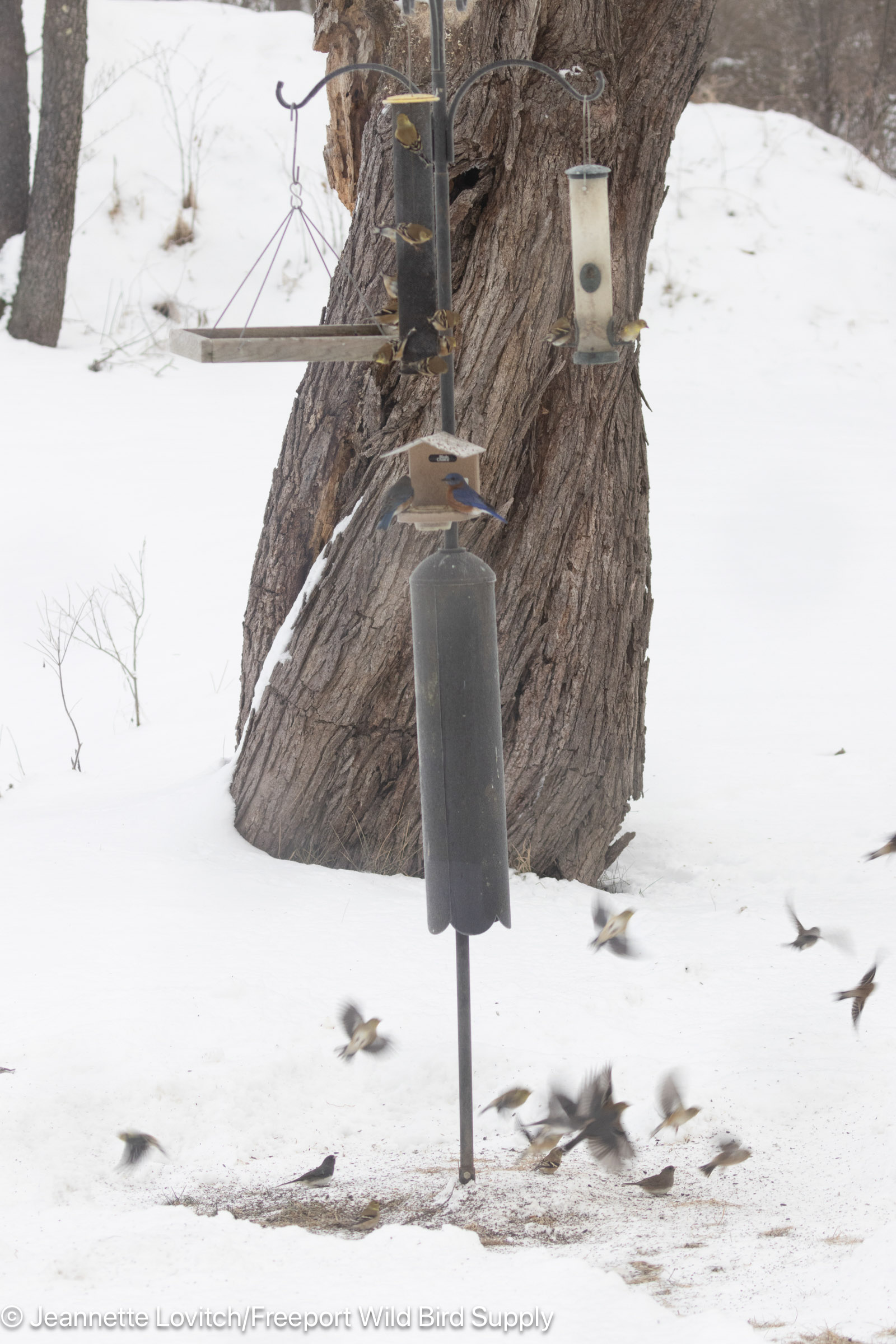
I’ve been spending extended time feeder watching at home in preparation for my upcoming annual “Feeder Birds in Winter” snapshot blog. Unfortunately, we are not being frequented by as many winter finches as a lot of people are right now, but it’s been an interesting project once again. I’ll have a blog posted in the coming days. A few birding mornings elsewhere yielded some following observations of note.
1 pair Barrow’s Goldeneye, Winslow Park, Freeport, 2/13.
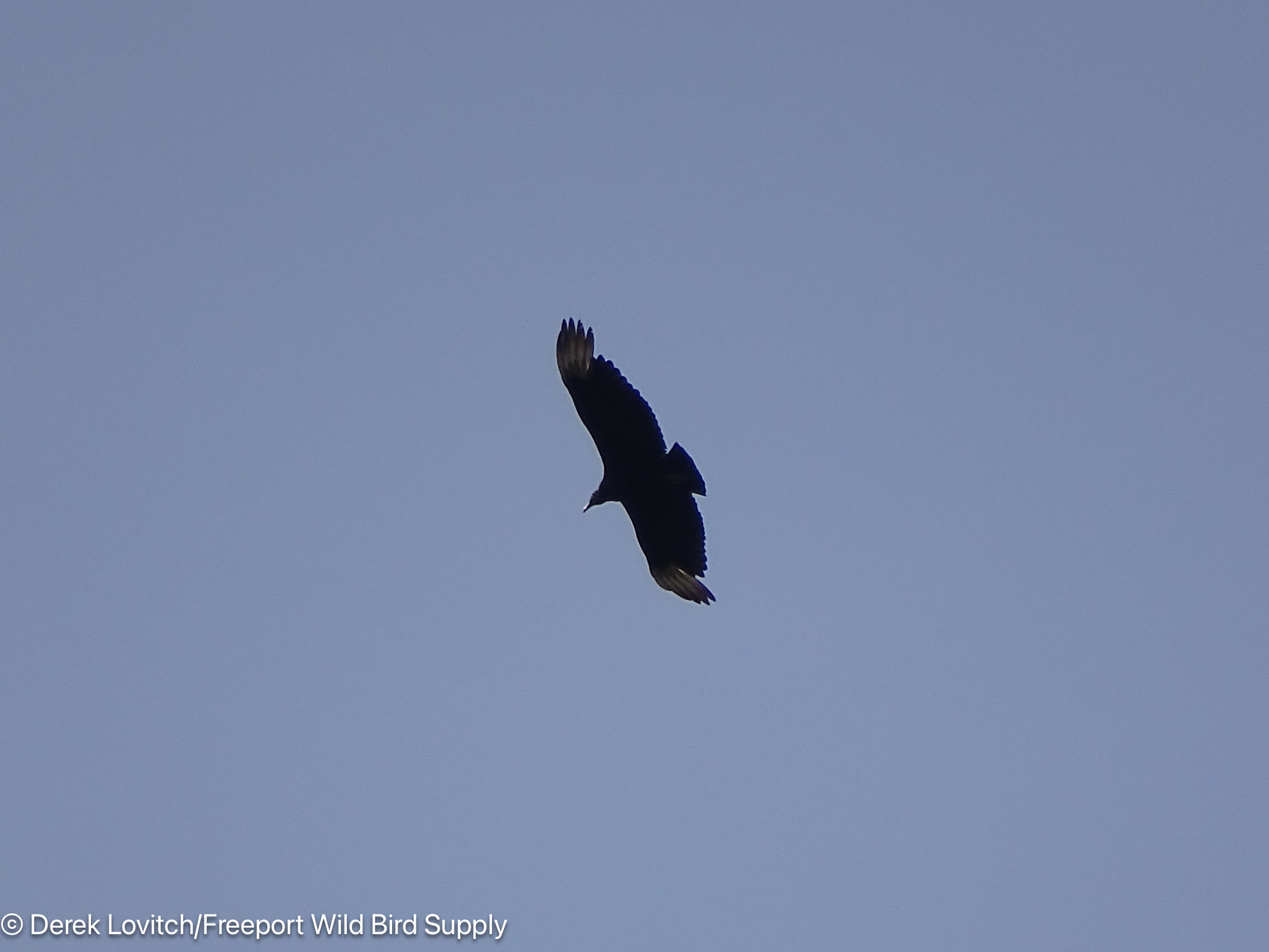
At least one Turkey Vulture continues along the I-295 corridor between Cumberland and Freeport as of this week.
This Week in Irruptives.
An absolutely incredible Saturday Morning Birdwalk on the 7th included a most-unexpected tally of 7 species of winter finches – which was wholly unexpected given the dearth of most finches locally! The “Winter Finch Big Day” that developed was actually a secondary goal, with the original one: 20 species of birds in Freeport, west of I-295 only (and therefore no open water) also being reached. This was an outing that will not soon be forgotten. Highlights included 8 PINE GROSBEAKS and 26 COMMON REDPOLLS at Hidden Pond Preserve in Freeport and 16 EVENING GROSBEAKS at the Old Brunswick Road/Ross Road intersection in Durham. We also had Pine Siskins at two locations, two feeders full of Purple Finches, and of course found some House Finches and American Goldfinches to pad the list. Full trip report can be seen here.
Purple Finches have increased overall this week, and Evening Grosbeaks continue to be around, but rather sporadic. One Pine Siskin flew over our Durham yard on the 12th.
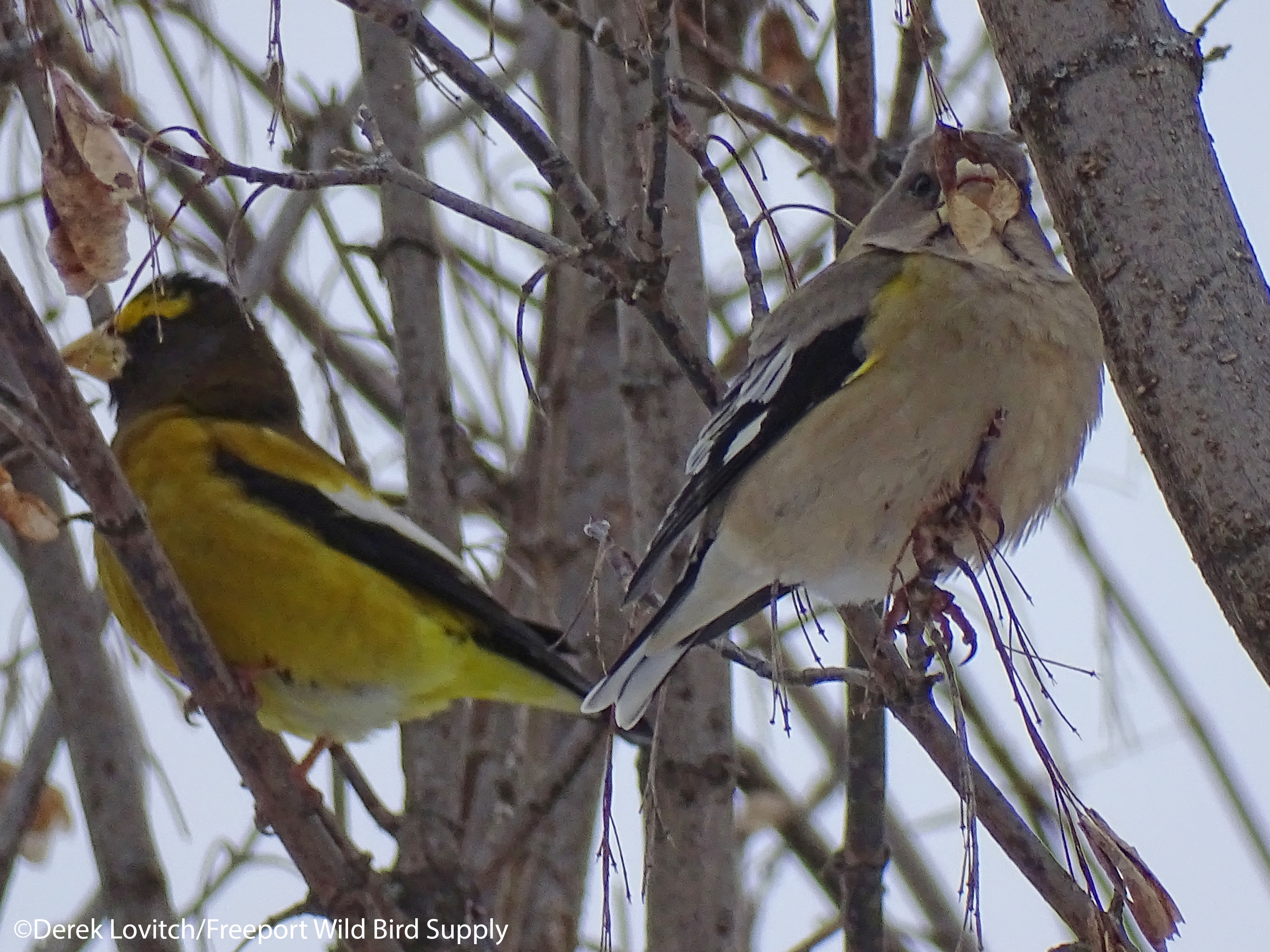
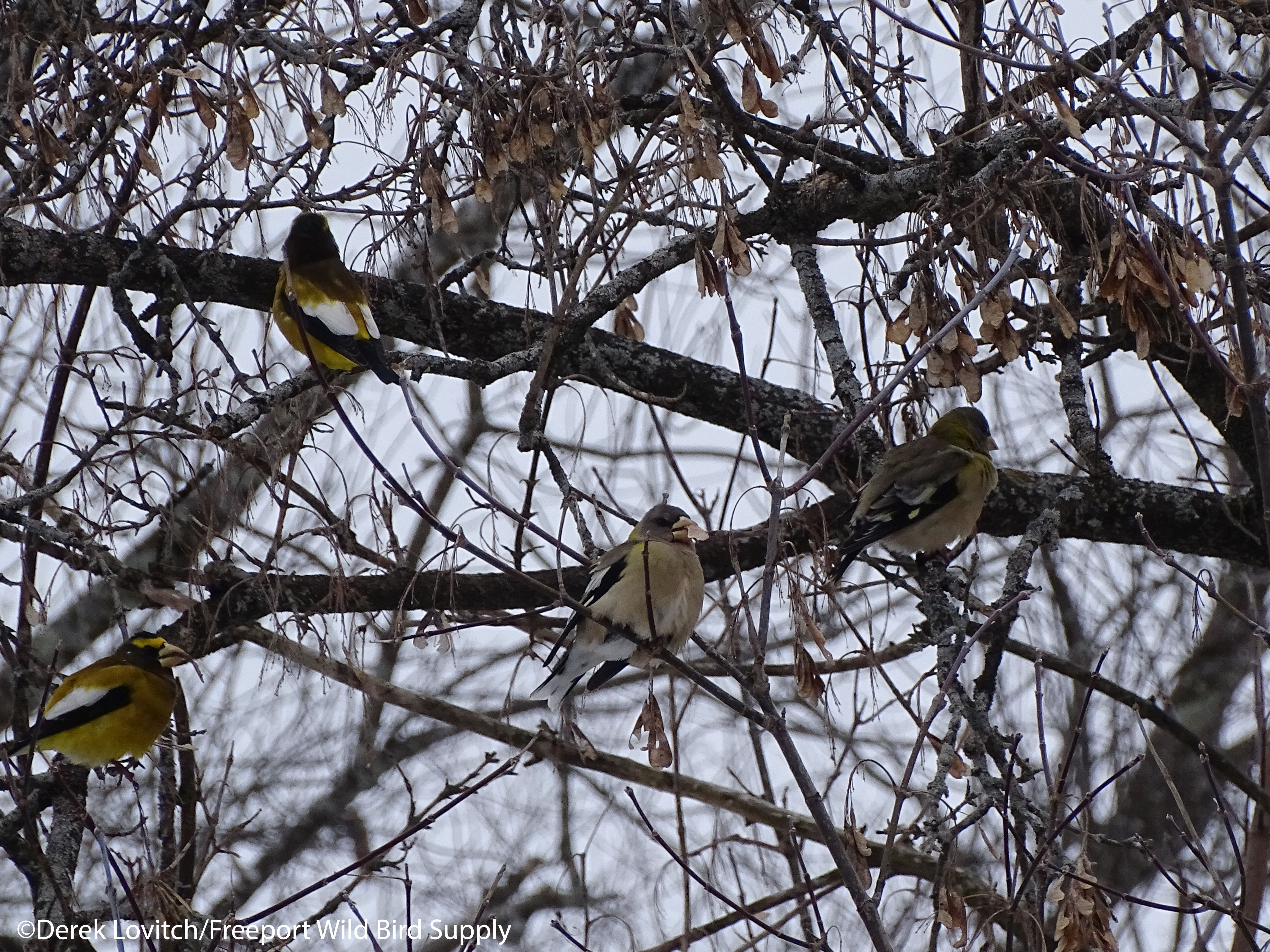
It has been quite some time since I have seen a flock of Evening Grosbeaks this large in Maine. Here are a few of the 45+ that I happened upon while driving past the corner of Ross Road and Old Brunswick Road in Durham on the 25th.
Between snow cleanup, brutally cold temperatures, and other commitments, I didn’t get out birding much beyond the windows this week. Nonetheless, I still had several observations of note over the past seven days, mostly during the two frigid tours I led this week!
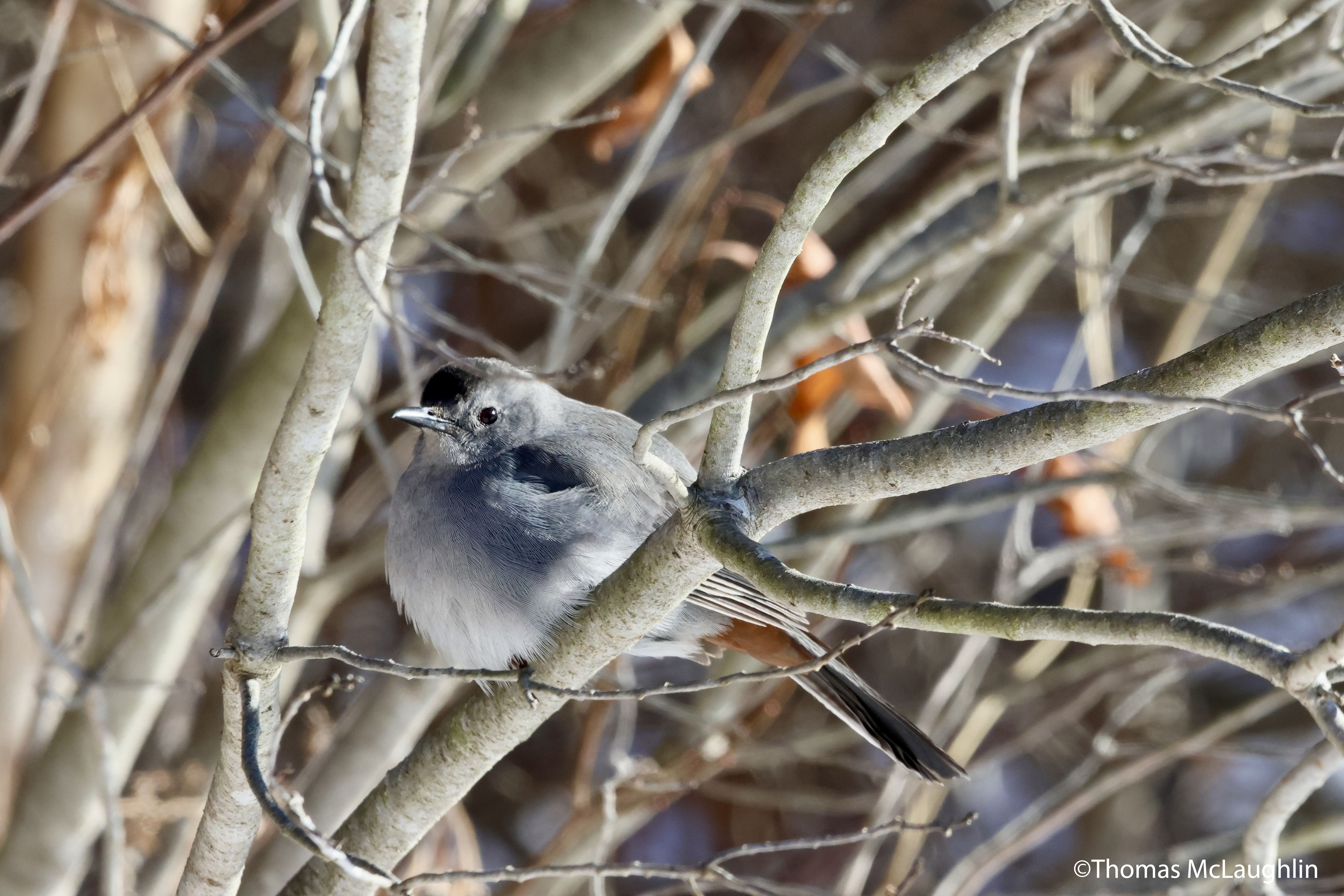
1 GRAY CATBIRD (even more surprising with the severity of the winter so far!) and 1 Hermit Thrush, Leon Gorman Park, Freeport, 1/24 (with Saturday Morning Birdwlak group).
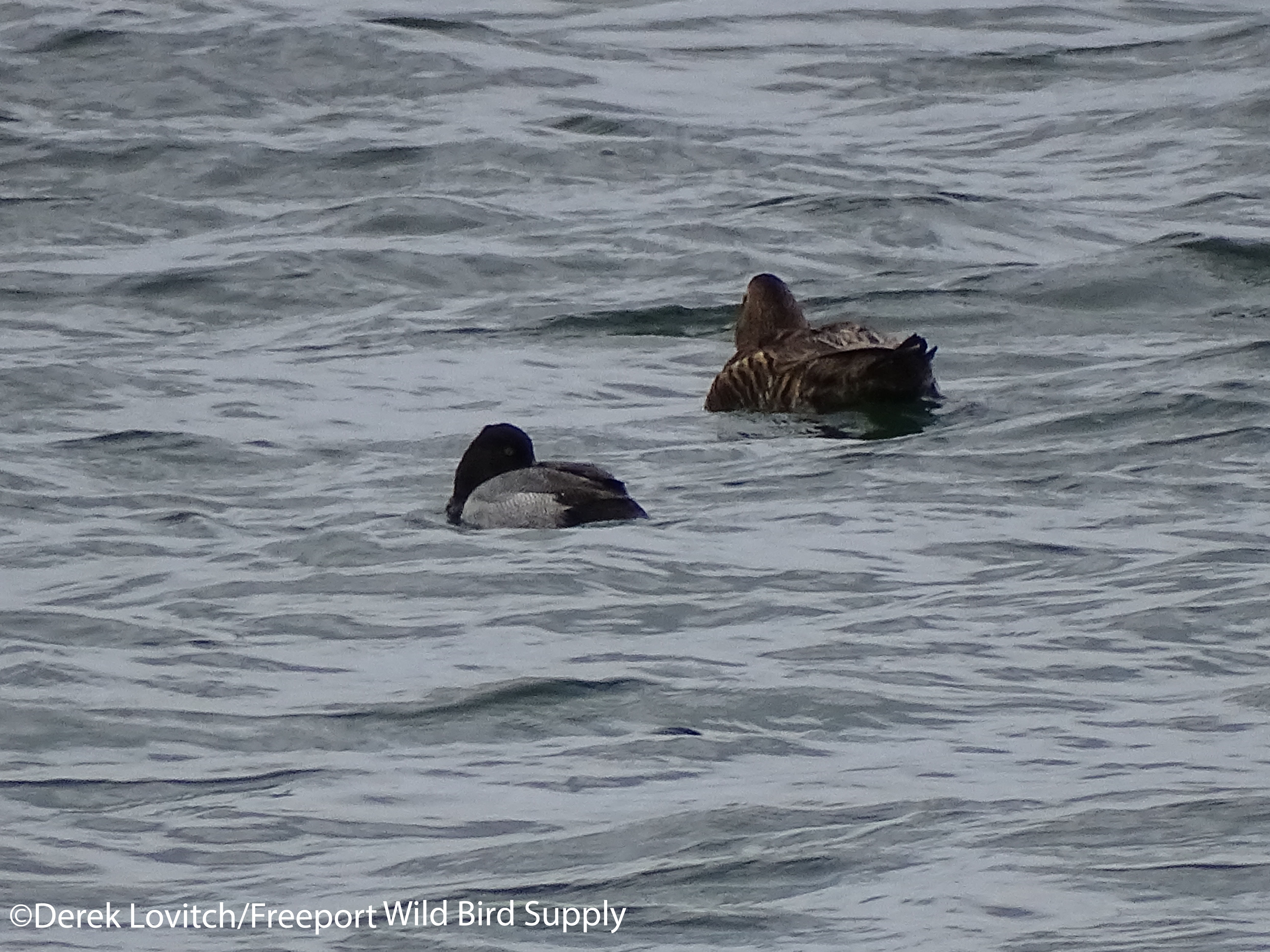
1 drake Barrow’s Goldeneye, Winslow Park, Freeport, 1/28.
3 hen and 1 drake Northern Pintail, Ogunquit Rivermouth, Ogunquit, 1/29 (with Down East Adventures Winter Waterbird Workshop group).
1 Greater Scaup, Perkin’s Cove, Ogunquit, 1/29 (with Down East Adventures Winter Waterbird Workshop group).
1+ continuing FISH CROWS, Anniversary Park, Auburn, 1/30.
This Week in Irruptives.
EVENING GROSBEAKS continued to be scattered about, with my high count this week being at least 40 birds – the largest flock I have seen this winter – feeding on White Ash seeds at the corner of Ross and Old Brunswick Roads in Durham on the 25th. Still very few other finches in the immediate area other than plentiful American Goldfinches.
Swamp Sparrows have been common and conspicuous on our Durham property, and elsewhere this week. I feel this, like most sparrows, is an underappreciated beauty!
My observations of note over a very productive and exciting eight days of birding included the following:
Highlights from our Durham property this week included near-daily American Woodcocks and Rusty Blackbirds, and a nice little arrival of more Swamp Sparrows and Purple Finches in particular on 10/21.
Sandy Point Morning Flight, 10/15.
A very light flight passed over and through Sandy Point Beach, Cousin’s Island, Yarmouth this morning.
6:55-8:30 (with Bill Thompson).
48F, mostly cloudy to partly cloudy, NW 1.7-2.5mph diminishing to calm.
51 American Robins
33 Yellow-rumped Warblers
28 Dark-eyed Juncos
17 American Goldfinches
16 Ruby-crowned Kinglets
8 Eastern Bluebirds
7 White-throated Sparrows
6 Chipping Sparrows
5 Palm Warblers
4 Hermit Thrushes
4 Golden-crowned Kinglets
3 Blue-headed Vireos
3 Purple Finches
3 Swamp Sparrows
2 Pine Siskins
2 Rusty Blackbirds
2 Tufted Titmice (4 false-starts and counting)
1 Red-breasted Nuthatch
1 Blackpoll Warbler
1 White-breasted Nuthatch
1 Downy Woodpecker (2+ false-starts)
1 House Finch
1 American Pipit
1 Northern Flicker
1 Magnolia Warbler
1 unidentified
Total = 203
1 continuing CACKLING GOOSE, Thornhurst Farm, North Yarmouth, 10/15 (with Bill Thompson).
1 Least Sandpiper, 1 White-rumped Sandpipers, and 2 Pectoral Sandpipers, Walsh Preserve, Freeport, 10/15 (with Bill Thompson).
Sandy Point Morning Flight, 10/16.
An excellent flight passed over and through Sandy Point Beach, Cousin’s Island, Yarmouth this morning.
6:55 to 10:40am.
44F, Mostly cloudy, NW 4.3 – 9.0 increasing to 15.1 – 19.7mph with higher gusts.
2186 American Robins (*NEW RECORD! – just barely).
1776 Yellow-rumped Warblers
167 unidentified
127 Dark-eyed Juncos (One was quite likely not a Slate-colored, but my photos of it are not useful)
61 Common Grackles
48 Cedar Waxwings
43 Canada Geese
31 Chipping Sparrows
21 Ruby-crowned Kinglets
19 Rusty Blackbirds
18 White-throated Sparrows
13 Northern Flickers
11 Golden-crowned Kinglets
11 Purple Finches
9 Pine Siskins
7 Palm Warblers
4 Blue-headed Vireos
4 unidentified finches
4 Hermit Thrushes
4 Song Sparrows (crossed together at 8:29. This is only my second or third observation of SOSP engaging in Morning Flight after sunrise here; plenty more in and around the parking lot as usual)
3 Merlins
3 Common Loons
3 Turkey Vultures
2 Red-winged Blackbirds
2 White-crowned Sparrows
2 Eastern Phoebes
1 Northern Parula
1 Blackpoll Warbler
1 Brown Creeper
1 Peregrine Falcon
1 Yellow-bellied Sapsucker
1 Cooper’s Hawk
1 American Goldfinch
1 Red-shouldered Hawk
1 Cape May Warbler
1 Red-breasted Nuthatch
1 Sharp-shinned Hawk
1 Tennessee Warbler (from Bill Thompson’s photo review)
1 Black-throated Blue Warbler (from Bill Thompson’s photo review).
Total = 4,592
Notables from a delightfully birdy morning on Bailey Island, Harpswell on 10/17 included a decent, and relaxingly unquantified, morning flight mostly of Yellow-rumped Warblers; 1 ORANGE-CROWNED WARBLER, and 1 Cape May Warbler among the migrants found here and there around the island.
1 DICKCISSEL, feeders here at the store, 10/19, continuing through at least 10/21. Was this the same bird seen on 10/4 and then again on 10/13-14?
4 continuing FORSTER’S TERNS, Pine Point, Scarborough, 10/20 (with clients from California and Massachusetts).
2 “Ipswich” Savannah Sparrows, Eastern Road Trail, Scarborough Marsh, 10/20 (with clients from California and Massachusetts).
Our Last Tour of 2025 still has some space remaining!
Birds on Tap℠ – Roadtrip! Rarity Roundup
November 9, 2025; 8:00am – 3:00pm
Cost – $125
Portland Explorer (formerly Maine Brews Cruise) and Freeport Wild Bird Supply are excited to continue our collaboration for six very special outings in 2025.
These unique, relaxed birding and beer-ing adventures that you have come to love combine great local birding at seasonal hotspots with visits to sample the delicious creations of some of our favorite local breweries. These tours are a perfect introduction to birding and/or craft beer, and a great opportunity to travel with significant others, friends, and family that have interest in one topic, while your interest is primarily in the other (for now!). Seasonal birding hotspots and great local beer – a perfect combination, and we’ll even do all of the driving!
Early November is a fantastic time of year in Maine for vagrants – birds normally seen in far-off places. Due to a combination of weather patterns, changing seasonal food resources, falling temperatures, and other factors – some of which are not completely understood – birds that may have ended up in Maine by “accident” begin to concentrate at the coast in “migrant traps” and “hotspots.” In other words, this is the time of year to expect the unexpected.
A traditional “Rarity Roundup” involves teams of birders heading out on a given day during rarity prime time, looking for species that are not supposed to be around. And in honor of that tradition, that’s exactly what we are going to do on this unique tour. We may “chase” a rarity (go to see something that has already been found, aka “twitch”) or we might choose a destination known for rare birds in an attempt to find one of our own. Or perhaps, we’ll do both!
Anything between Portland and Kittery is fair game, and we might not even know where we will head until we are on the bus and the latest rare bird alert is received. For those who love adding a bird to your Life or State List, and/or basking in the thrill of discovery, well then this is the tour for you! In between seeing great birds, we’ll discuss the complex factors that are involved in delivering rarities to an area, and how we go about finding them.
After about 3-4 hours of birding, depending on drive time, we will be transported to two of our great local producers to sample their offerings and learn their styles.
This immature male Orchard Oriole was singing up a storm – when we wasn’t being chased by a territorial male Baltimore – at tiny, but often-productive – Lake Grove Park in Auburn on the 18th.
A sneaky good flight overnight Saturday into Sunday made for a tremendous day of birding: it took me over three hours to leave my yard! The rest of the week, however, was very slow by mid-May standards, with the exception of a very surprising morning At Fort Foster on Friday. My observations of note over the past six days before I head off to Monhegan with my tour group included the following:
17 species of warblers, led by 38+ American Redstarts and 16 Black-throated Green Warblers, our property in Durham, 5/18.
New arrivals and “first of years” this week often appeared right in front of us at our feeding stations, as if often the case this time of year. No matter how often we see them, it hard to not get excited about each and every “FOY,” especially when they look as gorgeous as a Rose-breasted Grosbeak!
While there were no incredible flights or fallouts this week, there was a nice steady progression of spring migration on several nights and days. Here are my observations of note over the past seven days, led by a slew of new arrivals.
4 Gadwall, Walsh Preserve, Freeport, 4/27.
It was another exceptional week at the Bradbury Mountain Hawkwatch. On 4/28, an Osprey was our 6,022nd migrant tallied this season – a new all-time record!
7 species of warblers, led by only 20-30 Yellow-rumped Warblers but including one LOUISIANA WATERTHRUSH, Morgan Meadow WMA, Gray/New Gloucester, 4/29. A single fly-over Fish Crow here the same day was my first ever for this patch.
1 BLACK VULTURE, Bradbury Mountain Hawkwatch, 4/29. Our record 6th of the season (but my personal FOY) – previous record was 3.
My personal “first of years” this week also included:
A Fox Sparrow, present at our feeders in Durham since mid-December has been a welcome addition to our winter feeder watching sessions.
After beginning a “feeder watching blog” while stuck at home from shoulder surgery in the winter of 2023 (here and here), I continued the tradition last year in an attempt to gauge the difference between the two winters. A lot of folks were commenting at the store at the time about how few birds there were at feeders in the winter of 2023-24, but this was changing by the time I collected my data in February of 2024.
This year, a lack of feeder birds has most definitely not been the complaint. In fact, bird seed sales are through the roof in much of the East, and at our store, we are really, really busy. Most folks are commenting about how much birds are eating at their feeders. And while recent snowfall is part of that, this pattern began in the fall.
My perception, however, is that there is actually somewhat lower diversity at our feeders (especially the complete dearth of any “winter finches”), and perhaps the number of individuals at the feeders is a little lower than usual, but those species and individuals that are at our feeders are eating a lot more.
Let’s start with the numbers. Once again, I dedicated time to counting feeder birds at our feeding station in Durham each day for at least one hour. I was unable to dedicate the time on two dates, so I counted for 10 of 12 days between February 2nd and February 13th – a window that began three days earlier than last year. Like last year, I used the standard methodology of using “high counts” (maximum number of individuals seen at any one time, unless they were readily identifiable as being different).
February 2 – February 13(minus 2/8 and 2/11), 2025.
Species
Avg./day 2023
Avg./day 2024
Avg./day 2025
Average 3 years
Difference 24vs25
Difference 25 vs 3yr
Wild Turkey
0.2
0
0
0.07
0
-0.07
Mourning Dove
13.5
26.5
29.6
23.2
-3.1
+6.4
Sharp-shinned Hawk
0.4
0.2
0
0.2
-0.2
-0.2
American Goshawk
0
0.1
0
0.03
-0.1
-0.03
Red-bellied Woodpecker
1
1
1.2
1.07
+0.2
+0.13
Downy Wo-odpecker
2.4
2.9
2.5
2.6
-0.4
-0.01
Hairy Wo-odpecker
2
2
2
2
0
0
Pileated Woodpecker
1
0.1
0
0.37
-0.1
-0.37
Blue Jay
7.8
3.0
9.2
6.67
+6.2
+2.53
American Crow
0.7
0
1.8
0.83
+1.83
+0.97
Black-capped Chickadee
7.4
2.9
5.2
5.17
+2.3
+0.03
Tufted Titmouse
4
3
4
3.67
+1
+0.33
White-breasted Nuthatch
2
1.4
2.4
1.93
-1
+0.47
Red-breasted Nuthatch
0.7
0
0.6
0.43
+0.6
+0.17
Brown Creeper
0.4
0
0
0.13
0
-0.13
Carolina Wren
0.9
1
1.8
1.23
+0.8
+0.57
GRAY CATBIRD
0
0
0.1
0
+0.1
+0.1
European Starling
1.1
2.7
8.7
4.17
+6
+4.53
Eastern Bluebird
4.4
3
5.7
4.37
+2.7
+1.33
House Finch
2.1
0
0.4
0.83
+0.4
-0.43
Purple Finch
0.5
0.3
0
0.03
-0.3
-0.03
Pine Siskin
0
0.2
0
0.01
-0.2
-0.01
American Goldfinch
26.6
46.8
25
32.8
-21.8
-7.8
FOX SPARROW
0
0
1
0.3
+1
+0.7
American Tree Sparrow
8.0
4.2
6
6.07
+1.8
-0.07
Dark-eyed Junco
16.6
30.3
13.2
20.03
-17.1
-6.83
White-throated Sparrow
2
2.3
0
1.43
-2.3
-1.43
Song Sparrow
0
0.9
0.6
0.5
-0.3
+0.1
Northern Cardinal
5.2
3.8
6.7
5.2
-2.9
+1.5
Total individuals/day
110.9
138.6
127.5
125
-11.1
+2.5
Every year is different, and every yard is different. Controlling here for time and place, we can make some comparisons, however.
Once again, I am sure I undercounted Black-capped Chickadees, and likely Tufted Titmice and White-breasted Nuthatches as I think there could be two small mixed species foraging-flocks around. I also think there are more than one pair each of Hairy and definitely Downy Woodpeckers, but using the “high count” method, I only tabulated the maximum seen at one time.
Two seasonal rarities graced us with their presence this winter. Our Gray Catbird, present since January 2nd, made it long enough to just make it on the list. Meanwhile, a Fox Sparrow that arrived in mid-December continues through today. I won’t expect either of these species to be at our feeders every year.
When our catbird first arrived, it was growing in most of its tail feathers. When it departed, the tail was mostly restored, it survived the coldest night of the season to date, and it coincided with the depletion of the last of the Winterberry in our yard – all a good sign that it simply moved on and did not perish. Here’s it’s taking a serving of semi-frozen grape jelly, but it mostly ate suet while it was here.
American Goldfinches were down from last year in our yard, but they were extremely abundant from the fall through early winter. The difference now is most of our birch catkin crops have now been consumed. Dark-eyed Juncos were way down for us this year, and we don’t have any White-throated Sparrows around. This is likely a direct function of increasing snow depths and the lack of dense coniferous cover in the part of our property that our home and feeders are in.
I’m not going to out a lot of weight into three-year averages, but a few early trends coincide with region-wide trends, such as the steady increase in Eastern Bluebirds and Northern Cardinals. I’m not liking this trend of rapidly increasing European Starlings in our yard, however. At least for now, this is only a winter occurrence for us, however.
Eastern Bluebirds are no longer rare at feeders throughout at least the southern half of Maine in winter.
The average morning low at our home during this period was a measly 6.5F. That was 13.1 degrees colder than the ten days I looked at last year. That’s a lot more calories that need to be burned each night! While total number of individuals is down this year from last, we are going through more seed than we were at this time last year, and the cold and snow is a part of this equation.
However, I think the biggest reason for the difference between the two years can be explained in three words: Eastern White Pine. Last year, our state tree had a “generational” mast; crowns of trees were absolutely covered in cones. This year, it’s hard to find any cones anywhere in the state. Therefore, last winter our local birds had such an overabundance of their most preferred food that they spent much less time at feeders. This year, they’re eating more because there is less natural food available. And with the weather – especially with recent snowfall and ice accumulations making some food resources harder to find – birds are taking advantage of supplemental food more often. The woods, away from yards with well-stocked feeders, are exceptionally quiet this winter.
While some Black-capped Chickadees and Red-breasted Nuthatches vacated the northern woods this year, it was not a major irruption. They, and Tufted Titmice and White-breasted Nuthatches did seem to have a good breeding season, perhaps having been supplemented by caches of all of that pine seed. Meanwhile, Blue Jays are around in good numbers thanks to a very good Red Oak acorn crop that has kept them here this winter.
Like last year (and as opposed to 2023), we didn’t have a lot of accipiter presence: I only glimpsed one unidentified accipiter back on the 4th, but there were times without any birds at the feeders suggestive of an avian predator hanging around. It’s possible this might just have been due to a pair of regular Red-tailed Hawks in our yard. Despite having little interest in small birds, few birds are willing to take the chance.
Now, to really take this “study” to the next level, I would be keeping track of the amount of seed and other foodstuffs that we are putting out each year. But that’s getting to sound like work, and real research! We’re filling almost all of our feeders at least daily (often twice daily when we are home in another snowstorm), and that concurs with comments we receive at the store. But every yard is different, and not everyone has the same results. If your feeders have seemed comparatively slow, consider what you are feeding, and how fresh the seed and suet is. These are important and we can help you with that here at the store. It’s worth exploring some of my previous blog posts on the topic that discuss reasons why feeder activity ebbs and flows.
American Goldfinches and Morning Doves were once again the most common birds at our feeding station.
We’ve only lived at this location for three years, so it’s too soon to tell what an “average” winter is like in terms of volume and diversity. Furthermore, we are rapidly accelerating plantings and habitat improvement that should increase the number of birds our property sustains. Given that feeders are only a supplement to natural food supplies, I believe our habitat work will pay dividends for our feeder-watching in years to come.
I enjoy this little project, and time permitting, I’ll plan on doing it again next year. It’s only one yard, but it’s a case study that can answer some questions or at least offer a little detailed context as to what others are reporting. How does our feeder activity compare to yours? Are you seeing anything different? Or do some of our observations and hypotheses fit with your observations?
This Greater White-fronted Goose has been making the rounds in Greater Portland this winter, most recently hanging out along Shoreline Drive in Falmouth, where I stopped by to visit it on the 2nd.
It sure feels and looks like winter out there now, but there are still quite a few “lingering” species to add to our usual winter mix. Here are my observations of note over the past seven days:
The GRAY CATBIRD that has been at our feeders since January 2nd was last seen on February 2nd. Hopefully it has just moved on as Winterberry and other fruits in and around our property have been exhausted.
1 Fox Sparrow (continuing since early December) continue at our feeders in Durham.
1 Fox Sparrow (since 12/21) continues here at the store through week’s end as well.
1-2 Turkey Vultures continue in the Cumberland-Freeport corridor of I-295.
2. Gull Identification Workshop: Freeport, Saturday, February 15, 2025 (1:00-4:00pm) and Part II in Portland: Sunday, February 16, 2025 (8:00am-12:00pm).
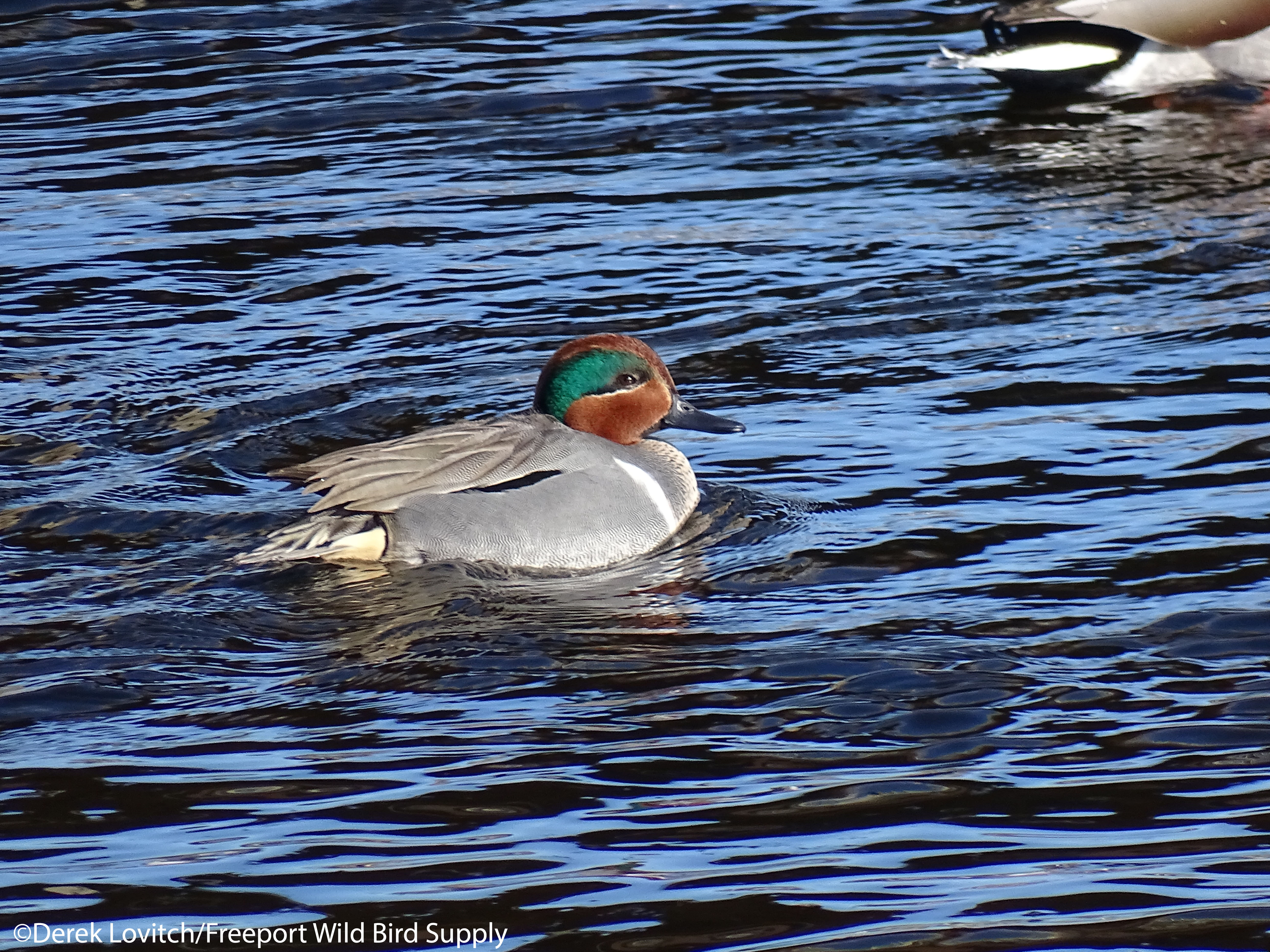
This handsome drake Green-winged Teal was with a relatively small flock of Mallards along the Auburn Riverwalk on the 30th.
We returned from our winter vacation late Monday night, and most of the week was spent catching up. But of course, I needed to catch up on some local birds as well. Not surprisingly, waterfowl continue to concentrate with the growth of ice cover on rivers and sheltered upper corners of the bay. Here are a few observations of note over the past 4 days.
1 GRAY CATBIRD (continuing since 1/2) and 1 Fox Sparrow (continuing since early December) continue at our feeders in Durham.
1 Fox Sparrow (since 12/21) continues sporadically at the feeders here at the store, but has become more regular in the latter half of this week.
1 drake WOOD DUCK, Bernard Lown Peace Bridge, Lewiston/Auburn, 1/30 (likely same bird as Jeannette and I found at the North River Road Boat Launch on 1/13).
1 continuing drake RING-NECKED DUCK, Bernard Lown Peace Bridge, Lewiston/Auburn, 1/30. First observed at the Lincoln Street Riverfront Park on 1/14.
3. Gull Identification Workshop: Freeport, Saturday, February 15, 2025 (1:00-4:00pm) and Part II in Portland: Sunday, February 16, 2025 (8:00am-12:00pm).









 Maine Birding Field Notes