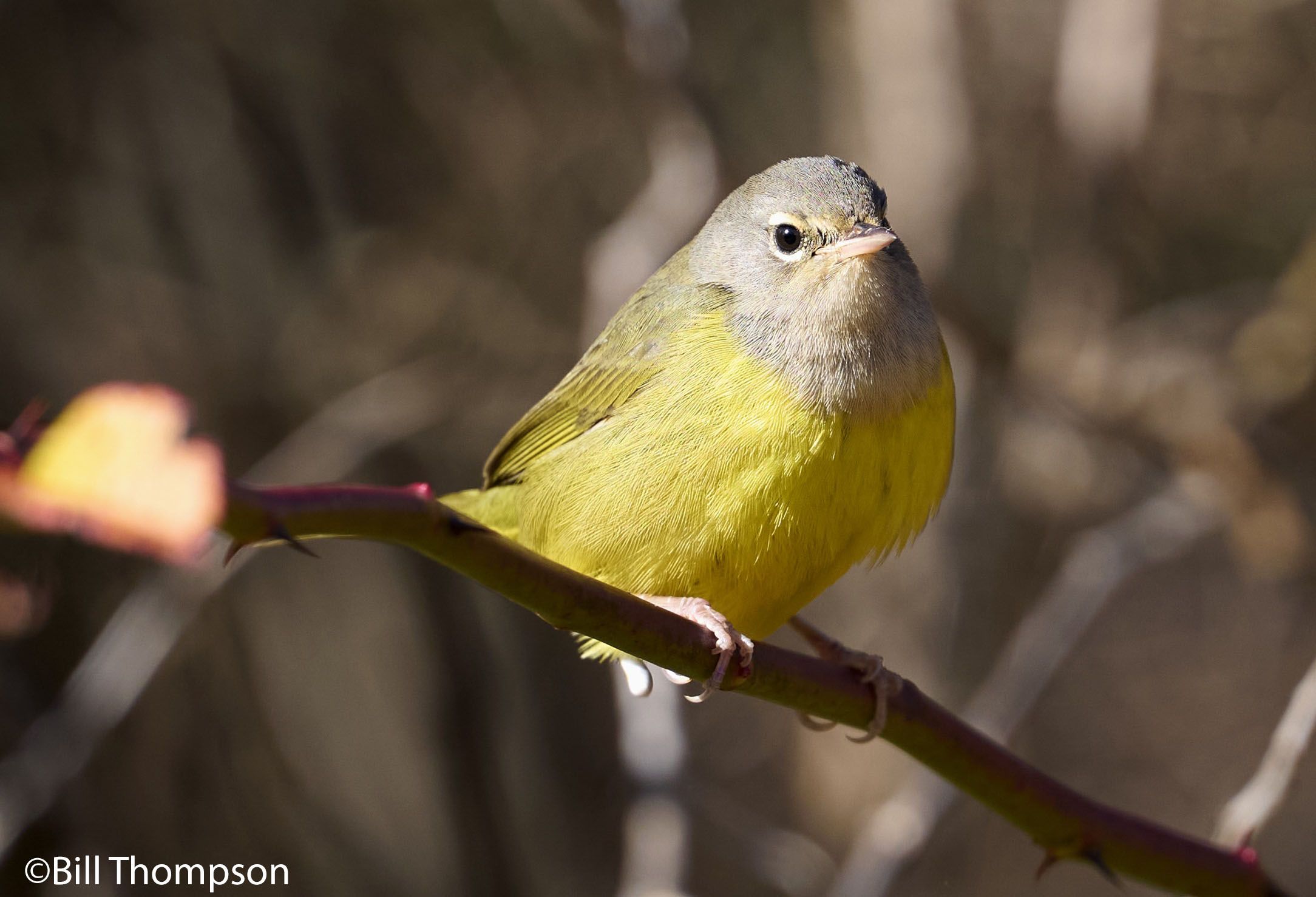
The Yarmouth MacGillivray’s Warbler has been hanging out since November 2nd, but its skulky nature makes it hard to photograph. The few fuzzy, out-of-focus photos I have obtained don’t do this gem justice, so I am “borrowing” these from Bill Thompson. Because he’s really, really good at this.
Rarity season continues, but I was a little more limited in my birding this week – other than a few “professional chases,” so I didn’t add to the roster of vagrants currently being seen. However, I did have some notable observations here and there over the course of the past seven days.
Sabattus Pond waterfowl on 11/7 including 341 Ruddy Ducks, 98 Green-winged Teal, 97 Lesser Scaup, 40 Greater Scaup, 6 American Wigeon, 3 Gadwalls, etc. 1 Rusty Blackbird was also present.
1 continuing MACGILLIVRAY’S WARBLER, Grist Mill Park, Yarmouth, 11/8 (with Saturday Morning Birdwalk group). Originally found on 11/2 by Noah Gibb and Stacey Huth, it had been present all week, and we had a great (and unusually efficient) visit with it on our birdwalk. It was the 255th all-time species encountered on our Saturday Morning Birdwalks!
Back to Grist Mill Park for the still-continuing MACGILLIVRAY’S WARBLER on 11/9 with my Birds on Tap Roadtrip! “Rarity Roundup” tour. We found it within seconds of our arrival on the entrance path, foraging for the second day in a row in a patch of cultivated Pink Turtlehead.
2 Fish Crows, Anniversary Park, Auburn, 11/10 (with Jeannette).
1 Rusty Blackbird and 2 Red Crossbills, Florida Lake Park, Freeport, 11/12.
1 BOHEMIAN WAXWING (first of fall), over the store with American Robins, 11/12.
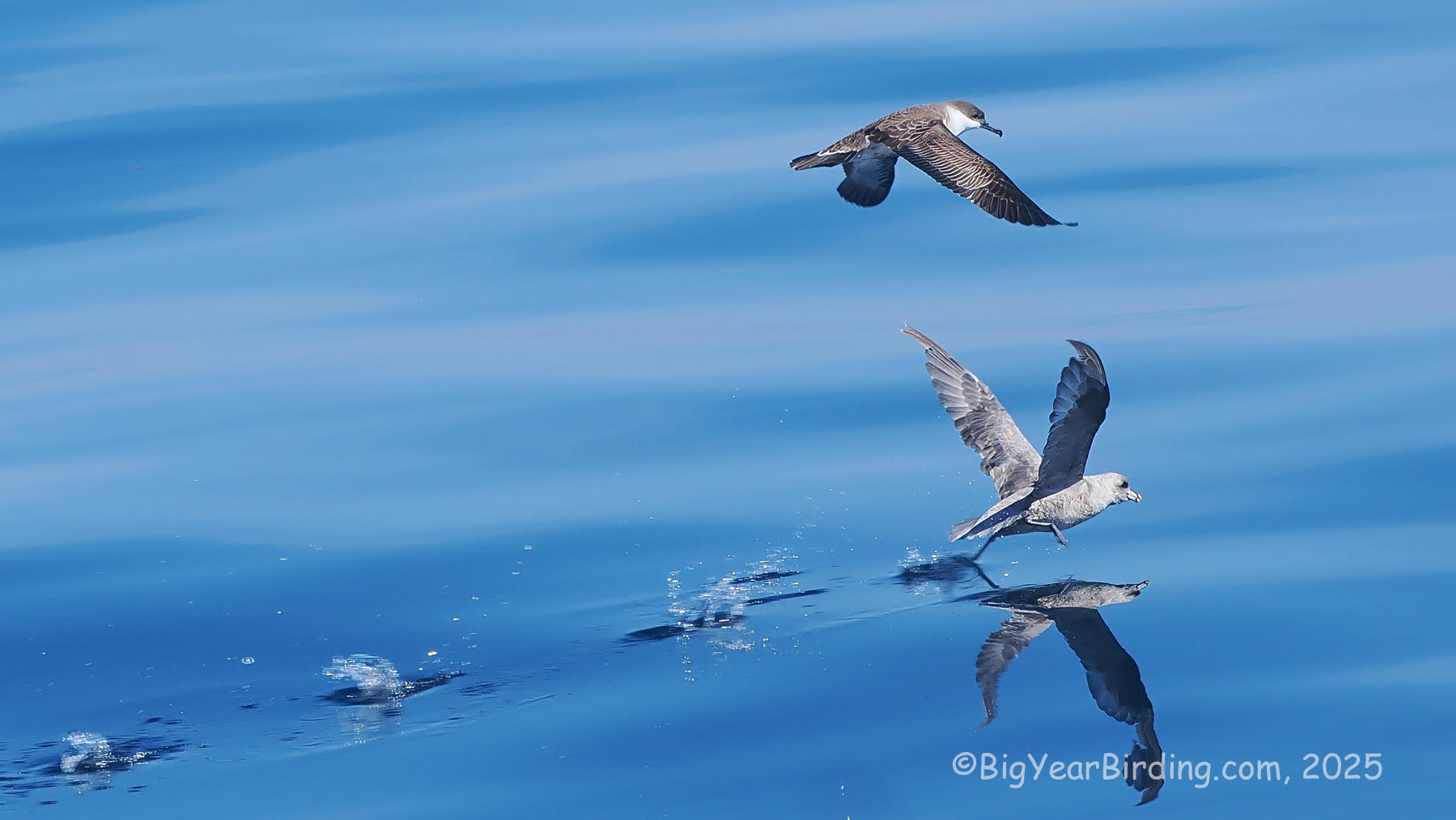
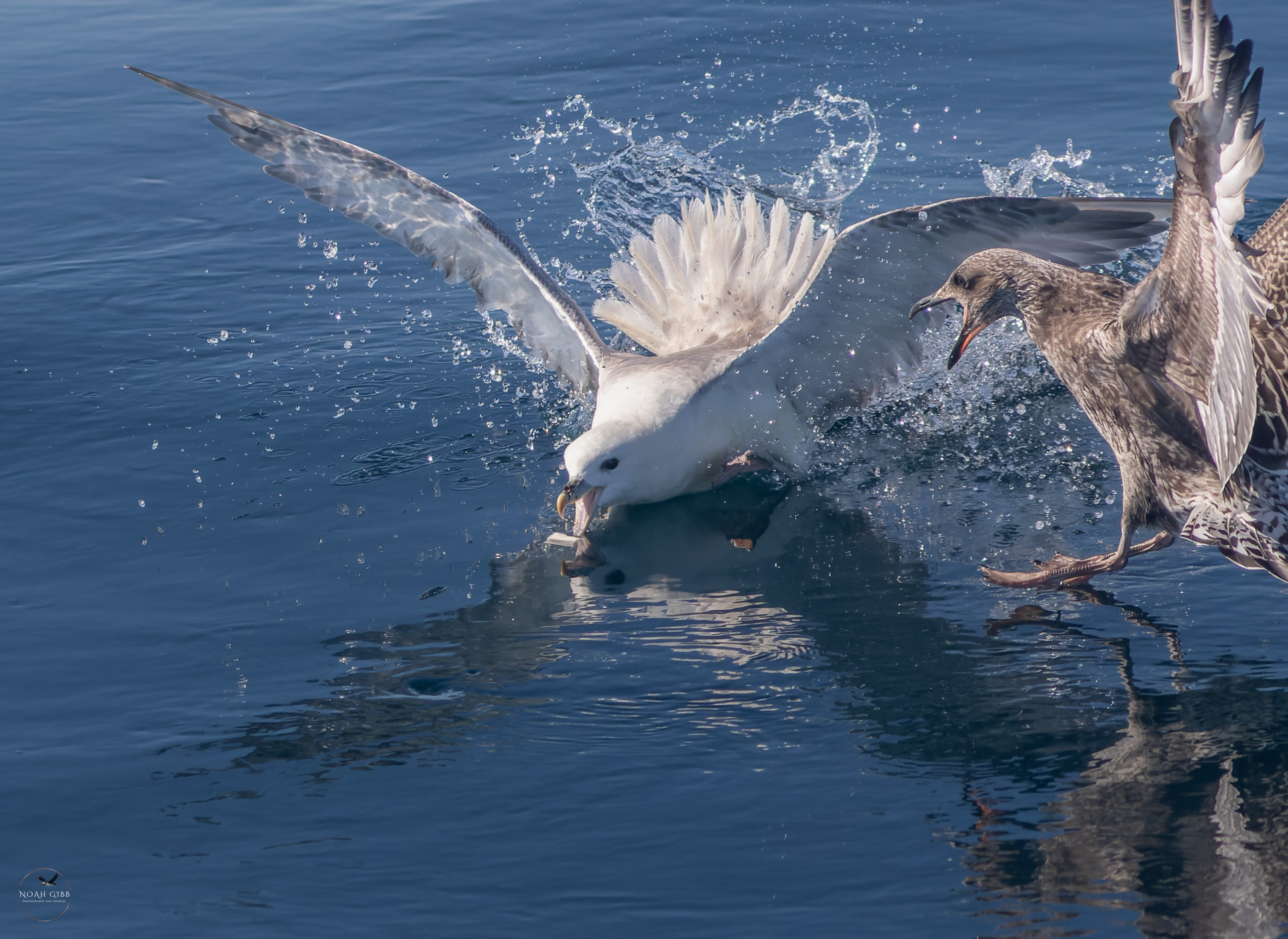
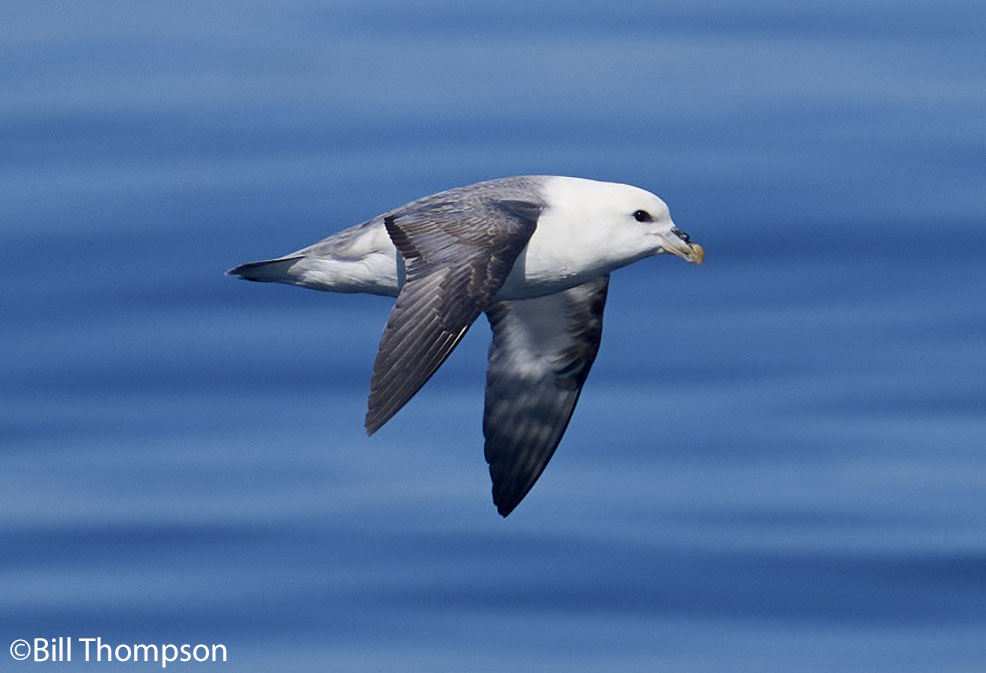
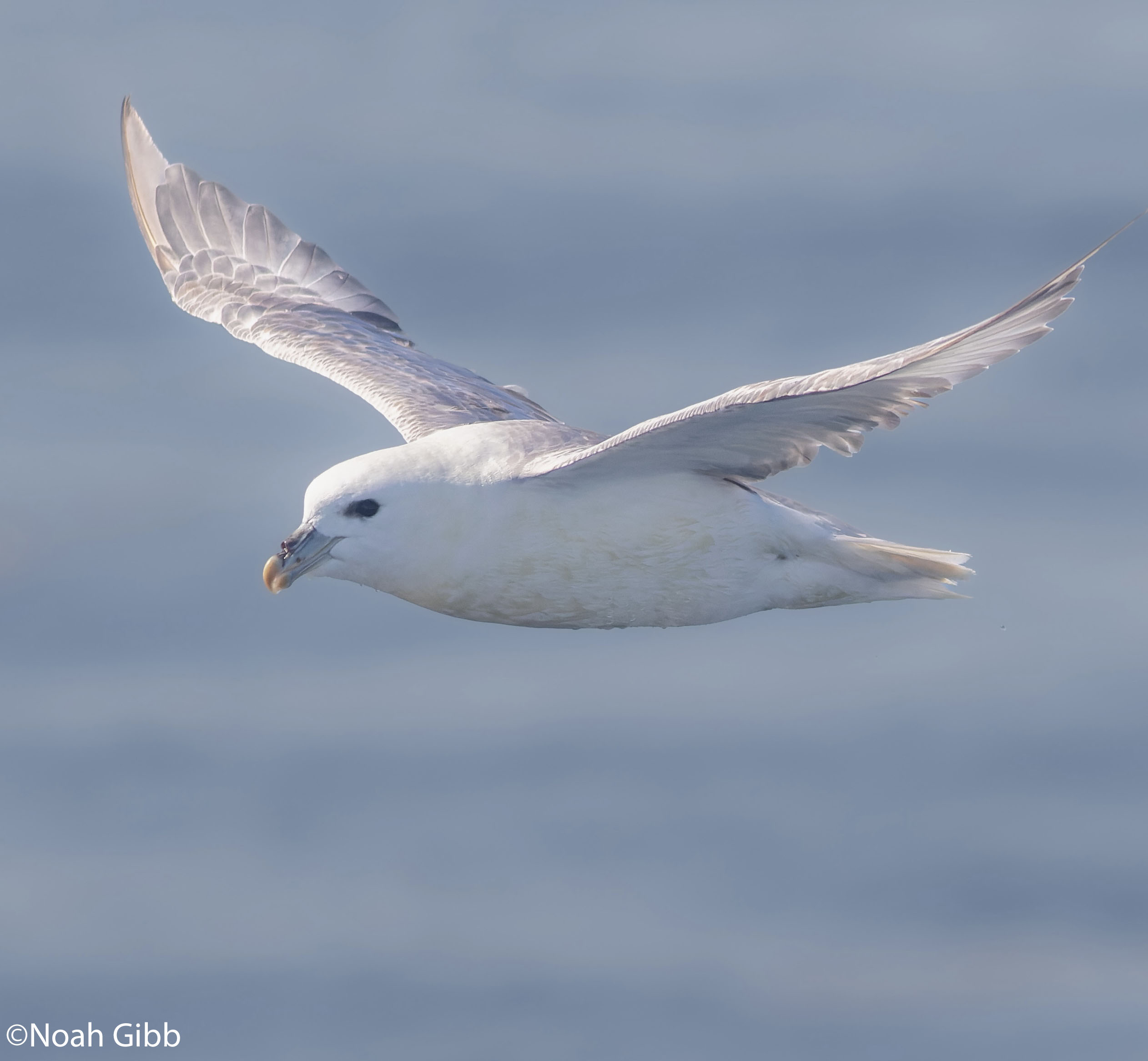
Considering most people would have been happy with a single Northern Fulmar, our tally of at least 18 was fantastic…but the photo opportunities of this winter visitor could not be beat, including of this much less common dark morph.
Fall pelagics in the Gulf of Maine are notoriously hit or miss. Suffice to say, our Half-Day Pelagic out of Boothbay Harbor on 10/5, with our partner, Cap’n Fish’s Cruises, was most definitely a hit!
And not just because of the ridiculously pleasant weather! The birding was great, the marine mammals were fantastic, and I don’t think a single person was seasick! What a difference a year makes.
We departed the harbor at 9:00am, with clear and calm skies, less than a foot of swell offshore, and high hopes (I had a productive scouting trip on a whale watch two days prior). But even with the always-lofty expectations of pelagic trips, we would not be disappointed this day.
Black Guillemots are always a nice way to begin and end all of our local pelagic trips since they are usually only seen in inshore waters.
Perhaps the one complaint I had was that we didn’t get all that far offshore! In fact, our furthest point was only about 20 miles south-southwest of Monhegan. There was just too much to look at, and every time we were about to head further offshore, something else of note appeared.
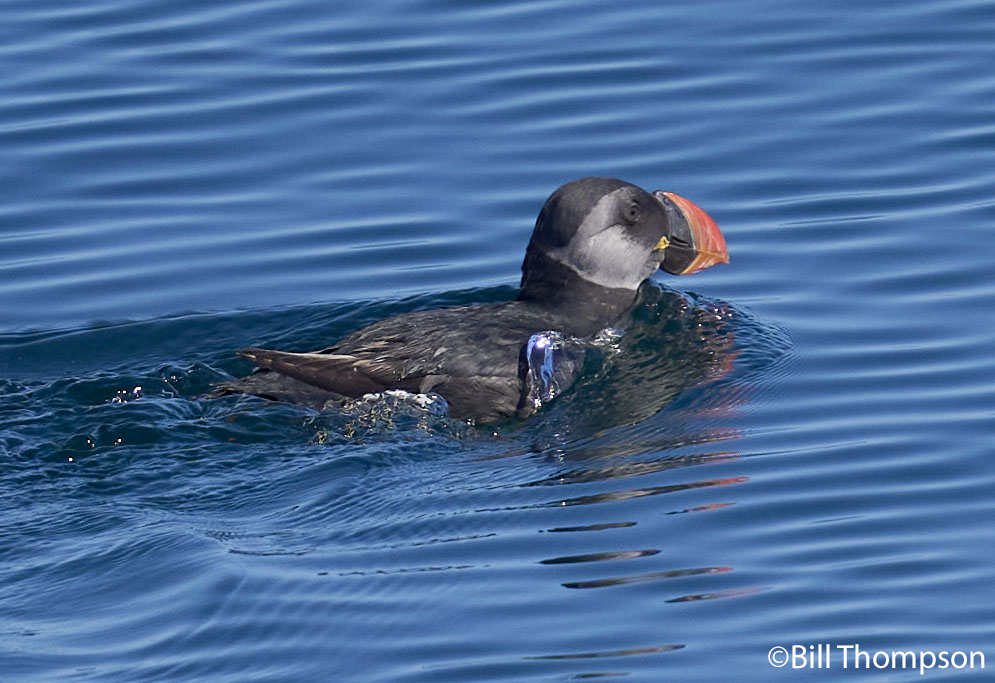
We started picking up a few seabirds, including our first of what would be a remarkable total of mostly juvenile Atlantic Puffins, the first of our sought-after Northern Fulmars, scattered Red-necked Phalaropes (mostly), along with a few Great Shearwaters, all around Murray Hole, but we hit paydirt right around the edge of the incoming shipping channel to Portland.
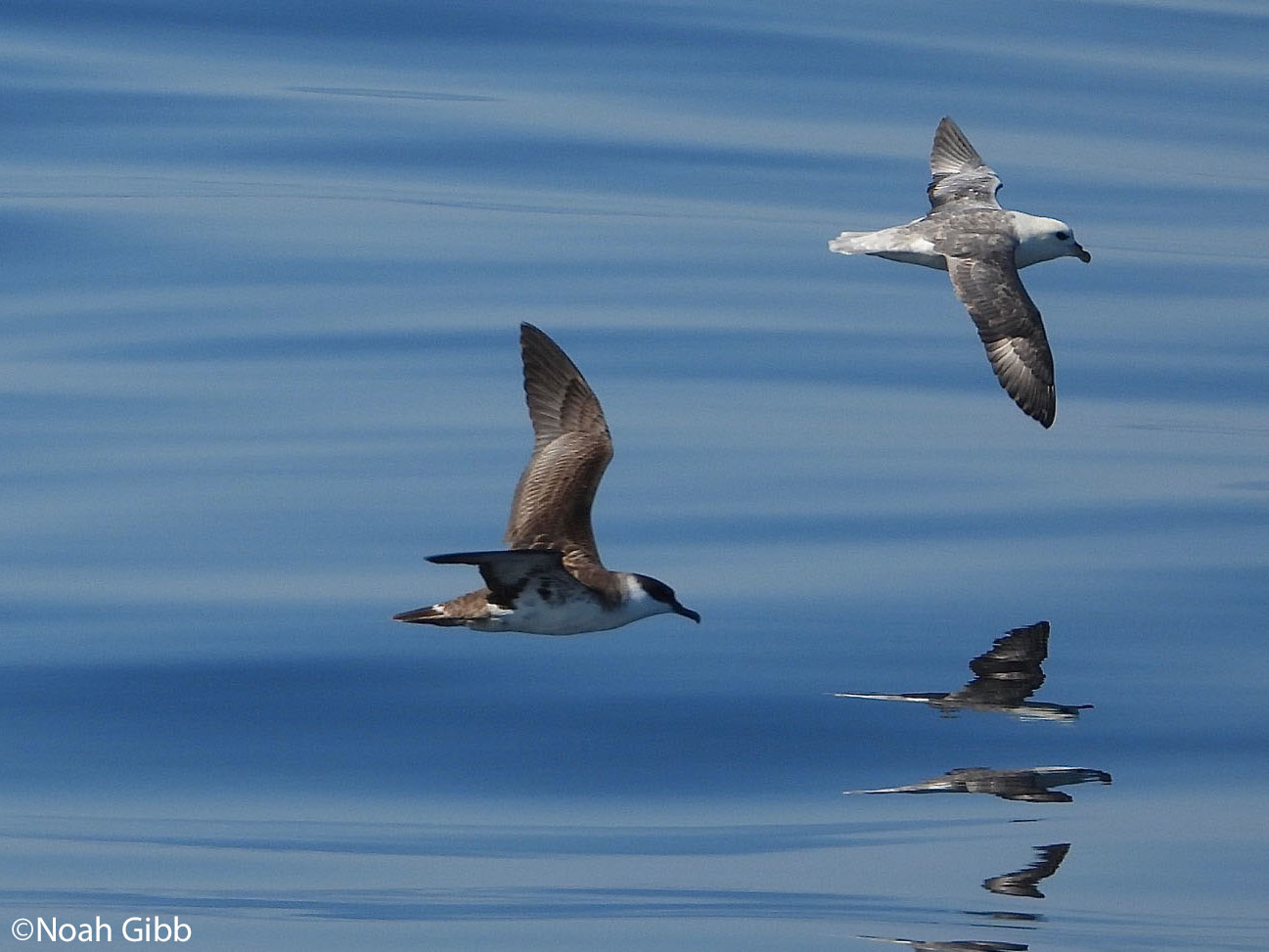
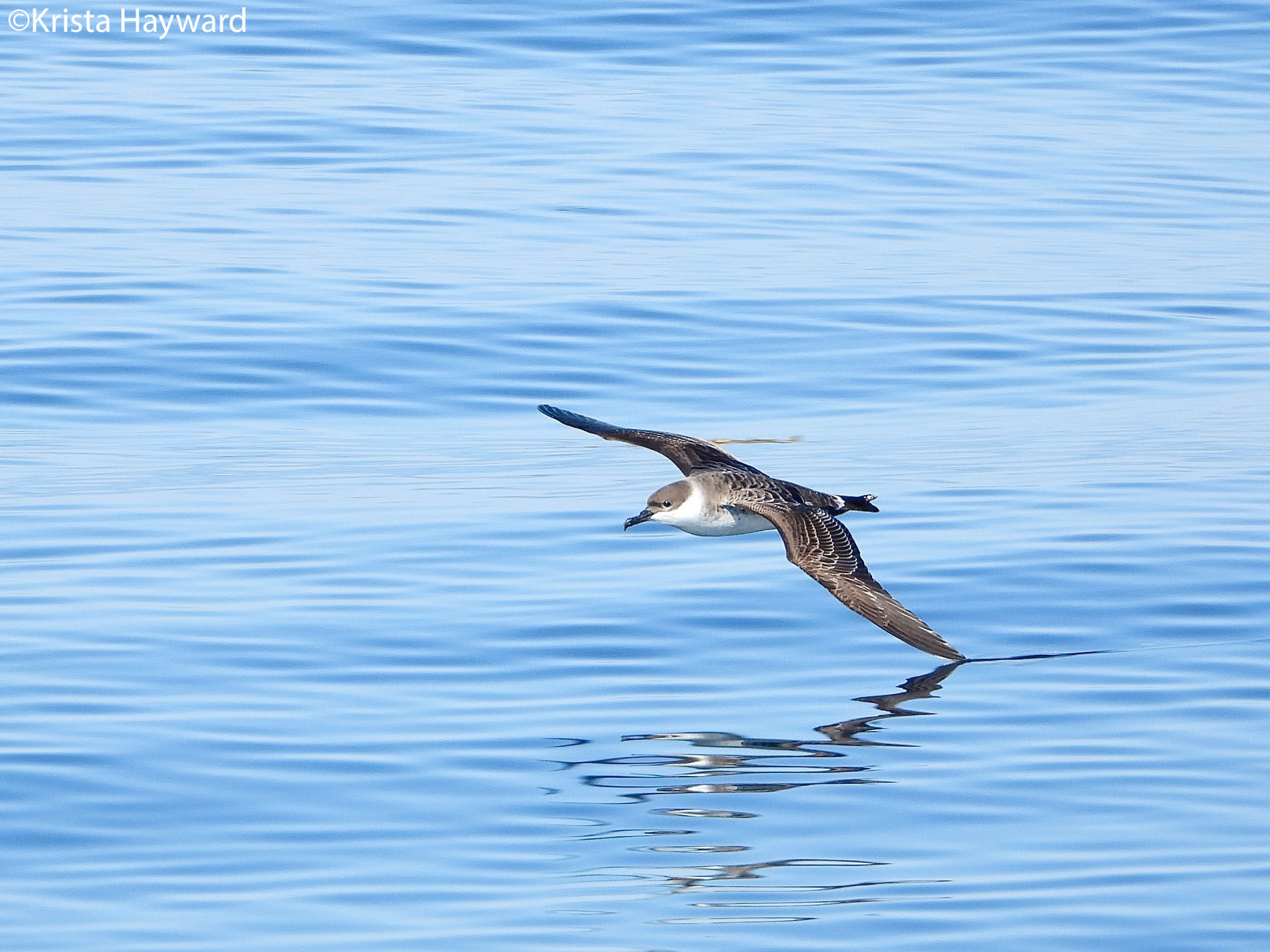
Great Shearwaters and Northern Fulmars were constant companions in our deeper water time.All of the photographed phalaropes so far that we encountered were Red-necked Phalaropes, so the checklist has been adjusted accordingly, even though we believe we had some Reds over the course of the trip.
There, in about 500-600 feet of water (but otherwise “in the middle of nowhere”), our chum slick of fish oil and pork fat (generously donated by Durham’s Old Crow Ranch!) worked its magic. Will Broussard, with both the honor and burden of his first time as Chummer, was the hero, bringing Northern Fulmars and Great Shearwaters in for close looks.]
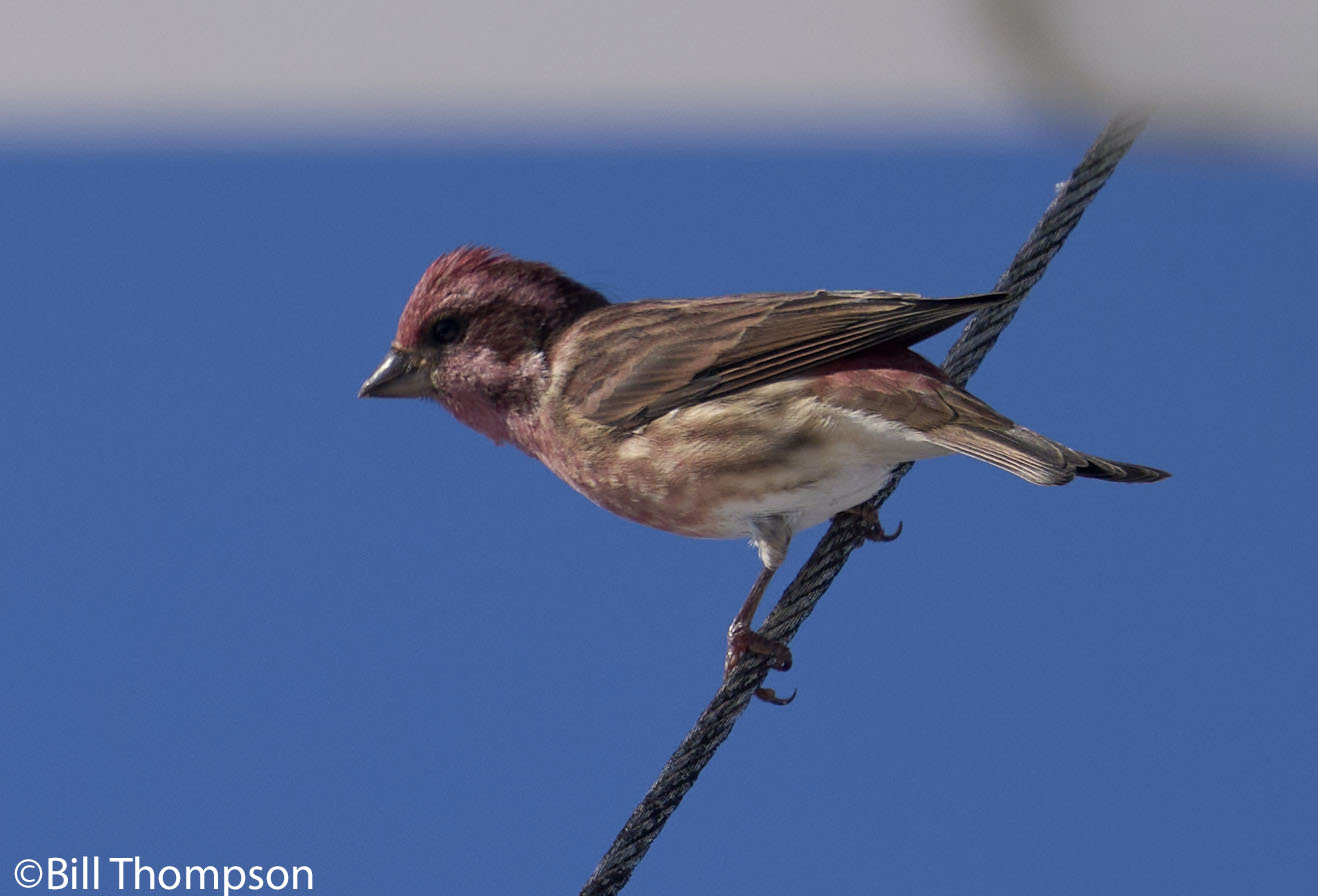
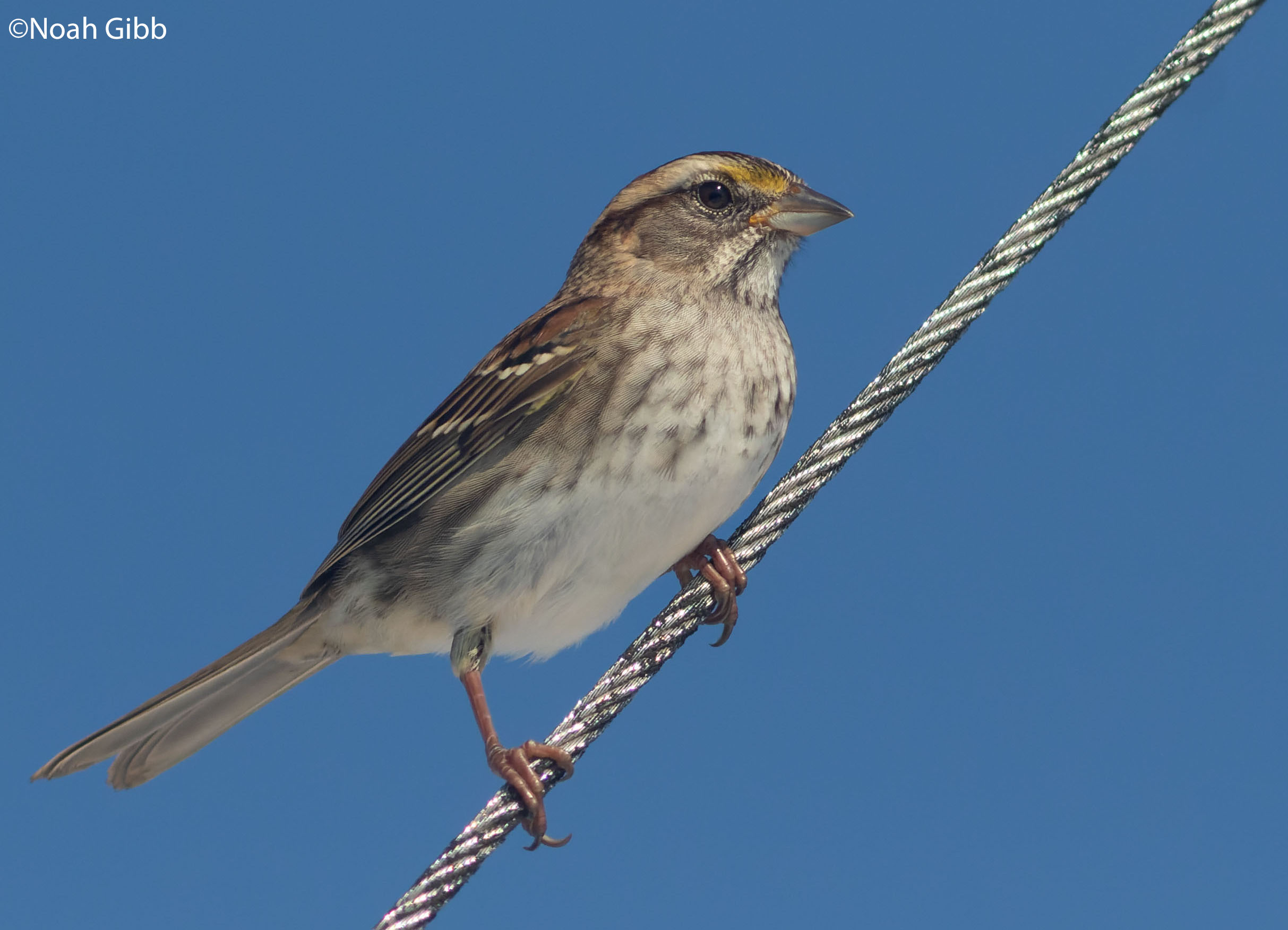
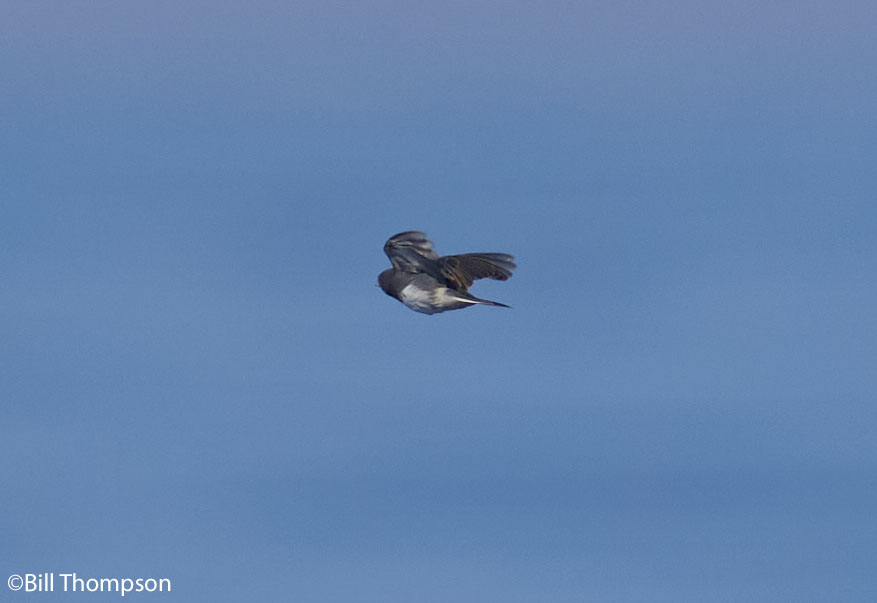
Passerines would appear on occasion, a total of somewhere between 4 and 8 White-throated Sparrows, including one that rode right back to port with us in the cabin. A male Purple Finch took a break on the boat, resting and preening on our radar, as a female did later. Passerines are always a fun addition to a pelagic birding experience.
Less fun, perhaps, but most amazing and insightful, however, was watching a Peregrine Falcon chasing a passerine, driving it into the water, and then, unable to snatch it off the surface, moved on, leaving an Ovenbird helpless on the ocean’s surface, likely becoming waterlogged and hypothermic. It was impossible for us not to, so we attempted a water rescue, with the crew putting in a valiant effort to save the hapless warbler. Unfortunately, it perished, but we had to try!
This might be one of the most incredible photos of non-pelagics ever taken on a pelagic. Awesome work, Bill!
Repeated sightings of Atlantic Puffins continued to surprise us, and we spent some time with two different Fin Whales, including getting to see one doing a little lunge-feeding. While we looked at whales, birds were all around us, thanks to the chum, so we had something for everyone.
A big and bright-billed adult Atlantic Puffin.Both of our Razorbills were hanging out with juvenile puffins.
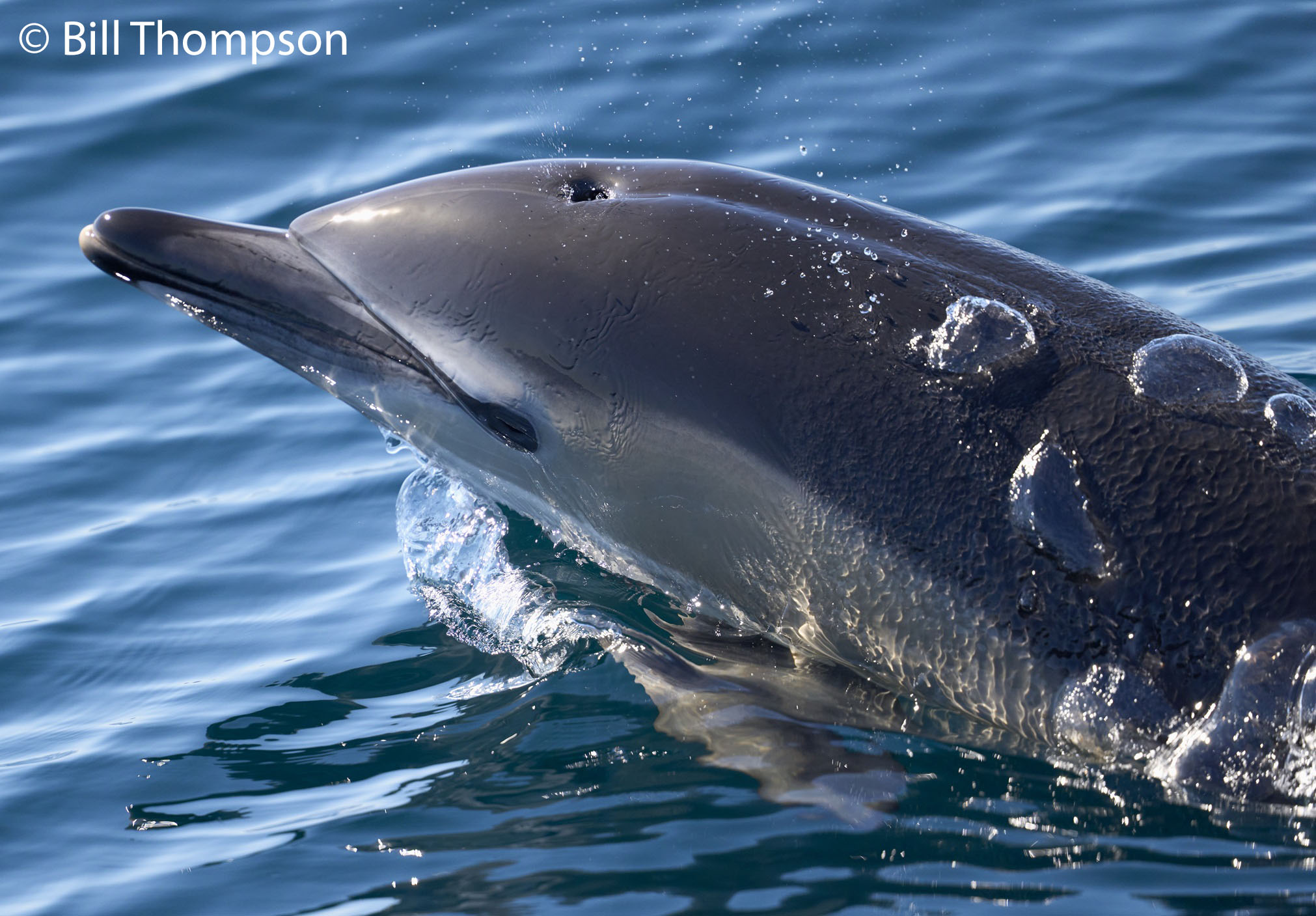
While this was of course a birding tour, we made sure to enjoy the marine mammals we encountered, along with a Blue Shark, but the highlight for most everyone was the incredible and awesome experience we had with a small pod of 25-30 Common Dolphins. Amid all of our seabird activity, the pod approached us in the glass-calm warblers. Captain Nate added a little speed to build up a wake, and the dolphins had come to play. They rode the bow, did some surfing, and otherwise created constant “oohs and aahs.” The photos don’t quite do it justice…it was really a special experience, a life mammal for most of the crew, and one of the best dolphin encounters I have experienced in the Gulf of Maine.
Puffins and fulmars, Fin Whales and dolphins, and all on just the most ridiculous weather possible for a fall pelagic in Maine! We’ll see you on board next year!
I want to thank Captain Nate for his skilled maneuvering of the boat – even more remarkable as this was his first pelagic, too! Naturalist Trinity shared the narration duties with me, taking over for local landmarks and non-feathered marine life, and Valentin and Joe took care of everyone at the galley – and did the work of our attempted Ovenbird rescue. Thanks to my team, chummer Will Broussard, and our checklist-keeper Noah Gibb. And a special thanks to Tabor and Seamus at Cap’n Fish’s for working with me to make this memorable trip a reality.
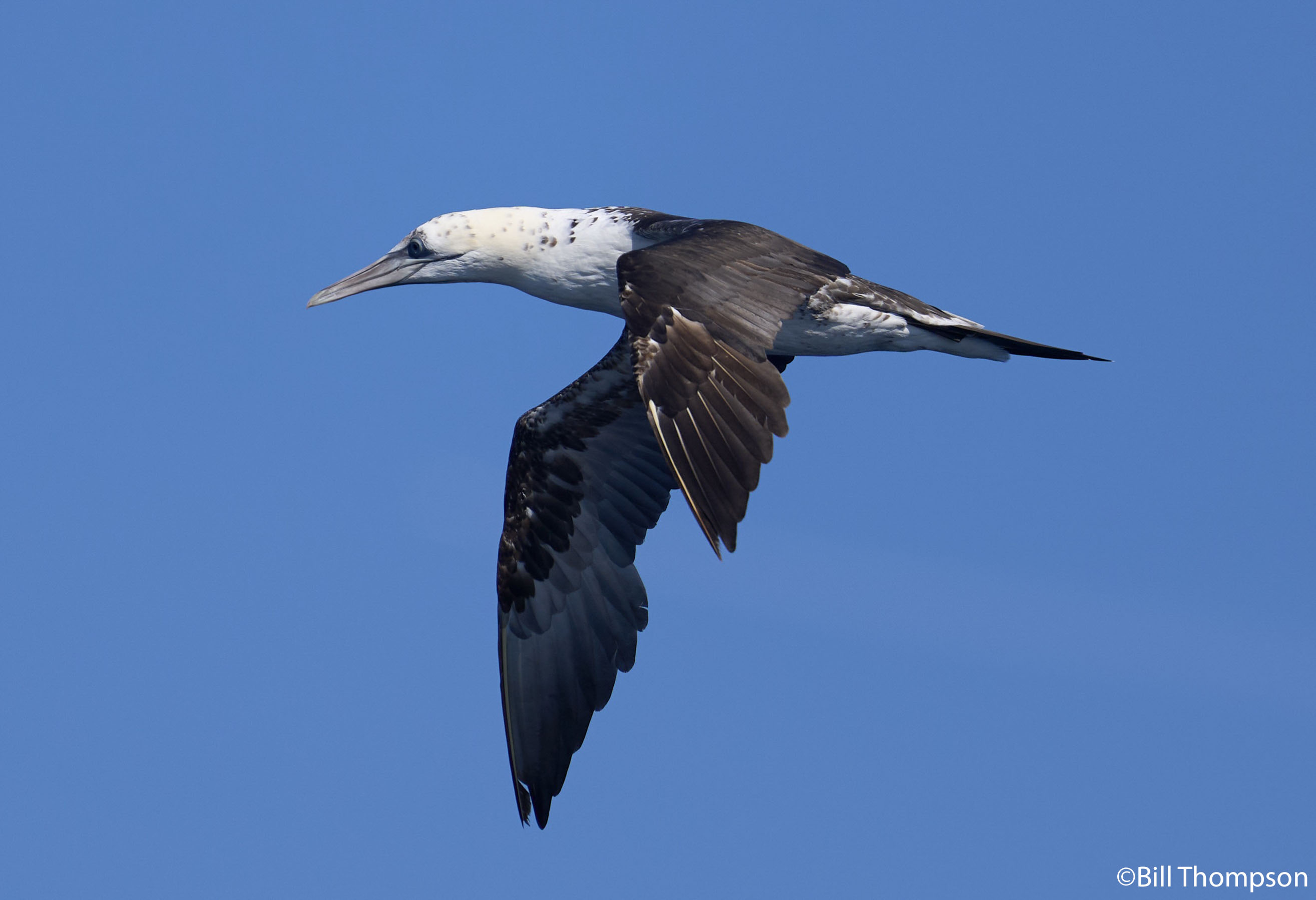
Subadult Northern Gannet
Here’s the complete trip list, including birds seen while docked before departure marled with an *. We know counts of several species, such as Common Eider and Herring Gull are likely extremely low, but we chose to be conservative with our Northern Fulmar and Great Shearwater tallies as we covered a relatively small area during our deeper-water time, and the chumming kept birds with us, and perhaps, coming back for more.
267 Common Eider
89 Surf Scoter
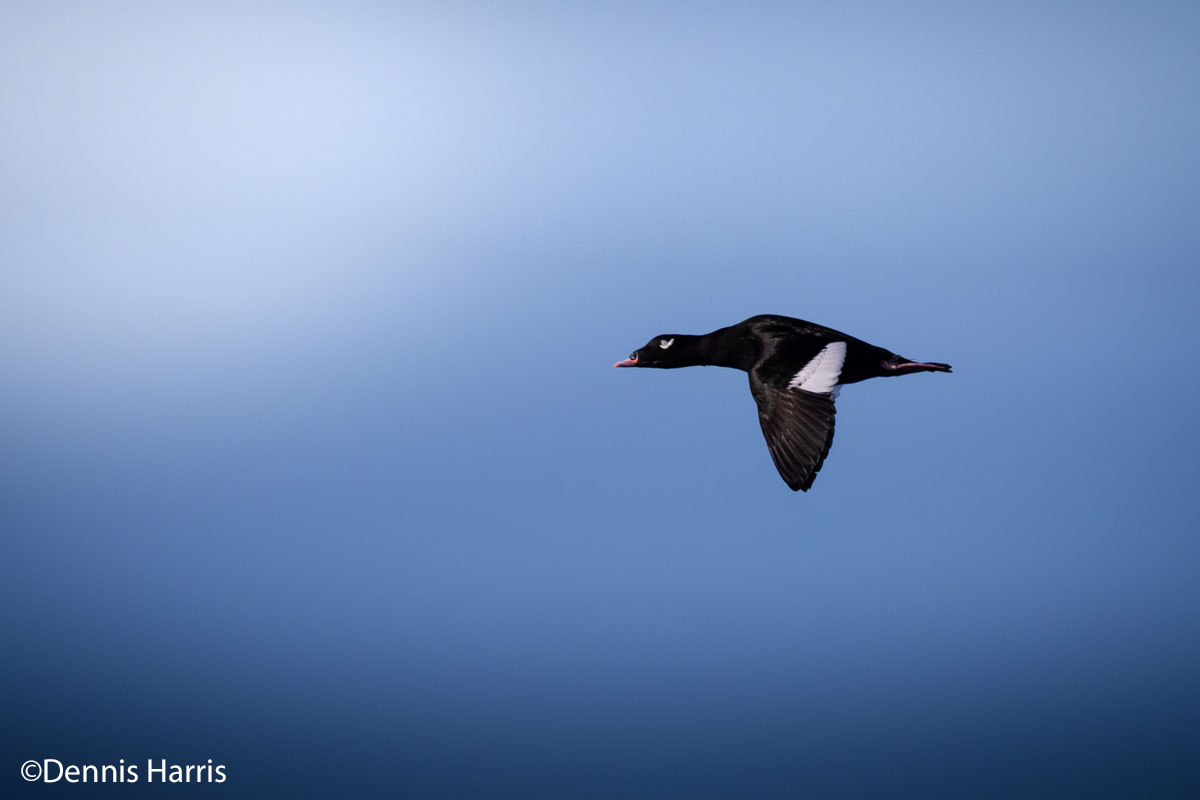
3 White-winged Scoter
36 Black Scoter
25 Rock Pigeon*
54 Red-necked Phalaropes
21 unidentified phalaropes
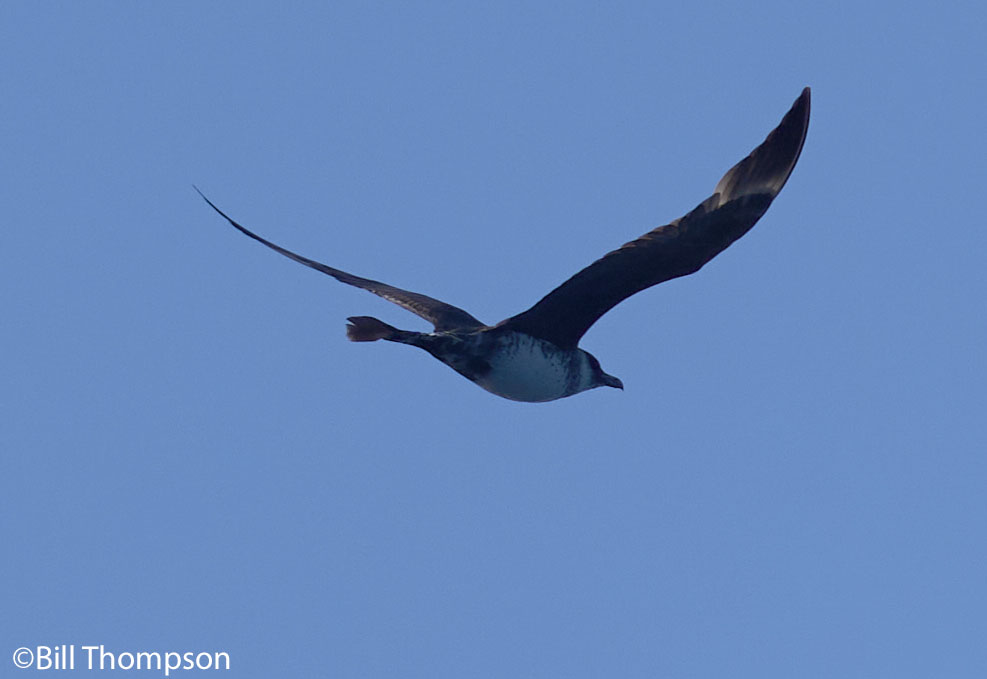
1 Pomarine Jaeger
28 ATLANTIC PUFFINS
15 Black Guillemots
2 Razorbills
1 Black-legged Kittiwake (only spotted from photos later, unfortunately)
We were surprised to find a tarrying American Oystercatcher still hanging out on Upper Green Island (where we documented them breeding once again this summer) during our Birds of Casco Bay Boat Tour on the 6th.
My tour report from Monhegan, 9/26-9/30, including lots of rarity photos can now be viewed here. Sorry for the delay here, especially for those waiting for the trip list.
Then, my observations of note over the last seven days included the following:
Highlights from our Durham property this period included a Tennessee Warbler on 10/2, 1 Rusty Blackbird on 10/3, and 4 American Woodcocks on 10/7.
Sandy Point Morning Flight, 10/1.
North to north-east winds are usually not very productive for the Morning Flight at Sandy Point, but the radar images showed a huge flight overnight, so I decided to give it a try. Good thing I did! A northwesterly component inland must have “stacked” birds up against the coast, where they were then influenced by the increasing northeasterly component offshore, producing a better than expected push across the channel. The more I observe the flight here, the more I have to learn! In the end, an unexpectedly good flight passed over and through Sandy Point Beach, Cousin’s Island, Yarmouth, this morning.
6:38-10:00am
46F, Clear, N 8.2-10.4 increasing to NNE 13.3-16.9mph.
238 Cedar Waxwings
222 Yellow-rumped Warblers
73 Blue Jays
64 unidentified
39 Black-throated Green Warblers
35 Dark-eyed Juncos
34 Canada Geese
33 Northern Parulas
28 Yellow-bellied Sapsuckers
27 Palm Warblers
26 Savannah Sparrows
23 Blackpoll Warblers
16 White-throated Sparrow (3 may have crossed at first light)
14 Northern Flickers
12 American Robins
10 Golden-crowned Kinglets
9 Ruby-crowned Kinglets
9 Chipping Sparrows
6 Nashville Warblers
6 Rusty Blackbirds
6 American Goldfinches
5 Magnolia Warblers
3 Scarlet Tanagers
2 Common Loons
2 Ospreys
2 Cape May Warblers
2 Tufted Titmice (5+ false starts)
2 Hermit Thrushes
1 Pine Warbler
1 Downy Woodpecker
1 American Pipit
1 Baltimore Oriole
1 Red-breasted Nuthatch
1 Sharp-shinned Hawk
1 Brown Creeper
1 Merlin
1 Blue-headed Vireo
1 Swamp Sparrow
1 Cooper’s Hawk
T= 959
2 Monarchs
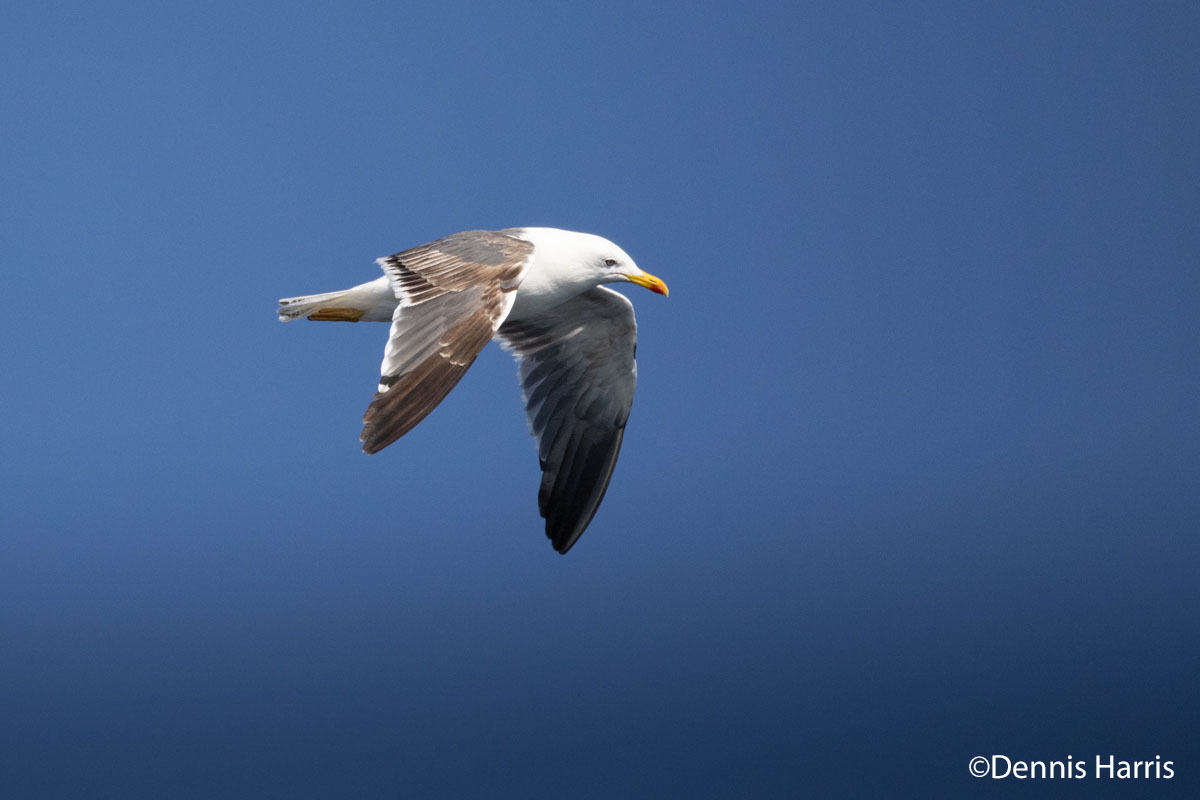
Whale Watch with Cap’n Fish’s Cruises out of Boothbay Harbor on 10/3: 15 NORTHERN FULMAR, 13 Great Shearwaters, 1 Cory’s Shearwater, 3 Red Phalaropes, 1 Lesser Black-backed Gull, etc.
1 DICKCISSEL, garden here at the store, 10/4 (with m.obs).
Freeport Wild Bird Supply/Cap’n Fish’s Cruises ½ Day Pelagic out of Boothbay Harbor on 10/5 was incredible. Highlights included 18 Northern Fulmar, 29 Atlantic Puffins, 1 Pomarine Jaeger, 55 Great Shearwaters, 2 Razorbills, 54+ Red-necked Phalaropes, 3 Red Phalaropes, 4 Lesser Black-backed Gulls, a Peregrine Falcon driving an Ovenbird into the ocean, and a playful pod of Common Dolphins. Full trip report with photos soon.
1 AMERICAN OYSTERCATCHER (Upper Green Island; photo above), 125+ Laughing Gulls, 126 Black-bellied Plovers, 3 Long-tailed Ducks, etc, Casco Bay, 10/6, via Birds of Casco Bay boat tour with Seacoast Tours (Photo above).
These unique, relaxed birding and beer-ing adventures that you have come to love combine great local birding at seasonal hotspots with visits to sample the delicious creations of some of our favorite local breweries. These tours are a perfect introduction to birding and/or craft beer, and a great opportunity to travel with significant others, friends, and family that have interest in one topic, while your interest is primarily in the other (for now!). But this time we’re leaving the van in the garage, and hitting the water! That’s right, we’re taking a cruise, and we’re returning to the private House Island in Porland Harbor twice in 2025.
During last year’s wildly successful outing in which we became the first birding group ever on the island, we found oodles of Yellow-rumped Wabrlers, an uncommon Field Sparrow, and other migrants. But we were truly captivated by Captain Pete, who guided us through the historic fort, sharing a wealth of historical knowledge and fascinating stories. The beer was pretty darn good too, as we sampled the history of Maine’s craft beer scene.
Building on that success, we’re visiting the private House Island in Portland Harbor twice in 2025. We’ve been granted special permission to come ashore and scour the island here in the peak of fall migration. We’ll follow well-maintained trails through the island’s mosaic of open habitats, scrub, and young woods. These are great habitats to search for a variety of migrants, and perhaps even a rarity!
Returning in late October, once again rarities will be on our mind. While rare birds are rare, we are still going to expect the unexpected. But more likely are regular migrants of the season such as Yellow-rumped Warblers, a variety of sparrows, and a growing diversity of waterbirds. At the very least, we’ll have resident waterbirds and several species of gulls to sort through. We are having daydreams of a rare flycatcher!
As we motor back across the harbor, we’ll continue to familiarize ourselves with some of the common waterbirds, such as Common Eiders, Common Loons, and the vanguard of our winter diving ducks while enjoying a local craft beverage produced in the city of Portland. While the exact plan is subject to change, we’ll be sure to come up with a plan to adequately celebrate our discoveries – or the one that got away!
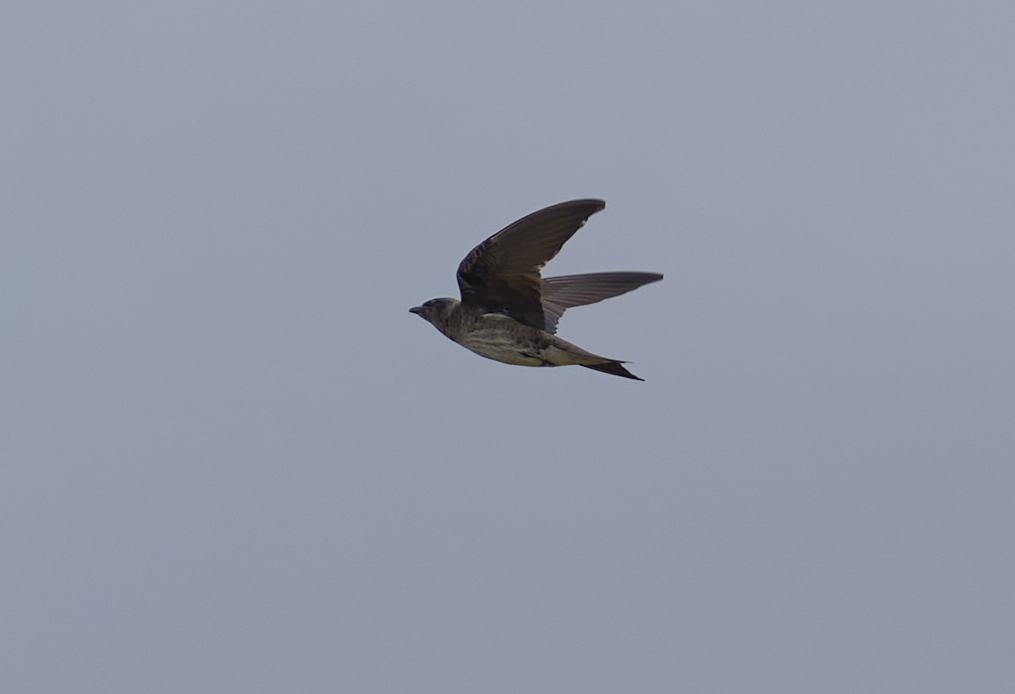
Any single martin away from a known colony is worth studying, especially “funny looking” ones, as vagrant martins have occurred in the Northeast. I spotted one such martin over Scarborough Marsh from the Eastern Road Trail while guiding on Thursday. Luckily, I shouted down the road to Bill Thompson and he was able to photograph the bird as it flew by. Together, we identified it as a 1st summer, likely female, Purple Martin. It sure looked strange as it was flying towards me.
A week of fairly-local birding at the height of nestling season – and the ramping up of southbound shorebird season – produced the following observations of note:
2 Red Crossbills, Hidden Valley Nature Center, Jefferson, 7/6.
4 Orchard Orioles (pair with 2 fledglings), Old Town House Park, North Yarmouth, 7/7 (with clients from Maine).
3 Lesser Yellowlegs (first of “fall”) and 3-4 Least Sandpipers (first of fall), Walsh Preserve, Yarmouth, 7/8 (with clients from Maine).
Totals of 95+ Short-billed Dowitchers, 70+ Least Sandpipers, 4 Greater Yellowlegs, and 1 Lesser Yellowlegs, Scarborough Marsh, Scarborough, 7/10 (with clients from Maine and New Hampshire).
1 PURPLE MARTIN, Eastern Road Trail, Scarborough Marsh, 7/10 (with clients from Maine and New Hampshire). Photos from Bill Thompson above.
1 continuing drake American Wigeon, Eastern Road Trail, 7/10 (with clients from Maine and New Hampshire).
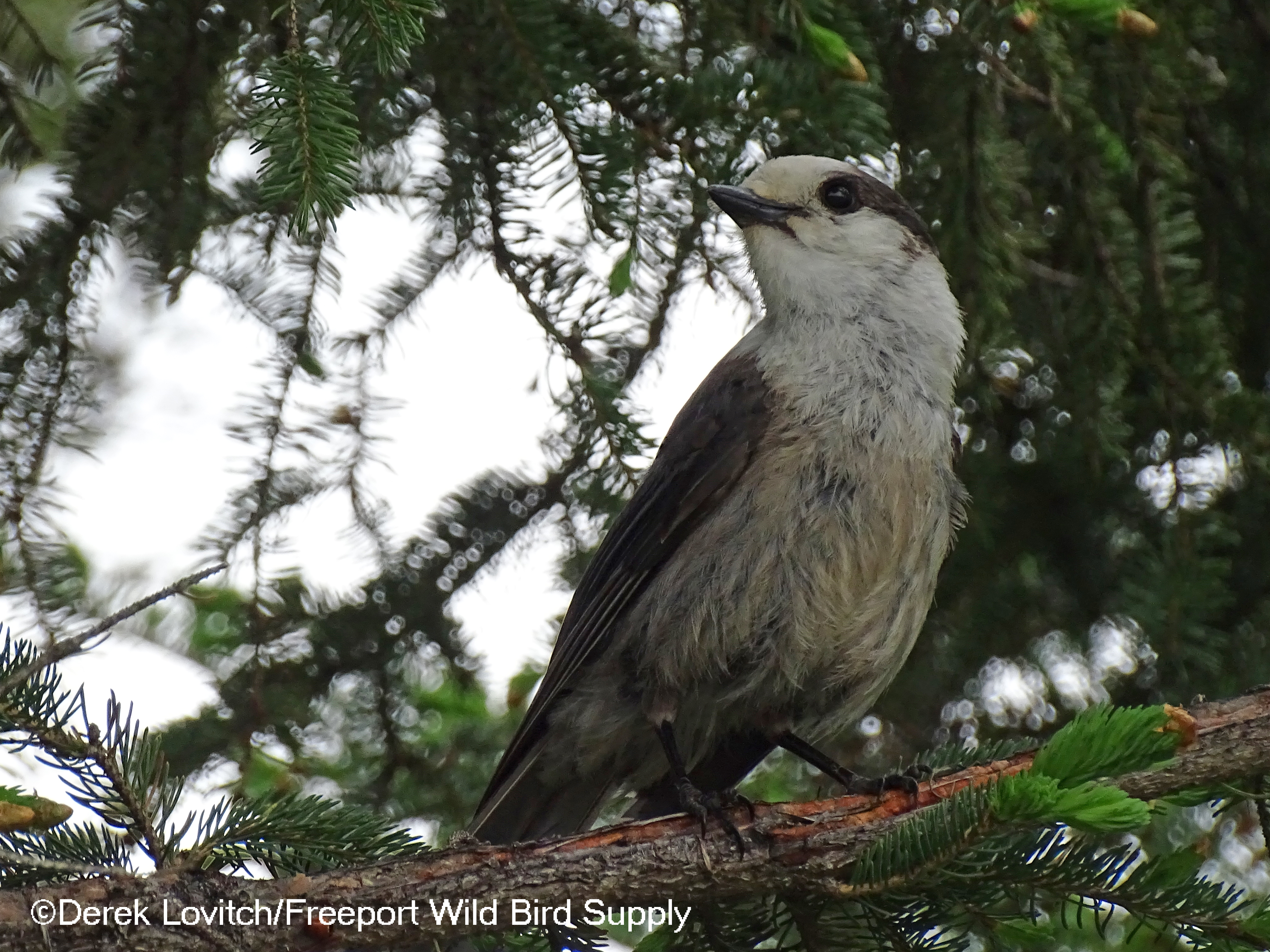
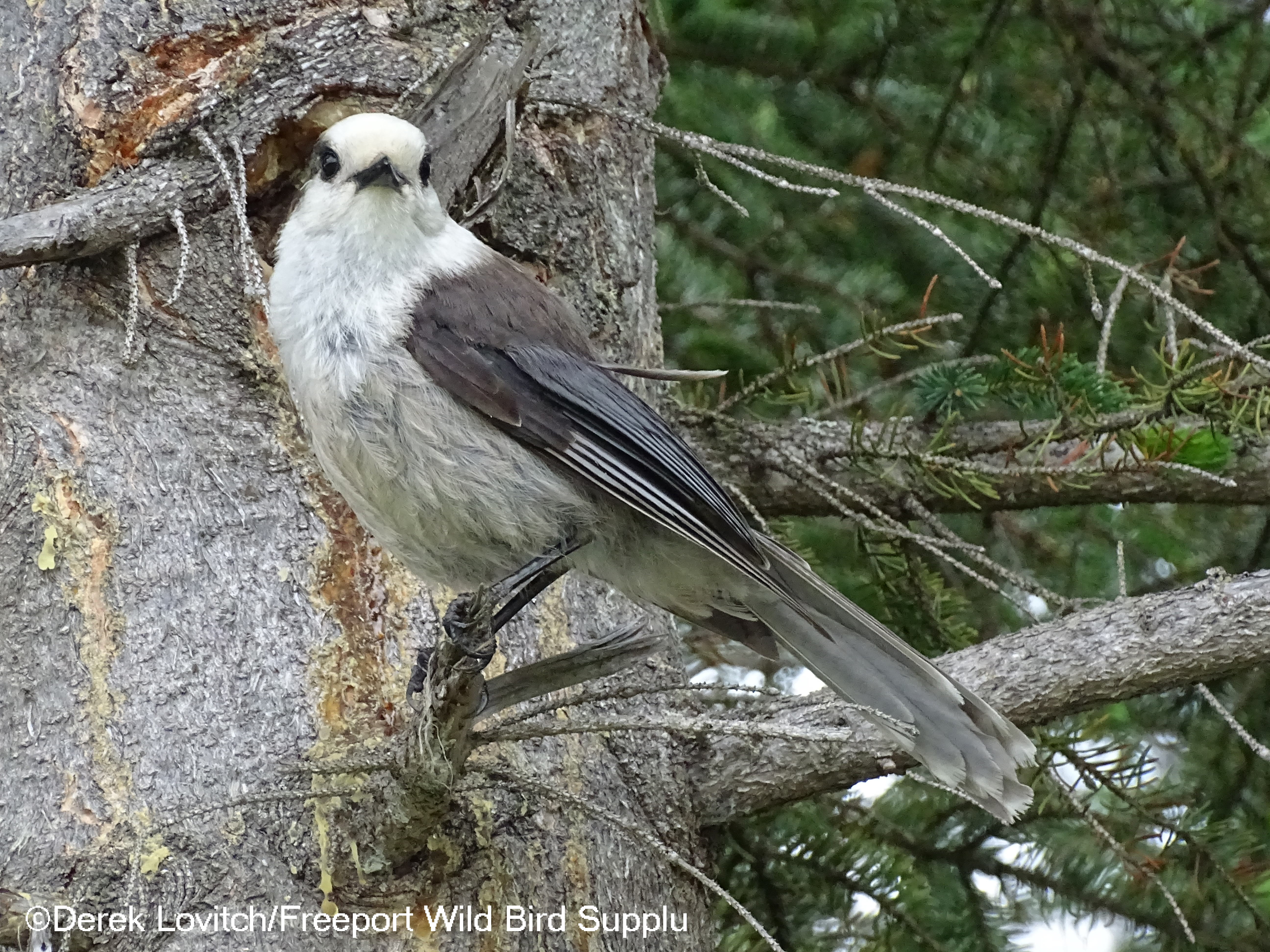
One of up to 6 Canada Jays encountered outside of Rangeley while leading tours for the Rangeley Birding Festival included this confiding adult, part of a family group of at least 4 on 6/6. In fact, I enjoyed Canada Jays in three states in less than a week’s time this week/weekend!
This time of year, most of my birding, both personally and especially professionally, is dedicated to finding, seeing, and enjoying the wide array of breeding species this state has to off. From Saltmarsh Sparrows and Roseate Terns here along the southern coast to Bicknell’s Thrushes and “boreal specialities” in the western Maine mountains (and northern New Hampshire), it has been another extremely busy guiding season for me. Meanwhile, while home, I have been conducting two local breeding bird surveys. While my “highlights” these days are seeing the “expected” species we all seek, I did encounter some unexpected observations and noteworthy counts over the past two weeks, but mostly, I thought I would share some of my photo highlights.
1 Dunlin, 4 Semipalmated Plovers, and 1 Least Sandpiper, Sanford Lagoons, 6/2 (with Jeannette).
Rangeley Birding Festival, 6/6-6/8: Two mornings of birding Redington Road (scouting 6/6, with tour group 6/7) yielded high counts of 2 territorial CAPE MAY WARBLERS (6/6+6/7), 6 CANADA JAYS (6/7), 1 pair of BOREAL CHICKADEES (6/6), 3 Red Crossbills (6/6), 2 Olive-sided Flycatchers (6/6), 1 American Bittern (6/7), 1 Black-billed Cuckoo (6/7), etc.
I was excited to find two Cape May Warbler territories outside of Rangeley on the 6th, and then find both males in the same place the next day with my Rangeley Birding Festival tour group.
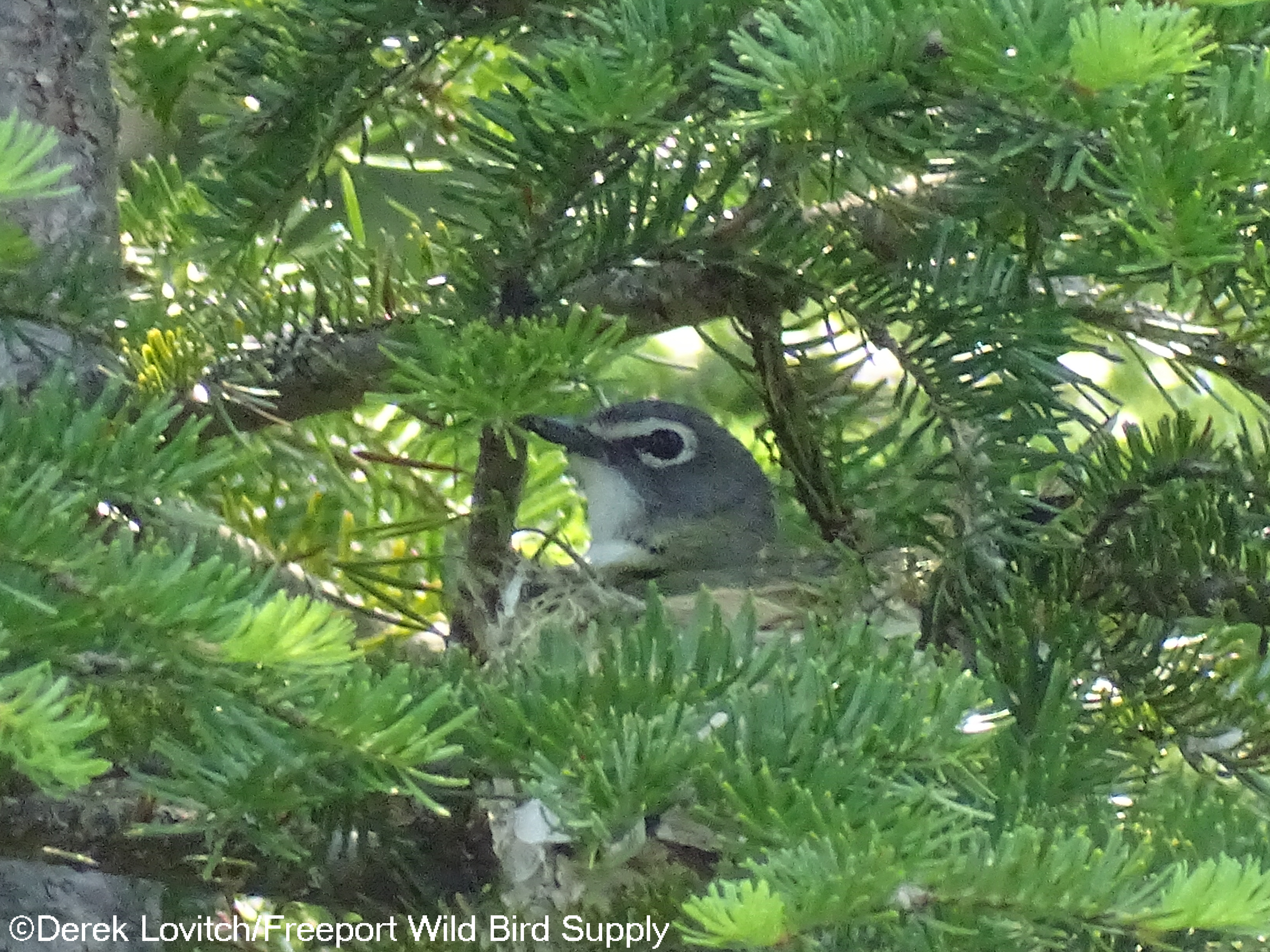
While leading a walk for the Rangeley Birding Festival at Hunter Cove Sanctuary, I found this low-level Blue-headed Vireo nest that was fascinating to observe.
2.5 day private tour in Vermont and Northern New Hampshire (I know, this is a non-Maine-birding-field-note!) yielded: Bicknell’s Thrush, Black-backed Woodpecker, Boreal Chickadee, Canada Jay, Fox Sparrow, and 22 species of warbler including Cape May, Bay-breasted, and Mourning.
As usual, I took few photos while guiding, but this Bay-breasted Warbler outside Errol, NH on the 10th (with clients) was too cooperative not to fire off a few shots!
Back home for a couple of days, it was off to my local bird surveys. This fledgling Barred Owl was in Freeport on the 12th, confirming breeding once again at one of my local patches.
Monhegan Spring Migration Weekend Trip Report.
The 2025 Monhegan Migration Spring Weekend was a shocking success. We went from having a weather forecast that made me worry if there would be any migrants to see at all, to an exceptional weekend that was by far the best Memorial Day weekend of birding out here in quite a few years. A total of 106 species were tallied in 5 days, including 91 together as a tour group, with a total of 22 species of warblers. Here’s the full trip report.
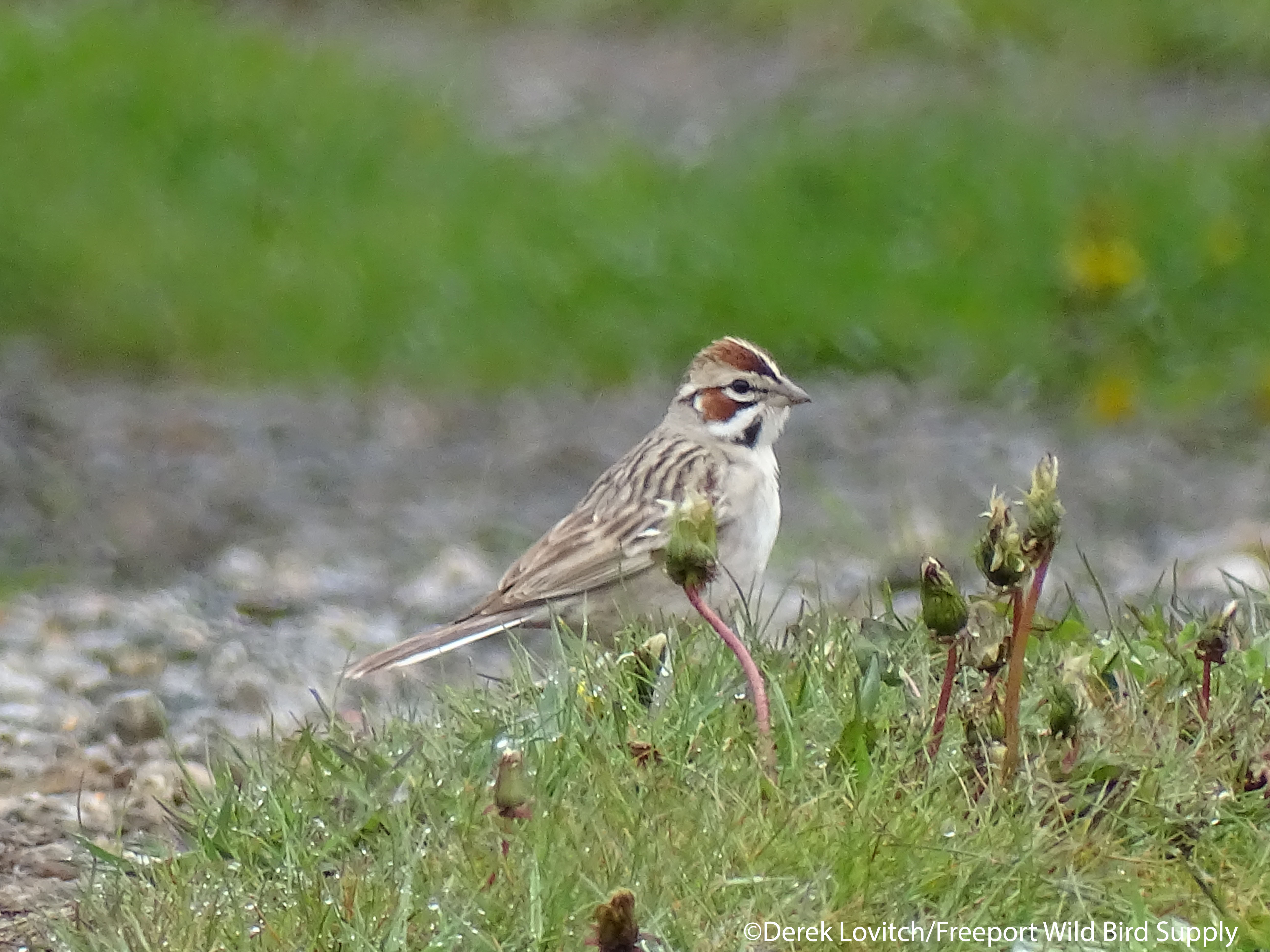
This Lark Sparrow – always a treat in spiffy spring plumage – was among the notable birds form a stellar weekend on Monhegan.
Five days on Monhegan Friday the 23rd through Tuesday 5/27 yielded a total of 106 species, including 22 species of warblers. It was the best Memorial Day Weekend on the island in several years, and at times, it really felt like “the good ol’ days” with a flock of warblers in every tree. Back in the real world, I was mostly guiding for local breeding specialties, but did have a few observations of note. But mostly, of course, my highlights were from my time on the island.
5/23, with Monhegan Spring Migration Weekend Tour group:
12 HARLEQUIN DUCKS
1 2nd/3rd Cycle Lesser Black-backed Gull
5/24, with Monhegan Spring Migration Weekend Tour group:
12 HARLEQUIN DUCKS continued
1 LARK SPARROW (photo above)
2 continuing “Eastern” Willets
3 Atlantic Puffins
1 Philadelphia Vireo (FOY)
3 Cape May Warblers (FOY)
18 species of warblers led by 55 American Redstarts, 50 Magnolia Warblers, and 25 Yellow Warblers
5/25, with Monhegan Spring Migration Weekend Tour group:
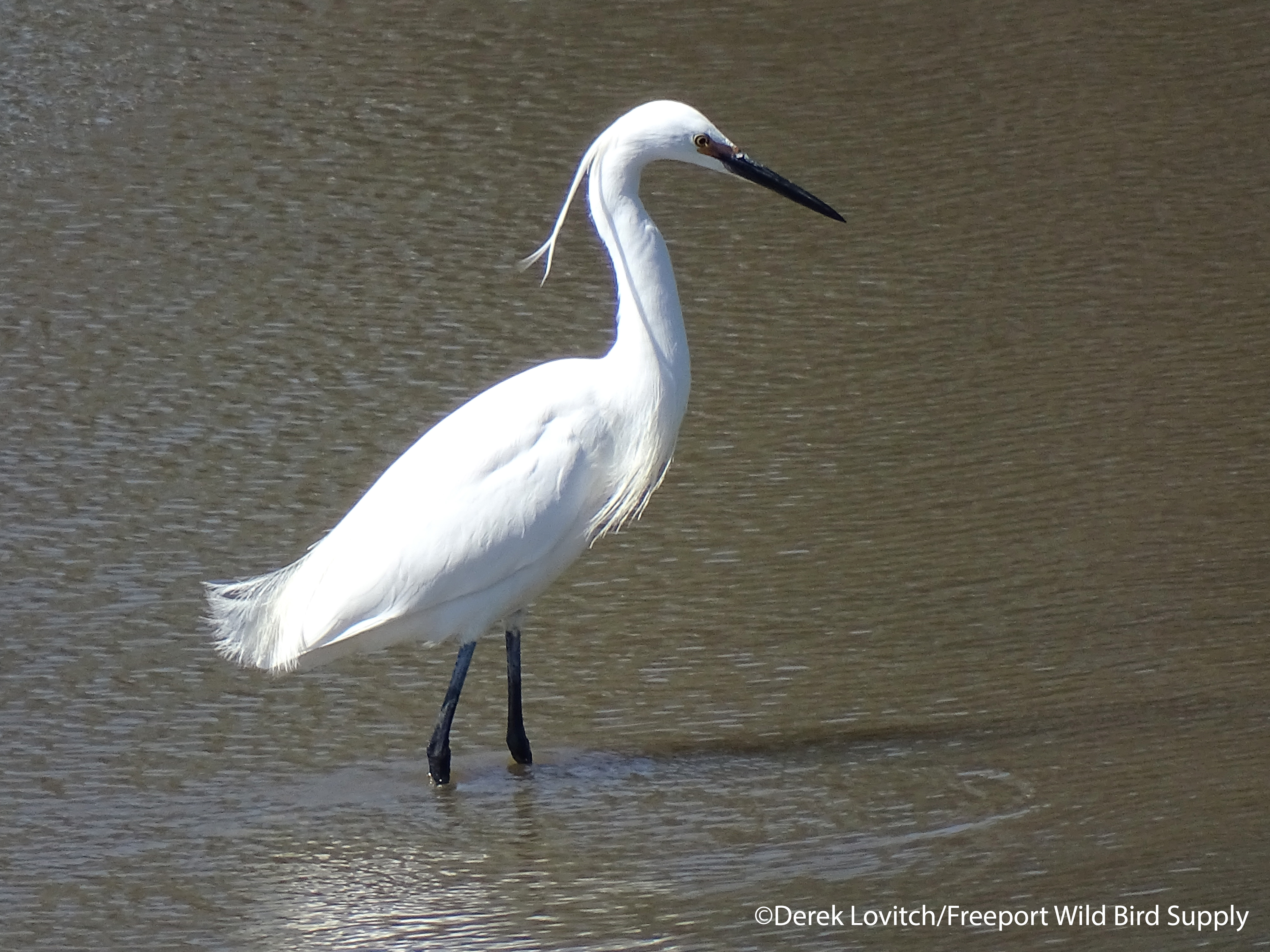
1 continuing SNOWY EGRET
8-10 continuing HARLEQUIN DUCKS
2 Alder Flycatchers (FOY)
18 species of warblers led by 45 American Redstarts, 45 Magnolia Warblers, and 35 Blackpoll Warblers, but also including at least 10 Bay-breasted and 4 Cape May Warblers
5/26, with Monhegan Spring Migration Weekend Tour group:
2 Willow Flycatchers (FOY)
1 Common Nighthawk
17 species of warblers led by 55 Blackpoll Warblers, 45 Northern Parulas, and 40 each of Magnolia and American Redstart.
5/27, with Jeannette:
1 continuing HARLEQUIN DUCK
1 Mourning Warbler (FOY)
1 Nelson’s Sparrow (FOY)
1 Pine Warbler
1 Long-tailed Duck
1 Ovenbird (my 22nd species of warbler on the weekend)
21 species of warblers led by 100 Blackpoll Warblers, 80 American Redstarts, and 70 Magnolia Warblers, but also including at least 15 Bay-breasted, 10 Tennessee, and 6 Cape May Warblers.
1 Yellow-bellied Flycatcher (FOY), our property in Durham, 5/28.
1 continuing male Lesser Scaup, Pine Point, Scarborough, 5/29 (with clients from Arkansas).
This immature male Orchard Oriole was singing up a storm – when we wasn’t being chased by a territorial male Baltimore – at tiny, but often-productive – Lake Grove Park in Auburn on the 18th.
A sneaky good flight overnight Saturday into Sunday made for a tremendous day of birding: it took me over three hours to leave my yard! The rest of the week, however, was very slow by mid-May standards, with the exception of a very surprising morning At Fort Foster on Friday. My observations of note over the past six days before I head off to Monhegan with my tour group included the following:
17 species of warblers, led by 38+ American Redstarts and 16 Black-throated Green Warblers, our property in Durham, 5/18.
The 2025 Bradbury Mountain Spring Hawkwatch came to a close on Thursday. It did not exactly end with a bang, but we had a great flight for the this late in the season on Monday, including a good movement of immature Broad-winged Hawks and Merlins, such as this one. It, and everything else that has passed over or by the summit for the last two weeks has only added to our record-breaking season.
After last week’s rarity insanity, this was a tamer, more “normal” week for mid-May. While several great songbird flights occurred this week, concentrations were few, but there were “new” birds arriving most every day. Here are my observations of note over the past seven days.
New arrivals and “first of years” this week often appeared right in front of us at our feeding stations, as if often the case this time of year. No matter how often we see them, it hard to not get excited about each and every “FOY,” especially when they look as gorgeous as a Rose-breasted Grosbeak!
While there were no incredible flights or fallouts this week, there was a nice steady progression of spring migration on several nights and days. Here are my observations of note over the past seven days, led by a slew of new arrivals.
4 Gadwall, Walsh Preserve, Freeport, 4/27.
It was another exceptional week at the Bradbury Mountain Hawkwatch. On 4/28, an Osprey was our 6,022nd migrant tallied this season – a new all-time record!
7 species of warblers, led by only 20-30 Yellow-rumped Warblers but including one LOUISIANA WATERTHRUSH, Morgan Meadow WMA, Gray/New Gloucester, 4/29. A single fly-over Fish Crow here the same day was my first ever for this patch.
1 BLACK VULTURE, Bradbury Mountain Hawkwatch, 4/29. Our record 6th of the season (but my personal FOY) – previous record was 3.
My personal “first of years” this week also included:
Back for yet another year, Jeannette and I refound the/one of the long-returning LITTLE EGRET X SNOWY EGRET HYBRIDS on the 20th at Tidewater Farm in Falmouth. It was nearly to the date that we relocated it here last year for the first time, and it really favors the tidal creek here at low and mid-tides. The long Little Egret-like neck plumes are highly suggestive of a Little, but they are coupled with some short, wispy neck plumes and yellowish lores indicative of Snowy Egret genes.\
The migratory floodgates opened this week, starting with a big flight Friday night into Saturday morning. Then, during the day, a huge hawk flight occurred. Furthermore, the weather of Friday through Saturday resulted in a small “overshoot” even where birds were facilitated further north than usual for the season, or at all. Locally, this resulted in several rather early dates for returning migrants. Another great hawk flight on the 21st, and good passerine movements on several other nights made for an exciting and productive week of spring birding. A coastal sparrow-heavy fallout for the morning of the 25th yielded another large arrival of birds, with sheer numbers dominated by White-throated Sparrows. Here are my observations of note over the past seven great days, from a returning hybrid heron to a local first Patch record:
35+ Palm Warblers, 30+ Yellow-rumped Warblers, and 20+ Ruby-crowned Kinglets, etc, Florida Lake Park, Freeport, 4/19 (with Saturday Morning Birdwalk group).
Saturday was an extraordinary day at the Bradbury Mountain Spring Hawkwatch. I was fortunate to be able to catch two hours of it, even if it was as the flight was waning. The record-shattering total of 2,712 migrant raptors crushed the old single-day record of 1,814 (5/3/2020). Today’s total was more than 700 birds more than we had for every previous day combined for this season to date. Not only that, but today’s tally eclipsed our two lowest SEASON totals 2,123 (2007) and 2,321 (2011)!
1 returning LITTLE EGRET X SNOWY EGRET HYBRID, Tidewater Farm, Falmouth, 4/20 (with Jeannette). Photo and details above.
2 SANDHILL CRANES, Morgan Meadow WMA, Gray/Raymond, 4/21 (with Jeannette).
~125 Palm Warblers, ~75 Yellow-rumped Warblers, and 2 Pine Warblers, Florida Lake Park, 4/23.
7 Brant, Wood Island (restricted access), Biddeford, 4/23 (with Bethany Woodworth’s UNE Ornithology class).
1 COMMON GALLINULE (FOY), Florida Lake Park, 4/25 (with Noah Gibb and Stacey Huth). First flushed by Noah and Stacey. Was a real challenge to get a look at, but eventually it came out to an edge for a handful of minutes. My 170th species at Florida Lake!
My personal “first of years” this week also included:
1 Blue-headed Vireo, Florida Lake Park, Freeport, 4/19 (with Saturday Morning Birdwalk group).
1 BANK SWALLOW (quite early), Florida Lake Park, 4/19 (with Saturday Morning Birdwalk group).
1 Barn Swallow, Florida Lake Park, 4/19 (with Saturday Morning Birdwalk group).
1 LOUISIANA WATERTHRUSH, Morgan Meadow WMA, Gray/Raymond, 4/21 (with Jeannette).
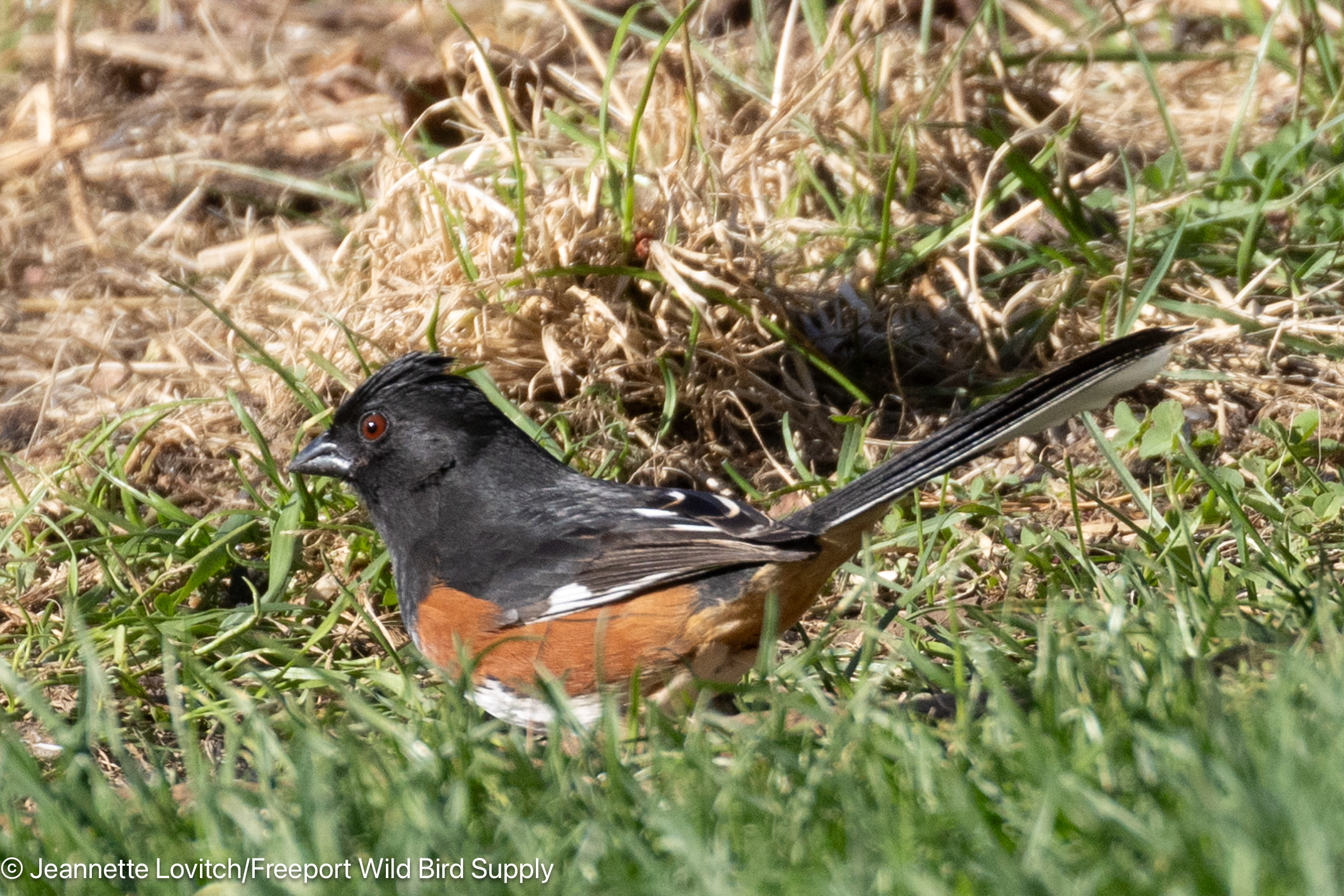
1 Eastern Towhee Wood Island (restricted access), Biddeford, 4/23 (with Bethany Woodworth and UNE’s Ornithology class).
1 Common Yellowthroat, Florida Lake Park, 4/25.
1 Black-and-white Warbler, Florida Lake Park, 4/25.
Although Black-crowned Night-Herons have likely been around for a few weeks by now, these three at Wood Island in Biddeford on the 23rd were my personal first of the year.

























 Maine Birding Field Notes