Tag Archives: birds

Monhegan Fall Migration Weekend, Sept 2022.

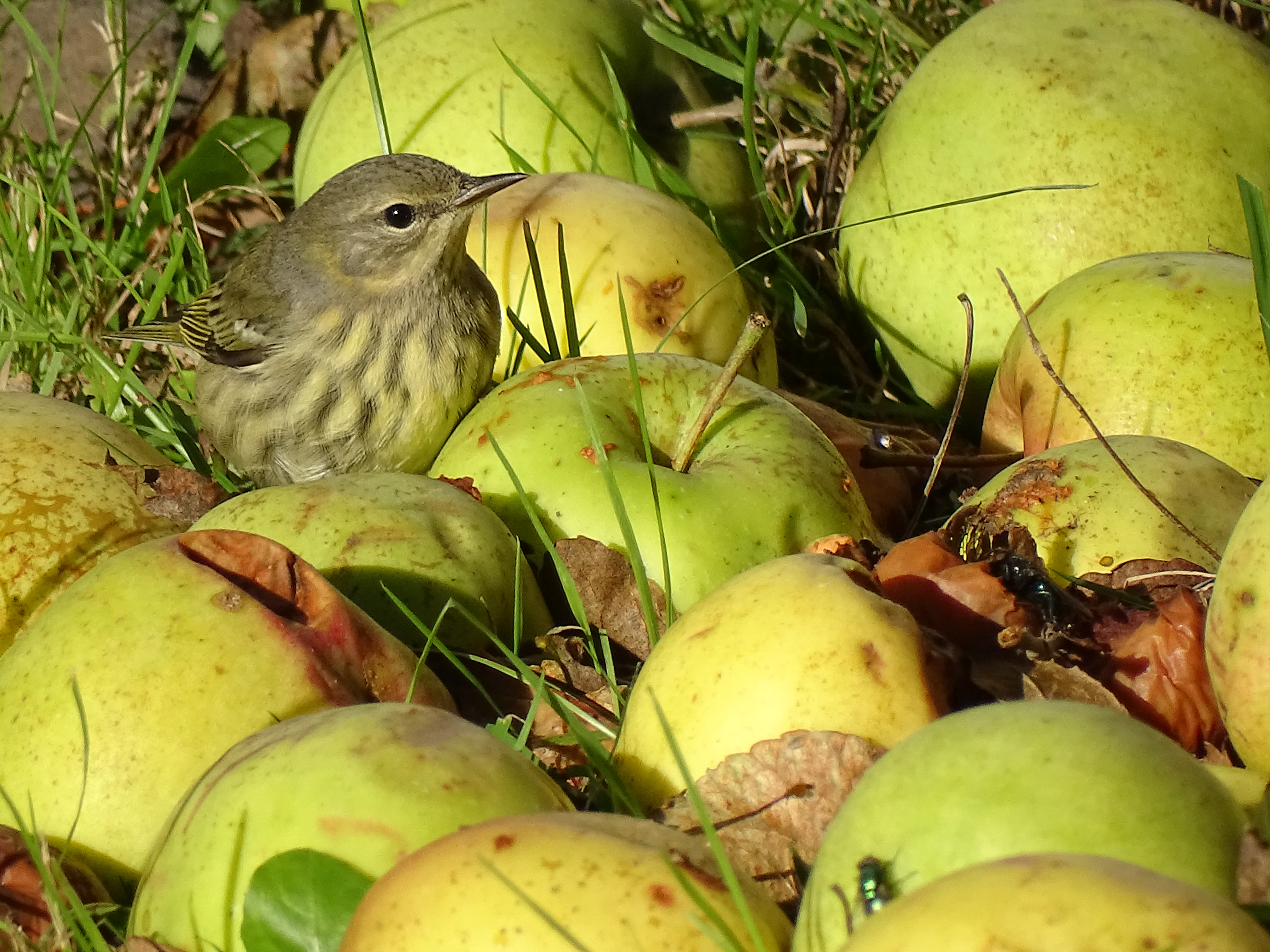
This Cape May Warbler was one of many birds that escaped the strong winds by finding large flies eating rotting apples that littered the ground all over the island.

I arrived on the island on Thursday (9/22). Be happy that the tour didn’t start this day. It rained. A Lot. However, I was greeted by 6 Lesser Black-backed Gulls on Smuttynose Island upon my arrival: 5 adults and 1 juvenile.  It turned out to be one of the highest counts ever on the island. That would also turn out to be my birding highlight of the day, as a short jaunt in the afternoon only yielded one species that I would not end up seeing with the group: a juvenile Ring-billed Gull, which is actually a very uncommon bird out here.

The sunset, however, was worth the trip, and the clearing skies foretold some good birding to come.

Overnight, a moderate migration on clearing skies brought many new birds to the island. The group met at 9:00, and we picked up the rest of the day’s participants as their ferry arrived. It was very windy today, but all day long, whenever we found a pocket of shelter, we found birds. It was mostly Yellow-rumped and Blackpoll Warblers, as expected for the date, but there was a decent smattering of diversity. 

Between the winds and the raptors, birds were keeping low though! But speaking of raptors – wow, the falcon show!  It was incredible. There is absolutely no way of knowing how many Peregrine Falcons and Merlins we saw today, with birds whipping by overhead. Some were hunting, and likely circling the island to do so, but it’s also possible that there was a steady flow of birds moving south, only pausing to wink at the island. It was impossible to quantify, but it was a whole lot of fun to watch!

Merlin.
Immature Peregrine Falcon
Northern Flickers had to stay low and out of sight to survive the day.

We enjoyed quality time with Cedar Waxwings, Monarch butterflies, and enjoyed some gorgeous Question Mark butterflies as well.  White-crowned Sparrows were rather conspicuous, and we had a good lesson in duck identification with Mallards, an American Black Duck, and a hybrid thereof all side-by-side.

Black-throated Green Warbler on post-cider-making apple mash.

Wind was whipping all night long and continued to gust well over 20mph as of sunrise. With a high-pressure system building in, and powerful Hurricane Fiona passing well to our east, the wind would just not let up. Several ferries were cancelled, and if you happened to be in the room that a screen door was slamming up against all night (ahem), then maybe you were not as rested as you would have liked.

The Gray NEXRAD radar was down, but the Caribou station showed a moderate flight of birds overnight with marginally lighter winds over the mainland. A light morning flight – mostly strong-flying Blackpoll Warblers – didn’t portend a lot of birds had arrived, but pockets of White-throated Sparrows and Yellow-rumped Warblers in places where they weren’t yesterday suggested otherwise.  In fact, there were a bunch of birds around, and it was a very productive morning!

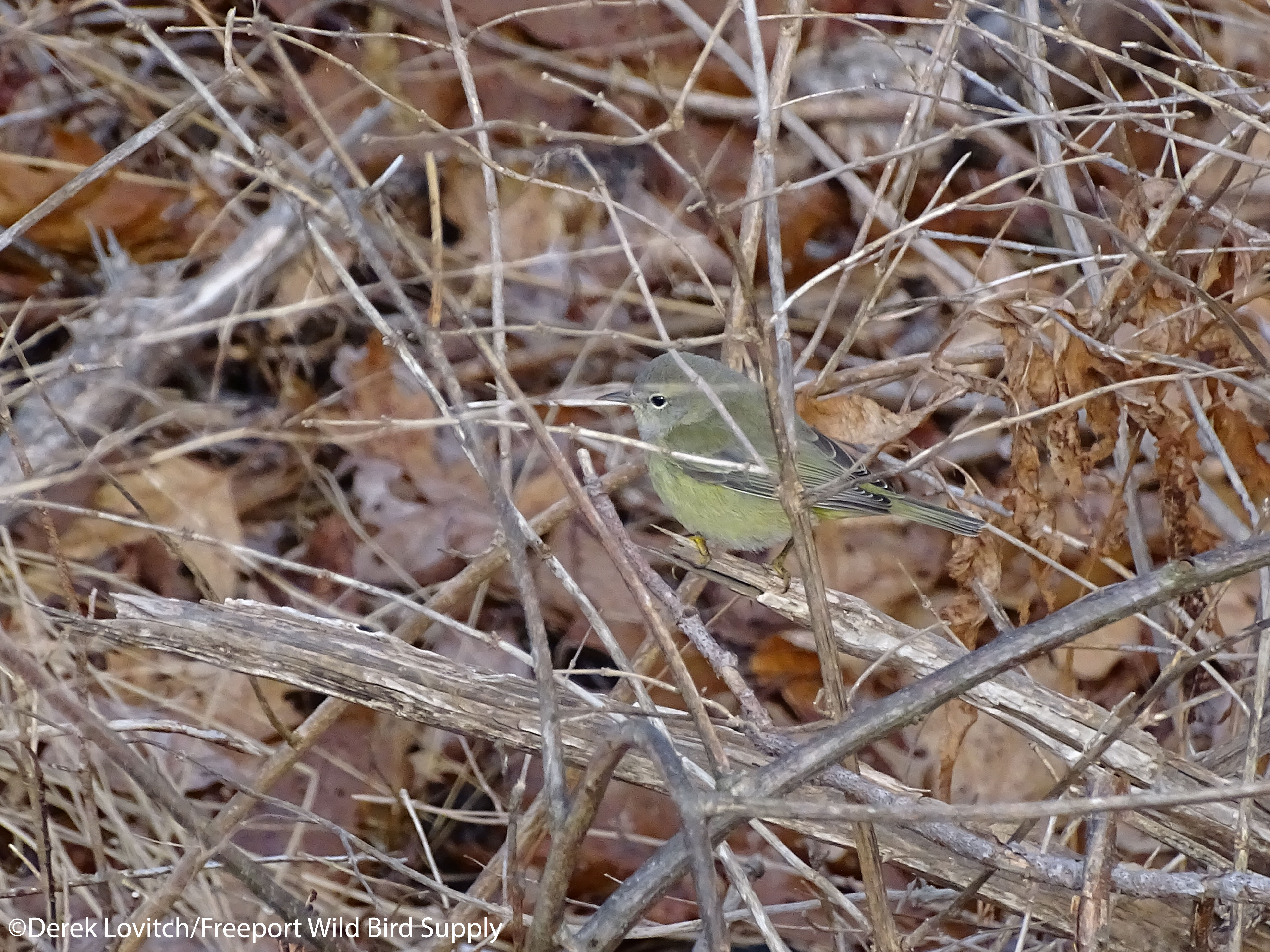
We visited with two cooperative Dickcissels that have been around for days, caught up with the lingering Lark Sparrow, and were among the lucky ones who caught up with an early Orange-crowned Warbler.   All before lunch.

Dickcissels.
Lark Sparrow

And while the wind continued to gust, and uncountable falcons continued to wreak havoc, anytime we found a corner of shelter, we found birds – and often lots of them!  White-throated Sparrows littered the woods, and because of the wind, many birds were insanely easy to see.

One of the highlights were warblers on the ground – hatches of large flies were feasting on rotting apples below laden trees, and with no flying insects able to survive a foot into the air today, we spent a lot of time looking DOWN at warblers.

Blackpoll Warblers
Cape May Warbler.
We also made it over to the cliffs to see what may have been in the island’s lee.
Female Green-winged Teal
Scarlet Tanager
We saved this Gartner Snake from a cat’s mouth on our way to not seeing a Red-headed Woodpecker that was playing hard to get for us.

Finally, as dusk fell, the winds subsided. Unfortunately, by early nightfall, the winds were already a little more westerly than we would have liked. Come Sunday morning, a surprisingly light morning flight, dominated by Yellow-rumped Warblers almost exclusively, reflected the lack of the northerly component overnight.  Birds seemed to be in lower quantities overall – a lot of Blackpoll Warblers had apparently departed – and with calm conditions (so, so welcome), there were fewer concentrations of birds. 

Throughout the day, it was relatively slow by Monhegan standards, but we just kept adding new species to the triplist, and basking in repeated stellar views. The two Dickcissels were in their usual place throughout the day, a juvenile Lesser Black-backed Gull continued, and later in the morning we found a Marsh Wren – very uncommon out here.

Marsh Wren

In the afternoon, we had a splendid sparrow session. We had our longest looks yet at the Lark Sparrow, but after a report of one Clay-colored Sparrow at the same spot, we arrived to find three!  A Lincoln’s Sparrow even came out into the open to join the Song, Chipping, White-throated, White-crowned, and Savannah Sparrows, making for an impressive total of 7 species of sparrows from one spot!  Of course, the comparative experience makes all the difference in learning these species – as most look so very different from each other. Well, most of them did, anyway!  A solid 76 species were tallied by day’s end.

Clay-colored Sparrow with juvenile Chipping Sparrow
Lark Sparrow
Blackpoll Warbler.

The last day of the tour was Monday the 26th, and our time was winding down. So were the number of non-Yellow-rumped Warblers. Some light showers overnight may have put a few birds down, but winds were southwesterly thereafter, and the Caribou radar (the Gray station was still down) showed little movement.  The morning flight was therefore virtually non-existent.

We found an Indigo Bunting, and later, an Alder Flycatcher confused and disoriented, stuck in the ice cutting display building of the Monhegan Museum.  Three Clay-colored Sparrows were still present; we had good looks at two of them at the school and had another session comparing them to the variety of ages of Chipping Sparrows they were cajoling around with. The Lark Sparrow also performed nicely for us again.

Alder Flycatcher in the museum’s ice-cutting shed. It eventually figured out the lighting and got itself out.
Clay-colored Sparrow
Two of the three Clay-colored Sparrows, here, with a Chipping Sparrow in the middle.

It felt very slow, especially in the afternoon, when we took time to enjoy Fringed Gentian and repeatedly “dip” on a Red-headed Woodpecker that most everyone except us had eventually seen. Yet interestingly, we kept finding new species for our day’s list, and by the time the tour ended in time to catch the 4:30 ferry to Port Clyde, we had accumulated our highest species total of the weekend – a goodly 81.

The apparent abundance of some species – such as White-breasted Nuthatch, which we conservatively estimated included the presence of 4-6 pairs despite apparent omnipresence and Blackpoll Warblers on the ground – continued to impress as well.

Blackpoll Warbler.

With today’s new additions along with Laughing Gulls on our ferry ride back, our total trip listed amounted to 95 species! So despite the strong winds that howled for the first two days of the tour, and unfavorable southerly winds for the last day and a half, our 95 species was exactly average for the 11 years we have run the trip on this same weekend. 16 species of warblers was a mere one species below average. Taking our challenging weather into consideration, I would absolutely call this a win! Plus, we were on Monhegan, so all is well, as an average day/weekend on Monhegan sure beats the same anywhere else – for so many reasons.

* denotes ferry ride only           

23-Sep  24-Sep  25-Sep  26-Sep

Canada Goose 8 18 19 8
Wood Duck 0 1 1 1
American Black Duck 2 2 1 1
Mallard 15 24 24 24
Mallard x American Black Duck Hybrid 1 1 1 1
Green-winged Teal 0 1 2 1
Common Eider x x x x
Ring-necked Pheasant 20 12 12 8
Mourning Dove 20 15 18 18
Ruby-throated Hummingbird 2 2 1 0
Semipalmated Plover 0 0 1 0
Killdeer 0 0 1 0
Solitary Sandpiper 1 1 1 0
Black Guillemot 2 6 2 6
Laughing Gull 0 0 0 2*
Herring Gull x x x x
LESSER BLACK-BACKED GULL 2 0 1 1
Great Black-backed Gull x x x x
Common Loon 0 0 0 1
Northern Gannet 10 10 8 20
Double-crested Cormorant x x x x
Great Cormorant 0 0 0 3
Northern Harrier 0 0 1 0
Osprey 4 4 2 2
Bald Eagle 1 0 1 2
Sharp-shinned Hawk 1 0 2 2
Belted Kingfisher 1 1 0 0
Yellow-bellied Sapsucker 1 12 10 20
Downy Woodpecker 2 2 2 2
Northern Flicker 30 40 20 30
American Kestrel 1 2 3 4
Merlin 8 15 10 10
Peregrine Falcon 10 10 5 5
Eastern Wood-Pewee 0 1 0 1
Alder Flycatcher 1 0 0 1
“Traill’s” Flycatcher 0 0 0 1
Least Flycatcher 1 1 0 0
Eastern Phoebe 6 4 4 6
Red-eyed Vireo 10 10 6 8
Blue Jay 8 6 18 12
American Crow 6 4 4 4
Common Raven 1 2 2 2
Black-capped Chickadee x x x x
Golden-crowned Kinglet 0 0 4 4
Ruby-crowned Kinglet 1 2 6 6
Cedar Waxwing 50 2 38 38
Red-breasted Nuthatch 15 10 6 10
White-breasted Nuthatch 4 6 4 4
Brown Creeper 0 0 1 1
House Wren 0 0 1 2
Carolina Wren 3 3 4 4
MARSH WREN 0 0 1 0
Gray Catbird 6 8 6 10
Brown Thrasher 1 0 0 0
European Starling 18 18 18 18
Veery 0 0 1 0
Swainson’s Thrush 1 6 3 4
American Robin 4 4 8 12
American Pipit 1 1 1 0
Purple Finch 14 8 4 4
LARK SPARROW 0 1 1 1
American Goldfinch 8 10 14 14
Chipping Sparrow 0 10 15 15
CLAY-COLORED SPARROW 0 0 3 3
Dark-eyed Junco 2 10 6 10
White-crowned Sparrow 2 4 8 8
White-throated Sparrow 26 150 50 50
Savannah Sparrow 1 4 3 4
Song Sparrow 20 30 20 20
Lincoln’s Sparrow 0 0 2 2
Swamp Sparrow 0 0 1 2
Baltimore Oriole 2 2 6 6
Red-winged Blackbird 0 1 1 1
Bobolink 0 0 1 0
Rusty Blackbird 0 0 6 0
Common Grackle 12 24 24 24
Black-and-white Warbler 1 1 0 0
Tennessee Warbler 0 15 3 3
ORANGE-CROWNED WARBLER 0 1 0 0
Nashville Warbler 0 4 1 1
American Redstart 0 2 0 2
Common Yellowthroat 8 10 4 10
Cape May Warbler 5 10 6 6
Northern Parula 1 7 4 2
Magnolia Warbler 2 0 0 0
Yellow Warbler 5 3 2 2
Chestnut-sided Warbler 0 0 0 1
Blackpoll Warbler 50 75 20 15
Palm Warbler 2 4 10 6
PINE WARBLER 0 2 0 0
Yellow-rumped Warbler 70 50 50 75
Black-throated Green Warbler 5 3 0 1
Scarlet Tanager 0 2 2 2
Northern Cardinal 6 8 8 10
Rose-breasted Grosbeak 0 0 1 3
Indigo Bunting 1 0 0 1
DICKCISSEL 2 2 1 1

Day Total 67 71 80 81
Warbler day total 10 14 9 12

4-Day Tour total= 95
Plus on my own before the tour =2 (Ring-billed Gull and Tree Swallow)
Total warblers = 16

Blackpoll Warblers were the “migrant of the weekend” with unforgettable views and quality time each day.

Sandy Point Morning Flight, 9/29/2022

There are some Morning Flights at Sandy Point that deserve their own blog. This was one of those. (I also haven’t finished my Monhegan Tour report blog yet, either).

Let’s start with the 1:00am reflectivity and velocity images from the Gray NEXRAD station. I was very happy that the station was back online in time for this incredible large flight. In fact, it was one of the densest flights I have seen in the area, and you can see how much biomass was offshore.

For an explanation of just what this means, see the “Birding at Night” chapter in my first book, How to be a Better Birder. Furthermore, see previous Sandy Point posts on the topic – you can use the search box in the upper right-hand corner of this blog page, and search “Sandy Point” or “Morning Flight.”

That got my pretty darn excited for the morning. And, well, it was a lot of fun! OK, mostly…at times I was overwhelmed and early on, I just felt beat! For the first 30 minutes, I often just clicked waves of “unidentified” as I tried to keep pace. Luckily, after the massive early rush, the flight became more manageable, although bursts of activity were barely quantifiable.

20 species of warblers, a very rare Blue Grosbeak, and my 195th all-time Sandy Point birds: 2 Little Blue Herons! It was quite a day.

Thanks to Evan Obercian, I learned a ton and had some great species tallies. I have no doubt that some of the records set (e.g. 2nd-highest tally for Cape May Warbler) came from his exceptional auditory skills – some of those birds would have just went unidentified or not even detected by me! Of course, the more eyes (and ears) the better, and Reed Robinson and Weston Barker – splitting time on the “flicker clicker” and pointing out birds landing below – helped immensely as well. Assistance was critical today.

When Evan and I finally departed for desperately needed bagels and coffee at 11:45, there were still a few birds on the move. With some raptors in the air, I am sure that if we didn’t leave then, I would be there all day. I wish I could have been, because this morning was simply awesome. Here’s the scoreboard:

  • 6:36 to 11:45am
  • With Evan Obercian, Reed Robinson, and Weston Barker.
  • 50F, mostly clear, WNW 4.5-5.1 to NW 13.3-16.1
  • 2,389 unidentified
  • 1,036 Yellow-rumped Warblers (*2nd highest)
  • 449 Northern Parulas
  • 374 Ruby-crowned Kinglets (*3rd highest)
  • 286 Yellow-bellied Sapsuckers (*new record)
  • 251 Northern Flickers
  • 155 Blackpoll Warblers
  • 138 Eastern Phoebes (*new record. Previous high of 26! And this was very conservative as many were swirling, too. But at times, steady pulses of 2-6 were clearly crossing)>
  • 105 Black-throated Green Warblers
  • 93 American Robins
  • 75 White-throated Sparrows
  • 71 Black-and-white Warblers (*new record)
  • 65 Red-eyed Vireos (*new record)
  • 64 Red-breasted Nuthatches (*new record)
  • 58 Magnolia Warblers
  • 57 Cedar Waxwings
  • 44 Blue Jays
  • 41 Dark-eyed Juncos
  • 33 American Goldfinches
  • 31 Blue-headed Vireos (*2nd highest)
  • 26 American Redstarts
  • 25 Cape May Warblers (*2nd highest)
  • 25 Black-throated Blue Warblers
  • 25 Purple Finches
  • 23 Chipping Sparrows
  • 22 Rusty Blackbirds
  • 22 Nashville Warbler (*2nd highest)
  • 22 Broad-winged Hawks
  • 18 Tennessee Warblers (*3rd highest)
  • 18 Golden-crowned Kinglets
  • 16 Palm Warblers
  • 12 Scarlet Tanagers
  • 9 Yellow Warblers
  • 8 Savannah Sparrows
  • 7 Swainson’s Thrushes
  • 7 American Kestrels
  • 7 Turkey Vultures
  • 6 White-breasted Nuthatches (*tied highest)
  • 5 Baltimore Orioles
  • 4 Ospreys
  • 4 Philadelphia Vireos
  • 4 Bay-breasted Warblers
  • 4 Black-capped Chickadees
  • 3 Brown Creepers
  • 2 Rose-breasted Grosbeaks
  • 2 Chestnut-sided Warblers
  • 2 Orange-crowned/Tennessee Warbler
  • 2 Red-winged Blackbirds
  • 2 Eastern Wood-Pewees
  • 2 Sharp-shinned Hawks
  • 2 juvenile LITTLE BLUE HERONS (**high fly-overs. My first record for Sandy Point and Patch Bird #195.)
  • 2 Lincoln’s Sparrows
  • 2 White-crowned Sparrows
  • 1 Pine Warbler
  • 1 Least Flycatcher
  • 1 Northern Harrier
  • 1 Tufted Titmouse (did not cross after a few false starts)
  • 1 Red-bellied Woodpecker (crossed after three false starts)
  • 1 Common Loon
  • 1 Eastern Bluebird
  • 1 Hairy Woodpecker (crossed after 8 false starts)
  • 1 BLUE GROSBEAK (**My 3rd-ever at Sandy Point. Spotted by Evan, photographed by Weston Barker; photo below).
  • 1 Common Grackle
  • 1 Wilson’s Warbler
  • 1 Red-tailed Hawk
  • 1 American Pipit
  • 1 Blackburnian Warbler
  • 1 unidentified Empid
  • 1 Downy Woodpecker (did not cross after 2 false starts)
  • 1 Swamp Sparrow
  • 1 Hermit Thrush
  • 1 Ovenbird (in the woods; warbler #20!)
  • X Common Yellowthroat (I don’t try and count them in the brush here, but there were a lot around this morning and many more than there have been. None even attempted a crossing as usual).

***Total = 6,183 (2nd highest all time!)***

This Week’s Highlights: September 10-16, 2022

Jeannette and I spent some quality time with “sharp-tailed sparrows” in Scarborough Marsh on Tuesday. It’s even more of a challenge this time of year with some birds still molting (such as the Saltmarsh Sparrow on the left) and other birds in fresh plumage, such as this apparent Nelson’s Sparrow on the right
(although a hybrid may be impossible to rule out).

Unlike last week, I was out birding plenty this week, including some of my favorite fall activities: Sandy Point and sorting through shorebirds.  Here are my observations of note over the past seven days:

  • Morning flight over our Pownal yard, 9/10: 6:15-7:30am: 250+ warblers of at least 10 species, led by 40++ Northern Parulas and including 1 Bay-breasted and 2++ Cape May Warbler.
  • “Zeiss Day” Hakwatch right here at the store, 9/10 (with Rich Moncrief): 95 individuals of 11 species of raptors led by 21 Ospreys and 18 Broad-winged Hawks.  Full count here.
  • 20-25 Common Nighthawks, over our yard in Pownal at dusk, 9/10, and 5-10 on 9/11.
  • 6 Northern Waterthrushes, 6 Swainson’s Thrushes, etc, Capisic Pond Park, Portland, 9/11 (with Down East Adventures Fall Songbird Workshop group).
  • 3 Saltmarsh Sparrows, 2 Nelson’s Sparrows, 15+ “sharp-tailed sparrow sp.,” 5 Pectoral Sandpipers, etc, Eastern Road Trail, Scarborough Marsh, 9/13 (with Jeannette).
  • 1 3rd-cycle LESSER BLACK-BACKED GULL, Pine Point, Scarborough, 9/14 (with clients from CA and CO).
  • 1 juv. WESTERN SANDPIPER, Biddeford Pool Beach, Biddeford, 9/14 (with clients from CA and CO; Noah Gibb photo).
  • 1500-2000 Tree Swallows, Mile Stretch, Biddeford, 9/14 (with clients from CA and CO).
  • Sandy Point Morning Flight, 9/15: 2,115 migrants of 40 species including 15 species of wablers. Full count here.
  • Sandy Point Morning Flight, 9/16: 394 migrants of 33 species including 12 species of warblers. Full count here.

This Week’s Highlights: September 5-9, 2022

Incredibly, there are still White Ibis in the Webhannet Marsh of Wells. Present since 8/10, I had at least 7 birds on the 9th, including a group of 6 that was relatively close to Drake’s Island Road.

After returning from a weekend in Massachusetts, I was unfortunately unable to get in much birding over the past six days, other than our yard and morning dogwalks. However, our yard in particular has been very productive, including over a dozen species of warblers and three continuing juvenile Ruby-throated Hummingbirds.  Furthermore, since the storm pulled away, dead calm nights have precluded any drifting of migrants and therefore there wasn’t a single morning where I attempted a morning flight count at Sandy Point. Therefore, my observations of note over the past 5 days was limited to Friday, when I actually went birding. The highlights included:

  • 1 adult with 1 juvenile CASPIAN TERN and four Common Nighthawks, Seapoint Beach, Kittery, 9/9.
  • 1 immature Great Cormorant, The Nubble, Cape Neddick, 9/9.
  • 7 continuing WHITE IBIS, Webhannet Marsh, Wells, 9/9. 1 distant to the south of Harbor Road and 6 close to Drake’s Island Road in the early pm high tide.

Tomorrow (Saturday, 9/10) is our second Zeiss Day here at the store. We’ll have a full range of Zeiss products to test drive during our morning birdwalk, and day-long hawkwatch.  For more information, see this link on our website.

The weather conditions precluded time at Sandy Point this week, but I was also suffering from peep withdrawal. Luckily, I had 255 Semipalmated and 12 Least Sandpipers to sort through at Kittery’s Seapoint Beach on Friday morning. Couldn’t tease out a rarity though, but I tried.

This Week’s Highlights, August 24-September 2, 2022

The amazing run of ultra-rare raptors in Maine continued with the all-too-short visit of a Eurasian (Western) Marsh Harrier last week. First found on North Haven on 8/25, it was then relocated the next day in Weskeag Marsh. I finished a tour that morning and raced eastward to South Thomaston. After waiting only 20 minutes (others had been waiting nearly 5 hours), it appeared and put on a show for about 30-45 minutes.  After a reappearance the next morning, it has disappeared up birders up and down the East Coast are on high alert!

After returning from our summer vacation to New Brunswick and Prince Edward Island (see link)…

…my observations of note over the past seven days included:

  • EURASIAN (WESTERN) MARSH HARRIER, Weskeag Marsh, South Thomaston, 8/26 (with Evan Obercian and m.obs). Photo above.
  • 1 Olive-sided Flycatcher, Highland Road, Brunswick, 8/27 (with Saturday Morning Birdwalk group).
  • 154 Snowy Egrets, 106 Green-winged Teal, etc, etc, Pine Point, Scarborough, 8/28.
  • 1 continuing proposed TRICOLORED HERON X SNOWY EGRET X SNOWY EGRET hybrid, Eastern Road Trail, Scarborough Marsh, 8/28.
  • 7 continuing WHITE IBIS in non-exhaustive search, Harbor Road, Wells, 8/30 (with Jeannette).
  • 6 SANDHILL CRANES (two pairs with one juvenile each), Mayall Road, Gray/New Gloucester, 9/1.
  • SANDY POINT MORNING FLIGHT (FOY), 9/2: 482 total individuals including 2 DICKCISSELS and 20 species of warblers.  Complete tally here.

And my shorebird high counts over these past ten days included some fine tallies but much reduced diversity, mostly due to recent heavy rains filling the best high-marsh salt pannes:

  • AMERICAN OYSTERCATCHER: 2 ad, Pine Point, Scarborough, 8/28.
  • Black-bellied Plover: 118, Wharton Point, Brunswick, 8/27 (with Saturday Morning Birdwalk group).
  • Killdeer: 14, Mayall Road, Gray/New Gloucester, 8/25.
  • Semipalmated Plover: 179, Pine Point, 8/28.
  • Sanderling: 2, Sebago Lake State Park (rare inland), 8/25.
  • Least Sandpiper: 66, Eastern Road Trail, Scarborough Marsh, 8/28.
  • White-rumped Sandpiper: 8, Pine Point, 8/28.
  • Pectoral Sandpiper: 1, Eastern Road Trail, 8/28 and Walsh Preserve, Yarmouth, 8/30.
  • Semipalmated Sandpiper: 1,000++, Weskeag Marsh, South Thomaston, 8/26. Honorary mention of 45-500 at Wharton Point on 8/27 – my highest tally here in years (with Saturday Morning Birdwalk group).
  • Short-billed Dowitcher: 24, Pine Point, 8/28.
  • Spotted Sandpiper: 2, Sebago Lake State Park, 8/25.
  • Solitary Sandpiper: 1, several locations this week.
  • Lesser Yellowlegs: 48, Walsh Preserve, Yarmouth, 8/30.
  • “Eastern” Willet: 16, Pine Point, 8/28.
  • Greater Yellowlegs: 15, Weskeag Marsh, South Thomaston, 8/26.
Just a very small part of an impressive feeding frenzy of Double-crested Cormorants and
Snowy Egrets that were at Pine Point in Scarborough on the 25th.

This Week’s Highlights, August 6 – August 12, 2022.

Here are three of the incredible 26 White Ibis that were found in Webhannet Marsh in Wells beginning on August 10th when one was photographed. I was able to see them in the late morning on the 11th, as the number grew. Most interestingly, we observed them eating Green Crabs (such as the one on the left)!  Well, we know we have enough of those invasive species around, so maybe we just need more White Ibis!

All. The. Shorebirds. And rare wading birds! Here are my observations of note over the past seven days:

  • 1 TRICOLORED HERON (my first pure TRHE of the year), Eastern Road Trail, Scarborough Marsh, 8/9 (with Jeannette).
  • 26 WHITE IBIS, Webhannet Marsh, Wells, 8/11. 29 were present earlier, but I had to settle for “only” 26. Either way, wow…A flock of White Ibis!  Rapidly expanding up the Eastern Seabird, this was just a matter of time.

Shorebird high counts this week, with many species now peaking:

  • AMERICAN OYSTERCATCHER: 2 ad with 1 juv, Upper Green Island, Casco Bay, 8/12 (with Seacoast Tours and private tour group). Is this a family group from Ram Island, or perhaps another pair is now breeding further up the bay?
  • Black-bellied Plover: 62, Pine Point, Scarborough, 8/8 (with client from NY).
  • Killdeer: 5, Pelreco Marsh, Scarborough Marsh, 8/7 (with Down East Adventures Shorebird Workshop Group).
  • Semipalmated Plover: 300+, Pine Point, 8/7 (with Down East Adventures Shorebird Workshop Group).
  • Whimbrel: 2, Pine Point, 8/8 (with client from NY).
  • Ruddy Turnstone: 1, 8/7 (with Down East Adventures Shorebird Workshop Group).
  • STILT SANDPIPER: 9 (great count!), Eastern Road Trail, 8/8 (with client from NY) and 8/9 (with Jeannette).
  • Sanderling: 34, Hill’s Beach, Biddeford, 8/7 (with Down East Adventures Shorebird Workshop Group).
  • Least Sandpiper: 75+, Eastern Road Trail, Scarborough Marsh, 8/8 (with client from NY).
  • White-rumped Sandpiper: 46, Eastern Road Trail, 8/8 (with client from NY).
  • Pectoral Sandpiper: 3, Eastern Road Trail, 8/8 (with client from NY)
  • Semipalmated Sandpiper: 550+, Eastern Road Trail, 8/9 (with Jeannette).
  • Short-billed Dowitcher: 44, Eastern Road Trail, 8/8 (with client from NY).
  • Spotted Sandpiper: 4, Sebago Lake State Park, 8/11.
  • Lesser Yellowlegs: 64, Royal River, Yarmouth, 8/12 (with Seacoast Tours and private tour group).
  • “Eastern” Willet: 8, Pine Point, 8/7 (with Down East Adventures Shorebird Workshop Group).
  • “WESTERN” WILLET (FOY): 3 juv, Hill’s Beach, 8/7 (with Down East Adventures Shorebird Workshop Group).
  • Greater Yellowlegs: 24, Royal River, Yarmouth, 8/12 (with Seacoast Tours and Private Tour Group).
  • WILSON’S PHALAROPE: 1 molting juv, Eastern Road Trail, 8/8 (with client from NY). Phone-scoped video here: https://fb.watch/ePAQA03F_3/
Well, it wasn’t a rare bird, but I really liked this photo of a Ring-billed Gull from Sebago Lake Park on 8/11. In came to check out if I was going to have a snack after my weekly dip in the lake.

This Week’s Highlights, July 30 – August 5, 2022.

This Black Tern (far right, with Roseate Terns) has been slowly molting out of breeding plumage since it arrived at Pine Point back on July 2nd. It was still present in the morning of August 5th.

It’s August, so as usual, shorebirds were the focus. Here are my observations of note over the past seven days.

  • 1 Surf Scoter, off Sisters Island, Casco Bay, 7/31 (with Birds of Casco Bay Tour group).
  • 1 Fish Crow continues, Point Sebago Resort (private), 8/4 (with Point Sebago Birdwalk group).
  • 1 Red Crossbill, our yard in Pownal, 8/5.
  • 1 continuing molting adult BLACK TERN, Pine Point, Scarborough, 8/5.

Shorebird high counts this week:

  • Black-bellied Plover: 39, Pine Point, Scarborough, 8/5.
  • Killdeer: 24, Mayall Rd, Gray/New Gloucester, 8/4.
  • Semipalmated Plover: 389, Pine Point, 8/5.
  • Piping Plover: 14, Popham Beach State Park, Phippsburg, 8/2.
  • Whimbrel: 3, Pine Point, 8/5.
  • Ruddy Turnstone: 2, Pine Point, 8/5.
  • Sanderling: 16, Popham Beach State Park, 8/2.
  • Least Sandpiper: 65+, Eastern Road Trail, Scarborough Marsh, 8/5.
  • White-rumped Sandpiper: 9, Eastern Road Trail, 8/5.
  • Pectoral Sandpiper: 1-2, Eastern Road Trail, 8/5.
  • Semipalmated Sandpiper: 240+, Popham Beach State Park, 8/2.
  • Short-billed Dowitcher: 13, Pine Point, 8/5.
  • Spotted Sandpiper: 2, Sebago Lake State Park, 8/4.
  • Lesser Yellowlegs: 26, Rte 1/9 salt pannes south, Scarborough Marsh, 8/5.
  • “Eastern” Willet: 14, Pine Point, 8/5.
  • Greater Yellowlegs: 9, Eastern Road Trail, 8/5.

This Week’s Highlights, July 23- July 29, 2022.

A lousy photo of great birds: two Stilt Sandpipers were in the Pelreco Marsh on 7/29.

Seal Island, Monhegan Island, and shorebird migration. Lots of “good birds” in great places this week. Here are my observations of note over the past seven days.
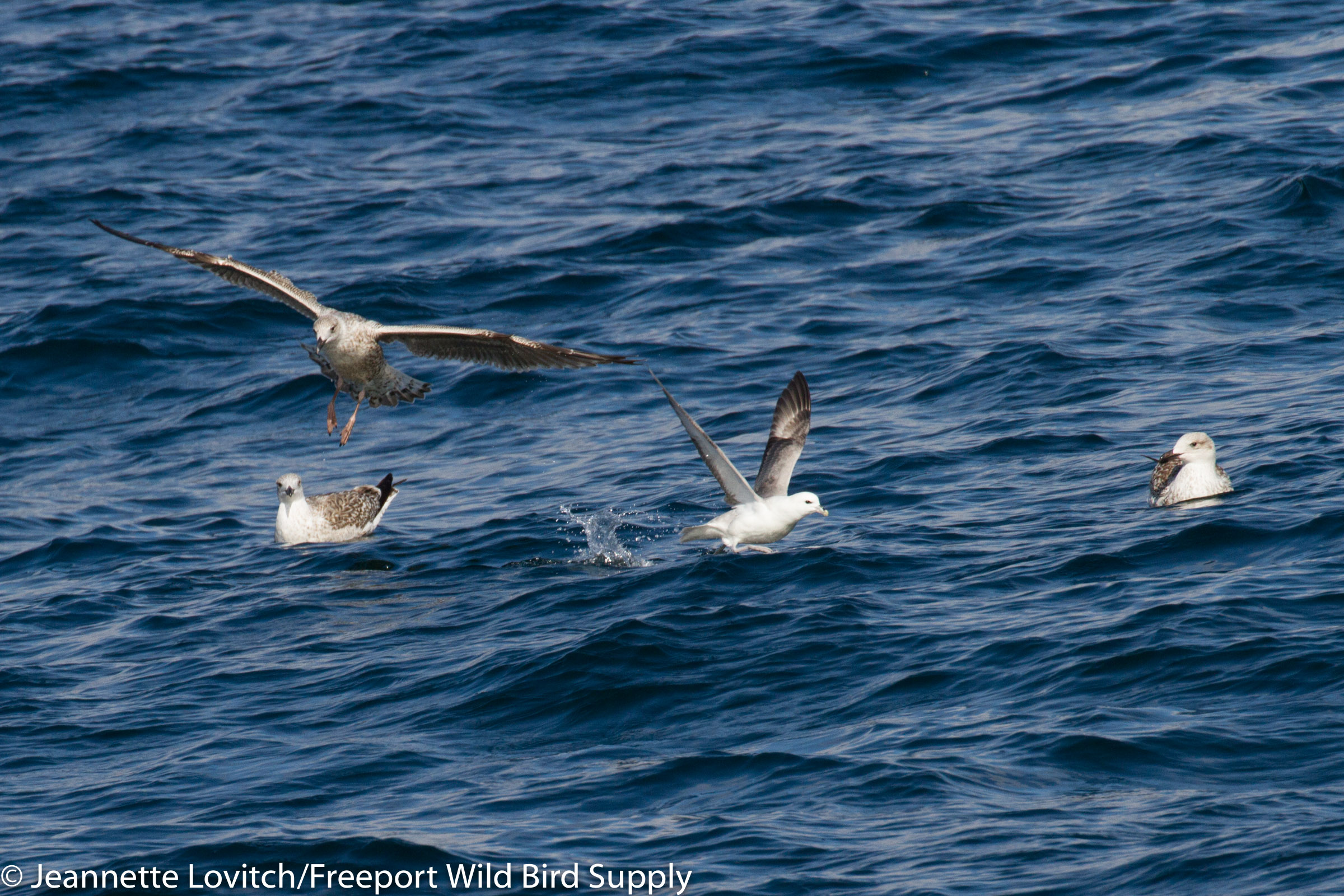
  • Red Crossbills along the coast: 1+, Pownal, 7/23; 1, Brooksville, 7/24 (with Laura Blandford); 1-2’s scattered on Monhegan Island, 7/25;
  • An incredible trip to Seal Island on 7/23 produced all of the expected breeding seabirds, a couple of Common Murres; a Peregrine Falcon show; migrating Whimbrels, one Great Shearwater, and a PARASITIC JAEGER.  Photos and the complete trip report can be found here.
  • Hardy Boat from New Harbor to Monhegan, 7/25 (with Jeannette): 6 Cory’s Shearwaters (FOY) and 8 Great Shearwaters.
  • A “non-birding” weekend with Jeannette friends to Monhegan Island 7/25-26 actually yielded some outstanding birding! The highlight was a four-species shearwater show off of Lobster Cove throughout the day on 7/25. We saw at least 3 MANX SHEARWATERS and 2 Sooty Shearwaters (FOY) among numbers of Cory’s and Great Shearwaters.  They were passing at a slow but steady rate of about 16 Great and 6 Cory’s every 5 minutes, plus an average of 9 Atlantic Puffins per 5 minutes.  Hard to tell if the shearwaters were swirling, rounding the island, or just streaming by. 1-2 ROSEATE TERNS joined Arctic and Common Terns feeding nearshore – Roseate was a new “island bird” for me.
  • Other Monhegan highlights: 1-2 Blue-winged Teal continue, 1 Great Egret (also an “island bird” for me!), and 1+ Sharp-shinned Hawk.
  • Hardy Boat departure from Monhegan to New Harbor (with Jeannette), 7/26: 1 PURPLE SANDPIPER, Outer Duck Islands from ferry seal watching diversion. Unexpected and incredible mid-summer record; no camera available and phone-binning was a complete failure.  With a few Ruddy Turnstones.  1 more Cory’s Shearwater en route.
  • 1 molting adult BLACK TERN, Pine Point Co-op, Scarborough, 7/29.

Shorebird high counts this week. I had an excellent tally of 19 species, although counts were a little low due to limited visitation to the best shorebird sites.

  • Black-bellied Plover: 14, Pine Point, Scarborough, 7/29.
  • Killdeer: 4, Rte 1/9 pannes, Scarborough Marsh, 7/29.
  • Semipalmated Plover: 159, Pine Point, 7/29.
  • Piping Plover: 6, escaping people by foraging on mudflats off the Pine Point Co-op, Scarborough Marsh, 7/29.
  • Whimbrel: 20 (flocks of 12 and 8), Seal Island, 7/23 (with “Not-so-search for Troppy Tour Group).
  • Ruddy Turnstone: 5, Outer Ducks, Monhegan, 7/26 (with Jeannette).
  • STILT SANDPIPER: 2 ad, Pelreco Marsh, Scarborough Marsh, 7/29 (John Lorenc had 5 earlier in the morning) and 1 ad, Eastern Rd Trail, Scarborough Marsh, 7/29.
  • PURPLE SANDPIPER: 1, Outer Ducks, 7/26 (with Jeannette; see above).
  • Sanderling: 4, Seal Island, 7/23 (with “Not-so-search for Troppy Tour Group).
  • Least Sandpiper: 40+, Eastern Road Trail, 7/29.
  • White-rumped Sandpiper: 6 total around Scarborough Marsh, 7/29.
  • Pectoral Sandpiper: 1, Pine Point, 7/29.
  • Semipalmated Sandpiper: 100+ Pine Point, 7/29.
  • Short-billed Dowitcher: 24, Eastern Road Trail, 7/29.
  • Spotted Sandpiper: 3, Seal Island, 7/23 (with “Not-so-search for Troppy Tour Group).
  • Solitary Sandpiper: 1-2, Monhegan Island, 7/26 (with Jeannette).
  • Lesser Yellowlegs: 18, Eastern Road Trail, 7/29.
  • “Eastern” Willet: 27, Pine Point, 7/29.
  • Greater Yellowlegs: 12, Eastern Road Trail, 7/29.

Our next event here at the store is on August 4th when we welcome Paul Doiron to read from and sign copies of his new book, Hatchett Island. His latest crime thriller takes place on an imaginary seabird island here in Maine!  More information can be found here.

2022 Seal Island Trip Report (The “not-so-search for Troppy), 7/23.

After 17 consecutive summers in the Gulf of Maine, “Troppy” the Red-billed Tropicbird failed to return to Seal Island.  Arriving in 2005, but continuing annually throughout the summer since 2009 exclusively at Seal Island, Troppy had become a mainstay of summer birding in Maine – and our tour calendar!

Arriving as an adult, Troppy was therefore at least two years old when he was first sighted in 2005.  Since most sorces seem to reference “16-30 years” as a lifespan, a 19-year old “Troppy” would be getting a little long in the tooth, err, bill.  But, as I romanticized in my 2019 article for Birding magazine, we all hoped he would find the long lost love. Maybe he did. Maybe he’s making a trop-ling somewhere in the Caribbean where he “should be.”  Yeah, that’s what I’ll think.  We need more happy thoughts these days.

Wherever he might be, it was not Seal Island or any other Gulf of Maine seabird island this summer, and with his absence, tours to Seal Island were few and far between. Our first one cancelled, but we were able to run our July 23rd departure with our friends at Isle au Haut Boat Services thanks to a dedicated group of birders who know how special Seal Island is, with or without the famous rarity.
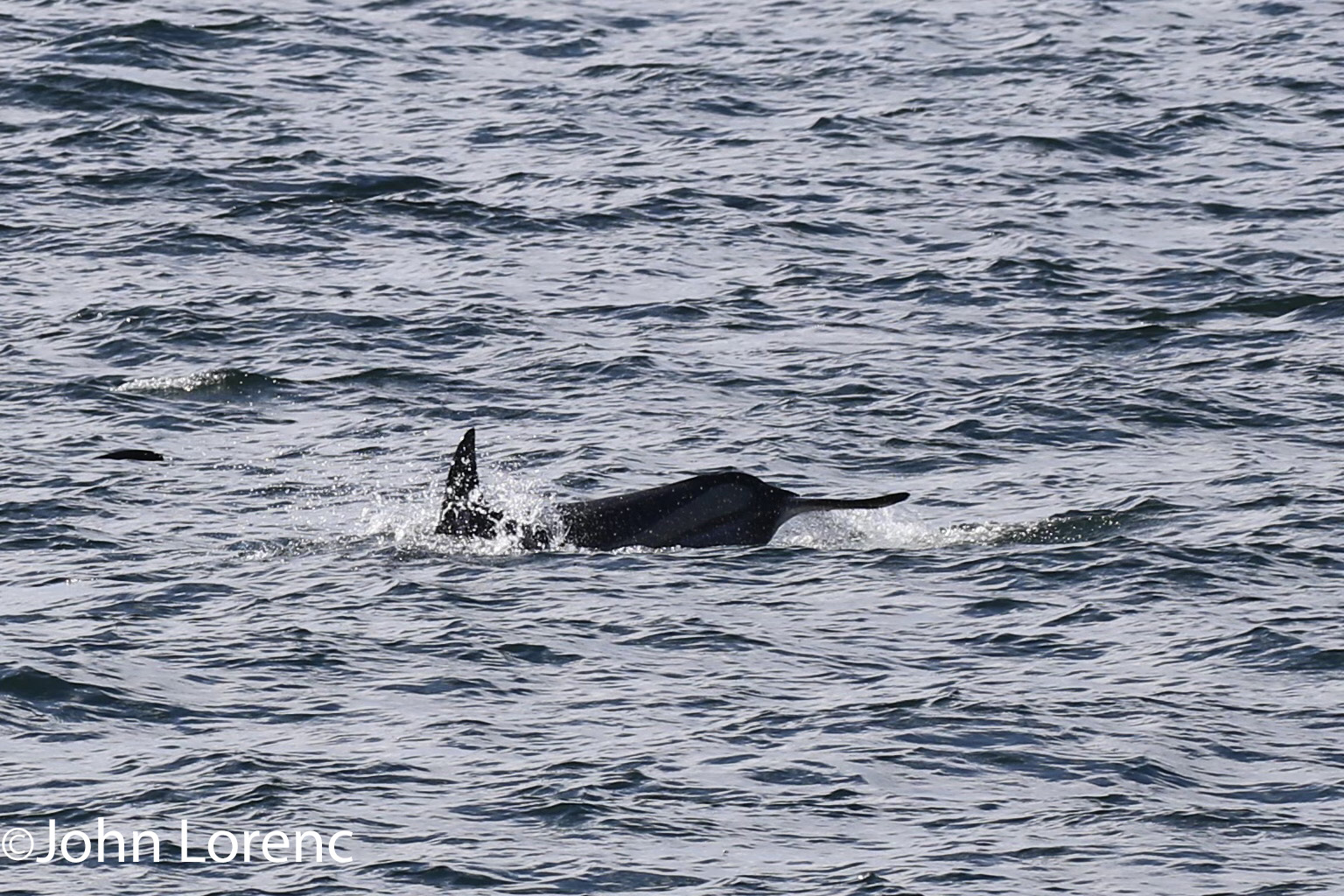
And Seal Island most did not disappoint!  Even without a tropicbird (or a Tufted Puffin for that matter, which of course we all hoped would make a reappearance).

First, the weather: it was unbelievable! Actually, it was downright hot, even offshore, and especially away from what little breeze there was when we were not motoring. Seas were a gentle 2-3 feet, with an occasional slightly larger but inconsequential swell.  Falling rapidly, it was incredibly smooth in the coves of the island, and on the way back where we enjoyed following seas for a very flat and fast ride.

Shortly after departing Stonington, we spotted our first Atlantic Puffin before we even cleared Isle au Haut.  A few more, scattered small numbers of Wilson’s Storm-Petrels (I tallied 41 in all), and a few Razorbills punctuated our trip out.  Not much was happening around Saddleback Ledge though.

Of course, the show realty began upon arrival at Seal Island.  The heat sent the alcids into the water, so virtually all of the Atlantic Puffins that were present were in the coves and often allowing close approach and stellar photo ops.

We worked our way around the island, slowly improving our views of Razorbills (at least 6) and finally finding two Common Murres. 

Razorbill
It took a while, but we finally found a Common Murre – it was even the uncommon “Bridled” morph.

We motored around the south end, where the swell was just enough to prevent us from getting too close to the Great Cormorant colony – Maine’s last. But the nests brimming with growing chicks was still thoroughly enjoyed.

Off the northeast end, we cut the engine and drifted among the alcids.  Off the open waters came a flock of 12 Whimbrel which we heard first before they flew close by. Likely having tanked up on blueberries in a barren Down East or in the Maritimes, they didn’t seem to consider pausing on the island. Later, 8 more flew by even further offshore.

Laughing Gull

While the lack of shearwaters all day was disappointing, the one Great Shearwater that we saw came in for a close look at us!

A little group of Sanderlings flew by, a few peeps were along the shoreline, and we spotted several calling Spotted Sandpipers.

And don’t forget about all of the dapper little Black Guillemots!

And of course, there were the terns. Hundreds of Arctic and Common Terns were present, with a goodly number of juveniles learning the ropes. Arctic Terns were particularly conspicuous today, with many making close approaches of the boat or disregarding our presence to take a bath.

Arctic Terns
Juvenile Common Tern.

I both enjoyed and lamented the fact that I didn’t have Troppy to stress over. In fact, without needing to be in position and waiting for him, we took advantage of the gentle seas to not only circumnavigate the island, but also spend ample time drifting in sheltered coves, photographing alcids and searching for a big, black puffin with punk-rock hair.

The eastern side.

But we still had a time limit for our charter, so we decided to spend our last moments enjoying the action at the tern colony. That’s when a Peregrine Falcon arrived.  While this is a most unwelcome guest at a seabird colony and we were conflicted about seeing it, it was also impossible not to sit back and watch the show. 

It surprised the terns by coming up and over the backside of the island, scattering the entire colony. Upon identifying the intruder, all of the adults made a beeline and began diving, mobbing, and otherwise trying to drive the predator away. Watching one of the world’s greatest – and fastest – predators in action was a real special treat, but we were also not upset that it came away empty; we were rooting for the terns.

If that wasn’t a grand finale, I don’t know what is.  Well, maybe the Parasitic Jaeger on the way back!

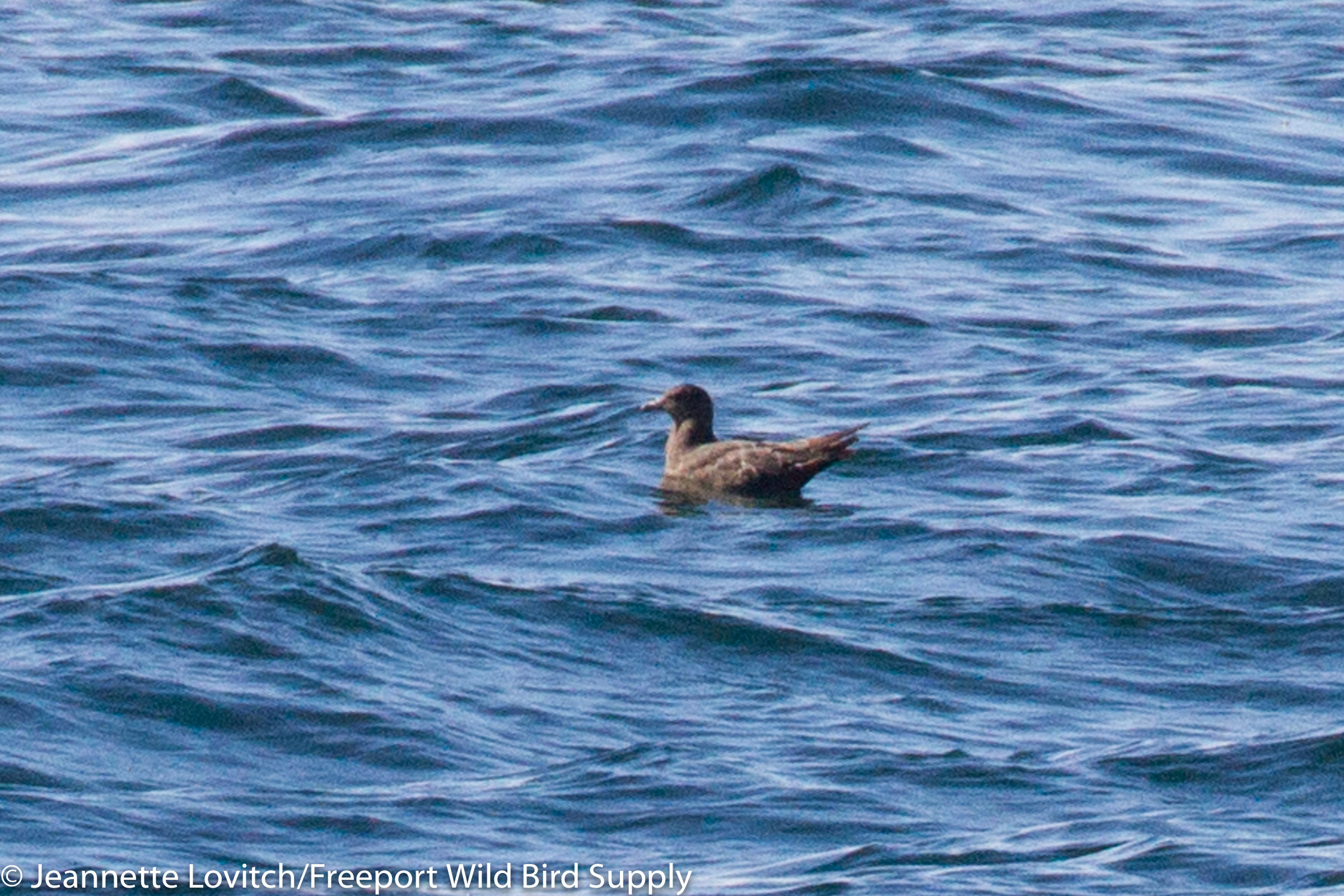
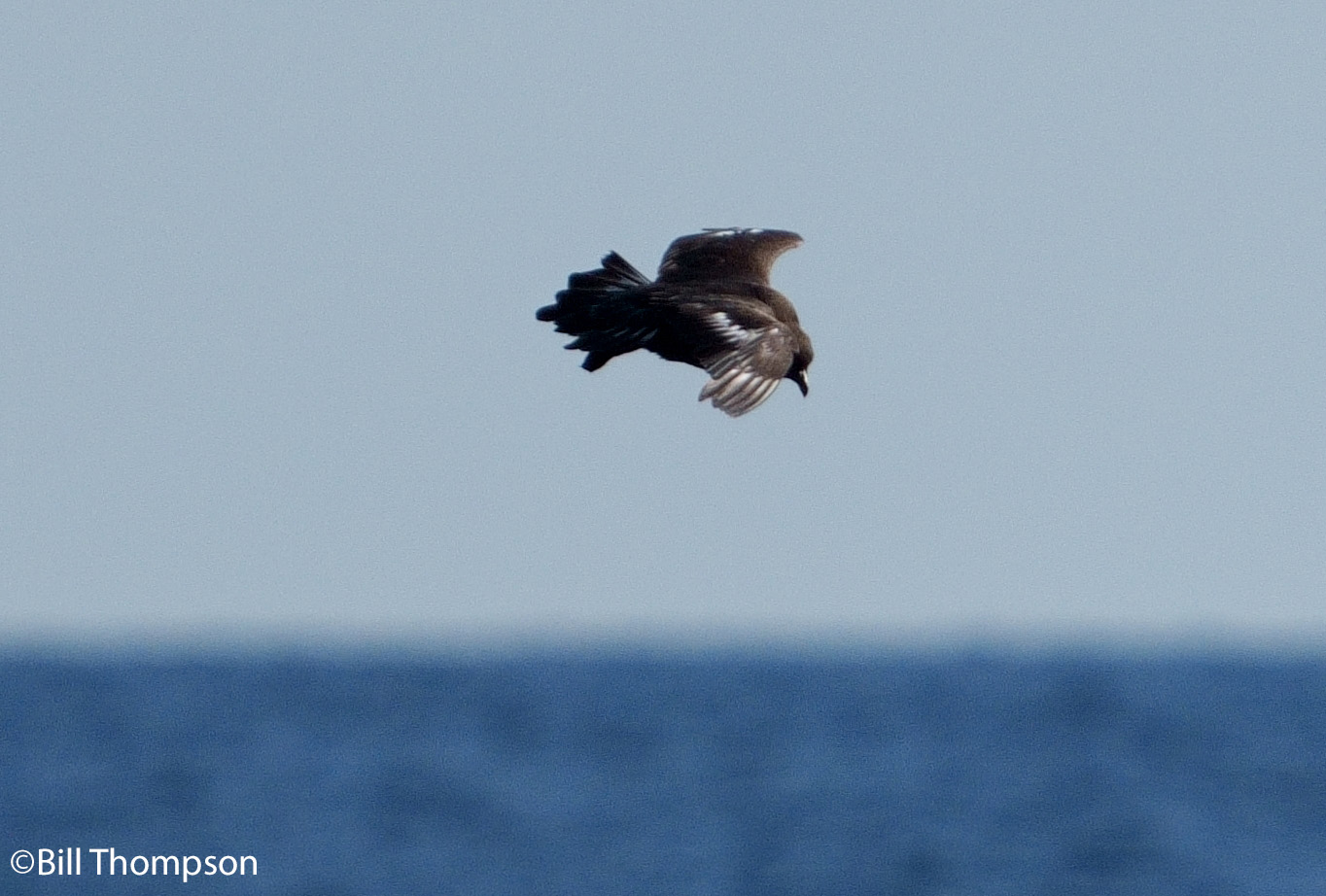
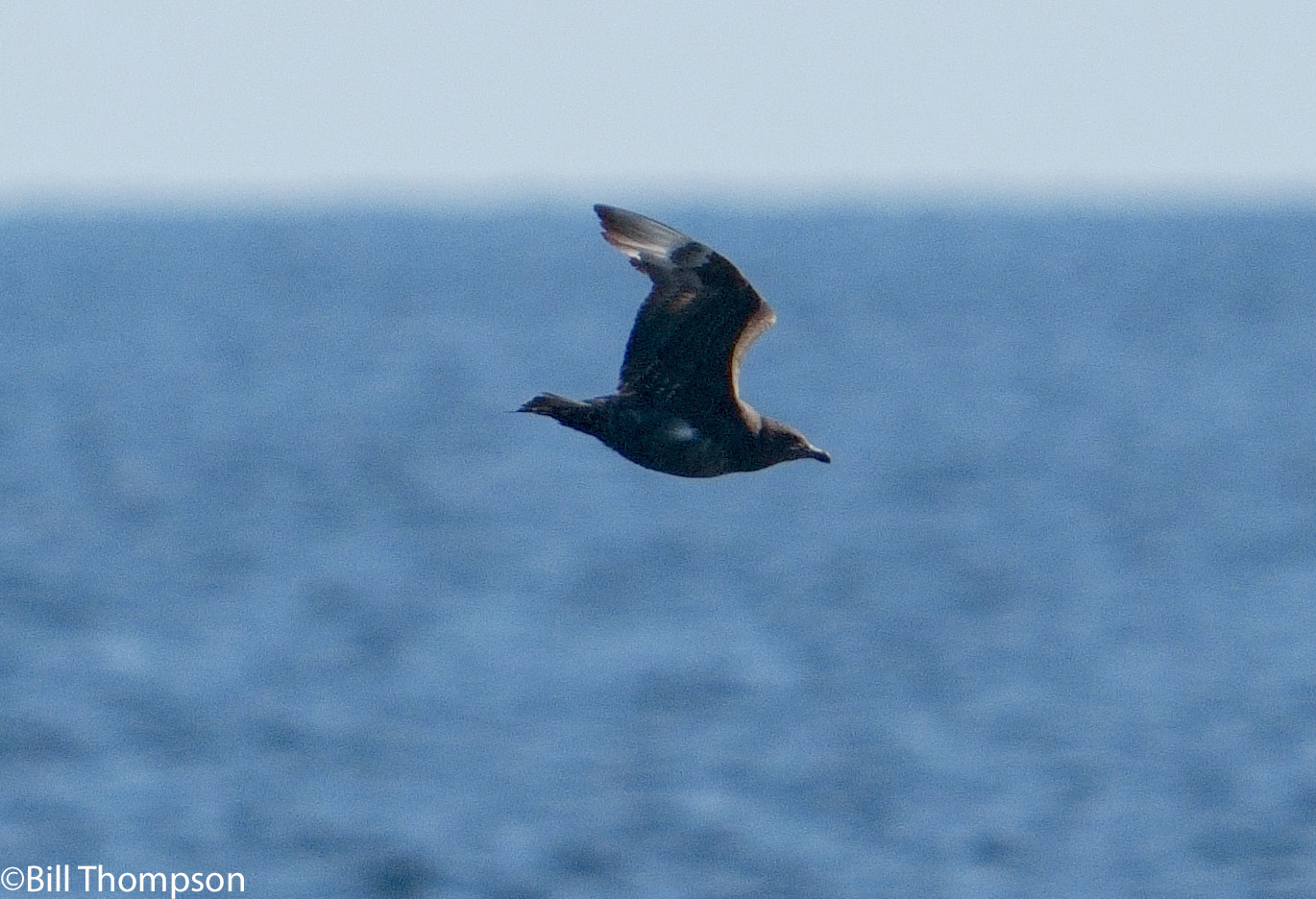
About halfway between Seal and Saddleback Ledge, I first thought it was a Peregrine tearing in after a lone Common Tern. But when it became clear that it was a jaeger, I yelled for Captain Mike to “step on the breaks.”  We watched the dogfight for several minutes, and it was spectacular to see. It was just far enough away that we couldn’t tell if the tern gave up its fish, but it definitely didn’t do it willingly. 

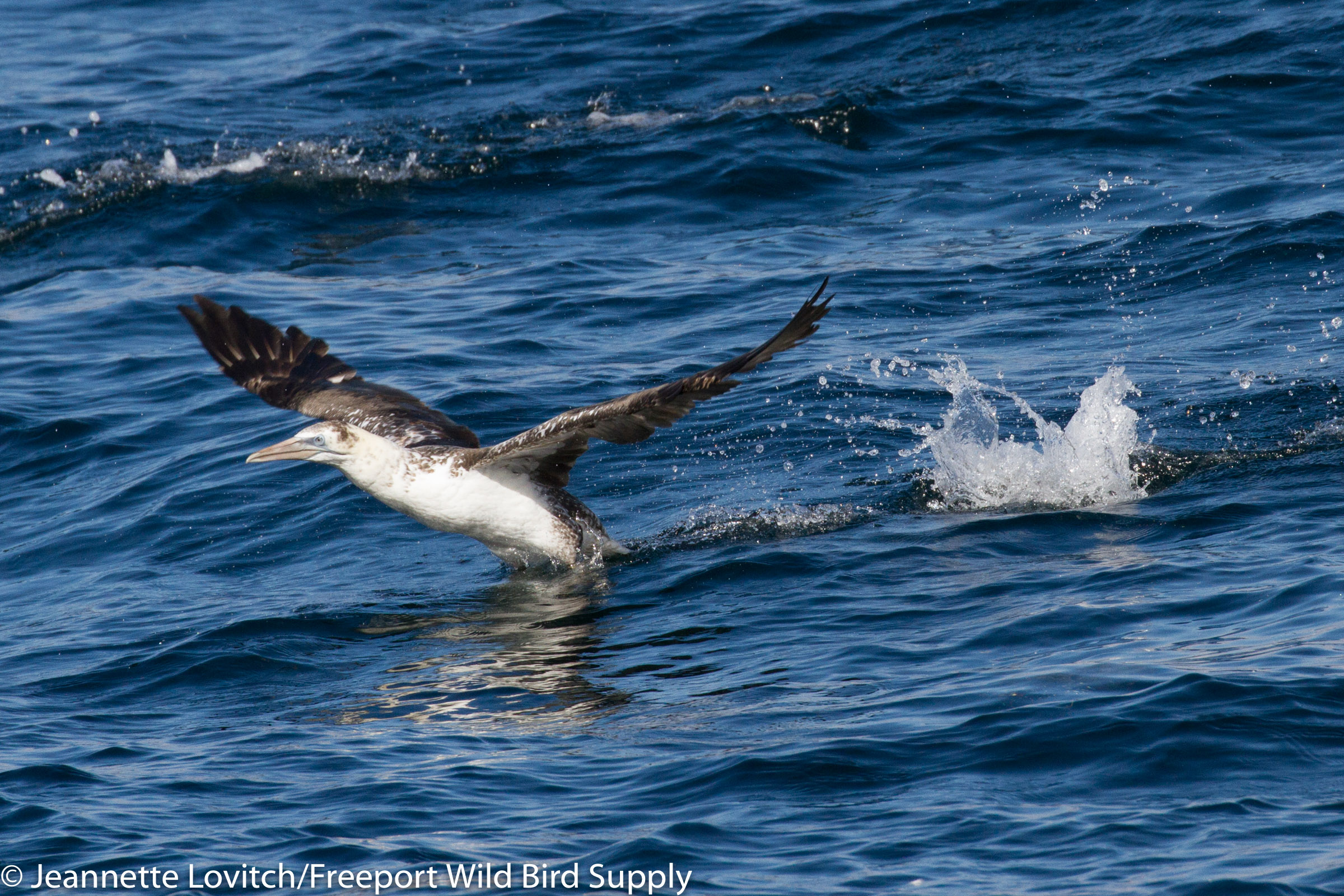
Shortly thereafter we began to run into little rafts of Razorbills (a conservative tally of 36, plus 7 more between Saddleback Ledge and Stonington) and scattered Atlantic Puffins. We had quite a few more Wilson’s Storm-Petrels on the way back, and finally some Northern Gannets.

Wilson’s Storm-Petrel

We even had time to check some rocky islets for roosting shorebirds (none), loafing Harbor Seals (lots), and maybe spot something like a Great White Shark (nope; but the boat had one the very next day!).

Gray Seals and Harbor Seals. Note the “horse’s head” profile of the Grays, verses the puppy-like Harbors.

In other words: what a trip! And exactly why it’s well worth a tour to Seal Island regardless. That being said, I must admit, it was not quite the same without “Troppy.”  But as a guide, my stress level was a lot lower!  Having seen him 9 times out of 12 visits to Seal, I consider myself beyond fortunate. I’m also so happy to have shared his glory with so many other birders on all these tours. So, wherever you are, Troppy, I’ll continue to lead trips to Seal Island in your honor!

Looking back at “Troppy’s Cove”

This Week’s Highlights, July 9- July 15, 2022.

The local “bird of the summer,” Henslow’s Sparrow, continues this week in Brunswick. (Note: photographed only via patience, no playback or other harassments).

Another dandy week of summertime birding produced the following highlights for me.

  • 2 continuing HENSLOW’S SPARROWS, Crystal Spring Farm, Brunswick. Quite a bit of my birding time this week was spent enjoying this exceptional visitor.  I saw it on 7/9 with our Saturday Morning Birdwalk group for our 246th all-time Saturday Morning Birdwalk bird!  On 7/11, Jeannette and I, along with two other birders saw both individuals at the same time for the first time – as two scopes had both birds in view at once in the opposite direction here. No disputing that!  However, the echo and acoustic issues are very apparent here – at one point, we could easily have argued there were four birds! Interestingly, on 7/12, Cameron Cox and I were unable to confirm the presence of two birds, as was the case in my visits prior to the 11th.  Phone-scoped video from the 11th here.
  • HYBRID HERONS of Scarborough Marsh. On 7/11, Cameron Cox and I spotted both continuing birds. The proposed Snowy Egret x Tricolored Heron x Little Egret was off of Eastern Road, while the proposed Snowy Egret x Tricolored Heron x Snowy Egret was incredibly close and cooperative at Pelreco Marsh. Video of the latter bird here.
  • 1 subadult LESSER BLACK-BACKED GULL, Pine Point Beach, Scarborough, 7/11 (with Cameron Cox).
  • 2 Fish Crows, Point Sebago Resort (private), Casco, 7/14 (with Point Sebago Resort birdwalk group).  Are these two from the Windham colony or outliers of this slowly expanding species?
  • Eastern Egg Rock/Whale-watching/and mini-pelagic tour out of Boothbay Harbor with our partners Cap’n Fish’s Cruises, yielded the following highlights in addition to a fantastic show at Eastern Egg Rock from Atlantic Puffins; Roseate, Common, and Arctic Terns; Black Guillemots; etc): 2 Razorbills on Eastern Egg, a mere two Wilson’s Storm-Petrels and handfuls of Northern Gannets offshore, but an insane show from a breaching Humpback Whale. And for the record, the Tufted Puffin appeared there a mere 3 hours after our boat left.

Each summer, I begin reporting my “shorebird high counts this week” here. Really, I do it for my own note-keeping and organization, but I hope at least a few folks find value in it. This year, I am starting it early, even though diversity is expectedly low and I didn’t get to a lot of shorebird sites this week. However, numbers are picking up dramatically, and this bears watching. Unfortunately, large numbers of adult shorebirds in early July could portend widespread breeding failure. Therefore, I will organize my counts here so I can compare it to previous seasons.

  • Black-bellied Plover: 2 first-summer, Pine Point Co-op, Scarborough, 7/11 (with Cameron Cox).
  • Killdeer: 35, Crystal Spring Farm, Brunswick, 7/12 (with Cameron Cox).
  • Piping Plover: 4+, Western Beach from Pine Point Beach, 7/11 (with Cameron Cox).
  • STILT SANDPIPER (FOF, Early!): 2, Pelreco Marsh, Scarborough Marsh, 7/11 (with Cameron Cox).
  • Least Sandpiper: 60, Eastern Road Trail, Scarborough Marsh, 7/11 (with Cameron Cox)
  • Pectoral Sandpiper (early, FOF): 2, Eastern Road Trail, 7/11 (with Cameron Cox).
  • Semipalmated Sandpiper: 15, Eastern Road Trail, 7/11 (with Cameron Cox).
  • Short-billed Dowitcher: 60, Eastern Road Trail, 7/11 (with Cameron Cox).
  • Spotted Sandpiper: 2, Eastern Egg Rock, 7/15 (with Cap’n Fish’s Cruises Pufifn/Whale Watch Combo tour group.)
  • Lesser Yellowlegs: 30, Eastern Road Trail, 7/11 (with Cameron Cox).
  • “Eastern” Willet: 20+ Pine Point, Scarborough, 7/11 (with Cameron Cox)
  • Greater Yellowlegs: 20, Eastern Road Trail, 7/11 (with Cameron Cox).

Our next boat trip is on Saturday, July 23rd to Seal Island. No “Troppy” this year, but you know we’ll be looking hard for the Tufted Puffin! A limited amount of space on this extended charter is available here.

The stellar Roseate Tern show continues at Pine Point Beach. Cameron Cox and I enjoyed
a nice photo session with them there on the 11th.