Tag Archives: Biddeford

Post-Arthur Beach Birding and Catch-Up

I know I haven’t been blogging much this summer, but I hope you know that doesn’t mean I haven’t been birding. Quite the contrary, actually! My June was as busy with tours and private guiding as it could have been, and with some other projects going on, much of my birding was rather purposeful. Of course, there was some wholly-recreational birding mixed in as well from time to time. Despite my irregular blogging, I did my best to keep folks up to date with my birding adventures and discoveries, mostly with near-daily posts to our store’s Facebook Page. (Remember, you need not be “on Facebook” to browse the posts of a business page.)

It was a busy month. But that’s not a complaint. And now, Jeannette and I are off to Colorado for a bona-fide vacation, to visit friends, family, and yes, do some birding. But first, I had Sunday morning to find some birds. My third attempt to organize a charter to see the Tufted Puffin that has been seen irregularly at Machias Seal Island (3rd or 4th record for the entire Atlantic Ocean!) was thwarted by residual high seas and localized damage from the passage of Tropical Storm Arthur. While Arthur took away my chance to see a Tufted Puffin in Maine waters, I was hoping it would produce some rarities of its own.

In a tropical system, birds are sometimes entrained in the eye, while others are pushed out ahead of the storm. This displacement usually occurs in the strong northeastern quadrant of the storm, and birds escape the eye when it hits land. With the storm passing to the east of Maine, I did not expect to see any vagrants on Friday. However, when the storm reached land in southern Nova Scotia on Saturday morning, birders there were in prime position for rarities. And sure enough: lots of Black Skimmers, several Gull-billed, Royal Terns, and Forster’s Terns…all rarities from points further south. (You can peruse the reports from the province, here).

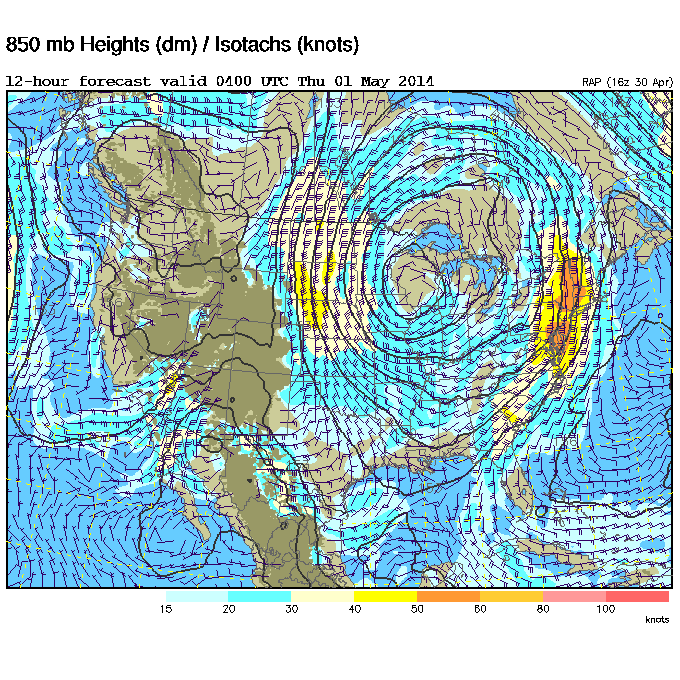
These birds, commonly displaced by tropical systems, were likely picked up by the storm as it passed over North Carolina’s Outer Banks on Thursday. Here’s the cumulative wind map as of 11:00am on Friday, with the storm’s center already off of the Delmarva Peninsula.
entrainment

As the storm hit Nova Scotia, birds finally had a chance to escape its grips. But notice the winds for Maine – they were already strong out of the northwest, on the backside of the storm (note the light winds of the disintegrating eye over the northern Bay of Fundy).
current winds,7-5-14

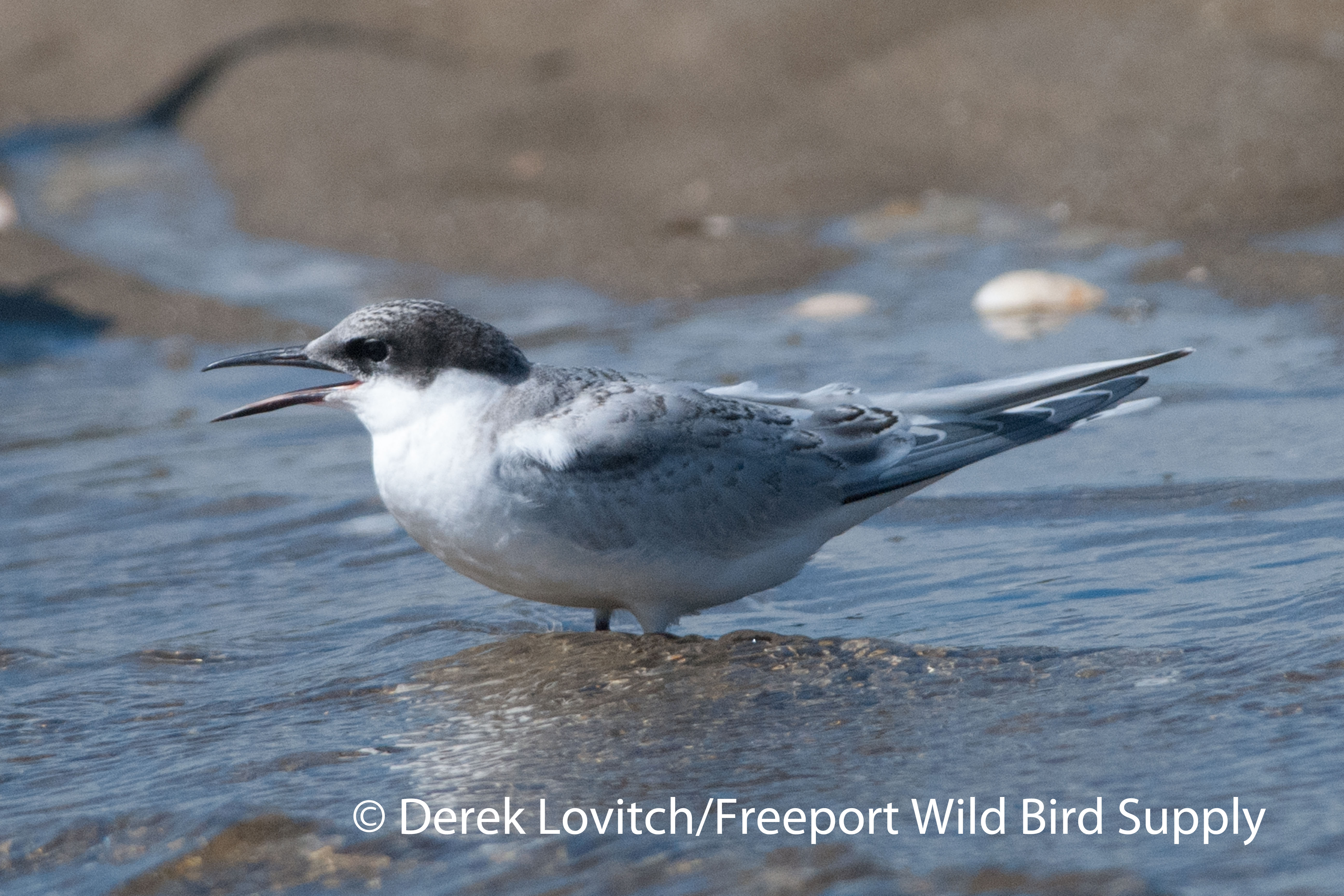
So Nova Scotia birders were having a lot of fun…and I was not seeing a Tufted Puffin. So instead, I decided to comb the beaches to look for some of these terns that perhaps are already returning south. While most of these birds likely made a bee-line straight across the Gulf of Maine on their return journey, some birds might conceivably follow the coast.

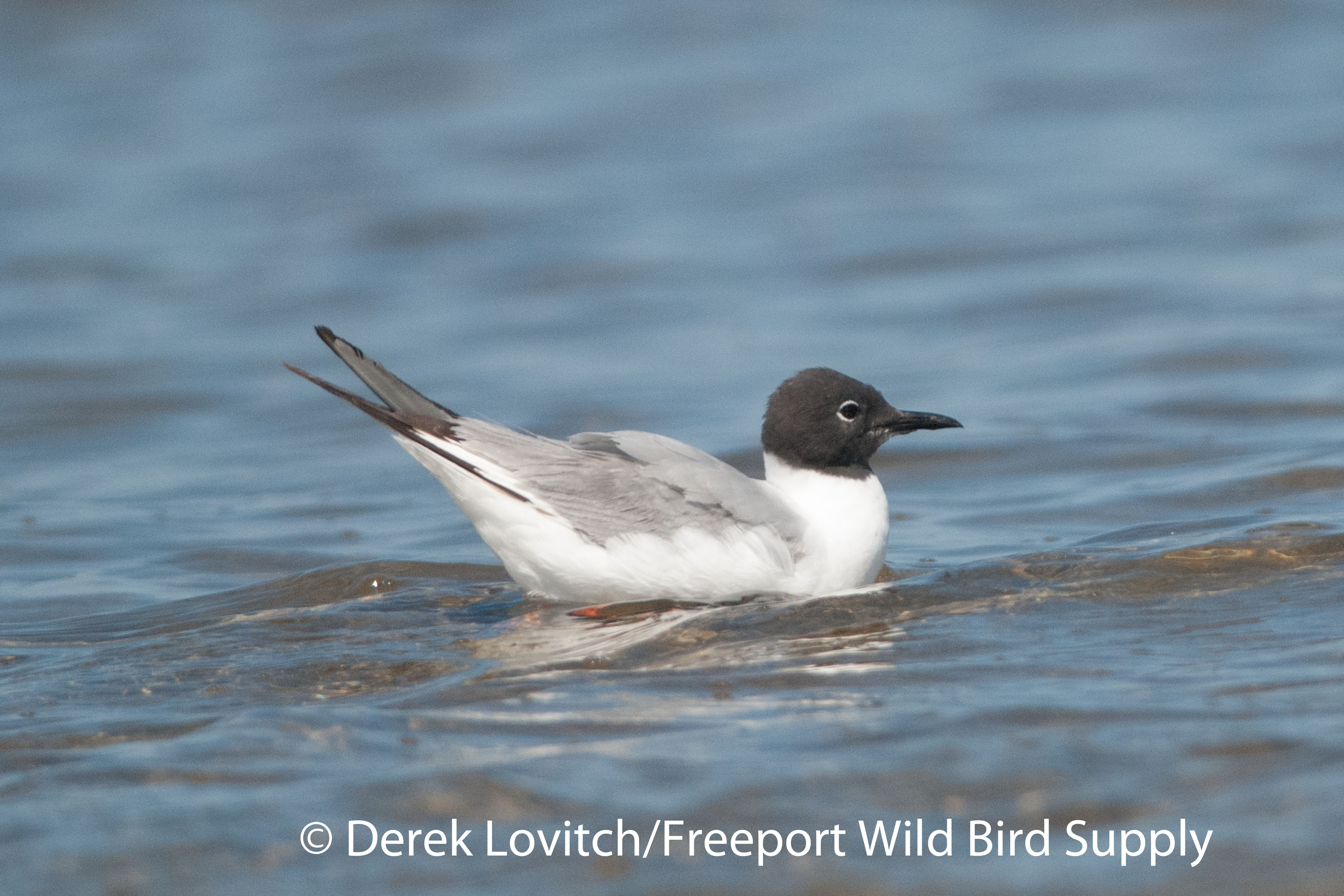
After birding Eastern Road at high tide (34 Least Sandpipers and 20 Short-billed Dowitchers – fall migration is definitely underway!), Lois Gerke and I headed to Pine Point Beach, where we spent a little more than an hour watching from the jetty. As the tide went out, exposing the sandbar and flats, Common, Least, and a few Roseate Terns were feeding, roosting, and loafing with at least a hundred Bonaparte’s Gulls. But alas, there was nothing unusual among them.

I then checked the mudflats from the co-op (more Short-billed Dowitchers, a few more Roseate Terns, and a lot of feeding Common Terns) before I spent the remainder of low tide at Hill’s Beach in Biddeford. At least 8 Roseate Terns, 75+ Bonaparte’s Gulls, 17 Short-billed Dowitchers, and my first Whimbrel of the year joined the regulars, but alas, no rare terns.

It appears I had the right idea, but just the wrong timing. Later in the afternoon, a Royal Tern was found at Hill’s Beach. And then, this morning, two Black Skimmers were roosting at Stratton Island. There are still quite a few waifs being seen in Nova Scotia, so it is conceivable that the coming days could see some reports of returning rarities here in Maine. Unfortunately, this morning, I had time only for a quick stroll at Capisic Pond Park. No rare terns there, but I did see my first Monarch butterfly of the season – which, the way things are going for this species, is even more exciting.

Meanwhile, indirectly storm-related were the 6 Glossy Ibis that were a little bit of a surprise on my Saturday Morning Birdwalk along Highland Road in Brunswick. The heavy rain nicely saturated the soil, and gulls and these ibis had moved inland to take advantage of the bounty.

In other birding news, a pair of Evening Grosbeaks has been frequenting our Pownal feeders – which are particularly exciting considering the dearth of them this year…in fact, these are the only ones that I have seen all year long. And, even more unexpectedly, three Eastern Bluebirds have hatched right here at the store!

Arthur gave us a momentary glimmer of rarity fever, and “fall’ shorebird migration is definitely underway. But July is for breeding birds – from terns to “sharp-tailed” sparrows to bluebirds and warblers. In other words, there’s no such thing as the “summer birding doldrums!”

Biddeford Pool Snowy Owl and Weather Discussion

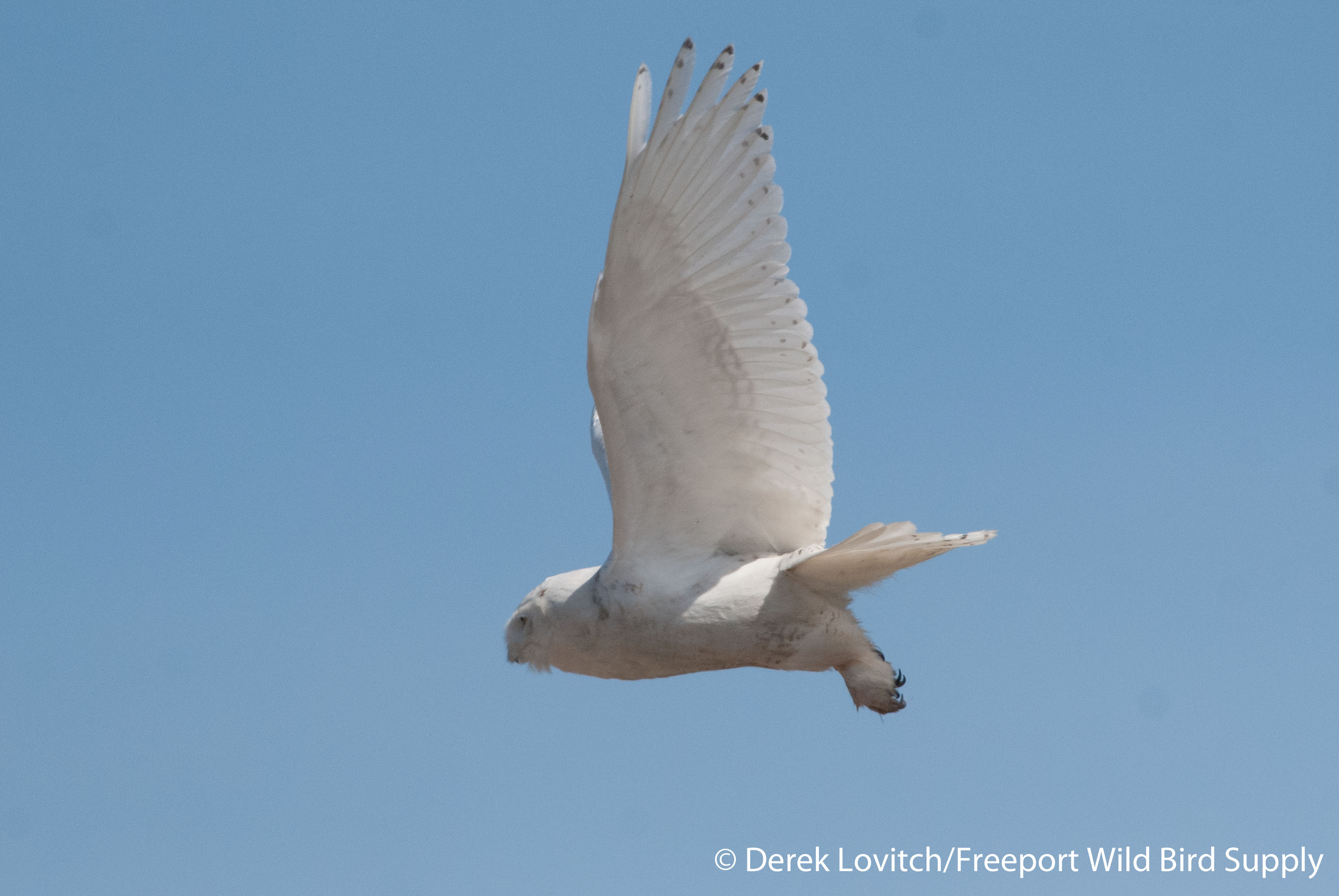
This was the birding highlight of Tuesday morning’s visit with Katrina to Biddeford Pool.
DSC_0005_SNOW1,Bidd Pool, 4-29-14_edited-1 DSC_0016_SNOW2,BiddPool,4-29-14_edited-1 DSC_0023_SNOW3,BiddPool,4-29-14_edited-1

The first photo was taken shortly after our arrival to The Pool, while the second two -with much more pleasant skies – was taken as we departed around noon.  Although its plumage is much more faded and worn now, it is likely that this is the same Snowy that has spent the winter near the western end of mile stretch.  Today, it was hunting voles once again on the incoming tide from one of its favorite rooftop perches.

While this was my latest Snowy in Maine, it is far from unprecedented following a massive irruption year. But seeing a Snowy Owl a mere two days away from May is still special; it could be a lifetime before we see an irruption of this magnitude again.

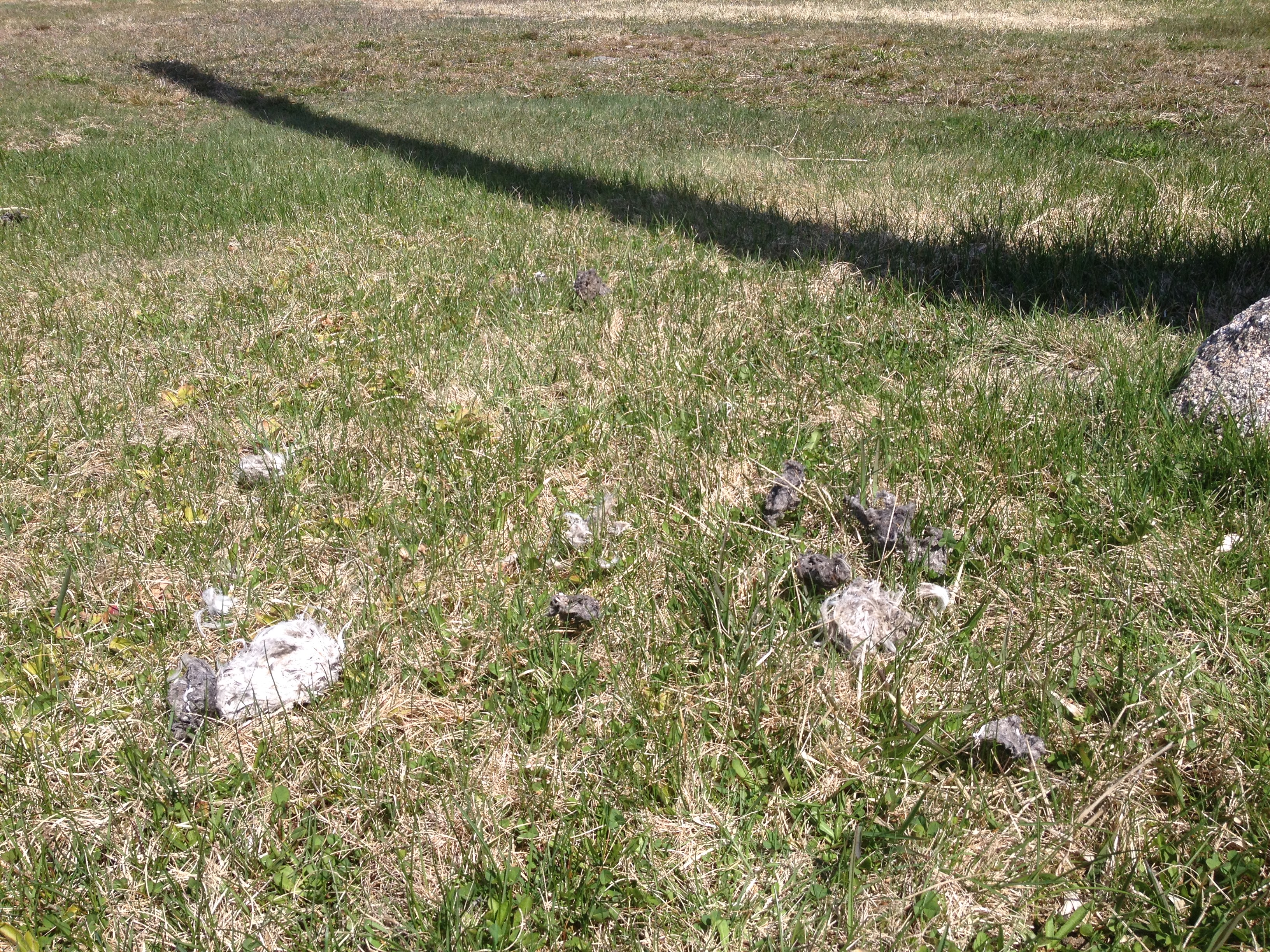
A little further down the road, where the second of the Mile Stretch Snowies overwintered, we found a pile of pellets below one of that bird’s favorite perches. Most were full of small mammal fur and bones, and the skulls were all of voles. One pellet, however, was pure thick, downy feathers – probably from a duck.
IMG_3465

But with migration still at a virtual standstill, the rest of the day’s highlights were rather few and far between; very few migrants were around. A pair of Blue-gray Gnatcatchers around the beach parking lot was a nice, and I had my first House Wren of the year in the neighborhood, and my first Laughing Gull off of East Point. 1-3 Black-crowned Night-Herons were also my personal “FOY’s,” but they have probably been present here for at least a couple of weeks now.

IMG_3449
The seas and skies sure looked like winter today, and the raw winds and low temperatures – and Snowy Owl! – sure made it seem more like early March than late April!

But yeah, migration has been kinda slow.  Although, interestingly enough, the House Wren and Laughing Gull were right on time for me, most of the usual late April arrivals (Black-throated Green Warbler, Northern Waterthrush, Black-and-white Warbler, etc) are nowhere to be seen, and really, have I only heard one Blue-headed Vireo so far this season?

We all know spring has been running late this year, and I would say bird migration is now about 7-10 days behind schedule (catching up from the 2-3 weeks behind schedule of early April).  Recently, our onshore winds (not conducive to facilitating migration for birds heading north) in this stubborn blocking pattern (a pattern that has seemingly become more and more regular recently) have not helped matters.  Here, for example, is the wind map from Sunday, showing the low pressure system just south of Nova Scotia that was pumping in those onshore winds since late last week.
wind map, 4-27-14

But take a look at today’s wind forecast…
wind map, 4-30-14

Here we see the massive low pressure system marching across the Great Plains. But now, on the leading edge of it, we see a deep southerly flow, originating all of the way from the Gulf Coast.  This southerly flow is expected to last for at least the next 48 hours.

Although the weather will remain unsettled – and we’re about to get a pretty good soaking tonight and tomorrow – through at least the weekend, I would expect quite a few migrants to begin to trickle in over the next few days. Simply put, some birds are running low on time to wait!  And, as evidenced by the 73 and 110 raptors tallied passing The Brad over the last two days, respectively, despite easterly winds, it is clear that some birds simply have to make some progress, and will do so when conditions are at least somewhat favorable (or, at least not completely unfavorable).

Furthermore, these deep southerly flows at this time of year can facilitate the arrival of annual spring “overshoots” from the south (see Chapter 4 of my book, How to Be a Better Birder for a full explanation of this phenomenon). When I see weather patterns such as this, I begin to think about things such as Summer Tanagers, Blue Grosbeaks, and Hooded Warblers!

At least potential food sources (insects emerging from ponds; insects attracted to blooming trees) are getting a little chance to catch up before the bulk of migrant birds arrive.  This phenology, or timing, of the plant and insect cycle is critical for migrant birds that need to refuel and/or then fuel up for the next leg of their journey. “Weird” weather such as this doesn’t bother birds as much as it bothers us, but it becomes a real problem when the weather results in the lack of specific food sources.

I haven’t seen much in the way of nectar-producing flowers yet – but Ruby-throated Hummingbirds and Baltimore Orioles often begin to arrive in the first week of May. This is going to be one of those seasons where well-stocked feeding stations are critically important to migrants, especially those that need insects and nectar.  Our hummingbird and oriole feeders are out and ready for business, and our feeder is stocked with insect-laden suet blocks (check out our “Photos from Friends of the Store” gallery on our Facebook Page to see what one particular feeding station in Brunswick has been seeing eating insect suet) and live mealworms.  It lies in wait for the first hummers, orioles, or any other migrants in need of assistance…oh yeah, any vagrants from the south, too!

Shorebird Pseudo-Big Day

Luke Seitz and I embarked on a semi-serious “Shorebird Big Day” on Wednesday.  I say “semi-serious” because we didn’t exactly try too hard to build our list…at least not after our first stop.  Instead, we spent more time watching shorebirds, studying, and photographing them.  We still, however, tallied 14 species of shorebirds, but instead of heading inland to pick up Killdeer, Spotted Sandpiper, Solitary Sandpiper, and Upland Sandpiper, we just splashed in the water and studied dowitchers at Hill’s Beach.  It wasn’t a bad way to spend a gorgeous summer day.

We began in the morning at high tide by scouring Scarborough Marsh from the Eastern Road Trail.  If we were to have a chance at 20 species of shorebirds on the day, we would need to add a rarity or two from the pannes.  Unfortunately, high water levels from all of the recent rain minimized habitat, and shorebirds were not as plentiful as we would have preferred.  We did, however, see 2 or 3 Stilt Sandpipers, a decent bird in the summer.  Other than Greater Yellowlegs, with about 55 individuals, numbers were relatively low: 75 Semipalmated Sandpipers, 40 Short-billed Dowitchers, 25+ Least Sandpipers, 8 Lesser Yellowlegs, 3 Black-bellied Plovers, 2 Semipalmated Plovers, and 1 Willet.

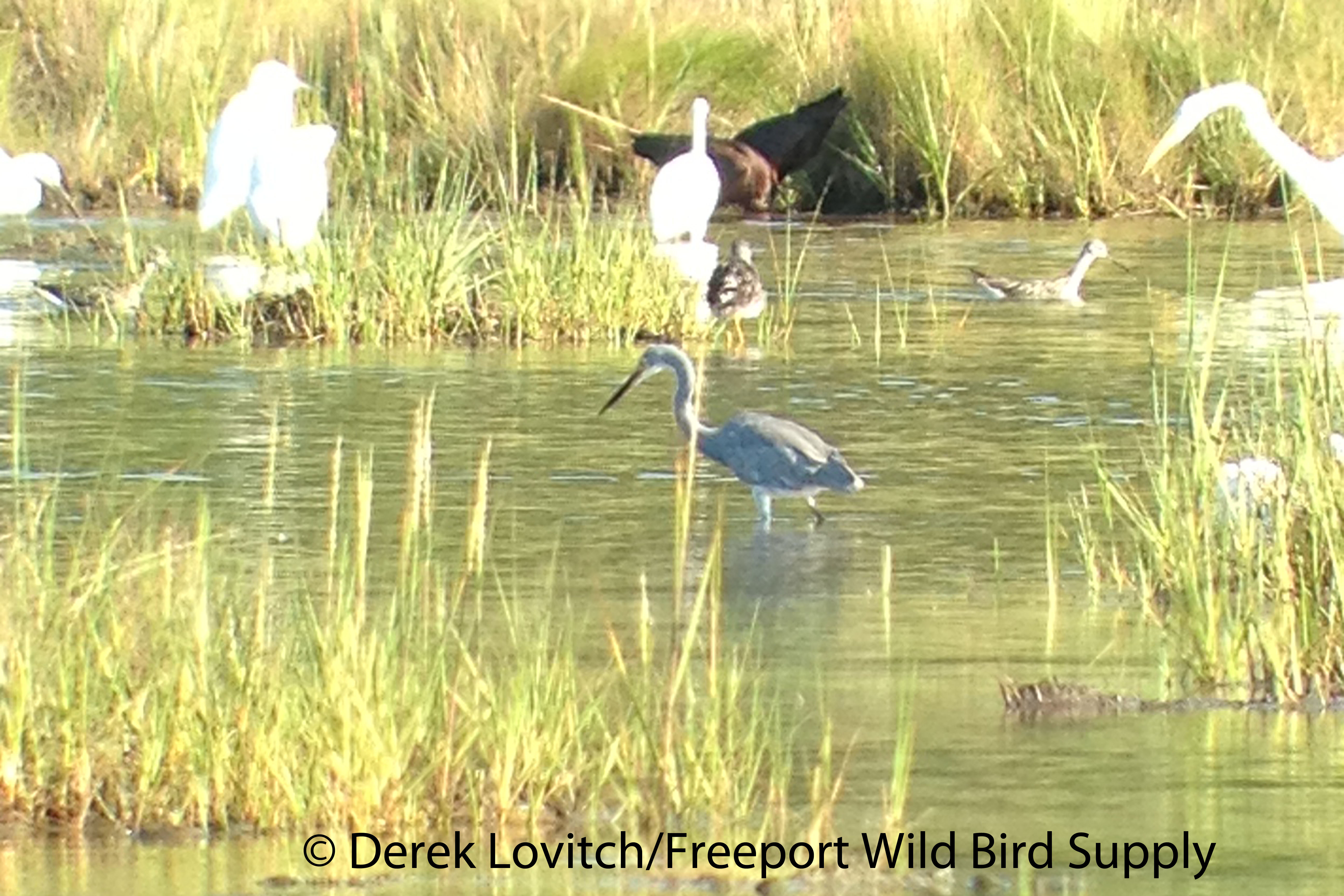
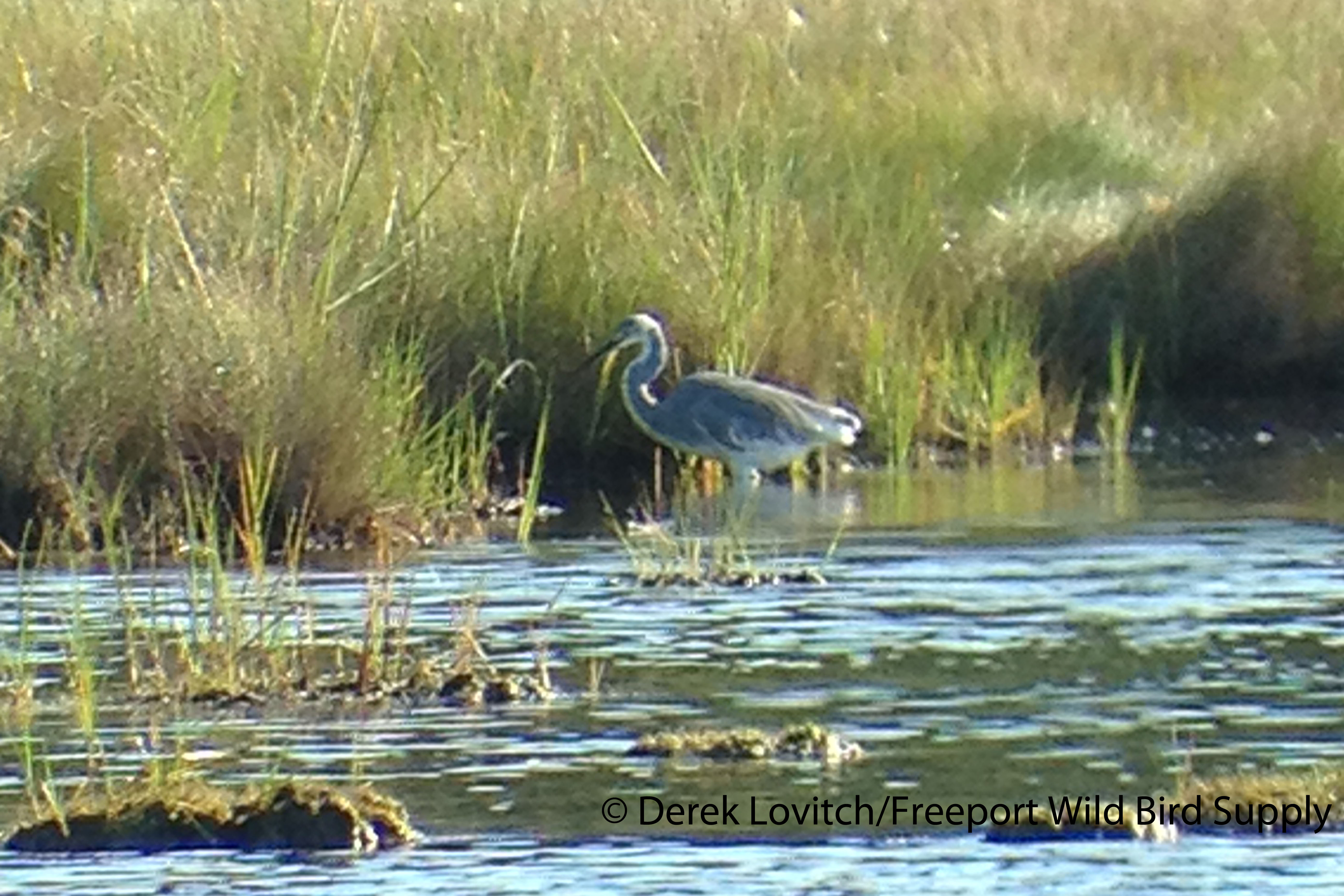
Making up for the low shorebird totals, however, were the high wading bird totals: 85 Snowy Egrets, 60 Great Egrets, 40 Glossy Ibis, 39 Little Blue Herons, and 9 Great Blue Herons.  In addition to teasing out one of the continuing White-faced Ibises and spotting the continuing full Tricolored Heron, we also saw BOTH of the presumed Tricolored Heron x Snowy Egret hybrids.  Yup, there are two of these beasties out there!

The first is the bird that has been present all summer, with a ghostly cast to an otherwise Tricolored-like pattern.  Pure white is confined to the belly, the throat, and a thin line in the foreneck.
TRHExSNEG-A1,ScarMarsh,7-31-13_edited-1
TRHExSNEG-A2,ScarMarsh,7-31-13_edited-1

However, recently, a second bird has appeared, which is very reminiscent of the first, but has some splotchy areas of white, including mostly white wingtips.  I believe I saw this bird on July 18th when I was out with a client and sans camera; I remember commenting (and my field notes confirm) that I didn’t remember so much white in the wing
TRHExSNEG-B1splotchy,ScarMarsh,7-31-13_edited-2
TRHExSNEG- B2splotchy,ScarMarsh,7-31-13_edited-1

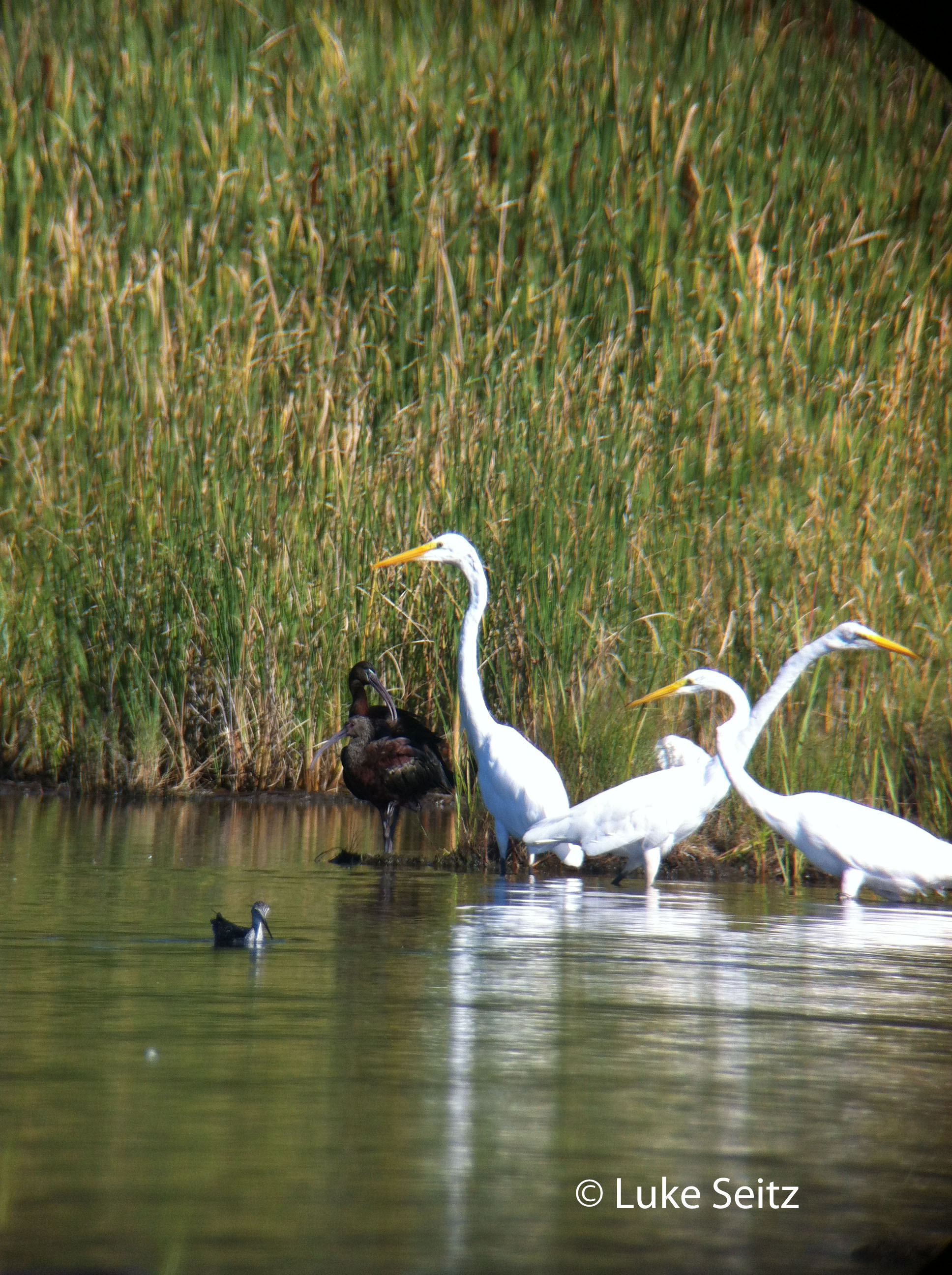
Meanwhile, it was nice to see that at least one of the White-faced Ibises continue, although at this stage of molt, it was impossible to age.  It was also not very close.  Here’s Luke’s best shot (mine were not passable at all).
WFIB_byLuke,EasternRd, 7-31-13_edited-1

After spending more time with waders and a little time of sparrows, such as this Nelson’s Sparrow…
NESP,EasternRd,7-31-13_edited-1

…we attempted to regain our shorebird focus over at Pine Point, as the tide was rolling out.  The mudflats had plenty of birds, including a few birds that would be important for a Shorebird Big Day, such as the pair – now, featuring two fledglings! – of American Oystercatchers (the only breeding pair in the state!).  We also had four Whimbrel, along with 296 Semipalmated Sandpipers, 124 Semipalmated Plovers, 25 Willets, 25 Short-billed Dowitchers, 19 Black-bellied Plovers, 3 Ruddy Turnstones, and 2 each of Lesser and Greater Yellowlegs.

But with a morning total of a mere 11 species of shorebirds, we elected for a leisurely lunch at Saco Island Deli instead of heading inland to work on our shorebird list – it is really too early in the season for a true Shorebird Big Day, but I am not sure if I have ever hit 20 in July, and since this was a day we both had a chance to get out all day together, we figured it was at least worth considering.  Anyway, on the incoming tide, we visited Hill’s Beach, where once again, we elected to forego shorebird listing for shorebird “quality” time, and therefore just spent close to three hours playing in the sand.

While the two Red Knots…
DSC_0175_REKN1,HillsBeach,7-31-13_edited-1

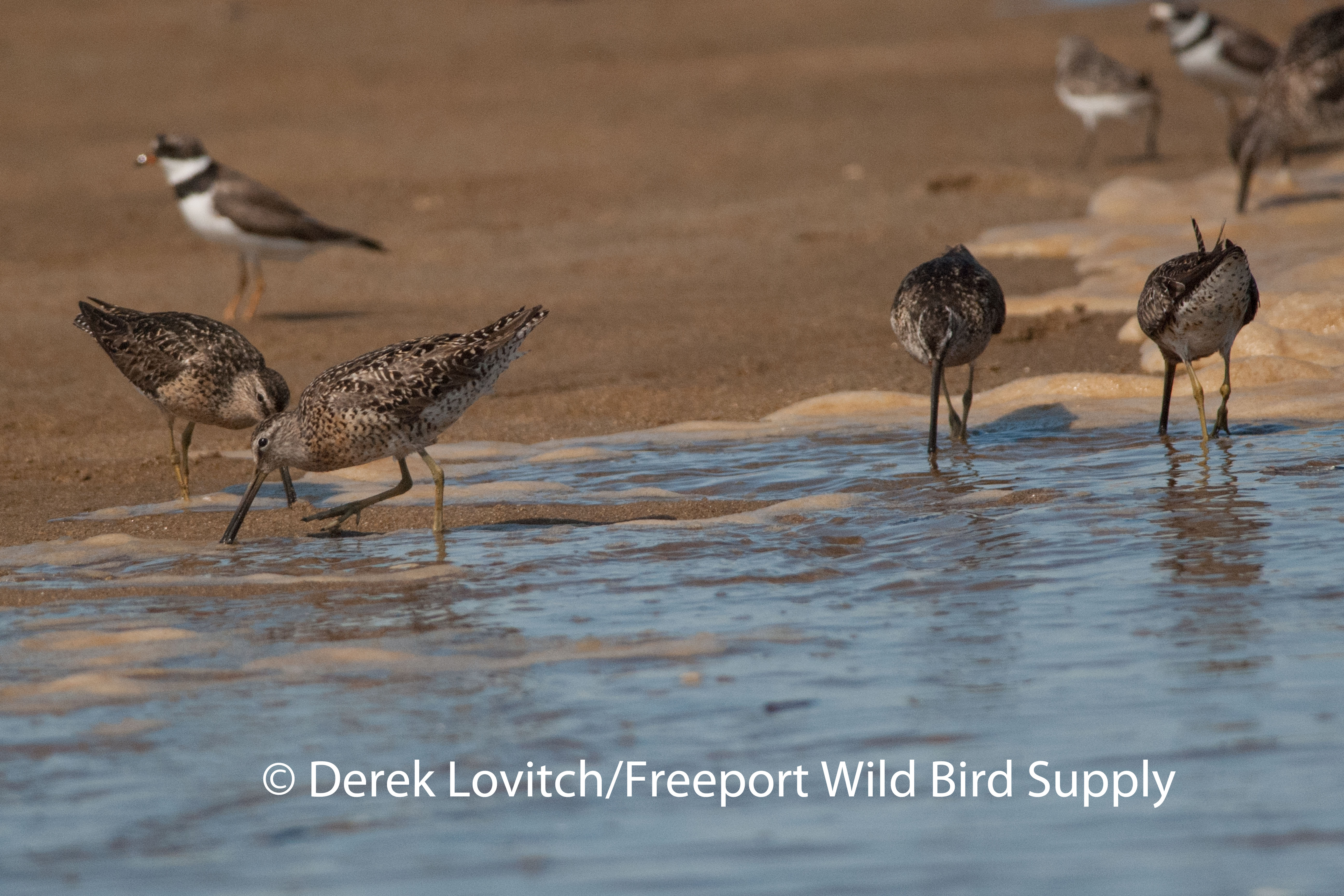
…4 Piping Plovers (a pair fledged two young here for the first time in recent memory), and 8 Sanderlings brought our count to 14 species on the day, we became distracted by photographing terns and studying dowitchers.  While our goodly count of 155 Semipalmated Plovers were augmented by about 65 Semipalmated Sandpipers, 8 Black-bellied Plovers, 4 Ruddy Turnstones, and 1 Least Sandpiper, it was the 120 or so Short-billed Dowitchers that kept our attention.

We were looking for individuals of the interior subspecies hendersonii, as I did on Sunday with Phil. (See blog and photos here:

https://mebirdingfieldnotes.wordpress.com/2013/07/28/biddeford-in-shorebird-season/).  We had what was possibly the same bright bird as Sunday (see above) fly-by, it was the paler birds that had us intrigued.
Luke on Hills, 7-31-13_edited-2

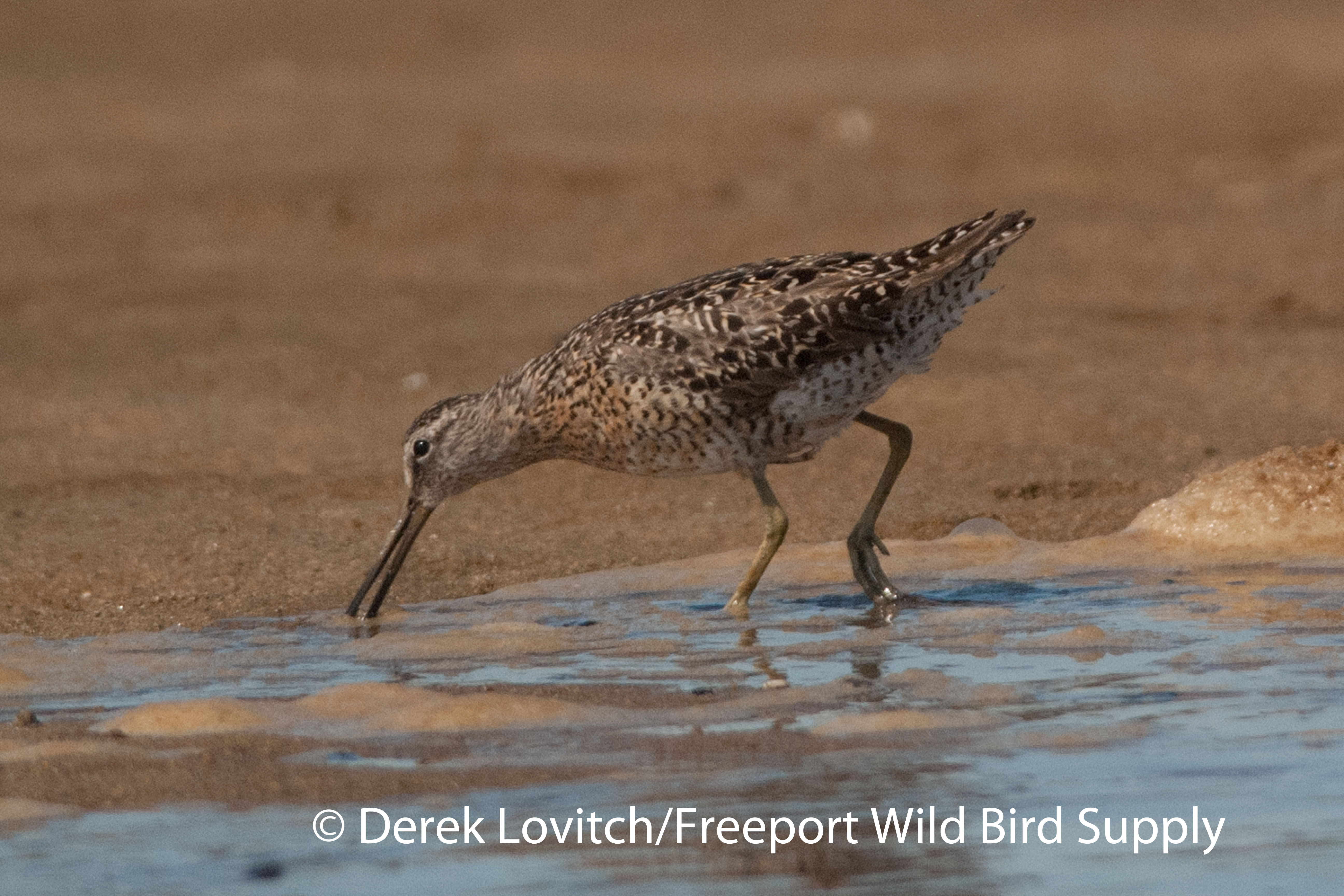
We thought the combination of a bright orange chest, and a fair amount of orange between the legs and on the undertail coverts, compared with the paler face and lightly, but distinctly spotted flanks and side (especially the side of the breast) of this bird made it look “good.”
DSC_0234_HendersoniiSBDO-pale,HillsBeach,7-31-13_edited-1

But we were pondering how extensive of color a hendersonii “needs” to have, as most of the individuals of the expected Eastern subspecies griseus, also were showing at least a touch of peachy-orange color in the undertail, etc.
DSC_0254_SBDOs,HillsBeach,7-31-13_edited-1

Here are some typical, and typically variable, griseus for comparison.
DSC_0236_SBDOs,HillsBeach,7-31-13_edited-1 DSC_0239_SBDOs,HillsBeach,7-31-13_edited-1 DSC_0250_SBDOgriseus,HillsBeach,7-31-13_edited-1

In the end, we simply said, “who knows!?”  and went back to photographing other fun stuff, such as this Bonaparte’s Gull…
DSC_0228_BOGU_HillsBeach,7-31-13_edited-1

And this juvenile Roseate Tern…which was actually one of my targets to photograph today.
DSC_0218_ROST-juv1,HillsBeach,7-31-13_edited-1

Ok, so we really quit on the Big Day attempt by about 10:33 in the morning, but 14 species of shorebirds included Stilt Sandpiper, American Oystercatcher, and two hendersonii Short-billed Dowitcher, along with two Tricolored Heron x Snowy Egret hybrids, White-faced Ibis, Tricolored Heron, a mid-summer marsh Merlin (these birds have simply got to be breeding in coastal Cumberland County!), it was hardly a bad day of birding.  In fact, it was actually a spectacular day!