Thanks to Mike Williams for allowing me to share his photos of this amorous pair of Red-necked Grebes along Ocean Avenue in Biddeford Pool. We’ve had 1-2 Red-necked Grebes “oversummering” here for the last few years, and last year I observed some rudimentary nest building from a pair (also with a stunned tour group). But we did not expect to see them, get, uh “that into it,” with courtship, nest-building, and even copulation. Unfortunately, as you could see, the “nest” was below the high tide line, so there’s not much chance of success here. A freshwater wetland breeder that nests no closer than central Quebec, this is odd behavior in a very odd place! It was amazing to watch though, and anytime we get to see Red-necked Grebes in full breeding plumage is a highlight on its own.
Like last week, much of my time was spent with our local breeding birds. From my personal “mini-breeding bird surveys” to a 7-day tour for Gulf Coast Bird Observatory, the birds that call Maine home in summer were once again the “targets” and the highlights, from Saltmarsh Sparrows and Roseate Terns to Grasshopper Sparrows and our wealth of warblers.
However, June is a good time for oddities. During the course of enjoying our usual species, I encountered the following observations of note over the past 10 days:
3 (!) RED-NECKED GREBES, 16 total Black Scoters, 3 Surf Scoters, etc, Ocean Avenue, Biddeford Pool, 6/16 (with Martin Hagne and Denise).
After being excited to find the 3 breeding plumage RED-NECKED GREBES the day before, we were shocked to find 4 the next day, all calling, and one pair courting and copulating! Photos and more details above. (with Gulf Coast Bird Observatory tour group).
2 American Oystercatchers, 1 Red-breasted Merganser, 1+ Black Scoter, Ocean Avenue, 6/17 (with Gulf Coast Bird Observatory tour group).
1 Surf Scoter, Dyer Point, Cape Elizabeth, 6/17 (with Gulf Coast Bird Observatory tour group).
Freeport Wild Bird Supply is very excited to partner with Down East Magazine’s Down East Adventures for the fourth year of offering exclusive birding workshops focused on gaining greater knowledge and field skills in a focused group of seasonally accessible birds. Focused on skill-builder rather than list-building, there will be plenty of “life birds,” but also more knowledge and education about birds, habitats, birding, and much more about the natural world. We’re happy to bring back the complete slate of tours from our 2023 season.
The full list and descriptions, along with registration information, for all of our upcoming tours (and an outline of 2025 options) can be found here. At the conclusion of each tour, I’ll post the trip report here.
Winter Waterbirds Workshop, January 14th.
I mean, really, what’s better than a Harlequin Duck?
For the second year in a row, very strong winds greeted us in the morning. So the game of the day was finding sheltered coves and respites from the wind. Therefore, we adjusted our itinerary accordingly, making a further adjustment based on parking lot closures from storm damage.
While we had high hopes of finding alcids that were blown closer to shore and were seeking refuge after the strong storm of the previous day, we didn’t see a single one – not even a Black Guillemot! However, we did see just about every other regularly occurring winter waterbird, from Red-necked and Horned Grebes to Buffleheads and Long-tailed Ducks Not surprisingly, Harlequin Ducks were the star of the show, with about 10 along Marginal Way in Oqunguit and abut 20 at The Nubble. Large rafts of Black Scoters were seen at several locations, with Surf and White-winged Scoters seen nearby for careful study.
We had a lot of Common Loons today, and we practiced learning their shape and size to separate them from other waterbirds at any range. Great Cormorants at The Nubble were nice to see, and we did a little introduction to gull identification with a mixed flock at Short Sands Beach.
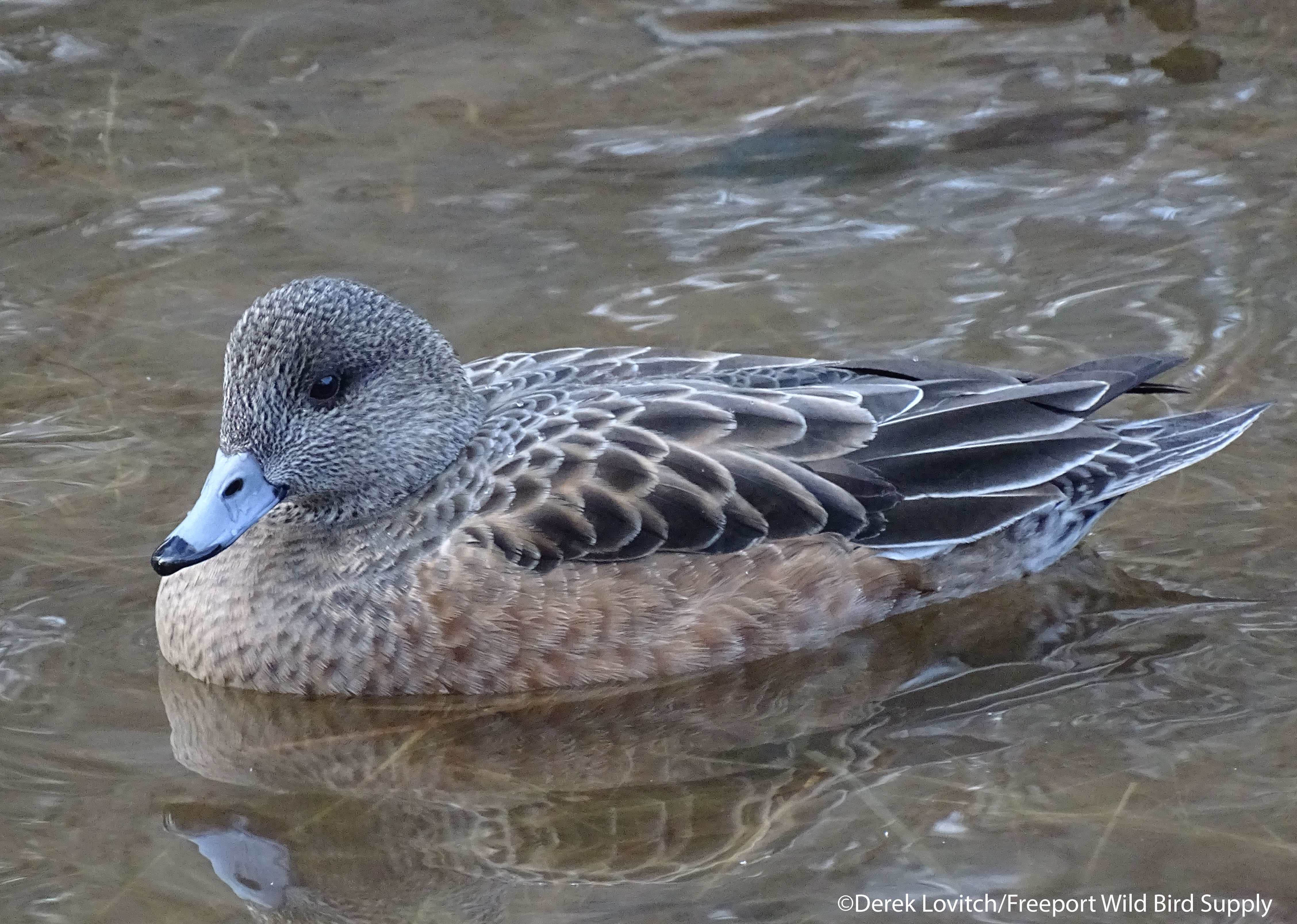
Finally, a stop at the York Duck Pond introduced us to another group of waterbirds: dabbling ducks. There, we had close studies of Mallards, American Black Ducks, and hybrids thereof. Practicing our “feather birding” we used the hybrids of an example of what to look for beyond the general impression of size and shape we were focused on throughout much of the day. The icing on the cake was the hen American Wigeon that has been here all winter – you may never see one as close and as well as that again! Enjoying the fine black detailing on the steely blue bill was a highlight for me.
Spring Migrant Songbird Workshop, May 12th.
Honestly, I am not sure if we could have dialed up a more productive morning for an instructional workshop designed for learning about migrants – from identification to natural history, habitat to visible migration. “Slow” by mid-May standards, we eventually tallied 15 species of warblers (including a few “heard only”), but we had absolutely remarkable “quality time” with so many of the species we did encounter today.
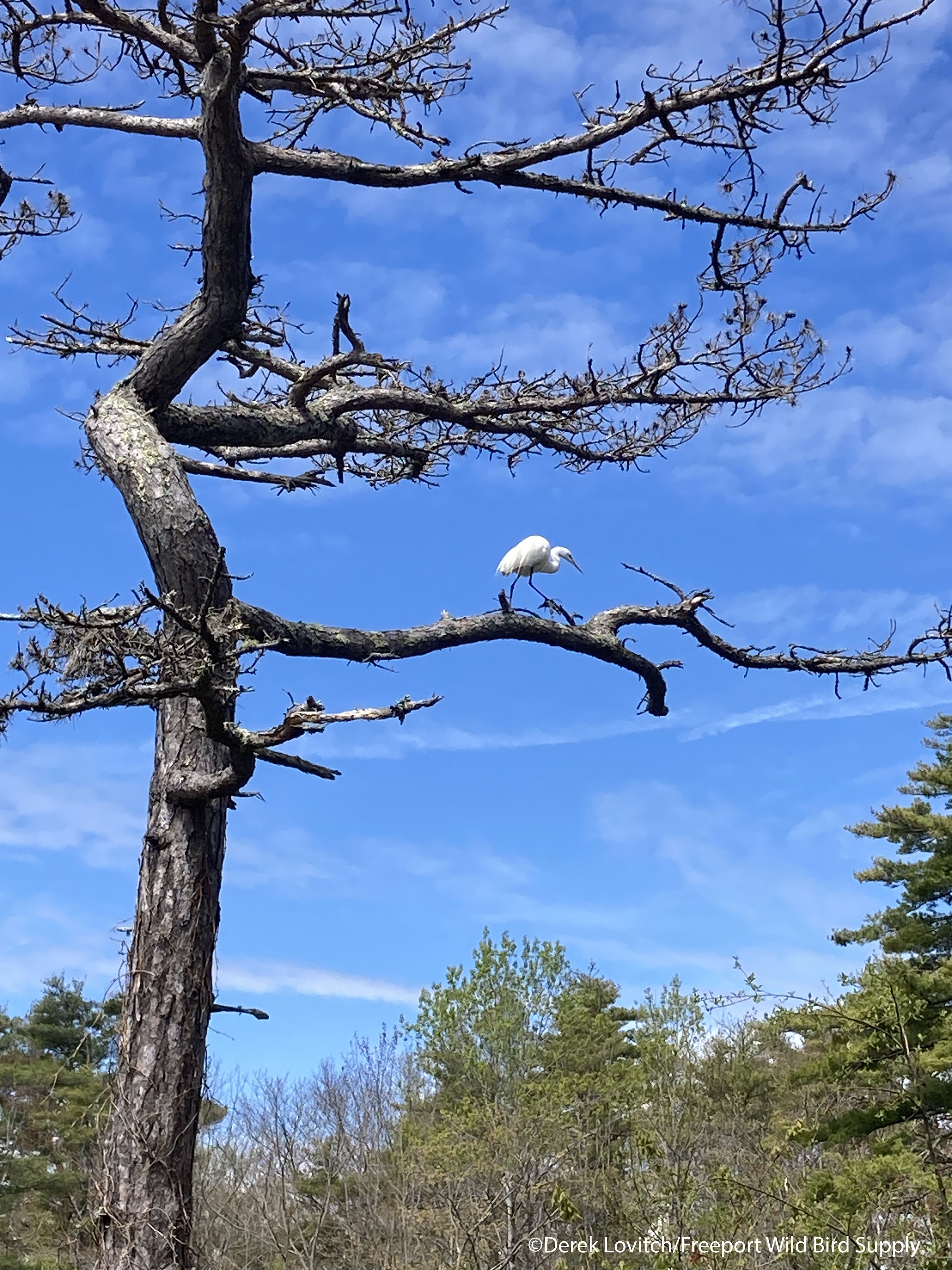
We were greeted by a Great-crested Flycatcher and finished with Maine’s most confiding Great Egret. In between, a wide range of species included an uncommon Blue-gray Gnatcatcher and a family of Wood Ducks. I particularly enjoyed the quality time spent with a pair of Black-capped Chickadees who were busy gathering moss for their nest lining.
But it was the Neotropical migrants who were the stars of the show, as predicted and hoped for. My first Red-eyed Vireo of the spring was uncharacteristically low and cooperative, but the single early-ish Blackpoll Warbler was most definitely not. However, almost every other warbler was just shockingly well seen. In one willow thicket, we watched – often without binoculars and often within 10-15 feet of us and below eye-level – two each of stunning Magnolia Warblers, gorgeous Northern Parulas, charismatic Common Yellowthroats, and distinctive Chestnut-sided Warblers. A short distance down the trail, our patience with Ovenbirds was rewarded with one walking out into the open a short distance ahead.
In between bird sightings, we discussed habitat, NEXRAD radar, and the big picture of what we were and were not seeing today and why. We noted how American Crows mobbed a Red-tailed Hawk but barely bothered to call at the sight of a less-threatening Broad-winged Hawk. OK, fine, those aren’t songbirds, but we learned a lot from them anyway.
More birds of more species can and will be seen under different conditions at Evergreen Cemetery and similar urban green spaces as encountered today, but we would be hard pressed to see so many birds so well, for prolonged periods of time to allow for thorough study. While we encountered one wave of migrants all moving together, which can easily become frustrating when getting started, many of birds came one or two at a time allowing for in-depth observation -exactly want we want in a songbird workshop!
Not a songbird, but this Great Egret that frequents the ponds here also poses in interesting places.
Shorebird Workshop, August 15th.
Nothing wrong with starting out with the easy ones, like dapper Ruddy Turnstones!
Recent rainfall, approaching thunderstorms, and current observations all combined to make me throw our itinerary out the window this day. Sometimes audibles work…and today, it most definitely did.
While I prefer to start with smaller groups of birds so as not to overwhelm, we took advantage of the lovely morning and high tide to soak in an estimated 2000 shorebirds at our first stop! Biddeford Pool Beach did not disappoint, and we began our lessons with the basics: shorebird vs everything else, plover vs sandpiper, and eventually each species. We compared Semipalmated Sandpipers (~1750 individuals) and Semipalmated Plovers (about 200 individuals), then teased out several White-rumped Sandpipers from the masses. We noticed how white Sanderlings look, and what little bulldozers the distinctive Ruddy Turnstone can be. Spotted Sandpipers nicely demonstrated their shallow short-distance flight wingbeats as well.
Nearby Great Pond allowed us to compare Semipalmated Sandpipers vs Least Sandpipers at nearly arm’s length, while giving us better looks at a couple of Spotted Sandpipers. A single Lesser Yellowlegs was also added to the list.
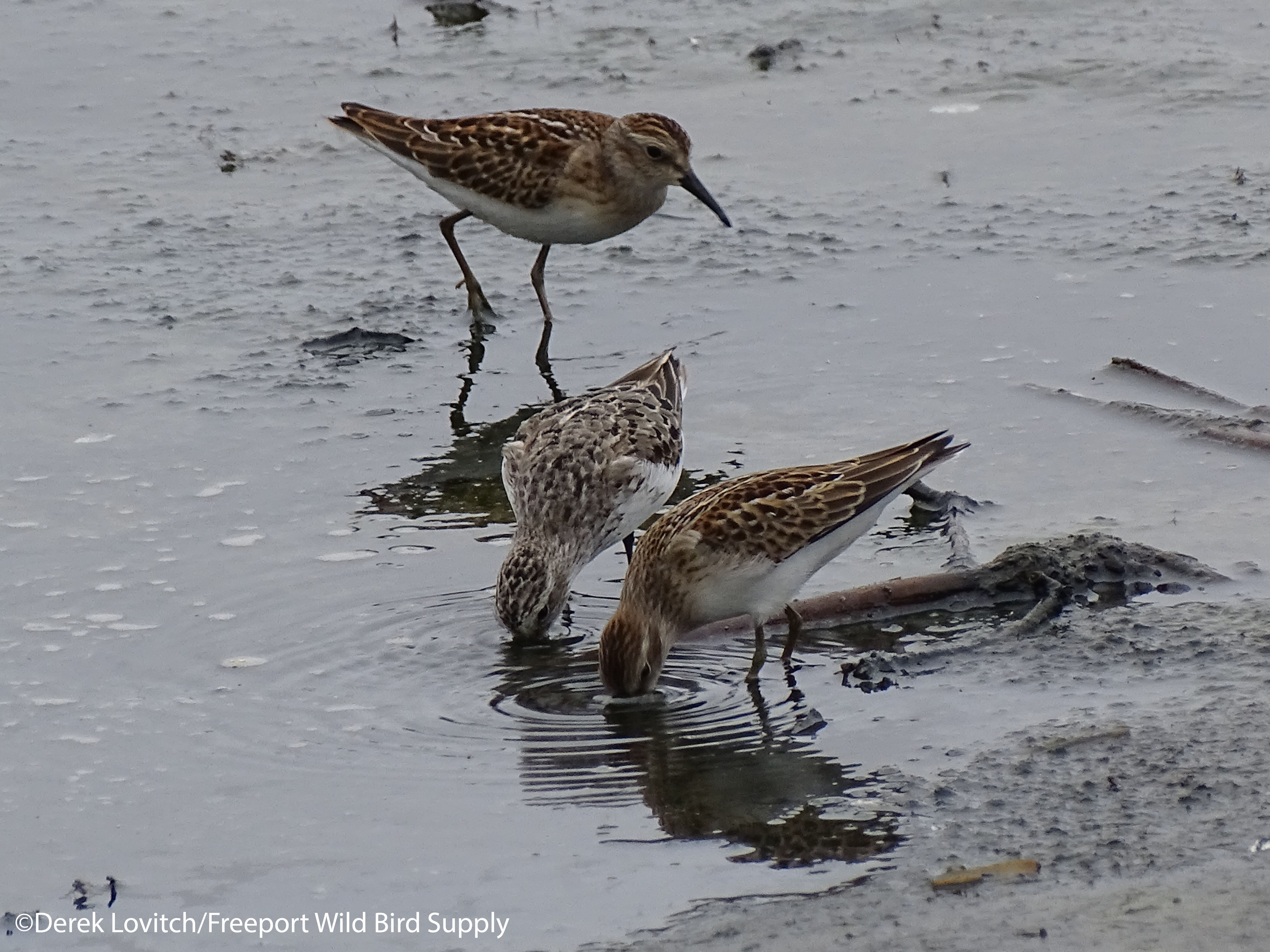
By using habitat cues and tide charts, we maximize our shorebirding productivity. By studying birds near (like these side-by-side Least and Semipalmated Sandpipers) and far, we can learn to quickly recognize most shorebirds, most of the time, using a range of tools that we worked on together throughout the day.
Next up was Hill’s Beach, on the prime outgoing tide. Unfortunately, thunderstorms were rapidly approaching, and after a short check (more Sanderlings and a growing number of Semipalmated Sandpipers and Plovers), we decided to play it safe, return to the cars, and head into Saco for lunch. Good thing, too, as while we were eating, it was pouring outside!
White-rumped Sandpiper.
Returning to the field, we poked around the edges of Scarborough Marsh as we waited for the tide to begin rolling back in and for the rain to finally come to a stop. After a 10-minute rain delay in the cars while we waited out the last of it, we returned to the field to take in the flats of Pine Point. Good looks at Black-bellied Plovers (75+) allowed us to compare their shape, size, and feeding style to the estimated 300 Semipalmated Plovers that were here. Another 1200 or so Semipalmated Sandpipers contained at least a dozen White-rumped Sandpipers, which we practiced sorting out at a distance using shape and size, especially those long primaries. 14 Willet were new for our list, and the 90’s steroid-era-baseball-players of the greater Tringa family nicely contrasted with 4 slim Lesser Yellowlegs that alighted with some of them. Four not-so-short-billed Short-billed Dowitchers were our 11th species of shorebird of the day. And finally, as we continued to grow and practice our shorebird identification toolkit, we also took note of some non-shorebirds, such as Common Terns and a variety of gulls which today included 2 very-uncommon Lesser Black-backed Gulls!
Monhegan Birding Workshop, September 13th – 15th.
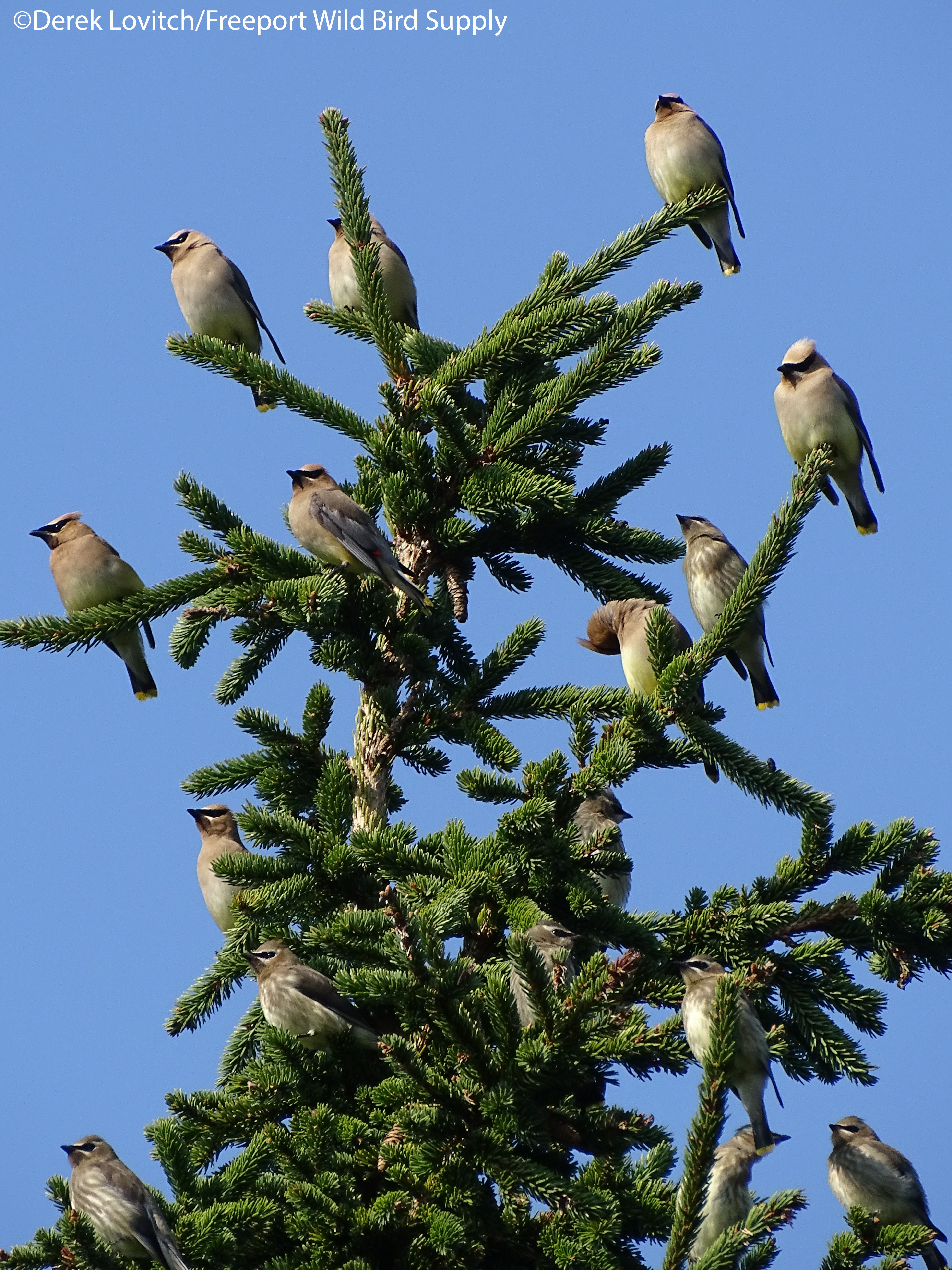
Cedar Waxwings were often with us, alighting on trees, eating native fruits, and avoiding marauding Merlins. Few things bring as much pleasure to the birding day as a “Waxwing Christmas Tree.”
Arriving on a glass-calm sea on Friday the 13th, luck was most definitely with us today and the entire weekend. We were greeted at the dock by a darting Merlin, a sign of things to come. After checking in and a relaxed lunch, we began our workshopping. While overall songbird activity was slow, we enjoyed plants, butterflies, and the weather as we wandered around and spotted birds here and there: a Northern Waterthrush in an isolated bush in a yard, a female Black-throated Blue Warbler in the woods, and lots of Cedar Waxwings in small flocks, overhead and landing in trees. Merlins continued to perform, and several Peregrine Falcons and Sharp-shinned Hawks joined the show, although it did not help us detect skulking warblers!
A late afternoon walk to Burnt Head to take in the cliffs and sample the habitat of the island’s interior produced a 1st-winter Lesser Black-backed Gull, but more importantly perhaps, allowed us to enjoy such a beautiful day on the island for mid-September.
On Saturday morning, we stepped off the porch at the Monhegan House, and it was ON. A great Morning Flight (morning redetermined migration) was underway, with dozens upon dozens of warblers zipping overhead as the sun slowly rose. As we did a short stroll to some favored early-morning micro-habitats, we ground-truthed the morning flight, finding that Cape May Warblers were indeed the dominant migrant of the morning. In fact, we often had 3 or 4 (as many as 5 in one tree) in the top of nearly every spruce we checked, and the entire range of plumages was on display. Northern Parulas were also numerous, but we estimated about 3 of every 5 warblers we encountered this morning were Cape May!
It was such a great morning it was hard to come inside to break for breakfast. Or so one thinks until they have had the Monhegan House Breakfast…and this was just the final of three courses!
Although the day’s activity peaked in the morning as many of the birds in Morning Flight continued on back to the mainland with a light northwest wind becoming northeasterly by noon, we continued to find pockets of activity and mixed-species foraging flocks throughout the day. There were a few Eastern Kingbirds and Eastern Wood-Pewees scattered about, often giving very good looks, and we had a nice mixed vireo flock that included 2 Philadelphia Vireos, 1 Blue-headed Vireo, and several Red-eyed Vireos for nice comparison. Northern Harriers put on a performance for us in the late afternoon over the marsh.
While our afternoon walk through the woods to the lighthouse was as much for pleasure and learning about habitats as it was for birds, the result was the discovery of a rare Lark Sparrow! We covered a lot of ground today, and definitely earned our delicious dinner. Before that, however, we had a little workshopping session to recap the day and compare what we saw (morning flight) with what the overnight radar image had suggested.
One of the new migration skills we learned was how to monitor and plan your birding accordingly by looking at NEXRAD weather radar. For comparison, here are the 1am images from Saturday and Sunday morning, respectively, showing the greater density of birds in the air and offshore on Saturday morning – and confirmed by our morning flight observations come sunrise.
Another clear and calm night resulted in a very strong flight of birds, but with fewer birds drifting offshore, the morning flight was slower than Saturday, as we forecast. However, there were plenty of new birds around, and we repeatedly saw birds we had not yet seen and many rather “fun” species. It started with a drift-vagrant Dickcissel in Morning Flight, followed by a Whimbrel flying around. A likely Clay-colored Sparrow disappeared before we could confirm it in poor light, but warblers such as Bay-breasted, Blackburnian, and Wilson’s were more confiding. Unexpected offshore and always a surprise on Monhegan, an immature Cooper’s Hawk flew over us on our way to lunch.
There was a noticeable turnover in species, with more sparrows and many fewer Cape May Warblers. We had some unusually cooperative Lincoln’s Sparrows to study, such as this one that perched in a bush with a Song Sparrow for comparison (and later, the same bush held a Swamp Sparrow next to a Song for further study of the entire genus!).
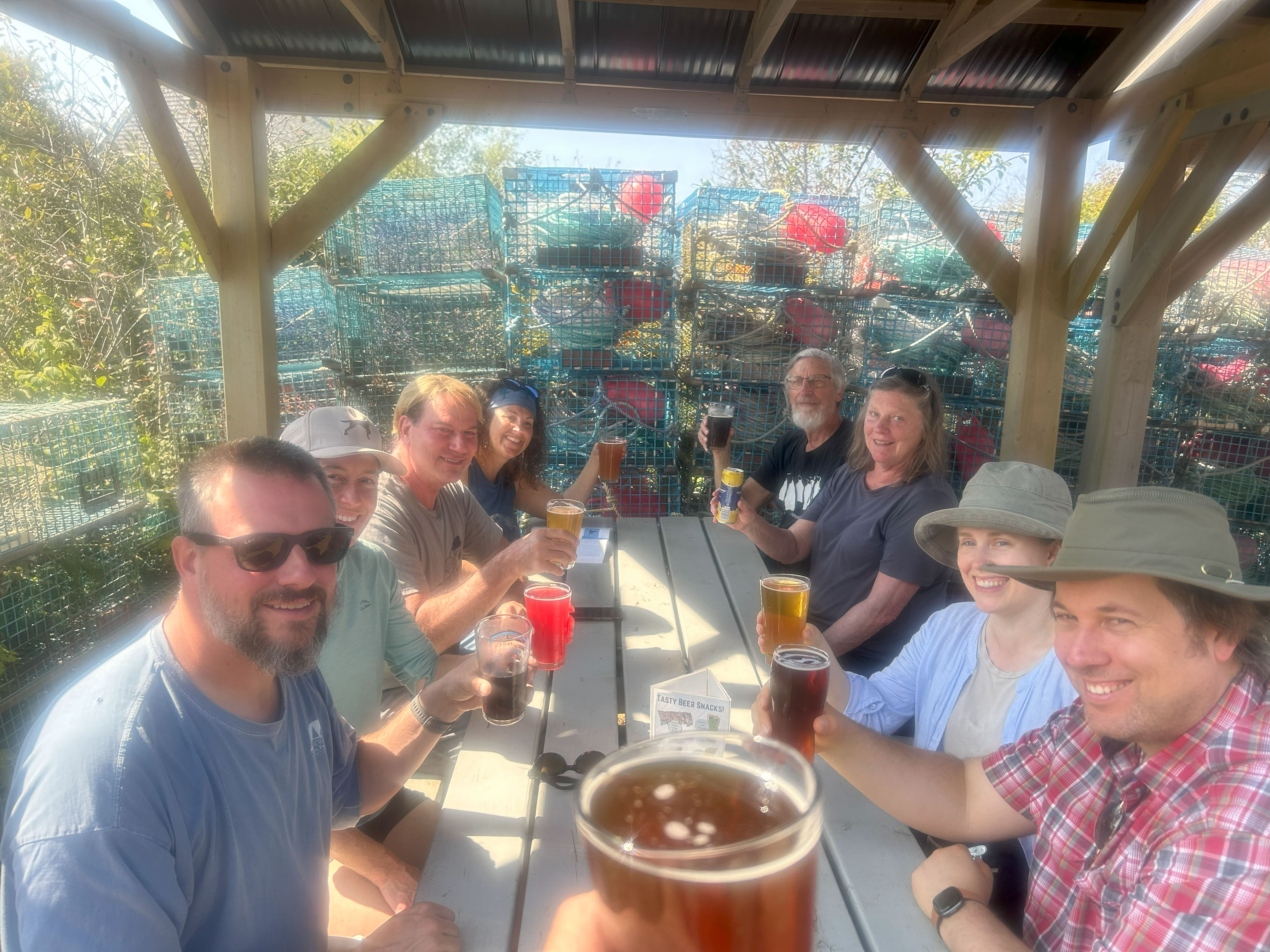
Since we were focused on learning bird identification and the nuances of migration’s ebbs and flows (and mechanisms thereof), we did not keep a running bird list. We did count our warbler tally and finished the trip with a very respectable 17 species of warblers! We found a couple of “good birds” (and jokingly disparaged the use of the descriptor) for ourselves and ate way too much good food. We learned a bunch about migration, plants, birds, and insects, and a little about the island. So instead of trying to add one more bird to the non-existent list, we brought the tour – and the 2024 Down East Adventures Birding tours season to a close with lunch and a toast at the brewery!
Our Durham yard has been incredibly birdy this week. The most unexpected migrant was this American Bittern that dropped into our new pond for the morning of the 28th.
I didn’t get out to shorebird hotspots as much this week, but still ended up with 17.5 species and some solid high counts. However, much of my best birding this week was from our yard, which apparently is a fantastic fall migration hotspot. And my first visit of the season to Sandy Point on 8/31 produced a new August record!
Black-bellied Plover: 142, The Pool, Biddeford Pool, 9/1.
Killdeer: 3, United Ag and Turf, Auburn, 8/31 (with Jeannette).
Semipalmated Plover: 150+, The Pool, 9/1.
Piping Plover: 1, The Pool, 9/1.
Whimbrel: 4, The Pool, 9/1.
RED KNOT: 16 juv, The Pool, 9/1.
Sanderling: 1, The Pool, 9/1.
Least Sandpiper: 32, Eastern Road Trail, Scarborough Marsh, 8/31.
White-rumped Sandpiper: 11, Wharton Point, Brunswick, 8/28 (with Jeannette).
Pectoral Sandpiper: 2, Eastern Road Trail, 8/31.
Semipalmated Sandpiper: 450-500, Wharton Point, Brunswick, 8/28 (with Jeannette).
A handful of non-shorebird highlights this week also included:
A productive week of birding on our Durham property produced a number of highlights. In fact, most mornings, it was hard to pull myself away from the yard. At least 11 species of warblers have been in our yard daily this week, with a high count of 12 on the 28th. A female MOURNING WARBLER was present 8/27-8/29. A Phildelphia Vireo on the 28th-29th was our 144th yard bird, followed moments later by the arrival of #145: An American Bittern (photo above). A DICKCISSEL (FOF) briefly paused in the yard on the morning of the 1st for our 146th yard bird! 32-38 Common Nighthawks were feeding over the yard late in the day on 9/1 as well.
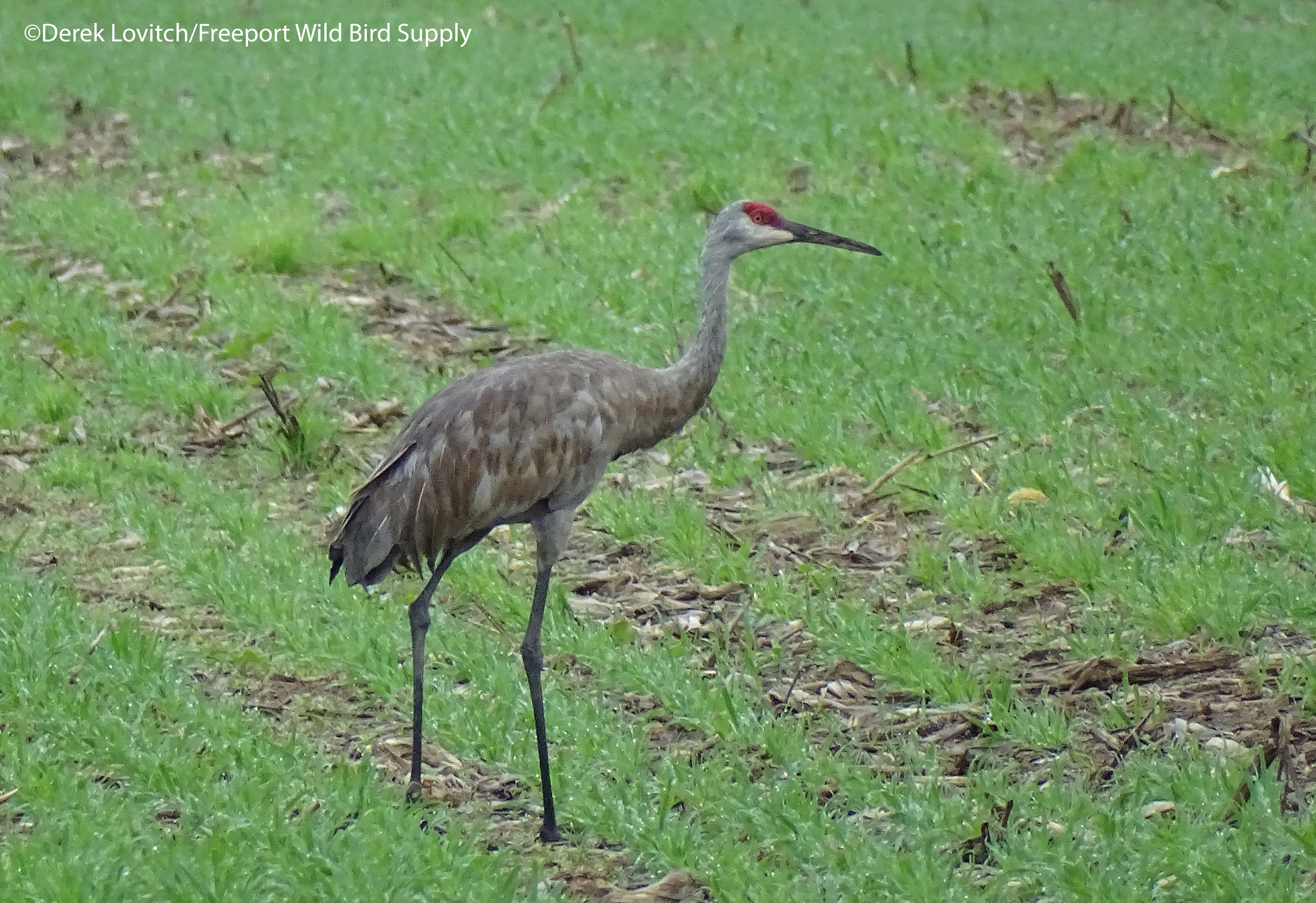
12 adult SANDHILL CRANES, Mayall Road, Gray/New Gloucester, 8/30 (site high count and noteworthy that no juveniles were present – failed breeding season due to high water and flooding?)
Sandy Point Morning Flight, 8/31 (FOY):
6:00-9:15am
57F, mostly clear, NE 4.7-7.6 increasing to 7.3-9.8 and gusty.
This juvenile Marbled Godwit continues at Hill’s Beach in Biddeford, making a nice addition to my “Shorebird Big Day” effort on Tuesday.
After being thwarted by weather on a couple of days recently, I conducted a “Shorebird Big Day” on Tuesday the 22nd. I birded between Sanford and Brunswick, seeking shorebirds from near-dawn to dusk. My goal was “at least 20” species of shorebirds, so I was happy to finish my day with 22 species. Needless to say, that day dedicated to shorebirding produced the majority of my high counts this week:
AMERICAN OYSTERCATCHER: 6 adults, Ocean Avenue, Biddeford Pool, 8/22 (with Luke Seitz).
Black-bellied Plover: 126, Wharton Point, Brunswick, 8/22.
A nice list of non-shorebird highlights this week also included:
At least 12 species of warblers have been in our yard daily this week, with a high count of 15 on the 24th. A Tennessee Warbler that I spotted while conducting our Bird Safe Open House birdwalk on the 19th was our 141st yard species.
Common Nighthawks have been on the move all week, with nightly sightings. My high counts included 16 over the Bates Mill in Lewiston on the 19th (with Dan and Renee Klem) and 244 in an hour over Wharton Point in Brunswick on the 23rd.
1 continuing proposed TRICOLORED HERON X SNOWY EGRET X SMALL WHITE EGRET SP(P) HYBRID, Eastern Road Trail, Scarborough marsh, 8/20.
3 BLUE-GRAY GNATCATCHER, Green Point WMA, Dresden, 8/21 (with Jeannette).
1 ad. Lesser Black-backed Gull, Hill’s Beach, 8/22 (with Luke Seitz)
Continuing mid-summer scoter Hat Trick off Biddeford Pool Beach, 8/22 (with Luke Seitz): 2 White-winged Scoter, 2+ Surf Scoters, 75-100 Black Scoters.
2 continuing adult RED-NECKED GREBES, Ocean Avenue, Biddeford Pool, 8/22 (with Luke Seitz).
Sharp-shinned Hawk drama has been keeping me entertained for the past month.
For the most of the past four weeks, my birding has been exclusively at our feeding station at our home in Durham as I recover from shoulder surgery. We designed our house to maximize feeder- and yard-viewing opportunities, and I am sure thankful that we did! It will come as no surprise to anyone who knows me that I don’t sit still well, so my extended feeder-watching sessions have been both mentally and physically therapeutic. It has also been quite productive! And keeping track of daily numbers has been quite elucidating.
Despite our new construction being completed (well, mostly!) in October and virtually no landscaping occurring, we have been very pleasantly surprised by the diversity and activity – a reflection of the quality of the habitat on our property (and hence why we purchased it). Nonetheless, I did not expect to be hosting 19-22 species a day at the feeding station in our first winter!
My feeder-watching vigils began the day after my surgery, on January 19th. The ebbs and flows during that first week were quite insightful. With three storm systems and snow piling up, the daily changes were noticeable, and mostly predictable. Our feeders were busiest with 22 species on 1/23 as over 14”of snow accumulated here in Durham. Numbers of ground-feeders peaked that day, with the week’s high counts of Mourning Doves (27), American Tree Sparrows (9), Northern Cardinals (11-12), and White-throated Sparrows (3). The 22 Dark-eyed Juncos was down a bit from a high of 25 following the first snowfall on the 20th.
Despite adding a third platform feeder, some ground-feeders had moved on by week’s end: 24 Mourning Doves, 14 Dark-eyed Juncos, 10 Northern Cardinals, and only 1 White-throated Sparrow remained, although American Tree Sparrows bumped back up to 9 with the snowfall of the 25th.
Eastern Bluebirds, meanwhile, had been increasing, with 4-6 daily becoming 14 by week’s end. Two House Finches became 5; they often travel with bluebirds in winter, so their simultaneous rise is not surprising. A single European Starling on 1/24 was unwelcome.
We picked up a second Red-breasted Nuthatch by week’s end, while one each of Red-bellied Woodpecker and Carolina Wren continue. Resident woodland birds that travel together in a mixed-species foraging flocks are notoriously hard to count, as it’s often impossible to know whether you are looking at the same flock or multiple flocks as they come and go throughout the day. Therefore, we are left to take the daily “high count” (maximum number of birds seen at one time) only as our “total,” so trends are harder to detect. My high count of Black-capped Chickadees did increase from 6 to 10 by week’s end, however, while a pair of White-breasted Nuthatches, 2 Downy Woodpeckers, 2-4 Hairy Woodpeckers, and 4 Tufted Titmice remain the same.
We also have a single American Crow that visits daily, an irregular visit from a male Pileated Woodpecker, and I’m trying to get a feel for the wide variation in daily Blue Jay high counts (between 1 and 10).
The only disappointment so far this winter had been our finch diversity so far. A single Pine Siskin 1/19-20 and female Purple Finches during the storm on the 23rd were our only non-goldfinches in that first week. However, our American Goldfinch flock has more than made up for it with between 32 and 74 (1/25).
But speaking of finches, the “birds of the week” those first seven days were 5 fly-over Pine Grosbeaks on the 25th. Bald Eagles and a Red-tailed Hawk regularly fly past the windows, as does the daily commute of Herring (and a few Great Black-backed Gulls) moving up and down the Androscoggin River; hoping to tease out a white-winged gull for the yard list. We’ve also had a small flock of American Robins (up to 18) feeding on Winterberry and Multiflora Rose in the past few days.
By the second week, a relatively deep, now-frozen snowpack, and only a couple of weak weather systems, resulted in less daily variation in the numbers at our feeders here in Durham. Fluctuations in counts had more to do with the day’s weather and the presence of a Sharp-shinned Hawk (see below), rather than the seasonal movements of species as had occurred with the onset of “real winter” the week prior.
A lot of species counts stabilized, such as the daily average of about a dozen Eastern Bluebirds and up to 46 American Goldfinches. However, some changes were noticeable, especially the ebbs and flows of ground-feeders: 6 American Tree Sparrows increased to 9, as many as 24 Dark-eyed Juncos decreased to 14, and after entertaining a third White-throated Sparrow for a couple of days, we are back down to two.
An impressive 13 Northern Cardinals on 1/29 was a seasonal high count, but otherwise most counts of the 18-21 species each day remained about the same. I had still not confirmed the presence of a second mixed-species foraging flock, for example, and our only finches remain the aforementioned impressive number of American Goldfinches and 4 House Finches.
Since my “observation week” begins on Saturdays, Week 3 began the morning of February 4th with some extreme cold weather. And, wow, that was some cold! Wind chill records (e.g. -45F in Portland and an astounding -108 at Mount Washington) Friday night into Saturday were thankfully short-lived. Here at our home, our windchill was “only” -21 on a low of -16F, as our anemometer was not receiving the full force of the wind.
The short duration of the cold snap – as extreme as it was – didn’t seem to have much impact on feeder birds, especially as the rest of the week’s weather was rather benign. Our Carolina Wren made it through, and overall activity and diversity was similar to last week (scroll down for previous posts).
American Goldfinches slowly declined at our feeders this (from 46 to a low of 22), likely as our birch crop is being picked clean. Sparrows were up again, however, with 15 American Tree Sparrows now after starting the week with 6. Dark-eyed Juncos spiked again to 20 on 2/5-6 before settling back down to 18; three more than we started the week with.
A female Purple Finch returned, and a Brown Creeper was now spotted daily in the trees immediately behind the feeding station. And a single Wild Turkey has returned to the feeders after being absent since early winter. Unfortunately, a pair of European Starlings were now present.
Two noticeable declines this week were in Northern Cardinals (from 11 to 7) and Mourning Doves (from 28 to 14). Meanwhile, Eastern Bluebirds have been far less frequent at our feeders as the week went on. This is all likely the result of direct and indirect (disturbance) effects of the continuing Accipiter saga. Daily high counts of other species were similarly affected by the presence of two different Sharp-shinned Hawks this week (see below).
Not surprisingly, the spring-like weather (including two days of record warmth) and very little precipitation reduced overall activity at the feeding station during Week 4, beginning on 2/11. We now have some bare spots on a slope now, where birds have been foraging, and the snowpack is much reduced in the woods. There’s more natural food available and less calories burned, so there’s less need for supplemental food – it’s long past time to put the “dependency on feeders” myth to bed!
Nonetheless, this week saw another uptick in Mourning Doves (high of 27) and American Tree Sparrows (of 10). Dark-eyed Juncos returned to a high of 21, but they have been spending as much time on the bare slope of our berm then at the feeders.
Eastern Bluebirds have been much less frequent this week, with a high of only 3 and they’re not visiting everyday. Same for the House Finches they usually travel with in winter –it’s just a sporadic pair now. American Goldfinches, however, remain strong, with a high of 32 this week. Our latest singleton Purple Finch has apparently moved on.
Winter flocks are breaking up, and that’s likely why the bluebirds have been less frequent; they might be spreading out already. The mixed-species foraging flock of residents are breaking up as well, and “bickering” is increasing among them, especially the Black-capped Chickadees. Meanwhile, Hairy Woodpeckers are courting now, and territorial drumming is frequent.
And then, with temperatures spiking to over 50 degrees on the 16th, Jeannette had the first Red-winged Blackbird of the year flying north overhead! Already. I expect diversity and daily counts to change more often in the coming weeks now.
Meanwhile, birdwatching is not just about counting, so I kept notes of interesting observations and behaviors through the duration of my time stationed in front of the window (and short walks up and down the driveway, weather and ice permitting). I enjoyed seeing the slow but sure progression of the season, as Downy and especially Hairy Woodpeckers became more territorial, and male Hairys especially began drumming, accelerating this week. A pair of Common Ravens was regularly observed, with pair-bonding flight displays increasing. Tufted Titmice and Black-capped Chickadees began singing more, too.
I’ve also conducted an experiment with some suet products that we may bring into the mix at the store. None of which, however, has come close to being as popular as our current offerings, however.
A few of my most interesting behavioral and natural history observations were:
1. 1/28: I watched a Dark-eyed Junco that was foraging along our foundation grab a large cutworm-like-caterpillar and smack it on the snow. As it began to eat it, a bluebird flew down and grabbed the caterpillar. I had not observed kleptoparasitism in bluebirds before!
2. 2/2: The male Sharp-shinned Hawk that has been hanging around was pursued and killed by a second accipiter that had been undetected by us. The brutal end to the chase took place within 10 feet of me. It was quick, I was in shock, neither a camera nor binoculars was within reach of my working arm, and I was afraid to move as I didn’t want to disrupt the proceedings – it’s the worst feeling to flush a predator from its hard-earned prey and see that prey item suffer and go to waste.
The thing is, I think the only-marginally larger predator was actually an adult female Sharp-shinned Hawk as opposed to the far more likely adult male Cooper’s Hawk. Cooper’s Hawks are known to kill Sharpies, but I am unaware of published accounts of cannibalistic Sharpies. It all happened too quickly, and accipters are much easier to identify in flight three miles away than when they are sitting in front of your face (at least as adults). Apparently I was too traumatized by the event (and/or slowed mentally by painkillers) to look at details of face pattern. But the relative size and the paler chest and less steely-back were highly suggestive of an adult female Sharp-shinned. Hopefully, it will take up the territory and I will be able to confirm its ID circumstantially. But it was a rather violent end to my feeder-watching week!
Although only circumstantial evidence, an unequivocal female Sharp-shinned Hawk was spotted (and positively identified!) the next day thereafter, leading credence to the rare cannibalism theory. It’s only circumstantial evidence, but I have little doubt this is the bird that took the male the prior day. Furthermore, I have not seen a Cooper’s Hawk here all winter. Absolutely fascinating, and I wish I had photos to document the gruesome event.
The plot thickened even further on the 8th, when I spotted (and photographed this time) a second-winter male (subadult) Sharp-shinned Hawk hunting the feeders in the morning. He better be careful out there! The woods of Durham are unforgiving!
The next week, I didn’t see him as only the adult female was around.
3. I’ve been sorting through as many of the daily commuting gulls as possible, and finally on the 15th, I picked out an Iceland Gull for our 122nd Yard Bird! Interestingly, it was an adult or near-adult, different from the 1st winter birds that have been frequenting the Lewiston-Auburn riverfront a few miles upriver.
For almost three weeks, I left the house or driveway exactly three times (a follow-up appointment, a field trip to see Avatar, and a successful chase of the Common Ringed Plover at Timber Point in Biddeford on 1/31. Jeannette dumped me in the car and we drove down – me fully reclined and with an icepack strapped on. The bird was present as we arrived, and since the word was just getting out, we even had a parking spot. She set me up behind the scope (I had to ask a fellow birder for assistance in moving it!) and then took some photos. I was pretty uncomfortable on the way home – to put it lightly – but it was absolutely worth it!
It wasn’t until Monday, February 6th (just under three weeks since my surgery) that I went out for a little birdwalk with Jeannette at the Auburn Riverwalk. It was a lovely day, and it was fantastically birdy! We found a hen Northern Pintail amongst nearly 500 Mallards, and had three 1st-winter Iceland Gulls – the most I have had here in several years. The overall bird activity was quite a bit above average, as the cold snap finally put some ice on the river and helped to concentrate birds here. Unfortunately, we did not see the Harris’s Sparrow in Turner before my body had enough of being upright.
The next day’s outing, however, was for an easy twitch. I only had to get out of the car and find some open space along the railing of the Arrowsic-Georgetown bridge over the Back River.
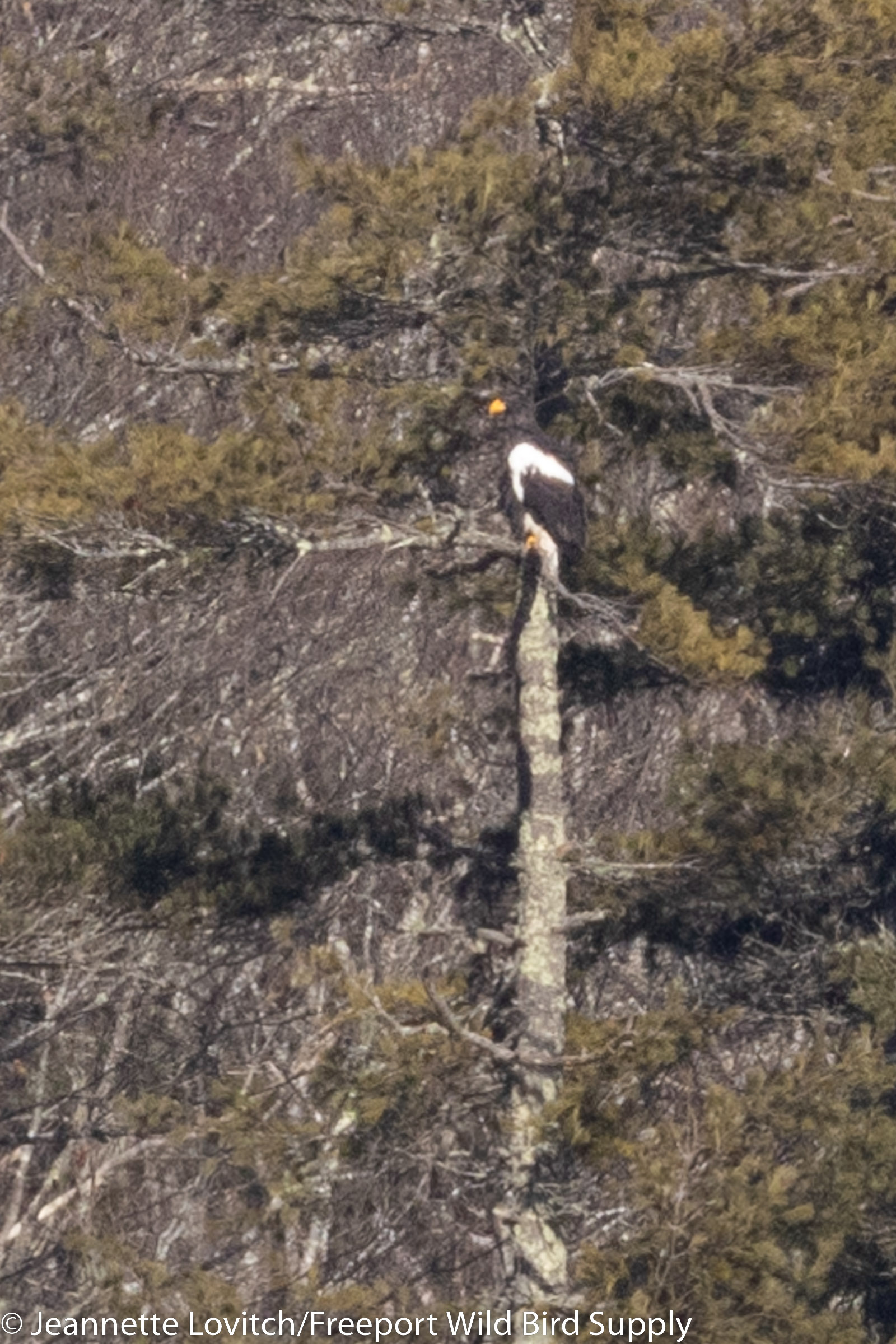
So yeah, the Steller’s Sea-Eagle is back, and it was in full (albeit fairly distant) view in our first visit with it of the year. I’ll get out of my recliner for a Steller’s Sea-Eagle any day! It was also good to catch up with a friend and get out of the house for the second day in a row.
A few days later, Jeannette and I took a walk at Winslow Park in Freeport (2/9) where we were thrilled to find 7 Barrow’s Goldeneyes (3 drakes and 4 hens), the second highest count that I have had here in nearly a decade. They put on a great show, too.
A visit to the Auburn Riverwalk on the 13th yielded only one 1st-winter Iceland Gull, while a walk along Brown’s Point Road in Bowdoinham the next day produced a couple of pioneering Northern Flickers.
So there ya have it…my last month of birdwatching. With slow progress on my recovery, I expect feeder-watching will dominate my activity for a few more weeks, but temperature swings will make that interesting…and hopefully another snowstorm or two. I need to be out and about with few limitations by the time spring is here to stay!
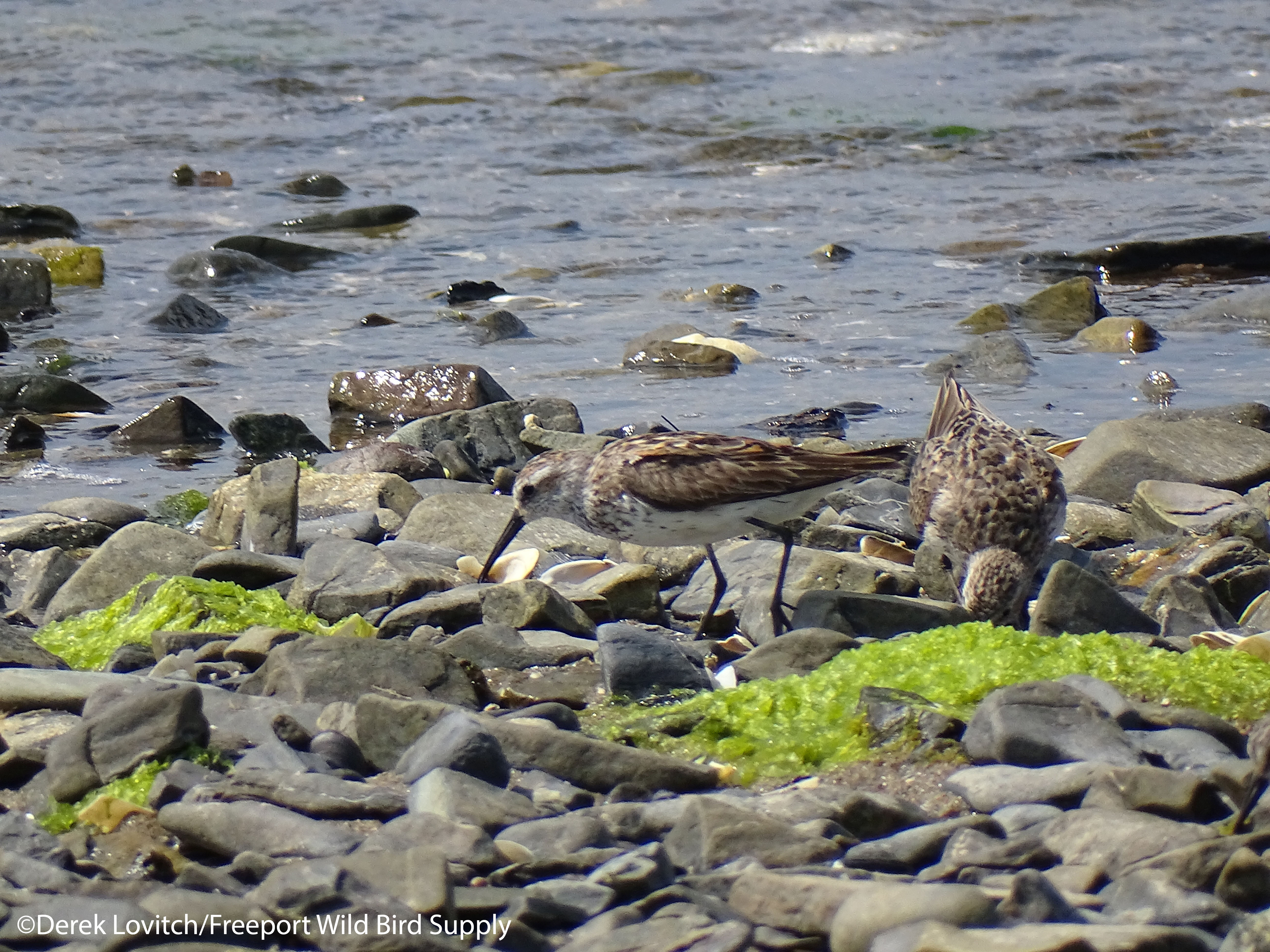
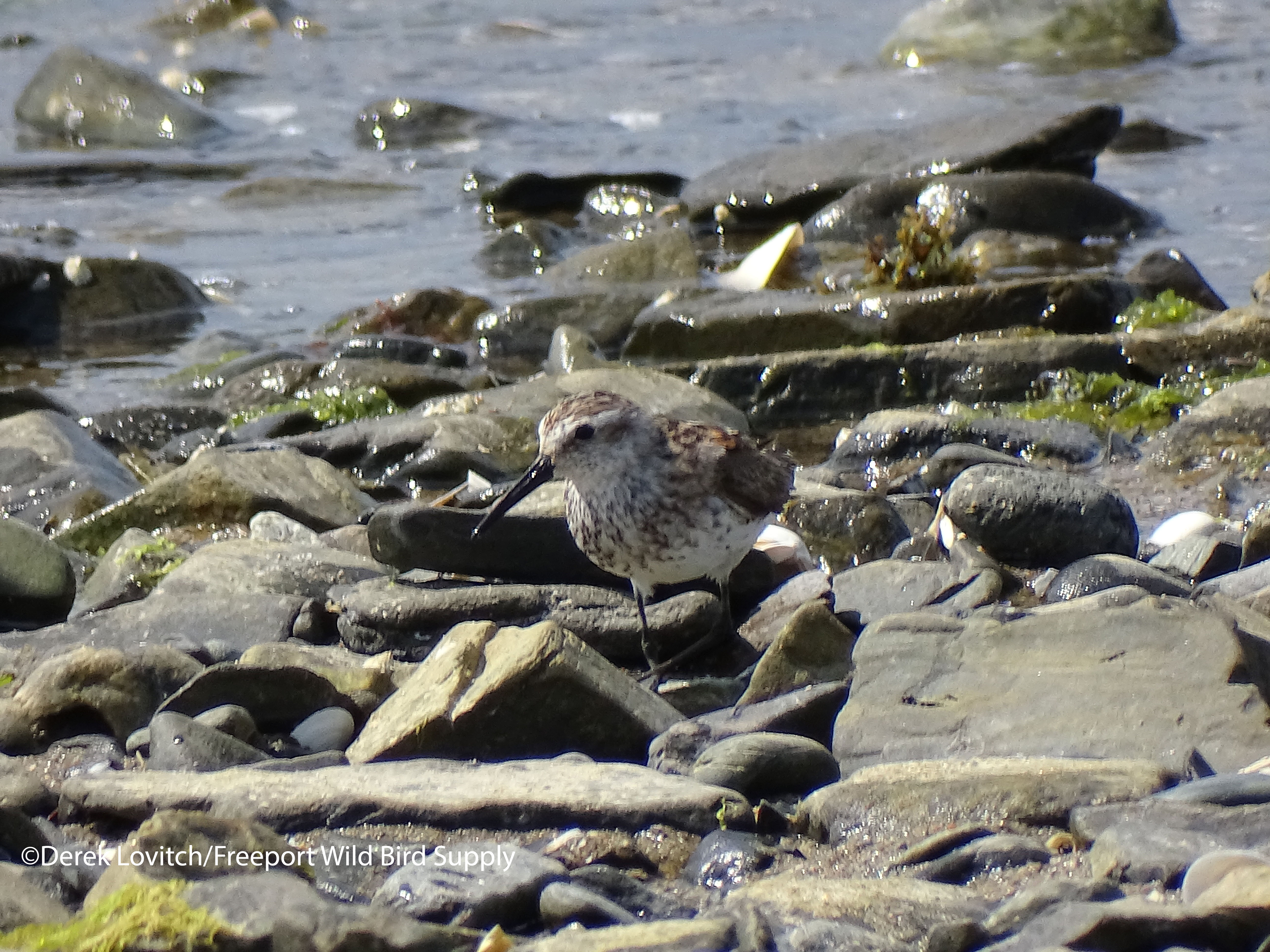
While small numbers of juvenile WESTERN SANDPIPERS can be found in Maine in late summer and early fall, we rarely see adults. Therefore, this was an exciting find at Hill’s Beach in Biddeford on the incoming tide on the 22nd.
Another dandy week of summertime birding produced the following highlights for me. Shorebird numbers and diversity are growing rapidly now.
1 Yellow-billed Cuckoo, Old Town House Park, North Yarmouth, 7/16 (with Saturday Morning Birdwalk group; few around locally this summer). One calling in our Pownal yard on 7/22.
2 continuing HENSLOW’S SPARROWS, Crystal Spring Farm, Brunswick, 7/20. Both birds singing, but the west bird continued long past the east bird went silent. I spent my time this morning attempting to observe the east bird, but never saw it once it stopped singing about 5 minutes after I arrived.
1 Fish Crow, Point Sebago (Private; with Point Sebago Birdwalk group) and 1 at Sebago Lake State Park, 7/21 (still wondering if these are from the Windham colony or not).
Least Sandpiper: 31, Eastern Road Trail, Scarborough Marsh, 7/22.
Semipalmated Sandpiper: 140, Pine Point, 7/22.
WESTERN SANDPIPER: 1 rare adult, Hill’s Beach, Biddeford, 7/22 (photo above).
Short-billed Dowitcher: 165, The Pool, Biddeford Pool, 7/22.
Spotted Sandpiper: 2, Eastern Egg Rock, 7/16 (with Hardy Boat Evening Puffin Cruise group) and Sebago Lake State Park, 7/21.
Solitary Sandpiper (FOF): 1, Old Town House Park, North Yarmouth, 7/16 (with Saturday Morning Birdwalk group) and 1, Eastern Road Trail, 7/22.
Lesser Yellowlegs: 53, Eastern Road Trail, 7/22.
“Eastern” Willet: 96, The Pool, 7/22.
Greater Yellowlegs: 10, Eastern Road Trail, 7/22.
Beat the heat tomorrow, Saturday, July 23rd with a boat trip to Seal Island. No “Troppy” this year, but you know we’ll be looking hard for the Tufted Puffin! A limited amount of space on this extended charter is available.
This Piping Plover is one of two siblings that have somehow survived on the jam-packed Pine Point Beach. Often exercising their wings on the 22nd, they are probably just a few days away from being able to fly away from crowds.
I found this 1st summer Little Gull on Hill’s Beach in Biddeford on 6/19. It was among about 40-50 Bonaparte’s Gulls and hunkered down against the wind. This was my first in southern Maine in quite a few years.
Breeding season is upon us, and Maine’s seabird islands are in full effect – even when they don’t have a Tufted Puffin. I did find a Little Gull, however, and that was fun; I really like Little Gulls! My observations of note over the past seven days included the following:
Biddeford Pool shoreline and neighborhood, 6/19: 1 1st summer Great Cormorant, 3 Black Scoters, 1 pair Surf Scoters, and 1 likely-late migrant Magnolia Warbler.
1 first-summer LITTLE GULL and 1 AMERICAN OYSTERCATCHER, Hill’s Beach, Biddeford, 6/19 (photos above).
3 Semipalmated Sandpipers and 14 Black-bellied Plovers, The Pool, Biddeford Pool, 6/19.
Belgrade PURPLE MARTIN colony, 6/21: Jeannette and I counted at least 25 occupied nests holes, which I believe would be a recent record high of this venerable colony.
1 Red Crossbill, Downeast Sunrise Trail, Machias, 6/21 (with Jeannette).
15-20 Wilson’s Storm-Petrels, Cutler Harbor to Machias Seal Island with Bold Coast Charter Co, 6/22 (with Paul Dioron, Bill Thompson, and Jeannette).
1 pair NORTHERN GANNETS, displaying and early-courtship behavior, Machias Seal Island with Bold Coast Charter Co, 6/22 (with Paul Dioron, Bill Thompson, and Jeannette).
1 Greater Yellowlegs, Machias River Causeway, 6/22 (with Jeannette). High-flying and heading south, was this our first migrant of “fall?” or just an over-summering bird heading to a roost?
2 Red Crossbills (Typ1 10 fide Matt Young), 1 Bay-breasted Warbler, Palm Warblers, etc, Cutler Coast Maine Public Reserve Lands, 6/23 (with Jeannette).
1 pair AMERICAN OYSTERCATCHERS, Egg Rock off Petit Manan peninsula, with Acadia Nature Tours puffin trip to Petit Manan Island (with Doug Hitchcox, Jeannette, et al). No Tufted Puffin.
After a couple of failed nesting attempts followed by a 2-3(?) year hiatus, a male Northern Gannet has been hanging out and “prospecting” on Machias Seal Island again this year. Recently, he has attracted the attention of a 4th-cycle, presumed female. We were lucky enough to view them outside of our blind during a tour there on 6/22. This was just a quick snapshot with my phone. Jeannette has over a thousand photos to sort through!
Confidently identifying Gray-cheeked vs Bicknell’s Thrushes on migration is always a challenge, but this bird I found at Biddeford Pool was vocalizing incessantly. It even posed – as far as these reclusive migrants go – for some snapshots. I believe that this is my first confirmed Bicknell’s Thrush on the coastal plain of Maine during spring migration,
For much of this spring, I’ve been lamenting about a “slow” week of migration, or a “trickle” of migrants, etc. That was NOT the case this week, as the floodgates finally opened. In fact, it was an incredible week of birding. The northern limits of a huge fallout greeted me on Monday morning. And then there was Friday at Biddeford Pool. It was epic. Unforgettable.
My observations of note over the past eight days included:
1 Blue-gray Gnatcatcher, Evergreen Cemetery, Portland, 5/15 (with Down East Adventures Spring Songbird Workshop group).
20 species of warblers, including 1 continuing Louisiana Waterthrush and 6 Bay-breasted Warblers (FOY), and led by 25+ Northern Parulas and 20+ Black-and-white Warblers, Morgan Meadow WMA, 5/16 (with Jeannette). Incredible morning; definitely the best morning of spring to date. Interestingly, this appeared to be about the northern limits of what was a significant coastal fallout from at least Eastern Massachusetts into southern Maine.
17 species of warblers, led by 18 Common Yellowthroats and 17 American Redstarts, Florida Lake Park, Freeport, 5/17 (with client from Maine).
1 Ruby-crowned Kinglet (getting late), Florida Lake Park, 5/17 (with client from Maine).
16 species of warblers, led by 24 Yellow-rumped Warblers and 15 American Redstarts, Florida Lake Park, Freeport, 5/18 (with Jeannette). This was the first morning this season where there were more female than male passage migrants.
16 species of warblers, led by 24 Common Yellowthroats and 22 Yellow-rumped Warblers, Florida Lake Park, Freeport, 5/19.
Biddeford Pool, FALLOUT, 5/20! This was insane. I was optimistic about conditions based on the overnight wind forecast and morning fog, but there was virtually nothing on the radar overnight. I almost didn’t go. I never expected to find this. Birds were everywhere. Every tree had warblers. Swainson’s Thrushes and Lincoln’s Sparrows were hopping around manicured lawns. I can’t even begin to explain how amazing it was, but here are some of the highlights as I covered East Point, the neighborhood, and the Elphis Pond trails. All of my numbers are extremely conservative, as I attempted to judge the movement of birds between parallel streets, etc.
20 species of warblers led by 53 Common Yellowthroats, 44+ American Redstarts, 44 Yellow Warblers, and 43 Magnolia Warblers. I know these numbers are particularly low.
Thrushes! 43 Swainson’s Thrushes (FOY) and 8+ Veeries, but also…
1 BICKNELL’S THRUSH – shocking migrant vocalizing incessantly on path to East Point. Was still calling 3 hours later. Voice recordings and poor photo above. Rarely detected in migration away other than Nocturnal Flight Calls, this might have been my first ever confirmation in spring along Maine’s coast. Seems a little early, too. Photo above.
1 GRAY-CHEEKED THRUSH (FOY). My settings were off on the camera and the overall tone of this bird is not accurate! When I looked down at the camera to adjust, it dropped out of site. Called once.
1 SUMMER TANAGER, near Elphis Pond. Quick fly-by, and no red seen. Confident there was little or red on the upperparts. Not seen well enough to know if this was the bird that had been continuing in the area for a while or a different, possible female.
1 male ORCHARD ORIOLE, Elphis Pond. Often singing.
Amazing quantities of usually-uncommon migrants, such as: 15 Lincoln’s Sparrows, 15 Bay-breasted Warblers, and 11 Canada Warblers.
Other good tallies included 17 Black-throated Blue Warblers, 13 Least Flycatchers, and 4-6 Scarlet Tanagers.
Personal First-of-years also included 2 Cape May Warblers, 9 Tennessee Warblers, 3 Philadelphia Vireos, along with 2 Roseate Terns off Ocean Ave.
The bird that got away: an intriguing Empid that suggested Acadian in a brief view along Orcutt Ave. Could not relocate.
Meanwhile, my list of personal “first of years” this week before the Biddeford Pool fallout included the following:
4 American Redstarts, Essex Woods and Marsh, Bangor, 5/13.
2 Bobolinks, Essex Woods and Marsh, 5/13.
1 Virginia Rail, Essex Woods and Marsh, 5/13.
5 Wood Thrushes, Evergreen Cemetery, Portland, 5/15 (with Down East Adventures Spring Songbird Workshop group).
1 Scarlet Tanager, Evergreen Cemetery, 5/15 (with Down East Adventures Spring Songbird Workshop group).
3 Red-eyed Vireos, Evergreen Cemetery, 5/15 (with Down East Adventures Spring Songbird Workshop group).
1 Black-crowned Night-Heron, Evergreen Cemetery, 5/15 (with Down East Adventures Spring Songbird Workshop group).
1 Canada Warbler, Morgan Meadow WMA, 5/16 (with Jeannette).
1 OLIVE-SIDED FLYCATCHER (a little on the early side), Morgan Meadow WMA, 5/16 (with Jeannette).
4 Eastern Wood-Pewees, Morgan Meadow WMA, 5/16 (with Jeannette).
2 Blackpoll Warblers, Morgan Meadow WMA, 5/16 (with Jeannette).
6 Bay-breasted Warblers, Morgan Meadow WMA, 5/16 (with Jeannette).
1 Alder Flycatcher, Florida Lake Park, Freeport, 5/17 (with client from Maine).
20+ Semipalmated Sandpipers, Pelreco Marsh, 5/17 (with client from Maine)
This Black-and-white Warbler was among the multitudes of cooperative birds at Biddeford Pool on the 20th. But apparently, I didn’t take photos of any of the colorful ones! I was also having so much fun that for the most part, I forgot I even had a camera.
Despite taking photos of all four species of warblers along the Saco Riverwalk on 12/4, the only photo even marginally useful was this mediocre one of the continuing “Western” Palm Warbler. What I do like about it, however, is that it caught the “tail flick” in action.
It was a tough week in the Maine birding world with the loss of an icon, but she would have been upset with me if I didn’t get out to do any birding this week. My observations of note over the past seven days were as follows:
1 Snowy Owl, Hill’s Beach, Biddeford, 12/11.
1 Lapland Longspur with 12 Snow Buntings, Day’s Landing, Biddeford Pool, 12/12 (with client from Georgia).
1 ROUGH-LEGGED HAWK (FOS), Wood Island, Biddeford Pool, 12/12 (with client from Georgia).
16 Northern Pintails, The Pool, Biddeford Pool, 12/12 (with client from Georgia).
2 Snowy Owls, Biddeford Pool neighborhood, Biddeford, 12/12 (with client from Georgia).
1 Pine Warbler, Bailey Island, Harpswell, 12/13 (with Jeannette).
1 continuing male CAPE MAY WARBLER, Biddeford Pool neighborhood, Biddeford, 12/7 (with Jeannette).
1 Turkey Vulture, over downtown Biddeford, 12/7 (with Jeannette).
4 Red-winged Blackbirds were at the store on 12/9 (observed by Jeanne Farrell).
1 Snow Bunting, Pott’s Point, Harpswell, 12/10.
7 Horned Larks, Stover’s Point, Harpswell, 12/10.
With the exceptions of Tuesday and Friday mornings, my birding was limited, local, and exceptionally slow! The complete lack of irruptives (other than an average number so far of Snowy Owls) south of the boreal transition belt, along with continued relatively-mild conditions that limit concentrations (including at feeders and of waterfowl) make for slim pickings on those short morning outings and dogwalks!