I found this 1st summer Little Gull on Hill’s Beach in Biddeford on 6/19. It was among about 40-50 Bonaparte’s Gulls and hunkered down against the wind. This was my first in southern Maine in quite a few years.
Breeding season is upon us, and Maine’s seabird islands are in full effect – even when they don’t have a Tufted Puffin. I did find a Little Gull, however, and that was fun; I really like Little Gulls! My observations of note over the past seven days included the following:
Biddeford Pool shoreline and neighborhood, 6/19: 1 1st summer Great Cormorant, 3 Black Scoters, 1 pair Surf Scoters, and 1 likely-late migrant Magnolia Warbler.
1 first-summer LITTLE GULL and 1 AMERICAN OYSTERCATCHER, Hill’s Beach, Biddeford, 6/19 (photos above).
3 Semipalmated Sandpipers and 14 Black-bellied Plovers, The Pool, Biddeford Pool, 6/19.
Belgrade PURPLE MARTIN colony, 6/21: Jeannette and I counted at least 25 occupied nests holes, which I believe would be a recent record high of this venerable colony.
1 Red Crossbill, Downeast Sunrise Trail, Machias, 6/21 (with Jeannette).
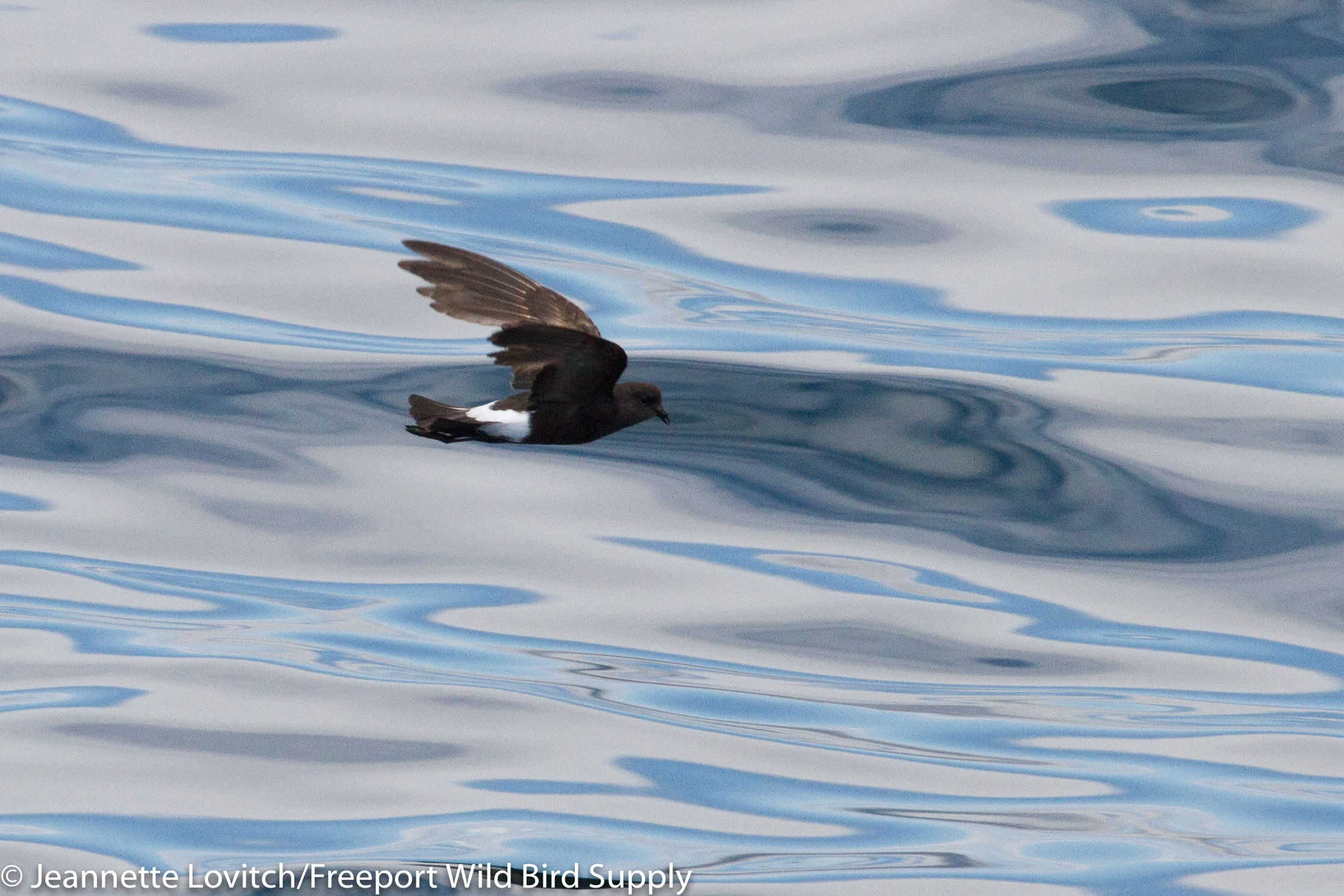
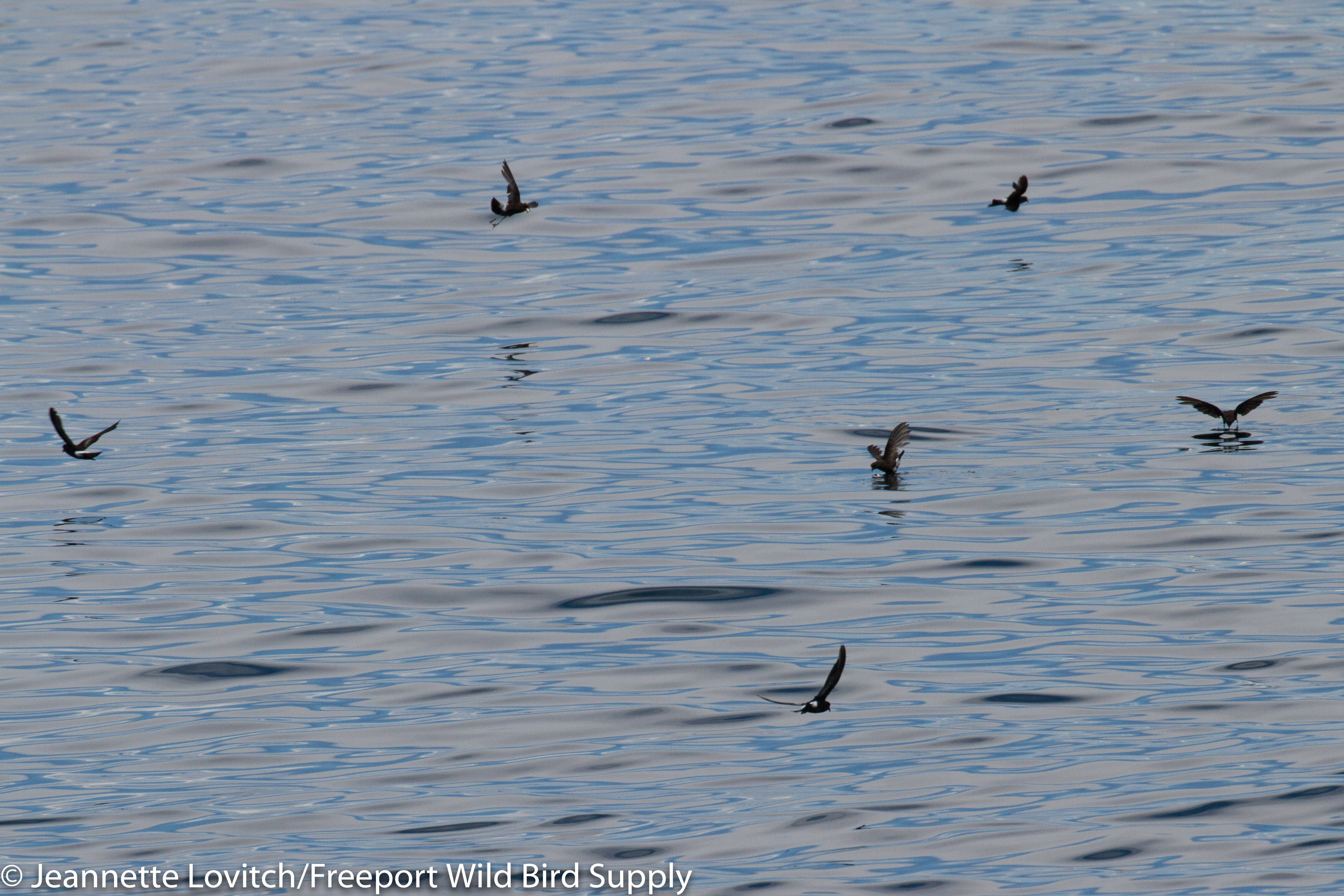
15-20 Wilson’s Storm-Petrels, Cutler Harbor to Machias Seal Island with Bold Coast Charter Co, 6/22 (with Paul Dioron, Bill Thompson, and Jeannette).
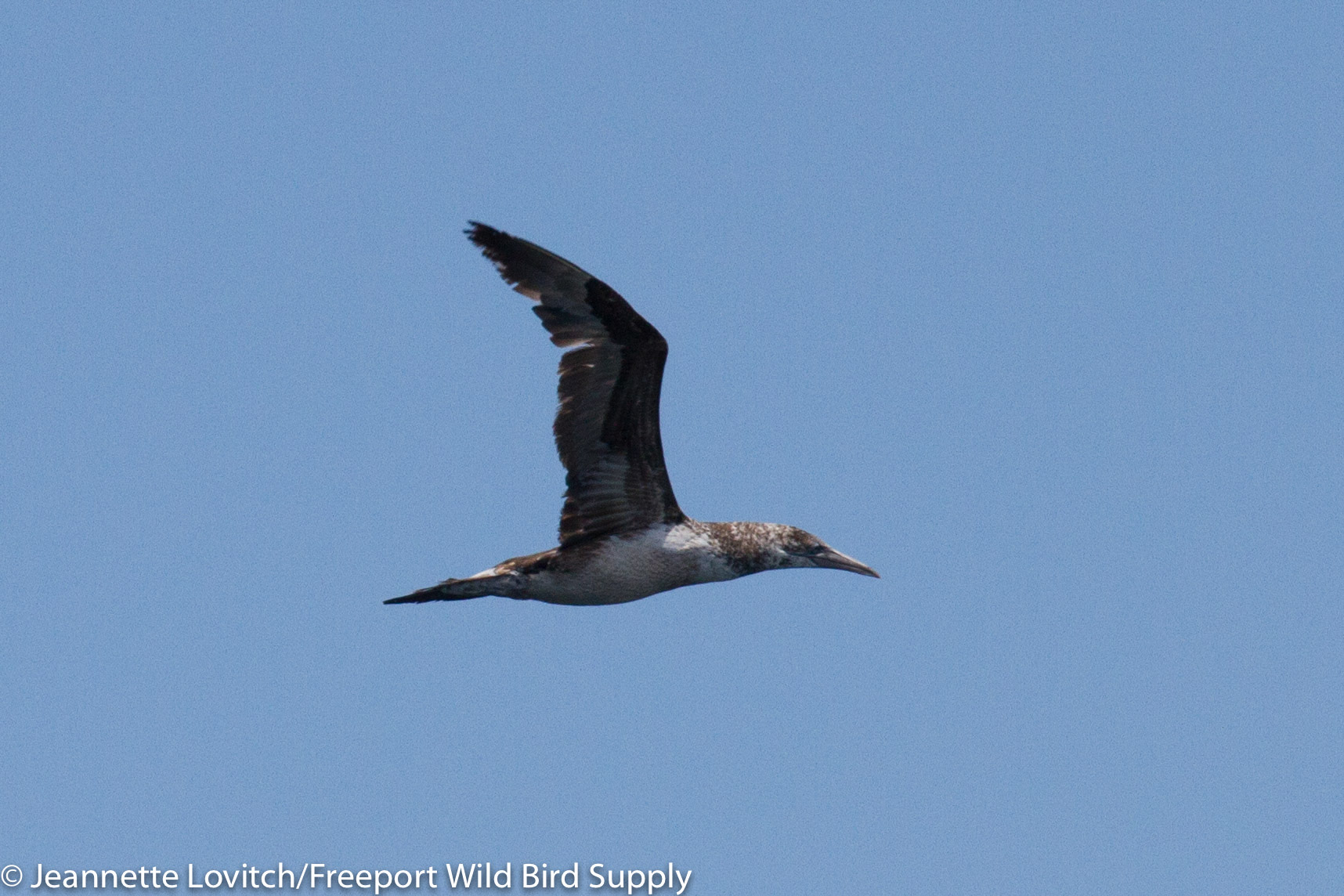
1 pair NORTHERN GANNETS, displaying and early-courtship behavior, Machias Seal Island with Bold Coast Charter Co, 6/22 (with Paul Dioron, Bill Thompson, and Jeannette).
1 Greater Yellowlegs, Machias River Causeway, 6/22 (with Jeannette). High-flying and heading south, was this our first migrant of “fall?” or just an over-summering bird heading to a roost?
2 Red Crossbills (Typ1 10 fide Matt Young), 1 Bay-breasted Warbler, Palm Warblers, etc, Cutler Coast Maine Public Reserve Lands, 6/23 (with Jeannette).
1 pair AMERICAN OYSTERCATCHERS, Egg Rock off Petit Manan peninsula, with Acadia Nature Tours puffin trip to Petit Manan Island (with Doug Hitchcox, Jeannette, et al). No Tufted Puffin.
After a couple of failed nesting attempts followed by a 2-3(?) year hiatus, a male Northern Gannet has been hanging out and “prospecting” on Machias Seal Island again this year. Recently, he has attracted the attention of a 4th-cycle, presumed female. We were lucky enough to view them outside of our blind during a tour there on 6/22. This was just a quick snapshot with my phone. Jeannette has over a thousand photos to sort through!
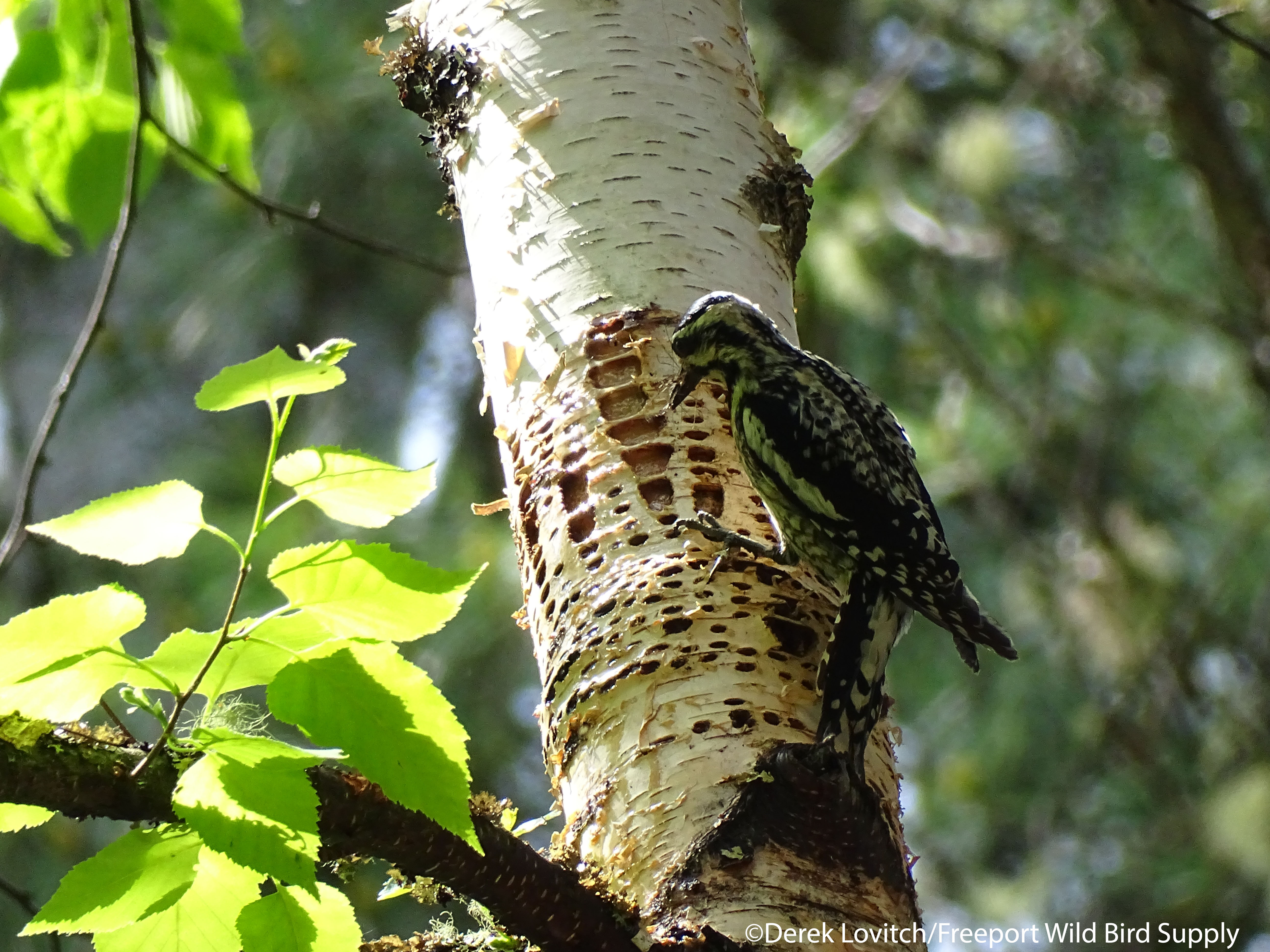
An amazing behavior to witness, this femaleYellow-bellied Sapsucker was collecting beak-fuls of insects (primarily crane flies, family Tipula spp.) and then dunking them in flowing sap before feeding nestlings. This is not a behavior I can remember having witnessed, and it was absolutely fascinating to watch. We observed this at the Hunter Cove Preserve in Rangeley on a walk for the Rangeley Birding Festival over the weekend (with Cameron Cox).
My observations of note over the past eight days included the following:
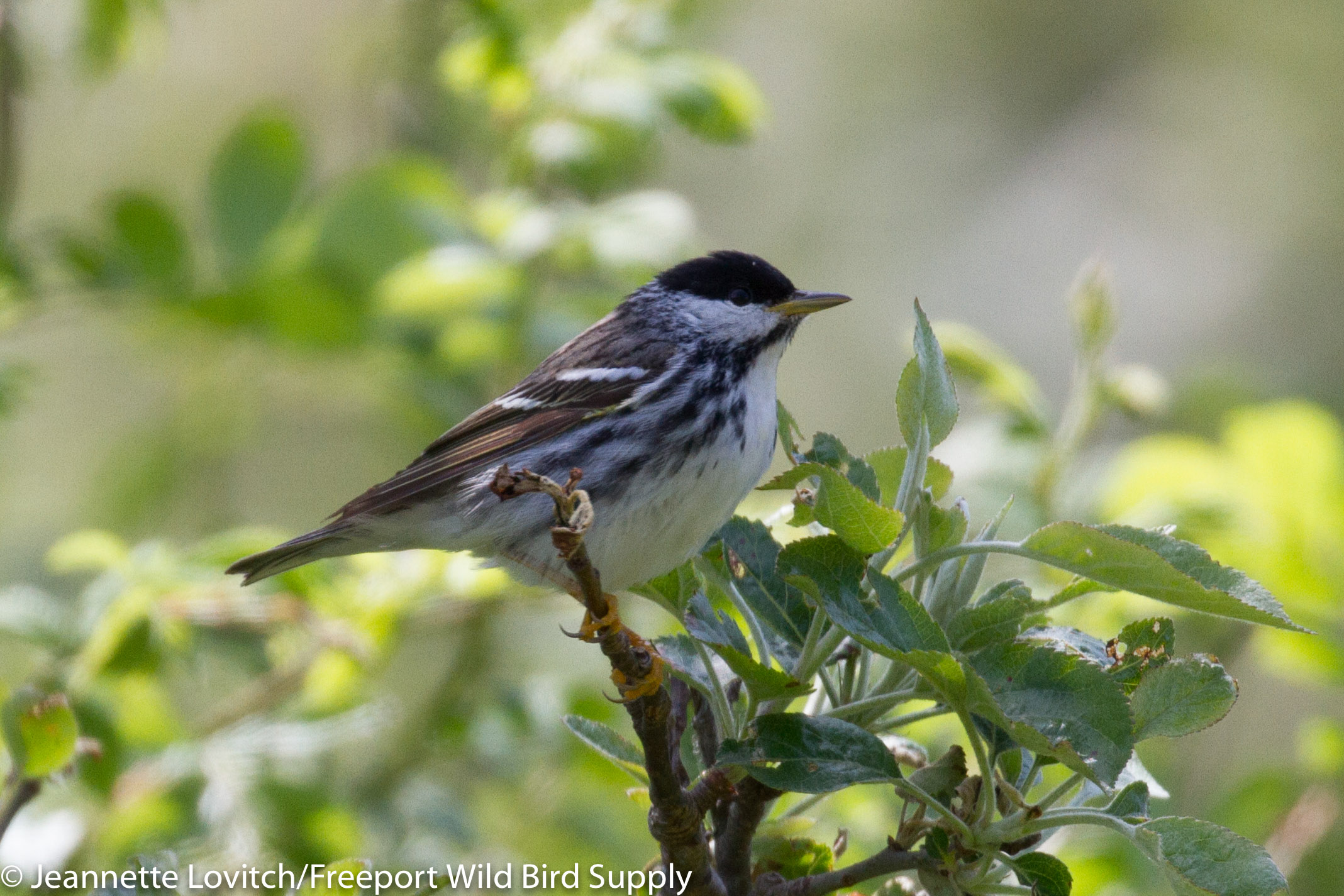
Rangeley Birding Festival, June 10-12. Cameron Cox and I led a total of four tours, and while none of them expected to find “boreal specialties,” our group did hear 2+ CANADA JAYS at Hunter Cove Preserve on 6/13. Otherwise, we mostly basked in the glow of Blackburnian Warblers and other area denizens, like the above Yellow-bellied Sapsucker.
Proposed* TRICOLORED HERON X SNOWY EGRET X LITTLE EGRET(S) in Scarborough Marsh, 6/16 (with Ted Floyd and Hannah Floyd). The saga continues! Although I have spent dreadfully little time in the marsh this summer, reviewing photographs has led me to consider that there are now two of this proposed three-way combination – one distinctly whiter (especially on the wings) than the other. On the 16th, we observed both birds distantly (darker bird off Eastern Road, whiter bird at Pelreco Marsh). In both cases they were very far and even phone-scoped photos were worthless due to heat shimmer. If you have great photos of birds from this year, I would love to see them!
*Hybrid combo as proposed in:
Lovitch, Derek J. 2022. Photo Salon: Hybrid Herons of Maine. North American Birds 72 (2): 28-40.
6-8 Semipalmated Sandpipers and 2 ad. Little Blue Herons, Pine Point, Scarborough, 6/16 (with Ted Floyd and Hannah Floyd).
On 6/16, I set out with visiting friends to study “sharp-tailed” sparrows. In one of those rare days, we saw and heard numerous Saltmarsh (here), Nelson’s, and hybrids thereof. If only every day is that easy for studying these birds! And all of our views came without any use of recordings or stepping into the marsh.
Boothbay Mini-Pelagic with our partners, Cap’n Fish’s, Dan Nickerson, and Jeannette on 6/6.
7 Razorbills among the puffins and terns at Eastern Egg Rock.
Unbelievable estimate of 2600 Wilson’s Storm-Petrels offshore. Massive early-season numbers continue in the Gulf of Maine from Massachusetts at least to the Mid-coast of Maine.
The first of our pelagic birding opportunities for the year took place on Monday, June 6th, as I joined the good folks from Cap’n Fish’s Cruises in Boothbay Harbor for a special ½ day mini-pelagic.
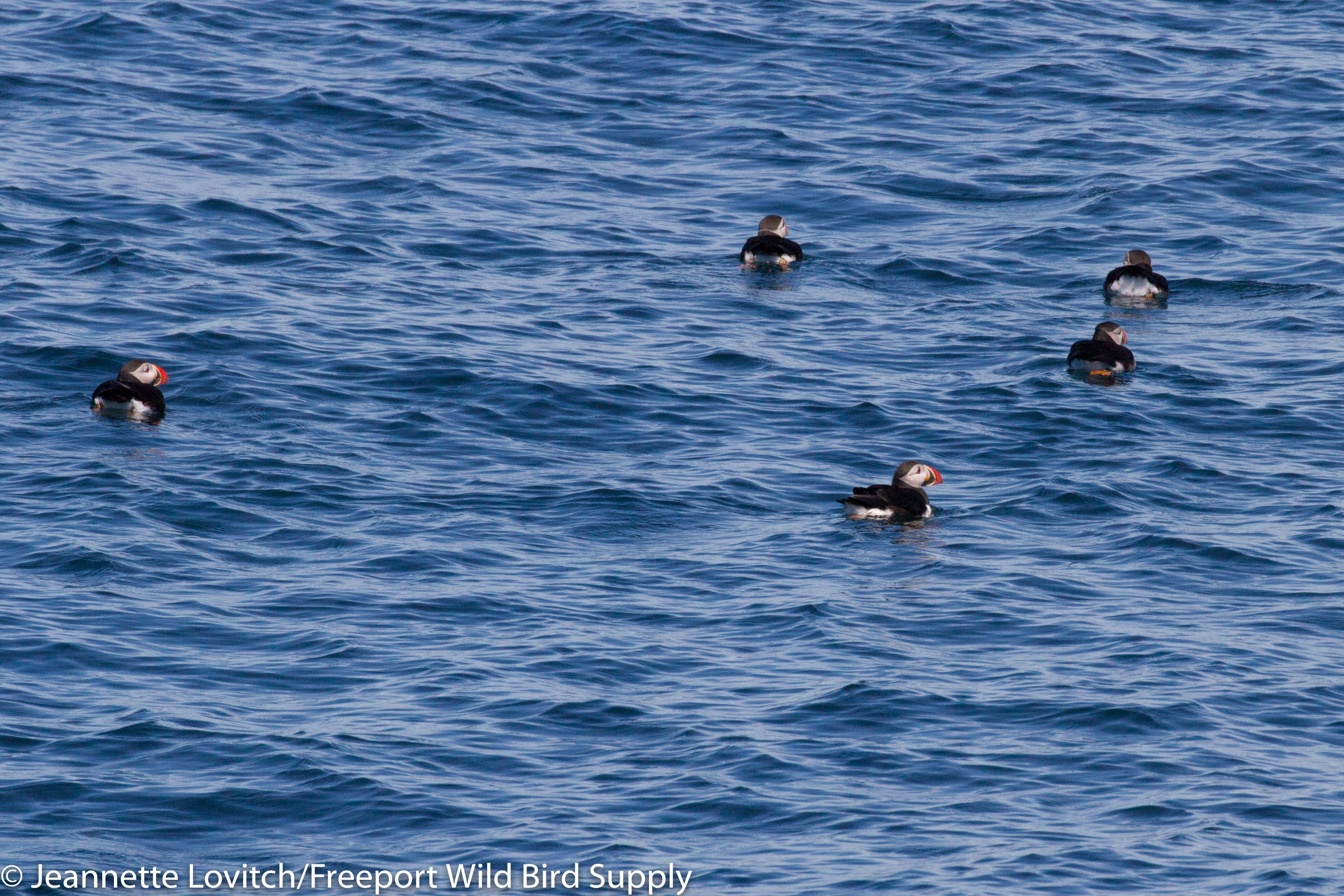
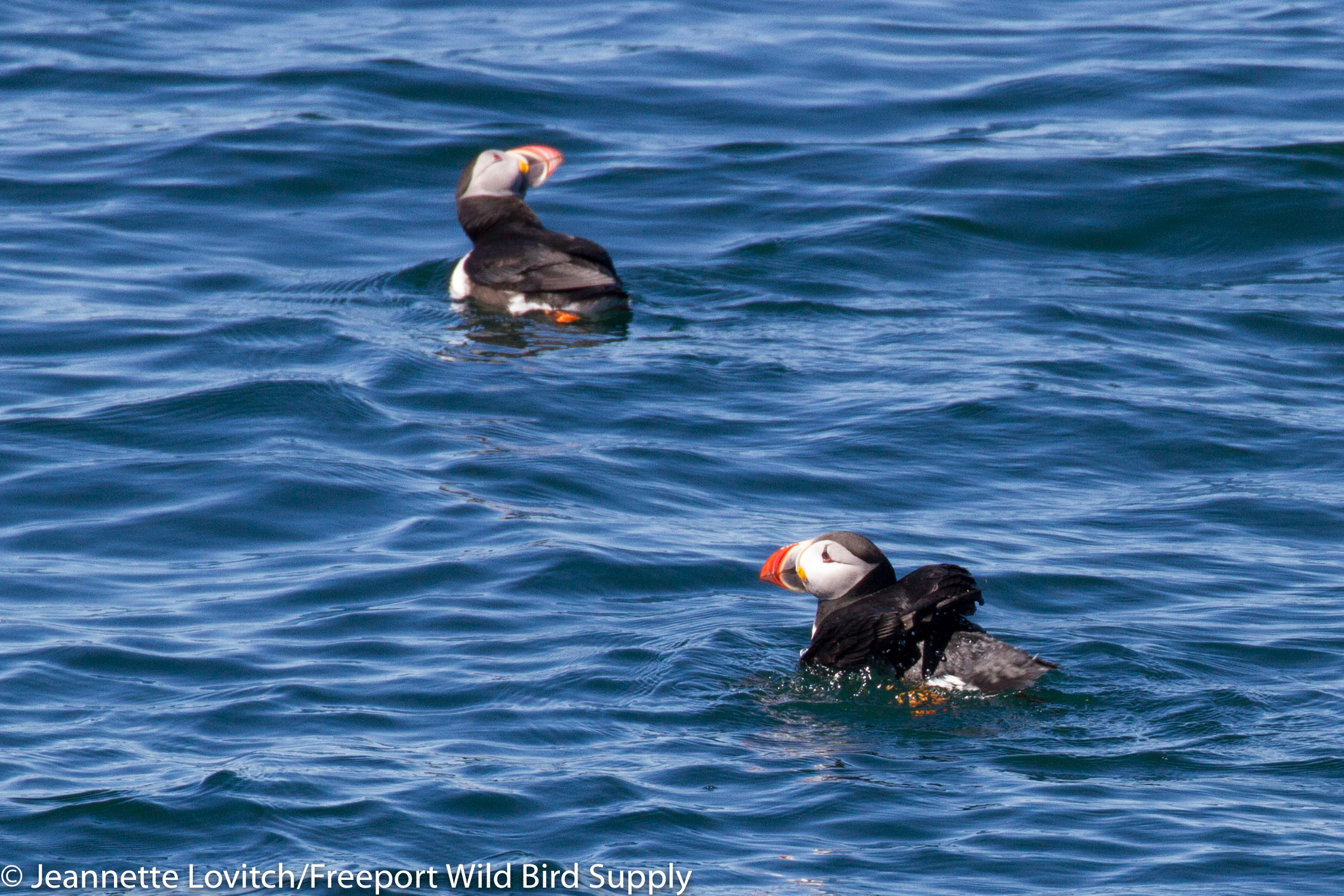
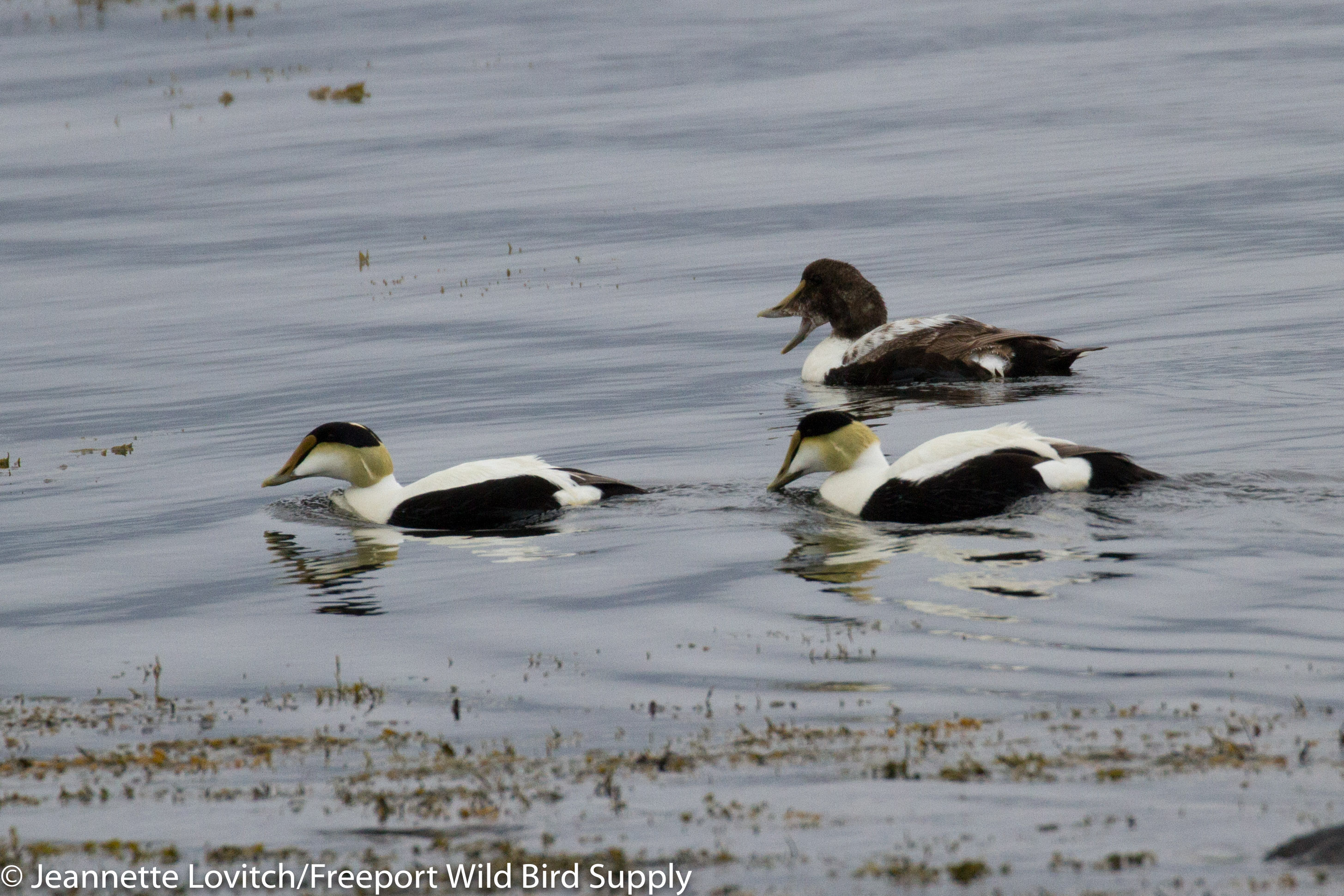
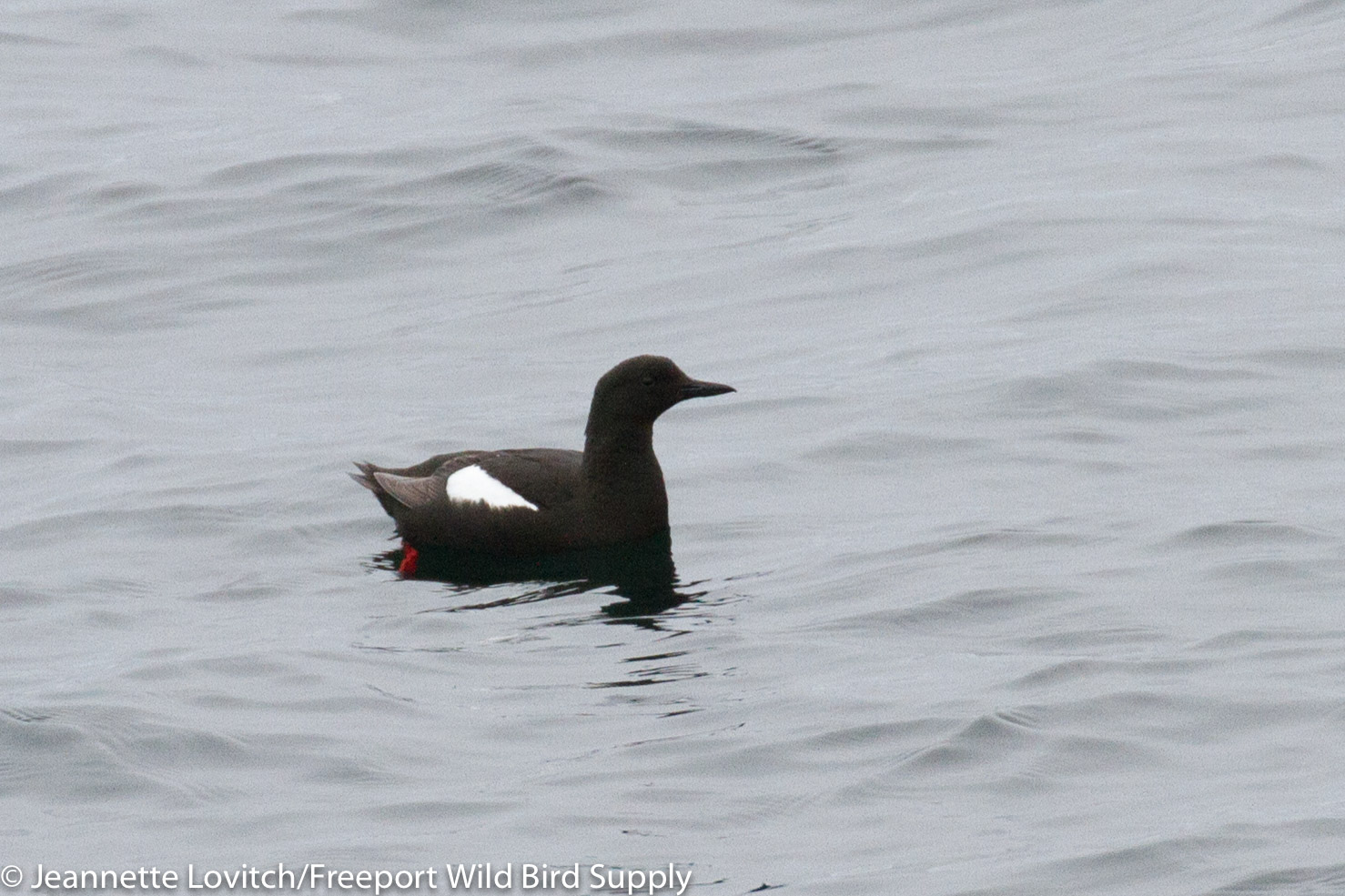
We motored our way east to Eastern Egg Rock, looking at Common Eiders, Black Guillemots, Ospreys, and many other inshore denizens. Once we got to Eastern Egg Rock, however, the fun really started! The cacophony of the colony was evident on this gloriously calm day, and it was not hard to find plenty of Atlantic Puffins in the water near the boat.
We worked the masses of Common Terns to isolate a few great views of Roseate and Arctic Terns. The bright sunny day was a delight except for when trying to judge grayscale. That made tern identification a little more challenging, but we worked our way through it before departing the island for deeper waters. We had a good total of 7 Razorbills on and around the island, which is no guarantee on a visit here, and while we didn’t have the one Common Murre that has been lingering on the rock, we did have one fly-by later in the trip.
Bright sunlight made tern identification more challenging!RazorbillsBlack GuillemotCommon TernRoseate Terns
With seas barely 1-2 feet, just a puff of wind, and abundant sunshine, it was just a gorgeous day offshore. We cruised through a wide stretch of uneventful, flat bottom, but once we hit deeper waters, we began to see a number of Wilson’s Storm-Petrels. There were a lot more at our first deeper hole, but then when we got to our primary destination, it was clear how abundant they were.
We laid down a 4-mile long chum slick, and then slowly cruised back through it. With the calm seas, it held together perfectly, and boy did it work! It was actually incredible. Unfortunately, other than a few Herring and Great Black-backed Gulls, it was 100% Wilson’s Storm-Petrels!
One of the ways to find other storm-petrels among masses is to look for the lack of obvious wing molt. This bird caught Jeannette’s eye because the wing is so clean and not showing any signs of flight feather molt. It’s a Wilson’s though, but could it possibly be another subspecies? Individual variation? Age? Or, just something slightly different to look at?
But what a show they put on! Dan, Jeannette, and I did our best to estimate the abundance, as this was truly a special event. Our estimate of a trip total of 2,600 birds included an estimate of 2,000 in our chum line!
We spotted the occasional Northern Gannet throughout the trip, but we desperately awaited another tubenose. Checking flight style, foot extension, wing bars, and underwing patterns, but yup, pretty darn homogenous. As a leader, I tried to check every bird. But the sight was impressive, and I couldn’t help but utter superlatives and occasionally just sit back and enjoy the show.
First-summer Northern Gannet.
We had to increase speed to make it back to the dock on time, but we continued to tally Wilson’s Storm-Petrels on the ride in. And Jeannette, Dan, and I worked hard to find something – anything! – else pelagic! We don’t have a lot of data on what is out here in June, and it’s likely different every year depending on water temperature and breeding success and/or failure of these “winter” visitors from the sub-Antarctic waters. In fact, one some June whale watches I have been on, I haven’t had a single species of tubenose – let alone 2600 of them.
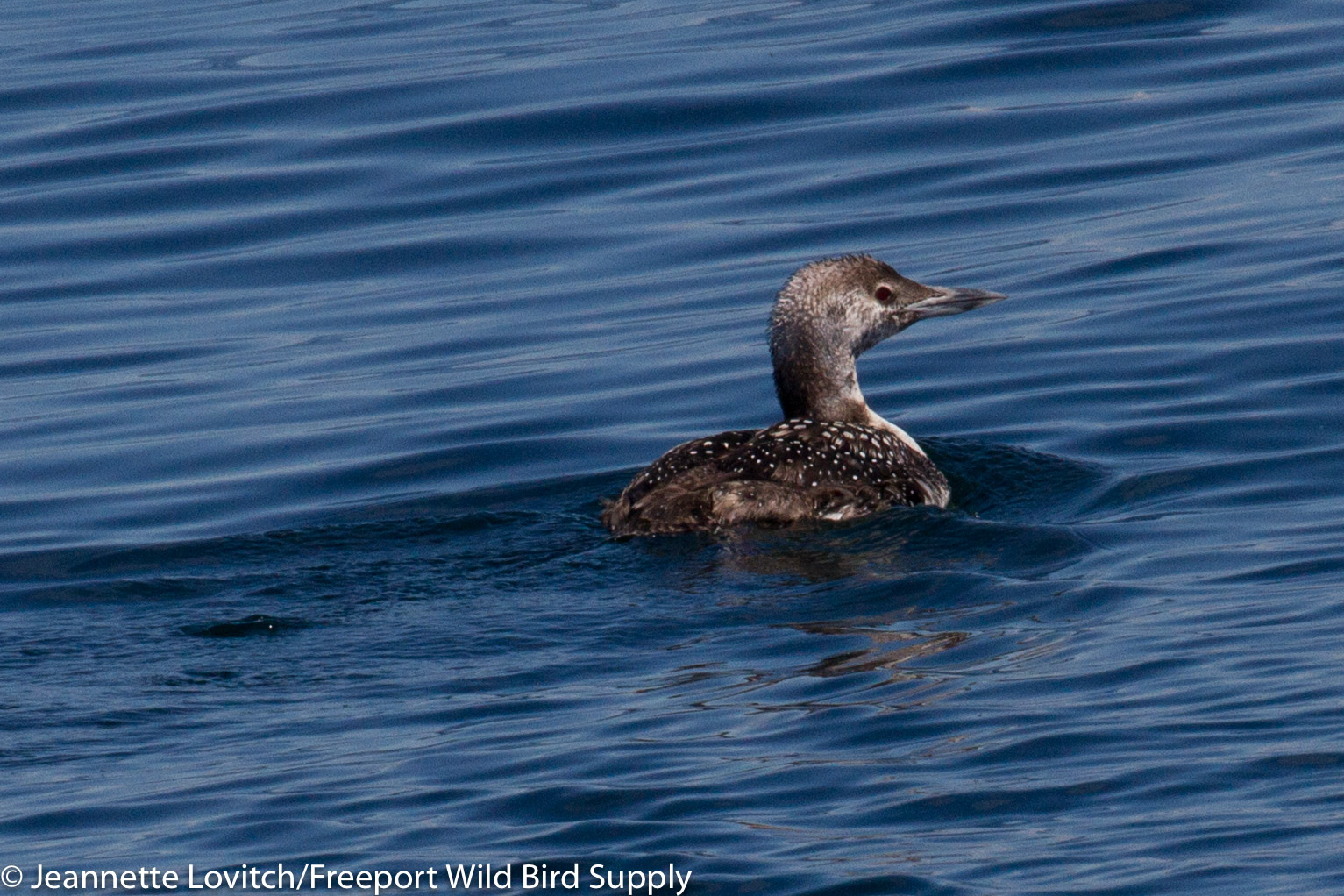
After last June’s adult Pacific Loon, I did have to have Captain Nick slam on the breaks when I spotted a decidedly gray-naped loon. When it surfaced, it was evident it was just a young Common Loon with an unusual amount of wear or bleaching on its head. It was worth a try though!
While our species list wasn’t legendary by any means, I’ve never seen this many Wilson’s Storm-Petrels in one, relatively short boat trip. In fact, this is by far the most I have ever seen together in Maine waters. Additionally, we had great looks at some of the Gulf of Maine’s most sought-after breeding seabirds to kick off the day at the birthplace of the Project Puffin. And the weather, wow, the weather – what a day to be on the water! And a great introduction to pelagic birding: the most exciting (and yes, at times frustrating) part of pelagic birding is every day, every trip, is so different, and it takes a lot of trips to appreciate the best of them.
We have two more trips planned with Cap’n Fish’s this summer. On July 15th, I’ll be joining the on-board naturalist for a visit to Eastern Egg Rock followed by a little birding-while-whale-watching. Then, on October 11th, it will be the second of our dedicated half-day pelagics, including chumming. Since we won’t have activity at Eastern Egg Rock at that time of year, all our time will be dedicated to finding birds offshore. Information and registration for these two trips – and our summer tours to Seal Island as well – can be found on the Pelagics Page of our website.
Here is our complete trip list, from the time the horn blew as the boat pulled out of the dock until we returned to the slip. Our estimates at Eastern Egg Rock are very conservative, and likely dreadfully low. Offshore, we worked hard at estimating individual groups of storm-petrels and tallying exact numbers of other birds offshore. There were also likely many more eiders, guillemots, and cormorants on the outer islands, but our focus was on finding more seabirds!
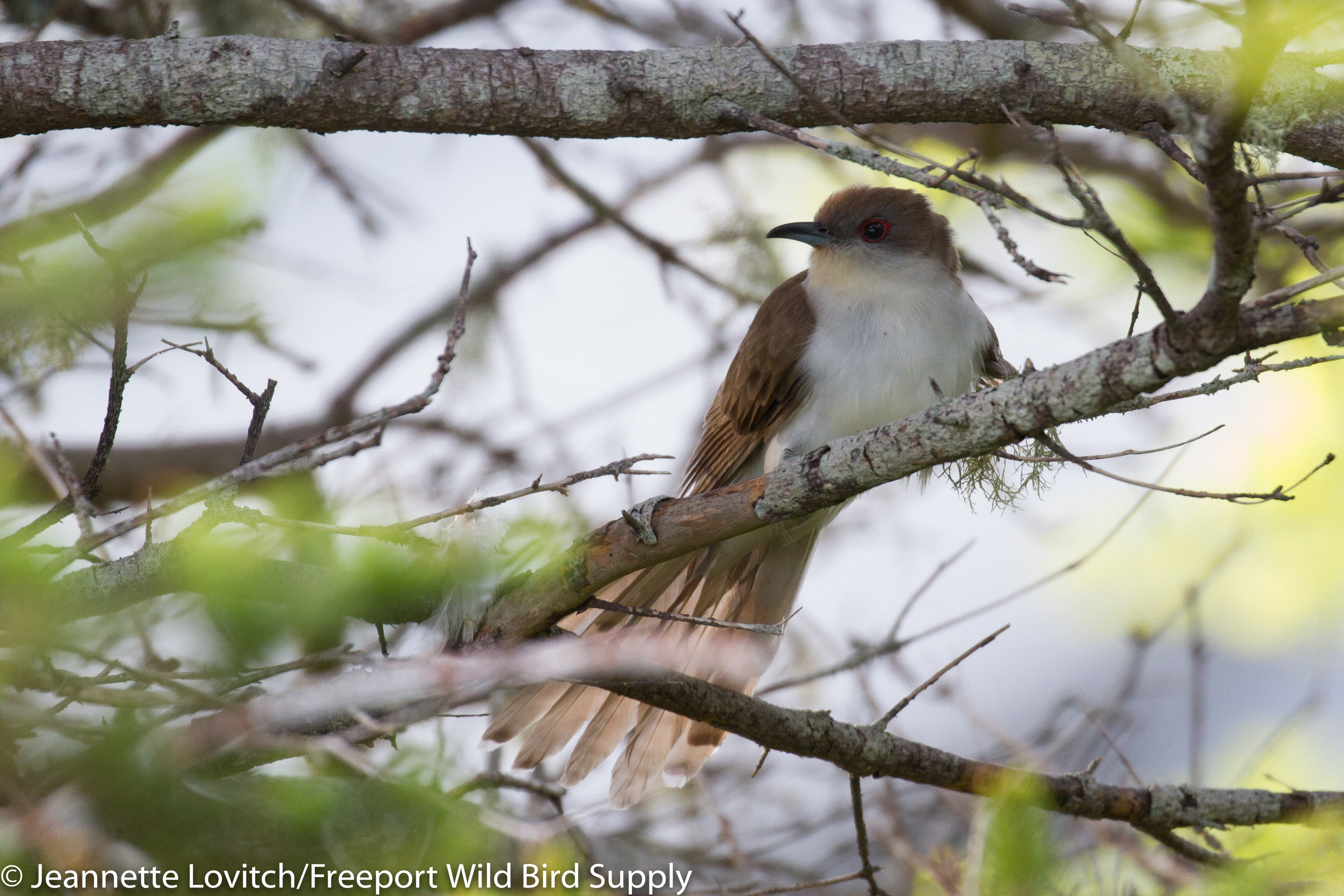
With so many great views of Black-billed Cuckoo(s) each day over the weekend, it was hard to argue against this being the bird of the trip. It was unusual how well, and how often, we saw this usually reclusive bird.
How about we just fast-forward to Sunday? Sunday was delightful.
After two quiet days, which I will eventually confess to, we had a bunch of birds. And no fog. And colorful birds in good light. The pre-breakfast loop was actually downright great, with a good variety of warblers. One copse of trees alone featured 3 Blackburnian Warblers, 4+ Blackpoll Warblers, 2 each of Yellow, Common Yellowthroat, Northern Parula, American Redstart, and 1 Magnolia Warbler
It was nice and birdy after breakfast as well, with more Blackburnian fun, a single Cape May Warbler, and a nice birdy walk through the woods (Winter Wren, Carolina Wren, and House Wren singing one after another) to Whitehead where we actually got to see the ocean – and a Great Cormorant for those visiting from afar. Bird activity and birdsong was pleasantly consistent throughout the day, and in most places we visited.
We caught up with a continuing immature male Orchard Oriole for all to see, and while perhaps one could argue it was still fairly slow for Monhegan by Memorial Day Weekend standards, it was a lot better than Friday and Saturday! In fact, the 59 species and 11 species of warblers was more than the first two days combined. A few of us who stayed out late even got to see an American Woodcock as it displayed over Horn Hill at dusk. It was a good day.
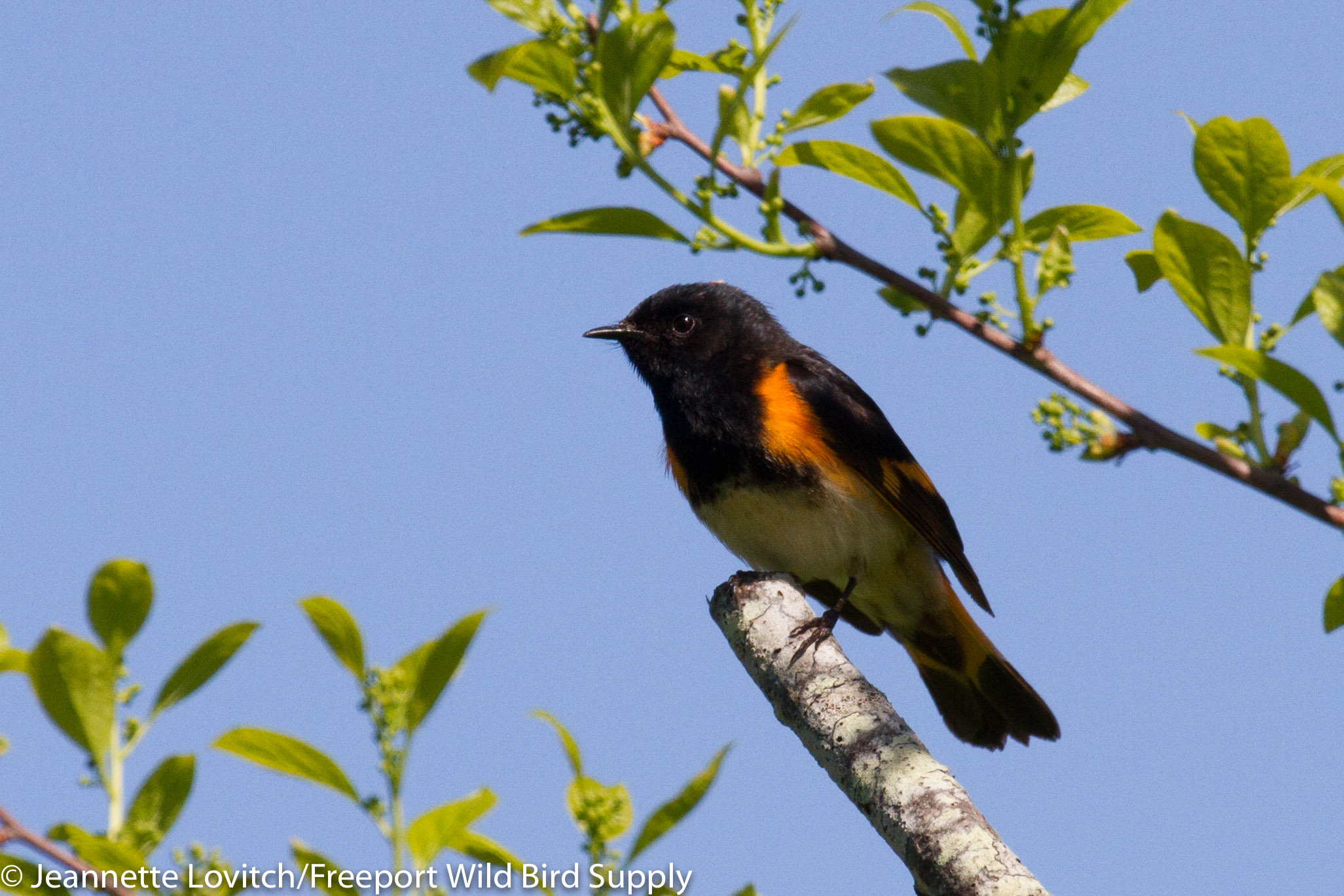
Blackpoll Warbler was definitely the migrant of the weekend. Besides being by far the most numerous passage migrant, they constantly offered crippling views throughout the tour. The male is above, and the female is below.This American Robin nesting in lobster traps was a delight to watch. The parents had to run a gauntlet of 5 or 7 traps to enter and exit the nest. It was a great demonstration of how lobster traps work.Laura shows off her handiwork. Hey, on a slow day, I’ll take all of the birds I can get!Northern ParulaImmature male Orchard Oriole
Friday got off to a rocky start. Really rocky actually, as in few people were even able to keep their breakfast down on the two ferry rides. Dense fog and near-zero visibility resulted in virtually no birds being seen, and well, let’s just not talk about these boat trips anymore…it was one of the worst I have ever experienced on the way to or from. Thankfully, I am not predisposed to feeling how many people felt upon arrival, but it was still a challenge to shake it off, and all of us were moving slowly by day’s end.
The sheltered waters of Deadman’s Cove were deceiving, but I think you get the idea!
Of course, it didn’t help that there were so few birds around! The huge wave of birds that arrived the previous weekend had cleared out, and nothing had arrived to take their place over the last few nights. With such strong winds, it was a challenge to find sheltered pockets, and when we did, we didn’t find many with many birds. Only Blackpoll Warblers were to be seen in numbers.
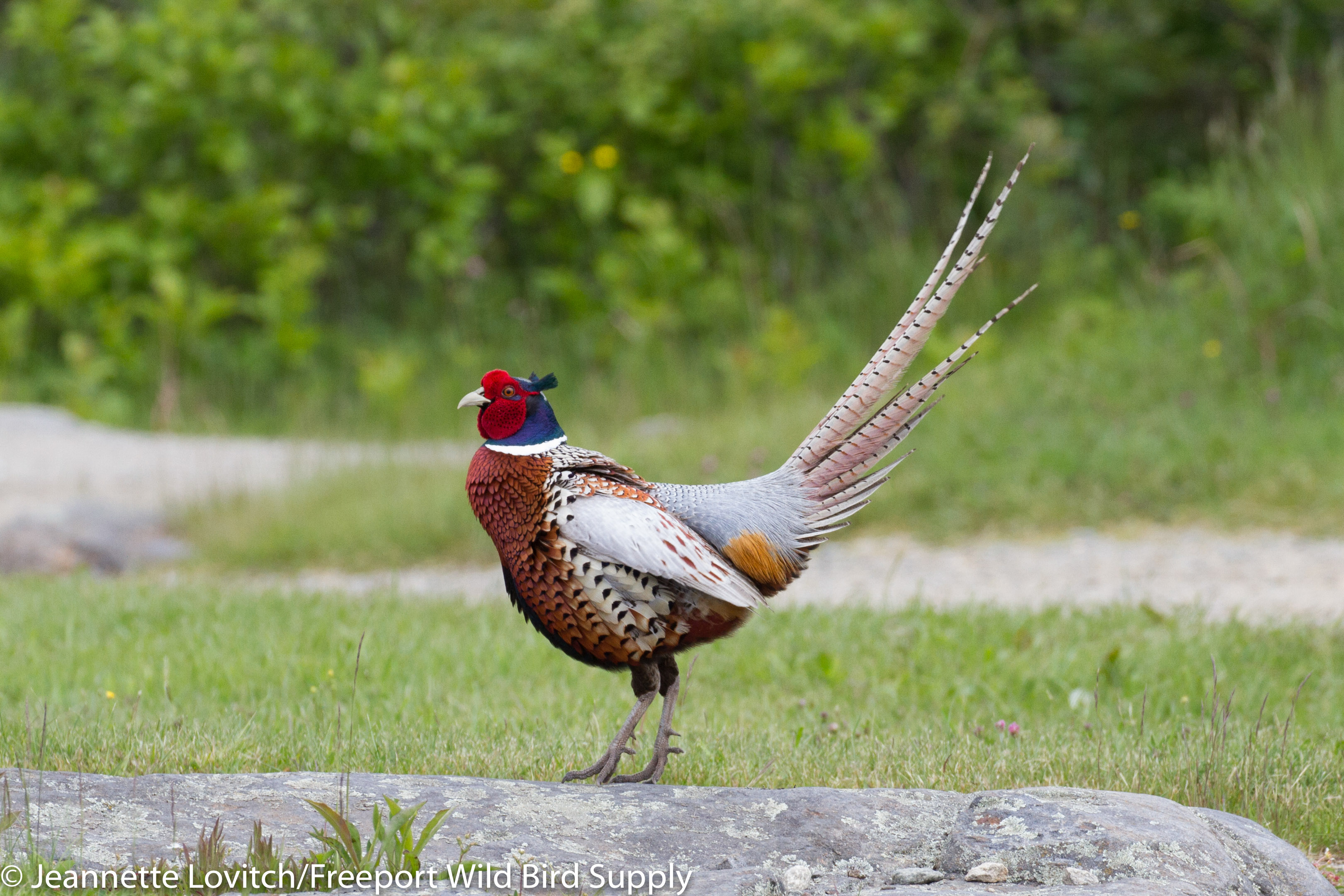
That being said, what we did see – especially the aforementioned Blackpolls and the continuing world’s most cooperative Black-billed Cuckoo(s) – we saw really well. A few of us even saw the Virginia Rail for a second. The dense fog also precluded scanning the water, so our checklist is even more pitiful for the day. Ring-necked Pheasants put on a show though, from confiding snazzy males to adorable little chicks.
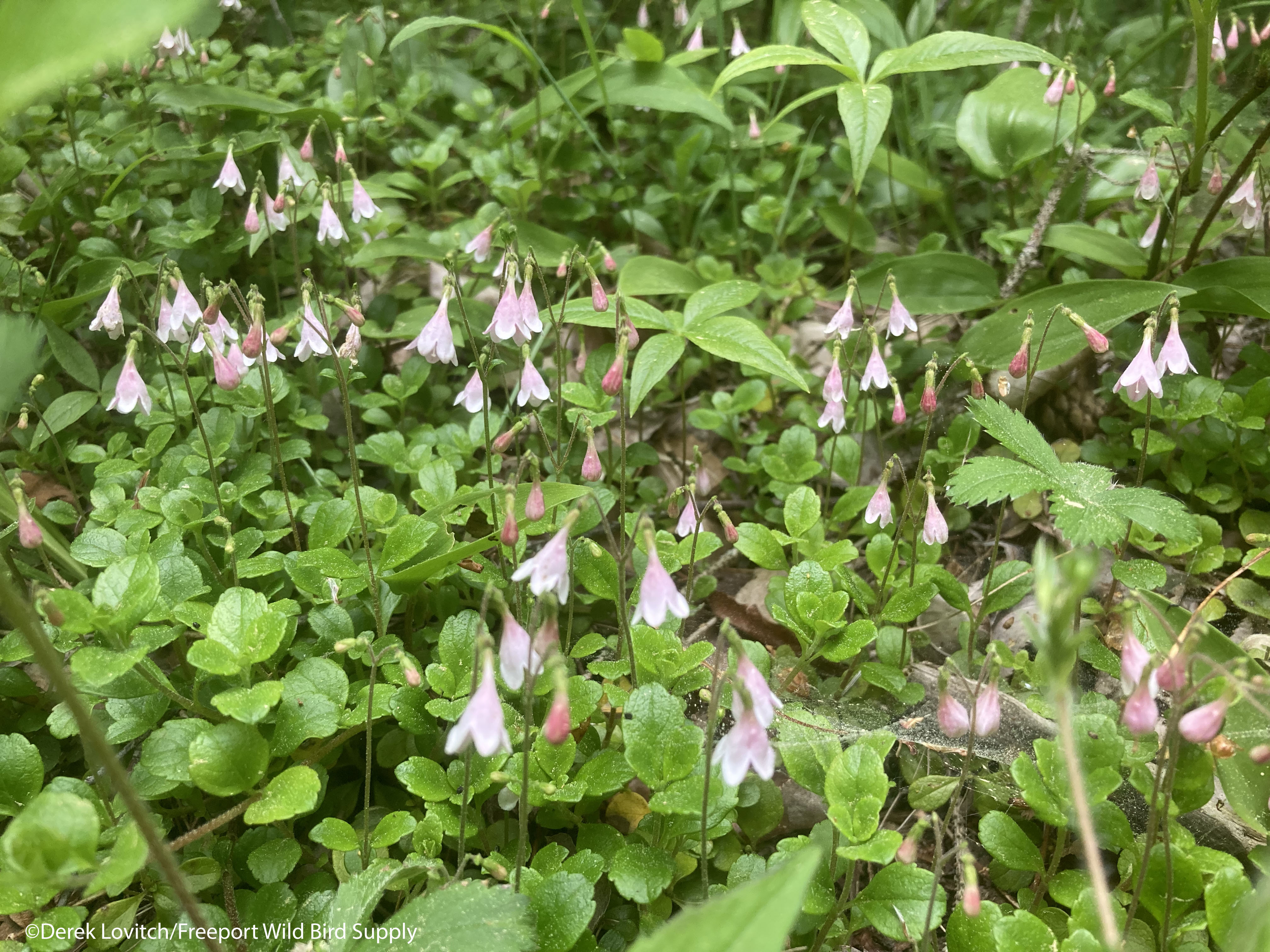
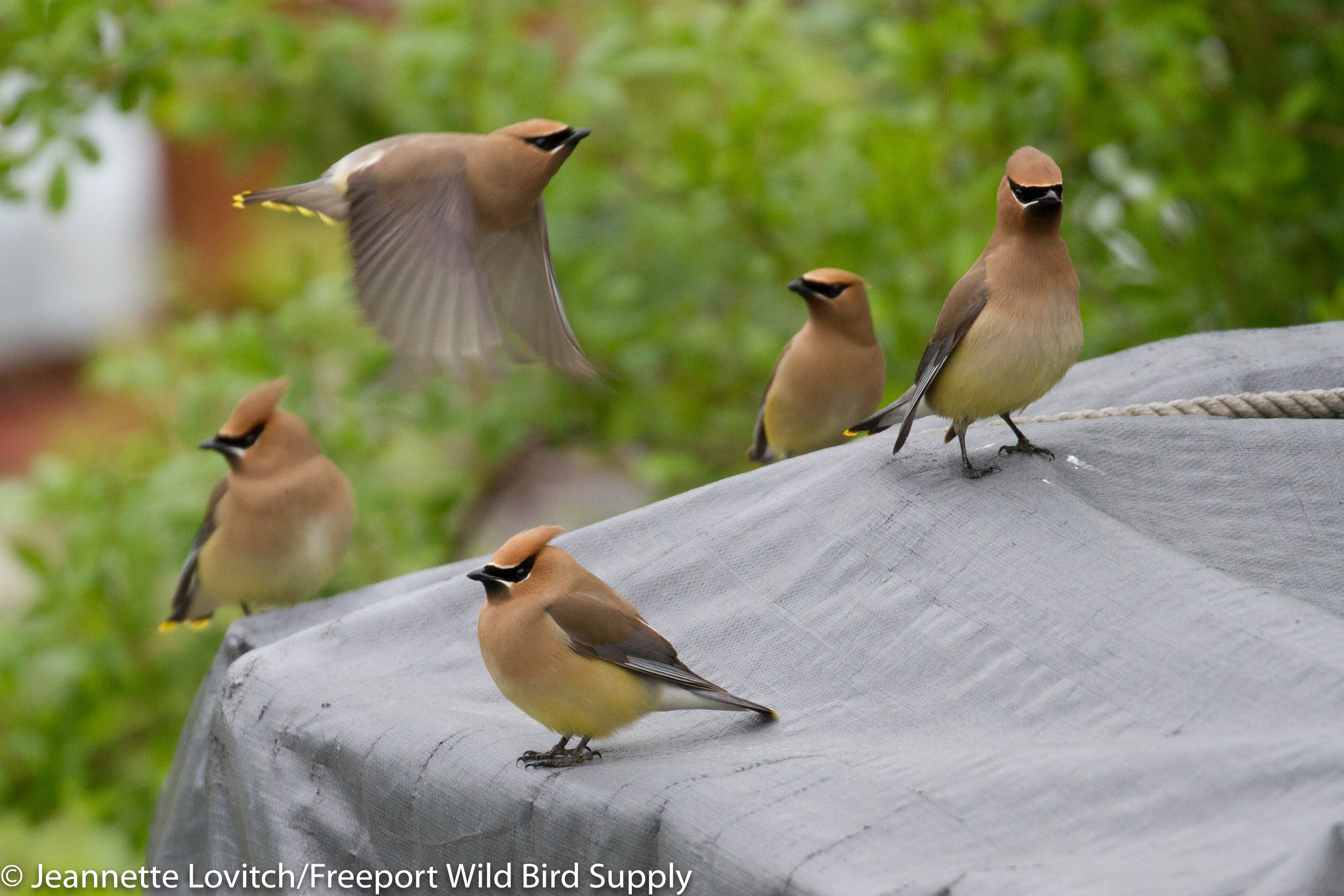
There was no shortage of Cedar Waxwings this weekend, with numbers growing in the final two days of our stay.We definitely took advantage of the lull in birding to do some botanizing, including taking the time to stop and smell the Twinflower (Linnea).What migrants were around, however, were often low, close, and confiding, such as this Red-eyed Vireo.
I had hopes for Saturday – it really couldn’t be any worse than Friday anyway! – based on the forecast. However, only a light flight was detected on the radar overnight, despite light southerly winds. It was mostly cloudy, but I couldn’t help to wonder if we were just running out of migrants.
Rain that could have resulted in a fallout of what little was airborne overnight didn’t arrive until after sunrise, but it only caused a 20-minute delay to the start of the day. That was it though, and certainly we were lucky that Saturday was not the washout that was predicted as of a few days prior. It was still slow, but once again, we had exceedingly great looks at everything that we did encounter, including more quality cuckoo time, a stunning male Indigo Bunting that was just glowing in the soft light, Blackpoll Warblers, Northern Parulas, American Redstarts, and more colorful splashes to brighten another gray day. And it wasn’t raining.
But it’s hard to sugarcoat just how slow it was – like Mid-June-kinda slow. Luckily, the fog lifted just long enough to see some waterbirds, and we took advantage of that for an impromptu gull workshop.
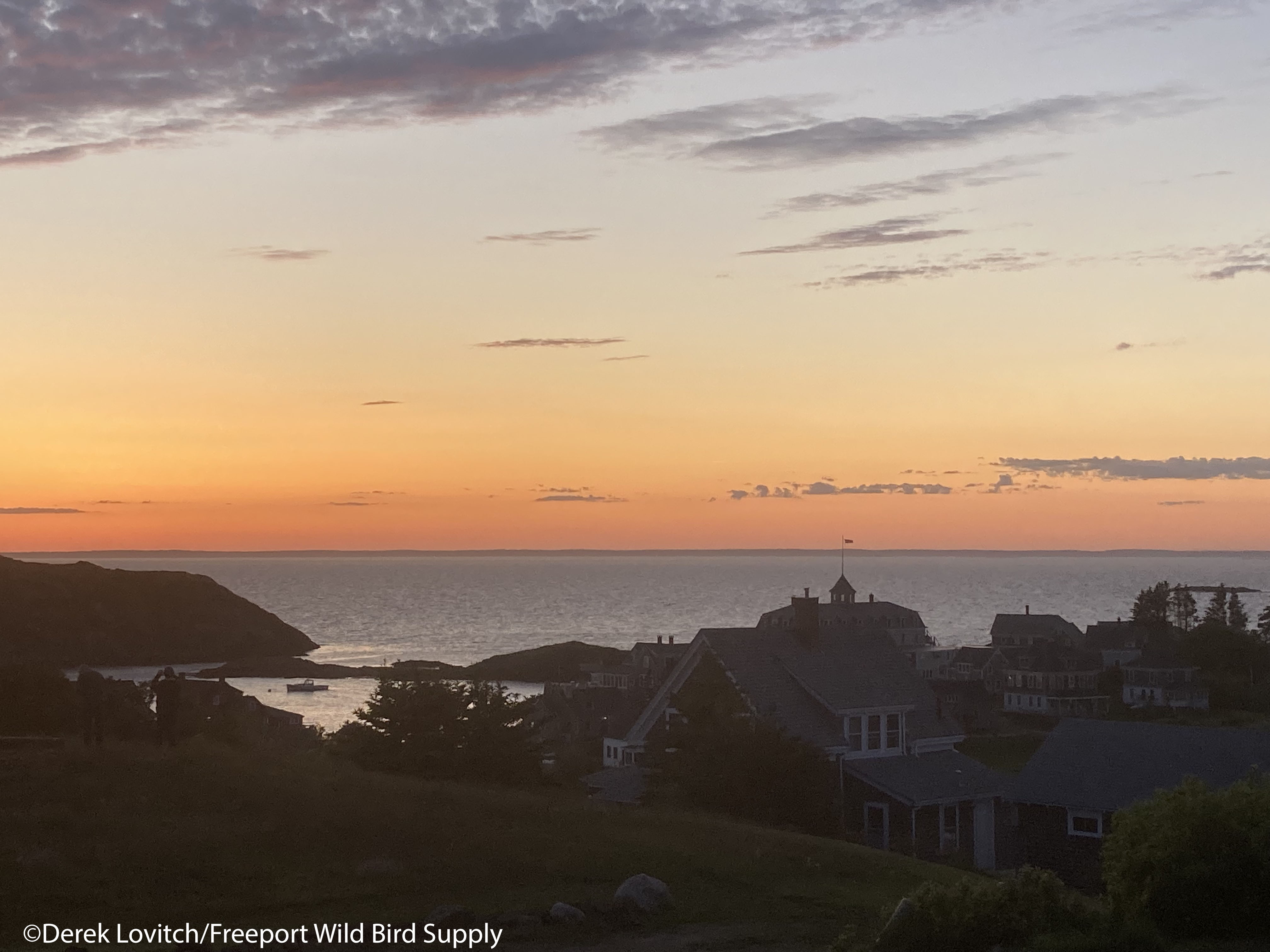
A tease. The fog returned shortly thereafter.It was news to me that Red-backed Salamanders were on the island. Upon finding that out, our Saturday afternoon walk in the woods featured a lot of log-rolling to sample. Apparently, they are rather widespread, as we found them throughout the spruce forest of the next few days.Sunsets on Monhegan are always memorable, but Saturday night’s was even more exciting as it meant an end to two days of solid fog.Tomorrow would be better, this scene promised. And it most certainly was!
A brief shower at dinnertime ushered in a cold front and skies began to clear at dusk, with the fog finally lifting. That led to the delightful Sunday I was talking about. And Monday wasn’t too shabby either, as we again started the day without fog, a very light wind, and evidence of some bird migration on the radar overnight. And, with the southwesterly flow continuing, we had even higher hopes for finding the “mega” that would make up for the so-far lackluster species list.
Starting the morning with a Black-billed Cuckoo sunning itself in a tree right in front of the Trailing Yew was a solid start, and there were more Eastern Wood-Pewees and a decent number of Blackpoll Warblers around. Again, a rather slow day by Monhegan standards, but we really had more great looks at everything we did see. Today’s magic tree was by the Ice Pond, with a pair of Blackburnian Warblers, a pair of Blackpoll Warblers, Yellow Warbler, Common Yellowthroat, and finally a Bay-breasted Warbler.
We also finally had some rarity excitement. First, a Spizella sparrow flushed in front of us and a very quick glimpse in the scope suggested a Clay-colored Sparrow, which is a great bird in the spring. But just to be sure, we searched for it, but to no avail. Luckily, its identity was confirmed the next morning went it put on a show in the exact same spot it didn’t want to return to today.
Later, a female Purple Martin made an appearance…OK, fine, I could not completely rule out a Gray-breasted Martin. I was trying.
The tour officially concluded in the afternoon, but Jeannette and I remained to enjoy a 24-hour vacation. Don’t worry, you didn’t “just miss” something, as all we had new in the afternoon was a Savannah Sparrow.
It’s already baby bird season!Cedar Waxwings were the most numerous passerine on the island – or at least, the most obvious, with a flock of 60 that grew to at least 150 by Tuesday afternoon. Common Yellowthroat.Eastern Kingbird
Also, don’t worry that you missed the day Monhegan legends are made of on Tuesday. You did not. It was still fairly slow, but we had a little uptick in diversity. The pulse of late-migrating flycatchers that I had expected finally arrived, there was a good Northern Gannet show off Lobster Cove in the morning, and a steady trickle of commuting Atlantic Puffins in a small sample of afternoon Lobster Cove seawatching.
Eastern Wood-Pewee
We picked up three Willets well offshore to the south from Lobster Cove in the morning, eventually following them into the harbor where they landed for a spell. As for that “probable” Clay-colored Sparrow that was nagging me all afternoon and night, well, I am thankful that it returned to the exact same spot as where we first glimpsed it. I received a text that it had been observed, photographed, and confirmed by others, and it obligingly remained long enough for us to catch back up with it.
Clay-colored Sparrow
Overall, there were many fewer warblers around on Tuesday, likely as many of the passage migrants had departed overnight. But it would have been nice if this diverse day with several quality birds and good seawatching fell during the official tour!
The 11 species we added after the group tour ended therefore were as follows:
Savannah Sparrow
White-winged Scoter
Surf Scoter
Atlantic Puffin
WILLET
Alder Flycatcher
Yellow-bellied Flycatcher
Bobolink
Pine Siskin
Hermit Thrush
Red-bellied Woodpecker (where were you hiding these past 4 days?)
Common EidersBlack GuillemotAmerican RedstartNorthern ParulaRing-necked Pheasant. No need to work on primary projection beyond the tertial step to identify this one!
Furthermore, on the Hardy Boat back to New Harbor, we added 2 Red-necked Phalaropes (personal first-of-year) and a Razorbill. With those 13 species, we had a total of 88 species over the 5 days, with a couple of more “quality” birds and that would have produced a much more respectable tour list! But alas.
So yes, by Monhegan standards, it was a pretty slow weekend. In fact, the 75 species on Friday through Monday was a record low (by two) for this annual tour. 16 species of warblers wasn’t too bad (last year’s soaker only produced 10), and we had some great birds. We also had such good looks at so many things, especially those – like Black-billed Cuckoo – that just don’t give such great looks very often, let alone daily!
Here is the official trip list (not including the 13 additional species from Monday afternoon through Tuesday evening when we got off the boat in New Harbor):
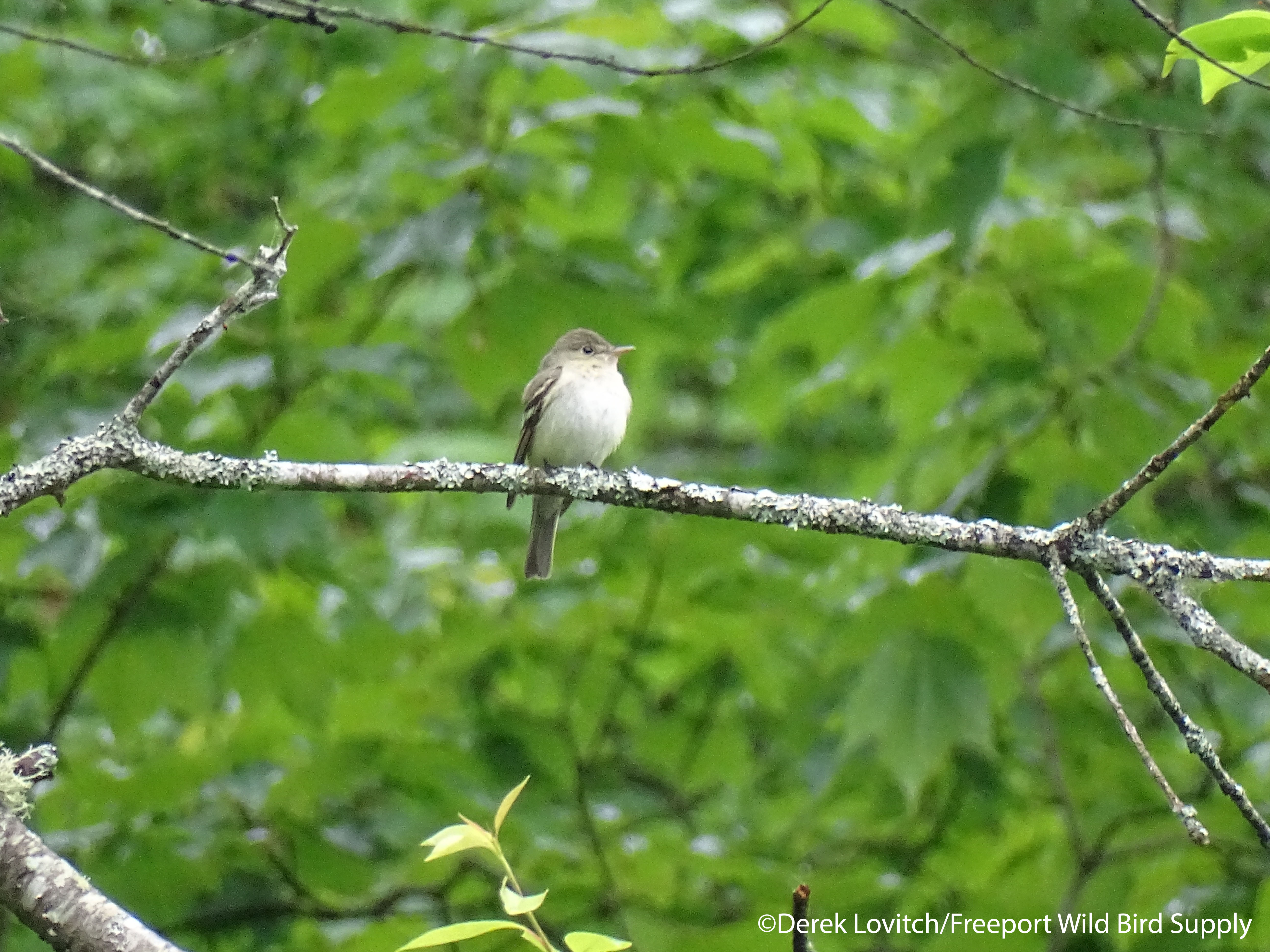
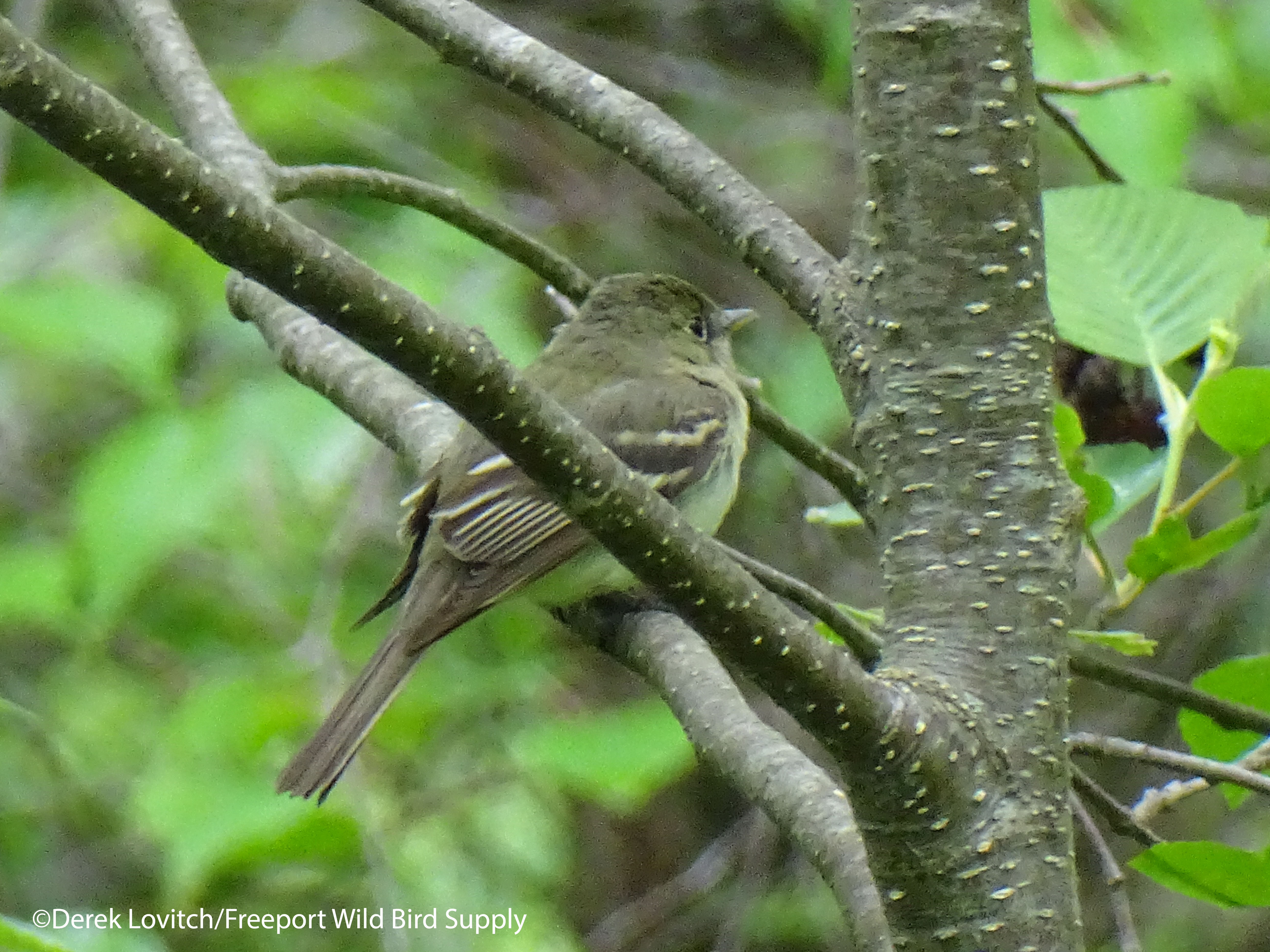
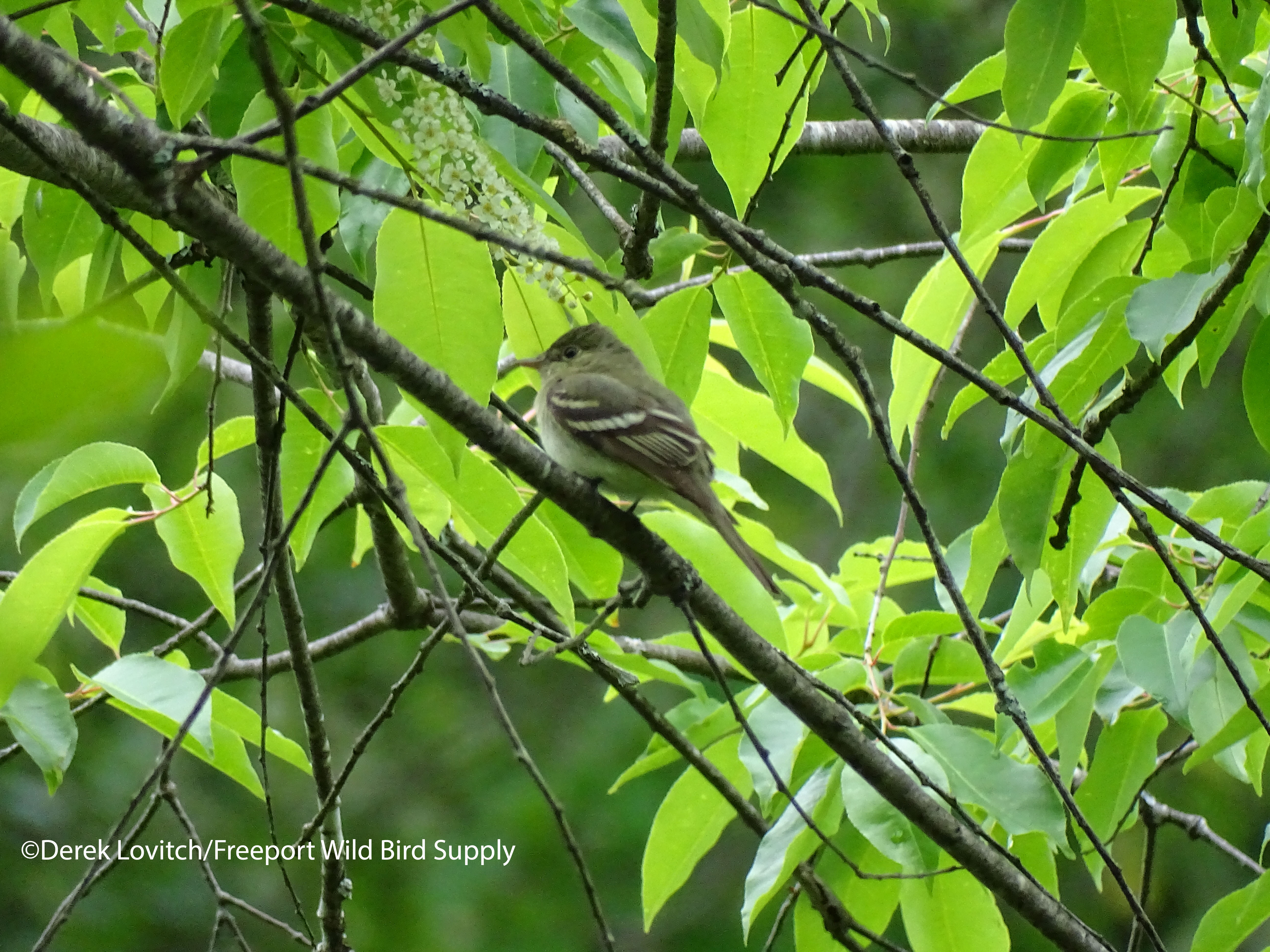
After trying to string one on Monhegan, an Acadian Flycatcher found me! A friend heard it first as he joined me for a bird survey on private, posted property in Durham on 6/2. This was an incredible record for Androscoggin County and really shocked me. It continued at least as of the next morning.This photo nicely shows the very long (for an Empid primary projection, the greenish tone to the upperparts, the complete eyering, and the large, wide and orange mandible. It took a while to see all of the pertinent details, even though the song is so distinctive. When we first saw it, the appearance of no green above and no yellow below through us for a loop, but once we got into the shade with it, those diagnostic tones were readily apparent.
My annual Monhegan Spring Migration Tour took place on 5/27 through 5/30, followed by another day on the island with Jeannette. It was very slow, and significant highlights were few. However, it was still, well, birding on Monhegan for five days, so I am not complaining. I’ll have a full tour report and checklist in the coming days. Highlights included daily crippling views of Black-billed Cuckoo; a CLAY-COLORED SPARROW that we found on 5/30 but was seen by all on 5/31; 3 WILLETS that arrived from the open ocean south of Lobster Cove before landing in the harbor on 5/31; a good Atlantic Puffin commuting flight in the morning of 5/31, and an immature male ORCHARD ORIOLE each day.
Other non-Monhegan and non-flycatcher highlights this week included:
2 RED-NECKED PHALAROPES, Hardy Boat from Monhegan to New Harbor, 5/31 (with Jeannette).
3 AMERICAN OYSTERCATCHERS, 1 Dunlin, 8 Ruddy Turnstones, 26 Black-bellied Plovers, 1 adult Little Blue Heron, etc, Pine Point, Scarborough, 6/1.
It’s June, so we are busy with events and tours here at the store and beyond:
Tomorrow is Zeiss Day at the store, with events including a whole range of products to try on our Saturday Morning Birdwalk, free optics cleaning, and a digiscoping demonstration. Check it out here.
Our first pelagic with our partners Cap’n Fish’s Cruises out of Boothbay Harbor will run on Monday, June 6th. It includes a visit to Eastern Egg Rock and chumming deeper offshore. Info here.
This Sandhill Crane was more than a little shocking as it arrived on the island and flew right over several us eating lunch before landing on the shoreline. It was a most unexpected “island-bird” for me, and a real special treat for my client.
If I was going to top last week’s spectacular week of migration, it was going to require a visit to Monhegan. And Monhegan definitely delivered, even if the largest number of birds this week moved over the weekend, before I arrived on the island. Here are my observations of note over the past seven days.
17 species of warblers, led by 16 Common Yellowthroats and 9 American Redstarts, but also including 5 Bay-breasted Warblers, Florida Lake Park, Freeport, 5/21 (with Saturday Morning Birdwalk group).
1 Yellow-bellied Flycatcher (FOY), Florida Lake Park, 5/21 (with Saturday Morning Birdwalk group).
15 species of warblers, led by 11 Common Yellowthroats and 8 Yellow-rumped Warblers, Florida Lake Park, 5/22 (with clients from Maine).
10 Common Nighthawks (FOY), our yard in Pownal, 5/22.
~40 Short-billed Dowitchers, flying high over our Pownal yard on 5/22 (with Jeannette). Interestingly, the third record for our yard of high spring migrants.
Three days on Monhegan with a client from India on 5/23 through 5/25 yielded 91 species and 18 species of warblers. Monday was incredible, with lots of diversity, lots of quality, and just incredible looks at everything. Blackpoll Warblers were by far the dominant migrant each day, as expected. Here are our daily highlights:
5/23:
1 SANDHILL CRANE – I almost dropped my hand pie as this came cruising over the Trailing Yew, circled the meadow, and landed on the shoreline at a tidepool where observed by almost everyone on the island – birders and bird-curious alike. Photos above.
1 immature, I believe continuing, BROAD-WINGED HAWK.
1 Yellow-billed Cuckoo (FOY)
At least 4-5 Black-billed Cuckoos, including this incredible observation of such normally shy birds!
1 imm. male ORCHARD ORIOLE
1 EASTERN WHIP-POOR-WILL (FOY, and a self-found island bird from my bedroom!)
5/24:
1 continuing SANDHILL CRANE. In the meadow in early morning before reportedly being observed later flying toward the mainland.
1 imm. male Orchard Oriole
1 continuing EASTERN WHIP-POOR-WILL (with client, Kristen Lindquist, Bill Thompson, and Jess Bishop).
1 leucistic (and nearly pure-white but with normal bare parts) Herring Gull.
5/25:
1 female ORCHARD ORIOLE
1 Green Heron (FOY)
1 Wood Thrush
Our first pelagic with our partners Cap’n Fish’s Cruises out of Boothbay Harbor will run on Monday, June 6th. It includes a visit to Eastern Egg Rock and chumming deeper offshore. Info here: https://www.freeportwildbirdsupply.com/pelagics
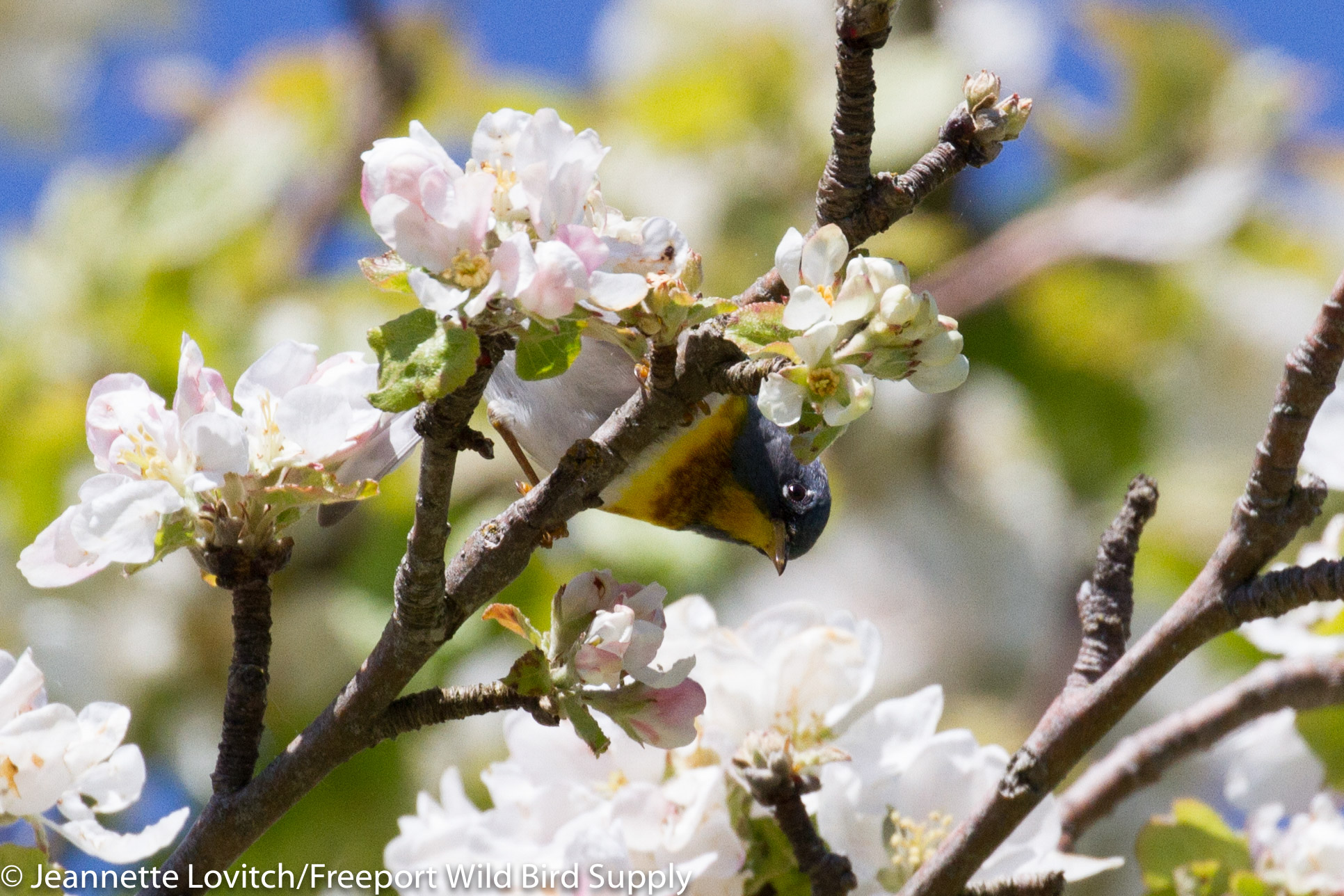
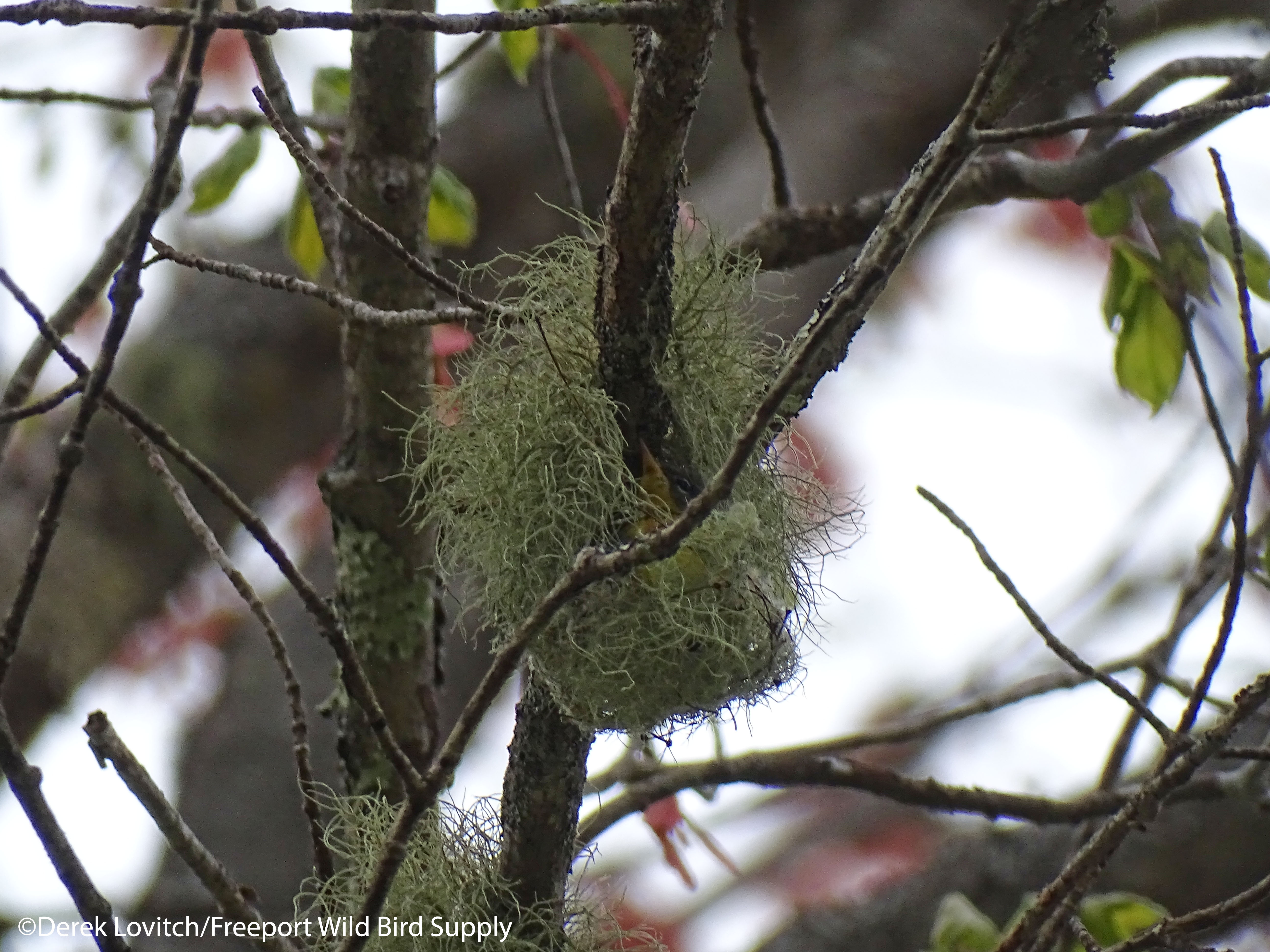
I found a Northern Parula building a nest at Florida Lake Park last week, and was enthralled with watching its progression.
Confidently identifying Gray-cheeked vs Bicknell’s Thrushes on migration is always a challenge, but this bird I found at Biddeford Pool was vocalizing incessantly. It even posed – as far as these reclusive migrants go – for some snapshots. I believe that this is my first confirmed Bicknell’s Thrush on the coastal plain of Maine during spring migration,
For much of this spring, I’ve been lamenting about a “slow” week of migration, or a “trickle” of migrants, etc. That was NOT the case this week, as the floodgates finally opened. In fact, it was an incredible week of birding. The northern limits of a huge fallout greeted me on Monday morning. And then there was Friday at Biddeford Pool. It was epic. Unforgettable.
My observations of note over the past eight days included:
1 Blue-gray Gnatcatcher, Evergreen Cemetery, Portland, 5/15 (with Down East Adventures Spring Songbird Workshop group).
20 species of warblers, including 1 continuing Louisiana Waterthrush and 6 Bay-breasted Warblers (FOY), and led by 25+ Northern Parulas and 20+ Black-and-white Warblers, Morgan Meadow WMA, 5/16 (with Jeannette). Incredible morning; definitely the best morning of spring to date. Interestingly, this appeared to be about the northern limits of what was a significant coastal fallout from at least Eastern Massachusetts into southern Maine.
17 species of warblers, led by 18 Common Yellowthroats and 17 American Redstarts, Florida Lake Park, Freeport, 5/17 (with client from Maine).
1 Ruby-crowned Kinglet (getting late), Florida Lake Park, 5/17 (with client from Maine).
16 species of warblers, led by 24 Yellow-rumped Warblers and 15 American Redstarts, Florida Lake Park, Freeport, 5/18 (with Jeannette). This was the first morning this season where there were more female than male passage migrants.
16 species of warblers, led by 24 Common Yellowthroats and 22 Yellow-rumped Warblers, Florida Lake Park, Freeport, 5/19.
Biddeford Pool, FALLOUT, 5/20! This was insane. I was optimistic about conditions based on the overnight wind forecast and morning fog, but there was virtually nothing on the radar overnight. I almost didn’t go. I never expected to find this. Birds were everywhere. Every tree had warblers. Swainson’s Thrushes and Lincoln’s Sparrows were hopping around manicured lawns. I can’t even begin to explain how amazing it was, but here are some of the highlights as I covered East Point, the neighborhood, and the Elphis Pond trails. All of my numbers are extremely conservative, as I attempted to judge the movement of birds between parallel streets, etc.
20 species of warblers led by 53 Common Yellowthroats, 44+ American Redstarts, 44 Yellow Warblers, and 43 Magnolia Warblers. I know these numbers are particularly low.
Thrushes! 43 Swainson’s Thrushes (FOY) and 8+ Veeries, but also…
1 BICKNELL’S THRUSH – shocking migrant vocalizing incessantly on path to East Point. Was still calling 3 hours later. Voice recordings and poor photo above. Rarely detected in migration away other than Nocturnal Flight Calls, this might have been my first ever confirmation in spring along Maine’s coast. Seems a little early, too. Photo above.
1 GRAY-CHEEKED THRUSH (FOY). My settings were off on the camera and the overall tone of this bird is not accurate! When I looked down at the camera to adjust, it dropped out of site. Called once.
1 SUMMER TANAGER, near Elphis Pond. Quick fly-by, and no red seen. Confident there was little or red on the upperparts. Not seen well enough to know if this was the bird that had been continuing in the area for a while or a different, possible female.
1 male ORCHARD ORIOLE, Elphis Pond. Often singing.
Amazing quantities of usually-uncommon migrants, such as: 15 Lincoln’s Sparrows, 15 Bay-breasted Warblers, and 11 Canada Warblers.
Other good tallies included 17 Black-throated Blue Warblers, 13 Least Flycatchers, and 4-6 Scarlet Tanagers.
Personal First-of-years also included 2 Cape May Warblers, 9 Tennessee Warblers, 3 Philadelphia Vireos, along with 2 Roseate Terns off Ocean Ave.
The bird that got away: an intriguing Empid that suggested Acadian in a brief view along Orcutt Ave. Could not relocate.
Meanwhile, my list of personal “first of years” this week before the Biddeford Pool fallout included the following:
4 American Redstarts, Essex Woods and Marsh, Bangor, 5/13.
2 Bobolinks, Essex Woods and Marsh, 5/13.
1 Virginia Rail, Essex Woods and Marsh, 5/13.
5 Wood Thrushes, Evergreen Cemetery, Portland, 5/15 (with Down East Adventures Spring Songbird Workshop group).
1 Scarlet Tanager, Evergreen Cemetery, 5/15 (with Down East Adventures Spring Songbird Workshop group).
3 Red-eyed Vireos, Evergreen Cemetery, 5/15 (with Down East Adventures Spring Songbird Workshop group).
1 Black-crowned Night-Heron, Evergreen Cemetery, 5/15 (with Down East Adventures Spring Songbird Workshop group).
1 Canada Warbler, Morgan Meadow WMA, 5/16 (with Jeannette).
1 OLIVE-SIDED FLYCATCHER (a little on the early side), Morgan Meadow WMA, 5/16 (with Jeannette).
4 Eastern Wood-Pewees, Morgan Meadow WMA, 5/16 (with Jeannette).
2 Blackpoll Warblers, Morgan Meadow WMA, 5/16 (with Jeannette).
6 Bay-breasted Warblers, Morgan Meadow WMA, 5/16 (with Jeannette).
1 Alder Flycatcher, Florida Lake Park, Freeport, 5/17 (with client from Maine).
20+ Semipalmated Sandpipers, Pelreco Marsh, 5/17 (with client from Maine)
This Black-and-white Warbler was among the multitudes of cooperative birds at Biddeford Pool on the 20th. But apparently, I didn’t take photos of any of the colorful ones! I was also having so much fun that for the most part, I forgot I even had a camera.
This stunning Prothonotary Warbler headlined my best warbler day of the spring so far when I found it at Florida Lake Park early in the morning on the 12th. Details below. This photo does not do the Swamp Canary justice!
It was another slow week of migration. This week, high pressure dominated, and a northerly to easterly flow continued essentially unabated from Saturday through Thursday. Winds were at least light enough at night that some birds fought the unfavorable conditions and “new” birds arrived almost every day, just never in large numbers. But it remains slim pickings, especially at migrant traps this week. Even on Thursday morning (more calm winds overnight allowed a few more birds to proceed) – my best day of the spring so far – numbers at Florida Lake were still very low for the date. The quality more than made up for it, however!
My observations of note over the past six days included:
10 species of warblers in one place for the first time this spring – finally – but led by only 14 Yellow-rumped Warblers and 8 Black-and-white Warblers, Florida Lake Park, Freeport, 5/7 (with Saturday Morning Birdwalk group).
1 continuing Louisiana Waterthrush, Morgan Meadow WMA, 5/11.
1 PROTHONOTARY WARBLER among 15 species of warblers, Florida Lake Park, 5/12, led by ~25 Yellow-rumped Warblers and 9+ Black-and-white Warblers. The PROW was my 169th all-time species at the park! I first found it along the base of the long dike at the north edge of the pond, as it belted out a song within about 8-10 feet from me. Foraging in low shrubs along the pond edge, in perfect light, I was of course without my camera. I did get some identifiable video and a recording of the song with my phone, before taking off in a sprint to the parking lot. I returned with my camera and eventually refound the bird when it sang again from the small wooded island in the lake (photo above), just as Noah Gibb arrived. It then flew right past me as it disappeared into the woods. It reappeared a short while later on the island and was seen by several more people. I am still kicking myself, however, for leaving the camera in the car when it was so close. Such a stunning bird deserves a better photo.
If the owlet is asleep and doesn’t know you are even there, you are a safe distance away! Great Horned Owl chick at an undisclosed location.
And my list of personal “first of years” this week also included the following:
1 Veery, Florida Lake Park, Freeport, 5/7 (with Saturday Morning Birdwalk group).
1 Nashville Warbler, Florida Lake Park, 5/7 (with Saturday Morning Birdwalk group).
1 Black-throated Blue Warbler, Florida Lake Park, 5/7 (with Saturday Morning Birdwalk group).
1 Lincoln’s Sparrow, Florida Lake Park, 5/7 (with Saturday Morning Birdwalk group).
1 Northern Waterthrush, Florida Lake Park, 5/7 (with Saturday Morning Birdwalk group).
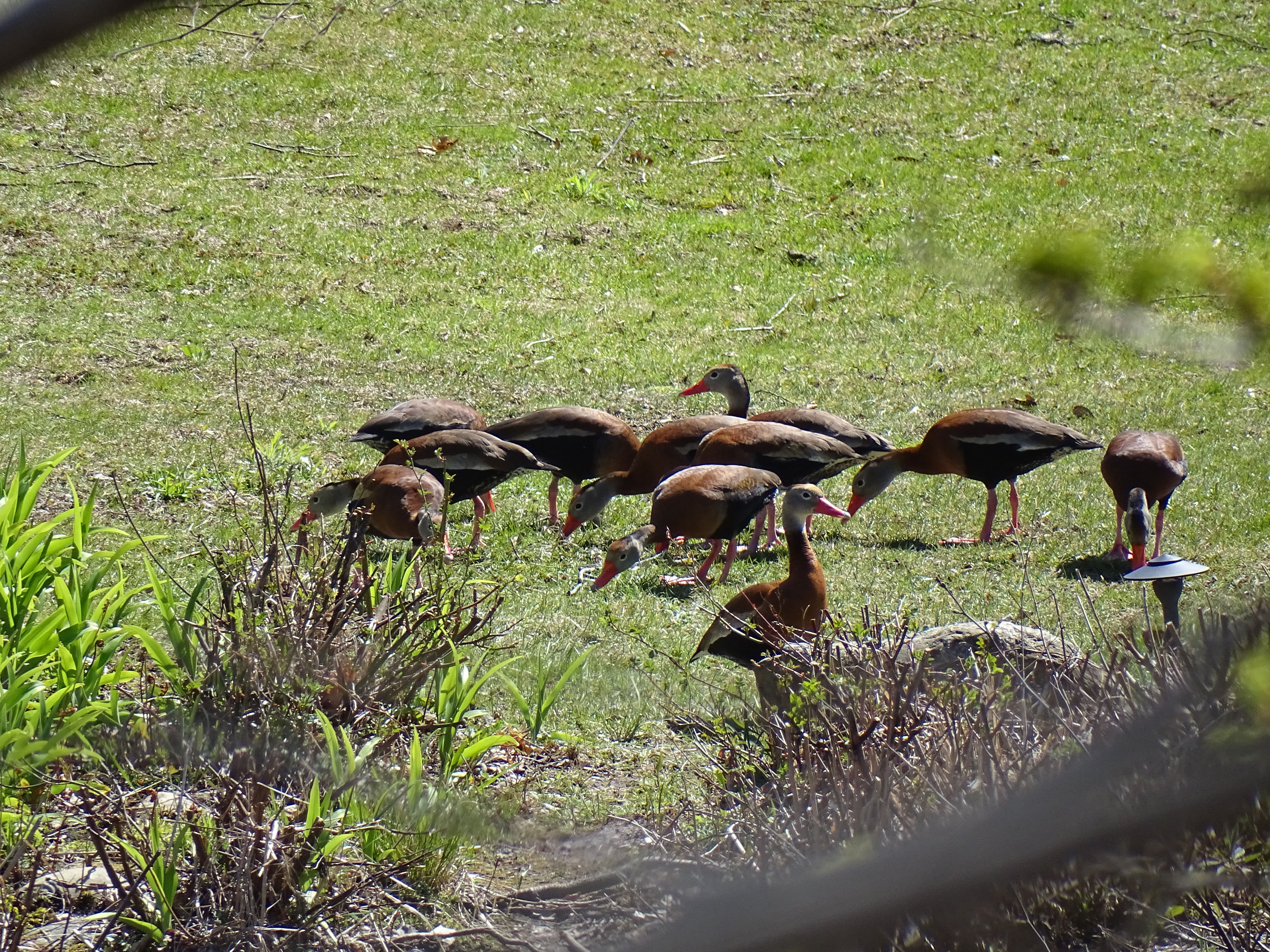
Maine’s 4th ever observation of Black-bellied Whistling-Ducks have graced downtown Camden for over a week now.
It was a slow start to the week with just a trickle of migrants arriving from the weekend through the storm system on Wednesday. However, a successful twitch, and a couple of light flights overnight made for a great week of spring birding. Of course, there was also another successful Feathers Over Freeport: A Birdwatching Weekend on Saturday and Sunday. Even though they didn’t produce any birds of note, it was a wonderful weekend full of birdwatching highlights. Photos will be posted soon, while the summary of our morning birdwalks is posted here.
My observations of note over the past seven days included:
1 SANDHILL CRANE (Finally, my FOY after missing a bunch of them at the watch this year), Bradbury Mountain Hawkwatch, 5/1.






























 Maine Birding Field Notes