Category Archives: Uncategorized

“Chebeague Birds” – quite possibly the greatest thing on the internet, ever.

After a friend posted this to Facebook yesterday, I have been sharing it all over the place. It is just so well done, so adorable, and quite educational. So, as I head offshore next week for my annual “Birding by Schooner” tour aboard the Lewis R. French, I leave you with this awesome video that simply needs to go viral. Enjoy.

“Chebeague Island School – Mrs Hoidal’s Kindergarten – 2nd Grade students made a movie about the birds they studied the last month. They have had so much fun and have learned so much and today shared with their parents this video and the birds and nests they made along with their research for the movie.”

https://www.youtube.com/watch?v=tMjdNAnH0zQ&feature=youtu.be

Scarborough through South Portland: Signs of Spring!

I decided to blog about my birding outing today, if only to give people a little hope that spring is around the corner. As temperatures plummet once again this week, perhaps the knowledge that spring migration has actually begun will provide a little comfort…and warmth.

Phil McCormack and I birded from Scarborough Marsh into South Portland today, enjoying a very spring-like day (highs in the mid-40’s) and some great birding. A few “new arrivals” and continuing wintering species combined for a respectably tally of 54 species without trying – and with ending our birding at 1:30.

We began on the Eastern Road Trail. Within mere seconds of saying to Phil, “I expect some early migrant waterfowl like pintail and Gadwall today,” three drake Northern Pintails came cruising by. I love the look of pintails in flight; they’re so elegant.  The long tail, thin neck, and long, relatively narrow wings suggest a miniature loon, and they have one spiffy pattern. The sense of spring really kicked in when a Killdeer sounded off and came cruising in to an exposed muddy bank – my first of the spring, and a bit on the early side considering the abundant snow cover.

A pair of Gadwall (first of the year – although they were actually southbound) flew over Pine Point, as did at least one Snow Bunting.  Twenty-eight Common Loons were in the channel, while over on Western Beach, the dredging operation was pumping sand onto the beach, collecting a nice concentration of gulls.  Sifting through them yielded two 1st-winter Iceland and 1 1st-winter Glaucous Gull.  American Robins – overwintering birds, not northbound spring migrants – were widespread today, with a high count of 50-75 around Seavey’s Landing.

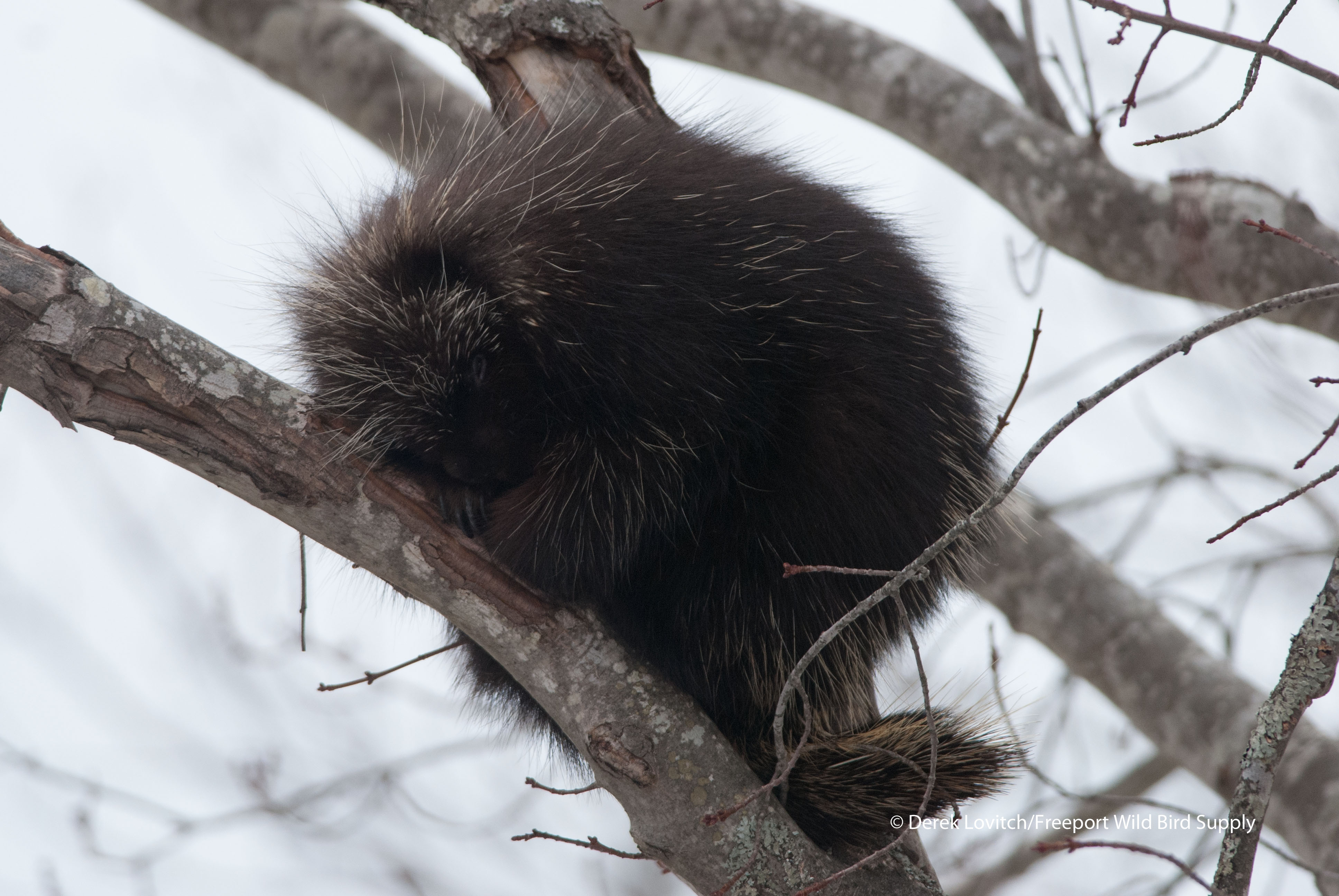
Rounding the north side of the marsh, we checked a couple of neighborhoods for frugivores, before arriving at Kettle Cove.  At Two Lights State Park, a raft of 150 Black Scoter loafed offshore, with 18 Harlequin Ducks in the surf.  A Porcupine at the edge of the parking lot was the star of the show, however.
DSC_0031_Porcupine1a,TwoLightsSP,2-23-14

Ten more Harlequin Ducks and a Northern Shrike (an immature; my 6th of the winter) at Dyer Point were signs of the continuing winter, but a Black Guillemot in full breeding plumage was suggestive of the advancing season.

Moving into South  Portland, a Red-bellied Woodpecker was among the usual denizens at Trout Brook Preserve, but Mill Creek and Mill Creek Cove were hopping!  286 Mallards and a growing legion of American Black Ducks were joined by a single drake Green-winged Teal, our third “FOY” of the day!  Meanwhile, the gull turnover in the cove eventually amounted to eight 1st-winter Iceland Gulls and two or three 1st-winter Glaucous Gulls.

But perhaps our last stop provided the “bird of the day:”
lunch…the fried chicken and waffle from Hot Suppa!

“The Westbrook Gull” Returns for Year 4…and Remains Unidentified. I think. Maybe.

As you well know by now, I enjoy looking at gulls.  I especially enjoy looking at white-winged gulls in winter here in Maine.  From the seemingly-endless range of variation of first-winter “Kumlien’s” Iceland Gulls to the stately elegance and dominating demeanor of adult Glaucous Gulls, I can’t get enough.  And there’s one particular white-winged gull that I have studied more than all of the others.

For the fourth year in a row, a relatively-small white-winged gull has spent the winter at Riverbank Park in Westbrook.  This has afforded me the opportunity to study the bird’s progression, and to one day, hopefully, identify it!  Yup, after four winters, I am still not certain as to what it is!  And that is both fun and frustrating.

First of all, I have no doubts that the bird is indeed the same individual – despite the lack of a band or any sort of unique marking – due to the bird’s behavior and overall very pale plumage each year.  While other “Kumlien’s” Iceland Gulls occasionally visit the river here, most of the birds just head up to the base of the falls for a bath with the other gulls, and then head back down the river.  Once in a while, another Iceland Gull will spend some time at Riverbank, but they don’t tend to linger long.  The bird’s behavior is also more than suggestive – not only does it sit in the same three spots (including a church steeple that rarely has any other gull) whenever it is near the park, but it is the only white-winged gull that is almost always present and comes down to feed on handouts with the contingent of Ring-billed Gulls.  The chance that a similarly-super-pale bird would do exactly the same things for four years in a row at a place that usually doesn’t have any other white-winged gulls seems rather far-fetched.  It also tends to show up at about the same time – early to mid-January each year.  I think it is safe to assume that this is the same bird.

Therefore, what we now have is a record of the bird over four years of life, showing the plumage progression of each year.  Now, I never recommend using only one photo to describe a given bird (in this case, in a given year), especially with gulls, as gray scale in particular changes so much with lighting (and how badly I butchered the ISO) among other factors ranging from time of the season to how recently the bird ate.  Therefore<a href=”http://www.facebook.com/media/set/?set=a.350344068328887.95540.198877036808925&type=3“>, I recommend taking a look at the photo gallery on our store’s Facebook page here.

But for sake of conversation, let me simply include one photo from each of the past three winters.
2010-11:
ICGU1, Riverbank Park, Westbrook, 3-14_edited-1

2011-12:
ICGU, Riverbank Park2, 1-19-12_edited-1

2012-13:
1,3-6-13 copy

And now, it has returned, in full-adult plumage.  Here are a series of photos that I took at Riverbank on Monday (1/27):
DSC_0014_WestbrookICGU1,ad,1-27-14_edited-1

DSC_0020_WestbrookICGU-ad3,1-27-14

DSC_0029_WestbrookICGU-ad11-flight2,1-27-14

DSC_0027_WestbrookICGU-ad9-flight1,1-27-14

DSC_0023_WestbrookICGU-ad7-withRBGU,1-27-14

In that aforementioned Facebook gallery, I included some of the thought process that I have had about exactly how old this bird is, and what subspecies of Iceland Gull that it might be.   From an identification perspective, now that is in “adult” plumage, the exact age is moot – all adult plumages look the same, with minor differences between winter (especially streaking on the head and neck) and summer (white head and more vivid bare part coloration).  It is safe to say that this bird is “at least” 4 years old, and now it is in the plumage that should allow us to more-safely identify it to subspecies.  In theory.

But before we delve into the Iceland Gull subspecies question, I think it is worth taking a moment to be sure it is in fact, and Iceland Gull.  The case has been made that this bird could be a runt Glaucous Gull (or one of the very small subspecies) or even an Iceland x Glaucous Gull hybrid.

The basis for the argument has revolved around the exceedingly pale plumage, the bird’s rather bulky size and shape, its dominance over even larger Herring Gulls, and especially the length of the wing.  Here, I blew up a photo from Monday of the primaries.  I extensively manipulated it to try and bring out the detail of the edges of each feather – so ignore the color.
DSC_0017_WestbrookICGU-ad4 - manipulated primaries,1-27-14

Iceland Gulls are usually readily identifiable by their longer wings.  Those wings extend well beyond the tail, and usually at least 4 primaries are visible beyond the tail.  Olsen and Larson reference this projection as being “equivalent (to) the bill length or longer.”  It’s not a perfect photo above, but I definitely don’t see four primaries beyond the tail, and the primary projection does not look as long as the bill in any of the photos.  In fact, this “unusually short-winged impression” was consistent in every year that we have seen the bird.  Take a look at the photo gallery over the years – you never see a “long-winged” Iceland Gull with four primaries extending beyond the tail.
DSC_0036_WestbrookICGU-ad8-on_church,1-27-14_edited-1

Another clue for Iceland vs. Glaucous is the relatively short legs of Iceland: the tibia (upper part) is usually mostly covered by body feathers, while on Glaucous, the tibia is more exposed – at least when the bird is alert.  To me, this bird sometimes looks short-legged, with little exposed tibia, which is in line with Iceland Gull, but other times looks oddly long-legged, in line with Glaucous (see above and additional photos).  This is a fairly subjective (like so many other gull ID characteristics) point, and one that I am not putting much weight in either way.

DSC_0010_WestbrookICGU-ad2,1-27-14

On the Westbrook bird, the forehead usually appears gently rounded, and the eye looks fairly big on the head – as it should on an Iceland Gull.  However, other photos show a very sloping forehead – this feature changes significantly with posture and “attitude,’ but I must say that I have never seen a Glaucous Gull that appeared truly “round-headed.”

While the bill is not dainty, it is not as formidable as Glaucous usually looks, and it shows little in the way of a gonydeal angle.  Howell and Dunn state that Glaucous’s “bill base often has slightly expanded culmen that creates distinctive shape (especially males), with a depth at the base greater than the depth at the gonydeal expansion.”  I don’t see that on this bird.  In fact, their description for Iceland Gull of “relatively short and slender, parallel edged with a shallow to moderate gonydeal expansion,” seems to match this bird much better, although it’s not the most slender, nor the shortest, bill that I have seen on Iceland Gulls.
HEADDSC_0016_WestbrookICGU-ad6-head shot,1-27-14

The fleshy orbital ring is pink on this bird at the moment.  Howell and Dunn describe Glaucous Gull as having an orange orbital ring, “Kumlien’s” Gull as having it “purplish-pink,” with the nominate Iceland showing a “pink to reddish.”

Of these characteristics, the only thing that suggests that this is not anything other than a pure Iceland Gull of one or the other subspecies is what appears – and has consistently appeared over the years – to be a short wing.  Personally, I have a hard time relying on any one single field mark to rule a species in or out, but I can’t completely ignore how short this wing is.

So assuming for a second that this is indeed an Iceland Gull, it comes down to which subspecies it is: the nominate glaucoides or kumieni.  I’m not going to get into the taxonomic debate here, so I will discuss this based on the current most-widely-used taxonomy that includes two subspecies of Iceland Gull: the nominate glaucoides that breeds in Greenland and winters mostly in Iceland and Northern Europe, while kumlieni breeds on Baffin Island and adjacent areas of northeastern Canada, and winters largely in the Northeastern US and Atlantic Canada.  Birds that seem perfect for glaucoides are regularly seen in Newfoundland and Nova Scotia, but in the Northeast US, the conventional wisdom suggests that glaucoides is very rare, and some argue that most if not all birds that appear to be glaucoides are actually just the pale extremes of kumlieni.

The extensively pure white wingtips, very pale gray mantle, and very white appearance as a youngster are all points in favor of glaucoides.  However, most features overlap with kumlieni.  What’s troubling is that the Westbrook bird never appears as small and dainty as a textbook glaucoides; sometimes described as “cuter” with a big eye, more rounded head, and small size than most kumlieni.  This bird is more along the lines of a big kumlieni, which few plumage characteristics at any age have been overly consistent with.

If I saw this bird for the first time this week, I think I would call it a “probable glaucoides” and move on.  But I have spent so much time with this bird over the years (“You are a little obsessed with this bird,” Jeannette just said.) that I prefer to still answer “I don’t know,” that I stubbornly want to keep pondering this bird.  Its appearance in preceding years and those short wings continue to bother me, even though my gut tells me that this is just an Iceland Gull.

Essentially, the problem with this gull for each of the last four years is that it’s never been seen (to my knowledge) side-by-side with another white-winged gull.  We’re therefore left with conjecture, comparing this bird to Herring and Ring-billed Gulls.  What we really need is photos of this bird next to another Iceland-type gull.  A direct comparison would do wonders for figuring this thing out for sure.  Or a DNA test.

Short of that, this is, essentially, only an exercise.  I don’t think anything can be said definitively.  Hopefully, by spring, this bird’s bare part coloration (orbital ring and the bill in particular) will develop a little further, which may shed further light on the birds’ identity.  More importantly, I – and others – will be trying to get more photos of the bird and especially photos of the bird with other Iceland Gulls.  Until then, I will continue to ponder, enjoy, study, and yes, be frustrated by “The Westbrook Gull.”

Now for those who are truly gluttons for punishment, I will be discussing this bird as part of my upcoming Gull Identification Workshop for York County Audubon on February 8th and 9th.  But don’t worry, we’re not going to spend too much time with the unidentifiable…I promise.  Instead, we’ll spend most of our time learning that MOST gulls are actually fairly easy to identify.  I believe the Westbrook Gull is the exciting and challenging exception to the rule.  And once you are comfortable identifying just about every gull just about every time, you’ll be ready to accept and excel such challenges.  I hope you will join me for this workshop.  For more information, and a link to register, visit the Tours, Events, Workshops, and Programs page of our website.

References:
Howell, Steve N.G. and Jon Dunn.  2007.  The Reference Guide to Gulls of the Americas.  Houghton Mifflin Company: New York and Boston.

Olsen, Klaus Malling and Hans Larsson.  2004.  Gulls of North America, Europe, and Asia.  Princeton University Press: Princeton and Oxford.

Tuesday Twitching in Bath

Jeannette and I went in pursuit of three “good” birds in Bath on Tuesday.  We don’t “twitch” (chase a rarity) very often, and when we do, we always expect the worst.  Therefore we were shocked when not only did we get all three birds that we sought, but they all came quickly, were all photographed, and all were seen – at least at first – from the comfortable confines of our car.

In fact, one of the reasons we chose this particular endeavor this day was to avoid spending too much time out in the -20 wind chills.  Good birds, and a little warmth, made for a very good day.

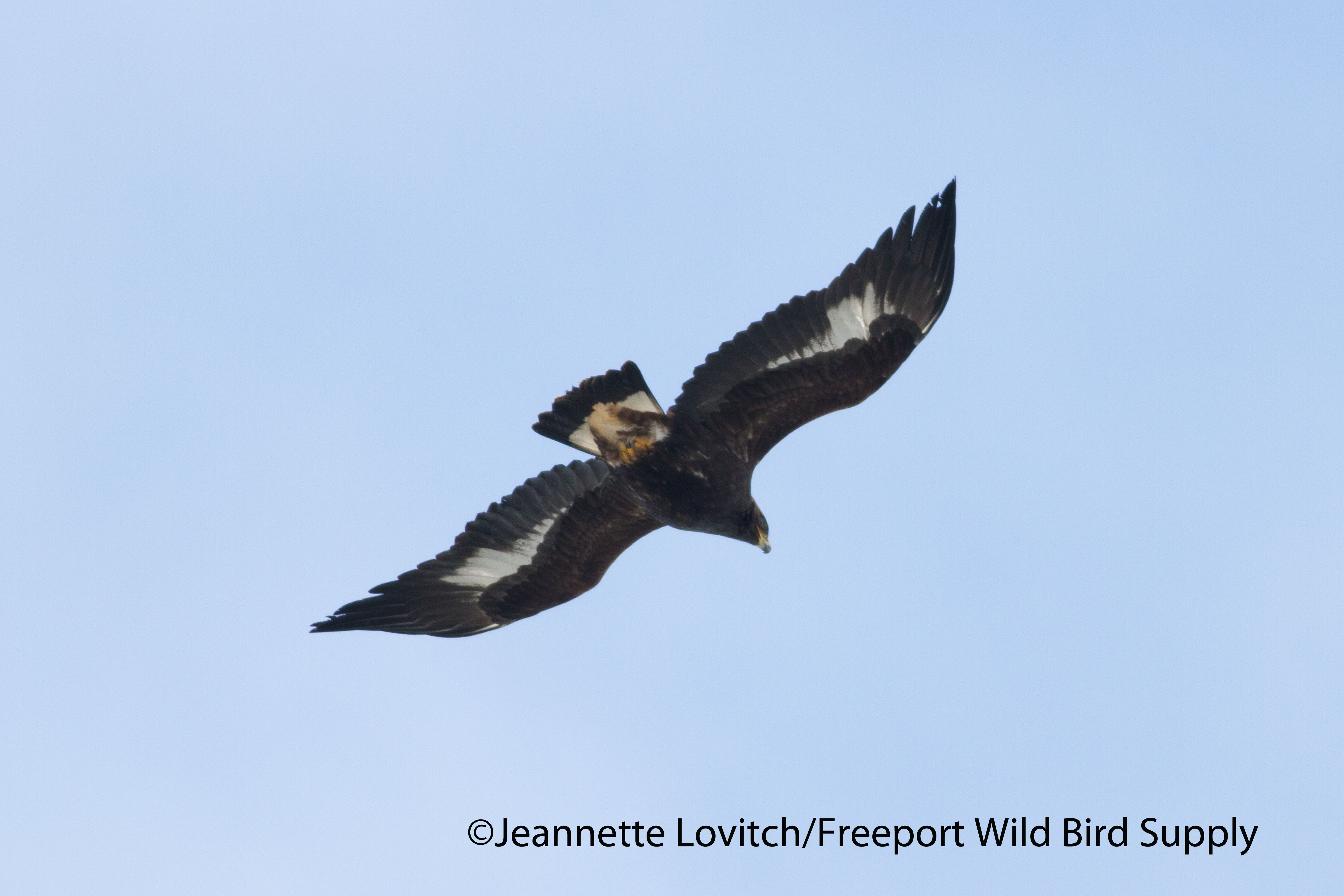
First up was the Bath landfill, where a Golden Eagle has been present now for a couple of weeks.  Other than one quick late-afternoon visit in which we didn’t see the Golden, I hadn’t gotten around to visit it.  Jeannette didn’t have photos of a Golden in her library, so this seemed like a good opportunity.  And within a mere ten minutes of our arrival, the Golden – a 1-year old (first-cycle) bird – appeared from the north and circled over the landfill, harassing some Bald Eagles and causing consternation among the gulls.

We spent about a half-hour with the Golden, positioning ourselves for the best photos.  Unfortunately, when it was closest, thick clouds blocked the sun, making for backlit photos.  I think Jeannette did pretty well, however.
IMG_1608_edited-2  IMG_1553_edited-2
This photo is also an excellent comparison of the different size and shape of Common Raven (left) and American Crow (right), as both birds engaged in mobbing the Golden!

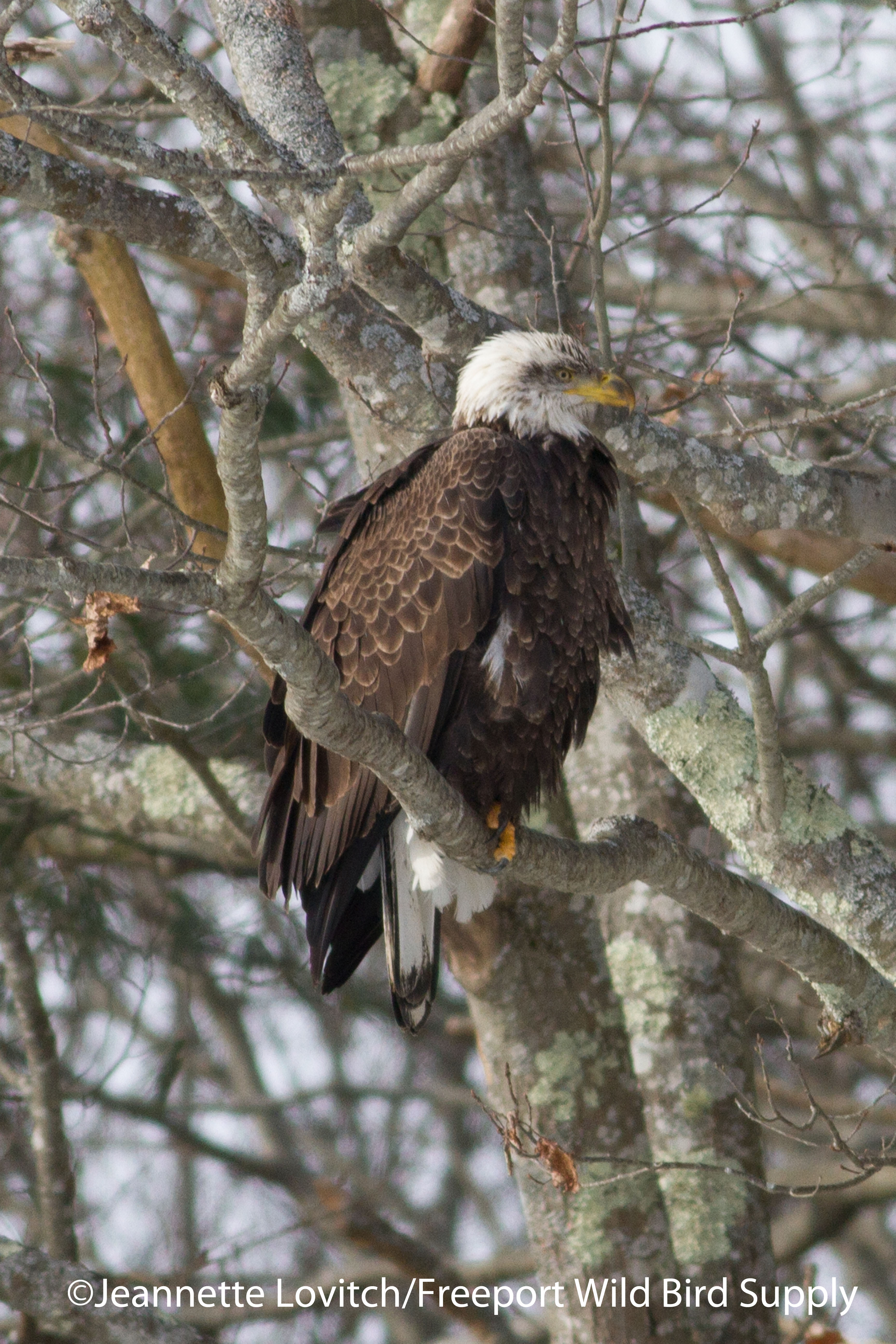
And we took some time to study the various ages classes of Bald Eagles, such as this 4th-cycle bird.
IMG_1576_edited-2

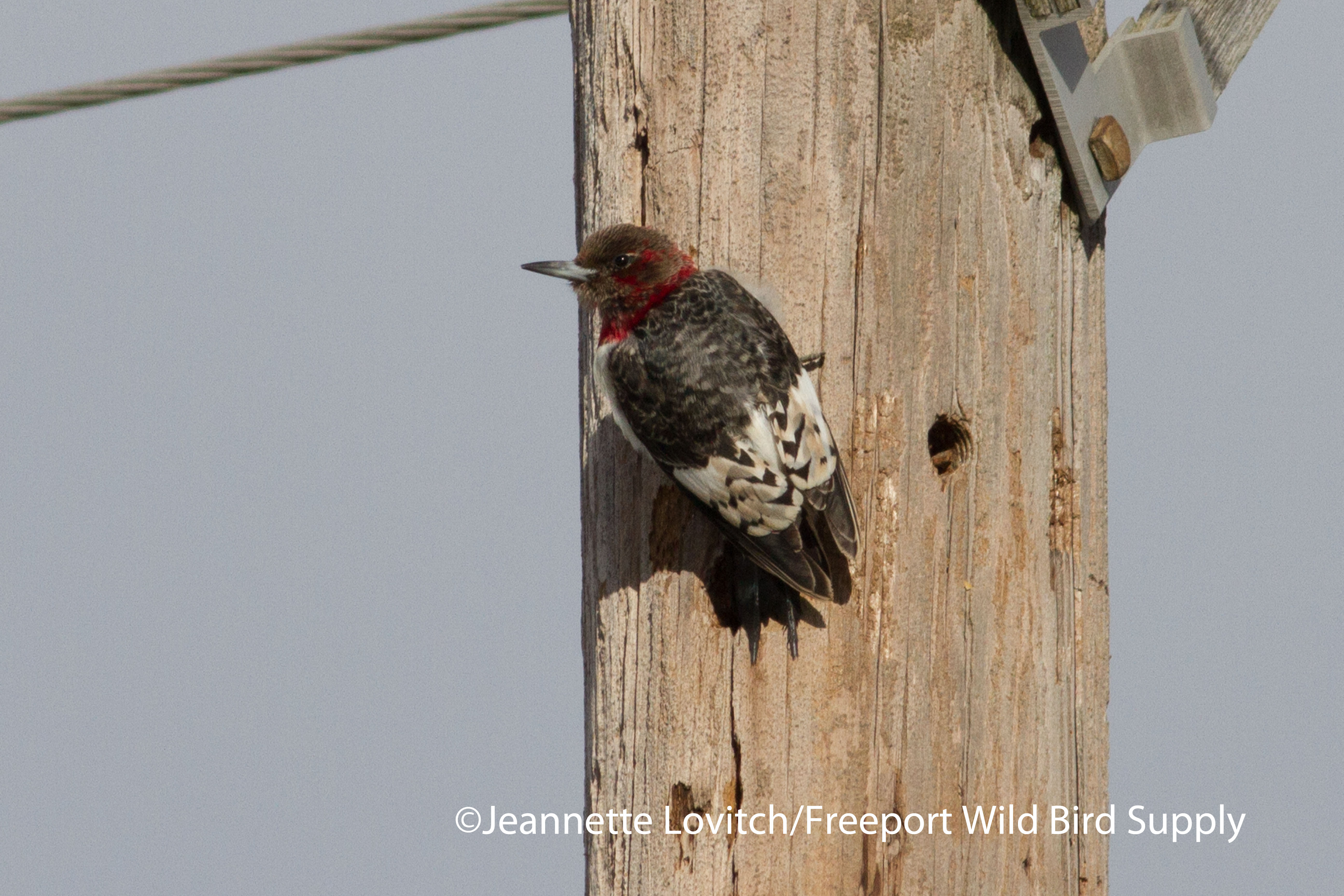
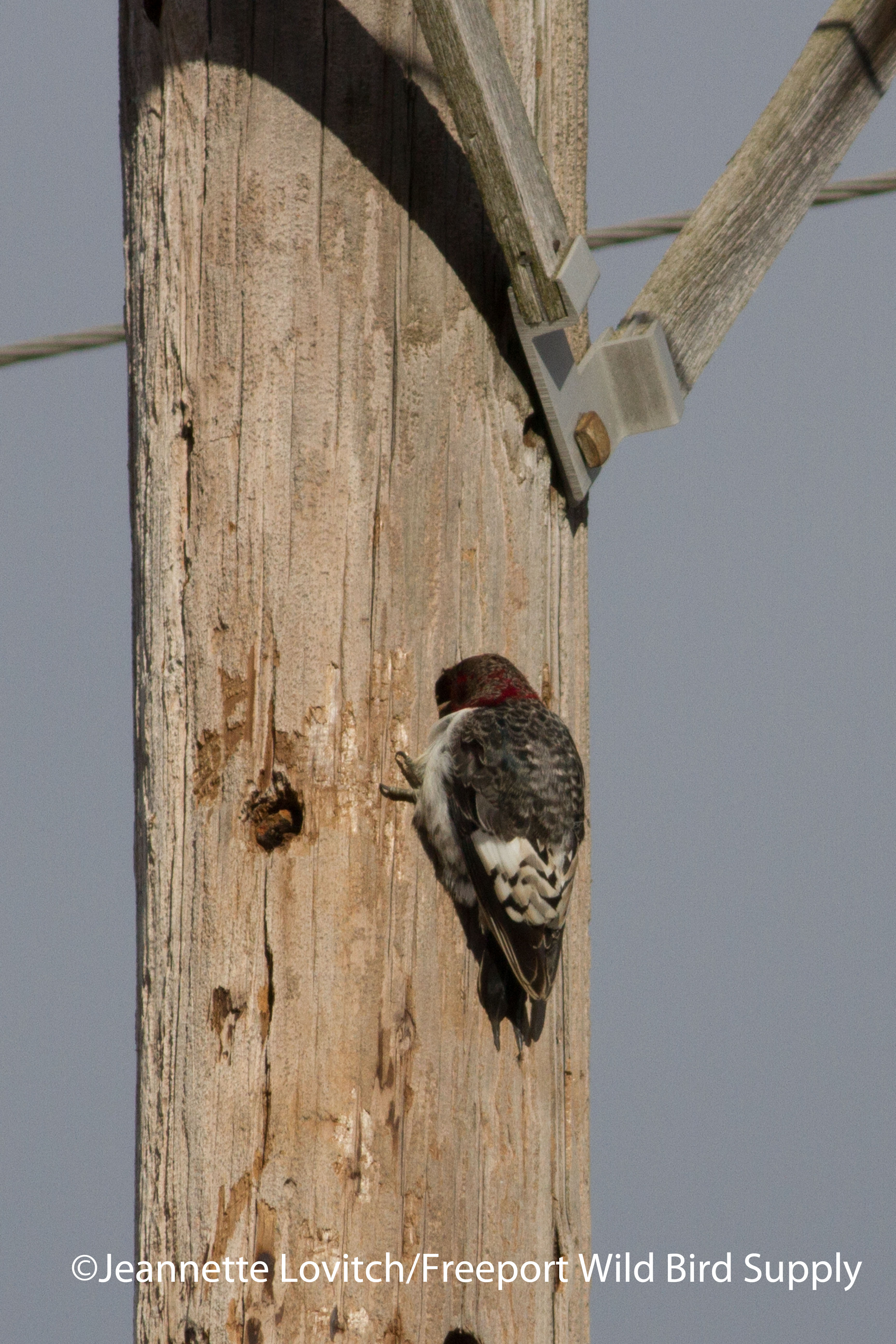
After a chilly – and not overly birdy, as expected in the woods right now – hike with Sasha down the Whiskeag Creek Trail, we pulled up to Telephone Pole #24 on Whiskeag Creek Road, where an immature Red-headed Woodpecker has been caching seed and suet.  Seconds later, the bird arrived.
IMG_1646_edited-2

IMG_1618_edited-2

We watched it for a while, flying east to a feeding station out of sight and returning with various foodstuffs to save for later.  Perhaps most interesting was the 3/4-piece of a saltine cracker that the bird jammed into a linear crack on another pole.  Not sure how well this cache will hold up to the next rain, however.

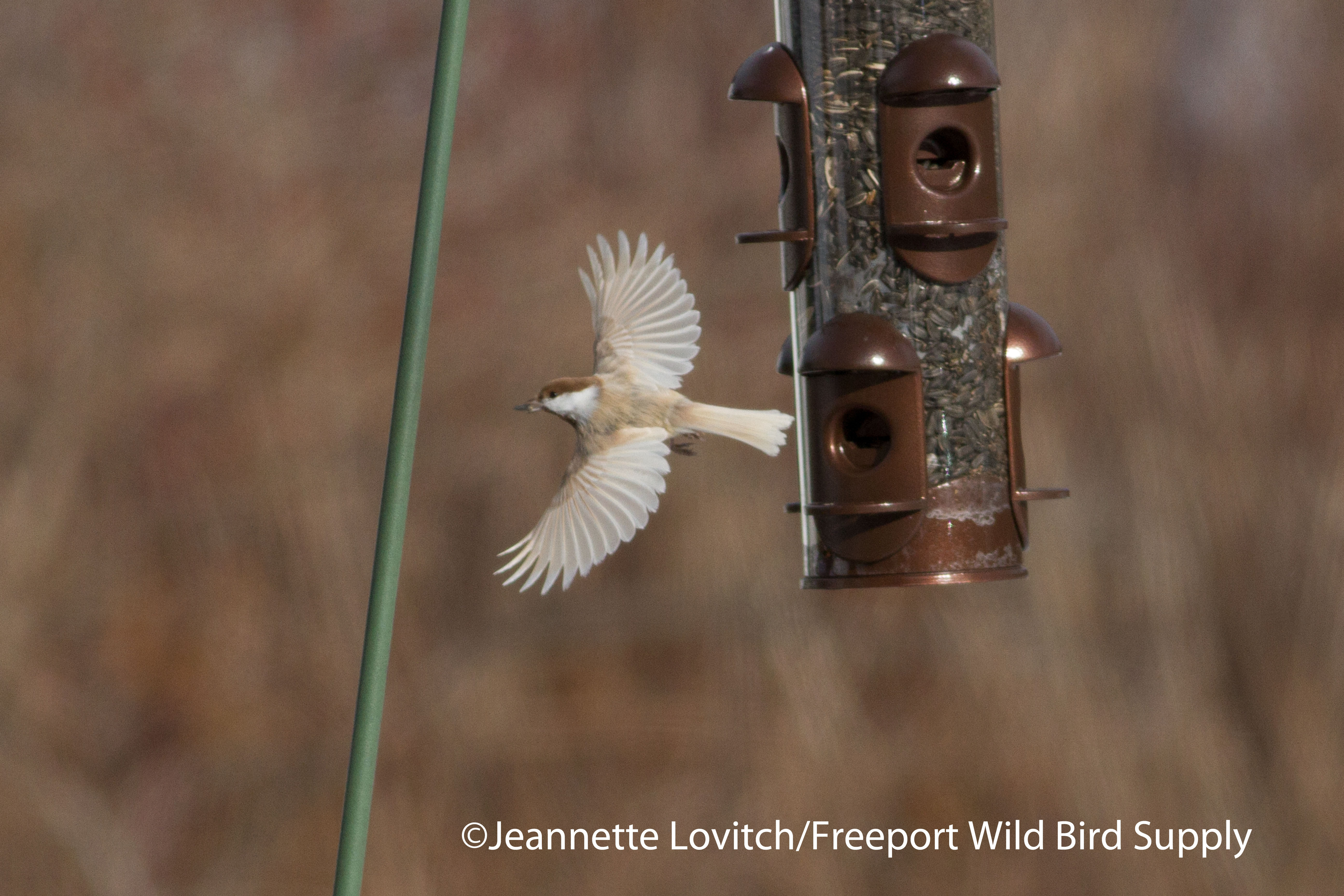
Last, and certainly not least, was a real oddity – a leucistic Black-capped Chickadee that is coming to a feeder easily visible from the road only a short distance away.  First reported by some as a Boreal Chickadee due to its brownish crown and bib, this bird is clearly a Black-capped Chickadee that is lacking melanin and other pigments.  It’s not a pure albino (lacking all pigment), but the sandy-buff body color is classic of leucistic birds – it certainly doesn’t have the gray back and peachy flanks of a Boreal Chickadee.  Also, it is the same shape and size as the Black-caps that it associates with.  Here’s a perfect example of the foible of identifying birds based on a single field mark!

The relatively dark brown cap and bib is fascinating, as it shows that the bird definitely has some melanin.   Of all of the birds that we were looking for today, this was actually the birds that I wanted to see and photograph the most!  And I was pretty excited with the shots that Jeannette scored once again.
IMG_1667_edited-2

So while I most certainly prefer bird-finding over bird-chasing, a good chase now and again is never a bad thing.  Plus, it was cold out.  Really cold.  And we saw three great birds and still made it to the matinee of The Hobbit.  I’d call that a successful day!

A Very Jersey Christmas

A whirlwind Christmas trip to my homeland of New Jersey was filled with fun and festivities with friends and family.  Birding time was limited in this visit, but Jeannette and I simply had to spend at least one day birding in the “deep south.”

Arriving on Christmas morning, we took Sasha for a stroll around my Mom’s neighborhood, enjoying Carolina Chickadees and goodly numbers of things like Carolina Wrens and Red-bellied Woodpeckers.  A similar suite of species greeted us the next morning at nearby Turkey Swamp Park.  In the afternoon, a big vulture roost a couple of blocks away from a friend’s house gave us the chance to enjoy Black Vultures, along with bunches of Turkey Vultures.

Friday the 27th was our big birding day however, and we elected for the “North Shore Tour,” one of my favorite NJ winter birding tours.  Covering ponds, inlets, and ocean from Point Pleasant Beach north through Monmouth Beach, we tallied a respectable 22 species of waterfowl, and found a few goodies.

LittleSilverMany of the ponds remain open in the winter nowadays, and concentrate nice numbers of waterfowl.  Since they are surrounded by development and activity, the birds are often fairly confiding and approachable, affording great opportunities for photographs, such as this shoveling Northern Shoveler…

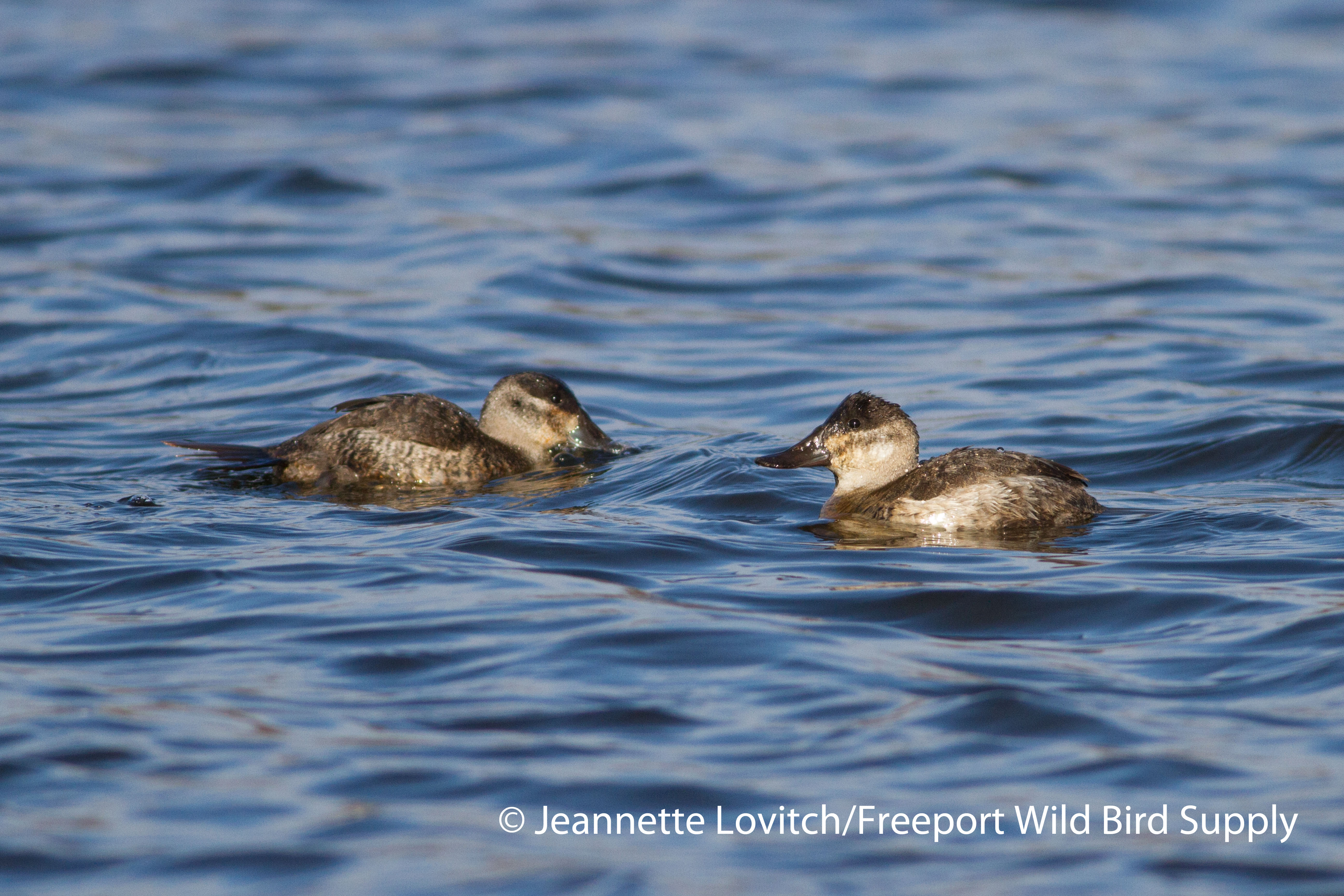
NSHO1…and these Ruddy Ducks…

RUDU…and other waterbirds such as this Great Blue Heron.

GBHE

The goal of this tour is for 25 species of waterfowl.  (A very long day that begins at Barnegat Lighthouse and ends at Sandy Hook has the potential for 30 species of waterfowl).  I later learned that siltation – augmented by flooding from Hurricane Sandy – has limited the number of diving ducks, and less emergent non-phragmite vegetation has limited lingering dabbling ducks.  Twenty-five seems like a lofty goal, but we were off to a good start.  Two American Wigeons in Lake Louise – our only wigeons of the day – were our tenth species, after only four stops.

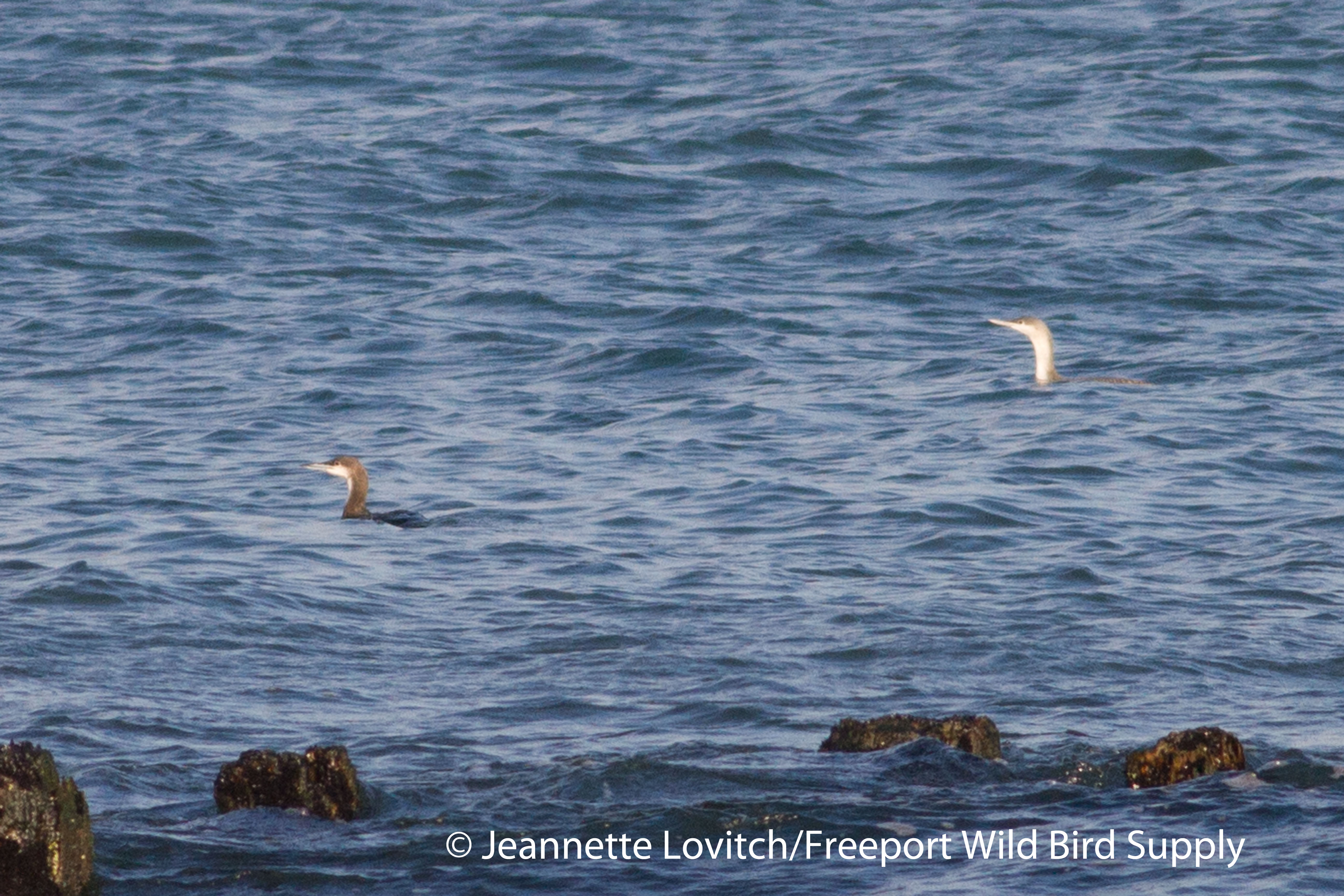
Arriving at the Manasquan Jetty at the north end of Point PleasantBeach, we began to add seaducks to the list, but then I spotted a Pacific Loon!  A rarity and “review-list” bird in New Jersey (like most of the East), we set off to document it.  It soon disappeared behind the jetty to the north, and we raced around the inlet to look for it from ManasquanBeach.  It took a while, but we finally found it, and I set about attempting to phone-scope it – a distinct challenge on a distant, actively-feeding loon.  Then we lost it.

A text-blast resulted in a birder being on the seen in a matter of minutes, soon followed by our good friend Scott who joined us for most of the rest of the afternoon.  The bird finally reappeared, and I did manage a series of “documentation” shots.  This was the “best” of the lot:

PALO1Purple Sandpipers, Dunlin, and Sanderlings were on the jetties, and a 1st-winter Iceland Gull was at Fisherman’s Cove.  We had stalled at 15 species of waterfowl however (including many hundreds of Brant in the ManasaquanRiver), but we had more important things on the agenda – like lunch, and our first “slices” of the trip.  Even average pizza in NJ is better than 98% of the cardboard and ketchup served in Maine, so this was definitely a priority.

Refueled, we returned to the coast, and worked our way north with Scott.  An adult Lesser Black-backed Gull at SylvanLake and 8 Snow Buntings at the mouth of the SharkRiver were other highlights, but waterfowl were the stars of the show, such as these Hooded Mergansers.

Scanning the ocean again from the end of Roosevelt Avenue in Deal, Scott spotted ANOTHER Pacific Loon – 2 ½ hours after the first bird (although only 10-15 miles or so apart) we believed this to be a bona fide second bird, which is exceptional in NJ.  I’ve certainly never seen two PALO in the same day in the state.  This time, the bird was much closer, so Jeannette took over the documentation.

PALO-2aIncluding this nice comparison shot with a Red-throated Loon.

PALO-2bA pair of Wood Ducks on Lake Tackanassee put us at 21 species of waterfowl on the day, with the hopes for one more up the road. Scott had to depart, but gave us instructions on how to look for a massive aggregation of scoters that had been building off of MonmouthBeach.

damageAlthough this section of the coast was not as badly devastated by Hurricane Sandy, plenty of evidence of her destruction was readily apparent.

We saw plenty of Black Scoters from various locales, but the big group of 3-4000 birds alone (80-90% Black, a few White-wings, and the rest Surf) were across the street from the Monmouth Beach Cultural Center.  The sun was getting low, and many of the birds were quite distant in the outgoing tide, but we still managed to tease our two immature male King Eiders – our 22nd and final waterbirds species of this most productive and enjoyable day of birding the JerseyShore.

Saturday was the Pinstripe Bowl at Yankee Stadium, so Jeannette and I joined a bunch of friends for a train ride to and from the game.  An unseasonably warm and beautifully sunny day made for a very enjoyable bowl experience, at least until the last seven minutes of the game when Notre Dame pulled away from my beloved Rutgers.  During TV timeouts, Jeannette and I kept an eye open overhead, yielded a stadium list of 7 species: Ring-billed and Herring Gulls, Turkey Vulture, Red-tailed Hawk, European Starling, Rock Pigeon, and House Sparrow. No bird lists were kept for the pre- and post-game bars.

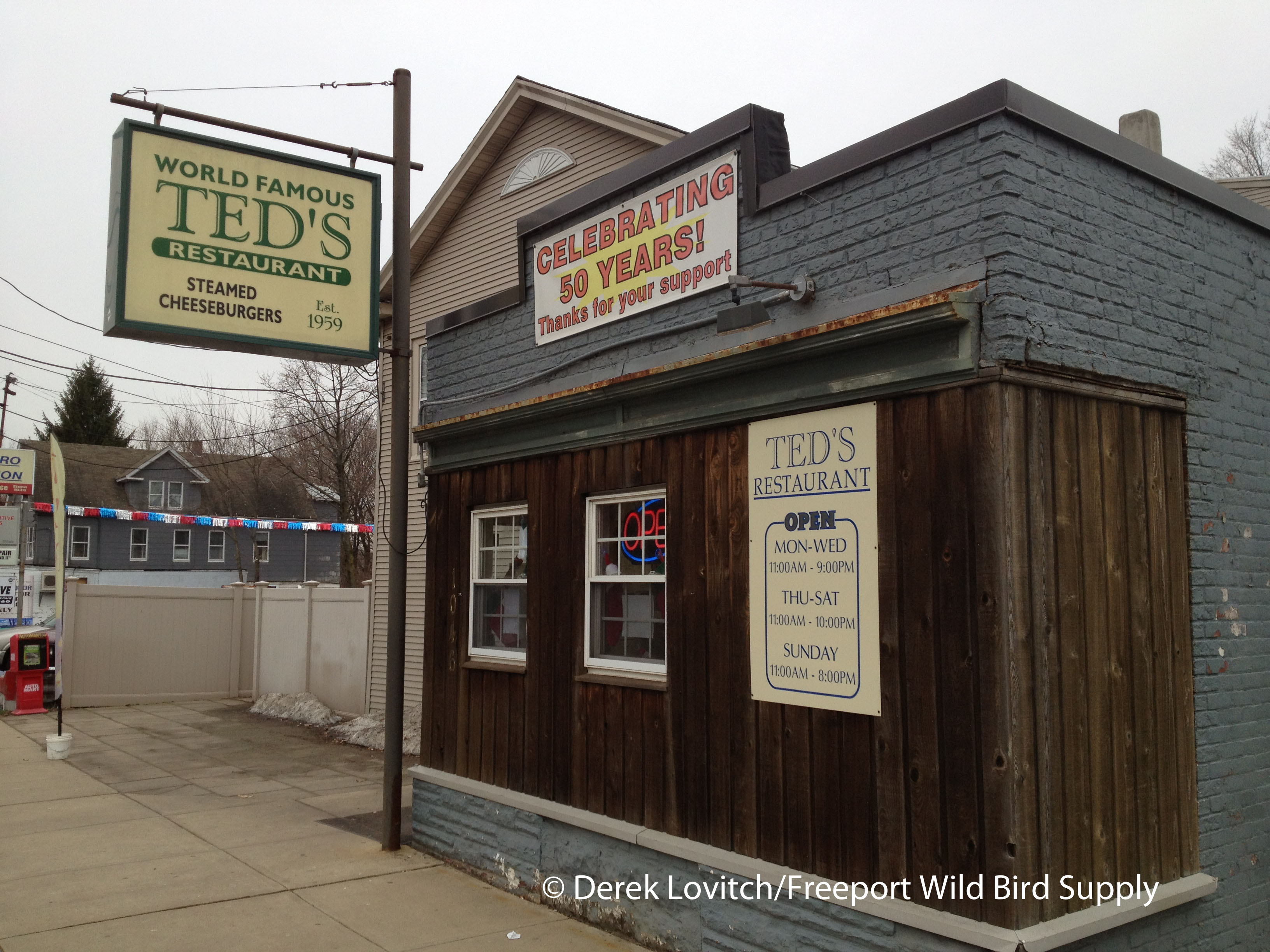
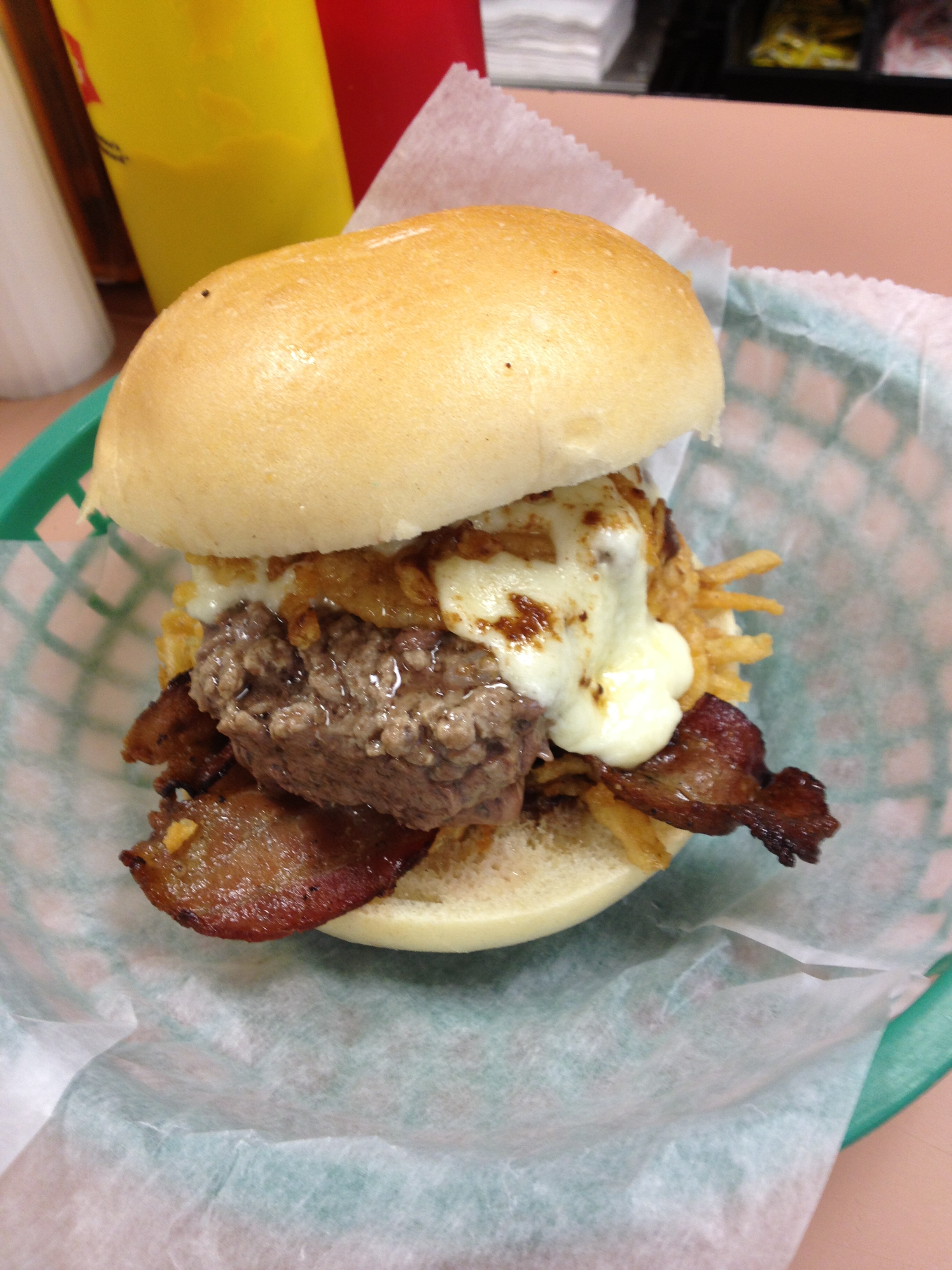
We had plans to bird in Connecticut with a friend on our way home on Sunday, but with the next storm rapidly approaching, we hit the road early and somehow stayed just ahead of the storm – nothing more than light rain or sprinkles from southern Connecticut all of the way to Freeport. Although light rain caught up with us as we had lunch in Meriden, CT, it was worth it as we visited the famous Ted’s for the local specialty, steamed cheeseburgers.

Teds

IMG_2321

We also tallied raptors on our drive home, including a goodly count of 47 Red-tailed Hawks.  Three Turkey Vultures (NJ), 1 American Kestrel (NJ), and 1 Cooper’s Hawk (NY) were added to the road list.

Rain began to fall in earnest soon after we returned, and a couple of hours later snow began to fall heavily. Another 6 ¼ inches accumulated by morning as Sasha and I broke trail at The Hog.  Yup, we’re back in the north…and quite happy about it.  It was a great trip, but it’s always good to be home.

Happy New Year everyone!

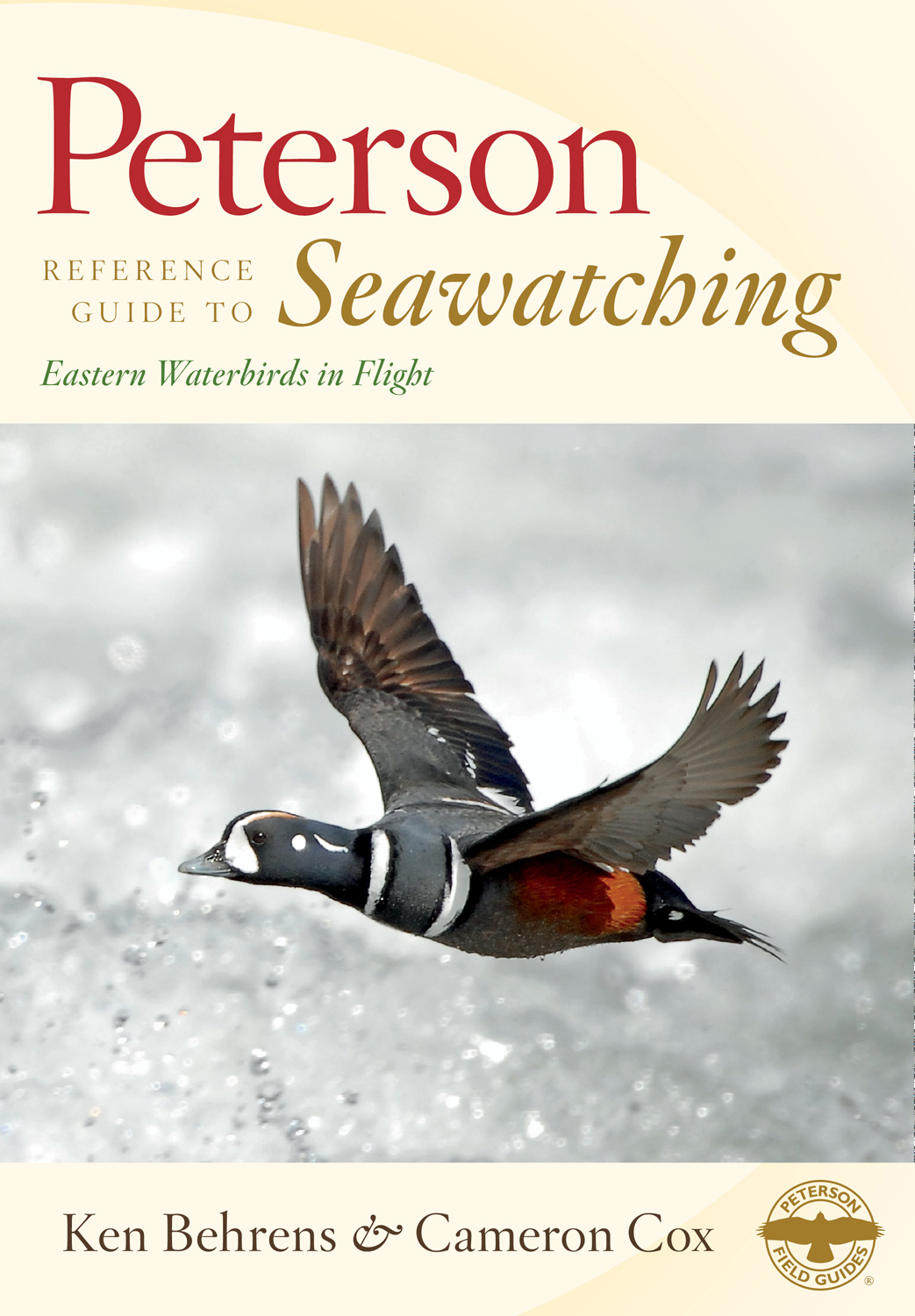
Birds, Books, and Beers: Cameron Cox, co-author of Seawatching, 10/30

9780547237398_hres

Wed, 10/30, 5:30-8:00pm – see schedule below.
Free (beer available for purchase).

Please join us here at Freeport Wild Bird Supply as we welcome back Cameron Cox, this time to celebrate his new book in the Peterson Reference Guide series, SEAWATCHING: EASTERN WATERBIRDS IN FLIGHT.

But this is not just a “regular” book signing. Instead, this is what we hope will be only the first installment of a new “Birds, Books, and Beers” series in partnership with our good neighbors at the Maine Beer Company! Enjoy some of the finest beer around with some of the finest birders in the world!

Cameron will be at our store from 5:30 to 6:15 pm to sign copies of his new, much-anticipated book that will be of great value to birders in Maine – and we know that a few Maine seawatching locales are covered. We’ll have plenty on-hand for you to purchase. We’ll mingle and chat until it’s time to head over to MBC (two buildings away). There we will enjoy fresh beer (it’s our favorite beer in the state!) in the tasting room – from perennial favorites like Peeper, Lunch, and Moe to single-batch pilots – as Cameron will offer a presentation entitled: “Birds In Flight: Beyond Hawkwatching”. The use of flight style and other in-flight traits is well established for identifying distant raptors, but what about for other birds? The slide show will feature photos from the new book and will cover identification techniques highlighted to improve your ability to recognize not just waterbirds, but distant birds of all types in flight.

No doubt another round of beer will follow. Cameron will have a pen in hand to sign his book and we will have more books for sale at the brewery for those that arrive later. Light snacks and non-alcoholic beverages are also available for purchase.

We think you will find this new casual format for our regular author appearances to be a lot of fun, so we hope you will join us!

Fall Plans

Seriously, it’s already the end of August?  Where the heck did the summer go?  It feels like shorebird season just started, and now here I am checking the radar nightly as fall songbird migration heats up.  Goldfinches are eating seed heads in the perennial gardens, hummingbirds are molting and tanking up (many males have already departed), and biting insects are at a minimum.  As much as I love late August – and autumn is my favorite season – it’s always a little bittersweet to let summer slip away.

In most years, by the end of August I have combed through flocks of roosting peeps at Biddeford Pool or strained to see distant mudflats at Pine Point at least a dozen times.  I can’t believe Sunday was actually my first visit to Biddeford Pool on a high tide all summer!  This week isn’t helping either, with a visit to Massachusetts these past two days and some New Hampshire birding with a friend tomorrow.  In other words, I have been busy – wicked busy even!  This is by no means a complaint, however, just a statement – and an excuse as to why I never did find a Red-necked Stint for Maine this summer.

What is normally a “slower” season for me was anything but, and now, with September right around the corner, I am about to get even busier!  I have a trip to the Upper Midwest in October to speak at the Iowa Ornithologists Union Fall Meeting and the UrbanEcologyCenter in Milwaukee with some birding and visiting with friends in between.  I’ll be talking to New Hampshire Audubon in October as well, and I will be helping out Leica Sports Optics at the Cape Cod Birding Festival next month.

In between, I hope to spend as much time as possible at SandyPoint.  Keep an eye on the store’s Facebook Page (www.facebook.com/freeportwildbird) for my Morning Flight counts.  I’ll post the occasional significant flight report and corresponding radar analysis here, but most counts will just get posted directly to the FB page (as a “public” business page, it functions as a regular website; no need to “be on” FB to view).

SandyPoint at sunrise is probably my favorite place to be in the fall, but MonheganIsland is a very close second.  Actually, it’s probably a tie.  I wish I could be at both almost every morning all season long!  And speaking of Monhegan, I still have spaces on my “MonhegZEN Birding Fall Migration Weekend” tour, September 27through 30th.  It’s a “per diem” tour, so you can join me for anywhere between one and four days of birding at this amazing place.

In preparation of what is likely to be a whirlwind fall for me, I have updated our website with all of my events, programs, and tours on a newly-expanded “Tours, Events, Workshops, and Programs” page at http://www.freeportwildbirdsupply.com.  There you’ll find more information about the MonhegZEN Birding Weekend tour, and all of my programs for the coming months.  We’ve also started to finalize plans for an exciting 2014, including everything from our “Woodcocks Gone Wild” evening walk to a two-week tour to the Russian Far East.  More Monhegan, our now-annual trip with the Schooner Lewis R. French, and much, much more is now posted, with details rapidly being filled in.

So whether it’s in Iowa, the parking lot at SandyPoint, or on MonheganIsland, I hope to see you this fall.  And if you happen to have a cup of bird-friendly coffee handy, I will probably need it!

My New Blog!

With the apparent demise of my Field Notes blog on Mainetoday.com, I thought it was time to begin anew.  We will continue to use Facebook (www.facebook.com/freeportwildbird) for “micro-blogging,” including daily bird sightings and short trip reports, conservation news, store news, and more.  Here, however, will be the new home for the lengthier essays, and especially photo-filled trip reports.  I will also archive my rare bird sightings in posts here.