Simply put, it has been a helluva week of birding in Maine! Strong flights of migrants occurred on 5 of the last 7 nights, producing a whole lot of new arrivals throughout the region. And then there were rarities, but we’ll get to that shortly.
As for regularly-occurring migrants, birds are arriving right about on time now. By week’s end, some of the latest arriving warblers, like Blackpoll have begun to trickle in, while the early migrants like Yellow-rumped and Palm have thinned out considerably. Some locally-breeding Pine Warblers are rarely singing now, as breeding season for them is well underway.
Almost anywhere you went this week, 12 or more species of warblers was possible. I enjoyed 15 species at Florida Lake on Monday and 17 species at Evergreen Cemetery on Thursday, for example. The third week of May is when the coveted 20-species morning total is most likely around here, so you know I will be gunning for that in the coming days.
I added Lincoln’s Sparrow, Lesser Yellowlegs, White-crowned Sparrow (#126, 127, and 128 respectively) to my Bradbury Mountain patch lists this week, and a Lincoln’s Sparrow was the first in our Pownal yard (#116) on Sunday. Meanwhile, a spiffy male Orchard Oriole was the 114th species at our store, a one-day wonder at our feeders on the 10th. So it’s been a great week for patch listing as well!
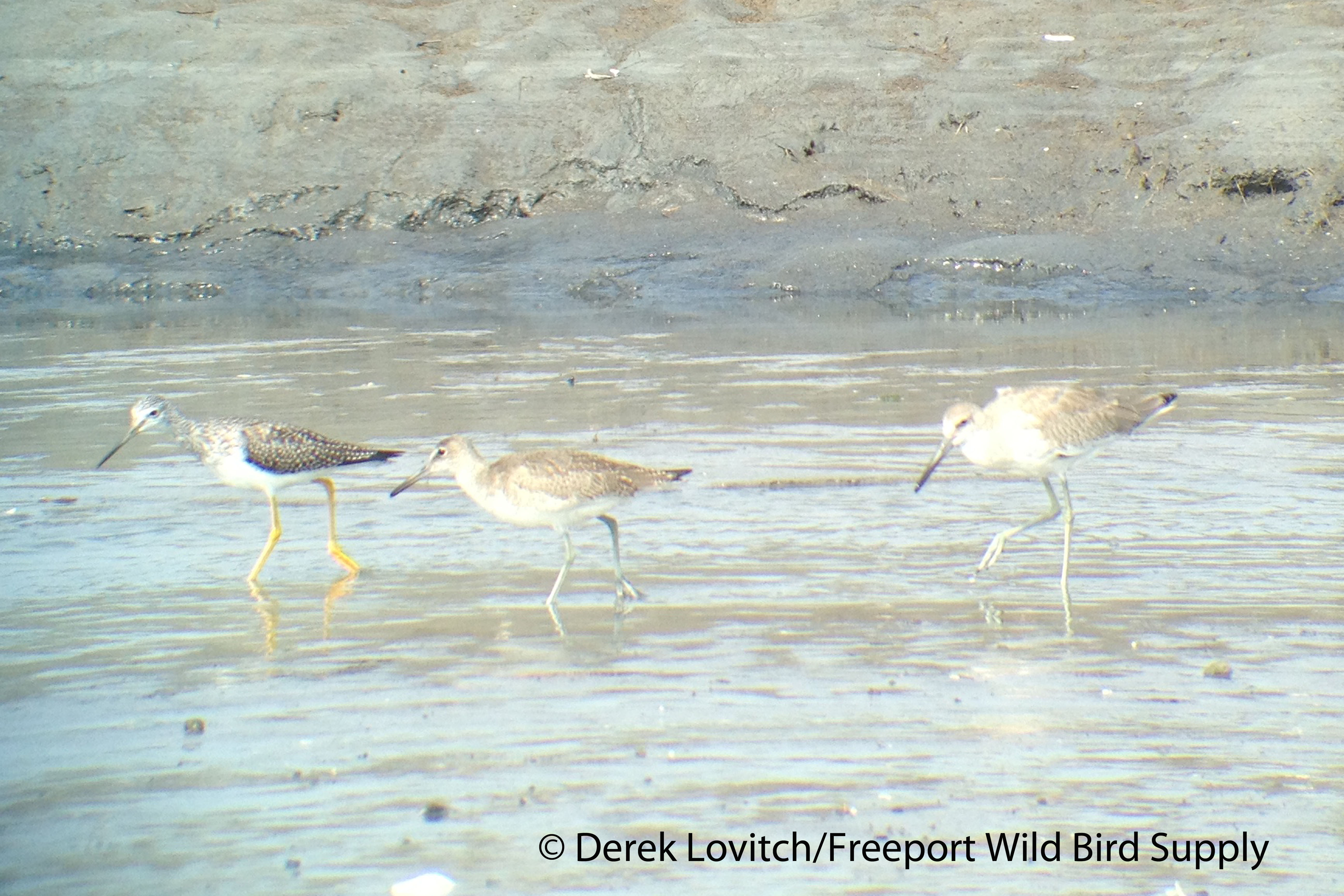
And Scarborough Marsh was just awesome on Tuesday morning, when Katrina and I had unbelievable numbers (for spring) off of Eastern Road, including 1500+ Tree Swallows, 500+ Least Sandpipers, 400+ Barn Swallows, ~125 Greater and ~100 Lesser Yellowlegs, 75-100 Bank Swallows, 6++ Semipalmated and 2++ White-rumped Sandpipers (both FOY), 2 adult Dunlin, and the continuing Tricolored Heron. Nothing rare per se, but the biomass of birdage was impressive, and was definitely the highlight of the week.
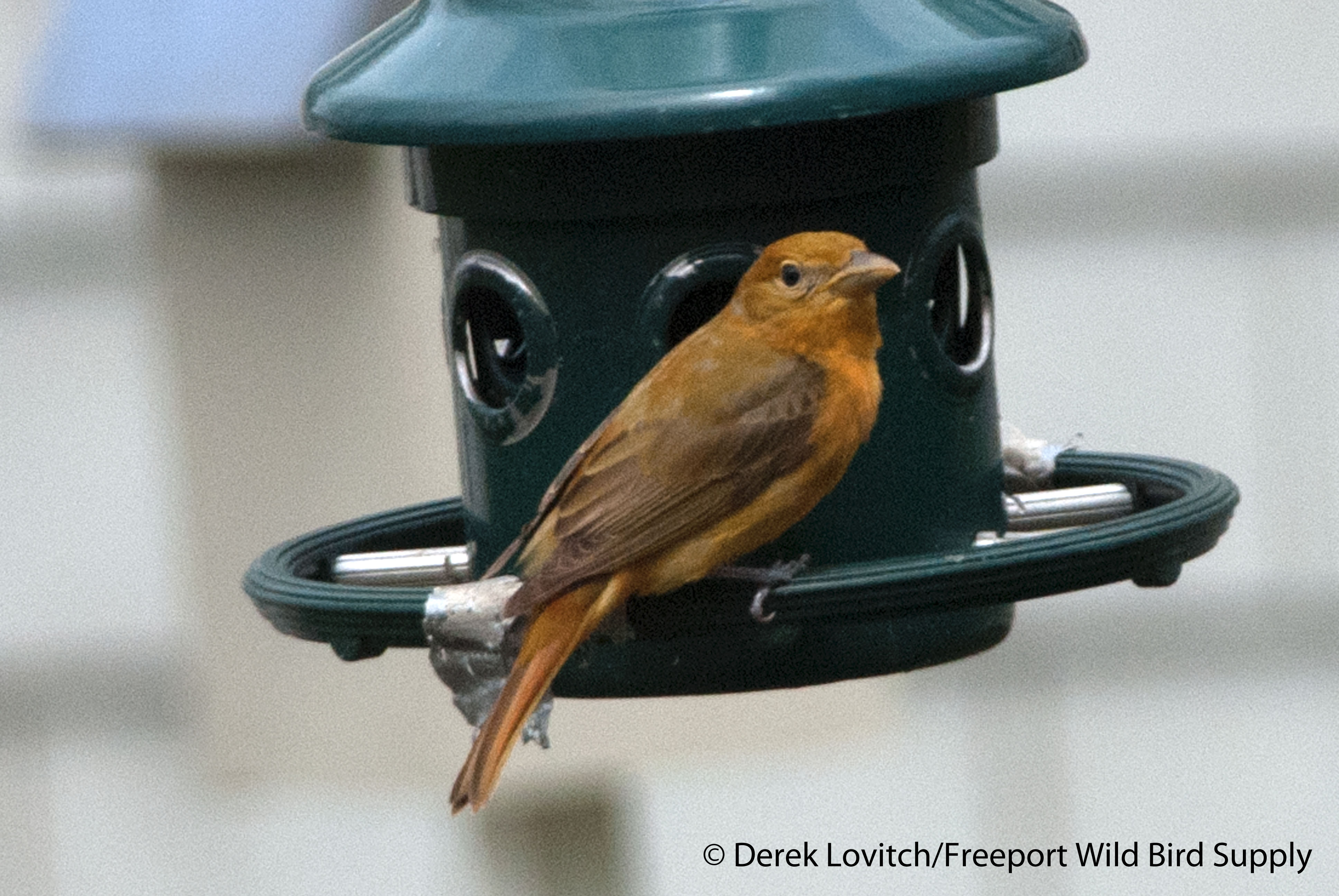
Following the “Mega” rarity Northern Wheatear that was last seen last Saturday in Scarborough Marsh, rarity news has been decidedly southern in nature. Although small numbers of “overshooting” southern vagrants are typical in Maine every spring, the number of White-eyed Vireos (I caught up with one at Capisic Pond Park on Thursday with my friend Lois), Summer Tanagers (I saw one in Georgetown last week with Katrina; see above), and Blue-gray Gnatcatchers (they’re everywhere!) is most impressive. Then there was a Painted Bunting on Monhegan this week, a Swallow-tailed Kite at the Bradbury Mountain Hawkwatch on 5/7, and a Mississippi Kite also at The Brad as the grand finale on the 15th. The widespread smattering of Orchard Orioles is a little more typical.
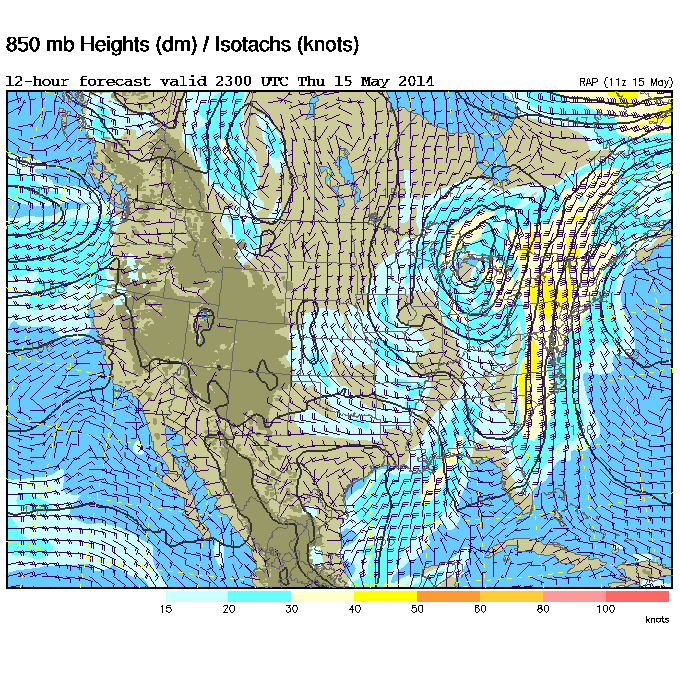
This pattern of southerly vagrants is not caused by birds being “blown” here in a simple sense, but instead we believe it is caused by southerly winds facilitating their arrival beyond their normal range – perhaps by causing a bird to travel much further (in relation to the ground) in each night’s flight thanks to a favorable tailwind. Perhaps others were entrained by strong winds off the South Atlantic Bight and were pushed northwards until they made landfall in the Northeast (I wonder if the Boston Fork-tailed Flycatcher arrived this way?).
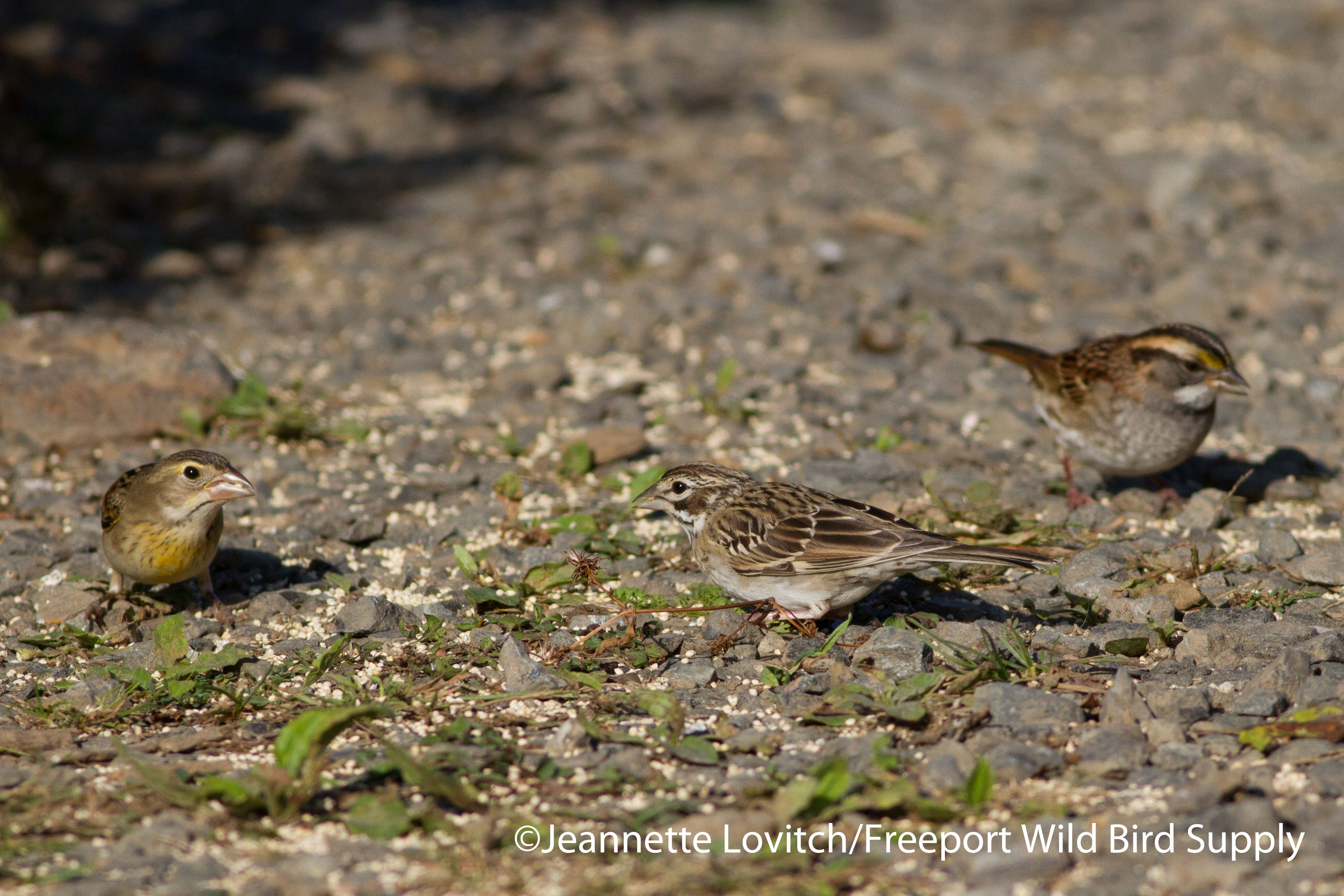
Less fitting of any particular pattern is the remarkable adult Black-headed Grosbeak that was on Monhegan this week – at the SAME FEEDER as the Painted Bunting, 2 Summer Tanagers, a Lark Sparrow, and a Dickcissel. <expletive deleted> And, not to be overshadowed, a dapper male Ruff was found in Bangor.
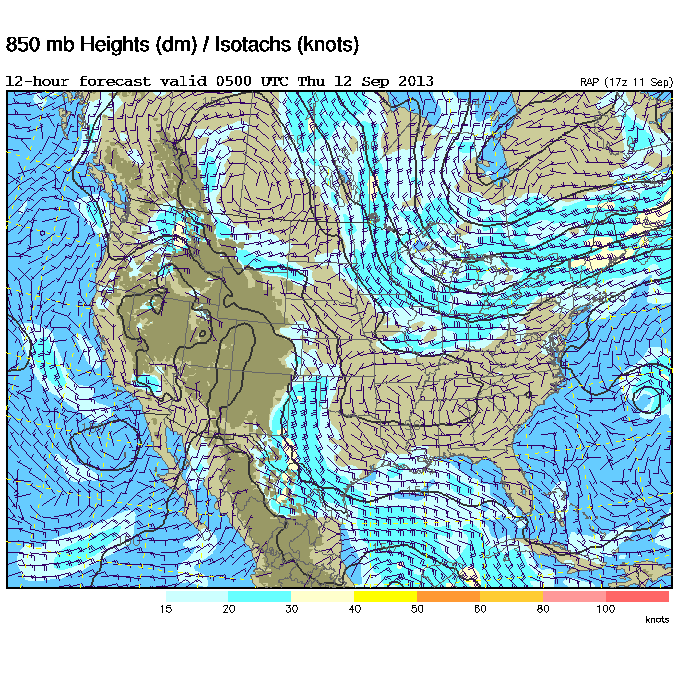
With a deep southerly flow continuing, and some very unsettled weather coming for the weekend, I think things will be getting quite interesting in the coming days. (I don’t want to know how many “Island Birds” Kristen Lindquist will pick up over me on Monhegan this weekend!). Check out this wind map from the 15th, showing a very strong southerly flow originating all of the way from Florida and the Caribbean.
For those of us not on Monhegan this weekend, I sure hope you’ll be birding hard – not despite the weather, but because of the inclement weather. At the very least, keep an eye on those feeders. Both here at the store and at home, we’re stocked up with mealworms, jelly, oranges, insect suet, and nut blocks. Not only will the cool, wet weather limit natural food sources, but the slow progression of the season continues to put a lot of important food sources well behind the birds’ required schedules.
For example, apples and cherries are only now starting to bloom. Early-arriving nectavores and insectivores flock to these (and other early-season bloomers like Shadbush, azalea, and quince) for both nectar and the insects attracted to that nectar. The lack of a lot of flowers so far this season has pushed many orioles (including some Orchards in addition to the regular Baltimores), Gray Catbirds, and Scarlet (and some Summers) Tanagers to feeding stations in above-average numbers. I expect that trend to continue through the middle of next week, as a stubborn upper-level low remains locked overhead producing unsettled weather.
So keep an eye out the window, get outside, and find some good birds! And regardless of rarities, it’s just a great time to be birding!