Tag Archives: warblers

Sandy Point Morning Flights: September – October, 2024.

For 2024, I decided to post my Sandy Point Morning Flight tallies here in one blog entry (instead of only to Facebook and the Maine Birds Google-group), or perhaps one entry per month. If nothing else, it helps me organize them, and my thoughts! Hopefully, you’ll enjoy reading them, too. A busy tour schedule this fall, a little personal travel, and the continued decline in the number of strong, sweeping cold fronts due to climate change are all conspiring to reduce the number of days I begin at “my office.”

The following lists are birds counted passing over and through Sandy Point Beach, Cousin’s Island, Yarmouth as part of the “Morning Flight” or Morning Redetermined Migration. For more information about this site, and my counts here, see Site C14 in Birdwatching in Maine: The Complete Site Guide (2024).

  1. September 3rd.

A light flight passed over and through this morning. It was my first visit of the season, as cold fronts have been few and weak so far this fall, so it was great to be back at my office. I was expecting a stronger flight, however. Perhaps the winds were just too westerly overnight, as the northwesterly component is so critical for pushing birds out over the bay and beyond, forcing them to reorient into the wind and concentrating here at the northwest tip of the island.

  • 6:02-8:20am
  • 48F, clear, light W increasing then decreasing.
  • 105 Northern Parulas
  • 88 Cedar Waxwings
  • 56 American Redstarts
  • 41 unidentified
  • 12 Yellow Warblers
  • 10 American Goldfinches
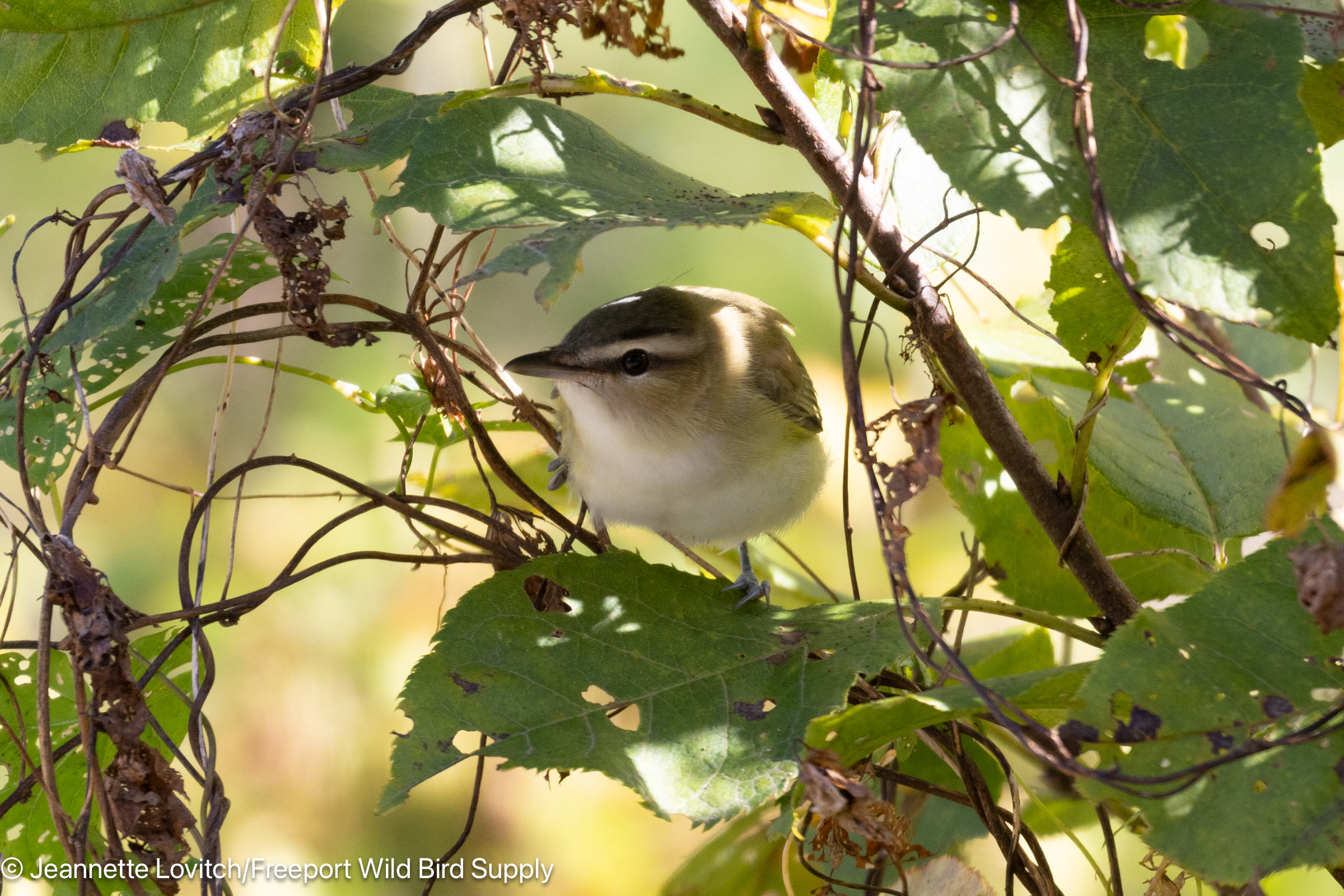
  • 7 Red-eyed Vireos
  • 5 Cape May Warblers
  • 4 Magnolia Warblers
  • 3 Eastern Wood-Pewees
  • 3 Chestnut-sided Warblers
  • 2 Nashville Warblers
  • 2 Red-breasted Nuthatches
  • 2 unidentified flycatchers
  • 2 Black-capped Chickadees
  • 2 Rose-breasted Grosbeaks
  • 1 Black-throated Blue Warbler
  • 1 Olive-sided Flycatcher
  • 1 Black-throated Green Warbler
  • 1 Baltimore Oriole
  • 1 Black-and-white Warbler
  • 1 Wilson’s Warbler
  • 1 House Finch
  • 1 Least Flycatcher
  • 1 Bay-breasted/Blackpoll Warbler
  • 1 unidentified Catharus
  • 1 BLUE-GRAY GNATCATCHER (4th Sandy Point Morning Flight Record).
  • Total = 351

2. September 10th Update.

Well, so much for this plan! A week has gone by and there hasn’t been a decent morning to try at Sandy Point. And, with a massive area of high pressure dominating our weather (and most of the Eastern US) for another week, the next possible day looks a long way off! While several nights have featured at least some northerly component, it has been dead calm by dawn. Most other nights have been calm, and while that’s great for migrants to make progress, it’s not so great for a concentration of birds along the coast. For example, a very weak – and mostly dry – cold front that passed on Monday night briefly changed winds, but they were mostly westerly, and were calm by dusk.

Good for the migrants, not great for the migration-watchers! Let’s hope for a change in the forecast; we need the rain, too!

3. September 11.

I probably should have gone this morning, just based on the huge flight that occurred overnight. But, as with most good nights of migration this season, winds were virtually calm. Maybe there was just enough of a puff from the west to make a count worthwhile, but alas, my schedule didn’t allow for a last-minute change. However, there were A LOT of birds in the air last night.

A huge flight overnight on 9/13-14 resulted in a lot of birds offshore, and while I couldn’t be at Sandy Point, I had an exceptional morning flight on Monhegan – dominated by Cape May Warblers – with my tour group that weekend.

4. September 18th Update.

Yup, another clear and calm night, with migrants passing high overhead. Fog at dawn, too. Another week with no morning flight. Goodness, this blog sucks!

5. September 25th Update.

OK, this is getting ridiculous! Another week with lots of nights of great migration, but with either calm conditions or a light north to northeasterly aloft, not one more was conducive to being on the bridge. Friday and especially Saturday look great though…but alas, I’ll be back on Monhegan. No complaints there. But I’ll go ahead and change this blog title to “September-October” and hope for better conditions next month!

6. October 2nd Update.

Two great flights over the weekend conducive to a good if not great flight at Sandy Point occurred, but my tour group on Monhegan once again reaped the benefits. Next favorable winds might not be until Sunday the 6th. Fingers crossed! Maybe I’ll have some real content for this blog then…and I really need my Sandy Point fix!

6. October 5 – Finally!

I was finally at “my office” on the bridge this morning. Unfortunately, with clouds in the eastern sky and a light northerly wind, only a light flight passed over and through the point this morning. Furthermore, the Caribou radar showed rain into the early night, and likely unsettled weather thereafter, reducing or even eliminating the arrival of birds from the north and northeast (the radar after midnight showed virtually nothing over northern Maine). Nonetheless, it was just good to be back!

  • 6:45-8:45am
  • 45F, partly to mostly cloudy, NNW 5.3-7.0 to N 6.7-8.2mph.
  • 60 Yellow-rumped Warblers
  • 15 Blackpoll Warblers
  • 9 American Robins
  • 7 Palm Warblers
  • 6 Ruby-crowned Kinglets
  • 5 unidentified
  • 4 Golden-crowned Kinglets
  • 4 Red-breasted Nuthatches
  • 4 Chipping Sparrows
  • 3 Northern Flickers
  • 3 Dark-eyed Juncos
  • 3 Common Loons
  • 3 Hermit Thrushes
  • 3 White-throated Sparrows
  • 3 unidentified blackbirds
  • 2 Rusty Blackbirds
  • 2 Blue Jays
  • 1 Blue-headed Vireo
  • 1 unidentified kinglet
  • 1 Tufted Titmouse (did not cross after 4+ false starts)
  • 1 Hairy Woodpecker (finally crossed after 7 false starts)
  • Total = 140

7. October 10.

A moderately-strong flight overnight on variable W to NW winds suggested many more birds departed last night than arrived. With a light W wind by dawn, only a light flight passed through the point.

  • 6:49-9:15
  • 41F, mostly clear, W 3.5 to 5.0 to W 4.4 to 7.7mph.
  • 116 Yellow-rumped Warblers
  • 39 Blackpoll Warblers
  • 24 White-throated Sparrows
  • 21 American Robins
  • 14 Palm Warbles
  • 13 unidentified
  • 8 Dark-eyed Juncos
  • 8 Ruby-crowned Kinglets
  • 8 Golden-crowned Kinglets
  • 5 Black-capped Chickadees
  • 3 Rusty Blackbirds
  • 3 Hermit Thrushes
  • 2 American Pipits
  • 2 Common Loons
  • 2 Nashville Warblers
  • 2 Chipping Sparrows
  • 2 Blue-headed Vireo
  • 2 Eastern Phoebes
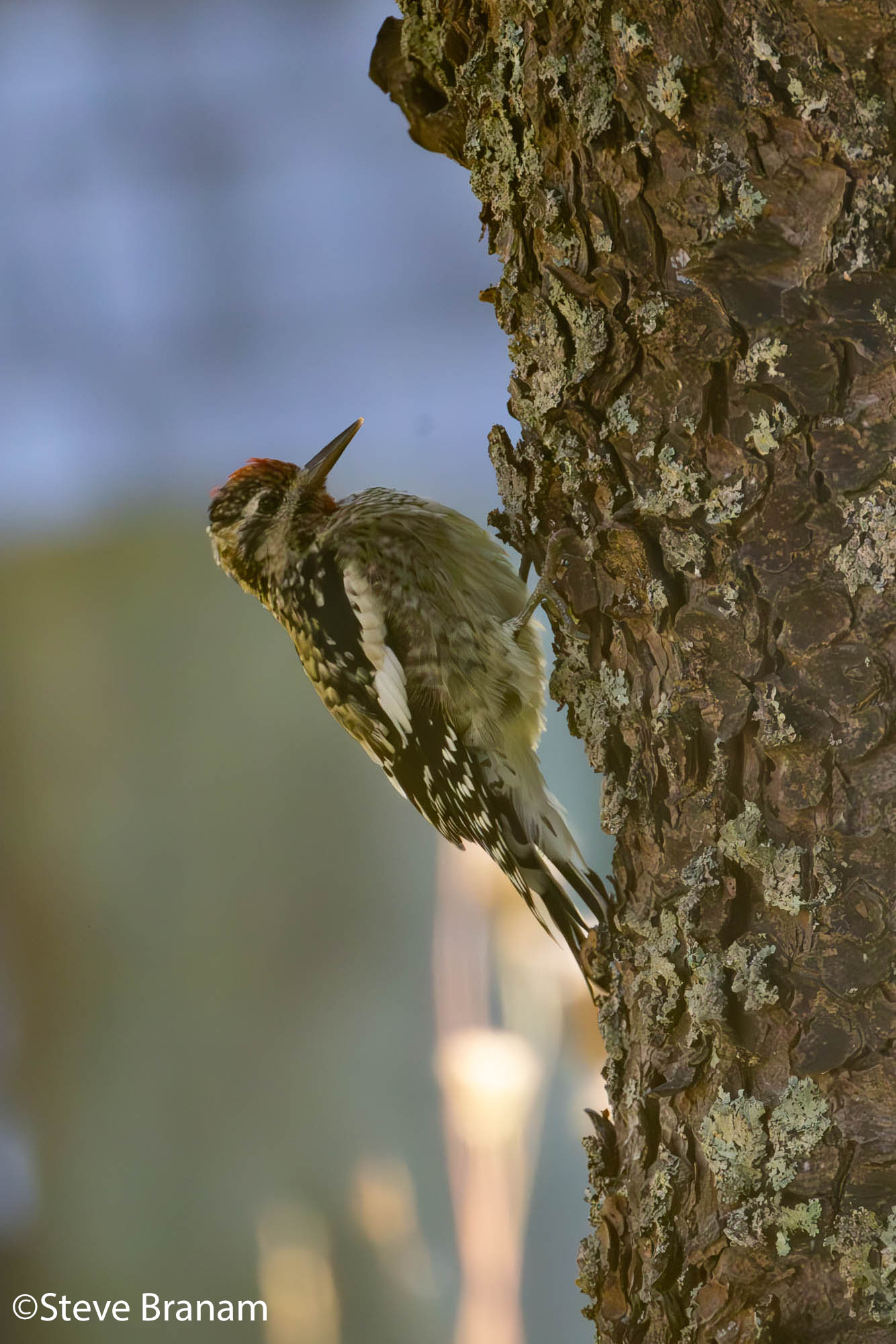
  • 2 Yellow-bellied Sapsuckers
  • 2 Blue Jays
  • 1 Red-breasted Nuthatch
  • 1 Black-throated Blue Warbler
  • 1 Northern Flicker
  • 1 Northern Parula
  • 1 Baltimore Oriole
  • Total = 285

8. October 11th.

With only a light to moderate flight overnight in southern Maine and little being picked up on the Caribou radar with continued unsettled weather, it was not surprising that such a light flight passed through Sandy Point. Or so I thought. But then I found this article…yes, the absolutely amazing and awesome Aurora Borealis this night before may have indeed minimized the number of migrants taking flight. An increasing number of diurnal migrants helped make up for it, however.

  • 204 American Robins
  • 54 Yellow-rumped Warblers
  • 28 Blackpoll Warblers
  • 18 Blue Jays
  • 15 Eastern Bluebirds
  • 9 White-throated Sparrows
  • 8 Chipping Sparrows
  • 8 Cedar Waxwings
  • 8 unidentified
  • 5 Palm Warblers
  • 5 Golden-crowned Kinglets
  • 4 Nashville Warblers
  • 3 Northern Parulas
  • 3 Black-capped Chickadees
  • 3 Ruby-crowned Kinglets
  • 2 Tufted Titmice
  • 2 Dark-eyed Juncos
  • 2 Hermit Thrushes
  • 1 Red-breasted Nuthatch
  • 1 Yellow-bellied Sapsucker
  • 1 HOUSE FINCH (rare migrant high overhead)
  • 1 Black-throated Green Warbler
  • T=  385

9. October 17.

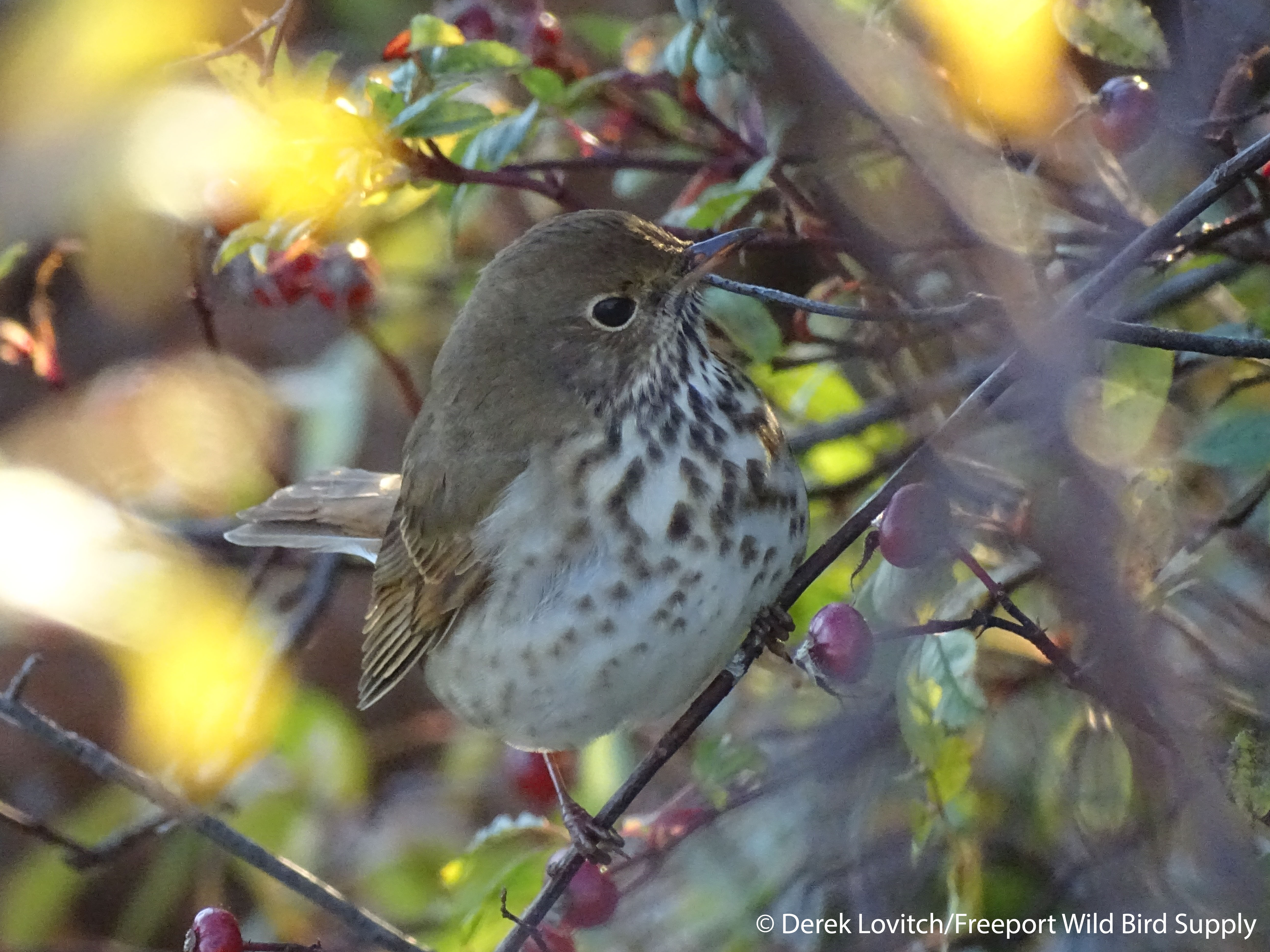
This Hermit Thrush kept me company at the point, alternating between snacking on Pasture Rose hips and contemplating crossing the channel (with Catharus thrushes rarely do after sunrise)

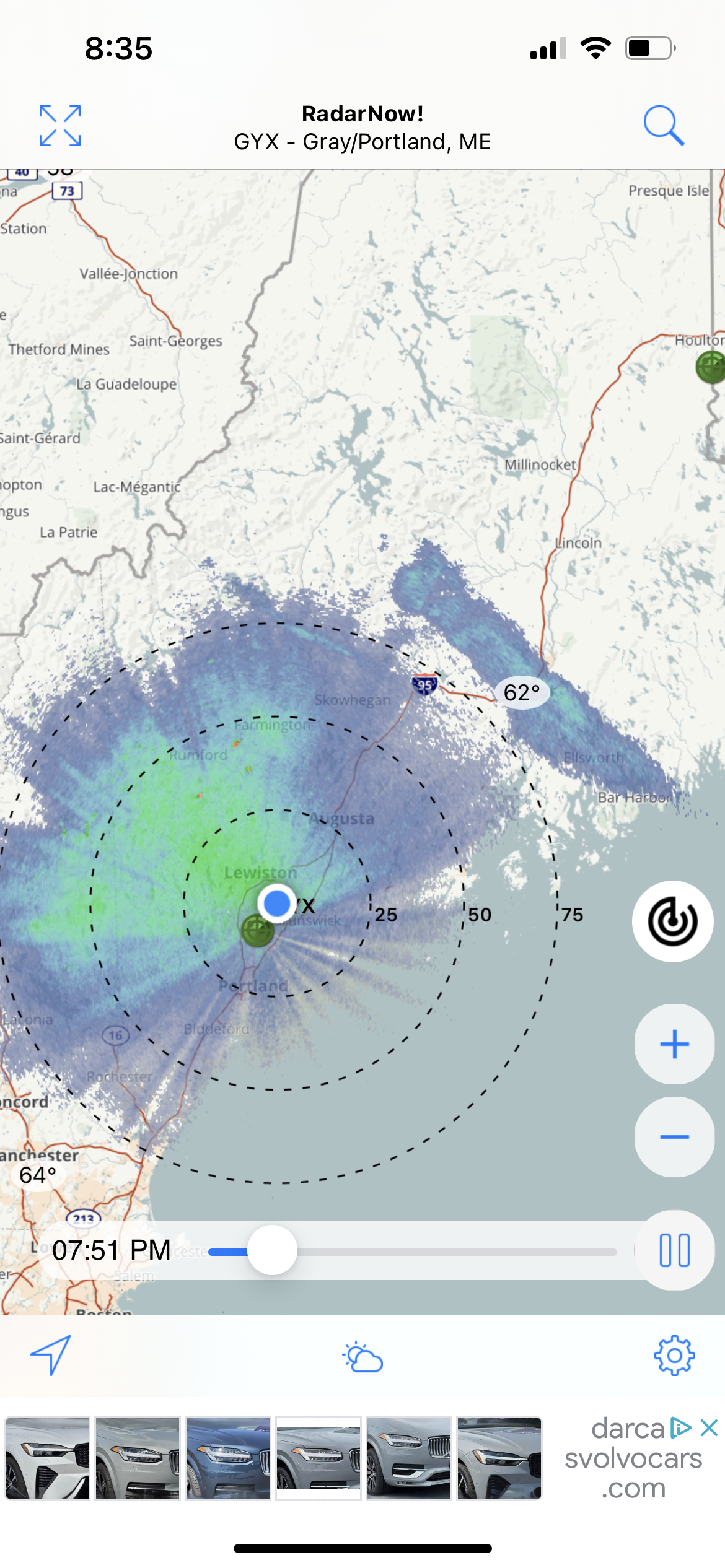
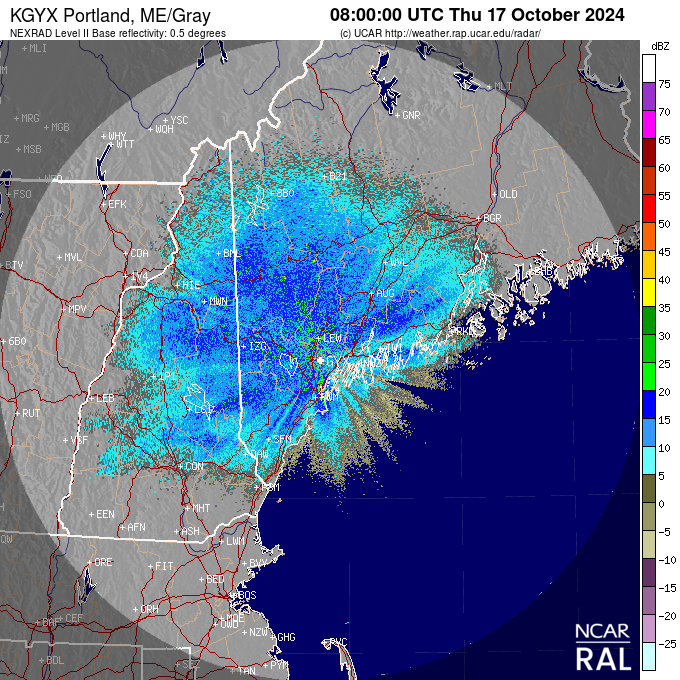
After a very slow start on a chilly morning, the flight picked up a bit in the second hour, but was still far lighter than I would have expected given the massive flight detected by the radar overnight. Even by 4:00am, the radar image was boomin’

  • 6:59-9:15
  • 31F, clear, NW 2.7-4.9 to W 1.2 TO 2.6mph.
  • 114 Yellow-rumped Warblers
  • 56 American Robins
  • 44 Golden-crowned Kinglets
  • 44 Blue Jays
  • 17 Ruby-crowned Kinglets
  • 14 Dark-eyed Juncos
  • 9 Hermit Thrushes
  • 8 Palm Warblers
  • 7 Black-capped Chickadees (still did not cross after 14 “false starts”)
  • 7 White-throated Sparrows
  • 5 Unidentified
  • 4 Nashville Warblers
  • 4 Blackpoll Warblers
  • 3 Swamp Sparrows
  • 2 Purple Finches
  • 2 Blue-headed Vireos
  • 2 Tufted Titmice (did not cross after 4 false starts)
  • 1 TENNESSEE WARBLER
  • 1 Northern Parula
  • 1 Eastern Bluebird
  • 1 Yellow-bellied Sapsucker
  • 1 Red-breasted Nuthatch
  • 1 Northern Flicker
  • 1 Savannah Sparrow
  • 1 Common Loon
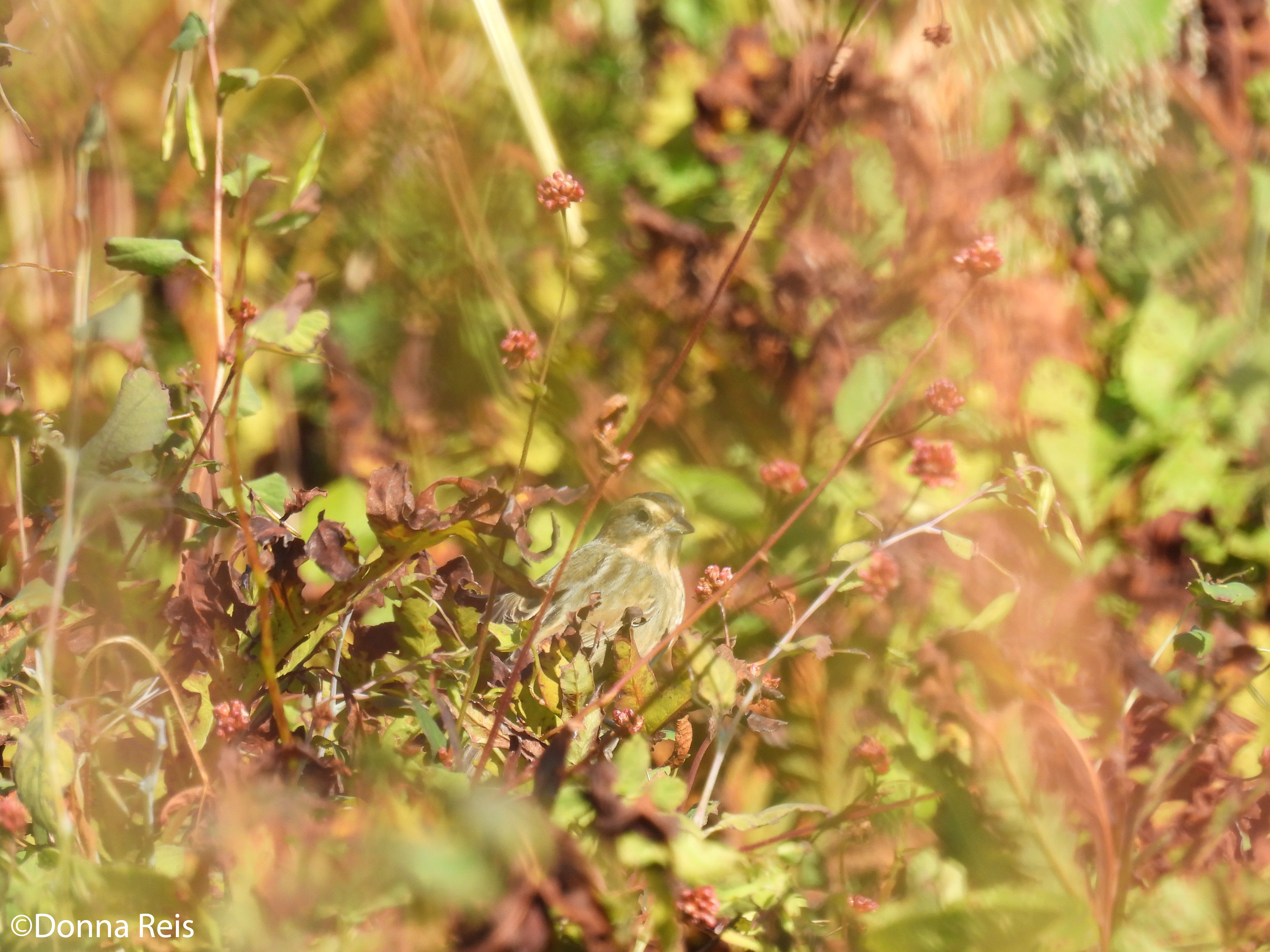
  • 1 ORANGE-CROWNED WARBLER (in parking lot)
  • T=351

10. October 23rd.

With only a moderate flight overnight and very light winds, I didn’t have high hopes today for much of a flight. However, with the forecast for the next few days followed by a trip, this very well may be my last chance of the season, so off I went. Well, I was correct…there wasn’t much.

  • 7:10-8:30
  • 43F, mostly clear, NNW 2.7-3.2 to calm.
  • 10 Dark-eyed Juncos
  • 10 Yellow-rumped Warblers
  • 4 Golden-crowned Kinglets
  • 4 Hermit Thrushes
  • 3 Savannah Sparrows
  • 2 Palm Warblers
  • 1 American Rpbin
  • 1 Purple Finch
  • 1 Black-capped Chickadee
  • 1 Blue-headed Vireo
  • 1 Chipping Sparrow
  • 1 Red-breasted Nuthatch
  • 1 Blackpoll Warbler
  • Total = 42

11. November 6th.

I had every intention of trying one more morning at the bridge after we returned from vacation. Sunday the 3rd may have been the day. But, avoiding the painful early wake-up call of the end of Daylight Savings Time, I decided to twitch the Common Gull in Rockland instead. I feel a little guilty, but ya know, every now and then I like a little chase, and besides, it was kind enough to stick around until we returned, so I felt I owed it.

It wasn’t a great season for me at “my office,” as this was certainly a record low number of visits. And to not catch any big flights is of course disappointing. But it was a good fall for birding – and an especially good fall for birds with little to impede their migration – and I enjoy every chance I can get to be at Sandy Point. And with a lot less pain this year than last year when I was still recovering from complications following shoulder surgery.

So with that, the 2024 Sandy Point Morning Flight season is officially closed. Still plenty of migration left, but it’s mostly diurnal migrants now. There will be a Dark-eyed Junco flight or two, some great flights of American Robins, and likely one last little push of Yellow-rumped Warblers. However, Rarity Season is now in full swing, so it’s time to focus on other birding locations. See you in August! (If there are any real cold fronts).

(And now it’s time to see what Yarmouth’s plans are for the walkway repair and improvement. I’ll need to make sure birding opportunities are improved and vegetation is protecting. Stay tuned…I might need your help)

Recent Highlights, 5/11– 5/17/2024

John Lorenc and I finally caught up with this continuing WHITE-WINGED DOVE at Donna Cundy’s feeders on Monhegan Island in our brief visit on the 17th.  It appeared minutes after we walked away for the” last time,” but we were alerted by friends and raced back. My photos have a twig in front of that beautiful powder blue eyering, so I’m borrowing Kristen’s photo.

My observations of note over the past seven days also included:

  • 15 species of warblers, led by only about 20 Black-and-white Warblers and about 15 Northern Parulas, Evergreen Cemetery, Portland, 5/12 (with Down East Adventures Spring Songbird Workshop group).
  • 1-2 Blue-gray Gnatcatcher, Evergreen Cemetery, 5/12 (with Down East Adventures Spring Songbird Workshop group).
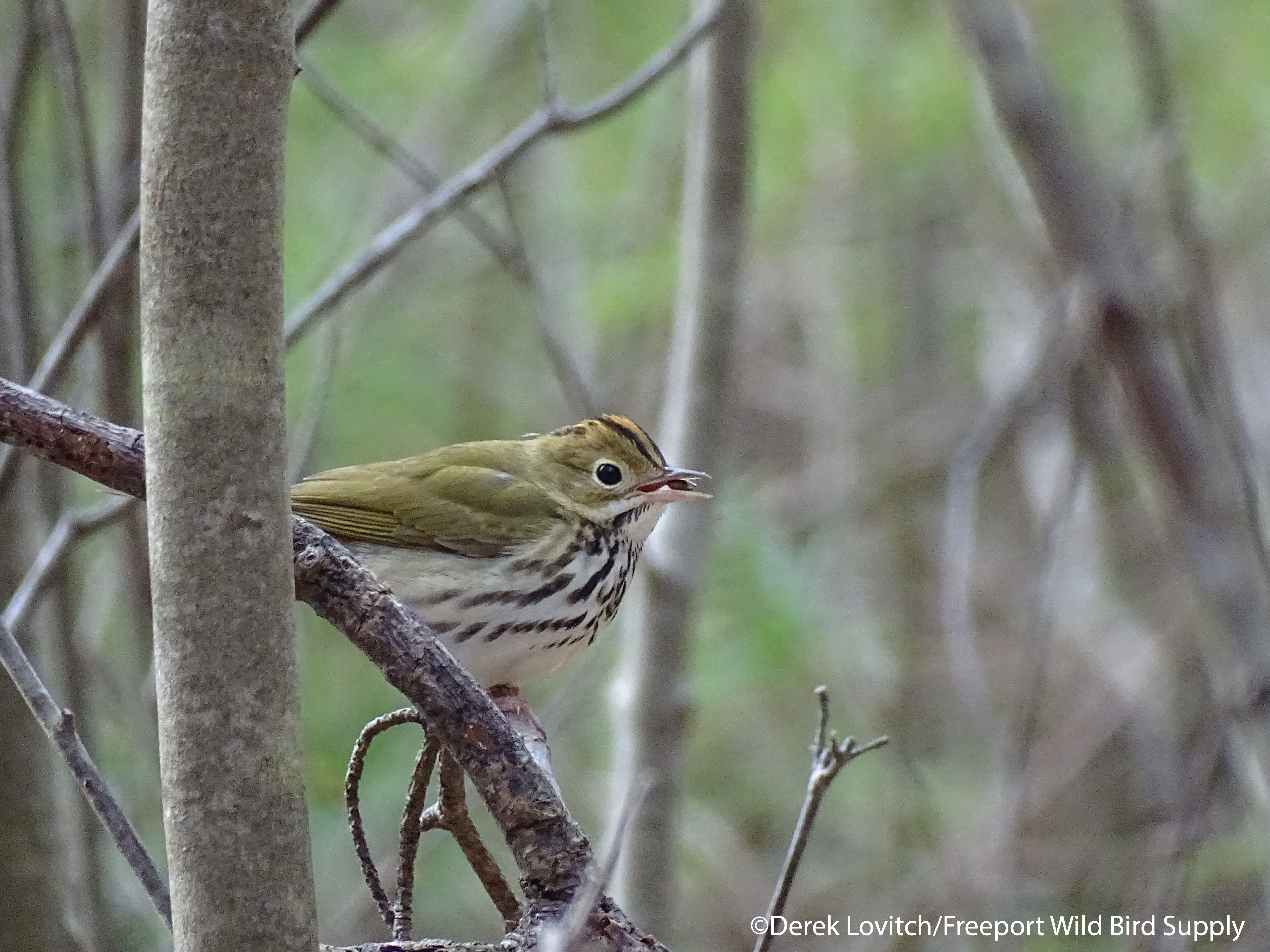
  • 15 species of warblers, led by 9 Ovenbirds and 7 American Redstarts, our property in Durham, 5/13.
  • 1 Louisiana Waterthrush, Suckfish Brook Conservation Area, Falmouth, 5/13 (with Jeannette).
  • 18 species of warblers (FOY), led by 40+ Yellow-rumped and 13 Common Yellowthroats, Florida Lake Park, Freeport, 5/14 (with Jeannette).
  • 15 species of warblers, led by 10+ each of Ovenbirds and Black-throated Green Warblers, our property in Durham, 5/14.
  • 15 species of warblers, led by 19 Common Yellowthroats and 10 Ovenbirds, Florida Lake Park, 5/15.
  • 5 Red Crossbills, around the store’s yard, 5/15. More impressive was the 23 that Jeannette had fly over early in the day on the 18th.
  • A very productive ferry crossing from Port Clyde to Monhegan on 5/17 included 4-6 ATLANTIC PUFFINS (FOY), a group of 6 (or possibly 9) RED-NECKED PHALAROPES (FOY), 6 Black Scoters, several Long-tailed Ducks, etc. (with John Lorenc, Jess Bishop, Ron Joseph, Kristen Lindquist, Bill Thompson, et al).  On the trip back, John and I had a total of 10 ATLANTIC PUFFINS and more Long-tailed Ducks.
  • 1 continuing WHITE-WINGED DOVE (photo above) and 1 female-type SUMMER TANAGER, Monhegan Island, 5/17 (with John Lorenc).

Additional personal first-of-years this week also included:

  • 1 Blackpoll Warbler, Evergreen Cemetery, Portland, 5/12 (with Down East Adventures Spring Songbird Workshop group).
  • 1 Red-eyed Vireo, Evergreen Cemetery, 5/12 (with Down East Adventures Spring Songbird Workshop group).
  • 1 House Wren, Evergreen Cemetery, 5/12 (with Down East Adventures Spring Songbird Workshop group).
  • 2 Bay-breasted Warblers, Florida Lake Park, 5/14 (with Jeannette).
  • 2 Eastern Wood-Pewees, Morgan Meadow WMA, 5/16.
  • 4 Laughing Gull, ferry from Port Clyde to Monhegan, 5/17 (with John Lorenc).
  • 4+ Indigo Buntings, Monhegan Island, 5/17 (with John Lorenc).

It was a great week of birding on our Durham property this week, including local breeding birds on territory often put on a show. Jeannette photographed this Yellow Warbler on our property on the 15th, for example.

Tours and Events:

  • There will not be a Saturday Morning Birdwalk on 5/25 as I’ll be on Monhegan with our tour group. 

This Week’s Highlights, 5/4– 5/10/2024

This Ovenbird on our property paused for a moment as it enjoyed a snack it pulled from the leaf litter.

The migratory floodgates really opened this week, as expected, with the diversity of Neotropical migrants increasing dramatically. Days like the 7th and 8th are truly special, but any day birding – especially in May! – yields its own rewards. My observations of note over the past seven days also included:

  • 10 species of warblers (FOY) led by ~40 Yellow-rumped Warblers and 25+ Black-and-white Warblers, Morgan Meadow WMA, 5/6 (with Jeannette).
  • 15 species of warblers (FOY) led by 100+ Yellow-rumped Warblers and 13 Black-and-white Warblers, Florida Lake Park, Freeport, 5/7.
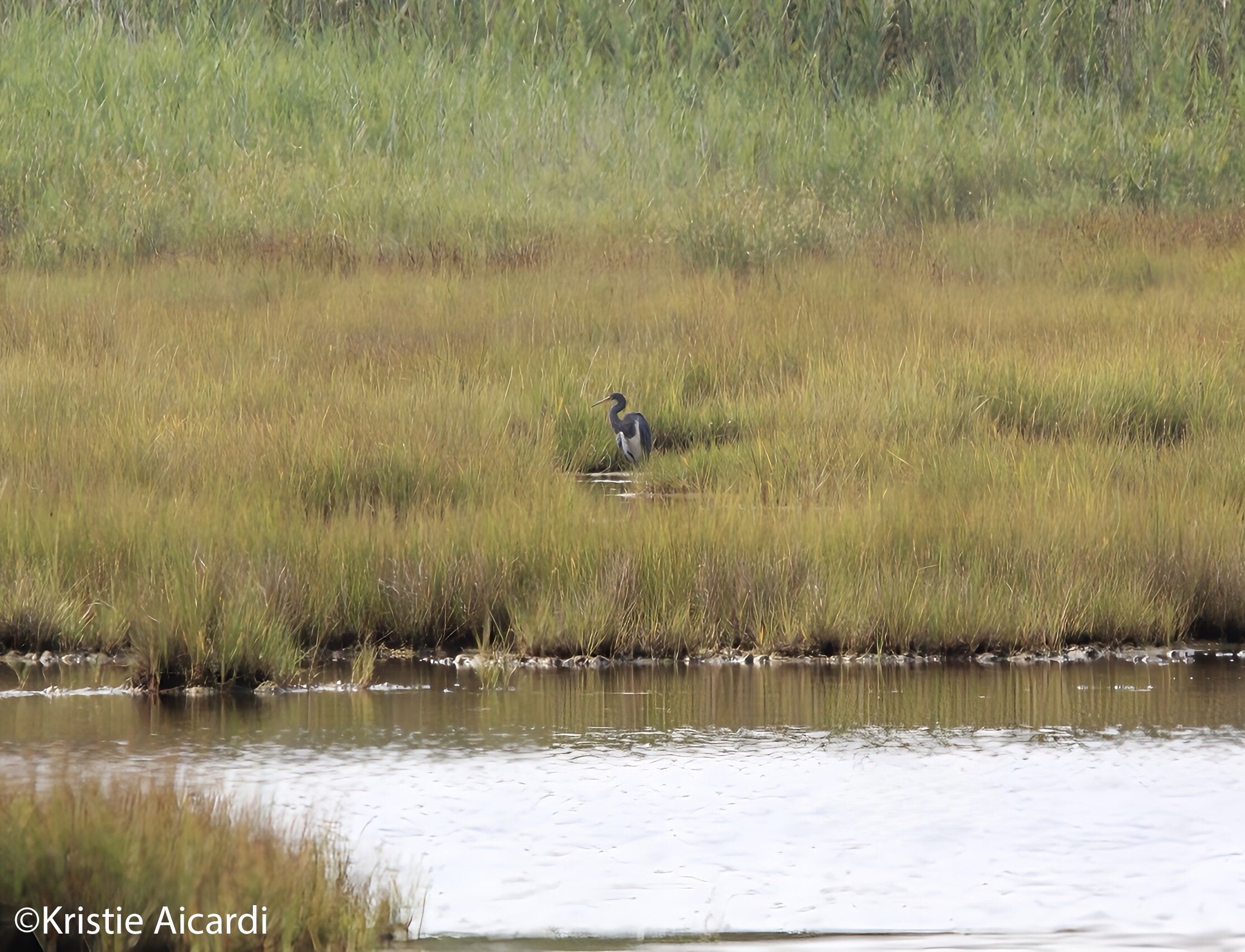
  • 1 continuing TRICOLORED HERON (FOY), Eastern Road Trail, Scarborough Marsh, 5/7.
  • 15 species of warblers led by 50+ Yellow-rumped Warblers and 15-20 Black-throated Green Warblers, our property in Durham, 5/8.
  • 15 species of warblers led by 35+ Yellow-rumped Warblers and 20+ Black-and-white Warblers, our property in Durham, 5/10.

As is typical of early May, new arrivals were the headliners of most days of birding. Additional personal first-of-years this week also included:

  • 1 Yellow Warbler, Hidden Pond Preserve, Freeport (with Saturday Morning Birdwalk group).
  • ~40 Chimney Swifts, over downtown Portland at dusk, 5/4 (with Jeannette).
  • 4+ Common Terns, Curtis Farm Preserve, Harpswell, 5/5 (with Harpswell Heritage Land Trust birdwalk group).
  • 1 Ruby-throated Hummingbird, our property in Durham, 5/6.
  • 1 Cape May Warbler, Morgan Meadow WMA, 5/6 (with Jeannette).
  • 5 Common Yellowthroats, Morgan Meadow WMA, 5/6 (with Jeannette).
  • 1 Solitary Sandpiper, Morgan Meadow WMA, 5/6 (with Jeannette).
  • 1 Chestnut-sided Warbler, our property in Durham, 5/6.
  • 1 YELLOW-THROATED VIREO (a little early), Morgan Meadow WMA, 5/6 (with Jeannette).
  • 3 Least Flycatchers, Florida Lake Park, Freeport, 5/7.
  • 3 Magnolia Warblers, Florida Lake Park, 5/7.
  • 2 American Redstarts, Florida Lake Park, 5/7.
  • 1 Scarlet Tanager, Florida Lake Park, 5/7.
  • 1 Veery, Florida Lake Park, 5/7.
  • 1 Blackburnian Warbler, Florida Lake Park, 5/7.
  • Since I had not been in Scarborough Marsh in a few weeks, a number of personal first-of-years on 5/7 for me that have been present for a while now included Lesser Yellowlegs, Glossy Ibis, Willet, and Least Sandpiper, while more recent arrivals included 1 Least Tern (Pelreco Marsh) and 1 Spotted Sandpiper (Pelreco Marsh).
  • 1 Warbling Vireo, our property in Durham, 5/8.
  • 1 Wilson’s Warbler, our property in Durham, 5/8.
  • 2 Bobolinks, Wharton Point, Brunswick, 5/9 (with Dan Nickerson).
  • 3 Prairie Warblers, Bowdoin Sand Plain, Brunswick Landing, 5/9 (with Dan Nickerson).
  • 1 Canada Warbler, our property in Durham, 5/10.
  • 1 Lincoln’s Sparrow, our property in Durham, 5/10.

TOURS AND EVENTS:

Nothing like the splash of color from a male Rose-breasted Grosbeak at the feeding station to brighten a gray day in the backyard.

This Week’s Highlights, 4/27– 5/3/2024

Yellow-rumped Warblers have been inundating our feeding station in Durham this week, feasting on nut blocks, insect suet, mealworms, jelly, and just about everything else.

Feeder-watching continues to be great, with lots of Pine Siskins, new arrivals, migrant White-throated Sparrows, and, at our home in Durham, up to a dozen Yellow-rumped Warblers daily – especially during the cool and often wet days we had this week. Meanwhile, Red Crossbills continue to be widespread in the area. There were no huge flights of migrants this week, but new arrivals were trickling in.

My other observations of note over the past seven days also included:

  • 1 LOUISIANA WATERTHRUSH, Morgan Meadow WMA, 5/1.
  • 6 total LOUISIANA WATERTHRUSHES, via “The Louie Loop” (Site AN4 in Birdwatching in Maine: The Complete Site Guide), Androscoggin County, 5/3 (with Noah Gibb).

One of the six individuals, a singing and mate-guarding male, paused just long enough for a snapshot in Mechanic Falls on the 3rd.

As is typical of the season, new arrivals were the headliners of most days of birding. Additional personal first-of-years this week also included:

  • 1 Bank Swallow, Bradbury Mountain Hawkwatch, 4/29.
  • 1 pair Rose-breasted Grosbeaks, our property in Durham, 4/30.
  • 4 Black-and-white Warblers, Florida Lake Park, Freeport, 4/30
  • 1 Great-crested Flycatcher, our property in Durham, 4/30.
  • 1 Northern Waterthrush, our property in Durham, 5/1.
  • 1 Common Yellowthroat, Morgan Meadow WMA, 5/1.
  • 1 Wood Thrush, our property in Durham, 5/2.
  • 1 Gray Catbird (first of spring), our property in Durham, 5/2.
  • 1 Ovenbird, our property in Durham, 5/3.
  • 1 Black-throated Blue Warbler, Shaker Bog, Poland, 5/3 (with Noah Gibb).
  • 1 Nashville Warbler, Shaker Bog, 5/3 (with Noah Gibb)
  • 1 BLUE-GRAY GNATCATCHER, Little Andy River Boat Launch, Mechanic Falls, 5/3 (with Noah Gibb)
  • 2 Eastern Kingbird, Little Andy River Boat Launch, 5/3 (with Noah Gibb)
  • 1 White-crowned Sparrow, Bucknam Bridge Road, Mechanic Falls, 5/3 (with Noah Gibb).
  • 1 Brown Thrasher, Pottle Hill Road, Mechanic Falls, 5/3 (with Noah Gibb).

TOURS AND EVENTS:

 This (Three) Week’s Highlights and Recap, 9/29-10/20.

 This (Three) Week’s Highlights and Recap,

This Purple Gallinule graced tiny Rogers Pond Park in Kennebunk on the 20th, and I could not resist the chase!

The last few have been tough for me. It’s October in Maine – my favorite month of birding, as I have opined about before. The weather went from unusually warm and benign to pleasantly normal and unsettled. But in between, there were those glorious fall days of crisp mornings, colorful leaves, and migrants everywhere.

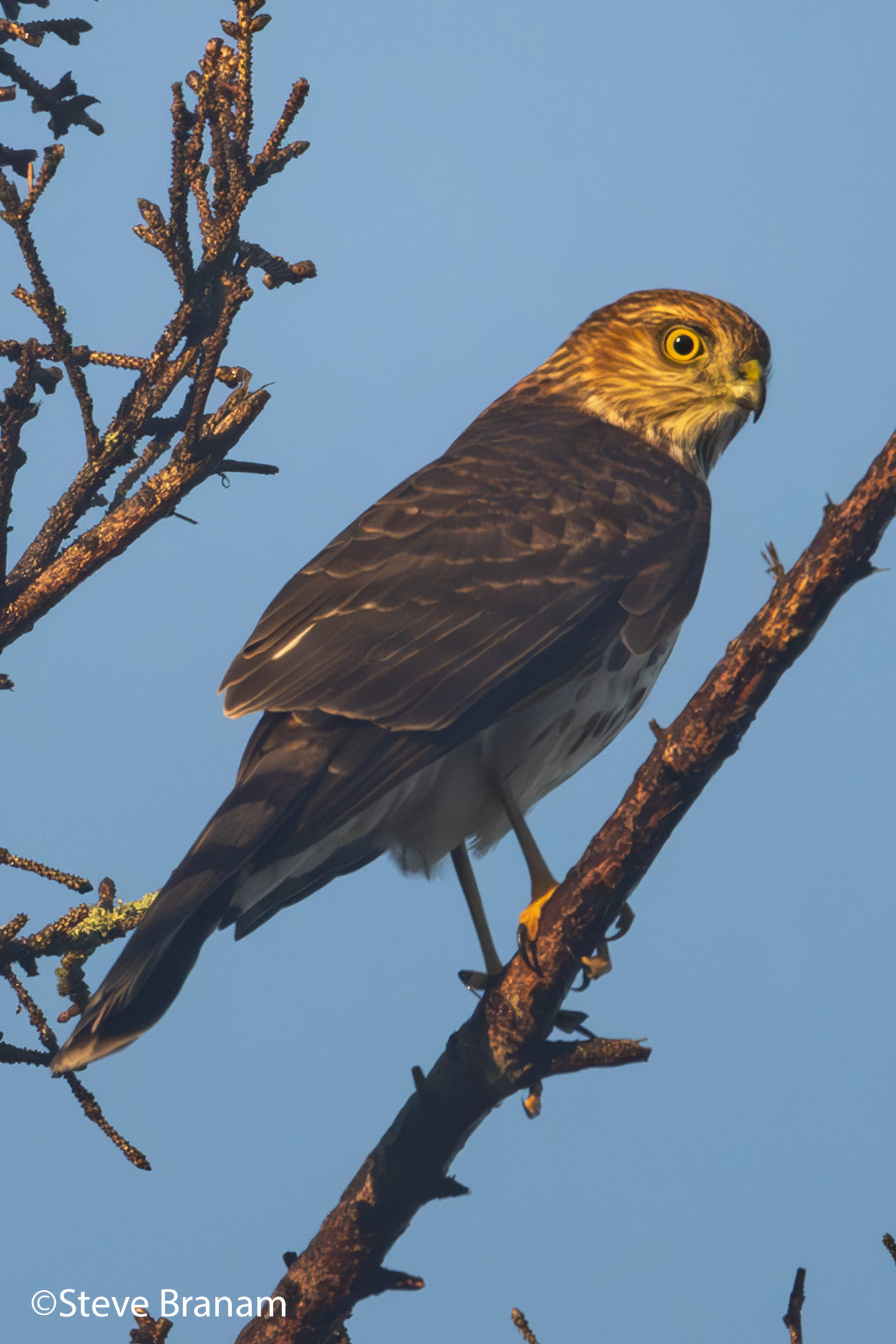
Over the winter as I slowly recovered from shoulder surgery, I used my one good arm to enjoy morning vigils at the active feeding station, which I chronicled here and here. I kept track of daily ebbs and flows, and paid even greater attention to behavior, such as the winter’s-long Sharp-shinned Hawk drama at the feeding station.

While it’s been a long year of near-constant pain and discomfort, it has also been a very busy year and we had one of the most successful tour seasons in our company’s history, despite the near-constant rain. I battled through some tours but did my best to remain positive and productive.

Pain was building in my “good” arm all summer, constantly doing all the work the left, surgically repaired but then frozen shoulder was still unable to accomplish. My September trip to Monhegan for Down East Adventures was the most challenging yet.

A few days after that, discomfort went to writhing in pain. A pinched nerve in my neck was diagnosed, likely due to a buildup of inflammation. We don’t know what the final straw was, but things like that huge migrant flight over and through Sandy Point (and all the overhead looking) likely didn’t help.

For the first time in my career (around 30 years of guiding in some shape or form), I had to hire a replacement for a tour. Thankfully, my good friend and amazing birder Evan Obercian was able to cover our 18th annual Monhegan Fall Migration Weekend for me. I could barely get in and out of my recliner – I was not going to be able to walk around all day and show people birds! 

The duration of this intense pain lasted far longer than I had expected, despite various combinations of medicines and therapies, but I mostly remained on “Injured Reserve’ (I feel like I am injured often enough to be an Offensive Lineman for the Patriots!) Meanwhile, October birding was at its finest, and birds were streaming through. Our Durham yard was absolutely bursting with birds on most mornings through, but my birding was limited to a short walk up and down the driveway.

Our September diversity of warblers slowly petered out into waves of Palm and Yellow-rumped Warblers in early October, with Ruby-crowned Kinglets bitterly scolding from all edges. Our fields and meadows were chock full of sparrows, with a productive breeding season for Song Sparrows soon augmented by flights of Swamp, the return of White-throated, more Song, and a surprising amount of Lincoln’s Sparrows.

Some other highlights during the peak of my limitations included a Philadelphia Vireo viewed from my recliner on 10/1 and a truant Scarlet Tanager spotted from the same position on the 5th. Happily, by the morning of the 7th, I was actually able to take a little walk with bins and that yielded a nice array of migrants including 2 Blue-headed Vireos, a presumed-continuing Scarlet Tanager, a new wave of Yellow-rumped Warblers and especially Ruby-crowned Kinglets, and an increase in Swamp, Savannah, and Song Sparrows in our field.

Meanwhile, my usual morning texts with Evan and Dan Nickerson as we monitored the ebbs and flows of migration helped to keep me abreast of what was happening beyond the yard. Our feeders in Durham were busier than what most people were experiencing this fall, but this is always a time of plenty. For me, unfortunately, my limitation was holding my head upright and using binoculars, so daily counts and monitoring were out of the question – no chance to attempt another Sandy Point Morning Flight, despite some great conditions on several mornings.

I was kept busy with a writing project, correspondence and planning for the store, and on the morning of the 8th, Jeannette and I boarded a plane for a trade show in Missouri. After a 5-year hiatus, we really needed to get back to reinvigorate our offerings and see if there were any revolutionary developments. 

Flying into Kansas City, Jeannette and I enjoyed a couple of days off before the trade show, and then a day upon our return. We visited with a friend, checked out some breweries and indulged in the best of Kansas City BBQ, and of course, did a little birding.  Finally feeling well enough to carry binoculars for a bit, we spent the morning of the 9th birding in Kansas (Spotted Towhees and Franklin’s Gulls!) and at least a couple of hours of each morning of our trip. A big overnight flight resulted in a very productive morning at the Lowe Conservation Area in Mexico, for example, with large number of Yellow-rumped Warblers and impressive numbers of Lincoln’s Sparrows among many others.

When we returned late on the 13th, much had changed here in Maine – a week is a long time in fall migration! I was finally back to work, leading the Saturday Morning Birdwalk once again on the 14th. If only to prevent me from snapping my head up in response to an unfamiliar flight call, I was still sporting a neck brace and quite a bit of discomfort. However, the birding helped ease the pain. In fact, it was an exceptional outing full of sparrows, a massive arrival of Pine Siskins, a late Nashville Warbler, and a Great Blue Heron hunting voles.

I birded our Durham property on the morning of the 15th, noting the changes since we departed. While truant House Wren and Indigo Bunting continue, gone are the last of our Gray Catbirds. There were still a lot of Song Sparrows, but fewer Swamp and more Savannah in our field. A Dark-eyed Junco and a few fly-over Pine Siskins have arrived, and a flock of about 100 Common Grackles briefly visited a patch of wet woods. Warblers, however, were now limited to a healthy smattering of Yellow-rumped only. A Rusty Blackbird and our first two immature White-crowned Sparrows arrived on the 17th, and the morning of the 20th was particularly birdy – Pine Siskins are here now.

Our annual Fall Boothbay Mini-Pelagic on the 16th went off without a hitch, with great weather and sea conditions. However, few seabirds were to be found, despite a lot of ground covered. The passerine list – including sparrows 28 miles offshore – was fascinating, however. But it felt more like being at Sandy Point than at sea!

It was a short trip, but I actually went birding on my own for a few hours on the 18th, visiting Sabattus Pond. Waterfowl numbers are increasing, with decent tallies including 140 Ruddy Ducks, 113 Lesser Scaup, 75 Greater Scaup, 3-5 Green-winged Teal, 2 Buffleheads (first of fall), and 1 each of Ring-necked Duck and Surf Scoter.

And finally, today was our last boat trip of the year – our Birds of Casco Bay with Seacoast Tours right here in Freeport. A casual 2.5-hour cruise produced an abundance of newly arrived Surf Scoters, 9 Red-breasted Mergansers, a surprising 15 truant Laughing Gulls, and a rather tardy Osprey.

And with my birdfinding so limited, I jumped at the chance to do a little bird-chasing. After my tour, I raced down to Kennebunk where a vagrant Purple Gallinule was found this morning. Interestingly, this is the second in Maine at the moment, with one continuing in the even more surprising location in a small pond in the North Maine Woods not far from Moosehead Lake!

It was in the open when I arrived, and I enjoyed some prolonged quality time with it by myself and with just a few others at we watched it feed on crabgrass and at least one large earthworm. Oddly, it remained loyal to a small patch of grass under a powerline, away from the water.

As I continue to slowly feel better, I’ll be trying to get out more. Unfortunately, there will not be any more visits to Sandy Point for the morning flight for me this year, but there are plenty of birds to see everywhere else.  Sabattus Pond season is upon us, and Rarity Season is about to ramp up. It’s an amazing time to be in the field, and I will do my best to get out there and report back. Stay tuned for trip reports, birding summaries, and I am sure, a few “highlights” too!

This Week’s Highlights, 9/19-22, 2023

This delightful Black-and-white Warbler hung out with me for a spell in “my office” at Sandy Point during the huge flight on the morning of the 21st.

While Hurricane Lee was a birding dud here in Maine, I did miss two great flights at Sandy Point and three overall fantastic days of migration while we were out of town.  But some good migration over the past four days since our return helped make up for it. Meanwhile, I also posted a blog recounting a little about what I (did not) miss during the passage of Lee.

  • While there has not been a hoped-for morning flight of consequence over or through our Durham property, it continues to be much better for fall migration than we even imagined.  Limited effort produced 12 species of warblers on both 9/19 and 9/22 – which included tardy Northern Waterthrush and Canada Warbler.
  • Sandy Point Morning Flight, 9/20.

With winds mostly westerly overnight, and very light westerly winds in the morning, the flight was lighter than I expected. It was also high and distant to the south, so I likely missed a lot of birds, and certainly identified less than I would have liked – both typical on such conditions.

6:23-9:15am55F, mostly clear, W 2.8mph-4.1Decreasing to WSW 0.6 to 1.9
Unidentified164Eastern Phoebe2
Northern Parula84Eastern Bluebird2
Blackpoll Warbler56DICKCISSEL2
Cedar Waxwing22Bay-breasted/Blackpoll2
Yellow Warbler19Osprey1
American Redstart12Black-throated Blue Warbler1
American Goldfinch9Red-breasted Nuthatch1
Common Loon5Wilson’s Warbler1
Red-eyed Vireo 5Baltimore Oriole1
Cape May Warbler4American Robin1
Ruby-crowned Kinglet3Common Yellowthroatx
Black-and-white Warbler3
Nashville Warbler3TOTAL405
Black-throated Green Warbler3
Horned Lark2
  • Sandy Point Morning Flight, 9/21.

Wow!  Although there was an absolutely huge flight overnight on the radar, the calm winds by dawn lulled me into a false sense of security. But as soon as the sun broke the horizon, birds started flowing. At first they were very high and in very large, dense aggregations, rendering identification impossible for me. Later, as the northwesterly wind picked up, many birds were considerably lower and landing in trees. Based on the date, there’s no way American Redstarts were the second most numerous warbler (they’re just easy to identify), and I would be a large proportion of those early, high migrants were strong-flying Blackpolls. But parulas definitely dominated, and at times, a dozen would be in the trees around me. Even as of 10:00am, a trickle of birds continued overhead.

6:26am to 10:26am.51F, mostly clear, calm.Increasing to NW 5.5-7.8mph
Unidentifed1878Bay-breasted Warbler2
Northern Parula947Palm Warbler2
Red-eyed Vireo97* new recordAmerican Goldfinch2
American Redstart88Blue Jay2
Blackpoll Warbler74Prairie Warbler2
Yellow-rumped Warbler59Savannah Sparrow1
Black-throated Green Warbler53DICKCISSEL 1
Ruby-crowned Kinglet47CONNECTICUT WARBLER!1 (plus one probable)
Yellow Warbler43Bobolink1
Black-and-white Warbler41Brown Creeper1
Cape May Warbler16Chestnut-sided Warbler1
American Robin12American Pipit1
Northern Flicker11Ruby-throated Hummingbird1
Scarlet Tanager10Unidentified Empid1
Magnolia Warbler9Mourning Dove1
Black-throated Blue Warbler8Probable Blue-winged Warbler1
Blue-headed Vireo7Rose-breasted Grosbeak1
Swainson’s Thrush6* including two high overhead almost an hour after sunrise!RED-SHOULDERED HAWK1 Juv. My 196th all-time Patch Bird!
Horned Lark6Sharp-shinned Hawk1
Red-breasted Nuthatch5Baltimore Oriole1
Nashville Warbler5House Wren1
Common Loon4Common Yellowthroatx
Eastern Phoebe4
Philadelphia Vireo3
American Kestrel3TOTAL3,467
Rusty Blackbird2
Golden-crowned Kinglet2

This cooperative Prairie Warbler was one of 18 species of warblers that passed over and through Sandy Point Beach, Cousin’s Island, Yarmouth, on the morning of the 21st.

  • Hawkwatching over the store, 9/21!  The big migration day continued, with Jeannette tallying 752 Broad-winged Hawks, 4 Bald Eagles, 3 Turkey Vultures, 2 American Kestrels, 2 Sharp-shinned Hawks, and 1 Cooper’s Hawk in just over 2 hours of observation right out our front door!

TRIPS AND TOURS.

In case you are looking for a last-minute weekend activity, it appears that we still have one space remaining on this weekend’s Monhegan Weekend with Down East Adventures.  For those who need a little more time to plan, I have a very limited number of spaces on my per diem Monhegan Fall Migration tour NEXT weekend 9/29-10/2.

This Week’s Highlights, 8/26-9/1,2023

Our Durham yard has been incredibly birdy this week. The most unexpected migrant was this American Bittern that dropped into our new pond for the morning of the 28th.

I didn’t get out to shorebird hotspots as much this week, but still ended up with 17.5 species and some solid high counts. However, much of my best birding this week was from our yard, which apparently is a fantastic fall migration hotspot. And my first visit of the season to Sandy Point on 8/31 produced a new August record!

  • Black-bellied Plover: 142, The Pool, Biddeford Pool, 9/1.
  • Killdeer: 3, United Ag and Turf, Auburn, 8/31 (with Jeannette).
  • Semipalmated Plover: 150+, The Pool, 9/1.
  • Piping Plover: 1, The Pool, 9/1.
  • Whimbrel: 4, The Pool, 9/1.
  • RED KNOT: 16 juv, The Pool, 9/1.
  • Sanderling: 1, The Pool, 9/1.
  • Least Sandpiper: 32, Eastern Road Trail, Scarborough Marsh, 8/31.
  • White-rumped Sandpiper: 11, Wharton Point, Brunswick, 8/28 (with Jeannette).
  • Pectoral Sandpiper: 2, Eastern Road Trail, 8/31.
  • Semipalmated Sandpiper: 450-500, Wharton Point, Brunswick, 8/28 (with Jeannette).
  • Short-billed Dowitcher: 14, The Pool. 9/1.
  • Spotted Sandpiper: 1, Walsh Preserve, 8/26 (with Saturday Morning Birdwalk group).
  • Solitary Sandpiper: 1, Walsh Preserve, 8/26 (with Saturday Morning Birdwalk group).
  • Lesser Yellowlegs: 34, Eastern Road Trail, 8/31.
  • “Eastern” Willet: 6, The Pool, 9/1.
  • “WESTERN” WILLET: 1-2 juv, The Pool, 9/1.
  • Greater Yellowlegs: 28, Walsh Preserve, 8/26 (with Saturday Morning Birdwalk group).

A handful of non-shorebird highlights this week also included:

  • A productive week of birding on our Durham property produced a number of highlights. In fact, most mornings, it was hard to pull myself away from the yard. At least 11 species of warblers have been in our yard daily this week, with a high count of 12 on the 28th. A female MOURNING WARBLER was present 8/27-8/29. A Phildelphia Vireo on the 28th-29th was our 144th yard bird, followed moments later by the arrival of #145: An American Bittern (photo above). A DICKCISSEL (FOF) briefly paused in the yard on the morning of the 1st for our 146th yard bird! 32-38 Common Nighthawks were feeding over the yard late in the day on 9/1 as well.
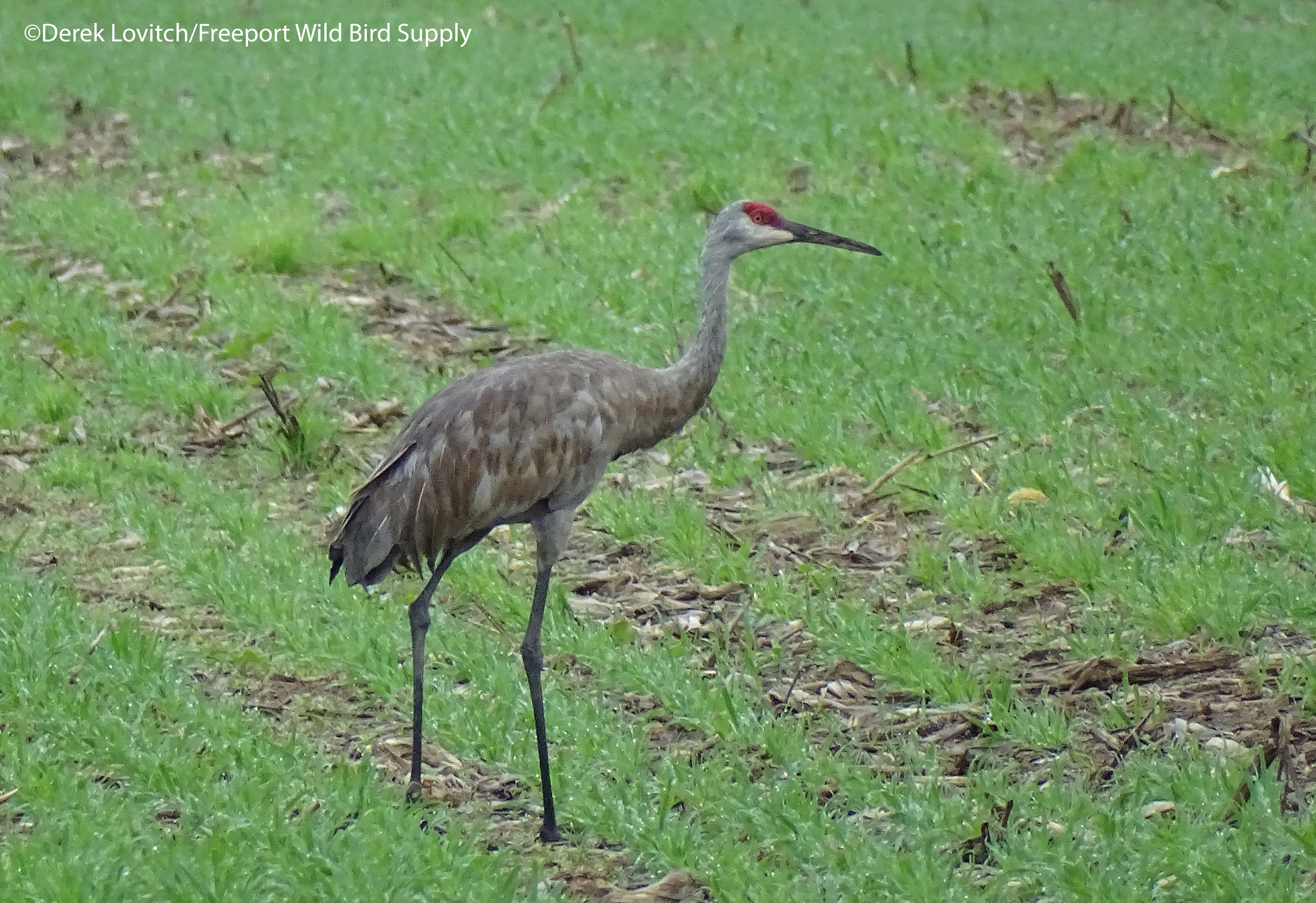
  • 12 adult SANDHILL CRANES, Mayall Road, Gray/New Gloucester, 8/30 (site high count and noteworthy that no juveniles were present – failed breeding season due to high water and flooding?)
  • Sandy Point Morning Flight, 8/31 (FOY):
    • 6:00-9:15am
    • 57F, mostly clear, NE 4.7-7.6 increasing to 7.3-9.8 and gusty.
Unidentified633Scarlet Tanager2
American Redstart439Ruby-throated Hummingbird2
Northern Parula195Black-throated Blue Warbler2
Yellow Warbler51Rose-breasted Grosbeak1
Magnolia Warbler35Eastern Phoebe1
Cape May Warbler20Chestnut-sided Warbler1
Black-and-white Warbler17Merlin 1
Black-throated Green Warbler16Northern Waterthrush1
Red-eyed Vireo11Swainson’s Thrush1
Bay-breasted Warbler10Unidentified vireo1
Tennessee Warbler5Olive-sided Flycatcher1
Nashville Warbler4Common YellowthroatX
Least Flycatcher4
Blackburnian Warbler3TOTAL1,463*
Canada Warbler3*New August High Count!
American Goldfinch3
Red-winged Blackbird3

2023 Monhegan Spring Migration Tour Report

Not surprisingly for the end of May, Blackpoll Warblers were the dominate migrant on Monhegan this weekend. However, we never tired of seeing both males (above) and females (below) so well each and every day.

A point-blank Bay-breasted Warbler. Up close and personal Magnolia Warblers, Northern Parulas, and 9 other species of warblers including more Blackpoll Warblers than we knew what to do with…and we hadn’t even made it up the hill of Dock Road yet!

In other words, our 2023 Spring Monhegan Migration Weekend tour got off to a great start as we really hit the ground running.  Then, a calling Evening Grosbeak. A fly-by Black-billed Cuckoo…more. Hmm… it was time to check in, and happily, shed a few layers.

After lunch, the excellent birding continued, with highlights including a flock of 10 Bay-breasted Warblers, a spiffy male Orchard Oriole, and great looks at a Philadelphia Vireo.  By day’s end, we had 59 species including 13 species of warblers – not bad for a mid-morning arrival!

Yellow Warblers (above) and Common Yellowthroats (below) were common and conspicuous in and around town and other scrubby environs as expected.

It was cool and clear on Saturday morning, and the overnight radar image was a little ambiguous. Did the light westerly wind overnight push birds offshore as they approached from the south, or was that all just pollen and smoke haze in the atmosphere? However, the radar return did suggest birds offshore in the early morning, so we were excited to find out. Afterall, I did not expect yesterday to be so good, and it was excellent.

While only a few warblers were overhead by the time we assembled around the coffee pot at 6:30, it took a while for us to leave the spruces behind the Trailing Yew, as we had a nice pocket of warblers and good early-morning activity. We teased out a Blackburnian Warbler – the only one of the weekend, and the 3 White-winged Crossbills that have been on the island paid us a visit. Later in the morning, we caught up with the stunning male Dickcissel that has been around for a while, and were among the first to see a pair of recently-arrived House Finches (a surprising rarity on the island!). We also found a flock of 10 tardy White-winged Scoters and a total of 6 Surf Scoters that briefly visited Deadman’s Cove.

After lunch, we had the female/immature Summer Tanager, a female Orchard Oriole, found an Olive-sided Flycatcher, and while the afternoon was overall rather quiet, we had lots of great studies of a variety of birds, especially Blackpoll Warblers.

Although far from one of our best birding days on the island, it was noteworthy how well we saw just about everything. Even with a full group, birds were overwhelmingly cooperative, and everyone thoroughly enjoyed the birding…and another beautiful day of weather!

Many of our common warblers were easy to see, photograph, and enjoy throughout the weekend, such as this Northern Parula (above) and Black-and-white Warbler (below).

Saturday night into Sunday morning saw another ambiguous radar image, but the overall small number of new arrivals suggested that most of the return was something other than birds this day.

That being said, we started the day with one of the birds of the trip when I nearly spit out my coffee when I realized that flock of cormorants that looked strange was actually a flock of 9 Glossy Ibis.  They circled the town, looked to be pondering the town marsh, and then soared up high and over Lighthouse Hill. Incredibly rare for the island, these were a new “island bird” for me, and we felt very fortunate that we were one of the only birders (I believe only one other birder saw them at all) on the island that got to see them. The “lingering around the coffee pot at the Yew” strikes again!

As expected, it was relatively slow overall, but even after the excitement of the ibis, we continued to enjoy ourselves. We had great looks at a lot of things all morning, including common warblers like American Redstarts and oodles of Blackpolls.  We had our best looks yet of feeding Red Crossbills – they were all over the island this spring! – spotted a Peregrine Falcon, and continued to marvel at the growing flock of swirling Blue Jays contemplating a trip back to the mainland.

Ring-necked Pheasants kept us entertained as always, however.

After breakfast, we had another good find when a Purple Martin flew over us, and a bigger flock yet of Red Crossbills entertained us for a while. Jeannette arrived and joined the group to help carry my scope and to take photographs for this trip report, as well as help us find more birds.

Juvenile Red Crossbill.

It was warm and fairly slow, so I needed all the help I could get. Regardless, we added species to our trip list here and there in the afternoon, with quality surpassing quantity.  We visited the long-staying 1st year male Blue Grosbeak that has taken up residence at Lobster Cove, where, unlike most Blue Grosbeaks, it has taken to flycatching for seaweed flies in the wrack. Why it is doing this no one knows, but it was a fascinating behavior to watch. Birds and birding on Monhegan never cease to amaze!

The Blue Grosbeak.

A little later, we found an immature Broad-winged Hawk, or again, it found us, as it passed right over us as we poked around the Underhill Trail to find some birds in the shade and in cover.  It was often a struggle to find birds this afternoon, and it was downright hot!  But I heard very few complaints compared to the slow days when it’s 45-degrees, windy, and raining!

We spent a lot of quality time observing birds today, getting to know their behavior and natural history, such as these courting Cedar Waxwings.

While also practicing our field ID skills, such as Eastern Wood-Pewee.

And enjoyed whatever warblers we did encounter, including this male Black-throated Green Warbler.

Monday saw even further reduced activity, with a very summer-like feel to the birding. The migrant flock of Blue Jays built up to at least 46, a Pine Siskin must have just arrived, and some of us even spotted the Virginia Rail!  While passage migrants were few – almost all Blackpoll Warblers – we still had a great day of birding thanks to continued great views of most of what we were finding. There was a Northern Parula nest that a friend found for us to marvel at, and we had quality time once again with a family group of Red Crossbills. Watching them, especially the juveniles, eating buds and cones of Red Spruce at close enough distance to see if they were “righties” or “lefties” was memorable, and more than worth the visit. We had the male Orchard Oriole again, and paid the Blue Grosbeak another lengthy visit.

We took some time to scan the skies over the marsh while also enjoying “Lefty,” the Red-winged Blackbird with white outer primaries on only his left wing. He’s back for the second year.

One of the few birds we missed as a group all weekend was a long-staying but frustrating Snowy Egret that never seemed to stay in the same place long. It was reported at the Ice Pond while we were having breakfast, and Jeannette and I raced down to see it. The “racing” part after the new and ample breakfast buffet at the Trailing Yew may not have been the best decision, however, we got the bird! It was another island bird for me (#226) and I am glad I made the decision to skip the break to chase it, as it was long gone by the time our group arrived at the Ice Pond. I always like to get those chases out of my system before making a bad leadership decision and marching people across the island for a bird that only I cared about!  (Since they are locally common on the mainland, only an island-lister cares about such silliness).

As the afternoon wore on, the group slowly moseyed away from the Blue Grosbeak-evolving-into-a-flycatcher and made our way back to town to catch the last ferries of the weekend, bringing the tour to a close.

A friend found a Northern Parula nest under construction that we took time to marvel at. Here, the female brings some more material in to line the nest, which is nestled in a woven basket inside of large clumps of down-hanging Old Man’s Bear lichen.

However, as usual, Jeannette and I stayed around for another 24 hours to have a day off together and with friends. Leaving the brewery with one friend, I found a male Eastern Bluebird- an odd “new bird” for the date. Where the heck has he been or where did he just come from? Another Monhegan bird mystery…their migration ended a month ago.

Later, as we walked back from dinner with other friends, we heard at least three displaying American Woodcocks. The sunset was quite the stunner, too.

I wasn’t upset to not have a group on Monday, because my goodness, it was slow! I think what was left of the passage migrants cleared out overnight, and little if nothing came in. There were a few Blackpolls here and there, and maybe a few more American Redstarts than usual in the summer, but in and around town, that was about all.

So Jeannette and I decided to take a longer hike and check some oft-productive-but-less-often-birded areas. In doing so, we found a Field Sparrow on Horn Hill, and had a singing Yellow-bellied Flycatcher between Burnt Head and White Head. An adult male Sharp-shinned Hawk was a surprise – was it breeding here? – and a visit into the shaded woods added Winter Wren and Swainson’s Thrush to our weekend list.

We got excited when we saw a gray-backed, white-bellied flycatcher over at Gull Pond, but alas, it had the expected short, not-forked tail that we were hoping for!

Not including the 7 species Jeannette and I saw between 3:00 on Monday and when we departed at 3:15 on Tuesday, the tour list for the 12th annual Monhegan Spring Migration Weekend ended up a goodly 90 total species, despite only 15 species of warblers.  The overall count was better than our last two tours, but still below our long-term average. But I cannot recall four (and five) days of simply gorgeous and warm weather on any of our prior tours!  While the benign weather of late reduced the volume of migrants yet to pass through, and allowed many recent migrants to pass unimpeded overhead, I was pleasantly surprised by the final tally. It was also a high-quality list, with lots of “good” birds not seen by many in Maine away from the island. Oh, and my two island birds were nice, too!

Blue Jays are not the biggest feeder bird on this island!

Even our most common and familiar birds present speciaal photographic opportunities out here!

Species5/265/275/285/29
Mallardx10108
Mallard x American Black Duck1000
Common Eiderxxxx
White-winged Scoter01000
Surf Scoter0600
Ring-necked Pheasantx665
Mourning Dove810810
Black-billed Cuckoo1000
Chimney Swift0010
Ruby-throated Hummingbird6431
Virginia Railh.oh.o11
Semipalmated Sandpiper0010
Greater Yellowlegs0100
Black Guillemot2030x20
Laughing Gull6*216
Herring Gullxxxx
Great Black-backed Gullxxxx
Common Tern1 + 5*000
Northern Gannet0001
Red-throated Loon0100
Common Loon3*100
Double-crested Cormorantxxxx
Great Blue Heron0013
SNOWY EGRET0001**
GLOSSY IBIS0090
Bald Eagle2100
Osprey0322
Red-bellied Woodpecker0010
Merlin2210
Peregrin Falcon0010
Eastern Kingbird0022
Olive-sided Flycatcher0100
Eastern Wood-Pewee2222
“Traill’s” Flycatcher2010
Least Flycatcher2110
Eastern Phoebe1111
Philadelphia Vireo1100
Red-eyed Vireo6844
Blue Jayx484752
American Crowx46x
Common Raven0110
Black-capped Chickadeexxxx
Tree Swallow0222
PURPLE MARTIN0010
Barn Swallow1011
Golden-crowned Kinglet0010
Cedar Waxwing30504030
White-breasted Nuthatch0111
Red-breasted Nuthatch1000
Carolina Wren3 h.o.443
Gray Catbirdxxxx
European Starlingxxxx
American Robinxxxx
HOUSE FINCH0022
Purple Finch0122
WHITE-WINGED CROSSBILL0330
RED CROSSBILL022420
Pine Siskin0001
American Goldfinch12101212
Chipping Sparrow0011-2
White-throated Sparrow2220
Savannah Sparrow3010
Song Sparrow10Xxx
Lincoln’s Sparrow0110
Bobolink1100
ORCHARD ORIOLE1102
Baltimore Oriole1433
Red-winged Blackbirdxxxx
Common Gracklexxxx
Northern Waterthrush0010
Black-and-white Warbler3443
Tennessee Warbler8430
Common Yellowthroatx8xx
American Redstart525168
Cape May Warbler1000
Northern Parula15101212
Magnolia Warbler10868
Bay-breasted Warbler11302
Blackburnian Warbler0100
Yellow Warbler10201515
Chestnut-sided Warbler2111
Blackpoll Warbler25602520
Black-throated Green Warbler1131
Wilson’s Warbler2220
SUMMER TANAGER0100
Scarlet Tanager0100
Northern Cardinalxxxx
Rose-breasted Grosbeak3220
Indigo Bunting0110
BLUE GROSBEAK0011
DICKCISSEL0110
Day Total60666954
Warbler Day Total13131210
Trip Total90
Warbler Trip Total15
Here is the trip list four the four-day tour. * = seen from ferry only. **=not seen with tour group.

This Week’s Highlights, 4/29-5/5, 2023

We enjoyed a great turnout of hawkwatchers and hawks for my hawkwatch workshop at Bradbury Mountain on the 29th as part of the 13th Annual Feathers over Freeport weekend of events.

 In case you were wondering, the meteorological term for this week is “yuck.” However, despite the weather, some birds were pushing through. The storm also pushed a wreck of Red and Red-necked Phalaropes to the coast, and with reports of some very early arrivals and vagrant southern birds, there seems to be a rather widespread displacement/overshoot event caused by this massive and stubborn upper-level low rotating over the great lakes. I didn’t get out very much to help prove or disprove this, but I did have some decent birding this week. While migrants overall made very slow gains, I did have my best morning of spring so far this year…right in our yard!

My observations of note over the past seven days included:

  • 1 Evening Grosbeak, Bowie Hill Road, Durham, 5/1 (with Jeannette).
  • 3 Lesser Scaup, Sabattus Pond, 5/1.
  • 6 species of warblers led by 50+ Yellow-rumped and 5-10 Palm, but also including 3 Pine, 2 Black-and-white (FOY), 1 Black-throated Green (FOY), and 1 Northern Parula (FOY), our property in Durham, 5/2. After corresponding with other local birders, I believe this was a localized, light fall-out caused by an isolated, dense fog bank that was centered around Lewiston-Auburn. Florida Lake Park, only about 9 miles away to the southeast, was nearly devoid of migrants for example (fide N. Gibb).
  • 1 Red Crossbill, Littlefield Woods Preserve, Chebeague Island, 5/4 (with Chebeague & Cumberland Land Trust tour group).
  • 7 Evening Grosbeaks, our feeders in Durham, 5/5.

My other personal FOY’s this week also included:

  • 1 Greater Yellowlegs, Wharton Point, Brunswick, 4/30.
  • 1 Black-bellied Plover, Wharton Point, Brunswick, 4/30.
  • 1 RUSTY BLACKBIRD, our property in Durham, 5/2 through present.
  • 6 Lesser Yellowlegs, Rte 136, Durham, 5/2
  • 1 Least Sandpiper, Rte 136, Durham, 5/2
  • 1 Baltimore Oriole, our feeders in Durham, 5/2 through present.
  • 2 Gray Catbirds, feeders here at the store, 5/3 through present.
  • 1 Rose-breasted Grosbeak, Chebeague Island, 5/4 (with Chebeague & Cumberland Land Trust tour group).
  • 5 Laughing Gulls, Indian Point Preserve, 5/4 (with Chebeague & Cumberland Land Trust tour group).
  • 3 Eastern Towhees, Indian Point Preserve, 5/4 (with Chebeague & Cumberland Land Trust tour group).
  • 1 BLUE-GRAY GNATCATCHER, Indian Point Preserve, 5/4 (with Chebeague & Cumberland Land Trust tour group).
  • 1 Great Egret, Cousin’s River Marsh, Yarmouth/Freeport, 5/4 (yeah, it’s been a while since I have been to Scarborough Marsh!)

TOURS AND EVENTS:

Our next tour with space available (next weekend’s Songbird Workshop with Down East Adventures is sold out) is pair of ½ day tours with the Harpswell Heritage Land Trust.

2023 Down East Adventures Birding Tours.

Freeport Wild Bird Supply is very excited to partner with Down East Magazine’s Down East Adventures for our third year. In 2023, we are expanding our offerings to include two exclusive overnight trips, along with our popular ½- and whole-day targeted workshops.  Focused on skill-builder rather than list-building, there will be plenty of “life birds,” but also more knowledge and education about birds, habitats, birding, and much more about the natural world.

The full list of upcoming tours can be found here.   At the conclusion of each tour, I’ll post the trip report here.

  • Winter Waterbirds Workshop, January 15.

This Purple Sandpiper was about as cooperative as it gets for us at Sohier Park in York.  Later, it was joined by its friends (photo below).  This is really a lovely shorebird when viewed as well and as close as we experienced.

Extremely strong winds and very high seas presented a challenge as we sought out wintering waterbirds along the southern York County Coast. We worked hard to find sheltered water where we could observe birds well, but when we did find that secluded cove, peninsula lee, or rivermouth, we were treated to incredible looks at many of the birds we had hoped for.

We looked down on Red-breasted Mergansers at Perkin’s Cove, and you’ll never be closer to a Common Loon than we were at the Ogunquit Rivermouth. We checked a few more locations than I usually need to on this tour, but our most productive spot was the southern shoreline of Sohier Park at The Nubble. There, we were treated to close views of Black and White-winged Scoters, Harlequin Ducks, and a most-cooperative flock of Purple Sandpipers.  We then ended the day at hidden Abbott’s Pond, where we enjoyed a break for the wind, close comparisons to study details between Mallards, American Black Ducks, and hybrids thereof. 

Meanwhile, a group of 8 or so Black-legged Kittiwakes were feeding off of Short Sands Beach, and a stunning adult Iceland Gull passed by at The Nubble. Unfortunately, the seas were just a little too rough to find any alcids today, but we knew they were out there!

  • Spring Migrant Songbirds Workshop, May 14.

This stunning Blackburnian Warbler nicely demonstrated the value of blooming oak trees for seeing warblers in the middle of May.

Four hours later we had not left Evergreen Cemetery in Portland…a very good sign. There was just no need to move along, the birds kept coming to us. In the end we tallied a respectable 16 species of warblers, even though growing a list was not our goal. What made this workshop successful, however, was how well we saw just about all of the warblers and other songbird migrants throughout the morning.

Warblers were a highlight of course, including repeated quality time with favorites such as American Redstart and Black-and-white Warblers, the two most plentiful migrants this morning. We also enjoyed great looks at several Chestnut-sided Warblers, Magnolia Warblers, and Northern Parulas, with fantastic studies of Black-throated Blue Warbler, Black-throated Green Warbler, Yellow Warbler, and Wilson’s Warbler. We also saw two newly-arrived Tennessee Warblers which aren’t always easy to get looks at. There was a good amount of song this morning, so we had chances to listen and learn many of these species as well.

Shortly after hearing a Red-eyed Vireo and my describing it as “high up and often hard to see,” we found one in the lower branches of a nearby oak, and watched it sing, forage, and do all things vireo for almost 10 minutes!  Likewise, after hearing distant Ovenbirds, we had two walking around right in front of us! Beginning with a view of a Veery on the ground in the open, we saw it again as the walk ended, only a few feet in front of us for another great view and chance to observe and study.

During the morning, we chatted about migration, habitat, and the process of building the necessary toolkit to build birding skills. Finishing the walk with a quick overview of some references (we had too many birds to leave much time for anything more), we recapped a very productive and instructive morning of spring birding.

  • Rangeley Birding Workshop, June 6-8.

Our first overnight tour together, the Rangeley Birding Workshop was based at Bald Mountain Camps in Oquossoc, nestled on the shore of Mooselookmeguntic Lake. Common Loons greeted us, but so did the rain. June of 2023 was one of the rainiest Junes on record in Maine, and we were very thankful for the wood stoves in each cabin!

Our first morning, 6/7, began at Hunter Cove Wildlife Sanctuary, with lots of singing Blackburnian Warblers. A large flock of Red Crossbills flew over, two Yellow-bellied Flycatchers were heard clearly and then glimpsed, and a variety of common warblers were detected. A confiding pair of Canada Jays was the highlight – as they often are – but even the common warblers were tough to see today, so we focused on practicing our birding by ear skills.

Enjoying our delicious boxed lunches at the Rangeley Waterfront Park, with more Common Loons offshore, we delved into an impromptu gull workshop, using each age class of Ring-billed Gull as an introduction to molt, feather topography, and identification. A 3rd-cycle Herring Gull kindly dropped in for comparison as well. In inclement weather, we take advantage of whatever learning opportunities the birds are willing to provide!

After lunch, we poked around the Mingo Spring Birding Loop, with good looks at the likes of Least Flycatcher, Alder Flycatcher, and Dark-eyed Juncos among others. But as rain returned, we called it a day and settled in to dry out in front of our stoves instead of an afternoon of lake-watching from the BMC property.  And dinner was absolutely delicious!

Day 2 began with a brief walk around the BMC property (American Redstart, Ruby-throated Hummingbird, etc) followed by a foray over to the famous birding destination of Boy Scout Road, looking to build on the identification toolkit we worked on the previous day. We parked half the cars at one end and then walked the length of the road, birding along the way. But it was rather quiet here too – the ongoing story of June 2023. We did have some more Red Crossbills, a fantastic view -finally – of a Blackburnian Warbler, several Alder Flycatchers, and once again more Canada Jays. But this time, it was a family group of a pair with 2 juveniles in tow!

And then it began to rain. Again. A lot. But I give this group credit – they soldiered on! Of course the rain began in earnest when we were as far from either set of cars as possible, so there wasn’t really a choice, but still, spirits remained high and the birding continued. A pair of Hooded Mergansers, a singing Palm Warbler, and a Spotted Sandpiper were among the last birds of the outing, before the water had penetrated our clothing and it was time to call it a day and hope for better conditions next year!

  • Shorebirds Workshop, August 10.

The best way to learn shorebirds is to see them in their preferred habitats, feeding, moving, and mixing with other species, such as these Short-billed Dowitchers (a sandpiper) and Semipalmated Plovers here at Hill’s Beach in Biddeford.

An absolutely perfect day of summer weather (finally!) greeted us for this annual favorite outing. And the only thing better than the weather this day was the birding!  Recent insane rainfalls have led to very high water in many of our favored high-tide, upper-marsh locales, so we focused on tidal habitats including beaches and mudflats, altering our usual routine from the start.

Beginning in Biddeford Pool, we introduced shorebirds with several Spotted Sandpipers along Ocean Avenue before jumping into the mixed species flock on Biddeford Pool Beach on the outgoing tide. There we estimated over 1,250 Semipalmated Sandpipers and 200 Semipalmated Plovers as we learned the basics of shorebird (sandpiper vs. plover) identification and began to work our way up to teasing out a couple of White-rumped Sandpipers and Ruddy Turnstones from the masses. 2 Killdeer in flight overhead were our only two of the day.

Kicking off our shoes to spend the rest of the morning on the sandflats of Hill’s Beach, we compared a Piping Plover to the many (400+) Semipalmated Plovers and 30 Black-bellied Plovers. A single juvenile Least Sandpiper was out of place on the beach, but offered a perfect opportunity to closely study the differences in shape, size, and overall structure to the 150 or so Semipalmated Sandpipers that were scattered about. 59 Short-billed Dowitchers gave us the chance to really observe shape and feeding styles, practicing identifying these birds both near and far.

Over at The Pool, a distant “Western” Willet joined 7 “Eastern” Willets, as we advanced into subspecific identification just briefly before stopping for lunch as the tide began to roll in.

The afternoon was spent at Scarborough Marsh, where our first two stops offered little (other than a calling Greater Yellowlegs to at least practice our shorebirding by ear) due to the very high water in the salt pannes from the recent rains. Pine Point more than made up for it on the rapidly incoming tide, however, with one heck of a shorebird show: 1500-2000 Semipalmated Sandpipers, 400-500 Semipalmated Plovers, a few more Short-billed Dowitchers and White-rumped Sandpipers, better looks at “Eastern” Willets, and the icing on the cake: a cooperative Whimbrel – our 13th species of shorebird for the day.

Practicing with our identification tool kit, we tested ourselves on finding the uncommon species among the masses, and took a moment or three to simply sit back and enjoy the show. Now that we know how approachable shorebird identification really is, we can more fully appreciate these most marvelous migrants!

  • Monhegan Birding Workshop, September 23-25.

Northern Gannets and two Green-winged Teal flying with 6 Surf Scoters from the ferry and an adult Lesser Black-backed Gull greeting us upon our arrival seemed like a great sign for what would be a bird- and fun-filled weekend on the Migration Mecca of Monhegan.

Unfortunately, it turned out to be one of the slowest (for both species and diversity) fall weekends I have ever experienced on the island. That being said, a big list wasn’t our goal. It was to learn birds – their ID, their migration ecology, and everything else that makes the island so special for birds and birders. And this is not tour guide spin: a slower day is better for that as we had ample opportunity to view almost everything we encountered, study them, discuss them, and luckily, what the island failed to provide in quantity, it certainly delivered in quality of observations.

On each day, we would find pockets of warblers here and there, but we kept coming back to  one particular willow and a nearby thicket that constantly hosted 4-5 Cape May Warblers (photo above), 4 Yellow Warblers, a Yellow-bellied Sapsucker, and a smattering of others. The Cape Mays put on a clinic: all four plumages from pale, 1st-fall female, to bright and spiffy adult male were on display.

Over the first day and a half, we took what the island offered, besides exceedingly pleasant weather! There was the hen Green-winged Teal feeding within three feet of us, fly-over Rusty Blackbirds in the morning, and Great Cormorants on the cliffs on an afternoon short hike to name a few highlights. The skies were punctuated by the occasional migrant Peregrine Falcon and the constantly-hunting Merlins.

Granted, we were really just looking at birds to fill the time between the incredible meals at the Monhegan House!

On our final morning, a good migration overnight produced a new arrival of birds for the “morning flight;” the concepts and nuances thereof were topics of regular discussion.

The group’s high spirits earned them a great morning, with a taste of what Monhegan birding has to offer. There were American Pipits and Yellow-rumped Warblers in Morning Flight, a flock of 10 truant Bobolinks circling around, an immature male Belted Kingfisher displaying to a very-uninterested female, more Cape May Warblers, and a surprising fly-by Wilson’s Snipe.

At one point we had four juvenile Sharp-shinned Hawks dogfighting, exemplifying the difference in sizes of male vs female raptors. And the workshopping continued with Great and Double-crested Cormorants side-by-side, migrant raptors including several Northern Harriers, and more species before breakfast than we had most of the previous weekend! Speaking of breakfasts, goodness, they were good as well.

We finished up with a gull workshop on the shoreline, opening eyes to just how easy most gulls are most of the time. The advanced course was the fly-by 1st winter Lesser Black-backed Gull amongst Herring Gulls on the ferry ride back! And yes, we looked at butterflies, too!

The first of the 2024 Down East Adventures tours are already booking, with more to be announced soon. And since these Down East Tours fill up fast, don’t forget we offer a wide range of other tours, as well as private guiding services.