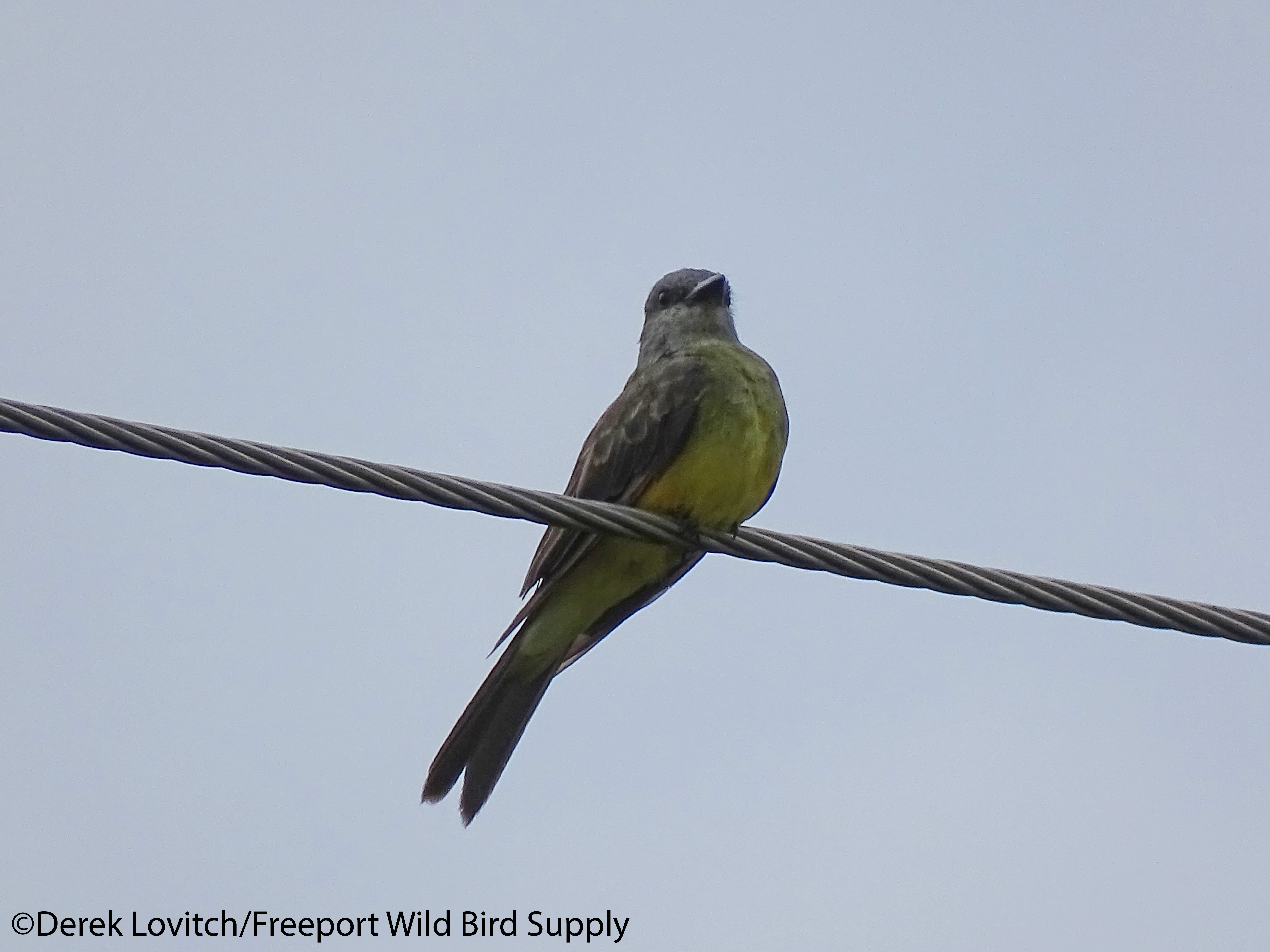
This Tropical Kingbird, a long-overdue third state record, was discovered at the Skelton Dam Boat Launch in Dayton. Many of us saw it on the morning of 7/18, but it may have been present for nearly three weeks before being identified!
It’s been a busy 12 days, with a weekend in Quebec City and summertime human visitors. Of course, the last day in Quebec City was when the Ferruginous Hawk was 20 minutes from our home. Oh well…brunch was absolutely fantastic. Sadly, life and work minimized my birding during this period, despite a suite of rarities now appearing around the Northeast. Luckily, I did have a couple of good mornings in the field before we head out on our summer vacation, including hours of quality time with a Tropical Kingbird in Dayton that was happily identified while I was around and somehow free of responsibilities for the morning! I wonder what will show up while we are gone this time!?
Both Yellow-billed and Black-billed Cuckoos have been calling on our Durham property all week.
2-3 Grasshopper Sparrows, Auburn-Lewiston Municipal Airport, Auburn, 7/15 (with Doug Hitchcox et all).
1 continuing TROPICAL KINGBIRD, Skelton Dam Boat Launch, Dayton, 7/18 (with m’obs). Third state record, first chase-able. Long overdue state bird for me! After years of expecting, predicting, and looking for one, in my frustration, I pulled it off my “Next 25 Predictions List” and so I don’t get any credit for this one. I still enjoyed it though. Photo above, and video here: https://www.facebook.com/share/v/4qyGf1VSmw1wpSon/
The salt pannes along the Eastern Road Trail in Scarborough Marsh are exceptional right now due to low water levels. On the morning of the 19th, a few of the tallies included 125+ Snowy and 50+ Great Egrets; 50+ Glossy Ibis; and 20+ Great Blue Herons. Shorebird numbers included a nice number of Least and Semipalmated Sandpipers; 50+ Greater and 30+ Lesser Yellowlegs; 16 Short-billed Dowitchers; and 2 Pectoral Sandpipers (FOF). Of course the highlight for me, however, was “Patches Jr, Jr” – the proposed HYBRID TRICOLORED HERON x SMALL WHITE EGRET(S) SPP back for another year. In fact, it’s already year 12 of this complex here. Unfortunately, it was too far for photos today. For more information, see: North American Birds, Volume 72: No 2, pp 28-40.
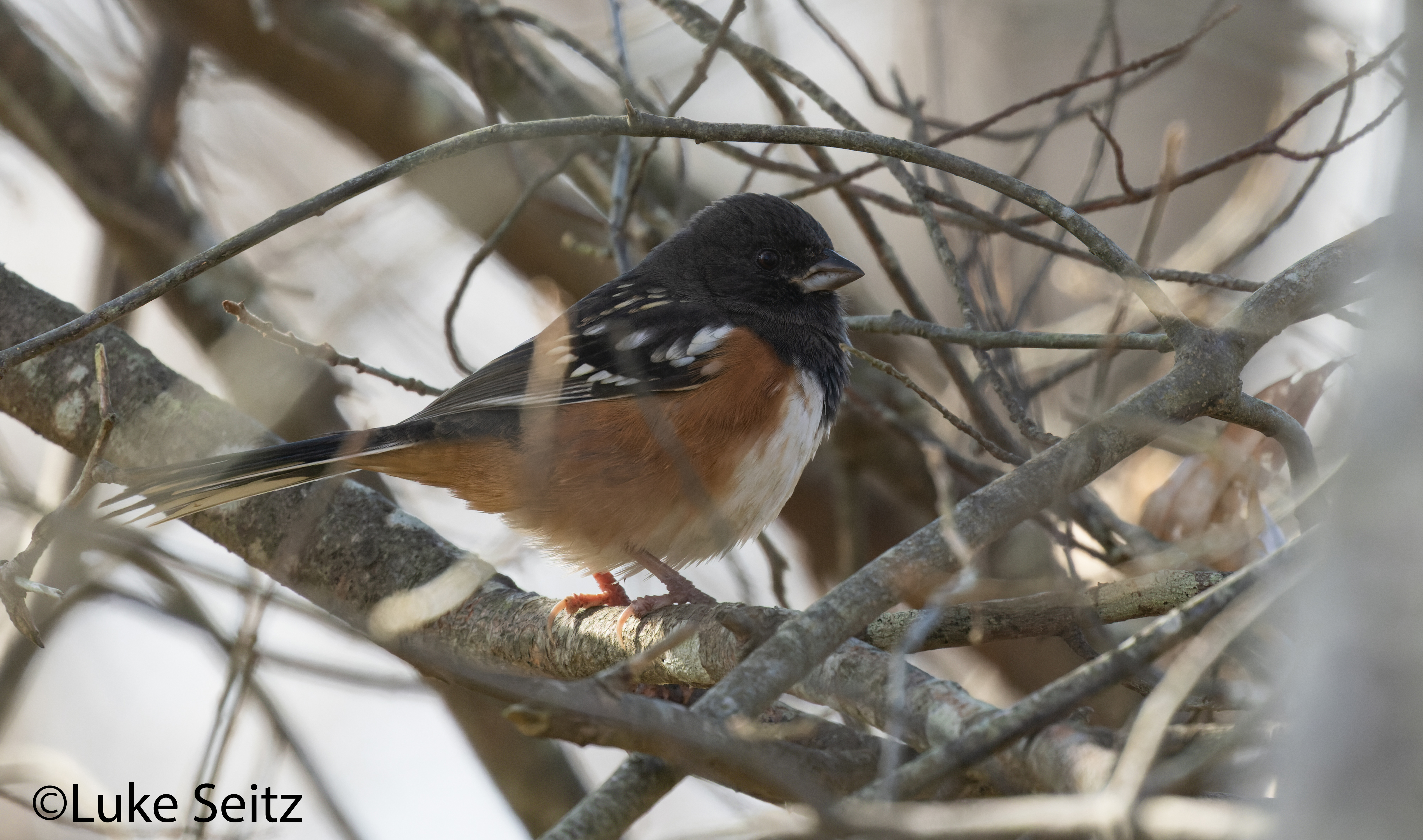
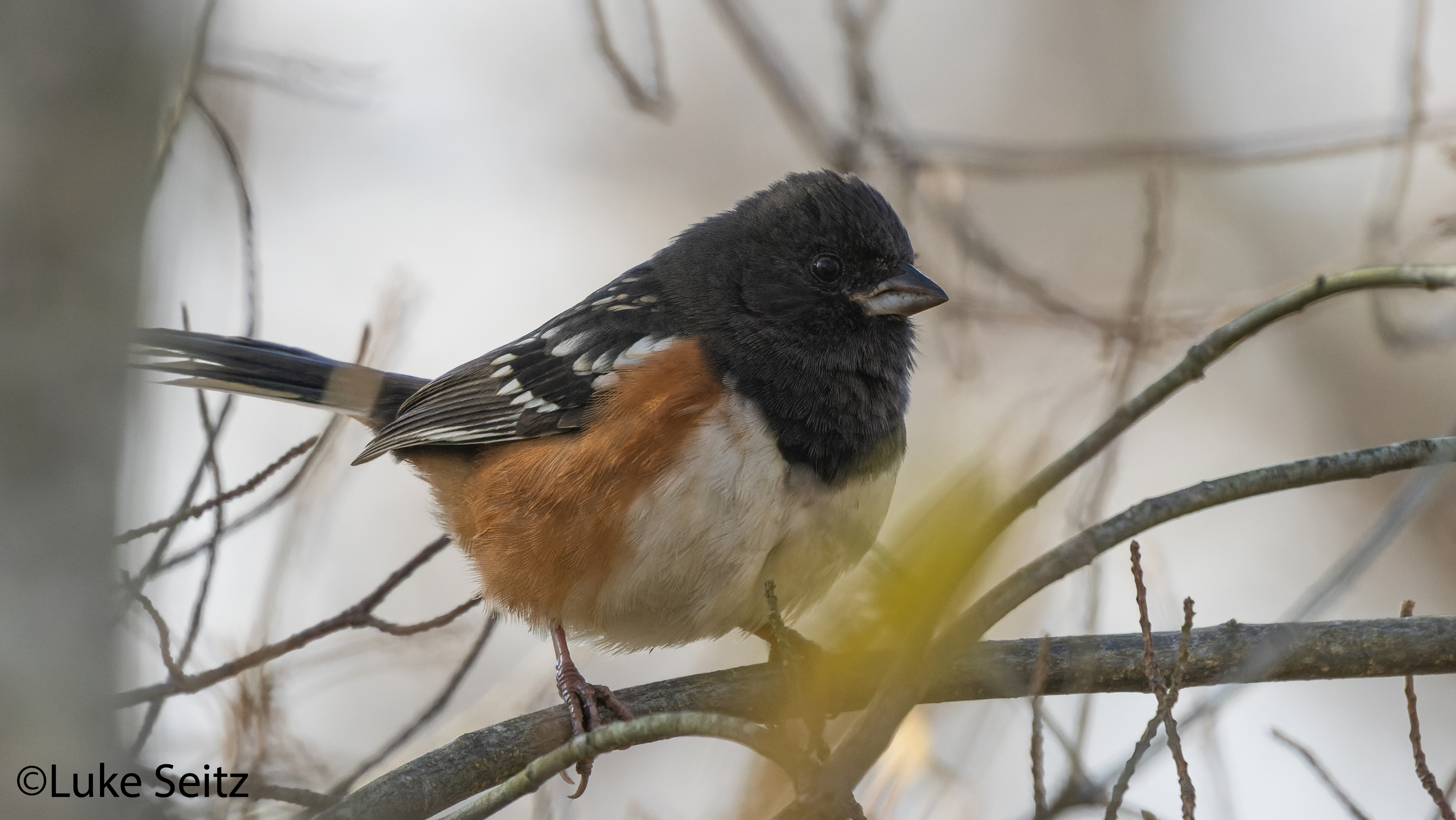
The only thing sweeter than seeing a first state record is when you find it yourself! This Spotted Towhee that I found in November at Fort Foster in Kittery was #4 on my list of next birds for Maine.
It’s once again time for my annual Predictions Blog, where I view into my crystal binoculars and attempt to forecast some of the “new” birds to grace the State of Maine – and then my own personal state list – in the coming year.
It was another great year for “mega” rarities in Maine. Whether it’s more birders and better communication, a climate in crisis, neonicotinoid pesticides effecting navigation, and more – or likely, all of the above – more really strange birds are ending up in really strange places – Maine definitely included. Four new species showed up in Maine in 2023, plus a first state record whose photos surfaced from 2022. I also had another pretty good year, despite much reduced birding as I recovered from shoulder surgery and a series of setbacks thereafter coupled with a record-busy year for tours and private guiding.
Last winter, recovering from shoulder surgery, I spent a lot of time watching our feeding station, quantifying those ebbs and flows, and paying a lot of attention to behavior. From dominance hierarchies in junco flocks to a case of Sharp-shinned Hawk cannibalism, dedicated feeder-watching (in a house designed to maximize it!) was a great way to pass the time stuck indoors. I recounted many of my observations in blogs earlier this year, especially these two:
Once up and about, I found myself forgoing birding mornings afield – especially in the fall – to just enjoy migration through our property in Durham and build our rapidly expanding yard list. Having moved in last fall, it was exciting to see the seasons change. Fall migration was particularly productive, and I found myself not wanting to bird anywhere else before work. Some great yardbirds over the year included a Snow Goose on 3/27, three different Mourning Warblers (one each in May, June, and September), an American Bittern for the day on 8/28, and a Dickcissel on 9/1. The yard was already approaching 150 species by year’s end.
Furthermore, I put more effort than ever into birding Androscoggin County in general, and while I didn’t find any rarities in the county this year, I did spend lots of quality time at Sabattus Pond and in search of patches for future birding focus – I didn’t find any of those, either, but I did get to know my new home county a lot better. In other words, when I did get out birding this year, I put a lot more focus on staying close to home – this less carbon-intensive mode of birding is what I believe the future of birding is (eg the “5 Mile Radius” list, which is all the birds seen within a five mile radius of one’s home) anyway, and I plan on keeping this focus for 2024.
But back to the rarities. Let us start as usual with a look at last year’s prognostications and see how I did.
Of the five new species for Maine, three were in my Top 12. I found Maine’s first confirmed Spotted Towhee at Fort Foster in Kittery on November 19th (and continued obligingly through the end of the year). This long-overdue addition to the state’s list was #4 on my predictions list.
Right behind it at #5 was the Hammond’s Flycatcher found on Monhegan in October. I’ve felt flycatchers were going under-detected in Maine for a while, and therefore they have been prevalent on my predictions lists. Then, a photograph from Mount Desert Rock from August of 2022 was reanalyzed and showed a Western Flycatcher (as it is once again rightly called, with Pacific-sloped and Cordilleran finally “lumped” back together), which was #12 on my list.
That strange date for a vagrant flycatcher is rather remarkable, as was the other addition to the list from the MDI region when a Red-footed Booby was photographed in Lamoine in July of this year. This tropical sulid didn’t even make my honorable mention list.
And finally, just before the clock was about to strike twelve, a remarkable Hepatic Tanager was found in Stockton Springs! While it was on my radar due to several well out of range records, it did not qualify for my Honorable Mentions list. It was the icing on the cake to another exceptional year of birding in Maine.
With three birds from the 2023 List off the board, I’ll do some reshuffling. A possible Gray Heron was photographed in Scarborough Marsh on the Portland CBC in December, but the photos – although very suggestive – were inconclusive. A search the next day didn’t turn anything up, but I hope others remain on the lookout. Nonetheless, it was suggestive enough to bump Gray Heron up from my Honorable Mention list into the Top 25, that is for sure. Lewis’s Woodpecker, Dusky Flycatcher, and White Wagtail are making their debut in the rankings while I’ve dropped Black-tailed Gull out of the Top 25 as North American records seem to have dried up.
As we found out when we saw this Gray Heron while vacationing on Prince Edward Island in 2022, they are not always easy to pick out of a crowd, as we looked through a lot of Great Blue Herons during our search for this long-staying individual. Hopefully, our view in Maine will be a little better, like this one Jeannette photographed in Norway.
Neotropical Cormorant
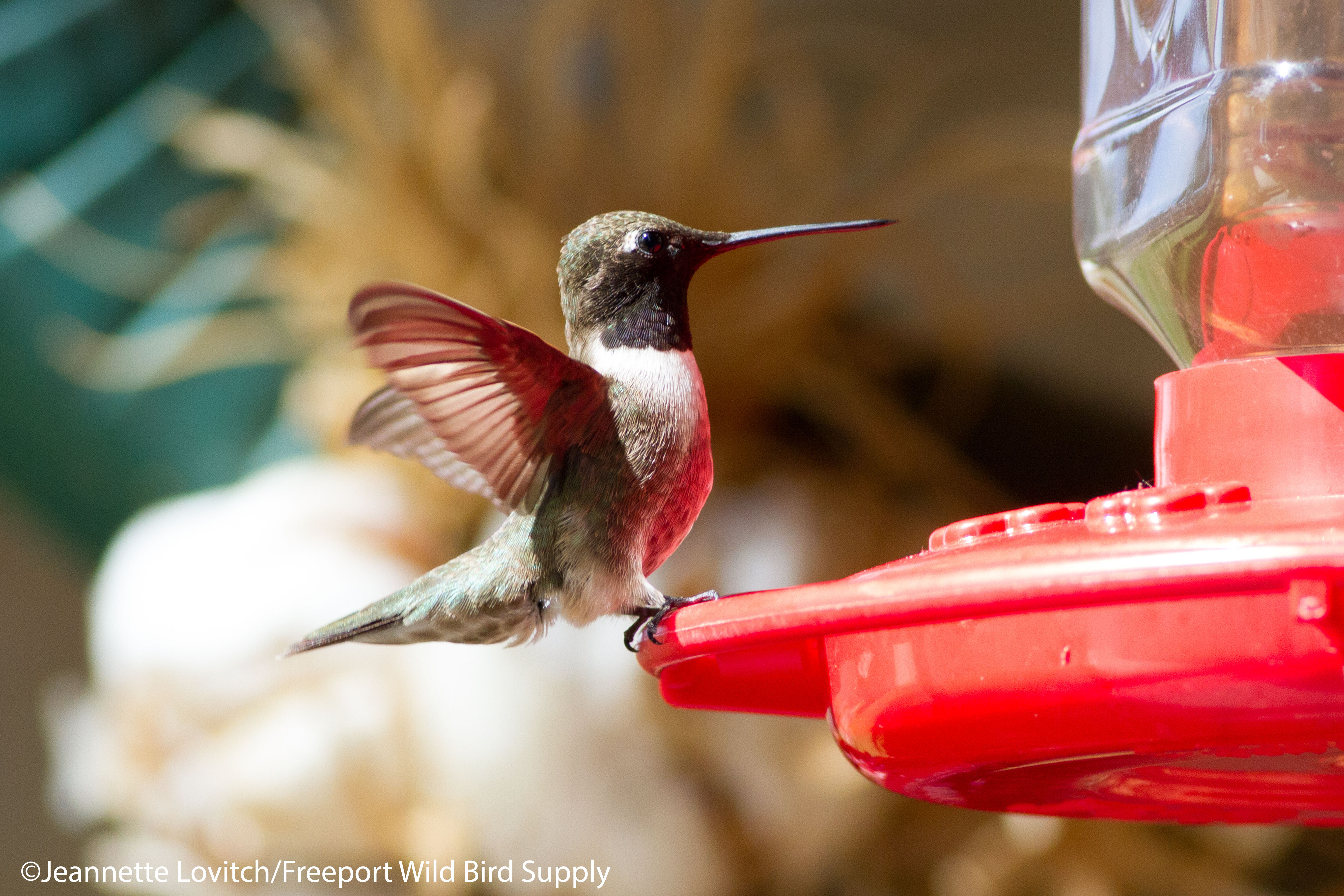
Black-chinned Hummingbird
California Gull
Limpkin
Gray Heron
Bermuda Petrel
Graylag Goose
Little Stint
Audubon’s Shearwater
Common Shelduck
Anna’s Hummingbird
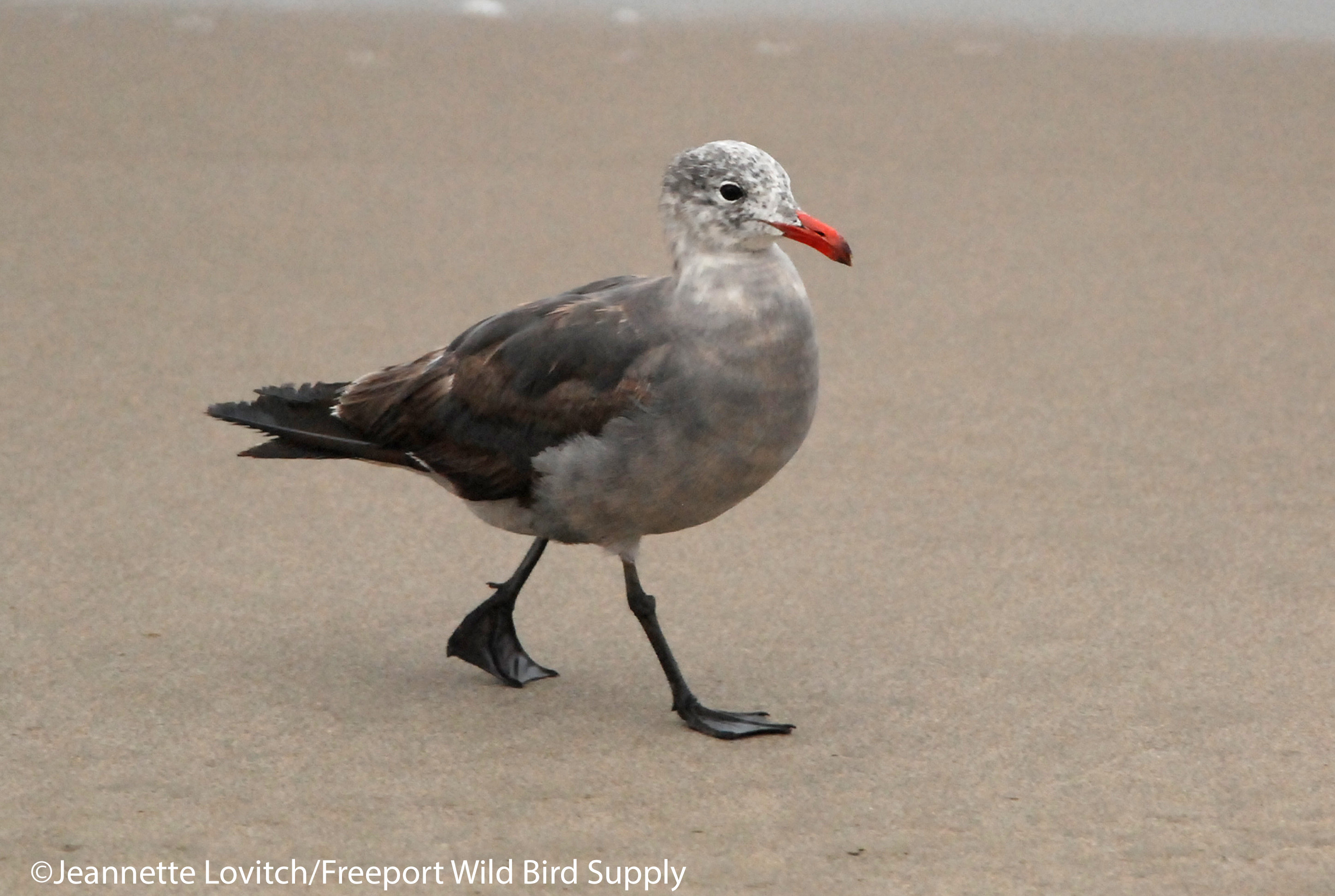
Heerman’s Gull
Common Ground-Dove
Allen’s Hummingbird
Spotted Redshank
Lewis’s Woodpecker
Ross’s Gull
Black-capped Petrel
Lesser Nighthawk
Elegant Tern
Dusky Flycatcher
Painted Redstart
Hooded Oriole
White Wagtail
Common Scoter
Personally, I added 5 new species to my own Maine State List this year, despite relatively limited birding and a less concentration on rarities in general. Three days after my shoulder surgery, however, Jeannette loaded me into the car and took me down to Timber Point in Biddeford for a Common Ringed-Plover, which was #10 on my predictions list. Can’t say it was my most comfortable twitch, however. Medication helped.
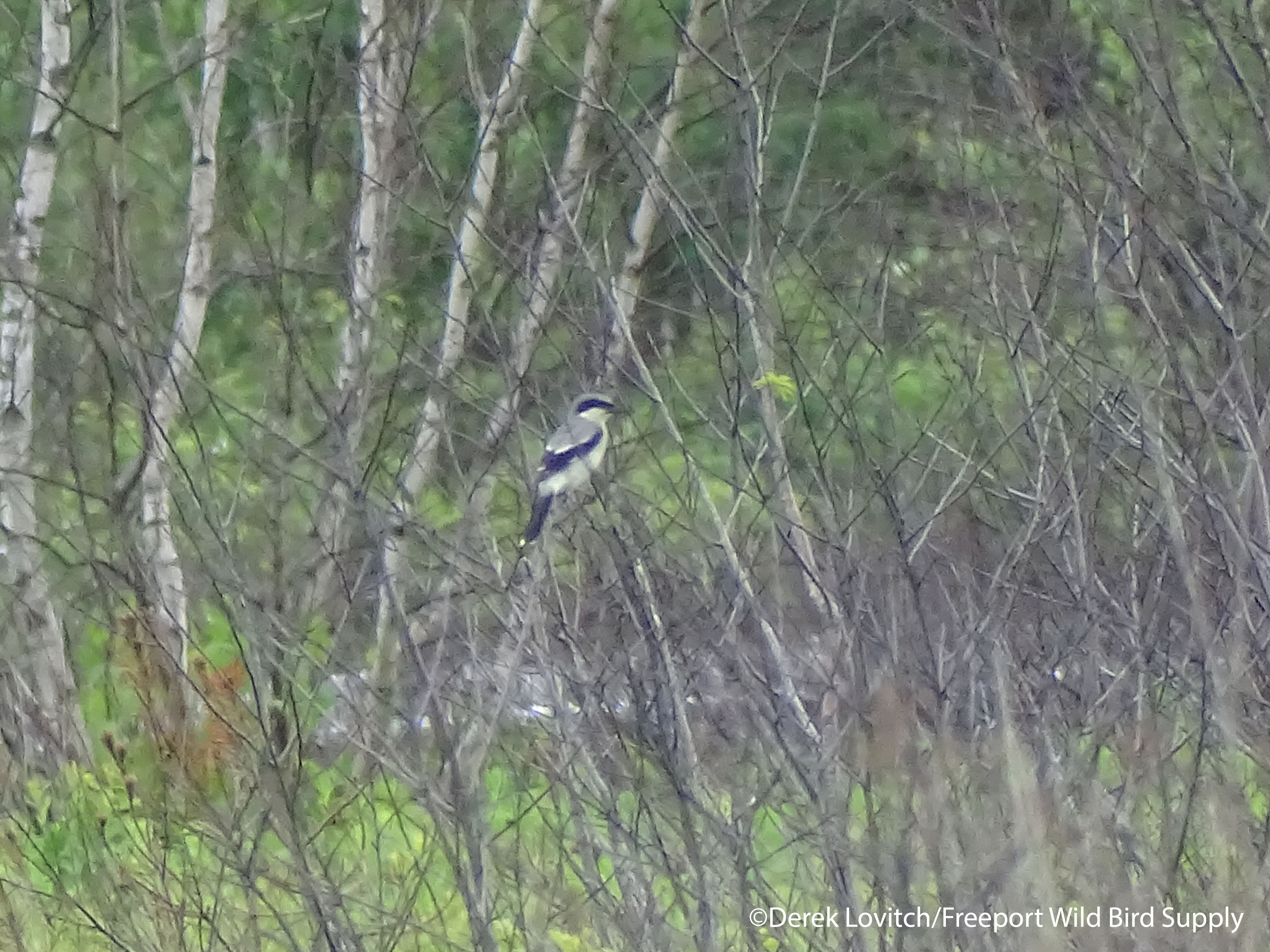
In June, I raced down with Jess Costa between tours to see the Loggerhead Shrike at the Kennebunk Plains, which was my 399th species in Maine (recently relegated to my honorable mentions lists as they have become increasingly rare anywhere out of their contracting range).
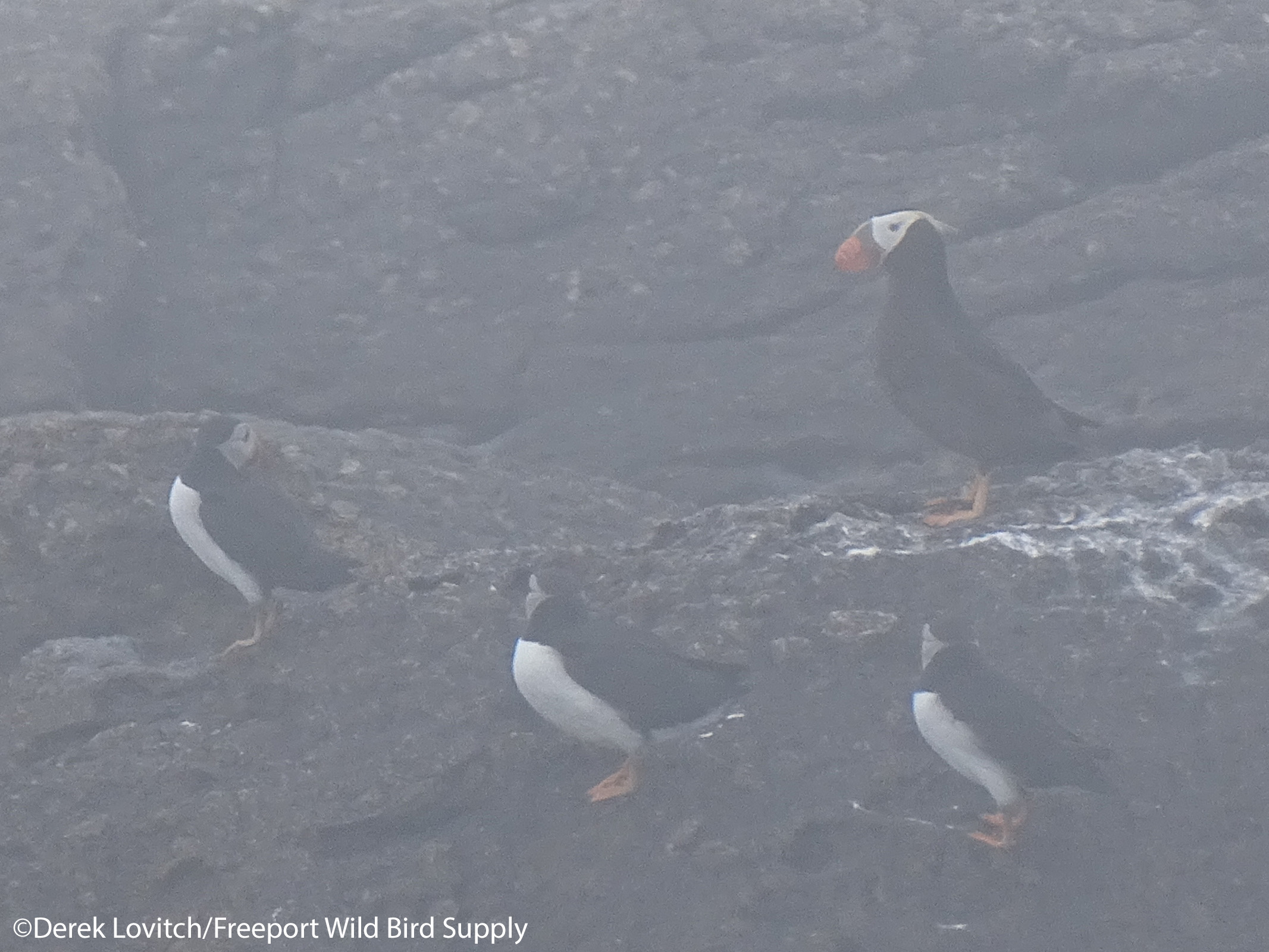
So for #400, I said it had to be “the Tufted Puffin or self-found” – I wasn’t going to chase anything else. With several sporadic sightings in June and July, and with numerous boat tours scheduled in July, I had high hopes. With an observation at Eastern Egg Rock on July 9th, and with a tour there scheduled the next afternoon with our partners Cap’n Fish’s Cruises, I was getting excited. And to hedge the bet, I hopped aboard their morning Eastern Egg Rock trip, and as we approached the island in the fog, a large, dark, puffin stood towering over the local residents! “TUFTED PUFFIN!!!” I exclaimed. No microphone was necessary. And this was #400.
With so few sightings – all being one-minute wonders – in the previous years, I hadn’t elevated this to my personal Top 25, but that’s OK – it was just as sweet.
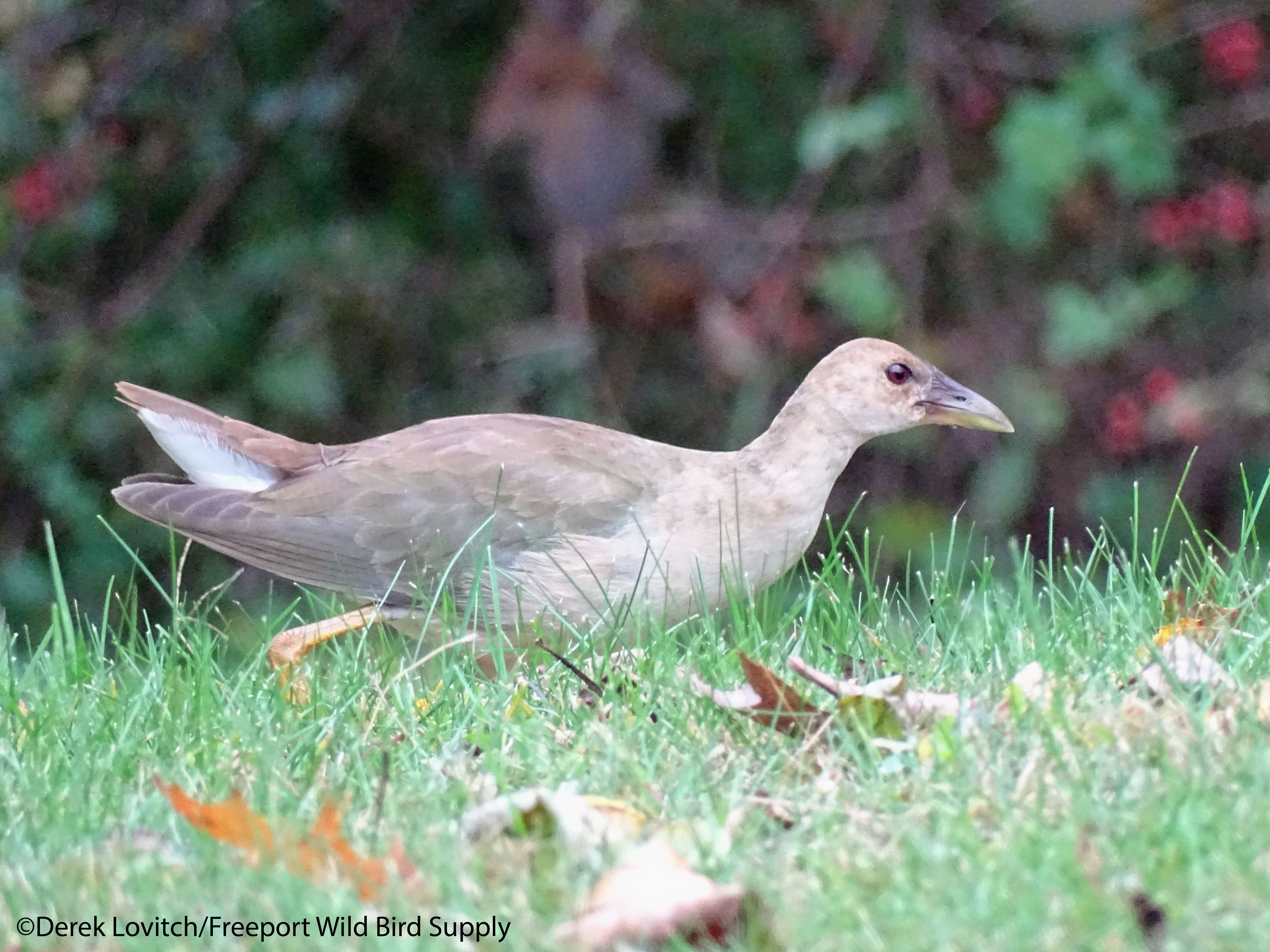
A Purple Gallinule (honorable mention) in the North Maine Woods near Moosehead Lake in October was beyond my chasing range, but when another – or perhaps, the same bird – appeared at a small park in Kennebunk, I was on my way!
The absurdity of the locale and ease of viewing simply forced me to go back for another look a week later with Dan Nickerson…after dipping on a nearby Western Wood-Pewee as Luke Seitz struck again. Making that miss worse was the reason I didn’t chase it on its day of discovery: we were on lockdown during the manhunt after the tragic Lewiston mass shooting. My state list was just not a priority I will readily admit.
Of course, the aforementioned Spotted Towhee, which was #15 on my list was a welcome self-found addition.
And finally, Evan Obercian and I paid a visit to the Hepatic Tanager in Stockton Springs on New Year’s Eve, bringing 2023 to a close.
Of course, I missed a few rarities this year, too! Although I only “dipped” on one chase (the pewee), I was simply unavailable to chase anything else, such as the Kirtland’s Warbler (unlisted) on Seal Island in September (can’t get there from here!). And I just didn’t have the time to chase Hammond’s Flycatcher (#14) on Monhegan. Meanwhile, the Red-footed Booby (unlisted) was a one-day wonder, and of course I missed a couple of Franklin’s Gulls (#2) as usual. Notorious one-day wonders, there was one on September 24th passing Schoodic Point, and one on November 18th at Long Sands Beach. I was going to “end up” at Long Sands the next day at the same time and tide, but my birding outing began and ended with my towhee find at Fort Foster. This rare but regular transient is officially my nemesis in the state!
But the one that really stings was missing out on Crested Caracara once again. I was birding with clients in Spurwink Marsh in late May when a friend texted me that he had one (the one?) flying over his house…we were no more than 2-3 miles away! Thankfully, my clients were game for a little searching, so we spent some time looking before having to move on. The caracara then resurfaced a couple of other times in the Mid-Coast, near Belfast, but I was on Monhegan or with a tour group elsewhere. So close!
Last year, I also predicted that my #400 would come from my Top 25 list. But Tufted Puffin wasn’t on it, so I was wrong about that. Forgive me if I wasn’t upset, however.
I did some reshuffling (it’s just a matter of time before I finally find or catch up with a Franklin’s Gull, right? RIGHT!?), and therefore my forecast for my next 25 species on my personal Maine list reads as follows:
Franklin’s Gull
American White Pelican
Neotropic Cormorant
Brown Pelican
California Gull
Brown Booby
Crested Caracara
Slaty-backed Gull
Boreal Owl
Calliope Hummingbird
Graylag Goose
Cerulean Warbler
Gull-billed Tern
Pacific Golden-Plover
Limpkin
Wood Stork
Black-chinned Hummingbird
Brewer’s Blackbird
Yellow Rail
Virginia’s Warbler
Western Wood-Pewee
Virginia’s Warbler
Gray Heron
Common Gull
Heerman’s Gull
It’s about time for me to finally see a Franklin’s Gull in Maine.
But really, who knows what might show up these days? For example, I am sure that no one had Red-flanked Bluetail on their Next Birds in New Jersey list, but one showed up in a random inland neighborhood in early December. It continued through year’s end, and it was awfully nice of it to remain at least through December 26th, when we just happened to be in the area for Christmas. In fact, it was only 24 minutes away from my Mom’s house. A bonus Christmas gift!
Bring it on, 2024. But less injuries and other birding-limiting events, please. I also have a goal of finding a rarity in Androscoggin County away from Sabattus Pond or our property! Will it be on this list?
On Sunday, November 19th, 2023, I found Maine’s first confirmed Spotted Towhee at Fort Foster Park in Kittery. Fort Foster is one of my favorite birding locations, especially in fall “rarity season.” I’ve been lamenting the complete dearth of vagrants found in Maine during the month of November so far, and so I set out for the southern York County coast that morning in hopes of changing that.
It didn’t take long.
A little more than an hour after I arrived at the park, slowly birding the warm, sunny edges of a chilly morning, I encountered a pocket of activity as I was turning off the main coastal trail and up the slight hill towards the Small Pier Pavilion. A tardy “WESTERN” PALM WARBLER that I encountered earlier had flown this way with a Yellow-rumped Warbler, and these two birds were at the edge along with several resident species including Black-capped Chickadees and Northern Cardinals as well as migrants including Golden-crowned Kinglets and White-throated Sparrows.
As I approached the top of the rise, I noticed a towhee sitting in the sun at the edge of one of two fairly large Eastern Red Cedars. Since I had my camera at the ready since it’s rarity season afterall, I immediately grabbed it. Although I was assuming it was just a late Eastern Towhee (not unreasonably rare in a mild fall even at this date), it was a nice photo – towhees don’t sit still in the sun often enough! The bird was facing directly at me, so all I could see was its black hood, rufous sides, and white belly.
As I focused through my viewfinder, the bird shifted slightly, showing just enough of its side to reveal large white spots on it’s wing! A vagrant Spotted Towhee! Incredible!
And to think I almost blew this…if I didn’t go for my camera for “just” a nice shot of an Eastern Towhee, perhaps I wouldn’t have looked at it long enough to see its diagnostic wings and back. That was a close one! (That one twig right across the face though!)
Knowing that hybrids between the two towhees (formerly known collectively as “Rufous-sided Towhee”) have occurred out of range, I knew I needed some better views and more photos. Over about 10 minutes, I observed and photographed the bird in the cedars, having it drop down once into the brush only to return to the cedar, perhaps as a result of some gentle pishing.
During this second photo session, a Cooper’s Hawk flew overhead, and all of the activity in this pocket dove for cover and remained silent (9:28am). As birds slowly returned to the edge, the towhee did not. A late Hermit Thrush that was also in the cedars reappeared, but the towhee did not.
As I waited, I sent out some text messages and checked my photos. Within about 45 minutes, Maili Waters and Luke Seitz arrived, and we began a thorough search, slowly increasing our search radius. It took until about 12:15 before Maili and Luke finally relocated the towhee on the other side of the very large and dense thicket. Luke’s excellent photos showed a more complete view of the wing and back, crucial field marks for confirming the bird’s identity.
I was on the other side of the park, searching for the towhee and whatever else might have been present, turning up a very late PRAIRIE WARBLER, a Gray Catbird, and a Ruby-crowned Kinglet – all good birds for the date. It took me a while to get to where Luke and Maili were, and we were soon joined by Doug Hitchcox and Matthew Gilbert.
We waited for about 30 minutes before the need for water and lunch finally got the best of me, and I headed out. I was halfway to Kittery Center when Noah Gibb spotted the bird once again at the original location. It was here, in the two cedars, that numerous observers were able to see the bird early in the morning the next day as well.
Returning home and in discussion with Luke, Maili, and Evan Obercian, we confidently ruled out any suggestion of a hybrid. The amount of white in the primaries had us a little wary, for example, but the National Geographic Guide to the Birds of North America nicely shows the regional variation with Spotted Towhees, including the more extensive white “slash” on the primaries of the Great Plains subspecies – the expected source of vagrants to the East.
Big white spots on each scapular, two complete wingbars (one bold on the greater coverts and one more subtle bar on the median coverts), the spotted-streaked back mantle, and the extensively white undertail are all consistent with a phenotypically pure Spotted Towhee – Maine’s first, and a long-overdue addition to our state’s list. In fact, this was #4 on my “Next Birds for Maine” predictions list. But as always, it’s always better find than to chase!
As Jeannette and I boarded our plane at the Portland Jetport on Thursday the 14th, I had a sinking feeling of future regret. While I was very much looking forward to attending my cousin’s wedding, seeing family, and spending some time in Philadelphia, I could not help but wonder if I was about to miss the birding event of a lifetime in Maine.
While concern about lives, property, and environmental damage of course reign supreme, birders can repress that as the “rarity fever” symptoms surge and dreams of vagrants and storm-tossed seabirds dance in our minds. As with any storm, safety comes first, but as soon as it’s reasonably safe to venture outside, birders hit the ground. Birders along the Gulf Coast and Florida are used to gearing up for this. We here in New England are not.
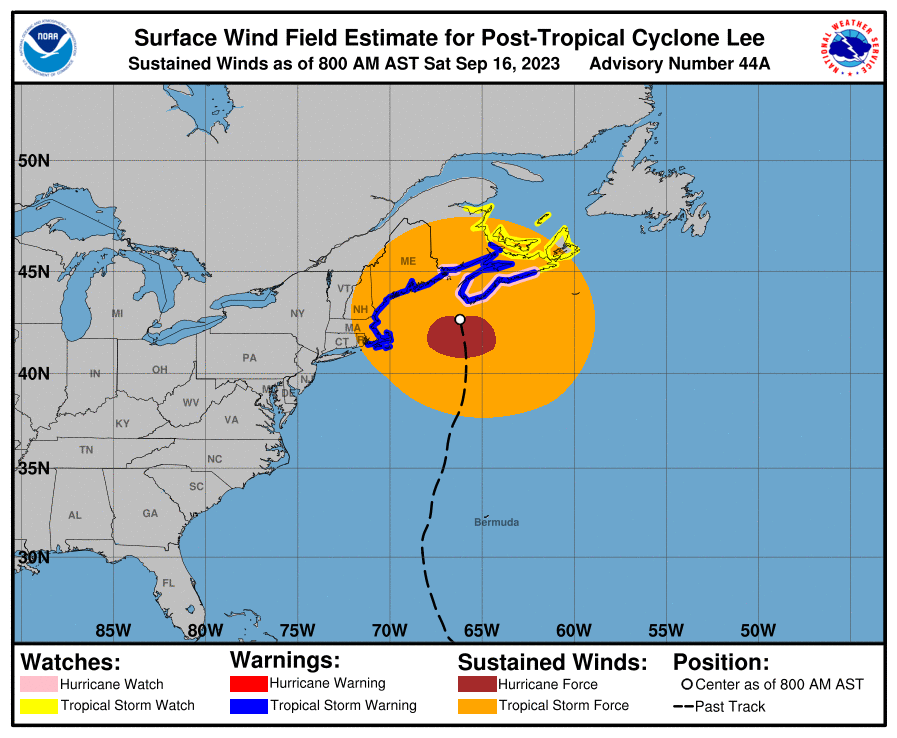
Hurricanes are rare this far north – at least for now – and few have been as big as Hurricane Lee. Lee was barreling straight for Downeast Maine as of Thursday morning, with a possible direct hit on Washington County or the Bay of Fundy. Had I not had family obligations (family first! Although, yes, I did wonder for a second if I should claim COVID and run out of the airport) I would have been heading to Lubec this weekend without a doubt. I’ve never done a bonafide storm (bird) chase, and this would be the chance.
While an upper-level trough could still push Lee well to our east, it seemed clear we would be seeing some impacts here in Maine regardless. Be that a strong northeasterly wind producing exceptional -but perhaps rarity-free seawatching – or first state records from a direct hit (White-faced Storm-Petrel anyone?), I would have liked to be in position to find out.
Instead, I’ll watch from afar as events unfold, and hope either 1) I have less regrets, or 2) a vagrant or two stick around until Tuesday!
Several friends and I had been discussing the possible rarity potential of Hurricane Lee, and Luke Seitz immediately pointed out the similarity to the track of Hurricane Fiona that slammed into eastern Nova Scotia in September of 2023.
But there are two particularly epic eBird checklists, here and here, that captured the moment.
Was this about to happen in Maine? Would I be missing it? Arrgh!
While birding at the John Heinz National Wildlife Refuge on the outskirts of Philly on Friday morning helped take my mind off of it, my thoughts were often wandering to my friends Downeast. First and foremost was their safety and well-being. A distant second, however, was the birding. By Saturday morning, when we took a walk around Independence National Historic Park, I waited for my phone to blow up.
And then…crickets.
Before making landfall, Hurricane Lee had transitioned to a post-tropical cyclone over the Gulf of Maine. It also had shifted slightly east – making a direct hit on Nova Scotia now seem more likely. The storm was now absolutely massive in size, with tropical storm-force winds from New Hampshire to Cape Breton. A little wobble in the stormtrack in the late morning shifted the center of the storm into the Bay of Fundy, skimming Nova Scotia’s southwest coast.
But I heard nothing from back home, so I just couldn’t take it anymore and began checking in via text messages. Chris Barlett was stationed on the seawall at Eastport, where he spent “5 hours watching the ocean…during the worst weather on Saturday in hopes of seeing just one rare bird. Torrential rain and 60mph gusts rocked my vehicle. Dozens of Bonaparte’s gulls and up to 20 common terns flew against the wind and fed in the waves beside my truck, but no rarities joined the fray. We lost power at home for about 12 hours. “
Luke and cohorts were heading east into New Brunswick. Evan Obercian was out checking for grounded shorebirds in the Mid-Coast. Nova Scotia birders were repositioning. I decided to drown my expected sorrows in cheese whiz.
With a strong northeasterly wind, seawatching along Maine’s southern coast was about average for the conditions. No rarities; just a few more pelagic species closer to shore than normal – although all within the expected birds for a good onshore blow. And while there were a few more shorebird reports inland than average, nothing was suggestive of a major grounding.
By Saturday afternoon, with the storm making its landfall Nova Scotia (officially on Long Island), a few reports started to make it in – but nothing of even a remotely tropical nature in Maine. In southern Maine and the mid-coast, winds were already whipping out of the northwest, ushering any seabirds further from shore. Seawatching was a bust. In other words, it was a non-event.
In New Brunswick, Luke reported “a few storm birds on the Saint John River in the afternoon and on Sunday Morning” but just the regular Bay of Fundy species and not in any unusual numbers, and rare bird reports from the province were non-existent.
It remained a non-event in Maine through Sunday morning. Here’s Chris’s report from Eastport: “I went back to the breakwater on Sunday morning and watched the sunrise as I scanned the waters between Campobello Island , NB and Eastport, Maine. There weren’t many birds flying and low tide was around 7am (no rips), so I decided to launch my little skiff. At 9am Doug Hitchcox and I took a cruise through choppy seas in Head Harbor Passage. We found a few hundred Bonaparte’s gulls and a handful of common terns feeding in the tidal rips but, alas, no rarities. I kept an eye out throughout the day for vagrant seabirds while I was cleaning up the yard and mowing the lawn. Oh well, at least there wasn’t widespread damage!” Seawatching elsewhere was similarly uneventful.
There weren’t even a lot of reports of concentrations of common birds during the storm. An exception was the group of 50+ Snowy Egrets seeking shelter in a small pond in Freeport.
In Nova Scotia, however, birders were finding a few things thanks to the more eastern arrival of the storm, including a couple of tropical Bridled and Sooty Terns (the expected and hoped-for low-hanging fruit of tropical waifs). A Least Tern and a Gull-billed Tern were intriguing, as Lee never skimmed a coastline where these birds would be expected to be picked up from. Leach’s Storm-Petrels were being reported from a number of locations, especially in the afternoon.
By Sunday morning, Nova Scotia birders were out in force, with seawatching being productive. “Tons” of seabirds were passing the Cape St. Mary’s lighthouse on the southwest coast of Nova Scotia according to one report, as birds were pushed up against the shoreline on that side (as opposed to Maine) by the strong westerly wind. A few Leach’s Storm-Petrels were being found, included one found grounded on a lawn in Bedford and one passing the Cape D’or lighthouse near the head of the Bay of Fundy. While I did not do an exhaustive search, displaced tropical or even true pelagic birds remained very few and very far between.
Even as of Monday, Leach’s Storm-Petrels were still being reported from the shore in Nova Scotia. A Gull-billed Tern continued in Grand Pre. So birds were definitely displaced by the storm, but they were mostly non-tropical in nature…and nothing like Fiona.
There were however, a lot of uncommon to rare passerines being reported in Nova Scotia since Sunday morning (such as a White-eyed Vireo and a Golden-winged Warbler), but without a careful analysis of radar images and broader-scale wind maps, I am unconvinced these birds were somehow entrained or displaced in the storm all the way from the open ocean south of Bermuda. Possible, for sure, but could it also have been nothing more than “detection bias” with some many birders out looking because of the hope for storm-blown vagrants? I’ll leave this debate for another time Furthermore, a little spate of “good” southern warblers on Monhegan could also be related, or it could just be Monhegan being Monhegan as usual.9/28 edit: As reports of North American passerines (aka “Yanks”) continue to pour in from Great Britian, it seems clear that Lee displaced countless numbers of Neotropical migrant songbirds. Enough that it even made the NY Times! I retract my earlier skepticsm (I wasn’t alone at least!) in being wary of this, but presumably birds were displaced ahead of and around the massive storm after encountering it as they headed south while over the open Atlantic.
But back to seabirds…Sure, some hotspots were closed or inaccessible in southern Nova Scotia during the peak of the storm, and conditions often made viewing impossible as the storm came ashore, but there were just so few sightings of note anywhere, despite the massive size of the storm. I heard little from Grand Manan, however, and observations during the storm from there would be most interesting.
While the storm was too far east to be of major consequence to Maine and New Brunswick, the lack of tropical birds in comparison to Fiona was remarkable. While every storm is different, and we’re far from understanding exactly what makes for a great birding storm, a very detailed comparison of these two systems would be a worthy endeavor.
Granted, it’s not over yet: a Brown Booby at Quaco Head in New Brunswick on the morning of the 18th could have been lingering from storm displacement, so maybe there are a few birds yet to be found. Also, the winds following the passage of the storm are perfect for producing Northern Wheatears in the following days and weeks after the storm (one was seen at Peggy’s Cove in Nova Scotia on the 17th), so you know I’ll be back looking…now that I am back in the state!
But in the meantime, I wanted to learn more about what happened with Lee. I reached out to my friend Meteorologist Mallory Brooke, in part to understand what happens when the tropical system undergoes its transformation to an extra-tropical, cold-core system, as happened with both Fiona and Lee: “When that (transition) happens, the core of intense wind spreads out rapidly; hence why a landfall in Nova Scotia was creating high wind in New Hampshire. In addition, the precipitation shield usually expands as well, but we didn’t see so much of that with Lee.” Lee had basically become a massive Nor’Easter.
I wondered if this transition was when we lost the entrained birds. Mallory suggested“…perhaps the timing to landfall made the difference – the transition took place very close to landfall for Lee whereas Fiona still had some distance to travel” Was this the reason for the lack of tropical rarities? Did they escape, or perhaps even perish as the eye collapsed and/or the core transition occurred? Would a close analysis, far beyond the scope of this blog, comparing the timing and location of the transition and the eye wall collapse between Lee and Fiona explain something? Was it time (or lack there of) spent in the Gulf Stream waters where the likes of White-faced Storm-Petrels reside?
In the case of Lee, the eyewall collapsed over the Gulf of Maine before landfall (at which point the eye structure had briefly returned)…perhaps if birders were in the middle of it (no thanks!) at the time we would know.
Regardless, it is interesting to speculate on what could have been. And I am sure others, especially in Nova Scotia will analyze the storm and its sightings in more detail. But it’s still worthwhile the exercise, if only to prepare for where to be when the next storm approaches. With more tropical storms expected in the Gulf of Maine due to climate change, we will have to be prepared to be in place for the next one (and I am out of cousins who are yet to be married).
So in the end, I wasn’t lamenting what I had missed. The “fear of missing out” was not realized. While I would have enjoyed the chase and collecting more “negative data,” I had no lingering regrets…except, perhaps, from all of the cheese whiz.
Thanks to Chris Bartlett, Mallory Brooke, and Luke Seitz for their assistance and insight while writing this essay.
It took over a month, but I finally made time to look for the Townsend’s Solitaire in Wells on the 2nd. Quality time with it was a worthy consolation for just missing the Northern Lapwing in Arundel that departed this morning.
A few observations of note over the past three days before we head off on vacation included the following:
1 drake BARROW’S GOLDENEYE (first of season locally) and 19 DUNLIN, Winslow Park, Freeport, 12/31 (with Saturday Morning Birdwalk group).
40 continuing American Coots, 6 Ring-necked Ducks, 14 Lesser Scaup, 10 Greater Scaup, etc, Chickawaukie Pond, Rockland (with Paul Dioron, Kristen Lindquist, and Jeannette).
1 continuing Killdeer, Arundel Road, Kennebunkport, 1/2. I missed the Northern Lapwing by 28 minutes.
1 continuing TOWNSEND’S SOLITAIRE, Wells Reserve at Laudholm Farm, 1/2. After about 45 minutes, heard calling from marsh edge north of viewing platform on Laird-Norton Trail. Called as Eastern Bluebirds arrived, often chasing or at least following them. Followed them right through viewing platform and alighted in small tree only about 30 feet away. Unfortunately, it was backlit for photos, but great look. Vocal and conspicuous for 15-20 minutes until bluebirds flew out across marsh. Photo above.
And as the calendar changes, it’s time for my annual Predictions Blog where I attempt to forecast the next 25 birds to occur in Maine, and for my own list:
OK, so it was technically first seen in 2021, but Steller’s Sea Eagle was the bird of the year. Or was it? It’s suffice to say, however, that my only photos of it from 2022 were not my photos of the year! Here it is in Georgetown on February 18th.
It’s once again time for my annual Predictions Blog, where I view into my crystal binoculars and attempt to forecast some of the “new” birds to grace the State of Maine – and then my own personal state list – in the coming year.
Well, well, well, what a year of birding 2022 was here in Maine! Four new species were added to the all-time state list this season, and one of them was a complete shock. Let’s take a look at last year’s prognostications and see how I did.
Barolo Shearwater was added to the state list based on a 2021 photo by Doug Gochfeld from well offshore in the Northeast Channel, according to the Maine Bird Records Committee. That was #21 on my predictions list for Maine’s next birds.
A Masked Booby (on my honorable mentions list) at Mount Desert Rock in August was perhaps a sign of things to come – it or another may have been photographed off Monhegan in late September.
Also on my honorable mention list was Broad-tailed Hummingbird that graced a Freeport yard from November 5th through December 23rd. The details and the full story can be found on my blog, here. One could make the argument that this should have made the cut, as it has been long-overdue to be identified in New England.
Since the now-world-famous Steller’s Sea Eagle arrived at the tail end of 2021, it was not technically a new record in 2022. However, just about everyone saw it for the first time this year, and 2022 was definitely the year of the Steller’s Sea Eagle.
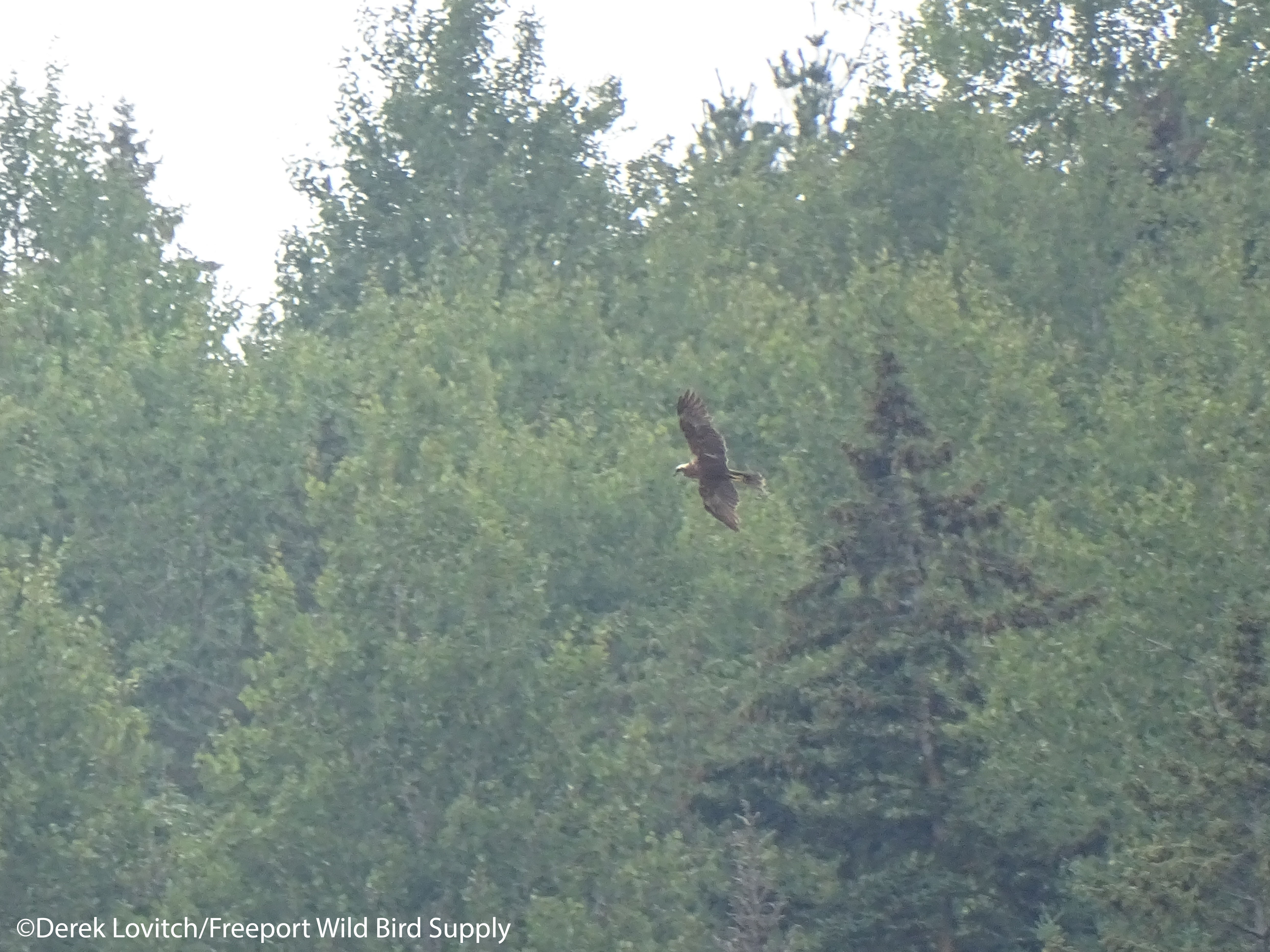
Shockingly, however, there was some debate about whether or not that was the bird, or even the raptor, of the year! Seriously. Since Steller’s Sea Eagle have bred on the continent and have been seen on several occasions in Alaska (and then “our bird” which was seen from Texas to Canada), one could argue that the raptor of the year was actually the Eurasian Marsh-Harrier that was discovered on North Haven on 8/25 and then found the next day at Weskeag Marsh in Thomaston (where it remained for less than 3 days). This was only the second record ever for the entire continent! The same bird resurfaced at the Troy Meadows in northern New Jersey in early November, but this is an incredible bird for North America. However, I would argue that the worldwide rarity of the Steller’s (only about 4,000 individuals) trumps the marsh-harrier, as it is quite common through much of the Old World. (These are the things birders like to argue about over pints of beer)
And no, the Eurasian Marsh-Harrier was most definitely not on my predictions list!
So with four new records only one of which was on my list, it’s obvious that predicting vagrancy is getting even more challenging. Climate change, land-use changes, rising and falling populations, perhaps even pesticide contamination or electromagnetic pollution is all conspiring to put odd birds in weird places. And, there are more birders looking, and much better communication.
While I would love to be “right” about my forecasts, we can now truly expect the unexpected, and one could argue almost any bird capable of flight (or long-distance swimming) could become Maine’s latest big twitch. But, if only for tradition’s sake, I’ll take a stab at my Next 25 Birds for Maine forecast:
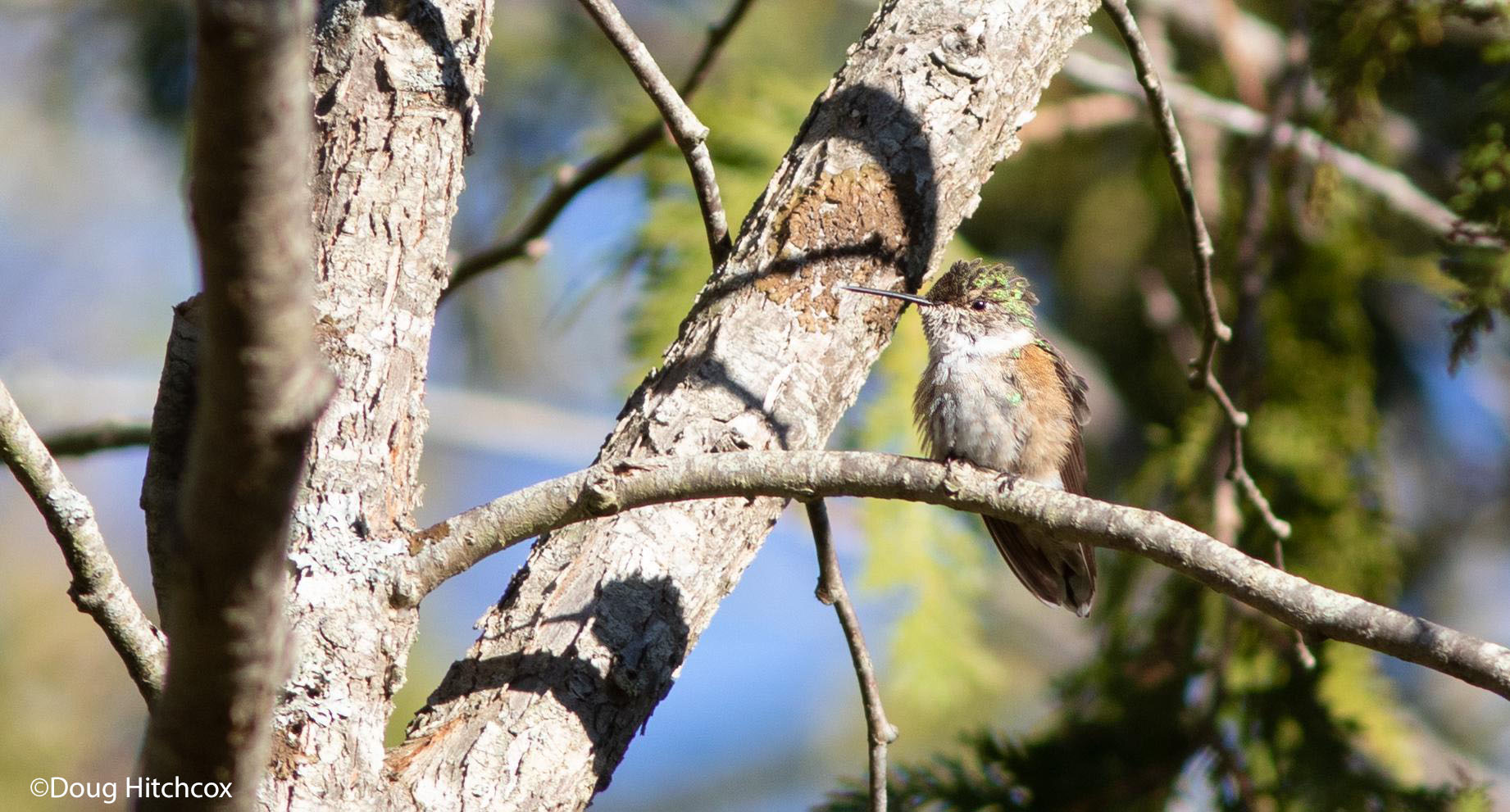
A Black-chinned Hummingbird is overdue for Maine, but unless it’s an adult male with his purple throat in good light, it’s likely going to take banding and measurements to identify (like this year’s Broad-tailed).
I’ve added Heerman’s Gull to the list thanks to a growing number of Eastern Seaboard records – most of which are likely the same individual moving up and down the coast, although it seems like a longshot to make it this far north. Limpkin also debuts after an incredible irruption in 2022 with extralimital records from as far north as Michigan and New York. Was this a one-off due to some drastic change in water or food levels in its limit range in Florida, or is this another sign of the “new normal” of tropical birds venturing northward? To make room, I’ve dropped Kelp Gull out of the Top 25 for now.
Heerman’s Gull, San Diego, CA, August 2011.
Personally, I added an incredible six birds to my own state list this year. I even predicted two of them: The flock of Black-bellied Whistling-Ducks in Camden that I twitched on 5/2 were #7 on my personal next list, while the flock of White Ibis in the Webhannet Marsh in Wells on 8/11 were #14 on my list.
Black-bellied Whistling Ducks.
The Sage Thrasher at Gilsland Farm was the first in line on my honorable mentions list, as it was long overdue for Maine to get it’s second. Likewise, the two Henslow’s Sparrows in Brunswick (7/6) and the now-famous Freeport Broad-tailed Hummingbird were both on my honorable mentions list, but had not cracked the top 25 just yet.
Sage Thrasher
Henslow’s Sparrow
Broad-tailed Hummingbird
Out of the blue was the aforementioned Eurasian Marsh-Harrier, which I happily got to see in Weskeag Marsh on 8/26. As Maine stakes its claim as the Raptor Rarity Capital of North America, I would not have wanted to miss this shocker.
As usual, I missed plenty of rarities too, although I was unable to chase many of them for various reasons (6 for 6 on chases this year is incredible…although it does help make up for all the times I did not see the Steller’s Sea Eagle!). American White Pelican (Grand Isle, 7/5; #1) and Franklin’s Gull (Sabattus Pond, 5/22; #3) are officially nemesis birds now. Other unchaseable potential state birds included Common Gull (Eastport, 2/17-23; honorable mention), Sandwich Tern (Mount Desert Rock, 7/6; honorable mention), and Western Wood-Pewee (banded at Riverpoint, Falmouth, 9/7; honorable mention).
As I approach the 400 species milestone, it’s not getting any easier, although I should hit the mark this year, based on current vagrancy trends! That’s my first prediction. As for what bird it will be, I believe it will be one of these 25. Although, nowadays, anything seems possible!
American White Pelican
Franklin’s Gull
Neotropic Cormorant
Brown Pelican
California Gull
Brown Booby
Slaty-backed Gull
Boreal Owl
Calliope Hummingbird
Common Ringed Plover
Graylag Goose
Cerulean Warbler
Gull-billed Tern
Hammond’s Flycatcher
Spotted Towhee
Pacific Golden-Plover
Wood Stork
Black-chinned Hummingbird
Brewer’s Blackbird
Yellow Rail
Ross’s Gull
Virginia’s Warbler
Common Shelduck
Common Gull
Heerman’s Gull
Brown Pelican records are increasing in the northeast. It’s just a matter of time for one to fly by me! San Diego, CA, August 2011.
This snazzy, fresh adult male Red-winged Blackbird at a feeder in Wells was one of the few highlights in my usually-very-productive “Moody Sector” of the Southern York County CBC.
T’was the week before Christmas and all through Wild Bird Supply, no one was birding much, even this guy. Nonetheless, I found some great birds when I did get out this week:
1 incredibly late NELSON’S SPARROW, 1 Savannah Sparrow, 1 Northern Flicker, 4 Snow Buntings, etc, Eastern Road Trail, Scarborough Marsh, 12/18. I was unaware that the Portland CBC was being conducted that day, but apparently, the Nelson’s was a first count record!
1 THICK-BILLED MURRE (FOS), Pine Point, Scarborough, 12/18. Not in great shape; I first saw it on land fighting off a crow on land before eventually waddling into the water.
“Moody Sector” of the Southern York County CBC, 12/19: 1538 individuals of 52 species (both quite low for me) with highlights including 4 American Wigeon (very surprisingly only a second count record!), 1 male Red-winged Blackbird, 2 Northern Harrier, and 18 Horned Larks.
1 Great Blue Heron (late for inland) and 1 1st-winted Iceland Gull, Auburn Riverwalk, 12/22.
1 SAGE THRASHER, Gilsland Farm, Falmouth, 12/22. 2nd State Record found earlier in the morning by Doug Hitchcox. I eventually had fantastic looks at it, including in flight, but I was on the wrong side of its favored tree for photographs, so this was the “best” I did!
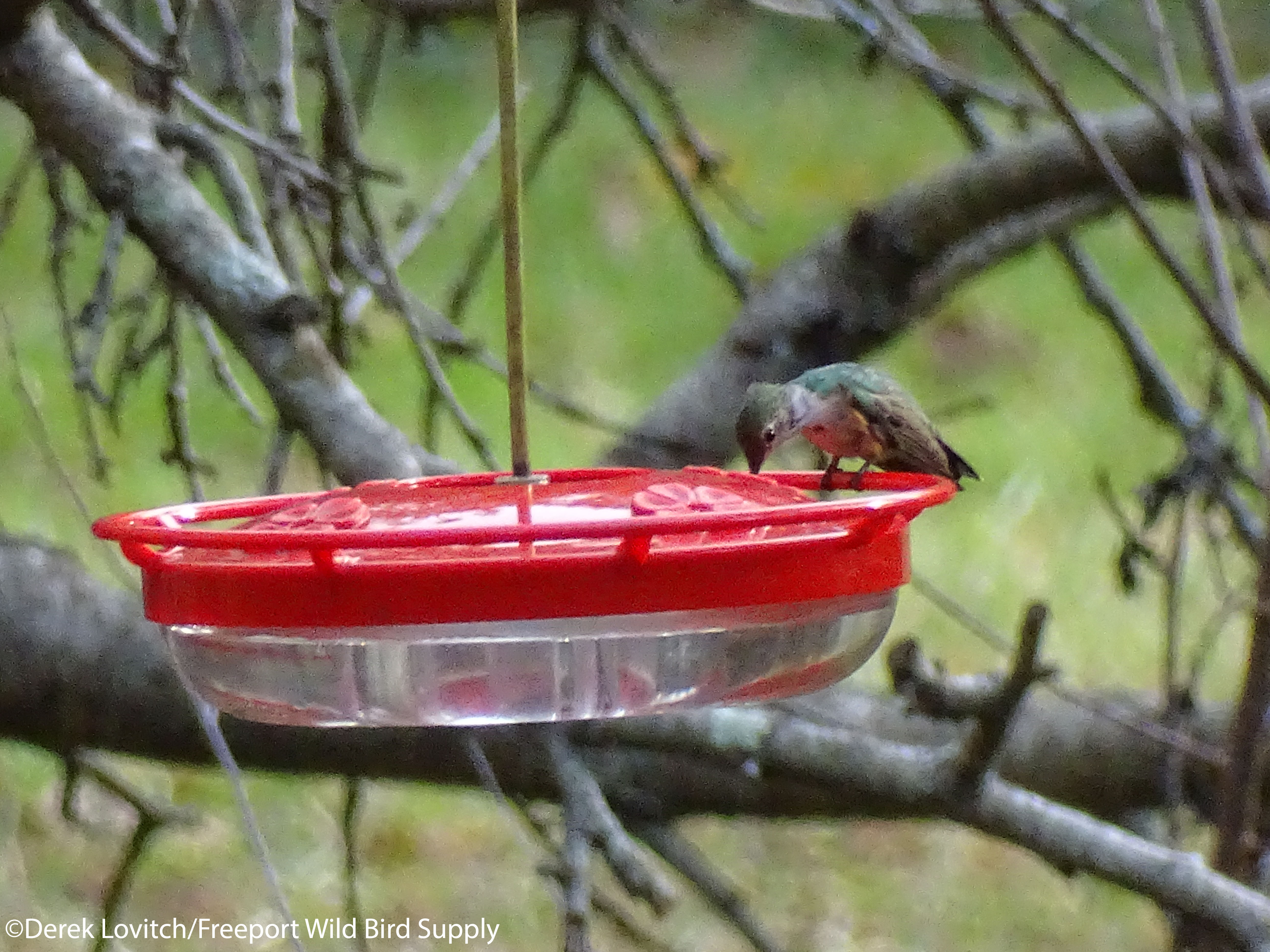
Meanwhile, left off my weekly updates for the past four weeks has been my regular observation of one particular rarity right here in Freeport – Maine’s first ever Broad-tailed Hummingbird! Here’s the full story.
In the afternoon of 11/19, a customer of the store alerted me to the presence of a hummingbird in her Freeport yard, present since the 5th of November. For over 15 years, we have promoted keeping hummingbird feeders up late into the fall and letting us know about any hummingbirds after October 1st. In addition to several incredibly late reports of Ruby-throated Hummingbirds (now annual in small numbers well into the second week of October), this campaign has resulted in the detection and documentation of a Selasphorous hummingbird on 10/16-17, 2015 in Yarmouth, and a long-staying Rufous Hummingbird observed by many between 10/18 and 12/5, 2020, also in Yarmouth – the first “chaseable” Rufous in eight years in the state.
Upon receiving the report, we urged the homeowner to get any sort of photo. Later that day the bird finally obliged, and the photos sent to us were suggestive of a Selasphorous hummingbird. I was invited to the property the following day to attempt more documentation. I arrived at 3:05pm with snow flurries falling, and soon heard the bird. The call was clearly of a Selasphorous-type hummingbird. My limited experience with separating Selasphorous by call did not permit me to draw any further conclusions (in hindsight though!)
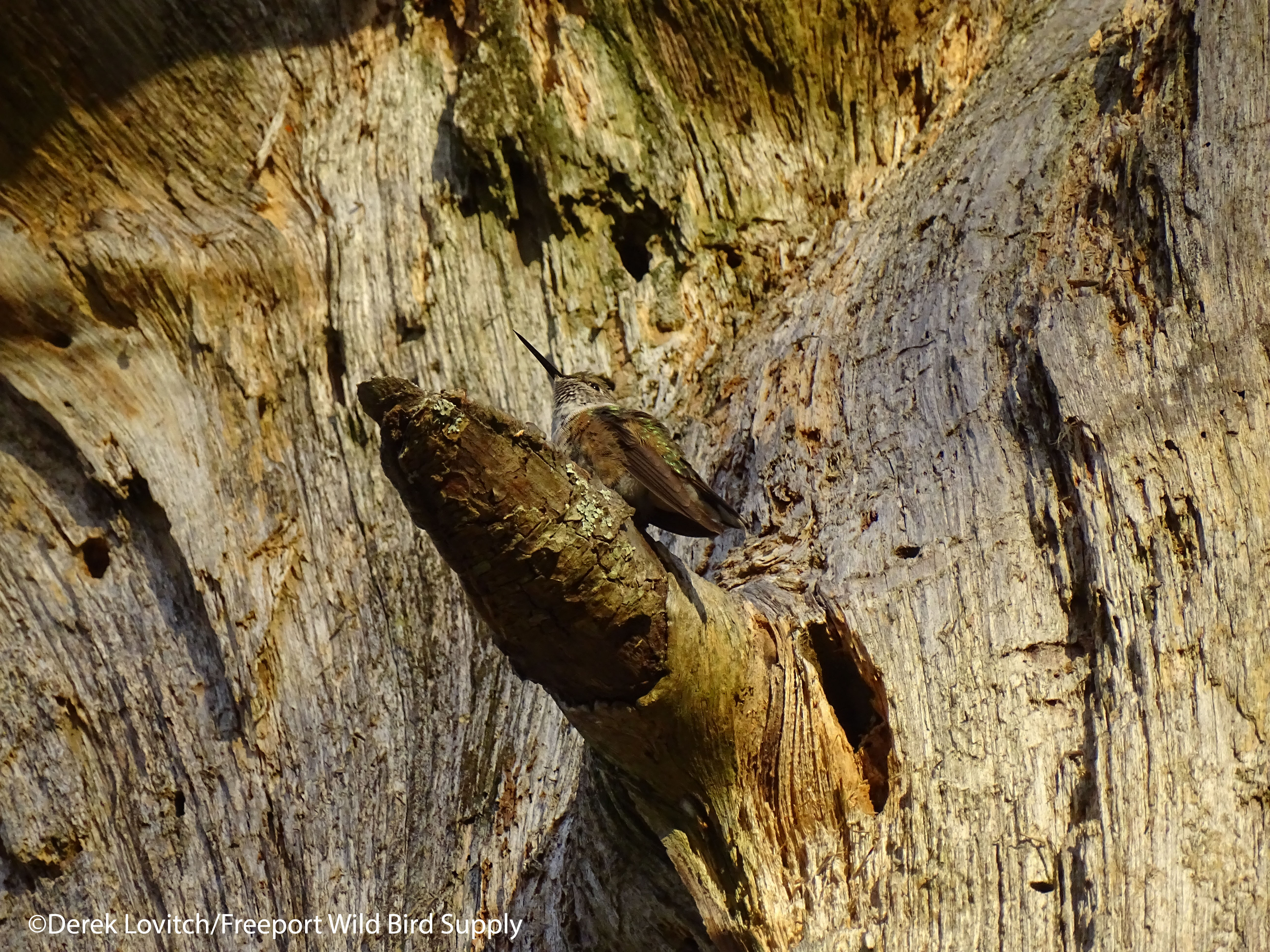
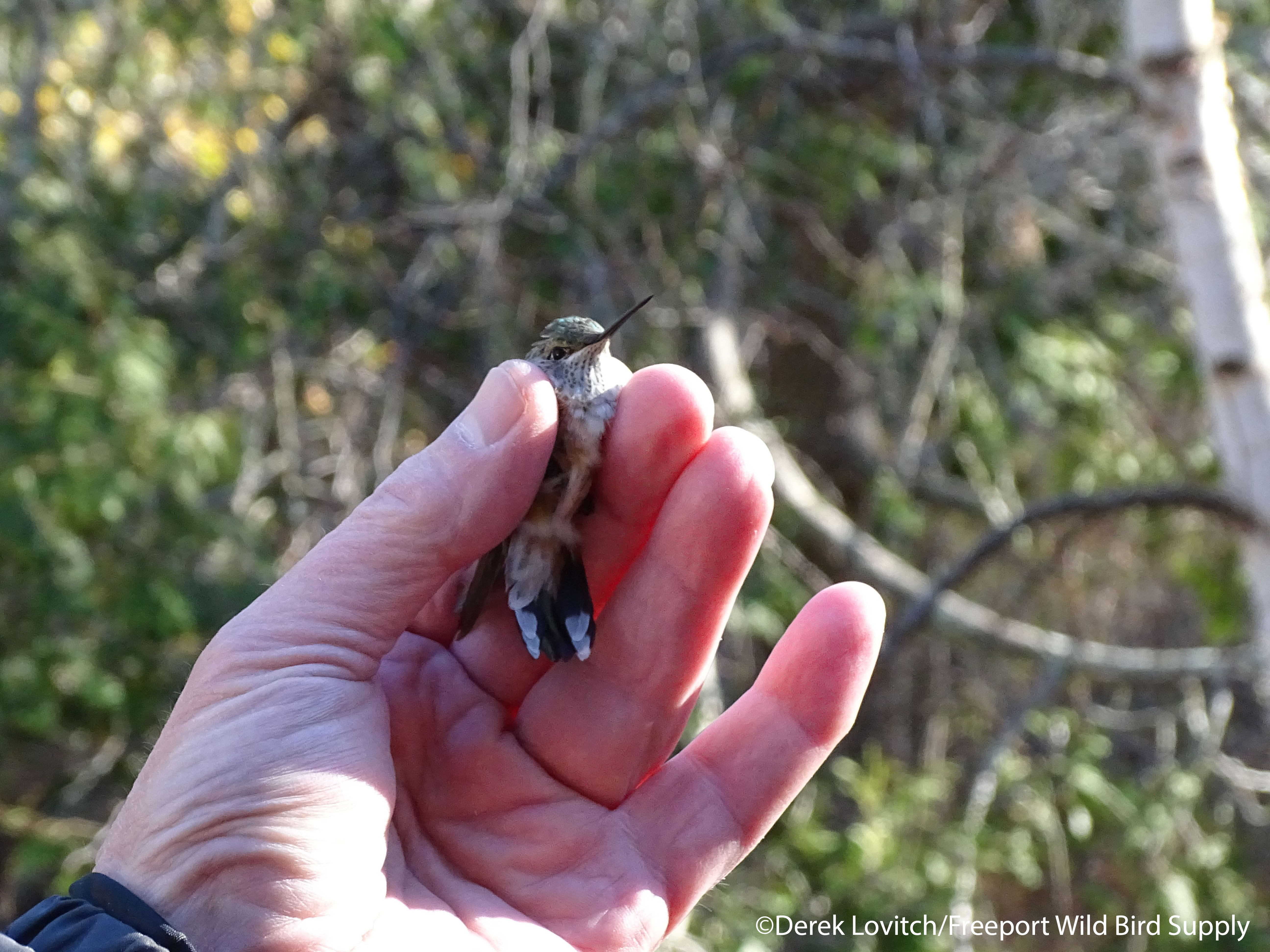
Twenty minutes later, the bird appeared at the feeders, feeding long enough for photographs, before alighting on a nearby snag in a sliver of sunlight. In the field, and upon review of photographs, I immediately knew it was a Selasphorous. Lucky photos of a semi-spread tail showed a fairly broad outer tail feather, but I assumed it was probably “just” a Rufous. Or at least I am not knowledgeable enough to have thought beyond Rufous/Allen’s (it was clearly not a Calliope).
I reached out to Scott Weidensaul with the first few photos, and since he was available the next day to band it, I made arrangements with the homeowner. Scott was intrigued by the tail, and stated “I cannot rule out Broad-tailed from the photos” but also assumed it was likely to be a Rufous. They usually are.
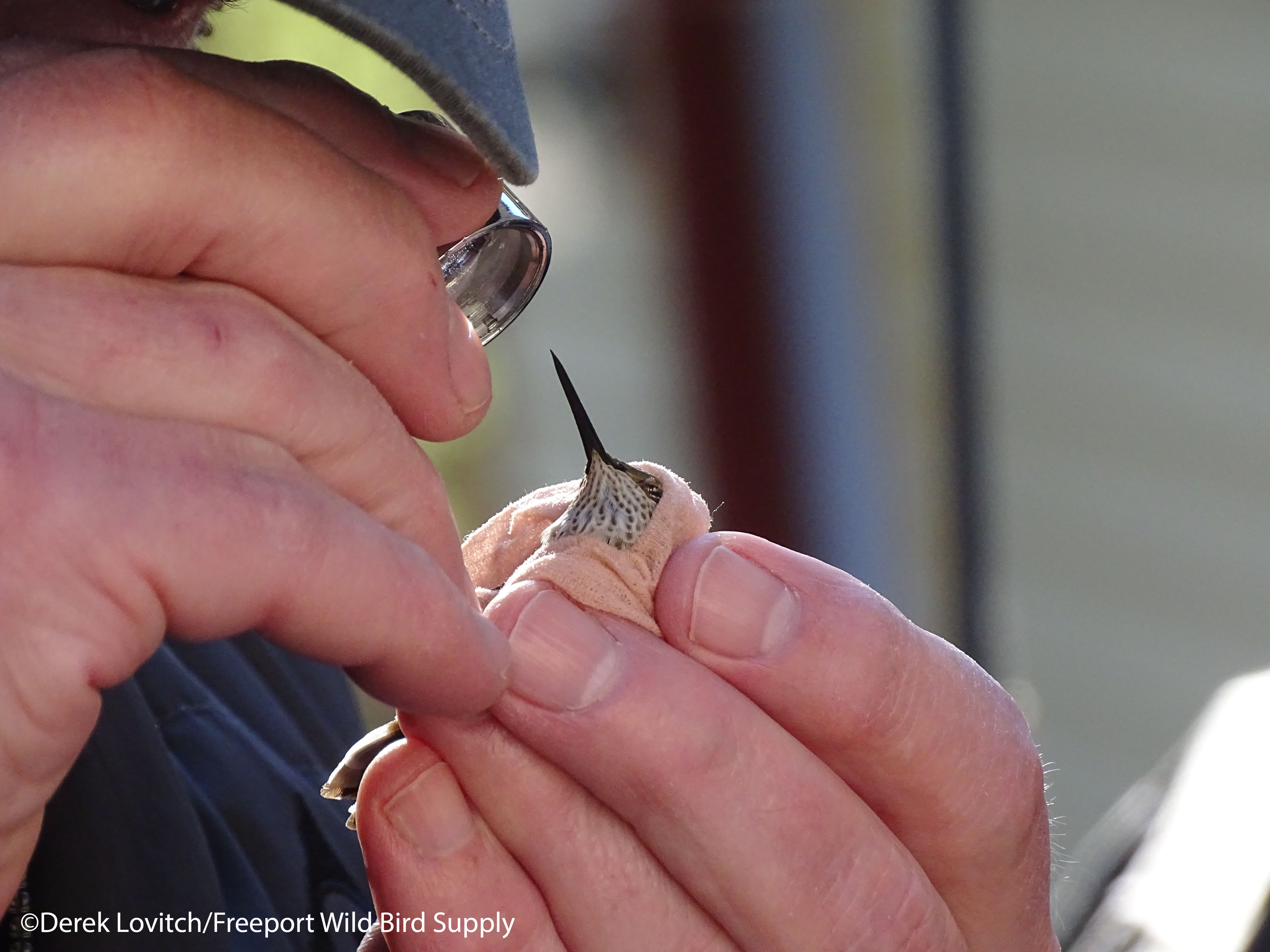
Scott, Doug Hitchcox, and I arrived at noon on 11/21 to attempt to band the bird. In less than an hour, we had safely trapped the bird, and took a series of measurements and photos. The bird was healthy, undergoing active molt, and had a fat score of 1.
When we first observed the bird, Scott pointed out the bluish hue that was sometimes apparent on the back of the bird. He mentioned he saw that in one of my photos from the prior day, but dismissed it as probably being an artifact of the photo. I was unaware of this impression until he pointed it out.
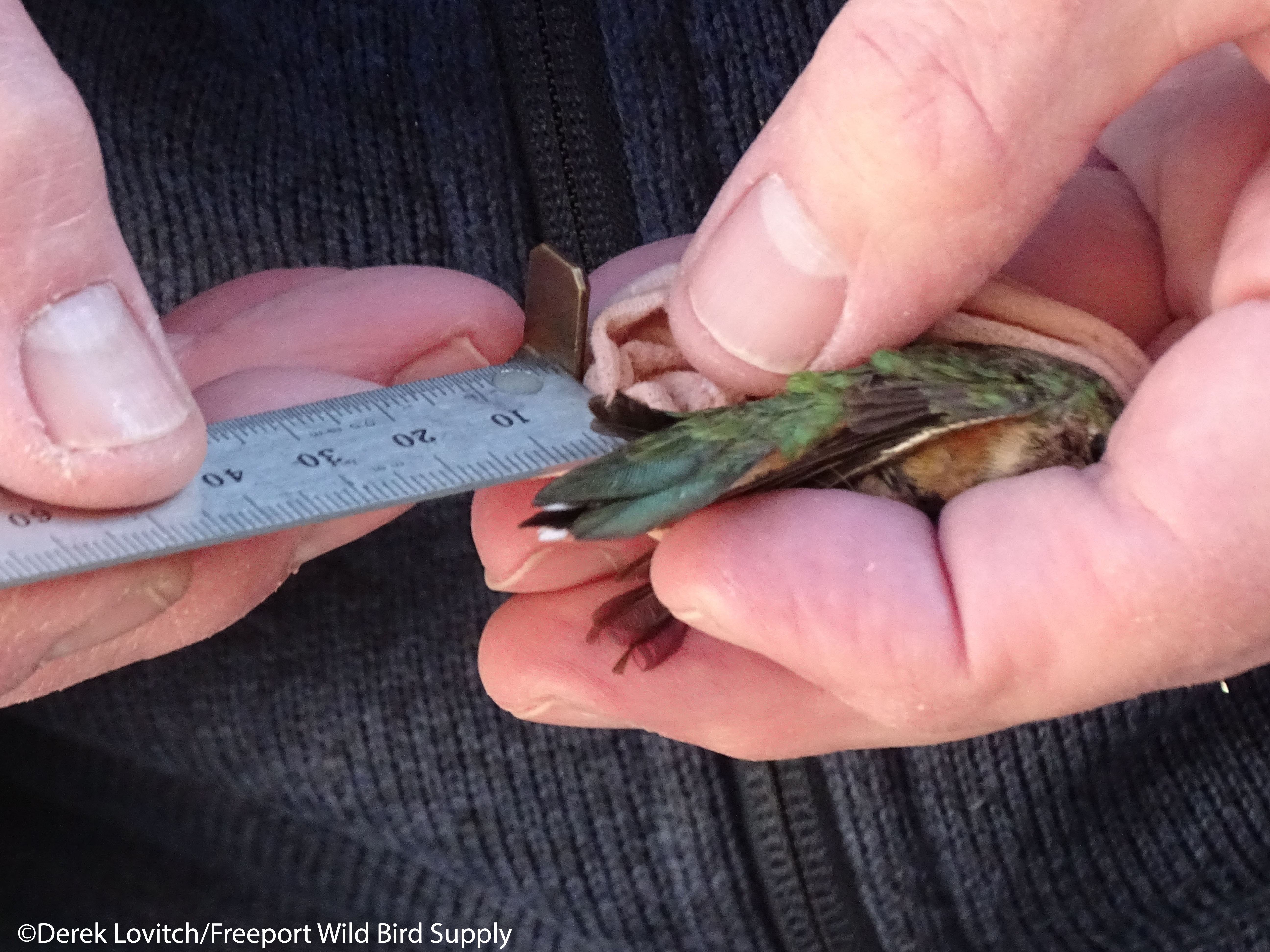
However, as the banding process began, we were still working under the assumption that this was going to be a Rufous Hummingbird, until the “numbers” kept coming in. Doug was recording and noted the significant difference between Rufous Hummingbirds on the data sheet. When Scott read the width of the outer tail feather aloud, he seemed shocked, and immediately measured again. And again. Doug and I kept glancing at each other, eyes wide, attempting to hold back exuberance.
Wing: 49.15mm
Tail: 30mm
Bill: 18.62mm
Width of Outer Tail Feather (R5): 5.44!!!
We double-checked all measurements, took lots of photos, and Doug and I tried to not explode with excitement as Scott calmly but clearly excitedly expressed comments such as “this is the biggest tail I have ever seen on a Selasphorous in the East.” We, as well as the homeowner who had joined us for the banding, were all shaking with excitement by now. The below-freezing air temperature played much less of a role. A quick check of references, a final check of the measurements, and then the bird was released. Of course, the bird’s host had the honor of letting it go. After processing, it immediately returned to the feeder and fed regularly for the rest of the day, calling even more vociferously in between.
Upon checking some references at home, and sending photos out for additional opinions, it was clear to Scott that we (OK, he) had just documented the first Broad-tailed Hummingbird, a hatch-year male, for Maine – and apparently, for all of New England!
Jeannette was invited to observe the bird on the 22nd, while I spoke to the homeowner several times over the phone to discuss the opportunity for others to share in the excitement. I arranged for a small group to visit in the morning of the 23rd as a test-run – a few close friends and young birders were the guests. After that successful visit when we all had repeated views, I suggested a feeder be placed in the front yard. If the bird took to it, visitors would have the chance to see it from a public road, without entering the yard.
I placed that one of our feeders on the morning of the 25th, after the holiday so as not to bother the homeowner. I also observed the bird, regularly feeding in the cold rain, making two visits to the feeders within 15 minutes – a faster pace now. It was cold, but was it also tanking up? Later in the day, Jeannette returned with a small shepherd’s hook to give the feeder even better visibility from the road, along with getting it into the morning sun to help keep it warmer on these frigid mornings.
The homeowner has been taking in the feeder (now, feeders), every night so the first feeding will be at room temperature nectar. She’s been heading out early with a headlamp so as not to miss it’s first feeding session! What an amazing host!
My Saturday Morning Birdwalk group was invited over on that first Saturday morning, but the bird never came to the new feeder. As per prior arrangement, an hour later we were able to enter the yard and in doing so we enjoyed immediate prolonged views of it at the original feeder in the backyard.
The next test run was another small group on Sunday morning. We arrived at 8:00, and for almost an hour were teased by the hummer as he darted around the backyard, calling constantly, and briefly perching in obscured views. Then, at 8:56, he finally made a brief visit to the new feeder!
In the next 30 minutes, he visited that carefully-place feeder three times, including two prolonged drinking bouts which provided ample opportunity for people to study, enjoy, and photograph the bird. Success! He is now using a feeder in view from the road, without entering the yard!
And with that success, on Wednesday the 28th, I was given the go-ahead to let the word get out, slowly, methodically, and carefully managed to avoid crowds and overwhelming the homeowner and the neighbors.
In consultation with the homeowner, I was tasked with managing the crowds and birders’ behaviors. People needed to email me for the set of visitation instructions and caveats, and since the end of November birders visited, saw, photographed, and mostly remained on their best behavior. The vast majority (but of course, not all) even followed all of the rules! I remained in close contact with the homeowner and reassured her that just about everyone was receiving the instructions directly from me. I did my best to respond to every one of the emails I received, spacing out visitation as much as possible. Of course, not everyone followed every rule – especially the one about sharing the location.
The bird continued into the middle of December. I would say “miraculously” given the plummeting temperatures, but it was mostly through the passionate dedication of the homeowner. When temperatures failed to reach the freezing mark for a high on December 10th, it ushered in the most challenging stretch of weather in which temperatures did not hit 32 for four days. During the time, the homeowner would go out regularly throughout the day with unfrozen sugar water to replace the simple syrup popsicles. The hummingbird learned to recognize her and this activity and would often visit the feeder immediately after she walked away.
Unfortunately, however, during this time, it saved energy by sitting for long periods in the sun, out of view from visiting, shivering observers. Even more frustrating for some, was hearing it vocalize in the backyard and never seeing it from the road – at the side feeder or his favorite perch. Thankfully, no one decided to tempt fate by entering the yard to look around back.
Earlier in the month, I had asked Scott Weidensaul about possible departure times, given his experience with vagrant hummingbirds in the Northeast. He told me that birds often depart on the first nice day after the first significant cold snap where the temperatures failed to reach the freezing mark for multiple days. Such a day occurred on 12/15, where temperatures reached the low 40’s and a light northerly wind was increasing. Thinking it could be his last day, I finished my morning’s birding at the location.
I arrived at 10:02 and immediately found him sitting in one of his favorite perches in the multiflora Rose. He sat there – save for one short sally, presumably for an insect – for the next 16 minutes before buzzing off, presumably to the feeder in the backyard. I heard him for most of the time but did not glimpse him again before I departed at 10:30.
By the middle of December, his first gorget feathers had already begun to appear – but only on one side of its head, best seen in this photo from the homeowner on 12/12.
I was sure this was it. Storm a’coming. Temperatures above normal in the low 40’s, a light northerly breeze, and the sun was shining for a while. But alas, with the wet snow falling on Friday the 16th, the homeowner informed us that he was still present and feeding actively. He was still present on Saturday Morning, with heavy flakes starting to pile out.
Luckily, the heated hummingbird feeders that the homeowner ordered had arrived and were deployed just in time!
Over 90 100 people have seen it now, and visitors are still welcome to view it, as long as they follow a strict set of rules. If you would like to see it, email us at freeportwildbird@yahoo.comwith a day that you are interested in going, and we’ll send the instructions and address the day before, as long as the numbers of visitors remain manageable each day and on our best behavior. To minimize the number of emails in the queue, please include the day in your original email.
***12/26 UPDATE:*** We just received an email this afternoon from the homeowner, reporting that she has not seen the bird since 3:47 pm on Friday, 12/23. Pressure was dropping rapidly through the day with rain, heavy at times, and southwesterly winds gusting over 50mph for much of the day. She reported it was drinking regularly throughout that stormy day, with temps rising into the low 50s. Overnight temperatures dropped dramatically, by 40 degrees by sunrise, despite still-strong SW winds. Certainly not the time and conditions I would have expected it to depart on (assuming it survived the night), but it does bring up some interesting questions. Did it survive the storm? Was the storm the final incentive to depart? And if so, did it depart in the “wrong” direction that perhaps it arrived on (i.e. it was a “mirror vagrant” flying in the wrong direction to start with)? But since it’s banded, should it be found anywhere else, we very well might know, but short of that, we are left to conjecture.
The homeowner is leaving the feeders out for a little longer, just in case. If he returns, we’ll post an update here and include new instructions for visitation if possible.
Barrow’s Goldeneyes are one of my favorite visitors to Maine in winter. The hens provide a nice challenge to pick out, too. This was one of two distinctive Barrow’s visible from the Bernard Lown Peace Bridge in Auburn/Lewiston on the 13th.
Especially in November – and often again with the first cold snap in December – I talk about “rarity fever,” when there is that additional motivation and encouragement to go birding thanks to the expectation of the unexpected. And usually we in Maine talk about the “winter doldrums” in an non-irruption year. And this year, there are virtually zero irruptives in the southern half of Maine – other than Snowy Owls. But with the Steller’s Sea-Eagle (as you may have heard!), a Bullock’s Oriole at a feeder in Damariscotta Mills, a Townsend’s Warbler in Cape Elizabeth (I missed it twice this week with a limited amount of effort), and a Barnacle Goose in Rockland, there is no doubt I – and many other birders – are experiencing a little mid-winter Rarity Fever! And that has helped motivate me to get out birding as often as I can. The to-do list can wait until February, right?
With the fairly sudden arrival to a bitter “real winter” cold, once again “pioneering” waterfowl made up most of my highlights this week, as I spent most of my birding time searching for the next big deal. My observations of note over the past seven days include the following:
1 Northern Flicker, Village Crossings/Cape Elizabeth Greenbelt Trail, 1/16 (with John Lorenc).
At least 2 hen BARROW’S GOLDENEYES. A third hen is suggestive of an odd Barrow’s or a Common x Barrow’s hybrid (see photo captions), Bernard Lown Peace Bridge, Auburn/Lewiston, 1/20.
Fun to hear two Carolina Wrens counter-singing across the Androscoggin River – one in Lewiston and one in Auburn – from Little Andy Park, Auburn, 1/20.
In addition to a bright-orange-billed classic Barrow’s, and the perfectly good smudgy-billed individual above (and here, on the left), there was a third bird that I am pondering. It’s either a third female Barrow’s (a great tally, especially for Androscoggin County) or perhaps a hybrid between Barrow’s x Common – the males of which do occur in Maine and are fairly straightforward to identify.
And finally, we have commissioned these incredible hand-painted, limited-edition Steller’s Sea-Eagle commemorative ornaments. Check them out here, on our website.
This dapper drake American Wigeon at Brunswick’s historic Swinging Bridge on the 4th very well could have been the same bird that I found upriver in Durham three days prior, as the river was finally beginning to freeze over.
Happy New Year (List) everyone! My sightings of note over the past seven days were as follows. Unfortunately, they did not include the Steller’s Sea-Eagle on Saturday or Sunday (but last week, on Friday…wow, just wow. Still can’t really believe that happened!) but did include a few goodies while searching for where it may have ended up (before its re-discovery in Boothbay on Thursday).
1 drake American Wigeon, Rte 136, Durham, 1/1.
18 Greater Scaup, Simpson’s Point, Brunswick, 1/3 (with Jeannette).
1 adult GREAT BLACK-BACKED X HERRING GULL HYBRID, Bath Landfill, 1/4 (with Jeannette)
1 drake BARROW’S GOLDENEYE, Thorne Head Preserve, Bath, 1/4.
1 drake American Wigeon, Swinging Bridge, Brunswick, 1/4.
44 Greater Scaup, 38 distant unidentified scaup, 625+ American Black Ducks, 130+ Surf and White-winged Scoters, etc, Maquoit Bay Conservation Land, Brunswick, 1/6.
Here is our “West Freeport” territory tally from Sunday’s Freeport-Brunswick CBC:
– 5 American Black Ducks
– 30 Mallards
– 1 Hooded Merganser (2nd sector record)
– 1 Red-tailed Hawk
– 1 Ruffed Grouse
– 30 Wild Turkeys
– 12 Herring Gulls
– 26 Mourning Doves
– 4 Red-bellied Woodpeckers
– 28 Downy Woodpeckers
– 15 Hairy Woodpeckers
– 6 Pileated Woodpeckers (sector high count)
– 1 Northern Flicker (2nd sector record)
– 40 Blue Jays
– 104 American Crows
– 1 Common Raven
– 413 Black-capped Chickadees (2nd highest count)
– 90 Tufted Titmice (sector high count; old record of 44)
– 16 Red-breasted Nuthatches
– 45 White-breasted Nuthatches
– 1 Brown Creeper
– 11 Golden-crowned Kinglets
– 1 Carolina Wren
– 26 Eastern Bluebirds
– 1 American Robin
– 73 European Starlings (sector high count)
– 10 American Tree Sparrows
– 2 Song Sparrows
– 1 White-throated Sparrow
– 18 Dark-eyed Juncos
– 20 Northern Cardinals
– 20 House Finches
– 204 American Goldfinches (2nd highest count)
33 species (2nd highest for territory thanks to extensive open water this year).
8.5 hours: 22.4 miles by car; 18.5 miles by foot.
At the very least, it confirmed some of our preconceived notions: sparrows and frugivores are in short supply; winter finches and other irruptives are not around at all – but a huge pulse of goldfinches arrived late last week; and local resident breeding birds seemed to have done quite well this year.
And finally today, here is my annual blog prognosticating the Next 25 species to appear in Maine, and on my own list. Spoiler alert: I did not predict a Steller’s Sea-Eagle.






















 Maine Birding Field Notes