Tag Archives: Thomaston

Recent Highlights, 8/26 – 9/2/24

Jeannette and I spotted these four Red-necked Phalaropes from the Casco Bay Ferry Mailboat run with visiting family on the 26th.

It was a very busy week for me, but when I did get out, birding was productive – especially in the backyard which hosted at least 15 species of warblers this week. Meanwhile, shorebirding continues to be hot. My observations of note over the past 8 days included the following

  • 1 Black Scoter, 2 White-winged Scoters, and 2 Blue-winged Teal with Common Eiders, Reid State Park, Georgetown, 8/27. As scoters begin to increase in September, I’ll forgo reporting the “oversummering” groups from now on.
  • 1 TRICOLORED HERON, Mill River Park, Thomaston, 8/29 (with Jeannette).
  • 2 SANDHILL CRANES, Mayall Road, Gray/New Gloucester, 8/30.
  • 1 Northern Pintail (first of fall) and 1 juv, Little Blue Heron, etc, Eastern Road Trail, Scarborough Marsh, 8/30.
  • 3 adult Lesser Black-backed Gulls, Seawall Beach, Phippsburg, 9/2 (with Ed Hess).

My shorebird high counts for 18 species this week were solid considering I didn’t make it to Biddeford Pool (or Pine Point) during this period. Focusing on mostly lesser-visited hotspots, I found several goodies and had a few decent high counts.

  • Black-bellied Plover: 67, Wharton Point, Brunswick, 9/2 (with Ed Hess).
  • Killdeer: 43, Colonial Acres Sod Farm, Gorham, 8/30.
  • Semipalmated Plover: 100+, Thomaston Public Landing, 8/29 (with Jeannette).
  • HUDSONIAN GODWIT: 2 adults, Wharton Point, 9/2 (with Ed Hess)
  • Ruddy Turnstone: 1, Reid State Park, Georgetown, 8/27.
  • RED KNOT: 1 juv, Wharton Point, 9/2 (with Ed Hess).
  • Sanderling: 82, Seawall Beach, Phippsburg, 9/2 (with Ed Hess).
  • BAIRD’S SANDPIPER: 1 juv, Seawall Beach, 9/2 (with Ed Hess).
  • Least Sandpiper: 92, Eastern Road Trail, Scarborough Marsh, 8/30.
  • White-rumped Sandpiper: 3, Eastern Road Trail, Scarborough Marsh, 8/30.
  • Pectoral Sandpiper: 3, Eastern Road Trail, Scarborough Marsh, 8/30.
  • Semipalmated Sandpiper: 1500, Thomaston Public Landing, 8/29 (with Jeannette).
  • Short-billed Dowitcher: 16, Walsh Preserve, Freeport, 8/31 (with Saturday Morning Birdwalk group).
  • Spotted Sandpiper: 5, Reid State Park, Georgetown, 8/27.
  • Solitary Sandpiper: 1, several locations this week.
  • Lesser Yellowlegs: 45, Walsh Preserve, Freeport, 8/31 (with Saturday Morning Birdwalk group).
  • Greater Yellowlegs: 24, Walsh Preserve, 8/31 (with Saturday Morning Birdwalk group).
  • RED-NECKED PHALAROPE: 4, Casco Bay between Little Chebeague and Cow Islands from the Casco Bay Lines Mailboat run, 8/26 (with Jeannette).

A MEW GULL in Thomaston!

On August 3rd, Don Reimer found Maine’s Third State Record of a Mew Gull in a parking lot in Thomaston.  While it was seen in the area for most of the day, it was not seen by anyone on the 4th – myself included – despite extensive searching.  However, a few days later, Don relocated it, and it has been seen regularly since, although it is not always in the same place at the same time, and it seems to feed somewhere unknown at low tide.

After returning from Hawai’i on Friday, I was happy to see the bird has kindly awaited my return.  Today was the first chance I got to head over, and at 7:45 I met Kristen Lindquist in the parking lot behind downtown Thomaston.  Kristen was studying about 30 Ring-billed Gulls in the parking lot until a birder drove by and flushed them.  Apparently, a few gulls from rooftops and/or a nearby field joined the flushed birds, and as they settled back down or flew off, I noticed a single, seemingly darker gray bird sitting atop a basketball hoop in the adjacent playground.

And sure enough!   I snapped a few phone-scoped images, including this one.
IMG_1357

Boy, that was easy, for us anyway (the gull is hard to see atop the basketball hoop here)!

MEGUonHoop, with Big CrankyDSC_0009_MEGU_on_hoop1

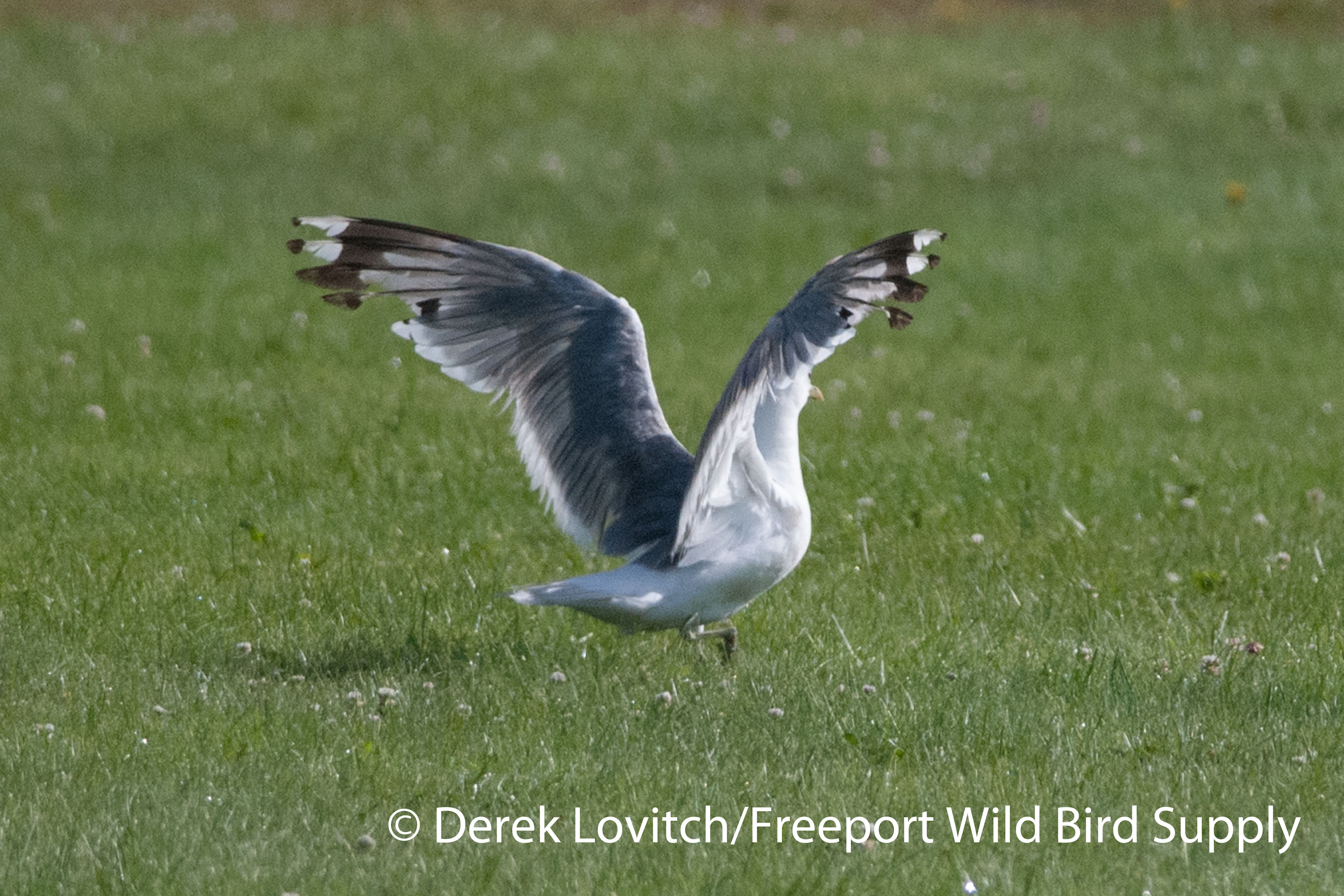
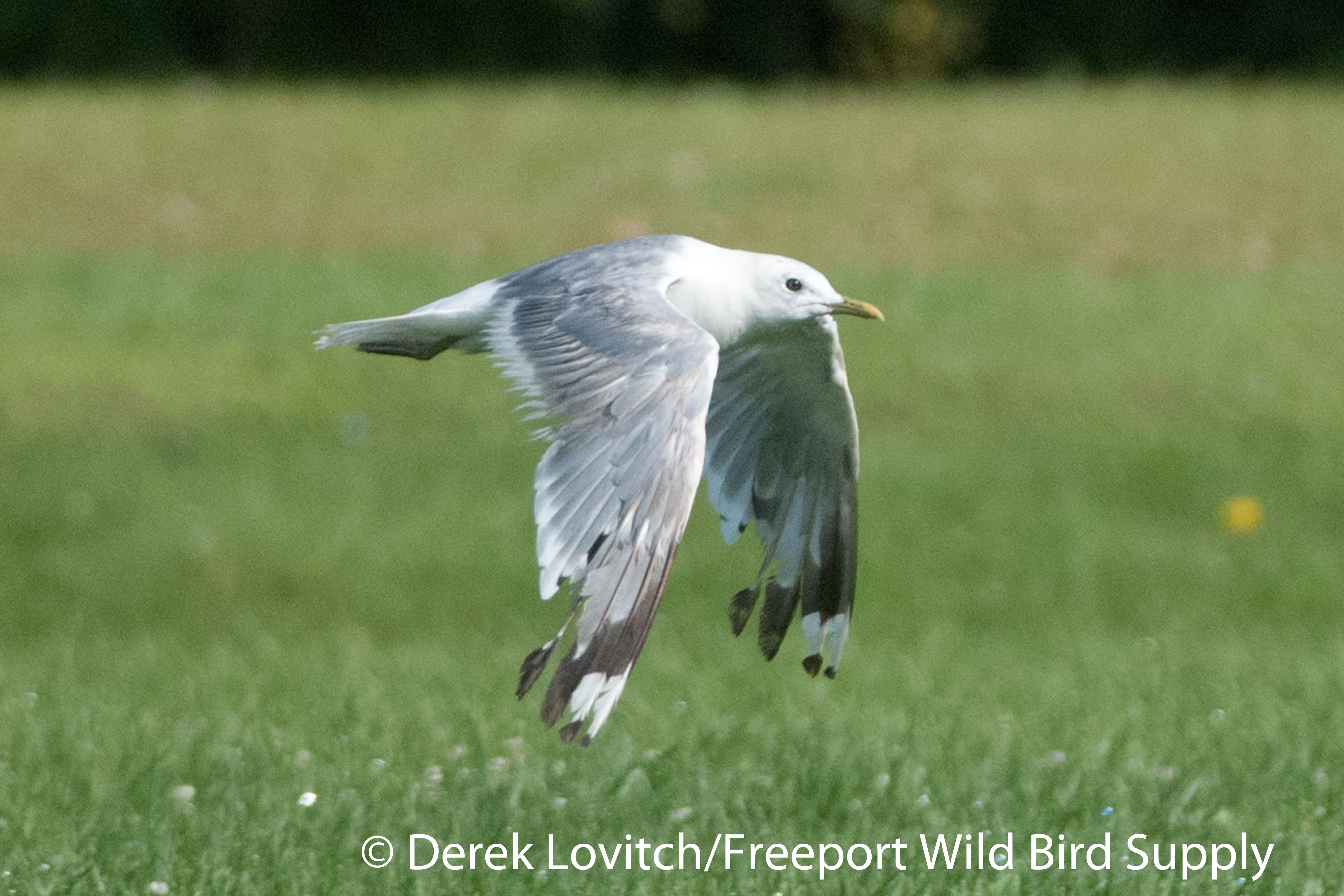
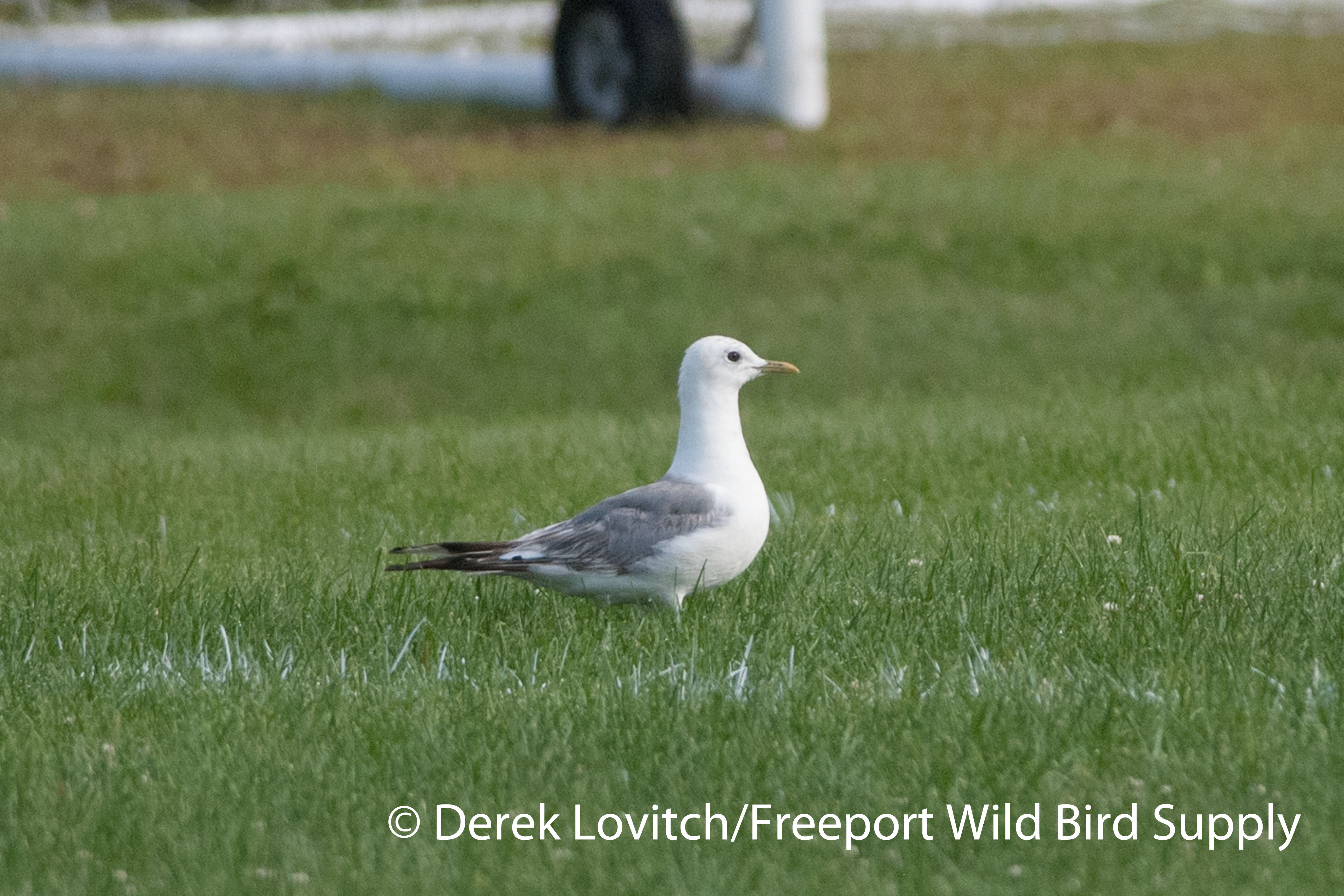
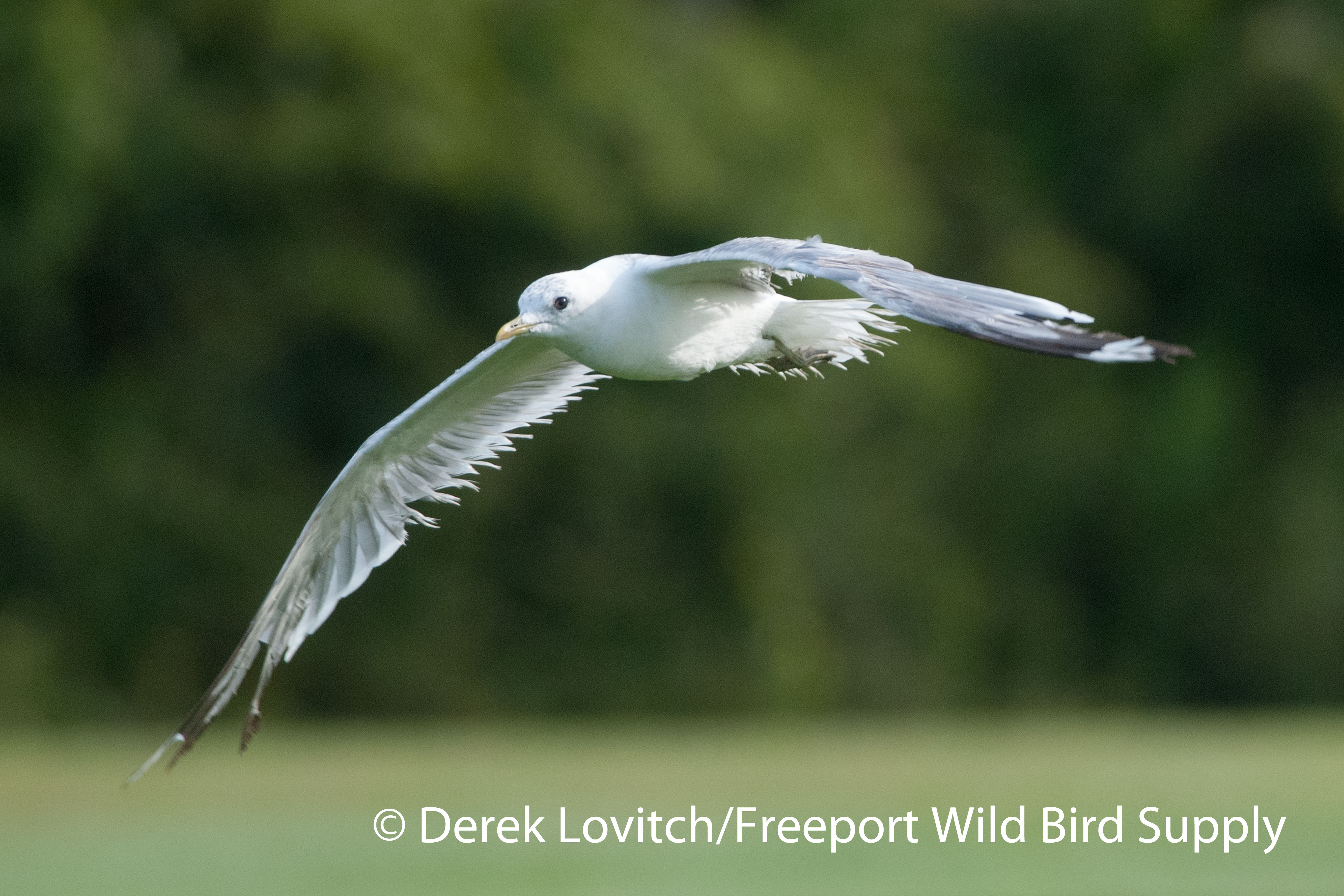
A short while later, it flew to a nearby field next to the Oceanside High School.  There, a jogger was doing laps around the track.  Although the bird was never too perturbed by this, it did fly a short distance when the jogger would be a little too close for comfort.  This afforded me a perfect opportunity for exactly what I wanted: flight and spread-wing photos. Shortly thereafter, it flew off the field and onto the roof of the elementary school where we left it at about 9:00.

(Click on the photos for a larger image)
DSC_0020_MEGU_upperwing2 DSC_0020_MEGU_upperwing3 DSC_0024_MEGU_upper_and_underwing1 DSC_0024_MEGU_upper_and_underwing2 DSC_0024_MEGU_upper_and_underwing3 DSC_0024_MEGU_upper_and_underwing4 DSC_0032_MEGU_in_field1 DSC_0032_MEGU_in_field2

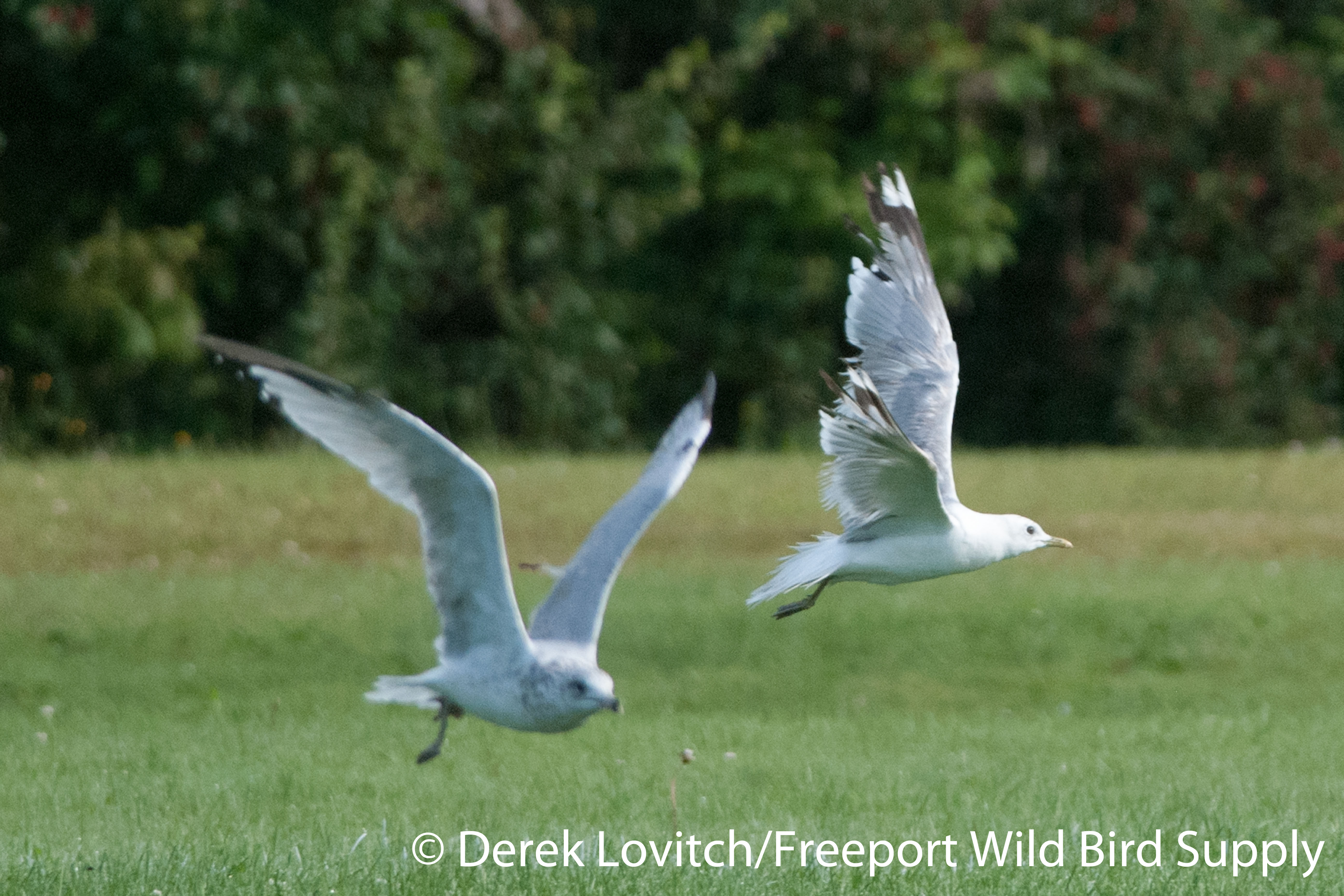
Side-by-side with a Ring-billed Gull:
DSC_0037_MEGU_and_RBGU2 DSC_0037_MEGU_and_RBGU3

DSC_0045_MEGU_flight1 DSC_0045_MEGU_flight2

So, what is this?  Other than a big, fat, mess?

It’s definitely a bird in the Mew Gull (Larus canus) Complex, which here in the States, we refer to as composing four subspecies. There’s “Mew Gull,” L.c.brachyrhynchus that is common in the west, breeding from Alaska to extreme northwestern Manitoba and south through the coast of British Columbia, and wintering along the Pacific Coast from Washington into Baja California.  However, vagrants that have been recorded on the Eastern Seaboard have mostly (I believe) been assigned to the expanding European population, L.c.canus, or “Common Gull.”  There’s also the “Kamchatka Gull” (L.c. kamtschatsensis) of the Russian Far East that is a regular rarity in Western Alaska, with  perhaps a few claimed elsewhere on the continent (I am vaguely recalling one in Massachusetts?).  Finally, there is L.c.heinei of Siberia, which may just be an intergrade between Common and Kamchatka Gulls and I am unaware of any possible records of this in North America.

In short, the European “Common Gull” actually seems to be more likely on the East Coast than the North American “Mew Gull.”  But most records are from winter, and most birds do not have a plumage as trashed as this individual.

The bird appears small to me, with a relatively thin bill (although it’s on the long side), and a relatively dark mantle, all of which would be points in favor of Mew Gull.  However, the plumage is so ravaged, that it’s hard to even age the bird.  Is it an advanced 2nd cycle, a retarded 3rd cycle, or an adult that had some really bad days?  Intermediate-aged birds in the complex are notoriously, well, complex – and very difficult, at best, to identify.

But what can we actually see?
–          Fairly broad white windows in outer two primaries (primaries 10 + 9)
–          Little to know white between the black and gray on P8 (although this is probably only of value on an adult.
–          P7 is trashed
–          Is that a new P6 growing in? (One primary is definitely missing as well, could it be P1?)
–          The four new primaries have a fairly broad white tip.
–          The legs are dull olive-y (subadult-like).
–          The bill is fairly bright yellow at the tip with an olive-y base (adult-like).
–          The tail is too trashed too look for black spots at the tip (expected in a 2nd cycle Mew Gull, but not in a Common)
–          The eye is fairly dark.

So, we have an odd time of year for a vagrant gull, and we have a trashed plumage.  Can we narrow it down to a probable subspecies?  I will be sending this blog out to those who know various members of the Mew Gull Complex better than I do, and I will let you know what I learn.  Whatever it is, I got myself a state bird today!

REFERENCE:
Howell, Steve N.G. and Jon Dunn. 2007. Gulls of the Americas. Houghton Mifflin Company, Boston/New York.