Tag Archives: summer

2026 Workshop Tours with Down East Adventures

Freeport Wild Bird Supply is proud to once again partner with Down East Magazine’s Down East Adventures for the sixth year of offering exclusive birding workshops focused on gaining greater knowledge and field skills in a focused group of seasonally accessible birds.  Focused on skill-builder rather than list-building, there will be plenty of “life birds,” but also more knowledge and education about birds, habitats, birding, and much more about the natural world.  We are honored to be their provider for a series of unique and exclusive birdwatching endeavors. In 2026, we will once again offer four exclusive outings.

For more information on each tour, as well as registration information, visit: https://www.freeportwildbirdsupply.com/downeast-adventures-tours  Trip reports from each will be posted here upon their completion.
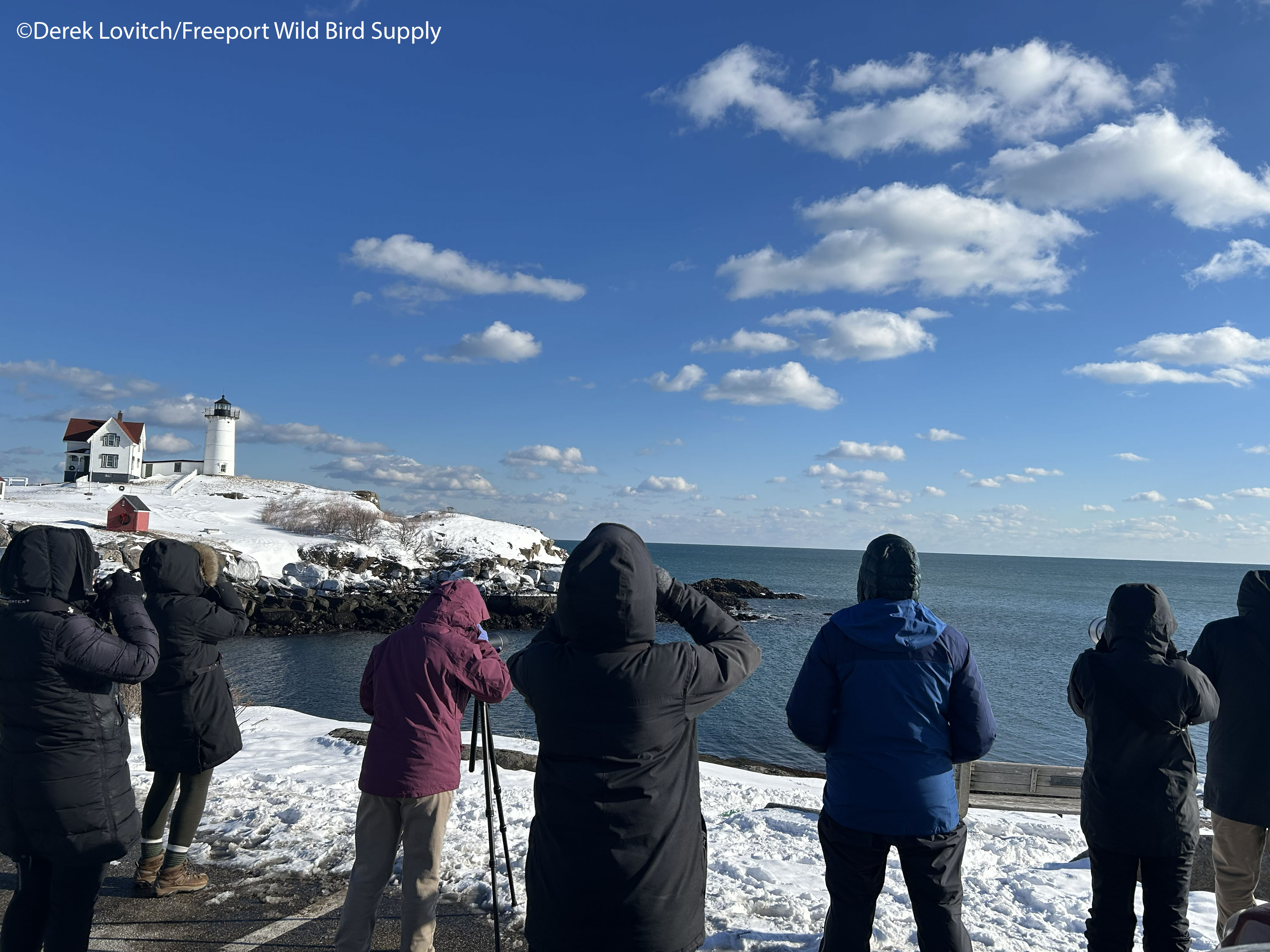
  1. Winter Waterbirds Workshop

January 29th, 2026; 9:00am – 4:00pm. Weather date: 2/8.
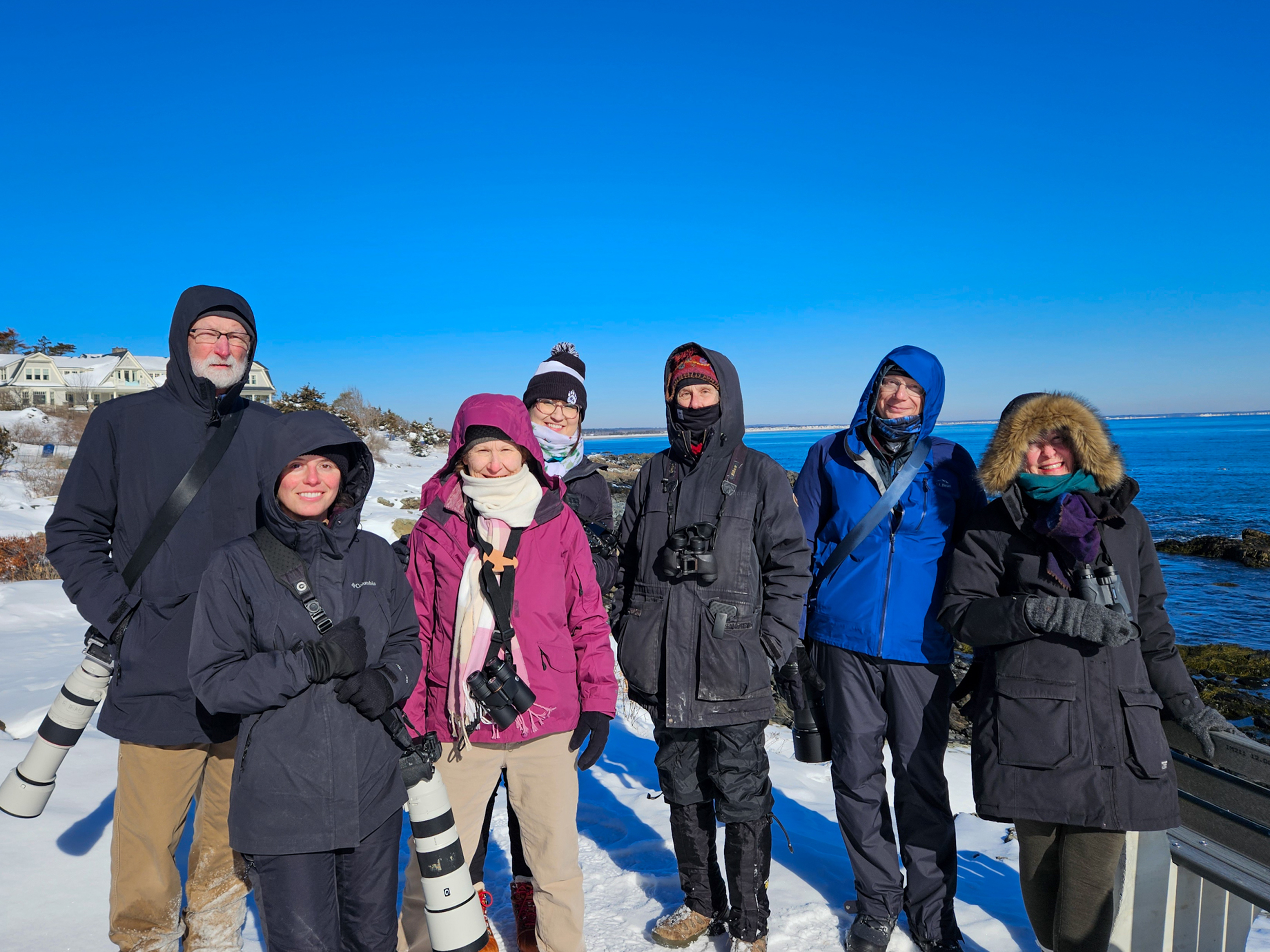
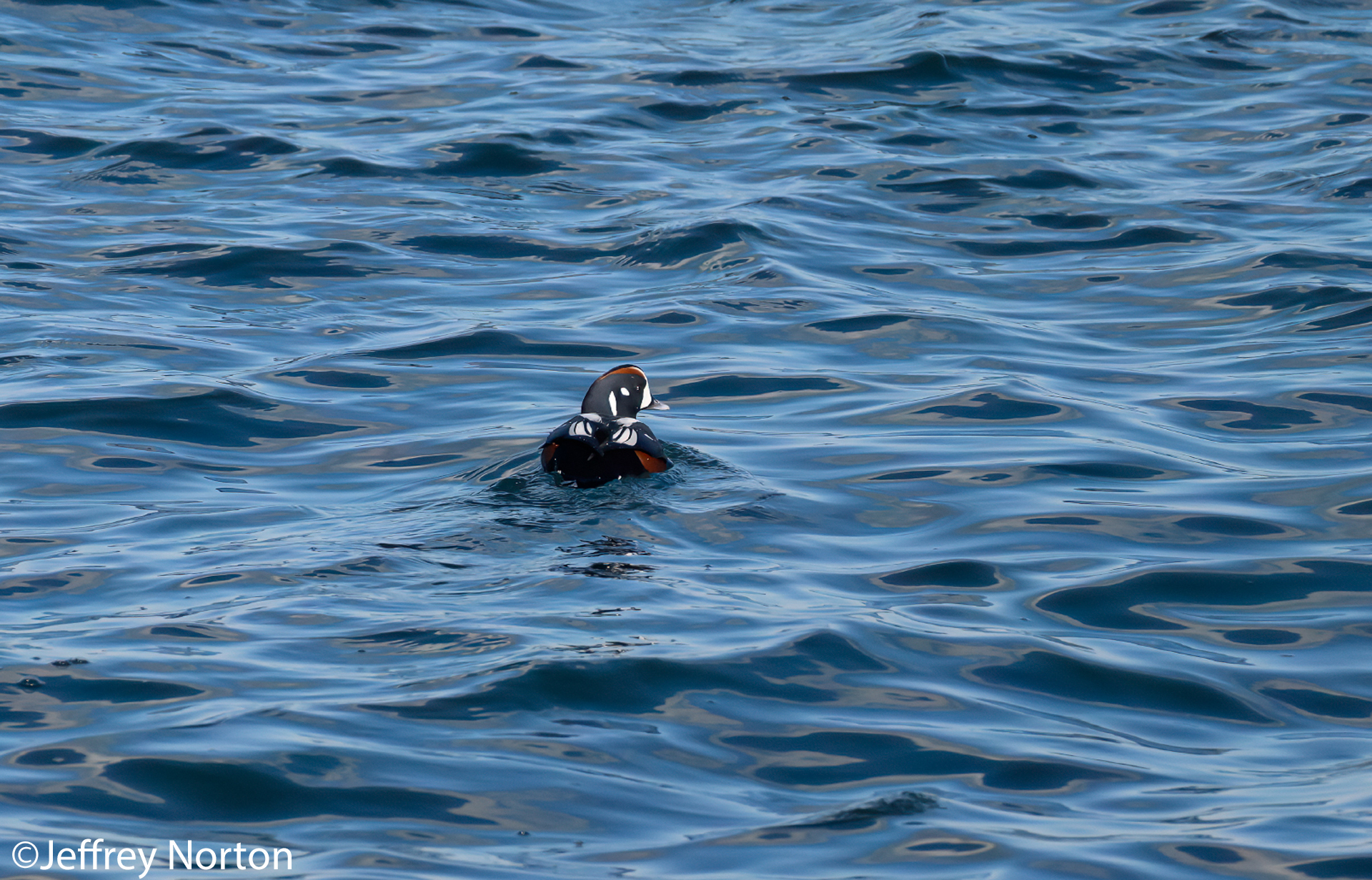
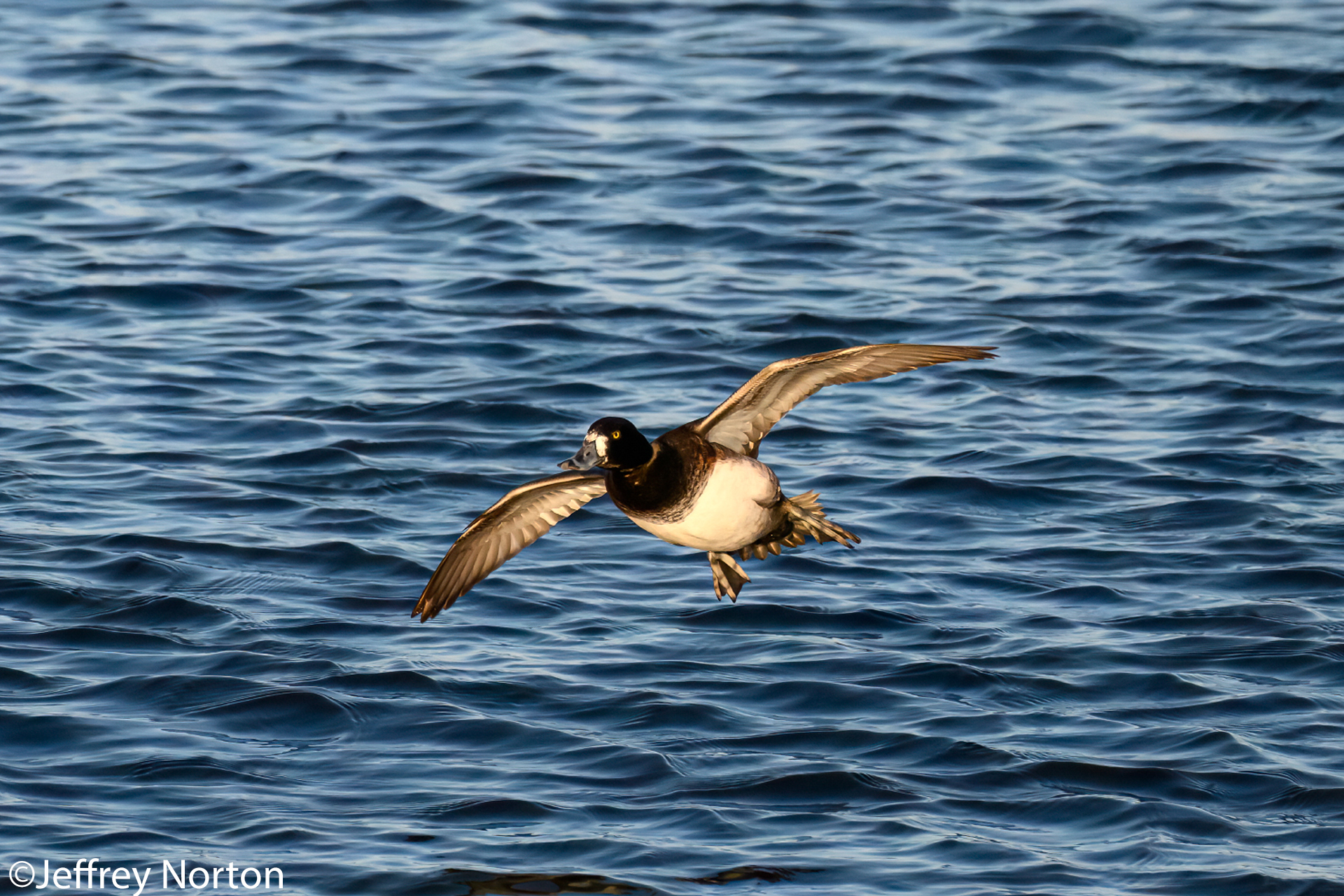
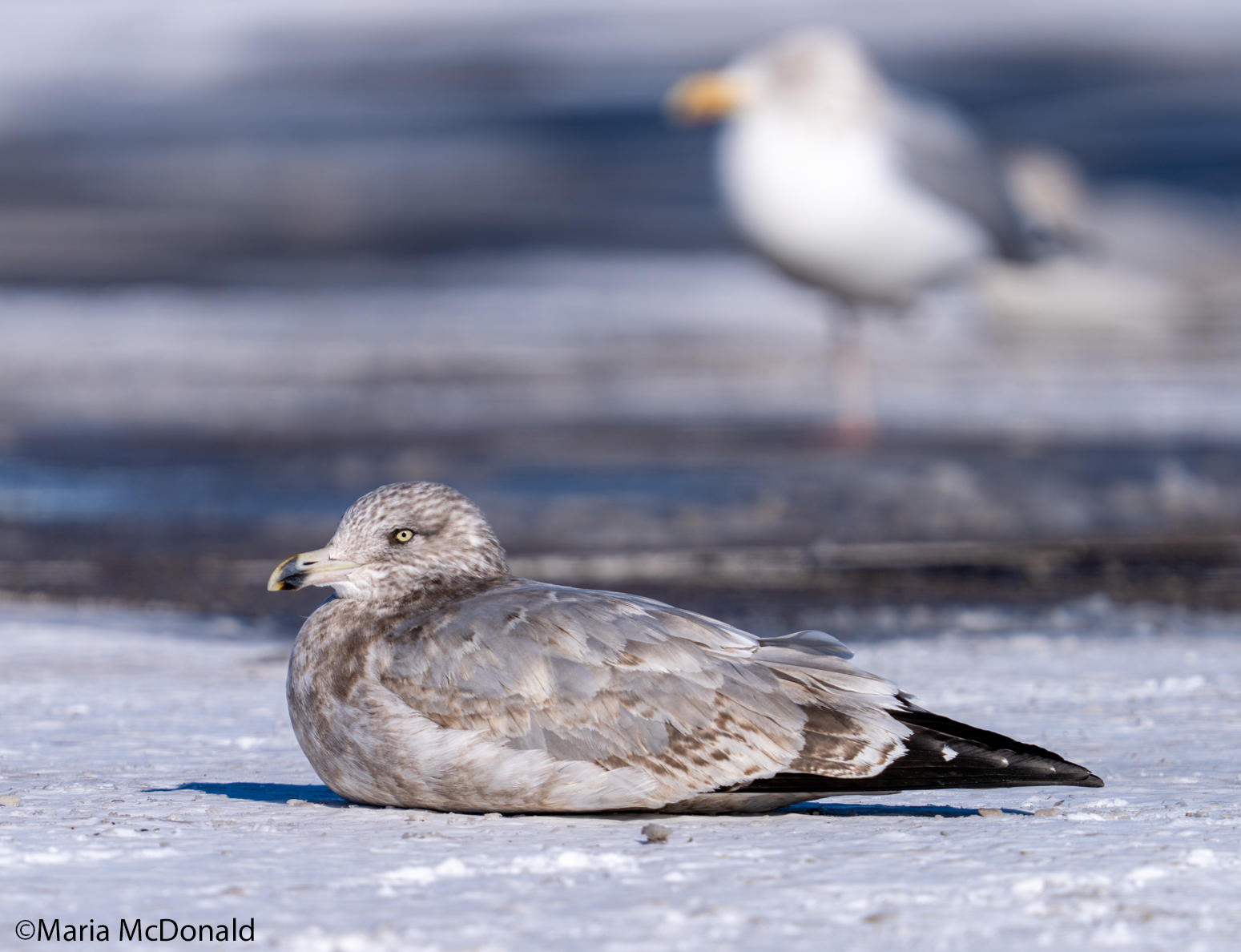
Winter is a wonderful time for birding in Maine – at least when you are dressed appropriately! Colorful seaducks that breed in the high Arctic grace our shorelines – including all three scoter species and dapper Long-tailed Ducks, along with everyone’s favorite: striking Harlequin Ducks. Purple Sandpipers and Great Cormorants replace our summertime shoreline denizens. And if the winds are right, very sought-after alcids – including Dovekies and Thick-billed Murres – join our regular Black Guillemots and Razorbills. Black-legged Kittiwakes, Northern Gannets, and “white-winged” gulls add to the mix. In this workshop, we’ll hit a few of the prime viewing locations along Maine’s southern coast. But we won’t just be working on the checklist today. Instead, we’ll be focused on learning how to search for these birds – the how, when, and why – and how to identify them. We’ll learn about microhabitats, weather considerations, and seasonal timing to aid our search today and in the future. By visiting several seasonally-productive sites, we’ll compare similar species while taking time to savor the splashes of color offered by winter seaducks in an otherwise gray and white landscape.

To get an idea of what you may see when the tour returns in the winter of 2026, see the 2025, 2024, and 2023 trip reports.

2. Spring Migrant Songbird Workshop

    ​May 17, 2026.

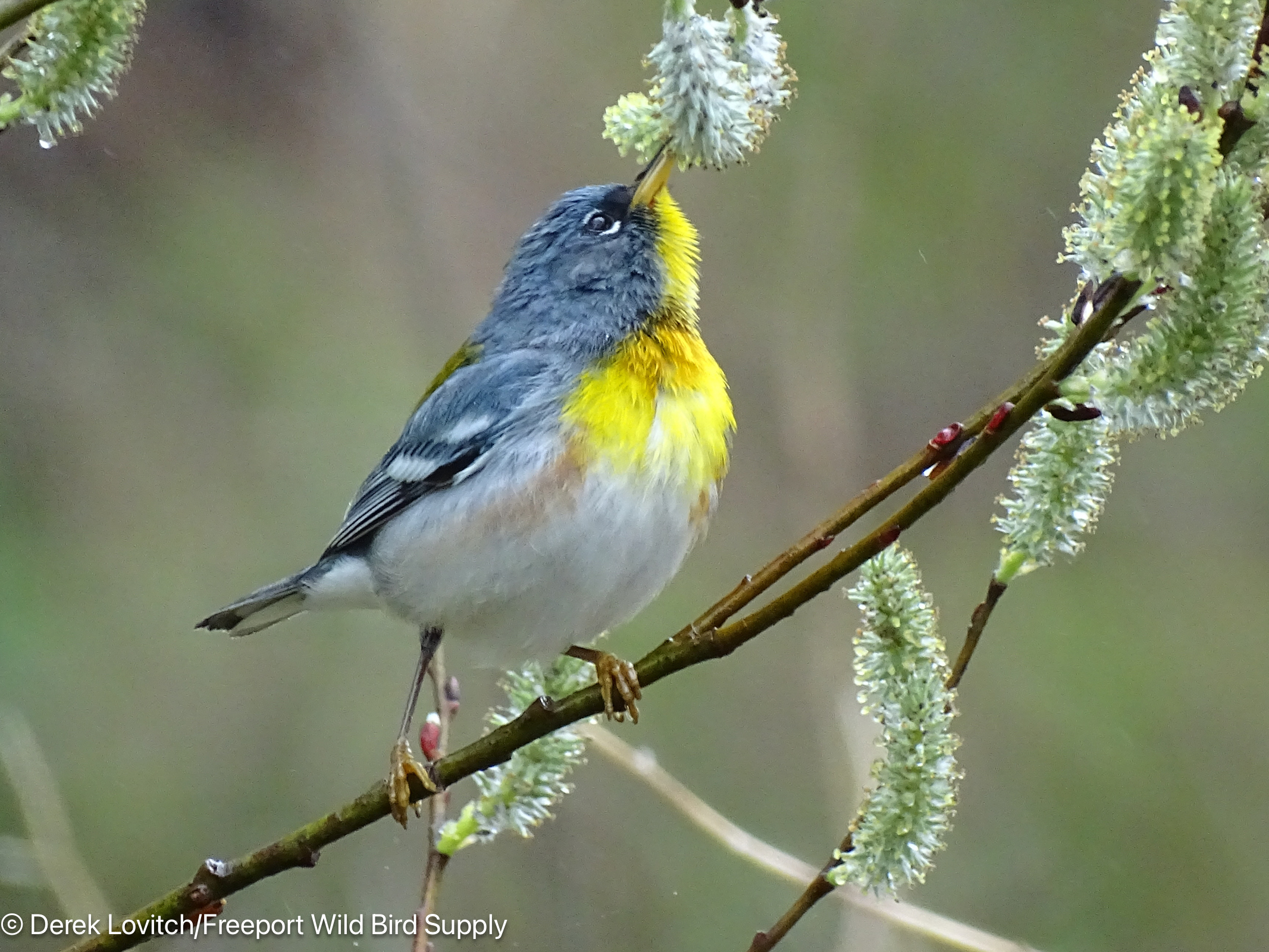
    (See Northern Parula photo at the header above. Yes, that was enjoyed on our 2025 tour!)

    This half-day workshop will focus on the migrant songbirds, especially warblers, that are passing through Maine’s most famous migrant trap, Portland’s Evergreen Cemetery. At the peak of warbler migration, we’ll learn how to identify these charismatic birds, and we’ll discuss their mind-boggling migration and what they’re up to in Maine.

    Whether it’s the kind of migration day that legends are made of or a slow day (every day of migration is different), we’ll take advantage of whatever species are present to truly get to know them. Sure, we’ll work on “the list,” but our focus will be on preparing for your next birding outing, giving you the tools to identify birds on your own, maximize your time in the field by predicting where and when to be birding based on NEXRAD radar, geography, habitat, and much more. Of course, if there are too many warblers around, we might just have to simply enjoy them!

    We’ll meet at the main entrance on Stevens Ave. to Evergreen Cemetery at 7 a.m. (or as soon as the front gate is opened), near the first building on the right. From there, we’ll caravan to the best birding location, returning to the entrance around 11. If the birding is slow, we’ll relocate in the mid-morning to another nearby park.

    To get an idea of what you may see, read the 2022 , 2023,  2024 and 2025 trip reports.

    3. Shorebird Workshop

    ​August 18, 2026; 9:00am – 4:00pm​

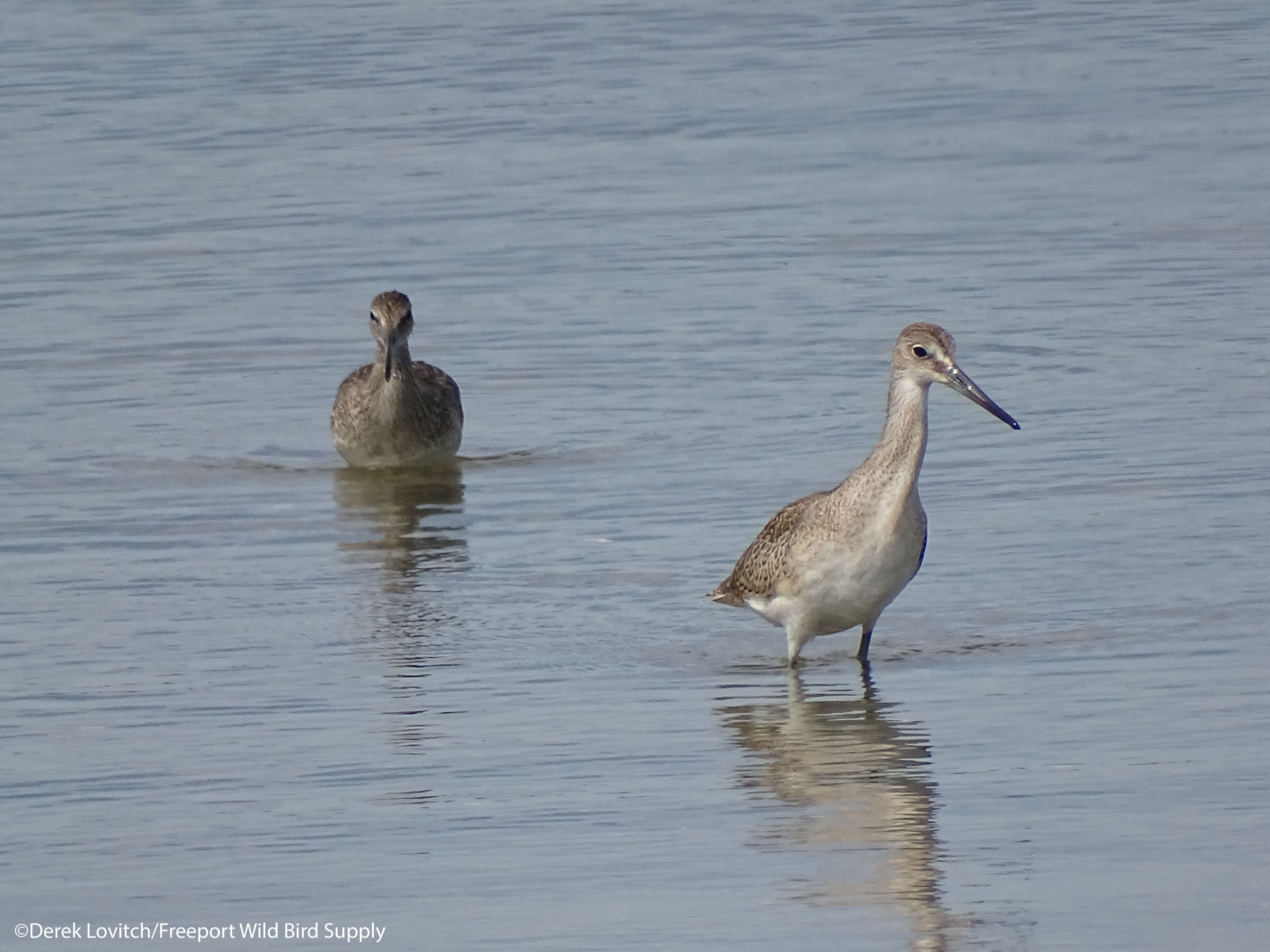
    A side-by-side comparison of “Eastern” vs “Western” Willets was one of the highlights
    of the 2025 shorebirds workshop.

    With more than 35 species of shorebirds (a diverse group including plovers and sandpipers) regularly appearing in Maine, this workshop is designed to appreciate the diversity and beauty of this fascinating family.

    We will hit some of the marshes, beaches, and rocky roosts that shorebirds prefer at the peak of their migration. The ebbs and flows of the season, daily and recent weather, and other factors could produce more than 20 species of shorebirds in our time together. Our focus will be in comparative experience, learning how to recognize each species both near and far. Starting with the basics, such as plover vs. sandpiper, we’ll work our way up to the identification quandaries such as the “peeps” and the yellowlegs. We will provide you with a “toolkit” to approach shorebird identification on your own, using a combination of habitat, shape, size, structure, behavior, and plumage to identify this wonderfully diverse and attractive group of birds. Migration, conservation, and natural history will also be discussed.

    We’ll meet at the public Park & Ride lot between Sea Dog Brewery and Cabela’s, off Payne Road at exit 42 of the Maine Turnpike, at 8 a.m. (please arrive 15 minutes early so we can depart on time) to carpool to the day’s birding destinations, based on tides, weather, and especially the birds themselves! We’ll return by 4 p.m., with an hour break for lunch (not included), likely at a place with multiple nearby options

    For an idea of what to expect, see the trip report from our 202520242023 and 2020 outings.

    4. Monhegan Birding Workshop

    September 11-13, 2026  
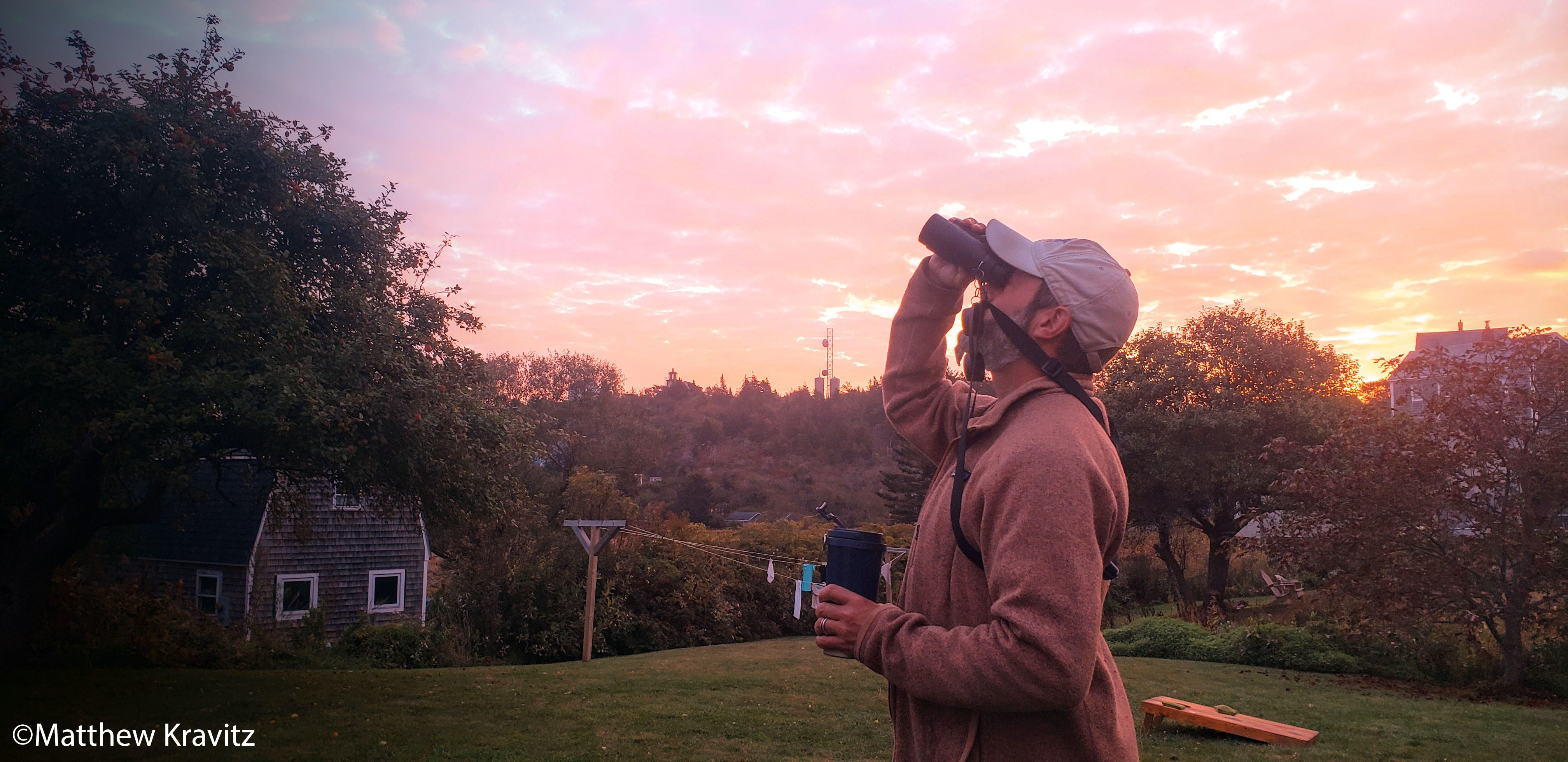
    Join Derek Lovitch for three days of birding at Maine’s famous Migration Mecca. As the summer crowds dwindle, the island becomes a birders’ paradise, with birding opportunities around every corner. This tour will spend three days sampling what the island has to offer during the peak of migration, from warblers to hawks to sparrows to the unexpected. Weather (and sometimes, lack thereof) will dictate how much we do or do not see, but every day is different out there. We’ll learn that fall warblers are rarely if ever “confusing” and why migrants – and vagrants from any direction – drop by this offshore migrant trap.

    While finding and seeing birds will be the priority, we will also do a bit of informal workshopping in the afternoons to learn more about the mechanisms and marvels of bird migration. Day one will begin at the dock for the Hardy Boat in New Harbor. We’ll keep an eye out for birds from the top deck of the boat as we make the hour-long crossing to the island. Upon our arrival, we’ll hit the ground running to make the most out of our first morning at this special place. Once we’re on land, we’ll be on foot for the next 2 days, with several walks throughout the day. We’ll mostly be on dirt roads with some steep sections, but we’ll also traverse some narrow trails full of roots and rocks. Expect to spend time on “unimproved surfaces.” You will set a new personal record on your step-counter – especially when the bird we most want to see gets discovered on the opposite end of the island just before mealtime!

    On the first day, after we check in lunch will be on your own, with a variety of options scattered about the town. After a break, we’ll head back out later in the afternoon for some more birding, before assembling again for an evening “cocktail hour” (BYOB; also available on the island) and our migration workshop where we’ll discuss the birds of the day, how and why we saw (and didn’t see) what we did, and more (when time and energy levels permit). The next two mornings we’ll once again maximize our time on the island. Following a short walk shortly after sunrise, we’ll enjoy the famous Monhegan House breakfast before birding for the remainder of the morning. Once again, we’ll break for lunch before reconvening for some afternoon birding: on the second day until we prepare for our evening “cocktail hour and migration review, and on the third day, right up until it’s time to head to the ferry.

    For 2026, we’ll be staying at the venerable Island Inn. More details will soon follow. Stay tuned!

    See Derek’s blog entry to see how the 2025, 2024, and 2023 trips went.

    This Week’s Highlights, 7/12-7/20/2025

    Jeannette and I raced down to the Kennebunk Plains on Monday the 14th for this Fork-tailed Flycatcher. A notorious “one-day-wonder,” it conveniently was discovered on a day off for a change. Even more surprisingly, unlike most Fork-tailed Flycatchers that occur in the Northeast, this one stuck around, continuing through the 16th. There are between 10 and 16 previous occurrences of this vagrant from South America in Maine – incredible considering the distance it has to fly “incorrectly” to get here!

    Only in the middle of July is a trip to Monhegan not the birding adventure of the week. But betweenthe chase of a “megs,” an opportunity to visit a banding project on a mountaintop in Vermont, and a couple of boat trips, it was a great week (plus) of birding for me nonetheless. Here are my observation of note over the past nine days.

    • 1 RAZORBILL (just off of Smuttynose outside of Monhegan harbor) and 1 Atlantic Puffin, Hardy Boat from Monhegan to New Harbor, 7/12. Only tubenoses encountered on a very foggy day both to and from were Wilson’s Storm-Petrels.
    • 1 FORK-TAILED FLYCATCHER, Kennebunk Plains, Kennbunk, 7/14 (with Jeannette and m.obs). Found earlier in the day by Sam Darmstadt. Photo above.
    • 7/19: I co-lead the morning Whale and Puffin Combo Cruise tour with our partners Cap’n Fish’s Cruises: 1 MANX SHEARWATER (unexpected close fly-by between our boat and Eastern Egg Rock); 2 American Oystercatchers, Eastern Egg Rock; 3 Cory’s Shearwaters and 100-125 Wilson’s Storm-Petrels offshore. I stayed aboard for the afternoon trip and only had 1 Cory’s Shearwater and 75-100 Wilson’s Storm-Petrels offshore.

    UPCOMING TOURS w/ Space Available:

    Shorebird workshop with Down East Adventures, August 18th, 8:00am to 4:00pm.

    Saturday Morning Birdwalks Return 8/2!

    This Week’s Highlights, 7/5-7/11/2025

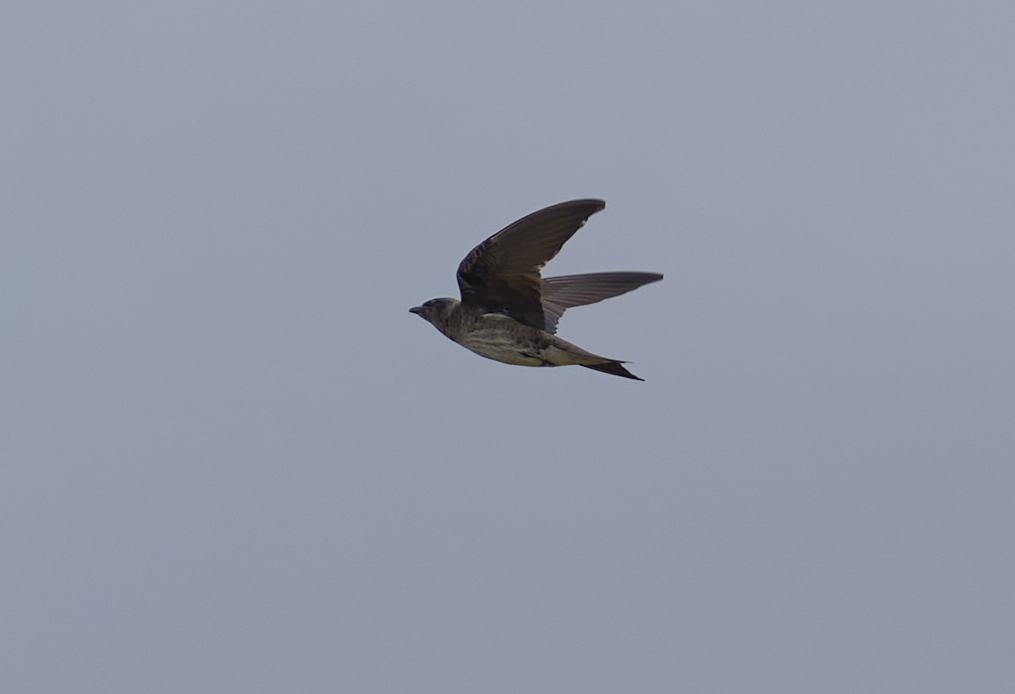
    Any single martin away from a known colony is worth studying, especially “funny looking” ones, as vagrant martins have occurred in the Northeast. I spotted one such martin over Scarborough Marsh from the Eastern Road Trail while guiding on Thursday. Luckily, I shouted down the road to Bill Thompson and he was able to photograph the bird as it flew by. Together, we identified it as a 1st summer, likely female, Purple Martin. It sure looked strange as it was flying towards me.

    A week of fairly-local birding at the height of nestling season – and the ramping up of southbound shorebird season – produced the following observations of note:

    • 2 Red Crossbills, Hidden Valley Nature Center, Jefferson, 7/6.
    • 4 Orchard Orioles (pair with 2 fledglings), Old Town House Park, North Yarmouth, 7/7 (with clients from Maine).
    • 3 Lesser Yellowlegs (first of “fall”) and 3-4 Least Sandpipers (first of fall), Walsh Preserve, Yarmouth, 7/8 (with clients from Maine).
    • Totals of 95+ Short-billed Dowitchers, 70+ Least Sandpipers, 4 Greater Yellowlegs, and 1 Lesser Yellowlegs, Scarborough Marsh, Scarborough, 7/10 (with clients from Maine and New Hampshire).
    • 1 PURPLE MARTIN, Eastern Road Trail, Scarborough Marsh, 7/10 (with clients from Maine and New Hampshire). Photos from Bill Thompson above.
    • 1 continuing drake American Wigeon, Eastern Road Trail, 7/10 (with clients from Maine and New Hampshire).

    UPCOMING TOURS

    Join me and Cap’n Fish’s Cruises out of Boothbay for a special edition of their daily Puffin and Whales Cruise on Saturday July 19th. While this is not a dedicated pelagic, I’ll be a guest naturalist to help spot and call out birds at Eastern Egg Rock and offshore. With the irregular occurrence of the Tufted Puffin and now a Bridled Tern at EEG, you won’t want to miss the chance for a more birding-focused few hours on the water!  And the more birders we have aboard, the better!

     Recent Highlights, 7/10 – 7/21/2024

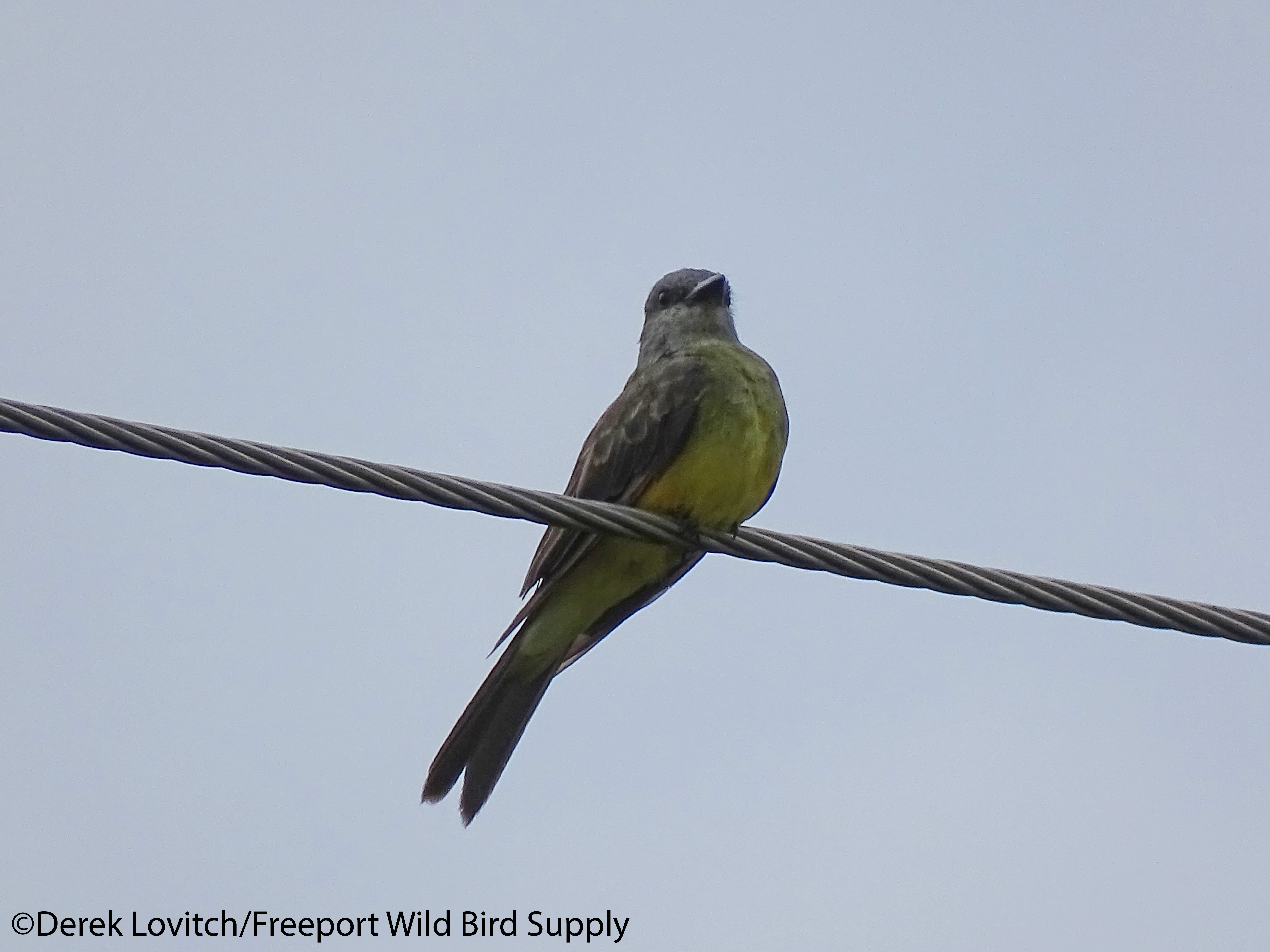
    This Tropical Kingbird, a long-overdue third state record, was discovered at the Skelton Dam Boat Launch in Dayton. Many of us saw it on the morning of 7/18, but it may have been present for nearly three weeks before being identified!

    It’s been a busy 12 days, with a weekend in Quebec City and summertime human visitors. Of course, the last day in Quebec City was when the Ferruginous Hawk was 20 minutes from our home. Oh well…brunch was absolutely fantastic. Sadly, life and work minimized my birding during this period, despite a suite of rarities now appearing around the Northeast.  Luckily, I did have a couple of good mornings in the field before we head out on our summer vacation, including hours of quality time with a Tropical Kingbird in Dayton that was happily identified while I was around and somehow free of responsibilities for the morning!  I wonder what will show up while we are gone this time!?

    • Both Yellow-billed and Black-billed Cuckoos have been calling on our Durham property all week.
    • 1+ WHITE-WINGED CROSSBILL, Moore’s Pond, Bradstreet Twp, 7/12 (with Jeannette).
    • 2-3 Grasshopper Sparrows, Auburn-Lewiston Municipal Airport, Auburn, 7/15 (with Doug Hitchcox et all).
    • 1 continuing TROPICAL KINGBIRD, Skelton Dam Boat Launch, Dayton, 7/18 (with m’obs). Third state record, first chase-able. Long overdue state bird for me! After years of expecting, predicting, and looking for one, in my frustration, I pulled it off my “Next 25 Predictions List” and so I don’t get any credit for this one. I still enjoyed it though. Photo above, and video here: https://www.facebook.com/share/v/4qyGf1VSmw1wpSon/
    • The salt pannes along the Eastern Road Trail in Scarborough Marsh are exceptional right now due to low water levels. On the morning of the 19th, a few of the tallies included 125+ Snowy and 50+ Great Egrets; 50+ Glossy Ibis; and 20+ Great Blue Herons. Shorebird numbers included a nice number of Least and Semipalmated Sandpipers; 50+ Greater and 30+ Lesser Yellowlegs; 16 Short-billed Dowitchers; and 2 Pectoral Sandpipers (FOF). Of course the highlight for me, however, was “Patches Jr, Jr” – the proposed HYBRID TRICOLORED HERON x SMALL WHITE EGRET(S) SPP back for another year. In fact, it’s already year 12 of this complex here. Unfortunately, it was too far for photos today.  For more information, see: North American Birds, Volume 72: No 2, pp 28-40.
    • 1 Yellow-throated Vireo, our property in Durham, 7/21. Yard Bird #153!

    Tours and Events:

    • There will not be a Saturday Morning Birdwalk on 7/27.

    Recent Highlights, 6/13 – 6/22/2024.

    Thanks to Mike Williams for allowing me to share his photos of this amorous pair of Red-necked Grebes along Ocean Avenue in Biddeford Pool. We’ve had 1-2 Red-necked Grebes “oversummering” here for the last few years, and last year I observed some rudimentary nest building from a pair (also with a stunned tour group). But we did not expect to see them, get, uh “that into it,” with courtship, nest-building, and even copulation. Unfortunately, as you could see, the “nest” was below the high tide line, so there’s not much chance of success here.  A freshwater wetland breeder that nests no closer than central Quebec, this is odd behavior in a very odd place!  It was amazing to watch though, and anytime we get to see Red-necked Grebes in full breeding plumage is a highlight on its own.

    Like last week, much of my time was spent with our local breeding birds. From my personal “mini-breeding bird surveys” to a 7-day tour for Gulf Coast Bird Observatory, the birds that call Maine home in summer were once again the “targets” and the highlights, from Saltmarsh Sparrows and Roseate Terns to Grasshopper Sparrows and our wealth of warblers.

    However, June is a good time for oddities. During the course of enjoying our usual species, I encountered the following observations of note over the past 10 days:

    • 3 (!) RED-NECKED GREBES, 16 total Black Scoters, 3 Surf Scoters, etc, Ocean Avenue, Biddeford Pool, 6/16 (with Martin Hagne and Denise).
    • After being excited to find the 3 breeding plumage RED-NECKED GREBES the day before, we were shocked to find 4 the next day, all calling, and one pair courting and copulating!  Photos and more details above. (with Gulf Coast Bird Observatory tour group).
    • 2 American Oystercatchers, 1 Red-breasted Merganser, 1+ Black Scoter, Ocean Avenue, 6/17 (with Gulf Coast Bird Observatory tour group).
    • 1 Surf Scoter, Dyer Point, Cape Elizabeth, 6/17 (with Gulf Coast Bird Observatory tour group).
    • 2-3 singing CLAY-COLORED SPARROWS, Kennebunk Plains, 6/18 (with Gulf Coast Bird Observatory tour group).
    • 4 Glossy Ibis, Sanford Lagoons, Sanford, 6/18 (with Gulf Coast Bird Observatory tour group).
    • 3 COMMON MURRES, etc, Eastern Egg Rock via Cap’n Fish’s Cruises, Boothbay Harbor, 6/21 (with Gulf Coast Bird Observatory tour group).
    • 1 Great Shearwater, 2 Sooty Shearwaters, 48 Wilson’s Storm-Petrels, 2 Fin Whales, etc, Cap’n Fish’s whale watch out of Boothbay Harbor, 6/21 (with Gulf Coast Bird Observatory tour group).

    This Week’s Highlights, July 30 – August 5, 2022.

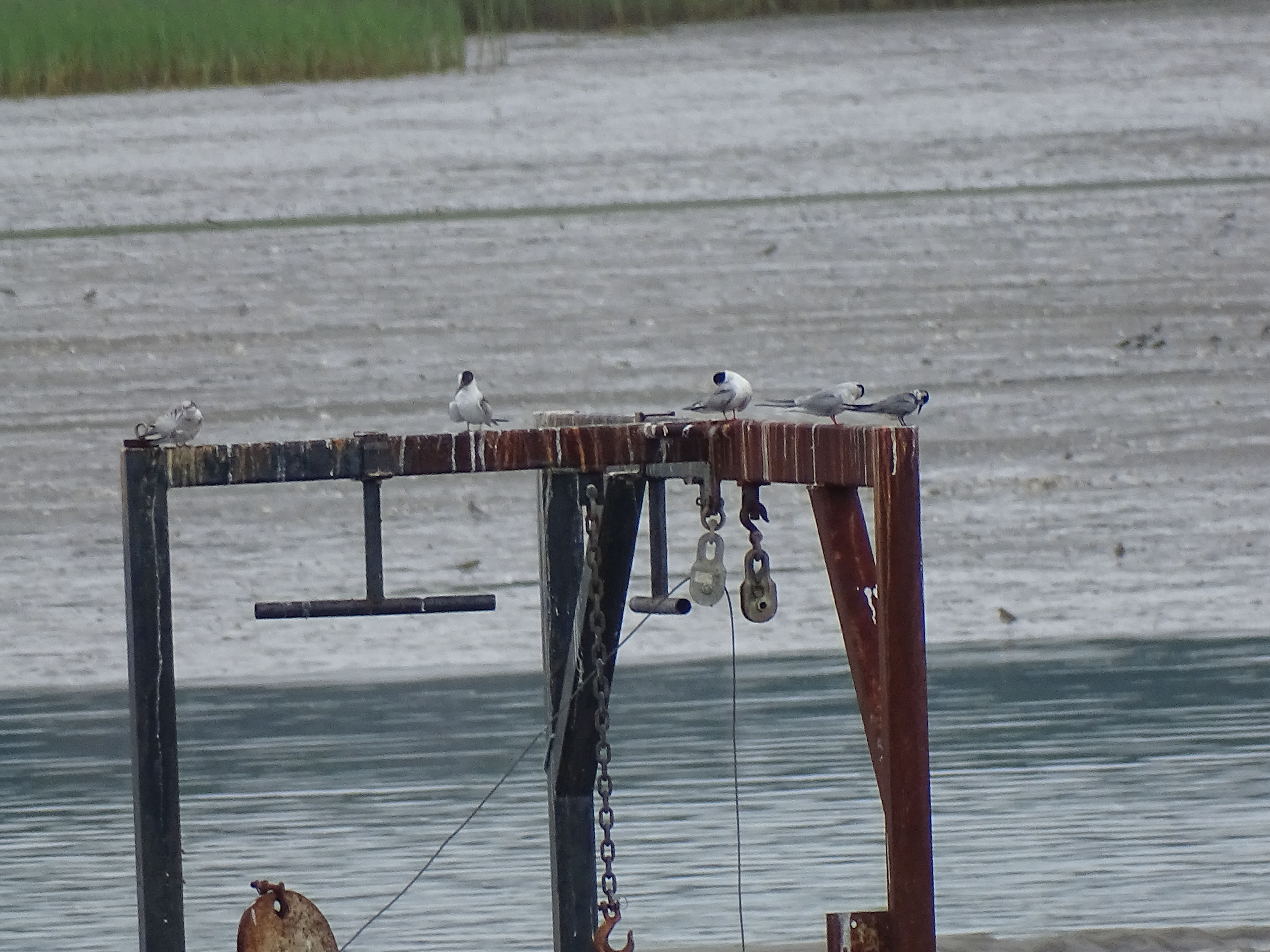
    This Black Tern (far right, with Roseate Terns) has been slowly molting out of breeding plumage since it arrived at Pine Point back on July 2nd. It was still present in the morning of August 5th.

    It’s August, so as usual, shorebirds were the focus. Here are my observations of note over the past seven days.

    • 1 Surf Scoter, off Sisters Island, Casco Bay, 7/31 (with Birds of Casco Bay Tour group).
    • 1 Fish Crow continues, Point Sebago Resort (private), 8/4 (with Point Sebago Birdwalk group).
    • 1 Red Crossbill, our yard in Pownal, 8/5.
    • 1 continuing molting adult BLACK TERN, Pine Point, Scarborough, 8/5.

    Shorebird high counts this week:

    • Black-bellied Plover: 39, Pine Point, Scarborough, 8/5.
    • Killdeer: 24, Mayall Rd, Gray/New Gloucester, 8/4.
    • Semipalmated Plover: 389, Pine Point, 8/5.
    • Piping Plover: 14, Popham Beach State Park, Phippsburg, 8/2.
    • Whimbrel: 3, Pine Point, 8/5.
    • Ruddy Turnstone: 2, Pine Point, 8/5.
    • Sanderling: 16, Popham Beach State Park, 8/2.
    • Least Sandpiper: 65+, Eastern Road Trail, Scarborough Marsh, 8/5.
    • White-rumped Sandpiper: 9, Eastern Road Trail, 8/5.
    • Pectoral Sandpiper: 1-2, Eastern Road Trail, 8/5.
    • Semipalmated Sandpiper: 240+, Popham Beach State Park, 8/2.
    • Short-billed Dowitcher: 13, Pine Point, 8/5.
    • Spotted Sandpiper: 2, Sebago Lake State Park, 8/4.
    • Lesser Yellowlegs: 26, Rte 1/9 salt pannes south, Scarborough Marsh, 8/5.
    • “Eastern” Willet: 14, Pine Point, 8/5.
    • Greater Yellowlegs: 9, Eastern Road Trail, 8/5.