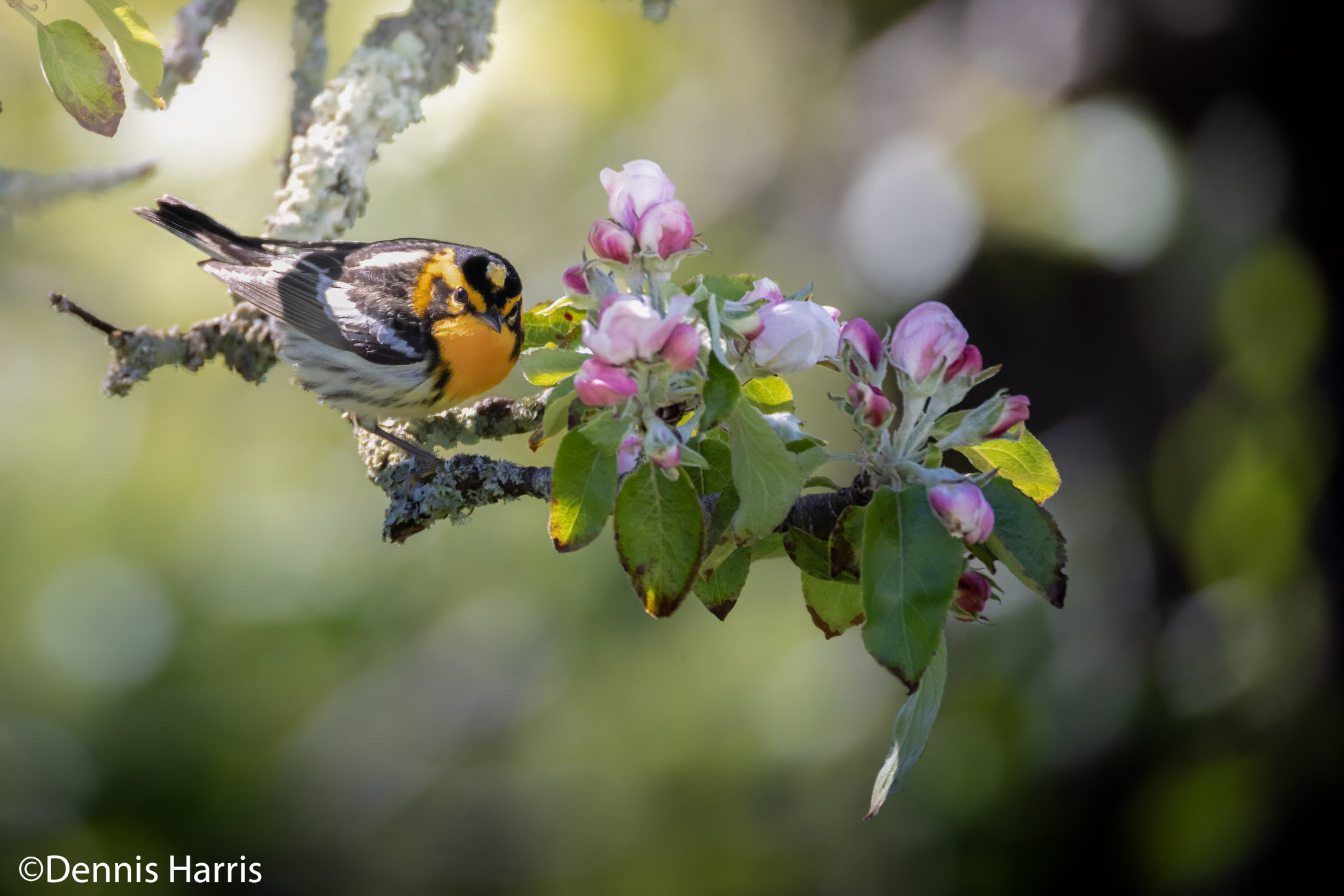
Such are the thrills of birding Monhegan in spring!
Another remarkable Monhegan Spring Migration Weekend is in the books. Every day out here is different in migration, and every tour is unique. But this one was particularly full of superlatives.
It seemed slow. Low numbers, low diversity, but yet with new birds being seen every day we ended up with a very good, above-average tally of 95 species, with the 18 species of warblers being just about the long-term average.
While numbers of individuals, especially warblers, were dreadfully low, we more than made up for it with quality. Quality of species, but especially quality of sightings. Just about everything was seen so well. A recurring theme of the weekend was definitely “wow, that was a great view!” or “what a fascinating behavior!” The bird-watching was simply divine!
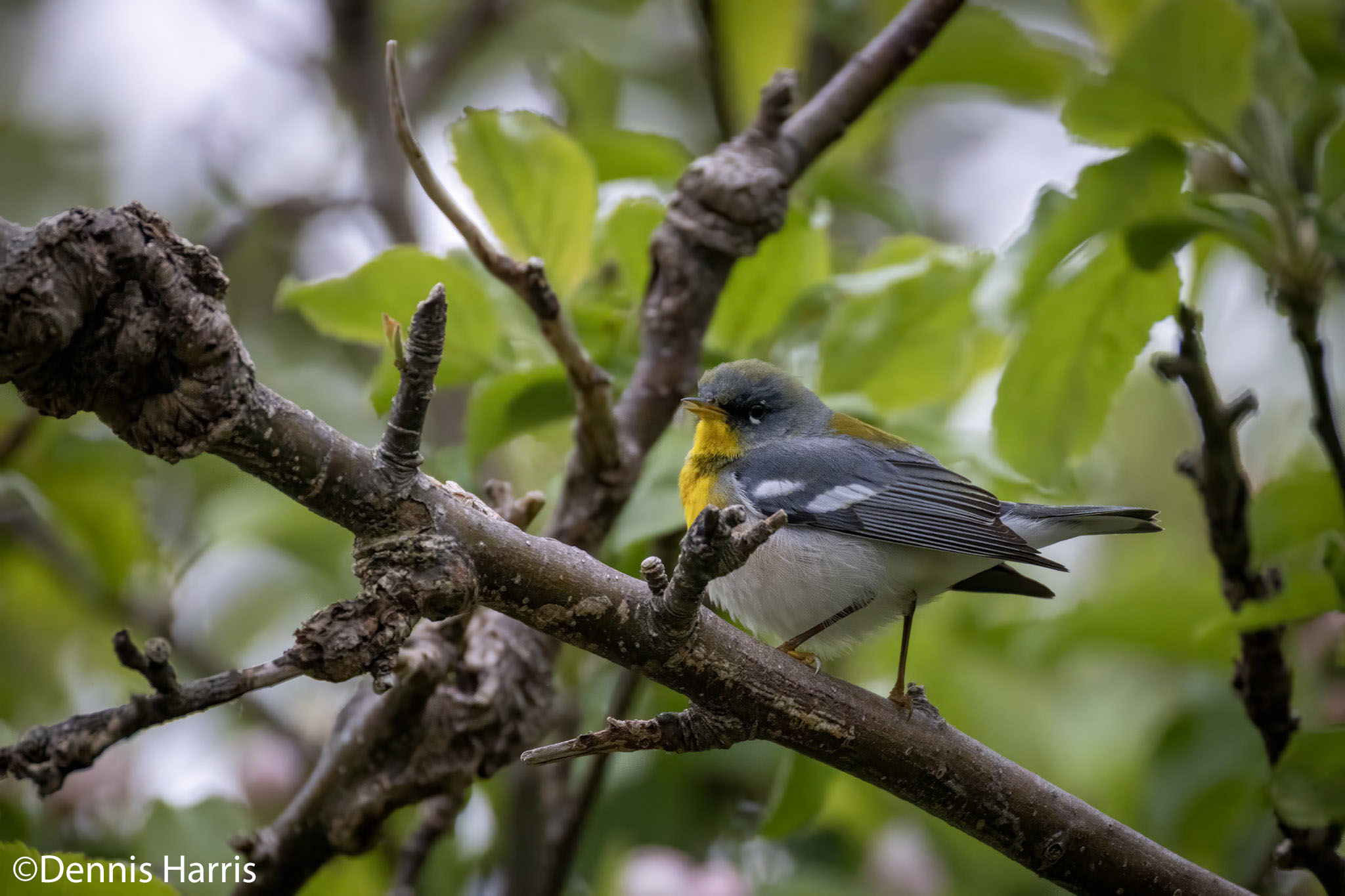
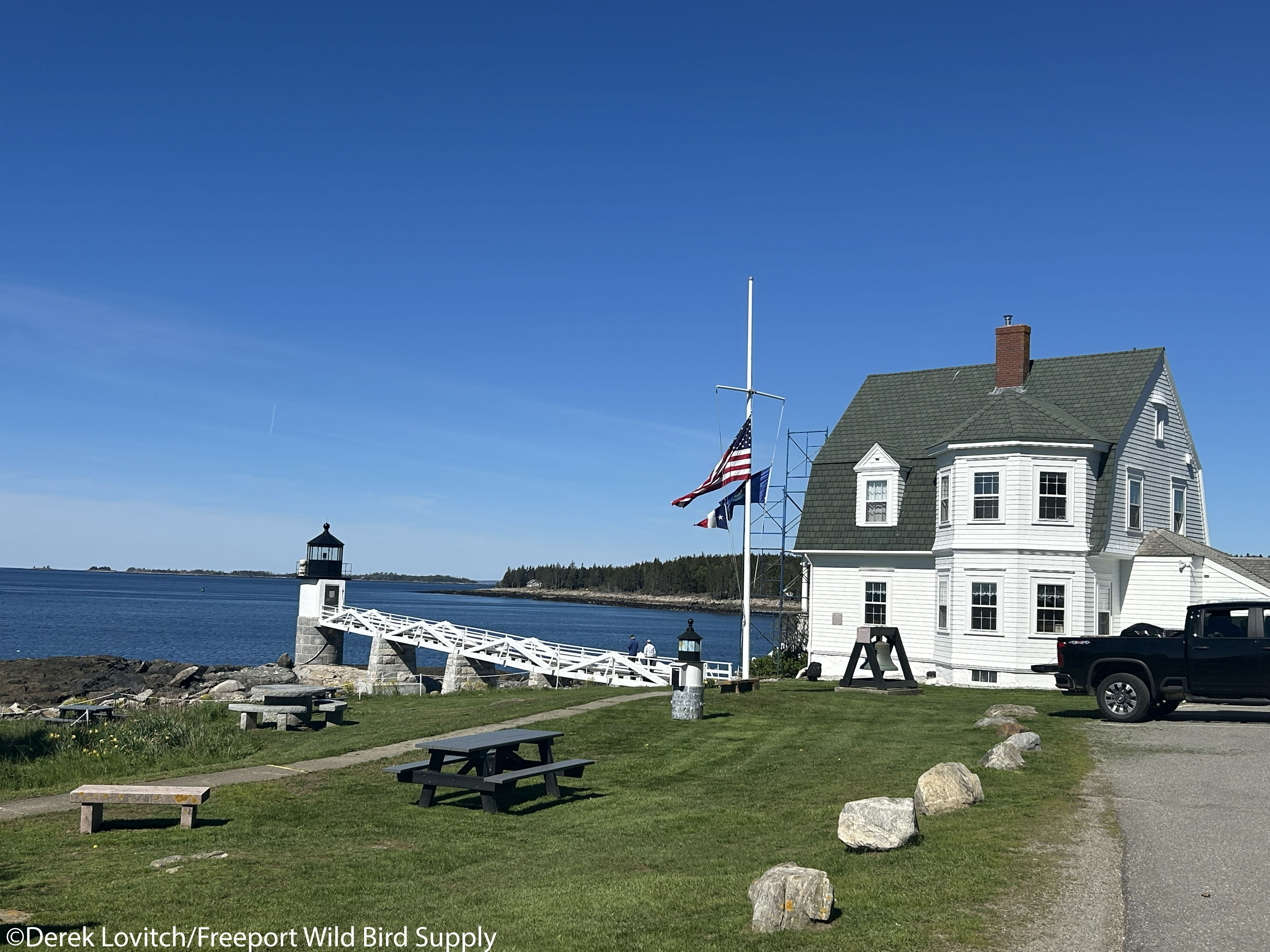
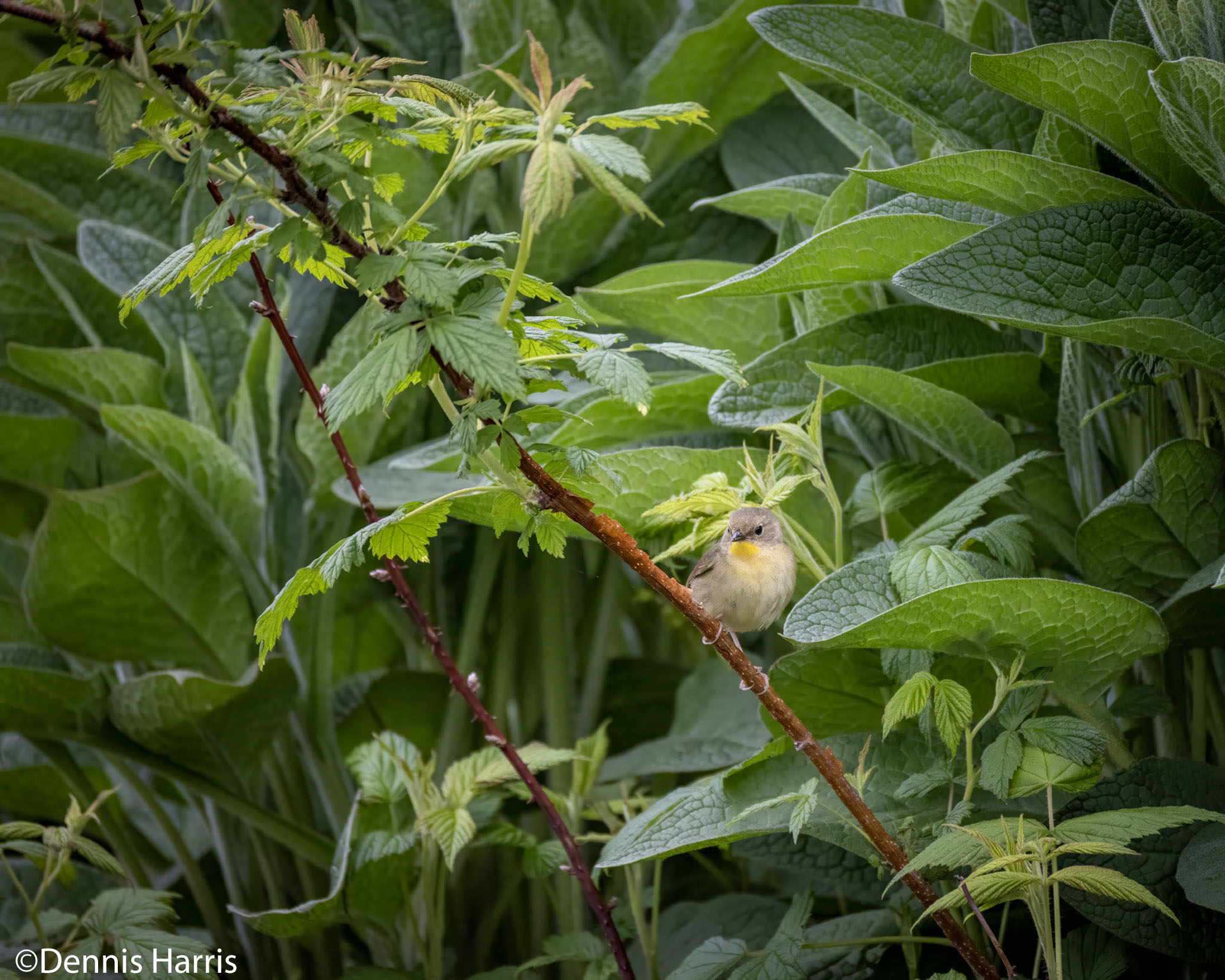
Due to ferry schedules, we now begin the weekend with a casual birdwalk at the Marshall Point Lighthouse (and up the road) in Port Clyde. Friday morning was pleasantly birdy, with great views of American Redstarts, Black-throated Green Warblers, Yellow Warblers, and Northern Parula. We also picked up a few species we won’t see on the island – like House Finch and Turkey Vulture – and introduced our visitors from the west to the likes of Common Eider and Black Guillemots.
A pleasant boat ride (it sure beat last year!) was very productive, with 2 pairs of Atlantic Puffins seen very well on the water, an immature Great Cormorant, and most notable: 10 truant Purple Sandpipers on Shag Ledge.
We arrived at the island, soon greeted by a calling Sora. We expected that call would torment us for the next several days. After checking in and having lunch, we began our island birding. It was pretty slow overall, but we started having such great experiences.
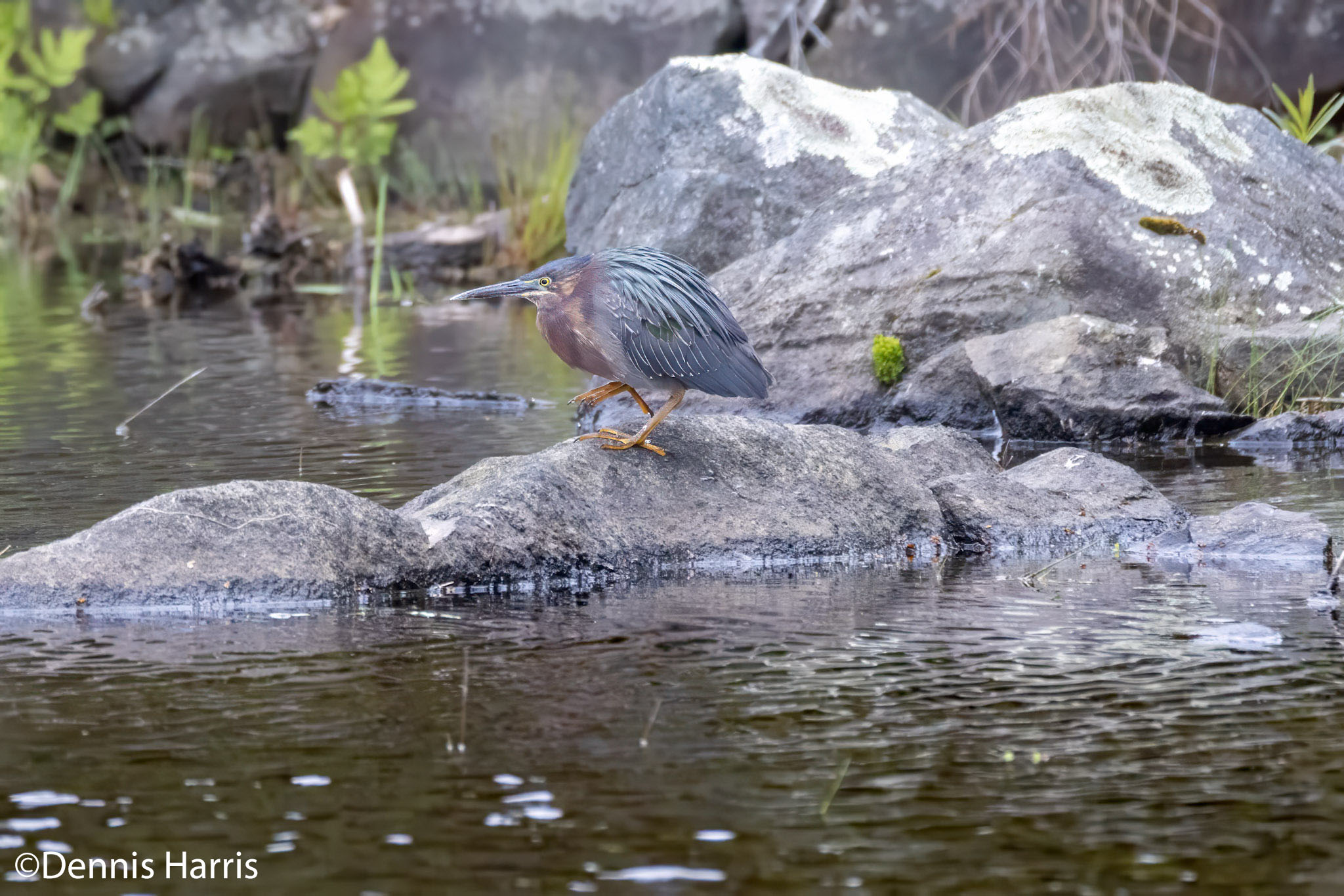
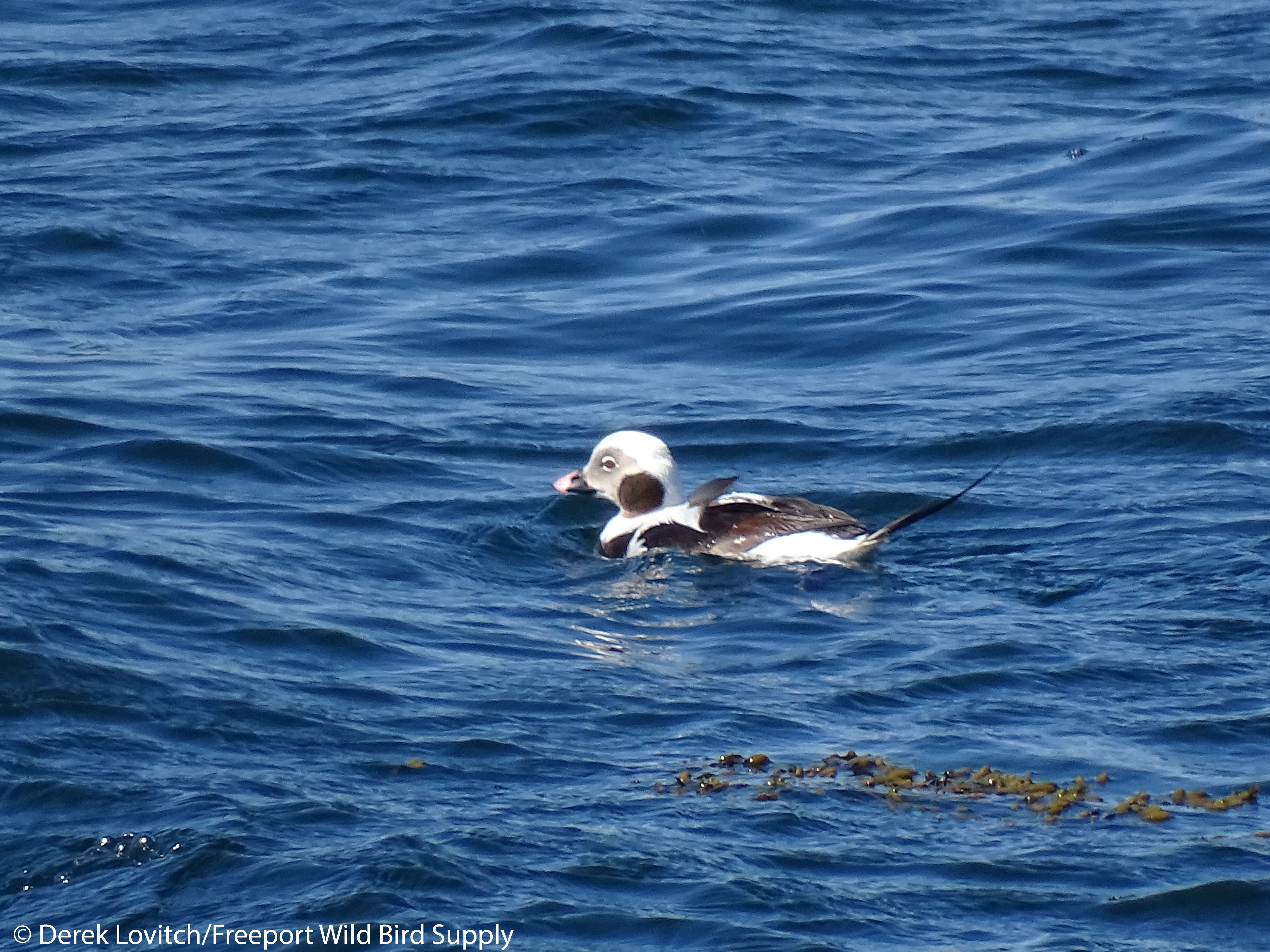
The two Green Herons at the Ice Pond were unusually conspicuous and confiding (as they were all weekend). While talking about eiders and Black Guillemots, a spiffy drake Long-tailed Duck pops up right in front of us. Then, while scanning the Outer Duck Islands, a pair of American Oystercatchers fly through my field of view – my 232nd species on Monhegan, and only about the 7th or so Island Record!
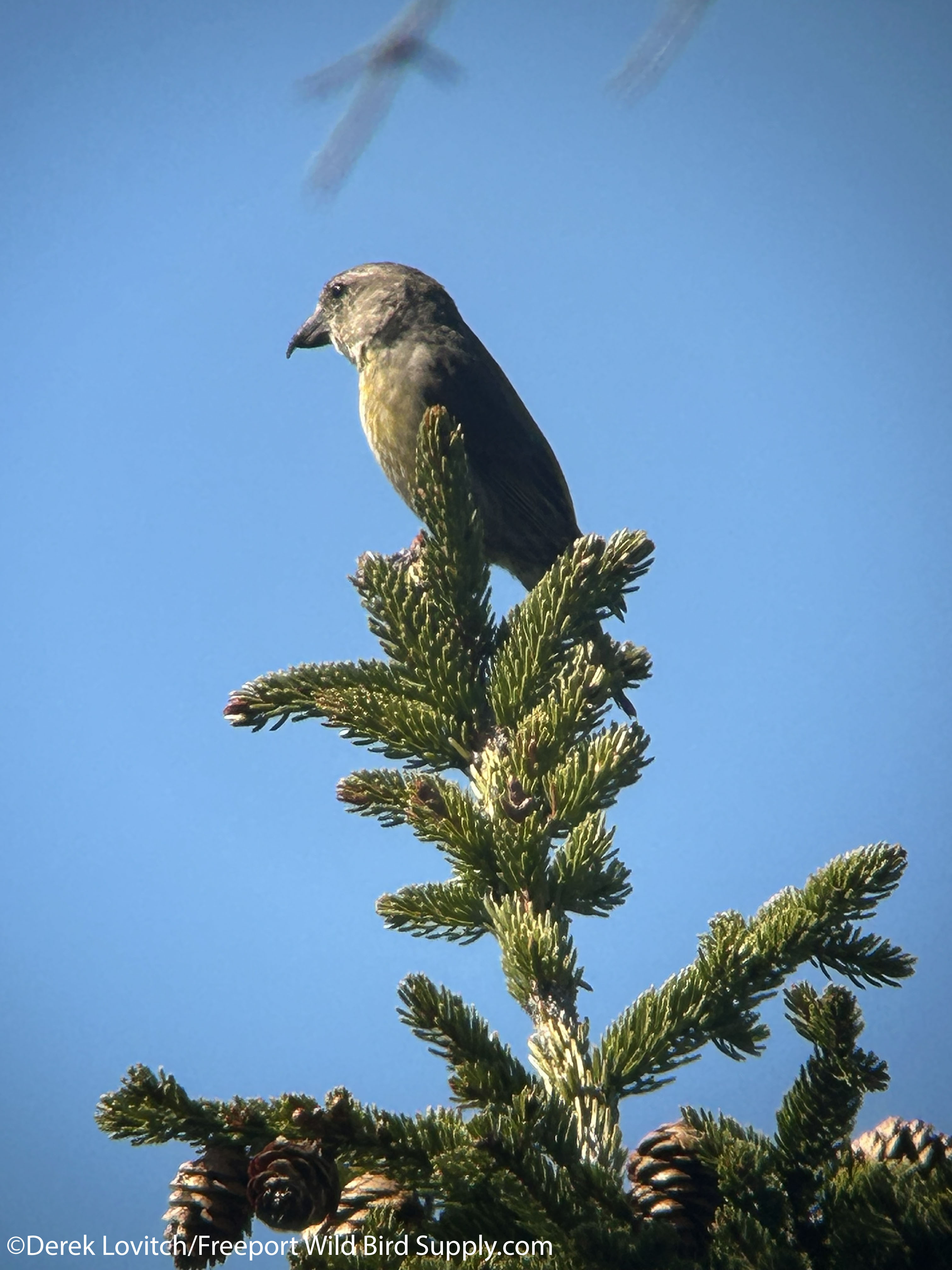
Red Crossbills were one of the stars of the weekend, and we began our good fortune with observing them really well each day, starting with 2 females and 2 juveniles feeding next to the Ice Pond. And remember that Sora, starting its annual taunt? Well, it (or as it turns out, one of at least 2) was surprisingly close to the pumphouse when we arrived, so we used the time to wait patiently for the outside chance of an appearance.
And about 15-20 minute of tantalizingly close, incessant calling, there it was – a Sora! In the open! Foraging for about a minute in a narrow chunk of marsh grass, and then flying across a patch of open water. Everyone in the group saw a Sora!
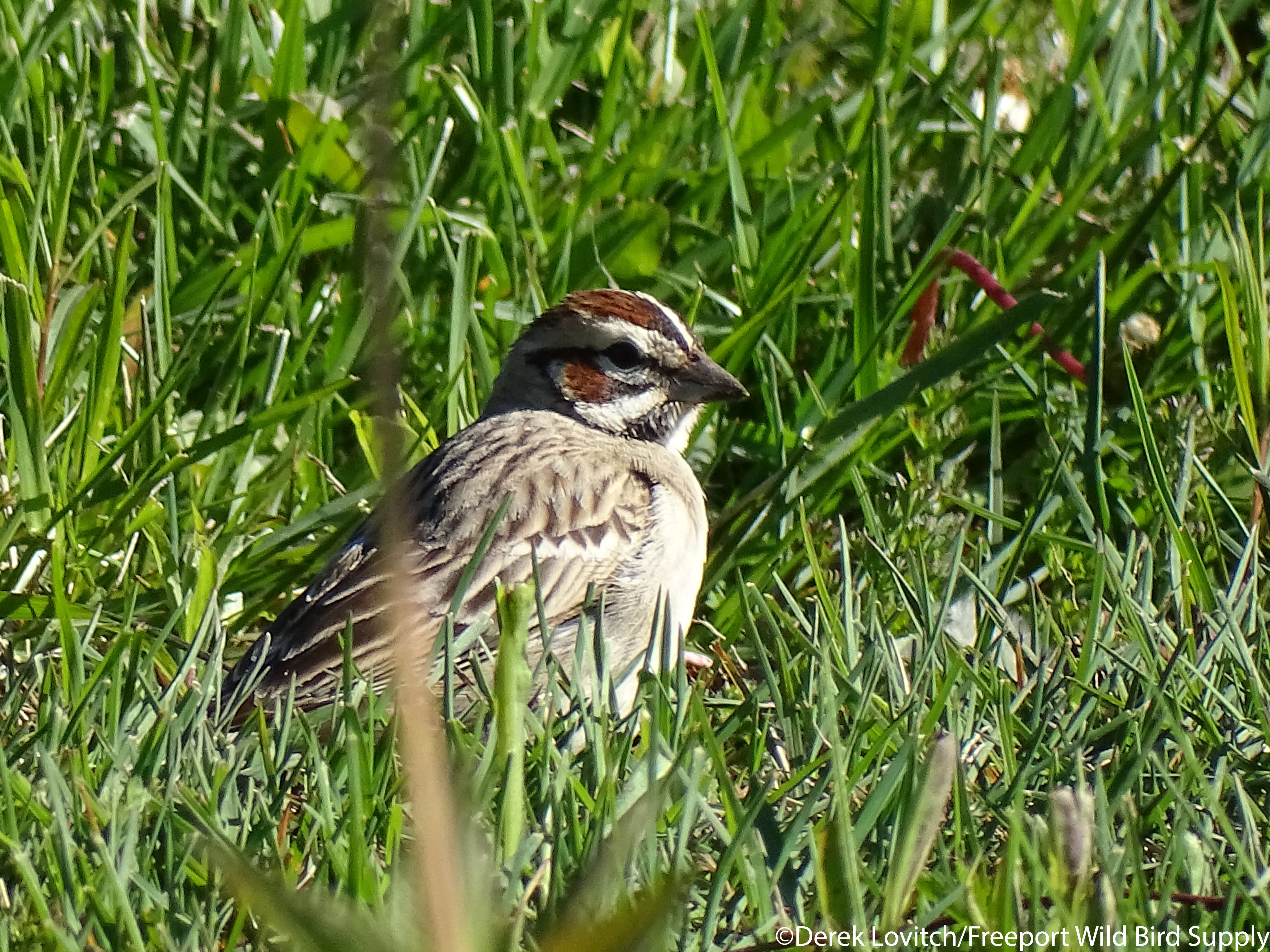
Then, a text from a friend came through, and the continuing Lark Sparrow was in her yard. A private yard, but we were granted the privilege to access it, and when we did, the Lark Sparrow was nearly at our feet!
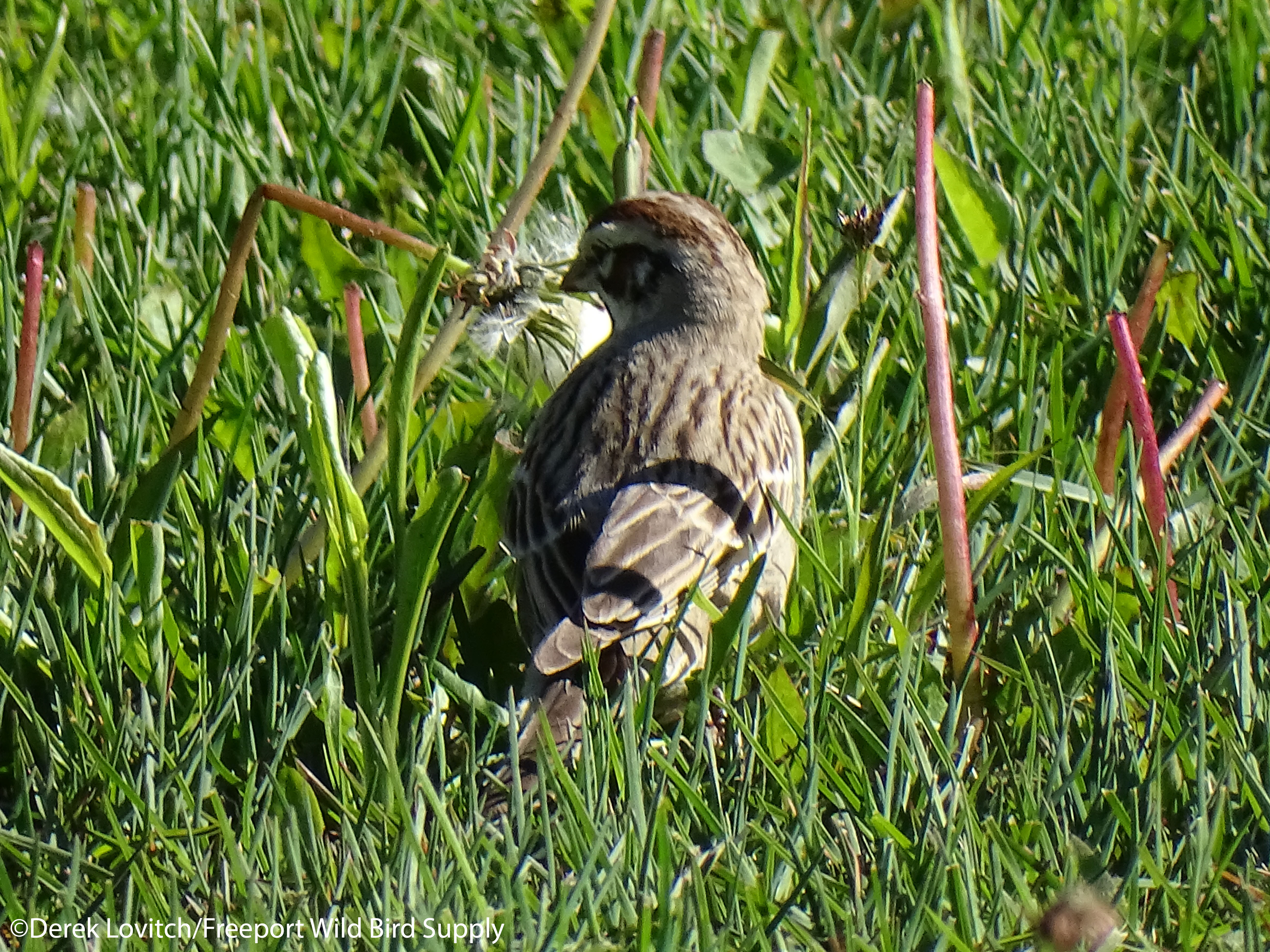
Quality views of the notable birds on the island, our self-found rarity, Red Crossbills everywhere, and yeah – we saw a Sora! Not bad for the first day, and we didn’t even arrive until 11:30am.
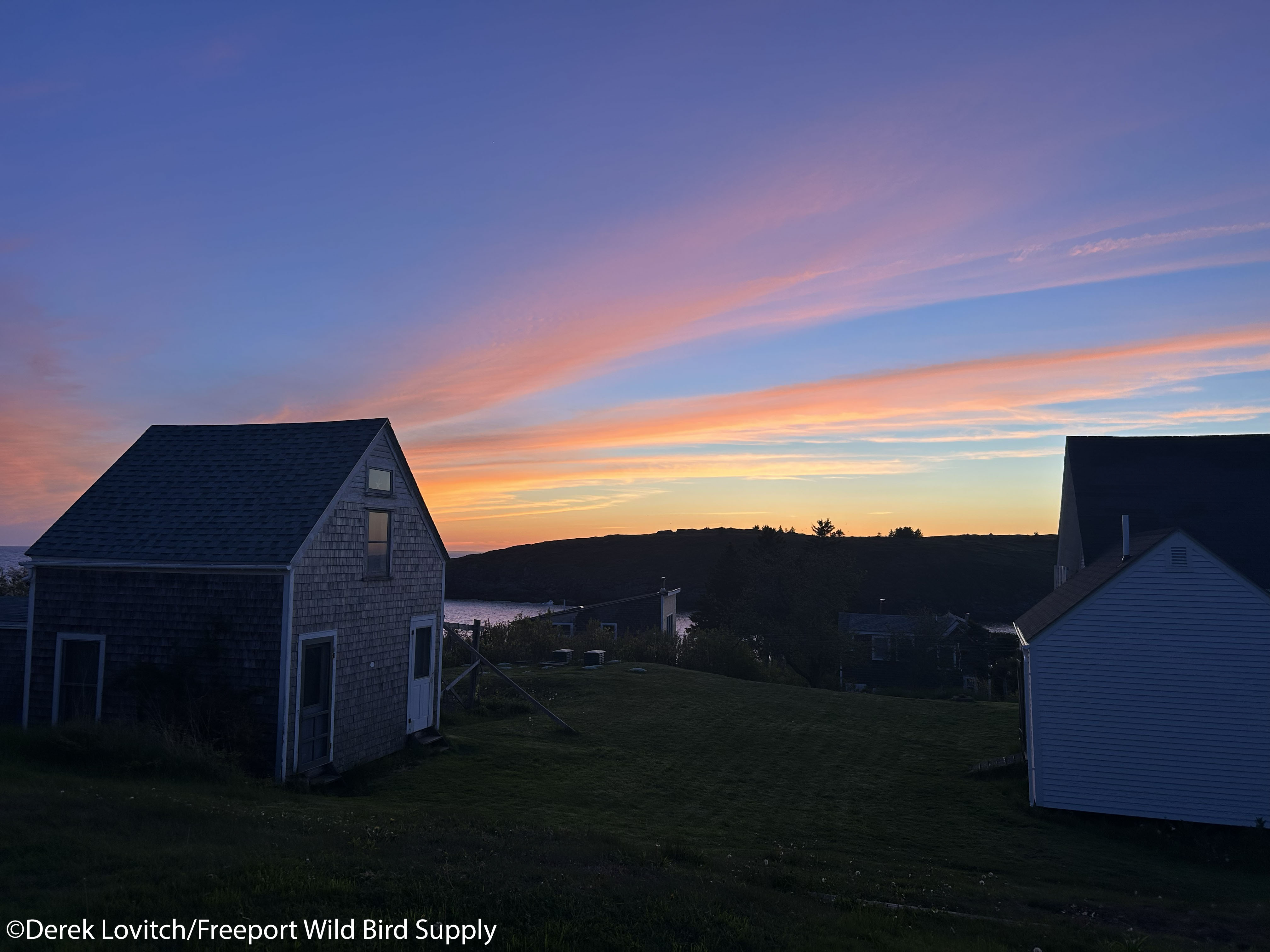
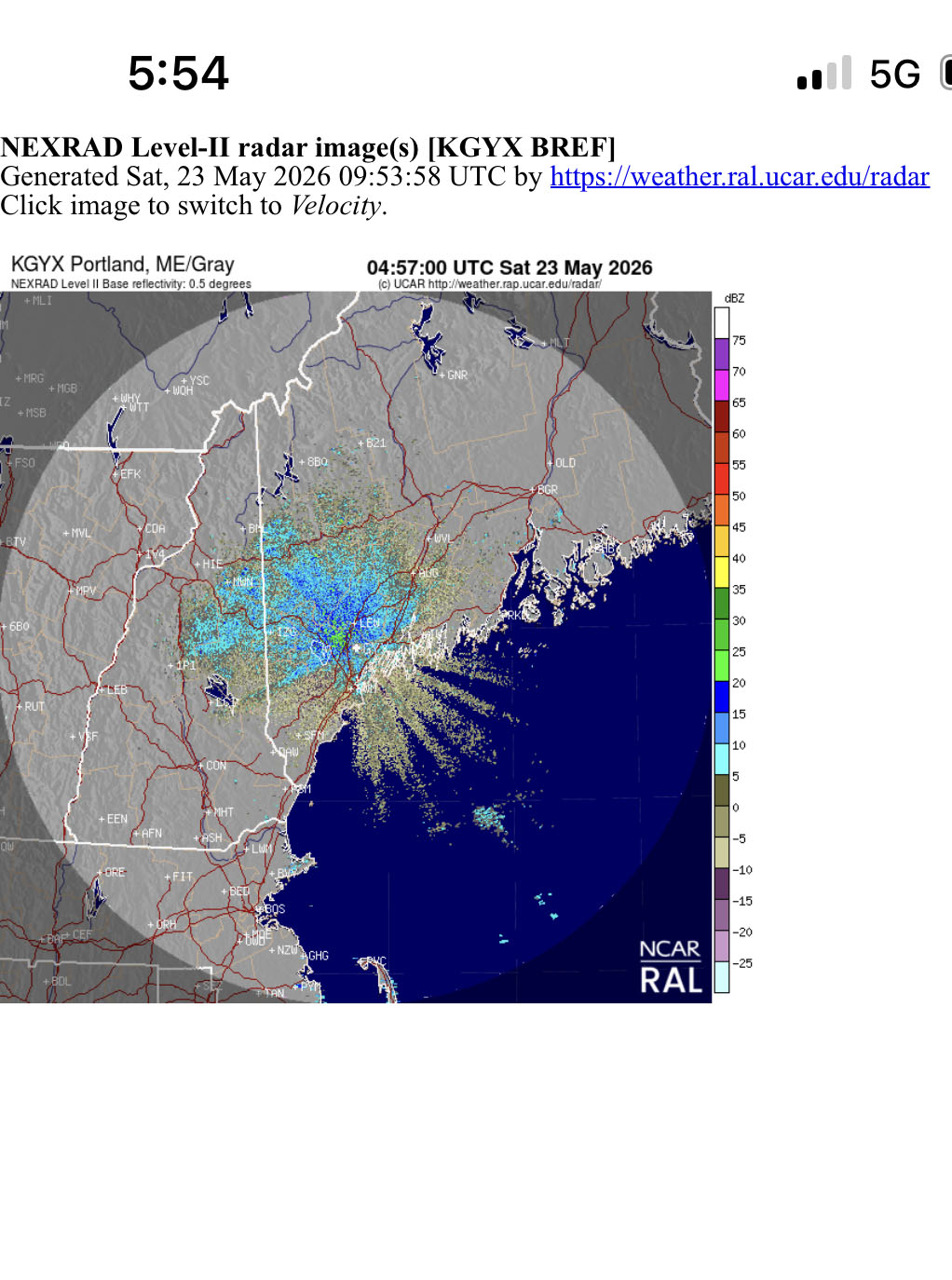
On Saturday morning, we awoke to an ambiguous radar image overnight, but there wasn’t much overhead after dawn, other than a small migrant flock of Blue Jays. We took the time to learn a little about the radar, decipher that it was probably a lot of pollen in the air overnight rather than birds, and ground-truthed that with our copious sniffles.
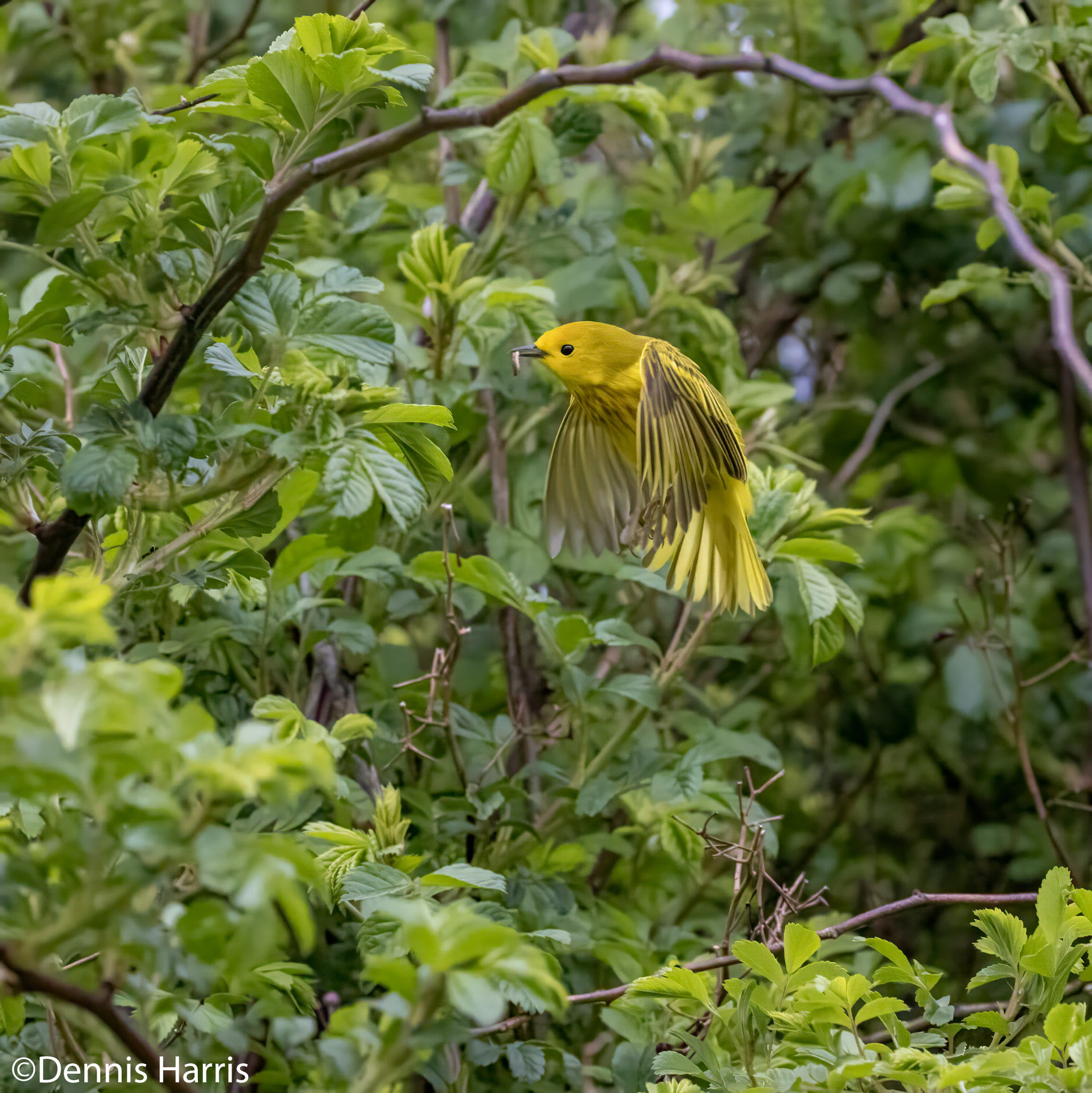
Our pre-breakfast walk was also rather slow by Monhegan morning standards, but observations and species were slowly building. Once again, we continued to comment on the quality of the observations and bird experiences. There was the three-pair Yellow Warbler brawl that took place inches from us. Cedar Waxwing flocks eating apple blossoms, great views of colorful Magnolia Warblers and American Redstarts, a Merlin hunting robins and grackles (unsuccessfully), etc.
After breakfast, we watched a displaying Sharp-shinned Hawk and then found another notable bird out here: an adult Broad-winged Hawk! It was circling low overhead to really show off for us, too. I don’t know if I have seen one out here in spring before. And we finished with a Rose-breasted Grosbeak and Indigo Bunting, always crowd-pleasers.
The mid-day break was anything but a break – at least for me, however. I had just finished crushing a couple of slices of Novelty pizza and was walking back to the Yew when a group of birders from Rhode Island flagged me down. “I think we just had a kite!” Jen Leito says. She showed me the photos, and sure enough – it was a Mississippi Kite! I grabbed my phone to get the word out, and at the same time, Mik Oyler was reaching for his – the Mississippi Kite was near the brewery. It then perched, and then he saw it flying off to the east.
I of course had turned around and was walking up Horn’s Hill and began to hawkwatch. It was time for me to meet the group though, so I started walking downhill. I had just about reached the Novelty once again when Paul Dorion and Kristen Lindquist texted that they had the bird from the top of the hill. I then sprinted up the hill (scope, boots, back-pack…and my Fitbit tracked it all, the spike offering a chuckle later!) and scanned again. Catching a quick glimpse of it through the treetops, it was the world’s least satisfactory view of such a Mega rarity. In fact, even though I saw it “well enough to count,” it was so underwhelming that I wondered if I would even bother putting it on my list!
I then jogged back to the Yew, met the group, and the search began. Focusing on the southern end of the island, we kept one eye on the sky, but no more reports of kites were to come. Instead, we enjoyed the occasional pockets of warbler activity, slowly adding new species to our trip list as we basked in more great views of Red Crossbills. But alas, the kite was gone. Or was it?
On Sunday, the weather forecast had greatly improved, and we awoke to cool and cloudy conditions, but no precipitation would fall before dusk except for a few very light afternoon showers. An easterly wind overnight appeared to have shunted the overnight migration well inland, and it was once again a non-existent morning flight, and therefore another relatively slow morning.
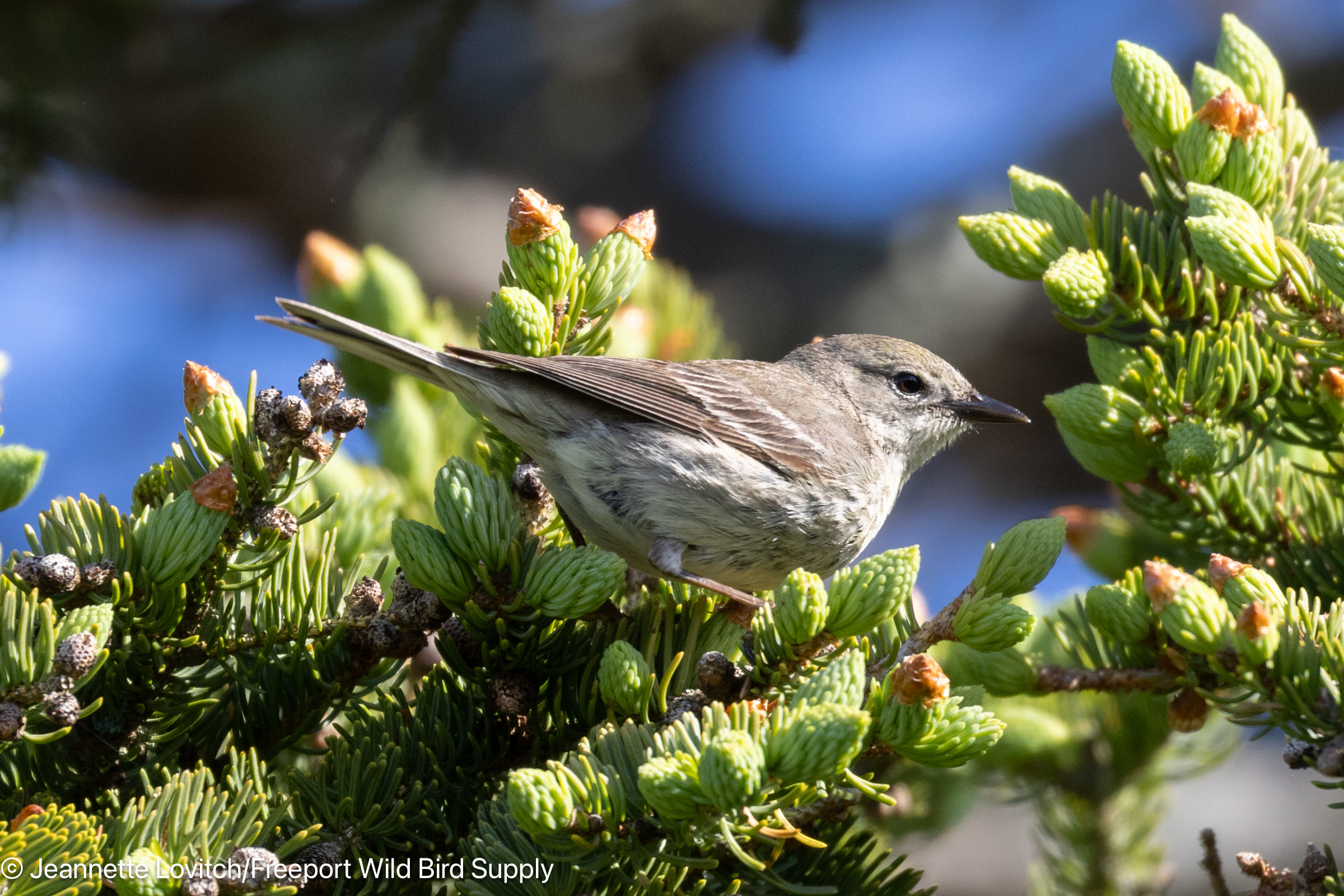
But once again, great looks and notable birds: a continuing female Long-tailed Duck that we finally spotted, a Tennessee Warbler or two, and a very intriguing and thought-provoking study of the world’s dullest and somewhat-streaked female Pine Warbler for yet another rewarding teaching moment.
With a near-complete turnover in the group between Saturday and Sunday, we set out to “clean up the dirty birds.” Needless to say, we didn’t expect that to include more visuals of the Sora though! But once again, patiently waiting as a bird called (this time, on the other side of the marsh just off the road) was rewarded when not one, but two(!) Soras popped up from the grass, taking flight, fluttering a short distance, gangly legs dangling, before plummeting back into the meadow. Another Sora sighting!? Incredible!
The rest of the morning, and the afternoon, were exceedingly slow, but we enjoyed more Red Crossbill quality time, had some more instructive moments, and spotted an Arctic Tern off of Lobster Cove.
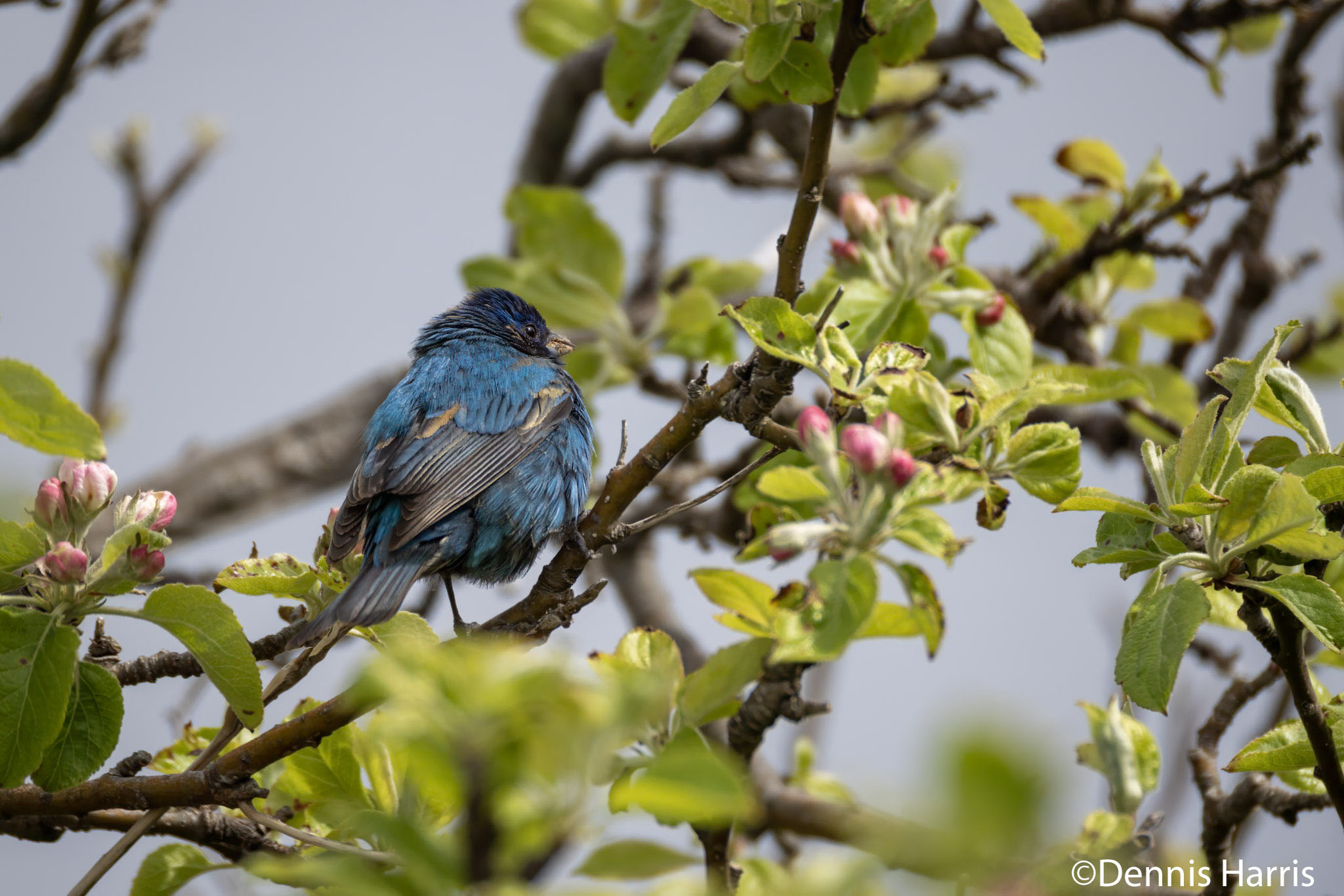
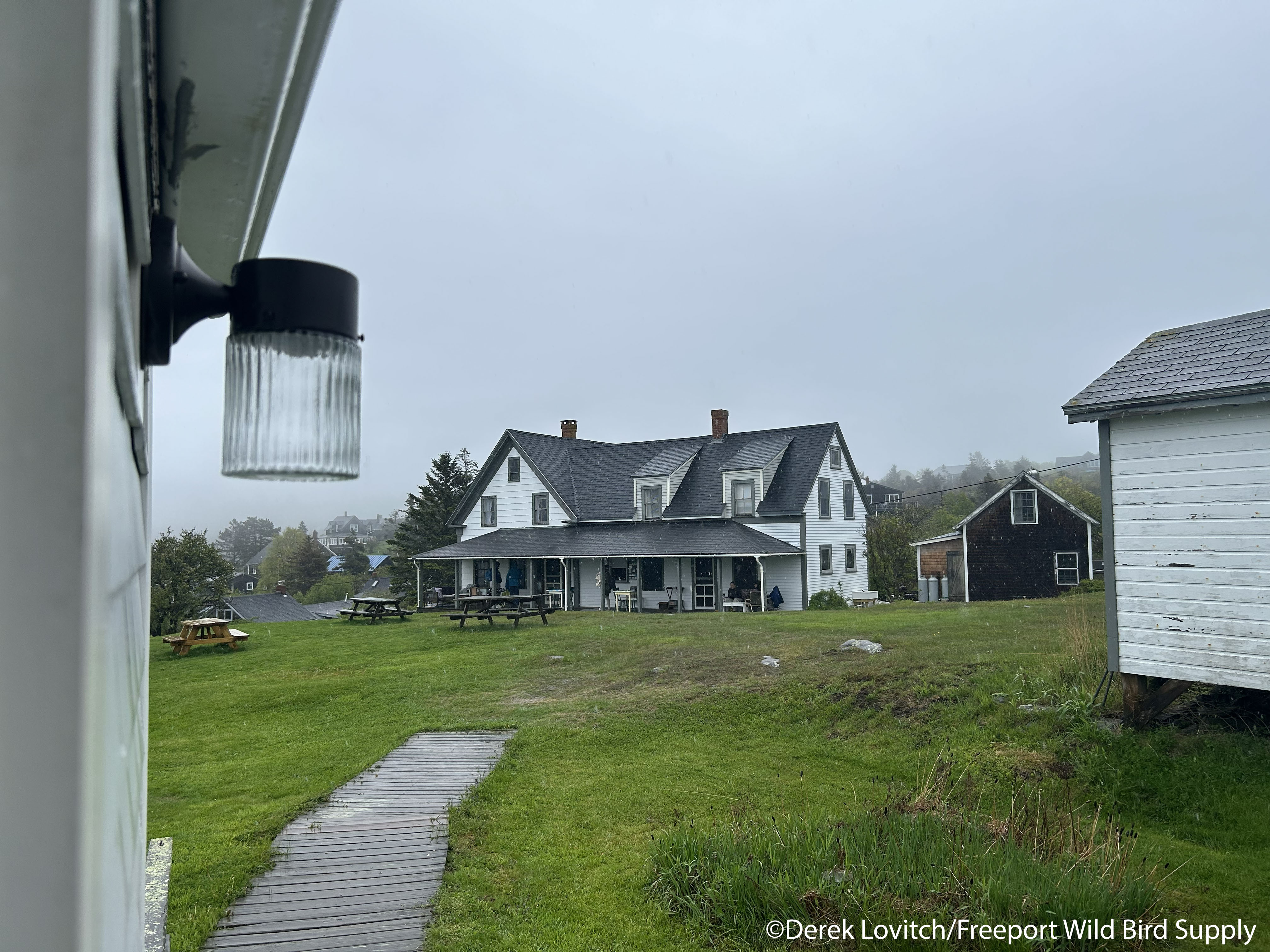
There was fear of a wash-out on Monday, but after showers, mist, and drizzle overnight with periods of heavier rain, we awoke to only mist and drizzle as we stepped outside. Great views of two different Indigo Buntings highlighted the first walk, while after breakfast we enjoyed some time with a Blackburnian Warbler, before settling into a requested gull workshop. 3-4 age classes of both Herring and Great Black-backed Gulls were before us, so we began the lesson.
And then the skies opened up. A soaking downpour didn’t last long, but it was efficient. I give everyone credit for powering through, but during a lull in the rain, I finally called it quits at around 11:00am – still more birding time in the morning than we expected. In fact, by the time we got together again at 1:00pm, the rain had stopped and there were already peaks of sun!
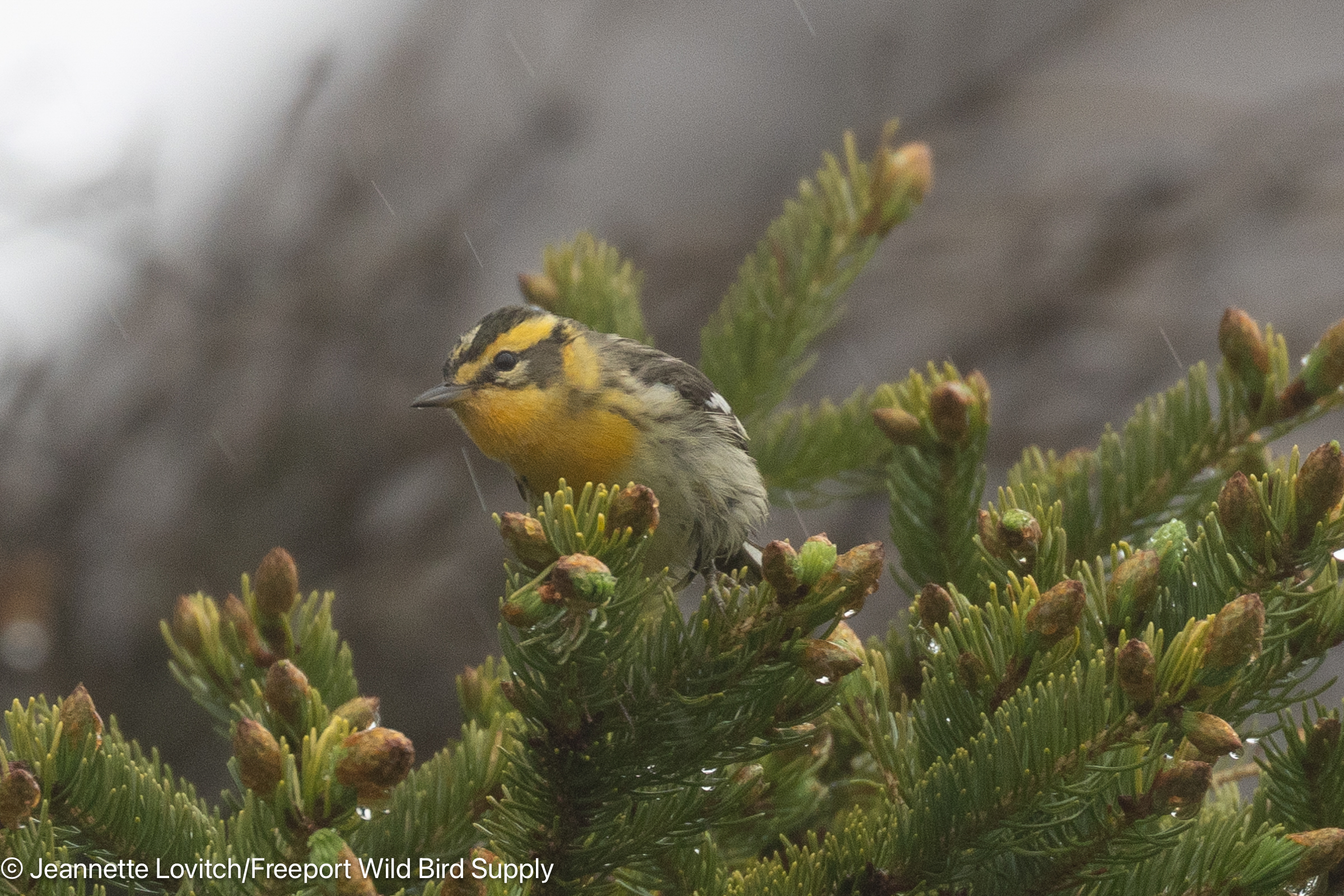
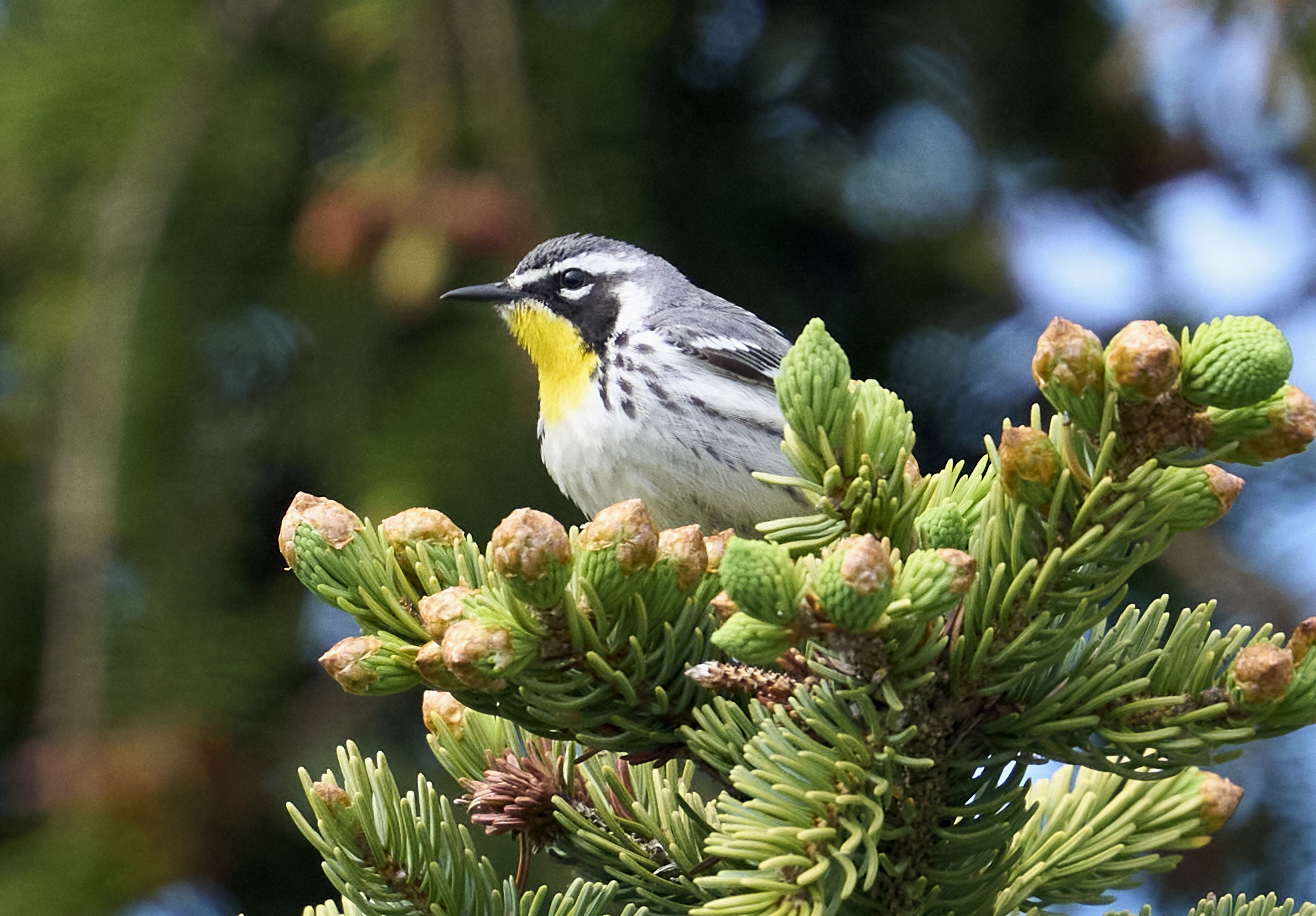
As the skies cleared, we enjoyed a pair of Blackburnian Warblers and Red Crossbills yet again, heard a very uncommon for the island Prairie Warbler, and then heard the report of another rarity: a Yellow-throated Warbler! We weren’t far away, but the bird, found by Mackenzie McKnight along Pumphouse Road, had gone AWOL. We began to search but soon thereafter, Bill Thompson relocated it on Wharf Road, so we raced around the corner and were treated to delightful views – even some in the scope!
What a great way to cap a wildly successful tour, but with time remaining, we tried to re-find the Lark Sparrow for the second half of the group (it was not seen since Saturday) but instead finished with a glorious Rose-breasted Grosbeak singing in the sun!
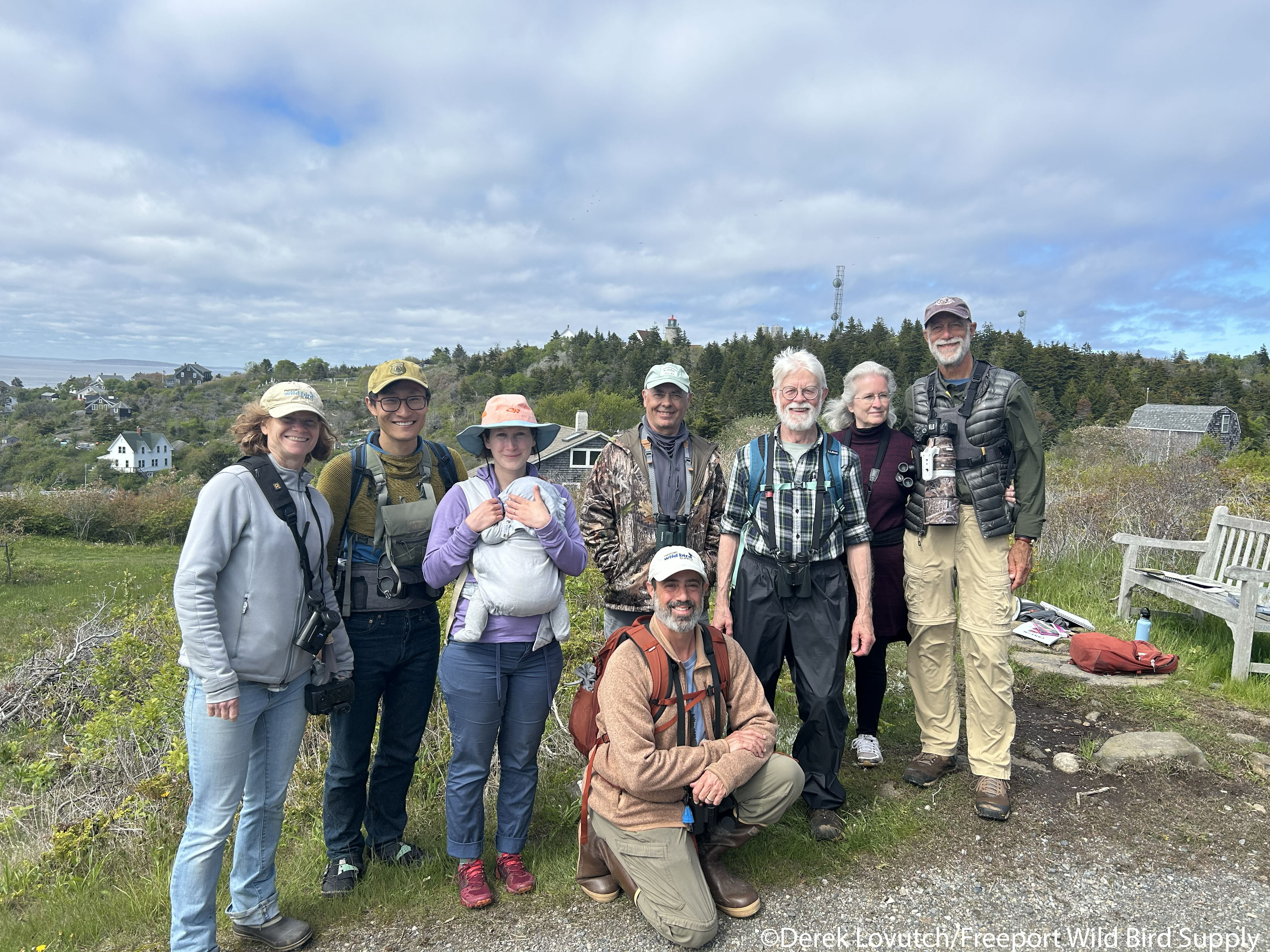
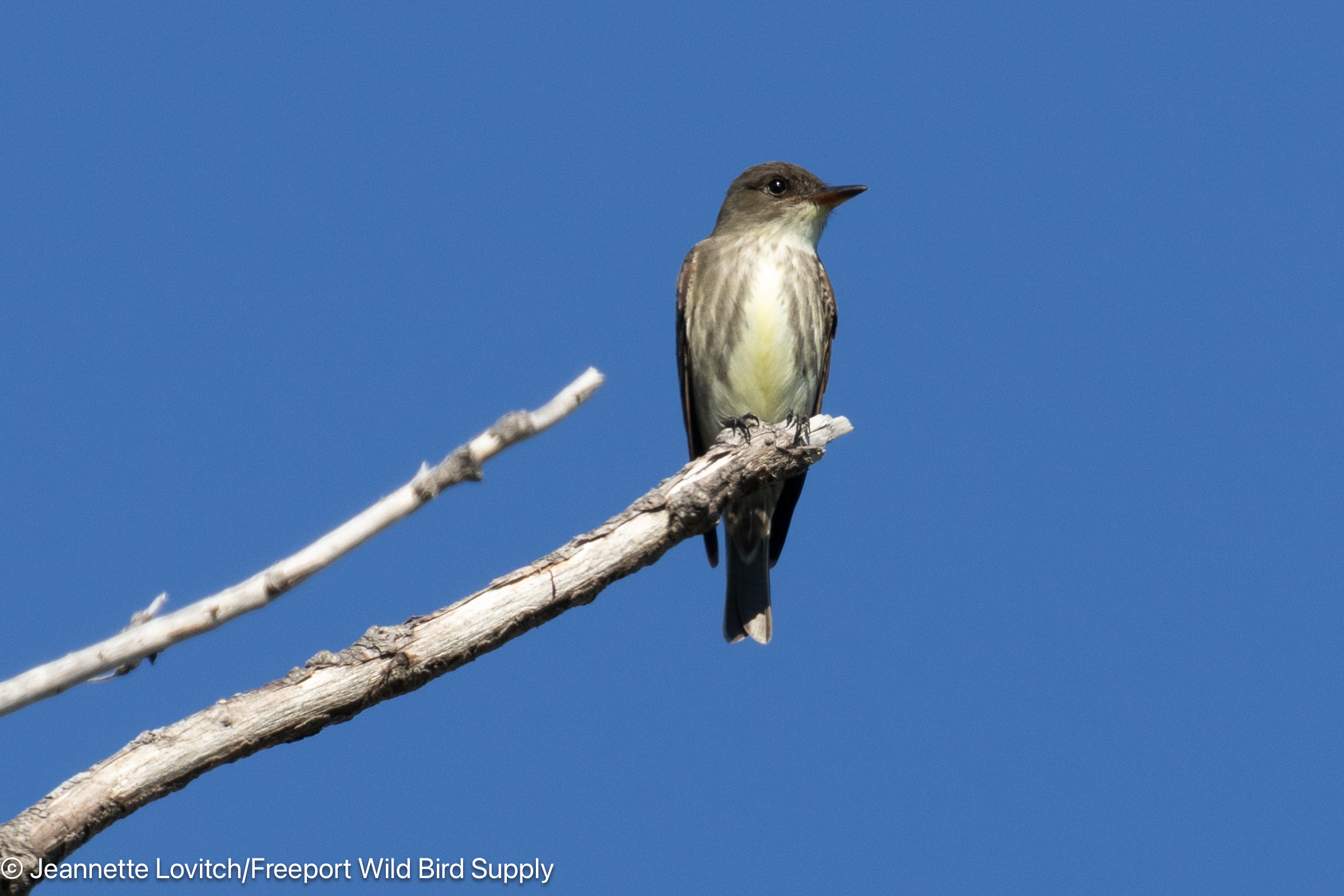
As usual, Jeannette and I spent a day off together the next day, enjoying the birds, food, beer, and friends of Monhegan. The birding wasn’t too shabby either, thanks to a light flight overnight. We began with an Olive-sided Flycatcher at dawn behind the Yew (and 1-2 more later), more Tennessee Warblers (6+), an increase in Blackpoll Warblers, an arrival of Swainson’s Thrushes, and a few other species new for the weekend.
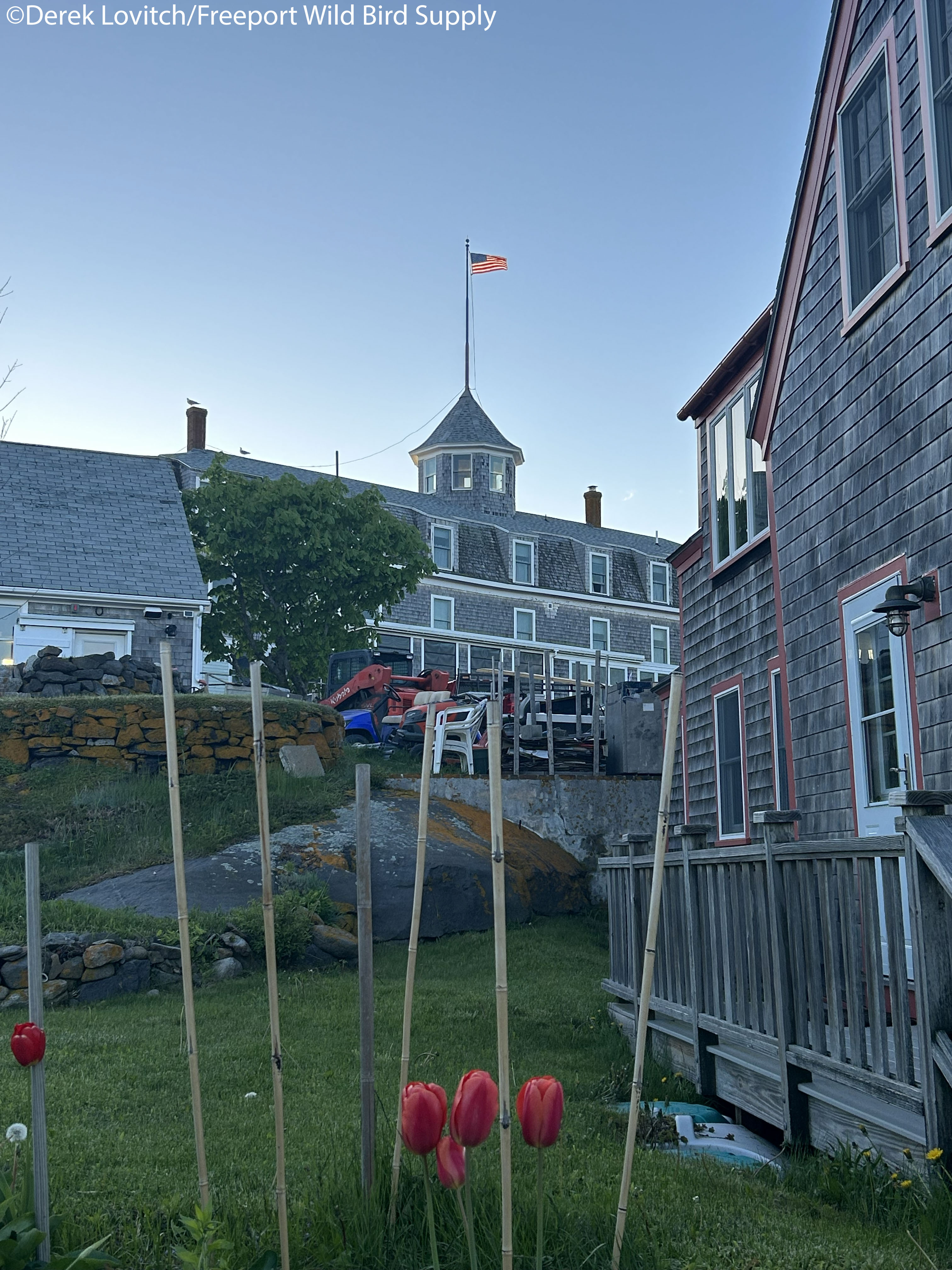
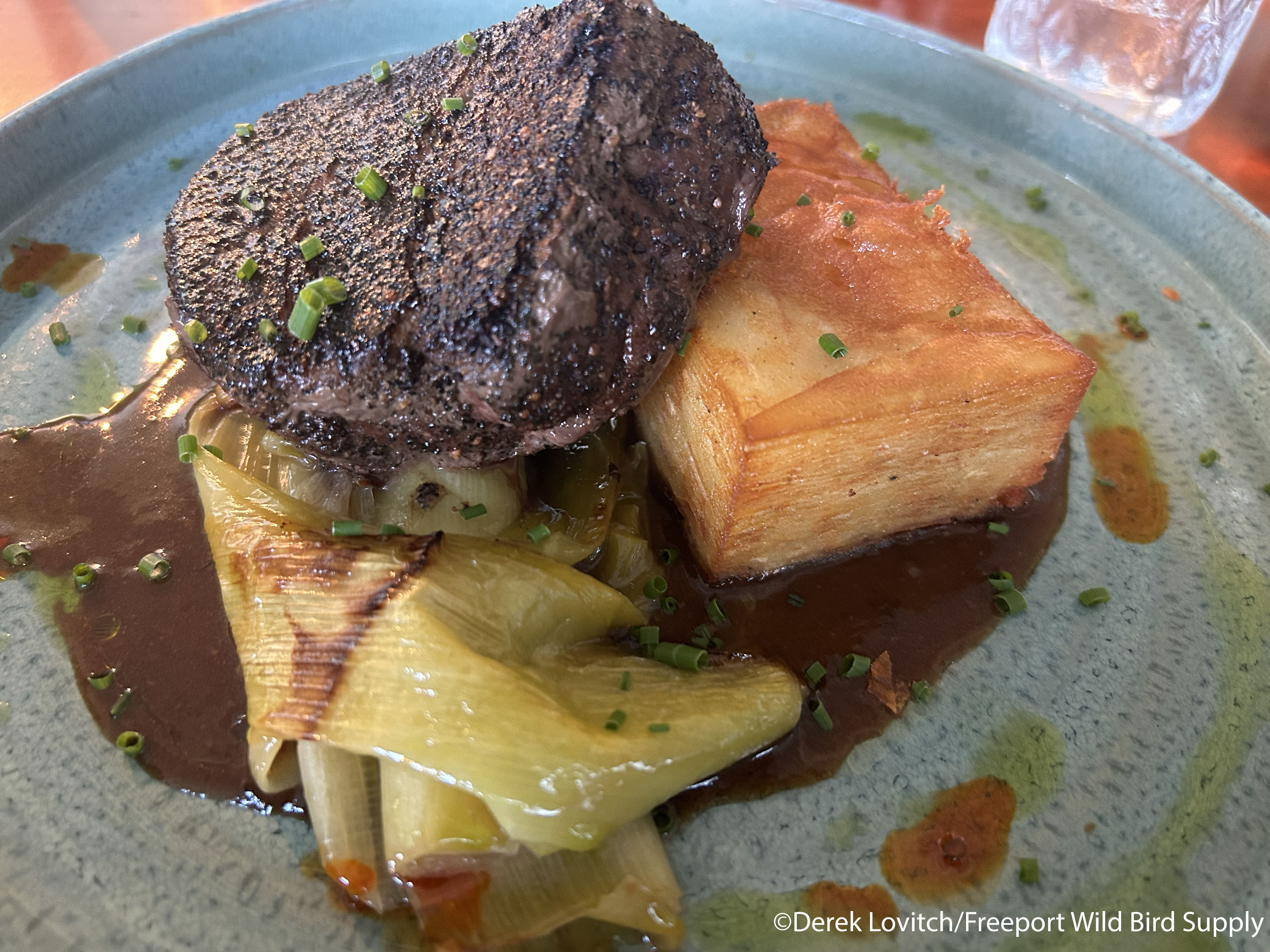
at the Monhegan House.
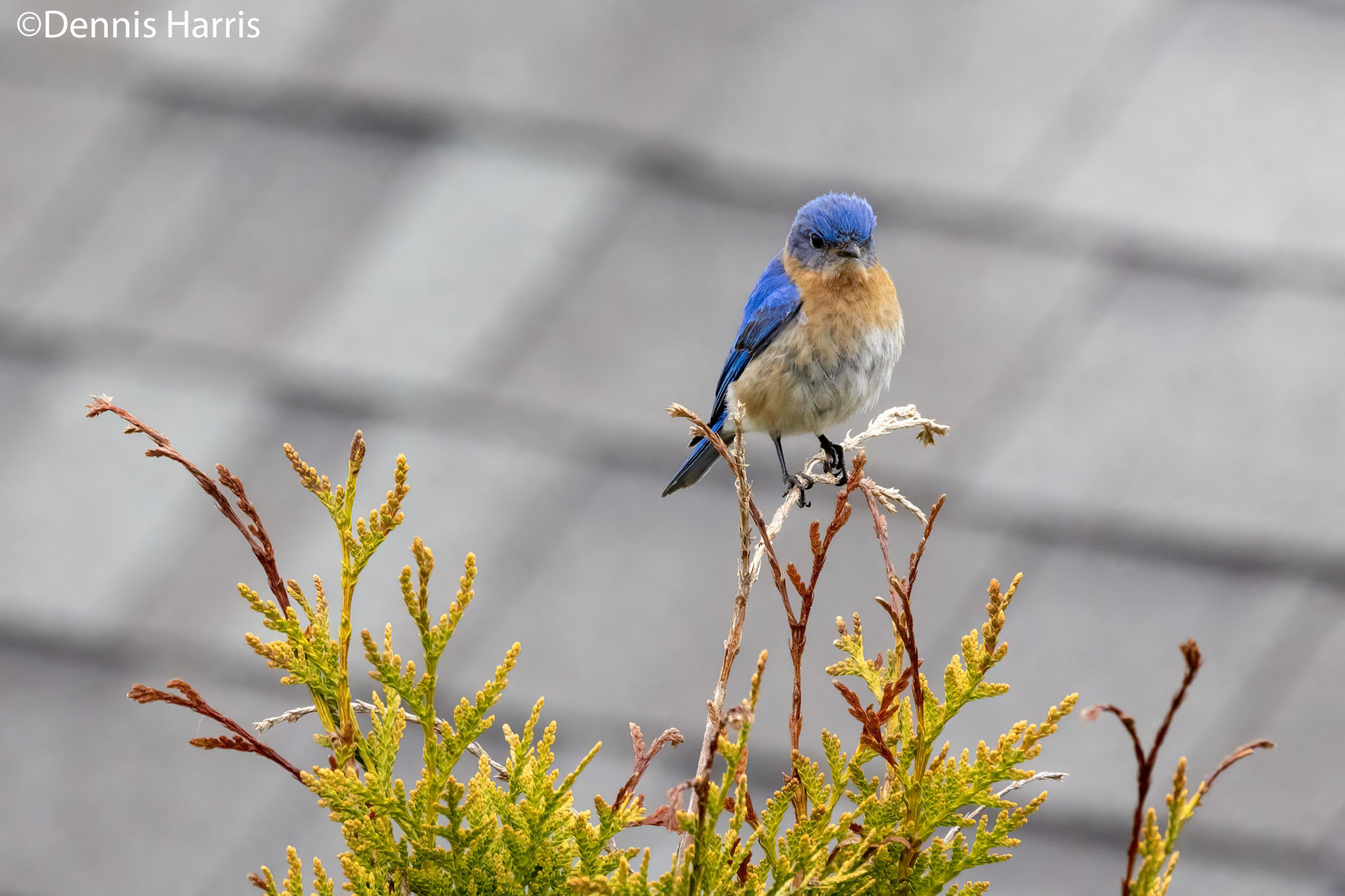
It was a day off, so we dallied at breakfast (I must confess to having a second breakfast sandwich!) and enjoyed a little more coffee. Jeannette was photographing the Eastern Bluebird feeding around the lawn, as I stepped back out of the cabin at 9:40, but I looked up to see a raptor coming right for us. Low. Fast.
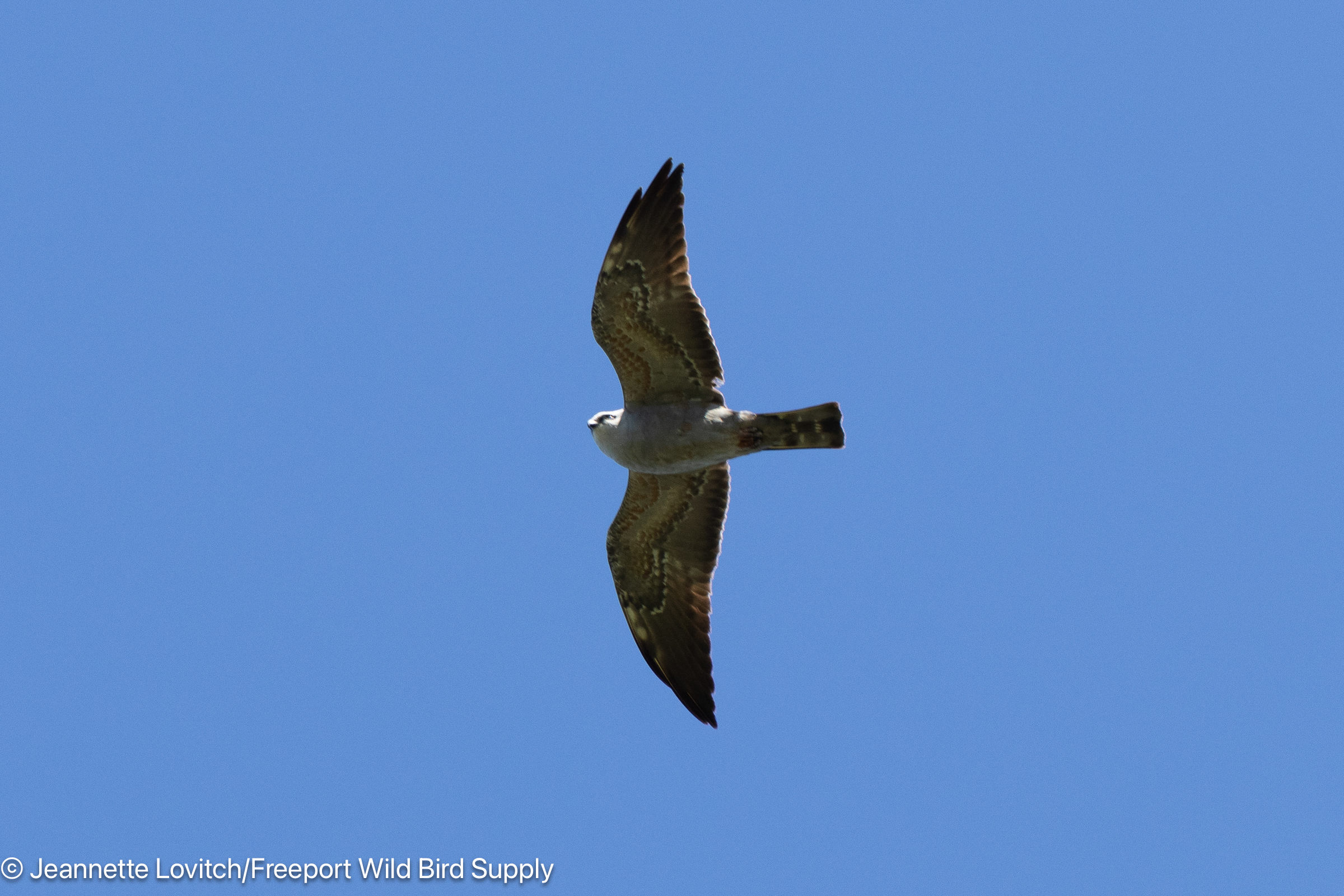
“WHAT’S THAT?! THE KITE! LOOK UP! RIGHT OVER YOUR HEAD!” And other indecipherable words and perhaps a few colorful ones, too. Incredibly, after a 2.5 day absence, it was back!
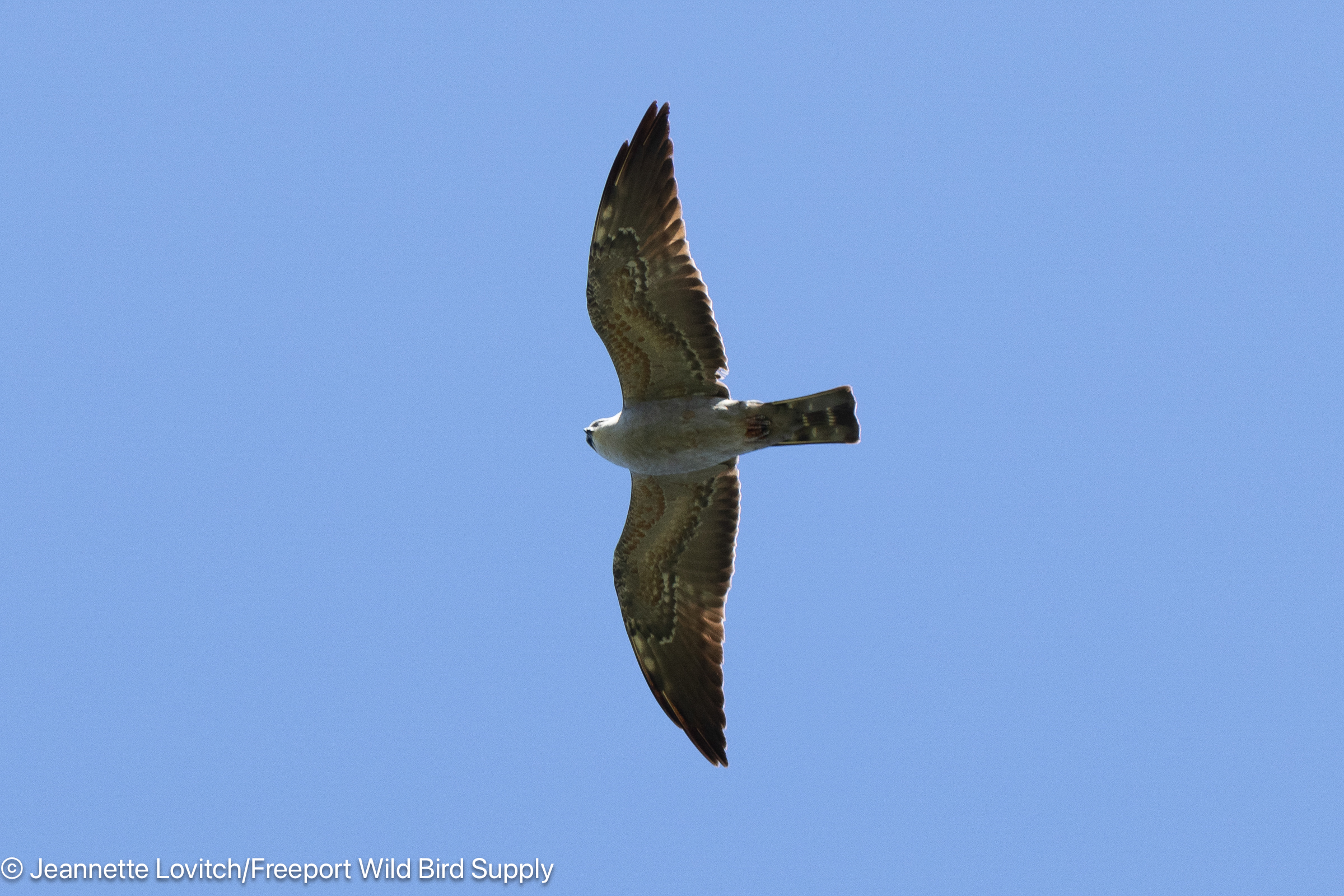
The bird proceeds to glide low over our heads and disappears behind the spruce line where we always start our day. Hustling over that way, we are near the “chat causeway” when the kite appears. We watched it for several minutes as it soared, and yes, kited, directly over our heads. Jeannette had to zoom out with her camera. I had never made eye contact with a kite before, but it clearly looked down, directly at me (literally and perhaps figuratively!), cocking its head to analyze. An absolutely crippling view. Yeah, this made up for my dissatisfying view from two days before, to say the least!
We got the word out, and Bill Thompson came jogging in from the other end of town, picking up birders as he went. We saw it over the Wyeth driveway, heading toward Lobster Cove. We were so happy many people had now seen it, too!
Interestingly a short time after our initial sighting, I spotted the adult Broad-winged Hawk, too. While that bird was gaining altitude and apparently departing, it could not be a coincidence. But where were these two raptors hiding for more than two days?
It turned out the kite would be seen all afternoon (and at least through the next two days, too!), by us, and many, many others, including four arriving bird tour groups. It was often kiting over Lighthouse Hill, catching some insects (bees?), and while attentions were often turning elsewhere, I could not stop myself from watching and enjoying it every time one of us saw it. Jess Bishop had arrived just in time, and as Jess, Bill, Jeannette, and I wandered town – often in the opposite direction of the masses – we always paused for kite watching.
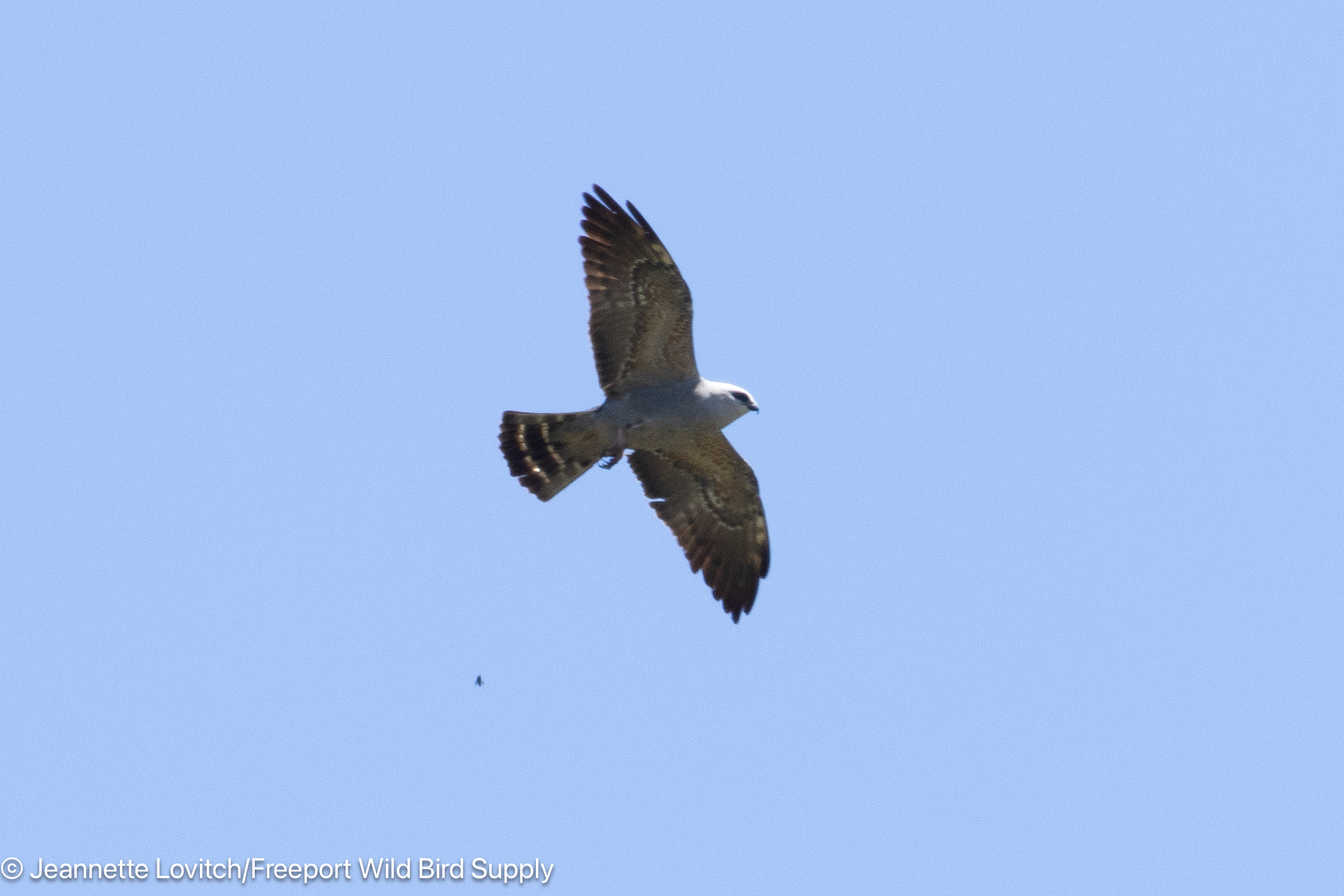
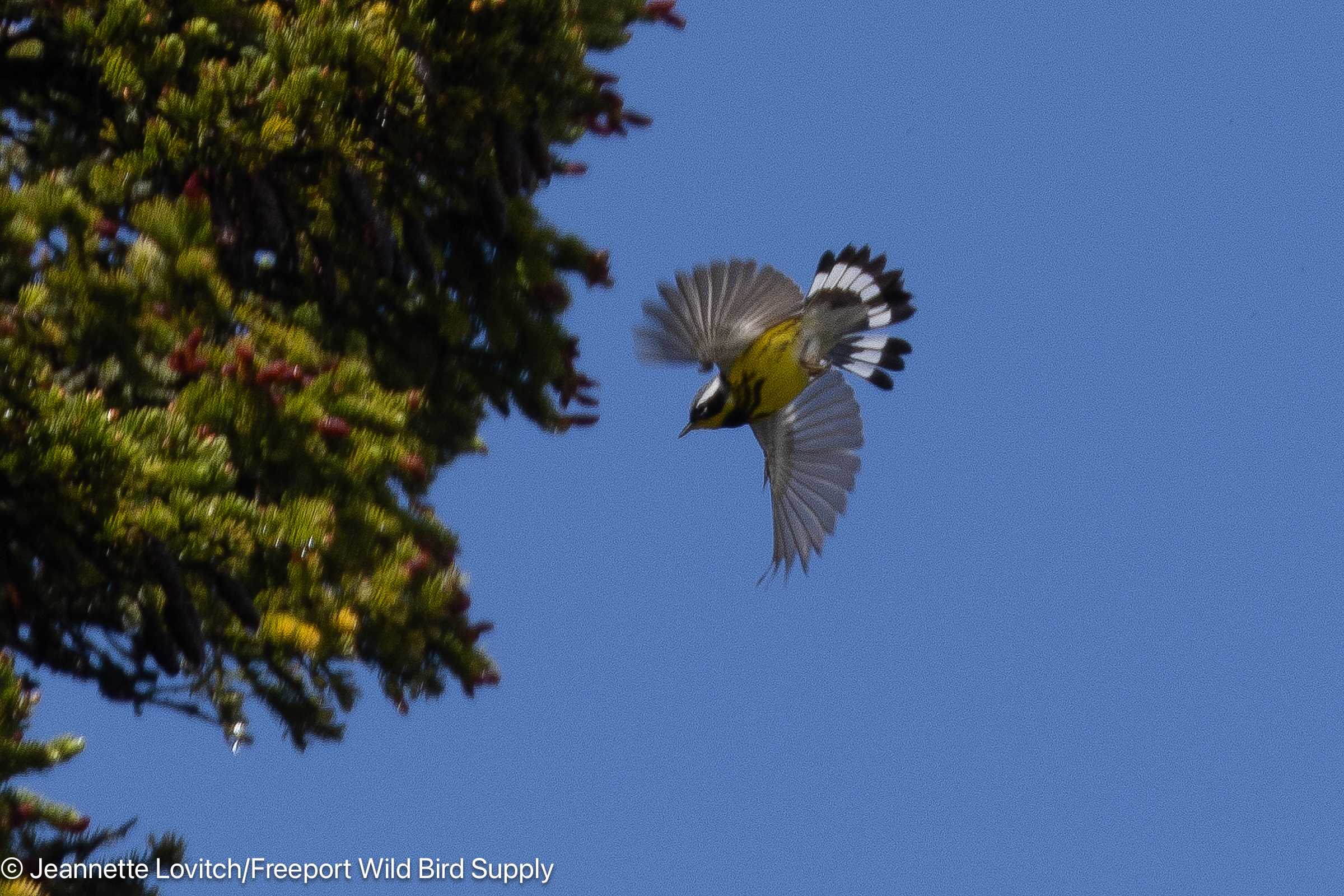
What an incredible way to end the weekend! It’s always tough to leave Monhegan, and I expected more notable birds would arrive (they did), but the 1st island record of Mississippi Kite would be hard to top (it wasn’t), and my second fulfilling experience with it may never be surpassed. I am mad I didn’t get it on the official trip list and share its glory with my group though!
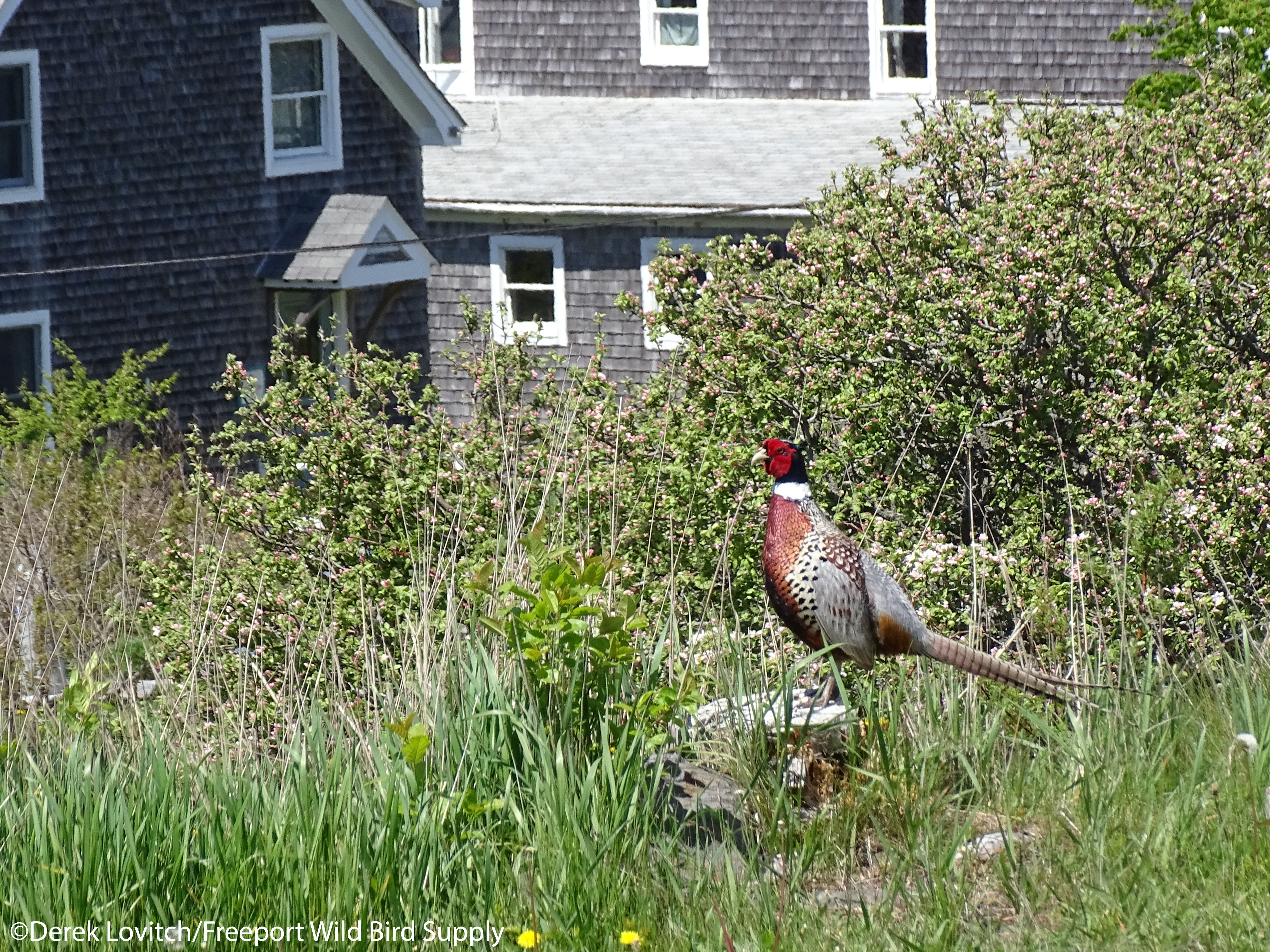
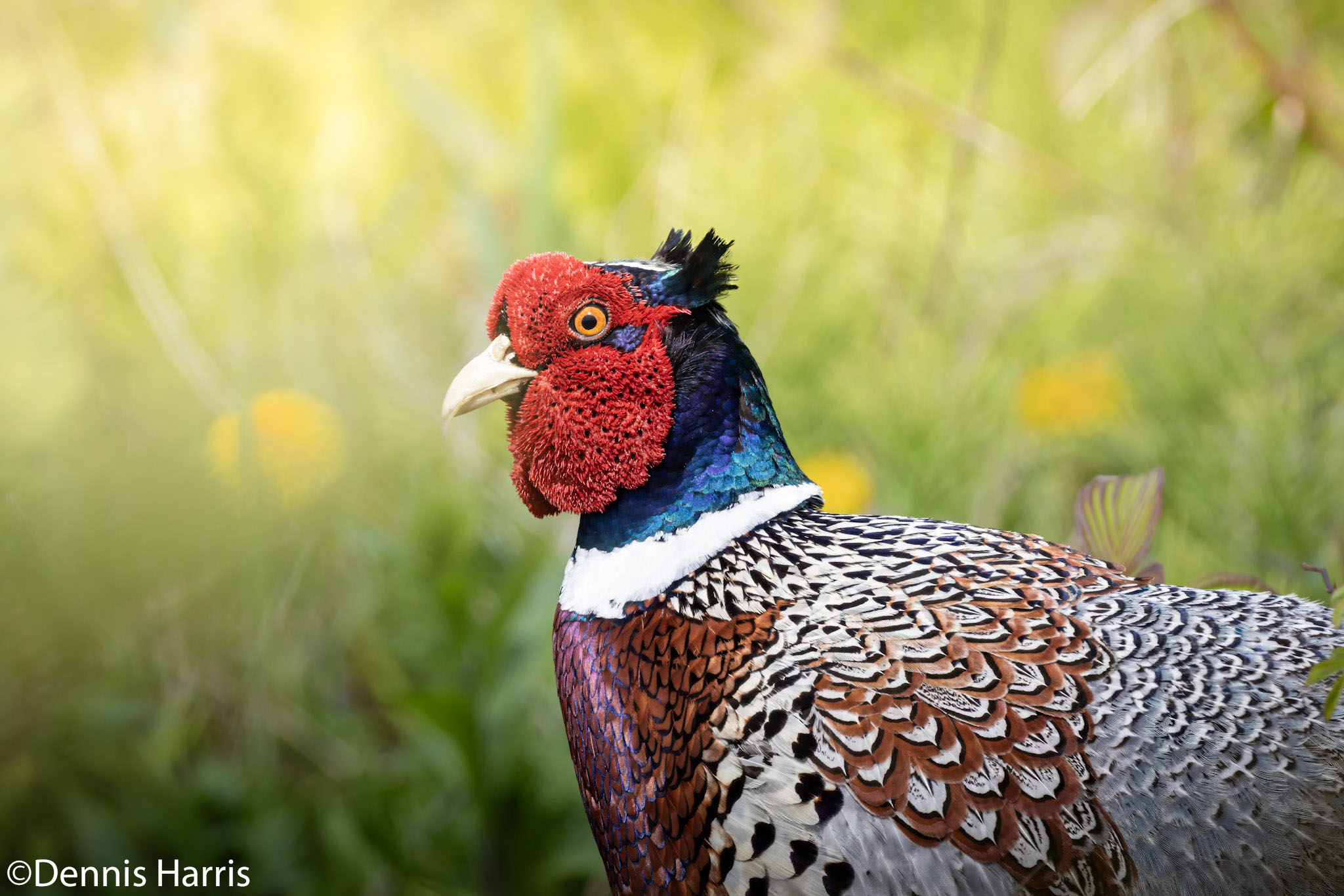
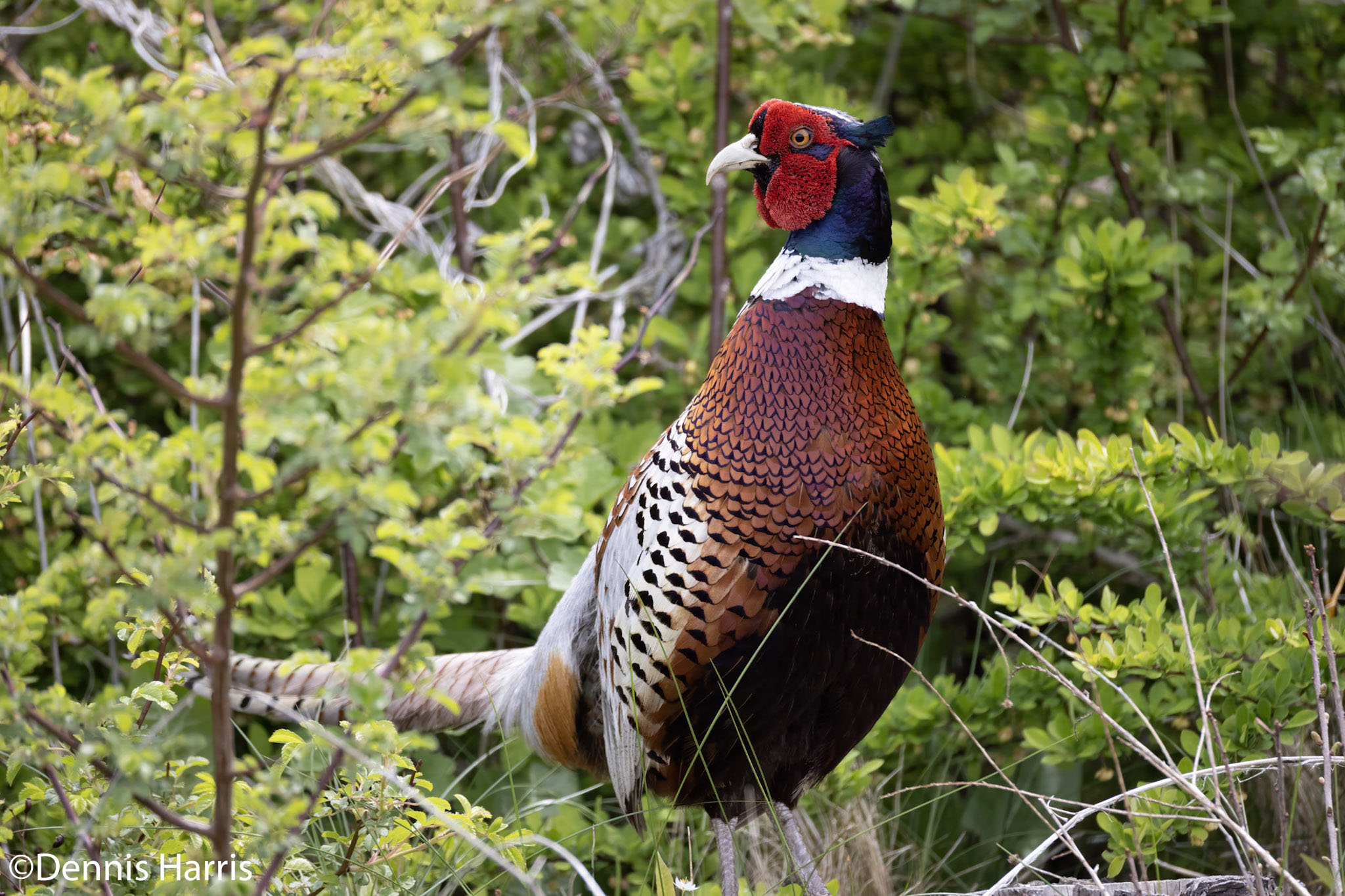
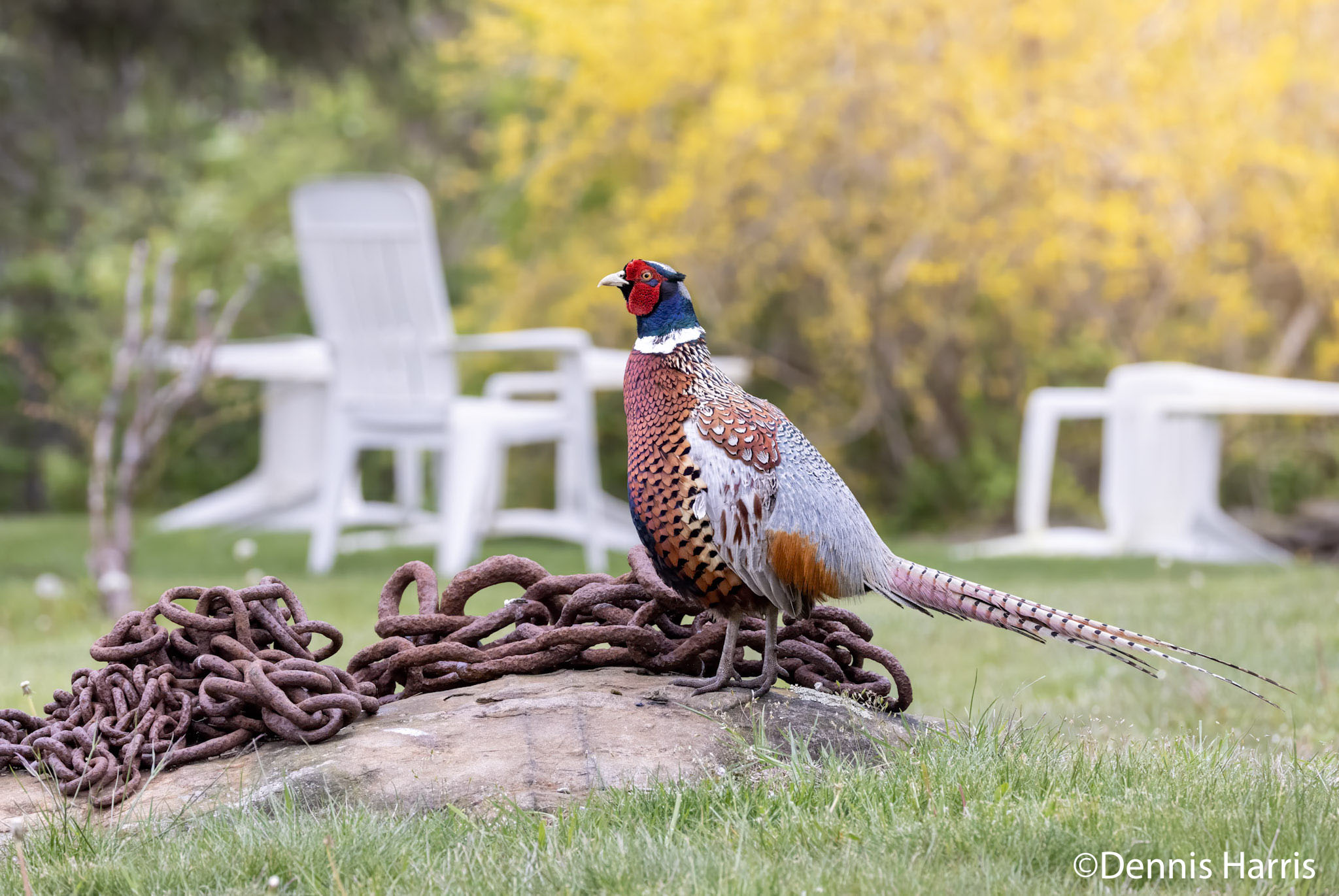
Interestingly, although the weekend was “slow” by May on Monhegan standards, and the numbers of individuals were low (except for Ring-necked Pheasants. My goodness, they have had a productive year!), the weekend’s tour birdlist added up surprisingly nicely! And unlike some tours, where fleeting glimpses seen by half the group were the norm, almost everyone saw almost everything on the list. Here’s the scoreboard.
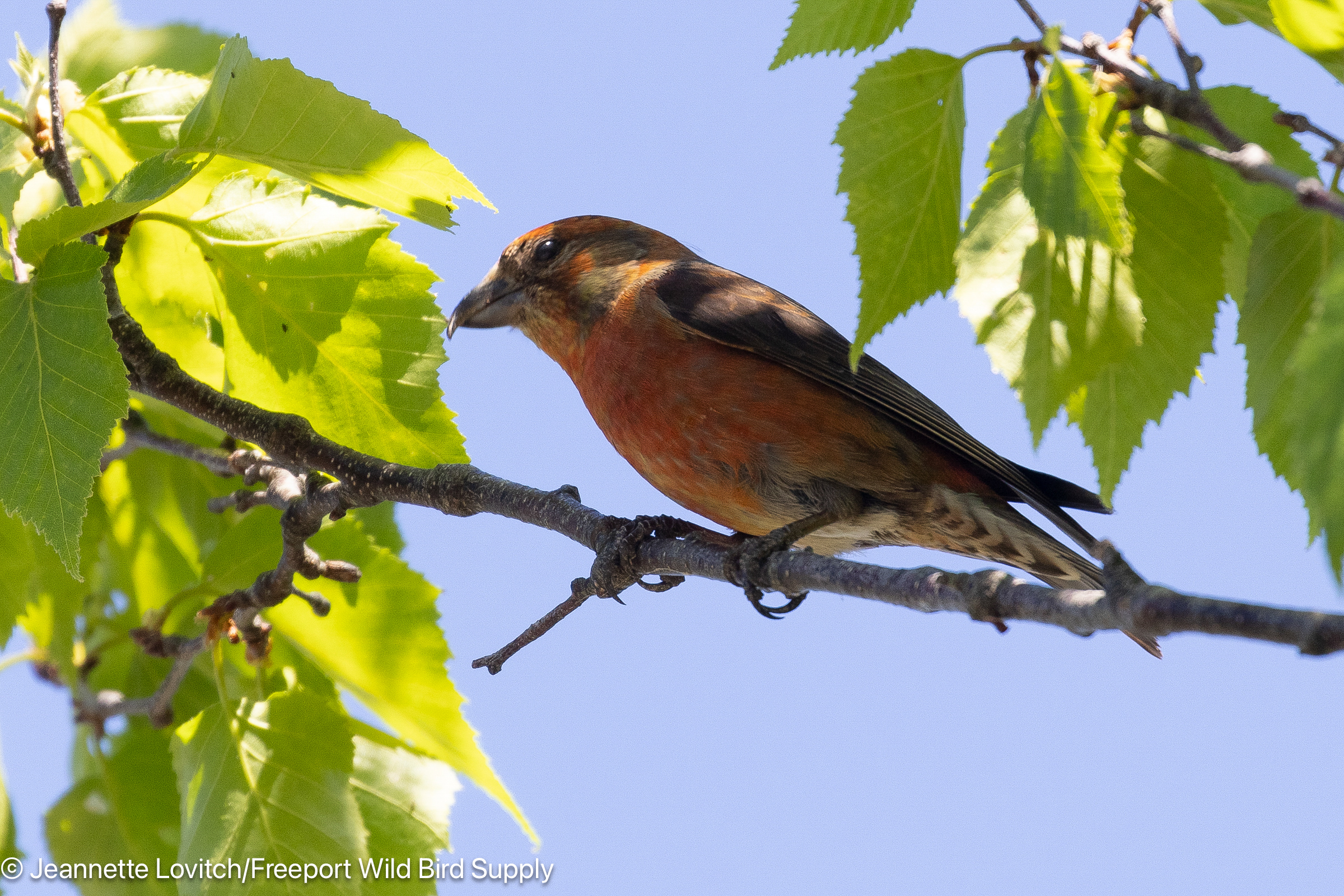
* = seen from ferry only.
** = seen on Marshall Point Birdwalk only
| Species | 5/22 | 5/23 | 5/24 | 5/25 |
| Canada Goose | 2** | 0 | 0 | 2 |
| Mallard | x | x | x | x |
| American Black Duck | 1 | 1 | 1 | 1 |
| Common Eider | x | x | x | x |
| Surf Scoter | 1* | 0 | 0 | 0 |
| Black Scoter | 20* | 0 | 0 | 0 |
| Long-tailed Duck | 1 | 0 | 1 | 1 |
| Ring-necked Pheasant | x | x | x | x |
| Mourning Dove | x | 6 | 10 | 12 |
| Ruby-throated Hummingbird | 3 | 4 | 4 | 4 |
| Chimney Swift | 0 | 0 | 1 | 0 |
| Virginia Rail | 0 | 0 | 1 | 1 |
| Sora | 1 | 2 | 3 | 2 |
| AMERICAN OYSTERCATCHER | 2 | 0 | 0 | 0 |
| Killdeer | 1 | 0 | 0 | 0 |
| PURPLE SANDPIPER | 10* | 0 | 0 | 0 |
| Black Guillemot | x | x | x | x |
| ATLANTIC PUFFIN | 4* | 0 | 0 | 0 |
| Laughing Gull | 4* | 0 | 2 | 1 |
| Herring Gull | x | x | x | x |
| Great Black-backed Gull | x | x | x | x |
| Common Tern | 2* | 0 | 0 | 0 |
| ARCTIC TERN | 0 | 0 | 1 | 0 |
| Red-throated Loon | 0 | 0 | 2 | 0 |
| Common Loon | 2* | 0 | 3 | 0 |
| Northern Gannet | 0 | 0 | 6 | 0 |
| Double-crested Cormorant | x | x | x | x |
| Great Cormorant | 1* | 0 | 0 | 0 |
| Great Blue Heron | 0 | 0 | 1 | 0 |
| Green Heron | 2 | 2 | 2 | 2 |
| Turkey Vulture | 2** | 0 | 0 | 0 |
| Osprey | 0 | 1 | 0 | 1 |
| Sharp-shinned Hawk | 0 | 1 | 1 | 1 |
| BROAD-WINGED HAWK | 0 | 1 | 0 | 0 |
| Bald Eagle | 2* | 2 | 0 | 1 |
| Red-bellied Woodpecker | 0 | 1 | 1 | 0 |
| Northern Flicker | 2** | 0 | 0 | 0 |
| Merlin | 0 | 3 | 1 | 0 |
| Eastern Kingbird | 1 | 1 | 4 | 4 |
| Eastern Wood-Pewee | 0 | 0 | 2 | 20 |
| “Traill’s” Flycatcher | 0 | 1 | 0 | 0 |
| Least Flycatcher | 0 | 0 | 1 | 1 |
| Red-eyed Vireo | 0 | 8 | 4 | 2 |
| Blue Jay | x | 18 | 10 | 4 |
| American Crow | x | 4 | 4 | 4 |
| Common Raven | 1 | 2 | 2 | 2 |
| Black-capped Chickadee | x | x | x | x |
| Barn Swallow | 4 | 4 | 8 | 6 |
| Golden-crowned Kinglet | 2** | 4 | 0 | 0 |
| Cedar Waxwing | 60 | 40 | 60 | 60 |
| Red-breasted Nuthatch | 2 | 3 | 1 | 0 |
| Carolina Wren | 2 | 3 | 5 | 5 |
| House Wren | 0 | 1 | 0 | 1 |
| Gray Catbird | x | x | x | x |
| Brown Thrasher | 0 | 0 | 1 | 1 |
| Northern Mockingbird | 0 | 1 | 1 | 1 |
| European Starling | x | x | x | x |
| Eastern Bluebird | 0 | 1 | 1 | 1 |
| American Robin | x | 8 | 10 | 10 |
| House Finch | 2** | 0 | 0 | 0 |
| Purple Finch | 0 | 0 | 0 | 1 |
| RED CROSSBILL | 20-30 | 20-30 | 30+ | 20-30 |
| American Goldfinch | x | 10 | 15 | 15 |
| LARK SPARROW | 1 | 0 | 0 | 0 |
| Chipping Sparrow | 4** | 0 | 0 | 0 |
| Savannah Sparrow | 0 | 1 | 1 | 0 |
| Song Sparrow | x | x | x | x |
| Lincoln’s Sparrow | 1 | 1 | 0 | 0 |
| Swamp Sparrow | 0 | 0 | 1 | 1 |
| Bobolink | 0 | 4 | 1 | 4 |
| Baltimore Oriole | 0 | 2 | 1 | 2 |
| Red-winged Blackbird | x | x | x | x |
| Common Grackle | x | x | x | x |
| Ovenbird | 1** | 0 | 1 | 1 |
| Northern Waterthrush | 0 | 0 | 1 | 0 |
| Black-and-white Warbler | 0 | 2 | 1 | 0 |
| Tennessee Warbler | 0 | 2 | 1 | 1 |
| Common Yellowthroat | x inc. Marshall Pt. | x | x | x |
| American Redstart | x inc. Marshall Ot | 15 | 10 | 10 |
| Cape May Warbler | 0 | 1 | 0 | 0 |
| Northern Parula | x inc. Marshall Point | 20 | 12 | 10 |
| Magnolia Warbler | 0 | 10 | 6 | 4 |
| Blackburnian Warbler | 0 | 2 | 1 | 3 |
| Yellow Warbler | x inc. Marshall Pt | x | x | x |
| Blackpoll Warbler | 1 | 8 | 3 | 4 |
| PINE WARBLER | 0 | 0 | 1 | 1 |
| Yellow-rumped Warbler | 0 | 1 | 0 | 0 |
| YELLOW-THROATED WARBLER | 0 | 0 | 0 | 1 |
| Prairie Warbler | 0 | 0 | 0 | 1 |
| Black-throated Green Warbler | x inc. Marshall Pt | 10 | 4 | 8 |
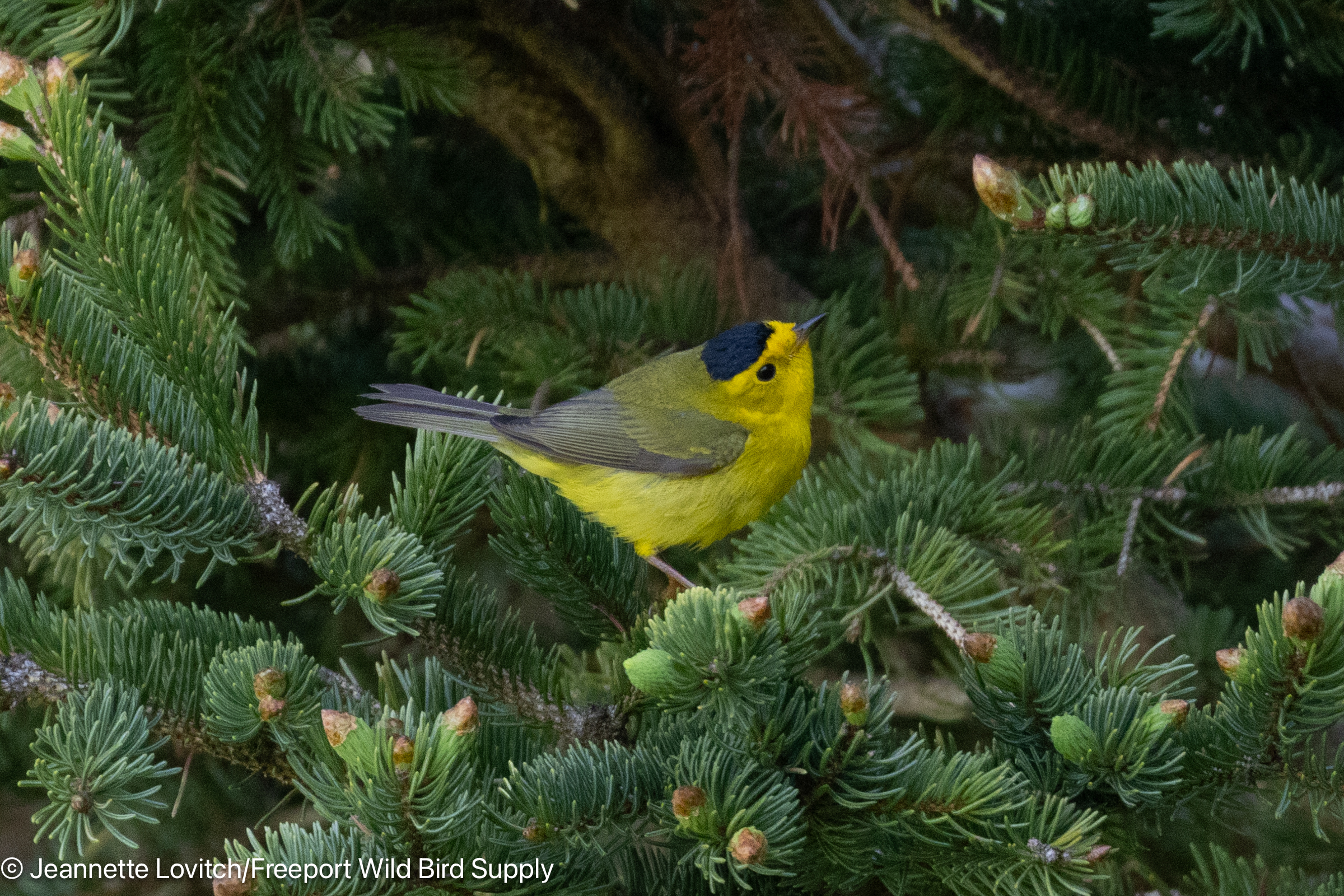
| Wilson’s Warbler | 1 | 0 | 0 | 1 |
| Northern Cardinal | x | x | x | x |
| Rose-breasted Grosbeak | 1 | 1 | 1 | 2 |
| Indigo Bunting | 0 | 1 | 1 | 3 |
| Day Total | 60 inc Marshall Pt and Ferry, | 60 | 68 | 64 |
| Warbler Day Total | 8 | 12 | 13 | 14 |
| Trip Total | 94 | Weekend Total inc. Tuesday | 107 | |
| Warbler Trip Total | 18 | Warbler total inc, Tuesday | 18 | |
The above birds follow the “guide plus one” rule, meaning both me and at least one client need to see the bird for it to go onto the list. In addition to the above, birds that I only saw on my own, before or after hours, or during breaks included:
- MISSISSIPPI KITE, 5/23 (with m.obs…see above and below).
- 1 GLOSSY IBIS, 5/23 (with Mik Oyler; flying past harbor at dusk)
- 1 Wood Duck, 5/25.
- 10 Greater Yellowlegs, 5/25 (with Bill Thompson)
- 1 Alder Flycatcher, 5/25 (with Jeannette)
- 1 Dark-eyed Junco, 5/25.
New species for the weekend seen with Jeannette included:
- 2-3 Olive-sided Flycatchers
- 6 Swainson’s Thrushes
- 1 Spotted Sandpiper
- 1 Willow Flycatcher
- 1 White-crowned Sparrow
- 3 White-winged Scoters
- 1 Solitary Sandpiper (with Bill Thompson and Jess Bishop)
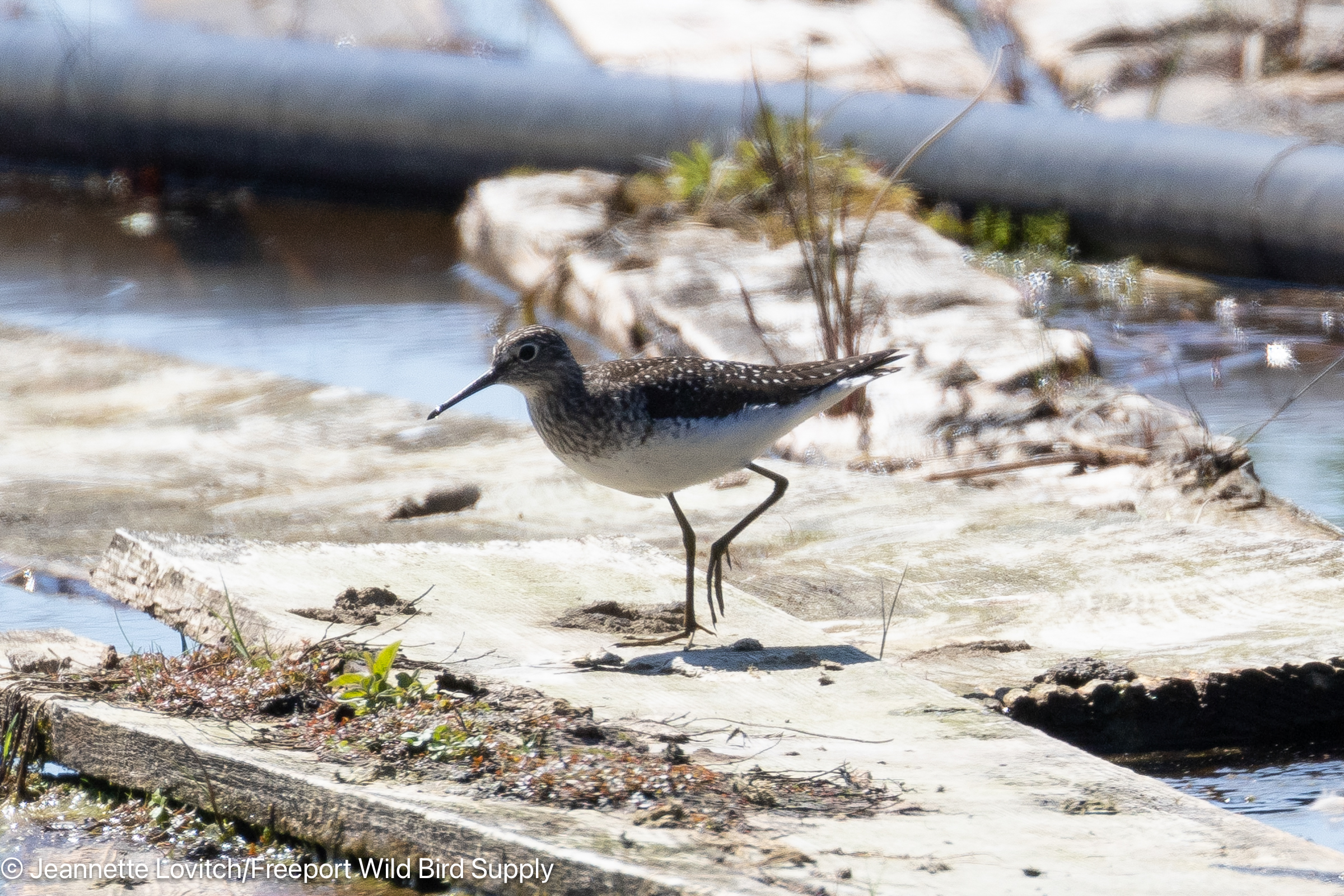
This made a very respectable weekend tally of 107 species!
 Maine Birding Field Notes