Jeannette and I spotted these four Red-necked Phalaropes from the Casco Bay Ferry Mailboat run with visiting family on the 26th.
It was a very busy week for me, but when I did get out, birding was productive – especially in the backyard which hosted at least 15 species of warblers this week. Meanwhile, shorebirding continues to be hot. My observations of note over the past 8 days included the following
1 Black Scoter, 2 White-winged Scoters, and 2 Blue-winged Teal with Common Eiders, Reid State Park, Georgetown, 8/27. As scoters begin to increase in September, I’ll forgo reporting the “oversummering” groups from now on.
1 TRICOLORED HERON, Mill River Park, Thomaston, 8/29 (with Jeannette).
1 Northern Pintail (first of fall) and 1 juv, Little Blue Heron, etc, Eastern Road Trail, Scarborough Marsh, 8/30.
3 adult Lesser Black-backed Gulls, Seawall Beach, Phippsburg, 9/2 (with Ed Hess).
My shorebird high counts for 18 species this week were solid considering I didn’t make it to Biddeford Pool (or Pine Point) during this period. Focusing on mostly lesser-visited hotspots, I found several goodies and had a few decent high counts.
Black-bellied Plover: 67, Wharton Point, Brunswick, 9/2 (with Ed Hess).
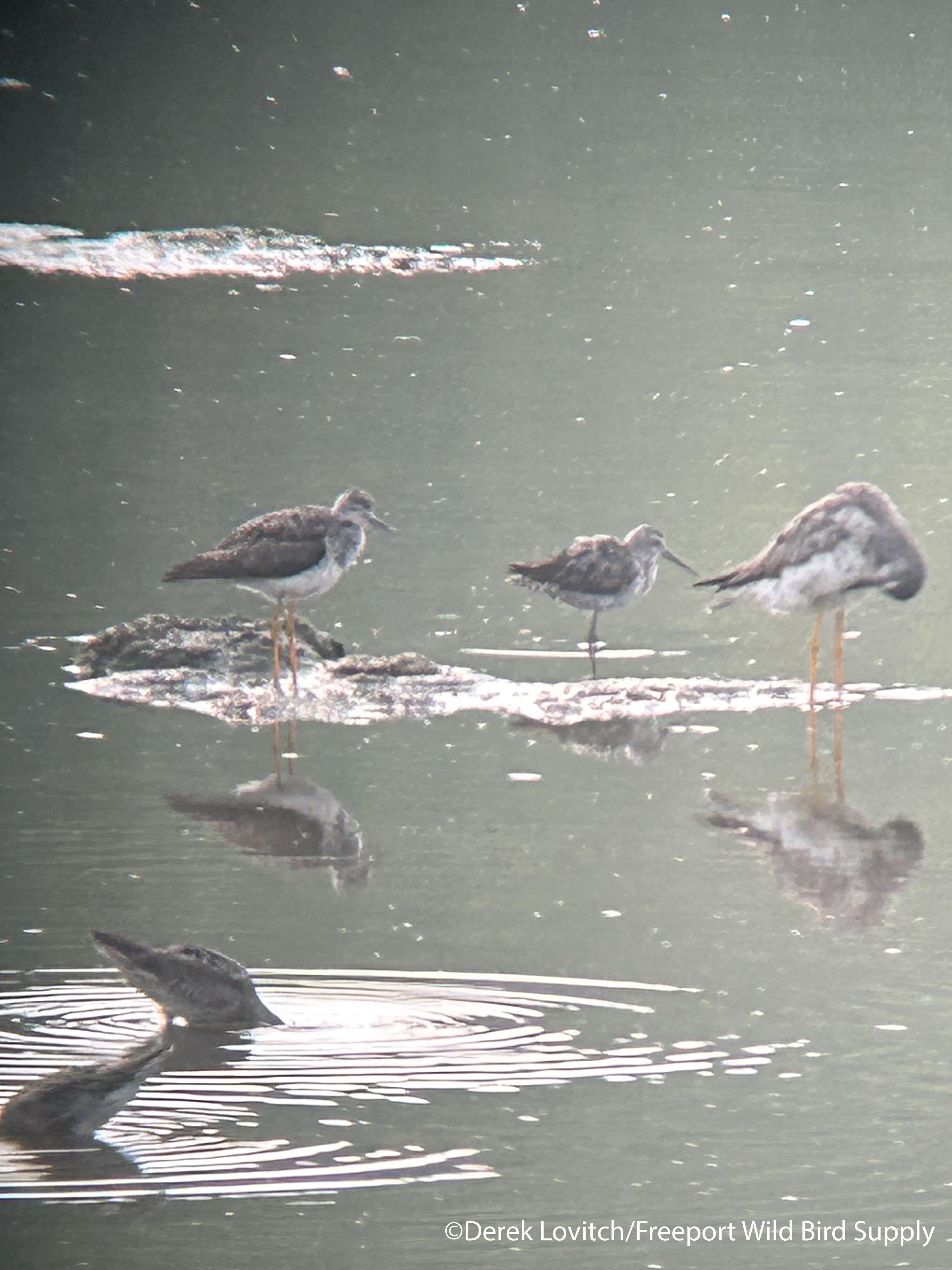
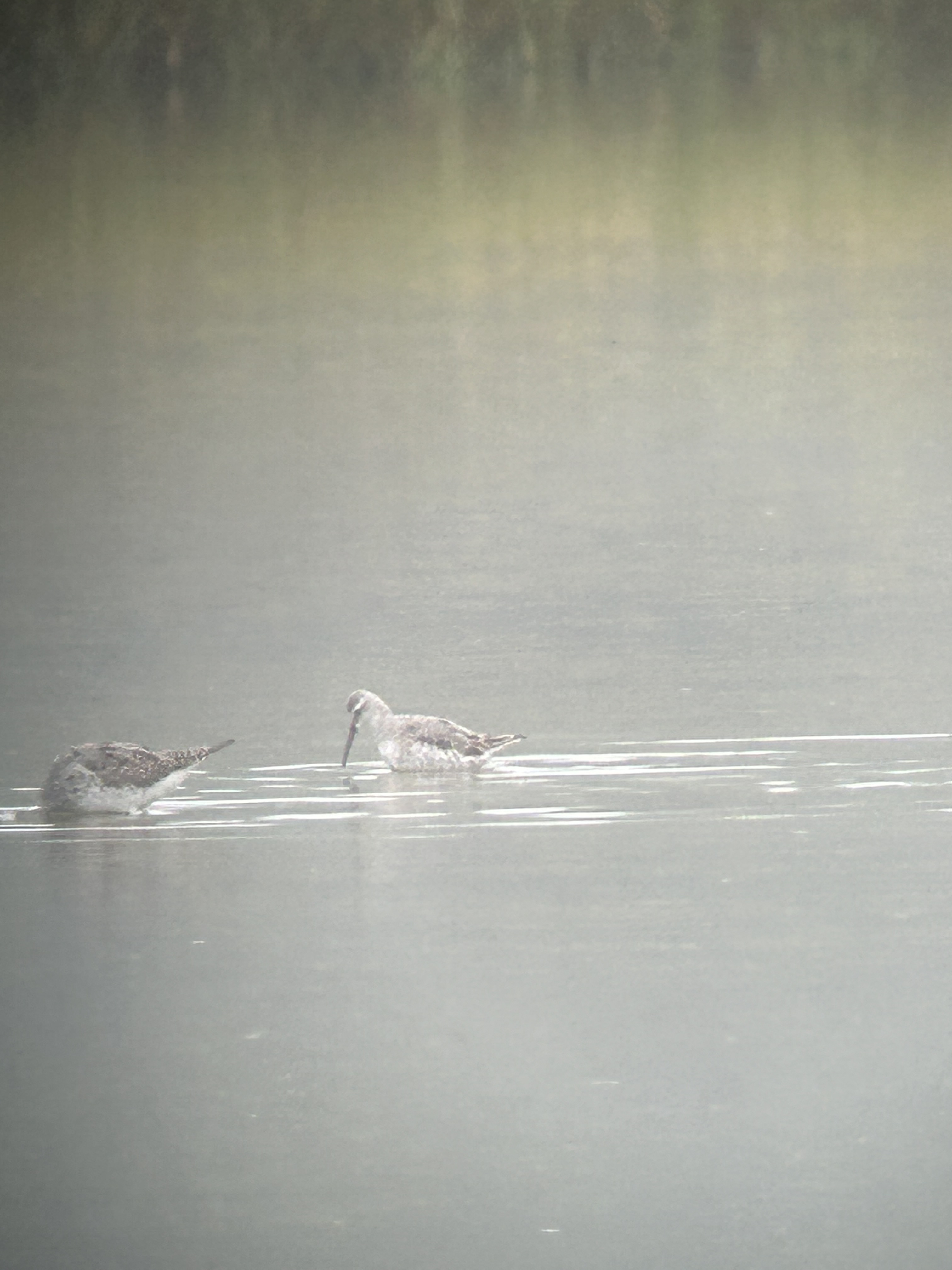
Far from being my best shot of the week, our Saturday Morning Birdwalk group enjoyed 2 Stilt Sandpipers at Freeport’s Walsh Preserve. Here’s one of them (pardon the lousy hand-held phone-scoped photo) flanked by Lesser and Greater Yellowlegs for a perfect comparison. Instructional shorebird identification was the name of the game for my tours this week!
Two shorebird-focused tours, plus a few mornings out on beach/mud on my own produced some solid shorebird high counts. My species list and a few high counts would have been added were in not for the rapidly-approaching thunderstorm as my Shorebird Workshop group arrived at Hill’s Beach on the 15th! Landbird migration is really picking up as well, with lots of the expected early warblers on the move, including a Cape May Warbler at the Walsh Preserve in Freeport (with Saturday Morning Birdwalk group) on the 17th.
Non-shorebird observations of note this week:
28+ continuing Surf Scoters, Wharton Point, Brunswick, 8/12.
2 Common Nighthawks (First of fall), over our property in Durham, 8/13.
2 adult Lesser Black-backed Gulls, Pine Point, Scarborough, 8/15 (with Down East Adventures Shorebird Workshop tour group).
6 Surf Scoters, Popham Beach State Park, Phippsburg, 8/16.
Shorebird high counts this week:
Black-bellied Plover: 91, Wharton Point, Brunswick, 8/12 (with Jeannette).
Killdeer: 35, Crystal Spring Farm, Brunswick, 8/12 (with Jeannette).
Semipalmated Plover: ~300, Pine Point, Scarborough, 8/15 (with Down East Adventures Shorebird Workshop tour group).
Least Sandpiper: 20+, Great Pond, Biddeford Pool, 8/15 (with Down East Adventures Shorebird Workshop tour group).
White-rumped Sandpiper: 12, Pine Point, 8/15 (with Down East Adventures Shorebird Workshop tour group).
Semipalmated Sandpiper: ~1750, Biddeford Pool Beach, 8/15 (with Down East Adventures Shorebird Workshop tour group). Honorable mention of ~1200 at Pine Point on 8/15 (with Down East Adventures Shorebird Workshop tour group).
Short-billed Dowitcher: 8, Popham Beach State Park, 8/16.
Spotted Sandpiper: 2, multiple locations this week.
“Eastern” Willet: 14, Pine Point, 8/15 (with Down East Adventures Shorebird Workshop tour group).
Greater Yellowlegs: 41, Wharton Point, 8/13 (with Jeannette).
Tours and Events:
The 20th Anniversary Celebration Month is underway here at the store. All the details can be found here, including a silent auction for conservation, and several chances to win a new pair of binoculars!
Two of the three Lesser Black-backed Gulls present at Hill’s Beach in Biddeford on the 8th included these two 3rd-cycle birds, seen here with a likely 4th cycle Herring Gull for a nice comparison.
Once again, I focused on shorebirds this week, and not surprisingly the non-shorebird highlights I encountered were while looking at said shorebirds. Meanwhile, passerine movement is really ramping up, with lots of early warblers like Yellow, American Redstart, and Black-and-white on the move. Some of the other migrants on our Durham property this week included Canada Warbler, Eastern Kingbird, Bobolink, and Barn Swallow.
3 Lesser Black-backed Gulls (one 1st-summer; with Dan Gardoqui and two 3rd-summers arriving later), Hill’s Beach, Biddeford, 8/8.
The adults of a lot of species of shorebirds are peaking now, and a growing number of juveniles are arriving, providing for some good numbers at a variety of locations. Shorebird high counts this week:
Black-bellied Plover: 86, The Pool, Biddeford Pool, 8/8.
Killdeer: 21, Crystal Spring Farm, Brunswick, 8/5 (with Jeannette).
Semipalmated Plover: 150+, Pine Point, Scarborough, 8/11 (with Birds on Tap – Roadtrip! Tour group).
Semipalmated Sandpiper: 1500+, The Pool, Biddeford Pool, 8/8 (with Dan Gardoqui).
Short-billed Dowitcher: ~40, The Pool, 8/8 (with Dan Gardoqui).
Spotted Sandpiper: 2, multiple locations this week.
Solitary Sandpiper: 1, several locations this week.
Lesser Yellowlegs: 71, Walsh Preserve, 8/9.
“Eastern” Willet: 18, Pine Point, 8/11 (with Birds on Tap – Roadtrip! Tour group).
“WESTERN” WILLET (FOY): 1, Hill’s Beach, Biddeford, 8/8.
Greater Yellowlegs: 12, Wharton Point, 8/6 (with Jeannette).
Tours and Events:
The 20th Anniversary Celebration Month is underway here at the store. All the details can be found here, including free raffles for dinner (get your tickets in soon; drawing on Wednesday!), a silent auction for conservation, and several chances to win a new pair of binoculars!
Birds of Casco Bay with Seacoast Tours, originally scheduled for 8/4, has been postponed until Sunday, 8/25. Call Seacoast Tours to see if any spaces have opened up.
Despite being focuses on shorebirds this week, my most productive photo session were with Roseate Terns on Hill’s Beach on 7/30. This was my favorite shot, of a juvenile still hungry while its banded parent went out in search of more fish.
Shorebird season is in full swing, and since our return from our summer vacation, shorebirds have been my birding focus. As I often do at this time of year, I like to organize my weekly (or thereabouts) observations into a “high counts for the week” summary. This is really for my own organization of notes and allows me to quickly evaluate ebbs and flows across the summer, and across various years. To get a good sample, I need to hit at least one high tide and one low tide hotspot each week, along with one “grasspiper spot,” freshwater location, and “local hotspot.” I never accomplished that in any period in July before our trip, so I will start that pursuit this week. I hope you too find values from these brief syntheses.
This week’s non-shorebird highlights:
1 White-throated Sparrow, our property in Durham, 7/29. They don’t breed withing several miles of the property, and this was our first summer record. It was a molting adult. I think short-distance “molt migration” in songbirds of the Eastern Forest is under-appreciated (see, for example, recent spate of boreal warblers on offshore seabird islands).
1 1st-summer Lesser Black-backed Gull, Hill’s Beach, Biddeford, 7/30.
1 Black and at least 23 Surf Scoters, Wharton Point, Brunswick, 8/4.
Shorebird high counts this week:
AMERICAN OYSTERCATCHER: 3, Hill’s Beach, Biddeford, 7/30. Plus 1 at Pine Point on 8/1.
Black-bellied Plover: 44, Wharton Point, Brunswick, 8/4.
Killdeer: 32, Crystal Spring Farm, Brunswick, 8/4.
Semipalmated Plover: 343, Pine Point, Scarborough, 8/1.
Piping Plover: 6, Biddeford Pool Beach, Biddeford, 7/30.
Whimbrel: 3, Pine Point, 8/1.
Ruddy Turnstone: 11, Hill’s Beach, 7/30.
Sanderling: 8, Hill’s Beach, 7/30.
Least Sandpiper: 40+, Eastern Road Trail, Scarborough Marsh, 8/1.
Pectoral Sandpiper: 1, several locations this week.
Semipalmated Sandpiper: 800+, The Pool, Biddeford Pool, 7/30.
Short-billed Dowitcher: 88, Hill’s Beach, 7/30.
Spotted Sandpiper: 3, Eastern Road Trail, 8/1.
Solitary Sandpiper: 1, our property in Durham, 7/29.
The 20th Anniversary Celebration Month has begun here at the store. All the details can be found here, including free raffles for dinner, a silent auction for conservation, and several chances to win a new pair of binoculars!
Birds of Casco Bay with Seacoast Tours, originally scheduled for this morning, has been postponed until Sunday, 8/25. Call Seacoast Tours to see if any cancellations have opened up any spaces.
Jeannette and I spent a few days last week again assisting Dr. Adrienne Leppold of Maine IF&W with a project to put radio transmitters on Wood Thrushes, a species that is declining dramatically throughout its range. This one was particularly feisty, especially for a thrush!
Although breeding season is in full swing locally, it’s already “fall” for a number of species. Swallows are aggregating and some are heading south, some early and failed nesters are already departing, and the first wave of southbound shorebirds have now arrived! My observations of note over the past seven days including the following:
Cuckoos became more vocally-conspicuous as they usually do this time of year along the coastal plain, including a daily Black-billed in our Durham yard and 2-3 Yellow-billed at Suckfish Brook Conservation area in Falmouth on 7/8 (with Jeannette).
1 fresh juvenile Ring-billed Gull, Auburn Riverwalk, Auburn, 7/5 (seems really early to have one so far away from a breeding lake).
1 female ORCHARD ORIOLE, Old Town House Park, North Yarmouth, 7/6 (with Saturday Morning Birdwalk group).
1 Least Sandpiper (first southbound shorebird migrant of fall!), Green Point WMA, 7/7.
2 AMERICAN OYSTERCATCHERS, Pine Point, Scarborough, 7/9.
9 Lesser Yellowlegs (first of fall), 4 Greater Yellowlegs, and a smattering of Least Sandpipers, Pelreco Marsh, Scarborough Marsh, 7/9.
Tours and Events:
Please join me in Jay on Thursday at 4pm as I give a presentation and answer questions about Birdwatching in Maine: The Complete Site Guide at the Jay-Niles Memorial Library. Free and open to the public.
One of the many stunning Baltimore Orioles that performed for us on our visit to Capisic Pond Park in Portland during May’s “Warblers and Wort” tour.
Join us for the much-anticipated return of the Birds on Tap series, a unique collaboration between Maine Brews Cruise and Freeport Wild Bird Supply. In 2024, we’re excited to bring back these special birding and beer tours, perfectly blending nature exploration and craft beer tasting.
These unique, relaxed birding and beer-ing adventures that you have come to love combine great local birding at seasonal hotspots with approachable opportunities to sample the delicious creations of some of our favorite Maine breweries. These events are a perfect introduction to birding and/or craft beer, and a great opportunity to enjoy our favorite pastimes with significant others, friends, and family that have interest in one topic, while your interest is primarily in the other (for now!). Educational, enjoyable, and eye-opening, our unique Birds on Tap series enters its 10th Year!
Seasonal birdwatching meets Portland Maine’s finest craft beverages–all with the convenience of being chauffeured!
We’re offering three tours this year, with each trip report being posted here.
Warblers and Wort, May 25th.
May means warbler migration, and the destination for Warblers and Wort visited two of Maine’s most famous springtime migrant traps, Portland’s Evergreen Cemetery and nearby Capisic Pond Park. Oases in the urban jungle, featuring water sources and a mix of various habitats, help concentrate migrant birds that found themselves in or over the city come sunrise. After migrating all night, tired travelers look for refuge: food, water, and shelter, and urban greenspaces are absolutely critical for refueling.
Beginning at Evergreen Cemetery, we confirmed our suspicions from the overnight radar images that it was going to be a slow morning for migration. But wow, it was slow! We enjoyed some good looks at Red-eyed Vireos and lots of Gray Catbirds, practiced our birding by ear, and discussed urban ecology, but I had seen (not) enough.
We then ventured over to Capisic Pond Park, where our luck instantly changed. While passage migrants were still few, it was downright pleasantly birdy. And birdy with vivid colors from some of our most beautiful birds. Blinding Baltimore Orioles were everywhere as expected, but we had some great quality time with battling males and affectionate pairs. We had lots of great views of male and female Yellow Warblers and the range of plumage variation in American Redstarts. Great looks at Warbling Vireos were enjoyed, but orioles kept distracting us! Northern Cardinals refused to be ignored.
In addition to a couple of Wilson’s Warblers and an uncooperative Magnolia Warblers, passage migrants included the world’s worst look at the awesome Mourning Warbler as it darted down the trail, never to be seen again, but also one of the best looks you’ll ever get at a Cape May Warbler as a female foraged in the grass and low branches of a grove of Eastern White Pine. You don’t often look down on a Cape May Warbler!
We saw a lot of birds well at Capisic today, using even the most common birds to hone our identification skills while taking the time to appreciate the beauty of even some of the most common birds around us. For example, we became intimately familiar with how Common Grackles are anything but black birds! This particular individual stood out because of the perfect lighting showing off it’s glossy, structural colors, but also the unusual white flecks in the head caused by some limited leucistic feathers.
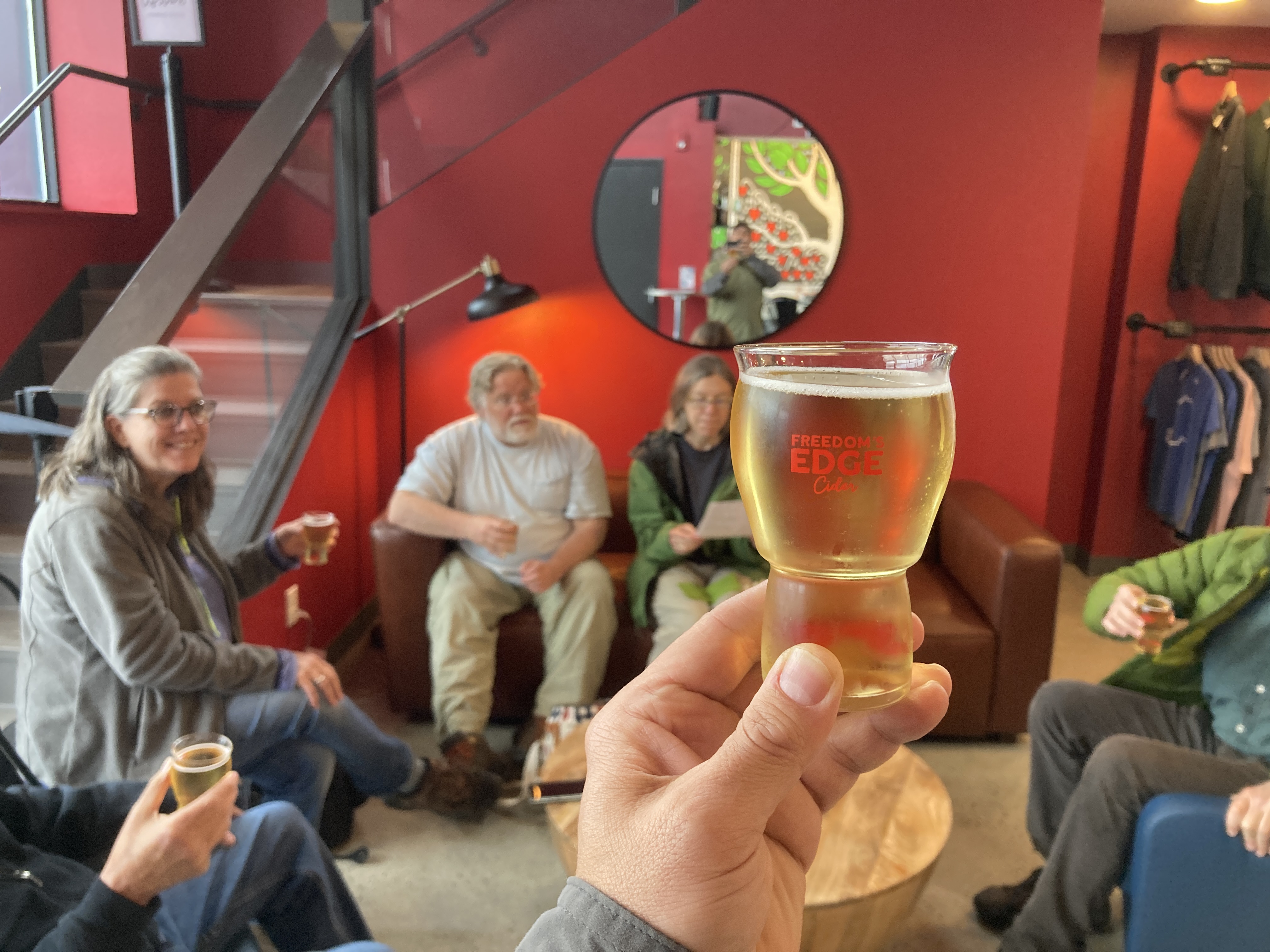
After struggling to see birds at Evergreen, we struggled to leave Capisic on time! It was a lot of fun, but it was time for the second half of the tour as we made the short trip across town to the Bayside neighborhood. Our first stop on the beverage portion of the tour was Freedom’s Edge Cider. After observing migrant birds in the crabapple trees at Capisic, it was only appropriate to enjoy cider, as the creation of hard cider was what led to the creation and diversity of crabapple trees! Focusing on the traditional, drier range of ciders, we began our tasting with their flagship “Original,” a nicely balanced semi-dry cider with a crisp finish. The unfiltered, modern “The Juice” was a touch sweeter thanks to the concentration of sugar via the freezing and thawing of the apples. I definitely picked up musty grape in the “Marc de Marquette,” a very flavorful cider aged over Marquette grapes. And finally, we were able to pick our own fourth sample. I am a sucker for maple, so I went for the “Pick Your Own” (coincidentally and appropriately) that complemented our birds of spring with flavors of spring in Maine: maple syrup and strawberries. The flavors were subtle, but the maple was really evident on the nose. However, the “Sweet Mullet,” a delicious cider steeped with mulling spices seemed to be the crowd favorite.
We’re all about the new and different on these Roadtrips, and our second stop was the very new (opened about 3 months ago) Argenta Brewing, Portland’s first lager-only brewery. Their delightfully named “Generic American Lager” had all the crushability and cleanliness of a traditional American Lager, but with a focus on Maine-grown ingredients. Learning the difference between lagers and ales while discussing topics ranging from glassware to bird conservation, we also learned all about Portland’s newest brewery. We were able to choose our second (very!) generous pour, and I joined others in the “Dark Lager” which had those nice roasted chocolate and malty flavors but with the lighter body and clean finish of a lager.
And with that, our first Birds on Tap – Roadtrip! Came to an end, but it’s not the last one in 2024, and definitely not the last one in years to come. It was good to be back on the road, and the combination of introductory birding with an introduction to Maine’s finest craft beverages is a recipe that has not lost its luster after a COVID-years hiatus.
Shorebirds and Steins, Aug 11.
We began our introduction to shorebirds with the basics, such as plover verses sandpiper, before moving into great depth such as yellowlegs vs Willet. Shape, size, and especially bill size and length are among the “bigger picture” tools we have to learn our shorebirds, such as with some close Willets – the “tringas of the 90’s steroid era in baseball.”
The original BoT Roadtrip! in 2015, our most popular tour returned to Scarborough Marsh at prime time for a good variety of migrant shorebirds. We learned how to identify our common species and searched a bit for the rare.
Birding began at Pine Point as the tide just began to flow. And as the mudflats were slowly inundated, a nice diversity of shorebirds soon appeared, and with each inch of incoming water, many of the birds moved closer and closer.
In Jones Creek, we were able to closely study the eastern subspecies of the Willet, later in close proximity to the closely related Greater Yellowlegs. And wow, did these two yellowlegs put on a show! Demonstrating their entertaining, aggressive feeding style that is highly suggestive of the species, they chased baitfish through the shallows. They were eventually so satiated that they sat down within about 15 feet of us and allowed for close looks at their bill structure and color without any straining through the scope. One spiffy Black-bellied Plover was joined by several dozen more in all stages of molt, and two awesome Whimbrels dropped in for the duration of our stay, nicely demonstrating the wide differences in shape and bill structure of our sandpipers.
Short-billed Dowitchers demonstrated their sowing-machine feeding technique – helpful as feeding style is an important part of the shorebird identification toolkit. But before we got that far, we started with the basics of plover vs sandpiper, nicely demonstrated by a flock of 150+ Semipalmated Plovers and 100+ Semipalmated Sandpipers that were concentrated before us by the incoming tide.
Two additional stops at the outskirts of the marsh gave us a sample of a different micro-habitat at high tide, yielded some Lesser Yellowlegs for our shorebird list, and gave us more looks at non-shorebirds, such as Great and Snowy Egrets, Glossy Ibis, and much more.
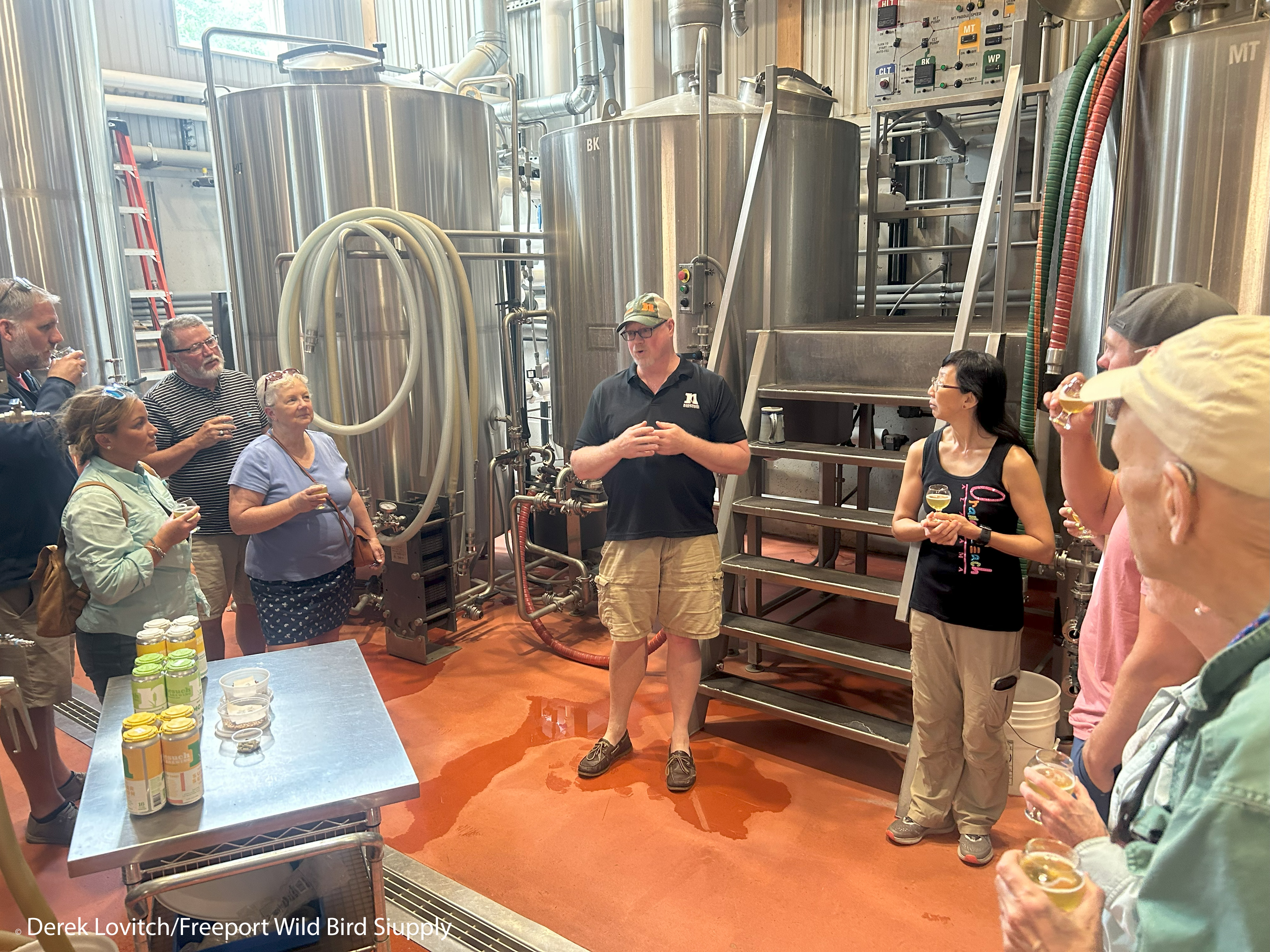
Then it was time to head over to Nonesuch River Brewing, where owner Michael and his wife Kristen graciously greeted us with a sample of their Summer Session – a nice light, refreshing welcome. We then enjoyed sips of their summery and bright Mojito IPA with lime and mint, followed by their Solstice hefeweizen with a little bit of ginger prickliness and hint of lemon. As we enjoyed those beverages, we thoroughly enjoyed an all-in tour in the brewhouse, learning the basics of brewing, and some of the house techniques to make Nonesuch such a popular brewery. I saw several four-packs of Mojito return to the bus with us, and the location can’t be beat for a post-Scarborough Marsh celebratory toast!
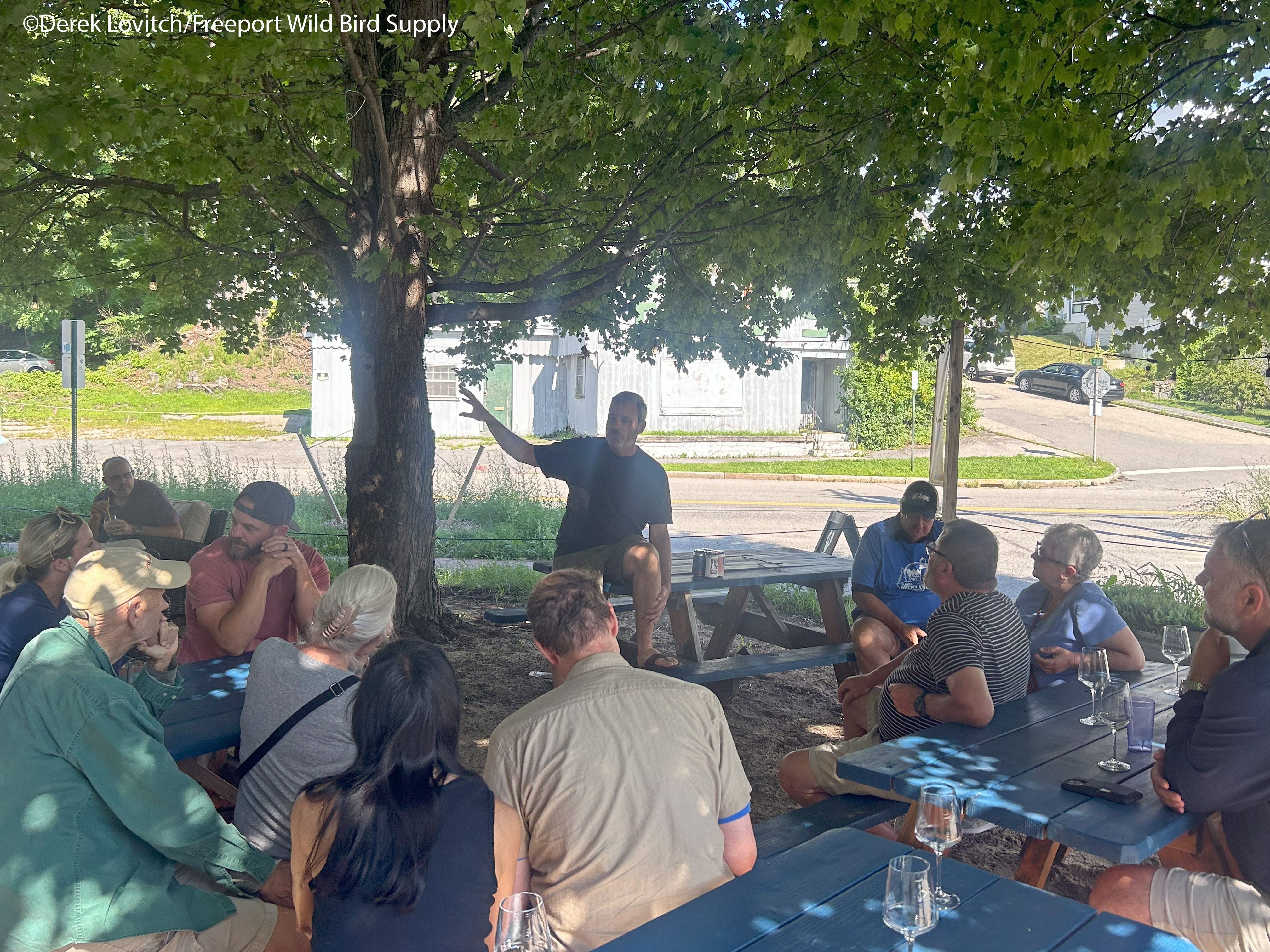
Returning to Portland, our second beverage destination was the newly expanded home of Blue Lobster Urban Winery. Once again, we felt privileged to get the tour from the owner and winemaker! Chris walked us through the winemaking process, the rational for canning it, and the history of the company. We began with a taste of their Tightline cider, a very dry cider made from local apple juice and wild yeast from the winery. Their sparking Rose was up next: very lightly carbonated with a strong strawberry nose but just a slight sweetness on the palate. Bayside Blend red was nice and dry, as I prefer my reds.
Chris then treated us to a special surprise – a barrel tasting, where we were privileged to be the first member of the public to sample an upcoming bottle release that has been conditioning for two years, and was made from grapes grown on 121 year-old vines in California. This was a special wine, and it was absolutely delightful. Our only complaint was we couldn’t buy any yet! Last but not least, we tried their blueberry infused red, with Syrah and merlot grapes infused with Maine blueberry juice. Especially after Chris suggested making a spritzer or Sangria with it, multiple four-packs were purchased to go.
Nice species of shorebirds, three beers, 4 wines, and 1 cider -now that’s a well-rounded Birds on Tap – Roadtrip!
Birds on Tap – The Boat Trip! Rare Birds and Island Exploration.
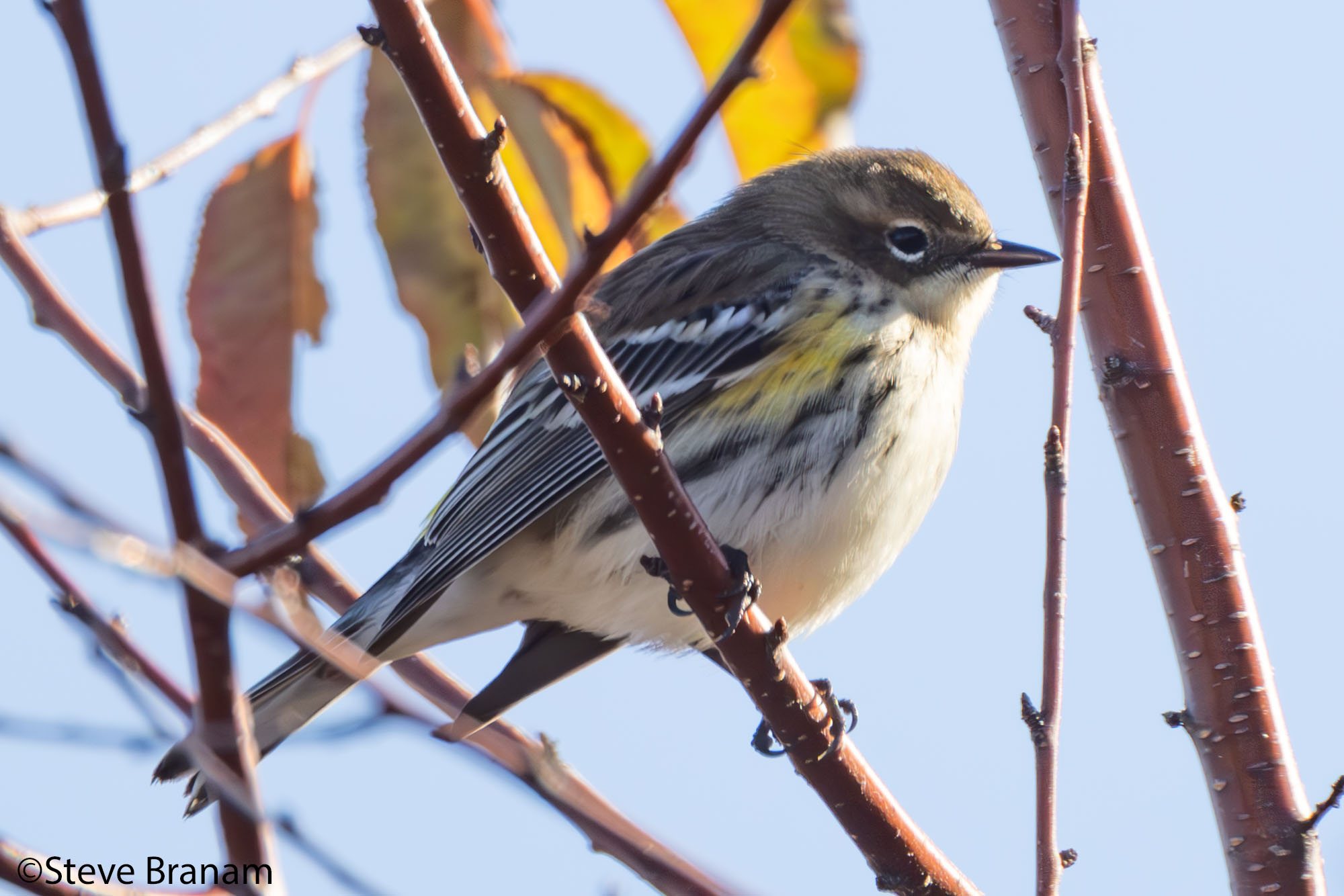
Yellow-rumped Warblers were the dominant species, not surprisingly given the date and island’s habitat, but the number present today was still most impressive. This one is nicely showing off its namesake.
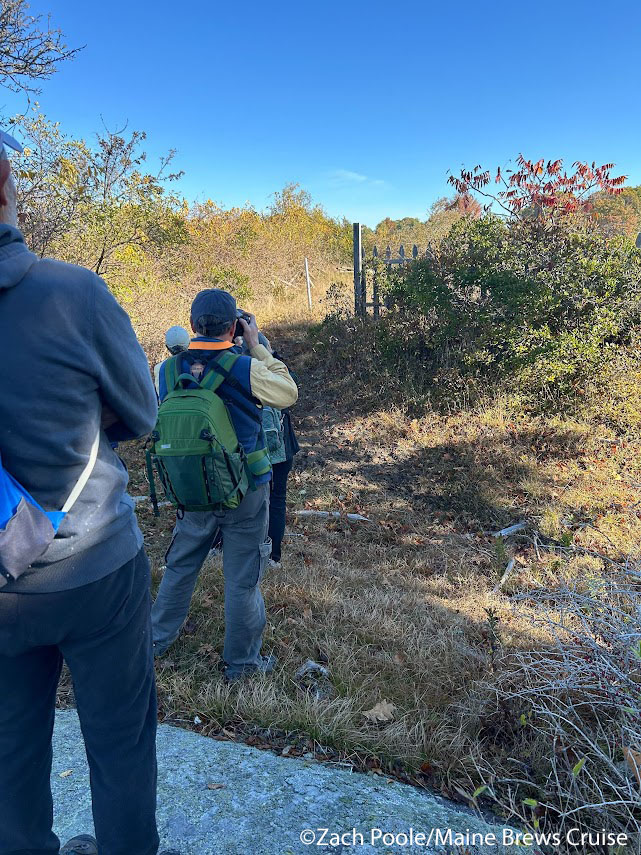
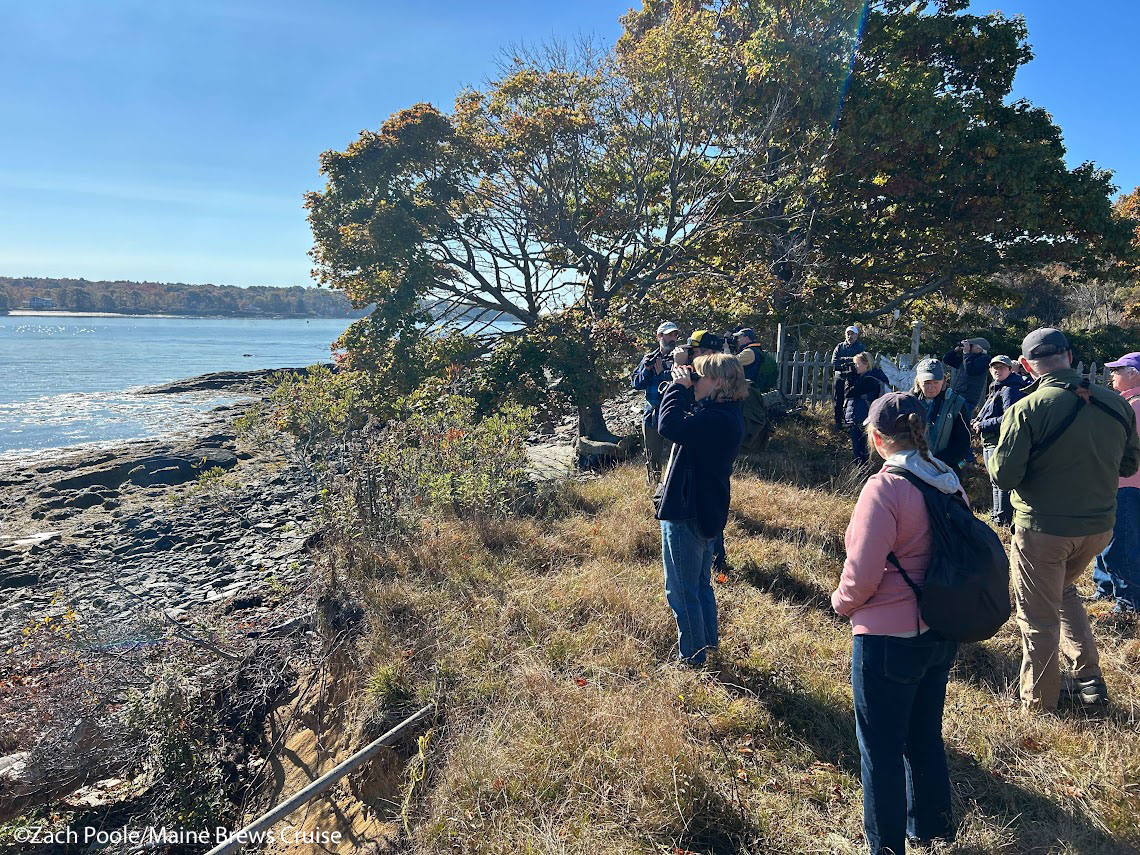
The final Birds on Tap event of 2024 was a special one indeed. This day, we not only took to the water for the first time in the series, but we were able to visit the private House Island and its historic Fort. In fact, we were the first birding tour ever on the island! But this trip was not just about the birds.
We began with some birding, walking the trails and checking all of the nooks and crannies the island and fort had to offer. Yellow-rumped Warblers were simply everywhere, with dozens popping up with limited pishing, and countless others darting around. A few Song and White-throated Sparrows were here and there, and 1-2 Northern Mockingbirds were perhaps delineating winter territories on the island.
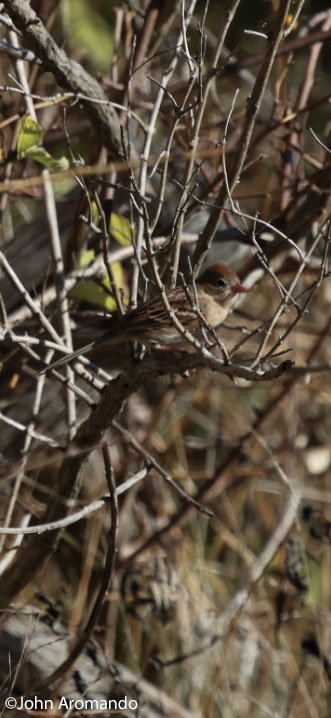
Surf Scoters and Common Eiders were offshore, a pair of Common Ravens flew by, and then, in the cemetery, we found an uncommon migrant: a single Field Sparrow.
We also learned about the food resources of the island, such as native Arrowwood Viburnum and especially the Northern Bayberry that all of these Yellow-rumped Warblers depend on and the invertebrates that can be found in the wrack line on the tiny beach.
Pete then expertly guided us into and through the historic Fort Scammel and the history of House Island. The first English settlement in Maine, it was the only island with a house on it, hence the name of the island. While primarily used for drying cod, fishing operations continued through 1907, when the buildings became part of an immigration station that operated until 1931. On the other half of the island, Fort Scammel was constructed in 1808. Four years later, it became Maine’s only coastal defense fort to fire a shot in aggression when it fired on a British privateer in the War of 1812.
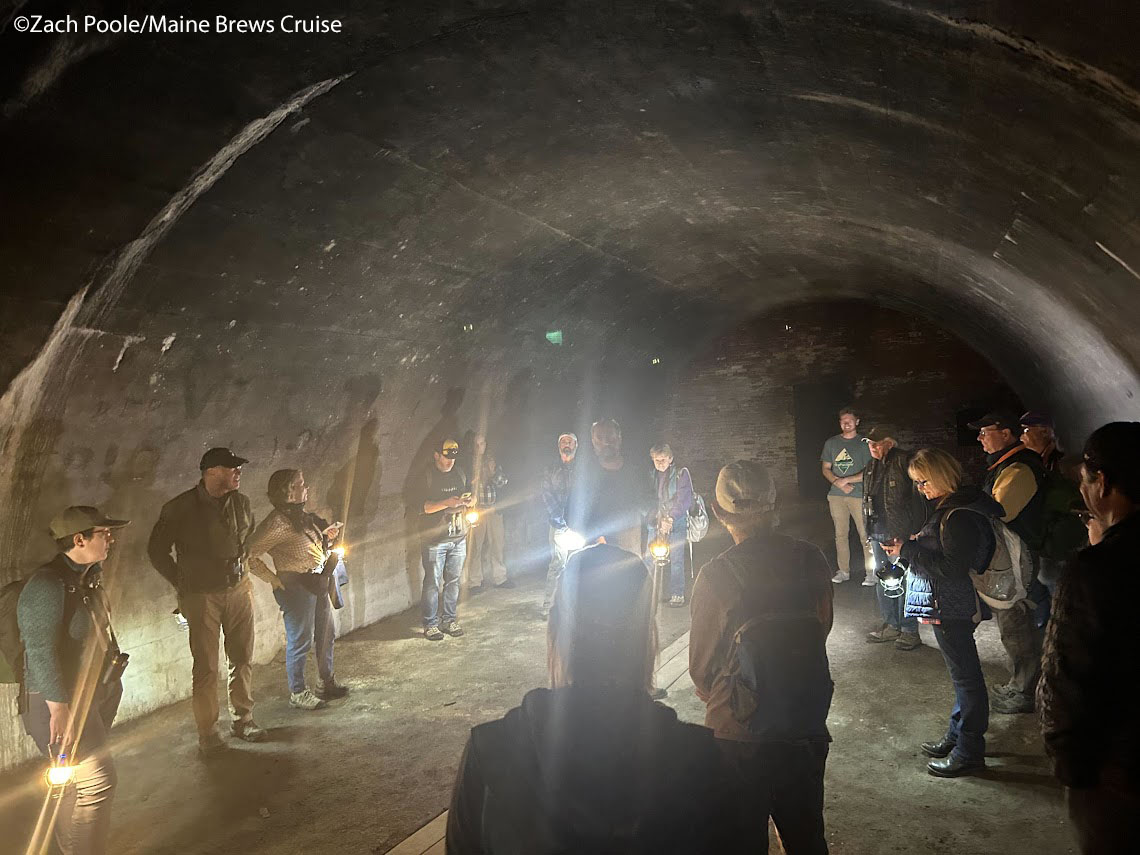
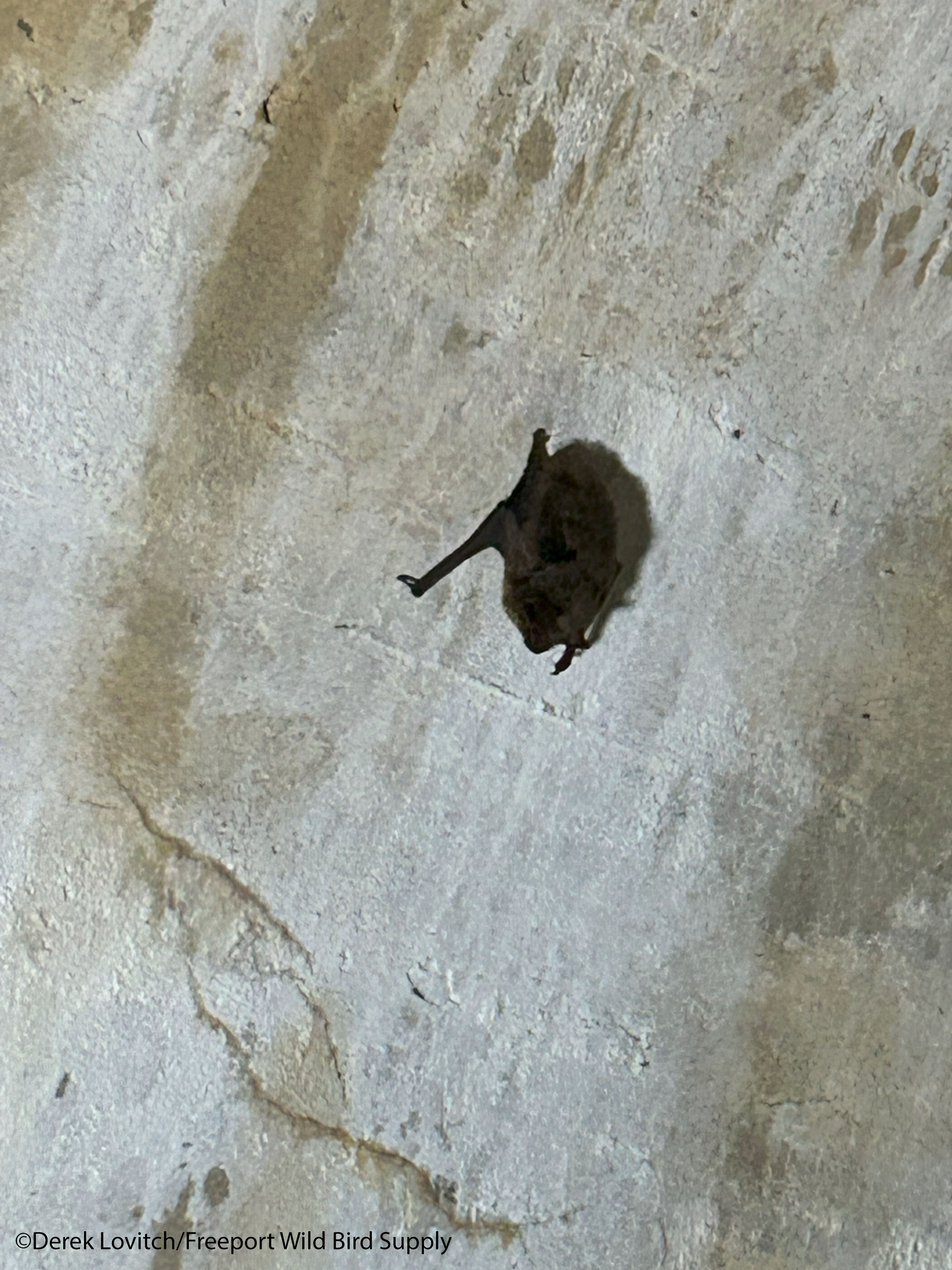
The fort was upgraded in 1840 and again in 1870, when a concrete cap was added, and it was insulated with dirt and sand. While the fort was obsolete by the Spanish-American War, anti-aircraft guns were placed here in World War 1, and in WWII, anti-submarine nets were stored here. Pete guided us through its corridors, described the cannon placement and usage, and we checked out the gunpowder magazines. We learned about the Battle of Portland Harbor, the furthest north battle of the Civil War, and we even found a roosting Big Brown Bat. Even though this was my second visit to the Fort, I was still in awe of the handiwork and the pristine condition.
Wait, what year is this?
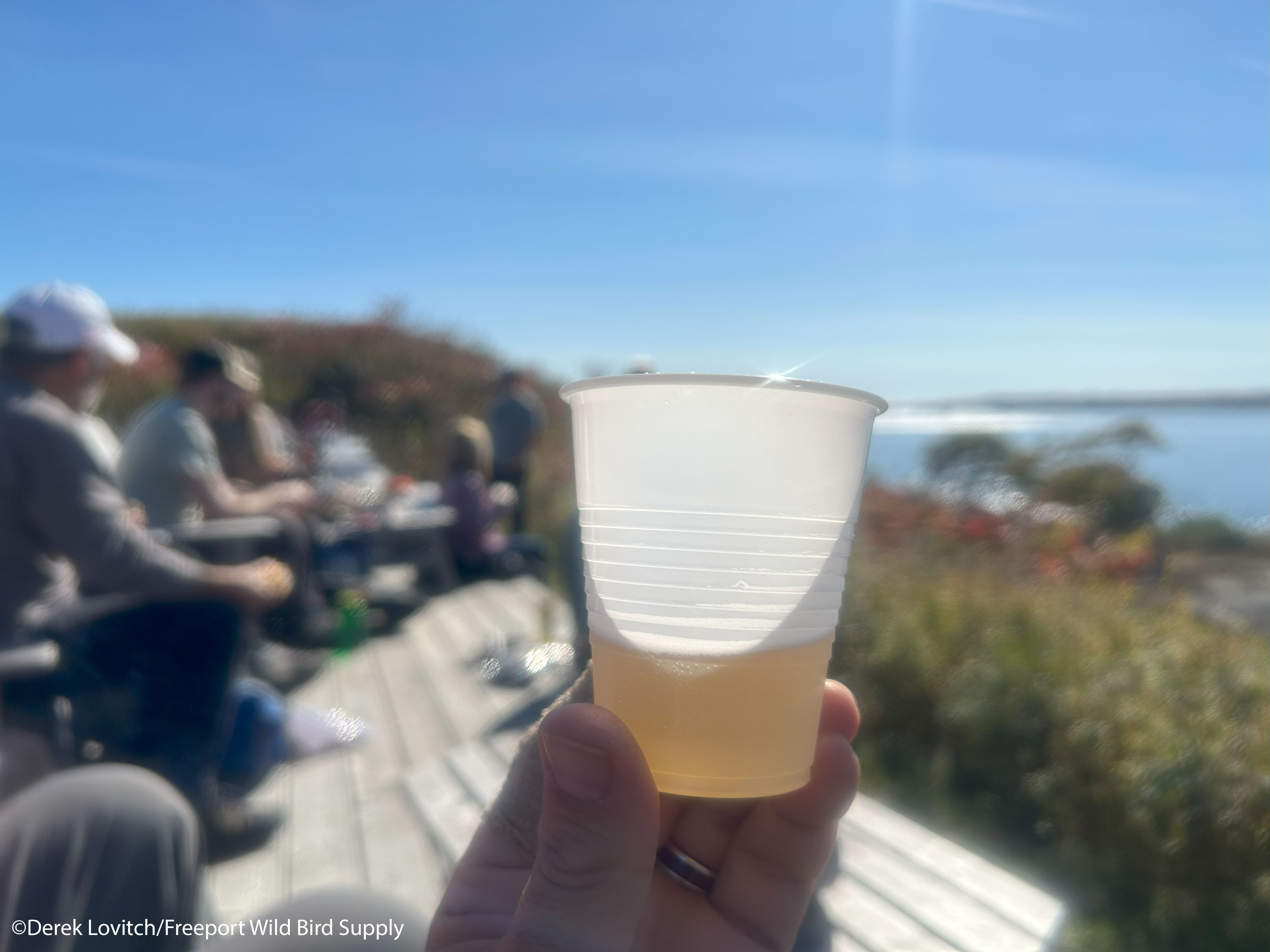
Then it was Tom’s turn to take over, and on such an insanely beautiful day, we took advantage of the comfy chairs above the parade ground for some more Portland history…but this time, it was the history of craft beer in the area. While Orange Bike is one of Portland’s newest breweries, this gluten-free brewery was developed with the help of Alan Pugsley – one of the Godfathers of the Maine craft beer movement. Starting with a refreshing and crisp pilsner, we also paid homage to a classic style.
Few beers say Portland more than Allagash White, and this was up next. The flagship of Maine’s largest brewer, its countless national and international accolades helped put Portland, Maine on the beer map. Speaking of, our next beer was Bissell’s flagship The Substance, one of the pioneers of the “New England IPA,” the hazy, juicy regional endemic that has since colonized the world.
A Horned Lark called as it unfortunately departed the island as we sampled our last beer, Mast Landing’s famous Gunner’s Daughter. A peanut-flavored stout rich in coffee, chocolate, and peanut butter notes, this was a perfect example of how creative modern beer has become.
While it was all-too-soon time to depart the island, our special tour was far from over. With such a gorgeous day (it was in the low 70’s with very little wind), Captain Pete decided to take a little ride out to the mouth of Portland Harbor. We motored past Chief Whitehead…
…and over to Ram Island Light, where Great Cormorants lined the old walkway. We compared their shape and size to the smaller, more common Double-crested Cormorants we passed on our way back inshore, while taking the time to enjoy the view, more Common Eiders and Surf Scoters, and scattered Black Guillemots.
A Gray Seal ushered us into the dock on our return.
Freeport Wild Bird Supply is very excited to partner with Down East Magazine’s Down East Adventures for the fourth year of offering exclusive birding workshops focused on gaining greater knowledge and field skills in a focused group of seasonally accessible birds. Focused on skill-builder rather than list-building, there will be plenty of “life birds,” but also more knowledge and education about birds, habitats, birding, and much more about the natural world. We’re happy to bring back the complete slate of tours from our 2023 season.
The full list and descriptions, along with registration information, for all of our upcoming tours (and an outline of 2025 options) can be found here. At the conclusion of each tour, I’ll post the trip report here.
Winter Waterbirds Workshop, January 14th.
I mean, really, what’s better than a Harlequin Duck?
For the second year in a row, very strong winds greeted us in the morning. So the game of the day was finding sheltered coves and respites from the wind. Therefore, we adjusted our itinerary accordingly, making a further adjustment based on parking lot closures from storm damage.
While we had high hopes of finding alcids that were blown closer to shore and were seeking refuge after the strong storm of the previous day, we didn’t see a single one – not even a Black Guillemot! However, we did see just about every other regularly occurring winter waterbird, from Red-necked and Horned Grebes to Buffleheads and Long-tailed Ducks Not surprisingly, Harlequin Ducks were the star of the show, with about 10 along Marginal Way in Oqunguit and abut 20 at The Nubble. Large rafts of Black Scoters were seen at several locations, with Surf and White-winged Scoters seen nearby for careful study.
We had a lot of Common Loons today, and we practiced learning their shape and size to separate them from other waterbirds at any range. Great Cormorants at The Nubble were nice to see, and we did a little introduction to gull identification with a mixed flock at Short Sands Beach.
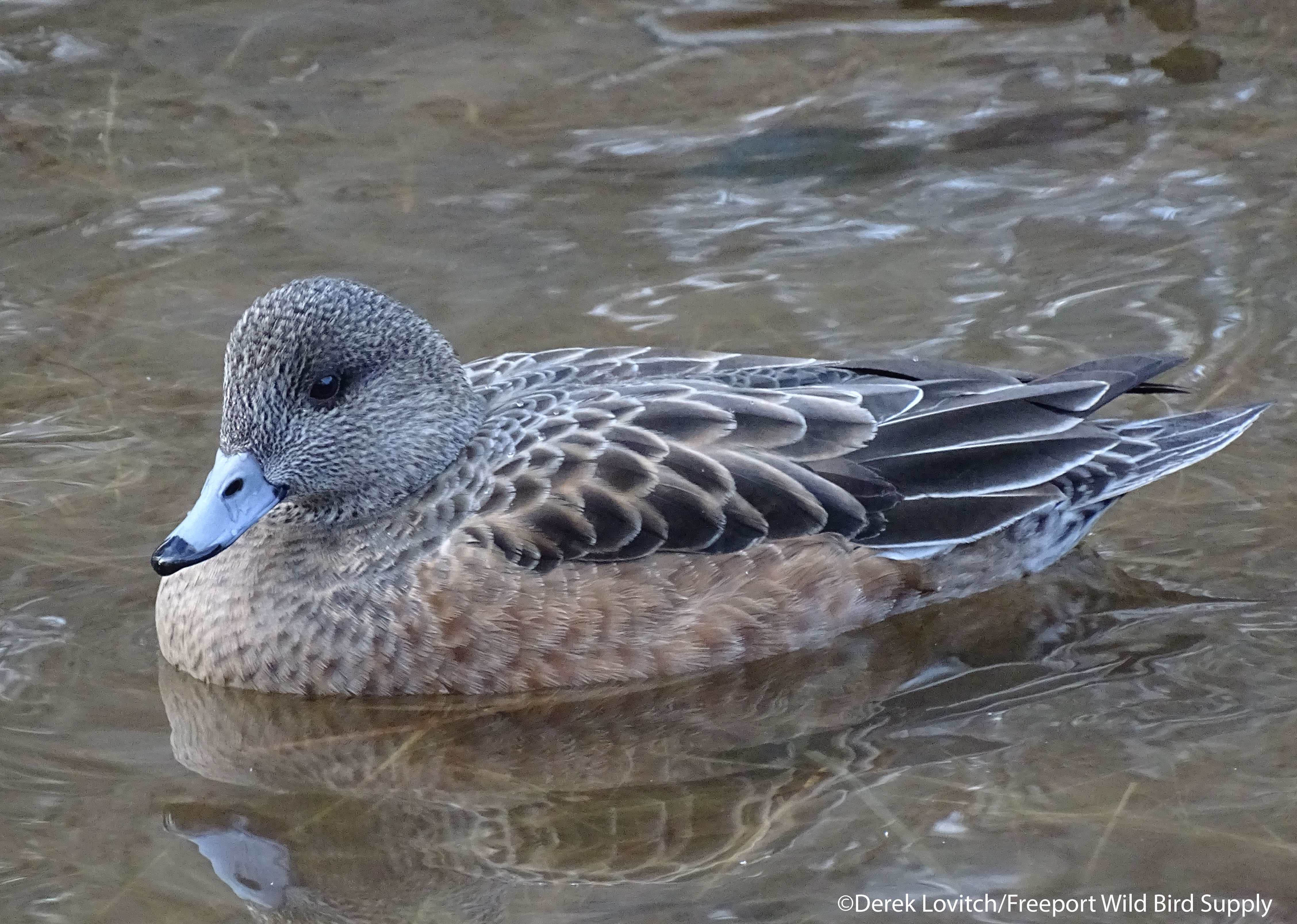
Finally, a stop at the York Duck Pond introduced us to another group of waterbirds: dabbling ducks. There, we had close studies of Mallards, American Black Ducks, and hybrids thereof. Practicing our “feather birding” we used the hybrids of an example of what to look for beyond the general impression of size and shape we were focused on throughout much of the day. The icing on the cake was the hen American Wigeon that has been here all winter – you may never see one as close and as well as that again! Enjoying the fine black detailing on the steely blue bill was a highlight for me.
Spring Migrant Songbird Workshop, May 12th.
Honestly, I am not sure if we could have dialed up a more productive morning for an instructional workshop designed for learning about migrants – from identification to natural history, habitat to visible migration. “Slow” by mid-May standards, we eventually tallied 15 species of warblers (including a few “heard only”), but we had absolutely remarkable “quality time” with so many of the species we did encounter today.
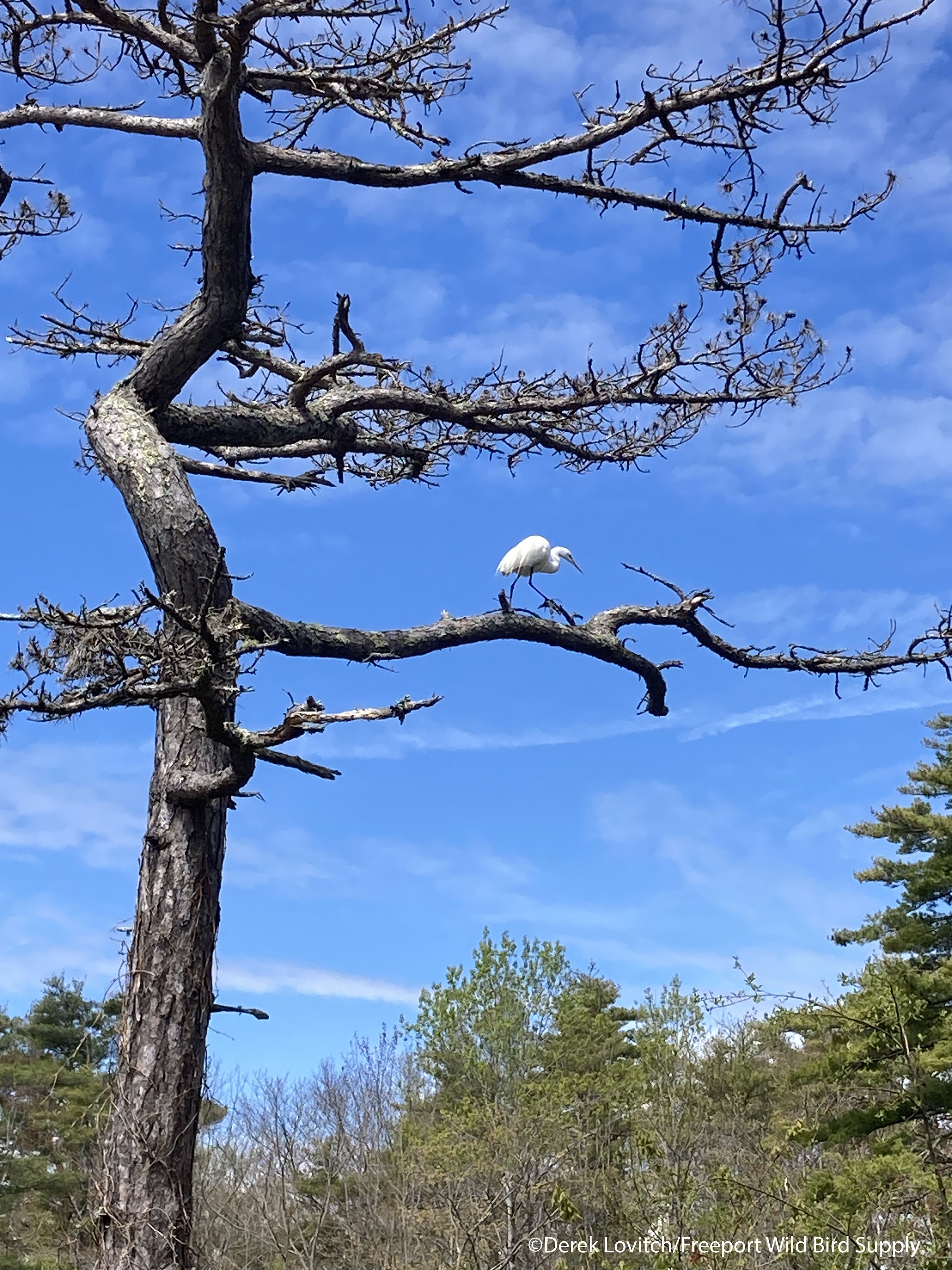
We were greeted by a Great-crested Flycatcher and finished with Maine’s most confiding Great Egret. In between, a wide range of species included an uncommon Blue-gray Gnatcatcher and a family of Wood Ducks. I particularly enjoyed the quality time spent with a pair of Black-capped Chickadees who were busy gathering moss for their nest lining.
But it was the Neotropical migrants who were the stars of the show, as predicted and hoped for. My first Red-eyed Vireo of the spring was uncharacteristically low and cooperative, but the single early-ish Blackpoll Warbler was most definitely not. However, almost every other warbler was just shockingly well seen. In one willow thicket, we watched – often without binoculars and often within 10-15 feet of us and below eye-level – two each of stunning Magnolia Warblers, gorgeous Northern Parulas, charismatic Common Yellowthroats, and distinctive Chestnut-sided Warblers. A short distance down the trail, our patience with Ovenbirds was rewarded with one walking out into the open a short distance ahead.
In between bird sightings, we discussed habitat, NEXRAD radar, and the big picture of what we were and were not seeing today and why. We noted how American Crows mobbed a Red-tailed Hawk but barely bothered to call at the sight of a less-threatening Broad-winged Hawk. OK, fine, those aren’t songbirds, but we learned a lot from them anyway.
More birds of more species can and will be seen under different conditions at Evergreen Cemetery and similar urban green spaces as encountered today, but we would be hard pressed to see so many birds so well, for prolonged periods of time to allow for thorough study. While we encountered one wave of migrants all moving together, which can easily become frustrating when getting started, many of birds came one or two at a time allowing for in-depth observation -exactly want we want in a songbird workshop!
Not a songbird, but this Great Egret that frequents the ponds here also poses in interesting places.
Shorebird Workshop, August 15th.
Nothing wrong with starting out with the easy ones, like dapper Ruddy Turnstones!
Recent rainfall, approaching thunderstorms, and current observations all combined to make me throw our itinerary out the window this day. Sometimes audibles work…and today, it most definitely did.
While I prefer to start with smaller groups of birds so as not to overwhelm, we took advantage of the lovely morning and high tide to soak in an estimated 2000 shorebirds at our first stop! Biddeford Pool Beach did not disappoint, and we began our lessons with the basics: shorebird vs everything else, plover vs sandpiper, and eventually each species. We compared Semipalmated Sandpipers (~1750 individuals) and Semipalmated Plovers (about 200 individuals), then teased out several White-rumped Sandpipers from the masses. We noticed how white Sanderlings look, and what little bulldozers the distinctive Ruddy Turnstone can be. Spotted Sandpipers nicely demonstrated their shallow short-distance flight wingbeats as well.
Nearby Great Pond allowed us to compare Semipalmated Sandpipers vs Least Sandpipers at nearly arm’s length, while giving us better looks at a couple of Spotted Sandpipers. A single Lesser Yellowlegs was also added to the list.
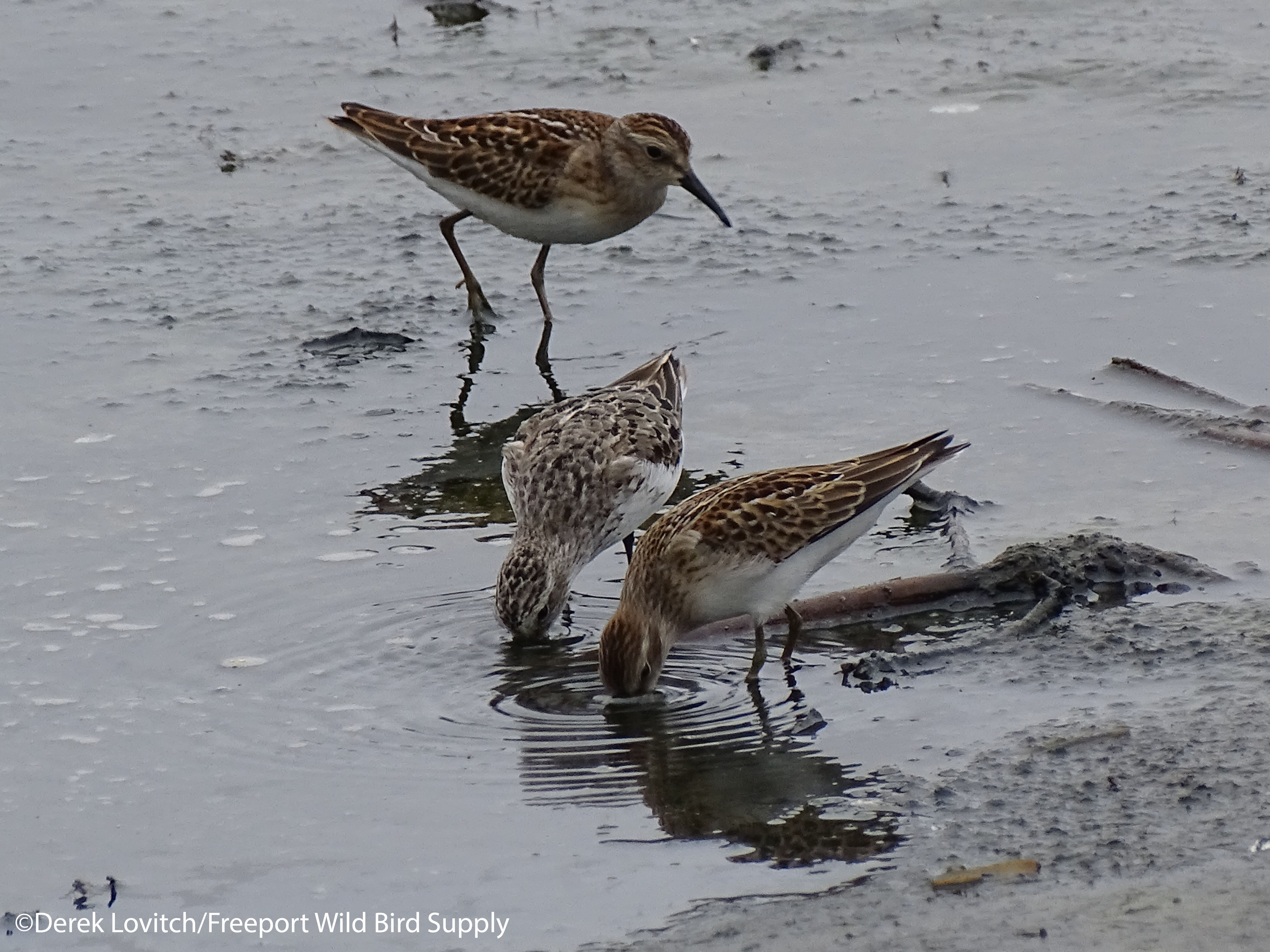
By using habitat cues and tide charts, we maximize our shorebirding productivity. By studying birds near (like these side-by-side Least and Semipalmated Sandpipers) and far, we can learn to quickly recognize most shorebirds, most of the time, using a range of tools that we worked on together throughout the day.
Next up was Hill’s Beach, on the prime outgoing tide. Unfortunately, thunderstorms were rapidly approaching, and after a short check (more Sanderlings and a growing number of Semipalmated Sandpipers and Plovers), we decided to play it safe, return to the cars, and head into Saco for lunch. Good thing, too, as while we were eating, it was pouring outside!
White-rumped Sandpiper.
Returning to the field, we poked around the edges of Scarborough Marsh as we waited for the tide to begin rolling back in and for the rain to finally come to a stop. After a 10-minute rain delay in the cars while we waited out the last of it, we returned to the field to take in the flats of Pine Point. Good looks at Black-bellied Plovers (75+) allowed us to compare their shape, size, and feeding style to the estimated 300 Semipalmated Plovers that were here. Another 1200 or so Semipalmated Sandpipers contained at least a dozen White-rumped Sandpipers, which we practiced sorting out at a distance using shape and size, especially those long primaries. 14 Willet were new for our list, and the 90’s steroid-era-baseball-players of the greater Tringa family nicely contrasted with 4 slim Lesser Yellowlegs that alighted with some of them. Four not-so-short-billed Short-billed Dowitchers were our 11th species of shorebird of the day. And finally, as we continued to grow and practice our shorebird identification toolkit, we also took note of some non-shorebirds, such as Common Terns and a variety of gulls which today included 2 very-uncommon Lesser Black-backed Gulls!
Monhegan Birding Workshop, September 13th – 15th.
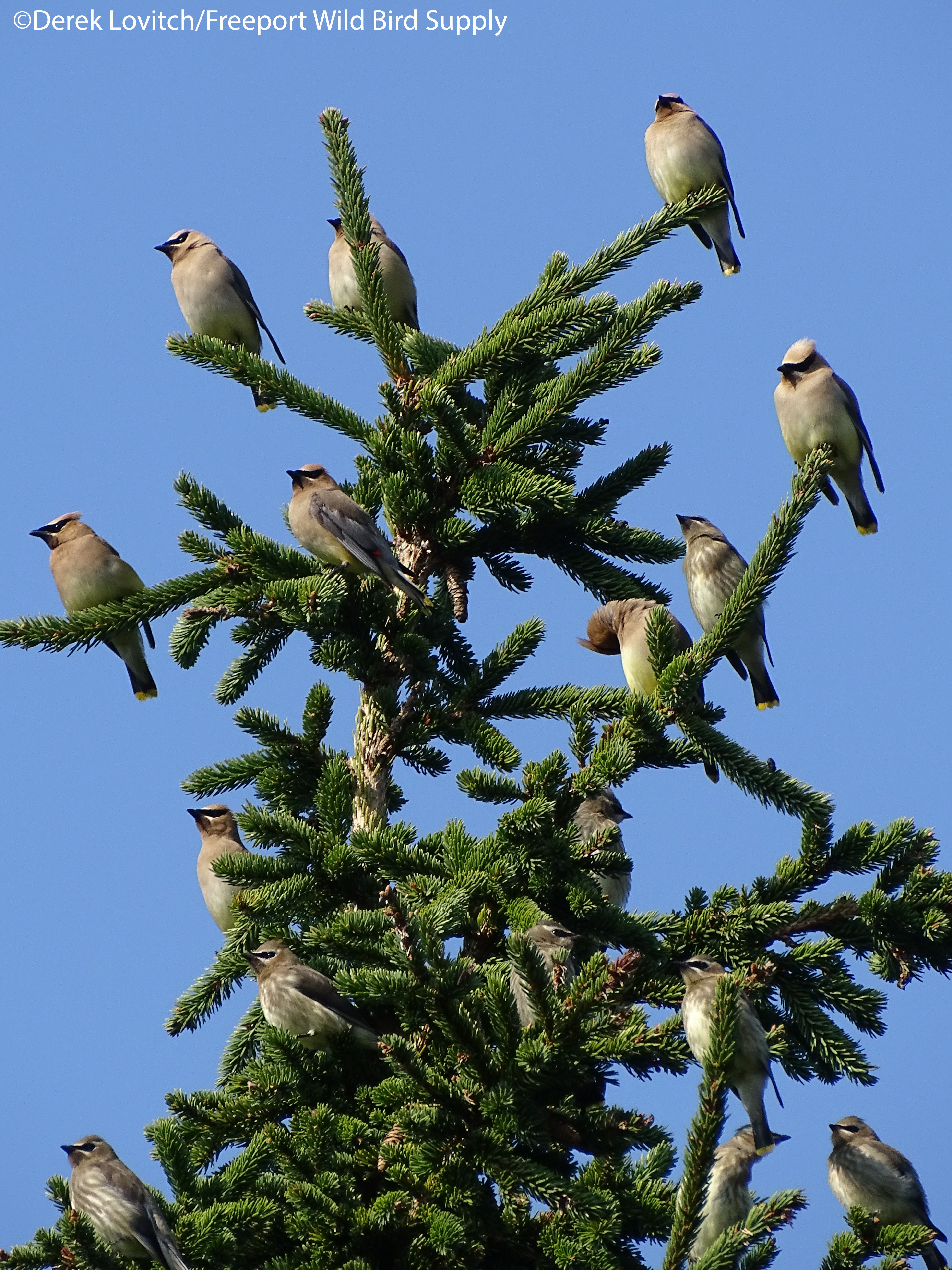
Cedar Waxwings were often with us, alighting on trees, eating native fruits, and avoiding marauding Merlins. Few things bring as much pleasure to the birding day as a “Waxwing Christmas Tree.”
Arriving on a glass-calm sea on Friday the 13th, luck was most definitely with us today and the entire weekend. We were greeted at the dock by a darting Merlin, a sign of things to come. After checking in and a relaxed lunch, we began our workshopping. While overall songbird activity was slow, we enjoyed plants, butterflies, and the weather as we wandered around and spotted birds here and there: a Northern Waterthrush in an isolated bush in a yard, a female Black-throated Blue Warbler in the woods, and lots of Cedar Waxwings in small flocks, overhead and landing in trees. Merlins continued to perform, and several Peregrine Falcons and Sharp-shinned Hawks joined the show, although it did not help us detect skulking warblers!
A late afternoon walk to Burnt Head to take in the cliffs and sample the habitat of the island’s interior produced a 1st-winter Lesser Black-backed Gull, but more importantly perhaps, allowed us to enjoy such a beautiful day on the island for mid-September.
On Saturday morning, we stepped off the porch at the Monhegan House, and it was ON. A great Morning Flight (morning redetermined migration) was underway, with dozens upon dozens of warblers zipping overhead as the sun slowly rose. As we did a short stroll to some favored early-morning micro-habitats, we ground-truthed the morning flight, finding that Cape May Warblers were indeed the dominant migrant of the morning. In fact, we often had 3 or 4 (as many as 5 in one tree) in the top of nearly every spruce we checked, and the entire range of plumages was on display. Northern Parulas were also numerous, but we estimated about 3 of every 5 warblers we encountered this morning were Cape May!
It was such a great morning it was hard to come inside to break for breakfast. Or so one thinks until they have had the Monhegan House Breakfast…and this was just the final of three courses!
Although the day’s activity peaked in the morning as many of the birds in Morning Flight continued on back to the mainland with a light northwest wind becoming northeasterly by noon, we continued to find pockets of activity and mixed-species foraging flocks throughout the day. There were a few Eastern Kingbirds and Eastern Wood-Pewees scattered about, often giving very good looks, and we had a nice mixed vireo flock that included 2 Philadelphia Vireos, 1 Blue-headed Vireo, and several Red-eyed Vireos for nice comparison. Northern Harriers put on a performance for us in the late afternoon over the marsh.
While our afternoon walk through the woods to the lighthouse was as much for pleasure and learning about habitats as it was for birds, the result was the discovery of a rare Lark Sparrow! We covered a lot of ground today, and definitely earned our delicious dinner. Before that, however, we had a little workshopping session to recap the day and compare what we saw (morning flight) with what the overnight radar image had suggested.
One of the new migration skills we learned was how to monitor and plan your birding accordingly by looking at NEXRAD weather radar. For comparison, here are the 1am images from Saturday and Sunday morning, respectively, showing the greater density of birds in the air and offshore on Saturday morning – and confirmed by our morning flight observations come sunrise.
Another clear and calm night resulted in a very strong flight of birds, but with fewer birds drifting offshore, the morning flight was slower than Saturday, as we forecast. However, there were plenty of new birds around, and we repeatedly saw birds we had not yet seen and many rather “fun” species. It started with a drift-vagrant Dickcissel in Morning Flight, followed by a Whimbrel flying around. A likely Clay-colored Sparrow disappeared before we could confirm it in poor light, but warblers such as Bay-breasted, Blackburnian, and Wilson’s were more confiding. Unexpected offshore and always a surprise on Monhegan, an immature Cooper’s Hawk flew over us on our way to lunch.
There was a noticeable turnover in species, with more sparrows and many fewer Cape May Warblers. We had some unusually cooperative Lincoln’s Sparrows to study, such as this one that perched in a bush with a Song Sparrow for comparison (and later, the same bush held a Swamp Sparrow next to a Song for further study of the entire genus!).
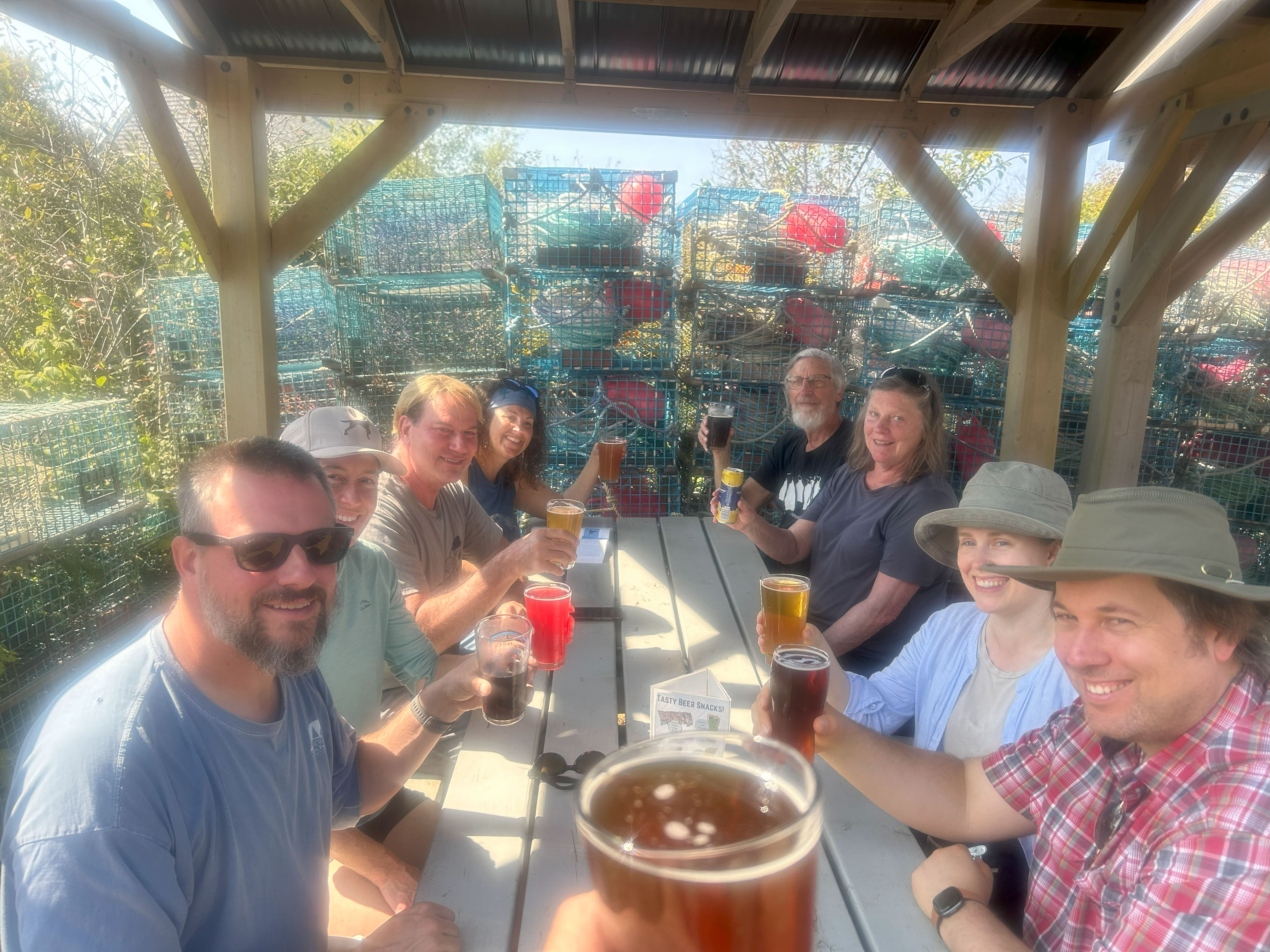
Since we were focused on learning bird identification and the nuances of migration’s ebbs and flows (and mechanisms thereof), we did not keep a running bird list. We did count our warbler tally and finished the trip with a very respectable 17 species of warblers! We found a couple of “good birds” (and jokingly disparaged the use of the descriptor) for ourselves and ate way too much good food. We learned a bunch about migration, plants, birds, and insects, and a little about the island. So instead of trying to add one more bird to the non-existent list, we brought the tour – and the 2024 Down East Adventures Birding tours season to a close with lunch and a toast at the brewery!
It was a good week for Caspian Terns, and it’s always a treat to see one sitting still. This adult was on the Lubec Flats on the 4th.
A busy week of birding included our annual late summer/early fall trip to Washington County and a bunch of guiding, producing the following observations of note:
25-30 Common Nighthawks, over Chebeague Island in the mid-morning, 9/3 (with The Chebeague & Cumberland Land Trust birdwalk group).
1 juvenile LITTLE BLUE HERON, 1 CASPIAN TERN, 1 Great Egret, 5 Surf Scoters, etc, Lubec Flats, Lubec, 9/4 (with Jeannette).
A relatively slow morning in Head Harbor Passage from Eastport on 9/5 (with Beth Edmonds, Dan Nickerson, Jeannette, and friends) was most noteworthy for the continuing large numbers of COMMON MURRES. I tallied 109, but that seems very conservative. We only had 4 Razorbills and 1 adult Lesser Black-backed Gull. Quiet time with just us and a Fin Whale more than made up for it though.
The afternoon whale watch on Eastport Windjammers to the same waters that day (with Beth Edmonds, Dan Nickerson, and Jeannette) yielded an adult LITTLE GULL, 3 CASPIAN TERNS, 1 late ARCTIC TERN, 2 Great Shearwaters, etc. Incredibly experience with 2 Fin Whales, 1 Humpback Whale, and 1 Minke Whale though.
We always enjoy our quality time with Black-legged Kittiwakes in the Head Harbor Passage area at this time of year.
2 American Pipits (FOF), Sanborn Cove, Machiasport, 9/6 (with Jeannette). Interestingly, we had pipits at a number of places throughout the day, with a high count of 22 at Addison Marsh, Addison.
1 Great Egret, Addison Marsh, 9/6 (with Jeannette).
1 Great Egret, Essex Marsh, Bangor, 9/6 (with Jeannette).
High count for warbler species in our Durham backyard this week was 11 on 9/7 (with Angela Woodside).
3 adult Lesser Black-backed Gulls, Popham Beach State Park, Phippsburg, 9/8 (with clients from Texas).
Great whale-watching trumped the bird-watching again this week with 3 lunge-feeding Fin Whales off of Boothbay Harbor aboard Cap’n Fish’s Cruises on 9/8 (with clients from Texas). 3 RED-NECKED PHALAROPES, 1 Great Shearwater, 1 adult Lesser Black-backed Gull, 10 Wilson’s Storm-Petrels and making it back to shore before the violent thunderstorms add to the success of the trip!
Meanwhile, my shorebird high counts this week were as follows. While reduced in diversity by a lack of visitation to southern Maine shorebird hotspots, Downeast yielded some excellent numbers and I found some uncommon species in unexpected places for a goodly total of 18 species (“shorebird season” is far from over!):
AMERICAN OYSTERCATCHER: 1, Popham Beach State Park, Phippsburg, 9/8 (with clients from Texas).
Ruddy Turnstone: 1, flying 10 miles off of Boothbay Harbor, 9/8 (with clients from Texas). Odd sighting of a single juvenile bird circling the boat repeatedly in hazy conditions where the mainland was not visible.
Sanderling: 24, Popham Beach State Park, 9/8 (with clients from Texas)
Our Durham yard has been incredibly birdy this week. The most unexpected migrant was this American Bittern that dropped into our new pond for the morning of the 28th.
I didn’t get out to shorebird hotspots as much this week, but still ended up with 17.5 species and some solid high counts. However, much of my best birding this week was from our yard, which apparently is a fantastic fall migration hotspot. And my first visit of the season to Sandy Point on 8/31 produced a new August record!
Black-bellied Plover: 142, The Pool, Biddeford Pool, 9/1.
Killdeer: 3, United Ag and Turf, Auburn, 8/31 (with Jeannette).
Semipalmated Plover: 150+, The Pool, 9/1.
Piping Plover: 1, The Pool, 9/1.
Whimbrel: 4, The Pool, 9/1.
RED KNOT: 16 juv, The Pool, 9/1.
Sanderling: 1, The Pool, 9/1.
Least Sandpiper: 32, Eastern Road Trail, Scarborough Marsh, 8/31.
White-rumped Sandpiper: 11, Wharton Point, Brunswick, 8/28 (with Jeannette).
Pectoral Sandpiper: 2, Eastern Road Trail, 8/31.
Semipalmated Sandpiper: 450-500, Wharton Point, Brunswick, 8/28 (with Jeannette).
A handful of non-shorebird highlights this week also included:
A productive week of birding on our Durham property produced a number of highlights. In fact, most mornings, it was hard to pull myself away from the yard. At least 11 species of warblers have been in our yard daily this week, with a high count of 12 on the 28th. A female MOURNING WARBLER was present 8/27-8/29. A Phildelphia Vireo on the 28th-29th was our 144th yard bird, followed moments later by the arrival of #145: An American Bittern (photo above). A DICKCISSEL (FOF) briefly paused in the yard on the morning of the 1st for our 146th yard bird! 32-38 Common Nighthawks were feeding over the yard late in the day on 9/1 as well.
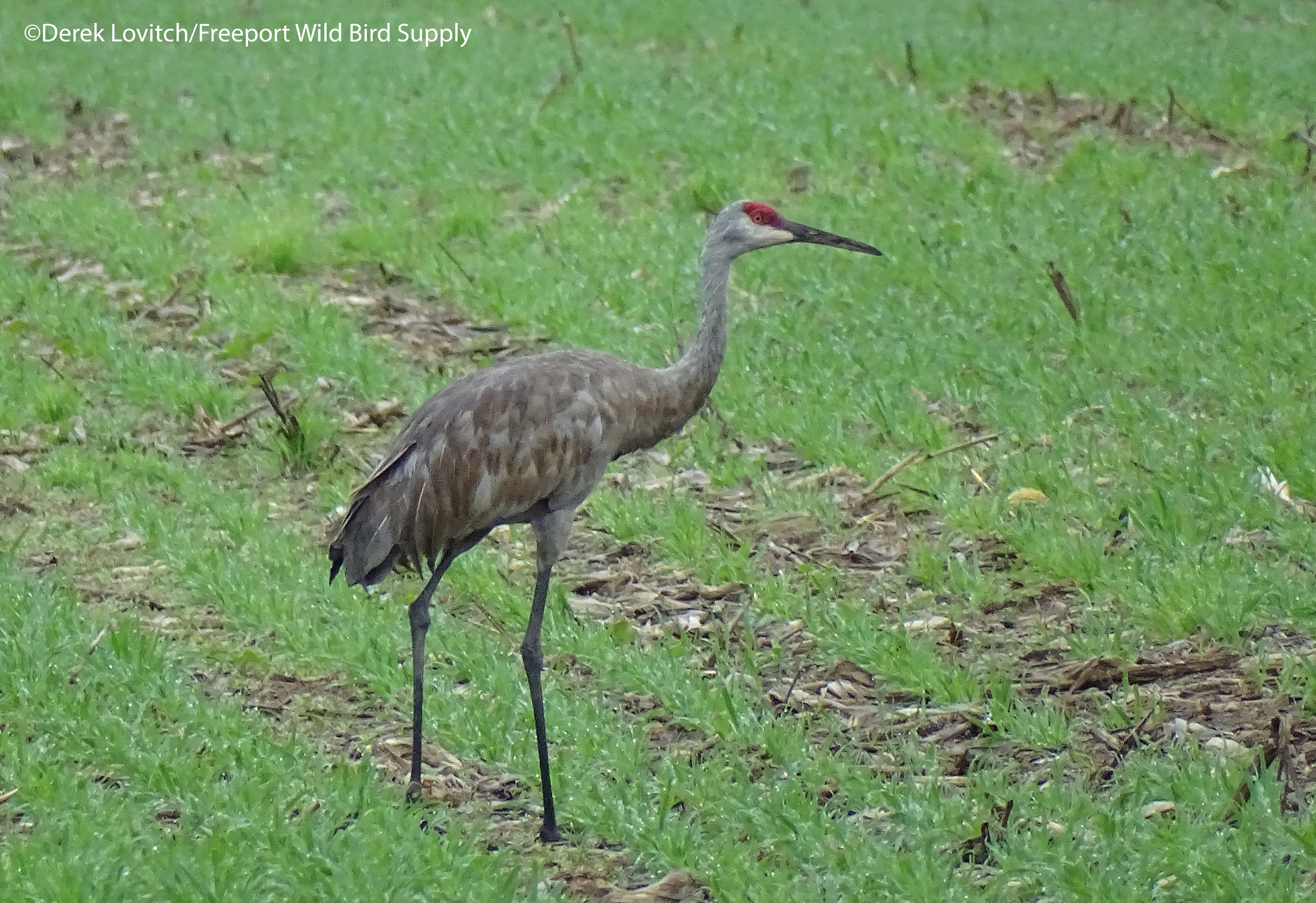
12 adult SANDHILL CRANES, Mayall Road, Gray/New Gloucester, 8/30 (site high count and noteworthy that no juveniles were present – failed breeding season due to high water and flooding?)
Sandy Point Morning Flight, 8/31 (FOY):
6:00-9:15am
57F, mostly clear, NE 4.7-7.6 increasing to 7.3-9.8 and gusty.
This juvenile Marbled Godwit continues at Hill’s Beach in Biddeford, making a nice addition to my “Shorebird Big Day” effort on Tuesday.
After being thwarted by weather on a couple of days recently, I conducted a “Shorebird Big Day” on Tuesday the 22nd. I birded between Sanford and Brunswick, seeking shorebirds from near-dawn to dusk. My goal was “at least 20” species of shorebirds, so I was happy to finish my day with 22 species. Needless to say, that day dedicated to shorebirding produced the majority of my high counts this week:
AMERICAN OYSTERCATCHER: 6 adults, Ocean Avenue, Biddeford Pool, 8/22 (with Luke Seitz).
Black-bellied Plover: 126, Wharton Point, Brunswick, 8/22.
A nice list of non-shorebird highlights this week also included:
At least 12 species of warblers have been in our yard daily this week, with a high count of 15 on the 24th. A Tennessee Warbler that I spotted while conducting our Bird Safe Open House birdwalk on the 19th was our 141st yard species.
Common Nighthawks have been on the move all week, with nightly sightings. My high counts included 16 over the Bates Mill in Lewiston on the 19th (with Dan and Renee Klem) and 244 in an hour over Wharton Point in Brunswick on the 23rd.
1 continuing proposed TRICOLORED HERON X SNOWY EGRET X SMALL WHITE EGRET SP(P) HYBRID, Eastern Road Trail, Scarborough marsh, 8/20.
3 BLUE-GRAY GNATCATCHER, Green Point WMA, Dresden, 8/21 (with Jeannette).
1 ad. Lesser Black-backed Gull, Hill’s Beach, 8/22 (with Luke Seitz)
Continuing mid-summer scoter Hat Trick off Biddeford Pool Beach, 8/22 (with Luke Seitz): 2 White-winged Scoter, 2+ Surf Scoters, 75-100 Black Scoters.
2 continuing adult RED-NECKED GREBES, Ocean Avenue, Biddeford Pool, 8/22 (with Luke Seitz).


























 Maine Birding Field Notes