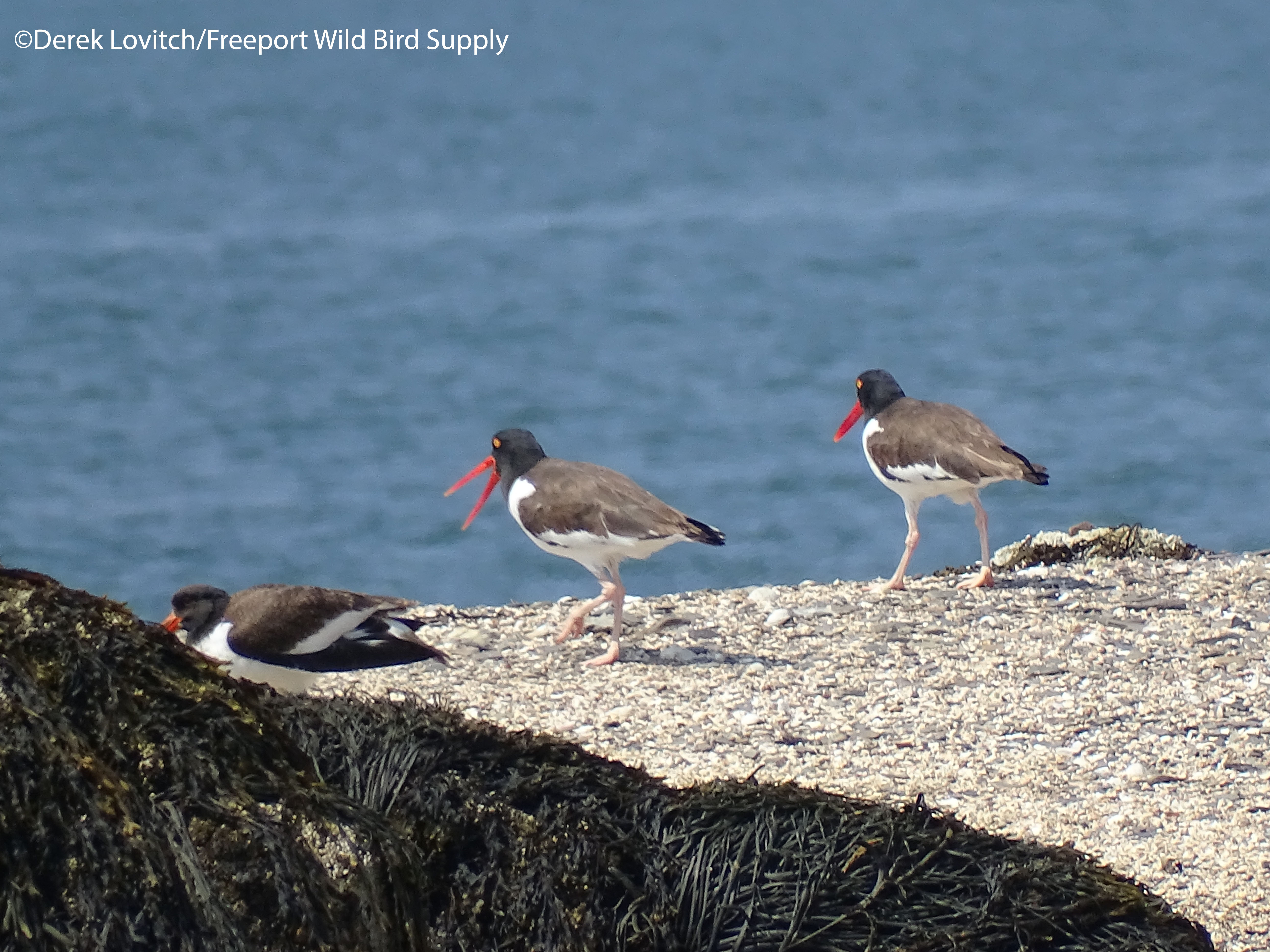
Suspected of breeding in 2022 and confirmed in 2023, a pair of American Oystercatchers has now nested annual on the tiny Upper Green Islands way up in Casco Bay off Yarmouth. On the 17th, our annual shorebird-focuses Birds of Casco Bay with Seacoast Tours collaboration documented a pair of adults with a juvenile once again. Since we discovered them on this tour in 2022, it’s been exciting to visit them each summer. Who would have thought this tiny island and ledge could support one of only a dozen or so pairs in the entire state? Full trip report here.
Two birdwalks, two shorebird-centric tours, and two whale-watches made for a very nice, diverse array of observations of note for me over the last 10 days (see note in shorebird high counts):
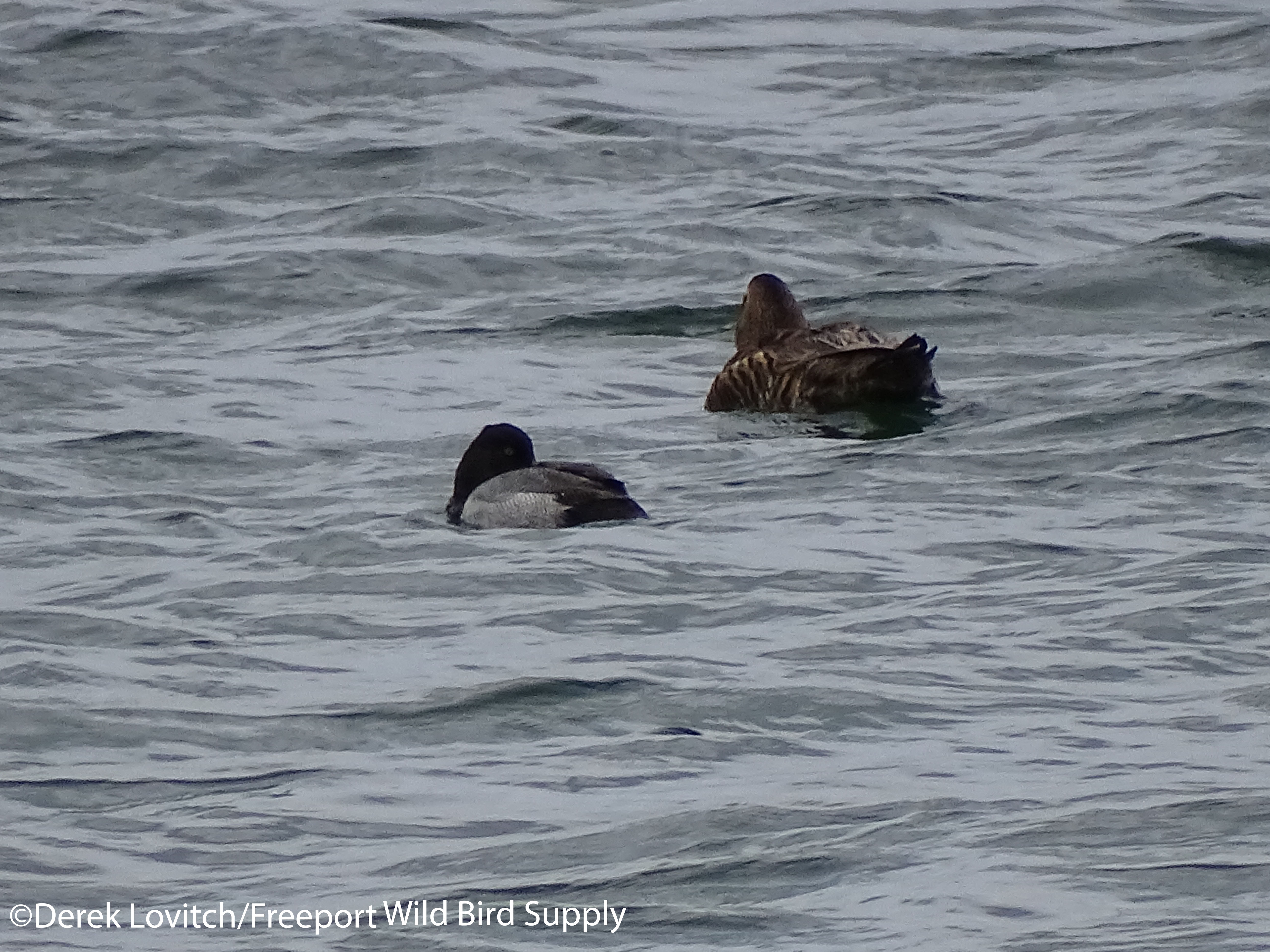
3 Long-tailed Ducks (2 continuing from previous week), Simpson’s Point, Brunswick, 8/9 (with Saturday Morning Birdwalk group).
1 Bonaparte’s Gull and 6 Great Egrets, Sabattus Pond, 8/11 (with Jeannette).
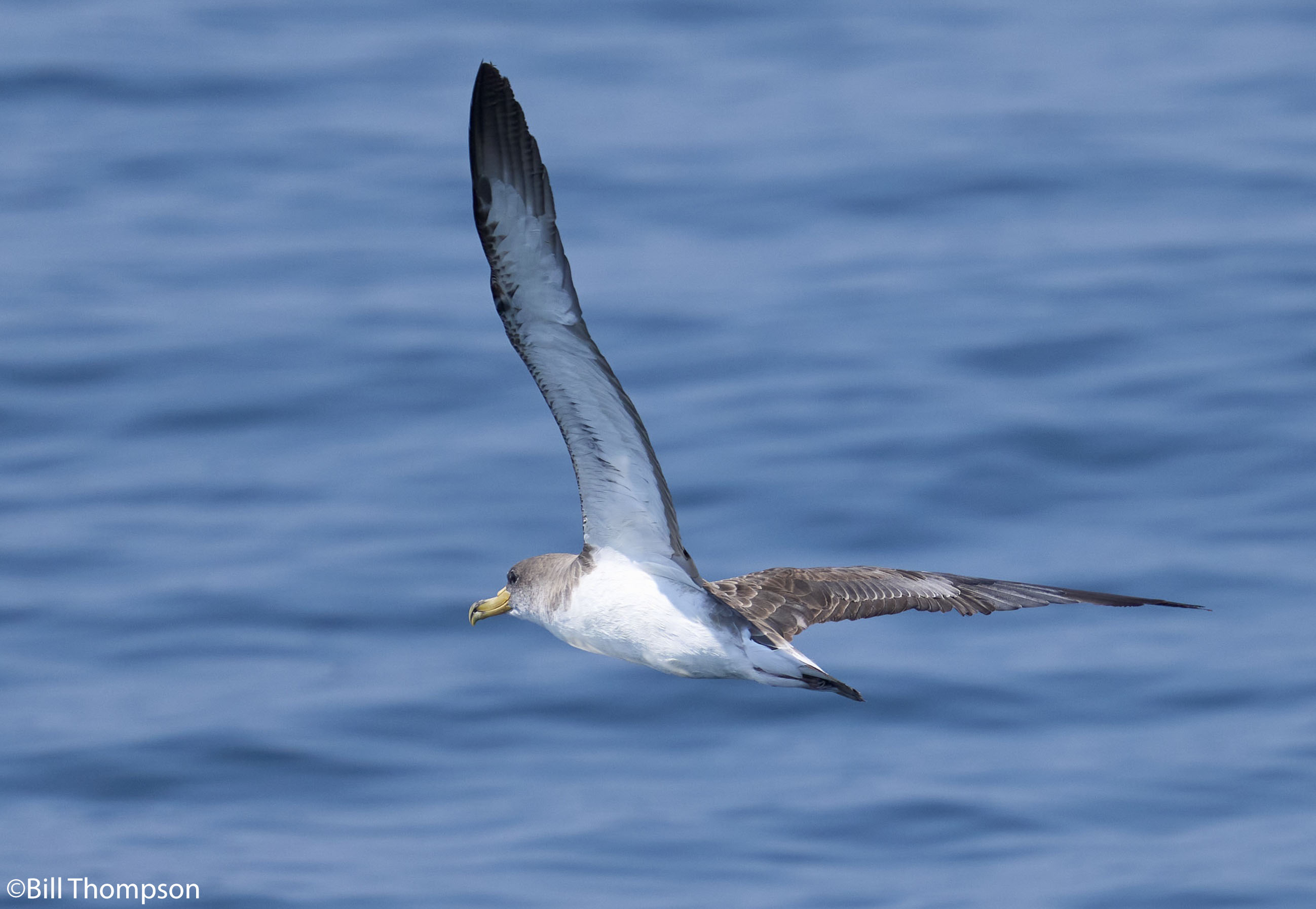
8/12 morning Puffin/Whale Combo cruise with Cap’n Fish’s Cruises out of Boothbay Harbor (with Bill Thompson): 2 American Oystercatchers at Eastern Egg Rock. Offshore of EER = 159 Wilson’s Storm-Petrels, 17 Cory’s Shearwaters, 11 Great Shearwaters, 2 Northern Gannets, 1 Sooty Shearwater (Bill added a second Sooty and 1 Common Murre).
We checked the underwing patterns of every Cory’s Shearwater we could.
8/12 afternoon Puffin/Whale Combo cruise with Cap’n Fish’s Cruises out of Boothbay Harbor: 5 American Oystercatchers at Eastern Egg Rock. Offshore of EER = 104 Wilson’s Storm-Petrels, 6 Cory’s Shearwaters, 3 Great Shearwaters, 2 Northern Gannets, 1 MANX SHEARWATER.
1-2+ Red Crossbills, Popham Beach State Park, Phippsburg, 8/14.
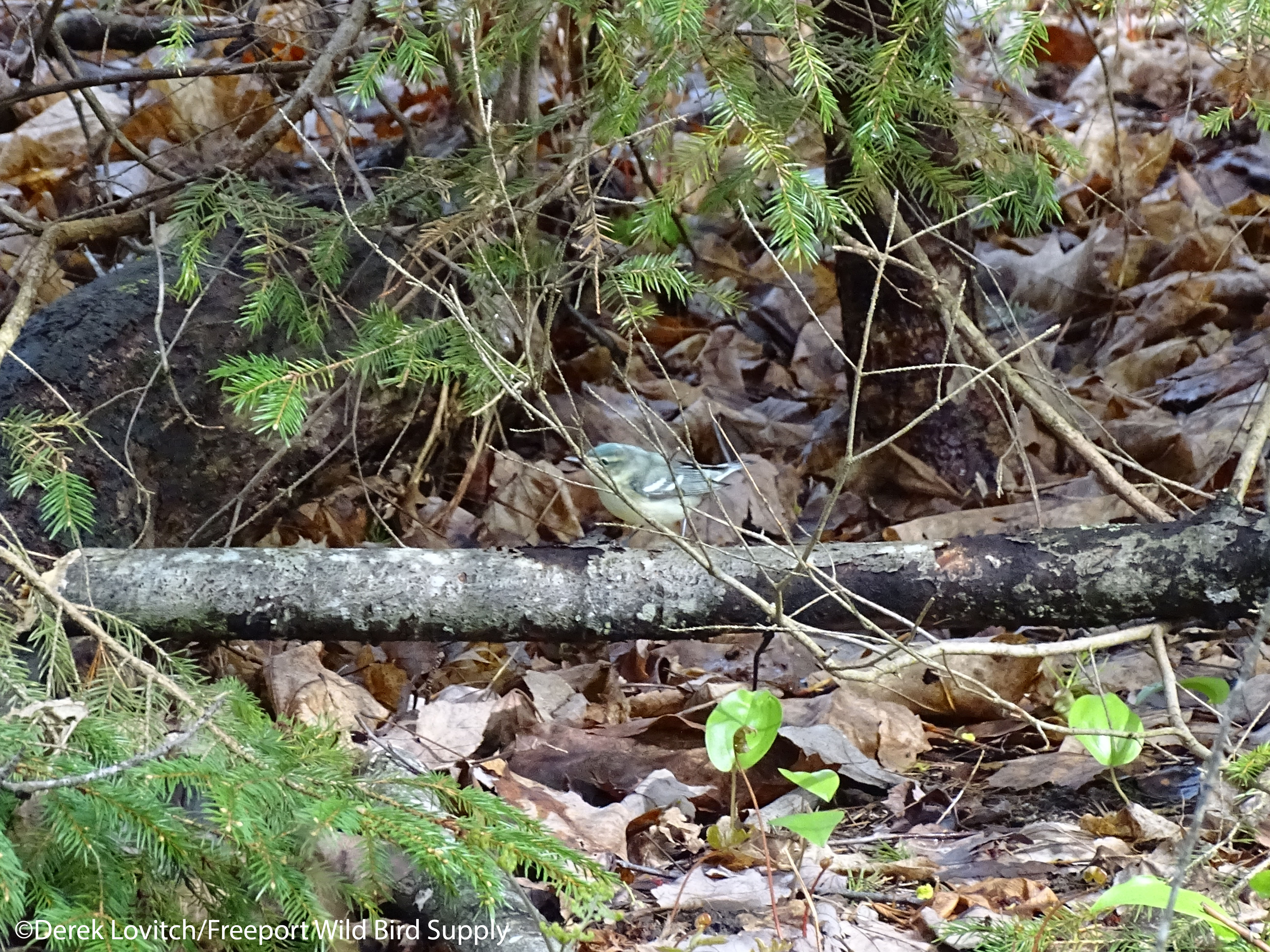
1 molting adult Bay-breasted Warbler (more evidence of a limited molt-migration in Boreal birds to the southern coastal plain), Old Town House Park, North Yarmouth, 8/16 (with Saturday Morning Birdwalk group).
For my “shorebird high counts,” I prefer to visit at least one of each: high tide hotspot, low tide spot, “grasspiper spot,” and a freshwater location, and it must include a visit to local hotspots Wharton Point and the Walsh Preserve as I attempt to make these comparisons comparable week-to-week and year-to-year, which, for my own notes if nothing else, is why I put these together (but hope you find them of value, too). Just due to life and scheduling, it now often takes me more than a week to hit all of these “requirements,” so I am going to try and do every 10 days instead of weekly. Therefore, here are my high counts over these past 10 days:
This immature male Orchard Oriole was singing up a storm – when we wasn’t being chased by a territorial male Baltimore – at tiny, but often-productive – Lake Grove Park in Auburn on the 18th.
A sneaky good flight overnight Saturday into Sunday made for a tremendous day of birding: it took me over three hours to leave my yard! The rest of the week, however, was very slow by mid-May standards, with the exception of a very surprising morning At Fort Foster on Friday. My observations of note over the past six days before I head off to Monhegan with my tour group included the following:
17 species of warblers, led by 38+ American Redstarts and 16 Black-throated Green Warblers, our property in Durham, 5/18.
This female Cerulean Warbler at Evergreen Cemetery on 5/6 was the first in Maine for just about every birder who raced to see it! Thanks to Bill for the photo!
Wow! What a week! Although I was out of town for the huge flight Friday night into Saturday morning, my birding with a tour group on an almost-as-productive Sunday morning made up for it. Then, with an upper level low locked into place, migration ground to a halt throughout most of the rest of the week. However, a trickle of new arrivals appeared, and an impressive array of rarities were found around the state. I did a lot more chasing than usual this week (including a personal “state bird”, but a self-found rarity on Friday was a perfect way to put the icing on the cake of a tremendous week of spring birding! My observations of note over the past seven days included the following:
15 species of warblers (FOY) between Evergreen Cemetery and Capsic Pond Park, with Northern Parula the most numerous at both, 5/4 (with Down East Adventures Spring Migrant Songbird Workshop group).
1 ROSS’S GOOSE, Thornhurst Farm/Prince Well Road, North Yarmouth, 5/5. Found by the Boardman family, there was discussion as to its ID. When I was sent photos on the morning of the 5/5, after being present for at least 3 days, I thought it was a “pure” Ross’s Goose. When Jeannette and I then visited the bird to observe it, we left with zero doubt. I posted a series of photos, a short video, and an explanation of the identification on this Facebook post.
1 female CERULEAN WARBLER, Evergreen Cemetery, Portland, 5/6 (with Bill Thompson). Found earlier in the morning by Doug Hitchcox. Bill and I ran into each other on Eastern Road and then raced north together for the twitch. His photo is above. My (and most peoples’) first in Maine, this was #11 on my personal next birds in Maine list, and one that feels long overdue.
1 continuing BLACK-NECKED STILT, Spurwink Marsh, Cape Elizabeth, 5/6 (with Bill Thompson). Well, since we were out chasing together, we figured we might as well visit this elegant rarity found by John Lorence on 5/3.
The continuing CERULEAN WARBLER at Evergreen Cemetery on 5/8 with my Birds on Tap – Roadtrip: Warblers and Wort! Tour group. I don’t generally take photos while guiding groups, but I took a few of this bird…and completely wiffed on them!
After all this “twitching,” I was due to find my own rarity, and did so on 5/9 with an adult breeding plumage female RUFF (REEVE) at Walsh Preserve in Freeport. There are only about 10 previous records for Maine.
My personal “first of years” this week also included:
2 Yellow Warblers, Evergreen Cemetery, Portland, 5/4 (with Down East Adventures Spring Migrant Songbird Workshop group).
8 Black-throated Blue Warblers, Evergreen Cemetery, 5/4 (with Down East Adventures Spring Migrant Songbird Workshop group).
2 Wood Thrushes, Evergreen Cemetery, 5/4 (with Down East Adventures Spring Migrant Songbird Workshop group).
3 Magnolia Warblers, Evergreen Cemetery, 5/4 (with Down East Adventures Spring Migrant Songbird Workshop group).
4 Chestnut-sided Warblers, Evergreen Cemetery, 5/4 (with Down East Adventures Spring Migrant Songbird Workshop group).
2 Great-crested Flycatchers, Evergreen Cemetery, 5/4 (with Down East Adventures Spring Migrant Songbird Workshop group).
2 American Redstarts, Evergreen Cemetery, 5/4 (with Down East Adventures Spring Migrant Songbird Workshop group).
2 Northern Waterthrushes, Capisic Pond Park, Portland, 5/4 (with Down East Adventures Spring Migrant Songbird Workshop group).
7 Chimney Swifts, Capisic Pond Park, 5/4 (with Down East Adventures Spring Migrant Songbird Workshop group).
1 White-crowned Sparrow, feeders here at the store, 5/4.
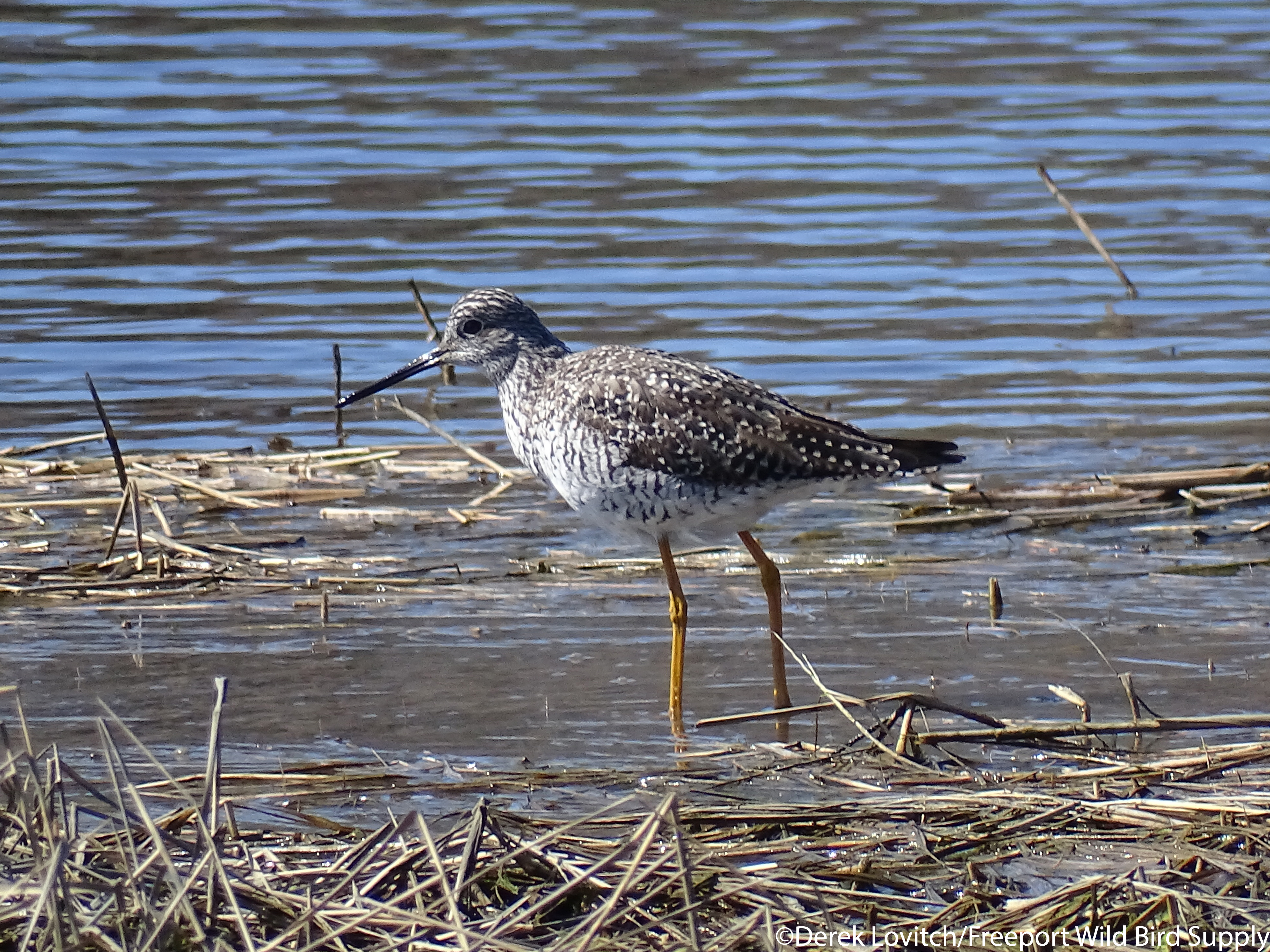
Some Greater Yellowlegs (usually males) can look very dainty, and at this time of year have a virtually all-dark bill, suggesting Lesser Yellowlegs. Luckily, this one called to confirm, which is always helpful at this season when breeding plumage is often not fully developed.
There were not a lot of days this week that felt like spring, but spring birding was in full swing this week, at least when I was actually out in the field. Rare and once-rare waterfowl led the way once again, with an increased appearance of new arrivals of a wider range of species as well. Here are my observations of note and new arrivals over the past seven days:
Three Fox Sparrows continued at our home feeders in Durham through week’s end, while at least 1 continues here at the store as well.
1 continuing Brown Thrasher, 450+ Greater with a few Lesser Scaup, 350+ White-winged Scoter, 3 Swamp Sparrows, etc, Wharton Point, Brunswick, 4/5 (with Saturday Morning Birdwalk group).
1 Eastern Phoebe at the store on 4/6 – feeding on dried mealworms from within the starling-proof bluebird feeder. This was a first for me. They rarely eat mealworms, let alone dried mealworms, and I have never seen them enter a restricted-space feeder.
1drake “EURASIAN” GREEN-WINGED TEAL, Mouth of the Abby, Bowdoinham, 4/7 (with Jeannette. Perhaps the same individual I found here on 3/27 with Bill Thompson.
An incredible 44 Gadwall in the salt pannes at the Eastern Road Trail, Scaborough Marsh, on 4/9. This is likely a new state record high count.
My personal “first of years” this week also included:
1 Yellow-bellied Sapsucker (first of spring), here at the store, 4/5.
3 Piping Plovers, Pine Point Beach, Scarborough, 4/9.
14 Great Egrets, total in Scarborough Marsh, 4/9.
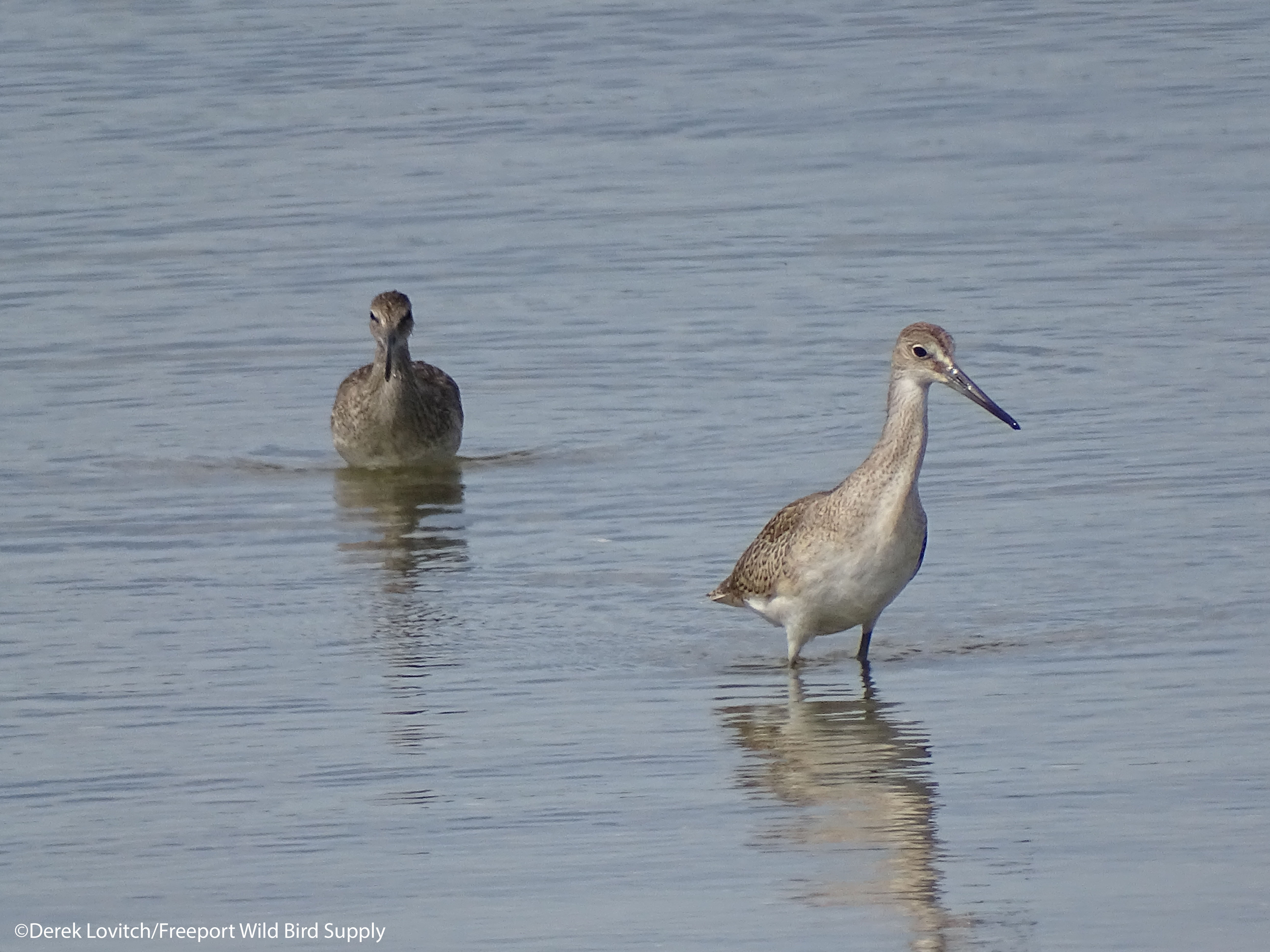
18 Greater Yellowlegs, total in Scarborough Marsh, 4/9 (see photo above).
A week-long immersive skill-building seminar for beginning and intermediate birders based in Steuben.
Caption: While there have been a few nights with decent songbird migration so far this year, the night of the 10th-11th was the first one with a sizeable enough flight to be clearly detectable on the overnight NEXRAD radar. It’s on!
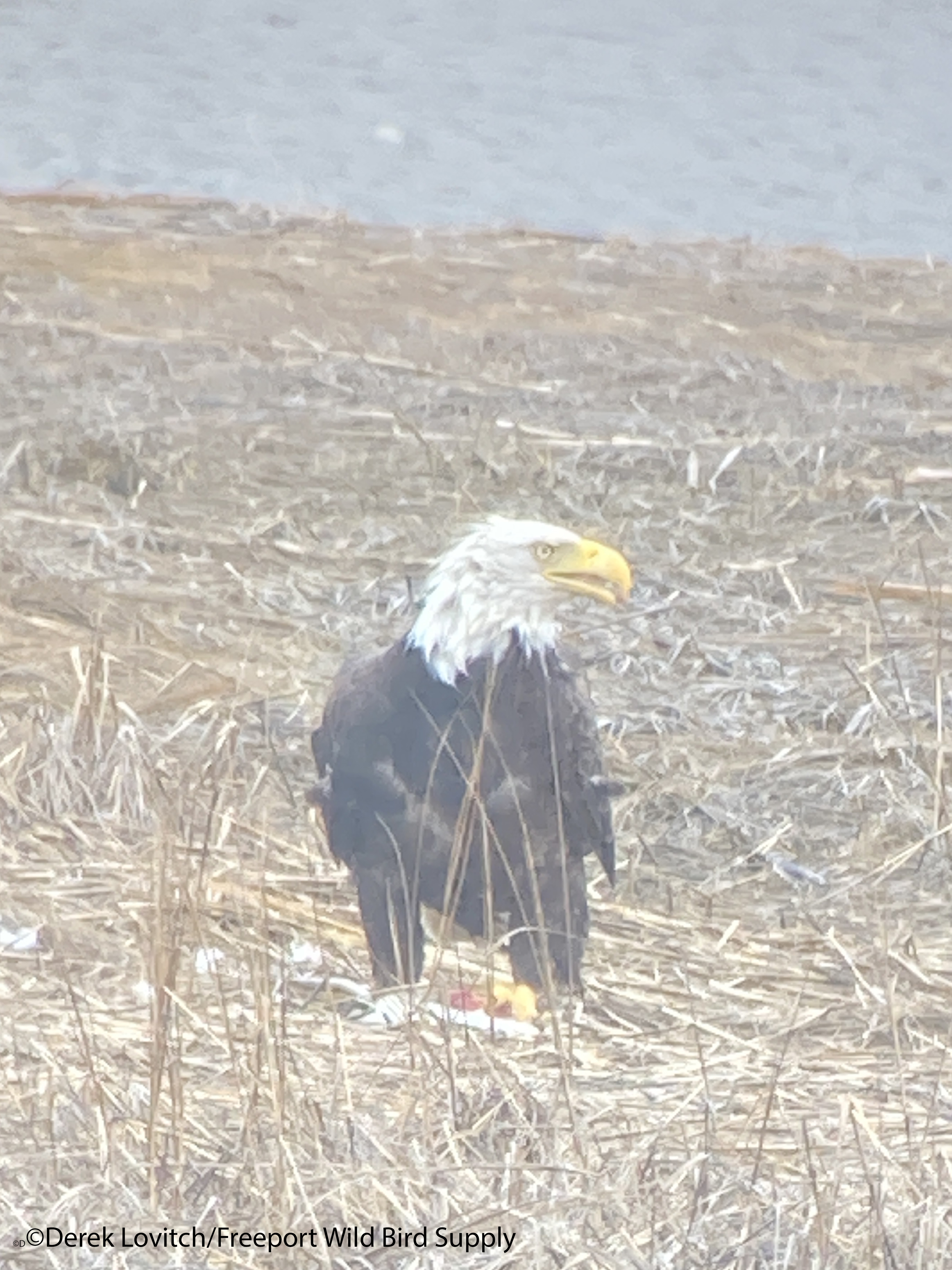
It wasn’t a very photogenic week, but I did snap this phone-scoped shot of a Bald Eagle feasting on a Red-breasted Merganser through the fog off Eastern Road on the 20th.
Spring made only slow progress this week, but some early migrants and other new arrivals, along with a few seasonal highlights were among my observations of note over the past seven days:
Our overwintering Fox Sparrow at home in Durham was joined by a second on the 15th. 1-2 continued through the week’s end. Meanwhile, the overwintering Fox Sparrow here at the store continued through 3/16. With more migrants moving around now, I’ll forgo further Fox Sparrow reports. But it was quite nice to have birds overwinter at both of our feeding stations this year – a first for us at either location.
3 BARROW’S GOLDENEYES (1 pair and 1 female), Winslow Park, Freeport, 3/15 (with Saturday Morning Birdwalk group).
5 Wood Ducks (FOS), Florida Lake Park, Freeport, 3/16.
2 American Woodcocks (FOY), our property in Durham, 3/16.
1 pair Gadwall, 14 Northern Pintail (FOS), 10 American Wigeon, 75 Green-winged Teal, etc, Mouth of the Abby, Bowdoinham, 3/18 (with Jeannette).
The 19th season of the Bradbury Mountain Hawkwatch started last weekend. Free and open to the public, we welcomed Zane Baker back for his 7th season as Official Counter. 9-5 every day, weather permitting. The first week was highlighted by a great first day and two Black Vulture sightings.
Freeport Wild Bird Supply is very excited to partner with Down East Magazine’s Down East Adventures for the fifth year of offering exclusive birding workshops focused on gaining greater knowledge and field skills in a focused group of seasonally accessible birds. Focused on skill-builder rather than list-building, there will be plenty of “life birds,” but also more knowledge and education about birds, habitats, birding, and much more about the natural world. We are honored to be their provider for a series of unique and exclusive birdwatching endeavors. In 2025, we will have four outings once again.
February 9, 2025; 9:00am – 4:00pm Cancelled due to multiple snowstorms!
Winter is a wonderful time for birding in Maine – at least when you are dressed appropriately! Colorful seaducks that breed in the high Arctic grace our shorelines – including all three scoter species and dapper Long-tailed Ducks, along with everyone’s favorite: striking Harlequin Ducks. Purple Sandpipers and Great Cormorants replace our summertime shoreline denizens. And if the winds are right, very sought-after alcids – including Dovekies and Thick-billed Murres – join our regular Black Guillemots and Razorbills. Black-legged Kittiwakes, Northern Gannets, and “white-winged” gulls add to the mix. In this workshop, we’ll hit a few of the prime viewing locations along Maine’s southern coast. But we won’t just be working on the checklist today. Instead, we’ll be focused on learning how to search for these birds – the how, when, and why – and how to identify them. We’ll learn about microhabitats, weather considerations, and seasonal timing to aid our search today and in the future. By visiting several seasonally-productive sites, we’ll compare similar species while taking time to savor the splashes of color offered by winter seaducks in an otherwise gray and white landscape.
To get an idea of what you may see when the tour returns in the winter of 2026, see the 2024 and 2023 trip reports.
This Northern Parula was one of many ultra-cooperative warblers today. This was one of 10 parulas in a single cluster of willows on the shoreline of Capsic Pond Park during our 20205 workshop.
Spirits seemed low when we met in such dense fog, but I was even more excited to explore the environs of Portland migrant traps, beginning with Evergreen Cemetery. After a slow start, with few warblers overhead in the Morning Flight, we encountered several very productive pockets of activity, including a great diversity of warblers. Many were down low, too, with just fantastic looks at species such as Yellow, Black-throated Blue Warbler, Nashville, and Black-and-white Warblers, along with great looks at Veeries and Least Flycatchers. A “herd” of about 75-100 White-throated Sparrows marched through the forest understory, and we stalked a Black-crowned Night-Heron and spotted a Merlin among many other species today.
Evergreen was good, but nearby Capisic Pond Park was just great! While there were fewer warblers in both quantity and diversity, the cool, drippy morning conditions kept everyone even lower here. We began with 10 Northern Parulas at eye level all around us in a blooming willow (photo above), had great looks at a Prairie Warbler, listened to Northern Waterthrushes, and marveled at Baltimore Orioles.
We then discussed the overnight migration and how the radar images suggested what we would see and not see today, and how the “poor” weather produced such great birding. In the end, we tallied a very respectable-for-the-date 15 species of warblers! Although the list was not the priority as usual in these workshops, it’s hard not to get excited about the diversity of warblers now arriving. While Northern Parula was our most abundant warbler today, the total warbler list – in very rough order of abundance- also included Black-and-white,Yellow-rumped, Black-throated Blue, Ovenbird, Magnolia, Chesnut-sided, Yellow, Nashville, Common Yellowthroat, Black-throated Green, American Redstart, Northern Waterthrush, Pine, and the aforementioned Prairie. More importantly, perhaps, we worked on building our skills of recognizing each species and family so that our birding will be better and more successful on our own next time.
3. Shorebird Workshop
August 18, 2025; 8:00am – 4:00pm
This juvenile Piping Plover was one of 12 species of shorebirds we had the chance to really study on our Shorebird Workshop tour.
Could we have had more of a perfect day? Temperatures topping out in the mid-70’s, a light breeze in the afternoon, and clear skies – considering the rain of early summer and the recent extreme heat, we could not have asked for better. And then we saw thousands of shorebirds!
With more than 35 species of shorebirds regularly appearing in Maine, this workshop was designed to appreciate the diversity and beauty of this fascinating family. We hit some of the marshes, beaches, and rocky roosts that shorebirds prefer at the peak of their migration. We focused on comparative experience, learning how to recognize each species both near and far. Starting with the basics, such as plover vs. sandpiper, we’ll work our way up to the identification quandaries such as the “peeps” and lone yellowlegs. We worked through species by species as we developed a “toolkit” to approach shorebird identification on your own, using a combination of habitat, shape, size, structure, behavior, and plumage to identify this wonderfully diverse and attractive group of birds.
By day’s end we tallied a decent 12 (and a half!) species of shorebirds, a little short of our unofficial goal of 15. We did see a couple of rarities but were also dogged by Peregrine Falcons and Para-gliders causing birds to disperse and/or take cover. But we had plenty of chances to study a nice array of species, often side-by side.
Beginning at Biddeford Pool Beach, we started with the basics and enjoyed watching Ruddy Turnstones bulldoze their way into the wrack line and picking out White-rumped Sandpipers from a mass of Semipalmated Sandpipers. A Baird’s Sandpiper at Great Pond was one of our most notable birds of the day, and not where we expected it.
At Hill’s Beach, there was a lot of disturbance today, but we had some good opportunities to study Piping vs Semipalmated Plovers, Sanderlings, spiffy Short-billed Dowitchers, and more. We then shifted to the Pool, where we studied silhouettes and practiced distant shorebird using mostly general impression of size and shape. It was here that we had our largest numbers of the day, with an estimate of 1600 Semipalmated Sandpipers, 300 Semipalmated Plovers, and 163 Black-bellied Plovers leading the way.
Near or far, good light or bad, the general impression of size and shape, behavior, and more can be applied to identify shorebirds more readily than little nuances in some color or pattern.
After our lunch break, we returned north to Scarborough Marsh, where I would usually start the workshop, but with very low water in the upper salt pannes due to the drought, we shifted the itinerary. But the incoming tide at Pine Point did not disappoint! We had some close studies of more Short-billed Dowitchers and better views of Black-bellied Plovers, and about 1200 Semipalmated Sandpipers were present. However, as they moved close and concentrated, a Peregrine Falcon came tearing in, flushing most of the birds. Then, it made a sudden burst of speed and a hard turn and before we knew it, there was one less Semipalmated Plover on the mudflat. While it was poor timing for our shorebirds workshop (let alone for that one particular plover!), it was an awesome show (well, for us anyway) and one that will not soon be forgotten.
Some birds finally returned to the mudflat, when a large (for the date) flock of Willets flew in, making their usual grand entrance. We were able to put our advanced shorebirds ID skills to work with the bigger, lankier, grayer one that we soon identified as a rare in Maine “Western” subspecies of Willet. It might have been beyond today’s goals, but it was a great lesson in using comparative tools.
A couple of upper marsh stops finally gave us a good, close comparison between Least and Semipalmated Sandpipers, and a Lesser Yellowlegs that was close enough to study and enjoy, bringing a productive and successful day to a close.
4. Monhegan Birding Workshop
September 12-14, 2025
Our final Downeast Adventures birding workshop tour of 2025 spent 3 delightful days on Monhegan Island. Weather, geography, habitat, and migration ecology all combine to produce some remarkable birding opportunities at this special place. And even when it’s “slow” by lofty Monhegan standards, lots of learning experiences and workshopping opportunities would be at hand, often right out the front door of our hotel. Oh yeah, the food is sooo good, too!
As per the plan, we hit the ground running shortly after our arrival on the island. It took us an hour and 45 minutes to walk the ½ mile or so to our hotel as we encountered quite a few migrants, especially at my favorite starting spot along Wharf Road. We jumped head-first into aging and sexing fall warblers thanks to 3 different plumages exemplified by a trio of Cape May Warblers. American Redstarts, Northern Parulas, Yellow Warbler, and more introduced us to what birding Monhegan in the fall is all about.
By the time we reconvened after a lunch break, the insanely gorgeous weather with bright sun and very little breeze encouraged birds to take to the shadows. A sky constantly abuzz with Merlins didn’t help either, although we enjoyed it. While passerine activity had slowed dramatically, we enjoyed a light hawk migration with a couple of Northern Harriers and a few American Kestrels, while the Merlins and 1-2 Sharp-shinned Hawks further diminished the activity in the trees and shrubs. We took the time to visit the east side of the island, sample the different habitat types of the island, and discuss food plants for birds and native insects. The butterfly, dragonfly, and insect-watching was excellent on this unseasonably warm afternoon, and we worked on learning the connection between birding and bird habitat.
On Saturday morning, we learned why there were so many birds around Friday morning, but few in the air at sunrise. But there were definitely “new” birds around, suggesting at least a light arrival of birds overnight had occurred, including two vociferous Dickcissels. I made the decision to try and track down a Blue Grosbeak that had just been reported, but unfortunately, it did not wait for us. We did have an immature male Orchard Oriole, however, which was a treat, and we spent more time studying Cape May Warbler plumages.
On such gorgeous days, a lot of newly-arrived migrants simply depart the island as part of their morning redetermined migration flights (yes, we discussed this more thoroughly among many topics of avian and general ecology discussed throughout the weekend). In fact, the second half of our morning was very slow, but we did enjoy a couple of adult Lesser Black-backed Gulls and we kicked up a very uncommon Marsh Wren. But warblers were few, and Merlins remained a’plenty. Red-breasted Nuthatches were very abundant however – demonstrating what an irruption looks like, and Ruby-throated Hummingbirds were unusually widespread for the date.
We filled the time between birds looking at all other walks of life. American Dagger Moths caterpillars were particularly plentiful.
The afternoon was spent with a couple of impromptu workshops, such as an introduction to gull identification as I attempted to enlighten the group about how manageable it is to understand the basics of this group of fascinating species. The avian highlight, however, was the thrilling chase of a Solitary Sandpiper by two Merlins right over our heads! The Merlins would gain some height, dive, and close the distance, only for the sandpiper to take another evasive maneuver. The sandpiper tried to gain elevation to stay above the diving Merlins, but they were getting closer! Then, the sandpiper made one quick turn, ascended, and took off to the north, leaving the hungry Merlins to mosey back down to the treeline to see if the marsh had something much slower to offer. We bid the sandpiper farewell and good luck as we thanked the Merlins for a most entertaining performance!
It was another very light migration overnight Saturday into Sunday, but unlike the previous day, we hit a wonderful early-morning wave. One sunny edge captivated us until it was time to hustle back for breakfast: Several American Redstarts, Red-breasted Nuthatches, Black-capped Chickadees, Common Yellowthroats, and Norther Parulas had joined together, punctuated by repeated views of a most cooperative Least Flycatcher. Every time we tried to move long, a new species appeared. A fly-over Greater Yellowlegs. A flycatching Eastern Wood-Pewee. And finally, a Brown Thrasher that popped out right in front of us.
I was thrilled to have this sample of “what Monhegan can be like” at this season for those who fought the urge to stay in bed. Post-breakfast was once again much slower, but we hit a few pockets of birds, as well a finding a Mourning Warbler which is always fun – and challenging – in fall migration. We watched and listened to territorial Carolina Wrens in a double-duet song battle, encountered a flock of 4-6 Red-eyed Vireos working on Fall Webworms, and spent more quality time with the island’s once-again-ubiquitous Ring-necked Pheasants. And of course, we made time to sample the stunning Acadian Forest habitat of the island’s interior and to take in the view from the lighthouse.
Another delicious lunch and then a slow meander to the ferry brought our visit to a close. On the ferry ride back, a few more Northern Gannets were seen, and plans to return to this extraordinary island were already in the works!
(2026 Birding Tours with Down East Adventures will be posted soon!)
Although not in Maine, this spiffy adult Sabine’s Gull was the icing on the cake of an incredible day in Head Harbor Passage, New Brunswick on 9/4 (with Beth Edmonds, Dan Nickerson, Jeannette, and friends). An impressive concentration of gulls was led by 5,000-8,000 Bonaparte’s Gulls, 5,000 Herring and Great Black-backed Gulls, and also including 20+ Lesser Black-backed Gulls and 20-30 Laughing Gulls (also Ring-billeds and Black-legged Kittiwakes). It was the best concentrations of birds we have experienced here in several years.
With our annual early fall weekend with friends to Washington County, a productive eight days of birding included the following observations of note:
Sandy Point Morning Flight, 9/3: 355 total migrants led by 105 Northern Parulas and 88 Cedar Waxwings, and also including a single BLUE-GRAY GNATCATCHER (Only my 4th morning flight record). Complete tally here.
4 Red-breasted Mergansers, Lubec Bar and Flats, 9/5 (with Beth Edmonds, Dan Nickerson, Jeannette, and friends).
1 adult Lesser Black-backed Gull, Roque Bluffs State Park, 9/6 (with Jeannette).
1 juvenile YELLOW-CROWNED NIGHT-HERON, Jones Creek, Pine Point, Scarborough, 9/10 (with Jeannette).
Our Durham property continues to impress during migration. Another week with at least 15 species of warblers detected in the yard, and highlights including Philadelphia Vireo on several days and a Brown Thrasher at our feeders 9/8-9.
Based on the progressing season, and my upcoming schedule, this was the last week I focused on shorebirds. As always, my peak shorebird season culminates with our visit down east. There are plenty of shorebirds left to enjoy (and count), but my final shorebird “high counts” report of the season – including a goodly 20 species this week – is as follows:
AMERICAN OYSTERCATCHER: 4 (2 ad with 2 juv), Pine Point, Scarborough, 9/10 (with Jeannette).
Black-bellied Plover: 8, Pine Point, 9/10 (with Jeannette).
Killdeer: 14, Crystal Spring Farm, Brunswick, 9/8.
Semipalmated Plover: 71, Pine Point, 9/10 (with Jeannette).
Whimbrel: 3, Lubec Bar and Flats, 9/5 (with Beth Edmonds, Dan Nickerson, Jeannette, and friends).
Despite being focuses on shorebirds this week, my most productive photo session were with Roseate Terns on Hill’s Beach on 7/30. This was my favorite shot, of a juvenile still hungry while its banded parent went out in search of more fish.
Shorebird season is in full swing, and since our return from our summer vacation, shorebirds have been my birding focus. As I often do at this time of year, I like to organize my weekly (or thereabouts) observations into a “high counts for the week” summary. This is really for my own organization of notes and allows me to quickly evaluate ebbs and flows across the summer, and across various years. To get a good sample, I need to hit at least one high tide and one low tide hotspot each week, along with one “grasspiper spot,” freshwater location, and “local hotspot.” I never accomplished that in any period in July before our trip, so I will start that pursuit this week. I hope you too find values from these brief syntheses.
This week’s non-shorebird highlights:
1 White-throated Sparrow, our property in Durham, 7/29. They don’t breed withing several miles of the property, and this was our first summer record. It was a molting adult. I think short-distance “molt migration” in songbirds of the Eastern Forest is under-appreciated (see, for example, recent spate of boreal warblers on offshore seabird islands).
1 1st-summer Lesser Black-backed Gull, Hill’s Beach, Biddeford, 7/30.
1 Black and at least 23 Surf Scoters, Wharton Point, Brunswick, 8/4.
Shorebird high counts this week:
AMERICAN OYSTERCATCHER: 3, Hill’s Beach, Biddeford, 7/30. Plus 1 at Pine Point on 8/1.
Black-bellied Plover: 44, Wharton Point, Brunswick, 8/4.
Killdeer: 32, Crystal Spring Farm, Brunswick, 8/4.
Semipalmated Plover: 343, Pine Point, Scarborough, 8/1.
Piping Plover: 6, Biddeford Pool Beach, Biddeford, 7/30.
Whimbrel: 3, Pine Point, 8/1.
Ruddy Turnstone: 11, Hill’s Beach, 7/30.
Sanderling: 8, Hill’s Beach, 7/30.
Least Sandpiper: 40+, Eastern Road Trail, Scarborough Marsh, 8/1.
Pectoral Sandpiper: 1, several locations this week.
Semipalmated Sandpiper: 800+, The Pool, Biddeford Pool, 7/30.
Short-billed Dowitcher: 88, Hill’s Beach, 7/30.
Spotted Sandpiper: 3, Eastern Road Trail, 8/1.
Solitary Sandpiper: 1, our property in Durham, 7/29.
The 20th Anniversary Celebration Month has begun here at the store. All the details can be found here, including free raffles for dinner, a silent auction for conservation, and several chances to win a new pair of binoculars!
Birds of Casco Bay with Seacoast Tours, originally scheduled for this morning, has been postponed until Sunday, 8/25. Call Seacoast Tours to see if any cancellations have opened up any spaces.
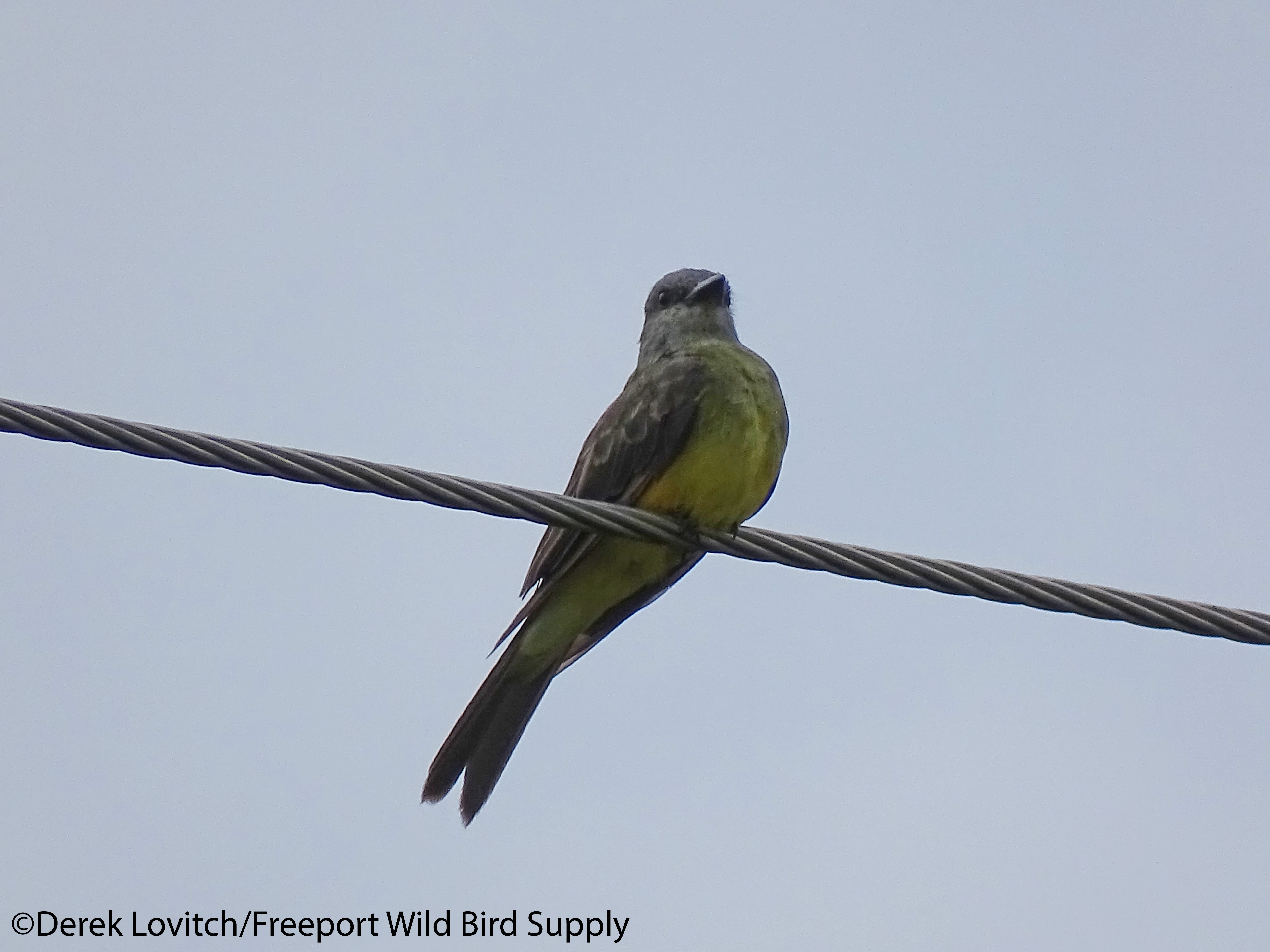
This Tropical Kingbird, a long-overdue third state record, was discovered at the Skelton Dam Boat Launch in Dayton. Many of us saw it on the morning of 7/18, but it may have been present for nearly three weeks before being identified!
It’s been a busy 12 days, with a weekend in Quebec City and summertime human visitors. Of course, the last day in Quebec City was when the Ferruginous Hawk was 20 minutes from our home. Oh well…brunch was absolutely fantastic. Sadly, life and work minimized my birding during this period, despite a suite of rarities now appearing around the Northeast. Luckily, I did have a couple of good mornings in the field before we head out on our summer vacation, including hours of quality time with a Tropical Kingbird in Dayton that was happily identified while I was around and somehow free of responsibilities for the morning! I wonder what will show up while we are gone this time!?
Both Yellow-billed and Black-billed Cuckoos have been calling on our Durham property all week.
2-3 Grasshopper Sparrows, Auburn-Lewiston Municipal Airport, Auburn, 7/15 (with Doug Hitchcox et all).
1 continuing TROPICAL KINGBIRD, Skelton Dam Boat Launch, Dayton, 7/18 (with m’obs). Third state record, first chase-able. Long overdue state bird for me! After years of expecting, predicting, and looking for one, in my frustration, I pulled it off my “Next 25 Predictions List” and so I don’t get any credit for this one. I still enjoyed it though. Photo above, and video here: https://www.facebook.com/share/v/4qyGf1VSmw1wpSon/
The salt pannes along the Eastern Road Trail in Scarborough Marsh are exceptional right now due to low water levels. On the morning of the 19th, a few of the tallies included 125+ Snowy and 50+ Great Egrets; 50+ Glossy Ibis; and 20+ Great Blue Herons. Shorebird numbers included a nice number of Least and Semipalmated Sandpipers; 50+ Greater and 30+ Lesser Yellowlegs; 16 Short-billed Dowitchers; and 2 Pectoral Sandpipers (FOF). Of course the highlight for me, however, was “Patches Jr, Jr” – the proposed HYBRID TRICOLORED HERON x SMALL WHITE EGRET(S) SPP back for another year. In fact, it’s already year 12 of this complex here. Unfortunately, it was too far for photos today. For more information, see: North American Birds, Volume 72: No 2, pp 28-40.
Blackburnian Warbler near and at eye-level were one of the many highlights during my annual Spring Monhegan Migration Tour.
Five days on Monhegan (four with a tour, one with Jeannette) from 5/24-28 had few rare bird highlights, but good overall diversity and generally very good bird watching opportunities. A total of 93 species in those 5 days included 1 BLUE GROSBEAK (5/25); 1 PURPLE MARTIN (5/24 and 5/26); impressive numbers of RED and WHITE-WINGED CROSSBILLS throughout the island; Yellow-bellied Flycatcher (FOY), Olive-sided Flycatcher (FOY), Tennessee Warbler (FOY), several Black-billed Cuckoos (FOY); 1 Razorbill in the harbor on 5/26; and 4 RED-NECKED PHALAROPES on the ferry ride home on 5/28. There were a lot of uncommon to rare-on-Monhegan migrants around, too, from Blue-winged Teal to Cliff Swallow. A complete report of our tour can be found here.
Back in the real world, my observations of note for the rest of the week included:
1 continuing GRASSHOPPER SPARROW, Auburn-Lewiston Municipal Airport, 5/30.
With my first visit in three weeks to Scarborough Marsh on 5/31, several personal first-of-years included Saltmarsh and Nelson’s Sparrow, Roseate Tern, and 4 White-rumped Sandpipers (Eastern Road Trail). Other migrant shorebirds included ~70 Semipalmated Sandpipers, 1 Dunlin, and 1 Greater Yellowlegs off Eastern Road, and 10 Ruddy Turnstones, 9 Black-bellied Plovers, and 1 Lesser Yellowlegs at Pine Point. Other observations of note included the continuing TRICOLORED HERON off of the Eastern Road Trail, and 2 PURPLE MARTINS at Pine Point.
2 Willow Flycatchers (FOY, finally), Old Town House Park, North Yarmouth, 6/1 (with Saturday Morning Birdwalk group).
Tours and Events:
There will not be a Saturday Morning Birdwalk on 6/8 as I’ll be in Rangeley guiding at the Rangeley Birding Fest. Note that there are still some spaces on a variety of tours still open. They can be found here.