Although not in Maine, this spiffy adult Sabine’s Gull was the icing on the cake of an incredible day in Head Harbor Passage, New Brunswick on 9/4 (with Beth Edmonds, Dan Nickerson, Jeannette, and friends). An impressive concentration of gulls was led by 5,000-8,000 Bonaparte’s Gulls, 5,000 Herring and Great Black-backed Gulls, and also including 20+ Lesser Black-backed Gulls and 20-30 Laughing Gulls (also Ring-billeds and Black-legged Kittiwakes). It was the best concentrations of birds we have experienced here in several years.
With our annual early fall weekend with friends to Washington County, a productive eight days of birding included the following observations of note:
Sandy Point Morning Flight, 9/3: 355 total migrants led by 105 Northern Parulas and 88 Cedar Waxwings, and also including a single BLUE-GRAY GNATCATCHER (Only my 4th morning flight record). Complete tally here.
4 Red-breasted Mergansers, Lubec Bar and Flats, 9/5 (with Beth Edmonds, Dan Nickerson, Jeannette, and friends).
1 adult Lesser Black-backed Gull, Roque Bluffs State Park, 9/6 (with Jeannette).
1 juvenile YELLOW-CROWNED NIGHT-HERON, Jones Creek, Pine Point, Scarborough, 9/10 (with Jeannette).
Our Durham property continues to impress during migration. Another week with at least 15 species of warblers detected in the yard, and highlights including Philadelphia Vireo on several days and a Brown Thrasher at our feeders 9/8-9.
Based on the progressing season, and my upcoming schedule, this was the last week I focused on shorebirds. As always, my peak shorebird season culminates with our visit down east. There are plenty of shorebirds left to enjoy (and count), but my final shorebird “high counts” report of the season – including a goodly 20 species this week – is as follows:
AMERICAN OYSTERCATCHER: 4 (2 ad with 2 juv), Pine Point, Scarborough, 9/10 (with Jeannette).
Black-bellied Plover: 8, Pine Point, 9/10 (with Jeannette).
Killdeer: 14, Crystal Spring Farm, Brunswick, 9/8.
Semipalmated Plover: 71, Pine Point, 9/10 (with Jeannette).
Whimbrel: 3, Lubec Bar and Flats, 9/5 (with Beth Edmonds, Dan Nickerson, Jeannette, and friends).
For 2024, I decided to post my Sandy Point Morning Flight tallies here in one blog entry (instead of only to Facebook and the Maine Birds Google-group), or perhaps one entry per month. If nothing else, it helps me organize them, and my thoughts! Hopefully, you’ll enjoy reading them, too. A busy tour schedule this fall, a little personal travel, and the continued decline in the number of strong, sweeping cold fronts due to climate change are all conspiring to reduce the number of days I begin at “my office.”
The following lists are birds counted passing over and through Sandy Point Beach, Cousin’s Island, Yarmouth as part of the “Morning Flight” or Morning Redetermined Migration. For more information about this site, and my counts here, see Site C14 in Birdwatching in Maine: The Complete Site Guide (2024).
September 3rd.
A light flight passed over and through this morning. It was my first visit of the season, as cold fronts have been few and weak so far this fall, so it was great to be back at my office. I was expecting a stronger flight, however. Perhaps the winds were just too westerly overnight, as the northwesterly component is so critical for pushing birds out over the bay and beyond, forcing them to reorient into the wind and concentrating here at the northwest tip of the island.
6:02-8:20am
48F, clear, light W increasing then decreasing.
105 Northern Parulas
88 Cedar Waxwings
56 American Redstarts
41 unidentified
12 Yellow Warblers
10 American Goldfinches
7 Red-eyed Vireos
5 Cape May Warblers
4 Magnolia Warblers
3 Eastern Wood-Pewees
3 Chestnut-sided Warblers
2 Nashville Warblers
2 Red-breasted Nuthatches
2 unidentified flycatchers
2 Black-capped Chickadees
2 Rose-breasted Grosbeaks
1 Black-throated Blue Warbler
1 Olive-sided Flycatcher
1 Black-throated Green Warbler
1 Baltimore Oriole
1 Black-and-white Warbler
1 Wilson’s Warbler
1 House Finch
1 Least Flycatcher
1 Bay-breasted/Blackpoll Warbler
1 unidentified Catharus
1 BLUE-GRAY GNATCATCHER (4th Sandy Point Morning Flight Record).
Total = 351
2. September 10th Update.
Well, so much for this plan! A week has gone by and there hasn’t been a decent morning to try at Sandy Point. And, with a massive area of high pressure dominating our weather (and most of the Eastern US) for another week, the next possible day looks a long way off! While several nights have featured at least some northerly component, it has been dead calm by dawn. Most other nights have been calm, and while that’s great for migrants to make progress, it’s not so great for a concentration of birds along the coast. For example, a very weak – and mostly dry – cold front that passed on Monday night briefly changed winds, but they were mostly westerly, and were calm by dusk.
Good for the migrants, not great for the migration-watchers! Let’s hope for a change in the forecast; we need the rain, too!
3. September 11.
I probably should have gone this morning, just based on the huge flight that occurred overnight. But, as with most good nights of migration this season, winds were virtually calm. Maybe there was just enough of a puff from the west to make a count worthwhile, but alas, my schedule didn’t allow for a last-minute change. However, there were A LOT of birds in the air last night.
A huge flight overnight on 9/13-14 resulted in a lot of birds offshore, and while I couldn’t be at Sandy Point, I had an exceptional morning flight on Monhegan – dominated by Cape May Warblers – with my tour group that weekend.
4. September 18th Update.
Yup, another clear and calm night, with migrants passing high overhead. Fog at dawn, too. Another week with no morning flight. Goodness, this blog sucks!
5. September 25th Update.
OK, this is getting ridiculous! Another week with lots of nights of great migration, but with either calm conditions or a light north to northeasterly aloft, not one more was conducive to being on the bridge. Friday and especially Saturday look great though…but alas, I’ll be back on Monhegan. No complaints there. But I’ll go ahead and change this blog title to “September-October” and hope for better conditions next month!
6. October 2nd Update.
Two great flights over the weekend conducive to a good if not great flight at Sandy Point occurred, but my tour group on Monhegan once again reaped the benefits. Next favorable winds might not be until Sunday the 6th. Fingers crossed! Maybe I’ll have some real content for this blog then…and I really need my Sandy Point fix!
6. October 5 – Finally!
I was finally at “my office” on the bridge this morning. Unfortunately, with clouds in the eastern sky and a light northerly wind, only a light flight passed over and through the point this morning. Furthermore, the Caribou radar showed rain into the early night, and likely unsettled weather thereafter, reducing or even eliminating the arrival of birds from the north and northeast (the radar after midnight showed virtually nothing over northern Maine). Nonetheless, it was just good to be back!
6:45-8:45am
45F, partly to mostly cloudy, NNW 5.3-7.0 to N 6.7-8.2mph.
60 Yellow-rumped Warblers
15 Blackpoll Warblers
9 American Robins
7 Palm Warblers
6 Ruby-crowned Kinglets
5 unidentified
4 Golden-crowned Kinglets
4 Red-breasted Nuthatches
4 Chipping Sparrows
3 Northern Flickers
3 Dark-eyed Juncos
3 Common Loons
3 Hermit Thrushes
3 White-throated Sparrows
3 unidentified blackbirds
2 Rusty Blackbirds
2 Blue Jays
1 Blue-headed Vireo
1 unidentified kinglet
1 Tufted Titmouse (did not cross after 4+ false starts)
1 Hairy Woodpecker (finally crossed after 7 false starts)
Total = 140
7. October 10.
A moderately-strong flight overnight on variable W to NW winds suggested many more birds departed last night than arrived. With a light W wind by dawn, only a light flight passed through the point.
6:49-9:15
41F, mostly clear, W 3.5 to 5.0 to W 4.4 to 7.7mph.
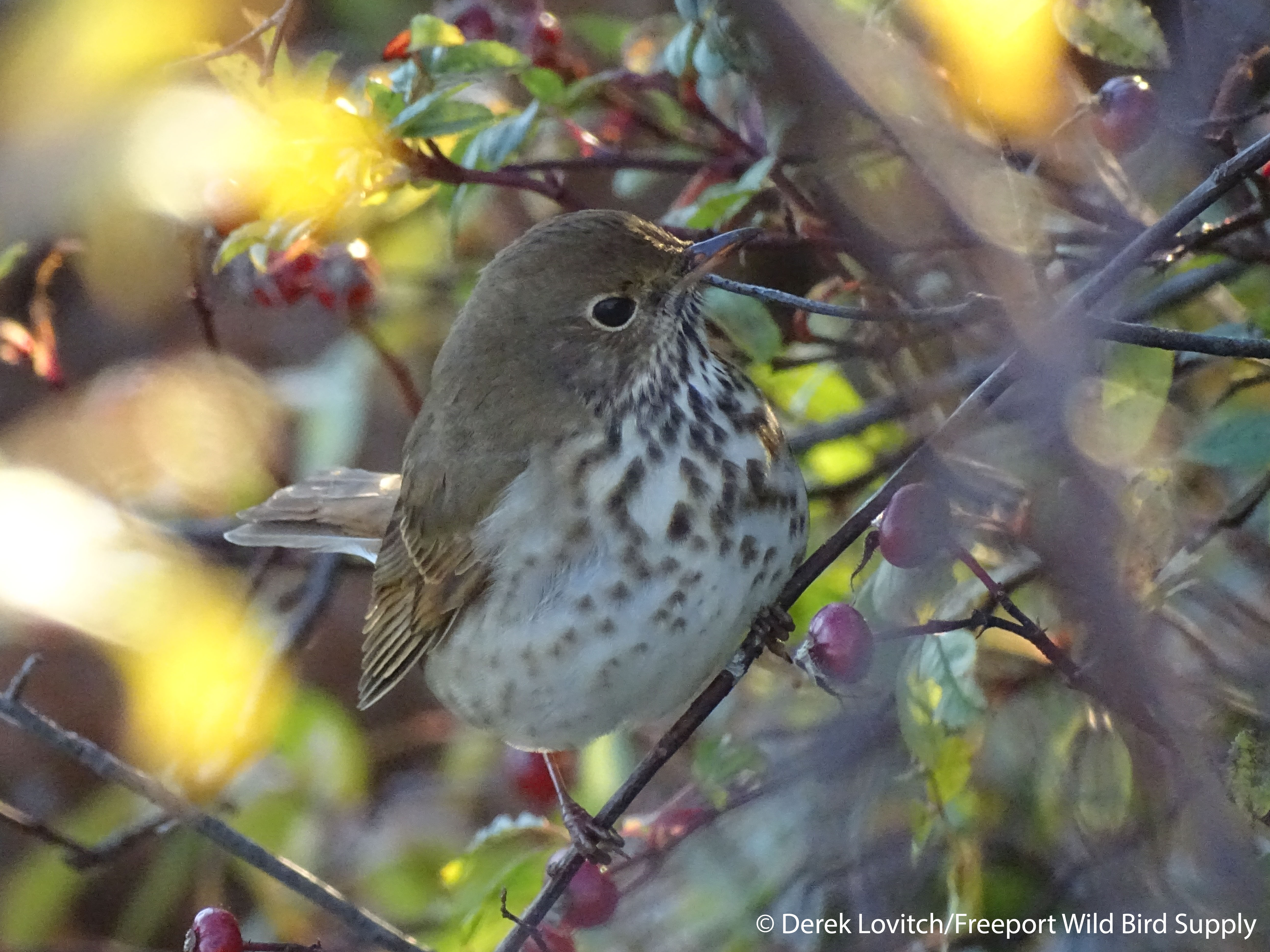
This Hermit Thrush kept me company at the point, alternating between snacking on Pasture Rose hips and contemplating crossing the channel (with Catharus thrushes rarely do after sunrise)
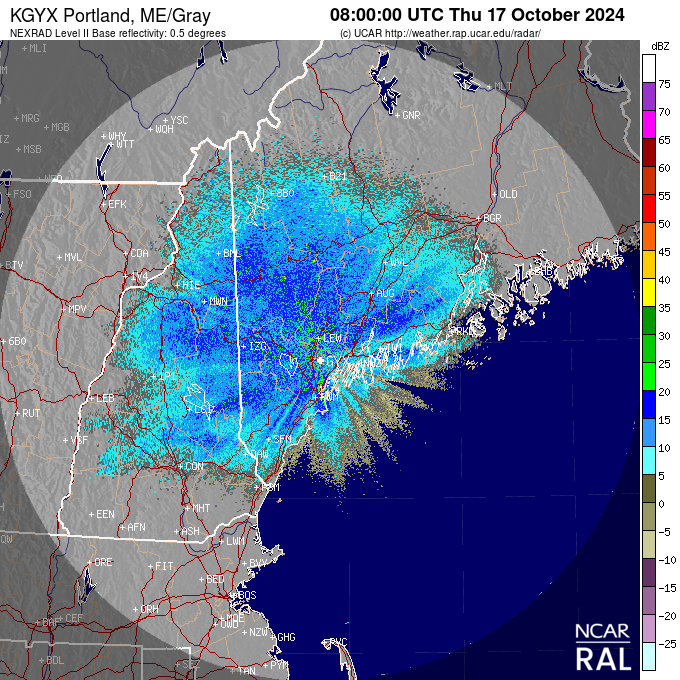
After a very slow start on a chilly morning, the flight picked up a bit in the second hour, but was still far lighter than I would have expected given the massive flight detected by the radar overnight. Even by 4:00am, the radar image was boomin’
6:59-9:15
31F, clear, NW 2.7-4.9 to W 1.2 TO 2.6mph.
114 Yellow-rumped Warblers
56 American Robins
44 Golden-crowned Kinglets
44 Blue Jays
17 Ruby-crowned Kinglets
14 Dark-eyed Juncos
9 Hermit Thrushes
8 Palm Warblers
7 Black-capped Chickadees (still did not cross after 14 “false starts”)
7 White-throated Sparrows
5 Unidentified
4 Nashville Warblers
4 Blackpoll Warblers
3 Swamp Sparrows
2 Purple Finches
2 Blue-headed Vireos
2 Tufted Titmice (did not cross after 4 false starts)
1 TENNESSEE WARBLER
1 Northern Parula
1 Eastern Bluebird
1 Yellow-bellied Sapsucker
1 Red-breasted Nuthatch
1 Northern Flicker
1 Savannah Sparrow
1 Common Loon
1 ORANGE-CROWNED WARBLER (in parking lot)
T=351
10. October 23rd.
With only a moderate flight overnight and very light winds, I didn’t have high hopes today for much of a flight. However, with the forecast for the next few days followed by a trip, this very well may be my last chance of the season, so off I went. Well, I was correct…there wasn’t much.
7:10-8:30
43F, mostly clear, NNW 2.7-3.2 to calm.
10 Dark-eyed Juncos
10 Yellow-rumped Warblers
4 Golden-crowned Kinglets
4 Hermit Thrushes
3 Savannah Sparrows
2 Palm Warblers
1 American Rpbin
1 Purple Finch
1 Black-capped Chickadee
1 Blue-headed Vireo
1 Chipping Sparrow
1 Red-breasted Nuthatch
1 Blackpoll Warbler
Total = 42
11. November 6th.
I had every intention of trying one more morning at the bridge after we returned from vacation. Sunday the 3rd may have been the day. But, avoiding the painful early wake-up call of the end of Daylight Savings Time, I decided to twitch the Common Gull in Rockland instead. I feel a little guilty, but ya know, every now and then I like a little chase, and besides, it was kind enough to stick around until we returned, so I felt I owed it.
It wasn’t a great season for me at “my office,” as this was certainly a record low number of visits. And to not catch any big flights is of course disappointing. But it was a good fall for birding – and an especially good fall for birds with little to impede their migration – and I enjoy every chance I can get to be at Sandy Point. And with a lot less pain this year than last year when I was still recovering from complications following shoulder surgery.
So with that, the 2024 Sandy Point Morning Flight season is officially closed. Still plenty of migration left, but it’s mostly diurnal migrants now. There will be a Dark-eyed Junco flight or two, some great flights of American Robins, and likely one last little push of Yellow-rumped Warblers. However, Rarity Season is now in full swing, so it’s time to focus on other birding locations. See you in August! (If there are any real cold fronts).
(And now it’s time to see what Yarmouth’s plans are for the walkway repair and improvement. I’ll need to make sure birding opportunities are improved and vegetation is protecting. Stay tuned…I might need your help)
This delightful Black-and-white Warbler hung out with me for a spell in “my office” at Sandy Point during the huge flight on the morning of the 21st.
While Hurricane Lee was a birding dud here in Maine, I did miss two great flights at Sandy Point and three overall fantastic days of migration while we were out of town. But some good migration over the past four days since our return helped make up for it. Meanwhile, I also posted a blog recounting a little about what I (did not) miss during the passage of Lee.
While there has not been a hoped-for morning flight of consequence over or through our Durham property, it continues to be much better for fall migration than we even imagined. Limited effort produced 12 species of warblers on both 9/19 and 9/22 – which included tardy Northern Waterthrush and Canada Warbler.
Sandy Point Morning Flight, 9/20.
With winds mostly westerly overnight, and very light westerly winds in the morning, the flight was lighter than I expected. It was also high and distant to the south, so I likely missed a lot of birds, and certainly identified less than I would have liked – both typical on such conditions.
6:23-9:15am
55F, mostly clear, W 2.8mph-4.1
Decreasing to WSW 0.6 to 1.9
Unidentified
164
Eastern Phoebe
2
Northern Parula
84
Eastern Bluebird
2
Blackpoll Warbler
56
DICKCISSEL
2
Cedar Waxwing
22
Bay-breasted/Blackpoll
2
Yellow Warbler
19
Osprey
1
American Redstart
12
Black-throated Blue Warbler
1
American Goldfinch
9
Red-breasted Nuthatch
1
Common Loon
5
Wilson’s Warbler
1
Red-eyed Vireo
5
Baltimore Oriole
1
Cape May Warbler
4
American Robin
1
Ruby-crowned Kinglet
3
Common Yellowthroat
x
Black-and-white Warbler
3
Nashville Warbler
3
TOTAL
405
Black-throated Green Warbler
3
Horned Lark
2
Sandy Point Morning Flight, 9/21.
Wow! Although there was an absolutely huge flight overnight on the radar, the calm winds by dawn lulled me into a false sense of security. But as soon as the sun broke the horizon, birds started flowing. At first they were very high and in very large, dense aggregations, rendering identification impossible for me. Later, as the northwesterly wind picked up, many birds were considerably lower and landing in trees. Based on the date, there’s no way American Redstarts were the second most numerous warbler (they’re just easy to identify), and I would be a large proportion of those early, high migrants were strong-flying Blackpolls. But parulas definitely dominated, and at times, a dozen would be in the trees around me. Even as of 10:00am, a trickle of birds continued overhead.
6:26am to 10:26am.
51F, mostly clear, calm.
Increasing to NW 5.5-7.8mph
Unidentifed
1878
Bay-breasted Warbler
2
Northern Parula
947
Palm Warbler
2
Red-eyed Vireo
97* new record
American Goldfinch
2
American Redstart
88
Blue Jay
2
Blackpoll Warbler
74
Prairie Warbler
2
Yellow-rumped Warbler
59
Savannah Sparrow
1
Black-throated Green Warbler
53
DICKCISSEL
1
Ruby-crowned Kinglet
47
CONNECTICUT WARBLER!
1 (plus one probable)
Yellow Warbler
43
Bobolink
1
Black-and-white Warbler
41
Brown Creeper
1
Cape May Warbler
16
Chestnut-sided Warbler
1
American Robin
12
American Pipit
1
Northern Flicker
11
Ruby-throated Hummingbird
1
Scarlet Tanager
10
Unidentified Empid
1
Magnolia Warbler
9
Mourning Dove
1
Black-throated Blue Warbler
8
Probable Blue-winged Warbler
1
Blue-headed Vireo
7
Rose-breasted Grosbeak
1
Swainson’s Thrush
6* including two high overhead almost an hour after sunrise!
RED-SHOULDERED HAWK
1 Juv. My 196th all-time Patch Bird!
Horned Lark
6
Sharp-shinned Hawk
1
Red-breasted Nuthatch
5
Baltimore Oriole
1
Nashville Warbler
5
House Wren
1
Common Loon
4
Common Yellowthroat
x
Eastern Phoebe
4
Philadelphia Vireo
3
American Kestrel
3
TOTAL
3,467
Rusty Blackbird
2
Golden-crowned Kinglet
2
This cooperative Prairie Warbler was one of 18 species of warblers that passed over and through Sandy Point Beach, Cousin’s Island, Yarmouth, on the morning of the 21st.
Hawkwatching over the store, 9/21! The big migration day continued, with Jeannette tallying 752 Broad-winged Hawks, 4 Bald Eagles, 3 Turkey Vultures, 2 American Kestrels, 2 Sharp-shinned Hawks, and 1 Cooper’s Hawk in just over 2 hours of observation right out our front door!
Evening Grosbeaks are predicted to head south in good numbers this fall and winter, and the first indications of that are appearing locally. Here’s one of the 8 that arrived at our Durham feeders on the morning of the 3rd.
My observations of note over the past seven days included the following:
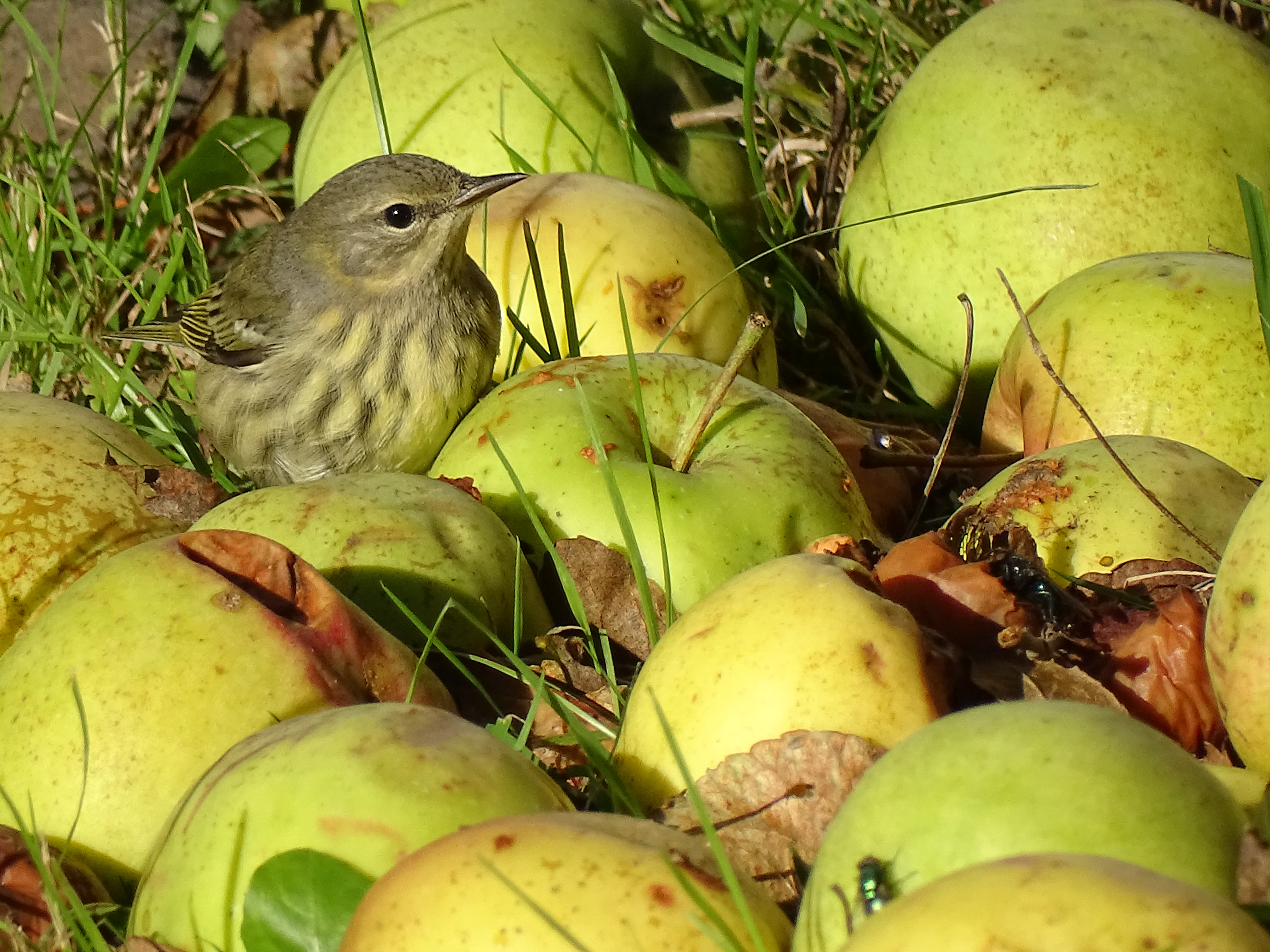
“Warblers on the ground” was the theme of this year’s Monhegan Fall Migration Weekend tour. While Blackpoll Warblers dominated the apple piles, this Cape May Warbler was my favorite photo subject.
It’s been a crazy two weeks! Other than two wonderful weekends on Monhegan – personal and professional – and an incredibly Sandy Point Morning Flight last week, my birding has been seriously limited. With the weather pattern and so many rarities around, this was frustrating, but as of today, we have (mostly) completed our move from Pownal to Durham.
Monhegan Island, 9/22-9/26. Highlights included 1 LARK SPARROW, 6 LESSER BLACK-BACKED GULLS, 3 CLAY-COLORED SPARROWS, 2 DICKCISSELS, 1 ORANGE-CROWNED WARBLER, 16 species of warblers, and an insane falcon show. Complete Tour Report and daily checklist here.
Sandy Point Morning Flight, 9/29: 6,183 migrants of 69 species highlighted by 1 BLUE GROSBEAK, 20 species of warblers, and my 195th all-time patch bird in 2 high-flying Little Blue Herons! It was a great enough day to deserve its own blog, which can be found here.
1 Brown Thrasher, here at the store, 9/29. Our second ever in the garden here.
Pownal Morning Flight, 9/30: 289 individuals of 29 species. Complete list here. Our last morning flight at our old property, with a final yard list of 136.
Monhegan Island, 9/30-10/2 with Jeannette. We were here for a friends’ event, so birding was not always the priority. Nonetheless, we had some good birds included the continuing juvenile RED-HEADED WOODPECKER, at least one continuing CLAY-COLORED SPARROW and DICKCISSEL, 1 Red-bellied Woodpecker, our first coastal Pine Siskin of the fall, a late Veery, Yellow-bellied Sapsuckers in every apple tree, warblers on the ground, and a big Yellow-rumped Warbler morning flight on the 1st.
And finally, there is a limited amount of space remaining on Tuesday’s Mini-pelagic out of Boothbay Harbor! Click here for more information.
There are some Morning Flights at Sandy Point that deserve their own blog. This was one of those. (I also haven’t finished my Monhegan Tour report blog yet, either).
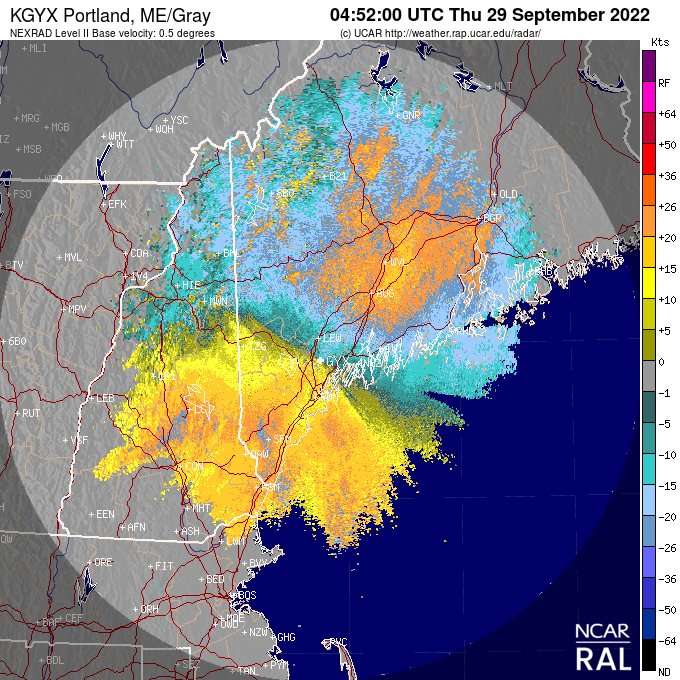
Let’s start with the 1:00am reflectivity and velocity images from the Gray NEXRAD station. I was very happy that the station was back online in time for this incredible large flight. In fact, it was one of the densest flights I have seen in the area, and you can see how much biomass was offshore.
For an explanation of just what this means, see the “Birding at Night” chapter in my first book, How to be a Better Birder. Furthermore, see previous Sandy Point posts on the topic – you can use the search box in the upper right-hand corner of this blog page, and search “Sandy Point” or “Morning Flight.”
That got my pretty darn excited for the morning. And, well, it was a lot of fun! OK, mostly…at times I was overwhelmed and early on, I just felt beat! For the first 30 minutes, I often just clicked waves of “unidentified” as I tried to keep pace. Luckily, after the massive early rush, the flight became more manageable, although bursts of activity were barely quantifiable.
20 species of warblers, a very rare Blue Grosbeak, and my 195th all-time Sandy Point birds: 2 Little Blue Herons! It was quite a day.
Thanks to Evan Obercian, I learned a ton and had some great species tallies. I have no doubt that some of the records set (e.g. 2nd-highest tally for Cape May Warbler) came from his exceptional auditory skills – some of those birds would have just went unidentified or not even detected by me! Of course, the more eyes (and ears) the better, and Reed Robinson and Weston Barker – splitting time on the “flicker clicker” and pointing out birds landing below – helped immensely as well. Assistance was critical today.
When Evan and I finally departed for desperately needed bagels and coffee at 11:45, there were still a few birds on the move. With some raptors in the air, I am sure that if we didn’t leave then, I would be there all day. I wish I could have been, because this morning was simply awesome. Here’s the scoreboard:
6:36 to 11:45am
With Evan Obercian, Reed Robinson, and Weston Barker.
50F, mostly clear, WNW 4.5-5.1 to NW 13.3-16.1
2,389 unidentified
1,036 Yellow-rumped Warblers (*2nd highest)
449 Northern Parulas
374 Ruby-crowned Kinglets (*3rd highest)
286 Yellow-bellied Sapsuckers (*new record)
251 Northern Flickers
155 Blackpoll Warblers
138 Eastern Phoebes (*new record. Previous high of 26! And this was very conservative as many were swirling, too. But at times, steady pulses of 2-6 were clearly crossing)>
105 Black-throated Green Warblers
93 American Robins
75 White-throated Sparrows
71 Black-and-white Warblers (*new record)
65 Red-eyed Vireos (*new record)
64 Red-breasted Nuthatches (*new record)
58 Magnolia Warblers
57 Cedar Waxwings
44 Blue Jays
41 Dark-eyed Juncos
33 American Goldfinches
31 Blue-headed Vireos (*2nd highest)
26 American Redstarts
25 Cape May Warblers (*2nd highest)
25 Black-throated Blue Warblers
25 Purple Finches
23 Chipping Sparrows
22 Rusty Blackbirds
22 Nashville Warbler (*2nd highest)
22 Broad-winged Hawks
18 Tennessee Warblers (*3rd highest)
18 Golden-crowned Kinglets
16 Palm Warblers
12 Scarlet Tanagers
9 Yellow Warblers
8 Savannah Sparrows
7 Swainson’s Thrushes
7 American Kestrels
7 Turkey Vultures
6 White-breasted Nuthatches (*tied highest)
5 Baltimore Orioles
4 Ospreys
4 Philadelphia Vireos
4 Bay-breasted Warblers
4 Black-capped Chickadees
3 Brown Creepers
2 Rose-breasted Grosbeaks
2 Chestnut-sided Warblers
2 Orange-crowned/Tennessee Warbler
2 Red-winged Blackbirds
2 Eastern Wood-Pewees
2 Sharp-shinned Hawks
2 juvenile LITTLE BLUE HERONS (**high fly-overs. My first record for Sandy Point and Patch Bird #195.)
2 Lincoln’s Sparrows
2 White-crowned Sparrows
1 Pine Warbler
1 Least Flycatcher
1 Northern Harrier
1 Tufted Titmouse (did not cross after a few false starts)
1 Red-bellied Woodpecker (crossed after three false starts)
1 Common Loon
1 Eastern Bluebird
1 Hairy Woodpecker (crossed after 8 false starts)
1 BLUE GROSBEAK (**My 3rd-ever at Sandy Point. Spotted by Evan, photographed by Weston Barker; photo below).
1 Common Grackle
1 Wilson’s Warbler
1 Red-tailed Hawk
1 American Pipit
1 Blackburnian Warbler
1 unidentified Empid
1 Downy Woodpecker (did not cross after 2 false starts)
1 Swamp Sparrow
1 Hermit Thrush
1 Ovenbird (in the woods; warbler #20!)
X Common Yellowthroat (I don’t try and count them in the brush here, but there were a lot around this morning and many more than there have been. None even attempted a crossing as usual).
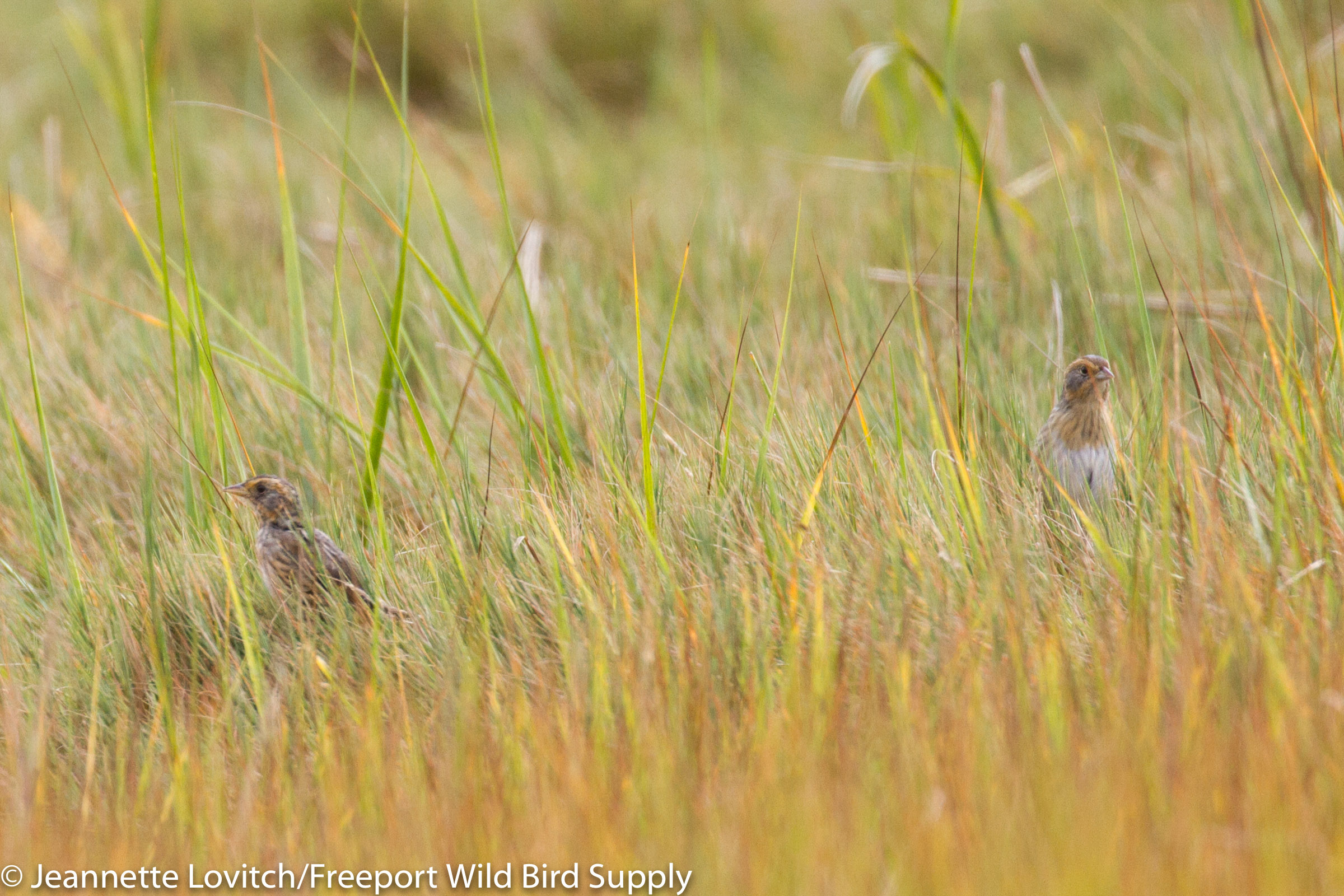
Jeannette and I spent some quality time with “sharp-tailed sparrows” in Scarborough Marsh on Tuesday. It’s even more of a challenge this time of year with some birds still molting (such as the Saltmarsh Sparrow on the left) and other birds in fresh plumage, such as this apparent Nelson’s Sparrow on the right (although a hybrid may be impossible to rule out).
Unlike last week, I was out birding plenty this week, including some of my favorite fall activities: Sandy Point and sorting through shorebirds. Here are my observations of note over the past seven days:
Morning flight over our Pownal yard, 9/10: 6:15-7:30am: 250+ warblers of at least 10 species, led by 40++ Northern Parulas and including 1 Bay-breasted and 2++ Cape May Warbler.
“Zeiss Day” Hakwatch right here at the store, 9/10 (with Rich Moncrief): 95 individuals of 11 species of raptors led by 21 Ospreys and 18 Broad-winged Hawks. Full count here.
20-25 Common Nighthawks, over our yard in Pownal at dusk, 9/10, and 5-10 on 9/11.
6 Northern Waterthrushes, 6 Swainson’s Thrushes, etc, Capisic Pond Park, Portland, 9/11 (with Down East Adventures Fall Songbird Workshop group).
Here’s the world’s worst photo of the Orange-crowned Warbler that appeared at Sandy Point on Tuesday. I drew an outline around it to (maybe) help you find it. It was my 8th ever here.
My non-Sandy Point observations of note over the past seven days included:
Overall, it was a great week of sparrow migration, with a nice high count on 10/8 from Wolfe’s Neck Center of 125 Song, 100 Savannah, 75 Swamp, 25 White-throated, 2 White-crowned, and 1 Lincoln’s.
Sabattus Pond season is underway as well! On 10/8, I had early-season tallies of 76 Ruddy Ducks (first of fall), 33 Lesser Scaup, 18 Greater Scaup (first of fall), 2 Ring-necked Ducks, 2 Red-breasted Mergansers (first of fall), etc.
I don’t usually post my Sandy Point Morning Flight totals here, but today was more than worthy of a little something extra. After 8 nights with little or virtually migration (well, at least not a big flight on ideal winds), clearing skies and a light northwesterly breeze finally opened the floodgates. Here are the 1:00am reflectivity and velocity images, for example.
I am sure Monhegan – where I just spent 5 glorious days (despite the lack of a huge flight; more on that soon!) – was great, Sandy Point was just outstanding. In fact, it was my 3rd highest all-time flight!
Early on, clouds made everything into little black shapes as the intense flight proceeded at all levels. Wind, a cacophony of kinglets ringing in my ears, and the two loudest and most vociferous Tufted Titmice who just stayed screaming in the magic birch all conspired to further reduce my ability to identify birds. But mostly, waves of dozens at a time were simply clicked as “unidentified” as I tried to keep pace with quantifying the flight. Furthermore, there were at least 3-4 hunting Merling, a Cooper’s Hawk, and a Peregrine Falcon, which added to the swirling chaos. It was a challenge, that’s for sure. “I do this for fun?” I asked Matthew.
Here’s the scorecard from the Morning Flight of birds that passed over and through Sandy Point, Cousin’s Island, Yarmouth this am:
3 Swainson’s Thrushes – including two observed crossing.
3 Tufted Titmice
2 Scarlet Tanagers
2 unidentified vireos
2 Yellow Warblers
2 Red-breasted Nuthatches
2 Tennessee Warblers
2 American Goldfinches
1 Chestnut-sided Warbler
1 Pine Warbler
1 White-crowned Sparrow
1 Broad-winged Hawk
1 White-breasted Nuthatch
1 Hermit Thrush
1 unidentified Catharus
1 Red-bellied Woodpecker
1 Osprey
X Common Yellowthroats
1 YELLOW-BILLED CUCKOO – my 7th all-time here. Made 4 “false starts” before crossing at 10:04am.
Cuckoos are such shape-shifters in flight that I feel like I could have counted each pass from the one bird as a different species each time it passed!
For a grand total of 5,487 birds, my *3rd highest all-time count. So yes indeed, birds have very much been backed up.
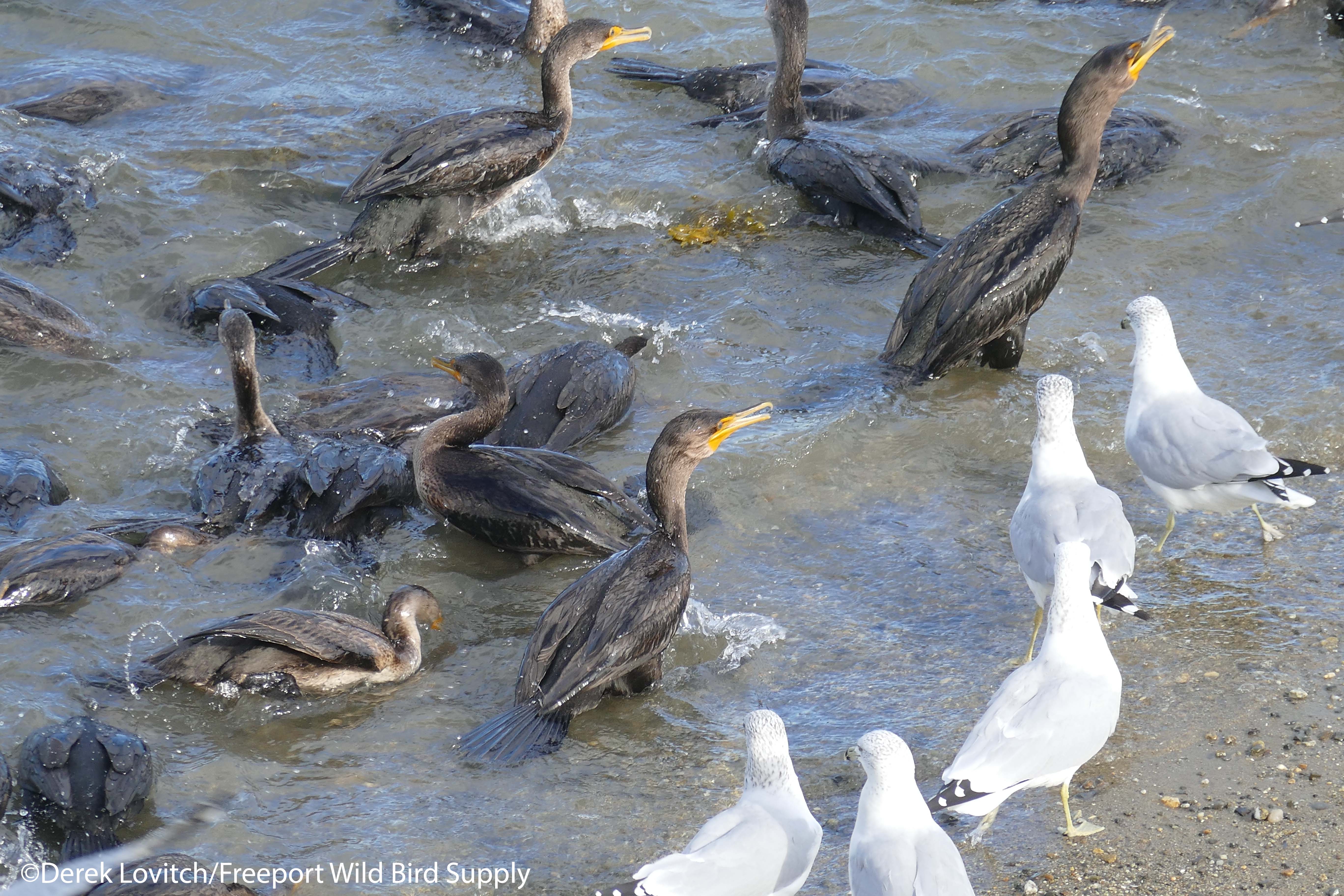
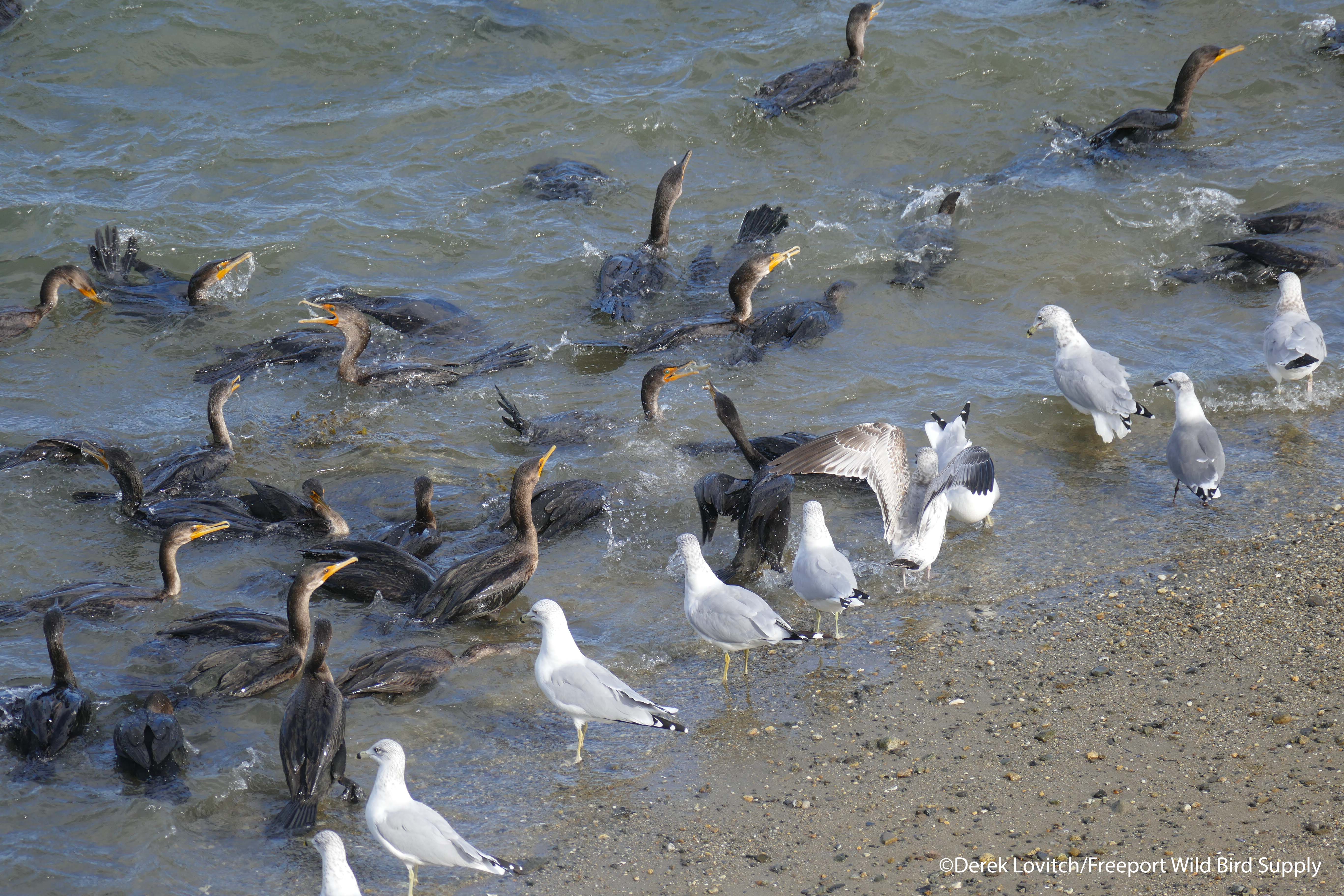
Meanwhile, adding to the excitement (and chaos) this morning was a massive feeding frenzy of Double-crested Cormorants and gulls. While I am sure a few migrants snuck by overhead, I couldn’t help but take a few moments to enjoy it…and make sure there were no rarities among the gulls! 15-20 Laughing Gulls and 4 Bonaparte’s Gulls joined 75-100 Ring-billed Gulls in snatching the baitfish that the Double-crested Cormorants had pushed right up onto the sandbar as it slowly emerged from the tide. It was quite a show!