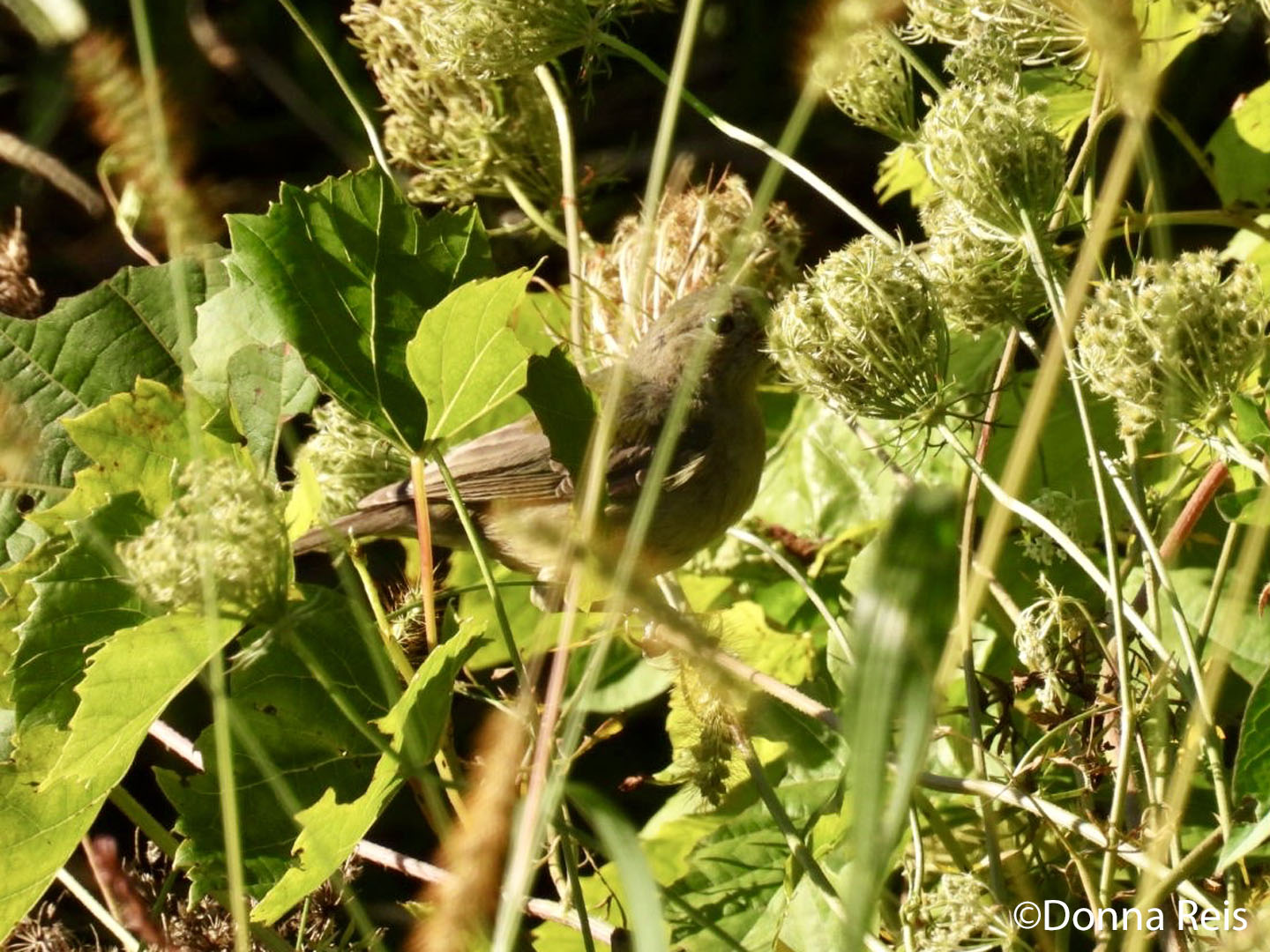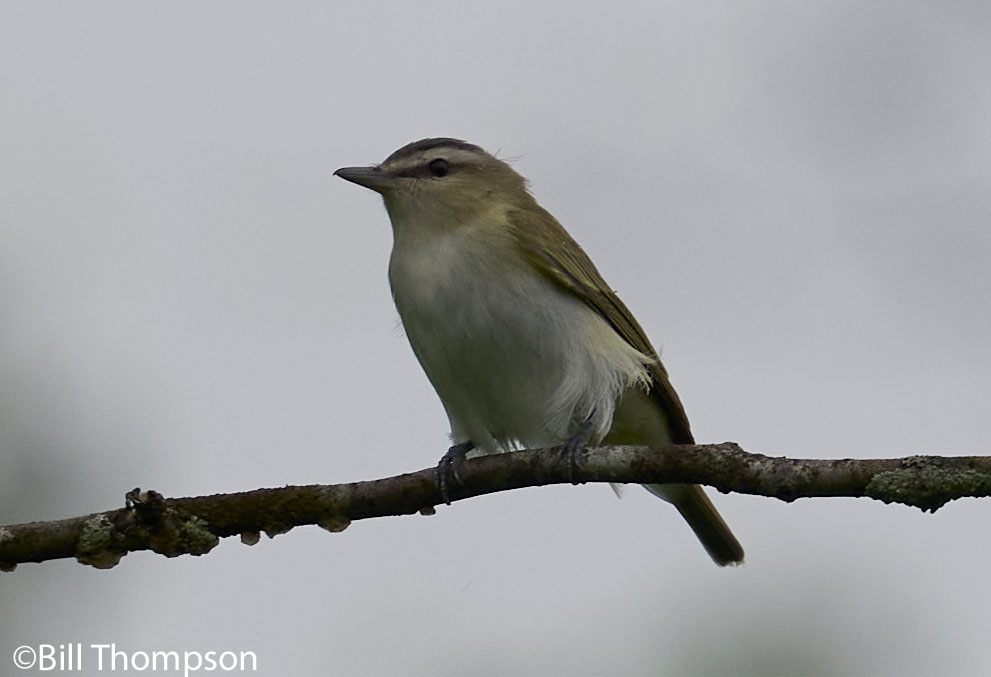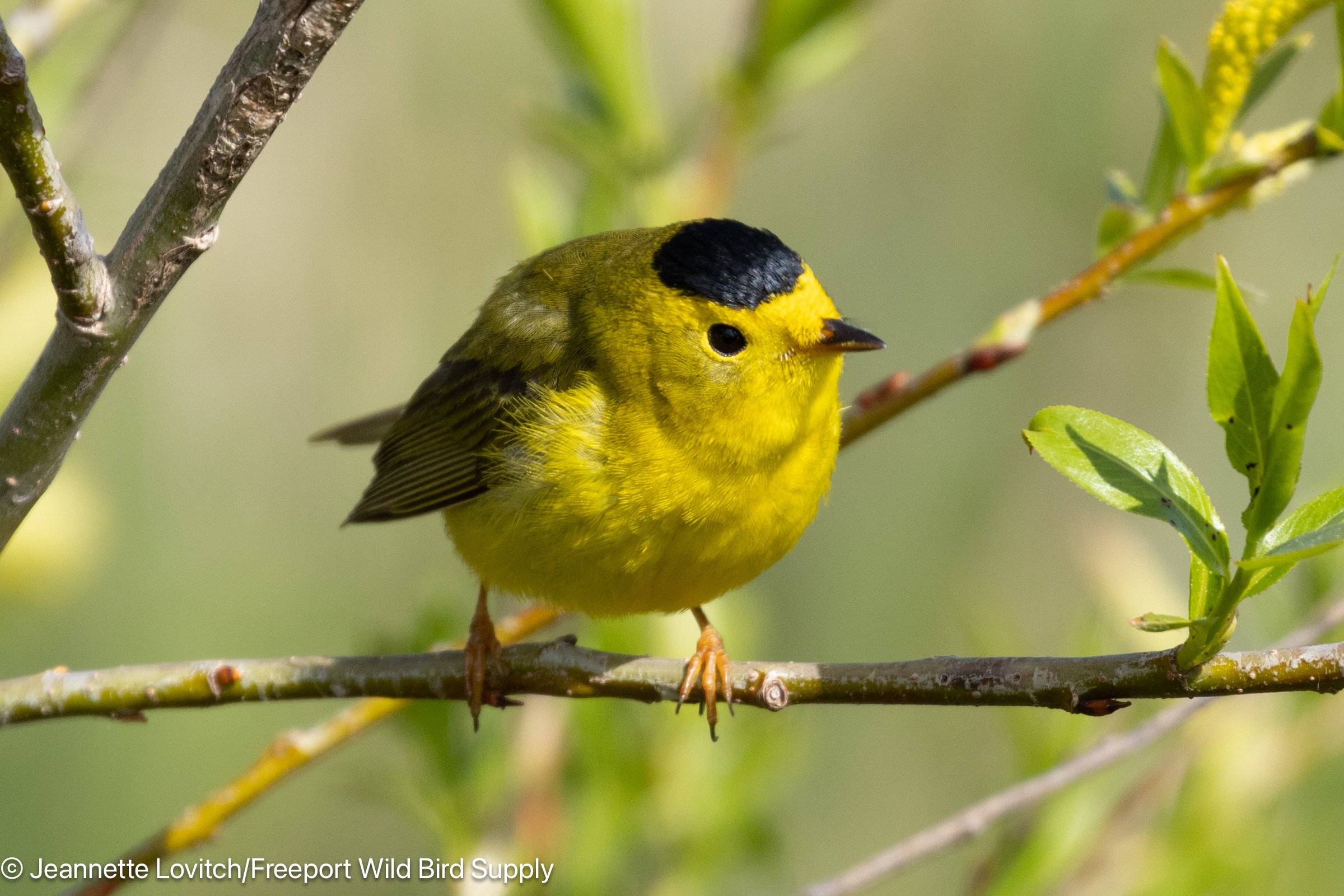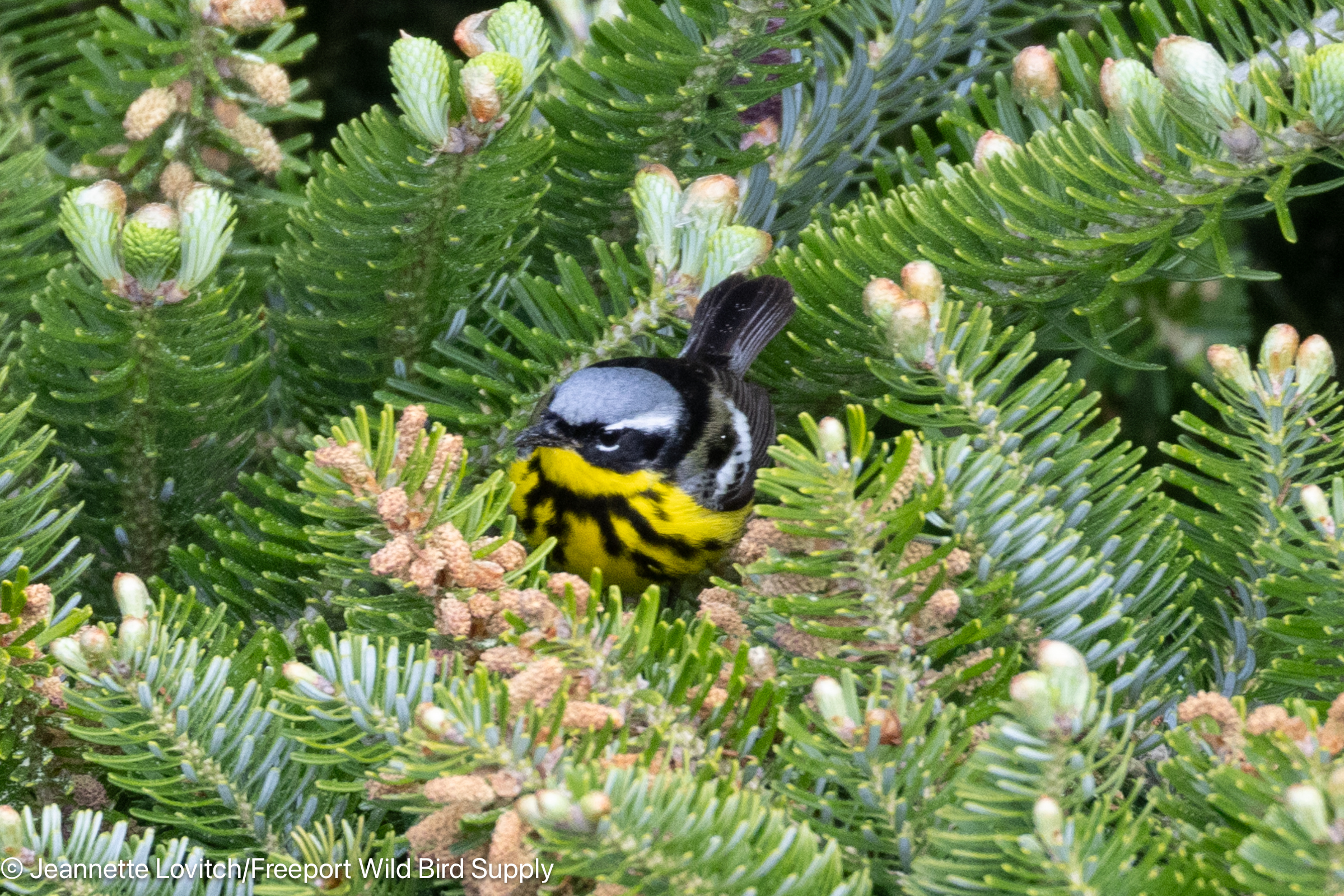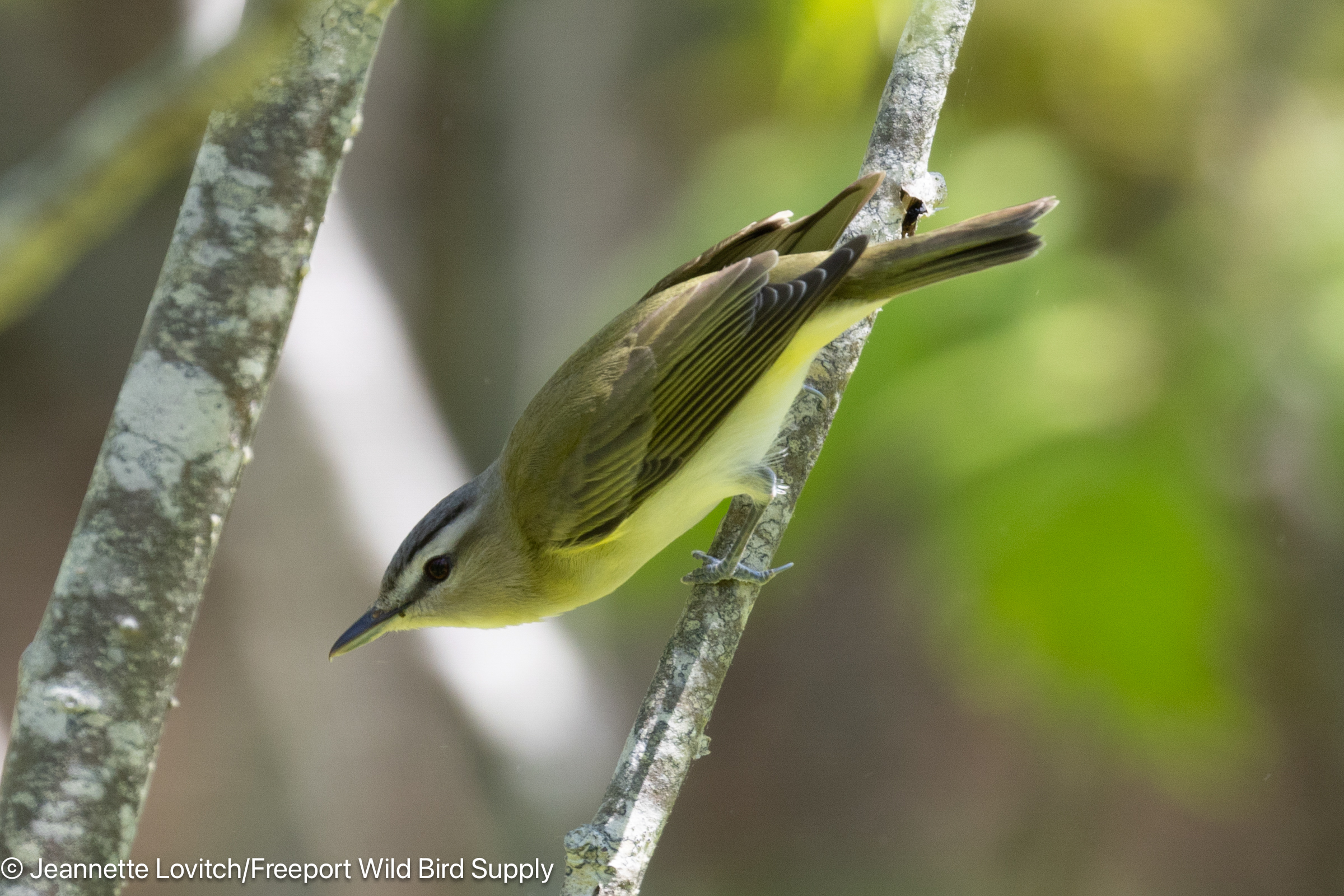
Tag Archives: Red-eyed Vireo

2025 Monhegan Fall Migration Weekend Tour Report

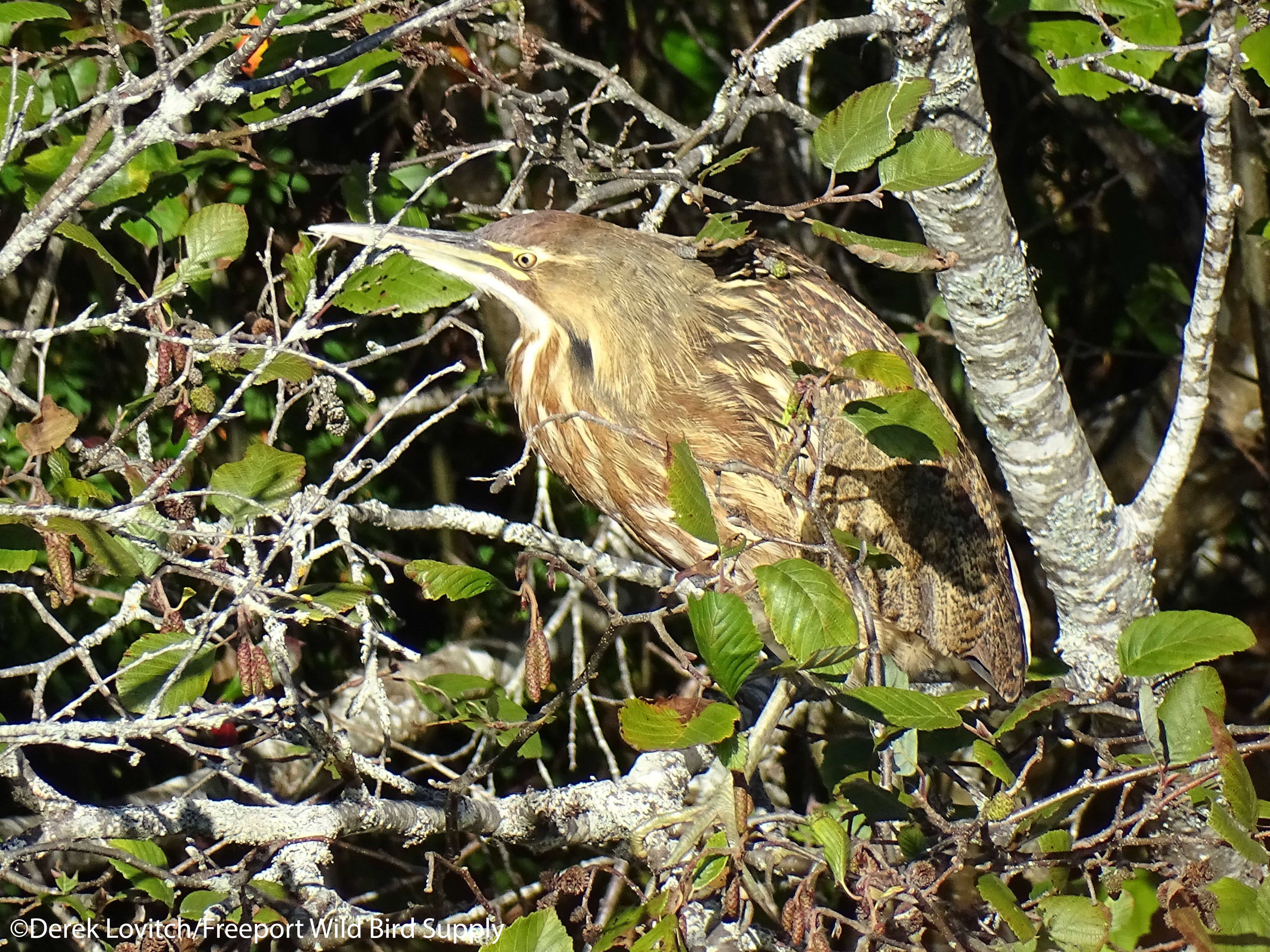
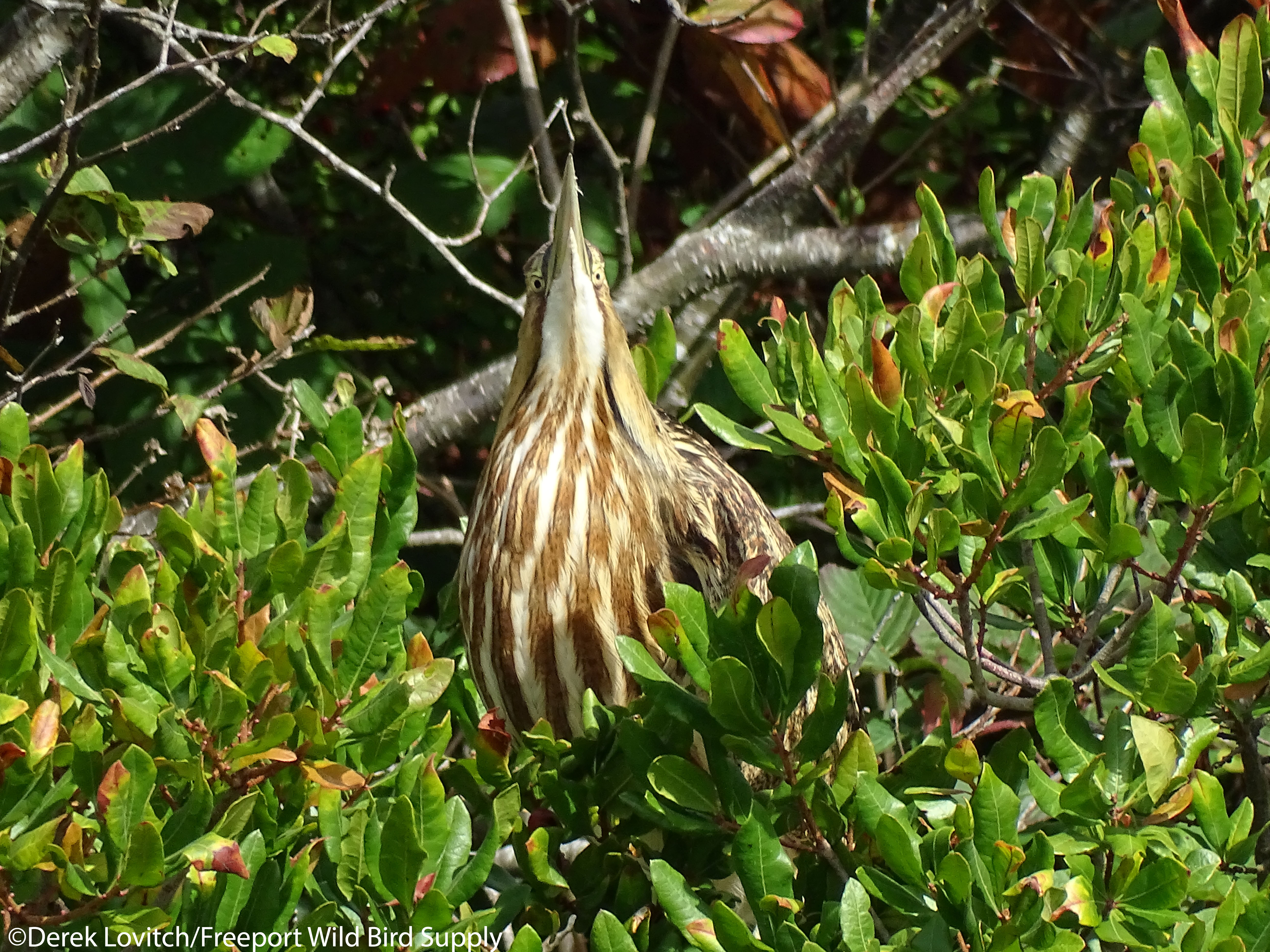
An American Bittern sitting in the open in a tree, just a handful of yards away could have easily been the highlight of any birding weekend. But, this stellar start was just the tip of the iceberg of the weekend’s birding excitement.

It has been quite a few years since we had a weekend like this. Lots of birds, “mega” rarities, warm weather, and tons of excitement. It was truly a special weekend. We were honored to have been there for it.

The tour began on Friday, with only one participant joining me on the Hardy Boat. The island greeted us with a Lesser Black-backed Gull, which we scoped from the wharf, and several warblers at the usual spot uphill. But after getting the inside scoop from birders already on the island, we made a bee-line for the Ice Pond where an American Bittern was sitting all morning. Remarkably, however, it was sitting in a bush (see above)!

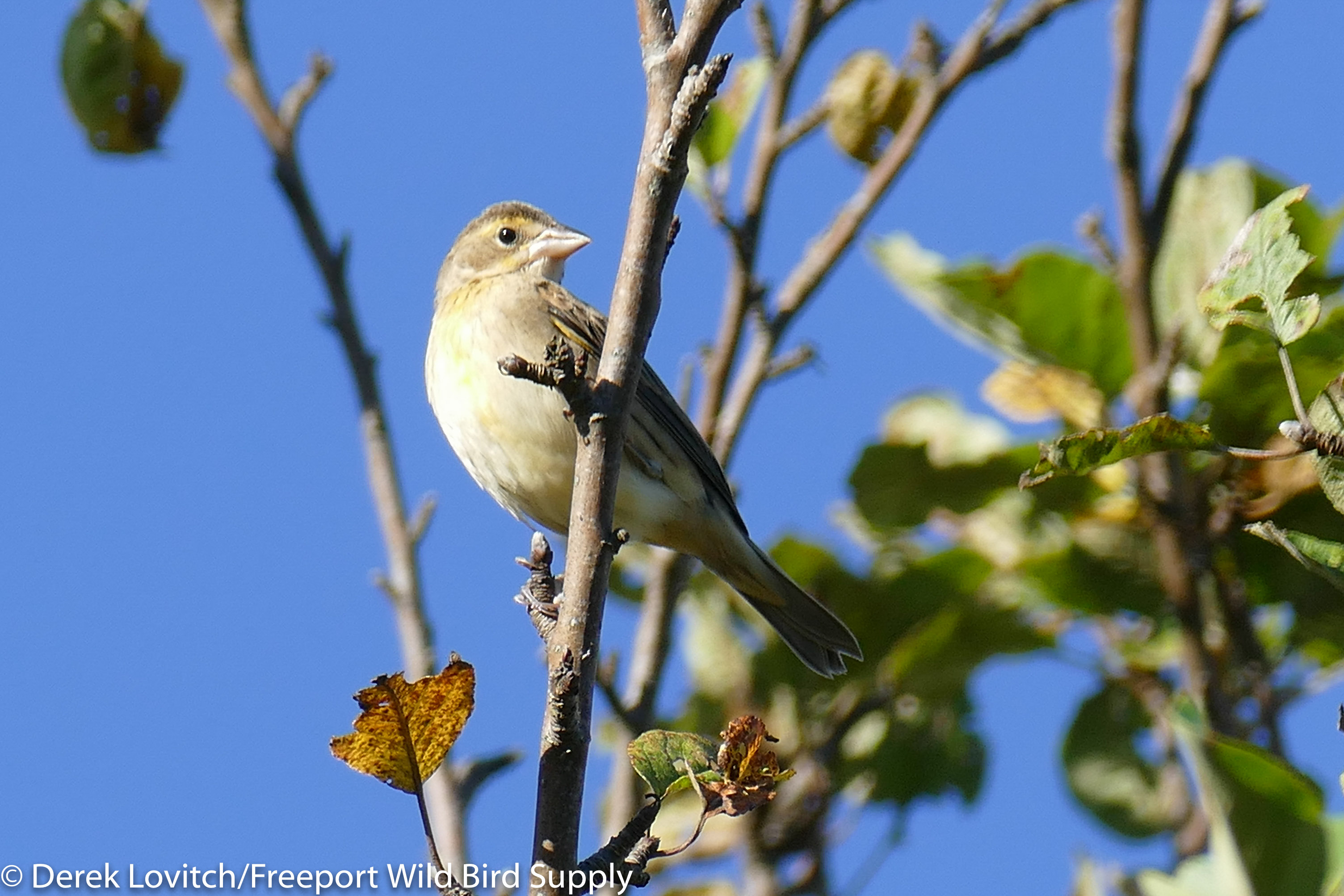
How’s that for starting a tour off right? We also immediately encountered Dickcissel and Blue-gray Gnatcatcher, and there were plenty of Yellow-rumped Warblers and Palm Warblers here and there.

After lunch, with our group now complete, the surprisingly good birding continued. Despite such a warm afternoon and few birds on the radar overnight on mostly a southwest wind aloft, we enjoyed an excellent introduction to Monhegan birding in the fall:  2 Clay-colored Sparrows with 2 immature White-crowned Sparrows, a Dickcissel, and several White-throated Sparrows in one field of view; a dozing Common Nighthawk trying to stay camouflaged on a wood pile, and another visit to the still-confiding American Bittern at the Ice Pond for those who arrived later. It was a solid afternoon overall, with bird activity continuing right up until dinnertime.
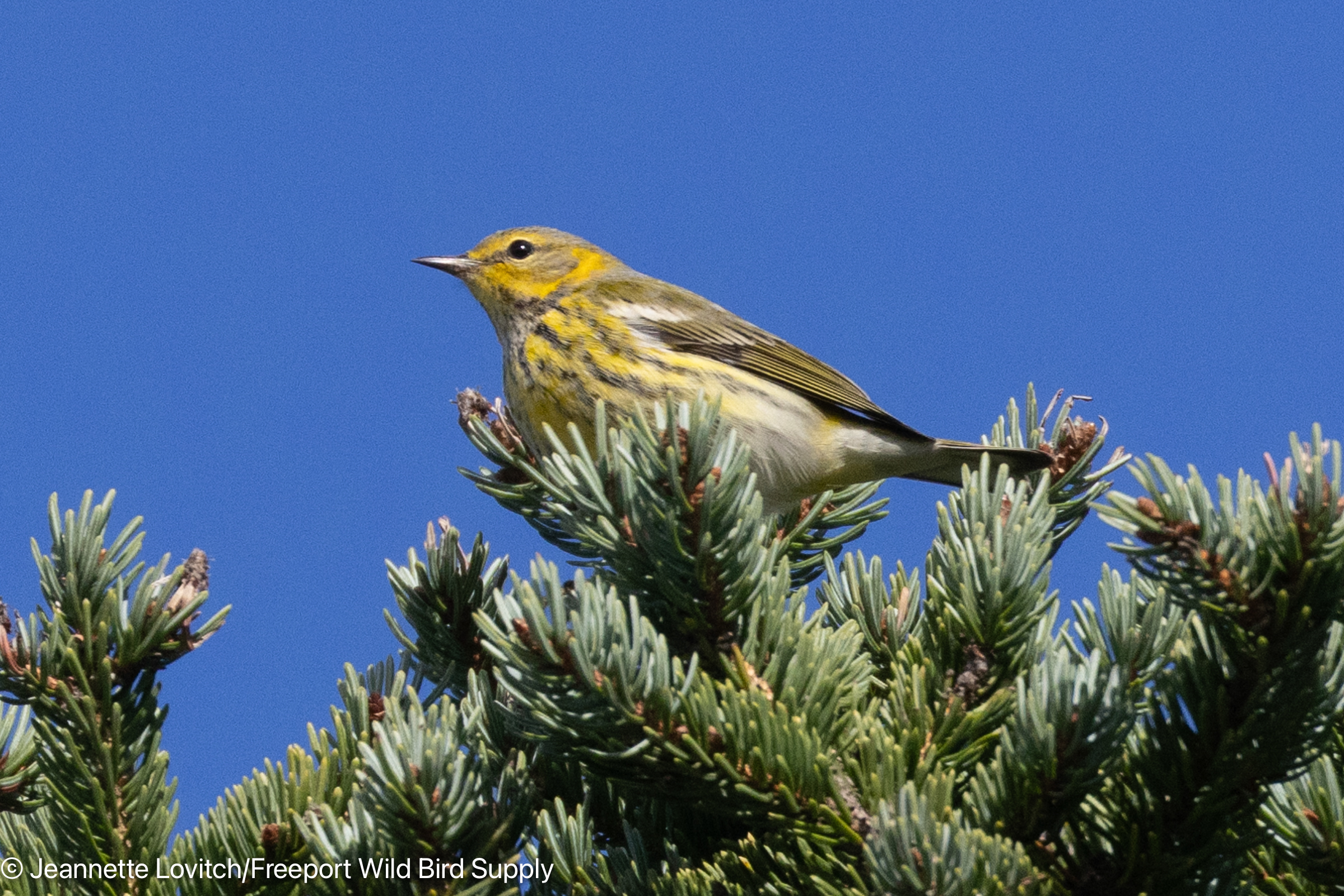
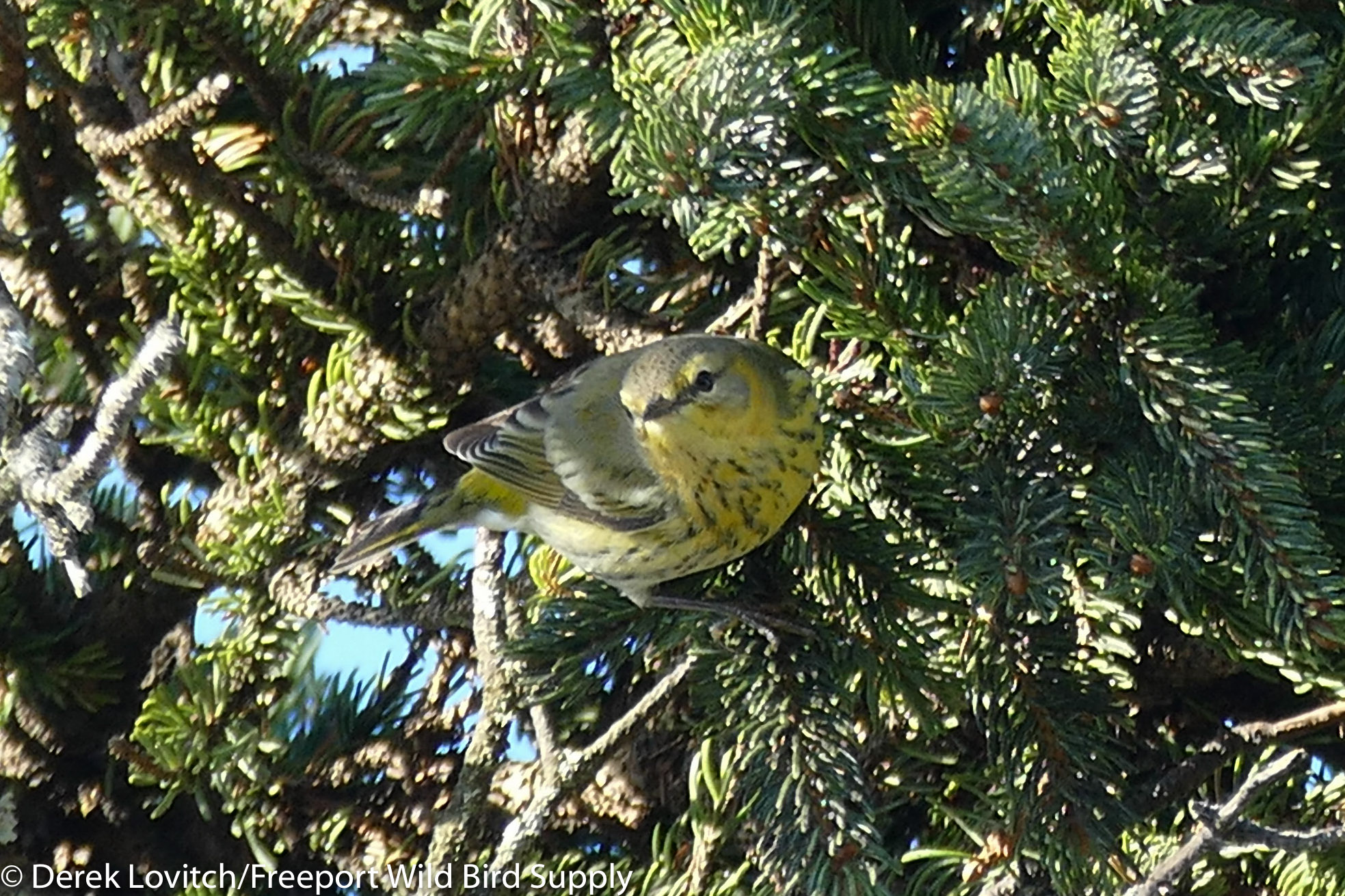
Cape May Warblers in a wide variety of plumages is always one of the highlights
of any fall weekend on Monhegan

.Unfortunately, our best bird of the day was almost the one that got away. Almost! While viewing an Indigo Bunting in the Community Garden, a second bunting snuck into view, skulking. It briefly popped out, and I yelled “get photos” and then it popped back into the weeds and was not to be seen again.

“Did I see green?” I exclaimed, but it was so fleeting, and the light was so harsh, and the bird was so, so pale, I couldn’t be sure. I looked at photos on the back of cameras in the sun, and we had a good discussion on why this could have been a Painted Bunting. Unfortunately, I have little experience with first fall female (presumably) Painted Buntings and had no idea they could be this unbelievably drab. So I talked myself out of it.
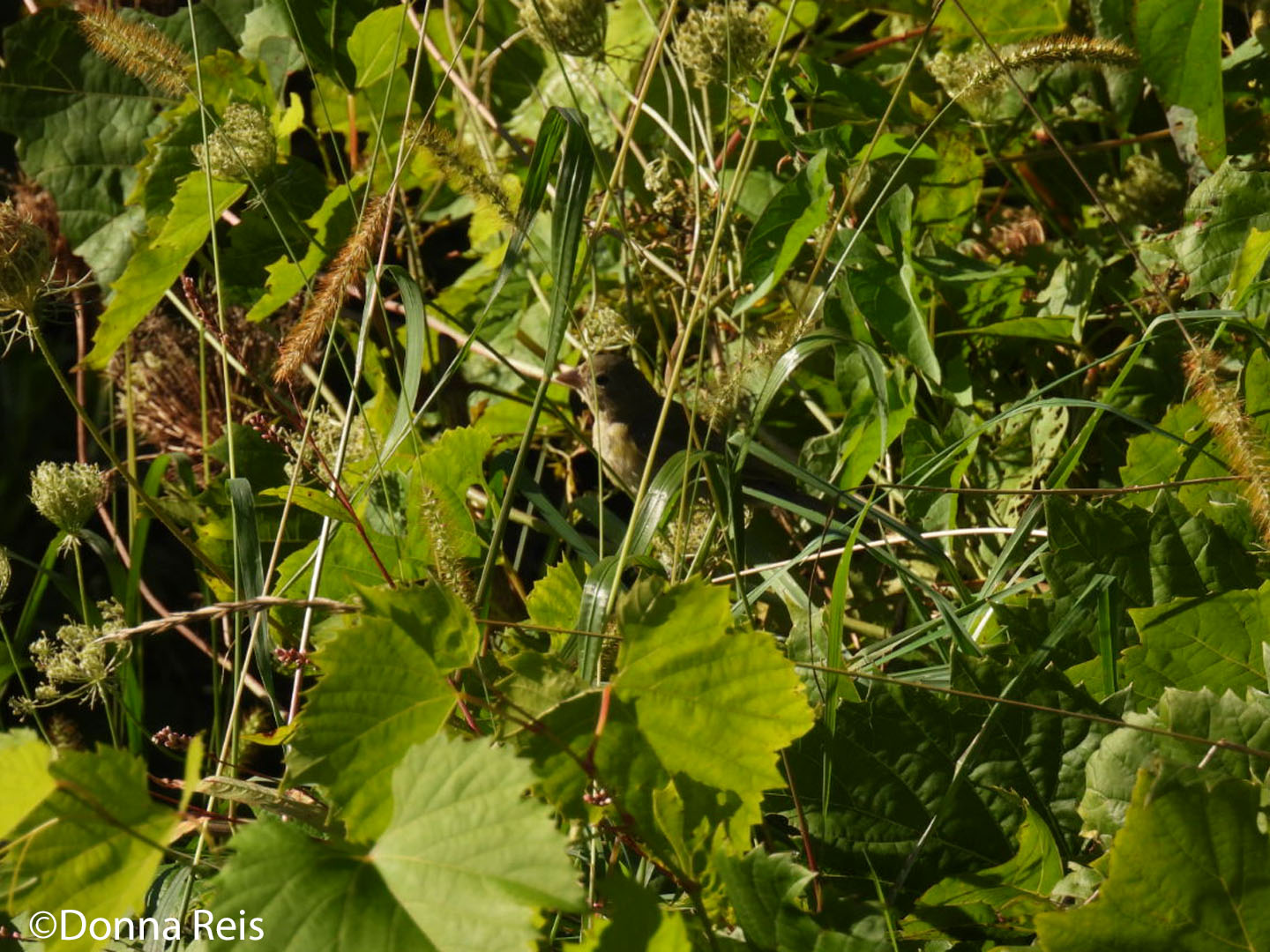
Overnight, I received photos from Bill Thompson, who, an hour or two after we saw the bunting, also briefly saw and photographed it. “Is this a Painted Bunting?” he asked.
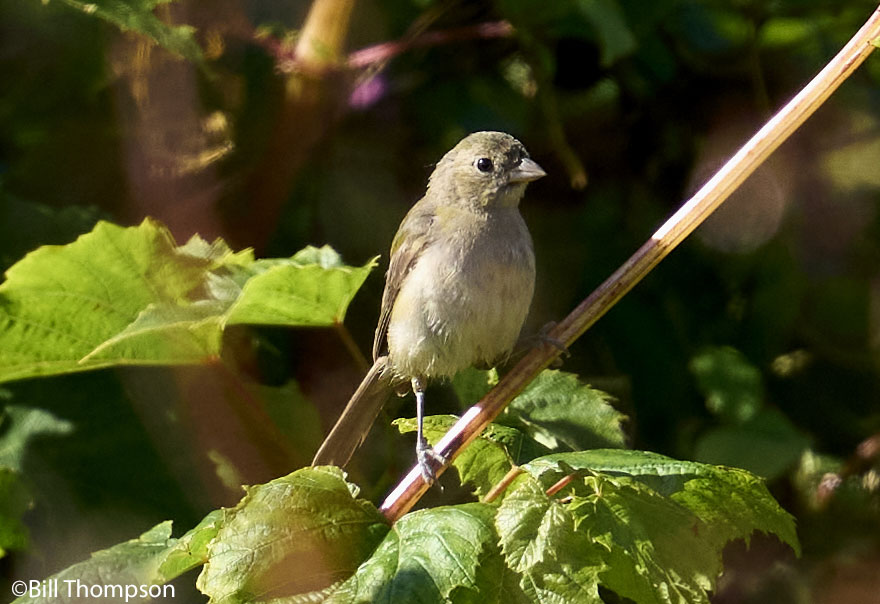
Yup, that really does have green on it, and on more than one side – in other words, not a reflection. Darn it. It counts for us – we all saw it – but in hindsight, we should have gotten the word out about a “possible/probable” Painted Bunting and had more eyes looking. Luckily, Bill was in the right place at the right time once again! But I felt like I had blown this one. I was too quick to dismiss it and so I decided I would have to make up for it over the rest of the weekend. Maybe the dry cold front that passed through on Friday evening and shifted the winds would help.

A very strong flight Friday night into Saturday morning on a diminishing northwesterly wind was idea for bringing birds to Monhegan Island come sunrise. And at first light, it was clear it was on!

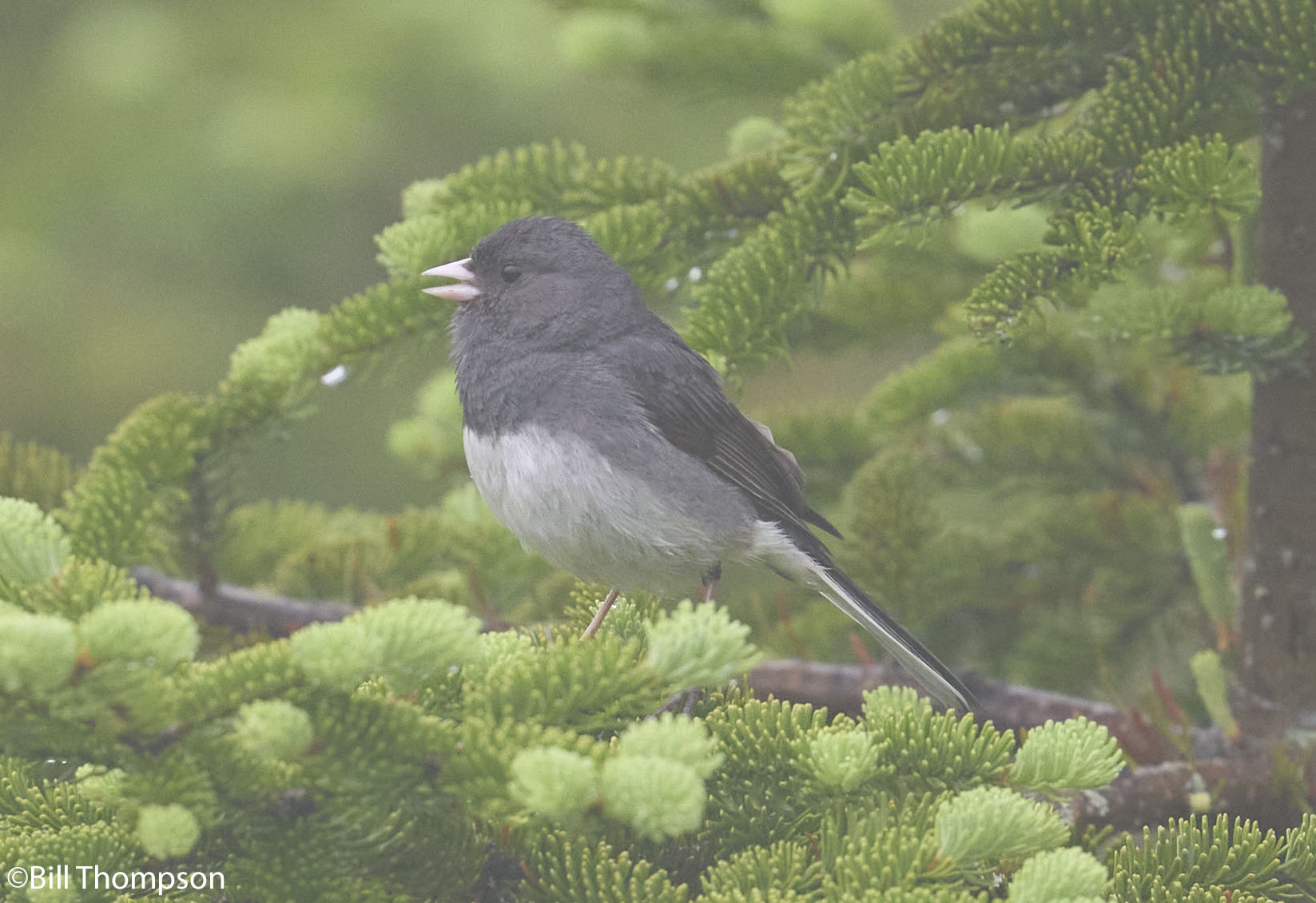
The Morning Flight featured tons of Yellow-rumped Warblers with the occasional Palm and Blackpoll Warbler. Between the morning flight and our pre-breakfast stroll, we had a lot of birds: a couple of waves of Dark-eyed Juncos, bunches of Red-breasted Nuthatches, more Golden-crowned Kinglets and Purple Finches, insane views of Peregrine Falcons, 2 Dickcissels, 4 Baltimore Orioles, and lots of great views of lots of common species.

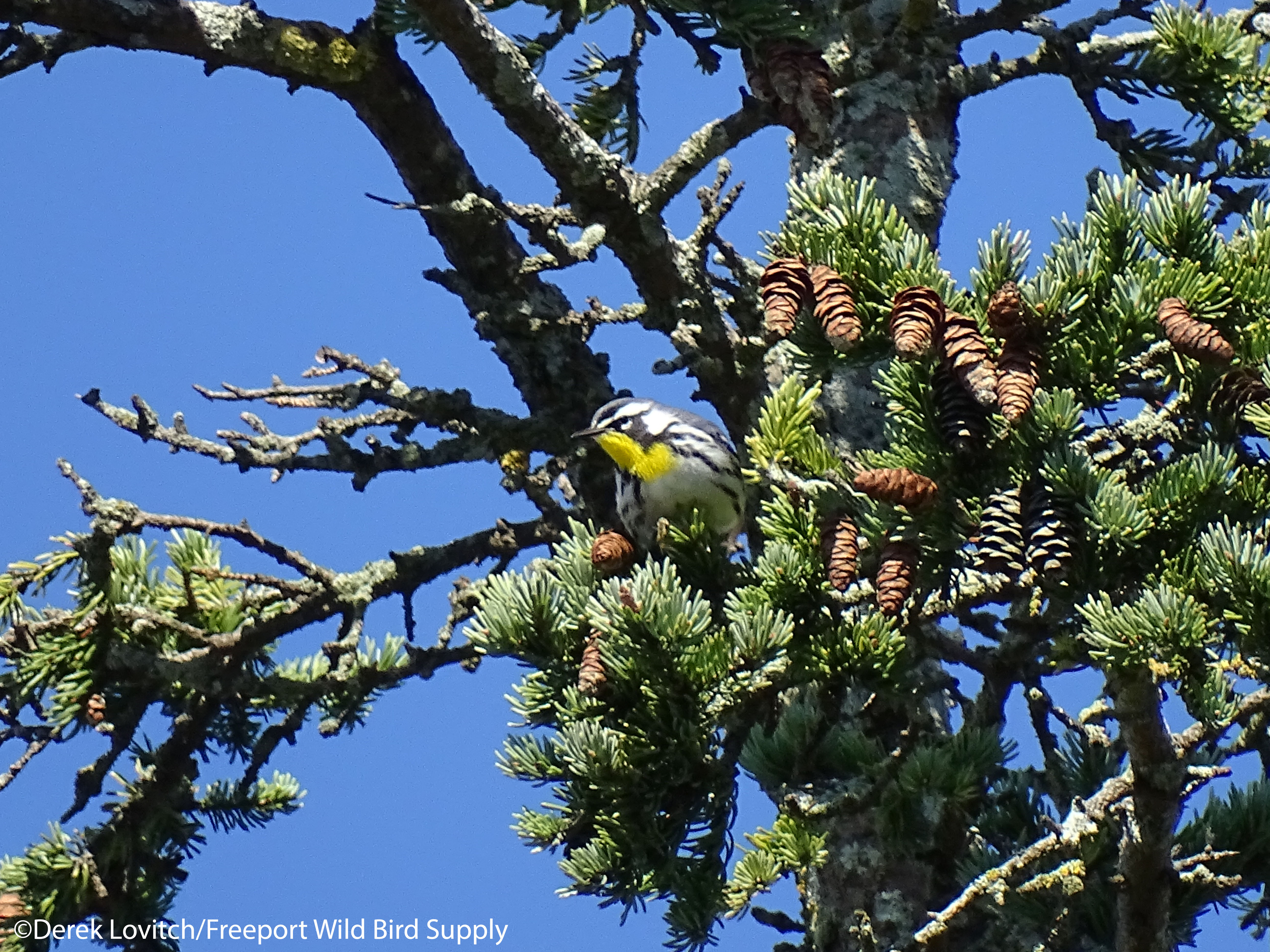
After breakfast, it remained fantastic. Just birds everywhere, and not surprisingly, some notable species began to be turned up.  Our first “chase” was a Yellow-throated Warbler, our group arriving just in time before it took off.

Luckily, Dan Gardoqui and I stumbled upon it again while foraging for lunch, and I was able to round up several of the group members for improved views and photographs.
The American Bittern was now in the marsh, there were now three Dickcissels, 8 Baltimore Orioles, and a second, but definitively identified Indigo Bunting. No green one, unfortunately.

Not surprisingly on such a nice day, the afternoon was slower, as birds had departed the island early, or had now sought refuge in the shadows, especially with the continuing activity of Peregrines, Merlins, and Sharp-shinned Hawks. So, we checked some nooks and crannies, turning up a Nelson’s Sparrow at Lobster Cove and enjoying gliding Peregrine Falcons passing right in front of us from Burnt Head. We also took the time to enjoy butterflies, plants, and all other walks of life.
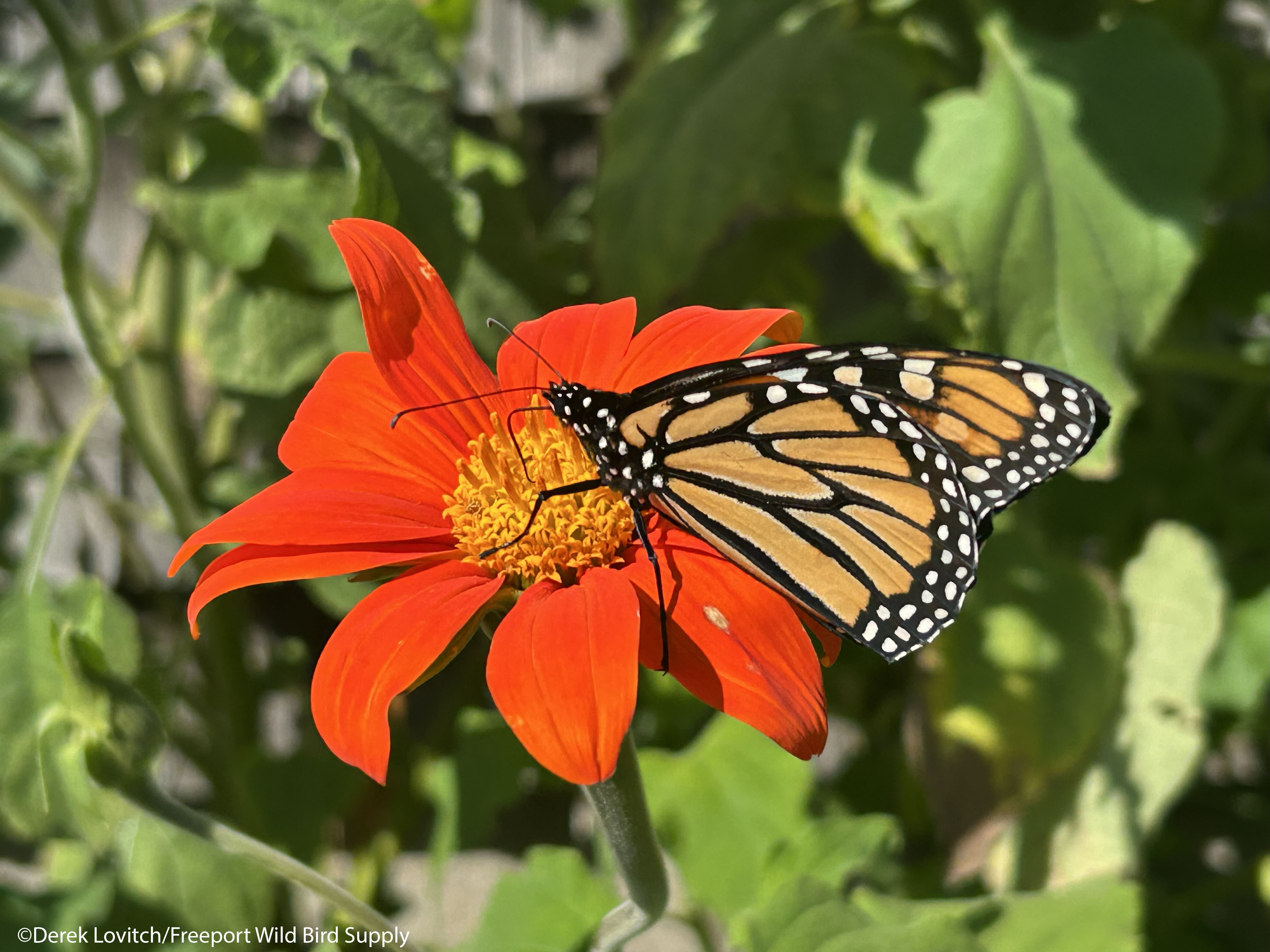
It was a delightful afternoon, but we returned to town to find we had missed out on a Western Kingbird. Luckily, a few of us caught up with it at dusk when it was refound near the Mooring Chain.

(phone-binned photo under low light)

So, it was a great day, and given the winds and weather, we expected it to be such. Then, with little to no movement overnight (at least visible on the radar), on a light south to southwest wind, we hoped for some birds to stick around from Saturday and perhaps be augmented by a rarity or two. At the very least, I wanted to show the Yellow-throated Warbler and Western Kingbird to the rest of the group, especially with a big turnover in participants for the second half of the weekend.

What we didn’t expect was to run out of superlatives before breakfast. We certainly did not expect it after viewing the Morning Flight, which consisted of exactly one American Pipit (and the big wandering flock of Cedar Waxwings, of course).

Once again, a bird was identified from photo review (what did we do before Instant Replay?!) and Bill Thompson and Jess Bishop had apparently discovered a Mega rare Bell’s Vireo on Saturday with only 4 accepted previous records for Maine. With such a slow morning flight, I decided to mix things up from my usual routine, head clockwise through my usual dawn loop, and give it a try to find the Bell’s. We stopped near where it was seen on Saturday, and chatted about the rarity, the identification, etc. “Holy shit, there it is!” I tried not to exclaim too loudly as the bird popped out right in front of us.

We observed it for about 10-15 minutes as it popped in and out of a brushy edge, focusing on feeding in young cherry trees with fall webworm clusters. Birders began to arrive from all directions, as the vireo kept coming in and out of view before flying right over our heads and disappearing deep into a dense thicket.
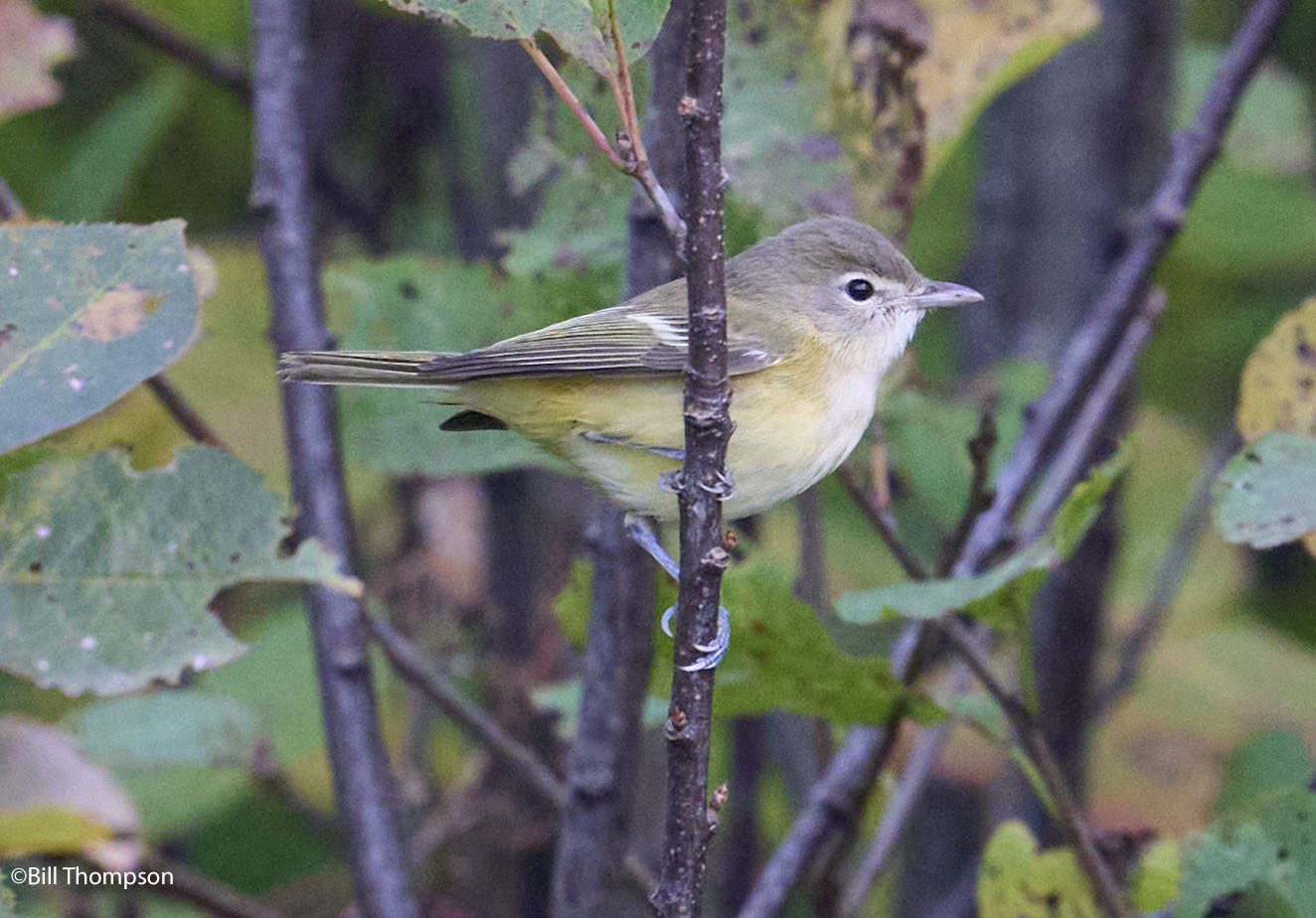
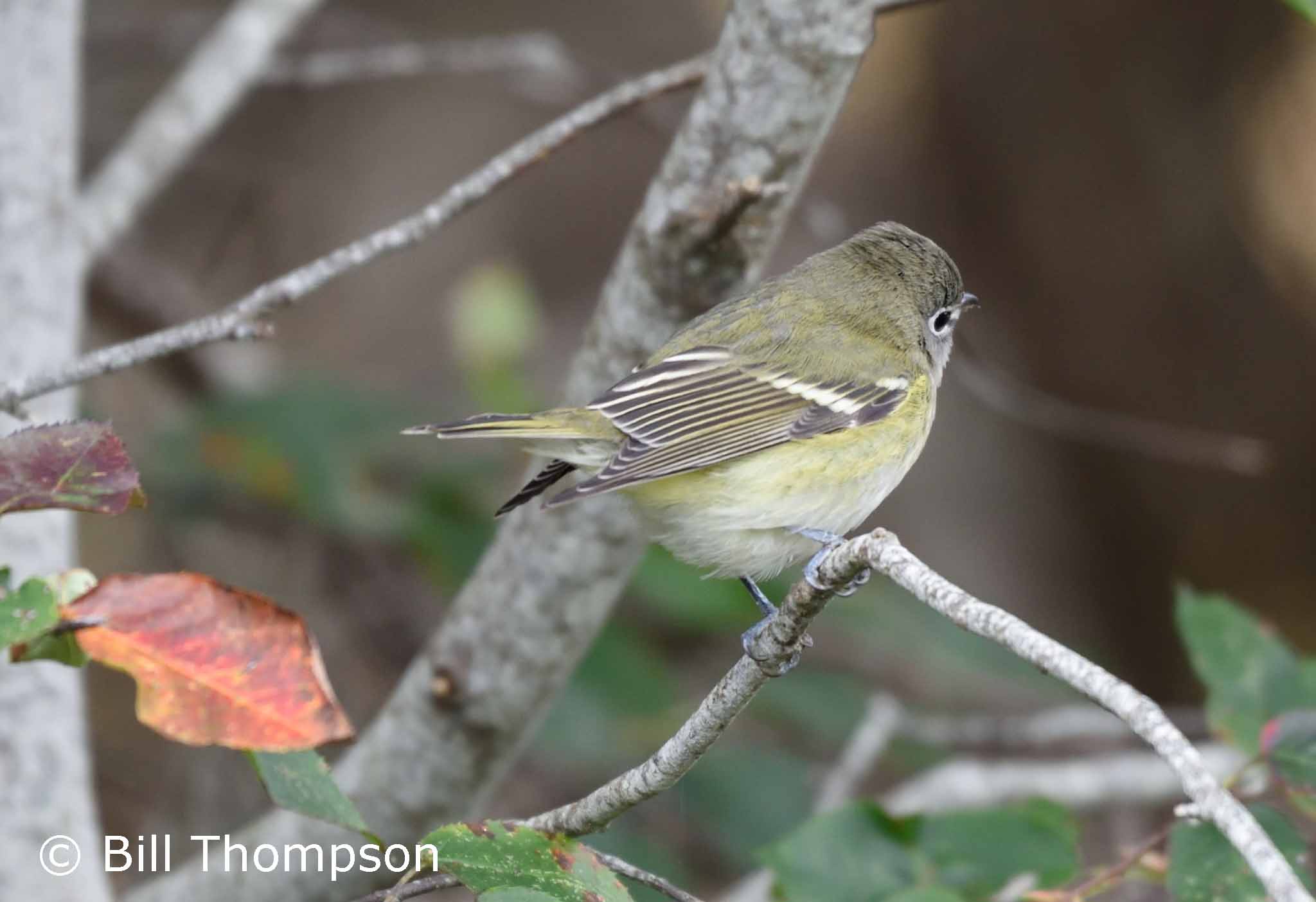
I’ll steal Bill Thompson‘s (with permission of course) Bell’s Vireo
from this morning since he was standing next to us.

It was getting too crowded for our tastes, so we moved on and let others have the edge to monitor. We enjoyed Cedar Waxwings, Northern Flickers, and then took a moment to pause at our usual starting spot, at the spruces behind the Yew.

It was slow, and quiet, and so I was making sure we looked at everything, like the one solo warbler flying towards us from across the sky over the Trailing Yew. It then landed a short distance away, and I brought my binoculars up to it, assuming we had a close Yellow-rumped Warbler to talk about.

<expletives deleted>

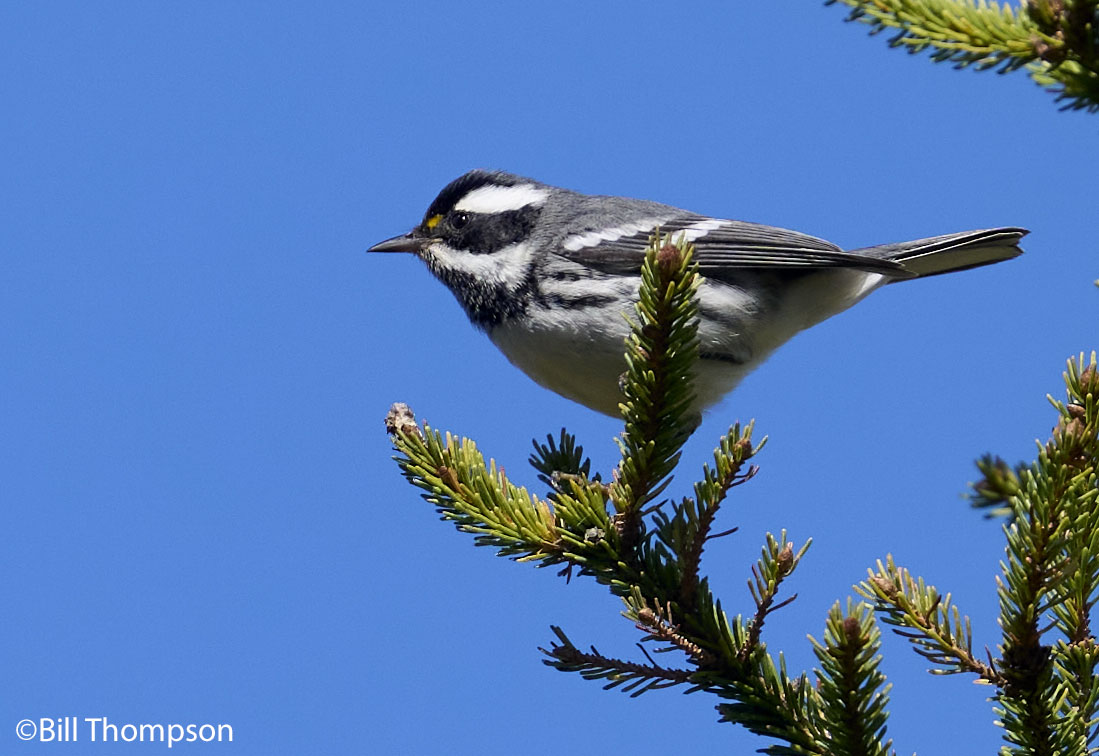
A Black-throated Gray Warbler, with only 5 previous records from Maine, was there. Right there. We had some great looks and photo ops, called over a friend, and then watched it the herd of birders arrive and head out to follow it. What a lucky find! We were ecstatic. And we still hadn’t had breakfast! (See photos from tomorrow),

Wondering if the day could get any better – and pretty content if it did not – we reconvened after breakfast and headed in the opposite direction from the searching masses, as I am wont to do.

It worked again: we found one Lark Sparrow, and then another. How many Clay-colored Sparrows – 4? 8? More? An Orange-crowned Warbler at the Ice Pond, a fly-over Red-bellied Woodpecker, a Pine Warbler, a Yellow-bellied Sapsucker on every tree. So much for it being a slow day.
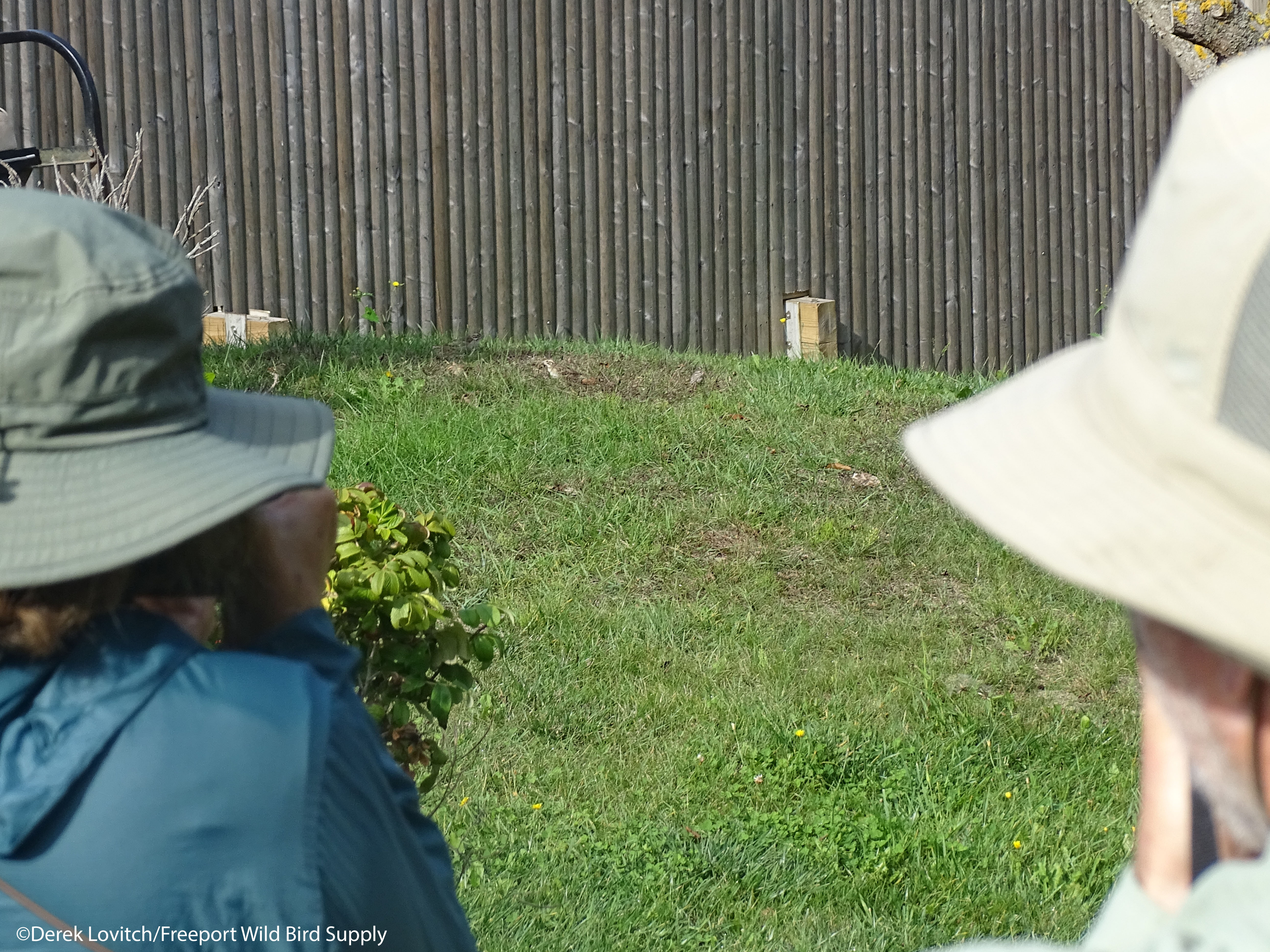
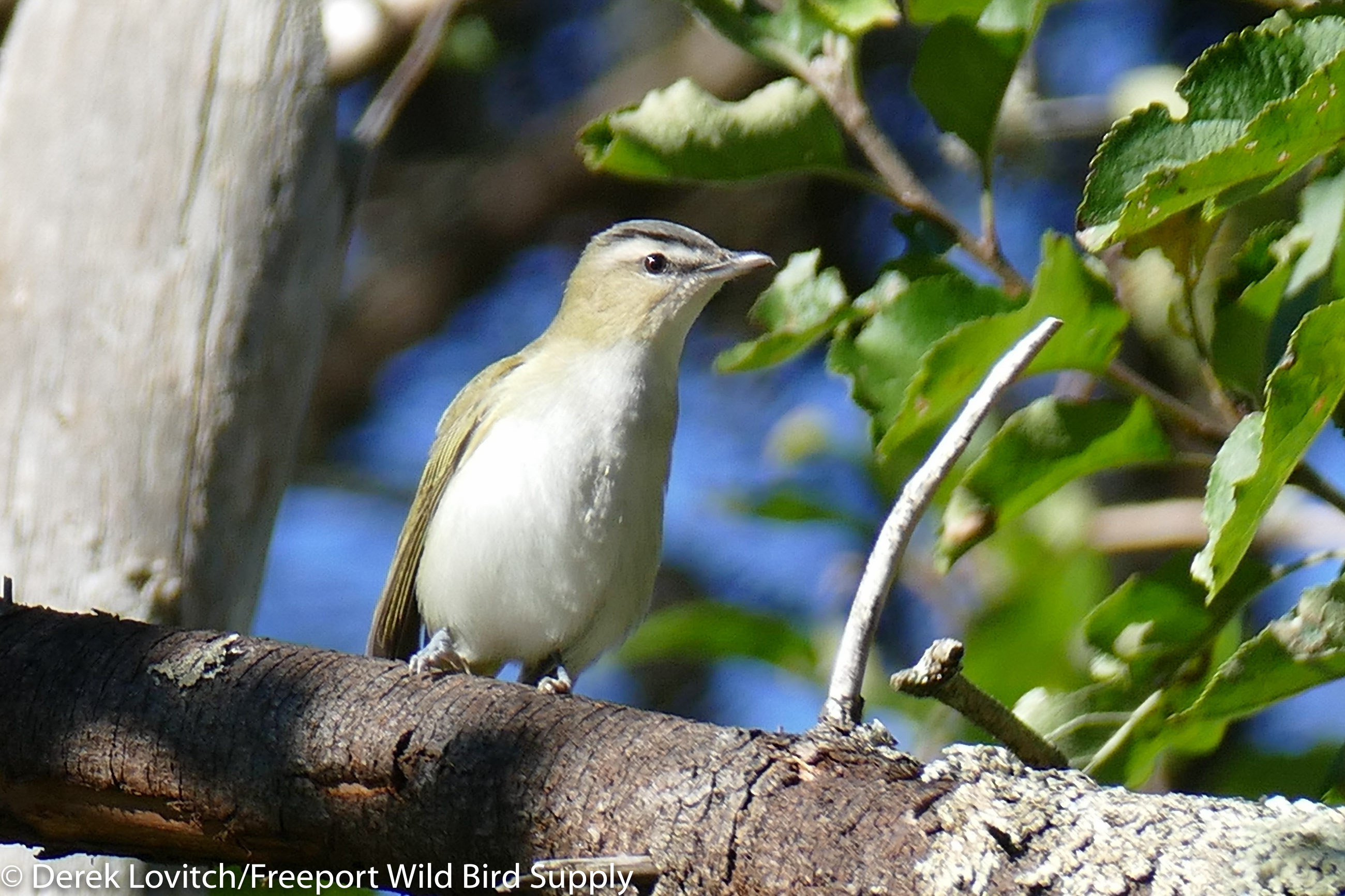
Another warm afternoon sent us into the woods for shade, immersing ourselves in a cacophony of Red-breasted Nuthatches, sprinkled with Golden-crowned Kinglets, and the occasional Red-eyed Vireo or other migrant. We took in the Fringed Gentian, the scenery, and finished strong with the 2 Lark Sparrows and 4 Clay-colored Sparrows together.

Today was a good day.

Monday, the fourth and final day of the tour began with excited anticipation with another strong flight overnight on a diminishing NW to W wind. But today, it was just too nice, and a lot of last night’s birds passed overhead resulting in just a light Morning Flight come sunrise. But there was a turnover of birds, and our morning walk added several things to our list including the Eastern Kingbird we finally caught up with, and another Orange-crowned Warbler. The highlight, however, of our pre-breakfast jaunt was a juvenile Sharp-shinned Hawk that flew to a spruce, plucked a cone off of an outer branch, and then proceeded to play with it! It would move it from its bill to its talons, and then it dropped it, chasing it down the tree. It then flew back up and grabbed another! What a remarkable insight into how a kid Sharpie gets better at hunting on its own.

After breakfast, the good Merlin show of the day continued, and we took time for a short gull identification workshop. Our first Ring-billed Gull out here was good to practice on, and we conveniently had three Lesser Black-backed Gulls: an adult and 2 first-cycle birds. But mostly, we worked through the difference between each age class of the common Herring and Great Black-backed Gulls.

We finally picked up a Northern Waterthrush- our 20th species of warbler on the weekend! But otherwise, it was pretty slow.

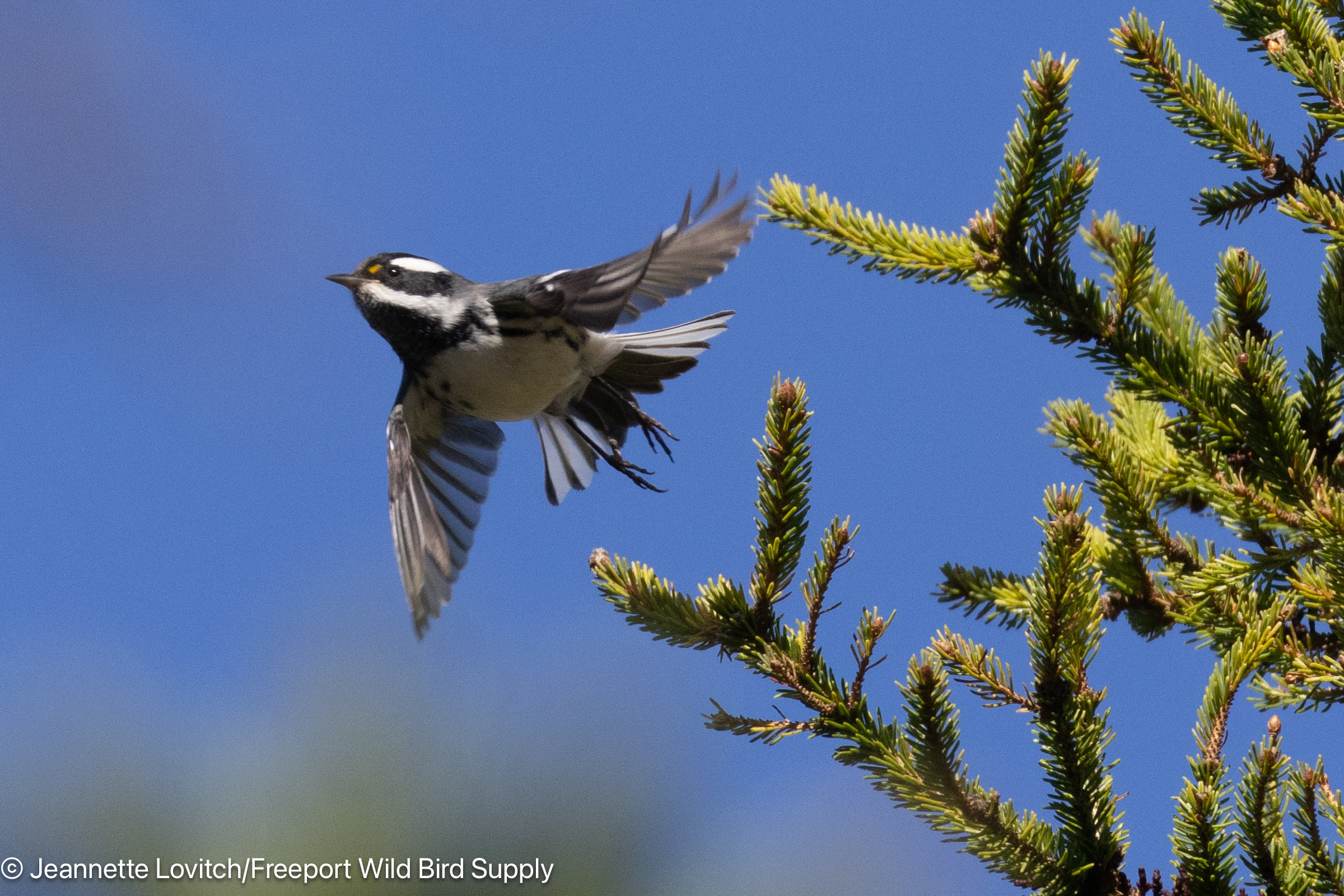
It was slow in the afternoon, too, but the Black-throated Gray Warbler had been refound just before we reconvened after lunch, and eventually we were all treated to much, much better views and photo ops than the morning before.
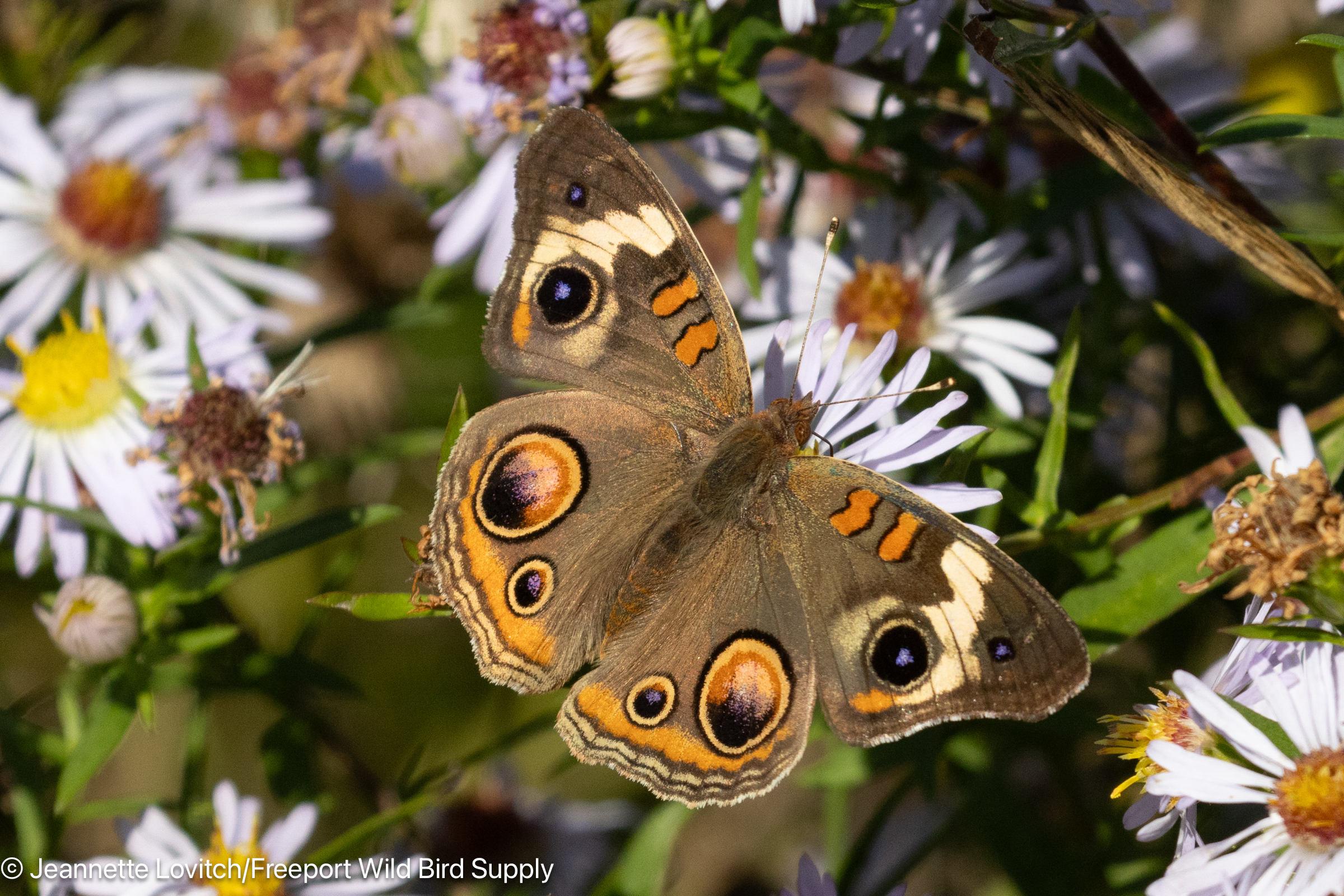
We then twitched a rare Common Buckeye butterfly and Lady’s Tresses orchids.
 Our last new species of the trip was one of the last birds we observed together: a Yellow-billed Cuckoo eating American Dagger Moth and/or Hickory Tussock Moth caterpillars. Watching it whack the caterpillar on a twig to beat off its irritating hairs, we had another moment of insight into a bird’s world.

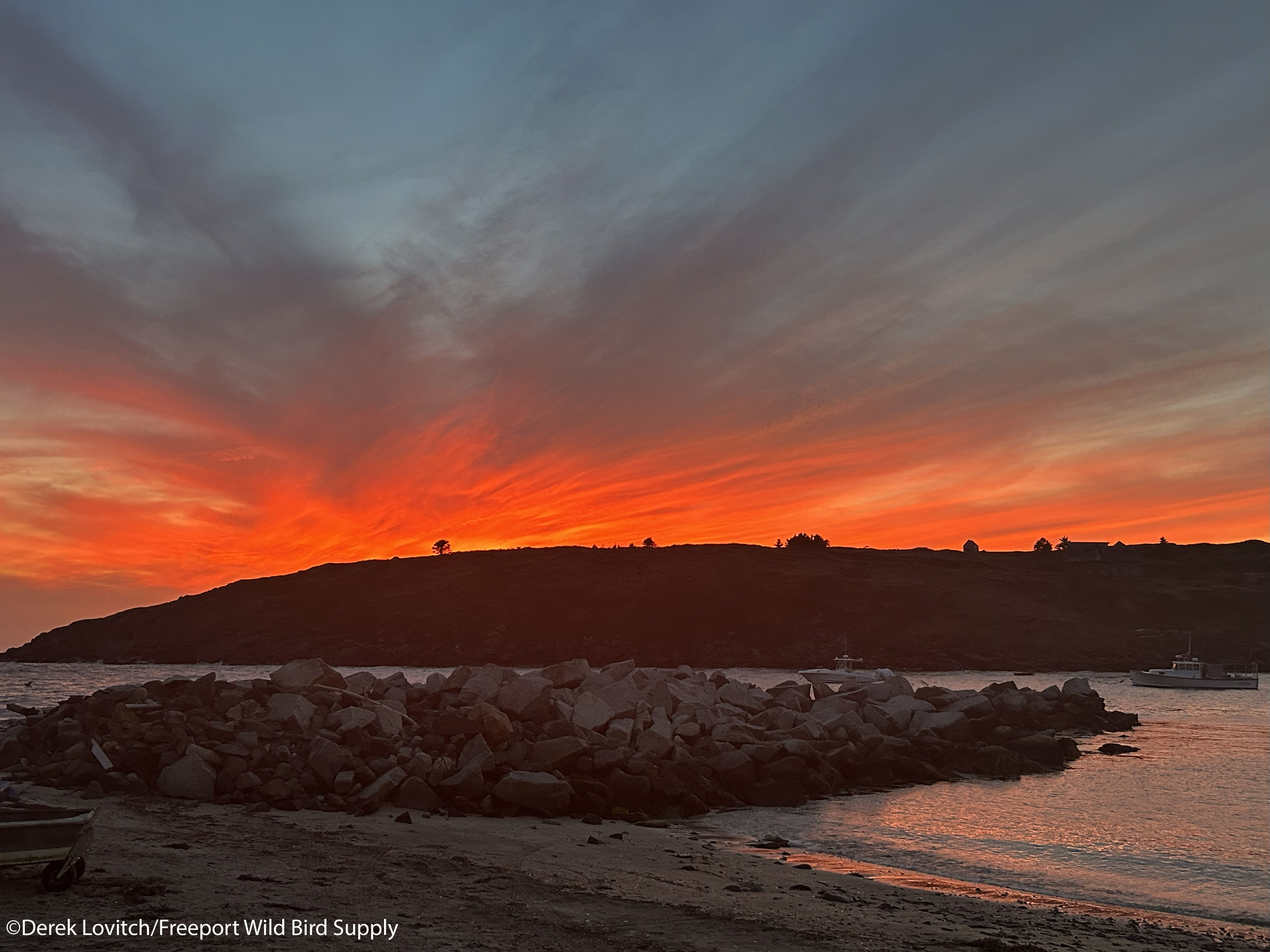
With the tour now complete, Jeannete and I enjoyed a delicious sunset and delightful food with friends and spotted an American Woodcock on our walk back.
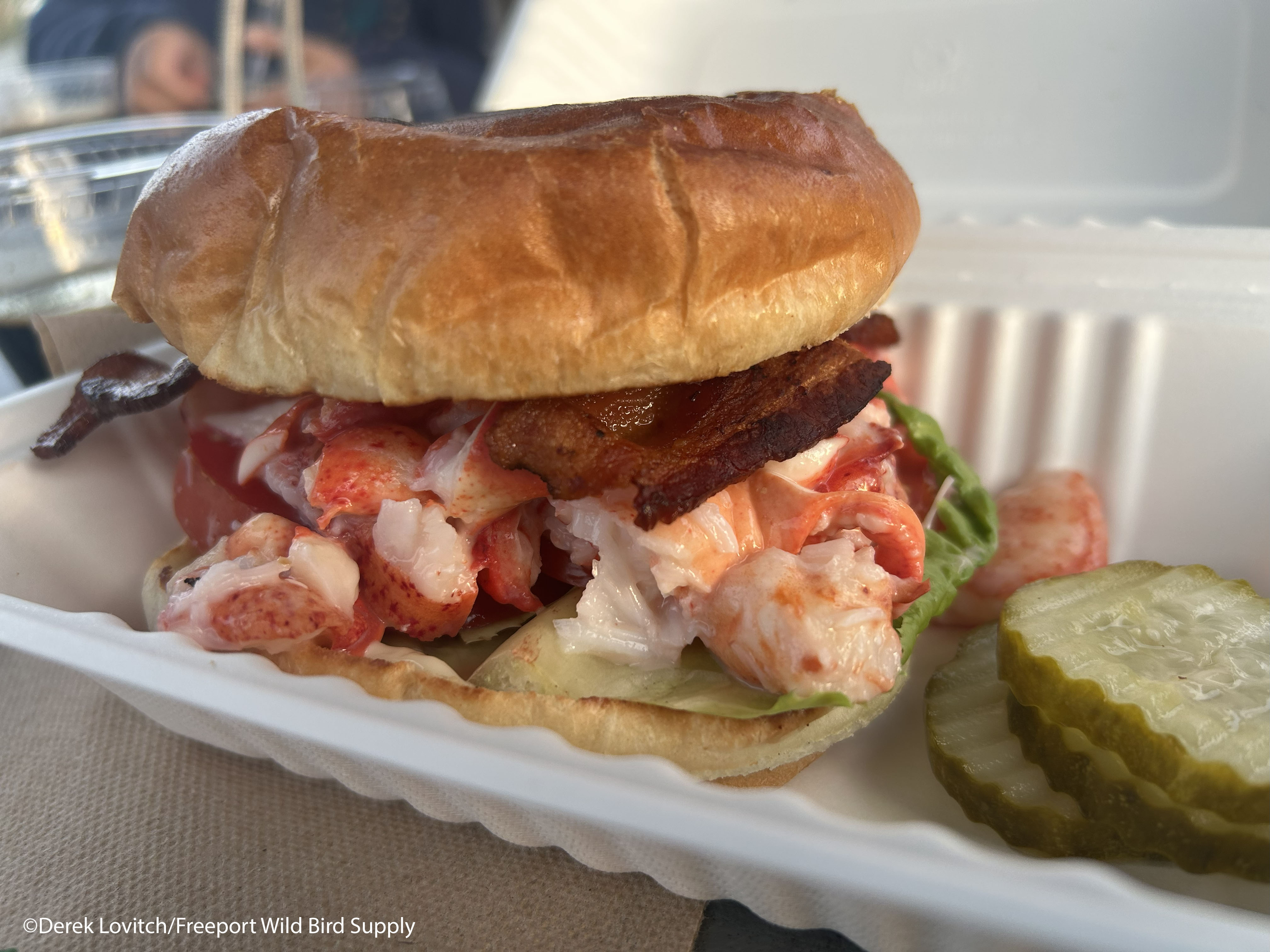
And finished with another meal of Monhegan indulgence.

As usual, Jeannette and I then spent our Tuesday off together on the island. After a light morning flight, but another turnover of birds, we decided to spend most of the morning in the woods, ostensibly looking for a previously reported Black-backed Woodpecker. But mostly, we wanted to take a hike along the island’s less-visited north end. We added Winter Wren and an Ovenbird to our weekend list, enjoyed the silly amount of Red-breasted Nuthatches, and encountered several pockets of White-throated Sparrows and Dark-eyed Juncos. Later, after lunch, we ran into a Black-billed Cuckoo, and a Spotted Sandpiper at the dock turned out to be our 100th and final bird of a truly exceptional weekend on Monhegan. We already cannot wait to return in May!

Species seen without the tour group during the tour:

*Denotes ferry only

9/269/279/289/29
Canada Goose00140
Blue-winged Teal1000
Mallard15202020
American Black Duck1110
Common Eiderxxxx
White-winged Scoter1*000
Ring-necked Pheasantxxxx
Mourning Dove1215126
YELLOW-BILLED CUCKOO0001
Common Nighthawk1000
Semipalmated Plover0110
Solitary Sandpiper1000
Greater Yellowlegs0101
Black Guillemotx230
Laughing Gull 4*000
Ring-billed Gull0001
Herring Gullxxxx
LESSER BLACK-BACKED GULL0013
Great Black-backed Gullxxxx
Great Cormorant1121
Double-crested Cormorantxxxx
AMERICAN BITTERN1100
Osprey1310
Northern Harrier0102
Sharp-shinned Hawk3126
Belted Kingfisher1011
Red-bellied Woodpecker0010
Yellow-bellied Sapsucker8201520
Downy Woodpecker0111
Northern Flicker61068
American Kestrel0010
Merlin4865
Peregrine Falcon62037
WESTERN KINGBIRD0100
Eastern Kingbird0001
Eastern Wood-Pewee6811
Least Flycatcher3200
Eastern Phoebe1321
BELL’S VIREO0010
Blue-headed Vireo2430
Red-eyed Vireo12121212
Blue Jay8833
American Crow4266
Common Raven0221
Black-capped Chickadeexxxx
Ruby-crowned Kinglet1322
Golden-crowned Kinglet020106
Cedar Waxwing80808080
Red-breasted Nuthatch10605040
Brown Creeper0201
BLUE-GRAY GNATCATCHER1001
Carolina Wren8686
Gray Catbirdxxx10
European Starling14141413
Swainson’s Thrush0200
American Robin0410
American Pipit1622
Purple Finch01086
Pine Siskin1212
American Goldfinch81066
LARK SPARROW0021
Chipping Sparrow22102
CLAY-COLORED SPARROW3361
Dark-eyed Junco030212
White-crowned Sparrow2120
White-throated Sparrow12601020
Nelson’s Sparrow0100
Savannah Sparrow 1441
Song Sparrowxxxx
Lincoln’s Sparrow1651
Swamp Sparrow2321
Bobolink5552
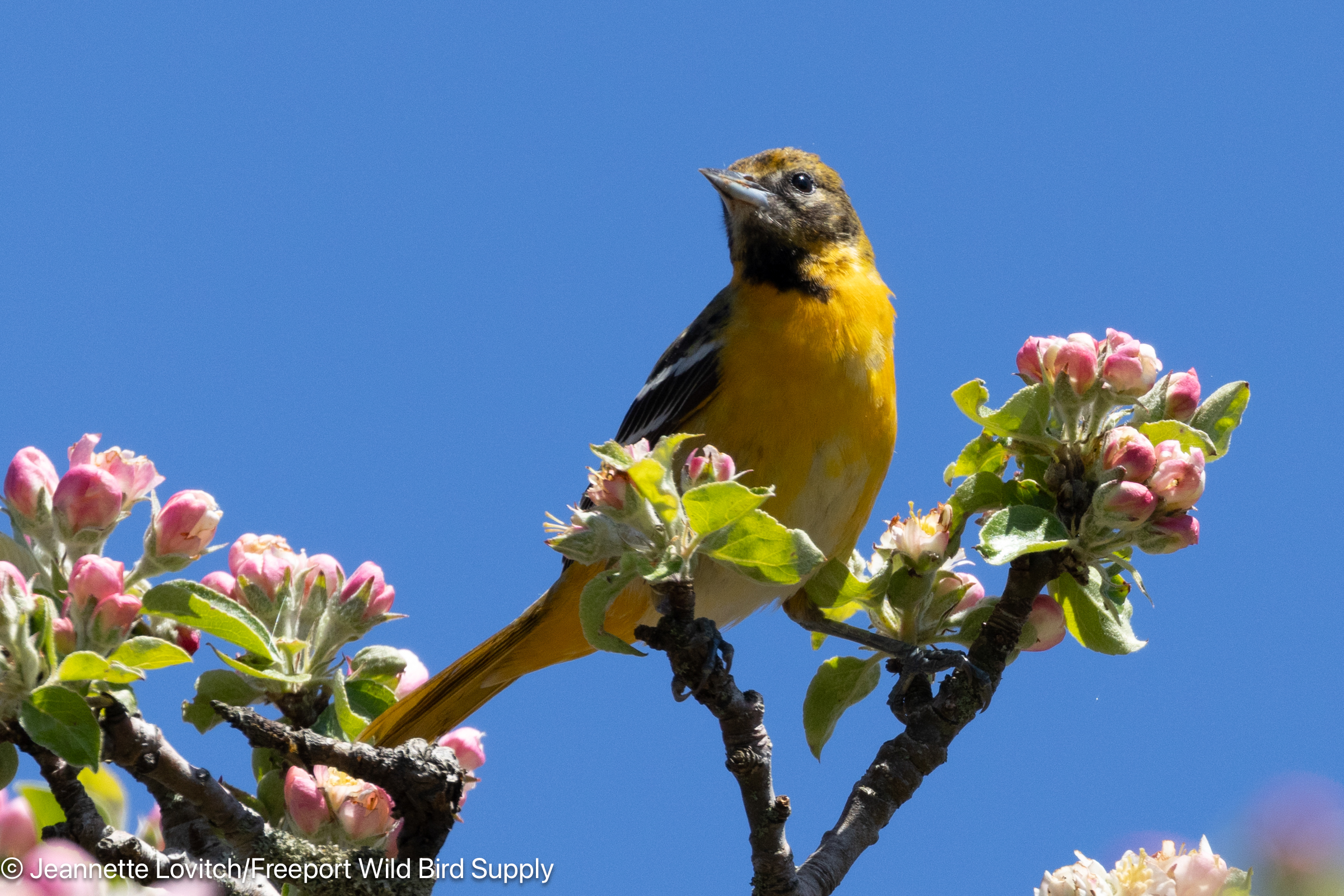
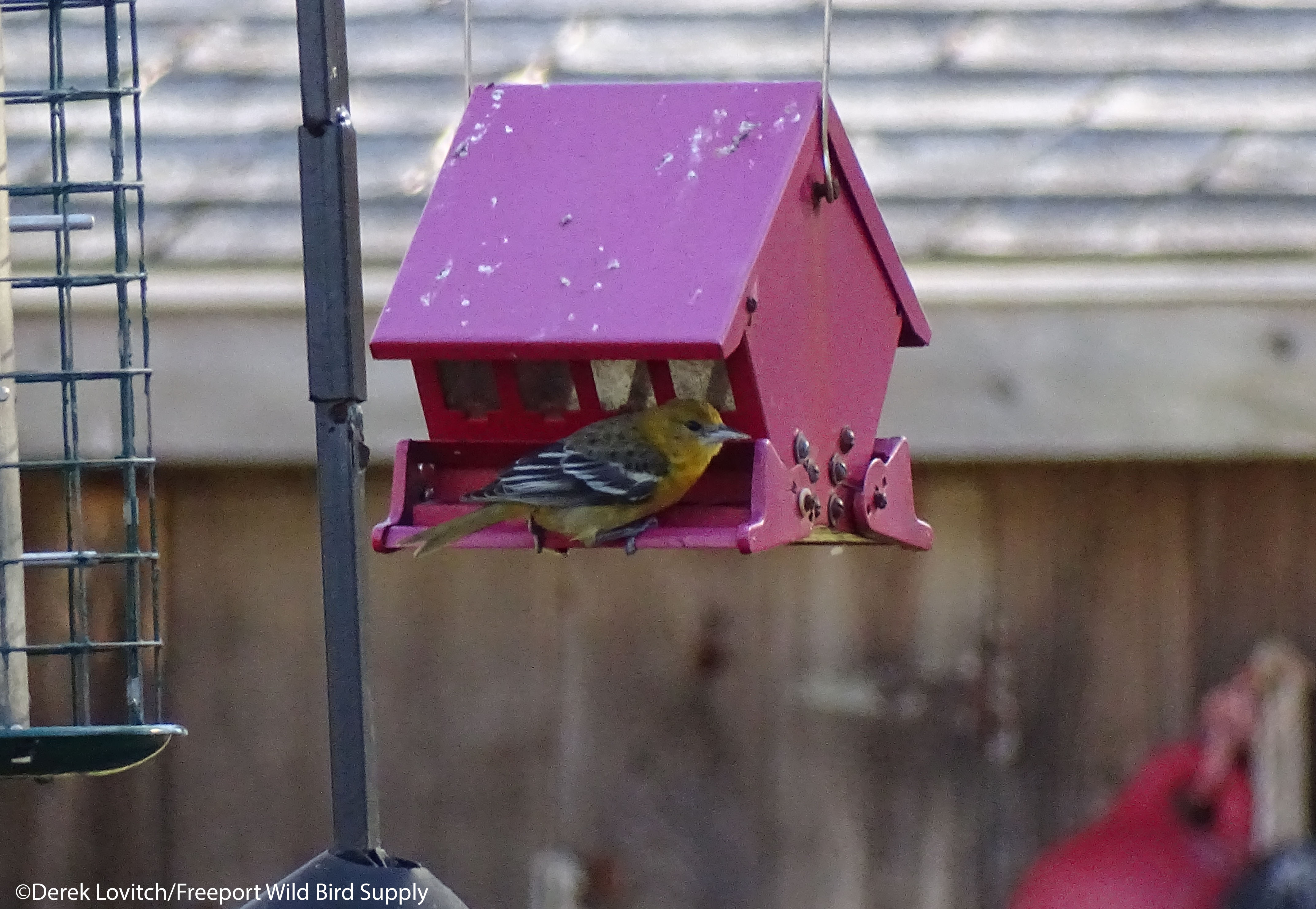
Baltimore Oriole2876
Rusty Blackbird0200
Common Grackle3333
Northern Waterthrush0001
Black-and-white Warbler1300
ORANGE-CROWNED WARBLER0121
Nashville Warbler1100
Common Yellowthroat4886
American Redstart3411
Cape May Warbler2828
Northern Parula3610
Magnolia Warbler0100
Yellow Warbler2421
Chestnut-sided Warbler0100
Blackpoll Warbler84044
Black-throated Blue Warbler0300
Palm Warbler206044
Pine Warbler0010
Yellow-rumped Warbler406004020
YELLOW-THROATED WARBLER0100
BLACK-THROATED GRAY WARBLER0011
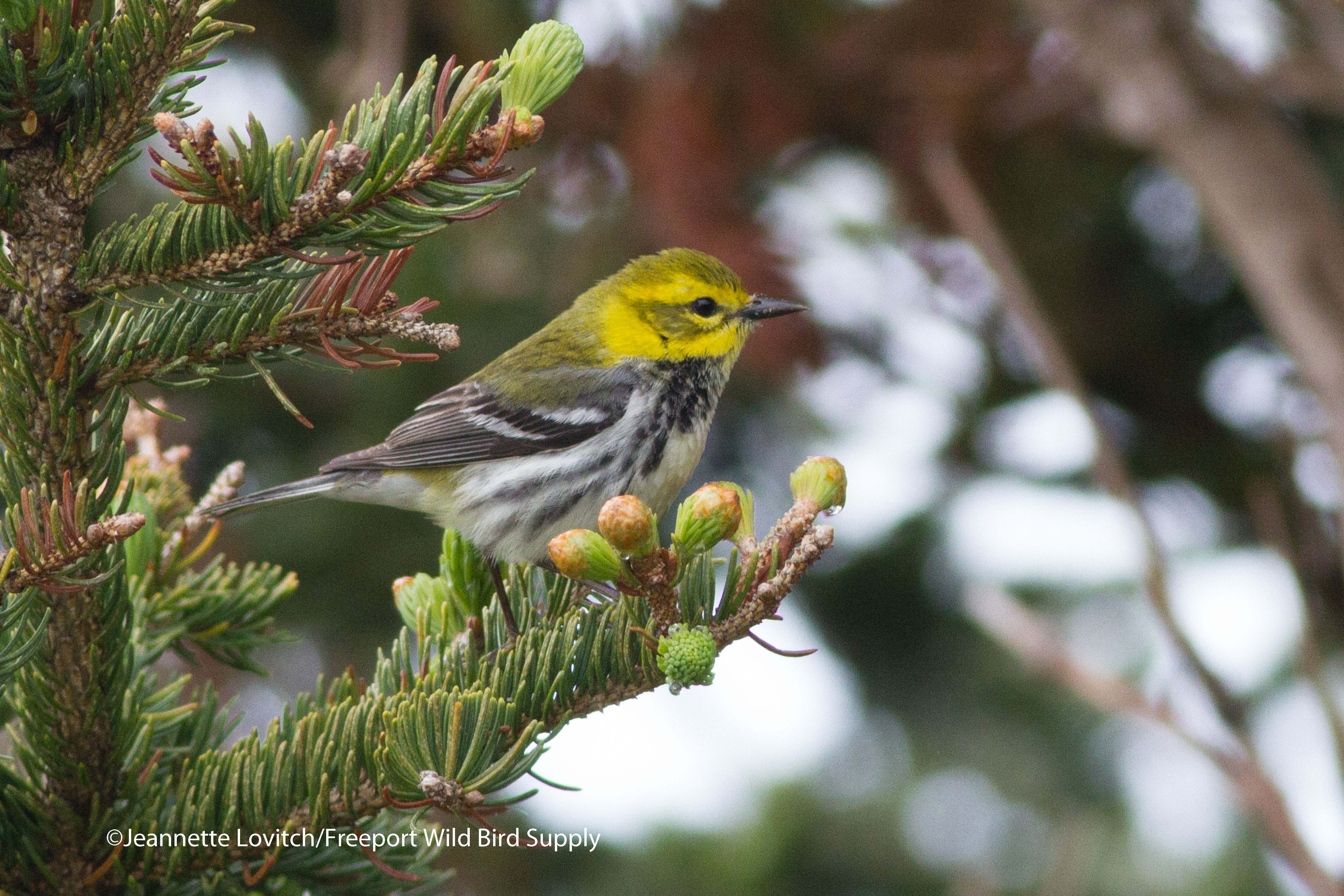
Black-throated Green Warbler0611
Wilson’s Warbler1200
Northern Cardinalx888
Rose-breasted Grosbeak0111
Indigo Bunting1132
PAINTED BUNTING1000
DICKCISSEL2311
Day total67806968

Species added on Monday evening and Tuesday, with Jeannette:

Common Loon, Spotted Sandpiper, American Woodcock, Black-billed Cuckoo, Winter Wren, Hermit Thrush, Ovenbird (warbler #21!),

Tour total = 100 Total Weekend Total = 107

This winter wren was one of the last birds Jeannette and I added to the cumulative weekend list as we spent some time on our day off hiking the island’s north end.

2025 Bicknell’s Thrush Weekend Trip Report

One of the stars of the show this weekend was this incredibly cooperative Mourning Warbler.

I’ll admit to having a love-hate relationship with this tour. I love taking people into the realm of the Bicknell’s Thrush, but I hate how much I have to stress about getting people to see one!  Of course, weather is one of the primary impediments to enjoying a fulfilling mountaintop experience, and well, if I could only control that, too! And then there’s the bird – one of North America’s most reclusive breeding species, and with a behavior that tends to lead to sleep deprivation as well.

But we could not have asked for a better start to the weekend, with the first Saturday without rain in almost three months! In fact, it was absolutely gorgeous as we assembled in Errol, New Hampshire: sunny, a light breeze, and pleasantly warming temperatures. The relaxing morning was spent exploring the lowlands, focusing on boreal transition forest and spruce/tamarack bogs. We heard a couple of Palm Warblers – and glimpsed one in flight, listened to Yellow-bellied Flycatchers, and enjoyed common warblers such as Magnolia.

We enjoyed some botanizing as well, and stopped to look at all walks of life, such as butterflies and dragonflies.

Atlantis Fritillary
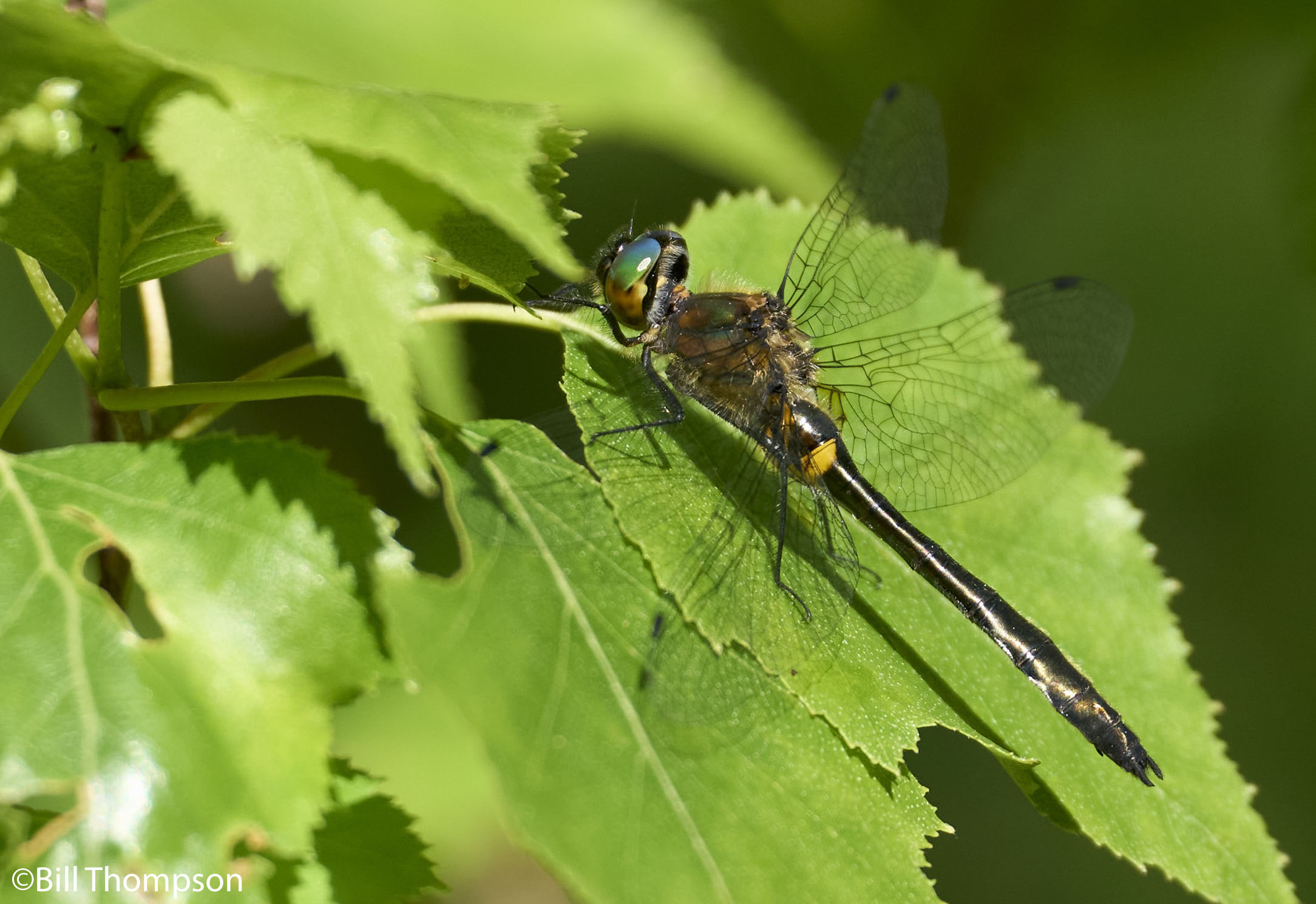
Racket-tailed Emerald

After a quick but delicious lunch, we did a little more casual birding (Blackburnian Warblers!) and even a little sightseeing!

A welcome afternoon break was followed by an early dinner in town, before our first trip up the mountain. With a mostly clear evening, we had some time until dusk, so we used it to make a bee-line to what I assumed would be one of the highlights of the weekend.

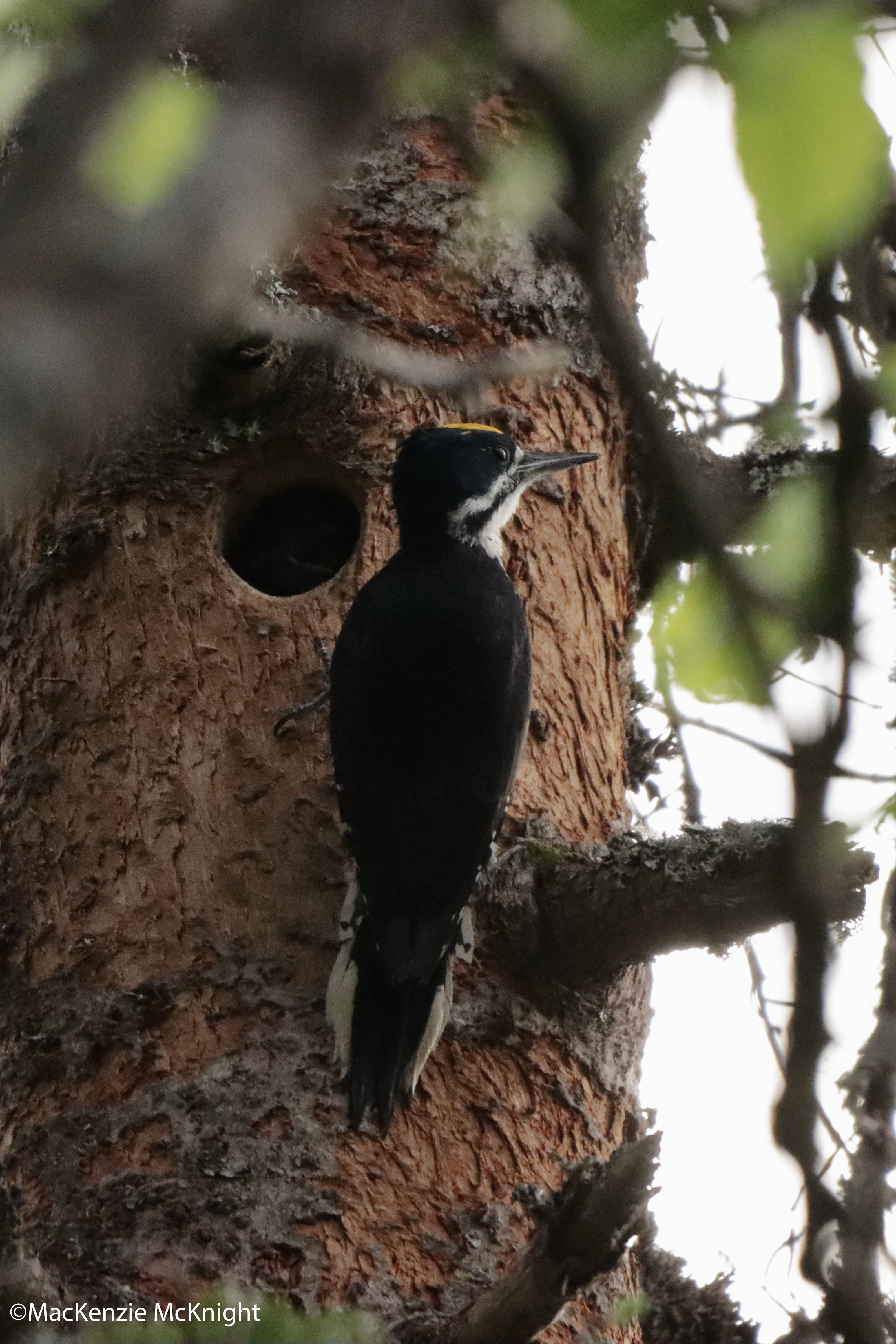
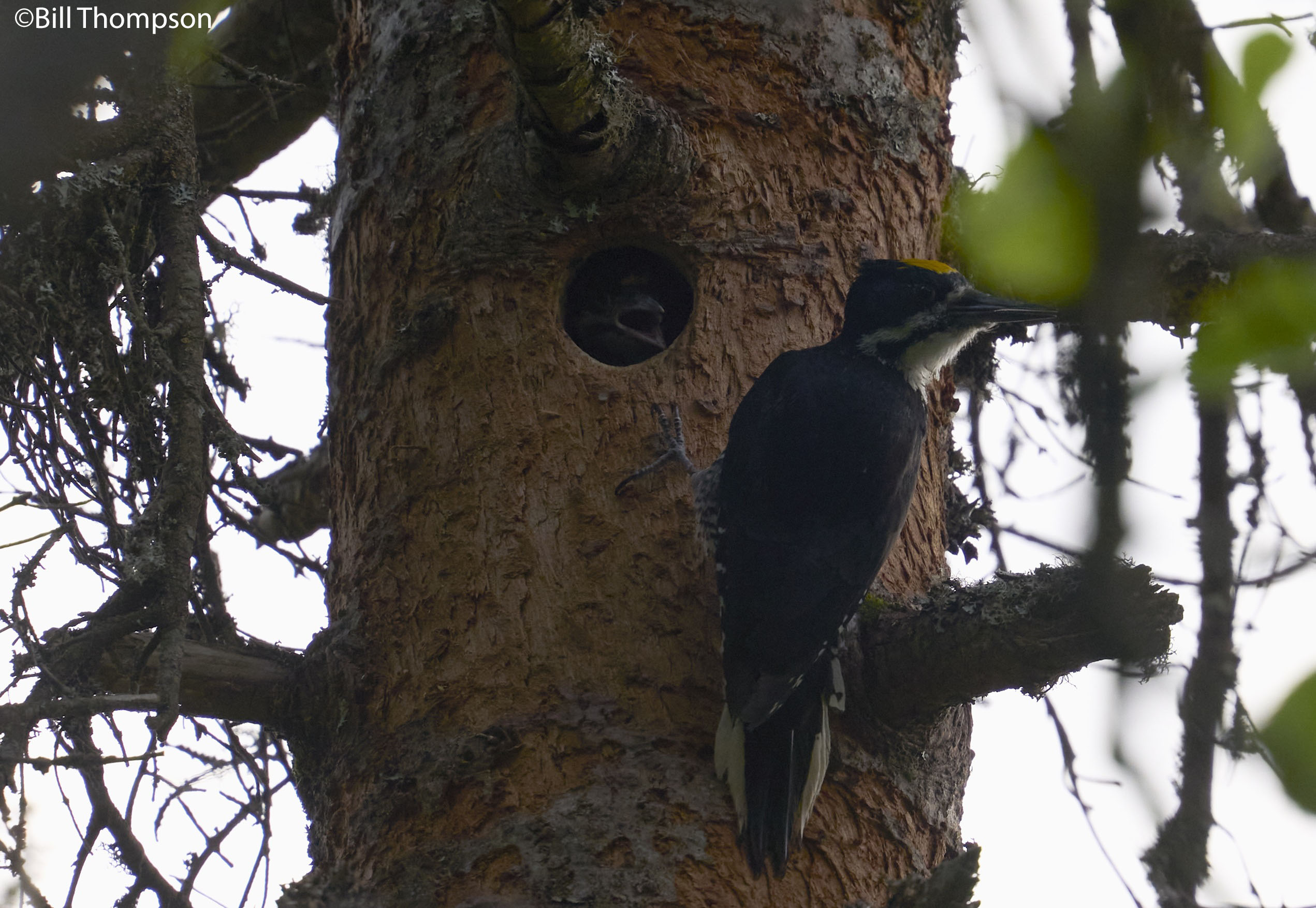
On a private tour two weeks ago, I found a Black-backed Woodpecker nest. At the time, the adults were feeding young that I could not yet hear or see. I hoped they would still be in the cavity by now, and it didn’t take long for us to know they were – we heard the begging nestlings from a good 100 feet away.  I found a path of least resistance to the nest hole, and we took turns rotating in small groups to watch the adults make repeated feeding visits. Everyone was so respectful of the birds – especially the adult male – who didn’t seem too pleased with our presence. After one feeding visit per group, we backed off, gave the birds a break to feed, and then visited with the next group. While the sun was now setting fast and the photography was challenging, it was truly a special experience with such a charismatic and sought-after species.

Now, it was time to get to work.  And tonight, our primary target really did make me work for it! Swainson’s Thrushes continue to increase here, and they were very active and vocal this evening. Too vocal.

While we did have some great looks at them, their presence and activity likely kept the Bicknell’s quiet and in the shadows. In fact, it was getting dark by the time the Swainson’s stopped singing and we finally heard a couple of Bicknell’s calling.

By 8:45, I was starting to get a little worried, so I walked most of the group up a trail where I had activity a couple of weeks ago. One bird was calling there, but it would not come out. I began the retreat to the road when the bird flew right over my head – one person even it heard it whiz by me. We turned back up the path and settled in and eventually at least one thrush began to sing, a couple of others were calling, and surrounded by Bicknell’s Thrushes, we ended up seeing one flying back and forth across the small clearing and at least half the group saw one in silhouette on top a small tree, calling aggressively.

The aural performance was top notch, especially down at the road, and everyone was quite satisfied with at least the sum of all views had of the bird in flight or paused in a tree at the edge of the small clearing. It wasn’t the “crippling views” from last year’s weekend, but everyone agreed it was more than “good enough” and the overall experience was worthy of the effort.

I pushed it a little longer and later than usual as it was such a nice evening (too nice?), and I had my worries about even getting up the mountain the next day. We returned to our hotel at 10:15, and we departed again at 6:00 – I let the group “sleep in” due to the forecast morning rain and our late return.

And it was indeed raining in the morning when we awoke, but the forecast chance of thunderstorms had not materialized. Therefore, it was safe to head up to the mountaintop, so without any further ado, up we went once more.

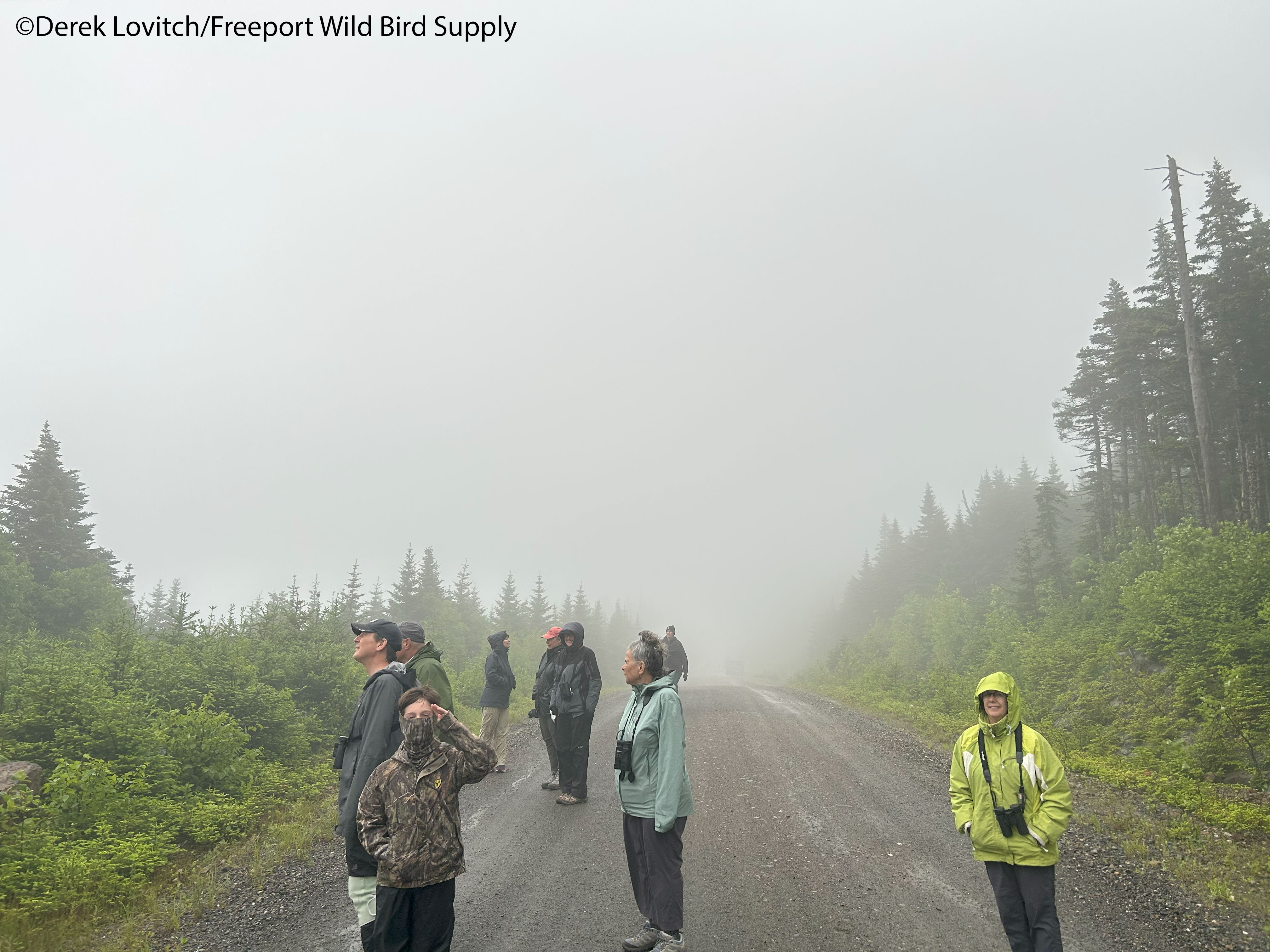
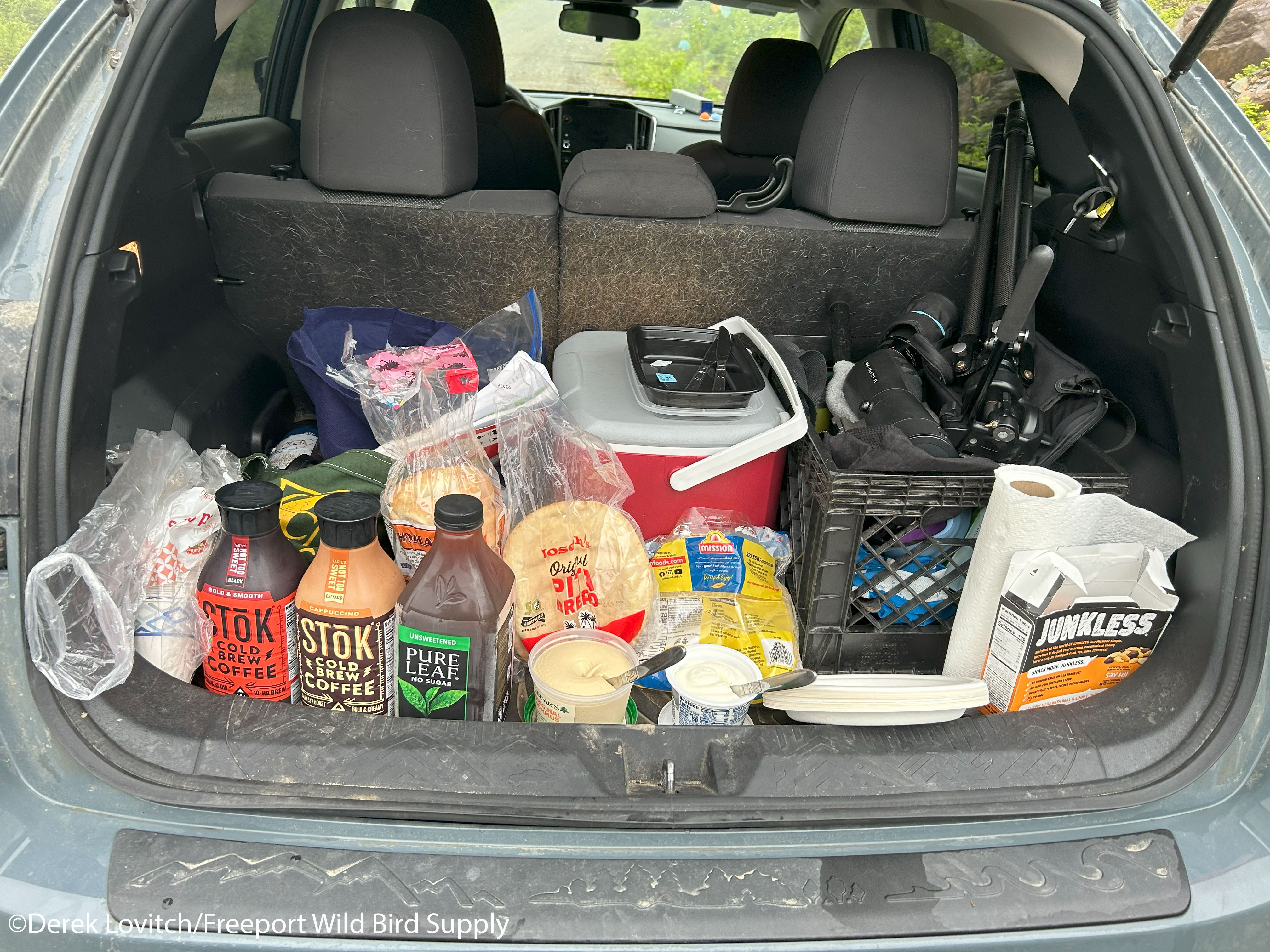
Unfortunately, up top it was still raining, albeit lightly, but the wind was already howling. What a difference 9 hours makes! Light rain came and went, fog would roll in and out, and we had one 10-minute rain delay in our vehicles with a downpour. Luckily, we had just finished breakfast!

Birding tailgating!

But the morning was by no means the washout we feared, and when the rain stopped, the birding was pretty good. We decided not to bother the Black-backed Woodpeckers (the light was even worse anyway in the fog) given the conditions, but we were happy to hear the begging youngsters from afar. A few Red Crossbills flew over, Blackpoll Warblers were singing, and we heard the mountain’s Fox Sparrow in the distance.

But we did not hear a single Bicknell’s Thrush. I was about ready to give up when one finally called nearby at 8:45. And he kept calling, repeatedly, so close to us, but we never even glimpsed him. He must have been just within the dense edge – so close, yet so far!

Now this tour promises two chances to look for the thrush, not two guaranteed observations, so we took what the birds gave us last night, and with the wind howling, we began our decent.

Stopping as soon as we had some more shelter, we hopped out and soon saw a Bay-breasted Warbler and heard a pair of Boreal Chickadees. A little further down the road, we heard what was almost surely a Cape May Warbler, but could not confirm it. There wasn’t much question about this Mourning Warbler however!

See headline photo…Now that’s the kind of view we were looking for!

We dipped on Lincoln’s Sparrow, and then spent some time looking for Philadelphia Vireos. While we heard what was likely one singing from within perfect habitat, all of the vireos we saw today – and you simply must see them to identify them – were Red-eyed Vireo. Their march up the mountain and resultant displacement of Philadelphias continue.

It was instructive, however, and analogous to the issues with Swainson’s Thrushes moving uphill and pushing out Bicknell’s – these high elevation specialists have nowhere else to go as our mountains are not getting any taller, and I made sure to weave these conservation and natural history messages throughout the tour.

We looked at plants, too, such as Round-leafed Sundew.

We celebrated our success – especially with Black-backed Woodpecker and Mourning Warbler! – with a wonderful and leisurely lunch, and then half of the group joined me for a casual stroll in the lowlands of Colebrook, where we encountered numerous Veeries – just to add to our thrush tally for the weekend. Of course, our photographers had left, so birds here – especially the Veeries – were exceedingly conspicuous, with repeated views of them out in the open and with bills full of food. American Redstarts, Yellow Warblers, and a couple of singing Bobolinks were icing on the weekend cake.

Have views of our primary target, the Bicknell’s Thrush, been better on this tour? Yes. But they have also been much less fulfilling, and rarely, not even seen at all. So, we’ll take it…plus it was a great experience that fostered appreciation for the challenges of seeing this bird. Oh yeah, and a nest of Black-backed Woodpeckers!

2025 Monhegan Spring Migration Weekend Trip Report

It was a great weekend for warblers, with a tour total of 19 species and a 5-day total of 22 species, including quite a lot of Wilson’s Warblers for the end of May. With 10-20 estimated per day,
we were regularly treated to exceptional views, such as this adult male.

The 2025 Monhegan Migration Spring Weekend was a shocking success. We went from having a weather forecast that made me worry if there would be any migrants to see at all, to an exceptional weekend that was by far the best Memorial Day weekend of birding out here in quite a few years.

Technically, our tour was to begin on Friday with a little morning birding in Port Clyde before boarding our ferry. But it was raining. A lot. Wisely, most folks held out until the ferry meeting time. Unfortunately, that meeting time was delayed by 5 hours when the first two boats of the day were cancelled due to the storm. It was a bona fide late season Nor’Easter and it was raging out there.

We were lucky enough to get spaces on the 3:00 boat, but even luckier that the seas were dropping dramatically. OK, it was far from calm, and while I might not have thought it was “too bad,” others disagreed. But we made it! And the rain had stopped. And we went from 10-14 foot seas to a few waves that may have approached 8 feet. Not pleasant, but more than manageable. Of course, I have to admit that the “worst ferry ride” bar is pretty high for me.

By the time our luggage was organized, we didn’t have a lot of time, but we decided to try and catch up with the continuing truant Harlequin Ducks that had been seen in and around the harbor. Up to 8 had been reported, but when we arrived at the recommended spot, we found 12!  While common in winter, “Harlies” are usually long gone by now, so this was a treat (it was also an island bird for me!). We also picked up a 2nd/3rd cycle Lesser Black-backed Gull for our troubles. There was even a short break of sunshine!

Noteworthy for the date, 12 lingering Harlequin Ducks diminished to just one by the end of the weekend.

By dusk, winds were light northwest and it was still cloudy. Overnight there were some scattered showers, with winds shifting to the west and then going calm. The fog and showers made the radar hard to decipher, but the wind map for offshore offered some hope.

Screenshot

Note how birds who were offshore of southern New England would be pushed out to sea, but then find a tailwind that could theoretically take them right to the Mid-coast of Maine? The Boston radar was very busy, and suggested birds were indeed well offshore to our south come dawn. We had hope.

But our pre-breakfast walk was not very productive. Uh-oh. Scattered showers had returned, and there were very, very few migrants around. We did see the 12 Harlequin Ducks again, but passage migrants were limited to a handful of Blackpoll Warblers and a Wilson’s Warbler. Was this going to be a very slow weekend?

We returned for breakfast at our respective lodges, and the showers stopped. We met at 9:00 and began our next outing. I was concerned. But then, it happened. All of it.

First, a Lark Sparrow was found – very rare in spring – and while I was going to meet the group, I relocated it in the lawn of the Trailing Yew. It wasn’t there when we returned as a group, but we elected to repeat the southern loop in the hopes of encountering it. And encounter it we did, several times, actually, as it worked its way around the lawns feeding on fresh dandelion seeds.

Meanwhile, something else was happening. Suddenly, birds were everywhere! Pocket after pocket of warbler activity was encountered, and every apple tree had birds in it! Small batches of birds giving flight calls overhead were suggestive of birds only now, at mid-morning, arriving on the island. As these birds were a very different mix of species from the last “birdy” day four days ago, according to a fellow guide, these were in fact “new birds” only now, and rather unexpectedly, arriving en masse.

As the afternoon went on, it only got better! There were warblers in every cluster of trees, with lots of Magnolia Warblers and American Redstarts, but overall good diversity. Birds must have been arriving throughout the day and therefore remained active into the evening. Birds were often low, easy to observe, and the repetition allowed for reinforcing study and comparisons.

Magnolia Warbler
Red-eyed Vireo

Not only was today not the forecast wash-out (just a few brief periods of drizzle and a couple of very light showers), but it was simply amazing! While warblers stole the show as expected, and the Lark Sparrow was a harbinger of things to come, our afternoon at Lobster Cove was rather exceptional, too, with two continuing “Eastern” Willets, a close pair of Harlequin Ducks, and 3 feeding Atlantic Puffins. What a way to end a spectacular day! It was like the good ol’ days out here.

By Sunday, the Low was dissipating over New Brunswick, and while the radar showed what may have been a light migration overnight, there wasn’t much happening in the “morning flight” once again. But as we began our birding day, it was actually quite good! While a lot of birds were left over from yesterday’s flight, they were augmented by some new arrivals, or at the very least, new detections. Once again, the birding was better than expected, and by late morning we already had some partial sunshine.

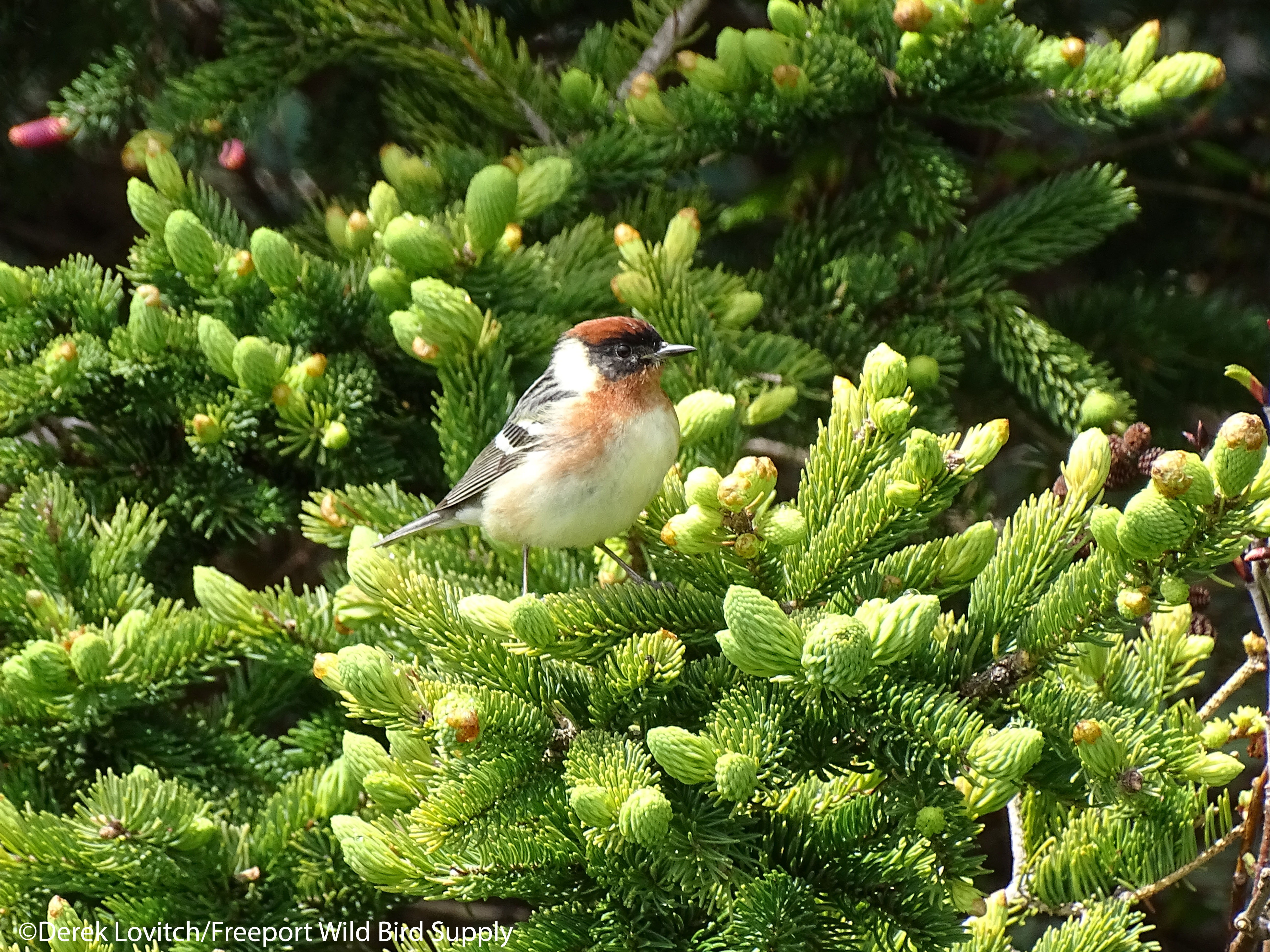
Unlike Saturday, activity slowly died down as the morning went on as usual, but it was just a downright delightful morning in the field. Lots of pockets of activity were still dominated by American Redstarts and Magnolia Warblers, but there were a lot more Blackpoll Warblers and fewer Wilson’s Warblers today. 8-10 Harlequin Ducks continued, and spiffy Bay-breasted Warblers were particularly cooperative. And we had three irregularly fantastic views of Lincoln’s Sparrows throughout the day.

Bay-breasted Warblers were really conspicuous this trip, and we enjoyed great looks at both males and females daily.

Lincoln’s Sparrows were unusually cooperative.

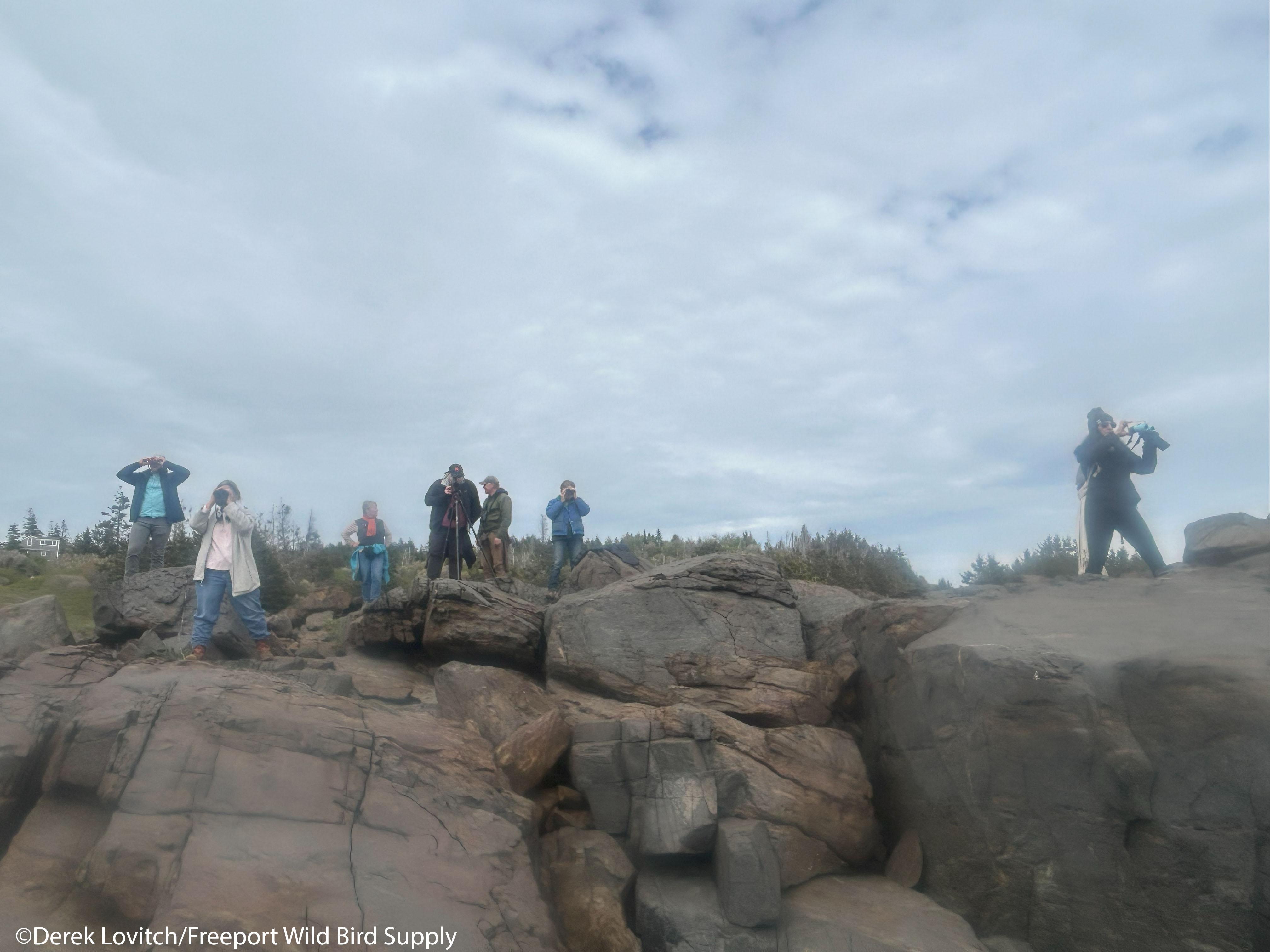
A longer walk out to Burnt Head and a check of the island’s interior in the afternoon found some of the birds that had melted away from the edges, while an uncharacteristically skulky Great-crested Flycatcher gave us a jolt of excitement until finally revealing itself.

With the storm pulling away, light northwesterly winds and mostly cloudy skies dominated the overnight Sunday into Monday, and therefore there was little or no migration overnight, and therefore almost nothing in the Morning Flight. However, it also meant that most birds didn’t leave. And while slower than the last two days, it was still decent, good views of fun species were to be had, and the sun came out for good.

Magnolia Warblers,  American Redstarts, and Blackpoll Warblers continued to dominate, along with the ubiquitous Yellow Warblers. Flycatchers were up, offering ample opportunity for instruction – and for eyes to glaze over. Morning highlights ranged from a particularly good tutelage from a Willow Flycatcher, a raft of 50 Surf Scoters offshore, and a really amazing Common Nighthawk repeatedly flying low over our heads and foraging over the island as noon approached.

It was warm and sunny, and with a sea breeze pushing birds out of the edges and deeper into cover, we decided to enjoy more of the island with a visit to the lighthouse grounds and a stroll deep into the spruce woods. In addition to building our list with island residents like Golden-crowned Kinglet and breeding species such as more Black-throated Green Warblers on territory, we enjoyed the plantlife of the Acadian habitat and a healthy dose of phytoncides. And in between, the occasional pocket of migrant warbler activity to bring us back to birding.

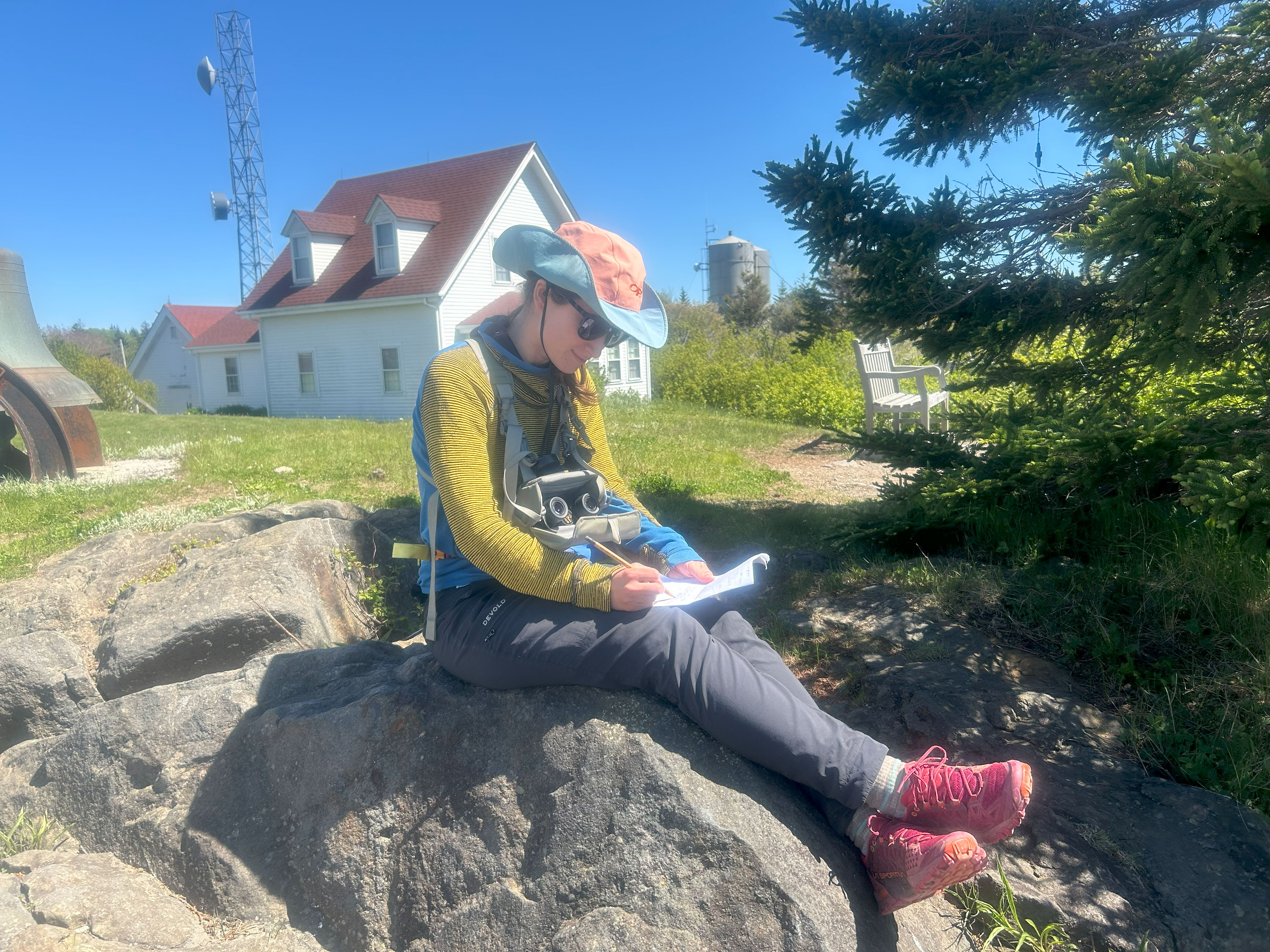
Catching up on note-taking.

Our tour concluded with an impressive 91 total species, but I admit to being a little frustrated by having to give up with 19 species of warblers…20 sounds so much better! But given the unexpected big arrival on Saturday, and the minimal rain and wind after Friday, the tour was truly an incredibly success, far exceeded expectations, and did live up to what Monhegan birding legends are made of.

Last birders standing on the last afternoon of the tour.
Staring at Eastern Egg Rock, attempting to will THE Tufted Puffin over to us.

Then, as per usual, Jeannette – who joined us late on Sunday – and I enjoyed a day off together on the island on Tuesday. Unlike the magically-appearing flight on Saturday, this was a more predictable great morning. A moderate to strong flight overnight lit up the radar on light southwesterly to west winds. That put a lot of birds in the Gulf of Maine come dawn, and the morning flight was hoppin!

Consisting mostly of Blackpoll Warblers, American Redstarts, and Magnolia Warblers, it was quite diverse overall. A few “new” species included a Pine Siskin and a Wood Duck, and 3 Red-breasted Mergansers were a fun Morning Flight fly-by.

Before and after breakfast, the birding was excellent. It was the best day by far in volume, but a lot of the birds were “on the move” and departing the island throughout the morning. But there was more of pretty much every migrant species, save for Wilson’s Warblers in particular. Birds weren’t held low by clouds and drizzle, or exhaustion, so it wasn’t as mind-blowing as Saturday, even with more birds around overall.

Baltimore Oriole
There were a lot more flycatchers around today, including quite a few Eastern Wood-Pewees.

It was also getting warm on a perfectly sunny sky, and birds took to the shadows earlier than in days past; the hotspots got much quieter by late morning with the increasing seabreeze. Nonetheless, pockets of activity continued right up through lunchtime.

The veggie burger bahn mi from The Bait Bag.

We rapidly added to our collective weekend list (which do not count for our tour total, of course), including finally reaching 20 species of warblers with an uncommon-out-here Pine Warbler. We then eclipsed it with a stunning male Mourning Warbler, and finally in the afternoon, picked up an Ovenbird for our 22nd and final species of warbler. Locally-rare Hairy Woodpecker, a truant Long-tailed Duck, at least one continuing Harlequin Duck, and we found my first Nelson’s Sparrow of the year at Lobster Cove. We even got a little hike in to try and burn a few of the extra calories we consumed from all of the islands’ scrumptious meals. And, anytime we stopped at a favorable looking patch of vegetation, migrants would appear, everywhere we went. It’s always tough to leave, but we at least went out with a bang!

Male Chestnut-sided Warbler

So back here in the Real World now, we can reflect on this past weekend as one that we will most surely always remember!

Here is the trip list four the five-day tour. I didn’t bother including the first day though, but it did net us a Lesser Black-backed Gull that we didn’t see any other day.

* = seen from ferry only.

Species5/245/255/265/27 (with Jeannette)
*ferry ride only
Canada Goose02 42
Wood Duck0001
Mallard1515xx
Common Eiderxxxx
HARLEQUIN DUCK121001
White-winged Scoter0002
Surf Scoter00501
Black Scoter00030*
Long-tailed Duck2001
Red-breasted Merganser0003
Ring-necked Pheasantxxxx
Mourning Dove68108
Common Nighthawk0010
Ruby-throated Hummingbird3454
Virginia Rail0111
WILLET2000
Spotted Sandpiper0002
Black Guillemotxxxx
ATLANTIC PUFFIN3000
Laughing Gull56106
Herring Gullxxxx
LESSER BLACK-BACKED GULL1 (5/23)000
Great Black-backed Gullxxxx
Common Tern0005*
Common Loon2331
Red-throated Loon0001
Northern Gannet6212*
Double-crested Cormorantxxxx
Great Cormorant0001*
SNOWY EGRET0101
Great Blue Heron0010
Osprey0120
Sharp-shinned Hawk1000
Bald Eagle2233
Yellow-bellied Sapsucker0010
Downy Woodpecker1000
HAIRY WOODPECKER0001
Northern Flicker1221
American Kestrel0001
Merlin1100
GREAT-CRESTED FLYCATCHER0100
Eastern Kingbird3122
Eastern Wood-Pewee42420
Alder Flycatcher0222
“Traill’s” Flycatcher0013
Willow Flycatcher0022
Least Flycatcher221012
Philadelphia Vireo1000
Red-eyed Vireo65430
Blue Jay4211
American Crow2244
Common Raven2222
Black-capped Chickadeexxxx
Tree Swallow1122
Barn Swallow1136
Golden-crowned Kinglet0221
Cedar Waxwing806060150
Red-breasted Nuthatch1246
Carolina Wren2433
House Wren2212
Gray Catbirdxxxx
Brown Thrasher0111
European Starlingxxxx
Eastern Bluebird0201
Swainson’s Thrush1338
American Robin1010x8
Purple Finch1101
Pine Siskin0001
American Goldfinch10101210
LARK SPARROW1000
Chipping Sparrow2000
White-crowned Sparrow0111
White-throated Sparrow1211
NELSON’S SPARROW0001
Savannah Sparrow 4432
Song SparrowxXxx
Lincoln’s Sparrow03310
Bobolink3413
Baltimore Oriole2232
Red-winged Blackbirdxxxx
Common Gracklexxxx
Ovenbird0001
Northern Waterthrush11110
Black-and-white Warbler1210815
Tennessee Warbler22610
Nashville Warbler0114
MOURNING WARBLER0001
Common Yellowthroat2020xx
American Redstart55454080
Cape May Warbler3426
Northern Parula15154540
Magnolia Warbler50454070
Bay-breasted Warbler810315
Blackburnian Warbler4434
Yellow Warbler353025x
Chestnut-sided Warbler661020
Blackpoll Warbler153555100
Black-throated Blue Warbler1126
Pine Warbler0001
Yellow-rumped Warbler3201
Black-throated Green Warbler10152015
Canada Warbler1000
Wilson’s Warbler20151010
Scarlet Tanager1111
Northern Cardinal61086
Rose-breasted Grosbeak3332
Day Total72757392
Warbler Day Total18181721
Trip Total91Weekend Total inc. Tuesday106
Warbler Trip Total19Warbler total inc, Tuesday22

The above birds follow the “guide plus one” rule, meaning both me and at least one client need to see the bird for it to go onto the list. This year, the only two birds I saw without the group that we didn’t later encounter was a fly-by Belted Kingfisher and an American Woodcock at dusk, both on the the 24th, for a total of 91 with the group and a 5-day tally of a respectable 106 species.

In other words, it was a great weekend!

Recent Highlights, 11/3 – 11/8/2024 – plus notes from 10/29-30

I usually miss at least one “Mega” rarity whenever I go away, so I was pretty pleased that this Common Gull – found on 10/31 by Evan Obercian at the Samoset in Rockland – stuck around until we returned. I was able to see it on 11/3.  It took a while, but when it eventually spread its wing, the species/subspecific ID became certain. Separated by the abundant Ring-billed Gulls by the smaller size, slightly darker back, and thin bill, we can rule out the West Coast Short-billed Gull by the length of the bill and the wing pattern. Separation from Kamchatka Gull is more challenging, but it wasn’t particularly dark, the head was lightly flecked with brown, and there’s a relatively distinct bill band. According to Ayyash (2024), the shorter gray tongues on the outer primaries, the large P9 window that connects with the large P10 window, and little to no white at the end of the tongue on P8 all suggest Larus canus canus (and not Kamchatka Gull). 

It’s November, and that means “Rarity Season” and unlike recent Novembers, Rarity Season is off to a roaring start. Here are my observations of note over the past 6 days. Below, see the trip report for our 7-day birding cruise that included time in Maine waters.

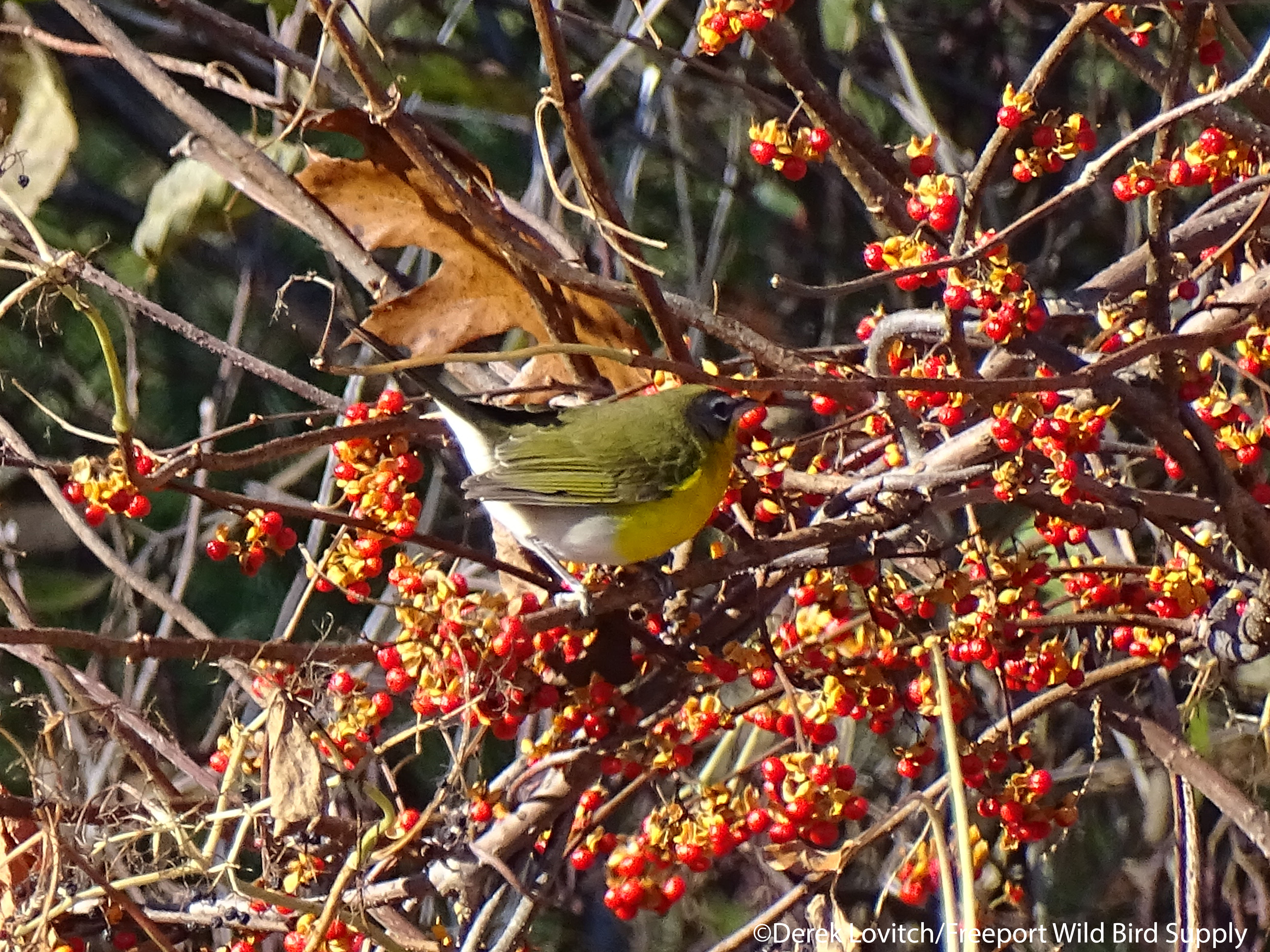
  • Although I chase even less frequently these days, I did make time to go see one of the two COMMON GULLS at the Samoset in Rockland on 11/3. Photos and discussion above. Additionally, I caught up with the YELLOW-BREASTED CHAT that was found there that day, although I blew the photos.  A “Western” Palm Warbler, several American Pipits, and 4 Horned Larks were also present.
  • 1 Pine Warbler, Bailey Island, Harpswell, 11/5 (with Jeannette).
  • 1 RED-EYED VIREO and 6 American Tree Sparrows (FOF), Trout Brook Preserve, South Portland, 11/7.
  • Biddeford Pool environs, 11/8:
  •             1 BALTIMORE ORIOLE
  •             1 PRAIRIE WARBLER
  •             1 “Ipswich” Savannah Sparrow
  •             1 Rusty Blackbird
  •             2 Lapland Longspurs
  •             2 Greater Yellowlegs, 22 Black-bellied Plovers, and 26 Dunlin.
  •             2 Northern Pintails
  •             4 Hermit Thrushes and 1 Swamp Sparrow, etc.
  • Our Durham property is much quieter overall these days, but a few Red-winged Blackbirds have been around, a Ruby-crowned Kinglet was present 11/5-6, our first Pine Siskin of the season at home visited on 11/5 and increasing daily since, and Dark-eyed Junco numbers have continued to grow. At least one each of Swamp and Savannah Sparrow continue.

TRIP REPORT

Last week, Jeannette and I boarded a Princess Cruises ship in New York City to unofficially survey for rarities and things like Great Skua. The entire trip report is here, but our highlights from Maine specifically included:

  • 1 RED-EYED VIREO, 2 Orange-crowned Warblers, 2 Field Sparrows, etc, Eastern Promenade, Portland, 10/29. Yes, we took a cruise only to go home!
  • Passerine FALLOUT, 10/30. Awoke to birds on deck before dawn. 16.5 nautical miles southeast of Mt. Desert Rock. 12 species of passerines, led by 8++ Yellow-rumped Warblers but also including 1 Rusty Blackbird, 1 “Ipswich” Savannah Sparrow, 1 Snow Bunting, and perhaps most surprisingly, 7 European Starlings. Another birder on board photographed a Pine Warbler.
  • Very little time was spent in daylight in Maine waters, unfortunately, but we did have a couple of Northern Fulmars in Maine waters very early on the 30th.

2017 Monhegan Fall Migration Weekend Tour Report.

IMG_6811-edited-edited
Yellow-bellied Sapsucker, one of the more common and conspicuous migrants all weekend.

After spending what was probably the slowest week of birding I have ever experienced in fall on Monhegan with my WINGS tour a week prior, I was even more anxious to get back to the island. I know what this island can offer (well, besides great food, beer, and friends, that is)!

Because of ferry schedules, we added a new wrinkle this year, meeting for a birdwalk in Port Clyde before the mid-am ferry to the island (9/29). Golden-crowned Kinglets were particularly abundant and some Yellow-rumped Warblers were around, hinting at the amount of birds that arrived overnight. On the trip out, Northern Gannets were scattered about, and a flock of 7 probable American Pipits zipped by. When passerines are encountered on the ferry, as they return to the mainland, it’s usually a good sign that there are a lot of newly-arrived birds on the island.

When several Yellow-rumped Warblers were darting around near the dock, I thought it might be worth swinging into The Barnacle for a quick, early lunch so we could hit the ground running. And we are all glad we did, as it took us 2 ½ hours to walk from the dock to our lodging at the Trailing Yew!
L1100774-edited-edited

It was fantastic…birds were everywhere. While it wasn’t a fallout with birds dripping out of the trees, every cluster of trees and bushes had some migrants in it. The “Cape May Spruces” on dock road hosted several Cape May Warblers and an immature male Pine Warbler – a rarity on the island. We soon tracked down a continuing Orange-crowned Warbler, and we slowly made our way through town, pausing at every apple tree and every weedy garden.
L1100837-edited-edited
Cape May Warbler
D8D225F9D00043CEA2CE0E11953FA96E_edited-1
Pine Warbler

A lot had changed in the 5 days between my visits, with many more sparrows, and a much greater percentage of Yellow-rumped Warblers and both Ruby- and Golden-crowned Kinglets. Overall warbler diversity was down, but Yellow-bellied Sapsuckers were everywhere! The raptor show wasn’t half-bad, either.
_T9A9791_edited-1
Peregrine Falcon

I think I saw more birds today, even though we didn’t arrive until 11:30 than I did all week with my other tour! And 60 species by day’s end wasn’t too shabby either.
_T9A0208_edited-1
Red-eyed Vireo
_T9A9666_edited-1
Black-throated Green Warbler

Friday night featured a very strong flight on the radar, but with a light winds becoming northeast after midnight, many fewer birds were around come morning (thanks to Hurricane Jose, this was the bane of our existence during the aforementioned tour), and the morning flight was very light. The afternoon was quite slow, but we continued to encounter new birds here and there. An unexpected surprise was a Wood Thrush calling at dusk. Although we never saw it, the calls are distinctive, and they were close by, and this was my 208th Monhegan bird (They’re usually long gone by the time I get here in mid-September).
L1100817-edited

L1100827-edited-edited
Northern Gannet

L1100741-edited-edited
Red-eyed Vireo

But this was only a fraction of the day’s excitement. First, a Bell’s Vireo was reported just as we arrived at breakfast. I thought about skipping the meal (it’s really a good bird if I consider passing on a Trailing Yew breakfast!) but after hearing about how chaotic it was (lots of owl calls and counter-productive tape use – tell me why a bird, exhausted from migration and without any hormonal urge to breed would come out in the open because you are playing an adult male’s territorial song? Especially when vagrants are often immature birds, the last thing they are looking for is a conflict; it’s amazingly ignorant…but I digress) down there, we decided to let the masses subside and fuel up for the hunt.

By the time we arrived, almost everyone had dispersed, and no sign of a Bell’s Vireo. But Pumphouse Road and the nearby yards were birdy, so we just started working the thickets. We had dispersed up and down Pumphouse Road, joined by several friends and fellow birders, including Kristen Lindquist and Bill Thompson. I was with just two members of our group, when a small flock of five or so vireos came in. There were three Red-eyed, but then I spotted what I thought could have been the Bell’s -a very pale, dull vireo creeping around the understory, with its tail cocked. With no one else around, I took off to assemble the group, and to get Bill to secure the documentation photos. When guiding, a bird doesn’t count unless the group is with you, so before I had anything definitive, I started running (only then remembering my ankle was still in a brace)!

Barb and Terez were still on what she thought was the bird in question, but as we all returned, it was clearly just a normally-pale, immature Blue-headed. Did I screw this up that badly? But wait, where was that 5th vireo?

I don’t remember who spotted it next, but when we did, it was clear it was not a Bell’s, but wow, that was pale. Like really, really, pale, and as we began studying it, we realized this may be even rarer!

At one point, I made eye contact with Marshall Iliff, and we both kinda smiled and nodded. We were on to something. Bill began to fire away. We watched. And then we began to discuss. And discuss. And at the brewery later, discuss some more. And the next day, yup, we were still talking about this bird. Almost two weeks later, as well.

Bill sent me his photos the next day, and on Sunday evening – at the brewery, of course, it’s where all great conversations occur – we realized that every single feature of this bird was consistent with Cassin’s Vireo, the member of the “Solitary Vireo Complex” that breeds in the west, and can be virtually indistinguishable from our regular Blue-headed. However, this bird had every feature perfect for Cassin’s, and as we sent around photos, everyone agreed that “if this isn’t a Cassin’s, then we can’t identify a bird as a Cassin’s.”
DullVireo5_edited-1DullVireo6_edited-1
DullVireo3_edited-1DullVireo4_edited-1

This would be the first record for Maine, and one of very, very few records for all of the East Coast. See, this is what a “slow” day on Monhegan should be like.

Anyway, back to the actual birding on Sunday. After only a surprisingly moderate flight overnight on light westerly winds, only a light morning flight was over the island, and it was almost exclusively Yellow-rumped Warblers. Increasing south winds helped keep activity reduced through the afternoon, when most of the group slowly departed on their respective ferries. We had great looks at the two continuing Dickcissels, more great views of Cape May Warblers, and finished the day off with the last member of the group by enjoying the long-staying Yellow-crowned Night-Heron at the Ice Pond.
L1100783-edited-edited
Dickcissel

L1100944-edited
That chase and discussion of the vireo was exhausting!

L1100886-edited

It was just me and group-holdover John Lorenc on Monday morning, when Jeannette joined us for the day on the early Port Clyde boat. Her visit during my WINGS tour yielded fog and little else, so she was anxious to see and photograph some birds!

Interestingly enough, despite a rather light flight on the radar overnight (which really surprised me) on a light northwesterly wind, a strong morning flight developed come sunrise. As expected by the date, it was mostly Yellow-rumped Warblers, but there were many more kinglets and sparrows around. It was very busy before breakfast, and quite birdy – if rather homogenous – through lunch, with “new” birds scattered about. Even the early afternoon was pleasantly birdy, with pockets of activity here and there.

At least 4 Dickcissels were now present, and likely a new Clay-colored Sparrow. We had a fly-by of a Northern Pintail at Lobster Cove, one of very few records for the island. A calling Greater Yellowlegs, a flushed Wilson’s Snipe, and large flocks of southbound Canada Geese high overhead were among the additions to the weekend’s checklist.
IMG_6805-edited-edited
Two Dickcissels

When all was said and done, and Cassin’s Vireo was (fairly) confidently added to the list, a total of 89 species (including 15 species of warblers) were recorded in these four days, a respectable if not overwhelming total for a long weekend on the island.

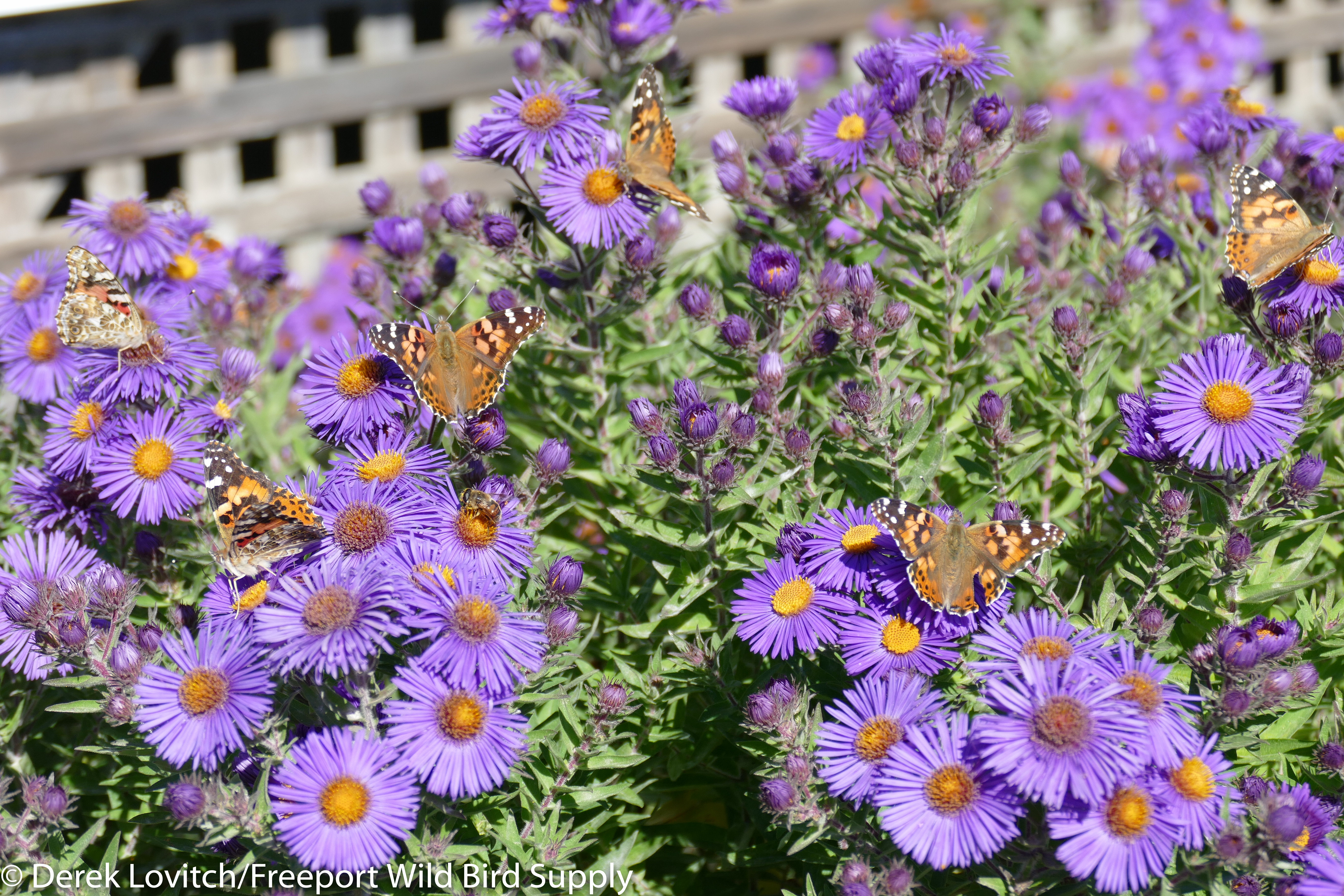
And the food, beer, and conversation were great as always. And the butterflies, my goodness the butterflies. Monarchs were common, but Painted Ladies were downright abundant…
L1100899-editedL1100930-edited-edited
IMG_6772-edited-editedIMG_6789-edited-edited

Here’s the full scoreboard, not including birds seen in Port Clyde or from the ferry en route:

9/29 9/30 10/1 10/2
Canada Goose 30 1 33 100
American Black Duck 2 1 2 2
Mallard 12 20 15 15
NORTHERN PINTAIL 0 0 0 1
Common Eider x x X X
Surf Scoter 0 8 0 0
Common Loon 0 0 0 1
Northern Gannet 30 30 20 20
Double-crested Cormorant 100 400 100 X
Great Cormorant 0 0 1 2
Great Blue Heron 2 4 1 0
YELLOW-CROWNED NIGHT-HERON 0 0 1 0
Osprey 8 3 1 2
Bald Eagle 3 3 1 1
Northern Harrier 2 0 0 2
Sharp-shinned Hawk 4 5 5 4
American Kestrel 6 8 3 2
Merlin 8 15 8 6
Peregrine Falcon 12 3 4 6
Greater Yellowlegs 0 0 0 1
Wilson’s Snipe 0 0 0 1
Ring-billed Gull 1 0 0 0
Herring Gull X x X X
Great Black-backed Gull X x X X
Black Guillemot 20 4 6 8
Mourning Dove 4 6 6 4
Belted Kingfisher 0 0 1 0
Yellow-bellied Sapsucker 8 20 25 20
Downy Woodpecker 0 0 1 1
Northern Flicker 10 8 6 2
Eastern Phoebe 2 2 3 6
Eastern Wood-Pewee 0 1 0 0
Blue-headed Vireo 1 5 1 2
CASSIN’S VIREO 0 1 0 0
Philadelphia Vireo 2 1 1 3
Red-eyed Vireo 4 10 9 8
Blue Jay 8 15 21 18
American Crow x x X X
Common Raven 0 2 2 2
Horned Lark 0 1 0 0
Black-capped Chickadee 10 20 X X
Red-breasted Nuthatch 0 4 4 4
Brown Creeper 0 2 1 12
Carolina Wren 0 1 1 0
Winter Wren 0 1 0 0
Golden-crowned Kinglet 15 30 35 50
Ruby-crowned Kinglet 40 40 25 40
Hermit Thrush 0 0 0 2
WOOD THRUSH 0 1 0 0
American Robin 2 0 3 1
Gray Catbird 3 3 4 3
European Starling 25 20 20 15
American Pipit 0 2 1 1
Cedar Waxwing 2 25 25 40
ORANGE-CROWNED WARBLER 1 0 0 0
Nashville Warbler 5 3 3 0
Northern Parula 0 3 0 0
Magnolia Warbler 1 0 0 0
Cape May Warbler 5 5 2 0
Yellow-rumped Warbler 10 30 40 150
Black-throated Green Warbler 2 2 0 0
PINE WARBLER 1 1 0 0
Prairie Warbler 1 0 0 0
Palm Warbler 6 6 0 15
Blackpoll Warbler 1 1 1 0
Black-and-white Warbler 1 1 1 0
American Redstart 0 2 0 0
Common Yellowthroat 4 4 4 3
Wilson’s Warbler 0 1 1 0
Scarlet Tanager 0 1 0 0
Chipping Sparrow 4 5 3 2
CLAY-COLORED SPARROW 0 0 0 1
Savannah Sparrow 2 2 0 0
Song Sparrow X X X X
Lincoln’s Sparrow 1 0 0 4
Swamp Sparrow 1 0 0 1
White-throated Sparrow 2 4 3 8
White-crowned Sparrow 0 1 1 1
Dark-eyed Junco 3 0 0 0
Northern Cardinal 4 6 8 4
Indigo Bunting 1 0 0 1
DICKCISSEL 1 0 2 4
Bobolink 0 1 1 1
Rusty Blackbird 0 1 1 1
Common Grackle 4 2 4 4
Baltimore Oriole 0 1 3 2
Purple Finch 0 0 0 0
Pine Siskin 0 1 0 0
American Goldfinch 2 8 2 1

 
IMG_6856-edited-edited
Baltimore Oriole

2016 MonhegZen Spring Birding Weekend PLUS Birds on Tap – Monhegan!

As I do most Memorial Day weekends, I head to Monhegan Island with a tour group for my “MonhegZen Spring Birding Weekend.”  But this was not going to be “just” a weekend on this wonderful, joyful, and bird-filled place. This was going to be truly special – it was “Birds on Tap – Monhegan!

A small group arrived with me on Friday, and boy did we hit the ground running. The first bird we saw off the boat was a Purple Martin zipping overhead – a nice rarity to get things started. As if my usual Monhegan-stoked Rarity Fever wasn’t already in full effect, the next bird we saw was a wet Empid. And let the games begin! Of course, this one was a pretty straightforward Alder Flycatcher after we got good looks at it and heard it call.
ALFL

American Redstarts, Northern Parulas, and Blackpoll Warblers were common and conspicuous as it took us over an hour just to walk up Dock Road!  A great look at a male Bay-breasted Warbler near the Ice Pond was a treat, and we caught up with part of the small flocks of Red and White-winged Crossbills that have been wandering around the island. We saw at least 8 Red and at least 6 White-winged, including fresh juveniles of each – likely having bred out here in the late winter and early spring.

A Sora calling in the marsh didn’t really stop all weekend, and Yellow Warblers were particularly conspicuous around town.
YWAR'

And our FOY Novelty pizza.
Novelty Pizza

While I – and the group – were hearing a little too much “you should have been here yesterday,” we were pretty content with the leftovers of the fallout, with 16 species of warblers by day’s end, including impressive numbers of Northern Parulas.
NOPA

A rare-in-spring Dickcissel flew over the Trailing Yew as we awaited coffee, soon followed by a close-passing Yellow-billed Cuckoo. After a strong flight overnight, there were a lot of new birds around. Fueled by the delicious Birds & Beans coffee being brewed by the Trailing Yew all weekend, we began our birding, soon picking up lots of new arrivals including Cape May Warbler and Swainson’s Thrush.

Apple trees in full bloom all around town were one of the major draws for birds and birders. In fact, you could basically pick an apple tree and sit in front of it long enough to see at least one of all of the common migrants that were about, such as Magnolias Warbler…
MAWA male

MAWA female

…and Chestnut-sided…
CSWA2CSWA1

Jeannette met up with the rest of the tour group arriving on the first boat from New Harbor, and caught up with us after catching up with two of the most cooperative Philadelphia Vireos you’ll ever meet that we all enjoyed along Dock Road.
PHVI

In town, we heard a White-eyed Vireo, another rarity (although one of the expected ones out here), ran into a few more of both species of crossbills behind the Ice Pond, and spotted the young Humpback Whale that has been making regular appearances close to shore off the island’s western shore!  And this Scarlet Tanager…which seemed an appropriate find since we have been consuming the coffee named for it!
SCTA

After hearing a singing Mourning Warbler earlier in the day for our 20th species of warbler on the trip, we had a handful of glimpses of a skulking female near the Yew. I turned around to follow a flitting Yellow-bellied Flycatcher. Training my bins on the flycatcher, I first focused on the branch behind it, which turned out to be hosting a roosting Common Nighthawk!
CONI1a

CONI2

83 species of birds on the day, including 19 species of warblers made for one helluva day, but the fun was just beginning! In addition to my annual tour, this was the weekend of Birds On Tap – Monhegan!

A collaboration between our Freeport Wild Bird Supply, Trailing Yew, Birds & Beans, and Monhegan Brewing, we took our “Birds on Tap” series of events offshore to celebrate birds, migration, bird conservation (especially through consumer choices like what coffee to drink), and, yes, beer!

And one of the truly special events was a limited, 31-gallon batch of a special coffee-infused milk stout from Monhegan Brewing, featuring a pound and a half of the dark roast Scarlet Tanager coffee from Birds & Beans!
MARY POUR

I had the honor of announcing the official release, taking some of the first sips of this delicious light-bodied stout featuring a subtle sweetness from lactose perfectly balanced with a bitter roastiness from the coffee.
Me_At MonheganBrewing_Paul_Wolter_edited-1

ON PORCH

Of course, we were also still birding. I promise!
GROUP AT BREWERY

In fact, we momentarily cleared out the brewery when a possible Orange-crowned Warbler (one was seen by others over the past two days) was spotted nearby. Rushing over, we carefully studied the bird before reaching the conclusion that it was indeed a pale Tennessee Warbler.
TEWA

After an unfortunate but necessary cancellation from our original speaker, Dr. Steve Kress arrived to save us – admittedly a feat marginally less heroic than what he did for puffins and endangered seabirds all over the world!


Giving the weekend’s keynote presentation on his work to bring Atlantic Puffins back to nearby Eastern Egg Rock, Steve explained the challenges he and the puffins faced before finally realizing his novel approach finally bore fruit, or should I say, pufflings.
Steve_Kress2_edited-1Steve_Kress1_edited-1

Overnight, a back door cold front sagged southward, shifting the winds to an easterly direction and limiting the arrival of new migrants to the island. Our “Morning Flight Watch” with plentiful free Birds & Beans coffee for all at the Trailing Yew wasn’t too eventful, but things definitely picked up for the post-breakfast walk.


Jeannette led my tour group, and the birding was still a bit slow, relatively speaking. But, they finally made their way down to the pump house to see Eastern Kingbirds flycatching in the marsh. And, up to the lighthouse for the first time which was highlighted by a fantastic view of a female Blackburnian Warbler.
BLBW female

Meanwhile, Kristen Lindquist assisted me in leading the free, open-to-all birdwalk as part of the weekend’s special events. A nice mix of birders, residents, and visitors enjoyed a casual stroll. We chatted as we went, covering a variety of topics from bird migration to conservation to coffee to the ill-conceived industrial wind development scheme for the island’s southern waters.


Some folks, new to birding, may have left with the impression that Red-eyed Vireos were about the most common bird in the world, as quite a few were calmly and methodically foraging through apple trees in and around town.
revi

But perhaps this male Blackburnian Warbler would end up being a “spark” bird for someone! Because male Blackburnian Warbler!
BLBW male

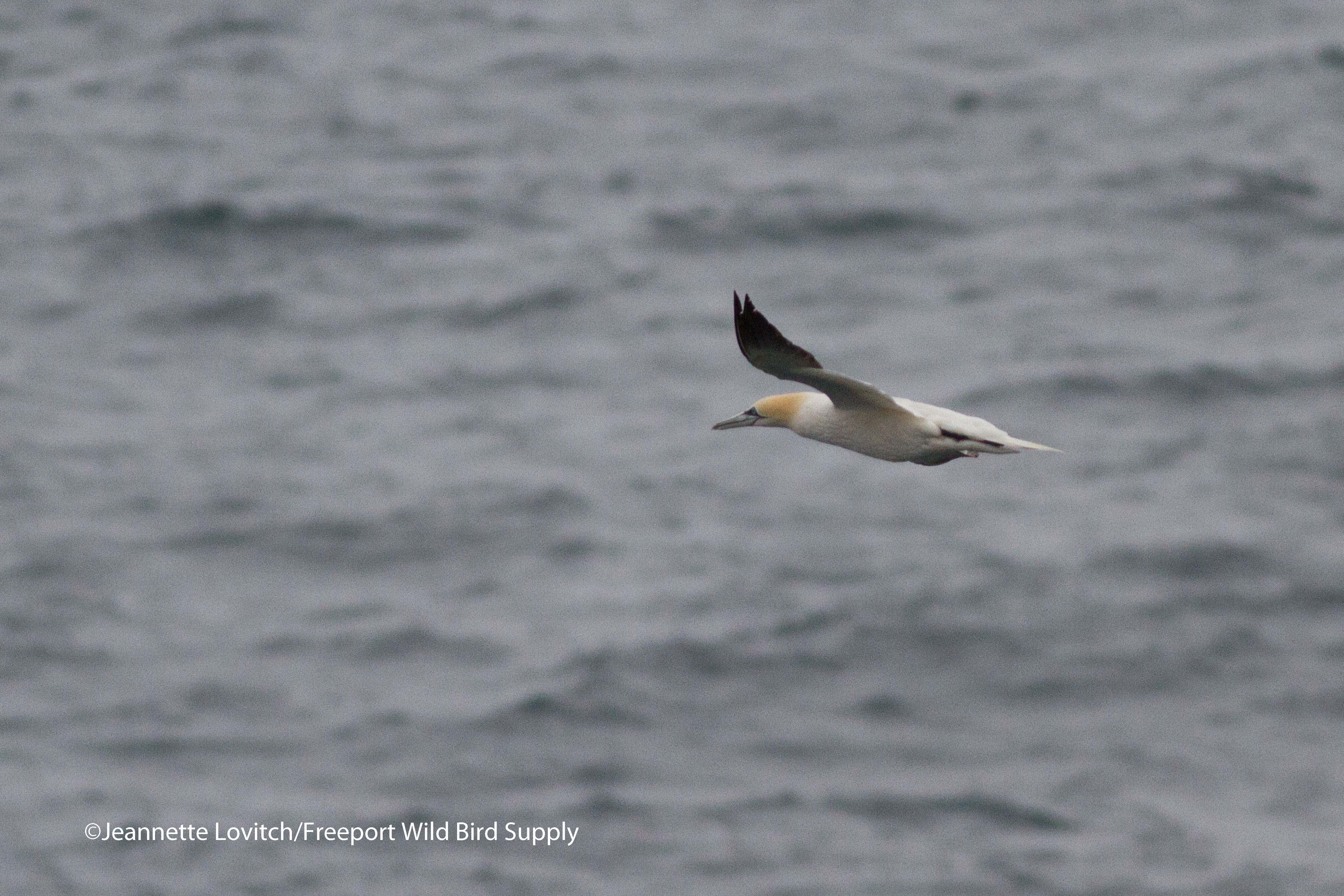
With a light easterly wind continuing, and our group back together after more Novelty pizza, we walked up to Burnt Head, where we enjoyed some nice close passes from Northern Gannets
NOGA

Jeannette and I spent an extra night on the island, knowing we would need a little time to unwind after the even-more-chaotic-than-expected weekend of events. After a great dinner with friends, we listened to two Soras calling from the marsh and an American Woodcock still displaying somewhere overhead before turning in.

We awoke on Monday to dense fog and no visible migration on the radar, but the birding was actually quite good. We found a Nelson’s Sparrow in the Lobster Cove marsh, but also enjoyed how the damp weather (mist, drizzle, and a few showers) were keeping activity low and close, easily viewed in the blooming apple trees around town once again.
As a warm front passed through, with only a little more drizzle but rapidly warming temperatures and clearing skies, we took a post-pizza hike, heading deeper into the woods, which netted more of the island’s breeding species, such as many more Black-throated Green Warblers.
BTNW

Somehow – now how did this happen? – our hike ended at the brewery, where another pour of the Birds & Beans-infused beer was in order.
CLOSE UP POUR

Unfortunately, especially since the sun was now shining brightly, it was indeed time for us to head back to the real world, so Jeannette and I begrudgingly plodded down to the dock and boarded the Hardy Boat for the return.  It’s never easy saying goodbye to the island – its birds and our friends there – but today was especially challenging as we know a fight about the future of the island – including many of the migratory birds that pass over and through here – is looming.
Leaving_island_edited-1

Here’s the complete daily checklist for the weekend:
26-May 27-May 28-May 29-May
1 Canada Goose 0 0 1 0
American Black Duck x Mallard 0 1 0 0
2 Mallard 2 10 12 8
3 Common Eider x x x x
4 Ring-necked Pheasant 3 3 3 4
5 Common Loon 1 1 0 1
6 Northern Gannet 0 0 12 0
7 Double-crested Cormorant x x x x
8 Great Cormorant 0 0 0 1
9 Great Blue Heron 0 1 0 0
10 Green Heron 1 0 0 0
11 Osprey 0 1 0 0
12 Bald Eagle 2 1 0 0
13 Merlin 0 1 0 1
14 Virginia Rail 0 0 0 1
15 Sora 1 1 2 1
16 American Woodcock 0 0 1 0
17 Black Guillemot x x x x
18 Laughing Gull x x 12 4
19 Herring Gull x x x x
20 Great Black-backed Gull x x x x
21 Common Tern 2 0 0 0
22 Mourning Dove 8 10 4 6
23 YELLOW-BILLED CUCKOO 0 1 0 0
24 Common Nighthawk 0 1 0 0
25 Ruby-throated Hummingbird 2 3 2 2
26 Yellow-bellied Sapsucker 0 1 0 0
27 Downy Woodpecker 4 4 2 0
28 Northern Flicker 0 1 1 1
29 Eastern Wood-Pewee 2 10 4 6
30 Yellow-bellied Flycatcher 1 4 0 5
31 Alder Flycatcher 1 2 0 0
32 Willow Flycatcher 0 4 0 1
33 “Traill’s” Flycatcher 0 6 2 1
34 Least Flycatcher 5 8 2 5
35 Eastern Kingbird 8 14 7 6
36 WHITE-EYED VIREO 0 1 0 0
37 Philadelphia Vireo 2 3 0 0
38 Red-eyed Vireo 15 100 30 25
39 Blue Jay 4 4 6 6
40 American Crow x x x x
41 Tree Swallow 8 2 2 2
42 Cliff Swallow 0 1 0 0
43 Barn Swallow 0 0 2 0
44 PURPLE MARTIN 0 0 0 0
45 Black-capped Chickadee x x x x
46 Red-breasted Nuthatch 2 4 2 3
47 House Wren 0 2 2 2
48 Winter Wren 0 0 0 1
49 Golden-crowned Kinglet 2 2 2 4
50 Swainson’s Thrush 0 1 0 0
51 American Robin 10 8 10 8
52 Gray Catbird x x x x
53 Brown Thrasher 1 0 2 0
54 Northern Mockingbird 0 1 0 0
55 European Starling x x x x
56 Cedar Waxwing 30 80 60 40
57 Ovenbird 0 1 0 0
58 Northern Waterthrush 1 1 0 0
59 Black-and-white Warbler 8 10 6 3
60 Tennesee Warbler 1 10 1 1
61 Nashville Warbler 1 1 1 2
62 MOURNING WARBLER 0 3 0 0
63 Common Yellowthroat x x x x
64 American Redstart 25 40 10 15
65 CAPE MAY WARBLER 0 1 0 0
66 Northern Parula 40 50 20 20
67 Magnolia Warbler 5 15 12 20
68 Bay-breasted Warbler 1 0 0 0
69 Blackburnian Warbler 3 3 2 2
70 Yellow Warbler 20 20 25 20
71 Chestnut-sided Warbler 15 15 10 15
72 Blackpoll Warbler 20 70 30 40
73 Black-throated Blue Warbler 1 3 1 2
74 Yellow-rumped Warbler 0 4 1 2
75 Black-throated Green Warbler 6 7 10 30
76 Canada Warbler 0 1 1 0
77 Wilson’s Warbler 1 0 0 1
78 Eastern Towhee 0 1 0 0
79 Chipping Sparrow 4 1 1 0
80 NELSON’S SPARROW 0 0 0 1
81 Song Sparrow x x x x
82 Lincoln’s Sparrow 0 1 0 1
83 Swamp Sparrow 0 1 0 1
84 White-throated Sparrow 1 2 2 1
85 Scarlet Tanager 0 2 0 0
86 Northern Cardinal 4 4 8 8
87 Rose-breasted Grosbeak 0 1 0 1
88 Indigo Bunting 1 3 1 0
89 DICKCISSEL 0 1 0 0
90 Bobolink 2 6 3 0
91 Red-winged Blackbird x x x x
92 Common Grackle x x x x
93 Baltimore Oriole 4 2 2 1
94 Purple Finch 2 2 2 1
95 RED CROSSBILL 8 2 3 ?
96 WHITE-WINGED CROSSBILL 6 8 0 12
97 Pine Siskin 15 30 30 40
98 American Goldfinch 6 4 4 4

Huge Morning Flight at Sandy Point!

My last blog entry ended with a little bit of foreshadowing, did it not? But before we get to Sandy Point this morning, let us take a moment to review the radar images from the weekend for comparison.

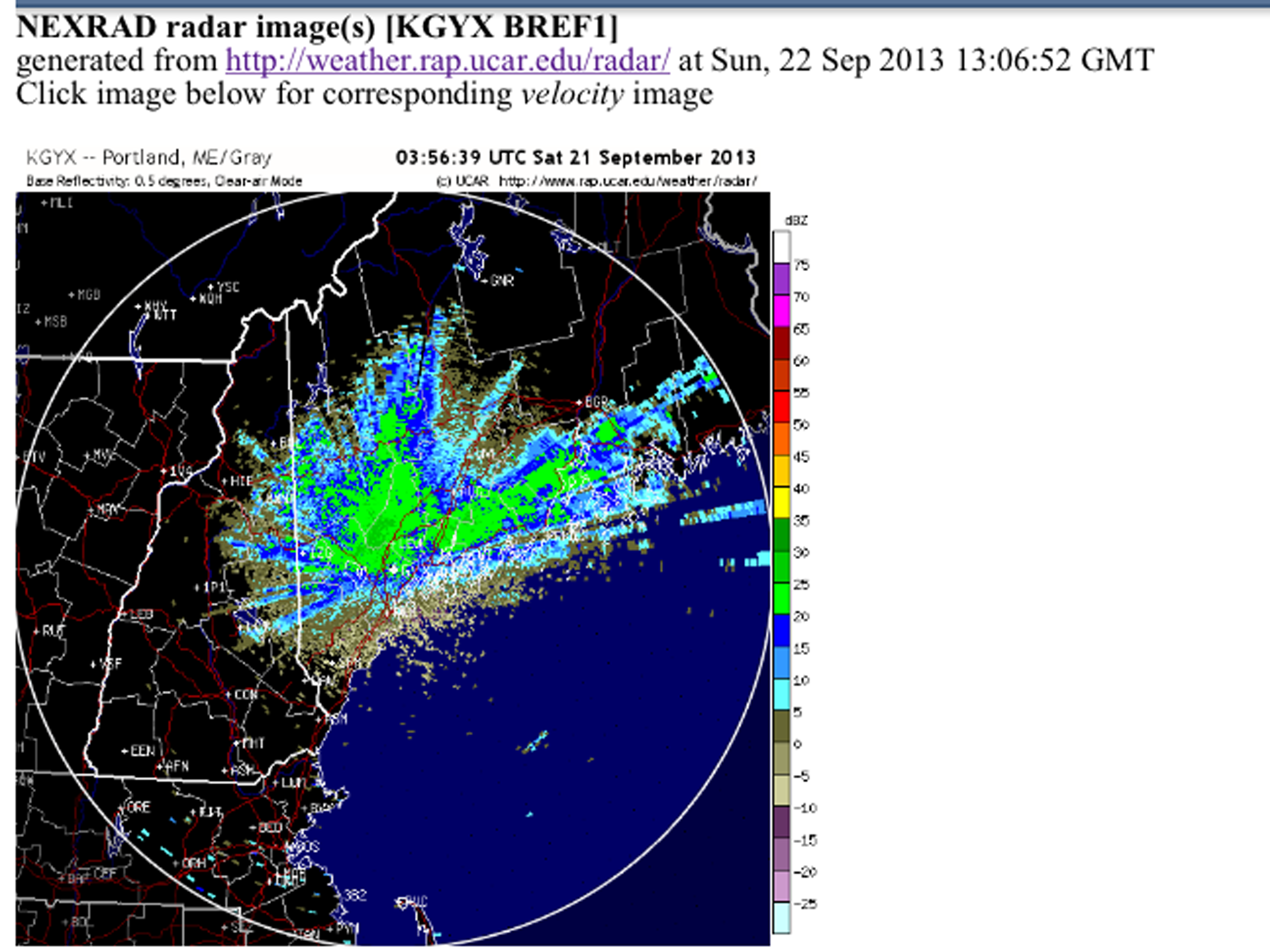
This is the 12:00am image from Sunday.  This is what “no migration” looks like on the radar.  You can also see the rain approaching from the west.
12am radar, 9-22-13

Now this is the midnight image from Saturday.  This is what “I have no idea what’s going on” looks like on the radar.  While anything from some weird warping of the radar beams from changes in air temperature to a simple malfunction could result in this, what it is NOT is a lot of birds.  It’s too irregular…and bird’s don’t “explode” in narrow bands!
IMG_1575_edited-1 IMG_1576_edited-1

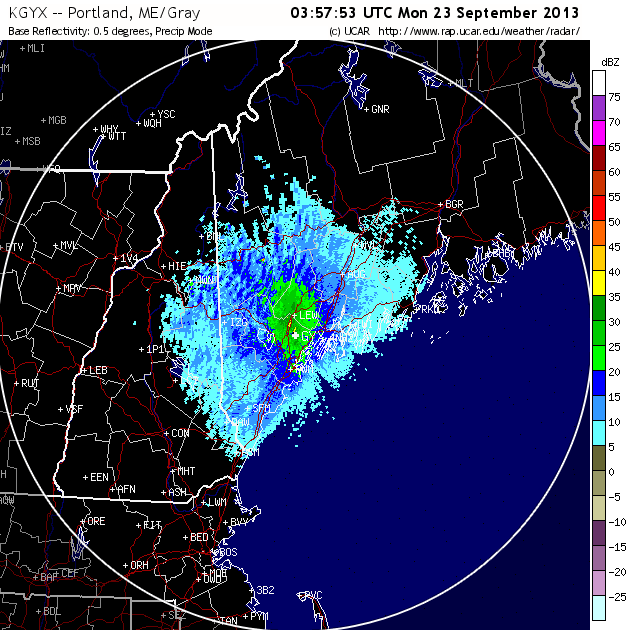
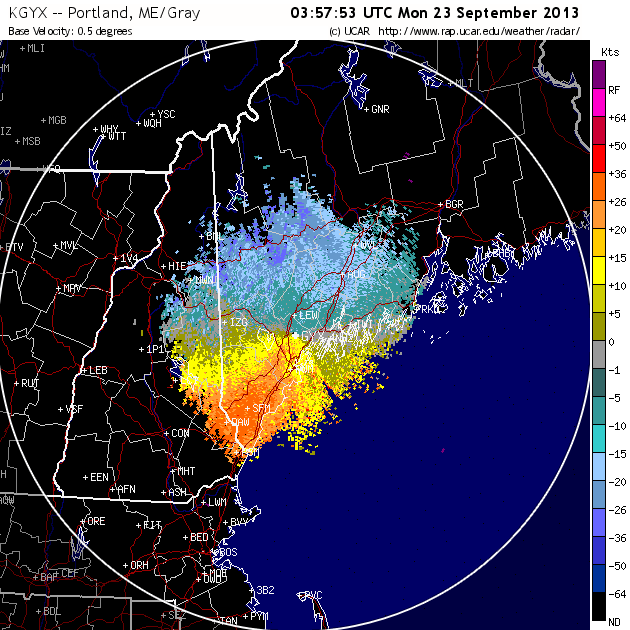
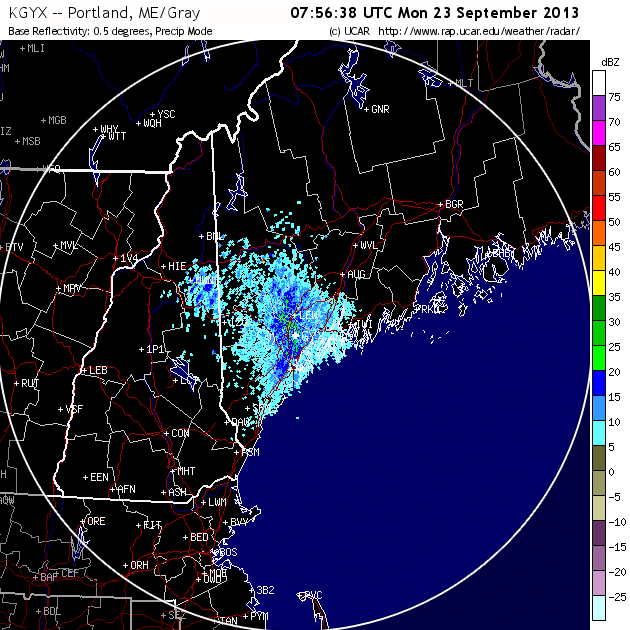
So, compare those to what “a whole boatload” of birds looks like.  Here are the 10pm, 12am, 2am, and 4am base reflectivity and velocity images from last night.

10pm radar, 9-22-13 10pm velocity, 9-22-13

12 am radar, 9-23-13 12 am velocity, 9-23-13

2am radar, 9-23-132am velocity, 9-23-13

4am radar, 9-23-134am velocity,9-23-13

Yeah, it would have been nice to be on Monhegan this morning.  But I was in my other sanctuary – my office at Sandy Point.  And this is what happened:

6:28 – 10:05am.
43F, increasing W to NW, clear.

1338 Unidentifed (*2nd highest)
416 Northern Parulas (* Seriously, how are there any more parulas to come through!  This is the second highest count of all time, and now all three of the highest tallies are from this year!)
281 Northern Flickers
179 Black-throated Green Warblers (*2nd highest)
163 Blackpoll Warblers
91 Yellow-rumped Warblers
43 Black-and-white Warblers (*record high)
39 Red-eyed Vireos
35 American Redstarts
29 Blue Jays
29 Ruby-crowned Kinglets
23 Yellow Warblers
22 Blue-headed Vireos
21 Scarlet Tanagers (*record high)
21 Dark-eyed Juncos
19 Cedar Waxwings
18 Magnolia Warblers
17 Nashville Warblers (*record high)
17 American Goldfinches
13 Black-throated Blue Warblers
12 Eastern Phoebes (* ties high)
11 Swainson’s Thrushes
9 Palm Warblers
6 Rusty Blackbirds
5 American Robins
4 Unidentified vireos
4 Chestnut-sided Warblers
4 White-throated Sparrows
3 Least Flycatchers
3 Cape May Warblers
3 Bay-breasted Warblers
2 Common Loons
2 Broad-winged Hawks
2 TUFTED TITMICE (rarely seen crossing)
2 Unidentified thrushes
2 Golden-crowned Kinglets
2 Blackburnian Warblers
2 Common Yellowthroats
1 Osprey
1 American Kestrels
1 Yellow-bellied Sapsucker
1 Eastern Wood-Pewee
1 Common Raven
1 Philadelphia Vireos
1 Veery
1 Tennessee Warbler
1 CONNECTICUT WARBLER (My third of the season here; it’s the fall of the CONWs in Maine!)
1 Northern Waterthrushes
1 Rose-breasted Grosbeak
1 DICKCISSEL (third of the season here)
1 Baltimore Oriole

Total = 2, 905 (4th highest tally all time for me)

DSC_0016_REVIonAlternate-leafedDogwood,Sandy Point, 9-23-13DSC_0026_SWTH_onWinterberry2,Sandy Point,9-23-13
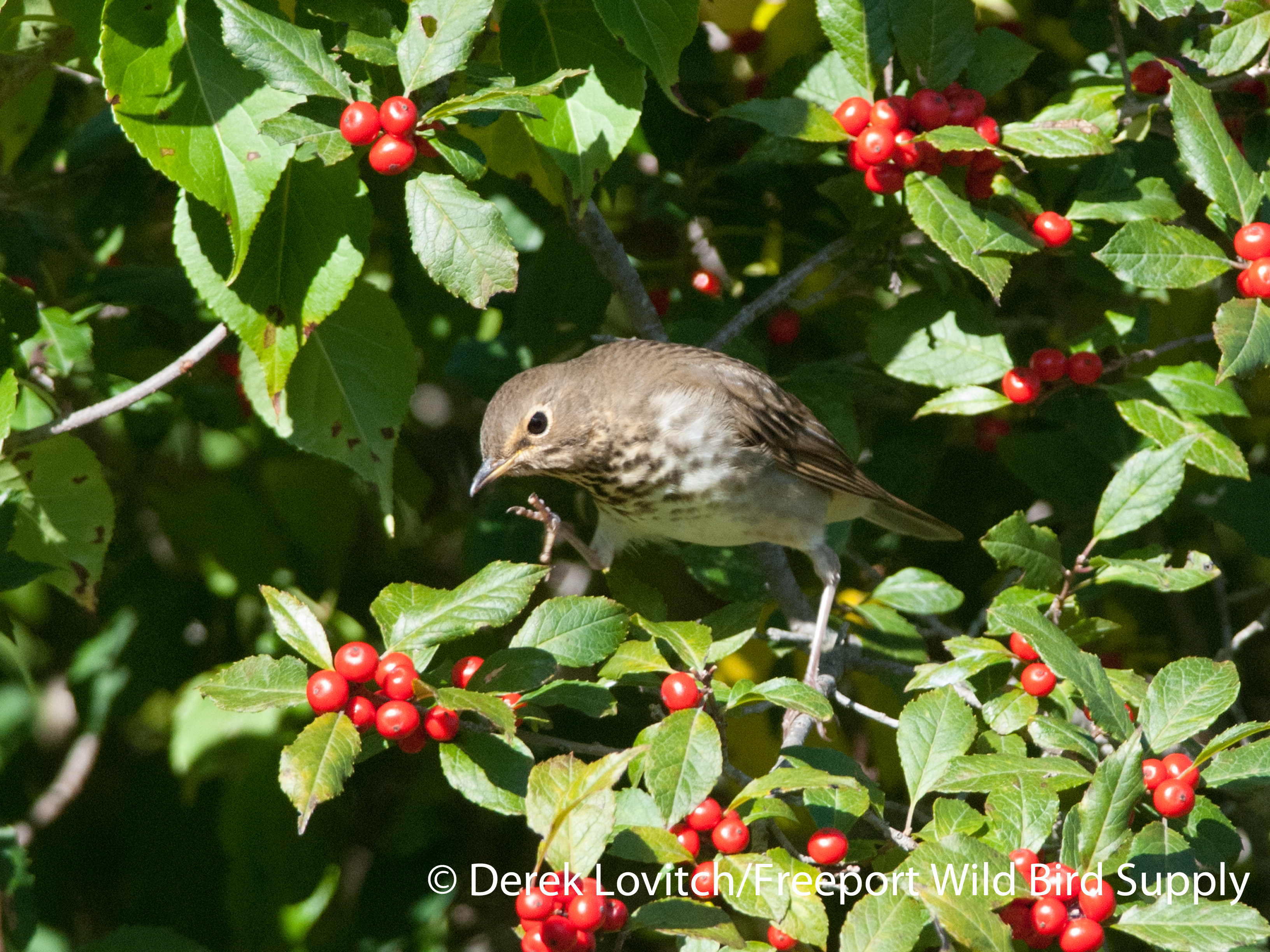
Some of the migrants pause long enough at Sandy Point to do a little snacking.  Here’s a Red-eyed Vireo eating Alternate-leafed Dogwood fruits, and a Swainson’s Thrush stepping out into the sun to dine on Winterberries.

DSC_0034_WISN,GreelyRoad,9-23-13_edited-1
A little post-Sandy Point birding yielded two Wilson’s Snipe trying to stay hidden along the edge of a puddle along Greely Road in Cumberland.

And tonight looks just as good…perhaps even a little better with a more northwesterly flow.  See ya at the bridge at sunrise!
wind forecast, 9-23-13