Tag Archives: predictions

The 2016 Maine State List (and my own) Predictions Blog.

The second record (and perhaps the first verified one) for Maine of Black-throated Sparrow was found in Winter Harbor on New Year’s Day, and continues through today, January 6th. I was tempted to chase it yesterday, but instead I am left to hope it sticks around until the end of next week when I return from a short business trip. Fingers crossed!

Before it arrived, I had begun to put together my annual list of the next 25 species to be found in Maine. I then follow that up with my own State List predictions, and no, Black-throated Sparrow was not on that list!

I know, I know, you’ve been awaiting this with baited breath for this. So without any further ado, let’s get started with the annual Maine State Birds Predictions List.

First, a quick recap of 2015.

Only one species was added to the state’s all-time birdlist, a Surfbird, which was discovered at Biddeford Pool in March. It was not a species on anyone’s radar, and it was most definitely not on my Predictions List for 2015!

But I did make several changes to my Next 25 Species for Maine list, and moved things around a bit. So here are the NEW prognostications:
1)Neotropical Cormorant – The new #1! With populations expanding in the Midwest and observations of vagrants increasing around the East, this one is only a matter of time now!
2) Graylag Goose
3) California Gull
4) Roseate Spoonbill
5) Spotted Towhee
6) Ross’s Gull
7) Hammond’s Flycatcher
8) Bermuda Petrel – see notes in last year’s blog entry at the link above.
9) Black-chinned Hummingbird
10) Fieldfare
11) Audubon’s Shearwater – on “hypothetical” list, but I think the record is good.
12) Little Stint
13) Anna’s Hummingbird
14) “Western” Flycatcher (Pacific-slope/Cordilleran) – Hope it calls! After a spate of reports in the Fall of 2015, this is another western bird increasingly being detected well outside of range.
15) Vermillion Flycatcher – Ditto.
16) Common Ground-Dove – A virtual irruption of this bird this fall, including one as close to Massachusetts had me thinking we would have added this in 2015. Maybe one is still out there awaiting discovery.
17) Allen’s Hummingbird
18) Redwing
19) Western Wood-Pewee
20) Spotted Redshank
21) Gray Flycatcher
22) Black-tailed Godwit
23) Brown-chested Martin
24) Black-tailed Gull
25) Common Scoter

As for me, I added three birds to my personal Maine State List in 2015:
A) Gyrfalcon – Wells, 1/17/15 (Ranked #5). This is one I wanted for a while! It was seen sporadically between Wells Harbor and Salisbury, Massachusetts for about a month. If first showed up while we were away at a trade show, but luckily, I caught up with it shortly after our return. I saw it on the 17th, and managed some photos  (my blog entry also includes more background about the sighting), but on April 5th, Jeannette got the better shots!
IMG_0332_edited-2

B) I also caught up with the aforementioned Surfbird on March 22nd (Definitely not on my list!) and Jeannette got these photos when we visited it again two days later.
IMG_0505_edited-2

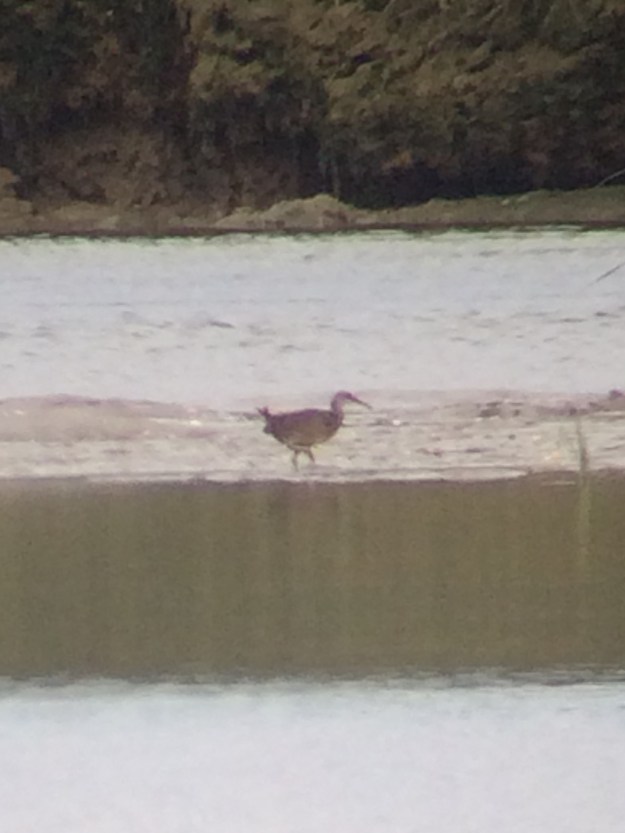
C) Clapper Rail – Scarborough Marsh, 9/22. I had it as an “Honorable Mention,” a list that I also keep to work off of to come up with each year’s respective Top 25.
IMG_6223_CLRA1,JonesCreek,9-22-15

I missed a Franklin’s Gull on Sebasticook Lake in November, as it appeared just before I took a trip, and departed shortly after my return. There was also a one-day wonder on Stratton Island in Scarborough in June. With an unprecedented incursion of Franklin’s Gulls into the East this fall (the Sebasticook Lake bird clearly preceded the events that brought record numbers to New Jersey and several birds to Massachusetts and New Hampshire), I thought this would be my fall – and I definitely worked for one! But alas.

My two trips off of Bar Harbor this year did not yield a Great Skua (but a September trip did give me my 3rd South Polar Skua in the state!), and once again my summer went by without a trip up north for American Three-toed Woodpecker.

Therefore, I predict that my next 25 species in Maine will be:
1) American Three-toed Woodpecker
1A) Black-throated Sparrow! OK, I know this does not count as a prediction, but still…
2) Great Skua
3) Eurasian Collared-Dove
4) Graylag Goose
5) Say’s Phoebe
6) Western Grebe
7) American White Pelican
8) Neotropic Cormorant
9) Fork-tailed Flycatcher
10) Slaty-backed Gull
11) Tundra Swan
12) Franklin’s Gull
13) Sabine’s Gull
14) Black-bellied Whistling-Duck
15) California Gull
16) Yellow Rail
17) Boreal Owl
18) Calliope Hummingbird
19) Cerulean Warbler
20) White Ibis
21) Gull-billed Tern
22) Hammond’s Flycatcher
23) Loggerhead Shrike
24) Ivory Gull
25) Ross’s Gull

Well, there ya have it! We’ll check back next year to see how I did!

2015 Maine State List Predictions

It’s that time of the year again! Time for me to look into my birding crystal ball, and make random guesses…err, insightful, educated, prognostications about what the next year will bring to Maine and birders’ state lists.

But first, let’s, as usual, review the previous year. For the full list of 2014 species predictions, you can visit my blog from last January here.

Two species were added to Maine’s all-time list in 2014, a Brewer’s Sparrow on Monhegan in May, and a Crested Caracara in Unity (and later in Norridgewock) in August. While both species were on my “long list” for future additions, neither made the top 25. Following the report in the spring of 2014 of a Crested Caracara in New Brunswick (the 2013 caracara in Nova Scotia – and NJ – was apparently not a fluke…albeit distinctly possible to have been the same individual), there’s little doubt Crested Caracara would have made it onto the list this year. But I don’t update the list as the year progresses, so alas, no credit for me.

Meanwhile, perhaps even more remarkable, was the Tufted Puffin seen sporadically off of Machias Seal Island in June and July. Without getting into geopolitical boundary disputes, I believe both Maine (waters to south and east of island at least) and New Brunswick (definitely when it was on land) can claim this bird. While the puffin was not technically new for Maine, it was the first record – and unequivocal record – since a somewhat-disputed record claimed by Audubon in 1834.

Next, I would like to call attention to #23 – Bermuda Petrel, an annual species that is on my list, but this is the lowest it has appeared. However, it very already occurred in Maine. Geolocator (“data-loggers”)data from researchers puts the birds well into the Gulf of Maine, and even within the margin of error, perhaps several birds have appeared within the usual boundaries association with state bird lists (it is well beyond the 3 mile political zone).

“Conservation and At-Sea Range of Bermuda Petrel” by Jeremy Madeiros, Bob Flood, and Kirk Zufelt in the June-July 2014 issue of North American Birds (V.67, no. 4) includes a map (p.555) of hundreds of locations from around the Atlantic Basin, including about a half-dozen within the Gulf of Maine.

(Members of the American Birding Association can read the article in its entirety here)

Whether or not we “believe” geolocators are accurate enough to document an occurrence is a discussion for another time, but I predict a bird will be seen or confidently tracked into nearby waters in the future. Therefore, that species has moved up the list. Neotropic Cormorant’s continued increase to the north and east, with increasing frequency of vagrants, bumps that species up quite a bit as well. I shuffled things around near the end as well, including replacing Yellow-legged Gull with Black-tailed Godwit

Otherwise, I have made few changes to my list of the next 25 species to appear in Maine:
1) California Gull
2) Graylag Goose
3) Neotropic Cormorant
4) Roseate Spoonbill
5) Ross’s Gull
6) Fieldfare
7) Hammond’s Flycatcher
8) Bermuda Petrel
9) Black-chinned Hummingbird
10) Spotted Towhee
11) Audubon’s Shearwater (on “hypothetical” list, but I think the record is a good one)
12) Little Stint
13) Anna’s Hummingbird
14) Redwing
15) Barolo Shearwater
16) Allen’s Hummingbird
17) Black-tailed Gull
18) Common Ground-Dove
19) Western Wood-Pewee
20) Spotted Redshank
21) Gray Flycatcher
22) Black-tailed Godwit
23) Brown-chested Martin
24) Long-billed Murrelet
25) Common Scoter

Personally, I added two species to my own “State List” this year, the Brewer’s Sparrow (not on my predictions list) during my MonhegZen Spring Migration Weekend:
DSC_0124_BRSP1,Monhegan,5-25-14_edited-1

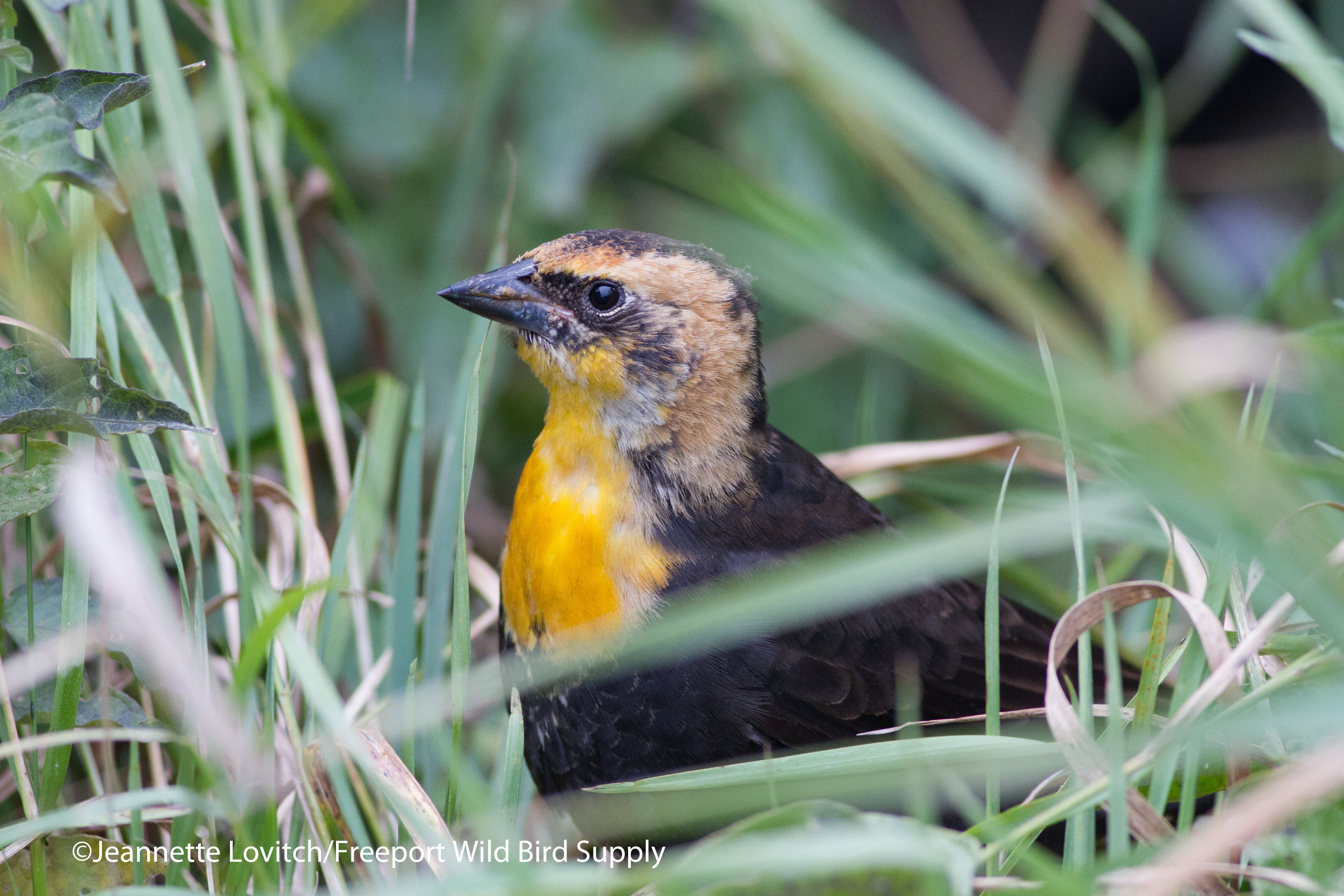
And, on the MonhegZen Fall Migration Weekend, I finally added Yellow-headed Blackbird to my state list (after moving it out if the top 10 for the first year, dropping it all the way down to #24 for some reason – probably out of frustration about still not having seen one…it worked!)
IMG_8673_edited-2

(And yes, this is why birders go to Monhegan Island!)

Once again, I didn’t make it up north to look for American Three-toed Woodpeckers (#2), which were again reliable near Baxter State Park, and despite Great Skua (#3) being seen regularly off of Bar Harbor this summer, I only made it offshore on a whale watch there once in October – on a skua-free day. I did not see the reported Western Grebe (#9) off of Harpswell last week, and I missed the Crested Caracara three times! I also did not chase a Tundra Swan (#12) in Winterport in October, or a Virginia’s Warbler (long list) on Monhegan. I also did not see a Cerulean Warbler (long list) that was on Monhegan this fall as well.

So, without any further ado, here are my predictions for the next 25 species to be added to my personal list here in Maine (with quite a bit of reshuffling this year):
1) American Three-toed Woodpecker
2) Great Skua
3) Eurasian Collared-Dove
4) Slaty-backed Gull
5) Gyrfalcon
6) Graylag Goose
7) Say’s Phoebe
8) Western Grebe
9) American White Pelican
10) Boreal Owl
11) Fork-tailed Flycatcher
12) Tundra Swan
13) Yellow Rail
14) Sabine’s Gull
15) Franklin’s Gull
16) Black-bellied Whistling-Duck
17) California Gull
18) Ivory Gull
19) Calliope Hummingbird
20) Cerulean Warbler
21) White Ibis
22) Gull-billed Tern
23) Hammond’s Flycatcher
24) Loggerhead Shrike
25) Neotropic Cormorant

So there it is, the annual list. Now, it’s time to go birding!

On Recent and Upcoming Weather, Vagrant Season, and Recent Great Birding

Late October through early November is traditionally the best “rarity season” in Maine, where vagrants from all directions are hoped for, and even expected. We’ve been in a rather active and dynamic weather pattern of late, and this may help to usher vagrants in our direction. While weather rarely “blows” birds off-course, winds and weather systems can certainly facilitate their arrival in far-flung places, especially when combined with some sort of misorientation (for a thorough discussion of the concept, see Chapter 7 of my book, How to Be a Better Birder).

As October progresses, the nights get longer, and the days (usually) get colder. The growing season comes to an end (although in many spots the killing frost has not yet reached the immediate coastline yet this year), and food sources become greatly limited. This can push vagrants that may have arrived over the course of the fall migration into favorable micro-climates and patches of seasonal food abundance. More recently-deposited vagrants, “late/lingering” migrants, and other more typical species can also concentrate in such prime areas, such as urban parks, coastal migrant traps, and so on.

Let’s take a look at some of the recent weather, and attempt to identify some possible species to consider.

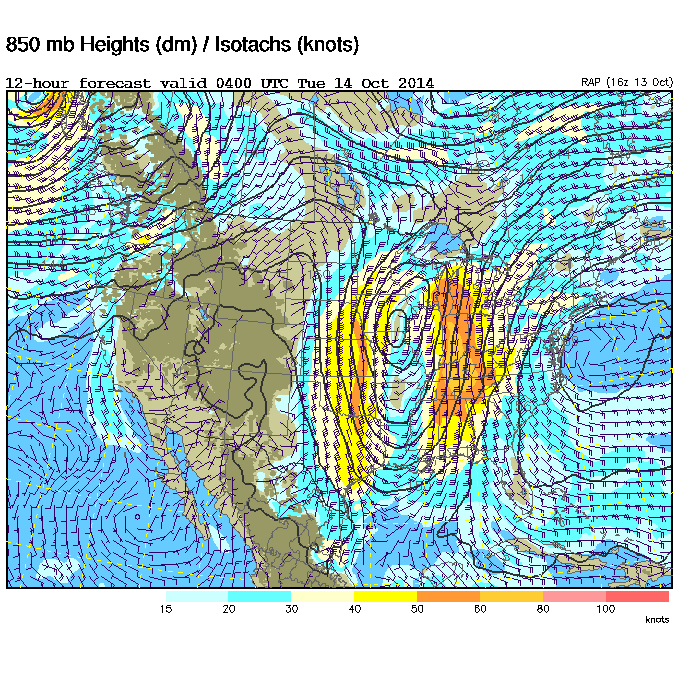
Over the past ten days, above normal temperatures were regular, thanks to southerly winds. Take a look at the wind map from October 13th, for example.
wind map, 10-13-14

Strong southerly winds pumped warm air into the area from the Deep South and the Bahamas (and the South Atlantic Bight). These are favorable conditions for depositing “180-degree misoriented migrants” from the south, such as Summer Tanagers and White-eyed Vireos. I wonder if it’s a little too late for a big push of southern birds, however, as many of the Neotropical migrants have already departed the continent. Meanwhile, that extensive southerly flow all of the way into Mexico is the type of weather pattern that can facilitate the arrival of long-distance vagrants, such as Fork-tailed Flycatcher.

Sparrows are on the move now, and northerly winds with cloudy skies overnight on 10/18 to 19 resulted in a big push of sparrows. The low ceiling likely resulted in disorientation of these low-flying migrants by the big city lights, resulting in a massive flight of birds in Portland’s East End on the morning of the 19th. I estimated over 2000 White-throated Sparrows and 500 Song Sparrows just on the Eastern Promenade alone, with dozens more in almost every lot I checked. A hundred White-throats were in the North St Community Garden, and by the end of the morning, I had tallied 8 species of sparrows, and impressive numbers of Chipping Sparrows (76) and Eastern Phoebes (15) among others. Although 2 Red-bellied Woodpeckers were my 175th species on my Eastern Promenade Patch List, I was surprised that I could not tease out any rarities from the volumes of birds (the sheer number of birds plus gusty winds hampered detection, no doubt).

By 10/19, a strong cold front – a rare occurrence this season – pushed through, and with it, a huge flight of migrants. I tallied over 1100 birds at Sandy Point on the morning of the 20th, led by 461 Yellow-rumped Warblers and 159 American Robins.

You can see how strong and extensive these northwesterly winds finally were from the wind map that day.
wind map, 10-19-14

Rain began to arrive in the afternoon of the 21st, and it didn’t let up until this morning. This massive coastal Nor’easter drenched Maine with up to 5” of rain, and moderate to strong northeasterly winds battered the state, especially the coast.
wind map, 10-23-14

Birding was a challenge on Wednesday and Thursday, as strong winds and often-heavy rain made things difficult. Rain and coastal fog and mist precluded seawatching, and any lake-watching for grounded waterfowl was rendered impossible by visibility and waves. Essentially, feeder-watching was the best bet these two days, and a growing contingent of sparrows at both our home and here at the store provided the entertainment. About 200 Common Grackles descended into our Pownal yard on the 23rd as well.

But now, today (Friday), this massive storm is finally pulling away.
wind map, 10-24-14

And I had a great day of birding in Cape Elizabeth. I began with some seawatching at Dyer Point. From 7:50 to 9:50, I had moderate to good visibility for all but a total of 47 minutes as light showers and mist rolled through. Seas were down to 4-6 feet, and moderate north winds continued. Here’s the scorecard (all southbound unless otherwise noted) – which was actually a little lighter than I had expected:
317 Double-crested Cormorants
127 Northern Gannets (about evenly split between north and southbound)
77 Common Eiders (several hundred northbound)
20 White-winged Scoters
18 Black Scoters
17 Red-breasted Mergansers
16 unidentified ducks
16 Common Loons (plus 18 northbound)
15 Surf Scoters
10 “dark-winged” scoters
8 Long-tailed Ducks (first of fall)
8 Red-throated Loons
5 Great Blue Herons
5 Bonaparte’s Gulls
3 Red-necked Grebes
2 Green-winged Teal
2 Great Cormorants
2 Laughing Gulls
1 Black Guillemot
1 Peregrine Falcon
1 White-throated Sparrow (flew in off the water at 8:05am).

Next up was Kettle Cove, where a nice diversity of migrants, especially sparrows, also included an Orange-crowned Warbler and 3 Common Yellowthroats. Even more interesting was this gull, which appears to be a hybrid Herring x Great Black-back. Intermediate in size and shape between the two, and with an intermediate mantle color, the short wings and pinkish legs separate it from Lesser Black-backed.
DSC_0002_HERGxGBBG1,KettleCove,10-24-14_enlarged_edited-1

DSC_0001_HERGxGBBG2,KettelCove,10-14-14_edited-1

A local sparrow-rific patch of private property was fruitful as well. Although a very tardy Bobolink was the only surprise here, plentiful numbers of sparrows included 200+ White-throated, 100+ Song, 50+ Swamp, 50+ Savannah, 50+ Dark-eyed Juncos, at least 10 White-crowned Sparrows, and a single Lincoln’s Sparrow. A Red-bellied Woodpecker and my second Carolina Wren of the morning were added to the tally.

A male Black-throated Blue and a female Black-and-white Warbler joined Palm and Yellow-rumped Warblers feasting on seaweed flies in and near the wrack at Pond Cove, where another Red-bellied Woodpecker was sounding off.

On my way back, I swung through the goose fields, and clearly more Canada Geese have arrived in the last few days. 718 was a new season-to-date high count, with the most interesting new arrival being this spiffy leucistic Canada. Unlike a hybrid with a Snow or a Domestic Goose, this neat bird was the same shape and size as the average Canada, but with a dull brownish cast to the head, neck, and wingtips.
IMG_4625_leucisticCANG1,GreelyRd,10-24-14_edited-1

As this nasty low rides up into Atlantic Canada and beyond, strong wrap-around winds will offer the potential to displace Northern Wheatears or rare geese from Greenland. Meanwhile, next week, we’ll see unseasonable warmth return on southwesterly winds (“vagrant winds” as I like to call them), just the type of scenario that can facilitate the arrival of strays from the southwest, such as Cave Swallows and Ash-throated Flycatchers. They will also facilitate the survival for at least a little longer of vagrants that are still present but as so far gone undetected.

There isn’t one predominate pattern that yields a strong suggestion of any particular vagrant (or group of vagrants) from any particular direction. However, it is clear that we are getting a nice sample of different conditions that could produce some fun stuff.

At the very least, I expect some big flights of migrants, both day and night in the coming days. In fact, I think there will be a big one tonight. Check out these northwesterly winds that should be ushering in a big push of birds:
wind forecast, overnight

Sparrows will make up the bulk of the flight, especially White-throated Sparrows and Dark-eyed Juncos. If the clouds clear by dawn, I might get a big push at Sandy Point. If the ceiling stays low overnight, look for concentrations of sparrows in migrant traps, especially in and around bright cities. Meanwhile, during the day, a lovely weather forecast should get plenty of birders out into the field.

Needless to say, I will be out looking, and I hope you will to! I look forward to what the coming days and weeks will bring.

A Great May Week of Birding in Review, and Some Predictions for More Feathery Fun.

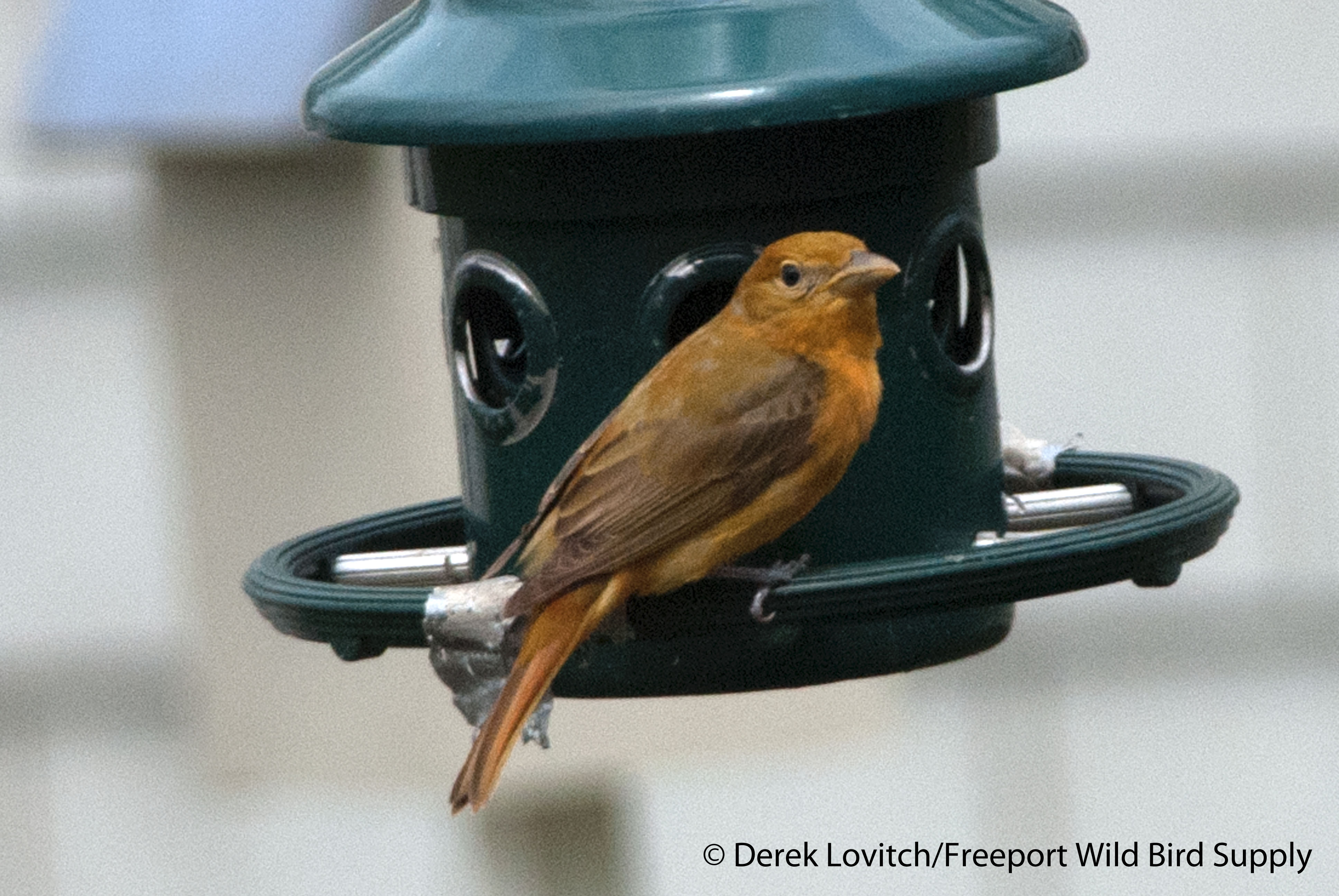
DSC_0027_SUTA,Georgetown1,5-6-14

Simply put, it has been a helluva week of birding in Maine!  Strong flights of migrants occurred on 5 of the last 7 nights, producing a whole lot of new arrivals throughout the region. And then there were rarities, but we’ll get to that shortly.

As for regularly-occurring migrants, birds are arriving right about on time now. By week’s end, some of the latest arriving warblers, like Blackpoll have begun to trickle in, while the early migrants like Yellow-rumped and Palm have thinned out considerably. Some locally-breeding Pine Warblers are rarely singing now, as breeding season for them is well underway.

Almost anywhere you went this week, 12 or more species of warblers was possible.  I enjoyed 15 species at Florida Lake on Monday and 17 species at Evergreen Cemetery on Thursday, for example. The third week of May is when the coveted 20-species morning total is most likely around here, so you know I will be gunning for that in the coming days.

I added Lincoln’s Sparrow, Lesser Yellowlegs, White-crowned Sparrow (#126, 127, and 128 respectively) to my Bradbury Mountain patch lists this week, and a Lincoln’s Sparrow was the first in our Pownal yard (#116) on Sunday. Meanwhile, a spiffy male Orchard Oriole was the 114th species at our store, a one-day wonder at our feeders on the 10th.  So it’s been a great week for patch listing as well!

And Scarborough Marsh was just awesome on Tuesday morning, when Katrina and I had unbelievable numbers (for spring) off of Eastern Road, including 1500+ Tree Swallows, 500+ Least Sandpipers, 400+ Barn Swallows, ~125 Greater and ~100 Lesser Yellowlegs, 75-100 Bank Swallows, 6++ Semipalmated and 2++ White-rumped Sandpipers (both FOY), 2 adult Dunlin, and the continuing Tricolored Heron. Nothing rare per se, but the biomass of birdage was impressive, and was definitely the highlight of the week.

Following the “Mega” rarity Northern Wheatear that was last seen last Saturday in Scarborough Marsh, rarity news has been decidedly southern in nature. Although small numbers of “overshooting” southern vagrants are typical in Maine every spring, the number of White-eyed Vireos (I caught up with one at Capisic Pond Park on Thursday with my friend Lois), Summer Tanagers (I saw one in Georgetown last week with Katrina; see above), and Blue-gray Gnatcatchers (they’re everywhere!) is most impressive. Then there was a Painted Bunting on Monhegan this week, a Swallow-tailed Kite at the Bradbury Mountain Hawkwatch on 5/7, and a Mississippi Kite also at The Brad as the grand finale on the 15th.  The widespread smattering of Orchard Orioles is a little more typical.

This pattern of southerly vagrants is not caused by birds being “blown” here in a simple sense, but instead we believe it is caused by southerly winds facilitating their arrival beyond their normal range – perhaps by causing a bird to travel much further (in relation to the ground) in each night’s flight thanks to a favorable tailwind. Perhaps others were entrained by strong winds off the South Atlantic Bight and were pushed northwards until they made landfall in the Northeast (I wonder if the Boston Fork-tailed Flycatcher arrived this way?).

Less fitting of any particular pattern is the remarkable adult Black-headed Grosbeak that was on Monhegan this week – at the SAME FEEDER as the Painted Bunting, 2 Summer Tanagers, a Lark Sparrow, and a Dickcissel. <expletive deleted> And, not to be overshadowed, a dapper male Ruff was found in Bangor.

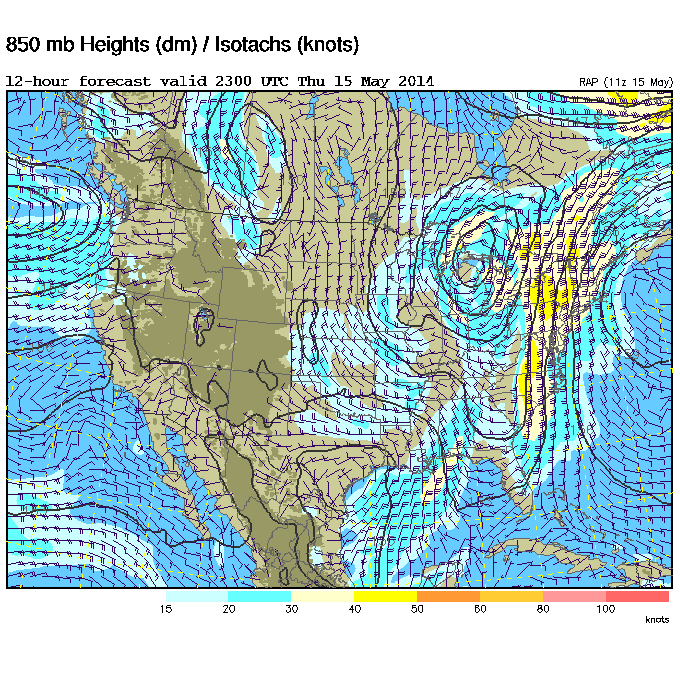
With a deep southerly flow continuing, and some very unsettled weather coming for the weekend, I think things will be getting quite interesting in the coming days. (I don’t want to know how many “Island Birds” Kristen Lindquist will pick up over me on Monhegan this weekend!).  Check out this wind map from the 15th, showing a very strong southerly flow originating all of the way from Florida and the Caribbean.

wind map, 5-15-14

For those of us not on Monhegan this weekend, I sure hope you’ll be birding hard – not despite the weather, but because of the inclement weather. At the very least, keep an eye on those feeders. Both here at the store and at home, we’re stocked up with mealworms, jelly, oranges, insect suet, and nut blocks. Not only will the cool, wet weather limit natural food sources, but the slow progression of the season continues to put a lot of important food sources well behind the birds’ required schedules.

For example, apples and cherries are only now starting to bloom. Early-arriving nectavores and insectivores flock to these (and other early-season bloomers like Shadbush, azalea, and quince) for both nectar and the insects attracted to that nectar. The lack of a lot of flowers so far this season has pushed many orioles (including some Orchards in addition to the regular Baltimores), Gray Catbirds, and Scarlet (and some Summers) Tanagers to feeding stations in above-average numbers.  I expect that trend to continue through the middle of next week, as a stubborn upper-level low remains locked overhead producing unsettled weather.

So keep an eye out the window, get outside, and find some good birds!  And regardless of rarities, it’s just a great time to be birding!

2014 Maine State List Predictions

About this time each year on my blog, I make two lists of predictions for the coming year in Maine birding.  The first is my (somewhat-educated) guesses of the next 25 birds to be added to Maine’s state list.  The second is my predictions of the next 25 birds that I will add to my own personal state list.

But first, let’s recap 2013.  This past year, only one new species was added to the Maine list (although there was a report of a Rock Wren in Washington County this fall; I know little of the details): Eurasian Collared-Dove that appeared at a Falmouth feeder on 5/28.  This was my #1-ranked bird for each of the last two years.  I was hardly going out on a limb with this one, as this bird continues to rapidly colonize North America.  While reports in New England continue to be sparse, we can only foresee these becoming much more regular and eventually colonizing much of Maine.

For 2014, I added Neotropical Cormorant to the list, based on the expanding population in the interior of the continent and increasing vagrancy to distant corners of the continent.  I also replaced Bermuda Petrel with Barolo Shearwater.  Recently split from Little Shearwater, this pelagic waif has been detected near the mouth of the Gulf of Maine.  It seems it’s only a matter of time before a research vessel or even a whale-watch trip (especially following a tropical system) finds one within Maine waters.  I also shuffled around a few species based on increasing populations and/or trends in vagrancy.

So here goes my Top 25 Next Species for Maine list:
1)   California Gull
2)   Ross’s Gull
3)   Graylag Goose
4)   Roseate Spoonbill
5)   Little Stint
6)   Fieldfare
7)   Hammond’s Flycatcher
8)   Black-chinned Hummingbird
9)   Spotted Towhee
10)  Audubon’s Shearwater (on “hypothetical” list)
11)  Neotropic Cormorant
12)  Black-tailed Gull
13)  Anna’s Hummingbird
14)  Redwing
15)  Allen’s Hummingbird
16)  Barolo Shearwater
17)  Long-billed Murrelet
18)  Common Ground-Dove
19)  Western Wood-Pewee (my gut still tells me a bird I found on Monhegan last fall was actually this species, but a good voice recording is going to be necessary to confirm identification).
20)  Spotted Redshank
21)  Yellow-legged Gull
22)  Brown-chested Martin
23)  Bermuda Petrel
24)  Gray Flycatcher
25)  Common Scoter

As for me personally, 2013 was a productive year.  I added eight birds to my state list (with last year’s rankings):
a) Hoary Redpoll (#2), Bowdoinham feeder, 2/4.
b) Northern Lapwing (honorable mention), Range Hill Road, Poland, 5/6.
c) Acadian Flycatcher (#22), FortFoster, 5/21.
d) Mew Gull (#21), Thomaston, 8/8.
e) Black-necked Stilt (honorable mention), Eastern Road, Scarborough Marsh, 6/23.
f) Kentucky Warbler (#12), East Point, Biddeford Pool, 9/9.
g) Bell’s Vireo (#23), Bailey Island, Harpswell, 10/23.
h) Hermit Warbler (honorable mention), Harpswell feeder, 12/12.

Of those, only the Acadian Flycatcher and Bell’s Vireo were “self-found,” which is always the more fulfilling way to add to one’s state list.  I’ll have to do better with this in 2014.  Unfortunately, it brings my self-found list down to 88.7% of my total state list (363).

I also “dipped” on the St. George American White Pelican in September, waiting until it was no longer being seen before going to look for it.  I chased enough in 2013, but I could have chased much more.  In fact, I never made the effort, was away, or just didn’t get lucky enough for some other potential state birds (American Three-toed Woodpecker, the collared-dove, Great Skua, Yellow-headed Blackbird, and Bullock’s Oriole all immediately come to mind).

There are lots of options for birds to add to my own list in the coming year(s), so narrowing it down to 25 and ranking them is really just a guessing game.  Of course previous records and trends are taken into account.
1) Slaty-backed Gull
2) American Three-toed Woodpecker
3) Great Skua
4) Eurasian Collared-Dove
5) Gyrfalcon
6) Graylag Goose
7) Say’s Phoebe
8) American White Pelican
9) Western Grebe
10)  Boreal Owl
11)  Fork-tailed Flycatcher
12)  Tundra Swan
13)  Yellow Rail
14)  Ivory Gull
15)  Franklin’s Gull
16)  Sabine’s Gull
17)  Black-bellied Whistling-Duck
18)  California Gull
19)  Calliope Hummingbird
20)  Ross’s Gull
21)  Roseate Spoonbill
22)  Sage Thrasher
23)  Hammond’s Flycatcher
24)  Yellow-headed Blackbird
25)  Loggerhead Shrike

So there ya have it.  Now, let’s go birding and see what 2014 will bring!