Tag Archives: Prairie Warbler

Recent Highlights, 11/3 – 11/8/2024 – plus notes from 10/29-30

I usually miss at least one “Mega” rarity whenever I go away, so I was pretty pleased that this Common Gull – found on 10/31 by Evan Obercian at the Samoset in Rockland – stuck around until we returned. I was able to see it on 11/3.  It took a while, but when it eventually spread its wing, the species/subspecific ID became certain. Separated by the abundant Ring-billed Gulls by the smaller size, slightly darker back, and thin bill, we can rule out the West Coast Short-billed Gull by the length of the bill and the wing pattern. Separation from Kamchatka Gull is more challenging, but it wasn’t particularly dark, the head was lightly flecked with brown, and there’s a relatively distinct bill band. According to Ayyash (2024), the shorter gray tongues on the outer primaries, the large P9 window that connects with the large P10 window, and little to no white at the end of the tongue on P8 all suggest Larus canus canus (and not Kamchatka Gull). 

It’s November, and that means “Rarity Season” and unlike recent Novembers, Rarity Season is off to a roaring start. Here are my observations of note over the past 6 days. Below, see the trip report for our 7-day birding cruise that included time in Maine waters.

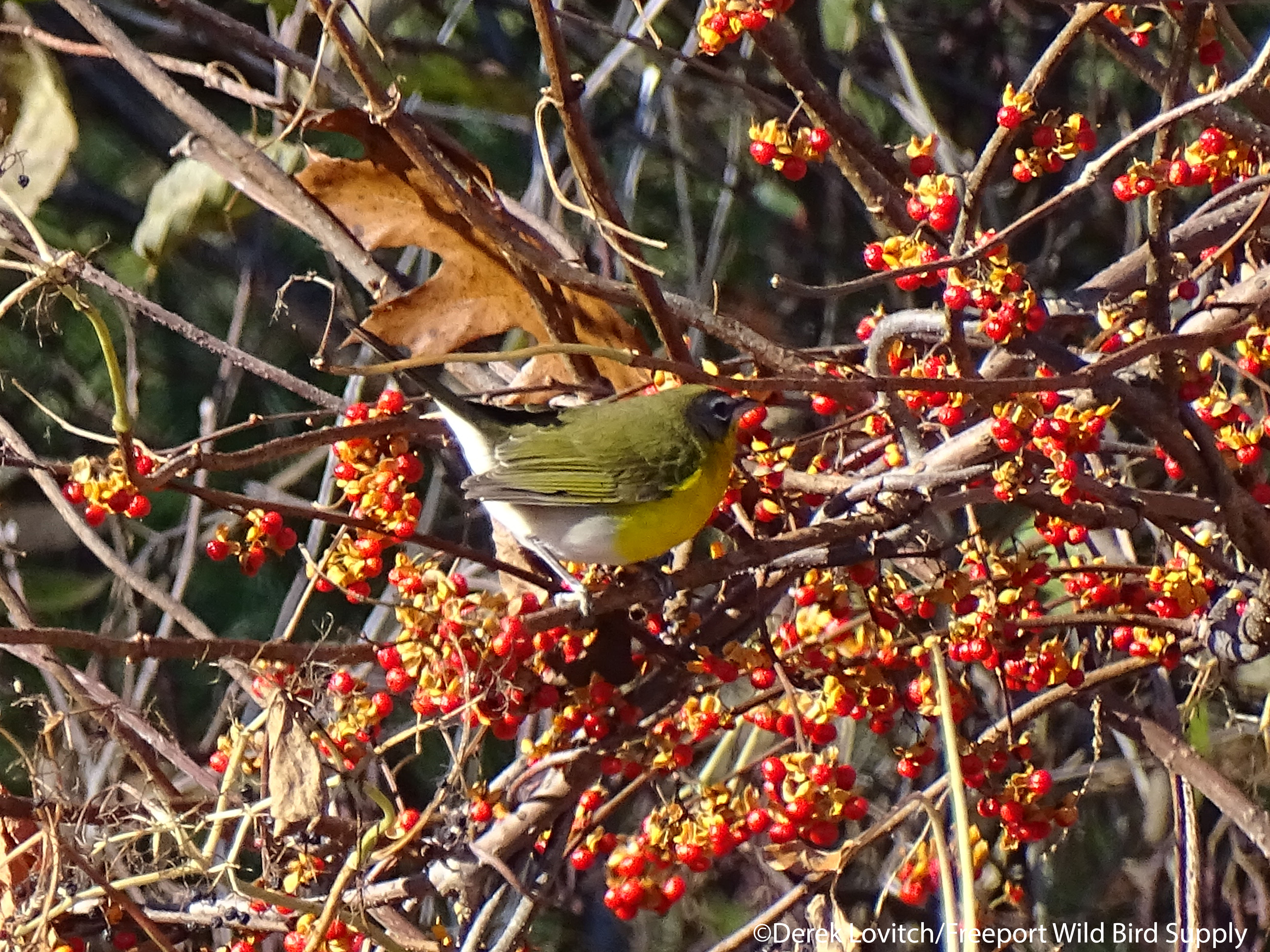
  • Although I chase even less frequently these days, I did make time to go see one of the two COMMON GULLS at the Samoset in Rockland on 11/3. Photos and discussion above. Additionally, I caught up with the YELLOW-BREASTED CHAT that was found there that day, although I blew the photos.  A “Western” Palm Warbler, several American Pipits, and 4 Horned Larks were also present.
  • 1 Pine Warbler, Bailey Island, Harpswell, 11/5 (with Jeannette).
  • 1 RED-EYED VIREO and 6 American Tree Sparrows (FOF), Trout Brook Preserve, South Portland, 11/7.
  • Biddeford Pool environs, 11/8:
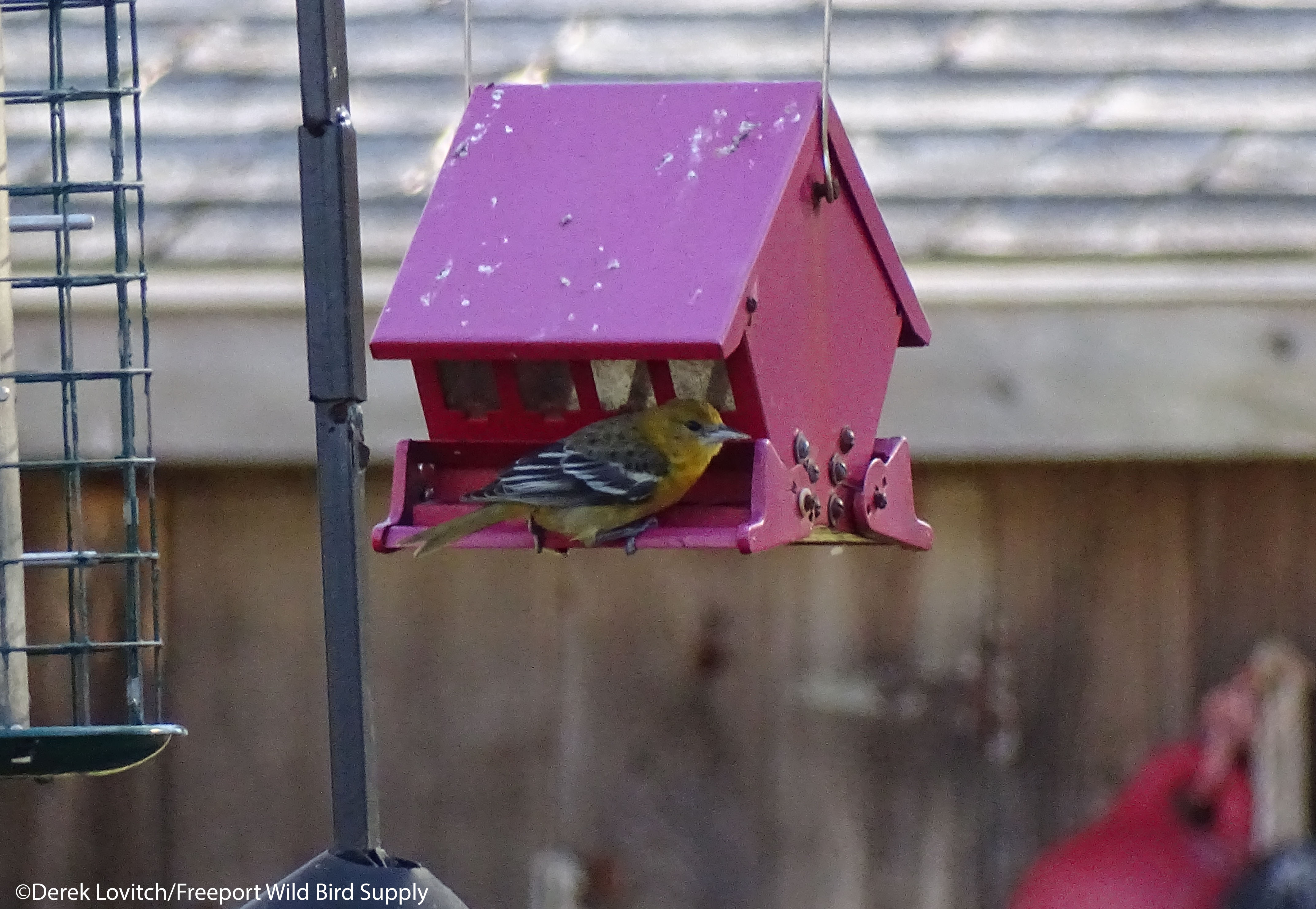
  •             1 BALTIMORE ORIOLE
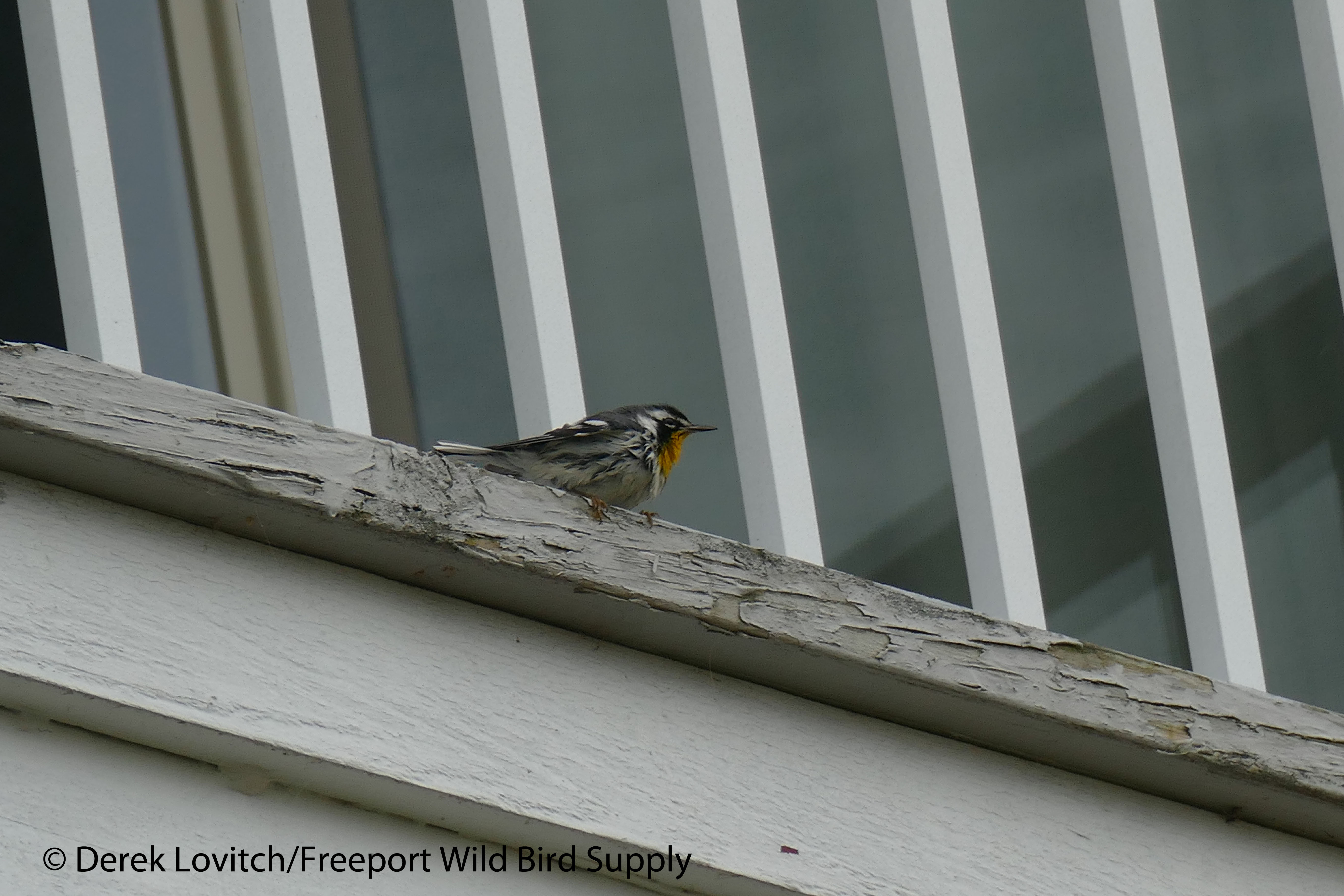
  •             1 PRAIRIE WARBLER
  •             1 “Ipswich” Savannah Sparrow
  •             1 Rusty Blackbird
  •             2 Lapland Longspurs
  •             2 Greater Yellowlegs, 22 Black-bellied Plovers, and 26 Dunlin.
  •             2 Northern Pintails
  •             4 Hermit Thrushes and 1 Swamp Sparrow, etc.
  • Our Durham property is much quieter overall these days, but a few Red-winged Blackbirds have been around, a Ruby-crowned Kinglet was present 11/5-6, our first Pine Siskin of the season at home visited on 11/5 and increasing daily since, and Dark-eyed Junco numbers have continued to grow. At least one each of Swamp and Savannah Sparrow continue.

TRIP REPORT

Last week, Jeannette and I boarded a Princess Cruises ship in New York City to unofficially survey for rarities and things like Great Skua. The entire trip report is here, but our highlights from Maine specifically included:

  • 1 RED-EYED VIREO, 2 Orange-crowned Warblers, 2 Field Sparrows, etc, Eastern Promenade, Portland, 10/29. Yes, we took a cruise only to go home!
  • Passerine FALLOUT, 10/30. Awoke to birds on deck before dawn. 16.5 nautical miles southeast of Mt. Desert Rock. 12 species of passerines, led by 8++ Yellow-rumped Warblers but also including 1 Rusty Blackbird, 1 “Ipswich” Savannah Sparrow, 1 Snow Bunting, and perhaps most surprisingly, 7 European Starlings. Another birder on board photographed a Pine Warbler.
  • Very little time was spent in daylight in Maine waters, unfortunately, but we did have a couple of Northern Fulmars in Maine waters very early on the 30th.

Recent Highlights, 10/17- 10/24/24

A big thank you to the homeowners for alerting us to the presence of this very late hummingbird that arrived in a Durham yard on the 20th. We always put an alert in our store’s newsletters about late hummingbirds, and we try to get photographs to confirm their identity as many late season hummingbirds turn out not to be Ruby-throats. This one, however, was indeed a very late Ruby-throated, confirmed with the shape of the outer primaries on the folded wing.

Despite weather often feeling more like summer, it was a great week of autumn birding. Perhaps my last morning flight visit of the season to Sandy Point, a trip to a private island in Casco Bay, a late hummingbird to chase, a day off to do some birdfinding, and time on our property all combined for a very productive eight days of birding. Here are my observations of note.

  • Sandy Point Morning Flight, 10/17: 351 individuals of 25 species, led by 114 Yellow-rumped Warblers but including a goodly October 17th total of 7 species of warblers. Full list here:
  • 1 Pine Siskin (first of fall), here at the store, 10/18.
  • 1 Field Sparrow and 1 Horned Lark, House Island (private; restricted access), Portland, 10/20 (With Birds on Tap – The Boat Trip! tour group). Trip report here.
  • 3 Common Yellowthroats, 2 imm White-crowned Sparrows (FOF, finally), 1 Field Sparrow, etc, Private property in Cape Elizabeth, 10/22.
  • 1 “INTERIOR” NELSON’S SPARROW (FOY), Crescent Beach State Park, Cape Elizabeth, 10/22.
  • 1 Orange-crowned Warbler, Kettle Cove, Cape Elizabeth, 10/22.
  • 1 subvirgatus Nelson’s Sparrow, Eastern Road Trail, Scarborough Marsh, 10/22.
  • 1 RUBY-THROATED HUMMINGBIRD, private home in Durham, 10/21 (with Jeannette). After receiving an email about a hummingbird coming to a feeder on 10/20, we made arrangements to visit to get confirmation photographs. Surprisingly, given the date, it was indeed a Ruby-throat. See photos above.
  • Highlights on our Durham property included at one or more Lincoln’s Sparrows continuing through at least 10/18, two EVENING GROSBEAKS (FOF) and a Field Sparrow on 10/21, and a late PRAIRIE WARBLER on the 24th.

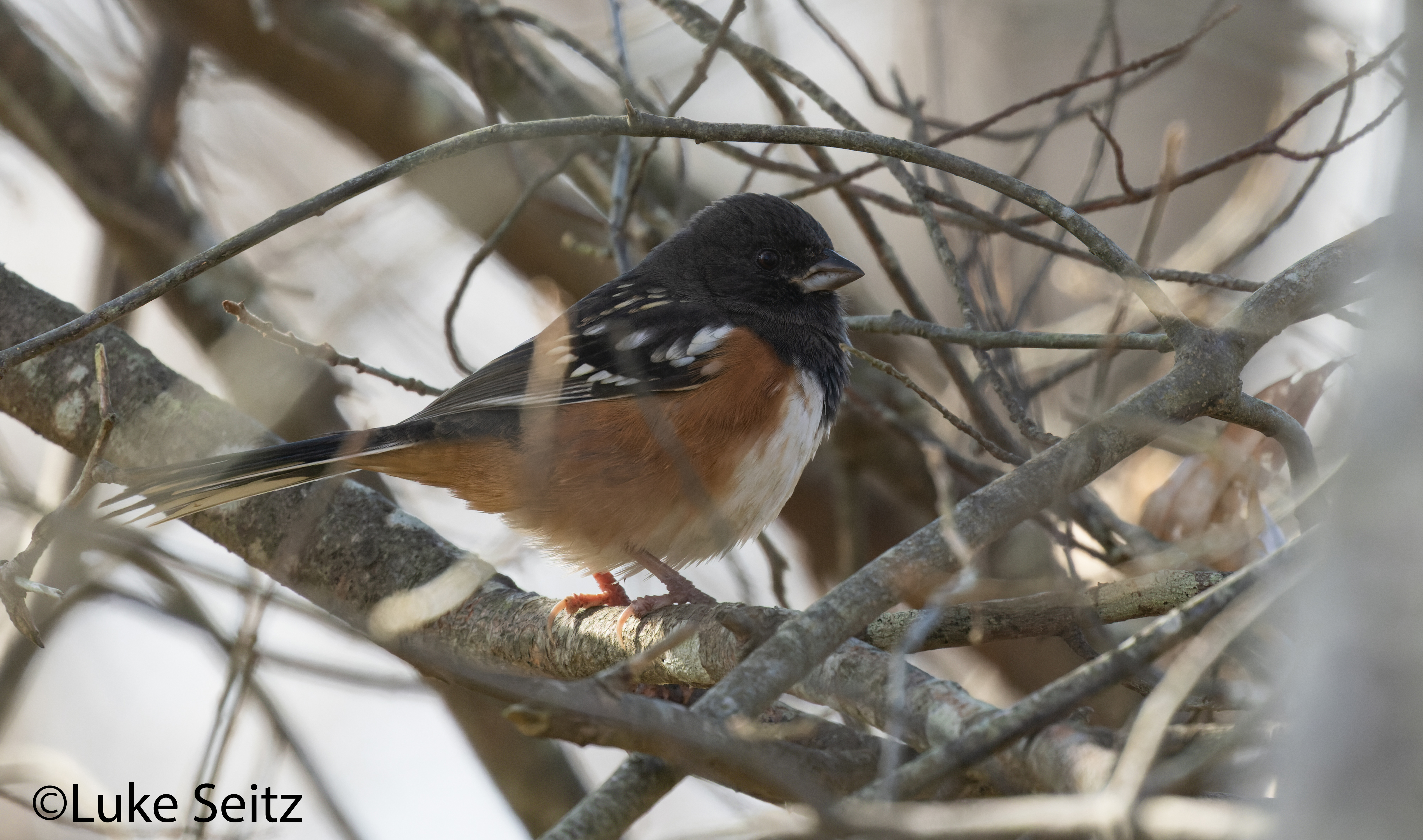
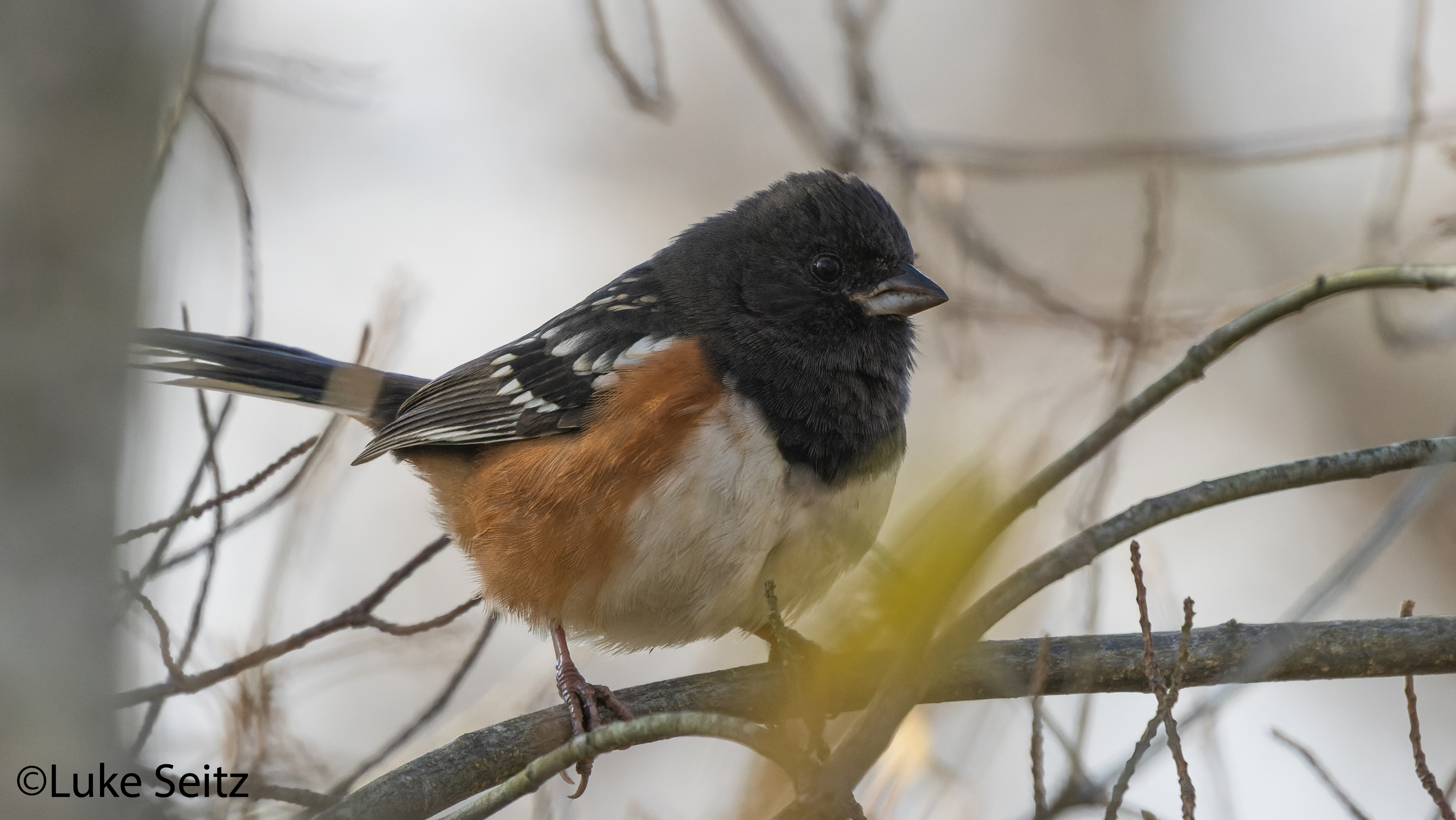
Maine’s First Confirmed Spotted Towhee at Fort Foster!

On Sunday, November 19th, 2023, I found Maine’s first confirmed Spotted Towhee at Fort Foster Park in Kittery.  Fort Foster is one of my favorite birding locations, especially in fall “rarity season.” I’ve been lamenting the complete dearth of vagrants found in Maine during the month of November so far, and so I set out for the southern York County coast that morning in hopes of changing that.

It didn’t take long.

A little more than an hour after I arrived at the park, slowly birding the warm, sunny edges of a chilly morning, I encountered a pocket of activity as I was turning off the main coastal trail and up the slight hill towards the Small Pier Pavilion. A tardy “WESTERN” PALM WARBLER that I encountered earlier had flown this way with a Yellow-rumped Warbler, and these two birds were at the edge along with several resident species including Black-capped Chickadees and Northern Cardinals as well as migrants including Golden-crowned Kinglets and White-throated Sparrows.

As I approached the top of the rise, I noticed a towhee sitting in the sun at the edge of one of two fairly large Eastern Red Cedars.  Since I had my camera at the ready since it’s rarity season afterall, I immediately grabbed it. Although I was assuming it was just a late Eastern Towhee (not unreasonably rare in a mild fall even at this date), it was a nice photo – towhees don’t sit still in the sun often enough! The bird was facing directly at me, so all I could see was its black hood, rufous sides, and white belly.

As I focused through my viewfinder, the bird shifted slightly, showing just enough of its side to reveal large white spots on it’s wing! A vagrant Spotted Towhee!  Incredible!

And to think I almost blew this…if I didn’t go for my camera for “just” a nice shot of an Eastern Towhee, perhaps I wouldn’t have looked at it long enough to see its diagnostic wings and back. That was a close one! (That one twig right across the face though!)

Knowing that hybrids between the two towhees (formerly known collectively as “Rufous-sided Towhee”) have occurred out of range, I knew I needed some better views and more photos. Over about 10 minutes, I observed and photographed the bird in the cedars, having it drop down once into the brush only to return to the cedar, perhaps as a result of some gentle pishing.

During this second photo session, a Cooper’s Hawk flew overhead, and all of the activity in this pocket dove for cover and remained silent (9:28am). As birds slowly returned to the edge, the towhee did not. A late Hermit Thrush that was also in the cedars reappeared, but the towhee did not.

As I waited, I sent out some text messages and checked my photos. Within about 45 minutes, Maili Waters and Luke Seitz arrived, and we began a thorough search, slowly increasing our search radius. It took until about 12:15 before Maili and Luke finally relocated the towhee on the other side of the very large and dense thicket. Luke’s excellent photos showed a more complete view of the wing and back, crucial field marks for confirming the bird’s identity.

I was on the other side of the park, searching for the towhee and whatever else might have been present, turning up a very late PRAIRIE WARBLER, a Gray Catbird, and a Ruby-crowned Kinglet – all good birds for the date. It took me a while to get to where Luke and Maili were, and we were soon joined by Doug Hitchcox and Matthew Gilbert. 

We waited for about 30 minutes before the need for water and lunch finally got the best of me, and I headed out. I was halfway to Kittery Center when Noah Gibb spotted the bird once again at the original location.  It was here, in the two cedars, that numerous observers were able to see the bird early in the morning the next day as well.

Returning home and in discussion with Luke, Maili, and Evan Obercian, we confidently ruled out any suggestion of a hybrid. The amount of white in the primaries had us a little wary, for example, but the National Geographic Guide to the Birds of North America nicely shows the regional variation with Spotted Towhees, including the more extensive white “slash” on the primaries of the Great Plains subspecies – the expected source of vagrants to the East.

Big white spots on each scapular, two complete wingbars (one bold on the greater coverts and one more subtle bar on the median coverts), the spotted-streaked back mantle, and the extensively white undertail are all consistent with a phenotypically pure Spotted Towhee – Maine’s first, and a long-overdue addition to our state’s list. In fact, this was #4 on my “Next Birds for Maine” predictions list. But as always, it’s always better find than to chase!

This Week’s Highlights, 9/19-22, 2023

This delightful Black-and-white Warbler hung out with me for a spell in “my office” at Sandy Point during the huge flight on the morning of the 21st.

While Hurricane Lee was a birding dud here in Maine, I did miss two great flights at Sandy Point and three overall fantastic days of migration while we were out of town.  But some good migration over the past four days since our return helped make up for it. Meanwhile, I also posted a blog recounting a little about what I (did not) miss during the passage of Lee.

  • While there has not been a hoped-for morning flight of consequence over or through our Durham property, it continues to be much better for fall migration than we even imagined.  Limited effort produced 12 species of warblers on both 9/19 and 9/22 – which included tardy Northern Waterthrush and Canada Warbler.
  • Sandy Point Morning Flight, 9/20.

With winds mostly westerly overnight, and very light westerly winds in the morning, the flight was lighter than I expected. It was also high and distant to the south, so I likely missed a lot of birds, and certainly identified less than I would have liked – both typical on such conditions.

6:23-9:15am55F, mostly clear, W 2.8mph-4.1Decreasing to WSW 0.6 to 1.9
Unidentified164Eastern Phoebe2
Northern Parula84Eastern Bluebird2
Blackpoll Warbler56DICKCISSEL2
Cedar Waxwing22Bay-breasted/Blackpoll2
Yellow Warbler19Osprey1
American Redstart12Black-throated Blue Warbler1
American Goldfinch9Red-breasted Nuthatch1
Common Loon5Wilson’s Warbler1
Red-eyed Vireo 5Baltimore Oriole1
Cape May Warbler4American Robin1
Ruby-crowned Kinglet3Common Yellowthroatx
Black-and-white Warbler3
Nashville Warbler3TOTAL405
Black-throated Green Warbler3
Horned Lark2
  • Sandy Point Morning Flight, 9/21.

Wow!  Although there was an absolutely huge flight overnight on the radar, the calm winds by dawn lulled me into a false sense of security. But as soon as the sun broke the horizon, birds started flowing. At first they were very high and in very large, dense aggregations, rendering identification impossible for me. Later, as the northwesterly wind picked up, many birds were considerably lower and landing in trees. Based on the date, there’s no way American Redstarts were the second most numerous warbler (they’re just easy to identify), and I would be a large proportion of those early, high migrants were strong-flying Blackpolls. But parulas definitely dominated, and at times, a dozen would be in the trees around me. Even as of 10:00am, a trickle of birds continued overhead.

6:26am to 10:26am.51F, mostly clear, calm.Increasing to NW 5.5-7.8mph
Unidentifed1878Bay-breasted Warbler2
Northern Parula947Palm Warbler2
Red-eyed Vireo97* new recordAmerican Goldfinch2
American Redstart88Blue Jay2
Blackpoll Warbler74Prairie Warbler2
Yellow-rumped Warbler59Savannah Sparrow1
Black-throated Green Warbler53DICKCISSEL 1
Ruby-crowned Kinglet47CONNECTICUT WARBLER!1 (plus one probable)
Yellow Warbler43Bobolink1
Black-and-white Warbler41Brown Creeper1
Cape May Warbler16Chestnut-sided Warbler1
American Robin12American Pipit1
Northern Flicker11Ruby-throated Hummingbird1
Scarlet Tanager10Unidentified Empid1
Magnolia Warbler9Mourning Dove1
Black-throated Blue Warbler8Probable Blue-winged Warbler1
Blue-headed Vireo7Rose-breasted Grosbeak1
Swainson’s Thrush6* including two high overhead almost an hour after sunrise!RED-SHOULDERED HAWK1 Juv. My 196th all-time Patch Bird!
Horned Lark6Sharp-shinned Hawk1
Red-breasted Nuthatch5Baltimore Oriole1
Nashville Warbler5House Wren1
Common Loon4Common Yellowthroatx
Eastern Phoebe4
Philadelphia Vireo3
American Kestrel3TOTAL3,467
Rusty Blackbird2
Golden-crowned Kinglet2

This cooperative Prairie Warbler was one of 18 species of warblers that passed over and through Sandy Point Beach, Cousin’s Island, Yarmouth, on the morning of the 21st.

  • Hawkwatching over the store, 9/21!  The big migration day continued, with Jeannette tallying 752 Broad-winged Hawks, 4 Bald Eagles, 3 Turkey Vultures, 2 American Kestrels, 2 Sharp-shinned Hawks, and 1 Cooper’s Hawk in just over 2 hours of observation right out our front door!

TRIPS AND TOURS.

In case you are looking for a last-minute weekend activity, it appears that we still have one space remaining on this weekend’s Monhegan Weekend with Down East Adventures.  For those who need a little more time to plan, I have a very limited number of spaces on my per diem Monhegan Fall Migration tour NEXT weekend 9/29-10/2.

2021 Monhegan Fall Migration Weekend Tour Report.

This Blue Grosbeak was among the highlights of an incredible weekend on the island.

“It was like the good ol’ days!” When every other bird you saw was a rare one, and you barely walked 10 steps before finding more birds.  But this was not what we were expecting, and the weekend sure didn’t start out that way!

After a very rough boat ride, we were still putting ourselves back together when one birder said “Go back, there are no birds here.”  Apparently, it had been a dreadfully slow week of little migration, but at least nice weather. This weekend, the weather wasn’t supposed to be very nice. So without many birds on the island, and quite a bit of rain on the way, were less enthused about arriving than usual…well, that might have had something to do with the boat ride.

And I am not sure if it helped that one of the first birds I looked at was a rare hybrid Herring X Great Black-backed Gull.  I am not sure if anyone was ready to take in gull hybrids yet.  Even more when we feared that this could be our best bird of the trip if the pattern held.

And sure enough, it was a very slow afternoon. But we did have good luck. We found a Sora that walked out into an open patch of mud, quickly caught up with the adult Lesser Black-backed Gull that has been hanging around, and after lunch immediately found the Least Sandpiper and Spotted Sandpiper at Lobster Cove that have been playing hard to get all week. There was also a good Northern Gannet show, which is always a treat. So at least we were seeing what was around, which sadly, really was not very much.  But hey, it still hadn’t rained!

Least and Spotted Sandpipers – shorebirds are few and far between on the island.

A period of rain, heavy at times, fell overnight, but the band was much narrower and less heavy than forecast. It did not rain all night, and it even appeared that a light flight of migrants had developed on the radar after midnight. And sure enough, come dawn, there was a light Morning Flight overhead. It was mostly Yellow-rumped and Blackpoll Warblers, but hey, there were new birds around!  And once, again, it was not raining.

A fly-over Dickcissel or two, a calling Gray-cheeked Thrush, and more. Birds!  Yay!

Then, after breakfast, I went to spread some seed in my favorite corner to attract some birds for the group to enjoy this morning.  Turning the corner near the famous “Chat Bridge” a shockingly bright flash of the most intense yellow you can imagine. And blue wings, and a flash of white in the tail. Prothonotary Warbler I exclaimed to no one around.

I raced back towards the group meeting point and sent them on their way. Kristen Lindquist took off running.  I eventually made it back with the rest of the group and we divided to conquer. Kristen and about half the group spotted it repeatedly, while it remained tantalizingly out of view from where I and others were standing. 

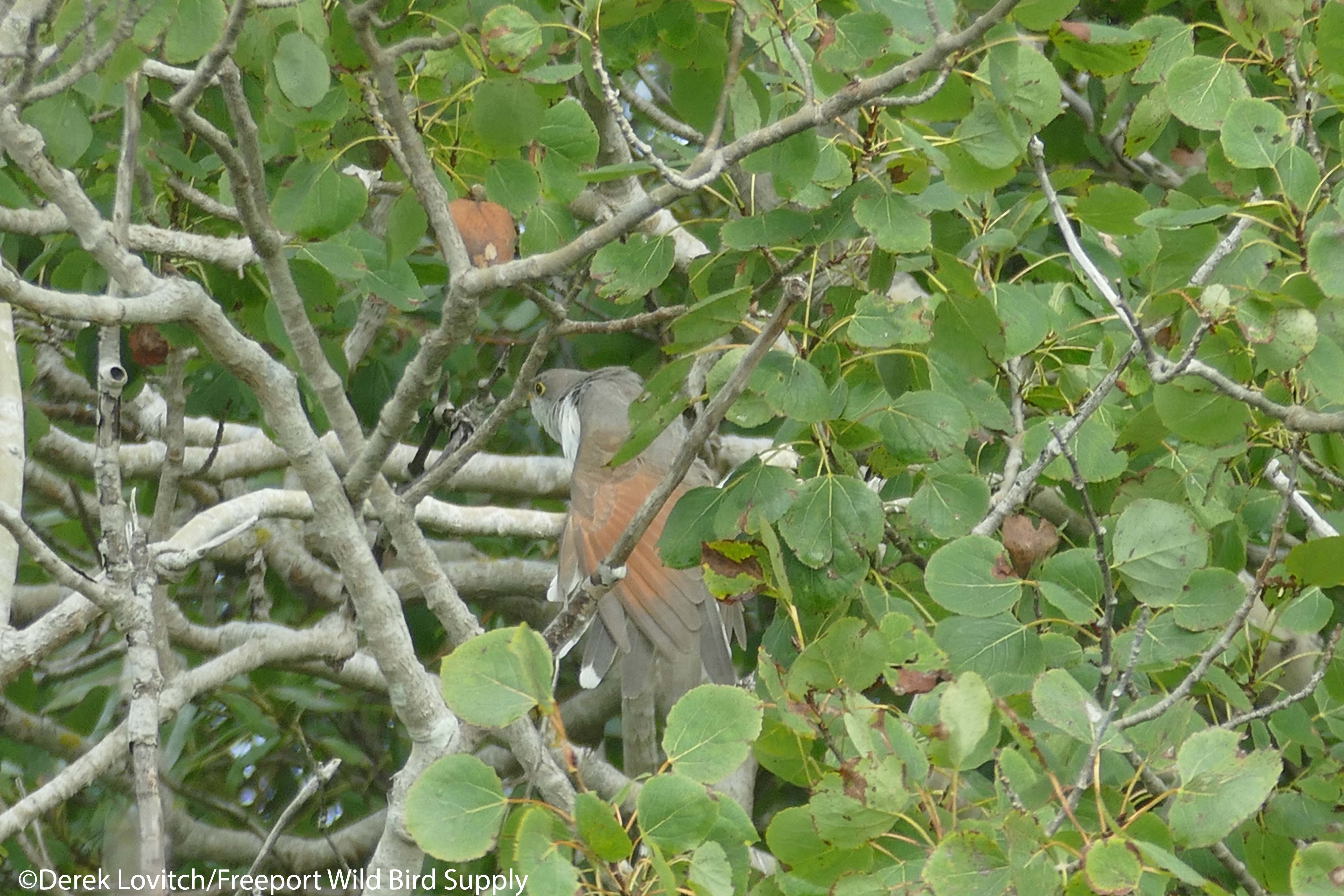
As other birders converged, a classic “Patagonia Picnic Table Effect” occurred. First, there were two Dickcissels, then I spotted a Yellow-breasted Chat making a short flight over the brush. While searching for that, Ilsa spotted a Yellow-billed Cuckoo that would sit still, preening, for well over and hour.  It might have been the most cooperative cuckoo ever on the island!  Another group had a brief look at a Clay-colored Sparrow.

Unfortunately, the Prothonotary Warbler was never seen again.

Yellow-billed Cuckoos don’t usually sit this still for this long. This bird was likely exhausted
after just arriving on the island.
In case you didn’t see it’s yellow bill.

It was already a pretty amazing day for one that we thought would be a wash-out. And it was still not raining.  After our lunch break, we convened at the Monhegan House at 1:30, and spent the next hour and a half on its lawn, and going no where else.

One Dickcissel became two, and then four, and when the group finally took off together, we were shocked to confirm a genuine flock of 8 Dickcissels – exceptional, even for Monhegan. And there were not one, but two Clay-colored Sparrows!  And other birds just kept arriving, as standing in one spot saw our list quickly grow: American Redstart, Brown Creeper, Warbling Vireo, etc, etc. One “Western” Palm Warbler became 4, a couple of Cape May Warblers paid us a visit, a Savannah Sparrow dropped in…

It was truly incredible! It felt like my first tours here 15 years ago. By now, a light shower was falling, but we didn’t seem to care. We finally pulled ourselves away as the action waned, wanting to see what the next hot corner would offer.  After spotting at least 8 Baltimore Orioles along Pumphouse Road, the rain finally arrived in earnest by about 3:30pm. We called it quits, but considering the day we had, no complaints were to be heard.  It was a really special day; one that will not soon be forgotten.

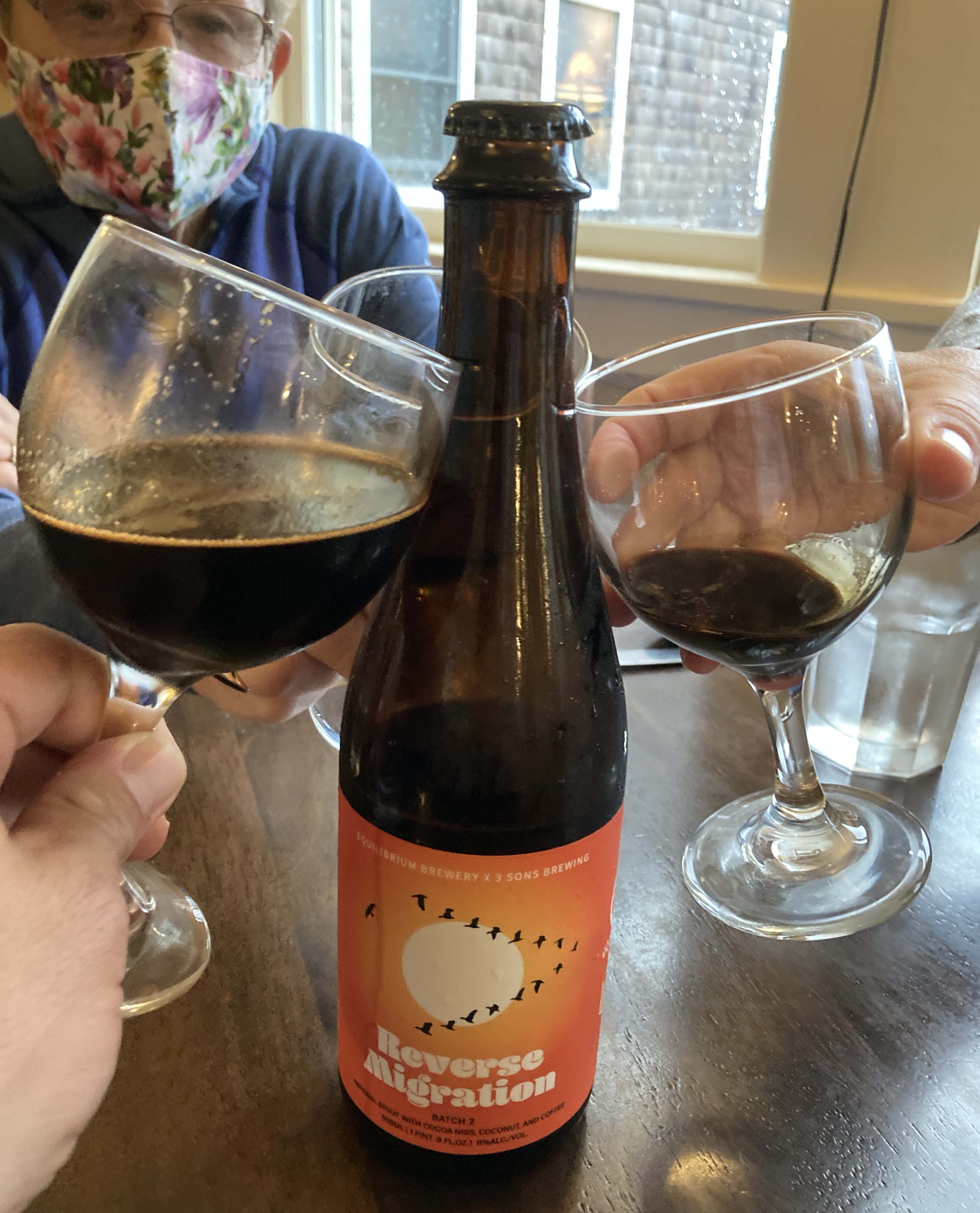
While it was more accurately “180-degree misorientation” and other forms of vagrancy and not “reverse migration” that brought us so many good birds, I brought a special beer out
just in case we had a day like we did today!

Rain fell overnight again, and come dawn on Sunday (Day 3), dense fog had rolled in.  There were a few Yellow-rumped Warblers overhead, especially during a short respite from the fog, but there were not nearly as many birds around as the day before. But, with fog overnight, we expected birds who were on the island to stay, which was good, because yesterday was awesome and there were still a few birds we had not yet encountered.

It might be a while before they are “countable” again, but the Ring-necked Pheasant population
seems to be booming in town.

We delayed the start of the after-breakfast walk to let a batch of heavier rain clear through. We were stuck in such an odd fall weather pattern, with virtually no west-east progression of weather systems. But we had been so lucky with the timing of the rainfall so far, that a little delay was of no concern.  Regrouping at 10:00, light showers gave way to just some lingering drizzle by 11, and it soon became apparent that there were new birds around.  We had two Prairie Warblers, a Scarlet Tanager joining the growing flock of Baltimore Orioles, and a Blue-winged Teal joined a Green-winged Teal in the marsh.  Two Cliff Swallows and a Barn Swallow foraged over Manana, and we had our second Yellow-breasted Chat of the trip – this one in the Island Farm garden on Pumphouse Road. And another Clay-colored Sparrow?

There was a really impressive number of Baltimore Orioles on the island over the weekend.

Pockets of Yellow-rumped Warblers here and there often contained another warbler species or two, and we had good looks at stuff all morning, even often-challenging birds to see with a group like Lincoln’s Sparrows. 

And after lunch, the sun was out!  We had the Lesser Black-backed Gull again, more looks at Clay-colored Sparrows, and finally the immature male Blue Grosbeak showed up for us, and show it did!

It wasn’t as birdy once the sun was out, but a light raptor flight, including at least 6 Peregrine Falcons helped make up for it.

On Monday, our last day of the tour, it appeared that little moved overnight on a light southwesterly flow aloft. But that had our daydreams going for rarities from our west and southwest.  And sure enough, while some of us were dallying over breakfast, a Western Kingbird that Kristen Lindquist found earlier flew right over us at the Yew and alighted nearby!

After breakfast, we “cleaned it up” for the group when we relocated it at the cemetery, affording great looks for all.  A slower day finally gave us an opportunity to head into the deeper woods. And while we expected fewer birds in the island’s interior, a couple of mixed-species foraging flocks finally put Red-breasted Nuthatch on the list, and we found the first Pine Warbler of the weekend. 

“Look at my tail!” Just in case anyone had hopes of stringing it into a rarer western Tyrannus.

Jeannette joined us by lunchtime, and after lunch, we had a frustratingly brief glimpse of the original Yellow-breasted Chat, along with more great looks at Clay-colored Sparrows. 

The tour came to a close with the 3:15 departure back to New Harbor, bringing our incredible four days together to the always-bittersweet end. 

Jeannette and I birded the rest of the afternoon together, picking up a few things, like my first “Yellow” Palm Warblers of the weekend and a Solitary Sandpiper.  Our walk to dinner yielded a second Pine Warbler, and at the harbor: a juvenile Ring-billed Gull (actually fairly rare out here in the early fall) and another view of the lingering Lesser Black-backed Gull.

On Tuesday, Jeannette and I enjoyed our day off on the island, and Kristen Lindquist joined us for most of the day.  A diminishing light southwest wind overnight gave way to a little bit of northwesterly winds by dawn, but it didn’t appear that much had arrived on the island overnight.

At least two, if not three, different Prairie Warblers were around the island.
Getting late, a few American Redstarts helped bump up our impressive warbler tally.

However, we soon located a Lark Sparrow found yesterday by Bryan Pfeiffer, the immature male Blue Grosbeak paid us a visit, and we heard the Sora briefly.  We then found an Orange-crowned Warbler out past the Ice Pond, my 20th warbler species of the weekend! Unfortunately, we were sans cameras with a little light rain falling.

This Scarlet Tanager was often cooperative at the grape arbor.
As per tradition with this tour report: at least one gratuitous “food porn” photo. Here’s the colorful and fresh avocado toast from the Trailing Yew.
And here’s one of the island’s resident Black-capped Chickadees…just because.

After lunch, we were excited to find two Lark Sparrows sitting next to each other at the cul-de-sac, there were now two Ring-billed Gulls in the harbor, and yes, there were still at least 4 Clay-colored Sparrows and several Dickcissels around! 

Just for a change of pace, we decided to walk the diffuse trail along the island’s southwestern end, but were soon distracted by something large in the water in the distance.  Retrieving my scope, it was clear that it was indeed a dead whale, and eventually it floated close enough to identify it as a dead (and rather bloated) Minke Whale.  A handful of gulls were around it, and briefly, a quick pass by a jaeger that was too far to claim the identity of.  It was a fascinating, if not rather sad, end to our visit as by now it was time for Jeannette and I to head to the dock to return to the real world.

A much more pleasant boat ride back, this time to Port Clyde yielded a number of Common Loons and plenty of Northern Gannets, and a surprise of a small pod of Atlantic White-sided Dolphins.  I’m not sure if I have seen this pelagic species from a Monhegan ferry before, or this close to land at all.

And finally, one last “good” bird: a pair of truant American Oystercatchers on Dry Ledges (off of Allen Island)! Interestingly, we had a pair on the same exact ledge on our way back from the island on October 5th of last year.

At least 8 Dickcissels, at least 4 Clay-colored Sparrows, 2 Lark Sparrows, and an Orange-crowned Warbler from the Midwest. A Western Kingbird from the West.  A Prothonotary Warbler, 2 Yellow-breasted Chats, and a Blue Grosbeak from the South.  105 total species (102 with the tour) including 20 species of warblers.  Yeah, that was a good trip  – and the stuff that Monhegan legends are made of, at least sans fallout.

Four of a flock that grew to an impressive 8 Dickcissels, often found in the swale behind the
Monhegan House throughout the weekend.

And finally, here is our birdlist from the extraordinary weekend:

9/24 = * denotes ferry ride only
9/27 = * with just Jeannette
9/28 = with Jeannette; *denotes ferry ride only
24-Sep25-Sep26-Sep27-Sep28-Sep
American Black Duck00111
Mallard310262424
Mallard x American Black Duck Hybrid00011
Green-winged Teal0101*0
Blue-winged Teal0101*0
Common Eiderxxxxx
Ring-necked Pheasant613121610
Mourning Dove622301518
YELLOW-BILLED CUCKOO01000
unidentified cuckoo00010
Common Nighthawk00000
Sora10001
Semipalmated Plover01000
Least Sandpiper10201
American Woodcock10000
Spotted Sandpiper10100
Unidentified jaeger00001
Solitary Sandpiper0001*0
Black Guillemot23103
Laughing Gull1*0003
Ring-billed Gull0001*2
Herring Gullxxxxx
LESSER BLACK-BACKED GULL1011*0
Great Black-backed Gullxxxxx
GREAT BLACK-BACKED X HERRING HYBRID1000
Common Loon1*0006*
Northern Gannet2002043
Double-crested Cormorantxxxxx
Great Cormorant03311*
Great Blue Heron01103
Bald Eagle2*111*1
Sharp-shinned Hawk00021
Belted Kingfisher00111
Yellow-bellied Sapsucker04382
Downy Woodpecker00143
Northern Flicker4541010
Merlin00486
Peregrine Falcon00686
WESTERN KINGBIRD00010
Eastern Phoebe00011
Blue-headed Vireo00010
Warbling Vireo01000
Red-eyed Vireo01081210
Blue Jay61881618
American Crow46xxx
Common Raven22022
Black-capped Chickadeexxxxx
CLIFF SWALLOW00200
Barn Swallow00100
Golden-crowned Kinglet044158
Ruby-crowned Kinglet02034
Cedar Waxwing3048406050
Red-breasted Nuthatch00003
White-breasted Nuthatch00022
Brown Creeper02111
House Wren01101
Carolina Wren04478
Gray Catbirdxxxxx
Brown Thrasher02000
European Starling1818181818
GRAY-CHEEKED THRUSH01000
Swainson’s Thrush04111
American Robin03034
American Pipit00010
Purple Finch01000
LARK SPARROW00002
American Goldfinch210413
Chipping Sparrow086108
CLAY-COLORED SPARROW024414
Dark-eyed Junco00021
White-crowned Sparrow00010
White-throated Sparrow21061510
Savannah Sparrow03301
Song Sparrowxxxxx
Lincoln’s Sparrow01315
Swamp Sparrow00212
YELLOW-BREASTED CHAT01110
Bobolink06050
Rusty Blackbird02010
Common Grackle06964
Brown-headed Cowbird01000
Baltimore Oriole08151612
Northern Waterthrush10421
Black-and-white Warbler00110
PROTHONOTARY WARBLER01000
Tennessee Warbler10000
ORANGE-CROWNED WARBLER00001
Nashville Warbler03224
American Redstart01202
Common Yellowthroat26544
Cape May Warbler13002
Northern Parula05433
Magnolia Warbler01210
Yellow Warbler05432
Blackpoll Warbler1158106
Black-throated Blue Warbler00010
Palm Warbler0441410
PINE WARBLER00023
Yellow-rumped Warbler306075300150
Prairie Warbler0022*1
Black-throated Green Warbler03345
Wilson’s Warbler01221
Scarlet Tanager00210
Northern Cardinal410886
Rose-breasted Grosbeak04443
BLUE GROSBEAK00101
Indigo Bunting00044
DICKCISSEL08754
Day Total3465667477
Warbler day total513141515
4-Day Tour total=102
Plus with Jeannette after the group =3
Total warblers =20

A Warbler (and Sparrow) Big Month. In December. In Maine.

December was unusually warm. In fact, it was record warm. And not just barely… records were shattered. The average temperature for the month was 38F. Not only was that a ridiculous 9 degrees above normal, it smashed the previous record of 24.8F (set in 2001). Surprisingly, despite the everlasting warmth, record daily highs were rare. Christmas Day was an exception, however, when temperatures soared to 62 in Portland, crushing the previous record high of 53, set just last year.

Our first measurable snow of the season didn’t fall until December 29th – the second latest date on record. Those 5-8 inches in southern Maine finally ushered in “real winter” and hopefully set the stage for a return to more normal conditions (although the last few days have once again been 5-10 degrees above normal).

Not surprisingly, such an unseasonable month resulted in some very-unseasonable birding. A variety of “lingering” or perhaps more accurately “pioneering” as Ned Brinkley, editor of North American Birds once dubbed it warblers in particular were making headlines.

So I decided to do a December Warbler Big Month. Because, well, warblers in December! In Maine!

With Tennessee, Yellow (2!), Nashville (2!), Common Yellowthroat, and Wilson’s on December 6th, I was half-way to my newly-set goal of 10 species for the month. The unusually mild fall has allowed more “lingering” birds to survive longer, and normal November hotspots are still hot (literally and figuratively).

Unfortunately, I waited until December 8th to decide to embark on this silly little hunt, so I had some catching up to do. There were some relatively easy ones (Yellow-rumped Warblers overwinter in a few places, along with “known” Blackburnian and Pine Warblers). That meant I just need to find an Orange-crowned Warbler (the second most-regular December warbler after Yellow-rumped) and then one other stray.

So off I went…

Not wanting to take any species for granted, I twitched a Pine Warbler that was reliably coming to a feeder in Brunswick on the 10th. I had to wait all of three minutes for it to arrive on my way back from walking Sasha. If only they were all this easy!
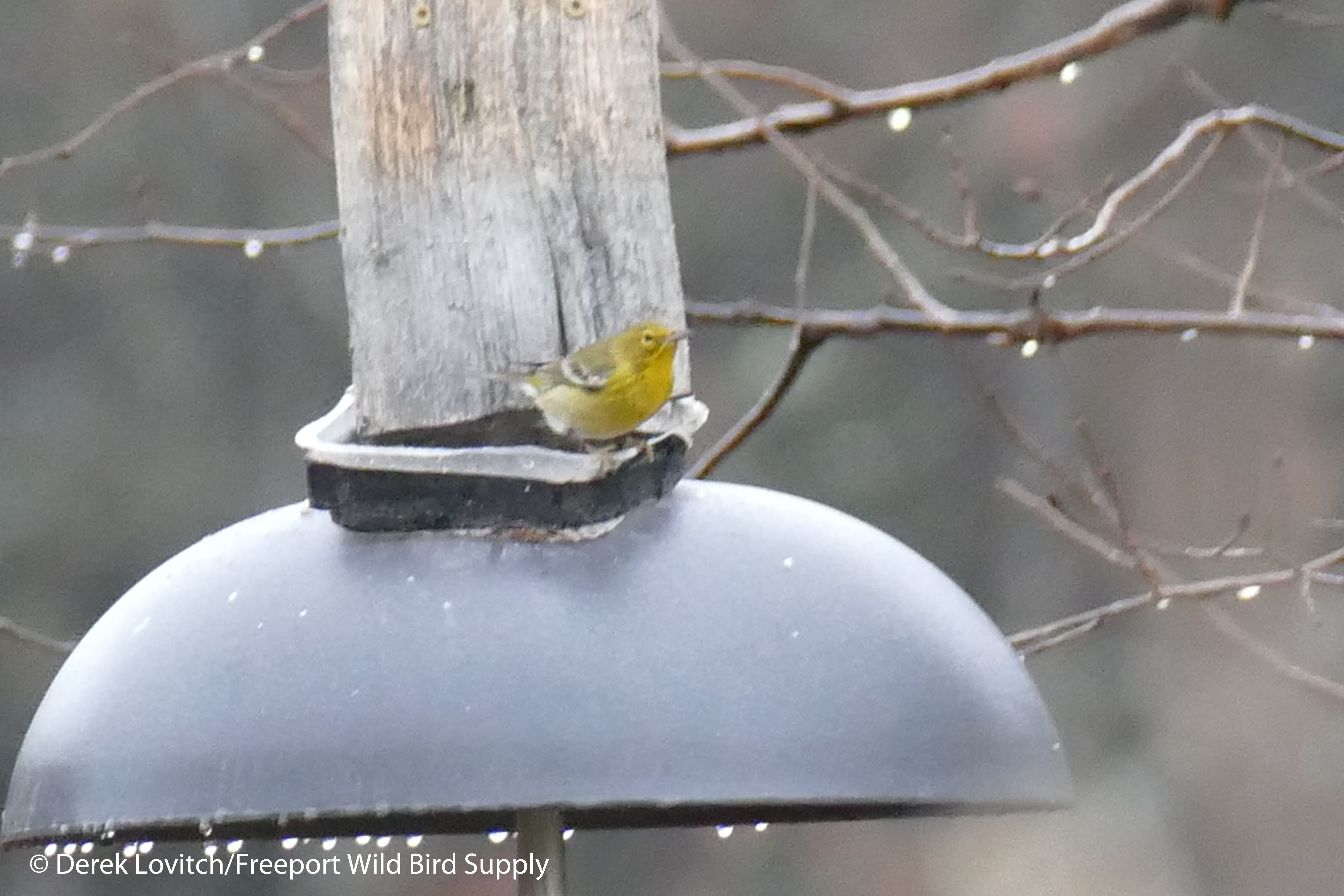
L1040178_PIWA2,JayStormers,Brunswick,12-10-15_edited-1

The next day I was once again at the Saco Yacht Club, looking for the Blackburnian Warbler (which I saw on Nov 30th – one day too early!). Activity didn’t pick up until the fog finally lifted after 10am, but I ran out of time. I did, however, enjoy another visit with the Tennessee, and 1 each of Yellow and Nashville Warblers. 2-3 Ruby-crowned Kinglets were also present, and a Yellow-rumped Warbler dropped in: my 7th species of the month! That and the Western Tanager were the consolation prizes (yes, I did just relegate the tanager to a consolation prize…shame on me… but I “needed” the Blackburnian!).
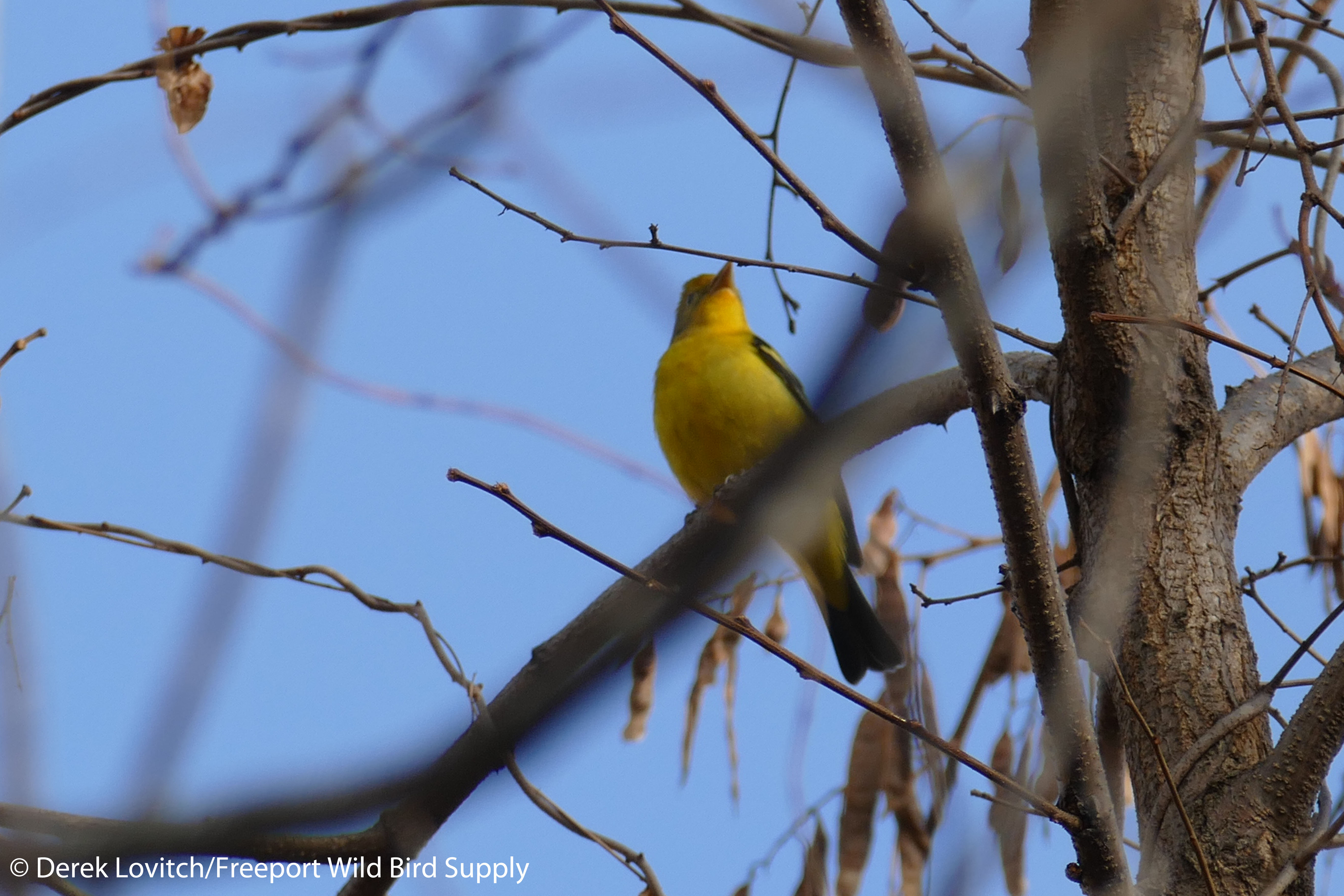
L1040189_WETA1,SacoRiverwalk,12-11-15_edited-1

I worked hard for an Orange-crowned Warbler in Portland on the 13th to no avail, but I did turn up the continuing Nashville Warbler along the Eastern Promenade (oh look, Portland ravaged vegetation here, too!) and a Gray Catbird on Sheridan St. I also took time to go visit the continuing Ross’s Goose along Stroudwater St in Westbrook – the third I have seen in Maine, and only the 6th or 7th state record.
IMG_6946_ROGO1,StroudwaterSt,Westbrook,12-13-15_edited-1(Phone-scoped image)

Continuing the quest, I had high hopes for the Southern York County Christmas Bird Count on the 14th. With a great territory that almost always turns up a good bird or three, Jeannette, Kristen Lindquist, and I worked the marsh, thickets, neighborhoods, and beach of the “Moody” sector. And we did indeed have a great day, including the 2nd Count Record Clay-colored Sparrow, the 5th Count Records of Baltimore Oriole and Lesser Scaup (21 – also a record high), and 6th Count Record of Dickcissel. But alas, not a single warbler. We didn’t even get a Yellow-rumped – for the first time, as there was virtually no fruit on the bayberry bushes along Ogunquit Beach or anywhere else.

When my friend Evan Obercian found a Yellow-throated Warbler at the Samoset Resort in Rockport on the 13th, my goal was definitely in sight (this was the “additional rarity” I needed), but in the weeks before Christmas, finding time was going to be a challenge. Luckily, a break in my schedule – and the rain – came on Thursday the 17th, so I got an early start and headed east.

I met up with Evan and Kristen and we wandered the grounds of the Samoset for almost two hours. I was not happy to find a stiff onshore breeze when I arrived, and it was increasing over the course of the morning. Then the mist rolled in, and soon, a steadier drizzle. There were not a lot of birds around (other than Canada Geese and Mallards on the golf course), and I was beginning to work on a plan to come back again. And not long thereafter, it called!

We spotted it in an isolated cluster of Scotch Pines, very near where Evan first saw it (and where we walked by 3 times already this morning). We followed it for about 30 minutes as it relocated to another grove before heading over to the hotel building, where it proceeded to forage in the sheltered porches of the four story building! Presumably gleaning insects from old webs in the corners and around furniture, clearly this bird had figured out a novel way of finding sustenance – especially on such a snotty day.

It was my 8th warbler of the month.
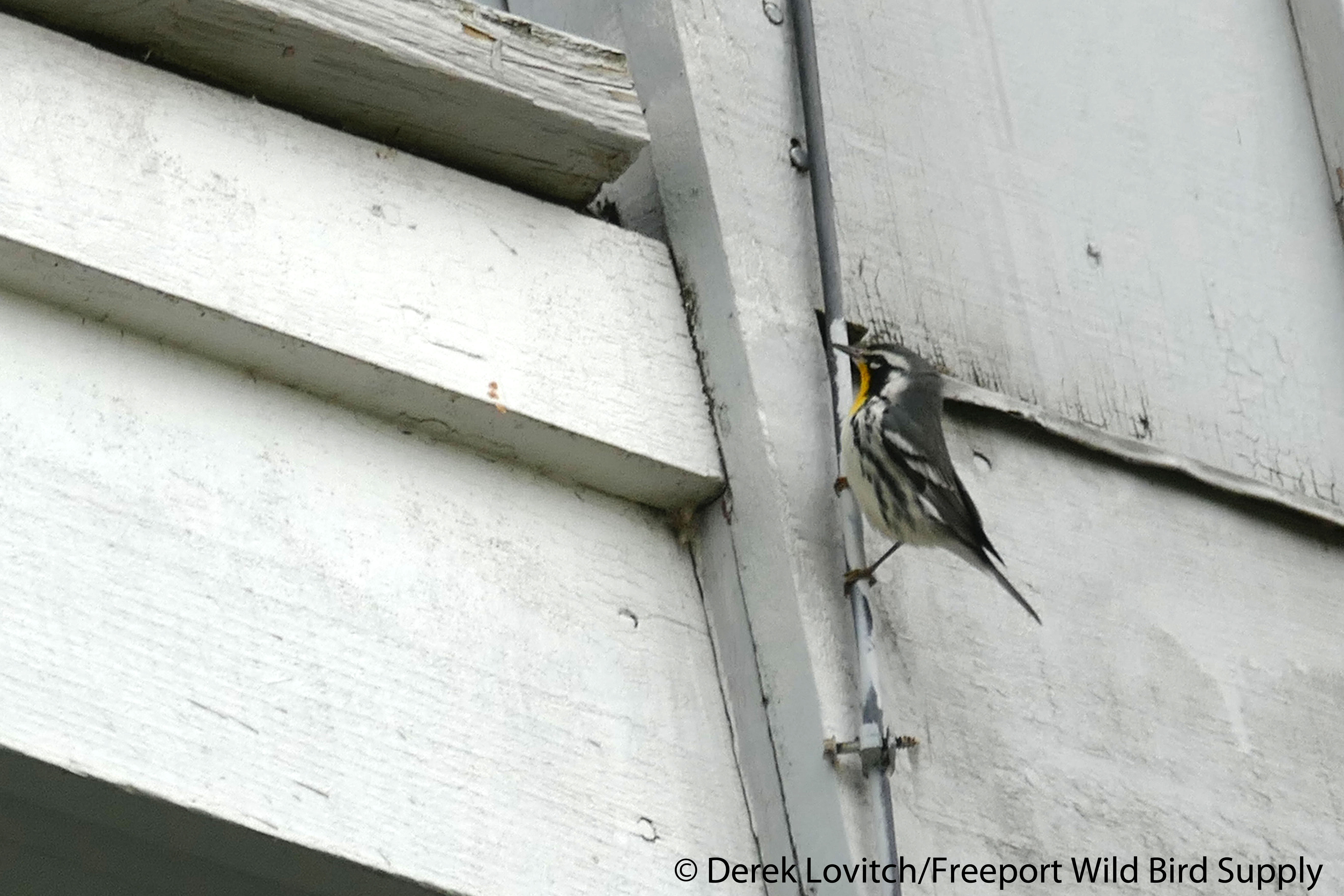
L1040215_YTWA3,Samoset,Rockport,12-17-15_edited-1L1040251_YTWA1,Samoset,Rockport,12-17-15_edited-1

I was back to the Saco Yacht Club with Luke Seitz the next morning, once again hoping for the Blackburnian. We worked the hillside and surrounding habitats hard, and absolutely cleaned up! The quick glimpse of a fly-by Western Tanager was more frustrating that satisfying, but we had great looks at the continuing Tennessee, Yellow, 2 Nashville, Common Yellowthroat, 2 Ruby-crowned Kinglets, and then, finally, the Blackburnian! My 9th warbler of the month!

Luke’s quote sums it up: “Let’s take a moment to appreciate what we are seeing and hearing around us right now. What. The. (Expletive deleted)!”

I had a little more time, so I made a quick trip down to Biddeford Pool. Working the neighborhood and thickets, I found a small group of Yellow-rumped Warblers (4-5), a nice addition to the day list. Besides, up until now, I had only seen one all month!

I was in the midst of plotting “Operation Orange-crowned” when I wandered over to look at a chattering Ruby-crowned Kinglet. A loud chip note caught my attention, and I looked up to see this Prairie Warbler – my 10th species of warbler for the month (and 7th of the day)!
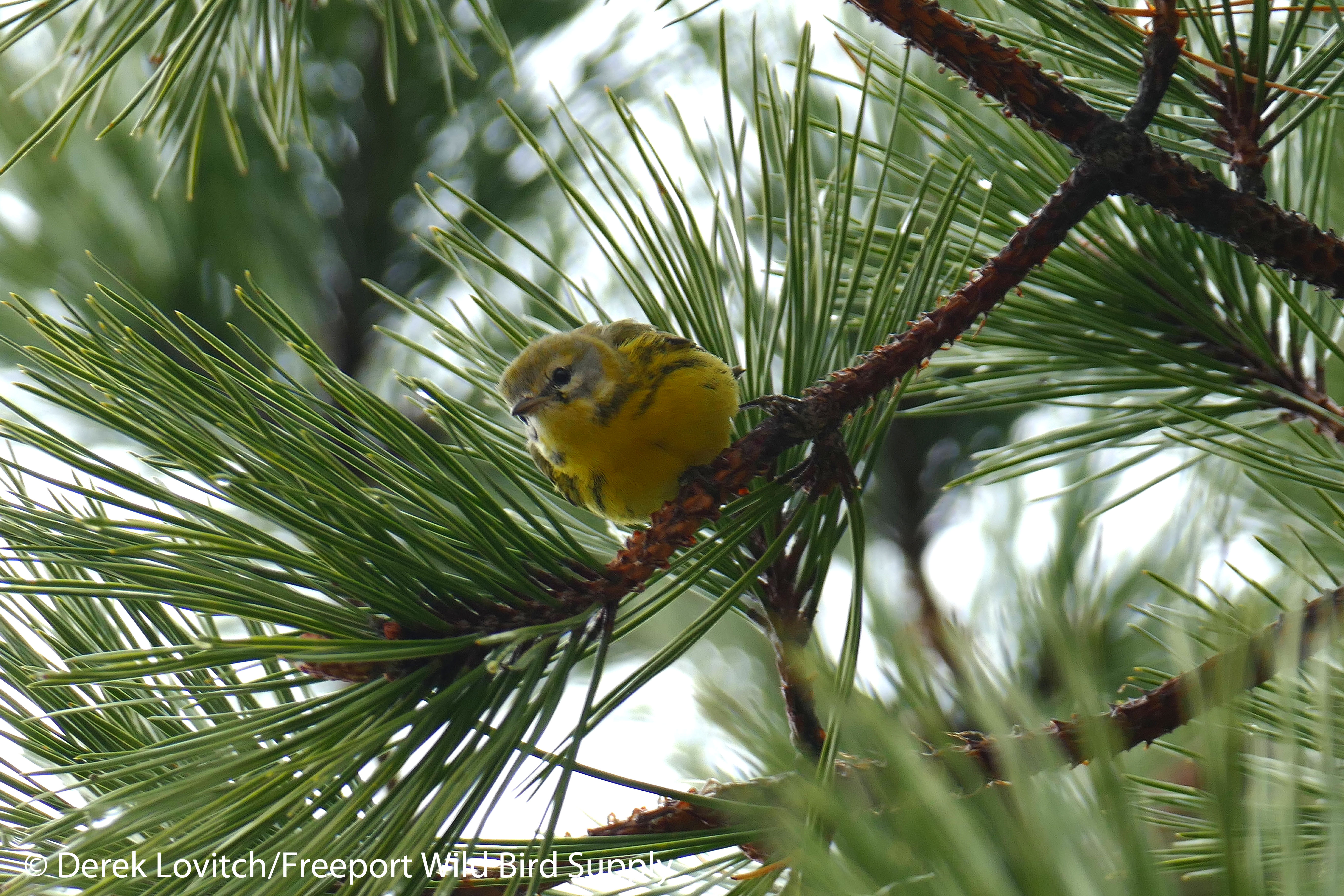
L1040305_PRAW,BiddPool,12-18-15_edited-1

But did you really think I would stop at 10?

Hunting for Orange-crowns in Portland and South Portland on the 21st, I turned up a Baltimore Oriole on Sheridan Street (likely the same individual that Jeannette and I found here on 11/23), and along West Commercial Street (in what’s left of the vegetation here!), I had a Swamp Sparrow, and a Field Sparrow – my 8th sparrow of the month.
L1040314_FISP,WCommercialSt,Portland,12-21-15_edited-1

Hmmm…do I need to go for 10 sparrows, too?

Obviously!

So I went to Scarborough Marsh the next day, and quickly picked up a Savannah Sparrow along the Eastern Road Trail for #9.

Jeannette and I, post-holiday madness, continued the search on the 28th, combing the coast from Kittery through Wells. While nothing new was added, we did find three different Swamp Sparrows (two at Fort Foster, 1 in York Beach), and most excitingly, we relocated the Clay-colored Sparrow that we found on the CBC – a mere one block away. Once again, however, I managed only some quick phone-binned photos.
CCSP,Wells,12-28-15

A Northern Flicker and 5 Yellow-rumped Warblers were at Wells’ Community Park, while other highlights included 14 Sanderlings with Purple Sandpipers along Marginal Way in Ogunquit.

But before I knew it, it was December 31st. I still had yet to see an Orange-crowned Warbler (inconceivable!) for the month, and I was stuck at 9 species of sparrow. Therefore, Phil McCormack and I had a mission when we set out in the morning. We worked thickets and fields in Cape Elizabeth, with stops at various nooks and crannies in South Portland and Portland.

While we did not relocate the Lark Sparrow along Fessenden Road (it’s been a week since I have seen a report), we did have a Merlin there, and a couple of Yellow-rumped Warblers at Crescent Beach State Park. Luke had an Orange-crowned Warbler at Camp Ketcha back on the 20th, but it was rather devoid of birds today.

Throughout the day, pockets of Song and American Tree Sparrows were indicative of recent movements and concentration following the snow and ice, but we were not prepared for the concentration of sparrows at a particularly fruitful patch. In fact, it was astounding!

75+ American Tree and 50+ Song Sparrows flew out of the field, joined by 10 or so White-throated Sparrows and 20 or more Dark-eyed Juncos. A continuing female Brown-headed Cowbird was there, along with at least 80 American Goldfinches and 30 or so House Finches. A Carolina Wren sang from the woods, and two Swamp Sparrows and a female Common Yellowthroat were in the marsh…I knew my 10th species of sparrow was here somewhere!
L1040338_mixed_sparrows,Alewives,CapeE,12-31-15

After a teasing brief, distant but highly suggestive look, I finally found it – a Chipping Sparrow! My 10th species of sparrow in December!
L1040361_CHSP,Alewives,CapeE,12-31-15

Shortly thereafter, a Savannah Sparrow (my second of the month) appeared – not just our 7th species of the day, but the 7th species in this one spot! Amazing! And now I had a 7 species of sparrow day and 10 species for the month to match my 7 species of warbler day and 10 species for the month! (The Double 7/10 Split?)

But of course, I still wanted an Orange-crowned Warbler, so we kept birding (well, after a long, celebratory lunch of course), and I tried a few more OC spots in Portland after Phil departed. I still can’t believe I saw 10 species of warbler in Maine in December, and none of them were Orange-crowned, but it seems a fitting finish to the month, and the year, was the continuing Baltimore Oriole and Gray Catbird sitting in the same tree in the Sheridan St lot!
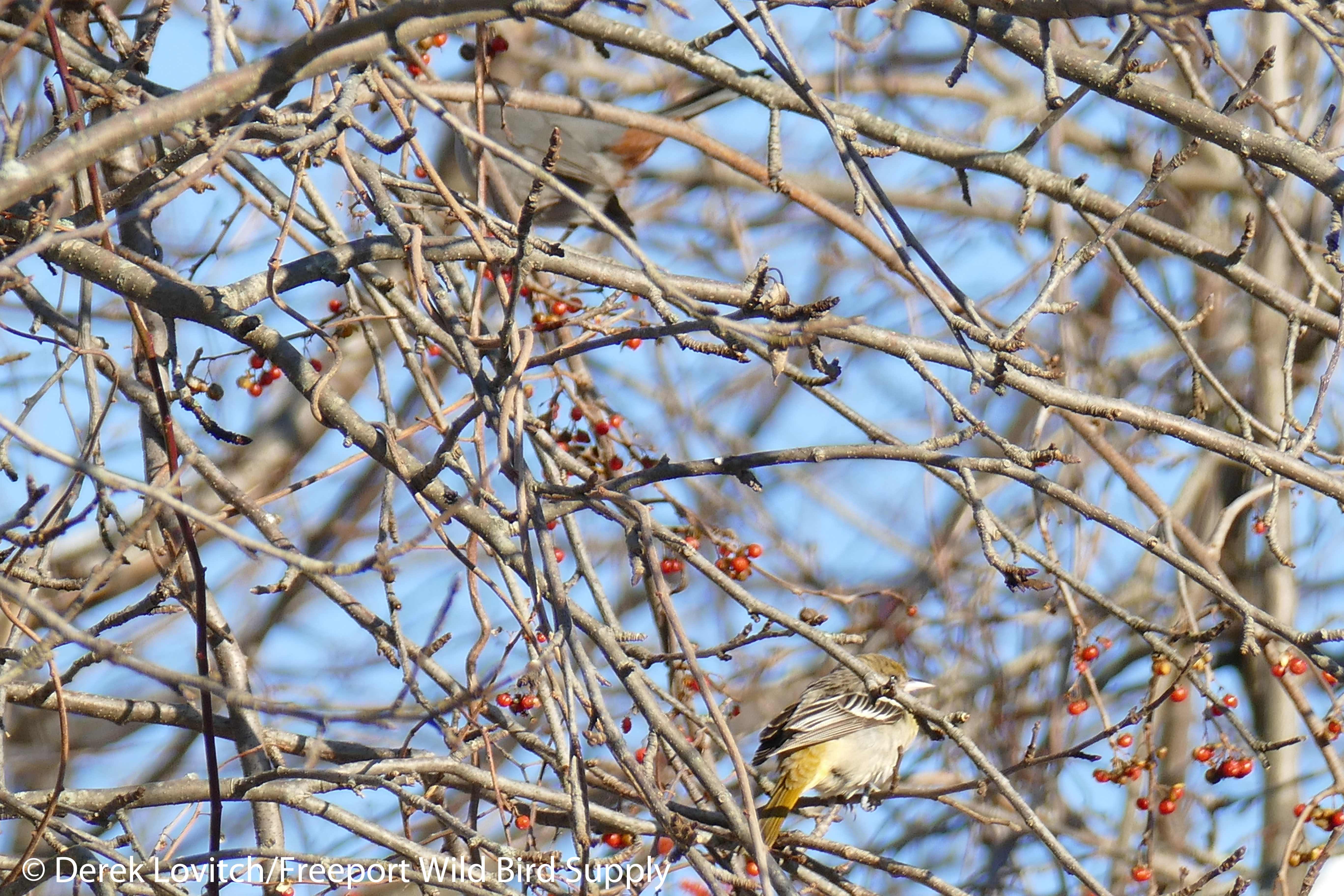
BAORandGRCA,SheridanSt,Portland,12-31-15_edited-2

Meanwhile, some other highlights over the course of the month, of the non-warbler or sparrow variety, including more seasonal species, such as two Snowy Owls on a Saturday Morning Birdwalk on the 12th, my first Iceland Gull of the season (finally) in Old Port on the 15th, a Snowy Owl at Biddeford Pool on the 18th, Harlequin Ducks, Purple Sandpipers, and a growing legion of wintering waterbirds.

Other signs of the unseasonably warm month included a lingering Double-crested Cormorant in Portland Harbor on 12/15, a few more lingering dabblers and Great Blue Herons than usual, but surprisingly, I didn’t see a Hermit Thrush all month – had they all moved on or would some now show up as the snow and ice pushes them to coastal migrant traps? But the most unexpected of them all was the Little Blue Heron that was found in the tiny Jordan Park Marsh in Ocean Park. I stopped by to visit it on the 22nd, about two weeks into its unseasonable stay.
L1040320_LBHE1,OOB,12-22-15_edited-1

Unfortunately, as much fun as this month has been – and as nice as it has been to not yet wear my parka – it’s impossible for me to ignore what this all means: the climate HAS changed. While no one month – warm or cold – is “climate change,” it is impossible for any rational person to not realize that our weather has become more and more unpredictable, less and less “normal,” and prone to more and more wild swings in seasonal and within-season variability. No, a hot day doesn’t mean Global Warming, nor does a snowstorm mean there’s not (Please James Inhoffe, please go away and shut the hell up). But the trends are real, very apparent, and very much here. Now. And they are most definitely affecting birds and bird migration.

That being said, I would not use these warblers as an example of this. Instead, I think the fact that here in December and they are still ALIVE, is however, a perfect example of just how ridiculously warm our weather has been! The mechanisms that delivered these birds to the Saco Riverwalk and elsewhere are likely varied. Perhaps the deformed, crossed-bill of the Tennessee Warbler impedes its ability to efficiently forage and put on the necessary weight for its next leg of migration. Perhaps the extensive southerly winds that have ushered in this warm air also facilitated the arrival of a 180-degree misoriented migrant Yellow-throated Warbler, and I would propose, the Prairie Warbler as well (I think the rare-but-regular late fall Prairies are actually birds from our south) that were “messed up” and flew the wrong way. But it is also possible that some of these warblers are “reverse migrants” that started to go south and then turned around, but I doubt it – facultative migrants like swallows and blackbirds do it, but I don’t know of any known proof that long-distance Neotropical migrants pull it off (on purpose, anyway).

These mechanisms occur every year, and rare warblers are found at places like the Saco Riverwalk every fall. However, they’re usually found in October and November and either move on (or, more likely perish) by now. So I think what’s remarkable is not that all of these warblers are here, but that they are still ALIVE well into December – and that is most definitely due to the mild winter so far. There have still been insects to be found, there’s plenty of fruit left to consume, and fewer calories have been spent to keep up internal body temperatures, meaning there are fewer calories that need to be consumed.

Migration in long-distance, obligate migrants is not triggered by temperatures, but trigged by physiological changes directed by hormones responding to the changing length of the day. In the fall, southbound migration is triggered in part by a response to changes in fat loading to fuel these epic journeys. At some point, the controls are switched away from building the fat reserves that are necessary for migration. I don’t know at what point in the season “pioneering” warblers lose the ability (perhaps, even the “desire”) to migrate. My guess is that even if you pumped these birds full of fat, at this point, they won’t be going anywhere – this is now their winter territory, for better, or for most likely, worse.

So what does this mean besides some amazing early winter birding? Good question. Conventional wisdom says these birds are all “evolutionary dead ends” that will soon be eliminated from the gene pool (it has to get cold sometime, right? If they’re not picked off by a Sharp-shinned Hawk or all of the damn outdoor cats that hunt there). However, with the effects of Global Climate Change clearly upon us, and not reversing anytime soon (if ever), perhaps these “pioneers” are the wave of the future. Maybe someday, warblers will successfully overwinter in Maine, and return to their breeding grounds to pass on those genes.

Maybe. Afterall, without vagrancy, we would not have Hawaiian honeycreepers or Darwin’s finches; distant islands would be sans all landbirds. Perhaps phenomena like “reverse migration” and this pioneering thing will allow the next wave of adaption to a changing climate. Of course, never before in the history of life on earth, has this change occurred so rapidly, and we have little evidence suggesting long-distant migrants can adapt this quickly – it’s going to take more than a few individuals of 10 species of warblers.

Sparrows, however, aren’t obligate long-distance migrants that are “programmed” to leave at a prescribed time. Instead, they are more flexible in their movements, and being seed-eaters, they aren’t reliant on warm-weather dependent insects. As long as seeds are available, and with the complete dearth of snow, they most certainly have been, those that linger can do just fine. White-throated, American Tree, Song, and Dark-eyed Juncos are all regular parts of our winter avifauna in southern Maine, lingering or “pioneering” Swamp Sparrows are regular here and there, and every now and then a Lark Sparrow (a “drift migrant/vagrant” from the Midwest) or Field Sparrow spends the winter in the state. Field and Clay-colored are also rare-but-regular in late fall/early winter, so once again, the presence of 10 species of sparrows is also not in and of itself caused by the record temperatures, but it is most definitely another sign of how mild – and especially snow-free – it has been.

But this is all a blog for another time…this blog was supposed to be about warblers (and sparrows!). In Maine. In December. And that’s amazing. Or, as Luke said, “What. The. (Expletive deleted).”

The 2014 South Coastal Maine Rarity Roundup

prairie warbler_edited-1
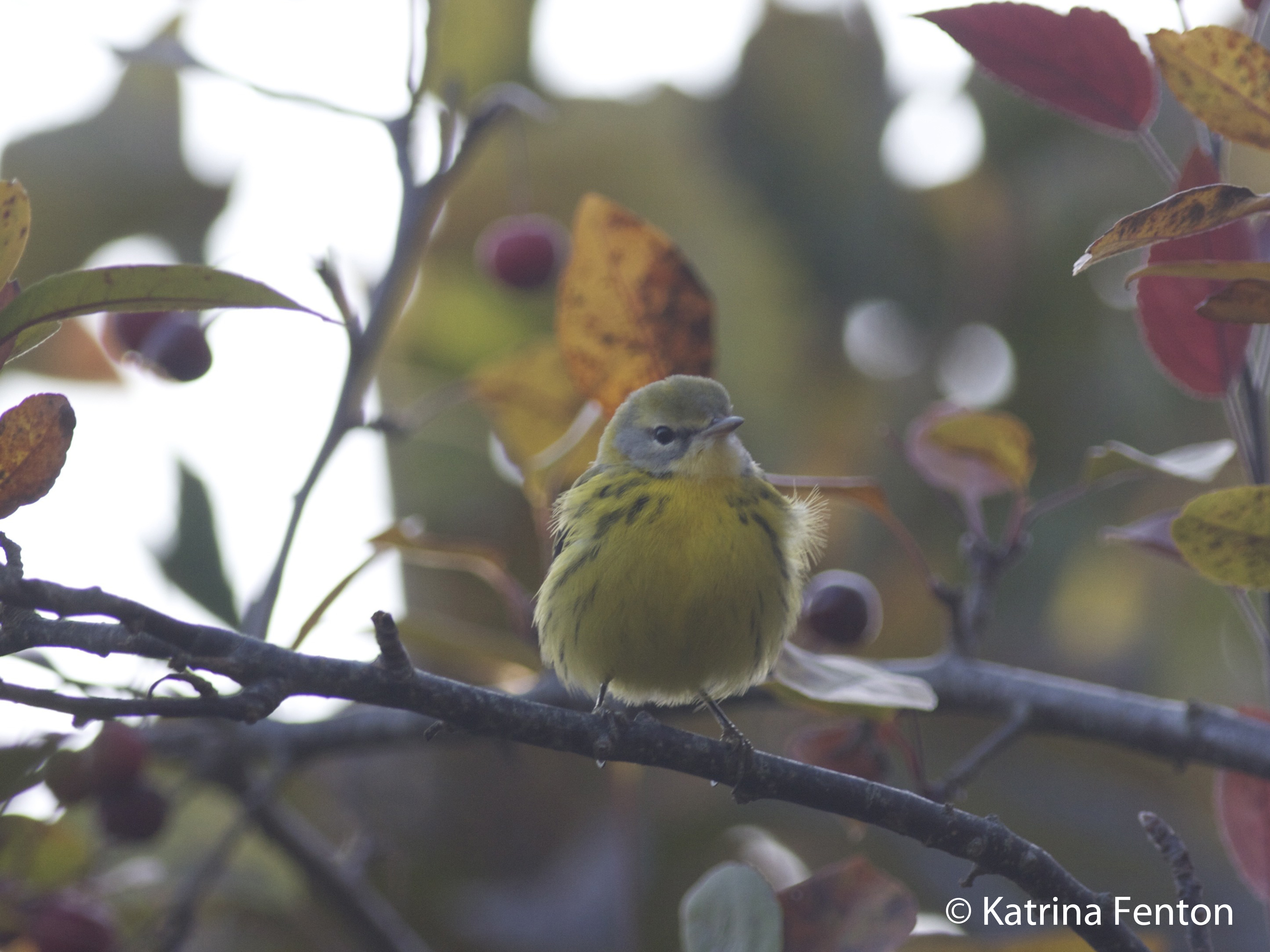
Prairie Warbler, Cliff Walk, York Harbor.

For the past ten years, I have organized the “South Coastal Maine Rarity Roundup” on the first weekend of November, when a group of friends get together to comb the coast from Kittery through Portland, focusing on finding lingering migrants, rarities, and hopefully “mega” vagrants.

This year, our event was postponed a week thanks to the massive Nor’easter and snowstorm that rendered last Sunday essentially un-birdable. A week later than usual, we expected fewer birds, but perhaps “better birds.” At the very least, we would be less miserable than in the 34-degree weather with driving wet snow and 50mph winds of last Sunday. Recent active weather and some good birds in the area helped stoked our “rarity fever” fire, which I prognosticated about on Friday’s blog.
The teams each cover a specific territory, including destination locations, and casual meanderings. This year, the Roundup was covered by:
Kittery –York: Katrina Fenton and Ken Klapper.
Ogunquit/Kennebunkport: Turk Duddy and Linda Woodward.
Wells: Doug Suitor, Andrew Gilbert, and Allison Moody.
Biddeford-Saco: Becky Marvil, Nancy Houlihan, et al.
Scarborough Marsh: Noah Gibb, Ed Hess, et al.
Cape Elizabeth: Robby Lambert and Lois Gerke.
South Portland: John Berry and Gordon Smith.
Portland: Derek Lovitch, Kristen Lindquist, Evan Obercian, and Jeannette Lovitch.

Although most teams described the day as “fairly slow” overall, we did indeed find some good birds, and surprisingly good diversity. 121 species (plus two subspecies) were recorded in all, well above the 11-year average of 114 species. Two new species were added to the all-time Rarity Roundup list: American Redstart and Lincoln’s Sparrow. Meanwhile, Brown Creeper went unrecorded for the first time, likely a factor of the scrubby habitats and open areas that we focus on at this time of year.

Unfortunately, despite overall high-quality birds, we once again failed to turn up any “mega” rarities. However, we did have a lot of fun as always, which really is the most important part. Or so we tell ourselves.

The full roster of “good” birds that were turned up by all of the teams were as follows:
American Wigeon: 4 at Hill’s Beach; 1 at Evergreen Cemetery.
NORTHERN SHOVELER: 1 pair, Deering Oaks Park, Portland.
Northern Pintail: 2, Fortunes Rocks Beach.
Common Merganser: 2, Saco Riverwalk.
Ruddy Duck: 40, Prout’s Pond.
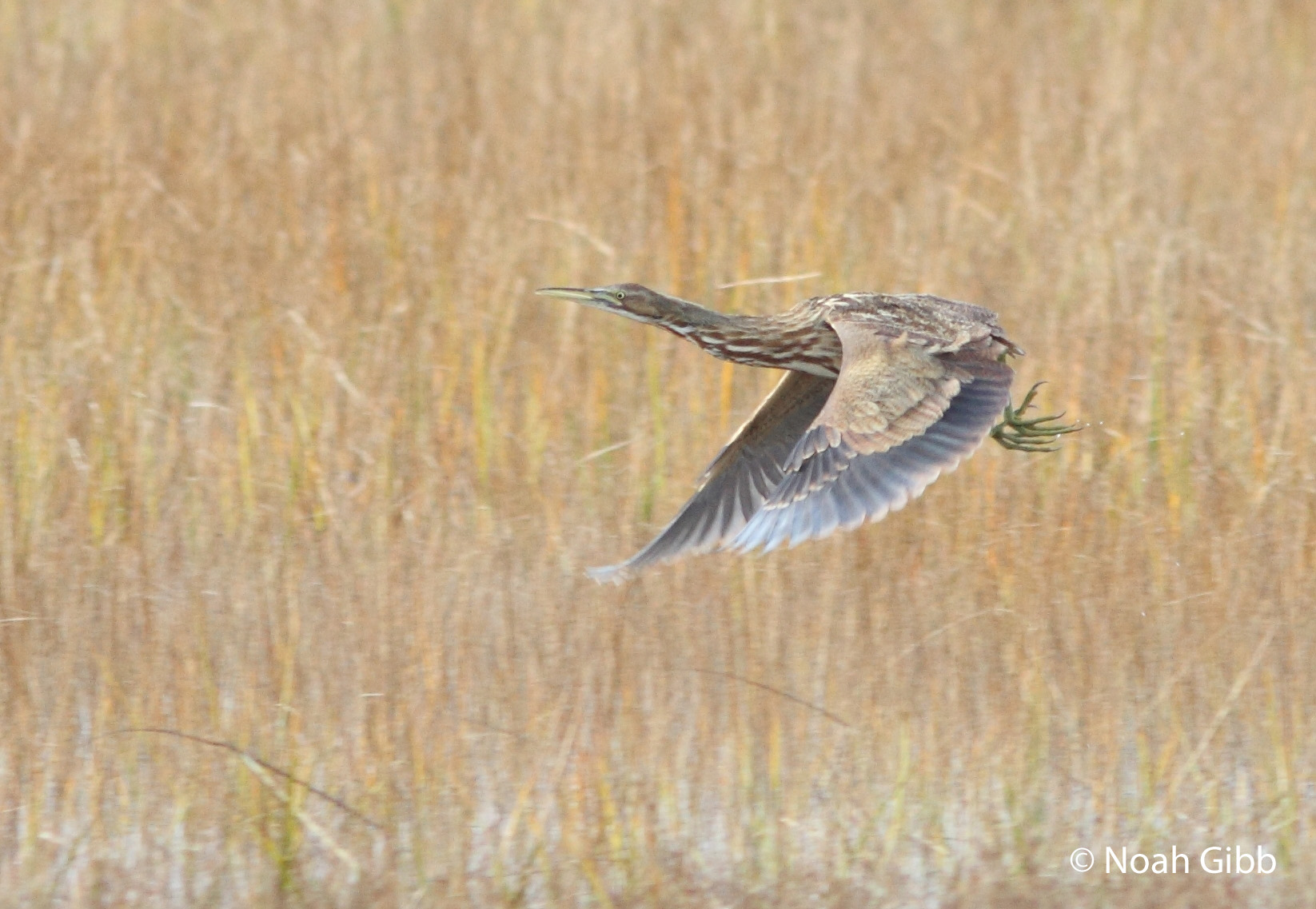
AMERICAN BITTERN: 1 Eastern Rd; 1 Drake’s Island Road.
Great Egret: 1, Parson’s Beach Rd.
Black-crowned Night-Heron: 1 Mill Creek Park; 4 Mercy Pond.
Northern Goshawk: 1, Perkin’s Cove.
Ruffed Grouse: 1, Laudholm Farms.
American Coot: 64, Prout’s Pond.
SEMIPALMATED SANDPIPER: 1, Pine Point; 1 Wells Beach jetty.
White-rumped Sandpiper: 2 Timber Point; 1 Eastern Road.
Yellow-bellied Sapsucker: 1, Rte 103, Kittery.
Eastern Phoebe: 1, Fore River Parkway Trail; 1 Pond Cove.
Northern Shrike: 1, Fort Williams Park; 1 Laudholm Farms.
RED-EYED VIREO: 1, Chadwick St, Portland.
Carolina Wren: 6 total (low by recent standards).
Gray Catbird: 1, Hill’s Beach; 1 Laudholm Farms.
ORANGE-CROWNED WARBLER: 1, Pond Cove.
NASHVILLE WARBLER: 1, Saco Riverwalk.
NORTHERN PARULA: 2, Fort Williams Park.
PRAIRIE WARBLER: 1, York Cliff Walk.
“Yellow” Palm Warbler: 1, Saco Riverwalk.
“Western” Palm Warbler: 1, Private property in Cape Elizabeth.
BLACKPOLL WARBLER: 1, Saco Roverwalk.
Common Yellowthroat: 1, Capisic Pond Park.
AMERICAN REDSTART: 1, Saco Riverwalk.
CLAY-COLORED SPARROW: 1 Community Park, Wells; 1 Private property in Cape Elizabeth.
LINCOLN’S SPARROW: Capisic Pond Park.
White-crowned Sparrow: 1, Fort Foster
Lapland Longspur: 51, Eastern Rd.
WHITE-WINGED CROSSBILL: 60-75, Eastern Promenade

Meanwhile, record high total counts (from all teams) were set for an impressive 14 species:
81 Harlequin Ducks
40 Ruddy Ducks
2 American Bitterns
2 Merlins
64 American Coots
69 Purple Sandpipers
11 Red-bellied Woodpeckers
83 Horned Larks
19 Ruby-crowned Kinglets
2 Northern Parulas
9 Chipping Sparrows
51 Lapland Longspurs
25 Purple Finches
60-75 White-winged Crossbills

My guess is the later date this year helped those Harlequin Duck, Purple Sandpiper, and Lapland Longspur totals, and perhaps also the higher counts of Ruddy Ducks and American Coots. An overall mild fall likely resulted in the late departure of so many “half-hardies” such as Ruby-crowned Kinglets, Hermit Thrushes, and Chipping Sparrows. And the steady increase of Red-bellied Woodpeckers continues.

So not bad, and once again it gives us a fascinating snapshot into the under-birded late fall season along the southern Maine coast.

Personally, I was joined by friends as usual in Portland. While Jeannette (and Sasha) birded Capisic Pond Park, Evergreen Cemetery, and Back Cove, Kristen and Evan joined me on my march through the Portland peninsula. Jeannette gets the territory’s bird-of-the-day honors with the First Rarity Roundup Record Lincoln’s Sparrow at Capisic Pond Park, where she also had the count’s only Common Yellowthroat.

The peninsula, however, was about a slow as I have ever experienced it on a Rarity Roundup, likely due to the later date and resultant fewer food supplies. But even still, the Eastern Promenade was uncharacteristically slow, and development and ridiculous bush-whacking and clear cutting by the City of Portland diminished the value of the habitat along West Commercial Street.

With a few interesting birds, including our best bird of the day, a Red-eyed Vireo in a front yard in the West End, I wish I had gotten to this neighborhood sooner in the day, but alas, hindsight is always 20/20. And while Portland’s overall performance paled in comparison to the hauls from recent years, we still had some great birds. The flock of 60-75+ White-winged Crossbills that flew over us on the Eastern Promenade were the first I have seen all year, the pair of Northern Shovelers in Deering Oaks Park were unexpected, and the 4 immature Black-crowned Night Herons at Mercy Pond were good to see.

But perhaps the bird of the day was the Hermit Thrush. We had an impressive total of 31 throughout our day, including several in small downtown gardens and landscaping corners. White-throated Sparrow (including 24 scattered around downtown as well) were also prevalent. These two species were the only native birds – as usual – that we found in the center of downtown Portland. This always fascinated me, as these two species seem particularly regular in the heart of concrete jungles.
HETH,Portland,11-9-14_edited-1
I think this phone-photo of a Hermit Thrush captures the essence of this intriguing topic of conversation.

Perhaps next year we will find the “next big one.” Until then, I have some more fun data to play with.

Some of the “documentation” photos from the day:

AMBI,EdHess,EasternRd,11-9-14_edited-1


American Bittern, Eastern Rd, Scarborough Marsh.


AMERICAN BITTERN NOV 9 2014 SCARBOROUGH, ME IMG_0771_edited-1

barred owl_edited-1 Barred Owl, Fort Foster, Kittery.

BCNH,JohnBerry_edited-1

Juv. Black-crowned Night-Heron, Mill Creek Park, South Portland.

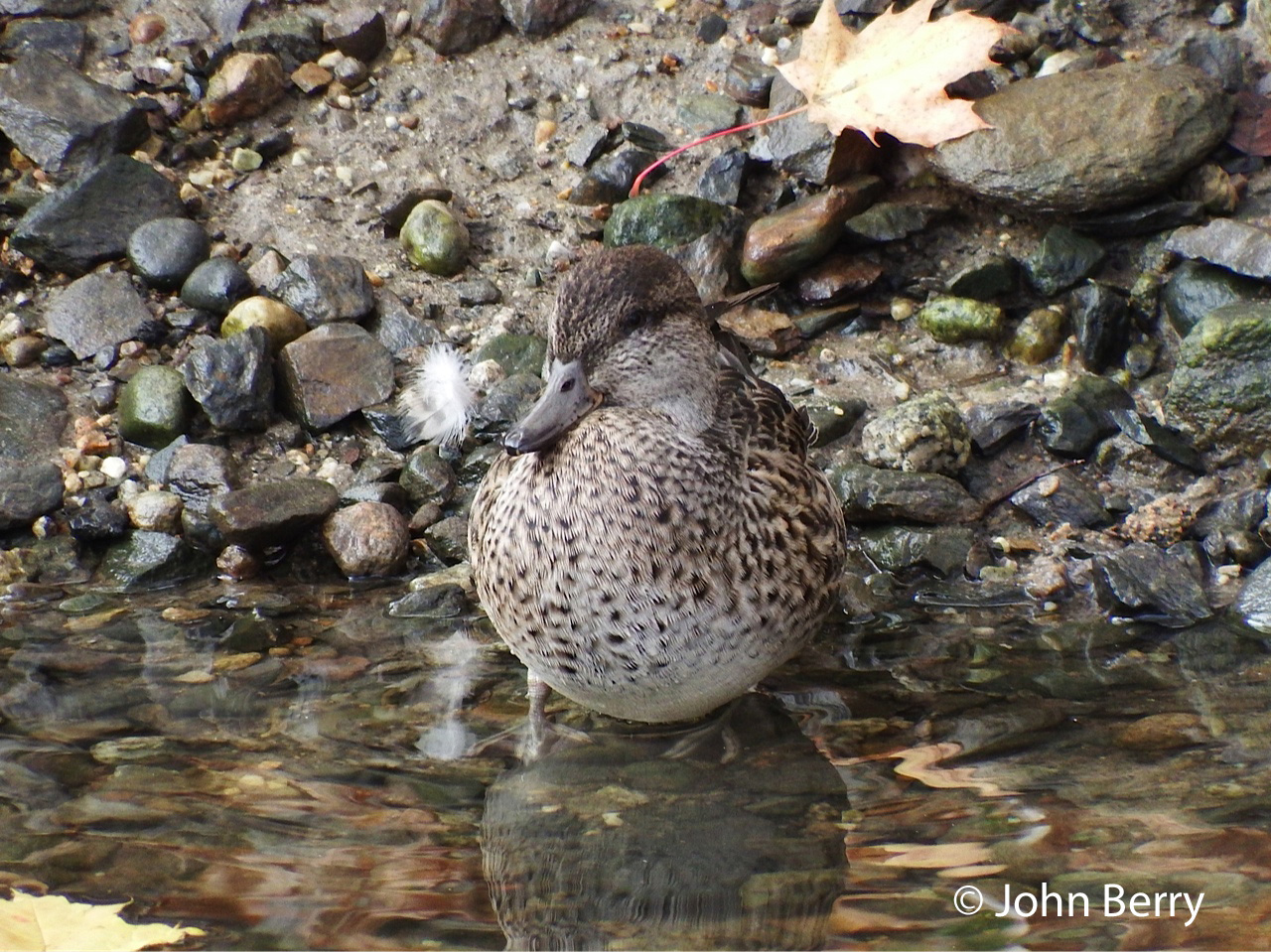
GWTE,John Berry_edited-1 Female Green-winged Teal, Mill Creek Park.

RUDDY DUCK NOV 9 2014 SCARBOROUGH, ME IMG_0793_edited-1 Female Ruddy Duck, Prout’s Pond, Scarborough.