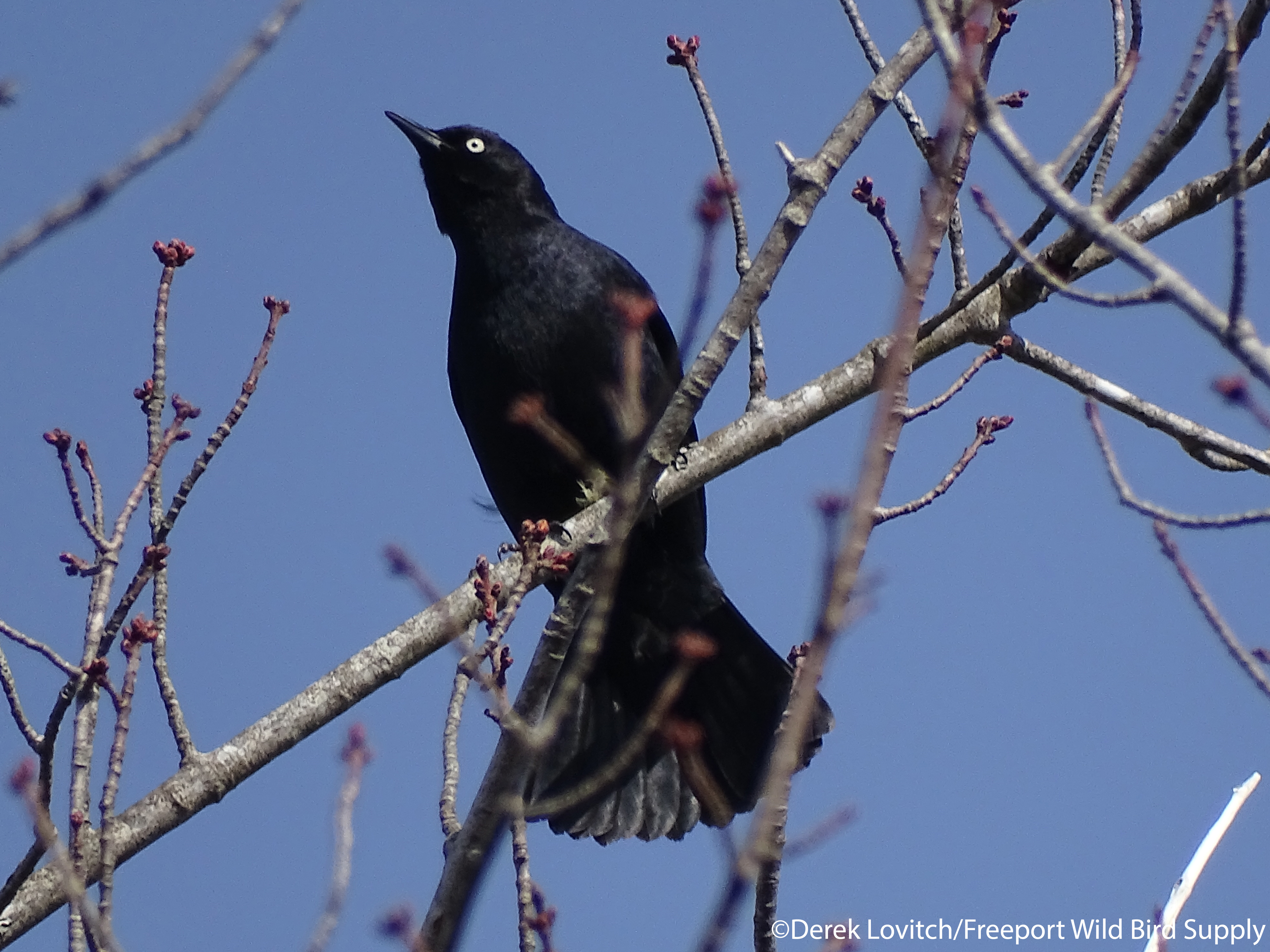
This Rusty Blackbird singing up a storm at Florida Lake Park on 4/2 has likely been present here since way back when I first saw it on 2/26! I don’t stop at Florida Lake very often this early in the season, but every time I have, he’s been in the same corner, often singing, making me think it’s the same individual. Even now, it’s on the early side for Rusties.
It was an up and down week of weather, to say the least, but slowly but surely spring migration was progressing. Considering fairly limited time in the field this week, I had a decent early season slate of observations of note and personal “first-of-years” over the past seven days:
Fox Sparrows at our feeders in Durham peaked at a goodly 6 on 3/30. 3 continue here at the store through week’s end.
1 continuing Rusty Blackbird (likely present here since 2/26; note and photo above), 1 Pied-billed Grebe (FOY), 2 Eastern Phoebes (FOY), and 1 Tree Swallow (FOY), Florida Lake Park, Freeport, 4/2.
One of two Eastern Phoebes at Florida Lake Park on the 2nd, this one seemed to be contemplating its life choices with yet another spring snowstorm on its way.
2 Rusty Blackbirds, our property in Durham, 4/3.
8 Double-crested Cormorants (FOY), Mailley Park, Bowdoinham, 4/3.
1 drake NORTHERN SHOVELER (FOY), Mouth of the Abby, Bowdoinham, 4/3.
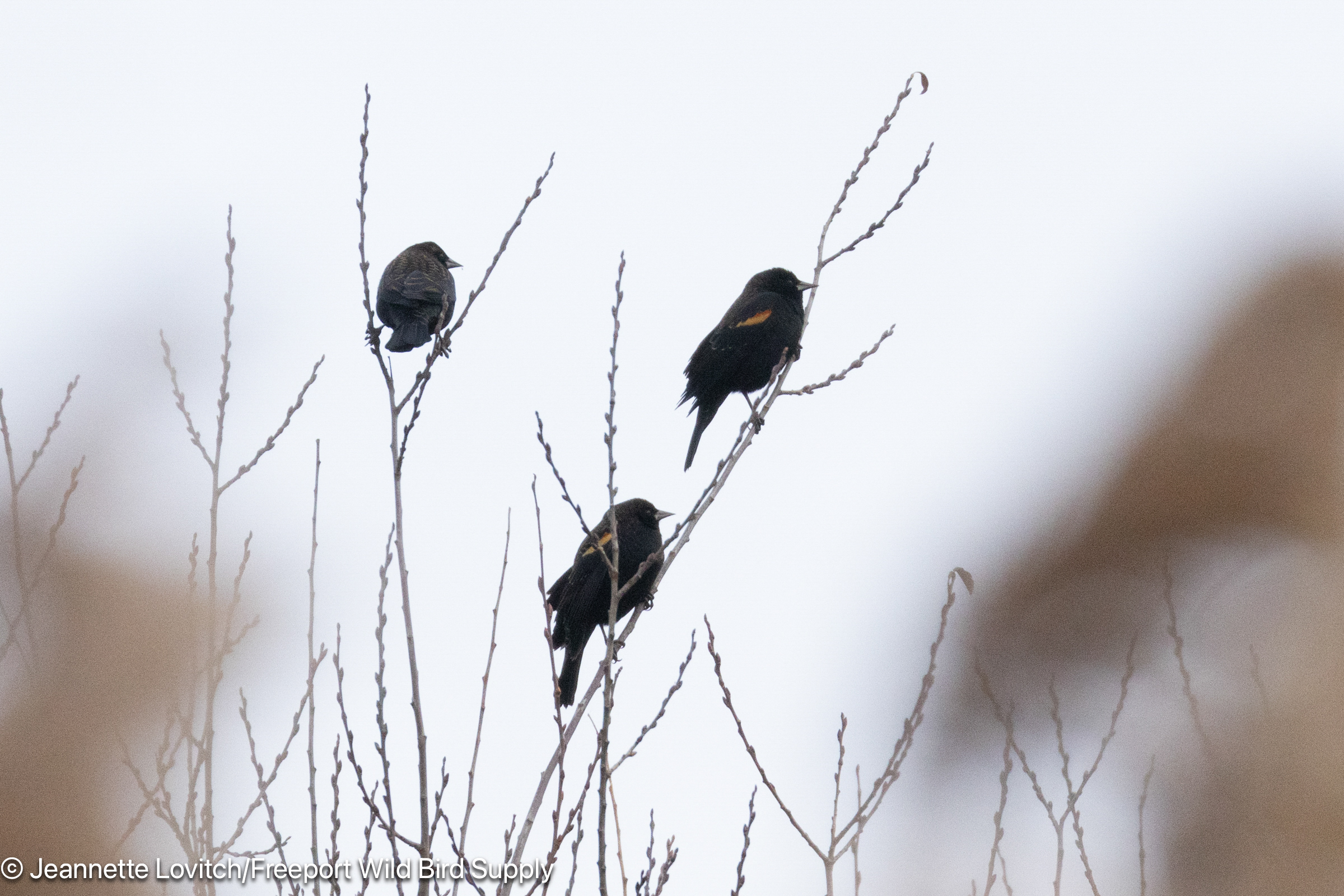
Is mid-December even winter anymore? Do these Red-winged Blackbirds that we found during the Southern York County CBC on 12/16 count as “late,” “lingering,” or “pioneering?”
With the exception of the Southern York County CBC on Monday the 16th, my birding this week was limited to short early morning outings. Nonetheless, I had some good seasonal observations of note.
1 Fox Sparrow continued at the feeders here at the store through the 15th.
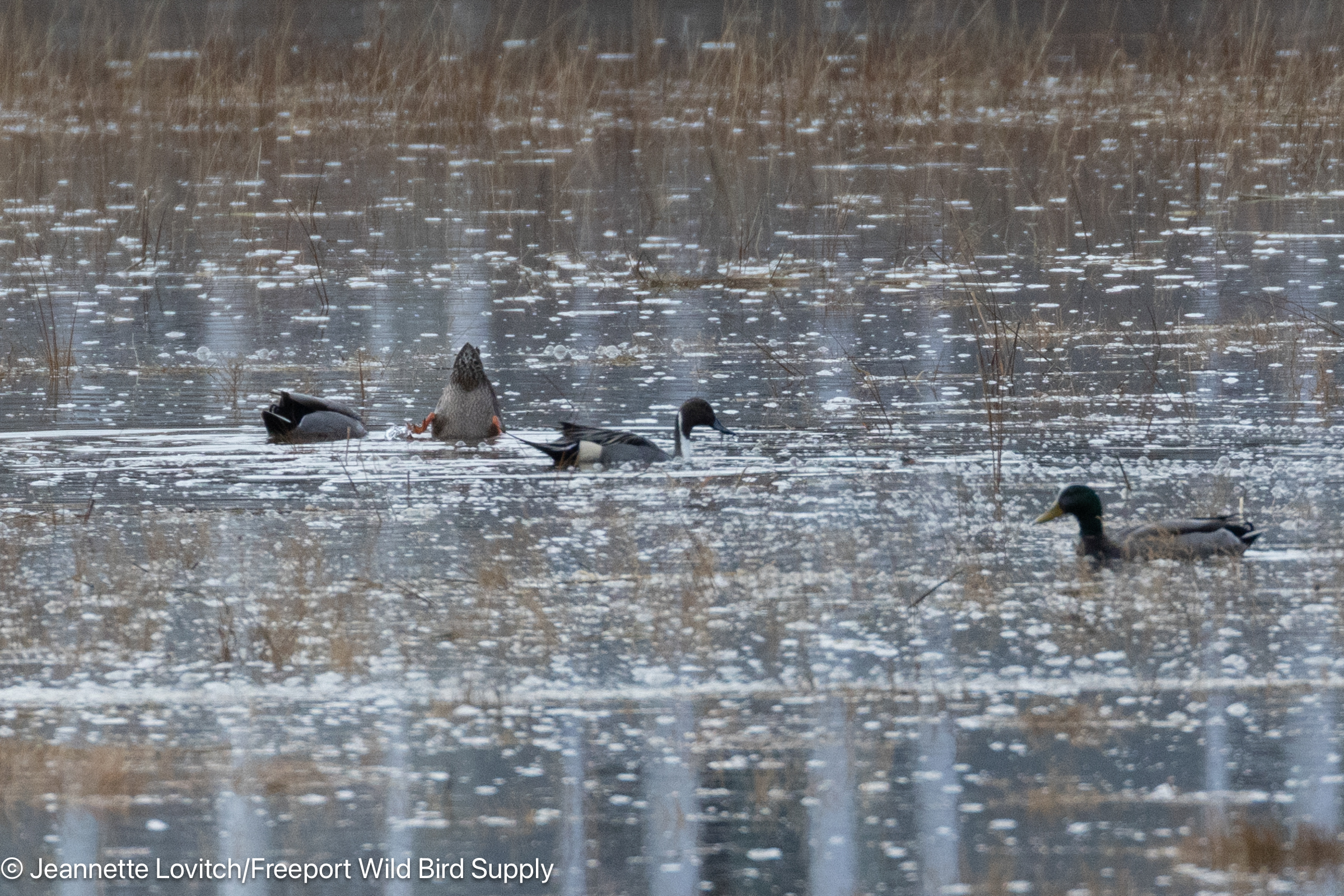
Southern York County CBC, 12/16: “Moody” Sector with Jeannette. 2437 individuals of 62 species, led by 189 Herring Gulls, 182 Mallards, and 177 Rock Pigeons. Other high counts included 126 House Finches and 46 American Tree Sparrows. Particularly low counts for our section included only 1 Yellow-rumped Warbler and only 8 Great Black-backed Gulls. Highlights included: 5 NORTHERN PINTAIL, 4 Red-winged Blackbirds, 1 Savannah Sparrow, and 1 Green-winged Teal. But overall, it was just a really birdy day for us in our usually fun and productive section.
1 drake and 2 hen BARROW’S GOLDENEYES, Winslow Park, Freeport, 12/18.
1 Fox Sparrow, our feeders in Durham, 12/19.
1 female NORTHERN PINTAIL, Cedar Pond Road, Durham, 12/19.
2 continuing NORTHERN SHOVELERS (1 immature male, 1 hen), about 15-20 scaup (both present, mostly Lesser, but just too far to be sure of proportion), 5 Dunlin, etc, Maquoit Bay Conservation Land, Brunswick, 12/20.
Plenty of Northern Flickers and Turkey Vultures continue around the area this week.
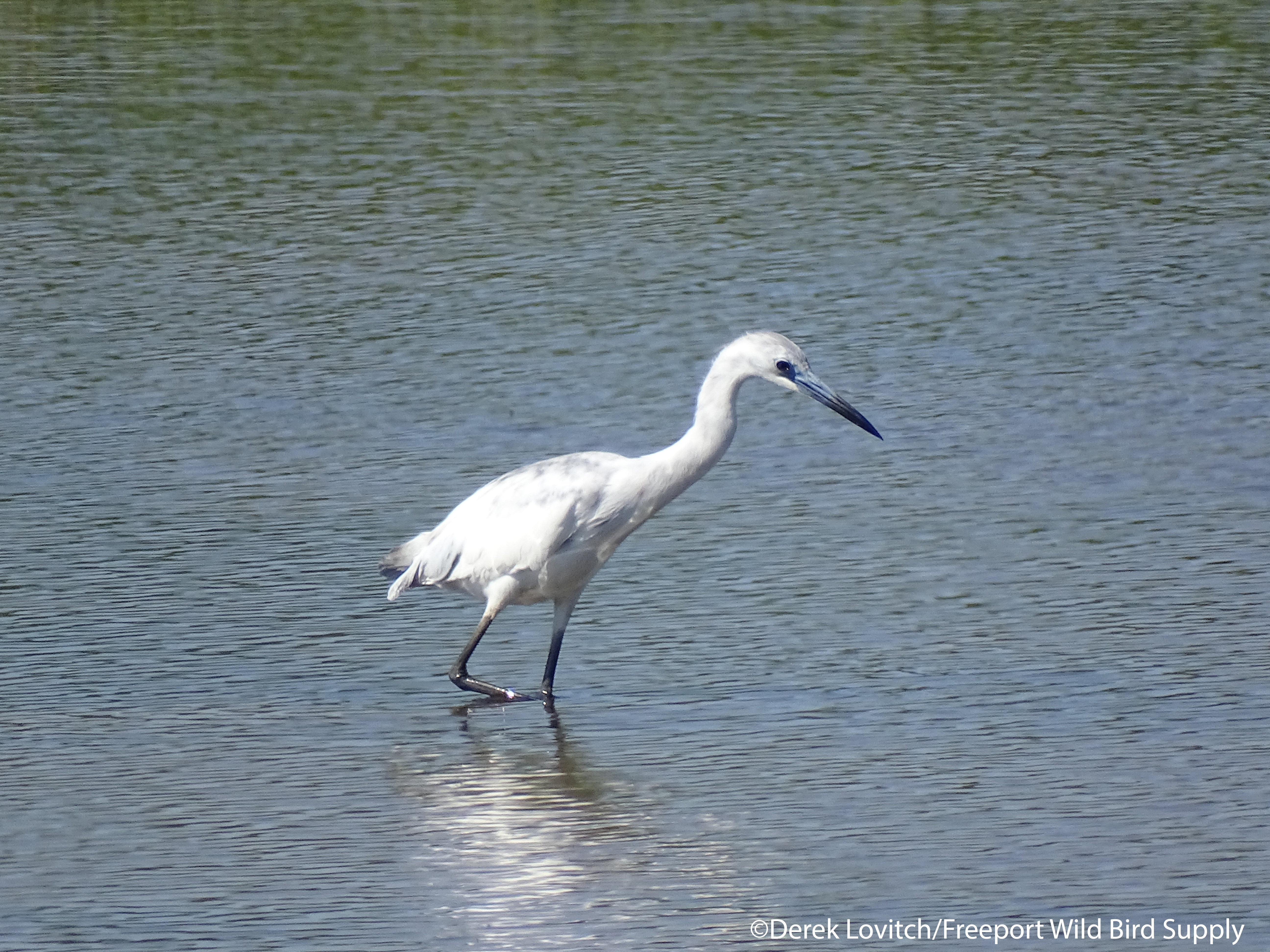
Little Blue Herons have declined in Maine, so it was nice to find my second of the year in an untraditional location. This 1st summer bird was in the marsh behind Seapoint Beach in Kittery on the 2nd.
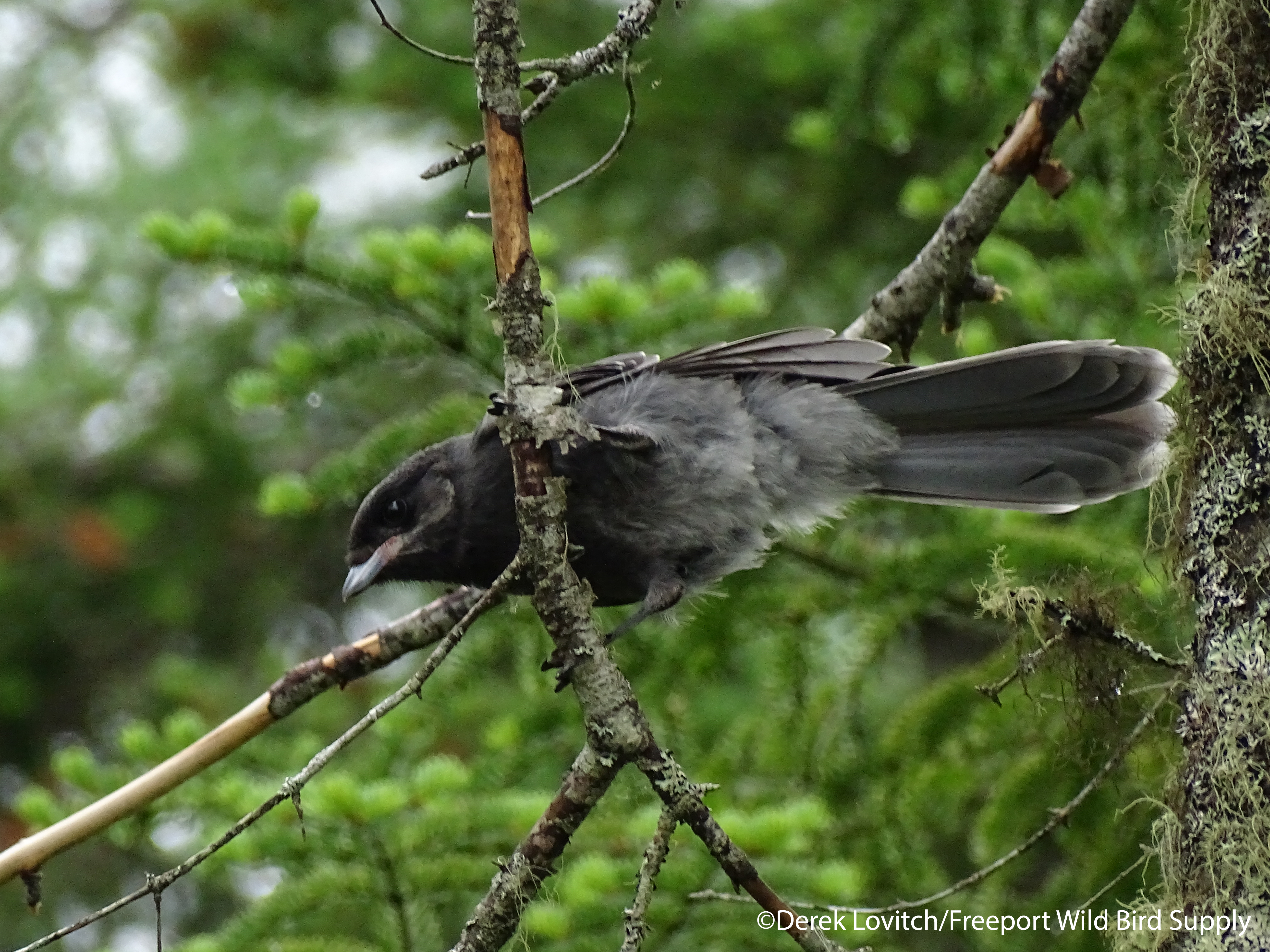
Typical later migrants, such as Blackpoll and Magnolia Warblers, and a variety of flycatchers, were still moving in and through, especially during the first week of June. Then, my gears rapidly shifted to breeding birds on tours, events, surveys, and just general birding enjoyment. Quality time with boreal breeders in the Rangeley area and specialties such as Saltmarsh and Nelson’s Sparrows, Roseate Terns, etc here at the coast were the usual highlights of the first half of June, both personally and professionally.
In addition to the regular breeding birds we seek – again, both personally and professionally – it’s also a good time of year for unexpected birds in unexpected places, and just general good birding. Some of my additional, less expected observations of note over the past ten days included:
1 immature male and 1 female ORCHARD ORIOLE (FOY), and 1 late Red-throated Loon, Fort Foster, Kittery, 6/2.
1 1st summer LITTLE BLUE HERON, Seapoint Beach, Kittery, 6/2. Photo above.
A visit to the Kennebunk Plains on 6/4 with Jeannette yielded 2 singing CLAY-COLORED SPARROWS (one continuing male near “Clay-color Corner” and one about half-way between there and the main parking lot on the eastern loop trail). 2 UPLAND SANDPIPERS, 6 GRASSHOPPER SPARROWS, and at least 11 Red Crossbills were also detected.
1 pair Cape May Warbler, 1 Wilson’s Warbler, 1 Olive-sided Flycatcher, Palm Warblers, displaying Wilson’s Snipe, family of Canada Jays, etc, Dallas Plantation, 6/7 (with Matt Young).
Fun to be in the field with Matt Young for the Rangeley Birding Festival and hear him describe (and hopefully me learn!) Red Crossbill call notes. There weren’t many around, but we did encounter both Type 12’s and Type 4’s. Meanwhile, scattered birds continue to be widespread down here at the coast.
7 Turkey Vultures, over downtown Rangeley from porch of Parkside and Main, 6/7 (With Matt Young and Birds on Tap! event group for the Rangeley Birding Festival). Less than 10 years ago, a single was unheard of.
1 Semipalmated Plover, Eastern Road Trail, Scarborough Marsh, 6/11 (with clients from New Jersey).
Tours and Events:
Due to tours, there will not be a Saturday Morning Birdwalk on either 6/22 or 6/29.
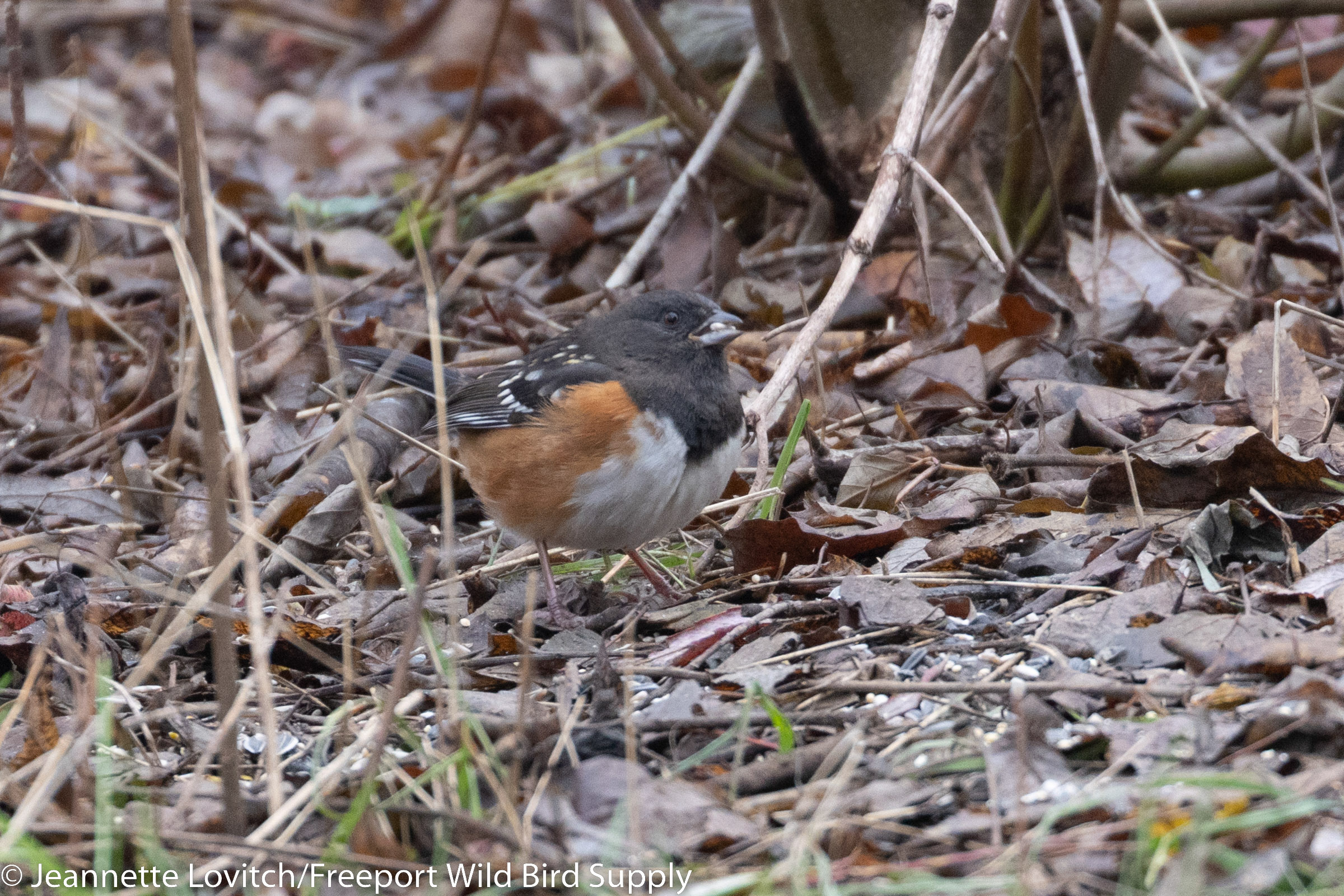
I finally went back this week, this time with Jeannette, to revisit the Spotted Towhee that I found at Kittery’s Fort Foster on 11/19. We were treated to two sessions of it feeding, both of which provided longer and better views than on the first day.
Early December is often a time with another pulse of rarities being detected as birds concentrate at fewer seasonally abundant food sources, like feeding stations, and concentrate along the coast and other migrant traps. At the very least, it’s a time for unusual “late,” “lingering,” or “pioneering” birds that brighten up a cold, gray winter’s day. This was often the case for me in my relatively limited birding over the past two weeks, with the following observations of note:
1 Gray Catbird and 1 Ruby-crowned Kinglet, Capisic Pond Park, Portland, 11/30.
Sabattus Pond, Sabattus, 12/1 (with Dan Nickerson): 380 distant scaup, 272 Common Mergansers, 238 Ruddy Ducks, 209 Mallards, 8 American Black Ducks, 8 Common Goldeneyes, 7 Buffleheads, 4 GREEN-WINGED TEAL, 3 Common Loons, 1 Belted Kingfisher, and 1 RUSTY BLACKBIRD.
1 Chipping Sparrow, King Road, Lisbon, 12/1 (with Dan Nickerson).
3 Ruby-crowned Kinglets and 2 Field Sparrows, Saco Riverwalk, Saco, 12/3.
1 Hermit Thrush and 1 Swamp Sparrow, Elphis Pond, Biddeford Pool, 12/3.
Southern York County Coast with Jeannette on 12/5:
1 continuing SPOTTED TOWHEE (photo above), 2 MARSH WRENS, and 1 Swamp Sparrow, Fort Foster, Kittery.
2 American Pipits and 1 Horned Lark, Seapoint Beach, Kittery.
1,000+ Black Scoters, The Nubble.
60 Sanderlings, Ogunquit Beach.
1 Ruby-crowned Kinglet, Auburn Riverwalk, 12/7.
1 drake BARROW’S GOLDENEYE (first of season), 74 Lesser Scaup, and 2 Greater Scaup, Lake Auburn, Auburn, 12/7.
1 Red Crossbill, over our property in Durham, 12/8.
Meanwhile, at our feeders in Durham, a nice uptick in sparrow activity including up to 14 Dark-eyed Juncos, 4 continuing White-throated and 1-2 continuing Song Sparrows, with our first American Tree Sparrow arriving on 11/22 before the store, and 15 Dark-eyed Juncos, only 1 White-throated Sparrow, and a return on 12/6 of an American Tree Sparrow after the storm. 40-50 American Goldfinches and 1-2 Purple Finches continue daily, but this week, we only had Pine Siskins in the woods and not at the feeders.
Since we’ve had a mix of “the birds are back!” and “there are still no birds at my feeders” at the store recently, a wrote a new blog talking about the season and the inconsistencies we are seeing with overall feeder activity, which is posted here.
The amazing birding and migration site – especially for fall “morning flights” – in the Mid-Coast is once again under direct threat. Birders need to help convince the state to find an alternative location for a massive new port and its infrastructure. Our most significant places of concentration for migratory birds need to be protected. Here isour Statement in Opposition to a New Port on Sears Island in Searsport.
My personal highlights over the past six were as follows. Not surprisingly, it was mostly first-of-year new arrivals. The new bird for my Bradbury Mountain list, however, was definitely more of a surprise!
3 male and 1 female NORTHERN SHOVELERS (FOY), 100+ Greater and 10+ Lesser Scaup, 1 drake American Wigeon, 1 Bonaparte’s Gull (FOY), etc, Wharton Point, Brunswick, 3/19 (with Saturday Morning Birdwalk group).
4 Horned Larks and 1 American Wigeon, Highland Road, Brunswick, 3/19 (with Saturday Morning Birdwalk group).
2 Eastern Meadowlarks (FOY) and 5 Brown-headed Cowbirds (FOY), Chesley Hill Road, Durham, 3/20.
1 Great Blue Heron (FOS), Cousin’s River Marsh, 3/20.
4 American Kestrels (FOY), Bradbury Mountain Hawkwatch, 3/20.
1 adult LESSER BLACK-BACKED GULL, fly-by at the Bradbury Mountain Hawkwatch, 3/20 (with Zane Baker). This was my 142nd all-time Bradbury Mountain State Park species!
20 Ring-necked Ducks (FOY), 2 American Wigeon, etc, Mouth of the Abagadasset River, Bowdoinham, 3/21 (with Jeannette).
6 Fish Crows (FOY), Maine Mall Road, 3/22.
6 Brant, Kettle Cove, Cape Elizabeth, 3/22.
7+ American Woodcocks, Pownal, 3/23 (with Jeannette).
And finally, our spring tour season gets kicked off next Saturday with our annual “Woodcocks Gone Wild!” See the Tours page of our website for more info.
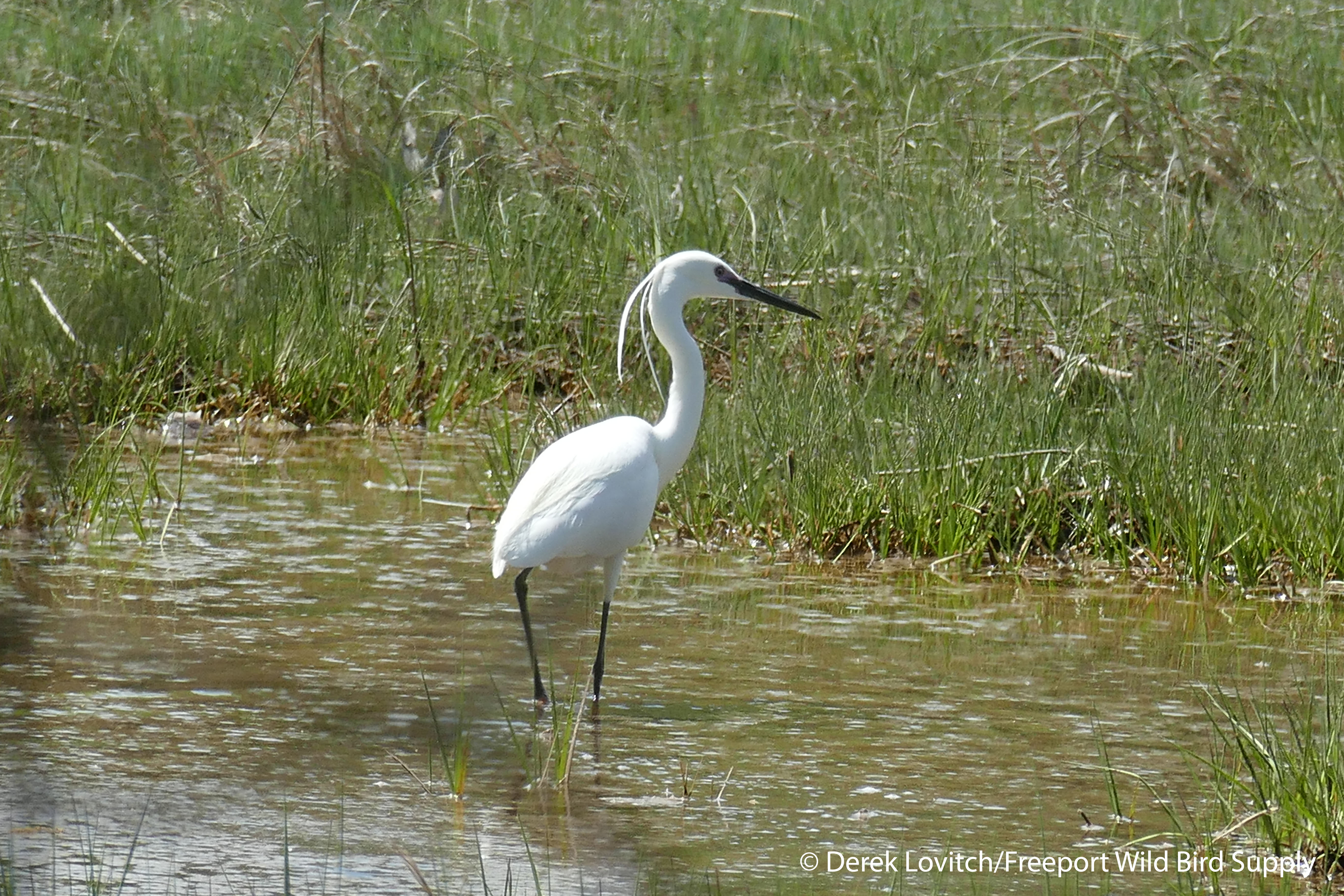
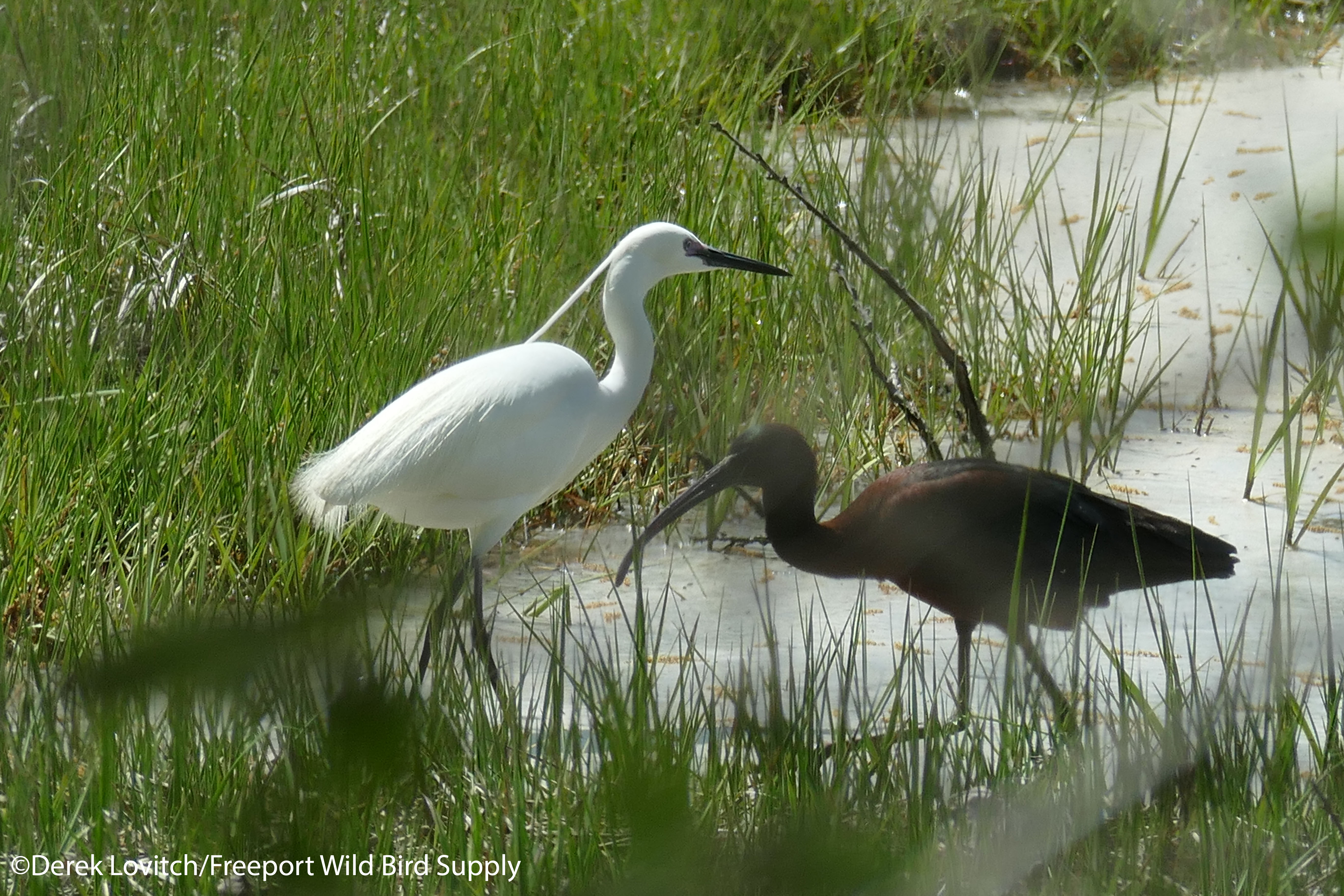
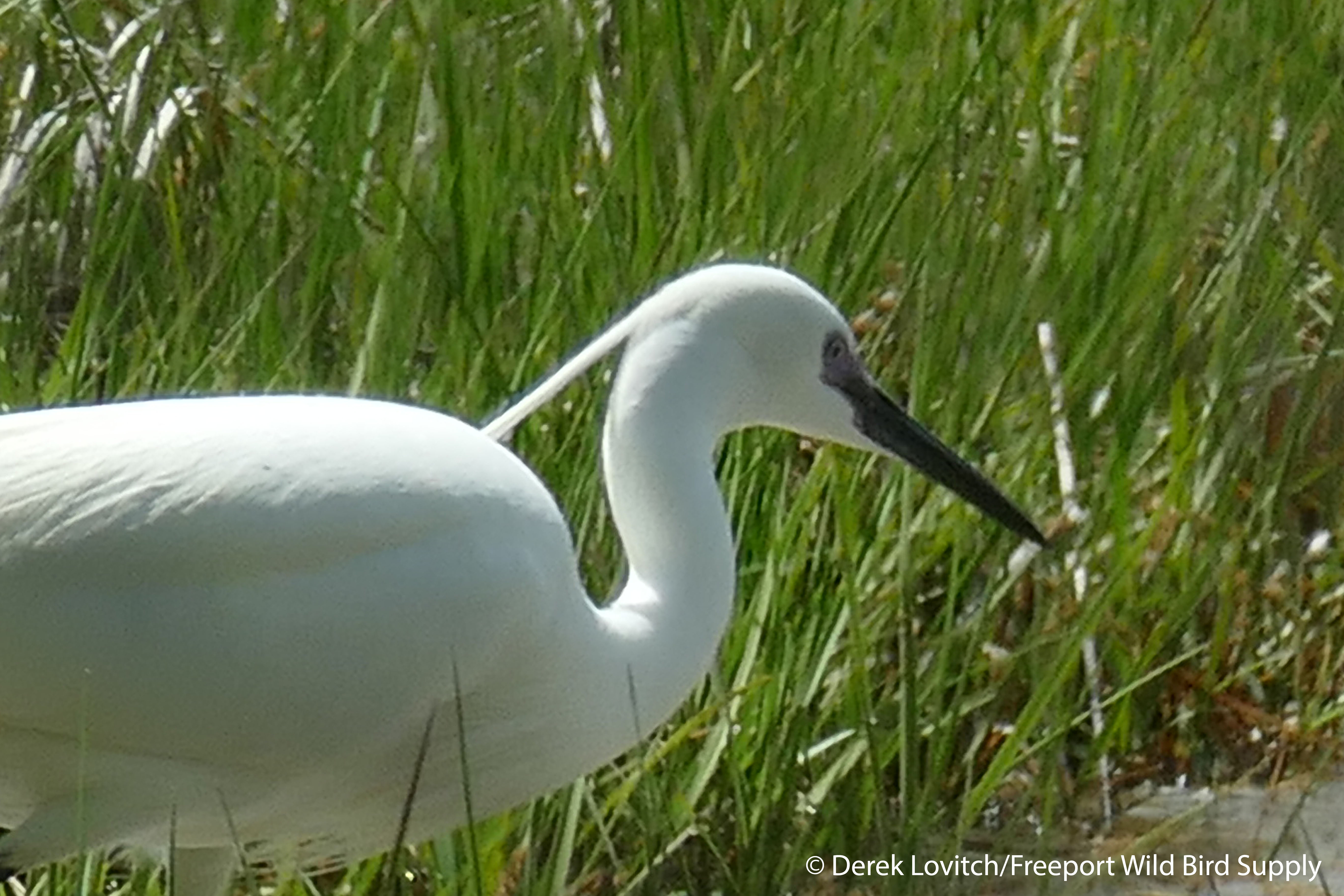
This pure-blood (presumably) Little Egret was a surprise in the Dunstan Creek Marsh section of Scarborough Marsh on the 25th. I don’t recall any reports of the Little Egret in Scarborough Marsh so far this season, and many of the identifiable photos that I have seen in Falmouth so far this year have been – or suggested – a continuing Snowy Egret x Little Egret hybrid, so seeing this bird was a treat for me and my clients. 1)The green-gray, darkish lores (not yellow-tinted like the presumed hybrid or bright yellow like a Snowy). 2) The two long neck plumes (not bushy like Snowy, or a combination of two, like the hybrid). I absolutely love the “plume swagger” when they’re blowing in the wind.
Additionally, the overall structure of a skinnier, longer neck, slightly longer legs, and a longer, slightly more tapering and pointed bill more like a “mini Great Egret” than the relatively-more compact Snowy.
My highlights over the past six days included the following:
1 CLAY-COLORED SPARROW (Maguire Road), 2 Upland Sandpipers, 8 Grasshopper Sparrows, 14 Vesper Sparrows, etc, Kennebunk Plains, 5/24 (all personal FOY since it was my first visit here this season).
1 LITTLE EGRET, as previously reported, Dunstan Creek Marsh, Scarborough Marsh, 5/25 (with clients from Connecticut…see photos and captions above).
1 drake NORTHERN SHOVELER and 1 pair Gadwalls, Pelreco Marsh, Scarborough Marsh, 5/25 and 5/26 (with clients from Connecticut).
2 Common Nighthawks, our yard in Pownal, 5/25.
My few other new spring arrivals included only the following:
5 Semipalmated Sandpipers, Pine Point, Scarborough, 5/25 (with clients from Connecticut) and 14 there on 5/26 (with same clients).
In an article to be published this fall in the journal North American Birds, I propose this bird as a Tricolored Heron x Snowy Egret hybrid backcrossed with a Little Egret (TRHE x SNEG x LIEG). This individual has been present since 2014 and seems to visit marshes between Hampton, NH and Cape Elizabeth. Note the two long neck plumes and the greenish lores.
My highlights over the past seven days included the following:
15 species of warblers led by 25+ Yellow-rumped and an incredible 15+ Cape May Warblers, Evergreen Cemetery, Portland, 5/16 (with Down East Adventures Songbird Workshop Group).
12-15 Red Crossbills and 1 Evening Grosbeak, Evergreen Cemetery, 5/16 (with Down East Adventures Songbird Workshop Group).
17 species of warblers, led by 17 Common Yellowthroats and 9 Ovenbirds, Florida Lake Park, 5/17 (with Jeannette).
32 Short-billed Dowitchers, Pine Point, Scarborough, 5/21.
50+ Ruddy Turnstones, Pine Point, 5/21.
10+ Roseate Terns, Pine Point, 5/21.
1 BLACK TERN – always a treat to catch one in migration – Pine Point, 5/21.
This Saltmarsh Sparrow posed for a quick photo this morning along the Eastern Road Trail. My first of the year were today, although at least a few have likely been present for a week to 10 days in and around Scarborough Marsh.
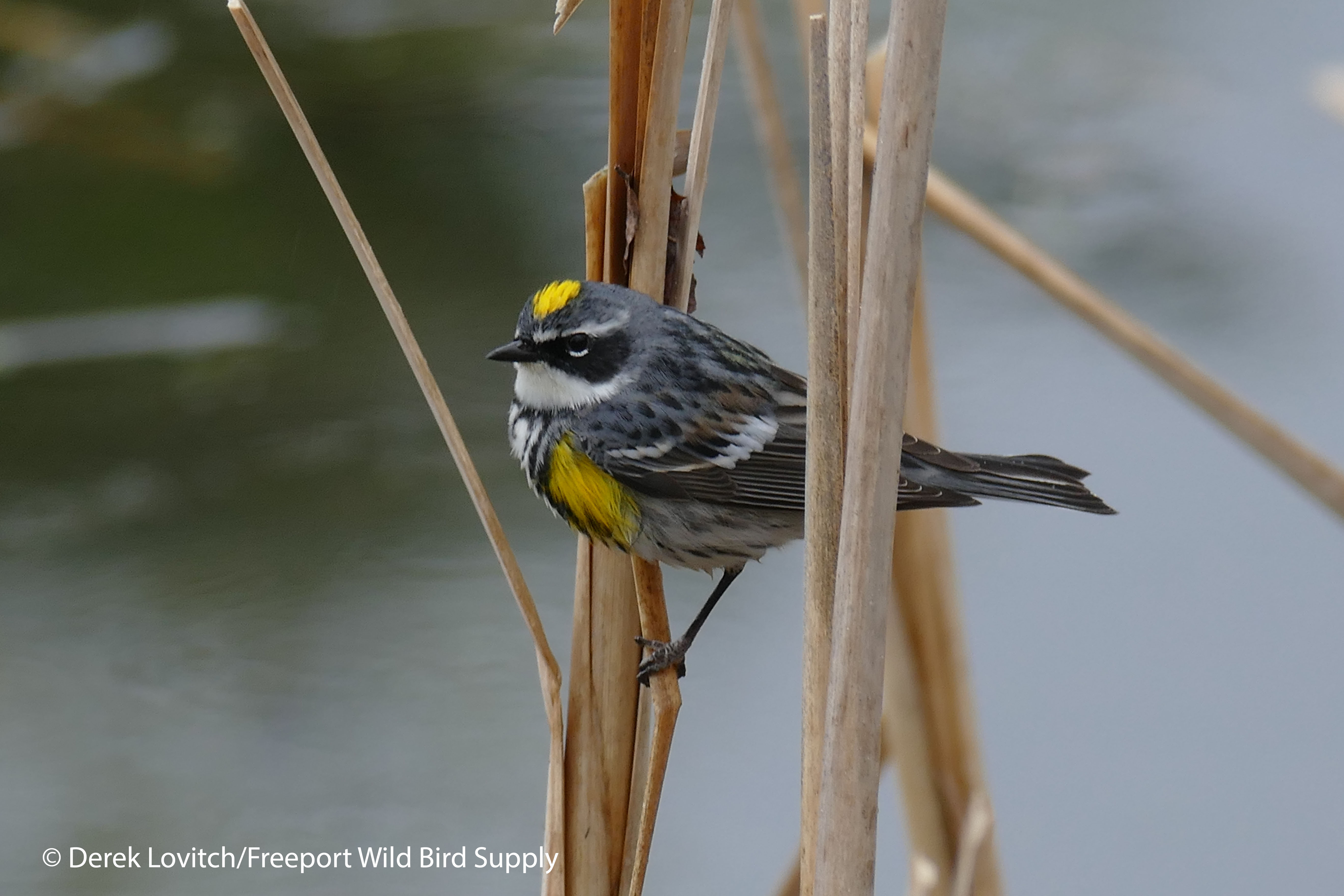
I always say that Yellow-rumped Warblers would be everyone’s favorite warbler if they weren’t so common. Big personalities and easy to identify, and the spring males are just gorgeous. Even when photographed through drizzle and mist, as was this one at Legion Pond in Kittery on 4/30.
My highlights over the past seven days included the following:
1 Great Cormorant, over the store with a flock of Double-crested Cormorants, 4/24 (with Saturday Morning Birdwalk Group. Store Yard Bird #131).
The bird of the week – and an early-contender for bird of the year – was this Redwing discovered at Capisic Pond Park in the afternoon of 1/29. My camera went in for repair this week, so my phone-scoped photos didn’t do this “mega” justice, so John Lorenc let me use his photo from the day.
With two mornings spent at Capisic Pond Park this week (REDWING, BLACK-HEADED GROSBEAK, and 1 DICKCISSEL on 1/30 and “just” the REDWING on 2/1 with Phil McCormack), my other birding was rather limited. I think that’s OK though…because Redwing!
1 drake RING-NECKED DUCK, Anniversary Park, Auburn, 2/3.
1 THICK-BILLED MURRE, Cumberland Town Landing, 2/4.
2 continuing NORTHERN SHOVELERS and 200+ distant scaup, Maquoit Bay Conservation Land, Brunswick, 2/5.
1 drake BARROW’S GOLDENEYE and 350-400 scaup (just a little too far to sort through accurately, but there is still a fair number of Lesser Scaup present), Simpson’s Point, Brunswick, 2/5.
This Week in Finches, aka “This Week in Pine Grosbeaks:”
PINE GROSBEAK: 3 continued daily at the store through 1/31; 3 (Cumberland Town Landing, 2/4); 11 (downtown Brunswick, 2/5).
Meanwhile, we have just announced our 2021 tour slate, including several pelagic trips, two searches for “Troppy,” the Red-billed Tropicbird, and much more, here, on our revamped Tours page: