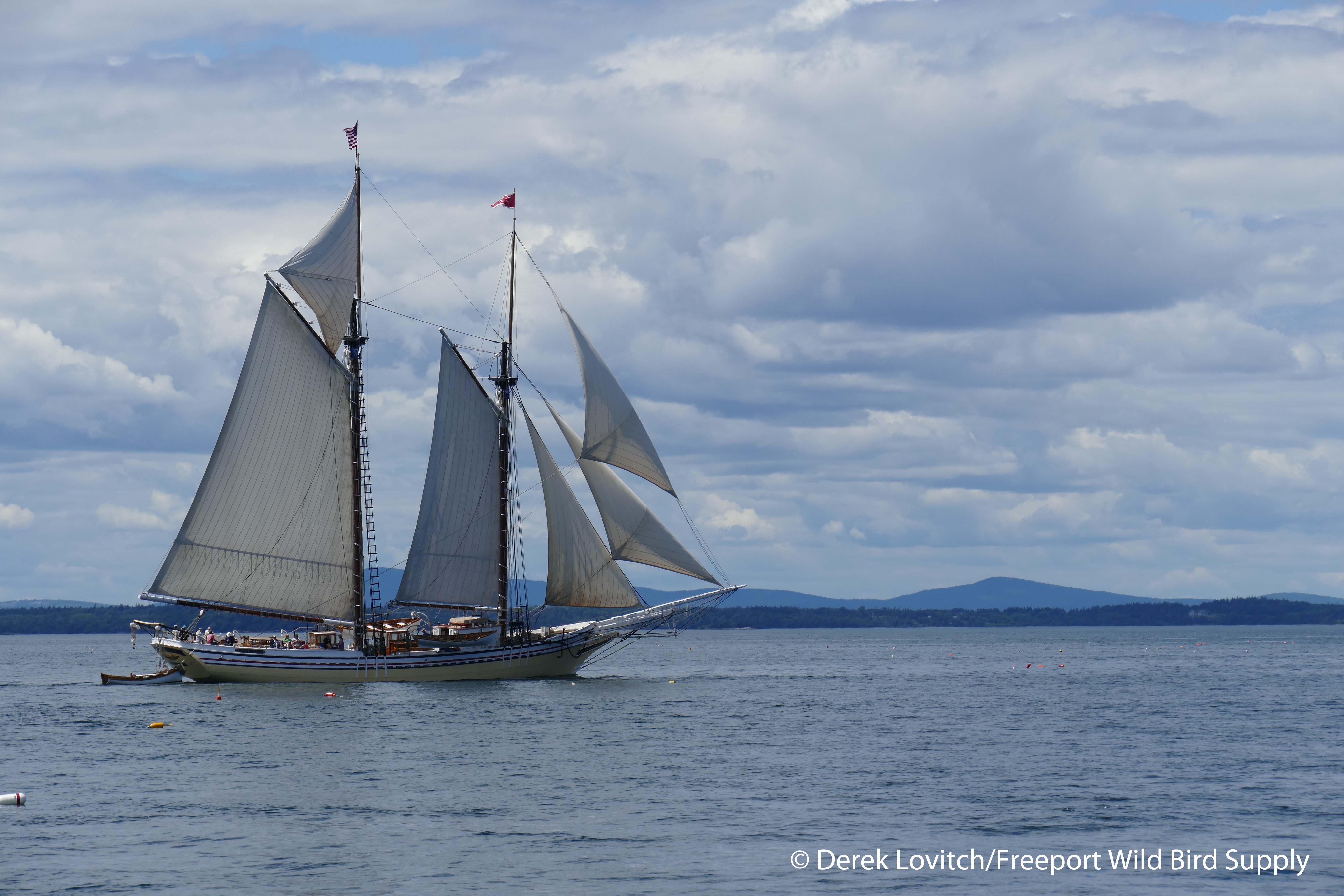
Tag Archives: Monhegan Island

2015 MonhegZen Fall Migration Birding Weekend

As always, the last weekend in September finds me at one of my favorite birding locales in the world, Monhegan Island. My annual “MonhegZen Fall Migration Weekend” tour takes place then, and with it, a wealth of birds and good times are to be had.

Well, usually a wealth of birds are to be had! But yeah, this year was slow. As slow as I have ever seen it. But my goodness, was it nice out! Of course, this same pleasant, unseasonable warm and benign weather was exactly why there were so few (relatively speaking) birds out there. It seems that with night after night of great flying conditions, birds are proceeding unimpeded, with no fallouts, or even concentrations near the coast or offshore.

So in writing this blog, I was trying to figure out how to sugarcoat the weekend. Perhaps this will do it:
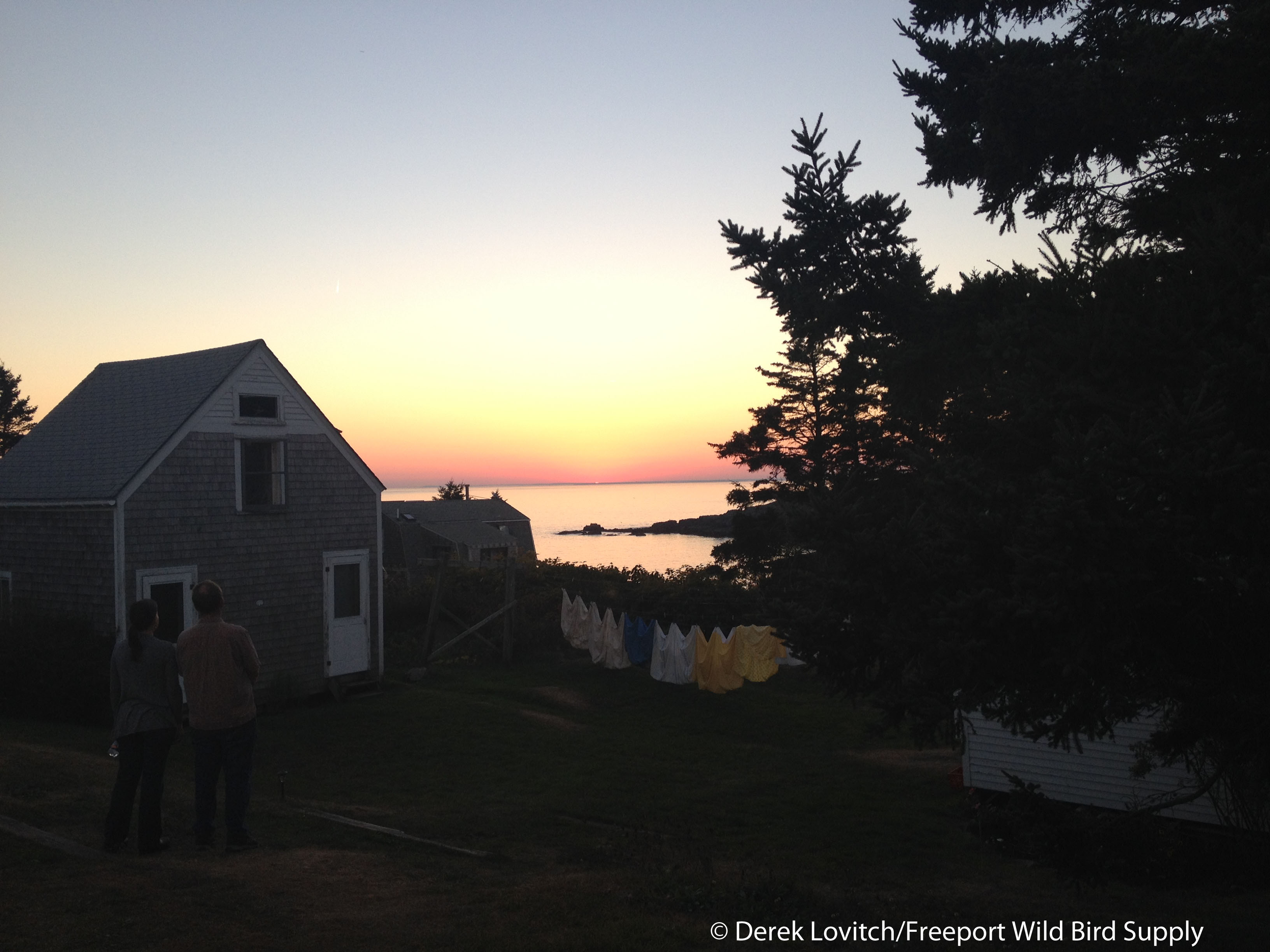
sunset1_edited-1

Or this?
Sunset2_edited-1

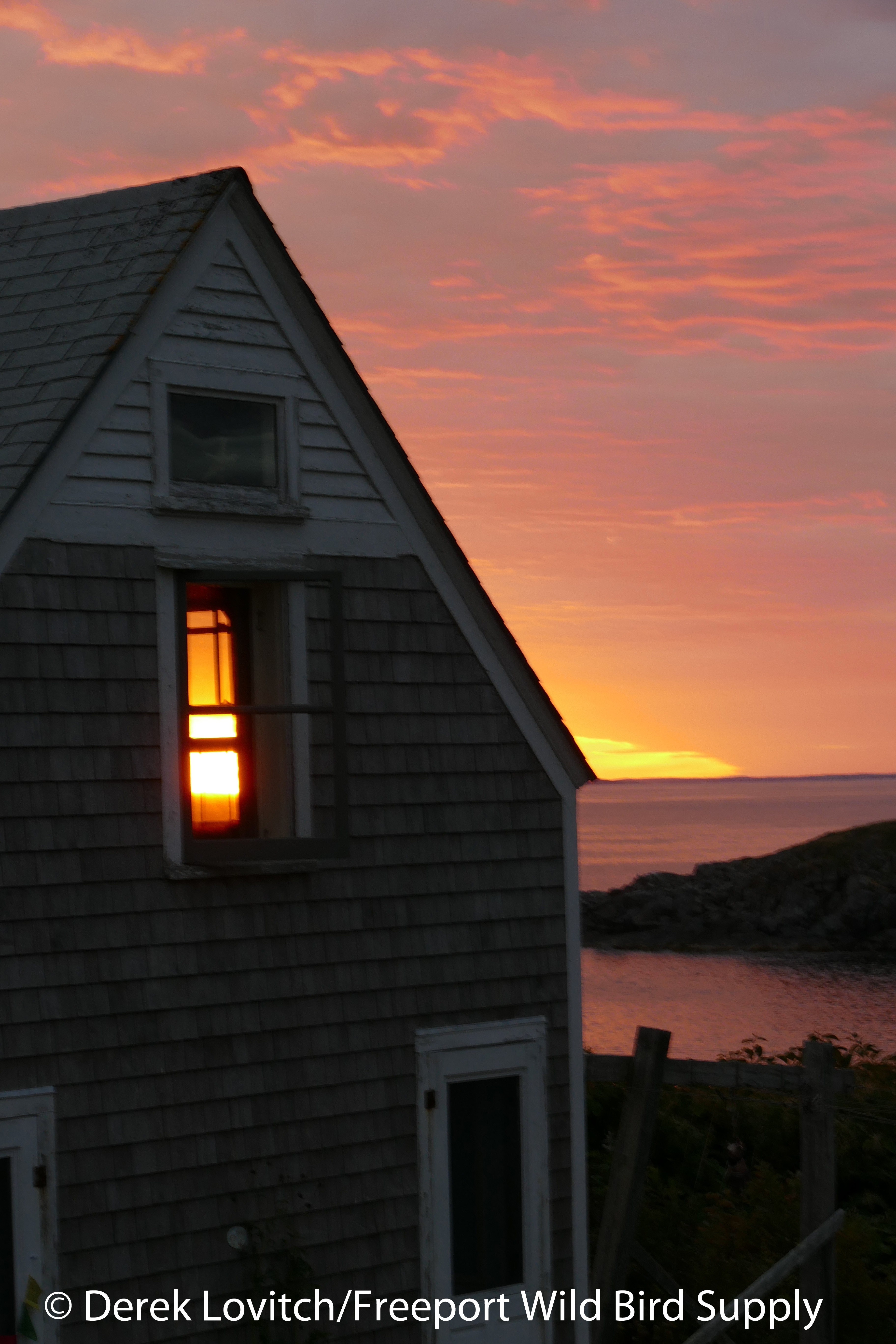
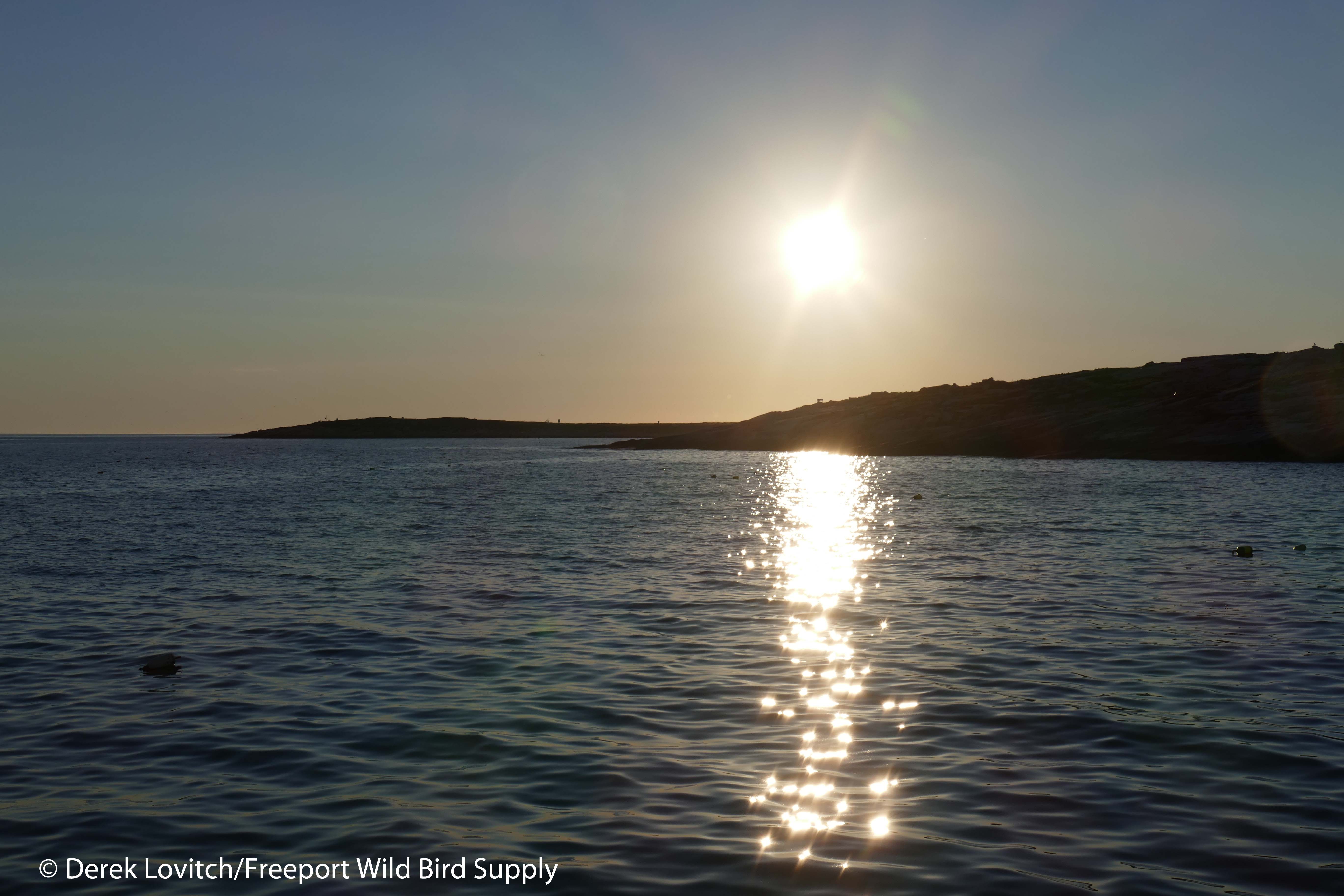
Beautiful sunsets, and wonderous moonrises:
group watching moonrise_edited-1

moonrise_edited-1

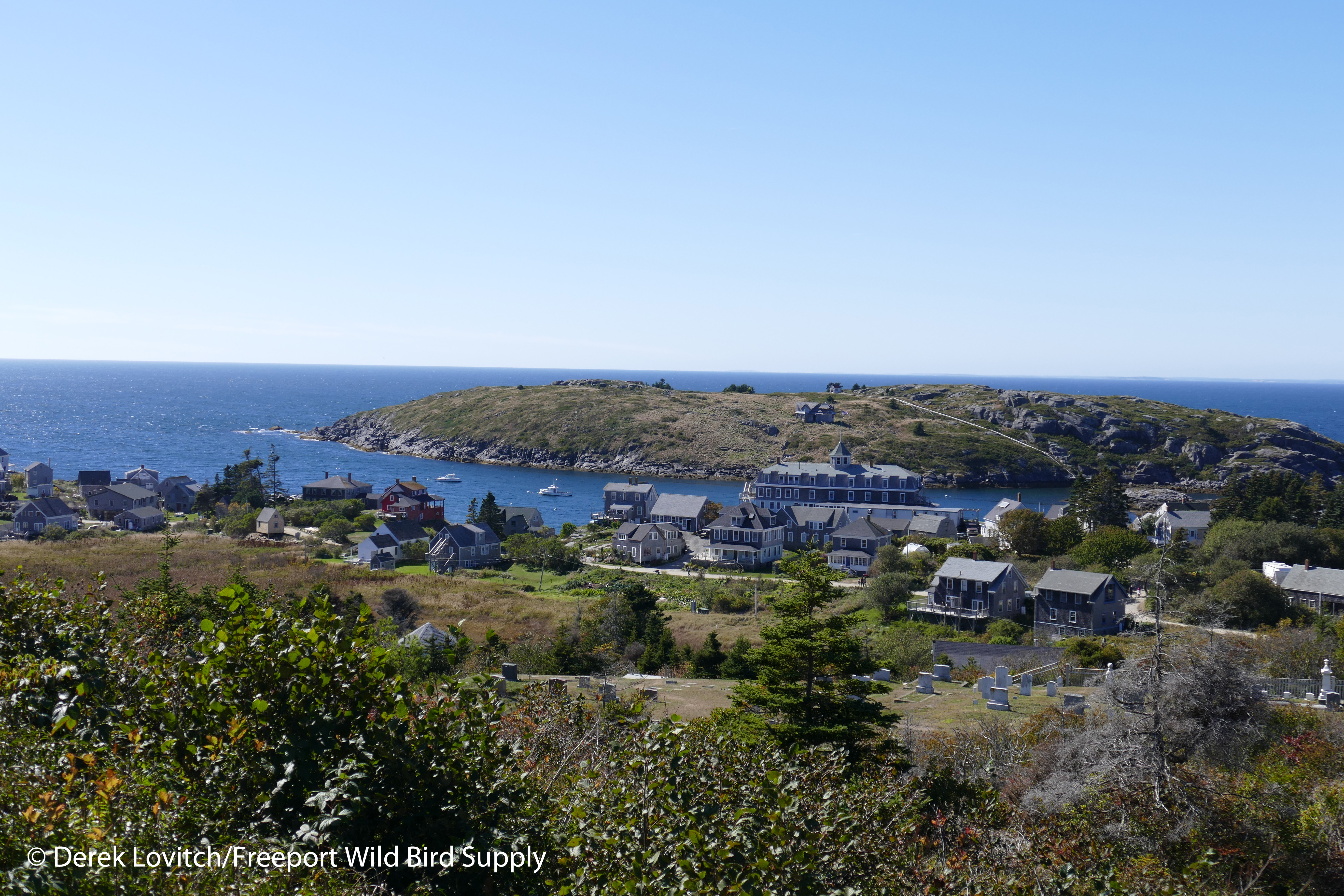
Or maybe this will help:
Monhegan_from_lighthouse_edited-1

So yeah, it was gorgeous. Beyond gorgeous. And the Novelty Pizza was just as good, and Monhegan Brewing Company’s beer was just as great.

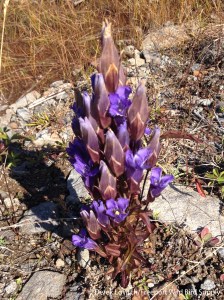
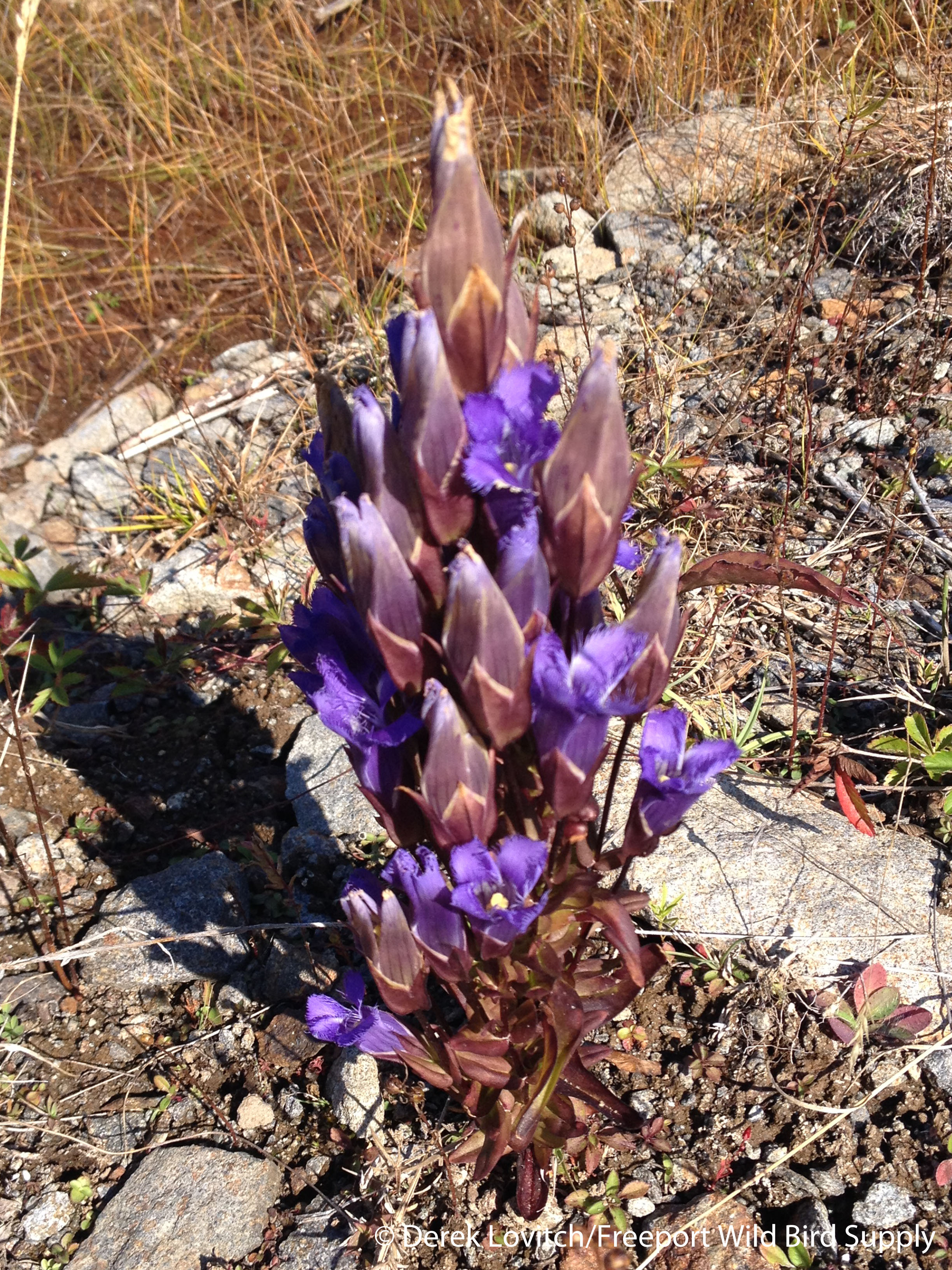
The butterflying was good, and the wildflowers were a nice distraction, especially the Fringed Gentian as always.
Fringed_Gentian1_edited-1

Fringed_Gentian2_edited-1

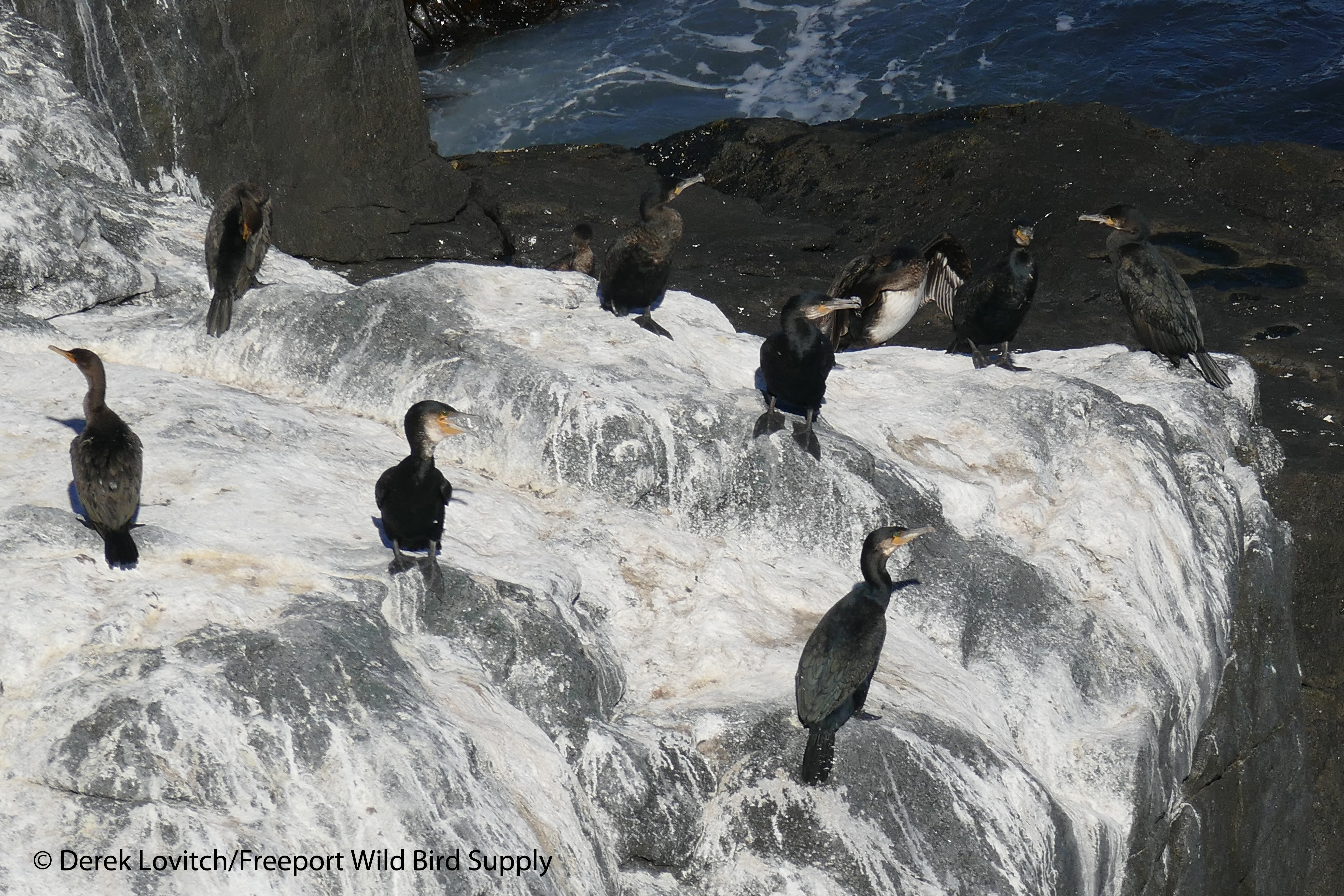
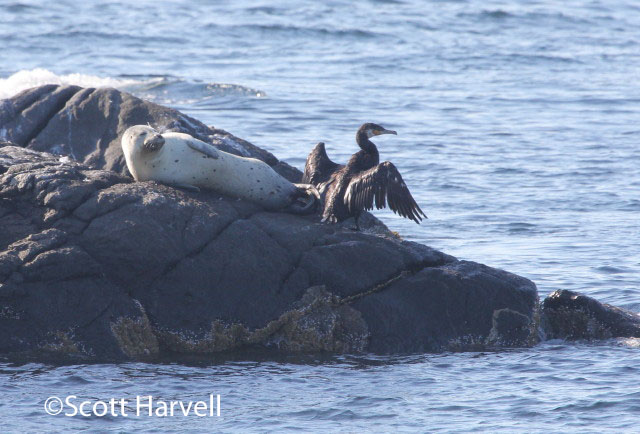
And don’t worry, there were still plenty of birds – just not as many as usual. We enjoyed some great studies of Great and Double-crested Cormorants…
GRCOs_withDCCO,Monhegan,9-26-15_edited-1

…and of course a few rarities were around. The two headliners were the two juvenile Yellow-crowned Night-Herons that would spend dawn at the Ice Pond. They would fly in just before 6 (presumably from feeding around the rocky shoreline), drink and preen a bit, and then shortly after sunrise, take off to roost in the trees. You needed to be here dark and early to get them, and on Sunday morning, the group made the lovely twilight walk (fly-by American Woodcock!) to reach the pond, and we arrived just a few minutes after the night-herons did. One lingered until it was just light enough to grab a snapshot.
YCNH,Monhegan, 9-27-15_edited-1

A Great Blue Heron kept watch as well.
GBHE_silhoutte1_edited-1

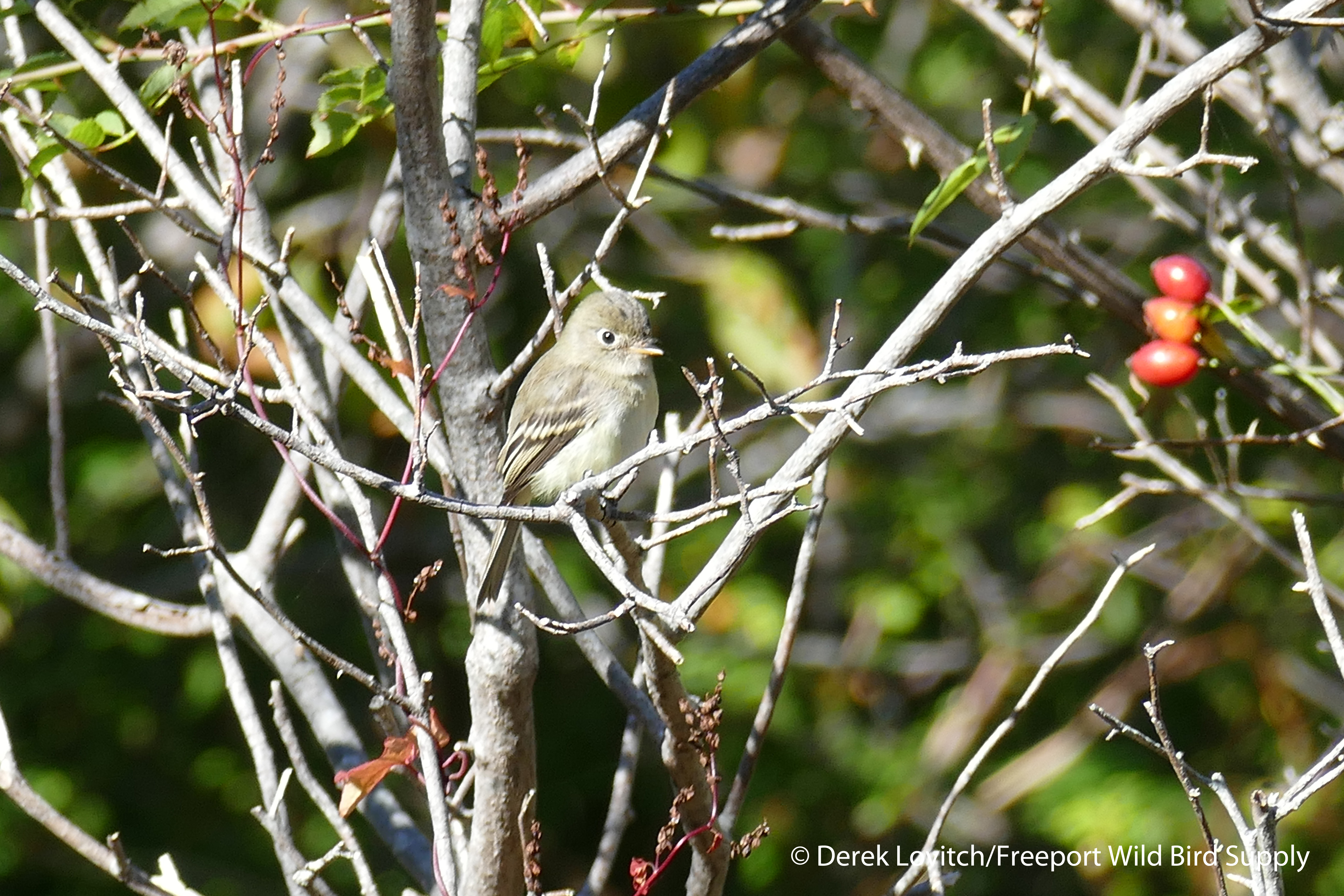
Of course, it wouldn’t be a Monhegan weekend if I didn’t attempt to string one Empidonax flycatcher. Of course, this one was a Least Flycatcher – as expected, and as usual. It did offer a very nice, prolonged study, however.
L1030231_LEFL1,Monhegan,9-26-15_edited-1

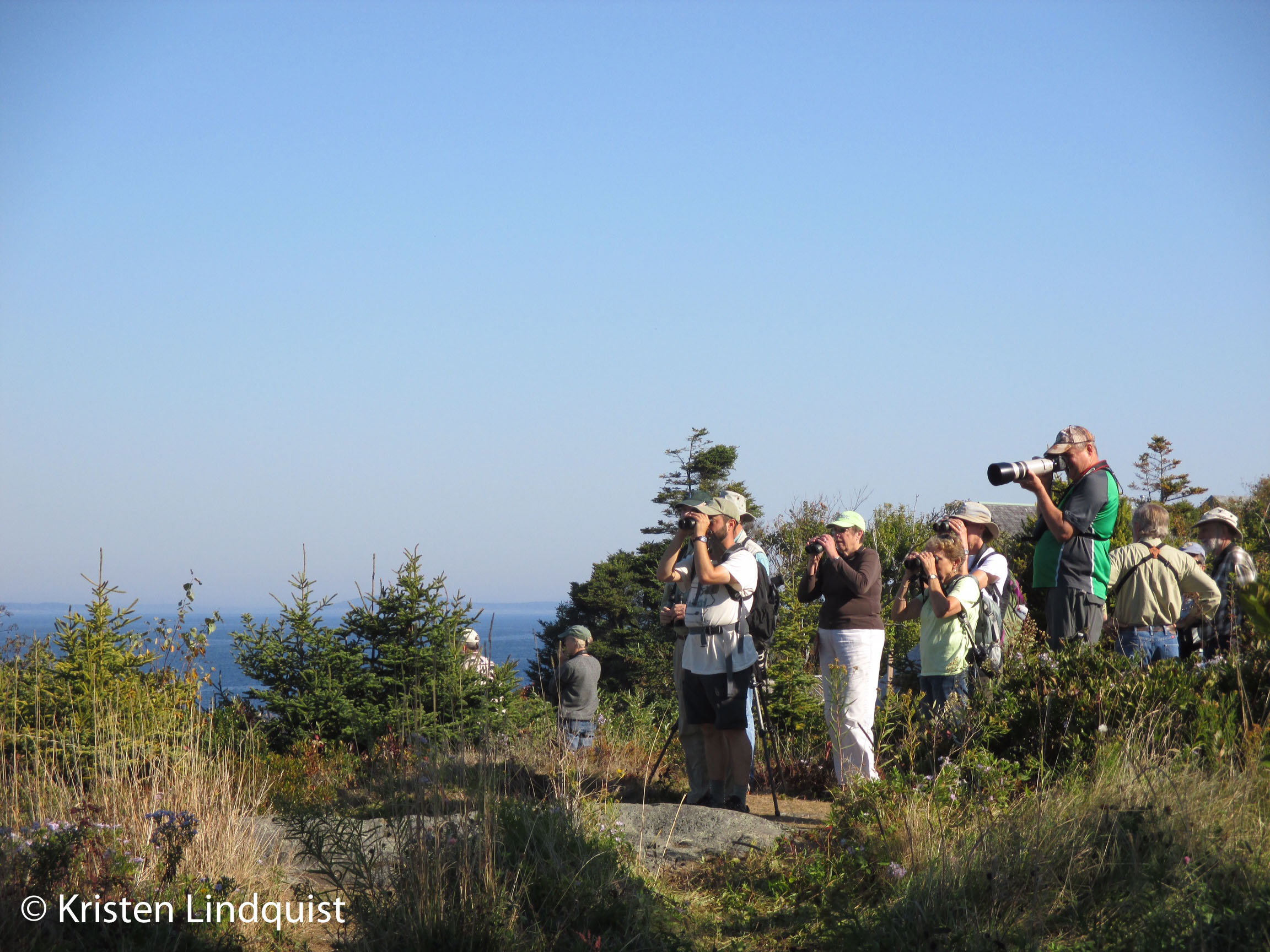
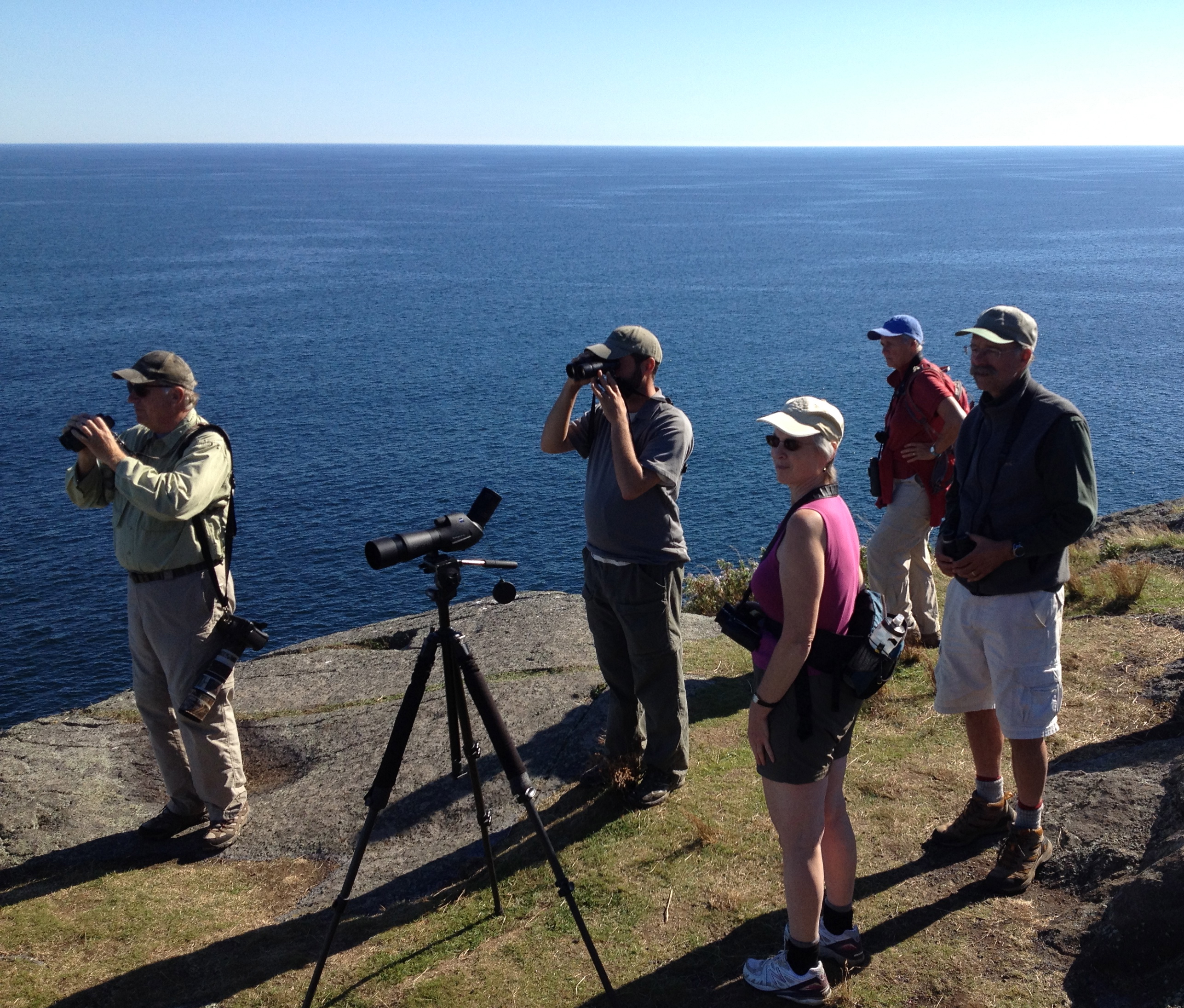
One of the other significant birding highlights was the seawatching from the tall cliffs. In the afternoon each day, we strolled over to White Head to enjoy Northern Gannets, study Great Cormorants, and do a little seawatching.
group_on_cliff,byKristen_edited-1

With northeasterly winds picking up Sunday afternoon, gannets were breathtakingly close. A little trickle of shearwaters, which included 2 Cory’s Shearwaters among a handful of Greats, were anything but near.

Here’s the three-day checklist of all birds seen:
American Black Duck: 0,1,0
Mallard: 6,6,6
American Black Duck x Mallard: 1,1,1
Green-winged Teal: 1,1,1
Common Eider: x,x,x
Surf Scoter: 0,1,8
Common Loon: 0,1,2
CORY’S SHEARWATER: 0,0,2
GREAT SHEARWATER: 0,0,6
Ring-necked Pheasant: 3,3,1
Northern Gannet: #,#,##
Double-crested Cormorant: x,x,x
Great Cormorant: 2,13,3
Great Blue Heron: 1,0,2,
YELLOW-CROWNED NIGHT-HERON: 0,0,2 (present all three days, but we only made it to the Ice Pond at dawn on the last day).
Osprey: 1,2,2
Bald Eagle: 1,2,1
Northern Harrier: 0,0,1
Sharp-shinned Hawk: 4,6,1
American Kestrel: 0,3,9
Merlin: ??,4,3
Peregrine Falcon: 0,2,1
Semipalmated Plover: 0,1,0
Laughing Gull: 1,1,0
Herring Gull: x,x,x
Great Black-backed Gull: x,x,x
Ring-billed Gull: 0,0,1
Black Guillemot: x,x,x
Mourning Dove: 6,4,6
Belted Kingfisher: 1,1,2
Yellow-bellied Sapsucker: 8,4,4
Downy Woodpecker: 0,2,2
Northern Flicker: 0,6,8
Least Flycatcher: 0,1,1
Eastern Phoebe: 0,3,3
Blue-headed Vireo: 0,1,0
Philadelphia Vireo: 0,1,0
Red-eyed Vireo: 0,6,3
Blue Jay: 4,8,15
American Crow: x,x,x
Common Raven: 3,2,2
Horned Lark: 0,1,0
Black-capped Chickadee: x,x,x
Red-breasted Nuthatch: 6,8,12
Brown Creeper: 0,1,2
Winter Wren: 0,1,0
Golden-crowned Kinglet: 15,20,40
Ruby-crowned Kinglet: 20,6,5
Swainson’s Thrush: 1,0,0
American Robin: 2,1,1
Gray Catbird: x,x,x
European Starling: 8,8,8
American Pipit: 3,1,0
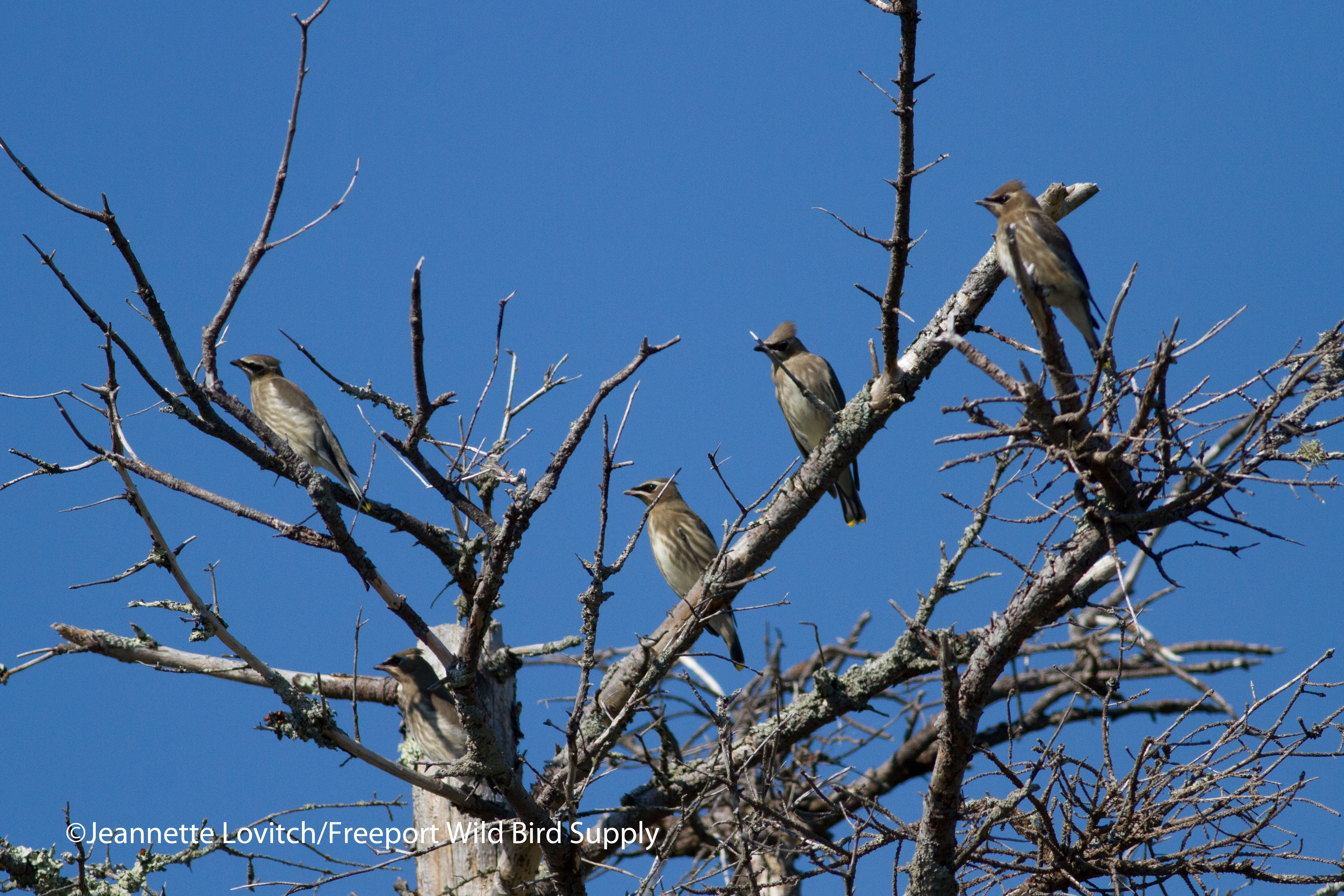
Cedar Waxwing: 30,25,30
Nashville Warbler: 1,1,1
Northern Parula: 10,4,4
Yellow Warbler: 2,1,1
Magnolia Warbler: 1,0,0
Cape May Warbler: 1,2,1
Black-throated Blue Warbler: 1,0,0
Yellow-rumped Warbler: 150,75,75
Black-throated Green Warbler: 6,2,2
PINE WARBLER: 1,0,0
Prairie Warbler: 1,0,1
Palm Warbler: 4,2,2
Blackpoll Warbler: 15,10,10
American Redstart: 0,1,1
Black-and-white Warbler: 1,0,1
Common Yellowthroat: 4,x,x
Chipping Sparrow: 1,4,4
Song Sparrow: x,x,x
Lincoln’s Sparrow: 2,1,1
Swamp Sparrow: 4,2,2
White-throated Sparrow: 10,10,10
White-crowned Sparrow: 0,1,1
Northern Cardinal: 10,8,8
DICKCISSEL: 1,1,1
Common Grackle: 10,29,29
Baltimore Oriole: 2,2,2
American Goldfinch: 2,4,4

Total species = 80
Total warbler species = 15

Although this year’s tour was one day shorter than usual (since Jeannette and I had to leave for a tradeshow on Monday), the 80 total species was a whopping 22% below the average of 102 species for my usual 4-day tour, and 16% below my average of 95 species for a three-day fall tour.

But the “MonhegZen Migration Weekend” isn’t called that for some existential reason – no meditation required. Instead, it’s a suggestion of the mindset of going with the flow, taking what the island gives us, and enjoying a truly unique and remarkable place that superlatives fail to completely describe.

So yeah, it was pretty slow. But it’s not just cliché: a slow day on Monhegan is better than a “good” day almost anywhere else. And not just for the birds! Don’t believe me? Well, how about joining us next fall to see for yourself? I mean, did you see those sunsets?

P.S. To get a better idea of what it’s usually like out there, check out my blog from last fall’s weekend tour.

Birding By Schooner Trip Report, 2015

It’s hard for me to pick my “favorite” tour, but if pressed, I would probably answer our annual “Birding by Schooner” aboard the Lewis R. French tour. It just offers such a unique way to bird, and such unique birding experiences. The scenery, the food, and the good conversation can also not be beat.

Last week was my 6th tour aboard the French. And one of the aspects of the tour that I so very much enjoy is that every tour is different. We often don’t know where we are going even as we depart Camden Harbor on our first morning! Weather (especially wind, or lack there of) dictates the plan. And I must say, it’s a nice bit of respite to not have any control over where we go! All I have to do is point out birds wherever our captain takes us.

Of course, this is a birding-themed trip, so we make our best efforts to get into position for some great birding, especially to visit one or more islands with breeding seabirds. But when I boarded the vessel on Sunday night, I could only guess what a plan might be.

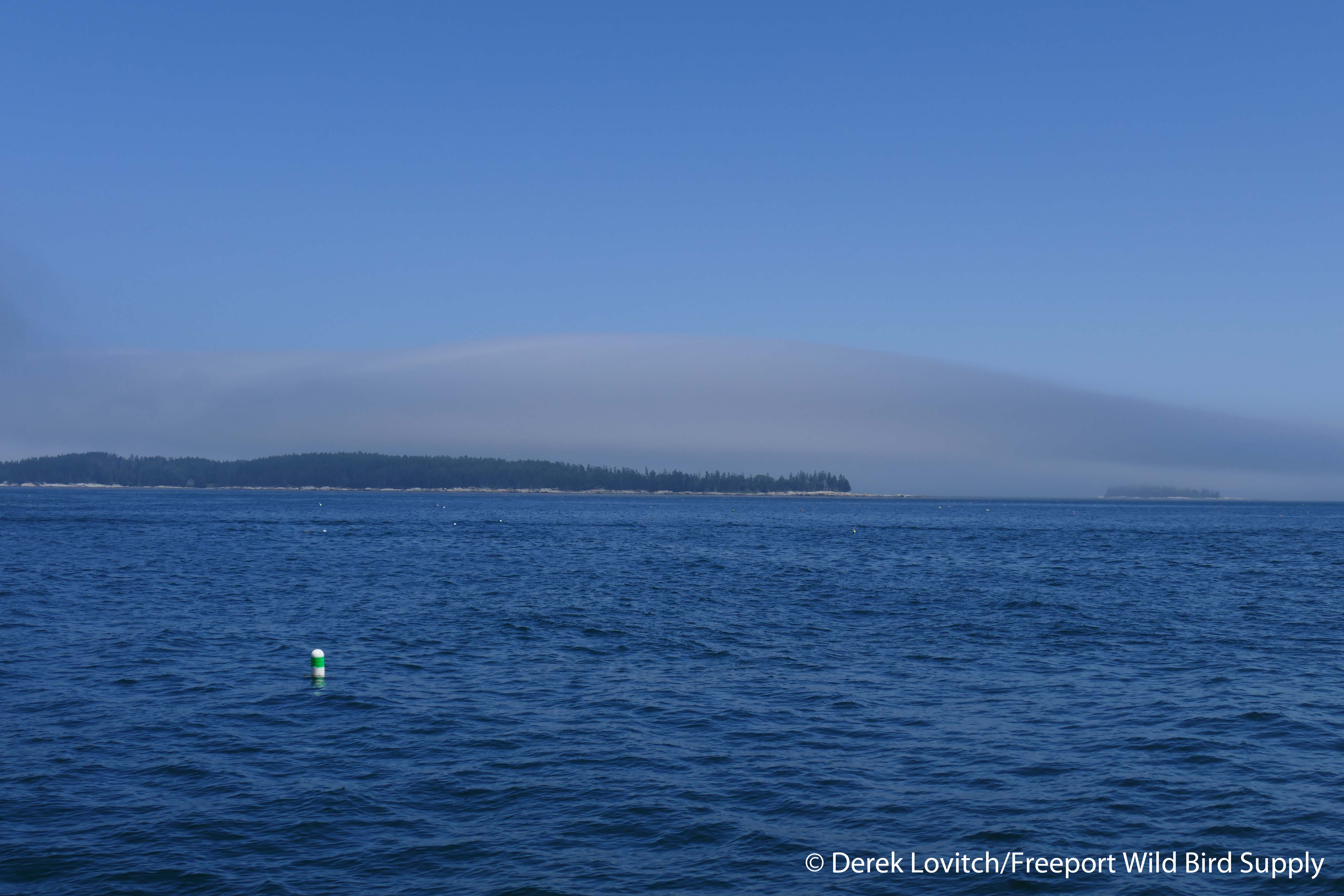
We awoke to fog and calm on Monday morning, departed the harbor on the very lightest of breezes, and pushed our way across a bay with only the minimum of ripples. We found a whole in the fog bank as we rounded Owl’s Head Light…
1. L1020522_OwlsHeadLight,7-20_edited-1
(click on photos for larger images)

…but soon we were back in the murk.
2. L1020526_IntotheFig,7-20_edited-1

Wilson’s Storm-Petrels began to show up, with at least 50 noted by the time we pulled into Port Clyde. Bald Eagles were conspicuous, as were the common bay denizens such as Black Guillemot…
3. IMG_1540_edited-2

…and Common Eider.
4. IMG_1770_edited-2

A stroll to Marshall Point Light added to our landbird list, while a Greater Yellowlegs in the harbor was the first migrant shorebird of the trip.

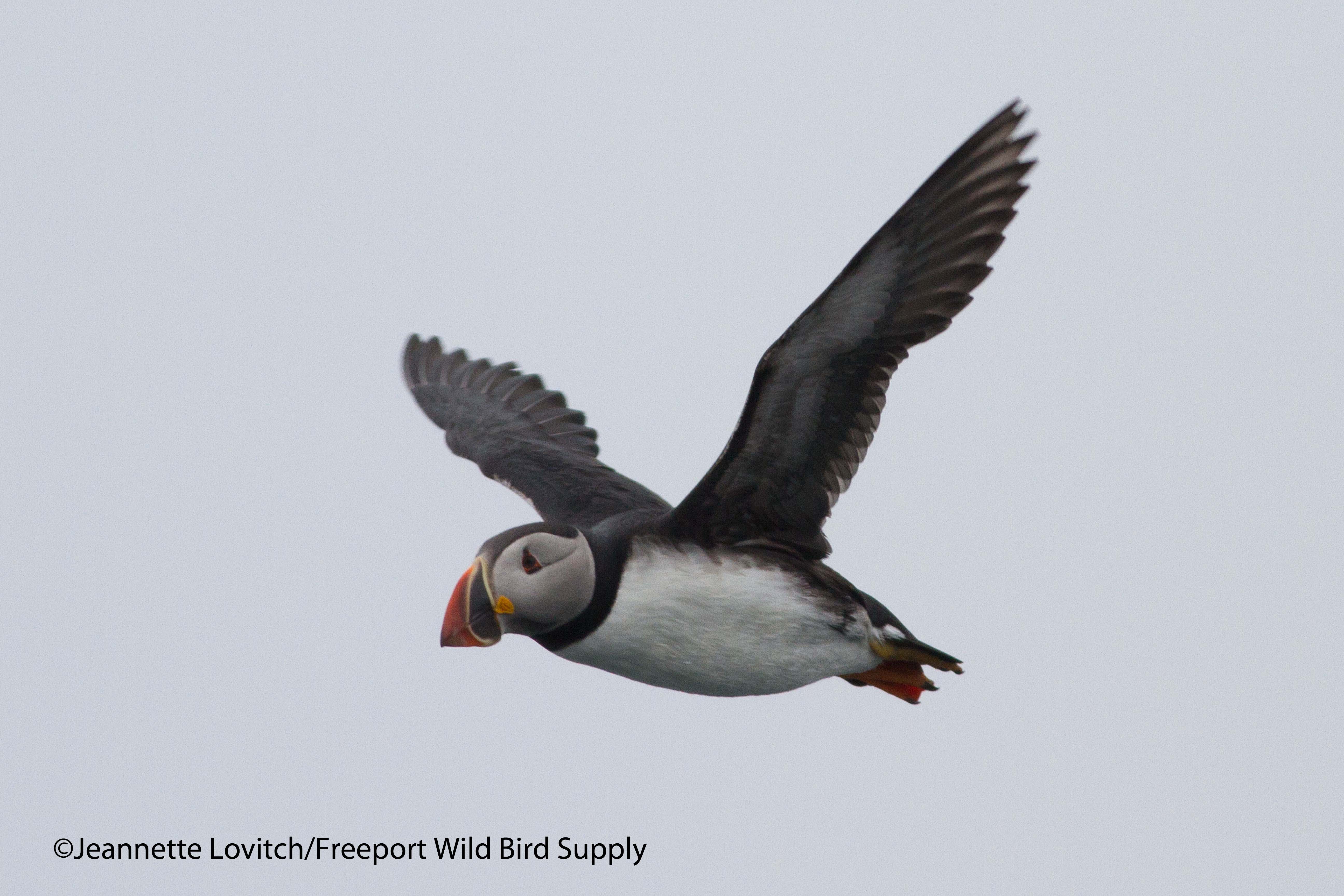
Overnighting in Port Clyde set us up nicely for a short trip to Eastern Egg Rock, which we rounded slowly to enjoy Roseate Terns among the Arctic and Commons, lots of Black Guillemots, and over 100 Atlantic Puffins. The fog lifted enough for us to have great visibility when near the island, but the offshore fog bank and cloudy skies meant a lot of puffins were on the water, and many loafed close to our boat or zipped right by.
5. IMG_1567_edited-2

Back into the fog as we trudged offshore, seabirds were few and far between. Or, I should say, we saw few seabirds…I am sure plenty were out there. We encountered some more puffins, and this one Northern Gannet.
6. IMG_1589_edited-2

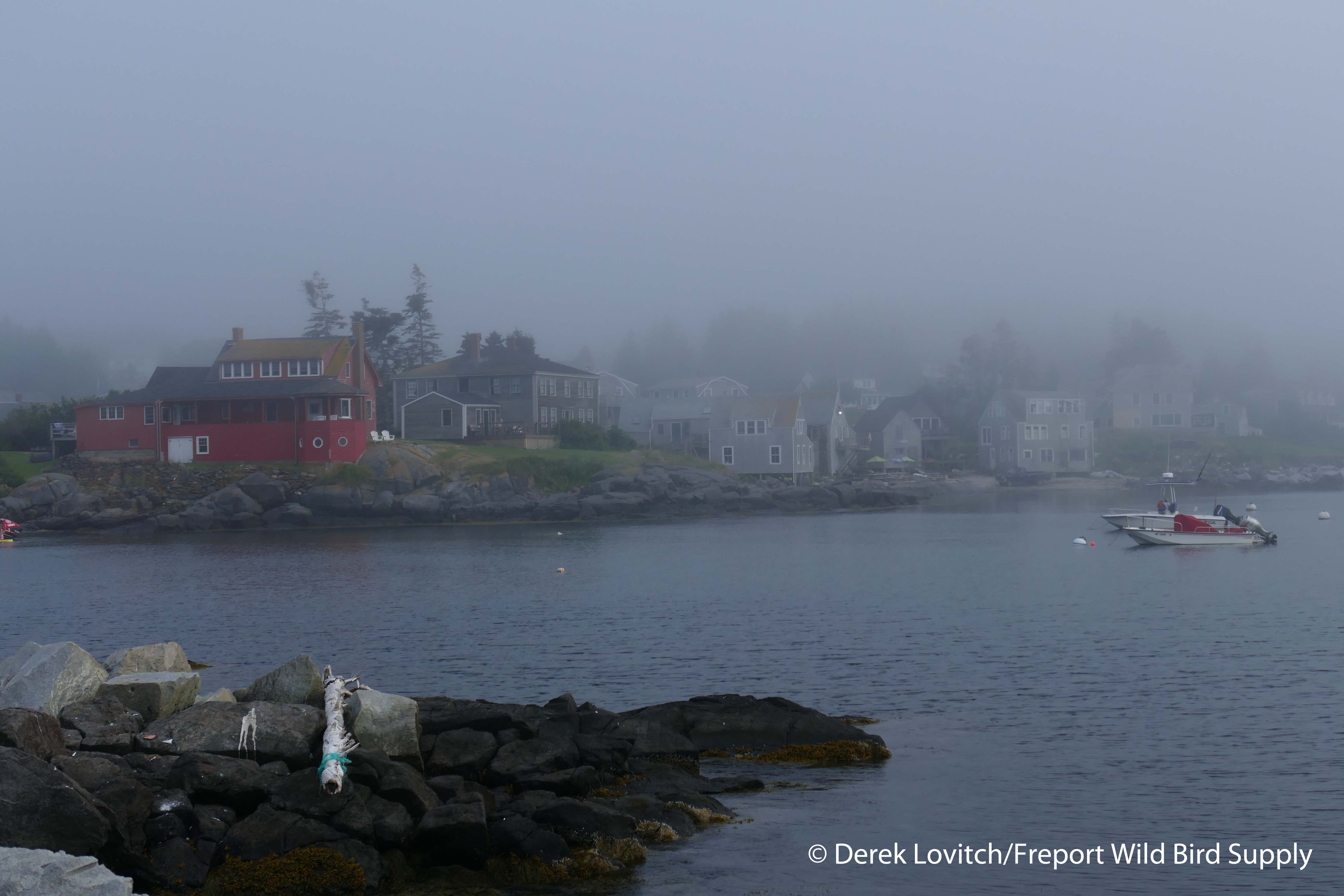
Our destination this afternoon was none other than Monhegan Island…one of my favorite places in the world. It was pretty foggy, so the views were limited…
7. L1020530_MonheganFog,7-21_edited-1

…But few complained. Especially those of us who ended up at the Monhegan Brewing Company (Wait, how do so many of my tours end up at breweries?).
8. L1020548_MonheganBrewery,7-21_edited-1

Several common breeding birds were added to our trip list, but no mid-summer vagrants were detected. We had hoped to overnight in the harbor and take a birdwalk in the morning, but a tenuous anchorage and an approaching cold front led Captain Garth to err on the side of caution, and head for the shelter of the mainland, so we said an early farewell to Monhegan.
9. L1020554_departingMonhegan,7-21_edited-1

We sought shelter up the St. George River, first in Turkey Cove, but then Garth made a last minute decision to anchor on the river’s other bank, in the Pleasant Point Gut. Overnight, the storm cleared, and so did the fog.
10. L1020565_PleasantPointGut,7-22_edited-1

We didn’t have much wind, but what we did have facilitated a trip out to remote Seal Island. We had to motor-sail most of the way, but we had an afternoon date with a punctual local.

On the way, we enjoyed some great birding. While we didn’t have enough wind to take the long way out to Matinicus Rock and deeper water, cutting a straight line around the north end of Metinic produced a whole lot of Wilson’s Storm-Petrels (450+ on the day), 6 Red Phalaropes (along with another 20 phalaropes that were just a little too far to ID), and a Mola Mola that gave us the slip. Most surprising, however, was a pair of American Oystercatchers that were flying around Little Green Island. Whether this is a previously-unknown pair of this slowly-increasing species in Maine, southbound migrants, or Maine breeders undergoing post-breeding dispersal is impossible to know, but it was a new “Schooner Bird” for me: my 116th species seen during our “Birding by Schooner” tours!

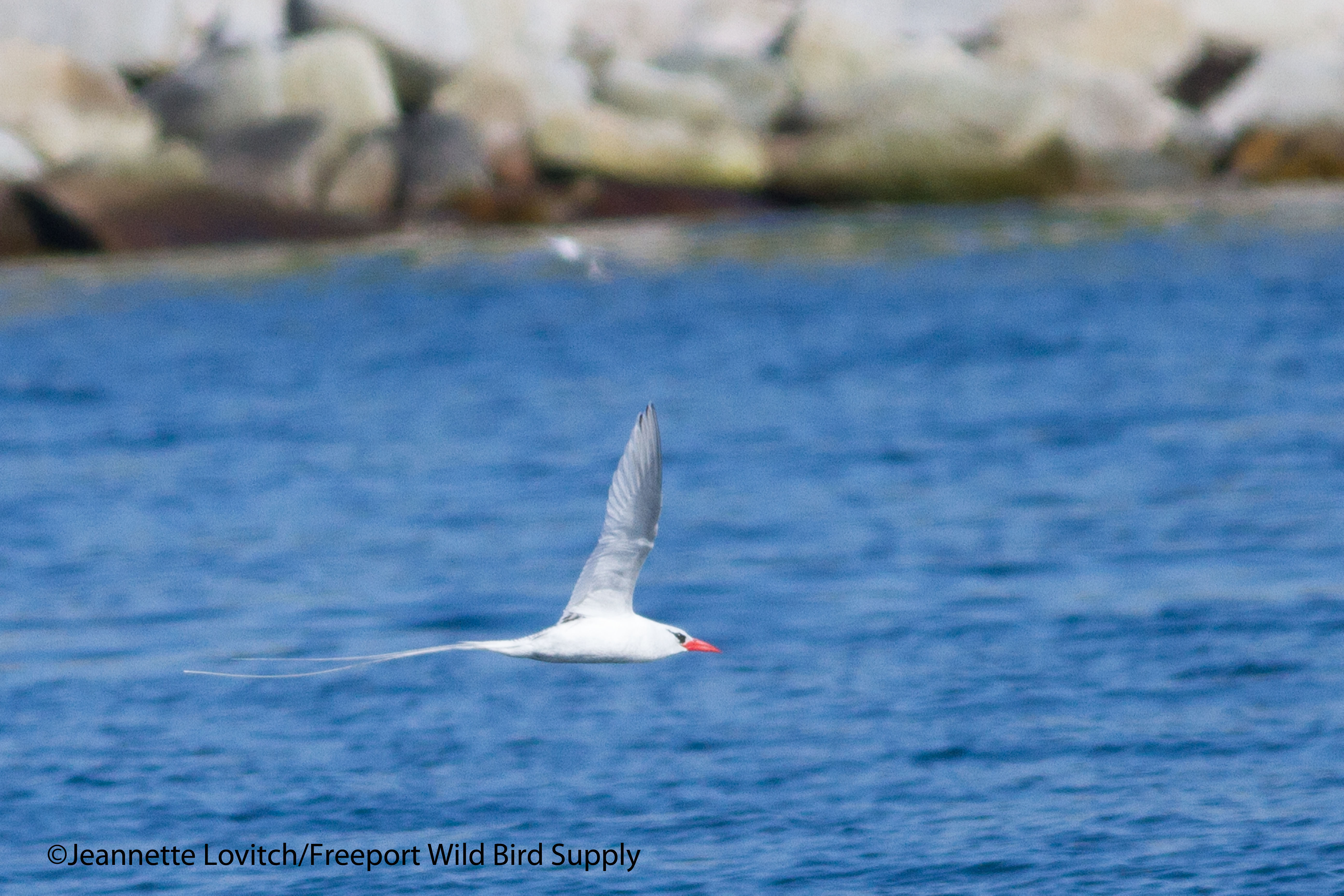
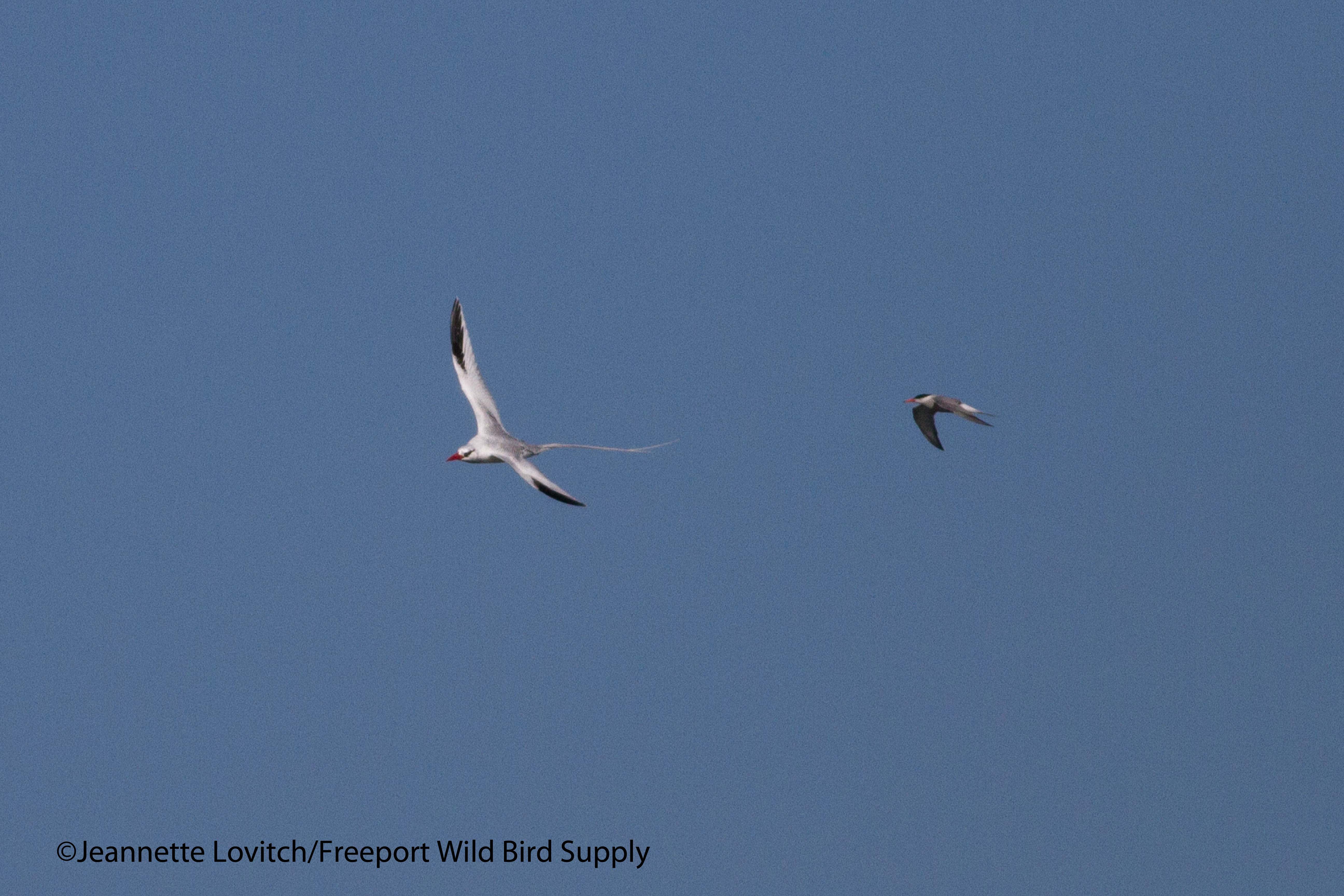
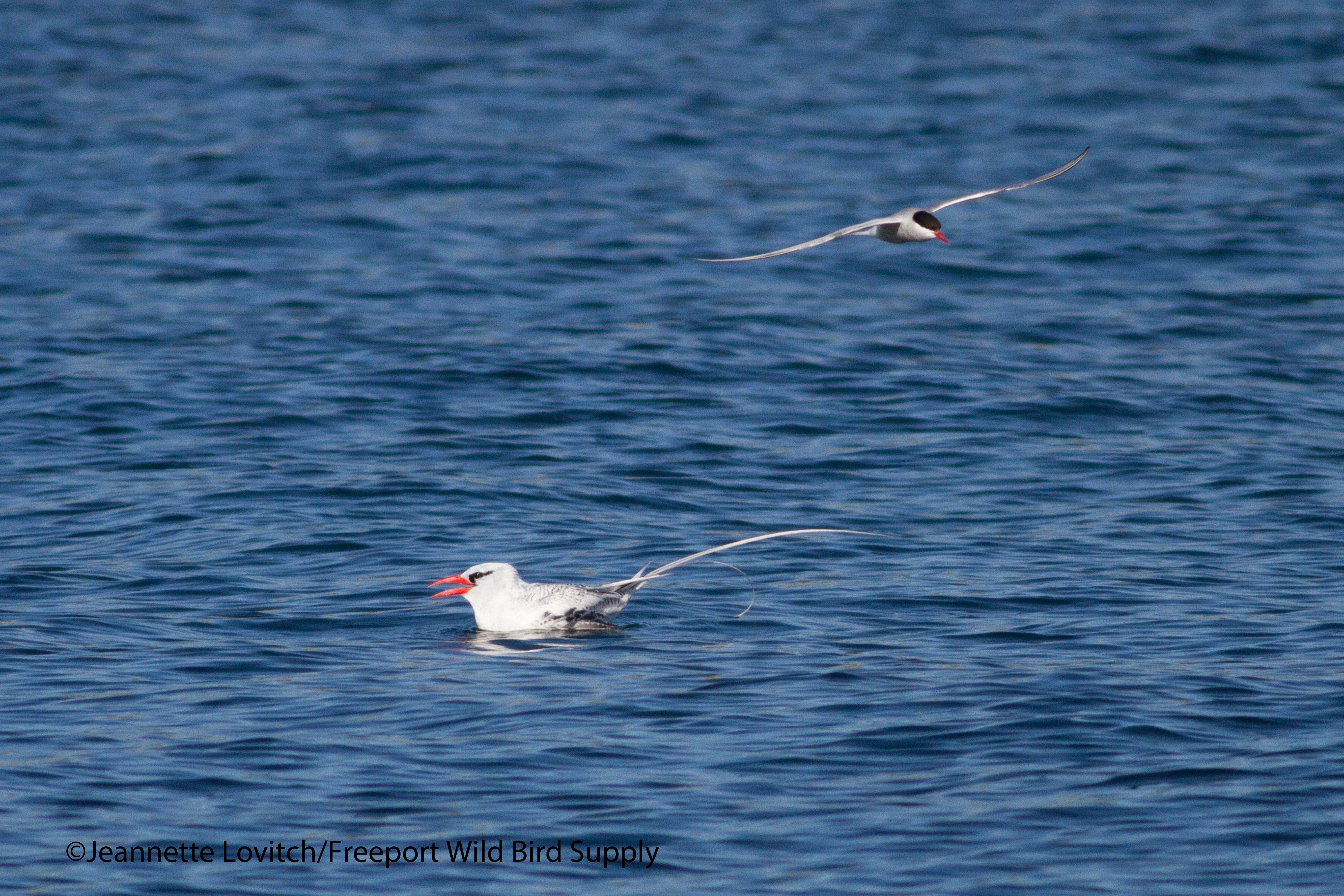
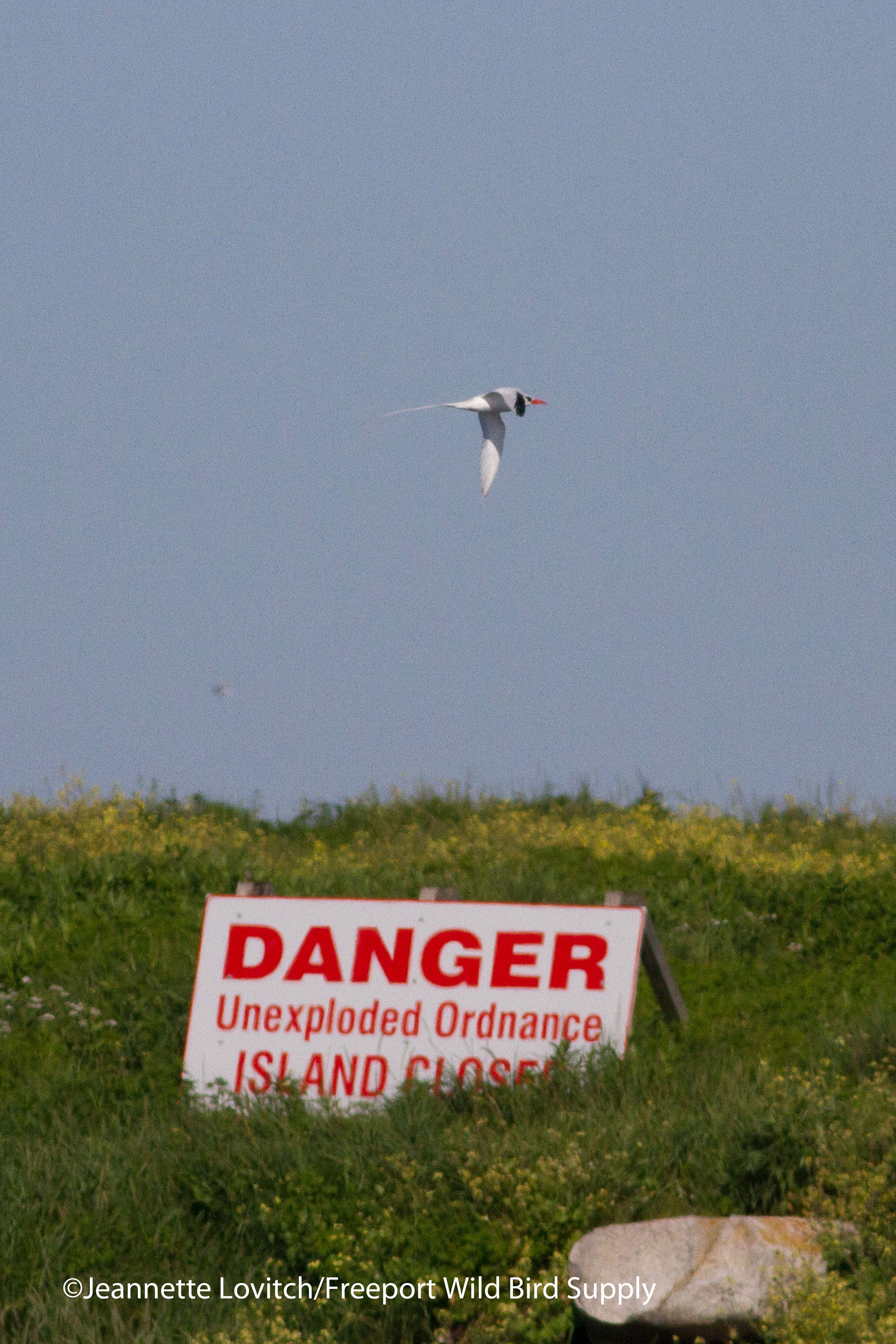
It was a bit of work, but we made it to Seal Island on a sunny, fairly calm day at the perfect time. And “Troppy” the Red-billed Tropicbird that has returned to Seal Island for its 9th straight summer (10th overall in the area), made his afternoon appearance for a little bath. This was my fourth visit to Seal aboard the French, and we have seen Troppy three times (the only miss was on a cloudy day with fog the next morning).
11. IMG_1633_edited-2

12. IMG_1695_edited-2

13. L1020582_RBTR_landing1,7-22_edited-1

14. L1020583_RBTR_landing2,7-22_edited-1

15. L1020584_RBTR_landing3,7-22_edited-1

16. IMG_1738_edited-2

17. IMG_1684_edited-2

And despite that sign, we dropped anchor for a special evening. One of the unique experiences for participants on this most unique tour is an evening with the Seal Island’s biologists. Not only do the passengers get a break from hearing me talk, the biologists get a break from cooking and their usual routine.
18. L1020637_Seal_biologists_arriving,7-22_edited-1

19. L1020648_Seal_biologists_onBoard,7-22_edited-1

20. L1020658_Seal_Island_sunset,7-22_edited-1

Yet another unique experience afforded by spending a night out at Seal is to get up and listen for Leach’s Storm-Petrels returning to the island from foraging trips in the middle of the night. While clear skies and a light westerly wind reduced the cacophony, the eerie, sinister chuckling of the petrels rang through the night.

And if a sunrise over Seal isn’t enough…
21. L1020667_Seal_sunrise,7-23_edited-1

…there was what seemed to be the entire tern colony in the air…
22. L1020673_Seal_terns,7-23_edited-1

… more puffins, a couple of dozen Razorbills and 1 Common Murre, Great Cormorants, and more Black Guillemots than you could count.
23. IMG_1875_edited-2

Migrant shorebirds included a Whimbrel, a flock of small shorebirds that totaled 20 Semipalmated and 2 Least Sandpipers along with 4 Semipalmated Plovers, and unexpectedly, a fly-by Wood Duck! Not to mention another view of the Red-billed Tropicbird!

If your head wasn’t already on a swivel from looking at all of that, looking down offered a mesmerizing ballet of traveling jellies, both Moon and White-cross Jellies(here)…
24. L1020663_Moon_Jelly,7-23_edited-1

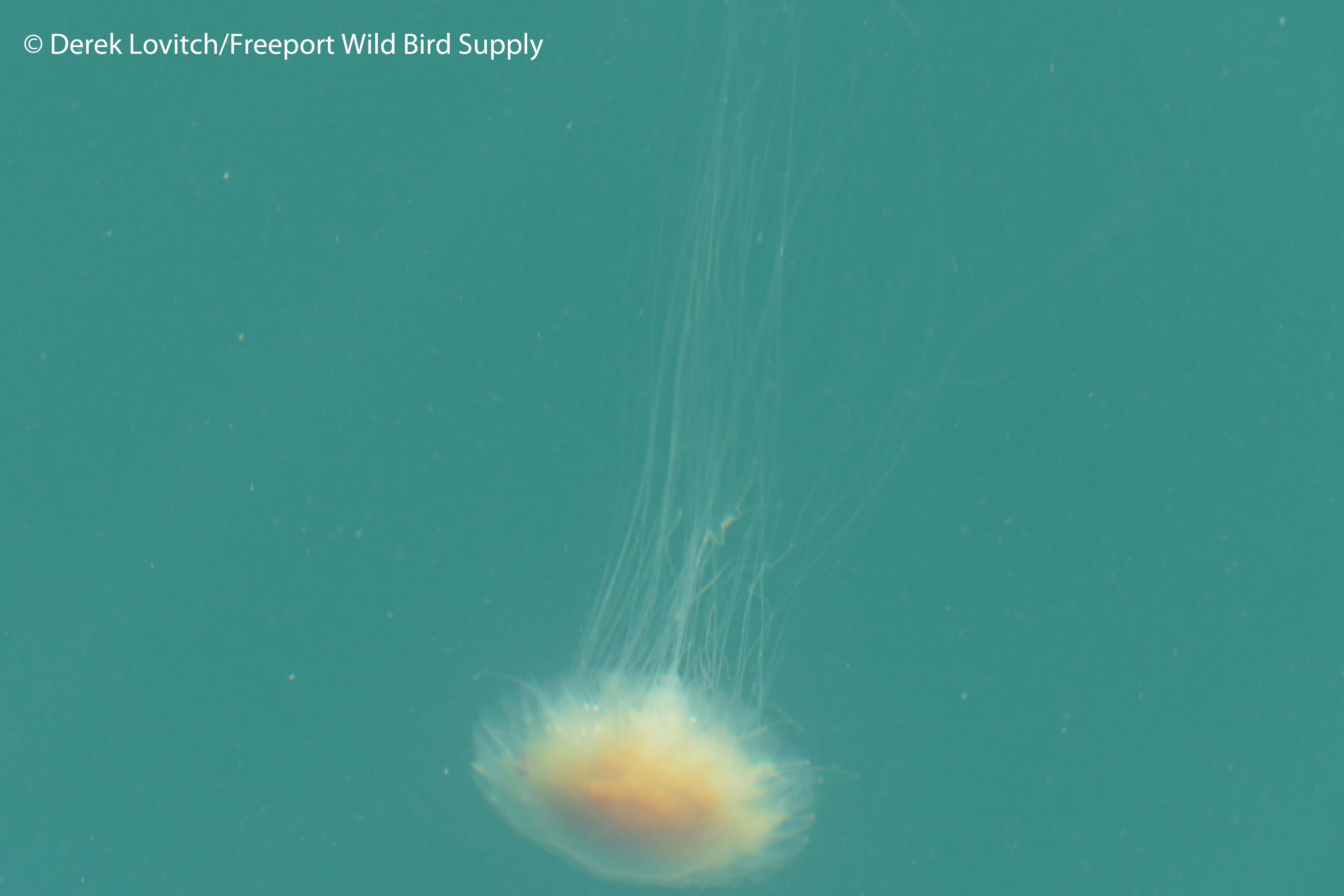
…and painful Lion’s Mane Jellies.
25. L1020677_LionsManeJelly,7-23_edited-1

For me, it is always too soon to depart, but we had other fish to fry, or to be exact, lobsters to boil. So we set a course towards Stonington, keeping our eyes open along the way. Two male Razorbills with their chick in tow were nice to see, as was a Minke Whale. A handful of Northern Gannets and about 10 Wilson’s Storm-Petrels were our only other seabirds, however.

As we entered nearshore waters, we kept an eye out on islands, both big and small. You never know what you might see, and while I am on the lookout for something “mega” like a Brown Booby, we did spot a Great Cormorant on tiny Saddleback Ledge.
26. L1020692_SaddlebackLedge2,7-23_edited-1

27. L1020696_GRCO,SaddlebackLedge,7-23_edited-1

Back in the usual domain of the Schooner fleet, we passed The Heritage…
28. L1020702_The_Heritage,7-23_edited-1

…and while the water boiled on Russ Island, the Angelique cruised passed us.
29. L1020706_FrenchandAngelique,Russ_Island,7-23_edited-1

A little bird, plant, and ecology walk further swelled our appetites. Which was good, because we had a few lobsters to eat tonight. Swainson’s Thrushes offered the evening’s musical performance.
30. L1020712_Lobster_Bake,Russ_Island,7-23_edited-1

A Sharp-shinned Hawk carrying breakfast over Russ Island was another addition to my Schooner List, and our morning walk around Stonington added several new species to our triplist.
31. L1020717_Stonington,7-24_edited-1

Rounding North Haven Island, we kept tallying Wilson’s Storm-Petrels (we don’t always see these birds inshore on this tour), spotted a few small groups of southbound swallows and a few shorebirds, and watched the storm clouds build.
32. L1020727_Storm1,7-24_edited-1

Um, should we have been worried?
33. L1020730_Storm2,7-24_edited-1

Nah, this crew has got it covered!
34. L1020750_Storm3,7-24_edited-1

Although we had some good sailing winds ahead of the storm, and some moderate rain during the storm, the skies looked much worse than what we weathered. In fact, by the time we motored into Gilkey Harbor on Islesboro, the rain was ending and the skies showed a few hints of blue. And once again, we ate. Ate real well.
35. L1020754_food,7-24_edited-1

It’s amazing how fast a week aboard the Schooner French flies by – even without the birds – but it was now time to crank the anchor one last time. A Greater Yellowlegs sounded off and Ospreys circled overhead as we departed the quiet harbor for the bustle of Camden.

Crossing West Penobscot Bay, we encountered yet more Wilson’s Storm-Petrels, and surprisingly (for this far up the bay) another Razorbill father and kid.

Chimney Swifts twittering over Camden were our 79th and final species of the tour – two over our average. Emails were exchanged, bunks were cleared, and one last photo-op capped off yet another stellar “Birding By Schooner” tour.
L1020761_group,7-25_edited-1

Here’s the complete, annotated checklist for this year’s trip, in order of appearance:

  1. American Crow
  2. House Sparrow
  3. Rock Pigeon
  4. Canada Goose (a couple of family groups in Camden Harbor)
  5. Mallard
  6. Song Sparrow
  7. Double-crested Cormorant
  8. Laughing Gull (common; all days)
  9. Osprey (common, just about every day)
  10. House Finch
  11. Herring Gull
  12. Great Black-backed Gull
  13. Cedar Waxwing
  14. Northern Cardinal
  15. Mourning Dove (all of the above from the boat within Camden Harbor)
  16. Wilson’s Storm-Petrel (daily; high day count of 450+ on 7/22, with 400+ between Little Green Island and Seal Island. Unusually common within Penobscot Bay).
  17. Black Guillemot (Abundant daily; several hundred on multiple days).
  18. Common Eider (very common; all days)
  19. Common Tern (abundant, including thousands at Eastern Egg Rock and Seal Island, but also scattered throughout inshore waters)
  20. Bald Eagle (common and seen daily; high count of 7 on 7/20).
  21. Bonaparte’s Gull (scattered few)
  22. Common Loon (scattered few on several days)
  23. Great Blue Heron
  24. Northern Parula
  25. European Starling
  26. Black-capped Chickadee
  27. Common Grackle
  28. American Robin
  29. Common Yellowthroat
  30. Black-throated Green Warbler
  31. Purple Finch
  32. Common Raven
  33. White-throated Sparrow
  34. Blue Jay
  35. Greater Yellowlegs (scattered singletons)
  36. Least Sandpiper (scattered few)
  37. Northern Flicker
  38. Gray Catbird
  39. Semipalmated Sandpiper (scattered small groups; high of 30 at Seal Island on 7/23)
  40. White-rumped Sandpiper (1 each at Eastern Egg Rock, 7/22 and Seal Island, 7/22)
  41. Spotted Sandpiper
  42. ATLANTIC PUFFIN (100+ at Eastern Egg Rock, 7/22 and hundreds at Seal Island 7/22-23)
  43. ROSEATE TERN (dozens at Eastern Egg Rock, 7/22)
  44. ARCTIC TERN (many hundreds at Eastern Egg Rock, 7/22 and Seal Island, 7/22-23)
  45. Northern Gannet (1 between Eastern Egg and Seal, 7/22; 5 between Seal and Stonington, 7/23)
  46. Tree Swallow (several southbound groups seen offshore and around islands)
  47. Brown-headed Cowbird
  48. Red-winged Blackbird
  49. Ruby-throated Hummingbird
  50. Winter Wren
  51. Black-throated Green Warbler
  52. Yellow-rumped Warbler
  53. Barn Swallow (scattered small numbers, many southbound over water)
  54. Blue-headed Vireo
  55. Killdeer
  56. AMERICAN OYSTERCATCHER (pair at Little Green Island, 7/22)
  57. RED PHALAROPE (6 between Little Green Island and Seal Island, 7/22, plus 20 unidentified phalaropes)
  58. GREAT CORMORANT (35+ including juveniles at Seal Island, 7/22-23, plus 1 at Saddleback Ledge light, 7/23).
  59. RED-BILLED TROPICBIRD (Troppy! Seal Island, 7/22-23).
  60. RAZORBILL (20+ Seal Island, 7/22-23)
  61. Bank Swallow (6 off of Seal Island, 7/22)
  62. COMMON MURRE (1 at Seal Island, 7/22)
  63. LEACH’S STORM-PETREL (many heard overnight at Seal Island, 7/22-23)
  64. Savannah Sparrow
  65. Whimbrel (one at Seal Island, 7/23)
  66. WOOD DUCK (one unexpected fly-by at Seal Island, 7/23)
  67. Semipalmated Plover (4 at Seal Island, 7/23 and 4 off North Haven, 7/24)
  68. Turkey Vulture
  69. Dark-eyed Junco
  70. Red-breasted Nuthatch
  71. Golden-crowned Kinglet
  72. Sharp-shinned Hawk
  73. Chipping Sparrow
  74. Black-and-white Warbler
  75. Yellow Warbler
  76. Hermit Thrush
  77. Belted Kingfisher
  78. Ring-billed Gull (just a few in and around Camden Harbor)
  79. Chimney Swift

Since every trip is unique, here are links to the trip reports from the previous two tours.

August, 2014.
And July 2013.

And in the not-so-distant future, we’ll be posting dates and information for our 2016 adventure. This trip fills up fast, so don’t dally…sign up soon and we’ll see you aboard next year!

Monhegan Island, May 18-20, 2015.

Hooded Warbler, Yellow-crowned Night-Heron, Summer Tanager, Grasshopper Sparrow, 19 species of warblers and 89 species? All in 48 hours? It must be Monhegan!

Jeannette and I escaped for a quick trip to Monhegan Island this week. It was all-too-brief as usual, but we’re always happy for whatever short visit we can muster. With the early season ferry schedule still in effect, we couldn’t arrive until noon on Monday, and departed at 12:30 on Wednesday. That only gave us 48 hours of birding.

IMG_1020_edited-2
Northern Parulas were common and conspicuous – and looking mighty fine! – throughout the visit.

A strong flight overnight Sunday into Monday ushered in some new migrants to the island, but also ushered out several of the rarities that had been present over the weekend. Luckily, a few goodies lingered, including the adult Yellow-crowned Night-Heron that was seen almost all day for all three days of our visit in a corner of the Ice Pond. Our best discovery of the trip was a Grasshopper Sparrow that we kicked up near the microwave tower. Unfortunately, it was not seen again by us or anyone else.

The remnants of the good morning were present – it was decidedly birdy and we managed 16 species of warblers and 65 total species of birds before dinner…and with the pleasant surprise of finding Monhegan Brewing open, we may have spent a little afternoon time there instead of beating the bush.

Monhegan_Brewing,5-18-15_edited-1
FOY.

IMG_1030_edited-2
Magnolia Warbler was our most common warbler on Day 1.

Come nightfall, birds took the air on light southerly winds. However, after midnight, there were very few
birds on the radar near the coast, suggesting many more birds would have departed than arrived. And that certainly was the case!

It was a quiet morning, and in the dense fog, birds were few and far between. The Yellow-crowned Night-Heron was present and accounted for however. Then, in the afternoon, Jeannette and I (mostly) circumnavigated the island – a hike I haven’t done in a while, so that was a nice change of pace. The only Cape May Warbler we saw in the three days was during the hike, in one of quite a few small mixed-species foraging flocks that we encountered on the island’s east side.
Hiking_East_Side,5-19-15_edited-1

We also came upon a tired and wet Scarlet Tanager (I can’t believe I didn’t bring mealworms on this trip!), which was slowly working the rocks for seaweed flies. It was finding several, and after watching it for about 15 minutes, we can tell it was getting a little more strength.

Upon our return to town, we were alerted to the re-sighting of the weekend’s Summer Tanager, flycatching on Swim Beach. To say it posed for pictures would be an understatement.
J_SUTA,Monhegan,5-19-15_edited-1

IMG_1068_edited-2

IMG_1082_edited-2

Overall, it was a slow day of birding by Monhegan standards (55 species including 13 species of warblers), but a slow day of birding on Monhegan is a great day of birding most anywhere else!

Although we awoke to more dense fog on Wednesday (5/20), our last day on the island, there were soon peaks of sun overhead, and a lot of new birds were to be seen. A moderate flight overnight on light southwest winds then saw birds drift offshore a little more as the winds shifted to the west after midnight. This brought an array of new arrivals to the island, although nothing in exceptionally large quantities, but our trip list grew steadily.

Our morning began with a nice flight of Northern Gannets off Lobster Cove and ended with 17 total species of warblers. Personal first-of-years included the gannets, 1 American Pipit at Lobster Cove, and a singing Willow Flycatcher.  The Summer Tanager continued, and the Yellow-crowned Night-Heron was still standing guard.

And finally, we ran into the one rarity that we had not yet caught up with – a female Hooded Warbler that had been present since the weekend. In true MonhegZen birding style, after being told we “just missed it” several times, I played a hunch and gave one little thicket a quick check before we headed up to the Trailing Yew to grab our carry-on bags.

And sure enough, there she was!
IMG_1180_edited-2

While both a Wood Thrush and Snowy Egret that were seen on Tuesday would have been “Island Birds” for me, we managed to see all of three of the continuing rarities, plus finding our own in the Grasshopper Sparrow (a very good bird out here).

In other words, it was a great – albeit quick – trip. I look forward to returning no later than our MonhegZen Fall Migration Weekend, if not sooner.  And for the record, Monhegan Brewing’s new Flyway IPA – named for the birds and birders that descend on the island each spring and fall – is fantastic!

Sasha_and_Chaco,5-19-15_edited-1
The trip was also way too short for Sasha. Not only did she not get any lifers, but her little island romance with Chaco came to an all-too soon end.

Our full trip list was as follows:

Mallard: 6, 8, 10.
Mallard x American Black Duck hybrid: 0,0,2
Common Eider: x,x,x
Ring-necked Pheasant: 3,5,4.
Red-throated Loon: 0,0,1.
Common Loon: 2, 0,0.
Northern Gannet: 0,0,73
Double-crested Cormorant: x,x,x
Great Cormorant: 0,0,1.
Great Blue Heron: 0,0,1.
YELLOW-CROWNED NIGHT-HERON: 1,1,1.
Osprey: 0,0,1.
Merlin: 1,1 or 2, 1
Sora: 1,1,1 (calling incessantly all day long all three days!)
Greater Yellowlegs: 2,1,0
Spotted Sandpiper: 0,0,2
Laughing Gull: 0,0,4.
Herring Gull: x,x,x.
Great Black-backed Gull: x,x,x
Black Guillemot: x,x,x.
Mourning Dove: 6,6,6.
Ruby-throated Hummingbird: 0,1,2.
RED-BELLIED WOODPECKER: 1,1,0.
HAIRY WOODPECKER: 1,0,1.
Northern Flicker: 1,1,0.
Eastern Wood-Pewee: 1,0,3.
Alder Flycatcher: 0,0,2.
Willow Flycatcher: 0,0,1.
Least Flycatcher: 2,2,20.
Eastern Phoebe: 2,0,2.
Eastern Kingbird: 6,1,3.
Warbling Vireo: 0,0,2.
Red-eyed Vireo: 0,1,6.
Blue Jay: 4,5,5.
American Crow: x,x,x.
Common Raven: 2,2,2.
Tree Swallow: 10,6,8.
Cliff Swallow: 1,0,0
Barn Swallow: 2,0,2.
Black-capped Chickadee: x,x,x.
Red-breasted Nuthatch: 2,2,2.
Winter Wren: 0,1,1.
Golden-crowned Kinglet: 0,8,2.
Swainson’s Thrush: 0,1,1.
American Robin: x,x,x.
Gray Catbird: #,#,#
Brown Thrasher: 3,2,2.
European Starling: x,4,6.
American Pipit: 0,0,1.
Cedar Waxwing: 0,0,15.
Nashville Warbler: 0,0,2.
Northern Parula: 10,20,25.
Yellow Warbler: 10,10,20.
Chestnut-sided Warbler: 1,1,8.
Magnolia Warbler: 15,30,40.
Black-throated Blue Warbler: 5,3,2.
Yellow-rumped Warbler: 10,15,12.
Black-throated Green Warbler: 3,15,18.
CAPE MAY WARBLER: 0,1,0.
Blackburnian Warbler: 1,0,0.
Blackpoll Warbler: 2,2,10.
Black-and-white Warbler: 6,10,15.
American Redstart: 2,3,25.
Ovenbird: 1,0,1.
Northern Waterthrush: 3,1,2.
Common Yellowthroat: #,#,#.
HOODED WARBLER: 0,0,1.
Wilson’s Warbler: 2,0,6.
Canada Warbler: 1,0,3.
SUMMER TANAGER: 0,1,1.
Scarlet Tanager: 0,1,0.
Eastern Towhee: 0,0,2.
Chipping Sparrow: 2,1,0.
Savannah Sparrow: 3,2,2.
GRASSHOPPER SPARROW: 1,0,0.
Song Sparrow: x,x,x
Lincoln’s Sparrow: 1,0,0.
Swamp Sparrow: 4,2,3.
White-throated Sparro: 15,10,10.
White-crowned Sparrow: 1,6,7.
Northern Cardinal: 4,6,6.
Rose-breasted Grosbeak: 4,5,5.
Indigo Bunting: 0,0,1.
Bobolink: 6,4,3.
Red-winged Blackbird: 4,4,8.
Common Grackle: x,x,x.
Baltimore Oriole: 2,1,4.
Pine Siskin: 0,0,1.
Purple Finch: 1,0,0.
American Goldfinch: 8,4,6.

Day totals: 65, 56,77

But most conspicuous in their complete absences was the lack of Carolina Wrens. The island usually has the densest population of this “southern” species anywhere in the state (although one neighborhood in Wells might rival it), but we did not have a single bird the entire trip! Same for everyone else we talked to. Apparently, the unusually harsh, long, and snowy (especially for out here) winter took its toll – as it is wont to do on Carolina Wrens pushing the northern limits of their range.

IMG_1175_edited-2
Chestnut-sided Warblers were one of many species that were more frequently encountered this morning that in the previous two days.

Departing_Monhegan,5-20-15_edited-1

2014 MonhegZEN Birding Fall Migration Weekend Trip Report

harbor,K

PHVI,ScottHarvell_edited-1Philadelphia Vireo wrasslin’ a Fall Webworm.

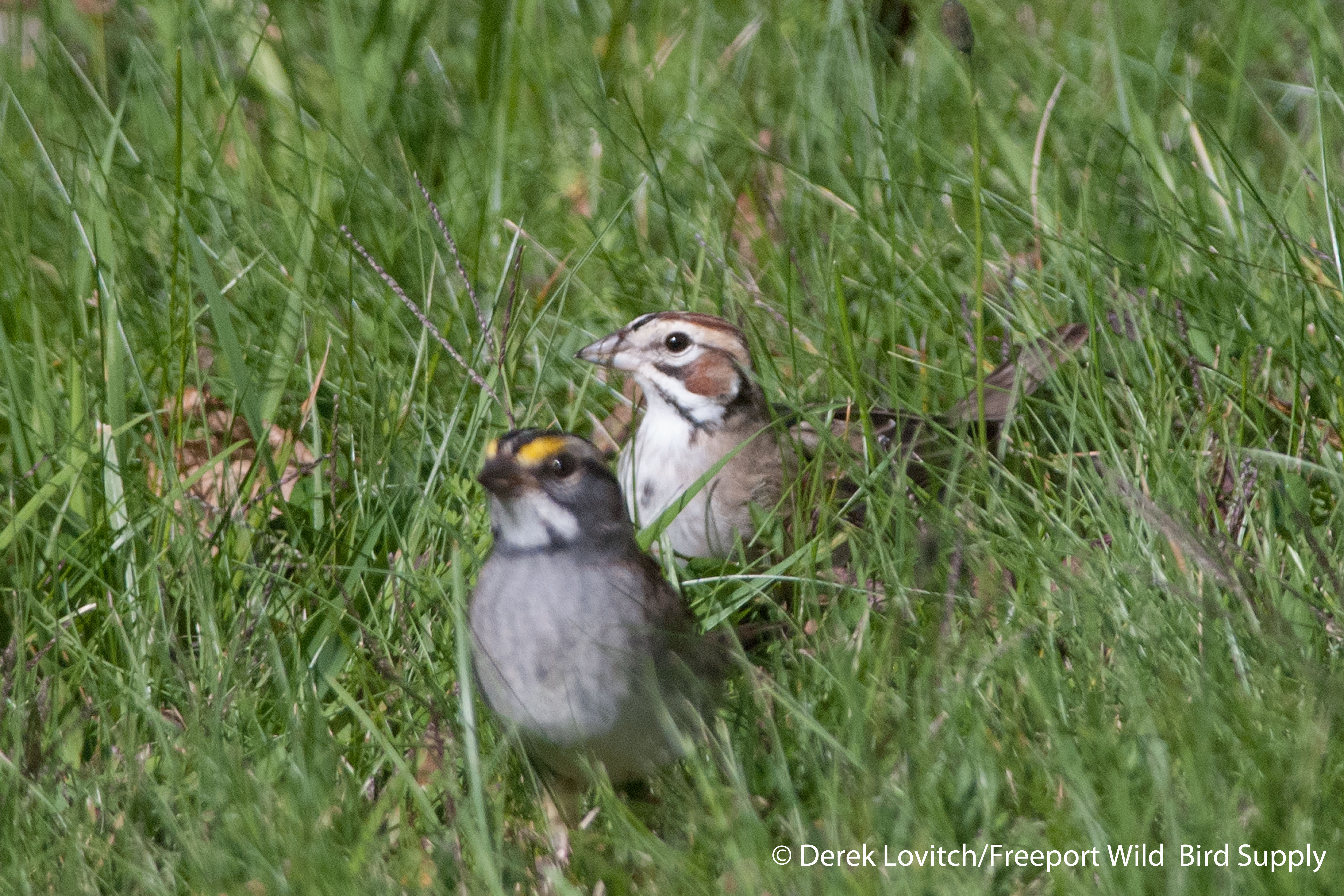
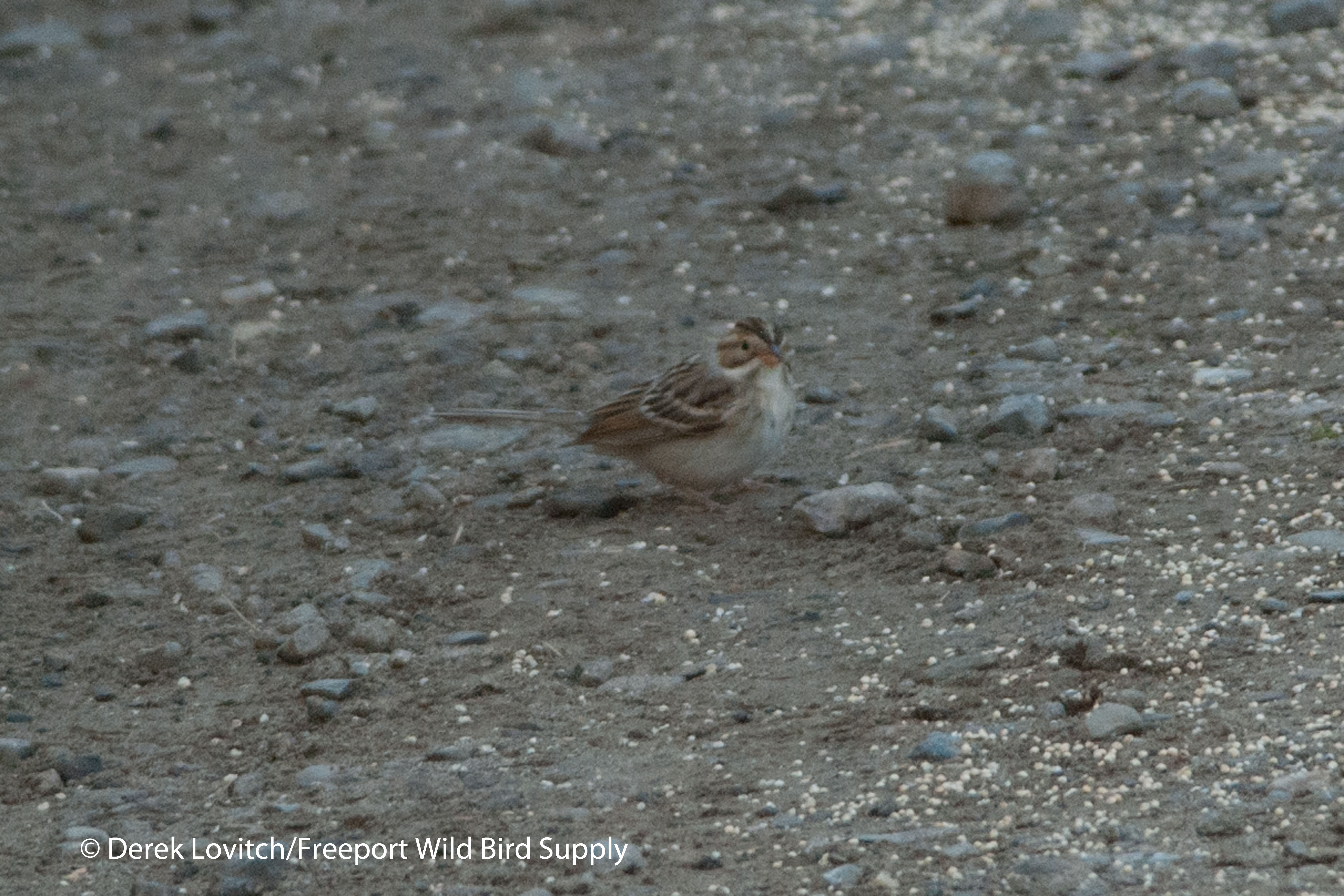
Ninety-seven species of birds, including 16 species of warblers. Yellow-headed Blackbird, Lark and Clay-colored Sparrows, and Dickcissel from the mid-west. Blue Grosbeak from the south. Kettles of Peregrine Falcons, clouds of Yellow-rumped Warblers, good food, great beer, and fantastic camaraderie. Yup, it’s another installment of our annual “MonhegZEN Birding Fall Migration Weekend.”

There are few places in the entire Northeast that I would rather be in fall, especially during the peak of migrant diversity. Our annual tour takes places to coincide with the last waves of warblers, first waves of sparrows, peak of raptors, and the beginning of “Rarity Season.” Check, check, check, and check…and it was hot! In fact, I believe I received the first ever complaint of a room at the Trailing Yew being “too warm in the morning.” Of course, “complaint” is used loosely here, for the record. But it was an unusually warm weekend, and although the birding was not epic by Monhegan standards, great diversity was thoroughly enjoyed – as was the weather (well, at least until the boat ride home a day after the tour ended!).

Two Red-necked Grebes just outside of the harbor were a nice way to start the trip on Friday, as were plenty of Northern Gannets, several Common Loons, and glass-calm seas on our way across. Arriving at 10am via the Hardy Boat from New Harbor, we hit the ground running, and after dropping our bags off to be taken to our inn, we immediately began to bird. Two vocal, dogfighting Peregrine Falcons got us started, and we soon spotted the single continuing Dickcissel. That’s how I like to get things started!
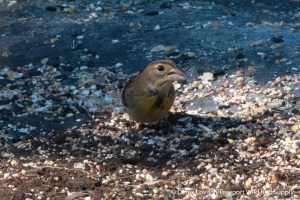
DSC_0054_DICK1,Monhegan,9-28-14_edited-1

IMG_8630_edited-2

Although we did find a Yellow-breasted Chat (frustrating as usual, although at least everyone saw twigs moving), the bird of the day was definitely Peregrine Falcon. A bona fide kettle of 8 were soaring overhead at lunch time, and a steady parade of birds was passing overhead throughout the day. There was a lot of swirling as well, however, which made tabulating an actual count of Peregrines impossible. We know we had at least a dozen birds, but likely multiple times that. Some birds were clearly hunting, but most were probably rising high on the thermals and then soaring off to the south, using the light headwind to efficiently move out to sea, and likely not making landfall until Cape Cod!

Unexpectedly, very light southwesterly winds shifted to west overnight, and as a result, we had a very good arrival of birds to the island. Yellow-rumped Warblers – as expected for the date – dominated, with a conservative estimate of 250 birds observed, with many dozens in the air over the Trailing Yew at sunrise. Three Cape May Warblers, including a couple at the edge of the Yew were the highlight of dozen species of warblers we recorded today. The immature male Dickcissel continued in his favorite seed pile, and we had a fly-by Yellow-billed Cuckoo over the Ice Pond. Unfortunately, a short time later, it was found dead below a nearby window, not just sobering our sighting, but punctuating the fact that up to a billion birds a year meet their death at windows each year – and that’s just in the US!

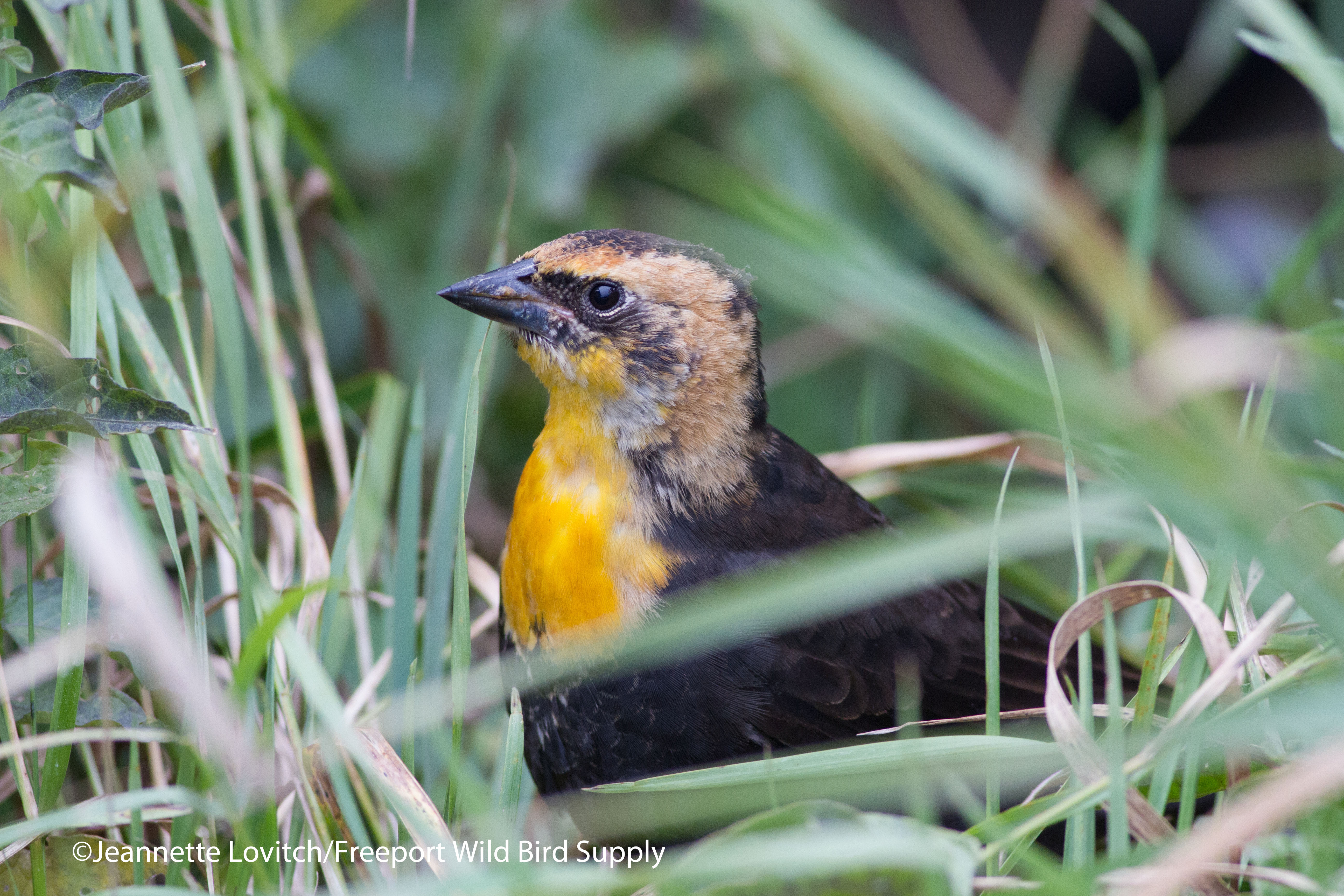
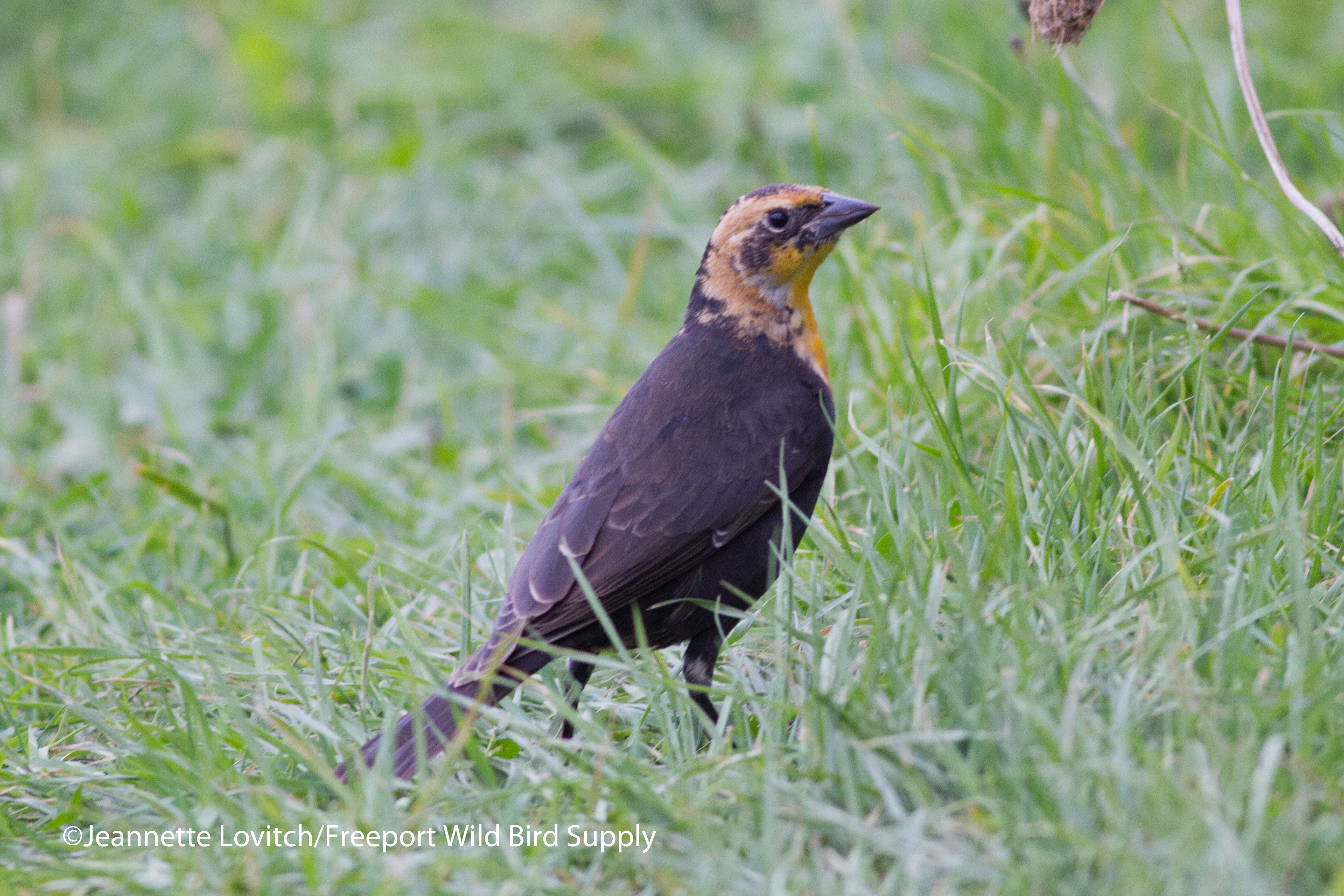
Good diversity and good (but not, by Monhegan standards, great) numbers made for a fun day of birding, but it was definitely a lot more relaxing once we finally caught up with the Yellow-headed Blackbird! This immature male (a lot of folks were calling it a female, but the blackish body, extent of yellow, face pattern, and every-so-slight touch of white on the wing point to this as being a male) had been present for about 4 days, but since it was a “State Bird” for me, and a “Life Bird” for several, it was obviously a priority.

But on Monhegan, you can only do so much to chase most rarities. In fact, more often than not, you have to simply relax and let the rarities come to you! I call this my “MonhegZEN Migration Birding Weekend” not for any existential reasons – or mandatory meditation or yoga – but simply because we (try) to kick back, focus on the bird(s) in front of us, and let good things happen.

But yeah, we wanted to see this bird, and after missing it by about 5 minutes on a brisk, pre-breakfast (but don’t worry, post-coffee!) walk, the MonhegZEN kicked in. A friend spotted the bird as it flew overhead, alighting nearby in the center of town. Good looks were had by all (I apparently said, “Oh, thank God,” in response to the bird’s arrival, feeling as much relief as joy, apparently!) but about a half hour later, we had even better views as it perched atop a spruce along Dock Road.
DSC_0022_YHBL1,Monhegan,9-27-14_edited-1

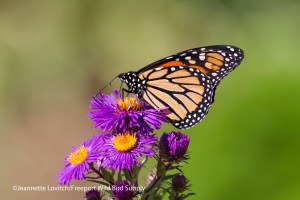
We were then able to more thoroughly enjoy the unseasonably warm day, watching Peregrines, and sorting through migrants. Oh, and a relative abundance of Monarch butterflies was heartening.
IMG_8603_edited-2

gentian,ScottHarvell

FringedGentian,Monhegan,9-28-14_edited-1
The largest Fringed Gentians I have seen.

IMG_0056_1_edited-1
Bald Eagle on the Outer Ducks as some of the participants took the short afternoon cruise around the island.

IMG_0022_1_edited-1
Great Cormorant and Harbor Seal.

A moderate-strong flight developed on clear and calm skies overnight, but come sunrise, the morning flight over the Yew was a little less busy than Saturday. Nonetheless, there were plenty of Yellow-rumped Warblers, Pine Siskins, and noticeable increases in Cedar Waxwings overhead and White-throated Sparrows in the woods and brush. Although overall numbers of birds were lower today, diversity was fantastic, and our trip list grew with the likes of Tennessee Warblers, a Warbling Vireo (I always wonder if these late Warblings out here are all “180-degree misoriented vagrants” as opposed to simply “lingering/late” birds – the local breeders on the mainland are long gone by now afterall), and we finally caught up with the Lark Sparrow that was visiting the seed with the Dickcissel.
LASP_and_DICK,ScottHarvell
Lark Sparrow with Dickcissel – a classic Monhegan juxtaposition.

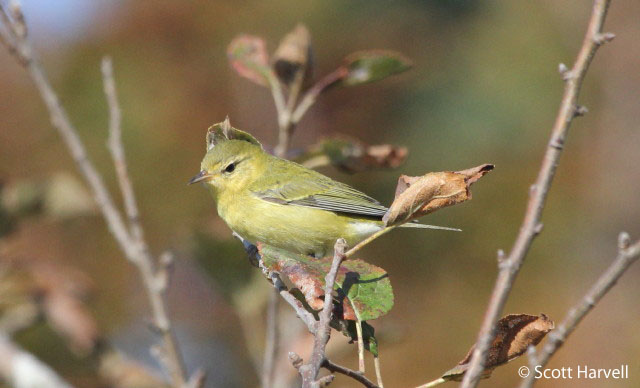
TEWA,ScottHarvell
Tennessee Warbler

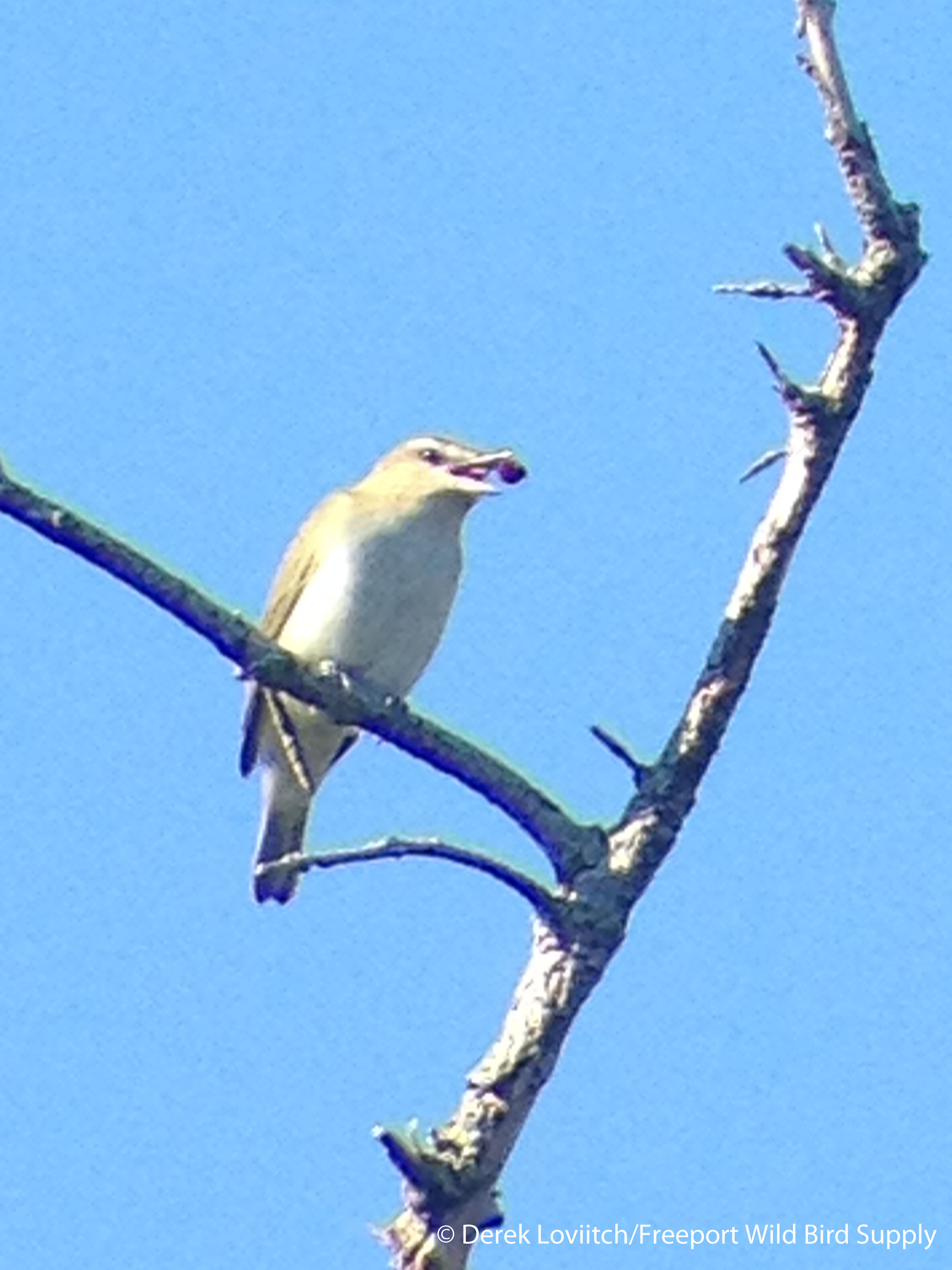
REVI_coughing_up_cherry_stone,Monhegan,9-28-14
Red-eyed Vireo coughing up a cherry stone; phone-scoped image.

group2,K

We found a female Blue Grosbeak in the marsh behind the grocery store, and we enjoyed another short visit from the Yellow-headed Blackbird (minutes after Jeannette, arriving on the mid-day boat with Sasha, walked away of course).
IMG_8590_edited-2
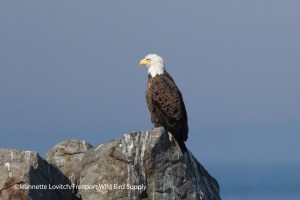
The eagle was present and accounted for on the way in.

Group3,K
Trap day is coming!

Due to my schedule, the official weekend tour was only three days this year (instead of the usual four), so most of the group departed on the 3:15 ferry back to New Harbor. Al stayed until the 4:30 Port Clyde boat, and his bonus time (three leaders: me, Jeannette, and Kristen Lindquist who assisted me throughout the weekend as I added a second leader when I added a 9th participant – I, and my clients, prefer a small group, especially on Monhegan!) was partially spent watching a few of us struggle with the identity of a dull warbler who really did not want to give us a good look. It was eventually determined to be an immature female Pine Warbler (actually, quite a good warbler out here), and when Jeannette, Kristen, and I saw it later that afternoon in good light, its ID was much more readily apparent.

The always-successful “MonhegZEN Birding Fall Migration Weekend” had officially come to a close, but the birding continued for Kristen, Jeannette, and I. Another hot (80-degrees on the last weekend of September on Monhegan!) and somewhat quiet afternoon relegated our birding to the porch of the Monhegan Brewing Company. Their new delectable DIPA and Pale Ale was thoroughly enjoyed, as was “Brewery Pewee” (a single lingering Eastern Wood-Pewee that was a daily feature of our Brewery List…OK, we didn’t actually keep a brewery list this time, but if we did…and no, this was not my first visit to the brewery on the weekend – it is an important destination for the full MonhegZEN Birding experience) capped the end to a fine and productive day.

After dinner, the three of us walked to and from the dock (a big school of fish, presumably Herring (?) attracted by the lights provided the post-dinner entertainment), but the mere four migrant call notes heard overhead foreshadowed the very light flight overnight that saw many more birds depart than arrive on a diminishing southwesterly wind.

In fact, the skies were nearly devoid of birds undergoing “morning redetermined migration” or “morning flight” come Monday morning, and although there were still plenty of Pine Siskins and Cedar Waxwings overhead, the skies were the quietest that they had been all weekend. But there was little doubt more White-throated Sparrows arrived overnight, and there was not a shortage of Yellow-rumped Warblers.
IMG_8663_edited-2

us,Monhegan,9-29-14,K
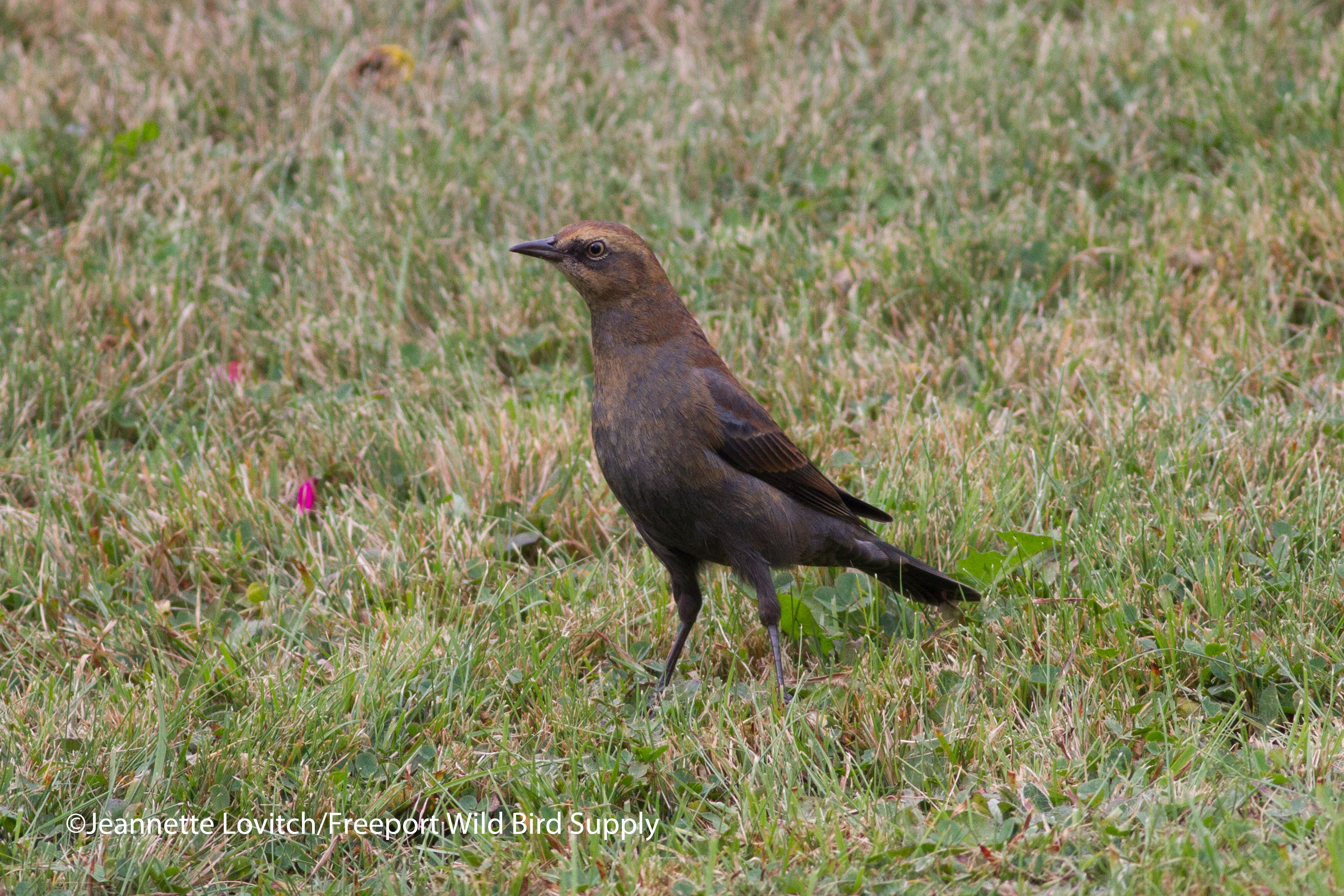
Rusty Blackbird.

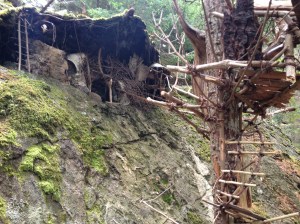
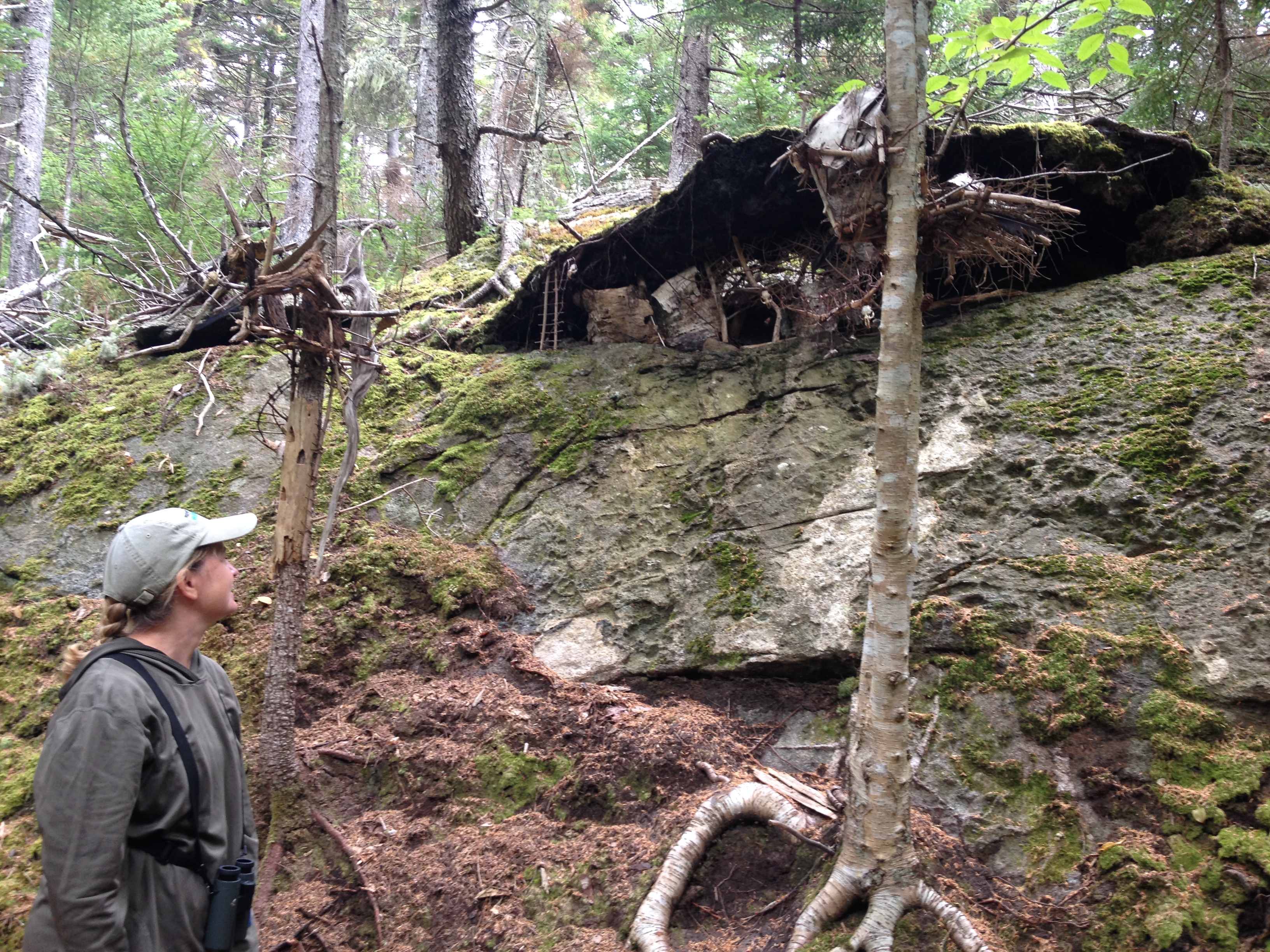
We slowly added a few species to the checklist, including the Clay-colored Sparrow that we had spent all weekend trying to catch up with. The Dickcissel and Blue Grosbeak were present and accounted for as well, and a Prairie Warbler was a nice addition. But as northeast winds began to pick up, we decided to head into the woods. Cathedral Woods offered scattered Golden-crowned Kinglets and more White-throated Sparrows, but our primary destination was this “Fairy House,” or more accurately, palace, that was not to be missed.
IMG_4532

IMG_4530

It was definitely worth the walk, and made even more so by how strong easterly winds were blowing (hmm, that water is looking a little choppy) upon our return to town. It was simply too windy to bird – and rather chilly – after lunch, so we relaxed with a coffee, and then later – just because we “had to” have one more DIPA… err, check of the Brewery Pewee.

The day’s birding was slow, and we had not been able to relocate the Yellow-headed Blackbird…until the literal last minute. The boat was loaded, and we were hustling to the dock, when we asked two birders what they were looking at in the yard of one of the first houses uphill on Dock Rd. “The Yellow-headed Blackbird.” Of course.

And it was, let’s say, confiding, as it walked around the lawn and in some weedy patches a mere 10-15 feet from the gawkers. Sasha even saw it (I would have had a great photo over her head, with her ears up and her face focused on the bird had my phone not just run out of power) – her 127th life bird! It was an exciting way to finish the trip, but the excitement was actually yet to come.
IMG_8673_edited-2

IMG_8678_edited-2

“How high are the seas running?” I asked as we boarded the boat. “6-8 feet or so, they’ah sure comin’ up fast today. It’s gonna be a wet ride.” Uh-oh; was that last beer a good idea? While Sasha has only been on a boat a few times, she has never been “tested,” but we thought it was best to keep her outside. Plus, a hot and stuffy cabin was the last place any of us wanted to be in high seas, so we donned our raingear and moved outside. We were amply warned about splash-over, but none of the four of us wanted to head inside.

Unfortunately, Sasha was not happy with the vibration on the stern, so we headed upstairs to the exposed top deck. 6-8ft seas? No, they were still growing; more in the 8-10ft range now…by far (actually, well more than double) the highest seas I have ever experienced on a Monhegan crossing. But it was surface chop, and not a deep, rolling swell, so it was actually kind of fun. Except for Sasha and except when a series of waves crashed over the boat and smacked into the four of us. I have never seen our tough dog look so miserable, and frankly, soaked to the bone, none of us were all that comfortable anymore. If any of my group had regrets about leaving on Sunday, I can assure you: be glad! It seemed like forever (OK, it was about an hour) before we passed into the lee of the outermost islands. But don’t worry, in between troughs and huddling over Sasha, I kept my eyes open as much as possible for skuas!

That was a wild ride, and very un-MonhegZEN! But once in the sheltered bay and harbor of Port Clyde, we couldn’t help but laugh with the crew. Seas like this are rare – and rarely do they come up so darn quickly – so please do not think that this is part of a Monhegan birding experience! In fact, glass-calm seas were enjoyed by every member of the group on their return trip on Sunday. I guess we might have stayed just one day too long this time.

Actually, no, we just regretted not staying just one day longer!

Kristen and I tabulated the final day’s checklist on the drive to dinner, bringing my four-day total to 99 species, including this final non-tour day. My 4-day weekend tour averages 102 species of birds, so this was just a little below average (this year’s tour officially ended on Sunday with 93 species, which is just below my 3-day average of 95 species).

Here’s the complete, daily checklist. These numbers only represent what our group observed, making no attempt to actually judge the number of birds (at least the common ones) on the island, or summarize the sightings of others and does not include birds tallied on the boat ride across either way.

Species: 9/26,9/27,9/28,9/29

Wood Duck: 1,0,3,2
Mallard: 4,15,15,15
Mallard x American Black Duck: 0,1,0,0
American Black Duck:0,2,0,0
Common Eider: x,x,x,x
White-winged Scoter: 1,0,0,0
Ring-necked Pheasant: 4,1,3,2
Double-crested Cormorant: x,x,x,x
Great Cormorant: 0,2,2,2
Red-necked Grebe: 2,0,0,0
Common Loon: 3,0,0,0
Northern Gannet: 15,50,20,50
Great Blue Heron: 1,1,1,1
Osprey: 1,8,5,2
Bald Eagle: 1,1,2,2
Northern Harrier: 1,0,0,2
Sharp-shinned Hawk: 1,4,6,3
American Kestrel: 0,2,2,1
Merlin: 4+,6+,10,6
Peregrine Falcon: 12++,10+,10+,8
Semipalmated Plover: 0,1,0,0
Greater Yellowlegs: 0,0,0,1
Ring-billed Gull: 0,0,0,2
Herring Gull: x,x,x,x
Great Black-backed Gull: x,x,x,x
Black Guillemot: x,x,x,x,
Mourning Dove: 4,4,4,3
YELLOW-BILLED CUCKOO: 0,1,0,0
Belted Kingfisher: 0,0,1,1
Ruby-throated Hummingbird: 0,2,0,0
Unidentified Hummingbird:0,0,0,1
Yellow-bellied Sapsucker: 2,12,15,4
Downy Woodpecker: 0,1,2,2
Northern Flicker: 10,12,10,20
Eastern Wood-Pewee: 0,3,1,1
Least Flycatcher: 1,2,1,0
Eastern Phoebe: 0,0,3,5
Blue-headed Vireo: 0,0,0,3
Warbling Vireo: 0,0,1,0
Philadelphia Vireo: 1,0,3,3
Red-eyed Vireo: 12,25,30,30
Blue Jay: 4,11,11,6
American Crow: 4,4,4,4
Common Raven: 0,2,2,3
Black-capped Chickadee: x,x,x,4
Red-breasted Nuthatch: 4,12,15,35
White-breasted Nuthatch: 1,0,0,0
Brown Creeper: 0,1,1,2
Carolina Wren: 5,6,8,7
Winter Wren: 0,0,1,3
Golden-crowned Kinglet: 6,8,12,25
Ruby-crowned Kinglet: 3,20,20,6
Swainson’s Thrush: 0,2,1,0
American Robin: 1,5,4,1
Gray Catbird: x,x,4,5
Northern Mockingbird: 1,0,1,0
European Starling: 10,12,12,8
American Pipit: 0,6,2,1
Cedar Waxwing: 40,40,80,50
Black-and-white Warbler: 1,1,1,3
Tennessee Warbler: 0,0,3,0
Nashville Warbler: 2,0,2,1
Common Yellowthroat: 10,6,x,x
American Redstart: 3,3,2,0
Cape May Warbler: 0,2,1,0
Northern Parula: 1,2,3,2
Magnolia Warbler: 0,3,1,1
Yellow Warbler: 0,1,1,1
Blackpoll Warbler: 1,6,5,4
Black-throated Blue Warbler: 0,0,1,1
Palm Warbler: 0,6,3,7
PINE WARBLER: 0,0,1,0
Yellow-rumped Warbler: 40,250,200,175
Prairie Warbler: 0,0,0,1
Black-throated Green Warbler: 4,10,3,1
YELLOW-BREASTED CHAT: 1,0,0,0
Scarlet Tanager: 1,0,0,0
Eastern Towhee: 1,0,0,0
Chipping Sparrow: 7,9,8,9
CLAY-COLORED SPARROW: 0,0,0,1
LARK SPARROW: 0,1,0,0
Savannah Sparrow: 0,9,6,2
Song Sparrow: x,x,x,x
Lincoln’s Sparrow: 1,0,2,1
Swamp Sparrow: 0,1,3,3
White-throated Sparrow: 8,20,100,100
White-crowned Sparrow: 0,3,4,3
Dark-eyed Junco: 0,10,6,10
Northern Cardinal: 2,3,4,4
Rose-breasted Grosbeak: 0,2,3,1
BLUE GROSBEAK: 0,0,1,1
Indigo Bunting: 2,1,1,1
DICKCISSEL: 1,1,1,2
Bobolink: 0,1,0,1
YELLOW-HEADED BLACKBIRD:0,1,1,1
Rusty Blackbird: 0,4,4,4
Common Grackle: 0,6,6,8
Baltimore Oriole: 1,2,3,1
Purple Finch: 0,2,8,6
Pine Siskin: 0,80,50,40
American Goldfinch: 2,2,4,4

Daily Total: 58,72,81,79 Total: 97

RINP,ScottHarvell
Ring-necked Pheasants – the only “countable” ones in Maine!

IMG_8624_edited-2
Cedar Waxwings.

IMG_4519_Monhegan_Sunset,9-27-14
Beautiful nightly sunsets free with price of admission.

2014 MonhegZen Spring Migration Birding Weekend.

Ahh, Monhegan Island.

If only I could bird there every day for a full spring (or fall; I won’t be picky). But for now, I will relish my weekends there, and last weekend was our MonhegZen Migration Spring Birding Weekend…and the island did not disappoint.

So while we always expect the unexpected, we most definitely were not expecting this one.
DSC_0124_BRSP1,Monhegan,5-25-14_edited-1 (Click on the photos for a larger image).

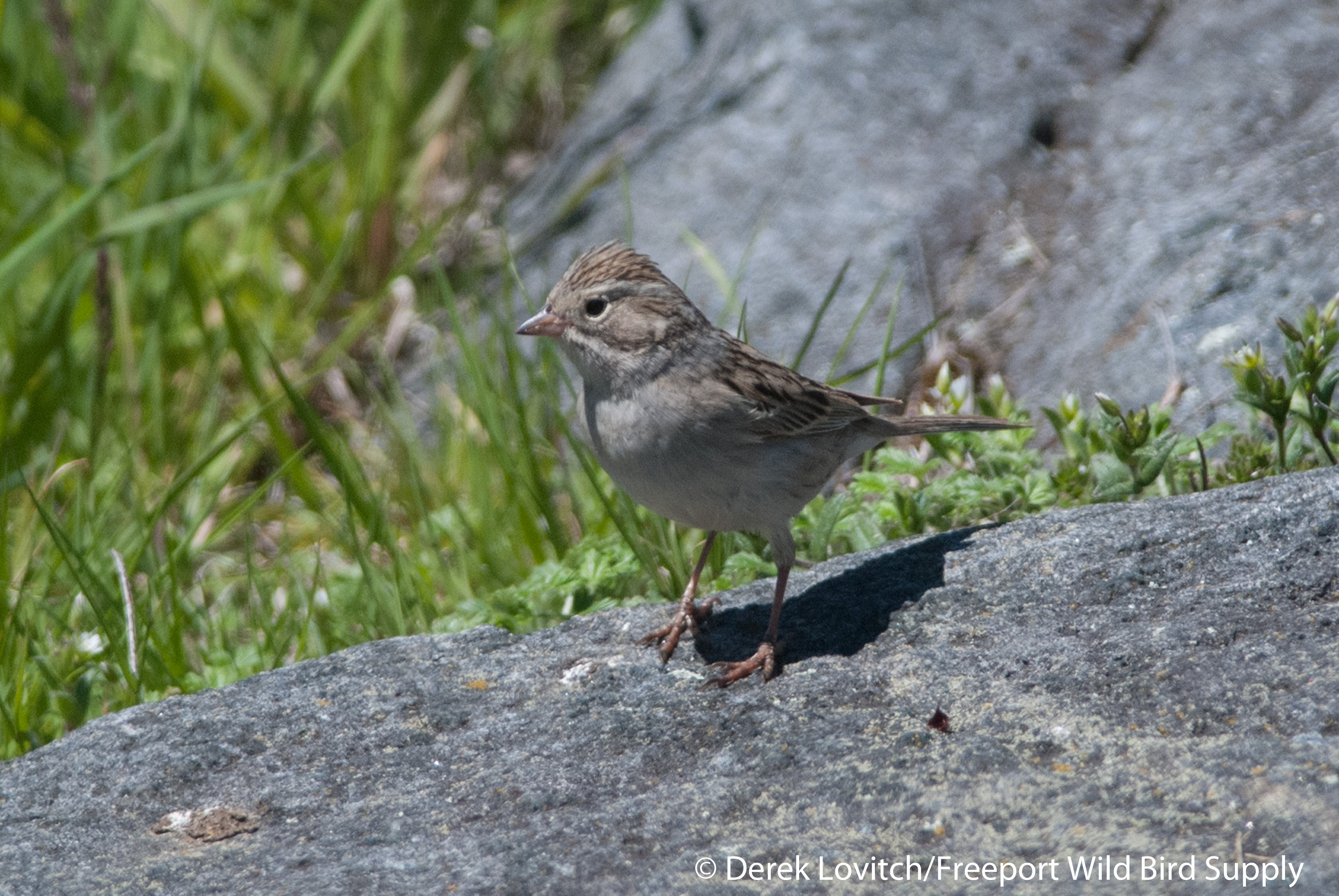
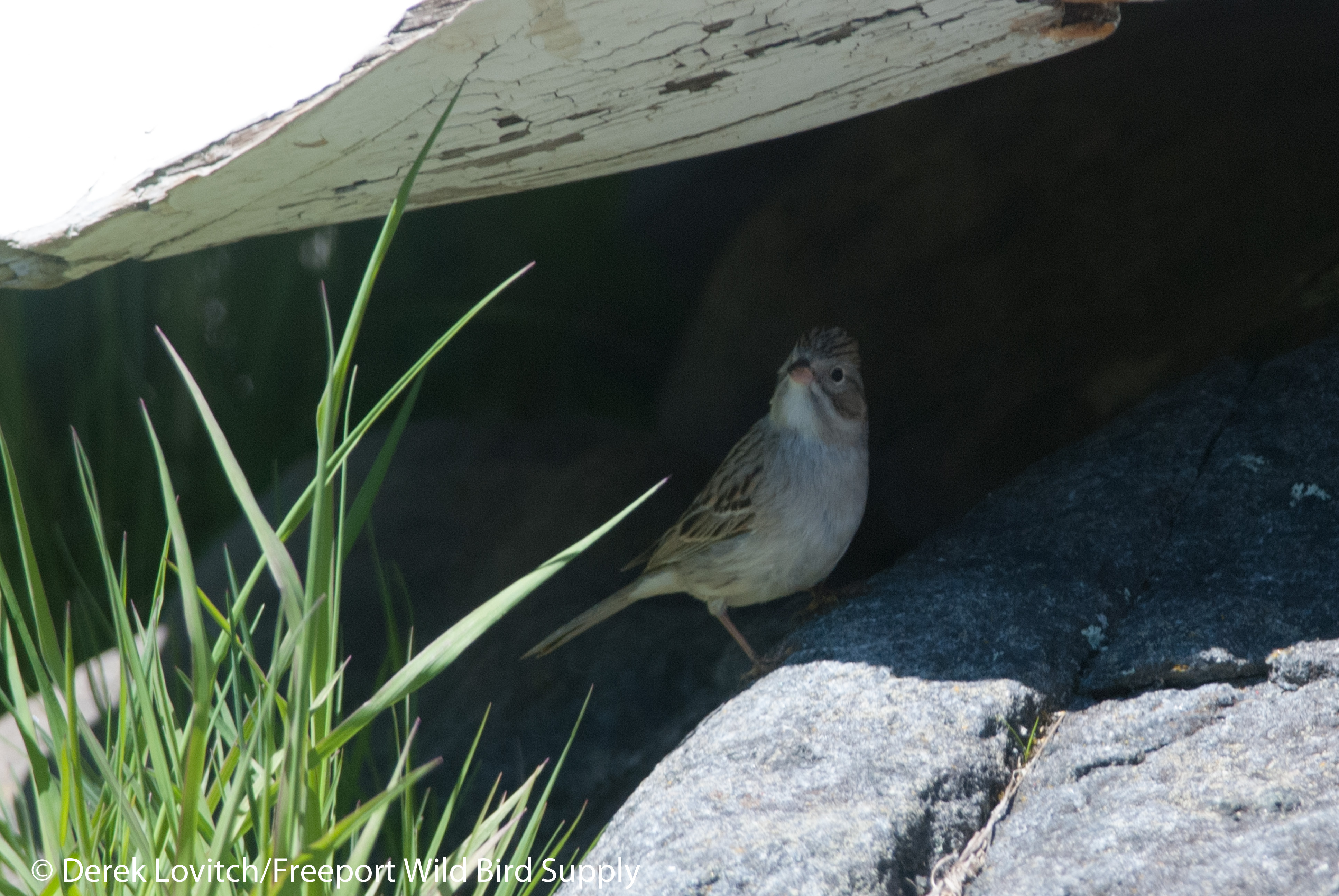
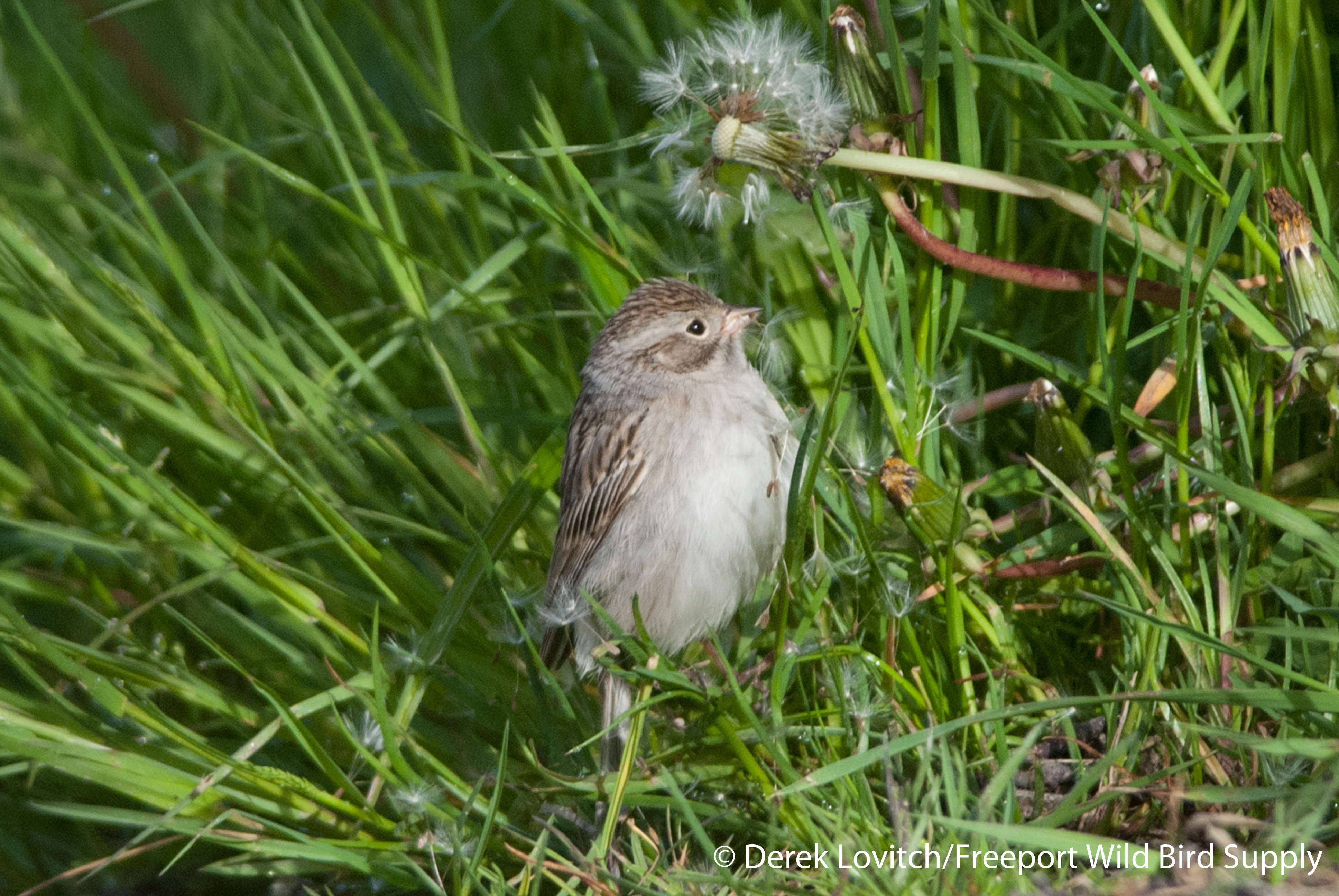
This first state record Brewer’s Sparrow was definitely not high on anyone’s list of next birds for Monhegan, or Maine (certainly not mine!). But more on the sparrow later.

Half of the group arrived with me on the Hardy Boat out of New Harbor on Friday morning, greeted by a veil of fog.

Arrival on Monhegan, 5-23-14
While the shroud of mist offered a lovely scene, it did put a damper on the birding for a little while (excuse the pun), but soon it cleared, and as the ceiling rose, so did the bird activity. In fact, this was the start of a fine weekend of weather – OK, it was rather chilly; extra blankets were dispersed for the night – but other than a few brief, very light showers, our Gore-Tex remained tucked away. We’ll call that a win.

Just about the first bird that we glassed upon our arrival was an immature male Orchard Oriole.  That’s the way we like to start a MonhegZen Birding Weekend!

The rest of Day 1 was highlighted by re-finding one of two immature male Summer Tanagers that had been frequenting the island lately. Friends picked up some seed on their way down (yes, the guy that owns a birdseed store and has several tons of seed on hand forgot to bring seed and had to have someone slum it at a hardware store. Gasp!), and we restocked the stash that kept the tanager visible for all through the weekend.
DSC_0017_SUTA,Monhegan,5-23-14_edited-1

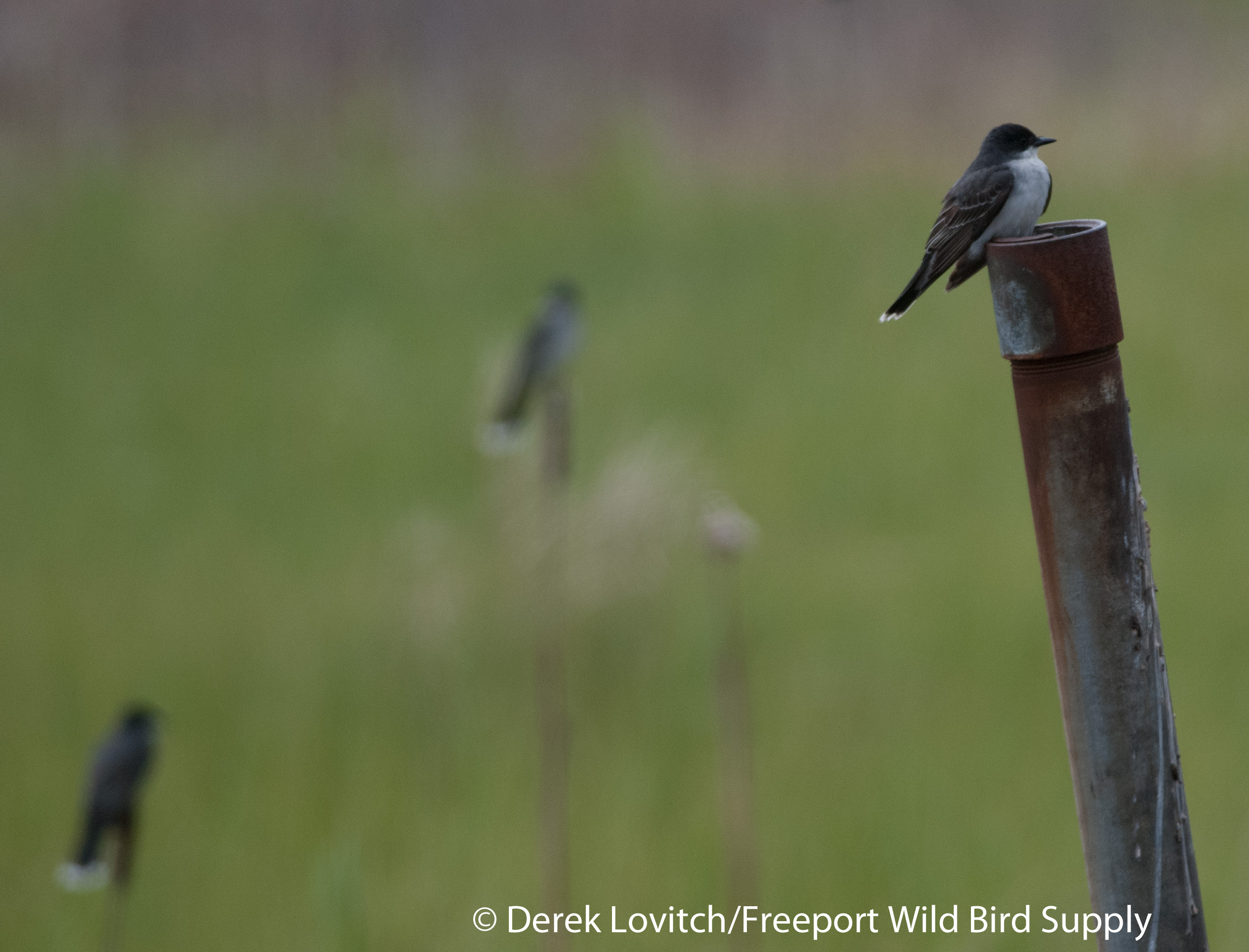
The tanager was our first “good” bird of the trip, but most of us agreed that the kingbird show near the pumphouse was the highlight of the first day. Indeed, it was a highlight for the entire weekend.  Sheltered from a persistent, but raw and cold, easterly wind, the back corner of the town marsh was just about the only place with flying insects out and about. Therefore, flycatchers had piled up here, led by 21 Eastern Kingbirds (growing to 25 by Saturday afternoon, before diminishing on Sunday and Monday).
DSC_0051_2EAKI,Monhegan,5-24-14, edited-1 DSC_0030_3EAKI,Monhegan,5-24-14_edited-1

Other flycatchers were present here, including a couple of cooperative Eastern Wood-Pewees, and several Least Flycatchers.
DSC_0047_LEFL1,Monhegan,5-24-14_edited-1

Little to no migration was visible on the radar overnight Friday into Saturday, and the lack of reorienting birds overhead after sunrise on Saturday morning confirmed the minimal movement overnight.  Although I awoke to a singing Mourning Warbler out my window, we never did catch up with one over the weekend.

But over the course of the day (as our group grew in size), we beat the bush and slowly but surely built up our species total. The Summer Tanager, the immature male Orchard Oriole, a very entertaining Peregrine Falcon over Manana, and 16 species of warblers were the day’s headliners. But yeah, by Monhegan standards, this was a slow day.

Sunday was not.

A light to moderate migration clearly produced some turnover, and plenty of new birds.  Some warblers were reorienting over the Trailing Yew after sunrise – always a good sign – and our walk to Lobster Cove was much slower in pace than on Saturday. A singing Field Sparrow, a calling Common Nighthawk, and a streaking Gray-cheeked/Bicknell’s Thrush were among the species that we added to our tally.

Then the text came through.

When describing our itinerary – or lack thereof – for the coming days upon our arrival, I talked about how chasing birds (dropping everything and running across the island) is often a futile exercise here, and instead we would work our way towards good birds, keeping our eyes open for them – and enjoying everything in our path. I joked that “but if I need it for my island list, all bets are off.”

First state records?  Fuhgettaboutit. Off we went. And I make no apologies…luckily, the coffee pot was on the way. I might not have gotten away with it otherwise.

So yeah, “Maine’s International Birder of Mystery” discovered a Brewer’s Sparrow.  First found at the edge of the road at its terminus at the Ice Pond, it soon made its way into a nearby yard. Dandelion seeds were its quarry.

DSC_0120_BRSP3,Monhegan,5-25-14_edited-1

  DSC_0131_BRSP7,Monhegan,5-25-14_edited-1  DSC_0116_BRSP6,Monhegan,5-25-14_edited-1  DSC_0075_BRSP5,Monhegan,5-25-14_edited-1  DSC_0069_BRSP2,Monhegan,5-25-14_edited-1

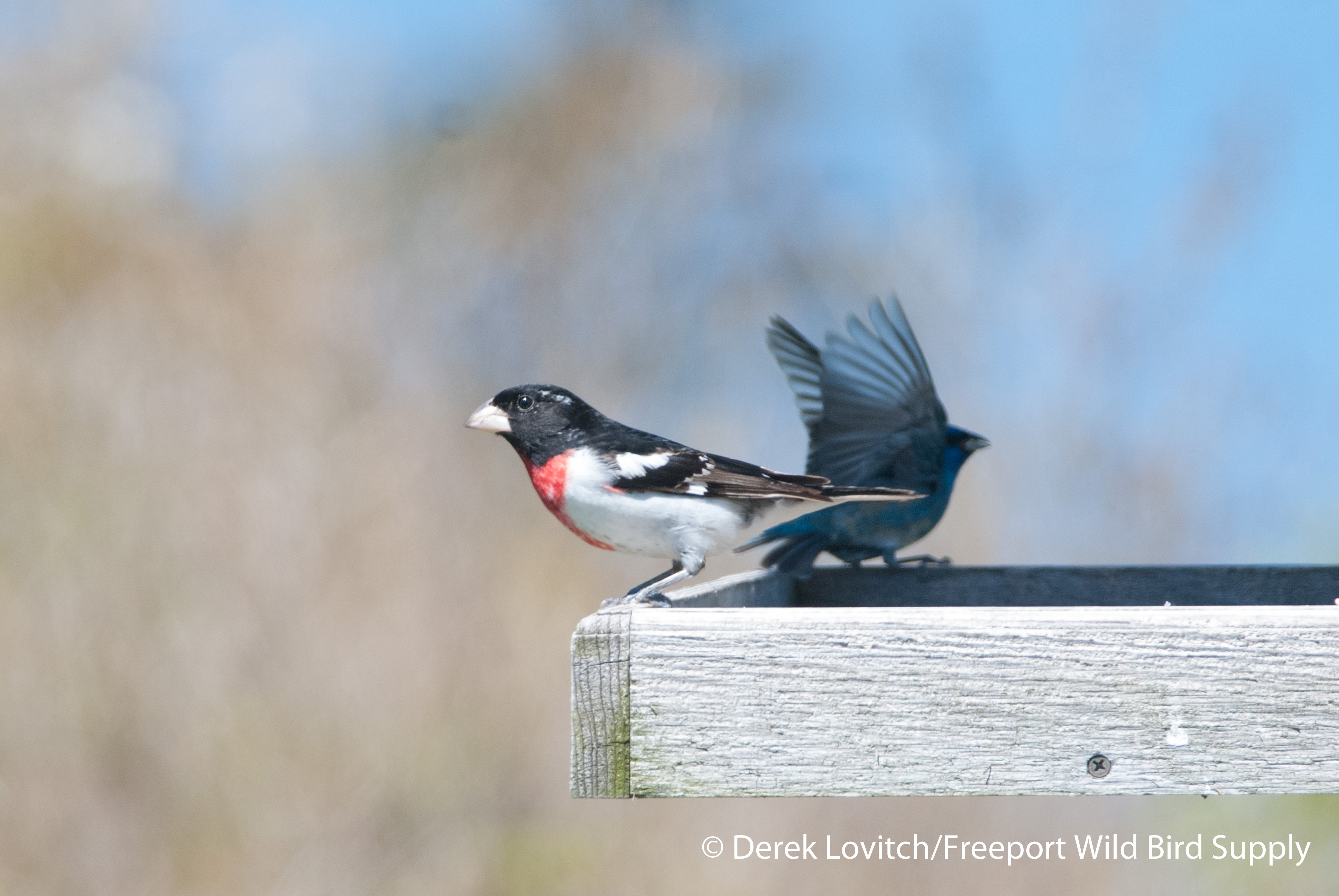
There were other birds to look at too. While I scrutinized the extent of streaking on the nape and crown of the sparrow and took way too many photos, the more sane of the group enjoyed a splash of color at the nearby feeders – at least 3 Rose-breasted Grosbeaks and an Indigo Bunting.
DSC_0100_RBGRandINBU,Monhegan,5-25-14_edited-1

Elsewhere, a Clay-colored Sparrow on one of my other seed stashes, several great views of Philadelphia Vireos, the continuing Summer Tanager, a second Orchard Oriole (an adult male) and a variety of warblers were the other highlights.

All weekend long we had been enjoying lots of warblers, but somehow we only amassed 19 species (we missed singles of Nashville and Prairie seen by others). But of those that we did see, most of them we saw stunningly well. Magnolia, American Redstart, Yellow, and Common Yellowthroat dominated each day, but we had a bunch of Northern Parulas and Chestnut-sided on Sunday as well.  And the views of Canada Warblers and one particular Northern Waterthrush will be tough to beat.

Like each of our first two days on the island, Sunday’s tour came to an end at the Monhegan Brewing Company. On Sunday night, the Brewer’s Sparrow was celebrated, and ideas for a “Brewer’s Brew” or something like that was hatched.

The group had accumulated 89 species (including the aforementioned 19 species of warblers), which was actually well below average for my MonhegZen Spring Birding Weekends.  But at least for me, I had one day left to add to the total, as I extended my stay for another night.

A very strong flight overnight suggested that this was a good call, but I was surprised by how many fewer birds were around on Monday morning than on Sunday. Especially when surrounded by fog – as we were overnight and into the morning – I have found that on really strong flights with favorable conditions, birds probably fly over the island. Perhaps the shroud of fog prevented them from even knowing there was an island below.

However, nearly three hours after sunrise, the winds shifted to the southwest, the ceiling lifted, and all of the sudden, there were warblers in the air. Had they been silently creeping around the forests, waiting for some clearing to reorient to the mainland?  Or, were these birds that were overhead, lost above the fog, looking for a place to finally land?

Hard to say, but for a couple of hours, the birding was quite good. Blackpoll Warblers had increased dramatically, and I had more Bay-breasted and Tennessee Warblers than the previous days, and the Cedar Waxwing flock increased dramatically.

Jeannette and Sasha (finally making her first trip here at the age of 14) arrived, and our friends Paul and Kristen joined us for the next couple of hours.  Blackpoll and Bay-breasted Warblers continued to put on a good show, as did the Brewer’s Sparrow.  More importantly for Jeannette, she was able to successfully twitch all three things she was after today: Hardy Boat cinnamon rolls, Novelty pizza, and Monhegan Brewing.  Yeah, she looked at the sparrow, too.

While Sasha was unable to successfully add Brewer’s Sparrow to her list, she did carefully study plumage variation in Herring and Great Black-backed Gulls. 
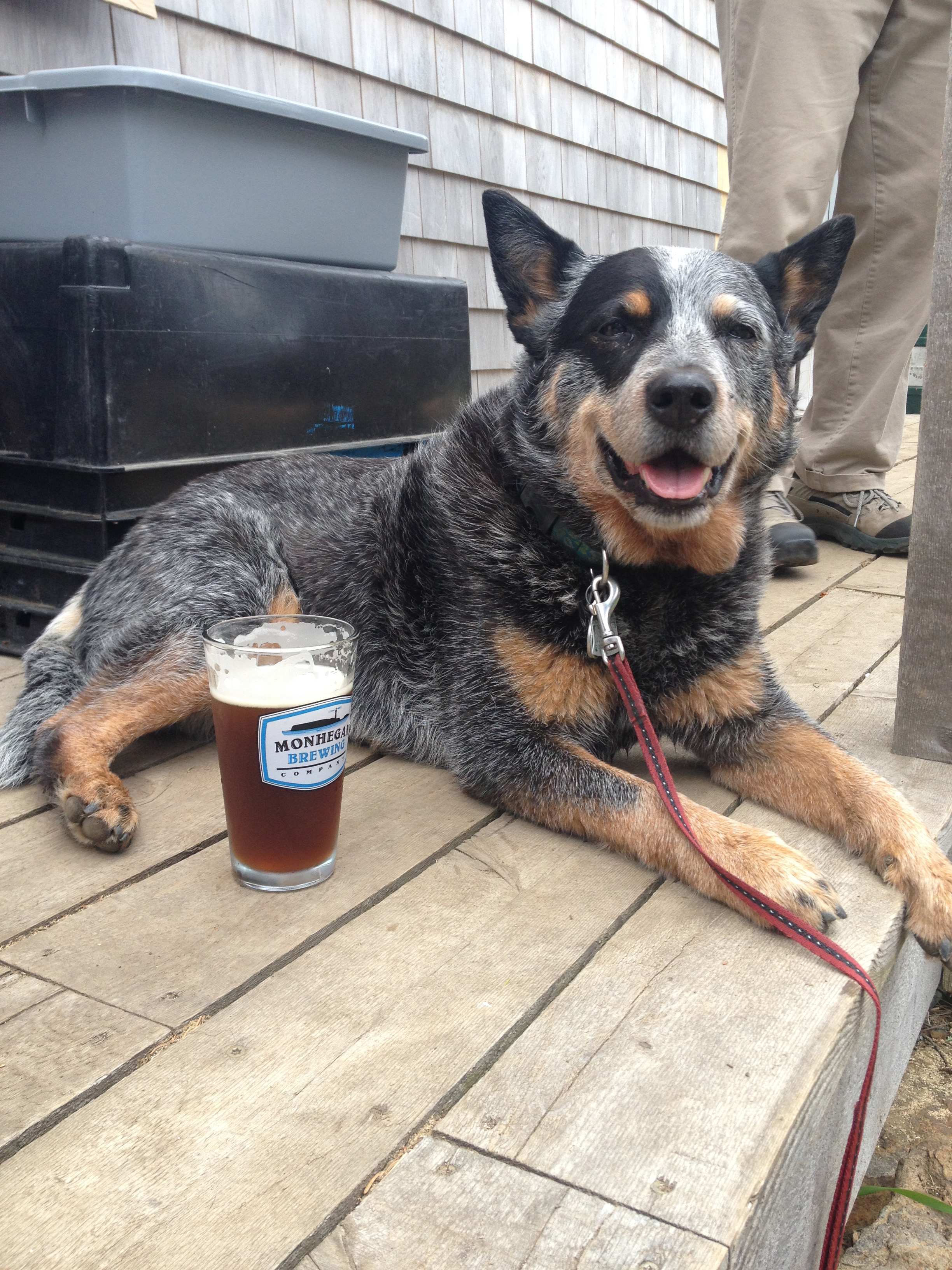
Sasha_watching_gulls,Monhegan,5-26-14

She also joined us at the brewery for one final pint.
Sasha_atMonheganBrewery,5-26-14

When many of us present for the weekend’s excitement boarded the boat at 3:15, I was sorry to go, as usual. I eked out 94 species when all was said and done (still below average for a spring weekend out here) including 19 species of warblers (I almost never miss hitting 20 here). While the overall list might have been a little low, the quality of views of most species was hard to beat. The overall quality of the bird list wasn’t too shabby, either. A first state record doesn’t hurt.

The following is my checklist for the group for Friday through Sunday. Monday’s total included birds seen with Jeannette, Paul, and Kristen. The included numbers for each day are conservative estimates or counts of the number of individuals of each species we saw and/or heard on the island (not including the ferry rides).

Species: Friday, May 23rd/Saturday May 24th/Sunday, May 25th/Monday, May 26th.

American Black Duck: 1/0/0/0
Mallard: 15/21/10/10
Black Scoter: 0/0/0/2
Common Eider: x/x/x/x
Red-breasted Merganser: 0/0/0/1
Ring-necked Pheasant: 3/4/5/4
Common Loon: 4/6/6/4
Northern Gannet: 5/6/6/12
Double-crested Cormorant: x/x/x/x
Great Blue Heron: 0/3/0/0
Osprey: 1/3/1/0
Sharp-shinned Hawk: 0/0/0/1
Peregrine Falcon: 0/1/0/0
Merlin: 1/0/0/0
Virginia Rail: 1/1/1/1
Laughing Gull: 5/12/4/2
Herring Gull: x/x/x/x
Great Black-backed Gull: x/x/x/x
Black Guillemot: x/x/x/x
RAZORBILL: 0/1/0/0
Mourning Dove: 6/6/8/4
Common Nighthawk: 0/0/1/0 (FOY)
Chimney Swift: 1/1/2/0
Ruby-throated Hummingbird: 2/4/4/3
Downy Woodpecker: 2/0/0/0
Northern Flicker: 1/0/2/2
Eastern Wood-Pewee: 2/2/2/3
Yellow-bellied Flycatcher: 0/1/2/2
Alder Flycatcher: 0/0/0/3 (FOY)
“Traill’s” Flycatcher: 0/0/0/5
Least Flycatcher: 3/1/6/6
Eastern Phoebe: 1/0/0/0
Eastern Kingbird: 27/25/14/15
Blue-headed Vireo: 0/0/0/1
Philadelphia Vireo: 0/0/2/4
Red-eyed Vireo: 2/2/12/20
Blue Jay: 8/12/8/8
American Crow: x/x/x/x
Common Raven: 2/2/2/2
Tree Swallow: 8/5/6/6
Bank Swallow: 2/2/2/0
Cliff Swallow: 0/0/1/0
Barn Swallow: 2/2/1/2
Black-capped Chickadee: x/x/x/x
Red-breasted Nuthatch: 0/1/2/3
Carolina Wren: 4/8/6/6
Winter Wren: 0/0/1/0
Golden-crowned Kinglet: 0/2/2/4
Ruby-crowned Kinglet: 0/0/0/1 (late)
Veery: 1/1/1/0
GRAY-CHEEKED/BICKNELL’S THRUSH: 0/0/1/0
Swainson’s Thrush: 0/0/1/0
Hermit Thrush: 0/0/1/0
American Robin: 10/10/8/6
Gray Catbird: x/x/x/x
Brown Thrasher: 0/1/1/0
European Starling: 6/4/8/6
Cedar Waxwing: 3/4/18/60
Tennessee Warbler: 0/2/0/4
Northern Parula: 3/12/30/15
Yellow Warbler: 25/25/35/30
Chesnut-sided Warbler: 6/5/20/10
Magnolia Warbler: 25/20/25/20
Black-throated Blue Warbler: 6/8/8/4
Yellow-rumped Warbler: 6/8/0/0
Black-throated Green Warbler: 10/15/15/15
Blackburnian Warbler: 2/0/2/3
Bay-breasted Warbler: 0/1/0/8 (FOY)
Blackpoll Warbler: 4/3/10/50
Black-and-white Warbler: 5/5/10/5
American Redstart: 10/15/35/30
Ovenbird: 0/0/2/0
Northern Waterthrush: 0/3/3/3
MOURNING WARBLER: 0/1/0/0 (FOY)
Common Yellowthroat: 35/35/30/30
Wilson’s Warbler: 4/0/5/1
Canada Warbler: 2/4/4/2
SUMMER TANAGER: 1/1/1/0
Chipping Sparrow: 10/10/6/8
CLAY-COLORED SPARROW: 0/0/1/0
BREWER’S SPARROW!!!!: 0/0/1/1
Field Sparrow: 0/0/1/1
Savannah Sparrow: 1/1/3/1
Song Sparrow: x/x/x/x
Swamp Sparrow: 1/2/2/1
White-throated Sparrow: 1/0/10/10
Northern Cardinal: 6/8/8/6
Rose-breasted Grosbeak: 0/0/4/3
Indigo Bunting: 1/3/4/2
Bobolink: 8/6/4/4
Red-winged Blackbird: x/x/x/x
Common Grackle: 10/15/15/10
ORCHARD ORIOLE: 1/1/2/1
Baltimore Oriole: 0/1/3/4

American Goldfinch: 6/12/8/6

MonhegZEN Birding Fall Migration Weekend, 9/26-30/13

This past weekend was my annual “MonhegZEN Migration Weekend.”  A small group – absolutely no more than eight people per day – joins me on a per diem basis to enjoy the wonder of fall migration at this offshore hotspot.  While the 105 total species was right about my Fall Weekend average, it did include 20 species of warblers, and a variety of the usual fall-on-Monhegan cast of characters.  And a few “good” birds as always.

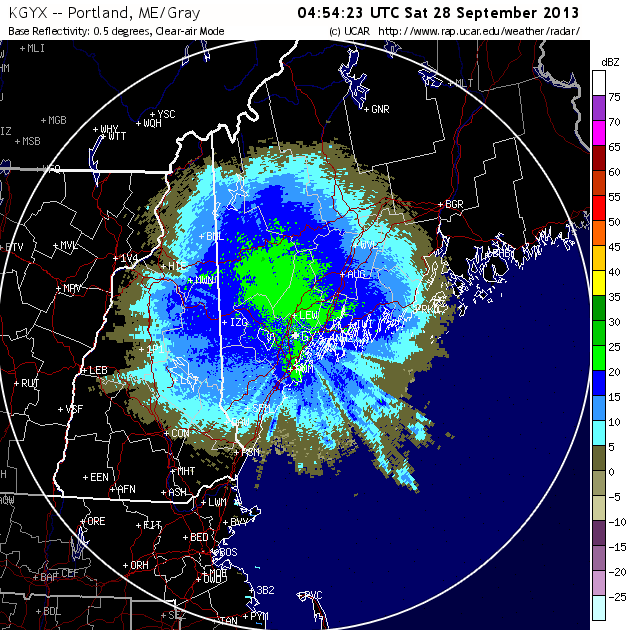
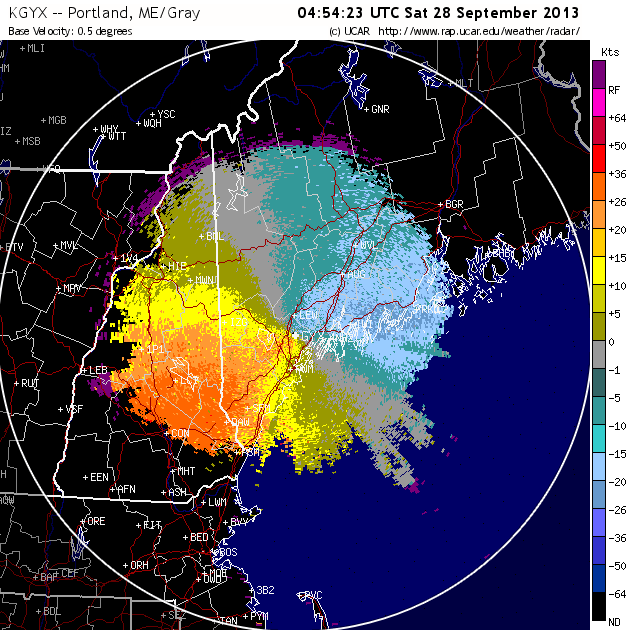
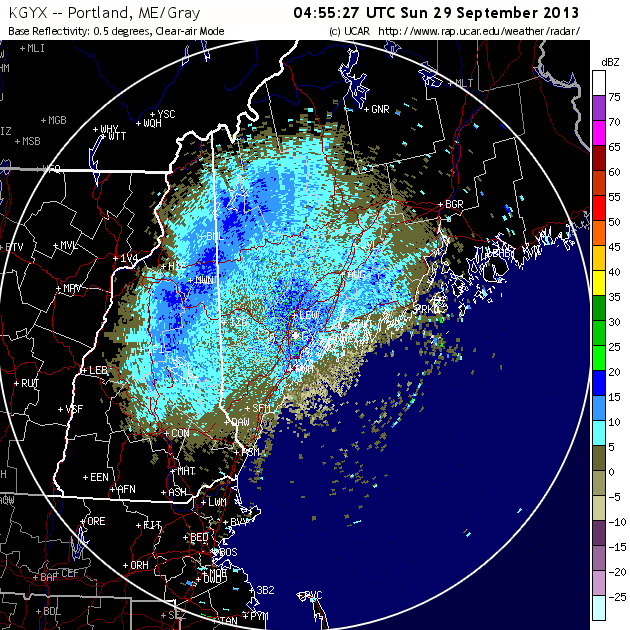
But before I get into the daily rundown, let me post a quiz.  Here are the 1am radar and velocity images from each of the four nights preceeding each of my four days on the island.  Can you guess which days had the most birds?
9-27-13 1am ref 9-27-13 1am vel 9-28-13 1am ref 9-28-13 1am vel 9-29-13 1am ref 9-29-13 1am vel 9-30-13 1am ref 9-30-13 1am vel

If you said the first two had more birds than the second two, you would be absolutely right!  And yes, Saturday (Day 2) was definitely the best day for migrants on the island.  And yes, Monday (Day 4) was very, very slow.  The radar certainly suggested it, and our birding over the course of each day definitively ground-thruthed it.

IMG_1587Leaving Port Clyde, 9/26.

After the good flight on Thurday night into Friday morning, I arrived with part of my group from Port Clyde on the 7am ferry, dropping us on the island just before 8.  The birding was still going strong.  In fact, it took us almost an hour and a half just to walk to the end of Dock Road (about ¼ mile)!  At least six Cape May Warblers in one cluster of spruces, Rusty Blackbirds were overhead (including one just as our boat docked, a nice welcome to the island), and then a buzz-by from a Cooper’s Hawk.

Common on the mainland, Coops are rather rare this far offshore, and I don’t see them on the island every fall, so this was a real treat – and an “Island Bird” for a friend I was exchanging info with.  A short while later we caught up with the last individual of what was once 5 Broad-winged Hawks that drifted to the island – only my second-ever out here.   A Yellow-billed Cuckoo, a continuing Lark Sparrow, Clay-colored Sparrow, and Dickcissel – yup, most of the usual fall Monhegan “trash birds!”
a -DSC_0007_LASP1,Monhegan,9-28-13Lark and White-throated Sparrows

b -DICK1,Monhegan,9-27-13Very pale juvenile Dickcissel

c -CCSP,Monhegan,9-27-13Clay-colored Sparrow.

Honestly however, the bird of the day – from an island rarity perspective – was probably House Sparrow.  Seriously.   A male that apparently landed on the Hardy Boat half way to the island a few days prior had taken up residence here.  Were a female to show up – almost certainly in similar fashion – then we could have an issue <insert ominous foreshadowing music here>.

The morning flight was hot and heavy on Saturday morning.  In fact, there was so much overhead that we barely left the grounds of the Trailing Yew before breakfast.  All we could do was stand around, look up, and marvel at the wonders of migration.  Hundreds of Yellow-rumped Warblers, 10’s of Palm Warblers, oodles of Golden-crowned and Ruby-crowned Kinglets…2-3 Blue-gray Gnatcatchers, another Dickcissel or two, and a fly-by Blue Grosbeak (the first on the island this fall?) – it would have been overwhelming to quantify, but luckily, when I am away from SandyPoint, I am not nearly as compulsive.  Phew.

d -DSC_0020_BGGN1,Monhegan,9-28-13e -DSC_0016_BGGN_jumping,Monhegan,9-28-13
This Blue-gray Gnatcatcher visited us while we were dining on Novelty pizza.

ea -DSC_0092_BRCR,Monhegan,9-29-13Brown Creepers were common, and unusually photogenic, throughout the day.

Good birding continued throughout the day.  We confirmed a Nelson’s Sparrow in the marsh at Lobster Cove and found a Marsh Wren.  We tallied 17 species of warblers over the course of the day. It was warm.  It was calm.  It was simply perfect!

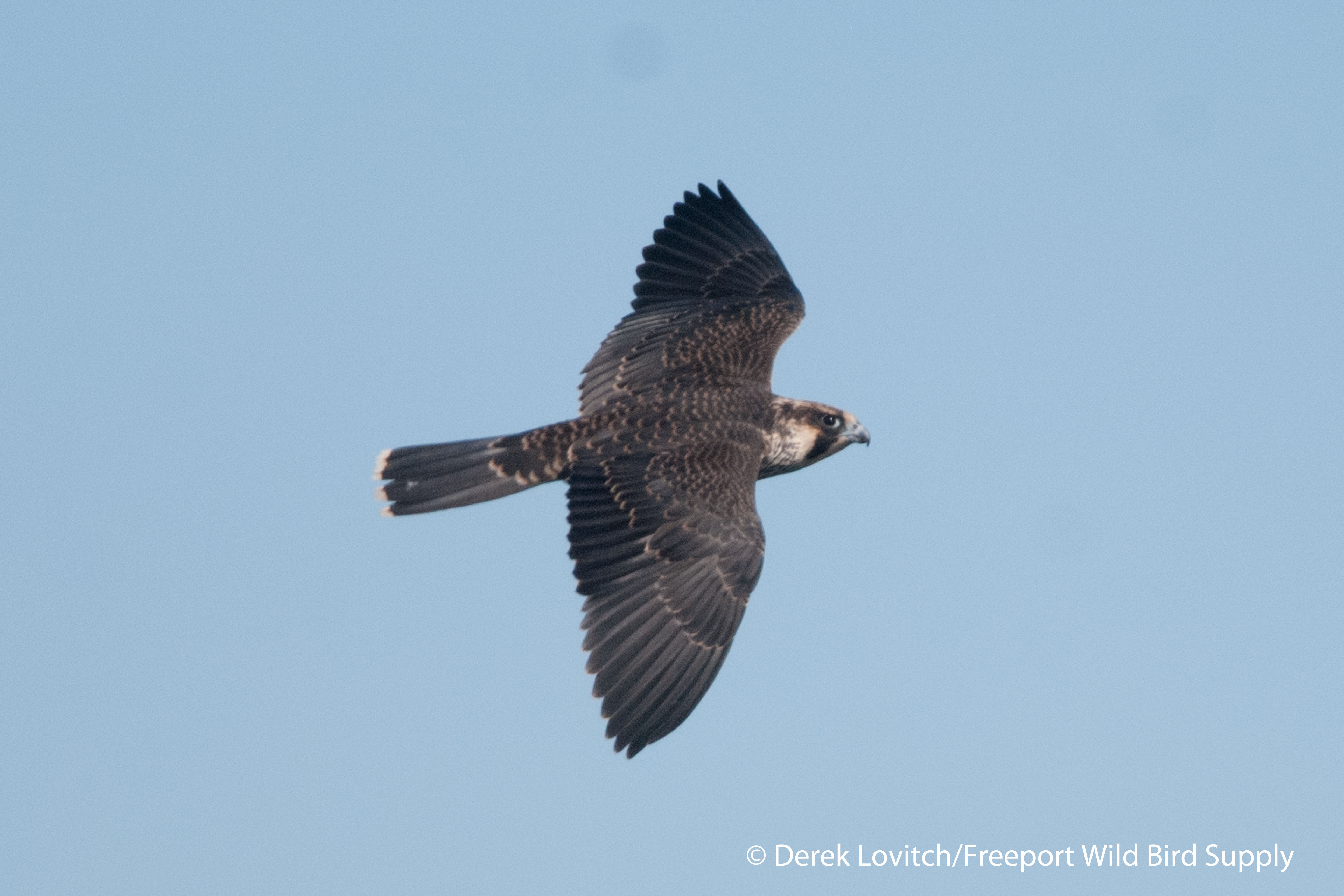
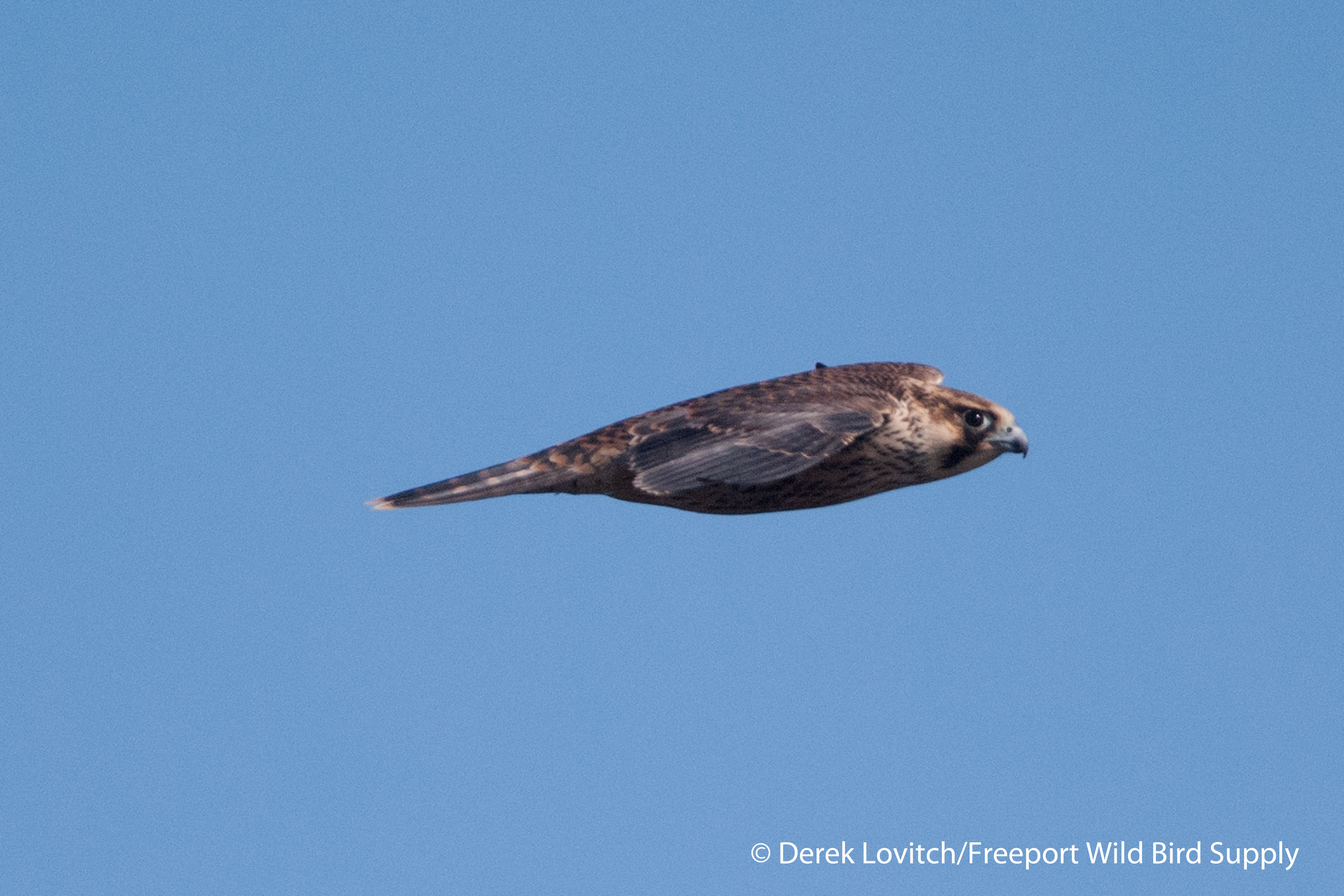
But we all agreed that the highlight was the afternoon on White Head.  A light southeasterly breeze produced a light updraft off of the cliffs, and Peregrine Falcons were taking full advantage.  Some birds were swirling around, doing little more than what could be described only as “playing” in the wind.  Some birds were undoubtably passage migrants getting a quick lift from the rising warm air.  We know there were at least six Peregrines, as we had a bona-fide kettle of six swirling together at one point.  Normally, the hawkcounter in me swings into action.  But alas, this is MonhegZEN birding, so I just sat back and enjoyed the show.
eb -DSC_0104_PEFA1,Monhegan, 9-28-13f -DSC_0105_PEFA2,Monhegan,9-28-13

g -DSC_0124_PEFA3,Monhegan,9-28-13j -DSC_0053_OSPR1,Monhegan,9-26-13me_with_group_Monhegan,9-28-13,K.Lindquist (Photo (c) K. Lindquist).
Sea- and Hawk-watching from White Head. Lots of eye-to-eye Peregrine Falcons, an Opsrey, and a distant Minke Whale or two.

A shroud of fog enveloped the island on Sunday morning, but there weren’t too many birds overhead to be obscured by it.  Although there were few birds overhead or moving around once the fog lifted, there was still an ample supply of Yellow-rumped Warblers and Golden-crowned Kinglets.   We happened upon a Prairie Warbler, and added a few other species to our trip list, such as two Ruby-throated Hummingbirds, and – finally – Ring-necked Pheasants (how did I go two days without hearing or seeing a pheasant here?).  Lark Sparrow, Yellow-billed Cuckoo, Rusty Blackbird, Least Flycatcher (finally, after three days I had an Empid to try and string!)…the list goes on.  But overall, birding was decidedly slower than the previous two days (note what constitutes a slow day on Monhegan!), and rather warm.
IMG_1591IMG_1600IMG_1597
While the birding was slow, we took time to enjoy the scenery in the fog.

Remember when I said that all that male House Sparrow needed was a female to arrive?  Uh-oh.
h -HOSPpair,Monhegan,9-29-13

I am unsure how long it’s been – if ever? – since two House Sparrows were on the island.  While only die-hard island-listers appreciated these birds as much as I did (I remain captivated by the way birds – all birds – find their way to islands and what their lives are like once they get there ), the members of my group that have birded here before at least understood the significance, and potential colonization consequences of this sighting.

Luckily, we had other intrigue to talk about as well.  The spruces along Dock Road were happenin’ again today, but one warbler in particular occupied us for a while.  I first called it a Blackburnian, and then I back-tracked…a lot.  It was so impressively pale, and feeding above us, some of the most diagnostic features were not visible.  We spent about a half hour with this bird, which eventually obliged us as it fed in the lowest boughs of the tree.  We worked it carefully and thoroughly, taking the opportunity to really learn from this individual.  It took a while, but I was finally convinced it was a Blackburnian in large part due to the very pale but distinct “braces” on the back, and what we would (via camera-screen “instant replay”) finally confirm as a small, pale orange central forehead stripe.
i -DSC_0142_ultra-paleBLBW1,Monhegan,9-28-13l -DSC_0134_ultra-paleBLBW2,Monhegan,9-28-13m -DSC_0155_ultra-paleBLBW3,Monhegan,9-28-13

The orange feet seem odd to me, and the dark auriculars appeared much more contrasting on these photos than we interpreted it in the field.  This was a good “learning and teaching bird,” and therefore this was one of my favorite birds of the trip.

IMG_1624_Monhegan_Brewery
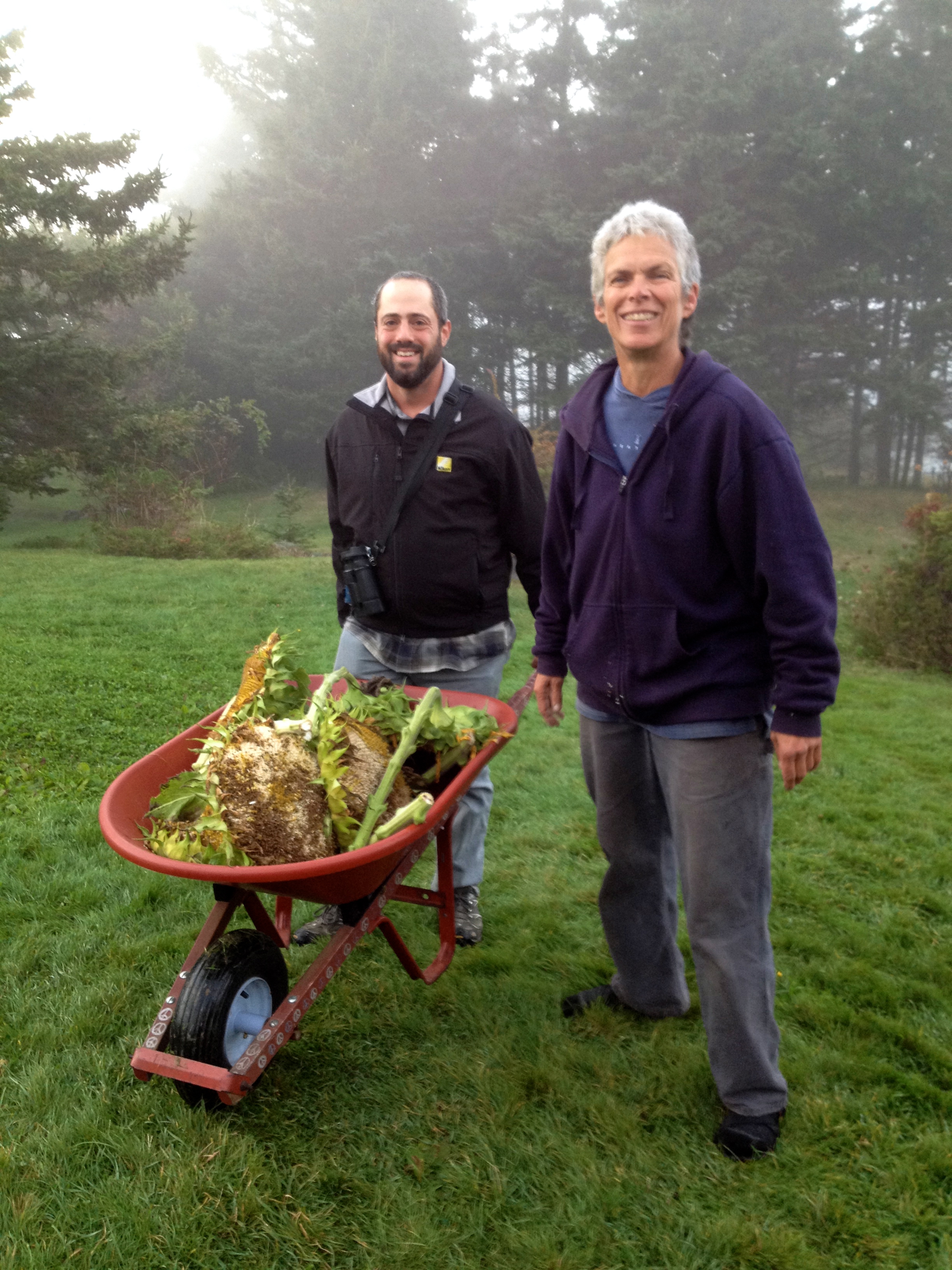
I visited the Monhegan Brewing Company a couple of times for good beer and conversation.  And we know good business can be conducted over a beer.  In fact, during my last beer there on Sunday evening, I struck a deal with Sue to buy the sunflower heads from the Island Farm.  They’re currently drying at our house, but they’ll soon be for sale here at the store.  The money will go to help the Island Farm in their pursuit to provide a sustainable source of produce for the island.  The gardens are also great birding!
IMG_1614me,Sue,andSunflowers,K_Lindquist

Very few birds were on the move Sunday night, and with almost nothing visible on the radar, I didn’t exactly pop out of bed in the morning.  I did get out for a little while before breakfast, however, and once again the morning flight – or lack thereof – proved what the radar suggested.  My tour had come to an end, but I elected to stay out for the day to bird with my friend Kristen.  We both just wished there were a few more birds to see!

n -DSC_0167_YRWA1,Monhegan,9-30-13n -DSC_0168_YRWA2,Monhegan,9-30-13
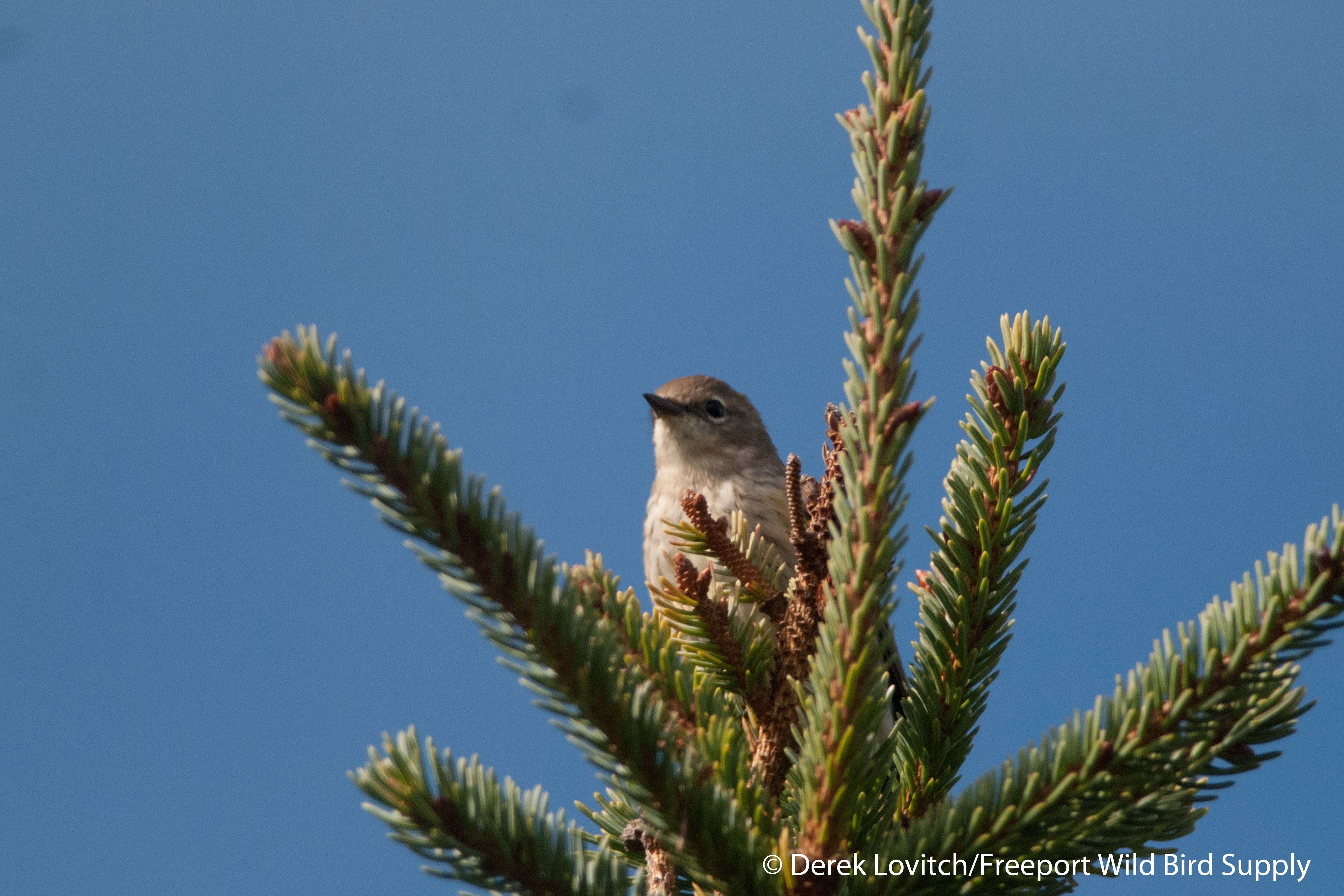
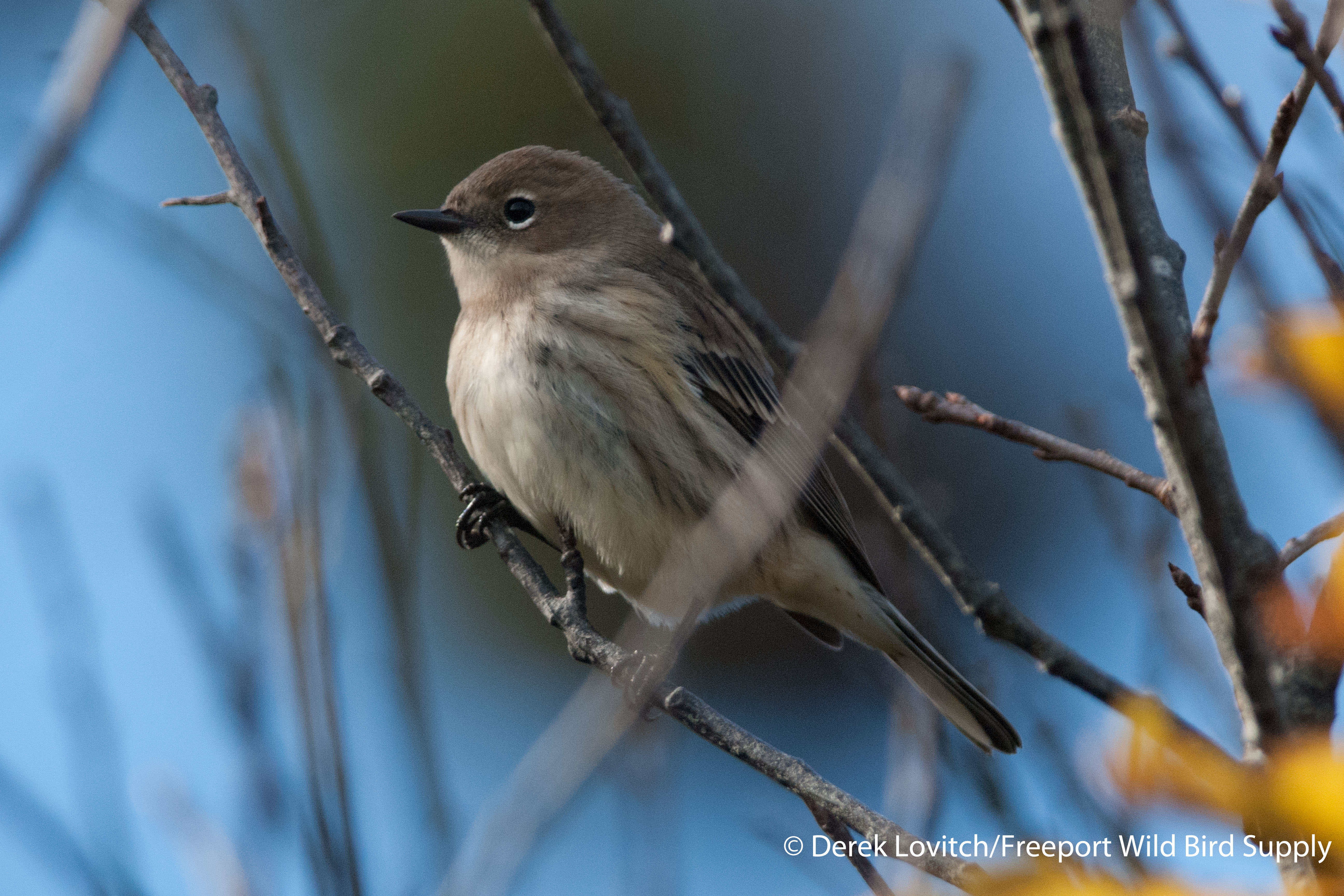
Although I like the photo on the left of the Yellow-rumped Warbler atop a Red Spruce, as you can see on the right, I excel at photographs of fuzzy twigs.

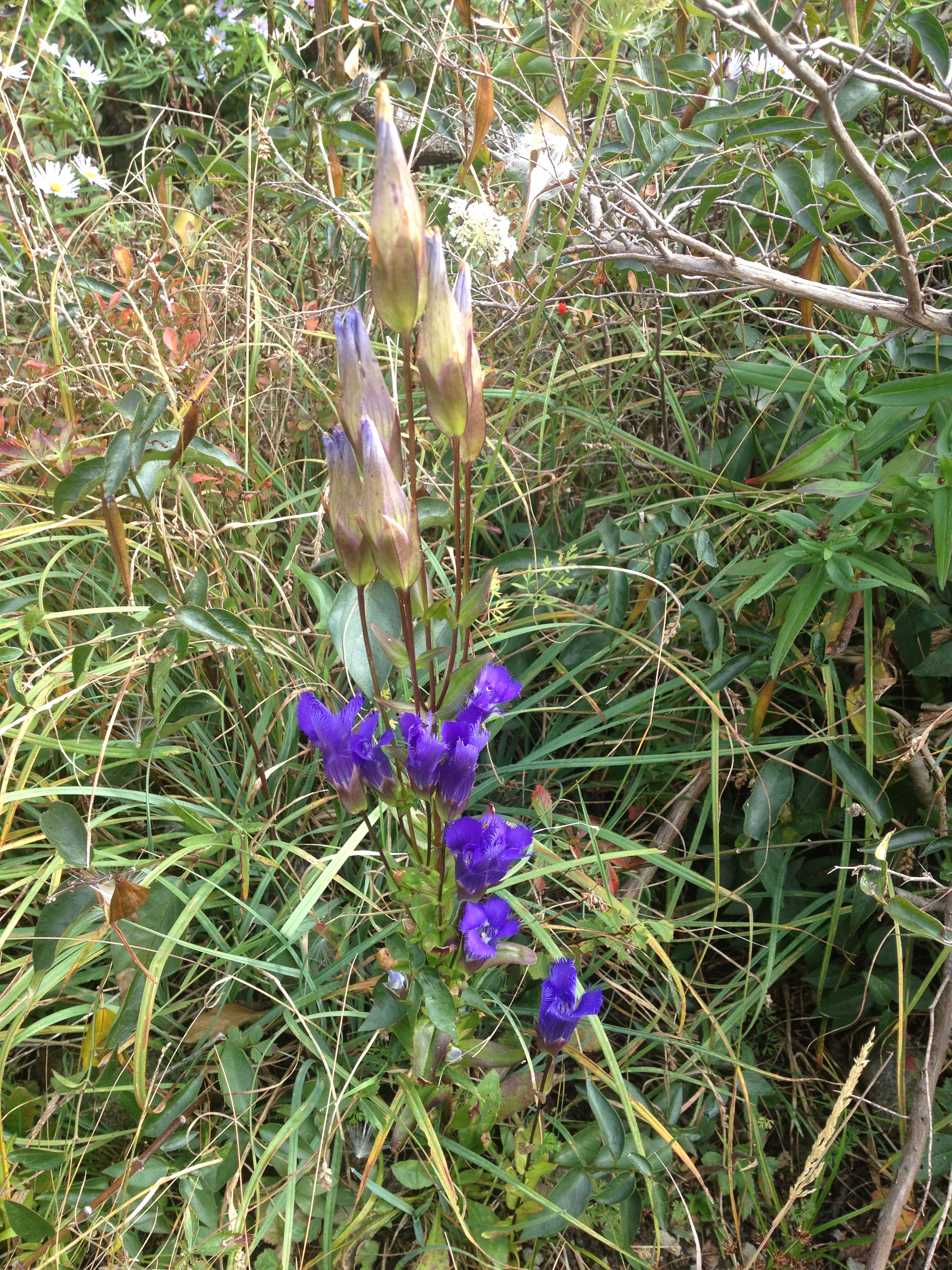
IMG_1603 A most impressive Fringed Gentian.

We worked the bush hard, checking all sorts of seldom-searched nooks and crannies.  Some of our totals for the day were higher than previous days simply because we covered more ground.  The Clay-colored and Lark Sparrows continued, as did the two Green-winged Teal in the town marsh.  A spiffy Chestnut-sided Warbler was my 20th species of warbler for the weekend, and we added a few more waterbirds to the list by dedicating some time to sea-watching and scanning the gulls in the harbor.

Unfortunately, most of the afternoon – following one last pizza – was spent keeping an eye on our watches and watching our time rapidly tick away.  At least we weren’t nursing a concern about leaving hot and heavy birding – it was slow, very slow, today, and that did make our departure a little less unwelcome.  A little; it’s never easy to leave this magical place.
IMG_1627IMG_1632
Trap Day!

Here’s my weekend’s checklist, with estimates or counts of each species per day (not including ferry):

Mallard: 12, 12, 12, 12
American Black Duck: 1, 1, 1, 5
Green-winged Teal: 1, 1, 2, 2,
Common Eider: x, x, x, x
Surf Scoter: 0, 0, 0, 4
Ring-necked Pheasant: 0, 0, 3, 2
Common Loon: 3, 2, 1, 1
Red-necked Grebe: 0, 1, 0, 0
Great Cormorant: 1, 5, 1, 7
Double-crested Cormorant: x,x,x,x
Northern Gannet: 0, 125, 8, 30
Great Blue Heron: 1, 1, 1, 0
Osprey: 0, 2, 0, 0
Bald Eagle: 2, 2, 2, 2
Northern Harrier: 1, 1, 0, 0,
Sharp-shinned Hawk: 6, 5, 5, 4
COOPER’S HAWK: 1,0,0,0
BROAD-WINGED HAWK: 1,0,0,0
American Kestrel: 2, 2, 1, 1
Merlin: 15, 8, 4, 3
Peregrine Falcon: 8, 12, 1, 1
Semipalmated Plover: 2, 0, 1, 0
Laughing Gull: 0, 0, 0, 2
Ring-billed Gull: 0, 0, 0, 1
Herring Gull: x,x,x,x
LESSER BLACK-BACKED GULL: 0, 0, 0, 2
Great Black-backed Gull: x,x,x,x
Black Guillemot: 10, 20, 10, 15
Mourning Dove: 3, 3, 3, 3
YELLOW-BILLED CUCKOO: 1, 0, 1, 0
Ruby-throated Hummingbird: 0, 0, 2, 2
Belted Kingfisher: 1, 0, 1, 1
RED-BELLIED WOODPECKER: 1, 0, 0, 0
Yellow-bellied Sapsucker: 25, 50, 25, 20
Downy Woodpecker: 0, 1, 1, 1
Northern Flicker: 20, 15, 25, 20
Eastern Wood-Pewee: 0, 1, 0, 0
Least Flycatcher: 0, 0, 1, 0
Eastern Phoebe: 8, 5, 3, 1
Red-eyed Vireo: 30, 20, 18, 12
Blue-headed Vireo: 12, 20, 25, 6
Blue Jay: 6, 10, 8, 8
Common Raven: 2,2,2,2
American Crow: x,x,x,x
Black-capped Chickadee: 20, 15, 15, 20
Red-breasted Nuthatch: 6, 15, 10, 8
Brown Creeper: 15, 35, 20, 3
Carolina Wren: 5, 8, 10, 12
House Wren: 0, 1, 1, 0
Winter Wren: 1, 1, 1, 1
Marsh Wren: 0, 1, 1, 1
Golden-crowned Kinglet: 15, 75, 50, 35
Ruby-crowned Kinglet: 25, 40, 25, 15
BLUE-GRAY GNATCATCHER: 1, 2-3, 2, 0
American Robin: 0, 1, 0, 0
Gray Catbird: 6, 8, 10, 18
Northern Mockingbird: 1, 1, 0, 0
Brown Thrasher: 2, 1, 1, 0
European Starling: 8, 10, 12, 14
American Pipit: 2, 2, 1, 0
Cedar Waxwing: 40, 60, 40, 40
Tennessee Warbler: 0, 1, 0, 0,
Nashville Warbler: 5, 3, 6, 1
Northern Parula: 1, 0, 2, 2
Yellow Warbler: 2, 6, 7, 0
Chestnut-sided Warbler: 0, 0, 0, 1
Magnolia Warbler: 6, 5, 2, 0
Cape May Warbler: 9, 3, 0, 0
Black-throated Blue Warbler: 0, 8, 6, 1
Yellow-rumped Warbler: 300, 400, 300, 175
Black-throated Green Warbler: 0, 4, 2, 1
Blackburnian Warbler: 0, 0, 1, 0
PRAIRIE WARBLER: 0, 0, 1, 0
Palm Warbler: 30, 100, 30, 15
Bay-breasted Warbler: 0, 2, 0, 0
Blackpoll Warbler: 1, 20, 1, 3
Black-and-white Warbler: 25, 30, 15, 2
American Redstart: 2, 1, 2, 0
Northern Waterthrush: 0, 1, 1, 0
Common Yellowthroat: 10, 15, 10, 18
Wilson’s Warbler: 3, 4, 1, 0
Scarlet Tanager: 1, 0, 0, 0
Chipping Sparrow: 4, 6, 6, 5
CLAY-COLORED SPARROW: 1, 0, 1, 1-2
LARK SPARROW: 1, 1, 1, 1
Savannah Sparrow: 2, 15, 12, 10
NELSON’S SPARROW (spp. subvirgatus): 0, 1, 0, 0
Song Sparrow: 15, 15, 20, 25
Lincoln’s Sparrow: 0, 2, 2, 2
Swamp Sparrow: 2, 30, 20, 15
White-throated Sparrow: 25, 50, 60, 30
White-crowned Sparrow: 1, 5, 4, 2
Dark-eyed Junco: 3, 10, 6, 8
Northern Cardinal: 8, 6, 5, 8
Rose-breasted Grosbeak: 0, 0, 0, 1
BLUE GROSBEAK: 0, 1, 0, 0
Indigo Bunting: 0, 1, 0, 0
DICKCISSEL: 0, 2, 0, 0
Rusty Blackbird: 4, 9, 1, 0
Common Grackle: 1, 3, 4, 4
Baltimore Oriole: 1, 2, 2, 0
American Goldfinch: 12, 10, 10, 8
HOUSE SPARROW: 1, 1, 2, 0

Total species: 64, 83, 79, 66 (Total =105)

Mammals:
Minke Whale
Gray Seal
Harbor Seal
Harbor Porpoise
Muskrat
Brown Rat

IMG_1629

Monhegan Island, 9/20-22/2013

On a morning with a big overnight migration in the fall, there’s no where I’d rather be than SandyPoint.  I just wish there was a direct ferry from there right to MonheganIsland.  Any other time, I would just rather be on Monhegan.

While our annual MonhegZEN Fall Migration Weekend coming up this weekend (still some space available), Jeannette and I headed to the island Friday through Sunday for a few days of birding and visiting with friends.  It was kinda odd being there without a group!  Not surprisingly, I did not bird much less hard.

I’ll post some radar images from the weekend on a forthcoming blog entry that I hope to post by day’s end.  A decent flight Thursday night into Friday produced a fair amount of birds on the island, even after our late (relatively speaking) arrival at 10:00am, and even though it seemed – as is often the case on calm mornings – birds that arrived at dawn continued on to the mainland.  Three of our first handful of species, however, were Philadelphia Vireo, Cape May Warbler, and Yellow-billed Cuckoo.  Welcome (back) to Monhegan.

The birding improved in the afternoon, highlighted by a Western Kingbird.
_MG_9983_edited-2

A Lark Sparrow and two Dickcissels – all present for a few days – were enjoyed (here, one of the Dickcissels with the Lark Sparrow and a White-throated Sparrow in the background). Typical “Monhegan Trash Birds:” birds that are noteworthy anywhere else in the state but are fully expected in an autumn visit here.
_MG_0050_edited-2

We ended up with 67 species of birds on the day, including 11 species of warblers.  Yup, a slow day of birding on Monhegan beats a good day of birding almost anywhere else.  Light southerly winds that developed over the course of the day became calm by nightfall, and call notes early in the night were suggestive of birds departing the island.
IMG_1571

With a southerly flow aloft, I didn’t have high hopes of a lot of new arrivals for the next morning.  The radar image was, simply put, was weird – some sort of temperature anomaly or perhaps a malfunction, so I couldn’t use that to confirm or alleviate my concerns.  A mere handful of bird overhead at dawn on Saturday morning confirmed it though – there was not much on the move overnight.

Fog rolled in and out for most of the morning, clearing out in the afternoon on an increasing south to southwesterly breeze.  We beat the bush hard, and covered a lot of ground, but birds were hard to come by.  There were quite a few more Yellow-rumped Warblers around than on previous mornings, Kristen noted, and we added plenty of species to our trip list over the course of the day.  While the Dickcissels apparently departed, the Lark Sparrow continued, and the island was now up to three Clay-colored Sparrows.
_MG_0160_edited-2

Clay-colored Sparrows, Dickcissels, and Lark Sparrow, check:  the triumvirate of Midwestern regular-rarities out here.  Two adult Lesser Black-backed Gulls, a tarrying Eastern Kingbird, a Semipalmated Plover, and a good afternoon Northern Gannet show were the other highlights of what amounted to be an exceptionally slow day of birding for Monhegan in the fall.  Nevertheless, complaints were not uttered – we were on Monhegan! – and besides, I got to mooch a TV (Thanks Paul and Sue!) to watch Rutgers come from behind to defeat Arkansas in an exciting finish, and we visited the Monhegan Brewing Company.  Yup, tough day.
_MG_9963_edited-2
This young Peregrine Falcon – with a bulging crop from its last meal – also had a good day.

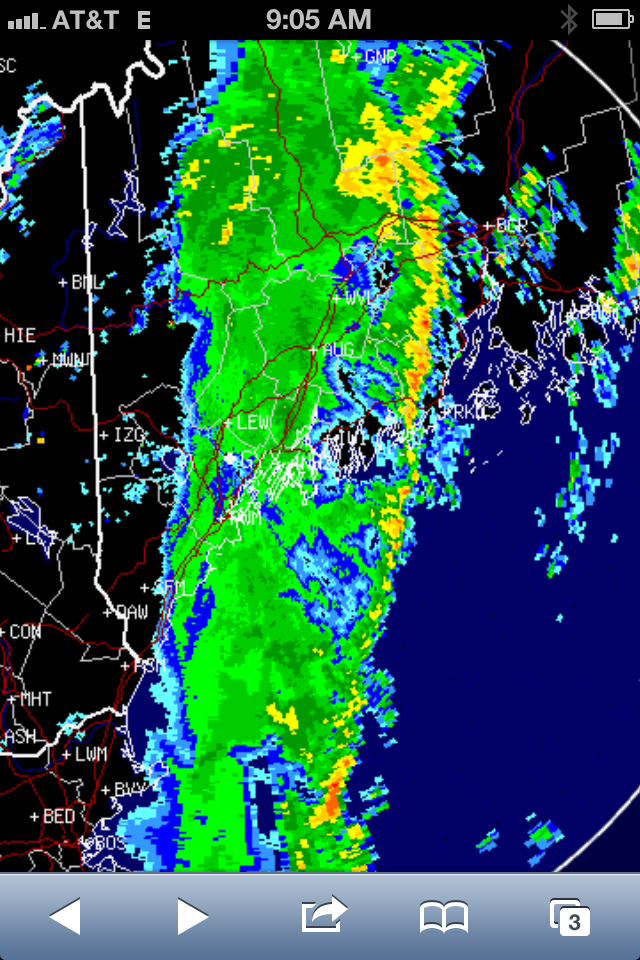
Unfortunately, an increasing southerly wind overnight precluded much in the way of any migration.  Take a look at the next blog to see what “almost nothing” looks like on a radar image.  Clouds were thick by dawn, too, but the rain held off until after breakfast.  After another fulfilling and scrumptious breakfast at the Trailing Yew, Jeannette, Kristen, and I headed down to Lobster Cove for a bit of seawatching.  We could see the wall of rain on the radar, and we could now see it on the horizon.  But as it marched closer, tubenoses joined the gannets.  In a mere 15 minutes or so, 20+ Great Shearwaters and 6+ Sooty Shearwaters zoomed through my scope.  And then the skies opened up.  This is what a line of rain – ahead of a cold front – looks like on the radar.
IMG_1573

The southerly winds were diminishing as the rain tapered off rather quickly over the course of the morning, but seawatching was less productive before lunchtime – apparently those tubenoses were all on the move just ahead of the precipitation.  But with the sun beginning to peak out after lunch, at least more birds were more visible again: two of the Clay-colored Sparrows, a Philly Vireo, etc.  Joined by Paul and Doug, we encountered a – or the – Yellow-billed Cuckoo, and then a calling flyover Lesser Yellowlegs became my 202nd species on Monhegan.

Moments later, Paul spotted a night-heron in a narrow drainage, and Doug soon relocated it.  A juvenile Yellow-crowned Night-Heron!  Once a more regular bird in Maine, and even on Monhegan, it had been about a decade since one had made an appearance on the island.  But this bird showed up a couple of weeks ago, and was often seen foraging on grasshoppers in lawns.  Rumors of its continued presence were circulated, but there were no confirmed sightings for over a week.  Until today.
_MG_0216_edited-2
Monhegan bird #203!  And two island birds in about 10 minutes.  Now that’s the way to finish strong.

When it was time to go, we were very happy to see the waves were rapidly dropping off.  Seven foot seas this morning had been reduced to 3-4 at most as we hopped on the Hardy Boat for the trip back.  A Great Cormorant on the Outer Ducks was our 88th species for the Monhegan tally for this trip, but 88 –including a mere 13 species of warblers – was a fairly low total for three days out here at this time of year.  That being said, it could have been much lower had we not continued to beat the bush.

Two juvenile Lesser Black-backed Gulls joined some hopeful Herring Gulls following the boat to shore, and westerly winds were increasing as the cold front pushed through.  There would no doubt be a lot of new birds come morning on Monhegan.  While I would be sorry to miss them, I knew fun was going to be had at SandyPoint, so I was not upset.

And I was right…

Fall Plans

Seriously, it’s already the end of August?  Where the heck did the summer go?  It feels like shorebird season just started, and now here I am checking the radar nightly as fall songbird migration heats up.  Goldfinches are eating seed heads in the perennial gardens, hummingbirds are molting and tanking up (many males have already departed), and biting insects are at a minimum.  As much as I love late August – and autumn is my favorite season – it’s always a little bittersweet to let summer slip away.

In most years, by the end of August I have combed through flocks of roosting peeps at Biddeford Pool or strained to see distant mudflats at Pine Point at least a dozen times.  I can’t believe Sunday was actually my first visit to Biddeford Pool on a high tide all summer!  This week isn’t helping either, with a visit to Massachusetts these past two days and some New Hampshire birding with a friend tomorrow.  In other words, I have been busy – wicked busy even!  This is by no means a complaint, however, just a statement – and an excuse as to why I never did find a Red-necked Stint for Maine this summer.

What is normally a “slower” season for me was anything but, and now, with September right around the corner, I am about to get even busier!  I have a trip to the Upper Midwest in October to speak at the Iowa Ornithologists Union Fall Meeting and the UrbanEcologyCenter in Milwaukee with some birding and visiting with friends in between.  I’ll be talking to New Hampshire Audubon in October as well, and I will be helping out Leica Sports Optics at the Cape Cod Birding Festival next month.

In between, I hope to spend as much time as possible at SandyPoint.  Keep an eye on the store’s Facebook Page (www.facebook.com/freeportwildbird) for my Morning Flight counts.  I’ll post the occasional significant flight report and corresponding radar analysis here, but most counts will just get posted directly to the FB page (as a “public” business page, it functions as a regular website; no need to “be on” FB to view).

SandyPoint at sunrise is probably my favorite place to be in the fall, but MonheganIsland is a very close second.  Actually, it’s probably a tie.  I wish I could be at both almost every morning all season long!  And speaking of Monhegan, I still have spaces on my “MonhegZEN Birding Fall Migration Weekend” tour, September 27through 30th.  It’s a “per diem” tour, so you can join me for anywhere between one and four days of birding at this amazing place.

In preparation of what is likely to be a whirlwind fall for me, I have updated our website with all of my events, programs, and tours on a newly-expanded “Tours, Events, Workshops, and Programs” page at http://www.freeportwildbirdsupply.com.  There you’ll find more information about the MonhegZEN Birding Weekend tour, and all of my programs for the coming months.  We’ve also started to finalize plans for an exciting 2014, including everything from our “Woodcocks Gone Wild” evening walk to a two-week tour to the Russian Far East.  More Monhegan, our now-annual trip with the Schooner Lewis R. French, and much, much more is now posted, with details rapidly being filled in.

So whether it’s in Iowa, the parking lot at SandyPoint, or on MonheganIsland, I hope to see you this fall.  And if you happen to have a cup of bird-friendly coffee handy, I will probably need it!