Tag Archives: Mallard

2026 Workshop Tours with Down East Adventures

Freeport Wild Bird Supply is proud to once again partner with Down East Magazine’s Down East Adventures for the sixth year of offering exclusive birding workshops focused on gaining greater knowledge and field skills in a focused group of seasonally accessible birds.  Focused on skill-builder rather than list-building, there will be plenty of “life birds,” but also more knowledge and education about birds, habitats, birding, and much more about the natural world.  We are honored to be their provider for a series of unique and exclusive birdwatching endeavors. In 2026, we will once again offer four exclusive outings.

For more information on each tour, as well as registration information, visit: https://www.freeportwildbirdsupply.com/downeast-adventures-tours  Trip reports from each will be posted here upon their completion.
  1. Winter Waterbirds Workshop

January 29th, 2026; 9:00am – 4:00pm.
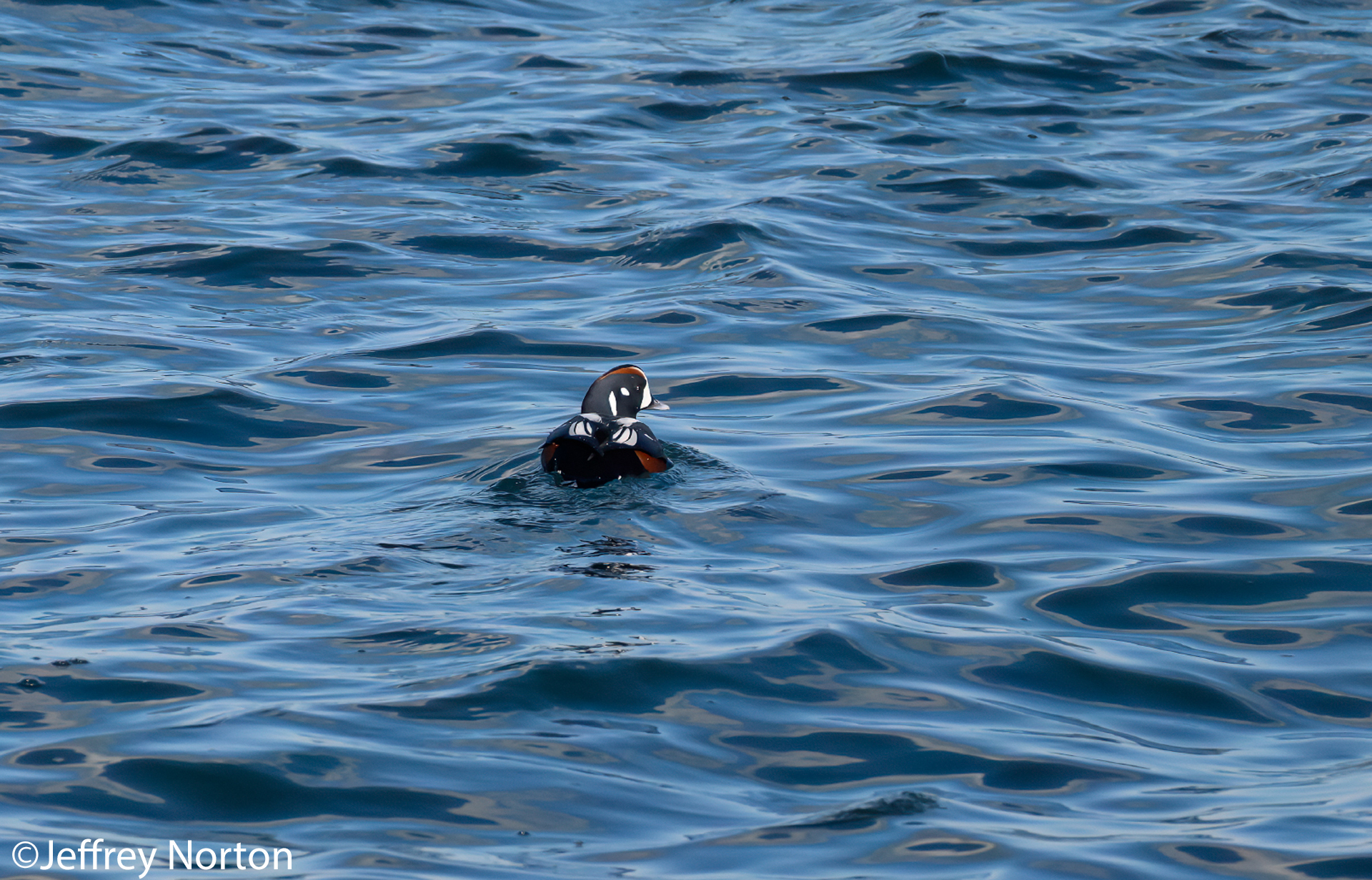
As usual, Harlequin Ducks were the stars of the show.

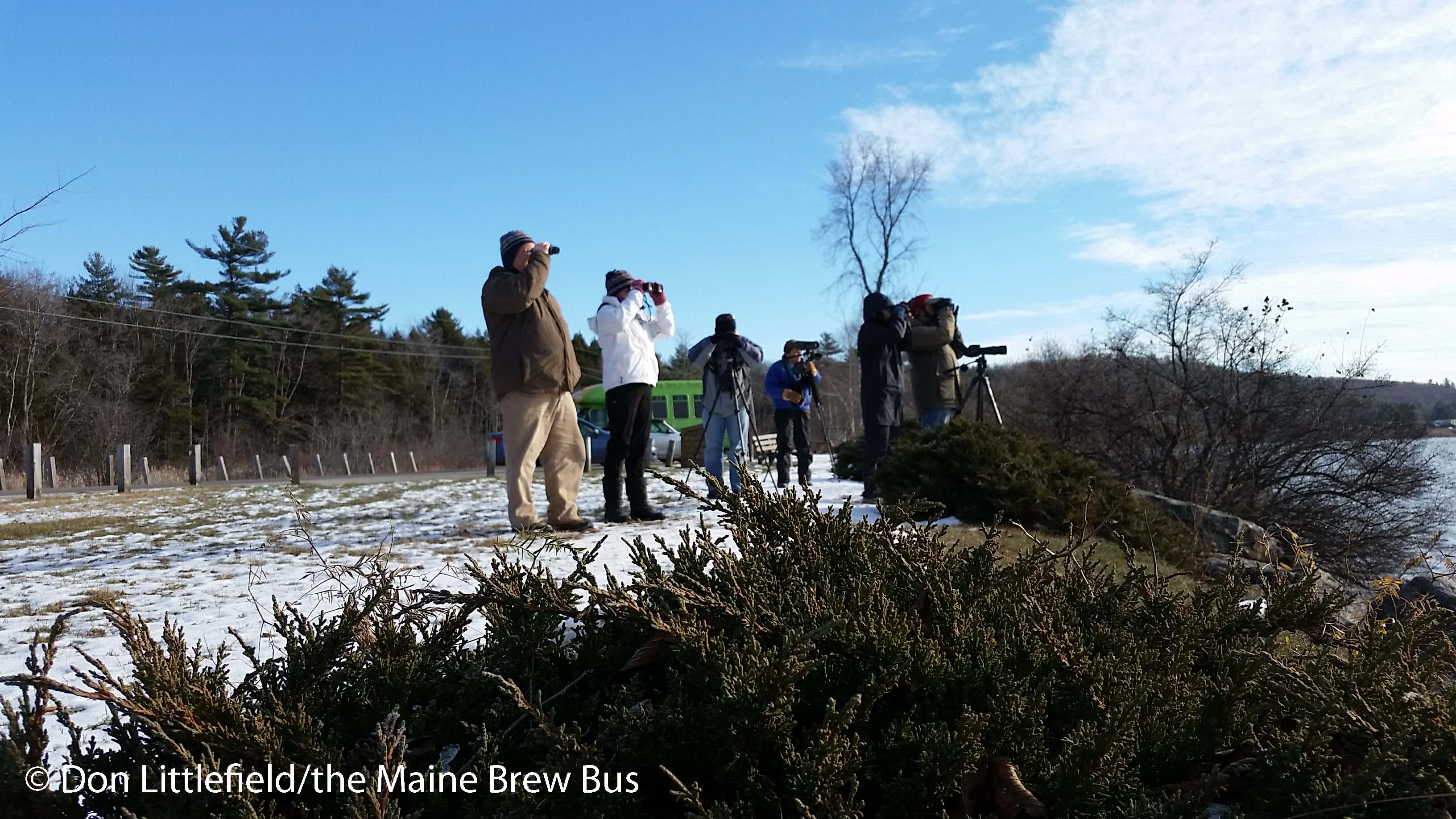
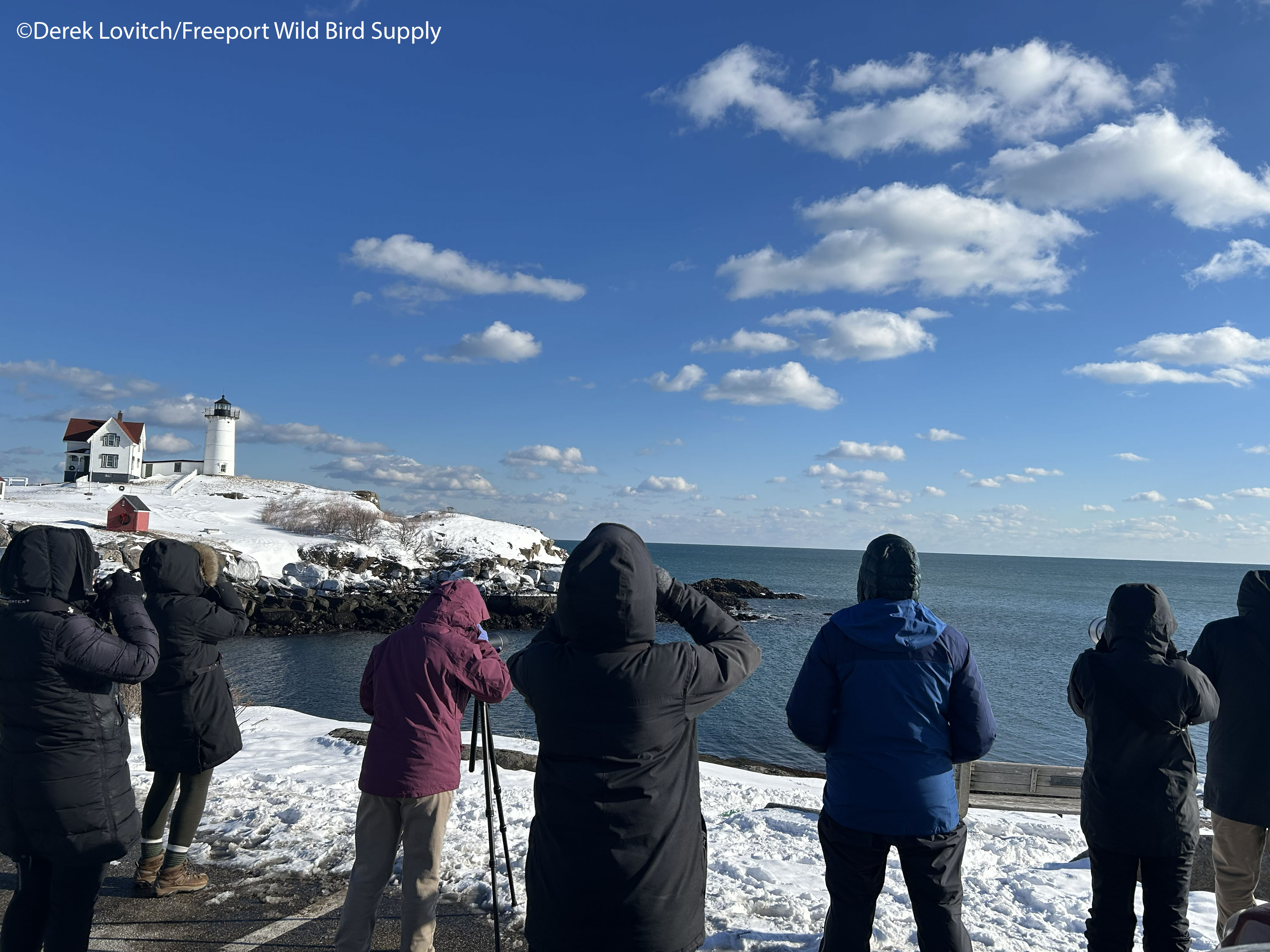
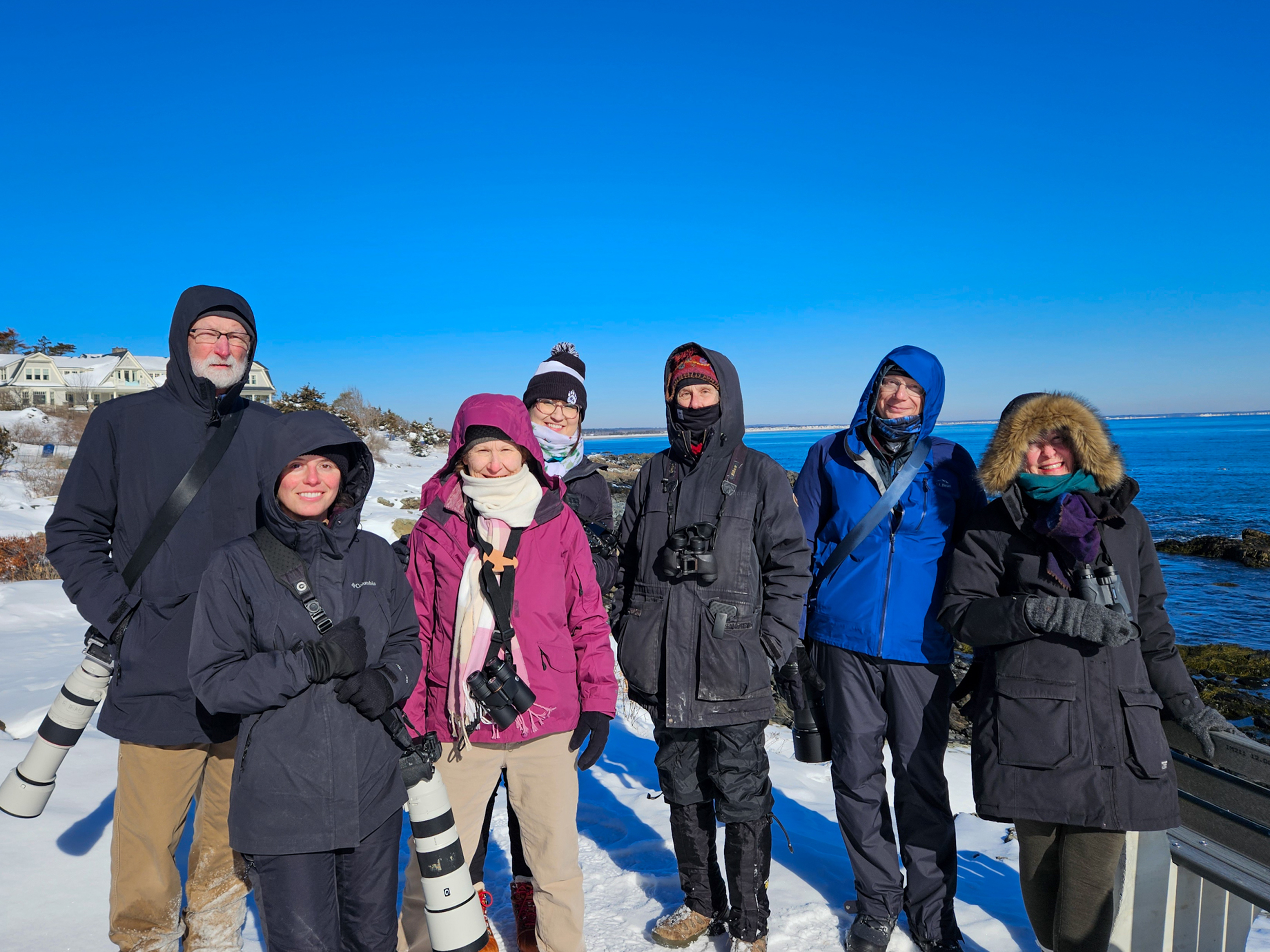
First and foremost, I must commend everyone in the group for being such troopers today! Brutally cold temperatures and a barely broken trail to start the day, with a frigid day barely warming into the low 20’s. But everyone was prepared, everyone was ready to bird, and we all learned a lot.

Between astronomical low tides, days of offshore winds, and recent bitter cold, we encountered many fewer waterbirds overall than expected at this season. We did see some of the stars of the winter show well, such as Harlequin Ducks – always the crowd favorite! – and Great Cormorants. At two sites, we worked our way through learning the various seaducks, while at two other sites we studied dabbling ducks. A short gull workshop was also included. We even finished with another family of waterfowl when a hen Greater Scaup landed in Perkin’s Cove when we returned at the end of the day.
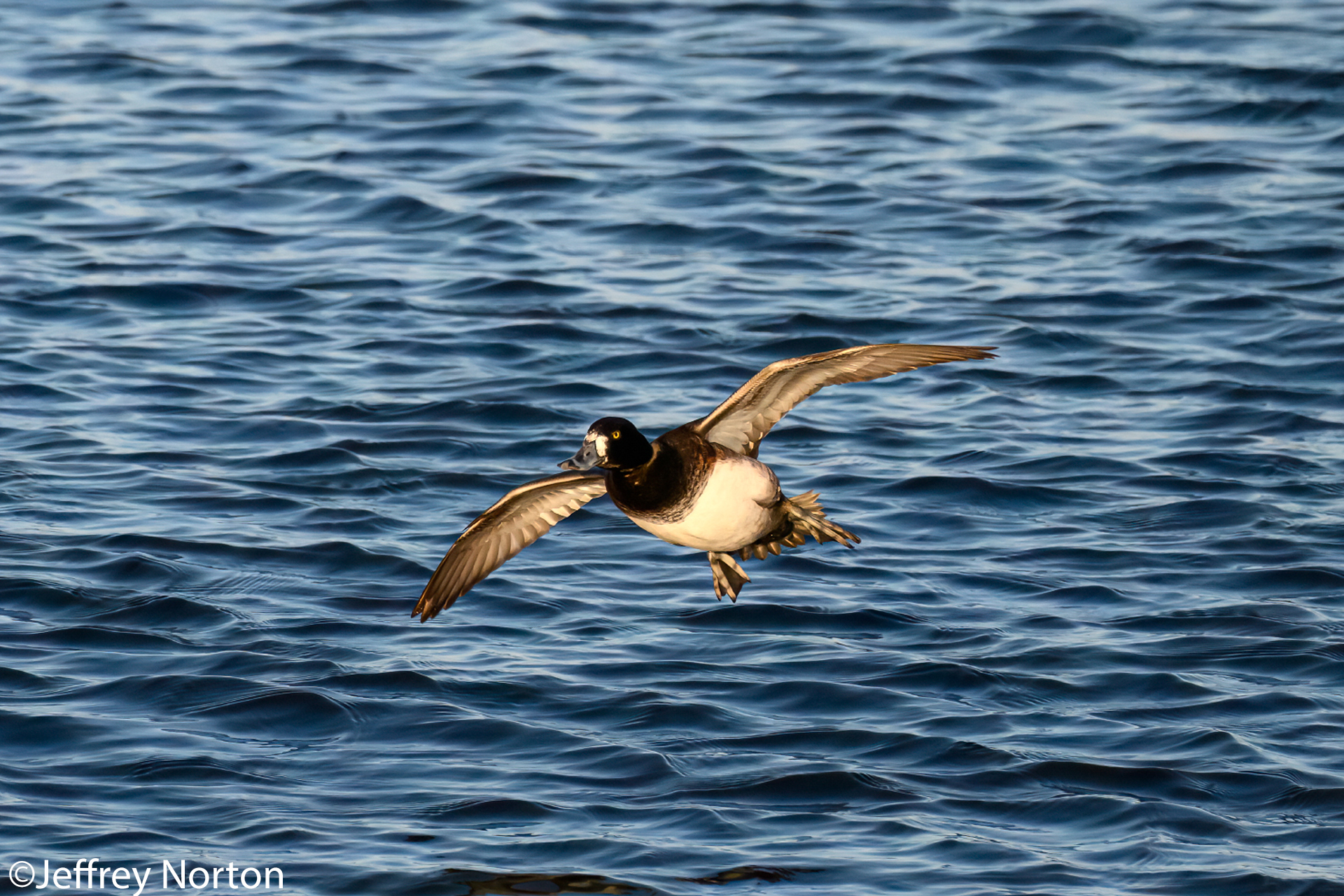
It was nice of this hen Greater Scaup to join us for one last species to learn about.

The Ogunquit Rivermouth was one of the most productive destinations today, with an unexpected 4 Northern Pintails pioneering amongst hundreds of Mallards and American Black Ducks, Canada Geese, and really close views of White-winged Scoter, Bufflehead, Common Goldeneye, and Common Loon, plus a Belted Kingfisher – one of our “honorary waterbirds.” Elsewhere, Black Scoters were the dominant species, with large rafts witnessed at multiple locations.
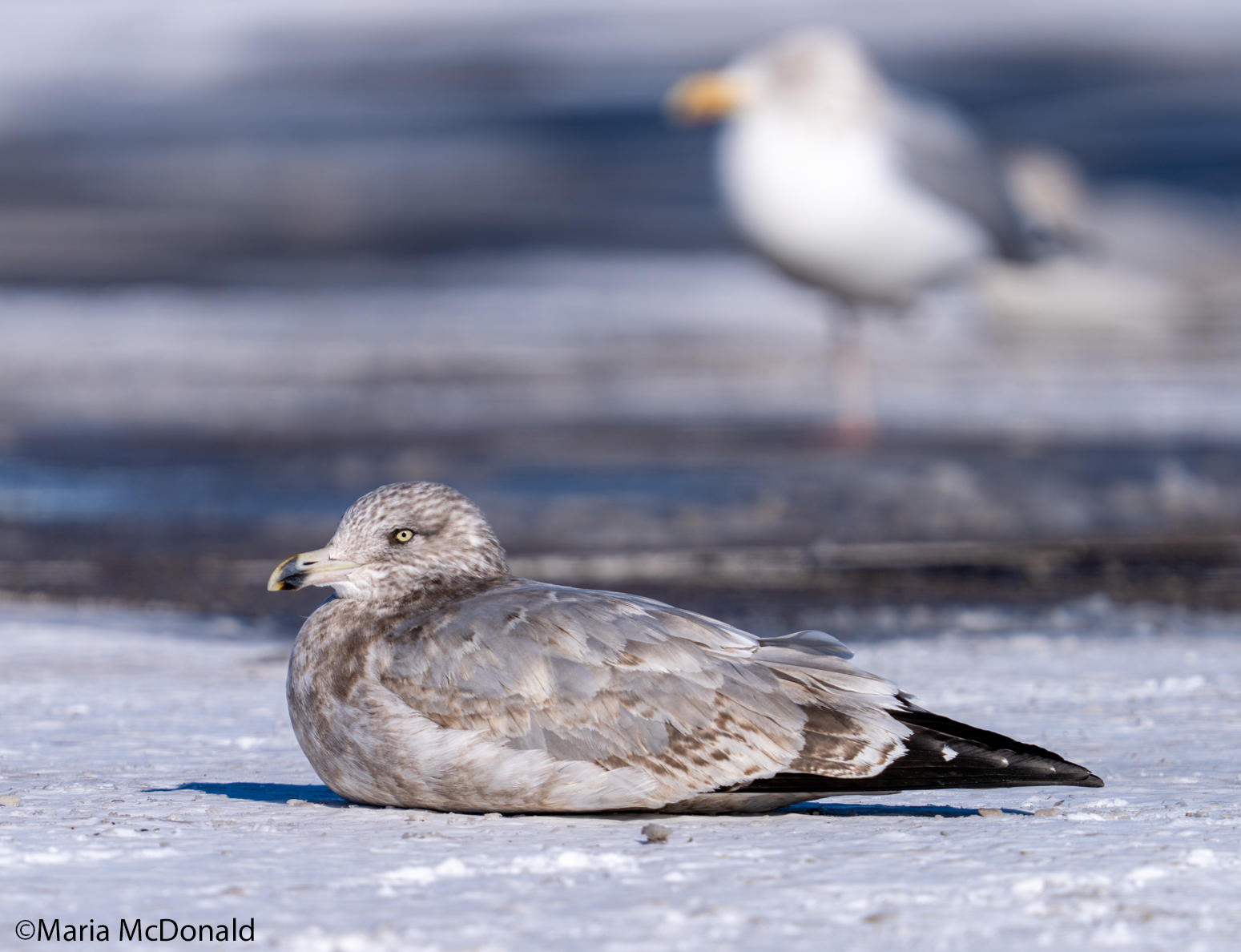
What is this mess? Impossible to identify, you say? Well, with a little comparative experience, we learned just how quickly we can identify this 2nd cycle Herring Gull.

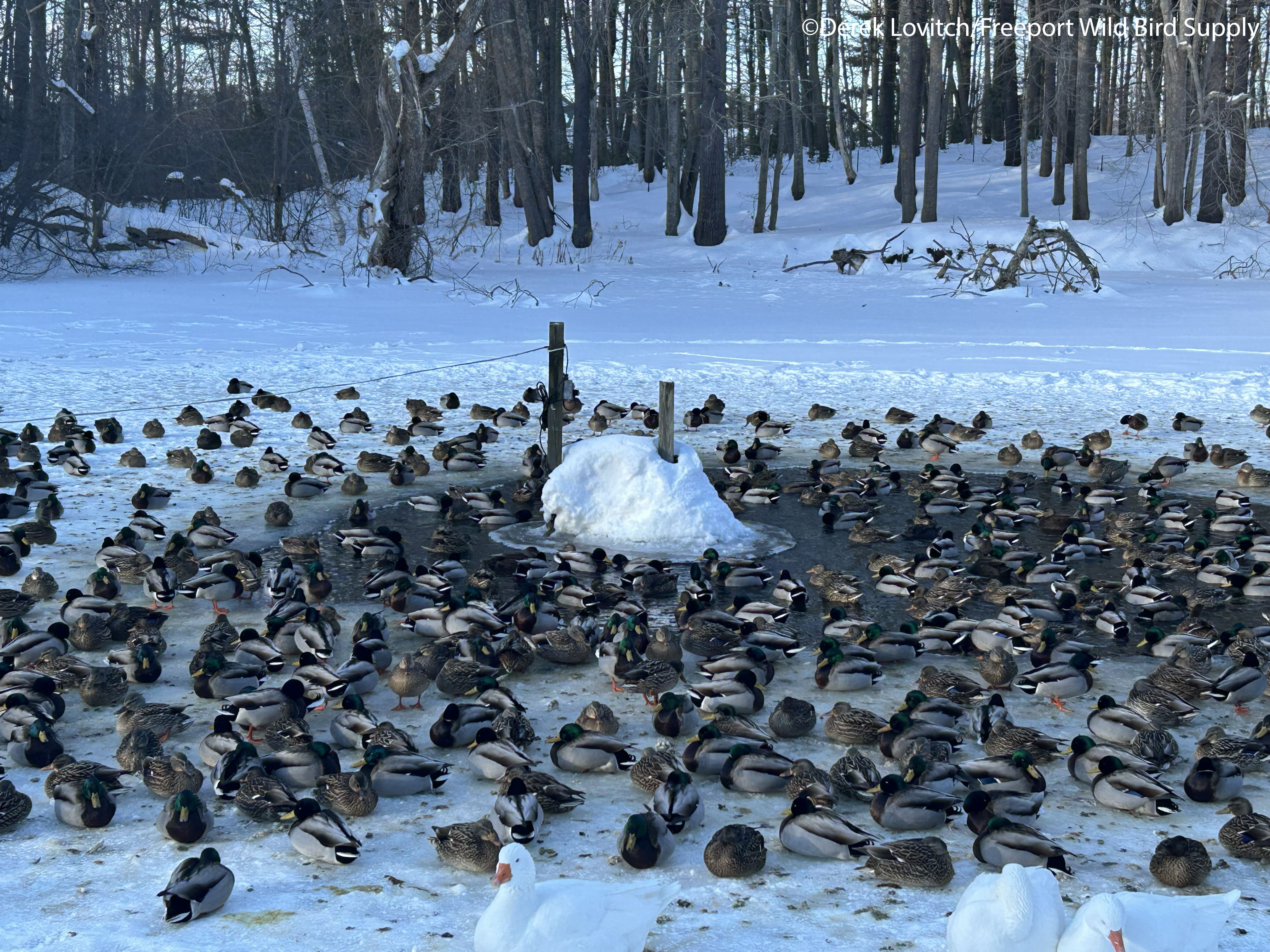
As rewarding and educational the birding was, I think most people will end up remembering more about the domestic duck roundup attempt that we witnessed at Abbott’s Pond. We were there to study Mallards, American Black Ducks, and hybrids thereof, learning the differences and nuances in plumage of some of our most commonly seen waterfowl. We did that, and then sat back and enjoyed the show as the pond’s caretakers were bringing some “dumped” domestic hybrids to a better home.
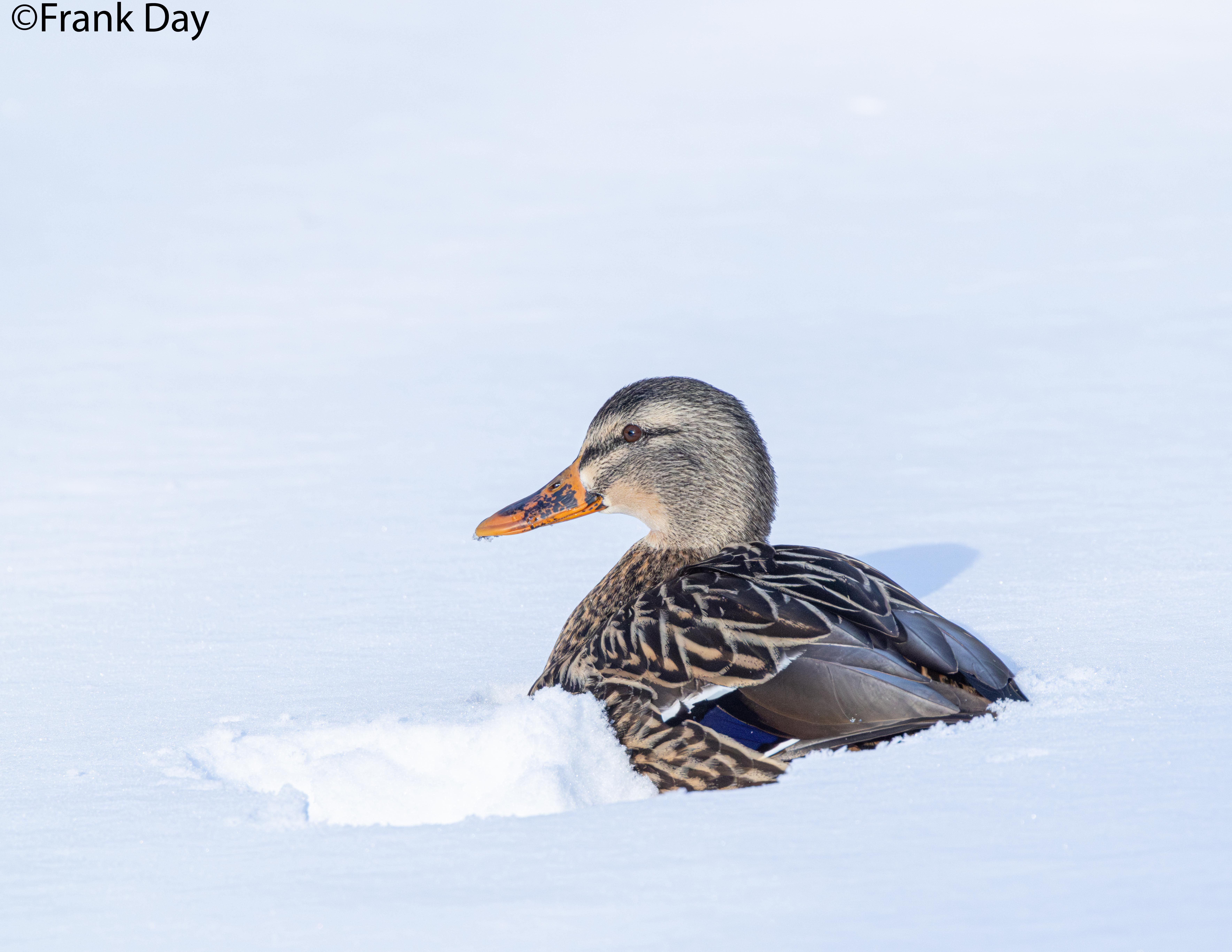
We put special emphasis on learning female ducks as well, especially when in direct comparison to the respective distinctive males and other hens around them. We also took time to appreciate the gorgeous intricacies of
their plumage, such as on this female Mallard.

2. Spring Migrant Songbird Workshop

​May 17, 2026.

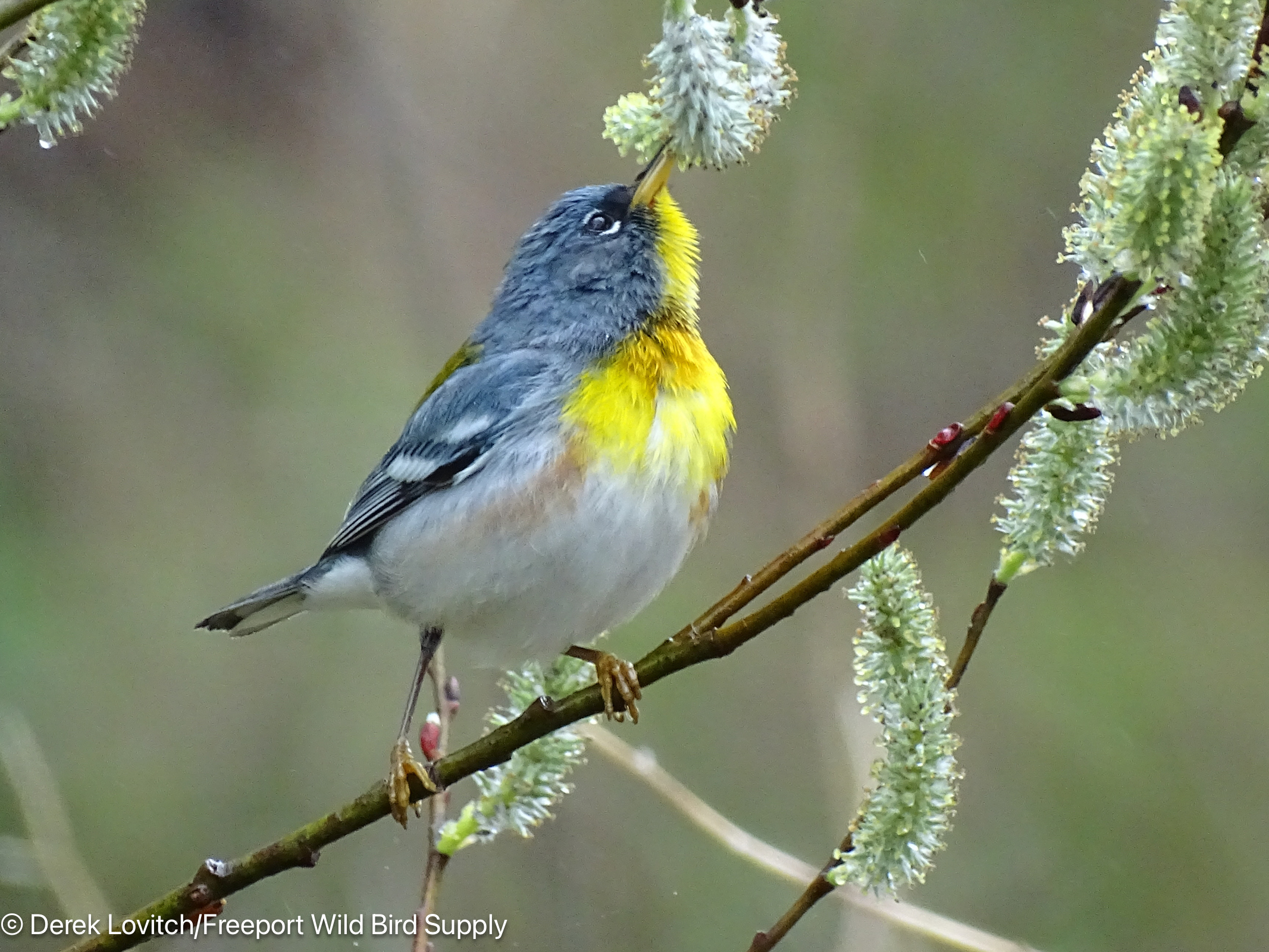
(See Northern Parula photo at the header above. Yes, that was enjoyed on our 2025 tour!)

This half-day workshop will focus on the migrant songbirds, especially warblers, that are passing through Maine’s most famous migrant trap, Portland’s Evergreen Cemetery. At the peak of warbler migration, we’ll learn how to identify these charismatic birds, and we’ll discuss their mind-boggling migration and what they’re up to in Maine.

Whether it’s the kind of migration day that legends are made of or a slow day (every day of migration is different), we’ll take advantage of whatever species are present to truly get to know them. Sure, we’ll work on “the list,” but our focus will be on preparing for your next birding outing, giving you the tools to identify birds on your own, maximize your time in the field by predicting where and when to be birding based on NEXRAD radar, geography, habitat, and much more. Of course, if there are too many warblers around, we might just have to simply enjoy them!

We’ll meet at the main entrance on Stevens Ave. to Evergreen Cemetery at 7 a.m. (or as soon as the front gate is opened), near the first building on the right. From there, we’ll caravan to the best birding location, returning to the entrance around 11. If the birding is slow, we’ll relocate in the mid-morning to another nearby park.

To get an idea of what you may see, read the 2022 , 2023,  2024 and 2025 trip reports.

3. Shorebird Workshop

​August 18, 2026; 9:00am – 4:00pm​

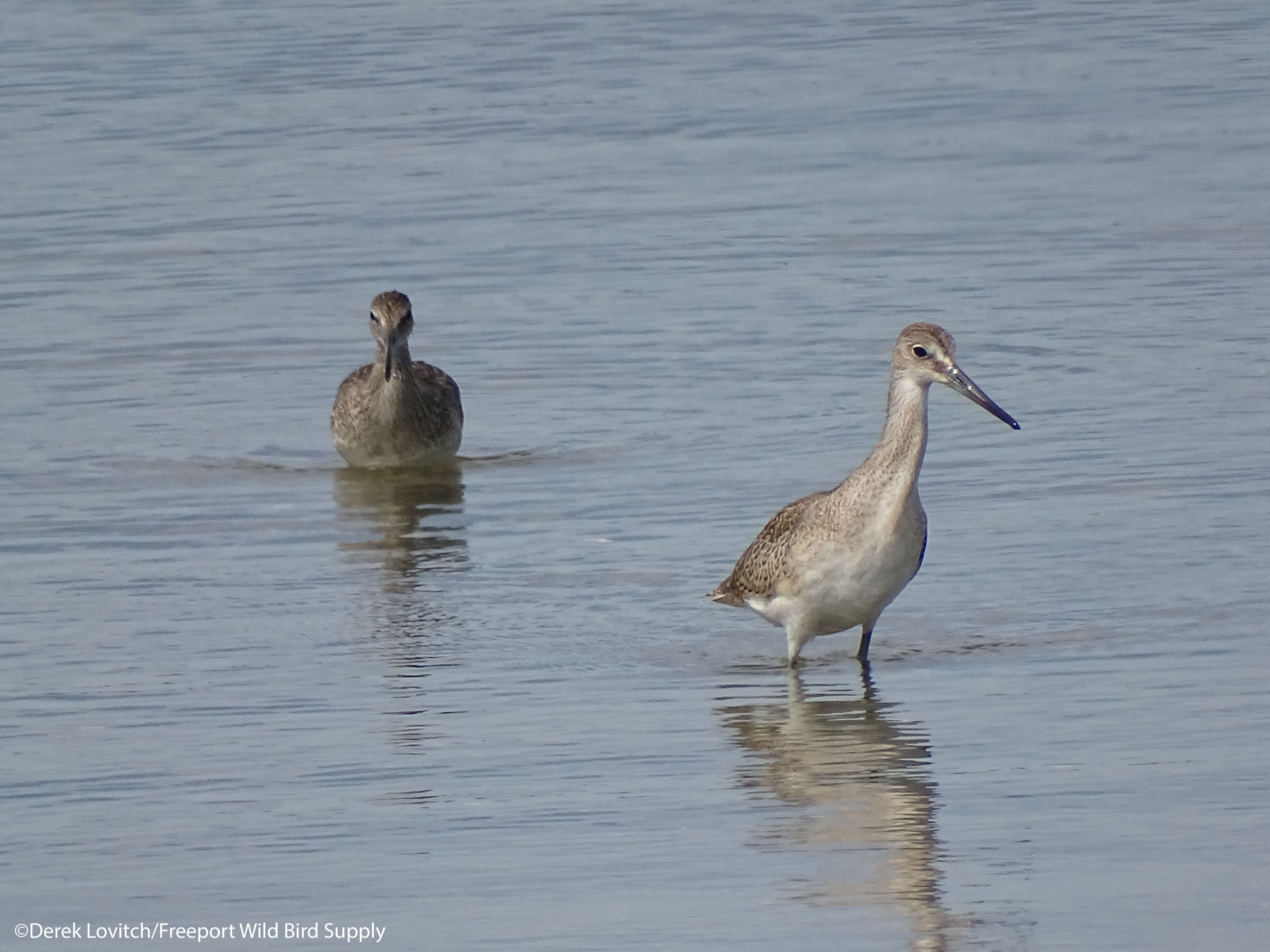
A side-by-side comparison of “Eastern” vs “Western” Willets was one of the highlights
of the 2025 shorebirds workshop.

With more than 35 species of shorebirds (a diverse group including plovers and sandpipers) regularly appearing in Maine, this workshop is designed to appreciate the diversity and beauty of this fascinating family.

We will hit some of the marshes, beaches, and rocky roosts that shorebirds prefer at the peak of their migration. The ebbs and flows of the season, daily and recent weather, and other factors could produce more than 20 species of shorebirds in our time together. Our focus will be in comparative experience, learning how to recognize each species both near and far. Starting with the basics, such as plover vs. sandpiper, we’ll work our way up to the identification quandaries such as the “peeps” and the yellowlegs. We will provide you with a “toolkit” to approach shorebird identification on your own, using a combination of habitat, shape, size, structure, behavior, and plumage to identify this wonderfully diverse and attractive group of birds. Migration, conservation, and natural history will also be discussed.

We’ll meet at the public Park & Ride lot between Sea Dog Brewery and Cabela’s, off Payne Road at exit 42 of the Maine Turnpike, at 8 a.m. (please arrive 15 minutes early so we can depart on time) to carpool to the day’s birding destinations, based on tides, weather, and especially the birds themselves! We’ll return by 4 p.m., with an hour break for lunch (not included), likely at a place with multiple nearby options

For an idea of what to expect, see the trip report from our 202520242023 and 2020 outings.

4. Monhegan Birding Workshop

September 11-13, 2026  
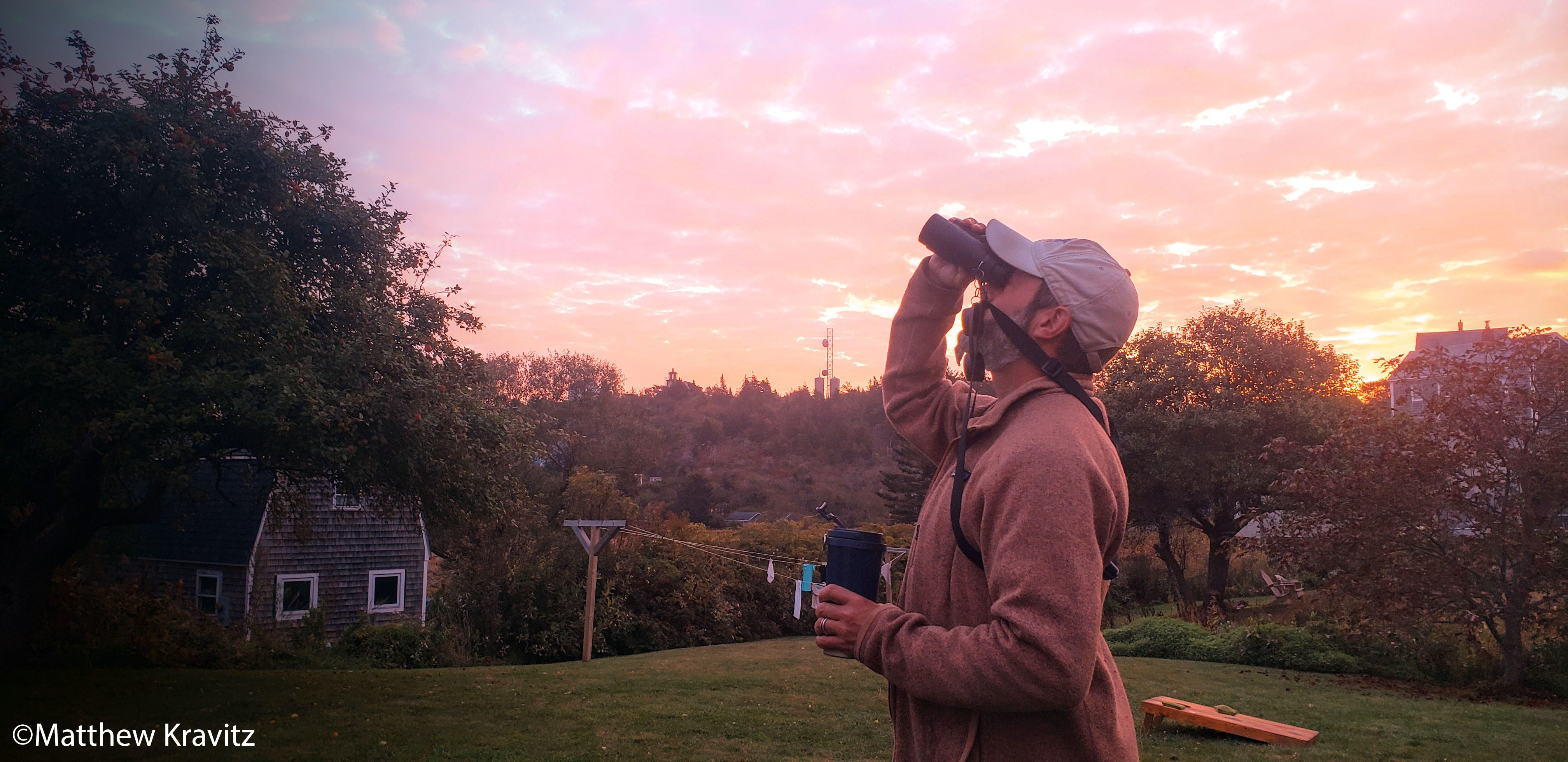
Join Derek Lovitch for three days of birding at Maine’s famous Migration Mecca. As the summer crowds dwindle, the island becomes a birders’ paradise, with birding opportunities around every corner. This tour will spend three days sampling what the island has to offer during the peak of migration, from warblers to hawks to sparrows to the unexpected. Weather (and sometimes, lack thereof) will dictate how much we do or do not see, but every day is different out there. We’ll learn that fall warblers are rarely if ever “confusing” and why migrants – and vagrants from any direction – drop by this offshore migrant trap.

While finding and seeing birds will be the priority, we will also do a bit of informal workshopping in the afternoons to learn more about the mechanisms and marvels of bird migration. Day one will begin at the dock for the Hardy Boat in New Harbor. We’ll keep an eye out for birds from the top deck of the boat as we make the hour-long crossing to the island. Upon our arrival, we’ll hit the ground running to make the most out of our first morning at this special place. Once we’re on land, we’ll be on foot for the next 2 days, with several walks throughout the day. We’ll mostly be on dirt roads with some steep sections, but we’ll also traverse some narrow trails full of roots and rocks. Expect to spend time on “unimproved surfaces.” You will set a new personal record on your step-counter – especially when the bird we most want to see gets discovered on the opposite end of the island just before mealtime!

On the first day, after we check in lunch will be on your own, with a variety of options scattered about the town. After a break, we’ll head back out later in the afternoon for some more birding, before assembling again for an evening “cocktail hour” (BYOB; also available on the island) and our migration workshop where we’ll discuss the birds of the day, how and why we saw (and didn’t see) what we did, and more (when time and energy levels permit). The next two mornings we’ll once again maximize our time on the island. Following a short walk shortly after sunrise, we’ll enjoy the famous Monhegan House breakfast before birding for the remainder of the morning. Once again, we’ll break for lunch before reconvening for some afternoon birding: on the second day until we prepare for our evening “cocktail hour and migration review, and on the third day, right up until it’s time to head to the ferry.

For 2026, we’ll be staying at the venerable Island Inn. More details will soon follow. Stay tuned!

See Derek’s blog entry to see how the 2025, 2024, and 2023 trips went.
This Week’s Highlights, 2/15 – 2/21/2025

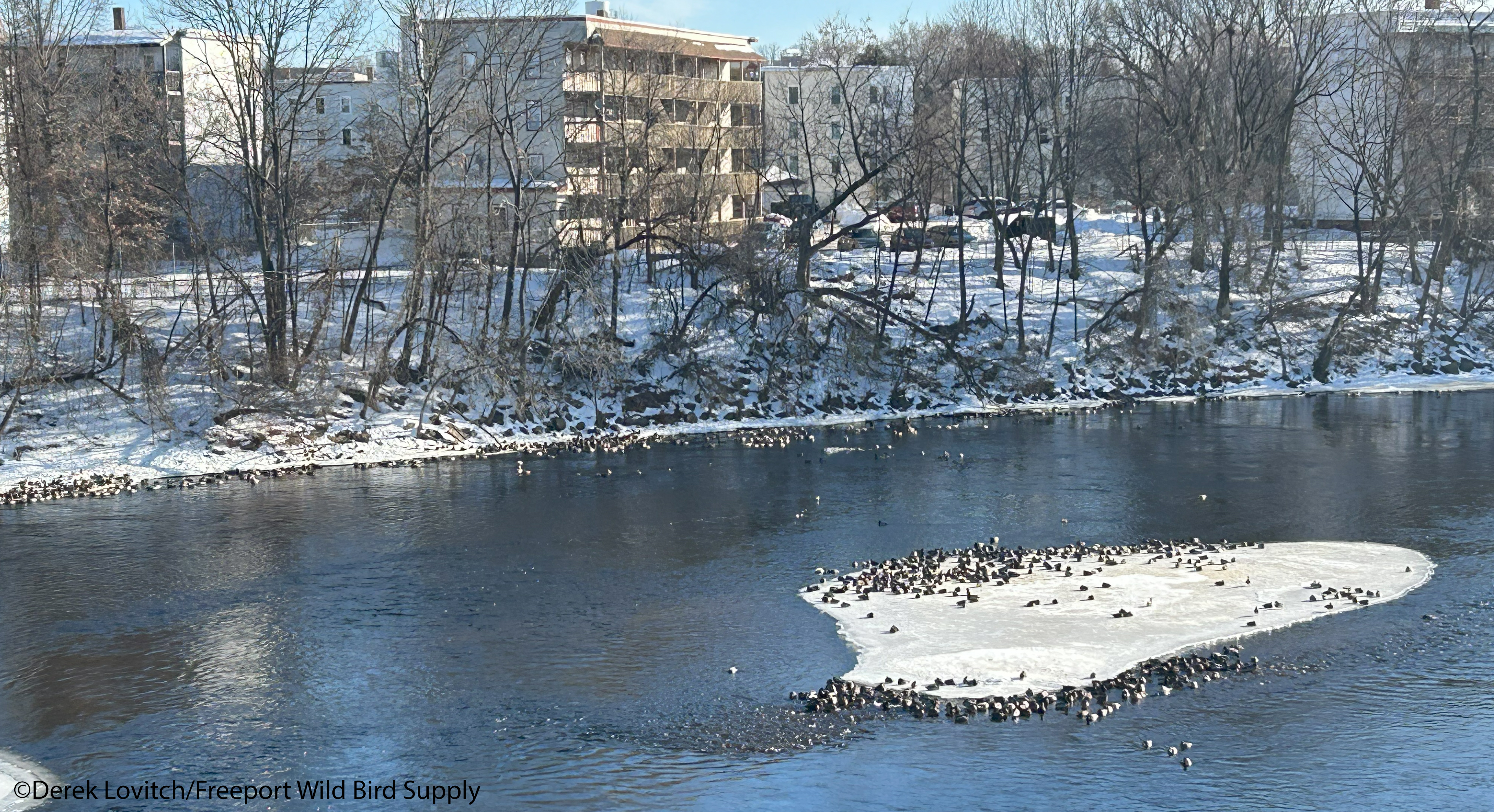
The waterfowl concentration in the open stretch of river between downtown Lewiston and Auburn continues to grow. On Thursday, Dan Nickerson and I had over 1700 ducks of 9 species, most of which were here, off of the Bernard Lown Peace Bridge.

Most of my birding time this week was spent driving to and from Montreal to not see a Boreal Owl on Monday and Tuesday, but away from that sojourn, my observations of note over the past seven days still included the following:

  • The single Fox Sparrows continue here at the store and at our feeders at home in Durham.
  • Speaking of feeder birds, last weekend, I posted a blog comparing feeder bird counts at our home in Durham to roughly the same ten-day period over the past two years. You can find that here:
  • At least 2 Turkey Vultures continue in the Cumberland-Freeport corridor of I-295.
  • 3+ Horned Larks, Hemand Farm, Minot, 2/17 (with Jeannette).
  • The stretch of Androscoggin River in downtown Auburn and Lewiston continues to be exceptionally productive. Another uptick in waterfowl this week was evident, with at least 1500 Mallards now just downriver of the Bernard Lown Peace Bridge. There, on 2/20, Dan Nickerson and I teased out a drake GREEN-WINGED TEAL and 3 female Greater Scaup. A hen Bufflehead continues as well. Then, upriver at the Auburn Riverwalk, a second GREEN-WINGED TEAL (likely the continuing bird present since at least 1/30 and a drake WOOD DUCK, present in the area since at least 1/13 and at this location since 1/30.
  • 1 Hermit Thrush, North River Road, Auburn, 2/20 (with Dan Nickerson).

Upcoming Tours:

1. Birds on Tap – Roadtrip “Harlequins and Hops!” scheduled for 2/2 was postponed until this Sunday, February 23rd. A few spaces are still open for the new date, and the weather looks great!

Northern Pintail x Mallard Hybrid in York (Wood Ducks, too)!

While birding The Nubble on Tuesday (not seeing Dovekies or Thick-billed Murres), Jeannette and I chatted with a local birder who turned us onto a Dickcissel that was in the House Sparrow flock at the entrance to Sohier Park.
img_3358-edited-edited

Chatting a little longer, we learned of some overwintering Wood Ducks in York. Now, the occasional overwintering Woodie in Maine is not a shock, especially when a mild winter finally turns cold. In fact, I have seen a few this winter, including a bird that was at South Portland’s Mill Creek Cove for almost a month. But the location he mentioned was new to me, and I like learning about new places.

So we found our way over to tiny Abbott’s Pond, where, well, a few ducks overwinter.
abbottspond12-14-17

During our visit, we chatted with the landowner, who had come to feed the flock. He said it started with a few geese and other ducks that “people dropped off,” and then it was discovered by wild ducks. Mallards love little places like this, and in winter, the numbers swell, as if often the case where handouts are offered. And A LOT of food is offered here, fed daily from a silo holding three tons of waterfowl feed!

A bubbler and the heat from so many birds keeps some water open, which keeps numbers up during the middle of winter (or, as in now, when winter finally arrives).

And what’s so fun, from a birding perspective, about places like this where multitudes of Mallards congregate (such as Riverbank Park in Westbrook or Mill Creek Park in South Portland), there are bound to be a few unusual species now and again. This winter, a pair of Wood Ducks was recently joined by a second drake.
img_3471-edited-editedimg_3458-edited-editedimg_3417-edited-edited

Comfortable among the habituated inhabitants, the photography opportunities are unparalleled. But even more exciting, we spotted this stunning drake Northern Pintail x Mallard hybrid that has been present here, on and off, for a month or so. This rare (especially in the East) combination is not something I had seen before, so we were excited to photograph and study it!
img_3402-edited-editedimg_3384-edited-edited

But even if it’s just a bunch of Mallards – the gorgeous drake would be more people’s favorite duck if it wasn’t so common – to enjoy, I know I will be back (in fact, I’ll probably be adding this unassuming little spot to the itinerary of Sunday’s Birds on Tap – Roadtrip! “Seaducks and Suds!” which does, by the way, have a few spaces left).

So a casual conversation led to finding one of my new favorite southern Maine birding hotspots. Who knows what has shown up here before, but I know I’ll find out what shows up next!

Birds on Tap – Roadtrip: Farms and Fermentation, 12/11/16

Our seventh and final “Birds on Tap – Roadtrip!” of 2016, entitled “Farms and Fermentation” traveled inland on Sunday. Unlike most of our itineraries, Farms and Fermentation has a very flexible birding route, affording us the opportunity to take advantage of seasonal highlights and variables including weather, northern bird irruptions, and local food supplies.

The theme of the tour is the connection between agricultural lands and birds, but we also spent plenty of time checking out the region’s most significant bodies of water as recent cold weather has slowly frozen small ponds and lakes, pushing waterfowl to the open waters of the deep Lake Auburn and the fast-flowing Androscoggin River.

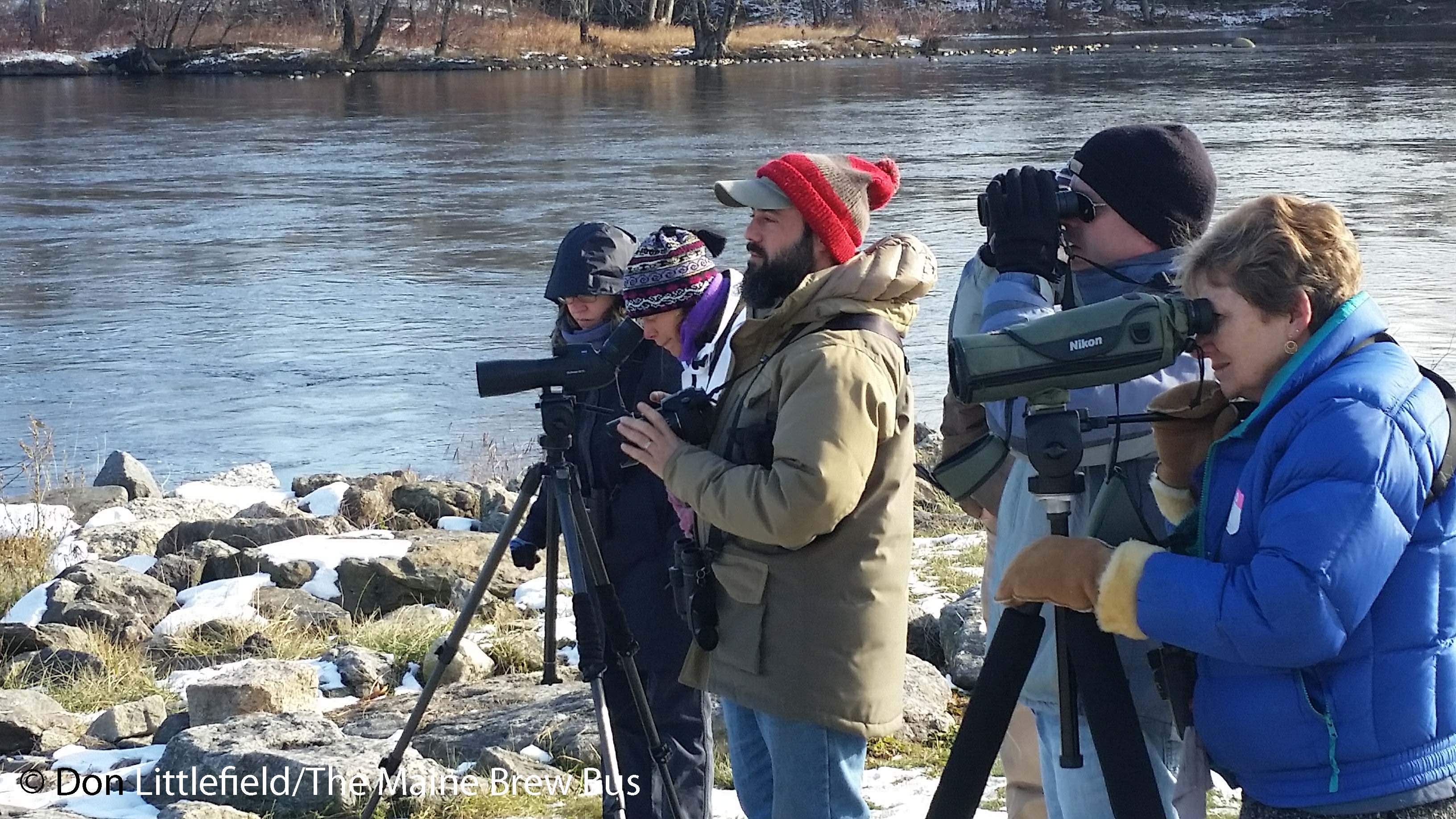
It was a frigid day, but with temperatures rapidly rising through the 20’s and virtually no wind at most of our stops, we enjoyed a very pleasant and productive morning of birding. Our first stop was a large, open agricultural field in Gray and New Gloucester, where we immediately found 16 Horned Larks within about 30 yards of the road. No Snow Buntings, as I had hoped for, but the views of the four larks that stayed with us were hard to beat.
hola3durham3-12-16_edited-1

bus-at-mayall-road_edited-1

Letting the temperatures climb a bit, we hit the road for a longer stretch to arrive on the north shore of Lake Auburn. Unfortunately, the ducks were elsewhere today – perhaps flushed by an eagle or two  – but we did view two Horned Grebes (rare inland in Maine except for here and Sebago Lake and a rather late date for them away from the coast). One distant Common Loon was also spotted.
lake-auburn1_edited-1lake-auburn2_edited-1

A short hop to North River Road sampled the birds of early successional forest, undoubtedly the first step in reforestation of an abandoned farm. American Tree Sparrows, quite a few Northern Cardinals, and a number of House Finches were present, while a Bald Eagle soared over the river beyond the cornfields across the road (still no Snow Buntings). The highlight, however, was a Red-tailed Hawk that circled up and then glided low over our heads, with the reflection of the thin coating of snow on the ground acting as a spotlight to really light up its pale plumage.

Three punk-rock Hooded Mergansers were at the nearby boat launch, and we finished up with some more waterfowl along the Auburn Riverwalk. Nearly 200 Mallards were present, affording us the chance to study individual variation and hybridization, as well as taking a moment to savor a truly beautiful critter.
img_1205_edited-2
Hooded Mergansers

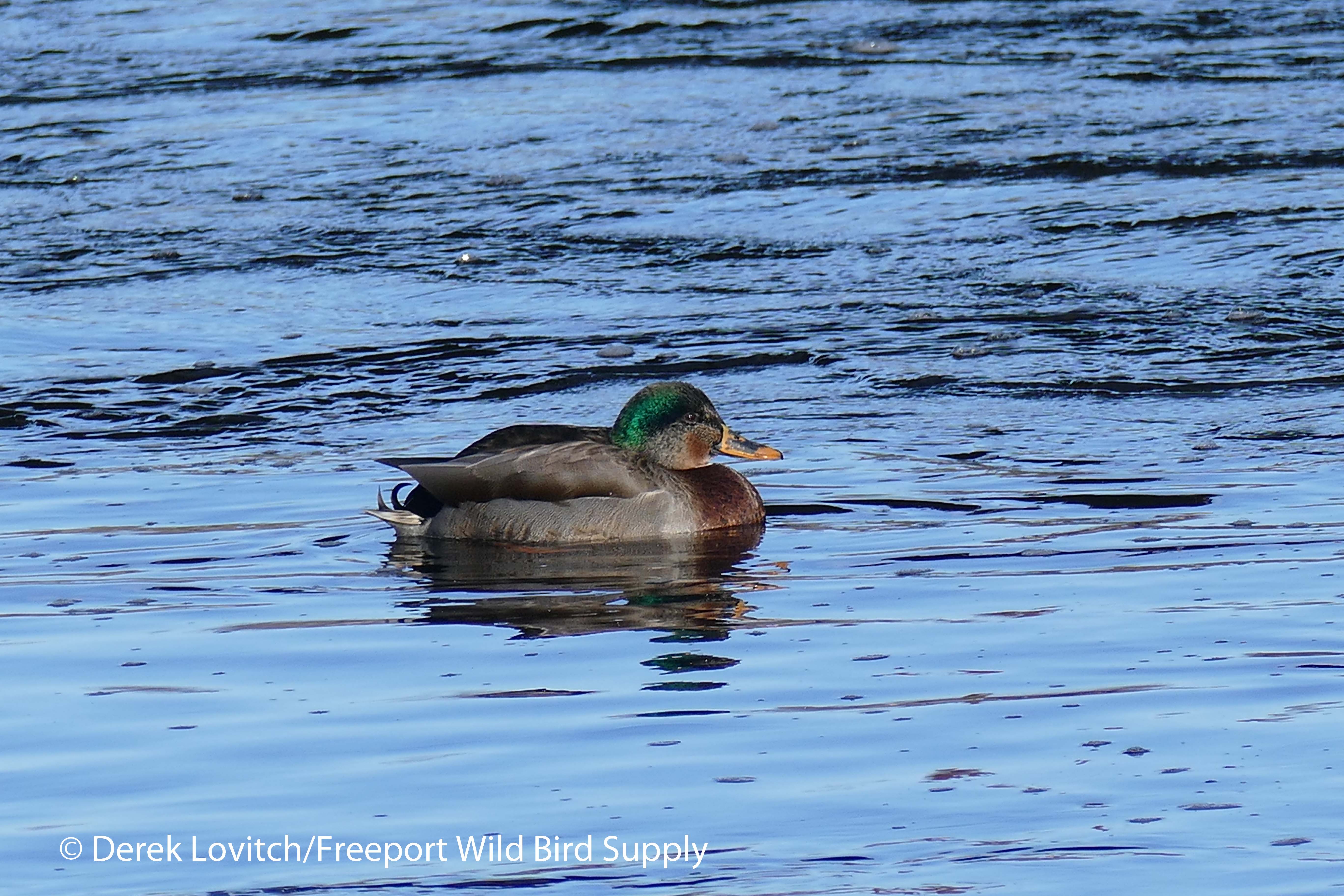
As for this individual, I am not sure how to interpret its odd plumage: a very old female taking on male characteristics, a hybrid with something domesticated, or perhaps a male that for some reason is unable to fully attain an adult plumage. Whatever it is, it was a perfect example of how much there is to be learned from looking at our most common birds!
l1080790_odd_mallard1_edited-1

l1080797_odd_mall_withmallpair_edited-1

Four American Black Ducks and some odd Domestic things were present, but I was hoping for an unusual dabbler or two to have joined the masses with the recent freezing. However, we did have two more Hooded Mergansers, and downriver, two spiffy drake Common Mergansers. A Common Loon was a little out of place on the river, likely a bird that woke up to encroaching ice on a lake this morning!
loon_from_riverwalk_edited-1

auburn-riverwalk_edited-1

Don then took over as layers were shed for good, as we crossed the bridge into Lewiston on our way to Bear Bones Beer. Don was giving us some of the history of this new brewery, but I interrupted to have him pull into a parking lot. We quickly disembarked to temporarily resume our birding with scope views of the local male Peregrine Falcon eating lunch atop of the steeple of the Franco-American Heritage Center, as per our tradition during “Birds on Tap – Roadtrips” to Lewiston!

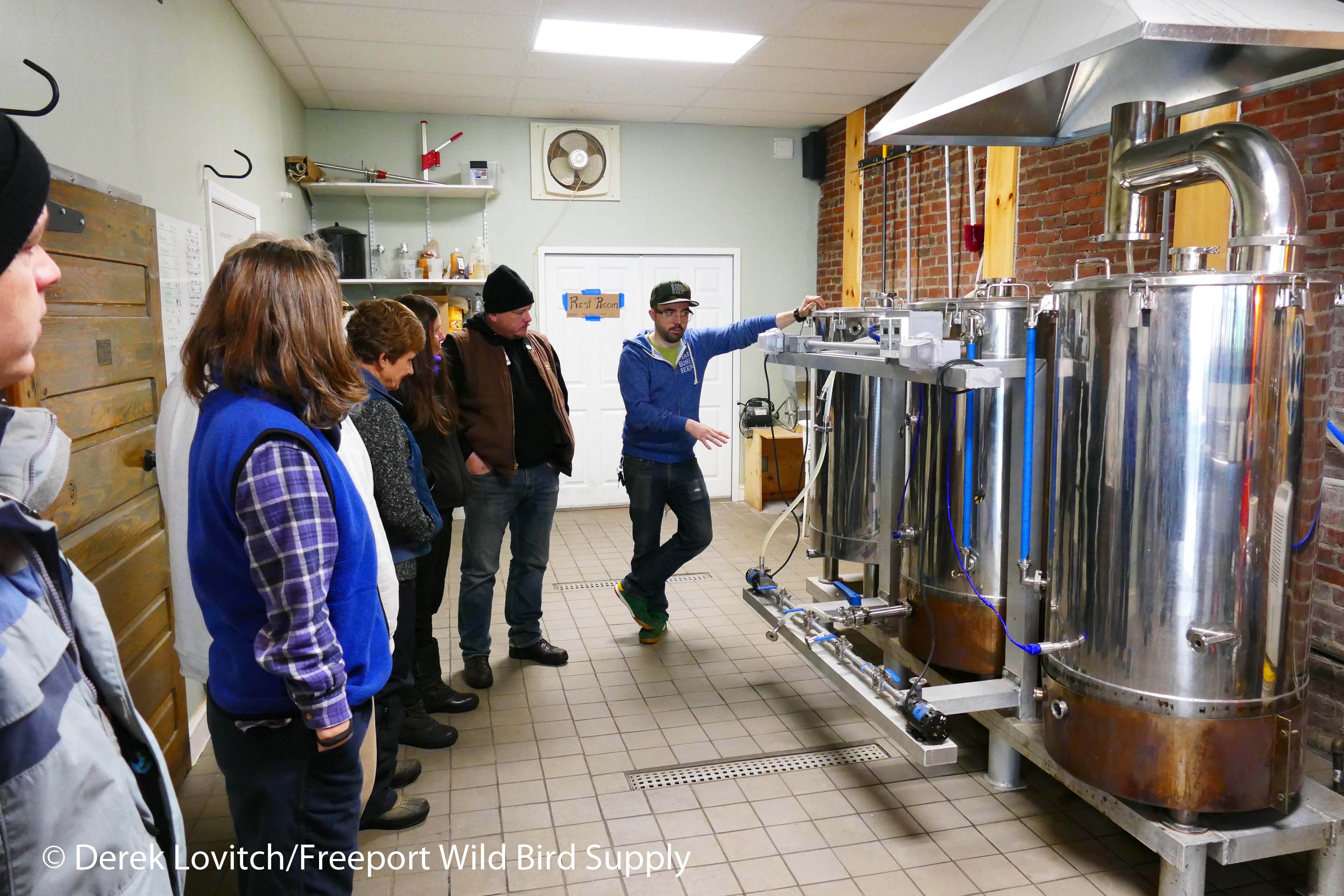
Arriving at Bear Bones Beer, a nanobrewery with a focus on sustainable production and ingredients, co-founder Eban Dingman welcomed us into the comfortable space in a renovated portion of a former department store in the heart of downtown.

bear_bones2bear_bones3_edited-1

We began our tasting with their 2X C.R.E.A.M, a smooth cream ale that featured a very nice balance, avoiding overdoing it with the hops. Dry-hopped with fruity Mosaic hops, Robot Bear Porter finished with a fruit flavor not typical of porters, putting a nice twist on a good winter stand-by. Picea, a dry stout brewed with spruce tips added to the whirlpool process, featured a subtle hint of spruce/resin, especially on the back end.

After sampling some of their applewood smoked barley malt, we tasted it in action. I went with the New Dead Smoked IPA, with just the hint of the smoky flavor and a more subtle hop kick than most IPAs these days. The “over-hopping” bandwagon had definitely not arrived – thankfully, if you ask me – here on Lisbon Street.
winston
Winston provided additional entertainment

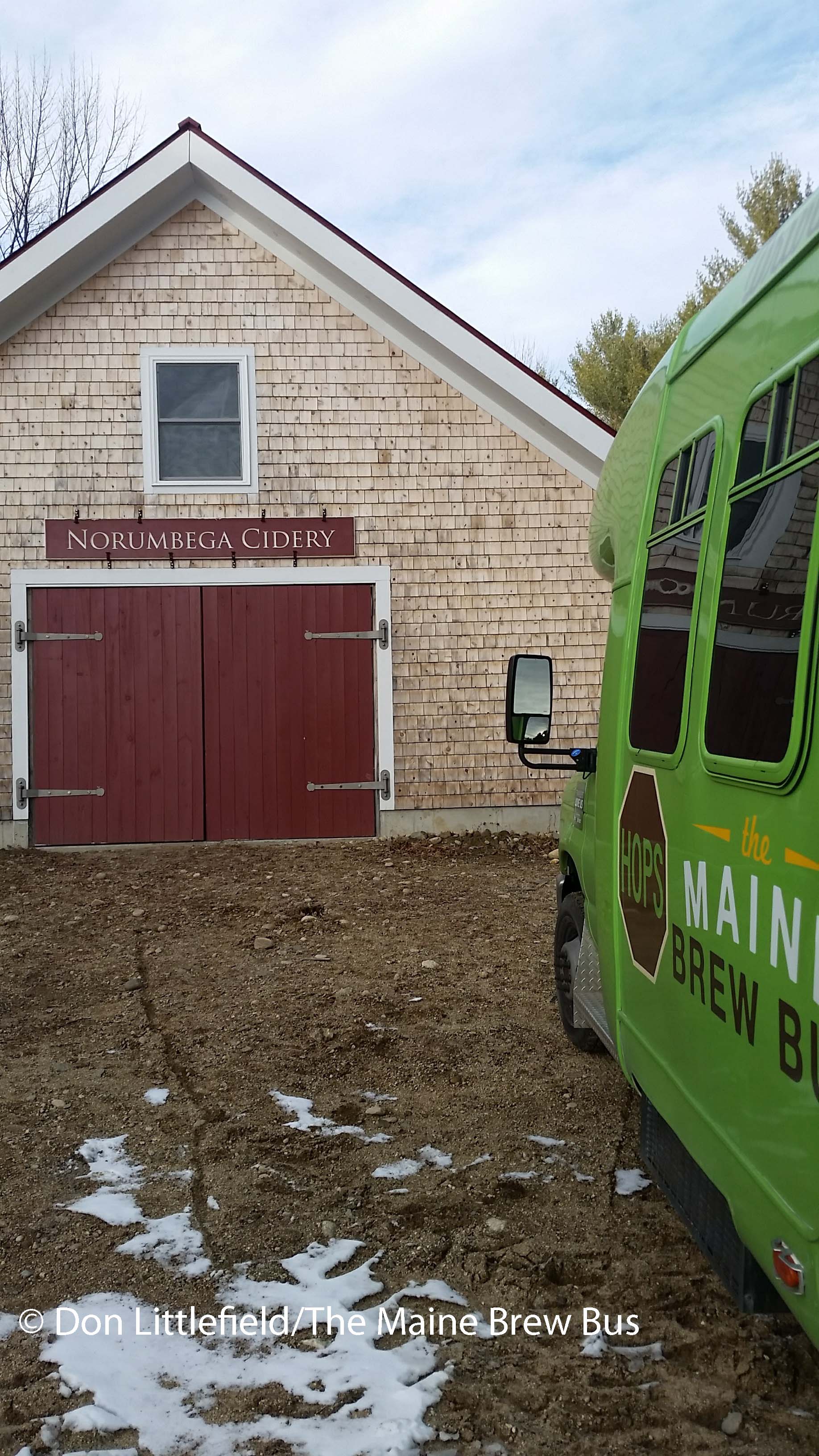
Trekking back across country, keeping an eye out for Northern Shrikes (we did spot two Northern Mockingbirds today however, much rarer in winter in interior Maine than shrikes!) as we returned to New Gloucester for a special visit to Norumbega Cidery. Open to the public only for the occasional special event, this was a real treat to learn about Noah Fralich’s family farm and his four-year-old cidery. Discussing his plans for the property, including the cultivation of a wide variety of heirloom and specialty apples, we also discussed the value of orchards to birding: in fact, if Pine Grosbeaks or Bohemian Waxwings had made it this far south by now, we likely would have visited an orchard or two on today’s tour – and wondered if in a few years, we might see these species right here at Norumbega.
bus-at-norumbega_edited-1

I’m not a big cider guy, as I usually don’t like sweet drinks in general. Many of the most popular hard ciders today (at least from the national brands) are loaded with sugar, and are more akin to soda. Dry ciders, however, are closer to wine, and the white wine yeasts that Noah uses produce a very crisp, very dry, and very delicious product that retains aromatics and subtle flavors.

We began with the clean and crisp Classic, with just a hint of tartness followed by the Berry Medley with a sweet and bitter contrast from the tannins and sugars found in four varieties of berries. Sweeter than the others, but still finishing very smooth and crisp, the Honey (technically, a ceyser because of the use of honey) was next up, featuring its very subtle honey notes and nose. And finally, we tried the Spice – my new favorite cider that I left with four bottles of – with a really complex taste profile and depth of flavor produced by only three added spices: cinnamon, nutmeg, and cloves (admittedly, I also tend to love anything with nutmeg) that made me think of an unsweetened apple pie.
norumbega_pours1_edited-1norumbega_pours2_edited-1

Taking the back roads back to Freeport, we slammed on the breaks when a Barred Owl was spotted, and quickly unloaded. Unfortunately, the Barred Owl was less excited and melted away into the woods, bringing our birding day, and our successful “Farms and Fermentation” tour to a close.

With ten tours on the schedule for 2017, including some really exciting new itineraries, we look forward to having your on board soon. All of the tours are posted on the “Tours, Events, and Workshops” page of our website, with direct links for online reservations.

Birds on Tap – Roadtrip: Spring Ducks and Draughts 2016

NOPI female1, Riverbank Park, 1-9-12_edited-1
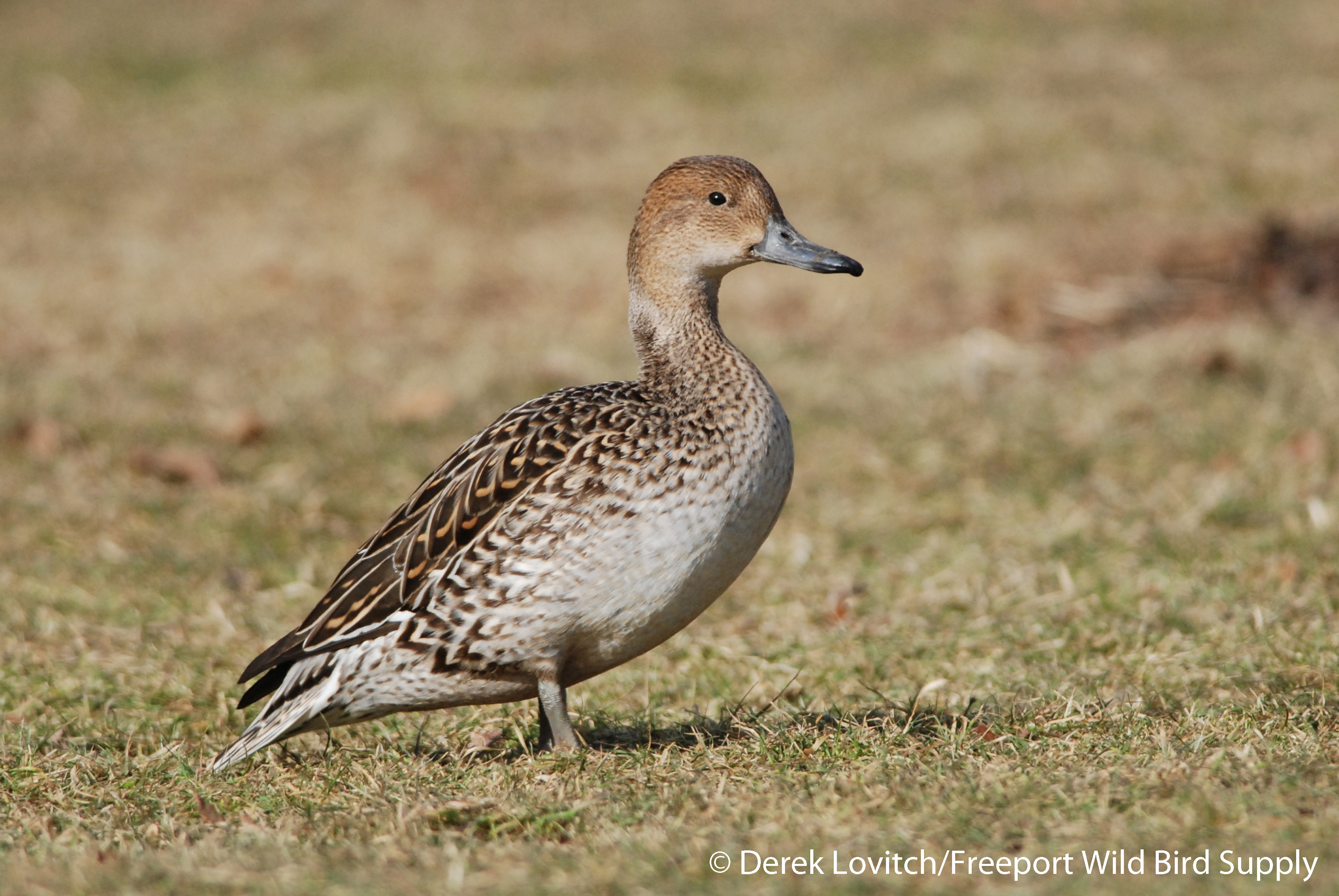
One of the trips’ highlights was the two dozen Northern Pintail at the Mouth of the Abby. We enjoyed the gorgeous males, but also took time to appreciate the subtle beauty of the hens. We also learned how to separate “all the brown ducks” but considering shape and size. Female Northern Pintail, April 2009 – Riverbank Park, Westbrook.

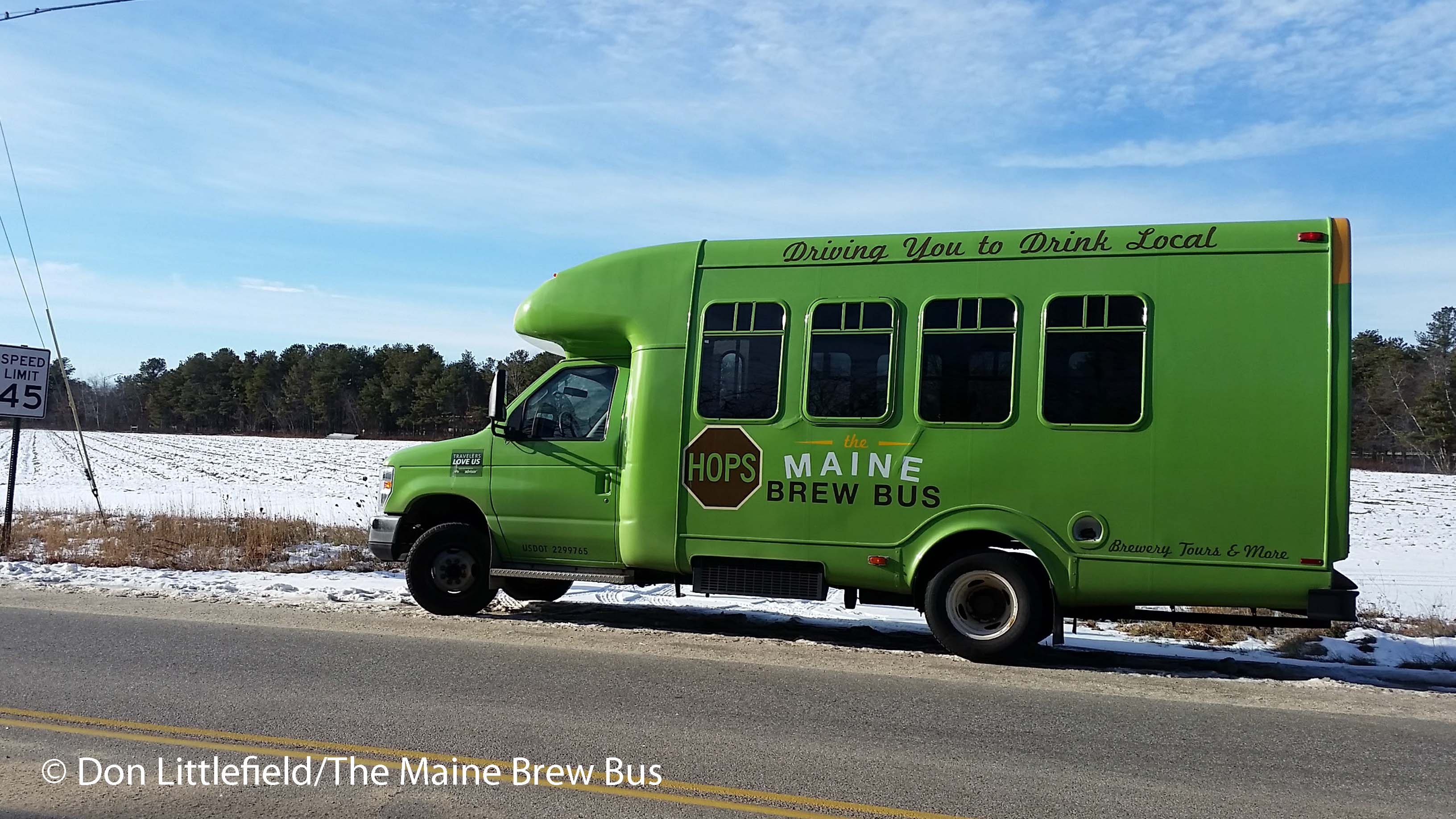
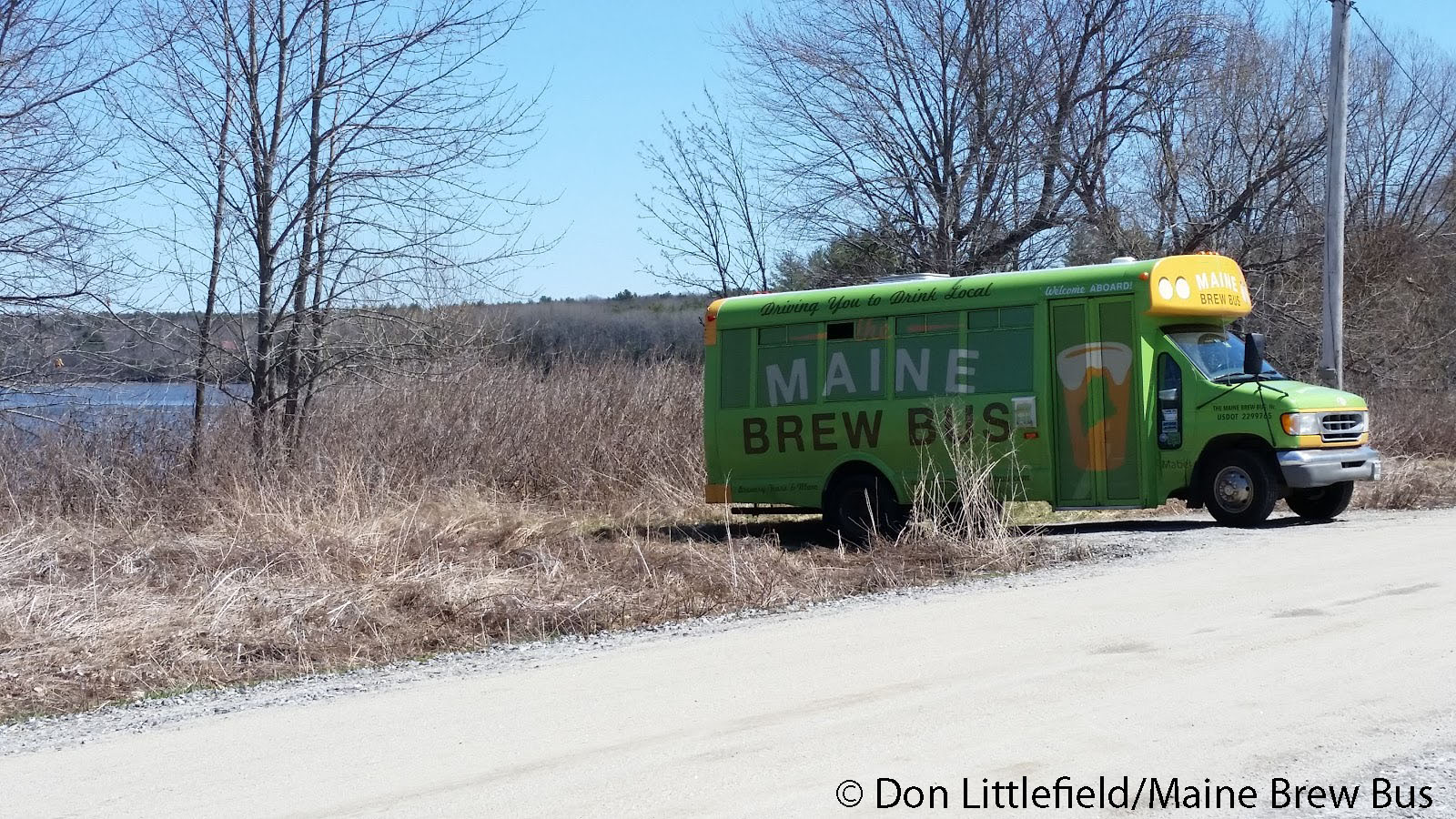
On Sunday, our “Birds on Tap – Roadtrip!” tour headed up to the spring waterfowl hotspot of Merrymeeting Bay. The Spring edition of “Ducks and Draughts” focused on the multitudes of waterbirds that congregate on this productive body of water with our partners at the Maine Brew Bus.

With the abnormally (even by modern standard) early spring, ice was out on ponds, lakes, and rivers to our north well over a month ago. Not surprisingly then, diving ducks were few. Dabbling ducks, however, are still present in great numbers, taking advantage of the food resources (last year’s wild rice and other seeds) in the fine mud of the bay’s extensive flats.

After a quick stop at Bowdoinham’s Mailley Park (Double-crested Cormorants, Common Mergansers, and my first Pied-billed Grebe of the year), we moved over to the famous “Mouth of the Abby,” where the Abagadasset River drains into the bay proper. And it most definitely did not disappoint: About 1,000 American Black Ducks were joined by 200 or so Green-winged Teal, at least 100 Mallards, a goodly tally of 24 Northern Pintails, a dozen more Common Mergansers, 8 Canada Geese, a mere 8 Ring-necked Ducks, and a pair of Wood Ducks. 6 Killdeer also foraged on the flats, and the second Bald Eagle of the day passed right overhead.
At_Abby1At_Abby2
With Jill hard at work taking photos for the paper.

The three Wood Ducks in the small pond on Brown’s Point Road flushed as the bus approached, and they didn’t let us get much closer on foot as we walked back. A Cooper’s Hawk was well seen, however.
BrewBus_BrownsPoint

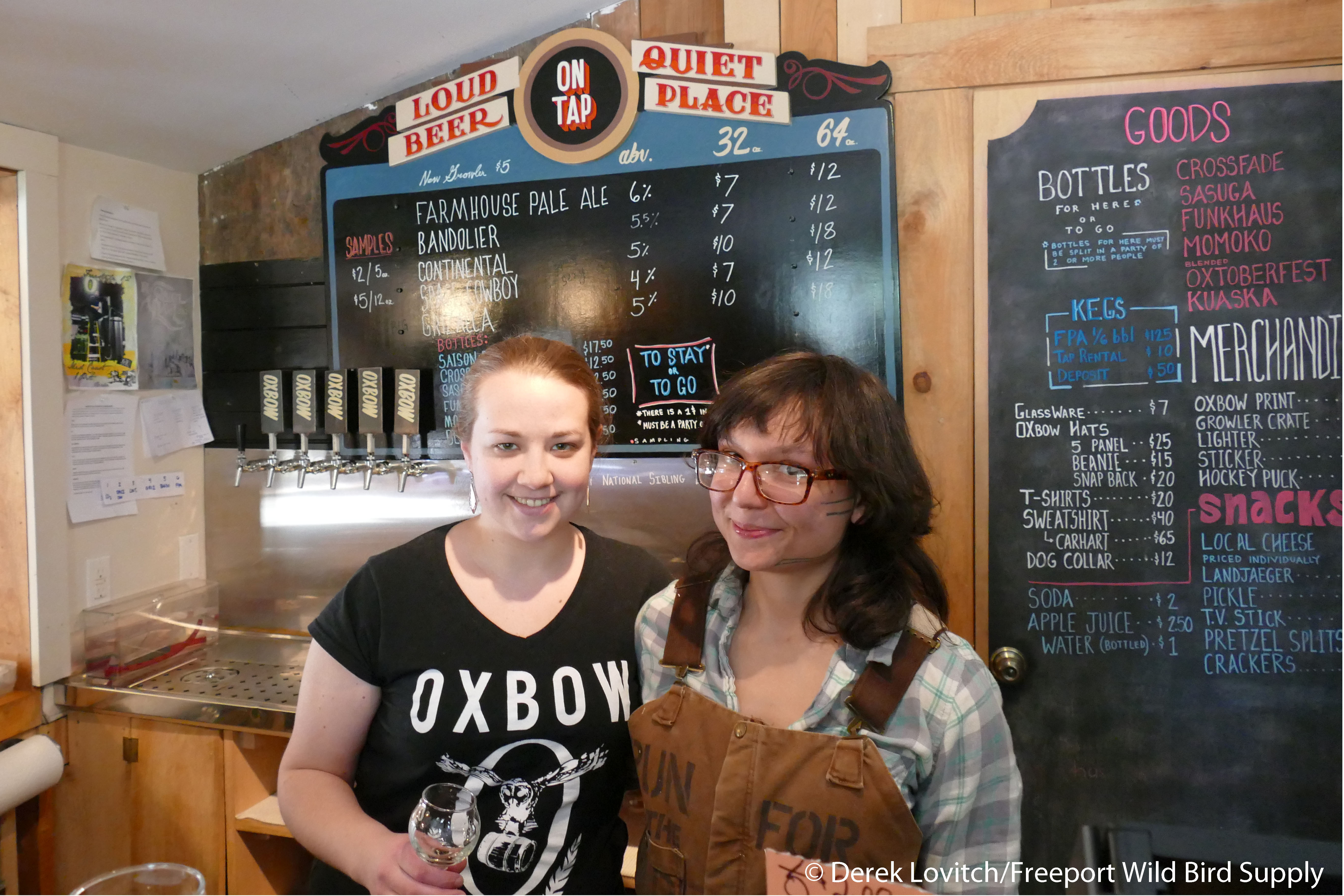
After squiggling cross-country to Newcastle, we pulled into the brewery and rustic tasting room of Oxbow. After a couple of samples – Bandolier, their spring printemps was one of the favorites; it certainly was mine – Rocky took us on a tour of the brewery, and a part of the impressive property.
L1040500_Oxbow1_edited-1L1040521_Oxbow2_edited-1aL1040525_Oxbow3_edited-1L1040537_Oxbow4_edited-1L1040540_Oxbow6_edited-1

Oxbow’s connection to the land is evident, from the sour cherry orchard to the welfare of their livestock (pigs coming soon!). We learned about the philosophy of their beer, and some of the new and creative things they’re working on.
L1040541_Oxbow7_edited-1L1040547_GuineaFowl1,Oxbow_edited-1
Sorry folks, not “countable!”

After another round, it was back on the road, as we weaved our way through scenic rural vistas to Brunswick, where we made a quick stop at Bay Bridge Landing Park. We hoped to add a previously-reported Eurasian Wigeon to our waterfowl list, but the tide was already too high, and the low pass from a Bald Eagle – our 6th or 7th of the day – probably did not help matters! However, a low pass of an Osprey, hovering right overhead, was a nice consolation prize.
L1040558_OSPR,BayBridgeLanding,4-10-16_edited-1

Lively Brewing at Ebenezer’s Brewpub was our second brewery stop of the day. Kelso offered up three samples of some of their representative beers, guiding us through the different styles and some of the intriguing and creative options they play with here.
L1040564_LivelyBrewing1_edited-1L1040567_Lively2_edited-1L1040569_Lively4_edited-1

Whether it’s the birding or the beer-ing portion of these tours, there really is never enough time, so before we all knew it (time really does indeed fly when you are having fun; please excuse the pun) it was time to head back to Freeport and Portland, bringing another fun and successful Birds on tap – Roadtrip! to a close.

So that’s my recap on the trip. But this tour welcomed Meredith Goad, the food writer from the Portland Press Herald on board. You know you have a unique collaboration when you have a food writer wanting write about a birding tour! For Meredith’s perspective, comments from the participants, and more information about this truly unique birds and beer tour concept, check out Meredith’s excellent article in today’s paper!

Needless to say, the rest of the year’s four tours are filling up fast! For more information on those, see the Tours, Events, Programs, and Workshops Page of our website, and check out my blog about all of this year’s journeys. And don’t forget about Birds on Tap – Monhegan! in May.

My beautiful picture

No matter how common they might be, there are few things more stunning than a drake Mallard!

My February Birding Re-Cap (2/16/15)

I know it’s been a while since I’ve blogged, but I sure hope you have taken that to mean that I have not been out birding! Quite the contrary in fact.

Yeah, it’s been bitter cold – we’ve yet to rise above freezing in February! And if you hadn’t noticed, we’ve had quite a bit of snow recently. Of course, strong winds with dangerous windchills (like yesterday) and heavy snow precluded birding on some days -well, except for feeder-watching, which has been truly excellent.
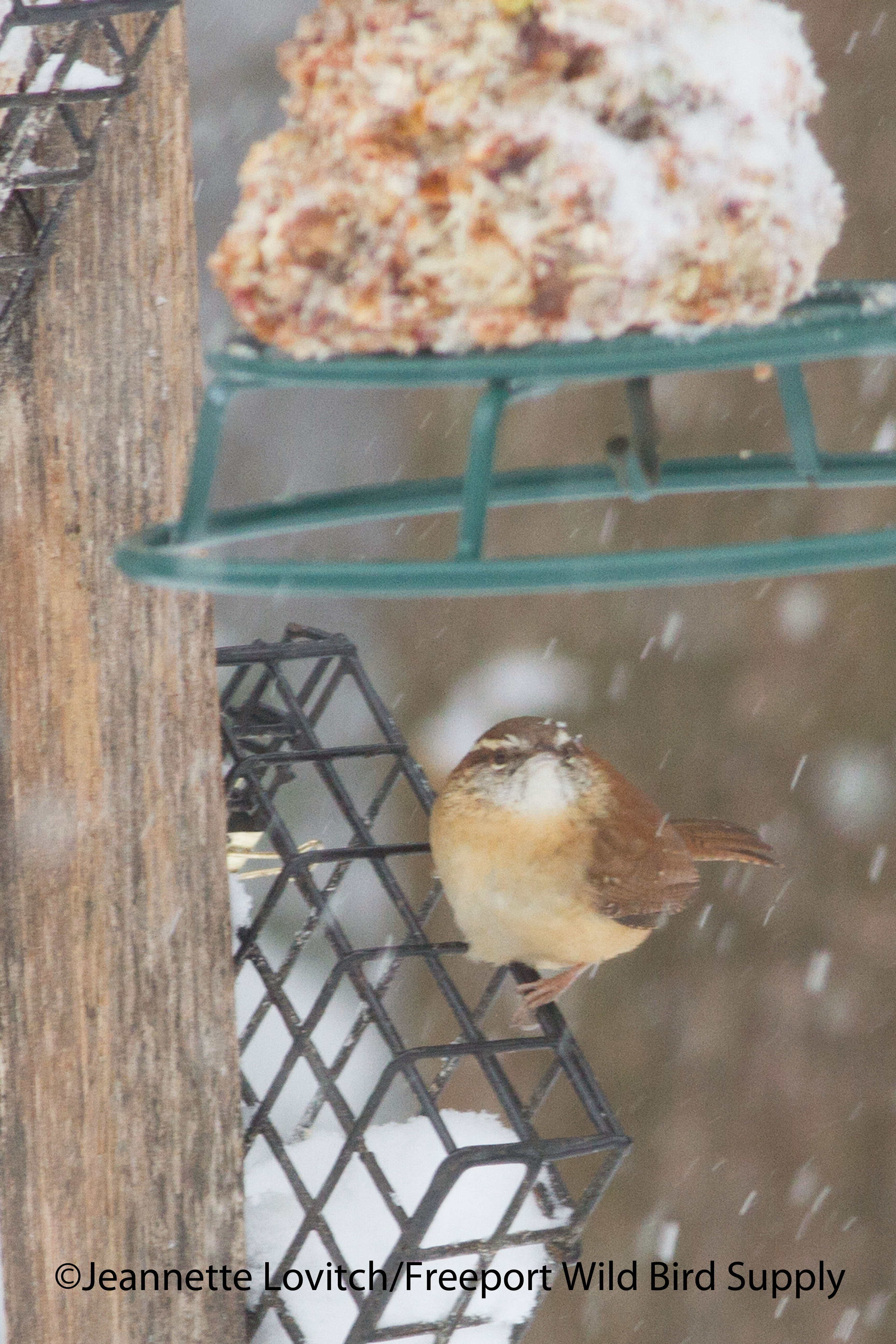
In fact, the feeder-watching has been so good of late, that Saturday’s birdwalk outing was mostly spent watching feeders. 50+ Common Redpolls, Pine Siskins, Purple Finches, a Carolina Wren, and more were enjoyed from a sheltered yard, or from the inside of our house. Yup, we went indoors for the birdwalk this week, defrosting for about a half hour – our feeders are only visible from inside the house, afterall.

And with several snow days and work-from-home writing days of late, I have been enjoying our feeder activity: a large number of American Goldfinches have been joined by varying small numbers of Pine Siskin, Purple Finch, and Common Redpolls. Still waiting for a big flock, however. And the second-ever, and first long-staying, Carolina Wren in the yard has been a treat – we’re pumping him full of mealworms to keep him around, and healthy.
IMG_9420_edited-3

The feeders at the store have been active, as well, although non-goldfinch finch numbers have not been as good or as consistent at home. But, for mid-winter with this much snow on the ground, the diversity has been surprisingly good. (Weekly totals are posted to our store’s website).

Snowy Owls are around, and on 1/31 we finally added one to our all-time Saturday Morning Birdwalk list with a visit to Brunswick Landing: species #236. Meanwhile, our birdwalk to Winslow Park on 2/7 had Barred Owl, the continuing (despite all the ice) over-wintering Dunlin (12), and the 4 Barrow’s Goldeneyes (3 drakes and 1 hen) that had been present.
But the impressive ice cover in Casco Bay has greatly reduced the amount of waterfowl in the immediate vicinity over the last couple of weeks. The end of Winslow remains clear (barely) and the duck concentrations there are quite good, but as of today, however, the much-reduced area of open water now held only two drake Barrow’s Goldeneyes. Meanwhile, the small hole of open water at the base of the Lower Falls in Yarmouth is still somehow still hosting the merganser “hat-trick” (with varying numbers of all three species) as it does every winter – they’re running out of room though!

IMG_4852_MALLs,RiverbankPark,2-10-15_edited-1

IMG_4862_edited-1
Not all ducks are quite as concentrated as these hungry Mallards (with a few American Black Ducks) at Riverbank Park in Westbrook.

While the field trip portion of my Gull Identification Workshop has been postponed for the last two Sundays, gull-watching is pretty good right now, especially in and around Portland Harbor. Hatch Hill Landfill in Augusta on the 12th, however, had only about 100 Herring Gulls – gull numbers are drastically reduced here when there is little open water on the Kennebec River in downtown. The Bath Landfill is hosting a few Iceland and a couple of Glaucous Gulls, however.

Frugivores have been common, with large flocks of American Robins and goodly numbers of Cedar Waxwings stripping all available, palatable fruit. Bohemian Waxwings have been scattered about – although I have yet to catch up with any – but so far Pine Grosbeaks have mostly remained to our north. The rapidly diminishing fruit crop locally will likely concentrate these birds further, or push them southward.
My two best days of birding this month, however, were on Feb 1 and just this past Friday. On the 1st, a snowshoe at the Waterboro Barrens Preserve was awesome. I went there to refind the Red Crossbills that a friend and I had there in December, as my recordings from that visit were inconclusive as to “type.”

Not only did I find 14 crossbills, but many were in full song, and one male was apparently carrying nesting material! A light wind, and my huffing-and-puffing from snowshoeing in waist-deep snow drifts off trail, impeded the clarity of my recordings, unfortunately. However, one of the call types (as analyzed by Matt Young over at Cornell) was suggestive of the Type 8 Red Crossbill from Newfoundland, which has yet to be definitively recorded outside of that province. Intriguing -yup, I need to find time to go back and improve the recording.

The icing on the cake that day was a Hoary Redpoll teased out from a flock of about 40 Commons as they alighted in fed in the Pitch Pines with the crossbills. This was my first Hoary in Maine away from a feeder.

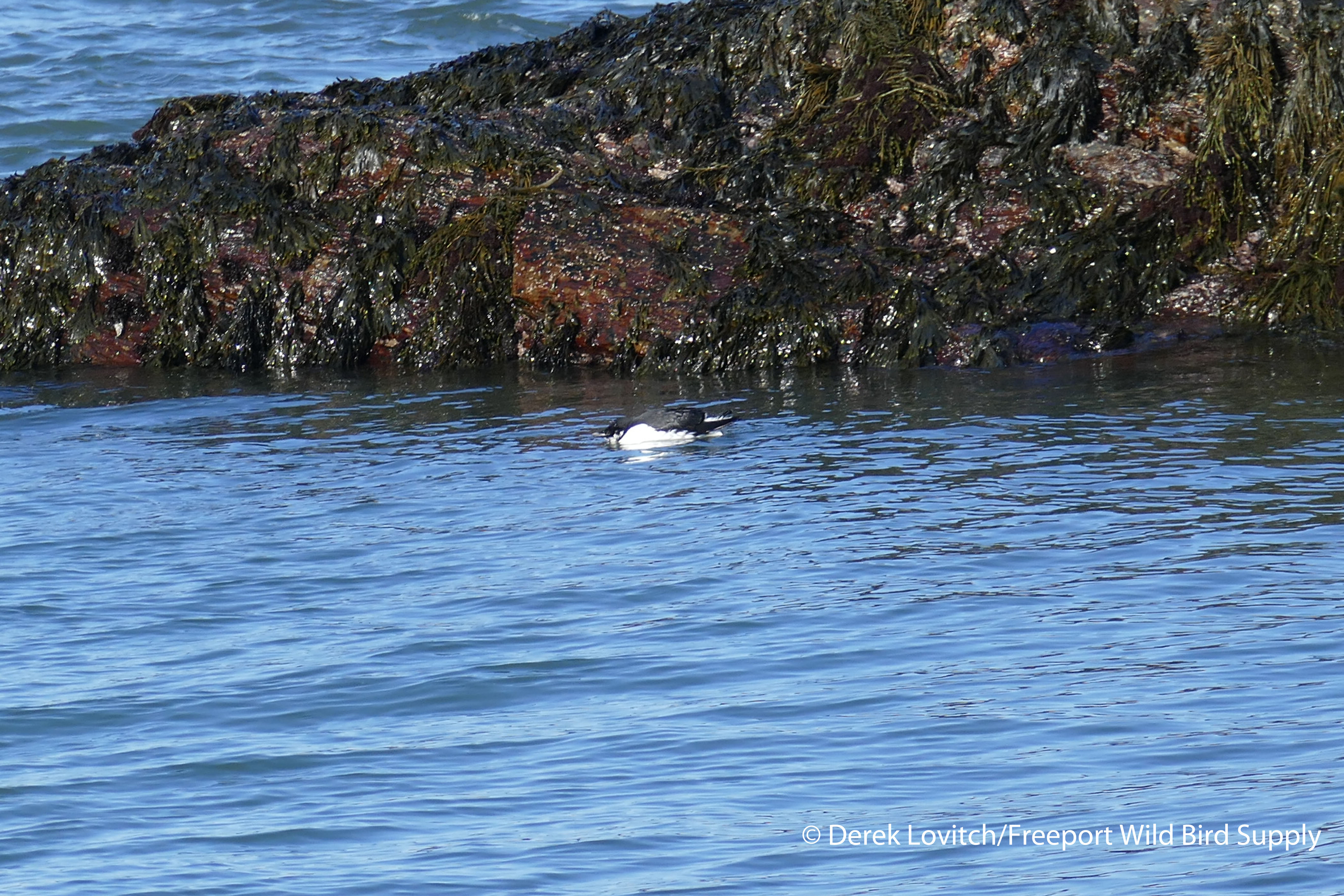
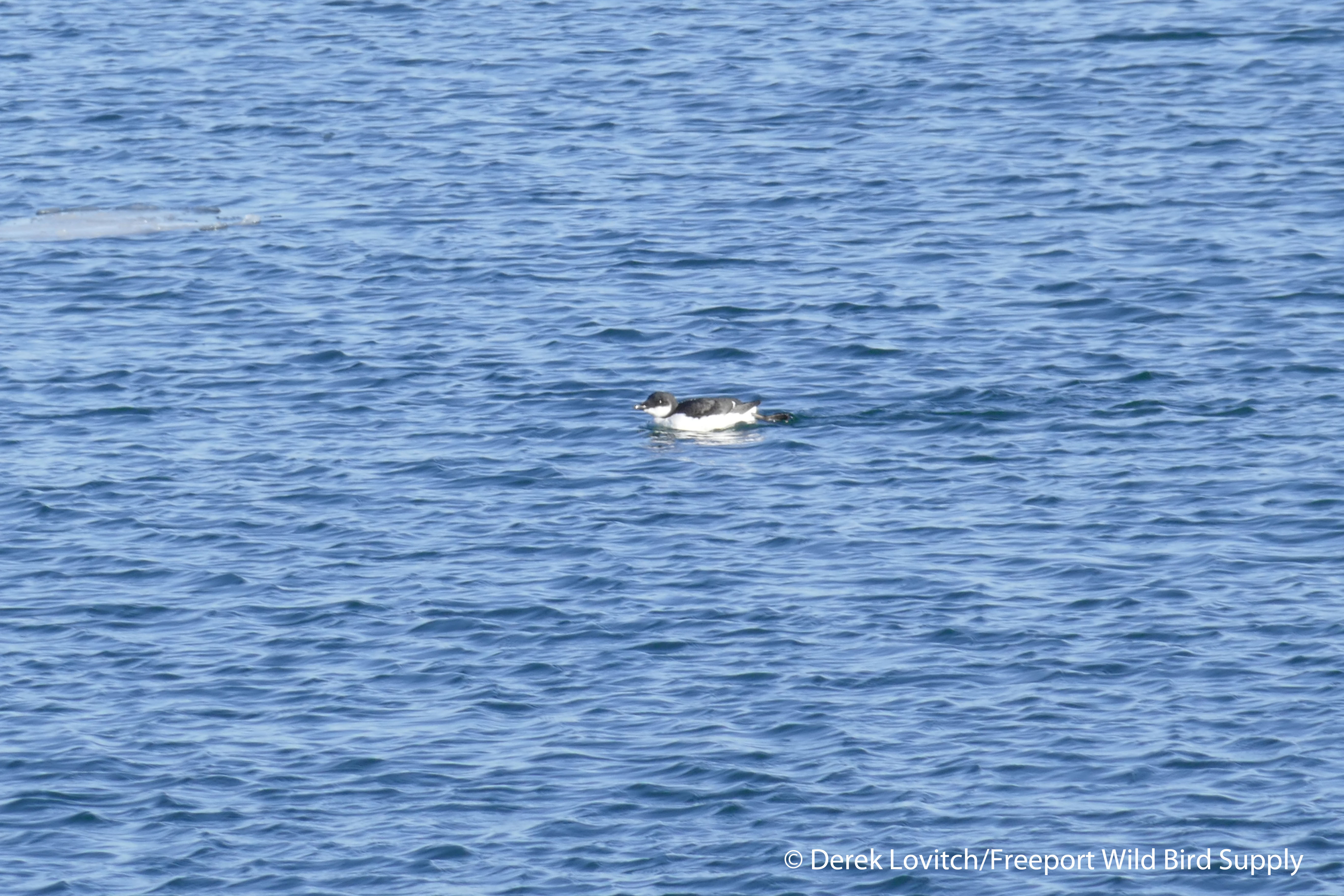
With all of these storms, and two “nice” days of northeasterly winds, I had alcids on my mind as Lois Gerke and I spent the morning in Cape Elizabeth on Friday (2/13). Apparently, my hunch was correct – we scored 4 species of alcids! This is not an easy feet in winter in Maine, although I have hit the total several times (not yet hit 5, however). Black Guillemots were scattered about, as usual, but the fun started with a fly-by Dovekie at Dyer Point.

A continuing (and apparently not very healthy) Thick-billed Murre was at nearby Kettle Cove.
L1010192_TBMU,Kettle_Cove,2-13-15_edited-1

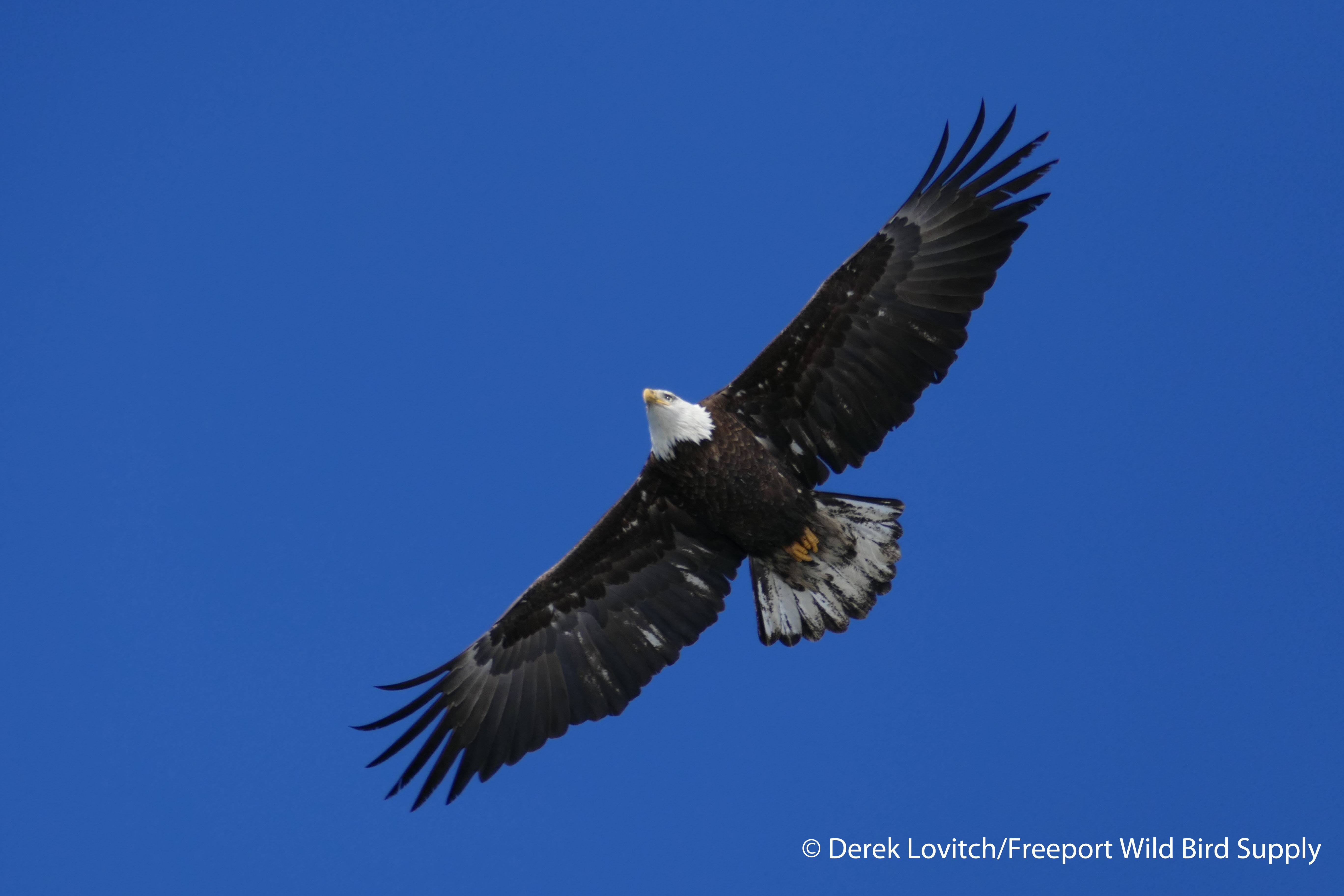
Our presence likely saved its life for now, as a 4th-cycle Bald Eagle had its eye on it – but also, us, apparently. The eagle even landed on the rocks a few inches from the murre, which, instead of diving to escape as a healthy alcid would, was apparently resigned to simply tucking itself into a corner of the rock.
L1010186_BAEA1,4thC,Kettle_Cove,2-13-15_edited-1

L1010189_BAEA2_4thCycle,Kettle_Cove,2-13-15_edited-1

After checking for frugivores at Village Crossings (just a few American Robins on what was left of the crabapple, but we did enjoy a flock of 22 Common Redpolls), we decided to try for a Razorbill for our fourth alcid of the day. Lois’s time was limited, so instead of heading back down to Dyer Point (where the wind was also brutal), we rolled the dice and tried Portland Head Light. And sure enough, a Razorbill was offshore, feeding at the mouth of Casco Bay on the changing tide!

After lunch, I decided to procrastinate a little longer and slowly bird my way to the store, checking for open water on the Falmouth Foreside coastline. Although I was looking for duck concentrations, once again, alcids stole the show: a Thick-billed Murre flew into the cove on the south side of the Mackworth Island causeway. Perfectly strong and healthy, this bird was likely following some small fish into the bay on the incoming tide.

Even more surprising was another Thick-billed Murre in Falmouth, even further up the bay off of the Town Landing. This bird also looked fine, swimming steadily upstream with the tide, “snorkeling” to look for food.
L1010236_TBMU,FalmouthTownLanding,2-13-15_edited-1

L1010218_TBMU_wBUFF,FalmouthTownLanding,2-13-15_edited-1
These Buffleheads looked just as surprised as I was.

So yeah, a 4-alcid day, with three different Thick-billed Murres in quite a day, and probably one of my best birding days of the winter. It just goes to show you what winter birding can bring in Maine, even during an impressive deep-freeze. So yeah, I’ll be out birding as much as I can, and signs of spring are certainly in the air: woodpeckers are drumming actively, Tufted Titmice and White-breasted Nuthatches are singing frequently now, and Great Horned Owls are already nesting. Bald Eagles are probably starting some house-keeping, Common Ravens are reaffirming territories, and in only a month, the Bradbury Mountain Spring Hawkwatch gets underway!

Until then, it’s finches, ducks, white-winged gulls, frugivores, and alcids. I’ll be out in the field, and I hope you will be too. (And don’t forget, you can check out what I have been seeing in near-daily posts to our store’s Facebook page).