Tag Archives: Maine

This Week’s Highlights: January 13-17, 2023.

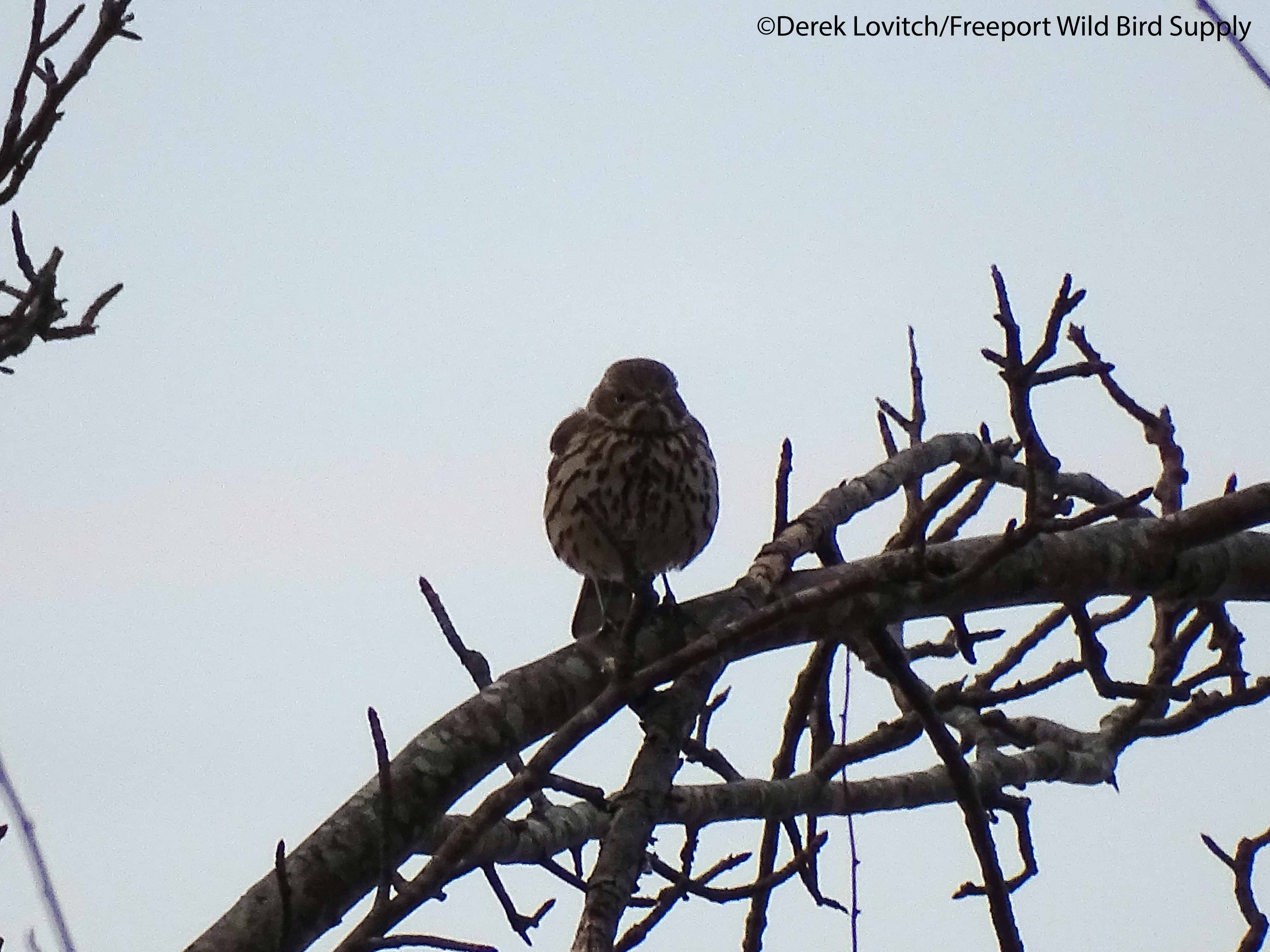
A remarkable bird for Maine, let alone in under-birded (away from Sabattus Pond anyway) Androscoggin County, I was privileged to be able to visit this Harris’s Sparrow on private property in Turner on the 13th, the day after we returned from vacation. It was most cooperative, being constantly in view for the 35 minutes I was there. Unfortunately, it was a dark and dreary morning, so my photos leave something to be desired!

A few observations of note over the past five days as I tried to squeeze in as much birding as I could before I undergo shoulder surgery included the following. Even if I missed the Livermore Falls Townsend’s Solitaire twice (darn it), it was a very productive week, headlined by my second Harris’s Sparrow in Maine (and one of my favorite sparrows, too!).

  • 1 female Barrow’s Goldeneye, Bernard Lown Peace Bridge, Lewiston/Auburn, 1/13.
  • 1 adult Iceland Gull, North River Road boat launch, Auburn, 1/13.
  • 1 continuing HARRIS’S SPARROW (present since 1/11), private property in Turner, 1/13 (photo above).
  • 1 Pine Grosbeak (first of season), Hillman Ferry Road, Livermore Falls, 1/13 (did not find the Townsend’s Solitaire that day, unfortunately).
  • 2 drake BARROW’S GOLDENEYES, between Winslow Park and the Harraseekett Yacht Club, South Freeport, 1/14 (with Saturday Morning Birdwalk group).
  • 8 Black-legged Kittiwakes, Short Sands Beach, York, 1/15 (with Down East Adventures Winter Waterbirds Workshop group).
  • 1 adult Iceland Gull, The Nubble, York, 1/15 (with Down East Adventures Winter Waterbirds Workshop group).
  • 374!!! BOHEMIAN WAXWINGS, Pearl Road, Turner, 1/16 (with Jeannette). Photo below.
  • 1 female Green-winged Teal and 1 1st-winter Iceland Gull, Mill Creek Cove and Park, South Portland, 1/17.

A very small portion of the 374 Bohemian Waxwings that Jeannette and I counted on Monday in Turner. It was a big week for Androscoggin County!

This Week’s Highlights: December 31, 2022 to January 2, 2023.

It took over a month, but I finally made time to look for the Townsend’s Solitaire in Wells on the 2nd. Quality time with it was a worthy consolation for just missing the Northern Lapwing in Arundel that departed this morning.

A few observations of note over the past three days before we head off on vacation included the following:

  • 1 drake BARROW’S GOLDENEYE (first of season locally) and 19 DUNLIN, Winslow Park, Freeport, 12/31 (with Saturday Morning Birdwalk group).
  • 40 continuing American Coots, 6 Ring-necked Ducks, 14 Lesser Scaup, 10 Greater Scaup, etc, Chickawaukie Pond, Rockland (with Paul Dioron, Kristen Lindquist, and Jeannette).
  • 1 continuing Killdeer, Arundel Road, Kennebunkport, 1/2. I missed the Northern Lapwing by 28 minutes.
  • 1 continuing TOWNSEND’S SOLITAIRE, Wells Reserve at Laudholm Farm, 1/2. After about 45 minutes, heard calling from marsh edge north of viewing platform on Laird-Norton Trail. Called as Eastern Bluebirds arrived, often chasing or at least following them. Followed them right through viewing platform and alighted in small tree only about 30 feet away. Unfortunately, it was backlit for photos, but great look. Vocal and conspicuous for 15-20 minutes until bluebirds flew out across marsh. Photo above.
  • And as the calendar changes, it’s time for my annual Predictions Blog where I attempt to forecast the next 25 birds to occur in Maine, and for my own list:

2023 Next Maine Birds Predictions Blog.

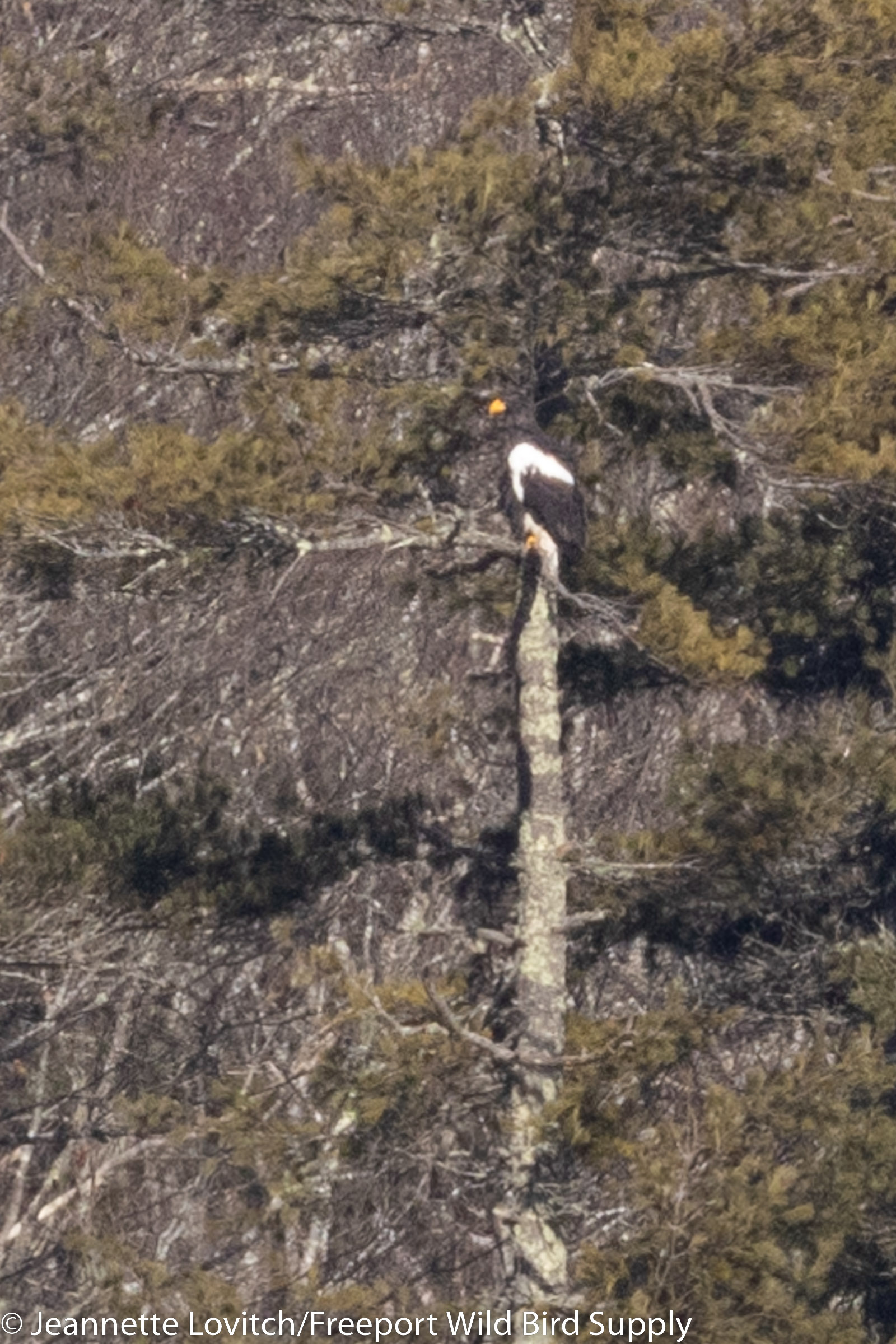
OK, so it was technically first seen in 2021, but Steller’s Sea Eagle was the bird of the year. Or was it?  It’s suffice to say, however, that my only photos of it from 2022 were not my photos of the year! Here it is in Georgetown on February 18th.

It’s once again time for my annual Predictions Blog, where I view into my crystal binoculars and attempt to forecast some of the “new” birds to grace the State of Maine – and then my own personal state list – in the coming year.

Well, well, well, what a year of birding 2022 was here in Maine!  Four new species were added to the all-time state list this season, and one of them was a complete shock. Let’s take a look at last year’s prognostications and see how I did. 

Barolo Shearwater was added to the state list based on a 2021 photo by Doug Gochfeld from well offshore in the Northeast Channel, according to the Maine Bird Records Committee.  That was #21 on my predictions list for Maine’s next birds.

A Masked Booby (on my honorable mentions list) at Mount Desert Rock in August was perhaps a sign of things to come – it or another may have been photographed off Monhegan in late September. 

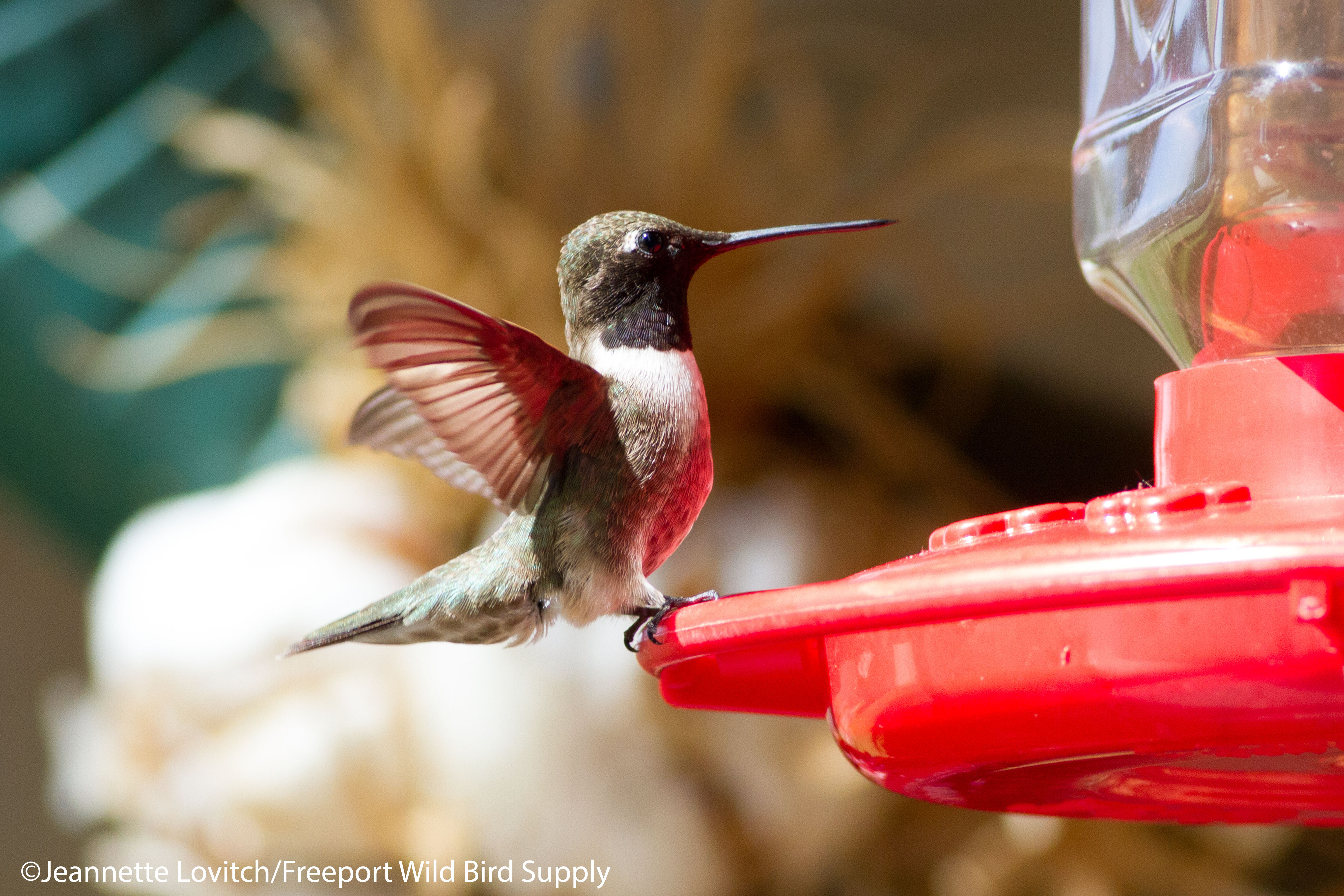
Also on my honorable mention list was Broad-tailed Hummingbird that graced a Freeport yard from November 5th through December 23rd.  The details and the full story can be found on my blog, here.  One could make the argument that this should have made the cut, as it has been long-overdue to be identified in New England.

Since the now-world-famous Steller’s Sea Eagle arrived at the tail end of 2021, it was not technically a new record in 2022. However, just about everyone saw it for the first time this year, and 2022 was definitely the year of the Steller’s Sea Eagle.

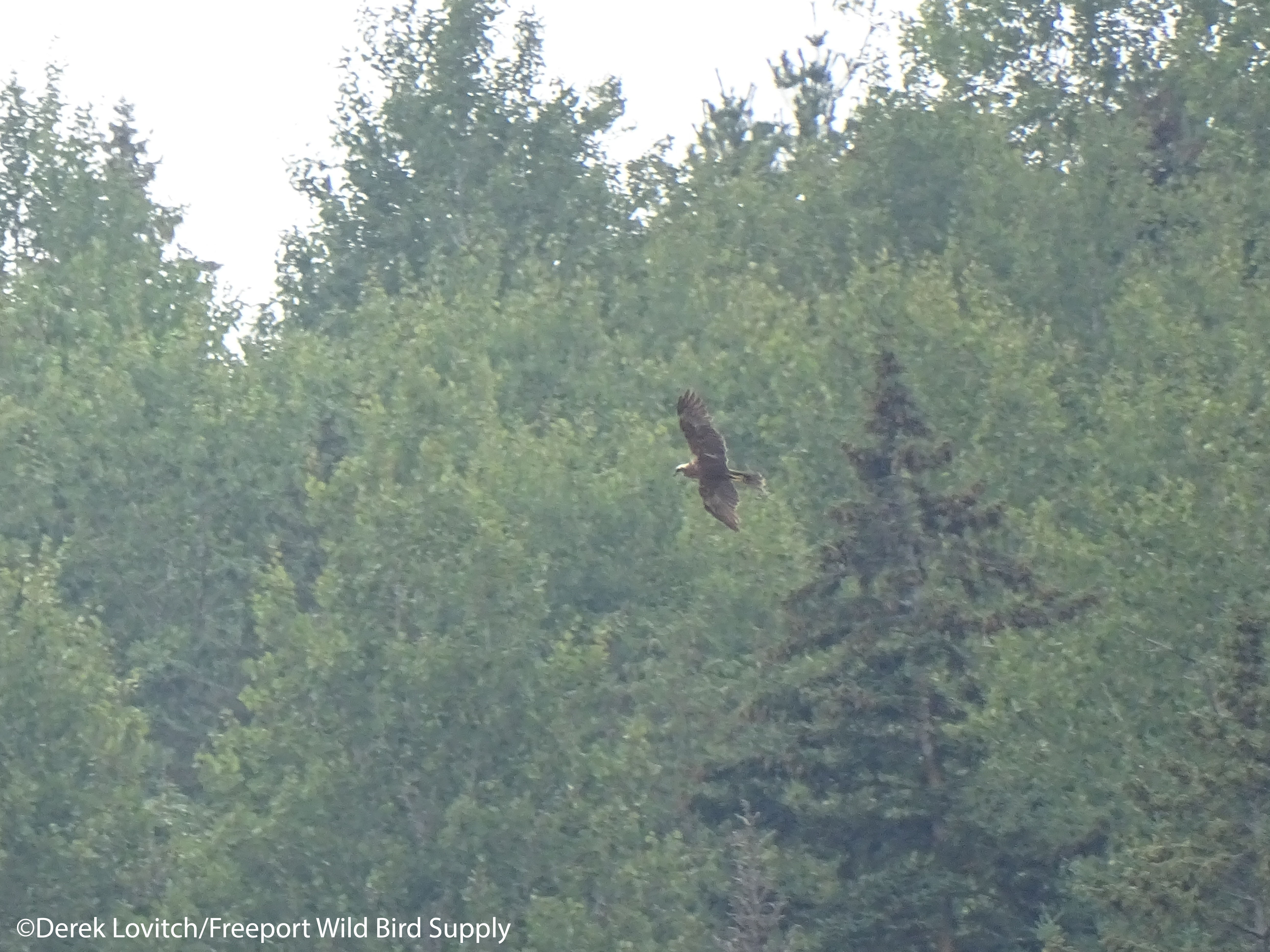
Shockingly, however, there was some debate about whether or not that was the bird, or even the raptor, of the year! Seriously. Since Steller’s Sea Eagle have bred on the continent and have been seen on several occasions in Alaska (and then “our bird” which was seen from Texas to Canada), one could argue that the raptor of the year was actually the Eurasian Marsh-Harrier that was discovered on North Haven on 8/25 and then found the next day at Weskeag Marsh in Thomaston (where it remained for less than 3 days). This was only the second record ever for the entire continent! The same bird resurfaced at the Troy Meadows in northern New Jersey in early November, but this is an incredible bird for North America.  However, I would argue that the worldwide rarity of the Steller’s (only about 4,000 individuals) trumps the marsh-harrier, as it is quite common through much of the Old World. (These are the things birders like to argue about over pints of beer)

And no, the Eurasian Marsh-Harrier was most definitely not on my predictions list!

So with four new records only one of which was on my list, it’s obvious that predicting vagrancy is getting even more challenging. Climate change, land-use changes, rising and falling populations, perhaps even pesticide contamination or electromagnetic pollution is all conspiring to put odd birds in weird places. And, there are more birders looking, and much better communication. 

While I would love to be “right” about my forecasts, we can now truly expect the unexpected, and one could argue almost any bird capable of flight (or long-distance swimming) could become Maine’s latest big twitch.  But, if only for tradition’s sake, I’ll take a stab at my Next 25 Birds for Maine forecast:

  • 1) Neotropical Cormorant
  • 2) Black-chinned Hummingbird
  • 3) California Gull
  • 4) Spotted Towhee
  • 5) Hammond’s Flycatcher
  • 6) Bermuda Petrel
  • 7) Graylag Goose
  • 8) Little Stint
  • 9) Audubon’s Shearwater
  • 10) Common Shelduck
  • 11) Anna’s Hummingbird
  • 12) “Western” Flycatcher (Pacific-slope/Cordilleran)
  • 13) Common Ground-Dove
  • 14) Allen’s Hummingbird
  • 15) Spotted Redshank
  • 16) Limpkin
  • 17) Ross’s Gull
  • 18) Black-capped Petrel
  • 19) Lesser Nighthawk
  • 20) Elegant Tern
  • 21) Heerman’s Gull
  • 22) Painted Redstart
  • 23) Hooded Oriole
  • 24) Black-tailed Gull
  • 25) Common Scoter

A Black-chinned Hummingbird is overdue for Maine, but unless it’s an adult male with his purple throat in good light, it’s likely going to take banding and measurements to identify (like this year’s Broad-tailed).

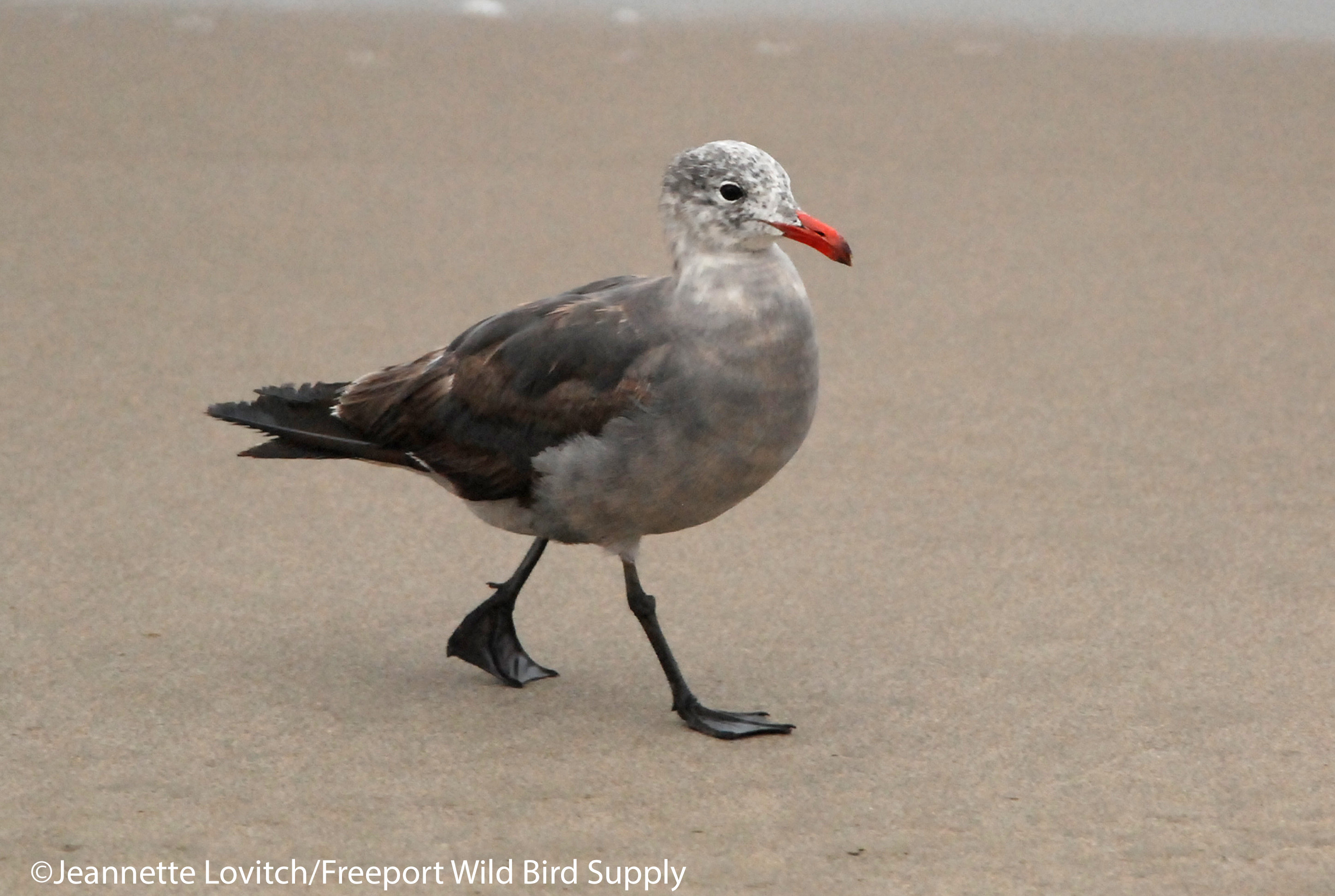
I’ve added Heerman’s Gull to the list thanks to a growing number of Eastern Seaboard records – most of which are likely the same individual moving up and down the coast, although it seems like a longshot to make it this far north. Limpkin also debuts after an incredible irruption in 2022 with extralimital records from as far north as Michigan and New York. Was this a one-off due to some drastic change in water or food levels in its limit range in Florida, or is this another sign of the “new normal” of tropical birds venturing northward? To make room, I’ve dropped Kelp Gull out of the Top 25 for now.

Heerman’s Gull, San Diego, CA, August 2011.

Personally, I added an incredible six birds to my own state list this year. I even predicted two of them: The flock of Black-bellied Whistling-Ducks in Camden that I twitched on 5/2 were #7 on my personal next list, while the flock of White Ibis in the Webhannet Marsh in Wells on 8/11 were #14 on my list. 

Black-bellied Whistling Ducks.

The Sage Thrasher at Gilsland Farm was the first in line on my honorable mentions list, as it was long overdue for Maine to get it’s second.  Likewise, the two Henslow’s Sparrows in Brunswick (7/6) and the now-famous Freeport Broad-tailed Hummingbird were both on my honorable mentions list, but had not cracked the top 25 just yet.

Sage Thrasher

Henslow’s Sparrow

Broad-tailed Hummingbird

Out of the blue was the aforementioned Eurasian Marsh-Harrier, which I happily got to see in Weskeag Marsh on 8/26. As Maine stakes its claim as the Raptor Rarity Capital of North America, I would not have wanted to miss this shocker.

As usual, I missed plenty of rarities too, although I was unable to chase many of them for various reasons (6 for 6 on chases this year is incredible…although it does help make up for all the times I did not see the Steller’s Sea Eagle!). American White Pelican (Grand Isle, 7/5; #1) and Franklin’s Gull (Sabattus Pond, 5/22; #3) are officially nemesis birds now. Other unchaseable potential state birds included Common Gull (Eastport, 2/17-23; honorable mention), Sandwich Tern (Mount Desert Rock, 7/6; honorable mention), and Western Wood-Pewee (banded at Riverpoint, Falmouth, 9/7; honorable mention).

As I approach the 400 species milestone, it’s not getting any easier, although I should hit the mark this year, based on current vagrancy trends!  That’s my first prediction. As for what bird it will be, I believe it will be one of these 25. Although, nowadays, anything seems possible!

  1. American White Pelican
  2. Franklin’s Gull
  3. Neotropic Cormorant
  4. Brown Pelican
  5. California Gull
  6. Brown Booby
  7. Slaty-backed Gull
  8. Boreal Owl
  9. Calliope Hummingbird
  10. Common Ringed Plover
  11. Graylag Goose
  12. Cerulean Warbler
  13. Gull-billed Tern
  14. Hammond’s Flycatcher
  15. Spotted Towhee
  16. Pacific Golden-Plover
  17. Wood Stork
  18. Black-chinned Hummingbird
  19. Brewer’s Blackbird
  20. Yellow Rail
  21. Ross’s Gull
  22. Virginia’s Warbler
  23. Common Shelduck
  24. Common Gull
  25. Heerman’s Gull

Brown Pelican records are increasing in the northeast. It’s just a matter of time for one to fly by me! San Diego, CA, August 2011.

This Week’s Highlights: December 3 – 9, 2022

The still-unfrozen waters of Sabattus Pond were fantastic this week. One of the highlights was this continuing drake Canvasback.

So-called “half-hardies” dominated my highlights away from a still-productive Sabattus Pond, as if often the case this time of year.

  • 1 adult Iceland Gull, Yarmouth Town Landing, 12/3 (with Saturday Morning Birdwalk group).
  • Sabattus Pond, 12/5: 1 continuing immature male EURASIAN WIGEON, 1 continuing drake CANVASBACK, 1 PIED-BILLED GREBE, 1 1st winter Iceland Gull, ~350 Ruddy Ducks, 3 Northern Pintails, 2 Ring-necked Ducks, 1 Horned Grebe, etc.  Full waterbird list here.
  • 1 Winter Wren, 1 Hermit Thrush, 1 Northern Flicker, and 3 Red Crossbills, Bailey Island, Harpswell, 12/5.
  • 1 Evening Grosbeak, our yard in Durham, 12/6.
  • 1 Fox Sparrow, feeders here at the store, 12/6-7.
  • 1 Gray Catbird, 3 Ruby-crowned Kinglets, and 1 Swamp Sparrow, Saco Riverwalk, Saco, 12/9 (with Allison Anholt).

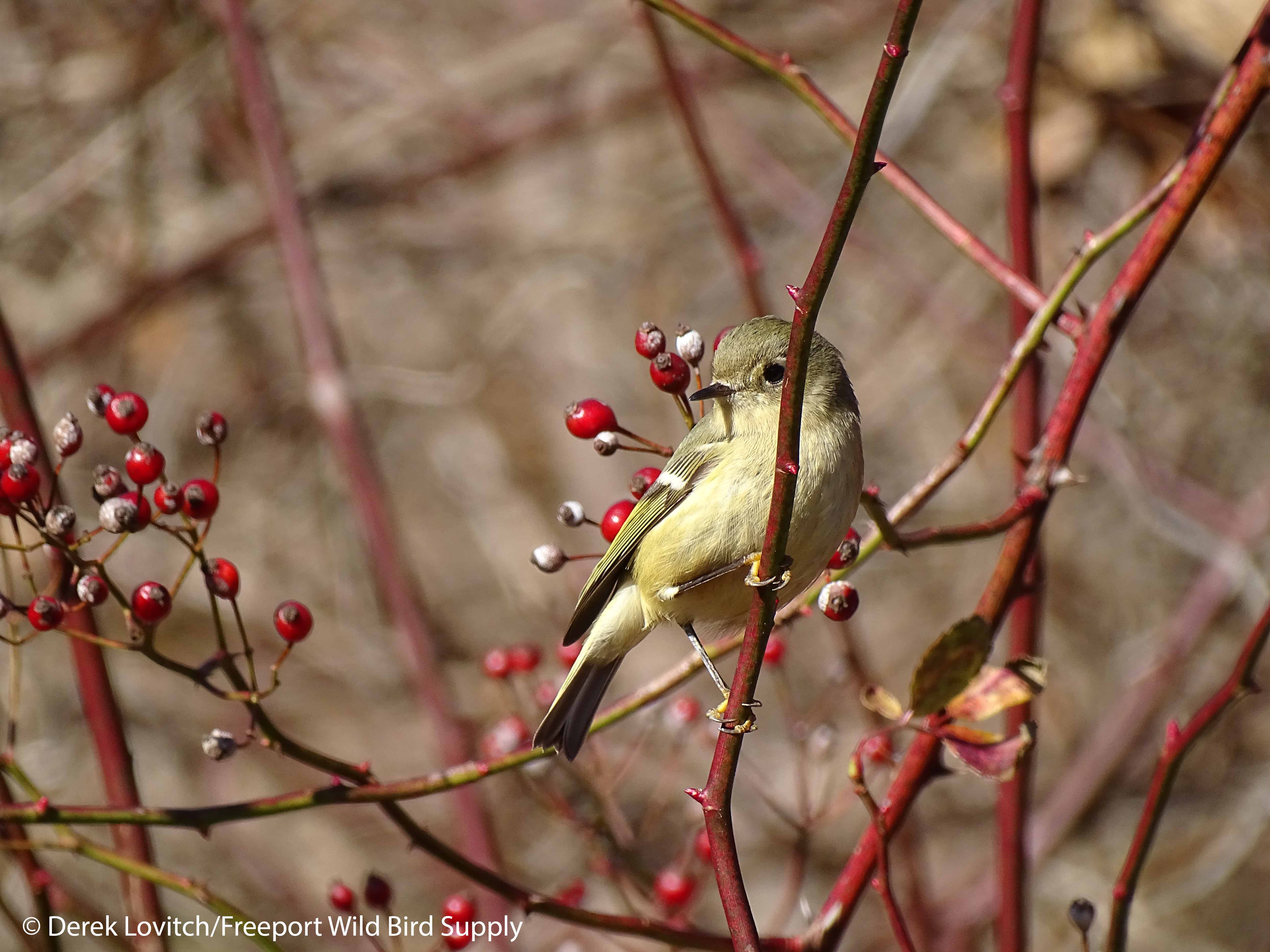
I take a lot of photos this time of year of birds with Multiflora Rose stems in front of their faces. Like this – and every other – Ruby-crowned Kinglet shot from the Saco Riverwalk on 12/9.

This Week’s Highlights: November 19 – November 25, 2022

I had a nice photo session with the late-season shorebirds at Biddeford Pool Beach on the 22nd, including this Dunlin – one of 54 present that day.

With the colder weather, we’re starting to see “late/lingering” migrants concentrating at the coast, and a smattering of rarities around the state. My observations of note over the past seven days included the following:

  •  1 Red Crossbill, Highland Road, Brunswick, 11/19 (with Saturday Morning Birdwalk group).
  • 2 Rusty Blackbirds, our feeder in Durham, 11/19.
  • 391 Ruddy Ducks, 1 White-winged Scoter, 150 distant scaup, etc, Sabattus Pond, Sabattus, 11/21 (with Jeannette).
  • 1 ORANGE-CROWNED WARBLER, 1 Field Sparrow, 2 Wood Ducks, etc, Saco Riverwalk, 11/22.
  • 1 YELLOW-BREASTED CHAT, South Point Preserve, Biddeford Pool, 11/22.
  • 1 Gray Catbird, 1 Chipping Sparrow, 1 Black-bellied Plover, 2 Ruddy Turnstones, etc, etc, Biddeford Pool environs, 11/22.
  • 1 Yellow-bellied Sapsucker, here at the store, 11/23.
  • 1 Yellow-bellied Sapsucker, Wolfe’s Neck Center, 11/25.

This Week’s Highlights: November 11 – November 18, 2022

I found this presumptive BLACK-HEADED X RING-BILLED GULL HYBRID along Greely Road in Cumberland during steady rain in the late morning of the 13th. It looks very similar to the individual of this hybrid pair that wintered on the Falmouth waterfront for at least two years, 2019-20, and 2020-21. Could it be the same bird with a little more black on the head due to the earlier date?

Rarity season is upon us, but most of my birding this week was in and around our yard. Not that that wasn’t extremely enjoyable though!  A few forays afield did not produce those hoped-for November “Megas,” but I did see a few things of note over the past eight days including:

  • Evening Grosbeaks have been present daily at our feeders in Durham all week. 7 on 11/11 peaked at 32 on 11/12 (with Saturday Morning Birdwalk group).
  • 1 Lapland Longspur (FOF), over our yard in Durham, 11/11.
  • 1 RUSTY BLACKBIRD, our feeders in Durham, 11/12 (with Saturday Morning Birdwalk group).
  • 1 first-winter Iceland Gull (FOF), Thornhurst Farm, 11/13.
  • 1 PUTATIVE BLACK-HEADED X RING-BILLED GULL HYBIRD, Greely Road, Cumberland, 11/13. First distant observation in driving rain suggested a much, much darker head and mantle, but finally relocated closer to the road. Joined by Nick Lund and Reed and Laura Robinson. 
  • Red Crossbills have been regular fly-overs in our Durham yard this week, but 10 were feeding on Eastern Hemlocks on 11/17.
  • 3 continuing CANVASBACKS, 398 Ruddy Ducks, 320 mixed scaup (too far to reliably sort through, 1 Evening Grosbeak, 1 Winter Wren, etc, etc, Sabattus Pond, Sabattus, 11/17.

This Week’s Highlights: October 15 -21, 2022

I spent a lot of time looking at sparrows this week, as I love to do in October. This snappy immature White-crowned Sparrow was at Wolfe’s Neck Center on the 16th.

My observations of note over the past seven days included the following:

  • 1 continuing HUDSONIAN GODWIT, Wharton Point, Brunswick, 10/15 (with Saturday Morning Birdwalk group; the 247th all-time Saturday Morning Birdwalk species!). Observed at closer range later from the Maquoit Bay Conservation Land.
  • 1 Indigo Bunting, Wolfe’s Neck Center, Freeport, 10/16.
  • Incredibly morning at Bailey Island, Harpswell with Jeannette on 10/17: 1 ORANGE-CROWNED WARBLER, 1 CAPE MAY WARBLER, 1 Blue-headed Vireo, 1 Red-eyed Vireo.  6 total species of warblers; 7 species of sparrows. 400+ Dark-eyed Juncos, 200+ Yellow-rumped Warblers, 150+ White-throated Sparrows, 150+ Song Sparrows, etc, etc.
  • 1 ORANGE-CROWNED WARBLER, our yard in Durham, 10/17.
  • 1 Red Crossbill, our yard in Durham, 10/19.
  • 353 Ruddy Ducks, 1 Spotted Sandpiper, 61 Lesser Scaup, 18 Greater Scaup, etc, Sabattus Pond, Sabattus, 10/20.
  • 2 EVENING GROSBEAKS, 1 Common Yellowthroat, 50+ Swamp Sparrows, etc, Old Town House Park, North Yarmouth, 10/21.
I whiffed on phone-binning an Orange-crowned Warbler at Bailey Island on the 17th as I apparently followed the wrong bird. Turned out the other bird was this tardy Blue-headed Vireo, however.

This Week’s Highlights: October 8 -14, 2022

Northern Fulmar on our ½ day Pelagic on Tuesday.

My birding levels were closer to par for me this week, albeit concentrated on building our new yard list! The last two group tours of the year – both by boat – were conducted this week, with overall great success. It was also nice to have a few mornings to get some casual birding in before work. This is my favorite time of the birding year, afterall!

  • 1 Marsh Wren (in a dry patch of burdock!), our yard in Durham, 10/8.
  • 1 Bobolink, Wolfe’s Neck Center, Freeport, 10/8 (with Saturday Morning Birdwalk group).
  • 1 Long-tailed Duck (first of fall), 3 Snowy Egrets, 115 Surf Scoters, etc, Birds of Casco Bay Boat Tour, 10/9.
  • 1 Indigo Bunting in a very light morning flight at Sandy Point, Cousin’s Island, Yarmouth, 10/10 (total – 87 migrants).
  • ½ Day Pelagic out of Boothbay Harbor on 10/11: 1 Common Murre, 1 Parasitic Jaeger, 1 Pomarine Jaeger, 3 Northern Fulmars, 1 Lesser Black-backed Gull, etc.  Full trip report with photos and annotated checklist, along with my Stercorariidae mea culpa can be seen here.
  • Sabattus Pond, Sabattus, 10/13: 158 RUDDY DUCKS, 84 Lesser Scaup, 56 Greater Scaup, 2 American Wigeon, 1 Spotted Sandpiper, 1 Ring-necked Duck, etc.

Boothbay Mini-Pelagic Trip Report, 10/11/22

Northern Fulmar

Our third and final ½ Day Pelagic with our partners Cap’n Fish’s cruises out of Boothbay Harbor took place on a glorious fall day on Tuesday, October 11th.

OK, let’s get right down to business: it was NOT a South Polar Skua. This is not the first time a mea culpa was issued over a Stercorariidae. It won’t be the last. Certainly not my last, anyway.  But yeah, I got this one wrong, and I apologize.

We spotted a large, dark, and very heavy-looking skua/jaeger in flight parallel to the boat. Captain Nick did an exceptional job of staying with it, staying parallel to it, affording incredible views for an unusually long amount of time.  We were traveling at 18.2 knots, and the bird was slowly taking the lead. When it looked like it was thinking of landing, I had Nick angle slightly away so as not to make the bird concerned. It worked! It landed, we slowly worked our way up to it, and almost circled it before it took off.  High-fives were exchanged. Smiles reigned. We got a skua!  Big, barrel-chested, thick dark bill, and short tail. The very cold tones and extensive molt strongly suggested South Polar Skua. It would be a life bird for many.

I was convinced in the field, and I was convinced when I got off the boat. Everyone I talked to was convinced too. Other than a small feeling that the bill looked a little long, and the bird looked a little, well, not-menacing on the water, I had little doubt. But as I announce on all of my pelagics, all jaeger and skua identifications are provisional until I can review photographs.

The doubt -err, fear – began in the evening, as I looked over Jeannette’s shoulder as she began to sort photos. Starting with the skua, I wanted to make sure it was in fact a South Polar, and not a Great. That was my only real concern.  But then I saw her pics. I was observing through 8x binoculars, she was shooting at 400mm.  Details would likely emerge that I could not see in the field.  And I didn’t like those details.

That rear end did look a little tapered. The bill did seem a little thin. And wait, is that barring in the underwings? Uh-oh. Are we sure? What about the location of white within the outer primaries? Is it too narrow? And boy, it looks cuter on the water than I expected. And that bill does look two-toned and kinda long.

Photos were sent to a friend. The shadow of doubt cast over the room. He immediately said “Pomarine.”  But we discussed, and he left it off as “but I could buy this as a skua.” Another friend “That’s a skua.”  “I’m flip-flopping…maybe a hint of barring on the undertail and underwing coverts, but it looks so skua-like…the molt pattern is identical to one I saw a couple of weeks ago.”  Back and forth with these three friends continued. I posted to the Skuas and Jaegers of the World Facebook page; “Definitely a skua…” said the first commentor. Books and papers were referenced.

More photos were received.  And discussion continued.  Some photos showed what could be nearly impossible to argue was anything other than a South Polar Skua. I only wanted to look at these.

I mean, look at that short little tail!
And those dark underwings!

Sheepishly – knowing how tired he must be after a long drive to and from in the same day, I asked my friend Bill Thompson to check his photos. He jumped right on it, and sent this.

Well, crap.

Is that the beginning of the long, round-tipped central tail feathers of a Pomarine Jaeger? They’re so broad. And the rest of the tail is a worn, ratty disaster. That would explain why it looked so short-tailed in the field. But that bill looks short, stout, and all-dark.

I asked for an underwing shot.

Yeah, that looks barred. But still, that bird was a massive keg.

These photos were entered into the various discussions, and uncertainty ruled as I finally passed out from boat and skua-induced exhaustion.

I awoke – stalled in turning my phone on – and what little glimmer of hope was crushed when I opened some emails from Tony Carapella that clearly showed a Pomarine Jaeger. I mean clearly, unequivocally, without a doubt.

“And upon further review, the call on the field is overturned. After the play, personal foul, unnecessary roughness on the trip leader’s self esteem. 15 yards…”

Sorry, folks, I got this one wrong.

But, hey, the rest of the trip was decent, too, even if we scratched the headliner off the top. Right? Please tell me it’s all OK?

Of course, this wasn’t the only quandary on the day either. Late in the trip, three jaegers gave us the slip. I am hoping someone got some distant photos that might yield a hint, but for now, they will go unidentified.  There were also two larger dolphins within a small group of Atlantic White-sided Dolphins.  Kelsey and I are still trying to figure things out. Stay tuned. They were not skuas, either, however.

Several Northern Fulmars included one that eventually gave fantastic views. We had a few Black-legged Kittiwakes, and Captain Nick did an amazing job getting us a close look at the first one that was loafing on the water. We also had an American Pipit fly-by, and a Yellow-rumped Warbler land in the cabin and rest for a while before departing.  

And it was an absolutely, insanely gorgeous day. The water had only a slight ripple, there was virtually no swell, and it was warm with plenty of sun (but just enough high clouds to reduce the glare). There could not be a better day to head into deep water in the Gulf of Maine.

In fact, the unreasonably benign conditions allowed us to motor even further offshore than usual to explore a new area. After finding two of our favorite spots a little, well, low on birds, we headed out about 28 miles to an area we found on the map known as “Mistaken Ground” where the bottom plunged to a depth of 918 feet.  I accept the name as a warning that maybe this would not be a good decision. But alas, it was where most of our action was. I could have spent all day here.

Northern Gannets

While the chum slick failed to work, perhaps because it wasn’t windy enough to waft the odor towards hungry birds, and there were long stretches with virtually no life in sight, overall, we had a solid list for merely 4.5 hours offshore.  The proximity to deep water and interesting underwater topography afforded by starting from Boothbay Harbor allows us to run these trips in a shorter timeframe, especially for those learning to get their sea legs. And today was definitely a day for building up one’s oceanic confidence. Confidence in skua identification, however, well, that is another story. Apparently, my “mistaken ground” was thinking I could identify these birds before studying photos on the computer! 

Here’s the annotated trip list:

  • 8 Canada Geese
  • 970 Common Eider
  • 113 Surf Scoter
  • 12 White-winged Scoters
  • 24 Rock Pigeon
  • 1 POMARINE JAEGER (see treatise above)
  • 1 PARASITIC JAEGER (one of the three distant birds that turned out to be identifiable from photos)
  • 2 Unidentified jaegers
  • 1 COMMON MURRE (spotted in outer harbor by a few observers)
  • 1 Razorbill (confirmed from jaeger photo bomb)
  • 9 Black Guillemots
  • 7 Black-legged Kittiwakes
  • 2 Bonaparte’s Gulls
  • 145 Herring Gulls
  • 1 Lesser Black-backed Gull
With Great Black-backed Gull (right)
  • 51 Great Black-backed Gulls
  • 3 NORTHERN FULMAR
With Great Black-backed Gulls
  • 1 Red-throated Loon
  • 15 Common Loons
  • 242 Northern Gannets
  • 75 Double-crested Cormorants
  • 2 Great Blue Herons
  • 2 Bald Eagles
  • 1 Merlin
  • 8 American Crows
  • 1 American Pipit
  • 1 Yellow-rumped Warbler
  • 1 Unidentified passerine.

Mammals:

  • 1 Minke Whale
  • 1 small pod of Atlantic White-sided Dolphins
  • 2 unidentified larger dolphins (still working on ID possibilities but we have no conclusive photos yet)
  • 2 Gray Seals
  • # Harbor Porpoise
  • # Harbor Seals

Insects:

  • 1 Monarch

This Week’s Highlights: September 10-16, 2022

Jeannette and I spent some quality time with “sharp-tailed sparrows” in Scarborough Marsh on Tuesday. It’s even more of a challenge this time of year with some birds still molting (such as the Saltmarsh Sparrow on the left) and other birds in fresh plumage, such as this apparent Nelson’s Sparrow on the right
(although a hybrid may be impossible to rule out).

Unlike last week, I was out birding plenty this week, including some of my favorite fall activities: Sandy Point and sorting through shorebirds.  Here are my observations of note over the past seven days:

  • Morning flight over our Pownal yard, 9/10: 6:15-7:30am: 250+ warblers of at least 10 species, led by 40++ Northern Parulas and including 1 Bay-breasted and 2++ Cape May Warbler.
  • “Zeiss Day” Hakwatch right here at the store, 9/10 (with Rich Moncrief): 95 individuals of 11 species of raptors led by 21 Ospreys and 18 Broad-winged Hawks.  Full count here.
  • 20-25 Common Nighthawks, over our yard in Pownal at dusk, 9/10, and 5-10 on 9/11.
  • 6 Northern Waterthrushes, 6 Swainson’s Thrushes, etc, Capisic Pond Park, Portland, 9/11 (with Down East Adventures Fall Songbird Workshop group).
  • 3 Saltmarsh Sparrows, 2 Nelson’s Sparrows, 15+ “sharp-tailed sparrow sp.,” 5 Pectoral Sandpipers, etc, Eastern Road Trail, Scarborough Marsh, 9/13 (with Jeannette).
  • 1 3rd-cycle LESSER BLACK-BACKED GULL, Pine Point, Scarborough, 9/14 (with clients from CA and CO).
  • 1 juv. WESTERN SANDPIPER, Biddeford Pool Beach, Biddeford, 9/14 (with clients from CA and CO; Noah Gibb photo).
  • 1500-2000 Tree Swallows, Mile Stretch, Biddeford, 9/14 (with clients from CA and CO).
  • Sandy Point Morning Flight, 9/15: 2,115 migrants of 40 species including 15 species of wablers. Full count here.
  • Sandy Point Morning Flight, 9/16: 394 migrants of 33 species including 12 species of warblers. Full count here.