Tag Archives: Little Blue Heron

This Week’s Highlights, 5/3-5/9/2025.

This female Cerulean Warbler at Evergreen Cemetery on 5/6 was the first in Maine for just about every birder who raced to see it! Thanks to Bill for the photo!

Wow! What a week! Although I was out of town for the huge flight Friday night into Saturday morning, my birding with a tour group on an almost-as-productive Sunday morning made up for it. Then, with an upper level low locked into place, migration ground to a halt throughout most of the rest of the week. However, a trickle of new arrivals appeared, and an impressive array of rarities were found around the state. I did a lot more chasing than usual this week (including a personal “state bird”, but a self-found rarity on Friday was a perfect way to put the icing on the cake of a tremendous week of spring birding! My observations of note over the past seven days included the following:

  • 15 species of warblers (FOY) between Evergreen Cemetery and Capsic Pond Park, with Northern Parula the most numerous at both, 5/4 (with Down East Adventures Spring Migrant Songbird Workshop group).
  • 2-3 Louisiana Waterthrushes, Suckfish Brook Conservation Area, Falmouth, 5/5 (with Jeannette).
  • 1 continuing BLACK-NECKED STILT, Spurwink Marsh, Cape Elizabeth, 5/6 (with Bill Thompson). Well, since we were out chasing together, we figured we might as well visit this elegant rarity found by John Lorence on 5/3.
  • The continuing CERULEAN WARBLER at Evergreen Cemetery on 5/8 with my Birds on Tap – Roadtrip: Warblers and Wort! Tour group. I don’t generally take photos while guiding groups, but I took a few of this bird…and completely wiffed on them!
  • After all this “twitching,” I was due to find my own rarity, and did so on 5/9 with an adult breeding plumage female RUFF (REEVE) at Walsh Preserve in Freeport. There are only about 10 previous records for Maine.

My personal “first of years” this week also included:

  • 2 Yellow Warblers, Evergreen Cemetery, Portland, 5/4 (with Down East Adventures Spring Migrant Songbird Workshop group).
  • 8 Black-throated Blue Warblers, Evergreen Cemetery, 5/4 (with Down East Adventures Spring Migrant Songbird Workshop group).
  • 2 Wood Thrushes, Evergreen Cemetery, 5/4 (with Down East Adventures Spring Migrant Songbird Workshop group).
  • 3 Magnolia Warblers, Evergreen Cemetery, 5/4 (with Down East Adventures Spring Migrant Songbird Workshop group).
  • 4 Chestnut-sided Warblers, Evergreen Cemetery, 5/4 (with Down East Adventures Spring Migrant Songbird Workshop group).
  • 2 Great-crested Flycatchers, Evergreen Cemetery, 5/4 (with Down East Adventures Spring Migrant Songbird Workshop group).
  • 2 American Redstarts, Evergreen Cemetery, 5/4 (with Down East Adventures Spring Migrant Songbird Workshop group).
  • 2 Northern Waterthrushes, Capisic Pond Park, Portland, 5/4 (with Down East Adventures Spring Migrant Songbird Workshop group).
  • 7 Chimney Swifts, Capisic Pond Park, 5/4 (with Down East Adventures Spring Migrant Songbird Workshop group).
  • 1 White-crowned Sparrow, feeders here at the store, 5/4.
  • 2 Lincoln’s Sparrows, Suckfish Brook Conservation Area, Falmouth, 5/5 (with Jeannette).
  • 1 Warbling Vireo, our yard in Durham, 5/5.
  • 16 Willets, Eastern Road Trail, Scarborough Marsh, 5/6.
  • 18 Least Sandpipers, Eastern Road Trail, 5/6.
  • 1 Eastern Kingbird, Evergreen Cemetery, 5/6 (with Bill Thompson).
  • 1 LITTLE BLUE HERON, Pelreco Marsh, Scarborough Marsh, 5/6 (with Bill Thompson).
  • 1 Blackburnian Warbler, Rte 136 powerline cut, Durham, 5/7.
  • 1 Wilson’s Warbler, Evergreen Cemetery, 5/8 (with Birds on Tap Roadtrip! tour group)
  • 2 House Wrens, Capisic Pond Park, 5/8 (with Birds on Tap Roadtrip! tour group).
  • 2 Blue-winged Teal, Walsh Preserve, Freeport, 5/9.

Bradbury Mountain Spring Hawkwatch

The Week 7 report – in which we broke the all-time season record – can be found here.

Upcoming Tours (with space available):

Rangeley Birding Festival, June 5-8

Recent Highlights, 6/2 – 6/12.

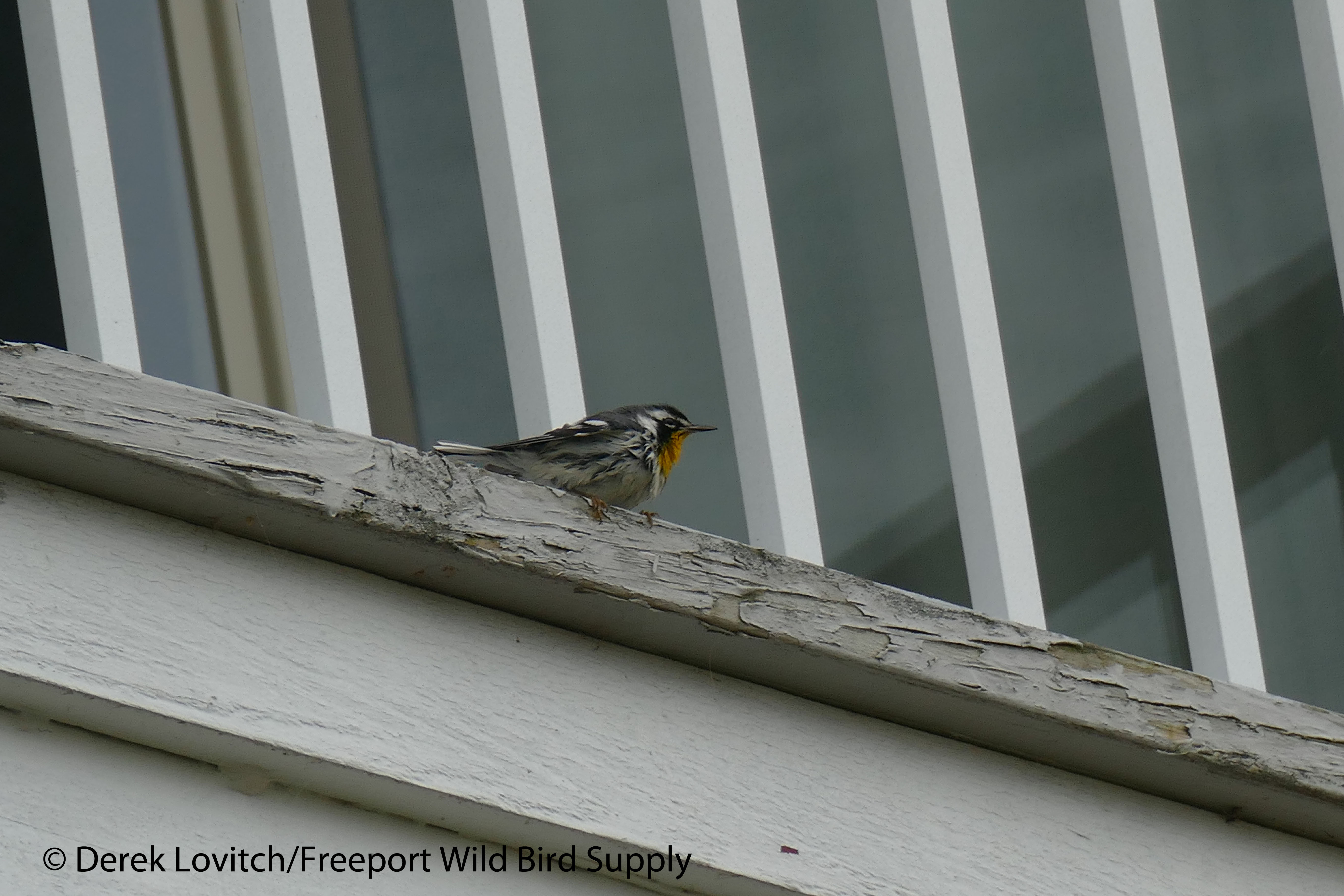
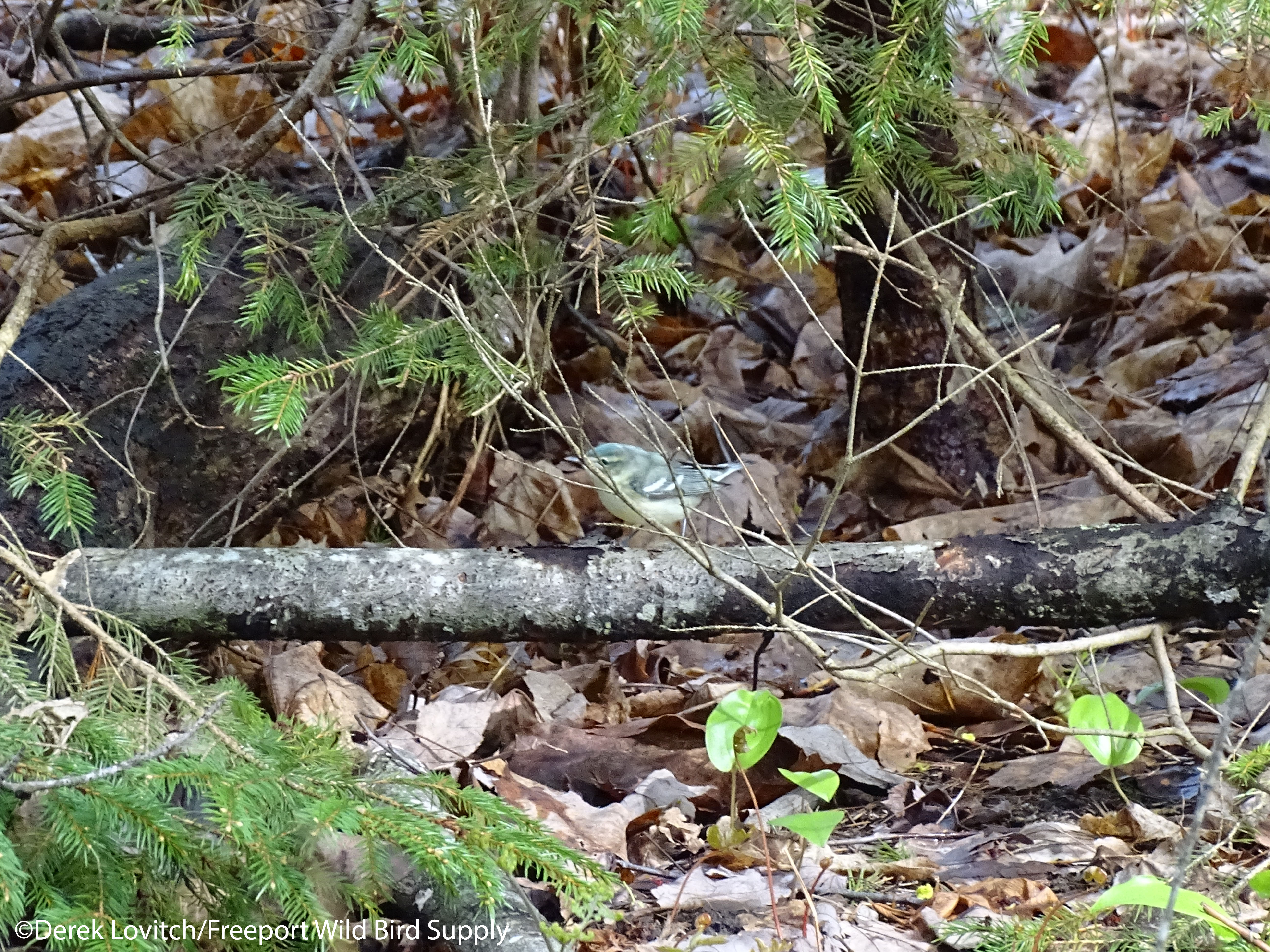
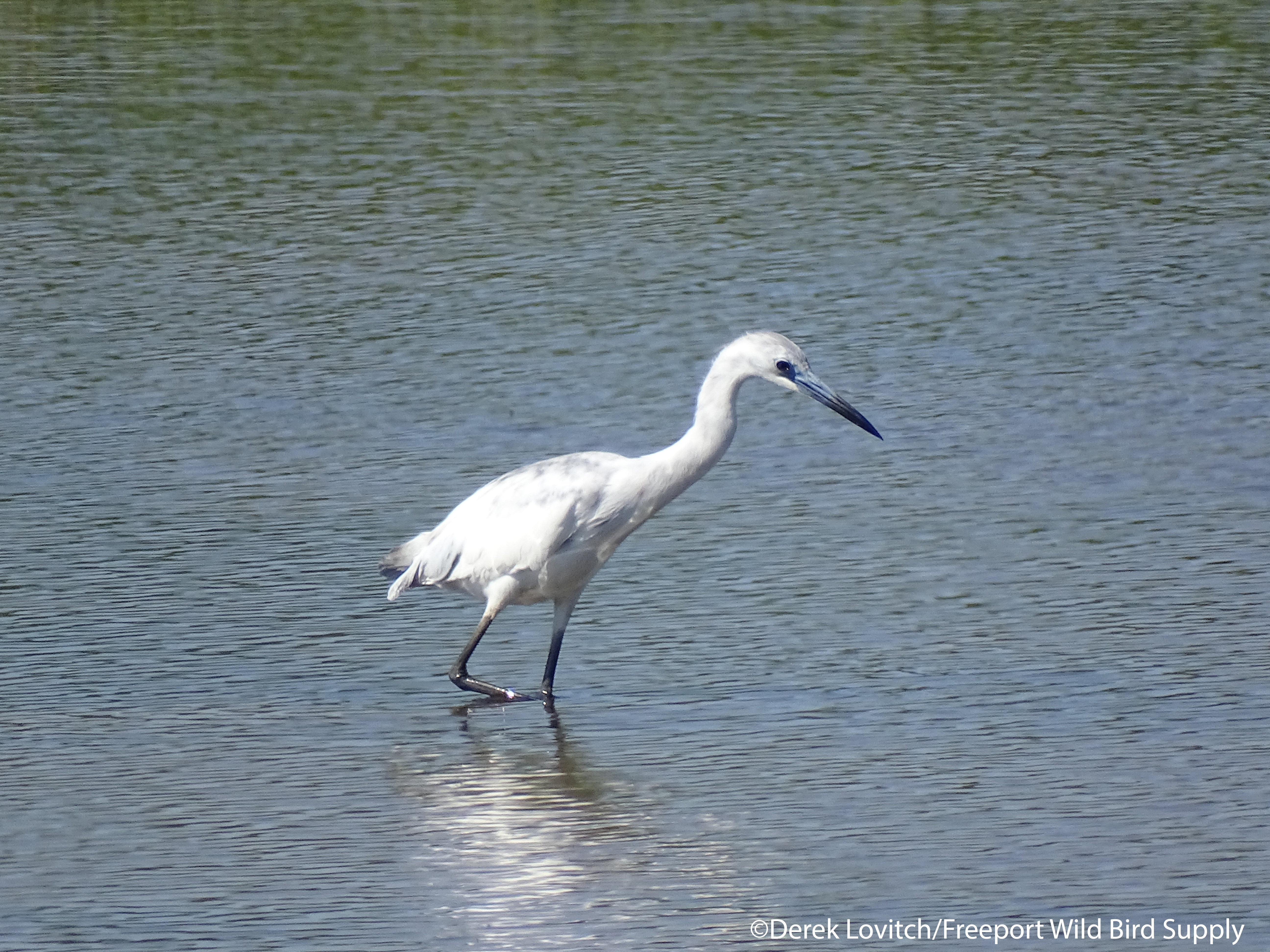
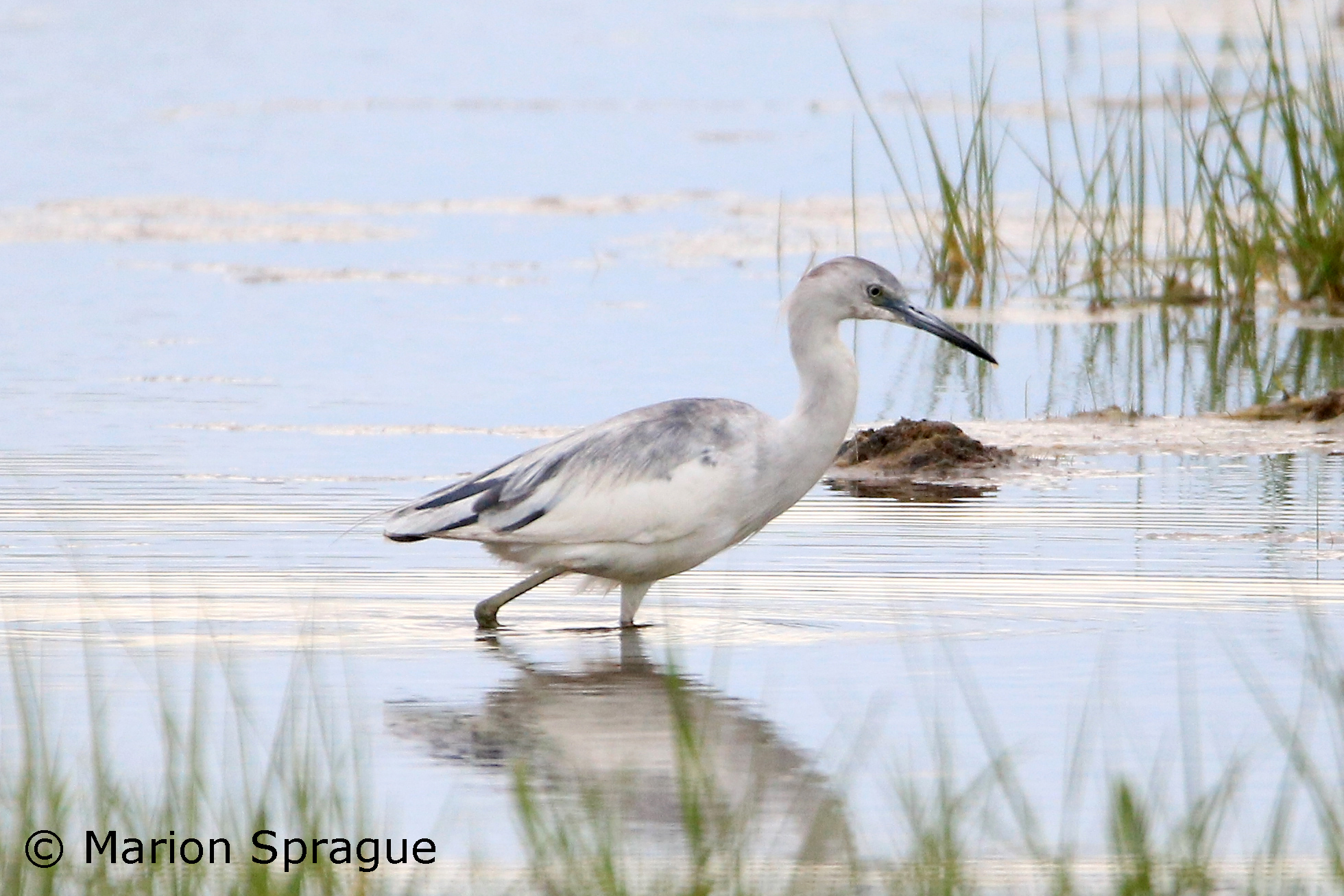
Little Blue Herons have declined in Maine, so it was nice to find my second of the year in an untraditional location. This 1st summer bird was in the marsh behind Seapoint Beach in Kittery on the 2nd.

Typical later migrants, such as Blackpoll and Magnolia Warblers, and a variety of flycatchers, were still moving in and through, especially during the first week of June. Then, my gears rapidly shifted to breeding birds on tours, events, surveys, and just general birding enjoyment. Quality time with boreal breeders in the Rangeley area and specialties such as Saltmarsh and Nelson’s Sparrows, Roseate Terns, etc here at the coast were the usual highlights of the first half of June, both personally and professionally.

In addition to the regular breeding birds we seek – again, both personally and professionally – it’s also a good time of year for unexpected birds in unexpected places, and just general good birding. Some of my additional, less expected observations of note over the past ten days included:

  • 1 immature male and 1 female ORCHARD ORIOLE (FOY), and 1 late Red-throated Loon, Fort Foster, Kittery, 6/2.
  • 1 1st summer LITTLE BLUE HERON, Seapoint Beach, Kittery, 6/2. Photo above.
  • 6 Black-bellied Plovers, 1 Semipalmated Plover, and 3 Short-billed Dowitchers, Wells Harbor, 6/2.
  • A visit to the Kennebunk Plains on 6/4 with Jeannette yielded 2 singing CLAY-COLORED SPARROWS (one continuing male near “Clay-color Corner” and one about half-way between there and the main parking lot on the eastern loop trail).  2 UPLAND SANDPIPERS, 6 GRASSHOPPER SPARROWS, and at least 11 Red Crossbills were also detected.
  • 2 RUDDY DUCKS, 1 drake Northern Shoveler, etc, Sanford Lagoons, 6/4 (with Jeannette).
  • 1 pair Cape May Warbler, 1 Wilson’s Warbler, 1 Olive-sided Flycatcher, Palm Warblers, displaying Wilson’s Snipe, family of Canada Jays, etc, Dallas Plantation, 6/7 (with Matt Young).
  • Fun to be in the field with Matt Young for the Rangeley Birding Festival and hear him describe (and hopefully me learn!) Red Crossbill call notes. There weren’t many around, but we did encounter both Type 12’s and Type 4’s. Meanwhile, scattered birds continue to be widespread down here at the coast.
  • 7 Turkey Vultures, over downtown Rangeley from porch of Parkside and Main, 6/7 (With Matt Young and Birds on Tap! event group for the Rangeley Birding Festival). Less than 10 years ago, a single was unheard of.
  • 1 Semipalmated Plover, Eastern Road Trail, Scarborough Marsh, 6/11 (with clients from New Jersey).

Tours and Events:

  • Due to tours, there will not be a Saturday Morning Birdwalk on either 6/22 or 6/29.

Recent Highlights, 4/20– 4/26/2024

 Although it had moved further away by the time I arrived, I managed a few phone-scoped photos of the Loggerhead Shrike that graced Chandler Brook Preserve and nearby yards in North Yarmouth on 4/21.

It was a great week of birding, with an impressive fallout on Saturday morning, a local mega rarity, and more new spring arrivals. My highlight of the week was catching an incredible early-season fallout at Florida Lake Park in Freeport on 4/20 (with Saturday Morning Birdwalk group). I eventually settled on a guestimate of 400 Palm Warblers and 125 Yellow-rumped Warblers. The full report can be found here.  75+ Palm Warblers and 50+ Yellow-rumped Warblers were present on the 24th, but on both dates the only other warbler – as expected for the date – were Pine (3 each day).

My other observations of note over the past seven days included:

  • 1 Fish Crow, over our property in Durham, 4/20 (Yard Bird #150!)
  • 1 LOGGERHEAD SHRIKE, Chandler Brook Preserve, North Yarmouth, 4/21. Found earlier in the afternoon and seen by several of us in the evening. I don’t chase very often, but when I do, I prefer it to be only 15 minutes out of the way on my way home from the store!  It was only my second in Maine.
  • 6 Red Crossbills (1 male, 2 female, 3-4 juvenile. Type 12 as per Matt Young), here at the store, 4/24.

Additional personal first-of-years this week also included:

  • *1+ CLIFF SWALLOW, Florida Lake Park, Freeport, 4/20 (with Saturday Morning Birdwalk group).
  • 1 Northern Rough-winged Swallow, Florida Lake Park, 4/20 (with Saturday Morning Birdwalk group).
  • 1 Blue-headed Vireo, Morgan Meadow WMA, Raymond, 4/21.
  • *1 NORTHERN PARULA, Morgan Meadow WMA, 4/21.
  • 2 SANDHILL CRANES, Bradbury Mountain Hawkwatch, 4/21.
  • 1 Rusty Blackbird, Florida Lake Park, 4/24.
  • 1 adult LITTLE BLUE HERON, Cousin’s River Marsh, Freeport/Yarmouth, 4/24 (as viewed from Freeport Café’s parking lot).
  • 1 Eastern Towhee, feeders here at the store, 4/24.
  • 1 LOUISIANA WATERTHRUSH, Papermill Trail, Lisbon, 4/26.
  • 1 Black-throated Green Warbler, Papermill Trail, 4/26.

*Numerous very early arrivals of regular migrants are likely also tied to the overshoot event that brought southern vagrants to locations up and down the state’s coast.

TOURS AND EVENTS:

Feathers Over Freeport This Weekend!

Saturday, April 27th at Bradbury Mountains State Park and Sunday, April 28th at Wolfe’s Neck Woods State Park. All events FREE with park entry!

From birdwalks and a hawkwatch workshop to kids’ arts and crafts and a food truck, join us for two activity filled days in the 13th year of Feathers Over Freeport!  A full schedule of events can be found here.

Note our regularly scheduled Saturday Morning Birdwalk meets at Bradbury on the 27th.

This Week’s Highlights, 9/2-9/8, 2023

It was a good week for Caspian Terns, and it’s always a treat to see one sitting still. This adult was on the Lubec Flats on the 4th.

A busy week of birding included our annual late summer/early fall trip to Washington County and a bunch of guiding, producing the following observations of note:

  • 25-30 Common Nighthawks, over Chebeague Island in the mid-morning, 9/3 (with The Chebeague & Cumberland Land Trust birdwalk group).
  • 1 juvenile LITTLE BLUE HERON, 1 CASPIAN TERN, 1 Great Egret, 5 Surf Scoters, etc, Lubec Flats, Lubec, 9/4 (with Jeannette).
  • A relatively slow morning in Head Harbor Passage from Eastport on 9/5 (with Beth Edmonds, Dan Nickerson, Jeannette, and friends) was most noteworthy for the continuing large numbers of COMMON MURRES. I tallied 109, but that seems very conservative. We only had 4 Razorbills and 1 adult Lesser Black-backed Gull. Quiet time with just us and a Fin Whale more than made up for it though.
  • The afternoon whale watch on Eastport Windjammers to the same waters that day (with Beth Edmonds, Dan Nickerson, and Jeannette) yielded an adult LITTLE GULL, 3 CASPIAN TERNS, 1 late ARCTIC TERN, 2 Great Shearwaters, etc. Incredibly experience with 2 Fin Whales, 1 Humpback Whale, and 1 Minke Whale though.

We always enjoy our quality time with Black-legged Kittiwakes in the Head Harbor Passage area at this time of year.

  • 2 American Pipits (FOF), Sanborn Cove, Machiasport, 9/6 (with Jeannette). Interestingly, we had pipits at a number of places throughout the day, with a high count of 22 at Addison Marsh, Addison.
  • 1 Great Egret, Addison Marsh, 9/6 (with Jeannette).
  • 1 Great Egret, Essex Marsh, Bangor, 9/6 (with Jeannette).
  • 3 SANDHILL CRANES, Plymouth Pond, Plymouth, 9/6 (with Jeannette).
  • High count for warbler species in our Durham backyard this week was 11 on 9/7 (with Angela Woodside).
  • 3 adult Lesser Black-backed Gulls, Popham Beach State Park, Phippsburg, 9/8 (with clients from Texas).
  • Great whale-watching trumped the bird-watching again this week with 3 lunge-feeding Fin Whales off of Boothbay Harbor aboard Cap’n Fish’s Cruises on 9/8 (with clients from Texas). 3 RED-NECKED PHALAROPES, 1 Great Shearwater, 1 adult Lesser Black-backed Gull, 10 Wilson’s Storm-Petrels and making it back to shore before the violent thunderstorms add to the success of the trip!

Meanwhile, my shorebird high counts this week were as follows. While reduced in diversity by a lack of visitation to southern Maine shorebird hotspots, Downeast yielded some excellent numbers and I found some uncommon species in unexpected places for a goodly total of 18 species (“shorebird season” is far from over!):

  • AMERICAN OYSTERCATCHER: 1, Popham Beach State Park, Phippsburg, 9/8 (with clients from Texas).
  • Black-bellied Plover: 75, Lubec Flats, Lubec, 9/4 (with Jeannette).
  • Killdeer: 56, Mayall Road, Gray, 9/6 (with Jeannette).
  • Semipalmated Plover: 600, Lubec Flats, 9/4 (with Jeannette).
  • Ruddy Turnstone: 1, flying 10 miles off of Boothbay Harbor, 9/8 (with clients from Texas). Odd sighting of a single juvenile bird circling the boat repeatedly in hazy conditions where the mainland was not visible.
  • Sanderling: 24, Popham Beach State Park, 9/8 (with clients from Texas)
  • BAIRD’S SANDPIPER: 1, Yarmouth Town Landing, 9/2 (with Saturday Morning Birdwalk group).
  • Least Sandpiper: 25+ Sanborn Cove, Machiasport, 9/5 (with Jeannette).
  • White-rumped Sandpiper: 125!, Lubec Flats, 9/4.
  • Semipalmated Sandpiper: 2500-3000!, Lubec Flats, 9/4 (with Jeannette).
  • WESTERN SANDPIPER: 1 juv, Lubec Flats, 9/4 (with Jeannette).
  • Short-billed Dowitcher: 4, Lubec Flats, 9/4 (with Jeannette).
  • American Woodcock: 1, over Rte 1, Pembroke, at dusk on 9/5 (with Jeannette).
  • Spotted Sandpiper: 1, multiple locations.
  • Solitary Sandpiper: 1, over our yard in Durham, 9/2.
  • Lesser Yellowlegs: 9, Yarmouth Town Landing, 9/2 (with Saturday Morning Birdwalk group).
  • Greater Yellowlegs: 2, Red Point Nature Preserve, Lubec, 9/4 (with Jeannette).
  • RED-NECKED PHALAROPE: 7, Passamaquoddy Bay, Eastport-New Brunswick, 9/5 (with Beth Edmonds, Dan Nickerson, Jeannette, and friends).

Sandy Point Morning Flight, 9/29/2022

There are some Morning Flights at Sandy Point that deserve their own blog. This was one of those. (I also haven’t finished my Monhegan Tour report blog yet, either).

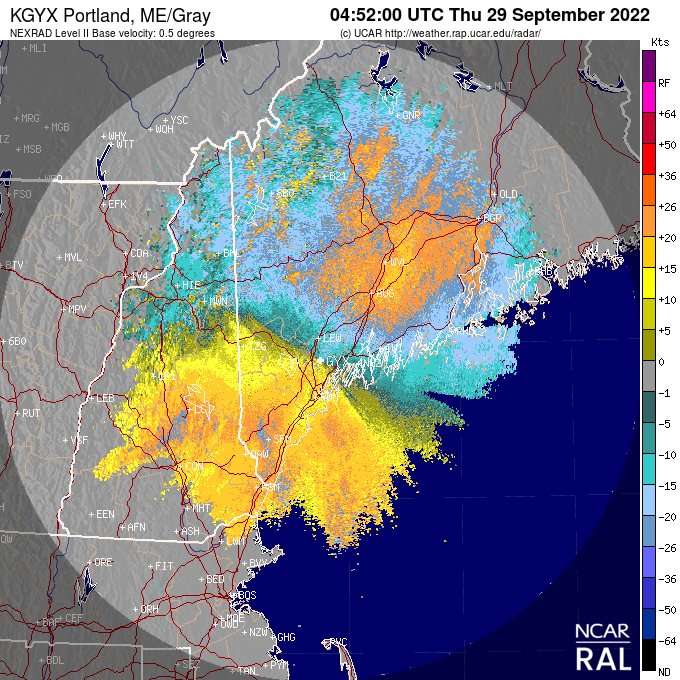
Let’s start with the 1:00am reflectivity and velocity images from the Gray NEXRAD station. I was very happy that the station was back online in time for this incredible large flight. In fact, it was one of the densest flights I have seen in the area, and you can see how much biomass was offshore.

For an explanation of just what this means, see the “Birding at Night” chapter in my first book, How to be a Better Birder. Furthermore, see previous Sandy Point posts on the topic – you can use the search box in the upper right-hand corner of this blog page, and search “Sandy Point” or “Morning Flight.”

That got my pretty darn excited for the morning. And, well, it was a lot of fun! OK, mostly…at times I was overwhelmed and early on, I just felt beat! For the first 30 minutes, I often just clicked waves of “unidentified” as I tried to keep pace. Luckily, after the massive early rush, the flight became more manageable, although bursts of activity were barely quantifiable.

20 species of warblers, a very rare Blue Grosbeak, and my 195th all-time Sandy Point birds: 2 Little Blue Herons! It was quite a day.

Thanks to Evan Obercian, I learned a ton and had some great species tallies. I have no doubt that some of the records set (e.g. 2nd-highest tally for Cape May Warbler) came from his exceptional auditory skills – some of those birds would have just went unidentified or not even detected by me! Of course, the more eyes (and ears) the better, and Reed Robinson and Weston Barker – splitting time on the “flicker clicker” and pointing out birds landing below – helped immensely as well. Assistance was critical today.

When Evan and I finally departed for desperately needed bagels and coffee at 11:45, there were still a few birds on the move. With some raptors in the air, I am sure that if we didn’t leave then, I would be there all day. I wish I could have been, because this morning was simply awesome. Here’s the scoreboard:

  • 6:36 to 11:45am
  • With Evan Obercian, Reed Robinson, and Weston Barker.
  • 50F, mostly clear, WNW 4.5-5.1 to NW 13.3-16.1
  • 2,389 unidentified
  • 1,036 Yellow-rumped Warblers (*2nd highest)
  • 449 Northern Parulas
  • 374 Ruby-crowned Kinglets (*3rd highest)
  • 286 Yellow-bellied Sapsuckers (*new record)
  • 251 Northern Flickers
  • 155 Blackpoll Warblers
  • 138 Eastern Phoebes (*new record. Previous high of 26! And this was very conservative as many were swirling, too. But at times, steady pulses of 2-6 were clearly crossing)>
  • 105 Black-throated Green Warblers
  • 93 American Robins
  • 75 White-throated Sparrows
  • 71 Black-and-white Warblers (*new record)
  • 65 Red-eyed Vireos (*new record)
  • 64 Red-breasted Nuthatches (*new record)
  • 58 Magnolia Warblers
  • 57 Cedar Waxwings
  • 44 Blue Jays
  • 41 Dark-eyed Juncos
  • 33 American Goldfinches
  • 31 Blue-headed Vireos (*2nd highest)
  • 26 American Redstarts
  • 25 Cape May Warblers (*2nd highest)
  • 25 Black-throated Blue Warblers
  • 25 Purple Finches
  • 23 Chipping Sparrows
  • 22 Rusty Blackbirds
  • 22 Nashville Warbler (*2nd highest)
  • 22 Broad-winged Hawks
  • 18 Tennessee Warblers (*3rd highest)
  • 18 Golden-crowned Kinglets
  • 16 Palm Warblers
  • 12 Scarlet Tanagers
  • 9 Yellow Warblers
  • 8 Savannah Sparrows
  • 7 Swainson’s Thrushes
  • 7 American Kestrels
  • 7 Turkey Vultures
  • 6 White-breasted Nuthatches (*tied highest)
  • 5 Baltimore Orioles
  • 4 Ospreys
  • 4 Philadelphia Vireos
  • 4 Bay-breasted Warblers
  • 4 Black-capped Chickadees
  • 3 Brown Creepers
  • 2 Rose-breasted Grosbeaks
  • 2 Chestnut-sided Warblers
  • 2 Orange-crowned/Tennessee Warbler
  • 2 Red-winged Blackbirds
  • 2 Eastern Wood-Pewees
  • 2 Sharp-shinned Hawks
  • 2 juvenile LITTLE BLUE HERONS (**high fly-overs. My first record for Sandy Point and Patch Bird #195.)
  • 2 Lincoln’s Sparrows
  • 2 White-crowned Sparrows
  • 1 Pine Warbler
  • 1 Least Flycatcher
  • 1 Northern Harrier
  • 1 Tufted Titmouse (did not cross after a few false starts)
  • 1 Red-bellied Woodpecker (crossed after three false starts)
  • 1 Common Loon
  • 1 Eastern Bluebird
  • 1 Hairy Woodpecker (crossed after 8 false starts)
  • 1 BLUE GROSBEAK (**My 3rd-ever at Sandy Point. Spotted by Evan, photographed by Weston Barker; photo below).
  • 1 Common Grackle
  • 1 Wilson’s Warbler
  • 1 Red-tailed Hawk
  • 1 American Pipit
  • 1 Blackburnian Warbler
  • 1 unidentified Empid
  • 1 Downy Woodpecker (did not cross after 2 false starts)
  • 1 Swamp Sparrow
  • 1 Hermit Thrush
  • 1 Ovenbird (in the woods; warbler #20!)
  • X Common Yellowthroat (I don’t try and count them in the brush here, but there were a lot around this morning and many more than there have been. None even attempted a crossing as usual).

***Total = 6,183 (2nd highest all time!)***

This Week’s Highlights, April 23-29, 2022.

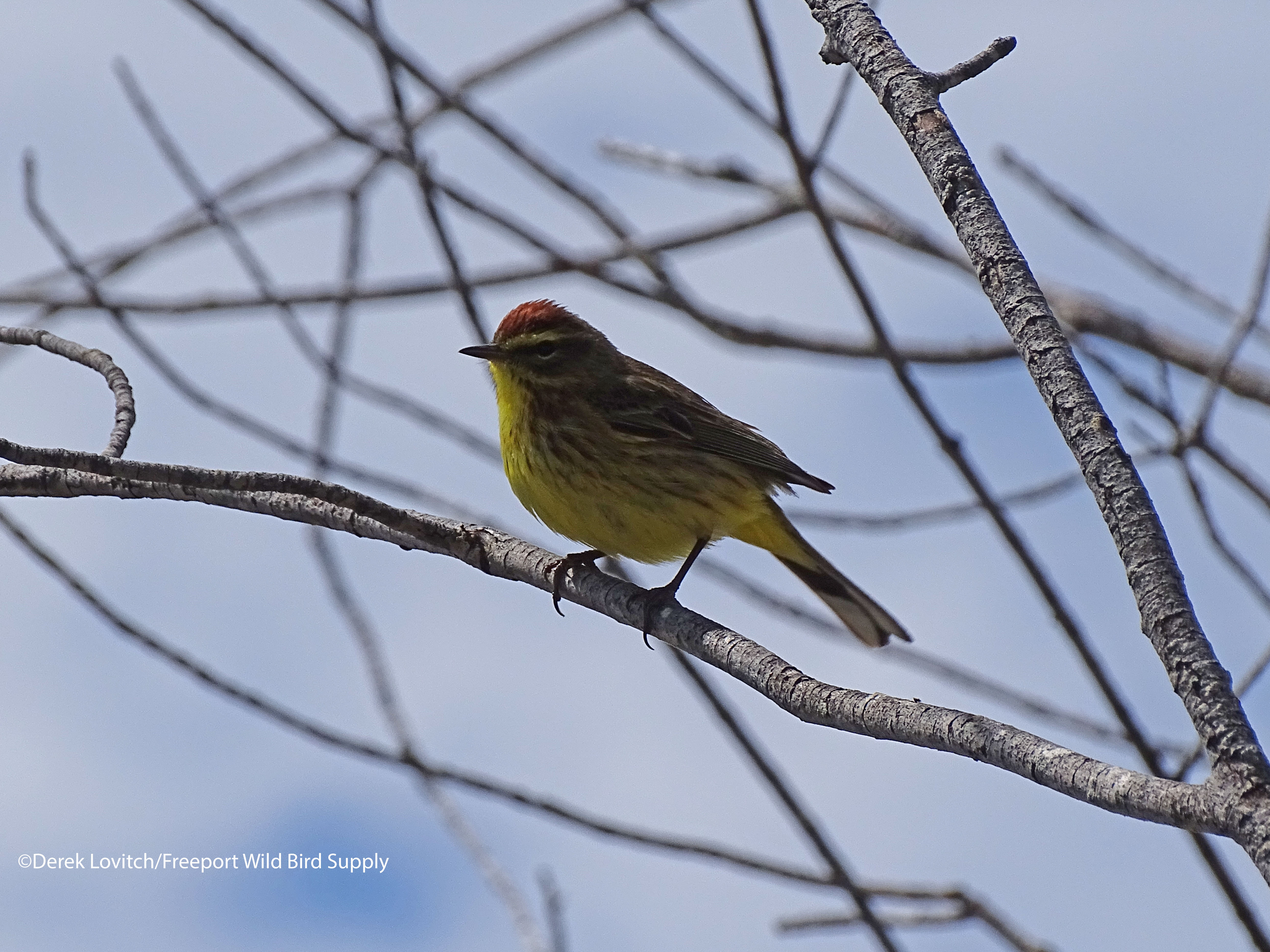
Palm Warblers were on the move this week, although concentrations remain low.

Persistent winds from unfavorable directions precluded a big push of migrants this week, but the season is slowly progressing. There were a couple of decent nights of migration this week, on Sunday and Monday nights. My observations of note over the past seven days included:

  • 1 Blue-gray Gnatcatcher (FOY), our yard in Pownal, 4/23.
  • 1 Blue-gray Gnatcatcher, Cape Elizabeth Greenbelt Trail, 4/25 (with Jeannette).
  • 40 Purple Sandpipers, Kettle Cove, Cape Elizabeth, 4/25 (with Jeannette).
  • 1 Blue-gray Gnatcatcher, private property in Durham, 4/27.
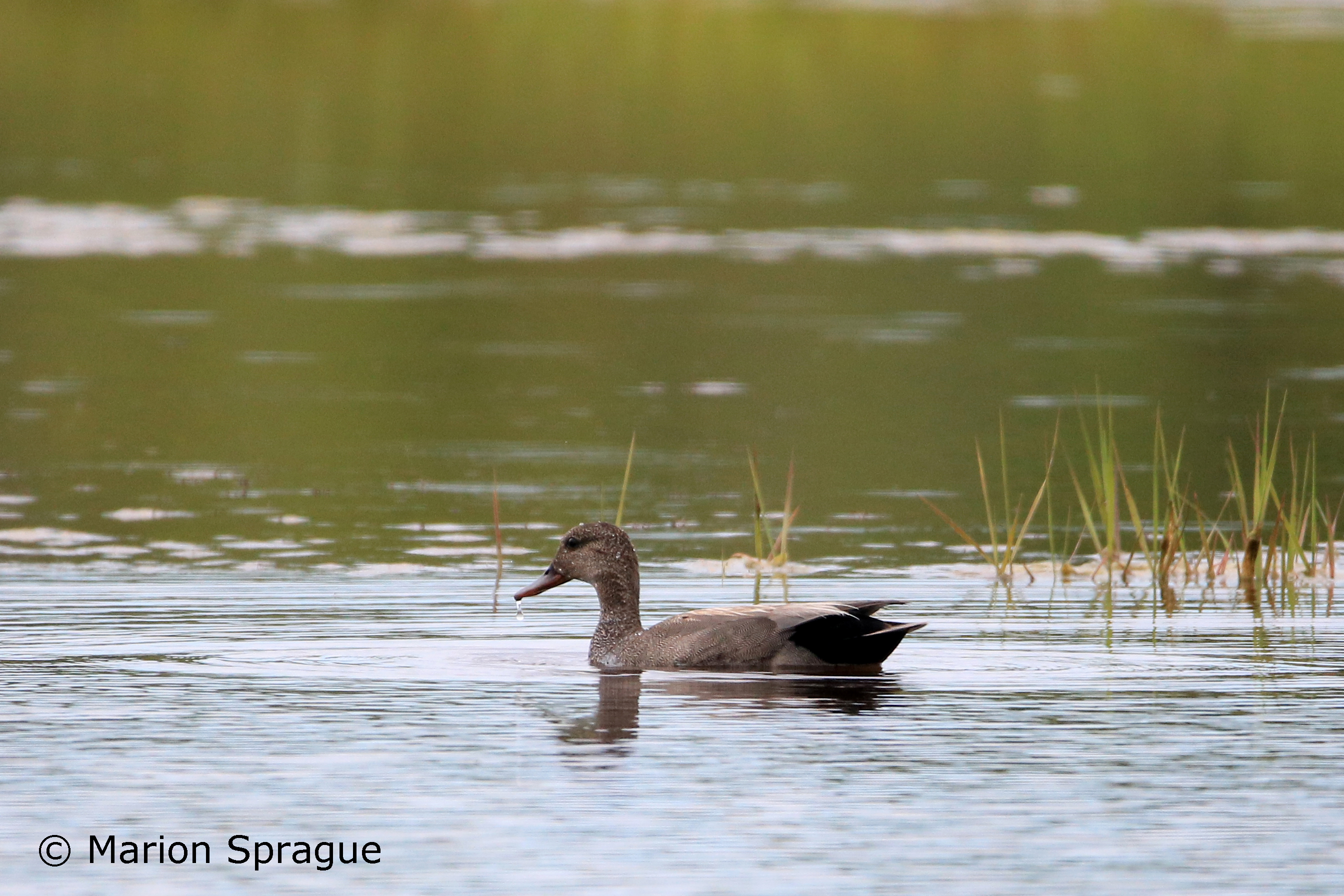
  • 2 pairs of Gadwall, Pelreco Marsh, Scarborough Marsh, 4/29.

And my list of personal “first of years” this week also included the following:

  • 1 Laughing Gull, Winslow Park, Freeport, 4/23 (with Saturday Morning Birdwalk group).
  • 1 House Wren, here at the store, 4/23.
  • 1 early CLIFF SWALLOW, Bradbury Mountain Hawkwatch, 4/23.
  • 1 Blue-headed Vireo, Florida Lake Park, Freeport, 4/24.
  • 1 RUSTY BLACKBIRD, Florida Lake Park, Freeport, 4/29.
  • 1 Willet, Dunstan Landing, Scarborough Marsh, 4/29.
  • 1 LITTLE BLUE HERON, Eastern Road Trail, Scarborough Marsh, 4/29.

And don’t forget, this weekend is Feathers Over Freeport! With the weather of the past three days in particular, it should be a great weekend for migrants!

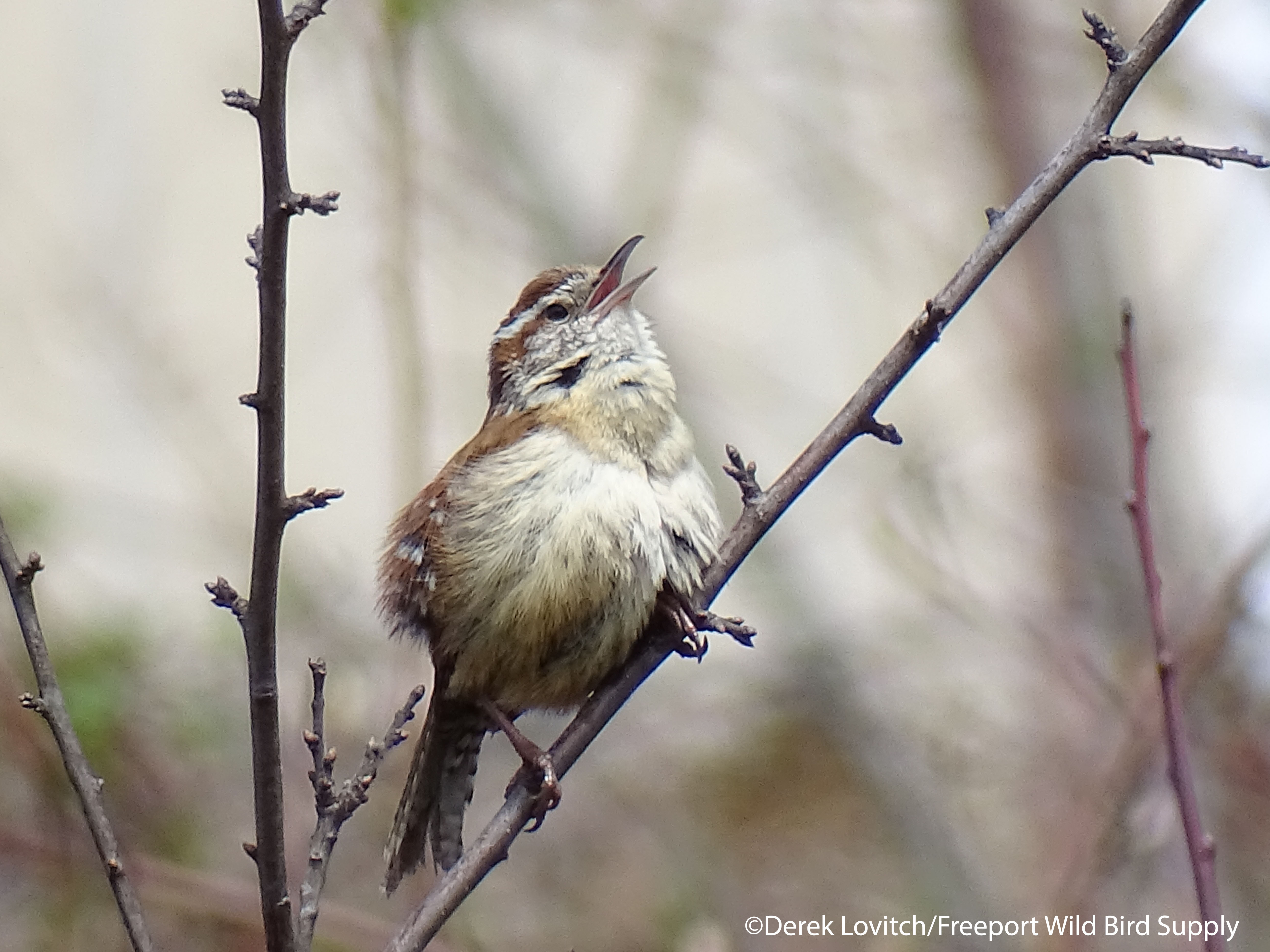
Carolina Wren from the Saco Riverwalk on Sunday.

The “Coastal Quick Hit” Van Tour report

I think it is safe to say that the inaugural “Coastal Quick Hit” van tour was a resounding success! We not only found all of the target species that we were after, but also a few surprises, and we saw all of our target species incredibly well! And we really lucked out with the weather, as the only rain we encountered was a brief downpour while we were driving. I have “no” doubt that all future tours will be this successful.

We receive numerous requests for guiding for several local breeding species that can be hard, if not impossible, to see elsewhere. While Bicknell’s Thrush is my number one request, there are a number of coastal species that are also sought. Folks travel from far and wide for our annual “Bicknell’s Thrushes of the White Mountains” van trip, and often I get requests for private guiding for many of the other species before and after that tour. Therefore, for efficiency and economy, we introduced the “Coastal Quick Hit” tour.

We had four visitors from California on board who were here to take part in the weekend’s thrush tour, plus three local birders out for the day. The eight of us met here at the store on Friday morning, and worked our way south.

Beginning in Scarborough Marsh, we had the opportunity to study Saltmarsh and Nelson’s Sparrows side-by-side, and ponder over some hybrids as well. We compared their songs and subtleties of identification – and learned how to simply leave many, likely hybrids and intergrades, as unidentified. Meanwhile, “Eastern” Willets and many other marsh denizens were numerous, and several sparrows and Willets posed for photos.
WILL

Walking the Eastern Road Trail, a Fish Crow was unexpected, and we enjoyed Little Blue Herons, Great and Snowy Egrets, and more. We then found this wading bird, which immediately brought to mind one of the ultra-rare Tricolored Heron x Snowy Egret (and now, possible a backcross there of) that calls Scarborough Marsh home.
LBHE,Marion_Sprague,6-9-17_edited-1

However, it soon became clear that this was a “pure” Little Blue Heron – nothing about its shape, size, structure, or behavior (a regular adult was nearby, and sometimes in the same field of view) was suggestive of anything else (or partly anything else), and so I hypothesized about a leucistic Little Blue Heron. Immature (1st through 2nd summer) little blues are piebald, but this was much, much paler than what I usually see, with more of a uniform “wash” of the purple-blue on the body and wings. What threw me off a bit were the essentially fully-developed head and back plumes (the “aigrettes”) that I did not think were present on a bird who’s plumage was this early in development. A little research showed those plumes were just fine for a 1st-summer bird, even one in which so little adult-like plumage had been obtained. Therefore, unless this bird looks exactly the same come fall, I think it’s just a paler-than-average 1st summer Little Blue Heron. Nevertheless, it was a fun bird to study and ponder – offering a lesson in comparing shape, structure, and behavior in two birds that didn’t look the same.

Also off Eastern Road, we noted Glossy Ibis, American Black Ducks, and a White-rumped Sandpiper in spiffy breeding plumage – a treat for folks from the West Coast, and not a bird we see many of in spring here in the Northeast. It was hanging out with 4 tardy Semipalmated Sandpipers.
GADW,MS
A drake Gadwall at the Pelreco marsh was a nice sight as well.

Four unseasonable Brant greeted us at Pine Point, where we soon spotted one of our most sought-after species, Roseate Tern. At least 8, and likely many times that, as birds were coming and going, were quickly picked out from the crowds of Common Terns, with plenty of Least Terns zipping around.
COTE,MS
Common Tern

LETE,MS
Least Tern

This tour was designed to have at least two chances at all of our target species, but we “cleaned up” in Scarborough, so we elected to brake up our upcoming drive with a stop in Webhannet Marsh near Moody Point for a visit with the King Rail that, for the second summer in a row, has occupied a small corner of the marsh. While waiting for it, we spotted more Willets, and had another great view of a Saltmarsh Sparrow or too.

The rail never called, but about 2/3rds of the group, myself NOT included, were able to spot the rail as it crossed two successive small openings in the marsh grass. The rest of us were just a little too far up the road, and it never made it to the third clearing we were stationed at. But still, a King Rail in the middle of the afternoon! A loafing Surf Scoter with Common Eiders offshore was also unexpected.

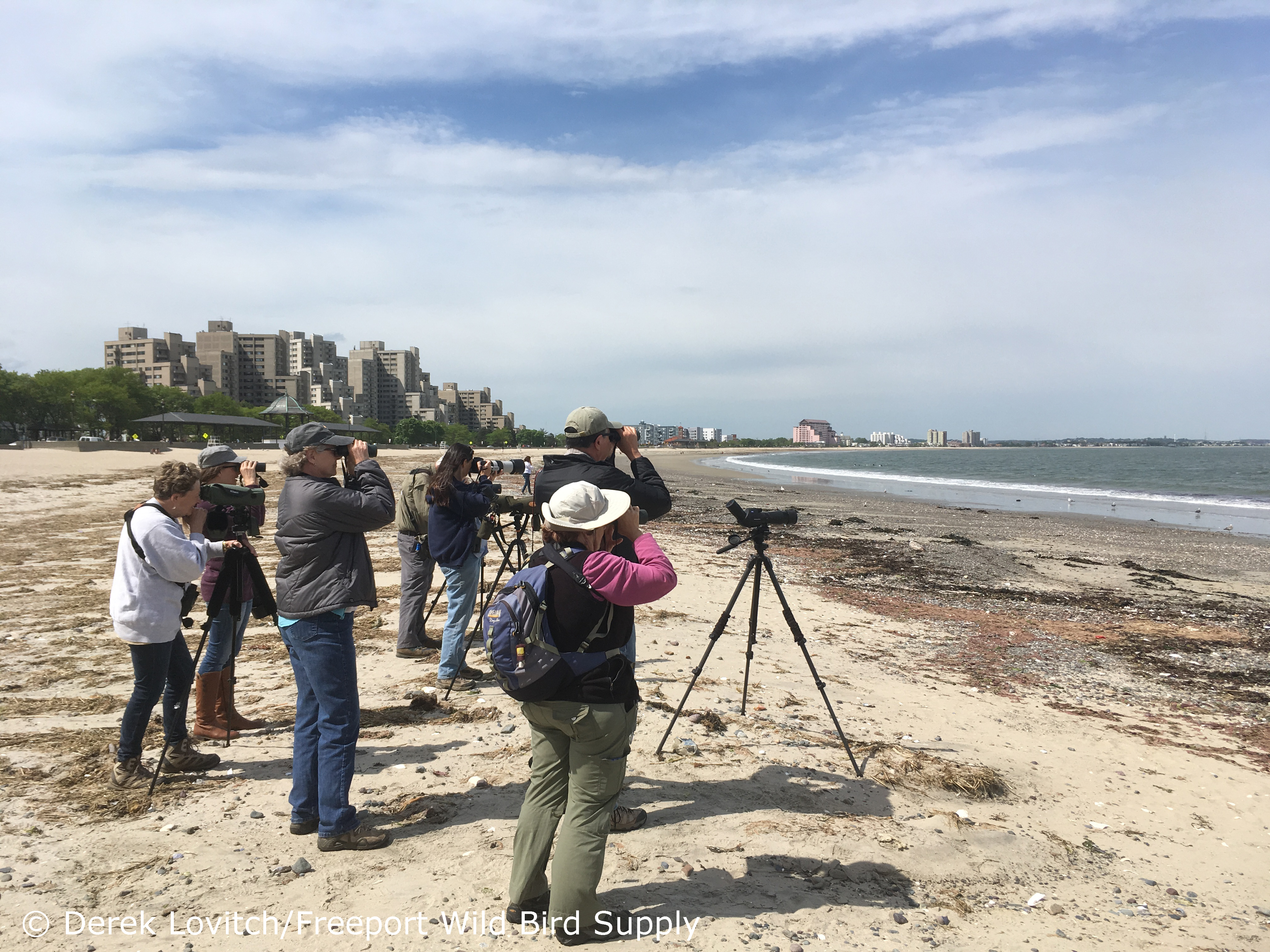
A delicious lunch fueled the rest of our drive south and the timing of the rainfall could not have been better. Traffic was relatively minimal as we fought our way through the outskirts of Boston, arriving at Revere Beach just as a thunderstorm passed to our south.
Revere_Beach2

While this is not exactly the most aesthetically-pleasing stop of the tour…
Revere_Beach1

…it was incredibly rewarding, as in short order, we picked up our last two target species, Piping Plover…
PIPL,MS

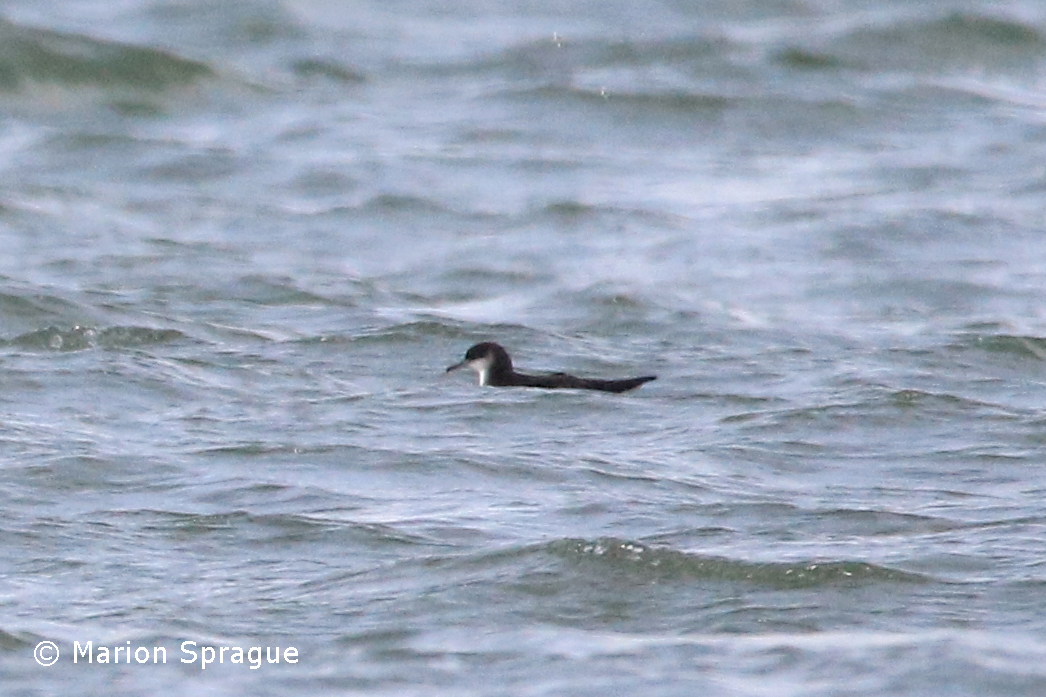
…and, believe it or not, Manx Shearwater…
MASH1,MS

MASH2,MS

…from land, in a city, and not very far offshore!

This incredible phenomena (they are clearly nesting locally, but where!? One of the Boston Harbor Islands?) was the icing on the cake to a most-successful trip. Based on these results, you can expect to see the “Coastal Quick Hit” van tour again in 2018 and beyond. Stay tuned to the Tours, Events, and Workshops Page of www.freeportwildbirdsupply.com for more information about this and all of our tours.

A Warbler (and Sparrow) Big Month. In December. In Maine.

December was unusually warm. In fact, it was record warm. And not just barely… records were shattered. The average temperature for the month was 38F. Not only was that a ridiculous 9 degrees above normal, it smashed the previous record of 24.8F (set in 2001). Surprisingly, despite the everlasting warmth, record daily highs were rare. Christmas Day was an exception, however, when temperatures soared to 62 in Portland, crushing the previous record high of 53, set just last year.

Our first measurable snow of the season didn’t fall until December 29th – the second latest date on record. Those 5-8 inches in southern Maine finally ushered in “real winter” and hopefully set the stage for a return to more normal conditions (although the last few days have once again been 5-10 degrees above normal).

Not surprisingly, such an unseasonable month resulted in some very-unseasonable birding. A variety of “lingering” or perhaps more accurately “pioneering” as Ned Brinkley, editor of North American Birds once dubbed it warblers in particular were making headlines.

So I decided to do a December Warbler Big Month. Because, well, warblers in December! In Maine!

With Tennessee, Yellow (2!), Nashville (2!), Common Yellowthroat, and Wilson’s on December 6th, I was half-way to my newly-set goal of 10 species for the month. The unusually mild fall has allowed more “lingering” birds to survive longer, and normal November hotspots are still hot (literally and figuratively).

Unfortunately, I waited until December 8th to decide to embark on this silly little hunt, so I had some catching up to do. There were some relatively easy ones (Yellow-rumped Warblers overwinter in a few places, along with “known” Blackburnian and Pine Warblers). That meant I just need to find an Orange-crowned Warbler (the second most-regular December warbler after Yellow-rumped) and then one other stray.

So off I went…

Not wanting to take any species for granted, I twitched a Pine Warbler that was reliably coming to a feeder in Brunswick on the 10th. I had to wait all of three minutes for it to arrive on my way back from walking Sasha. If only they were all this easy!
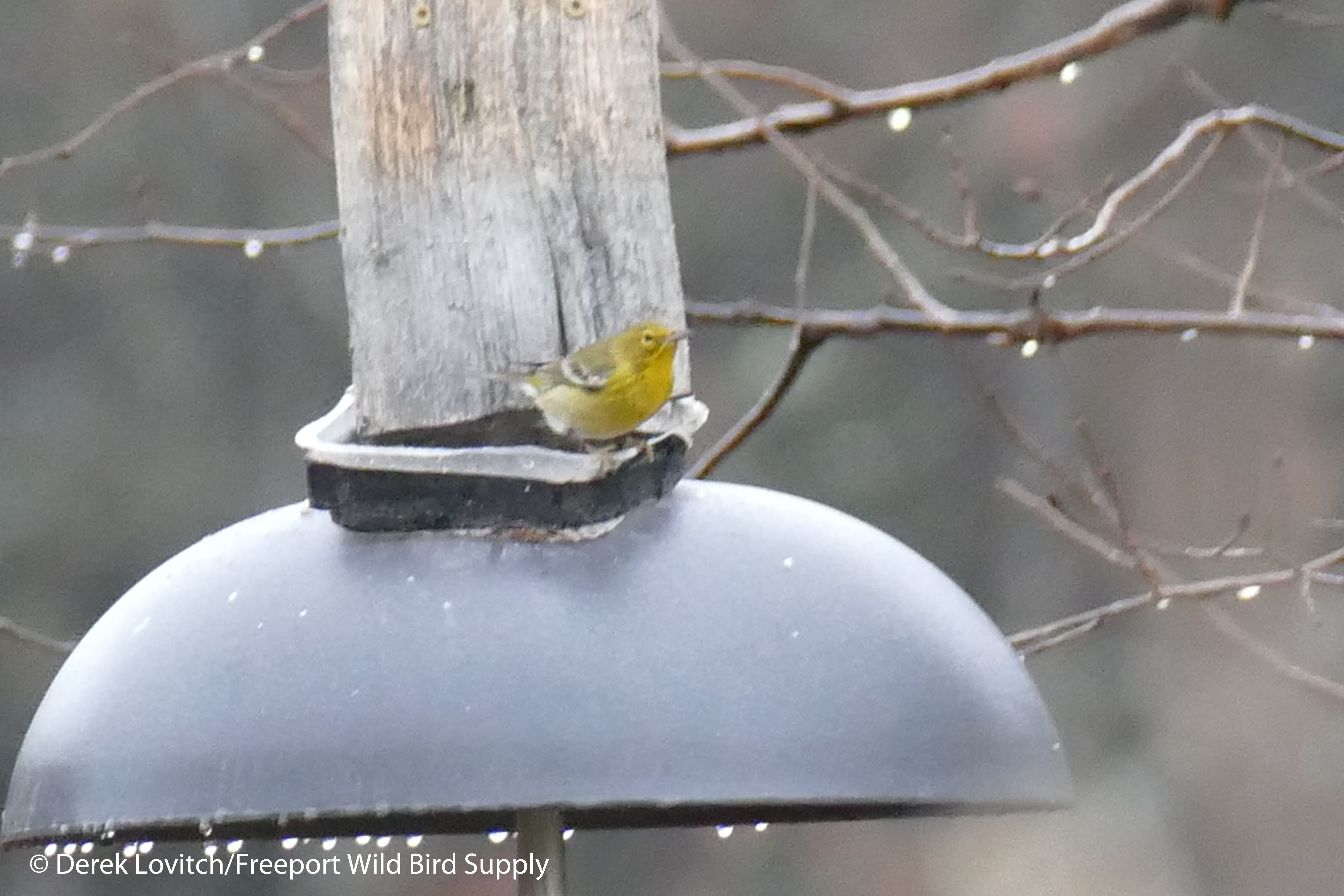
L1040178_PIWA2,JayStormers,Brunswick,12-10-15_edited-1

The next day I was once again at the Saco Yacht Club, looking for the Blackburnian Warbler (which I saw on Nov 30th – one day too early!). Activity didn’t pick up until the fog finally lifted after 10am, but I ran out of time. I did, however, enjoy another visit with the Tennessee, and 1 each of Yellow and Nashville Warblers. 2-3 Ruby-crowned Kinglets were also present, and a Yellow-rumped Warbler dropped in: my 7th species of the month! That and the Western Tanager were the consolation prizes (yes, I did just relegate the tanager to a consolation prize…shame on me… but I “needed” the Blackburnian!).
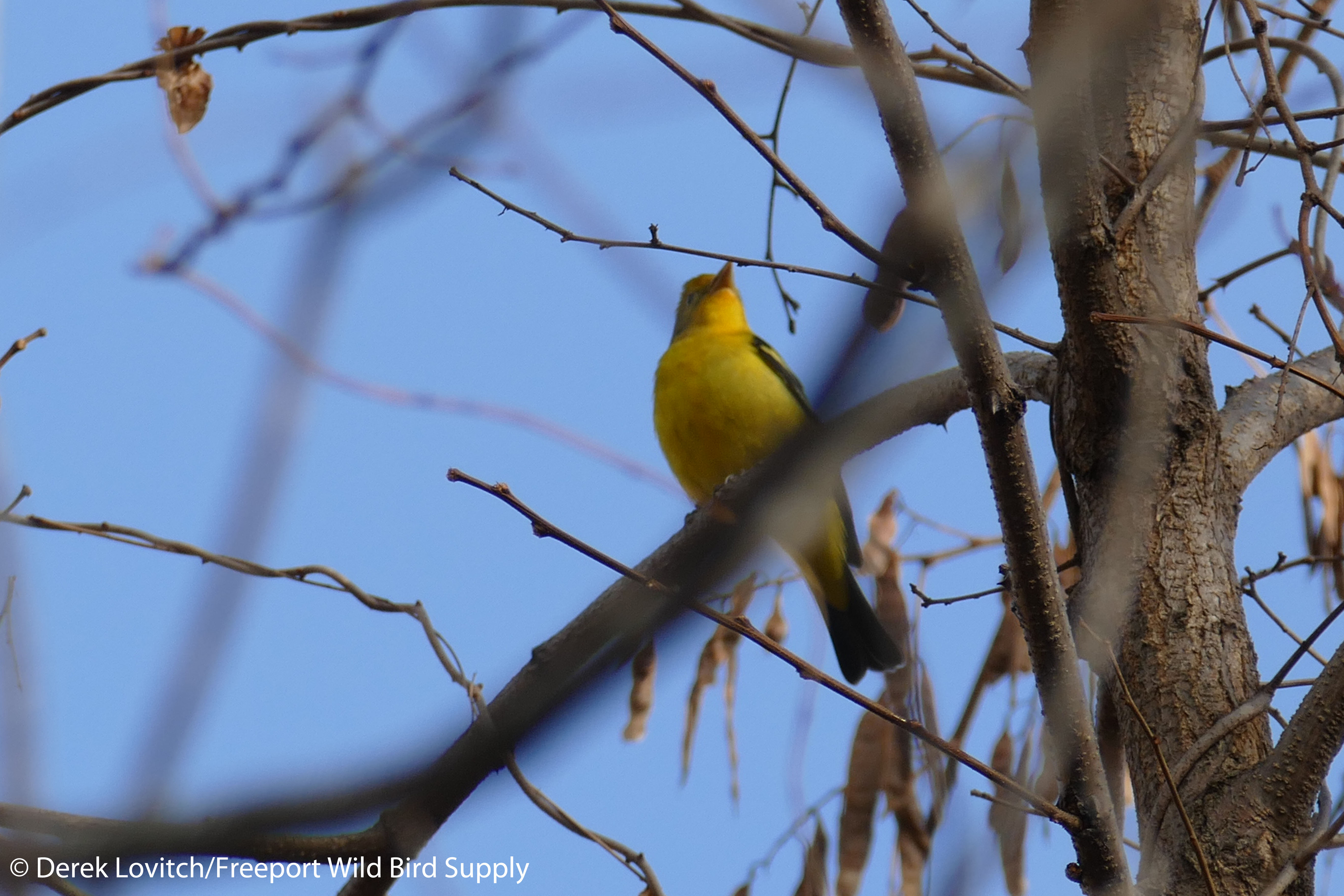
L1040189_WETA1,SacoRiverwalk,12-11-15_edited-1

I worked hard for an Orange-crowned Warbler in Portland on the 13th to no avail, but I did turn up the continuing Nashville Warbler along the Eastern Promenade (oh look, Portland ravaged vegetation here, too!) and a Gray Catbird on Sheridan St. I also took time to go visit the continuing Ross’s Goose along Stroudwater St in Westbrook – the third I have seen in Maine, and only the 6th or 7th state record.
IMG_6946_ROGO1,StroudwaterSt,Westbrook,12-13-15_edited-1(Phone-scoped image)

Continuing the quest, I had high hopes for the Southern York County Christmas Bird Count on the 14th. With a great territory that almost always turns up a good bird or three, Jeannette, Kristen Lindquist, and I worked the marsh, thickets, neighborhoods, and beach of the “Moody” sector. And we did indeed have a great day, including the 2nd Count Record Clay-colored Sparrow, the 5th Count Records of Baltimore Oriole and Lesser Scaup (21 – also a record high), and 6th Count Record of Dickcissel. But alas, not a single warbler. We didn’t even get a Yellow-rumped – for the first time, as there was virtually no fruit on the bayberry bushes along Ogunquit Beach or anywhere else.

When my friend Evan Obercian found a Yellow-throated Warbler at the Samoset Resort in Rockport on the 13th, my goal was definitely in sight (this was the “additional rarity” I needed), but in the weeks before Christmas, finding time was going to be a challenge. Luckily, a break in my schedule – and the rain – came on Thursday the 17th, so I got an early start and headed east.

I met up with Evan and Kristen and we wandered the grounds of the Samoset for almost two hours. I was not happy to find a stiff onshore breeze when I arrived, and it was increasing over the course of the morning. Then the mist rolled in, and soon, a steadier drizzle. There were not a lot of birds around (other than Canada Geese and Mallards on the golf course), and I was beginning to work on a plan to come back again. And not long thereafter, it called!

We spotted it in an isolated cluster of Scotch Pines, very near where Evan first saw it (and where we walked by 3 times already this morning). We followed it for about 30 minutes as it relocated to another grove before heading over to the hotel building, where it proceeded to forage in the sheltered porches of the four story building! Presumably gleaning insects from old webs in the corners and around furniture, clearly this bird had figured out a novel way of finding sustenance – especially on such a snotty day.

It was my 8th warbler of the month.
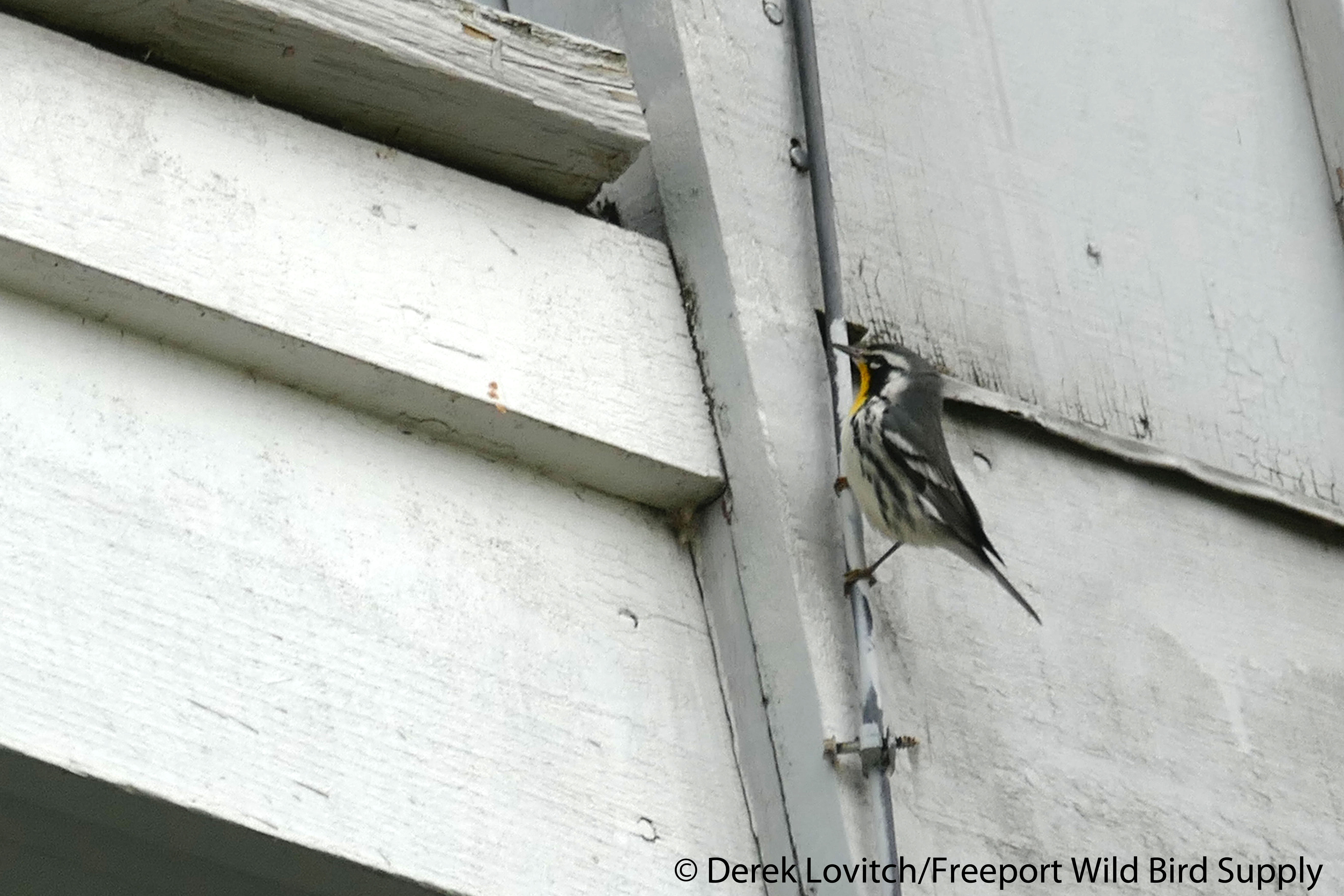
L1040215_YTWA3,Samoset,Rockport,12-17-15_edited-1L1040251_YTWA1,Samoset,Rockport,12-17-15_edited-1

I was back to the Saco Yacht Club with Luke Seitz the next morning, once again hoping for the Blackburnian. We worked the hillside and surrounding habitats hard, and absolutely cleaned up! The quick glimpse of a fly-by Western Tanager was more frustrating that satisfying, but we had great looks at the continuing Tennessee, Yellow, 2 Nashville, Common Yellowthroat, 2 Ruby-crowned Kinglets, and then, finally, the Blackburnian! My 9th warbler of the month!

Luke’s quote sums it up: “Let’s take a moment to appreciate what we are seeing and hearing around us right now. What. The. (Expletive deleted)!”

I had a little more time, so I made a quick trip down to Biddeford Pool. Working the neighborhood and thickets, I found a small group of Yellow-rumped Warblers (4-5), a nice addition to the day list. Besides, up until now, I had only seen one all month!

I was in the midst of plotting “Operation Orange-crowned” when I wandered over to look at a chattering Ruby-crowned Kinglet. A loud chip note caught my attention, and I looked up to see this Prairie Warbler – my 10th species of warbler for the month (and 7th of the day)!
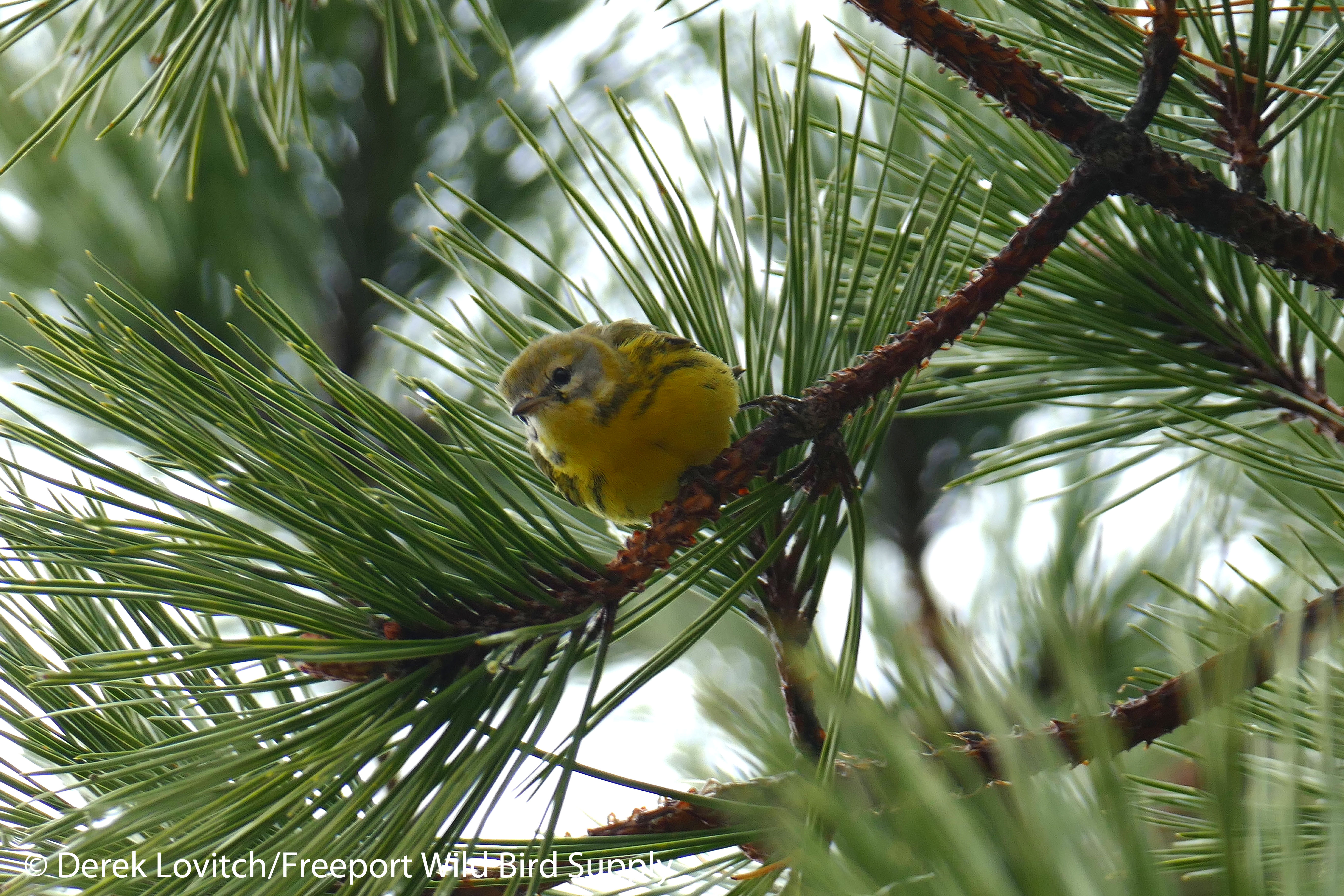
L1040305_PRAW,BiddPool,12-18-15_edited-1

But did you really think I would stop at 10?

Hunting for Orange-crowns in Portland and South Portland on the 21st, I turned up a Baltimore Oriole on Sheridan Street (likely the same individual that Jeannette and I found here on 11/23), and along West Commercial Street (in what’s left of the vegetation here!), I had a Swamp Sparrow, and a Field Sparrow – my 8th sparrow of the month.
L1040314_FISP,WCommercialSt,Portland,12-21-15_edited-1

Hmmm…do I need to go for 10 sparrows, too?

Obviously!

So I went to Scarborough Marsh the next day, and quickly picked up a Savannah Sparrow along the Eastern Road Trail for #9.

Jeannette and I, post-holiday madness, continued the search on the 28th, combing the coast from Kittery through Wells. While nothing new was added, we did find three different Swamp Sparrows (two at Fort Foster, 1 in York Beach), and most excitingly, we relocated the Clay-colored Sparrow that we found on the CBC – a mere one block away. Once again, however, I managed only some quick phone-binned photos.
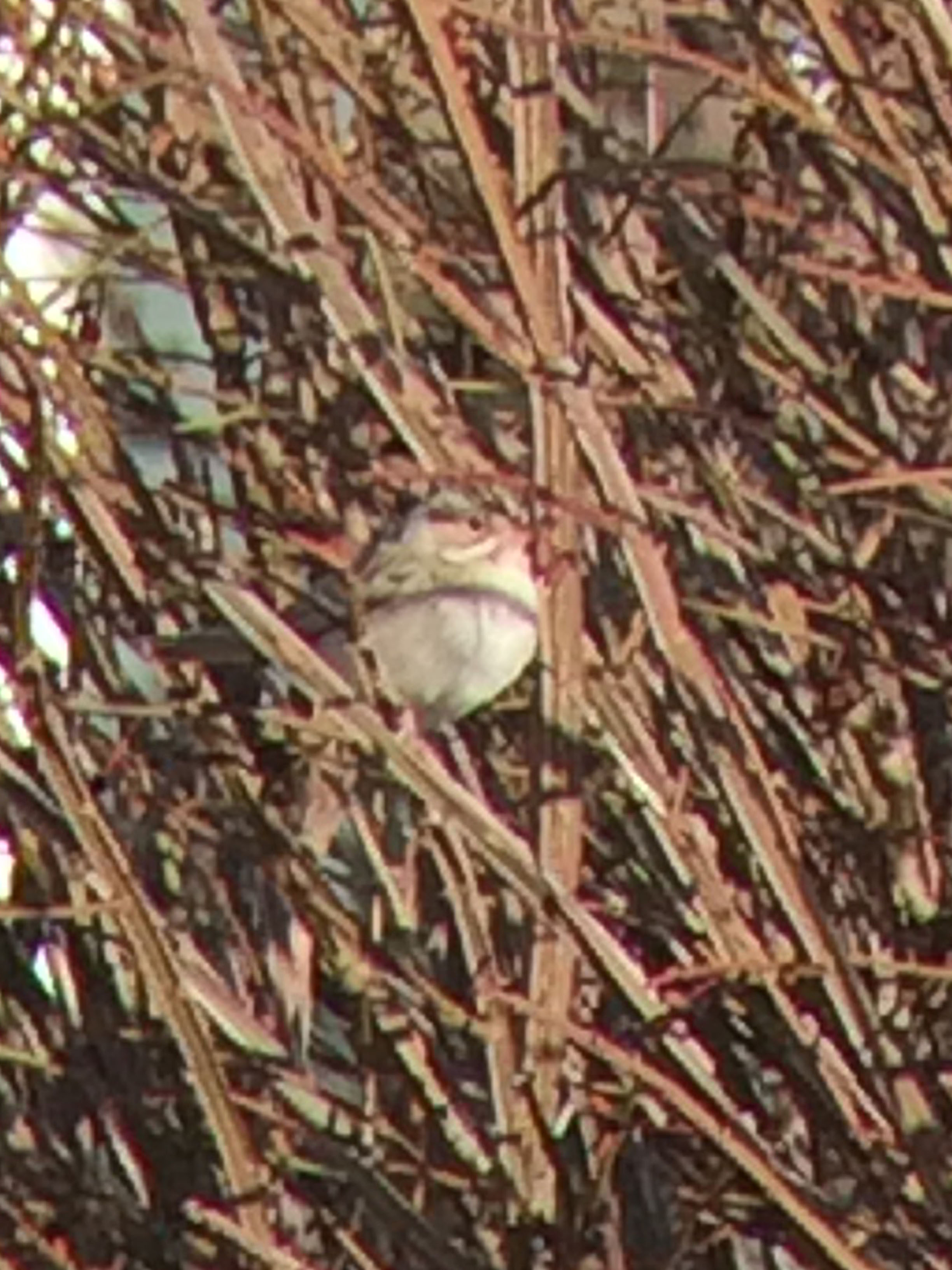
CCSP,Wells,12-28-15

A Northern Flicker and 5 Yellow-rumped Warblers were at Wells’ Community Park, while other highlights included 14 Sanderlings with Purple Sandpipers along Marginal Way in Ogunquit.

But before I knew it, it was December 31st. I still had yet to see an Orange-crowned Warbler (inconceivable!) for the month, and I was stuck at 9 species of sparrow. Therefore, Phil McCormack and I had a mission when we set out in the morning. We worked thickets and fields in Cape Elizabeth, with stops at various nooks and crannies in South Portland and Portland.

While we did not relocate the Lark Sparrow along Fessenden Road (it’s been a week since I have seen a report), we did have a Merlin there, and a couple of Yellow-rumped Warblers at Crescent Beach State Park. Luke had an Orange-crowned Warbler at Camp Ketcha back on the 20th, but it was rather devoid of birds today.

Throughout the day, pockets of Song and American Tree Sparrows were indicative of recent movements and concentration following the snow and ice, but we were not prepared for the concentration of sparrows at a particularly fruitful patch. In fact, it was astounding!

75+ American Tree and 50+ Song Sparrows flew out of the field, joined by 10 or so White-throated Sparrows and 20 or more Dark-eyed Juncos. A continuing female Brown-headed Cowbird was there, along with at least 80 American Goldfinches and 30 or so House Finches. A Carolina Wren sang from the woods, and two Swamp Sparrows and a female Common Yellowthroat were in the marsh…I knew my 10th species of sparrow was here somewhere!
L1040338_mixed_sparrows,Alewives,CapeE,12-31-15

After a teasing brief, distant but highly suggestive look, I finally found it – a Chipping Sparrow! My 10th species of sparrow in December!
L1040361_CHSP,Alewives,CapeE,12-31-15

Shortly thereafter, a Savannah Sparrow (my second of the month) appeared – not just our 7th species of the day, but the 7th species in this one spot! Amazing! And now I had a 7 species of sparrow day and 10 species for the month to match my 7 species of warbler day and 10 species for the month! (The Double 7/10 Split?)

But of course, I still wanted an Orange-crowned Warbler, so we kept birding (well, after a long, celebratory lunch of course), and I tried a few more OC spots in Portland after Phil departed. I still can’t believe I saw 10 species of warbler in Maine in December, and none of them were Orange-crowned, but it seems a fitting finish to the month, and the year, was the continuing Baltimore Oriole and Gray Catbird sitting in the same tree in the Sheridan St lot!
BAORandGRCA,SheridanSt,Portland,12-31-15_edited-2

Meanwhile, some other highlights over the course of the month, of the non-warbler or sparrow variety, including more seasonal species, such as two Snowy Owls on a Saturday Morning Birdwalk on the 12th, my first Iceland Gull of the season (finally) in Old Port on the 15th, a Snowy Owl at Biddeford Pool on the 18th, Harlequin Ducks, Purple Sandpipers, and a growing legion of wintering waterbirds.

Other signs of the unseasonably warm month included a lingering Double-crested Cormorant in Portland Harbor on 12/15, a few more lingering dabblers and Great Blue Herons than usual, but surprisingly, I didn’t see a Hermit Thrush all month – had they all moved on or would some now show up as the snow and ice pushes them to coastal migrant traps? But the most unexpected of them all was the Little Blue Heron that was found in the tiny Jordan Park Marsh in Ocean Park. I stopped by to visit it on the 22nd, about two weeks into its unseasonable stay.
L1040320_LBHE1,OOB,12-22-15_edited-1

Unfortunately, as much fun as this month has been – and as nice as it has been to not yet wear my parka – it’s impossible for me to ignore what this all means: the climate HAS changed. While no one month – warm or cold – is “climate change,” it is impossible for any rational person to not realize that our weather has become more and more unpredictable, less and less “normal,” and prone to more and more wild swings in seasonal and within-season variability. No, a hot day doesn’t mean Global Warming, nor does a snowstorm mean there’s not (Please James Inhoffe, please go away and shut the hell up). But the trends are real, very apparent, and very much here. Now. And they are most definitely affecting birds and bird migration.

That being said, I would not use these warblers as an example of this. Instead, I think the fact that here in December and they are still ALIVE, is however, a perfect example of just how ridiculously warm our weather has been! The mechanisms that delivered these birds to the Saco Riverwalk and elsewhere are likely varied. Perhaps the deformed, crossed-bill of the Tennessee Warbler impedes its ability to efficiently forage and put on the necessary weight for its next leg of migration. Perhaps the extensive southerly winds that have ushered in this warm air also facilitated the arrival of a 180-degree misoriented migrant Yellow-throated Warbler, and I would propose, the Prairie Warbler as well (I think the rare-but-regular late fall Prairies are actually birds from our south) that were “messed up” and flew the wrong way. But it is also possible that some of these warblers are “reverse migrants” that started to go south and then turned around, but I doubt it – facultative migrants like swallows and blackbirds do it, but I don’t know of any known proof that long-distance Neotropical migrants pull it off (on purpose, anyway).

These mechanisms occur every year, and rare warblers are found at places like the Saco Riverwalk every fall. However, they’re usually found in October and November and either move on (or, more likely perish) by now. So I think what’s remarkable is not that all of these warblers are here, but that they are still ALIVE well into December – and that is most definitely due to the mild winter so far. There have still been insects to be found, there’s plenty of fruit left to consume, and fewer calories have been spent to keep up internal body temperatures, meaning there are fewer calories that need to be consumed.

Migration in long-distance, obligate migrants is not triggered by temperatures, but trigged by physiological changes directed by hormones responding to the changing length of the day. In the fall, southbound migration is triggered in part by a response to changes in fat loading to fuel these epic journeys. At some point, the controls are switched away from building the fat reserves that are necessary for migration. I don’t know at what point in the season “pioneering” warblers lose the ability (perhaps, even the “desire”) to migrate. My guess is that even if you pumped these birds full of fat, at this point, they won’t be going anywhere – this is now their winter territory, for better, or for most likely, worse.

So what does this mean besides some amazing early winter birding? Good question. Conventional wisdom says these birds are all “evolutionary dead ends” that will soon be eliminated from the gene pool (it has to get cold sometime, right? If they’re not picked off by a Sharp-shinned Hawk or all of the damn outdoor cats that hunt there). However, with the effects of Global Climate Change clearly upon us, and not reversing anytime soon (if ever), perhaps these “pioneers” are the wave of the future. Maybe someday, warblers will successfully overwinter in Maine, and return to their breeding grounds to pass on those genes.

Maybe. Afterall, without vagrancy, we would not have Hawaiian honeycreepers or Darwin’s finches; distant islands would be sans all landbirds. Perhaps phenomena like “reverse migration” and this pioneering thing will allow the next wave of adaption to a changing climate. Of course, never before in the history of life on earth, has this change occurred so rapidly, and we have little evidence suggesting long-distant migrants can adapt this quickly – it’s going to take more than a few individuals of 10 species of warblers.

Sparrows, however, aren’t obligate long-distance migrants that are “programmed” to leave at a prescribed time. Instead, they are more flexible in their movements, and being seed-eaters, they aren’t reliant on warm-weather dependent insects. As long as seeds are available, and with the complete dearth of snow, they most certainly have been, those that linger can do just fine. White-throated, American Tree, Song, and Dark-eyed Juncos are all regular parts of our winter avifauna in southern Maine, lingering or “pioneering” Swamp Sparrows are regular here and there, and every now and then a Lark Sparrow (a “drift migrant/vagrant” from the Midwest) or Field Sparrow spends the winter in the state. Field and Clay-colored are also rare-but-regular in late fall/early winter, so once again, the presence of 10 species of sparrows is also not in and of itself caused by the record temperatures, but it is most definitely another sign of how mild – and especially snow-free – it has been.

But this is all a blog for another time…this blog was supposed to be about warblers (and sparrows!). In Maine. In December. And that’s amazing. Or, as Luke said, “What. The. (Expletive deleted).”