Tag Archives: Lark Sparrow

2025 Monhegan Fall Migration Weekend Tour Report

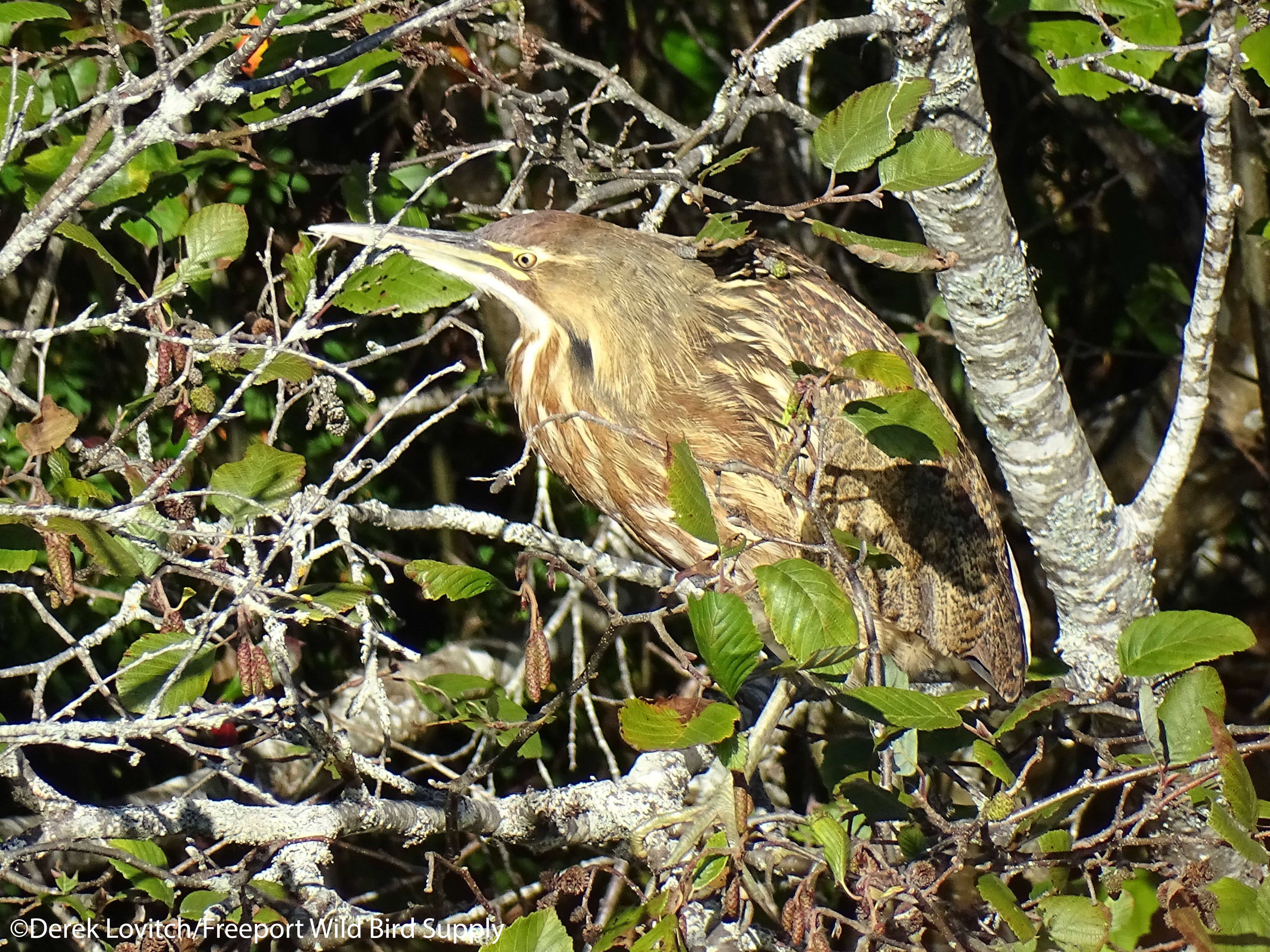
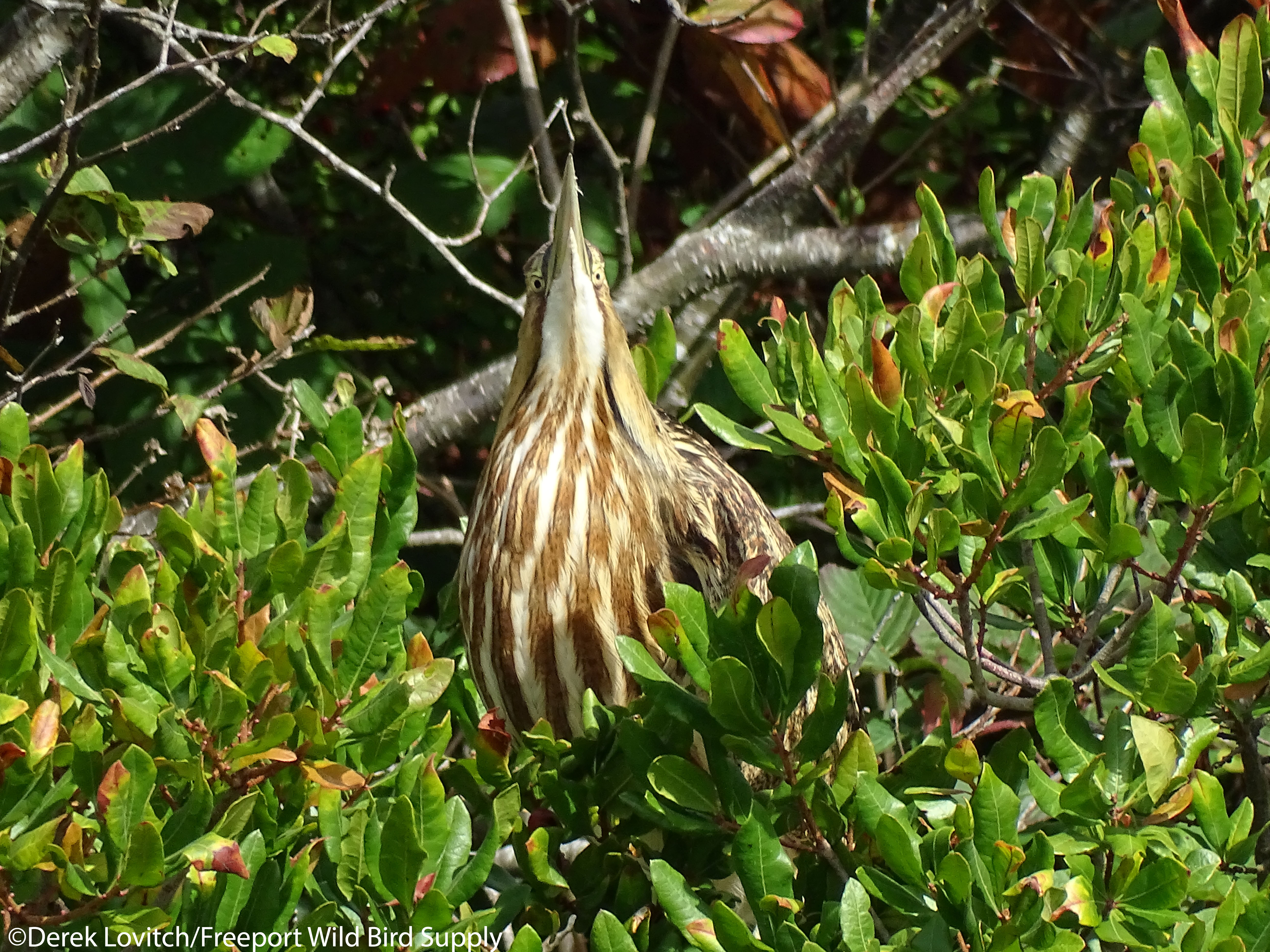
An American Bittern sitting in the open in a tree, just a handful of yards away could have easily been the highlight of any birding weekend. But, this stellar start was just the tip of the iceberg of the weekend’s birding excitement.

It has been quite a few years since we had a weekend like this. Lots of birds, “mega” rarities, warm weather, and tons of excitement. It was truly a special weekend. We were honored to have been there for it.

The tour began on Friday, with only one participant joining me on the Hardy Boat. The island greeted us with a Lesser Black-backed Gull, which we scoped from the wharf, and several warblers at the usual spot uphill. But after getting the inside scoop from birders already on the island, we made a bee-line for the Ice Pond where an American Bittern was sitting all morning. Remarkably, however, it was sitting in a bush (see above)!

How’s that for starting a tour off right? We also immediately encountered Dickcissel and Blue-gray Gnatcatcher, and there were plenty of Yellow-rumped Warblers and Palm Warblers here and there.

After lunch, with our group now complete, the surprisingly good birding continued. Despite such a warm afternoon and few birds on the radar overnight on mostly a southwest wind aloft, we enjoyed an excellent introduction to Monhegan birding in the fall:  2 Clay-colored Sparrows with 2 immature White-crowned Sparrows, a Dickcissel, and several White-throated Sparrows in one field of view; a dozing Common Nighthawk trying to stay camouflaged on a wood pile, and another visit to the still-confiding American Bittern at the Ice Pond for those who arrived later. It was a solid afternoon overall, with bird activity continuing right up until dinnertime.
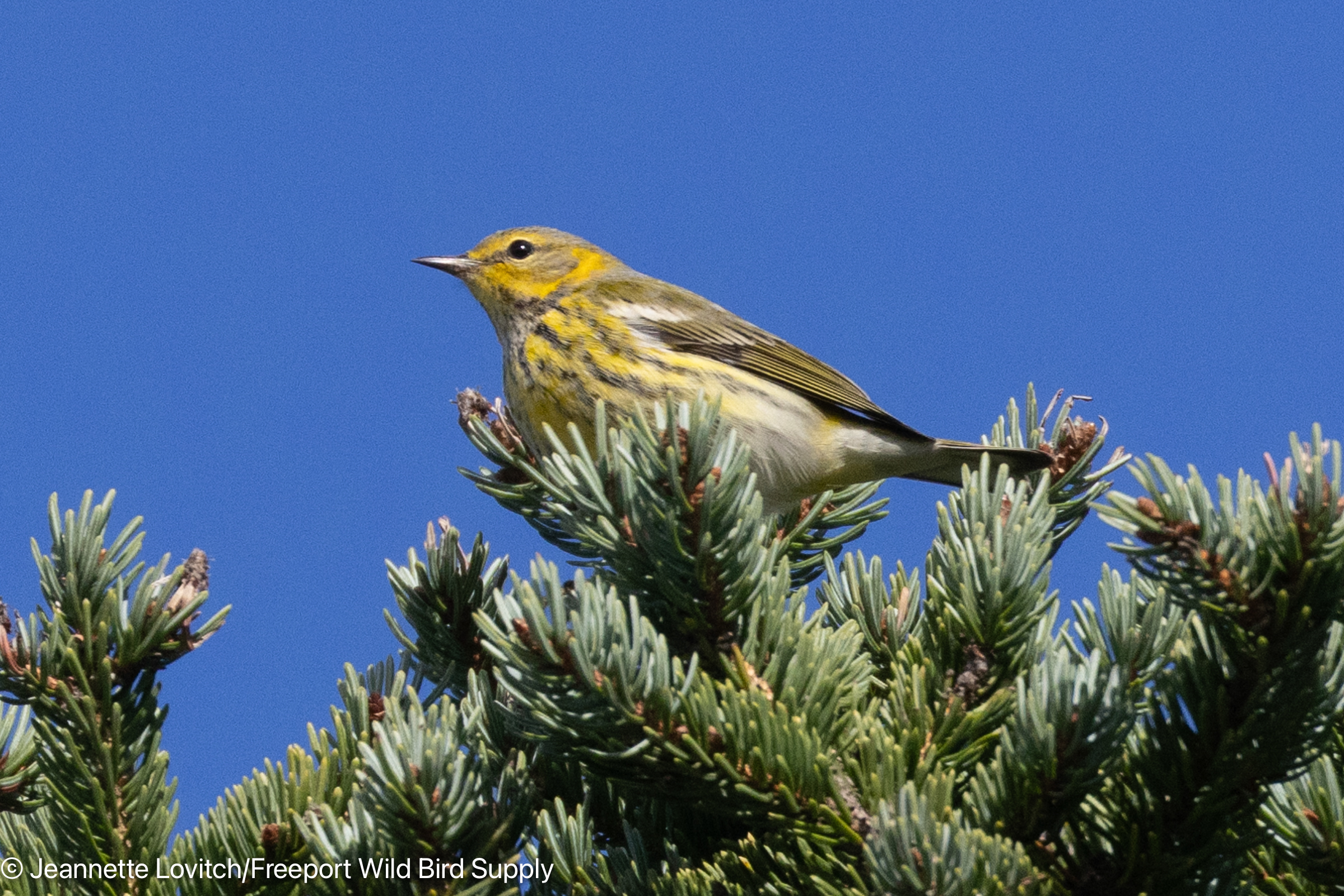
Cape May Warblers in a wide variety of plumages is always one of the highlights
of any fall weekend on Monhegan

.Unfortunately, our best bird of the day was almost the one that got away. Almost! While viewing an Indigo Bunting in the Community Garden, a second bunting snuck into view, skulking. It briefly popped out, and I yelled “get photos” and then it popped back into the weeds and was not to be seen again.

“Did I see green?” I exclaimed, but it was so fleeting, and the light was so harsh, and the bird was so, so pale, I couldn’t be sure. I looked at photos on the back of cameras in the sun, and we had a good discussion on why this could have been a Painted Bunting. Unfortunately, I have little experience with first fall female (presumably) Painted Buntings and had no idea they could be this unbelievably drab. So I talked myself out of it.
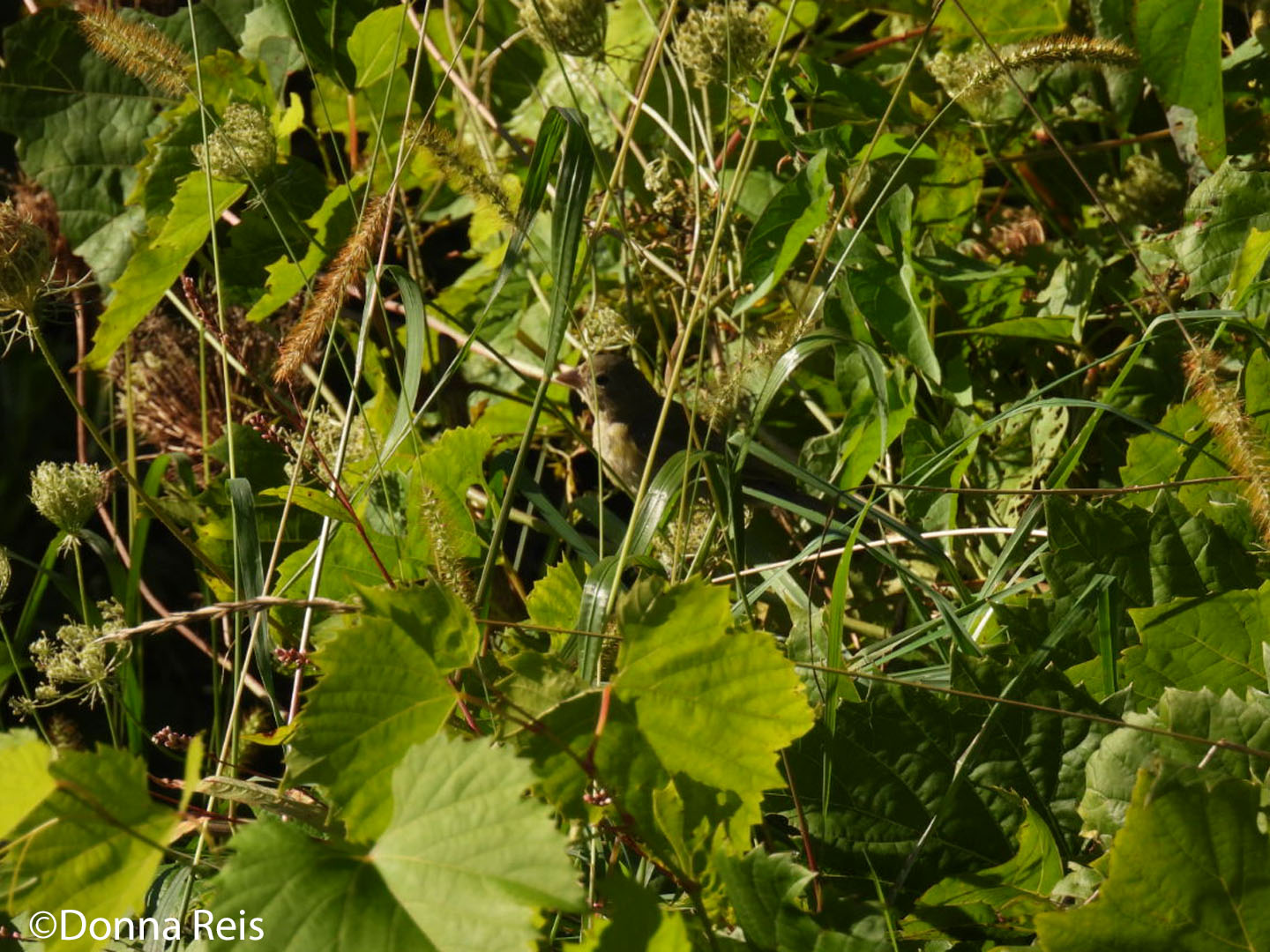
Overnight, I received photos from Bill Thompson, who, an hour or two after we saw the bunting, also briefly saw and photographed it. “Is this a Painted Bunting?” he asked.
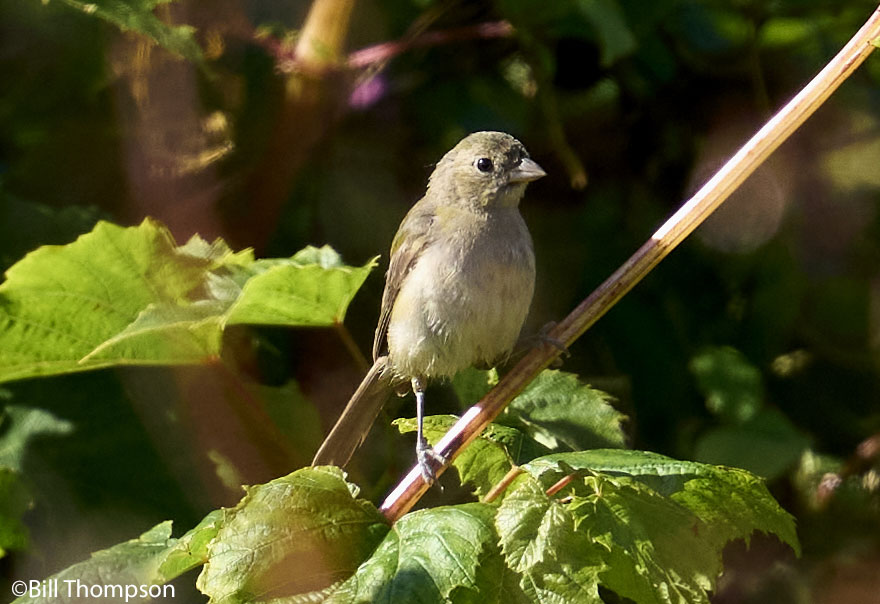
Yup, that really does have green on it, and on more than one side – in other words, not a reflection. Darn it. It counts for us – we all saw it – but in hindsight, we should have gotten the word out about a “possible/probable” Painted Bunting and had more eyes looking. Luckily, Bill was in the right place at the right time once again! But I felt like I had blown this one. I was too quick to dismiss it and so I decided I would have to make up for it over the rest of the weekend. Maybe the dry cold front that passed through on Friday evening and shifted the winds would help.

A very strong flight Friday night into Saturday morning on a diminishing northwesterly wind was idea for bringing birds to Monhegan Island come sunrise. And at first light, it was clear it was on!

The Morning Flight featured tons of Yellow-rumped Warblers with the occasional Palm and Blackpoll Warbler. Between the morning flight and our pre-breakfast stroll, we had a lot of birds: a couple of waves of Dark-eyed Juncos, bunches of Red-breasted Nuthatches, more Golden-crowned Kinglets and Purple Finches, insane views of Peregrine Falcons, 2 Dickcissels, 4 Baltimore Orioles, and lots of great views of lots of common species.

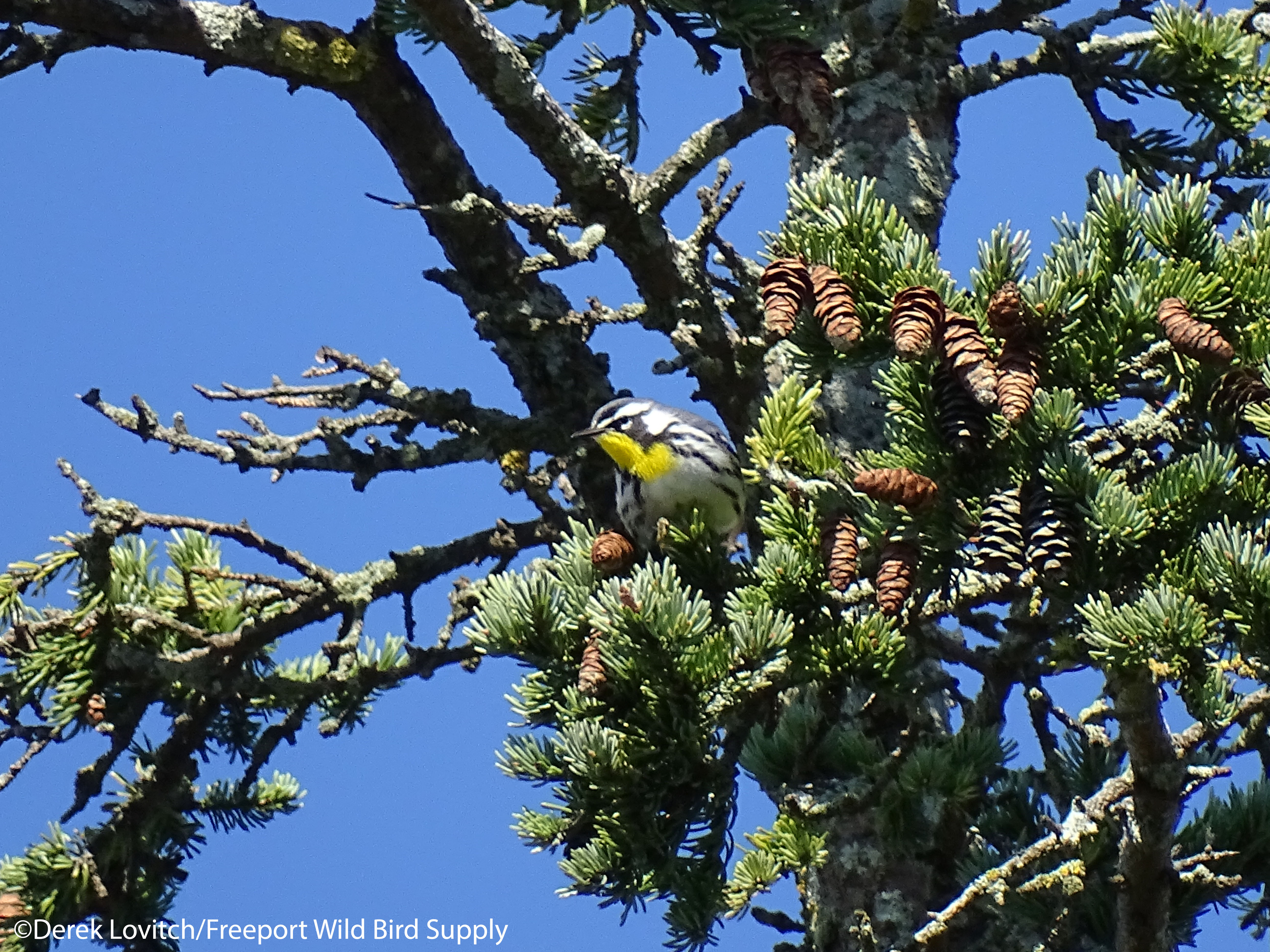
After breakfast, it remained fantastic. Just birds everywhere, and not surprisingly, some notable species began to be turned up.  Our first “chase” was a Yellow-throated Warbler, our group arriving just in time before it took off.

Luckily, Dan Gardoqui and I stumbled upon it again while foraging for lunch, and I was able to round up several of the group members for improved views and photographs.
The American Bittern was now in the marsh, there were now three Dickcissels, 8 Baltimore Orioles, and a second, but definitively identified Indigo Bunting. No green one, unfortunately.

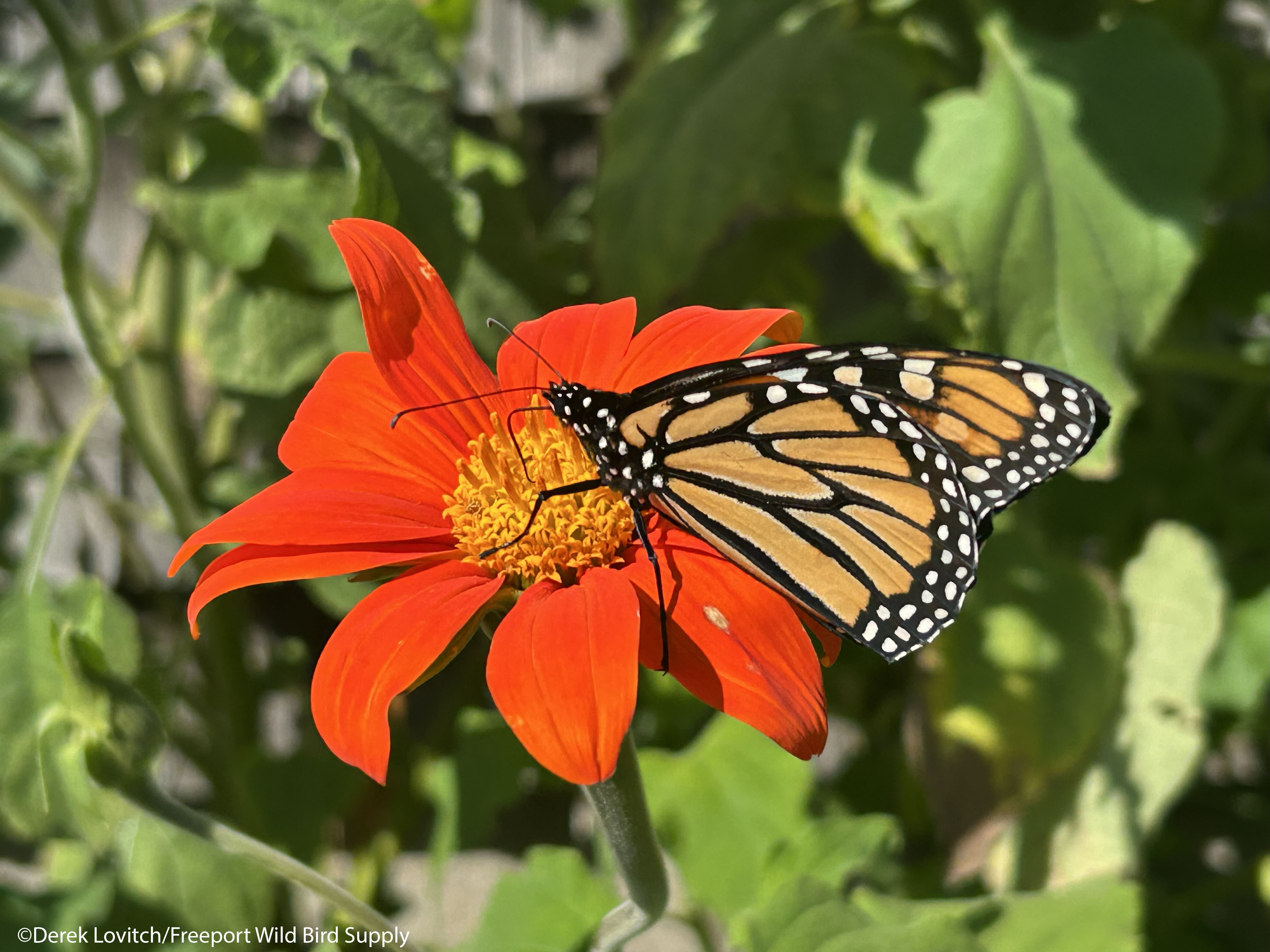
Not surprisingly on such a nice day, the afternoon was slower, as birds had departed the island early, or had now sought refuge in the shadows, especially with the continuing activity of Peregrines, Merlins, and Sharp-shinned Hawks. So, we checked some nooks and crannies, turning up a Nelson’s Sparrow at Lobster Cove and enjoying gliding Peregrine Falcons passing right in front of us from Burnt Head. We also took the time to enjoy butterflies, plants, and all other walks of life.
It was a delightful afternoon, but we returned to town to find we had missed out on a Western Kingbird. Luckily, a few of us caught up with it at dusk when it was refound near the Mooring Chain.

(phone-binned photo under low light)

So, it was a great day, and given the winds and weather, we expected it to be such. Then, with little to no movement overnight (at least visible on the radar), on a light south to southwest wind, we hoped for some birds to stick around from Saturday and perhaps be augmented by a rarity or two. At the very least, I wanted to show the Yellow-throated Warbler and Western Kingbird to the rest of the group, especially with a big turnover in participants for the second half of the weekend.

What we didn’t expect was to run out of superlatives before breakfast. We certainly did not expect it after viewing the Morning Flight, which consisted of exactly one American Pipit (and the big wandering flock of Cedar Waxwings, of course).

Once again, a bird was identified from photo review (what did we do before Instant Replay?!) and Bill Thompson and Jess Bishop had apparently discovered a Mega rare Bell’s Vireo on Saturday with only 4 accepted previous records for Maine. With such a slow morning flight, I decided to mix things up from my usual routine, head clockwise through my usual dawn loop, and give it a try to find the Bell’s. We stopped near where it was seen on Saturday, and chatted about the rarity, the identification, etc. “Holy shit, there it is!” I tried not to exclaim too loudly as the bird popped out right in front of us.

We observed it for about 10-15 minutes as it popped in and out of a brushy edge, focusing on feeding in young cherry trees with fall webworm clusters. Birders began to arrive from all directions, as the vireo kept coming in and out of view before flying right over our heads and disappearing deep into a dense thicket.
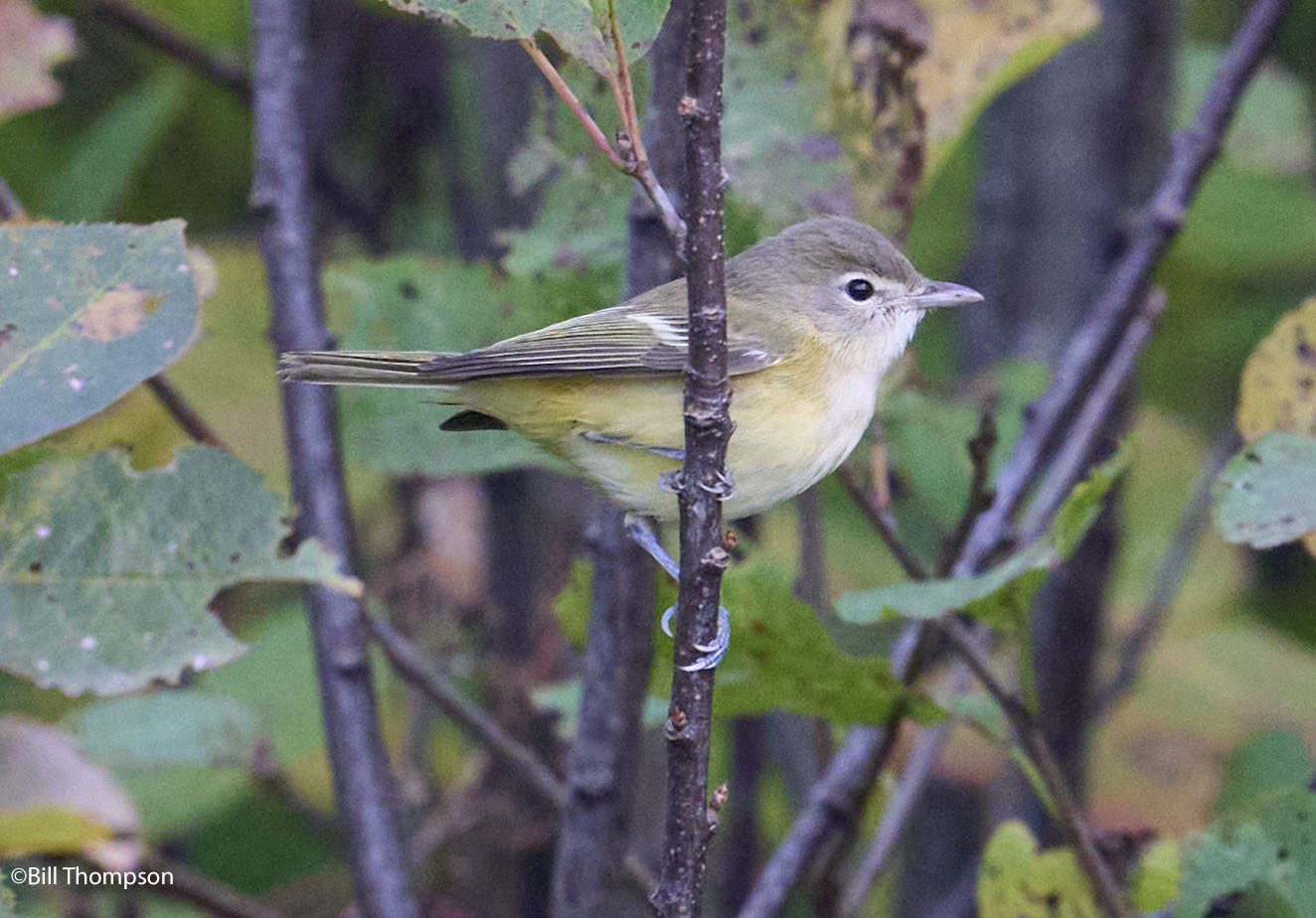
I’ll steal Bill Thompson‘s (with permission of course) Bell’s Vireo
from this morning since he was standing next to us.

It was getting too crowded for our tastes, so we moved on and let others have the edge to monitor. We enjoyed Cedar Waxwings, Northern Flickers, and then took a moment to pause at our usual starting spot, at the spruces behind the Yew.

It was slow, and quiet, and so I was making sure we looked at everything, like the one solo warbler flying towards us from across the sky over the Trailing Yew. It then landed a short distance away, and I brought my binoculars up to it, assuming we had a close Yellow-rumped Warbler to talk about.

<expletives deleted>

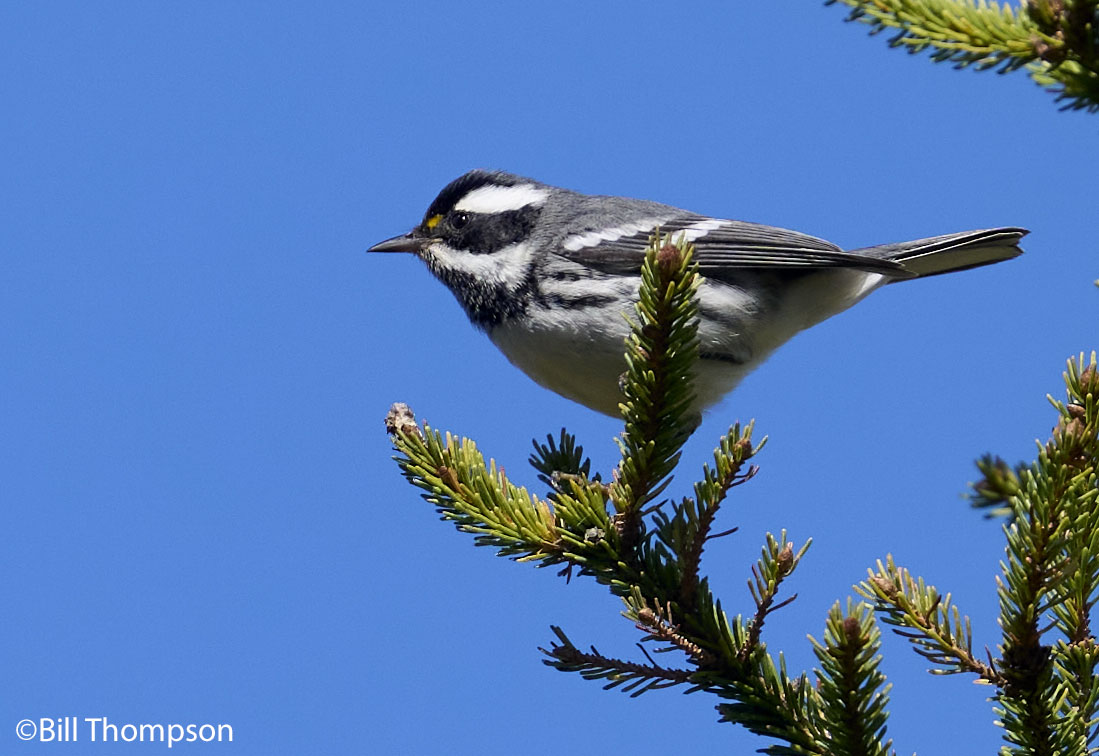
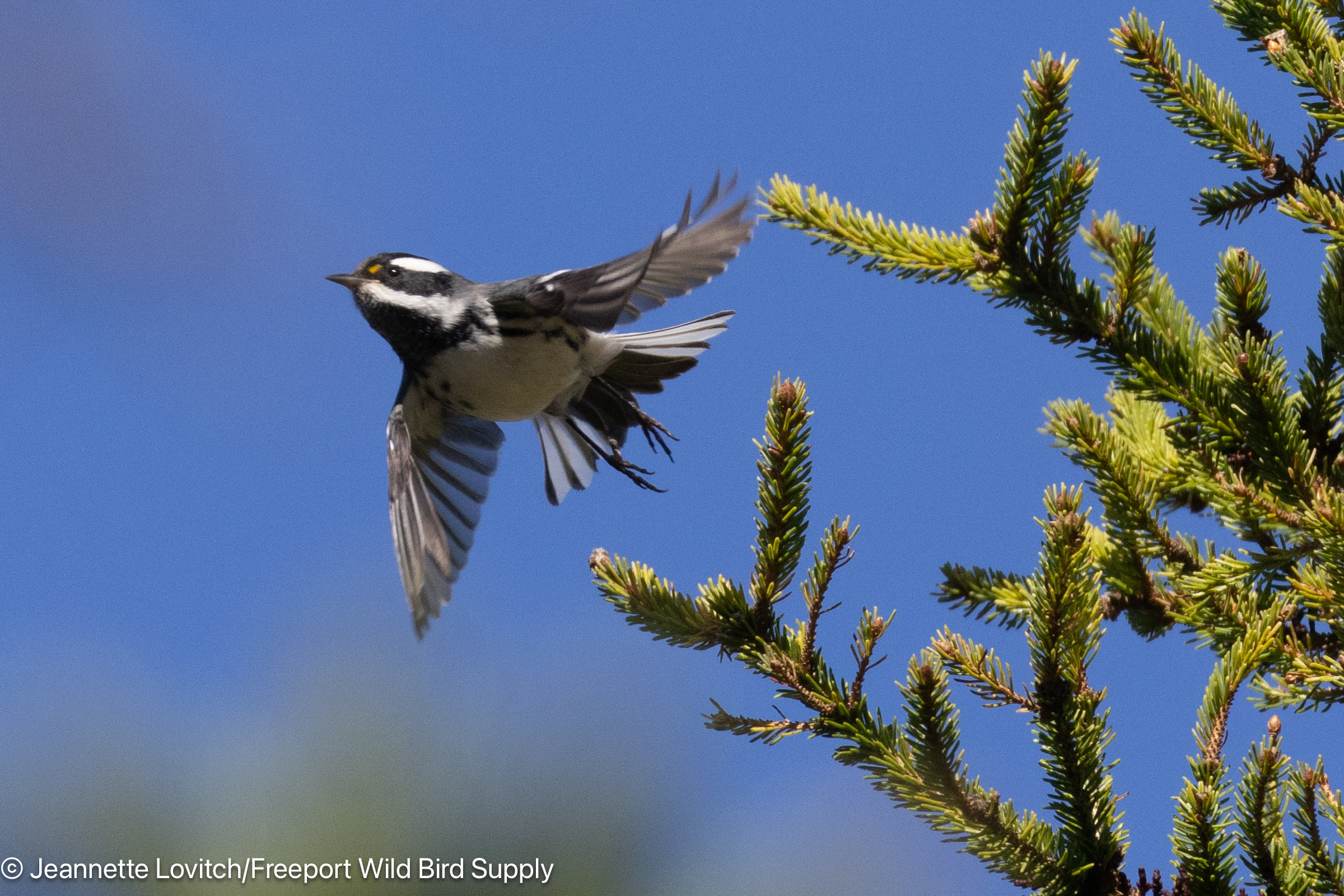
A Black-throated Gray Warbler, with only 5 previous records from Maine, was there. Right there. We had some great looks and photo ops, called over a friend, and then watched it the herd of birders arrive and head out to follow it. What a lucky find! We were ecstatic. And we still hadn’t had breakfast! (See photos from tomorrow),

Wondering if the day could get any better – and pretty content if it did not – we reconvened after breakfast and headed in the opposite direction from the searching masses, as I am wont to do.

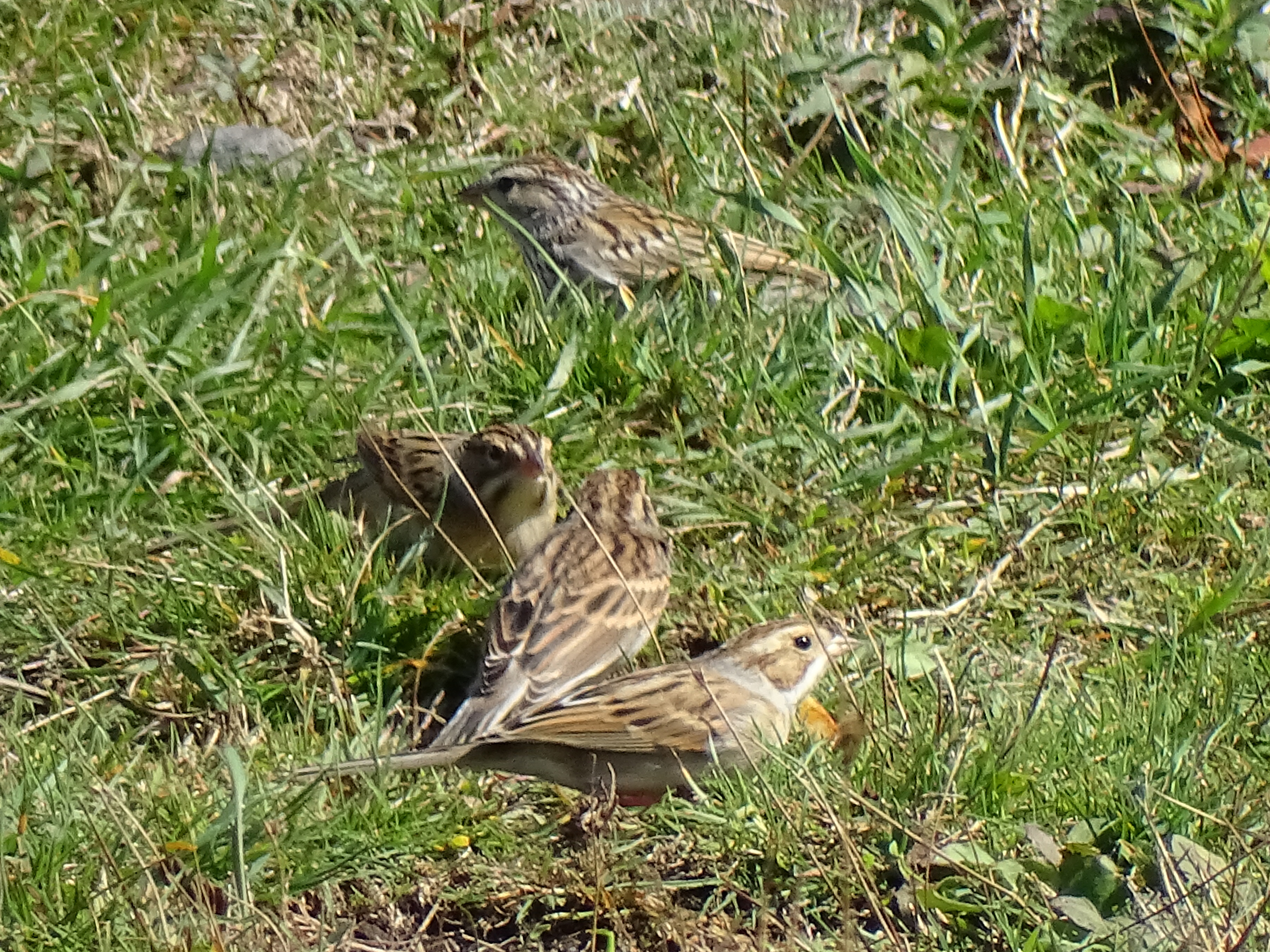
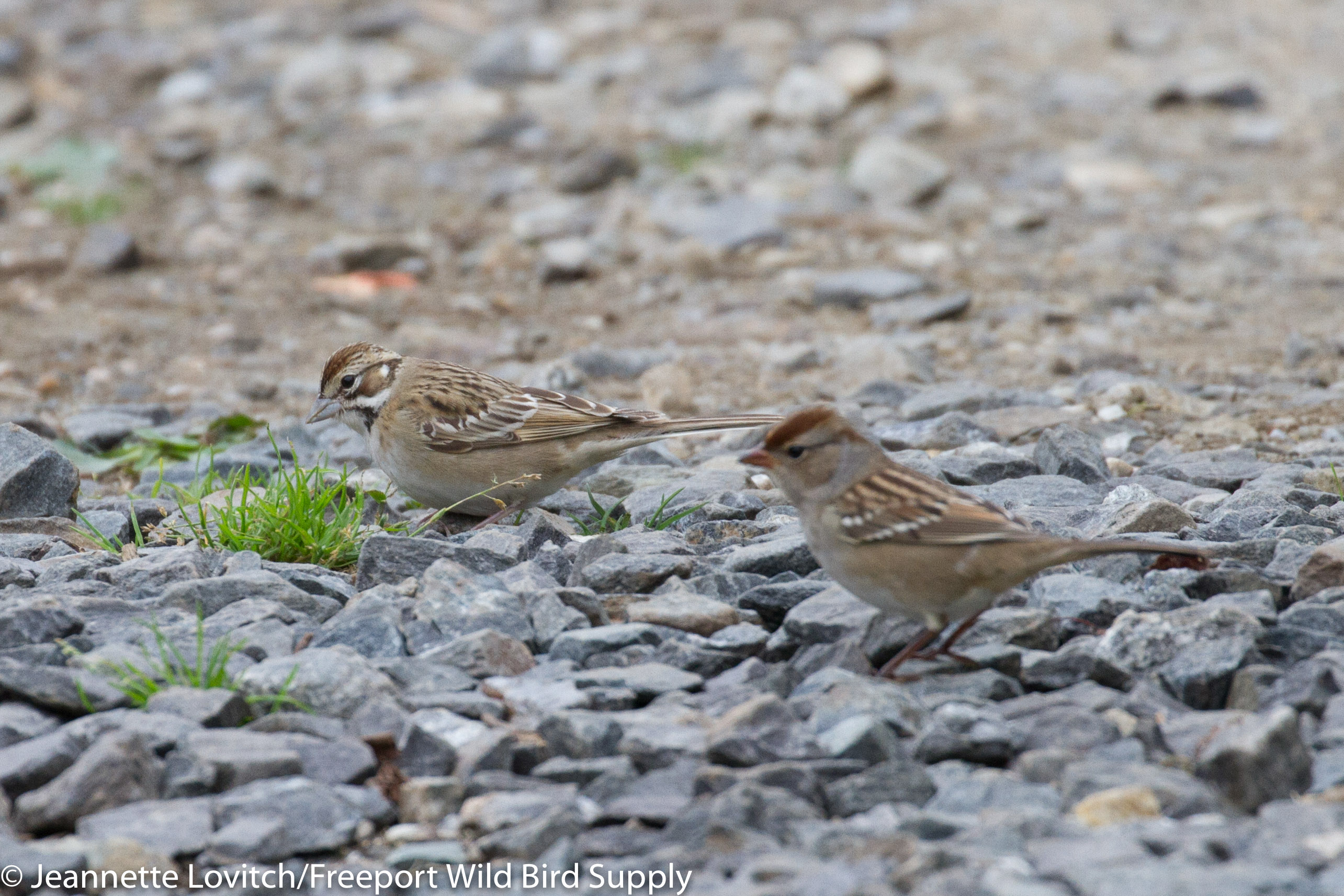
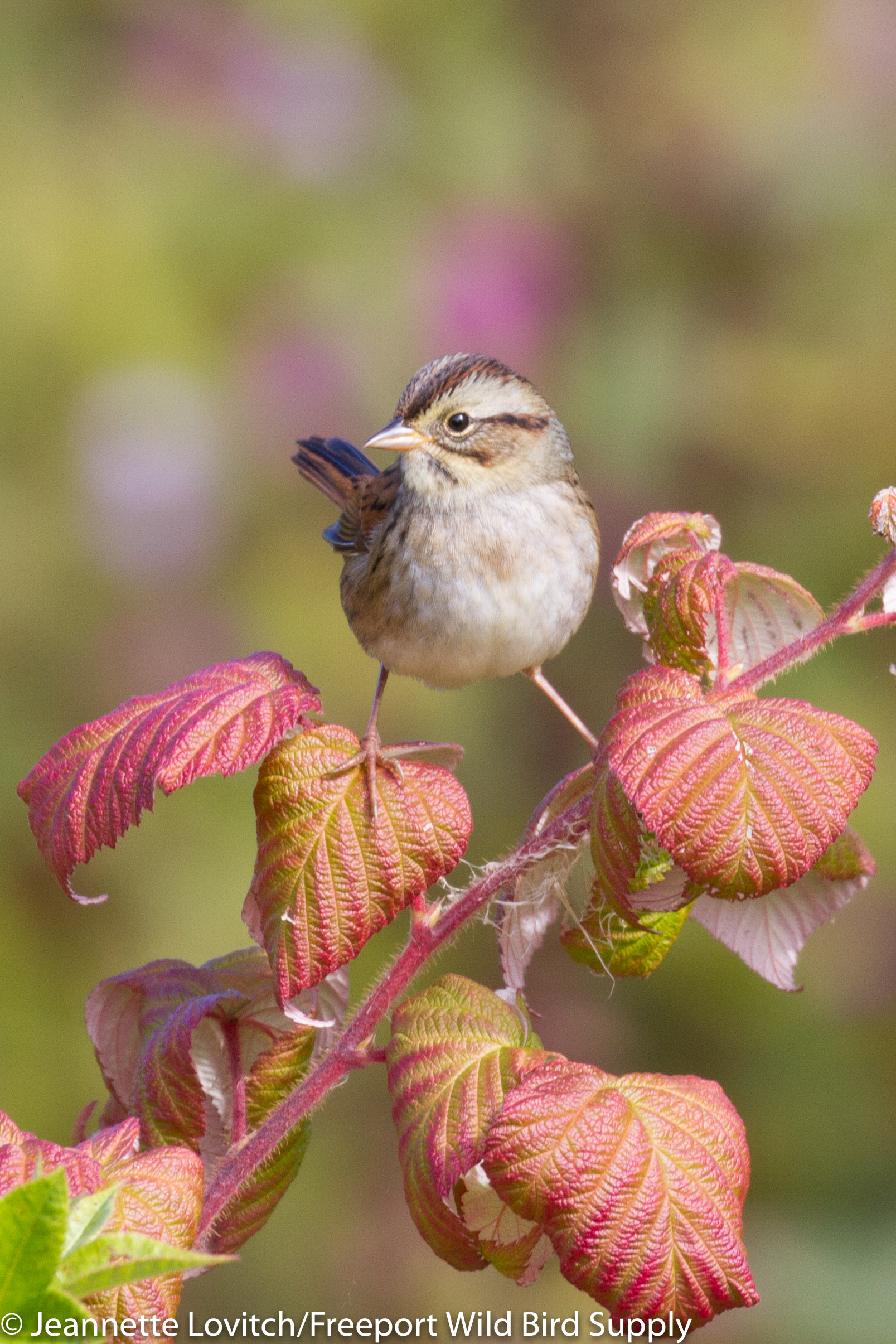
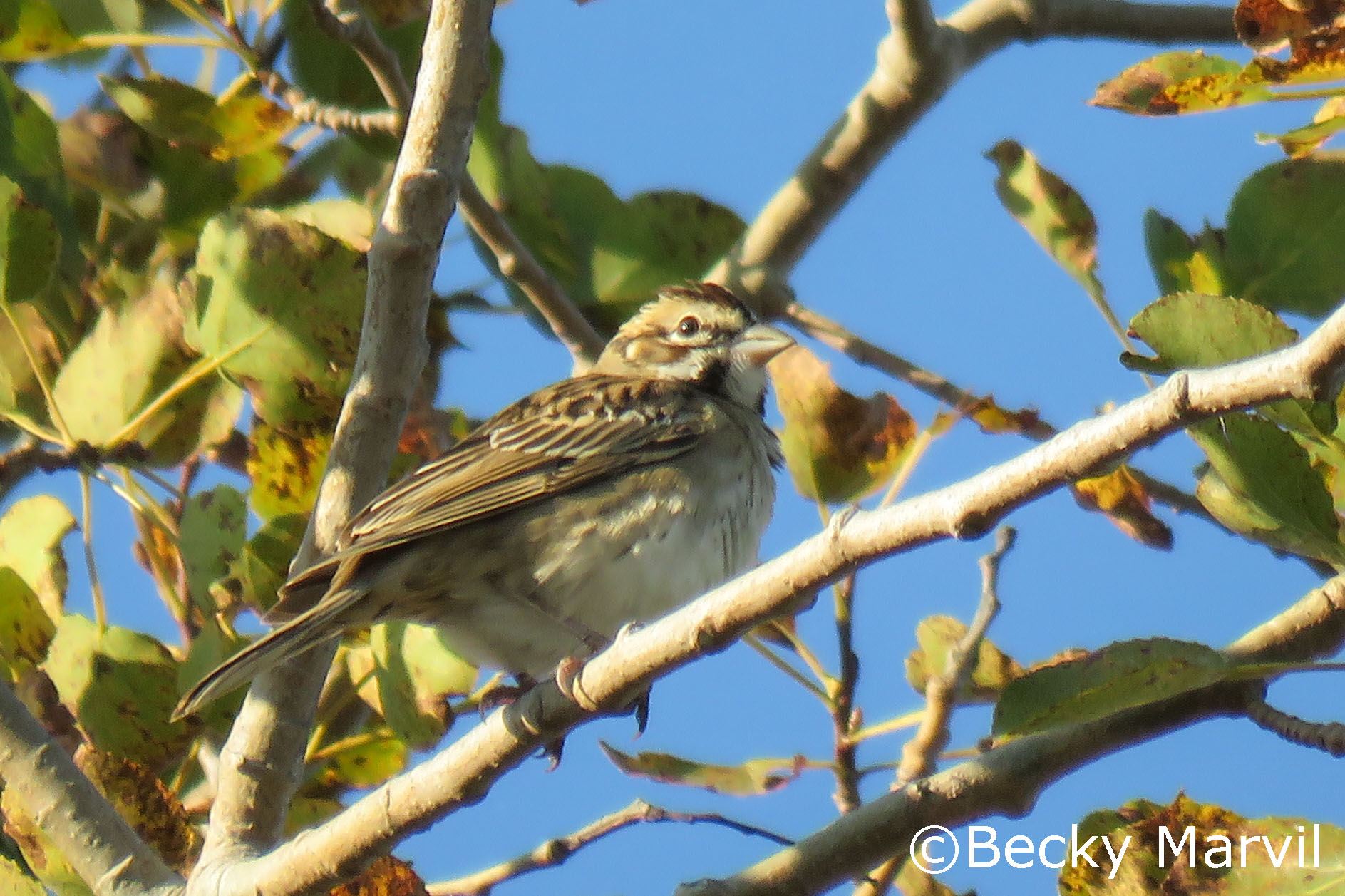
It worked again: we found one Lark Sparrow, and then another. How many Clay-colored Sparrows – 4? 8? More? An Orange-crowned Warbler at the Ice Pond, a fly-over Red-bellied Woodpecker, a Pine Warbler, a Yellow-bellied Sapsucker on every tree. So much for it being a slow day.
Another warm afternoon sent us into the woods for shade, immersing ourselves in a cacophony of Red-breasted Nuthatches, sprinkled with Golden-crowned Kinglets, and the occasional Red-eyed Vireo or other migrant. We took in the Fringed Gentian, the scenery, and finished strong with the 2 Lark Sparrows and 4 Clay-colored Sparrows together.

Today was a good day.

Monday, the fourth and final day of the tour began with excited anticipation with another strong flight overnight on a diminishing NW to W wind. But today, it was just too nice, and a lot of last night’s birds passed overhead resulting in just a light Morning Flight come sunrise. But there was a turnover of birds, and our morning walk added several things to our list including the Eastern Kingbird we finally caught up with, and another Orange-crowned Warbler. The highlight, however, of our pre-breakfast jaunt was a juvenile Sharp-shinned Hawk that flew to a spruce, plucked a cone off of an outer branch, and then proceeded to play with it! It would move it from its bill to its talons, and then it dropped it, chasing it down the tree. It then flew back up and grabbed another! What a remarkable insight into how a kid Sharpie gets better at hunting on its own.

After breakfast, the good Merlin show of the day continued, and we took time for a short gull identification workshop. Our first Ring-billed Gull out here was good to practice on, and we conveniently had three Lesser Black-backed Gulls: an adult and 2 first-cycle birds. But mostly, we worked through the difference between each age class of the common Herring and Great Black-backed Gulls.

We finally picked up a Northern Waterthrush- our 20th species of warbler on the weekend! But otherwise, it was pretty slow.

It was slow in the afternoon, too, but the Black-throated Gray Warbler had been refound just before we reconvened after lunch, and eventually we were all treated to much, much better views and photo ops than the morning before.
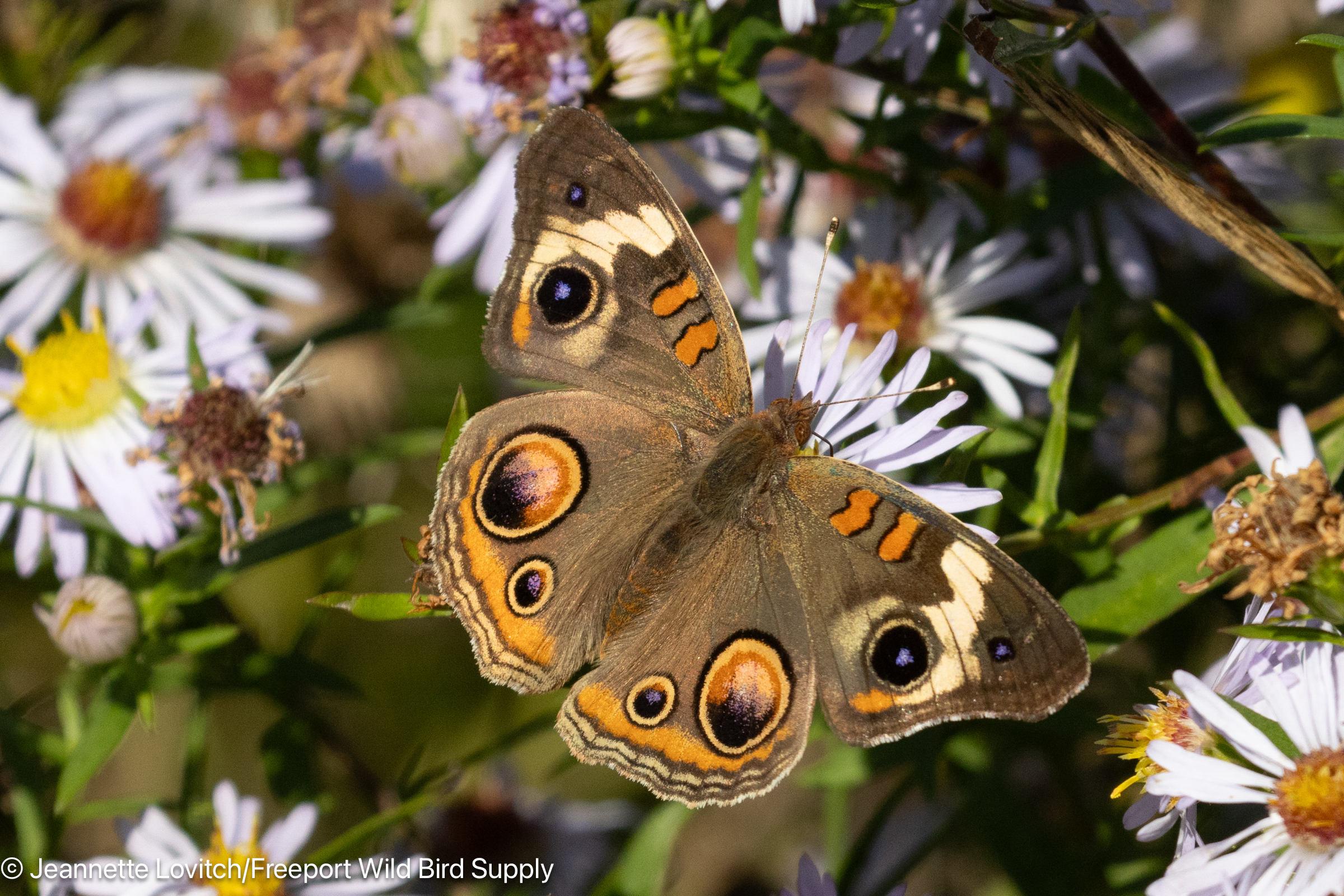
We then twitched a rare Common Buckeye butterfly and Lady’s Tresses orchids.
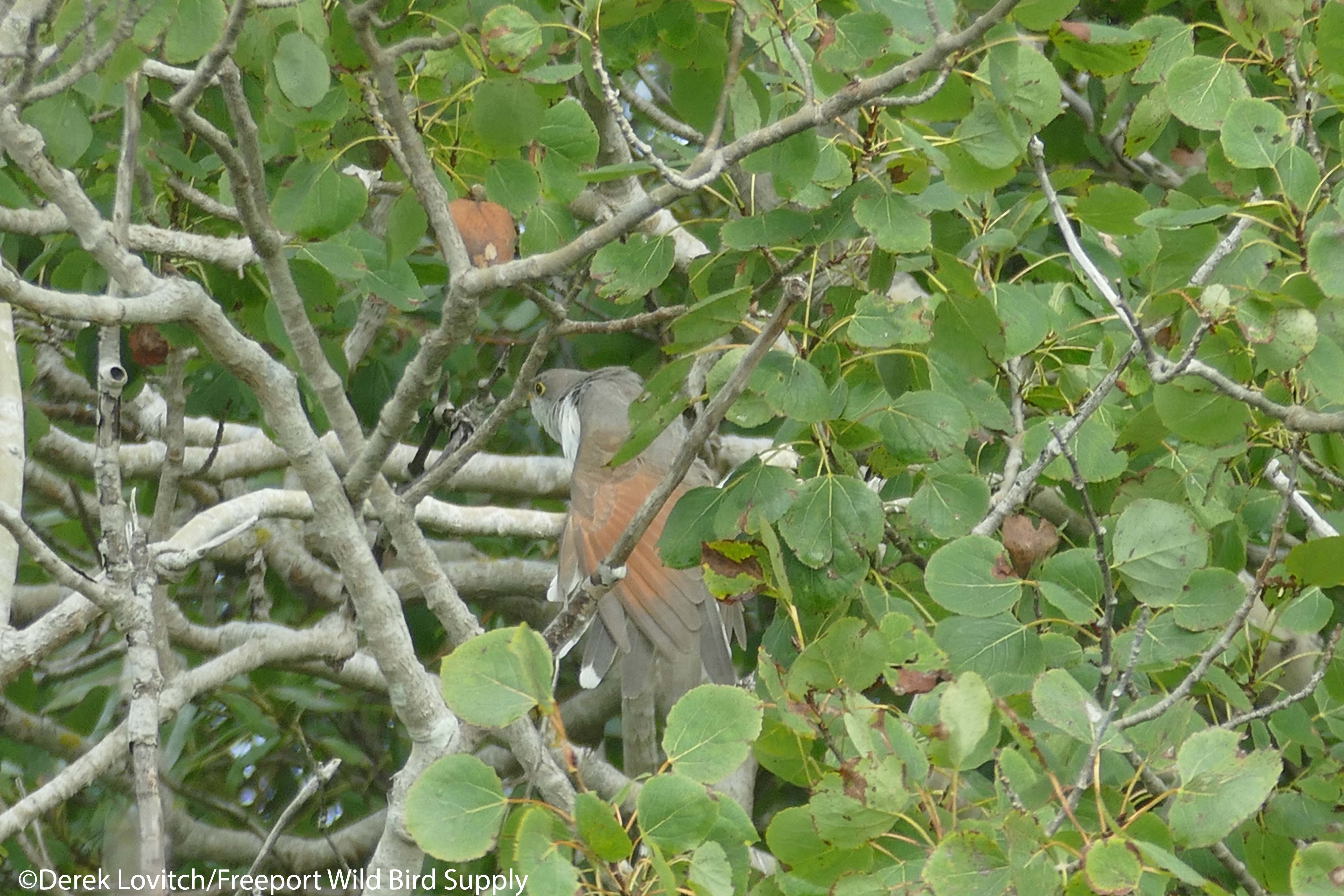
 Our last new species of the trip was one of the last birds we observed together: a Yellow-billed Cuckoo eating American Dagger Moth and/or Hickory Tussock Moth caterpillars. Watching it whack the caterpillar on a twig to beat off its irritating hairs, we had another moment of insight into a bird’s world.

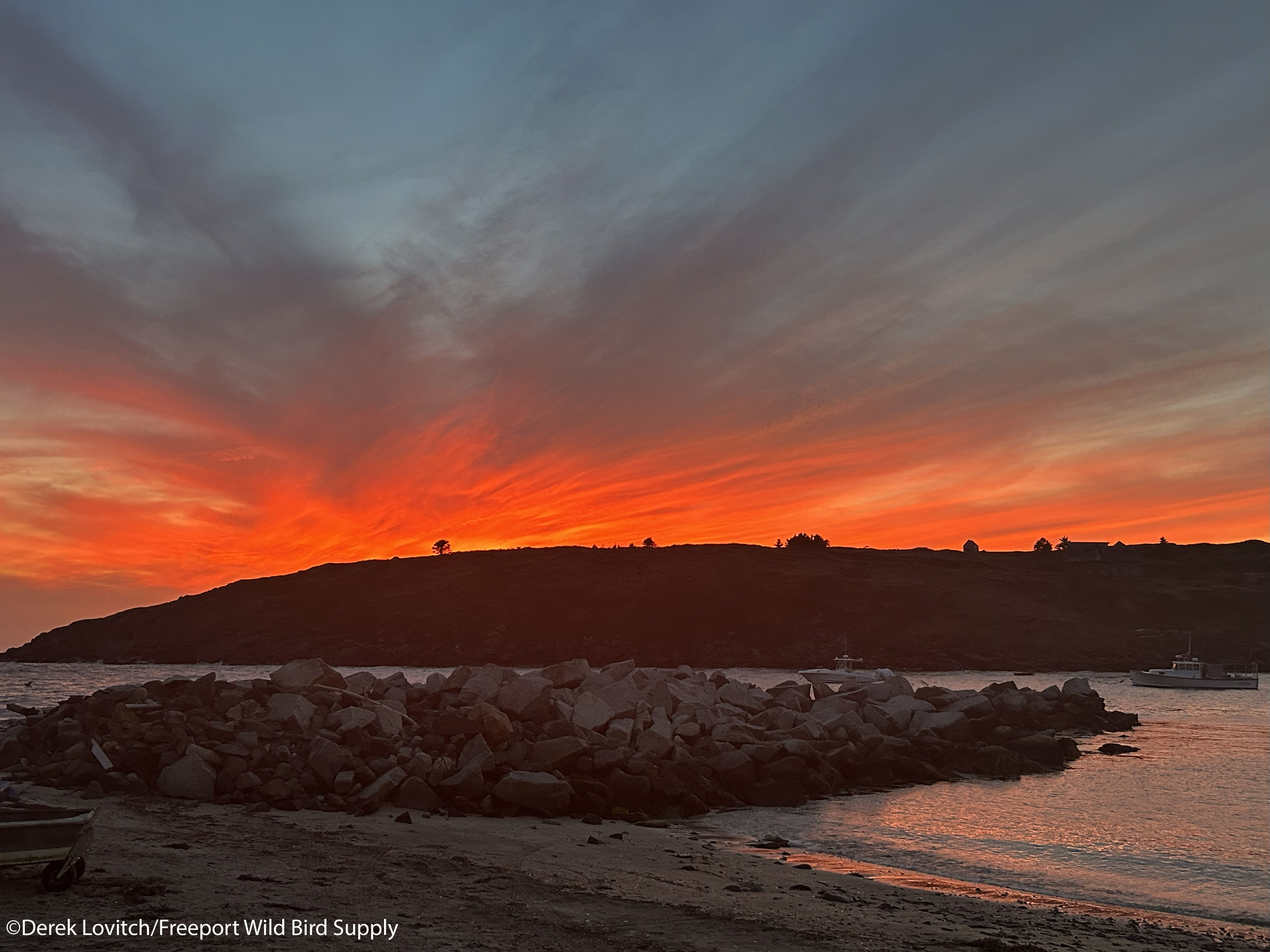
With the tour now complete, Jeannete and I enjoyed a delicious sunset and delightful food with friends and spotted an American Woodcock on our walk back.
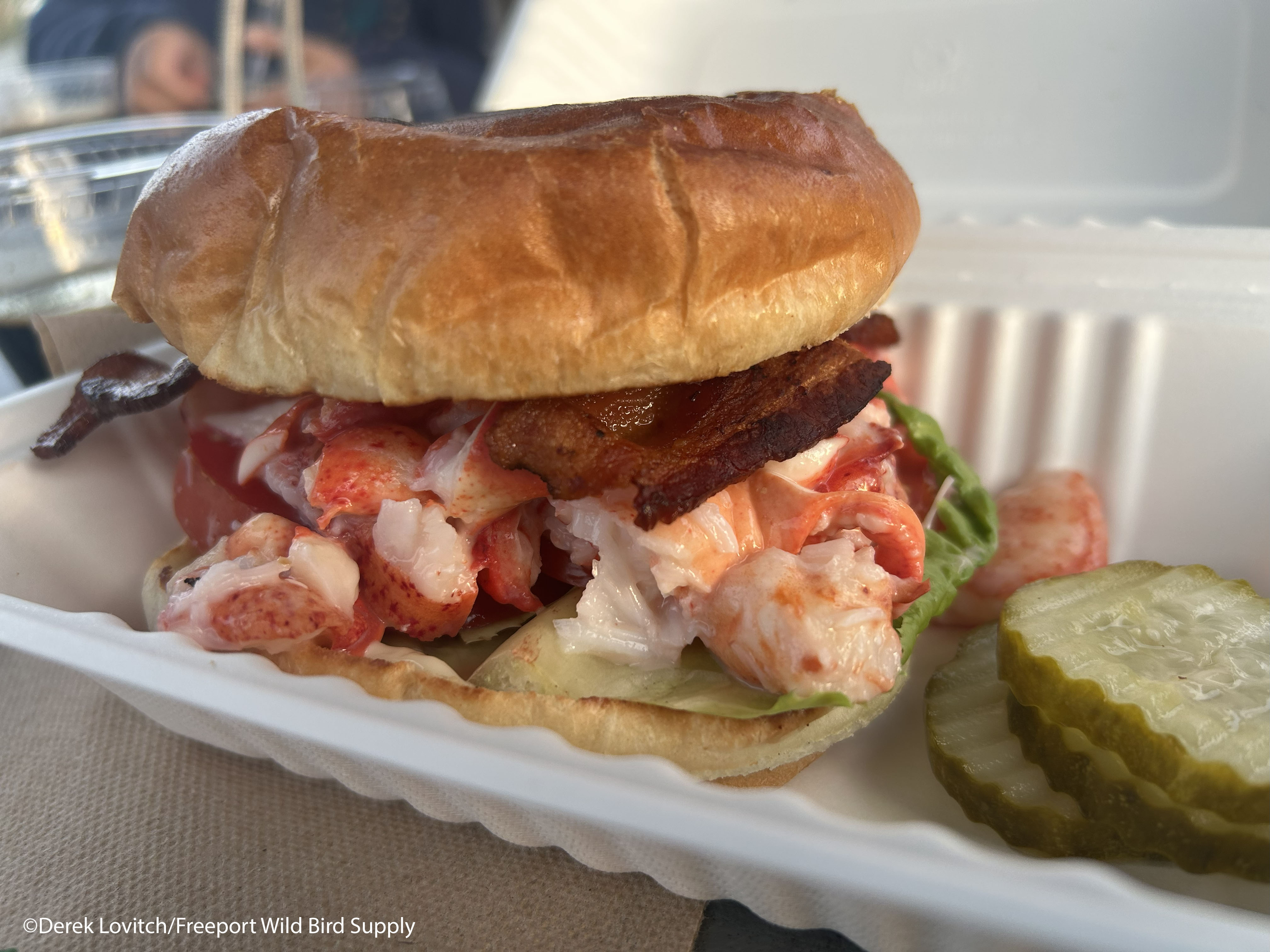
And finished with another meal of Monhegan indulgence.

As usual, Jeannette and I then spent our Tuesday off together on the island. After a light morning flight, but another turnover of birds, we decided to spend most of the morning in the woods, ostensibly looking for a previously reported Black-backed Woodpecker. But mostly, we wanted to take a hike along the island’s less-visited north end. We added Winter Wren and an Ovenbird to our weekend list, enjoyed the silly amount of Red-breasted Nuthatches, and encountered several pockets of White-throated Sparrows and Dark-eyed Juncos. Later, after lunch, we ran into a Black-billed Cuckoo, and a Spotted Sandpiper at the dock turned out to be our 100th and final bird of a truly exceptional weekend on Monhegan. We already cannot wait to return in May!

Species seen without the tour group during the tour:

*Denotes ferry only

9/269/279/289/29
Canada Goose00140
Blue-winged Teal1000
Mallard15202020
American Black Duck1110
Common Eiderxxxx
White-winged Scoter1*000
Ring-necked Pheasantxxxx
Mourning Dove1215126
YELLOW-BILLED CUCKOO0001
Common Nighthawk1000
Semipalmated Plover0110
Solitary Sandpiper1000
Greater Yellowlegs0101
Black Guillemotx230
Laughing Gull 4*000
Ring-billed Gull0001
Herring Gullxxxx
LESSER BLACK-BACKED GULL0013
Great Black-backed Gullxxxx
Great Cormorant1121
Double-crested Cormorantxxxx
AMERICAN BITTERN1100
Osprey1310
Northern Harrier0102
Sharp-shinned Hawk3126
Belted Kingfisher1011
Red-bellied Woodpecker0010
Yellow-bellied Sapsucker8201520
Downy Woodpecker0111
Northern Flicker61068
American Kestrel0010
Merlin4865
Peregrine Falcon62037
WESTERN KINGBIRD0100
Eastern Kingbird0001
Eastern Wood-Pewee6811
Least Flycatcher3200
Eastern Phoebe1321
BELL’S VIREO0010
Blue-headed Vireo2430
Red-eyed Vireo12121212
Blue Jay8833
American Crow4266
Common Raven0221
Black-capped Chickadeexxxx
Ruby-crowned Kinglet1322
Golden-crowned Kinglet020106
Cedar Waxwing80808080
Red-breasted Nuthatch10605040
Brown Creeper0201
BLUE-GRAY GNATCATCHER1001
Carolina Wren8686
Gray Catbirdxxx10
European Starling14141413
Swainson’s Thrush0200
American Robin0410
American Pipit1622
Purple Finch01086
Pine Siskin1212
American Goldfinch81066
LARK SPARROW0021
Chipping Sparrow22102
CLAY-COLORED SPARROW3361
Dark-eyed Junco030212
White-crowned Sparrow2120
White-throated Sparrow12601020
Nelson’s Sparrow0100
Savannah Sparrow 1441
Song Sparrowxxxx
Lincoln’s Sparrow1651
Swamp Sparrow2321
Bobolink5552
Baltimore Oriole2876
Rusty Blackbird0200
Common Grackle3333
Northern Waterthrush0001
Black-and-white Warbler1300
ORANGE-CROWNED WARBLER0121
Nashville Warbler1100
Common Yellowthroat4886
American Redstart3411
Cape May Warbler2828
Northern Parula3610
Magnolia Warbler0100
Yellow Warbler2421
Chestnut-sided Warbler0100
Blackpoll Warbler84044
Black-throated Blue Warbler0300
Palm Warbler206044
Pine Warbler0010
Yellow-rumped Warbler406004020
YELLOW-THROATED WARBLER0100
BLACK-THROATED GRAY WARBLER0011
Black-throated Green Warbler0611
Wilson’s Warbler1200
Northern Cardinalx888
Rose-breasted Grosbeak0111
Indigo Bunting1132
PAINTED BUNTING1000
DICKCISSEL2311
Day total67806968

Species added on Monday evening and Tuesday, with Jeannette:

Common Loon, Spotted Sandpiper, American Woodcock, Black-billed Cuckoo, Winter Wren, Hermit Thrush, Ovenbird (warbler #21!),

Tour total = 100 Total Weekend Total = 107

This winter wren was one of the last birds Jeannette and I added to the cumulative weekend list as we spent some time on our day off hiking the island’s north end.

2025 Monhegan Spring Migration Weekend Trip Report

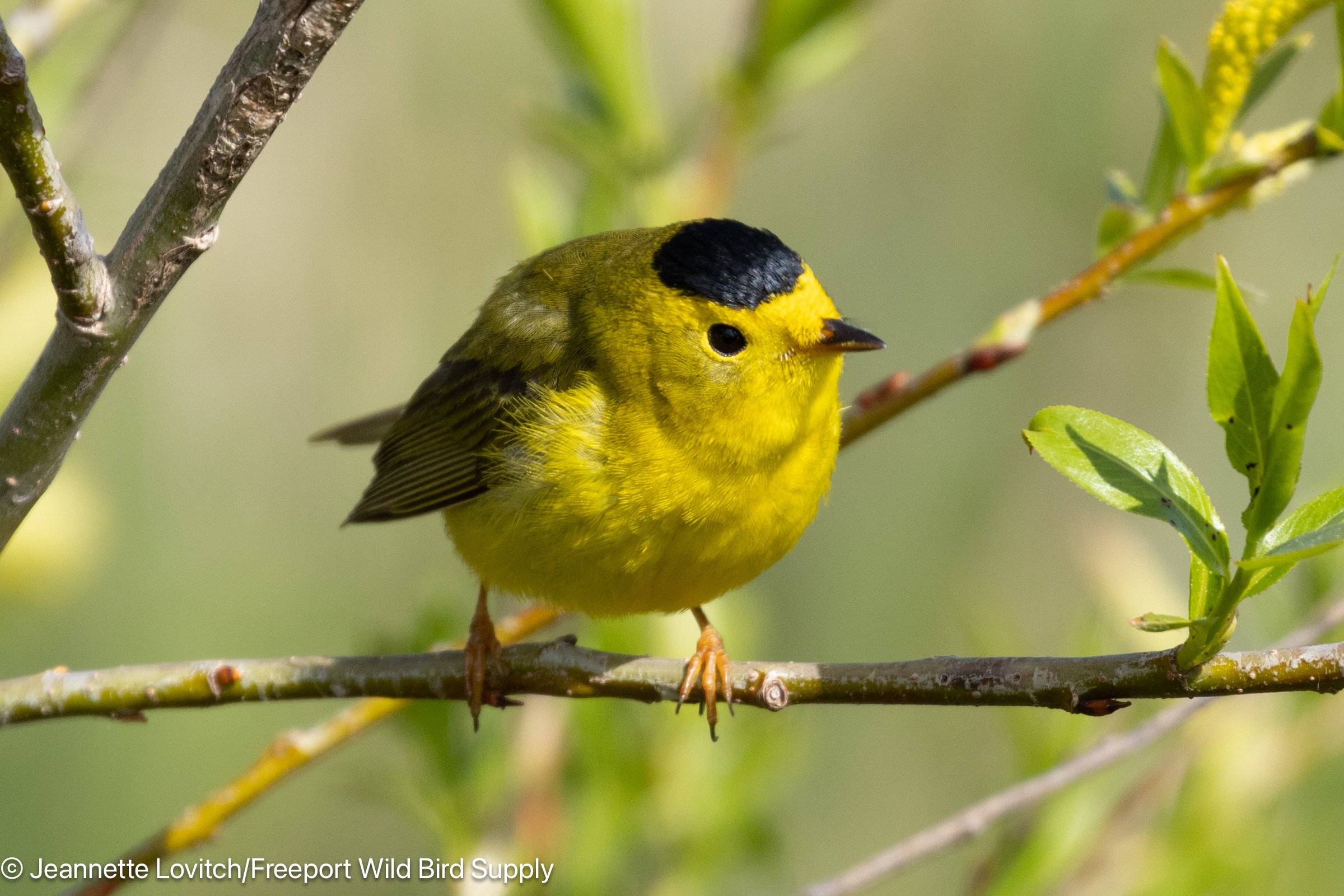
It was a great weekend for warblers, with a tour total of 19 species and a 5-day total of 22 species, including quite a lot of Wilson’s Warblers for the end of May. With 10-20 estimated per day,
we were regularly treated to exceptional views, such as this adult male.

The 2025 Monhegan Migration Spring Weekend was a shocking success. We went from having a weather forecast that made me worry if there would be any migrants to see at all, to an exceptional weekend that was by far the best Memorial Day weekend of birding out here in quite a few years.

Technically, our tour was to begin on Friday with a little morning birding in Port Clyde before boarding our ferry. But it was raining. A lot. Wisely, most folks held out until the ferry meeting time. Unfortunately, that meeting time was delayed by 5 hours when the first two boats of the day were cancelled due to the storm. It was a bona fide late season Nor’Easter and it was raging out there.

We were lucky enough to get spaces on the 3:00 boat, but even luckier that the seas were dropping dramatically. OK, it was far from calm, and while I might not have thought it was “too bad,” others disagreed. But we made it! And the rain had stopped. And we went from 10-14 foot seas to a few waves that may have approached 8 feet. Not pleasant, but more than manageable. Of course, I have to admit that the “worst ferry ride” bar is pretty high for me.

By the time our luggage was organized, we didn’t have a lot of time, but we decided to try and catch up with the continuing truant Harlequin Ducks that had been seen in and around the harbor. Up to 8 had been reported, but when we arrived at the recommended spot, we found 12!  While common in winter, “Harlies” are usually long gone by now, so this was a treat (it was also an island bird for me!). We also picked up a 2nd/3rd cycle Lesser Black-backed Gull for our troubles. There was even a short break of sunshine!

Noteworthy for the date, 12 lingering Harlequin Ducks diminished to just one by the end of the weekend.

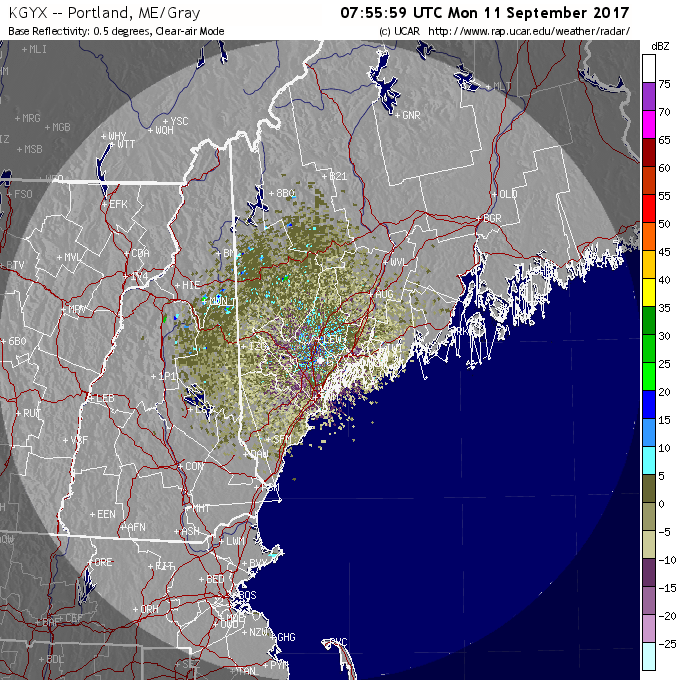
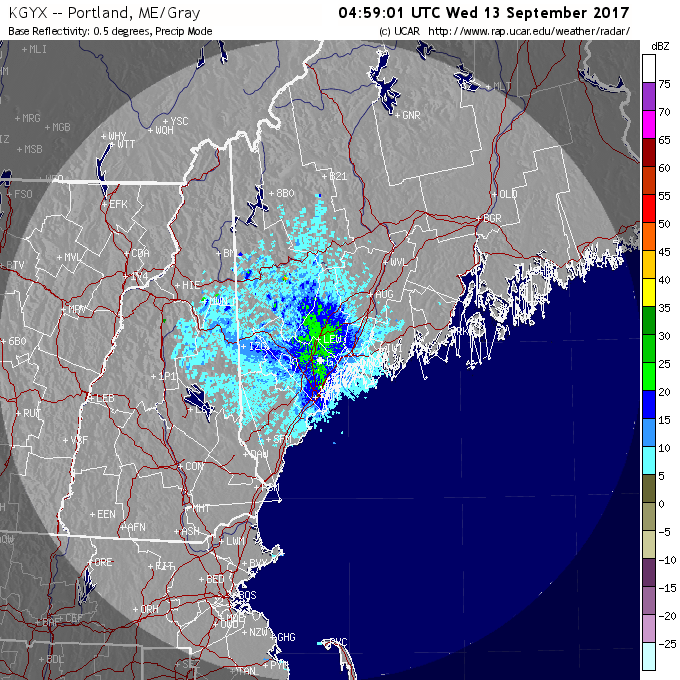
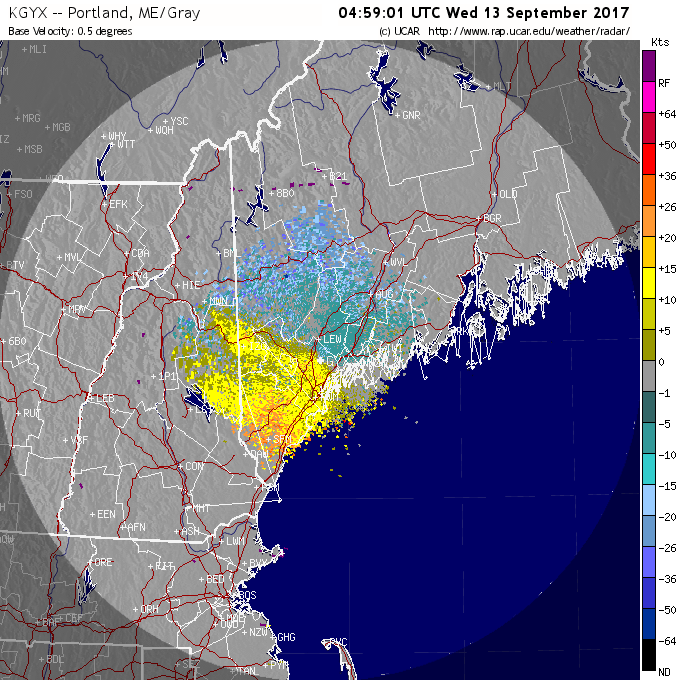
By dusk, winds were light northwest and it was still cloudy. Overnight there were some scattered showers, with winds shifting to the west and then going calm. The fog and showers made the radar hard to decipher, but the wind map for offshore offered some hope.

Screenshot

Note how birds who were offshore of southern New England would be pushed out to sea, but then find a tailwind that could theoretically take them right to the Mid-coast of Maine? The Boston radar was very busy, and suggested birds were indeed well offshore to our south come dawn. We had hope.

But our pre-breakfast walk was not very productive. Uh-oh. Scattered showers had returned, and there were very, very few migrants around. We did see the 12 Harlequin Ducks again, but passage migrants were limited to a handful of Blackpoll Warblers and a Wilson’s Warbler. Was this going to be a very slow weekend?

We returned for breakfast at our respective lodges, and the showers stopped. We met at 9:00 and began our next outing. I was concerned. But then, it happened. All of it.

First, a Lark Sparrow was found – very rare in spring – and while I was going to meet the group, I relocated it in the lawn of the Trailing Yew. It wasn’t there when we returned as a group, but we elected to repeat the southern loop in the hopes of encountering it. And encounter it we did, several times, actually, as it worked its way around the lawns feeding on fresh dandelion seeds.

Meanwhile, something else was happening. Suddenly, birds were everywhere! Pocket after pocket of warbler activity was encountered, and every apple tree had birds in it! Small batches of birds giving flight calls overhead were suggestive of birds only now, at mid-morning, arriving on the island. As these birds were a very different mix of species from the last “birdy” day four days ago, according to a fellow guide, these were in fact “new birds” only now, and rather unexpectedly, arriving en masse.

As the afternoon went on, it only got better! There were warblers in every cluster of trees, with lots of Magnolia Warblers and American Redstarts, but overall good diversity. Birds must have been arriving throughout the day and therefore remained active into the evening. Birds were often low, easy to observe, and the repetition allowed for reinforcing study and comparisons.

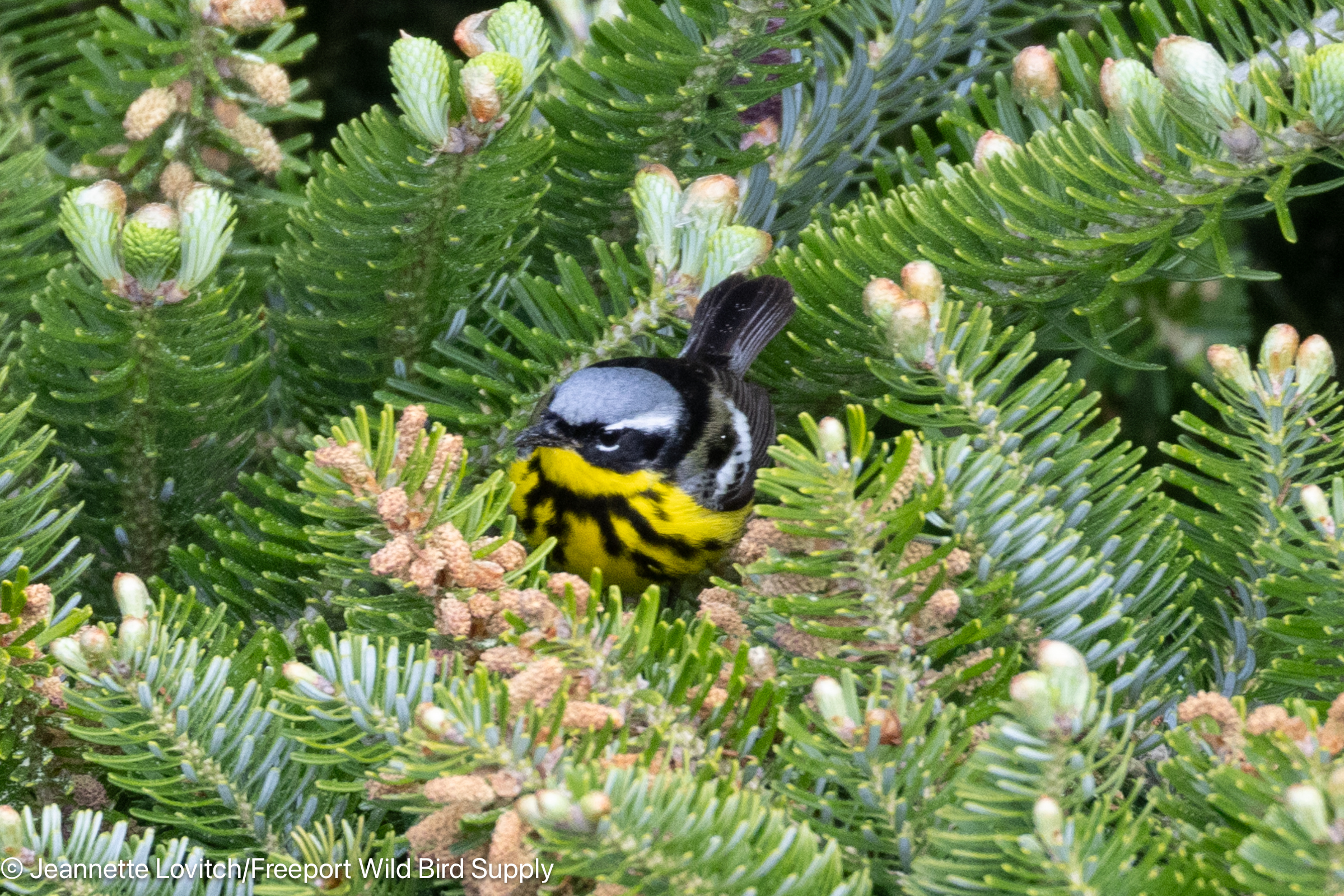
Magnolia Warbler
Red-eyed Vireo

Not only was today not the forecast wash-out (just a few brief periods of drizzle and a couple of very light showers), but it was simply amazing! While warblers stole the show as expected, and the Lark Sparrow was a harbinger of things to come, our afternoon at Lobster Cove was rather exceptional, too, with two continuing “Eastern” Willets, a close pair of Harlequin Ducks, and 3 feeding Atlantic Puffins. What a way to end a spectacular day! It was like the good ol’ days out here.

By Sunday, the Low was dissipating over New Brunswick, and while the radar showed what may have been a light migration overnight, there wasn’t much happening in the “morning flight” once again. But as we began our birding day, it was actually quite good! While a lot of birds were left over from yesterday’s flight, they were augmented by some new arrivals, or at the very least, new detections. Once again, the birding was better than expected, and by late morning we already had some partial sunshine.

Unlike Saturday, activity slowly died down as the morning went on as usual, but it was just a downright delightful morning in the field. Lots of pockets of activity were still dominated by American Redstarts and Magnolia Warblers, but there were a lot more Blackpoll Warblers and fewer Wilson’s Warblers today. 8-10 Harlequin Ducks continued, and spiffy Bay-breasted Warblers were particularly cooperative. And we had three irregularly fantastic views of Lincoln’s Sparrows throughout the day.

Bay-breasted Warblers were really conspicuous this trip, and we enjoyed great looks at both males and females daily.

Lincoln’s Sparrows were unusually cooperative.

A longer walk out to Burnt Head and a check of the island’s interior in the afternoon found some of the birds that had melted away from the edges, while an uncharacteristically skulky Great-crested Flycatcher gave us a jolt of excitement until finally revealing itself.

With the storm pulling away, light northwesterly winds and mostly cloudy skies dominated the overnight Sunday into Monday, and therefore there was little or no migration overnight, and therefore almost nothing in the Morning Flight. However, it also meant that most birds didn’t leave. And while slower than the last two days, it was still decent, good views of fun species were to be had, and the sun came out for good.

Magnolia Warblers,  American Redstarts, and Blackpoll Warblers continued to dominate, along with the ubiquitous Yellow Warblers. Flycatchers were up, offering ample opportunity for instruction – and for eyes to glaze over. Morning highlights ranged from a particularly good tutelage from a Willow Flycatcher, a raft of 50 Surf Scoters offshore, and a really amazing Common Nighthawk repeatedly flying low over our heads and foraging over the island as noon approached.

It was warm and sunny, and with a sea breeze pushing birds out of the edges and deeper into cover, we decided to enjoy more of the island with a visit to the lighthouse grounds and a stroll deep into the spruce woods. In addition to building our list with island residents like Golden-crowned Kinglet and breeding species such as more Black-throated Green Warblers on territory, we enjoyed the plantlife of the Acadian habitat and a healthy dose of phytoncides. And in between, the occasional pocket of migrant warbler activity to bring us back to birding.

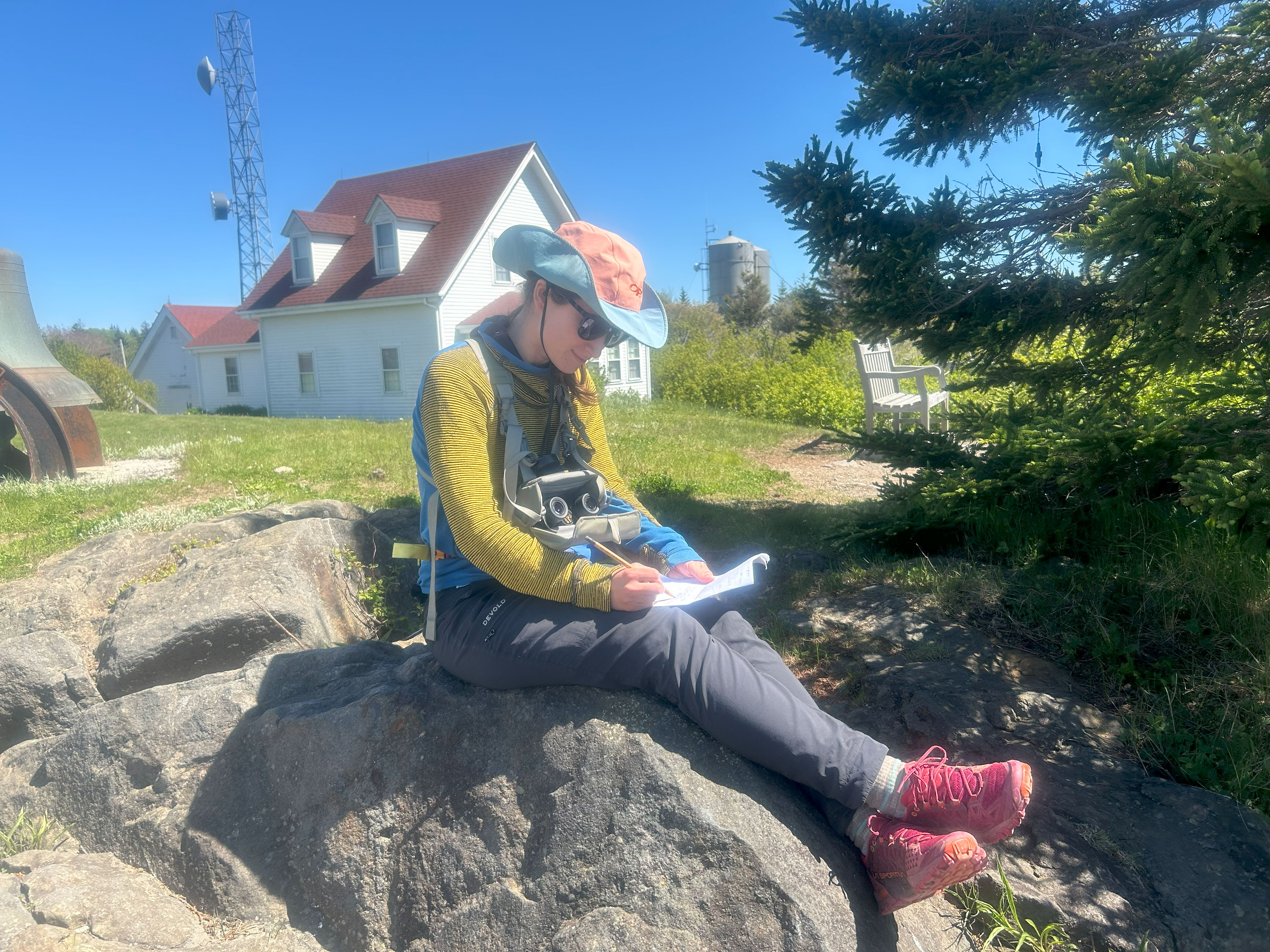
Catching up on note-taking.

Our tour concluded with an impressive 91 total species, but I admit to being a little frustrated by having to give up with 19 species of warblers…20 sounds so much better! But given the unexpected big arrival on Saturday, and the minimal rain and wind after Friday, the tour was truly an incredibly success, far exceeded expectations, and did live up to what Monhegan birding legends are made of.

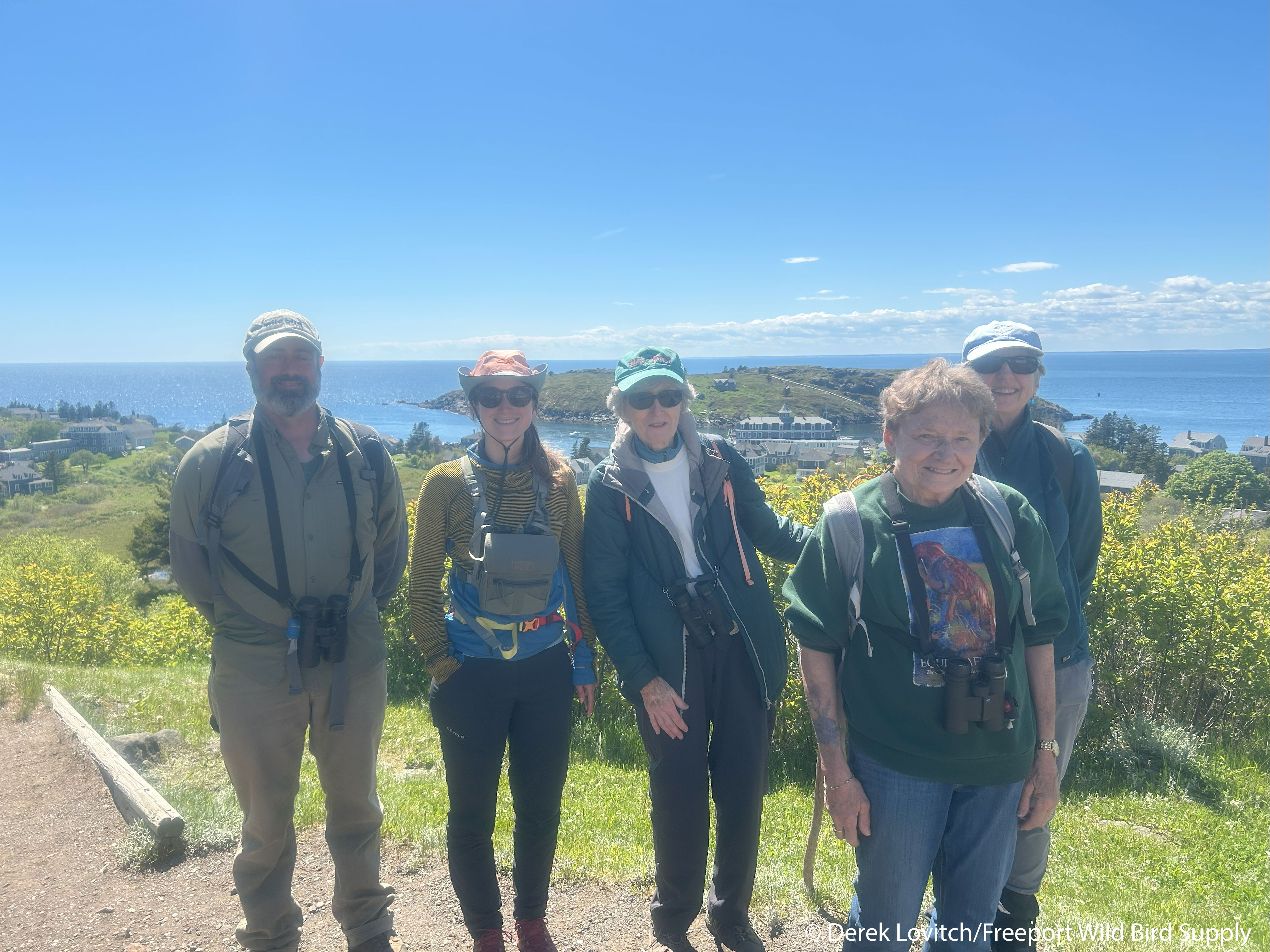
Last birders standing on the last afternoon of the tour.
Staring at Eastern Egg Rock, attempting to will THE Tufted Puffin over to us.

Then, as per usual, Jeannette – who joined us late on Sunday – and I enjoyed a day off together on the island on Tuesday. Unlike the magically-appearing flight on Saturday, this was a more predictable great morning. A moderate to strong flight overnight lit up the radar on light southwesterly to west winds. That put a lot of birds in the Gulf of Maine come dawn, and the morning flight was hoppin!

Consisting mostly of Blackpoll Warblers, American Redstarts, and Magnolia Warblers, it was quite diverse overall. A few “new” species included a Pine Siskin and a Wood Duck, and 3 Red-breasted Mergansers were a fun Morning Flight fly-by.

Before and after breakfast, the birding was excellent. It was the best day by far in volume, but a lot of the birds were “on the move” and departing the island throughout the morning. But there was more of pretty much every migrant species, save for Wilson’s Warblers in particular. Birds weren’t held low by clouds and drizzle, or exhaustion, so it wasn’t as mind-blowing as Saturday, even with more birds around overall.

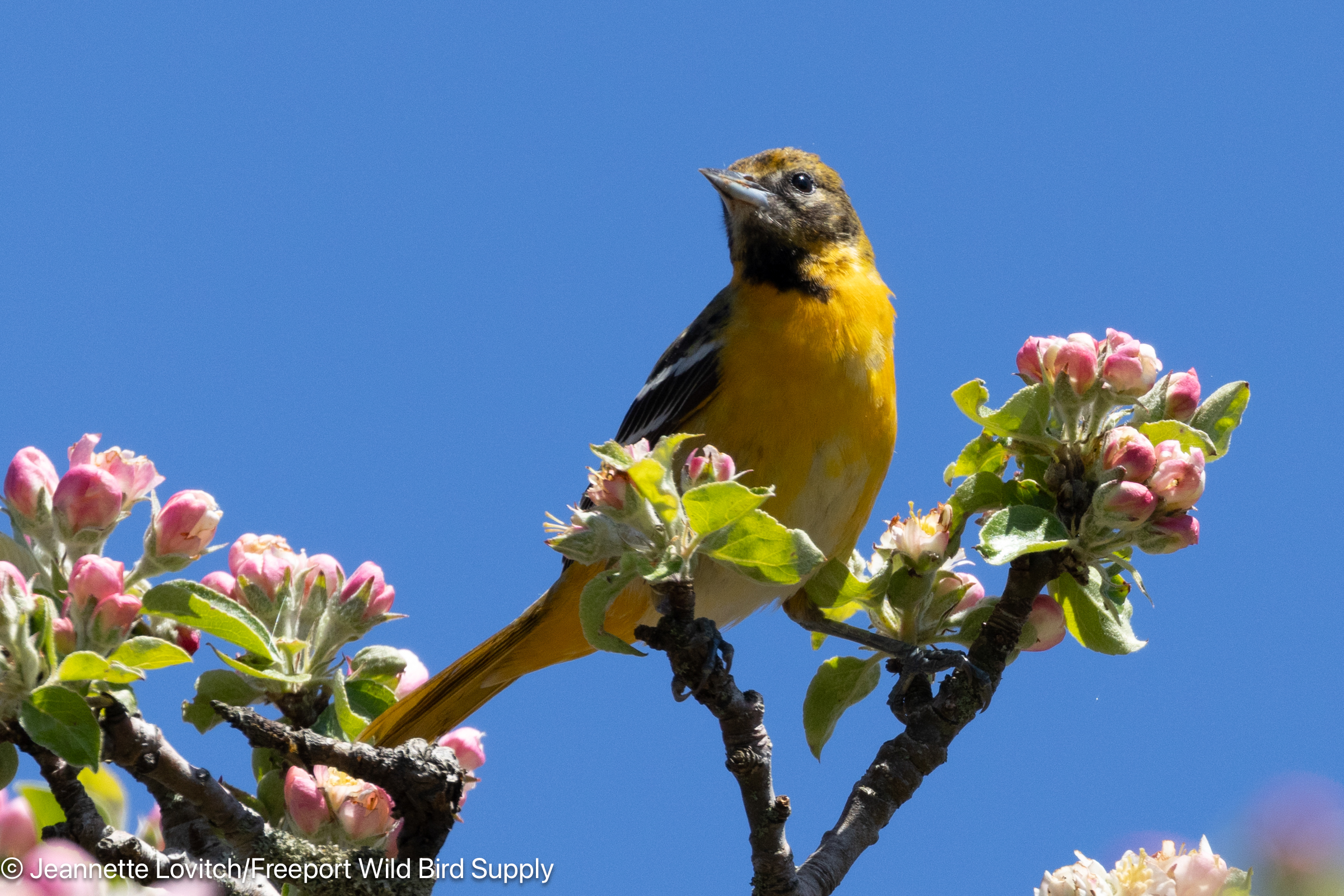
Baltimore Oriole
There were a lot more flycatchers around today, including quite a few Eastern Wood-Pewees.

It was also getting warm on a perfectly sunny sky, and birds took to the shadows earlier than in days past; the hotspots got much quieter by late morning with the increasing seabreeze. Nonetheless, pockets of activity continued right up through lunchtime.

The veggie burger bahn mi from The Bait Bag.

We rapidly added to our collective weekend list (which do not count for our tour total, of course), including finally reaching 20 species of warblers with an uncommon-out-here Pine Warbler. We then eclipsed it with a stunning male Mourning Warbler, and finally in the afternoon, picked up an Ovenbird for our 22nd and final species of warbler. Locally-rare Hairy Woodpecker, a truant Long-tailed Duck, at least one continuing Harlequin Duck, and we found my first Nelson’s Sparrow of the year at Lobster Cove. We even got a little hike in to try and burn a few of the extra calories we consumed from all of the islands’ scrumptious meals. And, anytime we stopped at a favorable looking patch of vegetation, migrants would appear, everywhere we went. It’s always tough to leave, but we at least went out with a bang!

Male Chestnut-sided Warbler

So back here in the Real World now, we can reflect on this past weekend as one that we will most surely always remember!

Here is the trip list four the five-day tour. I didn’t bother including the first day though, but it did net us a Lesser Black-backed Gull that we didn’t see any other day.

* = seen from ferry only.

Species5/245/255/265/27 (with Jeannette)
*ferry ride only
Canada Goose02 42
Wood Duck0001
Mallard1515xx
Common Eiderxxxx
HARLEQUIN DUCK121001
White-winged Scoter0002
Surf Scoter00501
Black Scoter00030*
Long-tailed Duck2001
Red-breasted Merganser0003
Ring-necked Pheasantxxxx
Mourning Dove68108
Common Nighthawk0010
Ruby-throated Hummingbird3454
Virginia Rail0111
WILLET2000
Spotted Sandpiper0002
Black Guillemotxxxx
ATLANTIC PUFFIN3000
Laughing Gull56106
Herring Gullxxxx
LESSER BLACK-BACKED GULL1 (5/23)000
Great Black-backed Gullxxxx
Common Tern0005*
Common Loon2331
Red-throated Loon0001
Northern Gannet6212*
Double-crested Cormorantxxxx
Great Cormorant0001*
SNOWY EGRET0101
Great Blue Heron0010
Osprey0120
Sharp-shinned Hawk1000
Bald Eagle2233
Yellow-bellied Sapsucker0010
Downy Woodpecker1000
HAIRY WOODPECKER0001
Northern Flicker1221
American Kestrel0001
Merlin1100
GREAT-CRESTED FLYCATCHER0100
Eastern Kingbird3122
Eastern Wood-Pewee42420
Alder Flycatcher0222
“Traill’s” Flycatcher0013
Willow Flycatcher0022
Least Flycatcher221012
Philadelphia Vireo1000
Red-eyed Vireo65430
Blue Jay4211
American Crow2244
Common Raven2222
Black-capped Chickadeexxxx
Tree Swallow1122
Barn Swallow1136
Golden-crowned Kinglet0221
Cedar Waxwing806060150
Red-breasted Nuthatch1246
Carolina Wren2433
House Wren2212
Gray Catbirdxxxx
Brown Thrasher0111
European Starlingxxxx
Eastern Bluebird0201
Swainson’s Thrush1338
American Robin1010x8
Purple Finch1101
Pine Siskin0001
American Goldfinch10101210
LARK SPARROW1000
Chipping Sparrow2000
White-crowned Sparrow0111
White-throated Sparrow1211
NELSON’S SPARROW0001
Savannah Sparrow 4432
Song SparrowxXxx
Lincoln’s Sparrow03310
Bobolink3413
Baltimore Oriole2232
Red-winged Blackbirdxxxx
Common Gracklexxxx
Ovenbird0001
Northern Waterthrush11110
Black-and-white Warbler1210815
Tennessee Warbler22610
Nashville Warbler0114
MOURNING WARBLER0001
Common Yellowthroat2020xx
American Redstart55454080
Cape May Warbler3426
Northern Parula15154540
Magnolia Warbler50454070
Bay-breasted Warbler810315
Blackburnian Warbler4434
Yellow Warbler353025x
Chestnut-sided Warbler661020
Blackpoll Warbler153555100
Black-throated Blue Warbler1126
Pine Warbler0001
Yellow-rumped Warbler3201
Black-throated Green Warbler10152015
Canada Warbler1000
Wilson’s Warbler20151010
Scarlet Tanager1111
Northern Cardinal61086
Rose-breasted Grosbeak3332
Day Total72757392
Warbler Day Total18181721
Trip Total91Weekend Total inc. Tuesday106
Warbler Trip Total19Warbler total inc, Tuesday22

The above birds follow the “guide plus one” rule, meaning both me and at least one client need to see the bird for it to go onto the list. This year, the only two birds I saw without the group that we didn’t later encounter was a fly-by Belted Kingfisher and an American Woodcock at dusk, both on the the 24th, for a total of 91 with the group and a 5-day tally of a respectable 106 species.

In other words, it was a great weekend!

This Week’s Highlights, 5/23-5/30/2025

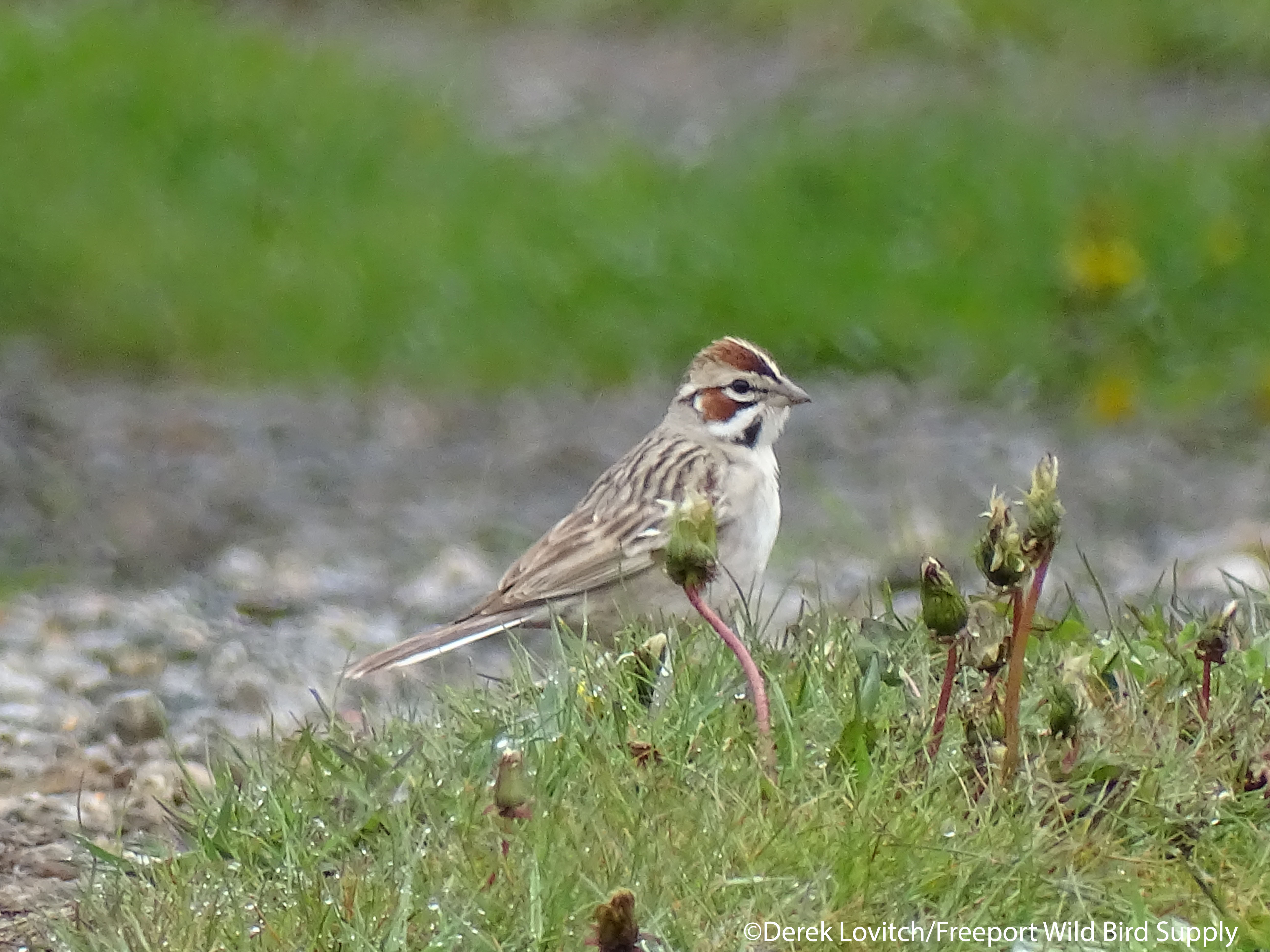
This Lark Sparrow – always a treat in spiffy spring plumage – was among the notable birds form a
stellar weekend on Monhegan.

Five days on Monhegan Friday the 23rd through Tuesday 5/27 yielded a total of 106 species, including 22 species of warblers. It was the best Memorial Day Weekend on the island in several years, and at times, it really felt like “the good ol’ days” with a flock of warblers in every tree. Back in the real world, I was mostly guiding for local breeding specialties, but did have a few observations of note. But mostly, of course, my highlights were from my time on the island.

  • 3 Blue-winged Teal, Weskeag Marsh, 5/23 (with Evan Obercian).

Monhegan Daily Highlights (full report coming soon).

5/23, with Monhegan Spring Migration Weekend Tour group:

  • 12 HARLEQUIN DUCKS
  • 1 2nd/3rd Cycle Lesser Black-backed Gull

5/24, with Monhegan Spring Migration Weekend Tour group:

  • 12 HARLEQUIN DUCKS continued
  • 1 LARK SPARROW (photo above)
  • 2 continuing “Eastern” Willets
  • 3 Atlantic Puffins
  • 1 Philadelphia Vireo (FOY)
  • 3 Cape May Warblers (FOY)
  • 18 species of warblers led by 55 American Redstarts, 50 Magnolia Warblers, and 25 Yellow Warblers

5/25, with Monhegan Spring Migration Weekend Tour group:

  • 1 continuing SNOWY EGRET
  • 8-10 continuing HARLEQUIN DUCKS
  • 2 Alder Flycatchers (FOY)
  • 18 species of warblers led by 45 American Redstarts, 45 Magnolia Warblers, and 35 Blackpoll Warblers, but also including at least 10 Bay-breasted and 4 Cape May Warblers

5/26, with Monhegan Spring Migration Weekend Tour group:

  • 2 Willow Flycatchers (FOY)
  • 1 Common Nighthawk
  • 17 species of warblers led by 55 Blackpoll Warblers, 45 Northern Parulas, and 40 each of Magnolia and American Redstart.

5/27, with Jeannette:

  • 1 continuing HARLEQUIN DUCK
  • 1 Mourning Warbler (FOY)
  • 1 Nelson’s Sparrow (FOY)
  • 1 Pine Warbler
  • 1 Long-tailed Duck
  • 1 Ovenbird (my 22nd species of warbler on the weekend)
  • 21 species of warblers led by 100 Blackpoll Warblers, 80 American Redstarts, and 70 Magnolia Warblers, but also including at least 15 Bay-breasted, 10 Tennessee, and 6 Cape May Warblers.
  • 1 Yellow-bellied Flycatcher (FOY), our property in Durham, 5/28.
  • 1 continuing male Lesser Scaup, Pine Point, Scarborough, 5/29 (with clients from Arkansas).

Upcoming Tours (with space available):

Rangeley Birding Festival, June 5-8.

Recent Highlights, 9/11– 9/18/24

They might be abundant, but I do love Cedar Waxwings, especially a tree full of them on Monhegan!

Eight great days of birding, including three days on Monhegan, yielded the following highlights:

  • 9/13-9/15: Monhegan Island with Down East Adventures “Migration Workshop” tour group. Brief trip report here. Some of the most noteworthy observations included:
  • 17 species warblers total.
  • Cape May Warblers dominated the morning on 9/14, including 3 of every 5 birds in Morning Flight and dozens in trees afterwards. Plenty on 9/13 and 9/15, but most of the arriving birds on the 14th seemed to depart for the mainland.
  • The usual “uncommon” migrants like Rusty Blackbird (2 on 9/14), Philadelphia Vireo (high count of 2-3 on 9/14).
  • 1 first cycle Lesser Black-backed Gull, 9/13.
  • 1 LARK SPARROW, 9/14.
  • 1 fly-by Whimbrel, one probable Clay-colored Sparrow (seen too briefly), and 1 immature COOPER’S HAWK (very rare on offshore islands), 9/15.
  • 1-2 American Pipits (first of fall locally) and 1 hen Northern Pintail, etc, Wharton Point, Brunswick, 9/18.
  • Meanwhile, I’ve once again spent most of my mornings when home birding our Durham property, which was productive. An impressive 60-80 American Goldfinches continue, while an impressive array of migrants continue. On several mornings this week, I had plans to go elsewhere but then never left the yard. A few of the highlights included continuing single Indigo Bunting and Rose-breasted Grosbeaks, 1 Ovenbird, 1 Blackburnian Warbler on 9/16, 6 Common Nighthawks (getting late) at dusk on 9/16, and a nice mix of migrants on the 18th that included 1-2 Philadelphia Vireos and the arrival of more sparrows.

The highlight though was the female-type LAWRENCE’S WARBLER (2nd generation Golden-winged x Blue-winged Warbler hybrid) that popped up on the 18th. After a short but perfect view, I ran for a camera and could not relocate it despite much searching.

Monhegan Fall Migration Weekend, Sept 2022.

This Cape May Warbler was one of many birds that escaped the strong winds by finding large flies eating rotting apples that littered the ground all over the island.

I arrived on the island on Thursday (9/22). Be happy that the tour didn’t start this day. It rained. A Lot. However, I was greeted by 6 Lesser Black-backed Gulls on Smuttynose Island upon my arrival: 5 adults and 1 juvenile.  It turned out to be one of the highest counts ever on the island. That would also turn out to be my birding highlight of the day, as a short jaunt in the afternoon only yielded one species that I would not end up seeing with the group: a juvenile Ring-billed Gull, which is actually a very uncommon bird out here.

The sunset, however, was worth the trip, and the clearing skies foretold some good birding to come.

Overnight, a moderate migration on clearing skies brought many new birds to the island. The group met at 9:00, and we picked up the rest of the day’s participants as their ferry arrived. It was very windy today, but all day long, whenever we found a pocket of shelter, we found birds. It was mostly Yellow-rumped and Blackpoll Warblers, as expected for the date, but there was a decent smattering of diversity. 

Between the winds and the raptors, birds were keeping low though! But speaking of raptors – wow, the falcon show!  It was incredible. There is absolutely no way of knowing how many Peregrine Falcons and Merlins we saw today, with birds whipping by overhead. Some were hunting, and likely circling the island to do so, but it’s also possible that there was a steady flow of birds moving south, only pausing to wink at the island. It was impossible to quantify, but it was a whole lot of fun to watch!

Merlin.
Immature Peregrine Falcon
Northern Flickers had to stay low and out of sight to survive the day.

We enjoyed quality time with Cedar Waxwings, Monarch butterflies, and enjoyed some gorgeous Question Mark butterflies as well.  White-crowned Sparrows were rather conspicuous, and we had a good lesson in duck identification with Mallards, an American Black Duck, and a hybrid thereof all side-by-side.

Black-throated Green Warbler on post-cider-making apple mash.

Wind was whipping all night long and continued to gust well over 20mph as of sunrise. With a high-pressure system building in, and powerful Hurricane Fiona passing well to our east, the wind would just not let up. Several ferries were cancelled, and if you happened to be in the room that a screen door was slamming up against all night (ahem), then maybe you were not as rested as you would have liked.

The Gray NEXRAD radar was down, but the Caribou station showed a moderate flight of birds overnight with marginally lighter winds over the mainland. A light morning flight – mostly strong-flying Blackpoll Warblers – didn’t portend a lot of birds had arrived, but pockets of White-throated Sparrows and Yellow-rumped Warblers in places where they weren’t yesterday suggested otherwise.  In fact, there were a bunch of birds around, and it was a very productive morning!

We visited with two cooperative Dickcissels that have been around for days, caught up with the lingering Lark Sparrow, and were among the lucky ones who caught up with an early Orange-crowned Warbler.   All before lunch.

Dickcissels.
Lark Sparrow

And while the wind continued to gust, and uncountable falcons continued to wreak havoc, anytime we found a corner of shelter, we found birds – and often lots of them!  White-throated Sparrows littered the woods, and because of the wind, many birds were insanely easy to see.

One of the highlights were warblers on the ground – hatches of large flies were feasting on rotting apples below laden trees, and with no flying insects able to survive a foot into the air today, we spent a lot of time looking DOWN at warblers.

Blackpoll Warblers
Cape May Warbler.
We also made it over to the cliffs to see what may have been in the island’s lee.
Female Green-winged Teal
Scarlet Tanager
We saved this Gartner Snake from a cat’s mouth on our way to not seeing a Red-headed Woodpecker that was playing hard to get for us.

Finally, as dusk fell, the winds subsided. Unfortunately, by early nightfall, the winds were already a little more westerly than we would have liked. Come Sunday morning, a surprisingly light morning flight, dominated by Yellow-rumped Warblers almost exclusively, reflected the lack of the northerly component overnight.  Birds seemed to be in lower quantities overall – a lot of Blackpoll Warblers had apparently departed – and with calm conditions (so, so welcome), there were fewer concentrations of birds. 

Throughout the day, it was relatively slow by Monhegan standards, but we just kept adding new species to the triplist, and basking in repeated stellar views. The two Dickcissels were in their usual place throughout the day, a juvenile Lesser Black-backed Gull continued, and later in the morning we found a Marsh Wren – very uncommon out here.

Marsh Wren

In the afternoon, we had a splendid sparrow session. We had our longest looks yet at the Lark Sparrow, but after a report of one Clay-colored Sparrow at the same spot, we arrived to find three!  A Lincoln’s Sparrow even came out into the open to join the Song, Chipping, White-throated, White-crowned, and Savannah Sparrows, making for an impressive total of 7 species of sparrows from one spot!  Of course, the comparative experience makes all the difference in learning these species – as most look so very different from each other. Well, most of them did, anyway!  A solid 76 species were tallied by day’s end.

Clay-colored Sparrow with juvenile Chipping Sparrow
Lark Sparrow
Blackpoll Warbler.

The last day of the tour was Monday the 26th, and our time was winding down. So were the number of non-Yellow-rumped Warblers. Some light showers overnight may have put a few birds down, but winds were southwesterly thereafter, and the Caribou radar (the Gray station was still down) showed little movement.  The morning flight was therefore virtually non-existent.

We found an Indigo Bunting, and later, an Alder Flycatcher confused and disoriented, stuck in the ice cutting display building of the Monhegan Museum.  Three Clay-colored Sparrows were still present; we had good looks at two of them at the school and had another session comparing them to the variety of ages of Chipping Sparrows they were cajoling around with. The Lark Sparrow also performed nicely for us again.

Alder Flycatcher in the museum’s ice-cutting shed. It eventually figured out the lighting and got itself out.
Clay-colored Sparrow
Two of the three Clay-colored Sparrows, here, with a Chipping Sparrow in the middle.

It felt very slow, especially in the afternoon, when we took time to enjoy Fringed Gentian and repeatedly “dip” on a Red-headed Woodpecker that most everyone except us had eventually seen. Yet interestingly, we kept finding new species for our day’s list, and by the time the tour ended in time to catch the 4:30 ferry to Port Clyde, we had accumulated our highest species total of the weekend – a goodly 81.

The apparent abundance of some species – such as White-breasted Nuthatch, which we conservatively estimated included the presence of 4-6 pairs despite apparent omnipresence and Blackpoll Warblers on the ground – continued to impress as well.

Blackpoll Warbler.

With today’s new additions along with Laughing Gulls on our ferry ride back, our total trip listed amounted to 95 species! So despite the strong winds that howled for the first two days of the tour, and unfavorable southerly winds for the last day and a half, our 95 species was exactly average for the 11 years we have run the trip on this same weekend. 16 species of warblers was a mere one species below average. Taking our challenging weather into consideration, I would absolutely call this a win! Plus, we were on Monhegan, so all is well, as an average day/weekend on Monhegan sure beats the same anywhere else – for so many reasons.

* denotes ferry ride only           

23-Sep  24-Sep  25-Sep  26-Sep

Canada Goose 8 18 19 8
Wood Duck 0 1 1 1
American Black Duck 2 2 1 1
Mallard 15 24 24 24
Mallard x American Black Duck Hybrid 1 1 1 1
Green-winged Teal 0 1 2 1
Common Eider x x x x
Ring-necked Pheasant 20 12 12 8
Mourning Dove 20 15 18 18
Ruby-throated Hummingbird 2 2 1 0
Semipalmated Plover 0 0 1 0
Killdeer 0 0 1 0
Solitary Sandpiper 1 1 1 0
Black Guillemot 2 6 2 6
Laughing Gull 0 0 0 2*
Herring Gull x x x x
LESSER BLACK-BACKED GULL 2 0 1 1
Great Black-backed Gull x x x x
Common Loon 0 0 0 1
Northern Gannet 10 10 8 20
Double-crested Cormorant x x x x
Great Cormorant 0 0 0 3
Northern Harrier 0 0 1 0
Osprey 4 4 2 2
Bald Eagle 1 0 1 2
Sharp-shinned Hawk 1 0 2 2
Belted Kingfisher 1 1 0 0
Yellow-bellied Sapsucker 1 12 10 20
Downy Woodpecker 2 2 2 2
Northern Flicker 30 40 20 30
American Kestrel 1 2 3 4
Merlin 8 15 10 10
Peregrine Falcon 10 10 5 5
Eastern Wood-Pewee 0 1 0 1
Alder Flycatcher 1 0 0 1
“Traill’s” Flycatcher 0 0 0 1
Least Flycatcher 1 1 0 0
Eastern Phoebe 6 4 4 6
Red-eyed Vireo 10 10 6 8
Blue Jay 8 6 18 12
American Crow 6 4 4 4
Common Raven 1 2 2 2
Black-capped Chickadee x x x x
Golden-crowned Kinglet 0 0 4 4
Ruby-crowned Kinglet 1 2 6 6
Cedar Waxwing 50 2 38 38
Red-breasted Nuthatch 15 10 6 10
White-breasted Nuthatch 4 6 4 4
Brown Creeper 0 0 1 1
House Wren 0 0 1 2
Carolina Wren 3 3 4 4
MARSH WREN 0 0 1 0
Gray Catbird 6 8 6 10
Brown Thrasher 1 0 0 0
European Starling 18 18 18 18
Veery 0 0 1 0
Swainson’s Thrush 1 6 3 4
American Robin 4 4 8 12
American Pipit 1 1 1 0
Purple Finch 14 8 4 4
LARK SPARROW 0 1 1 1
American Goldfinch 8 10 14 14
Chipping Sparrow 0 10 15 15
CLAY-COLORED SPARROW 0 0 3 3
Dark-eyed Junco 2 10 6 10
White-crowned Sparrow 2 4 8 8
White-throated Sparrow 26 150 50 50
Savannah Sparrow 1 4 3 4
Song Sparrow 20 30 20 20
Lincoln’s Sparrow 0 0 2 2
Swamp Sparrow 0 0 1 2
Baltimore Oriole 2 2 6 6
Red-winged Blackbird 0 1 1 1
Bobolink 0 0 1 0
Rusty Blackbird 0 0 6 0
Common Grackle 12 24 24 24
Black-and-white Warbler 1 1 0 0
Tennessee Warbler 0 15 3 3
ORANGE-CROWNED WARBLER 0 1 0 0
Nashville Warbler 0 4 1 1
American Redstart 0 2 0 2
Common Yellowthroat 8 10 4 10
Cape May Warbler 5 10 6 6
Northern Parula 1 7 4 2
Magnolia Warbler 2 0 0 0
Yellow Warbler 5 3 2 2
Chestnut-sided Warbler 0 0 0 1
Blackpoll Warbler 50 75 20 15
Palm Warbler 2 4 10 6
PINE WARBLER 0 2 0 0
Yellow-rumped Warbler 70 50 50 75
Black-throated Green Warbler 5 3 0 1
Scarlet Tanager 0 2 2 2
Northern Cardinal 6 8 8 10
Rose-breasted Grosbeak 0 0 1 3
Indigo Bunting 1 0 0 1
DICKCISSEL 2 2 1 1

Day Total 67 71 80 81
Warbler day total 10 14 9 12

4-Day Tour total= 95
Plus on my own before the tour =2 (Ring-billed Gull and Tree Swallow)
Total warblers = 16

Blackpoll Warblers were the “migrant of the weekend” with unforgettable views and quality time each day.

2021 Monhegan Fall Migration Weekend Tour Report.

This Blue Grosbeak was among the highlights of an incredible weekend on the island.

“It was like the good ol’ days!” When every other bird you saw was a rare one, and you barely walked 10 steps before finding more birds.  But this was not what we were expecting, and the weekend sure didn’t start out that way!

After a very rough boat ride, we were still putting ourselves back together when one birder said “Go back, there are no birds here.”  Apparently, it had been a dreadfully slow week of little migration, but at least nice weather. This weekend, the weather wasn’t supposed to be very nice. So without many birds on the island, and quite a bit of rain on the way, were less enthused about arriving than usual…well, that might have had something to do with the boat ride.

And I am not sure if it helped that one of the first birds I looked at was a rare hybrid Herring X Great Black-backed Gull.  I am not sure if anyone was ready to take in gull hybrids yet.  Even more when we feared that this could be our best bird of the trip if the pattern held.

And sure enough, it was a very slow afternoon. But we did have good luck. We found a Sora that walked out into an open patch of mud, quickly caught up with the adult Lesser Black-backed Gull that has been hanging around, and after lunch immediately found the Least Sandpiper and Spotted Sandpiper at Lobster Cove that have been playing hard to get all week. There was also a good Northern Gannet show, which is always a treat. So at least we were seeing what was around, which sadly, really was not very much.  But hey, it still hadn’t rained!

Least and Spotted Sandpipers – shorebirds are few and far between on the island.

A period of rain, heavy at times, fell overnight, but the band was much narrower and less heavy than forecast. It did not rain all night, and it even appeared that a light flight of migrants had developed on the radar after midnight. And sure enough, come dawn, there was a light Morning Flight overhead. It was mostly Yellow-rumped and Blackpoll Warblers, but hey, there were new birds around!  And once, again, it was not raining.

A fly-over Dickcissel or two, a calling Gray-cheeked Thrush, and more. Birds!  Yay!

Then, after breakfast, I went to spread some seed in my favorite corner to attract some birds for the group to enjoy this morning.  Turning the corner near the famous “Chat Bridge” a shockingly bright flash of the most intense yellow you can imagine. And blue wings, and a flash of white in the tail. Prothonotary Warbler I exclaimed to no one around.

I raced back towards the group meeting point and sent them on their way. Kristen Lindquist took off running.  I eventually made it back with the rest of the group and we divided to conquer. Kristen and about half the group spotted it repeatedly, while it remained tantalizingly out of view from where I and others were standing. 

As other birders converged, a classic “Patagonia Picnic Table Effect” occurred. First, there were two Dickcissels, then I spotted a Yellow-breasted Chat making a short flight over the brush. While searching for that, Ilsa spotted a Yellow-billed Cuckoo that would sit still, preening, for well over and hour.  It might have been the most cooperative cuckoo ever on the island!  Another group had a brief look at a Clay-colored Sparrow.

Unfortunately, the Prothonotary Warbler was never seen again.

Yellow-billed Cuckoos don’t usually sit this still for this long. This bird was likely exhausted
after just arriving on the island.
In case you didn’t see it’s yellow bill.

It was already a pretty amazing day for one that we thought would be a wash-out. And it was still not raining.  After our lunch break, we convened at the Monhegan House at 1:30, and spent the next hour and a half on its lawn, and going no where else.

One Dickcissel became two, and then four, and when the group finally took off together, we were shocked to confirm a genuine flock of 8 Dickcissels – exceptional, even for Monhegan. And there were not one, but two Clay-colored Sparrows!  And other birds just kept arriving, as standing in one spot saw our list quickly grow: American Redstart, Brown Creeper, Warbling Vireo, etc, etc. One “Western” Palm Warbler became 4, a couple of Cape May Warblers paid us a visit, a Savannah Sparrow dropped in…

It was truly incredible! It felt like my first tours here 15 years ago. By now, a light shower was falling, but we didn’t seem to care. We finally pulled ourselves away as the action waned, wanting to see what the next hot corner would offer.  After spotting at least 8 Baltimore Orioles along Pumphouse Road, the rain finally arrived in earnest by about 3:30pm. We called it quits, but considering the day we had, no complaints were to be heard.  It was a really special day; one that will not soon be forgotten.

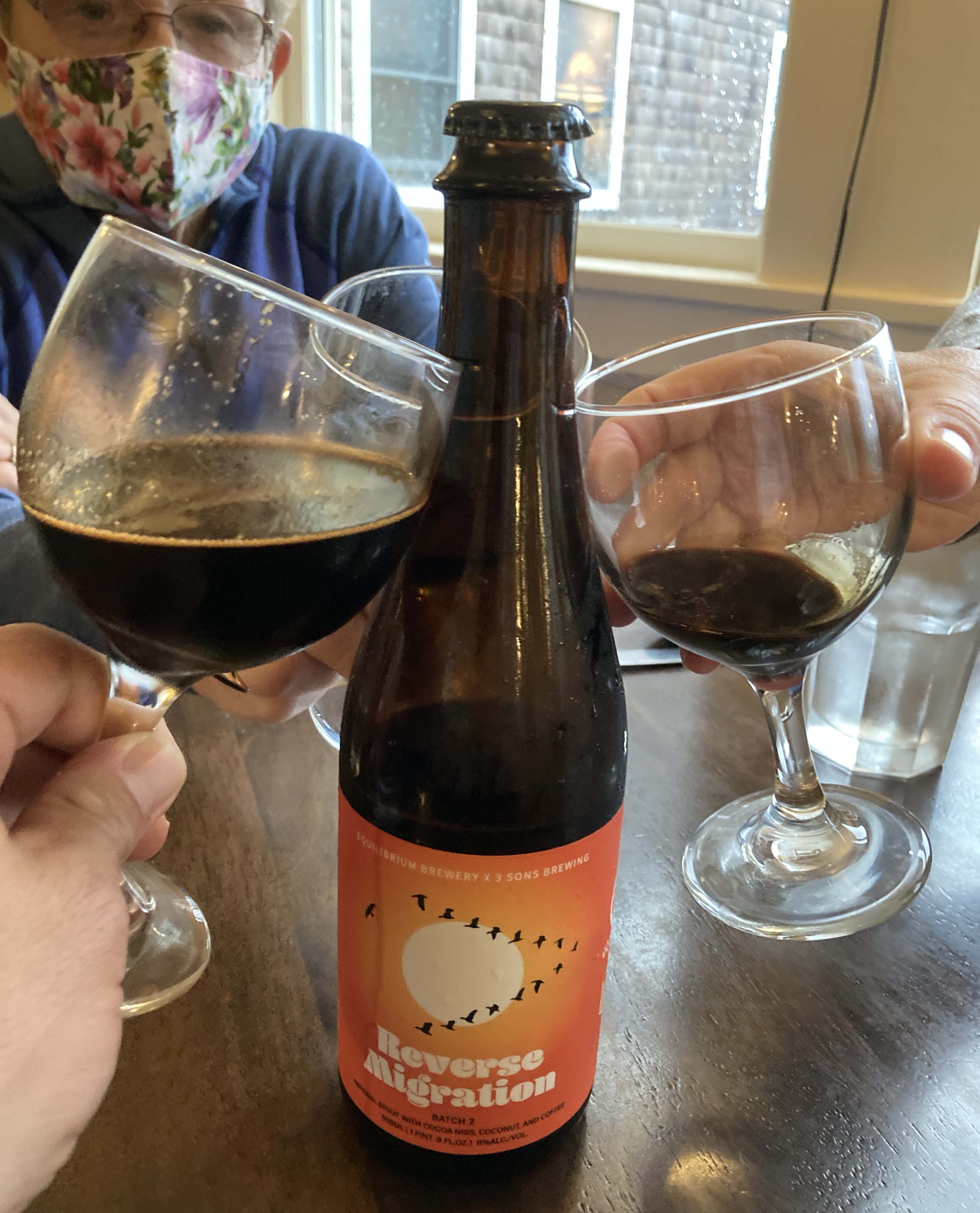
While it was more accurately “180-degree misorientation” and other forms of vagrancy and not “reverse migration” that brought us so many good birds, I brought a special beer out
just in case we had a day like we did today!

Rain fell overnight again, and come dawn on Sunday (Day 3), dense fog had rolled in.  There were a few Yellow-rumped Warblers overhead, especially during a short respite from the fog, but there were not nearly as many birds around as the day before. But, with fog overnight, we expected birds who were on the island to stay, which was good, because yesterday was awesome and there were still a few birds we had not yet encountered.

It might be a while before they are “countable” again, but the Ring-necked Pheasant population
seems to be booming in town.

We delayed the start of the after-breakfast walk to let a batch of heavier rain clear through. We were stuck in such an odd fall weather pattern, with virtually no west-east progression of weather systems. But we had been so lucky with the timing of the rainfall so far, that a little delay was of no concern.  Regrouping at 10:00, light showers gave way to just some lingering drizzle by 11, and it soon became apparent that there were new birds around.  We had two Prairie Warblers, a Scarlet Tanager joining the growing flock of Baltimore Orioles, and a Blue-winged Teal joined a Green-winged Teal in the marsh.  Two Cliff Swallows and a Barn Swallow foraged over Manana, and we had our second Yellow-breasted Chat of the trip – this one in the Island Farm garden on Pumphouse Road. And another Clay-colored Sparrow?

There was a really impressive number of Baltimore Orioles on the island over the weekend.

Pockets of Yellow-rumped Warblers here and there often contained another warbler species or two, and we had good looks at stuff all morning, even often-challenging birds to see with a group like Lincoln’s Sparrows. 

And after lunch, the sun was out!  We had the Lesser Black-backed Gull again, more looks at Clay-colored Sparrows, and finally the immature male Blue Grosbeak showed up for us, and show it did!

It wasn’t as birdy once the sun was out, but a light raptor flight, including at least 6 Peregrine Falcons helped make up for it.

On Monday, our last day of the tour, it appeared that little moved overnight on a light southwesterly flow aloft. But that had our daydreams going for rarities from our west and southwest.  And sure enough, while some of us were dallying over breakfast, a Western Kingbird that Kristen Lindquist found earlier flew right over us at the Yew and alighted nearby!

After breakfast, we “cleaned it up” for the group when we relocated it at the cemetery, affording great looks for all.  A slower day finally gave us an opportunity to head into the deeper woods. And while we expected fewer birds in the island’s interior, a couple of mixed-species foraging flocks finally put Red-breasted Nuthatch on the list, and we found the first Pine Warbler of the weekend. 

“Look at my tail!” Just in case anyone had hopes of stringing it into a rarer western Tyrannus.

Jeannette joined us by lunchtime, and after lunch, we had a frustratingly brief glimpse of the original Yellow-breasted Chat, along with more great looks at Clay-colored Sparrows. 

The tour came to a close with the 3:15 departure back to New Harbor, bringing our incredible four days together to the always-bittersweet end. 

Jeannette and I birded the rest of the afternoon together, picking up a few things, like my first “Yellow” Palm Warblers of the weekend and a Solitary Sandpiper.  Our walk to dinner yielded a second Pine Warbler, and at the harbor: a juvenile Ring-billed Gull (actually fairly rare out here in the early fall) and another view of the lingering Lesser Black-backed Gull.

On Tuesday, Jeannette and I enjoyed our day off on the island, and Kristen Lindquist joined us for most of the day.  A diminishing light southwest wind overnight gave way to a little bit of northwesterly winds by dawn, but it didn’t appear that much had arrived on the island overnight.

At least two, if not three, different Prairie Warblers were around the island.
Getting late, a few American Redstarts helped bump up our impressive warbler tally.

However, we soon located a Lark Sparrow found yesterday by Bryan Pfeiffer, the immature male Blue Grosbeak paid us a visit, and we heard the Sora briefly.  We then found an Orange-crowned Warbler out past the Ice Pond, my 20th warbler species of the weekend! Unfortunately, we were sans cameras with a little light rain falling.

This Scarlet Tanager was often cooperative at the grape arbor.
As per tradition with this tour report: at least one gratuitous “food porn” photo. Here’s the colorful and fresh avocado toast from the Trailing Yew.
And here’s one of the island’s resident Black-capped Chickadees…just because.

After lunch, we were excited to find two Lark Sparrows sitting next to each other at the cul-de-sac, there were now two Ring-billed Gulls in the harbor, and yes, there were still at least 4 Clay-colored Sparrows and several Dickcissels around! 

Just for a change of pace, we decided to walk the diffuse trail along the island’s southwestern end, but were soon distracted by something large in the water in the distance.  Retrieving my scope, it was clear that it was indeed a dead whale, and eventually it floated close enough to identify it as a dead (and rather bloated) Minke Whale.  A handful of gulls were around it, and briefly, a quick pass by a jaeger that was too far to claim the identity of.  It was a fascinating, if not rather sad, end to our visit as by now it was time for Jeannette and I to head to the dock to return to the real world.

A much more pleasant boat ride back, this time to Port Clyde yielded a number of Common Loons and plenty of Northern Gannets, and a surprise of a small pod of Atlantic White-sided Dolphins.  I’m not sure if I have seen this pelagic species from a Monhegan ferry before, or this close to land at all.

And finally, one last “good” bird: a pair of truant American Oystercatchers on Dry Ledges (off of Allen Island)! Interestingly, we had a pair on the same exact ledge on our way back from the island on October 5th of last year.

At least 8 Dickcissels, at least 4 Clay-colored Sparrows, 2 Lark Sparrows, and an Orange-crowned Warbler from the Midwest. A Western Kingbird from the West.  A Prothonotary Warbler, 2 Yellow-breasted Chats, and a Blue Grosbeak from the South.  105 total species (102 with the tour) including 20 species of warblers.  Yeah, that was a good trip  – and the stuff that Monhegan legends are made of, at least sans fallout.

Four of a flock that grew to an impressive 8 Dickcissels, often found in the swale behind the
Monhegan House throughout the weekend.

And finally, here is our birdlist from the extraordinary weekend:

9/24 = * denotes ferry ride only
9/27 = * with just Jeannette
9/28 = with Jeannette; *denotes ferry ride only
24-Sep25-Sep26-Sep27-Sep28-Sep
American Black Duck00111
Mallard310262424
Mallard x American Black Duck Hybrid00011
Green-winged Teal0101*0
Blue-winged Teal0101*0
Common Eiderxxxxx
Ring-necked Pheasant613121610
Mourning Dove622301518
YELLOW-BILLED CUCKOO01000
unidentified cuckoo00010
Common Nighthawk00000
Sora10001
Semipalmated Plover01000
Least Sandpiper10201
American Woodcock10000
Spotted Sandpiper10100
Unidentified jaeger00001
Solitary Sandpiper0001*0
Black Guillemot23103
Laughing Gull1*0003
Ring-billed Gull0001*2
Herring Gullxxxxx
LESSER BLACK-BACKED GULL1011*0
Great Black-backed Gullxxxxx
GREAT BLACK-BACKED X HERRING HYBRID1000
Common Loon1*0006*
Northern Gannet2002043
Double-crested Cormorantxxxxx
Great Cormorant03311*
Great Blue Heron01103
Bald Eagle2*111*1
Sharp-shinned Hawk00021
Belted Kingfisher00111
Yellow-bellied Sapsucker04382
Downy Woodpecker00143
Northern Flicker4541010
Merlin00486
Peregrine Falcon00686
WESTERN KINGBIRD00010
Eastern Phoebe00011
Blue-headed Vireo00010
Warbling Vireo01000
Red-eyed Vireo01081210
Blue Jay61881618
American Crow46xxx
Common Raven22022
Black-capped Chickadeexxxxx
CLIFF SWALLOW00200
Barn Swallow00100
Golden-crowned Kinglet044158
Ruby-crowned Kinglet02034
Cedar Waxwing3048406050
Red-breasted Nuthatch00003
White-breasted Nuthatch00022
Brown Creeper02111
House Wren01101
Carolina Wren04478
Gray Catbirdxxxxx
Brown Thrasher02000
European Starling1818181818
GRAY-CHEEKED THRUSH01000
Swainson’s Thrush04111
American Robin03034
American Pipit00010
Purple Finch01000
LARK SPARROW00002
American Goldfinch210413
Chipping Sparrow086108
CLAY-COLORED SPARROW024414
Dark-eyed Junco00021
White-crowned Sparrow00010
White-throated Sparrow21061510
Savannah Sparrow03301
Song Sparrowxxxxx
Lincoln’s Sparrow01315
Swamp Sparrow00212
YELLOW-BREASTED CHAT01110
Bobolink06050
Rusty Blackbird02010
Common Grackle06964
Brown-headed Cowbird01000
Baltimore Oriole08151612
Northern Waterthrush10421
Black-and-white Warbler00110
PROTHONOTARY WARBLER01000
Tennessee Warbler10000
ORANGE-CROWNED WARBLER00001
Nashville Warbler03224
American Redstart01202
Common Yellowthroat26544
Cape May Warbler13002
Northern Parula05433
Magnolia Warbler01210
Yellow Warbler05432
Blackpoll Warbler1158106
Black-throated Blue Warbler00010
Palm Warbler0441410
PINE WARBLER00023
Yellow-rumped Warbler306075300150
Prairie Warbler0022*1
Black-throated Green Warbler03345
Wilson’s Warbler01221
Scarlet Tanager00210
Northern Cardinal410886
Rose-breasted Grosbeak04443
BLUE GROSBEAK00101
Indigo Bunting00044
DICKCISSEL08754
Day Total3465667477
Warbler day total513141515
4-Day Tour total=102
Plus with Jeannette after the group =3
Total warblers =20

This Week’s (Non Sandy-Point) Highlights, 9/24-9/30: Monhegan Island

This Blue Grosbeak was among the stars of the show from an exceptional weekend of
great birds on Monhegan Island.

I haven’t yet posted a Monhegan tour blog from last weekend, so I figured I’d at least post some of the highlights from our extremely exciting weekend chock-full of great birds!

9/24 (with Monhegan Fall Migration Weekend tour group):

  • 1 adult GREAT BLACK BACKED X HERRING GULL HYBRID
  • 1 adult Lesser Black-backed Gull
  • 1 Sora

9/25 (with tour group):

  • 1 adult PROTHONOTARY WARBLER. Found by me at “Chat Bridge” and refound nearby a short while later by Kristen Lindquist and part of my group.  Only bird of the weekend not seen again.
  • 1 YELLOW-BREASTED CHAT
  • 8 DICKCISSELS (in flock together at one point)
  • 2 CLAY-COLORED SPARROWS (in flock with 8 Dickcissels).
  • 1 Gray-cheeked/Bicknell’s Thrush (presumed Gray-cheeked)
  • 1 Yellow-billed Cuckoo

9/26 (with Tour group):

  • 1 YELLOW-BREASTED CHAT
  • 1 immature male BLUE GROSBEAK
  • At least 4 CLAY-COLORED SPARROWS
  • At least 7 DICKCISSELS
  • 1 adult Lesser Black-backed Gull

9/27 (with tour group):

  • 1 WESTERN KINGBIRD (found by Kristen Lindquist. Refound by us at the Trailing Yew, then later by our group again at the cemetery. Last sighting?)
  • At least 5 DICKCISSELS
  • At least 4 CLAY-COLORED SPARROWS
  • 9/28 (with Jeannette and Kristen Lindquist):
  • 1 immature male BLUE GROSBEAK
  • 2 LARK SPARROWS
  • At least 4 CLAY-COLORED SPARROWS
  • At least 4 DICKCISSELS
  • 1 Orange-crowned Warbler
  • 1 unidentified jaeger at a floating Minke Whale carcass offshore.
  • 1 adult Lesser Black-backed Gull

Other Highlights:

  • 2 AMERICAN OYSTERCATCHERS, Dry Ledges off of Allen Island from Port Clyde Ferry, 9/28 (with Jeannette).

And don’t forget, our next pelagic with Cap’n Fish’s out of Boothbay Harbor is coming up, on October 11th. Information and registration can be found here.

OK, back to work on my Monhegan blog.

Monhegan Fall Migration Weekend,9/27-10/1/2019

L1150685_MonarchRoost3_edited-1

The reports trickling out of Monhegan all week were not particularly tantalizing. Other than a few rare but regular vagrants and semi-vagrants, the birding was often dreadfully slow. This fall’s lack of strong, airmass-changing and northwest wind-producing, cold fronts have been sorely lacking, and the season on Monhegan to date had clearly reflected that. But we heard the butterflies were extraordinary!

The first half of our group arrived via the 9:00 Hardy Boat from New Harbor. Even the boat trip was unusually quiet: a handful of Northern Gannets were the only seabirds we saw; even gulls were relatively few and far between.

But it was simply gorgeous, and with clear skies, light winds, and unseasonably warm temperatures, we were not complaining upon our arrival. And we were immediately greeted with a plethora of butterflies, led by Painted and American Ladies, and Monarchs – lots and lots of Monarchs.

Our slow walk up Dock Road would yield our one measly warbler wave of the day, but the Island Farm gardens on Pumphouse Road immediately produced the “best” bird that was being seen on the island: a juvenile Blue Grosbeak. But now, there were 2. And two Dickcissels! And 3 Indigo Buntings! And then two Blue Grosbeaks sitting side-by-side with an Indigo Bunting on the wire for comparison, followed by a lovely look at a Lincoln’s Sparrow.  Yeah, that’s a “slow” day on Monhegan in the fall!
lighthouse_view

After fueling up on Novelty Pizza as usual, we hit Burnt Head for a gannet and Peregrine Falcon show, but the afternoon was beyond quiet for birds overall. Not for butterflies, however!  So. Many. Question Marks (as in the butterfly, not unanswered questions of course!)
L1150894_Question_Mark_edited-1
Question Mark

sunset_Manana

As we awoke on Saturday, light south winds had minimized nocturnal bird migration, and the Morning Flight over the Yew consisted of exactly one Great Egret (not a bad bird out here though). It was quiet, very quiet, as dawn rose…but we weren’t cold! And all of those Monarchs!
L1150718_MonarchRoost1_edited-1
L1150676_MonarchRoost2_edited-1

After breakfast, we decided to try and relocate a female King Eider that was reported yesterday and posted late at night. Since the seas were building on southwesterly winds, I decided to skip trying Lobster Cove and check the mouth of the harbor. And sure enough, there she was! The “Queen” Eider was an “Island Bird” for me, and an island bird for almost every birder on the island, if not a life bird for many in my group.
sunrise
L1150769_KIEI1_edited-1L1150833_KIEI4_edited-1

With the rest of the group arriving at 10:00am, we raced over to the dock, picked up the eider from the lawn of the Island Inn, and welcomed our new arrivals with a Queen Eider in the scope!  How’s that for a greeting?  I also realized I had a “lifer:” looking at a King Eider with shorts on!
dock,Marion_Sprague

There were now 3 Blue Grosbeaks in the garden, and a couple of us glimpsed a flash of a Yellow-billed Cuckoo near the Ice Pond.  But it was irrationally slow all day. However, almost every bird we did encounter, we saw well, and there were very few instances of “better views desired.”  And it was warm, and I don’t think I have ever spent a whole day out here in just shorts and a t-shirt.  Again.
L1150877_group1_edited-1
NOGA1,Marion_Sprague
Northern Gannet off of White Head.

A slow progression of clouds throughout the day finally arrived overhead by dusk, but rain stayed away. Unfortunately, the cold front that we were so anxiously anticipating did not switch the winds to the west (and then northwest) until about 2:00am, so migration really never got going. There was a little Morning Flight come dawn, mostly Yellow-rumped and Blackpoll Warblers as expected, but also several Cape Mays. The chatter, however, was the fact that no one found themselves in dire need of more blankets overnight!
PEFA, A.Siegel
Anna_camera_kid1_edited-1
The next generation teaching the next next generation.
Yew_Donuts1,Marion_Sprague

Once again, however, the warmth scattered roosting Monarchs, and the massive roosts of a thousand or more from the middle of the week were instead widely dispersed. They were still abundant, however, covering gardens and almost every patch of wild asters and goldenrods.
Monarch_tattered,A.Siegel
This one likely had recently taught a Merlin to never try and eat a Monarch!
Monarch1,Marion_Sprague
Black_Swallowtail1,Marion_Sprague
Tattered Black Swallowtail departing dill

It was a day to look at everything, from flowers to caterpillars.
L1150859_Fringed_Gentian_edited-1
Gentian_watching1_edited-1
Fringed Gentian
Hickory_Tussock_Moth
Hickory Tussock Moth
Wooly Bears1,Marion_Sprague
Everybody’s favorite caterpillar: Woolly Bears!
White_faced_Meadowhawk,Marion_Sprague
White-faced Meadowhawk.
Smeared_Dagger_Moth_cat
Smeared Dagger Moth

An adult Lesser Black-backed Gull in the harbor helped start our day, and there were definitely some new birds around.
LBBG_GBBG1,Marion_Sprague
Adult Lesser Black-backed Gull(R)with multiple age classes of Great Black-backed Gulls.

Our checklist slowly built with the likes of a Pine Warbler, a single Red-winged Blackbird, and finally, after almost 3 days: a couple of Red-eyed Vireos.  The northwesterly breeze was also ushering in a good raptor flight, especially Merlins and American Kestrels, with a healthy dose of Peregrine Falcons, so we often found ourselves looking skyward.

Monarchs were also on the go, with many high overhead and taking off towards the mainland. Our butterfly list grew to a goodly 14 species. And we confirmed via photographs that there were a most-impressive 4 Blue Grosbeaks, a bona fide flock, and perhaps a record high for the state.

It was a great few days, and a lot of birds were seen. It was not the thing Monhegan legends were made of, however, but almost everyone on the tour had at least two Life Birds by the time the majority of the group headed home on Sunday afternoon. And it was still beautiful out. Complaints were few.
L1150705_RINP_lobster_trap_edited-1
RINP,A.Siegel
And the family group of “re-introduced” (allegedly) Ring-necked Pheasants were a source of constant entertainment.
welcoming_committee

Now, no birder is every really ready to leave Monhegan, but those who had to go to work or school the next day were especially upset. But of course, we had high expectations for a big day on Sunday, and that did not materialize.

On Monday morning – I am happy to say for those who remained, but I am very apologetic to those who had to depart! – the birds that did not show on Sunday had arrived. A huge flight overnight on clearing skies and a moderate northerly wind had ushered in a massive wave of birds. By breakfast we had as many species of warblers as we had seen all weekend so far.
IMG_7635-edited-edited
Black-throated Green Warbler

Palm Warblers and Savannah Sparrows seemed to be everywhere, at least where there wasn’t a Yellow-rumped Warbler. New arrivals included many of the birds we had somehow been lacking so far, such as Blue-headed Vireos and Brown Creepers, but we also enjoyed a host of “late” migrants, such as Bay-breasted Warbler, Alder Flycatcher, several Magnolia Warblers, and – sorry Anna! – a great look at a Philadelphia Vireo. Although a truant Warbling Vireo late in the day was the “best” vireo of the weekend.
IMG_7643-edited-edited
Palm Warbler
IMG_7742-edited-edited
Savannah Sparrow

The morning alone had more species, and likely more individuals, than the three previous days combined. While all of the Blue Grosbeaks had departed, the Queen Eider was still present, as was 1-2 Dickcissels, and in a late-day feeding frenzy of Harbor Porpoise at the mouth of the harbor, we picked out a juvenile Lesser Black-backed Gull. Today was a day for both quantity and quality – and we walked about 30% less than any of the previous three days! It was a very good day.
Sunday_sunset

Jeannette had arrived on Monday, and it was just the two of us for a day off on Tuesday. Fears of a wash-out were not realized. Instead, an early morning shower on Trap Day did little more than nicely tamp down the road dust for a good part of the day.  Winds were increasing from the southeast, and there was little to no migration overnight on cloudy skies and light southerly winds.

Therefore, there was once again virtually no morning flight, but there were some new birds around, starting with a Marsh Wren singing at dawn from the meadow, and 3 female/immature Wood Ducks in the Ice Pond before dawn (alas, I never did catch up with the Yellow-crowned Night-Heron that others spotted into the weekend).

The morning was quiet overall, however, with scattered pockets of migrants here and there. It wasn’t quiet as slow as Saturday, but we were once again covering a lot of ground to not see many birds. But it felt like a day with something “really good” around, and as we returned to the Ice Pond, I was shocked by a hen Northern Shoveler!  Migrant dabblers are rare out here due to the lack of habitat, and there are not many shovelers in Maine or Maritime Canada to end up here. I am sure that if there were birders out here in April and October, this species would be detected, but based on the historical record in the Vickery checklist and recent records from eBird, it turns out that this is a First Island Record!  (EDIT: A previous island record has come to light, and sure enough, it was from April!)
IMG_7759-edited-edited

While it wasn’t the Mega I was hoping for, it was a great bird for the island list, and joined by a stunning adult male Wood Duck, it added some excitement to an otherwise dreary day. We took the time to have a leisurely lunch, enjoy the Queen Eider, and grab one last beer. We also ran into the Lark Sparrow that showed up the day before. But it was remarkable how many fewer butterflies were around: the Monarchs had mostly departed on the northerly winds of the previous day, and the cloudy skies kept most everything else under cover.
IMG_7793-edited-edited
Lark Sparrow with immature White-crowned Sparrow
scanning_from_lighthouse
beer_and_bins

With the first of the morning’s lobster traps already being hauled up, we knew our birding season out here was drawing to a close, unfortunately. Fortunately, however, the seas were much tamer than had been forecast, and we had less concerns about comfort on the ride home.
IMG_7738-edited-edited
IMG_7708-edited-edited
Another Harbor Porpoise and gull feeding frenzy developed in the mouth of the harbor.

But Monhegan had one more surprise in store for us. As we pulled away on the 4:30 ferry to Port Clyde, I spotted a Black Skimmer circling Nigh Duck. I alerted the other birders on the boat, and those of us topside had views of it seemingly considering sitting down on the island, but we had picked up steam and were cruising away.  This appears to be the second record of Black Skimmer for Monhegan – another incredibly good bird for my island list, and another reason why you never stop looking!

Three “Island Birds” for me, “life birds” for most of my group, beautiful weather for the tour, and lots of good food and conversation made for a heckuva weekend. And perhaps best of all, I had three kids under 15 on my tour! Besides a rare occurrence for a birding tour, their enthusiasm was contagious, and it gave us hope for the future of birds and birding!

IMG_7556-edited-edited
Swamp Sparrow

Daily Checklist:

* denotes ferry ride only
27-Sep 28-Sep 29-Sep 30-Sep 10/1 (with Jeannette)
Wood Duck 0 0 0 0 4
American Black Duck 0 2 2 2 2
Mallard 4 16 12 10 10
NORTHERN SHOVELER 0 0 0 0 1
Green-winged Teal 0 0 0 1 0
KING EIDER 0 1 0 1 1
Common Eider x x x x X
Surf Scoter 0 0 0 3 7*
Ring-necked Pheasant 3 7 5 5 6
Mourning Dove 6 8 6 6 10
YELLOW-BILLED CUCKOO 0 1 0 0 0
Killdeer 0 0 0 1 0
Lesser Yellowlegs 0 1 0 0 0
Black Guillemot X x x x X
Laughing Gull 6* 0 2 0 0
Ring-billed Gull 2* 0 0 0 0
Herring Gull x x x x X
LESSER BLACK-BACKED GULL 0 1 1 0
Great Black-backed Gull x x x x X
BLACK SKIMMER 0 0 0 0 1
Common Loon 1* 0 0 2 2
Northern Gannet 30 30 10 8 20
Double-crested Cormorant X x x 1000 500
Great Cormorant 0 6 1 3 2
Great Blue Heron 0 1 2 2 1
Great Egret 0 1 0 0 0
Osprey 3 1 7 4 2
Bald Eagle 3 2 3 4 2
Northern Harrier 0 0 0 1 1
Sharp-shinned Hawk 1 2 4 4 3
Belted Kingfisher 0 1 1 1 1
Yellow-bellied Sapsucker 3 3 4 40 30
Downy Woodpecker 0 1 1 2 0
Northern Flicker 3 4 6 20 15
American Kestrel 0 0 8 1 4
Merlin 3 3 15 8 5
Peregrine Falcon 6 2 10 6 3
Eastern Wood-Pewee 0 0 0 2 2
Alder Flycatcher 0 0 0 1 0
Least Flycatcher 0 0 0 1 0
Eastern Phoebe 1 0 0 6 4
Eastern Kingbird 0 2 2 0 0
Blue-headed Vireo 0 0 0 6 2
Warbling Vireo 0 0 0 1 0
Philadelphia Vireo 0 0 0 1 0
Red-eyed Vireo 0 0 2 25 10
Blue Jay 4 10 14 8 6
American Crow 4 6 4 6 8
Common Raven 1 2 2 2 2
Horned Lark 0 0 0 1 0
Black-capped Chickadee x x x x X
Red-breasted Nuthatch 1 0 0 0 0
White-breasted Nuthatch 0 0 0 0 0
Brown Creeper 0 0 0 8 4
Winter Wren 0 0 0 3 0
Marsh Wren 0 0 0 0 1
Carolina Wren 0 1 0 0 0
Golden-crowned Kinglet 0 10 0 15 20
Ruby-crowned Kinglet 0 0 0 10 5
Swainson’s Thrush 0 0 0 1 0
American Robin 2 1 0 0 1
Gray Catbird 6 4 0 4 4
Brown Thrasher 0 0 0 1 0
Northern Mockingbird 0 1 1 0 0
European Starling 20 24 20 20 16
American Pipit 0 0 0 1 0
Cedar Waxwing 20 40 80 60 50
American Goldfinch 2 0 4 6 6
Black-and-white Warbler 0 1 0 2 0
Tennessee Warbler 0 0 0 4 2
Nashville Warbler 0 0 0 6 5
Common Yellowthroat 2 2 4 6 3
Cape May Warbler 2 2 6 3 4
Northern Parula 2 0 0 10 3
Magnolia Warbler 0 0 0 4 0
Bay-breasted Warbler 0 0 0 1 0
Blackburnian Warbler 0 1 0 2 0
Yellow Warbler 1 1 1 4 1
Chestnut-sided Warbler 0 0 0 1 1
Blackpoll Warbler 4 2 0 2 1
Black-throated Blue Warbler 0 0 0 2 0
Palm Warbler 0 0 0 60 20
PINE WARBLER 0 0 0 1 0
Yellow-rumped Warbler 8 15 40 200 50
Black-throated Green Warbler 1 0 0 5 1
Wilson’s Warbler 0 0 0 1 0
Chipping Sparrow 2 0 3 6 19
LARK SPARROW 0 0 0 0 1
White-crowned Sparrow 0 0 1 0 1
White-throated Sparrow 1 0 0 25 15
Savannah Sparrow 0 0 0 50 30
Song Sparrow x x x x X
Lincoln’s Sparrow 1 1 0 2 2
Swamp Sparrow 0 0 0 7 4
Northern Cardinal 4 4 8 6 8
BLUE GROSBEAK 2 3 4 0 0
Indigo Bunting 3 2 2 1 2
DICKCISSEL 2 0 1 2 0
Bobolink 0 0 0 6 3
Red-winged Blackbird 0 0 1 0 1
Rusty Blackbird 0 0 0 5 1
Common Grackle 10 10 10 10 10
Baltimore Oriole 0 1 1 2 2

(Rarities seen by others by not the group as a whole: Yellow-crowned Night-Heron, Red-headed Woodpecker, and Yellow-breasted Chat).

Butterfly list:
Monarch
Painted Lady
American Lady
Question Mark
Cabbage White
Clouded Sulfur
Red Admiral
Orange Sulfur
Common Buckeye
Mourning Cloak (1)
White Admiral (1-2)
Black Swallowtail (1)
Bronze Copper (1)
Great Spangled Fritillary (1)

White_Admiral,A.Siegel
White Admiral

A Record-Shattering 5 Days at Sandy Point!

NOPA
Northern Parulas were certainly the “bird of the week” at Sandy Point.

It was a special five-day run at Sandy Point Beach on Cousin’s Island in Yarmouth. It was a record-shattering run in fact, in which I tallied nearly 18,000 migrants engaging in the “Morning Flight,” or “morning re-determined migration” when nocturnally-migrating passerines relocate (to drastically oversimplify things) come sunrise.
SandyPoint_sunrise,9-13-17

(To learn more about Sandy Point, check out the site entry in Birdwatching in Maine: A Site Guide, and for more on nocturnal migration, interpreting the radar, and the “morning flight” phenomena, check out Chapter 5 in my first book, How to Be a Better Birder. Whaddya mean you don’t have these two books!?)

I’ve had a handful of four-day runs, but I cannot think of a time when conditions were favorable – and I was actually present, and not leading tours on Monhegan for example – for five straight days. But I have most certainly never had five days like this!

I recorded 72 species “deemed migrating” through here, not including migrants that were in the bushes, such as the Gray Catbirds and Song Sparrows that are so abundant in the brush here. It does not include species like Osprey, in which some of the many I saw this week were likely southbound, but impossible to separate from the still-locals. And this tally did not include all of the waterbirds, from Common Eiders to herds of dabbling American Black Ducks, and from Bald Eagles to hunting Great Blue Herons, as well as resident species.

I tallied 25 species of warblers, including a single Connecticut Warbler, one of the most sought-after parulids in Maine. A Northern Mockingbird was only my 5th ever noted here, and two passing Dickcissels are always a treat. But certainly the icing on the cake of this great week was the Lark Sparrow found by the group in the parking lot on the relatively quiet morning of 9/13. This was a first record for Sandy Point, and my personal 184th species here.
LASP, Becky

But it was the morning of the 11th that will go down in Sandy Point history!  8,185 migrants was not only a new record, but almost doubled the previous record (4,346 on Sept 21, 2010). It was incredible. More on that epic morning later.

A number of records for high counts for individual species were set, and I am sure even more would have been shattered if I had a higher rate of identification during the onslaught of the 11th.   Other trends, typical of the season, were evident, such as the slow but steady change in the composition of the flight. The early migrants like Magnolia Warblers were giving way to a growing percentage of Yellow-rumped Warbles and Blackpoll Warblers for example. But it sure seems like we’re not yet running our of Yellow Warblers and American Restarts, however!
AMRE
immature male American Redstart

YWAR
Yellow Warbler, adult male

So first, here’s the numbers (bold font indicates a new daily record).

 9/9 9/10 9/11 9/12 9/13
Blue-winged Teal 3 0 0 0 0
Unidentified teal 0 0 4 0 0
Surf Scoter 3 0 0 0 0
Common Loon 4 0 0 3 0
Northern Harrier 0 1 0 0 0
Killdeer 0 1 0 0 0
Lesser Yellowlegs 0 0 0 1 0
Mourning Dove 0 1 0 1 1
Ruby-throated Hummingbird 2 0 0 1 1
Hairy Woodpecker 0 1 0 0 0
Northern Flicker 1 256 68 26 12
Pileated Woodpecker 0 1 0 1 0
American Kestrel 0 0 3 0 1
Merlin 1 1 0 1 2
Eastern Wood-Pewee 3 4 0 0 0
Yellow-bellied Flycatcher 1 0 0 0 0
“Traill’s” Flycatcher 2 0 0 0 0
Least Flycatcher 9 11 3 2 0
Unidentified Empidonax 5 0 0 1 0
Eastern Phoebe 1 3 2 2 2
Eastern Kingbird 2 1 0 0 0
Unidentified flycatcher 6 1 1 0 0
Blue-headed Vireo 1 3 1 2 0
Philadelphia Vireo 3 4 2 1 0
Red-eyed Vireo 42 49 30 9 4
Unidentified vireo 1 2 0 0 0
Blue Jay 0 0 0 2 5
Barn Swallow 1 0 0 0 0
Red-breasted Nuthatch 1 1 2 1 0
Golden-crowned Kinglet 0 0 0 1 0
Ruby-crowned Kinglet 2 1 5 4 0
Swainson’s Thrush 10 0 0 2 0
American Robin 4 3 1 2 0
Unidentified thrush 0 1 0 0 0
Northern Mockingbird 0 1 0 0 0
Cedar Waxwing 21 265 377 54 0
Ovenbird 0 0 0 0 1
Northern Waterthrush 0 0 0 1 0
Black-and-white Warbler 33 59 41 32 5
Tennessee Warbler 4 2 2 8 0
Nashville Warbler 8 8 10 4 0
CONNECTICUT WARBLER 1 0 0 0 0
Mourning Warbler 0 1 0 0 0
Common Yellowthroat 2 1 5 5 2
American Redstart 602 550 844 119 16
Cape May Warbler 18 5 8 5 0
Northern Parula 705 630 692 612 205
Magnolia Warbler 66 117 32 23 2
Bay-breasted Warbler 5 3 1 1 0
Blackburnian Warbler 7 6 1 0 0
Yellow Warbler 19 52 38 67 8
Chestnut-sided Warbler 5 2 0 2 0
Blackpoll Warbler 9 3 27 25 35
Black-throated Blue Warbler 8 7 4 4 0
Palm Warbler 0 0 0 1 0
“Western” Palm Warbler 1 0 0 0 0
Pine Warbler 0 0 0 1 0
Yellow-rumped Warbler 3 6 3 19 11
Prairie Warbler 1 2 1 1 0
Black-throated Green Warbler 118 63 73 57 26
Canada Warbler 6 0 1 0 0
Wilson’s Warbler 12 17 7 4 0
Chipping Sparrow 2 0 1 3 1
LARK SPARROW 0 0 0 0 1
White-throated Sparrow 1 0 0 0 0
Savannah Sparrow 2 0 0 0 0
Scarlet Tanager 1 1 4 1 0
Rose-breasted Grosbeak 3 1 0 0 0
Indigo Bunting 0 0 1 1 0
DICKCISSEL 0 0 1 0 1
Bobolink 1 2 0 0 0
Red-winged Blackbird 1 2 0 0 0
Rusty Blackbird 0 1 0 0 0
Baltimore Oriole 2 1 1 1 1
House Finch 0 0 0 1 1
Purple Finch 0 0 0 8 0
American Goldfinch 5 12 3 6 4
Unidentified 1915 1887 5893 737 192
TOTAL 3705 4057 8185 1866 540


Now, let’s take a look at the radar. Here are the density and velocity images from 1am (as a sample) on 9/9 and 9/10. That’s a ton of birds on the radar.
1amRadar,9-09-17
1amVelocity,9-09-17

1amRadar,9-10-17
1amVelocity,9-10-17

And even as late as 4:00am on each day, a lot of birds were visible, and a lot of birds were offshore.
4amRadar,9-09-17
4amRadar,9-10-17

The night of 9/8 through 9/9 featured light westerly winds, shifting to northwest by sunrise. And on the next night, light north winds became northwest overnight. Both, as expected, produced great flights over and through Sandy Point some dawn.

Weather patterns, especially at this time of year, rarely produce three great nights for migrants in a row. And when they do, it often results in fewer birds overnight (and therefore at Sandy Point) come sunrise; essentially, the well temporarily runs dry.

And as you can see by the 1:00am radar image from September 11th, the density was nowhere near the previous two nights, despite mostly light westerly winds overnight.
1amRadar,9-11-17
1amVelocity,9-11-17

And by 4:00am, it was rather quiet.
4amRadar,9-11-17

Light northwesterly winds in the evening slowly gave way to light north, before becoming light and variable. After midnight, they became west but didn’t really increase until after 2:00am. Coupled with a lackluster radar return, this was not a recipe for a huge flight.

Nonetheless with a light westerly wind at sunrise, I was heading to Sandy Point anyway. If only because it was a day off, and I won’t have many more chances to visit “my office” this month. A milky sunrise further clouded (sorry) my optimism for a big flight, but there were plenty of birds in the air.
Sunrise_on_big_day_atSP,9-11-17

And then all hell broke loose.

It was incredible. It was frustrating. It was beautiful. It was painful. It was amazing. It was indeed overwhelming, and at times, my only hopes at quantifying the flood was to skip attempting identification and just click my unidentified clicker as fast as I could.

And I really can’t explain it. It “shouldn’t” have been this amazing.

Come nightfall, with high pressure remaining in control, and with light westerly winds and clear skies once again, a moderate to strong flight occurred overnight. Here are the 1:00am and 4:00am radar images from the wee hours of 9/12:
1amRadar,9-12-17
1amVelocity,9-12-17

4amRadar,9-12-17

With light westerly winds come dawn, I was once again stationed at the bridge, and what was – prior to three days ago! – considered a very good flight passed over and through. It was even downright relaxing – and manageable – after the chaos of the previous morning. I had fun.

Not surprisingly, after four consecutive nights, the flight was much lighter overnight on the 12th into the 13th, as evidenced once again by the 1:00am and 4:00am images.
1amRadar,9-13-17
1amVelocity,9-13-17

4amRadar,9-13-17

And despite very light westerly winds in the morning, and clear skies, only a light flight was to pass through the point. Of course, that Lark Sparrow more than made up for it. It was also nice to enjoy a slower flight – and identify many more birds than not!

So almost every morning made sense: radar plus weather conditions correctly predicted the intensity of the flight. Except for one. The Big One. And I can’t explain it. But, I am OK (mostly) with that – it’s one of the fascinating and flabbergasting aspects of documenting the morning redetermined migration!

Winds turned to the south during the day on the 13th, and continued light and southerly overnight, bringing the streak of five great nights of migration to an end. Come morning, I also slept in – relatively speaking – and then went for a massage. As my therapist began to work on my aching neck, she simply uttered, “Wow” and got to work. I felt the same on Monday morning when the greatest flight I have ever recorded passed through Sandy Point.

IMG_6455-edited-edited
Species, such as this Swainson’s Thrush, that can be rather secretive in migration, are sometimes seen really well at Sandy Point!

2016 Rarity Season Part I

In my last blog, I predicted some great birding was in store for us here in Maine. Our entry into “Rarity Season” coupled with an active weather pattern was undoubtedly going to make for some exciting birding in the near future. It certainly started off with a bang!

Immediately following the Nor’Easter that drenched us on Friday, October 28th…
surface-map-10-28-16

…a Sabine’s Gull was discovered on Sabattus Pond.
l1080338_sagu1_edited-1l1080346_sagu2_edited-1
l1080280_sagu3_edited-1

This gorgeous gull was my 373rd species in Maine, and while I knew I was going to see one sooner than later, I expected to finally get one in Maine waters during my Washington County Weekend tour (we were close!), and not well inland on a small lake!

Whether blown inland by the strong winds or “grounded” as it cross-cut over land, this pelagic is not what one expects while scanning the ducks at Sabattus.  An early 1st Winter Iceland Gull (later, two), and a rare-inland sweep of all three species of scoters (9 Surf, 4 Black, and 1 White-winged) were all related to the weather as well.
l1080288_icgusabattus10-29-16_edited-1

Similarly, an adult Black-legged Kittiwake out of place in a pond at Fortune’s Rocks Beach on Sunday was likely storm-related. Although regular to downright common offshore, this is not a bird we usually see onshore in southern Maine.
l1080409_blkifortunesrocksbeach10-30-16_edited-1

One can only imagine what else was on the 2,600+ lakes in the state of Maine during and immediately after the storm! Jeannette and I did check a few spots around Sebago Lake on Halloween, but it was surely too long after the storm, and the only birds of some note we turned up were single Dunlin and Black-bellied Plover (fairly rare inland, especially this late) at Raymond Town Beach.

I bird hard this time of year, doing my best to finish projects and keep my schedule as clear as possible to afford as much time in the field during these fruitful weeks. While I skipped birding in Portland, I did cover a lot of ground, and searched for odd birds in odd places, as well as focusing on the seasonal “migrant trap” hotspots.

In doing so, I found a few good birds, including this Lark Sparrow (always a treat away from Monhegan) at Pott’s Point in Harpswell on 11/10:
lasp1pottspoint11-10-16-edited

As for wayward vagrants seen around the state by others, there were quite a few from the south: a Blue Grosbeak in Portland on 10/31, a couple more Yellow-breasted Chats were found here and there, and most surprisingly, a Blue-winged Warbler in Saxl Park in Bangor on November 7th – this early migrant simply has to be a reverse-migrant or 180-degree misoriented migrant from points south; right? And the headlines, from the southwest, as a Cave Swallow reported from Cape Elizabeth on the 12th.

From the west (and/or mid-west) came a Clay-colored Sparrow at Two Lights State Park on 11/6 and a few scattered Dickcissels around the state (but where are the Western Kingbirds this year?). A Cattle Egret in South Thomaston on 11/6 and another in Pittston on the 13th could have come from either direction.

But it’s not just rarities that make this time of year so much fun. There are all of the regular migrants that are still “lingering.” Some of the late birds that I have seen in the past weeks included a Red-eyed Vireo along the Saco Riverwalk and 1 Semipalmated Sandpiper at Biddeford Pool Beach on 10/30, a Red-eyed Vireo at Sandy Point on 11/1, a Pine Warbler and a late-ish Winter Wren on Bailey Island in Harpswell on 11/4, a slightly tardy Yellow-bellied Sapsucker with Jeannette at Beaver Park in Lisbon on 11/8, a Turkey Vulture over Falmouth on 11/11, two Winter Wrens on Peak’s Island on 11/14, and a smattering of Hermit Thrushes.

Other birders also reported the usual slew of truant migrants, such as a smattering of Baltimore Orioles, a couple of Scarlet Tanagers, and a decent variety of late warblers here and there. There’s still a Marbled Godwit, 4 American Oystercatchers, and 2 Red Knots at Hill’s Beach in Biddeford Pool; I enjoyed them on the 30th, but they continued to be reported through at least 11/2 with the godwit still being reported as of 11/12!  A few Long-billed Dowitchers were reported, with the one at Sabattus Pond on 11/5 being at the most unexpected location.

The winner, however, is the immature female Ruby-throated Hummingbird that appeared at a feeder on Cousin’s Island in Yarmouth on November 10th! I viewed it the next morning and it continues through today, the 14th. Although the photos taken by the homeowner looked good for “just” a Ruby-throat, I hoped I was missing something from the still images. Any lingering questions/hopes I had were dashed however.

That being said, it’s still a great record. Through our store we have been promoting keeping up hummingbird feeders into November for over a decade, and our database of observations after early October is growing. When I first got a call yesterday, I was sure this was going to be “a good one.” It was Nov 10th after all!

Amazingly, this is the same house that hosted a Selasphorus hummingbird last fall! In other words, it sure does pay to keep those feeders out, even if it’s “just” a Ruby-throat!
rthu_cousins_island11-10-16phil_bunch_edited-1

Other, more seasonal, highlights for me over these two weeks included the following. Jeannette and I had 100 Horned Larks along Mayall Road in Gray/New Gloucester on 10/31; 18 Snow Buntings and 13 Horned Larks flew over Bailey Island on 11/4; a Lapland Longspur with 6 Horned Larks were at Stover’s Point Preserve in Harpswell on 11/10; two Ruddy Turnstones were at Winslow Park in Freeport on 11/12 with the Saturday Morning Birdwalk group – one of only two or three places in the state we regularly see them during the winter.

l1080470_badobaileyisland11-4-16_edited-1
This Barred Owl on Bailey Island on 11/4 was a treat. Any day with an owl is a good day!

Meanwhile, the new arrivals – including many species that will be spending the winter with us – continue to arrive, my “first of seasons” this week included 2 Common Goldeneyes at Sabattus Pond on the 29th, 2 “Ipswich” Savannah Sparrows at Timber Point in Biddeford on 10/30…
l1080390_ipsp1timberpoint10-30-16_edited-1

…lots of Horned Grebes arriving all over, 2 Harlequin Ducks at East Point in Biddeford Pool and 3 Purple Sandpipers at Hill’s Beach on 10/30.

l1080426_sand_and_dunl1biddpoolbeach10-30-16_edited-1
There were also plenty of Dunlin and Sanderlings around this week, such as this one Dunlin nestled amongst the Sanderlings on Biddeford Pool Beach on the 30th.

Waterfowl migration is in full effect, and not just at Sabattus Pond (although that is certainly one of the top spots in the state). Scoters, Long-tailed Ducks, Red-breasted Mergansers are all piling in, and dabblers are also on the go, such as the single drake Northern Pintail and American Wigeon at Great Pond in Biddeford on 10/30. Common Mergansers are also now arriving; I saw my first migrants at Sebago Lake on 10/31.

Jeannette and I visited Sabattus on a gorgeous, warm day on the 8th, with glass-calm conditions allowing for careful combing through the masses: 649 Ruddy Ducks, 510 Mallards, 176 Lesser and 119 Greater Scaup, 104 American Black Ducks, 73 Buffleheads, 69 Hooded Mergansers, 40 Common Mergansers, 13 Northern Pintails,11 Common Goldeneye, 8 Green-winged Teal, 5 White-winged and 1 Surf Scoter, 4 American Wigeons, 4 Common Loons, and a very-rare-inland Red-necked Grebe.

On 11/13, I returned with a Birds on Tap – Roadtrip! tour with our partners at the Maine Brew Bus. Although I didn’t count everything as carefully as I do when on my own, “Fall Ducks and Draughts” did record 600+ Ruddy Ducks, 3 Gadwalls, AND 2 White-winged Scoters amongst the 14 species of waterfowl present.

The “Greater Yarmouth Goose Fields” have been slow this year so far, likely also due to the mild weather and lack of early snowfalls to our north. In fact, the only “good” goose so far has been a “Blue” Snow Goose that showed up during the week of October 17th continuing through at least 11/11.  Canada Geese numbers remain rather low however; I have still not surpassed even 600 total birds this season.

There’s still some passerine migration a’happening, as well. For example, my last two days at Sandy Point for the season yielded 221 birds on 10/31 (led by 123 American Robins and 18 American Crows) and 131 on 11/1 (led by 59 Dark-eyed Juncos and 44 American Robins). Common Grackles and a smattering of Red-winged Blackbirds are still heading south, although their numbers are greatly reduced over the past week.

Sparrows also continue to move through, with lots of Dark-eyed Juncos and White-throated Sparrows on the move, and my first American Tree Sparrow arriving at the Yarmouth Town Landing on 11/5 during our Saturday Morning Birdwalk, followed by more as the weeks progressed. A White-crowned Sparrow at Biddeford Pool on 10/30 was getting late, but there are still scattered Chipping Sparrows here and there as usual, including one still here at the store’s feeders.
cistmontanus_type_dejuyard11-6-16cistmontanus_type_deju_yard211-6-16

This junco on our back porch on November 6th appears to be of the inter-mountain subspecies/hybrid swarm often labeled as “cistmontanus.”  It’s definitely not a pure “Oregon” Dark-eyed Junco, and the curved hood with buff of the sides traveling up to below the fold of the wing, however, suggest that this is not a pure “Slate-colored” Junco either.

And speaking of feeder birds, a recent spate of Evening Grosbeak reports (I have heard or seen several 1’s and 2’s recently, but 6 were at Old Town House Park on 11/3), along with an uptick in Purple Finches and Pine Siskins are suggestive of a decent winter around here for at least some of the finches. I also had a few single Red Crossbills fly over in a handful of locations recently. And the first Northern Shrike reports have started trickling in.

But overall, we’re off to a fairly slow start to the November Rarity Season. My guess is the lack of cold fronts early in the fall ushered fewer birds east (e.g. Western Kingbird) but also it remains fairly mild. I’m just not sure birds have begun concentrating yet in places that birders find them (like coastal migrant traps, city parks, etc). But as temperatures continue to drop, this might change. Afterall, after a very slow November last year (also very mild), December was simply incredible.

As the shorter days get colder (maybe), I would expect more birds to begin turning up, especially at feeders and along the immediate coast. The coming weeks always produce something remarkable.

wind-map-11-11-16
A blast of cold, Canadian air finally arrived this past weekend, as evidenced by the wind map of 11/11.

However, it might be hard to top the incredible and unprecedented White Wagtail that showed up in Rye, New Hampshire on 11/2 through early the next. You know I’ll be trying though!