Tag Archives: Lake Auburn

This Week’s Highlights 11/29 – 12/5/2025.

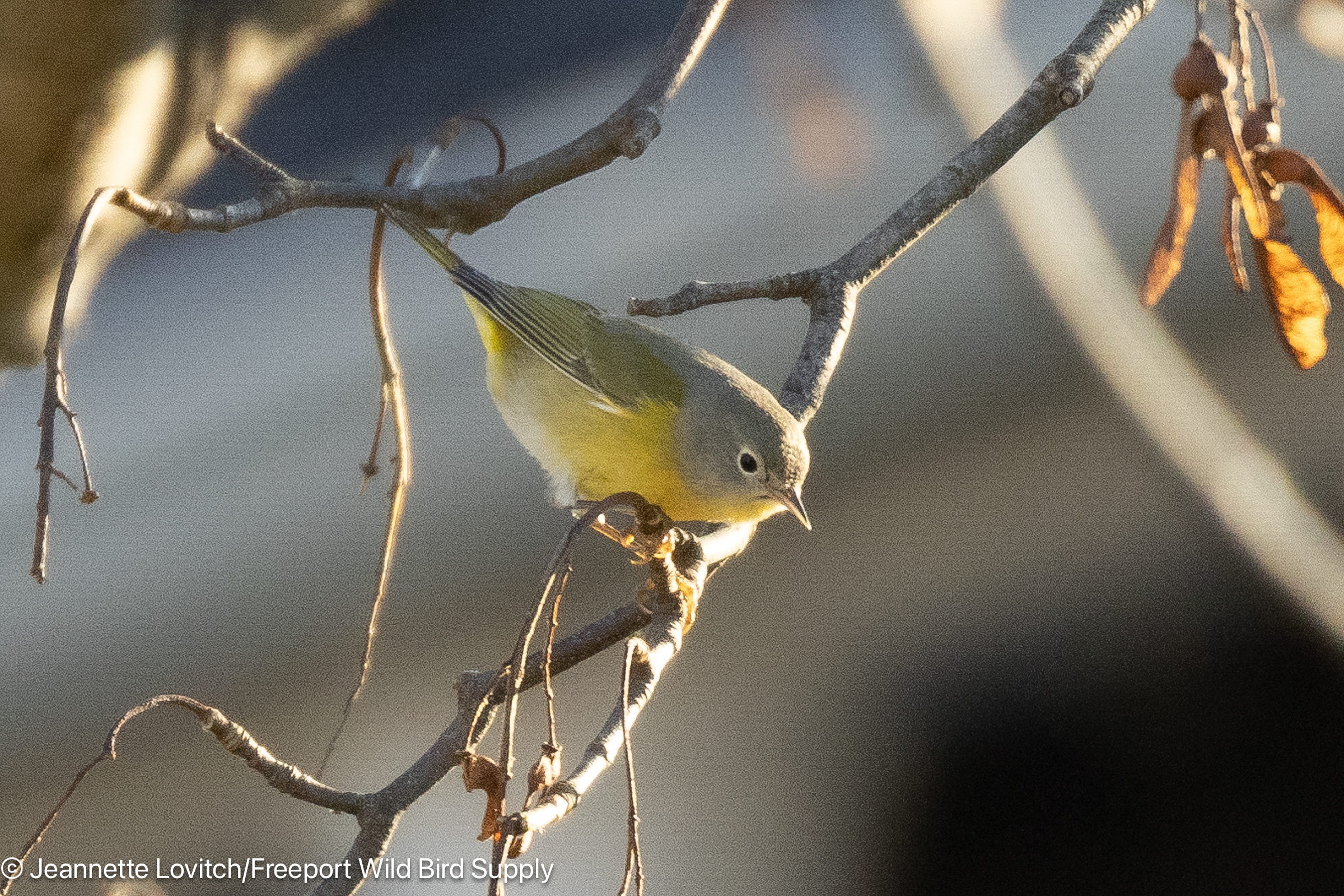
This Nashville Warbler (above) was one of two still on Peak’s Island as of the 1st, and this Orange-crowned Warbler (below) was one of four or five still on the island. Orange-crowned Warblers are pretty hardy, but if the Nashvilles are still hanging on, they would be questioning their life decision this morning! Speaking of, best wishes, wherever you are, to the Virginia’s Warbler that has not been seen since the 11/29. 

Well, winter set in rather quickly this week, didn’t it? And no doubt much to the chagrin of the many vagrants, “pioneers,” and “half-hardies” that we have been enjoying recently. Despite the widespread below-zero temperatures by week’s end, I still saw four species of warblers this week. But I won’t expect that next week. Here are my observations of note over the past seven days.

  • 1 continuing MACGILLIVRAY’S WARBLER, Grist Mill Park, Yarmouth, 11/29 (with Saturday Morning Birdwalk group).
  • 2 continuing NASHVILLE WARBLERS, 3 Orange-crowned Warblers (at least 2 continuing), and 1 continuing COMMON YELLOWTHROAT, but no sign of the Virginia’s, Peak’s Island, Portland, 12/1 (with Jeannette. Photos above).
  • 1 1st cycle Iceland Gull, Maine State Pier, Portland, 12/1 (with Jeannette).
  • 1 Hermit Thrush, Commercial Street, Portland (near cruise ship terminal), 12/1 (with Jeannette).
  • 1 ad. Red-shouldered Hawk, Ann St, Lisbon Falls, 12/4 (with Bill Thompson).
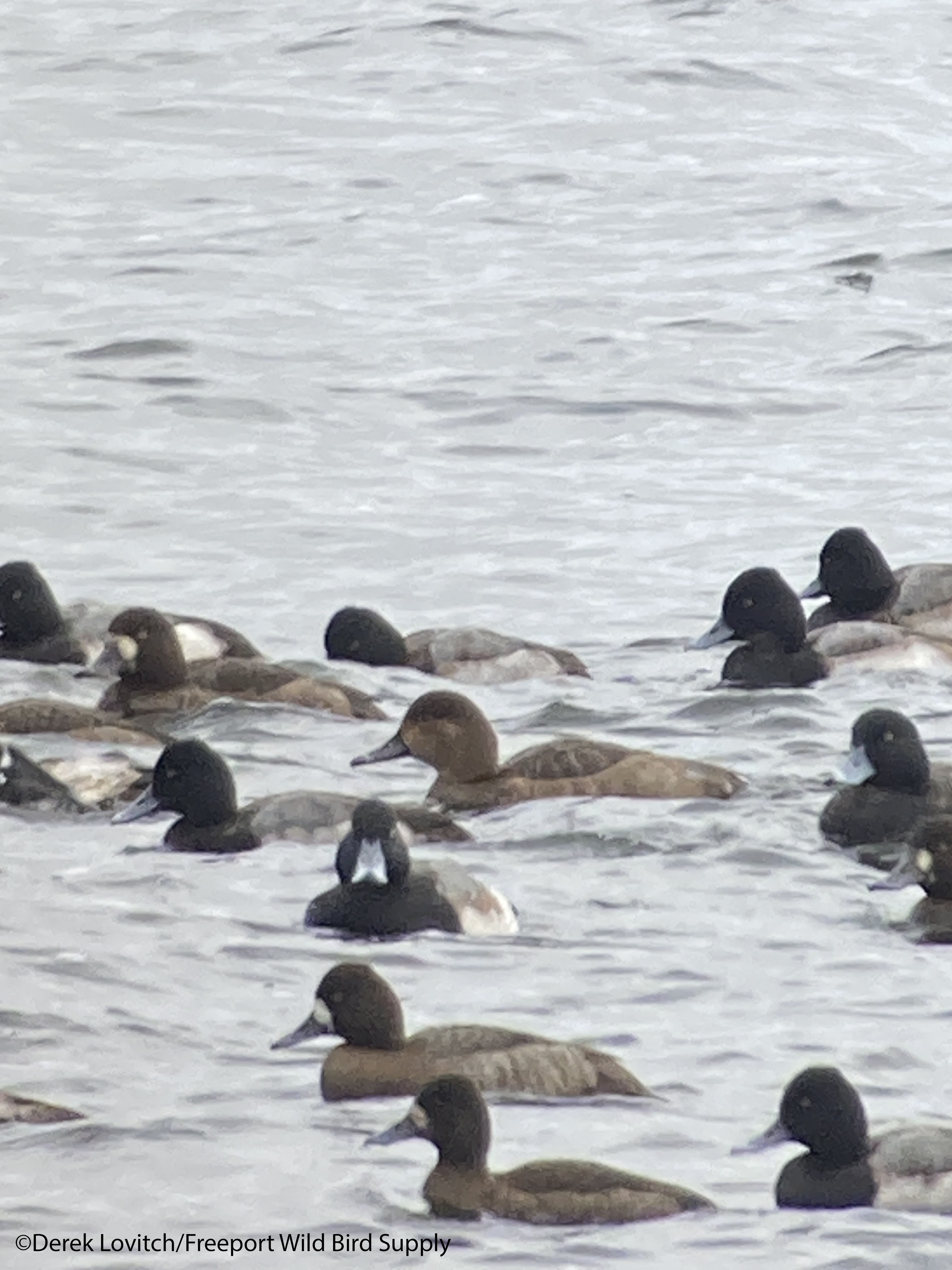
  • 2 WILSON’S SNIPE and 4 Lesser Scaup, Lake Auburn, 12/4 (with Bill Thompson).
  • 1 Fish Crow, Anniversary Park, Auburn, 12/4 (with Bill Thompson). 2-4 Fish Crows have been reliable here since April, including in the past few weeks.
  • 1 Northern Flicker, our feeders in Durham, 12/4.
  • Scattered Evening Grosbeaks and Red Crossbills continue in the area this week as well.
The Peregrine Falcon pair of Lewiston-Auburn is back to frequenting their favorite winter perches, such as this rooftop tower near the Bernard Lown Peace Bridge.
One of the pair had returned here after taking a run at a Bald Eagle.

Recent Highlights, 12/30/2023 – 1/5/2024

This Hepatic Tanager was a shocking discovery in Stockton Springs. I caught up with it on 12/31 to bring my 2023 birding year to a close. Such a lousy phone-scoped photo of such an amazing bird, though!

Happy New Year List Everyone (for those who keep one)!  Rarities abound as we finish 2023 and begin 2024, and I caught up with a few of them this week, and, even more satisfying, found a few “good birds” of my own.

  • 1-2 Red Crossbills continue in and around our Durham property this week. I need to work on finding breeding activity.
  • At least two Turkey Vultures continue in the I-295 corridor between Yarmouth and Freeport through week’s end.
  • I finished 2023 off with a bang, visiting the HEPATIC TANAGER on Station St in Stockton Springs on 12/31 (with Evan Obercian). Photo above.
  • 1 male Red-winged Blackbird, Rte 127, Arrowsic, 1/1 (with Jeannette).
  • 2 REDHEADS, 3 AMERICAN COOTS, 4 RUDDY DUCKS, 1 Long-tailed Duck, about 50 Lesser and 25 Greater Scaup, etc, Chickawaukee Lake, Rockport, 1/1 (with Paul Doiron, Kristen Lindquist, and Jeannette).
  • 1 Northern Flicker, Thompson Meadow Road, Rockland, 1/1 (with Paul Doiron, Kristen Lindquist, and Jeannette).
  • Jess Costa and I went down to Ogunquit Beach on 1/4.  to look at the unprecedented mixed-species warbler flock that has been in and around the dunes and wastewater treatment plant here. I glimpsed what “had to be” the TOWNSEND’S WARBLER, but between the two of us, we saw the two CAPE MAY WARBLERS, 1 TENNESSEE WARBLER, 2 “WESTERN” PALM WARBLERS, 1 PINE WARBLER, and 3-4 Yellow-rumped Warblers well. However, my interest was observing the flock as a whole, especially what they were eating, what the range of the flock was, and whether the birds were exhibiting “normal” niche differentiation.  Unfortunately, we only had two encounters with the whole wave in 3 hours, and periods of up to 45 minutes went by without seeing a warbler anywhere in the dune line. Where else are they going? The lack of sun that day made the edge less inviting, but they still seemed to have disappeared from the pine forest. Were they heading into a neighborhood or across the marsh? I have more questions than answers after the visit, so I might have to find time to go back! We also had one Red Crossbill, 1 MERLIN, two Northern Harriers, etc.
  • 1 drake BARROW’S GOLDENEYE, 64 Lesser Scaup, 19 Greater Scaup, 1 Red Crossbill, etc, Lake Auburn, 1/5 (with Dan Nickerson)

2024 PREDICTIONS LIST BLOG NOW POSTED!

After an 11th-hour addition and requisite updates, my famous-ish Predictions Blog is now ready for viewing. In this annual post, I attempt to forecast the next 25 species to appear in Maine, as well as predict what the next 25 species I personally will see in the state. I also summarize the new species added to Maine’s list in 2023, as well as my own personal highlights and new species.

UPCOMING TOURS.

  • Winter Waterbirds Workshop with Down East Adventures. Sunday, January 14th.  Info here.
  • No Birdwalk, Saturday, 20th.
  • No Birdwalk, Saturday, 27th.
  • Gull Identification Workshop. Saturday, February 3rd and Sunday, February 4th Info here.

Recent Highlights, 11/26 – 12/8, 2023

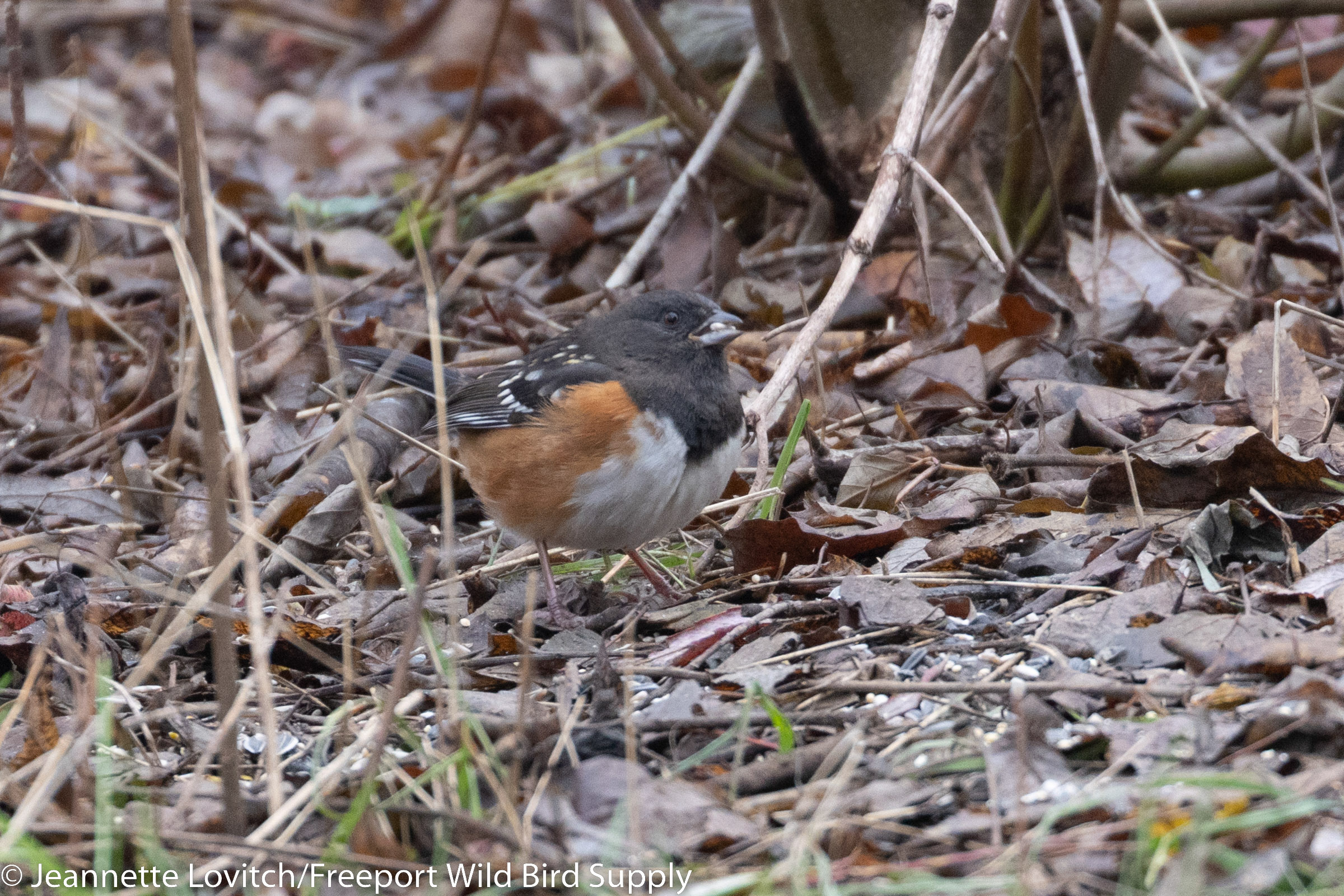
I finally went back this week, this time with Jeannette, to revisit the Spotted Towhee that I found at Kittery’s Fort Foster on 11/19. We were treated to two sessions of it feeding, both of which provided longer and better views than on the first day.

Early December is often a time with another pulse of rarities being detected as birds concentrate at fewer seasonally abundant food sources, like feeding stations, and concentrate along the coast and other migrant traps. At the very least, it’s a time for unusual “late,” “lingering,” or “pioneering” birds that brighten up a cold, gray winter’s day.  This was often the case for me in my relatively limited birding over the past two weeks, with the following observations of note:

  • 1 Gray Catbird and 1 Ruby-crowned Kinglet, Capisic Pond Park, Portland, 11/30.
  • Sabattus Pond, Sabattus, 12/1 (with Dan Nickerson):  380 distant scaup, 272 Common Mergansers, 238 Ruddy Ducks, 209 Mallards, 8 American Black Ducks, 8 Common Goldeneyes, 7 Buffleheads, 4 GREEN-WINGED TEAL, 3 Common Loons, 1 Belted Kingfisher, and 1 RUSTY BLACKBIRD.
  • 1 Chipping Sparrow, King Road, Lisbon, 12/1 (with Dan Nickerson).
  • 3 Ruby-crowned Kinglets and 2 Field Sparrows, Saco Riverwalk, Saco, 12/3.
  • 1 Hermit Thrush and 1 Swamp Sparrow, Elphis Pond, Biddeford Pool, 12/3.
  • Southern York County Coast with Jeannette on 12/5:
  • 1 continuing drake NORTHERN SHOVELER, Legion Pond, Kittery.
  • 1 continuing SPOTTED TOWHEE (photo above), 2 MARSH WRENS, and 1 Swamp Sparrow, Fort Foster, Kittery.
  • 2 American Pipits and 1 Horned Lark, Seapoint Beach, Kittery.
  • 1,000+ Black Scoters, The Nubble.
  • 60 Sanderlings, Ogunquit Beach.
  • 1 Ruby-crowned Kinglet, Auburn Riverwalk, 12/7.
  • 1 drake BARROW’S GOLDENEYE (first of season), 74 Lesser Scaup, and 2 Greater Scaup, Lake Auburn, Auburn, 12/7.
  • 1 Red Crossbill, over our property in Durham, 12/8.

Meanwhile, at our feeders in Durham, a nice uptick in sparrow activity including up to 14 Dark-eyed Juncos, 4 continuing White-throated and 1-2 continuing Song Sparrows, with our first American Tree Sparrow arriving on 11/22 before the store, and 15 Dark-eyed Juncos, only 1 White-throated Sparrow, and a return on 12/6 of an American Tree Sparrow after the storm. 40-50 American Goldfinches and 1-2 Purple Finches continue daily, but this week, we only had Pine Siskins in the woods and not at the feeders.

Since we’ve had a mix of “the birds are back!” and “there are still no birds at my feeders” at the store recently, a wrote a new blog talking about the season and the inconsistencies we are seeing with overall feeder activity, which is posted here.

ISSUES and ADVOCACY:

The amazing birding and migration site – especially for fall “morning flights” – in the Mid-Coast is once again under direct threat. Birders need to help convince the state to find an alternative location for a massive new port and its infrastructure. Our most significant places of concentration for migratory birds need to be protected. Here is our Statement in Opposition to a New Port on Sears Island in Searsport.

Birds on Tap – Roadtrip: Farms and Fermentation, 12/11/16

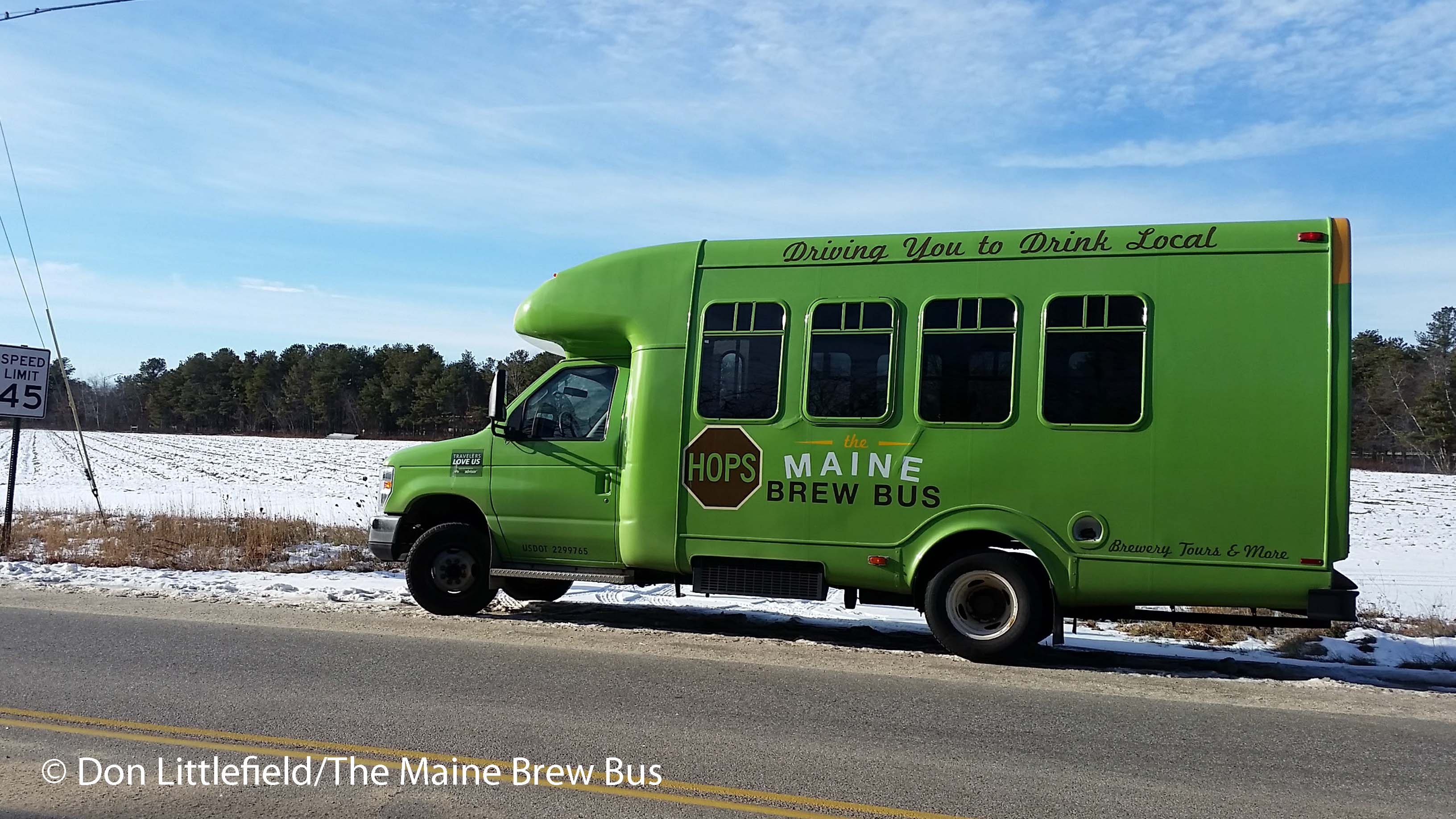
Our seventh and final “Birds on Tap – Roadtrip!” of 2016, entitled “Farms and Fermentation” traveled inland on Sunday. Unlike most of our itineraries, Farms and Fermentation has a very flexible birding route, affording us the opportunity to take advantage of seasonal highlights and variables including weather, northern bird irruptions, and local food supplies.

The theme of the tour is the connection between agricultural lands and birds, but we also spent plenty of time checking out the region’s most significant bodies of water as recent cold weather has slowly frozen small ponds and lakes, pushing waterfowl to the open waters of the deep Lake Auburn and the fast-flowing Androscoggin River.

It was a frigid day, but with temperatures rapidly rising through the 20’s and virtually no wind at most of our stops, we enjoyed a very pleasant and productive morning of birding. Our first stop was a large, open agricultural field in Gray and New Gloucester, where we immediately found 16 Horned Larks within about 30 yards of the road. No Snow Buntings, as I had hoped for, but the views of the four larks that stayed with us were hard to beat.
hola3durham3-12-16_edited-1

bus-at-mayall-road_edited-1

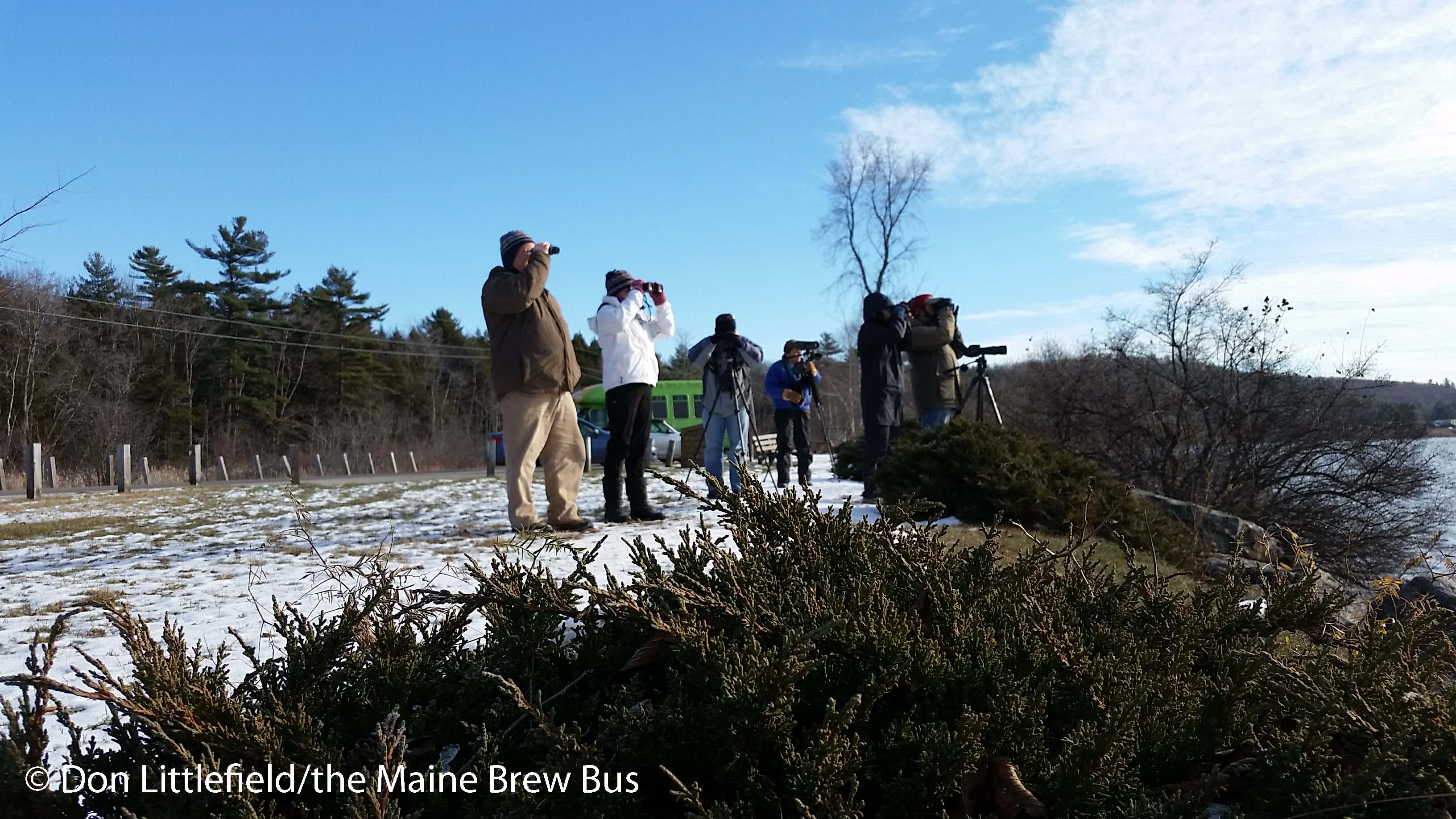
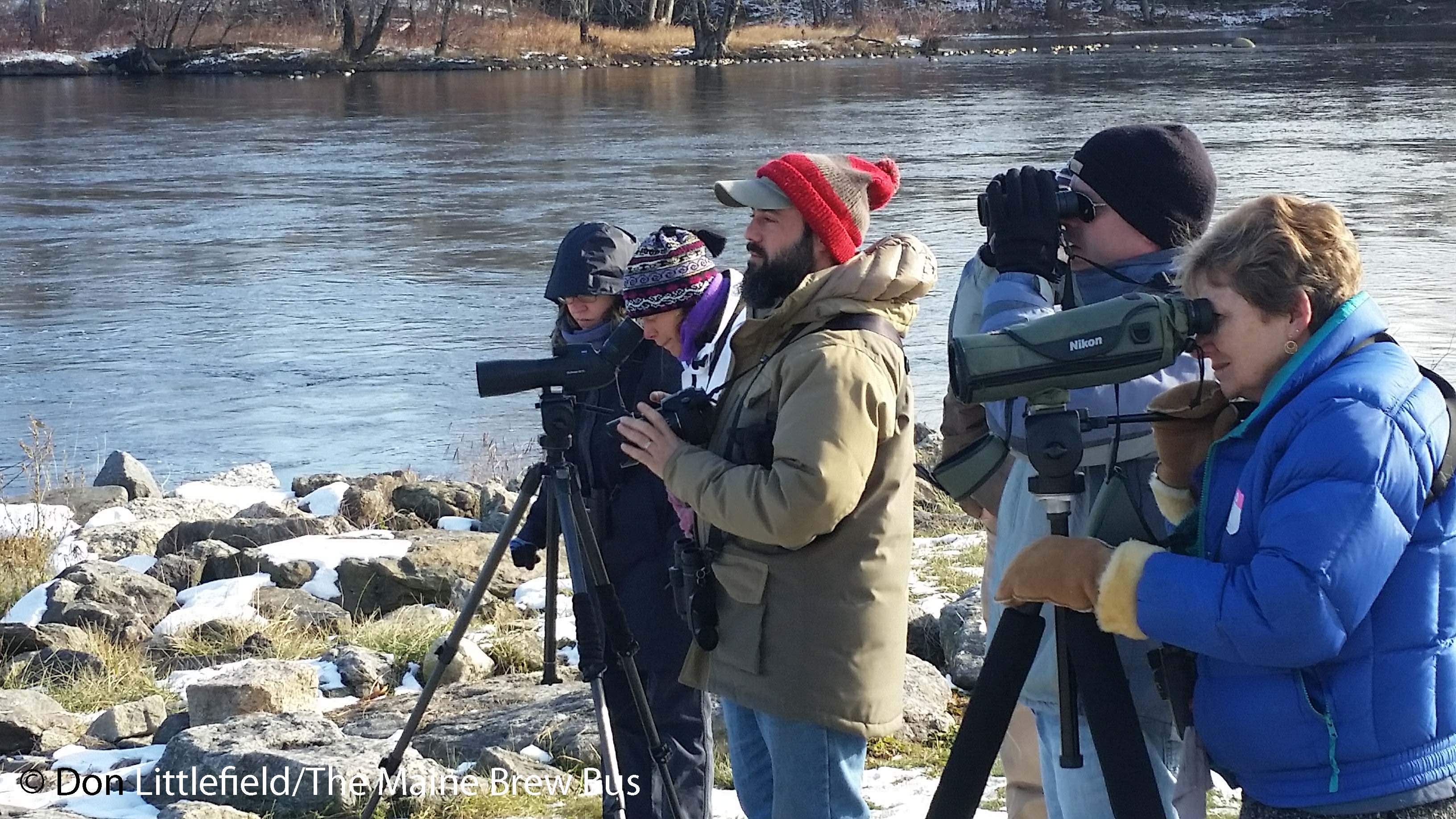
Letting the temperatures climb a bit, we hit the road for a longer stretch to arrive on the north shore of Lake Auburn. Unfortunately, the ducks were elsewhere today – perhaps flushed by an eagle or two  – but we did view two Horned Grebes (rare inland in Maine except for here and Sebago Lake and a rather late date for them away from the coast). One distant Common Loon was also spotted.
lake-auburn1_edited-1lake-auburn2_edited-1

A short hop to North River Road sampled the birds of early successional forest, undoubtedly the first step in reforestation of an abandoned farm. American Tree Sparrows, quite a few Northern Cardinals, and a number of House Finches were present, while a Bald Eagle soared over the river beyond the cornfields across the road (still no Snow Buntings). The highlight, however, was a Red-tailed Hawk that circled up and then glided low over our heads, with the reflection of the thin coating of snow on the ground acting as a spotlight to really light up its pale plumage.

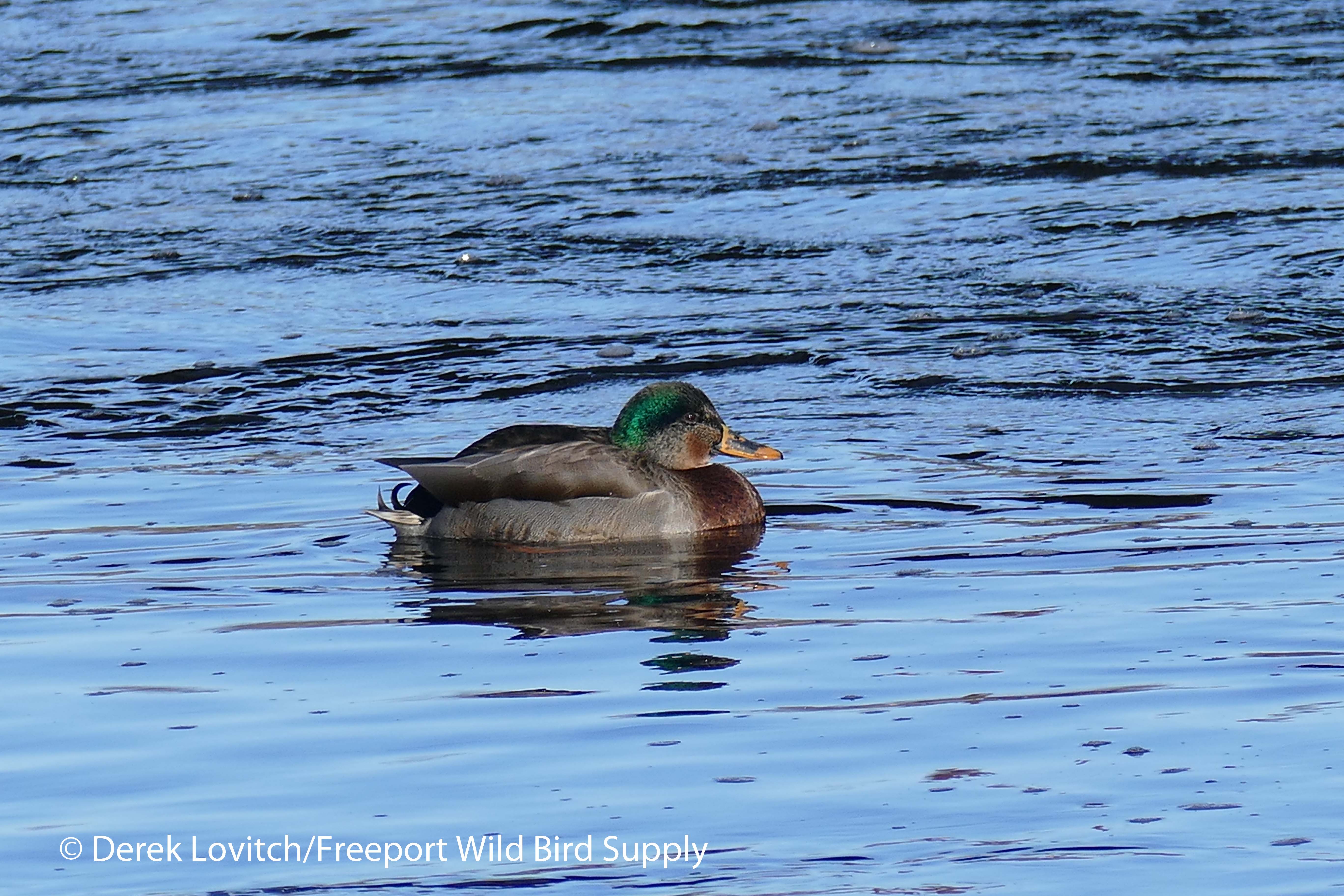
Three punk-rock Hooded Mergansers were at the nearby boat launch, and we finished up with some more waterfowl along the Auburn Riverwalk. Nearly 200 Mallards were present, affording us the chance to study individual variation and hybridization, as well as taking a moment to savor a truly beautiful critter.
img_1205_edited-2
Hooded Mergansers

As for this individual, I am not sure how to interpret its odd plumage: a very old female taking on male characteristics, a hybrid with something domesticated, or perhaps a male that for some reason is unable to fully attain an adult plumage. Whatever it is, it was a perfect example of how much there is to be learned from looking at our most common birds!
l1080790_odd_mallard1_edited-1

l1080797_odd_mall_withmallpair_edited-1

Four American Black Ducks and some odd Domestic things were present, but I was hoping for an unusual dabbler or two to have joined the masses with the recent freezing. However, we did have two more Hooded Mergansers, and downriver, two spiffy drake Common Mergansers. A Common Loon was a little out of place on the river, likely a bird that woke up to encroaching ice on a lake this morning!
loon_from_riverwalk_edited-1

auburn-riverwalk_edited-1

Don then took over as layers were shed for good, as we crossed the bridge into Lewiston on our way to Bear Bones Beer. Don was giving us some of the history of this new brewery, but I interrupted to have him pull into a parking lot. We quickly disembarked to temporarily resume our birding with scope views of the local male Peregrine Falcon eating lunch atop of the steeple of the Franco-American Heritage Center, as per our tradition during “Birds on Tap – Roadtrips” to Lewiston!

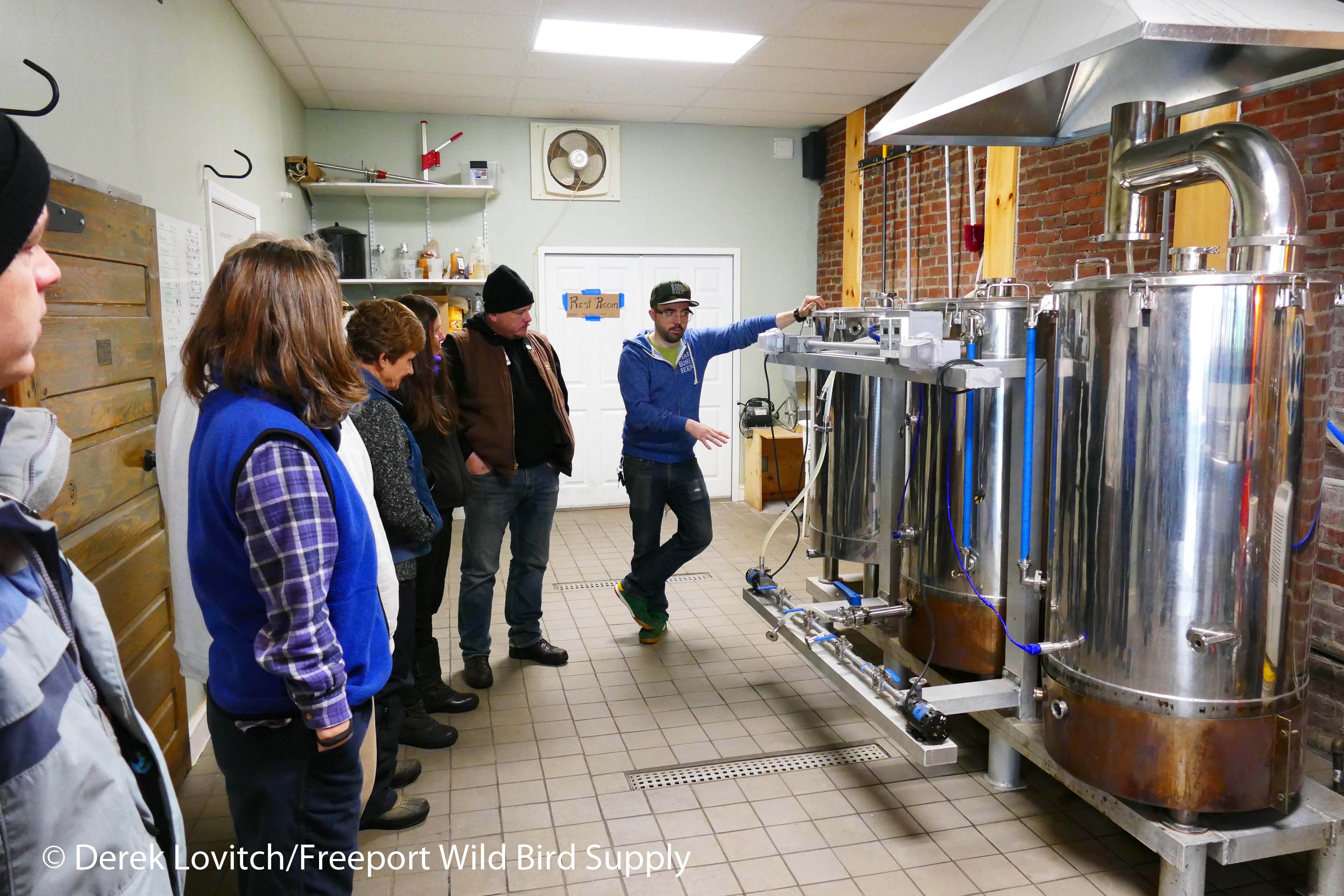
Arriving at Bear Bones Beer, a nanobrewery with a focus on sustainable production and ingredients, co-founder Eban Dingman welcomed us into the comfortable space in a renovated portion of a former department store in the heart of downtown.

bear_bones2bear_bones3_edited-1

We began our tasting with their 2X C.R.E.A.M, a smooth cream ale that featured a very nice balance, avoiding overdoing it with the hops. Dry-hopped with fruity Mosaic hops, Robot Bear Porter finished with a fruit flavor not typical of porters, putting a nice twist on a good winter stand-by. Picea, a dry stout brewed with spruce tips added to the whirlpool process, featured a subtle hint of spruce/resin, especially on the back end.

After sampling some of their applewood smoked barley malt, we tasted it in action. I went with the New Dead Smoked IPA, with just the hint of the smoky flavor and a more subtle hop kick than most IPAs these days. The “over-hopping” bandwagon had definitely not arrived – thankfully, if you ask me – here on Lisbon Street.
winston
Winston provided additional entertainment

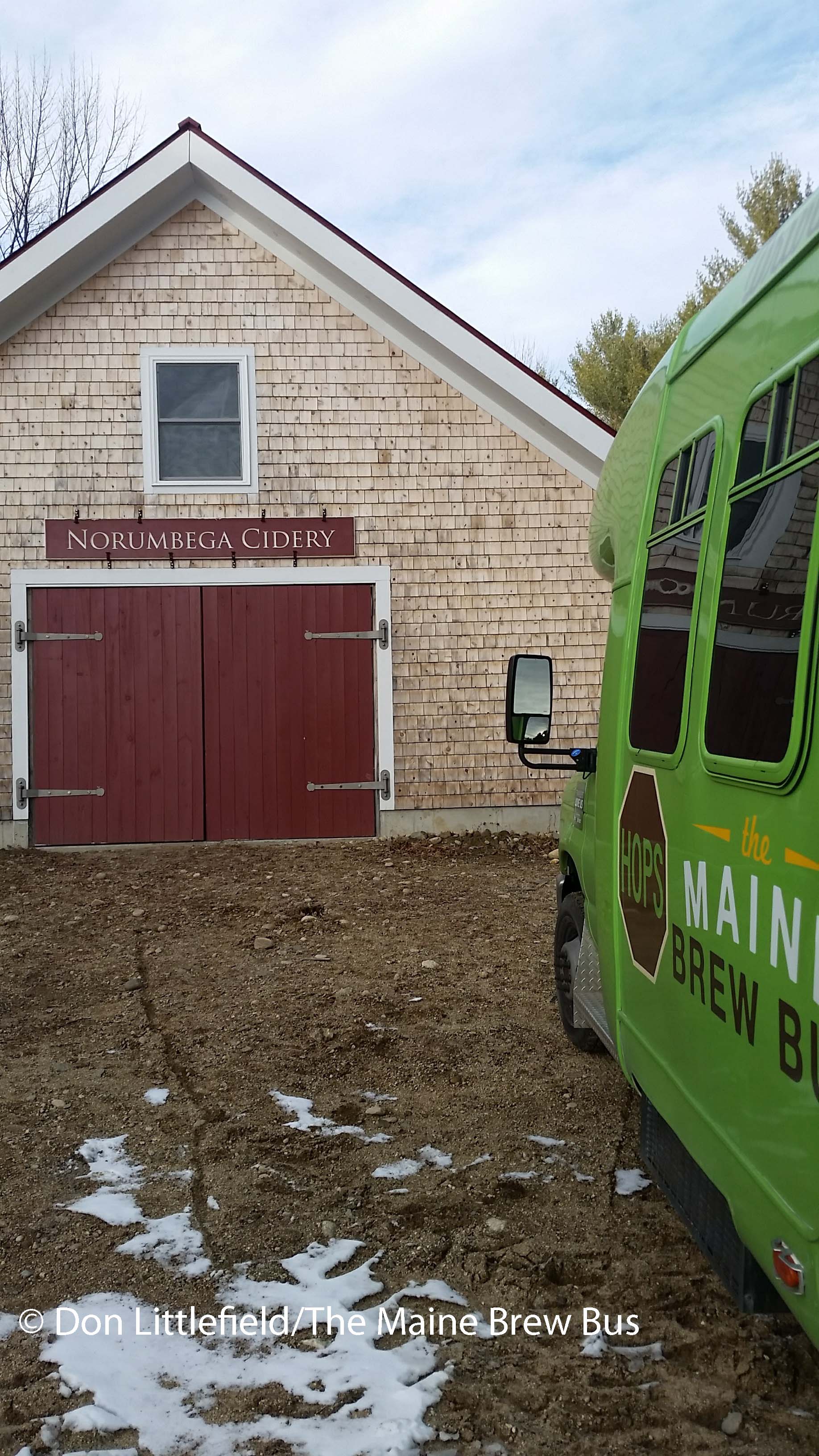
Trekking back across country, keeping an eye out for Northern Shrikes (we did spot two Northern Mockingbirds today however, much rarer in winter in interior Maine than shrikes!) as we returned to New Gloucester for a special visit to Norumbega Cidery. Open to the public only for the occasional special event, this was a real treat to learn about Noah Fralich’s family farm and his four-year-old cidery. Discussing his plans for the property, including the cultivation of a wide variety of heirloom and specialty apples, we also discussed the value of orchards to birding: in fact, if Pine Grosbeaks or Bohemian Waxwings had made it this far south by now, we likely would have visited an orchard or two on today’s tour – and wondered if in a few years, we might see these species right here at Norumbega.
bus-at-norumbega_edited-1

I’m not a big cider guy, as I usually don’t like sweet drinks in general. Many of the most popular hard ciders today (at least from the national brands) are loaded with sugar, and are more akin to soda. Dry ciders, however, are closer to wine, and the white wine yeasts that Noah uses produce a very crisp, very dry, and very delicious product that retains aromatics and subtle flavors.

We began with the clean and crisp Classic, with just a hint of tartness followed by the Berry Medley with a sweet and bitter contrast from the tannins and sugars found in four varieties of berries. Sweeter than the others, but still finishing very smooth and crisp, the Honey (technically, a ceyser because of the use of honey) was next up, featuring its very subtle honey notes and nose. And finally, we tried the Spice – my new favorite cider that I left with four bottles of – with a really complex taste profile and depth of flavor produced by only three added spices: cinnamon, nutmeg, and cloves (admittedly, I also tend to love anything with nutmeg) that made me think of an unsweetened apple pie.
norumbega_pours1_edited-1norumbega_pours2_edited-1

Taking the back roads back to Freeport, we slammed on the breaks when a Barred Owl was spotted, and quickly unloaded. Unfortunately, the Barred Owl was less excited and melted away into the woods, bringing our birding day, and our successful “Farms and Fermentation” tour to a close.

With ten tours on the schedule for 2017, including some really exciting new itineraries, we look forward to having your on board soon. All of the tours are posted on the “Tours, Events, and Workshops” page of our website, with direct links for online reservations.
Sabattus Pond Season-in-Review

Sabattus Pond was frozen on Monday morning, as I expected, thanks to this recent bout of unseasonably cold weather.  While 35 Mallards, 3 Hooded Mergansers, 2 American Black Ducks, and 1 Mallard x black duck hybrid were present in the outlet stream, this likely brings my Sabattus birding season to a close.

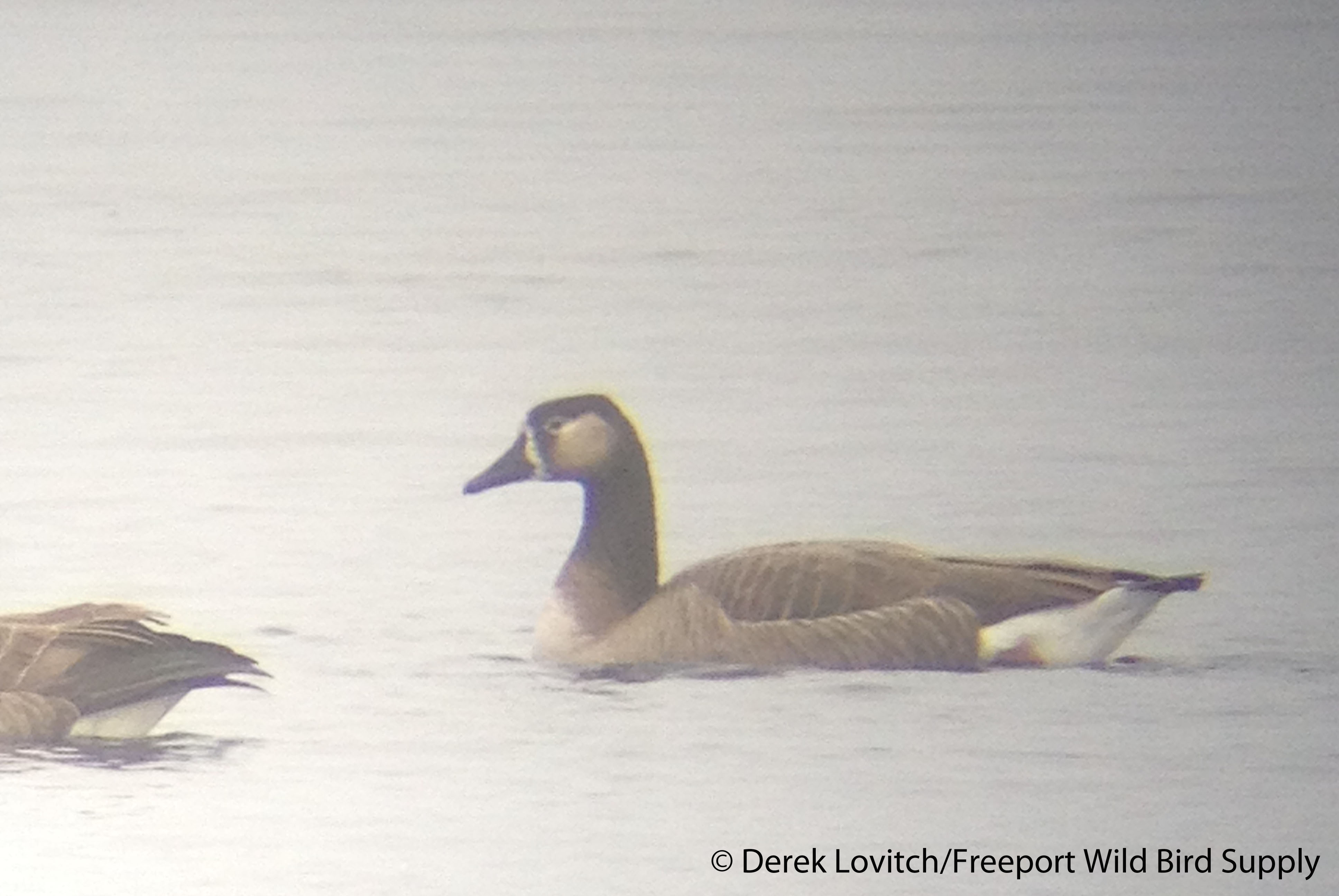
But it is just after Sabattus’s freeze-up that LakeAuburn is its most productive.  Today, 117 Canada Geese, 58 Greater Scaup, 46 Lesser Scaup, 41 Ruddy Ducks, 22 Common Goldeneyes, 8 Hooded Mergansers, 1 Bufflehead, and 1 continuing hen Black Scoter were tallied in a less-than-exhaustive search of the large lake.  The Black Scoter is a great bird inland, and she’s been present for at least five weeks now.  Meanwhile, among the Canada Geese, there was this funky mutt – apparently a hybrid with some sort of domestic thing.
CANGhybrid1,LakeAuburn,12-2-13

CANGhybrid2,LakeAuburn,12-2-13

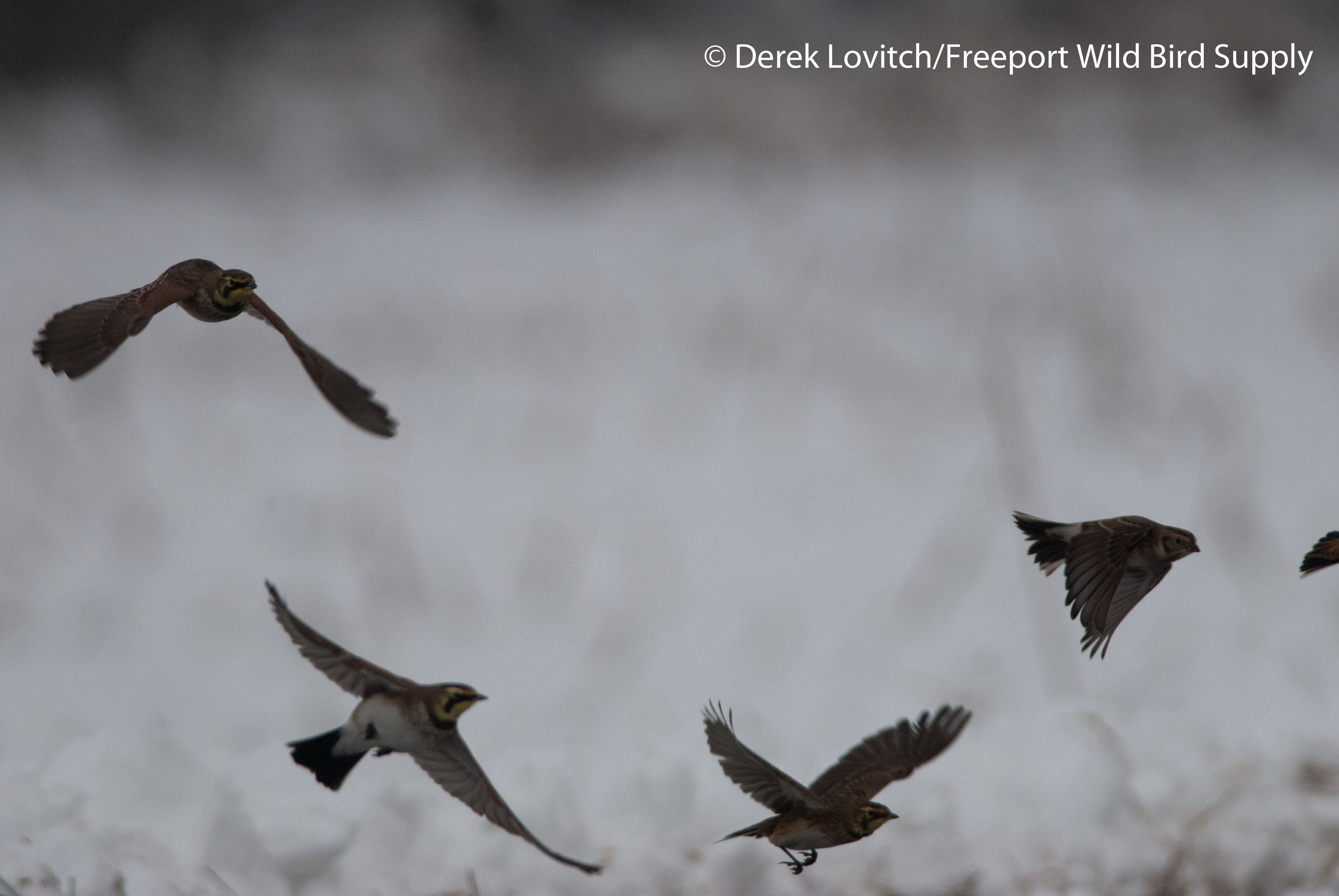
Between visiting the two lakes, I scoured Upper Street in Turner for Snowy Owls (none) or other raptors (just one Red-tailed Hawk), but I did happen upon a small flock of 35 Horned Larks that contained two Lapland Longspurs.  They were feeding at the edge of Pearl Road, taking advantage of where the plow had scraped the sides of ice and snow.  I got this lucky shot of one of the Lapland Longspurs in flight with the Horned Larks.  Unfortunately, the light mist and heavy cloud cover prevented a really great shot.
DSC_0154_LALOwithHOLA,Turner,12-2-13

But back to waterfowl…

Sabattus Pond is one of my favorite birding locations from mid-October through freeze-up.  The diversity of ducks is rarely matched in this part of Maine, and the proximity and ability to study birds (such as Lesser vs. Greater Scaup) is unsurpassed.  Each fall I tell myself I needed to visit Sabattus more often, so this fall I committed to visiting once a week, beginning on 10/30 – I would have started a little earlier in the month, but the weather at the time had been so warm that waterfowl were not yet arriving en masse prior to the end of the month.

I tallied all waterbirds (except for Herring and Ring-billed gulls) on each visit.  I was curious to document the ebbs and flows of respective species throughout a full season here.  I also hoped to find some rarities of course.

Here’s my weekly tally (on 10/30 I birded with Cameron Cox, and on 11/21, Dan Nickerson):

10/30    11/7    11/14   11/21   12/2
Canada Goose                        2          0          0          0          0
American Black Duck          14        53        63        24         2
Mallard                                154      301     254      255       35
Mallard x black duck              2          4          8          6          1
NORTHERN PINTAIL               1          1          0          1          0 (same bird)
Green-winged Teal                 0          0          1          0          0
Greater Scaup                       15        22        27        20         0
Lesser Scaup                       133      185      204      174        0
WHITE-WINGED SCOTER        0          0          0          1         0
Bufflehead                              12          9          5          8         0
Common Goldeneye               2        29          4          2         0
Hooded Merganser               11        17        15        19        0
Red-breasted Merganser        7          1          0          0        0
Common Merganser                0         3          7      224        0
Ruddy Duck                           470     531      541      273        0
Common Loon                          2          4          9          3        0
Horned Grebe                           1          0          0          0        0
RED-NECKED GREBE                0          0          1          0         0
Great Blue Heron                     0          0          0          3         0
Great Black-backed Gull          0          0          0          1         0
American Coot                          0          0          1          0         0
Belted Kingfisher                      0          0          0          2         0

Other highlights at Sabattus included a Peregrine Falcon and 40 Snow Buntings on 11/7 and 3 White-rumped and 3 Pectoral sandpipers on 11/14 (both late and noteworthy inland).

Overall, it was probably only an average season at Sabattus.  The only week I missed was last week, due to my schedule and Thanksgiving, which is unfortunate, as the pre-ice-up week would have provided some interesting data.  There were no fallouts, and only a few unexpected (or at least, expected to be seen rarely) birds (in caps above).   The Ruddy Duck numbers were well above average, but a lot of other things – especially the scaup – were average or below my high counts of recent years.  And why don’t coots visit here much anymore? And really, not a single Ring-necked Duck!? Nevertheless I find it very rewarding to regularly check one location, so I thoroughly enjoyed my extra effort this year.

On each visit, I also visited LakeAuburn, which is a much different body of water (deeper, sandier, and apparently without the invasive Chinese Mystery Snail that provides the sustenance for most of the birds on Sabattus).  Note, however, that as the numbers of ducks decrease on Sabattus, they begin to increase on LakeAuburn – the last lake to freeze in the region.

11/7     11/14   11/21   12/2

Canada Goose                        0          0          0      117
American Black Duck             1          0          0          0
Mallard                                     3          6          0          0
Greater Scaup                         0          0        38        58
Lesser Scaup                           8          0        31        46
SURF SCOTER                          1          0          1          0 (probably same bird)
BLACK SCOTER                       1          0           1          1 (probably same bird)
Bufflehead                              0          2           0          1
Common Goldeneye             0          5         21        22
Hooded Merganser               0        14           5          8
Common Merganser             0          3           0          0
Ruddy Duck                           20         2           0        41
Common Loon                        7         9           1          4
Horned Grebe                         1          0          0          1
RED-NECKED GREBE              0          1          0          0

I can’t help but wonder if some of the birds on the lake on Monday would return to Sabattus if a warm spell opens the pond back up, and if it does, I am sure birds from points north might drop in as well as they are frozen out of lakes and rivers.  In other words, the duck-watching season on Sabattus may not be over yet, but I think I will be turning my attention elsewhere unless it warms up dramatically.

Meanwhile, on all of my visits to the two lakes, I added at least a few other stops in between in the hopes of finally finding a really “good” bird in Androscoggin County (away from Sabattus, that is).  Uh…nope.  My only real highlights away from the two lakes were the two Lapland Longspurs on Monday.  My rarity drought in AndroscogginCounty might continue, but the waterbird watching is certainly exceptional.

By the way, in a series of spring visits, I have found very, very few ducks on Sabattus Pond, for reasons unknown.  Therefore, other than my annual check on Maine Maple Sunday, I’ll have to anxiously await next October!