Jeannette and I raced down to the Kennebunk Plains on Monday the 14th for this Fork-tailed Flycatcher. A notorious “one-day-wonder,” it conveniently was discovered on a day off for a change. Even more surprisingly, unlike most Fork-tailed Flycatchers that occur in the Northeast, this one stuck around, continuing through the 16th. There are between 10 and 16 previous occurrences of this vagrant from South America in Maine – incredible considering the distance it has to fly “incorrectly” to get here!
Only in the middle of July is a trip to Monhegan not the birding adventure of the week. But betweenthe chase of a “megs,” an opportunity to visit a banding project on a mountaintop in Vermont, and a couple of boat trips, it was a great week (plus) of birding for me nonetheless. Here are my observation of note over the past nine days.
1 RAZORBILL (just off of Smuttynose outside of Monhegan harbor) and 1 Atlantic Puffin, Hardy Boat from Monhegan to New Harbor, 7/12. Only tubenoses encountered on a very foggy day both to and from were Wilson’s Storm-Petrels.
1 FORK-TAILED FLYCATCHER, Kennebunk Plains, Kennbunk, 7/14 (with Jeannette and m.obs). Found earlier in the day by Sam Darmstadt. Photo above.
7/19: I co-lead the morning Whale and Puffin Combo Cruise tour with our partners Cap’n Fish’s Cruises: 1 MANX SHEARWATER (unexpected close fly-by between our boat and Eastern Egg Rock); 2 American Oystercatchers, Eastern Egg Rock; 3 Cory’s Shearwaters and 100-125 Wilson’s Storm-Petrels offshore. I stayed aboard for the afternoon trip and only had 1 Cory’s Shearwater and 75-100 Wilson’s Storm-Petrels offshore.
Thanks to Mike Williams for allowing me to share his photos of this amorous pair of Red-necked Grebes along Ocean Avenue in Biddeford Pool. We’ve had 1-2 Red-necked Grebes “oversummering” here for the last few years, and last year I observed some rudimentary nest building from a pair (also with a stunned tour group). But we did not expect to see them, get, uh “that into it,” with courtship, nest-building, and even copulation. Unfortunately, as you could see, the “nest” was below the high tide line, so there’s not much chance of success here. A freshwater wetland breeder that nests no closer than central Quebec, this is odd behavior in a very odd place! It was amazing to watch though, and anytime we get to see Red-necked Grebes in full breeding plumage is a highlight on its own.
Like last week, much of my time was spent with our local breeding birds. From my personal “mini-breeding bird surveys” to a 7-day tour for Gulf Coast Bird Observatory, the birds that call Maine home in summer were once again the “targets” and the highlights, from Saltmarsh Sparrows and Roseate Terns to Grasshopper Sparrows and our wealth of warblers.
However, June is a good time for oddities. During the course of enjoying our usual species, I encountered the following observations of note over the past 10 days:
3 (!) RED-NECKED GREBES, 16 total Black Scoters, 3 Surf Scoters, etc, Ocean Avenue, Biddeford Pool, 6/16 (with Martin Hagne and Denise).
After being excited to find the 3 breeding plumage RED-NECKED GREBES the day before, we were shocked to find 4 the next day, all calling, and one pair courting and copulating! Photos and more details above. (with Gulf Coast Bird Observatory tour group).
2 American Oystercatchers, 1 Red-breasted Merganser, 1+ Black Scoter, Ocean Avenue, 6/17 (with Gulf Coast Bird Observatory tour group).
1 Surf Scoter, Dyer Point, Cape Elizabeth, 6/17 (with Gulf Coast Bird Observatory tour group).
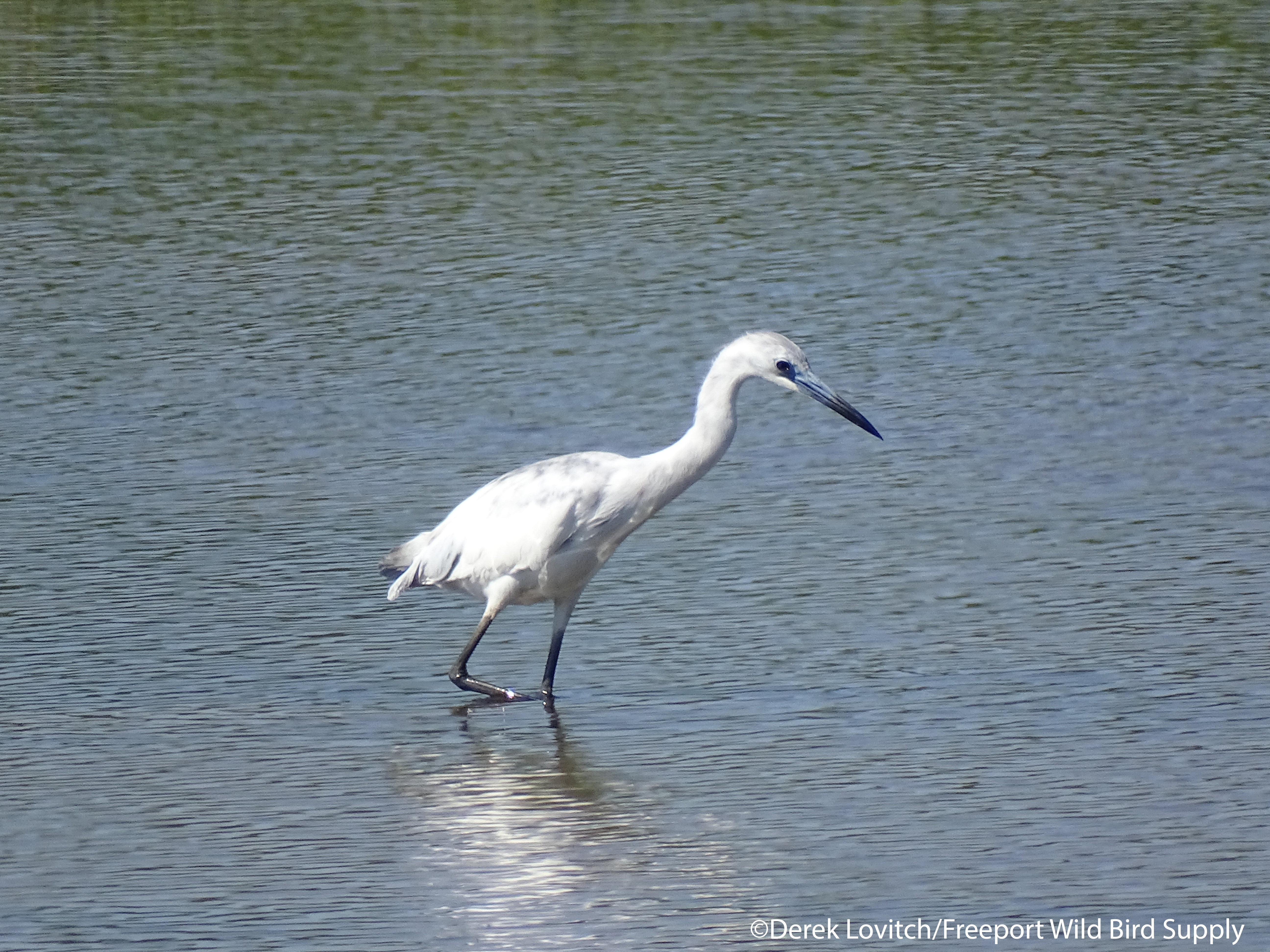
Little Blue Herons have declined in Maine, so it was nice to find my second of the year in an untraditional location. This 1st summer bird was in the marsh behind Seapoint Beach in Kittery on the 2nd.
Typical later migrants, such as Blackpoll and Magnolia Warblers, and a variety of flycatchers, were still moving in and through, especially during the first week of June. Then, my gears rapidly shifted to breeding birds on tours, events, surveys, and just general birding enjoyment. Quality time with boreal breeders in the Rangeley area and specialties such as Saltmarsh and Nelson’s Sparrows, Roseate Terns, etc here at the coast were the usual highlights of the first half of June, both personally and professionally.
In addition to the regular breeding birds we seek – again, both personally and professionally – it’s also a good time of year for unexpected birds in unexpected places, and just general good birding. Some of my additional, less expected observations of note over the past ten days included:
1 immature male and 1 female ORCHARD ORIOLE (FOY), and 1 late Red-throated Loon, Fort Foster, Kittery, 6/2.
1 1st summer LITTLE BLUE HERON, Seapoint Beach, Kittery, 6/2. Photo above.
A visit to the Kennebunk Plains on 6/4 with Jeannette yielded 2 singing CLAY-COLORED SPARROWS (one continuing male near “Clay-color Corner” and one about half-way between there and the main parking lot on the eastern loop trail). 2 UPLAND SANDPIPERS, 6 GRASSHOPPER SPARROWS, and at least 11 Red Crossbills were also detected.
1 pair Cape May Warbler, 1 Wilson’s Warbler, 1 Olive-sided Flycatcher, Palm Warblers, displaying Wilson’s Snipe, family of Canada Jays, etc, Dallas Plantation, 6/7 (with Matt Young).
Fun to be in the field with Matt Young for the Rangeley Birding Festival and hear him describe (and hopefully me learn!) Red Crossbill call notes. There weren’t many around, but we did encounter both Type 12’s and Type 4’s. Meanwhile, scattered birds continue to be widespread down here at the coast.
7 Turkey Vultures, over downtown Rangeley from porch of Parkside and Main, 6/7 (With Matt Young and Birds on Tap! event group for the Rangeley Birding Festival). Less than 10 years ago, a single was unheard of.
1 Semipalmated Plover, Eastern Road Trail, Scarborough Marsh, 6/11 (with clients from New Jersey).
Tours and Events:
Due to tours, there will not be a Saturday Morning Birdwalk on either 6/22 or 6/29.
I tried birding less (Doctor’s orders!) recently, but it’s such a tough time to do that. Luckily, this time of year is so fruitful that even reduced birding resulted in a number of sightings of note. Between rest days and a shelter-in-place order, I minimized birding to aid in my recovery. Slowly, however, I was getting out more and for more time.
1 Red Crossbill, Otter Brook Preserve, Harpswell, 10/29 (with Harpswell Heritage Land Trust tour group).
2 Field Sparrows and 5 Horned Larks, Pott’s Point, Harpswell, 10/29 (with Harpswell Heritage Land Trust tour group).
Sabattus Pond, Sabattus, 11/2 (with Dan Nickerson): 591 Ruddy Ducks, 289 Mallards, 107 American Black Ducks, about 80 mixed Lesser and Greater Scaup, 68 Buffleheads, 19 Canada Geese, 15 Northern Pintails, 13 Hooded Mergansers, 8 Common Mergansers, 7 American Wigeon, 7 Green-winged Teal, 6 Common Goldneyes, 2 Horned Grebes, 1 female Long-tailed Duck, 1 female Red-breasted Merganser, etc. etc.
Meanwhile, here in the yard, the season was rapidly changing. Starting this period with lots of Savannah and Swamp Sparrows around, they had mostly petered out by week’s end. Song Sparrows remain strong, albeit in somewhat reduced numbers, but White-throated Sparrows and Dark-eyed Juncos have finally begun to increase.
We’re down to just a couple Yellow-rumped Warblers in the yard now, but a few late-ish migrants have included a Red-eyed Vireo and Common Yellowthroat on the 25th, and the occasional small group of Red-winged Blackbirds and Common Grackles are still trickling through.
Pine Siskins and Purple Finches have been near-daily fly-overs, with the occasional Purple Finch visiting the feeders, building to 8 by 10/26 and a few Pine Siskins finally visiting the feeder on 11/1. Our American Goldfinch flock remains strong, however, with 20-25 continuing, splitting time between the feeders and the weedy margins of the property (especially Evening Primrose). Siskins and Purple Finches continued to pour into the area in the last days of October. Multiple large flocks of siskins and at least 20+ Purple Finches were in the Otter Brook Preserve in Harpswell, on the 29th, for example, and more are being reported at feeders in the area now.
Now that we are in November, the attention turns towards the water…and migrant traps for rarities!
TOURS and EVENTS:
All of our tours for 2023 are now complete, not including Saturday Morning Birdwalks of course. Keep an eye on the Tours page of our website, as we’ll soon begin adding more 2024 outings.
This Purple Gallinule graced tiny Rogers Pond Park in Kennebunk on the 20th, and I could not resist the chase!
The last few have been tough for me. It’s October in Maine – my favorite month of birding, as I have opined about before. The weather went from unusually warm and benign to pleasantly normal and unsettled. But in between, there were those glorious fall days of crisp mornings, colorful leaves, and migrants everywhere.
Over the winter as I slowly recovered from shoulder surgery, I used my one good arm to enjoy morning vigils at the active feeding station, which I chronicled here and here. I kept track of daily ebbs and flows, and paid even greater attention to behavior, such as the winter’s-long Sharp-shinned Hawk drama at the feeding station.
While it’s been a long year of near-constant pain and discomfort, it has also been a very busy year and we had one of the most successful tour seasons in our company’s history, despite the near-constant rain. I battled through some tours but did my best to remain positive and productive.
Pain was building in my “good” arm all summer, constantly doing all the work the left, surgically repaired but then frozen shoulder was still unable to accomplish. My September trip to Monhegan for Down East Adventures was the most challenging yet.
For the first time in my career (around 30 years of guiding in some shape or form), I had to hire a replacement for a tour. Thankfully, my good friend and amazing birder Evan Obercian was able to cover our 18th annual Monhegan Fall Migration Weekend for me. I could barely get in and out of my recliner – I was not going to be able to walk around all day and show people birds!
The duration of this intense pain lasted far longer than I had expected, despite various combinations of medicines and therapies, but I mostly remained on “Injured Reserve’ (I feel like I am injured often enough to be an Offensive Lineman for the Patriots!) Meanwhile, October birding was at its finest, and birds were streaming through. Our Durham yard was absolutely bursting with birds on most mornings through, but my birding was limited to a short walk up and down the driveway.
Our September diversity of warblers slowly petered out into waves of Palm and Yellow-rumped Warblers in early October, with Ruby-crowned Kinglets bitterly scolding from all edges. Our fields and meadows were chock full of sparrows, with a productive breeding season for Song Sparrows soon augmented by flights of Swamp, the return of White-throated, more Song, and a surprising amount of Lincoln’s Sparrows.
Some other highlights during the peak of my limitations included a Philadelphia Vireo viewed from my recliner on 10/1 and a truant Scarlet Tanager spotted from the same position on the 5th. Happily, by the morning of the 7th, I was actually able to take a little walk with bins and that yielded a nice array of migrants including 2 Blue-headed Vireos, a presumed-continuing Scarlet Tanager, a new wave of Yellow-rumped Warblers and especially Ruby-crowned Kinglets, and an increase in Swamp, Savannah, and Song Sparrows in our field.
Meanwhile, my usual morning texts with Evan and Dan Nickerson as we monitored the ebbs and flows of migration helped to keep me abreast of what was happening beyond the yard. Our feeders in Durham were busier than what most people were experiencing this fall, but this is always a time of plenty. For me, unfortunately, my limitation was holding my head upright and using binoculars, so daily counts and monitoring were out of the question – no chance to attempt another Sandy Point Morning Flight, despite some great conditions on several mornings.
I was kept busy with a writing project, correspondence and planning for the store, and on the morning of the 8th, Jeannette and I boarded a plane for a trade show in Missouri. After a 5-year hiatus, we really needed to get back to reinvigorate our offerings and see if there were any revolutionary developments.
Flying into Kansas City, Jeannette and I enjoyed a couple of days off before the trade show, and then a day upon our return. We visited with a friend, checked out some breweries and indulged in the best of Kansas City BBQ, and of course, did a little birding. Finally feeling well enough to carry binoculars for a bit, we spent the morning of the 9th birding in Kansas (Spotted Towhees and Franklin’s Gulls!) and at least a couple of hours of each morning of our trip. A big overnight flight resulted in a very productive morning at the Lowe Conservation Area in Mexico, for example, with large number of Yellow-rumped Warblers and impressive numbers of Lincoln’s Sparrows among many others.
When we returned late on the 13th, much had changed here in Maine – a week is a long time in fall migration! I was finally back to work, leading the Saturday Morning Birdwalk once again on the 14th. If only to prevent me from snapping my head up in response to an unfamiliar flight call, I was still sporting a neck brace and quite a bit of discomfort. However, the birding helped ease the pain. In fact, it was an exceptional outing full of sparrows, a massive arrival of Pine Siskins, a late Nashville Warbler, and a Great Blue Heron hunting voles.
I birded our Durham property on the morning of the 15th, noting the changes since we departed. While truant House Wren and Indigo Bunting continue, gone are the last of our Gray Catbirds. There were still a lot of Song Sparrows, but fewer Swamp and more Savannah in our field. A Dark-eyed Junco and a few fly-over Pine Siskins have arrived, and a flock of about 100 Common Grackles briefly visited a patch of wet woods. Warblers, however, were now limited to a healthy smattering of Yellow-rumped only. A Rusty Blackbird and our first two immature White-crowned Sparrows arrived on the 17th, and the morning of the 20th was particularly birdy – Pine Siskins are here now.
Our annual Fall Boothbay Mini-Pelagic on the 16th went off without a hitch, with great weather and sea conditions. However, few seabirds were to be found, despite a lot of ground covered. The passerine list – including sparrows 28 miles offshore – was fascinating, however. But it felt more like being at Sandy Point than at sea!
It was a short trip, but I actually went birding on my own for a few hours on the 18th, visiting Sabattus Pond. Waterfowl numbers are increasing, with decent tallies including 140 Ruddy Ducks, 113 Lesser Scaup, 75 Greater Scaup, 3-5 Green-winged Teal, 2 Buffleheads (first of fall), and 1 each of Ring-necked Duck and Surf Scoter.
And finally, today was our last boat trip of the year – our Birds of Casco Bay with Seacoast Tours right here in Freeport. A casual 2.5-hour cruise produced an abundance of newly arrived Surf Scoters, 9 Red-breasted Mergansers, a surprising 15 truant Laughing Gulls, and a rather tardy Osprey.
And with my birdfinding so limited, I jumped at the chance to do a little bird-chasing. After my tour, I raced down to Kennebunk where a vagrant Purple Gallinule was found this morning. Interestingly, this is the second in Maine at the moment, with one continuing in the even more surprising location in a small pond in the North Maine Woods not far from Moosehead Lake!
It was in the open when I arrived, and I enjoyed some prolonged quality time with it by myself and with just a few others at we watched it feed on crabgrass and at least one large earthworm. Oddly, it remained loyal to a small patch of grass under a powerline, away from the water.
As I continue to slowly feel better, I’ll be trying to get out more. Unfortunately, there will not be any more visits to Sandy Point for the morning flight for me this year, but there are plenty of birds to see everywhere else. Sabattus Pond season is upon us, and Rarity Season is about to ramp up. It’s an amazing time to be in the field, and I will do my best to get out there and report back. Stay tuned for trip reports, birding summaries, and I am sure, a few “highlights” too!
This distantly phone-scoped image doesn’t do this bird justice, but here is a Snowy Owl…observed in June…in Maine…while wearing a t-shirt. This was a treat for both me and my clients visiting from Arizona on 6/25 (see below).
My observations of note over the past eight days included the following:
1 immature male/ female pair of ORCHARD ORIOLES, Green Point WMA, 6/21 (with Jeannette). Clearly paired up but no breeding behaviors noted.
1 immature male ORCHARD ORIOLE, 1 Yellow-throated Vireo (probably my first here), and 1 Blue-gray Gnatcatcher, Fort Foster, Kittery, 6/22.
141 immature Bonaparte’s Gulls, Fort Foster, 6/22. The largest number of Bonies in the summer that I have seen in the south coast in a number of years.
1 Blue-gray Gnatcatcher, Seapoint Beach, Kittery, 6/22.
1 continuing SNOWY OWL, 6/25: Observed (with clients from AZ) from the Colony Beach parking lot in Kennebunkport, looking across the river to a house behind Gooch’s Beach, Kennebunk (new location; photos above).
1 out of place male American Kestrel, atop a cell phone tower in downtown Biddeford from Palace Diner, 6/25 (with clients from AZ).
1 continuing proposed TRICOLORED HERON X SNOWY EGRET X LITTLE EGRET HYBRID, Pelreco Marsh, Scarborough Marsh, 6/25 (with clients from AZ).
One of the highlights for me this week, however, was non-bird: 20+ Gray Seals feeding very close to Fort Popham in Phippsburg on 6/20 (with client from CT). While Harbor Seals are frequent here in the summer, I don’t recall seeing so many Grays inshore in this or other nearby areas.
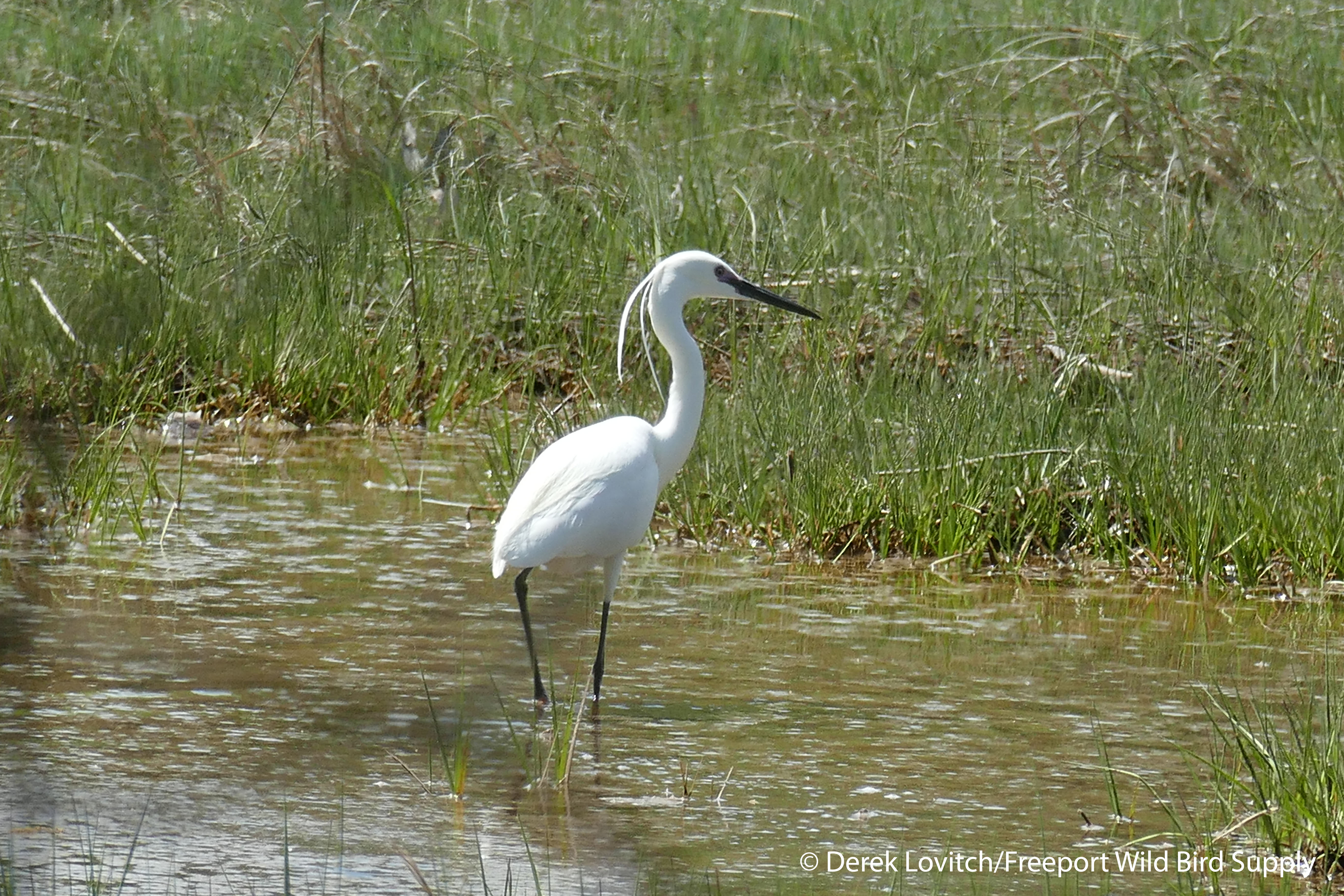
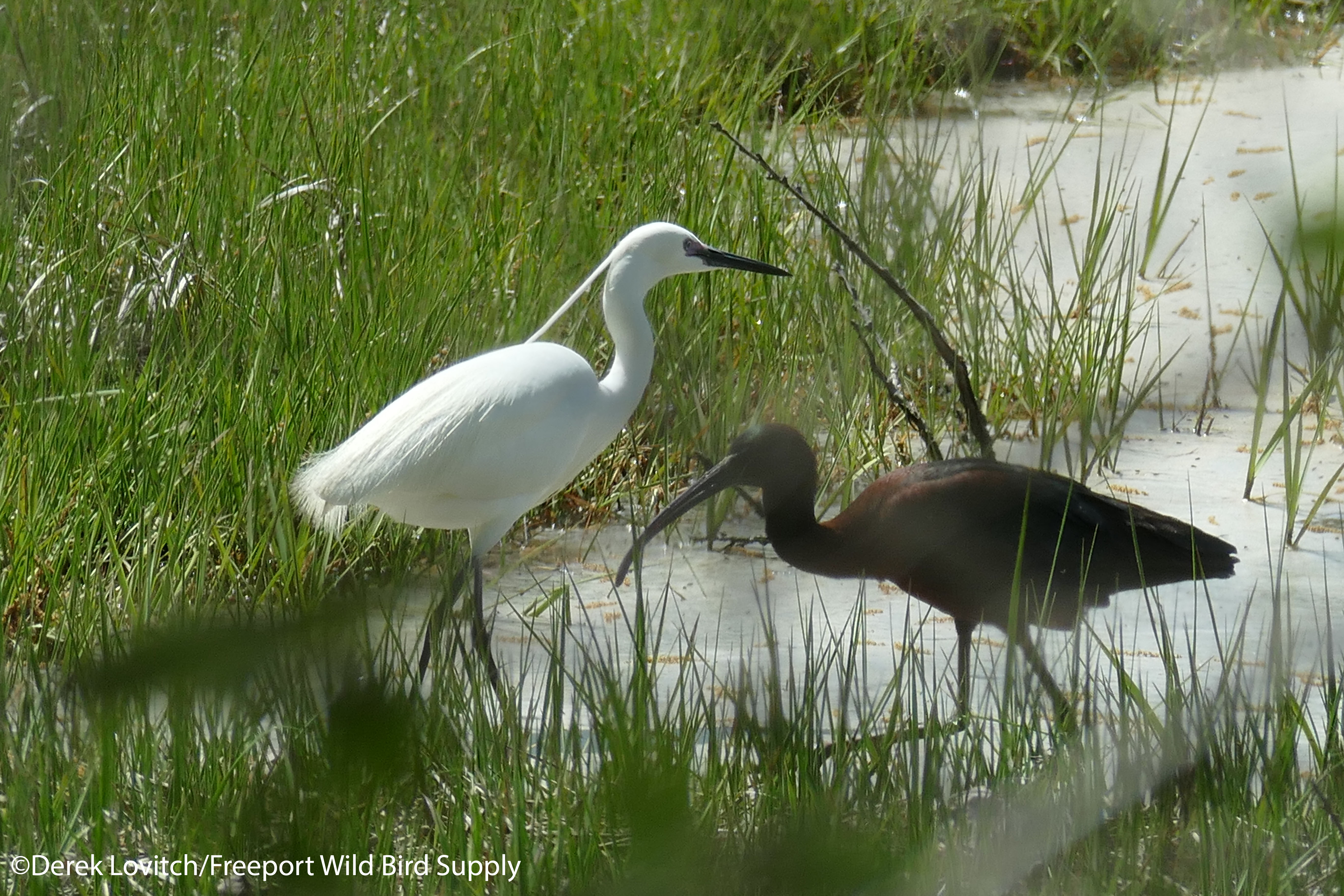
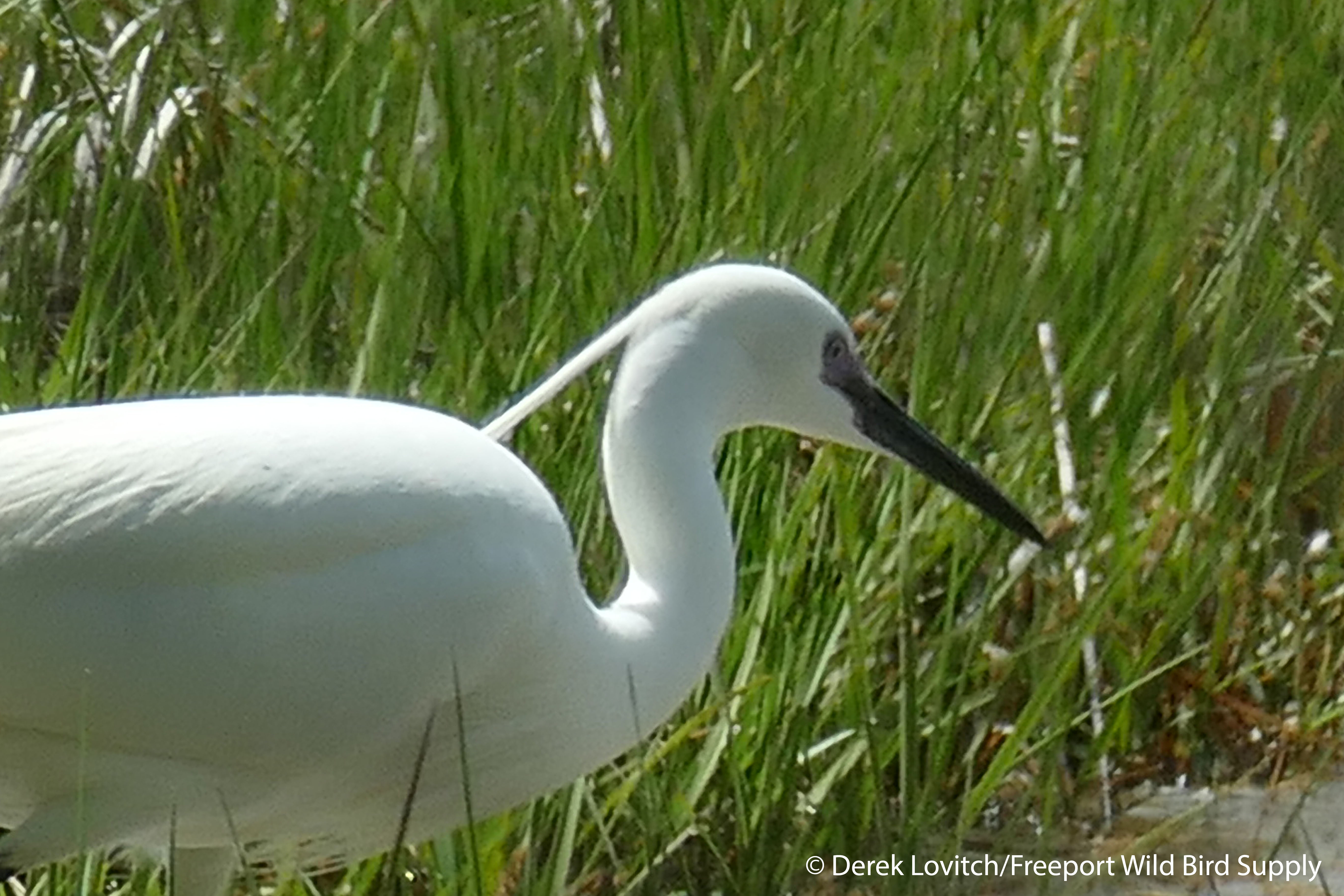
This pure-blood (presumably) Little Egret was a surprise in the Dunstan Creek Marsh section of Scarborough Marsh on the 25th. I don’t recall any reports of the Little Egret in Scarborough Marsh so far this season, and many of the identifiable photos that I have seen in Falmouth so far this year have been – or suggested – a continuing Snowy Egret x Little Egret hybrid, so seeing this bird was a treat for me and my clients. 1)The green-gray, darkish lores (not yellow-tinted like the presumed hybrid or bright yellow like a Snowy). 2) The two long neck plumes (not bushy like Snowy, or a combination of two, like the hybrid). I absolutely love the “plume swagger” when they’re blowing in the wind.
Additionally, the overall structure of a skinnier, longer neck, slightly longer legs, and a longer, slightly more tapering and pointed bill more like a “mini Great Egret” than the relatively-more compact Snowy.
My highlights over the past six days included the following:
1 CLAY-COLORED SPARROW (Maguire Road), 2 Upland Sandpipers, 8 Grasshopper Sparrows, 14 Vesper Sparrows, etc, Kennebunk Plains, 5/24 (all personal FOY since it was my first visit here this season).
1 LITTLE EGRET, as previously reported, Dunstan Creek Marsh, Scarborough Marsh, 5/25 (with clients from Connecticut…see photos and captions above).
1 drake NORTHERN SHOVELER and 1 pair Gadwalls, Pelreco Marsh, Scarborough Marsh, 5/25 and 5/26 (with clients from Connecticut).
2 Common Nighthawks, our yard in Pownal, 5/25.
My few other new spring arrivals included only the following:
5 Semipalmated Sandpipers, Pine Point, Scarborough, 5/25 (with clients from Connecticut) and 14 there on 5/26 (with same clients).








 Maine Birding Field Notes