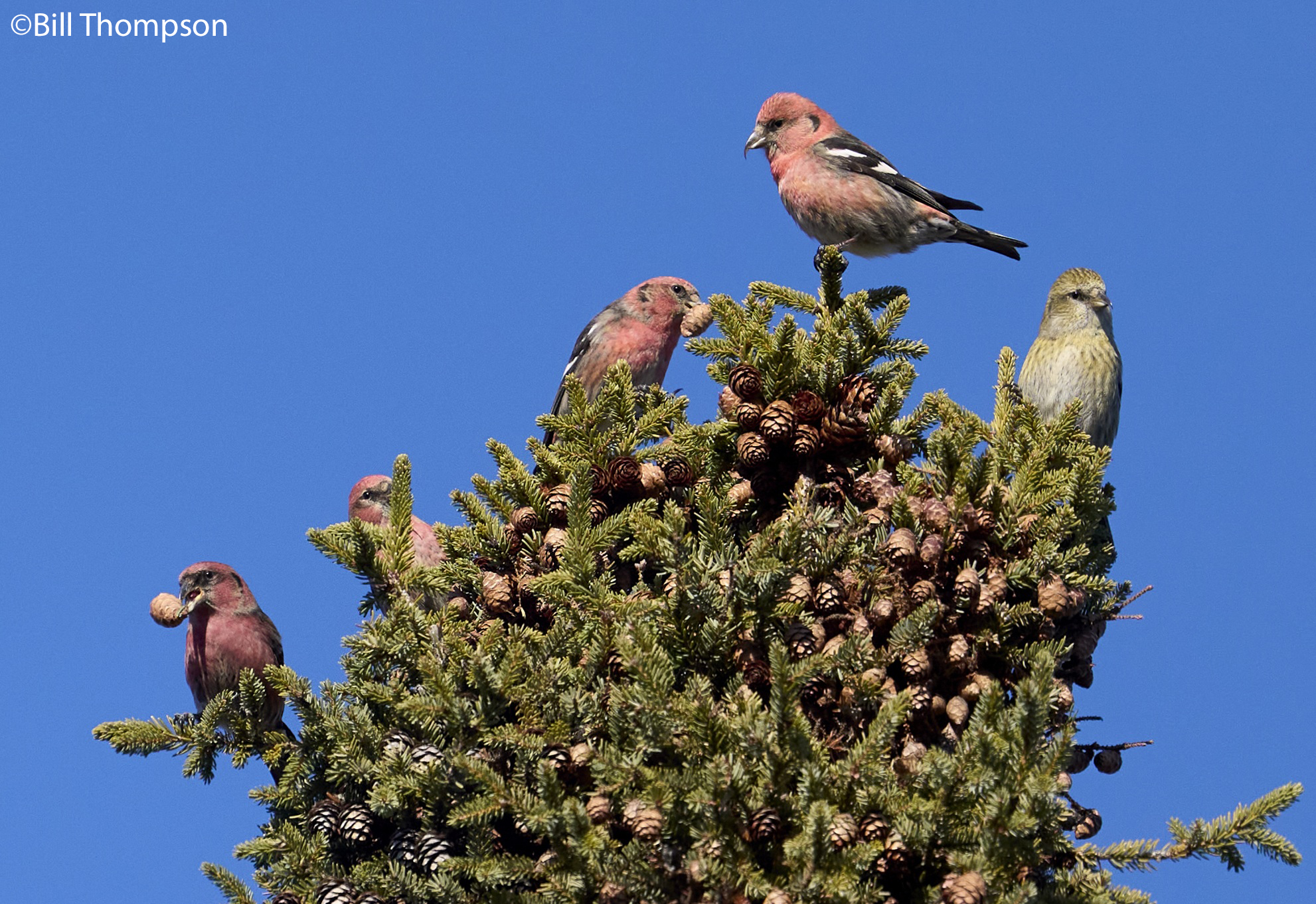
While a trek to the mountains on the 15th was not nearly as fruitful (pun intended) as we hoped, Bill Thompson and I were very surprised to find a flock of White-winged Crossbills – an irruptive species that has been virtually non-existent this winter in Maine – on South Shore Road in Rangeley.
I covered a better amount of ground this past week than I have been recently, even with relatively limited time in the field. I wanted more frugivores to show for it, but I did have a nice variety of seasonal highlights. Here are my observations of note over the past 10 days.
1 female “NORTHERN” COMMON EIDER (ssp BOREALIS), 1 drake Barrow’s Goldeneye, and 4 drake Greater Scaup, Winslow Park, Freeport, 2/14 (with Saturday Morning Birdwalk group).
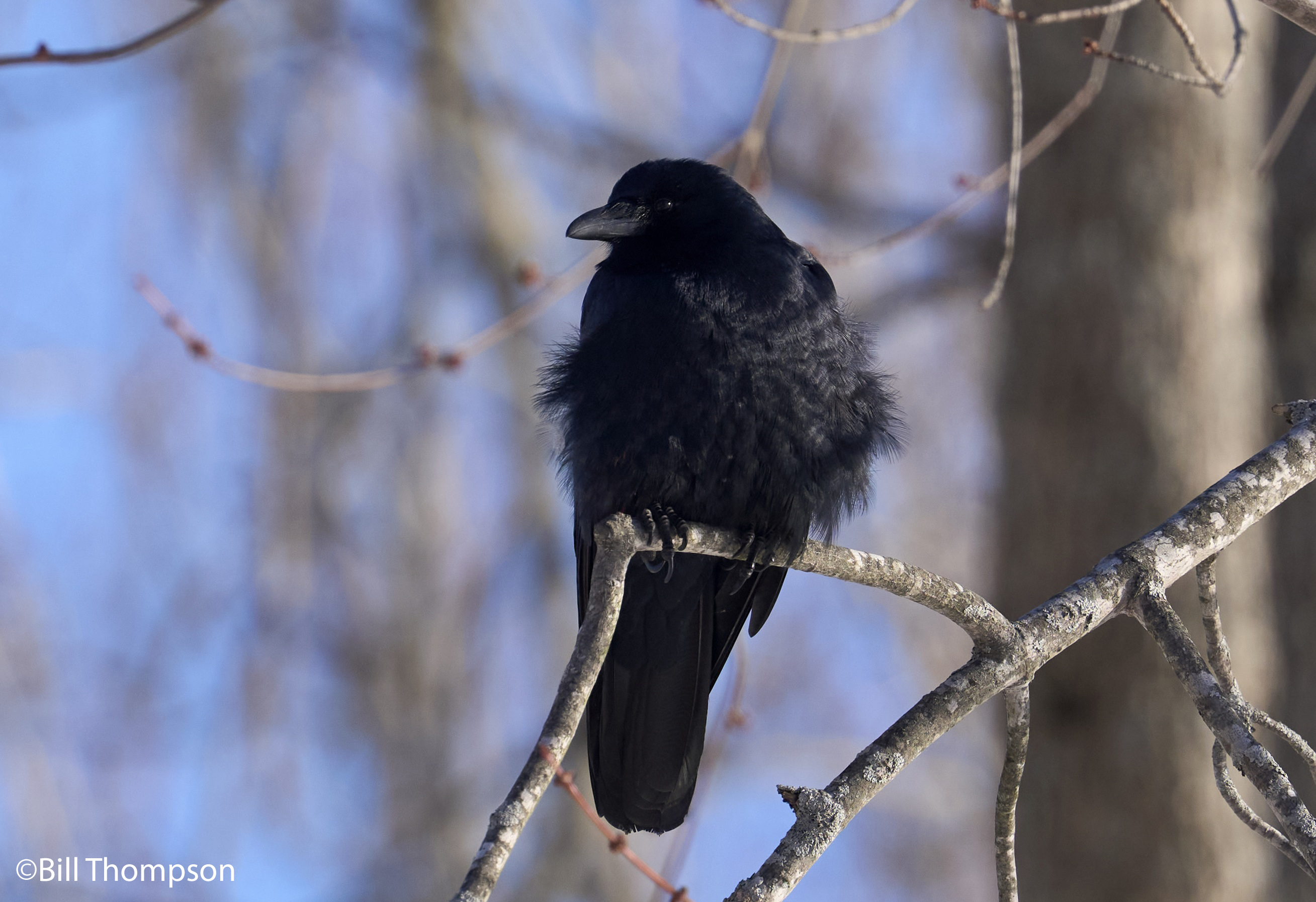
2+ continuing FISH CROWS, Auburn Riverwalk, 2/15 (with Bill Thompson).
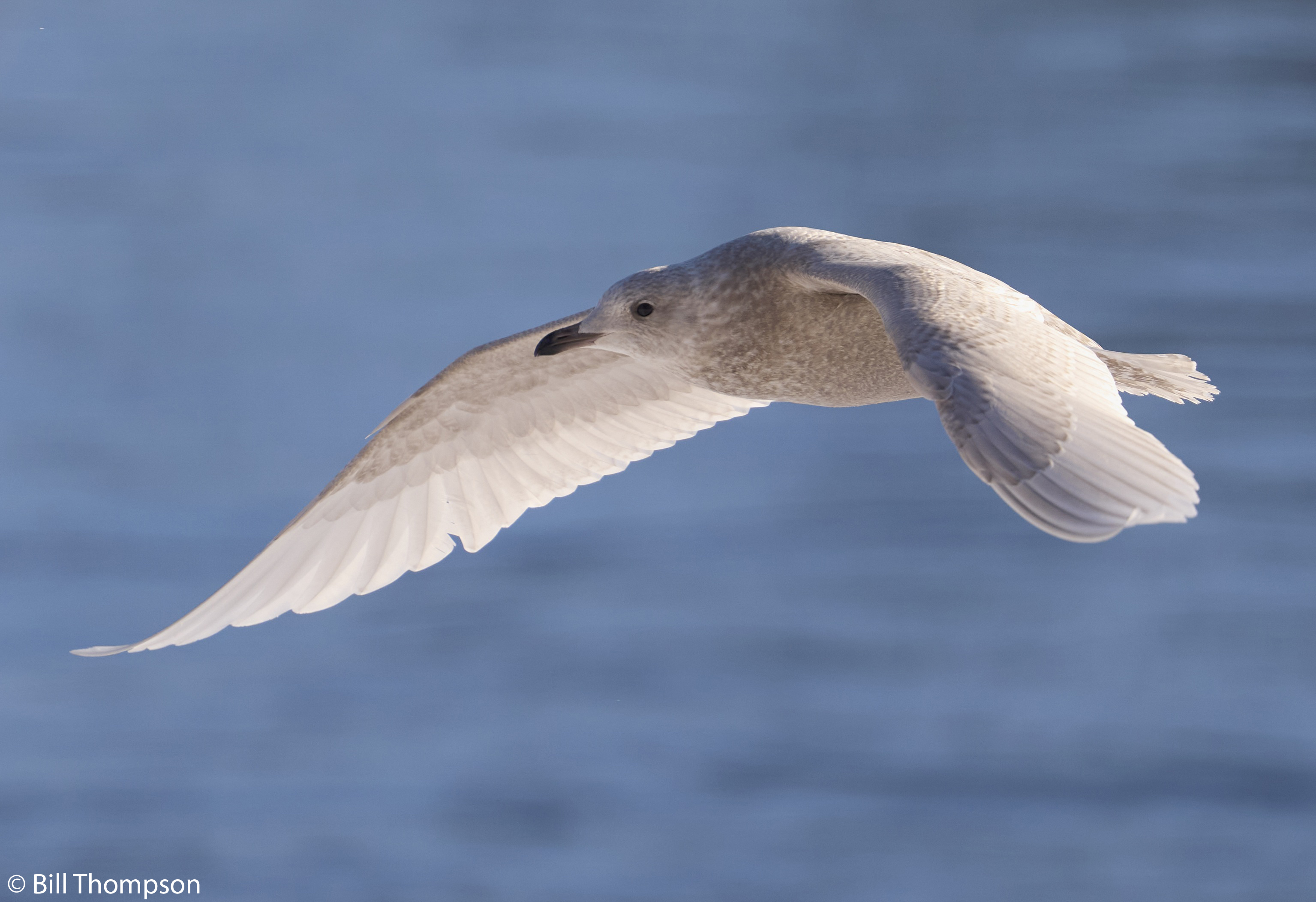
1 1ST-cycle Iceland Gull, Auburn Riverwalk, 2/15 (with Bill Thompson).
~20 Snow Buntings, moving between parking lots on Rte 4/2, Farmington, 2/15 (with Bill Thompson).
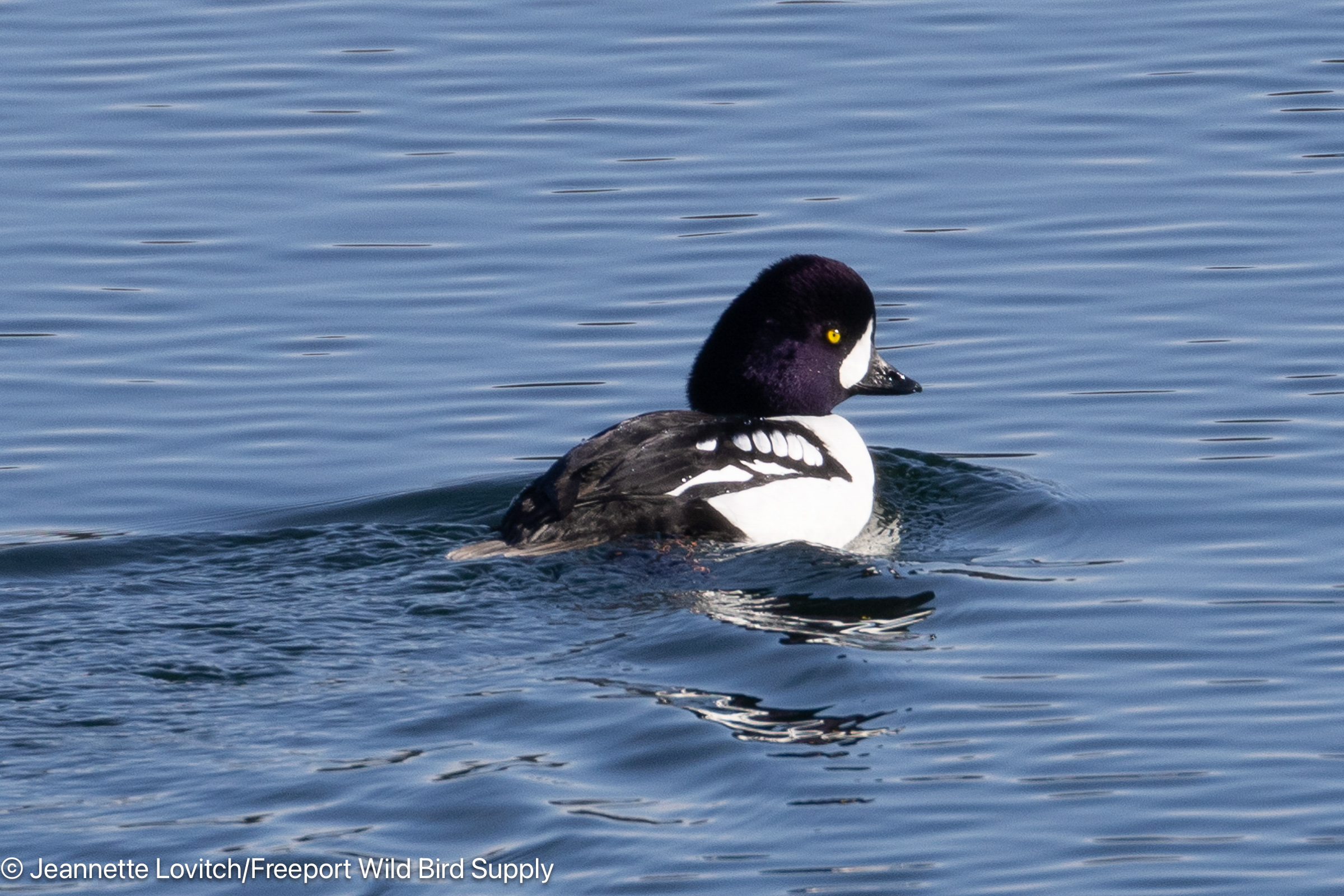
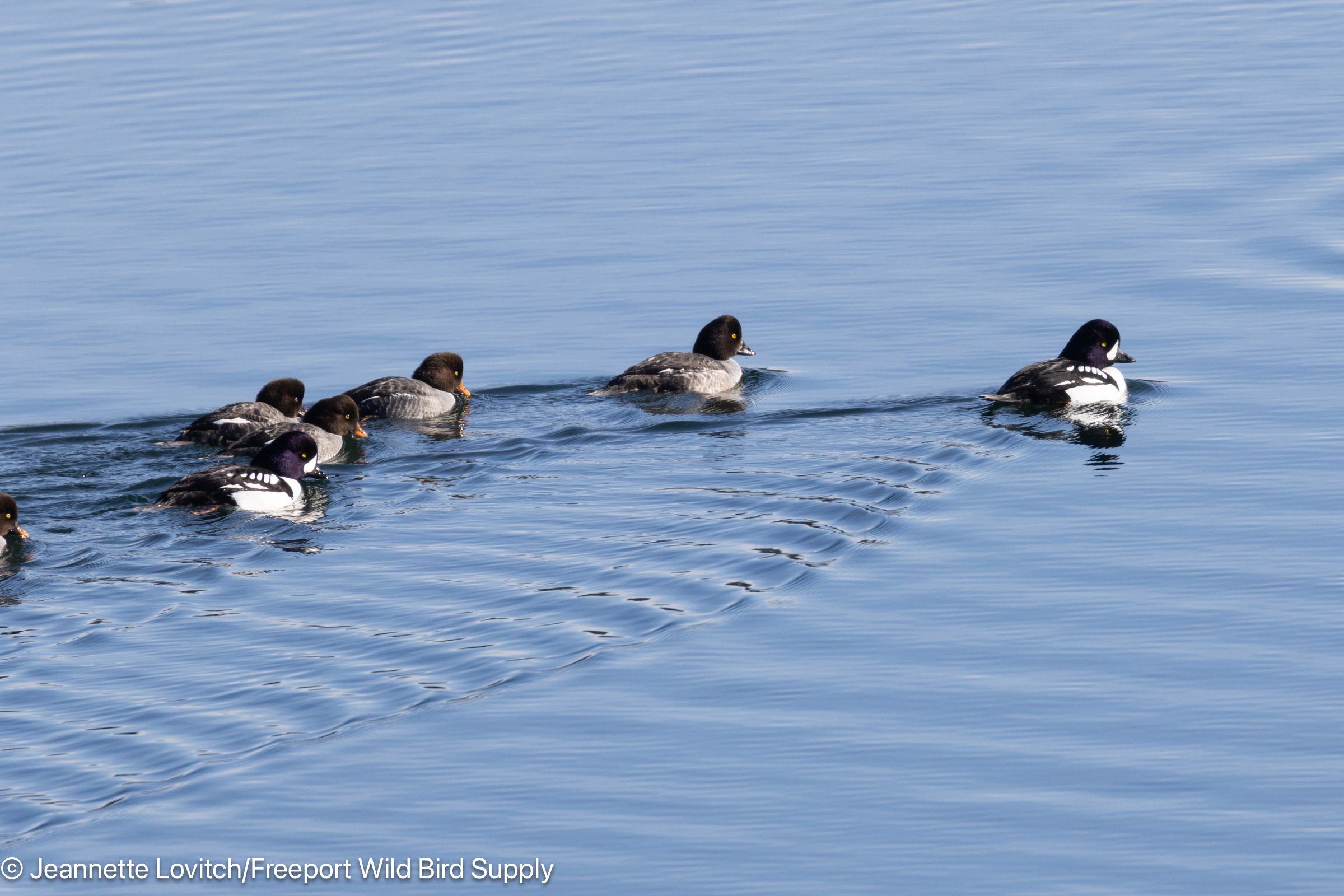
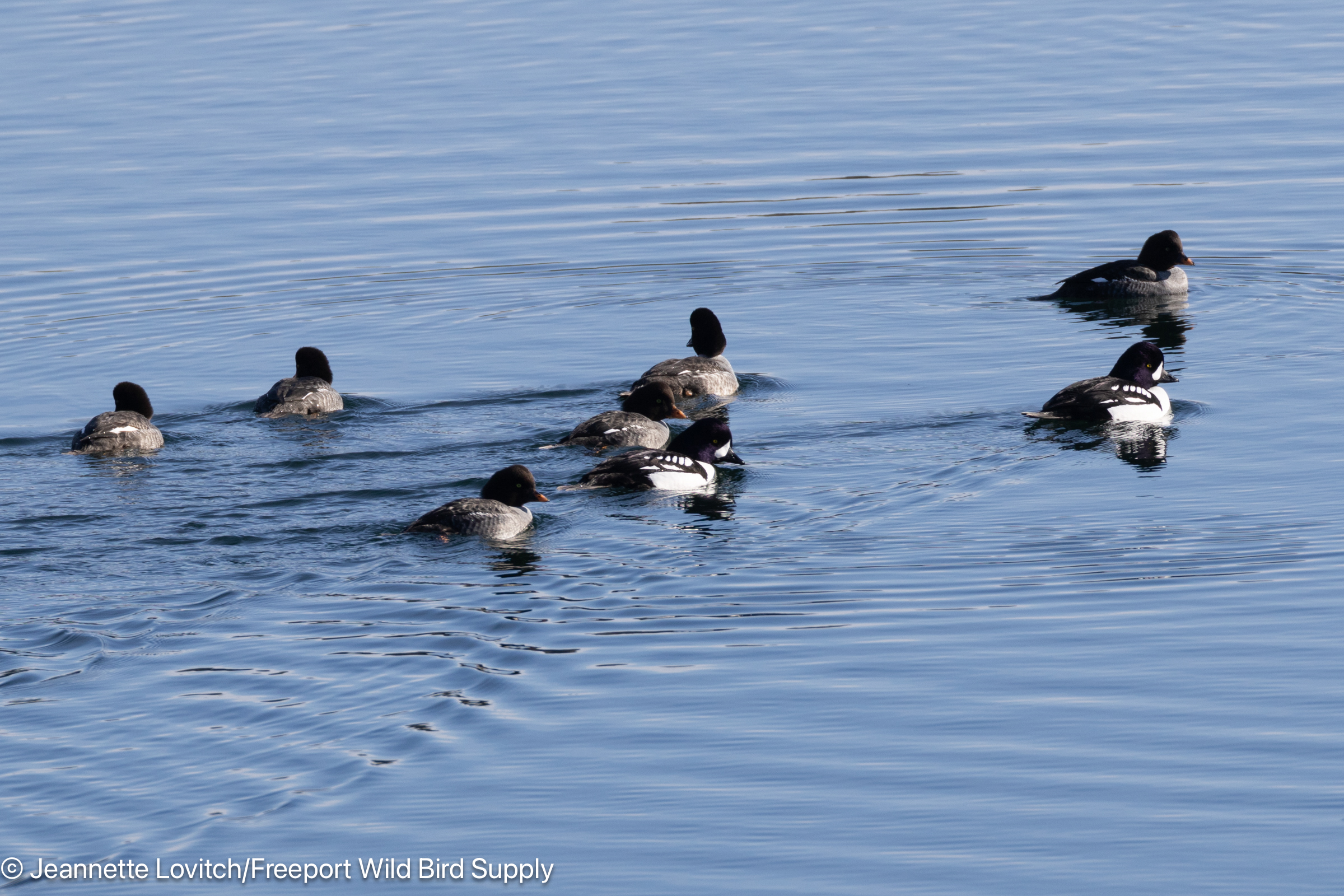
19 (10 drakes and 9 hens) BARROW’S GOLDENEYES, Gurnet Bridge, Harpswell, 2/16 (with Jeannette). This winter’s flock, which maxxed out at 26 individuals, is the largest flock in the state since about 2006. Even though we missed the peak, this was a very impressive flock and was delightful to see!
1 drake Barrow’s Goldeneye, Sandy Point Beach, Cousin’s Island, Yarmouth, 2/22.
1 pair Barrow’s Goldeneye, Cumberland Town Landing, 2/22.
At least one Turkey Vulture continues along the I-295 corridor between Cumberland and Freeport as of this week. Several scattered “TV’s” elsewhere in the area suggests the first trickle of their northbound migration.
One adult Red-shouldered Hawk continues along Rte 136 in Durham, near the Freeport Town Line.
This Week in Irruptives.
On the 15th, Bill Thompson and I birded from Auburn to Rangeley, mostly looking for irruptives. It was not the birdiest day, and the only frugivores we encountered (despite finding plenty of fruit) were a mere 4 Cedar Waxwings in Farmington. Most of our birding was in and around Rangeley, where we caught up with a flock of 28 Evening Grosbeaks at a downtown feeder, and “dipped” on a small group of Pine Grosbeaks. However, on South Shore Road, we encountered 14 WHITE-WINGED CROSSBILLS (see photo above) and a single Redpoll.
Elsewhere, Purple Finches were a little more widespread this week, although in lower numbers than last week. Jeannette and I had 3 Red Crossbills, including an apparent pair, at Long Reach Preserve in Harpswell on the 16th and one Redpoll flew over our property on the 22nd. Scattered Evening Grosbeaks in the area included one in our Durham yard on the 17th and again on the 23rd. Cedar Waxwings were also a little more numerous this week, although in small numbers (high count of 6 here at the store on the 18th).
Winter Feeder Birds Snapshot.
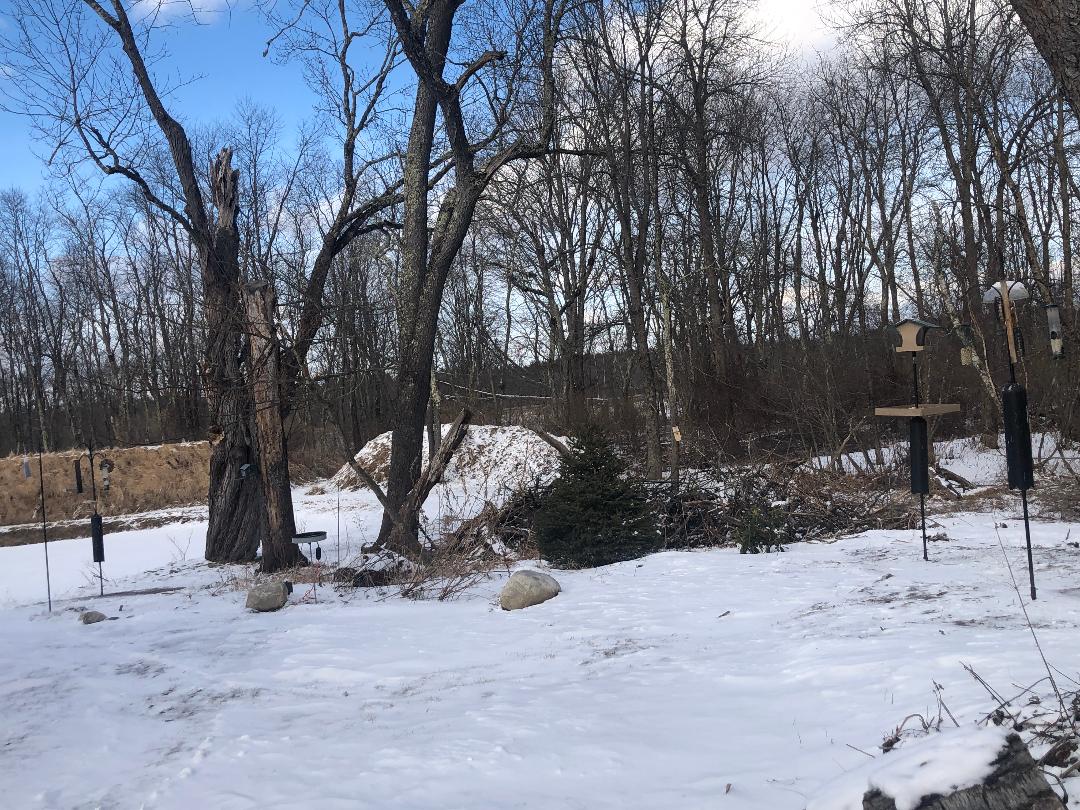
After beginning a “feeder watching blog” while stuck at home from shoulder surgery in the winter of 2023, I continue the tradition for the fourth year now, as I try to compare feeder activity between winters on our property in Durham, Maine, and then attempt to use it as a case-study for what the overall feeder bird activity is like in the area this winter. Here’s the 2026 Feeder Birds Snapshot. Since the “study,” we have seen a few more winter finches, and as of 2/13 are now up to 24 Dark-eyed Juncos, 11 American Tree Sparrows, and at least 45 American Goldfinches.
This cooperative hen Northern Pintail was one of the number of “late” dabblers that I encountered this week.
Far from the winter doldrums, a productive week of birding -especially at feeders – produced the following observations of note:
Single Fox Sparrows continued through week’s end at our feeders both at home in Durham and here at the store.
2 Turkey Vultures continued in the I-295 corridor between Brunswick and Cumberland into the New Year.
We tallied 16 species of waterfowl, highlighted by an impressive-for-the-date 5 species of dabbler (inc 1 continuing GADWALL, 1 Northern Pintail, and 3 Green-winged Teals), all in Brunswick during our Saturday Morning Birdwalk on 12/28. Details and locations here.
1 Swamp Sparrow, Lower Mast Landing Road and 2 Northern Flickers, Tidal Brook Preserve, Freeport, 12/29 during about 3 hours of coverage for the Freeport-Brunswick CBC.
1 pair American Wigeon, MacDougal Park, Rockland, 1/1 (with Jeannette).
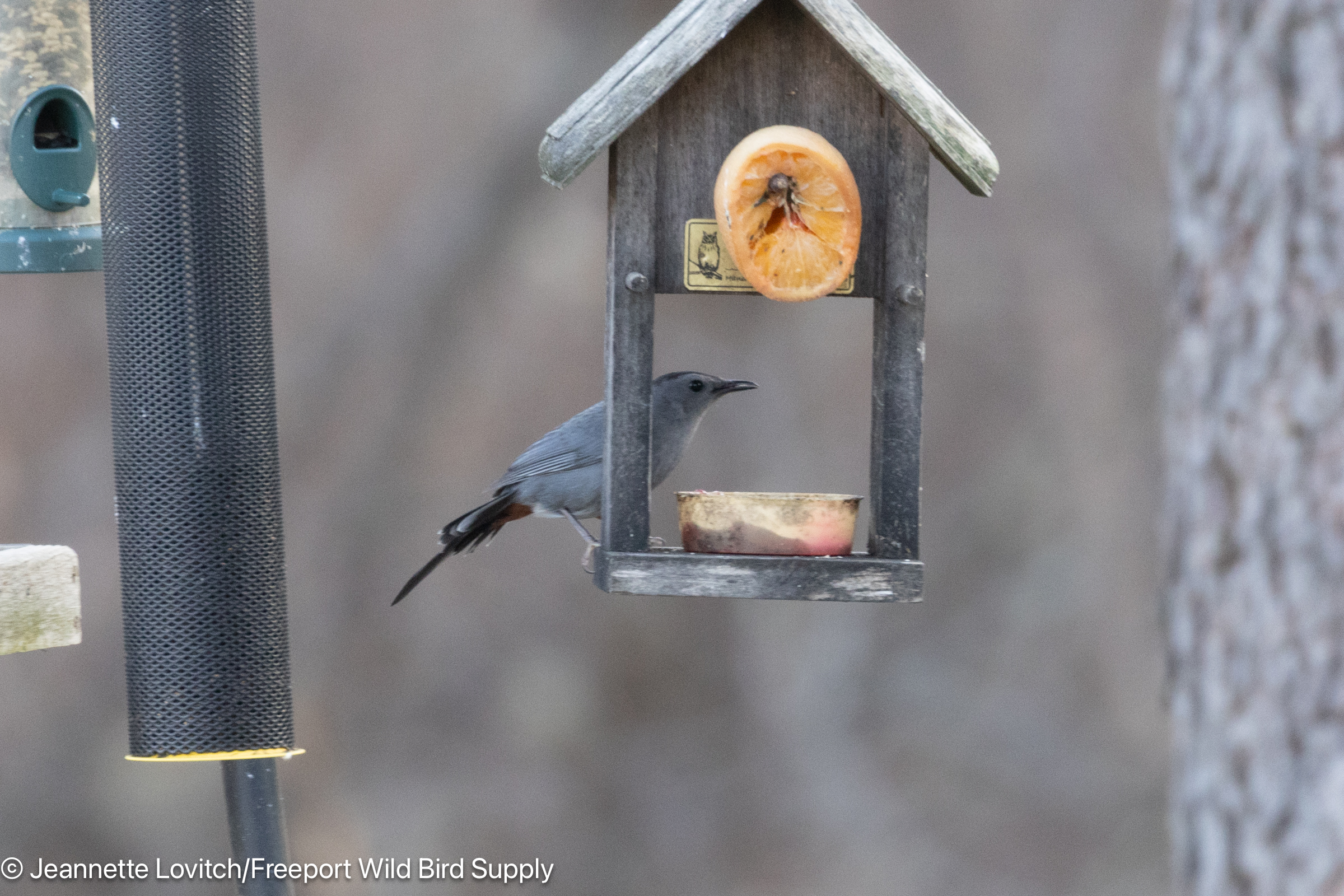
1 GRAY CATBIRD, our feeders in Durham, 1/2. A fascinating time for it to show up. Presumably, it was pioneering locally and perhaps consumed the rest of a food source (like a cluster of Winterberry) and had to wander to find sustenance. It continues through the 3rd, eating jelly, suet, and nuts. The significant tail molt might be part of the reason it’s still around.
Annual Prediction Blog Now Posted.
And finally this week, it’s that time again: my annual Predictions blog where I look back at the Mega Rarities of 2024 and make my usual Top 25 predictions for the next species to be added to Maine’s list, and my own.
Barrow’s Goldeneyes will be departing soon, so I needed to get my fill while I still can. This pair (left) was with 17 Common Goldeneyes and a drake Hooded Merganser at Anniversary Park in Auburn on the 20th.
A very busy couple of weeks precluded much birding away from our yard recently. Luckily, the feeder-watching was excellent, as were my few dedicated outings over the past ten days.
1 Red Crossbill, over our yard in Durham, 2/15.
1 ROUGH-LEGGED HAWK, over Richmond Island from Kettle Cove, Cape Elizabeth, 2/19 (with Paul Doiron, Kristen Lindquist, and Jeannette).
1 continuing hen COMMON EIDER SPP BOREALIS and 6 BARROW’S GOLDENEYES (4 drakes, 2 hens), Winslow Park, Freeport, 2/21. Barrow’s usually peak here at the end of February.
FEEDER BIRDS UPDATE:
There was a widespread dearth of feeder birds in most yards throughout the region this past fall. While a few people are still mentioning a lack of feeder birds this winter, many others are telling us they are seeing a lot of birds now. At our home in Durham, this winter our feeders have been very busy. But just how busy is it, and how does that compare to last winter? I did some feeder watching and counted a bunch of birds to find out.
After the 16th, activity remained strong, with another surge of Dark-eyed Juncos bringing the total to a high count of 72 on the 17th, along with an increase to 13 American Tree Sparrows. A new peark of 70++ American Goldfinches was reached on 2/21. And our first Red-winged Blackbird of the year appeared in the snow on the 23rd.
Meanwhile, here at the store, the 24 White-throated Sparrows at the feeders 2/16 was a new all-time high count for the winter season for us here.
Using our Durham yard as a case study, I wanted to check to see if there were indeed fewer birds this winter than last year, as some (but no longer a majority) of folks have continued to mention to us at the store.
Stuck at home last winter while recovering from shoulder surgery, our feeding station provided my primary source of entertainment. I occupied my time with mugs of tea and enjoying the activity, and occupied my mind with figuring our exact counts, keeping tallies, and watching behavior closely. I wrote about my counts and observations in a pair of blogs, the first one is here, and the second one is here.
This past fall, everyone saw a very slow fall at feeders in Maine, and throughout the East, as discussed here. That was changing for a lot of people – but not all, by December, which I talked about in this follow-up blog.
In January, a series of strong storms, unseasonable heavy rain and flooding, a few cold spells, and eventually, by month’s end, solid snowcover helped change the narrative. Winter food resources were being consumed, ground-feeders were being forced out of the woods, finches were moving about, and so on. Furthermore, I believe that those strong storms knocked a lot of cones – especially those of Eastern White Pine – to the ground where they were subsequently consumed and/or buried.
At least here at our feeders in Durham, a slow start to the winter was a thing of the past, as we were filling almost all of our feeders daily by the end of January. Some impressive tallies included over 70 American Goldfinches and over 50 Dark-eyed Juncos at the end of the month.
American Goldfinches have been absolutely ravaging Nyjer at our home this winter. Fresh Nyjer makes all of the difference!
While some factors remain true from the fall – an abundance of natural food overall, relatively limited snowcover, low movement of irruptive species, etc – clearly most people were reporting to the store that things were “back to normal” or “tons of birds all of the sudden,” and so on. Our seed sales more than doubled by the end of January from what they were at the beginning of the month (by overall poundage).
Just how “normal” have things returned to, and what anomalies are out there? While our home in Durham is only two years old, and we’re a long way away from baseline data or long-term averages, we can at least compare February of 2024 to February of 2023. And since I had nothing better to do last winter, I already had some data to compare to.
So, for the last 10 days (not including the two that we were out of town for), I have once again returned to the window for dedicated sessions of feeder-watching and counting. Like last year, I used the standard methodology of using “high counts” (maximum number of individuals seen at any one time, unless they were readily identifiable as being different), and I was sure to count for at least one hour a day each day.
February 5 – February 15 (minus 2/12 and 2/13).
Species
Average per day 2023
Average per day 2024
Difference
Wild Turkey
0.2
0
-0.2
Mourning Dove
13.5
26.5
+13
Sharp-shinned Hawk
0.4
0.2
-0.2
American Goshawk
0
0.1
+0.1
Red-bellied Woodpecker
1
1
Same
Downy Woodpecker
2.4
2.9
+.5
Hairy Woodpecker
2
2
Same
Pileated Woodpecker
1
0.1
-0.9
Blue Jay
7.8
3.0
-4.8
American Crow
0.7
0
-0.7
Black-capped Chickadee
7.4
2.9
-4.5
Tufted Titmouse
4
3
-1
White-breasted Nuthatch
2
1.4
-0.6
Red-breasted Nuthatch
0.7
0
-0.7
Brown Creeper
0.4
0
-0.4
Carolina Wren
0.9
1
+0.1
European Starling
1.1
2.7
+1.6
Eastern Bluebird
4.4
3
-1.1
House Finch
2.1
0
-2.1
Purple Finch
0.5
0.3
-0.2
Pine Siskin
0
0.2
+0.2
American Goldfinch
26.6
46.8
+20.2
American Tree Sparrow
8.0
4.2
-3.8
Dark-eyed Junco
16.6
30.3
+13.7
White-throated Sparrow
2
2.3
+0.3
Song Sparrow
0
0.9
+0.9
Northern Cardinal
5.2
3.8
-1.4
Total individuals/day
110.9
138.6
+27.7
*Addendum: I guess I should have continued the study for a few more days! By 2/17, we had a whopping 72 Dark-eyed Juncos and an increase to 13 American Tree Sparrows, and by the next day, the American Goldfinch flock returned to well over 60 birds!*
Every year is different, and every yard is different. Controlling here for time and place, we can make some comparisons however. It was much colder in this period last year, with an average morning low of 19.6. This year, the average morning low for the ten days was 23.9 and there is a lot less snow on the ground, even after the fresh inch and a half Friday morning; there were three light snowfall events during the “study period” last year.
Clearly, there are plenty of birds at our feeders at least! And, contrary to conventional wisdom, we actually have more birds overall than last year! The dearth of feeder birds from the fall is no longer true for us. Similar conclusions can be reached from comparing data on our feeder birds at the store, and from conversations with friends and customers. Therefore, I believe the overall pattern fits what many are observing throughout the area.
As discussed in the aforementioned feeder blogs from the fall, Black-capped Chickadees are in low numbers. I saw 4.5 fewer per day at the feeders than last year. This goes with the idea that our local residents were not augmented by irruptives from points north, but also suggests that they did not have a great breeding season. Same for Red-breasted Nuthatch and Blue Jays.
But native sparrows are in larger numbers than last year, especially Dark-eyed Juncos (and elsewhere, like our store, significantly more White-throated Sparrows with a new winter record of 24 on 2/16). My guess is because the mild fall, abundant seeds from a productive growing season, and benign start to the winter kept those around to be pushed to feeders as the season wore on.
And yes, there are indeed a lot of goldfinches around! But very few other finches – at least at feeders. I am not sure where these European Starlings came from, however, and I’m not overly pleased by it!
Raptors are another part of the equation. This time last year, we had more consistent presence from two different Sharp-shinned Hawks. This winter, we only recently confirmed the presence of a single Sharp-shinned Hawk (seen on 2/15 and 2/16, but she likely took a Mourning Dove on the 14th). There was also an all-too brief fly-through of an immature American Goshawk on the 6th. Also this winter, a Red-tailed Hawk has been more frequent around the feeding station, but its focus is primarily the squirrels and voles. So we’ve had enough native predator presence both years that it shouldn’t be a huge factor in comparing feeder counts.
There you have it. 2024 does not have fewer birds at feeders compared to the same period in 2023, at least not in our yard as a single case study. With continued improvement of our yard’s habitat (most of which was put on hold this year due to my shoulder issues) planned, we would hopefully be increasing our yard’s carrying capacity, as feeders remain only a supplement and a relatively small percentage of a bird’s diet, even in the depths of winter.
Next winter, we also might not find a single Eastern White Pine cone in the entire state, and a lot fewer Red Oak acorns and Balsam Fir cones. And if that’s true to our north, perhaps this will increase the amount of irruptives around the area. But we’ll see! And maybe I’ll repeat this exercise next year, if I can force myself to sit still long enough!
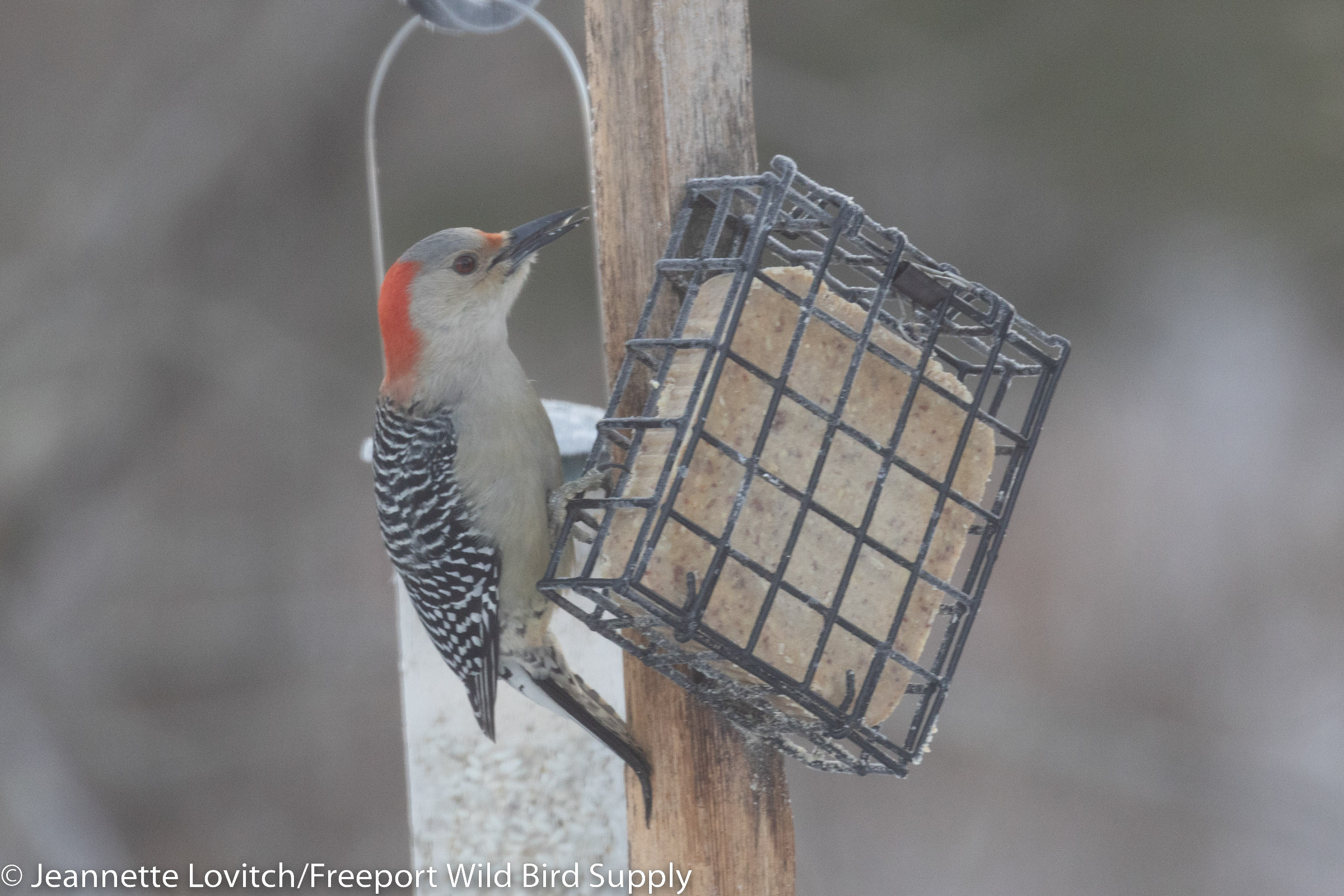
Last winter, we had a male Red-bellied Woodpecker nearly every day, while this winter it has only been this female. We hope they find each other!
A highlight of a slow weekend on Monhegan were the conspicuous Cape May Warblers, including these two that were regulars in a single tree that often featured every plumage aspect of this delightful warbler.
Following three days on Monhegan, I mostly birded the yard before heading back to the island for another tour.
Monhegan Island, 9/23-25 (with Down East Adventures Monhegan Migration Workshop group):
About as slow as I have ever experienced the island, even considering a nice little influx of birds on our last morning. Cape May Warblers were the most common warbler for the first two days, however, but overall numbers and diversity were extremely low. Highlights were few, but a brief trip report is posted here:
There were more birds in our yard than on Monhegan this week! A particularly active morning on 9/27 included tardy Ovenbird, Scarlet Tanager, 8 species of warblers including Tennessee and Cape May, a nice influx of sparrows including 4+ Lincoln’s, and my first 4 southern Maine Pine Siskins of the season.
A NOTE ABOUT YOUR “SLOW” BIRD FEEDERS:
Many folks have been reporting extremely slow feeders throughout much of the state recently. This happens on a regular basis, so the end is not near! In fact, a very similiar dearth of birds happened in the falls of 2017 and 2019. I’m currently working on a blog that is more specific to this year, but this blog written in 2017 nicely tells a good part of the story.
This presumed first-fall female Cape May Warbler was a good study in comparison with the other, brighter plumages of this species on display in that single tree on Monhegan.
Despite a few wintery days this week, spring is most definitely in the air. As I have finally seemed to have turned the corner with my dreadfully slow recovery, I am also getting out a lot more. Therefore, with more to report, and more changes week-to-week, I’ll try to get back into my old habit of weekly posts here.
Observations of note over the past seven days:
increasing number of blackbirds
first trickle of migrant sparrows
1 SNOW GOOSE, our property in Durham, 3/27.
increasing number and diversity of waterfowl inland.
1 Tree Swallow (FOY), Bradbury Mountain Hawkwatch, 3/31.
Despite only getting out into the field twice this week, I enjoyed some good birding. For now, my birding remains primarily feeder- and yard-watching, but this week, it was more evenly split between our feeders at home in Durham and here at the store in Freeport. Blackbird flocks are officially “in” and several species of sparrows are on the move.
At home, Common Grackles and Red-winged Blackbirds are now present daily, in varying numbers (between 4 and 56 and between 3 and 26, respectively), with one or two Brown-headed Cowbirds on most days. Similarly, at the store, small flocks of Common Grackles come and go, but 7 Red-winged Blackbirds are more consistent. One Brown-headed Cowbird made only one appearance here.
A Fox Sparrow that arrived last Friday departed on Tuesday night, and a second Song Sparrow arrived this week. Dark-eyed Juncos continue, with fewer by week’s end. However, a third White-throated Sparrow arrived on the 30th. Here at the store, four Song Sparrows continue, and 2 American Tree Sparrows arrived on the 26th– surprisingly our first two of the entire winter.
At both locations, breeding activity is heating up, too, with more territorial and courtship behaviors observed each day.
The yard highlight, however, was the Snow Goose – Yard Bird #125! -I spotted passing low over our yard on the 27th. While I didn’t technically see it from bed, I did get out of bed – where I was doing some of my physical therapy exercises to look at a large group of geese passing overhead. You may not be surprised to know that we have a pair of binoculars in every room, which is a good thing, as I was able to pull out the lone Snow from a flock of about 75 Canadas.
Speaking of binoculars, I need to take a moment to plug my Zeiss SFL 8×40’s. I fell in love with them when they came out last year, and I was very thankful for them when my shoulder was in pain. They’re just so incredibly lightweight, but I have found minimal tradeoff in brightness, color, etc. Since I am still a one-armed birder, they have been absolutely critical for my ability to look at birds when out and about now. Great balance combined with the light weight just makes them perfect for holding steady with one hand. I do need to rebuild my stamina, however, as there has been a lot of atrophy of field birding muscles over the last 2+ months!
Anyway, back to waterfowl….another highlight this week was the arrival of Wood Ducks in our backyard. A pair have been frequenting a vernal pool we can see from the house for the last few days, and Jeannette spotted them sitting in the trees just off of our porch on the 29th. Three more drakes are frequenting a pond across the street, where a pair of American Wigeon (my first of the spring) plopped in on the 30th).
Finally this week, I was able to get back up to the Bradbury Mountain Hawkwatch for a couple of hours on Friday. A few raptors were on the move (much less than we expected given the conditions), but I did pick up my first Eastern Phoebe and Tree Swallow of the year. Later that afternoon, another phoebe was staking out a territory around our house.
Quite likely the same individual that was first found in Portland before relocating to Thornhurst Farm in North Yarmouth, this Barnacle Goose was found on North River Road in Auburn on the 22nd. Dan Nickerson and I caught up with it two days later, here, on the 24th.
This (Two) Week’s Highlights:
Birding in Kentucky with the Beckham Bird Club
Changes at the feeding station.
Bradbury Mountain Spring Hawkwatch gets underway!
American Woodcocks are going wild!
2 Brown-headed Cowbirds (FOY), our feeders in Durham, 3/17 (with Dan Nickerson)
2 Common Grackles (FOY), our feeders in Durham, 3/18.
3 displaying American Woodcocks (FOY), our property in Durham, 3/18.
1 continuing BARNACLE GOOSE, North River Road, Auburn, 3/24 (with Dan Nickerson).
1 Fox Sparrow (FOY), our feeders in Durham, 3/24.
In contrast to my previous 8 weeks (summarized here and here), this period began with actual birding…in Kentucky! I had the pleasure and honor of giving a presentation at the Annual Meeting of the venerable Beckham Bird Club of Louisville. It was my first time birding beyond Greater Durham in two months; a most welcome change of scenery. But I must say, flying with a recovering shoulder really kinda sucks.
My new Kentucky state list kicked off on the morning of the 14th thanks to a local birding tour from Andrew Melnykovych. Starting at his patch, the Grand Allie section of Beckley Creek Park, I started to familiarize myself with the local wintering avifauna. I enjoyed revisiting with Carolina Chickadees in particular, with Black Vultures joining Turkey Vultures overhead. The weather didn’t feel like it, but I was definitely in the South!
That evening, I spoke to over 100 people at the banquet, offering my program about the Morning Flight at Sandy Point to describe concepts and techniques described in my first book, How to Be a Better Birder.
The following morning, I joined club members on a birdwalk to the delightful Anchorage Trail in the nearby town of Anchorage. Passing through a variety of habitats on an easy, paved, two-mile trail, we spent the morning slowly working through the various species we encountered (43 I believe was the official tally). Being from Maine, it was nice to hear Eastern Phoebes (overwintering and/or returning migrants), oodles of Carolina Wrens, and a nice variety of ducks in the pond: one Green-winged with a half-dozen Blue-winged Teal, Northern Shovelers, Gadwall, Hooded Mergansers, Gadwall, Ring-necked Ducks, and Mallards (photo above). I also enjoyed the woodpecker sweep: Downy and Hairy, Pileated and Red-bellied, Yellow-bellied Sapsucker, and Northern Flickers.
While it will be a little while longer before our Saturday Morning Birdwalks return, it was sure nice to get out in the field on a pleasant (by Maine standards that is!) early spring morning to help folks see some birds!
But then it was back to my usual routine. Arriving at home at 1:30am on Thursday the 16th, it wasn’t exactly an early start to my window-watching day, however. Not surprisingly, I spent less time looking out at our feeding station over that week than I have at any point over the past two months. Being out of town for three days coupled with a few visits to the store and lots of physical therapy resulted in fewer hours spent evaluating feeder bird numbers. Sharp-shinned Hawk presence didn’t help either, with our adult male continuing.
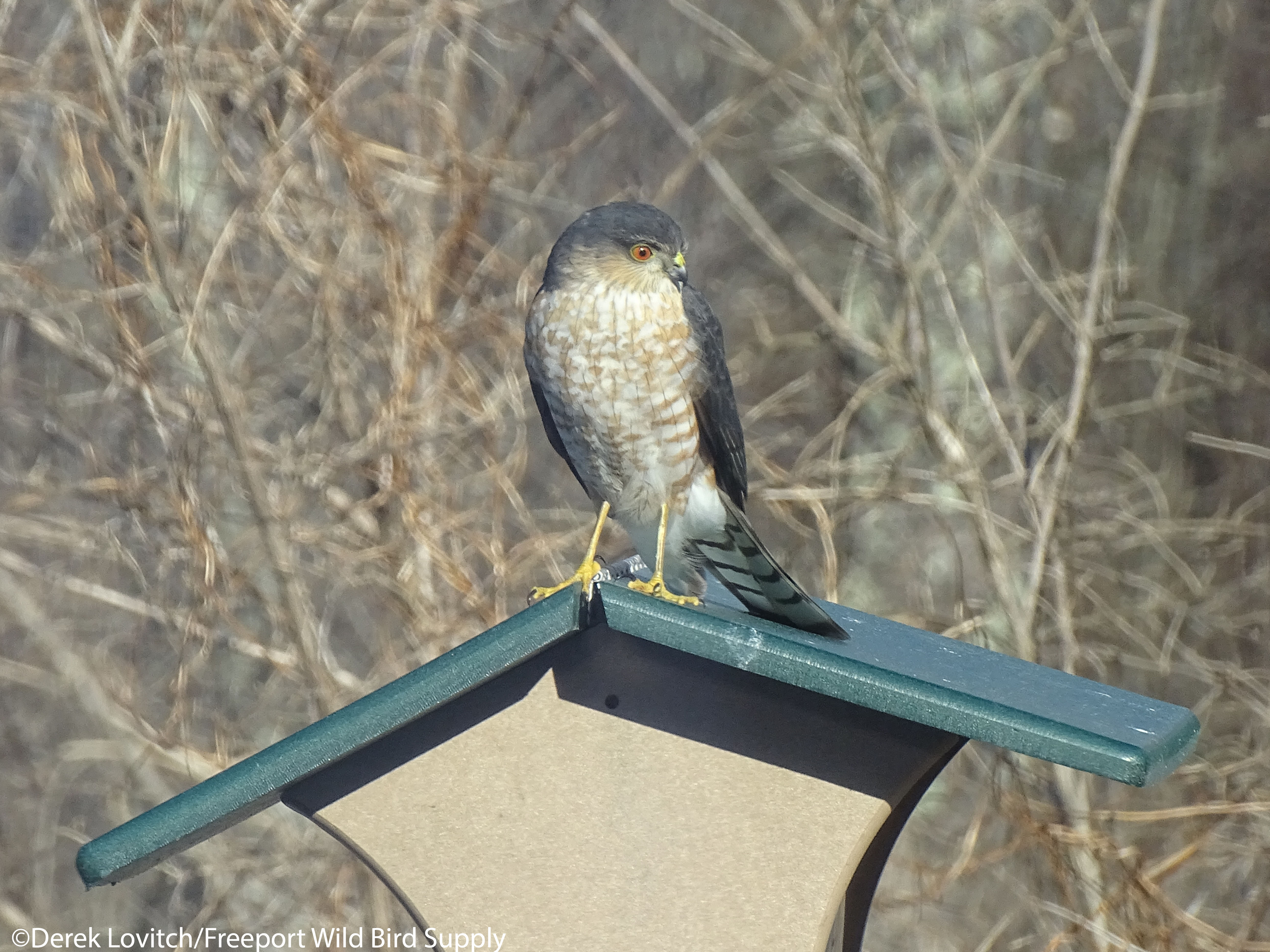
This continuing adult male continues to wreak havoc at the feeders, but my consistent observation this winter has offered me insight into this species’ natural history.
Nonetheless, there were plenty of changes in species composition and quantity noticed this week. We only received about 5-6 inches of snow here in Durham as temperatures hovered around the freezing mark for most of the day on the 14th, preventing accumulation until the late afternoon. In fact, there was less snow on the ground two days after the storm than there was the day before the storm (that was far from true for most of the state, however.
Not surprisingly, there were fewer Dark-eyed Juncos and American Tree Sparrows this week. Three Red-winged Blackbirds are regular, while the high counts of Northern Cardinals and Eastern Bluebirds continued to decline as territories began to be established and enforced. We also saw a noticeable decrease in the size of our American Goldfinch flock this week. Then, in the afternoon, my first two Brown-headed Cowbirds of the year (in Maine, that is) appeared.
The following week was much more spring-like, and the avian changes were even more evident. At least here in Durham, and changes to species composition and quantities are happening fast now.
Natural food is becoming more available as the snow recedes and the first “new” food sources emerge. A new uptick in American Goldfinches to 45 on 3/23 saw most of the birds spending most of their time eating aspen buds. Although a Pileated Woodpecker remains in the area, I did not see it visit the feeders once this week. We still have 8-12 Dark-eyed Juncos around, but they are often dispersed under brush away from the feeders. Our overwintering male Red-bellied Woodpecker, pair of Red-breasted Nuthatches, and our Carolina Wren have also spent considerably less time at the feeders this week. And not a single House Finch.
The last of our two American Tree Sparrows of the winter departed on the 17th, but a presumably new bird – a migrant – was at the feeders on the 21st through the end of the week. Our first Song Sparrow of the year arrived on the 18th and has been under the feeders since. Two White-throated Sparrows continue as well, and our first Fox Sparrow of the year appeared in the evening on the 24th.
While one Brown Creeper has been regular in the trees immediately behind the feeding station for a couple of weeks now, we now have a pair, and on the 23rd I spotted one of them creeping on the ground under a hulled sunflower tube. I didn’t see it eat anything, so I won’t count it on the feeder list quite yet, but I can see its bravery increasing.
Red-winged Blackbirds are now here to stay, with 2-3 territorial birds occasionally joined by migrants (high of 14 on the 21st), while we had Brown-headed Cowbirds (1-2) on two days this week. After our first two Common Grackles of the year briefly visited on the 18th, a flock of 22 dropped by on the 21st.Also on the 21st, we had 2 Pine Siskins – our first here since January 21st. I also spotted our first Turkey Vulture over the yard this year later that day.
Meanwhile, my yard-listing gears shifted from sorting through commuting gulls to commuting geese. With growing numbers of Canada Geese beginning to arrive starting on the 17th, flocks would often be visible from the window and over our yard as they commute between the Androscoggin River and local fields.
Our suspicion that the area right around our house would be a perfect place for displaying American Woodcocks was confirmed on the first warm and calm night of the spring: 3 birds displaying closely and vociferously right over our driveway on the 18th with two displaying and one silent fly-by (a female?) on the 22nd. Speaking of American Woodcocks, our first tour of the season is right around the corner: Woodcocks Gone Wild at Pineland Farms is only a week away!
Another sure sign that spring really is here, the Bradbury Mountain Hawkwatch kicked off on March 15th as usual, albeit delayed by 2 hours as the last of the precipitation cleared. It absolutely pains me that I cannot be up there, but thankfully Zane Baker has returned for his 5th season as Official Counter. While Jeannette and I will be up there much less than usual for a while longer at least, we know the count is in great hands!
I did, however, make a cameo on the 20th, spending an hour and a half to test drive my stamina. A handful of migrant raptors were spotted, and I was rewarded for the effort with a flock of 6 Northern Pintails flying by. This was my personal 144th species at Bradbury Mountain State Park, and we believe a first record for the Hawkwatch -and therefore the park itself!
Speaking of appearances, Jeannette and I appeared on Newscenter Maine’s 207 last week, discussing birds, bird feeding, and the changing climate and bird populations. Check it out!
I think my friend Dan Nickerson took pity on me – or was just tired of reading about our feeder birds? – so he was kind enough to pick me up and take me birding for the morning on the 24th for some local birding. It was great to get out, and I was most appreciative. And what a day we had!
We worked our way up the Androscoggin River, finding one 1st-winter Iceland Gull still at the Auburn Riverwalk and some new arrivals at the south end of North River Road in Auburn, including the boat launch area: a total of 10 Ring-necked Ducks and 3 Double-crested Cormorants (both being my first of the year in Maine), and off the boat launch, a small flock of 5 Lesser Scaup with one female Greater Scaup hanging out with them. The first of our three Ring-necked Ducks joined them briefly.
Further up the road, we looked for a previously-reported Barnacle Goose in the farm fields, but we couldn’t find it. There were a goodly number of Canada Geese around though, and with birds in and out of gulleys and presumably moving back and forth from the river, we decided to check back later.
We looked for Snow Buntings and the like along Upper Street in Turner, kept an eye out for frugivores, and then paid the Lower Street Harris’s Sparrow a visit. I saw this bird back on January 13th, but it was too good of a bird to not see again. When it immediately popped out of its favored bush, Dan got a life bird and I enjoyed a nice long view (but not so much photographs with one hand in a cold and gusty wind!).
We then returned to North River Road where I spotted the Barnacle Goose immediately this time. We savored this sighting – Dan’s second lifer in an hour! – and photographs were more successful (see above). We decided to celebrate with Thai food and broke for an early lunch as my shoulder was starting to whine a little about all of this excitement and activity. Thai food made everything better though, as it usually does.
Hopefully, I have finally turned the corner on my slow recovery, and next week will feature a little more time in the field and at the store, but for now, I will continue to track feeder birds in between.
Pine Grosbeaks have already started to arrive in Southern Maine, such as this female at the Yarmouth Library on the 25th.
I didn’t get very far afield much this week, but feeder-watching, local patches, and a visit to Sabattus Pond at week’s end made up for it. My observations of note over the past seven days included the following:
1 continuing LINCOLN’S SPARROW, feeders here at the store through 11/21.
8 American Pipits, Highland Road, Brunswick, 11/21.
1 Fox Sparrow, feeders here at the store, 11/21.
1 Turkey Vulture, over the store, 11/24.
100+ Horned Larks and about 40 Snow Buntings, Mayall Road, Gray/New Gloucester, 11/25.
1 Common Grackle, feeders here at the store, 11/25 -present.
Sabattus Pond, Sabattus, 11/27:
It was a great morning as the fog lifted and the water was dead calm. Unfortunately, a high-speed fishing boat, several duck hunting parties, and two hunting Bald Eagles made it difficult to make an accurate count as birds were flushing in different directions.
476 Mallards
301 Canada Geese
231 Ruddy Ducks
174 Common Mergansers
144 American Black Ducks
44 Greater Scaup
26 Hooded Mergansers
18 Lesser Scaup
8 Buffleheads
5 GADWALL
4 Green-winged Teal
4 Common Goldeneyes
3 Northern Pintails
2 Common Loons
1 drake American Wigeon
1 probable hen American Wigeon (very brown-headed individual found last week by P. Moynahan and N. Houlihan. Spotted off South Beach but flushed by fishing boat. Refound on west shore and distantly phone-scoped, but flushed by eagle before I could get closer. Appeared to have white bar on upperwing greater coverts to rule out Eurasian, but not conclusively viewed…other details suggestive or ambiguous. Good luck ruling out a hybrid on a hen wigeon, however!)
1 CACKLING GOOSE (FOY) – in distance from South Beach with large group of Canadas. Flushed by fishing boat before I could get to Riley Road to attempt phone-scoping. Very tiny bird with short neck and very short, stubby bill. Barely larger than the Mallards. Flew north, but not relocated, including searching of farm fields along eastern shore.
1 Belted Kingfisher
The Finch-Tastic Fall festivities continue:
EVENING GROSBEAK: 9 continue daily at our feeders at home in Pownal; 1 (Highland Rd, 11/21); 2 (Martin’s Point Park, Sabattus, 11/27.
Red Crossbills: 3 (Highland Road, 11/21).
PINE GROSBEAK: 4 (Highland Road, 11/21); 3 (Yarmouth Library, 11/25).
Purple Finch: 0
Common Redpoll: scattered very few.
Pine Siskin High Count This Week: 6 (our feeders in Pownal, 11/22).
I hope you didn’t think that my lack of blogging of late equated to a lack of birding! Quite the contrary, actually – it is Rarity Season afterall! I’ve just been posting more frequent, shorter updates on our store’s Facebook page (you can scroll through the timeline here to see recent posts), especially since I have found myself a bit over-extended with a variety of other projects at the moment – I’ve been working late most nights recently to make up for my morning birding gallivanting.
In fact, I have been birding even harder than usual – if you can believe that! Spurred on by extraordinary late October finds of an “Audubon’s” Yellow-rumped Warbler at Fort Foster and a Bell’s Vireo (a state bird for me!) on Bailey Island, I found myself somehow even more motivated to beat the bush through the first half of November. In addition to the 10th Annual South Coastal Maine Rarity Roundup that I organize every year, I worked hard at various traditional hotspots, favorite late fall patches, and various attempts to think “outside the box,” such as walking the 4.5 miles into work today to check a handful of swales and thickets en route (not very productive, except for the exercise, for the record)
While Audubon’s Warbler and Bell’s Vireo are going to be tough to beat – the early-rarity-season bar was set awfully high! – I have had some outstanding birding in November, even if there has yet to be another “Mega.” Personal highlights in the first half of November include a very nice variety of lingering (pioneering?) warblers, a Yellow-breasted Chat, multiple Orange-crowned Warblers (I’ve had four this season to date), huge numbers of Ruddy Ducks on Sabattus Pond, and overall just really good birding with good diversity.
Elsewhere around the state, current highlights include a Northern Hawk-Owl in Lincoln – not a vagrant in the “Rarity Season” sort of way, but exciting nonetheless! And perhaps that, along with an early Snowy Owl report from Biddeford Pool, portends a decent owl irruption this winter? There certainly won’t be any winter finches around this year.). Other birders have detected a variety of late warblers around the state (wow, November Chestnut-sided in Falmouth!), and lots of lingering shorebirds – especially in Scarborough Marsh. But as far as the first half of November usually goes, there have been no truly exceptional birds. Looking around the region, we see goodies such as a Calliope Hummingbird in New Hampshire, A Black-chinned Hummingbird in Connecticut, and the usual fun array of rarities in Massachusetts (Scissor-tailed Flycatcher, Yellow-headed Blackbirds, Western Tanager, American Avocet, etc). However, it is an ultra-spiffy adult Ross’s Gull near Montreal that is the real headliner of the fall in the Northeast so far (and yes, I am being tempted to chase this, I have to admit).
So there are some good birds around the region, and no doubt there are some good birds still to find in Maine. Other than a couple of days, it has been fairly temperate to mild all fall, and I can’t help but wonder if birds that arrived in the state through various vagrancy mechanisms (see Chapter 7 of my book, How to Be a Better Birder) have yet to concentrate along the coast as they seek out more favorable microclimates or seasonal food sources. Also, as the season progresses, more rarities turn up at feeding stations as natural food supplies diminish. December rarities, for example, are often discovered at feeders. Two tardy Chipping Sparrows are at our store’s feeders as I type this, by the way; I’m hoping they pick up a clay-colored cousin. A lot of folks are reporting very busy feeders right now, which is a good sign, especially considering the lack of irruptive finches.
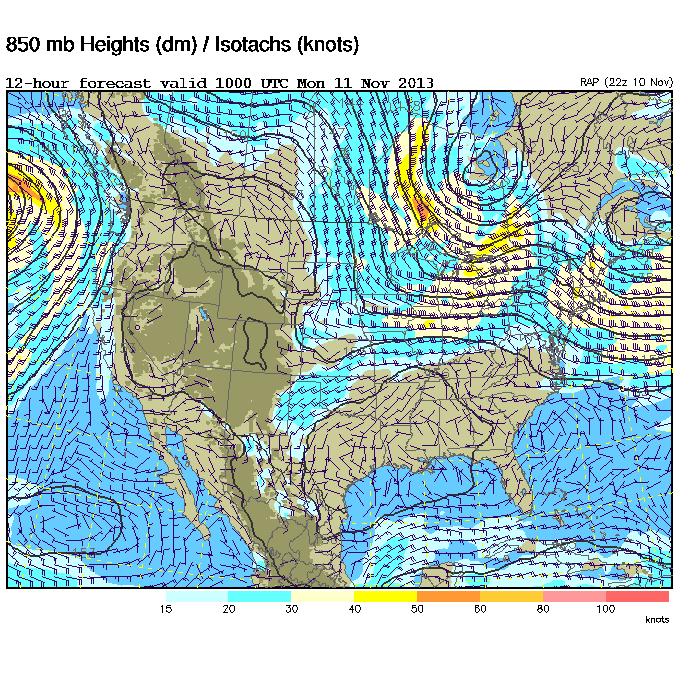
The last few days have seen a nice southwesterly flow aloft. Look at Friday’s wind map, for example:
That extensive southwesterly flow early in the month would have surely deposited stuff like Cave Swallows in New England, but I wonder if that window has already closed. A couple of Caves in Connecticut as recently as the 9th gives me some hope, however. Contrast that map with the more zonal flow that we have seen for much of the month, such as on 11/10:
Although few birds are “blown” out of range, certain winds facilitate the arrival of more vagrants in certain areas than others. And southwesterly winds in late fall are definitely the desired winds here in Maine. With a fairly complex weather system on its way – including some really severe storms in the Midwest – I remain hopeful for some more out-of-range treats. Interesting weather does have the tendency to produce some interesting birding, even without facilitating the arrival of rarities.
At the very least, behind this system, we should see a return to colder, seasonable weather (as opposed to the 50’s of the last two days for example), and this should help push birds to feeders, warmer coastal and urban areas, etc. Also, hopefully it will bring some snowfall to points north, as this year’s Goose Rarity Season has been lackluster, especially in the Greater Yarmouth Goose Fields. A Greater White-fronted Goose that has been in Scarborough for a couple of weeks, and another in Berwick earlier in the month, along with a couple of Cackling Goose reports have been the only geese-of-note in southern Maine. While “The County” saw single Barnacle and Pink-footed Goose in October, I have not had a single “good” goose in the fields of North Yarmouth, Cumberland, and Falmouth all season. A Bean (!!!) Goose, Barnacle, and Pink-footed all in Nova Scotia right now give me plenty of hope, and last year, things really didn’t pick up locally until mid-November anyway. I will continue my thrice-weekly circuit.
So the short version of this is: go birding! There are rarities out there to be discovered.








 Maine Birding Field Notes