Yellow-rumped Warblers have been inundating our feeding station in Durham this week, feasting on nut blocks, insect suet, mealworms, jelly, and just about everything else.
Feeder-watching continues to be great, with lots of Pine Siskins, new arrivals, migrant White-throated Sparrows, and, at our home in Durham, up to a dozen Yellow-rumped Warblers daily – especially during the cool and often wet days we had this week. Meanwhile, Red Crossbills continue to be widespread in the area. There were no huge flights of migrants this week, but new arrivals were trickling in.
My other observations of note over the past seven days also included:
1 LOUISIANA WATERTHRUSH, Morgan Meadow WMA, 5/1.
6 total LOUISIANA WATERTHRUSHES, via “The Louie Loop” (Site AN4 in Birdwatching in Maine: The Complete Site Guide), Androscoggin County, 5/3 (with Noah Gibb).
One of the six individuals, a singing and mate-guarding male, paused just long enough for a snapshot in Mechanic Falls on the 3rd.
As is typical of the season, new arrivals were the headliners of most days of birding. Additional personal first-of-years this week also included:
1 Bank Swallow, Bradbury Mountain Hawkwatch, 4/29.
1 pair Rose-breasted Grosbeaks, our property in Durham, 4/30.
4 Black-and-white Warblers, Florida Lake Park, Freeport, 4/30
1 Great-crested Flycatcher, our property in Durham, 4/30.
1 Northern Waterthrush, our property in Durham, 5/1.
1 Common Yellowthroat, Morgan Meadow WMA, 5/1.
1 Wood Thrush, our property in Durham, 5/2.
1 Gray Catbird (first of spring), our property in Durham, 5/2.
Using our Durham yard as a case study, I wanted to check to see if there were indeed fewer birds this winter than last year, as some (but no longer a majority) of folks have continued to mention to us at the store.
Stuck at home last winter while recovering from shoulder surgery, our feeding station provided my primary source of entertainment. I occupied my time with mugs of tea and enjoying the activity, and occupied my mind with figuring our exact counts, keeping tallies, and watching behavior closely. I wrote about my counts and observations in a pair of blogs, the first one is here, and the second one is here.
This past fall, everyone saw a very slow fall at feeders in Maine, and throughout the East, as discussed here. That was changing for a lot of people – but not all, by December, which I talked about in this follow-up blog.
In January, a series of strong storms, unseasonable heavy rain and flooding, a few cold spells, and eventually, by month’s end, solid snowcover helped change the narrative. Winter food resources were being consumed, ground-feeders were being forced out of the woods, finches were moving about, and so on. Furthermore, I believe that those strong storms knocked a lot of cones – especially those of Eastern White Pine – to the ground where they were subsequently consumed and/or buried.
At least here at our feeders in Durham, a slow start to the winter was a thing of the past, as we were filling almost all of our feeders daily by the end of January. Some impressive tallies included over 70 American Goldfinches and over 50 Dark-eyed Juncos at the end of the month.
American Goldfinches have been absolutely ravaging Nyjer at our home this winter. Fresh Nyjer makes all of the difference!
While some factors remain true from the fall – an abundance of natural food overall, relatively limited snowcover, low movement of irruptive species, etc – clearly most people were reporting to the store that things were “back to normal” or “tons of birds all of the sudden,” and so on. Our seed sales more than doubled by the end of January from what they were at the beginning of the month (by overall poundage).
Just how “normal” have things returned to, and what anomalies are out there? While our home in Durham is only two years old, and we’re a long way away from baseline data or long-term averages, we can at least compare February of 2024 to February of 2023. And since I had nothing better to do last winter, I already had some data to compare to.
So, for the last 10 days (not including the two that we were out of town for), I have once again returned to the window for dedicated sessions of feeder-watching and counting. Like last year, I used the standard methodology of using “high counts” (maximum number of individuals seen at any one time, unless they were readily identifiable as being different), and I was sure to count for at least one hour a day each day.
February 5 – February 15 (minus 2/12 and 2/13).
Species
Average per day 2023
Average per day 2024
Difference
Wild Turkey
0.2
0
-0.2
Mourning Dove
13.5
26.5
+13
Sharp-shinned Hawk
0.4
0.2
-0.2
American Goshawk
0
0.1
+0.1
Red-bellied Woodpecker
1
1
Same
Downy Woodpecker
2.4
2.9
+.5
Hairy Woodpecker
2
2
Same
Pileated Woodpecker
1
0.1
-0.9
Blue Jay
7.8
3.0
-4.8
American Crow
0.7
0
-0.7
Black-capped Chickadee
7.4
2.9
-4.5
Tufted Titmouse
4
3
-1
White-breasted Nuthatch
2
1.4
-0.6
Red-breasted Nuthatch
0.7
0
-0.7
Brown Creeper
0.4
0
-0.4
Carolina Wren
0.9
1
+0.1
European Starling
1.1
2.7
+1.6
Eastern Bluebird
4.4
3
-1.1
House Finch
2.1
0
-2.1
Purple Finch
0.5
0.3
-0.2
Pine Siskin
0
0.2
+0.2
American Goldfinch
26.6
46.8
+20.2
American Tree Sparrow
8.0
4.2
-3.8
Dark-eyed Junco
16.6
30.3
+13.7
White-throated Sparrow
2
2.3
+0.3
Song Sparrow
0
0.9
+0.9
Northern Cardinal
5.2
3.8
-1.4
Total individuals/day
110.9
138.6
+27.7
*Addendum: I guess I should have continued the study for a few more days! By 2/17, we had a whopping 72 Dark-eyed Juncos and an increase to 13 American Tree Sparrows, and by the next day, the American Goldfinch flock returned to well over 60 birds!*
Every year is different, and every yard is different. Controlling here for time and place, we can make some comparisons however. It was much colder in this period last year, with an average morning low of 19.6. This year, the average morning low for the ten days was 23.9 and there is a lot less snow on the ground, even after the fresh inch and a half Friday morning; there were three light snowfall events during the “study period” last year.
Clearly, there are plenty of birds at our feeders at least! And, contrary to conventional wisdom, we actually have more birds overall than last year! The dearth of feeder birds from the fall is no longer true for us. Similar conclusions can be reached from comparing data on our feeder birds at the store, and from conversations with friends and customers. Therefore, I believe the overall pattern fits what many are observing throughout the area.
As discussed in the aforementioned feeder blogs from the fall, Black-capped Chickadees are in low numbers. I saw 4.5 fewer per day at the feeders than last year. This goes with the idea that our local residents were not augmented by irruptives from points north, but also suggests that they did not have a great breeding season. Same for Red-breasted Nuthatch and Blue Jays.
But native sparrows are in larger numbers than last year, especially Dark-eyed Juncos (and elsewhere, like our store, significantly more White-throated Sparrows with a new winter record of 24 on 2/16). My guess is because the mild fall, abundant seeds from a productive growing season, and benign start to the winter kept those around to be pushed to feeders as the season wore on.
And yes, there are indeed a lot of goldfinches around! But very few other finches – at least at feeders. I am not sure where these European Starlings came from, however, and I’m not overly pleased by it!
Raptors are another part of the equation. This time last year, we had more consistent presence from two different Sharp-shinned Hawks. This winter, we only recently confirmed the presence of a single Sharp-shinned Hawk (seen on 2/15 and 2/16, but she likely took a Mourning Dove on the 14th). There was also an all-too brief fly-through of an immature American Goshawk on the 6th. Also this winter, a Red-tailed Hawk has been more frequent around the feeding station, but its focus is primarily the squirrels and voles. So we’ve had enough native predator presence both years that it shouldn’t be a huge factor in comparing feeder counts.
There you have it. 2024 does not have fewer birds at feeders compared to the same period in 2023, at least not in our yard as a single case study. With continued improvement of our yard’s habitat (most of which was put on hold this year due to my shoulder issues) planned, we would hopefully be increasing our yard’s carrying capacity, as feeders remain only a supplement and a relatively small percentage of a bird’s diet, even in the depths of winter.
Next winter, we also might not find a single Eastern White Pine cone in the entire state, and a lot fewer Red Oak acorns and Balsam Fir cones. And if that’s true to our north, perhaps this will increase the amount of irruptives around the area. But we’ll see! And maybe I’ll repeat this exercise next year, if I can force myself to sit still long enough!
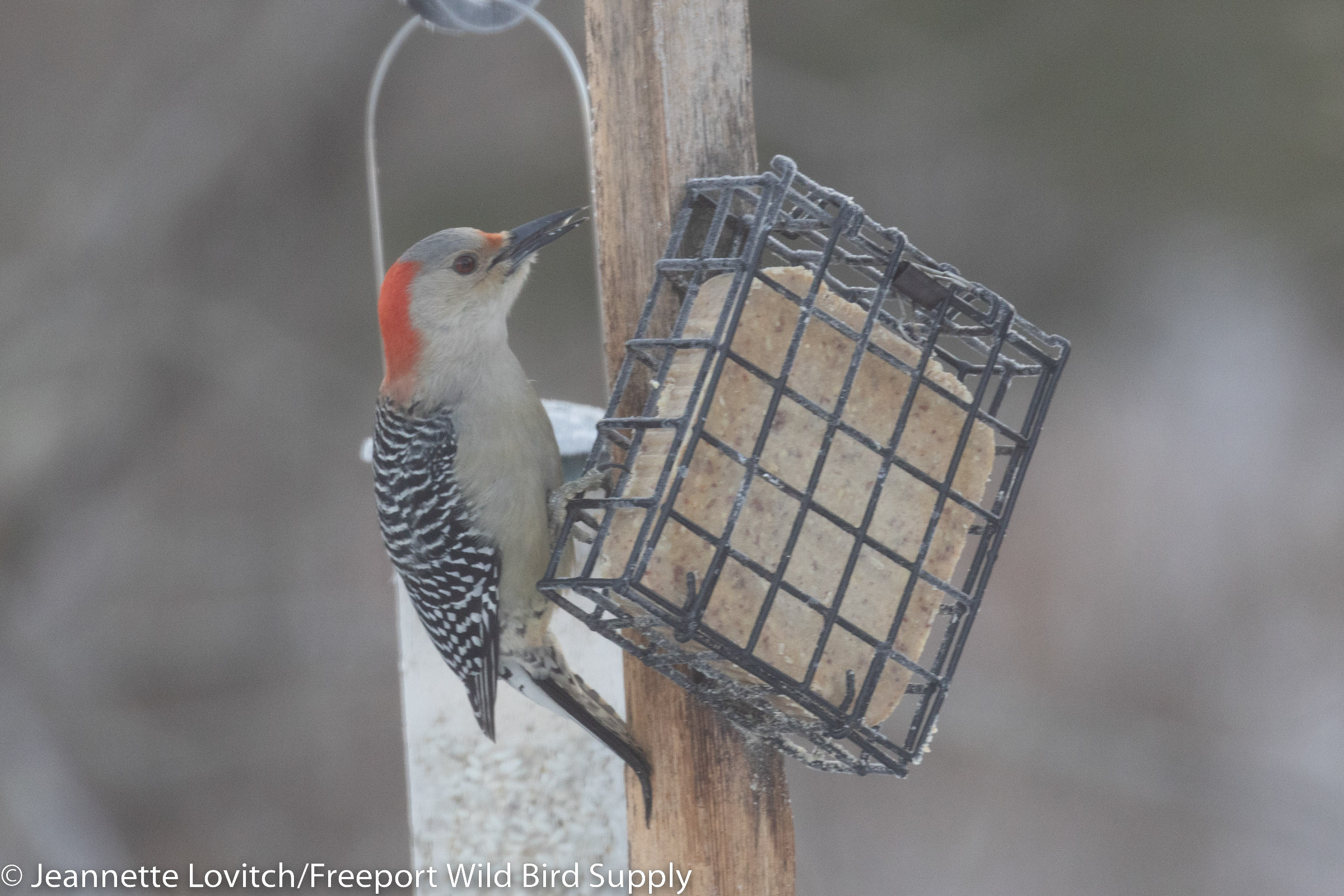
Last winter, we had a male Red-bellied Woodpecker nearly every day, while this winter it has only been this female. We hope they find each other!
Taking the long road to Augusta for an appointment last week, I checked a few open sections of river, including here at the Gardiner Waterfront Park where a group of 16 Common Mergansers were present. Such a snappy bird!
We’ve been busy catching up from our winter vacation, but I did see a few observations of note over the past ten days.
Our feeders In Durham continue to be exceeding active, with at least 70 American Goldfinches and over 50 Dark-eyed Juncos leading the way this week. We’ve also seen increases to 6 American Tree Sparrows, 3 White-throated Sparrows, and a returning two Song Sparrows among all of the resident species. A single Pine Siskin joined the goldfinches on 2/2.
1 hen BARROW’S GOLDENEYE, Bernard Lown Peace Bridge, Lewiston/Auburn, 1/30.
The long-staying hen American Wigeon offered a good, close study as part of the Winter Waterbird Workshop with Down East Adventures tour that I conducted on the 14th.
While I didn’t get as far afield as last week, I enjoyed a productive six days of birding, especially for early January! Here are my observations of note over the past seven days.
Our feeders in Durham have been incredible, led by a growing flock of Dark-eyed Juncos that peaked at 41 on 1/8 and 40+ continuing American Goldfinches. There was a big movement of sparrows after the weekend snow storm, with flocks of Dark-eyed Juncos and White-throated Sparrows common and widespread in the area, along with an increase in American Tree Sparrows. During Tuesday’s snowfall, a careful inventory during the snowfall on the 16th yielded 127 individuals of 16 species, led by 41 American Goldfinches and 37 Dark-eyed Juncos.
At least one Turkey Vulture still continues in the I-295 corridor between Cumberland and Freeport.
1 DOVEKIE, Sandy Point Beach, Cousin’s Island, Yarmouth, 1/13. Patch Bird #198! Healthy fly-by apparently turning around upon seeing the bridge, then turning northeast and following the Cousin’s Island shoreline. I lost it in the fog, but presumably rounding the island to return to sea. A Black Guillemot to the south of the bridge was one of my few ever from this location.
1 continuing female American Wigeon, York Duck Pond (Abbott’s Pond), York, 1/14 (with Down East Adventures Winter Waterbirds Workshop tour group).
Small number of Red Crossbills, Bear Mountain, Hartford, 1/15 (with Jeannette). Mostly single fly-overs and one small heard-only group, so quantification was impossible.
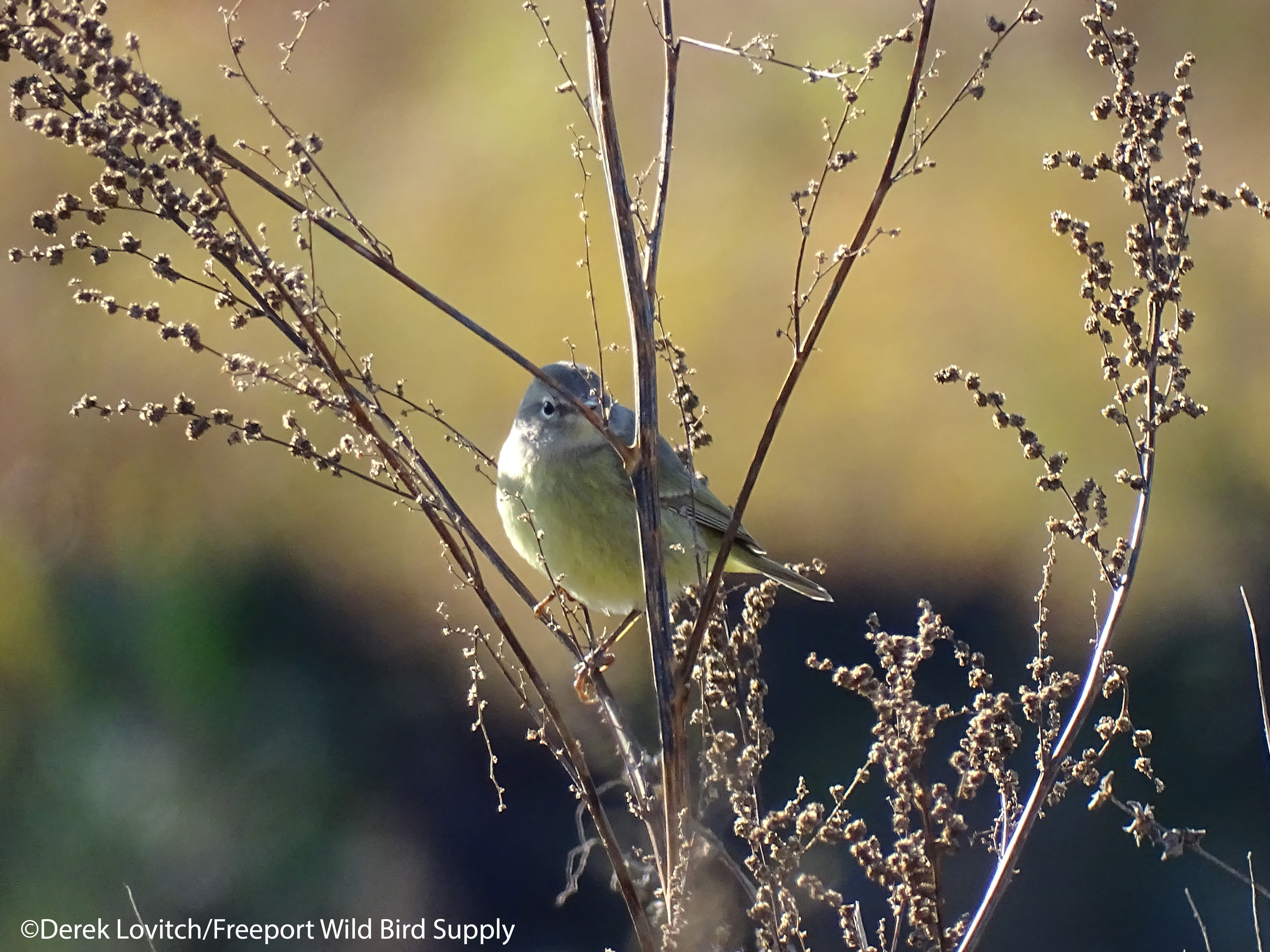
It was sure nice of this Orange-crowned Warbler to sit still long enough for photos, but it sure would have been nice if it was on the other side of that stem! Cape Elizabeth, 11/12.
After a great late October for rarities, November has been incredibly slow for vagrants in Maine so far…unlike surrounding states and provinces. While my increased birding time these past two weeks did not produce any significant rarities, either, it was good to be getting out! And in doing so, I enjoyed some very good birding recently. Here are my observations of note over the past two weeks.
1 ORANGE-CROWNED WARBLERS, 2 “Yellow” Palm Warblers, 3 Black-bellied Plovers, 42 Laughing Gulls, etc, Wolfe’s Neck Center, Freeport, 11/4 (with Saturday Morning Birdwalk group). While we are normally reticent to return to the same location two (let alone 4) weeks in a row, it has continued to be very fruitful, and the week-to-week ebbs and flows have been particularly insightful. More complete summaries are on the News page of our website.
2 ORANGE-CROWNED WARBLERS, 1 “Western” Palm Warbler, 1 Eastern Phoebe, 1 Fox Sparrow (first of fall, finally), 1 Field Sparrow, etc, etc, Bailey Island, Harpswell, 11/6 (with Jeannette).
Sabattus Pond, Sabattus, 11/10 (with Dan Nickerson): 575 Ruddy Ducks, 290 Common Mergansers, 224 Mallards, 156 Lesser Scaup, 113 Greater Scaup, 82 American Black Ducks, 61 Buffleheads, 32 Hooded Mergansers, 24 distant scaup sp, 21 American Pipits, 15 Canada Geese, 9 Green-winged Teal, 6 Common Goldeneyes, 5 American Wigeon, 4 KILLDEER, 4 Common Loons, 2 Black Scoters, 1 Snow Bunting, 1 Swamp Sparrow, etc.
1 American Tree Sparrow (First of fall), Yarmouth Town Landing, 11/11 (with Saturday Morning Birdwalk group).
Sabattus Pond, 11/16: 663 Ruddy Ducks, 442 Common Mergansers, 369 scaup sp, 217 Mallards, 102 Buffleheads, 92 Hooded Mergansers, 79 Greater Scaup, 14 Lesser Scaup, 14 Canada Geese, 12 American Black Ducks, 5 Common Goldeneyes, 2 American Wigeon, 1 Green-winged Teal, and 1 AMERICAN COOT.
1 drake Wood Duck, North River Road, Auburn, 11/16.
2 ORANGE-CROWNED WARBLERS, 25 Snow Buntings, and 1 Black-bellied Plover, Wolfe’s Neck Center, Freeport, 11/17 (with Dan Nickerson).
22 Black-bellied Plovers, 91 Dunlin, etc, Wharton Point, Brunswick, 11/17 (with Dan Nickerson).
2 “WESTERN” PALM WARBLERS, 1-2 Chipping Sparrows, 150+ Red-winged Blackbirds with a few Common Grackles, Pennellville Road, Brunswick, 11/17 (with Dan Nickerson).
Meanwhile, here in our Durham yard, the birdlife has become decidedly wintery. However, a few lingering/migrants of note recently included 2 RUSTY BLACKBIRDS on 11/4, two American Woodcocks through at least 11/4, and a Winter Wren 11/13-14.
Our feeders have been quite busy again, with varying numbers of all the expected species, but the number of American Goldfinches continuing to impress, with 30-50+ visiting daily. A few Pine Siskins have been mixing in with them as well, and we’re getting the sporadic Purple Finch or two. Our Njyer and hulled sunflower feeders are being emptied daily at this point. Under the feeders, White-throated Sparrows have been quite low, with only a max of 4 recently, while Dark-eyed Juncos have slowly but steadily increased over the past week. We’re down to just a couple of Song Sparrows, however.
Here at the store, we had a Common Grackle and a late Chipping Sparrow on the 15th. but we’re not seeing nearly the diversity or activity here as we are used to at the season – no doubt an indictment of the surrounding habitat.
This Purple Gallinule graced tiny Rogers Pond Park in Kennebunk on the 20th, and I could not resist the chase!
The last few have been tough for me. It’s October in Maine – my favorite month of birding, as I have opined about before. The weather went from unusually warm and benign to pleasantly normal and unsettled. But in between, there were those glorious fall days of crisp mornings, colorful leaves, and migrants everywhere.
Over the winter as I slowly recovered from shoulder surgery, I used my one good arm to enjoy morning vigils at the active feeding station, which I chronicled here and here. I kept track of daily ebbs and flows, and paid even greater attention to behavior, such as the winter’s-long Sharp-shinned Hawk drama at the feeding station.
While it’s been a long year of near-constant pain and discomfort, it has also been a very busy year and we had one of the most successful tour seasons in our company’s history, despite the near-constant rain. I battled through some tours but did my best to remain positive and productive.
Pain was building in my “good” arm all summer, constantly doing all the work the left, surgically repaired but then frozen shoulder was still unable to accomplish. My September trip to Monhegan for Down East Adventures was the most challenging yet.
For the first time in my career (around 30 years of guiding in some shape or form), I had to hire a replacement for a tour. Thankfully, my good friend and amazing birder Evan Obercian was able to cover our 18th annual Monhegan Fall Migration Weekend for me. I could barely get in and out of my recliner – I was not going to be able to walk around all day and show people birds!
The duration of this intense pain lasted far longer than I had expected, despite various combinations of medicines and therapies, but I mostly remained on “Injured Reserve’ (I feel like I am injured often enough to be an Offensive Lineman for the Patriots!) Meanwhile, October birding was at its finest, and birds were streaming through. Our Durham yard was absolutely bursting with birds on most mornings through, but my birding was limited to a short walk up and down the driveway.
Our September diversity of warblers slowly petered out into waves of Palm and Yellow-rumped Warblers in early October, with Ruby-crowned Kinglets bitterly scolding from all edges. Our fields and meadows were chock full of sparrows, with a productive breeding season for Song Sparrows soon augmented by flights of Swamp, the return of White-throated, more Song, and a surprising amount of Lincoln’s Sparrows.
Some other highlights during the peak of my limitations included a Philadelphia Vireo viewed from my recliner on 10/1 and a truant Scarlet Tanager spotted from the same position on the 5th. Happily, by the morning of the 7th, I was actually able to take a little walk with bins and that yielded a nice array of migrants including 2 Blue-headed Vireos, a presumed-continuing Scarlet Tanager, a new wave of Yellow-rumped Warblers and especially Ruby-crowned Kinglets, and an increase in Swamp, Savannah, and Song Sparrows in our field.
Meanwhile, my usual morning texts with Evan and Dan Nickerson as we monitored the ebbs and flows of migration helped to keep me abreast of what was happening beyond the yard. Our feeders in Durham were busier than what most people were experiencing this fall, but this is always a time of plenty. For me, unfortunately, my limitation was holding my head upright and using binoculars, so daily counts and monitoring were out of the question – no chance to attempt another Sandy Point Morning Flight, despite some great conditions on several mornings.
I was kept busy with a writing project, correspondence and planning for the store, and on the morning of the 8th, Jeannette and I boarded a plane for a trade show in Missouri. After a 5-year hiatus, we really needed to get back to reinvigorate our offerings and see if there were any revolutionary developments.
Flying into Kansas City, Jeannette and I enjoyed a couple of days off before the trade show, and then a day upon our return. We visited with a friend, checked out some breweries and indulged in the best of Kansas City BBQ, and of course, did a little birding. Finally feeling well enough to carry binoculars for a bit, we spent the morning of the 9th birding in Kansas (Spotted Towhees and Franklin’s Gulls!) and at least a couple of hours of each morning of our trip. A big overnight flight resulted in a very productive morning at the Lowe Conservation Area in Mexico, for example, with large number of Yellow-rumped Warblers and impressive numbers of Lincoln’s Sparrows among many others.
When we returned late on the 13th, much had changed here in Maine – a week is a long time in fall migration! I was finally back to work, leading the Saturday Morning Birdwalk once again on the 14th. If only to prevent me from snapping my head up in response to an unfamiliar flight call, I was still sporting a neck brace and quite a bit of discomfort. However, the birding helped ease the pain. In fact, it was an exceptional outing full of sparrows, a massive arrival of Pine Siskins, a late Nashville Warbler, and a Great Blue Heron hunting voles.
I birded our Durham property on the morning of the 15th, noting the changes since we departed. While truant House Wren and Indigo Bunting continue, gone are the last of our Gray Catbirds. There were still a lot of Song Sparrows, but fewer Swamp and more Savannah in our field. A Dark-eyed Junco and a few fly-over Pine Siskins have arrived, and a flock of about 100 Common Grackles briefly visited a patch of wet woods. Warblers, however, were now limited to a healthy smattering of Yellow-rumped only. A Rusty Blackbird and our first two immature White-crowned Sparrows arrived on the 17th, and the morning of the 20th was particularly birdy – Pine Siskins are here now.
Our annual Fall Boothbay Mini-Pelagic on the 16th went off without a hitch, with great weather and sea conditions. However, few seabirds were to be found, despite a lot of ground covered. The passerine list – including sparrows 28 miles offshore – was fascinating, however. But it felt more like being at Sandy Point than at sea!
It was a short trip, but I actually went birding on my own for a few hours on the 18th, visiting Sabattus Pond. Waterfowl numbers are increasing, with decent tallies including 140 Ruddy Ducks, 113 Lesser Scaup, 75 Greater Scaup, 3-5 Green-winged Teal, 2 Buffleheads (first of fall), and 1 each of Ring-necked Duck and Surf Scoter.
And finally, today was our last boat trip of the year – our Birds of Casco Bay with Seacoast Tours right here in Freeport. A casual 2.5-hour cruise produced an abundance of newly arrived Surf Scoters, 9 Red-breasted Mergansers, a surprising 15 truant Laughing Gulls, and a rather tardy Osprey.
And with my birdfinding so limited, I jumped at the chance to do a little bird-chasing. After my tour, I raced down to Kennebunk where a vagrant Purple Gallinule was found this morning. Interestingly, this is the second in Maine at the moment, with one continuing in the even more surprising location in a small pond in the North Maine Woods not far from Moosehead Lake!
It was in the open when I arrived, and I enjoyed some prolonged quality time with it by myself and with just a few others at we watched it feed on crabgrass and at least one large earthworm. Oddly, it remained loyal to a small patch of grass under a powerline, away from the water.
As I continue to slowly feel better, I’ll be trying to get out more. Unfortunately, there will not be any more visits to Sandy Point for the morning flight for me this year, but there are plenty of birds to see everywhere else. Sabattus Pond season is upon us, and Rarity Season is about to ramp up. It’s an amazing time to be in the field, and I will do my best to get out there and report back. Stay tuned for trip reports, birding summaries, and I am sure, a few “highlights” too!
Although around in excellent numbers, goldfinches are not inundating feeders despite a bumper crop of juveniles thanks to the abundance of natural food resources from our exceptional growing season.
If you think it’s slow at your feeders right now, you are not alone. We are being swamped with reports and concerns here at Freeport Wild Bird Supply of “no birds,” “slow,” “they all disappeared” etc. In fact, they are so frequent – and causing so much consternation – I decided to write this blog to help further explain the observations (or lack there of).
So the first thing to know is: don’t worry. This is normal, this is natural, and it happens on a fairly regular basis. There is a lot of concern, even panic, going on right now, fueled by misinformation, inadequate answers, and downright fear-mongering on the internet (I know, shocking!).
I think the success of the 3 Billion Birds campaign, which analyzed and publicized the finding that North America has lost one in four birds since 1970, has greatly heightened awareness about the plight of the continent’s birds. Media coverage of disease in birds has increased in recent years, which is both good and bad (good in the awareness about the issues, bad in the misleading, misguided, and often irrational coverage). So we are hyper-aware.
But yes, your feeders have been slow. Our feeders have been slow. And feeders throughout the state have been slow. But let me assure you that this is OK. In fact, it’s very OK. It is not a sign of the sky falling, the Rapture, or another disease outbreak. While the overall decline of songbirds is dramatic and palpable, many resident feeder bird species are actually increasing over the long term. While I don’t want to talk you out of being concerned about the general welfare of all birds, I want to assure you that what your feeders are experiencing right now is nothing to be worried about. It’s impacting our enjoyment, yes, but it’s not a bad thing for the birds!
The most important thing to remember is that birds always prefer natural food sources (our feeders are only a helpful supplement) so if they can find what they need in their natural habitats, they do not need to visit our feeders nearly as often. If there’s ever proof-positive to finally kill this silly myth about birds being dependent on feeders, seasons like this are it! (If they were dependent, there would be the same amount of birds at feeders all the time).
So let’s talk about what’s really happening. And as usual in nature, it’s not completely simple. It’s a myriad of issues and events that have once again collided in a “perfect storm” of low feeder activity scenarios. And every yard is different, so there are exceptions to each and every rule.
Yes, it has happened before!
In fact, it happened as recently as 2017 and 2019. In 2017, the lack of feeder birds was so widespread that it was making the TV news, and it was even registering in the region-wide wholesale market. It was not just in Maine. That fall, I took to my blog to explain it and ease concerns. Interestingly, this was my most popular (by views and shares) blog entry of all time, meaning people found it valuable. I hope this blog helps in the same way, and since many of the circumstances are the same, you’ll see more similarities than differences in the explanation.
Likewise, in the winter of 2019, I put together a little Christmas Bird Count case study to explain the perceived lack of birds at that time – to put a small amount of data into the equation.
2.Abundance of Natural Food Sources. For the most part, it is the abundance – or paucity – of natural food that determines how much activity you will have in your yard. This is particularly significant for our seed-eaters, like finches and sparrows, and fruit-eaters, like waxwings. Many trees go through “masting” cycles. This is a survival strategy in which a tree will produce a huge amount of fruit or seed one fall, followed by one or more years of very little production. Therefore, in the high production years, there is so much seed/fruit that predators cannot possibly consume it all, and the tree is all but guaranteed that a large number of its seeds will survive to germinate.
This fall has been a high production year for several common tree species. Acorns, beechnut, and other foods are in good supply, keeping Blue Jays busy. Balsam fir and Red Spruce are in good to great supply, keeping Red-breasted Nuthatches and Black-capped Chickadees happy. In fact, the mast of balsam fir is one of the components that has led to minimal southbound movements of Red-breasted Nuthatches and chickadees that would augment our local populations in winters where they move south out of the boreal, according to the Winter Finch Forecast (more on that later
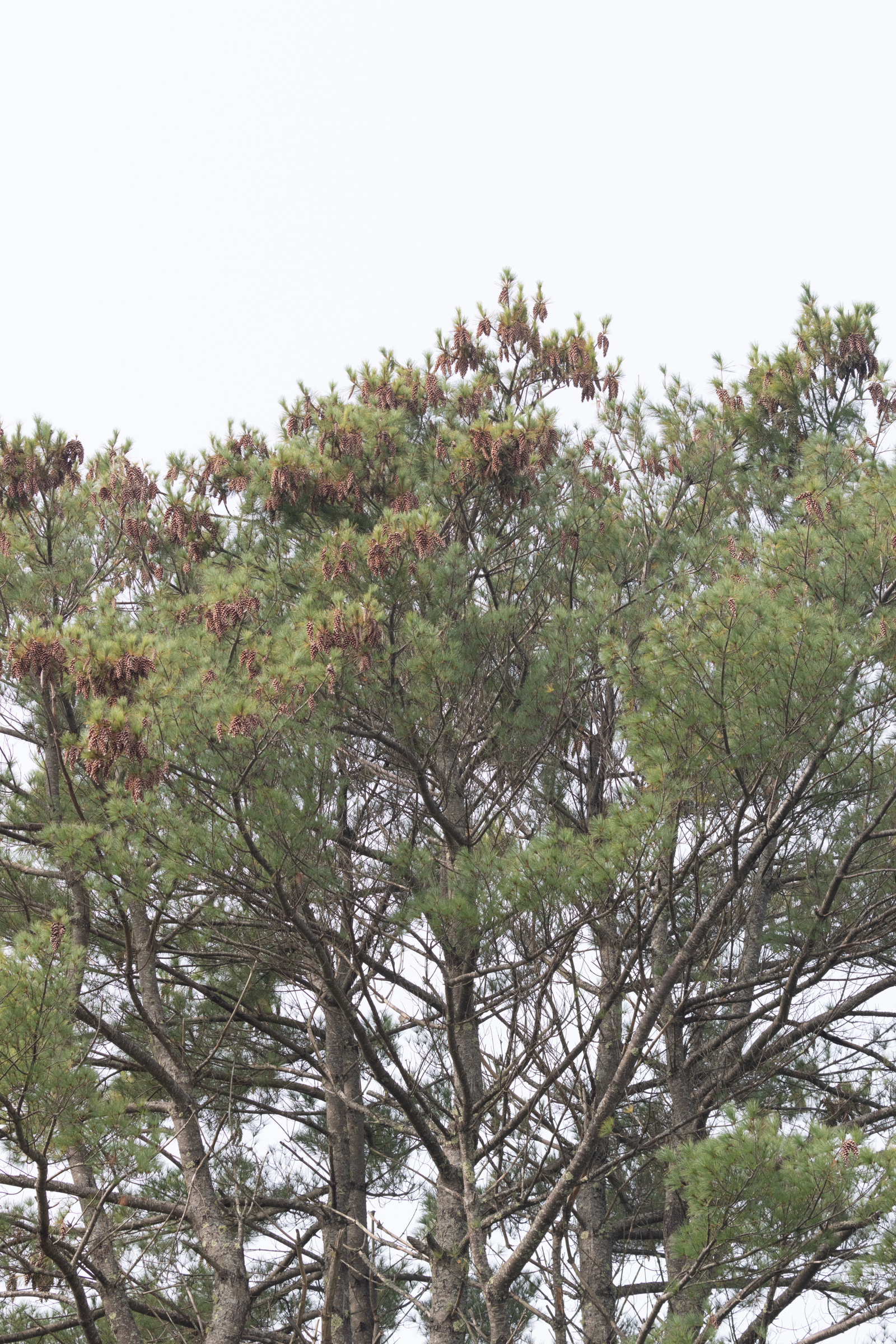
Elsewhere..my goodness are Eastern White Pines laden! I mean like fall-over-from-the-weight-laden. There are so many cones that it looks like the crowns of healthy White Pine are dying.
And the soft cones and abundant seeds of White Pine are just as important to Maine’s birds as the trees are to our cultural heritage, and when there’s a mast, there’s a lot of nutritious food for our resident and migratory seed-eaters alike. There’s so much of it that Red Crossbills all the way from the Rockies are spreading east to take advantage of it (and other conifer crops), and keeping a lot of our “Northeastern” (aka Type 12) Red Crossbills around, hopefully to breed this fall and winter. Unfortunately, few if any will visit feeders as usual, at least in most of the state.
In addition to these important tree food resources, you may have noticed a wee bit of rain this summer. All summer. Record amounts. And after a slow start to the breeding and growing season (why you were feeding so much more seed than normal back in June and into July), the productive growing season has produced a whole lot of soft seeds: grasses, “weeds,” wildflowers – the natural food that our resident and migratory sparrows depend on. And goldfinches…there are A LOT of goldfinches around right now, but they are more frequent on native wildflowers such as Evening Primose that are abundant right now.
For example, in Durham, our yard is hosting 30-40 American Goldfinches daily. They’re spending most of their time in the weedy edges, meadows, and birches around our property. But since there are so many, they are constantly coming and going from our feeding station. Hulled Sunflower and Nyjer – both seeds that need to be constantly refreshed if not consumed rapidly – are by far our most popular feeders, and the two tubes dedicated to hulled sunflower have to replenished daily here. I’ve been enjoying them feasting on Evening Primrose, peeling the seed pods like a banana, then hopping over to the feeders, and after a few minutes, plopping right back into the patch of primrose (the opposite of what dependency would look like!).
2) Mild and Benign Weather. After an often miserable summer, we have earned a lovely fall, and the last few weeks have been delightful! But the mild weather also means birds eat less supplemental food as they don’t need to burn as many calories to make it through the night. There’s also a lot of insects still available – no killing frosts yet, and none on the horizon at least here in Southern Maine.
3) Facultative and Long-Distance Migrants While most of our long-distance migrants (like warblers and orioles) are departing rapidly, many of our later-season migrants (like blackbirds and most of our native sparrows, as well as most of our waterfowl) are facultative (or “flexible”) in their timing. They can adjust their respective arrival and departures based on abundance and/or access to food. Dark-eyed Juncos, White-throated Sparrows, Fox Sparrows, and the last wave of blackbirds are still not here in Southern Maine, lingering as far north as they can for as long as they can. These birds will move a short distance south as soon as they have to, and if the winter is a short one, they will begin to work their way north earlier – or even “overwinter” further north than normal. Not even a freak snowstorm will affect them – they are built for it, and will make range adjustments as needed. With so many hayfields unmowed, corn still being harvested, and lack of urgency, the usual fall complaint about being overwhelmed by flocks of voracious blackbirds have not been heard. Enjoy it while you can!
As for long (and medium-distance obligate migrants), it just so happens many of them clear out in late September. While there are still scattered Ruby-throated Hummingbirds around the state, a large portion of the population cleared out in the last two weeks. Adding to the perception that “all the birds have disappeared” was the reality that many of our migrants took advantage of favorable conditions to be on their way.
Another example of this is that here at our feeders in Durham, at least three Gray Catbirds have remained loyal and persistent. Thanks to the abundance of Arrowwood Viburnum on our property, they are still around, and between bouts of berry-harvesting, they continue to visit our suet and nut feeders. They will depart any night now, and when they do, the feeding station will be much quieter. Woodpeckers are taking advantage of all of the natural food and insects out there, so they are – as usual in the fall – making less frequent visits to the suet feeders. Our suet will be depleted much less quickly when the voracious trio of fat-deposting catbirds departs!
Also here in Durham, the first few White-throated Sparrows have finally arrived, and the first wave of Dark-eyed Juncos will be here soon. However, our extensive grassland restoration project and weedy edges have produced a bumper crop of Song Sparrows, which will mostly leave our yard before the winter. If your Song Sparrows have left already and you don’t have White-throats or juncos yet, then your white millet is not being used as quickly. Here, our millet platform is one of our feeders that we have to still fill daily (plus more on the ground) as we continue to improve our already sparrow-rific yard.
4) Irruptives, or Lack There Of.
The venerable Winter Finch Forecast (WFF) lights our way here. As predicted, Purple Finches have been slow to arrive outside of the Boreal and Boreal transition belts. “In the east, many Purple Finches are expected to overwinter in southern Canada and the northeastern United States… Don’t be surprised if, as winter progresses, a late movement in January and February occurs into the Carolinas as eastern crops are depleted.” Here at our feeders in Durham, a male Purple Finch arrived this weekend – our first in a couple of weeks here.
The WFF however, is predicting a flight of Pine Siskins, possibly in large numbers. We’re starting to see a few here and there in Southern Maine, and a massive flock of 200+ showed up on Monhegan mid-week before dispersing. However, with the aforementioned abundances of natural food sources for them (hemlock, birch, alder, weeds, etc), few have been reported at feeders which will likely be the case for a while.
There may be other birds arriving in the coming months, according to the WFF, but those will be a topic for another time.
5) Predators.
Many people have said that the birds “disappeared all at once.” And while for the most part, it is just a combination of the various topics discussed above, there are instances when feeder activity does in fact grind to a sudden halt.
There are two reasons birds stop coming to a feeder all of the sudden: the food has spoiled or is no longer accessible (the feeder clogged up) or there’s a new predator on the scene. Hopefully there’s not a new outdoor cat in the neighborhood, but it’s also the peak of raptor migration. A transient or winter resident Cooper’s or Sharp-shinned Hawk setting up camp near your feeders will indeed reduce activity suddenly. Hey, if you want to feed the small ones, you’re going to feed the big ones, so this is an important part of the cycle and should be celebrated (but yes, we all have our rooting interests). Especially young, inexperienced juvenile birds don’t always make good decisions about where to perch and give up their presence too easily. However, as soon as the local birds figure this out, they’ll stop coming and the raptor will move along and look for another concentration. And your songbirds will be back soon thereafter. That cat is a bigger problem, however.
6) Memory Bias. Humans inherently think of the recent past first (“recency bias), and so we find ourselves often comparing this fall to last fall, which saw exceptionally high feeder visitation thanks to the prolonged drought we had experienced throughout the summer, greatly reducing perennial seed crops (exactly as we had seen in the summer of 2017). Some of the masting trees were at cyclical lows, and cyclical lows of many cone and seed crops. And irruptions of Red-breasted Nuthatches, and to a lesser extent Purple Finches, were already underway by now. Especially if you have only been feeding birds – or paying more attention to your feeder birds – in the past two years, this fall would seem like a striking anomaly.
6) The Filthy Feeders and Stale Seed Catch-22. When activity is low at feeders, we can become a bit blasé about maintenance. Not keeping feeders clean and filled with fresh seed will only make it less likely that birds will want to frequent your yard. And, with ridiculously prolonged wet weather of the summer, seed went bad out there – even if it was fresh when you bought it. And unusually high humidity for much of the summer meant the “cool, dry” place you tried to store seed in was anything but. Seed spoils. It gets stale. And it did that more quickly this summer than most. Unless you have it stored in a climate controlled silo and bagged a couple of days before its ship like our exceptional seed distributor does, the seed that you have had since the spring is now worthless. And the birds know this.
No one likes to waste seed, but if it has been sitting in a feeder untouched for a month or so, it is time to toss it and start over. This is especially true for Nyjer, hulled sunflower, and shelled peanuts, which are most susceptible to the elements. (If you dump it in the woods, rest assured that something will eat it, or at the very least nothing will be harmed by it. If mold is visible, however, it is best to bury it). Clean your feeders, and disinfect them with a mixture of one part white vinegar to four parts water if mold was present. Fill your feeders halfway until activity builds up again if you are concerned about waste. When birds return and they find stale or spoiled seed in your feeders, they’ll continue right on by. Toss that saved seed. Start fresh. The birds will start coming back, but the longer you wait to restock, the longer it will take for your feeder activity to return.
7) The Big Picture We certainly do not want to downplay the significance of population declines in many of our bird species due to a whole host of large-scale issues (a topic for a different article), but rest assured that “your” birds are probably doing just fine from one year to the next over the short term. In fact, most of our resident “feeder birds” have steady, if not in some cases, increasing populations. Climate Change is affecting bird populations. Habitat loss is affecting bird populations. Cats are killing up to 4 BILLION birds a year. Windows are killing up to 1 BILLION birds a year. We could go on.
However, this has not changed in the past few weeks. Those long-term declines are often subtle and hard to detect without coordinated scientific investigation. All it takes is a walk in the woods and fields to see that the birds are out there. In fact, there are a lot of them out there, and they are doing just fine. They just don’t need our feeders as much right now.
And because of that, consider working on adding more native plants and natural food sources to your yard. That will keep more birds around more of the time, and – like our goldfinches and sparrows at our home in Durham – augment feeder activity in what is otherwise a slow season.
8) It WILL Change! Natural food supplies will slowly get used up, nights will get colder and longer, and our facultative migrants will come. A frost will come, ending the growing and insect seasons. Eventually, we’ll see some snow and ice that will make it harder to find the remaining natural food, and when all of those things happen, our feeders will be ready for them!
White-throated Sparrows have just returned to our feeders in Durham.
In a few weeks, the comment about Blue Jays “eating me out of house and home” will begin as they ramp up their winter caching. They’ll focus mostly on acorns as usual, augment it with pine nuts, but also supplement that with nuts and seeds from our feeders. Blackbirds flocks will begin to depart the farmlands and stop by feeding stations for some refueling. Weed seeds will begin to be used up, pushing more arriving sparrows and goldfinches back to feeders more of the time.
9) In sum.
This is normal, explainable, and predictable. It happens every now and then. It will change. Refresh your seed, adjust your offerings, and clean your feeders. Quality seed matters, especially when there are other options around for birds to choose instead. Make a planting plan for next year to improve the quality of your surrounding habitat. Keep cats indoors, windows treated to prevent strikes, and support bird conservation efforts. We want more birds around us, for our pleasure and for the ecological benefits. And as this fall demonstrates, feeders are only a small part of the equation.
We hope this helps clear up some of the misinformation out there. And please do share this widely – we want to get the word out. And finally, if you have any additional questions, feel free to drop by the store.
And never stop looking! You never known what might show up out there, even on the slow days, like this young female Dickcissel that graced the feeders at the store for a week earlier this month.
10/7 Update:
A lot of people have asked about Hurricane Lee and its effect on birds, so just wanted to comment about that here. Simply put: Lee had NOTHING to do with it; it was irrelevant. However, in the days before and after the storm’s passage, there was excellent conditions for migration (the first in a while), so many migratory birds did clear out at that time. And yes, the amount of rain likely clogged some feeders and spoiled some seed, too, but no more than any other storm would. So basically, I believe the passage of Lee was merely coincidental at best.
On the other hand…here come the Pine Siskins! Reports of huge numbers pouring out of the boreal are being received, and birds are arriving in northern and eastern Maine. Be sure you have fresh Nyjer ready to go!
11/15 Update:
With the onset of colder weather, feeder activity is picking up dramatically. More and more folks are reporting “the birds are back” at their feeding stations. At our home in Durham, we never “lost” feeder activity, but it has certainly picked up over the past two weeks. We’ve had 50+ American Goldfinches scarfing Nyjer and hulled sunflower the last few days, up from the 20-30 that have been frequent for most of the fall.
Dark-eyed Juncos and Eastern Bluebirds are returning to feeders, but sparrow numbers overall remain low…I think most of the White-throated Sparrows have gone over and through, but American Tree Sparrows have not yet arrived.
Here at the store, the feeder activity remains below normal, however, but Eastern Bluebirds have just returned here as well. But our surrounding habitat doesn’t hold nearly as many birds as our yard in Durham, so this is a big part of the equation.
So to sum it up: it’s getting better, more active, and more diverse at the feeders. And I think fresh seed is a big part of the equation, so if you’re waiting for birds to return with only old, stale (or worse) seed to offer, I think you’ll be waiting even longer (more on this soon, as I am playing around with another blog on the topic).
A highlight of a slow weekend on Monhegan were the conspicuous Cape May Warblers, including these two that were regulars in a single tree that often featured every plumage aspect of this delightful warbler.
Following three days on Monhegan, I mostly birded the yard before heading back to the island for another tour.
Monhegan Island, 9/23-25 (with Down East Adventures Monhegan Migration Workshop group):
About as slow as I have ever experienced the island, even considering a nice little influx of birds on our last morning. Cape May Warblers were the most common warbler for the first two days, however, but overall numbers and diversity were extremely low. Highlights were few, but a brief trip report is posted here:
There were more birds in our yard than on Monhegan this week! A particularly active morning on 9/27 included tardy Ovenbird, Scarlet Tanager, 8 species of warblers including Tennessee and Cape May, a nice influx of sparrows including 4+ Lincoln’s, and my first 4 southern Maine Pine Siskins of the season.
A NOTE ABOUT YOUR “SLOW” BIRD FEEDERS:
Many folks have been reporting extremely slow feeders throughout much of the state recently. This happens on a regular basis, so the end is not near! In fact, a very similiar dearth of birds happened in the falls of 2017 and 2019. I’m currently working on a blog that is more specific to this year, but this blog written in 2017 nicely tells a good part of the story.
This presumed first-fall female Cape May Warbler was a good study in comparison with the other, brighter plumages of this species on display in that single tree on Monhegan.
This delightful Black-and-white Warbler hung out with me for a spell in “my office” at Sandy Point during the huge flight on the morning of the 21st.
While Hurricane Lee was a birding dud here in Maine, I did miss two great flights at Sandy Point and three overall fantastic days of migration while we were out of town. But some good migration over the past four days since our return helped make up for it. Meanwhile, I also posted a blog recounting a little about what I (did not) miss during the passage of Lee.
While there has not been a hoped-for morning flight of consequence over or through our Durham property, it continues to be much better for fall migration than we even imagined. Limited effort produced 12 species of warblers on both 9/19 and 9/22 – which included tardy Northern Waterthrush and Canada Warbler.
Sandy Point Morning Flight, 9/20.
With winds mostly westerly overnight, and very light westerly winds in the morning, the flight was lighter than I expected. It was also high and distant to the south, so I likely missed a lot of birds, and certainly identified less than I would have liked – both typical on such conditions.
6:23-9:15am
55F, mostly clear, W 2.8mph-4.1
Decreasing to WSW 0.6 to 1.9
Unidentified
164
Eastern Phoebe
2
Northern Parula
84
Eastern Bluebird
2
Blackpoll Warbler
56
DICKCISSEL
2
Cedar Waxwing
22
Bay-breasted/Blackpoll
2
Yellow Warbler
19
Osprey
1
American Redstart
12
Black-throated Blue Warbler
1
American Goldfinch
9
Red-breasted Nuthatch
1
Common Loon
5
Wilson’s Warbler
1
Red-eyed Vireo
5
Baltimore Oriole
1
Cape May Warbler
4
American Robin
1
Ruby-crowned Kinglet
3
Common Yellowthroat
x
Black-and-white Warbler
3
Nashville Warbler
3
TOTAL
405
Black-throated Green Warbler
3
Horned Lark
2
Sandy Point Morning Flight, 9/21.
Wow! Although there was an absolutely huge flight overnight on the radar, the calm winds by dawn lulled me into a false sense of security. But as soon as the sun broke the horizon, birds started flowing. At first they were very high and in very large, dense aggregations, rendering identification impossible for me. Later, as the northwesterly wind picked up, many birds were considerably lower and landing in trees. Based on the date, there’s no way American Redstarts were the second most numerous warbler (they’re just easy to identify), and I would be a large proportion of those early, high migrants were strong-flying Blackpolls. But parulas definitely dominated, and at times, a dozen would be in the trees around me. Even as of 10:00am, a trickle of birds continued overhead.
6:26am to 10:26am.
51F, mostly clear, calm.
Increasing to NW 5.5-7.8mph
Unidentifed
1878
Bay-breasted Warbler
2
Northern Parula
947
Palm Warbler
2
Red-eyed Vireo
97* new record
American Goldfinch
2
American Redstart
88
Blue Jay
2
Blackpoll Warbler
74
Prairie Warbler
2
Yellow-rumped Warbler
59
Savannah Sparrow
1
Black-throated Green Warbler
53
DICKCISSEL
1
Ruby-crowned Kinglet
47
CONNECTICUT WARBLER!
1 (plus one probable)
Yellow Warbler
43
Bobolink
1
Black-and-white Warbler
41
Brown Creeper
1
Cape May Warbler
16
Chestnut-sided Warbler
1
American Robin
12
American Pipit
1
Northern Flicker
11
Ruby-throated Hummingbird
1
Scarlet Tanager
10
Unidentified Empid
1
Magnolia Warbler
9
Mourning Dove
1
Black-throated Blue Warbler
8
Probable Blue-winged Warbler
1
Blue-headed Vireo
7
Rose-breasted Grosbeak
1
Swainson’s Thrush
6* including two high overhead almost an hour after sunrise!
RED-SHOULDERED HAWK
1 Juv. My 196th all-time Patch Bird!
Horned Lark
6
Sharp-shinned Hawk
1
Red-breasted Nuthatch
5
Baltimore Oriole
1
Nashville Warbler
5
House Wren
1
Common Loon
4
Common Yellowthroat
x
Eastern Phoebe
4
Philadelphia Vireo
3
American Kestrel
3
TOTAL
3,467
Rusty Blackbird
2
Golden-crowned Kinglet
2
This cooperative Prairie Warbler was one of 18 species of warblers that passed over and through Sandy Point Beach, Cousin’s Island, Yarmouth, on the morning of the 21st.
Hawkwatching over the store, 9/21! The big migration day continued, with Jeannette tallying 752 Broad-winged Hawks, 4 Bald Eagles, 3 Turkey Vultures, 2 American Kestrels, 2 Sharp-shinned Hawks, and 1 Cooper’s Hawk in just over 2 hours of observation right out our front door!
Our Durham yard has been incredibly birdy this week. The most unexpected migrant was this American Bittern that dropped into our new pond for the morning of the 28th.
I didn’t get out to shorebird hotspots as much this week, but still ended up with 17.5 species and some solid high counts. However, much of my best birding this week was from our yard, which apparently is a fantastic fall migration hotspot. And my first visit of the season to Sandy Point on 8/31 produced a new August record!
Black-bellied Plover: 142, The Pool, Biddeford Pool, 9/1.
Killdeer: 3, United Ag and Turf, Auburn, 8/31 (with Jeannette).
Semipalmated Plover: 150+, The Pool, 9/1.
Piping Plover: 1, The Pool, 9/1.
Whimbrel: 4, The Pool, 9/1.
RED KNOT: 16 juv, The Pool, 9/1.
Sanderling: 1, The Pool, 9/1.
Least Sandpiper: 32, Eastern Road Trail, Scarborough Marsh, 8/31.
White-rumped Sandpiper: 11, Wharton Point, Brunswick, 8/28 (with Jeannette).
Pectoral Sandpiper: 2, Eastern Road Trail, 8/31.
Semipalmated Sandpiper: 450-500, Wharton Point, Brunswick, 8/28 (with Jeannette).
A handful of non-shorebird highlights this week also included:
A productive week of birding on our Durham property produced a number of highlights. In fact, most mornings, it was hard to pull myself away from the yard. At least 11 species of warblers have been in our yard daily this week, with a high count of 12 on the 28th. A female MOURNING WARBLER was present 8/27-8/29. A Phildelphia Vireo on the 28th-29th was our 144th yard bird, followed moments later by the arrival of #145: An American Bittern (photo above). A DICKCISSEL (FOF) briefly paused in the yard on the morning of the 1st for our 146th yard bird! 32-38 Common Nighthawks were feeding over the yard late in the day on 9/1 as well.
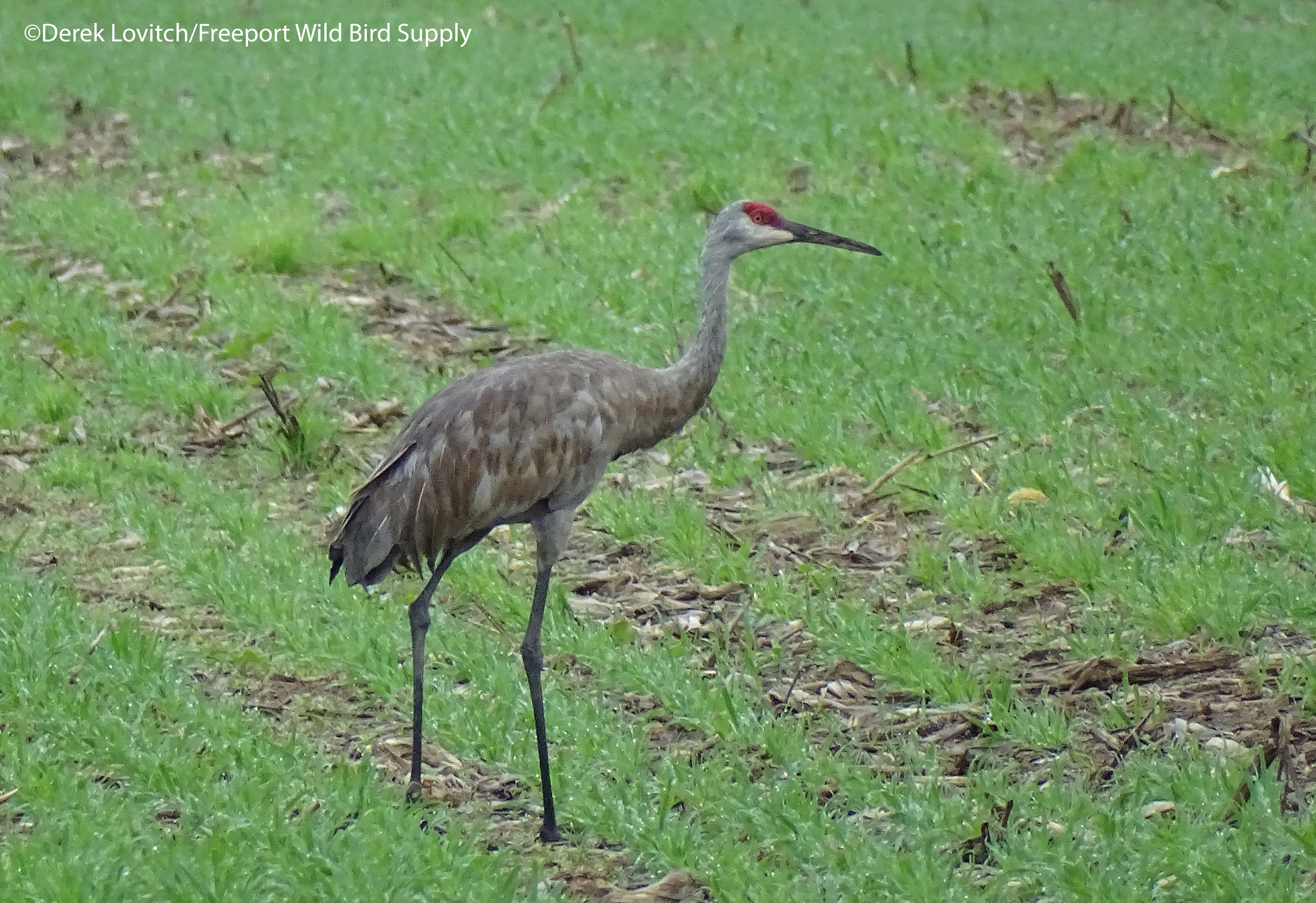
12 adult SANDHILL CRANES, Mayall Road, Gray/New Gloucester, 8/30 (site high count and noteworthy that no juveniles were present – failed breeding season due to high water and flooding?)
Sandy Point Morning Flight, 8/31 (FOY):
6:00-9:15am
57F, mostly clear, NE 4.7-7.6 increasing to 7.3-9.8 and gusty.










 Maine Birding Field Notes