Tag Archives: Durham

This Week’s Highlights, 12/14– 12/20/2024

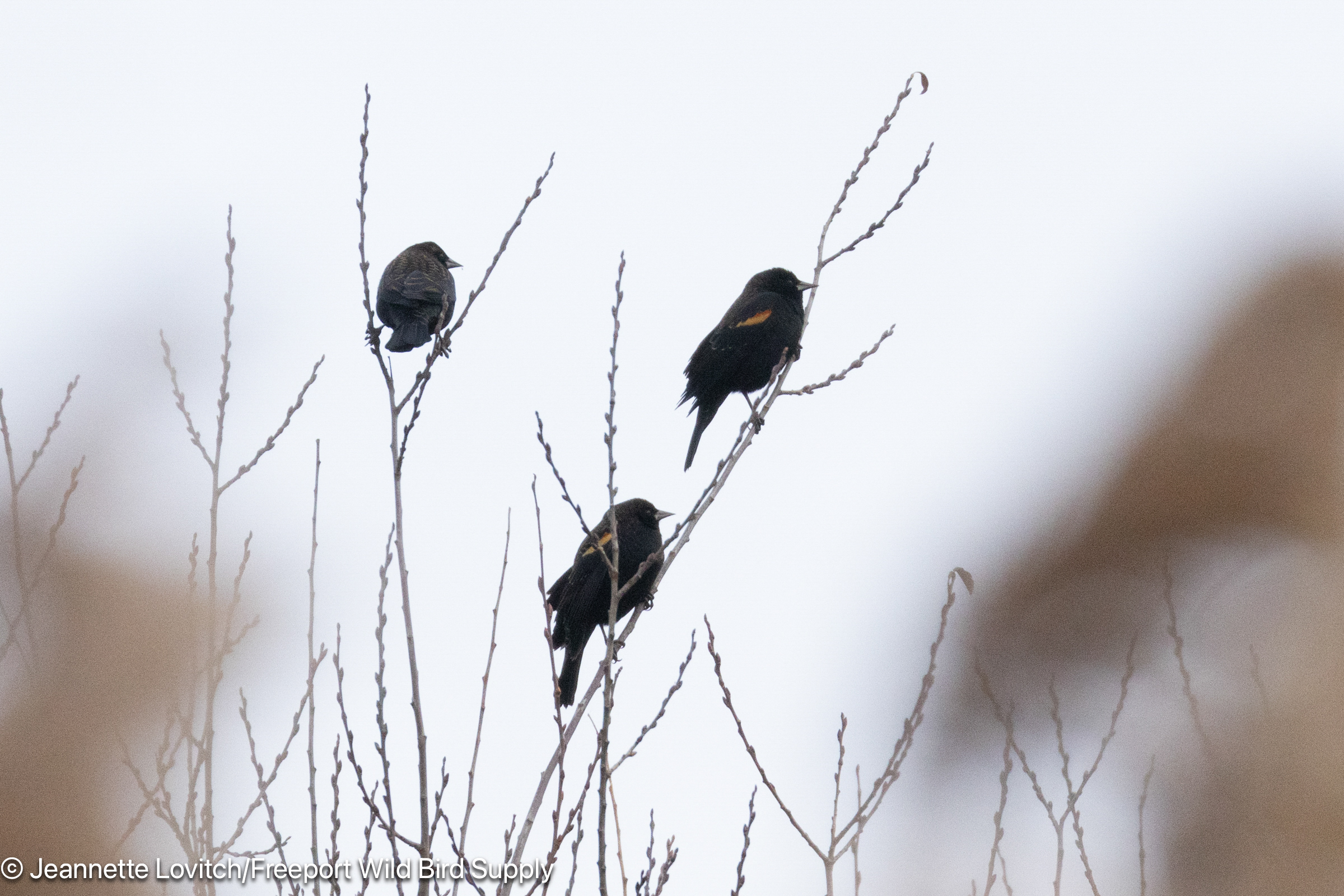
Is mid-December even winter anymore? Do these Red-winged Blackbirds that we found during the Southern York County CBC on 12/16 count as “late,” “lingering,” or “pioneering?”

With the exception of the Southern York County CBC on Monday the 16th, my birding this week was limited to short early morning outings. Nonetheless, I had some good seasonal observations of note.

  • 1 Fox Sparrow continued at the feeders here at the store through the 15th.
  • 1 Swamp Sparrow, Wolfe’s Neck Center, Freeport, 12/14 (with Saturday Morning Birdwalk group).
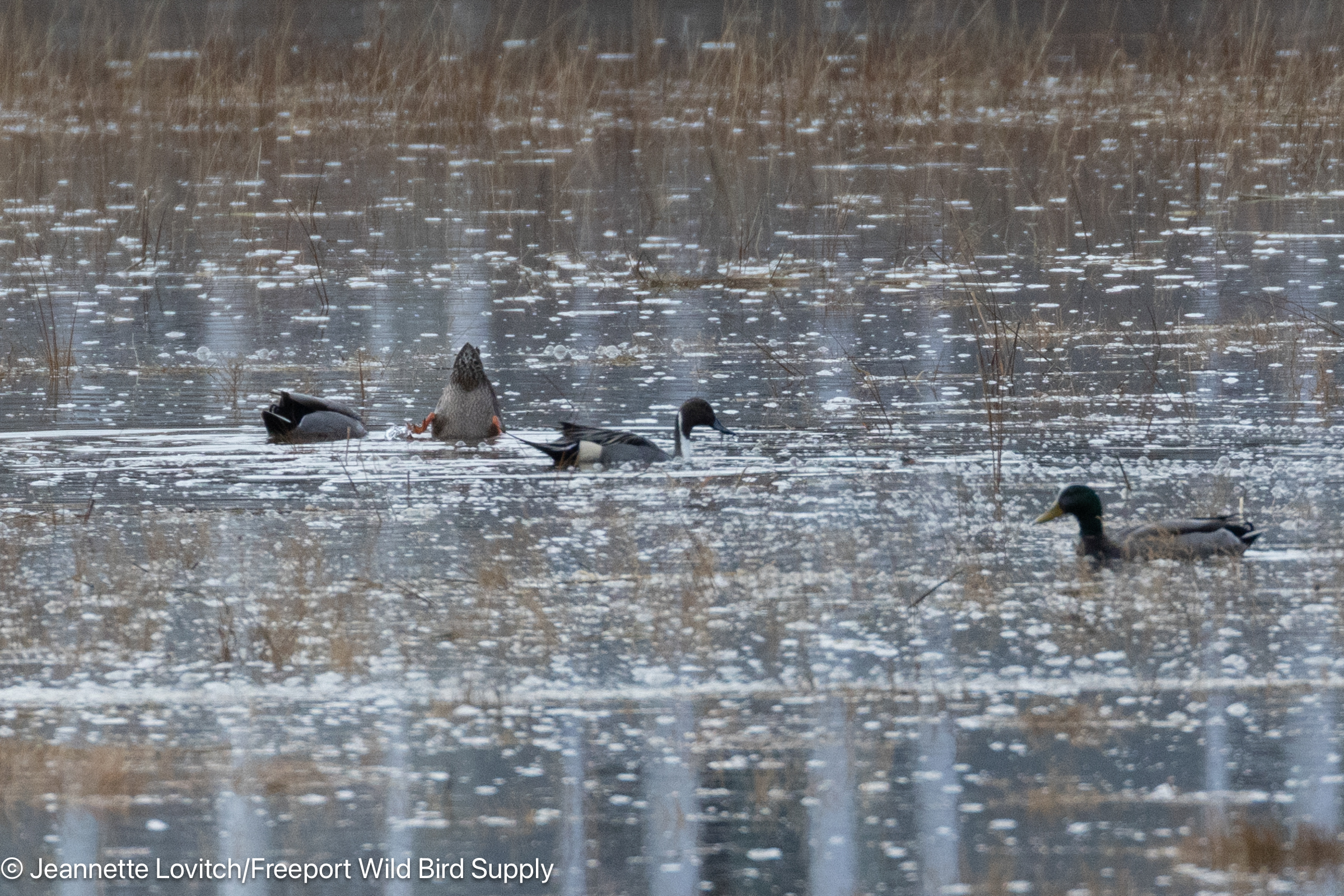
  • Southern York County CBC, 12/16: “Moody” Sector with Jeannette. 2437 individuals of 62 species, led by 189 Herring Gulls, 182 Mallards, and 177 Rock Pigeons. Other high counts included 126 House Finches and 46 American Tree Sparrows. Particularly low counts for our section included only 1 Yellow-rumped Warbler and only 8 Great Black-backed Gulls. Highlights included: 5 NORTHERN PINTAIL, 4 Red-winged Blackbirds, 1 Savannah Sparrow, and 1 Green-winged Teal. But overall, it was just a really birdy day for us in our usually fun and productive section.
  • 1 drake and 2 hen BARROW’S GOLDENEYES, Winslow Park, Freeport, 12/18.
  • 1 Fox Sparrow, our feeders in Durham, 12/19.
  • 1 female NORTHERN PINTAIL, Cedar Pond Road, Durham, 12/19.
  • 2 continuing NORTHERN SHOVELERS (1 immature male, 1 hen), about 15-20 scaup (both present, mostly Lesser, but just too far to be sure of proportion), 5 Dunlin, etc, Maquoit Bay Conservation Land, Brunswick, 12/20.
  • Plenty of Northern Flickers and Turkey Vultures continue around the area this week.

This Week’s Highlights, 11/9 – 11/15/2024

It might be Rarity Season, but never forget to take your time to enjoy and appreciate our common resident birds! This Red-breasted Nuthatch was on our feeders in Durham on the 15th. There are a lot more in the area this fall than last winter, perhaps due to the lack of Eastern White Pine cones, especially to our north.

Rarity Season continues to be hot. Some dedicated rarity-searching plus some casual birding, yielded the following observations of note over the past 7 days. Swinging for the fences, however, I felt like Aaron Judge in the MLB post-season: lots of strikeouts and no home runs, but at least I went down swinging.

  • 1 continuing MARBLED GODWIT, 8 Black-bellied Plovers, etc, Wharton Point, Brunswick, 11/9 (with Saturday Morning Birdwalk group).
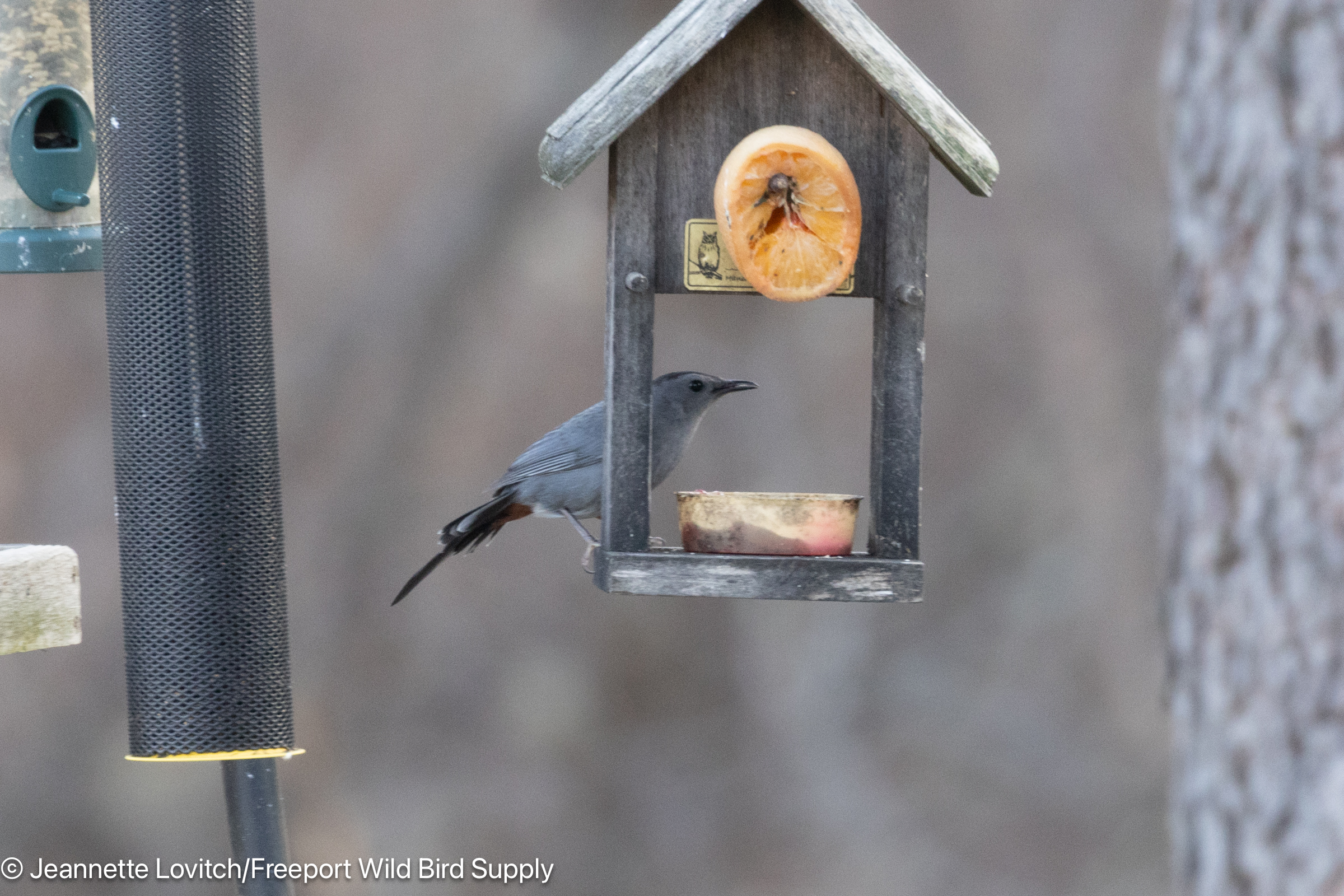
  • 1 Gray Catbird, Topsham Riverwalk, 11/9 (with Saturday Morning Birdwalk group).
  • 1-2 WHITE-WINGED CROSSBILLS, 1 Gray Catbird, 1 Ruby-crowned Kinglet, 1 Yellow-bellied Sapsucker, etc, Peak’s Island, 11/10.
  • 1 Fox Sparrow (first of season), our Durham property, 11/12-13.
  • 1 RED-THROATED LOON, 137 Ruddy Ducks, 22 Green-winged Teak, 17 Lesser Scaup, 3 Greater Scaup, etc, Sabattus Pond, Sabattus, 11/14.
  • 20 Horned Larks, Rte 136, Durham, 11/15.
  • 1 Evening Grosbeak, Cedar Pond Road, Durham, 11/15.
  • Not surprisingly given the mild weather to date, there are a lot of half-hardies around, such as Hermit Thrushes and Swamp Sparrows which I encountered in a number of places this week. Scattered Red-winged Blackbirds and small flocks of Common Grackles continue as well as is now usual in mid-November.

Recent Highlights, 10/17- 10/24/24

A big thank you to the homeowners for alerting us to the presence of this very late hummingbird that arrived in a Durham yard on the 20th. We always put an alert in our store’s newsletters about late hummingbirds, and we try to get photographs to confirm their identity as many late season hummingbirds turn out not to be Ruby-throats. This one, however, was indeed a very late Ruby-throated, confirmed with the shape of the outer primaries on the folded wing.

Despite weather often feeling more like summer, it was a great week of autumn birding. Perhaps my last morning flight visit of the season to Sandy Point, a trip to a private island in Casco Bay, a late hummingbird to chase, a day off to do some birdfinding, and time on our property all combined for a very productive eight days of birding. Here are my observations of note.

  • Sandy Point Morning Flight, 10/17: 351 individuals of 25 species, led by 114 Yellow-rumped Warblers but including a goodly October 17th total of 7 species of warblers. Full list here:
  • 1 Pine Siskin (first of fall), here at the store, 10/18.
  • 1 Field Sparrow and 1 Horned Lark, House Island (private; restricted access), Portland, 10/20 (With Birds on Tap – The Boat Trip! tour group). Trip report here.
  • 3 Common Yellowthroats, 2 imm White-crowned Sparrows (FOF, finally), 1 Field Sparrow, etc, Private property in Cape Elizabeth, 10/22.
  • 1 “INTERIOR” NELSON’S SPARROW (FOY), Crescent Beach State Park, Cape Elizabeth, 10/22.
  • 1 Orange-crowned Warbler, Kettle Cove, Cape Elizabeth, 10/22.
  • 1 subvirgatus Nelson’s Sparrow, Eastern Road Trail, Scarborough Marsh, 10/22.
  • 1 RUBY-THROATED HUMMINGBIRD, private home in Durham, 10/21 (with Jeannette). After receiving an email about a hummingbird coming to a feeder on 10/20, we made arrangements to visit to get confirmation photographs. Surprisingly, given the date, it was indeed a Ruby-throat. See photos above.
  • Highlights on our Durham property included at one or more Lincoln’s Sparrows continuing through at least 10/18, two EVENING GROSBEAKS (FOF) and a Field Sparrow on 10/21, and a late PRAIRIE WARBLER on the 24th.

Recent Highlights, 9/26– 10/2/24

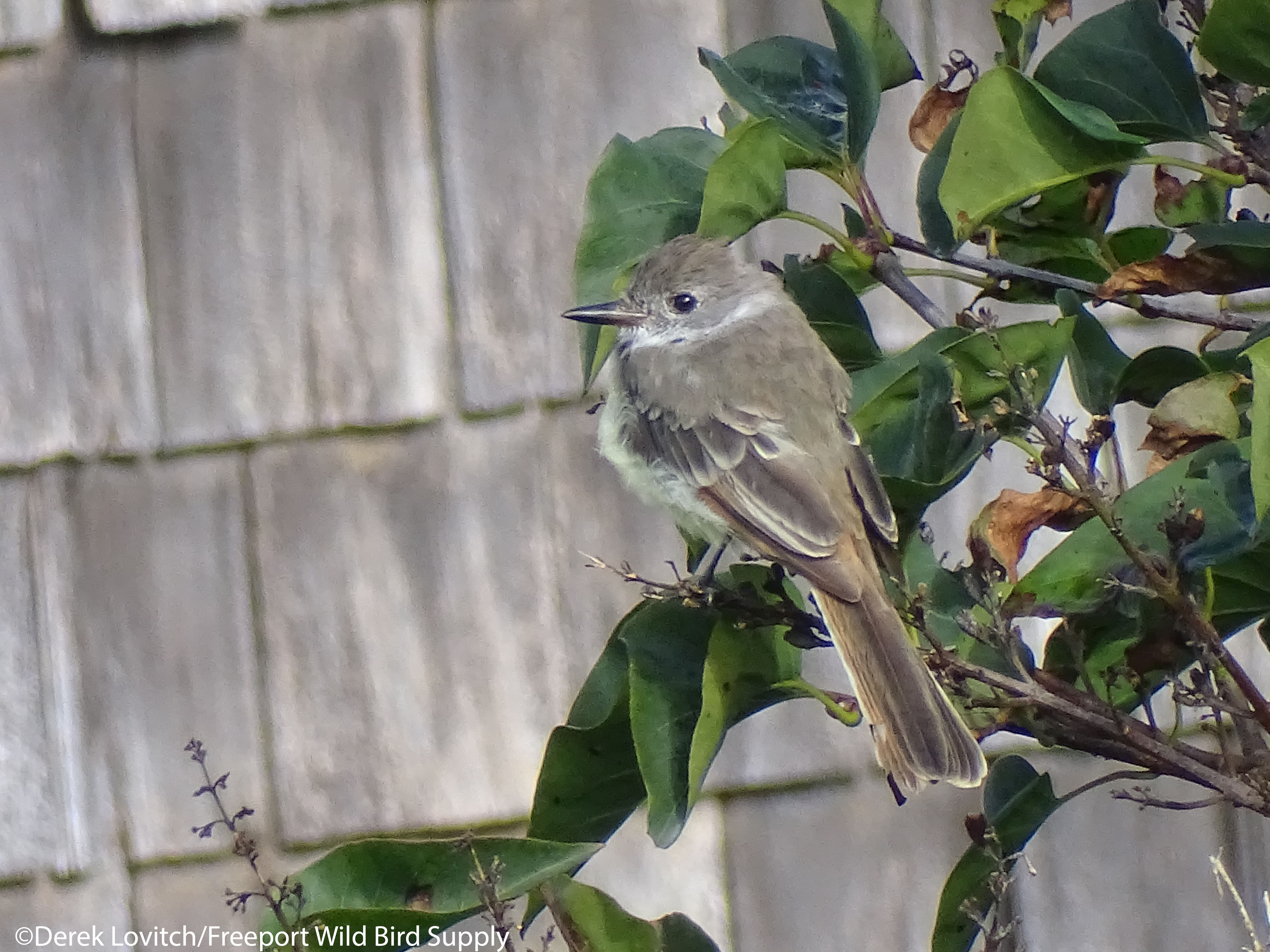
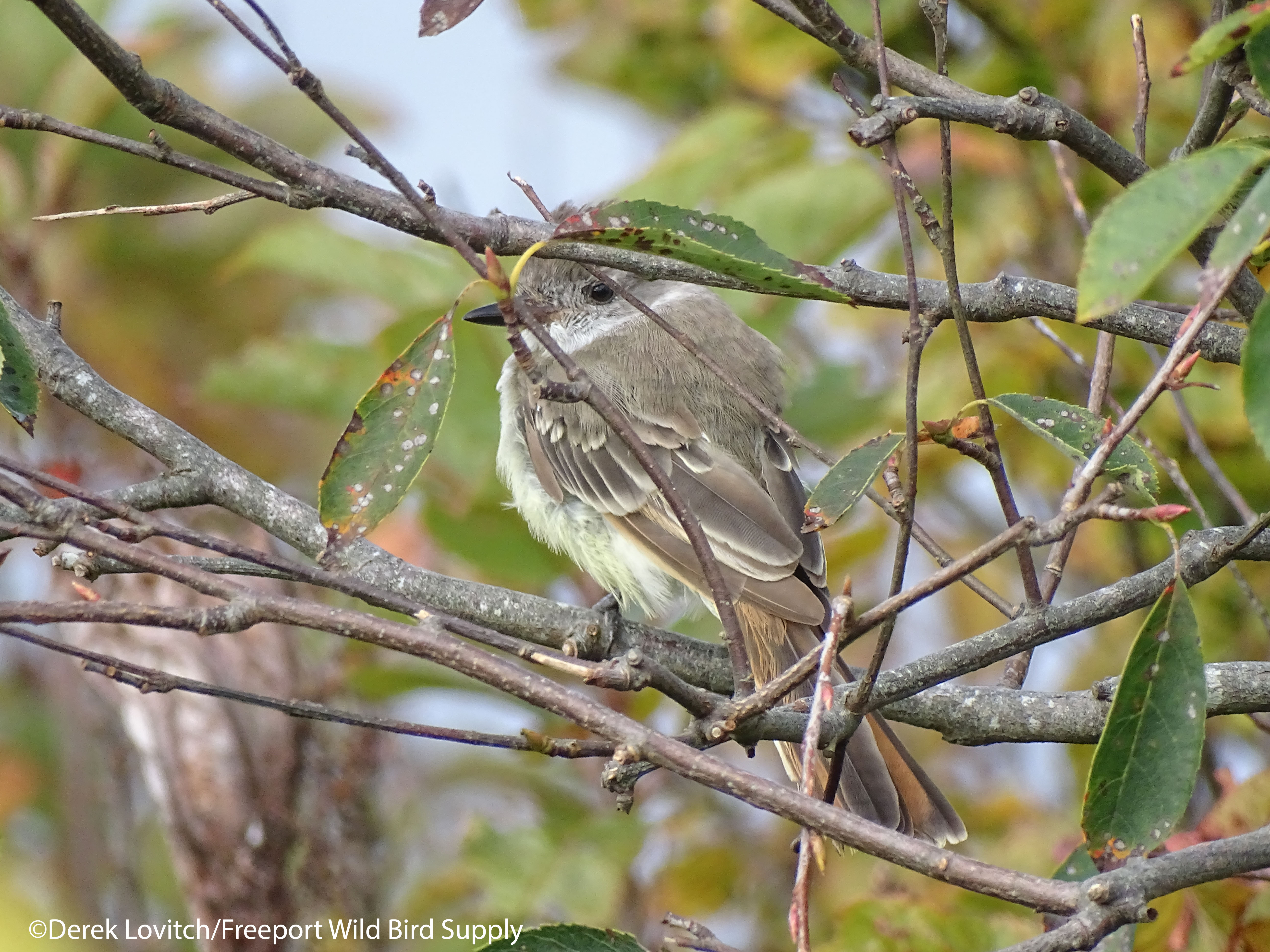
Monhegan’s third Ash-throated Flycatcher was found by Ken and Sue Feustel on Monday, September 30th. I was lucky enough to relocate it a short time later and snag these photos. Despite much searching, only one observer saw it on 10/1, but it is likely still on the island but having recovered, moving around widely. It was not in great shape, with a real tattered plumage, but as the morning went on it continued to feed and look healthier. Although one half of the tail is tattered, the photo below shows the diagnostic pattern in the outer tail feathers, where the dark brown from the outer web wraps around to the end of the inner web. This feature eliminates an even rarer Myiarchus flycatcher, which was important given the rather early date of this individual.

My birding this week included five wonderful days on Monhegan, and two very productive mornings on our Durham property.

My observations of note from Monhegan included (full trip report with photos soon):

1 continuing female Dickcissel

7 Baltimore Orioles

  • 9/28 (with Monhegan Fall Migration Tour group):

1 continuing Dickcissel

1 female Mourning Warbler

1 Clay-colored Sparrow

2 Pine Warblers

1 YELLOW-CROWNED NIGHT-HERON (calling after dark; not with group)

  • 9/29 (with Monhegan Fall Migration Tour group):

2 Orange-crowned Warblers

2 Clay-colored Sparrows

3 Nelson’s Sparrows (ssp subvirgatus)

2 Lesser Black-backed Gulls

  • 9/30 (on my own and then with Jeannette):

1 Yellow-billed Cuckoo

1 ASH-THROATED FLYCATCHER (see photos and notes above)

2 Clay-colored Sparrows

1 Orange-crowned Warbler

1 Lesser Black-backed Gull

2 Wilson’s Snipe

  • 10/1 (with Jeannette):

2 Dickcissels

1 Scarlet Tanager

1 Wilson’s Snipe and 1 Semipalmated Plover

  • Highlights from the yard included 8+ Lincoln’s Sparrows and a late Nashville Warbler on 9/26, while on the morning of 10/2, 70+ Swamp Sparrows, a continuing Indigo Bunting, and a juvenile Red-shouldered Hawks were among the birds present.
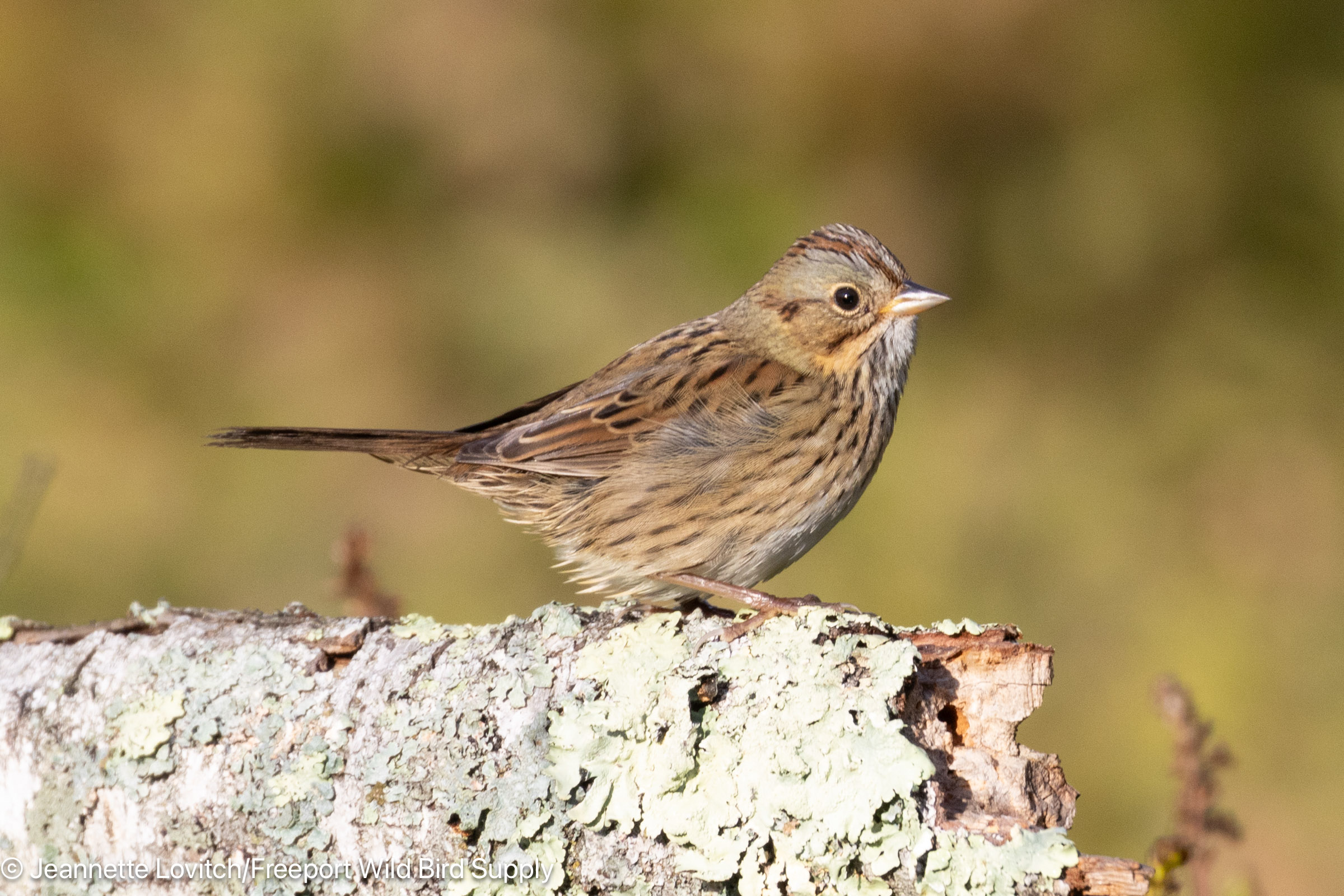
Lincoln’s Sparrows have been quite common in our yard all week, offering ample photo ops.

UPCOMING TOURS:

Our annual half-day pelagic with our partners Cap’n Fish’s Cruises out of Boothbay Harbor is only 1 ½ weeks away! Join us on this annual favorite on October 14th – a nice, late date that should put us more in the season of things like Great Skua. More info and link to registration is here.

A few spaces remain on our Birds on Tap! – The Boat Trip! To House Island in Casco Bay on Sunday, October 20th. More info here.

Recent Highlights, 9/11– 9/18/24

They might be abundant, but I do love Cedar Waxwings, especially a tree full of them on Monhegan!

Eight great days of birding, including three days on Monhegan, yielded the following highlights:

  • 9/13-9/15: Monhegan Island with Down East Adventures “Migration Workshop” tour group. Brief trip report here. Some of the most noteworthy observations included:
  • 17 species warblers total.
  • Cape May Warblers dominated the morning on 9/14, including 3 of every 5 birds in Morning Flight and dozens in trees afterwards. Plenty on 9/13 and 9/15, but most of the arriving birds on the 14th seemed to depart for the mainland.
  • The usual “uncommon” migrants like Rusty Blackbird (2 on 9/14), Philadelphia Vireo (high count of 2-3 on 9/14).
  • 1 first cycle Lesser Black-backed Gull, 9/13.
  • 1 LARK SPARROW, 9/14.
  • 1 fly-by Whimbrel, one probable Clay-colored Sparrow (seen too briefly), and 1 immature COOPER’S HAWK (very rare on offshore islands), 9/15.
  • 1-2 American Pipits (first of fall locally) and 1 hen Northern Pintail, etc, Wharton Point, Brunswick, 9/18.
  • Meanwhile, I’ve once again spent most of my mornings when home birding our Durham property, which was productive. An impressive 60-80 American Goldfinches continue, while an impressive array of migrants continue. On several mornings this week, I had plans to go elsewhere but then never left the yard. A few of the highlights included continuing single Indigo Bunting and Rose-breasted Grosbeaks, 1 Ovenbird, 1 Blackburnian Warbler on 9/16, 6 Common Nighthawks (getting late) at dusk on 9/16, and a nice mix of migrants on the 18th that included 1-2 Philadelphia Vireos and the arrival of more sparrows.

The highlight though was the female-type LAWRENCE’S WARBLER (2nd generation Golden-winged x Blue-winged Warbler hybrid) that popped up on the 18th. After a short but perfect view, I ran for a camera and could not relocate it despite much searching.

Recent Highlights, 5/11– 5/17/2024

John Lorenc and I finally caught up with this continuing WHITE-WINGED DOVE at Donna Cundy’s feeders on Monhegan Island in our brief visit on the 17th.  It appeared minutes after we walked away for the” last time,” but we were alerted by friends and raced back. My photos have a twig in front of that beautiful powder blue eyering, so I’m borrowing Kristen’s photo.

My observations of note over the past seven days also included:

  • 15 species of warblers, led by only about 20 Black-and-white Warblers and about 15 Northern Parulas, Evergreen Cemetery, Portland, 5/12 (with Down East Adventures Spring Songbird Workshop group).
  • 1-2 Blue-gray Gnatcatcher, Evergreen Cemetery, 5/12 (with Down East Adventures Spring Songbird Workshop group).
  • 15 species of warblers, led by 9 Ovenbirds and 7 American Redstarts, our property in Durham, 5/13.
  • 1 Louisiana Waterthrush, Suckfish Brook Conservation Area, Falmouth, 5/13 (with Jeannette).
  • 18 species of warblers (FOY), led by 40+ Yellow-rumped and 13 Common Yellowthroats, Florida Lake Park, Freeport, 5/14 (with Jeannette).
  • 15 species of warblers, led by 10+ each of Ovenbirds and Black-throated Green Warblers, our property in Durham, 5/14.
  • 15 species of warblers, led by 19 Common Yellowthroats and 10 Ovenbirds, Florida Lake Park, 5/15.
  • 5 Red Crossbills, around the store’s yard, 5/15. More impressive was the 23 that Jeannette had fly over early in the day on the 18th.
  • A very productive ferry crossing from Port Clyde to Monhegan on 5/17 included 4-6 ATLANTIC PUFFINS (FOY), a group of 6 (or possibly 9) RED-NECKED PHALAROPES (FOY), 6 Black Scoters, several Long-tailed Ducks, etc. (with John Lorenc, Jess Bishop, Ron Joseph, Kristen Lindquist, Bill Thompson, et al).  On the trip back, John and I had a total of 10 ATLANTIC PUFFINS and more Long-tailed Ducks.
  • 1 continuing WHITE-WINGED DOVE (photo above) and 1 female-type SUMMER TANAGER, Monhegan Island, 5/17 (with John Lorenc).

Additional personal first-of-years this week also included:

  • 1 Blackpoll Warbler, Evergreen Cemetery, Portland, 5/12 (with Down East Adventures Spring Songbird Workshop group).
  • 1 Red-eyed Vireo, Evergreen Cemetery, 5/12 (with Down East Adventures Spring Songbird Workshop group).
  • 1 House Wren, Evergreen Cemetery, 5/12 (with Down East Adventures Spring Songbird Workshop group).
  • 2 Bay-breasted Warblers, Florida Lake Park, 5/14 (with Jeannette).
  • 2 Eastern Wood-Pewees, Morgan Meadow WMA, 5/16.
  • 4 Laughing Gull, ferry from Port Clyde to Monhegan, 5/17 (with John Lorenc).
  • 4+ Indigo Buntings, Monhegan Island, 5/17 (with John Lorenc).

It was a great week of birding on our Durham property this week, including local breeding birds on territory often put on a show. Jeannette photographed this Yellow Warbler on our property on the 15th, for example.

Tours and Events:

  • There will not be a Saturday Morning Birdwalk on 5/25 as I’ll be on Monhegan with our tour group. 

This Week’s Highlights, 5/4– 5/10/2024

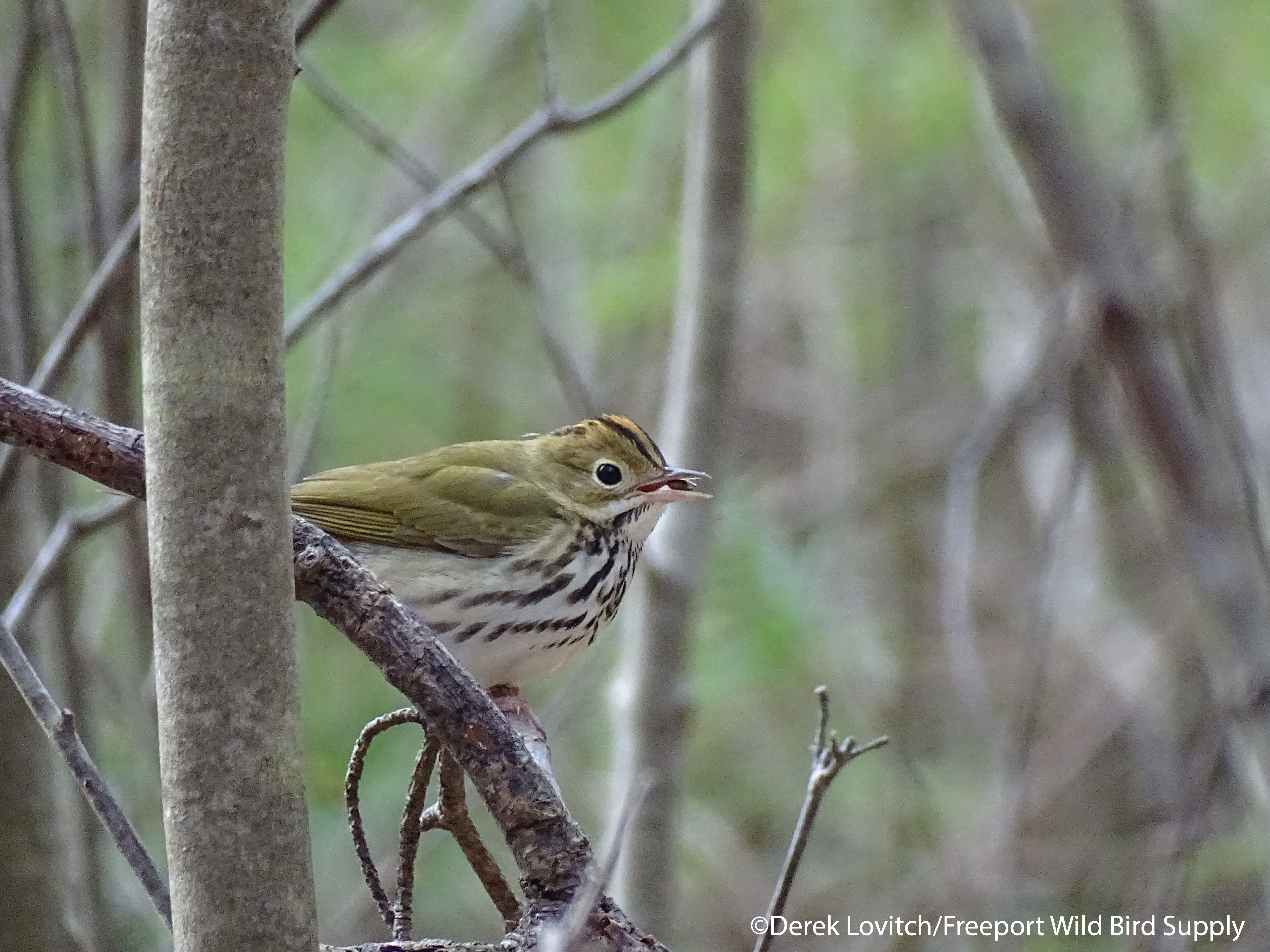
This Ovenbird on our property paused for a moment as it enjoyed a snack it pulled from the leaf litter.

The migratory floodgates really opened this week, as expected, with the diversity of Neotropical migrants increasing dramatically. Days like the 7th and 8th are truly special, but any day birding – especially in May! – yields its own rewards. My observations of note over the past seven days also included:

  • 10 species of warblers (FOY) led by ~40 Yellow-rumped Warblers and 25+ Black-and-white Warblers, Morgan Meadow WMA, 5/6 (with Jeannette).
  • 15 species of warblers (FOY) led by 100+ Yellow-rumped Warblers and 13 Black-and-white Warblers, Florida Lake Park, Freeport, 5/7.
  • 1 continuing TRICOLORED HERON (FOY), Eastern Road Trail, Scarborough Marsh, 5/7.
  • 15 species of warblers led by 50+ Yellow-rumped Warblers and 15-20 Black-throated Green Warblers, our property in Durham, 5/8.
  • 15 species of warblers led by 35+ Yellow-rumped Warblers and 20+ Black-and-white Warblers, our property in Durham, 5/10.

As is typical of early May, new arrivals were the headliners of most days of birding. Additional personal first-of-years this week also included:

  • 1 Yellow Warbler, Hidden Pond Preserve, Freeport (with Saturday Morning Birdwalk group).
  • ~40 Chimney Swifts, over downtown Portland at dusk, 5/4 (with Jeannette).
  • 4+ Common Terns, Curtis Farm Preserve, Harpswell, 5/5 (with Harpswell Heritage Land Trust birdwalk group).
  • 1 Ruby-throated Hummingbird, our property in Durham, 5/6.
  • 1 Cape May Warbler, Morgan Meadow WMA, 5/6 (with Jeannette).
  • 5 Common Yellowthroats, Morgan Meadow WMA, 5/6 (with Jeannette).
  • 1 Solitary Sandpiper, Morgan Meadow WMA, 5/6 (with Jeannette).
  • 1 Chestnut-sided Warbler, our property in Durham, 5/6.
  • 1 YELLOW-THROATED VIREO (a little early), Morgan Meadow WMA, 5/6 (with Jeannette).
  • 3 Least Flycatchers, Florida Lake Park, Freeport, 5/7.
  • 3 Magnolia Warblers, Florida Lake Park, 5/7.
  • 2 American Redstarts, Florida Lake Park, 5/7.
  • 1 Scarlet Tanager, Florida Lake Park, 5/7.
  • 1 Veery, Florida Lake Park, 5/7.
  • 1 Blackburnian Warbler, Florida Lake Park, 5/7.
  • Since I had not been in Scarborough Marsh in a few weeks, a number of personal first-of-years on 5/7 for me that have been present for a while now included Lesser Yellowlegs, Glossy Ibis, Willet, and Least Sandpiper, while more recent arrivals included 1 Least Tern (Pelreco Marsh) and 1 Spotted Sandpiper (Pelreco Marsh).
  • 1 Warbling Vireo, our property in Durham, 5/8.
  • 1 Wilson’s Warbler, our property in Durham, 5/8.
  • 2 Bobolinks, Wharton Point, Brunswick, 5/9 (with Dan Nickerson).
  • 3 Prairie Warblers, Bowdoin Sand Plain, Brunswick Landing, 5/9 (with Dan Nickerson).
  • 1 Canada Warbler, our property in Durham, 5/10.
  • 1 Lincoln’s Sparrow, our property in Durham, 5/10.

TOURS AND EVENTS:

Nothing like the splash of color from a male Rose-breasted Grosbeak at the feeding station to brighten a gray day in the backyard.

This Week’s Highlights, 4/27– 5/3/2024

Yellow-rumped Warblers have been inundating our feeding station in Durham this week, feasting on nut blocks, insect suet, mealworms, jelly, and just about everything else.

Feeder-watching continues to be great, with lots of Pine Siskins, new arrivals, migrant White-throated Sparrows, and, at our home in Durham, up to a dozen Yellow-rumped Warblers daily – especially during the cool and often wet days we had this week. Meanwhile, Red Crossbills continue to be widespread in the area. There were no huge flights of migrants this week, but new arrivals were trickling in.

My other observations of note over the past seven days also included:

  • 1 LOUISIANA WATERTHRUSH, Morgan Meadow WMA, 5/1.
  • 6 total LOUISIANA WATERTHRUSHES, via “The Louie Loop” (Site AN4 in Birdwatching in Maine: The Complete Site Guide), Androscoggin County, 5/3 (with Noah Gibb).

One of the six individuals, a singing and mate-guarding male, paused just long enough for a snapshot in Mechanic Falls on the 3rd.

As is typical of the season, new arrivals were the headliners of most days of birding. Additional personal first-of-years this week also included:

  • 1 Bank Swallow, Bradbury Mountain Hawkwatch, 4/29.
  • 1 pair Rose-breasted Grosbeaks, our property in Durham, 4/30.
  • 4 Black-and-white Warblers, Florida Lake Park, Freeport, 4/30
  • 1 Great-crested Flycatcher, our property in Durham, 4/30.
  • 1 Northern Waterthrush, our property in Durham, 5/1.
  • 1 Common Yellowthroat, Morgan Meadow WMA, 5/1.
  • 1 Wood Thrush, our property in Durham, 5/2.
  • 1 Gray Catbird (first of spring), our property in Durham, 5/2.
  • 1 Ovenbird, our property in Durham, 5/3.
  • 1 Black-throated Blue Warbler, Shaker Bog, Poland, 5/3 (with Noah Gibb).
  • 1 Nashville Warbler, Shaker Bog, 5/3 (with Noah Gibb)
  • 1 BLUE-GRAY GNATCATCHER, Little Andy River Boat Launch, Mechanic Falls, 5/3 (with Noah Gibb)
  • 2 Eastern Kingbird, Little Andy River Boat Launch, 5/3 (with Noah Gibb)
  • 1 White-crowned Sparrow, Bucknam Bridge Road, Mechanic Falls, 5/3 (with Noah Gibb).
  • 1 Brown Thrasher, Pottle Hill Road, Mechanic Falls, 5/3 (with Noah Gibb).

TOURS AND EVENTS:

Are There Actually Fewer Birds at Feeders in the Winter of 2023-24?

Using our Durham yard as a case study, I wanted to check to see if there were indeed fewer birds this winter than last year, as some (but no longer a majority) of folks have continued to mention to us at the store.

Stuck at home last winter while recovering from shoulder surgery, our feeding station provided my primary source of entertainment. I occupied my time with mugs of tea and enjoying the activity, and occupied my mind with figuring our exact counts, keeping tallies, and watching behavior closely. I wrote about my counts and observations in a pair of blogs, the first one is here, and the second one is here.

This past fall, everyone saw a very slow fall at feeders in Maine, and throughout the East, as discussed here. That was changing for a lot of people – but not all, by December, which I talked about in this follow-up blog.

In January, a series of strong storms, unseasonable heavy rain and flooding, a few cold spells, and eventually, by month’s end, solid snowcover helped change the narrative. Winter food resources were being consumed, ground-feeders were being forced out of the woods, finches were moving about, and so on. Furthermore, I believe that those strong storms knocked a lot of cones – especially those of Eastern White Pine – to the ground where they were subsequently consumed and/or buried.

At least here at our feeders in Durham, a slow start to the winter was a thing of the past, as we were filling almost all of our feeders daily by the end of January. Some impressive tallies included over 70 American Goldfinches and over 50 Dark-eyed Juncos at the end of the month.

American Goldfinches have been absolutely ravaging Nyjer at our home this winter. Fresh Nyjer makes all of the difference!

While some factors remain true from the fall – an abundance of natural food overall, relatively limited snowcover, low movement of irruptive species, etc – clearly most people were reporting to the store that things were “back to normal” or “tons of birds all of the sudden,” and so on. Our seed sales more than doubled by the end of January from what they were at the beginning of the month (by overall poundage).

Just how “normal” have things returned to, and what anomalies are out there? While our home in Durham is only two years old, and we’re a long way away from baseline data or long-term averages, we can at least compare February of 2024 to February of 2023. And since I had nothing better to do last winter, I already had some data to compare to.

So, for the last 10 days (not including the two that we were out of town for), I have once again returned to the window for dedicated sessions of feeder-watching and counting. Like last year, I used the standard methodology of using “high counts” (maximum number of individuals seen at any one time, unless they were readily identifiable as being different), and I was sure to count for at least one hour a day each day.

February 5 – February 15 (minus 2/12 and 2/13).

SpeciesAverage per day 2023Average per day 2024Difference
Wild Turkey0.20-0.2
Mourning Dove13.526.5+13
Sharp-shinned Hawk0.40.2-0.2
American Goshawk00.1+0.1
Red-bellied Woodpecker11Same
Downy Woodpecker2.42.9+.5
Hairy Woodpecker22Same
Pileated Woodpecker10.1-0.9
Blue Jay7.83.0-4.8
American Crow0.70-0.7
Black-capped Chickadee7.42.9-4.5
Tufted Titmouse43-1
White-breasted Nuthatch21.4-0.6
Red-breasted Nuthatch0.70-0.7
Brown Creeper0.40-0.4
Carolina Wren0.91+0.1
European Starling1.12.7+1.6
Eastern Bluebird4.43-1.1
House Finch2.10-2.1
Purple Finch0.50.3-0.2
Pine Siskin00.2+0.2
American Goldfinch26.646.8+20.2
American Tree Sparrow8.04.2-3.8
Dark-eyed Junco16.630.3+13.7
White-throated Sparrow22.3+0.3
Song Sparrow00.9+0.9
Northern Cardinal5.23.8-1.4
Total individuals/day110.9138.6+27.7
*Addendum: I guess I should have continued the study for a few more days! By 2/17, we had a whopping 72 Dark-eyed Juncos and an increase to 13 American Tree Sparrows, and by the next day,
the American Goldfinch flock returned to well over 60 birds!*

Every year is different, and every yard is different. Controlling here for time and place, we can make some comparisons however. It was much colder in this period last year, with an average morning low of 19.6.  This year, the average morning low for the ten days was 23.9 and there is a lot less snow on the ground, even after the fresh inch and a half Friday morning; there were three light snowfall events during the “study period” last year.

Clearly, there are plenty of birds at our feeders at least!  And, contrary to conventional wisdom, we actually have more birds overall than last year! The dearth of feeder birds from the fall is no longer true for us. Similar conclusions can be reached from comparing data on our feeder birds at the store, and from conversations with friends and customers. Therefore, I believe the overall pattern fits what many are observing throughout the area.

As discussed in the aforementioned feeder blogs from the fall, Black-capped Chickadees are in low numbers. I saw 4.5 fewer per day at the feeders than last year. This goes with the idea that our local residents were not augmented by irruptives from points north, but also suggests that they did not have a great breeding season.  Same for Red-breasted Nuthatch and Blue Jays.

But native sparrows are in larger numbers than last year, especially Dark-eyed Juncos (and elsewhere, like our store, significantly more White-throated Sparrows with a new winter record of 24 on 2/16). My guess is because the mild fall, abundant seeds from a productive growing season, and benign start to the winter kept those around to be pushed to feeders as the season wore on.

And yes, there are indeed a lot of goldfinches around!  But very few other finches – at least at feeders. I am not sure where these European Starlings came from, however, and I’m not overly pleased by it!

Raptors are another part of the equation. This time last year, we had more consistent presence from two different Sharp-shinned Hawks.  This winter, we only recently confirmed the presence of a single Sharp-shinned Hawk (seen on 2/15 and 2/16, but she likely took a Mourning Dove on the 14th).  There was also an all-too brief fly-through of an immature American Goshawk on the 6th. Also this winter, a Red-tailed Hawk has been more frequent around the feeding station, but its focus is primarily the squirrels and voles.  So we’ve had enough native predator presence both years that it shouldn’t be a huge factor in comparing feeder counts.

There you have it. 2024 does not have fewer birds at feeders compared to the same period in 2023, at least not in our yard as a single case study. With continued improvement of our yard’s habitat (most of which was put on hold this year due to my shoulder issues) planned, we would hopefully be increasing our yard’s carrying capacity, as feeders remain only a supplement and a relatively small percentage of a bird’s diet, even in the depths of winter.

Next winter, we also might not find a single Eastern White Pine cone in the entire state, and a lot fewer Red Oak acorns and Balsam Fir cones. And if that’s true to our north, perhaps this will increase the amount of irruptives around the area. But we’ll see!  And maybe I’ll repeat this exercise next year, if I can force myself to sit still long enough!

Last winter, we had a male Red-bellied Woodpecker nearly every day, while this winter it has only been this female. We hope they find each other!

Recent Highlights, 1/29 – 2/7/2024

Taking the long road to Augusta for an appointment last week, I checked a few open sections of river, including here at the Gardiner Waterfront Park where a group of 16 Common Mergansers were present. Such a snappy bird!

We’ve been busy catching up from our winter vacation, but I did see a few observations of note over the past ten days.

  • Our feeders In Durham continue to be exceeding active, with at least 70 American Goldfinches and over 50 Dark-eyed Juncos leading the way this week. We’ve also seen increases to 6 American Tree Sparrows, 3 White-throated Sparrows, and a returning two Song Sparrows among all of the resident species. A single Pine Siskin joined the goldfinches on 2/2.
  • 1 hen BARROW’S GOLDENEYE, Bernard Lown Peace Bridge, Lewiston/Auburn, 1/30.
  • 4 Horned Larks and 3 Snow Buntings, Upper/Pearl Streets, Turner, 1/30.
  • 3 drake and 1 hen BARROW’S GOLDENEYES continue, Winslow Park, Freeport, 1/31.
  • 1 adult Red-shouldered Hawk, Rte 9, Lisbon, 2/1.
  • 1 continuing Turkey Vulture, over I-295 in Yarmouth, 2/3 (with Saturday Morning Birdwalk group). At least one continues to winter in this area.
  • 1 continuing drake BARROW’S GOLDENEYE, Back Cove, Portland, 2/4 (with Gull ID Workshop tour group).
  • 1 2nd-cycle Iceland Gull, Portland Harbor, 2/4 (with Gull ID Workshop tour group).
  • 1 Savannah Sparrow, Seavy Landing Road, Scarborough Marsh, 2/4 (with Noah Gibb).
  • 2+ Red Crossbills, Hidden Valley Nature Center, Jefferson, 2/5 (with Jeannette).
  • 1 imm. NORTHERN GOSHAWK, our yard in Durham, 2/6.
  • 2-3 Turkey Vultures, Mere Point Road, Brunswick, 2/7.