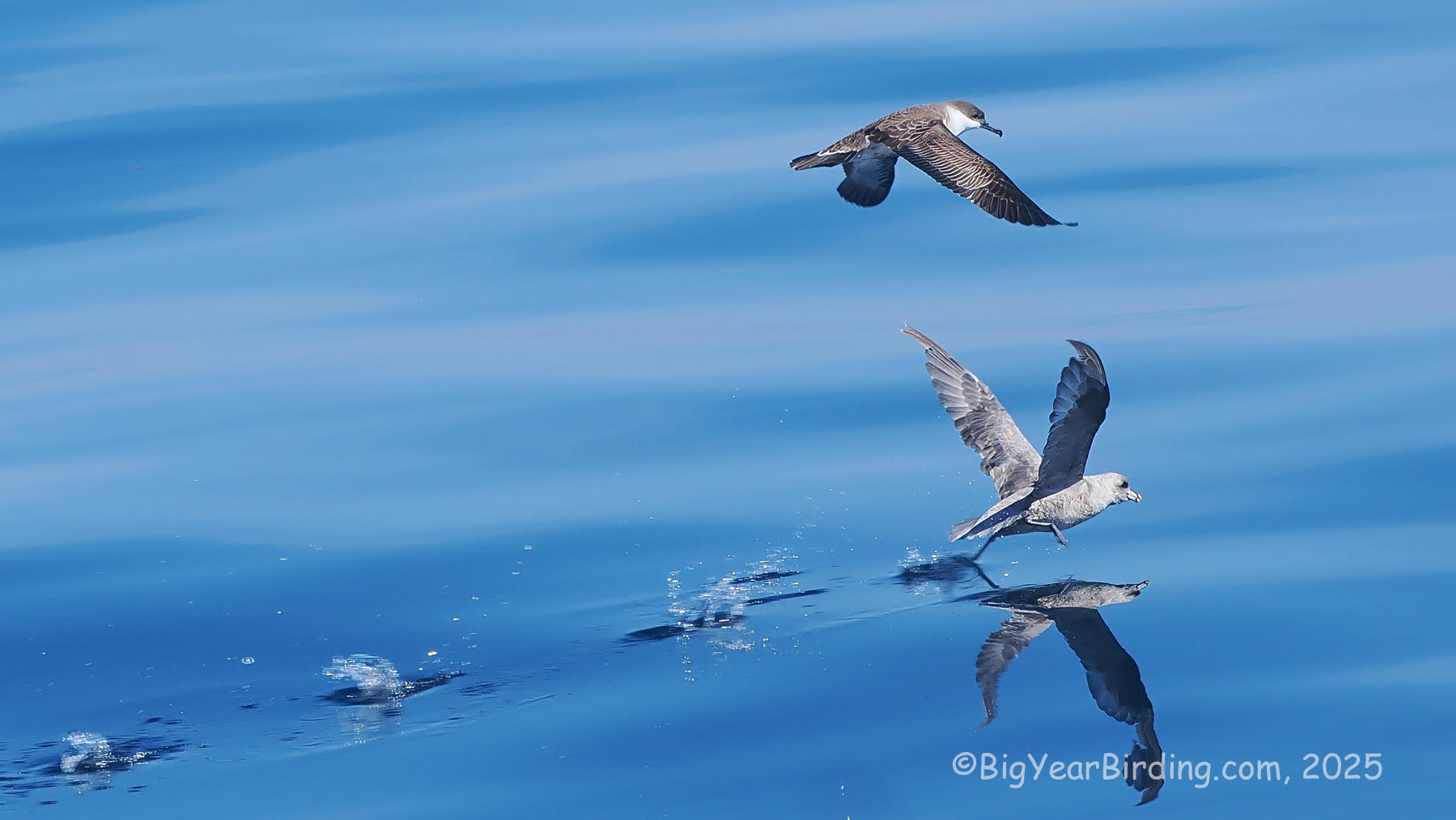
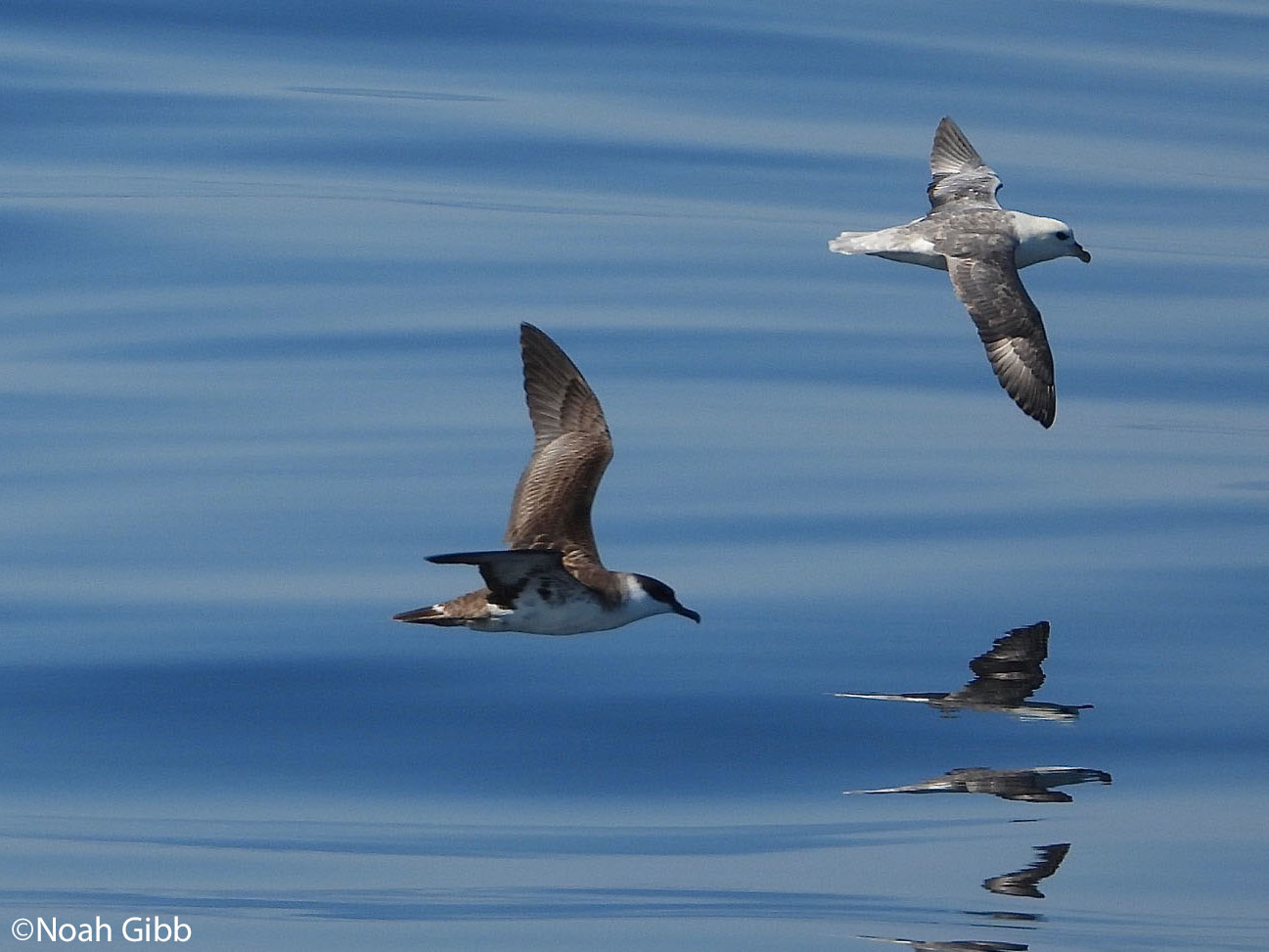
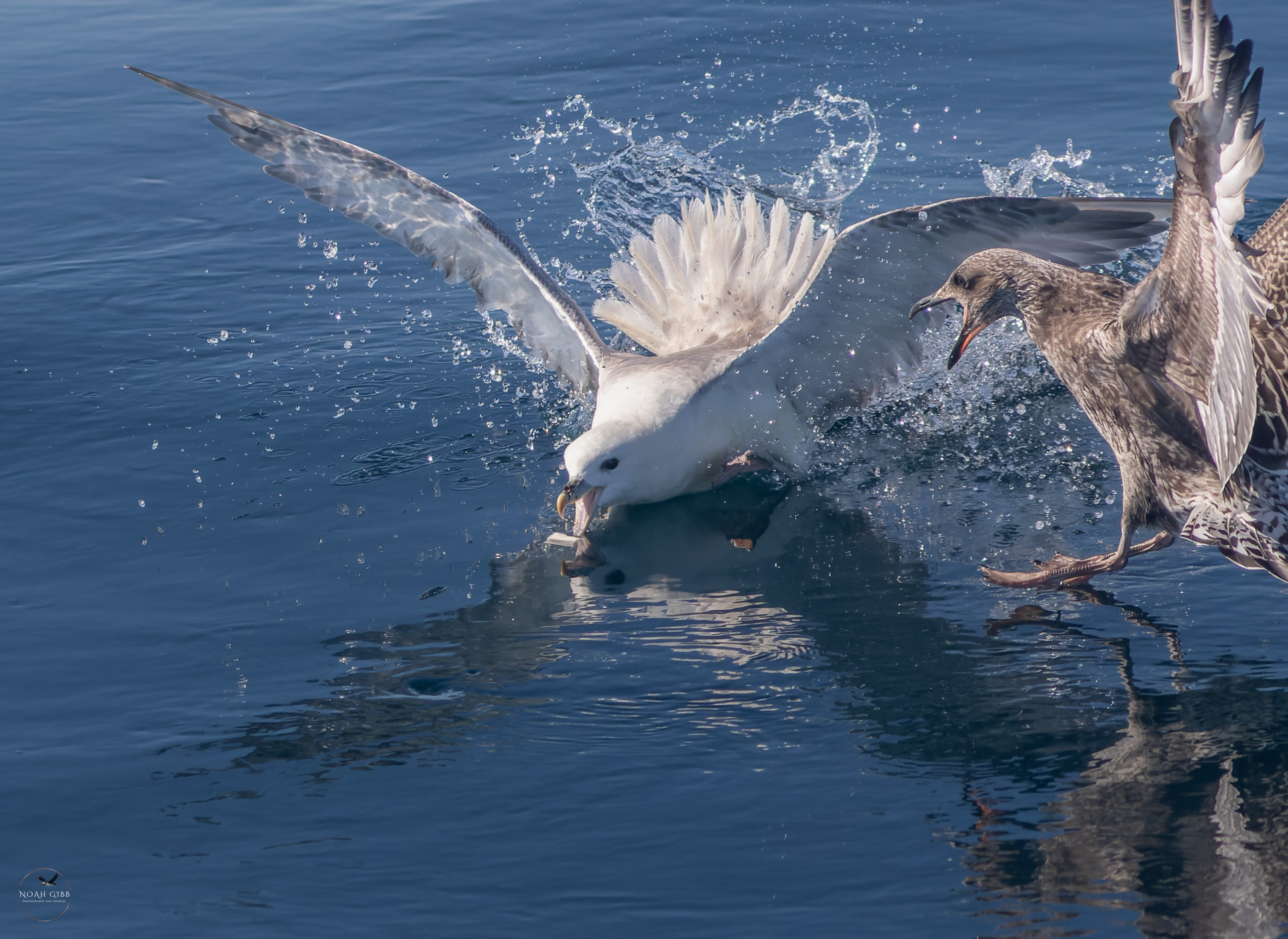
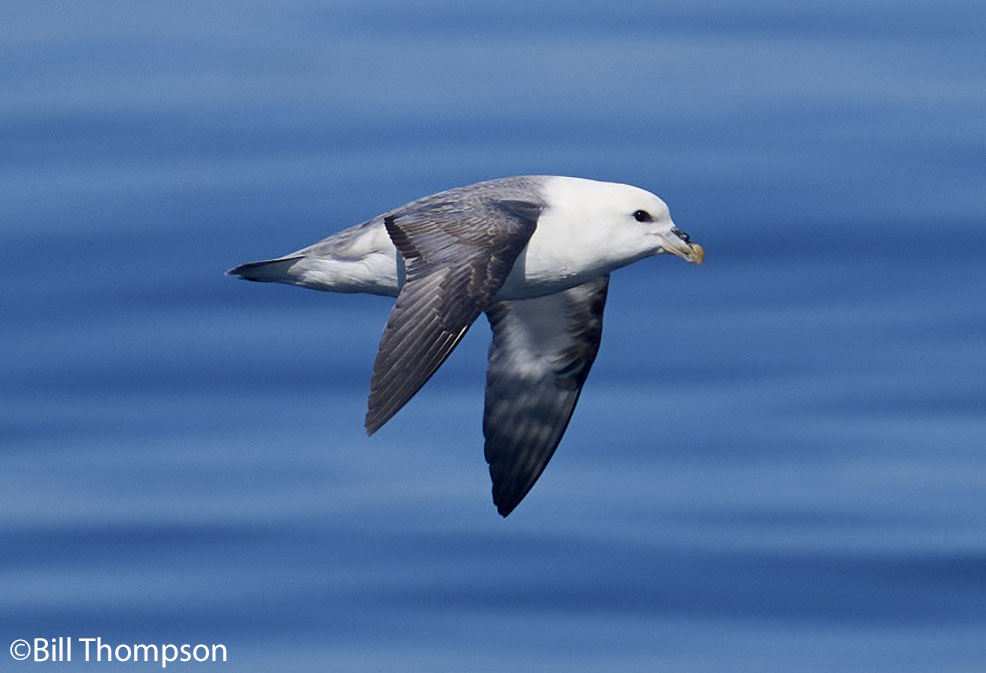
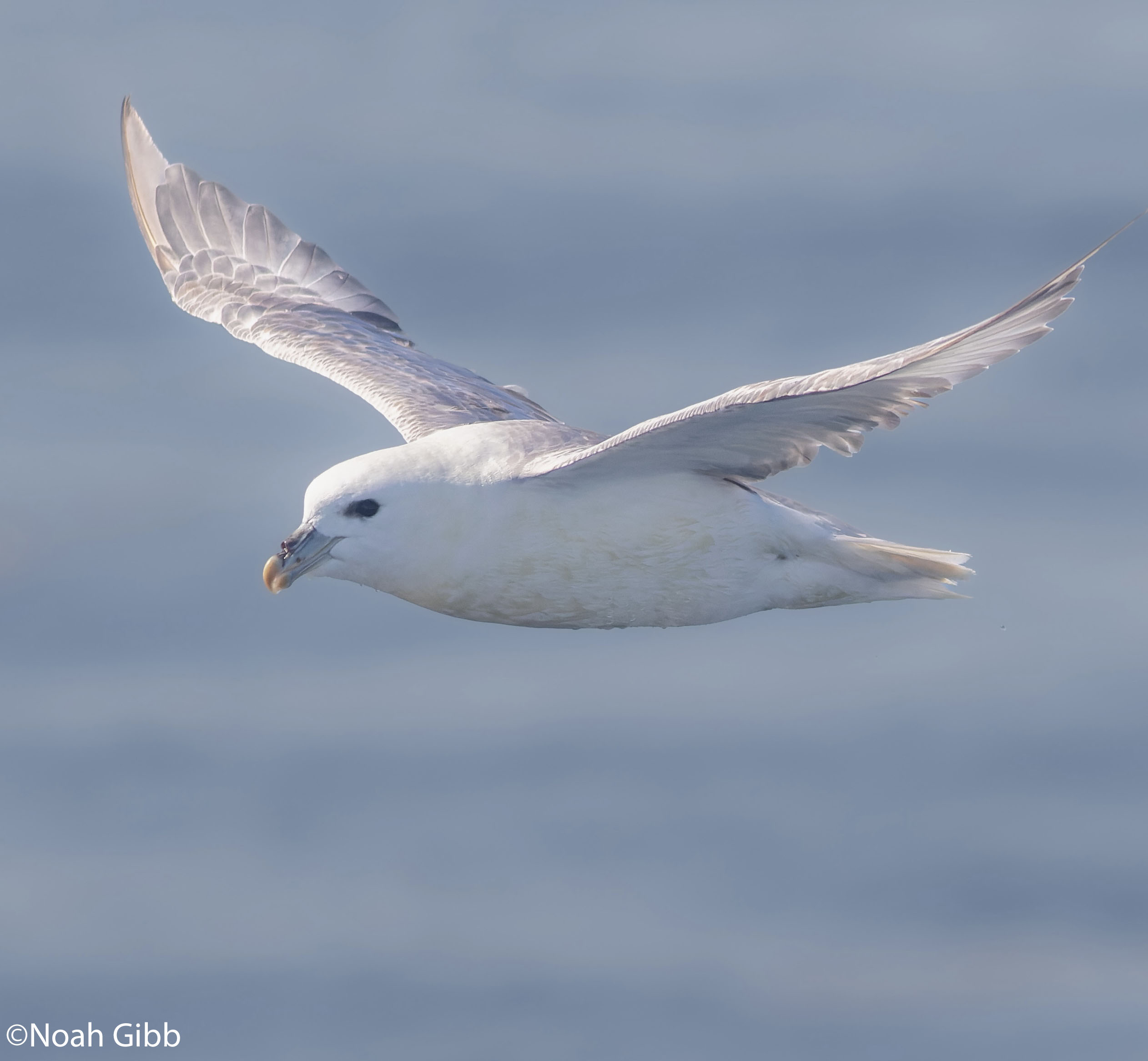
Considering most people would have been happy with a single Northern Fulmar, our tally of at least 18 was fantastic…but the photo opportunities of this winter visitor could not be beat, including of this much less common dark morph.
Fall pelagics in the Gulf of Maine are notoriously hit or miss. Suffice to say, our Half-Day Pelagic out of Boothbay Harbor on 10/5, with our partner, Cap’n Fish’s Cruises, was most definitely a hit!
And not just because of the ridiculously pleasant weather! The birding was great, the marine mammals were fantastic, and I don’t think a single person was seasick! What a difference a year makes.
We departed the harbor at 9:00am, with clear and calm skies, less than a foot of swell offshore, and high hopes (I had a productive scouting trip on a whale watch two days prior). But even with the always-lofty expectations of pelagic trips, we would not be disappointed this day.
Black Guillemots are always a nice way to begin and end all of our local pelagic trips since they are usually only seen in inshore waters.
Perhaps the one complaint I had was that we didn’t get all that far offshore! In fact, our furthest point was only about 20 miles south-southwest of Monhegan. There was just too much to look at, and every time we were about to head further offshore, something else of note appeared.
We started picking up a few seabirds, including our first of what would be a remarkable total of mostly juvenile Atlantic Puffins, the first of our sought-after Northern Fulmars, scattered Red-necked Phalaropes (mostly), along with a few Great Shearwaters, all around Murray Hole, but we hit paydirt right around the edge of the incoming shipping channel to Portland.
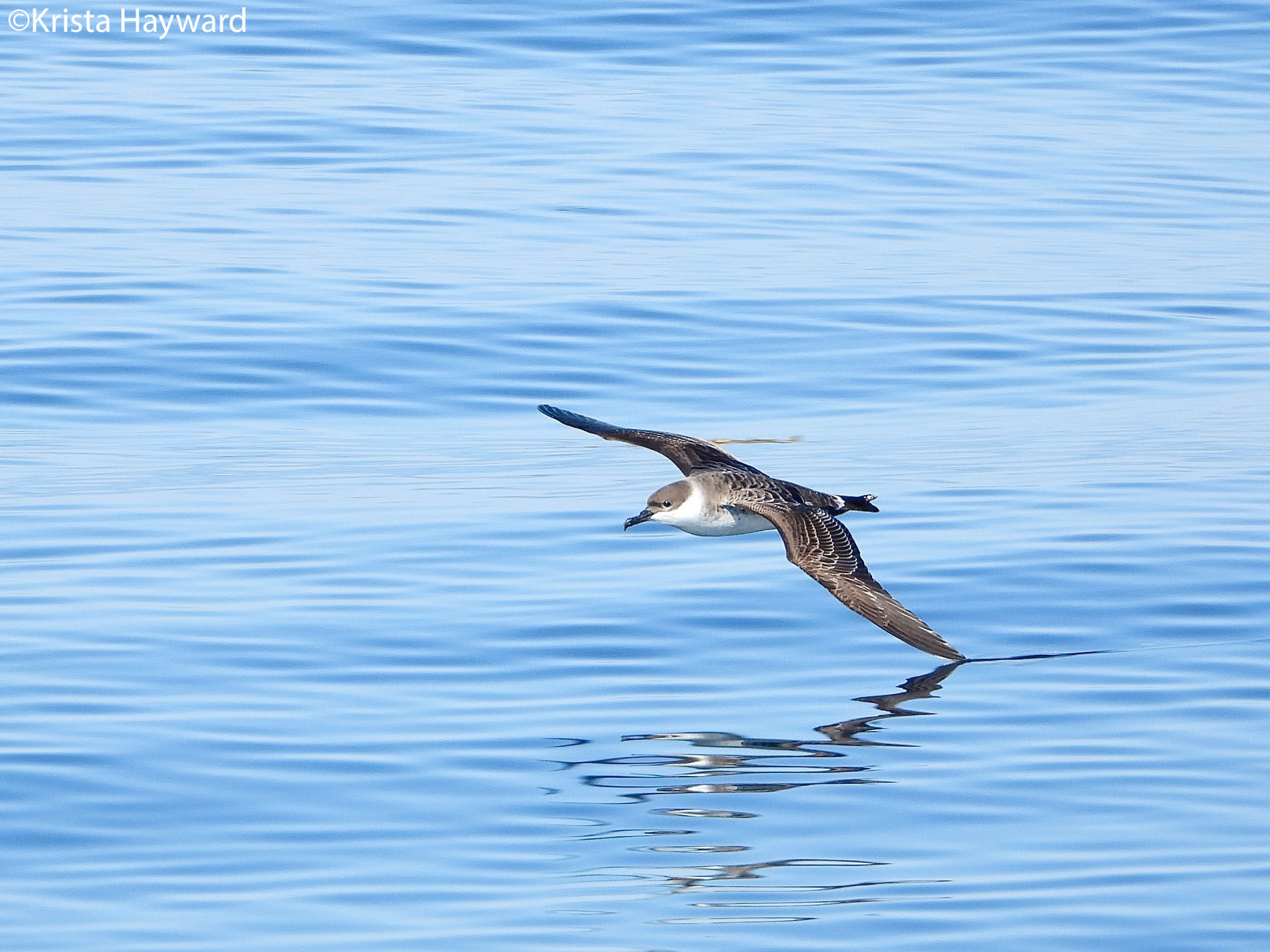
Great Shearwaters and Northern Fulmars were constant companions in our deeper water time.All of the photographed phalaropes so far that we encountered were Red-necked Phalaropes, so the checklist has been adjusted accordingly, even though we believe we had some Reds over the course of the trip.
There, in about 500-600 feet of water (but otherwise “in the middle of nowhere”), our chum slick of fish oil and pork fat (generously donated by Durham’s Old Crow Ranch!) worked its magic. Will Broussard, with both the honor and burden of his first time as Chummer, was the hero, bringing Northern Fulmars and Great Shearwaters in for close looks.]
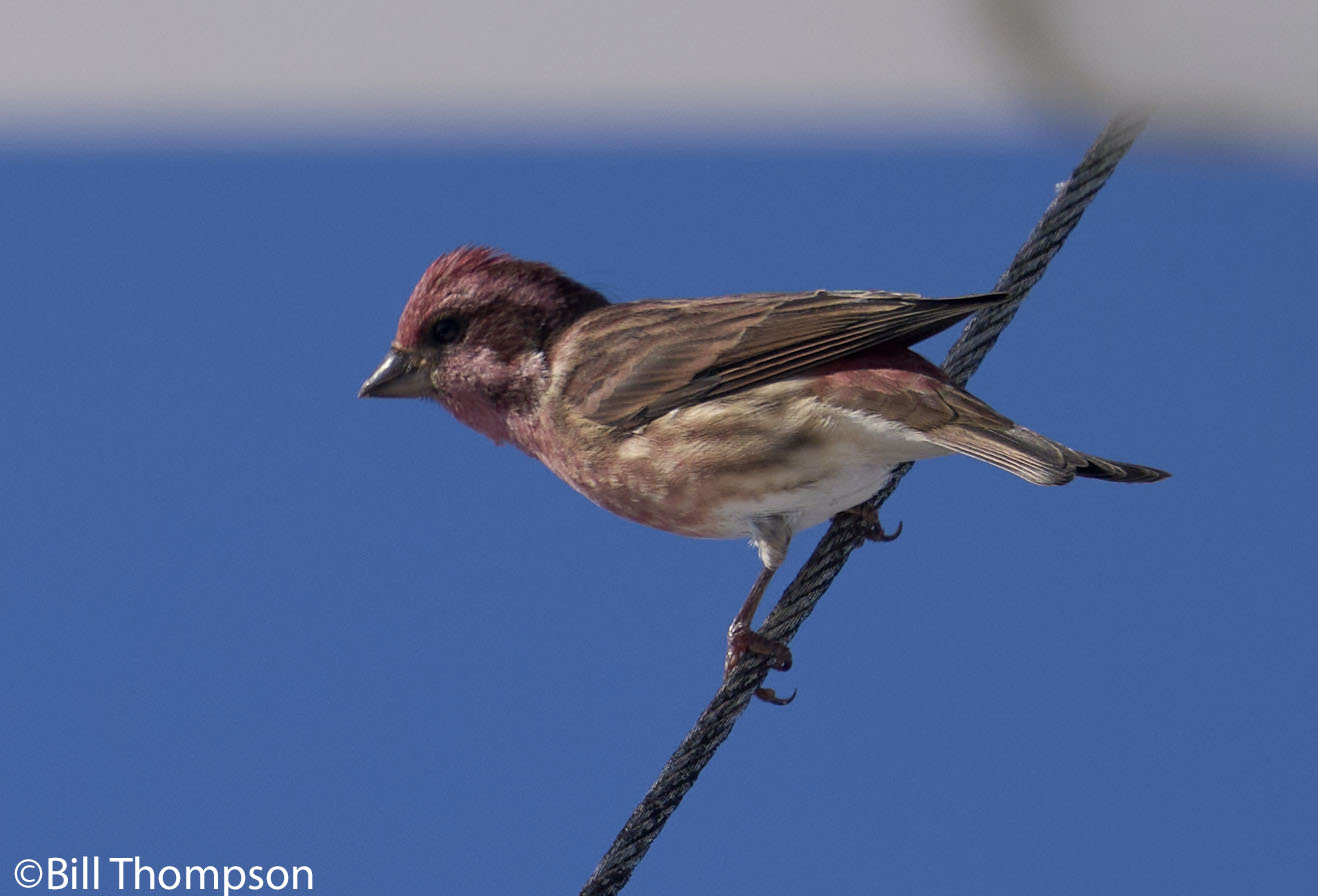
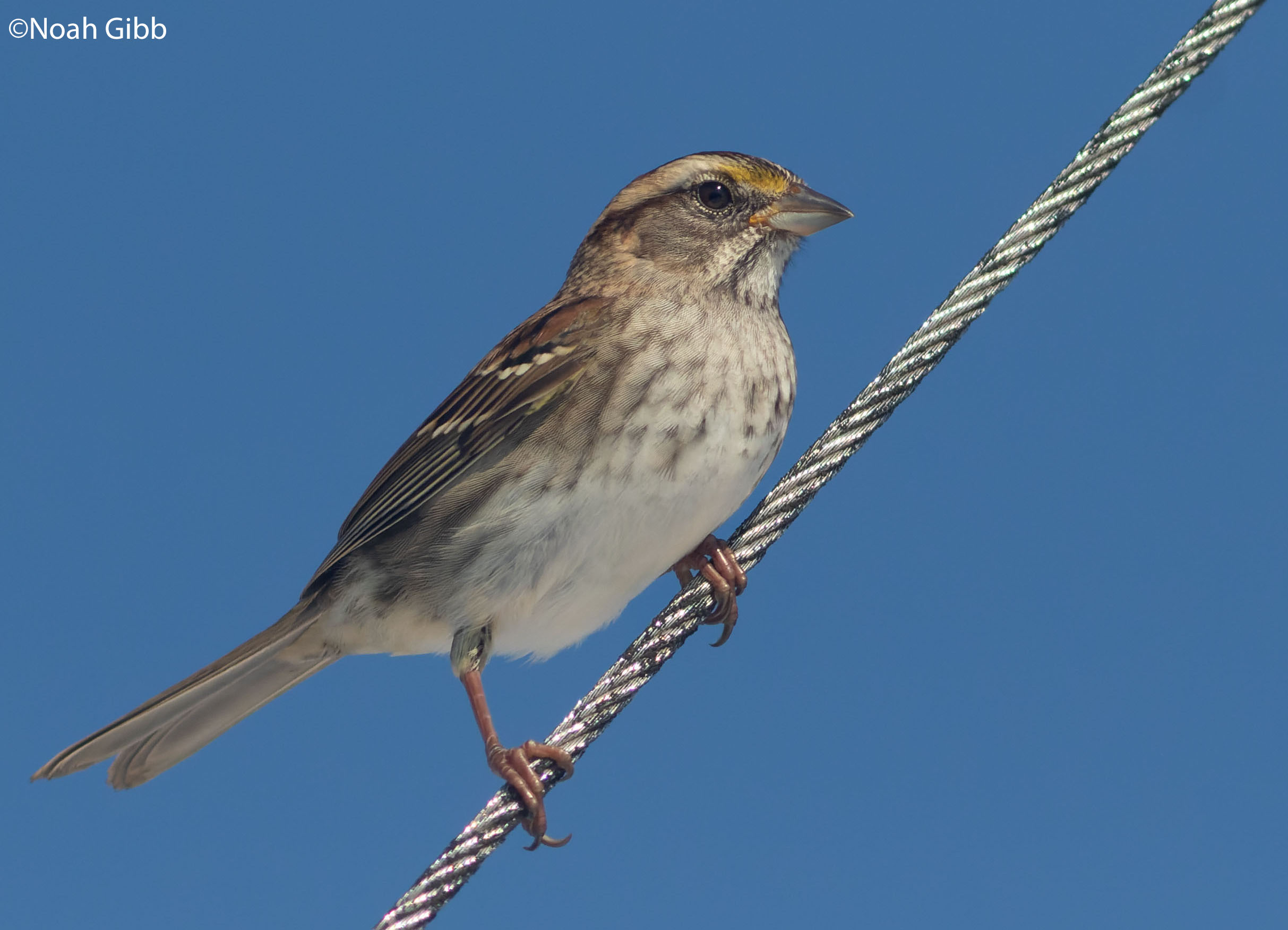
Passerines would appear on occasion, a total of somewhere between 4 and 8 White-throated Sparrows, including one that rode right back to port with us in the cabin. A male Purple Finch took a break on the boat, resting and preening on our radar, as a female did later. Passerines are always a fun addition to a pelagic birding experience.
Less fun, perhaps, but most amazing and insightful, however, was watching a Peregrine Falcon chasing a passerine, driving it into the water, and then, unable to snatch it off the surface, moved on, leaving an Ovenbird helpless on the ocean’s surface, likely becoming waterlogged and hypothermic. It was impossible for us not to, so we attempted a water rescue, with the crew putting in a valiant effort to save the hapless warbler. Unfortunately, it perished, but we had to try!
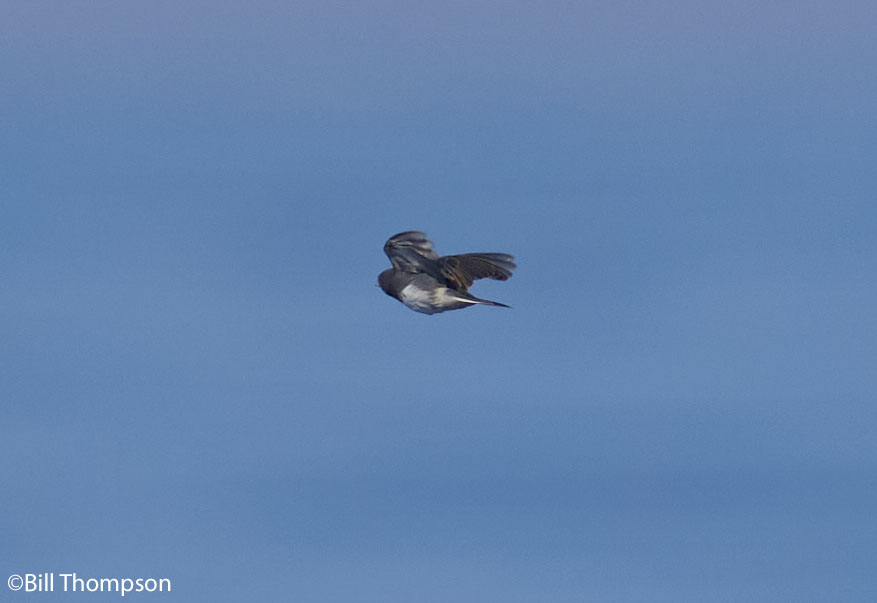
This might be one of the most incredible photos of non-pelagics ever taken on a pelagic. Awesome work, Bill!
Repeated sightings of Atlantic Puffins continued to surprise us, and we spent some time with two different Fin Whales, including getting to see one doing a little lunge-feeding. While we looked at whales, birds were all around us, thanks to the chum, so we had something for everyone.
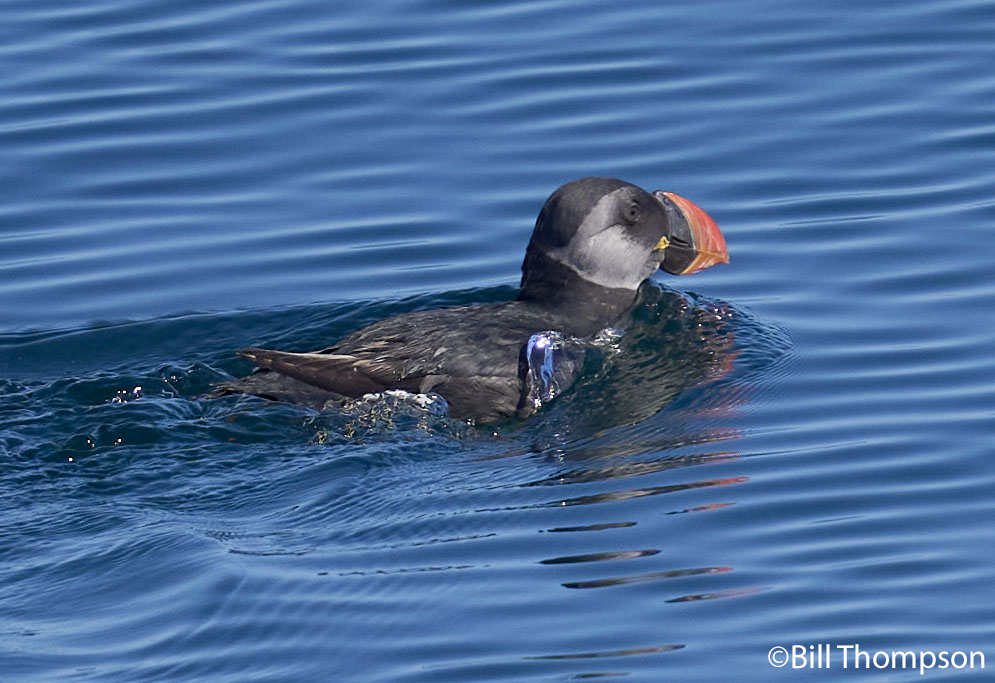
A big and bright-billed adult Atlantic Puffin.Both of our Razorbills were hanging out with juvenile puffins.
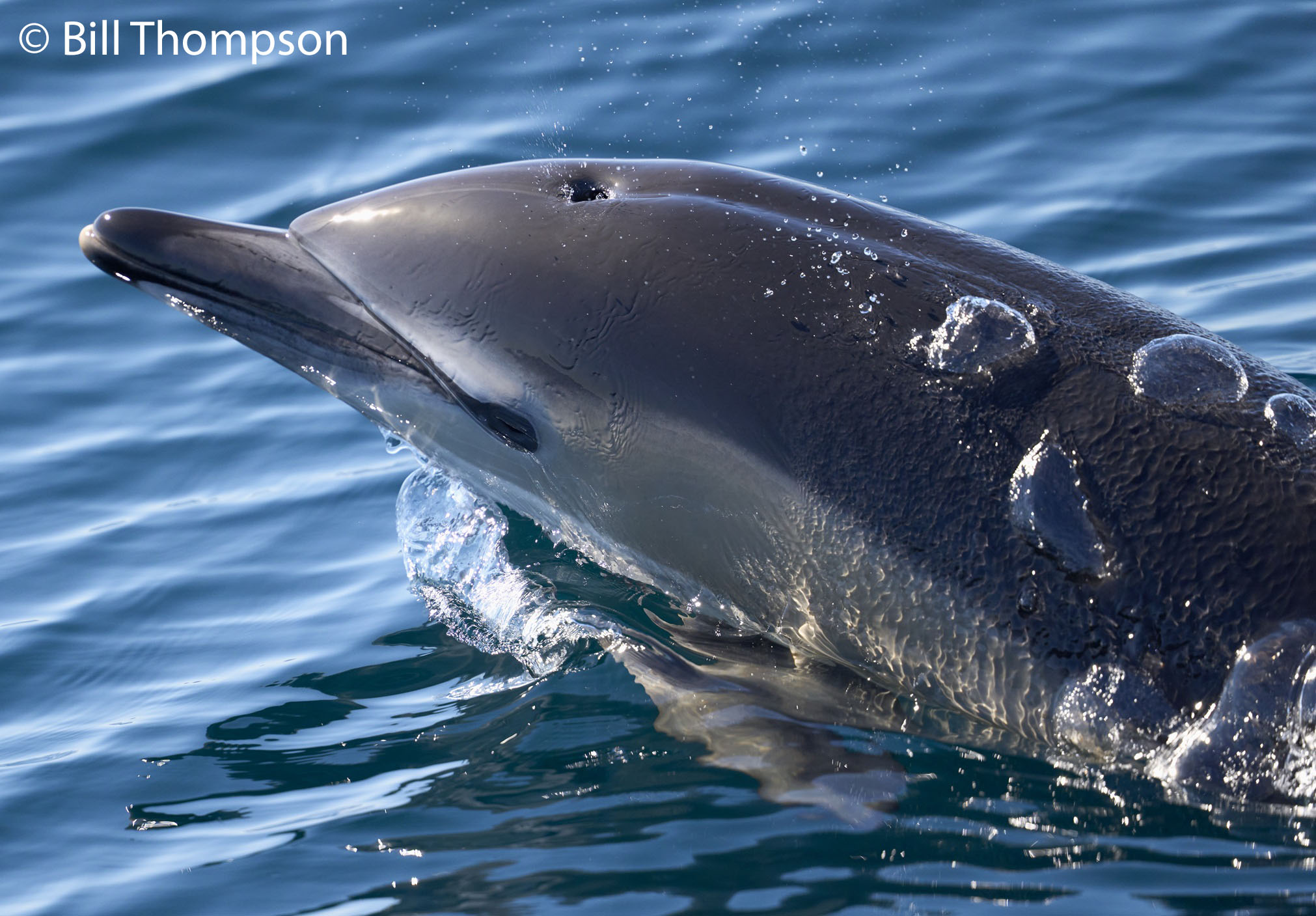
While this was of course a birding tour, we made sure to enjoy the marine mammals we encountered, along with a Blue Shark, but the highlight for most everyone was the incredible and awesome experience we had with a small pod of 25-30 Common Dolphins. Amid all of our seabird activity, the pod approached us in the glass-calm warblers. Captain Nate added a little speed to build up a wake, and the dolphins had come to play. They rode the bow, did some surfing, and otherwise created constant “oohs and aahs.” The photos don’t quite do it justice…it was really a special experience, a life mammal for most of the crew, and one of the best dolphin encounters I have experienced in the Gulf of Maine.
Puffins and fulmars, Fin Whales and dolphins, and all on just the most ridiculous weather possible for a fall pelagic in Maine! We’ll see you on board next year!
I want to thank Captain Nate for his skilled maneuvering of the boat – even more remarkable as this was his first pelagic, too! Naturalist Trinity shared the narration duties with me, taking over for local landmarks and non-feathered marine life, and Valentin and Joe took care of everyone at the galley – and did the work of our attempted Ovenbird rescue. Thanks to my team, chummer Will Broussard, and our checklist-keeper Noah Gibb. And a special thanks to Tabor and Seamus at Cap’n Fish’s for working with me to make this memorable trip a reality.
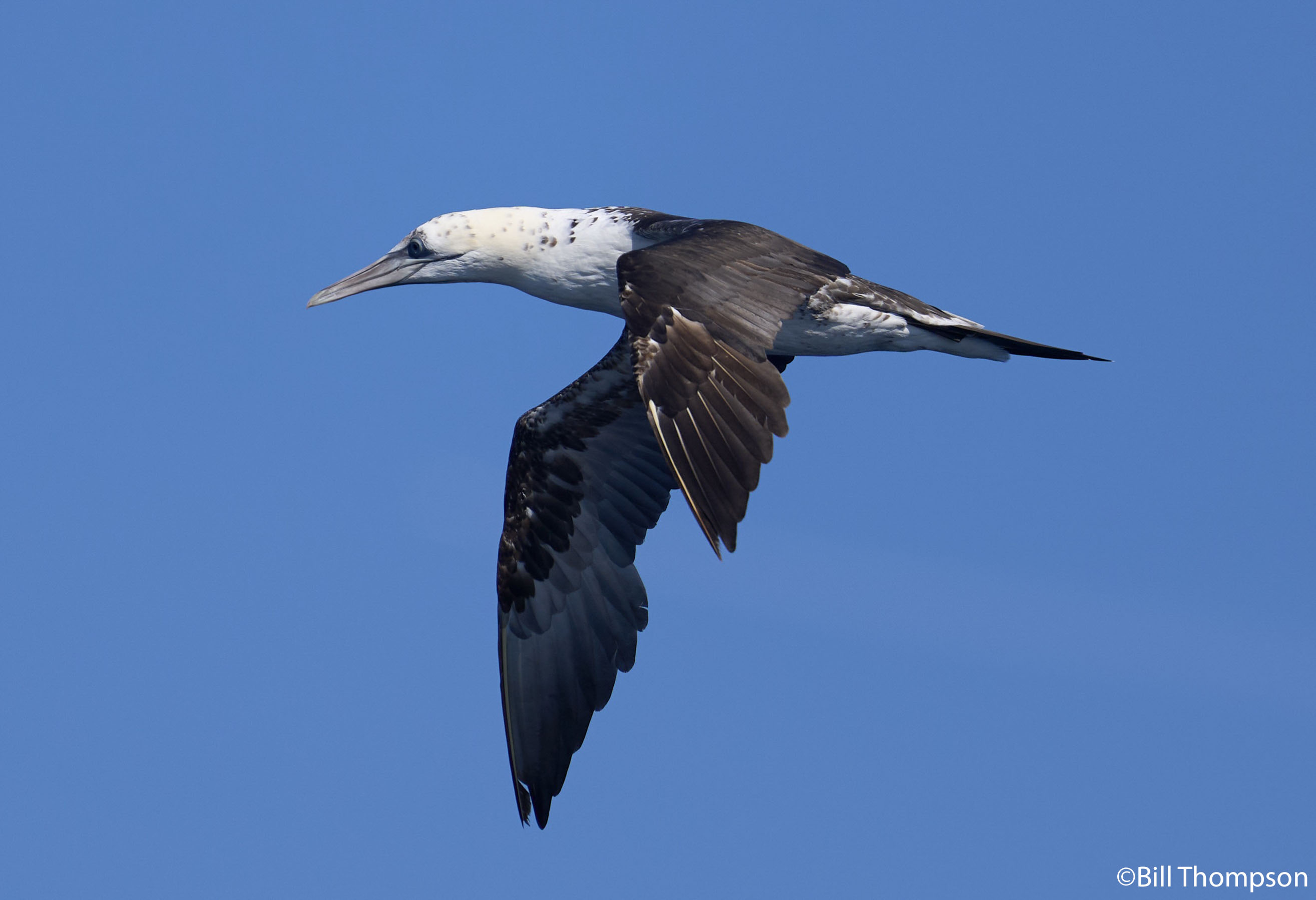
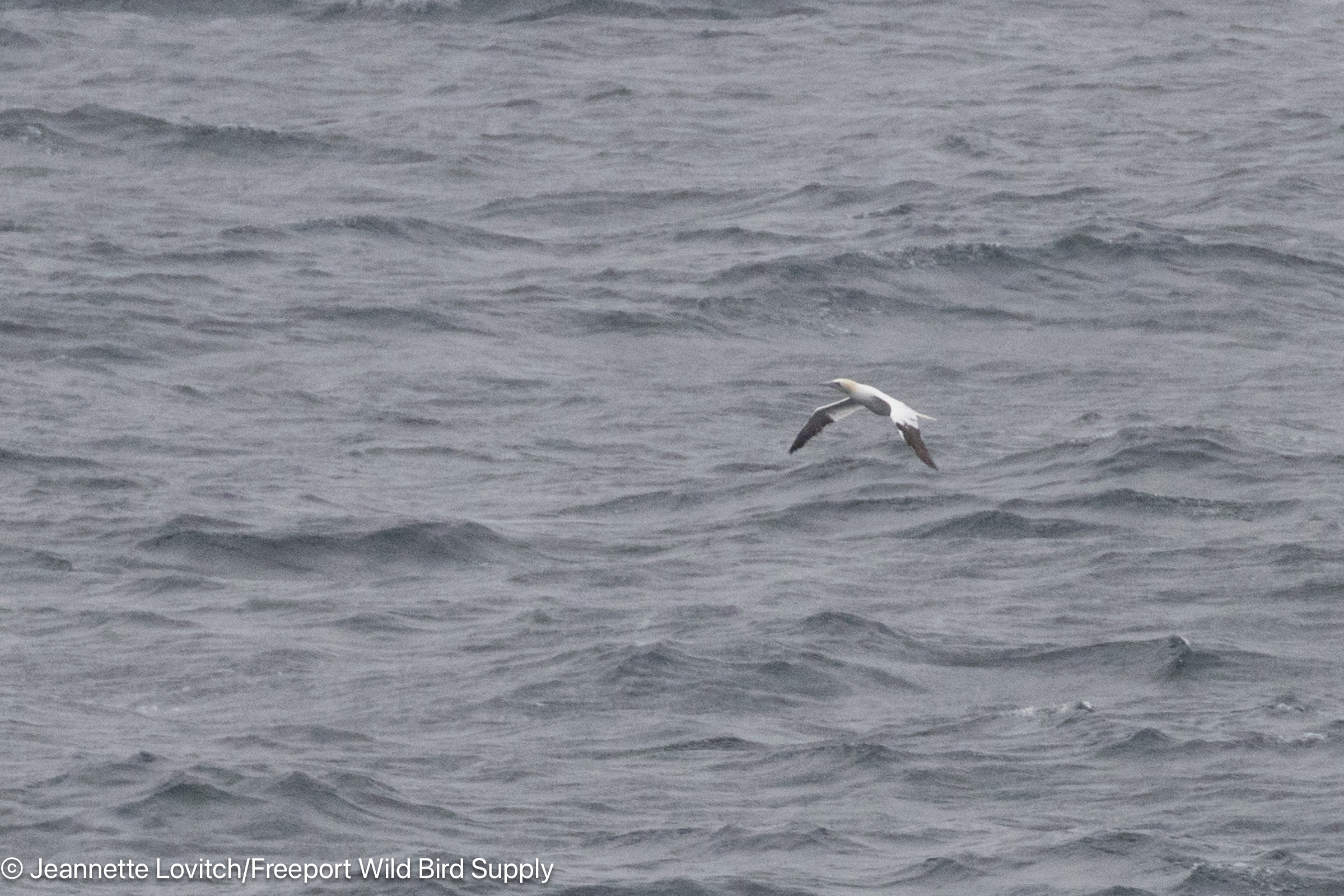
Subadult Northern Gannet
Here’s the complete trip list, including birds seen while docked before departure marled with an *. We know counts of several species, such as Common Eider and Herring Gull are likely extremely low, but we chose to be conservative with our Northern Fulmar and Great Shearwater tallies as we covered a relatively small area during our deeper-water time, and the chumming kept birds with us, and perhaps, coming back for more.
267 Common Eider
89 Surf Scoter
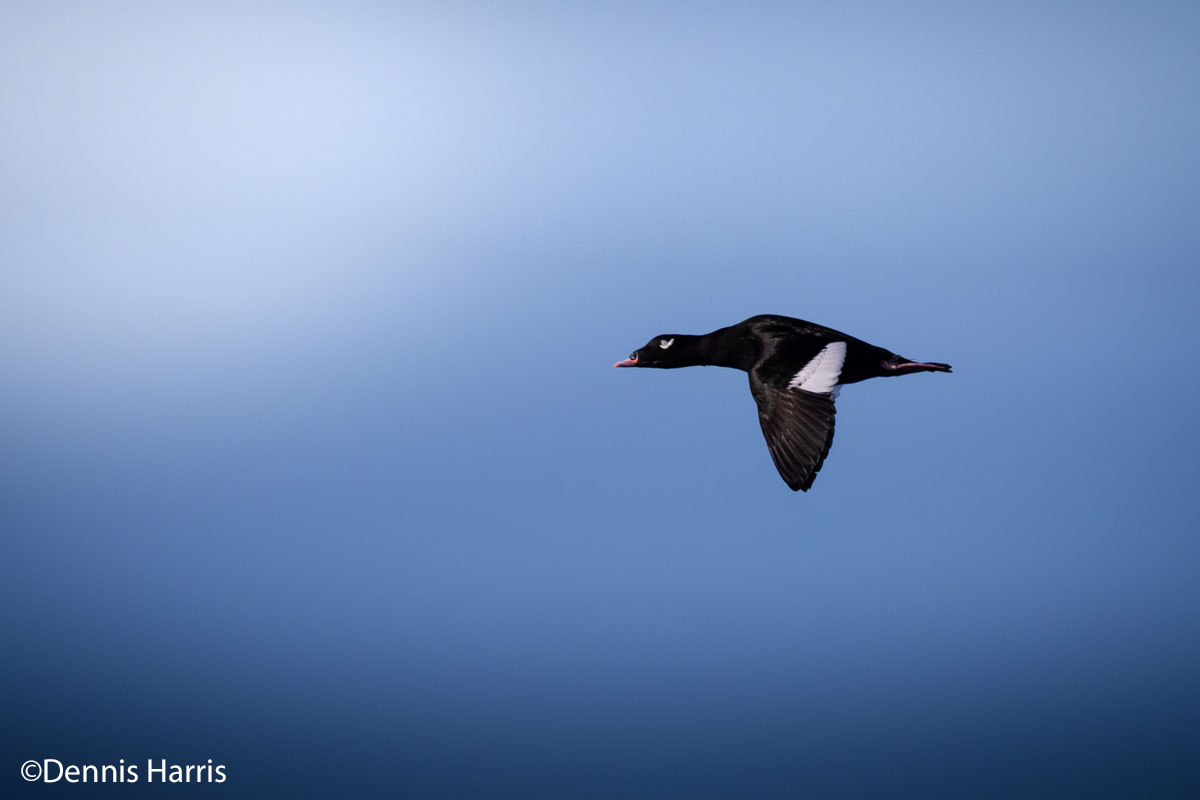
3 White-winged Scoter
36 Black Scoter
25 Rock Pigeon*
54 Red-necked Phalaropes
21 unidentified phalaropes
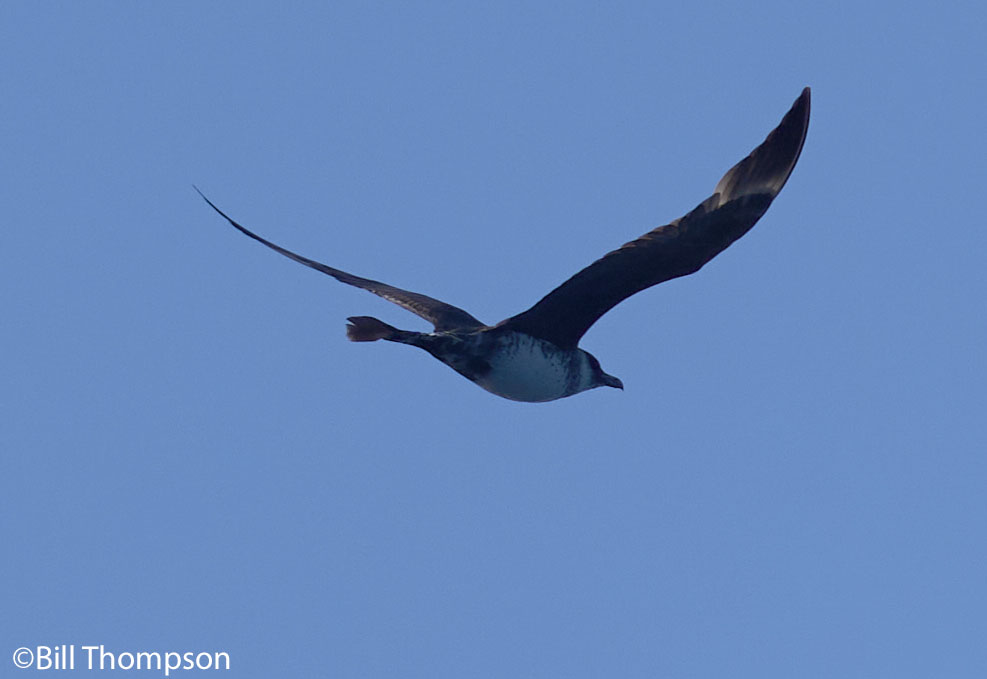
1 Pomarine Jaeger
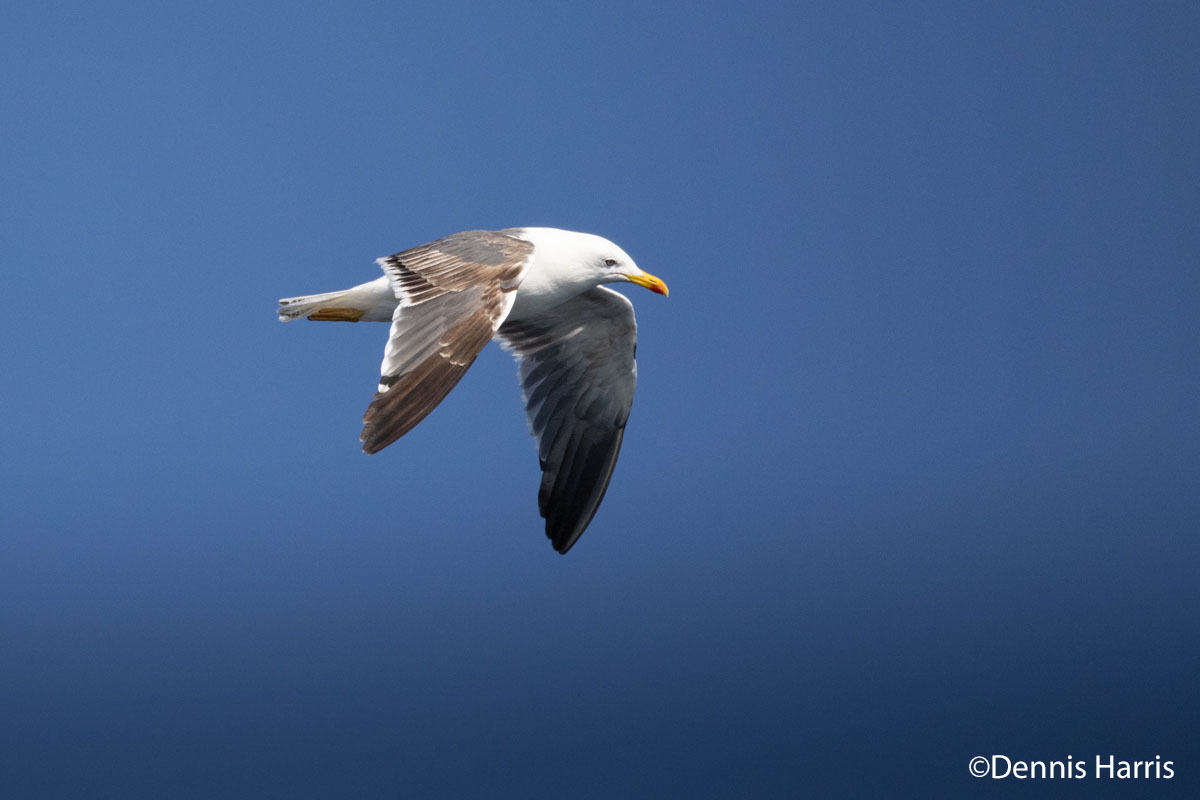
28 ATLANTIC PUFFINS
15 Black Guillemots
2 Razorbills
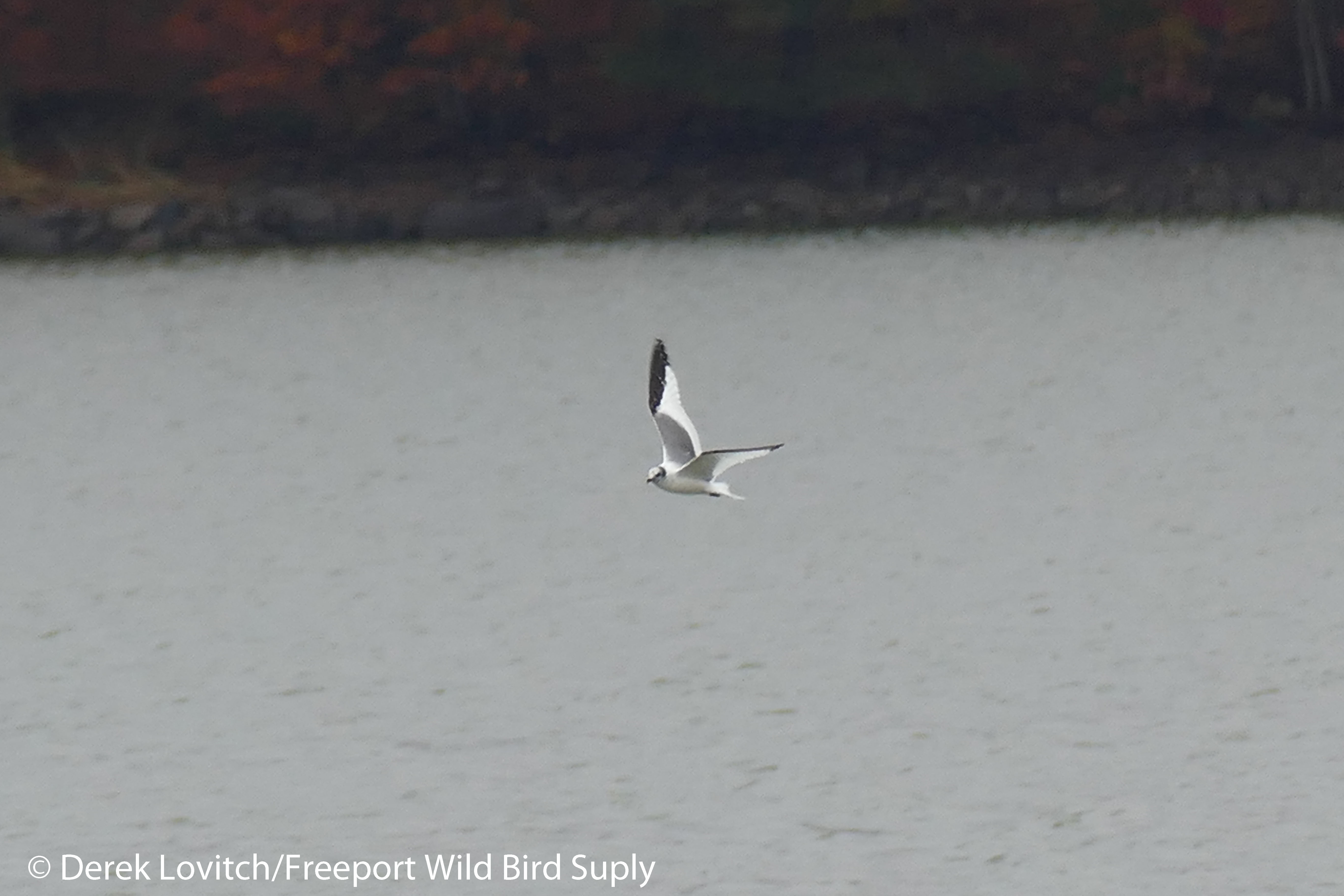
1 Black-legged Kittiwake (only spotted from photos later, unfortunately)
One of the stars of the show this weekend was this incredibly cooperative Mourning Warbler.
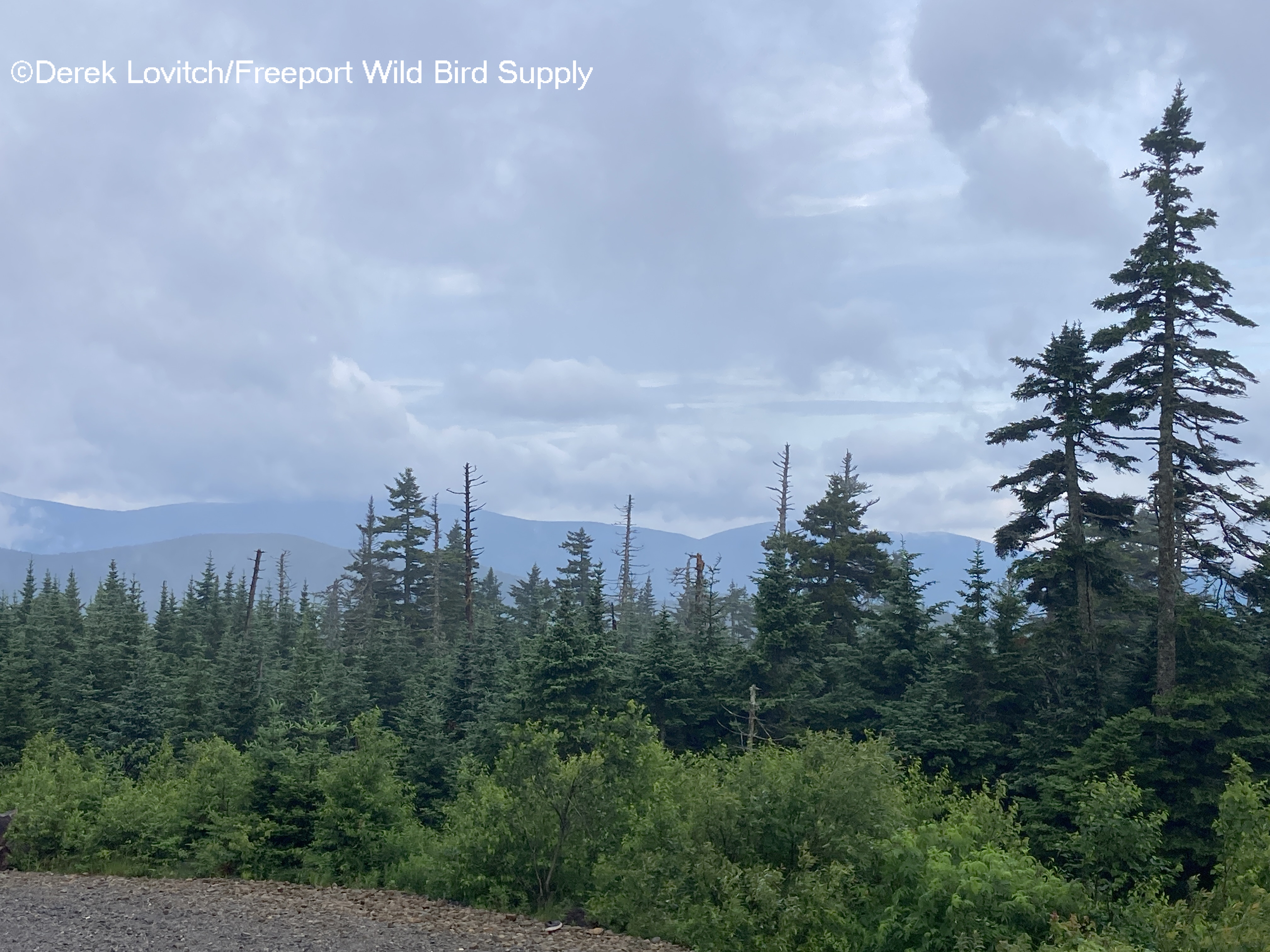
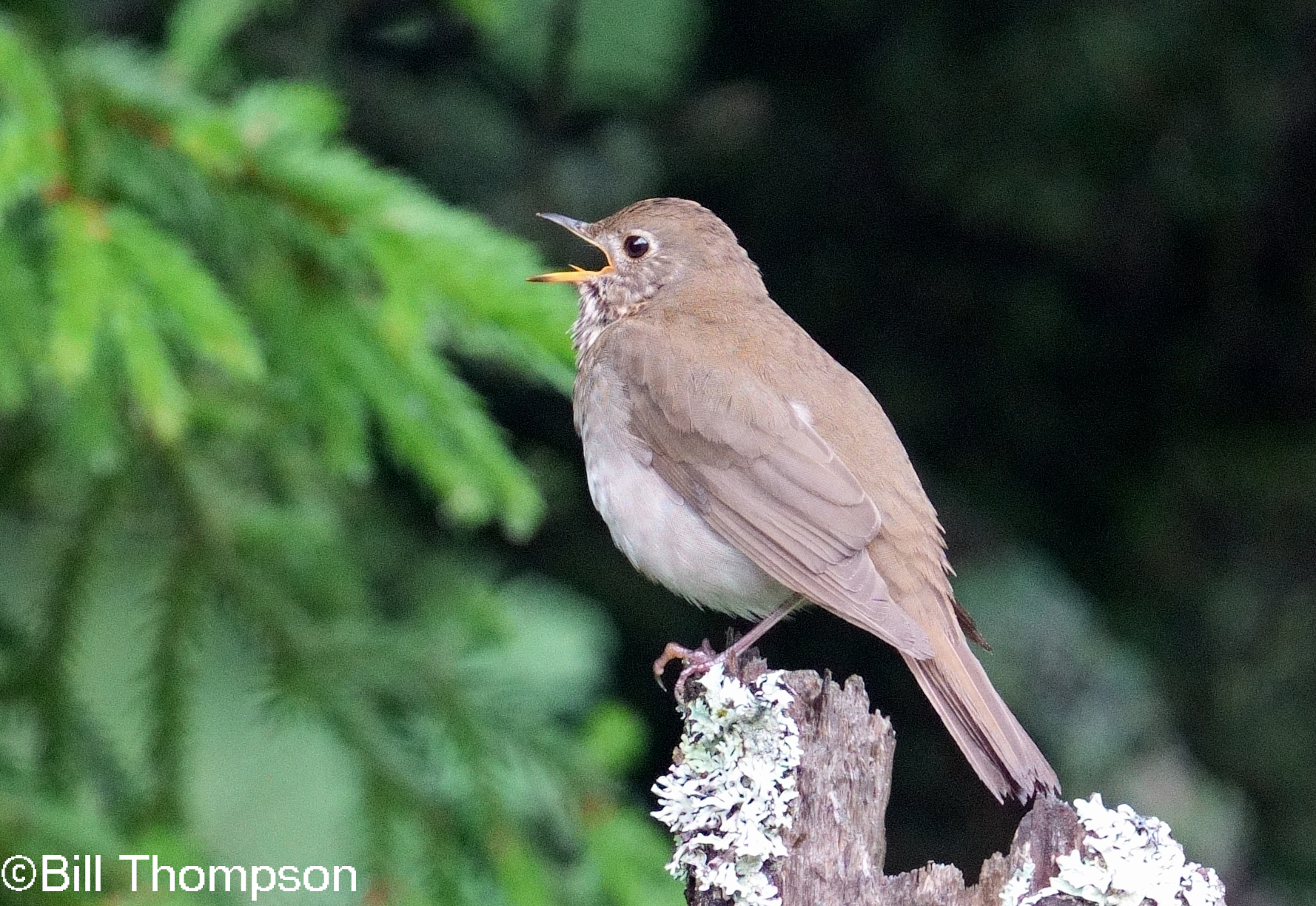
I’ll admit to having a love-hate relationship with this tour. I love taking people into the realm of the Bicknell’s Thrush, but I hate how much I have to stress about getting people to see one! Of course, weather is one of the primary impediments to enjoying a fulfilling mountaintop experience, and well, if I could only control that, too! And then there’s the bird – one of North America’s most reclusive breeding species, and with a behavior that tends to lead to sleep deprivation as well.
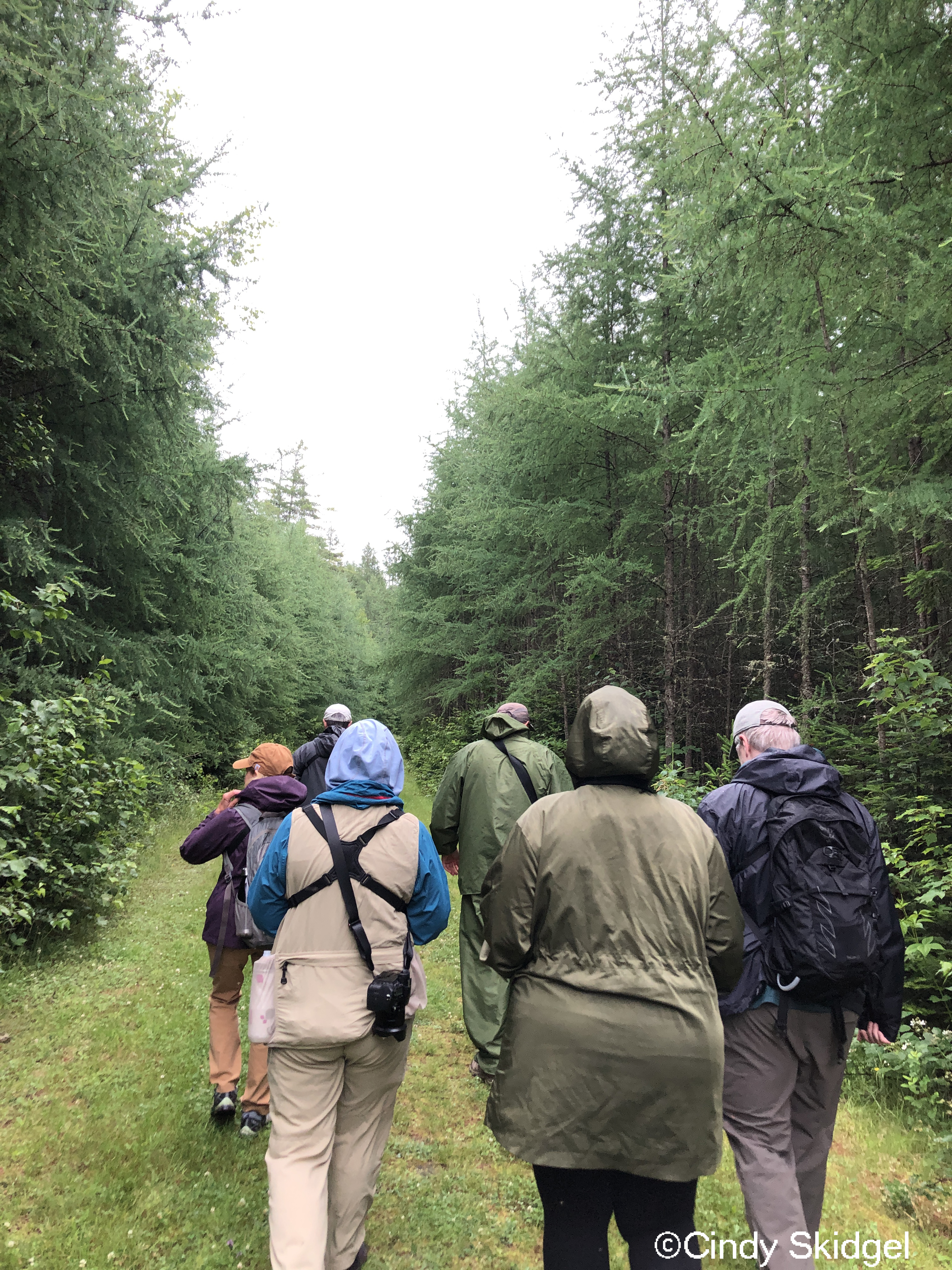
But we could not have asked for a better start to the weekend, with the first Saturday without rain in almost three months! In fact, it was absolutely gorgeous as we assembled in Errol, New Hampshire: sunny, a light breeze, and pleasantly warming temperatures. The relaxing morning was spent exploring the lowlands, focusing on boreal transition forest and spruce/tamarack bogs. We heard a couple of Palm Warblers – and glimpsed one in flight, listened to Yellow-bellied Flycatchers, and enjoyed common warblers such as Magnolia.
We enjoyed some botanizing as well, and stopped to look at all walks of life, such as butterflies and dragonflies.
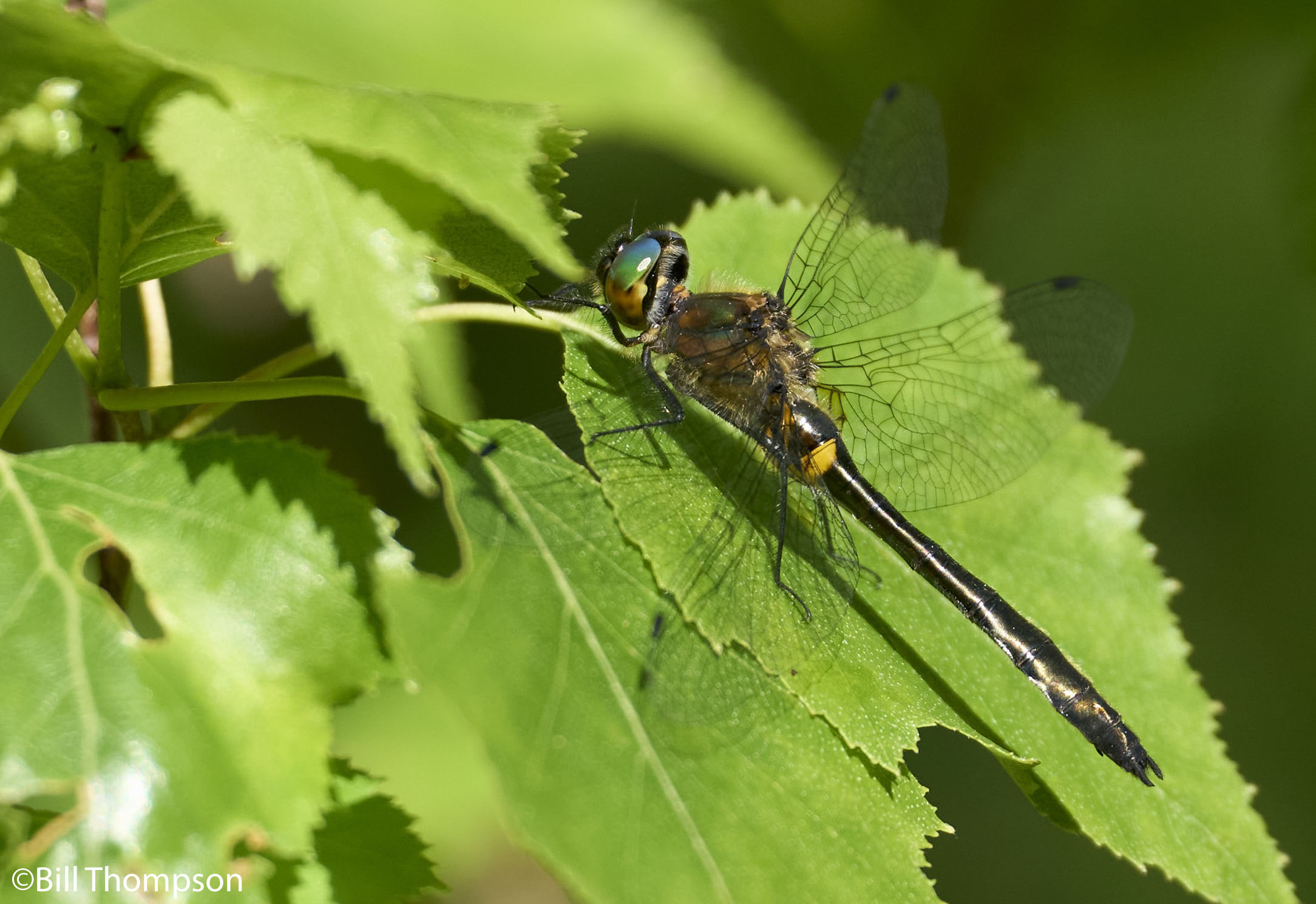
Atlantis FritillaryRacket-tailed Emerald
After a quick but delicious lunch, we did a little more casual birding (Blackburnian Warblers!) and even a little sightseeing!
A welcome afternoon break was followed by an early dinner in town, before our first trip up the mountain. With a mostly clear evening, we had some time until dusk, so we used it to make a bee-line to what I assumed would be one of the highlights of the weekend.
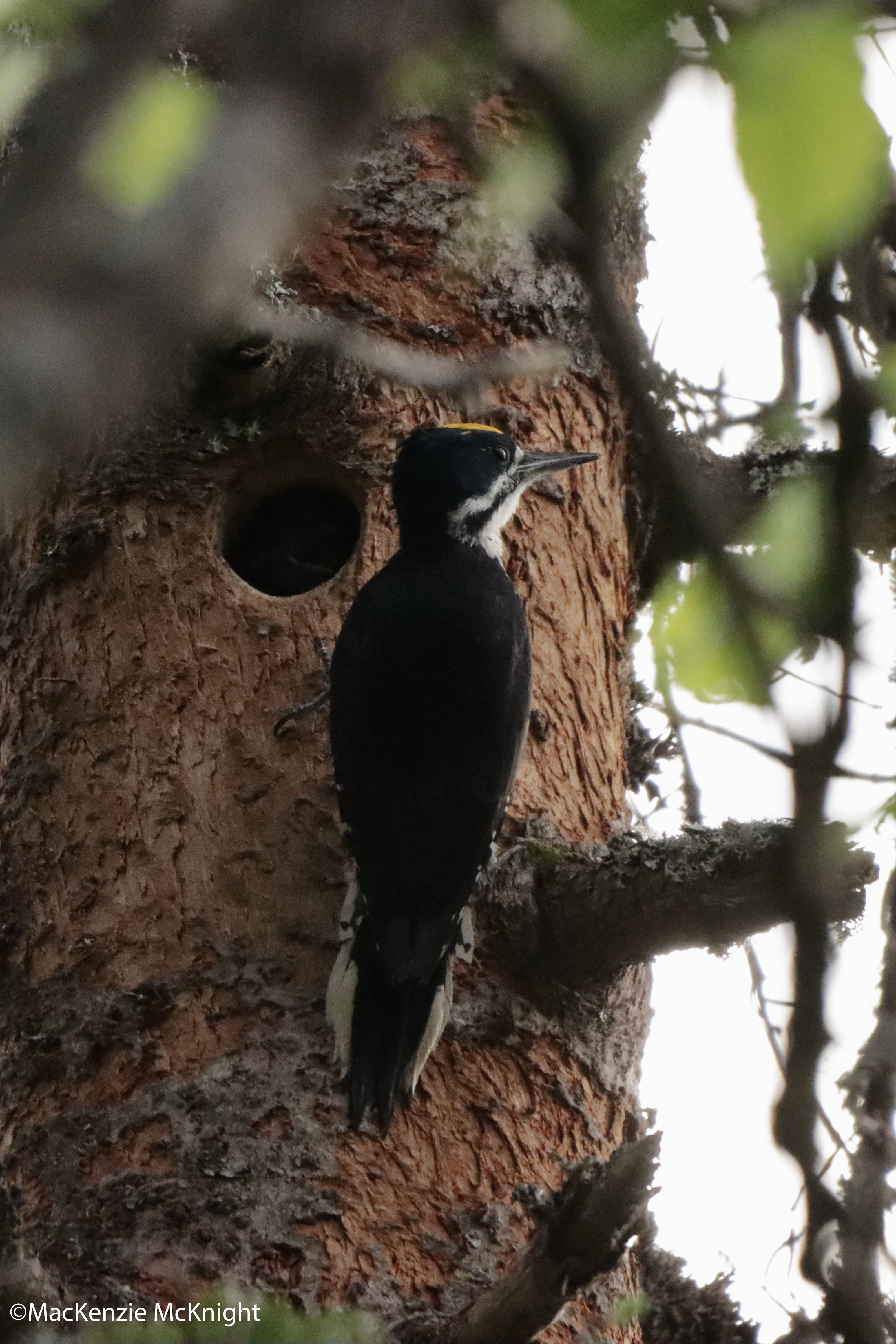
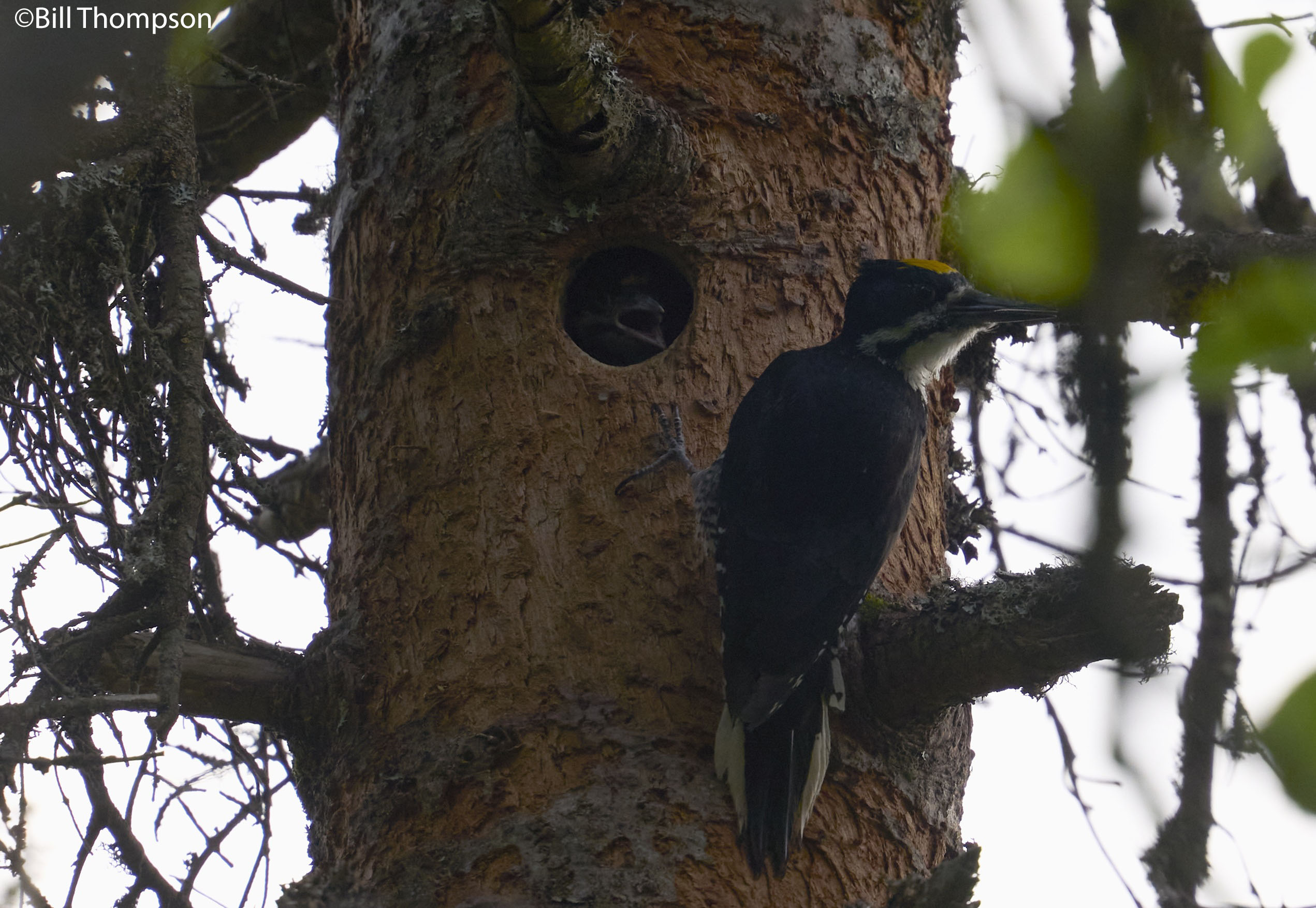
On a private tour two weeks ago, I found a Black-backed Woodpecker nest. At the time, the adults were feeding young that I could not yet hear or see. I hoped they would still be in the cavity by now, and it didn’t take long for us to know they were – we heard the begging nestlings from a good 100 feet away. I found a path of least resistance to the nest hole, and we took turns rotating in small groups to watch the adults make repeated feeding visits. Everyone was so respectful of the birds – especially the adult male – who didn’t seem too pleased with our presence. After one feeding visit per group, we backed off, gave the birds a break to feed, and then visited with the next group. While the sun was now setting fast and the photography was challenging, it was truly a special experience with such a charismatic and sought-after species.
Now, it was time to get to work. And tonight, our primary target really did make me work for it! Swainson’s Thrushes continue to increase here, and they were very active and vocal this evening. Too vocal.
While we did have some great looks at them, their presence and activity likely kept the Bicknell’s quiet and in the shadows. In fact, it was getting dark by the time the Swainson’s stopped singing and we finally heard a couple of Bicknell’s calling.
By 8:45, I was starting to get a little worried, so I walked most of the group up a trail where I had activity a couple of weeks ago. One bird was calling there, but it would not come out. I began the retreat to the road when the bird flew right over my head – one person even it heard it whiz by me. We turned back up the path and settled in and eventually at least one thrush began to sing, a couple of others were calling, and surrounded by Bicknell’s Thrushes, we ended up seeing one flying back and forth across the small clearing and at least half the group saw one in silhouette on top a small tree, calling aggressively.
The aural performance was top notch, especially down at the road, and everyone was quite satisfied with at least the sum of all views had of the bird in flight or paused in a tree at the edge of the small clearing. It wasn’t the “crippling views” from last year’s weekend, but everyone agreed it was more than “good enough” and the overall experience was worthy of the effort.
I pushed it a little longer and later than usual as it was such a nice evening (too nice?), and I had my worries about even getting up the mountain the next day. We returned to our hotel at 10:15, and we departed again at 6:00 – I let the group “sleep in” due to the forecast morning rain and our late return.
And it was indeed raining in the morning when we awoke, but the forecast chance of thunderstorms had not materialized. Therefore, it was safe to head up to the mountaintop, so without any further ado, up we went once more.
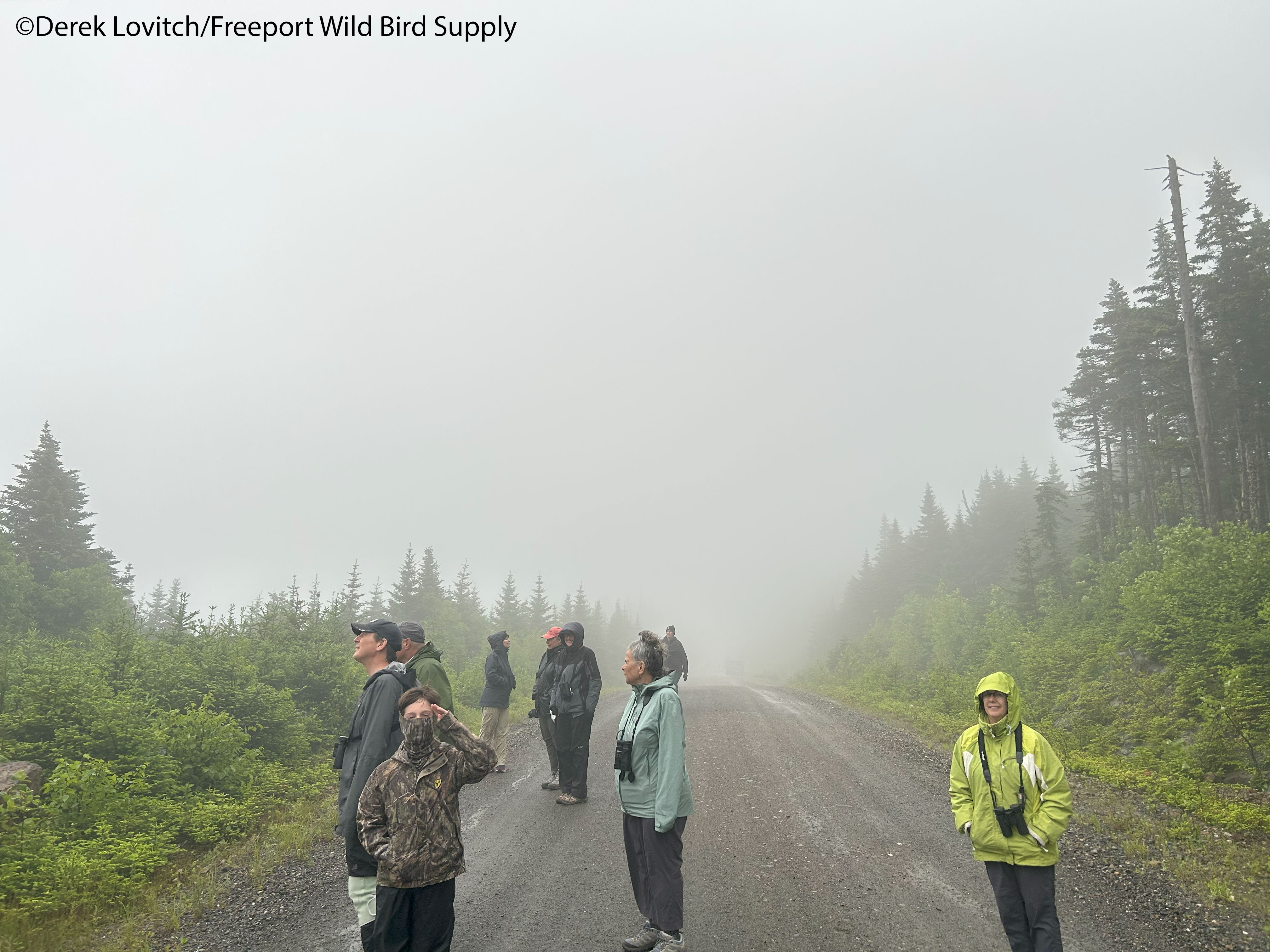
Unfortunately, up top it was still raining, albeit lightly, but the wind was already howling. What a difference 9 hours makes! Light rain came and went, fog would roll in and out, and we had one 10-minute rain delay in our vehicles with a downpour. Luckily, we had just finished breakfast!
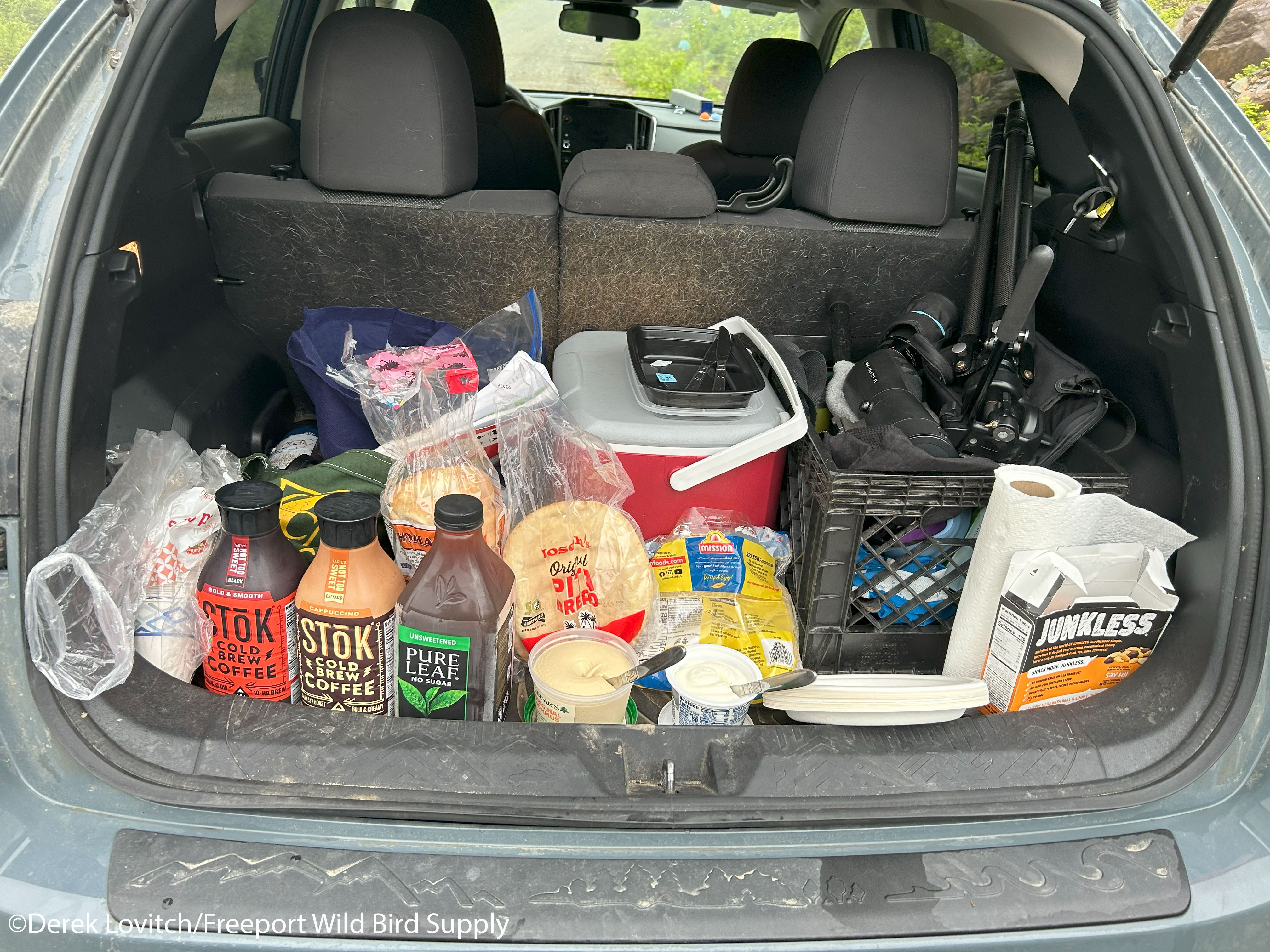
Birding tailgating!
But the morning was by no means the washout we feared, and when the rain stopped, the birding was pretty good. We decided not to bother the Black-backed Woodpeckers (the light was even worse anyway in the fog) given the conditions, but we were happy to hear the begging youngsters from afar. A few Red Crossbills flew over, Blackpoll Warblers were singing, and we heard the mountain’s Fox Sparrow in the distance.
But we did not hear a single Bicknell’s Thrush. I was about ready to give up when one finally called nearby at 8:45. And he kept calling, repeatedly, so close to us, but we never even glimpsed him. He must have been just within the dense edge – so close, yet so far!
Now this tour promises two chances to look for the thrush, not two guaranteed observations, so we took what the birds gave us last night, and with the wind howling, we began our decent.
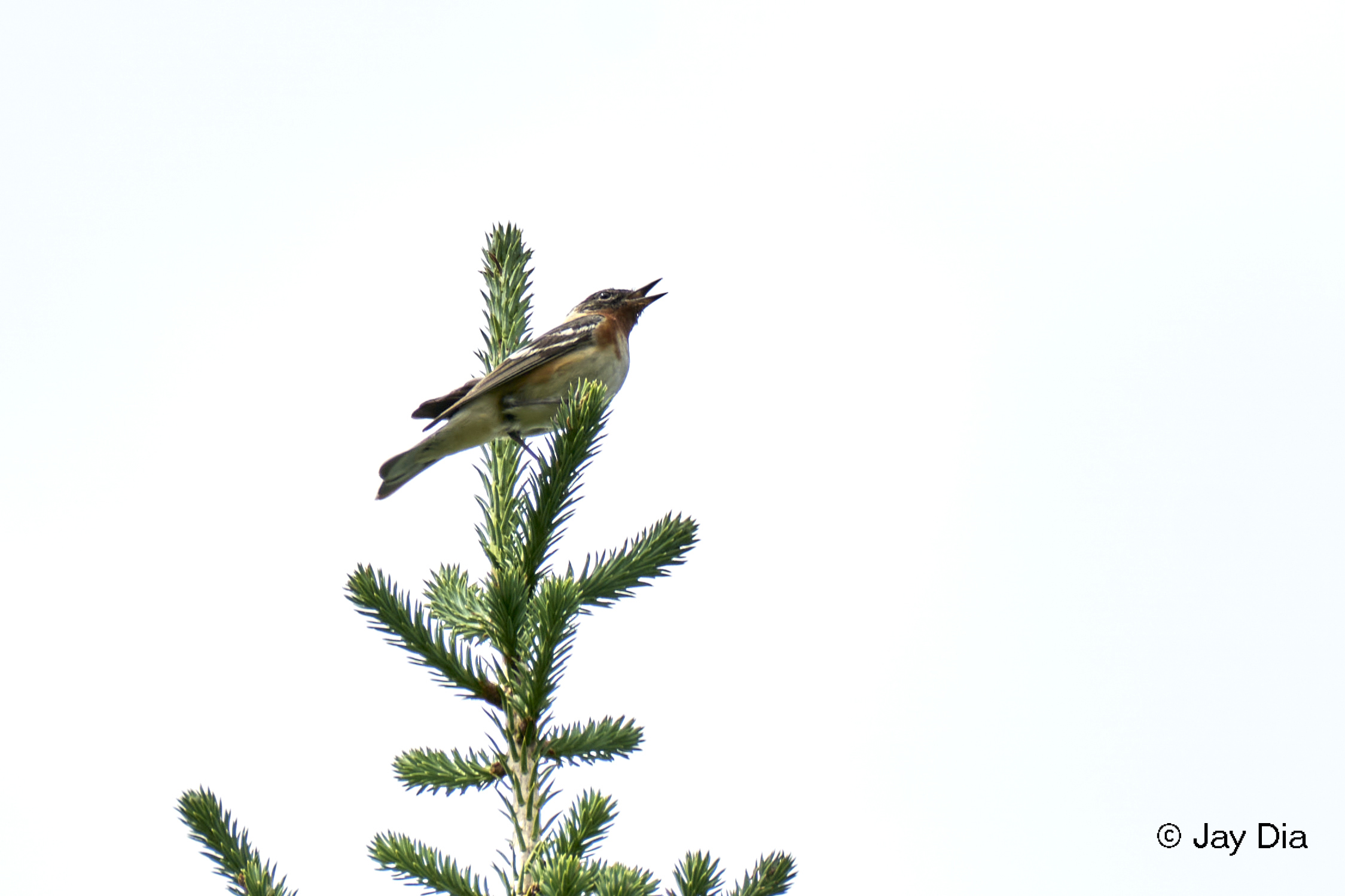
Stopping as soon as we had some more shelter, we hopped out and soon saw a Bay-breasted Warbler and heard a pair of Boreal Chickadees. A little further down the road, we heard what was almost surely a Cape May Warbler, but could not confirm it. There wasn’t much question about this Mourning Warbler however!
See headline photo…Now that’s the kind of view we were looking for!
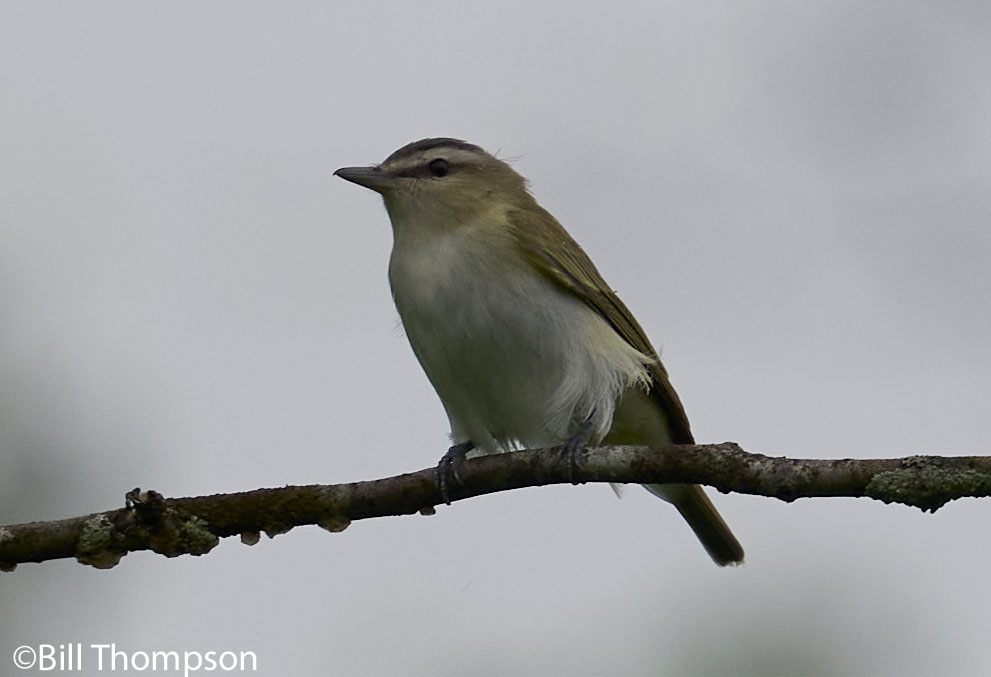
We dipped on Lincoln’s Sparrow, and then spent some time looking for Philadelphia Vireos. While we heard what was likely one singing from within perfect habitat, all of the vireos we saw today – and you simply must see them to identify them – were Red-eyed Vireo. Their march up the mountain and resultant displacement of Philadelphias continue.
It was instructive, however, and analogous to the issues with Swainson’s Thrushes moving uphill and pushing out Bicknell’s – these high elevation specialists have nowhere else to go as our mountains are not getting any taller, and I made sure to weave these conservation and natural history messages throughout the tour.
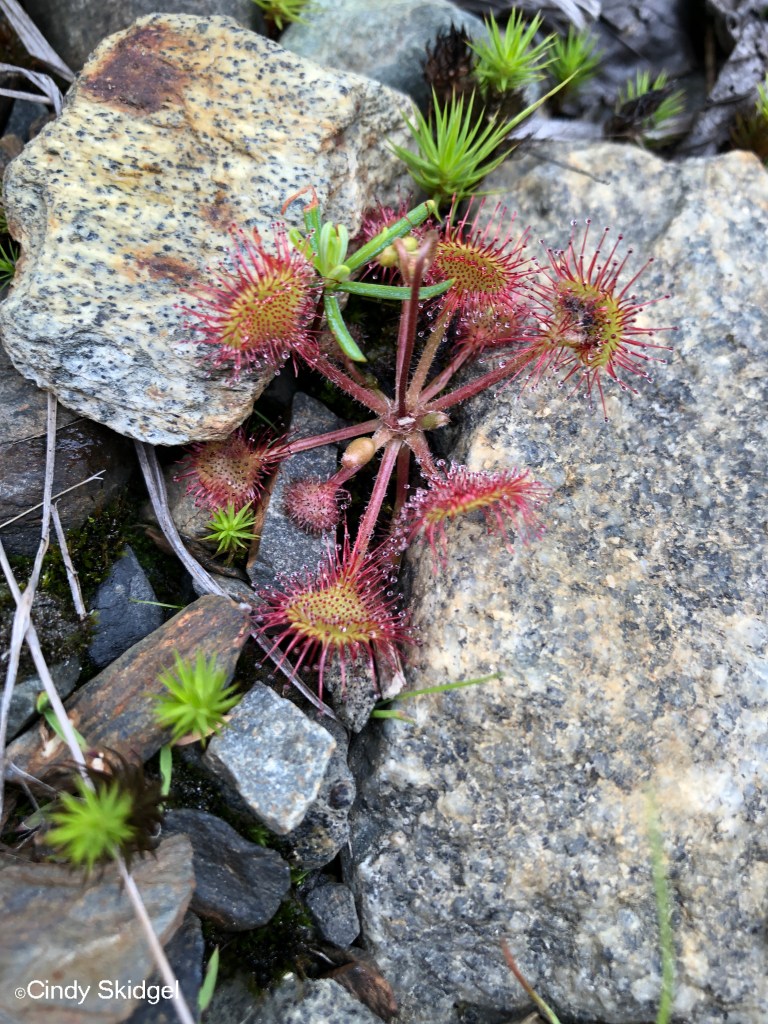
We looked at plants, too, such as Round-leafed Sundew.
We celebrated our success – especially with Black-backed Woodpecker and Mourning Warbler! – with a wonderful and leisurely lunch, and then half of the group joined me for a casual stroll in the lowlands of Colebrook, where we encountered numerous Veeries – just to add to our thrush tally for the weekend. Of course, our photographers had left, so birds here – especially the Veeries – were exceedingly conspicuous, with repeated views of them out in the open and with bills full of food. American Redstarts, Yellow Warblers, and a couple of singing Bobolinks were icing on the weekend cake.
Have views of our primary target, the Bicknell’s Thrush, been better on this tour? Yes. But they have also been much less fulfilling, and rarely, not even seen at all. So, we’ll take it…plus it was a great experience that fostered appreciation for the challenges of seeing this bird. Oh yeah, and a nest of Black-backed Woodpeckers!
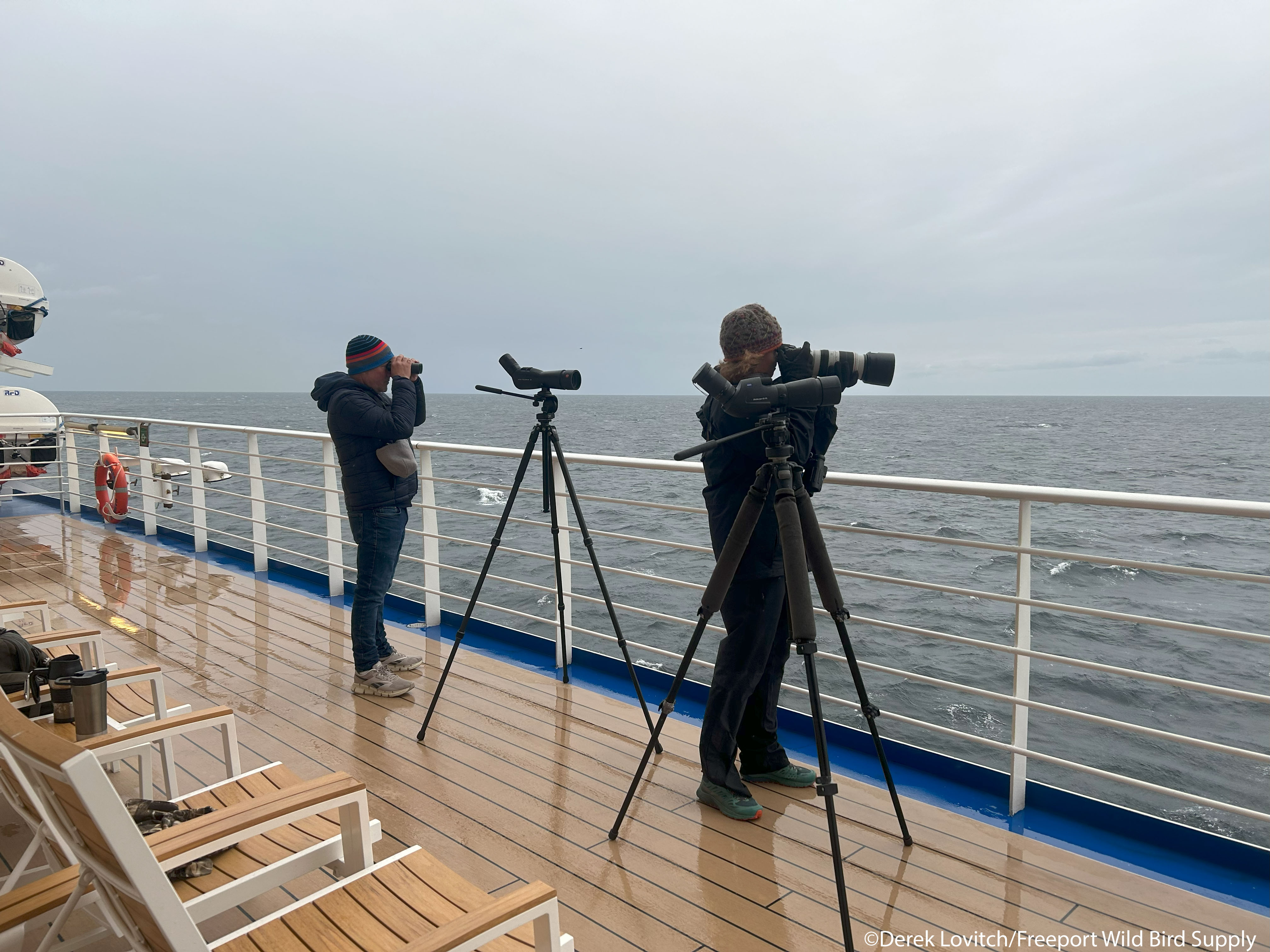
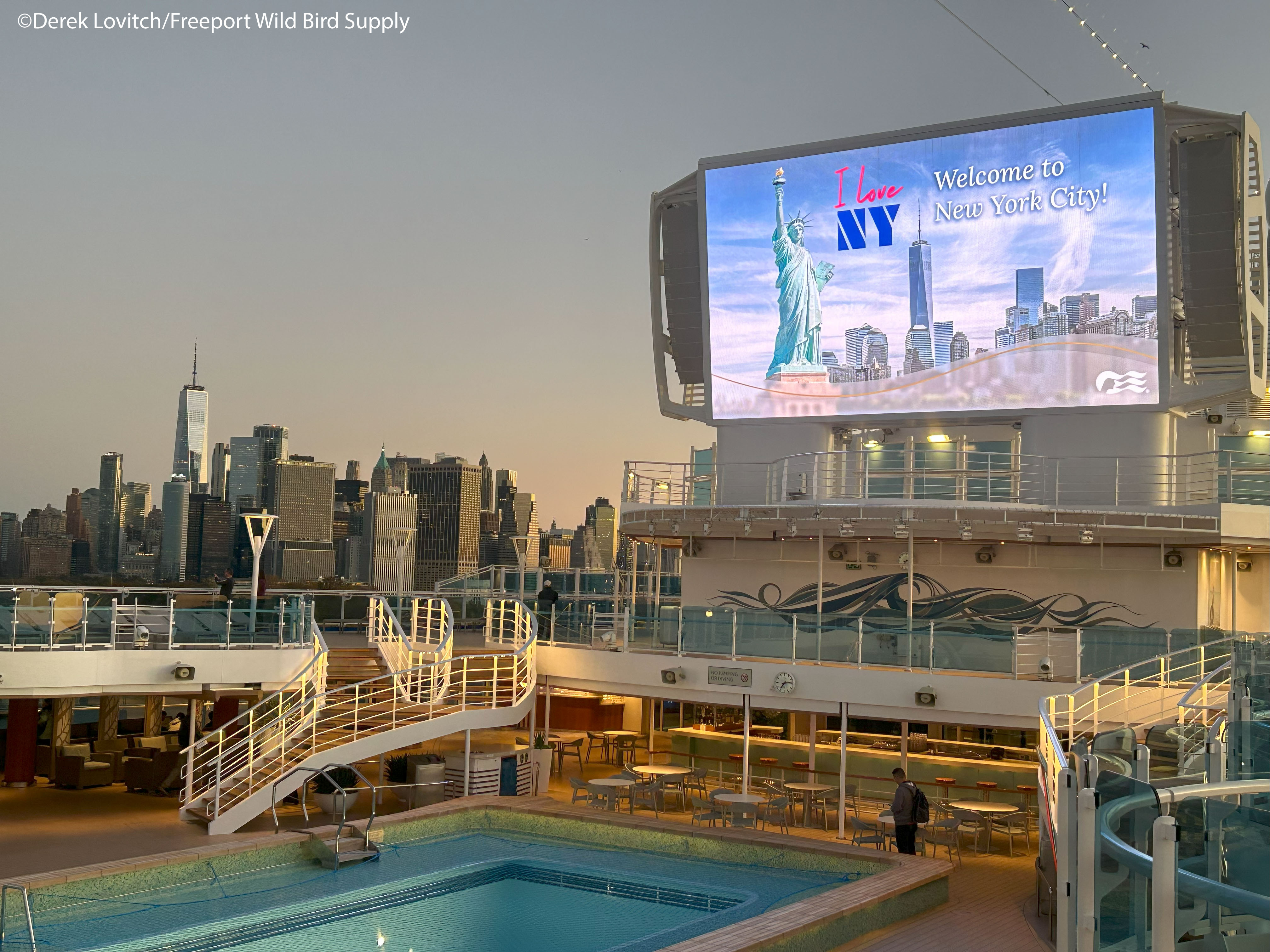
Cruise ships are big, stable platforms that allow for pelagic birding in comfort and with the use of spotting scopes!
In 2019, Jeannette and I took a cruise through the Gulf of Maine and northwestern Atlantic Ocean in the hopes of finding Great Skuas in particular. It was wildly successful, and if we could repeat this success, perhaps there would be a cruise-ship-based tour to offer. At least it would be more comfortable than last week’s attempt!
Therefore, on the evening of 10/26, Jeannette and I boarded Princess Cruises’s Enchanted Princess out of Brooklyn, New York. Our hope was to replicate the success of our 2019 trip. We were planning on a second scouting trip in the fall of 2020, but then COVID.
After finally feeling ready to consider a cruise again, we found the itinerary had changed, and we would need to spend seven days to get two full days offshore..we even needed to come back home first! But alas, we had pandemic-era credit that was going to expire, so off we went. Is this a reliable way to see Great Skuas in North America? Could I document a Barolo’s Shearwater this time?
We started our birding, however, at Brooklyn’s Greenwood Cemetery, home of this massive Monk Parakeet colony.
We departed New York Harbor with about an hour of usable daylight, picking up a single Cory’s Shearwater and plenty of Northern Gannets.
Screenshot
Arriving off Newport before dawn the next morning, we got the first shuttle to town, where our friends Bill and Jess picked us up for a lovely day of birding (Clay-colored Sparrow, Orange-crowned Warbler, late Nashville Warbler) before returning to the boat. About 45 minutes of deck time produced 8 Cory’s and a single Great Shearwater.
Newport arrivals. “Western” Palm Warbler at Sachuest NWR.
Unfortunately, this particular boat offered less-than-ideal viewing opportunities compared to our first trip, with the best deck space on Deck 7 (a great height) but way too aft. Even with our scopes on the steady platform, this was going to be a challenge.
Approaching Boston on the morning of 10/28, we checked the decks for passerines (none) before taking our place on Deck 7. There were a lot of Northern Gannets, 4-5 Cory’s Shearwaters close enough to identify as borealis, and a pod of Atlantic White-sided Dolphins. A Song Sparrow flew aboard just outside the outer harbor islands, but before that, our first real surprise of the trip: an American Woodcock appearing from the north and cruising alongside the length of the boat before disappearing. That’s not a “pelagic” we expected!
We birded Boston’s Greenway a bit, but returned to the boat well after dark. Sailing slowly overnight, we returned to Portland (the original itinerary had us visiting Bar Harbor), where a long, thorough check of the Eastern Promenade yielded two Orange-crowned Warblers and a very late Red-eyed Vireo.
Darkness reached us a tantalizingly-short distance to Cash’s Ledge, so we retired to rest up for the big day at sea tomorrow (finally!).
Waking up in Maine waters about 16.5 nautical miles southeast of Mt Desert Rock, I stepped outside well before first light at 6:05am. I immediately texted Noam, the other birder on board that we rapidly had become friends with, and I hustled Jeannette outside. With some drizzle arriving ahead of approaching light rain, we had ourselves a fallout!
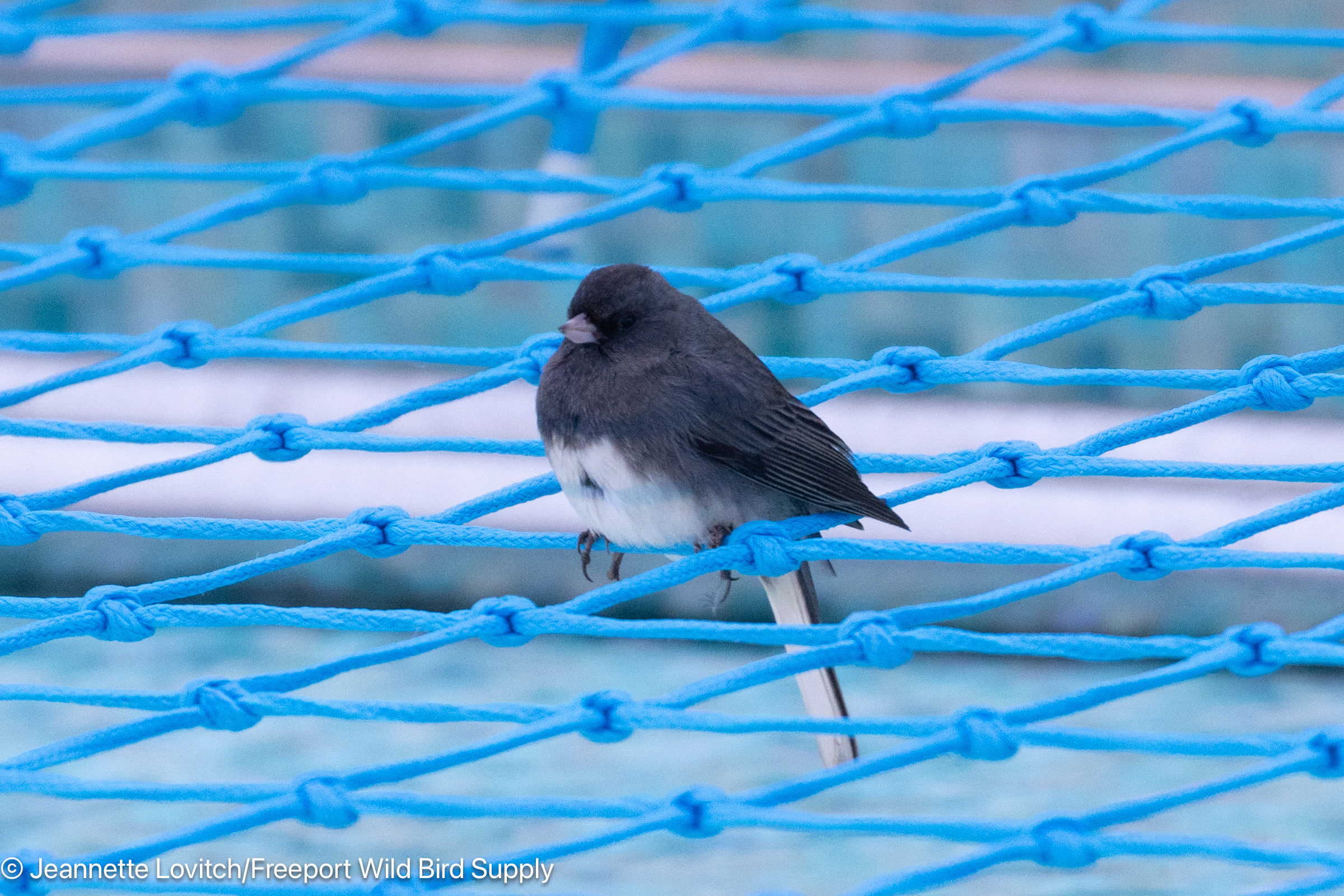
Unexpected considering there were little to no birds on the Maine radars overnight, and with a south wind through most of the night, I was surprised to immediately hear the flight calls of several Yellow-rumped Warblers. Sparrows were scattered about on the open decks. Noam and I had to usher a Rusty Blackbird out of a foyer, while Jeannette had to steer a Dark-eyed Junco down a hallway.
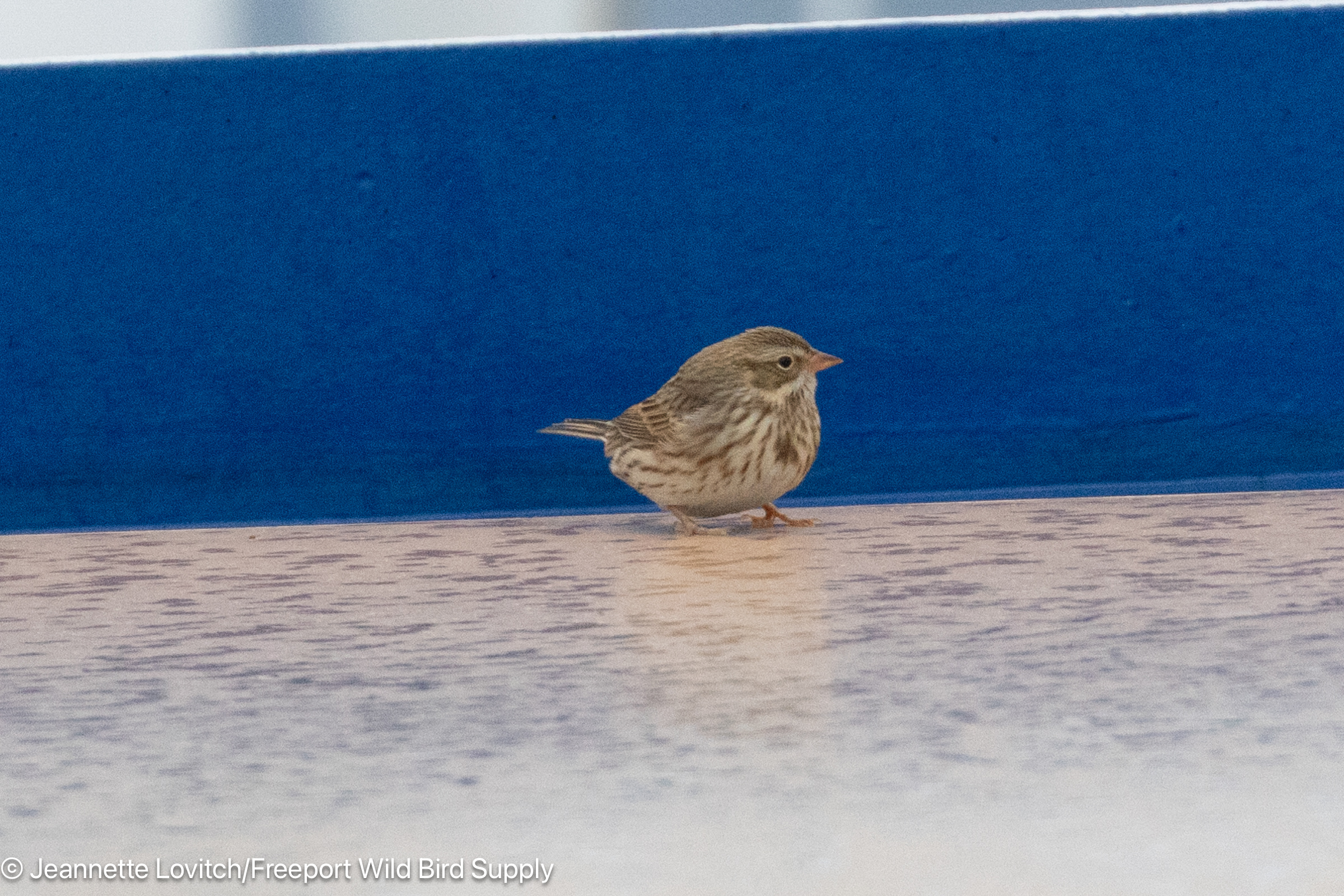
“Ipswich” Savannah Sparrow – that was an unexpected migrant, but makes sense considering we were southwest of Sable Island!
Clearly disoriented by the obnoxiously superfluous lighting of the ship, dozens of birds were around…often being flushed by now-awakening crew and passengers. Luckily, few birds seemed to be in dire straits – only one Yellow-rumped Warbler looked to me to be thoroughly exhausted, thankfully. In fact, most birds were leaving the boat as the sun rose and they were able to reorient themselves. While some birds seemed to arrive in the 15 or so minutes after sunrise, just about all passerines had departed the boat by 7:30 or so.
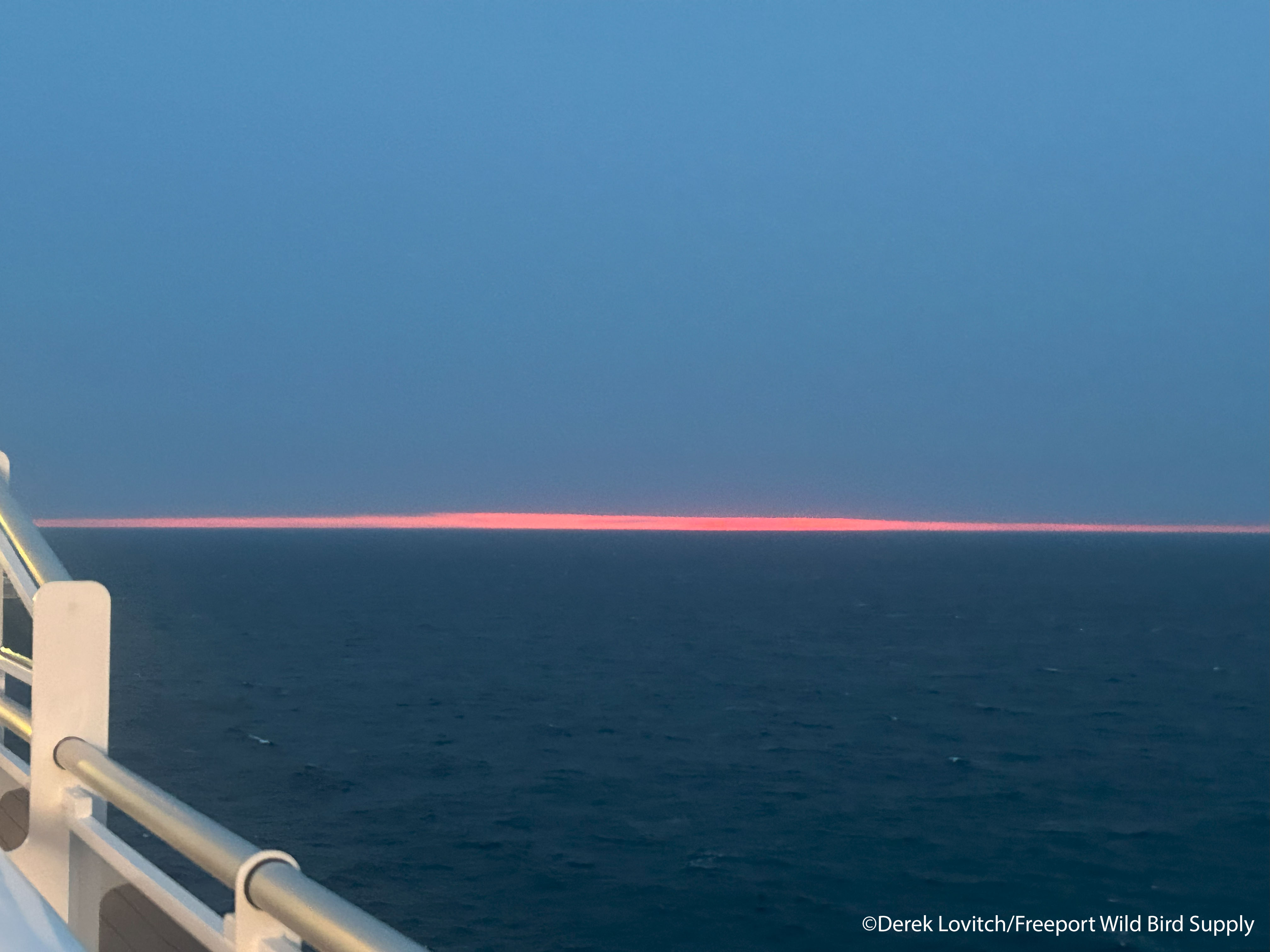
This photo, taken from off Eastern Point in Gloucester, MA the night before shows just how bright these ships are, and how disorienting they can be to birds.
With birds circling the boat before dawn, calling continuously, and others hiding in corners before being flushed to another corner, it was tough to count, but I estimated and counted a bare minimum of 8 Yellow-rumped Warblers, 8 American Robins (mostly overhead), 7 European Starlings (surprisingly), 6+ Dark-eyed Juncos, 2 Purple Finches, 2 fly-over American Pipits, 2 Savannah Sparrows, and one each of Palm Warbler, Snow Bunting, White-throated Sparrow, Cedar Waxwing, and Rusty Blackbird. Additionally, Noam photographed a Pine Warbler.
The three of us were in place on Deck 7 by 7:30, but the passerine show continued. A flock of 12 Red-winged Blackbirds flew by, while a flock of 14 American Robins joined by two more red-wings flew alongside the boat for several miles later in the morning before overtaking us and heading back to Nova Scotia.
Throughout the day, other passerines appeared and disappeared, some of which could easily have been sheltering out of sight somewhere inaccessible on the boat. These included a few more robins, 3+ Yellow-rumped Warblers, 2 Dark-eyed Juncos, and one each of Palm Warbler, Song Sparrow, Cedar Waxwing, Snow Bunting, American Pipit, and Lapland Longspur.
American PipitHarlequin Duck (L) with Black Scoters
But this was a seabird trip, and so we remained vigilant over the water. While we only had a few minutes in Maine waters once we began our vigil, the rest of the day was productive overall, although the afternoon was quite slow. As we passed the southern tip of Nova Scotia (we even spotted Seal Island Light that we were lucky enough to visit with a group of birders about 20 years ago), we finally called it quits at 5:45 pm when cloud cover accelerated the falling of darkness.
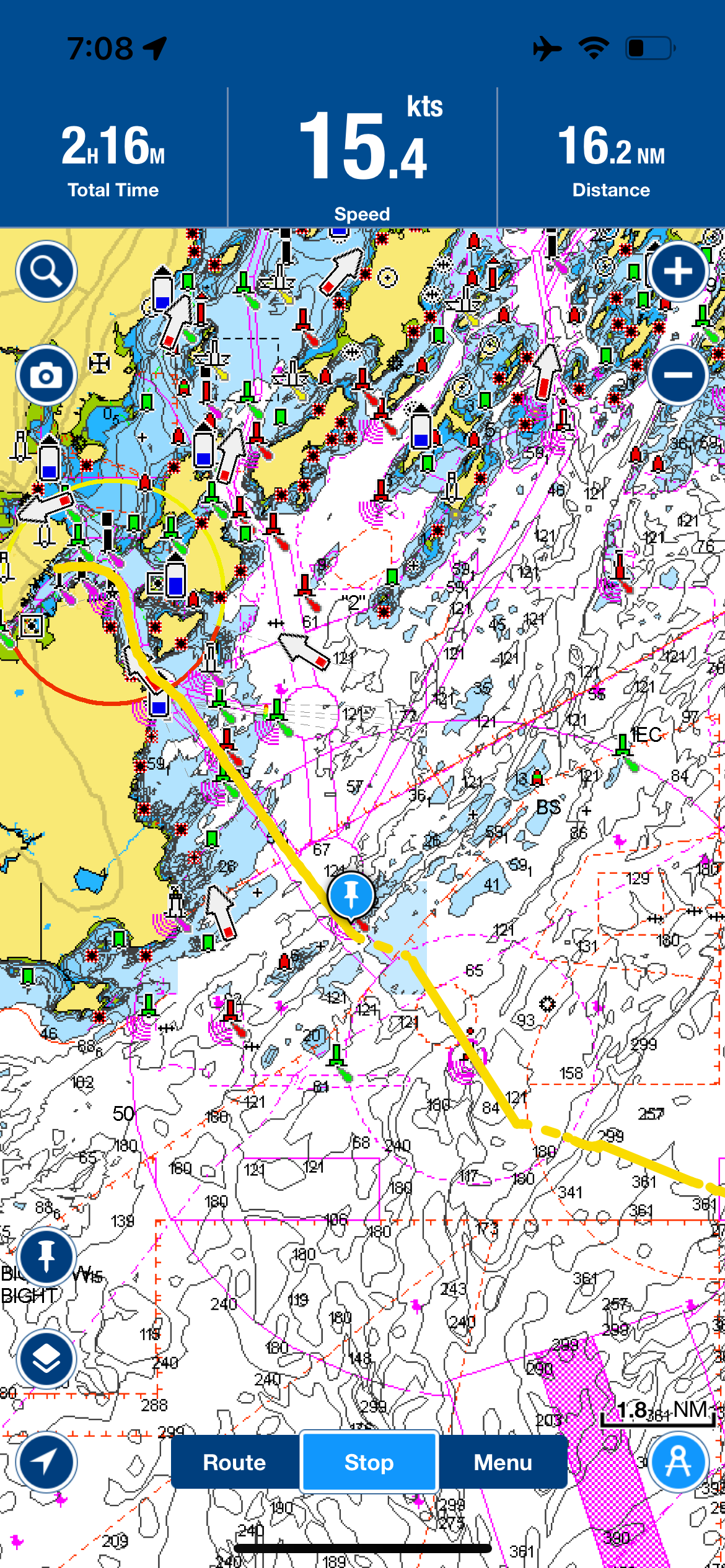
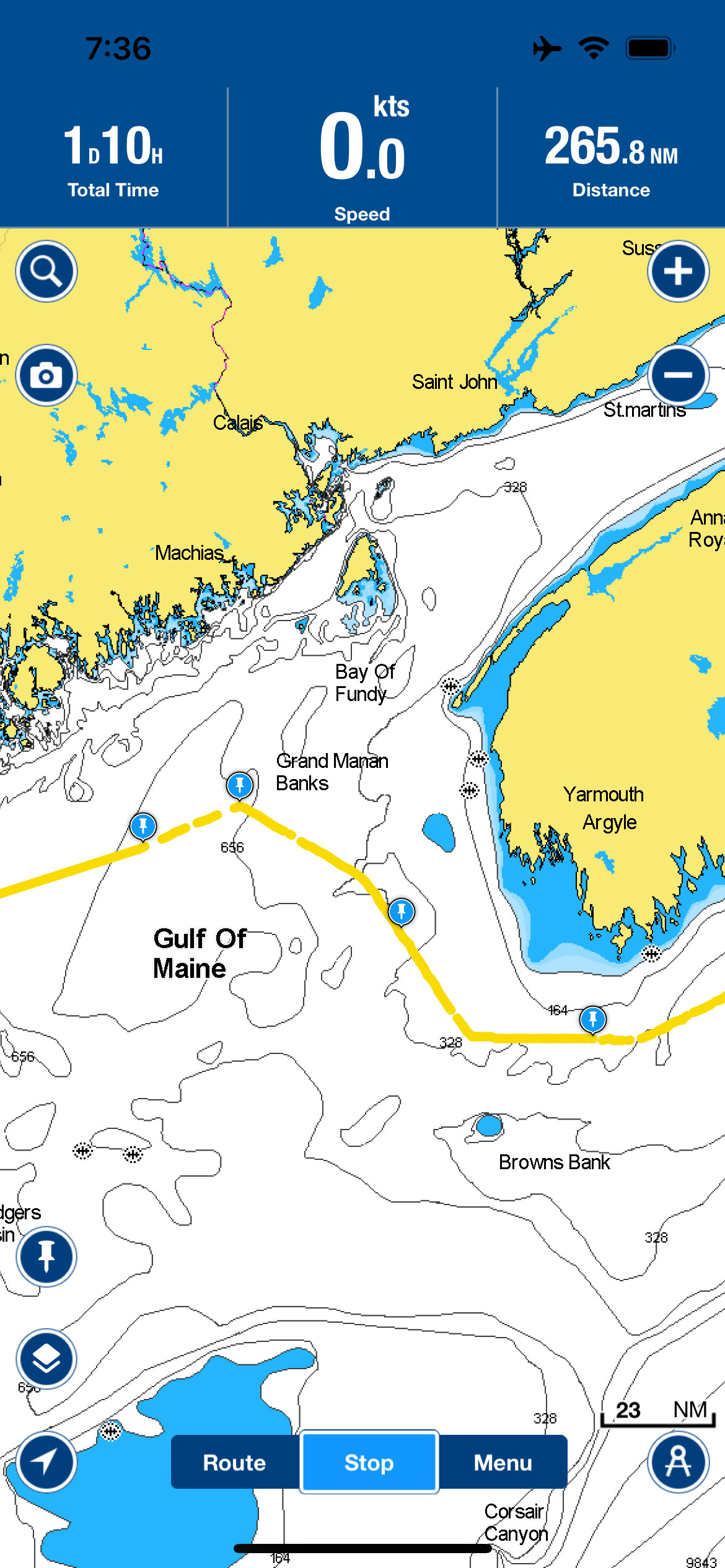
Here’s our route (left pin to right pin) for the day, thanks to the Navionics Boating app by Garmin.
From start to finish, our respectable – albeit not breathtaking – seabird tallies included oodles of Northern Gannets (including a steady southbound trickle almost all morning), and occasional southbound flocks of all three scoters and Common Eiders. Specific counts included:
47 Black-legged Kittiwakes
36 Razorbills
13 Northern Fulmars
10 Great Shearwaters
6 DOVEKIES (one flock landing off to the side of the boat)
3 ATLANTIC PUFFINS
3 American Black Ducks
3 unidentified large shearwaters
2 Harlequin Ducks
1 Greater Scaup
Great Shearwater
So all in all, not a bad day, but the passerines stole the show, and while Dovekie is one of the target birds of this trip, we didn’t see a skua…or even a jaeger, surprisingly.
The next day we awoke well within Halifax Harbor, but a sunrise passerine check yielded two birds: a White-throated Sparrow, and of all things, a rare Dickcissel!
Local friends Eric and Anne once again rescued us for a day of casual birding and good conversation, but the ship departed after dark; just more time to rest for our second full day at sea!
Halifax Public GardenNorthern Flicker
The morning of 11/1 found us between Downeast Maine and the northern corner of Georges Bank. The rest of the day would be in the same waters of our great success on our trip five years ago. After a passerine check which didn’t turn up anything (which meant nothing was disoriented by the ship overnight or desperate for a place to land come dawn, so this is never a bad thing), it was time to get to work in our usual spot.
Unfortunately, strong southwesterly winds and growing seas, with haze and light fog in the distance, made birding challenging. We worked hard though, but it was slow. We did have some excitement from two Dovekies that landed fairly close to the boat, and two Manx Shearwaters that, thanks to the lighting, I was absolutely sure were not Manx Shearwaters until we carefully reviews Noam’s photos later.
With glare and haze becoming problematic, we broke for an early lunch at 11:30, with the previous 4.5 hours of observation producing only the following, plus two Humpback Whales:
12 Northern Gannets
7 Great Shearwaters
6 Red Phalaropes
4 unidentified large shearwaters
2 DOVEKIES
2 Northern Fulmars
2 Manx Shearwater (after review)
2 Black-legged Kittiwakes
2 Lesser Black-backed Gulls
2 unidentified large alcids
1 unidentified small black-and-white shearwater.
Unfortunately, with increasing wind (that we were heading straight into) and seas growing up to 7-10 feet (barely noticeable on a ship this big though, thankfully!), the lower deck was closed off for safety. Later, even the upper decks were closed off due to the very high winds, which were now blowing nearly 30mph out of the southwest.
Screenshot
Luckily for Jeannette and I, we had scored a forward-facing room, and although we were high up on Deck 17, we could see forward. Haze and the angled window were problematic, but we could see birds close to the ship, and we could relax, remove layers, and even crack open a beer. This is pelagic birding in style!
From 1pm to 5pm, when we finally called it a day, the afternoon cabin-watch netted:
11 Great Shearwaters
9 Northern Gannets
5 Cory’s/Cory’s-type Shearwaters
3 unidentified phalaropes
2 Manx Shearwaters
Screenshot
And so our two days at seas concluded without a Great Skua, our primary target species for a future cruise..and perhaps a future tour. Alas, we’re only 1 for 2 in seeing skuas from the boat, and we would need a different class of ship (and, a shorter itinerary with more time at sea and less time in multiple ports) if we were to do this again. We’ll be keeping an eye out from other companies and other Princess ships to see if there’s a more skua-tactic itinerary in the future, but until then, our northeast Atlantic cruisin’ days may have come to a close.
Arriving in New York harbor before dawn, our last sunrise deck check yielded a single Dark-eyed Junco, Yellow-rumped Warbler, and White-throated Sparrow, bringing our more-productive passerine birding cruise to a close.
Tour itineraries are meant to be broken. Or is that “rules.” Well, those too.
We have offered some kind of “Bicknell’s Thrush Wekeend” tour for almost 15 years now. There was a hiatus for COVID, and last year – perhaps due to the uncertainty with travel planning – we pulled the plug on our weekend for the first time as registrations were slow to come in.
Therefore, for 2024, it was time to try something new and head into Northern New Hampshire for a new plan of attack. Two chances at Bicknell’s Thrush over the course of two days, with this one enigmatic bird the sole focus (well, at least until we see it) – that part of it had not changed. Everything else was new this year.
We assembled at 9:00am on Saturday, June 29th in Errol, New Hampshire. The itinerary? Well, never mind.
Several folks arrived to see their guide staring up at the sky and immersed in deep thought (you could smell the wood burning). It wasn’t raining, and it looked like we had a nice window of fair weather. But it was already 9:00am, and by the time we got up the mountain…
…but the forecast for tonight. And tomorrow morning.
…but it can’t be worth it to try for one of, if not the, most elusive of North American breeding songbirds in the middle of the day.
…and it’s getting warm.
…and there’s rain building to our west. The winds are picking up higher up.
…but let’s go for it!
So up the mountain we went. At least we would be trying. And that evening, with the risk of severe thunderstorms, we might not even have a chance to try. And the next morning didn’t look great.
But weather forecasts are fickle, especially up here in the mountains, so it’s hard to make plans. But it’s easy to look up and see what’s about to happen, or not. And when I looked up, my face didn’t get wet, so that’s the only forecast that’s dependable in these parts.
We raced up hill, arriving at about 3,000 feet and the realm of the Bicknell’s Thrush around 10:30, stopping for a Ruffed Grouse in the road escorting five chicks.
Southerly winds were increasing, blowing right up into and through our thrush territories. This was pointless. But hey, the rain was still across the valley. So we birded.
We heard the Fox Sparrow, spotted a couple of Blackpoll Warblers, and enjoyed the usual high-elevation species like Yellow-rumped Warblers and Dark-eyed Juncos.
Then, at the surprisingly late (or extremely early) time of about 11:15am, a Bicknell’s Thrush began to call. Over the next 15-20 minutes, we were treated to two birds counter-singing, and at least 3 or 4 birds calling. One bird silently flew across a clearing, as well seen as a thrush in flight can get. The two dueling birds darted between trees and occasionally paused in view of one or two people before melting back into the trees.
There weren’t photography opportunities, but everyone was more than satisfied with the sum of their views. And it was a tremendous auditory performance. Overall, it was actually a pretty good show, and really demonstrated the behavior of this fascinating bird. And since this is more than just a tick and run” tour, the birds’ behavior was instructional and of keen interest.
And after all being satisfied, the rain arrived.
We enjoyed a leisurely and delicious lunch, and then set out for a little more birding. Making up for the change of plans in the morning, we took a walk and a drive through some boreal habitats, but rain was becoming steadier now. We heard and saw a few common birds, but it was just some good quality time in the afternoon woods, absorbing our phytoncides. When the rain arrived in earnest, we called it quits and went to check in at our hotel.
The original plan was to have an afternoon break, early dinner, and then head up the mountain at dusk to take advantage of the evening activity of the thrush. Instead, we had a relaxing dinner, many of us enjoyed a beer or glass of wine, and we just chatted. Good conversation was enjoyed by all, and the rain kept falling.
At one point, the rain let up and I began to ponder a run up the mountain. Just in case the thought became serious, a downpour arrived. Dessert was ordered.
We were back in our hotel rooms at about the time I had planned to be on the mountaintop, so I didn’t know what to do with myself! I think I was stressed about having nothing to stress about. When a tour is solely dedicated to one species, a trip is a failure without that one species. But we already had our quarry, and if it was raining in the morning, oh well. And if it wasn’t, we would just go enjoy the bird some more. I think I had the longest and best night of sleep I can recall while leading a Bicknell’s Thrush weekend!
Well, it wasn’t that long. A “civilized” 5:30am departure from the hotel (thanks to our success the day before) found us free of the rain that was forecast, and there were even a few breaks of sun. It was rather breezy atop the mountain, and in almost two hours, we only had a couple of calls from Bicknell’s Thrushes. A simple continental breakfast was served from the back of my Subaru.
However, we had a Canada Jay (likely the last youngster in a family group that passed just downhill from us) in plain view, and spent some quality time with the local breeders like Blackpoll Warbler. Then, much to my disbelief, the second-most wanted bird on the tour (according to an unofficial survey), began to call very close to us. Could it be? I had to be mistaken. But not much else sounds like a Black-backed Woodpecker!
Then, with jaws dropping to the ground, it proceeded to fly overhead of us, heading up the mountain where it called a few more times. That was not something I was expecting – not just the species, but such a great look at it in flight (I can only recall one other time that I had seen one overhead) and far removed from the deep and dark bogs most of the local birds prefer.
Between yesterday’s thrush luck and today’s woodpecker fortune, not to mention another mountaintop visit devoid of the forecast rainfall, we were just ecstatic.
And then this happened…
You get a photo, and you get a photo, and you get a photo!
Wow. Just wow.
And it was on a snag that I had just declared, “if this bird comes out, it’s going to perch here.” Most people thought I was joking.
The thrush didn’t. Now, I wish I could always control birds like this, but especially with this species, I have really come to know them and their behavior. To me, it did look perfect for one to sit on. But no, I did not expect it to be sitting on it, singing up a storm, about 30 seconds later. It truly is better to be lucky than good.
And it sat there for long enough to take your camera down, adjust your settings, and return to firing away. It was even there long enough for your dumbfounded guide to remember he had his camera with him for a change. My panicked photos did not do the bird justice, so I will let everyone else’s speak for themselves.
There wasn’t much left to do up here, so we began our trek downhill.
A Mourning Warbler cooperated nicely.
Then, returning to our cars a (the?) family group of Canada Jays returned and came to check us out. Kathy’s granola bar was clutch here as two adults had a snack, with 2-3 dusky juveniles looking on, learning the ways of the Camp Robber.
And then Kathy exclaimed “there’s a Bay-breasted!” and we all looked up to see a stunning male singing from a roadside fir right over our heads.
We heard or saw at least another 5 Mourning Warblers on the way down, glimpsed a busy Lincoln’s Sparrow (a Sharp-shinned Hawk passed overhead precluded a better observation, however), and took some time to enjoy and identify butterflies – even skippers (OK, only Bill actually identified said skippers) – and plants.
White Admiral
Round-leafed Sundew.
But as the winds began to gust, more rain was approaching, and ATVers were becoming overwhelming, we left the mountain and headed to Colebrook for a relaxed, celebratory luncheon as the rain began to fall and before we headed our separate ways.
As for this new Bicknell’s Thrush Weekend itinerary (with and without necessary audibles), well, I think you can assume we’ll see you here again next year!
The huge waves of Pine Siskins that moved through in October have been replaced by smaller, more widely dispersed groups. Very few are making their way to feeders, however, as they have been finding an abundance of favored natural food sources, such as Northern White Cedar.
Late in September, I posted a blog summarizing the various factors that were resulting in numerous, often panicked, reports of “no birds” at feeders, or otherwise significantly reduced activity. While I added a few updates to it over the past couple of months, now that it’s early December and some folks are still reporting reduced or little feeder activity, I thought it would be worth checking back in on the situation.
As for the current conditions here in Maine, it’s finally gotten colder (mostly), and much of the state has some snow on the ground (at least for now). In fact, overall November was below average, so a “mild” fall as a limiting factor for how many calories birds need via supplemental food is not much of an issue anymore.
It’s not surprising then that over the past few weeks, we have had numerous reports of “the birds are back!” and other noticeable increases in activity. Overall, our weekly seed sales are now nearly double what they were just one month ago, for one example.
But what has not changed is the overall plethora of natural food sources (especially the massive mast of Eastern White Pine) and, for the most part, the overall lack of irruptives from points north so far (at least at feeding stations). Let’s break it down again.
New arrivals.
Facultative migrants and short-distance migrants, such as White-throated Sparrows and Dark-eyed Juncos are now mostly in their winter territories, although numbers will ebb and flow with snow depths. Same for American Tree Sparrows, which are only now arriving in yards. Their delay in showing up at feeders was due to natural food sources (“weed” and grass seeds from our excellent growing season) and the overall lack of snow cover until recently, making food resources easily accessible late into the season. Their numbers should be closer to “normal” for your yard and surrounding habitat now.
American Tree Sparrows are only now arriving at feeding stations, with snow finally beginning to accumulate.
Irruptives (or lack there of)
While there are plenty of Red Crossbills around the state, these spend very little time at feeders. We were lucky enough to have a pair at our feeding station in Durham one morning (11/26), which was a real treat.
Meanwhile, the Winter Finch Forecast accurately predicted a big flight of Pine Siskins, and this was certainly the case this fall. However, as of early December, it appears the biggest waves have moved south of us. However, scattered siskins are being reported in small numbers around the state, including at feeders. So, we at least have some of these added to the mix over overall feeder bird abundance.
Purple Finches remain few and far between, however, and I am not hearing reports of Common Redpolls just yet. My guess is that we’ll see an uptick in both of these species as the winter goes on, but I don’t expect huge numbers this winter.
Again, irruptions are based on the abundances (or lack thereof) of cyclical natural food sources, and so this is completely normal and natural; nothing to worry about here! On the other hand, wow, are there a lot of American Goldfinches around right now (40-50 daily at our feeders in Durham, for example)!
The Mixed Species Foraging flocks.
Now here’s where things get a little tougher to figure out, but I think here in lies one of the issues with the overall reduced feeder bird activity for many folks who are good stewards of their feeding stations and are using quality products (more on that later)
Many of our resident birds spend the winters in a mixed-species flock that includes species that eat a wide variety of things, from seed-obligate nuthatches to insect-only Golden-crowned Kinglets and Brown Creepers. They roam around their winter territories exploiting food sources together, perhaps for safety in numbers and/or for sharing local knowledge about resources and predators. My observations at feeders and in the woods, suggest these mixed-species foraging flocks -which include some of our most common and widespread feeder birds – are smaller than average this winter.
With close to zero Black-capped Chickadees and Red-breasted Nuthatches departing the Boreal this year, and no sign of a fall movement of White-breasted Nuthatches out of the northern limits of their range (again, all due to the abundance of various natural food sources), our local flocks are not supplemented by birds joining them from afar.
Therefore, each flock is made up entirely of “local” birds. If you don’t have a resident pair of Red-breasted Nuthatches, for example, you probably don’t have Red-breasted Nuthatches right now. And if they’re around, there’s probably stuffing their larders with white pine seeds anyway.
While I can’t see any suggestion of more or less Downy and Hairy Woodpeckers around, there may have been another increase in Red-bellied Woodpeckers as we have had quite a few reports of yards seeing this southern colonizer for the first time.
So that leaves Black-capped Chickadees and Tufted Titmice. These core members of the mixed-species flock are exploiting the same abundance of natural food as everyone else and are spending less time at feeders now than normal. But these two birds have different winter flocking strategies: titmice remain as a family group through the winter, but chickadees’ fledglings leave the parents and join other flocks. Very anecdotally, from observing mixed-species foraging flocks while out birding and watching feeders, it seems that the number of Tufted Titmice in each flock (2-6) is usually pretty normal.
But, without any real data to cite, my impression has been the flock has less chickadees than average. For one, there are no additional birds from points north to join the group, but I also have been wondering if they had reduced productivity this year. Chickadees often use shallow cavities that they excavate in rotting wood, and with such a cool and incredibly wet June, I can’t help but wonder if they had higher nestling mortality than other cavity-nesters. Just a thought, but something I have been mulling. We’ll see if Christmas Bird Count data sheds light on this one way or another.
Eastern Bluebirds
No shortage here! Their numbers and winter range in Maine continue to grow, and this year is no different. We’ve never sold so many 11-pound (yes, 11 lbs) bags of dried mealworms as we have this year. So. Many. Bluebirds. All’s well with this.
But what about me – _I_ still don’t have birds!
Between comments at the store and the number of searches online for “why there are no birds at my feeders,” it’s very clear that some folks are not seeing many birds – much less than just the reduced numbers from factors described above. This is much trickier to analyze, especially since it’s all anecdotal. But I’ve had enough conversations of late to narrow it down to two distinct issues – quality of supplemental food and quality of local habit.
As we talked about in the earlier blog – and constantly through other means at and through the store – it was a wet then hot and humid summer, and it was a warm and fairly wet fall. This is not good for seed. Remember, up until about a month ago, any seed you bought – was harvested in 2022. How that’s handled (from the farm to the distributor to the retail store to you, the consumer) dictates how fresh and nutritious it is. Stale seed is often rejected by birds, and seed went stale quickly this summer and fall – or worse, turned rancid and/or spoiled – unless it was properly handled throughout each step.
While our seed distributor uses climate-controlled silos to store the seed and bags it upon order, we know virtually no one else in the region that does that. A pallet of bags on the floor of some warehouse somewhere since being purchased last winter is just not very valuable to birds by the time winter set in. And if it’s stored in your garage all summer, it’s gone by, too.
With birds eating less food this summer and fall due to the abundances of natural food resources, seed sat around even longer, and if it’s been with you since the spring, it’s worthless by now. Any seed stored at home for several months needs to be replaced; no other way around it. Seed is food, and fresh food goes bad – just like in our own pantries.
Start with high-quality, fresh seed in a newly cleaned feeder and birds will be back soon. But the longer you go without a valuable food resource, the longer you’ll go without birds as they’ll take more time to get back in the routine of visiting your feeding station.
And the same factors that spoiled seed out in the garage or in the corner of a hardware store does the same in your feeders. Yesterday, Jeannette and I went birding and saw three feeders on one pole full of cheap seed and the bottom half was full of mold, algae, and packed so hard that a bird couldn’t get a seed out even if it wanted to.
If you haven’t done so, it’s imperative to clean your feeders to keep your birds safe and healthy – and keep the food accessible! It’s easy to get complacent about cleaning and refreshing seed when there’s less activity at the feeding station, but this is even more important when it’s slow.
Snowfall usually pushed ground feeders, such as Dark-eyed Juncos and White-throated Sparrows to feeding stations. Be sure to have plenty of white millet on hand.
Yeah, but still…
So, you just picked up some fresh seed from us a couple of weeks ago, you thoroughly cleaned your feeders, and you still don’t have “any birds.” While we have talked about why there are reduced numbers of birds around (lots of natural food, no supplement of species or individuals from the north), there may be other macro factors at play.
I’m beginning to wonder if the reduced birds at feeders this season is also an indictment of how low-quality so much of our suburban and urban habitat has become. Invasive plants, chemically-treated monocultures of short grass, liberal use of neonicotinoid pesticides, development, and so on all impact our yards – even if we haven’t sprayed a thing or cut down a single bush. Since “our” birds are shared with all of the properties around us (and some, like Pileated Woodpeckers, perhaps multiple square miles), what others do directly impact how healthy our yards’ bird populations are.
Here on our large, rural property in Durham we’ve had the same factors that have affected everyone else. But we never “lost” our birds – our feeders have been consistently active all season, even if overall feeding has been reduced. A friend in Freeport, who has spent decades improving his bird habitat and is surrounded by larger yards and fairly healthy woodlands, also has not felt a significant drop-off in activity.
At our store, on the other hand, minus the urban birds (House Sparrows, European Starlings, and especially Rock Pigeons) that we don’t have at home, activity has been very sparse from native birds, and our mixed-species foraging flock is small and visits infrequent. There, we’re surrounded by highways, parking lots, a woodland with nearly 100% of its understory composed of invasive plants, and a neighborhood that sees a heavy use of chemicals. Our surrounding habitat at work just doesn’t hold the volume of birds as the habitat that surrounds our home, or our friend’s, no matter how much we do in our garden.
Jeannette and I spent our Tuesday birding the southern York County Coast. Fort Foster was absolutely chock full of birds – not just the Spotted Towhee! – and the mixed-species foraging flocks were active, conspicuous, and diverse. Later, we birded the neighborhood around The Nubble in York, which I have done for years. Minus a couple of large flocks of House Sparrows, it was shockingly devoid of birds. There are more houses, more glass, more cats, fewer feeders with any sort of quality food, and the few remaining thickets are almost completely taken over by invasive plants. We found exactly one mixed-species foraging flock of chickadees and titmice, etc, and they were busy feeding on birches and Pitch Pine, ignoring the one nearby feeder that had mostly milo (a filler seeds our birds almost never eat at all) and visible mold. The homeowner undoubtably would report “no birds at my feeders.”
Fewer birds around due to larger-scale problems with habitats and local populations, and what birds around would mean fewer birds at feeders no matter what. Add that to the abundance of food sources right now, and those fewer birds would spend less time visiting feeders for supplemental food. Likewise, if your surrounding habitat was fantastic and absolutely full of natural food sources, then birds that are around may also be ignoring feeders.
This chickadee might just be waiting for you to clean your feeders!
In conclusion.
You should have birds by now! If you don’t, I would check your feeders, get new seed, and think about factors in your surrounding habitat.
But for the vast majority of us, it’s time to settle in with our cup of bird-friendly coffee (speaking of ways to guarantee we have enough birds to go around!) and enjoy the renewed – even if somewhat reduced- feeder bird activity that comes with the season. And rest assured, for the most part, our “yard birds” are doing just fine in Maine, and a season like this only helps to prove that they are not in any way dependent on our feeders! But quality supplemental food sure helps, and as winter settles in, food resources are consumed or buried, more birds will undoubtedly bless us with their beauty and providing countless hours of entertainment!
And sometimes, there are temporary reasons to not see a lot of birds at your feeders!
This stunning Prothonotary Warbler headlined my best warbler day of the spring so far when I found it at Florida Lake Park early in the morning on the 12th. Details below. This photo does not do the Swamp Canary justice!
It was another slow week of migration. This week, high pressure dominated, and a northerly to easterly flow continued essentially unabated from Saturday through Thursday. Winds were at least light enough at night that some birds fought the unfavorable conditions and “new” birds arrived almost every day, just never in large numbers. But it remains slim pickings, especially at migrant traps this week. Even on Thursday morning (more calm winds overnight allowed a few more birds to proceed) – my best day of the spring so far – numbers at Florida Lake were still very low for the date. The quality more than made up for it, however!
My observations of note over the past six days included:
10 species of warblers in one place for the first time this spring – finally – but led by only 14 Yellow-rumped Warblers and 8 Black-and-white Warblers, Florida Lake Park, Freeport, 5/7 (with Saturday Morning Birdwalk group).
1 continuing Louisiana Waterthrush, Morgan Meadow WMA, 5/11.
1 PROTHONOTARY WARBLER among 15 species of warblers, Florida Lake Park, 5/12, led by ~25 Yellow-rumped Warblers and 9+ Black-and-white Warblers. The PROW was my 169th all-time species at the park! I first found it along the base of the long dike at the north edge of the pond, as it belted out a song within about 8-10 feet from me. Foraging in low shrubs along the pond edge, in perfect light, I was of course without my camera. I did get some identifiable video and a recording of the song with my phone, before taking off in a sprint to the parking lot. I returned with my camera and eventually refound the bird when it sang again from the small wooded island in the lake (photo above), just as Noah Gibb arrived. It then flew right past me as it disappeared into the woods. It reappeared a short while later on the island and was seen by several more people. I am still kicking myself, however, for leaving the camera in the car when it was so close. Such a stunning bird deserves a better photo.
If the owlet is asleep and doesn’t know you are even there, you are a safe distance away! Great Horned Owl chick at an undisclosed location.
And my list of personal “first of years” this week also included the following:
1 Veery, Florida Lake Park, Freeport, 5/7 (with Saturday Morning Birdwalk group).
1 Nashville Warbler, Florida Lake Park, 5/7 (with Saturday Morning Birdwalk group).
1 Black-throated Blue Warbler, Florida Lake Park, 5/7 (with Saturday Morning Birdwalk group).
1 Lincoln’s Sparrow, Florida Lake Park, 5/7 (with Saturday Morning Birdwalk group).
1 Northern Waterthrush, Florida Lake Park, 5/7 (with Saturday Morning Birdwalk group).
In my last blog, I predicted some great birding was in store for us here in Maine. Our entry into “Rarity Season” coupled with an active weather pattern was undoubtedly going to make for some exciting birding in the near future. It certainly started off with a bang!
Immediately following the Nor’Easter that drenched us on Friday, October 28th…
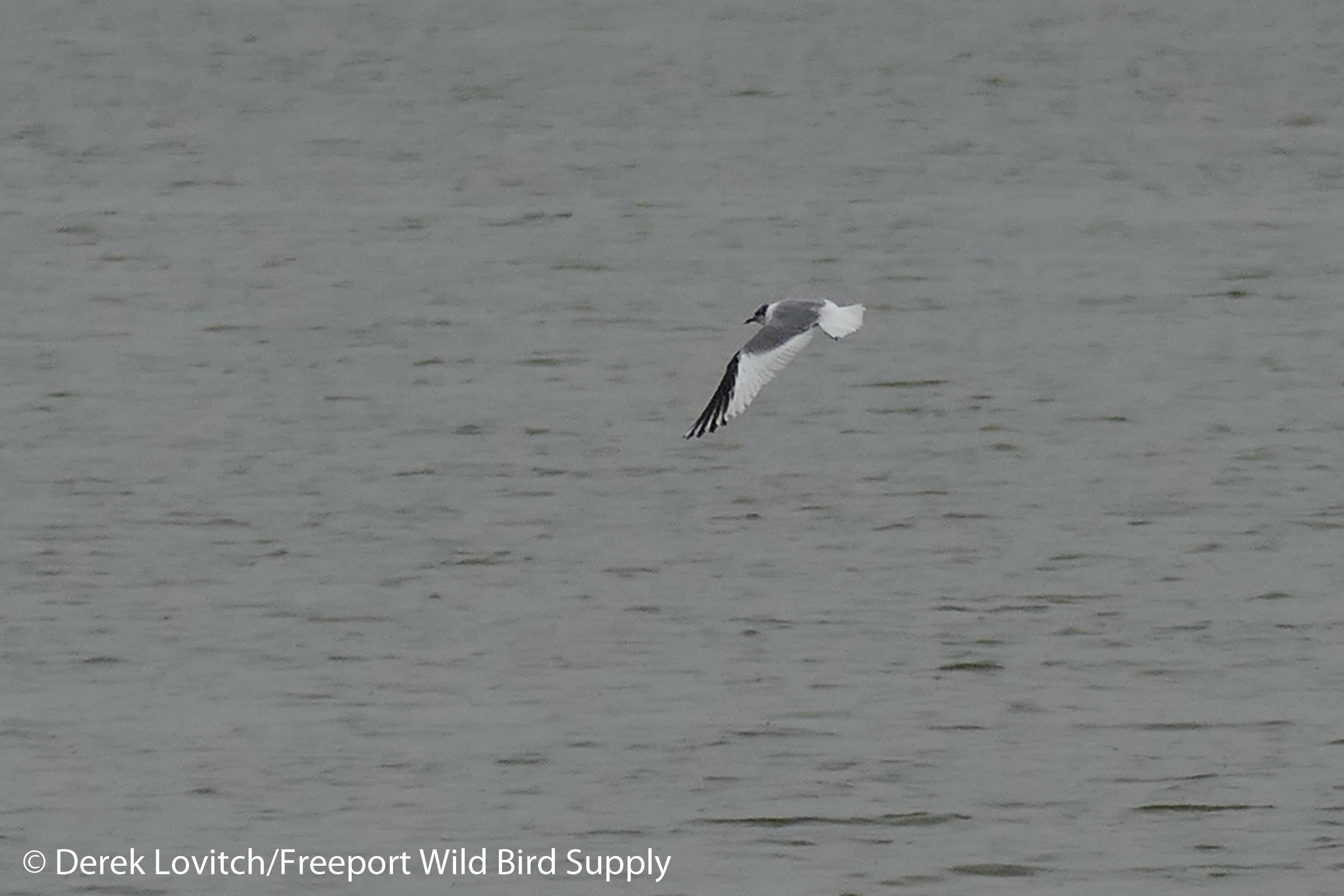
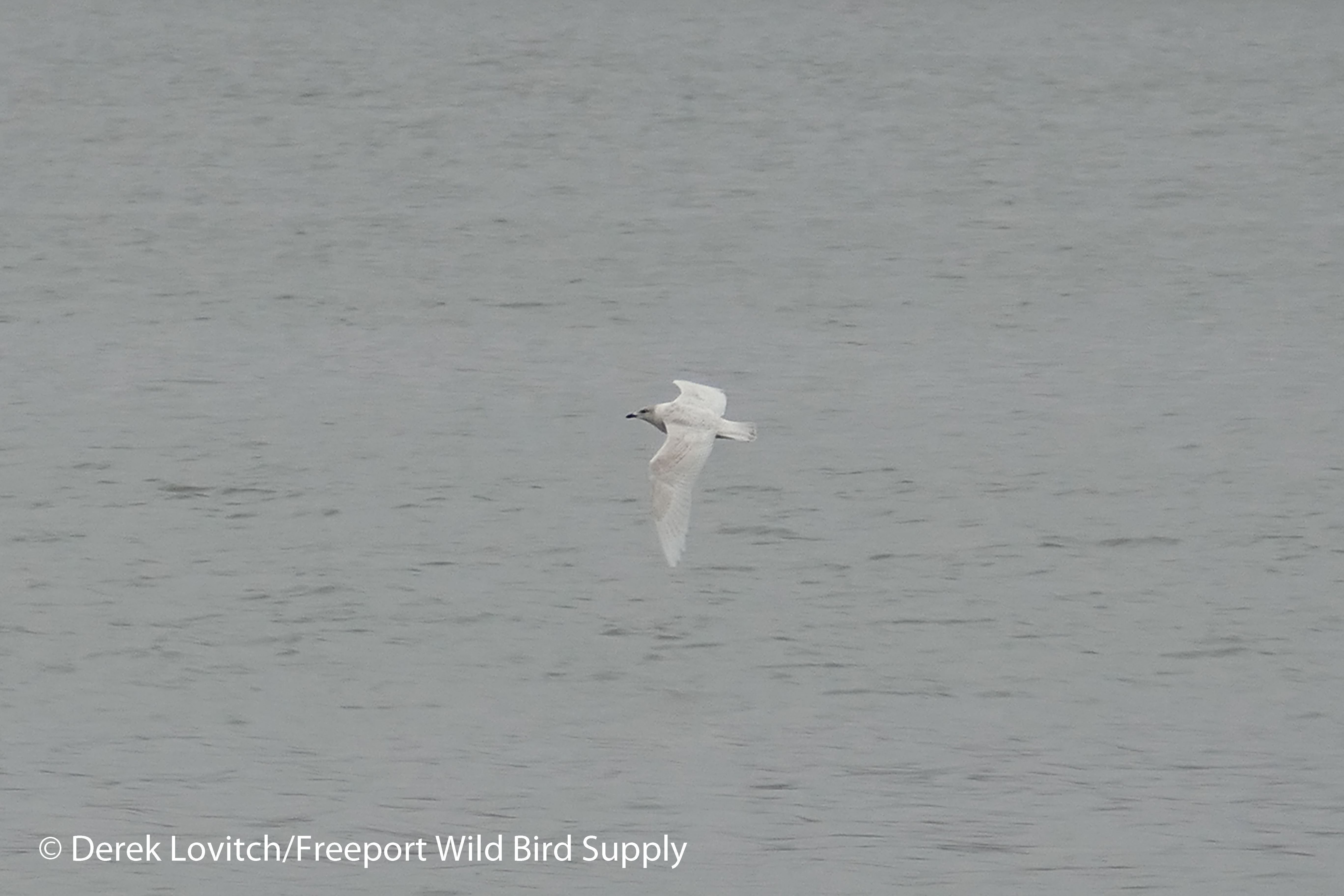
Whether blown inland by the strong winds or “grounded” as it cross-cut over land, this pelagic is not what one expects while scanning the ducks at Sabattus. An early 1st Winter Iceland Gull (later, two), and a rare-inland sweep of all three species of scoters (9 Surf, 4 Black, and 1 White-winged) were all related to the weather as well.
Similarly, an adult Black-legged Kittiwake out of place in a pond at Fortune’s Rocks Beach on Sunday was likely storm-related. Although regular to downright common offshore, this is not a bird we usually see onshore in southern Maine.
One can only imagine what else was on the 2,600+ lakes in the state of Maine during and immediately after the storm! Jeannette and I did check a few spots around Sebago Lake on Halloween, but it was surely too long after the storm, and the only birds of some note we turned up were single Dunlin and Black-bellied Plover (fairly rare inland, especially this late) at Raymond Town Beach.
I bird hard this time of year, doing my best to finish projects and keep my schedule as clear as possible to afford as much time in the field during these fruitful weeks. While I skipped birding in Portland, I did cover a lot of ground, and searched for odd birds in odd places, as well as focusing on the seasonal “migrant trap” hotspots.
In doing so, I found a few good birds, including this Lark Sparrow (always a treat away from Monhegan) at Pott’s Point in Harpswell on 11/10:
As for wayward vagrants seen around the state by others, there were quite a few from the south: a Blue Grosbeak in Portland on 10/31, a couple more Yellow-breasted Chats were found here and there, and most surprisingly, a Blue-winged Warbler in Saxl Park in Bangor on November 7th – this early migrant simply has to be a reverse-migrant or 180-degree misoriented migrant from points south; right? And the headlines, from the southwest, as a Cave Swallow reported from Cape Elizabeth on the 12th.
From the west (and/or mid-west) came a Clay-colored Sparrow at Two Lights State Park on 11/6 and a few scattered Dickcissels around the state (but where are the Western Kingbirds this year?). A Cattle Egret in South Thomaston on 11/6 and another in Pittston on the 13th could have come from either direction.
But it’s not just rarities that make this time of year so much fun. There are all of the regular migrants that are still “lingering.” Some of the late birds that I have seen in the past weeks included a Red-eyed Vireo along the Saco Riverwalk and 1 Semipalmated Sandpiper at Biddeford Pool Beach on 10/30, a Red-eyed Vireo at Sandy Point on 11/1, a Pine Warbler and a late-ish Winter Wren on Bailey Island in Harpswell on 11/4, a slightly tardy Yellow-bellied Sapsucker with Jeannette at Beaver Park in Lisbon on 11/8, a Turkey Vulture over Falmouth on 11/11, two Winter Wrens on Peak’s Island on 11/14, and a smattering of Hermit Thrushes.
Other birders also reported the usual slew of truant migrants, such as a smattering of Baltimore Orioles, a couple of Scarlet Tanagers, and a decent variety of late warblers here and there. There’s still a Marbled Godwit, 4 American Oystercatchers, and 2 Red Knots at Hill’s Beach in Biddeford Pool; I enjoyed them on the 30th, but they continued to be reported through at least 11/2 with the godwit still being reported as of 11/12! A few Long-billed Dowitchers were reported, with the one at Sabattus Pond on 11/5 being at the most unexpected location.
The winner, however, is the immature female Ruby-throated Hummingbird that appeared at a feeder on Cousin’s Island in Yarmouth on November 10th! I viewed it the next morning and it continues through today, the 14th. Although the photos taken by the homeowner looked good for “just” a Ruby-throat, I hoped I was missing something from the still images. Any lingering questions/hopes I had were dashed however.
That being said, it’s still a great record. Through our store we have been promoting keeping up hummingbird feeders into November for over a decade, and our database of observations after early October is growing. When I first got a call yesterday, I was sure this was going to be “a good one.” It was Nov 10th after all!
Amazingly, this is the same house that hosted a Selasphorus hummingbird last fall! In other words, it sure does pay to keep those feeders out, even if it’s “just” a Ruby-throat!
Other, more seasonal, highlights for me over these two weeks included the following. Jeannette and I had 100 Horned Larks along Mayall Road in Gray/New Gloucester on 10/31; 18 Snow Buntings and 13 Horned Larks flew over Bailey Island on 11/4; a Lapland Longspur with 6 Horned Larks were at Stover’s Point Preserve in Harpswell on 11/10; two Ruddy Turnstones were at Winslow Park in Freeport on 11/12 with the Saturday Morning Birdwalk group – one of only two or three places in the state we regularly see them during the winter.
This Barred Owl on Bailey Island on 11/4 was a treat. Any day with an owl is a good day!
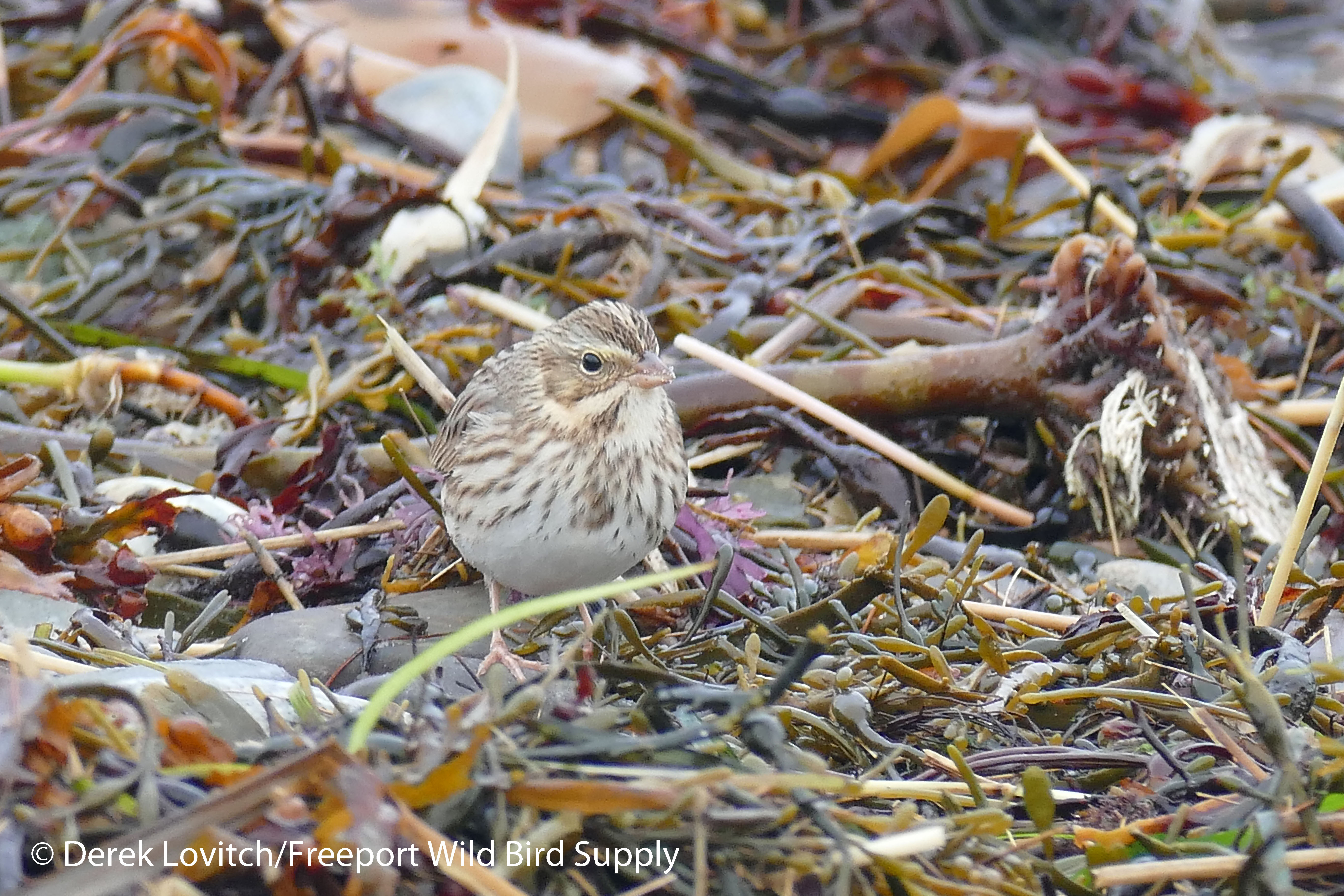
Meanwhile, the new arrivals – including many species that will be spending the winter with us – continue to arrive, my “first of seasons” this week included 2 Common Goldeneyes at Sabattus Pond on the 29th, 2 “Ipswich” Savannah Sparrows at Timber Point in Biddeford on 10/30…
…lots of Horned Grebes arriving all over, 2 Harlequin Ducks at East Point in Biddeford Pool and 3 Purple Sandpipers at Hill’s Beach on 10/30.
There were also plenty of Dunlin and Sanderlings around this week, such as this one Dunlin nestled amongst the Sanderlings on Biddeford Pool Beach on the 30th.
Waterfowl migration is in full effect, and not just at Sabattus Pond (although that is certainly one of the top spots in the state). Scoters, Long-tailed Ducks, Red-breasted Mergansers are all piling in, and dabblers are also on the go, such as the single drake Northern Pintail and American Wigeon at Great Pond in Biddeford on 10/30. Common Mergansers are also now arriving; I saw my first migrants at Sebago Lake on 10/31.
Jeannette and I visited Sabattus on a gorgeous, warm day on the 8th, with glass-calm conditions allowing for careful combing through the masses: 649 Ruddy Ducks, 510 Mallards, 176 Lesser and 119 Greater Scaup, 104 American Black Ducks, 73 Buffleheads, 69 Hooded Mergansers, 40 Common Mergansers, 13 Northern Pintails,11 Common Goldeneye, 8 Green-winged Teal, 5 White-winged and 1 Surf Scoter, 4 American Wigeons, 4 Common Loons, and a very-rare-inland Red-necked Grebe.
On 11/13, I returned with a Birds on Tap – Roadtrip! tour with our partners at the Maine Brew Bus. Although I didn’t count everything as carefully as I do when on my own, “Fall Ducks and Draughts” did record 600+ Ruddy Ducks, 3 Gadwalls, AND 2 White-winged Scoters amongst the 14 species of waterfowl present.
The “Greater Yarmouth Goose Fields” have been slow this year so far, likely also due to the mild weather and lack of early snowfalls to our north. In fact, the only “good” goose so far has been a “Blue” Snow Goose that showed up during the week of October 17th continuing through at least 11/11. Canada Geese numbers remain rather low however; I have still not surpassed even 600 total birds this season.
There’s still some passerine migration a’happening, as well. For example, my last two days at Sandy Point for the season yielded 221 birds on 10/31 (led by 123 American Robins and 18 American Crows) and 131 on 11/1 (led by 59 Dark-eyed Juncos and 44 American Robins). Common Grackles and a smattering of Red-winged Blackbirds are still heading south, although their numbers are greatly reduced over the past week.
Sparrows also continue to move through, with lots of Dark-eyed Juncos and White-throated Sparrows on the move, and my first American Tree Sparrow arriving at the Yarmouth Town Landing on 11/5 during our Saturday Morning Birdwalk, followed by more as the weeks progressed. A White-crowned Sparrow at Biddeford Pool on 10/30 was getting late, but there are still scattered Chipping Sparrows here and there as usual, including one still here at the store’s feeders.
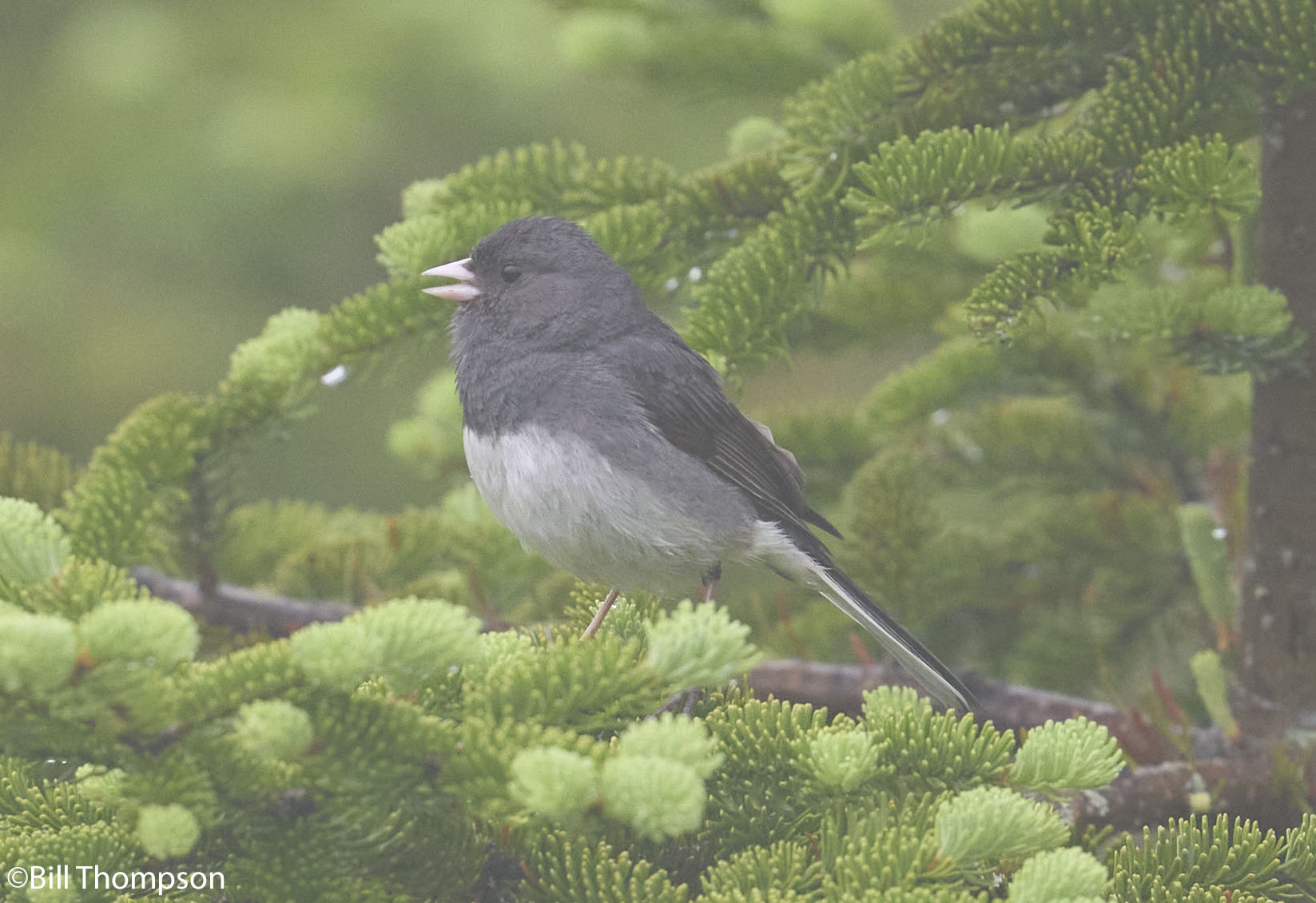
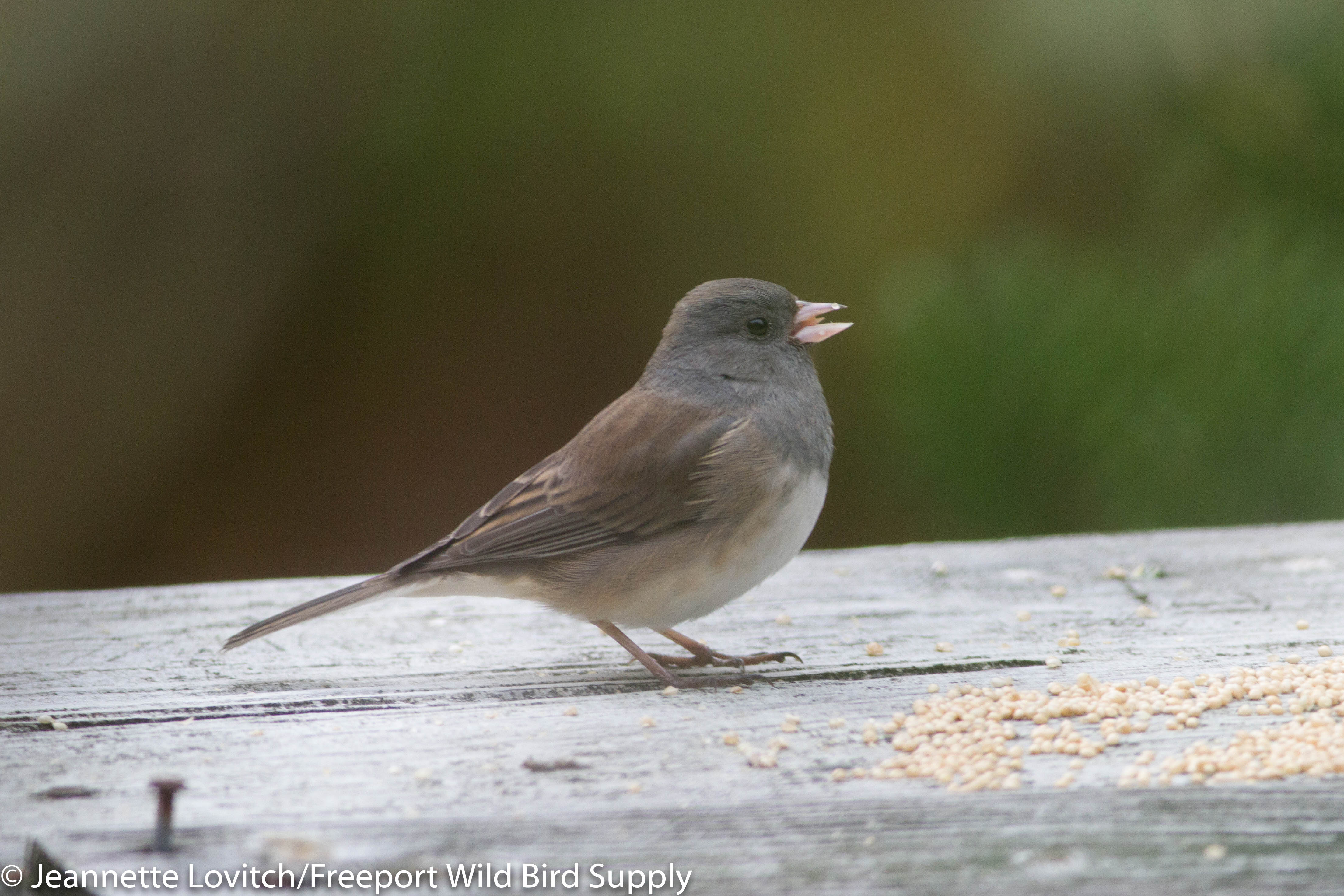
This junco on our back porch on November 6th appears to be of the inter-mountain subspecies/hybrid swarm often labeled as “cistmontanus.” It’s definitely not a pure “Oregon” Dark-eyed Junco, and the curved hood with buff of the sides traveling up to below the fold of the wing, however, suggest that this is not a pure “Slate-colored” Junco either.
And speaking of feeder birds, a recent spate of Evening Grosbeak reports (I have heard or seen several 1’s and 2’s recently, but 6 were at Old Town House Park on 11/3), along with an uptick in Purple Finches and Pine Siskins are suggestive of a decent winter around here for at least some of the finches. I also had a few single Red Crossbills fly over in a handful of locations recently. And the first Northern Shrike reports have started trickling in.
But overall, we’re off to a fairly slow start to the November Rarity Season. My guess is the lack of cold fronts early in the fall ushered fewer birds east (e.g. Western Kingbird) but also it remains fairly mild. I’m just not sure birds have begun concentrating yet in places that birders find them (like coastal migrant traps, city parks, etc). But as temperatures continue to drop, this might change. Afterall, after a very slow November last year (also very mild), December was simply incredible.
As the shorter days get colder (maybe), I would expect more birds to begin turning up, especially at feeders and along the immediate coast. The coming weeks always produce something remarkable.
A blast of cold, Canadian air finally arrived this past weekend, as evidenced by the wind map of 11/11.
However, it might be hard to top the incredible and unprecedented White Wagtail that showed up in Rye, New Hampshire on 11/2 through early the next. You know I’ll be trying though!











































 Maine Birding Field Notes