Tag Archives: Common Ringed Plover

The 2024 Next Maine Birds Predictions List.

The only thing sweeter than seeing a first state record is when you find it yourself!  This Spotted Towhee that I found in November at Fort Foster in Kittery was #4 on my list of next birds for Maine.

It’s once again time for my annual Predictions Blog, where I view into my crystal binoculars and attempt to forecast some of the “new” birds to grace the State of Maine – and then my own personal state list – in the coming year.

It was another great year for “mega” rarities in Maine. Whether it’s more birders and better communication, a climate in crisis, neonicotinoid pesticides effecting navigation, and more – or likely, all of the above – more really strange birds are ending up in really strange places – Maine definitely included. Four new species showed up in Maine in 2023, plus a first state record whose photos surfaced from 2022. I also had another pretty good year, despite much reduced birding as I recovered from shoulder surgery and a series of setbacks thereafter coupled with a record-busy year for tours and private guiding.

Last winter, recovering from shoulder surgery, I spent a lot of time watching our feeding station, quantifying those ebbs and flows, and paying a lot of attention to behavior. From dominance hierarchies in junco flocks to a case of Sharp-shinned Hawk cannibalism, dedicated feeder-watching (in a house designed to maximize it!) was a great way to pass the time stuck indoors. I recounted many of my observations in blogs earlier this year, especially these two:

Once up and about, I found myself forgoing birding mornings afield – especially in the fall – to just enjoy migration through our property in Durham and build our rapidly expanding yard list. Having moved in last fall, it was exciting to see the seasons change. Fall migration was particularly productive, and I found myself not wanting to bird anywhere else before work. Some great yardbirds over the year included a Snow Goose on 3/27, three different Mourning Warblers (one each in May, June, and September), an American Bittern for the day on 8/28, and a Dickcissel on 9/1. The yard was already approaching 150 species by year’s end.

Furthermore, I put more effort than ever into birding Androscoggin County in general, and while I didn’t find any rarities in the county this year, I did spend lots of quality time at Sabattus Pond and in search of patches for future birding focus – I didn’t find any of those, either, but I did get to know my new home county a lot better. In other words, when I did get out birding this year, I put a lot more focus on staying close to home – this less carbon-intensive mode of birding is what I believe the future of birding is (eg the “5 Mile Radius” list, which is all the birds seen within a five mile radius of one’s home) anyway, and I plan on keeping this focus for 2024.

But back to the rarities. Let us start as usual with a look at last year’s prognostications and see how I did. 

Of the five new species for Maine, three were in my Top 12. I found Maine’s first confirmed Spotted Towhee at Fort Foster in Kittery on November 19th (and continued obligingly through the end of the year). This long-overdue addition to the state’s list was #4 on my predictions list.

Right behind it at #5 was the Hammond’s Flycatcher found on Monhegan in October. I’ve felt flycatchers were going under-detected in Maine for a while, and therefore they have been prevalent on my predictions lists. Then, a photograph from Mount Desert Rock from August of 2022 was reanalyzed and showed a Western Flycatcher (as it is once again rightly called, with Pacific-sloped and Cordilleran finally “lumped” back together), which was #12 on my list.

That strange date for a vagrant flycatcher is rather remarkable, as was the other addition to the list from the MDI region when a Red-footed Booby was photographed in Lamoine in July of this year. This tropical sulid didn’t even make my honorable mention list.

And finally, just before the clock was about to strike twelve, a remarkable Hepatic Tanager was found in Stockton Springs! While it was on my radar due to several well out of range records, it did not qualify for my Honorable Mentions list. It was the icing on the cake to another exceptional year of birding in Maine.

With three birds from the 2023 List off the board, I’ll do some reshuffling. A possible Gray Heron was photographed in Scarborough Marsh on the Portland CBC in December, but the photos – although very suggestive – were inconclusive. A search the next day didn’t turn anything up, but I hope others remain on the lookout. Nonetheless, it was suggestive enough to bump Gray Heron up from my Honorable Mention list into the Top 25, that is for sure. Lewis’s Woodpecker, Dusky Flycatcher, and White Wagtail are making their debut in the rankings while I’ve dropped Black-tailed Gull out of the Top 25 as North American records seem to have dried up.

As we found out when we saw this Gray Heron while vacationing on Prince Edward Island in 2022, they are not always easy to pick out of a crowd, as we looked through a lot of Great Blue Herons during our search for this long-staying individual. Hopefully, our view in Maine will be a little better, like this one Jeannette photographed in Norway.

  1. Neotropical Cormorant
  2. Black-chinned Hummingbird
  3. California Gull
  4. Limpkin
  5. Gray Heron
  6. Bermuda Petrel
  7. Graylag Goose
  8. Little Stint
  9. Audubon’s Shearwater
  10. Common Shelduck
  11. Anna’s Hummingbird
  12. Heerman’s Gull
  13. Common Ground-Dove
  14. Allen’s Hummingbird
  15. Spotted Redshank
  16. Lewis’s Woodpecker       
  17. Ross’s Gull
  18. Black-capped Petrel
  19. Lesser Nighthawk
  20. Elegant Tern
  21. Dusky Flycatcher
  22. Painted Redstart
  23. Hooded Oriole
  24. White Wagtail
  25. Common Scoter

Personally, I added 5 new species to my own Maine State List this year, despite relatively limited birding and a less concentration on rarities in general. Three days after my shoulder surgery, however, Jeannette loaded me into the car and took me down to Timber Point in Biddeford for a Common Ringed-Plover, which was #10 on my predictions list. Can’t say it was my most comfortable twitch, however. Medication helped.

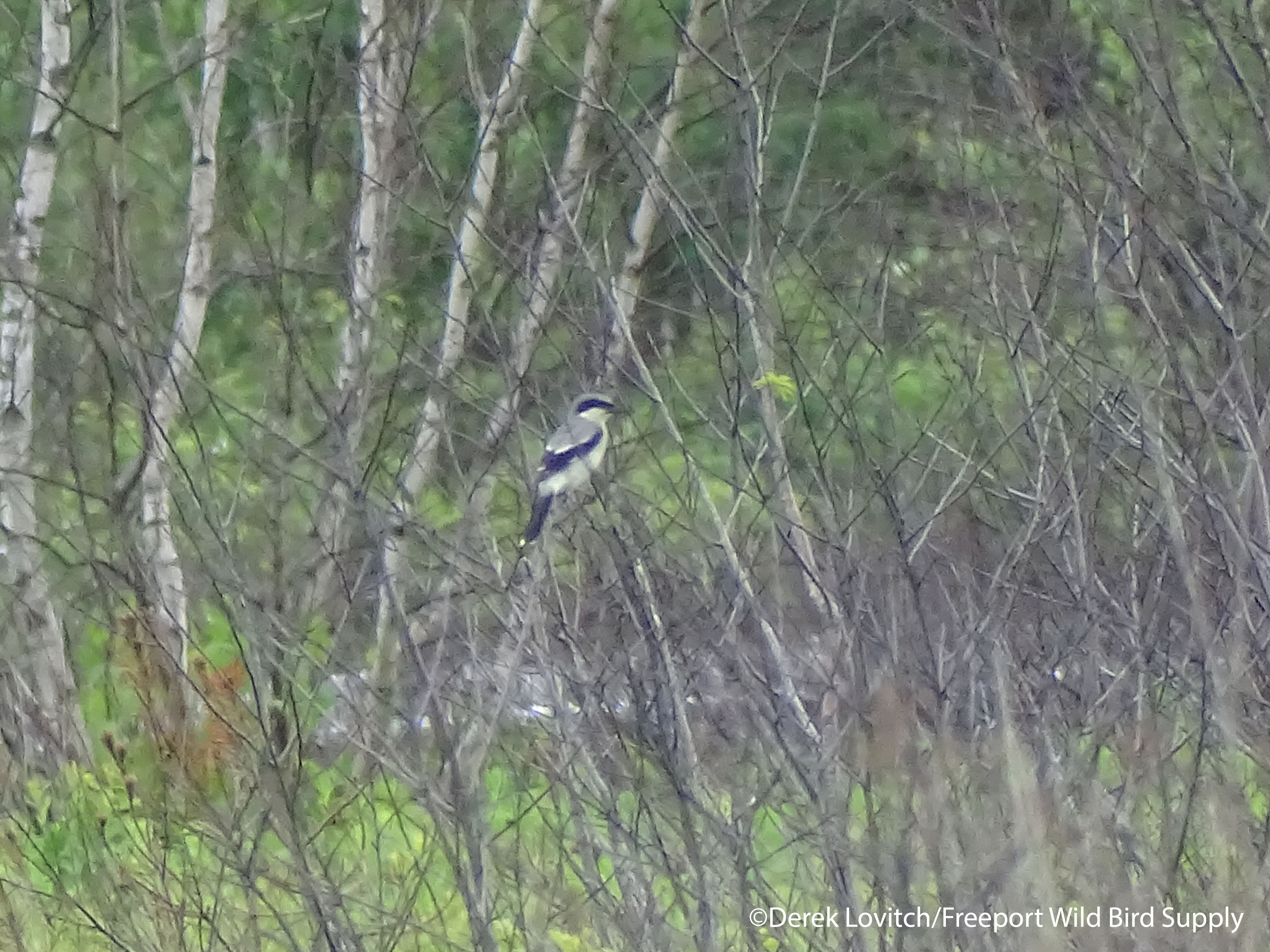
In June, I raced down with Jess Costa between tours to see the Loggerhead Shrike at the Kennebunk Plains, which was my 399th species in Maine (recently relegated to my honorable mentions lists as they have become increasingly rare anywhere out of their contracting range).
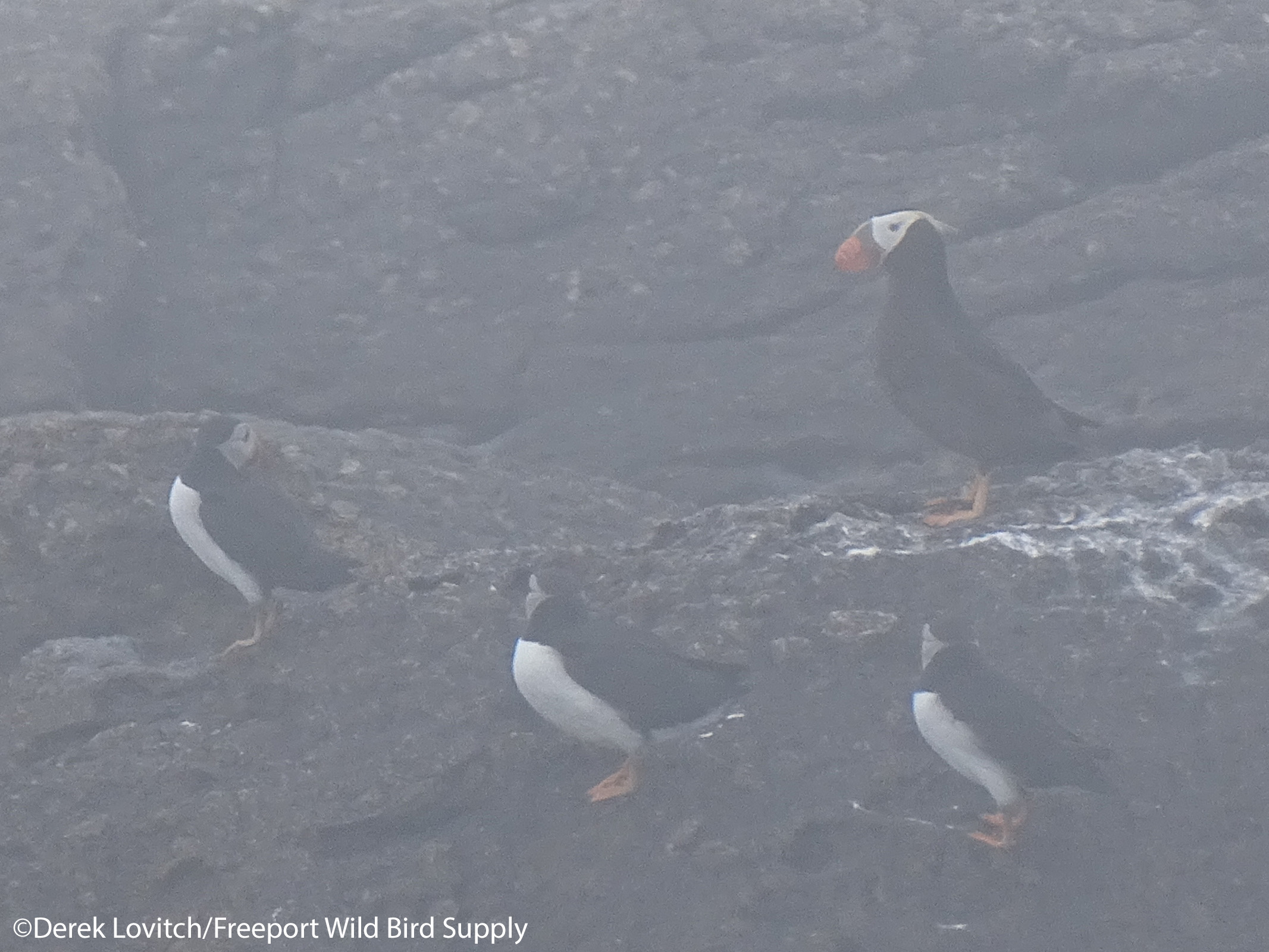
So for #400, I said it had to be “the Tufted Puffin or self-found” – I wasn’t going to chase anything else. With several sporadic sightings in June and July, and with numerous boat tours scheduled in July, I had high hopes. With an observation at Eastern Egg Rock on July 9th, and with a tour there scheduled the next afternoon with our partners Cap’n Fish’s Cruises, I was getting excited. And to hedge the bet, I hopped aboard their morning Eastern Egg Rock trip, and as we approached the island in the fog, a large, dark, puffin stood towering over the local residents!  “TUFTED PUFFIN!!!” I exclaimed. No microphone was necessary. And this was #400. 

With so few sightings – all being one-minute wonders – in the previous years, I hadn’t elevated this to my personal Top 25, but that’s OK – it was just as sweet.
A Purple Gallinule (honorable mention) in the North Maine Woods near Moosehead Lake in October was beyond my chasing range, but when another – or perhaps, the same bird – appeared at a small park in Kennebunk, I was on my way!
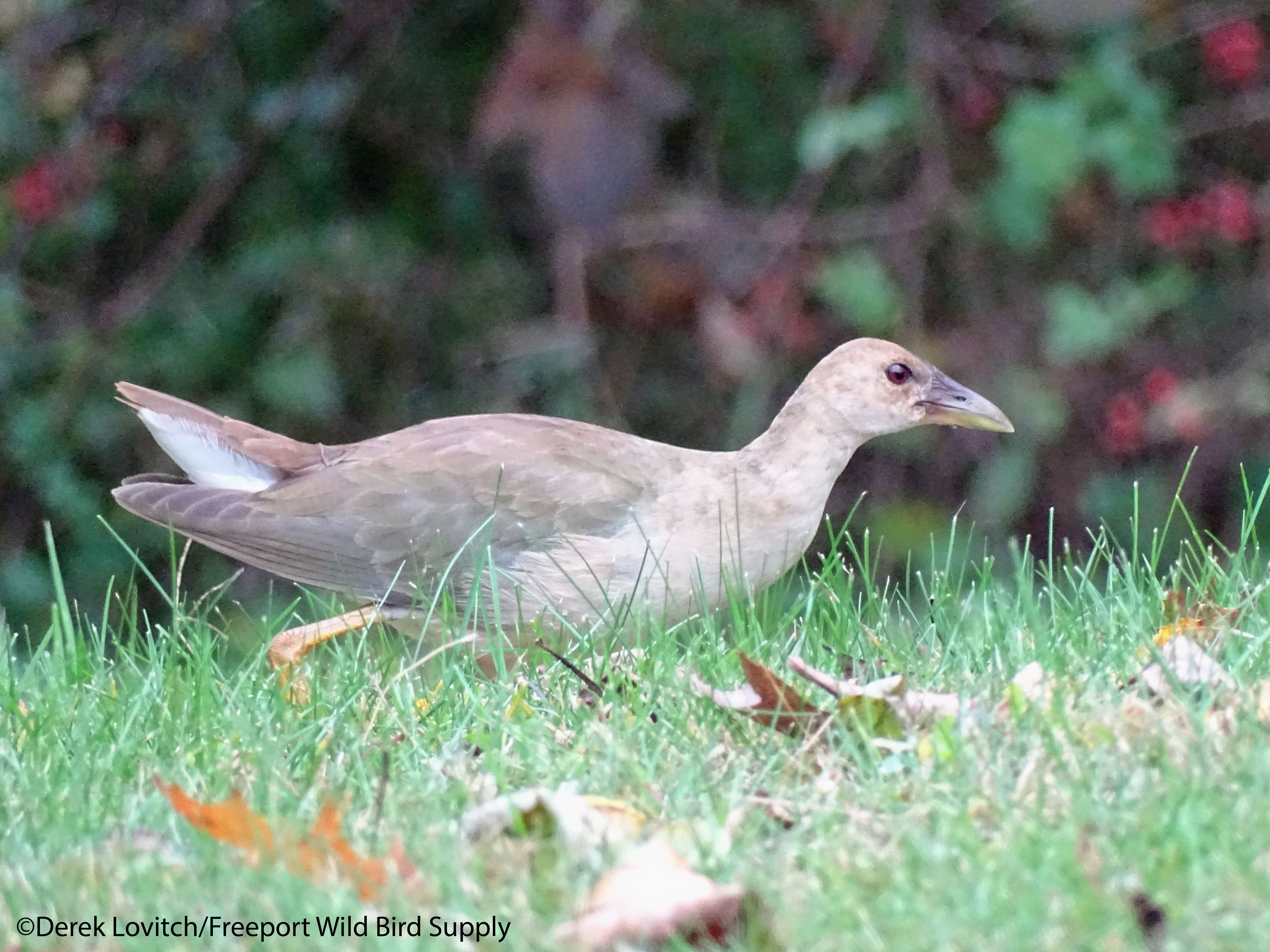
The absurdity of the locale and ease of viewing simply forced me to go back for another look a week later with Dan Nickerson…after dipping on a nearby Western Wood-Pewee as Luke Seitz struck again. Making that miss worse was the reason I didn’t chase it on its day of discovery: we were on lockdown during the manhunt after the tragic Lewiston mass shooting. My state list was just not a priority I will readily admit.

Of course, the aforementioned Spotted Towhee, which was #15 on my list was a welcome self-found addition.

And finally, Evan Obercian and I paid a visit to the Hepatic Tanager in Stockton Springs on New Year’s Eve, bringing 2023 to a close.

Of course, I missed a few rarities this year, too! Although I only “dipped” on one chase (the pewee), I was simply unavailable to chase anything else, such as the Kirtland’s Warbler (unlisted) on Seal Island in September (can’t get there from here!).  And I just didn’t have the time to chase Hammond’s Flycatcher (#14) on Monhegan. Meanwhile, the Red-footed Booby (unlisted) was a one-day wonder, and of course I missed a couple of Franklin’s Gulls (#2) as usual. Notorious one-day wonders, there was one on September 24th passing Schoodic Point, and one on November 18th at Long Sands Beach. I was going to “end up” at Long Sands the next day at the same time and tide, but my birding outing began and ended with my towhee find at Fort Foster. This rare but regular transient is officially my nemesis in the state!

But the one that really stings was missing out on Crested Caracara once again.  I was birding with clients in Spurwink Marsh in late May when a friend texted me that he had one (the one?) flying over his house…we were no more than 2-3 miles away! Thankfully, my clients were game for a little searching, so we spent some time looking before having to move on.  The caracara then resurfaced a couple of other times in the Mid-Coast, near Belfast, but I was on Monhegan or with a tour group elsewhere. So close!

Last year, I also predicted that my #400 would come from my Top 25 list. But Tufted Puffin wasn’t on it, so I was wrong about that. Forgive me if I wasn’t upset, however.

I did some reshuffling (it’s just a matter of time before I finally find or catch up with a Franklin’s Gull, right? RIGHT!?), and therefore my forecast for my next 25 species on my personal Maine list reads as follows:

  1. Franklin’s Gull
  2. American White Pelican
  3. Neotropic Cormorant
  4. Brown Pelican
  5. California Gull
  6. Brown Booby
  7. Crested Caracara
  8. Slaty-backed Gull
  9. Boreal Owl
  10. Calliope Hummingbird
  11. Graylag Goose
  12. Cerulean Warbler
  13. Gull-billed Tern
  14. Pacific Golden-Plover
  15. Limpkin
  16. Wood Stork
  17. Black-chinned Hummingbird
  18. Brewer’s Blackbird
  19. Yellow Rail
  20. Virginia’s Warbler
  21. Western Wood-Pewee
  22. Virginia’s Warbler
  23. Gray Heron
  24. Common Gull
  25. Heerman’s Gull

It’s about time for me to finally see a Franklin’s Gull in Maine.

But really, who knows what might show up these days? For example, I am sure that no one had Red-flanked Bluetail on their Next Birds in New Jersey list, but one showed up in a random inland neighborhood in early December. It continued through year’s end, and it was awfully nice of it to remain at least through December 26th, when we just happened to be in the area for Christmas. In fact, it was only 24 minutes away from my Mom’s house. A bonus Christmas gift!

Bring it on, 2024. But less injuries and other birding-limiting events, please. I also have a goal of finding a rarity in Androscoggin County away from Sabattus Pond or our property! Will it be on this list?

A Month of Birding Out the Window.

Sharp-shinned Hawk drama has been keeping me entertained for the past month.

For the most of the past four weeks, my birding has been exclusively at our feeding station at our home in Durham as I recover from shoulder surgery.  We designed our house to maximize feeder- and yard-viewing opportunities, and I am sure thankful that we did! It will come as no surprise to anyone who knows me that I don’t sit still well, so my extended feeder-watching sessions have been both mentally and physically therapeutic. It has also been quite productive! And keeping track of daily numbers has been quite elucidating.

Despite our new construction being completed (well, mostly!) in October and virtually no landscaping occurring, we have been very pleasantly surprised by the diversity and activity – a reflection of the quality of the habitat on our property (and hence why we purchased it).  Nonetheless, I did not expect to be hosting 19-22 species a day at the feeding station in our first winter!

My feeder-watching vigils began the day after my surgery, on January 19th. The ebbs and flows during that first week were quite insightful. With three storm systems and snow piling up, the daily changes were noticeable, and mostly predictable. Our feeders were busiest with 22 species on 1/23 as over 14”of snow accumulated here in Durham. Numbers of ground-feeders peaked that day, with the week’s high counts of Mourning Doves (27), American Tree Sparrows (9), Northern Cardinals (11-12), and White-throated Sparrows (3). The 22 Dark-eyed Juncos was down a bit from a high of 25 following the first snowfall on the 20th.

Despite adding a third platform feeder, some ground-feeders had moved on by week’s end: 24 Mourning Doves, 14 Dark-eyed Juncos, 10 Northern Cardinals, and only 1 White-throated Sparrow remained, although American Tree Sparrows bumped back up to 9 with the snowfall of the 25th.

Eastern Bluebirds, meanwhile, had been increasing, with 4-6 daily becoming 14 by week’s end. Two House Finches became 5; they often travel with bluebirds in winter, so their simultaneous rise is not surprising. A single European Starling on 1/24 was unwelcome.

We picked up a second Red-breasted Nuthatch by week’s end, while one each of Red-bellied Woodpecker and Carolina Wren continue.  Resident woodland birds that travel together in a mixed-species foraging flocks are notoriously hard to count, as it’s often impossible to know whether you are looking at the same flock or multiple flocks as they come and go throughout the day. Therefore, we are left to take the daily “high count” (maximum number of birds seen at one time) only as our “total,” so trends are harder to detect. My high count of Black-capped Chickadees did increase from 6 to 10 by week’s end, however, while a pair of White-breasted Nuthatches, 2 Downy Woodpeckers, 2-4 Hairy Woodpeckers, and 4 Tufted Titmice remain the same.

We also have a single American Crow that visits daily, an irregular visit from a male Pileated Woodpecker, and I’m trying to get a feel for the wide variation in daily Blue Jay high counts (between 1 and 10).

The only disappointment so far this winter had been our finch diversity so far. A single Pine Siskin 1/19-20 and female Purple Finches during the storm on the 23rd were our only non-goldfinches in that first week. However, our American Goldfinch flock has more than made up for it with between 32 and 74 (1/25).

But speaking of finches, the “birds of the week” those first seven days were 5 fly-over Pine Grosbeaks on the 25th. Bald Eagles and a Red-tailed Hawk regularly fly past the windows, as does the daily commute of Herring (and a few Great Black-backed Gulls) moving up and down the Androscoggin River; hoping to tease out a white-winged gull for the yard list. We’ve also had a small flock of American Robins (up to 18) feeding on Winterberry and Multiflora Rose in the past few days.

By the second week, a relatively deep, now-frozen snowpack, and only a couple of weak weather systems, resulted in less daily variation in the numbers at our feeders here in Durham. Fluctuations in counts had more to do with the day’s weather and the presence of a Sharp-shinned Hawk (see below), rather than the seasonal movements of species as had occurred with the onset of “real winter” the week prior.

A lot of species counts stabilized, such as the daily average of about a dozen Eastern Bluebirds and up to 46 American Goldfinches.  However, some changes were noticeable, especially the ebbs and flows of ground-feeders: 6 American Tree Sparrows increased to 9, as many as 24 Dark-eyed Juncos decreased to 14, and after entertaining a third White-throated Sparrow for a couple of days, we are back down to two.

An impressive 13 Northern Cardinals on 1/29 was a seasonal high count, but otherwise most counts of the 18-21 species each day remained about the same. I had still not confirmed the presence of a second mixed-species foraging flock, for example, and our only finches remain the aforementioned impressive number of American Goldfinches and 4 House Finches. 

Since my “observation week” begins on Saturdays, Week 3 began the morning of February 4th with some extreme cold weather. And, wow, that was some cold!  Wind chill records (e.g. -45F in Portland and an astounding -108 at Mount Washington) Friday night into Saturday were thankfully short-lived. Here at our home, our windchill was “only” -21 on a low of -16F, as our anemometer was not receiving the full force of the wind.

The short duration of the cold snap – as extreme as it was – didn’t seem to have much impact on feeder birds, especially as the rest of the week’s weather was rather benign. Our Carolina Wren made it through, and overall activity and diversity was similar to last week (scroll down for previous posts). 

American Goldfinches slowly declined at our feeders this (from 46 to a low of 22), likely as our birch crop is being picked clean. Sparrows were up again, however, with 15 American Tree Sparrows now after starting the week with 6.  Dark-eyed Juncos spiked again to 20 on 2/5-6 before settling back down to 18; three more than we started the week with.

A female Purple Finch returned, and a Brown Creeper was now spotted daily in the trees immediately behind the feeding station. And a single Wild Turkey has returned to the feeders after being absent since early winter. Unfortunately, a pair of European Starlings were now present.

Two noticeable declines this week were in Northern Cardinals (from 11 to 7) and Mourning Doves (from 28 to 14). Meanwhile, Eastern Bluebirds have been far less frequent at our feeders as the week went on. This is all likely the result of direct and indirect (disturbance) effects of the continuing Accipiter saga. Daily high counts of other species were similarly affected by the presence of two different Sharp-shinned Hawks this week (see below).

Not surprisingly, the spring-like weather (including two days of record warmth) and very little precipitation reduced overall activity at the feeding station during Week 4, beginning on 2/11. We now have some bare spots on a slope now, where birds have been foraging, and the snowpack is much reduced in the woods. There’s more natural food available and less calories burned, so there’s less need for supplemental food – it’s long past time to put the “dependency on feeders” myth to bed!

Nonetheless, this week saw another uptick in Mourning Doves (high of 27) and American Tree Sparrows (of 10). Dark-eyed Juncos returned to a high of 21, but they have been spending as much time on the bare slope of our berm then at the feeders.

Eastern Bluebirds have been much less frequent this week, with a high of only 3 and they’re not visiting everyday. Same for the House Finches they usually travel with in winter –it’s just a sporadic pair now. American Goldfinches, however, remain strong, with a high of 32 this week. Our latest singleton Purple Finch has apparently moved on.

Winter flocks are breaking up, and that’s likely why the bluebirds have been less frequent; they might be spreading out already. The mixed-species foraging flock of residents are breaking up as well, and “bickering” is increasing among them, especially the Black-capped Chickadees. Meanwhile, Hairy Woodpeckers are courting now, and territorial drumming is frequent.

And then, with temperatures spiking to over 50 degrees on the 16th, Jeannette had the first Red-winged Blackbird of the year flying north overhead!  Already. I expect diversity and daily counts to change more often in the coming weeks now.

Meanwhile, birdwatching is not just about counting, so I kept notes of interesting observations and behaviors through the duration of my time stationed in front of the window (and short walks up and down the driveway, weather and ice permitting). I enjoyed seeing the slow but sure progression of the season, as Downy and especially Hairy Woodpeckers became more territorial, and male Hairys especially began drumming, accelerating this week. A pair of Common Ravens was regularly observed, with pair-bonding flight displays increasing. Tufted Titmice and Black-capped Chickadees began singing more, too.

I’ve also conducted an experiment with some suet products that we may bring into the mix at the store. None of which, however, has come close to being as popular as our current offerings, however.

A few of my most interesting behavioral and natural history observations were:

1. 1/28: I watched a Dark-eyed Junco that was foraging along our foundation grab a large cutworm-like-caterpillar and smack it on the snow. As it began to eat it, a bluebird flew down and grabbed the caterpillar. I had not observed kleptoparasitism in bluebirds before!

2. 2/2:  The male Sharp-shinned Hawk that has been hanging around was pursued and killed by a second accipiter that had been undetected by us. The brutal end to the chase took place within 10 feet of me. It was quick, I was in shock, neither a camera nor binoculars was within reach of my working arm, and I was afraid to move as I didn’t want to disrupt the proceedings – it’s the worst feeling to flush a predator from its hard-earned prey and see that prey item suffer and go to waste. 

The thing is, I think the only-marginally larger predator was actually an adult female Sharp-shinned Hawk as opposed to the far more likely adult male Cooper’s Hawk. Cooper’s Hawks are known to kill Sharpies, but I am unaware of published accounts of cannibalistic Sharpies. It all happened too quickly, and accipters are much easier to identify in flight three miles away than when they are sitting in front of your face (at least as adults). Apparently I was too traumatized by the event (and/or slowed mentally by painkillers) to look at details of face pattern. But the relative size and the paler chest and less steely-back were highly suggestive of an adult female Sharp-shinned.  Hopefully, it will take up the territory and I will be able to confirm its ID circumstantially.  But it was a rather violent end to my feeder-watching week!

Although only circumstantial evidence, an unequivocal female Sharp-shinned Hawk was spotted (and positively identified!) the next day thereafter, leading credence to the rare cannibalism theory. It’s only circumstantial evidence, but I have little doubt this is the bird that took the male the prior day. Furthermore, I have not seen a Cooper’s Hawk here all winter. Absolutely fascinating, and I wish I had photos to document the gruesome event.

The plot thickened even further on the 8th, when I spotted (and photographed this time) a second-winter male (subadult) Sharp-shinned Hawk hunting the feeders in the morning.  He better be careful out there! The woods of Durham are unforgiving!

The next week, I didn’t see him as only the adult female was around.

3. I’ve been sorting through as many of the daily commuting gulls as possible, and finally on the 15th, I picked out an Iceland Gull for our 122nd Yard Bird!  Interestingly, it was an adult or near-adult, different from the 1st winter birds that have been frequenting the Lewiston-Auburn riverfront a few miles upriver.

For almost three weeks, I left the house or driveway exactly three times (a follow-up appointment, a field trip to see Avatar, and a successful chase of the Common Ringed Plover at Timber Point in Biddeford on 1/31. Jeannette dumped me in the car and we drove down – me fully reclined and with an icepack strapped on. The bird was present as we arrived, and since the word was just getting out, we even had a parking spot. She set me up behind the scope (I had to ask a fellow birder for assistance in moving it!) and then took some photos.  I was pretty uncomfortable on the way home – to put it lightly – but it was absolutely worth it!

It wasn’t until Monday, February 6th (just under three weeks since my surgery) that I went out for a little birdwalk with Jeannette at the Auburn Riverwalk. It was a lovely day, and it was fantastically birdy!  We found a hen Northern Pintail amongst nearly 500 Mallards, and had three 1st-winter Iceland Gulls – the most I have had here in several years.  The overall bird activity was quite a bit above average, as the cold snap finally put some ice on the river and helped to concentrate birds here. Unfortunately, we did not see the Harris’s Sparrow in Turner before my body had enough of being upright.

The next day’s outing, however, was for an easy twitch.  I only had to get out of the car and find some open space along the railing of the Arrowsic-Georgetown bridge over the Back River.

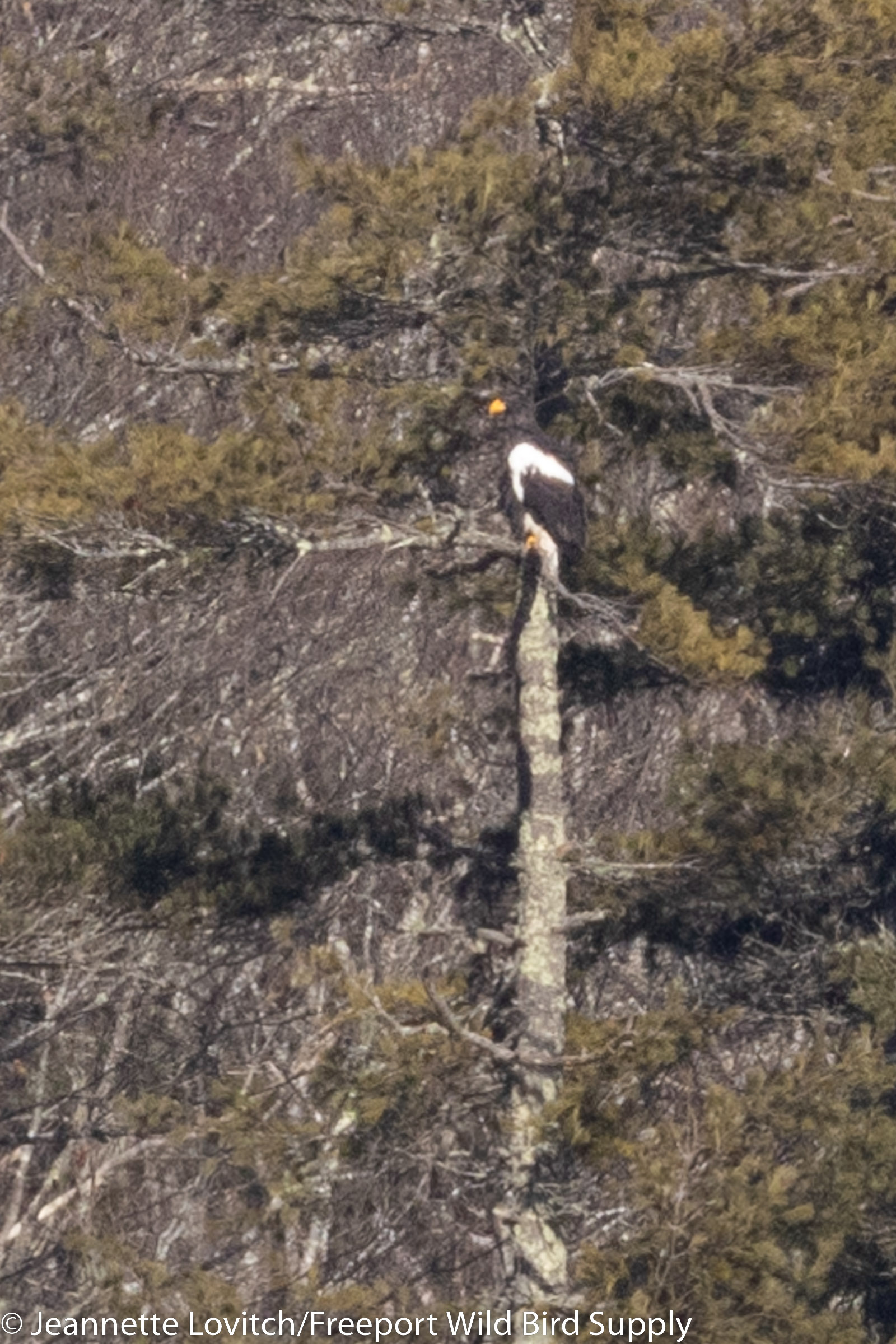
So yeah, the Steller’s Sea-Eagle is back, and it was in full (albeit fairly distant) view in our first visit with it of the year. I’ll get out of my recliner for a Steller’s Sea-Eagle any day!  It was also good to catch up with a friend and get out of the house for the second day in a row.

A few days later, Jeannette and I took a walk at Winslow Park in Freeport (2/9) where we were thrilled to find 7 Barrow’s Goldeneyes (3 drakes and 4 hens), the second highest count that I have had here in nearly a decade. They put on a great show, too.

A visit to the Auburn Riverwalk on the 13th yielded only one 1st-winter Iceland Gull, while a walk along Brown’s Point Road in Bowdoinham the next day produced a couple of pioneering Northern Flickers.

So there ya have it…my last month of birdwatching. With slow progress on my recovery, I expect feeder-watching will dominate my activity for a few more weeks, but temperature swings will make that interesting…and hopefully another snowstorm or two. I need to be out and about with few limitations by the time spring is here to stay!