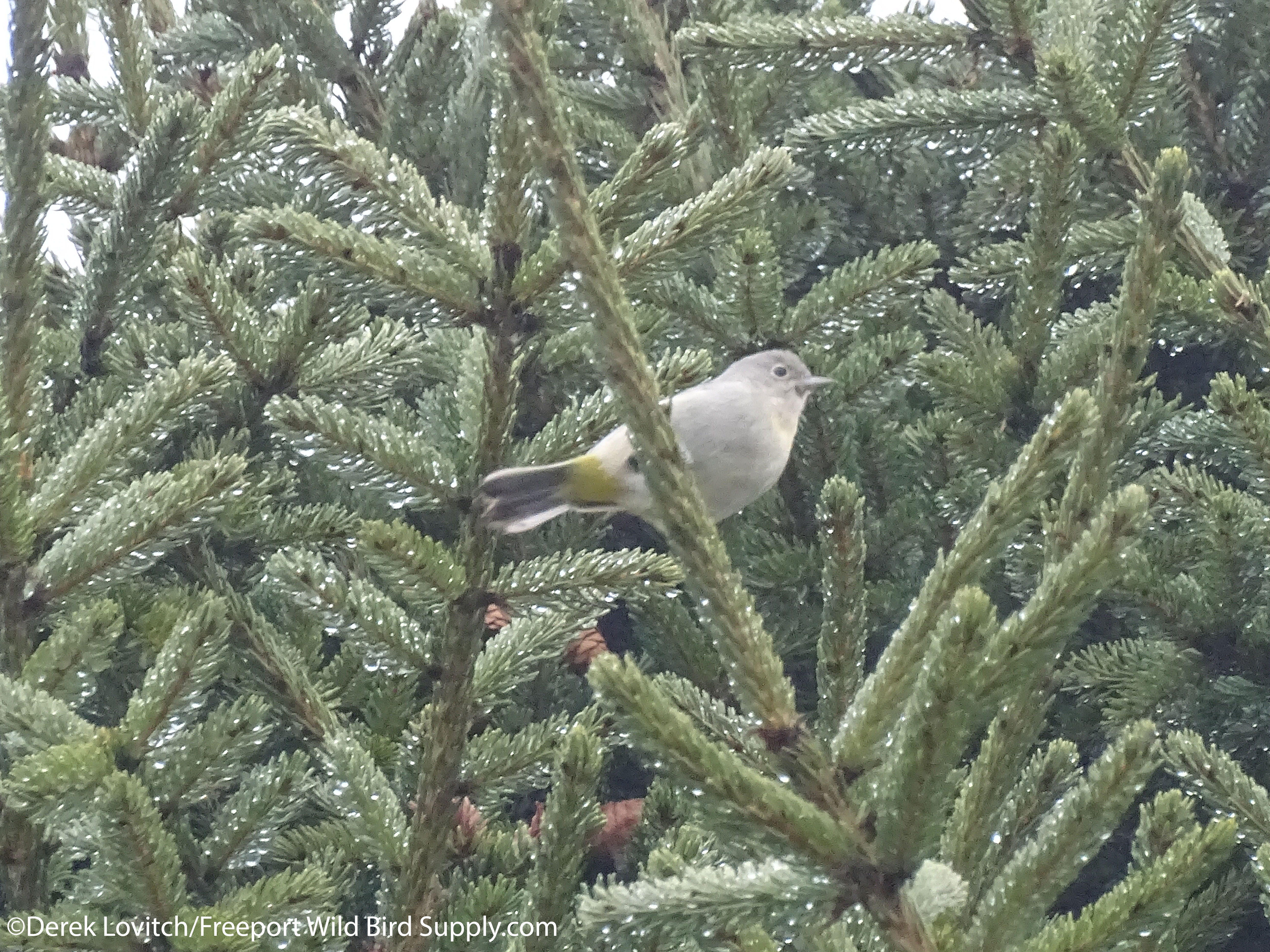
The state’s 4th or 5th Virginia’s Warbler – and the first away from Monhegan – was one of the rarest birds of the year in Maine, and it was even more special for me since I found it on Peak’s Island in November!
It’s once again time for my annual Predictions Blog, where I view into my crystal binoculars and attempt to forecast some of the “new” birds to grace the State of Maine – and then my own personal state list – in the coming year.
But first, let’s look back at last year’s predictions.
It was a great year for birding in Maine, with rarities at every season, especially during a truly epic November Rarity season. As a snapshot of just how many notable species were in the state in 2025, consider Noah Gibb and Stacey Huth’s Maine Big Year total of 332 species broke the old record by an astounding 10! Surprisingly, with such an eventful year for rarities in the state, no new species were added to the state’s list in 2025. With that, I’m going to keep Next 25 Species to be found in Maine list the same, but based on current trends and regional sightings, I am doing a little shuffling at the top to bump up Limpkin as the northward mini-irruptions of this tropical/sub-tropical bird continue.
1. Limpkin
2. Scopoli’s Shearwater
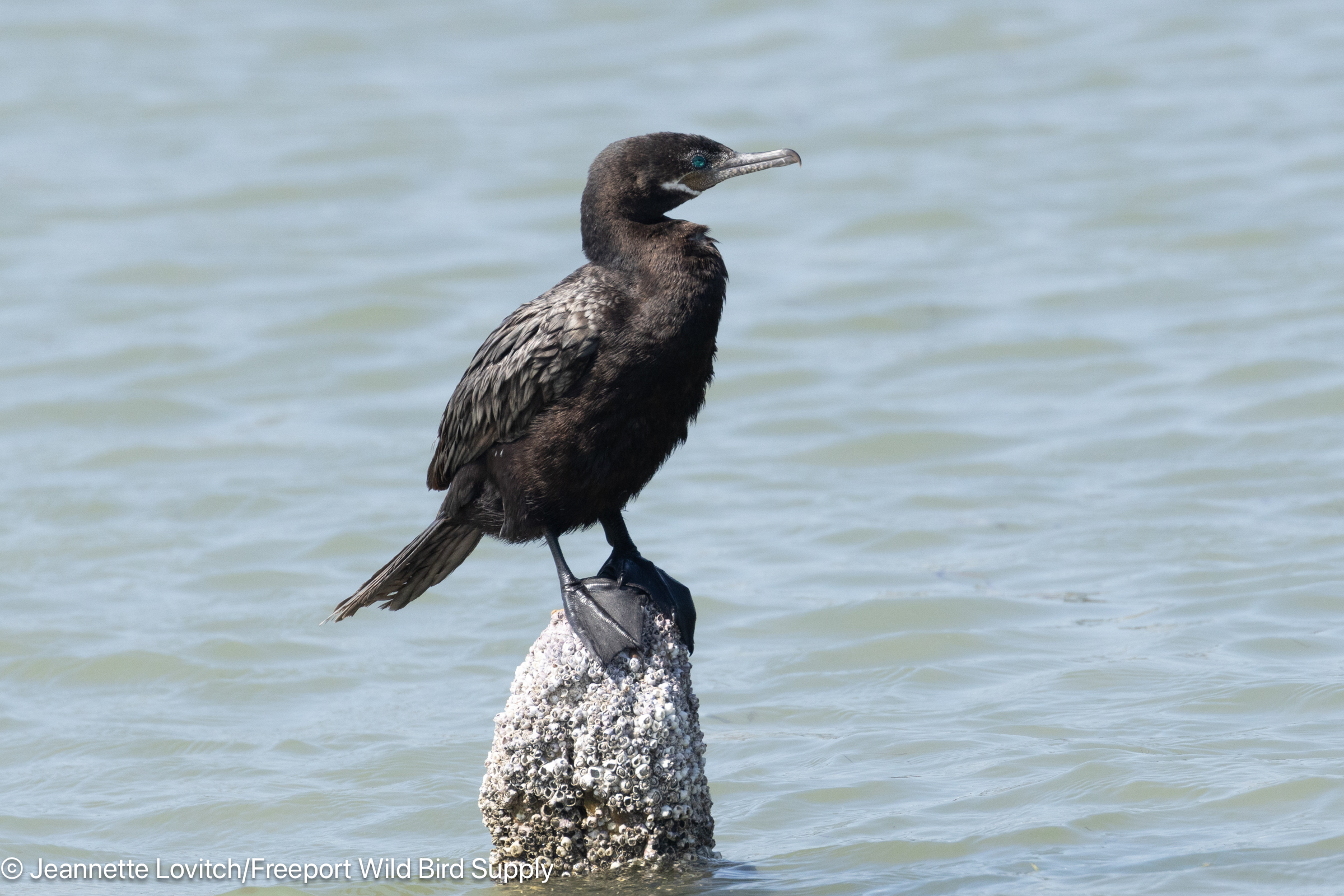
3. Neotropical Cormorant
4. European Herring Gull
5. Black-chinned Hummingbird
6. California Gull
7. Gray Heron
8. Bermuda Petrel
9. Graylag Goose
10. Little Stint
11. Audubon’s Shearwater
12. Common Shelduck
13. Anna’s Hummingbird
14. Heerman’s Gull
15. Common Ground-Dove
16. Allen’s Hummingbird
17. Spotted Redshank
18. Lewis’s Woodpecker
19. Ross’s Gull
20. Black-capped Petrel
21. Lesser Nighthawk
22. Dusky Flycatcher
23. Painted Redstart
24. Hooded Oriole
25. White Wagtail
It’s only a matter of time for Maine to be visited by its first ever Neotropic Cormorant, but it’s another Neotropical species that took the stop slot this year!
As for me, there were so many great birds seen in Maine in 2025, and the birds I chased just scratched the surface of the litany of vagrants this past calendar year as once again, my birding involves fewer and fewer chases each year. The MacGillivray’s Warbler in Yarmouth in November was one of the highlights – including becoming the 255th All-time Saturday Morning Birdwalk bird!- and a Fork-tailed Flycatcher in the Kennebunk Plains in July.
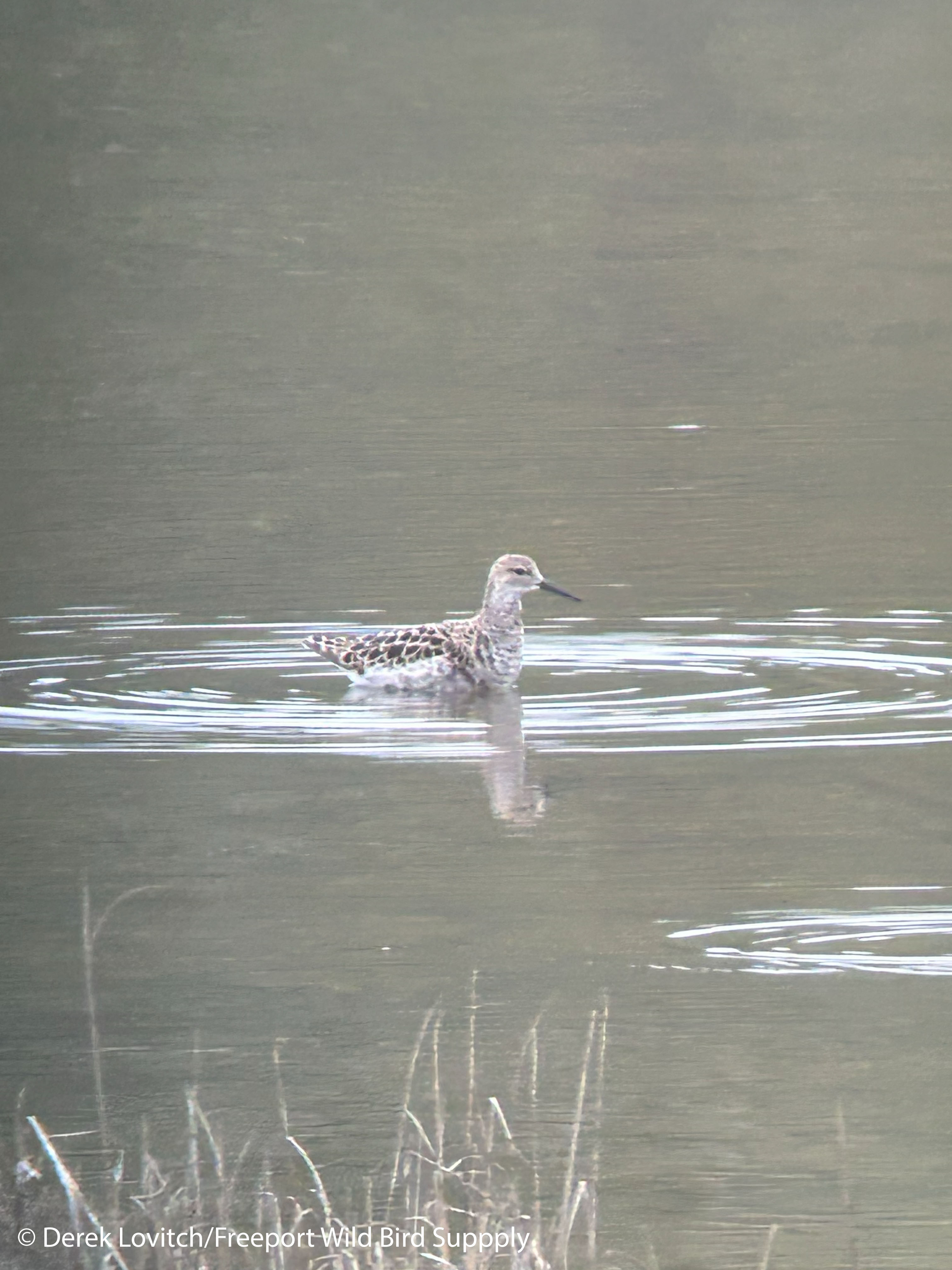
My first self-found rarity of the year was a Ruff at Walsh Preserve on 5/9…
..and Jeannette I chases the Northern Wheatear in Scarborough Marsh in September for a new ABA Area bird for her.
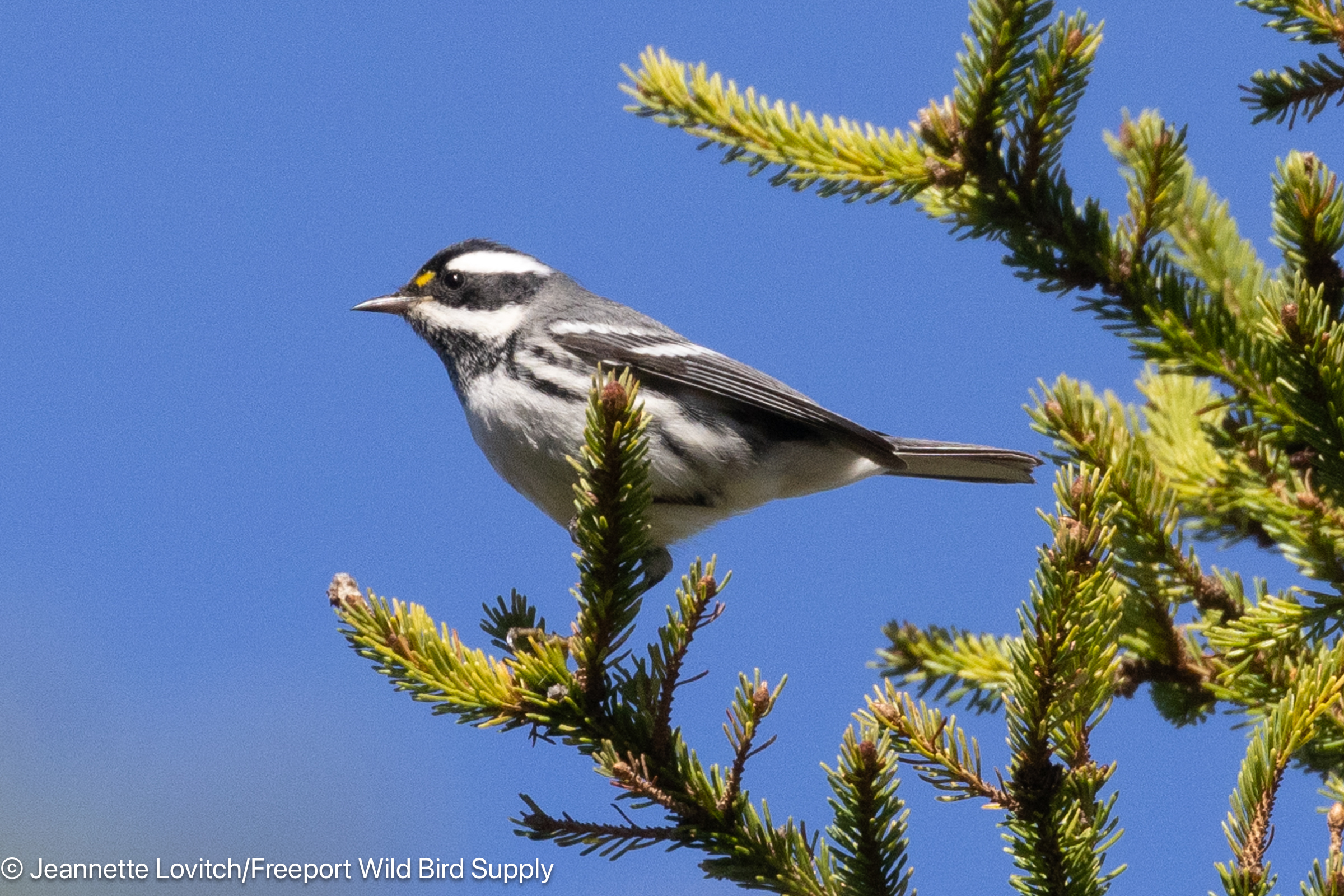
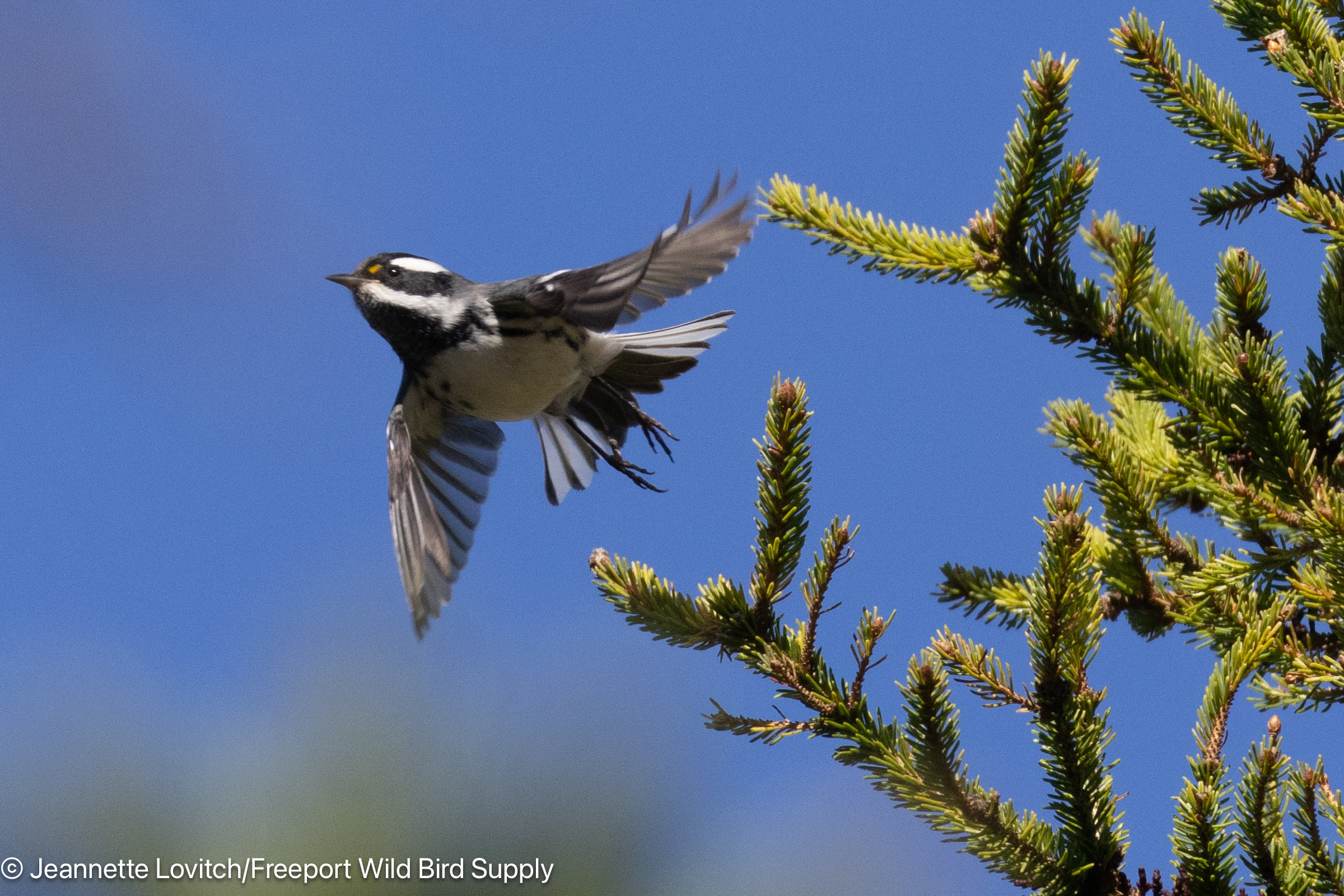
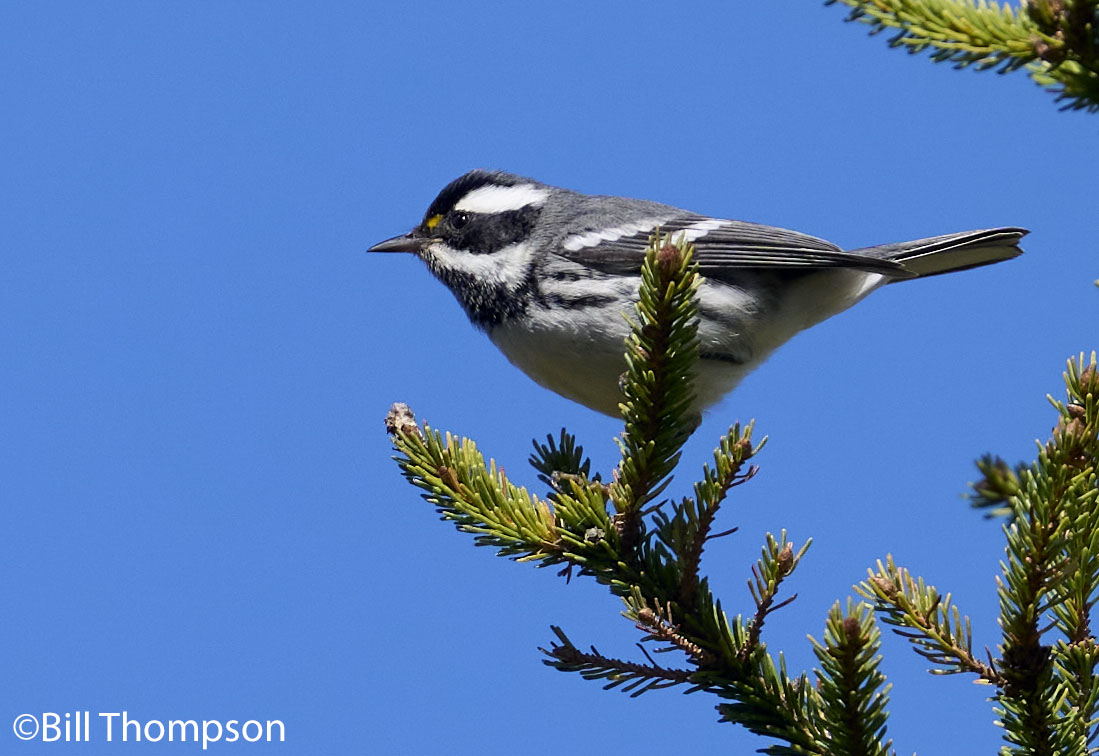
Black-throated Gray Warbler on Monhegan. A state bird for almost everyone, but “just” an exceptional “Island Bird” for me.
I even added two species to my State List in 2025, starting with an overdue Cerulean Warbler (#11) found by Doug Hitchcox in Evergreen Cemetery on 5/6. But nothing beats a “self-found” rarity, so finding a Virginia’s Warbler (#20) on Peak’s Island on 11/24 was even more special!
Of course, a few potential State Birds got away from me last year. However, all appeared to be one-day wonders, so it’s hard to complain: Crested Caracara in Scarborough Marsh on 4/30, a Franklin’s Gull (some day!) in The County on 5/21, an Anhinga over South Portland on 5/27, and an un-chaseable Ancient Murrelet at Matincus Rock on 6/19.
So, with those hits and misses, my updated list of the Top 25 Next State Birds for Me is now:
Franklin’s Gull (this is getting amusing/frustrating)
Neotropic Cormorant
Brown Pelican
California Gull
Brown Booby
Crested Caracara
Slaty-backed Gull
Boreal Owl
Calliope Hummingbird
Graylag Goose
Gull-billed Tern
Pacific Golden-Plover
Limpkin
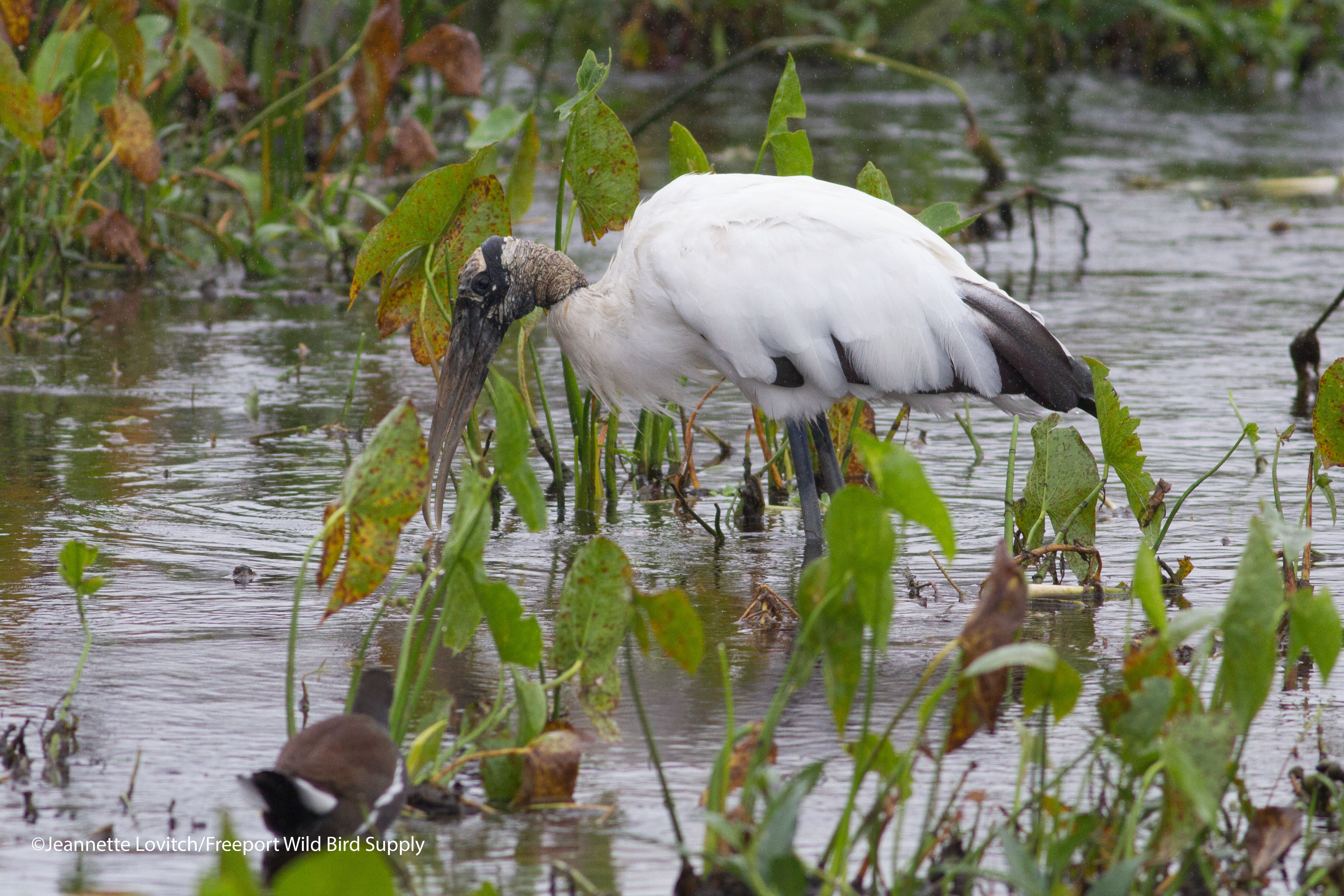
Wood Stork
Black-chinned Hummingbird
Brewer’s Blackbird
Anhinga
Yellow Rail
Scopoli’s Shearwater
Western Wood-Pewee
Red-necked Stint
European Herring Gull
Gray Heron
Heerman’s Gull
Little Stint
Well there ya have it, let’s see what 2026 brings, at least when it comes to the birds in Maine.
I think it’s about time for another Wood Stork to visit the state as well.
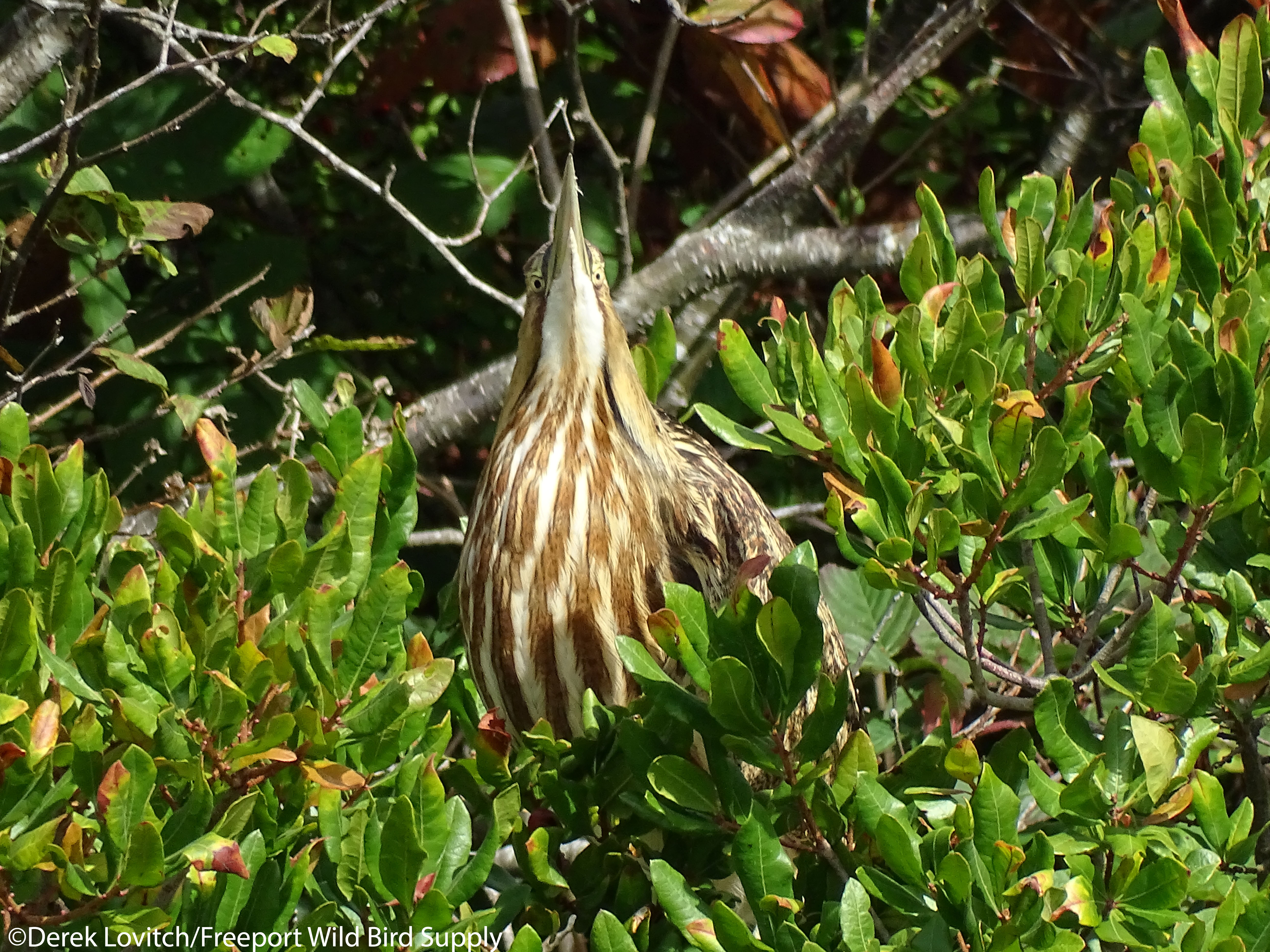
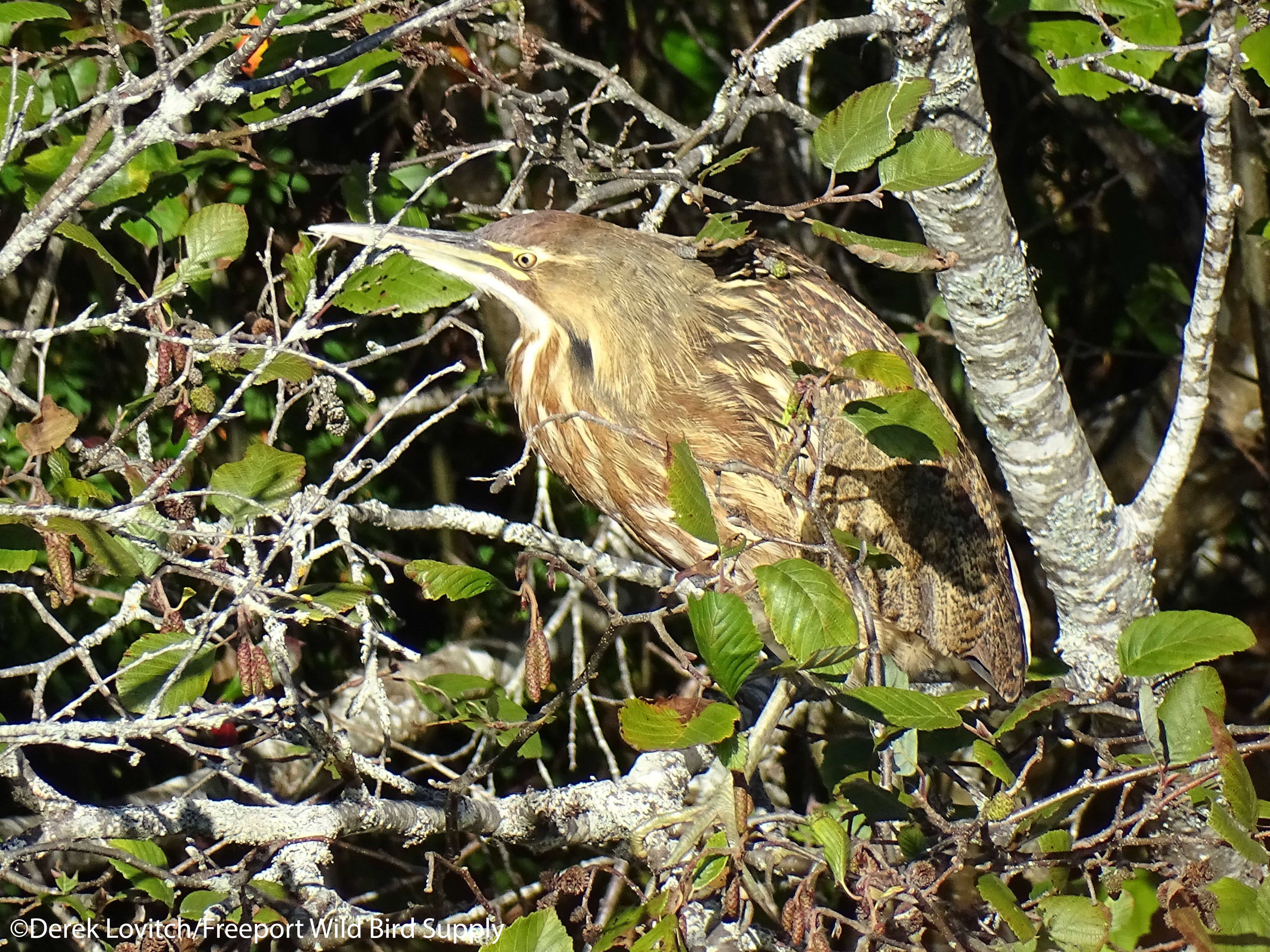
An American Bittern sitting in the open in a tree, just a handful of yards away could have easily been the highlight of any birding weekend. But, this stellar start was just the tip of the iceberg of the weekend’s birding excitement.
It has been quite a few years since we had a weekend like this. Lots of birds, “mega” rarities, warm weather, and tons of excitement. It was truly a special weekend. We were honored to have been there for it.
The tour began on Friday, with only one participant joining me on the Hardy Boat. The island greeted us with a Lesser Black-backed Gull, which we scoped from the wharf, and several warblers at the usual spot uphill. But after getting the inside scoop from birders already on the island, we made a bee-line for the Ice Pond where an American Bittern was sitting all morning. Remarkably, however, it was sitting in a bush (see above)!
How’s that for starting a tour off right? We also immediately encountered Dickcissel and Blue-gray Gnatcatcher, and there were plenty of Yellow-rumped Warblers and Palm Warblers here and there.
After lunch, with our group now complete, the surprisingly good birding continued. Despite such a warm afternoon and few birds on the radar overnight on mostly a southwest wind aloft, we enjoyed an excellent introduction to Monhegan birding in the fall: 2 Clay-colored Sparrows with 2 immature White-crowned Sparrows, a Dickcissel, and several White-throated Sparrows in one field of view; a dozing Common Nighthawk trying to stay camouflaged on a wood pile, and another visit to the still-confiding American Bittern at the Ice Pond for those who arrived later. It was a solid afternoon overall, with bird activity continuing right up until dinnertime.
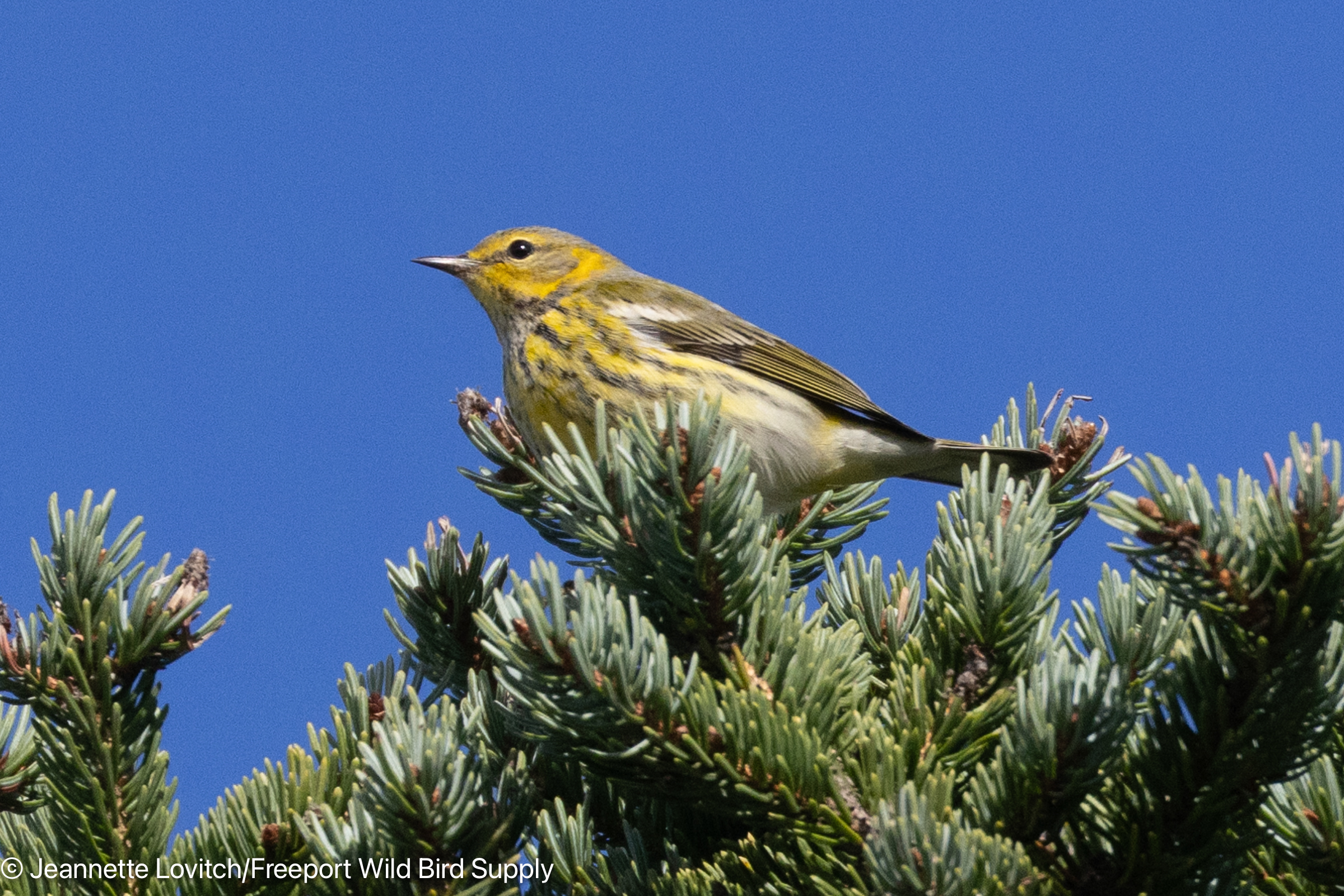
Cape May Warblers in a wide variety of plumages is always one of the highlights of any fall weekend on Monhegan
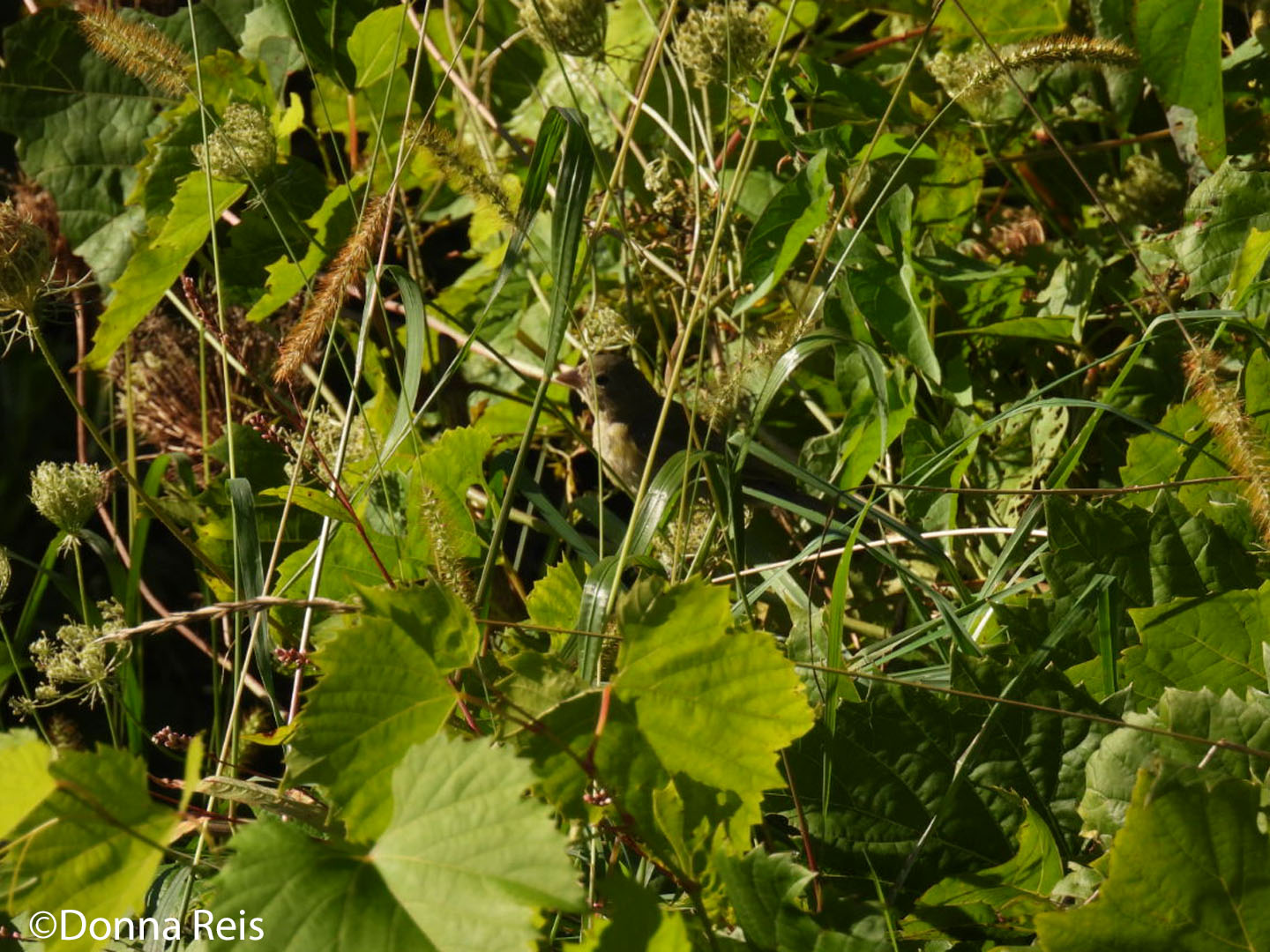
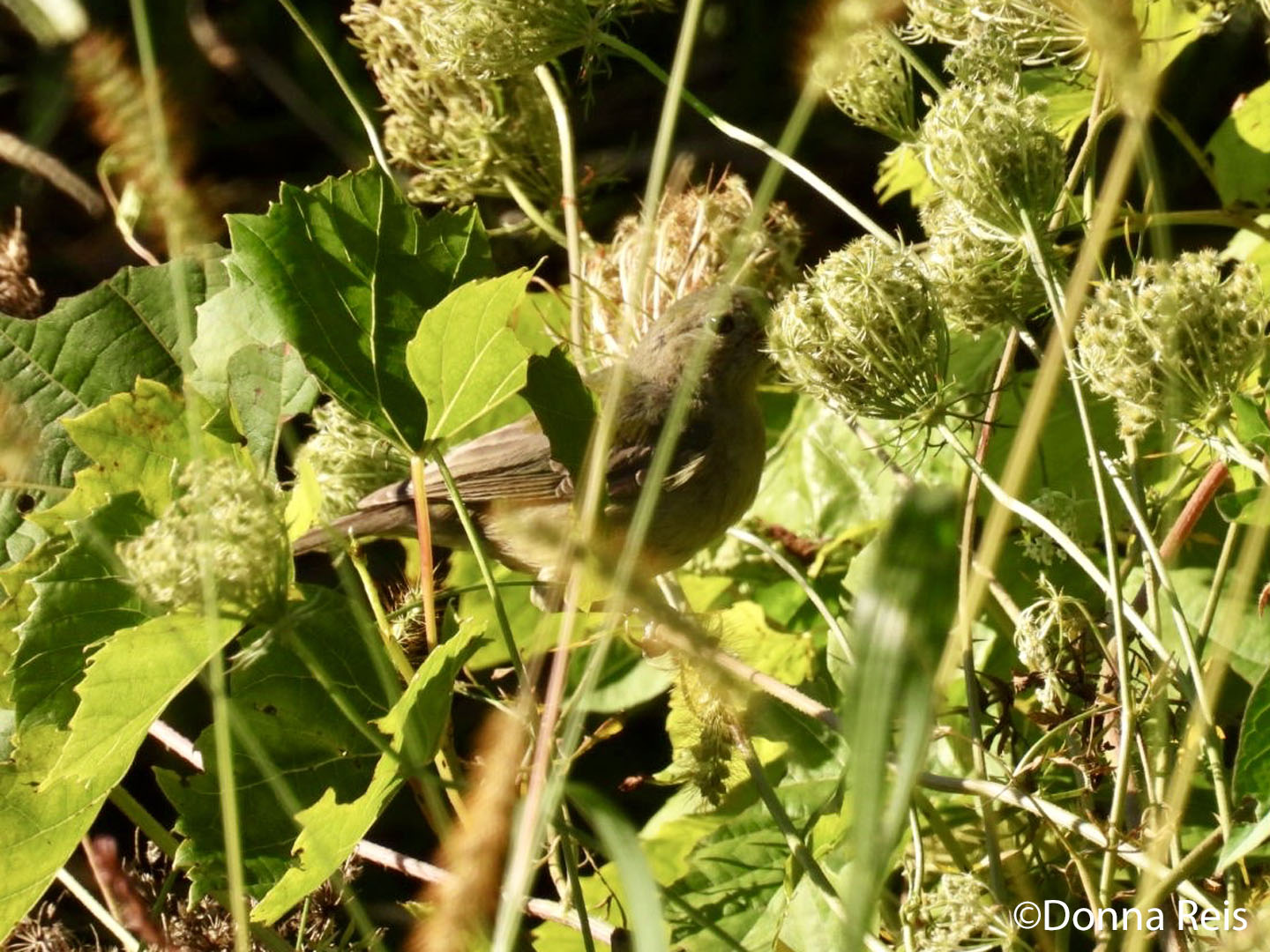
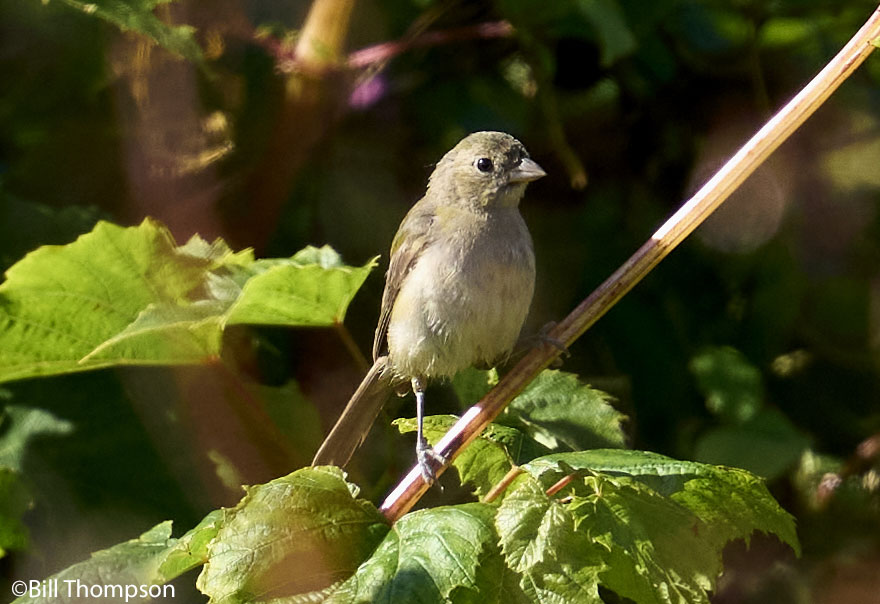
.Unfortunately, our best bird of the day was almost the one that got away. Almost! While viewing an Indigo Bunting in the Community Garden, a second bunting snuck into view, skulking. It briefly popped out, and I yelled “get photos” and then it popped back into the weeds and was not to be seen again.
“Did I see green?” I exclaimed, but it was so fleeting, and the light was so harsh, and the bird was so, so pale, I couldn’t be sure. I looked at photos on the back of cameras in the sun, and we had a good discussion on why this could have been a Painted Bunting. Unfortunately, I have little experience with first fall female (presumably) Painted Buntings and had no idea they could be this unbelievably drab. So I talked myself out of it.
Overnight, I received photos from Bill Thompson, who, an hour or two after we saw the bunting, also briefly saw and photographed it. “Is this a Painted Bunting?” he asked.
Yup, that really does have green on it, and on more than one side – in other words, not a reflection. Darn it. It counts for us – we all saw it – but in hindsight, we should have gotten the word out about a “possible/probable” Painted Bunting and had more eyes looking. Luckily, Bill was in the right place at the right time once again! But I felt like I had blown this one. I was too quick to dismiss it and so I decided I would have to make up for it over the rest of the weekend. Maybe the dry cold front that passed through on Friday evening and shifted the winds would help.
A very strong flight Friday night into Saturday morning on a diminishing northwesterly wind was idea for bringing birds to Monhegan Island come sunrise. And at first light, it was clear it was on!
The Morning Flight featured tons of Yellow-rumped Warblers with the occasional Palm and Blackpoll Warbler. Between the morning flight and our pre-breakfast stroll, we had a lot of birds: a couple of waves of Dark-eyed Juncos, bunches of Red-breasted Nuthatches, more Golden-crowned Kinglets and Purple Finches, insane views of Peregrine Falcons, 2 Dickcissels, 4 Baltimore Orioles, and lots of great views of lots of common species.
After breakfast, it remained fantastic. Just birds everywhere, and not surprisingly, some notable species began to be turned up. Our first “chase” was a Yellow-throated Warbler, our group arriving just in time before it took off.
Luckily, Dan Gardoqui and I stumbled upon it again while foraging for lunch, and I was able to round up several of the group members for improved views and photographs.
The American Bittern was now in the marsh, there were now three Dickcissels, 8 Baltimore Orioles, and a second, but definitively identified Indigo Bunting. No green one, unfortunately.
Not surprisingly on such a nice day, the afternoon was slower, as birds had departed the island early, or had now sought refuge in the shadows, especially with the continuing activity of Peregrines, Merlins, and Sharp-shinned Hawks. So, we checked some nooks and crannies, turning up a Nelson’s Sparrow at Lobster Cove and enjoying gliding Peregrine Falcons passing right in front of us from Burnt Head. We also took the time to enjoy butterflies, plants, and all other walks of life.
It was a delightful afternoon, but we returned to town to find we had missed out on a Western Kingbird. Luckily, a few of us caught up with it at dusk when it was refound near the Mooring Chain.
(phone-binned photo under low light)
So, it was a great day, and given the winds and weather, we expected it to be such. Then, with little to no movement overnight (at least visible on the radar), on a light south to southwest wind, we hoped for some birds to stick around from Saturday and perhaps be augmented by a rarity or two. At the very least, I wanted to show the Yellow-throated Warbler and Western Kingbird to the rest of the group, especially with a big turnover in participants for the second half of the weekend.
What we didn’t expect was to run out of superlatives before breakfast. We certainly did not expect it after viewing the Morning Flight, which consisted of exactly one American Pipit (and the big wandering flock of Cedar Waxwings, of course).
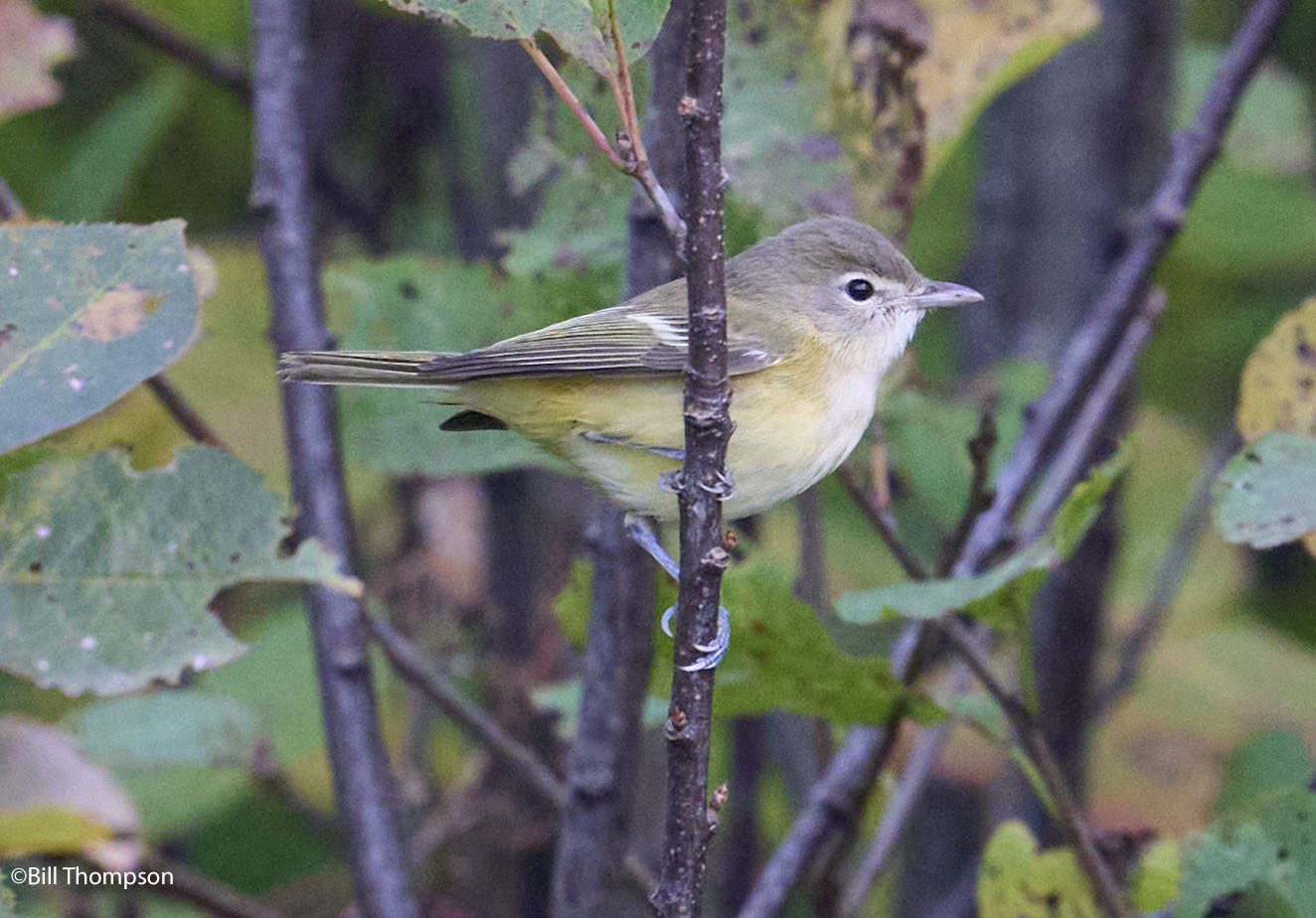
Once again, a bird was identified from photo review (what did we do before Instant Replay?!) and Bill Thompson and Jess Bishop had apparently discovered a Mega rare Bell’s Vireo on Saturday with only 4 accepted previous records for Maine. With such a slow morning flight, I decided to mix things up from my usual routine, head clockwise through my usual dawn loop, and give it a try to find the Bell’s. We stopped near where it was seen on Saturday, and chatted about the rarity, the identification, etc. “Holy shit, there it is!” I tried not to exclaim too loudly as the bird popped out right in front of us.
We observed it for about 10-15 minutes as it popped in and out of a brushy edge, focusing on feeding in young cherry trees with fall webworm clusters. Birders began to arrive from all directions, as the vireo kept coming in and out of view before flying right over our heads and disappearing deep into a dense thicket.
I’ll steal Bill Thompson‘s (with permission of course) Bell’s Vireo from this morning since he was standing next to us.
It was getting too crowded for our tastes, so we moved on and let others have the edge to monitor. We enjoyed Cedar Waxwings, Northern Flickers, and then took a moment to pause at our usual starting spot, at the spruces behind the Yew.
It was slow, and quiet, and so I was making sure we looked at everything, like the one solo warbler flying towards us from across the sky over the Trailing Yew. It then landed a short distance away, and I brought my binoculars up to it, assuming we had a close Yellow-rumped Warbler to talk about.
<expletives deleted>
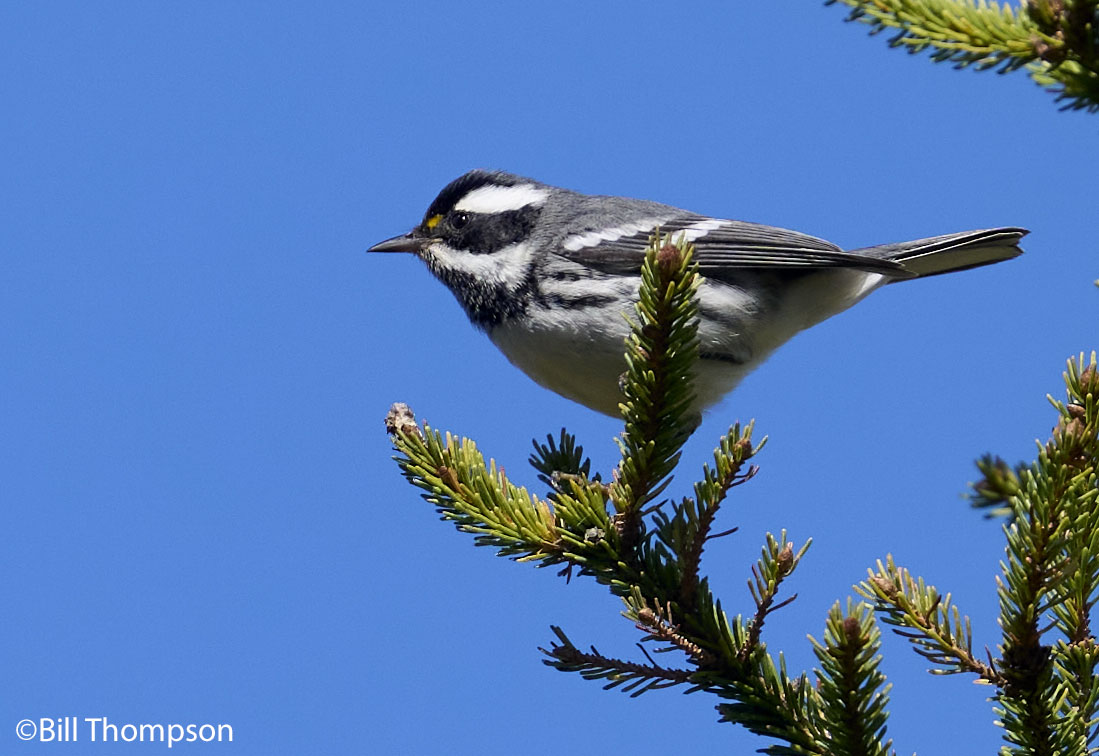
A Black-throated Gray Warbler, with only 5 previous records from Maine, was there. Right there. We had some great looks and photo ops, called over a friend, and then watched it the herd of birders arrive and head out to follow it. What a lucky find! We were ecstatic. And we still hadn’t had breakfast! (See photos from tomorrow),
Wondering if the day could get any better – and pretty content if it did not – we reconvened after breakfast and headed in the opposite direction from the searching masses, as I am wont to do.
It worked again: we found one Lark Sparrow, and then another. How many Clay-colored Sparrows – 4? 8? More? An Orange-crowned Warbler at the Ice Pond, a fly-over Red-bellied Woodpecker, a Pine Warbler, a Yellow-bellied Sapsucker on every tree. So much for it being a slow day.
Another warm afternoon sent us into the woods for shade, immersing ourselves in a cacophony of Red-breasted Nuthatches, sprinkled with Golden-crowned Kinglets, and the occasional Red-eyed Vireo or other migrant. We took in the Fringed Gentian, the scenery, and finished strong with the 2 Lark Sparrows and 4 Clay-colored Sparrows together.
Today was a good day.
Monday, the fourth and final day of the tour began with excited anticipation with another strong flight overnight on a diminishing NW to W wind. But today, it was just too nice, and a lot of last night’s birds passed overhead resulting in just a light Morning Flight come sunrise. But there was a turnover of birds, and our morning walk added several things to our list including the Eastern Kingbird we finally caught up with, and another Orange-crowned Warbler. The highlight, however, of our pre-breakfast jaunt was a juvenile Sharp-shinned Hawk that flew to a spruce, plucked a cone off of an outer branch, and then proceeded to play with it! It would move it from its bill to its talons, and then it dropped it, chasing it down the tree. It then flew back up and grabbed another! What a remarkable insight into how a kid Sharpie gets better at hunting on its own.
After breakfast, the good Merlin show of the day continued, and we took time for a short gull identification workshop. Our first Ring-billed Gull out here was good to practice on, and we conveniently had three Lesser Black-backed Gulls: an adult and 2 first-cycle birds. But mostly, we worked through the difference between each age class of the common Herring and Great Black-backed Gulls.
We finally picked up a Northern Waterthrush- our 20th species of warbler on the weekend! But otherwise, it was pretty slow.
It was slow in the afternoon, too, but the Black-throated Gray Warbler had been refound just before we reconvened after lunch, and eventually we were all treated to much, much better views and photo ops than the morning before.
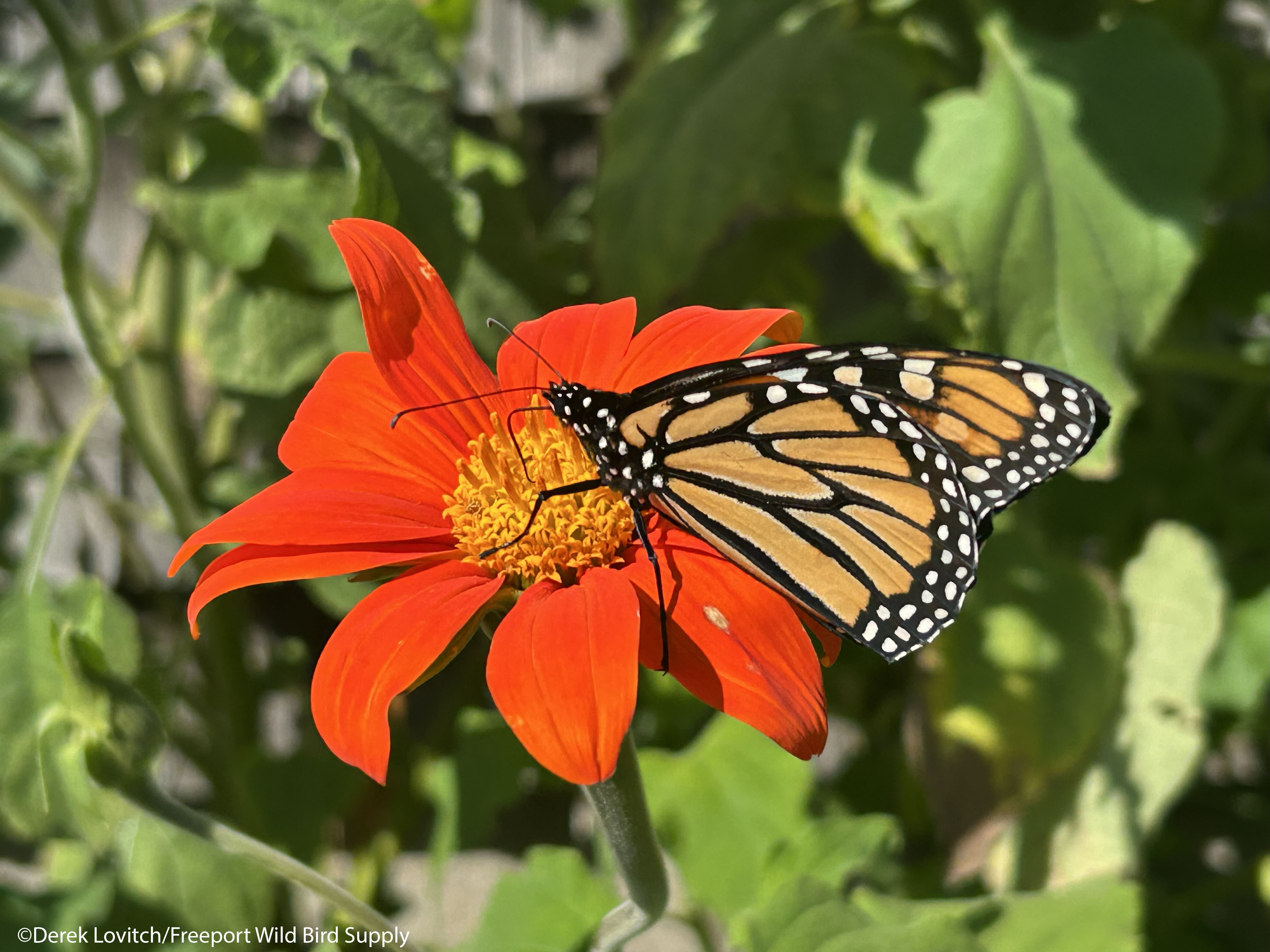
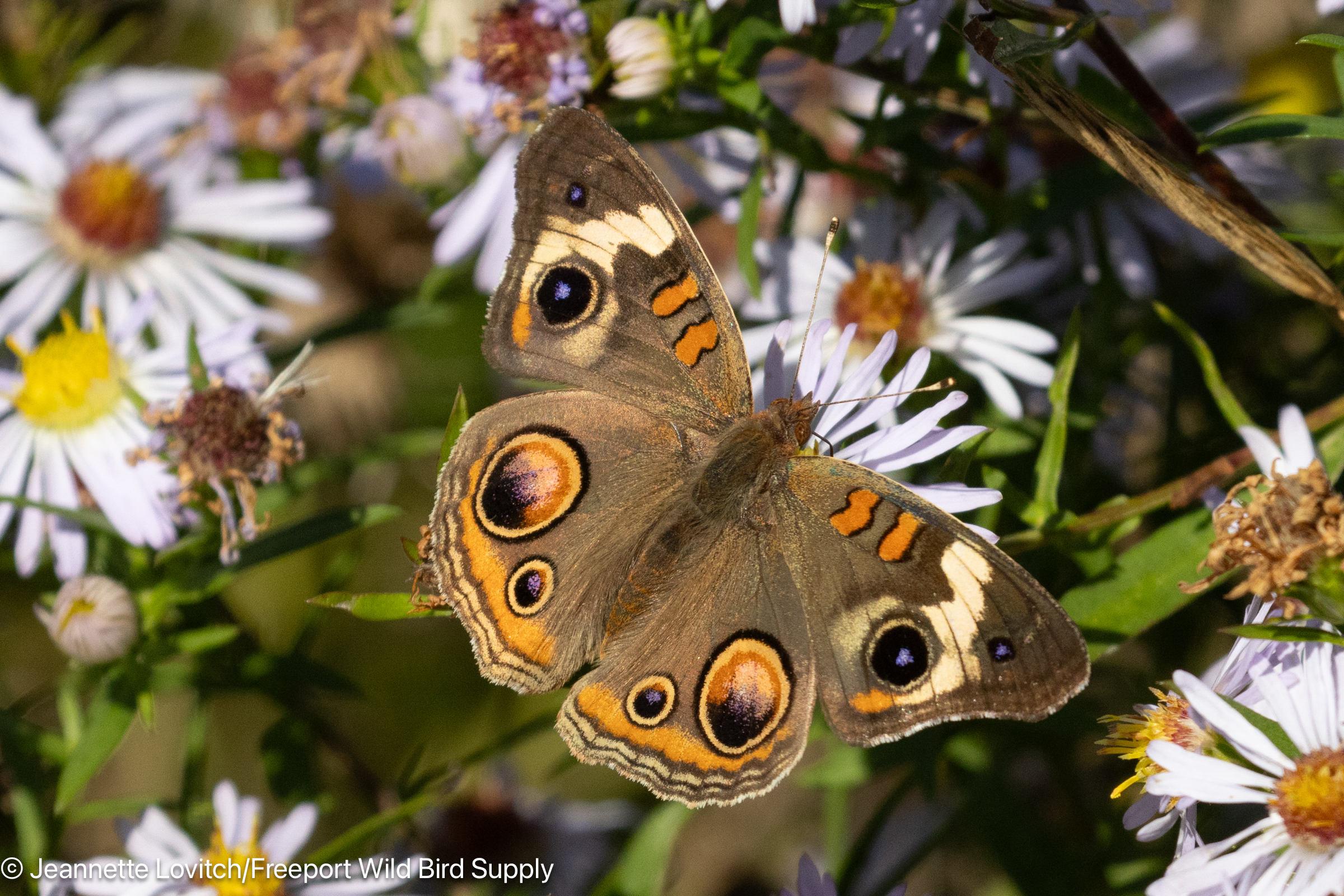
We then twitched a rare Common Buckeye butterfly and Lady’s Tresses orchids.
Our last new species of the trip was one of the last birds we observed together: a Yellow-billed Cuckoo eating American Dagger Moth and/or Hickory Tussock Moth caterpillars. Watching it whack the caterpillar on a twig to beat off its irritating hairs, we had another moment of insight into a bird’s world.
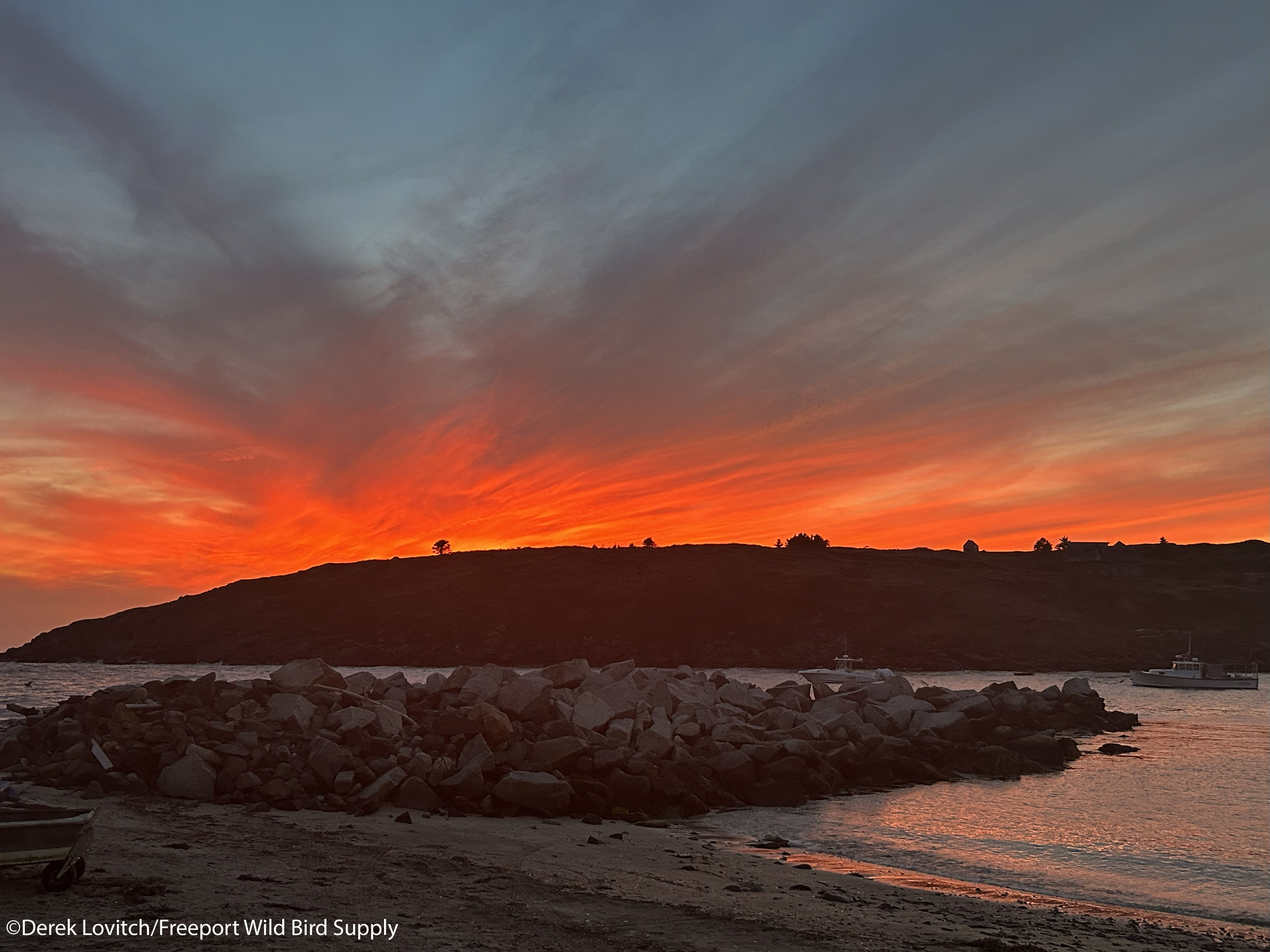
With the tour now complete, Jeannete and I enjoyed a delicious sunset and delightful food with friends and spotted an American Woodcock on our walk back.
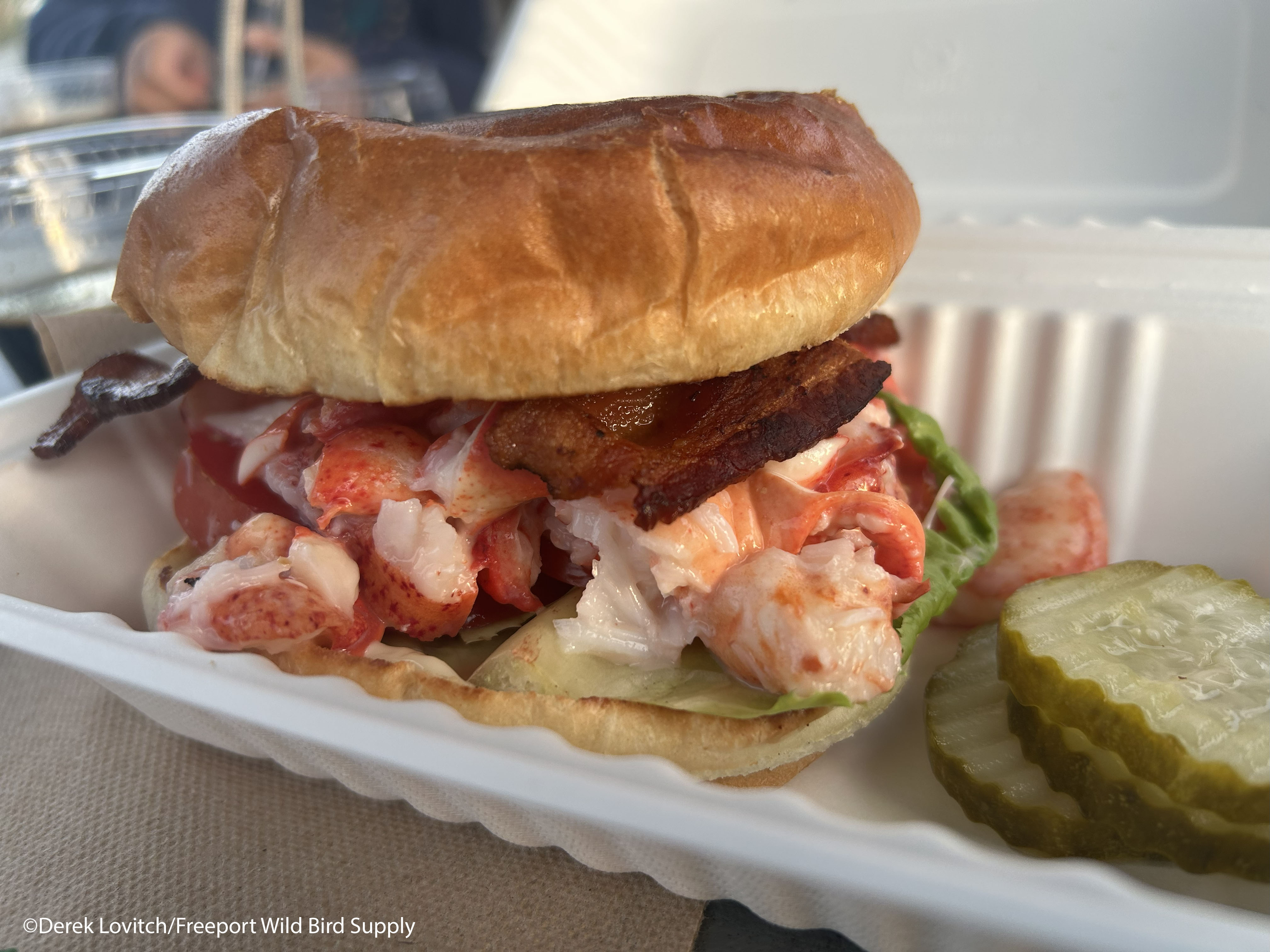
And finished with another meal of Monhegan indulgence.
As usual, Jeannette and I then spent our Tuesday off together on the island. After a light morning flight, but another turnover of birds, we decided to spend most of the morning in the woods, ostensibly looking for a previously reported Black-backed Woodpecker. But mostly, we wanted to take a hike along the island’s less-visited north end. We added Winter Wren and an Ovenbird to our weekend list, enjoyed the silly amount of Red-breasted Nuthatches, and encountered several pockets of White-throated Sparrows and Dark-eyed Juncos. Later, after lunch, we ran into a Black-billed Cuckoo, and a Spotted Sandpiper at the dock turned out to be our 100th and final bird of a truly exceptional weekend on Monhegan. We already cannot wait to return in May!
Species seen without the tour group during the tour:
*Denotes ferry only
9/26
9/27
9/28
9/29
Canada Goose
0
0
14
0
Blue-winged Teal
1
0
0
0
Mallard
15
20
20
20
American Black Duck
1
1
1
0
Common Eider
x
x
x
x
White-winged Scoter
1*
0
0
0
Ring-necked Pheasant
x
x
x
x
Mourning Dove
12
15
12
6
YELLOW-BILLED CUCKOO
0
0
0
1
Common Nighthawk
1
0
0
0
Semipalmated Plover
0
1
1
0
Solitary Sandpiper
1
0
0
0
Greater Yellowlegs
0
1
0
1
Black Guillemot
x
2
3
0
Laughing Gull
4*
0
0
0
Ring-billed Gull
0
0
0
1
Herring Gull
x
x
x
x
LESSER BLACK-BACKED GULL
0
0
1
3
Great Black-backed Gull
x
x
x
x
Great Cormorant
1
1
2
1
Double-crested Cormorant
x
x
x
x
AMERICAN BITTERN
1
1
0
0
Osprey
1
3
1
0
Northern Harrier
0
1
0
2
Sharp-shinned Hawk
3
1
2
6
Belted Kingfisher
1
0
1
1
Red-bellied Woodpecker
0
0
1
0
Yellow-bellied Sapsucker
8
20
15
20
Downy Woodpecker
0
1
1
1
Northern Flicker
6
10
6
8
American Kestrel
0
0
1
0
Merlin
4
8
6
5
Peregrine Falcon
6
20
3
7
WESTERN KINGBIRD
0
1
0
0
Eastern Kingbird
0
0
0
1
Eastern Wood-Pewee
6
8
1
1
Least Flycatcher
3
2
0
0
Eastern Phoebe
1
3
2
1
BELL’S VIREO
0
0
1
0
Blue-headed Vireo
2
4
3
0
Red-eyed Vireo
12
12
12
12
Blue Jay
8
8
3
3
American Crow
4
2
6
6
Common Raven
0
2
2
1
Black-capped Chickadee
x
x
x
x
Ruby-crowned Kinglet
1
3
2
2
Golden-crowned Kinglet
0
20
10
6
Cedar Waxwing
80
80
80
80
Red-breasted Nuthatch
10
60
50
40
Brown Creeper
0
2
0
1
BLUE-GRAY GNATCATCHER
1
0
0
1
Carolina Wren
8
6
8
6
Gray Catbird
x
x
x
10
European Starling
14
14
14
13
Swainson’s Thrush
0
2
0
0
American Robin
0
4
1
0
American Pipit
1
6
2
2
Purple Finch
0
10
8
6
Pine Siskin
1
2
1
2
American Goldfinch
8
10
6
6
LARK SPARROW
0
0
2
1
Chipping Sparrow
2
2
10
2
CLAY-COLORED SPARROW
3
3
6
1
Dark-eyed Junco
0
30
2
12
White-crowned Sparrow
2
1
2
0
White-throated Sparrow
12
60
10
20
Nelson’s Sparrow
0
1
0
0
Savannah Sparrow
1
4
4
1
Song Sparrow
x
x
x
x
Lincoln’s Sparrow
1
6
5
1
Swamp Sparrow
2
3
2
1
Bobolink
5
5
5
2
Baltimore Oriole
2
8
7
6
Rusty Blackbird
0
2
0
0
Common Grackle
3
3
3
3
Northern Waterthrush
0
0
0
1
Black-and-white Warbler
1
3
0
0
ORANGE-CROWNED WARBLER
0
1
2
1
Nashville Warbler
1
1
0
0
Common Yellowthroat
4
8
8
6
American Redstart
3
4
1
1
Cape May Warbler
2
8
2
8
Northern Parula
3
6
1
0
Magnolia Warbler
0
1
0
0
Yellow Warbler
2
4
2
1
Chestnut-sided Warbler
0
1
0
0
Blackpoll Warbler
8
40
4
4
Black-throated Blue Warbler
0
3
0
0
Palm Warbler
20
60
4
4
Pine Warbler
0
0
1
0
Yellow-rumped Warbler
40
600
40
20
YELLOW-THROATED WARBLER
0
1
0
0
BLACK-THROATED GRAY WARBLER
0
0
1
1
Black-throated Green Warbler
0
6
1
1
Wilson’s Warbler
1
2
0
0
Northern Cardinal
x
8
8
8
Rose-breasted Grosbeak
0
1
1
1
Indigo Bunting
1
1
3
2
PAINTED BUNTING
1
0
0
0
DICKCISSEL
2
3
1
1
Day total
67
80
69
68
Species added on Monday evening and Tuesday, with Jeannette:
Common Loon, Spotted Sandpiper, American Woodcock, Black-billed Cuckoo, Winter Wren, Hermit Thrush, Ovenbird (warbler #21!),
Tour total = 100 Total Weekend Total = 107
This winter wren was one of the last birds Jeannette and I added to the cumulative weekend list as we spent some time on our day off hiking the island’s north end.
One of the stars of the show during an epic weekend on Monhegan included this Black-throated Gray Warbler that I found with my tour on 9/28. There are only 5-7 previous records of this spiffy western warbler in Maine. It was relocated by others on and off that day, and through much of the day on the 29th. The best show for everyone was when Doug Hitchcox re-relocated it a few feet from where my group and I first discovered it! That’s when Bill Thompson got this crushing photo.
My observations of note over the last 9 days included 5 remarkable days on Monhegan Island included the following:
Highlights from our Durham property this period included 2 continuing Indigo Buntings and 2 Solitary Sandpipers on 9/22; 1 Ruby-throated Hummingbird 9/23-24; and 5 Lincoln’s Sparrows on 9/24.
An exceptional day in and around Biddeford Pool on the 23rd with Jeannette included a number of highlights and excellent counts of uncommon birds. Some of the most notable observations include an astounding 26 FORSTER’S TERNS together at Hill’s Beach (with scattered individuals elsewhere that may or may not have been part of this tally, the shockingly large “irruption” of this tern – especially given the lack of a tropical system to cause it – continues); a juvenile YELLOW-CROWNED NIGHT-HERON at Great Pond, a late juvenile BAIRD’S SANDPIPER on Biddeford Pool Beach, single CLAY-COLORED SPARROWS in Hill’s Beach and East Point, 12 American Oystercatchers off of Ocean Avenue, a goodly 41 Red Knots in The Pool; 7 adult Lesser Black-backed Gulls at Hill’s Beach, and an arrival of fresh juvenile (technically 1st winter as most showed a couple of replaced feathers by now as expected) Dunlin in various locations (high of 30+ on Biddeford Pool Beach).
It was like the good ol’ days on Monhegan for my tour group this weekend. I was on the island with the tour 9/26-9/29, and then enjoyed a day off with Jeannette on 9/30. I’ll have a complete tour report posted next week (including rarity photos), but for now, the mind-blowing list of rarities and excitement for my group and I included the following:
1 BELL’S VIREO, 9/28 (refound by my group after being discovered by Jess Bishop and Bill Thompson on 9/28).
1 BLACK-THROATED GRAY WARBLER, 9/28-29 (Found by my group, on 9/28 and refound by m.obs on 9/29).
1 immature female PAINTED BUNTING, 9/26 (independently identified – eventually – by my group and Bill Thompson).
1 YELLOW-THROATED WARBLER, 9/27
1 WESTERN KINGBIRD, 9/27.
21 total species of warblers.
Up to 2 Lark Sparrows daily beginning 9/28.
Up to 6+ Clay-colored Sparrows daily.
Up to 3 Dickcissels daily
Up to 2 Orange-crowned Warblers daily beginning 9/27.
1 American Bittern, 9/26-9/27.
Up to 3 Lesser Black-backed Gulls daily.
1 Blue-gray Gnatcatcher, 9/26.
1 Red-bellied Woodpecker, 9/28.
1 Nelson’s Sparrow, 9/27.
1 Yellow-billed Cuckoo on 9/29 (with my group) and 1 Black-billed Cuckoo on 9/30 (with Evan Obercian and Jeannette).
Join us on a special cruise dedicated to off-shore birding: a collaboration with Cap’n Fish’s Cruises offering half-day “mini-pelagics!” We’ll seek out the rare and common seabirds that occur in our nearshore waters, but we will always have the hope for something unexpected. Derek will team up with the boat’s expert naturalists to spot, identify, and point out pelagic seabirds. Chumming efforts will provide opportunities to attract the birds in for better photo ops and viewing. While we’ll stop to look at any whales and whatever other interesting sea life we encounter along the way, it is the feathered wildlife we’re searching for, and will be focused on.
This annual fall excursion gives a chance at some very sought after pelagic species, such as Great and South Polar Skua. More likely species include Northern Fulmar; Black-legged Kittiwake; Pomarine and Parasitic Jaeger; shearwaters – Great, Sooty, Cory’s, and possibly even Manx; Leach’s Storm-Petrel; Razorbill and Atlantic Puffin; Red and Red-necked Phalaropes, and much more. With the later departure date this year, we hope for more jaegers and a better chance at Great Skua, along with the chance at more early-arriving alcids.
Each of our four October trips have been very different, with each year providing some unexpected highlights. Once again, we will be chumming at at least one hotspot, and we’ll have an additional spotter who will keep dedicated eBird lists for those who so desire and want it shared with them.
Join the crew of Seacoast Tours and Derek Lovitch from Freeport Wild Bird Supply on a special tour of the islands and waters of Casco Bay. We’ll explore the inner islands of Freeport, Brunswick and Harpswell as we search for eagles, migrant waterfowl, and an occasional seal basking in the sun on the ledges of hidden coves. We’ll focus on the common resident and migratory water and shoreline birds of the region, including photographic opportunities whenever we can.
Conditions and tide permitting, we’ll poke around the mouth of Maquoit Bay and especially up into Middle Bay, two of the richest areas for waterfowl concentrations. If we can find a mass of American Black Ducks, we’ll scour them for a variety of other dabblers, such as Green-winged Teal and Northern Shovelers. Some of our wintering and migratory bayducks, such as Surf and White-winged Scoters will just be arriving, and Common Loons begin to build in for the winter.
These unique, relaxed birding and beer-ing adventures that you have come to love combine great local birding at seasonal hotspots with visits to sample the delicious creations of some of our favorite local breweries. These tours are a perfect introduction to birding and/or craft beer, and a great opportunity to travel with significant others, friends, and family that have interest in one topic, while your interest is primarily in the other (for now!). But this time we’re leaving the van in the garage, and hitting the water! That’s right, we’re taking a cruise, and we’re returning to the private House Island in Porland Harbor twice in 2025.
During last year’s wildly successful outing in which we became the first birding group ever on the island, we found oodles of Yellow-rumped Warblers, an uncommon Field Sparrow, and other migrants. But we were truly captivated by Captain Pete, who guided us through the historic fort, sharing a wealth of historical knowledge and fascinating stories. The beer was pretty darn good too, as we sampled the history of Maine’s craft beer scene.
Building on that success, we’re visiting the private House Island in Portland Harbor twice in 2025. We’ve been granted special permission to come ashore and scour the island here in the peak of fall migration. We’ll follow well-maintained trails through the island’s mosaic of open habitats, scrub, and young woods. These are great habitats to search for a variety of migrants, and perhaps even a rarity!
Returning in late October, once again rarities will be on our mind. While rare birds are rare, we are still going to expect the unexpected. But more likely are regular migrants of the season such as Yellow-rumped Warblers, a variety of sparrows, and a growing diversity of waterbirds. At the very least, we’ll have resident waterbirds and several species of gulls to sort through. We are having daydreams of a rare flycatcher!
As we motor back across the harbor, we’ll continue to familiarize ourselves with some of the common waterbirds, such as Common Eiders, Common Loons, and the vanguard of our winter diving ducks while enjoying a local craft beverage produced in the city of Portland. While the exact plan is subject to change, we’ll be sure to come up with a plan to adequately celebrate our discoveries – or the one that got away!














 Maine Birding Field Notes