Tag Archives: Biddeford Pool

This Week’s (Plus) Highlights 9/22 – 9/30/2025.

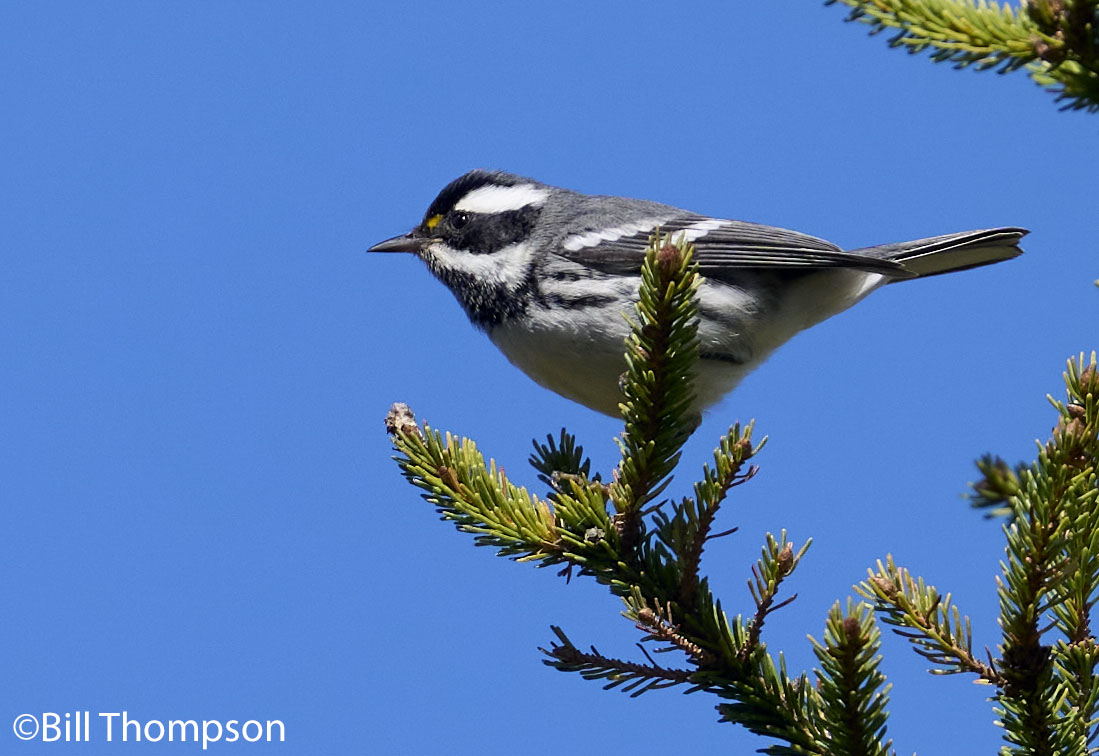
One of the stars of the show during an epic weekend on Monhegan included this Black-throated Gray Warbler that I found with my tour on 9/28. There are only 5-7 previous records of this spiffy western warbler in Maine. It was relocated by others on and off that day, and through much of the day on the 29th. The best show for everyone was when Doug Hitchcox re-relocated it a few feet from where my group and I first discovered it!
That’s when Bill Thompson got this crushing photo.

My observations of note over the last 9 days included 5 remarkable days on Monhegan Island included the following:

  • Highlights from our Durham property this period included 2 continuing Indigo Buntings and 2 Solitary Sandpipers on 9/22; 1 Ruby-throated Hummingbird 9/23-24; and 5 Lincoln’s Sparrows on 9/24.
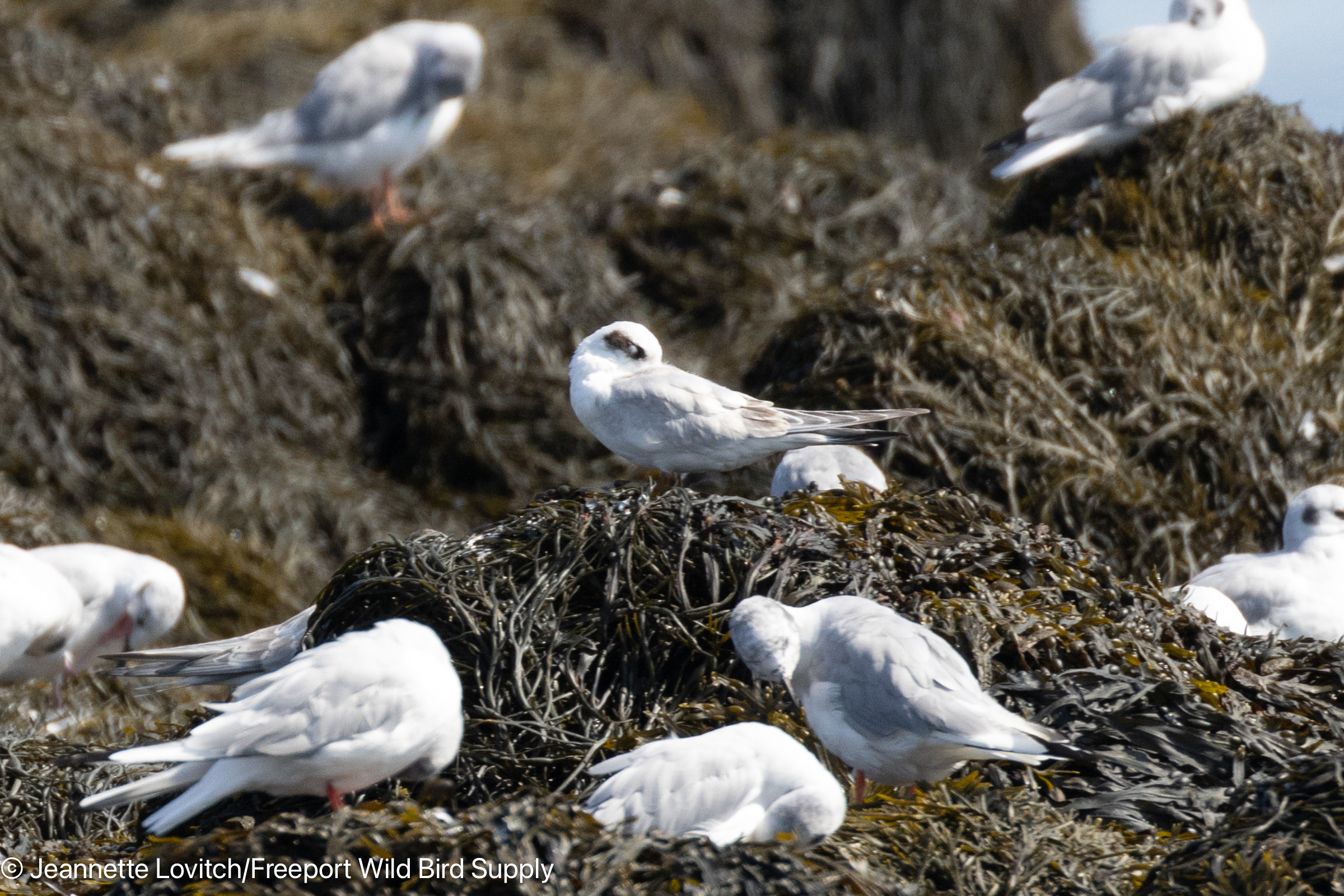
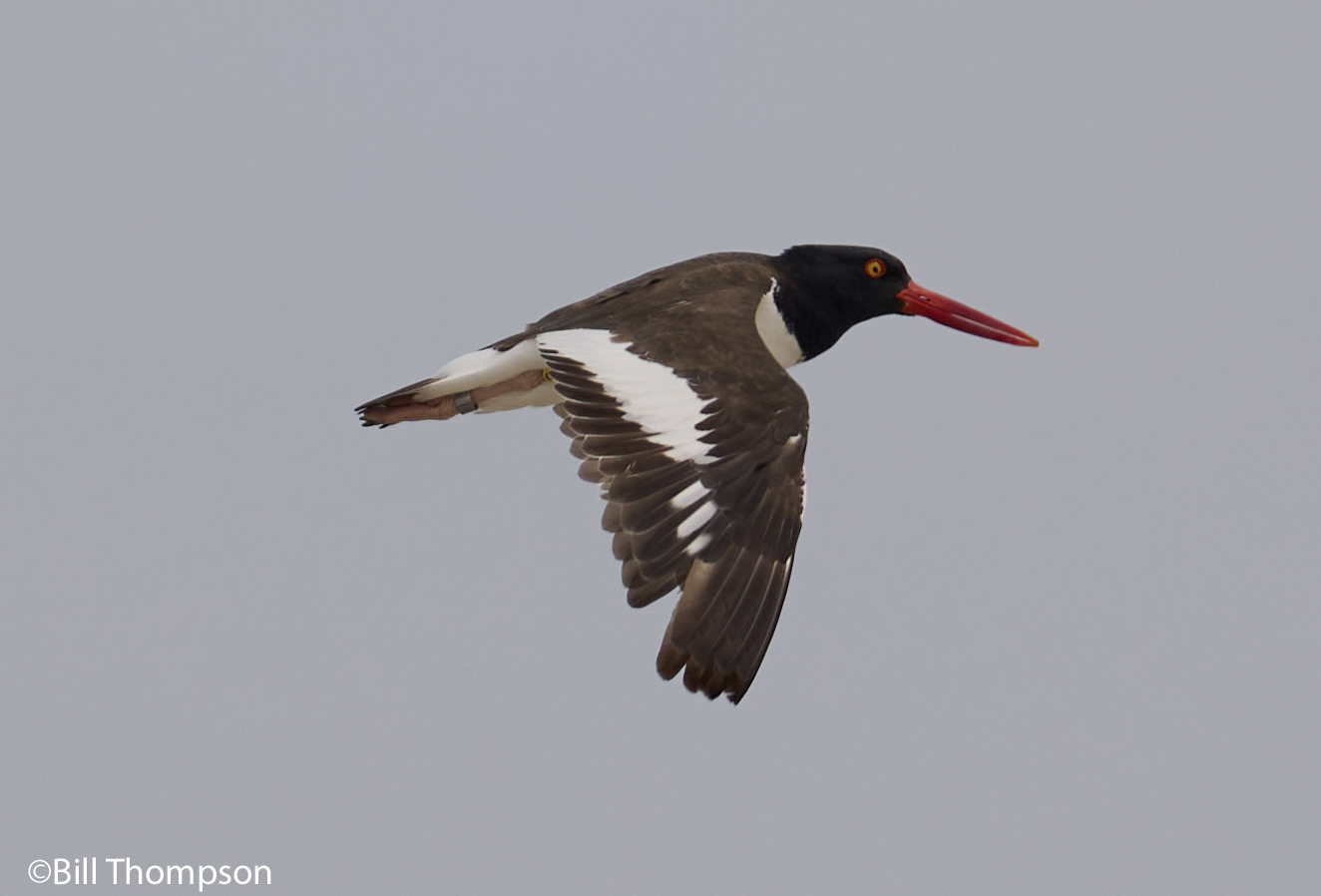
  • An exceptional day in and around Biddeford Pool on the 23rd with Jeannette included a number of highlights and excellent counts of uncommon birds. Some of the most notable observations include an astounding 26 FORSTER’S TERNS together at Hill’s Beach (with scattered individuals elsewhere that may or may not have been part of this tally,  the shockingly large “irruption” of this tern – especially given the lack of a tropical system to cause it – continues); a juvenile YELLOW-CROWNED NIGHT-HERON at Great Pond, a late juvenile BAIRD’S SANDPIPER on Biddeford Pool Beach, single CLAY-COLORED SPARROWS in Hill’s Beach and East Point, 12 American Oystercatchers off of Ocean Avenue, a goodly 41 Red Knots in The Pool; 7 adult Lesser Black-backed Gulls at Hill’s Beach, and an arrival of fresh juvenile (technically 1st winter as most showed a couple of replaced feathers by now as expected) Dunlin in various locations (high of 30+ on Biddeford Pool Beach).
Forster’s Terns
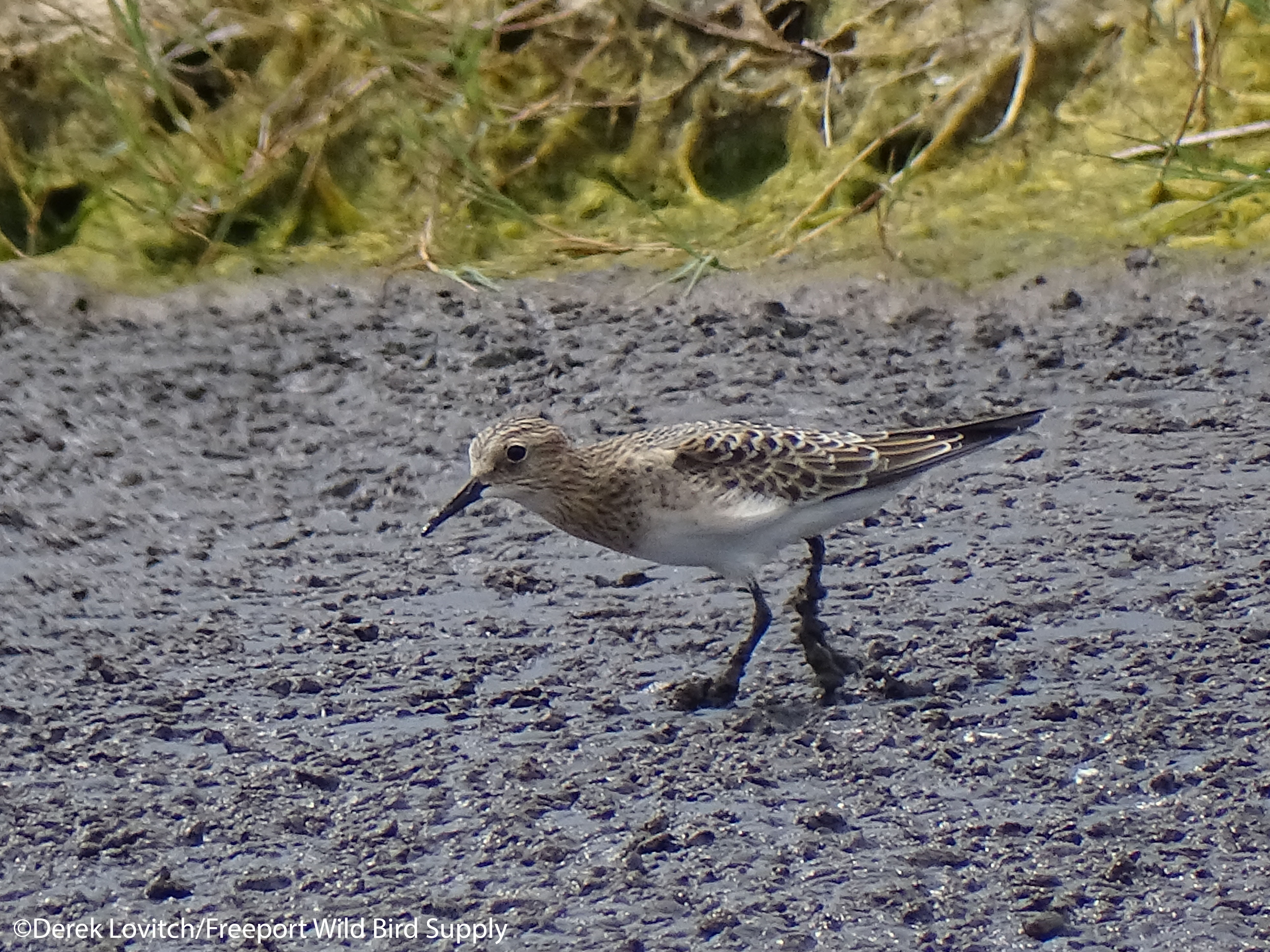
Baird’s Sandpiper
Clay-colored Sparrow
  • 2 Marsh Wrens, Florida Lake Park, Freeport, 9/24.
  • 2 Ruddy Ducks (First of fall), 1 Dunlin, 1 Pectoral Sandpipers, etc, Sabattus Pond, 9/25.
  • It was like the good ol’ days on Monhegan for my tour group this weekend. I was on the island with the tour 9/26-9/29, and then enjoyed a day off with Jeannette on 9/30. I’ll have a complete tour report posted next week (including rarity photos), but for now, the mind-blowing list of rarities and excitement for my group and I included the following:

1 BELL’S VIREO, 9/28 (refound by my group after being discovered by Jess Bishop and Bill Thompson on 9/28).

1 BLACK-THROATED GRAY WARBLER, 9/28-29 (Found by my group, on 9/28 and refound by m.obs on 9/29).

1 immature female PAINTED BUNTING, 9/26 (independently identified – eventually – by my group and Bill Thompson).

1 YELLOW-THROATED WARBLER, 9/27

1 WESTERN KINGBIRD, 9/27.

21 total species of warblers.

Up to 2 Lark Sparrows daily beginning 9/28.

Up to 6+ Clay-colored Sparrows daily.

Up to 3 Dickcissels daily

Up to 2 Orange-crowned Warblers daily beginning 9/27.

1 American Bittern, 9/26-9/27.

Up to 3 Lesser Black-backed Gulls daily.

1 Blue-gray Gnatcatcher, 9/26.

1 Red-bellied Woodpecker, 9/28.

1 Nelson’s Sparrow, 9/27.

1 Yellow-billed Cuckoo on 9/29 (with my group) and 1 Black-billed Cuckoo on 9/30 (with Evan Obercian and Jeannette).

Upcoming Tours with Limited Space Available:

October 5, 2025   – 9:00am

​Join us on a special cruise dedicated to off-shore birding: a collaboration with Cap’n Fish’s Cruises offering half-day “mini-pelagics!” We’ll seek out the rare and common seabirds that occur in our nearshore waters, but we will always have the hope for something unexpected. Derek will team up with the boat’s expert naturalists to spot, identify, and point out pelagic seabirds. Chumming efforts will provide opportunities to attract the birds in for better photo ops and viewing. While we’ll stop to look at any whales and whatever other interesting sea life we encounter along the way, it is the feathered wildlife we’re searching for, and will be focused on.​​

This annual fall excursion gives a chance at some very sought after pelagic species, such as Great and South Polar Skua. More likely species include Northern Fulmar; Black-legged Kittiwake; Pomarine and Parasitic Jaeger; shearwaters – Great, Sooty, Cory’s, and possibly even Manx; Leach’s Storm-Petrel; Razorbill and Atlantic Puffin; Red and Red-necked Phalaropes, and much more. With the later departure date this year, we hope for more jaegers and a better chance at Great Skua, along with the chance at more early-arriving alcids.

Each of our four October trips have been very different, with each year providing some unexpected highlights. Once again, we will be chumming at at least one hotspot, and we’ll have an additional spotter who will keep dedicated eBird lists for those who so desire and want it shared with them. 

October 6, 2025; 9:00 – 12:00

THREE SPACES JUST OPENED WITH A CANCELLATION.

Join the crew of Seacoast Tours and Derek Lovitch from Freeport Wild Bird Supply on a special tour of the islands and waters of Casco Bay. We’ll explore the inner islands of Freeport, Brunswick and Harpswell as we search for eagles, migrant waterfowl, and an occasional seal basking in the sun on the ledges of hidden coves. We’ll focus on the common resident and migratory water and shoreline birds of the region, including photographic opportunities whenever we can.

​Conditions and tide permitting, we’ll poke around the mouth of Maquoit Bay and especially up into Middle Bay, two of the richest areas for waterfowl concentrations.  If we can find a mass of American Black Ducks, we’ll scour them for a variety of other dabblers, such as Green-winged Teal and Northern Shovelers.  Some of our wintering and migratory bayducks, such as Surf and White-winged Scoters will just be arriving, and Common Loons begin to build in for the winter.

October 19, 2025; 9:00am – 2:00pm

​These unique, relaxed birding and beer-ing adventures that you have come to love combine great local birding at seasonal hotspots with visits to sample the delicious creations of some of our favorite local breweries. These tours are a perfect introduction to birding and/or craft beer, and a great opportunity to travel with significant others, friends, and family that have interest in one topic, while your interest is primarily in the other (for now!). But this time we’re leaving the van in the garage, and hitting the water! That’s right, we’re taking a cruise, and we’re returning to the private House Island in Porland Harbor twice in 2025. 

During last year’s wildly successful outing in which we became the first birding group ever on the island, we found oodles of Yellow-rumped Warblers, an uncommon Field Sparrow, and other migrants. But we were truly captivated by Captain Pete, who guided us through the historic fort, sharing a wealth of historical knowledge and fascinating stories. The beer was pretty darn good too, as we sampled the history of Maine’s craft beer scene. 

Building on that success, we’re visiting the private House Island in Portland Harbor twice in 2025. We’ve been granted special permission to come ashore and scour the island here in the peak of fall migration. We’ll follow well-maintained trails through the island’s mosaic of open habitats, scrub, and young woods. These are great habitats to search for a variety of migrants, and perhaps even a rarity!  

Returning in late October, once again rarities will be on our mind. While rare birds are rare, we are still going to expect the unexpected. But more likely are regular migrants of the season such as Yellow-rumped Warblers, a variety of sparrows, and a growing diversity of waterbirds. At the very least, we’ll have resident waterbirds and several species of gulls to sort through. We are having daydreams of a rare flycatcher!

As we motor back across the harbor, we’ll continue to familiarize ourselves with some of the common waterbirds, such as Common Eiders, Common Loons, and the vanguard of our winter diving ducks while enjoying a local craft beverage produced in the city of Portland. While the exact plan is subject to change, we’ll be sure to come up with a plan to adequately celebrate our discoveries – or the one that got away! 

This Week’s (Plus) Highlights and Shorebird High Counts, 8/29 – 9/7/2025

One of three Little Gulls encountered in Head Harbor Passage, New Brunswick via Eastport on the 2nd, this one posed nicely for us as Captain Butch adeptly drifted the stern inshore for a close approach and photo ops.  

A delightful ten days of birding, from Lubec to Biddeford, including the following observations of note:

  • Migrant highlights from our property in Durham included 2 Prairie Warblers on 8/31 and 13 species of warblers including 2-3 Bay-breasted on 9/1.
  • 6 SANDHILL CRANES, 1+ Red Crossbill, 3 Prairie Warblers, etc, Sabattus Pond, Sabattus, 8/31.
  • 2 continuing COMMON GALLINULES, Essex Marsh, Bangor, 9/1 (with Jeannette).
  • Red Crossbills: scattered 1’s and 2’s throughout coastal Washington County, 9/1-4 (with Jeannette, et al).
  • 1 Snowy Egret with 1 Great Egret, Downeast Sunrise Trail Marsh, Machias, 9/1.
  • 1 continuing juvenile FORSTER’S TERN and 3 LITTLE GULLS, 1 Common Murre, high number of Artic Terns, etc, Head Harbor Passage via Eastport Windjammers, Eastport, 9/2 (with Beth Edmonds, Dan Nickerson, Renee Patterson, Cynthia Phinney, Jeannette, et al).
I was pretty excited to pull out this long-staying juvenile Forster’s Tern as it was a new bird
for New Brunswick (and Canada!) for me!
  • 1 adult Lesser Black-backed Gull, 5 White-winged Scoters, etc, Lubec Bar and Flats, 9/3 (with Beth Edmonds, Dan Nickerson, Cynthia Phinney, and Jeannette).
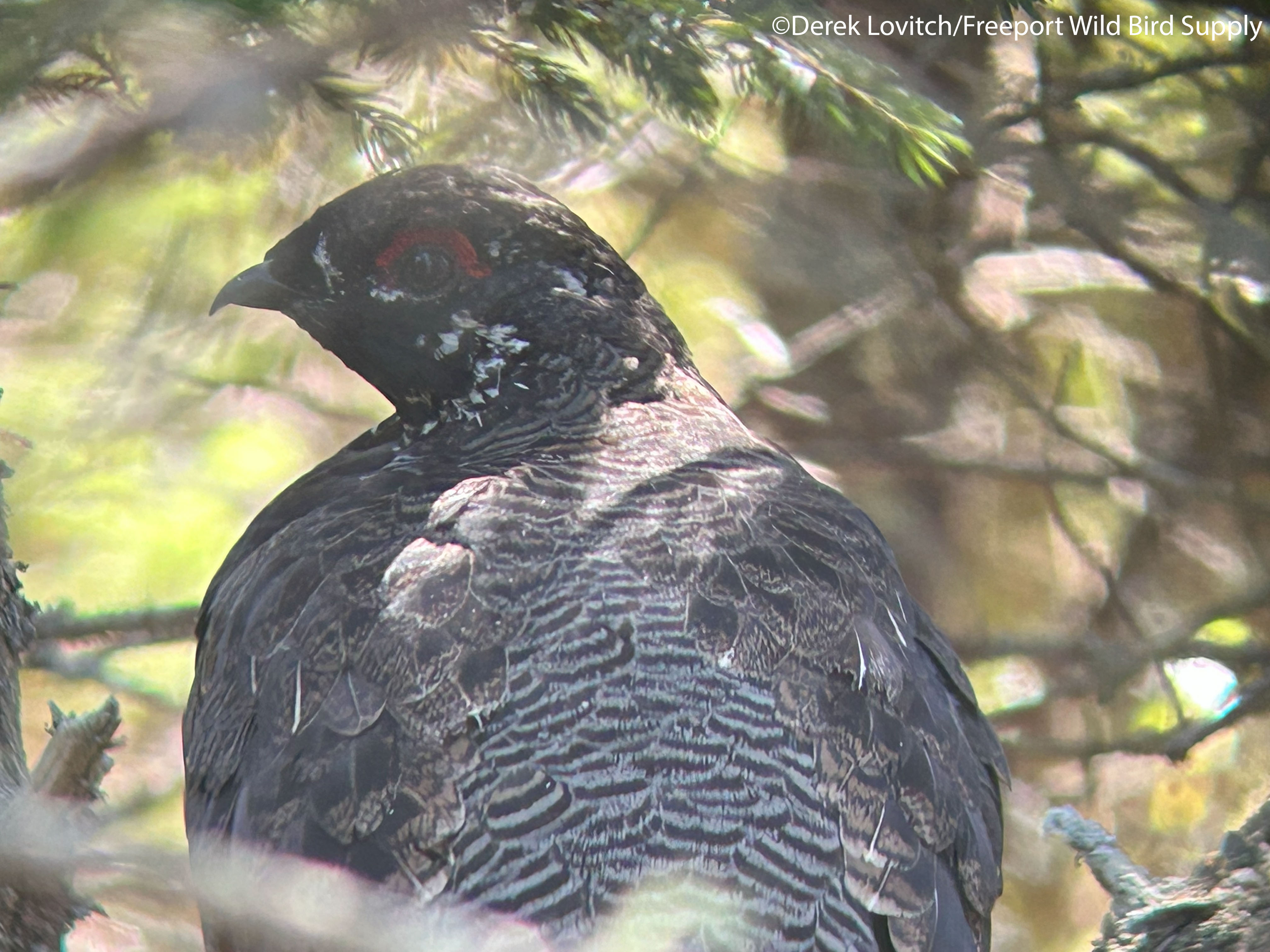
  • 1 Spruce Grouse and 25 nearshore Razorbills, Great Wass Island, Jonesport, 9/4 (with Jeannette).
  • An great count of 6 FORSTER’S TERNS foraging together in The Pool from the Hill’s Beach side, 9/7.
  • 3 adult Lesser Black-backed Gulls, Hill’s Beach, Biddeford, 9/7.
  • 1 adult and 1 2nd cycle Lesser Black-backed Gull, Biddeford Pool Beach, 9/7.

Recent forays yielded a decent 21 species of shorebirds this period, with my high counts over these past 10 days being the following. With the progressing season and other priorities and destinations, this will be my last shorebird high count report for the year.

  • American Oystercatcher: 5, Hill’s Beach, Biddeford, 9/7.
  • Black-bellied Plover: 179, The Pool, Biddeford, 9/7.
  • AMERICAN GOLDEN PLOVER: 2, Winding Brook Turf Farm, Lyman, 9/7, plus singles at: Eastern Road Trail, Scarborough Marsh, 9/5 and Hill’s Beach, 9/7.
  • Killdeer: 13, Crystal Spring Farm, Brunswick, 9/7.
  • Semipalmated Plover: 138, Eastern Road Trail, Scarborough Marsh, 9/5.
  • Piping Plover: 8, Hill’s Beach, 9/7.
  • Whimbrel: 4, The Pool, Biddeford, 9/7.
  • Ruddy Turnstone: 15, Biddeford Pool Beach, Biddeford, 9/7.
  • Red Knot: 2 juveniles, The Pool, 9/7.
  • Sanderling: 112, Biddeford Pool Beach, 9/7.
  • Least Sandpiper: 125, Lubec Bar and Flats, 9/3 (with Beth Edmonds, Dan Nickerson, Cynthia Phinney, and Jeannette).
  • White-rumped Sandpiper: 26, Biddeford Pool Beach, 9/7.
  • Pectoral Sandpiper: 3, Eastern Road Trail, 9/5.
  • Semipalmated Sandpiper: 1800-2000, Biddeford Pool Beach, 9/7 with an honorable mention of 1500, Lubec Bar and Flats, 9/3 (with Brandon Baldwin, Shenna Bellows, Beth Edmonds, Dan Nickerson, Cynthia Phinney, and Jeannette).
  • WESTERN SANDPIPER: 1 juv, Eastern Road Trail, Scarborough Marsh, 9/5.
  • Short-billed Dowitcher: 14, The Pool, 9/7.
  • Spotted Sandpiper: 8, Sabattus Pond, 8/31.
  • Solitary Sandpiper: 1, multiple locations this week.
  • Lesser Yellowlegs: 21, Walsh Preserve, Freeport, 9/6 (with Saturday Morning Birdwalk group).
  • “WESTERN” WILLET: 2 juveniles, The Pool, 9/7.
  • Greater Yellowlegs: 28, Walsh Preserve, Freeport, 9/6 (with Saturday Morning Birdwalk group).

This Week’s (Plus) Highlights and Shorebird High Counts, 8/19 – 8/28/2025

For the last 13 summers now, hybrid herons have occurred in Scarborough Marsh, with one individual continuing this summer. Likely also present last summer, this bird is significantly darker on the neck and back than the only bird present from about 2021 to 2023, possibly suggesting yet another backcross (Gen 4?) with Tricolored Heron (especially when observed with its breeding plumes earlier in the summer). It does appear quite similar to my proposed 2nd or 3erd generation Tricolored Heron x Snowy Egret x Little Egret that was present from 2016 to at least 2020, so it could possibly by the same bird (Labeled 3A in my article Hybrid Herons of Maine from my North American Birds article in 2021, Volume 72, Number 3. At this point, I believe the hybrids are best described as “Tricolored Heron x small white Egretta species,” or, “Patches” as I dubbed it and most birders refer to it now. Whatever it is, this year’s individual cooperated for me along the Eastern Road Trail on the 26th.

It was another busy period for me, with most of my mornings spent only birding our property before work. Luckily, the yard has been fantastic as it turns out to be this time of year, with a nice variety of migrants, and lots of local breeders fattening up on our plentiful Black Cherry trees. Some of the migrants detected this week included a Prairie Warbler on 8/19, a Swainson’s Thrush on 8/20, Canada Warbler on 8/21, Cape May Warbler 8/24-25, a single Common Nighthawk at dusk on 8/26, and a BLUE-GRAY GNATCATCHER on 8/27.

Otherwise, it was a weekend trip to Bar Harbor and a shorebird little-big day on the 26th that kept me going, with the following observations of note over the past 10 days.

  • 1 continuing COMMON GALLINULE, Essex Marsh, Bangor, 8/22 (with Bill Thompson).
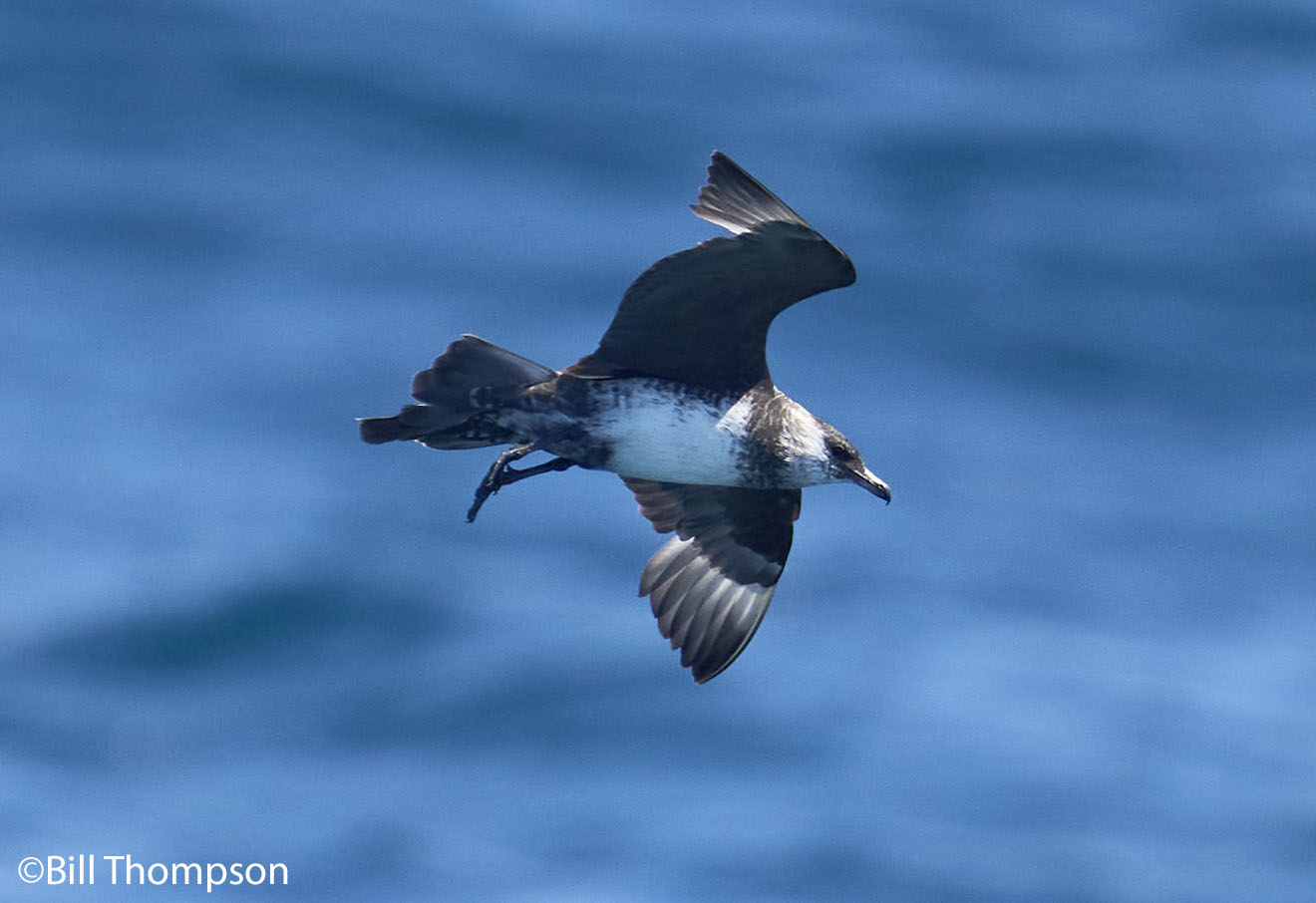
  • The big adventure this week was the 12-hour pelagic/whale watch out of Bar Harbor with Flukes and Bar Harbor Whale Watch Co to Cashes Ledge in the Gulf of Maine. I’ll leave the complete checklist to others, but my highlights from the trip were the total of 33* Leach’s Storm-Petrels, repeated great view of a total of 15* Pomarine Jaegers, the feeding frenzy of Wilson’s Storm-Petrels (day total of 1,573*) at Ammen Ledge, and the scattered flocks of Red-necked Phalaropes.

Pomarine Jaeger (above) and Great Shearwater (below)

  • 2 Horned Grebes (oversummering or really early?) and 2 Red Crossbills, Hollingsworth Trail, Petit Manan NWR, Steuben, 8/24 (with Bill Thompson).
  • 2 FORSTER’S TERNS, The Pool, Biddeford Pool, 8/26.
  • 2-3 continuing adult RED-NECKED GREBES, Ocean Avenue, Biddeford Pool, 8/26.
  • 1 continuing postulated TRICOLORED HERON X SMALL WHITE EGRETTA SPP, aka “Patches,” Eastern Road Trail, Scarborough Marsh, 8/26. Photo and notes above.

Fueled by a 19 shorebird species day on the 26th, I tallied 22 species of shorebirds this week, with my high counts over these past 10 days (see last week’s post for explanation) being the following:

  • American Oystercatcher: 7 (4 ad, 3 juv), Hill’s Beach, Biddeford, 8/26 (with Noah Gibb and Stacey Huth).
  • Black-bellied Plover: 156, The Pool, Biddeford Pool, 8/26.
  • Killdeer: 46, Crystal Spring Farm, Brunswick, 8/25.
  • Semipalmated Plover: 150+, Eastern Road Trail, Scarborough Marsh, 8/26.
  • Piping Plover: 15, Hill’s Beach, Biddeford, 8/26 (With Noah Gibb and Stacey Huth).
  • Whimbrel: 2, The Pool, 8/26.
  • Ruddy Turnstone: 12*, Mt Desert Rock via Cashes Ledge boat trip, 8/23.
  • Red Knot: 8, The Pool, 8/26 and 3, Wharton Point, Brunswick, 8/25.
  • Sanderling: 5, Hill’s Beach, 8/26.
  • Dunlin: 1 adult, Wharton Point, 8/25 (early).
  • Least Sandpiper: 98, Eastern Road Trail, 8/26.
  • White-rumped Sandpiper: 10+, The Pool, 8/26.
  • Pectoral Sandpiper: 2, Eastern Road Trail, 8/26.
  • Semipalmated Sandpiper: 512, Wharton Point, 8/25.
  • Short-billed Dowitcher: 18, Hill’s Beach, 8/26.
  • Spotted Sandpiper: 2, Ocean Ave, Biddeford Pool, 8/26.
  • Solitary Sandpiper: 1, Rte 136, Durham, 8/26.
  • Lesser Yellowlegs: 19, Eastern Road Trail, 8/26.
  • “Eastern” Willet: 8, The Pool, 8/26.
  • Greater Yellowlegs: 41, Wharton Point, 8/25.
  • RED-NECKED PHALAROPE: 218*, Cashes Ledge boat trip, 8/23.
  • RED PHALAROPE: 1* but I had at least 3 more, Cash’s Ledge boat trip, 8/23.

*Official trip tallies kept by others, although my personal numbers would likely have been similar.

This Week’s Highlights and Shorebird High Counts, 7/28 – 8/8/2025

One of two Baird’s Sandpipers that were in the salt pannes of the Eastern Road Trail through Scarborough Marsh on the 7th, it was one of an estimated 3500+ shorebirds present that day. Low water conditions are currently ideal, but they are drying out fast, and without some rain in the next week, this hotspot might just become too dry to hold many birds.  

With a busy few days of catching up, my birding was limited immediately upon our return from our summer vacation. However, I made up for it this week with a couple of tours and two birding outings with friends. There is a surprising number and quality of summertime rarities around the state right now, but I stayed fairly local and tried to find my own rare shorebird or two! Here are my observations of note over the past 12 days here in Maine.

  • A vocal Yellow-billed Cuckoo continues daily in our yard all week.
  • 1 Great Egret, flying over downtown Waterville at dusk, 7/28 (with Jeannette).
  • 2 Long-tailed Ducks, Simpson’s Point, Brunswick, 8/1.
  • 1 TRICOLORED HERON (FOY), Pelreco Marsh, Scarborough Marsh, 8/3 (with Birds on Tap – Roadtrip! Tour Group). Photo in trip report here.
  • 3 adult RED-NECKED GREBES, 1 White-winged Scoter, and 1 Black Scoter, Ocean Avenue-Biddeford Pool Beach, Biddeford, 8/5 (with Bill Thompson)
  • 1 female PURPLE MARTIN, Timber Point, Biddeford, 8/5 (with Bill Thompson). Confirmed breeding as it entered a powerline visual marker ball with food and exited with a fecal sac!
  • PATCHES! Perhaps Patches the IVth? Presumed TRICOLORED HERON X SNOWY EGRET X LITTLE EGRET HYBRID that now may be a fourth-generation bird that’s a backcross again with a TRICOLORED HERON as this year’s bird has significantly more bluish color than previous years, and in all the right places for a Tricolored. In other words, “Tricolored Heron x Small White Egretta SPP”, or, “Patches.” But the hybrid heron was in the salt pannes of the Eastern Road Trail on 8/7 (with Ian Doherty). My phone-scoped photos in the heat shimmer don’t do it justice!
  • 7 Bonaparte’s Gulls, Sabattus Pond, 8/8.

And as expected for the season, shorebird migration is now in full swing and that was the focus of my birding attention, resulting in a solid 21 species. Here were my high counts over these past 12 days:

  • American Oystercatcher: 7 (4 ad, 3 juv), Hill’s Beach, Biddeford, 8/5 (with Bill Thompson).
  • Black-bellied Plover: 60+, The Pool, Biddeford Pool, 8/5 (with Bill Thompson).
  • Killdeer: 11, Sabattus Pond, 8/8.
  • Semipalmated Plover: 375, Hill’s Beach, 8/5 (with Bill Thompson).
  • Whimbrel: 3, Pine Point, Scarborough, 8/3 (with Birds on Tap – Roadtrip! Tour Group).
  • Ruddy Turnstone: 5, Ocean Avenue, Biddeford Pool, 8/5 (with Bill Thompson).
  • Red Knot (FOF): 1 ad, Hill’s Beach, 8/5 (with Bill Thompson).
  • Sanderling: 2, Hill’s Beach, Biddeford, 8/5 (with Bill Thompson).
  • BAIRD’S SANDPIPER (FOY): 2, Eastern Road Trail Scarborough Marsh, 8/7 (with Ian Doherty). Photo above.
  • Least Sandpiper: 350+, Eastern Road Trail, Scarborough Marsh, 8/7 (with Ian Doherty).
  • White-rumped Sandpiper: 75+ (wow! Great count!), Eastern Road Trail, 8/7 (with Ian Doherty).
  • Pectoral Sandpiper: 1, Eastern Road Trail, 8/7 (with Ian Doherty).
  • Semipalmated Sandpiper: Incredible concentration of 2750-3000+ at Eastern Road Trail, 8/7 (with Ian Doherty), but an honorable mention of 2500+ at Pine Point, Scarborough, 8/3 (with Birds on Tap – Roadtrip! Tour Group).
  • WESTERN SANDPIPER (FOY): 1 ad, Eastern Road Trail, 8/7 (with Ian Doherty).
  • Short-billed Dowitcher: 58, Hill’s Beach, 8/5 (with Bill Thompson).
  • American Woodcock: 2, our property in Durham, 8/1.
  • Spotted Sandpiper: 2, several locations this week.
  • Solitary Sandpiper: 1, Moosehorn NWR – Baring Division, 7/28 (with Jeannette) and Sabattus Pond, 8/8.
  • Lesser Yellowlegs: 104, Walsh Preserve, Freeport, 8/2 (with Saturday Morning Birdwalk group).
  • “Eastern” Willet: 22, The Pool, Biddeford, 8/5 (with Bill Thompson).
  • Greater Yellowlegs: 12, Wharton Point, Brunswick, 8/1.

UPCOMING TOURS w/ Space Available:

Shorebird Workshop with Down East Adventures, August 18th, 8:00am to 4:00pm.

This Week’s Highlights, 5/10-5/16/2025.

The 2025 Bradbury Mountain Spring Hawkwatch came to a close on Thursday. It did not exactly end with a bang, but we had a great flight for the this late in the season on Monday, including a good movement of immature Broad-winged Hawks and Merlins, such as this one. It, and everything else that has passed over or by the summit for the last two weeks has only added to our record-breaking season.

After last week’s rarity insanity, this was a tamer, more “normal” week for mid-May. While several great songbird flights occurred this week, concentrations were few, but there were “new” birds arriving most every day. Here are my observations of note over the past seven days.

  • 1 continuing RUFF (REEVE), Walsh Preserve, Freeport, 5/10 (with Saturday Morning Birdwalk group).
  • 1 ORCHARD ORIOLE (FOY), 2 Blue-gray Gnatcatchers, etc, Green Point WMA, Dresden, 5/13 (with Jeannette).
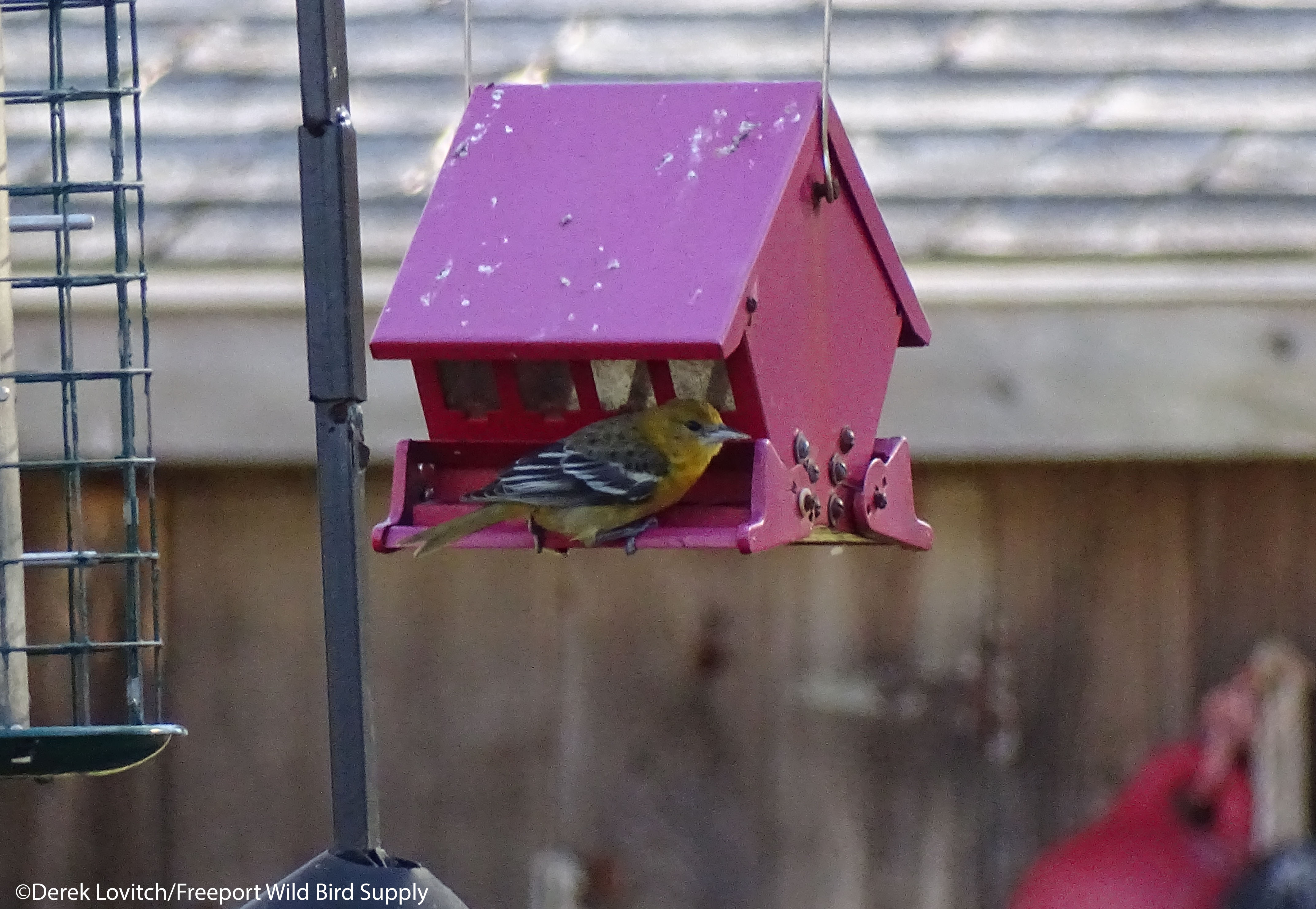
  • 1 immature male ORCHARD ORIOLE, feeders here at the store, 5/14.
  • 1 continuing hen CANVASBACK, Great Pond, Biddeford Pool, Biddeford, 5/15.

My personal “first of years” this week also included:

  • 1 Bobolink, Thornhust Farm, North Yarmouth, 5/10 (with Saturday Morning Birdwalk group).
  • 1 Red-eyed Vireo, Florida Lake Park, Freeport, 5/12 (with Jeannette).
  • 2 Spotted Sandpipers, Florida Lake Park, 5/12 (with Jeannette).
  • 1 Canada Warbler, Florida Lake Park, 5/12 (with Jeannette).
  • 2 Green Herons, Green Point WMA, Dresden, 5/13 (with Jeannette).
  • 7 Short-billed Dowitchers, Walsh Preserve, Freeport, 5/13 (with Jeannette).
  • 1 Scarlet Tanager, our property in Durham, 5/14.
  • 1 Blackpoll Warbler, Florida Lake Park, 5/14.
  • 4 Laughing Gulls, East Point, Biddeford Pool, Biddeford, 5/15.
  • Numerous Common Terns, Biddeford Pool environs, 5/15.
  • 2 AMERICAN OYSTERCATCHERS, Ocean Avenue, Biddeford Pool, 5/15.
  • 5 Roseate Terns, East Point/Ocean Ave, Biddeford Pool, 5/15.
  • 26 Ruddy Turnstones, The Pool, Biddeford Pool, 5/15.
  • 2+ Semipalmated Plovers, The Pool, 5/15.
  • 82 Black-bellied Plovers, The Pool, 5/15.
  • 150 Semipalmated Sandpipers, The Pool, 5/15.
  • 4 Marsh Wrens, Cobboseecontee Lake Causeway, 5/16.

Bradbury Mountain Spring Hawkwatch

The Week 8 report can be found here. The report for the final week, finishing on Thursday, can be found here.

Upcoming Tours (with space available):

Rangeley Birding Festival, June 5-8

This Week’s Highlights, 2/8 – 2/14/2025

Present for several years at Timber Point in Biddeford, this stunning RED-SHOULDERED X RED-TAILED HAWK HYBRID is often seen soaring or in the distance, at least during my infrequent visits here. Bill Thompson and I went to look for it on the 11th, and were treated to a great show from it!

Another cold and wintery week with a continuing active weather pattern limited time in the field for me, but the feeder-watching was great. I’ll have a blog about it in the coming days. But for now, here are my observations of note over the past seven days:

  • The single Fox Sparrows continue here at the store (since 12/21) and at our feeders at home in Durham since early December. Both were frequent at the feeders this week as snow piled up.
  • At least 2 Turkey Vultures continue in the Cumberland-Freeport corridor of I-295.
  • 1 female American Wigeon, Winslow Park, Freeport, 2/8 (with Saturday Morning Birdwalk group).
  • 1 Hermit Thrush and 8 Sanderlings, etc, Reid State Park, Georgetown, 2/10 (with Jeannette).
  • 1 Hermit Thrush, 4 Horned Larks, 1 Northern Harrier, 5 Yellow-rumped Warblers, and 4 locally-surprisingly-rare Harlequin Ducks, Biddeford Pool, 2/11 (with Bill Thompson).
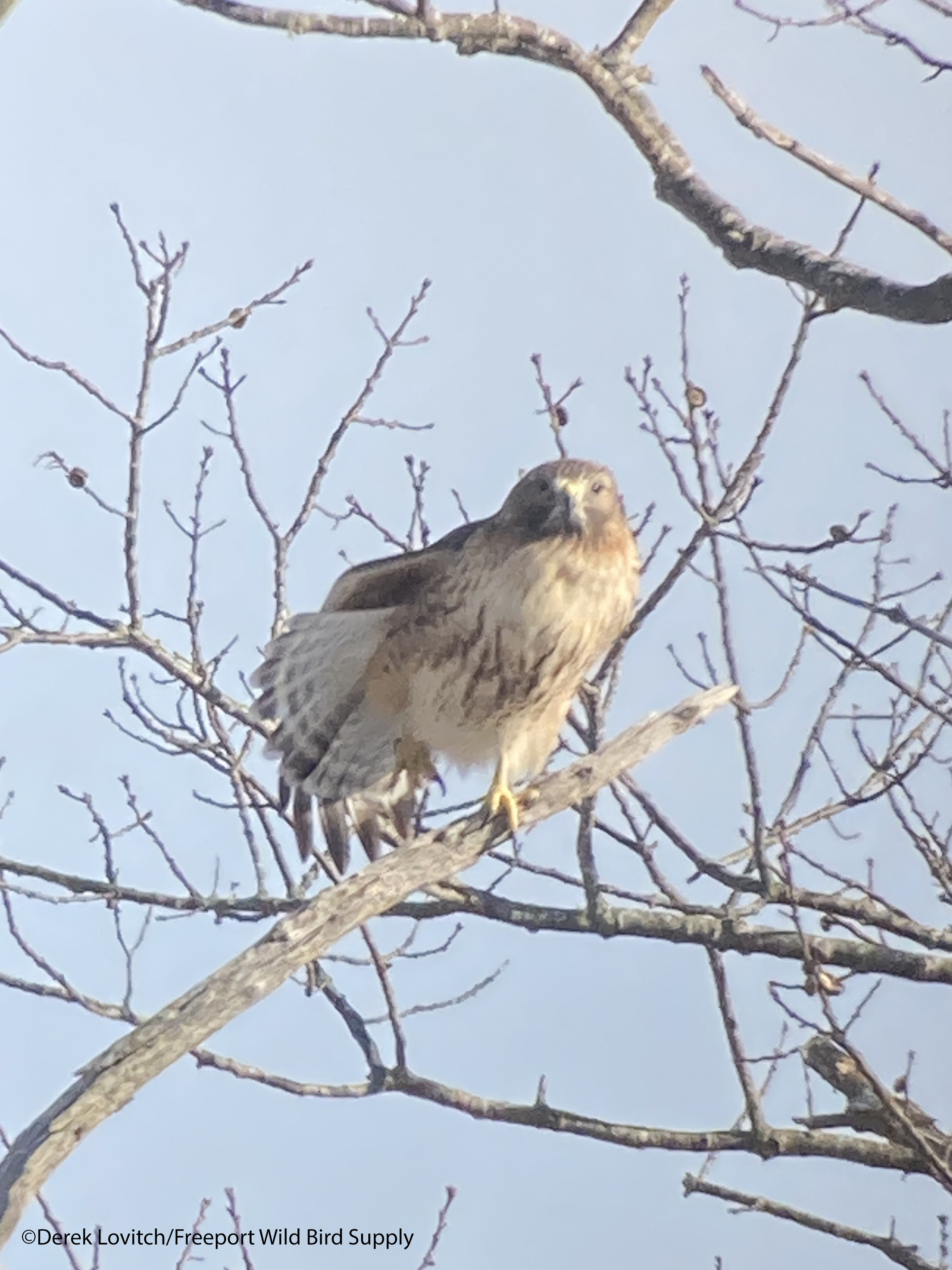
  • 1 continuing (for several years) RED-SHOULDERED X RED-TAILED HAWK HYBRID, Timber Point, Biddeford, 2/11 (with Bill Thompson). Photos above. This was my best photo session and quality time with the bird over the years, allowing for detailed study and extensive photographs, especially by Bill. See phone-scoped photos above. This really rare bird is quite gorgeous. The RSHA-like banded tail has an orange-red wash in the white stripes on the uppersides while the underside has as diffuse, partial RSHA pattern. The underparts have a dull orange blush and/or fine barring (strongest on the underwing) like RSHA, with a diffuse RTHA’s belly band. The head and bill size and shape seemed more RSHA-like, and the powered flight was very much like a RSHA. Such a cool bird!
  • 1 THICK-BILLED MURRE, Fortunes Rocks Beach, Biddeford, 2/11 (with Bill Thompson). His photo:

Upcoming Tours:

1. Due to the weekend’s forecast, the Gull ID Workshop has been cancelled.

2. Our Birds on Tap – Roadtrip “Harlequins and Hops!” scheduled for 2/2 was postponed until Sunday, February 23rd. A handful of spaces are now open for the new date.

2025 Down East Adventures Tours and Trip Reports

Freeport Wild Bird Supply is very excited to partner with Down East Magazine’s Down East Adventures for the fifth year of offering exclusive birding workshops focused on gaining greater knowledge and field skills in a focused group of seasonally accessible birds.  Focused on skill-builder rather than list-building, there will be plenty of “life birds,” but also more knowledge and education about birds, habitats, birding, and much more about the natural world.  We are honored to be their provider for a series of unique and exclusive birdwatching endeavors. In 2025, we will have four outings once again. 

For more information on each tour, as well as registration information, visit: https://www.freeportwildbirdsupply.com/downeast-adventures-tours  Trip reports from each will be posted here upon their completion.

1. Winter Waterbirds Workshop

​February 9, 2025; 9:00am – 4:00pm  Cancelled due to multiple snowstorms!

​Winter is a wonderful time for birding in Maine – at least when you are dressed appropriately! Colorful seaducks that breed in the high Arctic grace our shorelines – including all three scoter species and dapper Long-tailed Ducks, along with everyone’s favorite: striking Harlequin Ducks. Purple Sandpipers and Great Cormorants replace our summertime shoreline denizens. And if the winds are right, very sought-after alcids – including Dovekies and Thick-billed Murres – join our regular Black Guillemots and Razorbills. Black-legged Kittiwakes, Northern Gannets, and “white-winged” gulls add to the mix. In this workshop, we’ll hit a few of the prime viewing locations along Maine’s southern coast. But we won’t just be working on the checklist today. Instead, we’ll be focused on learning how to search for these birds – the how, when, and why – and how to identify them. We’ll learn about microhabitats, weather considerations, and seasonal timing to aid our search today and in the future. By visiting several seasonally-productive sites, we’ll compare similar species while taking time to savor the splashes of color offered by winter seaducks in an otherwise gray and white landscape.
To get an idea of what you may see when the tour returns in the winter of 2026, see the 2024 and 2023 trip reports.

2. Spring Migrant Songbird Workshop

May 4, 2025; 7:00 – 11:00am​

This Northern Parula was one of many ultra-cooperative warblers today. This was one of 10 parulas in a single cluster of willows on the shoreline of Capsic Pond Park during our 20205 workshop.

​Spirits seemed low when we met in such dense fog, but I was even more excited to explore the environs of Portland migrant traps, beginning with Evergreen Cemetery. After a slow start, with few warblers overhead in the Morning Flight, we encountered several very productive pockets of activity, including a great diversity of warblers. Many were down low, too, with just fantastic looks at species such as Yellow, Black-throated Blue Warbler, Nashville, and Black-and-white Warblers, along with great looks at Veeries and Least Flycatchers. A “herd” of about 75-100 White-throated Sparrows marched through the forest understory, and we stalked a Black-crowned Night-Heron and spotted a Merlin among many other species today.

Evergreen was good, but nearby Capisic Pond Park was just great! While there were fewer warblers in both quantity and diversity, the cool, drippy morning conditions kept everyone even lower here. We began with 10 Northern Parulas at eye level all around us in a blooming willow (photo above), had great looks at a Prairie Warbler, listened to Northern Waterthrushes, and marveled at Baltimore Orioles.

We then discussed the overnight migration and how the radar images suggested what we would see and not see today, and how the “poor” weather produced such great birding. In the end, we tallied a very respectable-for-the-date 15 species of warblers! Although the list was not the priority as usual in these workshops, it’s hard not to get excited about the diversity of warblers now arriving. While Northern Parula was our most abundant warbler today, the total warbler list – in very rough order of abundance- also included Black-and-white,Yellow-rumped, Black-throated Blue, Ovenbird, Magnolia, Chesnut-sided, Yellow, Nashville, Common Yellowthroat, Black-throated Green, American Redstart, Northern Waterthrush, Pine, and the aforementioned Prairie. More importantly, perhaps, we worked on building our skills of recognizing each species and family so that our birding will be better and more successful on our own next time.

3. Shorebird Workshop

August 18, 2025; 8:00am – 4:00pm​

This juvenile Piping Plover was one of 12 species of shorebirds we had the chance to really study on our
Shorebird Workshop tour.

​Could we have had more of a perfect day? Temperatures topping out in the mid-70’s, a light breeze in the afternoon, and clear skies – considering the rain of early summer and the recent extreme heat, we could not have asked for better. And then we saw thousands of shorebirds!

With more than 35 species of shorebirds regularly appearing in Maine, this workshop was designed to appreciate the diversity and beauty of this fascinating family. We hit some of the marshes, beaches, and rocky roosts that shorebirds prefer at the peak of their migration. We focused on comparative experience, learning how to recognize each species both near and far. Starting with the basics, such as plover vs. sandpiper, we’ll work our way up to the identification quandaries such as the “peeps” and lone yellowlegs. We worked through species by species as we developed a “toolkit” to approach shorebird identification on your own, using a combination of habitat, shape, size, structure, behavior, and plumage to identify this wonderfully diverse and attractive group of birds.

By day’s end we tallied a decent 12 (and a half!) species of shorebirds, a little short of our unofficial goal of 15. We did see a couple of rarities but were also dogged by Peregrine Falcons and Para-gliders causing birds to disperse and/or take cover. But we had plenty of chances to study a nice array of species, often side-by side.

Beginning at Biddeford Pool Beach, we started with the basics and enjoyed watching Ruddy Turnstones bulldoze their way into the wrack line and picking out White-rumped Sandpipers from a mass of Semipalmated Sandpipers. A Baird’s Sandpiper at Great Pond was one of our most notable birds of the day, and not where we expected it.

At Hill’s Beach, there was a lot of disturbance today, but we had some good opportunities to study Piping vs Semipalmated Plovers, Sanderlings, spiffy Short-billed Dowitchers, and more. We then shifted to the Pool, where we studied silhouettes and practiced distant shorebird using mostly general impression of size and shape. It was here that we had our largest numbers of the day, with an estimate of 1600 Semipalmated Sandpipers, 300 Semipalmated Plovers, and 163 Black-bellied Plovers leading the way.

Near or far, good light or bad, the general impression of size and shape, behavior, and more can be applied to identify shorebirds more readily than little nuances in some color or pattern.

After our lunch break, we returned north to Scarborough Marsh, where I would usually start the workshop, but with very low water in the upper salt pannes due to the drought, we shifted the itinerary. But the incoming tide at Pine Point did not disappoint! We had some close studies of more Short-billed Dowitchers and better views of Black-bellied Plovers, and about 1200 Semipalmated Sandpipers were present. However, as they moved close and concentrated, a Peregrine Falcon came tearing in, flushing most of the birds. Then, it made a sudden burst of speed and a hard turn and before we knew it, there was one less Semipalmated Plover on the mudflat. While it was poor timing for our shorebirds workshop (let alone for that one particular plover!), it was an awesome show (well, for us anyway) and one that will not soon be forgotten.

Some birds finally returned to the mudflat, when a large (for the date) flock of Willets flew in, making their usual grand entrance. We were able to put our advanced shorebirds ID skills to work with the bigger, lankier, grayer one that we soon identified as a rare in Maine “Western” subspecies of Willet. It might have been beyond today’s goals, but it was a great lesson in using comparative tools. 

A couple of upper marsh stops finally gave us a good, close comparison between Least and Semipalmated Sandpipers, and a Lesser Yellowlegs that was close enough to study and enjoy, bringing a productive and successful day to a close.

4. Monhegan Birding Workshop

September 12-14, 2025  

Our final Downeast Adventures birding workshop tour of 2025 spent 3 delightful days on Monhegan Island. Weather, geography, habitat, and migration ecology all combine to produce some remarkable birding opportunities at this special place. And even when it’s “slow” by lofty Monhegan standards, lots of learning experiences and workshopping opportunities would be at hand, often right out the front door of our hotel. Oh yeah, the food is sooo good, too!

As per the plan, we hit the ground running shortly after our arrival on the island. It took us an hour and 45 minutes to walk the ½ mile or so to our hotel as we encountered quite a few migrants, especially at my favorite starting spot along Wharf Road. We jumped head-first into aging and sexing fall warblers thanks to 3 different plumages exemplified by a trio of Cape May Warblers. American Redstarts, Northern Parulas, Yellow Warbler, and more introduced us to what birding Monhegan in the fall is all about.

By the time we reconvened after a lunch break, the insanely gorgeous weather with bright sun and very little breeze encouraged birds to take to the shadows. A sky constantly abuzz with Merlins didn’t help either, although we enjoyed it. While passerine activity had slowed dramatically, we enjoyed a light hawk migration with a couple of Northern Harriers and a few American Kestrels, while the Merlins and 1-2 Sharp-shinned Hawks further diminished the activity in the trees and shrubs. We took the time to visit the east side of the island, sample the different habitat types of the island, and discuss food plants for birds and native insects. The butterfly, dragonfly, and insect-watching was excellent on this unseasonably warm afternoon, and we worked on learning the connection between birding and bird habitat.

On Saturday morning, we learned why there were so many birds around Friday morning, but few in the air at sunrise. But there were definitely “new” birds around, suggesting at least a light arrival of birds overnight had occurred, including two vociferous Dickcissels. I made the decision to try and track down a Blue Grosbeak that had just been reported, but unfortunately, it did not wait for us. We did have an immature male Orchard Oriole, however, which was a treat, and we spent more time studying Cape May Warbler plumages.

On such gorgeous days, a lot of newly-arrived migrants simply depart the island as part of their morning redetermined migration flights (yes, we discussed this more thoroughly among many topics of avian and general ecology discussed throughout the weekend). In fact, the second half of our morning was very slow, but we did enjoy a couple of adult Lesser Black-backed Gulls and we kicked up a very uncommon Marsh Wren. But warblers were few, and Merlins remained a’plenty. Red-breasted Nuthatches were very abundant however – demonstrating what an irruption looks like, and Ruby-throated Hummingbirds were unusually widespread for the date.

We filled the time between birds looking at all other walks of life. American Dagger Moths caterpillars were particularly plentiful.

The afternoon was spent with a couple of impromptu workshops, such as an introduction to gull identification as I attempted to enlighten the group about how manageable it is to understand the basics of this group of fascinating species. The avian highlight, however, was the thrilling chase of a Solitary Sandpiper by two Merlins right over our heads! The Merlins would gain some height, dive, and close the distance, only for the sandpiper to take another evasive maneuver. The sandpiper tried to gain elevation to stay above the diving Merlins, but they were getting closer! Then, the sandpiper made one quick turn, ascended, and took off to the north, leaving the hungry Merlins to mosey back down to the treeline to see if the marsh had something much slower to offer. We bid the sandpiper farewell and good luck as we thanked the Merlins for a most entertaining performance!

It was another very light migration overnight Saturday into Sunday, but unlike the previous day, we hit a wonderful early-morning wave. One sunny edge captivated us until it was time to hustle back for breakfast: Several American Redstarts, Red-breasted Nuthatches, Black-capped Chickadees, Common Yellowthroats, and Norther Parulas had joined together, punctuated by repeated views of a most cooperative Least Flycatcher. Every time we tried to move long, a new species appeared. A fly-over Greater Yellowlegs. A flycatching Eastern Wood-Pewee. And finally, a Brown Thrasher that popped out right in front of us.

I was thrilled to have this sample of “what Monhegan can be like” at this season for those who fought the urge to stay in bed. Post-breakfast was once again much slower, but we hit a few pockets of birds, as well a finding a Mourning Warbler which is always fun – and challenging – in fall migration. We watched and listened to territorial Carolina Wrens in a double-duet song battle, encountered a flock of 4-6 Red-eyed Vireos working on Fall Webworms, and spent more quality time with the island’s once-again-ubiquitous Ring-necked Pheasants. And of course, we made time to sample the stunning Acadian Forest habitat of the island’s interior and to take in the view from the lighthouse.

Another delicious lunch and then a slow meander to the ferry brought our visit to a close. On the ferry ride back, a few more Northern Gannets were seen, and plans to return to this extraordinary island were already in the works!

(2026 Birding Tours with Down East Adventures will be posted soon!)

This Week’s Highlights, 11/23– 11/29/2024

My photos of my highlights this week are not exactly worthy of a “cover shot,” so instead, here’s a Northern Mockingbird that posed nicely for me in Biddeford Pool on the 29th.

Winter seems to be settling in! The colder (seasonable, finally!) temperatures should produce another wave of rarities and “lingering/late” birds to find though, and that was the case for my observations of note over the past seven days.

  • 45 American Pipits and ~10 Horned Larks, Mayall Road, Gray/New Gloucester, 11/23 (with Saturday Morning Birdwalk group).
  • 1 female BLACK-THROATED BLUE WARBLER, Village Crossings – Cape Elizabeth Greenbelt Trail, 11/24.
  • 1 Northern Shrike (FOS), feeders here at the store, 11/24.
  • 1 Ruby-crowned Kinglet, 1 Winter Wren, 2 Hermit Thrushes, etc, Bailey Island, Harpswell, 11/25 (with Jeannette).
  • 1 WILSON’S WARBLER and 1 “YELLOW” PALM WARBLER, Saco Riverwalk, 11/29.

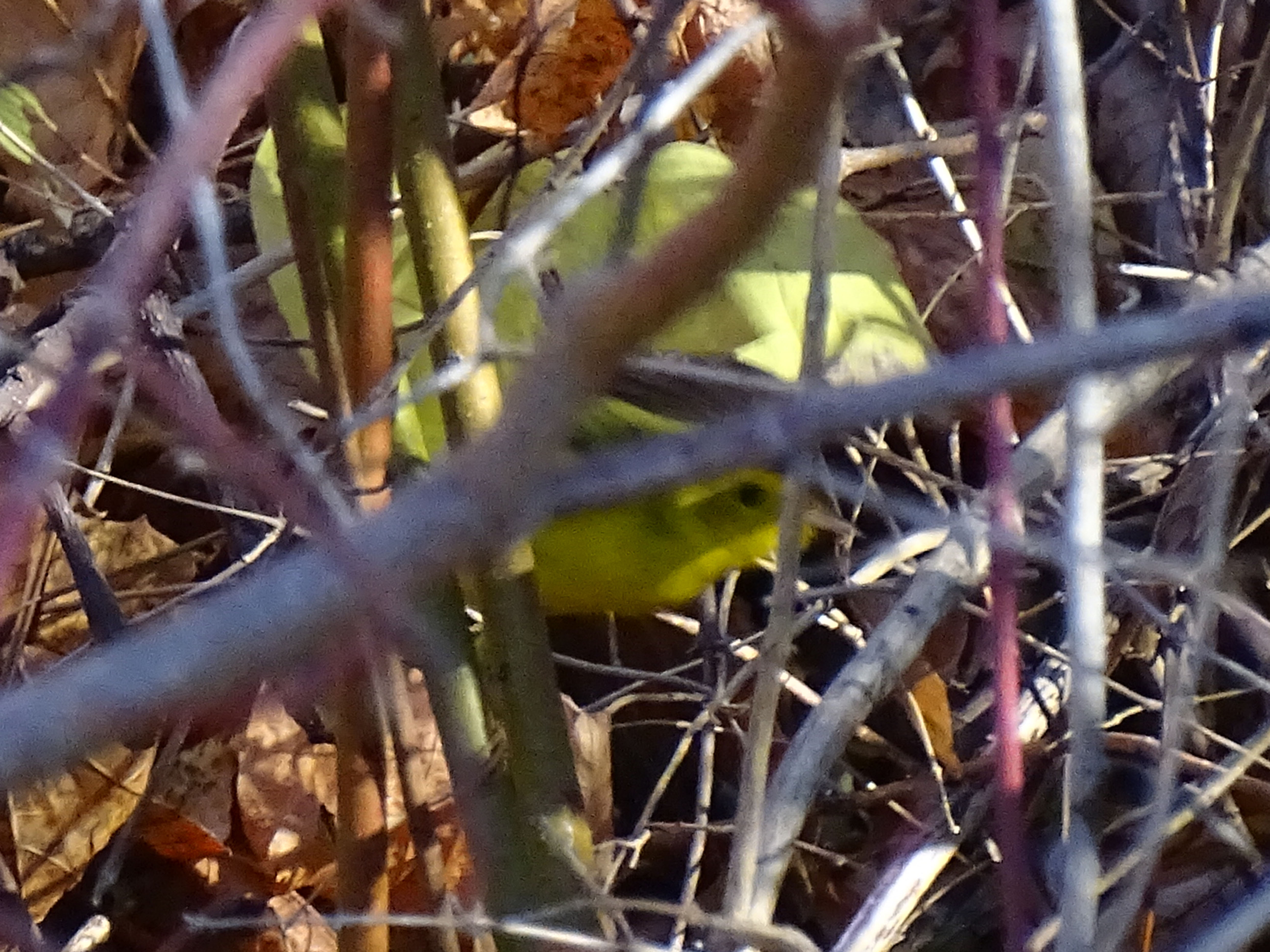
If you stitch together all of my photos, you might be able to make one poor photo of a whole Wilson’s Warbler. Nonetheless, it was a nice surprise that added a splash of color to the week’s birding endeavors. Trust me, the snapshot of the Palm Warbler is much worse!

  • An above-average number of species such as Northern Flickers, Hermit Thrushes, and Swamp Sparrows still continue around the area.

Recent Highlights, 11/3 – 11/8/2024 – plus notes from 10/29-30

I usually miss at least one “Mega” rarity whenever I go away, so I was pretty pleased that this Common Gull – found on 10/31 by Evan Obercian at the Samoset in Rockland – stuck around until we returned. I was able to see it on 11/3.  It took a while, but when it eventually spread its wing, the species/subspecific ID became certain. Separated by the abundant Ring-billed Gulls by the smaller size, slightly darker back, and thin bill, we can rule out the West Coast Short-billed Gull by the length of the bill and the wing pattern. Separation from Kamchatka Gull is more challenging, but it wasn’t particularly dark, the head was lightly flecked with brown, and there’s a relatively distinct bill band. According to Ayyash (2024), the shorter gray tongues on the outer primaries, the large P9 window that connects with the large P10 window, and little to no white at the end of the tongue on P8 all suggest Larus canus canus (and not Kamchatka Gull). 

It’s November, and that means “Rarity Season” and unlike recent Novembers, Rarity Season is off to a roaring start. Here are my observations of note over the past 6 days. Below, see the trip report for our 7-day birding cruise that included time in Maine waters.

  • Although I chase even less frequently these days, I did make time to go see one of the two COMMON GULLS at the Samoset in Rockland on 11/3. Photos and discussion above. Additionally, I caught up with the YELLOW-BREASTED CHAT that was found there that day, although I blew the photos.  A “Western” Palm Warbler, several American Pipits, and 4 Horned Larks were also present.
  • 1 Pine Warbler, Bailey Island, Harpswell, 11/5 (with Jeannette).
  • 1 RED-EYED VIREO and 6 American Tree Sparrows (FOF), Trout Brook Preserve, South Portland, 11/7.
  • Biddeford Pool environs, 11/8:
  •             1 BALTIMORE ORIOLE
  •             1 PRAIRIE WARBLER
  •             1 “Ipswich” Savannah Sparrow
  •             1 Rusty Blackbird
  •             2 Lapland Longspurs
  •             2 Greater Yellowlegs, 22 Black-bellied Plovers, and 26 Dunlin.
  •             2 Northern Pintails
  •             4 Hermit Thrushes and 1 Swamp Sparrow, etc.
  • Our Durham property is much quieter overall these days, but a few Red-winged Blackbirds have been around, a Ruby-crowned Kinglet was present 11/5-6, our first Pine Siskin of the season at home visited on 11/5 and increasing daily since, and Dark-eyed Junco numbers have continued to grow. At least one each of Swamp and Savannah Sparrow continue.

TRIP REPORT

Last week, Jeannette and I boarded a Princess Cruises ship in New York City to unofficially survey for rarities and things like Great Skua. The entire trip report is here, but our highlights from Maine specifically included:

  • 1 RED-EYED VIREO, 2 Orange-crowned Warblers, 2 Field Sparrows, etc, Eastern Promenade, Portland, 10/29. Yes, we took a cruise only to go home!
  • Passerine FALLOUT, 10/30. Awoke to birds on deck before dawn. 16.5 nautical miles southeast of Mt. Desert Rock. 12 species of passerines, led by 8++ Yellow-rumped Warblers but also including 1 Rusty Blackbird, 1 “Ipswich” Savannah Sparrow, 1 Snow Bunting, and perhaps most surprisingly, 7 European Starlings. Another birder on board photographed a Pine Warbler.
  • Very little time was spent in daylight in Maine waters, unfortunately, but we did have a couple of Northern Fulmars in Maine waters very early on the 30th.

Recent Highlights, 8/19 – 8/25/2024

Brandon Baldwin and Kevin Harding found this American White Pelican off Wharton Point in Brunswick on the 24th. My “lunchbreak chase” ended up taking a few extra hours, but it was more than worth it when a small group of us were treated to the bird flying right over our heads at the end of the Maquoit Bay Conservation Land trail. Luckily, it wasn’t any closer when it decided to lighten the load, as caught in action here.

It was an exceptional week of late summer birding. Once again motivated by shorebirds, I ran into quite a few other species of note while working the usual hotspots. My non-shorebird observations of note over the past 7 days included:

  • Common Nighthawks were on the move this week, while some other widespread migrants and frequent visitors to our Durham property included American Redstart and Yellow, Black-and-white, Magnolia, Tennessee and Cape May Warblers.
  • 1 adult Little Blue Heron and 2+ Surf Scoters, Wharton Point, Brunswick, 8/21 (with Anniversary Day Birdwalk group).
  • 2 FORSTER’S TERNS, 2 CASPIAN TERNS, and 1 adult Lesser Black-backed Gull, Hill’s Beach, Biddeford, 8/23 (with Noah Gibb).
  • 1 female LONG-TAILED DUCK and 2 Surf Scoters, Biddeford Pool Beach, Biddeford, 8/23 (with Noah Gibb).
  • 2 continuing adult RED-NECKED GREBES, Ocean Avenue, Biddeford Pool, 8/23 (with Noah Gibb).
  • 1 Blue-gray Gnatcatcher, 2 Cape May Warblers, etc, Old Town House Park, North Yarmouth, 8/24 (with Saturday Morning Birdwalk group).
  • 1 AMERICAN WHITE PELICAN, Wharton Point, Brunswick, 8/24. A State Bird for me, it was found about an hour earlier by Kevin Harding and Brandon Baldwin. After it was displaced by a passing airboat, I arrived at about 12:30 and relocated it on the rocky ledge at the southern end of the bay. Brandon and I cut the distance in more than half by walking out to the end of the Maquoit Bay Conservation Land trail. Although closer, the light was brutal, but a small group of us waiting until the tide had inundated the ledge. Then the pelican took off. First it started heading south, but circled back, passed directly overhead (see photo above) and then gained altitude high over Wharton Point before disappearing off to the north.
  • 26 Surf Scoters, Maquoit Bay Conservation Land Trail, 8/24 (with Brandon Baldwin).

Meanwhile, fueled by a successful 19-species “shorebird mini-Big Day on 8/23 with Noah Gibb, my shorebird high counts for a total of 20 species this week were as follows:

  • AMERICAN OYSTERCATCHER: 2, Little Whaleboat Ledges, Casco Bay, 8/25 (with Birds of Casco Bay Boat Trip tour group).
  • Black-bellied Plover: 150+, The Pool, Biddeford Pool, 8/23 (with Noah Gibb).
  • Killdeer: 26, Crystal Spring Farm, Brunswick, 8/21 (with Anniversary Day Birdwalk grpup).
  • Semipalmated Plover: 400, The Pool, 8/23 (with Noah Gibb).
  • Piping Plover: 1, Hill’s Beach, Biddeford, 8/23 (with Noah Gibb).
  • Ruddy Turnstone: 30, Biddeford Pool Beach, Biddeford, 8/23 (with Noah Gibb).
  • RED KNOT: 1 ad and 1 juv, The Pool, 8/23 (with Noah Gibb).
  • STILT SANDPIPER: 1 continuing adult, Walsh Preserve, Freeport, 8/19 (with Jeannette) and 8/23 (with Noah Gibb).
  • Sanderling: 17, Hill’s Beach, 8/23 (with Noah Gibb).
  • DUNLIN: 1 fresh juvenile (FOY), Biddeford Pool Beach, 8/23 (with Noah Gibb).
  • Least Sandpiper: 100+, The Pool, 8/23 (with Noah Gibb).
  • White-rumped Sandpiper: 6, Biddeford Pool Beach, 8/23 (with Noah Gibb).
  • Semipalmated Sandpiper: 1250, Biddeford Pool Beach, 8/23 (with Noah Gibb).
  • Short-billed Dowitcher: 16, The Pool, 8/23 (with Noah Gibb).
  • LONG-BILLED DOWITCHER: 1 adult, Walsh Preserve, 8/19 (with Jeannette). Photo below.
  • Spotted Sandpiper: 3, Ocean Avenue, 8/23 (with Noah Gibb).
  • Solitary Sandpiper: 2, multiple locations and dates this week.
  • Lesser Yellowlegs: 54, Walsh Preserve, 8/19 (with Jeannette).
  • “Eastern” Willet: 3, The Pool, 8/23 (with Noah Gibb).
  • Greater Yellowlegs: 8, Royal River flats, 8/25 (with Birds of Casco Bay Boat Trip tour group).

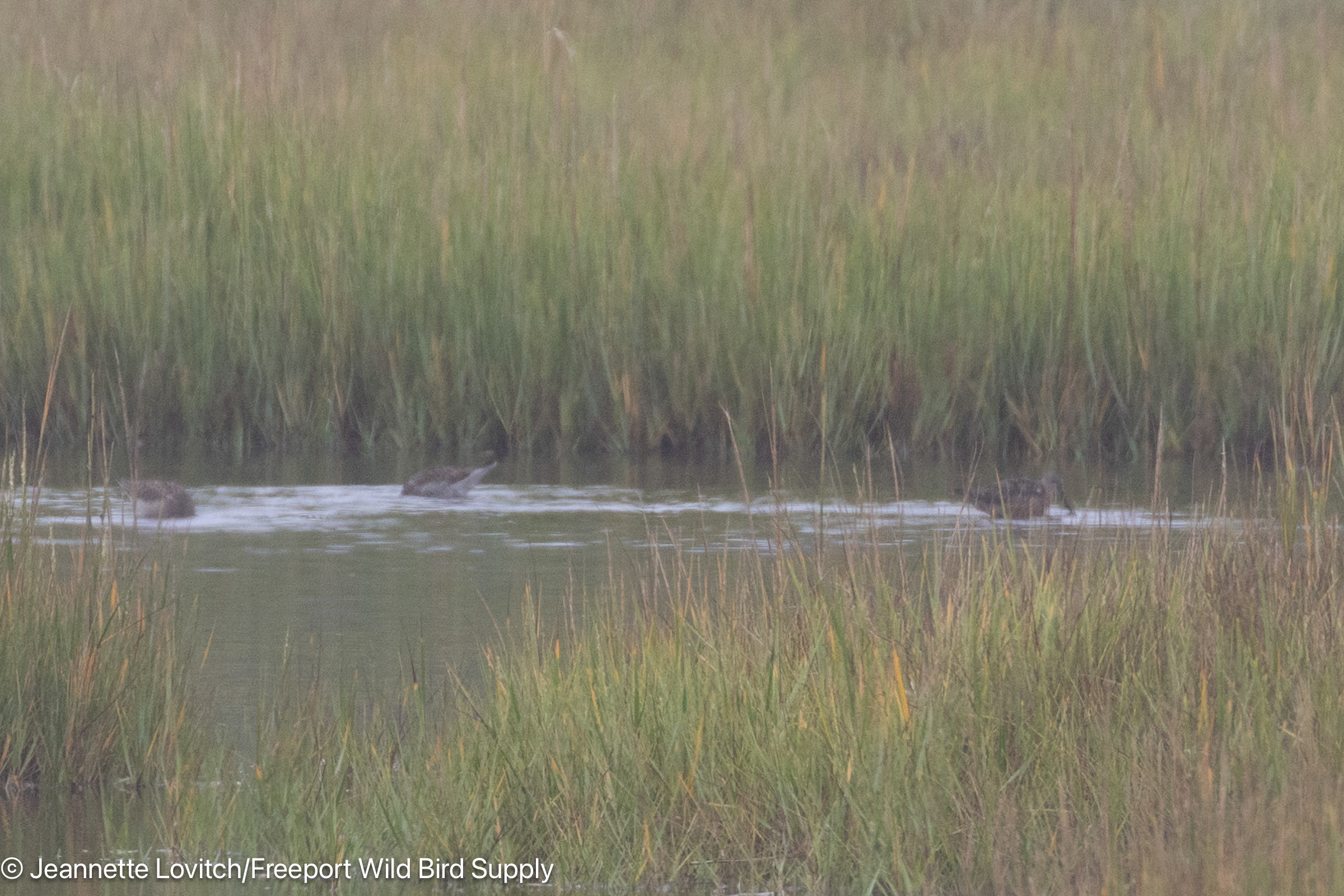
An adult LONG-BILLED DOWITCHER was a fun find for Jeannette and I this week at the Walsh Preserve in Freeport. It could have been closer, but this photo shows some of the pertinent identification features in the bird to the right including the larger size and very round shape, hunched back, and uniformly reddish tone throughout much of the undersides.