This spiffy adult Red-shouldered Hawk in Freeport on the 10th was a nice finale to a pleasant morning of birding with a friend.
Well, that was one windy and bitterly cold week, wasn’t it? Strong winds most days precluded productive birding, or at the very least, precluded motivation to do much birding! Feeder-watching was the name of the game on many mornings for me, but despite the cold, “half-hardies” dominated the highlights for me, and for most birders around the state. Lighter winds on Saturday and Friday, relatively speaking, allowed for some much more enjoyable and productive birding.
Single Fox Sparrows continued through week’s end at our feeders both at home in Durham and here at the store.
2 Turkey Vultures continued in the I-295 corridor between Brunswick and Cumberland into the New Year, and scattered others continue in the area.
There was a nice influx of American Robins into the area this week, with some large flocks arriving. Single-flock high count of 138 over the Yarmouth Town Landing on 1/4 (with Saturday Morning Birdwalk group). Keep an eye out for vagrants among them!
1 GRAY CATBIRD, continued from last week at our feeders in Durham through week’s end.
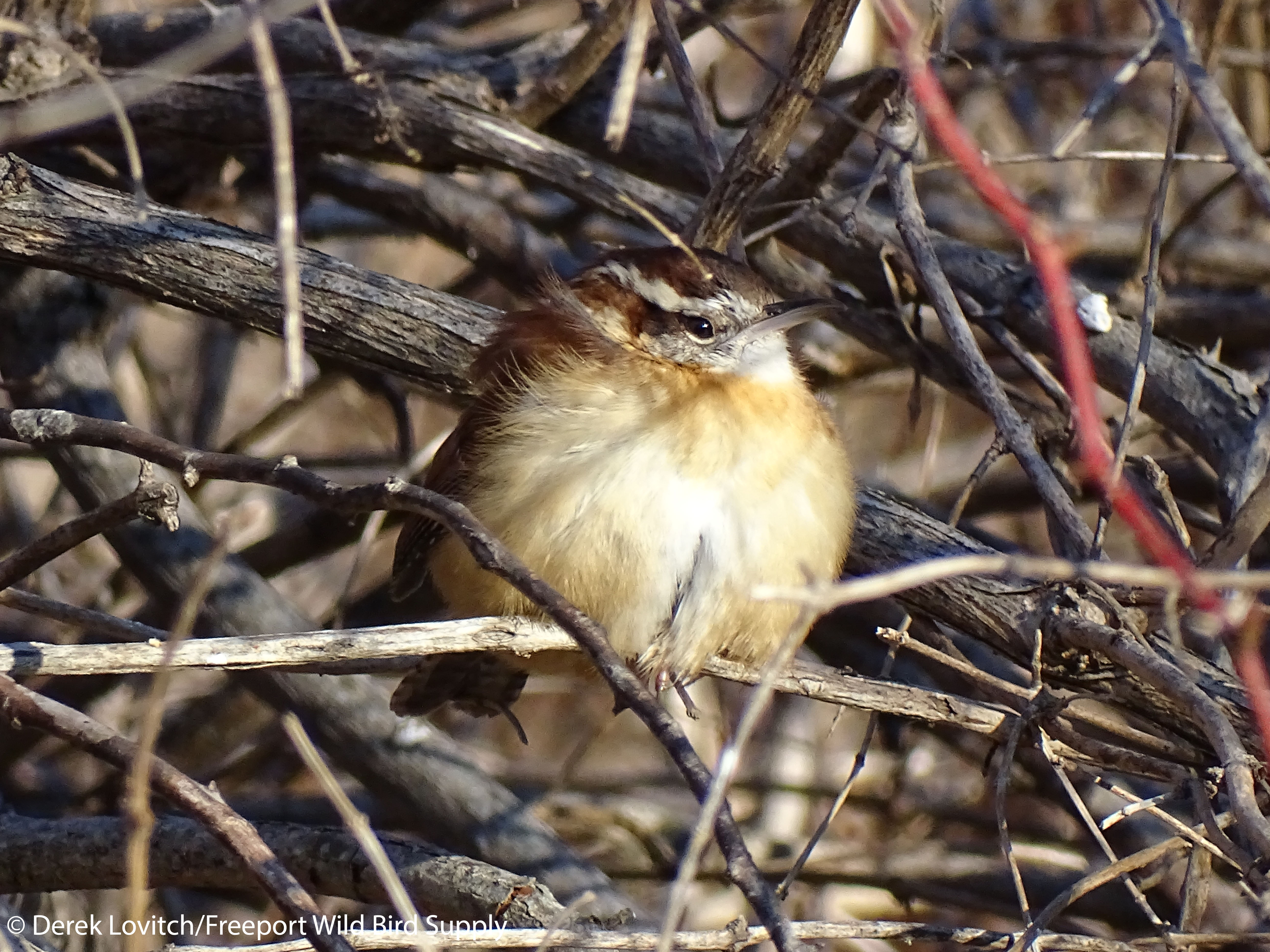
With temperatures in the single digits, this Carolina Wren seemed to be questioning the concept of range expansion in Cape Elizabeth in the early morning on the 22nd.
With the final days of the holiday shopping season and a couple of days out of state for Christmas, my birding was rather limited this week. I did have several productive mornings, however with seasonal observations of note.
1 Fox Sparrow appeared/re-appeared at the store’s feeders on 12/21 and continued through at least 12/23. One also returned/arrived at our feeders in Durham on 12/23.
Although far from rare, a Red-necked Grebe was a highlight for me during our Saturday Morning Birdwalk on 12/21 as it fed close by within the marina at the South Freeport Town Wharf, offering exceptional views.
While Swamp Sparrows aren’t all that rare along the south coast this time of year, 4 at Village Crossings/Cape Elizabeth Green Belt Trail on 12/22 was of note. And speaking of things that are not all that rare around here in December anymore, a Hermit Thrush and Northern Flicker were also present.
1 Red-shouldered Hawk, Sebago Lake State Park, 12/23 (with Jeannette).
1 drake BARROW’S GOLDENEYE, Bernard Lown Peace Bridge, Auburn, 12/27.
36 Horned Larks, Upper Street, Turner, 12/27.
Yup, still scattered Turkey Vultures around, with at least two regular in the I-295 corridor here in Freeport.
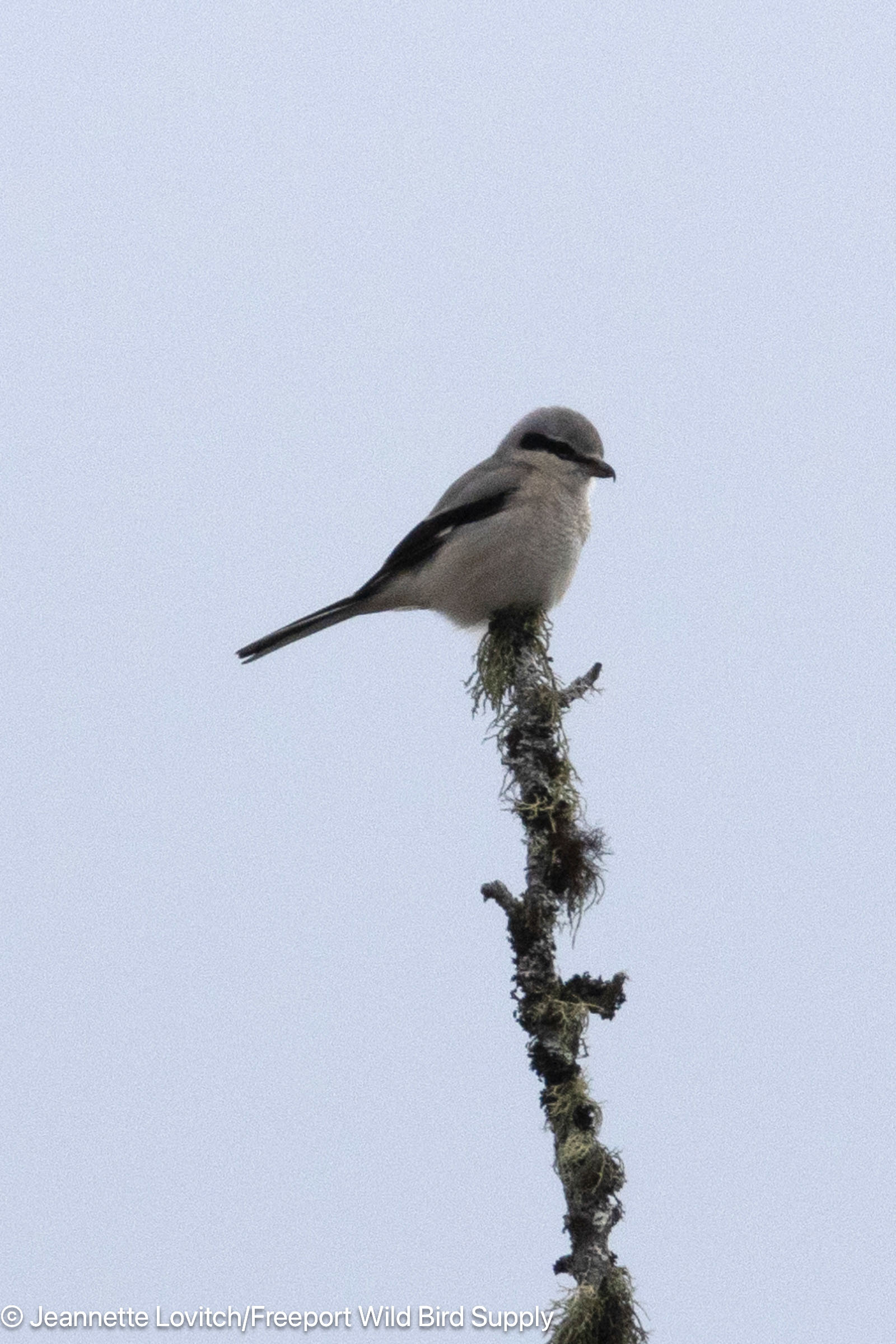
There were very few birds along the Stud Mill Road east of Old Town on the 4th, but happily, one of them was this Northern Shrike.
A wintery week produced a very wintery slate of highlights, thanks in part to our trip north on our annual last-weekend-before-store-chaos overnight in Bangor. A push of facultative migrants with the arrival of snowcover was very evident this week as well. Here are my observations of note over the past 7 days:
1+ Lapland Longspur, 86 Horned Larks, and 24+ Snow Buntings, River Road, Benton, 12/2 (with Jeannette). Another distant flock of 75+ Snow Buntings appeared to contain several more Lapland Longspurs.
1 female Greater Scaup, Sebasticook Lake, Newport, 12/2 (with Jeannette).
1 Barrow’s Goldeneye (FOS), Stillwater River at University of Maine-Orono, 12/2 (with Jeannette).
Amazingly devoid of birds, 5 hours of birding Sunkhaze-Stud Mill (walking trails plus driving) yielded only 9 species. The only finch were the two grosbeaks, and not surprisingly, the cone crop of spruce, fir, and Eastern White Pine was non-existent.
2 female Red-winged Blackbirds, our feeders in Durham, 12/4.
3 Fox Sparrows, feeders at the store on 12/3 and continued through the end of the week. Jayden had 2 on Monday the 2nd here, with the third arriving the next day.
Barrow’s Goldeneyes will be departing soon, so I needed to get my fill while I still can. This pair (left) was with 17 Common Goldeneyes and a drake Hooded Merganser at Anniversary Park in Auburn on the 20th.
A very busy couple of weeks precluded much birding away from our yard recently. Luckily, the feeder-watching was excellent, as were my few dedicated outings over the past ten days.
1 Red Crossbill, over our yard in Durham, 2/15.
1 ROUGH-LEGGED HAWK, over Richmond Island from Kettle Cove, Cape Elizabeth, 2/19 (with Paul Doiron, Kristen Lindquist, and Jeannette).
1 continuing hen COMMON EIDER SPP BOREALIS and 6 BARROW’S GOLDENEYES (4 drakes, 2 hens), Winslow Park, Freeport, 2/21. Barrow’s usually peak here at the end of February.
FEEDER BIRDS UPDATE:
There was a widespread dearth of feeder birds in most yards throughout the region this past fall. While a few people are still mentioning a lack of feeder birds this winter, many others are telling us they are seeing a lot of birds now. At our home in Durham, this winter our feeders have been very busy. But just how busy is it, and how does that compare to last winter? I did some feeder watching and counted a bunch of birds to find out.
After the 16th, activity remained strong, with another surge of Dark-eyed Juncos bringing the total to a high count of 72 on the 17th, along with an increase to 13 American Tree Sparrows. A new peark of 70++ American Goldfinches was reached on 2/21. And our first Red-winged Blackbird of the year appeared in the snow on the 23rd.
Meanwhile, here at the store, the 24 White-throated Sparrows at the feeders 2/16 was a new all-time high count for the winter season for us here.
This Northern Hawk-Owl has been present for a while in Piscataquis County where it has been seen by many. Jeannette finally took a ride up to see it on the 12th, making our “weekend” out of it.
I enjoyed a great week of birding, both locally and with a trip to north-central Maine. Winter irruptives and the first migrants of spring were among my many highlights over the last seven days.
1 Hermit Thrush, North River Road, Auburn, 2/8.
1 continuing female Red-breasted Merganser, Lincoln St Waterfront Park, Lewiston, 2/8.
5 Northern Pintails (FOY), Flying Point Preserve, Georgetown, 2/9.
1 hen COMMON EIDER SSP. BOREALIS and 1 pair BARROW’S GOLDENEYES, Winslow Park, Freeport, 2/10 (with Saturday Morning Birdwalk group).
1 continuing NORTHERN HAWK-OWL and 1 Northern Shrike, Piscataquis County, 2/12 (with Jeannette). Photo above.
1 Northern Shrike, County Road, Milford, 2/13 (with Jeannette).
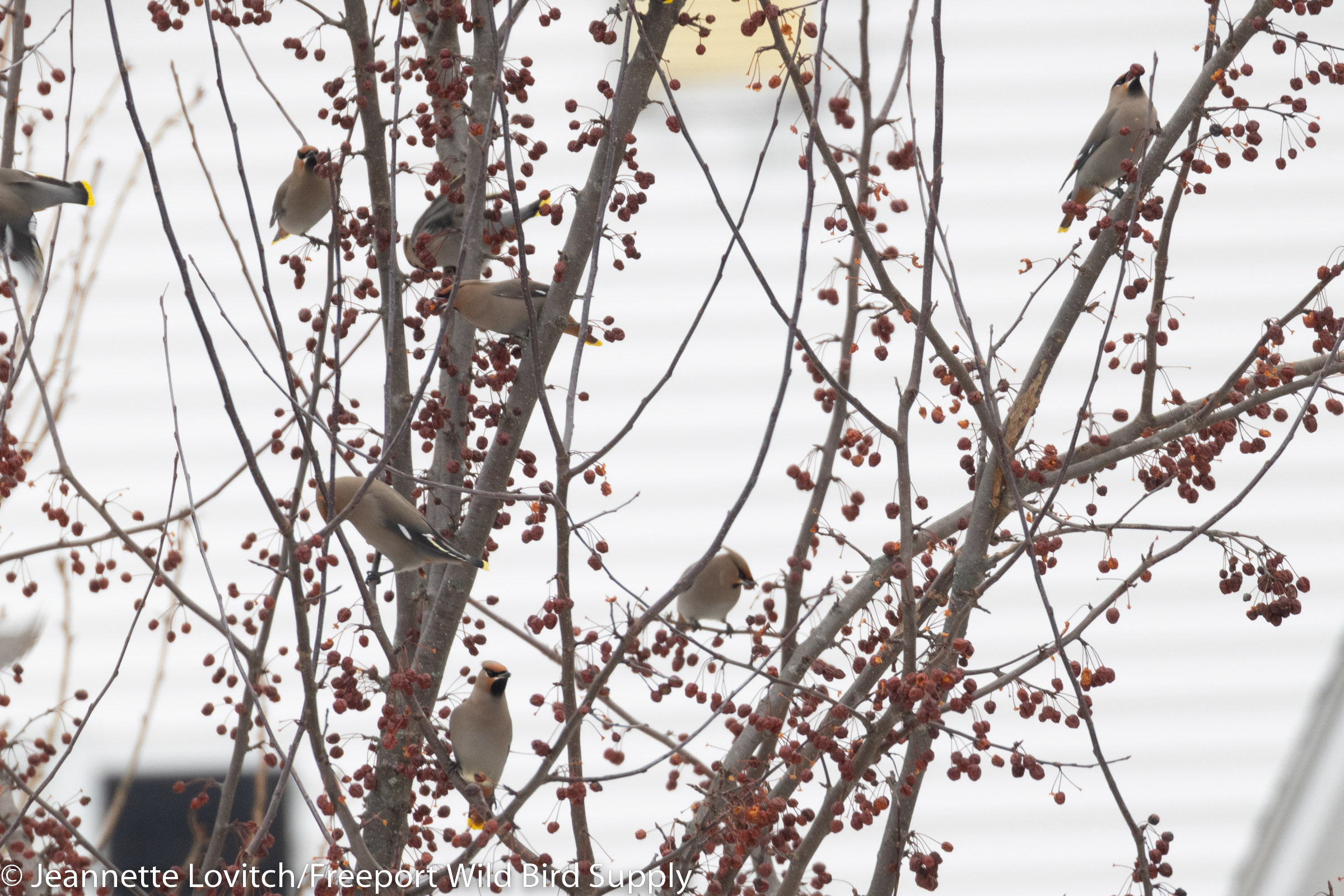
100+ BOHEMIAN WAXWINGS (FOY), downtown Old Town, 2/13 (with Jeannette).
140 BOHEMIAN WAXWINGS and 1 NORTHERN FLICKER (great winter bird away from the coast!), Riverside Park, Veazie, 2/13. Waxwings relocated on Thompson Road where we enjoyed an immersive photo session!
1 male Red-winged Blackbird (first of spring), here at the store on 2/14. Arrived on 2/12 – one of our earliest records here.
Scattered Turkey Vultures and increasing reports of prospecting migrant flocks suggests I will forgo Turkey Vultures on the highlights list for the next 9-10 months already!
Taking the long road to Augusta for an appointment last week, I checked a few open sections of river, including here at the Gardiner Waterfront Park where a group of 16 Common Mergansers were present. Such a snappy bird!
We’ve been busy catching up from our winter vacation, but I did see a few observations of note over the past ten days.
Our feeders In Durham continue to be exceeding active, with at least 70 American Goldfinches and over 50 Dark-eyed Juncos leading the way this week. We’ve also seen increases to 6 American Tree Sparrows, 3 White-throated Sparrows, and a returning two Song Sparrows among all of the resident species. A single Pine Siskin joined the goldfinches on 2/2.
1 hen BARROW’S GOLDENEYE, Bernard Lown Peace Bridge, Lewiston/Auburn, 1/30.
Barrow’s Goldeneyes returned to the Androscoggin River this week, with a pair below the Bernard Lown Peace Bridge between Auburn and Lewiston on the 12th. Early morning shadows were challenging for photos, so I was happy with this great comparison shot of an intermingled pair each of Barrow’s and Common Goldeneyes.
While I didn’t get as far afield as last week, I enjoyed a very productive week of birding, especially for early January! Here are my observations of note over the past seven days.
Our feeders in Durham have been incredible, led by a growing flock of Dark-eyed Juncos that peaked at 41 on 1/8 and 40+ continuing American Goldfinches. There was a big movement of sparrows after the weekend snow storm, with flocks of Dark-eyed Juncos and White-throated Sparrows common and widespread in the area, along with an increase in American Tree Sparrows.
2 drake and 1 hen BARROW’S GOLDENEYES, Winslow Park, Freeport, 1/6 (with Saturday Morning Birdwalk group).
Still fascinated by the warbler flock in Ogunquit Beach after my visit there last week, Jeannette and I went back down on 1/8. Unfortunately, we only had a short look at the brighter CAPE MAY WARBLER and 1 “WESTERN” PALM WARBLER. One Yellow-rumped Warbler spent almost the entire time we were there in and around the sewage tank, eating the little flies along its edge. The Cape May and Palm just briefly waved through the nearby trees. I would have thought that anything still alive would have been in the tank the whole time on that cold morning, as was the single Yellow-rump. Interesting.
While searching, we had 100+ Sanderlings on the beach, two continuing Northern Harriers and 8 Snow Buntings in the marsh, and in the Ocean Avenue neighborhood leading to the footbridge, we had 1-2 fly-over Red Crossbills and 1 RED-WINGED BLACKBIRD while checking feeders in hopes of relocating the warblers.
Cape Elizabeth with Dan Nickerson on 1/11: 1 2nd Cycle LESSER BLACK-BACKED GULL and a few Razorbills at Dyer Point; 1 DOVEKIE at Two Lights State Park; 1 Swamp Sparrow on Private Property, and 1600-2000 Black Scoters between Dyer Point and Kettle Cove.
1 pair BARROW’S GOLDENEYES, Bernard Lown Peace Bridge, Auburn/Lewiston, 1/12.
1 immature Great Cormorant, North River Road Boat Launch, Auburn, 1/12.
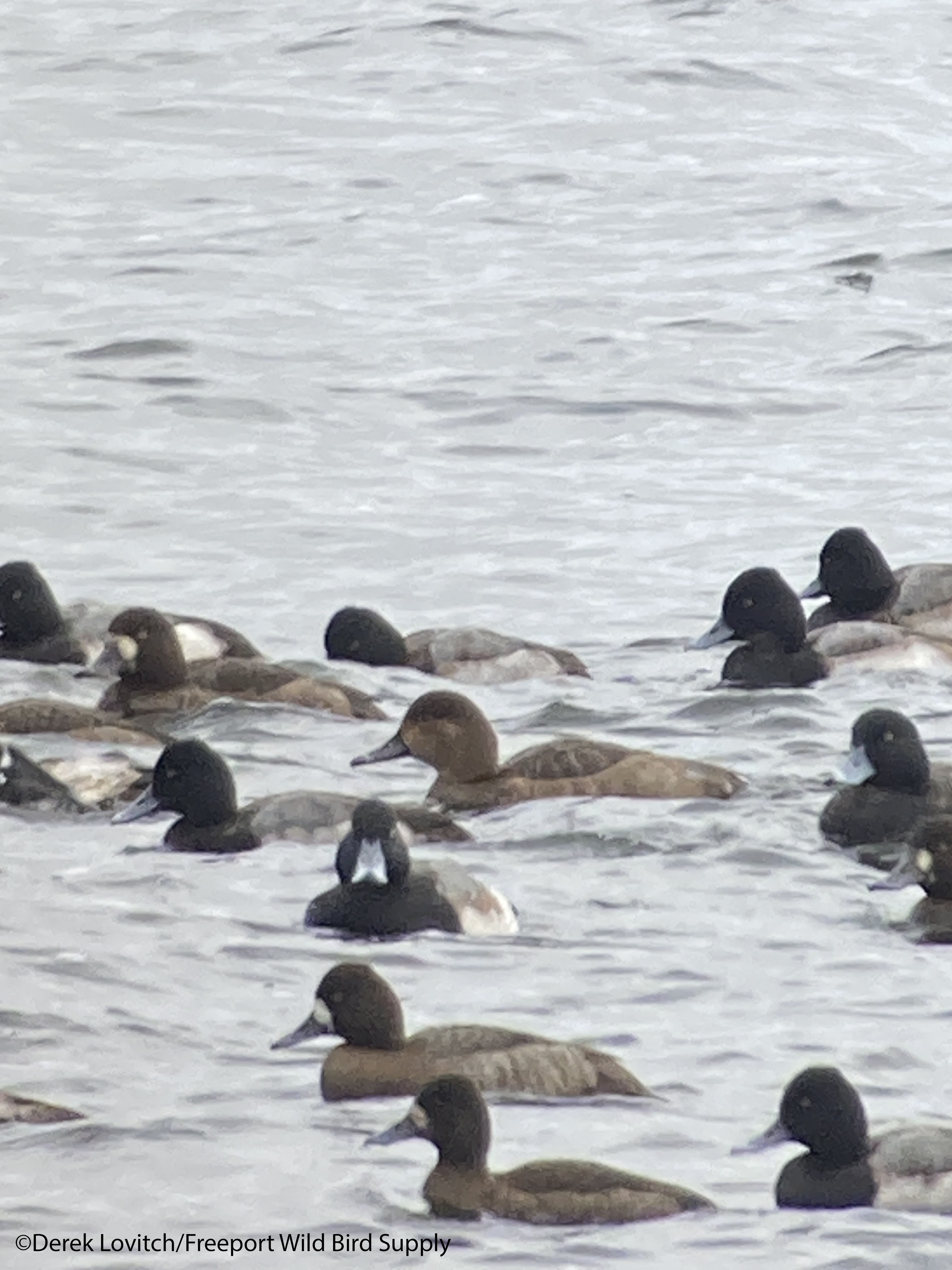
+/- 130 Mixed scaup, Lake Auburn, 1/12. Actively feeding, but Lesser continue to greatly outnumber Greater in the flock, as expected on freshwater in winter.
At least one Turkey Vulture continues in the I-295 corridor between Cumberland and Freeport this week.
UPCOMING TOURS.
Winter Waterbirds Workshop with Down East Adventures. Sunday, January 14th. Info here.
No Birdwalk, Saturday, 20th.
No Birdwalk, Saturday, 27th.
Gull Identification Workshop. Saturday, February 3rd and Sunday, February 4th. Info here.
This Hepatic Tanager was a shocking discovery in Stockton Springs. I caught up with it on 12/31 to bring my 2023 birding year to a close. Such a lousy phone-scoped photo of such an amazing bird, though!
Happy New Year List Everyone (for those who keep one)! Rarities abound as we finish 2023 and begin 2024, and I caught up with a few of them this week, and, even more satisfying, found a few “good birds” of my own.
1-2 Red Crossbills continue in and around our Durham property this week. I need to work on finding breeding activity.
At least two Turkey Vultures continue in the I-295 corridor between Yarmouth and Freeport through week’s end.
I finished 2023 off with a bang, visiting the HEPATIC TANAGER on Station St in Stockton Springs on 12/31 (with Evan Obercian). Photo above.
1 male Red-winged Blackbird, Rte 127, Arrowsic, 1/1 (with Jeannette).
2 REDHEADS, 3 AMERICAN COOTS, 4 RUDDY DUCKS, 1 Long-tailed Duck, about 50 Lesser and 25 Greater Scaup, etc, Chickawaukee Lake, Rockport, 1/1 (with Paul Doiron, Kristen Lindquist, and Jeannette).
1 Northern Flicker, Thompson Meadow Road, Rockland, 1/1 (with Paul Doiron, Kristen Lindquist, and Jeannette).
Jess Costa and I went down to Ogunquit Beach on 1/4. to look at the unprecedented mixed-species warbler flock that has been in and around the dunes and wastewater treatment plant here. I glimpsed what “had to be” the TOWNSEND’S WARBLER, but between the two of us, we saw the two CAPE MAY WARBLERS, 1 TENNESSEE WARBLER, 2 “WESTERN” PALM WARBLERS, 1 PINE WARBLER, and 3-4 Yellow-rumped Warblers well. However, my interest was observing the flock as a whole, especially what they were eating, what the range of the flock was, and whether the birds were exhibiting “normal” niche differentiation. Unfortunately, we only had two encounters with the whole wave in 3 hours, and periods of up to 45 minutes went by without seeing a warbler anywhere in the dune line. Where else are they going? The lack of sun that day made the edge less inviting, but they still seemed to have disappeared from the pine forest. Were they heading into a neighborhood or across the marsh? I have more questions than answers after the visit, so I might have to find time to go back! We also had one Red Crossbill, 1 MERLIN, two Northern Harriers, etc.
1 drake BARROW’S GOLDENEYE, 64 Lesser Scaup, 19 Greater Scaup, 1 Red Crossbill, etc, Lake Auburn, 1/5 (with Dan Nickerson)
2024 PREDICTIONS LIST BLOG NOW POSTED!
After an 11th-hour addition and requisite updates, my famous-ish Predictions Blog is now ready for viewing. In this annual post, I attempt to forecast the next 25 species to appear in Maine, as well as predict what the next 25 species I personally will see in the state. I also summarize the new species added to Maine’s list in 2023, as well as my own personal highlights and new species.
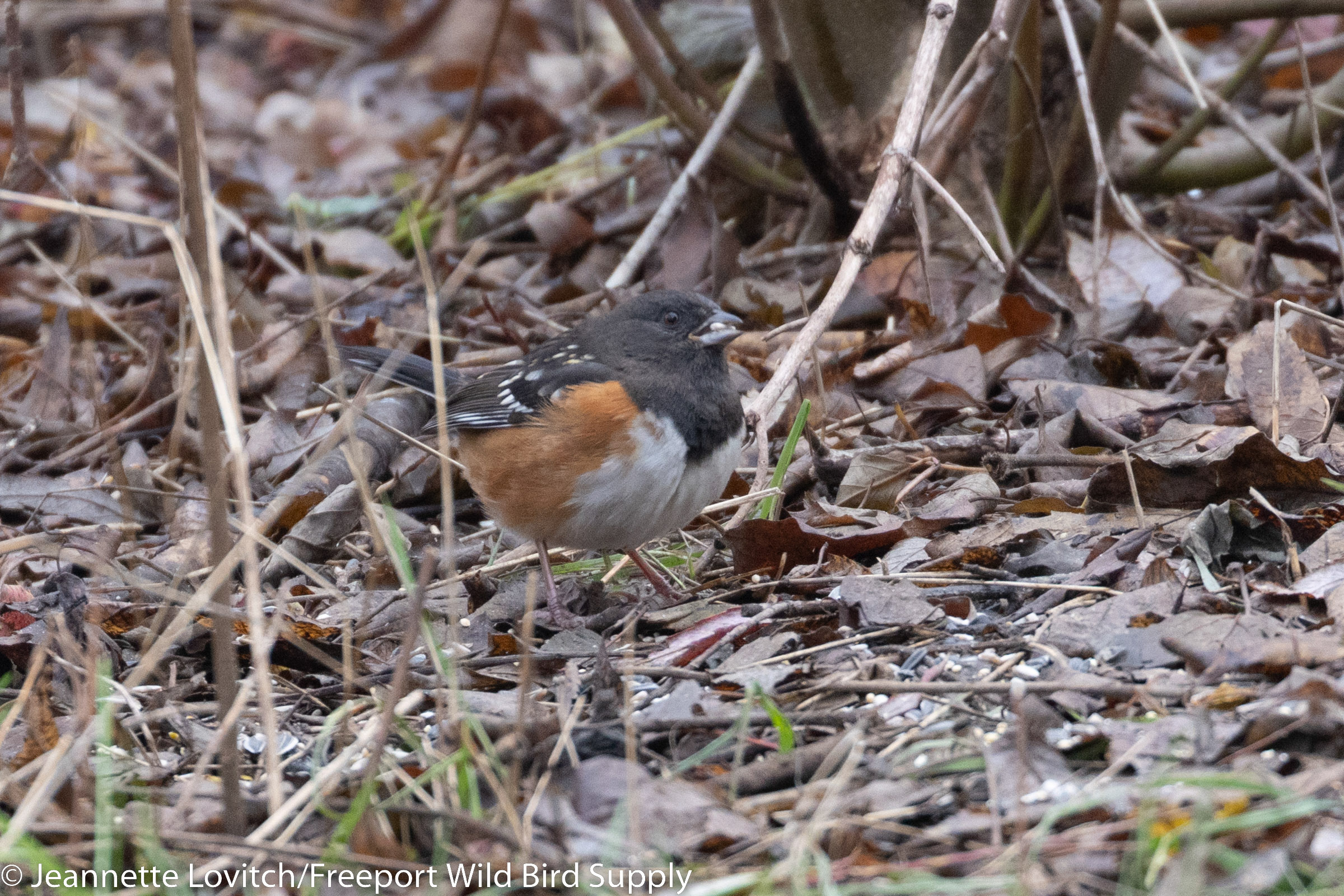
I finally went back this week, this time with Jeannette, to revisit the Spotted Towhee that I found at Kittery’s Fort Foster on 11/19. We were treated to two sessions of it feeding, both of which provided longer and better views than on the first day.
Early December is often a time with another pulse of rarities being detected as birds concentrate at fewer seasonally abundant food sources, like feeding stations, and concentrate along the coast and other migrant traps. At the very least, it’s a time for unusual “late,” “lingering,” or “pioneering” birds that brighten up a cold, gray winter’s day. This was often the case for me in my relatively limited birding over the past two weeks, with the following observations of note:
1 Gray Catbird and 1 Ruby-crowned Kinglet, Capisic Pond Park, Portland, 11/30.
Sabattus Pond, Sabattus, 12/1 (with Dan Nickerson): 380 distant scaup, 272 Common Mergansers, 238 Ruddy Ducks, 209 Mallards, 8 American Black Ducks, 8 Common Goldeneyes, 7 Buffleheads, 4 GREEN-WINGED TEAL, 3 Common Loons, 1 Belted Kingfisher, and 1 RUSTY BLACKBIRD.
1 Chipping Sparrow, King Road, Lisbon, 12/1 (with Dan Nickerson).
3 Ruby-crowned Kinglets and 2 Field Sparrows, Saco Riverwalk, Saco, 12/3.
1 Hermit Thrush and 1 Swamp Sparrow, Elphis Pond, Biddeford Pool, 12/3.
Southern York County Coast with Jeannette on 12/5:
1 continuing SPOTTED TOWHEE (photo above), 2 MARSH WRENS, and 1 Swamp Sparrow, Fort Foster, Kittery.
2 American Pipits and 1 Horned Lark, Seapoint Beach, Kittery.
1,000+ Black Scoters, The Nubble.
60 Sanderlings, Ogunquit Beach.
1 Ruby-crowned Kinglet, Auburn Riverwalk, 12/7.
1 drake BARROW’S GOLDENEYE (first of season), 74 Lesser Scaup, and 2 Greater Scaup, Lake Auburn, Auburn, 12/7.
1 Red Crossbill, over our property in Durham, 12/8.
Meanwhile, at our feeders in Durham, a nice uptick in sparrow activity including up to 14 Dark-eyed Juncos, 4 continuing White-throated and 1-2 continuing Song Sparrows, with our first American Tree Sparrow arriving on 11/22 before the store, and 15 Dark-eyed Juncos, only 1 White-throated Sparrow, and a return on 12/6 of an American Tree Sparrow after the storm. 40-50 American Goldfinches and 1-2 Purple Finches continue daily, but this week, we only had Pine Siskins in the woods and not at the feeders.
Since we’ve had a mix of “the birds are back!” and “there are still no birds at my feeders” at the store recently, a wrote a new blog talking about the season and the inconsistencies we are seeing with overall feeder activity, which is posted here.
The amazing birding and migration site – especially for fall “morning flights” – in the Mid-Coast is once again under direct threat. Birders need to help convince the state to find an alternative location for a massive new port and its infrastructure. Our most significant places of concentration for migratory birds need to be protected. Here isour Statement in Opposition to a New Port on Sears Island in Searsport.
This adult male Sharp-shinned Hawk was our fourth individual “Sharpie” identified at our feeding station this winter.
With the dreadfully slow pace of recovery following shoulder surgery, my birding these past three weeks was once again mostly outside our windows here at our home in Durham. One unseasonably mild week was followed by a week of below normal temperatures and several snow events. Then, the period finished out with spring-like feel. It was fascinating to track the ebbs and flows of feeder activity with each change in the weather and the progression of the season.
Highlights over the last 3 weeks:
2 Red-winged Blackbirds (First of Year), our feeders in Durham, 2/23.
Continued Sharp-shinned Hawk saga at our feeders.
Scattered Turkey Vultures and more Red-winged Blackbirds returning the area in the second week of March.
1 hen Barrow’s Goldeneye, Bernard Lown Peace Bridge, Auburn/Lewiston, 3/7 (with Jeannette).
Compared to the previous weeks –which I summarized in my last blog – unseasonably mild weather and a rapidly diminishing snowpack, activity at the feeders here in Durham continued to decrease during the week of the 2/13. The mixed-species foraging flocks had mostly broken up already, so it became harder to tell how many of each resident are around. However, a female Red-breasted Nuthatch rejoined our overwintering male, and we do have at least 12 Black-capped Chickadees now. There still seems to be two pairs of Tufted Titmice, but they no longer tolerate each other’s company.
Eastern Bluebirds (down to a pair daily) and Northern Cardinals (down to two pairs) decreased, but there was a noticeable increase in Dark-eyed Juncos this week: I saw around 20 under the feeders on 2/19 (up from 10-16), but there were more in the bushes. We have a little “evening flight” where the juncos leave our yard and scrub, fly down our driveway, and across the street into woods with thicker evergreen cover to spend their winter nights. I counted 34 that day as they departed the feeders and the woods behind it. With more bare ground, a lot of our ground feeders (also including Mourning Doves) were not frequenting the feeders as much, as expected. We still had 5 American Tree Sparrows and 2 White-throated Sparrows, however, carrying over from last week.
Signs of spring were everywhere. I caught a pair of Mourning Doves copulation on the 19th, and I began to see daily Canada Goose flocks moving between the river and the opening nearby farm fields. Common Mergansers returned to the Androscoggin River across the street from our property the next day. Woodpeckers were drumming more this week, and birdsong noticeably increased.
Then came the snowfall on the 23rd, and the accumulation brought a renewed surge of activity to the feeders, and a return to winter. The highlight was my first two Red-winged Blackbirds of the year, adding more color to a birdy day. Northern Cardinals jumped back up to 7, American Tree Sparrows increased to 10, and a third White-throated Sparrow arrived. Mourning Doves increased to 24, Eastern Bluebirds were back up to 7, and 3 House Finches returned.
Other than the Red-wings, these are mostly local birds that had begun to spread out, but returned to the supplemental food with the fresh snowfall. There did seem to be a legitimate increase in Dark-eyed Juncos that week, however, which may have included some early migrants. Meanwhile, 30-40 American Goldfinches continued daily, although once again we were sans winter finches except for a single female Purple Finch on the 21st.
Now, with a return to some significantly cold temperatures and more rounds of snow, I expected feeder-watching to be excellent during the week after that first storm. And sure enough, three bitter cold mornings followed by two more bouts of snow resulted in increased feeder activity overall yet again.
We continued to see 16-20 species a day at the feeders, although the wintery week pumped the breaks on new arrivals. Last week’s Red-winged Blackbirds likely turned back around when the snow began to accumulate, for example. A small bump in daily counts of Dark-eyed Juncos and American Tree Sparrows could involve some northbound migrants, but probably more likely were local birds concentrating again as snow piled up. Our 3 White-throated Sparrows continued. There was a definite uptick in American Goldfinches, however, with a high count of 46 on the 28th.
We saw fewer Eastern Bluebirds, Northern Cardinals, and Blue Jays most days that week compared to weeks prior, likely as these birds start setting up territories and/or begin to disperse. Lots of Hairy Woodpecker drumming and Tufted Titmouse singing this week, too, despite the return to full-on winter weather. Our lone overwintering male Red-breasted Nuthatch has also become less frequent. Unfortunately, 2-5 European Starlings became more regular – come on Sharpie, help me out here!
On Saturday the 4th, 12.5 heavy, wet inches accumulated here in Durham, burying our brush pile once again. Not surprisingly, ground-feeders didn’t appreciate that very much, especially with the continuing Sharp-shinned Hawk activity. Two “Sharpies” were present this week (see below) both an adult male and the return of a sub-adult male. Our brush pile is critical -as it often is in open areas and following new construction – for birds’ safety, and when buried under snow, it didn’t have a lot of accessibility to hide.
On the 5th, for example, the subadult male was seen for the first time in a few weeks, and after just missing a Tufted Titmouse diving off the feeders, it perched conspicuously next to the brush pile for over an hour. The next day, the adult male was staking out the feeders during my prime feeder-watching time of the morning, dramatically reducing my day’s tallies once again. There were times this week when the only bird in view out the window was a Sharp-shinned Hawk!
As the weather improved and snow began to melt rapidly as the week went on, Dark-eyed Juncos and Northern Cardinals in particular returned to previous weeks’ highs, finding safety when necessary in the brush pile once again. American Tree Sparrows had decreased to only 2 by week’s end, however, this may reflect the season more than anything; tree sparrows are among our first birds to start heading back north. Overall though, daily averages were down, but when all was said and done, the week’s high counts were very similar to previous weeks for most species.
Eastern Bluebirds have been fewer this week, likely as birds begin to disperse to breeding territories. And I have officially lost control of counting the number of Black-capped Chickadees and Tufted Titmice that are now visiting as they come randomly now instead of as a tight-nit mixed species flock(s) as they do in the winter. Another sign of the season was the arrival of 5 male Red-winged Blackbirds this morning (3/10), our first here since one on 2/23. Now, it’s possible they are here to stay.
In addition to marked changes in the weather, daily activity and consumption ebbed and flowed with Sharp-shinned Hawk presence and activity as I mentioned above. I would say my most fascinating observations this constant feeder-watching vigil provided was the Accipiter drama. I am sure this is happening everywhere, all of the time, but my unusual observation duration and frequency offered the rare opportunity to study the predator presence.
The adult female that has been present most of the winter and has provided much of the said drama continued to be spotted in the yard through the end of February. However, much to my surprise, yet a different bird was present on a couple of days during the week of the 27th: a new adult male. This makes the fourth different Sharp-shined Hawk that we have hosted this winter. Then, during the snowstorm on the 4th, a poor view of a Sharpie strongly suggest the subadult male that I saw only one day about three weeks prior. The saga continues! That ID was confirmed the next day, and he was seen repeatedly for the rest of the week. The adult male was also spotted a few more times through at least the 6th.
A second-winter male Sharp-shinned Hawk also returned to the scene this week.
Meanwhile, at the store in Freeport, two Red-winged Blackbirds that first appeared on the 19th increased to 7 during the snow, and a second Song Sparrow joined our single overwintering individual that week.
I have started to spend some time at the store in my continued limited-capacity, enjoying the feeder activity there was well. I was treated to the most activity that we have had there in a while on the 3rd, for example. We need our local Cooper’s Hawk to return as the Rock Pigeon flock is building again. But unlike at home, Red-winged Blackbirds continued, with 2-3 still present from a high of 7. We had a surge of American Goldfinches (from only 2-4 for most of the last few weeks to 12+. Our single overwintering Song and White-throated Sparrows continue, and 4 Eastern Bluebirds are now regular. I also welcomed back to work that day by a flock of 12 Cedar Waxwings descending on our Highbush Cranberry in the yard – a most welcome visit from one of my favorite birds!
And yes, I got out for a little birding this week, finally, as Jeannette and I visiting Auburn’s Little Andy Park and the Riverwalk, catching up with a few continuing winter birds: 1 Barrow’s Goldeneye and 3 Iceland Gulls. And when I was out and about this week (mostly being driven to and from appointments!), the renewed presence of Turkey Vultures was readily apparent.
I will be out birding a little more next week, but based on my visit with my surgeon yesterday, it looks like I’ll be forced to focus on feeder-watching for a while longer. Stay tuned!








 Maine Birding Field Notes