Blackburnian Warbler near and at eye-level were one of the many highlights during my annual Spring Monhegan Migration Tour.
Five days on Monhegan (four with a tour, one with Jeannette) from 5/24-28 had few rare bird highlights, but good overall diversity and generally very good bird watching opportunities. A total of 93 species in those 5 days included 1 BLUE GROSBEAK (5/25); 1 PURPLE MARTIN (5/24 and 5/26); impressive numbers of RED and WHITE-WINGED CROSSBILLS throughout the island; Yellow-bellied Flycatcher (FOY), Olive-sided Flycatcher (FOY), Tennessee Warbler (FOY), several Black-billed Cuckoos (FOY); 1 Razorbill in the harbor on 5/26; and 4 RED-NECKED PHALAROPES on the ferry ride home on 5/28. There were a lot of uncommon to rare-on-Monhegan migrants around, too, from Blue-winged Teal to Cliff Swallow. A complete report of our tour can be found here.
Back in the real world, my observations of note for the rest of the week included:
1 continuing GRASSHOPPER SPARROW, Auburn-Lewiston Municipal Airport, 5/30.
With my first visit in three weeks to Scarborough Marsh on 5/31, several personal first-of-years included Saltmarsh and Nelson’s Sparrow, Roseate Tern, and 4 White-rumped Sandpipers (Eastern Road Trail). Other migrant shorebirds included ~70 Semipalmated Sandpipers, 1 Dunlin, and 1 Greater Yellowlegs off Eastern Road, and 10 Ruddy Turnstones, 9 Black-bellied Plovers, and 1 Lesser Yellowlegs at Pine Point. Other observations of note included the continuing TRICOLORED HERON off of the Eastern Road Trail, and 2 PURPLE MARTINS at Pine Point.
2 Willow Flycatchers (FOY, finally), Old Town House Park, North Yarmouth, 6/1 (with Saturday Morning Birdwalk group).
Tours and Events:
There will not be a Saturday Morning Birdwalk on 6/8 as I’ll be in Rangeley guiding at the Rangeley Birding Fest. Note that there are still some spaces on a variety of tours still open. They can be found here.
Barrow’s Goldeneyes will be departing soon, so I needed to get my fill while I still can. This pair (left) was with 17 Common Goldeneyes and a drake Hooded Merganser at Anniversary Park in Auburn on the 20th.
A very busy couple of weeks precluded much birding away from our yard recently. Luckily, the feeder-watching was excellent, as were my few dedicated outings over the past ten days.
1 Red Crossbill, over our yard in Durham, 2/15.
1 ROUGH-LEGGED HAWK, over Richmond Island from Kettle Cove, Cape Elizabeth, 2/19 (with Paul Doiron, Kristen Lindquist, and Jeannette).
1 continuing hen COMMON EIDER SPP BOREALIS and 6 BARROW’S GOLDENEYES (4 drakes, 2 hens), Winslow Park, Freeport, 2/21. Barrow’s usually peak here at the end of February.
FEEDER BIRDS UPDATE:
There was a widespread dearth of feeder birds in most yards throughout the region this past fall. While a few people are still mentioning a lack of feeder birds this winter, many others are telling us they are seeing a lot of birds now. At our home in Durham, this winter our feeders have been very busy. But just how busy is it, and how does that compare to last winter? I did some feeder watching and counted a bunch of birds to find out.
After the 16th, activity remained strong, with another surge of Dark-eyed Juncos bringing the total to a high count of 72 on the 17th, along with an increase to 13 American Tree Sparrows. A new peark of 70++ American Goldfinches was reached on 2/21. And our first Red-winged Blackbird of the year appeared in the snow on the 23rd.
Meanwhile, here at the store, the 24 White-throated Sparrows at the feeders 2/16 was a new all-time high count for the winter season for us here.
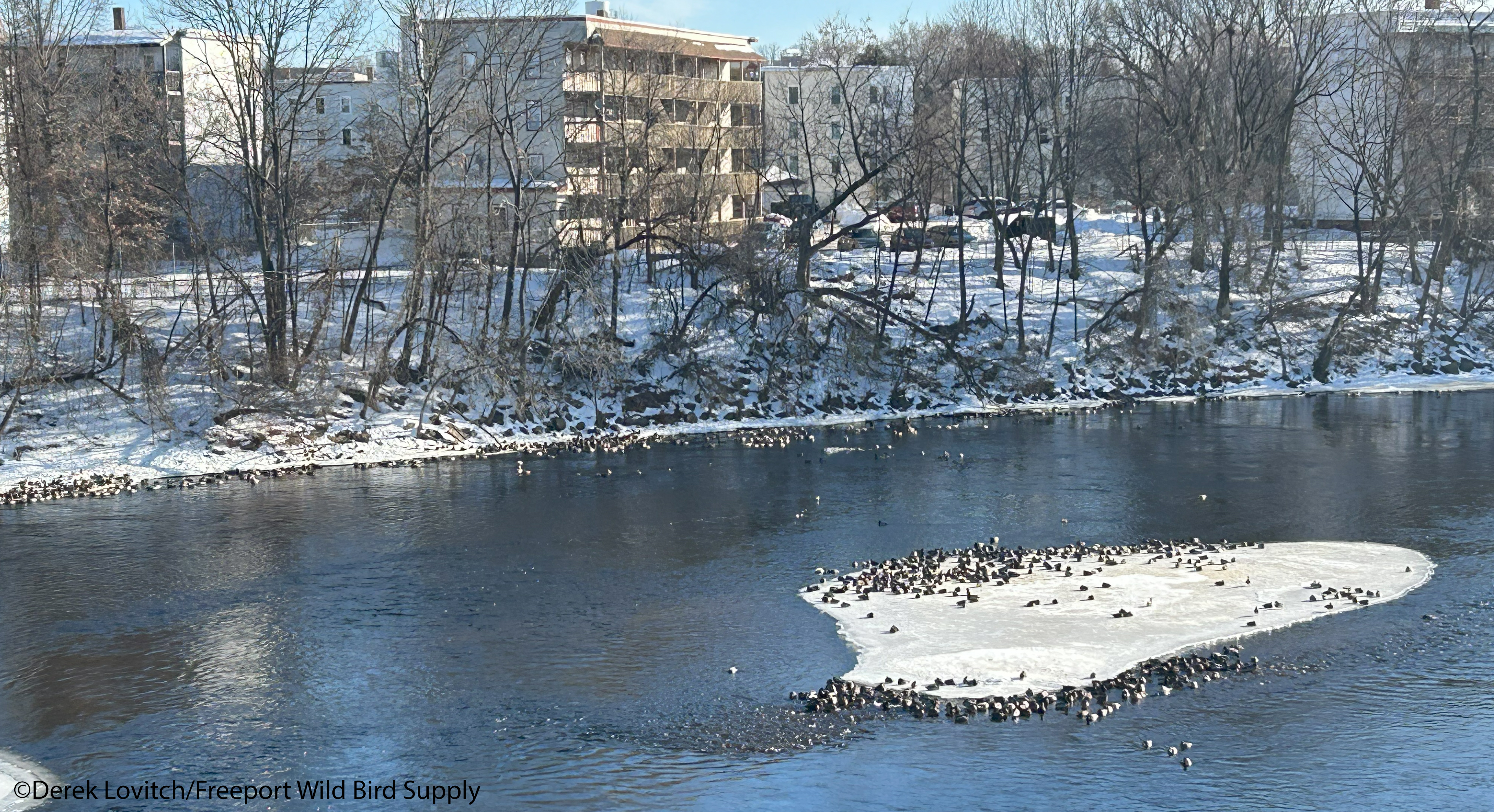
Taking the long road to Augusta for an appointment last week, I checked a few open sections of river, including here at the Gardiner Waterfront Park where a group of 16 Common Mergansers were present. Such a snappy bird!
We’ve been busy catching up from our winter vacation, but I did see a few observations of note over the past ten days.
Our feeders In Durham continue to be exceeding active, with at least 70 American Goldfinches and over 50 Dark-eyed Juncos leading the way this week. We’ve also seen increases to 6 American Tree Sparrows, 3 White-throated Sparrows, and a returning two Song Sparrows among all of the resident species. A single Pine Siskin joined the goldfinches on 2/2.
1 hen BARROW’S GOLDENEYE, Bernard Lown Peace Bridge, Lewiston/Auburn, 1/30.
Barrow’s Goldeneyes returned to the Androscoggin River this week, with a pair below the Bernard Lown Peace Bridge between Auburn and Lewiston on the 12th. Early morning shadows were challenging for photos, so I was happy with this great comparison shot of an intermingled pair each of Barrow’s and Common Goldeneyes.
While I didn’t get as far afield as last week, I enjoyed a very productive week of birding, especially for early January! Here are my observations of note over the past seven days.
Our feeders in Durham have been incredible, led by a growing flock of Dark-eyed Juncos that peaked at 41 on 1/8 and 40+ continuing American Goldfinches. There was a big movement of sparrows after the weekend snow storm, with flocks of Dark-eyed Juncos and White-throated Sparrows common and widespread in the area, along with an increase in American Tree Sparrows.
2 drake and 1 hen BARROW’S GOLDENEYES, Winslow Park, Freeport, 1/6 (with Saturday Morning Birdwalk group).
Still fascinated by the warbler flock in Ogunquit Beach after my visit there last week, Jeannette and I went back down on 1/8. Unfortunately, we only had a short look at the brighter CAPE MAY WARBLER and 1 “WESTERN” PALM WARBLER. One Yellow-rumped Warbler spent almost the entire time we were there in and around the sewage tank, eating the little flies along its edge. The Cape May and Palm just briefly waved through the nearby trees. I would have thought that anything still alive would have been in the tank the whole time on that cold morning, as was the single Yellow-rump. Interesting.
While searching, we had 100+ Sanderlings on the beach, two continuing Northern Harriers and 8 Snow Buntings in the marsh, and in the Ocean Avenue neighborhood leading to the footbridge, we had 1-2 fly-over Red Crossbills and 1 RED-WINGED BLACKBIRD while checking feeders in hopes of relocating the warblers.
Cape Elizabeth with Dan Nickerson on 1/11: 1 2nd Cycle LESSER BLACK-BACKED GULL and a few Razorbills at Dyer Point; 1 DOVEKIE at Two Lights State Park; 1 Swamp Sparrow on Private Property, and 1600-2000 Black Scoters between Dyer Point and Kettle Cove.
1 pair BARROW’S GOLDENEYES, Bernard Lown Peace Bridge, Auburn/Lewiston, 1/12.
1 immature Great Cormorant, North River Road Boat Launch, Auburn, 1/12.
+/- 130 Mixed scaup, Lake Auburn, 1/12. Actively feeding, but Lesser continue to greatly outnumber Greater in the flock, as expected on freshwater in winter.
At least one Turkey Vulture continues in the I-295 corridor between Cumberland and Freeport this week.
UPCOMING TOURS.
Winter Waterbirds Workshop with Down East Adventures. Sunday, January 14th. Info here.
No Birdwalk, Saturday, 20th.
No Birdwalk, Saturday, 27th.
Gull Identification Workshop. Saturday, February 3rd and Sunday, February 4th. Info here.
This Hepatic Tanager was a shocking discovery in Stockton Springs. I caught up with it on 12/31 to bring my 2023 birding year to a close. Such a lousy phone-scoped photo of such an amazing bird, though!
Happy New Year List Everyone (for those who keep one)! Rarities abound as we finish 2023 and begin 2024, and I caught up with a few of them this week, and, even more satisfying, found a few “good birds” of my own.
1-2 Red Crossbills continue in and around our Durham property this week. I need to work on finding breeding activity.
At least two Turkey Vultures continue in the I-295 corridor between Yarmouth and Freeport through week’s end.
I finished 2023 off with a bang, visiting the HEPATIC TANAGER on Station St in Stockton Springs on 12/31 (with Evan Obercian). Photo above.
1 male Red-winged Blackbird, Rte 127, Arrowsic, 1/1 (with Jeannette).
2 REDHEADS, 3 AMERICAN COOTS, 4 RUDDY DUCKS, 1 Long-tailed Duck, about 50 Lesser and 25 Greater Scaup, etc, Chickawaukee Lake, Rockport, 1/1 (with Paul Doiron, Kristen Lindquist, and Jeannette).
1 Northern Flicker, Thompson Meadow Road, Rockland, 1/1 (with Paul Doiron, Kristen Lindquist, and Jeannette).
Jess Costa and I went down to Ogunquit Beach on 1/4. to look at the unprecedented mixed-species warbler flock that has been in and around the dunes and wastewater treatment plant here. I glimpsed what “had to be” the TOWNSEND’S WARBLER, but between the two of us, we saw the two CAPE MAY WARBLERS, 1 TENNESSEE WARBLER, 2 “WESTERN” PALM WARBLERS, 1 PINE WARBLER, and 3-4 Yellow-rumped Warblers well. However, my interest was observing the flock as a whole, especially what they were eating, what the range of the flock was, and whether the birds were exhibiting “normal” niche differentiation. Unfortunately, we only had two encounters with the whole wave in 3 hours, and periods of up to 45 minutes went by without seeing a warbler anywhere in the dune line. Where else are they going? The lack of sun that day made the edge less inviting, but they still seemed to have disappeared from the pine forest. Were they heading into a neighborhood or across the marsh? I have more questions than answers after the visit, so I might have to find time to go back! We also had one Red Crossbill, 1 MERLIN, two Northern Harriers, etc.
1 drake BARROW’S GOLDENEYE, 64 Lesser Scaup, 19 Greater Scaup, 1 Red Crossbill, etc, Lake Auburn, 1/5 (with Dan Nickerson)
2024 PREDICTIONS LIST BLOG NOW POSTED!
After an 11th-hour addition and requisite updates, my famous-ish Predictions Blog is now ready for viewing. In this annual post, I attempt to forecast the next 25 species to appear in Maine, as well as predict what the next 25 species I personally will see in the state. I also summarize the new species added to Maine’s list in 2023, as well as my own personal highlights and new species.
I finally went back this week, this time with Jeannette, to revisit the Spotted Towhee that I found at Kittery’s Fort Foster on 11/19. We were treated to two sessions of it feeding, both of which provided longer and better views than on the first day.
Early December is often a time with another pulse of rarities being detected as birds concentrate at fewer seasonally abundant food sources, like feeding stations, and concentrate along the coast and other migrant traps. At the very least, it’s a time for unusual “late,” “lingering,” or “pioneering” birds that brighten up a cold, gray winter’s day. This was often the case for me in my relatively limited birding over the past two weeks, with the following observations of note:
1 Gray Catbird and 1 Ruby-crowned Kinglet, Capisic Pond Park, Portland, 11/30.
Sabattus Pond, Sabattus, 12/1 (with Dan Nickerson): 380 distant scaup, 272 Common Mergansers, 238 Ruddy Ducks, 209 Mallards, 8 American Black Ducks, 8 Common Goldeneyes, 7 Buffleheads, 4 GREEN-WINGED TEAL, 3 Common Loons, 1 Belted Kingfisher, and 1 RUSTY BLACKBIRD.
1 Chipping Sparrow, King Road, Lisbon, 12/1 (with Dan Nickerson).
3 Ruby-crowned Kinglets and 2 Field Sparrows, Saco Riverwalk, Saco, 12/3.
1 Hermit Thrush and 1 Swamp Sparrow, Elphis Pond, Biddeford Pool, 12/3.
Southern York County Coast with Jeannette on 12/5:
1 continuing SPOTTED TOWHEE (photo above), 2 MARSH WRENS, and 1 Swamp Sparrow, Fort Foster, Kittery.
2 American Pipits and 1 Horned Lark, Seapoint Beach, Kittery.
1,000+ Black Scoters, The Nubble.
60 Sanderlings, Ogunquit Beach.
1 Ruby-crowned Kinglet, Auburn Riverwalk, 12/7.
1 drake BARROW’S GOLDENEYE (first of season), 74 Lesser Scaup, and 2 Greater Scaup, Lake Auburn, Auburn, 12/7.
1 Red Crossbill, over our property in Durham, 12/8.
Meanwhile, at our feeders in Durham, a nice uptick in sparrow activity including up to 14 Dark-eyed Juncos, 4 continuing White-throated and 1-2 continuing Song Sparrows, with our first American Tree Sparrow arriving on 11/22 before the store, and 15 Dark-eyed Juncos, only 1 White-throated Sparrow, and a return on 12/6 of an American Tree Sparrow after the storm. 40-50 American Goldfinches and 1-2 Purple Finches continue daily, but this week, we only had Pine Siskins in the woods and not at the feeders.
Since we’ve had a mix of “the birds are back!” and “there are still no birds at my feeders” at the store recently, a wrote a new blog talking about the season and the inconsistencies we are seeing with overall feeder activity, which is posted here.
The amazing birding and migration site – especially for fall “morning flights” – in the Mid-Coast is once again under direct threat. Birders need to help convince the state to find an alternative location for a massive new port and its infrastructure. Our most significant places of concentration for migratory birds need to be protected. Here isour Statement in Opposition to a New Port on Sears Island in Searsport.
Quite likely the same individual that was first found in Portland before relocating to Thornhurst Farm in North Yarmouth, this Barnacle Goose was found on North River Road in Auburn on the 22nd. Dan Nickerson and I caught up with it two days later, here, on the 24th.
This (Two) Week’s Highlights:
Birding in Kentucky with the Beckham Bird Club
Changes at the feeding station.
Bradbury Mountain Spring Hawkwatch gets underway!
American Woodcocks are going wild!
2 Brown-headed Cowbirds (FOY), our feeders in Durham, 3/17 (with Dan Nickerson)
2 Common Grackles (FOY), our feeders in Durham, 3/18.
3 displaying American Woodcocks (FOY), our property in Durham, 3/18.
1 continuing BARNACLE GOOSE, North River Road, Auburn, 3/24 (with Dan Nickerson).
1 Fox Sparrow (FOY), our feeders in Durham, 3/24.
In contrast to my previous 8 weeks (summarized here and here), this period began with actual birding…in Kentucky! I had the pleasure and honor of giving a presentation at the Annual Meeting of the venerable Beckham Bird Club of Louisville. It was my first time birding beyond Greater Durham in two months; a most welcome change of scenery. But I must say, flying with a recovering shoulder really kinda sucks.
My new Kentucky state list kicked off on the morning of the 14th thanks to a local birding tour from Andrew Melnykovych. Starting at his patch, the Grand Allie section of Beckley Creek Park, I started to familiarize myself with the local wintering avifauna. I enjoyed revisiting with Carolina Chickadees in particular, with Black Vultures joining Turkey Vultures overhead. The weather didn’t feel like it, but I was definitely in the South!
That evening, I spoke to over 100 people at the banquet, offering my program about the Morning Flight at Sandy Point to describe concepts and techniques described in my first book, How to Be a Better Birder.
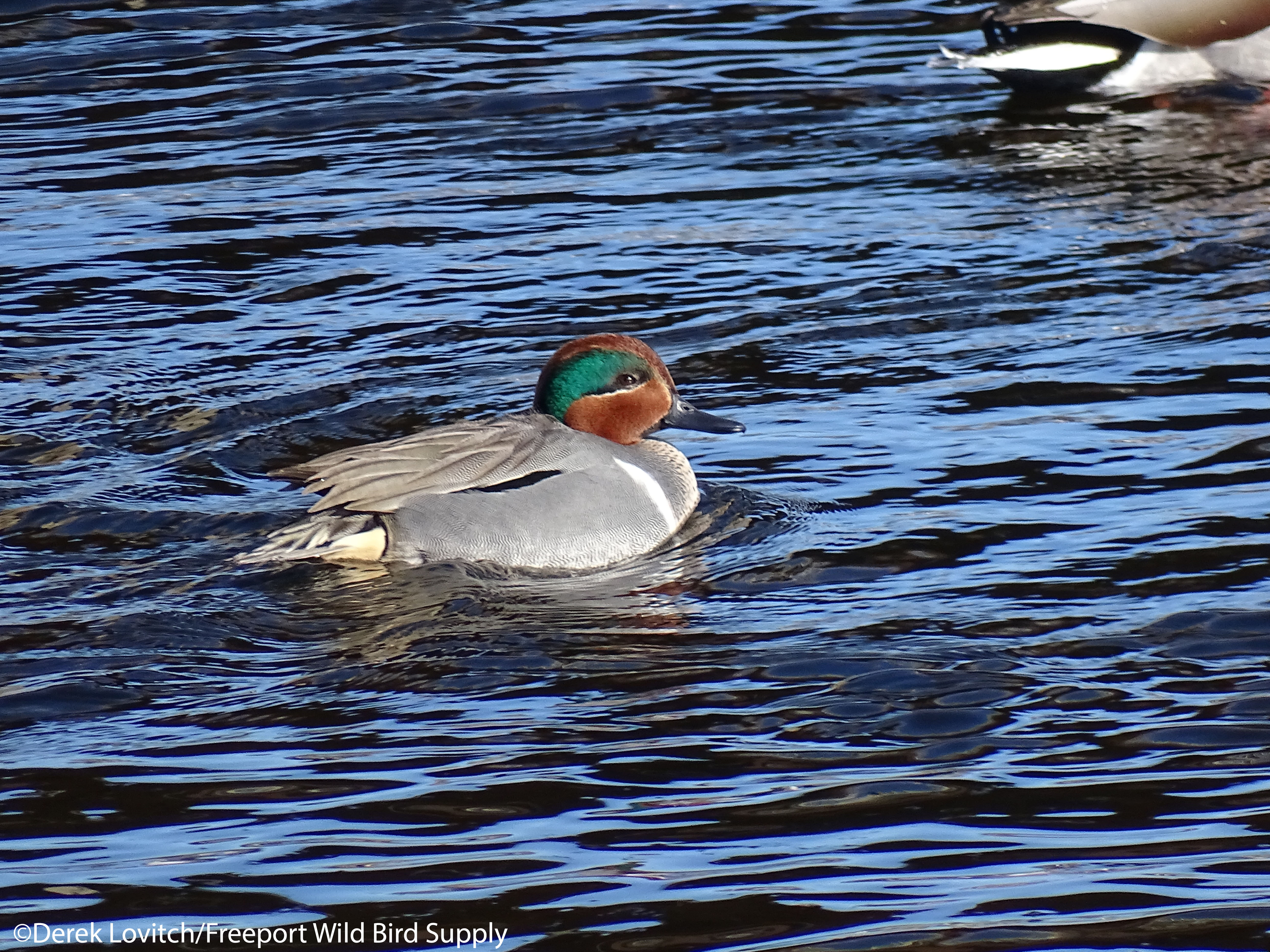
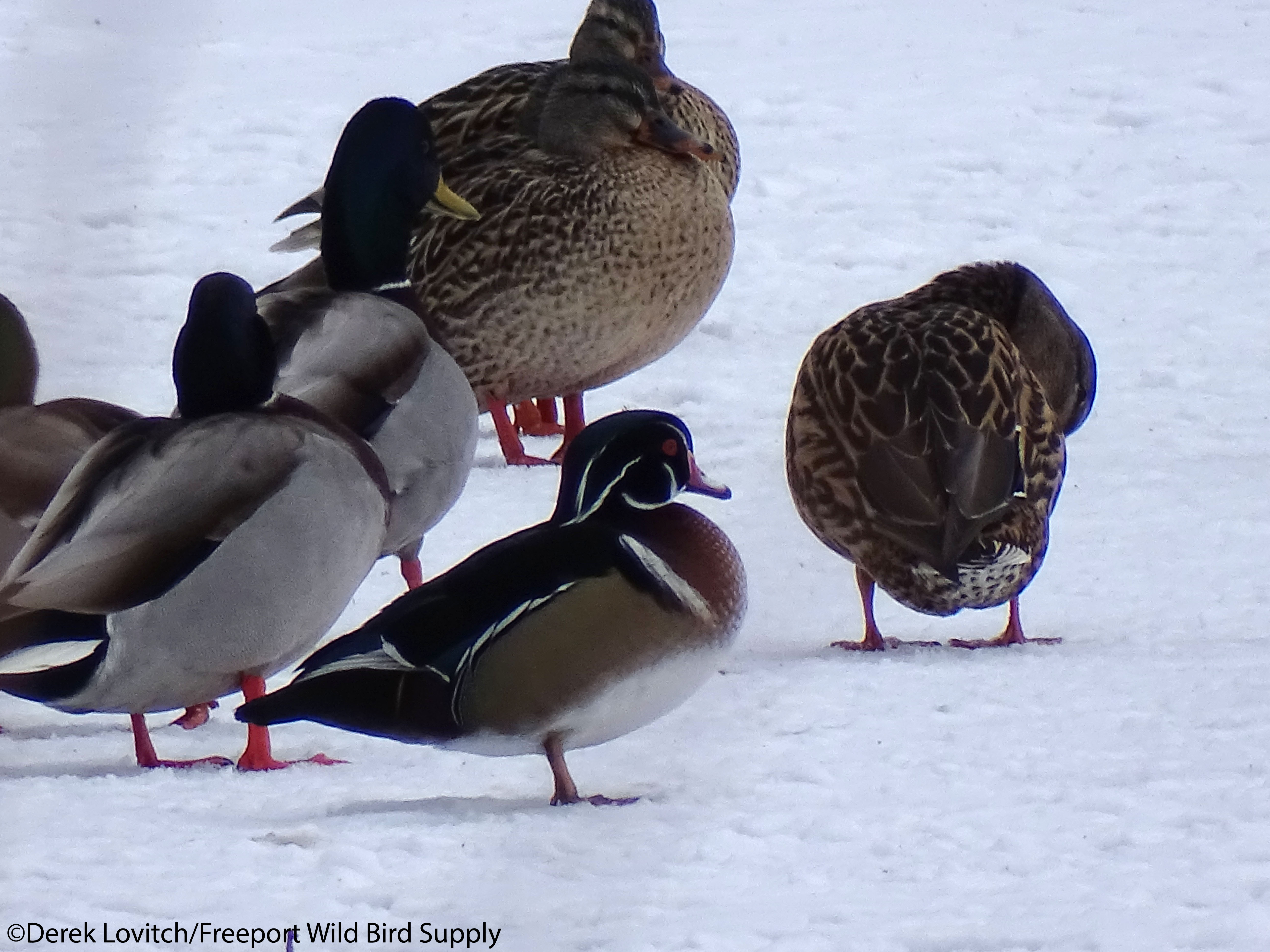
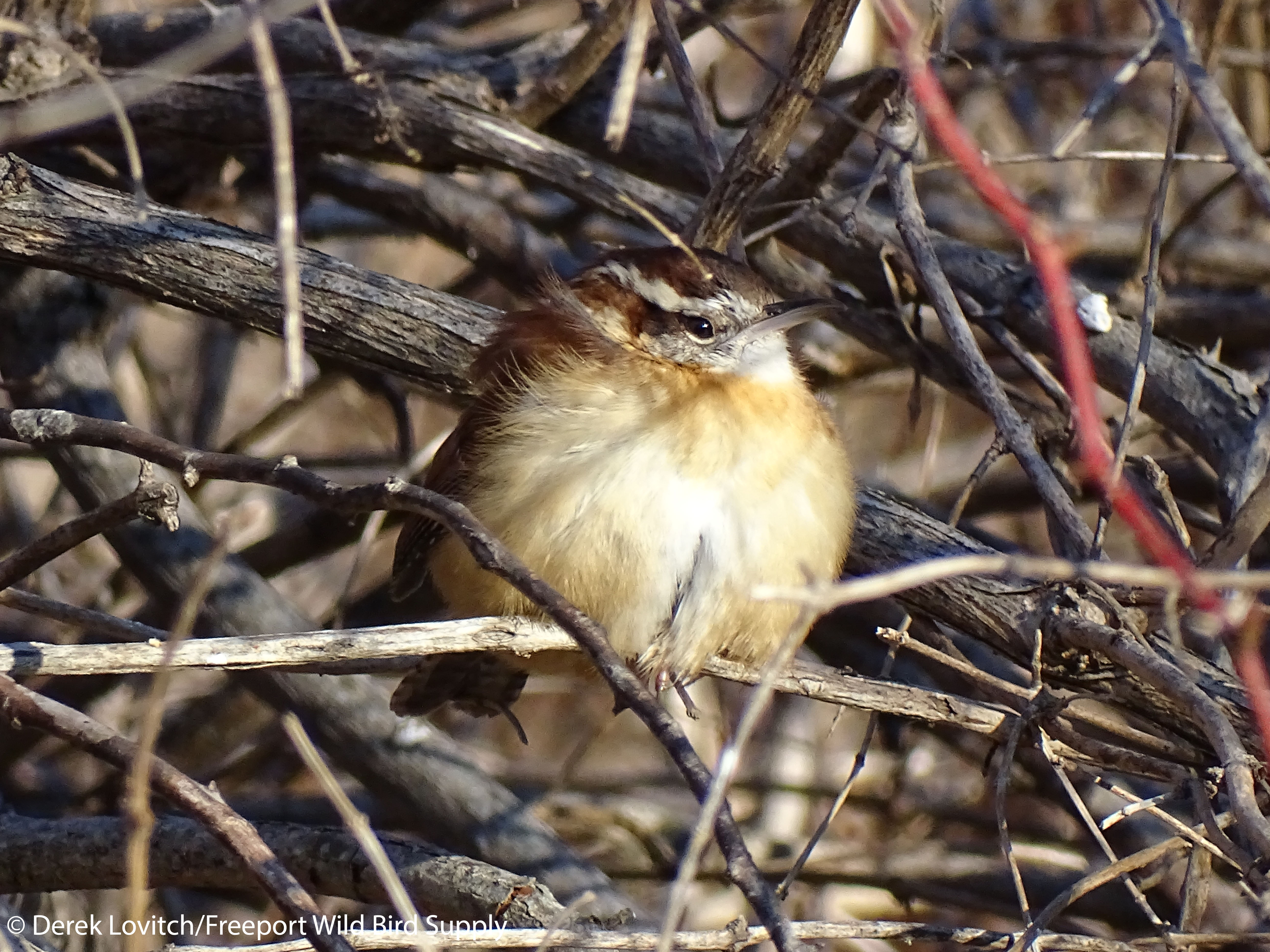
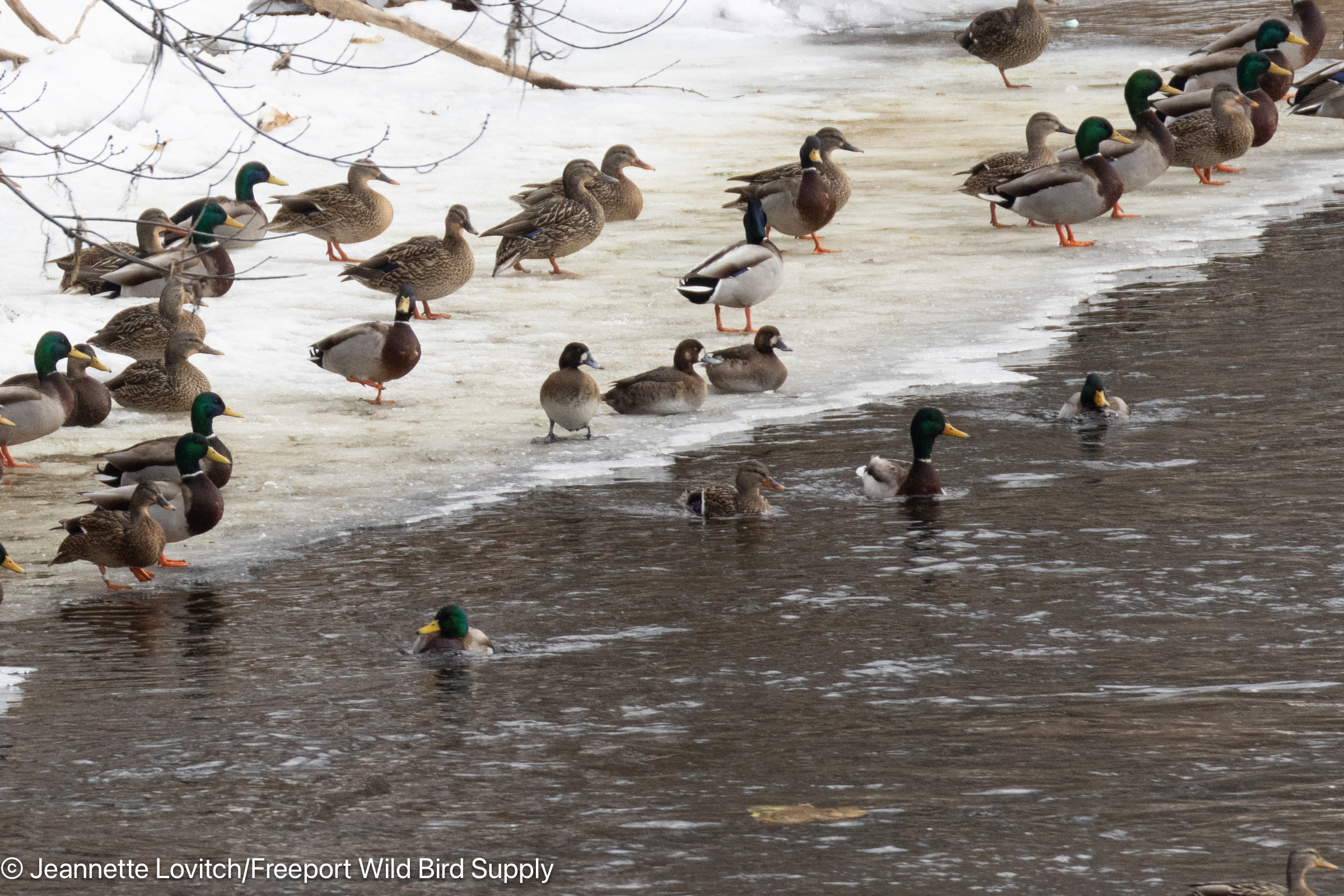
The following morning, I joined club members on a birdwalk to the delightful Anchorage Trail in the nearby town of Anchorage. Passing through a variety of habitats on an easy, paved, two-mile trail, we spent the morning slowly working through the various species we encountered (43 I believe was the official tally). Being from Maine, it was nice to hear Eastern Phoebes (overwintering and/or returning migrants), oodles of Carolina Wrens, and a nice variety of ducks in the pond: one Green-winged with a half-dozen Blue-winged Teal, Northern Shovelers, Gadwall, Hooded Mergansers, Gadwall, Ring-necked Ducks, and Mallards (photo above). I also enjoyed the woodpecker sweep: Downy and Hairy, Pileated and Red-bellied, Yellow-bellied Sapsucker, and Northern Flickers.
While it will be a little while longer before our Saturday Morning Birdwalks return, it was sure nice to get out in the field on a pleasant (by Maine standards that is!) early spring morning to help folks see some birds!
But then it was back to my usual routine. Arriving at home at 1:30am on Thursday the 16th, it wasn’t exactly an early start to my window-watching day, however. Not surprisingly, I spent less time looking out at our feeding station over that week than I have at any point over the past two months. Being out of town for three days coupled with a few visits to the store and lots of physical therapy resulted in fewer hours spent evaluating feeder bird numbers. Sharp-shinned Hawk presence didn’t help either, with our adult male continuing.
This continuing adult male continues to wreak havoc at the feeders, but my consistent observation this winter has offered me insight into this species’ natural history.
Nonetheless, there were plenty of changes in species composition and quantity noticed this week. We only received about 5-6 inches of snow here in Durham as temperatures hovered around the freezing mark for most of the day on the 14th, preventing accumulation until the late afternoon. In fact, there was less snow on the ground two days after the storm than there was the day before the storm (that was far from true for most of the state, however.
Not surprisingly, there were fewer Dark-eyed Juncos and American Tree Sparrows this week. Three Red-winged Blackbirds are regular, while the high counts of Northern Cardinals and Eastern Bluebirds continued to decline as territories began to be established and enforced. We also saw a noticeable decrease in the size of our American Goldfinch flock this week. Then, in the afternoon, my first two Brown-headed Cowbirds of the year (in Maine, that is) appeared.
The following week was much more spring-like, and the avian changes were even more evident. At least here in Durham, and changes to species composition and quantities are happening fast now.
Natural food is becoming more available as the snow recedes and the first “new” food sources emerge. A new uptick in American Goldfinches to 45 on 3/23 saw most of the birds spending most of their time eating aspen buds. Although a Pileated Woodpecker remains in the area, I did not see it visit the feeders once this week. We still have 8-12 Dark-eyed Juncos around, but they are often dispersed under brush away from the feeders. Our overwintering male Red-bellied Woodpecker, pair of Red-breasted Nuthatches, and our Carolina Wren have also spent considerably less time at the feeders this week. And not a single House Finch.
The last of our two American Tree Sparrows of the winter departed on the 17th, but a presumably new bird – a migrant – was at the feeders on the 21st through the end of the week. Our first Song Sparrow of the year arrived on the 18th and has been under the feeders since. Two White-throated Sparrows continue as well, and our first Fox Sparrow of the year appeared in the evening on the 24th.
While one Brown Creeper has been regular in the trees immediately behind the feeding station for a couple of weeks now, we now have a pair, and on the 23rd I spotted one of them creeping on the ground under a hulled sunflower tube. I didn’t see it eat anything, so I won’t count it on the feeder list quite yet, but I can see its bravery increasing.
Red-winged Blackbirds are now here to stay, with 2-3 territorial birds occasionally joined by migrants (high of 14 on the 21st), while we had Brown-headed Cowbirds (1-2) on two days this week. After our first two Common Grackles of the year briefly visited on the 18th, a flock of 22 dropped by on the 21st.Also on the 21st, we had 2 Pine Siskins – our first here since January 21st. I also spotted our first Turkey Vulture over the yard this year later that day.
Meanwhile, my yard-listing gears shifted from sorting through commuting gulls to commuting geese. With growing numbers of Canada Geese beginning to arrive starting on the 17th, flocks would often be visible from the window and over our yard as they commute between the Androscoggin River and local fields.
Our suspicion that the area right around our house would be a perfect place for displaying American Woodcocks was confirmed on the first warm and calm night of the spring: 3 birds displaying closely and vociferously right over our driveway on the 18th with two displaying and one silent fly-by (a female?) on the 22nd. Speaking of American Woodcocks, our first tour of the season is right around the corner: Woodcocks Gone Wild at Pineland Farms is only a week away!
Another sure sign that spring really is here, the Bradbury Mountain Hawkwatch kicked off on March 15th as usual, albeit delayed by 2 hours as the last of the precipitation cleared. It absolutely pains me that I cannot be up there, but thankfully Zane Baker has returned for his 5th season as Official Counter. While Jeannette and I will be up there much less than usual for a while longer at least, we know the count is in great hands!
I did, however, make a cameo on the 20th, spending an hour and a half to test drive my stamina. A handful of migrant raptors were spotted, and I was rewarded for the effort with a flock of 6 Northern Pintails flying by. This was my personal 144th species at Bradbury Mountain State Park, and we believe a first record for the Hawkwatch -and therefore the park itself!
Speaking of appearances, Jeannette and I appeared on Newscenter Maine’s 207 last week, discussing birds, bird feeding, and the changing climate and bird populations. Check it out!
I think my friend Dan Nickerson took pity on me – or was just tired of reading about our feeder birds? – so he was kind enough to pick me up and take me birding for the morning on the 24th for some local birding. It was great to get out, and I was most appreciative. And what a day we had!
We worked our way up the Androscoggin River, finding one 1st-winter Iceland Gull still at the Auburn Riverwalk and some new arrivals at the south end of North River Road in Auburn, including the boat launch area: a total of 10 Ring-necked Ducks and 3 Double-crested Cormorants (both being my first of the year in Maine), and off the boat launch, a small flock of 5 Lesser Scaup with one female Greater Scaup hanging out with them. The first of our three Ring-necked Ducks joined them briefly.
Further up the road, we looked for a previously-reported Barnacle Goose in the farm fields, but we couldn’t find it. There were a goodly number of Canada Geese around though, and with birds in and out of gulleys and presumably moving back and forth from the river, we decided to check back later.
We looked for Snow Buntings and the like along Upper Street in Turner, kept an eye out for frugivores, and then paid the Lower Street Harris’s Sparrow a visit. I saw this bird back on January 13th, but it was too good of a bird to not see again. When it immediately popped out of its favored bush, Dan got a life bird and I enjoyed a nice long view (but not so much photographs with one hand in a cold and gusty wind!).
We then returned to North River Road where I spotted the Barnacle Goose immediately this time. We savored this sighting – Dan’s second lifer in an hour! – and photographs were more successful (see above). We decided to celebrate with Thai food and broke for an early lunch as my shoulder was starting to whine a little about all of this excitement and activity. Thai food made everything better though, as it usually does.
Hopefully, I have finally turned the corner on my slow recovery, and next week will feature a little more time in the field and at the store, but for now, I will continue to track feeder birds in between.
While not the rarest bird this week, I have been thoroughly entertained by this Brown Creeper who has taken to picking up bits of seed from under a feeder at our home in Pownal. The horizontal position makes the bird look so different! Sorry for the lousy photos though…they were taken through a screen during the ice/snow storm on 2/4.
The Blizzard of 2022 provided some great opportunities for cross-country skiing and snowshoeing locally for the first time this winter, so I took full advantage of that, even if it did further limit my dedicated birding during this busy week plus. Interestingly, my most “serious” birding was a half day (post-snowblowing and shoveling) on Sunday searching Portland through Cape Elizabeth for storm-related birds, but that effort turned up nothing at all of note! Here are my observations of note over the past 9 days:
5 WHITE-WINGED CROSSBILLS, 2 COMMON REDPOLLS (FOY), 6 Pine Siskins (FOY), and 1 Purple Finch, Long Falls Dam Road area of Carrying Place Township, 1/31 (with Jeannette).
The Androscoggin River between the downtowns of Lewiston and Auburn remain a surprisingly productive mid-winter hotspot. On 2/1, Jeannette and I discovered an incredible (especially for the interior of Maine) five species of dabblers from the Auburn Riverwalk! Amongst the Mallards and a couple of American Black Ducks, there were single female GREEN-WINGED TEAL, AMERICAN WIGEON, and NORTHERN PINTAIL. Making this even more interesting is the fact that it’s usually the drakes that we find overwintering in Maine. Additionally, the drake RING-NECKED DUCK continues, and we had a single 1st-winter Iceland Gull. Two Bufflehead and 5 Hooded Mergansers joined the usual Common Goldeneyes and Common Mergansers for a goodly inland total of 10 species of waterfowl. A unusually conspicuous Beaver continues to amuse here as well.
3 drake and 1 hen BARROW’S GOLDENEYES and 8 Dunlin (FOW here), Winslow Park, Freeport, 2/13.
My article – a 13-page photo salon – on the Hybrid Herons of Scarborough Marsh (Patches!) has finally been published in the most recent issue of North American Birds. In it, I lay out the theory that at least 5 different individuals have been seen in Scarborough Marsh since I first found an odd juvenile heron in July of 2012 that we now believe is a hybrid between a Snowy Egret and a Tricolored Heron.
I made the case that the two current birds are backcrosses, one with a Snowy Egret (SNEG X TRHE X SNEG) and the other with a Little Egret (SNEG X TRHE X LIEG). I’ll be watching them carefully for the potential of a developing hybrid swarm.
Unfortunately, at this time, the journal is only available online to members of the ABA. However, digital e-memberships (with access to all of the ABA publications) are only $30 a year, and you can purchase issues of the magazine directly from the ABA by emailing info@aba.org. Also, if you wanted to take a peek at the article, I do have a couple of extra copies here at the store for you to peruse.
Believe it or not, a hybrid heron is much rarer than a Steller’s Sea-Eagle, at least from a world perspective…in fact, it’s possible these birds are one of a kind!
While we didn’t see the Steller’s Sea-Eagle in two full days of searching this week, we did enjoy some great birds and photo ops during our search. I spotted this Barred Owl alongside a road on Southport Island as it emerged from a roosting cavity in the late afternoon on the 25th and Jeannette got some photos out the car window.
It was another great week of winter birding for me! Unfortunately, we had friends visiting for three days and the Steller’s Sea-Eagle was not seen on any of them. In fact, it has not been seen since Monday morning, 1/24 in the Boothbay area. I joined them for two days of searching, and we did have several birds of note as we scoured the area thoroughly. Meanwhile, with the deep freeze continuing, river ice is building up and so it was a great week to see Barrow’s Goldeneyes – one of my favorite winter birds in Maine.
6 (!) BARROW’S GOLDENEYES, Winslow Park, Freeport, 1/22 (with Saturday Morning Birdwalk group). This is my highest count in at least 4-5 years here.
1 adult Peregrine Falcon, Upper Street, Turner, 1/23 – I rarely see them away from downtown L-A in Androscoggin County, especially in winter. I would have assumed this was one of those Lewiston birds but I had just left the pair looking content in downtown. Not that I drive faster than a Peregrine, mind you.
1 Turkey Vulture, Drake’s Island, Wells, 1/24 (with Jeannette).
1 Horned Lark, Parson’s Beach, Kennebunk, 1/24 (with Jeannette).
18+ Razorbills, Spruce Point Inn, Boothbay, 1/25 (with Tom Reed, Emily Wilmoth, and Jeannette).
1 pair BARROW’S GOLDENEYES, Doughty Cove, Harpswell, 1/27 (with Tom Reed, Emily Wilmoth, and Jeannette).
1 SNOWY OWL, Land’s End, Bailey Island, Harpswell, 1/27 (with Tom Reed). This was a really incredible and memorable sighting. In the desperate searching for the Steller’s Sea-Eagle, I was following a very distant eagle (it was a Bald) out over the bay to our east when I called out “I think I have an owl!” Materializing out of the distance and heat shimmer, it took a while for us to identify it as a Snowy Owl. We followed it for several minutes as it finally came closer and passed by, landing on the backside of Jaquish Island. This was only my second-ever Snowy Owl observed in apparent “visible migration,” or at the very least, making a long diurnal water crossing.
1 drake BARROW’S GOLDENEYE and 1-2 Yellow-rumped Warblers, Bailey Island, 1/27 (with Tom Reed and Emily Wilmoth).
21 Sanderlings, Reid State Park, 1/27 (with Tom Reed and Emily Wilmoth).
NOTES: Due to the posting of a blizzard warning for tomorrow, we are canceling the Saturday Morning Birdwalk and we expect to be closed for the day. Stay tuned to our store’s Facebook page for any updates.
Another good photo op while not seeing a sea-eagle was this cooperative Black Guillemot having lunch off the Maine State Aquarium on 1/25. Can anyone identify the fish?
Barrow’s Goldeneyes are one of my favorite visitors to Maine in winter. The hens provide a nice challenge to pick out, too. This was one of two distinctive Barrow’s visible from the Bernard Lown Peace Bridge in Auburn/Lewiston on the 13th.
Especially in November – and often again with the first cold snap in December – I talk about “rarity fever,” when there is that additional motivation and encouragement to go birding thanks to the expectation of the unexpected. And usually we in Maine talk about the “winter doldrums” in an non-irruption year. And this year, there are virtually zero irruptives in the southern half of Maine – other than Snowy Owls. But with the Steller’s Sea-Eagle (as you may have heard!), a Bullock’s Oriole at a feeder in Damariscotta Mills, a Townsend’s Warbler in Cape Elizabeth (I missed it twice this week with a limited amount of effort), and a Barnacle Goose in Rockland, there is no doubt I – and many other birders – are experiencing a little mid-winter Rarity Fever! And that has helped motivate me to get out birding as often as I can. The to-do list can wait until February, right?
With the fairly sudden arrival to a bitter “real winter” cold, once again “pioneering” waterfowl made up most of my highlights this week, as I spent most of my birding time searching for the next big deal. My observations of note over the past seven days include the following:
1 Northern Flicker, Village Crossings/Cape Elizabeth Greenbelt Trail, 1/16 (with John Lorenc).
At least 2 hen BARROW’S GOLDENEYES. A third hen is suggestive of an odd Barrow’s or a Common x Barrow’s hybrid (see photo captions), Bernard Lown Peace Bridge, Auburn/Lewiston, 1/20.
Fun to hear two Carolina Wrens counter-singing across the Androscoggin River – one in Lewiston and one in Auburn – from Little Andy Park, Auburn, 1/20.
In addition to a bright-orange-billed classic Barrow’s, and the perfectly good smudgy-billed individual above (and here, on the left), there was a third bird that I am pondering. It’s either a third female Barrow’s (a great tally, especially for Androscoggin County) or perhaps a hybrid between Barrow’s x Common – the males of which do occur in Maine and are fairly straightforward to identify.
And finally, we have commissioned these incredible hand-painted, limited-edition Steller’s Sea-Eagle commemorative ornaments. Check them out here, on our website.