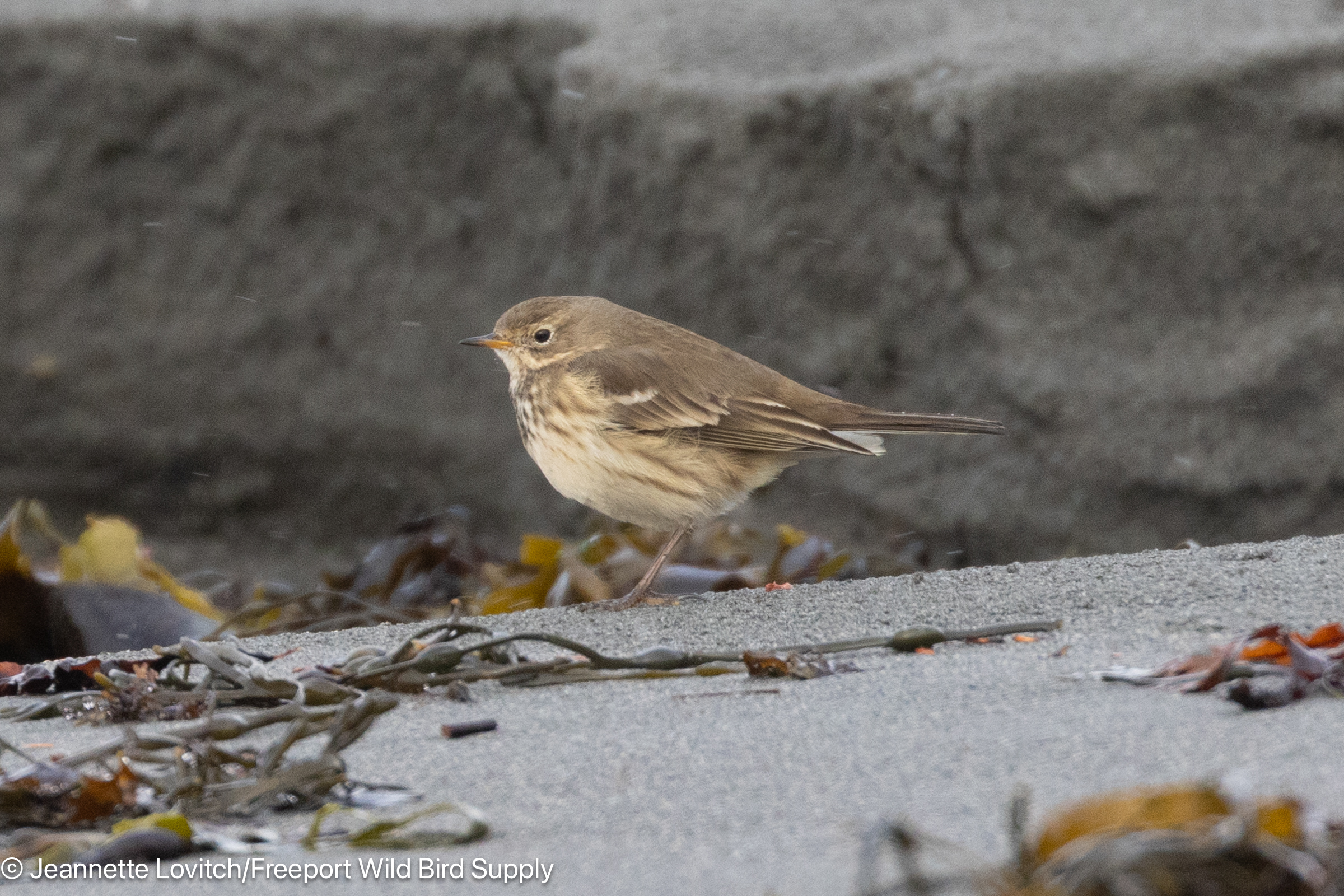
Six, somewhat-late American Pipits at Carrying Place Cove in Lubec were among the highlights of three days of dedicated rarity-searching in Washington County for our “weekend” this week. I was hoping for a wagtail though…or a Meadow Pipit.
I had a very busy week of birding, led by three days of searching for rarities in Washington County. Locally, my observations of note over the past eight days were as follows:
Scattered Red Crossbills continue in southern Maine, and Pine Siskins are increasing now.
1 Indigo Bunting, West Commercial Street, Portland, 11/13.
1 Orange-crowned Warbler (my 10th of the season!), South Portland Greenbelt Pathway, 11/13.
1 Rusty Blackbird, our property in Durham, 11/15.
1 NASHVILLE WARBLER and a variety of marginally late migrants such as 2 Hermit Thrushes and a Chipping Sparrow, etc, Bailey Island, Harpswell, 11/20.
Jeannette and I visited Washington County 11/16-18, with our priority being all of those little places we see in the summer that “looks good for rarities” in the late fall Rarity Season. So finally, we made it happen. Unfortunately, one day of rain, one day of snow, and two days of very strong winds made bird-finding rather challenging. We would have much preferred these clear and calm days of the second half of the week!
Our notable observations included:
3 continuing Gadwall, 18 American Wigeon, 8 Northern Pintail, 182 Green-winged Teal, etc, Sebasticook Lake, 11/16.
1 BARN SWALLOW, Roque Bluffs State Park, 11/16.
6 American Pipits, Carrying Place Cove, Lubec, 11/17 (photo above).
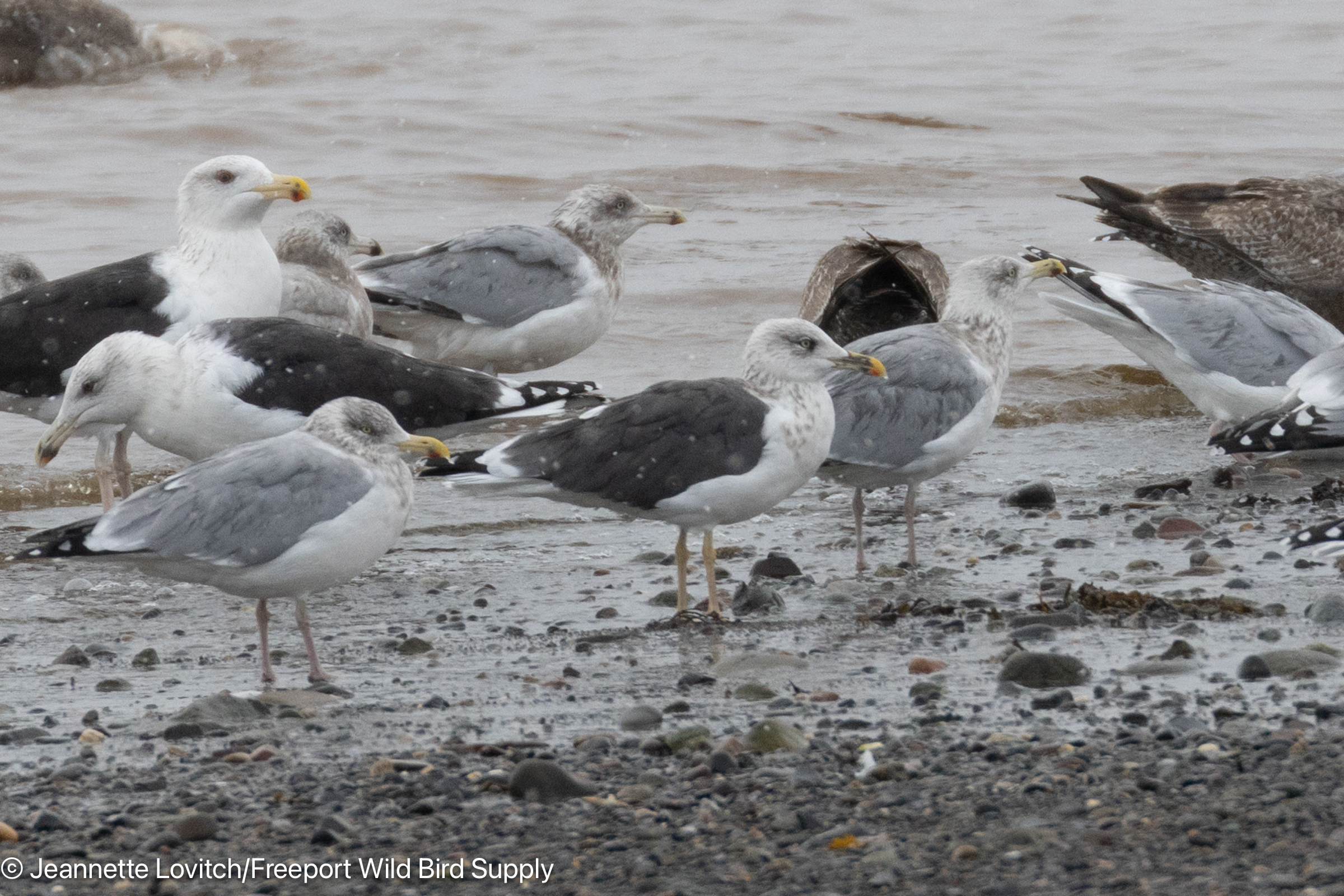
1 4th-cycle Lesser Black-backed Gull and 1 1st-cycle Iceland Gull, Mowry Beach, Lubec, 11/17.
1 1st-cycle Iceland Gull, Lubec village waterfront, 11/17.
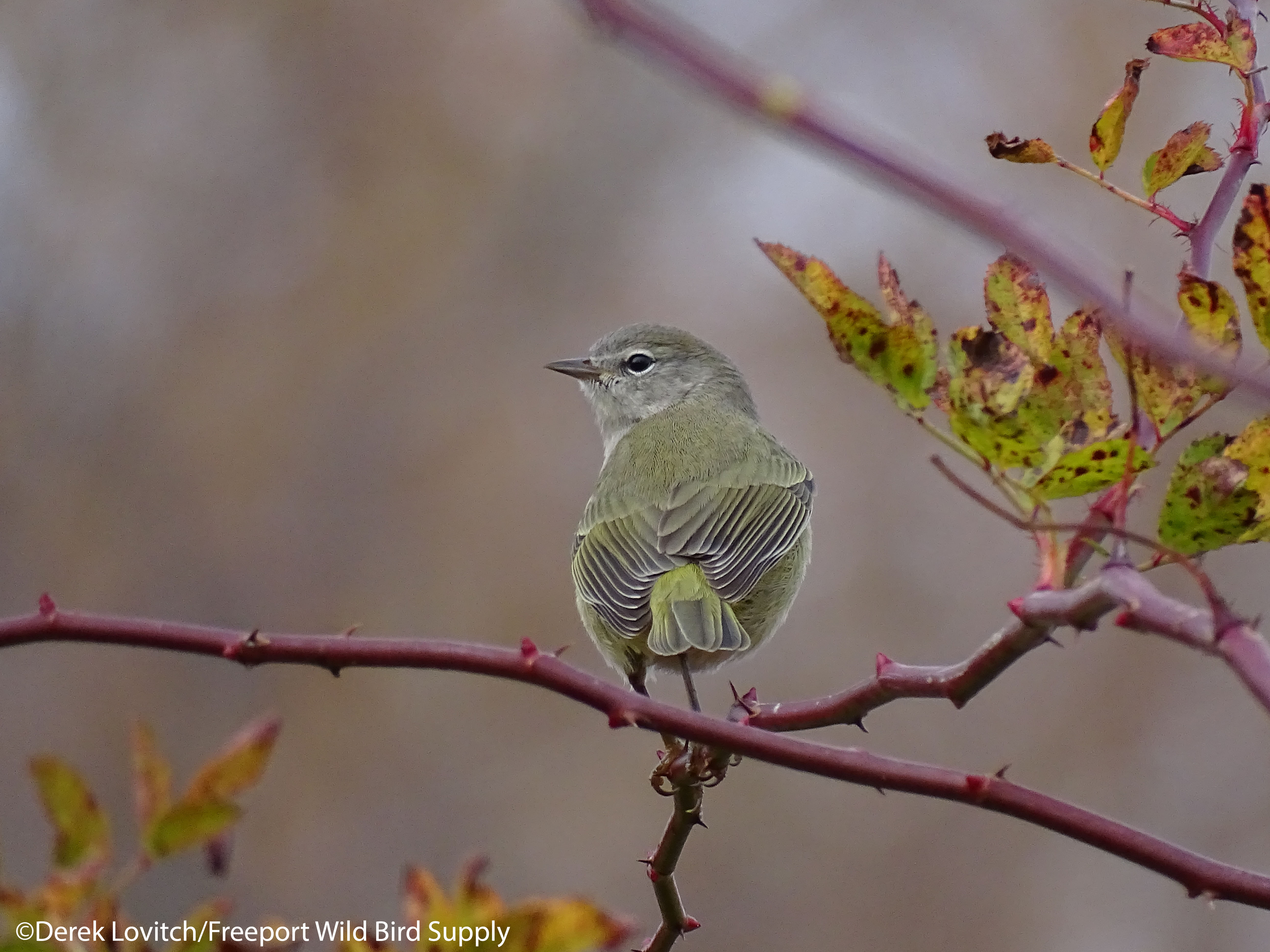
1 ORANGE-CROWNED WARBLER, Old Farm Point Park, Lubec, 11/17.
4 Snow Buntings, Petit Manan NWR, 11/18.
1 1st-cycle Icleand Gull, Bangor Waterfront Park, 11/18.
Locally unexpected/rare: 1 Tufted Titmouse in a mixed species foraging flock at Hamilton Cove Preserve on 11/17 and two Red-bellied Woodpeckers in Lubec on 11/17 (“downtown” and Old Farm Point Park). Meanwhile, Red-breasted Nuthatches were exceptionally abundant, while both Black-capped Chickadee and Golden-crowned Kinglets seemed above average. Every mixed species foraging flock had plenty of each of the big three.
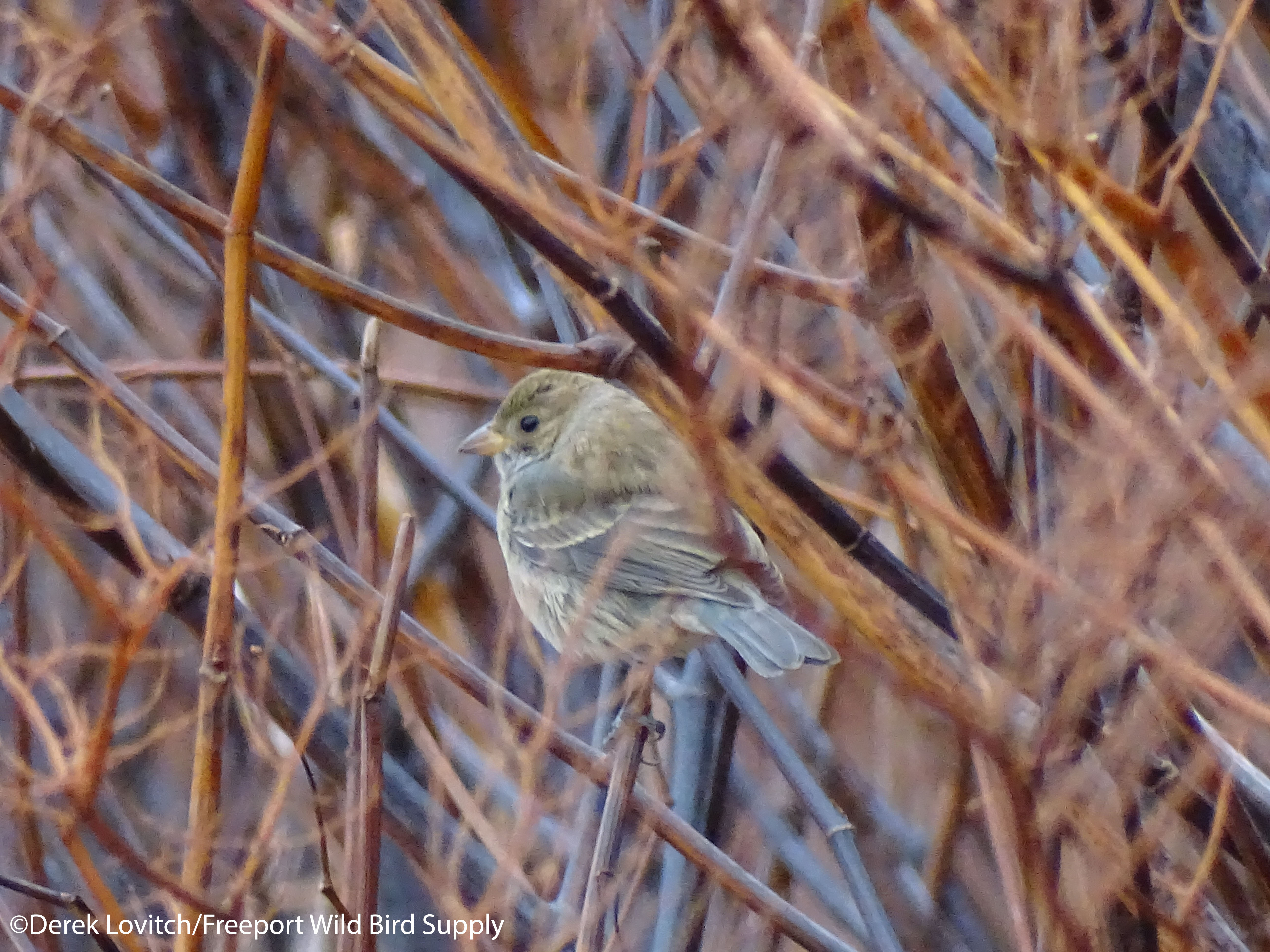
Finches: American Goldfinches were fairly widespread, and scattered small numbers of Purple Finches were around, but since finches are often detected via flight calls, the weather – especially the strong winds – did not make it easy to detect them. We also spent less time in Boreal habitats on this trip than most. So, other than those two, our finch observations were sadly limited to only 1 Evening Grosbeak and 5 Common Redpolls (FOF), Hamilton Cove Preserve, 11/17; 2 Red Crossbills and 2+ Pine Siskins, Machias River Preserve, Machias, 11/18.
Frugivores: American Robins were the only widespread frugivore so far, including an ample vismig on 11/17 with snow falling. 8 Cedar Waxwings and a distant flock of about 30 likely Bohemian Waxwings at Old Farm Point Park on 11/17. We were disappointed to not run into any Pine Grosbeaks.
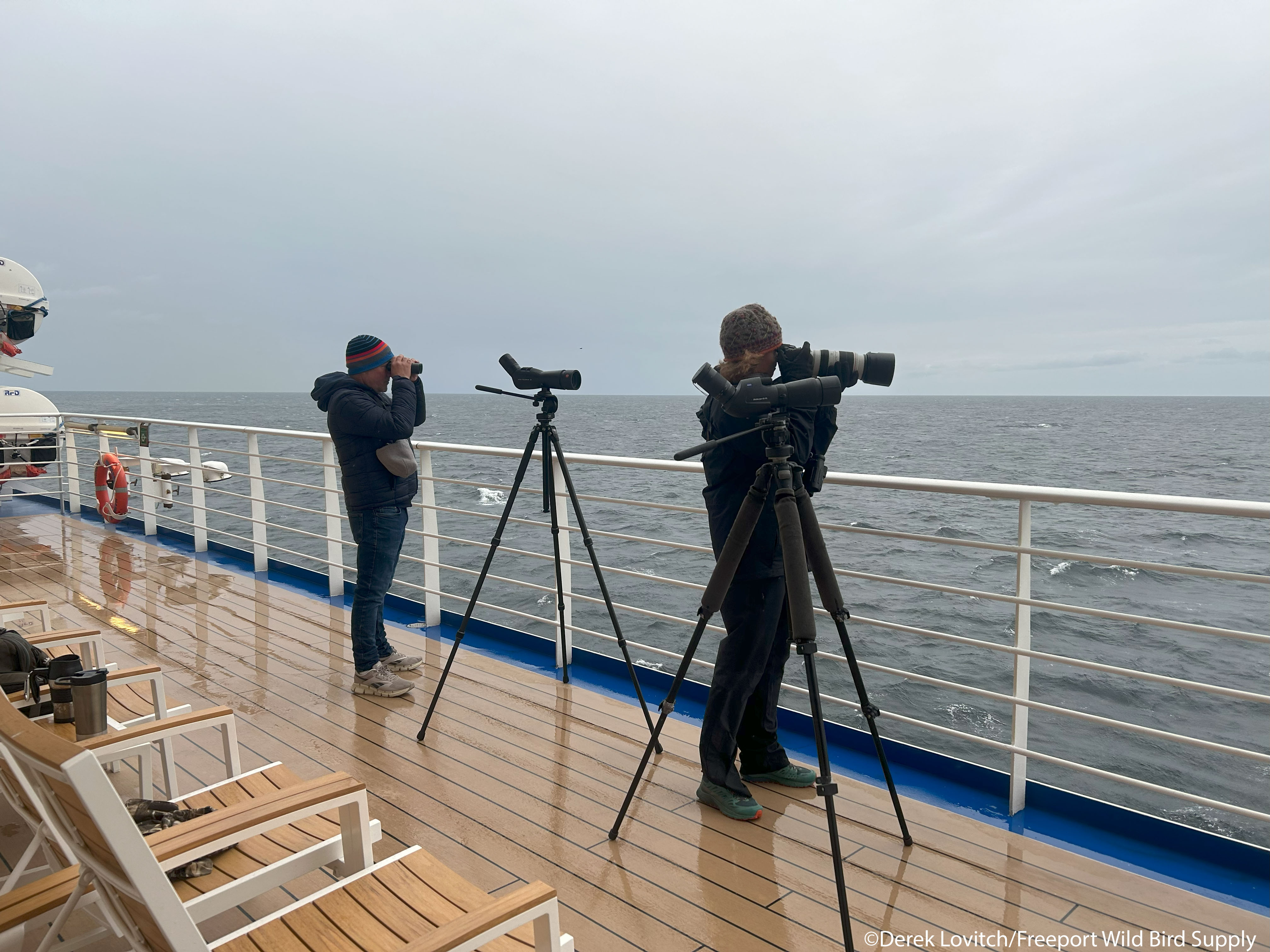
Cruise ships are big, stable platforms that allow for pelagic birding in comfort and with the use of spotting scopes!
In 2019, Jeannette and I took a cruise through the Gulf of Maine and northwestern Atlantic Ocean in the hopes of finding Great Skuas in particular. It was wildly successful, and if we could repeat this success, perhaps there would be a cruise-ship-based tour to offer. At least it would be more comfortable than last week’s attempt!
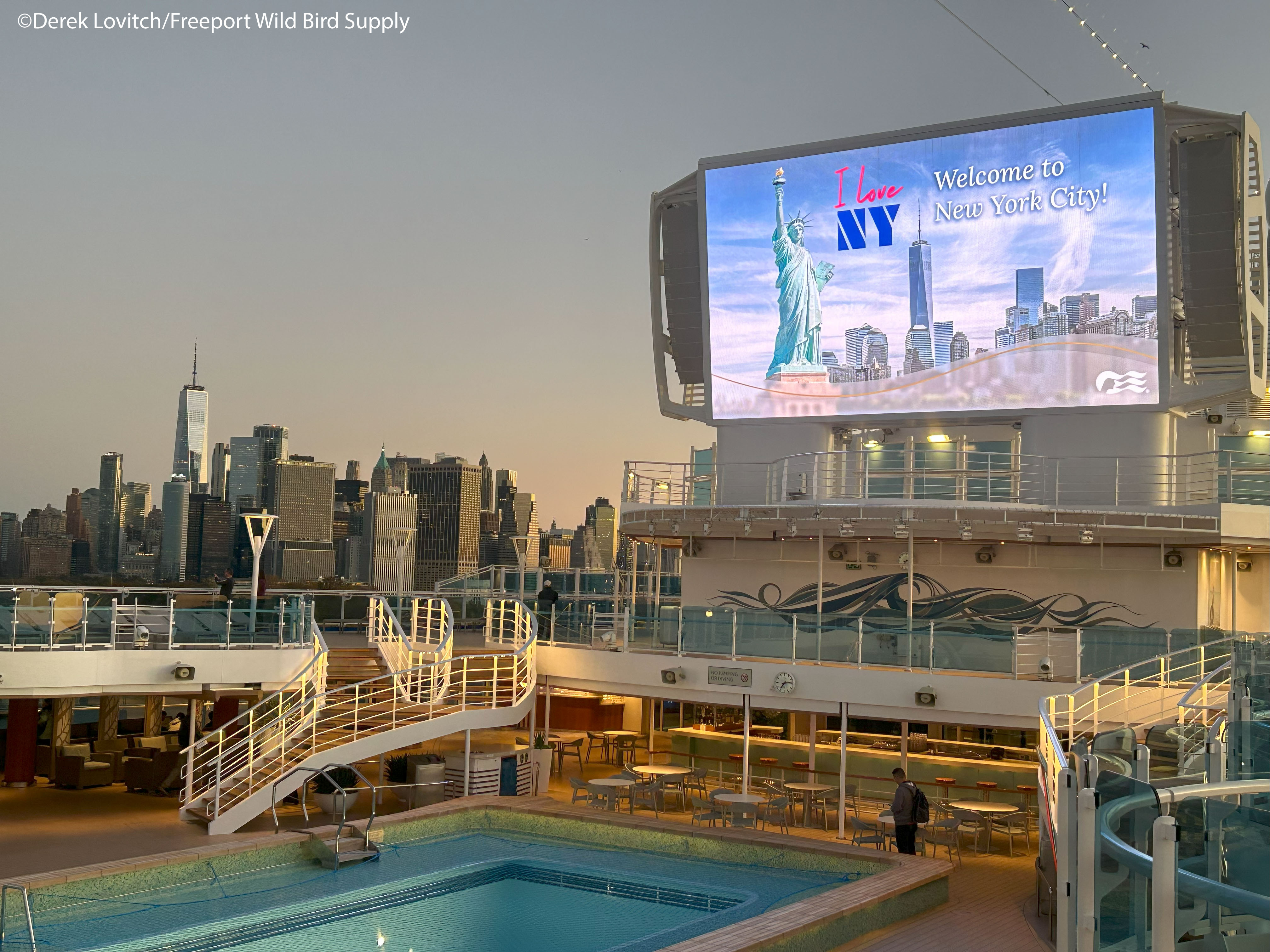
Therefore, on the evening of 10/26, Jeannette and I boarded Princess Cruises’s Enchanted Princess out of Brooklyn, New York. Our hope was to replicate the success of our 2019 trip. We were planning on a second scouting trip in the fall of 2020, but then COVID.
After finally feeling ready to consider a cruise again, we found the itinerary had changed, and we would need to spend seven days to get two full days offshore..we even needed to come back home first! But alas, we had pandemic-era credit that was going to expire, so off we went. Is this a reliable way to see Great Skuas in North America? Could I document a Barolo’s Shearwater this time?
We started our birding, however, at Brooklyn’s Greenwood Cemetery, home of this massive Monk Parakeet colony.
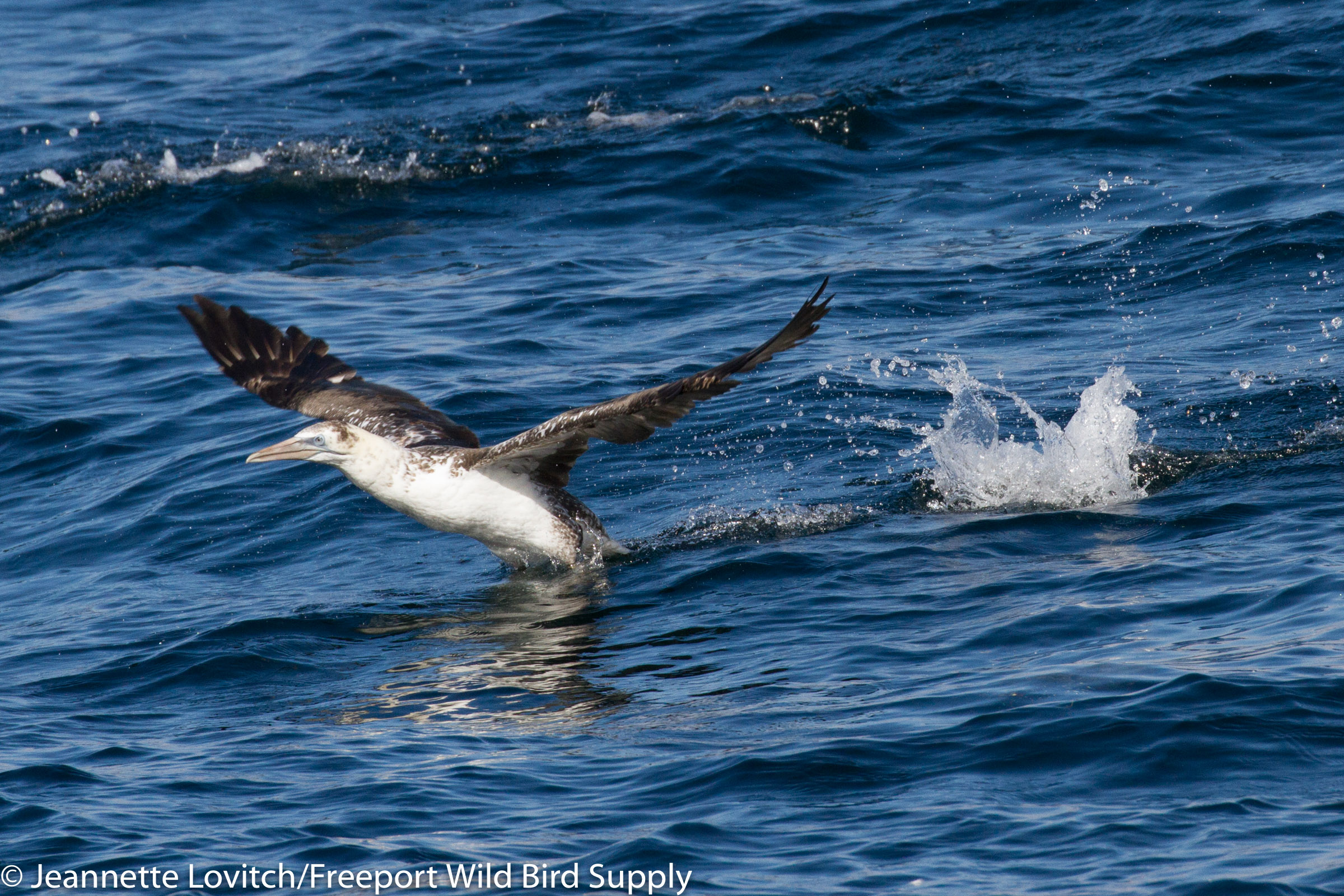
We departed New York Harbor with about an hour of usable daylight, picking up a single Cory’s Shearwater and plenty of Northern Gannets.
Screenshot
Arriving off Newport before dawn the next morning, we got the first shuttle to town, where our friends Bill and Jess picked us up for a lovely day of birding (Clay-colored Sparrow, Orange-crowned Warbler, late Nashville Warbler) before returning to the boat. About 45 minutes of deck time produced 8 Cory’s and a single Great Shearwater.
Newport arrivals. “Western” Palm Warbler at Sachuest NWR.
Unfortunately, this particular boat offered less-than-ideal viewing opportunities compared to our first trip, with the best deck space on Deck 7 (a great height) but way too aft. Even with our scopes on the steady platform, this was going to be a challenge.
Approaching Boston on the morning of 10/28, we checked the decks for passerines (none) before taking our place on Deck 7. There were a lot of Northern Gannets, 4-5 Cory’s Shearwaters close enough to identify as borealis, and a pod of Atlantic White-sided Dolphins. A Song Sparrow flew aboard just outside the outer harbor islands, but before that, our first real surprise of the trip: an American Woodcock appearing from the north and cruising alongside the length of the boat before disappearing. That’s not a “pelagic” we expected!
We birded Boston’s Greenway a bit, but returned to the boat well after dark. Sailing slowly overnight, we returned to Portland (the original itinerary had us visiting Bar Harbor), where a long, thorough check of the Eastern Promenade yielded two Orange-crowned Warblers and a very late Red-eyed Vireo.
Darkness reached us a tantalizingly-short distance to Cash’s Ledge, so we retired to rest up for the big day at sea tomorrow (finally!).
Waking up in Maine waters about 16.5 nautical miles southeast of Mt Desert Rock, I stepped outside well before first light at 6:05am. I immediately texted Noam, the other birder on board that we rapidly had become friends with, and I hustled Jeannette outside. With some drizzle arriving ahead of approaching light rain, we had ourselves a fallout!
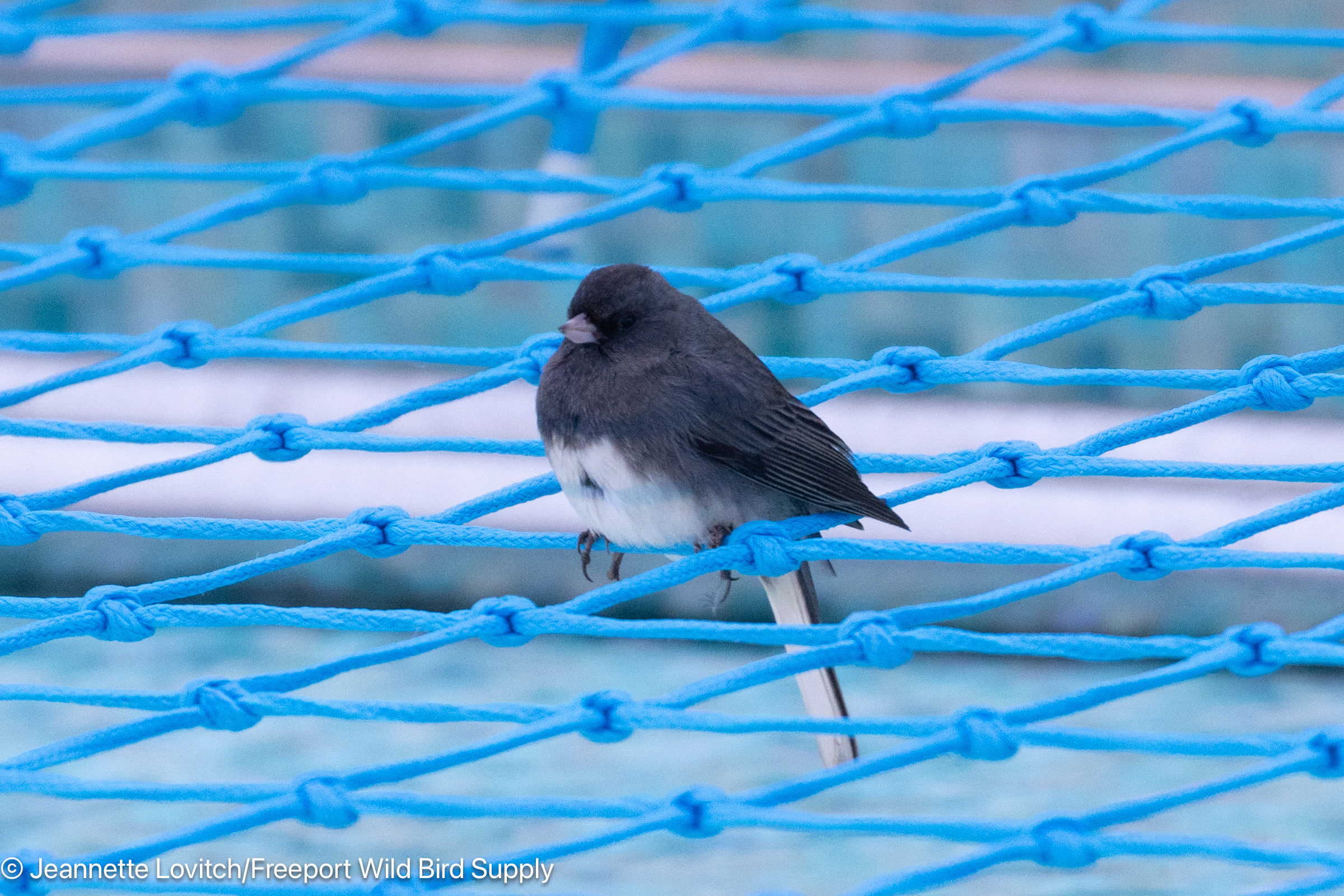
Unexpected considering there were little to no birds on the Maine radars overnight, and with a south wind through most of the night, I was surprised to immediately hear the flight calls of several Yellow-rumped Warblers. Sparrows were scattered about on the open decks. Noam and I had to usher a Rusty Blackbird out of a foyer, while Jeannette had to steer a Dark-eyed Junco down a hallway.
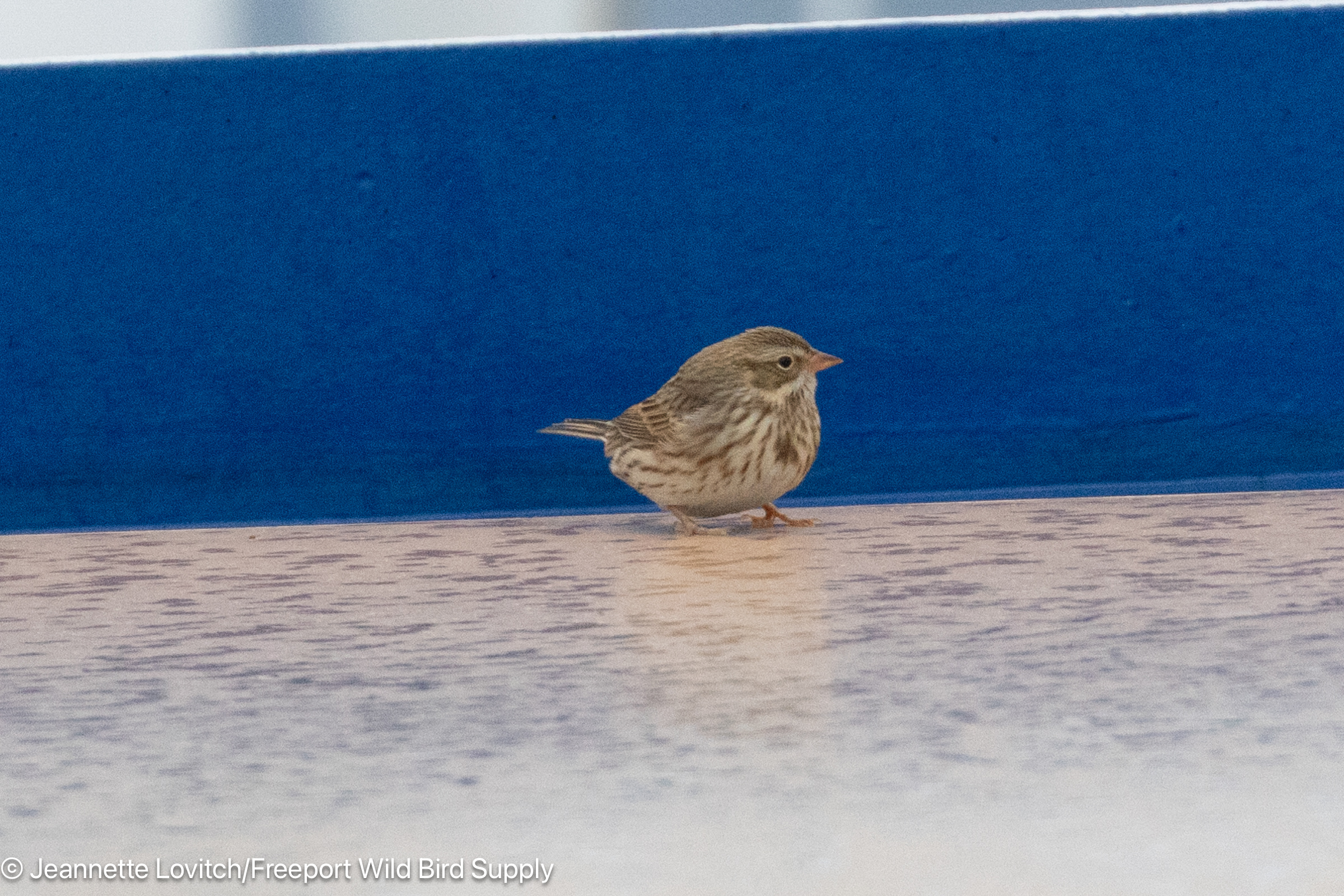
“Ipswich” Savannah Sparrow – that was an unexpected migrant, but makes sense considering we were southwest of Sable Island!
Clearly disoriented by the obnoxiously superfluous lighting of the ship, dozens of birds were around…often being flushed by now-awakening crew and passengers. Luckily, few birds seemed to be in dire straits – only one Yellow-rumped Warbler looked to me to be thoroughly exhausted, thankfully. In fact, most birds were leaving the boat as the sun rose and they were able to reorient themselves. While some birds seemed to arrive in the 15 or so minutes after sunrise, just about all passerines had departed the boat by 7:30 or so.
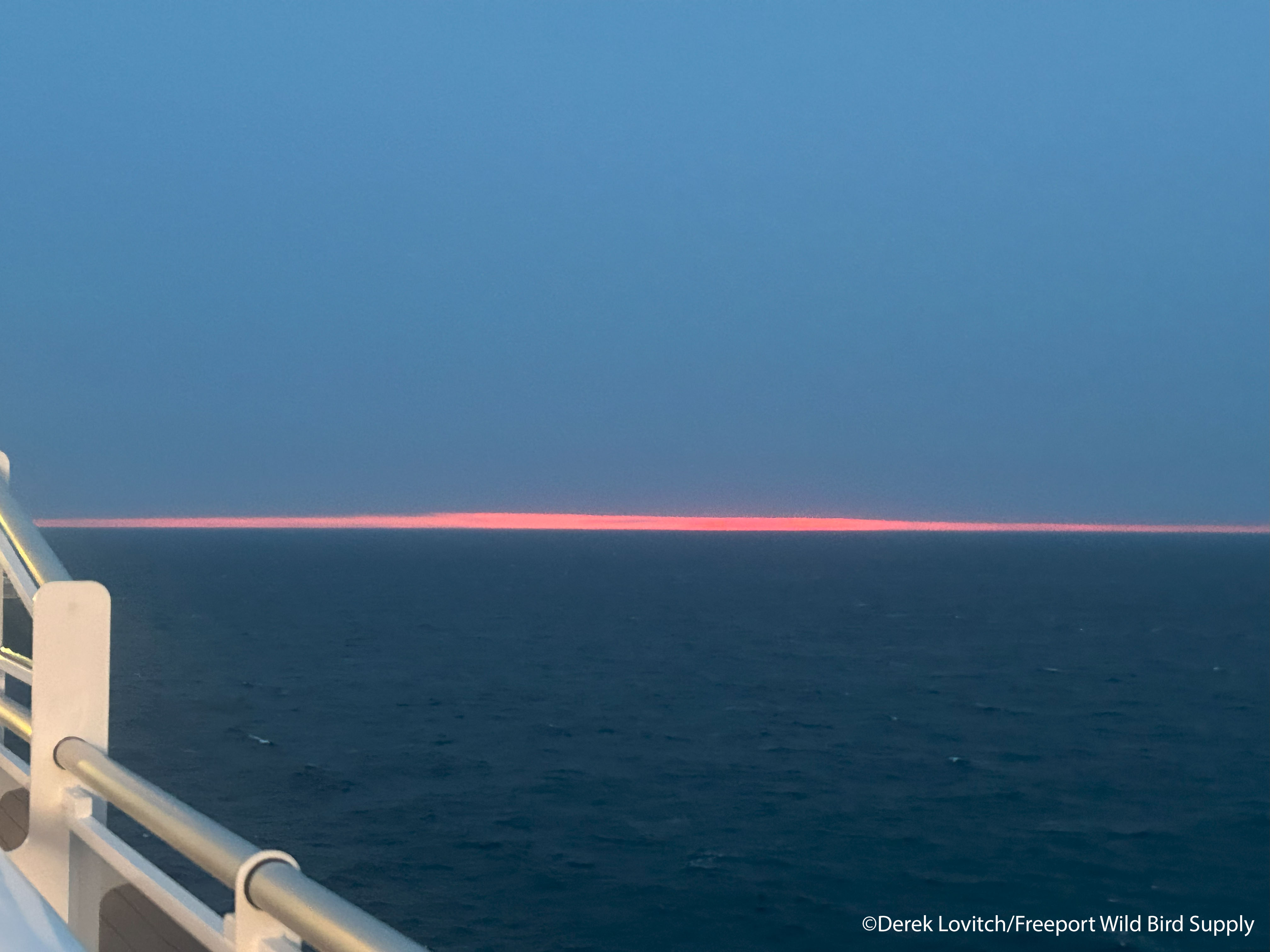
This photo, taken from off Eastern Point in Gloucester, MA the night before shows just how bright these ships are, and how disorienting they can be to birds.
With birds circling the boat before dawn, calling continuously, and others hiding in corners before being flushed to another corner, it was tough to count, but I estimated and counted a bare minimum of 8 Yellow-rumped Warblers, 8 American Robins (mostly overhead), 7 European Starlings (surprisingly), 6+ Dark-eyed Juncos, 2 Purple Finches, 2 fly-over American Pipits, 2 Savannah Sparrows, and one each of Palm Warbler, Snow Bunting, White-throated Sparrow, Cedar Waxwing, and Rusty Blackbird. Additionally, Noam photographed a Pine Warbler.
The three of us were in place on Deck 7 by 7:30, but the passerine show continued. A flock of 12 Red-winged Blackbirds flew by, while a flock of 14 American Robins joined by two more red-wings flew alongside the boat for several miles later in the morning before overtaking us and heading back to Nova Scotia.
Throughout the day, other passerines appeared and disappeared, some of which could easily have been sheltering out of sight somewhere inaccessible on the boat. These included a few more robins, 3+ Yellow-rumped Warblers, 2 Dark-eyed Juncos, and one each of Palm Warbler, Song Sparrow, Cedar Waxwing, Snow Bunting, American Pipit, and Lapland Longspur.
American PipitHarlequin Duck (L) with Black Scoters
But this was a seabird trip, and so we remained vigilant over the water. While we only had a few minutes in Maine waters once we began our vigil, the rest of the day was productive overall, although the afternoon was quite slow. As we passed the southern tip of Nova Scotia (we even spotted Seal Island Light that we were lucky enough to visit with a group of birders about 20 years ago), we finally called it quits at 5:45 pm when cloud cover accelerated the falling of darkness.
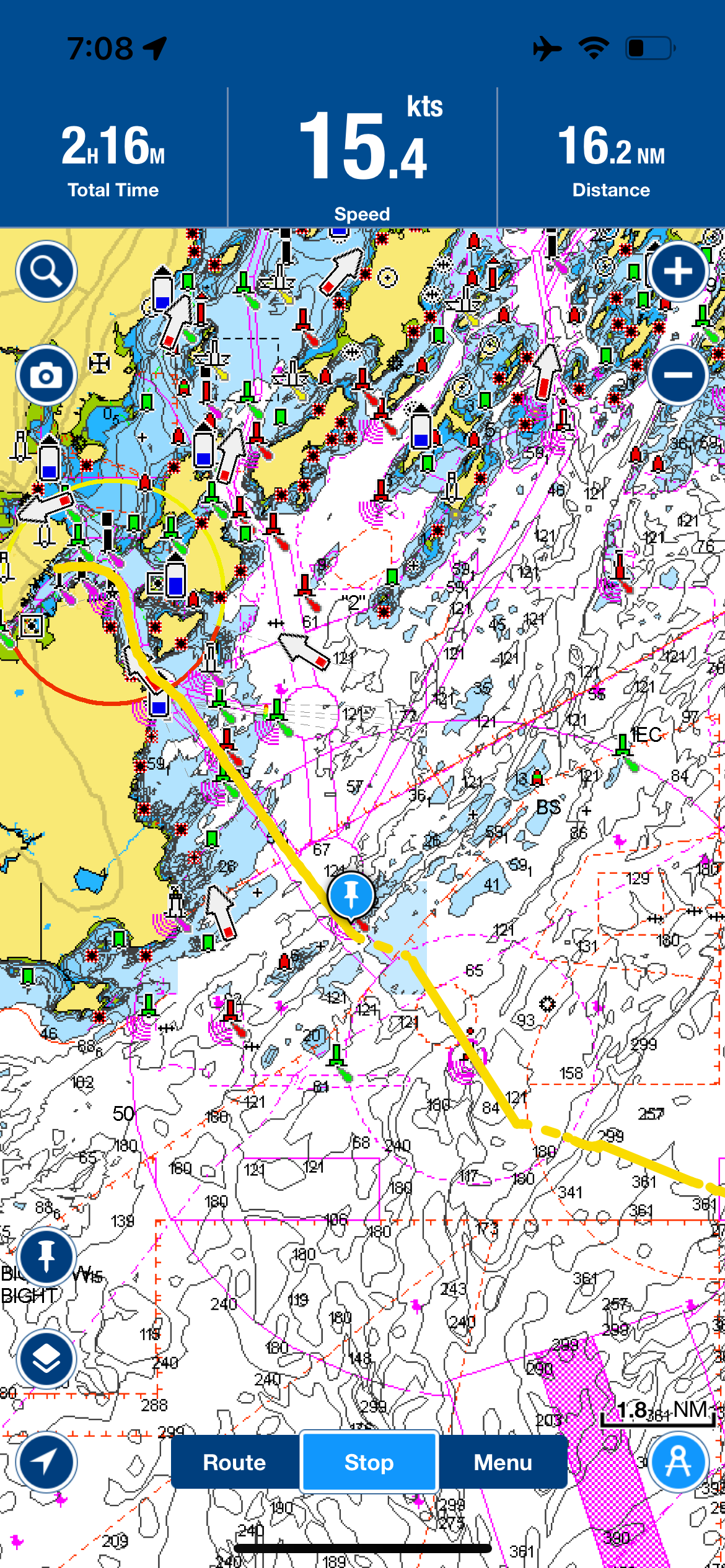
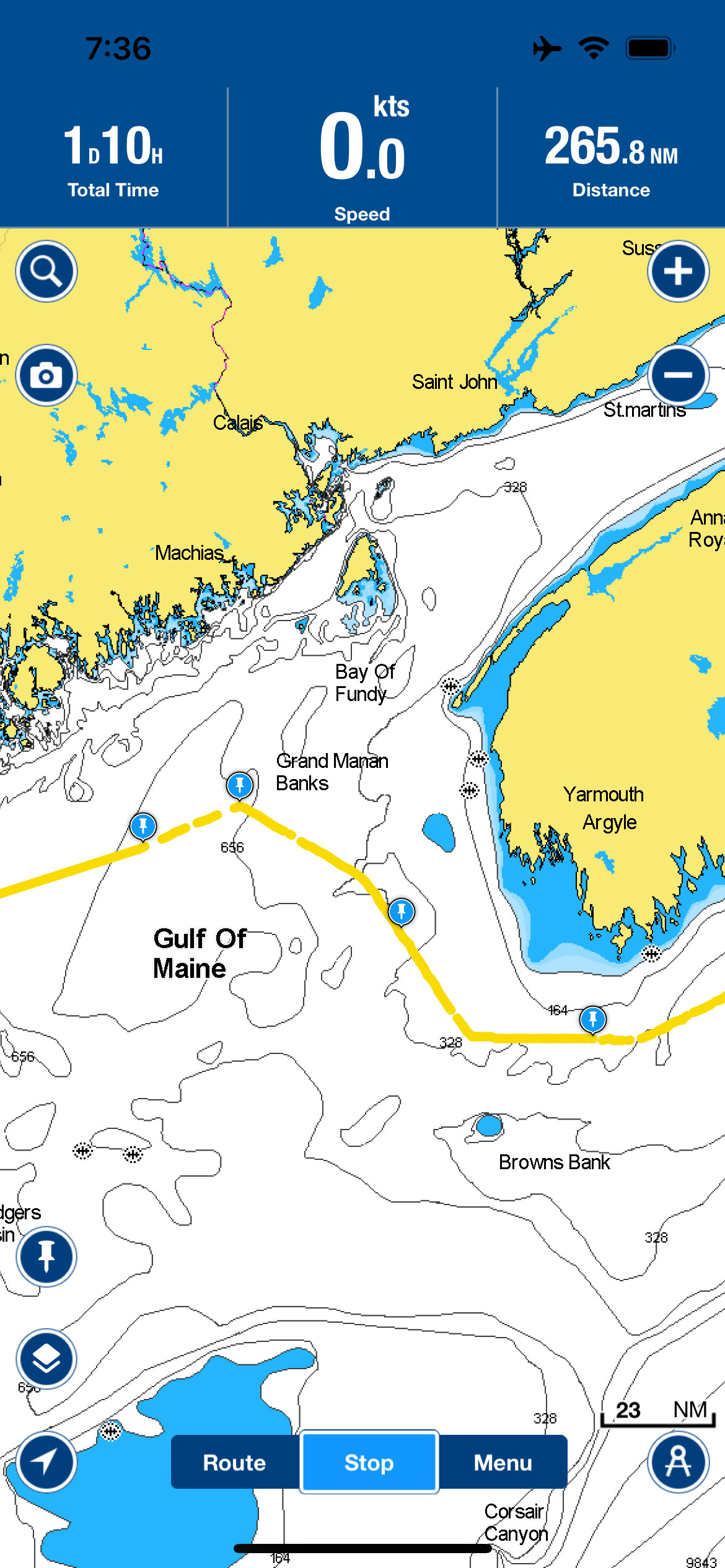
Here’s our route (left pin to right pin) for the day, thanks to the Navionics Boating app by Garmin.
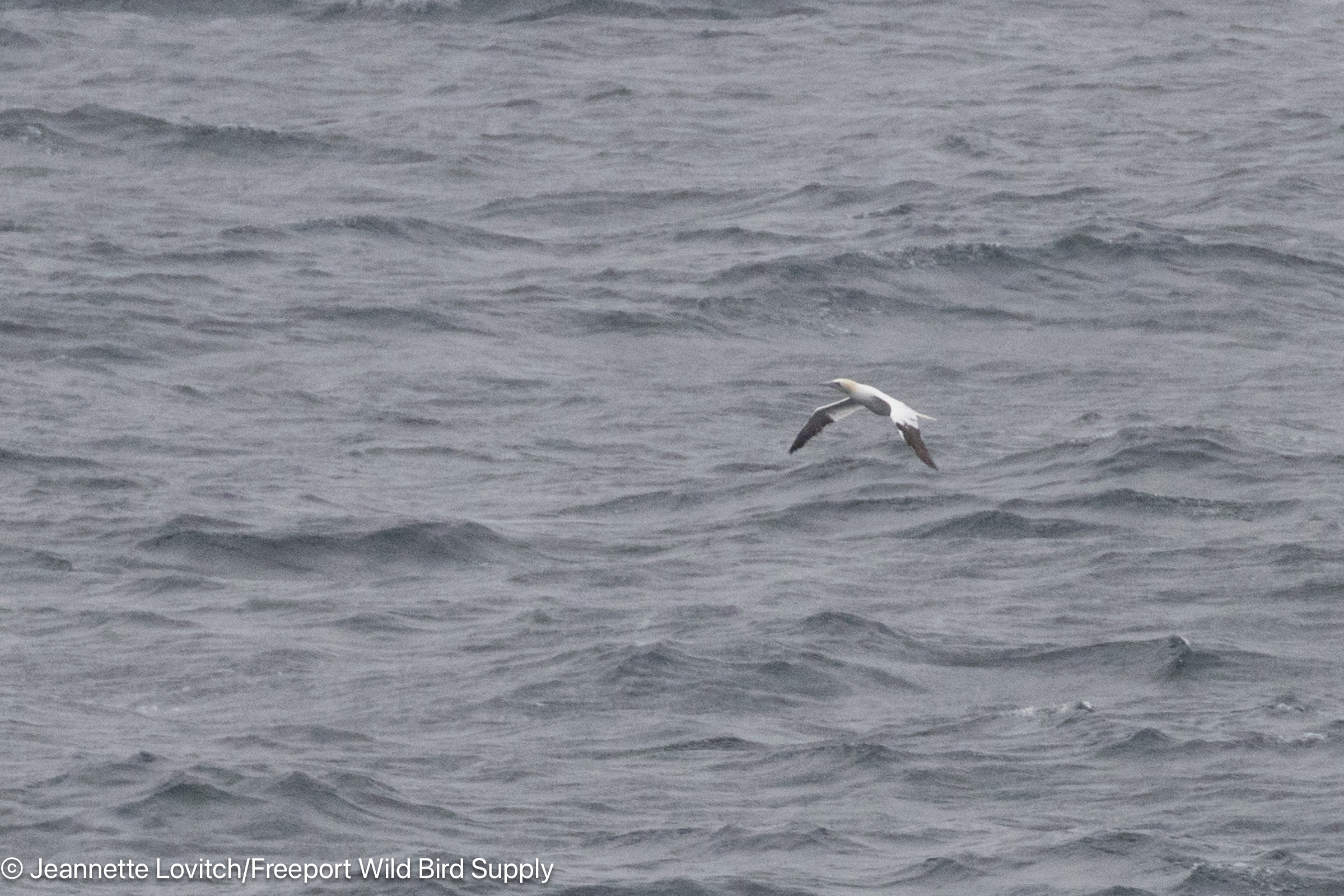
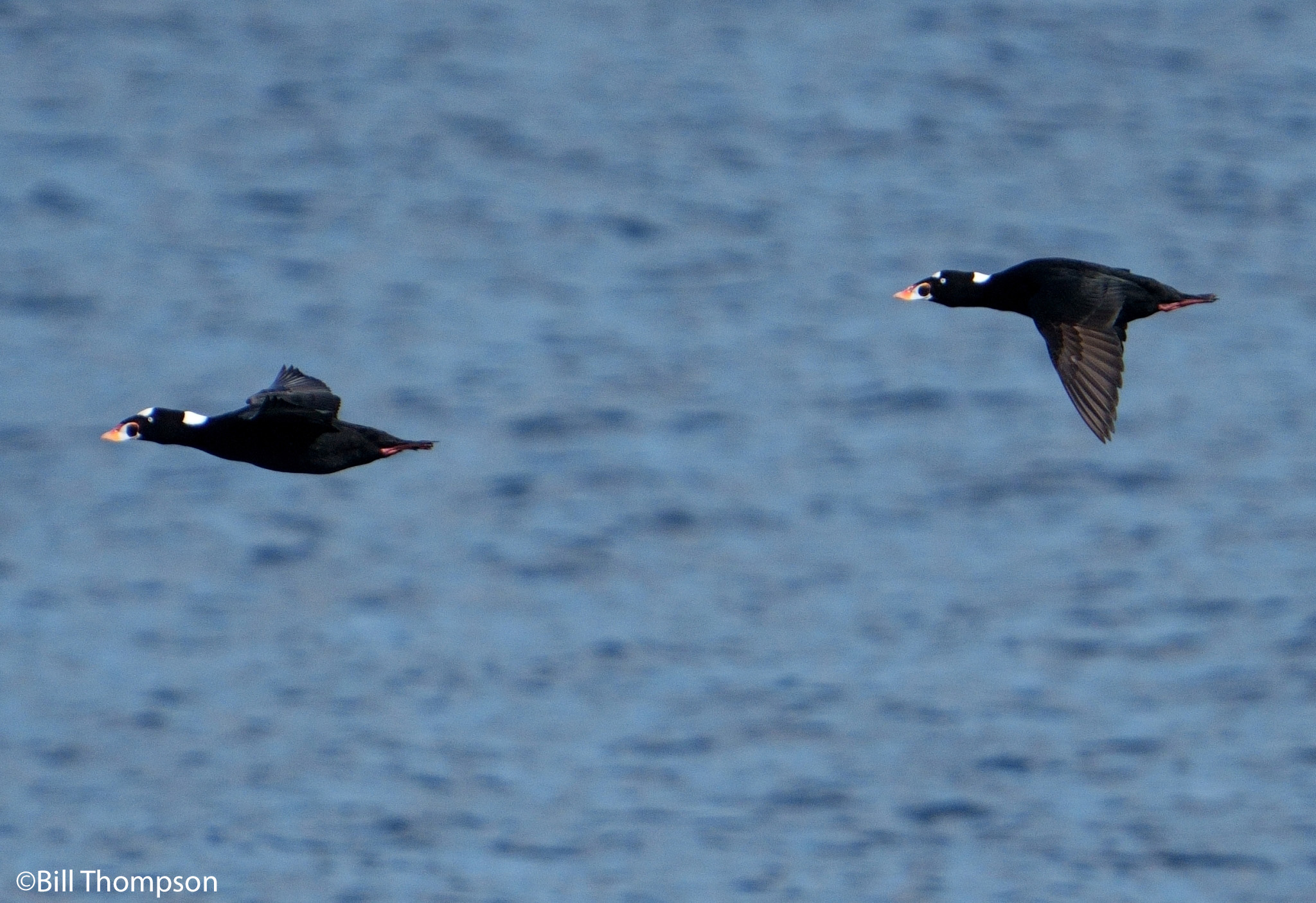
From start to finish, our respectable – albeit not breathtaking – seabird tallies included oodles of Northern Gannets (including a steady southbound trickle almost all morning), and occasional southbound flocks of all three scoters and Common Eiders. Specific counts included:
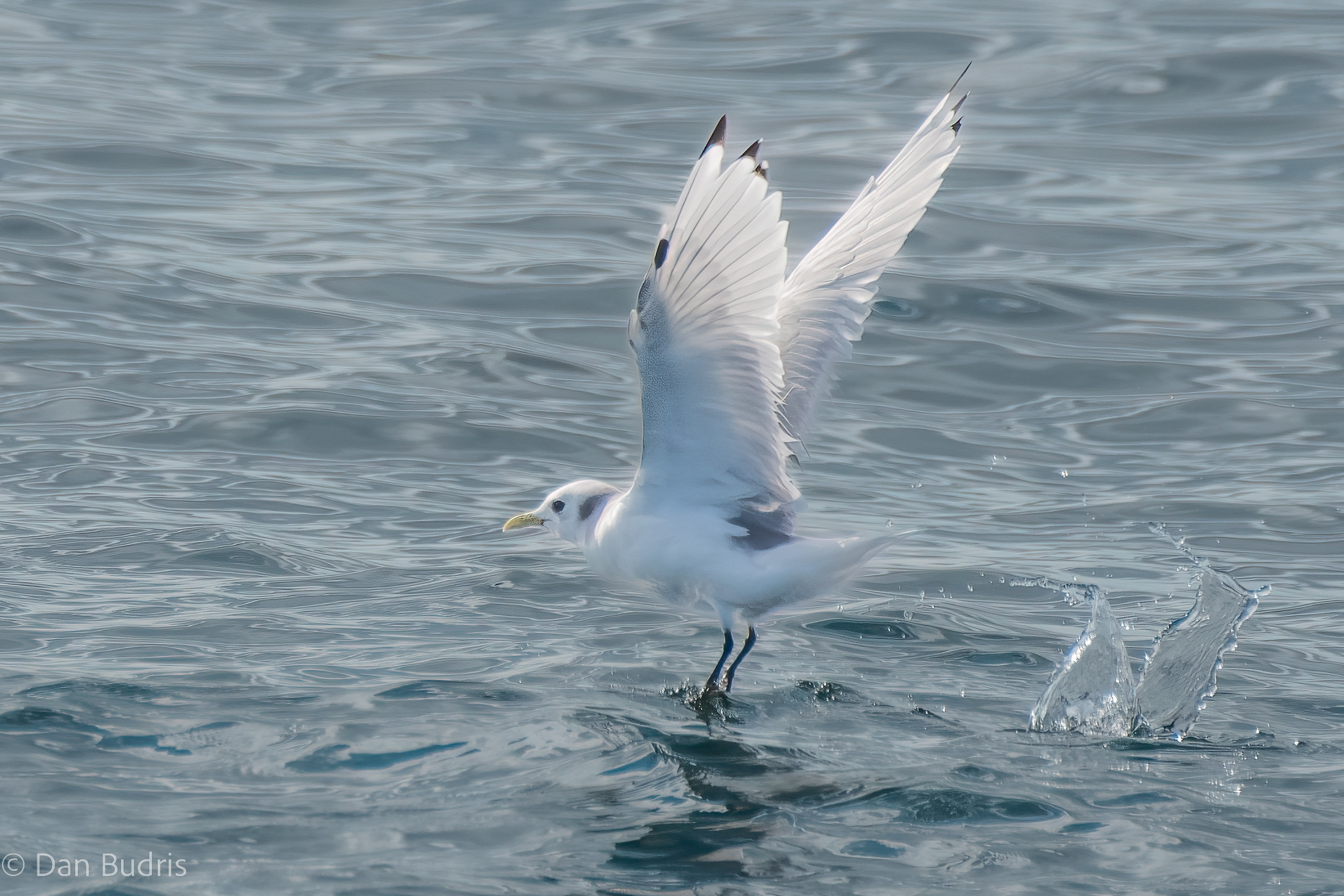
47 Black-legged Kittiwakes
36 Razorbills
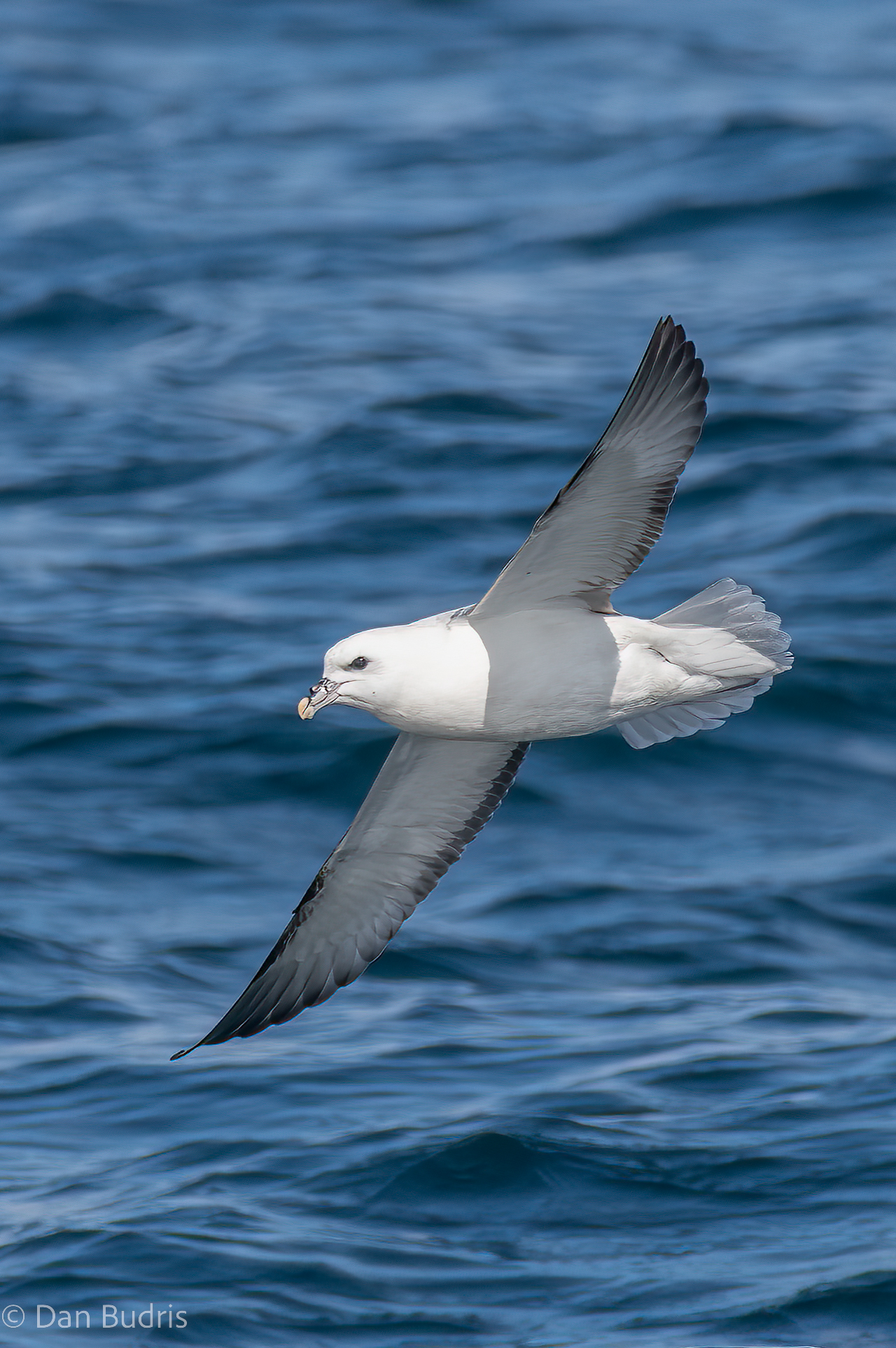
13 Northern Fulmars
10 Great Shearwaters
6 DOVEKIES (one flock landing off to the side of the boat)
3 ATLANTIC PUFFINS
3 American Black Ducks
3 unidentified large shearwaters
2 Harlequin Ducks
1 Greater Scaup
Great Shearwater
So all in all, not a bad day, but the passerines stole the show, and while Dovekie is one of the target birds of this trip, we didn’t see a skua…or even a jaeger, surprisingly.
The next day we awoke well within Halifax Harbor, but a sunrise passerine check yielded two birds: a White-throated Sparrow, and of all things, a rare Dickcissel!
Local friends Eric and Anne once again rescued us for a day of casual birding and good conversation, but the ship departed after dark; just more time to rest for our second full day at sea!
Halifax Public GardenNorthern Flicker
The morning of 11/1 found us between Downeast Maine and the northern corner of Georges Bank. The rest of the day would be in the same waters of our great success on our trip five years ago. After a passerine check which didn’t turn up anything (which meant nothing was disoriented by the ship overnight or desperate for a place to land come dawn, so this is never a bad thing), it was time to get to work in our usual spot.
Unfortunately, strong southwesterly winds and growing seas, with haze and light fog in the distance, made birding challenging. We worked hard though, but it was slow. We did have some excitement from two Dovekies that landed fairly close to the boat, and two Manx Shearwaters that, thanks to the lighting, I was absolutely sure were not Manx Shearwaters until we carefully reviews Noam’s photos later.
With glare and haze becoming problematic, we broke for an early lunch at 11:30, with the previous 4.5 hours of observation producing only the following, plus two Humpback Whales:
12 Northern Gannets
7 Great Shearwaters
6 Red Phalaropes
4 unidentified large shearwaters
2 DOVEKIES
2 Northern Fulmars
2 Manx Shearwater (after review)
2 Black-legged Kittiwakes
2 Lesser Black-backed Gulls
2 unidentified large alcids
1 unidentified small black-and-white shearwater.
Unfortunately, with increasing wind (that we were heading straight into) and seas growing up to 7-10 feet (barely noticeable on a ship this big though, thankfully!), the lower deck was closed off for safety. Later, even the upper decks were closed off due to the very high winds, which were now blowing nearly 30mph out of the southwest.
Screenshot
Luckily for Jeannette and I, we had scored a forward-facing room, and although we were high up on Deck 17, we could see forward. Haze and the angled window were problematic, but we could see birds close to the ship, and we could relax, remove layers, and even crack open a beer. This is pelagic birding in style!
From 1pm to 5pm, when we finally called it a day, the afternoon cabin-watch netted:
11 Great Shearwaters
9 Northern Gannets
5 Cory’s/Cory’s-type Shearwaters
3 unidentified phalaropes
2 Manx Shearwaters
Screenshot
And so our two days at seas concluded without a Great Skua, our primary target species for a future cruise..and perhaps a future tour. Alas, we’re only 1 for 2 in seeing skuas from the boat, and we would need a different class of ship (and, a shorter itinerary with more time at sea and less time in multiple ports) if we were to do this again. We’ll be keeping an eye out from other companies and other Princess ships to see if there’s a more skua-tactic itinerary in the future, but until then, our northeast Atlantic cruisin’ days may have come to a close.
Arriving in New York harbor before dawn, our last sunrise deck check yielded a single Dark-eyed Junco, Yellow-rumped Warbler, and White-throated Sparrow, bringing our more-productive passerine birding cruise to a close.
Our third and final ½ Day Pelagic with our partners Cap’n Fish’s cruises out of Boothbay Harbor took place on a glorious fall day on Tuesday, October 11th.
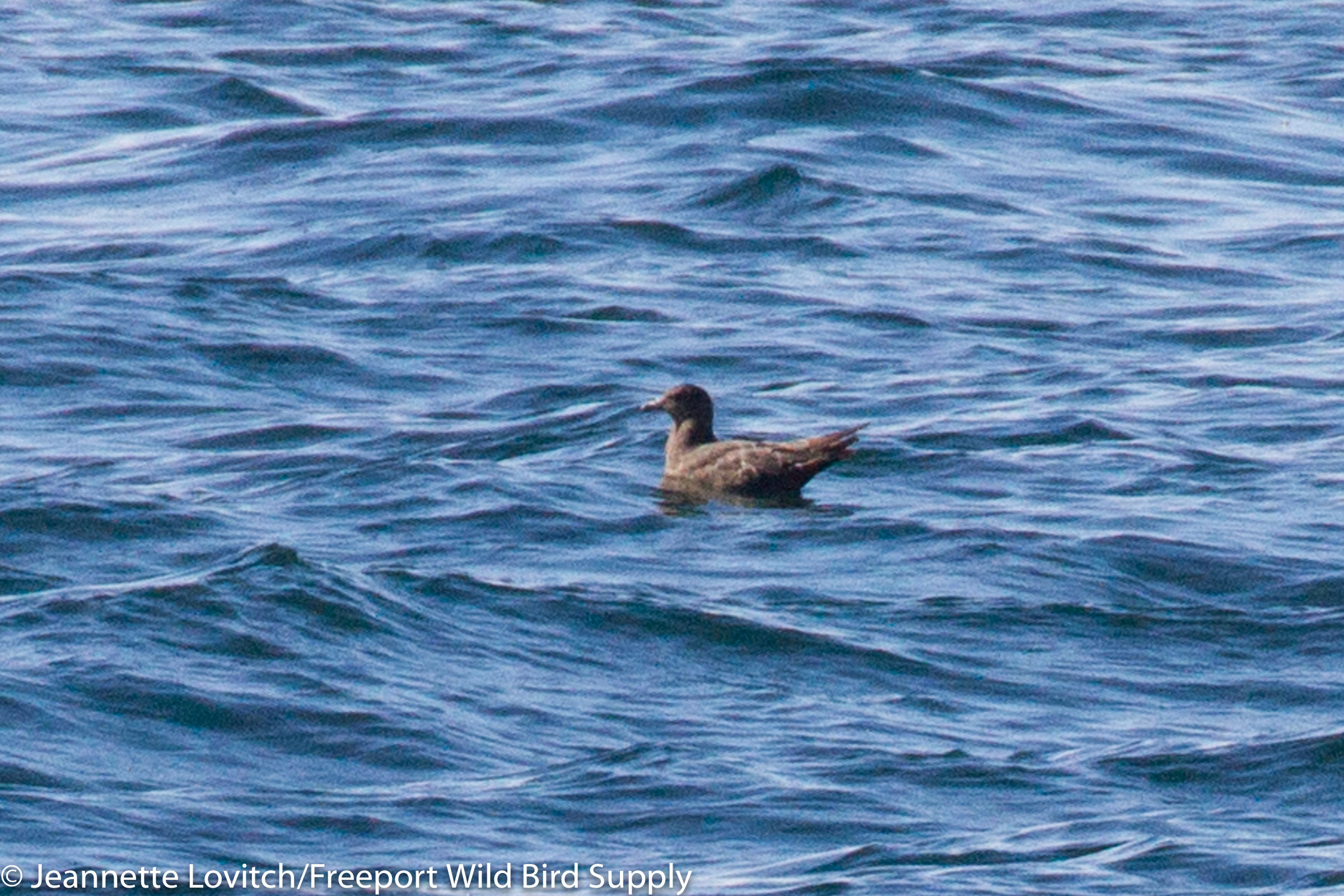
OK, let’s get right down to business: it was NOT a South Polar Skua. This is not the first time a mea culpa was issued over a Stercorariidae. It won’t be the last. Certainly not my last, anyway. But yeah, I got this one wrong, and I apologize.
We spotted a large, dark, and very heavy-looking skua/jaeger in flight parallel to the boat. Captain Nick did an exceptional job of staying with it, staying parallel to it, affording incredible views for an unusually long amount of time. We were traveling at 18.2 knots, and the bird was slowly taking the lead. When it looked like it was thinking of landing, I had Nick angle slightly away so as not to make the bird concerned. It worked! It landed, we slowly worked our way up to it, and almost circled it before it took off. High-fives were exchanged. Smiles reigned. We got a skua! Big, barrel-chested, thick dark bill, and short tail. The very cold tones and extensive molt strongly suggested South Polar Skua. It would be a life bird for many.
I was convinced in the field, and I was convinced when I got off the boat. Everyone I talked to was convinced too. Other than a small feeling that the bill looked a little long, and the bird looked a little, well, not-menacing on the water, I had little doubt. But as I announce on all of my pelagics, all jaeger and skua identifications are provisional until I can review photographs.
The doubt -err, fear – began in the evening, as I looked over Jeannette’s shoulder as she began to sort photos. Starting with the skua, I wanted to make sure it was in fact a South Polar, and not a Great. That was my only real concern. But then I saw her pics. I was observing through 8x binoculars, she was shooting at 400mm. Details would likely emerge that I could not see in the field. And I didn’t like those details.
That rear end did look a little tapered. The bill did seem a little thin. And wait, is that barring in the underwings? Uh-oh. Are we sure? What about the location of white within the outer primaries? Is it too narrow? And boy, it looks cuter on the water than I expected. And that bill does look two-toned and kinda long.
Photos were sent to a friend. The shadow of doubt cast over the room. He immediately said “Pomarine.” But we discussed, and he left it off as “but I could buy this as a skua.” Another friend “That’s a skua.” “I’m flip-flopping…maybe a hint of barring on the undertail and underwing coverts, but it looks so skua-like…the molt pattern is identical to one I saw a couple of weeks ago.” Back and forth with these three friends continued. I posted to the Skuas and Jaegers of the World Facebook page; “Definitely a skua…” said the first commentor. Books and papers were referenced.
More photos were received. And discussion continued. Some photos showed what could be nearly impossible to argue was anything other than a South Polar Skua. I only wanted to look at these.
I mean, look at that short little tail!And those dark underwings!
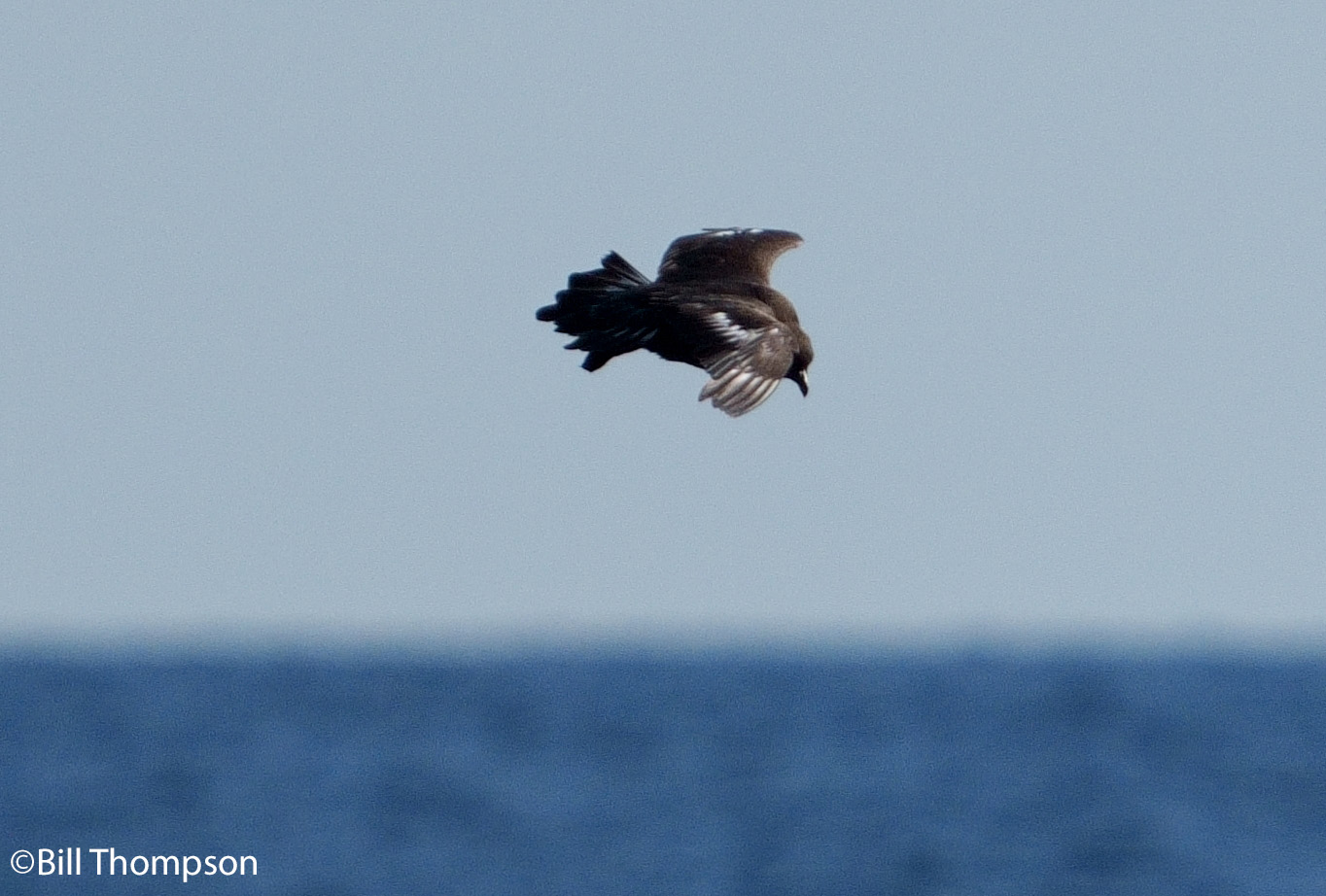
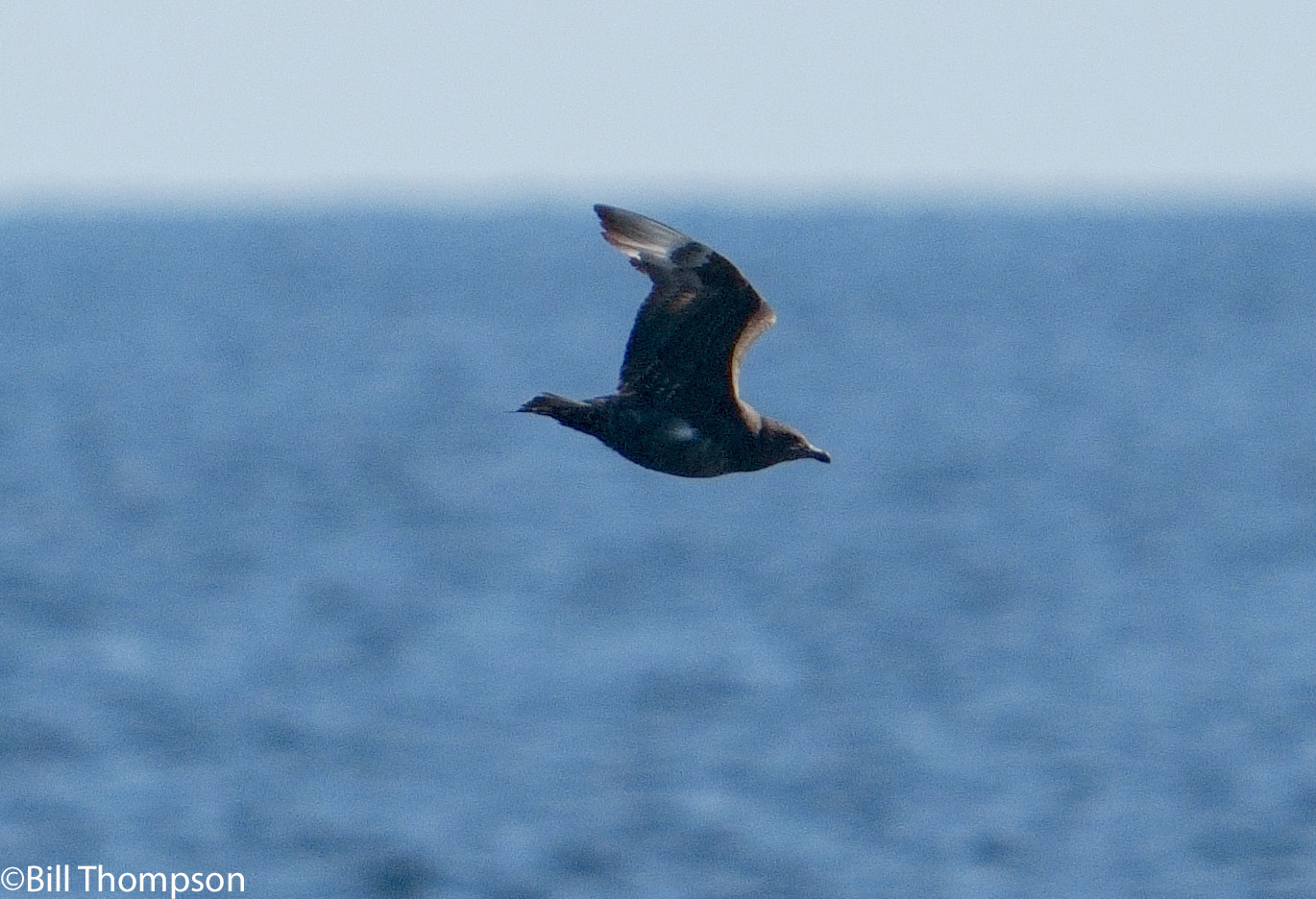
Sheepishly – knowing how tired he must be after a long drive to and from in the same day, I asked my friend Bill Thompson to check his photos. He jumped right on it, and sent this.
Well, crap.
Is that the beginning of the long, round-tipped central tail feathers of a Pomarine Jaeger? They’re so broad. And the rest of the tail is a worn, ratty disaster. That would explain why it looked so short-tailed in the field. But that bill looks short, stout, and all-dark.
I asked for an underwing shot.
Yeah, that looks barred. But still, that bird was a massive keg.
These photos were entered into the various discussions, and uncertainty ruled as I finally passed out from boat and skua-induced exhaustion.
I awoke – stalled in turning my phone on – and what little glimmer of hope was crushed when I opened some emails from Tony Carapella that clearly showed a Pomarine Jaeger. I mean clearly, unequivocally, without a doubt.
“And upon further review, the call on the field is overturned. After the play, personal foul, unnecessary roughness on the trip leader’s self esteem. 15 yards…”
Sorry, folks, I got this one wrong.
But, hey, the rest of the trip was decent, too, even if we scratched the headliner off the top. Right? Please tell me it’s all OK?
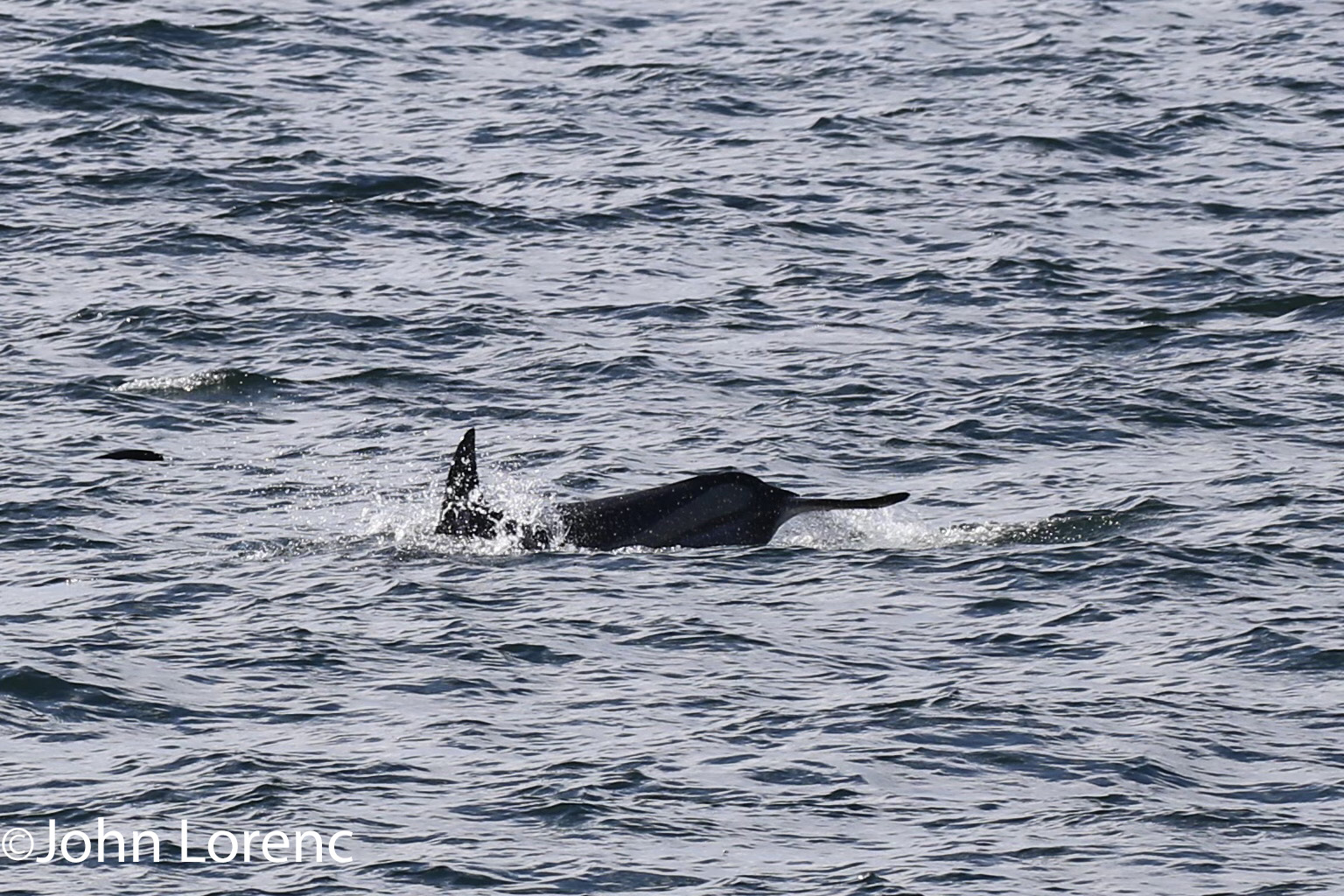
Of course, this wasn’t the only quandary on the day either. Late in the trip, three jaegers gave us the slip. I am hoping someone got some distant photos that might yield a hint, but for now, they will go unidentified. There were also two larger dolphins within a small group of Atlantic White-sided Dolphins. Kelsey and I are still trying to figure things out. Stay tuned. They were not skuas, either, however.
Several Northern Fulmars included one that eventually gave fantastic views. We had a few Black-legged Kittiwakes, and Captain Nick did an amazing job getting us a close look at the first one that was loafing on the water. We also had an American Pipit fly-by, and a Yellow-rumped Warbler land in the cabin and rest for a while before departing.
And it was an absolutely, insanely gorgeous day. The water had only a slight ripple, there was virtually no swell, and it was warm with plenty of sun (but just enough high clouds to reduce the glare). There could not be a better day to head into deep water in the Gulf of Maine.
In fact, the unreasonably benign conditions allowed us to motor even further offshore than usual to explore a new area. After finding two of our favorite spots a little, well, low on birds, we headed out about 28 miles to an area we found on the map known as “Mistaken Ground” where the bottom plunged to a depth of 918 feet. I accept the name as a warning that maybe this would not be a good decision. But alas, it was where most of our action was. I could have spent all day here.
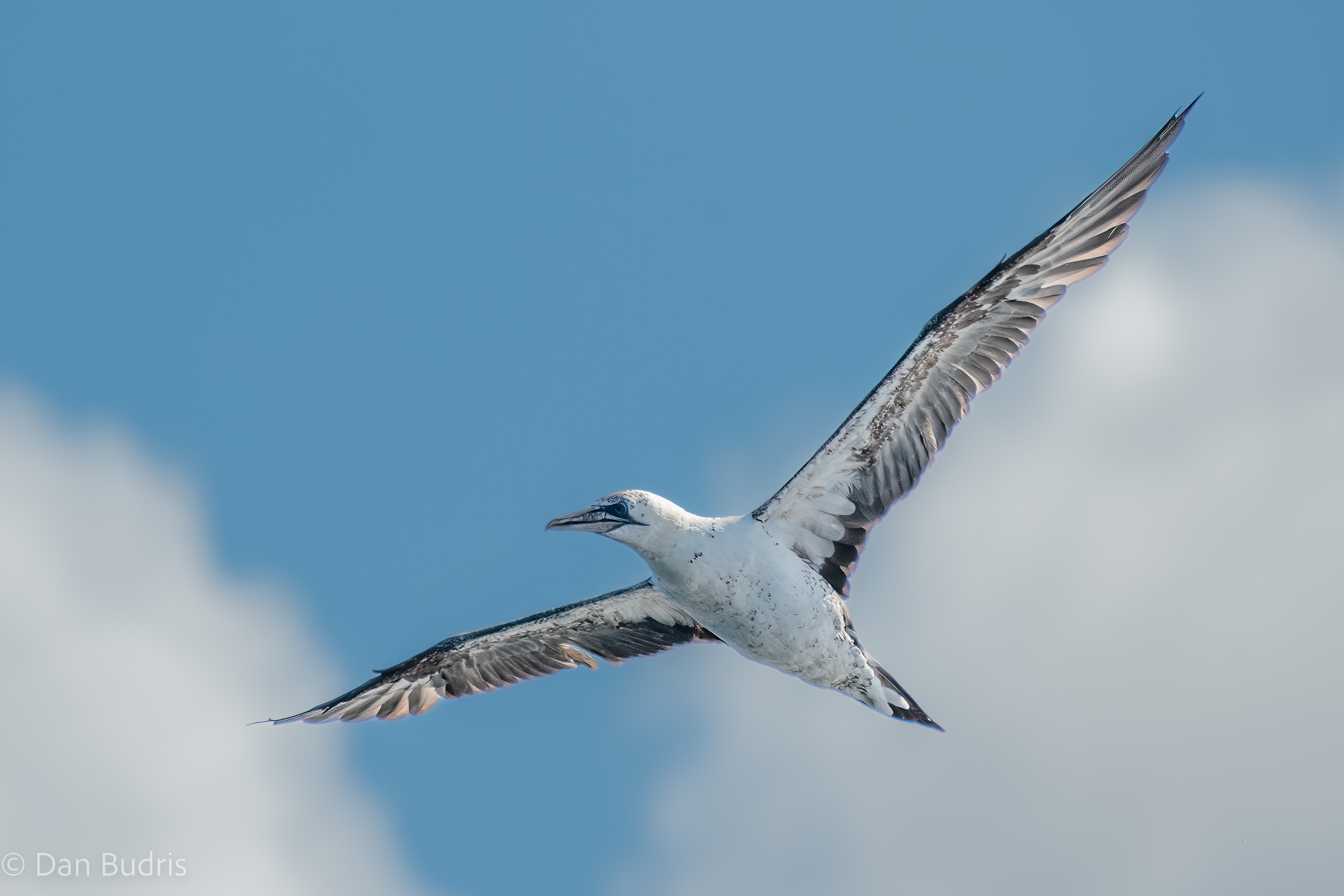
Northern Gannets
While the chum slick failed to work, perhaps because it wasn’t windy enough to waft the odor towards hungry birds, and there were long stretches with virtually no life in sight, overall, we had a solid list for merely 4.5 hours offshore. The proximity to deep water and interesting underwater topography afforded by starting from Boothbay Harbor allows us to run these trips in a shorter timeframe, especially for those learning to get their sea legs. And today was definitely a day for building up one’s oceanic confidence. Confidence in skua identification, however, well, that is another story. Apparently, my “mistaken ground” was thinking I could identify these birds before studying photos on the computer!
Here’s the annotated trip list:
8 Canada Geese
970 Common Eider
113 Surf Scoter
12 White-winged Scoters
24 Rock Pigeon
1 POMARINE JAEGER (see treatise above)
1 PARASITIC JAEGER (one of the three distant birds that turned out to be identifiable from photos)
2 Unidentified jaegers
1 COMMON MURRE (spotted in outer harbor by a few observers)
1 Razorbill (confirmed from jaeger photo bomb)
9 Black Guillemots
7 Black-legged Kittiwakes
2 Bonaparte’s Gulls
145 Herring Gulls
1 Lesser Black-backed Gull
With Great Black-backed Gull (right)
51 Great Black-backed Gulls
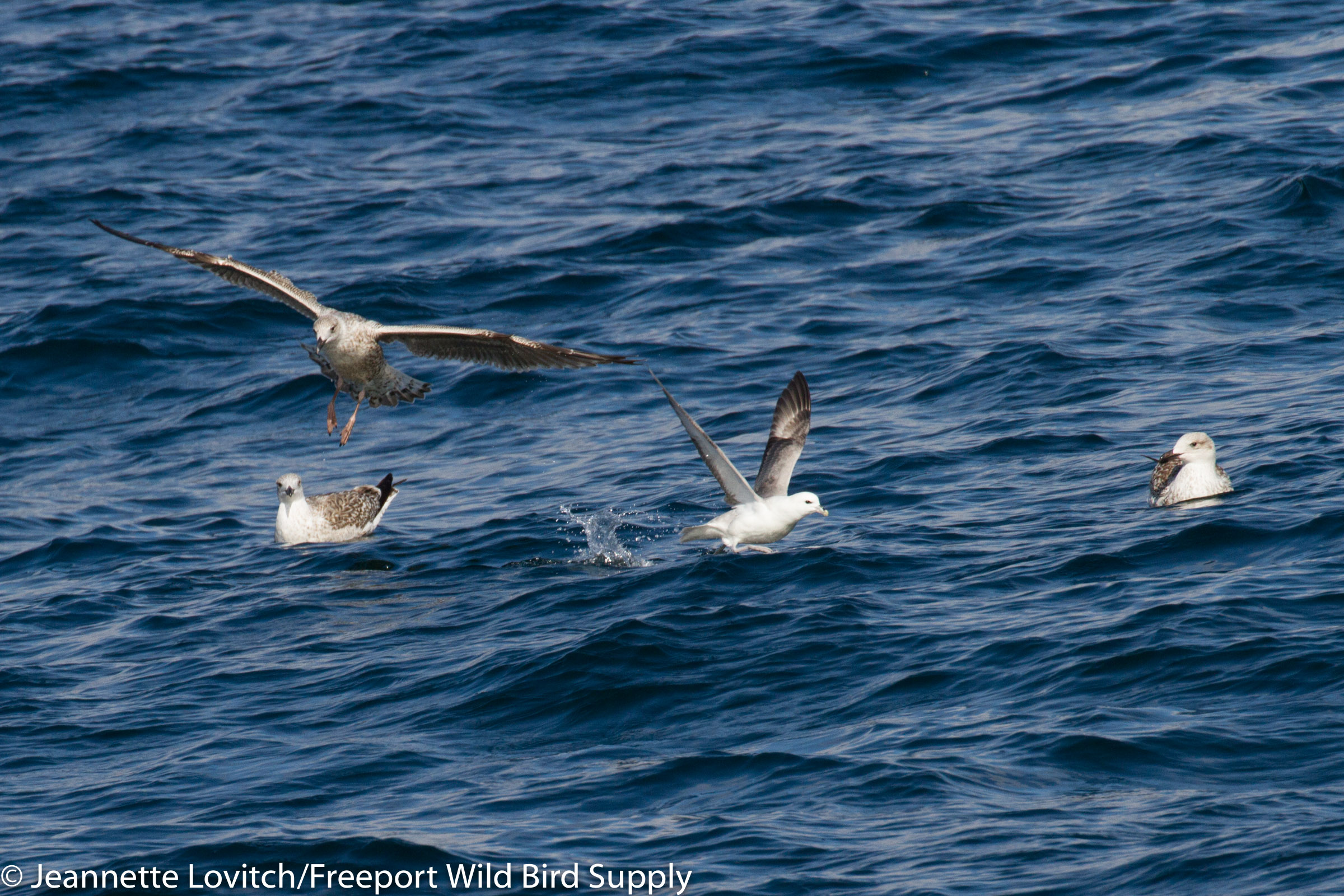
3 NORTHERN FULMAR
With Great Black-backed Gulls
1 Red-throated Loon
15 Common Loons
242 Northern Gannets
75 Double-crested Cormorants
2 Great Blue Herons
2 Bald Eagles
1 Merlin
8 American Crows
1 American Pipit
1 Yellow-rumped Warbler
1 Unidentified passerine.
Mammals:
1 Minke Whale
1 small pod of Atlantic White-sided Dolphins
2 unidentified larger dolphins (still working on ID possibilities but we have no conclusive photos yet)
After receiving photos of what appeared to be an all-dark Euphagus blackbird reported as being “glossy” at times- and without the bill visible – a few of us went out to get better looks in the freezing rain on the 22nd. It wasn’t until the bird showed up at a feeder and we were able to photograph it at close range that we confirmed it was just a truant, exceptionally dark-for-the-season Rusty Blackbird (note the very subtle rufous fringes on the head and breast and the thin, slightly downcurved bill).
Southern York County CBC, “Moody Sector” of Wells and Ogunquit, 12/20 (with Jeannette).
As usual, our incredibly productive territory produced a number of “good birds” and a decent 57 total species:
























 Maine Birding Field Notes