Tag Archives: American Bittern

2025 Monhegan Fall Migration Weekend Tour Report

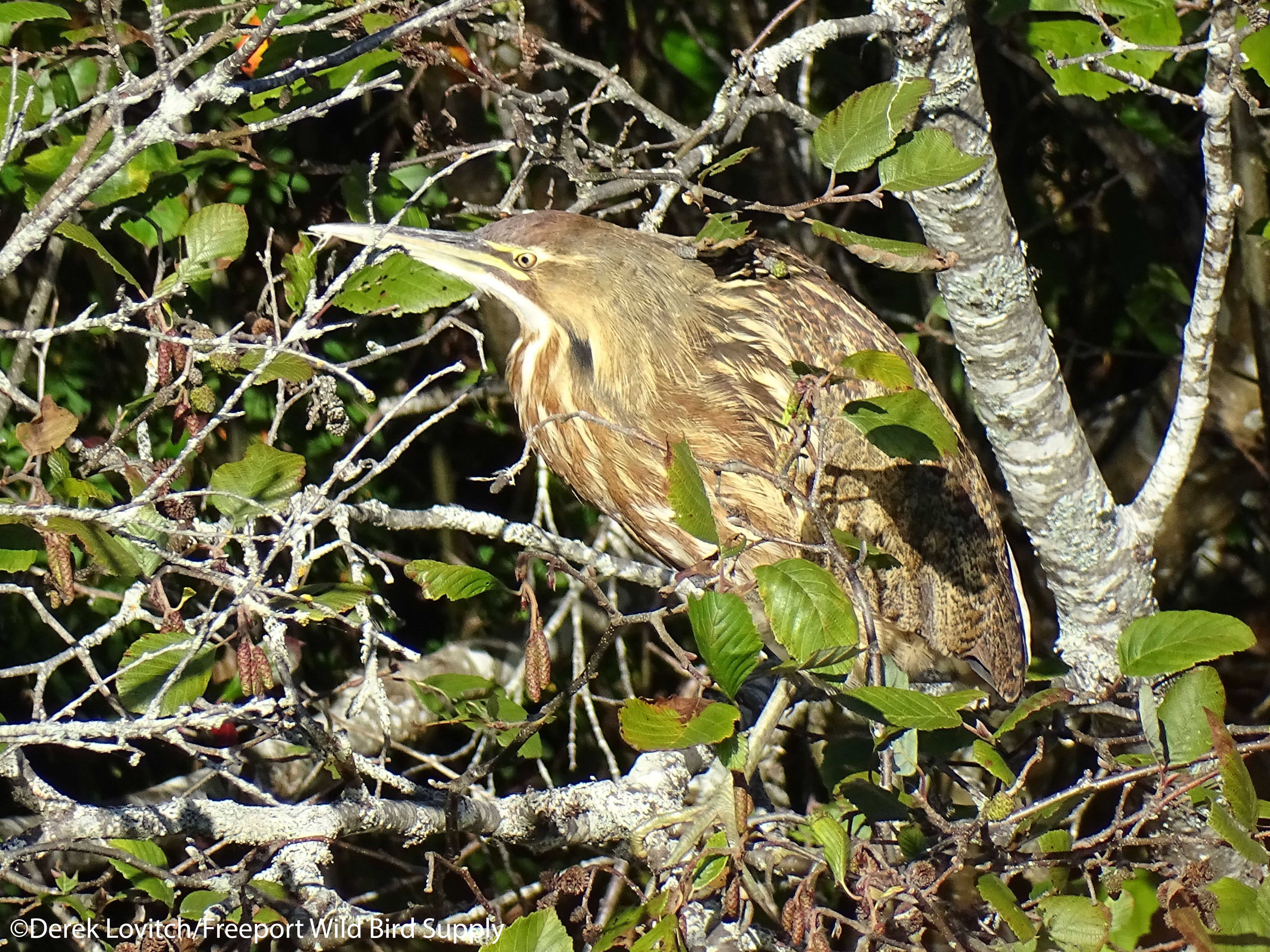
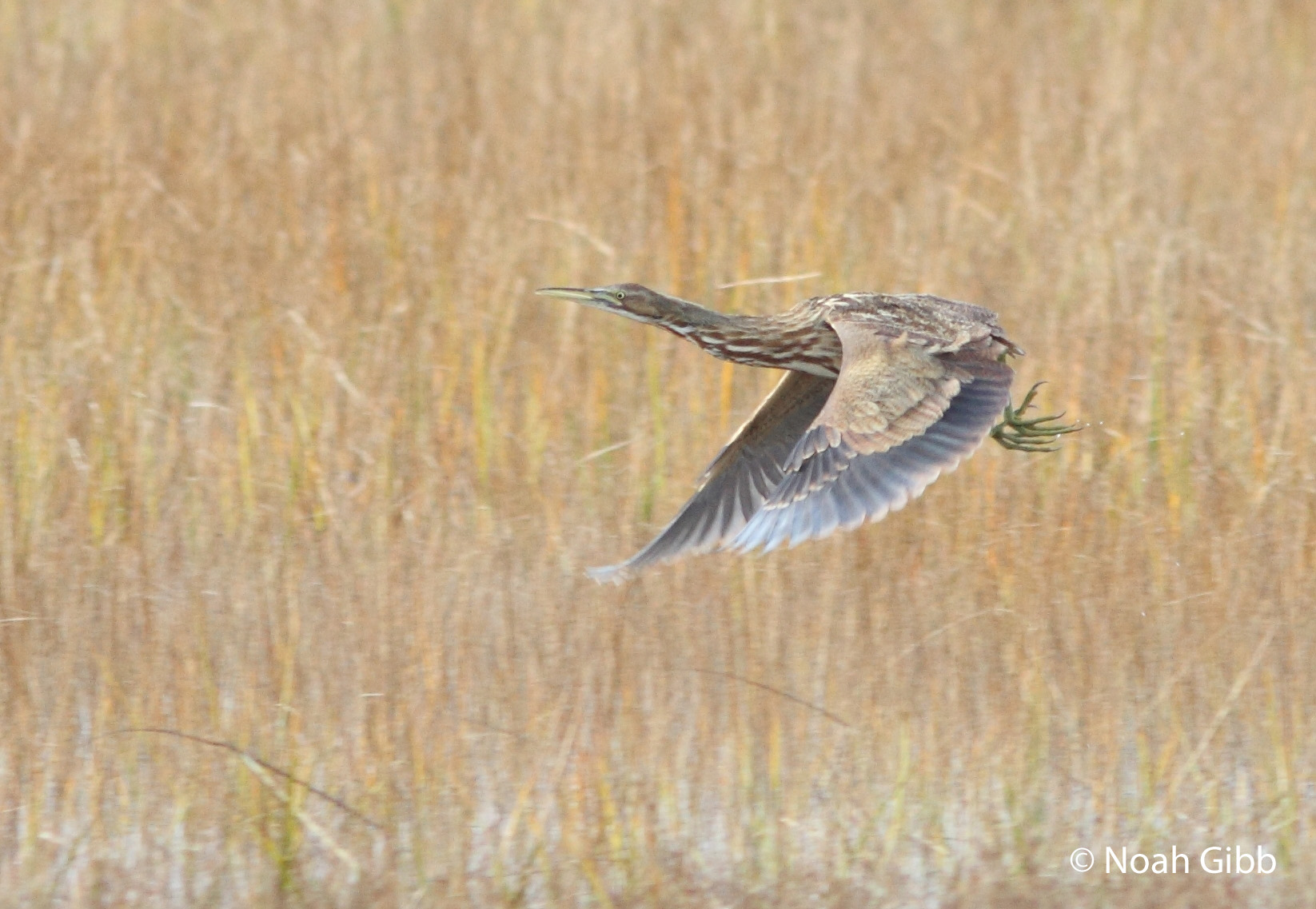
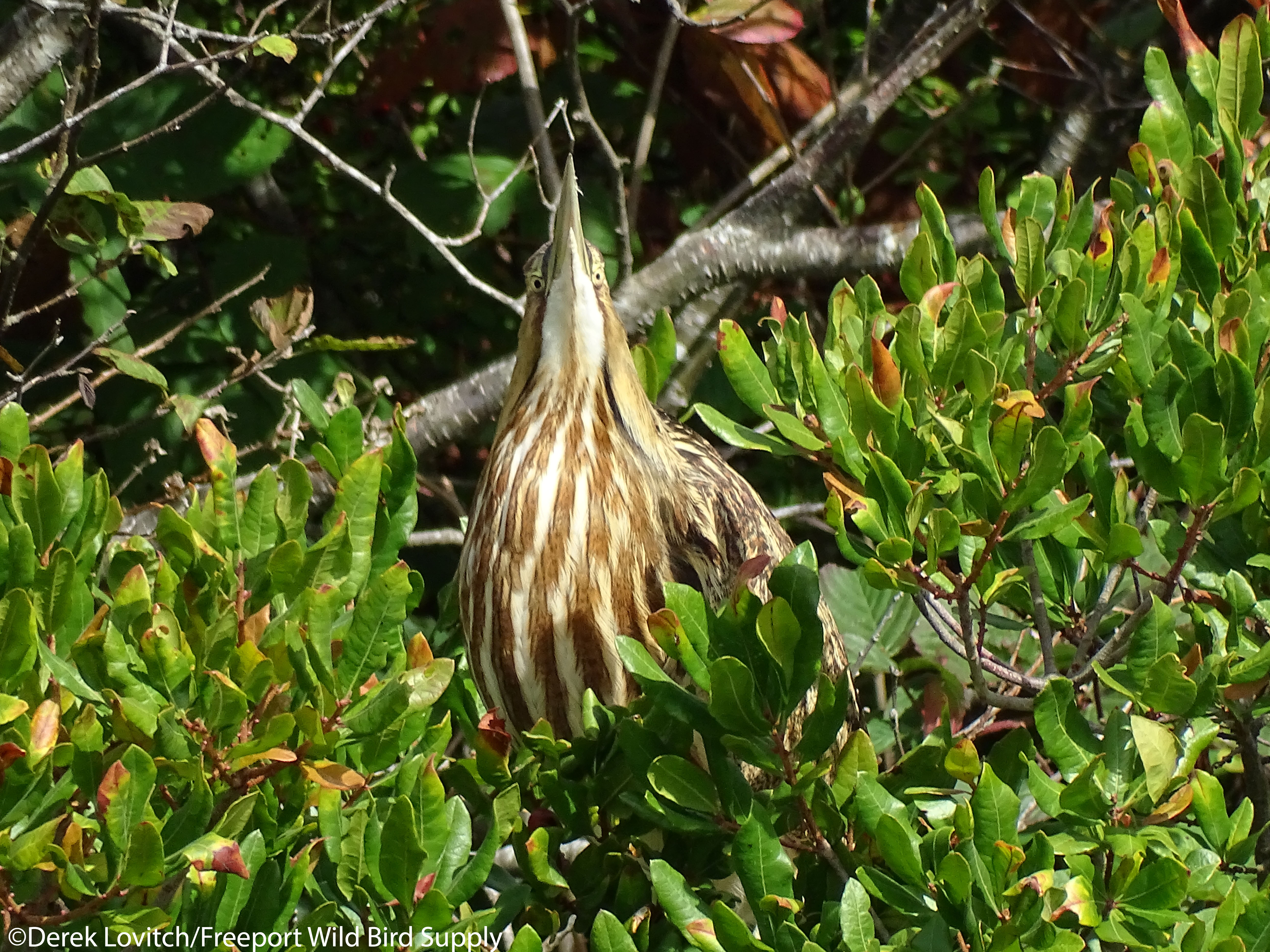
An American Bittern sitting in the open in a tree, just a handful of yards away could have easily been the highlight of any birding weekend. But, this stellar start was just the tip of the iceberg of the weekend’s birding excitement.

It has been quite a few years since we had a weekend like this. Lots of birds, “mega” rarities, warm weather, and tons of excitement. It was truly a special weekend. We were honored to have been there for it.

The tour began on Friday, with only one participant joining me on the Hardy Boat. The island greeted us with a Lesser Black-backed Gull, which we scoped from the wharf, and several warblers at the usual spot uphill. But after getting the inside scoop from birders already on the island, we made a bee-line for the Ice Pond where an American Bittern was sitting all morning. Remarkably, however, it was sitting in a bush (see above)!

How’s that for starting a tour off right? We also immediately encountered Dickcissel and Blue-gray Gnatcatcher, and there were plenty of Yellow-rumped Warblers and Palm Warblers here and there.

After lunch, with our group now complete, the surprisingly good birding continued. Despite such a warm afternoon and few birds on the radar overnight on mostly a southwest wind aloft, we enjoyed an excellent introduction to Monhegan birding in the fall:  2 Clay-colored Sparrows with 2 immature White-crowned Sparrows, a Dickcissel, and several White-throated Sparrows in one field of view; a dozing Common Nighthawk trying to stay camouflaged on a wood pile, and another visit to the still-confiding American Bittern at the Ice Pond for those who arrived later. It was a solid afternoon overall, with bird activity continuing right up until dinnertime.
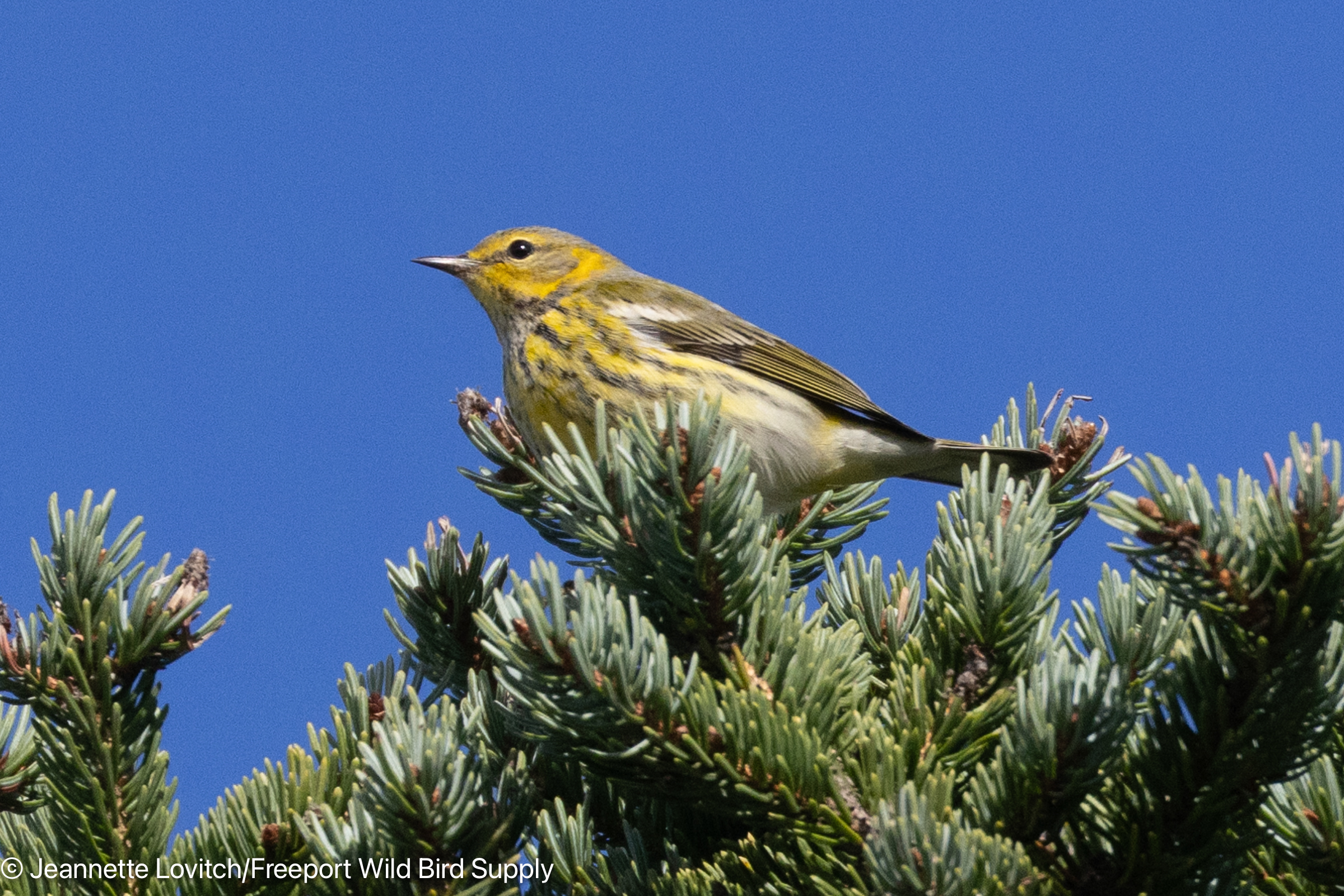
Cape May Warblers in a wide variety of plumages is always one of the highlights
of any fall weekend on Monhegan

.Unfortunately, our best bird of the day was almost the one that got away. Almost! While viewing an Indigo Bunting in the Community Garden, a second bunting snuck into view, skulking. It briefly popped out, and I yelled “get photos” and then it popped back into the weeds and was not to be seen again.

“Did I see green?” I exclaimed, but it was so fleeting, and the light was so harsh, and the bird was so, so pale, I couldn’t be sure. I looked at photos on the back of cameras in the sun, and we had a good discussion on why this could have been a Painted Bunting. Unfortunately, I have little experience with first fall female (presumably) Painted Buntings and had no idea they could be this unbelievably drab. So I talked myself out of it.
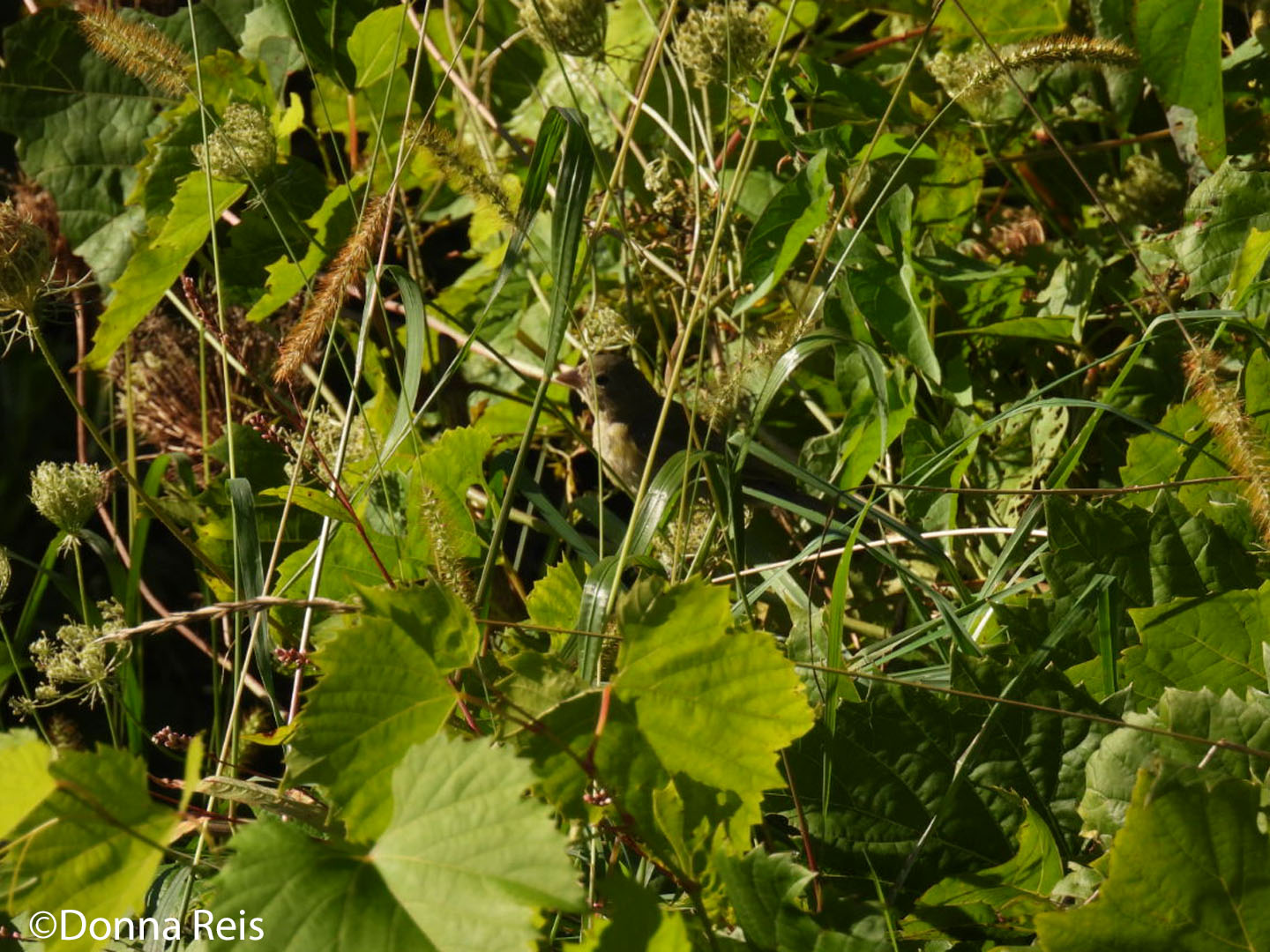
Overnight, I received photos from Bill Thompson, who, an hour or two after we saw the bunting, also briefly saw and photographed it. “Is this a Painted Bunting?” he asked.
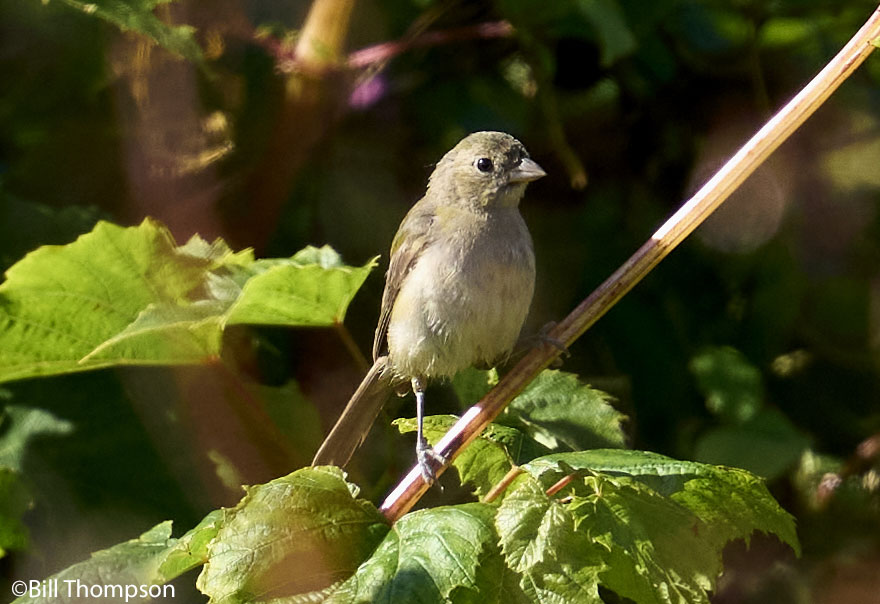
Yup, that really does have green on it, and on more than one side – in other words, not a reflection. Darn it. It counts for us – we all saw it – but in hindsight, we should have gotten the word out about a “possible/probable” Painted Bunting and had more eyes looking. Luckily, Bill was in the right place at the right time once again! But I felt like I had blown this one. I was too quick to dismiss it and so I decided I would have to make up for it over the rest of the weekend. Maybe the dry cold front that passed through on Friday evening and shifted the winds would help.

A very strong flight Friday night into Saturday morning on a diminishing northwesterly wind was idea for bringing birds to Monhegan Island come sunrise. And at first light, it was clear it was on!

The Morning Flight featured tons of Yellow-rumped Warblers with the occasional Palm and Blackpoll Warbler. Between the morning flight and our pre-breakfast stroll, we had a lot of birds: a couple of waves of Dark-eyed Juncos, bunches of Red-breasted Nuthatches, more Golden-crowned Kinglets and Purple Finches, insane views of Peregrine Falcons, 2 Dickcissels, 4 Baltimore Orioles, and lots of great views of lots of common species.

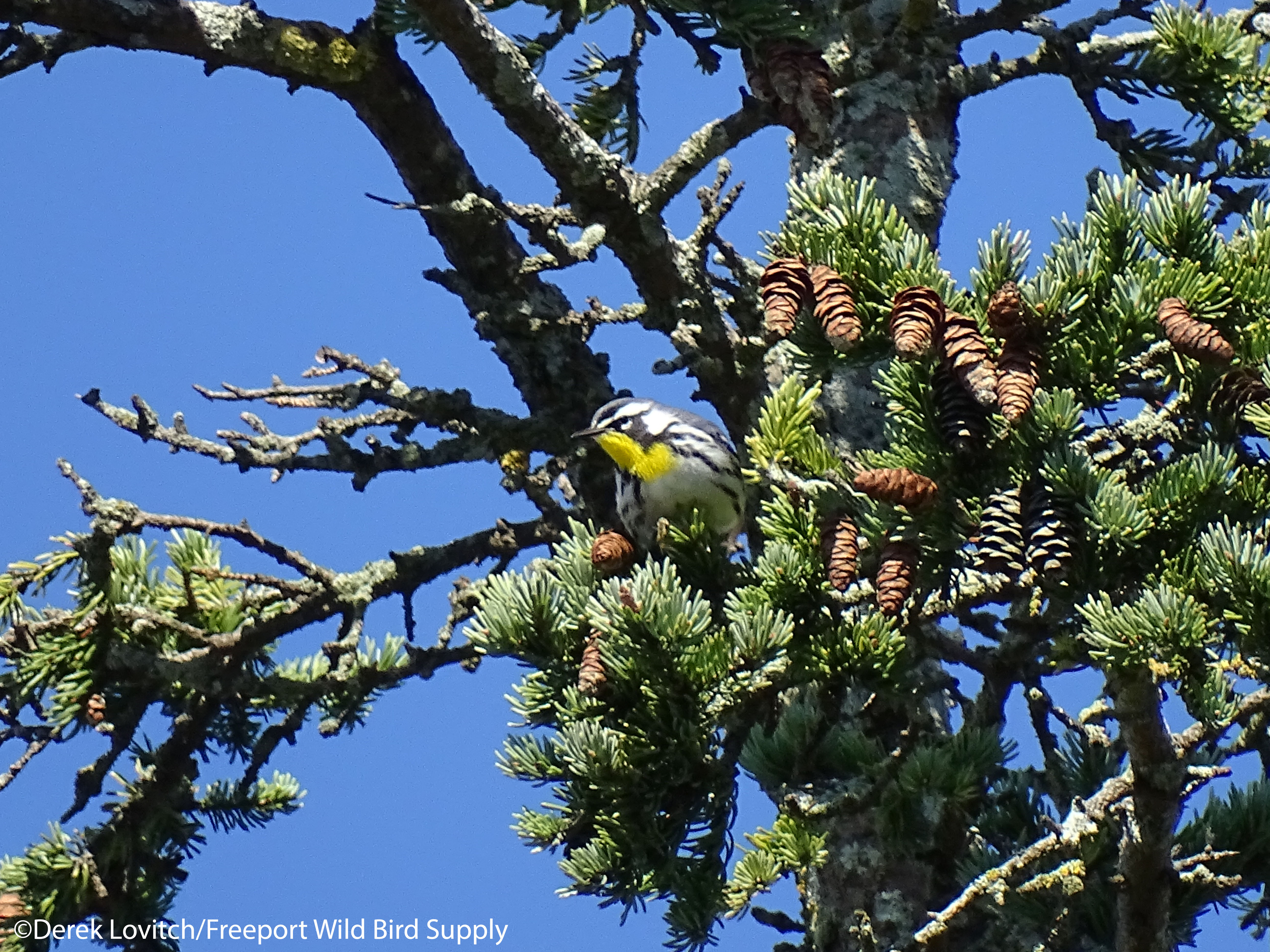
After breakfast, it remained fantastic. Just birds everywhere, and not surprisingly, some notable species began to be turned up.  Our first “chase” was a Yellow-throated Warbler, our group arriving just in time before it took off.

Luckily, Dan Gardoqui and I stumbled upon it again while foraging for lunch, and I was able to round up several of the group members for improved views and photographs.
The American Bittern was now in the marsh, there were now three Dickcissels, 8 Baltimore Orioles, and a second, but definitively identified Indigo Bunting. No green one, unfortunately.

Not surprisingly on such a nice day, the afternoon was slower, as birds had departed the island early, or had now sought refuge in the shadows, especially with the continuing activity of Peregrines, Merlins, and Sharp-shinned Hawks. So, we checked some nooks and crannies, turning up a Nelson’s Sparrow at Lobster Cove and enjoying gliding Peregrine Falcons passing right in front of us from Burnt Head. We also took the time to enjoy butterflies, plants, and all other walks of life.
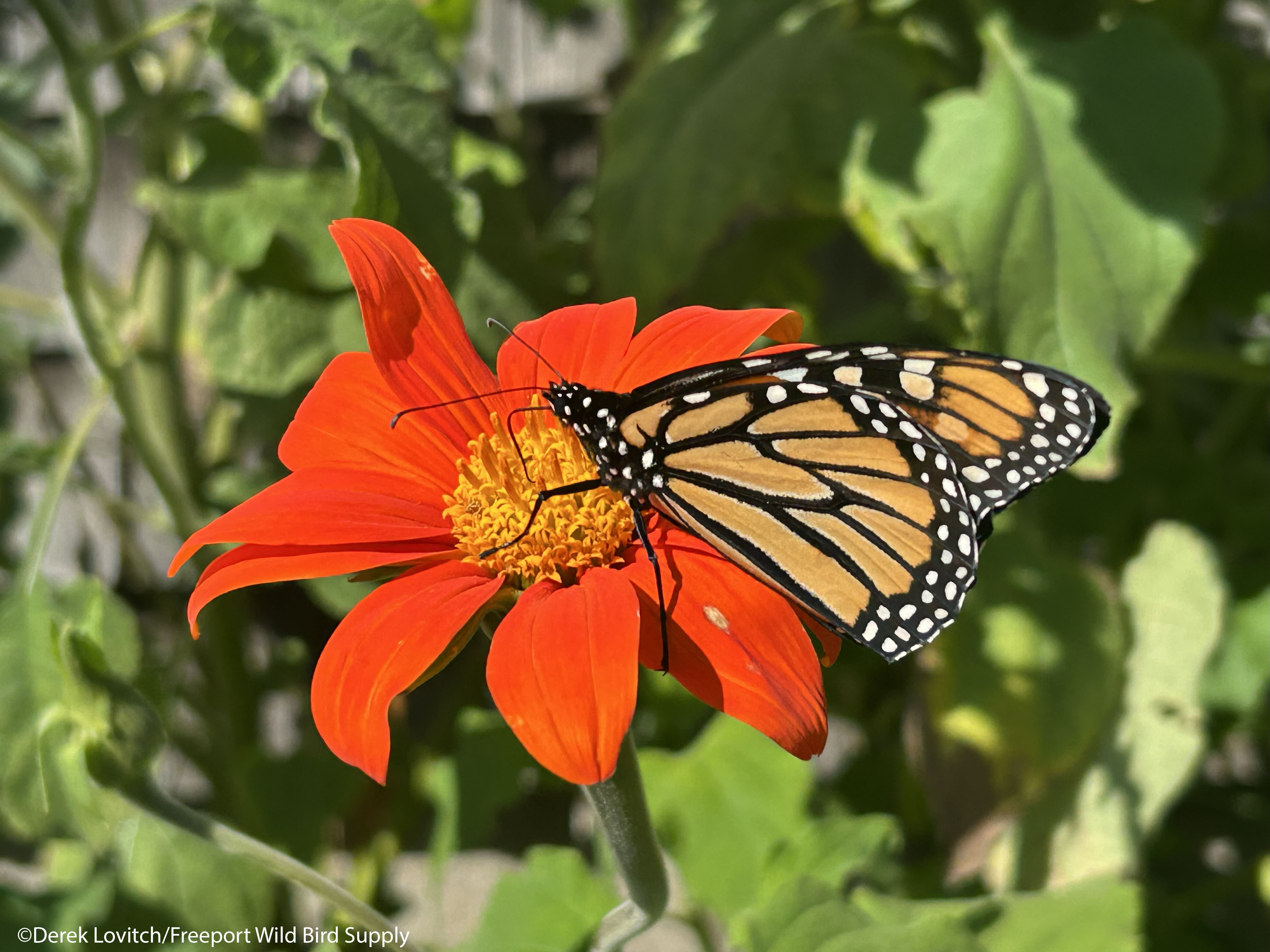
It was a delightful afternoon, but we returned to town to find we had missed out on a Western Kingbird. Luckily, a few of us caught up with it at dusk when it was refound near the Mooring Chain.

(phone-binned photo under low light)

So, it was a great day, and given the winds and weather, we expected it to be such. Then, with little to no movement overnight (at least visible on the radar), on a light south to southwest wind, we hoped for some birds to stick around from Saturday and perhaps be augmented by a rarity or two. At the very least, I wanted to show the Yellow-throated Warbler and Western Kingbird to the rest of the group, especially with a big turnover in participants for the second half of the weekend.

What we didn’t expect was to run out of superlatives before breakfast. We certainly did not expect it after viewing the Morning Flight, which consisted of exactly one American Pipit (and the big wandering flock of Cedar Waxwings, of course).

Once again, a bird was identified from photo review (what did we do before Instant Replay?!) and Bill Thompson and Jess Bishop had apparently discovered a Mega rare Bell’s Vireo on Saturday with only 4 accepted previous records for Maine. With such a slow morning flight, I decided to mix things up from my usual routine, head clockwise through my usual dawn loop, and give it a try to find the Bell’s. We stopped near where it was seen on Saturday, and chatted about the rarity, the identification, etc. “Holy shit, there it is!” I tried not to exclaim too loudly as the bird popped out right in front of us.

We observed it for about 10-15 minutes as it popped in and out of a brushy edge, focusing on feeding in young cherry trees with fall webworm clusters. Birders began to arrive from all directions, as the vireo kept coming in and out of view before flying right over our heads and disappearing deep into a dense thicket.
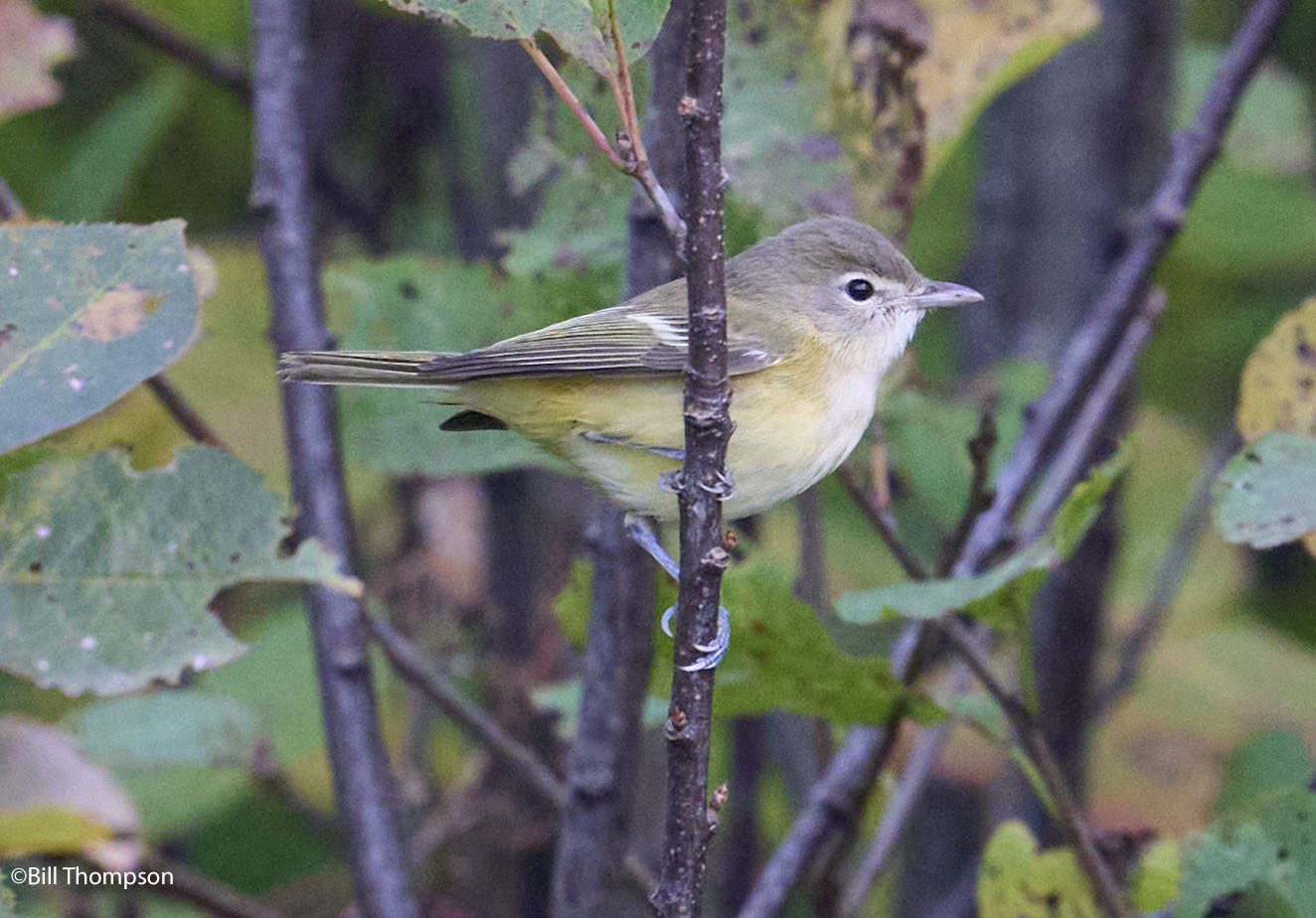
I’ll steal Bill Thompson‘s (with permission of course) Bell’s Vireo
from this morning since he was standing next to us.

It was getting too crowded for our tastes, so we moved on and let others have the edge to monitor. We enjoyed Cedar Waxwings, Northern Flickers, and then took a moment to pause at our usual starting spot, at the spruces behind the Yew.

It was slow, and quiet, and so I was making sure we looked at everything, like the one solo warbler flying towards us from across the sky over the Trailing Yew. It then landed a short distance away, and I brought my binoculars up to it, assuming we had a close Yellow-rumped Warbler to talk about.

<expletives deleted>

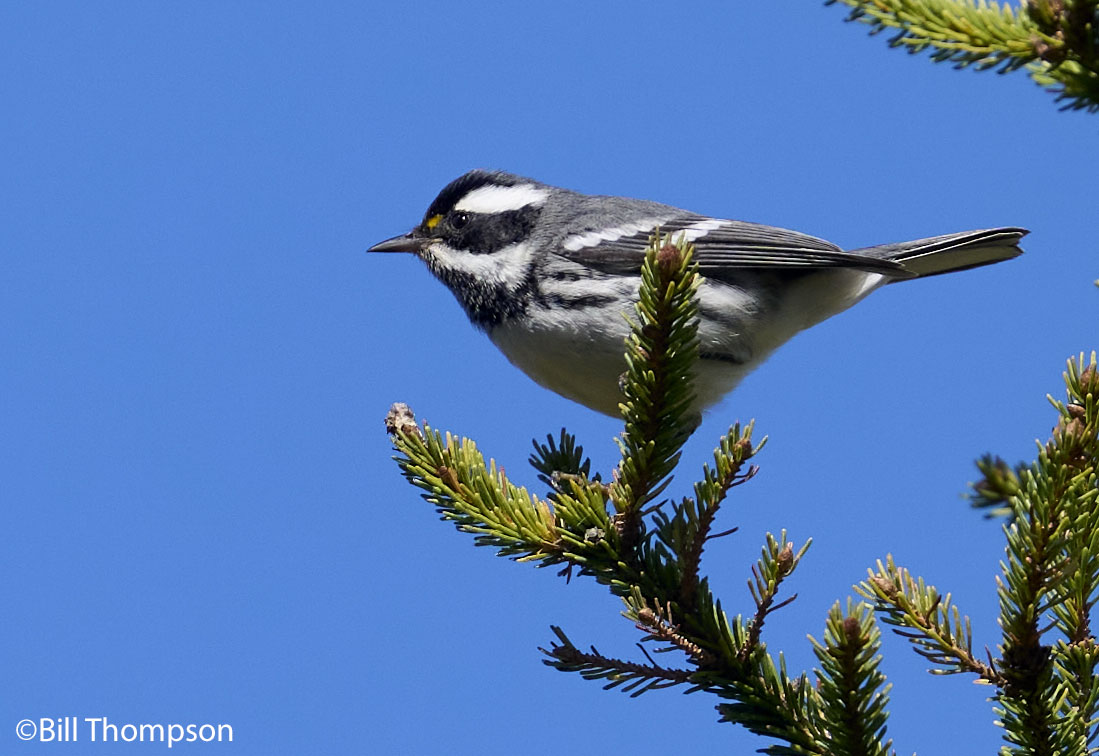
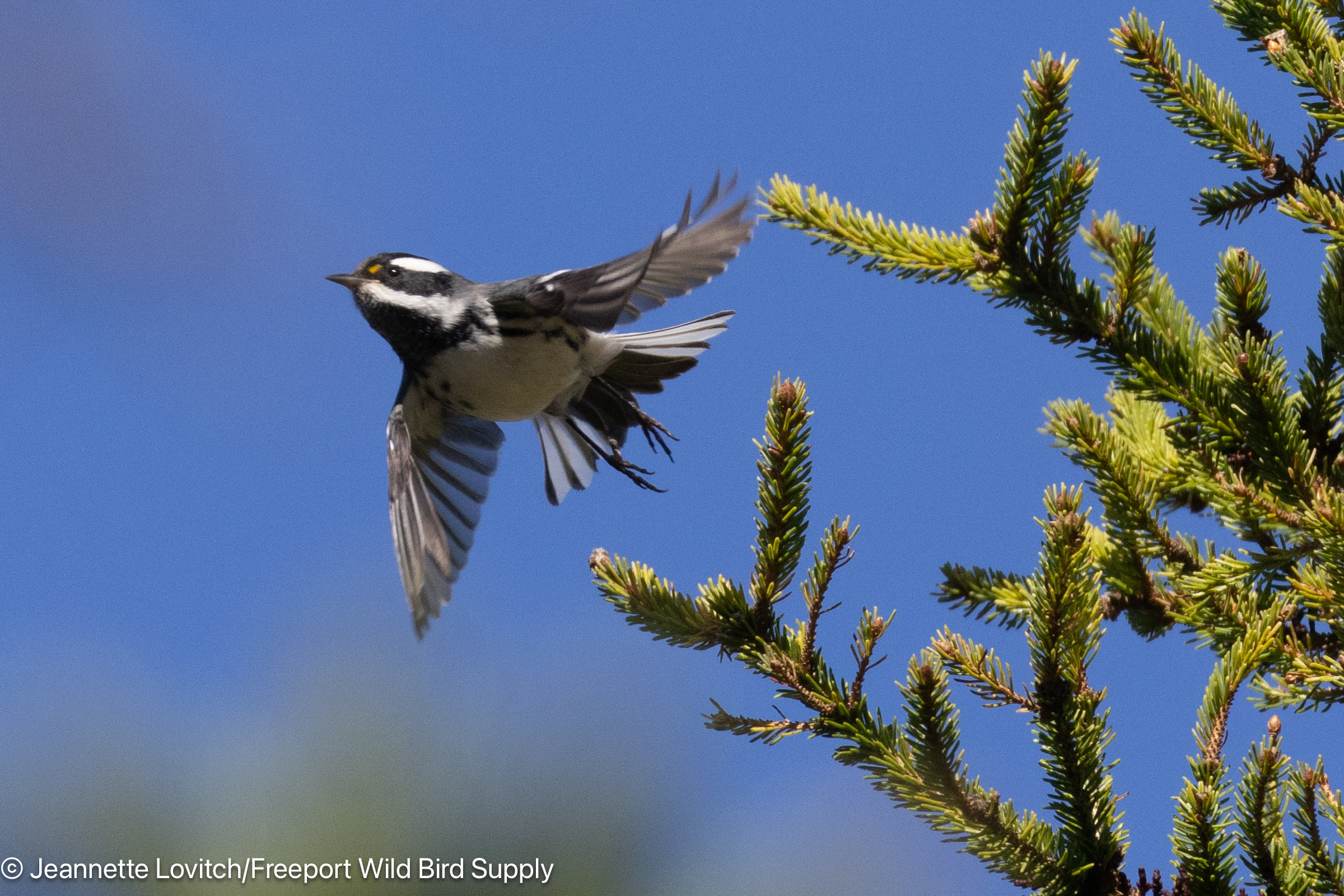
A Black-throated Gray Warbler, with only 5 previous records from Maine, was there. Right there. We had some great looks and photo ops, called over a friend, and then watched it the herd of birders arrive and head out to follow it. What a lucky find! We were ecstatic. And we still hadn’t had breakfast! (See photos from tomorrow),

Wondering if the day could get any better – and pretty content if it did not – we reconvened after breakfast and headed in the opposite direction from the searching masses, as I am wont to do.

It worked again: we found one Lark Sparrow, and then another. How many Clay-colored Sparrows – 4? 8? More? An Orange-crowned Warbler at the Ice Pond, a fly-over Red-bellied Woodpecker, a Pine Warbler, a Yellow-bellied Sapsucker on every tree. So much for it being a slow day.
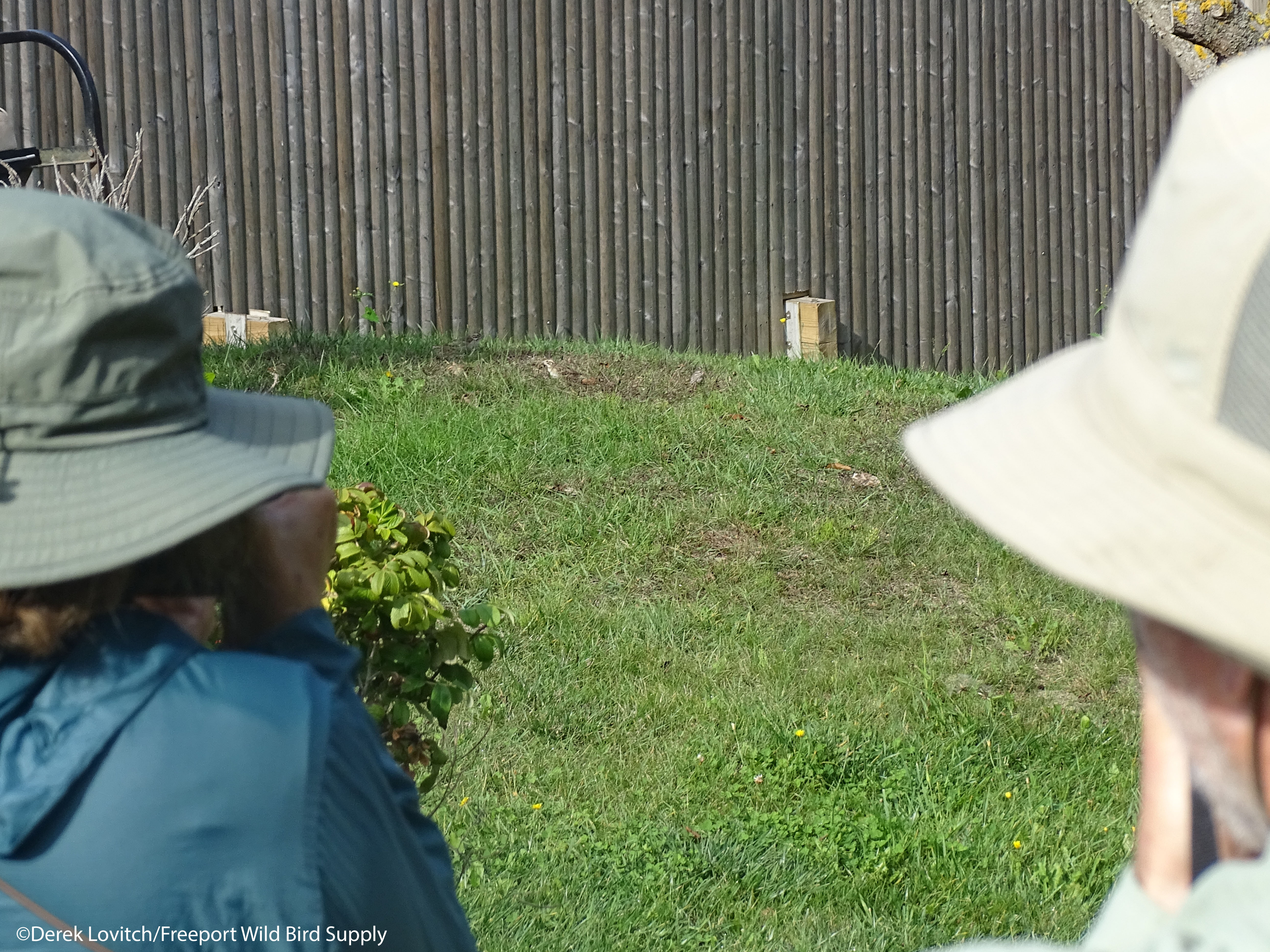
Another warm afternoon sent us into the woods for shade, immersing ourselves in a cacophony of Red-breasted Nuthatches, sprinkled with Golden-crowned Kinglets, and the occasional Red-eyed Vireo or other migrant. We took in the Fringed Gentian, the scenery, and finished strong with the 2 Lark Sparrows and 4 Clay-colored Sparrows together.

Today was a good day.

Monday, the fourth and final day of the tour began with excited anticipation with another strong flight overnight on a diminishing NW to W wind. But today, it was just too nice, and a lot of last night’s birds passed overhead resulting in just a light Morning Flight come sunrise. But there was a turnover of birds, and our morning walk added several things to our list including the Eastern Kingbird we finally caught up with, and another Orange-crowned Warbler. The highlight, however, of our pre-breakfast jaunt was a juvenile Sharp-shinned Hawk that flew to a spruce, plucked a cone off of an outer branch, and then proceeded to play with it! It would move it from its bill to its talons, and then it dropped it, chasing it down the tree. It then flew back up and grabbed another! What a remarkable insight into how a kid Sharpie gets better at hunting on its own.

After breakfast, the good Merlin show of the day continued, and we took time for a short gull identification workshop. Our first Ring-billed Gull out here was good to practice on, and we conveniently had three Lesser Black-backed Gulls: an adult and 2 first-cycle birds. But mostly, we worked through the difference between each age class of the common Herring and Great Black-backed Gulls.

We finally picked up a Northern Waterthrush- our 20th species of warbler on the weekend! But otherwise, it was pretty slow.

It was slow in the afternoon, too, but the Black-throated Gray Warbler had been refound just before we reconvened after lunch, and eventually we were all treated to much, much better views and photo ops than the morning before.
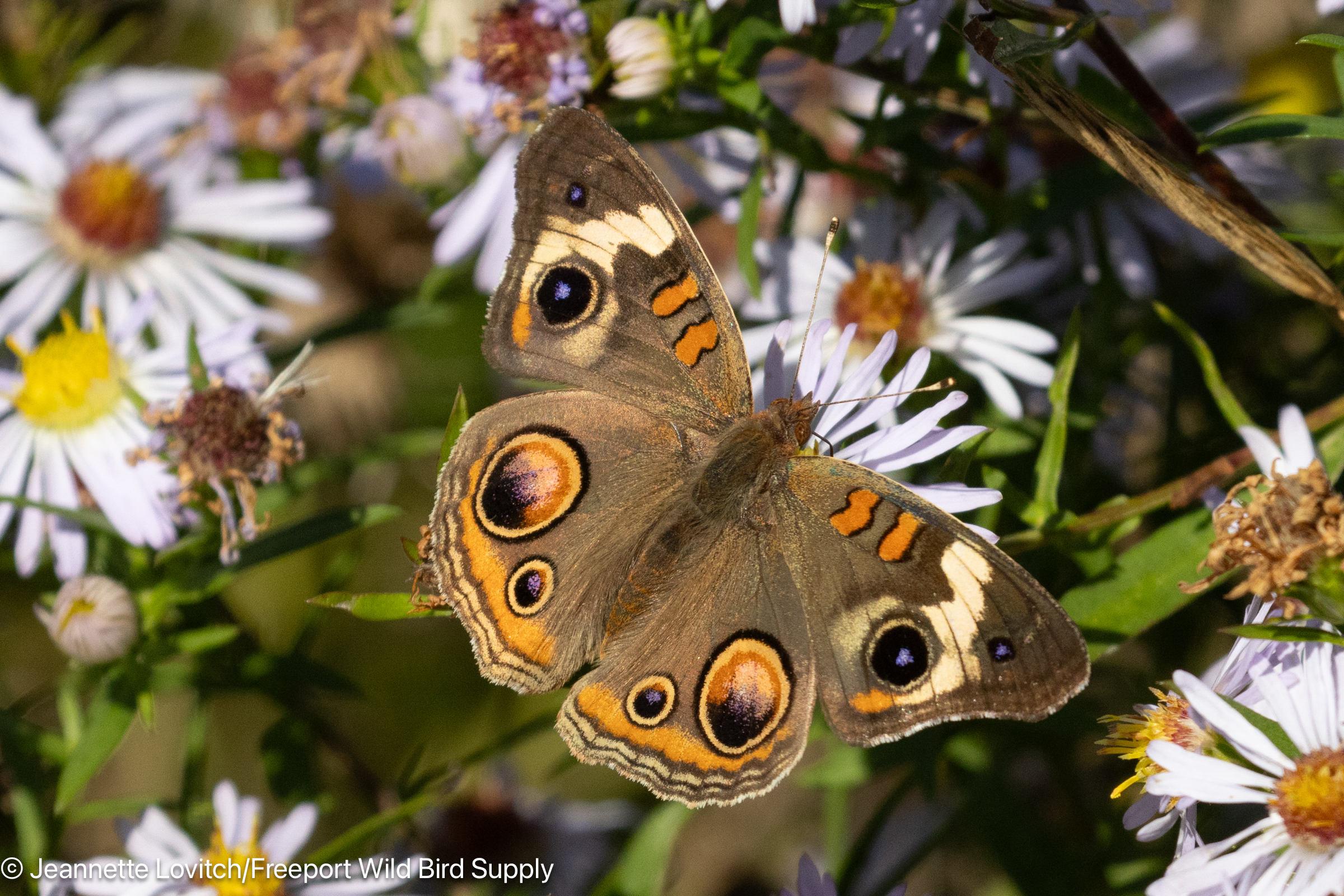
We then twitched a rare Common Buckeye butterfly and Lady’s Tresses orchids.
 Our last new species of the trip was one of the last birds we observed together: a Yellow-billed Cuckoo eating American Dagger Moth and/or Hickory Tussock Moth caterpillars. Watching it whack the caterpillar on a twig to beat off its irritating hairs, we had another moment of insight into a bird’s world.

With the tour now complete, Jeannete and I enjoyed a delicious sunset and delightful food with friends and spotted an American Woodcock on our walk back.
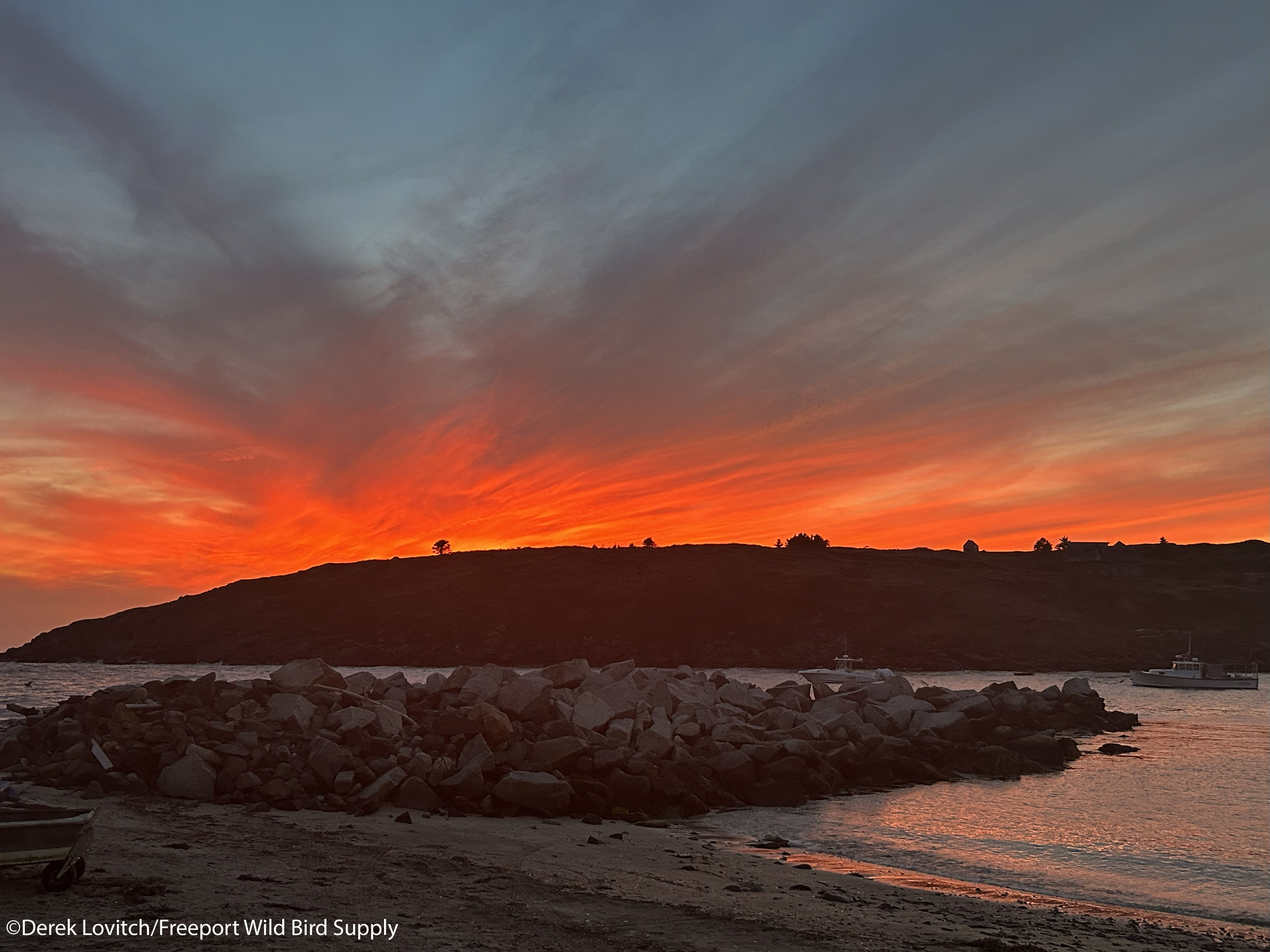
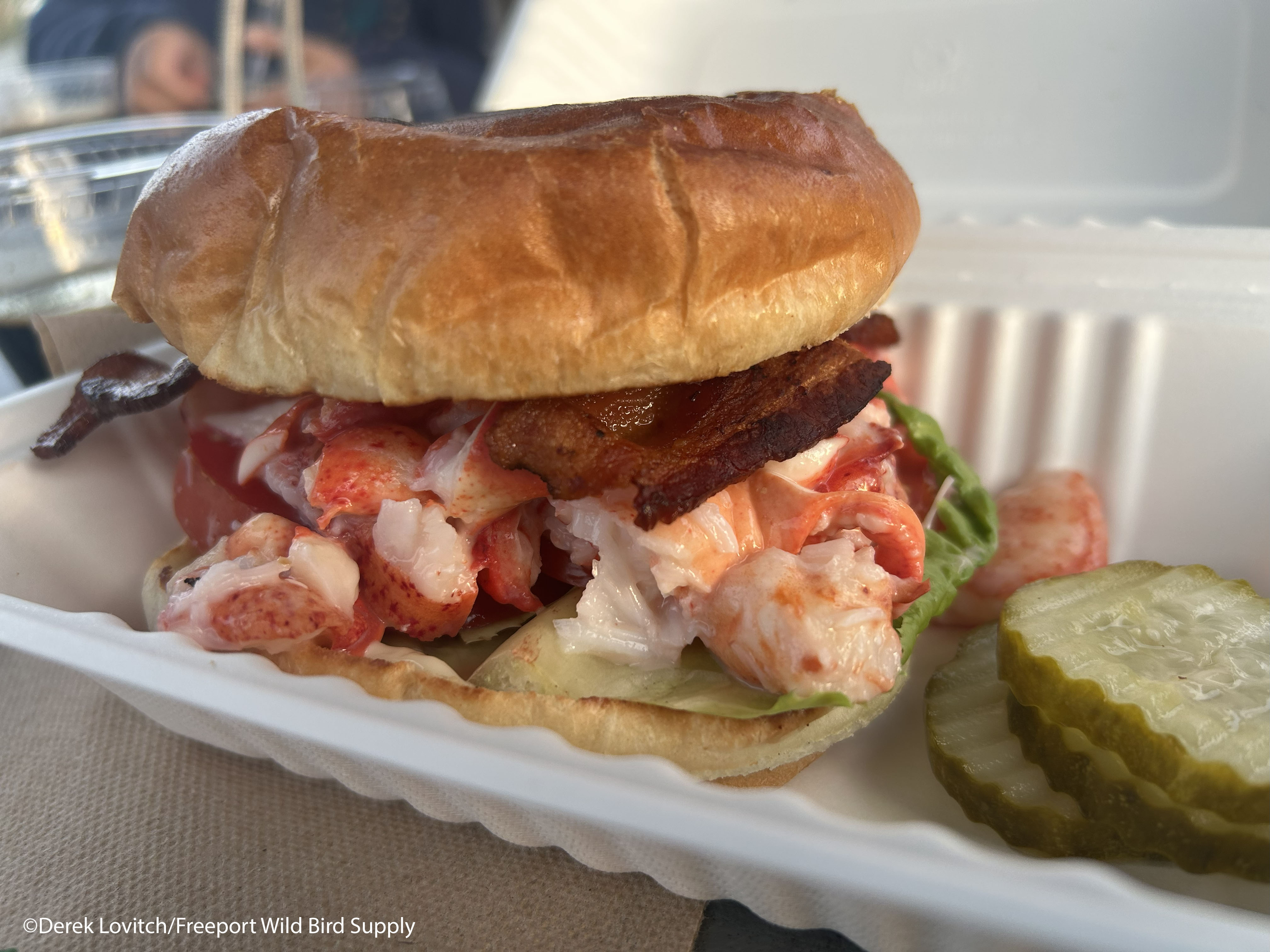
And finished with another meal of Monhegan indulgence.

As usual, Jeannette and I then spent our Tuesday off together on the island. After a light morning flight, but another turnover of birds, we decided to spend most of the morning in the woods, ostensibly looking for a previously reported Black-backed Woodpecker. But mostly, we wanted to take a hike along the island’s less-visited north end. We added Winter Wren and an Ovenbird to our weekend list, enjoyed the silly amount of Red-breasted Nuthatches, and encountered several pockets of White-throated Sparrows and Dark-eyed Juncos. Later, after lunch, we ran into a Black-billed Cuckoo, and a Spotted Sandpiper at the dock turned out to be our 100th and final bird of a truly exceptional weekend on Monhegan. We already cannot wait to return in May!

Species seen without the tour group during the tour:

*Denotes ferry only

9/269/279/289/29
Canada Goose00140
Blue-winged Teal1000
Mallard15202020
American Black Duck1110
Common Eiderxxxx
White-winged Scoter1*000
Ring-necked Pheasantxxxx
Mourning Dove1215126
YELLOW-BILLED CUCKOO0001
Common Nighthawk1000
Semipalmated Plover0110
Solitary Sandpiper1000
Greater Yellowlegs0101
Black Guillemotx230
Laughing Gull 4*000
Ring-billed Gull0001
Herring Gullxxxx
LESSER BLACK-BACKED GULL0013
Great Black-backed Gullxxxx
Great Cormorant1121
Double-crested Cormorantxxxx
AMERICAN BITTERN1100
Osprey1310
Northern Harrier0102
Sharp-shinned Hawk3126
Belted Kingfisher1011
Red-bellied Woodpecker0010
Yellow-bellied Sapsucker8201520
Downy Woodpecker0111
Northern Flicker61068
American Kestrel0010
Merlin4865
Peregrine Falcon62037
WESTERN KINGBIRD0100
Eastern Kingbird0001
Eastern Wood-Pewee6811
Least Flycatcher3200
Eastern Phoebe1321
BELL’S VIREO0010
Blue-headed Vireo2430
Red-eyed Vireo12121212
Blue Jay8833
American Crow4266
Common Raven0221
Black-capped Chickadeexxxx
Ruby-crowned Kinglet1322
Golden-crowned Kinglet020106
Cedar Waxwing80808080
Red-breasted Nuthatch10605040
Brown Creeper0201
BLUE-GRAY GNATCATCHER1001
Carolina Wren8686
Gray Catbirdxxx10
European Starling14141413
Swainson’s Thrush0200
American Robin0410
American Pipit1622
Purple Finch01086
Pine Siskin1212
American Goldfinch81066
LARK SPARROW0021
Chipping Sparrow22102
CLAY-COLORED SPARROW3361
Dark-eyed Junco030212
White-crowned Sparrow2120
White-throated Sparrow12601020
Nelson’s Sparrow0100
Savannah Sparrow 1441
Song Sparrowxxxx
Lincoln’s Sparrow1651
Swamp Sparrow2321
Bobolink5552
Baltimore Oriole2876
Rusty Blackbird0200
Common Grackle3333
Northern Waterthrush0001
Black-and-white Warbler1300
ORANGE-CROWNED WARBLER0121
Nashville Warbler1100
Common Yellowthroat4886
American Redstart3411
Cape May Warbler2828
Northern Parula3610
Magnolia Warbler0100
Yellow Warbler2421
Chestnut-sided Warbler0100
Blackpoll Warbler84044
Black-throated Blue Warbler0300
Palm Warbler206044
Pine Warbler0010
Yellow-rumped Warbler406004020
YELLOW-THROATED WARBLER0100
BLACK-THROATED GRAY WARBLER0011
Black-throated Green Warbler0611
Wilson’s Warbler1200
Northern Cardinalx888
Rose-breasted Grosbeak0111
Indigo Bunting1132
PAINTED BUNTING1000
DICKCISSEL2311
Day total67806968

Species added on Monday evening and Tuesday, with Jeannette:

Common Loon, Spotted Sandpiper, American Woodcock, Black-billed Cuckoo, Winter Wren, Hermit Thrush, Ovenbird (warbler #21!),

Tour total = 100 Total Weekend Total = 107

This winter wren was one of the last birds Jeannette and I added to the cumulative weekend list as we spent some time on our day off hiking the island’s north end.

The 2024 Next Maine Birds Predictions List.

The only thing sweeter than seeing a first state record is when you find it yourself!  This Spotted Towhee that I found in November at Fort Foster in Kittery was #4 on my list of next birds for Maine.

It’s once again time for my annual Predictions Blog, where I view into my crystal binoculars and attempt to forecast some of the “new” birds to grace the State of Maine – and then my own personal state list – in the coming year.

It was another great year for “mega” rarities in Maine. Whether it’s more birders and better communication, a climate in crisis, neonicotinoid pesticides effecting navigation, and more – or likely, all of the above – more really strange birds are ending up in really strange places – Maine definitely included. Four new species showed up in Maine in 2023, plus a first state record whose photos surfaced from 2022. I also had another pretty good year, despite much reduced birding as I recovered from shoulder surgery and a series of setbacks thereafter coupled with a record-busy year for tours and private guiding.

Last winter, recovering from shoulder surgery, I spent a lot of time watching our feeding station, quantifying those ebbs and flows, and paying a lot of attention to behavior. From dominance hierarchies in junco flocks to a case of Sharp-shinned Hawk cannibalism, dedicated feeder-watching (in a house designed to maximize it!) was a great way to pass the time stuck indoors. I recounted many of my observations in blogs earlier this year, especially these two:

Once up and about, I found myself forgoing birding mornings afield – especially in the fall – to just enjoy migration through our property in Durham and build our rapidly expanding yard list. Having moved in last fall, it was exciting to see the seasons change. Fall migration was particularly productive, and I found myself not wanting to bird anywhere else before work. Some great yardbirds over the year included a Snow Goose on 3/27, three different Mourning Warblers (one each in May, June, and September), an American Bittern for the day on 8/28, and a Dickcissel on 9/1. The yard was already approaching 150 species by year’s end.

Furthermore, I put more effort than ever into birding Androscoggin County in general, and while I didn’t find any rarities in the county this year, I did spend lots of quality time at Sabattus Pond and in search of patches for future birding focus – I didn’t find any of those, either, but I did get to know my new home county a lot better. In other words, when I did get out birding this year, I put a lot more focus on staying close to home – this less carbon-intensive mode of birding is what I believe the future of birding is (eg the “5 Mile Radius” list, which is all the birds seen within a five mile radius of one’s home) anyway, and I plan on keeping this focus for 2024.

But back to the rarities. Let us start as usual with a look at last year’s prognostications and see how I did. 

Of the five new species for Maine, three were in my Top 12. I found Maine’s first confirmed Spotted Towhee at Fort Foster in Kittery on November 19th (and continued obligingly through the end of the year). This long-overdue addition to the state’s list was #4 on my predictions list.

Right behind it at #5 was the Hammond’s Flycatcher found on Monhegan in October. I’ve felt flycatchers were going under-detected in Maine for a while, and therefore they have been prevalent on my predictions lists. Then, a photograph from Mount Desert Rock from August of 2022 was reanalyzed and showed a Western Flycatcher (as it is once again rightly called, with Pacific-sloped and Cordilleran finally “lumped” back together), which was #12 on my list.

That strange date for a vagrant flycatcher is rather remarkable, as was the other addition to the list from the MDI region when a Red-footed Booby was photographed in Lamoine in July of this year. This tropical sulid didn’t even make my honorable mention list.

And finally, just before the clock was about to strike twelve, a remarkable Hepatic Tanager was found in Stockton Springs! While it was on my radar due to several well out of range records, it did not qualify for my Honorable Mentions list. It was the icing on the cake to another exceptional year of birding in Maine.

With three birds from the 2023 List off the board, I’ll do some reshuffling. A possible Gray Heron was photographed in Scarborough Marsh on the Portland CBC in December, but the photos – although very suggestive – were inconclusive. A search the next day didn’t turn anything up, but I hope others remain on the lookout. Nonetheless, it was suggestive enough to bump Gray Heron up from my Honorable Mention list into the Top 25, that is for sure. Lewis’s Woodpecker, Dusky Flycatcher, and White Wagtail are making their debut in the rankings while I’ve dropped Black-tailed Gull out of the Top 25 as North American records seem to have dried up.

As we found out when we saw this Gray Heron while vacationing on Prince Edward Island in 2022, they are not always easy to pick out of a crowd, as we looked through a lot of Great Blue Herons during our search for this long-staying individual. Hopefully, our view in Maine will be a little better, like this one Jeannette photographed in Norway.

  1. Neotropical Cormorant
  2. Black-chinned Hummingbird
  3. California Gull
  4. Limpkin
  5. Gray Heron
  6. Bermuda Petrel
  7. Graylag Goose
  8. Little Stint
  9. Audubon’s Shearwater
  10. Common Shelduck
  11. Anna’s Hummingbird
  12. Heerman’s Gull
  13. Common Ground-Dove
  14. Allen’s Hummingbird
  15. Spotted Redshank
  16. Lewis’s Woodpecker       
  17. Ross’s Gull
  18. Black-capped Petrel
  19. Lesser Nighthawk
  20. Elegant Tern
  21. Dusky Flycatcher
  22. Painted Redstart
  23. Hooded Oriole
  24. White Wagtail
  25. Common Scoter

Personally, I added 5 new species to my own Maine State List this year, despite relatively limited birding and a less concentration on rarities in general. Three days after my shoulder surgery, however, Jeannette loaded me into the car and took me down to Timber Point in Biddeford for a Common Ringed-Plover, which was #10 on my predictions list. Can’t say it was my most comfortable twitch, however. Medication helped.

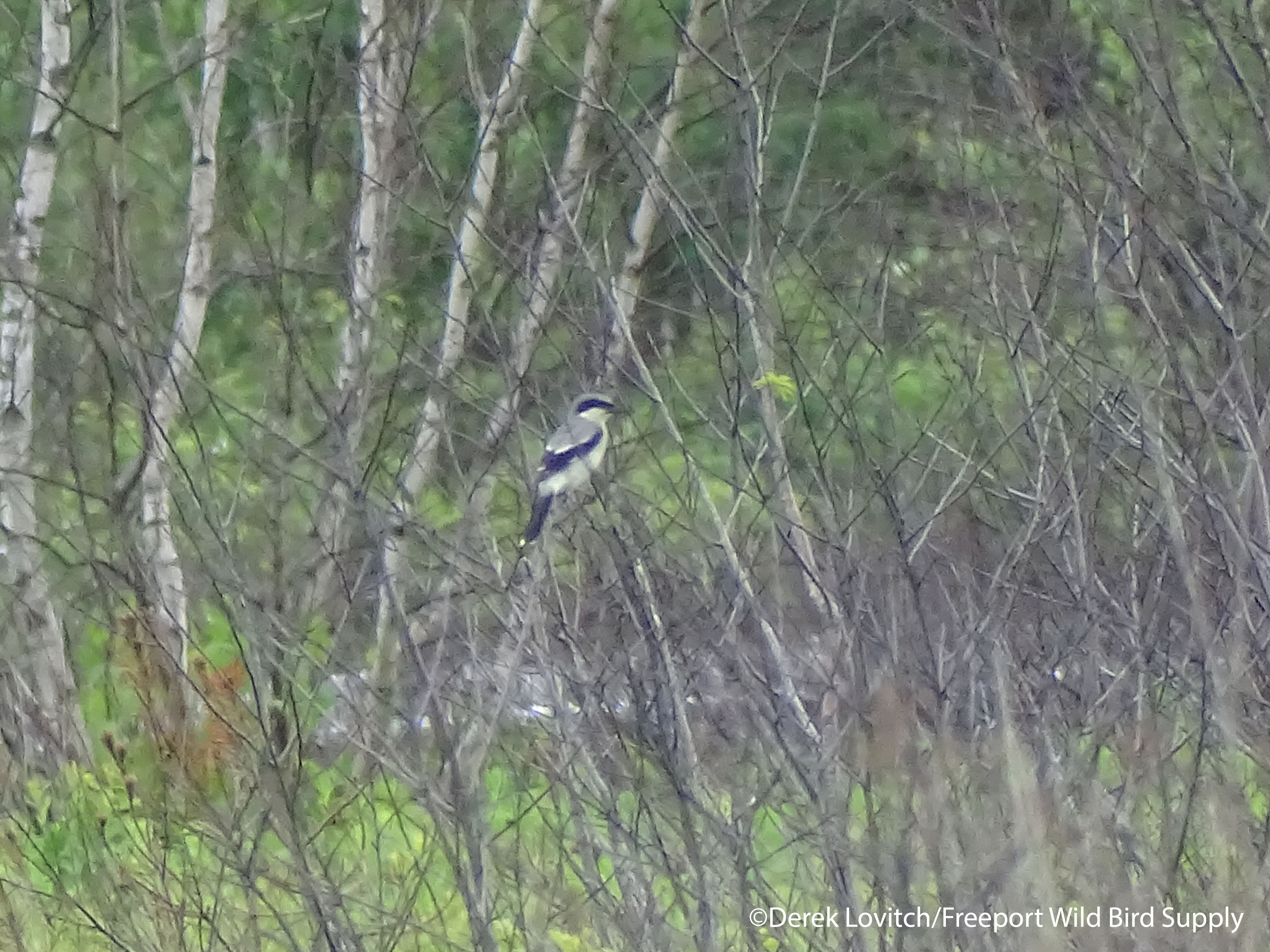
In June, I raced down with Jess Costa between tours to see the Loggerhead Shrike at the Kennebunk Plains, which was my 399th species in Maine (recently relegated to my honorable mentions lists as they have become increasingly rare anywhere out of their contracting range).

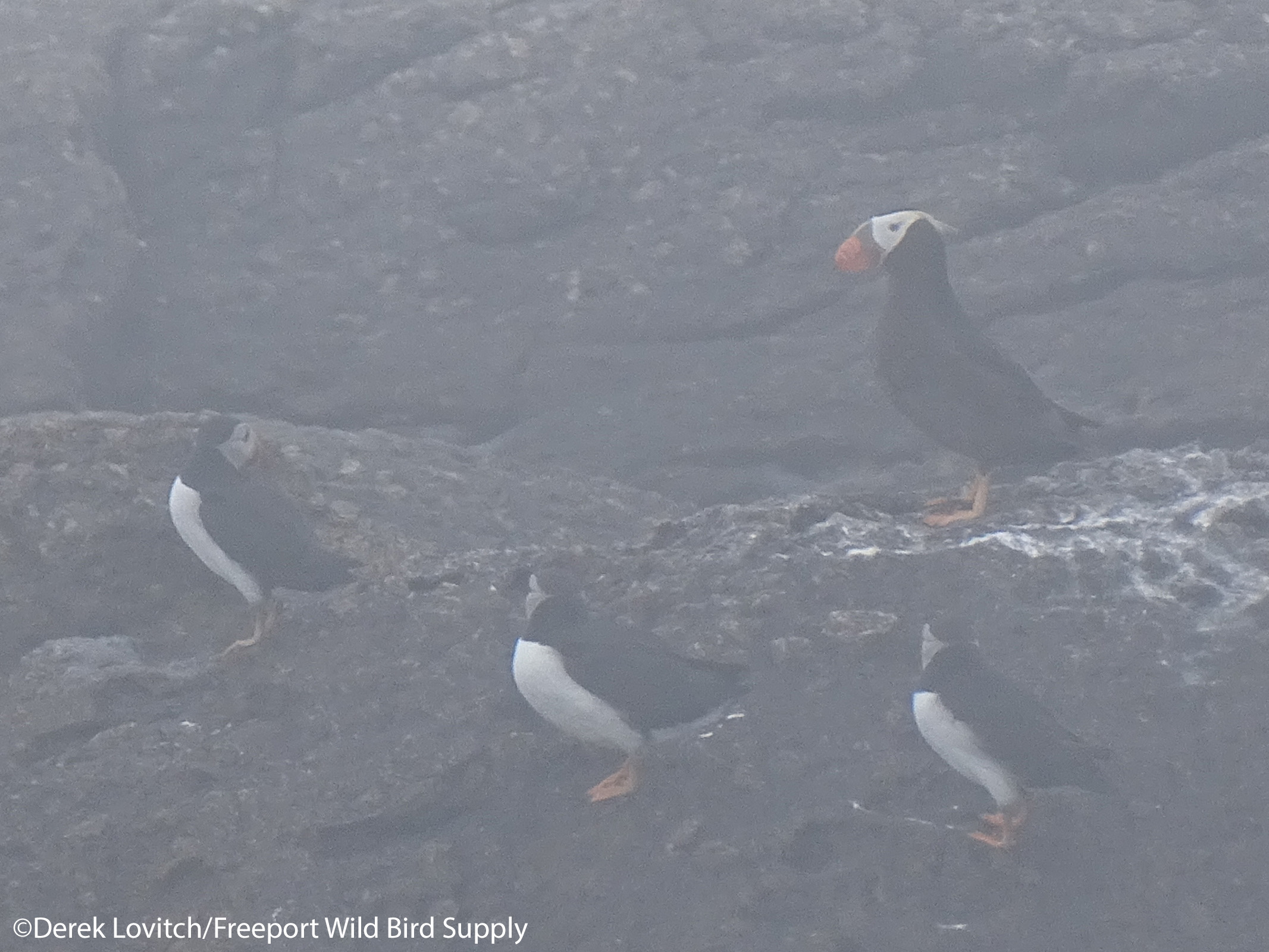
So for #400, I said it had to be “the Tufted Puffin or self-found” – I wasn’t going to chase anything else. With several sporadic sightings in June and July, and with numerous boat tours scheduled in July, I had high hopes. With an observation at Eastern Egg Rock on July 9th, and with a tour there scheduled the next afternoon with our partners Cap’n Fish’s Cruises, I was getting excited. And to hedge the bet, I hopped aboard their morning Eastern Egg Rock trip, and as we approached the island in the fog, a large, dark, puffin stood towering over the local residents!  “TUFTED PUFFIN!!!” I exclaimed. No microphone was necessary. And this was #400. 

With so few sightings – all being one-minute wonders – in the previous years, I hadn’t elevated this to my personal Top 25, but that’s OK – it was just as sweet.

A Purple Gallinule (honorable mention) in the North Maine Woods near Moosehead Lake in October was beyond my chasing range, but when another – or perhaps, the same bird – appeared at a small park in Kennebunk, I was on my way!

The absurdity of the locale and ease of viewing simply forced me to go back for another look a week later with Dan Nickerson…after dipping on a nearby Western Wood-Pewee as Luke Seitz struck again. Making that miss worse was the reason I didn’t chase it on its day of discovery: we were on lockdown during the manhunt after the tragic Lewiston mass shooting. My state list was just not a priority I will readily admit.

Of course, the aforementioned Spotted Towhee, which was #15 on my list was a welcome self-found addition.

And finally, Evan Obercian and I paid a visit to the Hepatic Tanager in Stockton Springs on New Year’s Eve, bringing 2023 to a close.

Of course, I missed a few rarities this year, too! Although I only “dipped” on one chase (the pewee), I was simply unavailable to chase anything else, such as the Kirtland’s Warbler (unlisted) on Seal Island in September (can’t get there from here!).  And I just didn’t have the time to chase Hammond’s Flycatcher (#14) on Monhegan. Meanwhile, the Red-footed Booby (unlisted) was a one-day wonder, and of course I missed a couple of Franklin’s Gulls (#2) as usual. Notorious one-day wonders, there was one on September 24th passing Schoodic Point, and one on November 18th at Long Sands Beach. I was going to “end up” at Long Sands the next day at the same time and tide, but my birding outing began and ended with my towhee find at Fort Foster. This rare but regular transient is officially my nemesis in the state!

But the one that really stings was missing out on Crested Caracara once again.  I was birding with clients in Spurwink Marsh in late May when a friend texted me that he had one (the one?) flying over his house…we were no more than 2-3 miles away! Thankfully, my clients were game for a little searching, so we spent some time looking before having to move on.  The caracara then resurfaced a couple of other times in the Mid-Coast, near Belfast, but I was on Monhegan or with a tour group elsewhere. So close!

Last year, I also predicted that my #400 would come from my Top 25 list. But Tufted Puffin wasn’t on it, so I was wrong about that. Forgive me if I wasn’t upset, however.

I did some reshuffling (it’s just a matter of time before I finally find or catch up with a Franklin’s Gull, right? RIGHT!?), and therefore my forecast for my next 25 species on my personal Maine list reads as follows:

  1. Franklin’s Gull
  2. American White Pelican
  3. Neotropic Cormorant
  4. Brown Pelican
  5. California Gull
  6. Brown Booby
  7. Crested Caracara
  8. Slaty-backed Gull
  9. Boreal Owl
  10. Calliope Hummingbird
  11. Graylag Goose
  12. Cerulean Warbler
  13. Gull-billed Tern
  14. Pacific Golden-Plover
  15. Limpkin
  16. Wood Stork
  17. Black-chinned Hummingbird
  18. Brewer’s Blackbird
  19. Yellow Rail
  20. Virginia’s Warbler
  21. Western Wood-Pewee
  22. Virginia’s Warbler
  23. Gray Heron
  24. Common Gull
  25. Heerman’s Gull

It’s about time for me to finally see a Franklin’s Gull in Maine.

But really, who knows what might show up these days? For example, I am sure that no one had Red-flanked Bluetail on their Next Birds in New Jersey list, but one showed up in a random inland neighborhood in early December. It continued through year’s end, and it was awfully nice of it to remain at least through December 26th, when we just happened to be in the area for Christmas. In fact, it was only 24 minutes away from my Mom’s house. A bonus Christmas gift!

Bring it on, 2024. But less injuries and other birding-limiting events, please. I also have a goal of finding a rarity in Androscoggin County away from Sabattus Pond or our property! Will it be on this list?

This Week’s Highlights, 8/26-9/1,2023

Our Durham yard has been incredibly birdy this week. The most unexpected migrant was this American Bittern that dropped into our new pond for the morning of the 28th.

I didn’t get out to shorebird hotspots as much this week, but still ended up with 17.5 species and some solid high counts. However, much of my best birding this week was from our yard, which apparently is a fantastic fall migration hotspot. And my first visit of the season to Sandy Point on 8/31 produced a new August record!

  • Black-bellied Plover: 142, The Pool, Biddeford Pool, 9/1.
  • Killdeer: 3, United Ag and Turf, Auburn, 8/31 (with Jeannette).
  • Semipalmated Plover: 150+, The Pool, 9/1.
  • Piping Plover: 1, The Pool, 9/1.
  • Whimbrel: 4, The Pool, 9/1.
  • RED KNOT: 16 juv, The Pool, 9/1.
  • Sanderling: 1, The Pool, 9/1.
  • Least Sandpiper: 32, Eastern Road Trail, Scarborough Marsh, 8/31.
  • White-rumped Sandpiper: 11, Wharton Point, Brunswick, 8/28 (with Jeannette).
  • Pectoral Sandpiper: 2, Eastern Road Trail, 8/31.
  • Semipalmated Sandpiper: 450-500, Wharton Point, Brunswick, 8/28 (with Jeannette).
  • Short-billed Dowitcher: 14, The Pool. 9/1.
  • Spotted Sandpiper: 1, Walsh Preserve, 8/26 (with Saturday Morning Birdwalk group).
  • Solitary Sandpiper: 1, Walsh Preserve, 8/26 (with Saturday Morning Birdwalk group).
  • Lesser Yellowlegs: 34, Eastern Road Trail, 8/31.
  • “Eastern” Willet: 6, The Pool, 9/1.
  • “WESTERN” WILLET: 1-2 juv, The Pool, 9/1.
  • Greater Yellowlegs: 28, Walsh Preserve, 8/26 (with Saturday Morning Birdwalk group).

A handful of non-shorebird highlights this week also included:

  • A productive week of birding on our Durham property produced a number of highlights. In fact, most mornings, it was hard to pull myself away from the yard. At least 11 species of warblers have been in our yard daily this week, with a high count of 12 on the 28th. A female MOURNING WARBLER was present 8/27-8/29. A Phildelphia Vireo on the 28th-29th was our 144th yard bird, followed moments later by the arrival of #145: An American Bittern (photo above). A DICKCISSEL (FOF) briefly paused in the yard on the morning of the 1st for our 146th yard bird! 32-38 Common Nighthawks were feeding over the yard late in the day on 9/1 as well.
  • 12 adult SANDHILL CRANES, Mayall Road, Gray/New Gloucester, 8/30 (site high count and noteworthy that no juveniles were present – failed breeding season due to high water and flooding?)
  • Sandy Point Morning Flight, 8/31 (FOY):
    • 6:00-9:15am
    • 57F, mostly clear, NE 4.7-7.6 increasing to 7.3-9.8 and gusty.
Unidentified633Scarlet Tanager2
American Redstart439Ruby-throated Hummingbird2
Northern Parula195Black-throated Blue Warbler2
Yellow Warbler51Rose-breasted Grosbeak1
Magnolia Warbler35Eastern Phoebe1
Cape May Warbler20Chestnut-sided Warbler1
Black-and-white Warbler17Merlin 1
Black-throated Green Warbler16Northern Waterthrush1
Red-eyed Vireo11Swainson’s Thrush1
Bay-breasted Warbler10Unidentified vireo1
Tennessee Warbler5Olive-sided Flycatcher1
Nashville Warbler4Common YellowthroatX
Least Flycatcher4
Blackburnian Warbler3TOTAL1,463*
Canada Warbler3*New August High Count!
American Goldfinch3
Red-winged Blackbird3

The 2014 South Coastal Maine Rarity Roundup

prairie warbler_edited-1
Prairie Warbler, Cliff Walk, York Harbor.

For the past ten years, I have organized the “South Coastal Maine Rarity Roundup” on the first weekend of November, when a group of friends get together to comb the coast from Kittery through Portland, focusing on finding lingering migrants, rarities, and hopefully “mega” vagrants.

This year, our event was postponed a week thanks to the massive Nor’easter and snowstorm that rendered last Sunday essentially un-birdable. A week later than usual, we expected fewer birds, but perhaps “better birds.” At the very least, we would be less miserable than in the 34-degree weather with driving wet snow and 50mph winds of last Sunday. Recent active weather and some good birds in the area helped stoked our “rarity fever” fire, which I prognosticated about on Friday’s blog.

The teams each cover a specific territory, including destination locations, and casual meanderings. This year, the Roundup was covered by:
Kittery –York: Katrina Fenton and Ken Klapper.
Ogunquit/Kennebunkport: Turk Duddy and Linda Woodward.
Wells: Doug Suitor, Andrew Gilbert, and Allison Moody.
Biddeford-Saco: Becky Marvil, Nancy Houlihan, et al.
Scarborough Marsh: Noah Gibb, Ed Hess, et al.
Cape Elizabeth: Robby Lambert and Lois Gerke.
South Portland: John Berry and Gordon Smith.
Portland: Derek Lovitch, Kristen Lindquist, Evan Obercian, and Jeannette Lovitch.

Although most teams described the day as “fairly slow” overall, we did indeed find some good birds, and surprisingly good diversity. 121 species (plus two subspecies) were recorded in all, well above the 11-year average of 114 species. Two new species were added to the all-time Rarity Roundup list: American Redstart and Lincoln’s Sparrow. Meanwhile, Brown Creeper went unrecorded for the first time, likely a factor of the scrubby habitats and open areas that we focus on at this time of year.

Unfortunately, despite overall high-quality birds, we once again failed to turn up any “mega” rarities. However, we did have a lot of fun as always, which really is the most important part. Or so we tell ourselves.

The full roster of “good” birds that were turned up by all of the teams were as follows:
American Wigeon: 4 at Hill’s Beach; 1 at Evergreen Cemetery.
NORTHERN SHOVELER: 1 pair, Deering Oaks Park, Portland.
Northern Pintail: 2, Fortunes Rocks Beach.
Common Merganser: 2, Saco Riverwalk.
Ruddy Duck: 40, Prout’s Pond.
AMERICAN BITTERN: 1 Eastern Rd; 1 Drake’s Island Road.
Great Egret: 1, Parson’s Beach Rd.
Black-crowned Night-Heron: 1 Mill Creek Park; 4 Mercy Pond.
Northern Goshawk: 1, Perkin’s Cove.
Ruffed Grouse: 1, Laudholm Farms.
American Coot: 64, Prout’s Pond.
SEMIPALMATED SANDPIPER: 1, Pine Point; 1 Wells Beach jetty.
White-rumped Sandpiper: 2 Timber Point; 1 Eastern Road.
Yellow-bellied Sapsucker: 1, Rte 103, Kittery.
Eastern Phoebe: 1, Fore River Parkway Trail; 1 Pond Cove.
Northern Shrike: 1, Fort Williams Park; 1 Laudholm Farms.
RED-EYED VIREO: 1, Chadwick St, Portland.
Carolina Wren: 6 total (low by recent standards).
Gray Catbird: 1, Hill’s Beach; 1 Laudholm Farms.
ORANGE-CROWNED WARBLER: 1, Pond Cove.
NASHVILLE WARBLER: 1, Saco Riverwalk.
NORTHERN PARULA: 2, Fort Williams Park.
PRAIRIE WARBLER: 1, York Cliff Walk.
“Yellow” Palm Warbler: 1, Saco Riverwalk.
“Western” Palm Warbler: 1, Private property in Cape Elizabeth.
BLACKPOLL WARBLER: 1, Saco Roverwalk.
Common Yellowthroat: 1, Capisic Pond Park.
AMERICAN REDSTART: 1, Saco Riverwalk.
CLAY-COLORED SPARROW: 1 Community Park, Wells; 1 Private property in Cape Elizabeth.
LINCOLN’S SPARROW: Capisic Pond Park.
White-crowned Sparrow: 1, Fort Foster
Lapland Longspur: 51, Eastern Rd.
WHITE-WINGED CROSSBILL: 60-75, Eastern Promenade

Meanwhile, record high total counts (from all teams) were set for an impressive 14 species:
81 Harlequin Ducks
40 Ruddy Ducks
2 American Bitterns
2 Merlins
64 American Coots
69 Purple Sandpipers
11 Red-bellied Woodpeckers
83 Horned Larks
19 Ruby-crowned Kinglets
2 Northern Parulas
9 Chipping Sparrows
51 Lapland Longspurs
25 Purple Finches
60-75 White-winged Crossbills

My guess is the later date this year helped those Harlequin Duck, Purple Sandpiper, and Lapland Longspur totals, and perhaps also the higher counts of Ruddy Ducks and American Coots. An overall mild fall likely resulted in the late departure of so many “half-hardies” such as Ruby-crowned Kinglets, Hermit Thrushes, and Chipping Sparrows. And the steady increase of Red-bellied Woodpeckers continues.

So not bad, and once again it gives us a fascinating snapshot into the under-birded late fall season along the southern Maine coast.

Personally, I was joined by friends as usual in Portland. While Jeannette (and Sasha) birded Capisic Pond Park, Evergreen Cemetery, and Back Cove, Kristen and Evan joined me on my march through the Portland peninsula. Jeannette gets the territory’s bird-of-the-day honors with the First Rarity Roundup Record Lincoln’s Sparrow at Capisic Pond Park, where she also had the count’s only Common Yellowthroat.

The peninsula, however, was about a slow as I have ever experienced it on a Rarity Roundup, likely due to the later date and resultant fewer food supplies. But even still, the Eastern Promenade was uncharacteristically slow, and development and ridiculous bush-whacking and clear cutting by the City of Portland diminished the value of the habitat along West Commercial Street.

With a few interesting birds, including our best bird of the day, a Red-eyed Vireo in a front yard in the West End, I wish I had gotten to this neighborhood sooner in the day, but alas, hindsight is always 20/20. And while Portland’s overall performance paled in comparison to the hauls from recent years, we still had some great birds. The flock of 60-75+ White-winged Crossbills that flew over us on the Eastern Promenade were the first I have seen all year, the pair of Northern Shovelers in Deering Oaks Park were unexpected, and the 4 immature Black-crowned Night Herons at Mercy Pond were good to see.

But perhaps the bird of the day was the Hermit Thrush. We had an impressive total of 31 throughout our day, including several in small downtown gardens and landscaping corners. White-throated Sparrow (including 24 scattered around downtown as well) were also prevalent. These two species were the only native birds – as usual – that we found in the center of downtown Portland. This always fascinated me, as these two species seem particularly regular in the heart of concrete jungles.
HETH,Portland,11-9-14_edited-1
I think this phone-photo of a Hermit Thrush captures the essence of this intriguing topic of conversation.

Perhaps next year we will find the “next big one.” Until then, I have some more fun data to play with.

Some of the “documentation” photos from the day:

AMBI,EdHess,EasternRd,11-9-14_edited-1


American Bittern, Eastern Rd, Scarborough Marsh.


AMERICAN BITTERN NOV 9 2014 SCARBOROUGH, ME IMG_0771_edited-1

barred owl_edited-1 Barred Owl, Fort Foster, Kittery.

BCNH,JohnBerry_edited-1

Juv. Black-crowned Night-Heron, Mill Creek Park, South Portland.

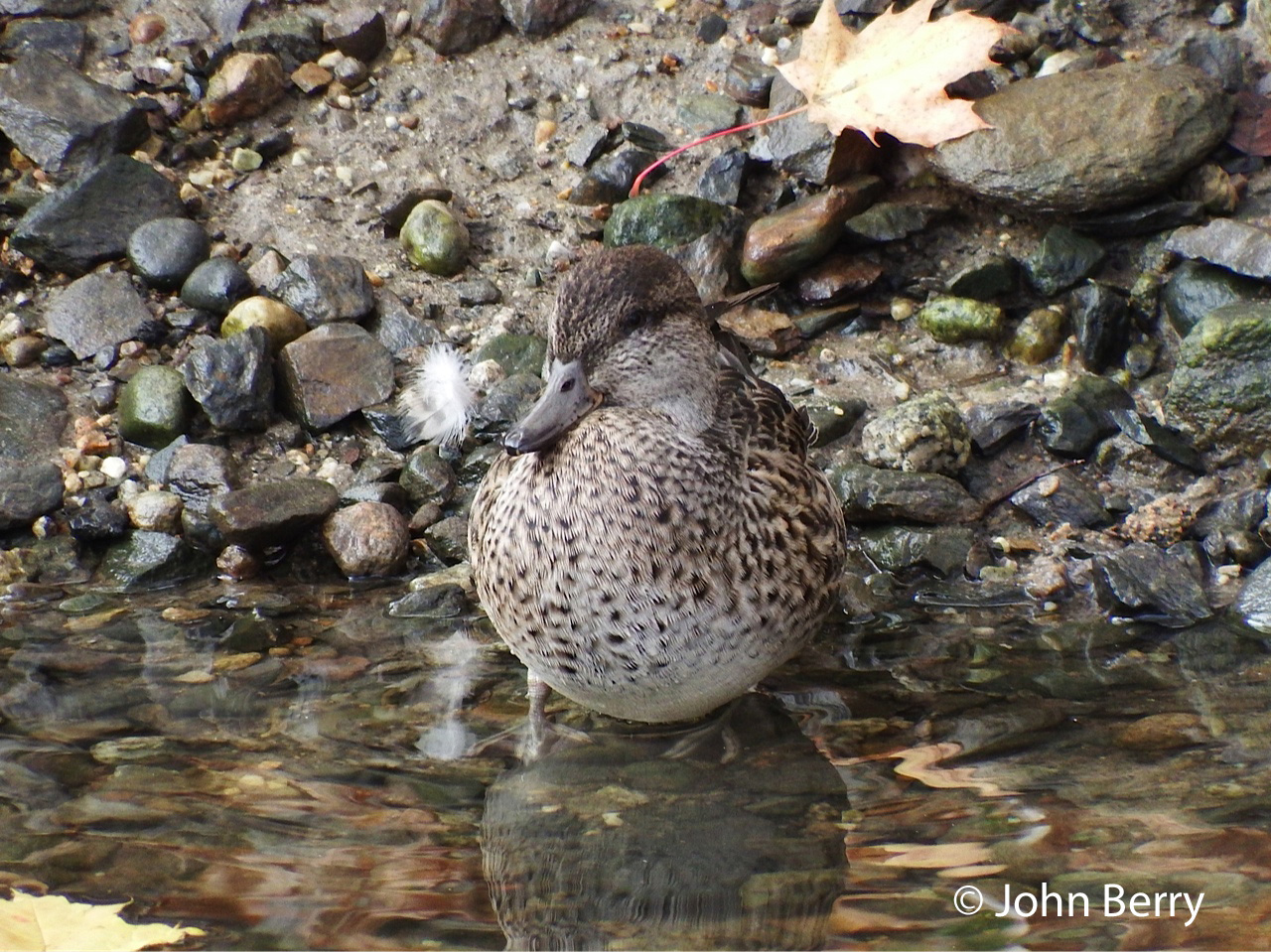
GWTE,John Berry_edited-1 Female Green-winged Teal, Mill Creek Park.

RUDDY DUCK NOV 9 2014 SCARBOROUGH, ME IMG_0793_edited-1 Female Ruddy Duck, Prout’s Pond, Scarborough.