Category Archives: Uncategorized

Birds on Tap – Grassland and Grains, 6/5/16

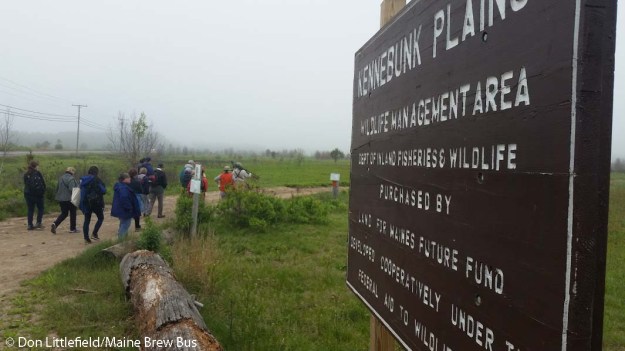
The third Birds on Tap – Roadtrip! tour of 2016, with our partner the Maine Brew Bus, ventured south to the unique habitat of the Kennebunk Plains…and a couple of very unique breweries!
walk_begins

A managed blueberry barrens, one of the few habitats for grassland species in the region, the Kennebunk Plains Wildlife Management Area is home to one of the state’s largest (if not the absolute largest) concentrations of Grasshopper Sparrows (a state Endangered Species), Vesper Sparrows, and Upland Sandpipers (a state Threatened species). Additionally, large numbers of Prairie Warblers, Eastern Towhees, Field and Savannah Sparrows, and much more call this special area home.

Unfortunately, due to a likely combination of a light breeze, dense fog, and the mid-morning arrival of our group, overall bird activity was suppressed, and all of the first time visitors were left with only a taste of what the Plains can offer. Our last stop, a pocket of activity that included a couple of Field Sparrows and Prairie Warblers, a confiding Chestnut-sided Warbler and Common Yellowthroat, and singing Gray Catbird and Brown Thrasher hinted at what one could expect here on a future visit.
DSC_0136_edited-2

But we did see just about all of the plains denizens, expect for Upland Sandpiper which just a couple of people were able to glimpse as a displaying bird disappeared into the fog. I warned the women in our group not to immediately slug the guy next to them if they thought they were being wolf-whistled at. Unfortunately, only one or two distant “Uppies” sounded off, limiting the potential for any such confusion. This is what it would have looked like.
IMG_6677_edited-2

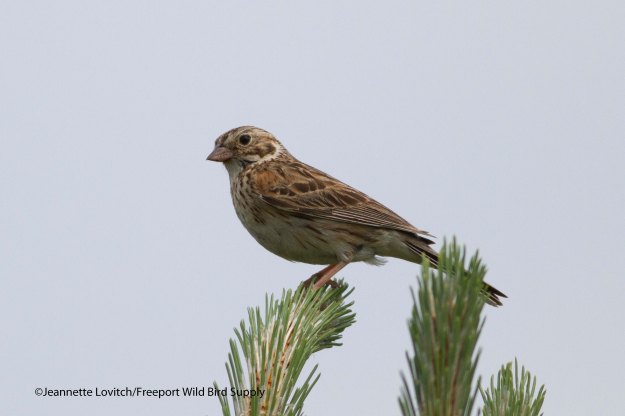
On the other hand, Vesper Sparrows were incredibly conspicuous. Many were foraging in the open in the dirt roads, others were singing, and it was the most frequently observed bird on the day…
IMG_6568_edited-2

…and near the end of our birding time, we finally got a good look at a Grasshopper Sparrow. Perched on a rock along Maquire Road, the sparrow was spotted by a member of the group and enjoyed by all. The subtle orange-buff tones in the face contrasted nicely with the gray day.
L1040162_GHSP1a,DyerPt,CapeElizabeth,12-6-15_edited-2

everyone_looking

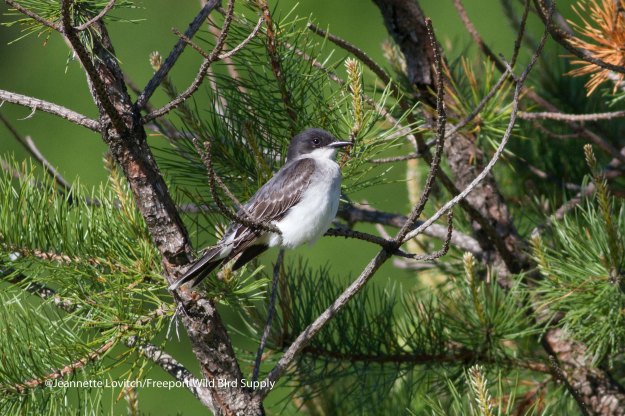
As usual, Eastern Kingbirds were conspicuous.
_MG_7554_edited-3

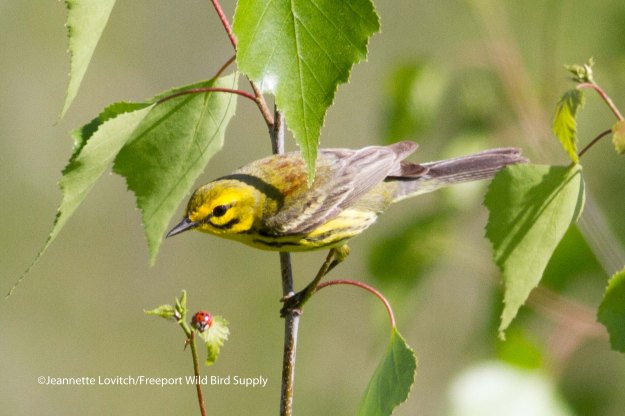
And we were treated to some good looks at spiffy Prairie Warblers.
IMG_6464_edited-2

As we walked through the plains, occasionally lamenting about the lack of birdsong and the first light showers of the day…
me_leading_group

…a streaking larger animal caught our eye.  And while it’s especially true on a “slow” birding day, as is often the case when you’re out birding, the highlight of the day wasn’t even a bird. We soon realized our speedster was an Eastern Coyote (or CoyWolf) that treed a Gray Squirrel!  We watched the coyote as it tried every angle, leaping a short distance up each small trunk of the young Paper Birch tree. The squirrel, frozen at the very tip of the tallest stem, peered down, no doubt hoping that its chosen stem would not waver. The coyote, focused on the hors d’oeuvre, was oblivious to our presence.

Eventually, we caught its eye, or perhaps its nose, and it turned and sprinted back to the trees. The squirrel remained frozen. We wondered for how long.

Of course, even though I predicted the coyote would cross the two-track ahead of us, I failed to take my eyes off the captivating situation long enough to have my camera ready!

We also had a special guest aboard, Caroline Losneck, who was on assignment to record a story on our unique birding and beer-ing tours for MPBN. I think Caroline had more recordings of me making desperate pishing and squeaking sounds than actual bird sounds today, unfortunately.
Caroline_interview

As steadier rain arrived, it was time to head back to the bus, and turn things over to Don. The good thing about brewery tours, is you are guaranteed that the beer will be there (unlike, sometimes, the birds)!

And the beer – and fresh brick-oven pizza for lunch – was waiting for us as we arrived at Funky Bow Brewery and Beer Company in Lyman for the first stop in the brewery half of the tour (which we learned was the only place on Trip Advisor in the town of Lyman!)

Co-founder Paul Lorraine greeted us and introduced us to the brewery, their mission, and their history…
L1040908_Don_Paul1

…then the pizza oven….
L1040912_pizza

…and last, but most certainly not least, the beer!
L1040929_Funky_Bow_Beer_sign
L1040914_Funky_Bow_pours

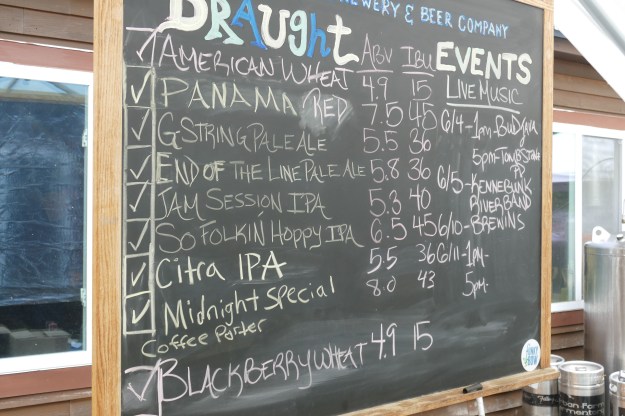
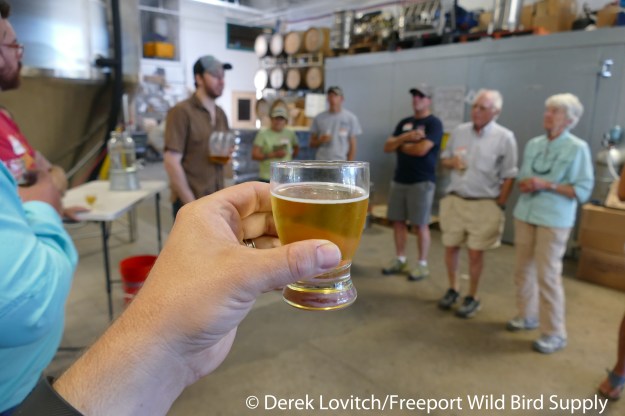
As we sampled four of the eight beers on tap, Paul added the color commentary. Don listened intently.
L1040927_Funky_Bow_Don_Paul2

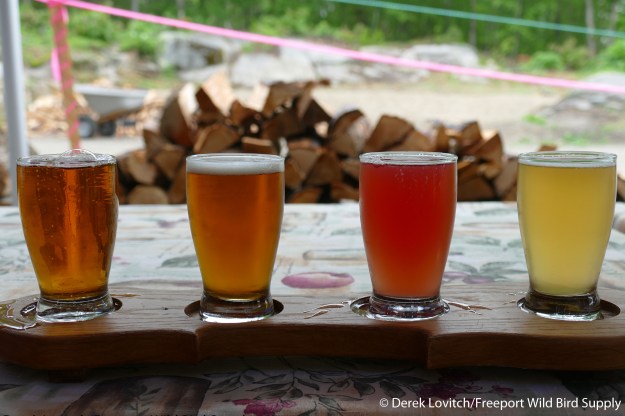
I chose to sip on their Citra IPA, one of my new favorites from Funky Bow, and G-String Pale Ale – still my favorite offering from the brewery. I just find it so refreshing and perfectly balanced, with a nice hop bite for a pale, but smooth and easy-drinking throughout.  I hadn’t had their American Wheat before – which I found pleasantly hop-forward for a wheat, and gave their new Blackberry Wheat a try. I am not usually a fan of fruited beers (which is why I like tasting samplers at breweries to try new and different things out of my usual comfort zone), but I found the tartness of the blackberry just subtle and suggestive enough without being overwhelmingly fruity…and admittedly, the color was very appealing (second from right).
L1040922_Funky_Bow_Beers

Next up was Banded Horn Brewing Company in Biddeford. The “Eurotrash trifecta” of European Starling, House Sparrow, and Rock Pigeon greeted us, while Chimney Swifts fluttered overhead.
L1040947_Banded_Horn1L1040949_Banded_Horn2
Entering the beautiful restored mill, a much different atmosphere than the rustic setting of Funky Bow, we were greeted by brewer Bob Bartholomew, who just happened to be a wildlife biologist in his former life.
L1040958_Banded_Horn3_edited-1

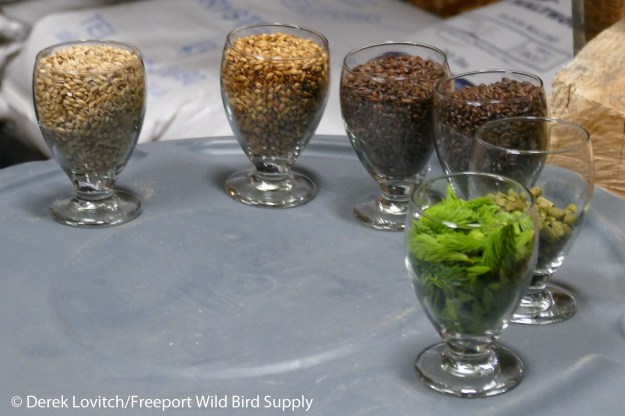
In complete coincidence to the title of our tour “Grassland and Grains,” which was chosen for alliteration more than anything, Bob focused on the grains – malted barley in particular – that go into beer. We sampled several malts from bready pale malt to rich and roasty chocolate malts.
L1040962_malts-etc

Breaking down beer into components helps you understand the subtle tastes and differences in each brew, not unlike how we use subtle differences in shape and structure to sort sparrows into family groups before we go about specific identification.

We also sampled the edible white spruce tips (Bob informed us they are exquisite deep-fried, something I undoubtedly will be testing in the near future) that go into their Green Warden beer, learned the differences between lagers and ales (it’s like warblers verses sparrows!), and sampled four of their current offerings.
L1040965_spruce_tips

We began with their light-bodied but flavorful Pepperell Pilsner (local pilsners are a rarity in Maine), followed by Wicked Bueno, a Mexican-style lager using corn to bump up the sugar content pre-fermentation without adding too much body. Their flagship IPA, Veridian, was up next, a West Coast style IPA and finished up with their Austry Imperial Lager with Maine-made bitters. This is one of my favorite brews by Banded Horn, as it brings back memories of sitting on the veranda of the Asa Wright Nature Center, watching hummingbirds, honeycreepers, and tanagers at the feeders, shortly after finding a couple of drops of Angostura bitters added complexity and flavor to the otherwise bland and boring (but thirst-quenching) lagers typical of the region. (Yes, it always comes back to birding!)

As we begrudgingly began our return northward, conversations about new birds, new beers, and new adventures continued. And plans were made for the next two Birds on Tap – Roadtrips! in August (a second date was added by popular demand, and this is before Caroline’s story airs with hours of recordings of my pishing!)
L1040940_group_photo

(Note: As you may have guessed from the bright sunlight, these bird photographs were not taken during the Roadtrip tour…but all except the Grasshopper Sparrow were photographed in the Kennebunk Plains by Jeannette).

Six “Birds on Tap – Roadtrips” in 2016

As the readers of this blog have probably picked up on, we love birds…and we love beer! And, it turns out, so do lots of other folks. So, we have worked to incorporate these two elements through events at the store, making birding and learning about birds not only educational, but fun too.
group at south end

Therefore, we, Freeport Wild Bird Supply (FWBS) are excited to announce the “Birds On Tap – Roadtrip!” series in collaboration with The Maine Brew Bus (MBB). Each tour combines 2-3 hours of birding at one of Maine’s hotspots with a visit to two of our fantastic local breweries. The idea for this series comes on the heels of several very successful programs sponsored by FWBS, working with some of Maine’s finest breweries to combine birding and beer enjoyment. We began with the “Birds, Books, and Beers” author book signings at Maine Beer Company in 2013. The new tradition continues with the “Birds On Tap!” lecture series at Rising Tide Brewing as we host and support scientists conducting research on birds in the Northeast and beyond.

“Birds On Tap – Roadtrip!” seemed like a natural progression – another way to make learning about birds and birding even more fun. Additionally, it is a great way to support several Maine businesses. The trips introduce people to new breweries, new birds, and new places in a casual atmosphere that makes both birding and beer appreciation approachable. “These tours are a perfect way for couples or friends with different interests to spend the day together. We take the pressure off learning about complex topics from identifying shorebirds to hop characteristics.

These trips are truly unique, we know of no other similar tours offered anywhere in the world!

outside Baxter

Don Littlefield, General Manager of the Maine Brew Bus, adds “Craft beer drinkers come from all walks of life and have all kinds of other interests. This pairing of bird observation and ​beer education has proven to be a real hit with all kinds of folks. It gives access to diverse areas of Maine and many different bird species, and also great locally produced Maine beer. We are happy to partner with Derek and his team, it’s been fantastic to see this series mature and take flight!”

In 2015, we had two very successful outings. In August “Shorebirds and Beer” visited Scarborough Marsh for migrant shorebirds, Barreled Souls, and Rising Tide. In November, we ventured north for a visit to Sabattus Pond for waterfowl, and then visited Baxter Brewing and Maine Beer Company.

Based on the popularity of these trips, we are excited to offer six different trips in 2016, covering birding and breweries from Kittery to Lewiston. Traveling in the Maine Brew Bus, I’ll be guiding the first half of each, as we learn about the birds and their habitats at seasonal hotspots. This is followed by two brewery tours led by the MBB guides. The locations were chosen to enjoy the peak of birding at a particular locale at certain times of year. One does not need to be a “birder” to enjoy these outings. People of all skill levels are encouraged to join us!

The 2016 schedule is as follows:

Surf and Suds
February 28th , 8:00am – 2:30pm
York and Ogunquit (wintering waterfowl especially Harlequin Ducks, Purple Sandpipers, and  alcids)
SoMe Brewing & Fore River Brewing

Spring Ducks & Draughts
April 10th, 10:00am – 4:00pm.
Merrymeeting Bay (migrant waterfowl and Bald Eagles)
Oxbow & Lively Brewing

Grassland and Grains
June 5th , 8:00am – 2:00pm
Kennebunk Plains(Upland Sandpiper, Grasshopper Sparrow)
Funky Bow & Banded Horn Brewing

Shorebirds and Beer
August 7th, 9:00am-3:00pm.
Scarborough Marsh (migrant shorebirds)
Barreled Souls & Rising Tide

Migrants and Malts
October 9th , 8:00am – 2:30pm
Fort Foster and Seapoint Beach, Kittery (songbird, raptor, and shorebird migrants)
Tributary & Hidden Cover Brewery

Fall Ducks and Draughts
November 13th, 8:30am – 2:30pm
Sabattus Pond and Auburn Riverwalk (migrant waterfowl)
Baxter Brewing & Maine Beer Co.

For more information about each of these tours, see the “Tours, Events, Programs, and Workshops” page our website. And contact us soon (email or call 207-865-6000) as these unique tours fill up fast!

insideRisingTide

Yup, We’re Still Against Industrial Wind Development near Monhegan Island


These bedraggled, exhausted, and desperate birds arrived on Monhegan in bad shape, and they didn’t have to contend with a lighted tower or spinning blades. (Clockwise from top: American Redstart, imm male; American Redstart, female; Yellow Warbler, adult male; a vagrant Acadian Flycatcher).

Some bad ideas just never go away. And it seems like the idea of putting industrial wind turbines off of Monhegan Island is one of those.

We have been vehemently opposed to the industrial wind development in the Gulf of Maine off of Monhegan Island from the start, and we have been outspoken in our concern about the impacts of this development. It’s simply the wrong place for such an endeavor. The costs far outweigh the benefits, especially the inordinate risk such structures would pose to migrating birds. And one of the densest concentrations of migratory birds (and birders) is simply not where you put so-called “green” power. There’s nothing “green” about poorly-sited energy development. And this is as poor of a site as you could find in Maine.

After the University of Maine-led consortium, Maine Aqua Ventus, failed to win a bid for Department of Energy funding, it looked like the project was dead. However, the recent announcement that the consortium has received $3.7million in federal funding with the possibility of more to come has us concerned once again.

The wind industry continues to propose locations for new turbines that are poorly sited and do nothing to minimize risks to birds and bats. This is happening across the country from California to Lake Erie to Maine. Monhegan Island is one of the most significant stop-over spots for thousands upon thousands of migrating songbirds in fall and spring – and therefore birders and wildlife tour operators such as ourselves. Most of these birds migrate at night. The size and height of today’s turbines necessitate lighting. Lighted structures disorient birds, especially under cloudy and foggy conditions so common on the Maine coast. Birds are drawn in and then circle the light in an attempt to reorient or simply escape the halo of light. Unfortunately, in the process, many can collide with the structure, each other, or simply drop dead of exhaustion as their flight muscles are metabolized in a last-ditch effort to find safety. New innovations are being developed to harness power from the wind without using massive blades, and this is where government funding and research should be directed – new technologies that maximize efficiency and minimize the risks to birds and bats.

Additionally, the wind industry often uses their own surveys to state that many of their projects pose little threat to wildlife. Such research proves to be woefully incomplete as they are generally based on carcass searches. Scavenging makes this methodology fundamentally flawed and completely irrelevant to offshore development projects. Additionally, much of this information is deemed “proprietary”, so the public rarely knows the full extent of their impacts. In a place as important to birds as Monhegan, a wind farm is not the avenue to pursue for energy generation. While nearshore wind development is much less conspicuous to humans, the risks to Maine’s migrant birds and bats cannot be discounted. The benefits of wind power have been shown to be under-promised again and again and they do not outweigh the potential costs in this case. At the very least, any off-shore turbines should be equipped with lighting that is less hazardous, a simple solution that the industry continues to oppose.

So what’s next for this ill-conceived project? What will throwing more taxpayer money at it prove? We know it won’t go to studying its impacts on migratory birds, and certainly not towards implementing alternative design and lighting. No, instead we’ll simply continue to hear Big Wind deny the problem exists, ignoring facts and reality and having the so-called conservation organizations they sponsor regurgitate the same tired, outdated misinformation.

With another renewal of the Federal subsidies for industrial wind development in the just-passed budget, we must remain vigilant in our fight against dangerously-sited projects. It’s not about being anti-wind power. I am definitely not! But I am most definitely against putting industrial wind development projects smack dab in the middle of some of the densest concentrations of migrant birds in Maine. And Monhegan Island is just one of those places…and there are better, safer, more economical, and more efficient ways of reducing the cost of electricity on Monhegan Island, without putting the birds, and the birder economy that follows them, at risk.

For more information about the threat that poorly-sited wind power development poses to birds, and what can be done to make the industry more ecologically-friendly, please visit the “Wind Energy” page from the American Bird Conservancy.

_MG_6926 edit_edited-1
And you think this Canada Warbler is mad now?

2015 MonhegZen Fall Migration Birding Weekend

As always, the last weekend in September finds me at one of my favorite birding locales in the world, Monhegan Island. My annual “MonhegZen Fall Migration Weekend” tour takes place then, and with it, a wealth of birds and good times are to be had.

Well, usually a wealth of birds are to be had! But yeah, this year was slow. As slow as I have ever seen it. But my goodness, was it nice out! Of course, this same pleasant, unseasonable warm and benign weather was exactly why there were so few (relatively speaking) birds out there. It seems that with night after night of great flying conditions, birds are proceeding unimpeded, with no fallouts, or even concentrations near the coast or offshore.

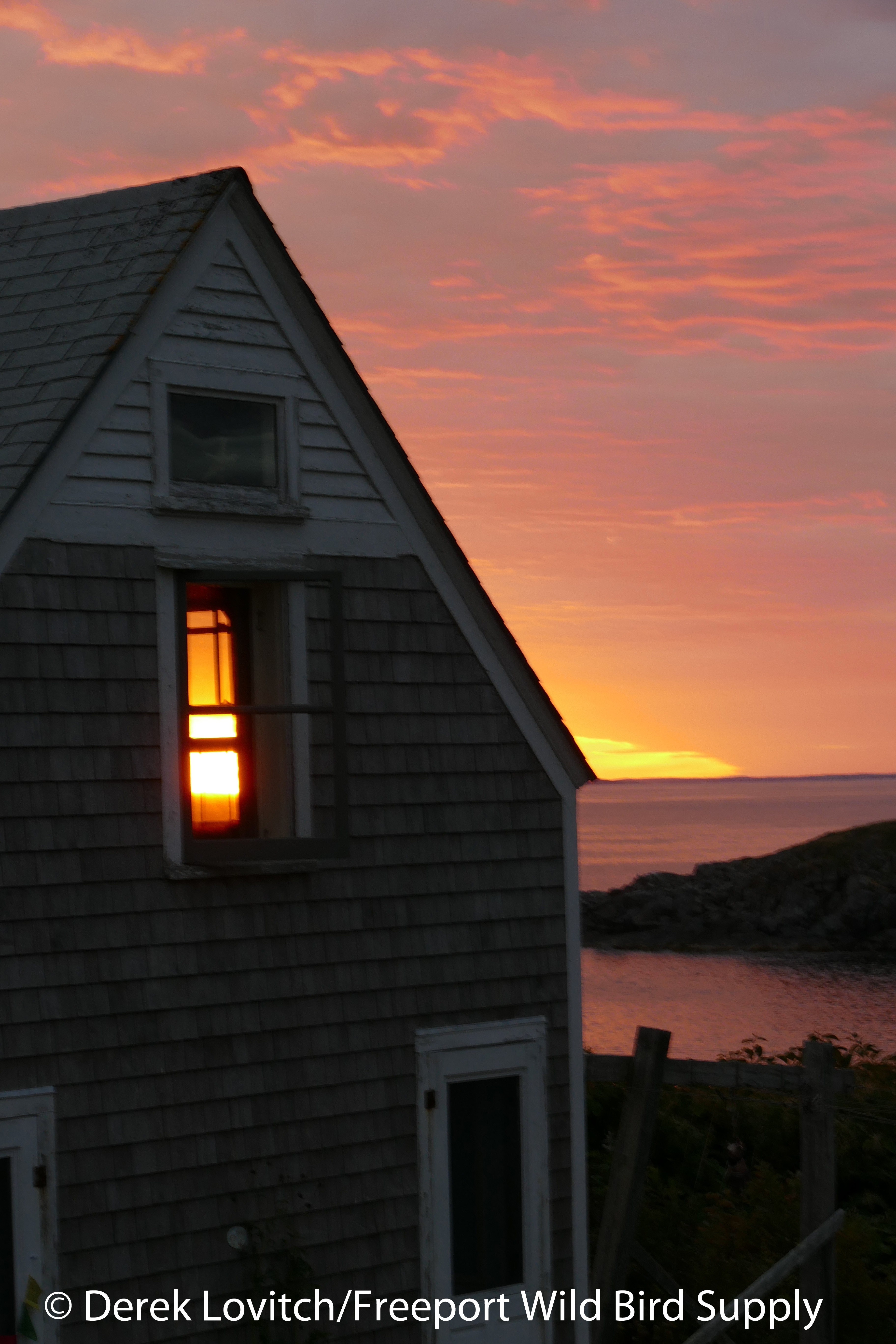
So in writing this blog, I was trying to figure out how to sugarcoat the weekend. Perhaps this will do it:
sunset1_edited-1

Or this?
Sunset2_edited-1

Beautiful sunsets, and wonderous moonrises:
group watching moonrise_edited-1

moonrise_edited-1

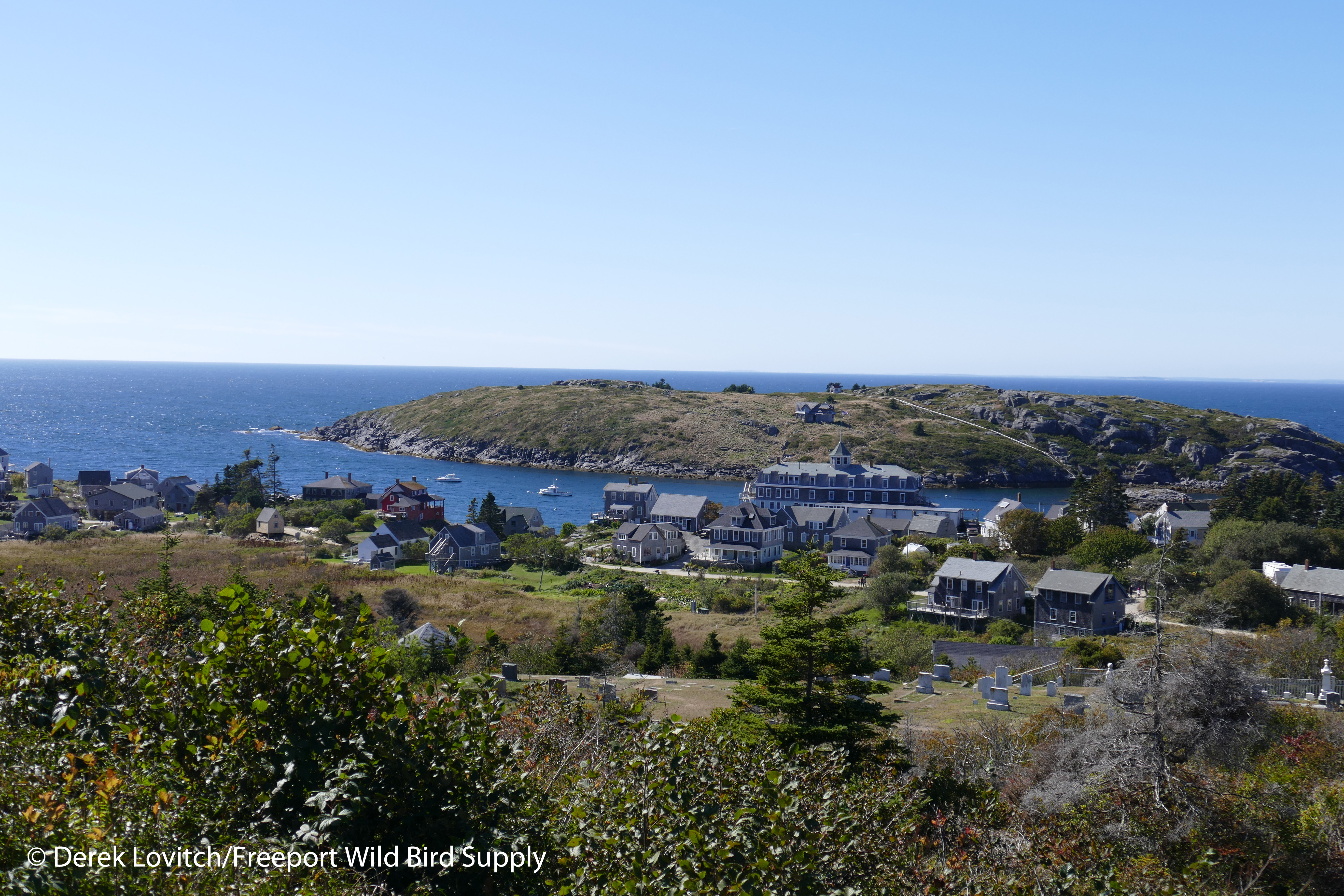
Or maybe this will help:
Monhegan_from_lighthouse_edited-1

So yeah, it was gorgeous. Beyond gorgeous. And the Novelty Pizza was just as good, and Monhegan Brewing Company’s beer was just as great.

The butterflying was good, and the wildflowers were a nice distraction, especially the Fringed Gentian as always.
Fringed_Gentian1_edited-1

Fringed_Gentian2_edited-1

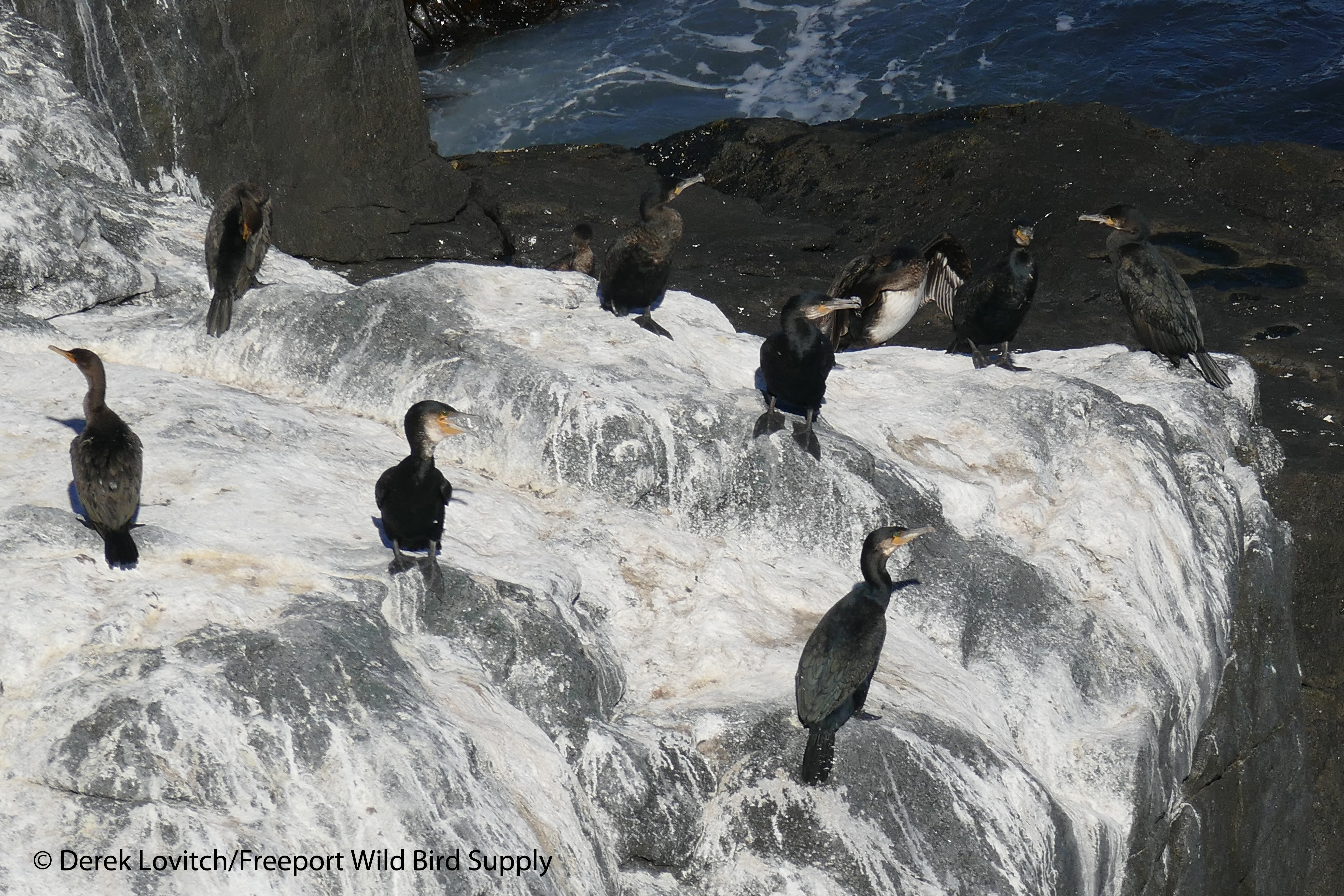
And don’t worry, there were still plenty of birds – just not as many as usual. We enjoyed some great studies of Great and Double-crested Cormorants…
GRCOs_withDCCO,Monhegan,9-26-15_edited-1

…and of course a few rarities were around. The two headliners were the two juvenile Yellow-crowned Night-Herons that would spend dawn at the Ice Pond. They would fly in just before 6 (presumably from feeding around the rocky shoreline), drink and preen a bit, and then shortly after sunrise, take off to roost in the trees. You needed to be here dark and early to get them, and on Sunday morning, the group made the lovely twilight walk (fly-by American Woodcock!) to reach the pond, and we arrived just a few minutes after the night-herons did. One lingered until it was just light enough to grab a snapshot.
YCNH,Monhegan, 9-27-15_edited-1

A Great Blue Heron kept watch as well.
GBHE_silhoutte1_edited-1

Of course, it wouldn’t be a Monhegan weekend if I didn’t attempt to string one Empidonax flycatcher. Of course, this one was a Least Flycatcher – as expected, and as usual. It did offer a very nice, prolonged study, however.
L1030231_LEFL1,Monhegan,9-26-15_edited-1

One of the other significant birding highlights was the seawatching from the tall cliffs. In the afternoon each day, we strolled over to White Head to enjoy Northern Gannets, study Great Cormorants, and do a little seawatching.
group_on_cliff,byKristen_edited-1

With northeasterly winds picking up Sunday afternoon, gannets were breathtakingly close. A little trickle of shearwaters, which included 2 Cory’s Shearwaters among a handful of Greats, were anything but near.

Here’s the three-day checklist of all birds seen:
American Black Duck: 0,1,0
Mallard: 6,6,6
American Black Duck x Mallard: 1,1,1
Green-winged Teal: 1,1,1
Common Eider: x,x,x
Surf Scoter: 0,1,8
Common Loon: 0,1,2
CORY’S SHEARWATER: 0,0,2
GREAT SHEARWATER: 0,0,6
Ring-necked Pheasant: 3,3,1
Northern Gannet: #,#,##
Double-crested Cormorant: x,x,x
Great Cormorant: 2,13,3
Great Blue Heron: 1,0,2,
YELLOW-CROWNED NIGHT-HERON: 0,0,2 (present all three days, but we only made it to the Ice Pond at dawn on the last day).
Osprey: 1,2,2
Bald Eagle: 1,2,1
Northern Harrier: 0,0,1
Sharp-shinned Hawk: 4,6,1
American Kestrel: 0,3,9
Merlin: ??,4,3
Peregrine Falcon: 0,2,1
Semipalmated Plover: 0,1,0
Laughing Gull: 1,1,0
Herring Gull: x,x,x
Great Black-backed Gull: x,x,x
Ring-billed Gull: 0,0,1
Black Guillemot: x,x,x
Mourning Dove: 6,4,6
Belted Kingfisher: 1,1,2
Yellow-bellied Sapsucker: 8,4,4
Downy Woodpecker: 0,2,2
Northern Flicker: 0,6,8
Least Flycatcher: 0,1,1
Eastern Phoebe: 0,3,3
Blue-headed Vireo: 0,1,0
Philadelphia Vireo: 0,1,0
Red-eyed Vireo: 0,6,3
Blue Jay: 4,8,15
American Crow: x,x,x
Common Raven: 3,2,2
Horned Lark: 0,1,0
Black-capped Chickadee: x,x,x
Red-breasted Nuthatch: 6,8,12
Brown Creeper: 0,1,2
Winter Wren: 0,1,0
Golden-crowned Kinglet: 15,20,40
Ruby-crowned Kinglet: 20,6,5
Swainson’s Thrush: 1,0,0
American Robin: 2,1,1
Gray Catbird: x,x,x
European Starling: 8,8,8
American Pipit: 3,1,0
Cedar Waxwing: 30,25,30
Nashville Warbler: 1,1,1
Northern Parula: 10,4,4
Yellow Warbler: 2,1,1
Magnolia Warbler: 1,0,0
Cape May Warbler: 1,2,1
Black-throated Blue Warbler: 1,0,0
Yellow-rumped Warbler: 150,75,75
Black-throated Green Warbler: 6,2,2
PINE WARBLER: 1,0,0
Prairie Warbler: 1,0,1
Palm Warbler: 4,2,2
Blackpoll Warbler: 15,10,10
American Redstart: 0,1,1
Black-and-white Warbler: 1,0,1
Common Yellowthroat: 4,x,x
Chipping Sparrow: 1,4,4
Song Sparrow: x,x,x
Lincoln’s Sparrow: 2,1,1
Swamp Sparrow: 4,2,2
White-throated Sparrow: 10,10,10
White-crowned Sparrow: 0,1,1
Northern Cardinal: 10,8,8
DICKCISSEL: 1,1,1
Common Grackle: 10,29,29
Baltimore Oriole: 2,2,2
American Goldfinch: 2,4,4

Total species = 80
Total warbler species = 15

Although this year’s tour was one day shorter than usual (since Jeannette and I had to leave for a tradeshow on Monday), the 80 total species was a whopping 22% below the average of 102 species for my usual 4-day tour, and 16% below my average of 95 species for a three-day fall tour.

But the “MonhegZen Migration Weekend” isn’t called that for some existential reason – no meditation required. Instead, it’s a suggestion of the mindset of going with the flow, taking what the island gives us, and enjoying a truly unique and remarkable place that superlatives fail to completely describe.

So yeah, it was pretty slow. But it’s not just cliché: a slow day on Monhegan is better than a “good” day almost anywhere else. And not just for the birds! Don’t believe me? Well, how about joining us next fall to see for yourself? I mean, did you see those sunsets?

P.S. To get a better idea of what it’s usually like out there, check out my blog from last fall’s weekend tour.

Interesting Still-Breeding-Plumaged Dunlin at Pine Point, 9-20-15

1

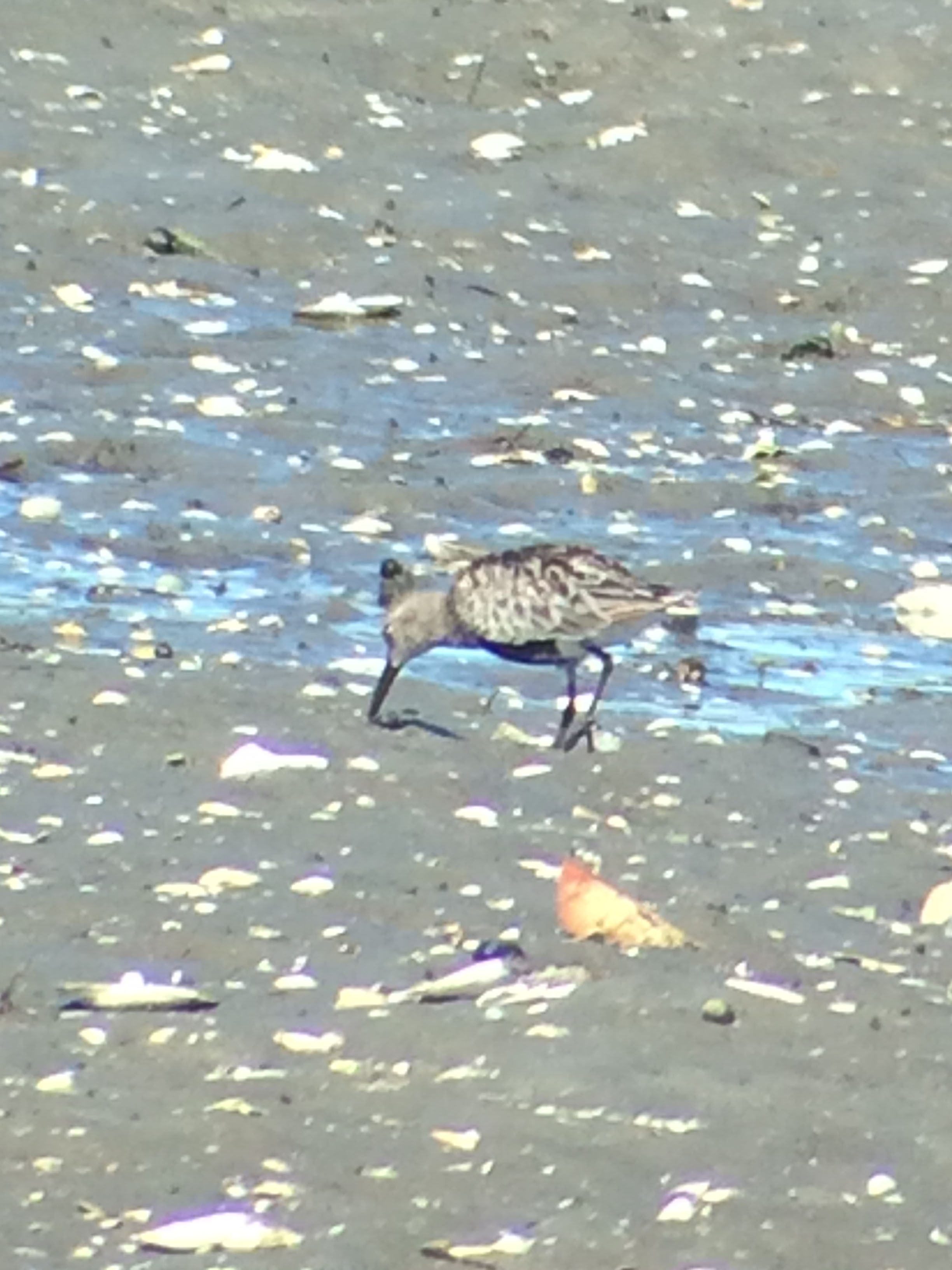
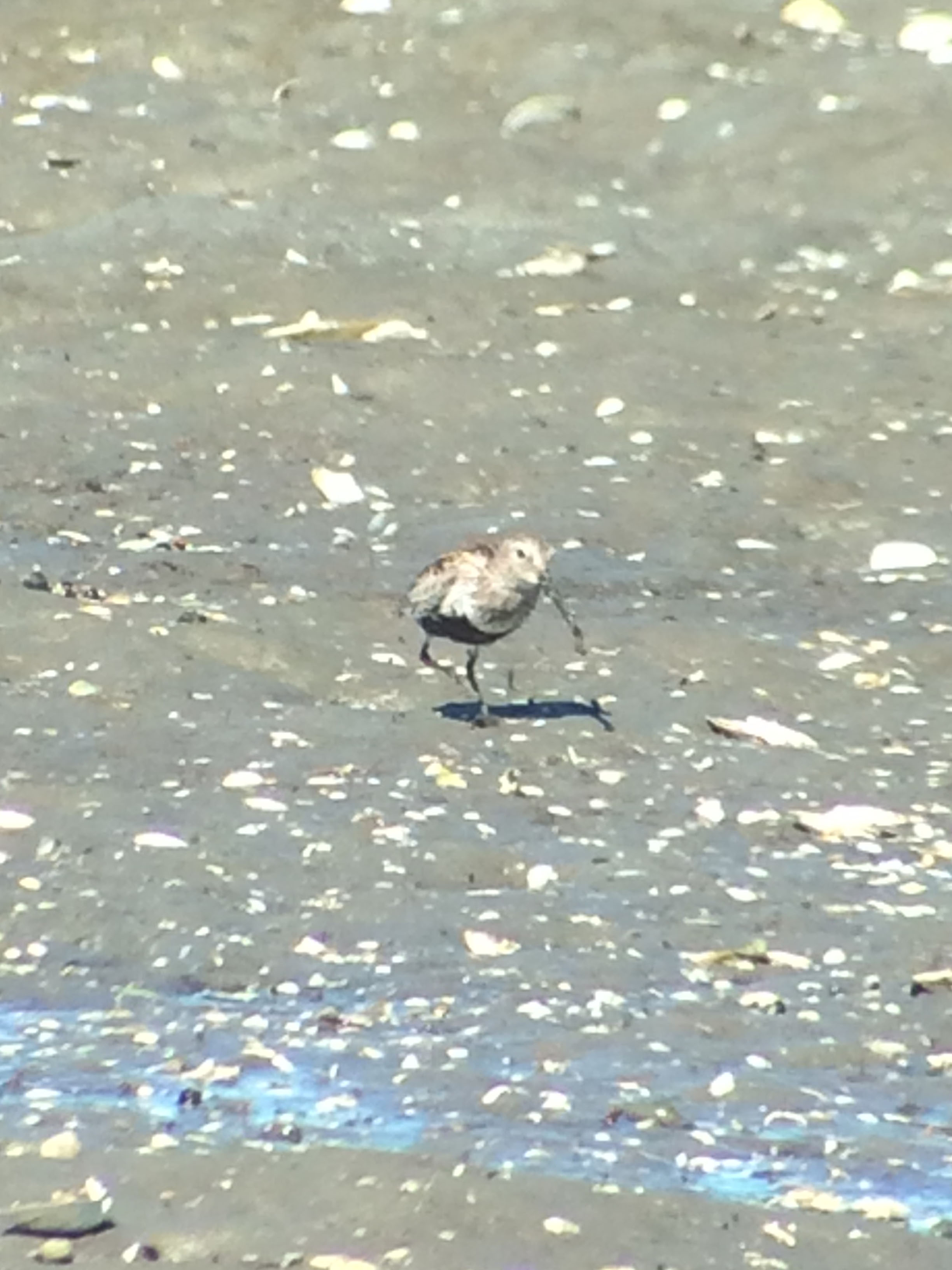
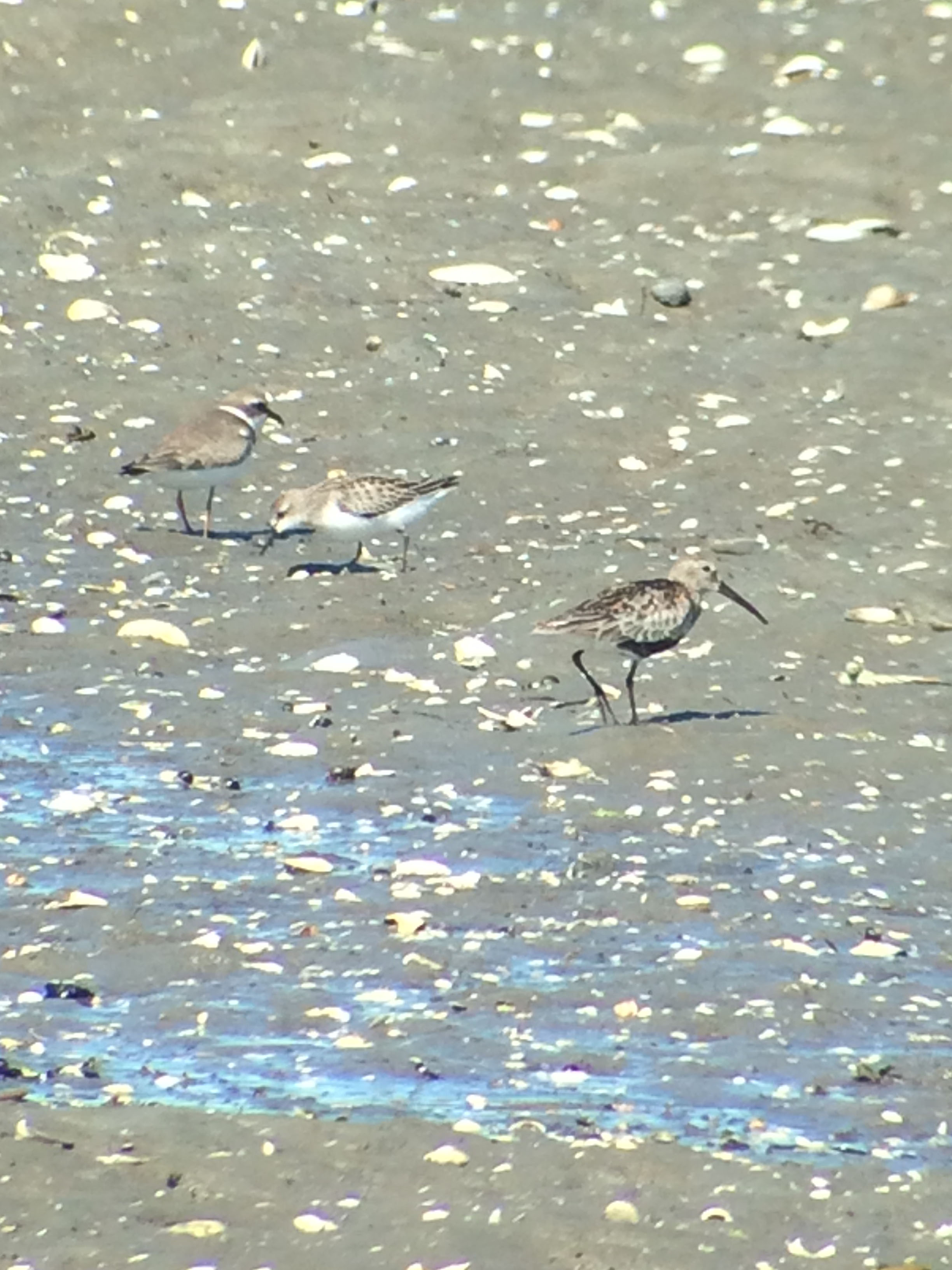
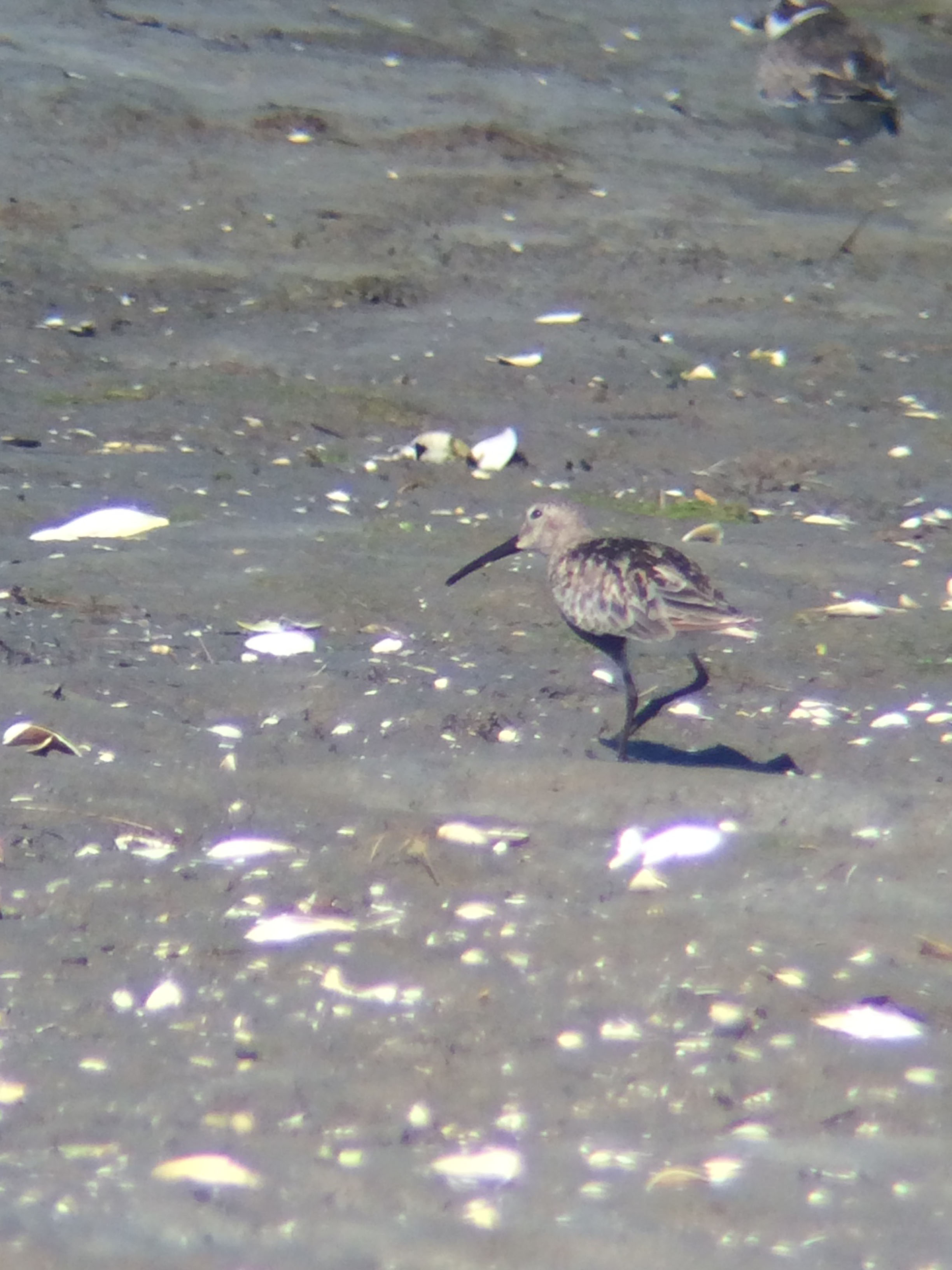
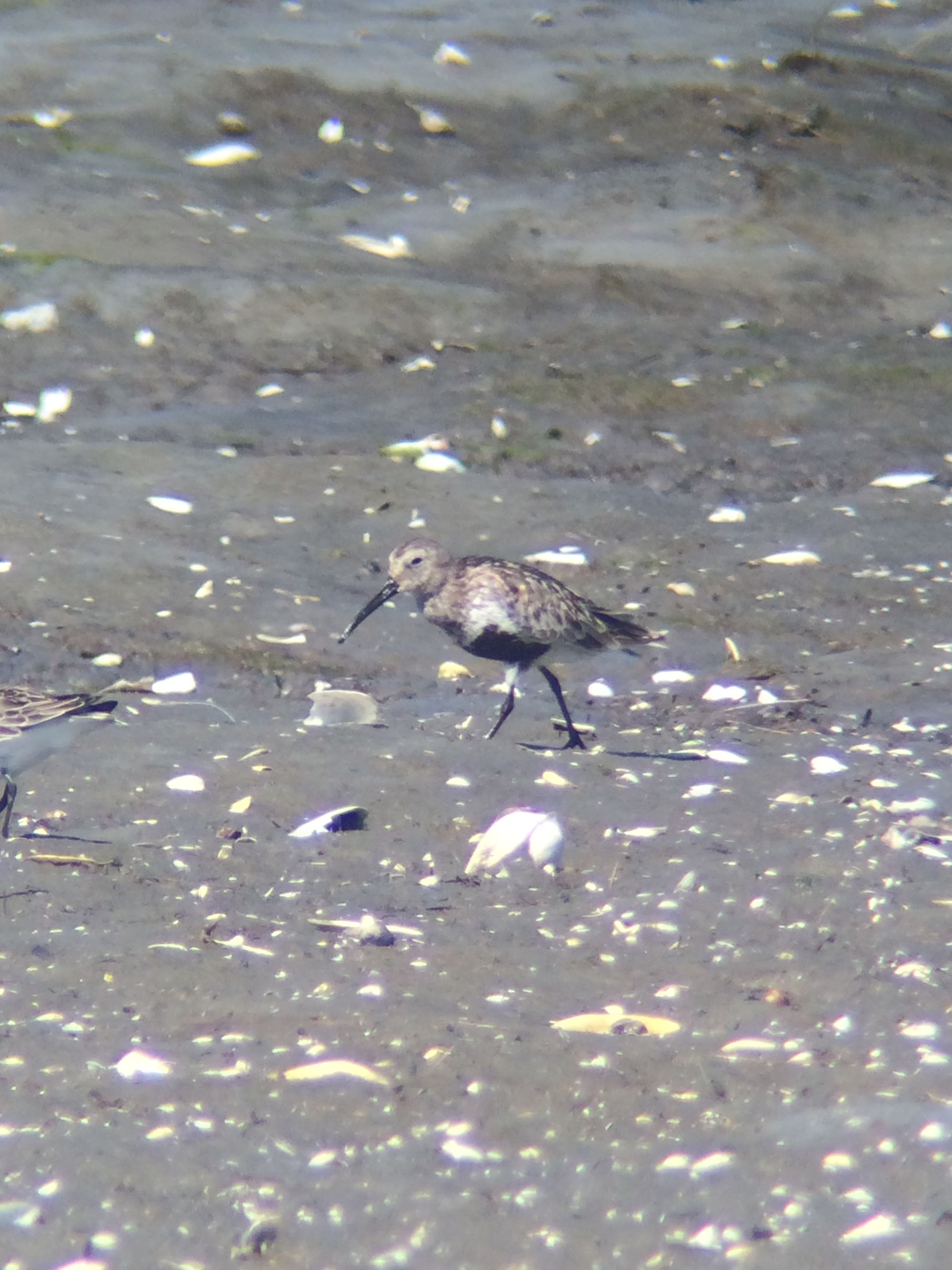
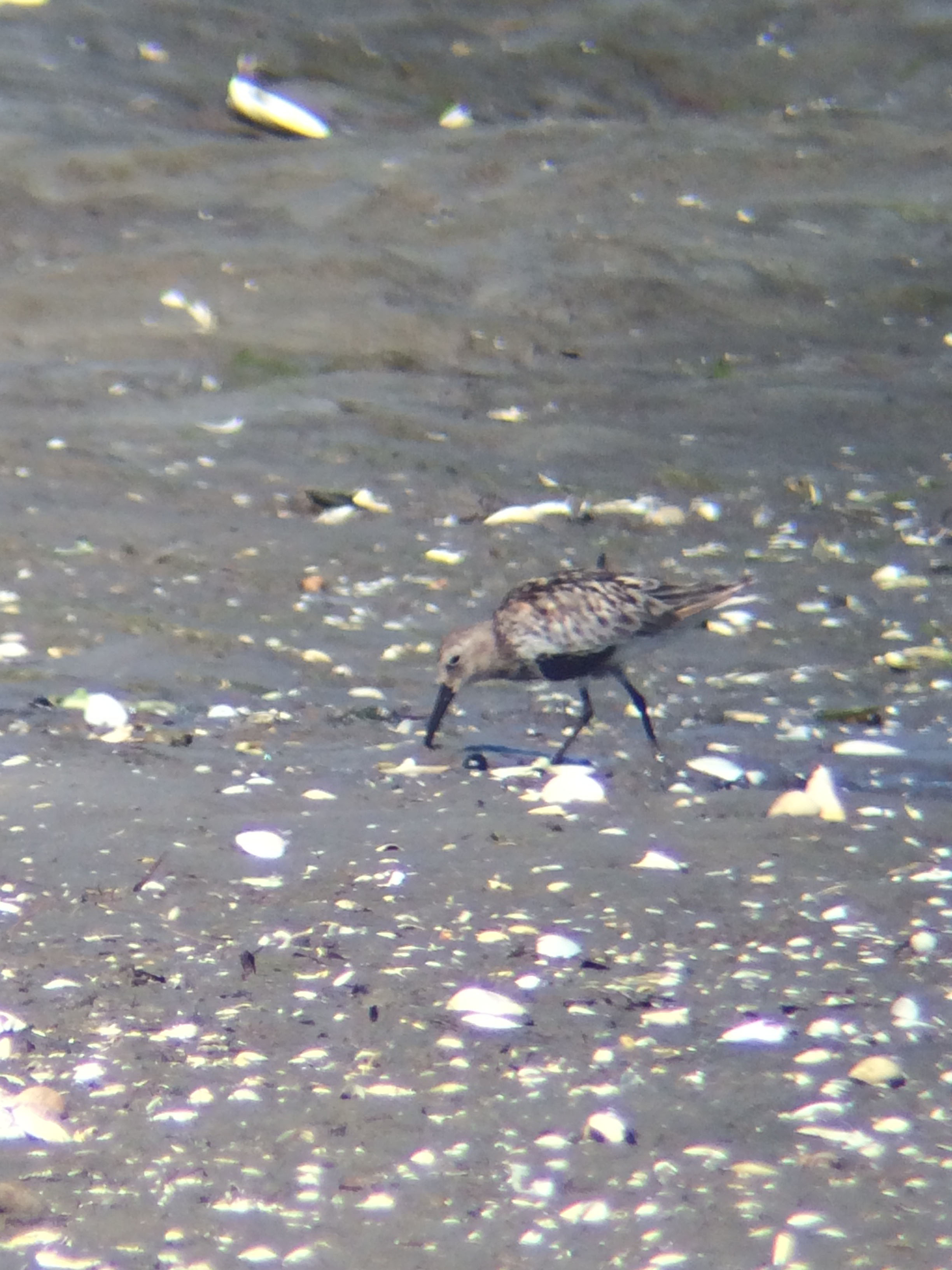
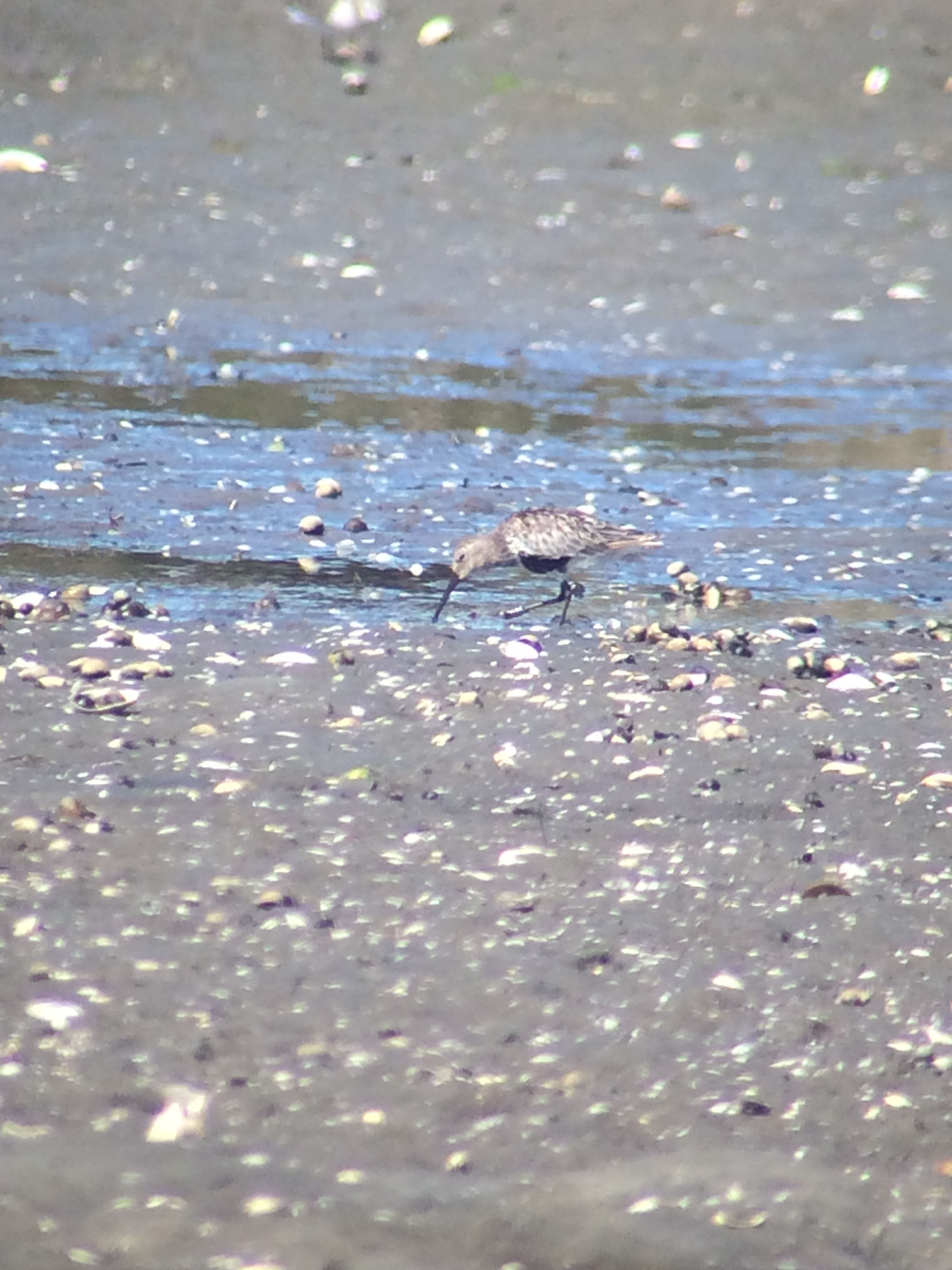
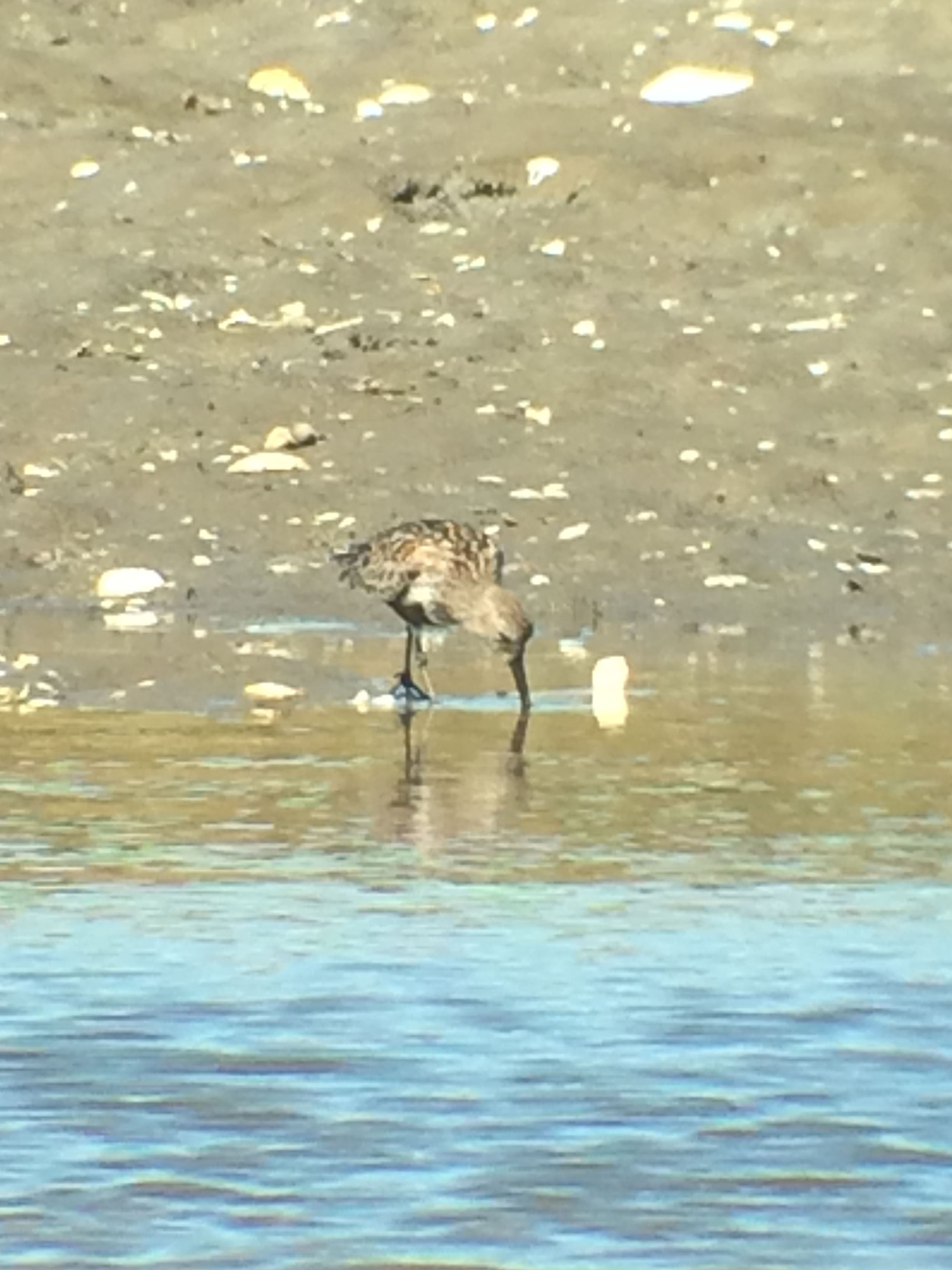
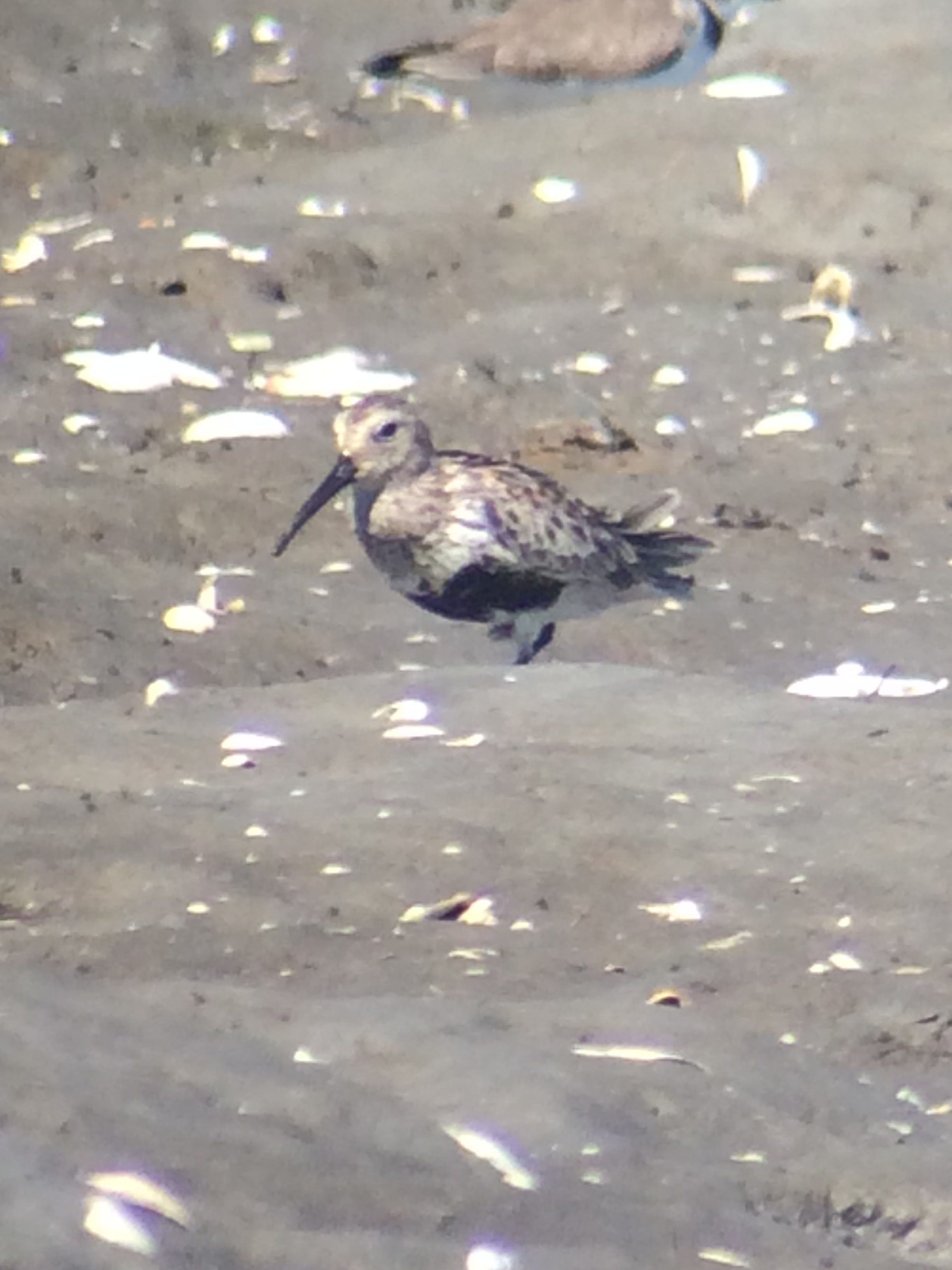
Earlier today, I found an interesting Dunlin at Pine Point, at the mouth of Scarborough Marsh. It flew in from across the channel on the incoming tide, and landed up Jones Creek, a couple of hundred feet away.

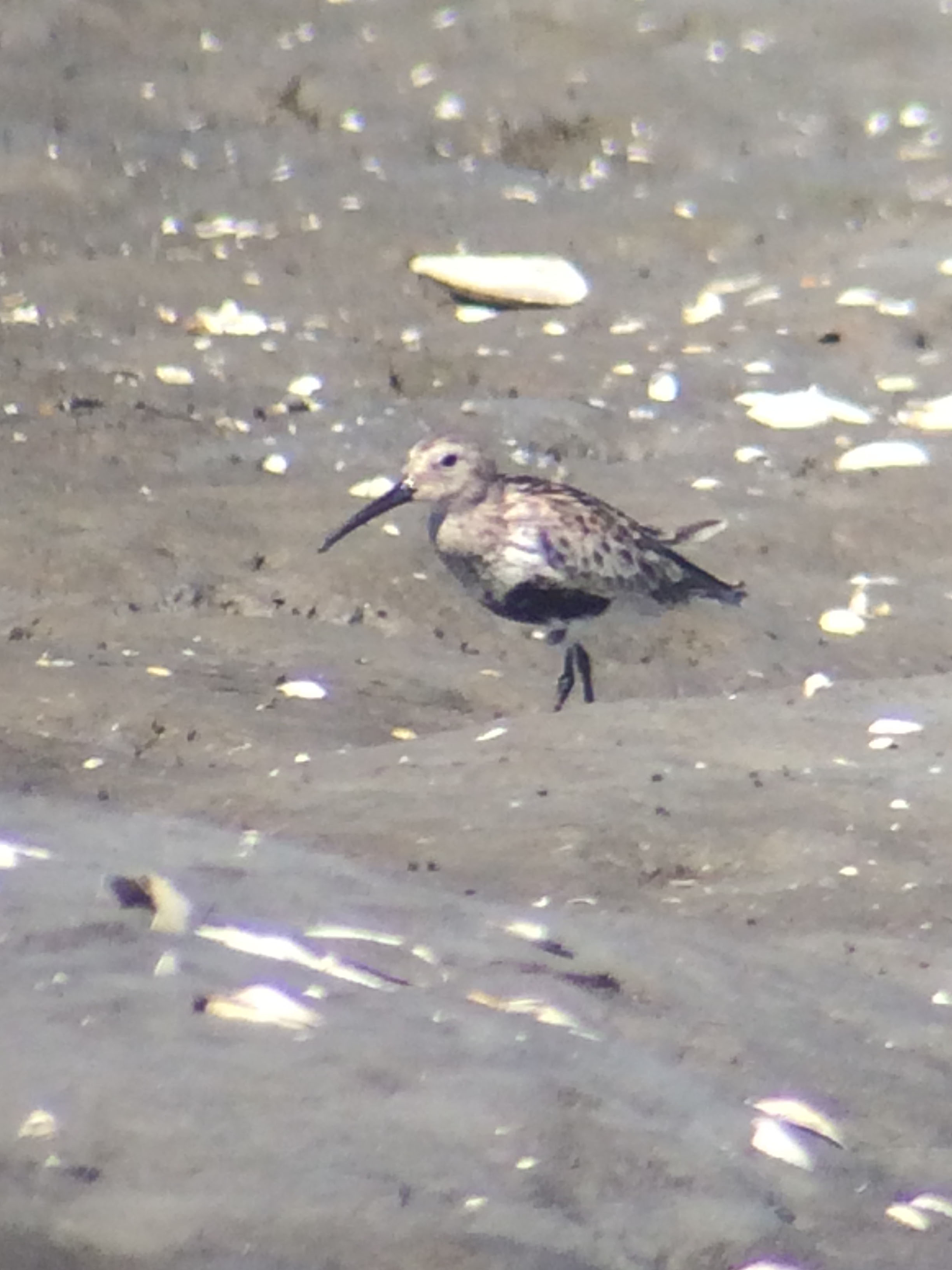
It was an adult bird, including an extensively black belly, and it appeared pale above and rather small. I needed a better look, but as I waited for the bird to slowly come closer, I posted to the Maine-birds listserve of a “…pale-backed Greenland (or other European-type)-like Dunlin,” mostly to alert other birders in the area (there were quite a few today as usual here). Based on the fact that this bird looked small, pale, and had not yet undergone molt, my mind immediately went to one of the “European” subspecies.

The bird had come considerably closer by the time Noah Gibb and Leon Mooney arrived, and it was clear that this was not a short-billed bird, perhaps on its own eliminating the Greenland subspecies arctica (one fitting this description was photographed this summer at Popham). But I will admit to not knowing the full range of variation in bill length among all of the 10 subspecies of Dunlin, so we went to work photographing and studying the bird.

We agreed that the bird appeared small (although the three other “typical” juvenile Dunlin that were present were never seen nearby, a comparison that would have been most helpful) and “not short-billed.” It wasn’t the longest, droopiest billed Dunlin that we’ve seen, but well within the range of our typical migrant subspecies, hudsonia.

As the bird came closer, plumage details and patterns blurred by heat shimmer and scope-shake in the 20+mph winds at a distance became more discernable. Arctica, the smallest and shortest-billed subspecies, also has a small belly patch. I don’t think this bird would be characterized as being short-billed or with a small belly patch.

Meanwhile, in response to my Maine-birds post, Louis Bevier chimed in that the subspecies arcticola which breeds in northwestern Canada and Alaska “is somewhat paler-backed than our typical hudsonia and delays molt until after migration.” That was not something I had remembered, but it’s been a while since I’ve done much reading on the subject. However, The Shorebird Guide by Michael O’Brien, Richard Crossley, and Kevin Karlson – which I grabbed as soon as I returned to the store – references arcticola as molting on the breeding grounds, as does our typical hudsonia. Bevier also stated that it is from “northern Alaska and the West Coast,” but that, I believe is actually referring to pacifica, which also molts on the breeding grounds (Arcticola winters in Japan, Korea, and China).

The Shorebird Guide cautions that “a few individuals of pacifica, arcticola, and hudsonia migrate before molting extensively.” While I could not see any signs of molt on the wings, back, scapulars, etc on this bird, of course some birds don’t always molt according to the book. Injuries (none obvious) or malnutrition (harder to decipher in the field) could delay molt, and some individuals can suspend molt for similar reasons – and others, such as simply being “screwed up!”

The only other reference I have handy here at the store is Richard Chandler’s Shorebirds of North America, Europe, and Asia which offers a similar array of caveats about subspecific identification. While saying “identification to race may be possible in favorable circumstances, most readily in breeding plumage,” it then goes on to warn that “At the end of the breeding season, separation will often be difficult, as feather wear renders the distinctions less obvious and upperparts become dull and blackish.”

It’s late September, and therefore it’s well past the end of the breeding season, making feather wear a serious issue. While I couldn’t see anything that suggested extreme wear (like on the flight feathers of a retarded 1st summer bird), there’s no doubt that any colors we were seeing were likely paler, and perhaps considerably so, than what the bird would be in fresh plumage.

Chandler takes the time to reason that “It is not easy to identify any of the races of Dunlin in breeding plumage away from the breeding grounds…Since races are established largely on the basis of the average characters of specimens taken on the breeding grounds, variation between individuals and differences between sexes, as well as variation with time owing to fading and wear as the season progresses, result in caution being needed when attempting to assign race to any particular individual. Consequently, there will always be more than an element of speculation with the racial identification of many migrant Dunlins in breeding plumage.”

So where does that leave me with subspecific identification? Completely and utterly unsure.

Is this simply a hudsonia that has not molted yet for some odd reason? Maybe. Is this an arctica, like my first impression? I don’t think so anymore (too long-billed and with too much black on the belly). The only thing that is definitive is that this is an interesting and educational bird. Hopefully, it will be seen again, and perhaps better photos – and photos with “normal” Dunlin – could be acquired. But for now, I am fine with saying “I don’t know.”

I present an array of phone-scoped images for you to ponder (or not). I’ll also send this link out to those who know more about Dunlin subspecies than I do. It’s going to be a busy two weeks for me (Birds on Tap!, Monhegan tour, than travel to a trade show), so I may not get back to an analysis of the analysis for some time, but if anything revelatory becomes apparent, I’ll discuss that here.

Thanks for reading!2

3

4

5

6

7

8

9

10

11

12

13

14

15

16

17

IMG_6180_18 IMG_6181_19

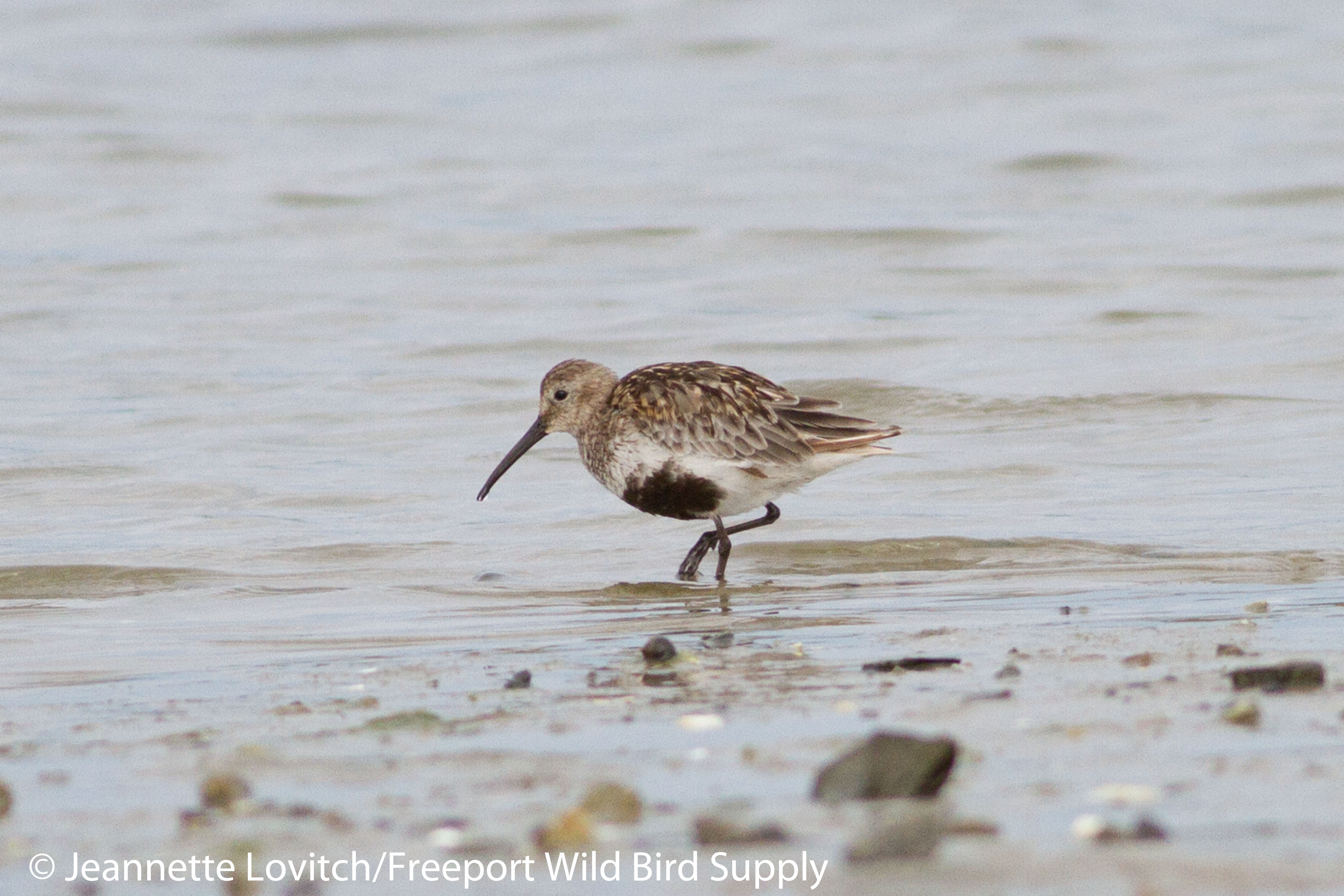
9/23 UPDATE: Jeannette and I observed the bird again yesterday, 9/22 and Jeannette took excellent photos, as usual. It was also a whole lot closer, allowing for much more detailed study. You can ignore those awful photos above, this is what the bird really looked like!
IMG_2579_edited-1a

IMG_2581_edited-1a

IMG_2585_edited-1a

IMG_2614_edited-1a

IMG_2652_edited-1a

IMG_2659_edited-1a

IMG_2664_edited-1a

So, the next session with the bird shows several pertinent details:
1) This bird IS in molt, as several new coverts and tertials are visible.
2) The outermost primaries (especially as you can see in flight) ARE indeed very heavily worn (it could be a 1st summer/2nd winter bird afterall?).
3) The size and structure looks more than fine for our typical subspecies, hudsonia.

Those, combined with the details of the plumage, show that this is undoubtedly NOT a European bird. Instead, it is either one of the North American subspecies in very retarded molt (or perhaps a vagrant East Asian bird). I’ll synthesis what I learn when I return in a couple of weeks, but for now, I wanted to get these much more useful photos posted for you to ponder, enjoy, and/or ignore.

The 2015 “Bicknell’s Thrush and the White Mountains” Van Trip

Our annual “Bicknell’s Thrush and the White Mountains” van trip to New Hampshire took place on the weekend of June 13-14 this year. Still licking my wounds from failing to provide satisfactory views for clients (on a private trip earlier in the week) for the first time in over 30 tours to look for this enigmatic, secretive, and range-restricted Northeastern breeding endemic earlier in the week, I was ready to get back in the game and start a new streak.

We departed the store on Saturday morning, and began our drive to the mountains. I always stop somewhere on the way to the Whites, and this year I mixed it up a bit with an easy walk at the pleasantly birdy Jagolinzer Preserve in Limington. Good views of Scarlet Tanager and Rose-breasted Grosbeak were highlights.

It was already 11am when we arrived at the Caps Ridge Trail in Jefferson Notch, where we casually birded the road, parking area, and the beginning of the trail. It was not the best time of day, of course, but we heard quite a few Blackpoll Warblers and Yellow-bellied Flycatchers, along with spotted a variety of warblers, including a couple of the Blackpolls, Black-throated Greens, and Magnolias.

Kristen2_edited-1

After a little r&r, we had a fantastic early dinner at Saalt Pub, a lovely little gastropub run by a James Beard Award semifinalist who worked for the legend, Julia Child. It’s not what one expects to find in little Gorham. Luckily, with our regular, casual eatery now open only for breakfast and lunch, they were able to squeeze us in. Rest assured this will likely be a regular feature of this tour from now on.
My_meal_Kristen_edited-1

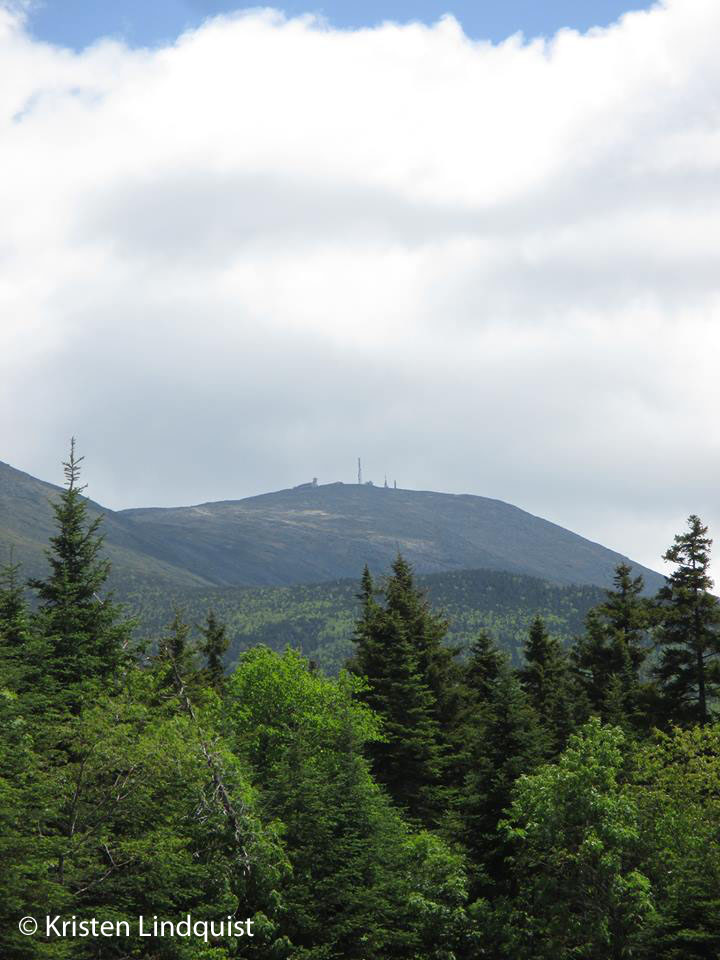
Fueled up and ready to go, we made the short trip to the base of the Mount Washington Auto Road for our private, after-hours charter up to the realm of the thrush.
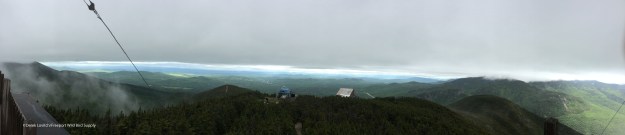
ViewFromSummit_edited-1


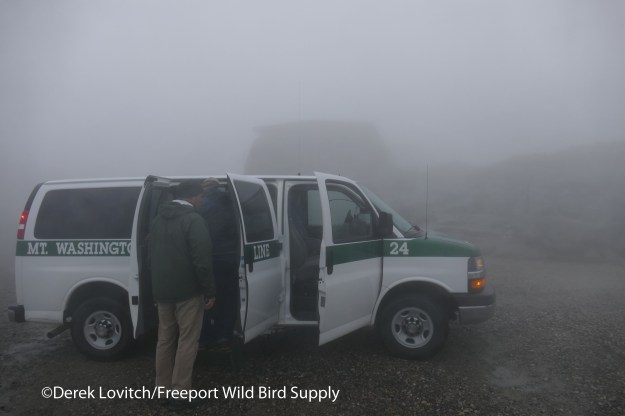
The view from the summit was magnificent, with amazingly clear views in all directions…thanks to winds now gusting over 60mph!  It was a challenge to walk around, and especially to open the doors of our van!

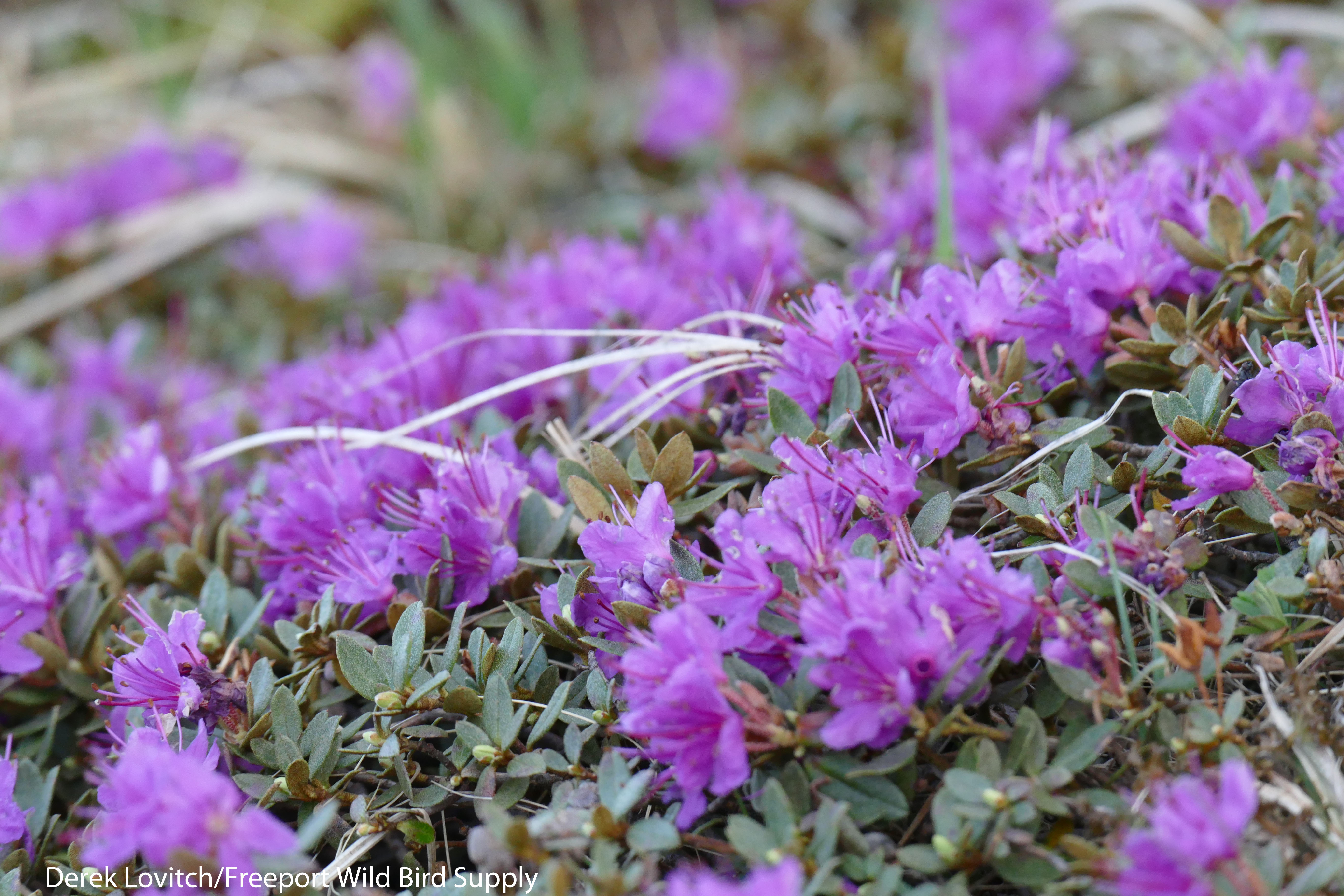
Escaping the gale before any of were blown away, we dropped down to the Cow Pasture to enjoy some flowers, like this glowing Lapland Rosebay and dainty white Diapensia.
GroupAtCowPasture_edited-1

LaplandRosebay_edited-1


Kristen4_edited-1

With dusk finally approaching, we dropped down into the krummholz to get to work.
Kristen3_edited-1

Unfortunately, the winds were increasing, and they were whipping around the mountain. My favorite spots were just too windy to hear or see the thrush, or much of anything else. One sheltered stretch of road did host several thrushes, and we did glimpse a few birds crossing the road, and especially one that flew overhead providing unusually decent looks in flight.  We had one close bird that seemed to be having a negative interaction with a Swainson’s Thrush – was the Swainson’s chasing it?  Swainson’s are marching up the mountain, residing higher and higher each year – are they displacing Bicknell’s?  It was a really interesting auditory show, but we couldn’t get a good look at either bird.

Unfortunately, a thrush that froze in our headlights as it was time to go was a Swainson’s, not our quarry.  Another miss – was I entering a slump?

But this tour gives us two chances to see the bird, and the next morning – another lovely day – we went to a different mountain to try our luck there.
Kristen5_edited-1

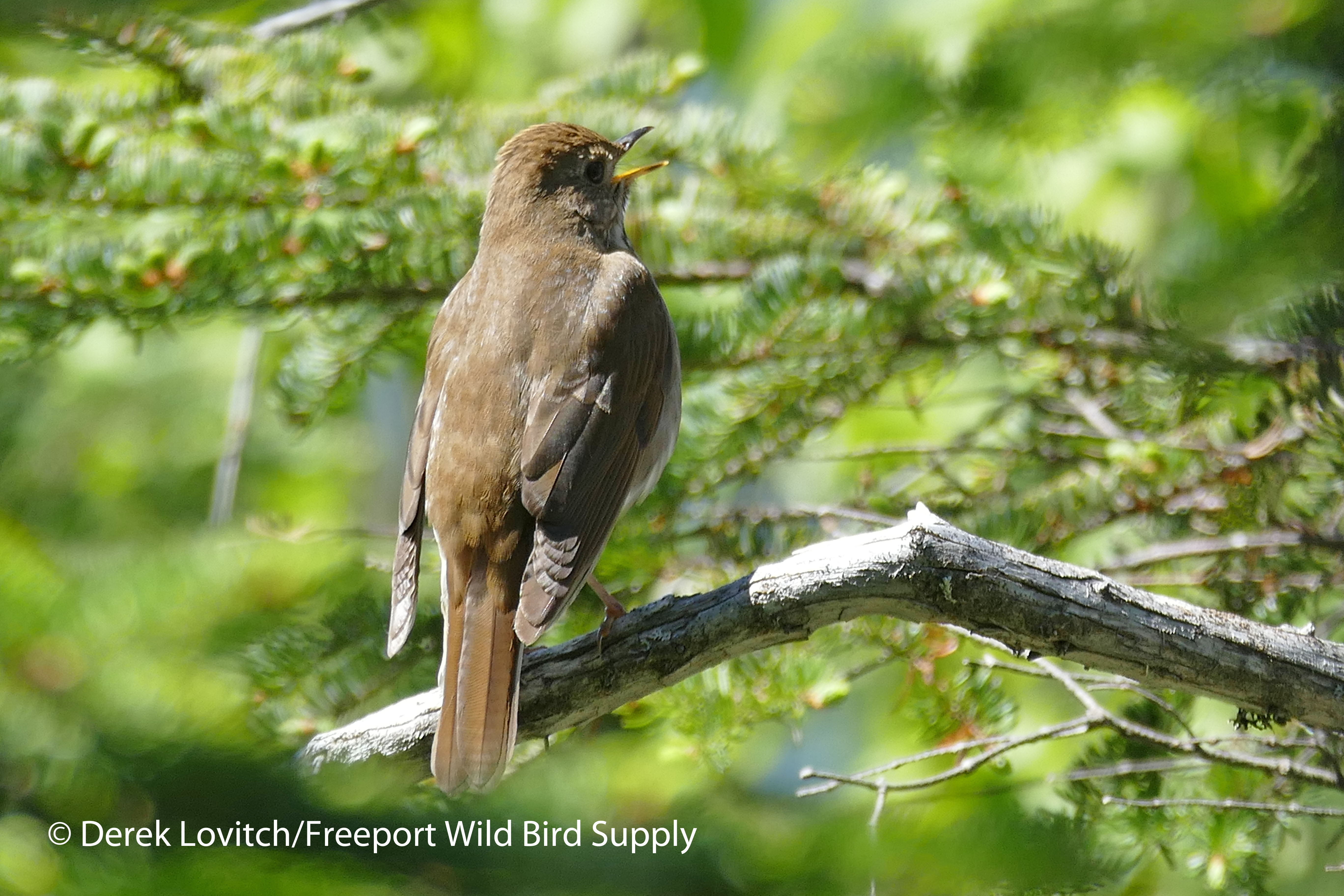
We worked hard for the bird, and although some were close, and some quick glimpses were to be had, we were running out of time, and running out of chances to really see the bird.  Then, this happened:
L1020179_BITH1_singing_1a_edited-1

L1020200_BITH2a_edited-1

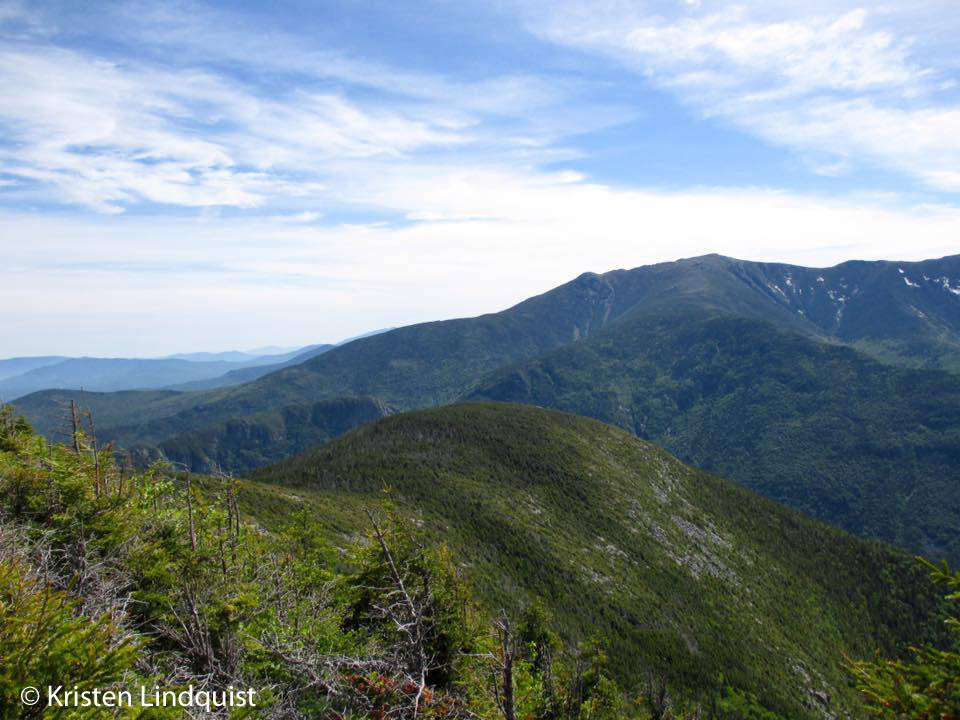
These are arguably my best photos ever of this reclusive bird, and we were all ecstatic. With everyone happy now, and with these new photos, I even took a moment to enjoy the view.
Kristen6_edited-1

Birding and Conserving Sandy Point and Knight’s Pond-Blueberry Hill

Warbler migration is in full swing right now, with at least 10 or more species easily found on most mornings at most productive patches. Nonetheless, I really hate to say it, but in less than 3 months, some of these birds will already be returning home to the Neotropics. In fact, in a little more than three months, I’ll be back at “my office” at the base of the bridge at Sandy Point on Yarmouth’s Cousin’s Island to count southbound migrants!

It’s true: the birds we think of as “our” birds that spend the winters in the tropics are actually tropical birds that spend a few months of the year taking advantage of the bounty of insects in the northern forests in the short summer. While it may feel like fall today (after yesterday’s 80-degre temps!), I only bring this up because the Morning Flight at Sandy Point was on my mind this morning, as I met with Central Maine Power and Lucas Tree.

As many of you will remember from the fall of 2011, enhanced maintenance (Federally required) of the high-tension powerline corridor through Sandy Point significantly impacted the most critical migratory bird habitat here. With the help of many of you also calling CMP and sending letters, the clear-cutting was stopped, but much to my chagrin, was resumed in the spring of 2012 without notice. To make a long story short, after several months, an agreement was reached. The agreement and essentially an apology from CMP has been posted on our website ever since.

The trees were planted, and the River Birch is doing well. While the Red Oak didn’t make it through last summer, a cherry has naturally resprouted nearby and is currently outperforming the other trees at the base of the bridge – the most critical trees for reorienting migrants. These trees are outside of the critical clearance area under the lines (one of my biggest arguments in the first place) and will continue to grow (excuse the pun) in importance to birds seeking shelter or rest before making the crossing to the mainland.Sandy Point1,5-8-15

An early spring view from “My Office.”

Knowing that Sandy Point was due for the three-year maintenance schedule, I sent a email to CMP this winter, just to check in. I was assured that someone would be in touch this year when this stretch of corridor was due to be cut. And sure enough, last week, Nicholas Hahn of the Vegetation Management division of CMP got in touch, and I met with him and a crew from Lucas Tree this morning to discuss the current cutting regime.

First, let me say that I am very happy that CMP honored their commitment to notifying me about upcoming maintenance, and I greatly appreciate the opportunity to offer input. We all agree it’s easier to get on the same page before any work is done. I’m not unreasonable, and I don’t need to get upset any more than I have to.

We walked through the site and the trees that needed to be removed or pruned (fast-growing trees that could get too tall before the next scheduled maintenance in three years, aka “capable”) were identified. It all seemed very reasonable to me, and I had no objections. I did make sure the cutting of the Staghorn Sumac patch was kept to a minimum, and Lucas Tree agreed to take out a few bush honeysuckles before they got any bigger and further impacted the valuable Arrowwood Viburnum stands.SandyPoint2,5-8-15

So all in all, it went very well, in my opinion. There wasn’t much that needed to be done, and this small stretch of corridor will continue to be maintained with the lightest hand possible, offering safety and refuge for tired birds, and exceptional opportunities for us birders.

After the meeting, I finally got over to the Knight’s Pond – Blueberry Hill property on the Cumberland/North Yarmouth border that the Royal River Conservation Trust and other organizations have been diligently working to preserve. It’s only my affinities for my local patches at this time of year that has kept me from checking out the preserve sooner.  But I am glad I finally did.

It was already 8:20am by the time I arrived, and therefore the sunny edges were less busy. And since the deeper woods are not yet too active, the overall birding was a little slow today. However, there’s clearly a lot of potential for birding opportunities here.

KnightsPond1,5-8-15

10 species of warblers were present this morning, including my first Chestnut-sided and, in the powerline corridor, my first Prairie of the season. My “FOY” Great Crested Flycatcher sounded off, and I was rather surprised to encounter a Black-crowned Night-Heron, a state Threatened (and proposed for upgrading to Endangered species). The pond is big enough to be worth a check in waterfowl migration, and I bet it can host a lot of swallows in early spring.  And there’s likely a lot more breeding around its edges and deeper in the woods than what I detected this (still) early spring day.

In other words, I will be back, and don’t be surprised to end up here on a future Saturday Morning Birdwalk. This property is a great addition to our local birding patches. Unfortunately, politics has put the purchase at risk. This is one of 30 projects at risk thanks to the Governor’s refusal to release voter-approved bond money for the Lands For Maine’s Future Program.

Voter-approved bonds are not political bargaining chips. These have been approved by voters and are not subject to the Governor’s personal approval – he’s not a king, although sometime he tries to act like it. The protection of Knight’s Pond has no relation at all to increased timber harvesting on state land (don’t get me started on that one…deer yard “thinning” anyone?). Hey, I get politics – things are negotiated and compromised. In theory. But as usual, with this “Governor,” it’s not about compromise – it’s about getting his way.

We all know how kids change the rules of the game when they’re not winning. I probably did, and you probably did too. And every neighborhood had that kid who, upon not getting his way, took his ball and went home. To me, this is akin to what the Governor is attempting to do – except this is not a child’s playground. There’s a reason it’s called the “Land for Maine’s Future” program. And the time is now for the Governor to grow up, act like a Governor and not a spoiled child, and release these bonds so this property and other valuable parcels can be conserved for all Mainers – forever – before it’s too late.

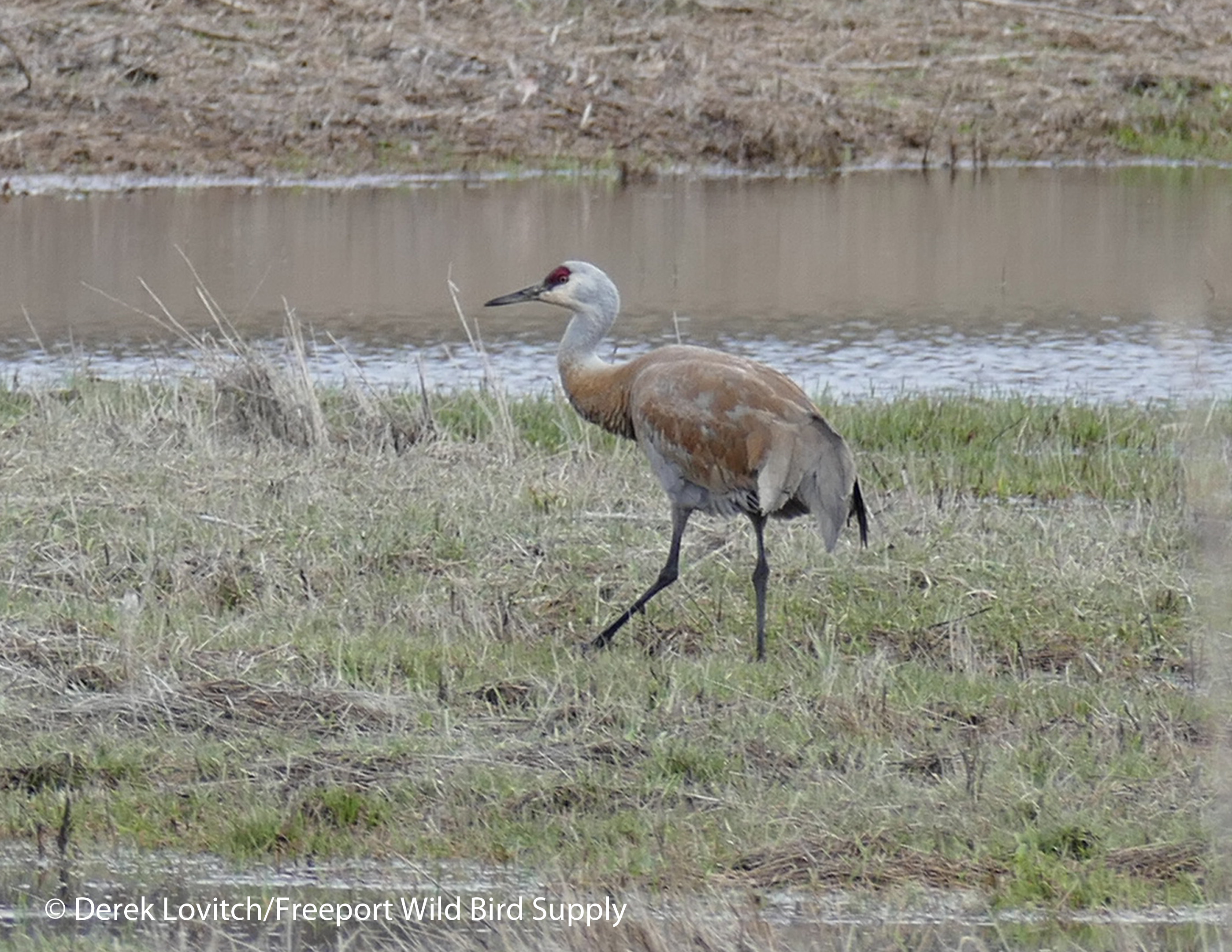
Potential “Lesser” Sandhill Crane, North Yarmouth, 4/24/15

A mere decade ago, Sandhill Cranes were a truly rare bird in Maine. Birders from around the state traveled to Messalonskee Lake in Belgrade in the hopes of seeing “the” cranes. Even that pair, or two, was remarkable.

My, how things have changed!  31 in a field together in Norridgewock last fall. The 10th of the season passing the Bradbury Mountain Hawkwatch earlier today. My best guess is that there are now at least 2 dozen pairs breeding – or attempting to breed/prospecting – around the state.

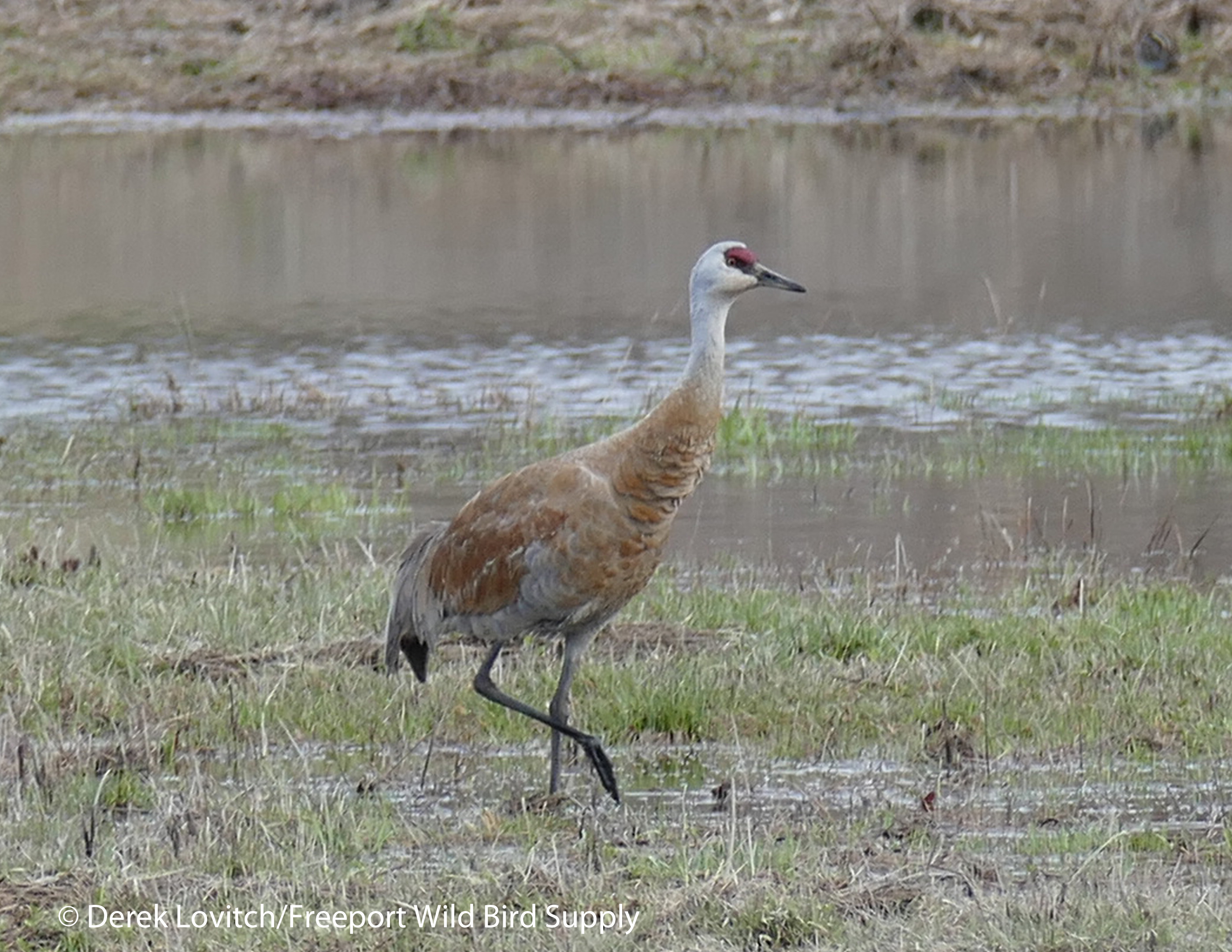
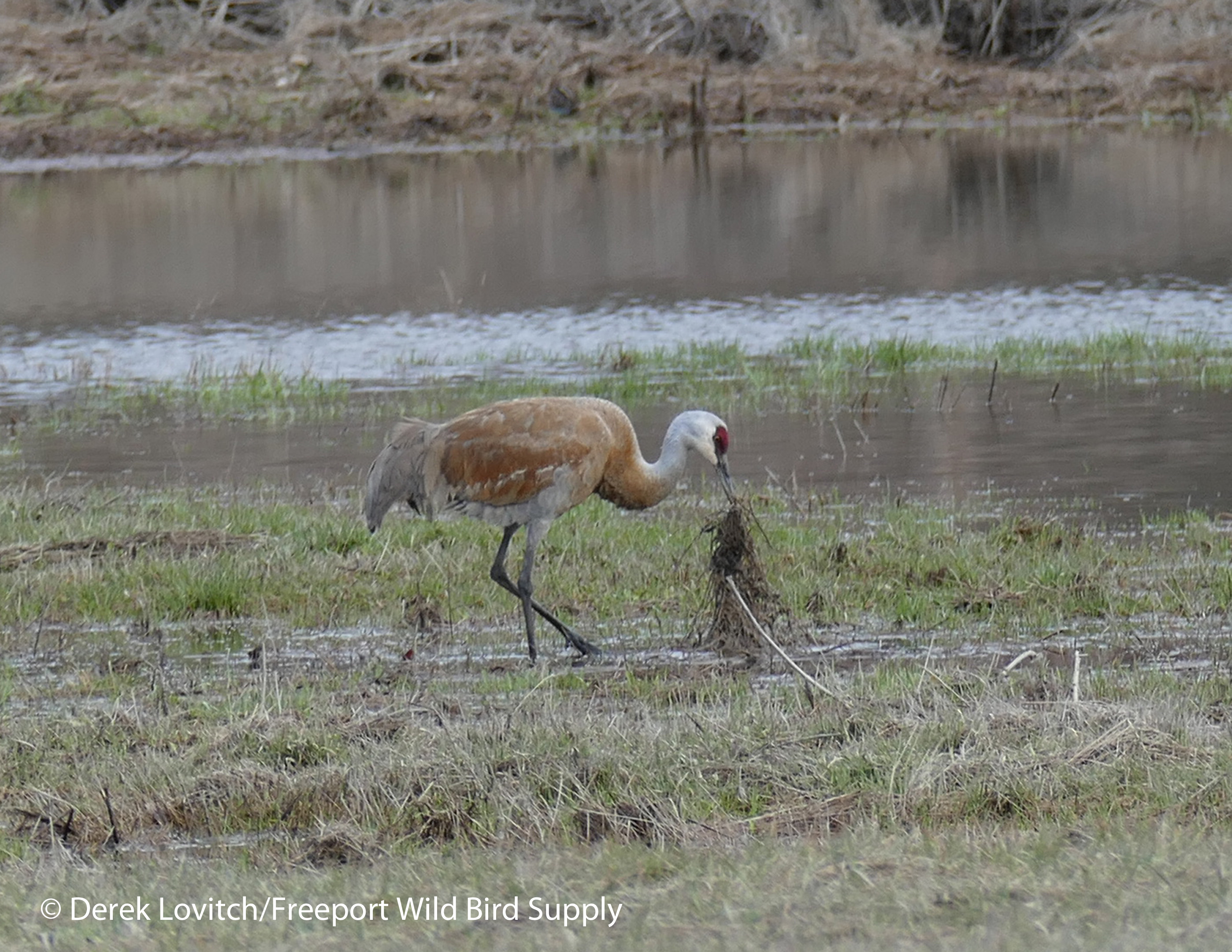
All of these birds are big, gray (rustier in spring), typical “Greater” Sandhill Cranes that are the expected subspecies in eastern North America. Whether colonizing or re-colonizing the state, there’s little doubt that Sandhill Cranes are becoming a “bird of Maine.”

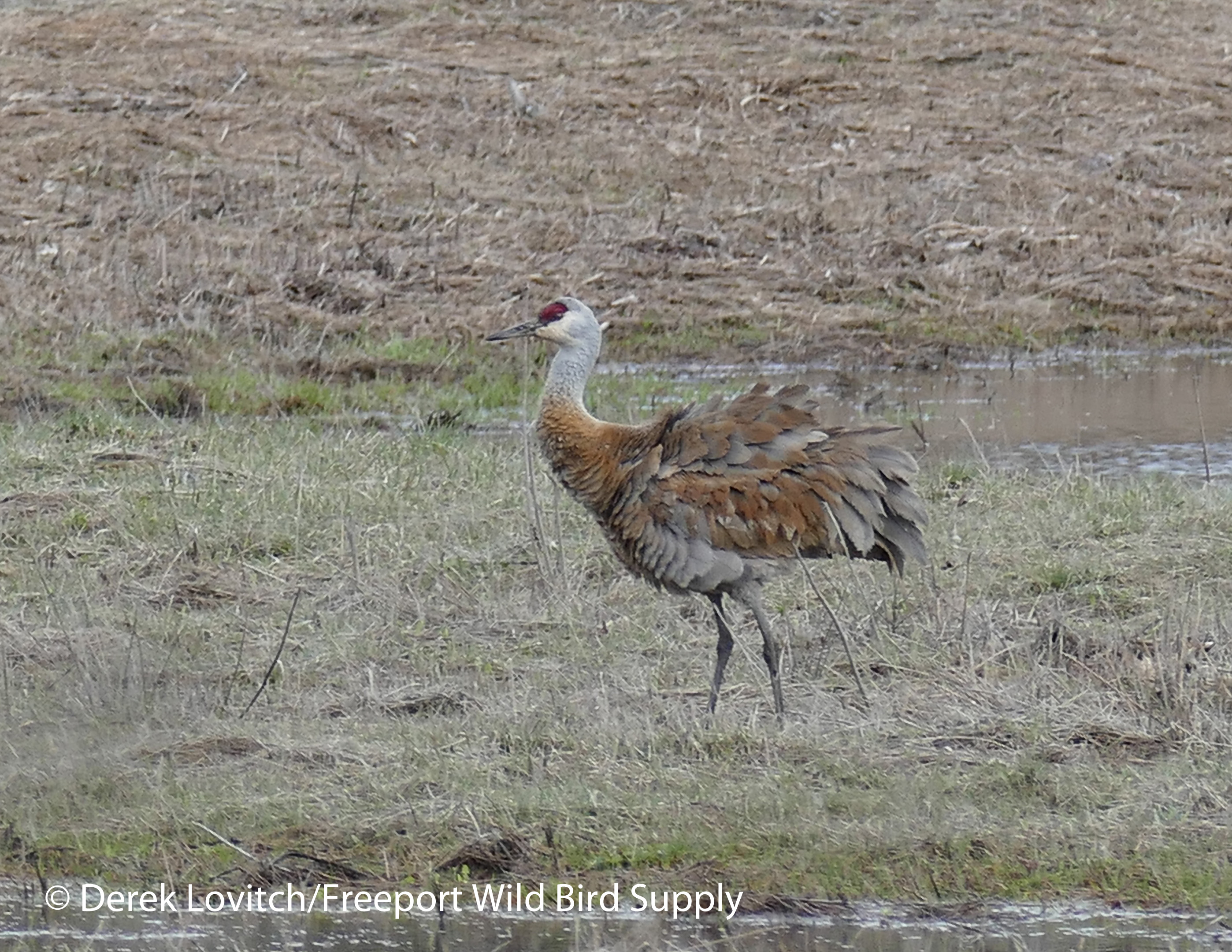
There is a lot of variability in how much rusty-brown staining is shown by each Greater. Some have decidedly more than others – a feature acquired by preening with tannin-rich mud, or so we think. And every now and then there is one that looks a little small – especially when seen alone in a field. But nonetheless, I have not seen, seen photos of, nor heard any reports of any cranes in Maine that were anything other than “Greaters.”

And then there was this bird that Andrew Wolfgang and I saw this morning at Old Town House Park in North Yarmouth (my 140th Patch Bird!).  Andrew spotted it first, but we both immediately thought “wow, that is small and brown.”

L1010532_ApparentLesserSACR1

To me, this looks just like a “Lesser” Sandhill Crane: the smaller, more northerly subspecies that breeds in the high Canadian Arctic and winters mostly in Texas and the southwest. The noticeably small size – even without anything else around to compare – was so apparent, as was the more squat, or even “dumpy” shape.

And look at that tiny (relatively speaking!) bill!  I’ve never seen even a runty Greater that looked like that. And of course, there is the extensively-rusty plumage. Again, although this feature is variable, this bird’s thoroughness of the staining, from the middle of the neck through the “bustle,” looks a lot like a Lesser to me.

The bird was across the river from the park’s northern side, in a private field. Not that I was going to flush it, but if it was to take flight, I would have liked to photograph the wing pattern which could be an aid in identification.  Intriguingly, however, a few hours later, Andrew had a Sandhill – the aforementioned 10th of the season – pass by the Bradbury Mountain Hawkwatch. We’ll take a look at his distant photos to see if we can figure out if it’s the same bird or not, and take a look at the wing pattern if possible.

I have some more reading to do, and I will be sending these photos to some knowledgeable colleagues. However, with Feathers Over Freeport this weekend, it might be a few days before I can delve further into this intriguing bird. In the meantime enjoy and/or ponder some more photos, and stay tuned.

L1010539_ApparentLesserSACR4 L1010556_ApparentLesserSACR2 L1010561_ApparentLesserSACR5 L1010565_ApparentLesserSACR6 L1010568_ApparentLesserSACR7 L1010571_ApparentLesserSACR8 L1010577_ApparentLesserSACR9

UPDATE, 4/27:  As I suspected, comments received from friends and respected colleagues all agree that this bird looks very small, very small billed, and is impressively rusty (yes, even for spring). Those features combined would be rather coincidental, BUT, the spread wing shot would be helpful. But the reality is this bird is alone, and as I discussed, everything is subjective. How small is it really? How brown is it really?

Of course, even if this was small enough and small billed enough, with a typical “Greater” standing next to it, subspecific identity is likely impossible based on our current knowledge. Individual variation (in both “Greater” and “Lesser”) is wide, and there is likely an intermediate population of the two subspecies that might render such analysis moot. Some even argue that it is more of a clinal issue and two distinct subspecies may not even exist.

So, as expected, no firm conclusions can be drawn. We can prove nothing here. That being said, for those like me who are always learning, and always willing to learn, the analysis of such interesting individuals is worthwhile on its own, both to learn about status and distribution of cryptic species/identifiable forms and for our own personal growth as birders.

Why I have Become Resigned to Voting “Yes on 1,” the “Bear Baiting Question.”

A lot of people have been asking me about my opinion on Question 1 on the November ballot: “Do you want to ban the use of bait, dogs or traps in bear hunting except to protect property, public safety, or for research?” It’s complicated, so this is not going to be short. My opinion certainly doesn’t fit neatly into a yard sign or 30-second TV spot.

Not surprisingly, Question 1 has generated quite a bit of heated, passionate, and sometimes woefully misinformed debate. A recent bout of misleading television ads from both sides is not helping people make an educated decision – but more about TV later.

I majored in Environmental Policy at Rutgers University in New Jersey, with a minor in Wildlife Management. In one of my classes for my minor, I attended a public hearing for discussion on whether or not to institute a bear hunt in NJ. Needless to say, few facts were heard from either side of the debate. There was a lot of passion from both sides, but little in the way of actual information.

There are a lot of bears in NJ. In fact, it has the highest density of Black Bears per square mile than any other state. I’ve seen more bears in a single day during the World Series of Birding in NJ than I have seen in 13 years of living in Maine. We can discuss “cultural carrying capacity” (how big of a population we humans are willing to tolerate) versus “biological carrying capacity” (how big of a population the ecosystem can sustain), but it was safe to say that something was going to be done about the large population of bears in NJ, and a bear hunt was instituted in 2003. After 2005, it took another 5 years – and lots of court challenges – to resume the hunt.

A few years after graduating, I moved to Michigan. Working in the Upper Peninsula, especially for a summer of breeding bird atlasing, I encountered a lot of Black Bears. One thing immediately struck me as different from most of my bear encounters in NJ – Michigan bears ran away from you! They feared humans. And for a Black Bear, this is a very good thing. Bears that lose their fear of humans associate humans with food – bird feeders, dog bowls, beehives, and especially garbage, and an association with humans rarely ends well for a bear.

Therefore, even though I do not hunt anything, I fully support the wildlife management practice of hunting Black Bears. What I don’t fully support are some of the techniques used to hunt this intelligent and magnificent creature.

Looking again at Question 1, we see two methods that I, and a lot of people, am wholeheartedly opposed to: dogs and snares. Snares are archaic, cruel, and sometimes catch more than their intended quarry, including Endangered Species such as Canada Lynx. I hate snares, and I have zero respect for their use and those that use them. I want them banned.

In Michigan, and again in Maine, I saw bear dogs treated poorly. Crammed into tight containers and often brutalized, these are not usually the loyal family pets that accompany your average upland game or waterfowl hunter. Once again, it’s archaic, and for me, crosses the line of cruelty – in this case to both the dogs and the bear. I think it’s time for hunting bears with dogs to go.

And that brings us to baiting. And as you may have noticed, that’s where the discourse starts getting ugly. And my goodness, is there a lot of misinformation out there.

I am not as inherently opposed to baiting as I am to the other two tactics. In fact, I recognize the very real fact that a bear sitting still at a bait pile is a lot easier to kill quickly with a clean shot than a bear that is being tracked through the woods, or happens to mosey by a deer stand. Despite what supporters of Question 1 have claimed, it is simply impossible to compare the forests of Maine to the open forests of the west. Our forests are thicker, darker, and bears don’t concentrate as readily in open patches of food. Bears are harder to find in Maine, and harder to see. I ask you, how many bears have YOU ever seen in Maine?
Forget “fair chase.” As long as only one side has a gun, it ain’t “fair.” Therefore, I want a hunter to have the best chance at killing the bear as quickly and efficiently as possible, and in Maine that usually means over a bait pile. I do have concerns about the volume and the quality of human food that is being dumped in our woods, and I have a concern about fostering the association between humans and food. But I find it hard to believe that the amount of bait being dumped in the woods is large enough to make a significant difference to the population of bears as a whole. And yes, we must consider that quite a few good people make a good portion of their living guiding hunters. While economic consequences are not my favorite consideration when discussing wildlife management, the reality is that state agencies and representatives will consider it. I can tell you that, as a birding guide, the clients only come if there’s a reasonable chance at success. Can we meet supposedly-scientifically set management goals without baiting? I don’t really think so, to be honest.

Four years ago, when a very similar Citizen’s Initiative was on the ballot, I voted against it. I don’t like making wildlife management decisions based on public sentiment. It should be based on science, and I had some apparently-senseless optimism that something else could be done about dogs, and especially snares.
Unfortunately, nothing has happened in the past four years to eliminate the draconian practices of using snares or dogs. (In fact, we instituted an even-more-archaic bounty on coyotes, most of which are taken with snares, so we’re going backwards instead of forwards). Maine’s Department of Inland Fish and Wildlife has done little in the meantime to alleviate my concern that their decisions were based more on simply what hunters want, and not what our wildlife needs. In fact, it seems pretty obvious to me (see: Barrow’s Goldeneye ) that anything that might need to be done that could upset any hunter and their effective and all-powerful lobbying organizations was unlikely to gain much traction. As long as revenue for fish and game agencies is almost solely from the tax (Pittman-Robertson Act, one of the most amazing and effective pieces of user-fee legislation every passed) on hunting and fishing goods, their policies will be biased towards their revenue stream and their supporting constituents. This is a topic for another day, but needless to say, hunters have a disproportionate (as compared to non-consumptive wildlife users or the general public as a whole) voice when it comes to wildlife agency decisions around the country.

So just like in 2010, I personally am left with a decision about whether I would vote to eliminate bear baiting (effective and efficient, and providing jobs) in order to eliminate snares and dogs. Once again, this was not going to be an easy decision for me.

And the supporters of Question 1, “Mainers for Fair Bear Hunting” know that. That’s why the ballot question is worded that way. By linking bear baiting with other cruel practices, the intent is clearly to reduce or eliminate the hunting of bears in Maine. If the group (over 90% of their funding come from the Humane Society – but, to be fair, much of the “No” groups’ money comes from out of state organizations as well…more on this later), wanted to ban the worst, undeniably-cruel practices, a ban on the use of dogs and especially snares would pass in a landslide.

But that’s not what the referendum is asking. And as everyone who doesn’t live under a rock (more and more, I wish I sometimes did!) knows, the debate is around baiting. And this is where things are getting ugly.
I really want objective scientists to make the wildlife management decisions for Maine. That’s how it should be. But if the recent television ads sponsored by the misleadingly-named “Maine Wildlife Conservation Council” (who has actually raised more money than the “Mainers for Fair Bear Hunting”, no small portion of which out of state hunting lobbies, I didn’t do the math…but you can.) featuring state biologists and game wardens make these people sound like objective scientists, than I have a bridge to sell you.

(I was unable to find links to these ads online. If anyone knows where they are posted, please let me know and I will edit the post accordingly)

And the most egregious of them all has just hit the airwaves featuring a 911 call of a woman in Florida.

These so-called objective scientists and enforcers of state and federal laws are basically saying, if you ban baiting, you and your kids are going to die. This fear mongering is despicable and disgraceful. Somehow, this has been ruled to be legal, but it is most definitely not ethical, and sets a much scarier precedence for how our government sways us with fear. Those that appear in uniform in these commercials should simply be ashamed of themselves. Whoever OK’d this (I’m looking at you, Chandler Woodcock) should be immediately fired. Their credibility is shot with me.

This isn’t “trusting your wildlife biologists,” like these tidy little yard signs implore us. No, this is good ol’fashioned fear mongering. Nothing more, nothing less. How many Black Bear attacks have occurred in states with and without hunting? How many injuries and deaths have occurred? What’s the data that shows conflicts are definitively going to arise without baiting? Those are the facts and figures that Maine IF&W should be supplying to educate the public. But instead, they show video of kids playing basketball, complete with ominous music and our trusty game warden in a uniform and vehicle paid for by the taxpayer, asking us to let them manage bears.

For whom? For the children? Or for their sponsors?

IF&W has crossed the line here. They are not offering facts for voters to make an educated decision. They are acting as an “issue advocate,” clearly and unequivocally campaigning for one side of the issue. Crossing that line from “science arbiter” or “honest broker” where they simply provide the facts needed for informed decision-making, IF&W loses scientific credibility when they are so obviously taking up a cause. (For a good discussion of concepts, in this case, as they apply to professional ornithological societies, see “A Vision for an expanded role of ornithological societies in conservation” by Jeffrey R. Walters et al in the May 2014 issue of The Condor: Ornithological Applications – Volume 116: pp278-289). At the very least, the degree to which IF&W is so obviously outspoken on an issue is unusual, and clearly political.

Can we trust them now? How objective are they? They’ve dedicated so much time and money into keeping the status quo, how can we possibly believe they are impartial?

I can’t. These ads are despicable and deplorable. As someone who truly understands many sides of wildlife management, I can no longer “trust my wildlife biologists.” I don’t see an organization that would stoop to such lows as equating bear baiting bans with the death of kids as an objective arbiter of good information.

While I mostly disagree with a recent Bill Nemitz article on the use of the bait itself, I wholeheartedly agree with him on his feelings about the role IF&W is playing here.

I don’t want to see bear baiting banned, but I definitely want to see the use of dogs and snares eliminated. If I had any faith whatsoever in IF&W or other state officials in modernizing our outdated hunting concepts and management objectives, than I would confidently and happily vote no on Question 1. But I can’t. I don’t see anything changing without voting “yes.” And honestly, I do that with apologies to people who may lose their guiding revenue because of it.

Should the Black Bear population in Maine begin to climb, or bears begin to lose their fear of people, then we need honest and objective research into how best to deal with it. It will not be easy to reinstitute bear baiting. In fact, it might be next to impossible. And this is why the decision to vote yes is so hard for me. But without faith in our system to make actually scientific decisions and not decisions that reflect anything other than where the money comes from, then I find it impossible not to do my part to vote against the banning of snares and dogs for use in hunting bears, and therefore, I am resigned (yes, resigned is the best word here) to vote YES ON QUESTION 1.