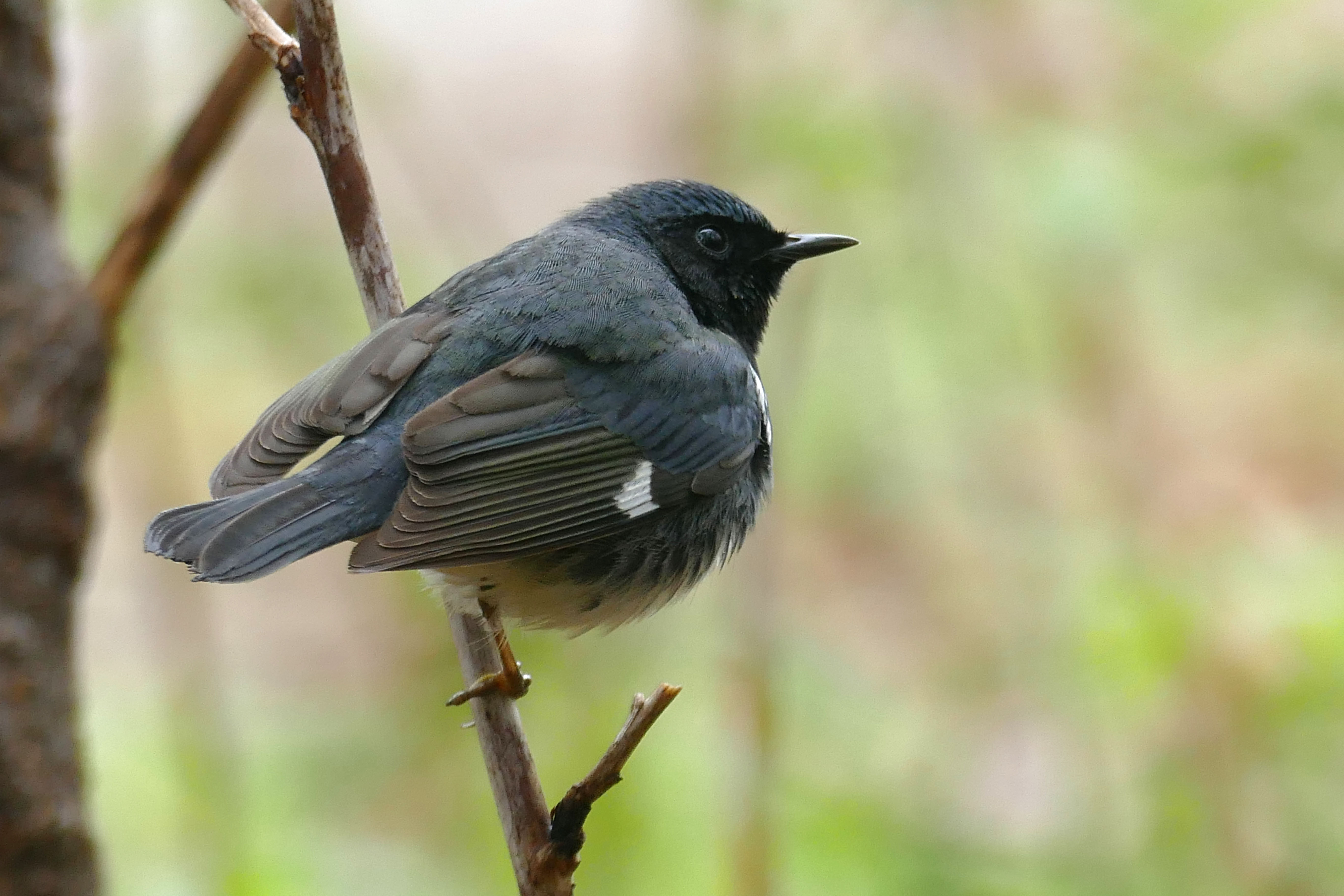
Category Archives: Private Guiding and Tours

Recent Highlights, 9/11– 9/18/24

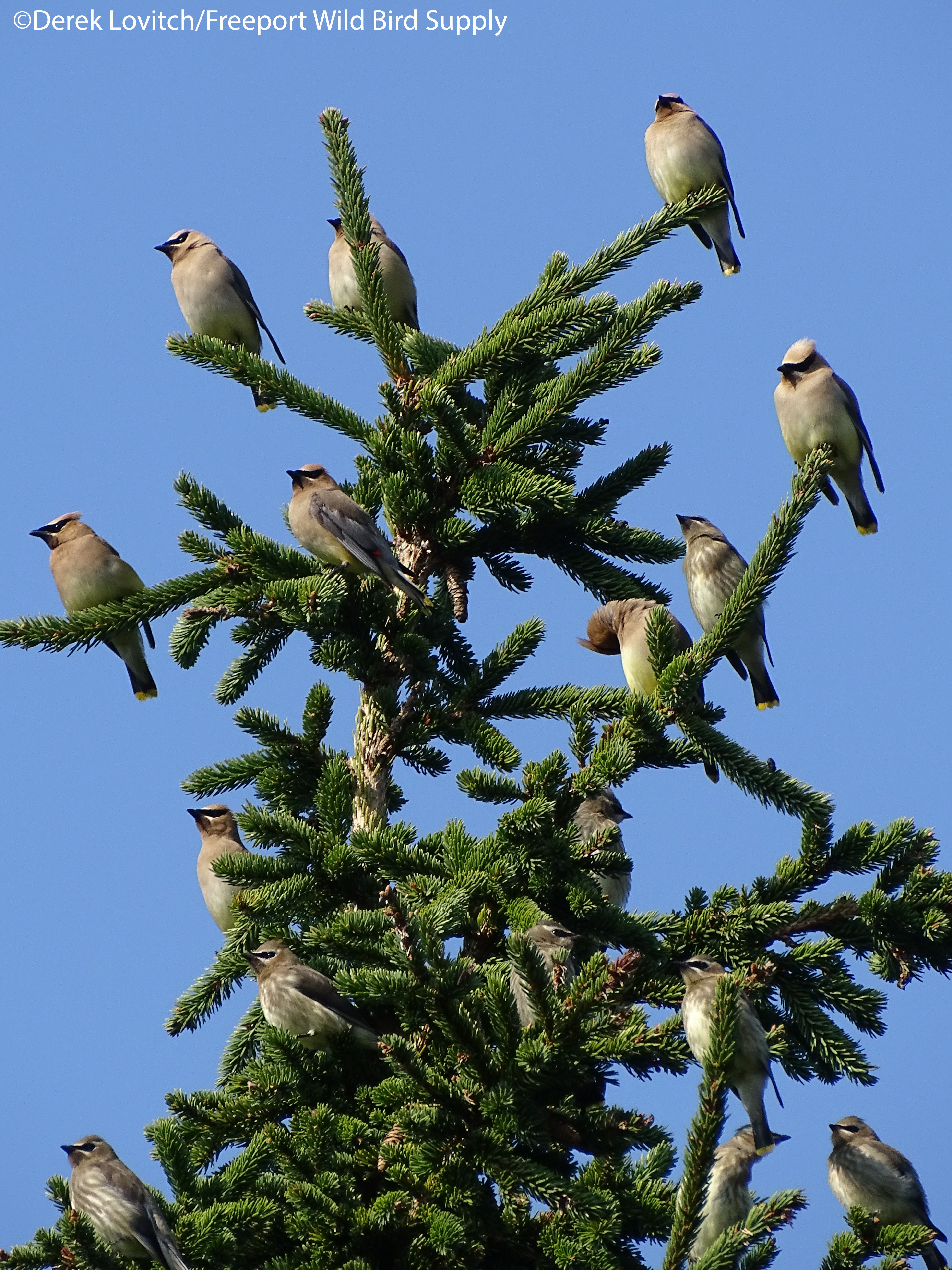
They might be abundant, but I do love Cedar Waxwings, especially a tree full of them on Monhegan!

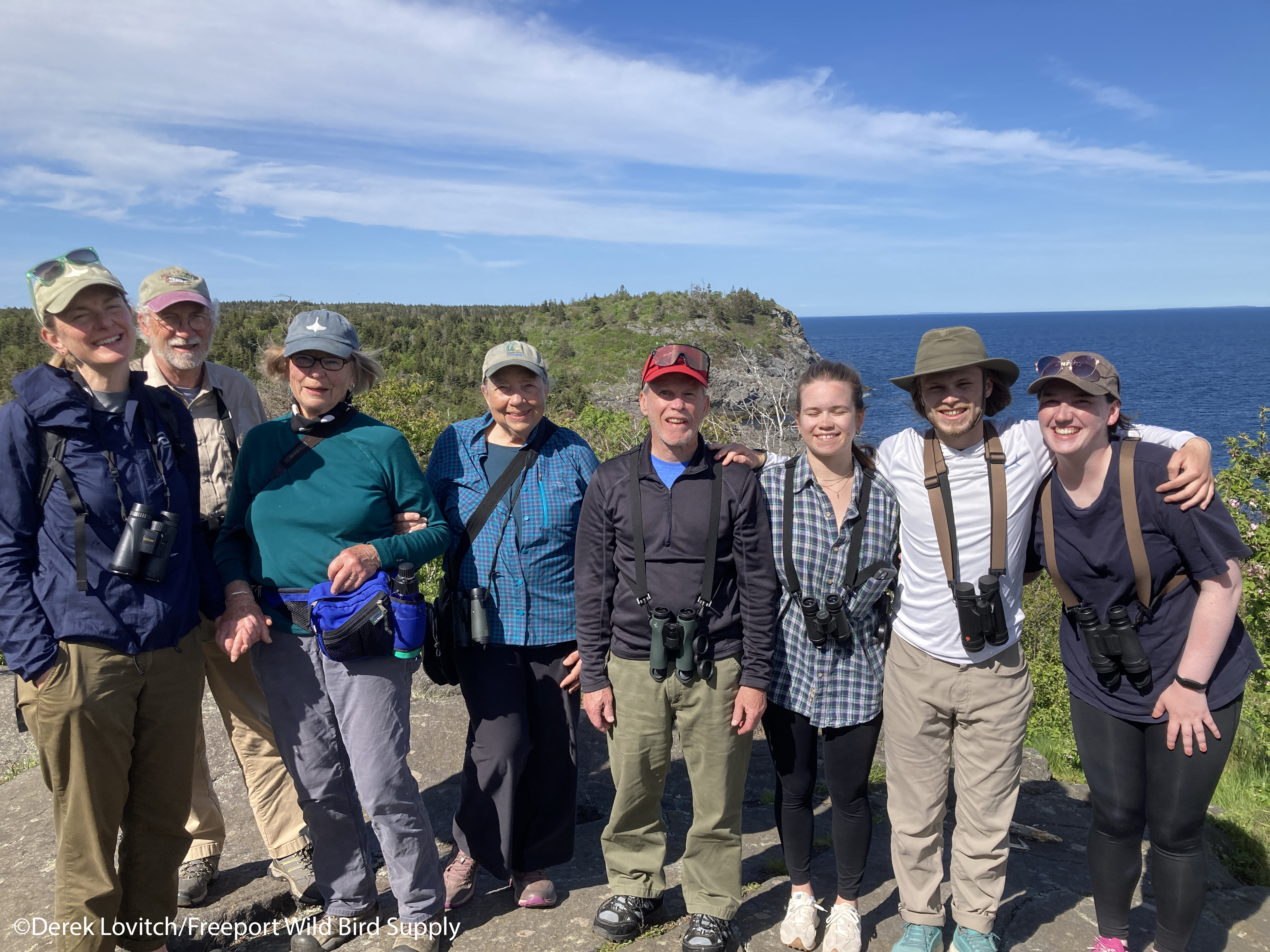
Eight great days of birding, including three days on Monhegan, yielded the following highlights:

  • 9/13-9/15: Monhegan Island with Down East Adventures “Migration Workshop” tour group. Brief trip report here. Some of the most noteworthy observations included:
  • 17 species warblers total.
  • Cape May Warblers dominated the morning on 9/14, including 3 of every 5 birds in Morning Flight and dozens in trees afterwards. Plenty on 9/13 and 9/15, but most of the arriving birds on the 14th seemed to depart for the mainland.
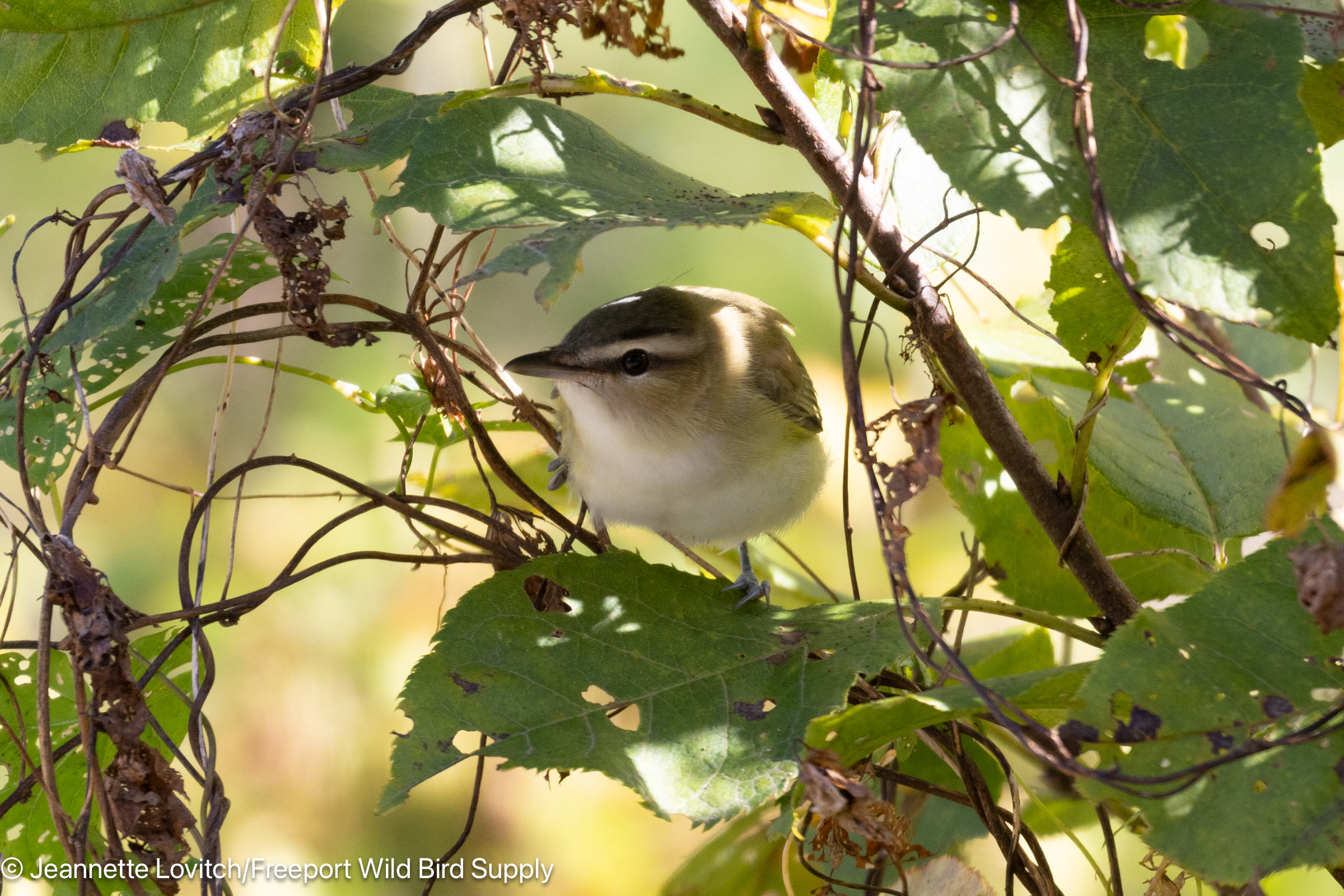
  • The usual “uncommon” migrants like Rusty Blackbird (2 on 9/14), Philadelphia Vireo (high count of 2-3 on 9/14).
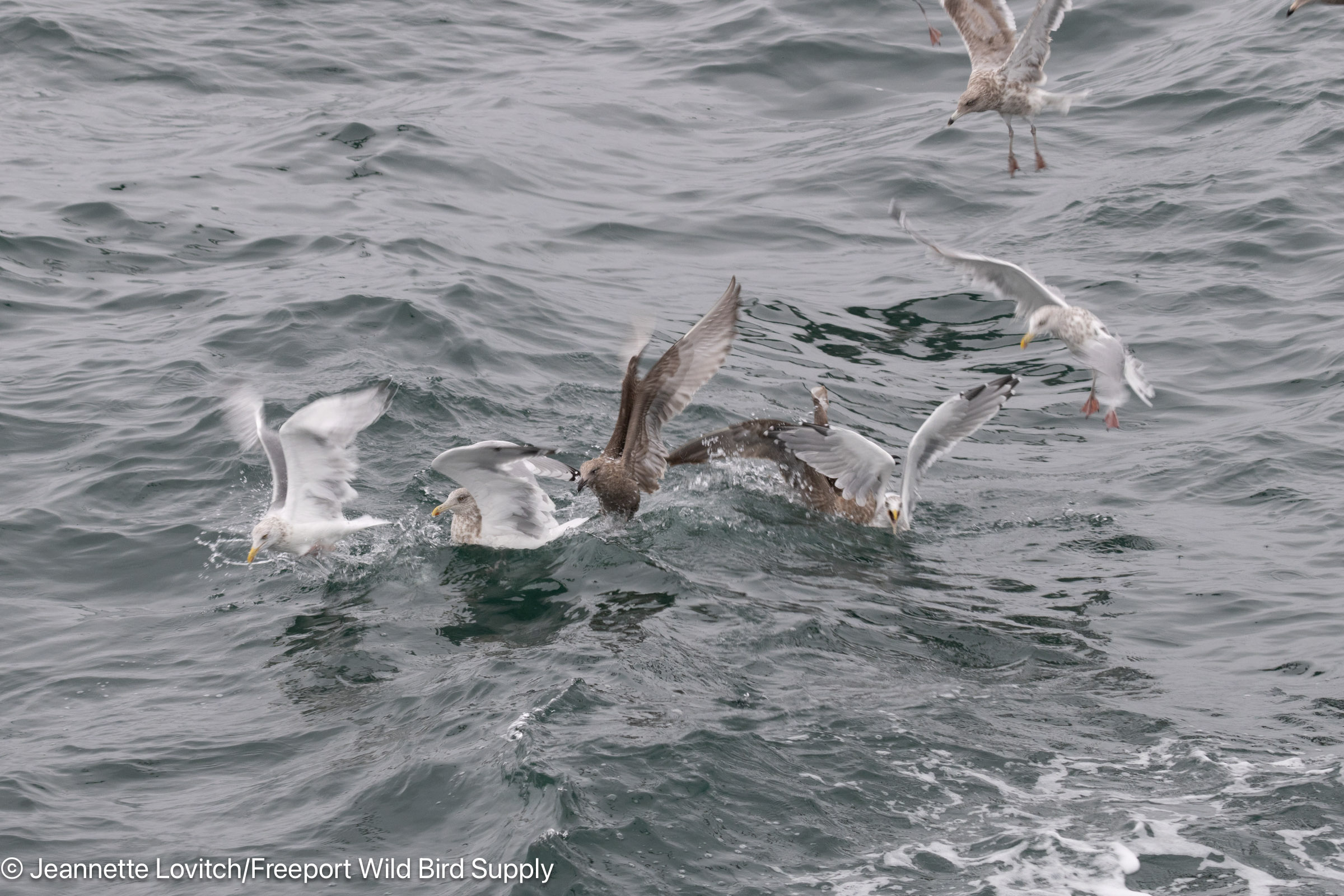
  • 1 first cycle Lesser Black-backed Gull, 9/13.
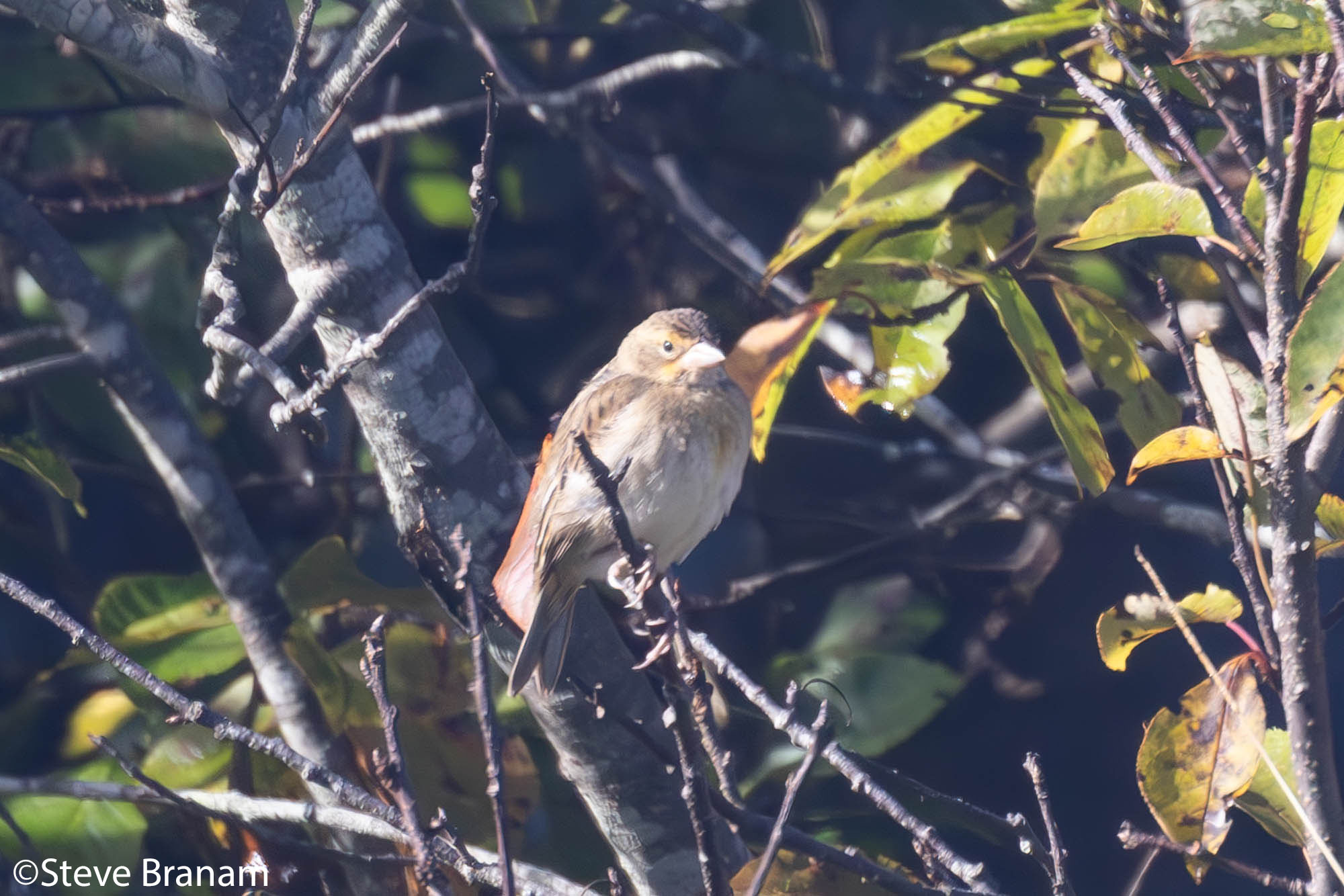
  • 1 LARK SPARROW, 9/14.
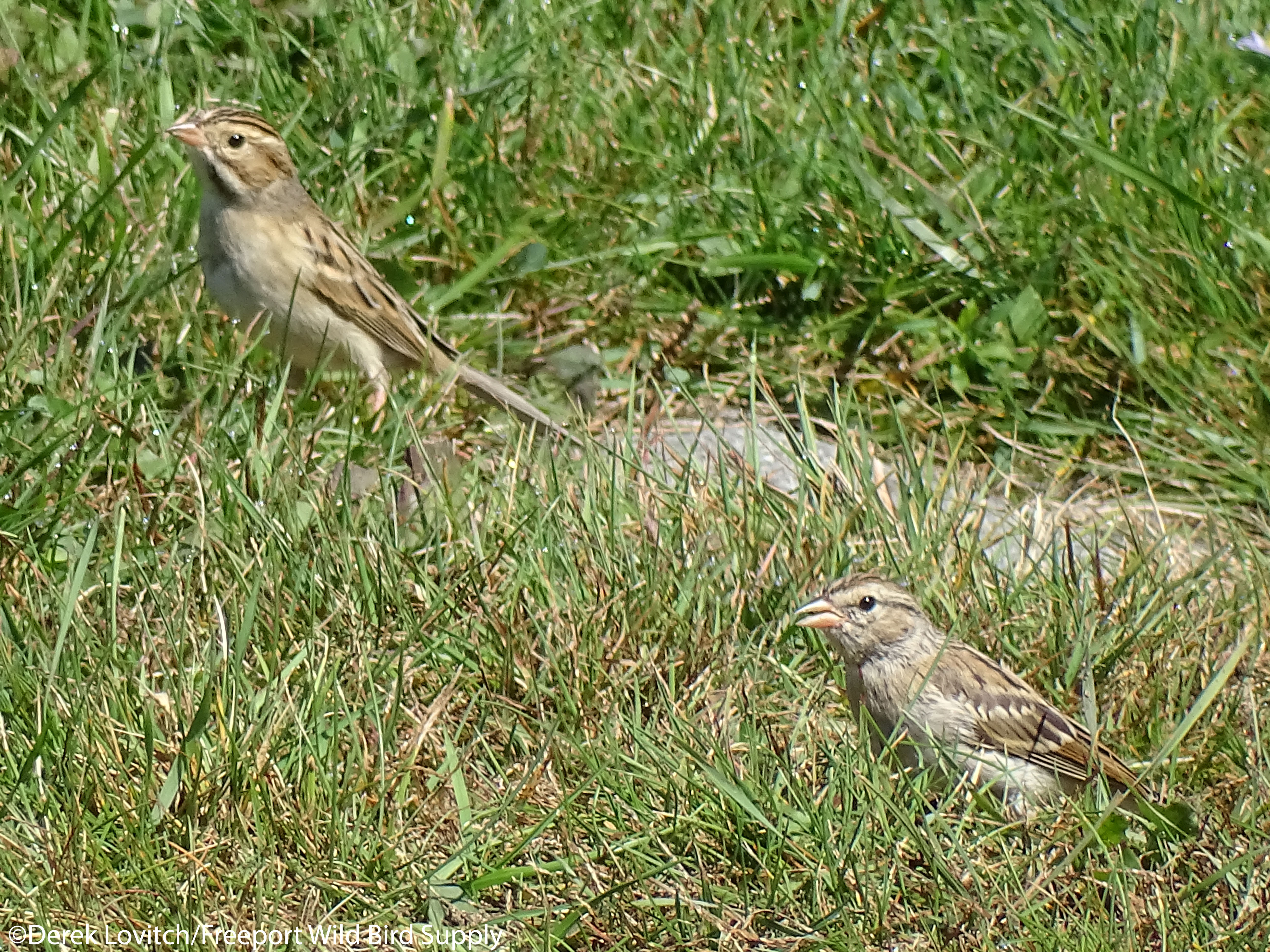
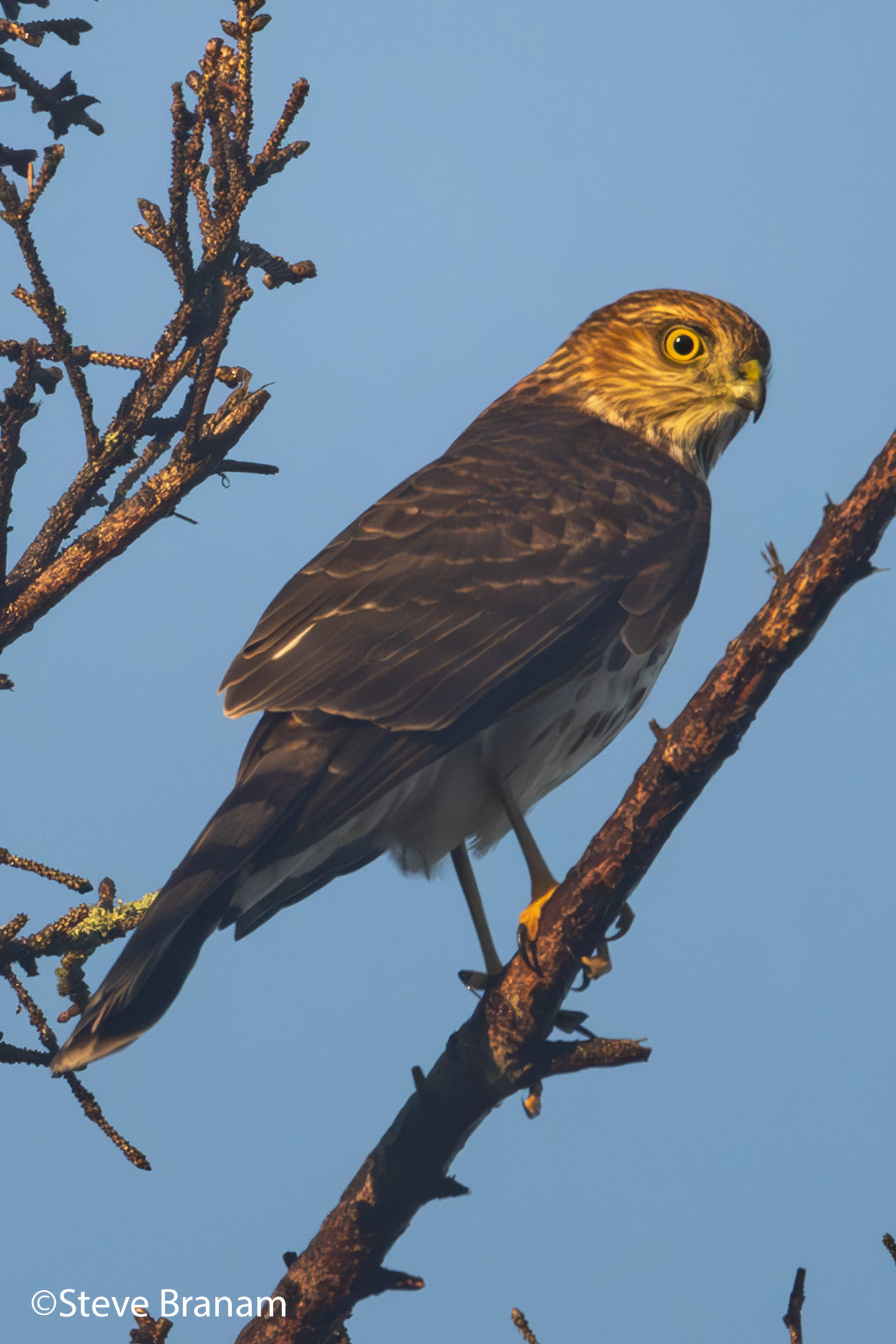
  • 1 fly-by Whimbrel, one probable Clay-colored Sparrow (seen too briefly), and 1 immature COOPER’S HAWK (very rare on offshore islands), 9/15.
  • 1-2 American Pipits (first of fall locally) and 1 hen Northern Pintail, etc, Wharton Point, Brunswick, 9/18.
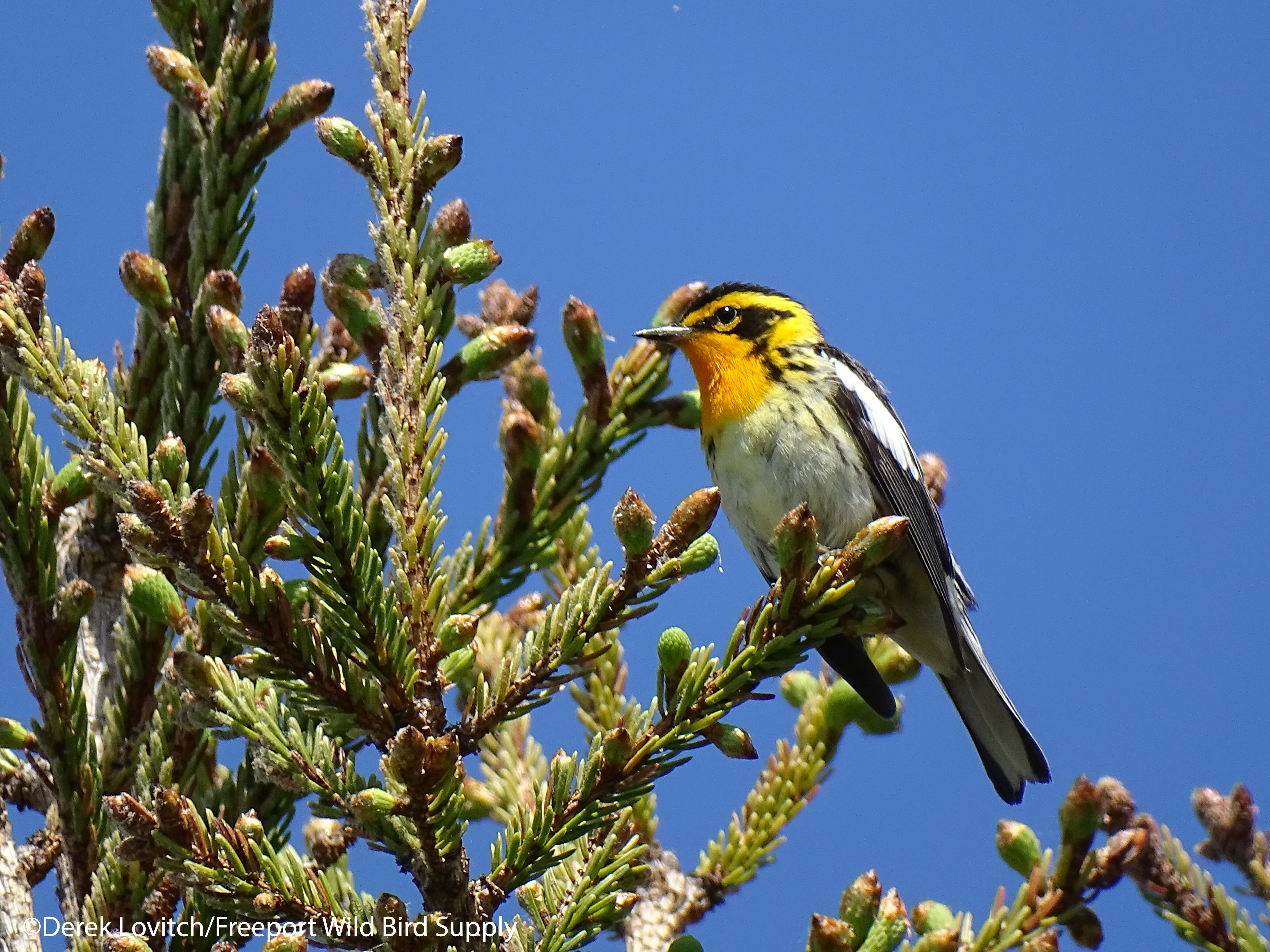
  • Meanwhile, I’ve once again spent most of my mornings when home birding our Durham property, which was productive. An impressive 60-80 American Goldfinches continue, while an impressive array of migrants continue. On several mornings this week, I had plans to go elsewhere but then never left the yard. A few of the highlights included continuing single Indigo Bunting and Rose-breasted Grosbeaks, 1 Ovenbird, 1 Blackburnian Warbler on 9/16, 6 Common Nighthawks (getting late) at dusk on 9/16, and a nice mix of migrants on the 18th that included 1-2 Philadelphia Vireos and the arrival of more sparrows.

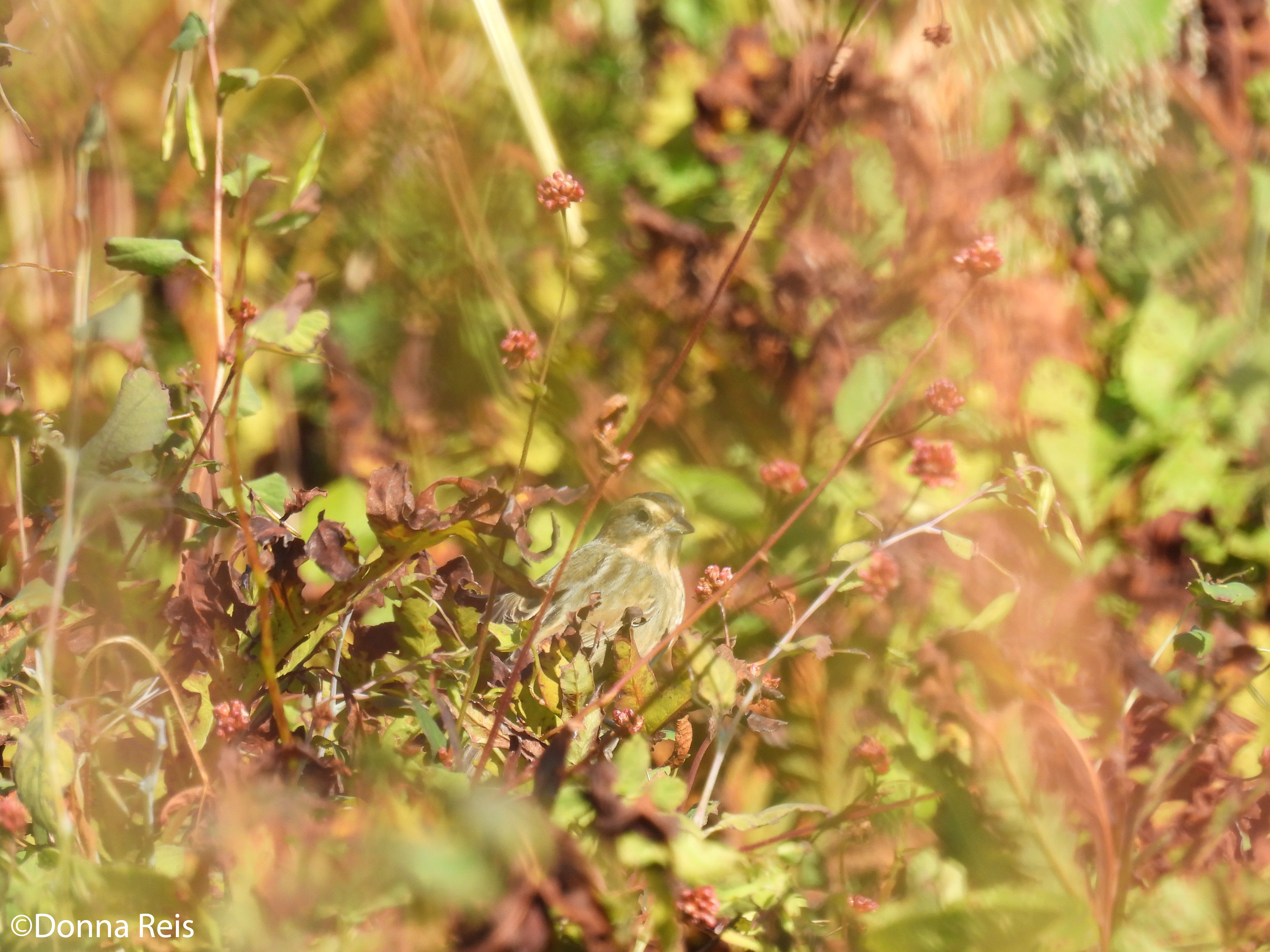
The highlight though was the female-type LAWRENCE’S WARBLER (2nd generation Golden-winged x Blue-winged Warbler hybrid) that popped up on the 18th. After a short but perfect view, I ran for a camera and could not relocate it despite much searching.

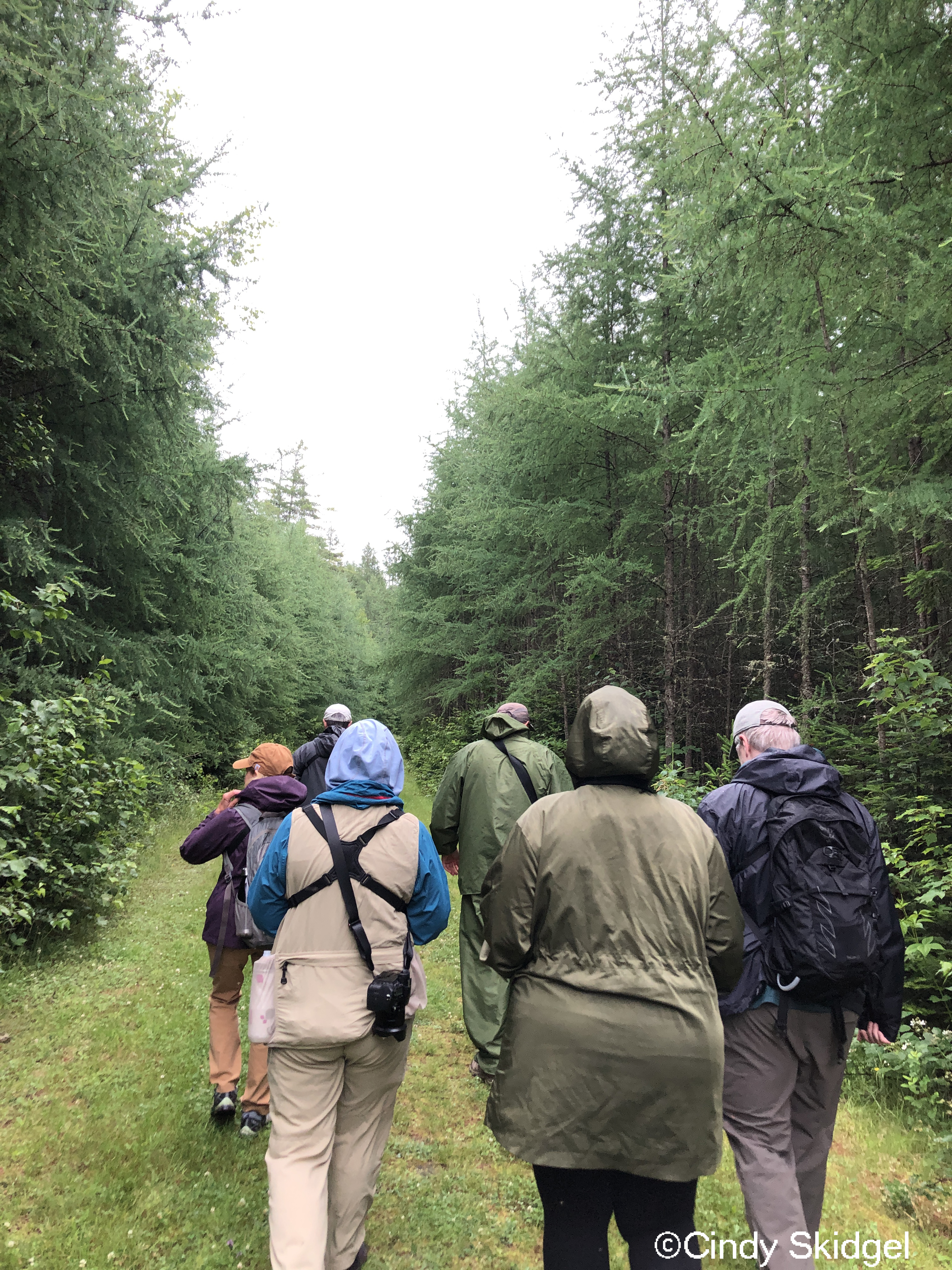
2024 Bicknell’s Thrush Weekend Tour Report.

Tour itineraries are meant to be broken. Or is that “rules.” Well, those too.

We have offered some kind of “Bicknell’s Thrush Wekeend” tour for almost 15 years now. There was a hiatus for COVID, and last year – perhaps due to the uncertainty with travel planning – we pulled the plug on our weekend for the first time as registrations were slow to come in.

Therefore, for 2024, it was time to try something new and head into Northern New Hampshire for a new plan of attack. Two chances at Bicknell’s Thrush over the course of two days, with this one enigmatic bird the sole focus (well, at least until we see it) – that part of it had not changed. Everything else was new this year.

We assembled at 9:00am on Saturday, June 29th in Errol, New Hampshire. The itinerary? Well, never mind.

Several folks arrived to see their guide staring up at the sky and immersed in deep thought (you could smell the wood burning). It wasn’t raining, and it looked like we had a nice window of fair weather. But it was already 9:00am, and by the time we got up the mountain…

…but the forecast for tonight. And tomorrow morning.

…but it can’t be worth it to try for one of, if not the, most elusive of North American breeding songbirds in the middle of the day.

…and it’s getting warm.

…and there’s rain building to our west. The winds are picking up higher up.

…but let’s go for it!

So up the mountain we went.  At least we would be trying. And that evening, with the risk of severe thunderstorms, we might not even have a chance to try. And the next morning didn’t look great.

But weather forecasts are fickle, especially up here in the mountains, so it’s hard to make plans. But it’s easy to look up and see what’s about to happen, or not. And when I looked up, my face didn’t get wet, so that’s the only forecast that’s dependable in these parts.

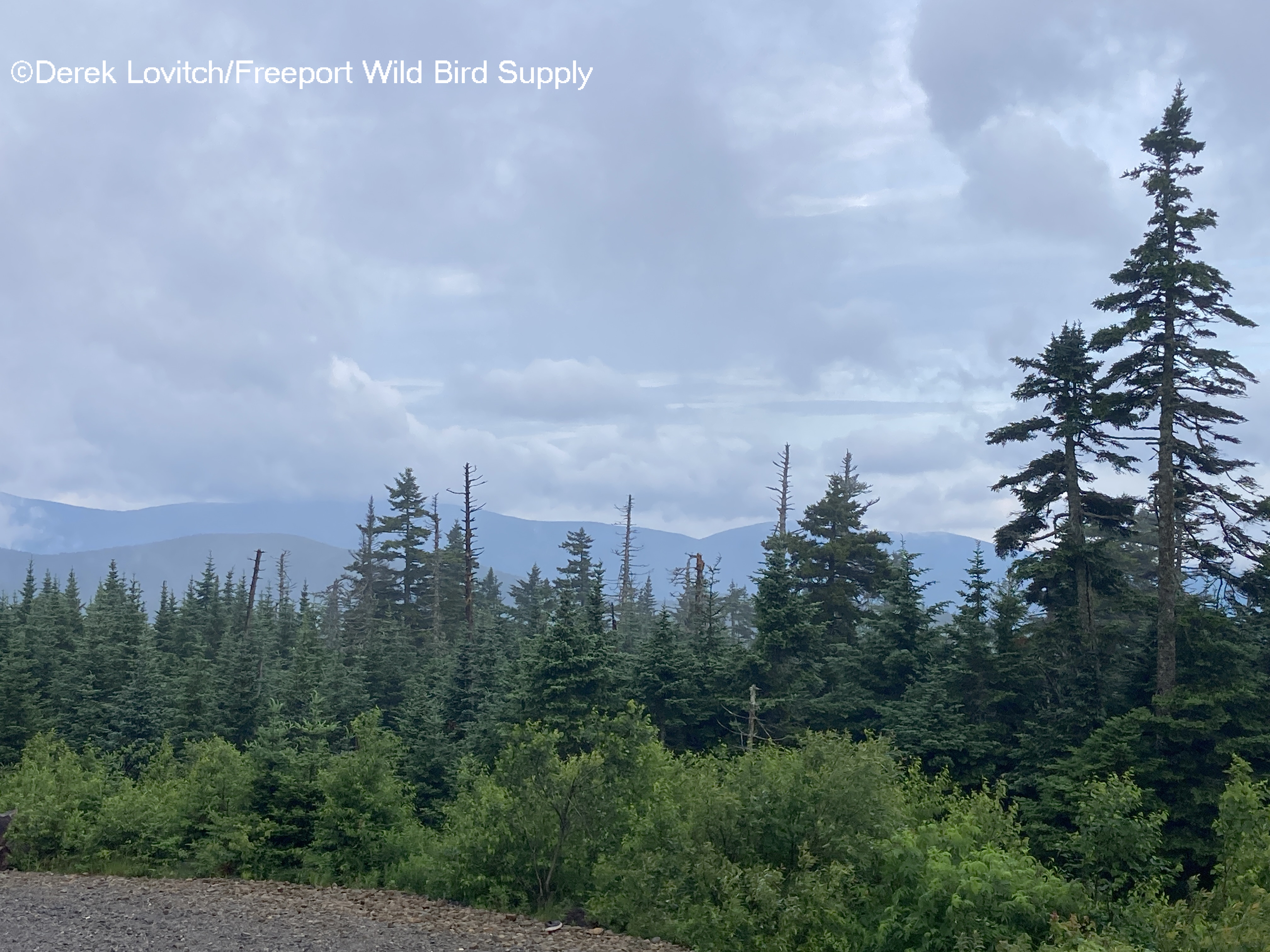
We raced up hill, arriving at about 3,000 feet and the realm of the Bicknell’s Thrush around 10:30, stopping for a Ruffed Grouse in the road escorting five chicks.

Southerly winds were increasing, blowing right up into and through our thrush territories. This was pointless. But hey, the rain was still across the valley. So we birded.

We heard the Fox Sparrow, spotted a couple of Blackpoll Warblers, and enjoyed the usual high-elevation species like Yellow-rumped Warblers and Dark-eyed Juncos.

Then, at the surprisingly late (or extremely early) time of about 11:15am, a Bicknell’s Thrush began to call. Over the next 15-20 minutes, we were treated to two birds counter-singing, and at least 3 or 4 birds calling. One bird silently flew across a clearing, as well seen as a thrush in flight can get. The two dueling birds darted between trees and occasionally paused in view of one or two people before melting back into the trees.

There weren’t photography opportunities, but everyone was more than satisfied with the sum of their views. And it was a tremendous auditory performance. Overall, it was actually a pretty good show, and really demonstrated the behavior of this fascinating bird. And since this is more than just a tick and run” tour, the birds’ behavior was instructional and of keen interest.

And after all being satisfied, the rain arrived.

We enjoyed a leisurely and delicious lunch, and then set out for a little more birding. Making up for the change of plans in the morning, we took a walk and a drive through some boreal habitats, but rain was becoming steadier now. We heard and saw a few common birds, but it was just some good quality time in the afternoon woods, absorbing our phytoncides.  When the rain arrived in earnest, we called it quits and went to check in at our hotel.

The original plan was to have an afternoon break, early dinner, and then head up the mountain at dusk to take advantage of the evening activity of the thrush. Instead, we had a relaxing dinner, many of us enjoyed a beer or glass of wine, and we just chatted. Good conversation was enjoyed by all, and the rain kept falling.

At one point, the rain let up and I began to ponder a run up the mountain. Just in case the thought became serious, a downpour arrived. Dessert was ordered.

We were back in our hotel rooms at about the time I had planned to be on the mountaintop, so I didn’t know what to do with myself! I think I was stressed about having nothing to stress about. When a tour is solely dedicated to one species, a trip is a failure without that one species. But we already had our quarry, and if it was raining in the morning, oh well. And if it wasn’t, we would just go enjoy the bird some more. I think I had the longest and best night of sleep I can recall while leading a Bicknell’s Thrush weekend!

Well, it wasn’t that long. A “civilized” 5:30am departure from the hotel (thanks to our success the day before) found us free of the rain that was forecast, and there were even a few breaks of sun. It was rather breezy atop the mountain, and in almost two hours, we only had a couple of calls from Bicknell’s Thrushes. A simple continental breakfast was served from the back of my Subaru.

However, we had a Canada Jay (likely the last youngster in a family group that passed just downhill from us) in plain view,  and spent some quality time with the local breeders like Blackpoll Warbler. Then, much to my disbelief, the second-most wanted bird on the tour (according to an unofficial survey), began to call very close to us. Could it be? I had to be mistaken. But not much else sounds like a Black-backed Woodpecker!

Then, with jaws dropping to the ground, it proceeded to fly overhead of us, heading up the mountain where it called a few more times. That was not something I was expecting – not just the species, but such a great look at it in flight (I can only recall one other time that I had seen one overhead) and far removed from the deep and dark bogs most of the local birds prefer.

Between yesterday’s thrush luck and today’s woodpecker fortune, not to mention another mountaintop visit devoid of the forecast rainfall, we were just ecstatic.

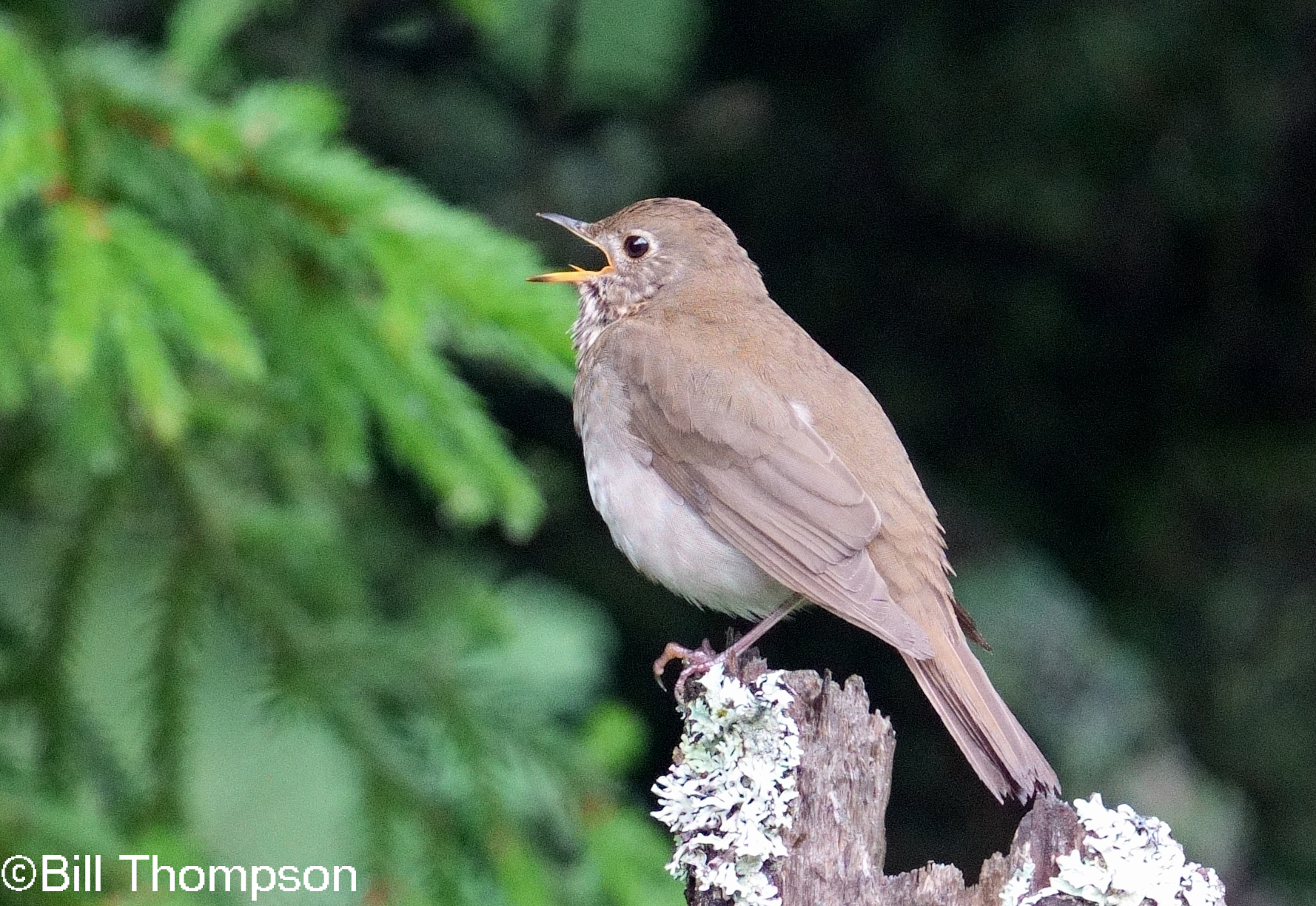
And then this happened…

You get a photo, and you get a photo, and you get a photo!

Wow. Just wow.

And it was on a snag that I had just declared, “if this bird comes out, it’s going to perch here.” Most people thought I was joking.

The thrush didn’t.  Now, I wish I could always control birds like this, but especially with this species, I have really come to know them and their behavior. To me, it did look perfect for one to sit on. But no, I did not expect it to be sitting on it, singing up a storm, about 30 seconds later. It truly is better to be lucky than good.

And it sat there for long enough to take your camera down, adjust your settings, and return to firing away. It was even there long enough for your dumbfounded guide to remember he had his camera with him for a change. My panicked photos did not do the bird justice, so I will let everyone else’s speak for themselves.

There wasn’t much left to do up here, so we began our trek downhill.

A Mourning Warbler cooperated nicely.

Then, returning to our cars a (the?) family group of Canada Jays returned and came to check us out. Kathy’s granola bar was clutch here as two adults had a snack, with 2-3 dusky juveniles looking on, learning the ways of the Camp Robber.

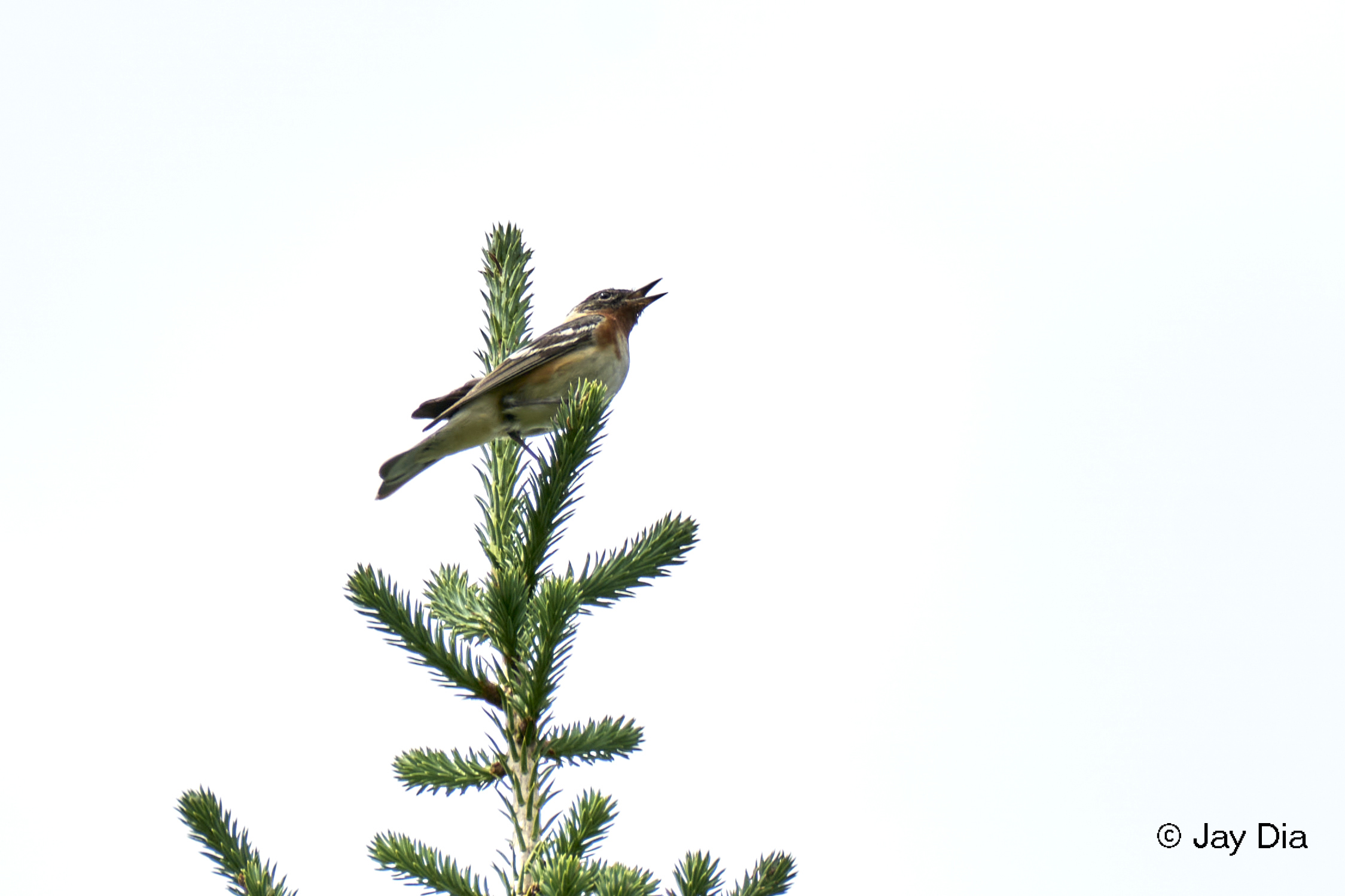
And then Kathy exclaimed “there’s a Bay-breasted!” and we all looked up to see a stunning male singing from a roadside fir right over our heads.

We heard or saw at least another 5 Mourning Warblers on the way down, glimpsed a busy Lincoln’s Sparrow (a Sharp-shinned Hawk passed overhead precluded a better observation, however), and took some time to enjoy and identify butterflies – even skippers (OK, only Bill actually identified said skippers) – and plants.

White Admiral

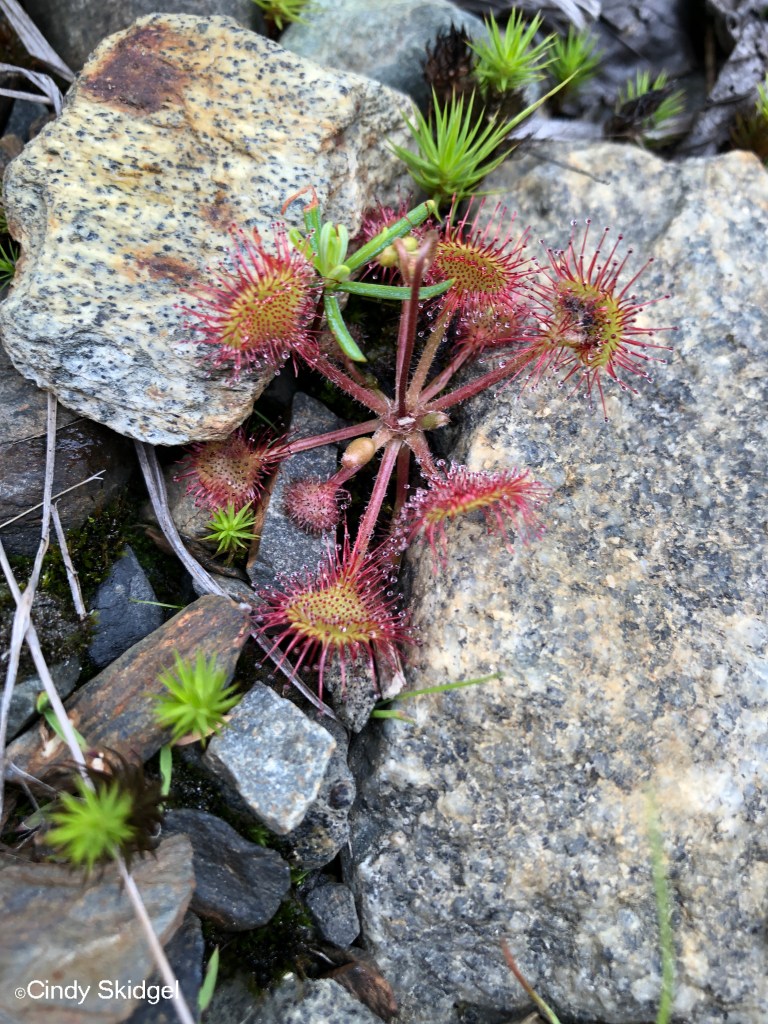
Round-leafed Sundew.

But as the winds began to gust, more rain was approaching, and ATVers were becoming overwhelming, we left the mountain and headed to Colebrook for a relaxed, celebratory luncheon as the rain began to fall and before we headed our separate ways.

As for this new Bicknell’s Thrush Weekend itinerary (with and without necessary audibles), well, I think you can assume we’ll see you here again next year!

Recent Highlights, 6/13 – 6/22/2024.

Thanks to Mike Williams for allowing me to share his photos of this amorous pair of Red-necked Grebes along Ocean Avenue in Biddeford Pool. We’ve had 1-2 Red-necked Grebes “oversummering” here for the last few years, and last year I observed some rudimentary nest building from a pair (also with a stunned tour group). But we did not expect to see them, get, uh “that into it,” with courtship, nest-building, and even copulation. Unfortunately, as you could see, the “nest” was below the high tide line, so there’s not much chance of success here.  A freshwater wetland breeder that nests no closer than central Quebec, this is odd behavior in a very odd place!  It was amazing to watch though, and anytime we get to see Red-necked Grebes in full breeding plumage is a highlight on its own.

Like last week, much of my time was spent with our local breeding birds. From my personal “mini-breeding bird surveys” to a 7-day tour for Gulf Coast Bird Observatory, the birds that call Maine home in summer were once again the “targets” and the highlights, from Saltmarsh Sparrows and Roseate Terns to Grasshopper Sparrows and our wealth of warblers.

However, June is a good time for oddities. During the course of enjoying our usual species, I encountered the following observations of note over the past 10 days:

  • 3 (!) RED-NECKED GREBES, 16 total Black Scoters, 3 Surf Scoters, etc, Ocean Avenue, Biddeford Pool, 6/16 (with Martin Hagne and Denise).
  • After being excited to find the 3 breeding plumage RED-NECKED GREBES the day before, we were shocked to find 4 the next day, all calling, and one pair courting and copulating!  Photos and more details above. (with Gulf Coast Bird Observatory tour group).
  • 2 American Oystercatchers, 1 Red-breasted Merganser, 1+ Black Scoter, Ocean Avenue, 6/17 (with Gulf Coast Bird Observatory tour group).
  • 1 Surf Scoter, Dyer Point, Cape Elizabeth, 6/17 (with Gulf Coast Bird Observatory tour group).
  • 2-3 singing CLAY-COLORED SPARROWS, Kennebunk Plains, 6/18 (with Gulf Coast Bird Observatory tour group).
  • 4 Glossy Ibis, Sanford Lagoons, Sanford, 6/18 (with Gulf Coast Bird Observatory tour group).
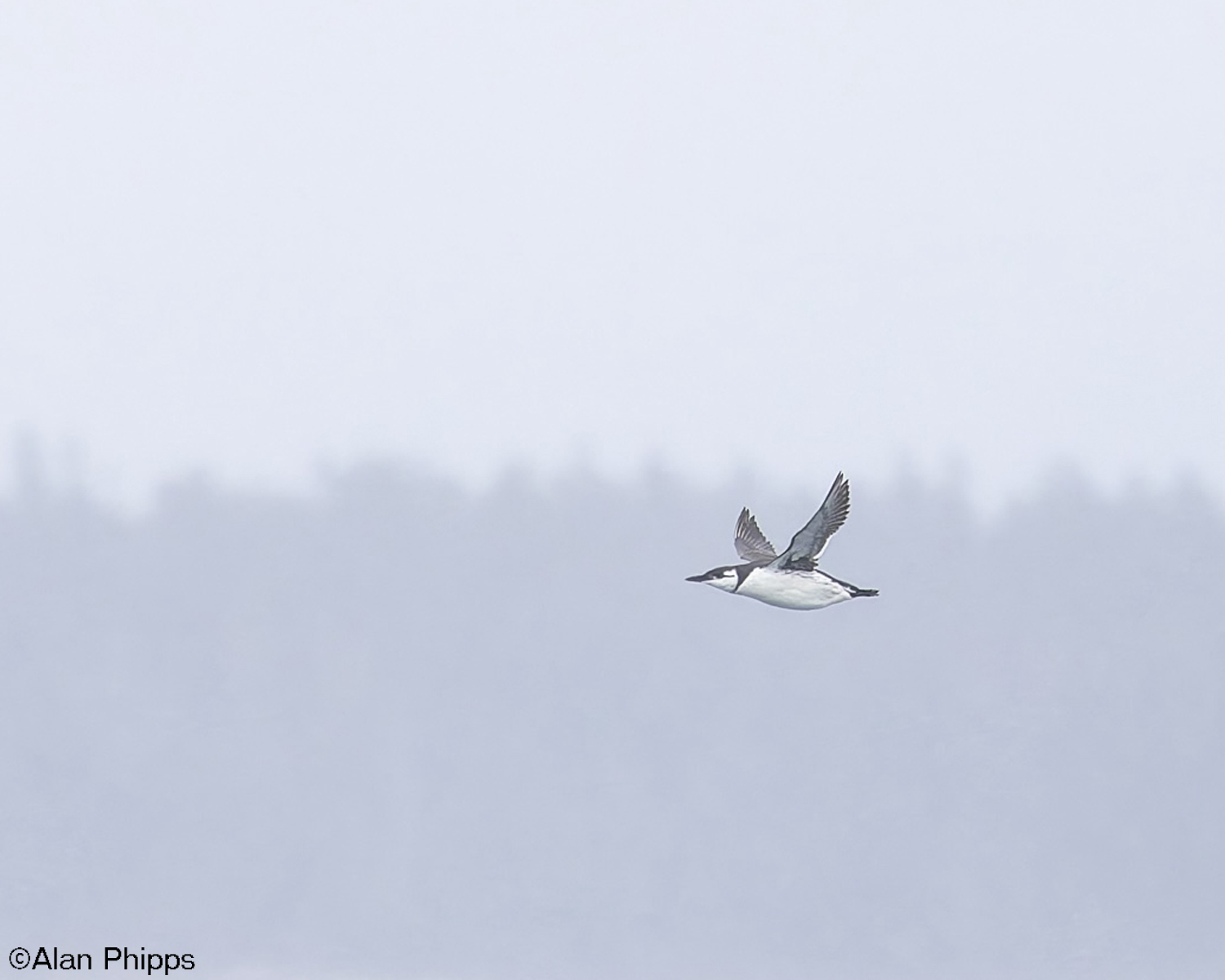
  • 3 COMMON MURRES, etc, Eastern Egg Rock via Cap’n Fish’s Cruises, Boothbay Harbor, 6/21 (with Gulf Coast Bird Observatory tour group).
  • 1 Great Shearwater, 2 Sooty Shearwaters, 48 Wilson’s Storm-Petrels, 2 Fin Whales, etc, Cap’n Fish’s whale watch out of Boothbay Harbor, 6/21 (with Gulf Coast Bird Observatory tour group).

2024 Spring Monhegan Migration Weekend Tour Report

Blackpoll Warblers were pleasantly ubiquitous over the weekend, with endless opportunities to view them without neck strain for a change.

I just can’t walk away from a male Blackburnian Warbler in the sun, especially at eye-level. Just can’t do it. While Blackpolls were the most numerous migrant of the tour, as expected for the end of May, Blackburnian Warblers consistently stole the show.

Our 14th annual Monhegan Spring Migration Weekend was highlighted by three days of insanely gorgeous weather, 18 species of warblers, and loads of crossbills. But what set this year’s tour apart was how consistently amazing the looks were at so many birds, especially both crossbills and some of our favorite warblers.

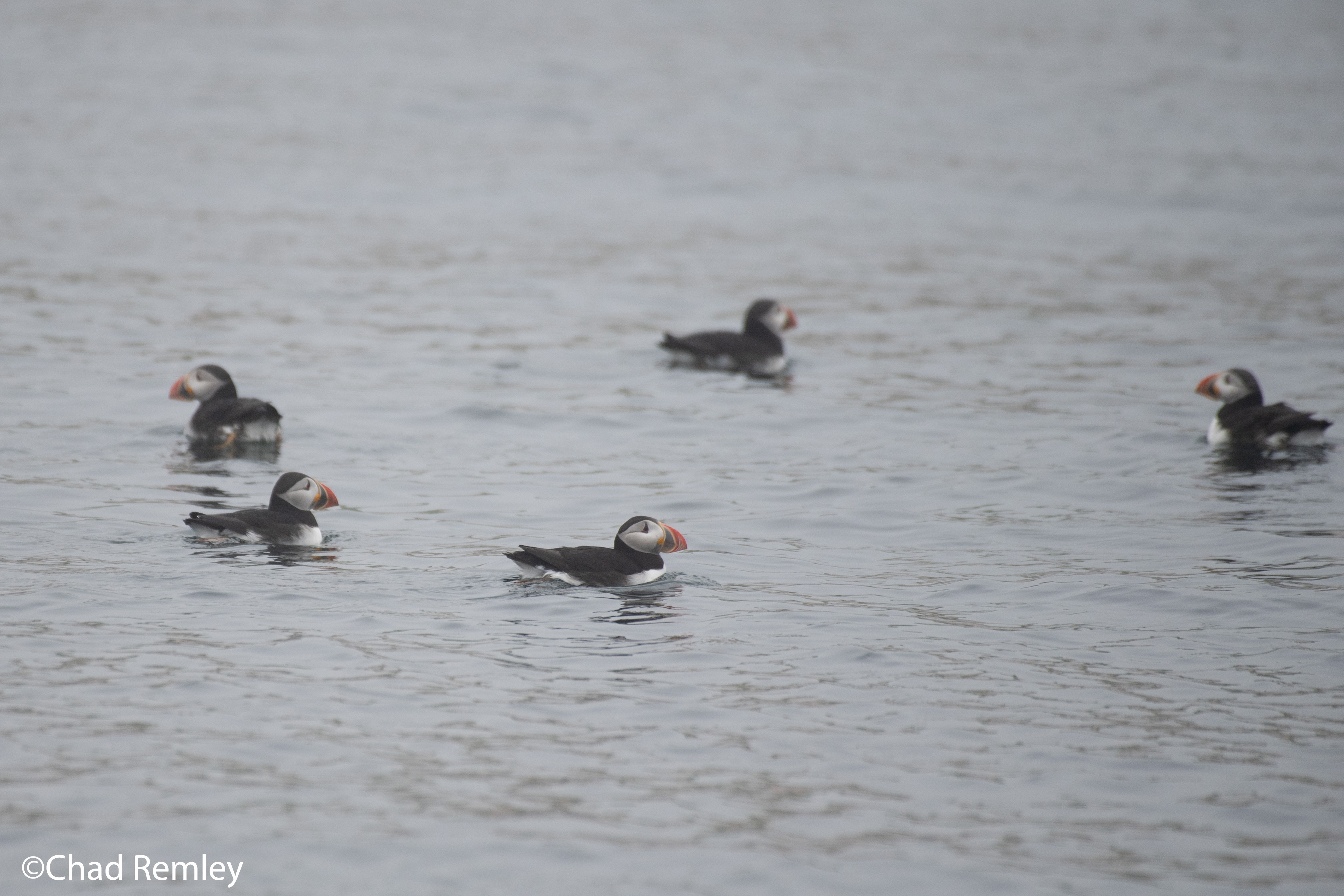
The tone was set on our Friday crossing from New Harbor, with lovely weather and 2 fly-by Atlantic Puffins. And once again, we hit the ground running after our 10:15 arrival, taking nearly an hour just to walk up Dock Road. One of our favorite corners was just hoppin’, with our first stellar looks at both Red and White-winged Crossbills and Blackpoll Warblers, as well as our only Canada Warbler of the tour.

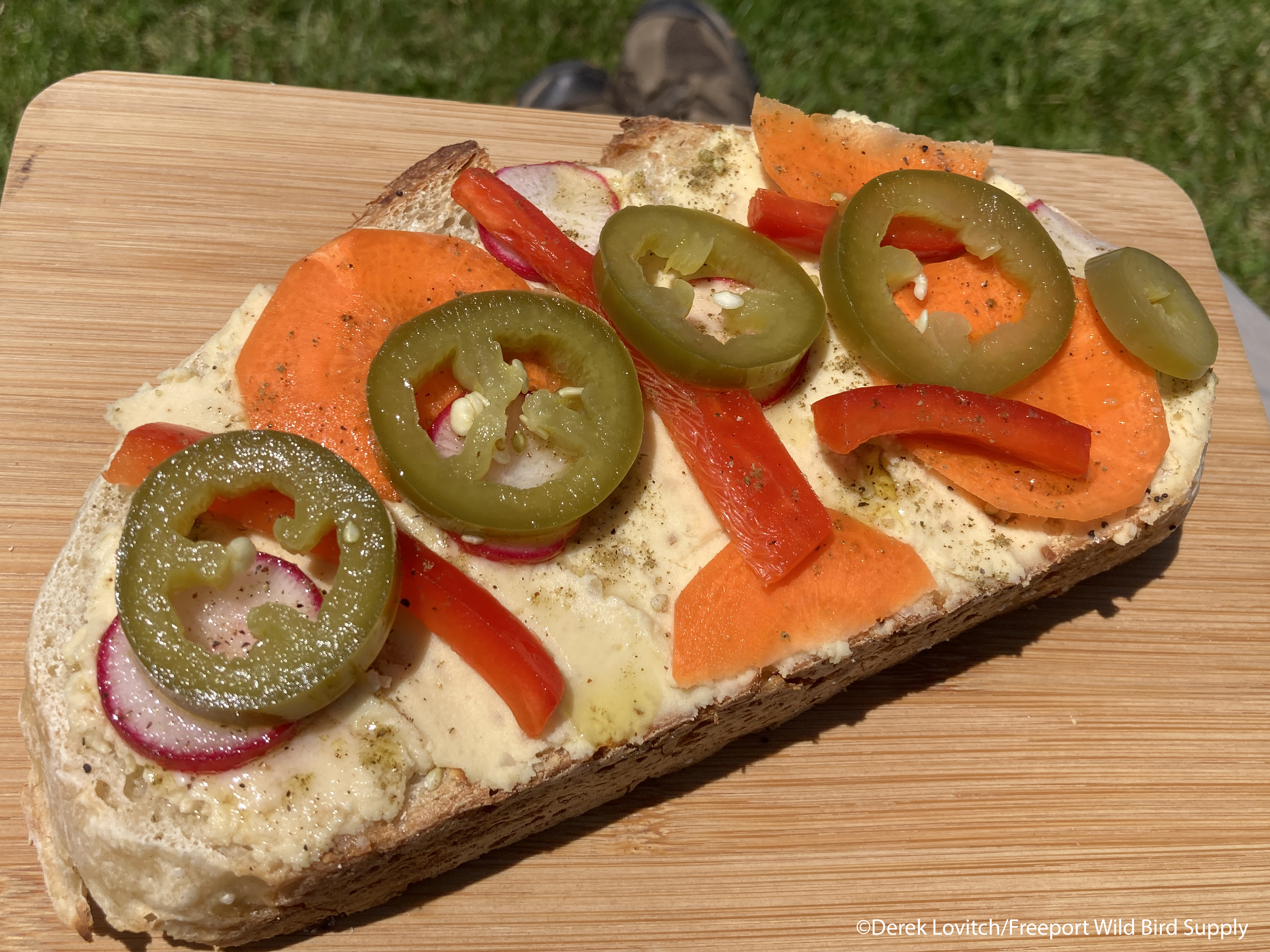
I ate a lot of hummus toasts for lunch at the Trailing Yew in an attempt to make up for copious breakfasts and decadent feeders.

The afternoon, and the next three days were filled with crippling view after crippling view. Blackpoll Warblers were everywhere, both males and females seen in close proximity repeatedly for good studies. American Redstarts were abundant, as were locally-breeding Common Yellowthroats and Yellow Warblers.  But it’s been a long time since we have seen crossbills, especially White-winged, so well and so often everywhere around town and beyond. It’s hard not to name this species the bird of the tour this year.

Male White-winged Crossbills.

In that first afternoon, some of our other highlights were a fleeting glimpse of a Black-billed Cuckoo, and later we found a female Purple Martin. Birds were just unusually low and cooperative, despite the gorgeous weather, so that really set this first day apart.

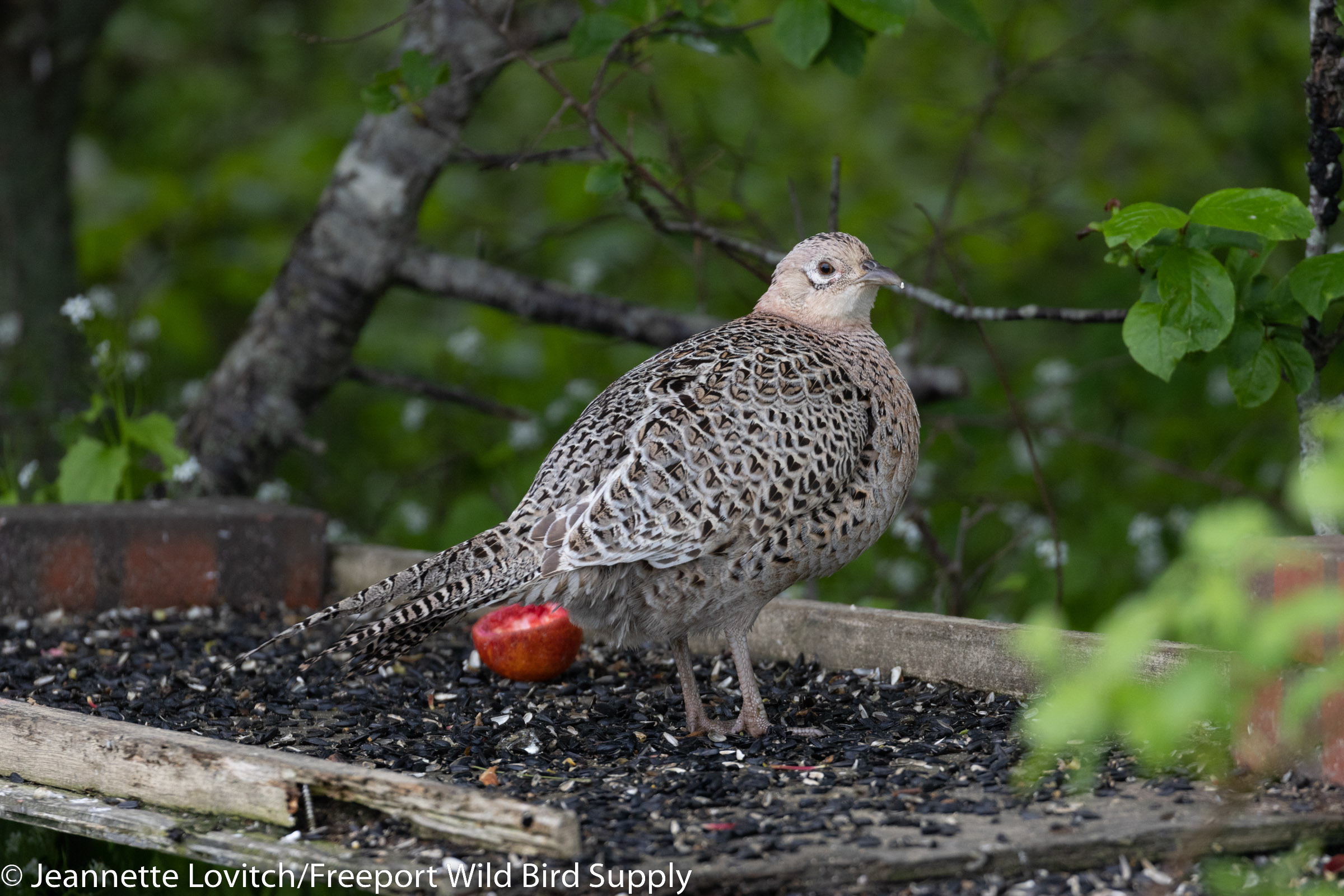
My days started even earlier than I would have liked as pheasants took to calling from the railing right outside my bedroom window. At 4am. 4am.

Unfortunately, the NEXRAD radar archive was down for the duration of our stay, so I can’t do my usual analysis here, but on Saturday morning, a light morning flight of mostly Blackpoll Warblers and American Redstarts suggested at least some birds had arrived on the light westerly wind overnight. There were also more Magnolia Warblers around, but overall, our two morning walks were slower than yesterday’s birding, but we would repeatedly find pockets of good activity with more great views of most of what we encountered.

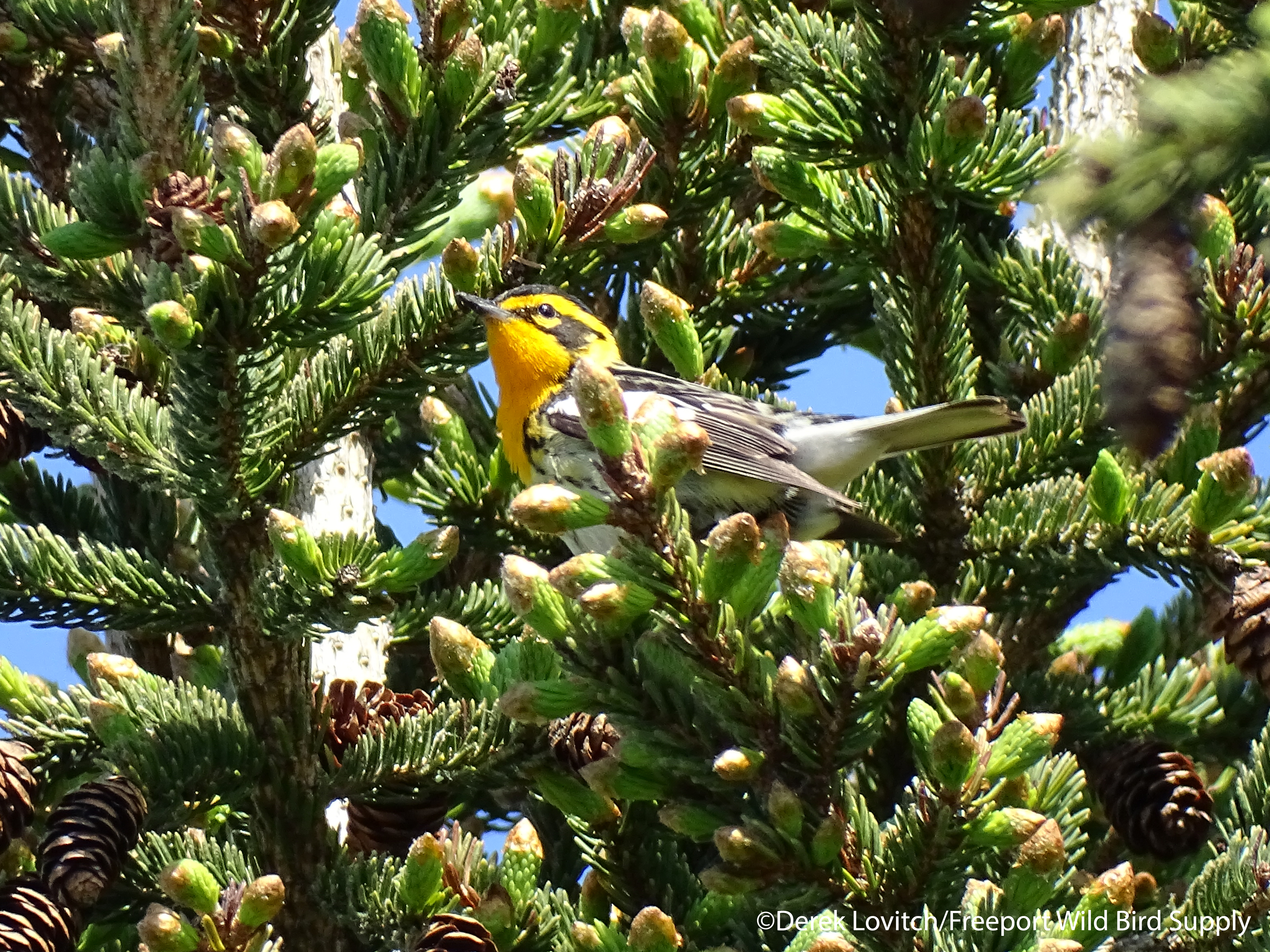
This Cape May Warbler showed himself nicely, feeding on little midges/flies buzzing around the buds of this Red Spruce.

A Black-billed Cuckoo was as cooperative as they get, freezing on a bare branch for several minutes. Prolonged scope views of Red and White-winged Crossbills offered the chance to watch their amazing feeding behavior. The afternoon was a little slower, as expected, but still low and close Blackpoll Warblers and crossbills all around.  Friends found a Blue Grosbeak that afternoon, which confirmed what I thought “had to be one” that flew across the marsh early in the morning but disappeared into brush before we could confirm its identity.

Of course we took some time to enjoy Rose-breasted Grosbeaks at Donna’s feeders, along with the omnipresent Ring-necked Pheasants.

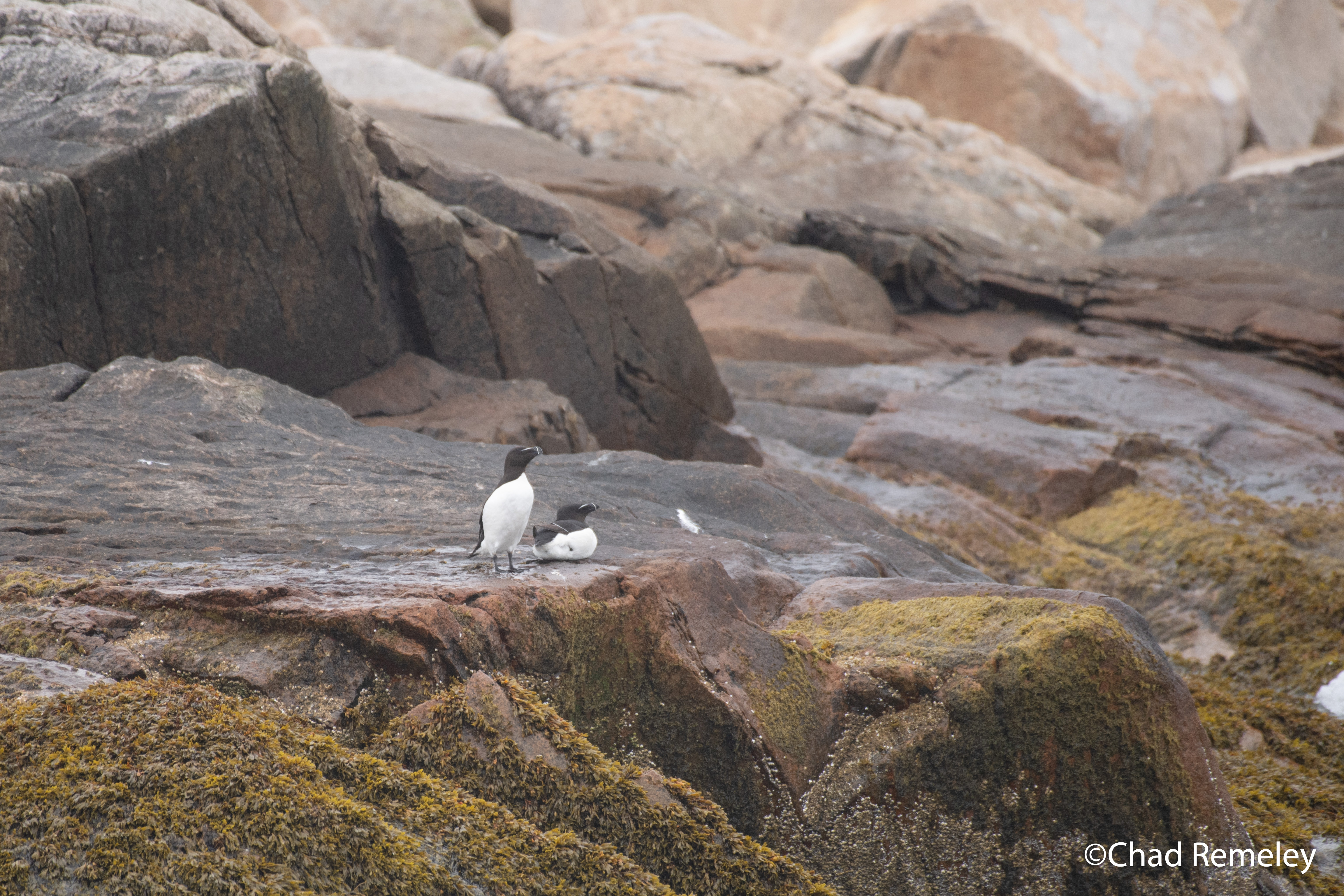
Despite southerly winds overnight, Sunday morning was quite a bit slower, likely due to rainfall cutting off the flow of migrants from the south.  We started the day with a bang though, as we moseyed down to the harbor to enjoy an up-close-and-personal Razorbill that ended up spending much of the day foraging in the harbor. 

There was some passerine turnover overnight, however, and new birds this morning included an Alder Flycatcher, a calling Olive-sided Flycatcher, and finally a Tennessee Warbler – perhaps our first uncooperative warbler of the trip!  The bird of the morning, however, was Blackburnian Warbler, as we started the day with amazing views just as we started and finished the morning with repeated great looks at males and females.  Again, we were just in awe of the repeated great views we were getting of so many species, even if, yes, it was slow by Monhegan standards.

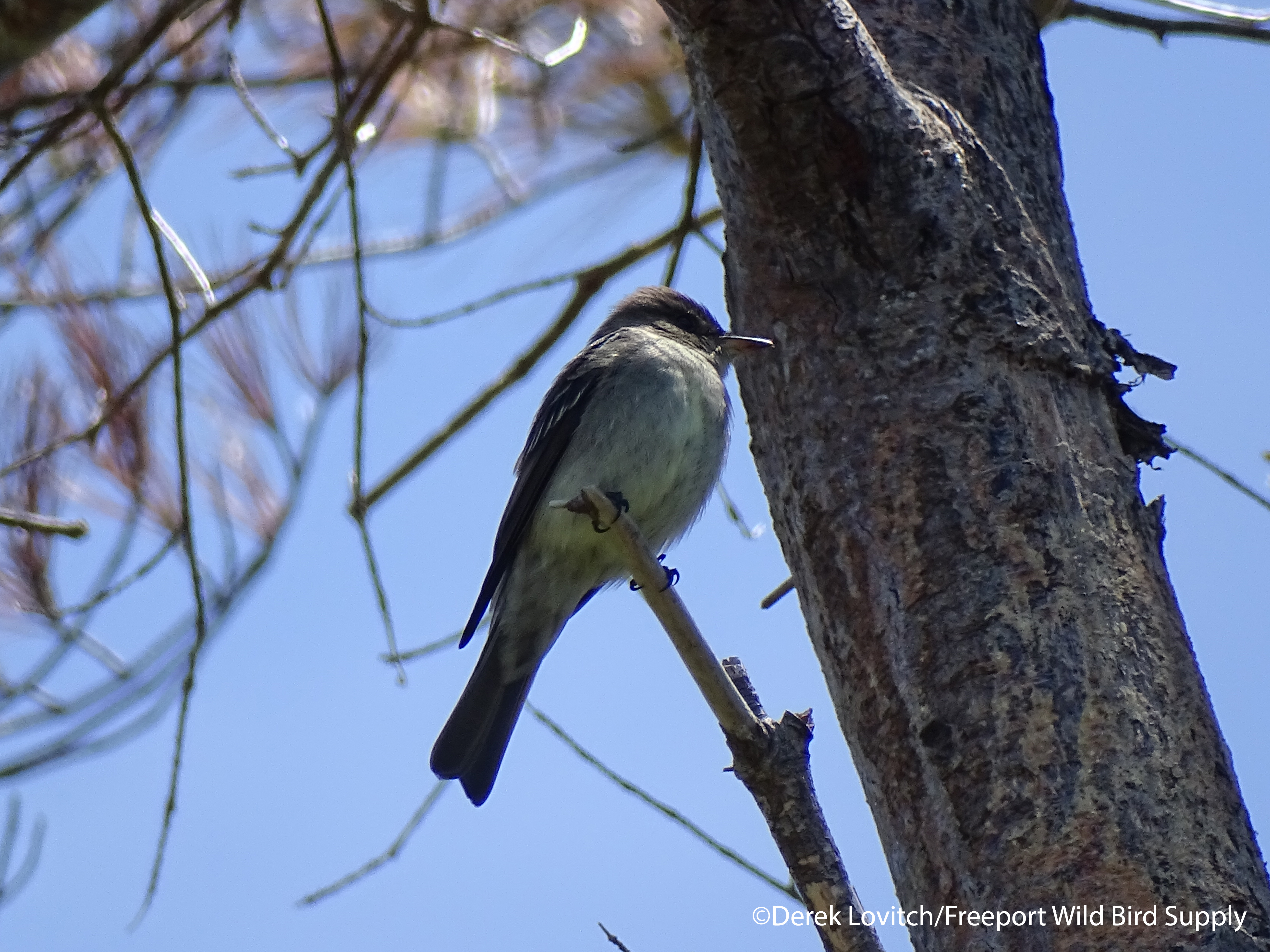
A nice selection of flycatchers over the weekend afforded the opportunity to learn how to break them down via primary projection, such as in this long-winged Eastern Wood-Pewee.

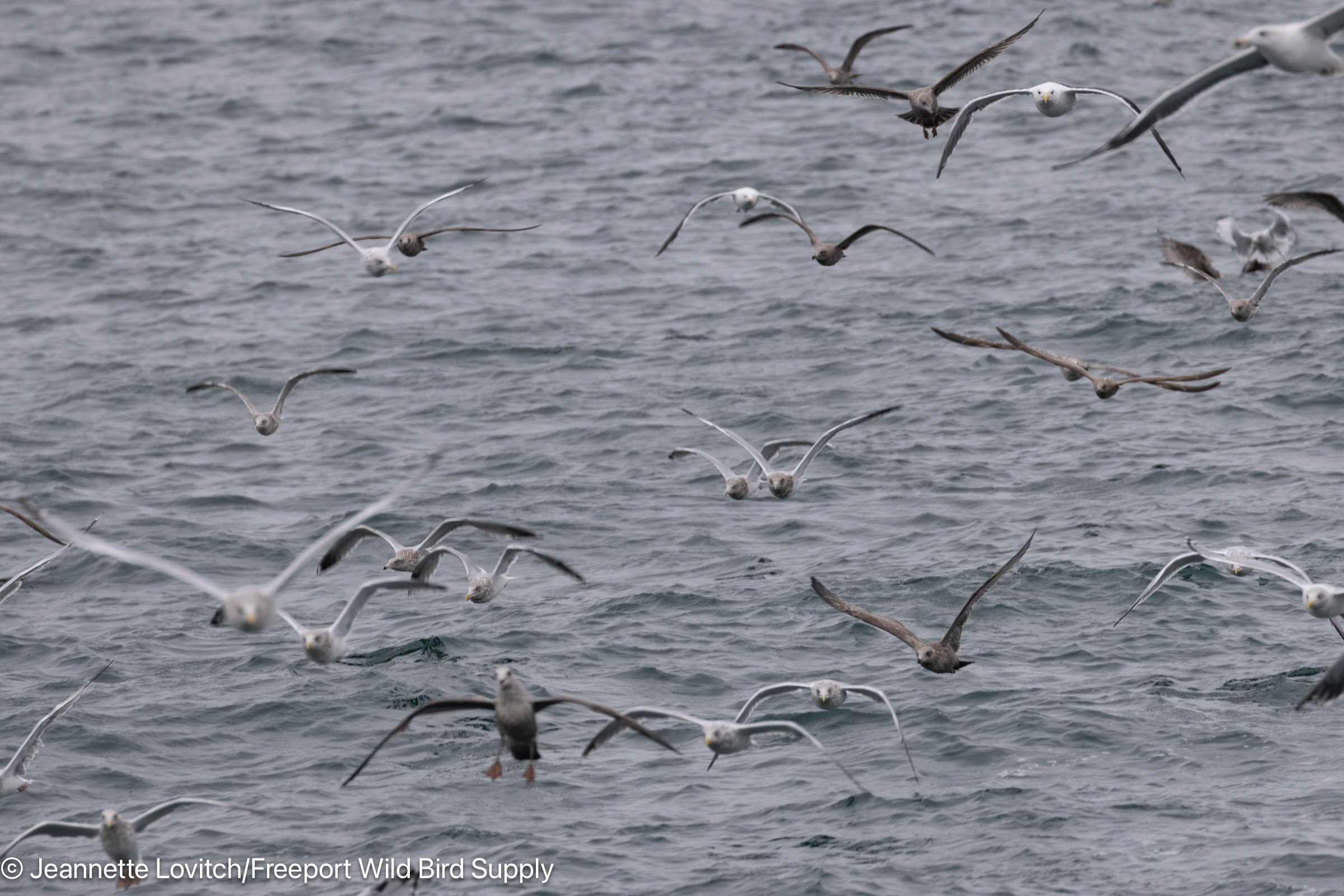
In the afternoon, we took the obligatory walk up to the lighthouse, both for some hawkwatching and snapshots. However, we ended up being enthralled (OK, I was enthralled) by a massive gull feeding frenzy that broke out over the lighthouse hill and beyond. It became clear that the gulls were not just enjoying the weather to soar on thermals but were feeding on some unseen flying insect. While a common event on the mainland, none of the birders present out here has ever seen anything like this over the island. The numerous Herring Gulls attracted a growing number of Laughing Gulls – the most I have ever seen out here (it’s usually just a few pairs around the harbor or fly-bys).

Northern Parula nest under construction.

Monday, the last day of the tour, unfortunately, did not see us go out with a bang. With light easterlies overnight and developing clouds and fog, not only did a new wave of migrants not arrive, but it seemed like just about every single passage migrant had departed!  Even Blackpolls were few and far between, and the number of American Redstarts seemed only on par with the number that remain out here to breed.

Pink Lady’s Slipper in the woods.

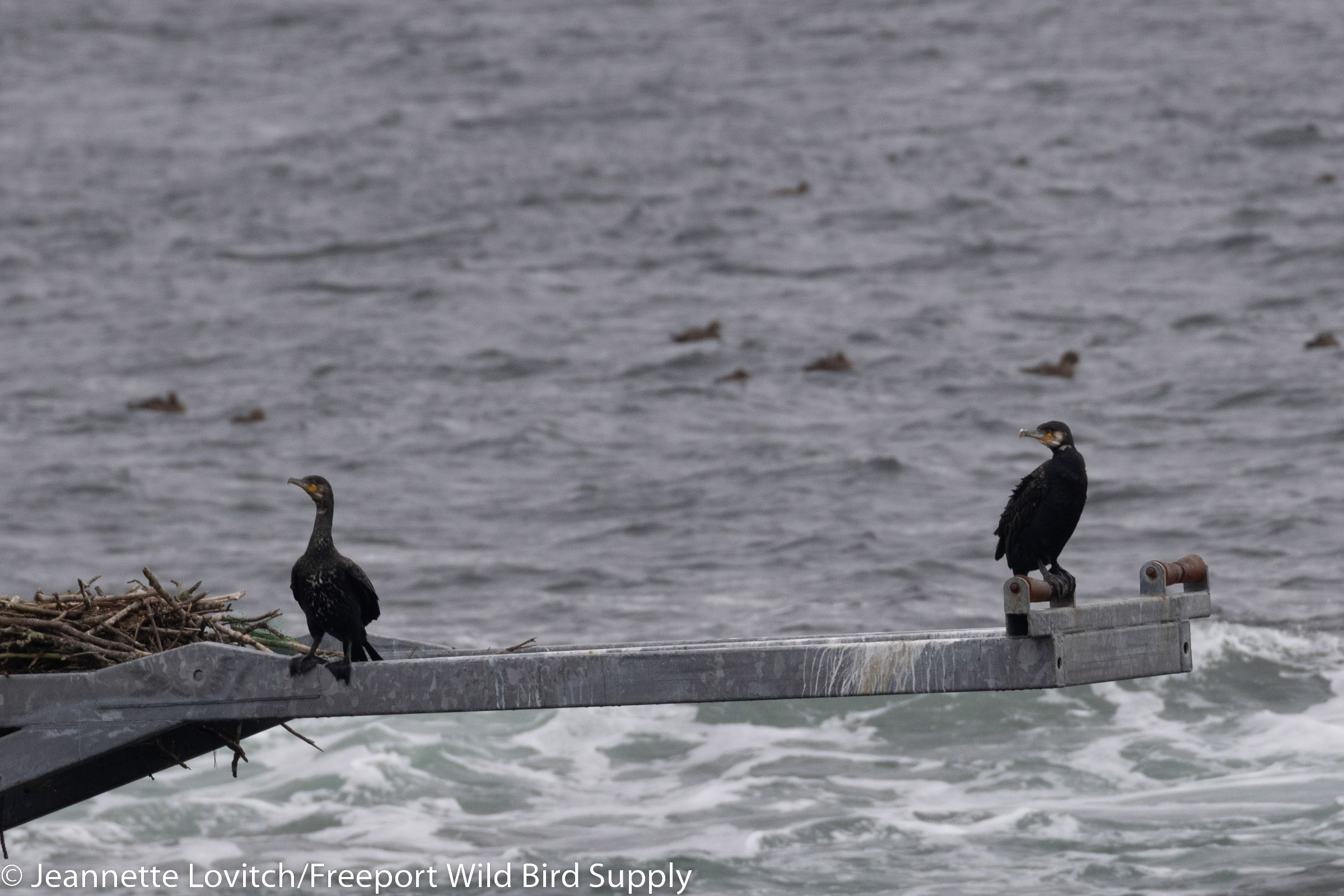
But once again, White-winged Crossbills stole the show, with the pre-breakfast walk highlighted by incredible views of a feeding family group. And although slow all day, we covered some ground and slowly built up our triplist with everything from a Purple Finch to a calling fly-over Black-bellied Plover.  We studied a Great Cormorant (and later, a second), and finally caught up with the long-staying Green Heron in the ice pond.  Three tarrying Black Scoters were a surprise in Deadman’s Cove, but not nearly as surprising as the drake Green-winged Teal loafing with Common Eiders on Neigh Duck!

After lunch, an unusual-for-here assortment of swallows over the marsh included two Bank, one Cliff, joining the 2 Tree Swallows and more Barn Swallows that have been out here all weekend. Seawatching at Lobster Cove produced a hen Long-tailed Duck right off the rocks that somehow disappeared in front of our eyes.

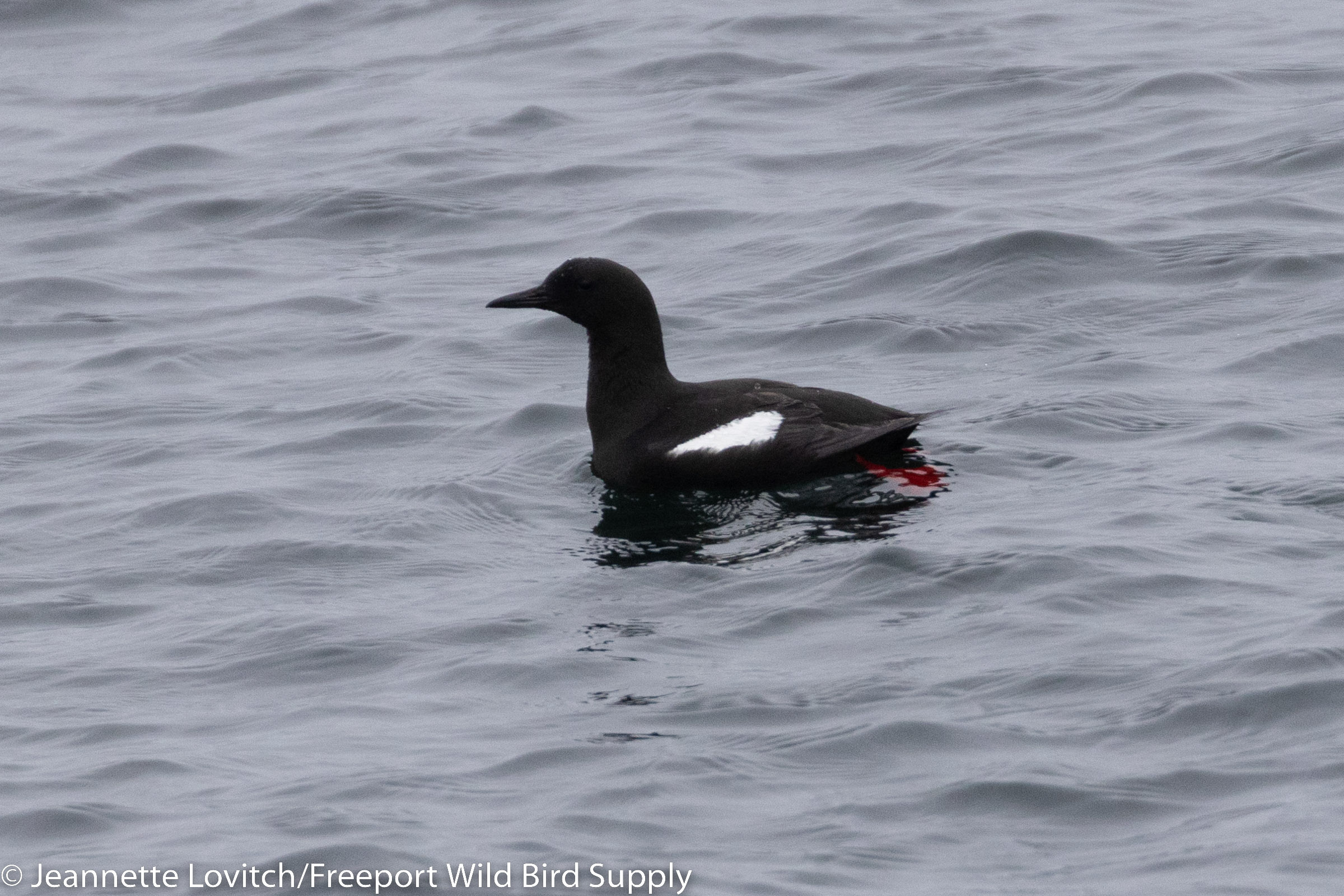
Black Guillemots were all around the island, including some close ones off of Lobster Cove that were close enough to see those vivid red feet.

“Lefty” the Red-winged Blackbird has returned for at least his third summer on territory in the marsh.

With the tour coming to an end at about 3:00pm as just about everyone readied to board the Hardy Boat, rain began to fall, bringing our tour to an official close. However, it wasn’t until dinnertime that a few downpours arrived, and so we squeezed out one more comfortable day of birding.

It was just Jeannette and me now, but “FOMO” was unwarranted. While a White-throated Sparrow outside of the Monhegan House after dinner was unexpected for the date, we didn’t add anything new to the trip list that evening, or the next morning. Rain, heavy at times overnight and a strong south wind with fog in the morning precluded any movement of birds, and our pre-breakfast walk was dreadfully slow. Passage migrants were few, just about 9 Blackpoll Warblers, 1 Canada Warbler, and 1 Northern Waterthrush, and it felt downright June-like with birdsong being almost exclusively breeding birds. We did have another look at uncommon Monhegan birds like the Blue-winged Teal, Green Heron, and Bank Swallow, but it wasn’t the hardest day to walk away from.

Juvenile White-winged Crossbill

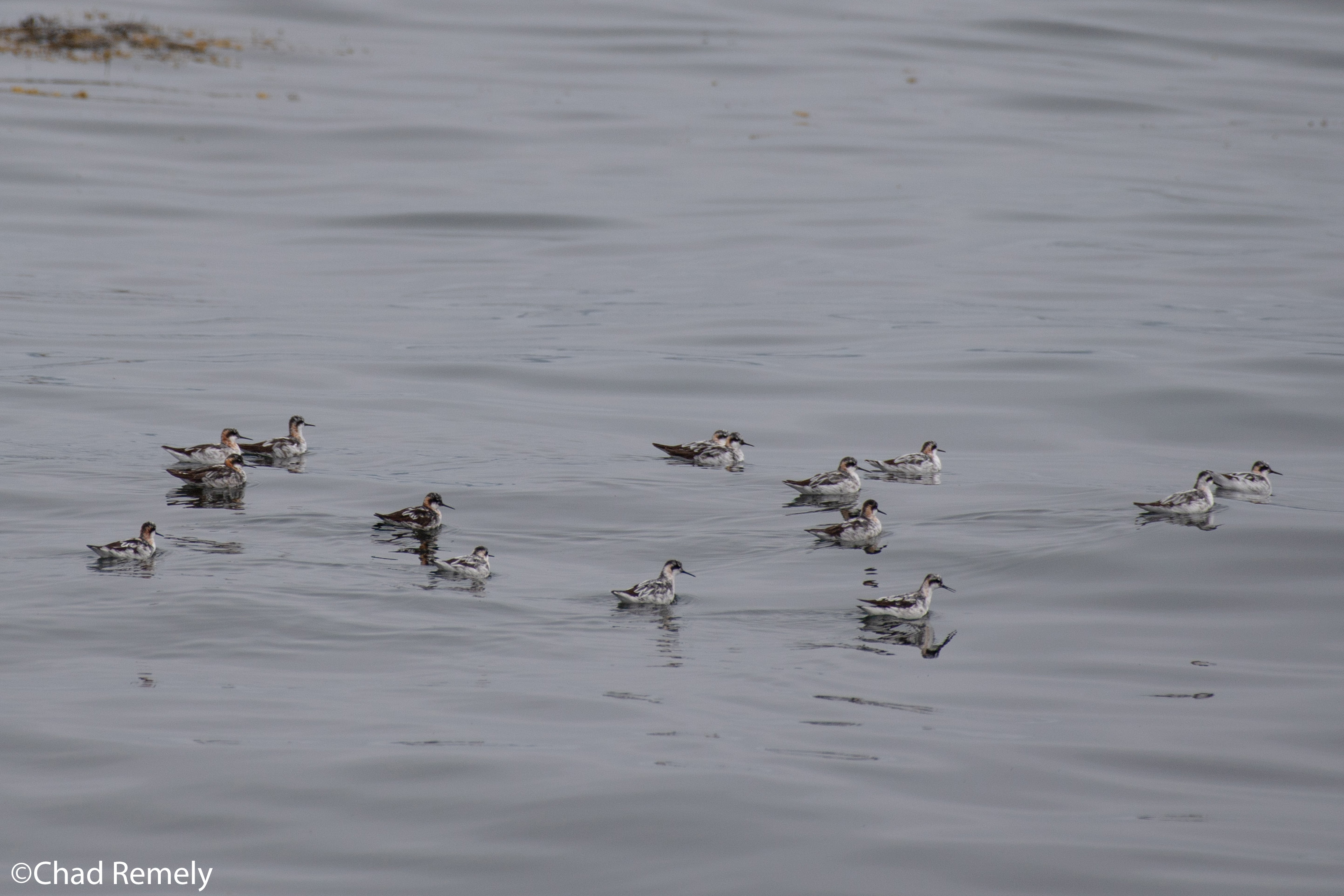
…. Which was good, as we were forced to depart earlier than planned due to the cancellation of the afternoon Hardy Boat. With a low pressure system moving along the stalled front that likely reduced our flow of migrants over the second half of the weekend was also building the seas. Our 10:15 trip, however, featured following seas that made for a reasonable ride, but the fog remained thick until New Harbor. We did have 4 Red-necked Phalaropes materialize out of the fog, however, with one remaining on the water just long enough for Jeannette to reach for and get her camera ready.

So, while Monday – and our usual day off together on Tuesday – was lackluster overall, it was really hard to beat the weather, birding, and learning opportunities that this year’s tour offered. Hopefully, everyone will now know how to identify Blackpoll Warblers at least! Oh, and my goodness the crossbills…

We tallied a respectable 93 species, including 18 species of warblers, over the four-day tour. Although below our long-term average, this was slightly above recent spring weekends. The following counts are simply guesstimations of the number of each species we encountered each day. Not the number of observations (eg every time we passed the same singing Yellow Warbler) or even a guess as to how many were on the island on a given day, but some crude attempt to quantify how many individuals of each species we think we saw each day. The ebbs and flows and daily changes are more interesting than the undoubtedly inaccurate numbers. For species such as the two crossbills that move around, back and forth, all over each day, it was impossible to really know how many there were. “A lot” should suffice.

Here is the trip list four the four-day tour. * = seen from ferry only. **=not seen with tour group.

Species5/245/255/265/27
Wood Duck111 0
Blue-winged Teal0010
Mallard15202015
American Black Duck1101
Green-winged Teal0001
Common Eiderxxxx
Surf Scoter2*001
Black Scoter0003
Long-tailed Duck1001
Ring-necked Pheasant8101010
Mourning Dove81088
Black-billed Cuckoo1100
Common Nighthawk1000
Chimney Swift0020
Ruby-throated Hummingbird1212
Virginia Rail0110
Black-bellied Plover0001
RAZORBILL0010
Black Guillemotxxxx
ATLANTIC PUFFIN2*000
Laughing Gull6*2018
Herring Gullxxxx
Great Black-backed Gullxxxx
Common TernX*000
Common Loon5*012
Northern Gannet3*010
Double-crested Cormorantxxxx
Great Cormorant0002
Great Blue Heron0010
Osprey0210
Sharp-shinned Hawk0120
Bald Eagle2222
Red-bellied Woodpecker0100
Merlin0111
Eastern Kingbird3455
Olive-sided Flycatcher0010
Eastern Wood-Pewee4443
Alder Flycatcher0010
“Traill’s” Flycatcher0010
Yellow-bellied Flycatcher0100
Least Flycatcher0451
Blue-headed Vireo0100
Red-eyed Vireo815103
Blue Jay44844
American Crowxxxx
Common Raven1111
Black-capped Chickadeex866
Bank Swallow0002
Tree Swallow2211
Northern Rough-winged Swallow0100
PURPLE MARTIN1000
Barn Swallow4116
CLIFF SWALLOW0001
Golden-crowned Kinglet12102
Cedar Waxwing40608030
Carolina Wren2733
House Wren1121
Gray Catbirdxxxx
Brown Thrasher0110
European Starlingxxxx
Swainson’s Thrush1100
American Robin1012810
Purple Finch0001
WHITE-WINGED CROSSBILL6122025
RED CROSSBILL415124
American Goldfinch10101010
Chipping Sparrow2000
Song SparrowxXxx
Bobolink1111
Baltimore Oriole2212
Red-winged Blackbirdxxxx
Common Gracklexxxx
Northern Waterthrush0001
Black-and-white Warbler0101
Tennessee Warbler02**20
Nashville Warbler1000
Common Yellowthroat101512x
American Redstart30352510
Cape May Warbler2110
Northern Parula4884
Magnolia Warbler61044
Bay-breasted Warbler2012
Blackburnian Warbler3351
Yellow Warbler20202015
Chestnut-sided Warbler6863
Blackpoll Warbler6050356
Yellow-rumped Warbler0100
Black-throated Green Warbler38101
Canada Warbler1000
Wilson’s Warbler2110
Northern Cardinalx1086
Rose-breasted Grosbeak2201
BLUE GROSBEAK0100
Day Total64666562
Warbler Day Total14141312
Trip Total93
Warbler Trip Total18

The above birds follow the “guide plus one” rule, meaning both me and at least one client need to see the bird for it to go onto the list. I saw a Northern Mockingbird on three occasions, for example, but somehow never saw it during the tour! Likewise, an American Woodcock over the Island Inn after sunset on the 26th and the White-throated Sparrow that Jeannette and I heard after the tour ended on Monday, along with our Red-necked Phalaropes on our way home on Tuesday did not count for the official tour list.

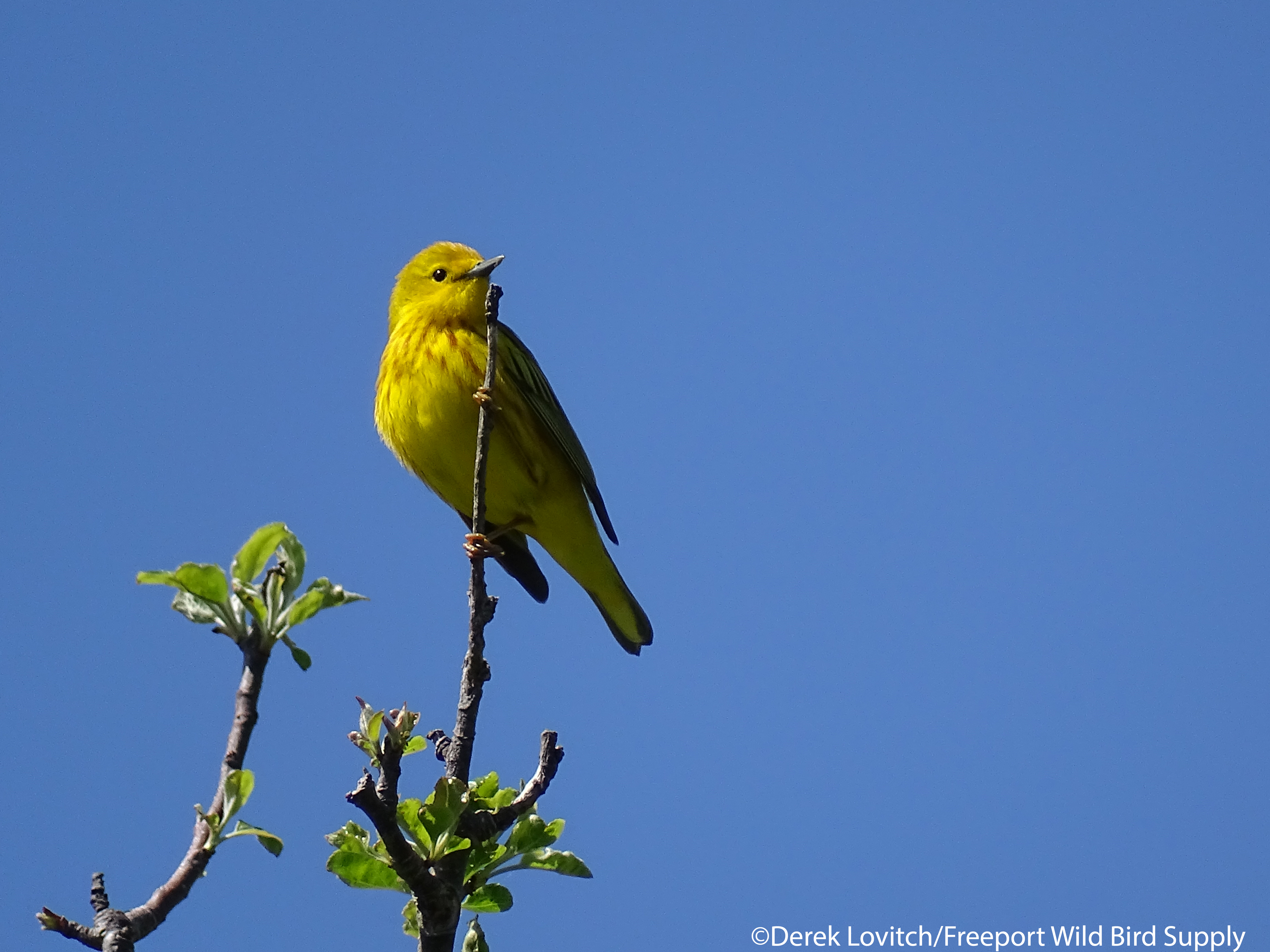
We didn’t care how common Yellow Warblers are…they’re still always beautiful! As are the sunsets from the Trailing Yew.

2024 Down East Adventures Birding Tour Reports

Freeport Wild Bird Supply is very excited to partner with Down East Magazine’s Down East Adventures for the fourth year of offering exclusive birding workshops focused on gaining greater knowledge and field skills in a focused group of seasonally accessible birds.  Focused on skill-builder rather than list-building, there will be plenty of “life birds,” but also more knowledge and education about birds, habitats, birding, and much more about the natural world.  We’re happy to bring back the complete slate of tours from our 2023 season.

The full list and descriptions, along with registration information, for all of our upcoming tours (and an outline of 2025 options) can be found here.   At the conclusion of each tour, I’ll post the trip report here.

  • Winter Waterbirds Workshop, January 14th.

I mean, really, what’s better than a Harlequin Duck?

For the second year in a row, very strong winds greeted us in the morning. So the game of the day was finding sheltered coves and respites from the wind. Therefore, we adjusted our itinerary accordingly, making a further adjustment based on parking lot closures from storm damage.

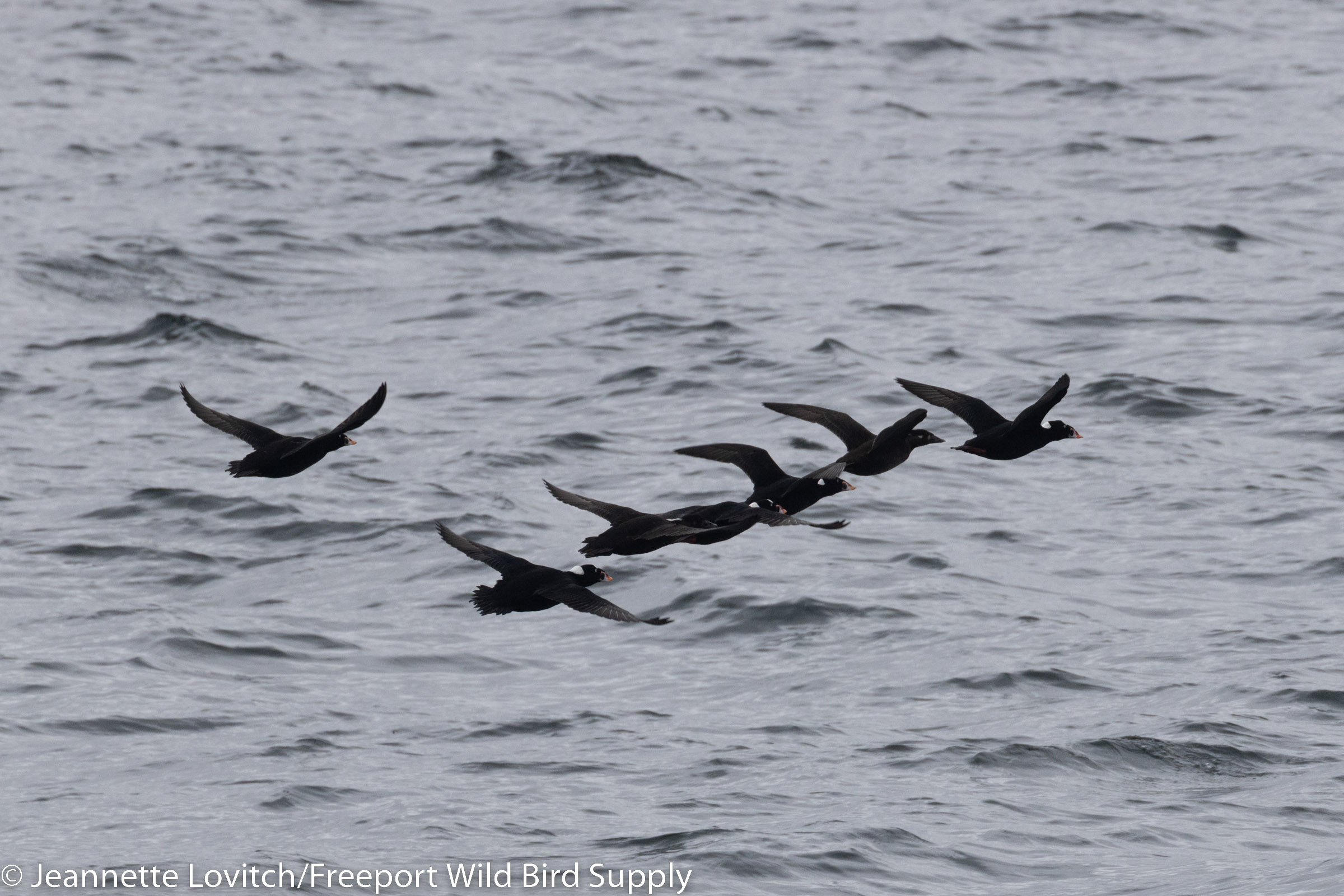
While we had high hopes of finding alcids that were blown closer to shore and were seeking refuge after the strong storm of the previous day, we didn’t see a single one – not even a Black Guillemot! However, we did see just about every other regularly occurring winter waterbird, from Red-necked and Horned Grebes to Buffleheads and Long-tailed Ducks  Not surprisingly, Harlequin Ducks were the star of the show, with about 10 along Marginal Way in Oqunguit and abut 20 at The Nubble. Large rafts of Black Scoters were seen at several locations, with Surf and White-winged Scoters seen nearby for careful study.

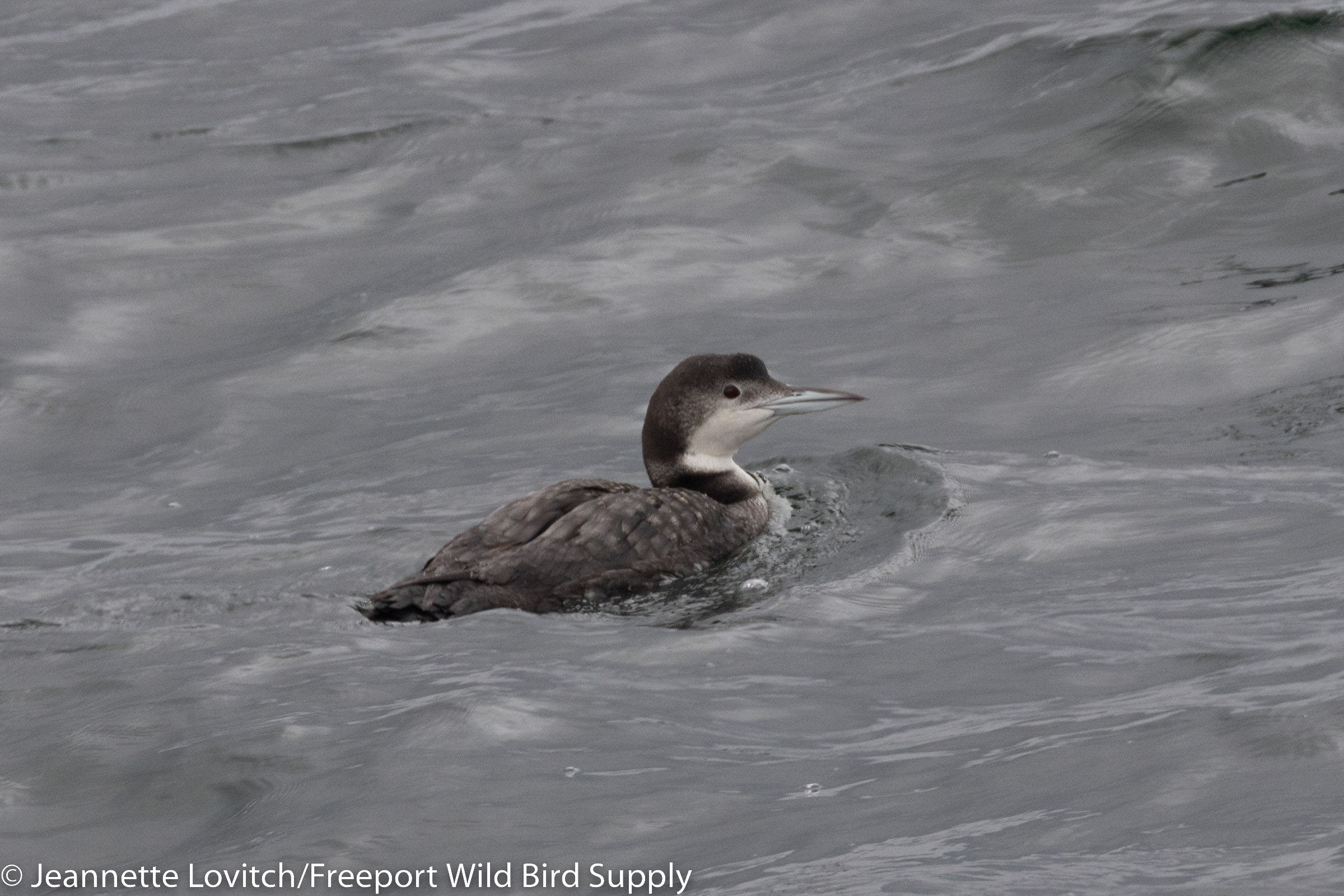
We had a lot of Common Loons today, and we practiced learning their shape and size to separate them from other waterbirds at any range. Great Cormorants at The Nubble were nice to see, and we did a little introduction to gull identification with a mixed flock at Short Sands Beach.

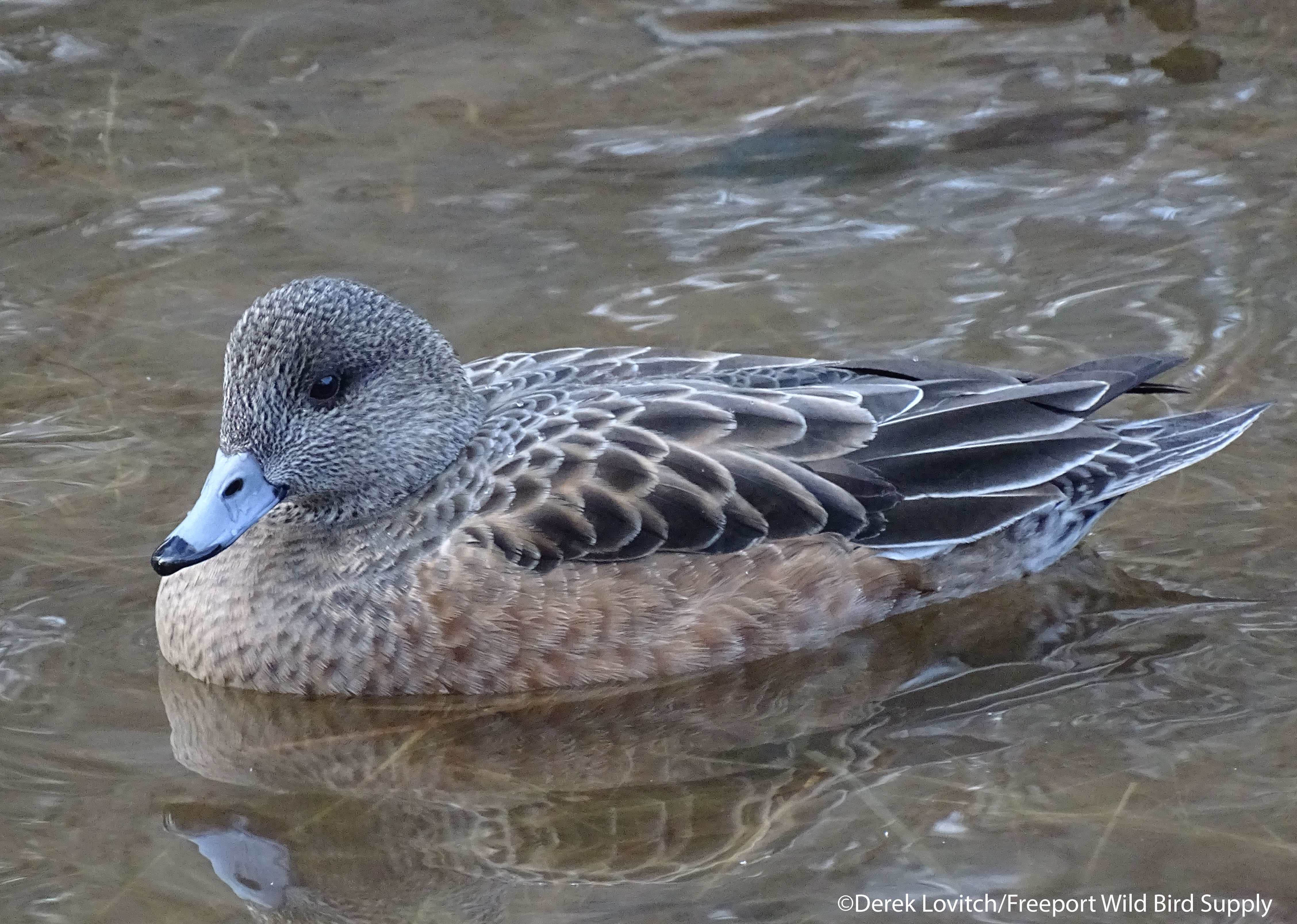
Finally, a stop at the York Duck Pond introduced us to another group of waterbirds: dabbling ducks. There, we had close studies of Mallards, American Black Ducks, and hybrids thereof. Practicing our “feather birding” we used the hybrids of an example of what to look for beyond the general impression of size and shape we were focused on throughout much of the day. The icing on the cake was the hen American Wigeon that has been here all winter – you may never see one as close and as well as that again!  Enjoying the fine black detailing on the steely blue bill was a highlight for me.

  • Spring Migrant Songbird Workshop, May 12th.

Honestly, I am not sure if we could have dialed up a more productive morning for an instructional workshop designed for learning about migrants – from identification to natural history, habitat to visible migration. “Slow” by mid-May standards, we eventually tallied 15 species of warblers (including a few “heard only”), but we had absolutely remarkable “quality time” with so many of the species we did encounter today.

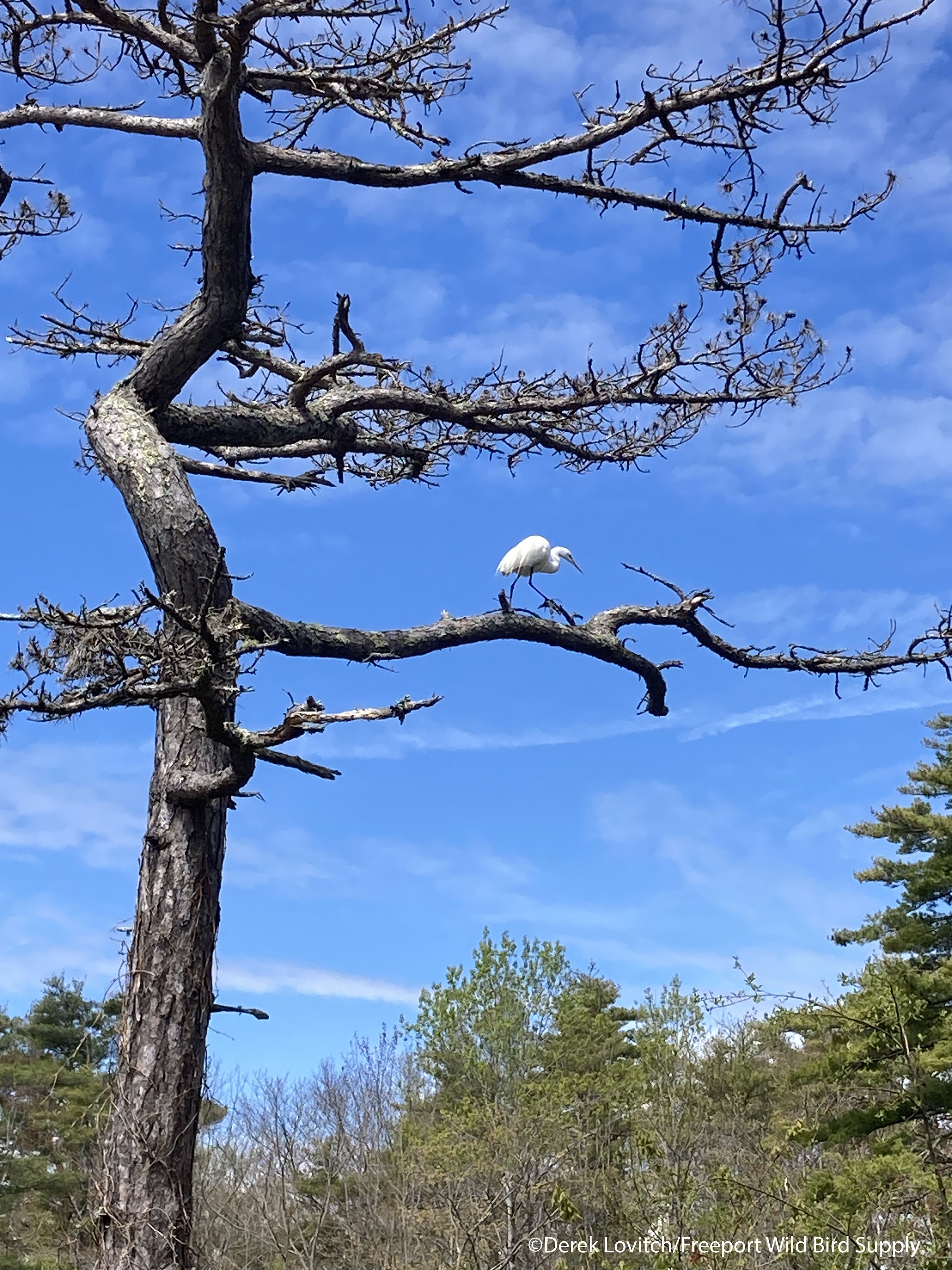
We were greeted by a Great-crested Flycatcher and finished with Maine’s most confiding Great Egret. In between, a wide range of species included an uncommon Blue-gray Gnatcatcher and a family of Wood Ducks. I particularly enjoyed the quality time spent with a pair of Black-capped Chickadees who were busy gathering moss for their nest lining.

But it was the Neotropical migrants who were the stars of the show, as predicted and hoped for. My first Red-eyed Vireo of the spring was uncharacteristically low and cooperative, but the single early-ish Blackpoll Warbler was most definitely not. However, almost every other warbler was just shockingly well seen. In one willow thicket, we watched – often without binoculars and often within 10-15 feet of us and below eye-level – two each of stunning Magnolia Warblers, gorgeous Northern Parulas, charismatic Common Yellowthroats, and distinctive Chestnut-sided Warblers. A short distance down the trail, our patience with Ovenbirds was rewarded with one walking out into the open a short distance ahead.

In between bird sightings, we discussed habitat, NEXRAD radar, and the big picture of what we were and were not seeing today and why. We noted how American Crows mobbed a Red-tailed Hawk but barely bothered to call at the sight of a less-threatening Broad-winged Hawk. OK, fine, those aren’t songbirds, but we learned a lot from them anyway.

More birds of more species can and will be seen under different conditions at Evergreen Cemetery and similar urban green spaces as encountered today, but we would be hard pressed to see so many birds so well, for prolonged periods of time to allow for thorough study. While we encountered one wave of migrants all moving together, which can easily become frustrating when getting started, many of birds came one or two at a time allowing for in-depth observation -exactly want we want in a songbird workshop!

Not a songbird, but this Great Egret that frequents the ponds here also poses in interesting places.

  • Shorebird Workshop, August 15th.

Nothing wrong with starting out with the easy ones, like dapper Ruddy Turnstones!

Recent rainfall, approaching thunderstorms, and current observations all combined to make me throw our itinerary out the window this day. Sometimes audibles work…and today, it most definitely did.

While I prefer to start with smaller groups of birds so as not to overwhelm, we took advantage of the lovely morning and high tide to soak in an estimated 2000 shorebirds at our first stop! Biddeford Pool Beach did not disappoint, and we began our lessons with the basics: shorebird vs everything else, plover vs sandpiper, and eventually each species. We compared Semipalmated Sandpipers (~1750 individuals) and Semipalmated Plovers (about 200 individuals), then teased out several White-rumped Sandpipers from the masses. We noticed how white Sanderlings look, and what little bulldozers the distinctive Ruddy Turnstone can be. Spotted Sandpipers nicely demonstrated their shallow short-distance flight wingbeats as well.

Nearby Great Pond allowed us to compare Semipalmated Sandpipers vs Least Sandpipers at nearly arm’s length, while giving us better looks at a couple of Spotted Sandpipers. A single Lesser Yellowlegs was also added to the list. 

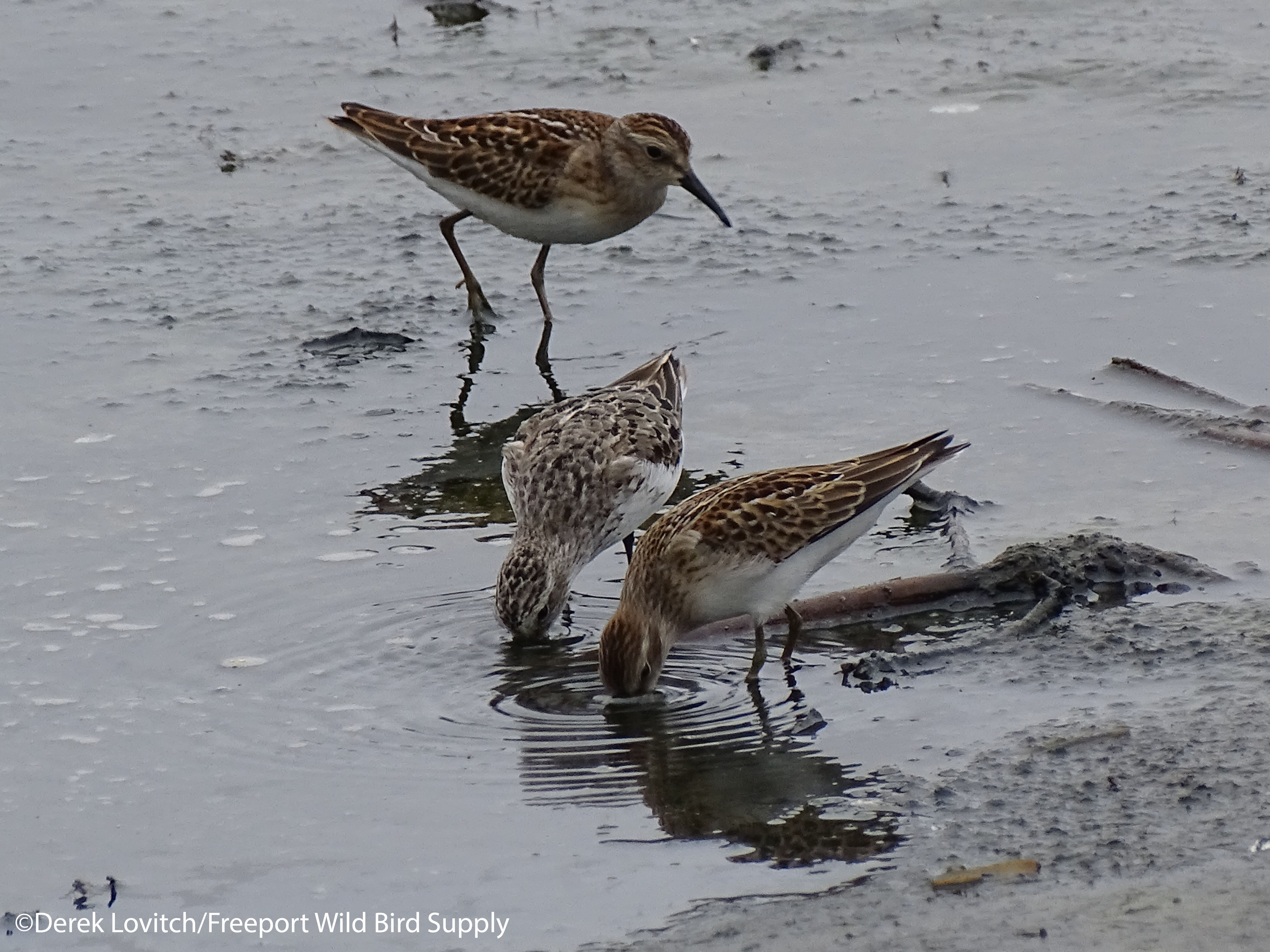
By using habitat cues and tide charts, we maximize our shorebirding productivity. By studying birds near (like these side-by-side Least and Semipalmated Sandpipers) and far, we can learn to quickly recognize most shorebirds, most of the time, using a range of tools that we worked on together throughout the day.

Next up was Hill’s Beach, on the prime outgoing tide. Unfortunately, thunderstorms were rapidly approaching, and after a short check (more Sanderlings and a growing number of Semipalmated Sandpipers and Plovers), we decided to play it safe, return to the cars, and head into Saco for lunch. Good thing, too, as while we were eating, it was pouring outside! 

White-rumped Sandpiper.

Returning to the field, we poked around the edges of Scarborough Marsh as we waited for the tide to begin rolling back in and for the rain to finally come to a stop. After a 10-minute rain delay in the cars while we waited out the last of it, we returned to the field to take in the flats of Pine Point. Good looks at Black-bellied Plovers (75+) allowed us to compare their shape, size, and feeding style to the estimated 300 Semipalmated Plovers that were here. Another 1200 or so Semipalmated Sandpipers contained at least a dozen White-rumped Sandpipers, which we practiced sorting out at a distance using shape and size, especially those long primaries. 14 Willet were new for our list, and the 90’s steroid-era-baseball-players of the greater Tringa family nicely contrasted with 4 slim Lesser Yellowlegs that alighted with some of them.  Four not-so-short-billed Short-billed Dowitchers were our 11th species of shorebird of the day.  And finally, as we continued to grow and practice our shorebird identification toolkit, we also took note of some non-shorebirds, such as Common Terns and a variety of gulls which today included 2 very-uncommon Lesser Black-backed Gulls!

  • Monhegan Birding Workshop, September 13th – 15th.
Cedar Waxwings were often with us, alighting on trees, eating native fruits, and avoiding marauding Merlins. Few things bring as much pleasure to the birding day as a “Waxwing Christmas Tree.”

Arriving on a glass-calm sea on Friday the 13th, luck was most definitely with us today and the entire weekend. We were greeted at the dock by a darting Merlin, a sign of things to come. After checking in and a relaxed lunch, we began our workshopping. While overall songbird activity was slow, we enjoyed plants, butterflies, and the weather as we wandered around and spotted birds here and there: a Northern Waterthrush in an isolated bush in a yard, a female Black-throated Blue Warbler in the woods, and lots of Cedar Waxwings in small flocks, overhead and landing in trees. Merlins continued to perform, and several Peregrine Falcons and Sharp-shinned Hawks joined the show, although it did not help us detect skulking warblers!

A late afternoon walk to Burnt Head to take in the cliffs and sample the habitat of the island’s interior produced a 1st-winter Lesser Black-backed Gull, but more importantly perhaps, allowed us to enjoy such a beautiful day on the island for mid-September.

On Saturday morning, we stepped off the porch at the Monhegan House, and it was ON. A great Morning Flight (morning redetermined migration) was underway, with dozens upon dozens of warblers zipping overhead as the sun slowly rose.  As we did a short stroll to some favored early-morning micro-habitats, we ground-truthed the morning flight, finding that Cape May Warblers were indeed the dominant migrant of the morning. In fact, we often had 3 or 4 (as many as 5 in one tree) in the top of nearly every spruce we checked, and the entire range of plumages was on display. Northern Parulas were also numerous, but we estimated about 3 of every 5 warblers we encountered this morning were Cape May! 

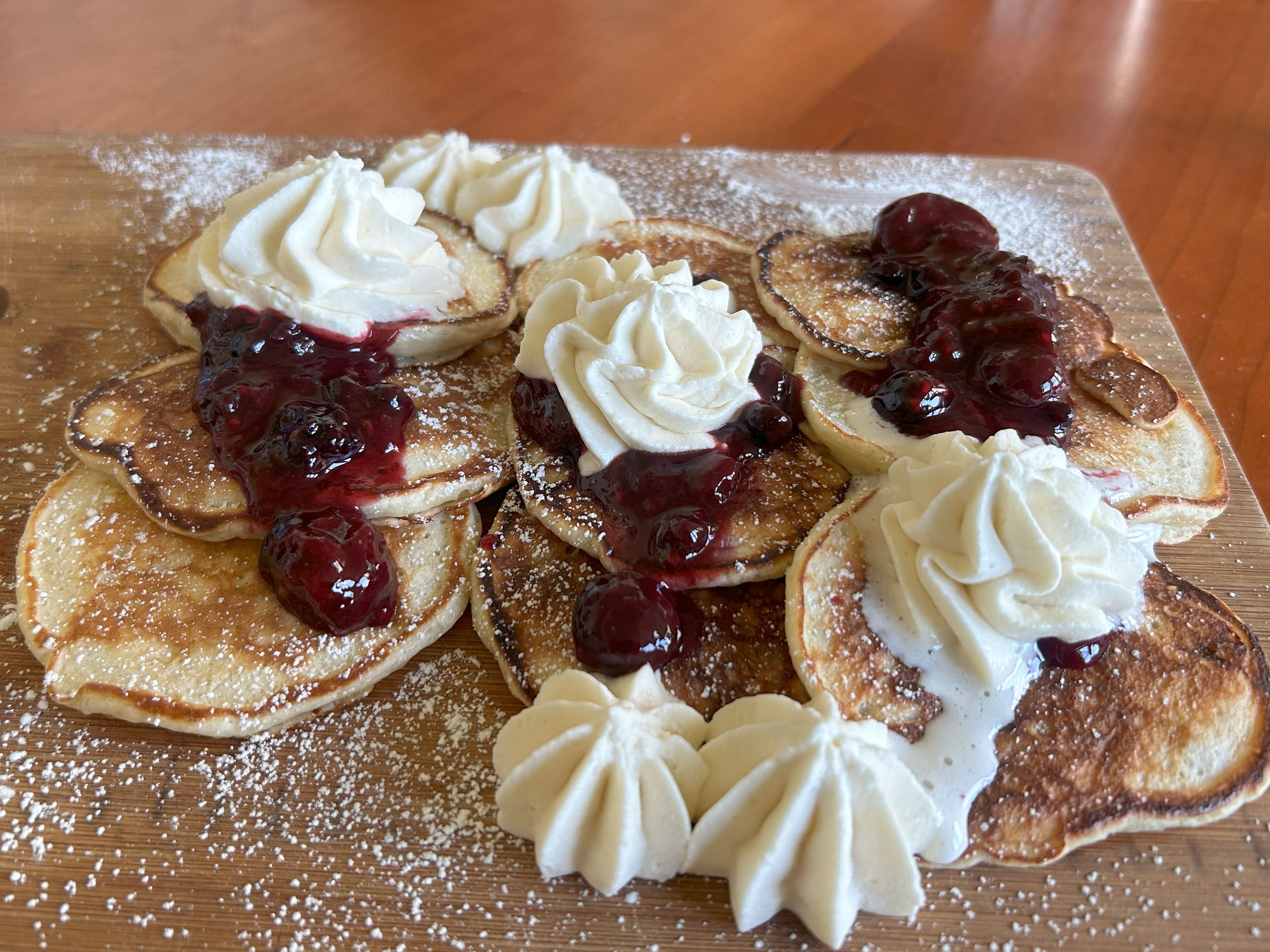
It was such a great morning it was hard to come inside to break for breakfast. Or so one thinks until they have had the Monhegan House Breakfast…and this was just the final of three courses!

Although the day’s activity peaked in the morning as many of the birds in Morning Flight continued on back to the mainland with a light northwest wind becoming northeasterly by noon, we continued to find pockets of activity and mixed-species foraging flocks throughout the day. There were a few Eastern Kingbirds and Eastern Wood-Pewees scattered about, often giving very good looks, and we had a nice mixed vireo flock that included 2 Philadelphia Vireos, 1 Blue-headed Vireo, and several Red-eyed Vireos for nice comparison. Northern Harriers put on a performance for us in the late afternoon over the marsh.

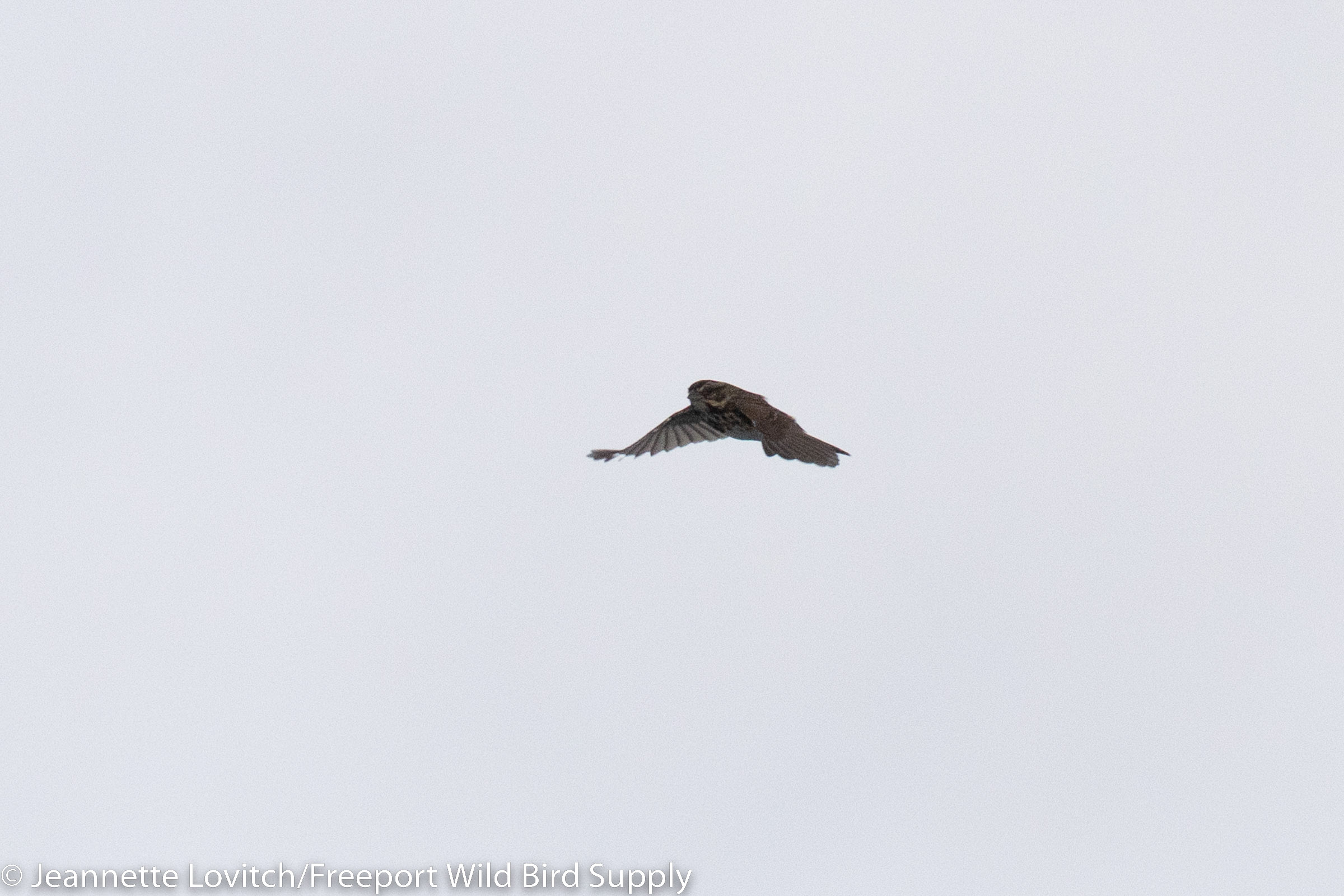
While our afternoon walk through the woods to the lighthouse was as much for pleasure and learning about habitats as it was for birds, the result was the discovery of a rare Lark Sparrow!  We covered a lot of ground today, and definitely earned our delicious dinner.  Before that, however, we had a little workshopping session to recap the day and compare what we saw (morning flight) with what the overnight radar image had suggested.

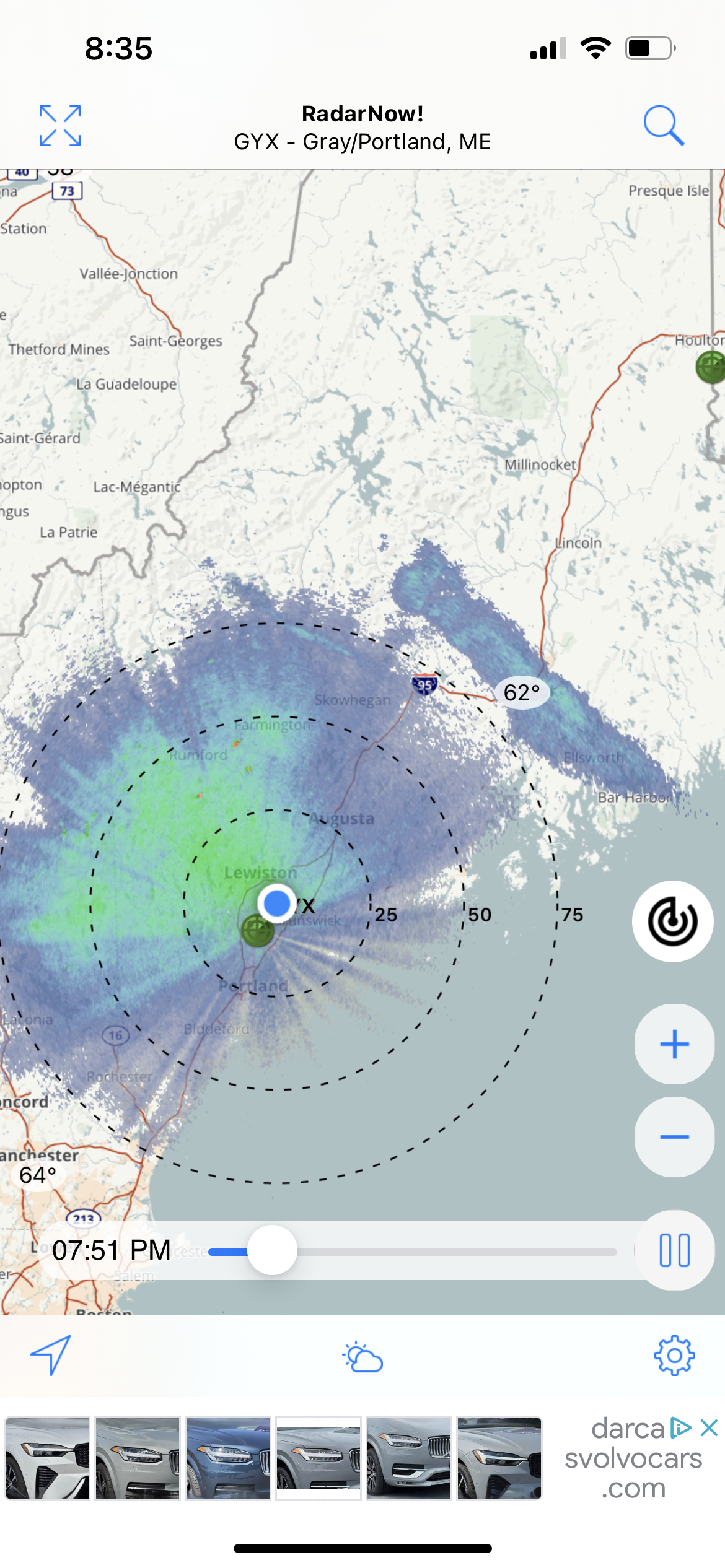
One of the new migration skills we learned was how to monitor and plan your birding accordingly by looking at NEXRAD weather radar. For comparison, here are the 1am images from Saturday and Sunday morning, respectively, showing the greater density of birds in the air and offshore on Saturday morning – and confirmed by our morning flight observations come sunrise.  

Another clear and calm night resulted in a very strong flight of birds, but with fewer birds drifting offshore, the morning flight was slower than Saturday, as we forecast. However, there were plenty of new birds around, and we repeatedly saw birds we had not yet seen and many rather “fun” species. It started with a drift-vagrant Dickcissel in Morning Flight, followed by a Whimbrel flying around. A likely Clay-colored Sparrow disappeared before we could confirm it in poor light, but warblers such as Bay-breasted, Blackburnian, and Wilson’s were more confiding. Unexpected offshore and always a surprise on Monhegan, an immature Cooper’s Hawk flew over us on our way to lunch.

There was a noticeable turnover in species, with more sparrows and many fewer Cape May Warblers. We had some unusually cooperative Lincoln’s Sparrows to study, such as this one that perched in a bush with a Song Sparrow for comparison (and later, the same bush held a Swamp Sparrow next to a Song for further study of the entire genus!).

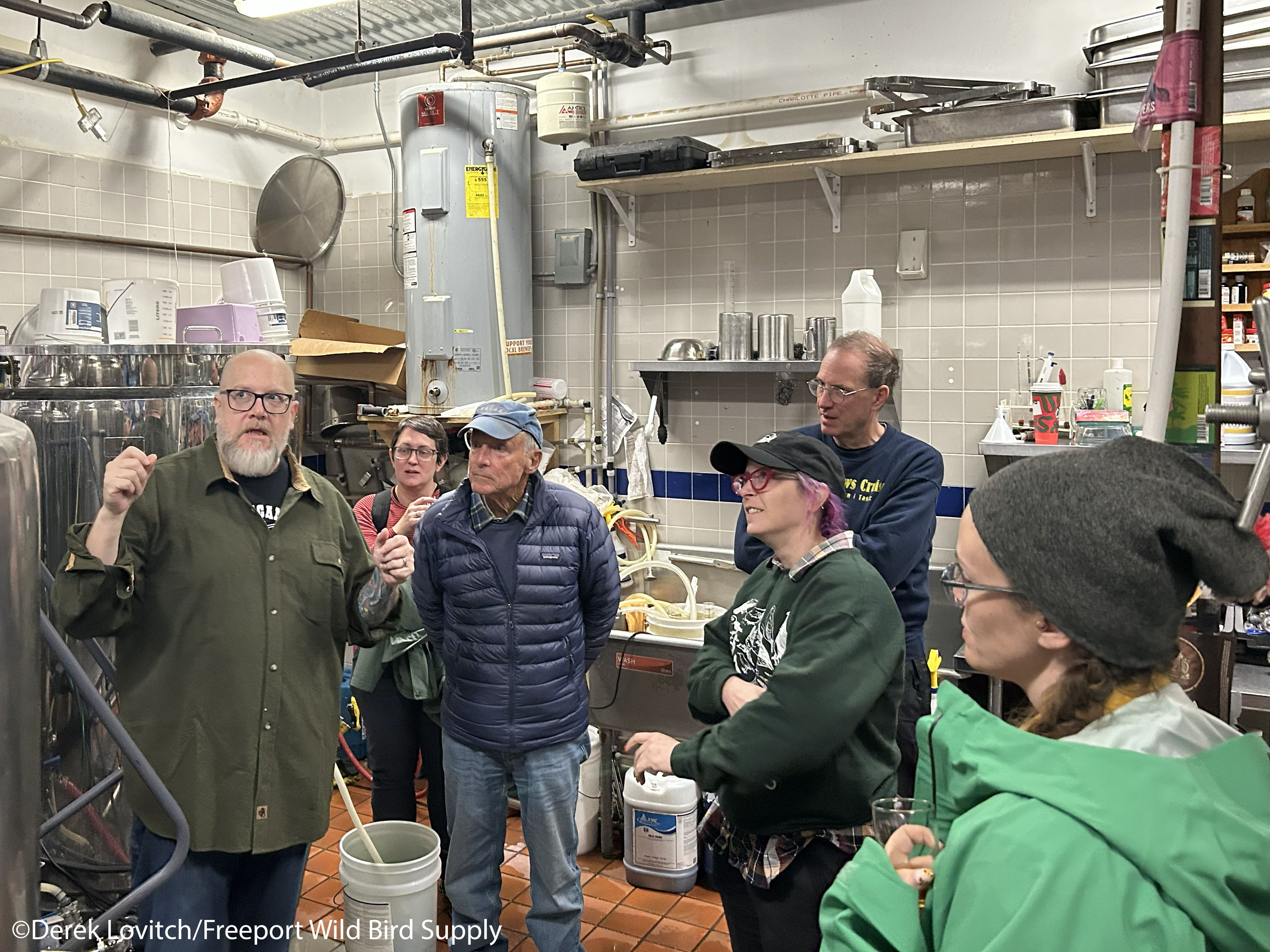
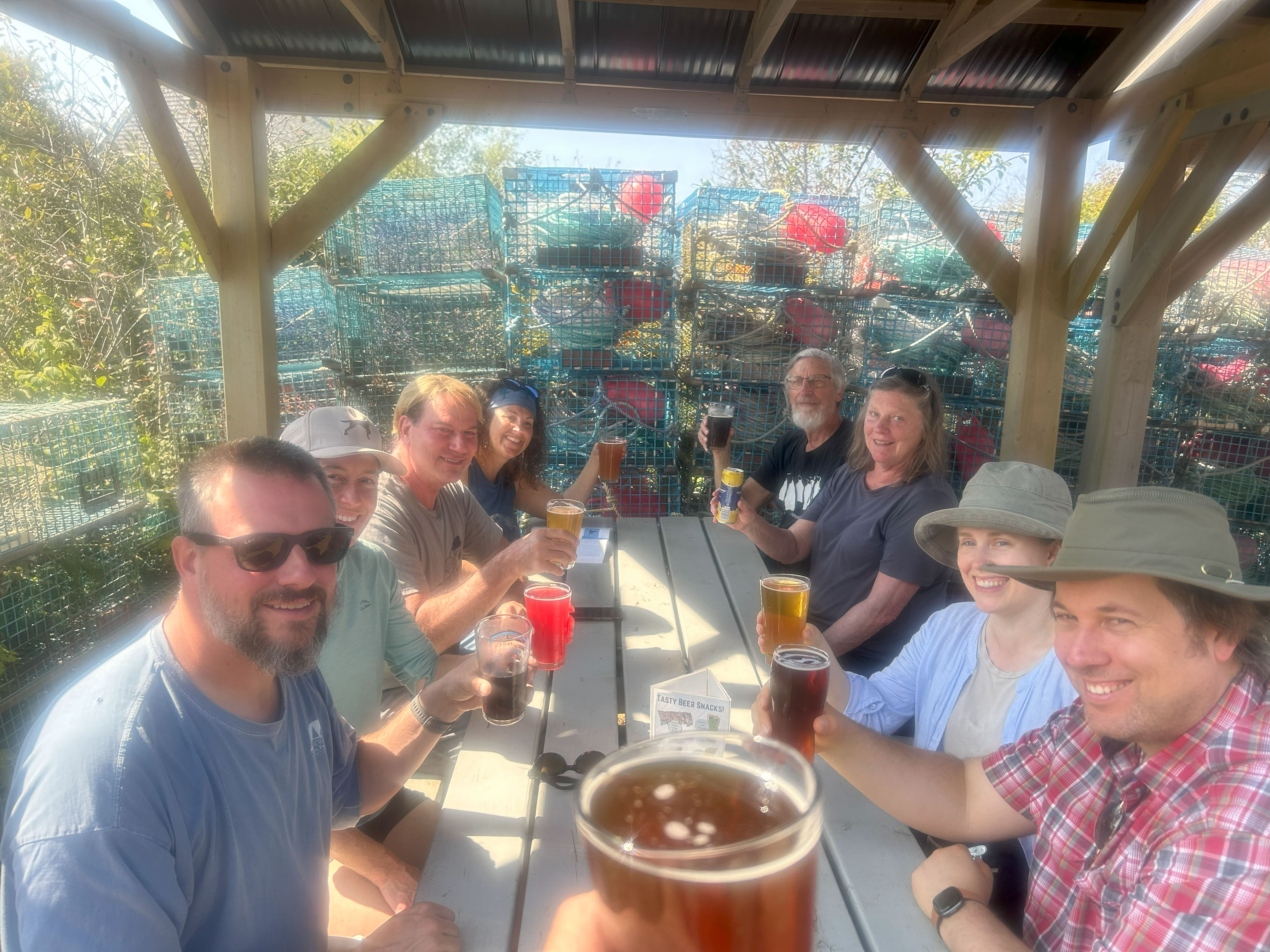
Since we were focused on learning bird identification and the nuances of migration’s ebbs and flows (and mechanisms thereof), we did not keep a running bird list. We did count our warbler tally and finished the trip with a very respectable 17 species of warblers! We found a couple of “good birds” (and jokingly disparaged the use of the descriptor) for ourselves and ate way too much good food. We learned a bunch about migration, plants, birds, and insects, and a little about the island. So instead of trying to add one more bird to the non-existent list, we brought the tour – and the 2024 Down East Adventures Birding tours season to a close with lunch and a toast at the brewery!

Boothbay Harbor Mini-Pelagic with Cap’n Fish’s Cruises, 10/16/23

Yup, I’m leading off a pelagic trip report with a photo of a Song Sparrow. It’s a sign of things to come…but it was 28 miles offshore!

The thing about pelagic birding, especially on the Eastern Seaboard, is that it can be very hit or miss.  This year was our 4th Fall Mini-Pelagic with our partners Cap’n Fish’s Cruises out of Boothbay Harbor. Last year’s trip was pretty good, 2021 was outstanding, and 2020, had well, Leach’s Storm-Petrels, so that counts as great! 
This year, well, this one is going to have to be counted as a miss. 

Granted, I love the thrill and challenge of seeing and identifying passerines at sea. It’s like Forrest Gump’s box of chocolates: you never know what you’re gonna get. And they’re always a fun addition to a pelagic birding tour.  But let’s be honest, that’s not what we packed the boat for.  More species of sparrows than seabirds is not why we go on pelagic birding tours!

There’s no other way around it – it was dead out there. Kelsey, the boat’s Naturalist, reported it has been very quiet for both birds and marine mammals recently, and she was not kidding.

But hey, we were offshore on a boat! It sure beats most other things we could have been doing instead. Plus, the waves were not very bad (2-3 feet is pretty generous), the winds were much lighter than forecast, and other than a few sprinkles, we didn’t hit any rain until we returned to the outer harbor. The light winds, the gray sky, and the minimally choppy waters were all perfect for pelagic bird finding. But alas.

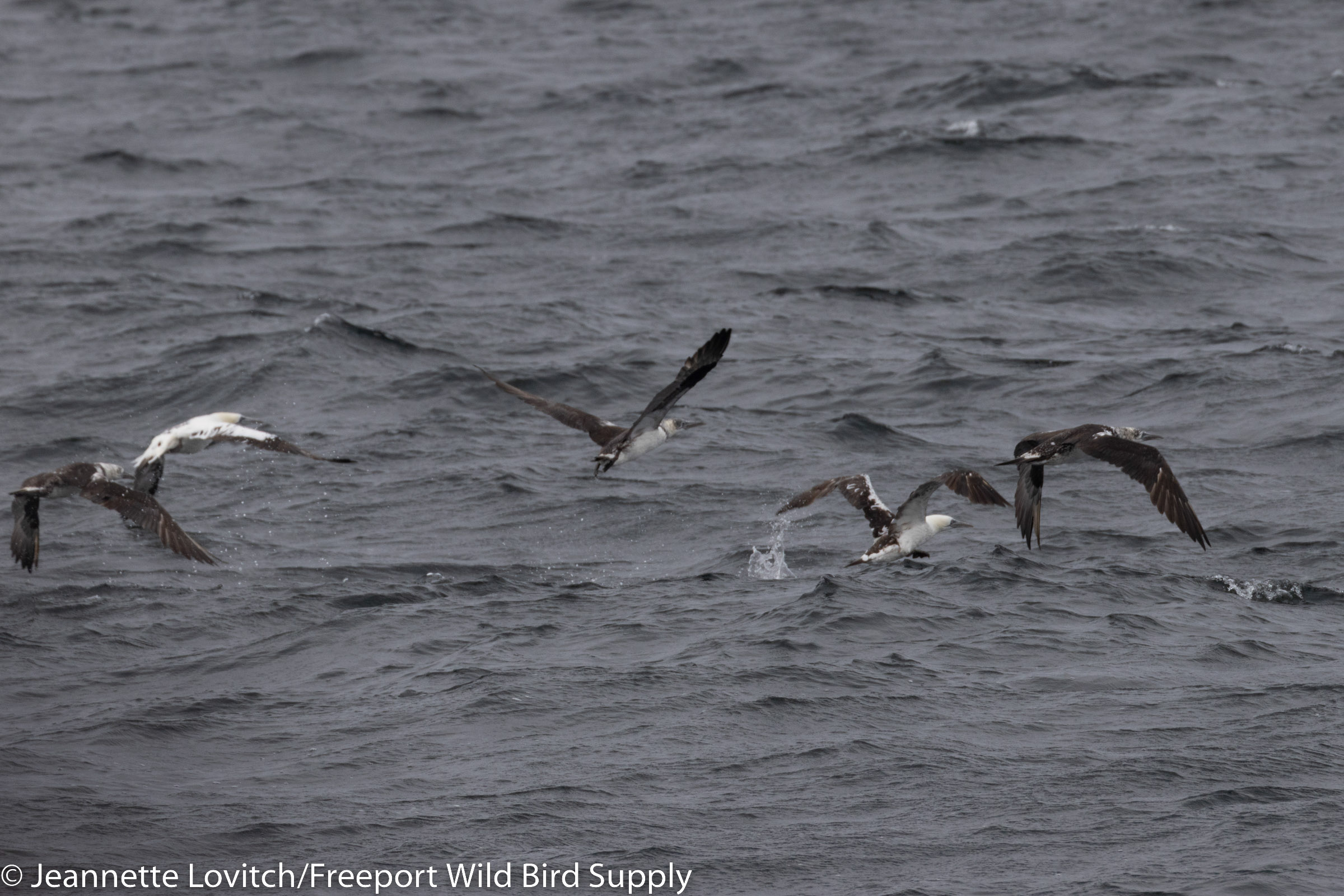
We can’t be accused of not trying though!  Captain Steve covered nearly 70 miles, and we hit a total of 5 hotspots, including perennial favorites like Murray Hole and Mistaken Ground.  The only real action we had were gulls and Northern Gannets, which we spent some time with at Bantam Ledge on the way to and from the deeper waters. Diving gannets are always a good show.  And with several visitors from well beyond New England, we saved a few minutes to enjoy the nearshore birds around Cuckhold’s Ledge Light on the way back, with 3 Great Cormorants and all three scoters scattered among 750-1000 Common Eider.

More Northern Flickers than jaegers, more species of warblers than alcids, but we tried!  And days like this only make those great days feel even better! We’ll get ‘em next year.

Here’s the trip list:

  • 12 Canada Geese
  • 3 Mallards
  • 1006 Common Eider
  • 46 Surf Scoters
  • 8 White-winged Scoters
  • 9 Black Scoters
  • 3 Long-tailed Ducks
  • 40 Rock Pigeons
  • 1 POMARINE JAEGER
  • 7 Black Guillemots
  • 1 Black-legged Kittiwake (independently photo’d by two people)
  • 2 Bonaparte’s Gulls
  • 2 Laughing Gulls
  • 2 Ring-billed Gulls
  • 137 Herring Gulls
  • 81 Great Black-backed Gulls
  • 11 Red-throated Loons
  • 30 Common Loons
  • 58 Northern Gannets
  • 3 Great Cormorants
  • 165 Double-crested Cormorants
  • 4 Great Blue Herons
  • 1 Northern Harrier (crossing outer harbor)
  • 1 Cooper’s Hawk (at dock)
  • 2 Northern Flickers
  • 2 Merlin (outer harbor)
  • 4 American Crows (harbor)
  • 4 American Pipits
  • 6 Pine Siskins
  • 2 White-throated Sparrows
  • 3 Savannah Sparrows
  • 1 Song Sparrow
  • 1 Palm Warbler
  • 5 Yellow-rumped Warblers
  • 23 unidentified passerines (including a flock of 14 that were probably Pine Siskins).

*All of the passerines were offshore, including several sparrows 28 miles offshore!

Marine Mammals:

  • 1 distant breaching Minke Whale seen by only a handful
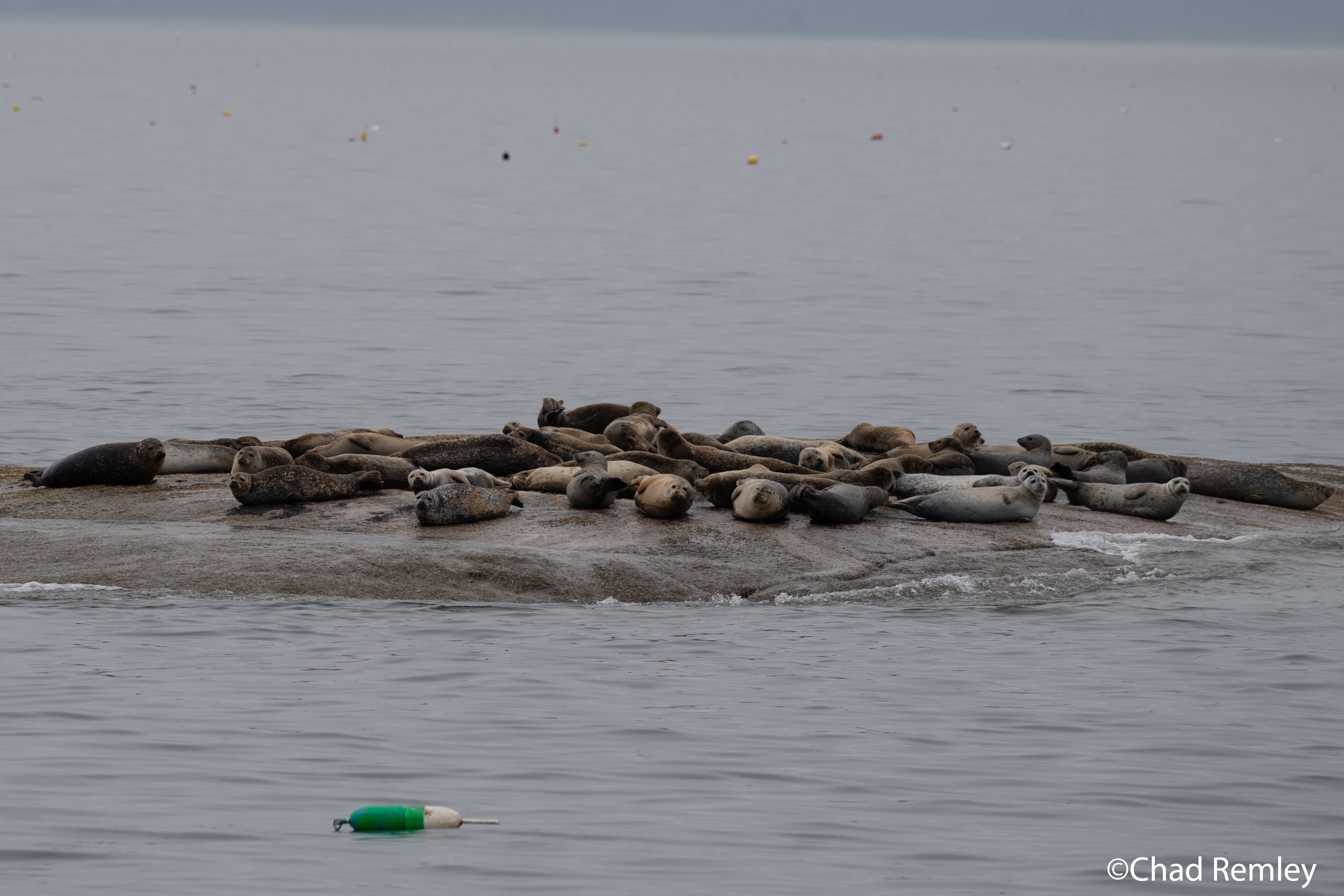
  • scattered Harbor Seals

Seal Island Tour Report, July 2023

On July 22nd we boarded the Isle au Haut Boat Service’s The Otter for our special annual charter out of Stonington to the raucous seabird colony on Seal Island.  Our partnership began while “Troppy” the world-famous Red-billed Tropicbird that called the area home for 17 years. Unfortunately, Troppy failed to appear last year, but we ran the trip anyway, and had an amazing time!

So we did it again this year. There’s just so much life out there, and it’s such an amazing place to visit, and so I needed an excuse for my annual visit. And sure, if that wily Tufted Puffin that’s been wandering the Gulf for the last two summers wants to be the new Troppy, that would be fine, too. But for now, we headed offshore with all sorts of high hopes.

As we left Stonington Harbor, the fog began to thicken, but not before we spotted a group of 15 Red-necked Phalaropes sitting on the water. Captain Tracy did a great job getting us closer, and then inching up to them when they relocated a short distance away. It’s a treat to get so close to phalaropes on the open water.

A handful of Wilson’s Storm-Petrels were bouncing around, but the action picked up as usual as we approached Saddleback Ledge Light. A 1st summer Great Cormorant was surveying the scene, and our first Atlantic Puffin circled around us for a couple of passes.  After we ourselves circled the small island twice, we turned for Seal and immediately ran into dense fog that had slowly been creeping in. The tradeoff for calm waters is often fog, and it was pea soup today.

Not surprisingly, we saw little en route, but soon enough, we were out at Seal. While we heard – and even smelled – the tern colony before we could see the island, once along its shores, visibility was adequate. Arctic Terns put on a particularly good show for us, with several near the boat feeding and bathing. Arctic and Common Tern fledglings were everywhere, and we enjoyed their antics.  There were plenty of Atlantic Puffins in the water and on land, including several groups that were remarkably confiding as we sided up to them in the glass-calm waters. And Black Guillemots were numerous, and very busy.

Razorbills were fledgling rapidly, so we only found two on the island, but later, we had great looks at one on the water, too.

We circled around the southern end, spending some time observing the state’s last colony of Great Cormorants (and Double-crested); nests were brimming with chicks! 

We kept an eye out for migrant shorebirds in addition to the locally breeding Spotted Sandpipers, but visibility remained a challenge: 4 Short-billed Dowitchers, 3 Least Sandpipers, and some unidentified peeps was the best we could do.  A Great Shearwater made a close, but brief, pass as we were on the east side of the island before vanishing back into the fog.

Somehow, it was even foggier on our way back, so seabird sightings – even with a second visit to Saddleback Ledge – were limited to just a couple more Wilson’s Storm-Petrels.

So yeah, the fog was annoying, and did impact photos and our search for the next mega-rarity. But it also produced one of the smoothest boat rides you’ll ever be on in the Gulf of Maine and yielded lots of close puffins and some great looks at phalaropes.  And besides, any day birding from a boat is a good day in our book! Especially when a few days prior we thought this trip was going to be cancelled due to wind and thunderstorms.

Harbor Seals on the way out of the harbor.

Summertime Puffin/Whale/Pelagics Trip with Cap’n Fish’s Cruises

Beginning in 2022, Cap’n Fish’s Cruises in Boothbay Harbor and Freeport Wild Bird Supply have partnered together to offer a mid-summer seabirding opportunity. I join the boat’s naturalist as a seabird and pelagic specialist, to help everyone see all of the breeding seabirds at Eastern Egg Rock (Atlantic Puffins; Arctic, Common, and Roseate Terns; Laughing Gulls; and sometimes Razorbill and Common Murre) before we venture offshore in search of whales. While doing so, we pay special attention on this cruise to the bird life – which is often found at the same places where we are looking for whales. This trip gives us a slightly more bird-centric tour compared to the regularly-scheduled departures.

Here are the trip reports from this very popular annual event.

  • July 16. 2022

Seas were fairly high (3-5ft) as we bounced offshore to deeper water first. Wilson’s Storm-Petrels were soon visible, and we passed one Razorbill. We could not stop or turn around for it as the seas were just a little too rough for that, and this was unfortunately our only Razorbill of the day. We cruised around waters over 300 feet deep, and were treated to a good performance from Great Shearwaters, Wilson’s Storm-Petrels, and picked up a few Sooty Shearwaters. We had one offshore Atlantic Puffin, but the big surprise was a rare, mid-summer NORTHERN FULMAR – definitely the pelagic bird of the trip.

With the seas building, we made a turn and took advantage of much more pleasant conditions as we trolled the area, giving people a better chance and seeing the aforementioned species. We also spotted a couple of Mola Molas, but no marine mammals, unfortunately.

Away from Eastern Egg Rock (both coming and going), our offshore (“pelagic”) scorecard was:

  • 76 Great Shearwaters
  • 61 Wilson’s Storm-Petrels
  • 21 Northern Gannets
  • 3 Sooty Shearwaters
  • 2 Arctic Terns
  • 1 Razorbill
  • 1 Atlantic Puffin
  • 1 NORTHERN FULMAR
  • 1 Common Loon
  • scattered Common Terns and unidentified Sterna

As we approached Eastern Egg Rock, the action really picked up with all of the island’s breeding species soon apparent. Roseate and Arctic Terns joined the multitudes of Common Terns. At least a dozen Roseates included several putting on a good show, and we singled out quite a few close-passing Arctic Terns for good studies. 4 migrant Ruddy Turnstones joined island-breeding Spotted Sandpipers onshore, and we heard a couple of singing Song Sparrows. And of course a plentitude of Laughing Gulls; about half of the entire state’s population breeds here. Black Guillemots were also conspicuous today.

But Atlantic Puffins are the star of the show out here, and today, they did not disappoint. In fact, it was a great mid-summer performance, with several dozen on the water – often in very close proximity to the boat, commuters passing by, and dozens more stately stationed on the island’s rocks.

We wandered offshore on the way back, near where the boat had recently seen whales, added a few birds to the tallies, but alas, the only marine mammals of the day were two species of seals: lots of Harbor Seals and two Gray Seals. Hopefully, this got the seal of approval from the marine mammal watchers aboard today.

  • July 10, 2023.

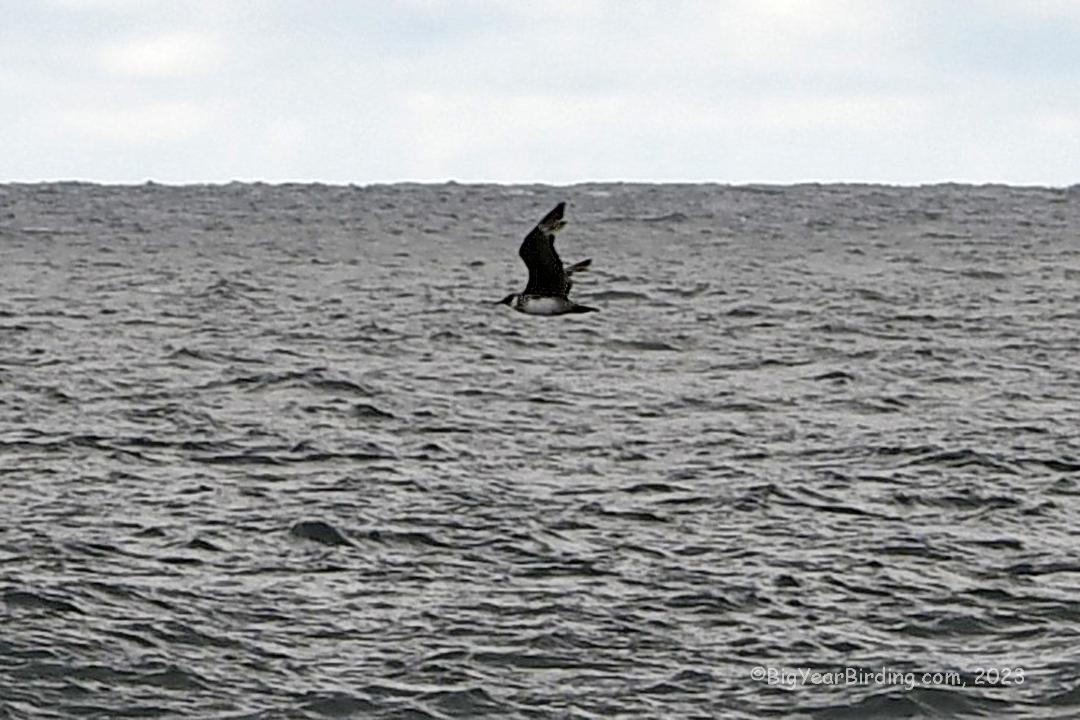
A Parasitic Jaeger got everyone to our feet as we were motoring home through the fog.

With even more anticipation than usual, birders flocked aboard for this afternoon departure. Three hours earlier, I had spotted the near-mythical Tufted Puffin on Eastern Egg Rock aboard Cap’n Fish’s morning Puffin Cruise.  We made a bee-line for the island’s north end, but alas, the Tufted was not to be seen.

Nonetheless, we had a fantastic visit. Fog resulted in many of the island’s Atlantic Puffins being in the water and we had close birds all around the boat. We studied Arctic and Roseate Terns among the masses, making sure everyone had at least one rewarding look at each. While we searched vigilantly for the Tufted, we picked out one of two American Oystercatchers that have been here this summer, and just as we were about to leave, the single Common Murre floated around just off our bow.

It didn’t take long before our first Wilson’s Storm-Petrels of the day to be sighted, with small groups and singletons here and there throughout the rest of the trip for a total of 100-150 or so. Fog only thickened as we traveled further offshore, however, although we did find a hole where the visibility increased dramatically for a spell. While we searched diligently for whales to no avail (but plenty of Harbor Porpoises today), birds began to appear one by one.

A good look at a Sooty Shearwater. A glimpse of a Great Shearwater was followed later by a cooperative one that allowed close approach on the water. One group spotted a Manx Shearwater heading straight away, and a couple of other distant shearwaters disappeared into the fog. We only saw a few gannets today, scattered Common Loons on our way to and from, but a subadult Parasitic Jaeger spiced things up on our ride back (photo above). 

Considering how dense the fog was, we were happy to spot much of anything once we left the rock, and considering we remained just east of torrential rain all day, we were more than satisfied with the comfort of what we did see!

While we’ll have a dedicated pelagic in October one again (see our website for more information about all of our pelagic birding opportunities) and we look forward to another edition of this summer special in 2024!

The 2023 Zeiss Pelagic Trip Report

A southerly, and rather confiding, Common Murre was one of the unexpected highlights of the Zeiss Pelagic.

On June 2nd, we ran our now-annual spring mini-pelagic with our partners Cap’n Fish’s Cruises out of Boothbay Harbor. But this wasn’t any old pelagic. Instead, it was not only a way to poke your feet into the proverbial and literal pelagic birding waters, but this was also a chance to try out a new pair of Zeiss optics. And all for a very, very special price.

Thanks to our store’s partnership with Zeiss Optics, our biannual “Zeiss Day” occurred offshore this spring. With Zeiss’s sponsorship, we were able to offer this unique trip at a special price, with extra spotters to help people see birds, and of course, with chumming.

And the weather could not be any better! In fact, we were all excited to head offshore to beat the heat on this day. Barely a puff of breeze resulted in remarkably calm seas, with the only waves caused by our boat. Thanks to the weather gods for this day offshore!

Evan Obercian, Dan Nickerson, and Jeannette helped spot birds, Noah Gibb handled the checklists, and Robby Lambert – chummer emeritus – stood at the ready as the boat’s naturalist, Kelsey, and I scanned from the wheelhouse. Our captain was amazing, and together we laid out a plan for the day. Throughout the day, Rich and Bill from Zeiss handed out binoculars to try and lots of optical questions were answered. It was a great way to test-drive a new pair of excellent binoculars, especially noting how important size and weight is when trying to hold binoculars steady on the open ocean, even without much in the way of waves.

Robby at his office.

Motoring out of Boothbay Harbor and across Muscongus Bay, we familiarized ourselves with the common denizens of Maine’s summer coast, such as Common Eiders, Black Guillemots, Common Terns, and Ospreys. Kelsey pointed out landmarks and gave a little history of the area.

Our first destination was Eastern Egg Rock, home to a thriving seabird colony thanks to the restoration efforts of Project Puffin. Leading pelagic trips in June is easy when at least some of our target birds are guaranteed!

The amazingly calm conditions and unusually warmth worked in our favor, as many of the island’s Atlantic Puffins and Black Guillemots were in the water instead of loafing on the rocks, allowing us to drift closely to many of them. One of the island’s ephemeral Razorbills was spotted near the boat, giving us long and good looks as well.

Razorbill.

Of course there were the terns, and for a change, both Roseate and Arctic were easy to isolate for all to see. With the help of my spotters, and a cooperative pair of Roseates on an obvious rock, everyone saw each species well, as well as many hundreds of Common Terns of course.  And a thousand or so Laughing Gulls, too.

Arctic Tern.

Roseate Tern.

Laughing Gull

Common Eider.

Satisfied with our views of the island’s denizens, we turned offshore and followed the Arctic Terns to deeper waters. It wasn’t too long before we started seeing scattered Wilson’s Storm-Petrels, but we slammed on the breaks when I spotted a Common Murre on the water up ahead. Captain Steve was able to circle the bird for all to see and photograph before we continued on; the murre was most obliging.  It also made for the hoped-for 4-alcid day, which is always a challenge this far south.

The lack of swell allowed us to make good progress and afforded us the chance to check three offshore hotspots. A good number of Wilson’s Storm-Petrels and a few Northern Gannets were at Murray Hole, but we motored through it.

We laid down a mile-long chum slick at The Kettle, but only a few of the many Wilson’s Storm-Petrels came in to check it out. I think it was simply too calm today – the scent wasn’t drifting, and birds – especially any shearwaters out here – were just not taking flight to forage; it’s just too inefficient without any wind for them to bother. But a fly-by from a southbound Ruby-throated Hummingbird nearly 20 miles offshore was unexpected!

We continued to tally Wilson’s when we set up a second chum slick at Mistaken Ground, but once again, little was interested, and only a few Wilson’s and gannets were to be seen.

Despite our extended time with the charter, it was soon time to head back to port, but we kept our eyes peeled throughout the trip. On the way back, we had a flock of 12 Red-necked Phalaropes buzz by and eventually land on the water, but we were going too fast and behind schedule to be able to turn around in time. Later, we passed not one, but two Basking Sharks, which was a real treat.

Harbor Porpoise and Harbor Seals were seen now and again, but overall, the offshore waters were quite slow – especially with gulls. The few gulls around didn’t even seem interested in our popcorn and suet, either.

Robby contemplates the meaning of life…and chum.

Our tally of Wilson’s Storm-Petrels was decent enough, but sadly, this would be our only tubenose of the day. Northern Gannets were in low numbers, as if often the case in early June, and whatever shearwaters may have already arrived may simply have been sitting on the water somewhere waiting for a breeze. I also felt terrible that not everyone saw the phalaropes.

Nonetheless – thanks to a perfect visit at Eastern Egg Rock and a random Common Murre floating offshore – I would call the day a smashing success! And for $40, few complaints were audible. The weather helped, too.

Rich talks optics.

Thanks to Zeiss for making this idea of mine come to fruition, and thanks to Cap’n Fish’s for letting us charter the boat to make this all happen. And most importantly, thanks to everyone who signed up and helped us explore the Gulf of Maine at this woefully under-birded time of year. Every day is different offshore, and you never know what you will or will not see. Excitingly, I am pleased to announce that Rich said, “let’s do this again next year!”  Hope to see you aboard!

Here’s the complete trip list, from dock to offshore and back. Thanks to Noah for compiling this!

  • Canada Goose: 13
  • Mallard: 2
  • Common Eider: 65
  • Surf Scoter: 1
  • Rock Pigeon: 3
  • Ruby-throated Hummingbird: 1
  • RED-NECKED PHALAROPE: 12
  • Spotted Sandpiper; 3
  • COMMON MURRE: 1
  • RAZORBILL: 1
  • Black Guillemot: 114
  • Atlantic Puffin: 102
  • Laughing Gull: 1025
  • Ring-billed Gull: 2
  • Herring Gull: 38
  • Great Black-backed Gull: 11
  • Roseate Tern: 20
  • Common Tern: 504
  • Arctic Tern: 63
  • Common Loon: 8
  • Wilson’s Storm-Petrel: 350-400
  • Northern Gannet: 16
  • Double-crested Cormorant: 70
  • Osprey: 1
  • Bald Eagle: 2
  • Barn Swallow: 14
  • European Starling: 2
  • House Sparrow: 2
  • House Finch: 1
  • Savannah Sparrow: 2
  • Song Sparrow: 1
  • Yellow Warbler: 1

2023 Monhegan Spring Migration Tour Report

Not surprisingly for the end of May, Blackpoll Warblers were the dominate migrant on Monhegan this weekend. However, we never tired of seeing both males (above) and females (below) so well each and every day.

A point-blank Bay-breasted Warbler. Up close and personal Magnolia Warblers, Northern Parulas, and 9 other species of warblers including more Blackpoll Warblers than we knew what to do with…and we hadn’t even made it up the hill of Dock Road yet!

In other words, our 2023 Spring Monhegan Migration Weekend tour got off to a great start as we really hit the ground running.  Then, a calling Evening Grosbeak. A fly-by Black-billed Cuckoo…more. Hmm… it was time to check in, and happily, shed a few layers.

After lunch, the excellent birding continued, with highlights including a flock of 10 Bay-breasted Warblers, a spiffy male Orchard Oriole, and great looks at a Philadelphia Vireo.  By day’s end, we had 59 species including 13 species of warblers – not bad for a mid-morning arrival!

Yellow Warblers (above) and Common Yellowthroats (below) were common and conspicuous in and around town and other scrubby environs as expected.

It was cool and clear on Saturday morning, and the overnight radar image was a little ambiguous. Did the light westerly wind overnight push birds offshore as they approached from the south, or was that all just pollen and smoke haze in the atmosphere? However, the radar return did suggest birds offshore in the early morning, so we were excited to find out. Afterall, I did not expect yesterday to be so good, and it was excellent.

While only a few warblers were overhead by the time we assembled around the coffee pot at 6:30, it took a while for us to leave the spruces behind the Trailing Yew, as we had a nice pocket of warblers and good early-morning activity. We teased out a Blackburnian Warbler – the only one of the weekend, and the 3 White-winged Crossbills that have been on the island paid us a visit. Later in the morning, we caught up with the stunning male Dickcissel that has been around for a while, and were among the first to see a pair of recently-arrived House Finches (a surprising rarity on the island!). We also found a flock of 10 tardy White-winged Scoters and a total of 6 Surf Scoters that briefly visited Deadman’s Cove.

After lunch, we had the female/immature Summer Tanager, a female Orchard Oriole, found an Olive-sided Flycatcher, and while the afternoon was overall rather quiet, we had lots of great studies of a variety of birds, especially Blackpoll Warblers.

Although far from one of our best birding days on the island, it was noteworthy how well we saw just about everything. Even with a full group, birds were overwhelmingly cooperative, and everyone thoroughly enjoyed the birding…and another beautiful day of weather!

Many of our common warblers were easy to see, photograph, and enjoy throughout the weekend, such as this Northern Parula (above) and Black-and-white Warbler (below).

Saturday night into Sunday morning saw another ambiguous radar image, but the overall small number of new arrivals suggested that most of the return was something other than birds this day.

That being said, we started the day with one of the birds of the trip when I nearly spit out my coffee when I realized that flock of cormorants that looked strange was actually a flock of 9 Glossy Ibis.  They circled the town, looked to be pondering the town marsh, and then soared up high and over Lighthouse Hill. Incredibly rare for the island, these were a new “island bird” for me, and we felt very fortunate that we were one of the only birders (I believe only one other birder saw them at all) on the island that got to see them. The “lingering around the coffee pot at the Yew” strikes again!

As expected, it was relatively slow overall, but even after the excitement of the ibis, we continued to enjoy ourselves. We had great looks at a lot of things all morning, including common warblers like American Redstarts and oodles of Blackpolls.  We had our best looks yet of feeding Red Crossbills – they were all over the island this spring! – spotted a Peregrine Falcon, and continued to marvel at the growing flock of swirling Blue Jays contemplating a trip back to the mainland.

Ring-necked Pheasants kept us entertained as always, however.

After breakfast, we had another good find when a Purple Martin flew over us, and a bigger flock yet of Red Crossbills entertained us for a while. Jeannette arrived and joined the group to help carry my scope and to take photographs for this trip report, as well as help us find more birds.

Juvenile Red Crossbill.

It was warm and fairly slow, so I needed all the help I could get. Regardless, we added species to our trip list here and there in the afternoon, with quality surpassing quantity.  We visited the long-staying 1st year male Blue Grosbeak that has taken up residence at Lobster Cove, where, unlike most Blue Grosbeaks, it has taken to flycatching for seaweed flies in the wrack. Why it is doing this no one knows, but it was a fascinating behavior to watch. Birds and birding on Monhegan never cease to amaze!

The Blue Grosbeak.

A little later, we found an immature Broad-winged Hawk, or again, it found us, as it passed right over us as we poked around the Underhill Trail to find some birds in the shade and in cover.  It was often a struggle to find birds this afternoon, and it was downright hot!  But I heard very few complaints compared to the slow days when it’s 45-degrees, windy, and raining!

We spent a lot of quality time observing birds today, getting to know their behavior and natural history, such as these courting Cedar Waxwings.

While also practicing our field ID skills, such as Eastern Wood-Pewee.

And enjoyed whatever warblers we did encounter, including this male Black-throated Green Warbler.

Monday saw even further reduced activity, with a very summer-like feel to the birding. The migrant flock of Blue Jays built up to at least 46, a Pine Siskin must have just arrived, and some of us even spotted the Virginia Rail!  While passage migrants were few – almost all Blackpoll Warblers – we still had a great day of birding thanks to continued great views of most of what we were finding. There was a Northern Parula nest that a friend found for us to marvel at, and we had quality time once again with a family group of Red Crossbills. Watching them, especially the juveniles, eating buds and cones of Red Spruce at close enough distance to see if they were “righties” or “lefties” was memorable, and more than worth the visit. We had the male Orchard Oriole again, and paid the Blue Grosbeak another lengthy visit.

We took some time to scan the skies over the marsh while also enjoying “Lefty,” the Red-winged Blackbird with white outer primaries on only his left wing. He’s back for the second year.

One of the few birds we missed as a group all weekend was a long-staying but frustrating Snowy Egret that never seemed to stay in the same place long. It was reported at the Ice Pond while we were having breakfast, and Jeannette and I raced down to see it. The “racing” part after the new and ample breakfast buffet at the Trailing Yew may not have been the best decision, however, we got the bird! It was another island bird for me (#226) and I am glad I made the decision to skip the break to chase it, as it was long gone by the time our group arrived at the Ice Pond. I always like to get those chases out of my system before making a bad leadership decision and marching people across the island for a bird that only I cared about!  (Since they are locally common on the mainland, only an island-lister cares about such silliness).

As the afternoon wore on, the group slowly moseyed away from the Blue Grosbeak-evolving-into-a-flycatcher and made our way back to town to catch the last ferries of the weekend, bringing the tour to a close.

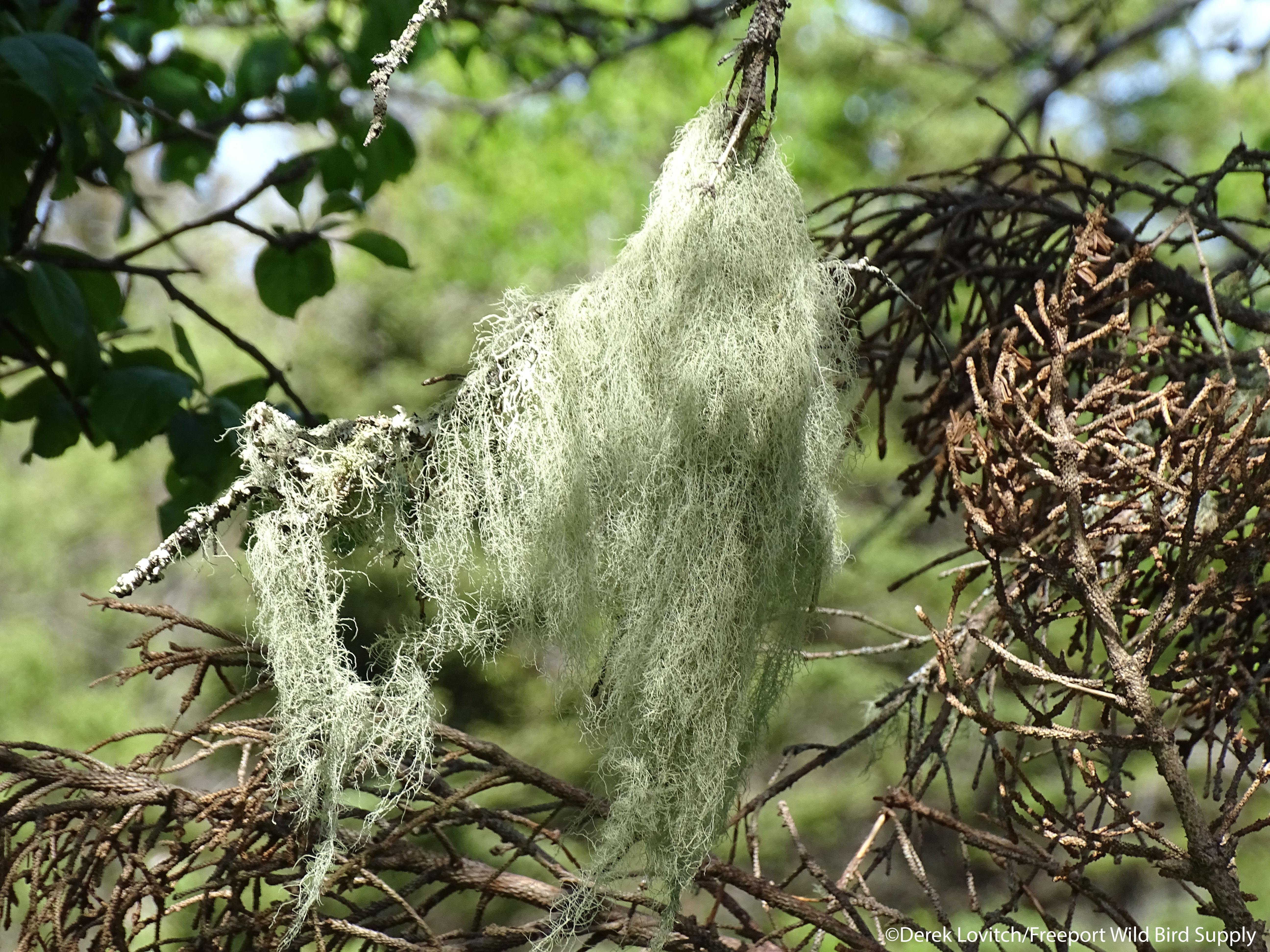
A friend found a Northern Parula nest under construction that we took time to marvel at. Here, the female brings some more material in to line the nest, which is nestled in a woven basket inside of large clumps of down-hanging Old Man’s Bear lichen.

However, as usual, Jeannette and I stayed around for another 24 hours to have a day off together and with friends. Leaving the brewery with one friend, I found a male Eastern Bluebird- an odd “new bird” for the date. Where the heck has he been or where did he just come from? Another Monhegan bird mystery…their migration ended a month ago.

Later, as we walked back from dinner with other friends, we heard at least three displaying American Woodcocks. The sunset was quite the stunner, too.

I wasn’t upset to not have a group on Monday, because my goodness, it was slow! I think what was left of the passage migrants cleared out overnight, and little if nothing came in. There were a few Blackpolls here and there, and maybe a few more American Redstarts than usual in the summer, but in and around town, that was about all.

So Jeannette and I decided to take a longer hike and check some oft-productive-but-less-often-birded areas. In doing so, we found a Field Sparrow on Horn Hill, and had a singing Yellow-bellied Flycatcher between Burnt Head and White Head. An adult male Sharp-shinned Hawk was a surprise – was it breeding here? – and a visit into the shaded woods added Winter Wren and Swainson’s Thrush to our weekend list.

We got excited when we saw a gray-backed, white-bellied flycatcher over at Gull Pond, but alas, it had the expected short, not-forked tail that we were hoping for!

Not including the 7 species Jeannette and I saw between 3:00 on Monday and when we departed at 3:15 on Tuesday, the tour list for the 12th annual Monhegan Spring Migration Weekend ended up a goodly 90 total species, despite only 15 species of warblers.  The overall count was better than our last two tours, but still below our long-term average. But I cannot recall four (and five) days of simply gorgeous and warm weather on any of our prior tours!  While the benign weather of late reduced the volume of migrants yet to pass through, and allowed many recent migrants to pass unimpeded overhead, I was pleasantly surprised by the final tally. It was also a high-quality list, with lots of “good” birds not seen by many in Maine away from the island. Oh, and my two island birds were nice, too!

Blue Jays are not the biggest feeder bird on this island!

Even our most common and familiar birds present speciaal photographic opportunities out here!

Species5/265/275/285/29
Mallardx10108
Mallard x American Black Duck1000
Common Eiderxxxx
White-winged Scoter01000
Surf Scoter0600
Ring-necked Pheasantx665
Mourning Dove810810
Black-billed Cuckoo1000
Chimney Swift0010
Ruby-throated Hummingbird6431
Virginia Railh.oh.o11
Semipalmated Sandpiper0010
Greater Yellowlegs0100
Black Guillemot2030x20
Laughing Gull6*216
Herring Gullxxxx
Great Black-backed Gullxxxx
Common Tern1 + 5*000
Northern Gannet0001
Red-throated Loon0100
Common Loon3*100
Double-crested Cormorantxxxx
Great Blue Heron0013
SNOWY EGRET0001**
GLOSSY IBIS0090
Bald Eagle2100
Osprey0322
Red-bellied Woodpecker0010
Merlin2210
Peregrin Falcon0010
Eastern Kingbird0022
Olive-sided Flycatcher0100
Eastern Wood-Pewee2222
“Traill’s” Flycatcher2010
Least Flycatcher2110
Eastern Phoebe1111
Philadelphia Vireo1100
Red-eyed Vireo6844
Blue Jayx484752
American Crowx46x
Common Raven0110
Black-capped Chickadeexxxx
Tree Swallow0222
PURPLE MARTIN0010
Barn Swallow1011
Golden-crowned Kinglet0010
Cedar Waxwing30504030
White-breasted Nuthatch0111
Red-breasted Nuthatch1000
Carolina Wren3 h.o.443
Gray Catbirdxxxx
European Starlingxxxx
American Robinxxxx
HOUSE FINCH0022
Purple Finch0122
WHITE-WINGED CROSSBILL0330
RED CROSSBILL022420
Pine Siskin0001
American Goldfinch12101212
Chipping Sparrow0011-2
White-throated Sparrow2220
Savannah Sparrow3010
Song Sparrow10Xxx
Lincoln’s Sparrow0110
Bobolink1100
ORCHARD ORIOLE1102
Baltimore Oriole1433
Red-winged Blackbirdxxxx
Common Gracklexxxx
Northern Waterthrush0010
Black-and-white Warbler3443
Tennessee Warbler8430
Common Yellowthroatx8xx
American Redstart525168
Cape May Warbler1000
Northern Parula15101212
Magnolia Warbler10868
Bay-breasted Warbler11302
Blackburnian Warbler0100
Yellow Warbler10201515
Chestnut-sided Warbler2111
Blackpoll Warbler25602520
Black-throated Green Warbler1131
Wilson’s Warbler2220
SUMMER TANAGER0100
Scarlet Tanager0100
Northern Cardinalxxxx
Rose-breasted Grosbeak3220
Indigo Bunting0110
BLUE GROSBEAK0011
DICKCISSEL0110
Day Total60666954
Warbler Day Total13131210
Trip Total90
Warbler Trip Total15
Here is the trip list four the four-day tour. * = seen from ferry only. **=not seen with tour group.