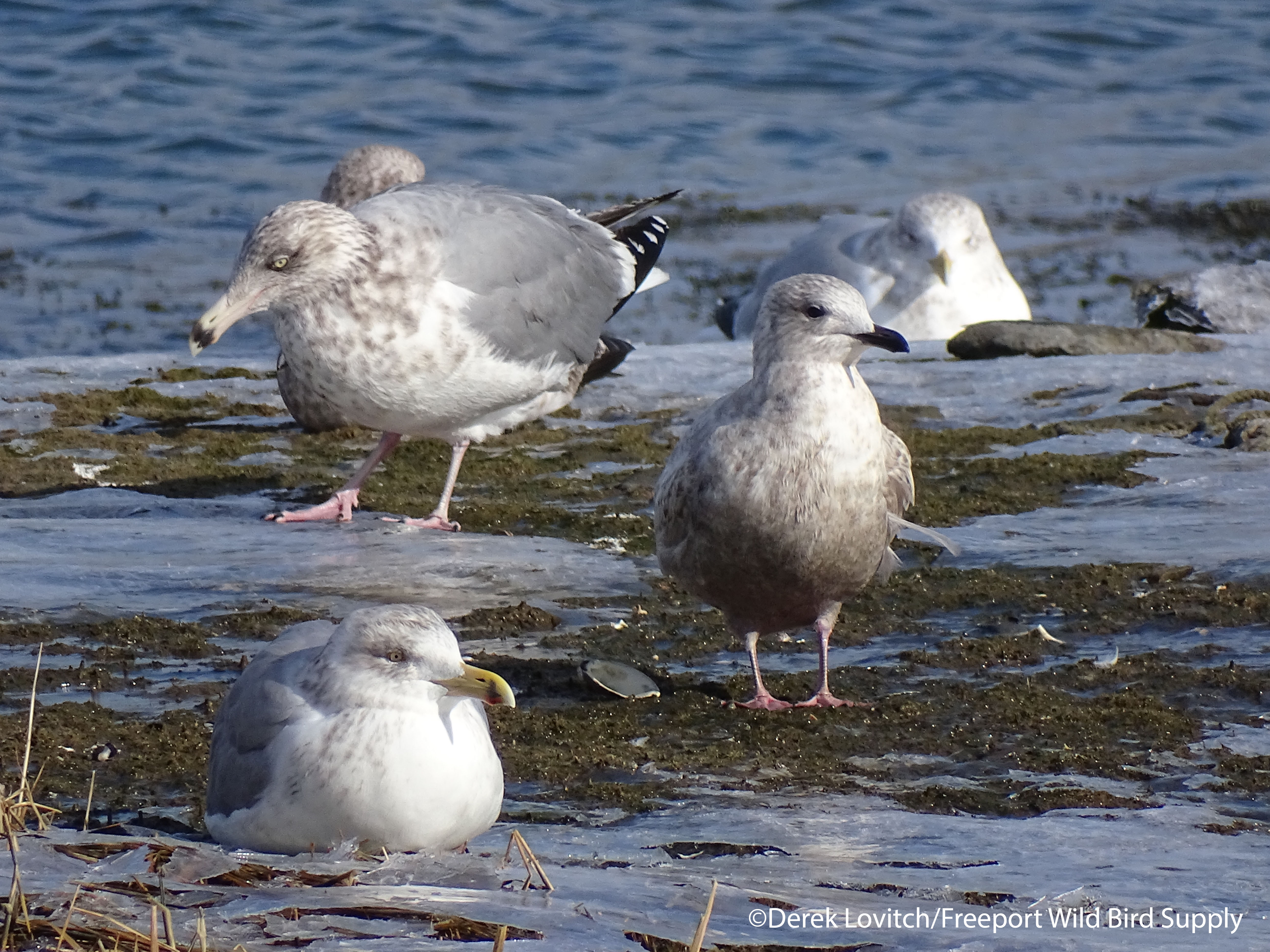
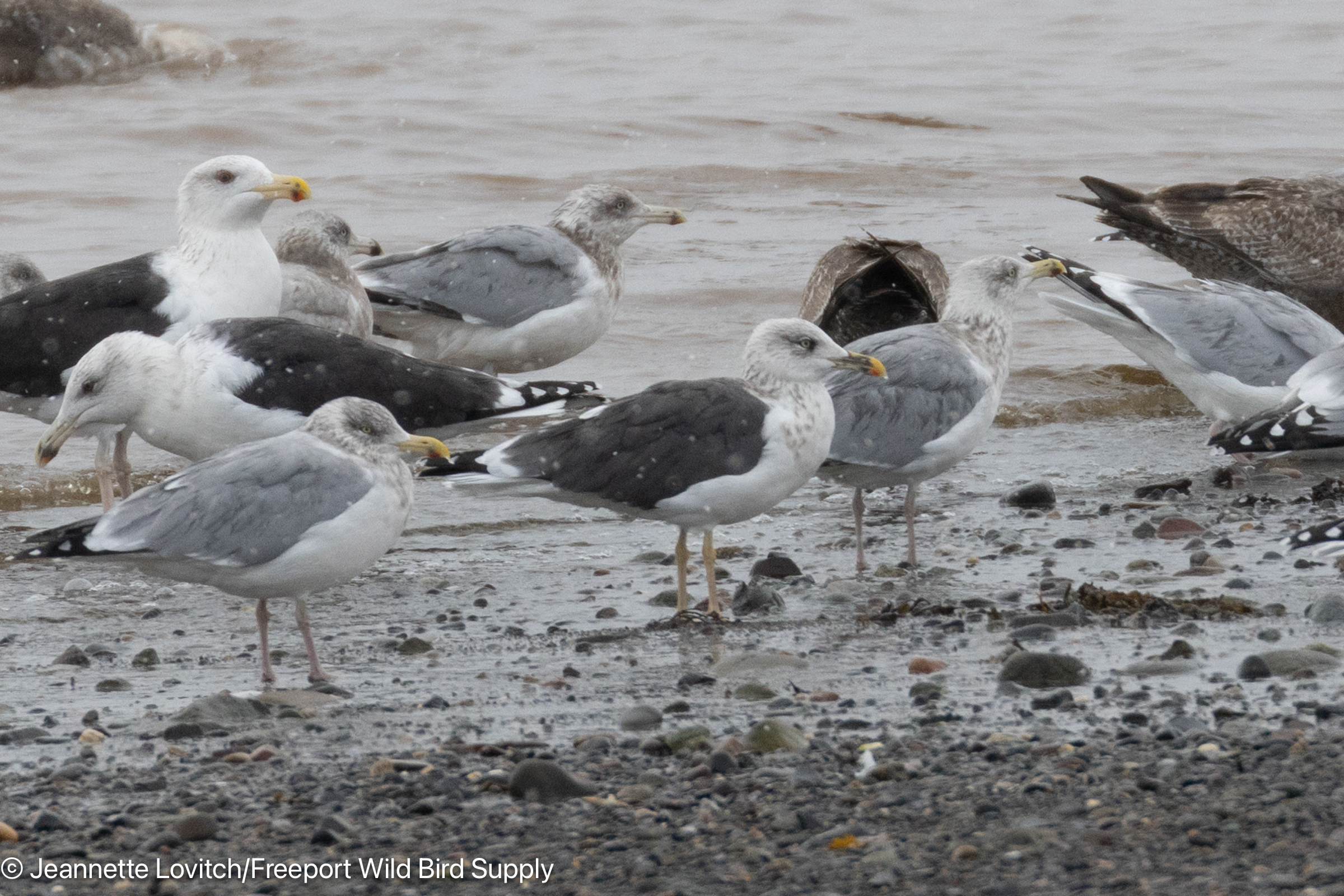
Need help identifying all of the exciting gulls at Mill Creek Cove this winter (such as this 1st winter Iceland Gull present on the 23rd)? Well, we have just the workshop coming up for you (see below)!
After being out of town for a week, we returned late on the 16th and got back to work. Sneaking in some morning birding on most days yielded a nice array of winter notables, without needing to venture too far afield. Here are my observations of note over the past 7 days.
For at least the second consecutive winter, an adult Red-shouldered Hawk has been frequenting the edges of Rte 136 in Durham, near the Freeport Town Line.
3 drake and 1 hen Barrow’s Goldeneye, Winslow Park, Freeport, 1/17 (with Saturday Morning Birdwalk group).
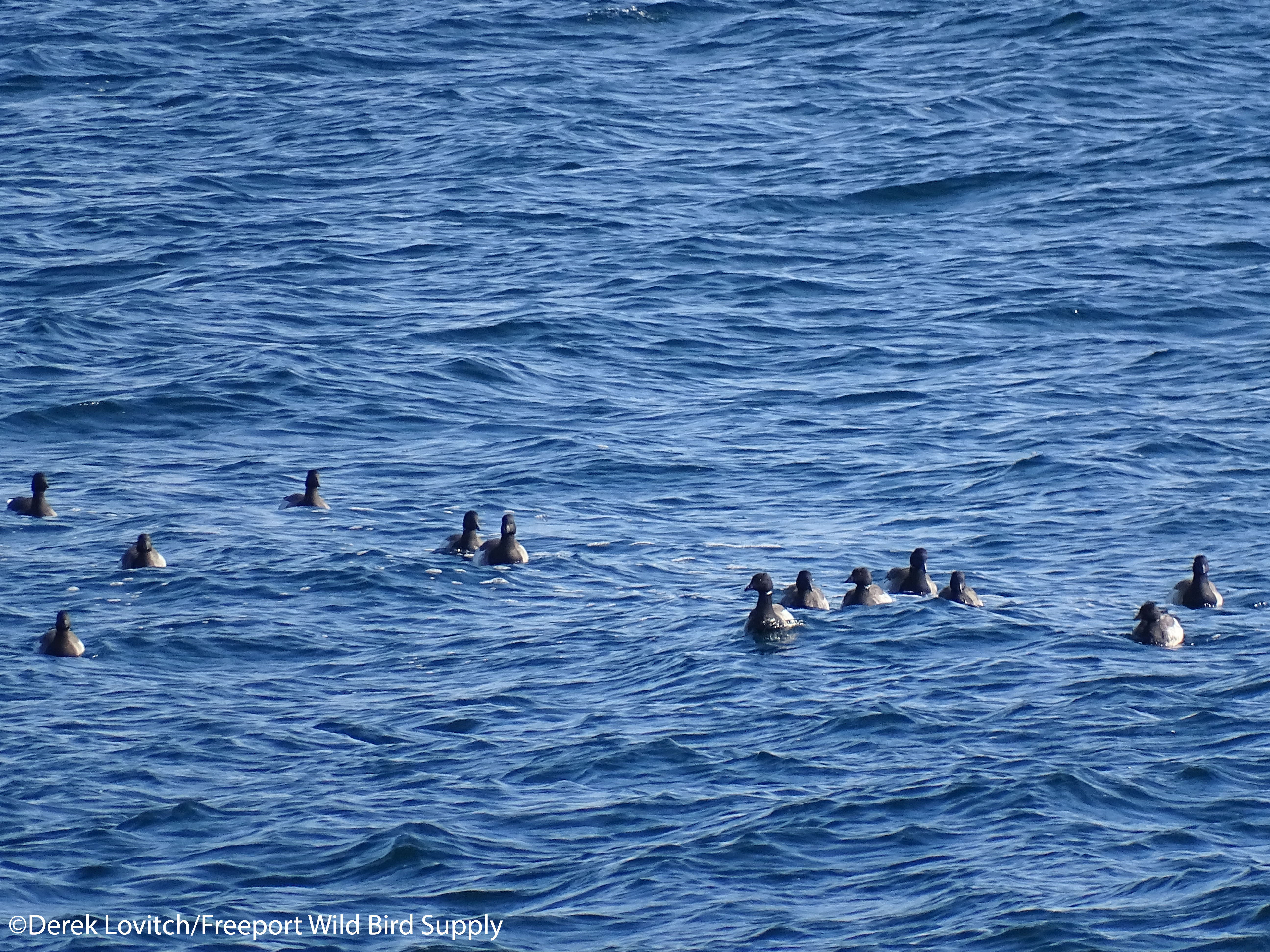
Like clockwork, Brant arrived in Cape Elizabeth in the 3rd week of January. I had 30 (FOY) at Kettle Cove, with another 24 (or part of the same group) at Dyer Point a short while later on 1/23.
Some of the 24 Brant off the rocks at Dyer Point on the 23rd.
This Week in Irruptives.
I encountered a few more Purple Finches here and there this week, mostly singletons. A lone Red Crossbill at Mt Apatite Park in Auburn on 1/21 (with Jeannette) was the first I have seen away from Red Spruce in a while, but one singing in flight at Village Crossings in Cape Elizabeth on the 23rd was a surprise. Meanwhile, EVENING GROSBEAKS continued to be scattered about, with 3 visiting our feeders in Durham on the 19th.
Upcoming Trips and Tours.
Gull Identification Workshop -THIS WEEKEND!
It’s not too late to join us for our Gull Identification Workshop! The classroom session will be held tomorrow, Saturday, 1/24, but the field trip has been postponed until Sunday, February 1st due to the dangerously cold weather expected. You can sign up for just the lecture portion.
In this workshop, we’ll hit a few of the prime viewing locations along Maine’s southern coast. But we won’t just be working on the checklist today. Instead, we’ll be focused on learning how to search for these birds – the how, when, and why – and how to identify them. We’ll learn about microhabitats, weather considerations, and seasonal timing to aid our search today and in the future. By visiting several seasonally-productive sites, we’ll compare similar species while taking time to savor the splashes of color offered by winter seaducks in an otherwise gray and white landscape.
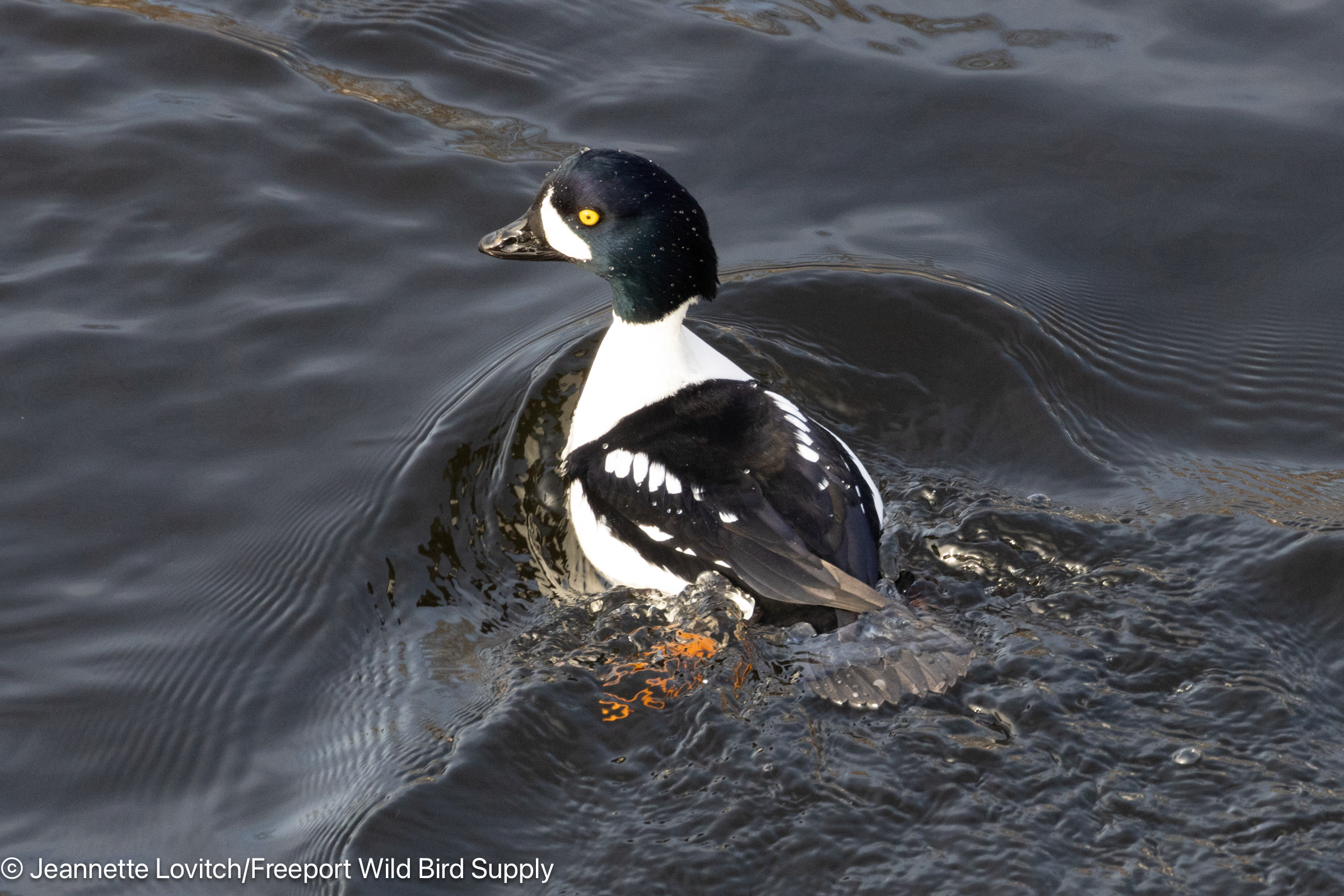
This drake Barrow’s Goldeneye was one of the foursome currently in the Androscoggin River between Auburn and Lewiston, most often in view from the Bernard Lown Peace Bridge. Jeannette paid them a visit on the 6th, where she found this one male just below the bridge.
Except for a delightful morning at Reid State Park, my birding outings were short and local, but I did enjoy catching up with local patches and their winter denizens, especially Barrow’s Goldeneyes. Here are my observations of note over the past seven days.
2 drake and 2 hen Barrow’s Goldeneyes, Winslow Park, Freeport, 1/4.
1 drake Barrow’s Goldeneyes, Sandy Point Beach, Cousin’s Island, Yarmouth, 1/6.
1 SNOWY OWL (FOS), 9-11 Red Crossbills, 58 Red-necked Grebes, 1 Savannah Sparrow (subspecies undetermined), 26 Sanderling, etc, Reid State Park, Georgetown, 1/8.
1 hen Barrow’s Goldeneye, Front Street Boat Launch, Bath, 1/8.
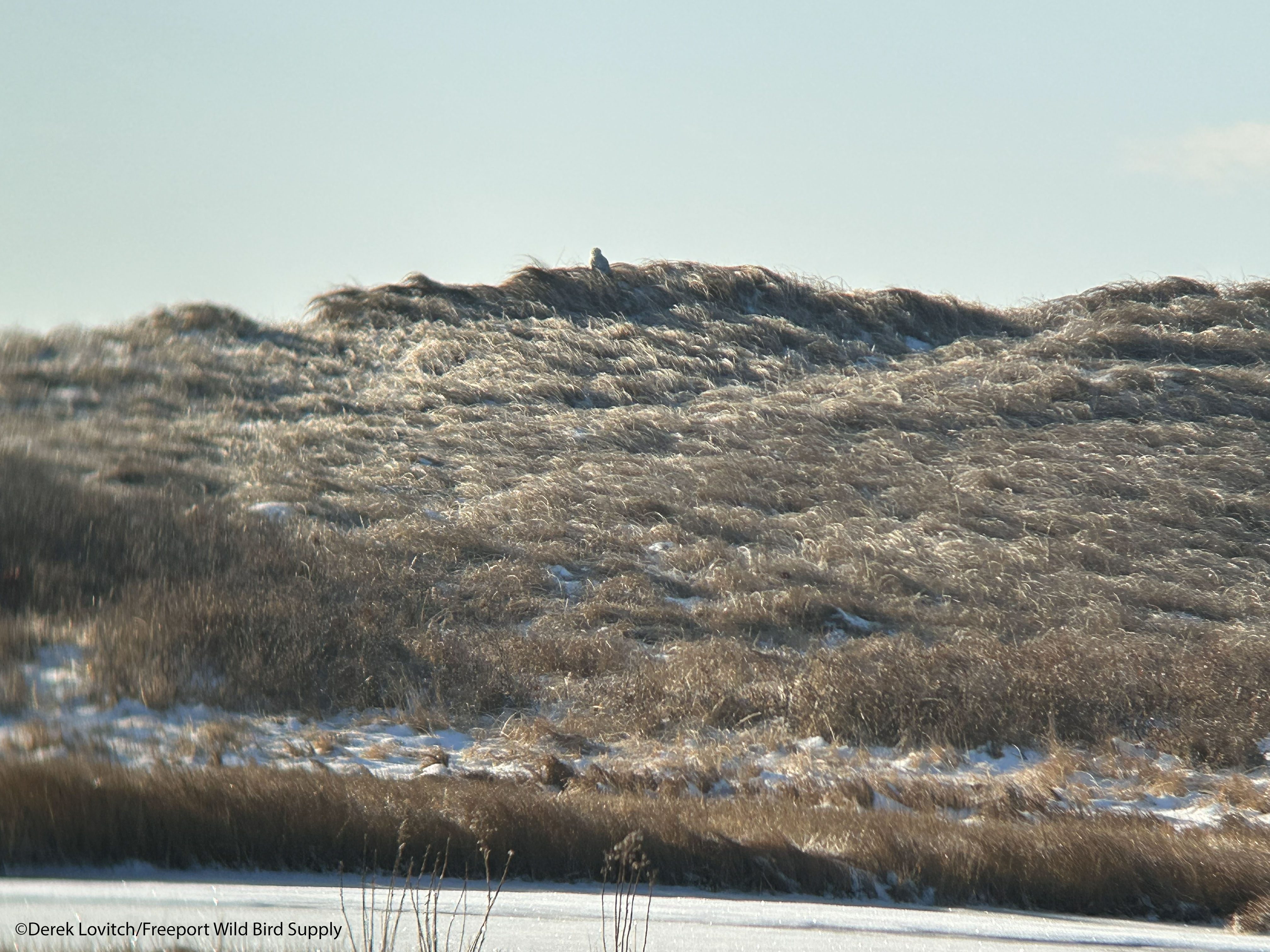
This is how I like my Snowy Owls…safe in the distance, backlit, poorly phone-binned, and otherwise unconcerned with my presence. Later, I spent 30 minutes observing it in the distance as it moved around, perhaps to get in position for hunting, or perhaps because it was getting too warm!
This Week in Irruptives.
American Goldfinches and Red-breasted Nuthatches remain very abundant. While a number of customers at the store have continued to report scattered small flocks of Evening Grosbeaks at feeding stations, I did not hear or see any yet again this week. In fact, my only irruptive in limited time birding was a single Pine Siskin at Florida Lake Park on the 7th, until I re-entered the Red Spruce zone at Reid State Park on the 8th. There, there were several Pine Siskins and at least 9-11 Red Crossbills – including two singing males suggestive of upcoming mid-winter breeding!
The state’s 4th or 5th Virginia’s Warbler – and the first away from Monhegan – was one of the rarest birds of the year in Maine, and it was even more special for me since I found it on Peak’s Island in November!
It’s once again time for my annual Predictions Blog, where I view into my crystal binoculars and attempt to forecast some of the “new” birds to grace the State of Maine – and then my own personal state list – in the coming year.
But first, let’s look back at last year’s predictions.
It was a great year for birding in Maine, with rarities at every season, especially during a truly epic November Rarity season. As a snapshot of just how many notable species were in the state in 2025, consider Noah Gibb and Stacey Huth’s Maine Big Year total of 332 species broke the old record by an astounding 10! Surprisingly, with such an eventful year for rarities in the state, no new species were added to the state’s list in 2025. With that, I’m going to keep Next 25 Species to be found in Maine list the same, but based on current trends and regional sightings, I am doing a little shuffling at the top to bump up Limpkin as the northward mini-irruptions of this tropical/sub-tropical bird continue.
1. Limpkin
2. Scopoli’s Shearwater
3. Neotropical Cormorant
4. European Herring Gull
5. Black-chinned Hummingbird
6. California Gull
7. Gray Heron
8. Bermuda Petrel
9. Graylag Goose
10. Little Stint
11. Audubon’s Shearwater
12. Common Shelduck
13. Anna’s Hummingbird
14. Heerman’s Gull
15. Common Ground-Dove
16. Allen’s Hummingbird
17. Spotted Redshank
18. Lewis’s Woodpecker
19. Ross’s Gull
20. Black-capped Petrel
21. Lesser Nighthawk
22. Dusky Flycatcher
23. Painted Redstart
24. Hooded Oriole
25. White Wagtail
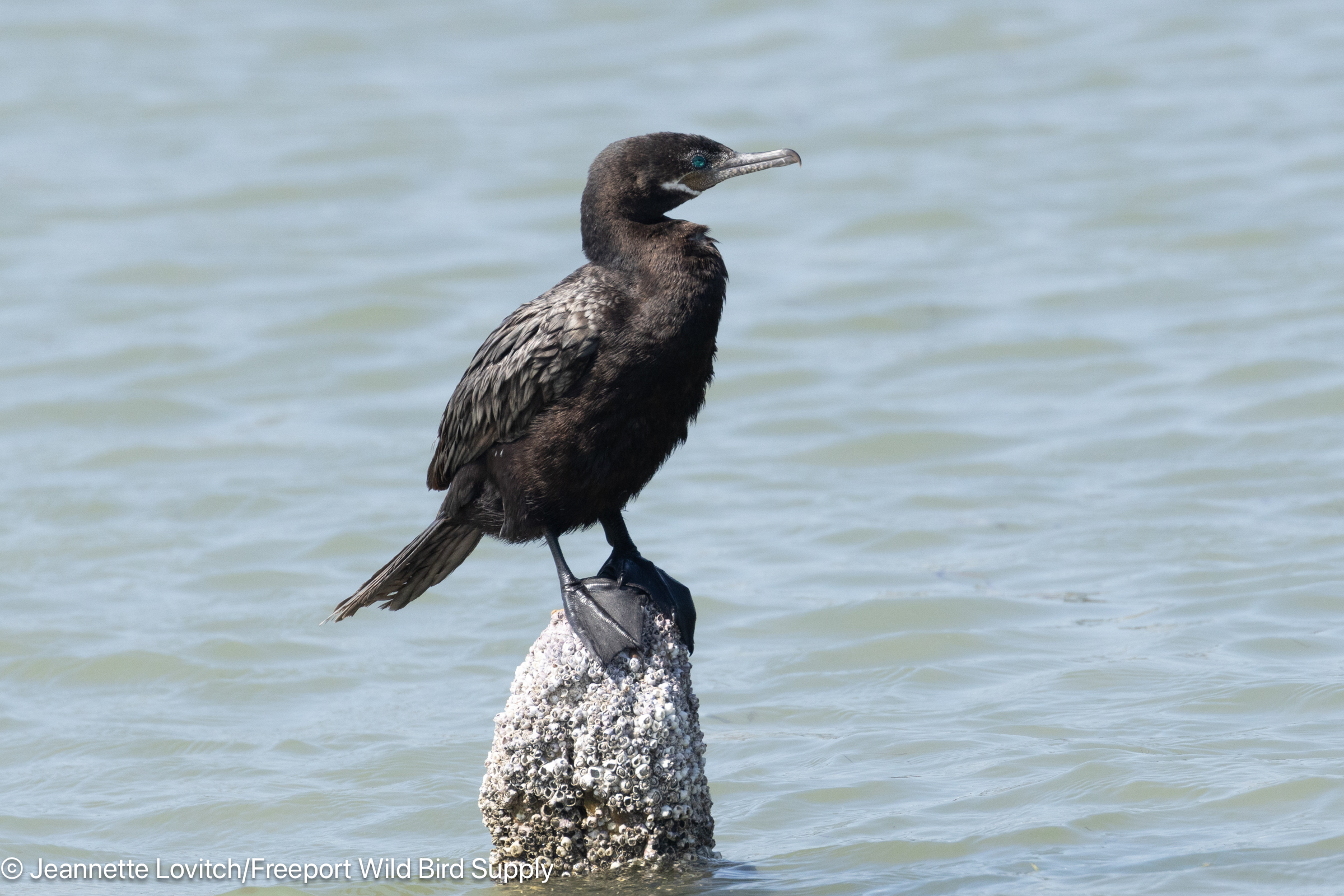
It’s only a matter of time for Maine to be visited by its first ever Neotropic Cormorant, but it’s another Neotropical species that took the stop slot this year!
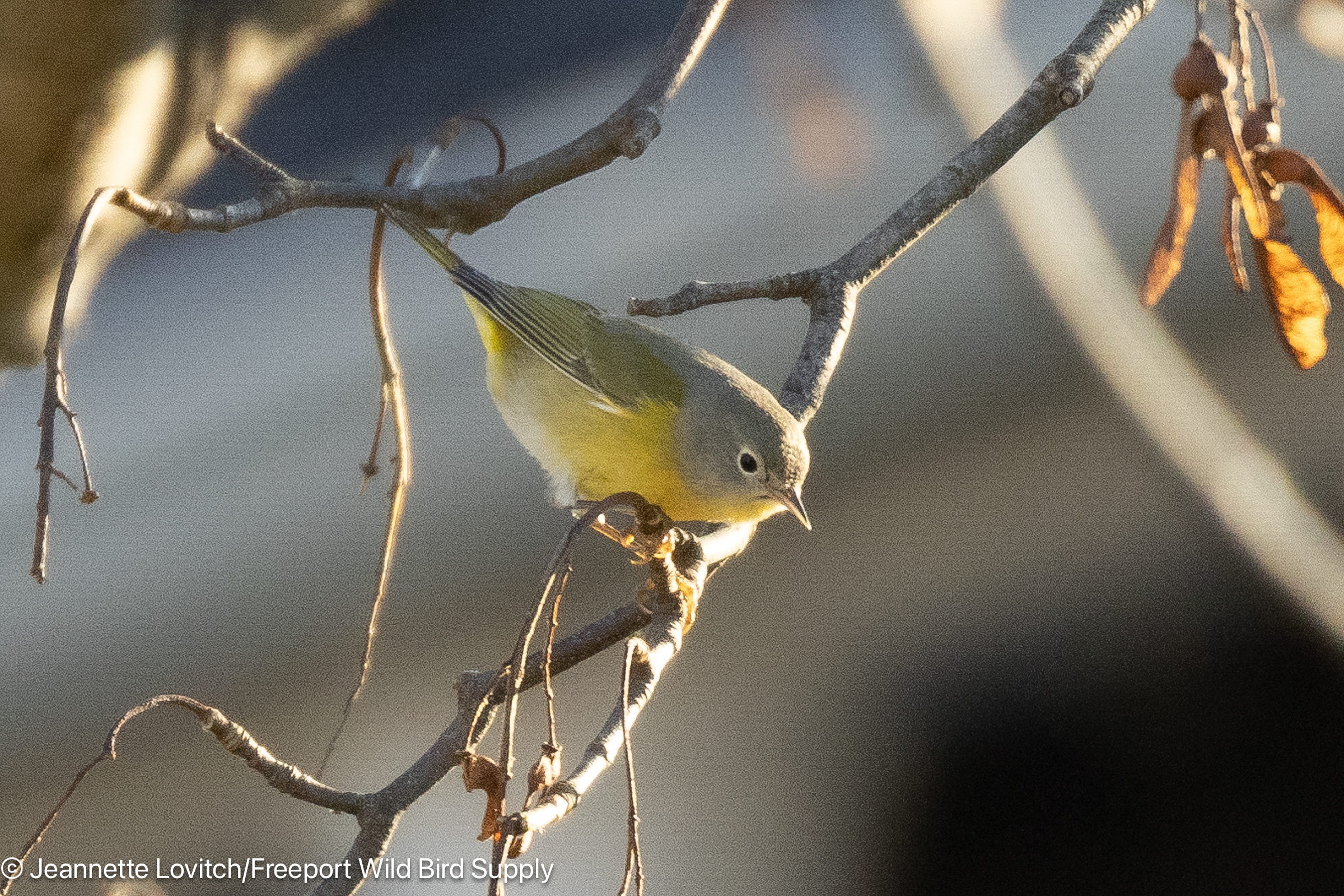
As for me, there were so many great birds seen in Maine in 2025, and the birds I chased just scratched the surface of the litany of vagrants this past calendar year as once again, my birding involves fewer and fewer chases each year. The MacGillivray’s Warbler in Yarmouth in November was one of the highlights – including becoming the 255th All-time Saturday Morning Birdwalk bird!- and a Fork-tailed Flycatcher in the Kennebunk Plains in July.
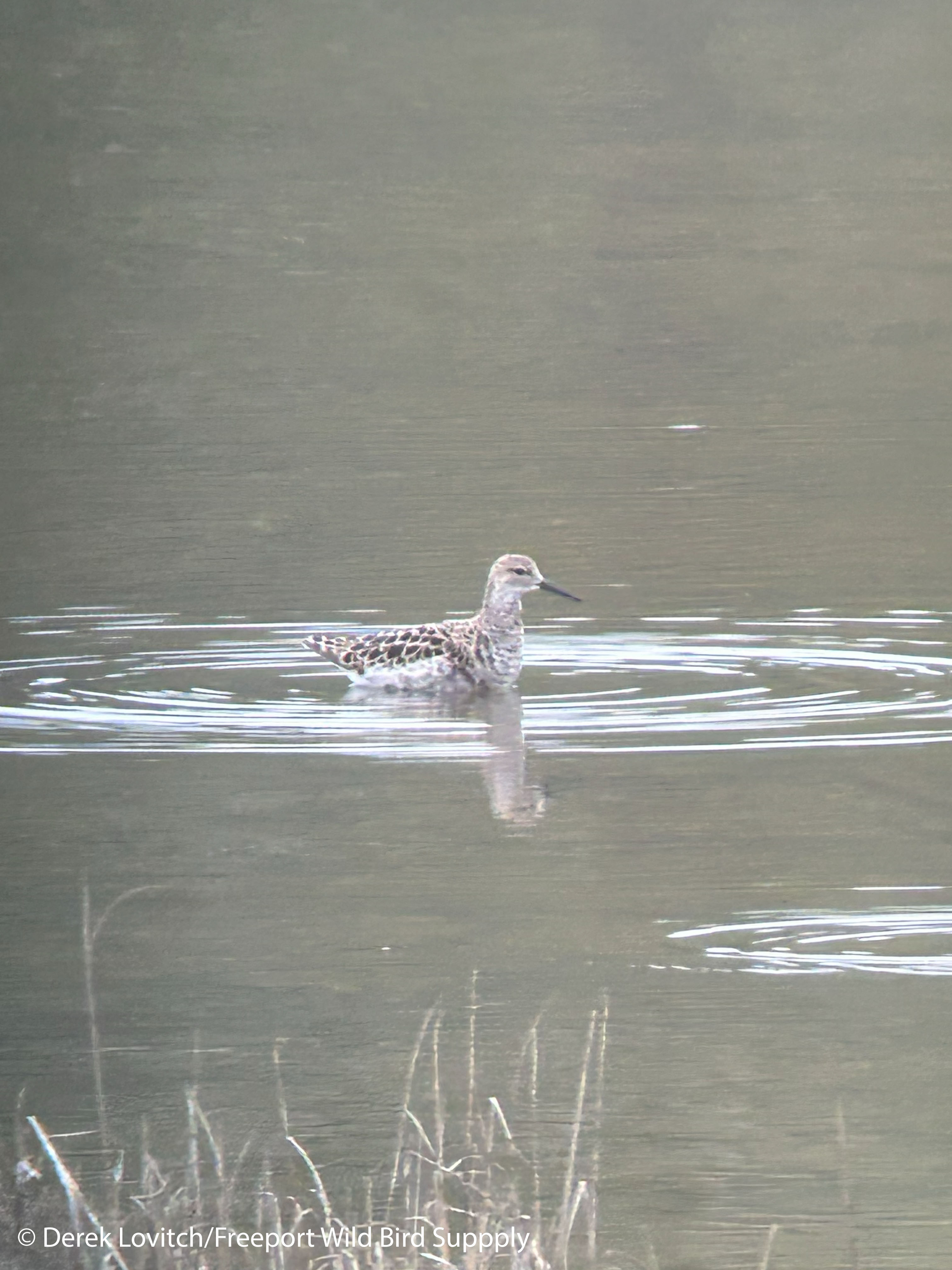
My first self-found rarity of the year was a Ruff at Walsh Preserve on 5/9…
..and Jeannette I chases the Northern Wheatear in Scarborough Marsh in September for a new ABA Area bird for her.
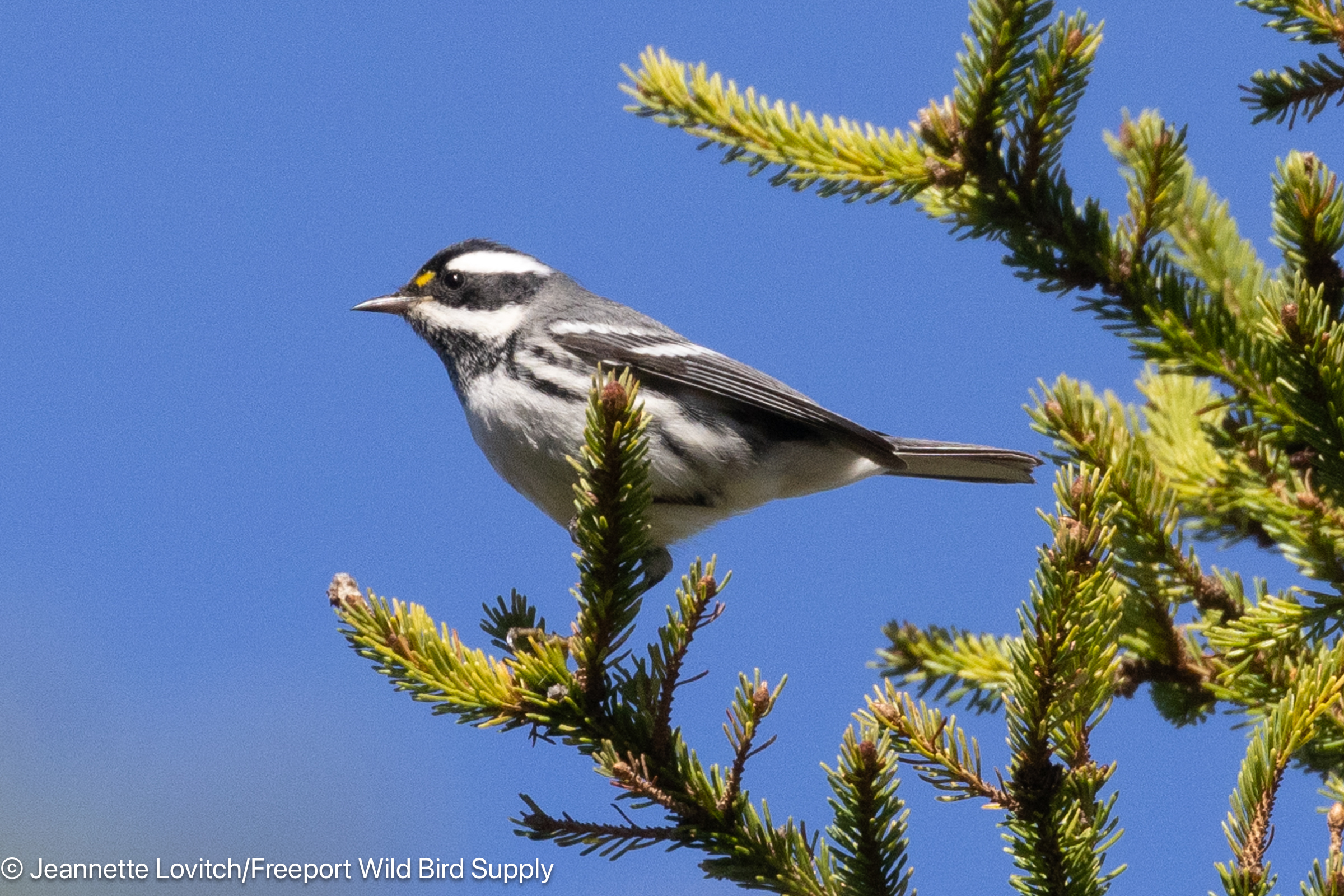
Black-throated Gray Warbler on Monhegan. A state bird for almost everyone, but “just” an exceptional “Island Bird” for me.
I even added two species to my State List in 2025, starting with an overdue Cerulean Warbler (#11) found by Doug Hitchcox in Evergreen Cemetery on 5/6. But nothing beats a “self-found” rarity, so finding a Virginia’s Warbler (#20) on Peak’s Island on 11/24 was even more special!
Of course, a few potential State Birds got away from me last year. However, all appeared to be one-day wonders, so it’s hard to complain: Crested Caracara in Scarborough Marsh on 4/30, a Franklin’s Gull (some day!) in The County on 5/21, an Anhinga over South Portland on 5/27, and an un-chaseable Ancient Murrelet at Matincus Rock on 6/19.
So, with those hits and misses, my updated list of the Top 25 Next State Birds for Me is now:
Franklin’s Gull (this is getting amusing/frustrating)
Neotropic Cormorant
Brown Pelican
California Gull
Brown Booby
Crested Caracara
Slaty-backed Gull
Boreal Owl
Calliope Hummingbird
Graylag Goose
Gull-billed Tern
Pacific Golden-Plover
Limpkin
Wood Stork
Black-chinned Hummingbird
Brewer’s Blackbird
Anhinga
Yellow Rail
Scopoli’s Shearwater
Western Wood-Pewee
Red-necked Stint
European Herring Gull
Gray Heron
Heerman’s Gull
Little Stint
Well there ya have it, let’s see what 2026 brings, at least when it comes to the birds in Maine.
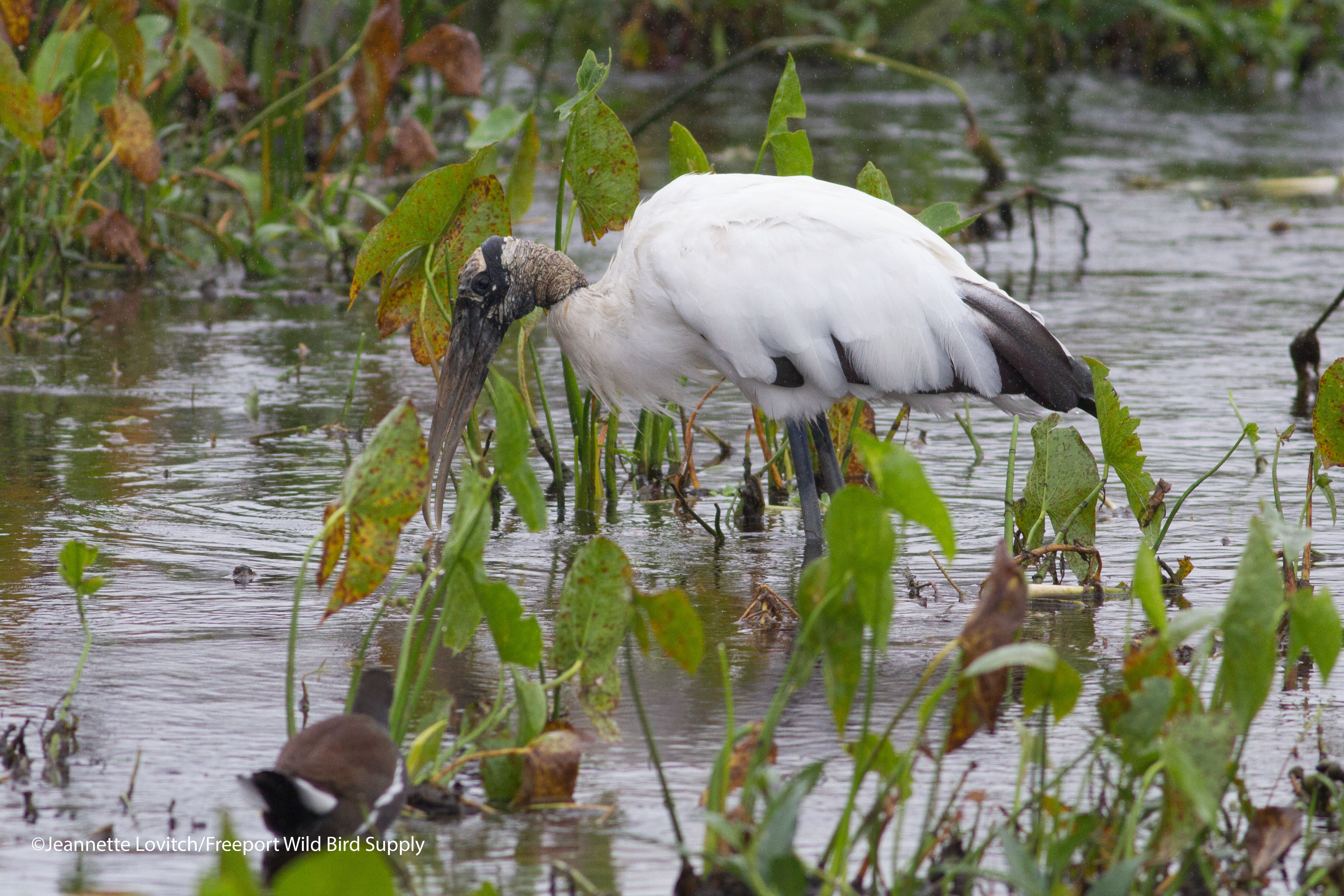
I think it’s about time for another Wood Stork to visit the state as well.
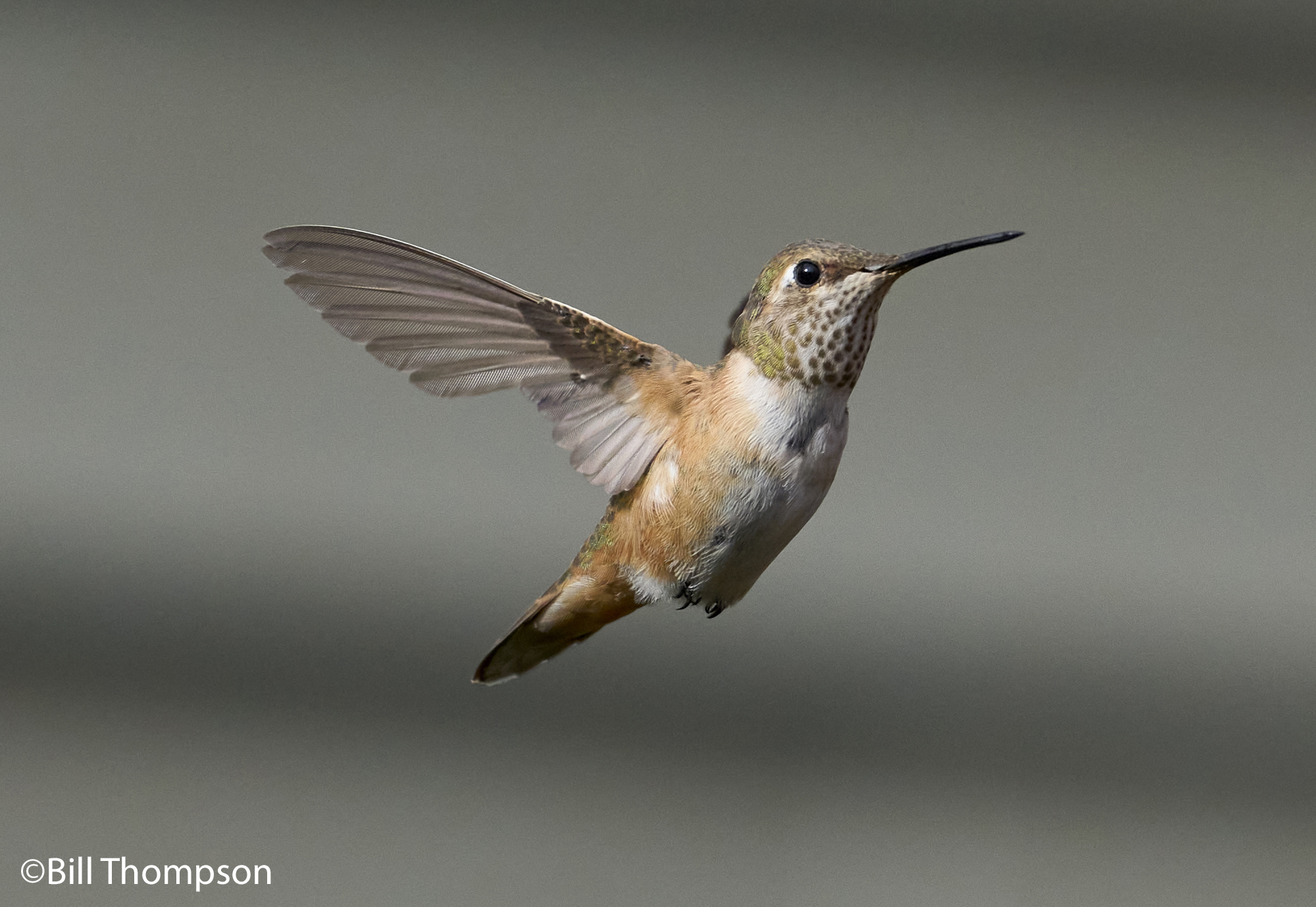
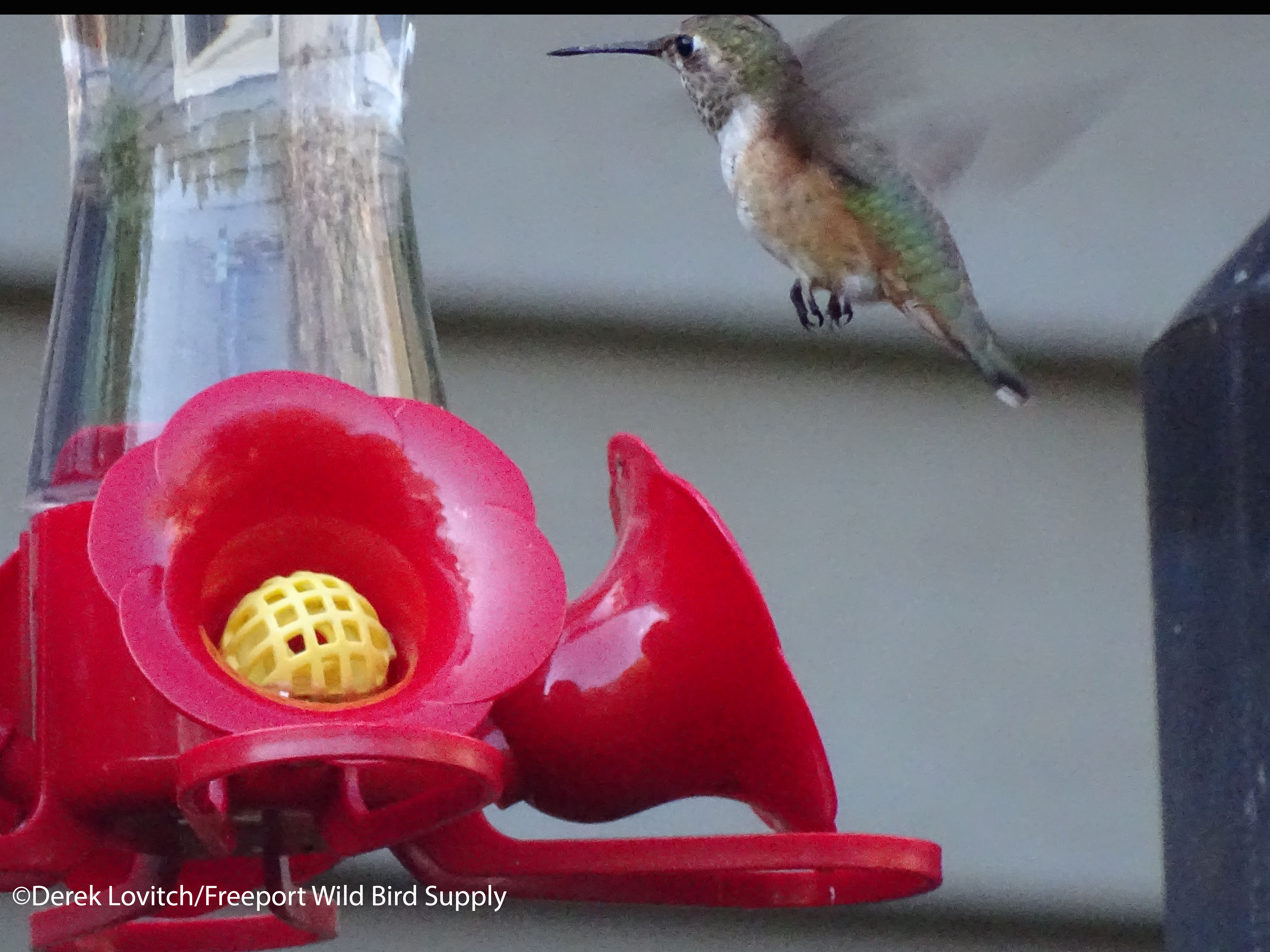
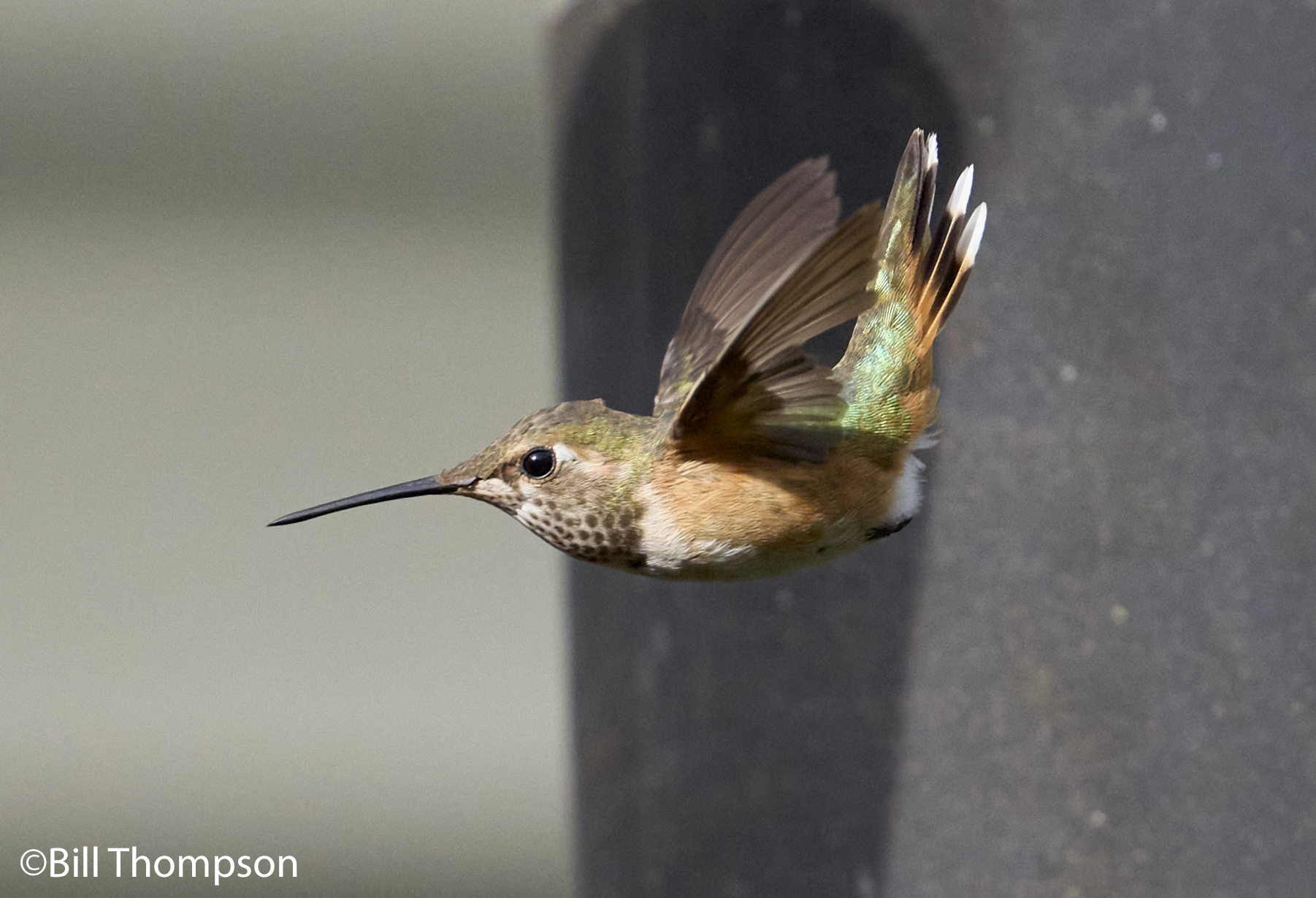
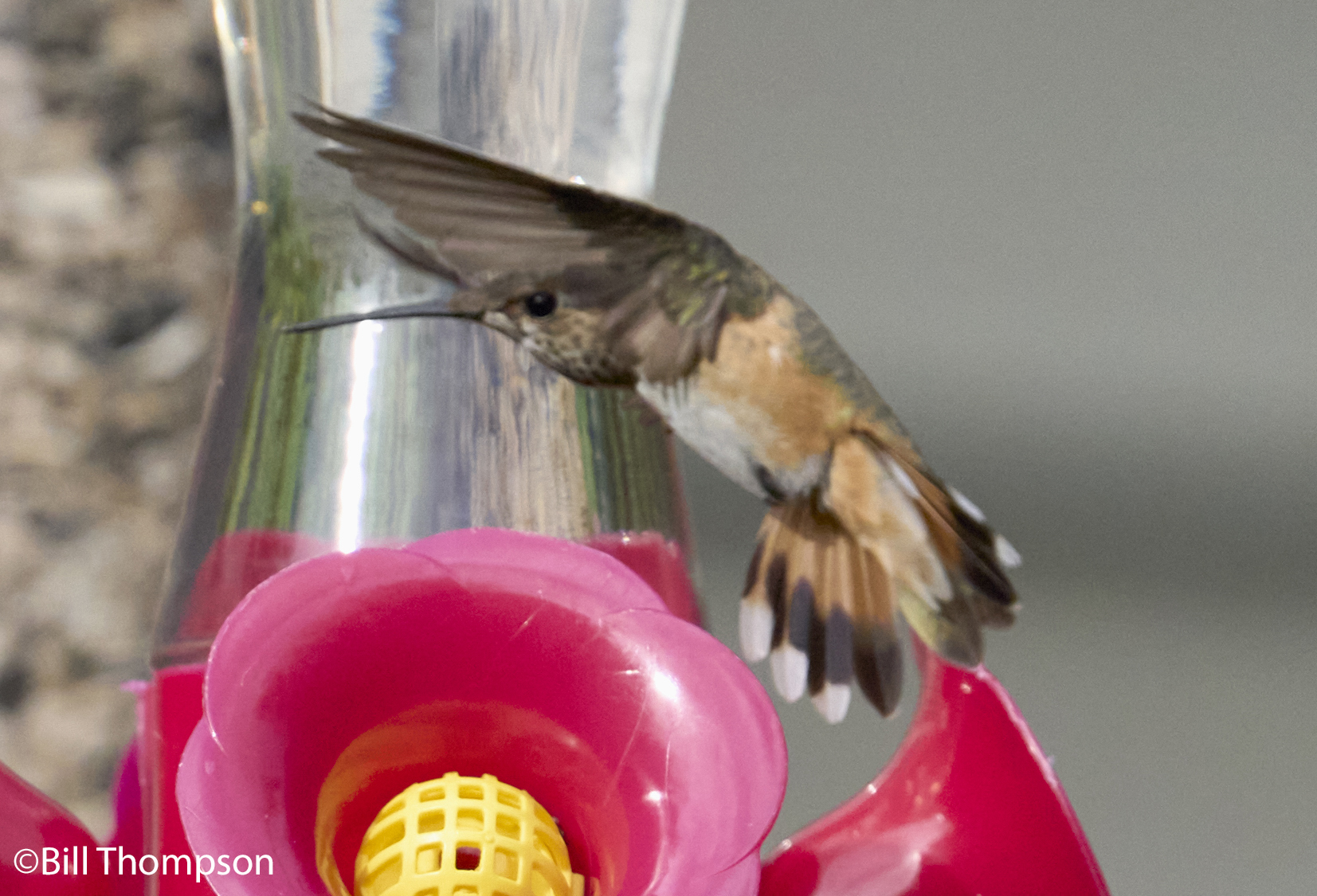
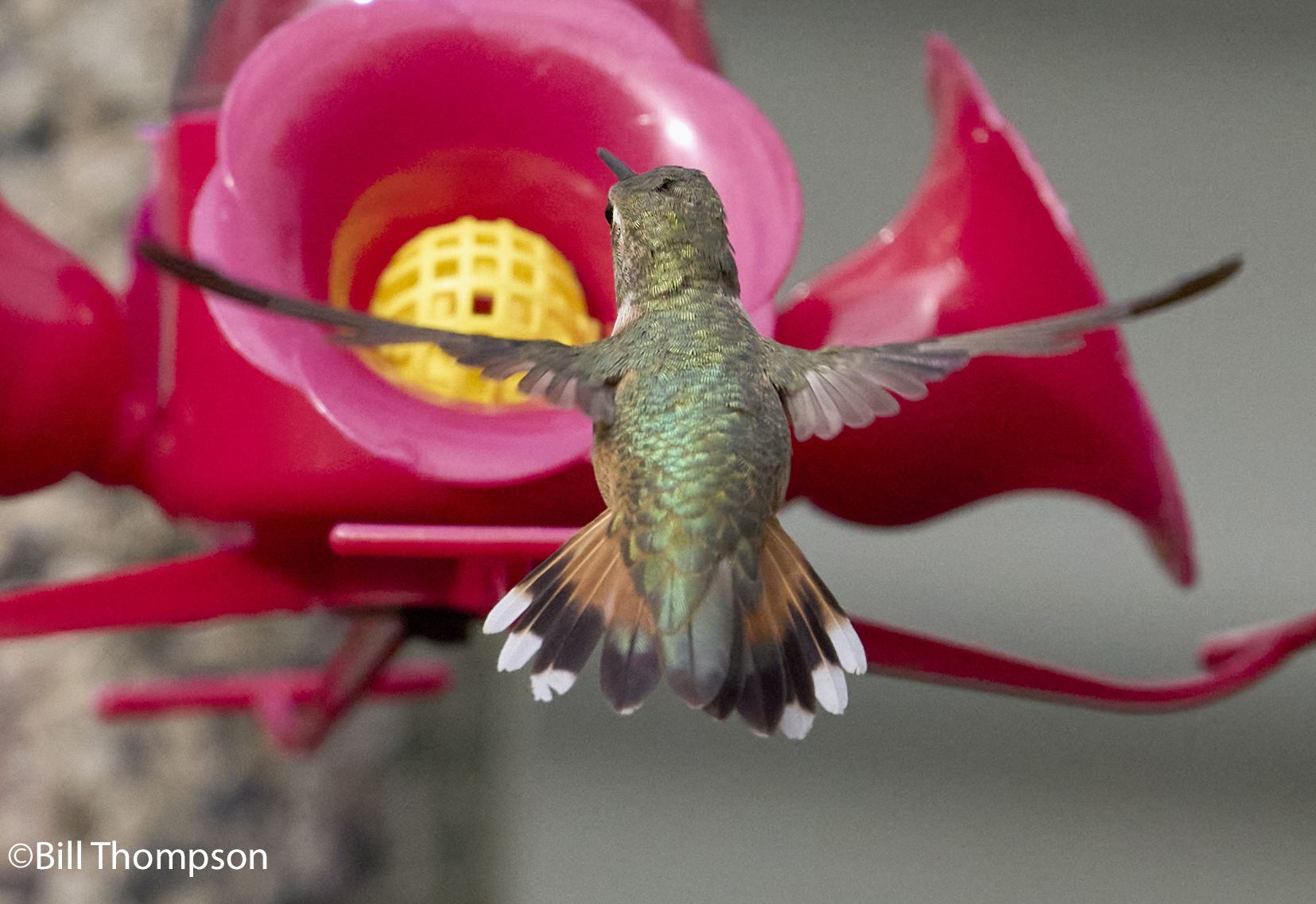
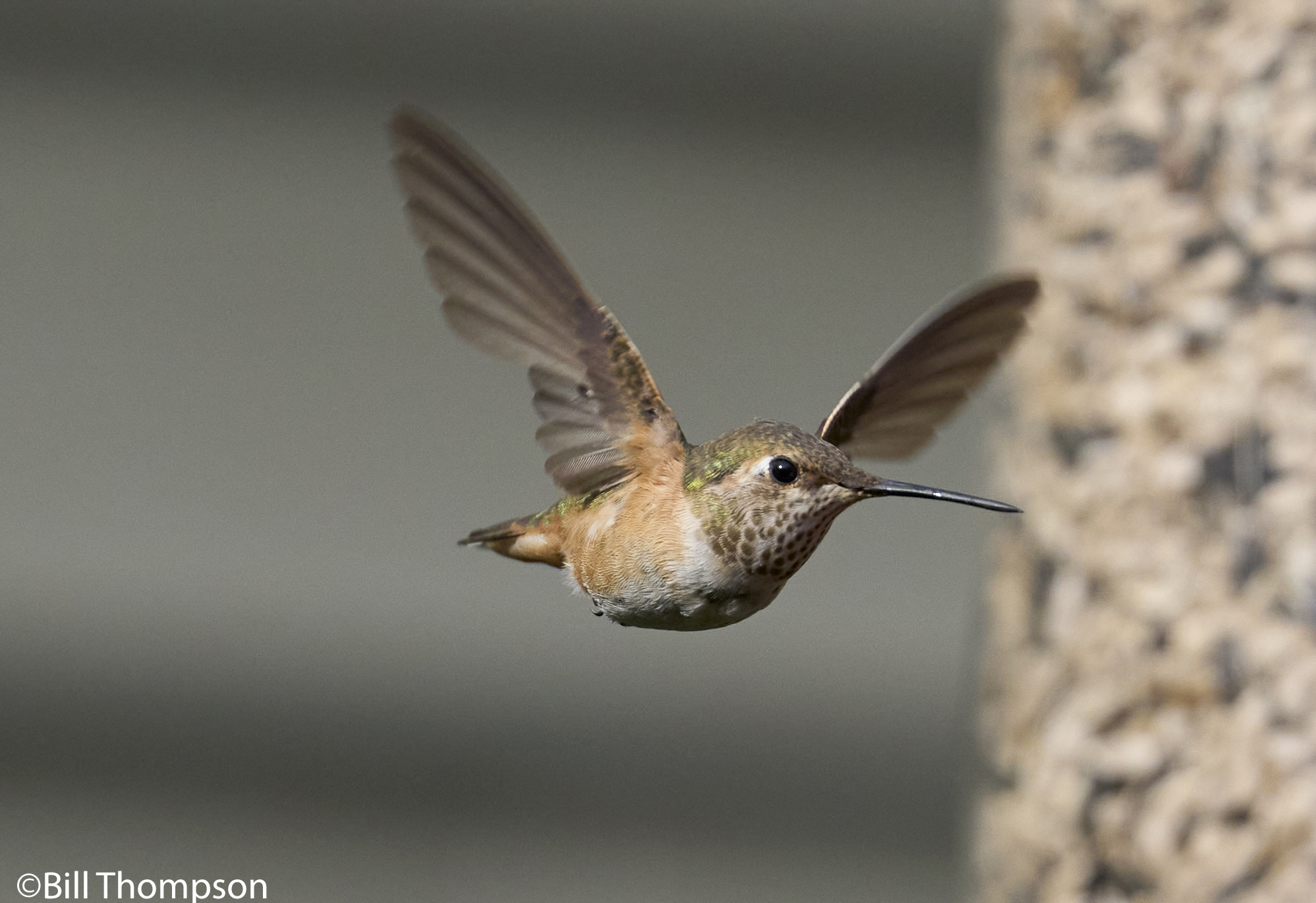
This Rufous Hummingbird graced a Bath yard for almost two months. The story below.
Life in retail during the holiday season, followed by a trip to the Motherland of New Jersey for Christmas resulted in limited Maine birding for me over the past two weeks. However, a couple of good days in the field here in Maine produced several observations of note:
Recent ice and more snow resulted in a nice little surge of Dark-eyed Juncos and American Goldfinches into our Durham yard. A male Purple Finch on ½ was the first I have seen locally in at least a month, and a Northern Flicker dropped in on 12/30.
1 continuing drake Green-winged Teal and 1+ Fish Crow, Auburn Riverwalk, 12/23.
2 drake and one hen BARROW’S GOLDENEYES, Bernard Lowne Peace Bridge, Auburn-Lewiston, 12/30 (with Kelley Sharp)
3 Fish Crows and 1 1st-cycle Iceland Gull, Auburn Riverwalk, Auburn, 12/30 (with Kelley Sharp).
1 pair American Wigeon, Rockland waterfront, 1/1 (with Jeannette).
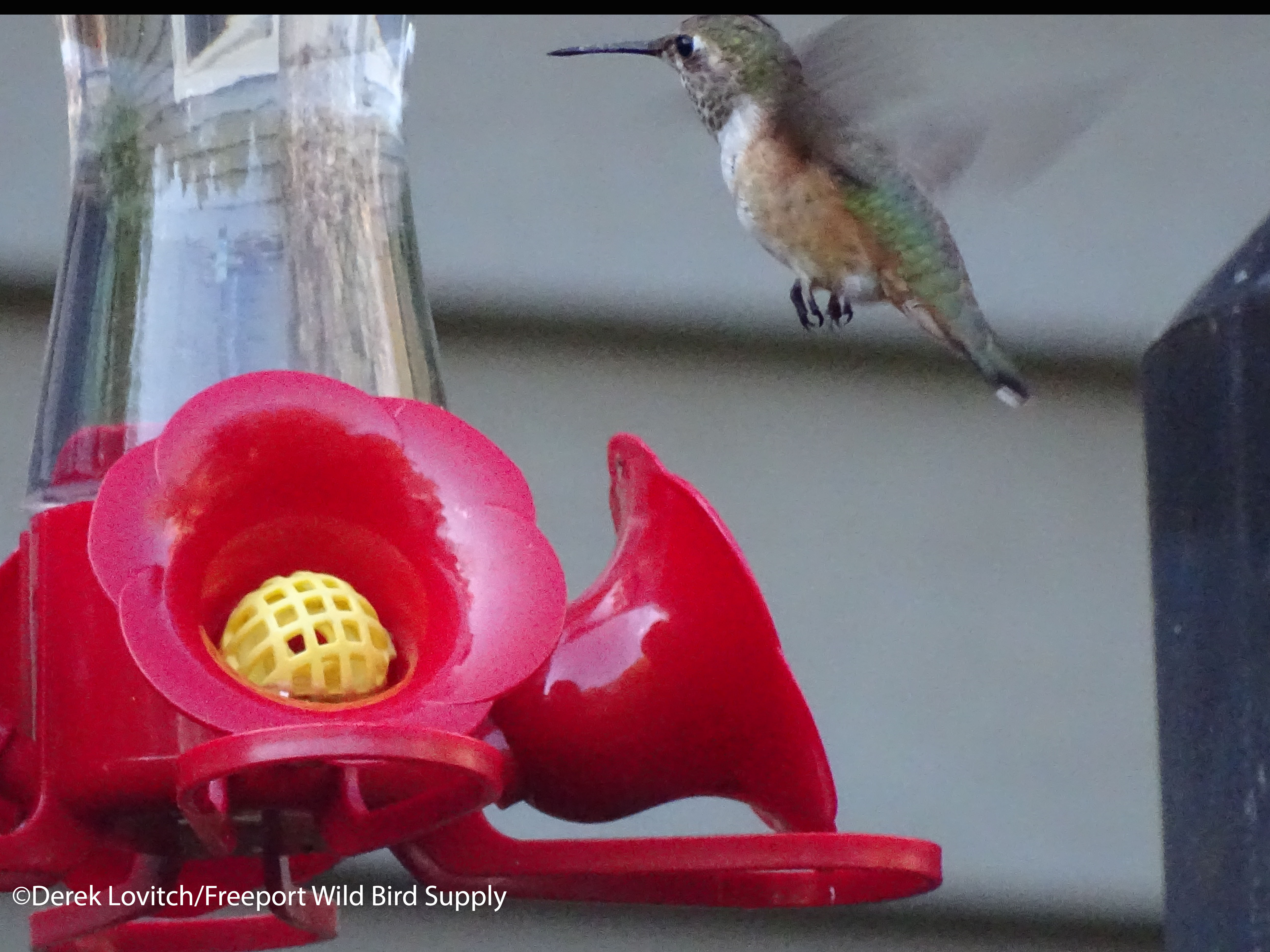
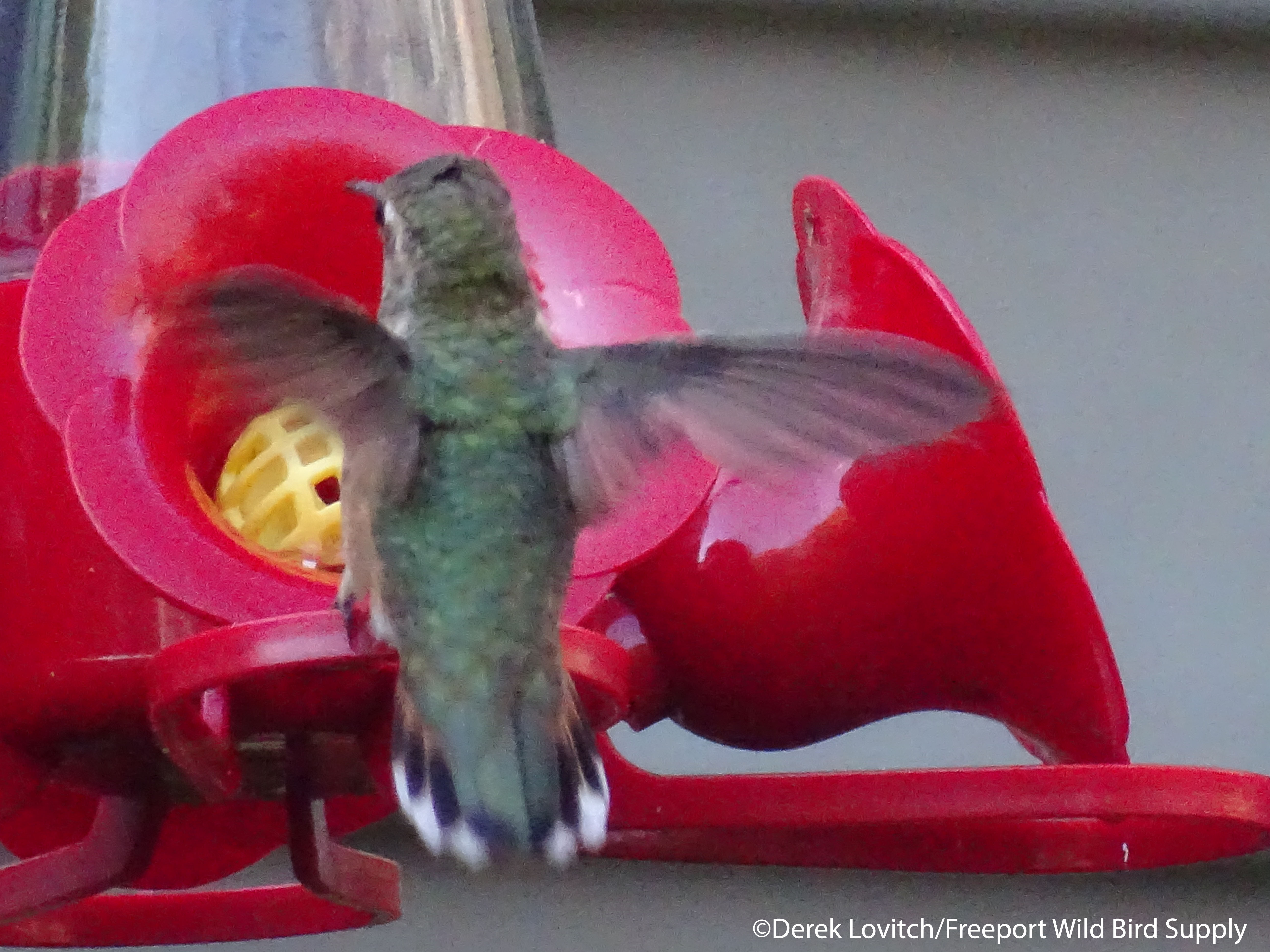
Rufous Hummingbird in Bath, 10/31-12/26, 2025.
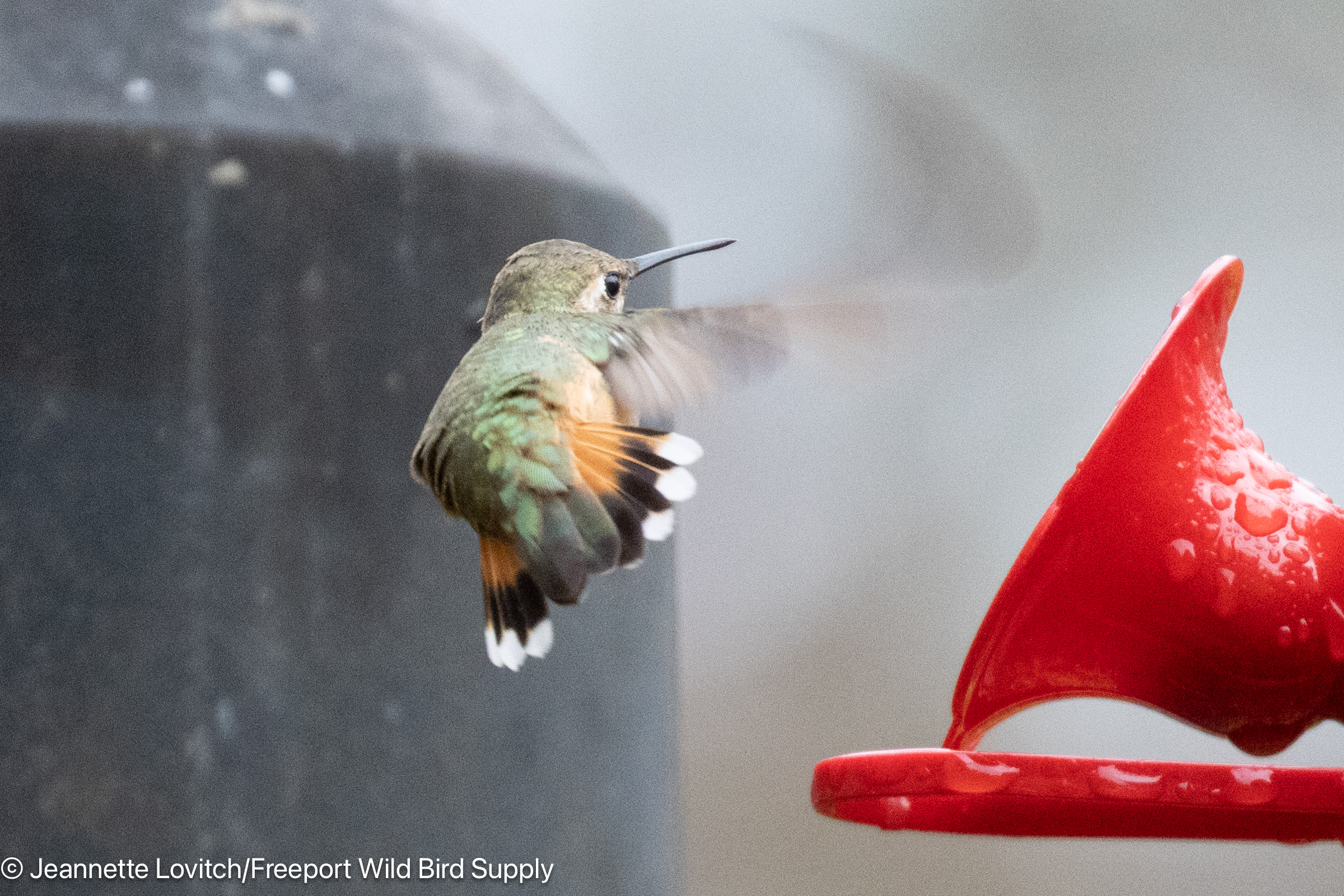
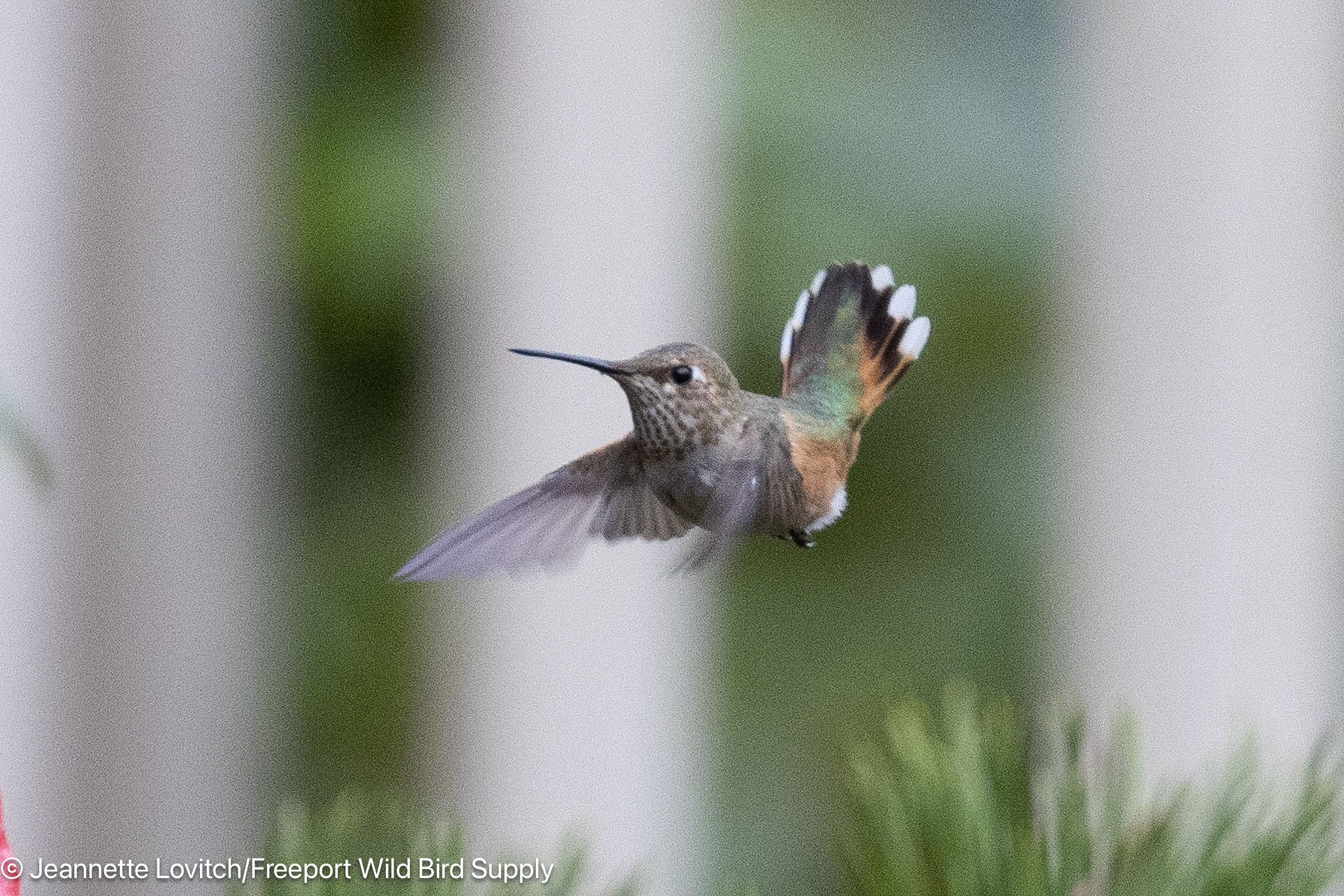
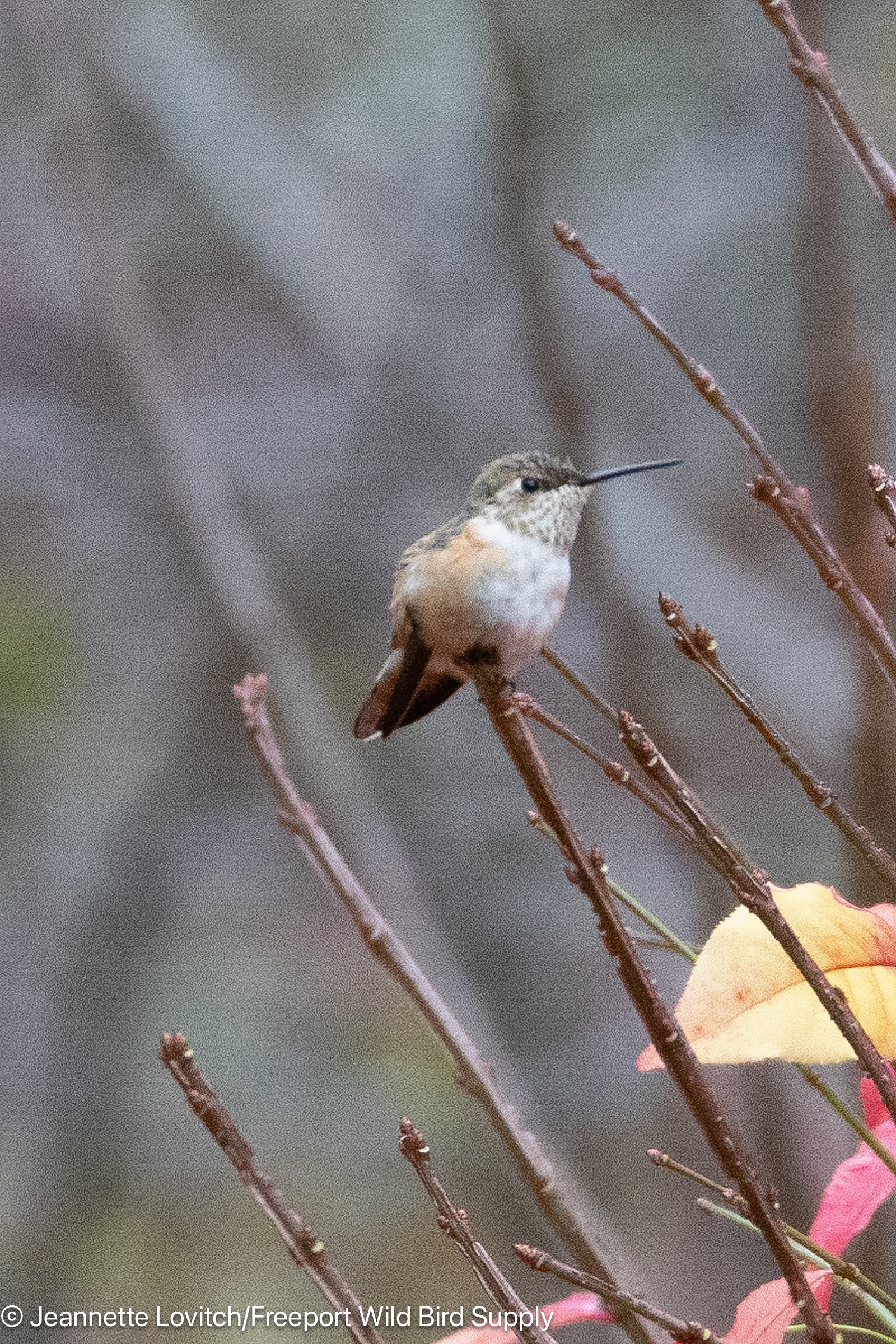
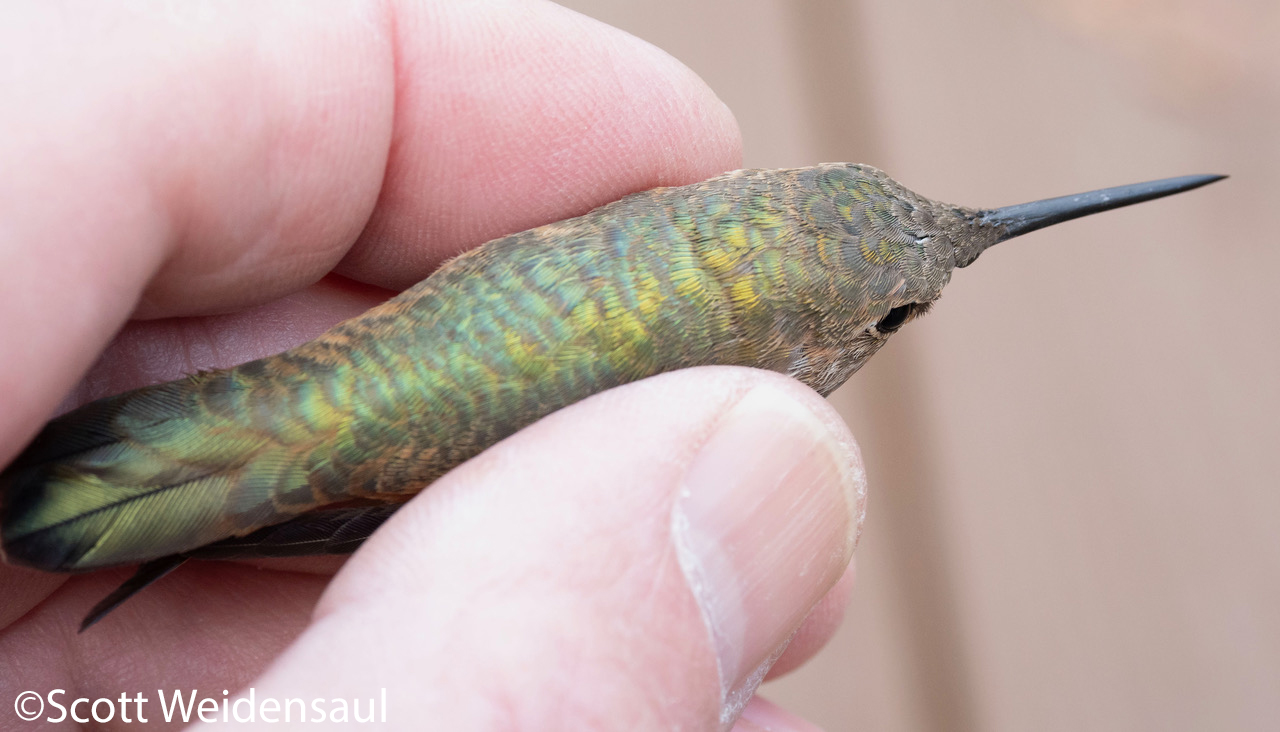
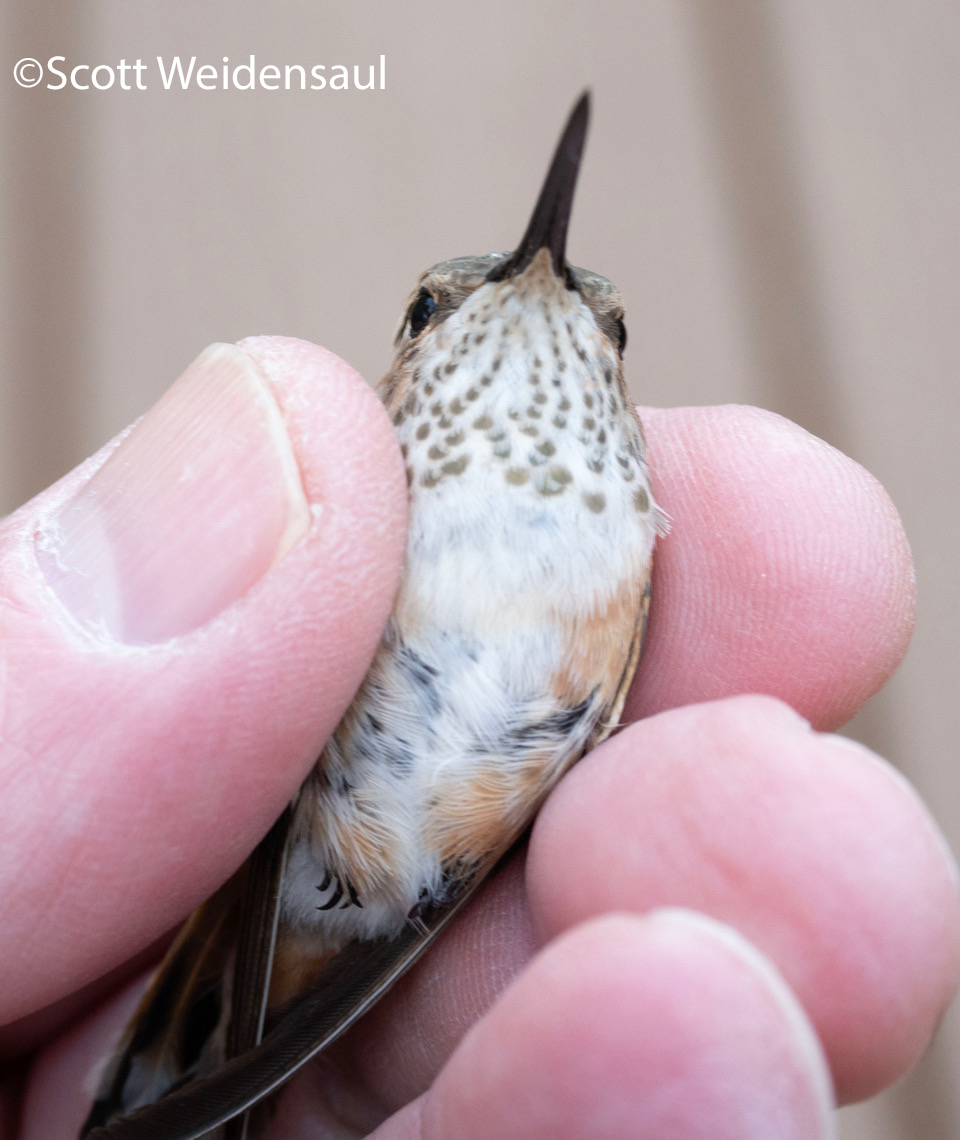
A Rufous Hummingbird arrived in a Bath yard on Halloween. And she stayed until the 26th of December! These birds are just incredible! Unfortunately, it was not in a yard that was conducive to visitation, so we had to keep the sighting under wraps. I really am sincerely sorry about that, but the homeowner’s rights and the bird’s welfare will always be put first and foremost with us. But it was well photographed, well studied, and well monitored. Here’s the story, identification particulars, and more.
We only had one morning for birding after visiting family, and we chose to spend it with an estimated 100,000 American Robins!
It was awesome and I hope these videos do it a modicum of justice! This was in Oldwick, NJ, discovered by Evan Obercian (yup, a birding friend of mine since high school who also now lives in Maine!) around 2021 (although he heard of a former roost not far away before this one). This was the largest gathering he has seen, at least around Christmastime. We just enjoyed the show, but he recently made the estimate (based on counting sample minutes and extrapolating). There were also about 1,000 European Starlings – look for a couple of dense flocks exiting the leaning bamboo during the videos. A few hundred Common Grackles and Red-winged Blackbirds were also present (mostly exited before sunrise in the first video), and Jeannette and I picked out a single Hermit Thrush. 3 Cooper’s Hawks and a Sharp-shinned Hawk were present, but they too seemed to be overwhelmed by the masses!
The videos can be seen here:
New Year Predictions Blog!
I know you are waiting with bated breath, but I’ll publish this soon. Of course, when I am delayed in getting it posted, something really rare shows up! So keep you eyes open!
Confirmed by in-hand measurements and very detailed photographs, this adult female Rufous Hummingbird graced a Bath yard from October 31st to December 26th, 2025.
On Halloween, Sue and Bill Barker had quite a treat in their Bath yard: a hummingbird!
Each year, we put out a call on our email and print newsletter to keep your hummingbird feeders up as long as freezing temperatures permit, and to call us if you see a hummingbird after October 1st (and especially after October 7th). Among other outstanding records, this resulted in New England’s first Broad-tailed Hummingbird in 2022.
This year, we have received five hummingbird reports since October 7th, with the previous four including photos and/or video that were good enough to identify as Ruby-throated. Or, at least, rule out everything but that and the state’s first Black-chinned Hummingbird (we’re waiting!). Given the date of the 10/31 report, the statistics suggest that it’s more likely to be something else, so I asked for some photos.
Sue took some photos through her window and screen, and they suggested a warmth in overall color to the bird that would be on the extreme end of Ruby-throated Hummingbird. Sue invited me over for a look, and after waiting for about 45 minutes in the early afternoon on November 2nd, the bird appeared and soon flashed the reddish-brown in the tail indicative of a hummingbird in the genus Selasphorous.
My photos are not very good (mediocre camera in shadow and low afternoon winter light), but they clearly show a Selasphorous hummingbird.
After discussing the situation with the homeowners, it was clear that, unfortunately, this was not a location that could be made public. It sucks, but there was no way to share this widely. Small, dead-end road, partially shared driveway, proximity to the house and the neighbor’s house, and all of the other circumstances that can lead to well, things going wrong when masses appear. We’ve had this happen often enough to guard against it, and privacy and homeowners’ rights always come first in our book (it’s partly why we are trusted with these special birds!). I did wander around and see if there was enough parking nearby to place a hummingbird feeder in a much less intrusive location (like we did with the aforementioned Broad-tailed) but that wasn’t practical or feasible in this case. I am sorry.
But needing to know more, and learn the bird’s identification, the decision was made to allow a very small number of visitors to contact the homeowner and arrange a time to view the bird and obtain additional photographs. I reached out to Scott Weidensaul, and arrangements began to be made to have it captured, banded, measured (and released).
Of course, I dispatched Bill Thompson immediately! And as usual, he “crushed” it!
Highly suggestive – and perhaps all but conclusive, short of in-hand measurements – of an adult female Rufous Hummingbird based on the observations and photographs by several of us, and especially with a close analysis of the tail feathers in particular (critical for these non-adult male Selasphorous), Scott attempted to band it. Unfortunately, the first effort was not successful.
The bird continued to visit, more frequently and reliably as the days got shorter and colder. On 11/11, Jeannette and I visited the yard and were treated to three visits in a mere 30 minutes. While Jeannette worked on getting additional photos, I observed the bird’s behavior and feeding pattern in case we needed to get creative with the next banding attempt. I saw where she came from, fed in the backyard, then perched in a sunny bush with a good view of the front feeder, before feeding longer at that front yard feeder. And then repeat the pattern, as hummingbirds are wont to do.
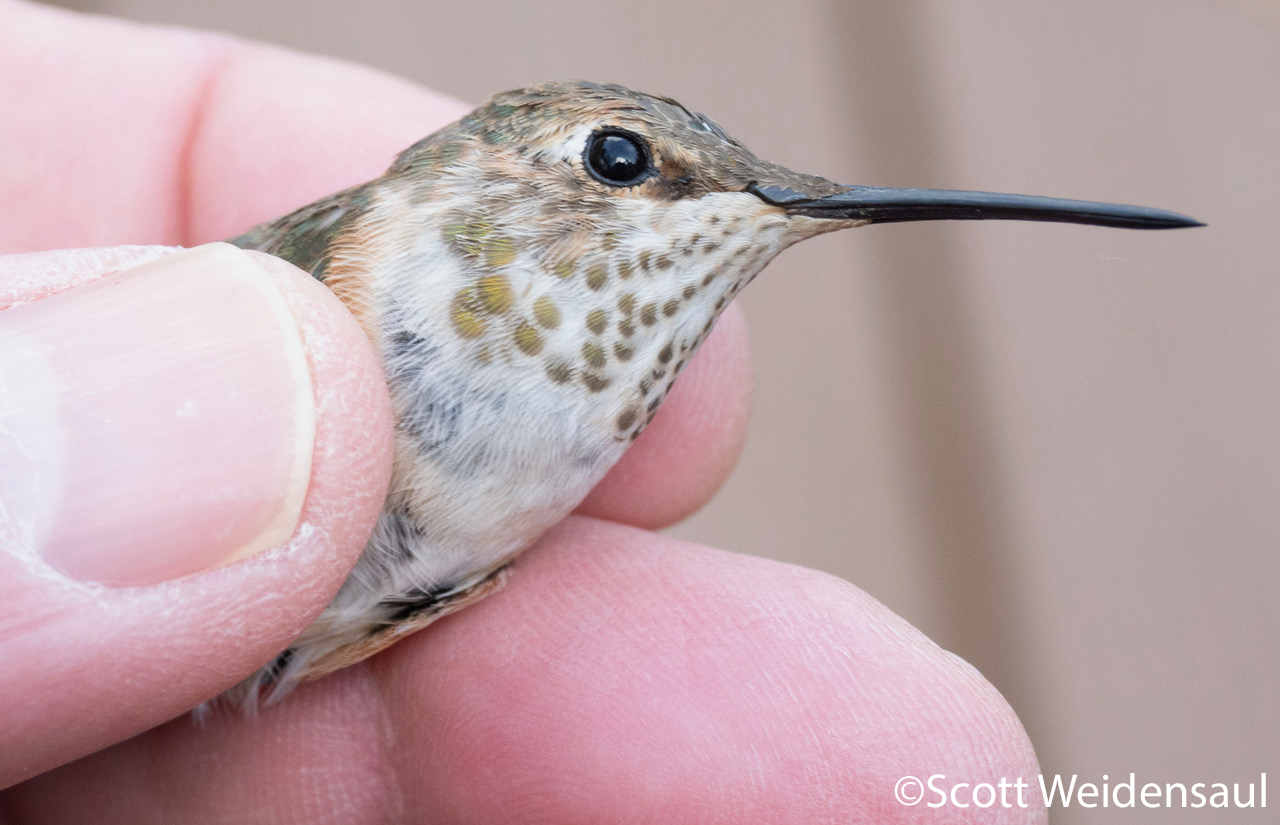
Then, on 11/14, Scott Weidensaul successfully trapped and studied the hummingbird in the hand, taking measurements and confirming our identification of adult female Rufous Hummingbird. This would be the 15th or 16th accepted record of Rufous Hummingbird in Maine according to the Maine Bird Records Committee. However, “unreviewed” reports likely include identifiable individuals, and I stand by my identification of this bird in our Pownal yard in 2021 as a Rufous Hummingbird, despite the lack of measurements in the hand (she departed before banding could be arranged).
And here’s the official banding report from Scott:
Band number: J73404 (the J code stands for 5100-, which won’t fit on the band). Species: Rufous hummingbird Age: After hatching year (adult, at least two years old) Sex: F Wing: 44.15mm Tail: 26mm Culmen (bill): 19.92mm
Bill grooving: 0 (typical for an adult) Gorget feathers: 20+ Weight: 3.5 grams Fat (0-5 scale): 3 Width of R5: 3.69mm R2: moderate nippling
Scott then said, “All of her measurements are in line for a female rufous vs. and Allen’s. Her wing, tail and culmen measurements are all good for RUHU but beyond the upper limit for ALHU, which would lack the slight notch or nipple on R2. All in all she seemed to be in great shape and was quiet and cooperative in the hand.”
__________________________
Rufous vs Allen’s Hummingbirds, in non-adult male plumages are one of the most challenging identifications in all of North American birds, and so all the stops were pulled out here to confirm it’s identification. This blog will be submitted to the Maine Bird Records Committee for its review as well to add to “the record.”
When Jeannette and I first opened the store way back in 2004 (!), we were surprised to find out how persistent the myth of “take down your hummingbird feeders by Labor Day or they won’t migrate” was. It’s simply untrue. Instead, we encouraged people to keep them up much, much later, as it’s the latest migrants that need the help of supplemental food the most, especially after the first hard frost that knocks out most if not all of local flowers, such as the late blooming native, Orange-spotted Jewelweed. We also knew that there had to be more records of rare hummingbirds occurring in Maine, so we encouraged people to keep their feeders out, their eyes open, and to give us a call.
Meanwhile, a frequent question we receive is “what happens to these really late hummingbirds?”
It’s a great question! And with banding, we are beginning to find out! For example, a lot of these birds are departing the northeast on favorable winds after strong cold snaps but in good condition (fat score in particular). That suggests birds are doing the right thing and leaving when they need to.
With an increasing number of banded Rufous Hummingbirds – and other species – overwintering in the southeastern US, and returning in subsequent years, we know that not all of these vagrants are evolutionary dead ends. In fact, perhaps just the opposite – the survivors who are adapting to a changing world and a changing climate.
Thanks to our loyal customers and observers, this is the 3rd Rufous Hummingbird that has come to light through us, along with one other Rufous/Allen’s, and of course, the famous Broad-tailed. And countless truant Ruby-throated Hummingbirds have been aided (and we have confirmed at dozens of late Ruby-throats, averaging about 5 direct reports of late hummingbirds after October 7th each year since 2014) along the way.
Sue and Bill’s Rufous hummingbird turned out to be just as tough as so many vagrant hummingbirds in the Northeast prove to be. Sue reports, “Our little friend made it through all that snow and the low temps, but I think by last Friday she had had it and took off. She was real active in the morning, (we saw her frequently), and was doing a lot of feeding. Then she was gone.”
Thanks to Sue’s diligent care, and the deployment of a heated hummingbird feeder – the same one that sustained the Broad-tailed as it was donated to the cause by its host! – the Rufous was afforded every opportunity to fuel up, continue to molt and build strength, and depart when she was ready.
This perfectly fits the pattern and behavior of “lingering” vagrant hummingbirds. Scott added “That sounds like absolutely classic departure behavior…My hope is that one of my many colleagues down on the Gulf Coast will recapture her this winter, read that band number and let us connect the dots. No guarantees, obviously, but it happens more often than you’d think… And Derek and I will be waiting to perhaps hear from you again next fall that she’s back, because *that* happens even more often than later, distant encounters.”
While I personally had planned to get back over there for some updated photos to see if her molt has progressed at all, I didn’t make the time before she finally departed. I am OK with that! I join Sue, Bill, and Scott in wishing her on her way!
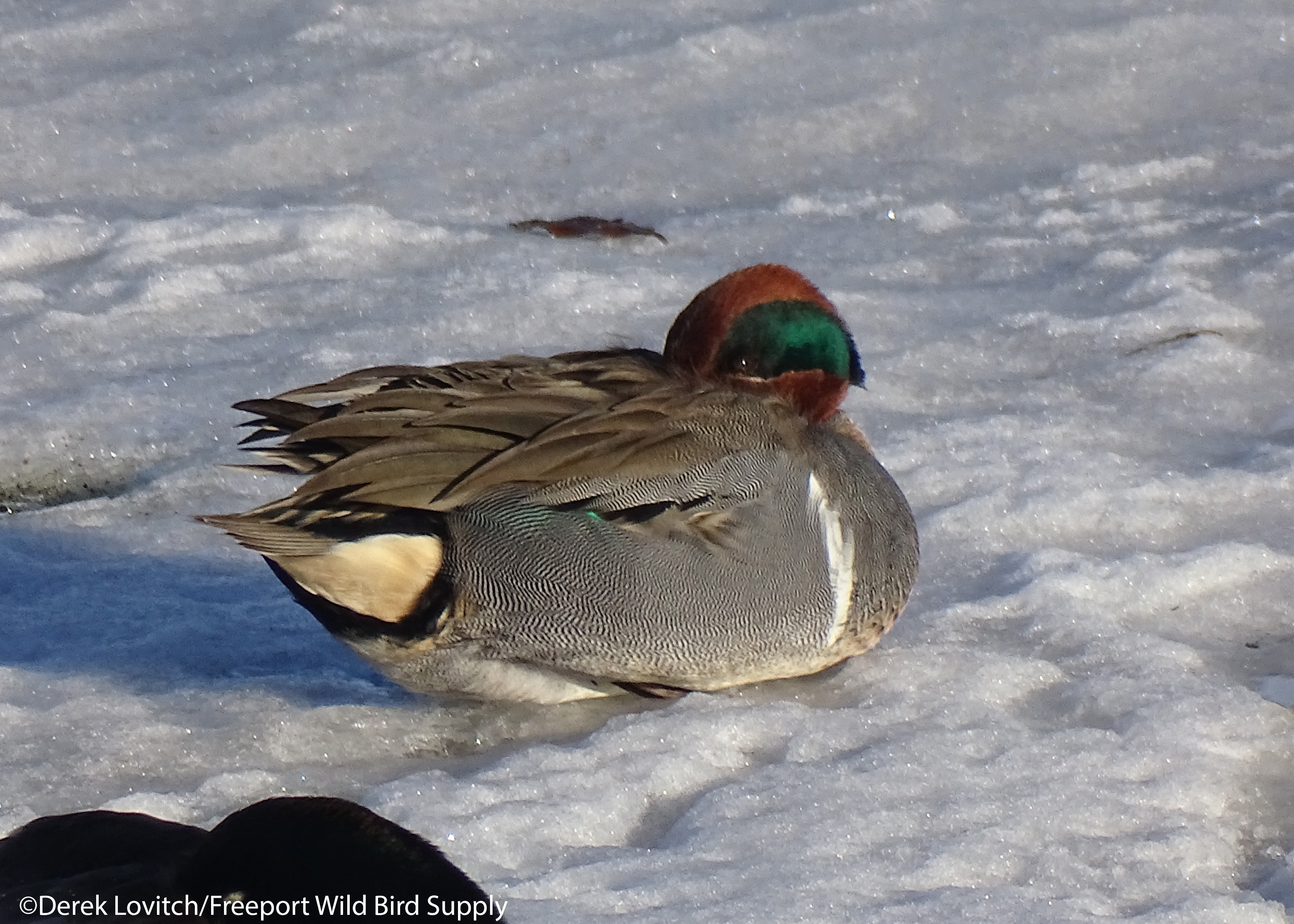
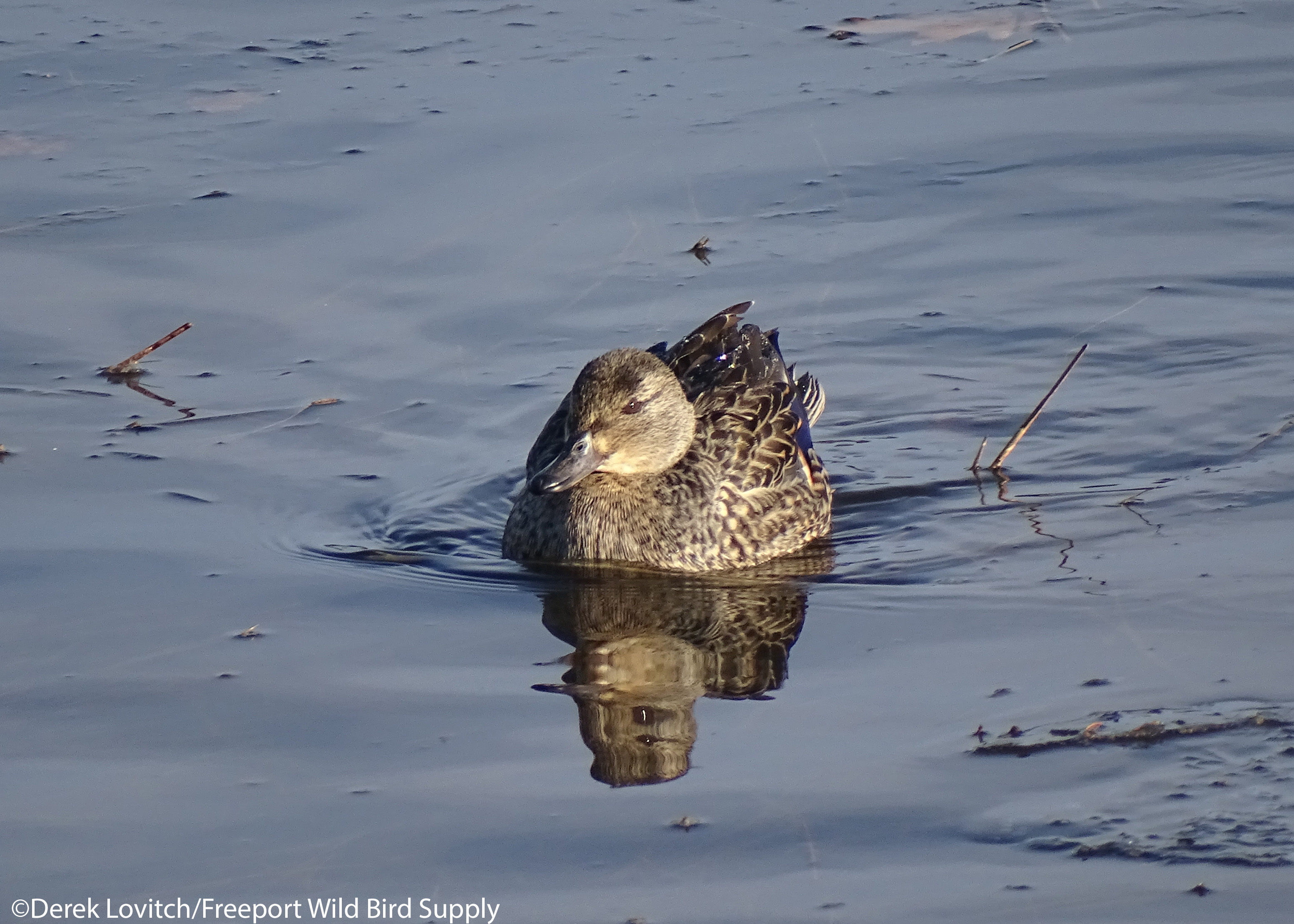
These tarrying drake Green-winged Teal were snoozing in the Mallard flock along the Auburn Riverwalk on the 16th (above) and at Mill Creek Cove in South Portland on the 18th (below). I don’t like to disturb birds, so I have lots of sleeping duck photos! I enjoy the calmness of it, and one can really take in the intricacies of the rest of the plumage that way.
A frigid start to the week yielded to a warming trend by week’s end. Will we see a “stirring of the pot” with the warm-up and upcoming storm system? My observations of note from the past seven days included concentrating waterfowl and a brutal, but productive day on the Southern York County CBC. Here are the highlights:
1 drake BARROW’S GOLDENEYE (first of season locally), Broad Cove Preserve, Cumberland, 12/13 (with Saturday Morning Birdwalk group).
Southern York County CBC, 12/15: Moody Sector with Jeannette:
2,168 individuals of 54 species, led by 440 Mallards, 272 Canada Geese, and 258 European Starlings. Landbirds – especially resident “yard birds” – and oceanfront waterbirds were insanely low, even given challenges of a bitter cold day with strong winds. Almost all landbirds besides starlings, Rock Pigeon, House Sparrow, and Song Sparrow were very low for us. Exceptions include a very high count of 23 Yellow-rumped Warblers (Ogunquit Beach dunes) and a total of 28 Horned Larks. Nonetheless, our roster of notable birds was above recent average, with highlights including:
_2_ ROUGH-LEGGED HAWKS (been a long time for us in this territory! Only 2nd time there was been more than on on this CBC!) one dark morph (probable immature) and 1 light morph immature, both seen soaring and hunting late in the afternoon from the north end of the Footbridge parking lot. Dark-morph spotted around 2:30pm, and seen again at about 3:30pm when the light morph appeared. We lost the dark morph, but the light bird eventually glided overhead and disappeared over the treeline, heading south.
1 KILLDEER, Ogunquit River Marsh from Bourne Ave
2 hen and 1 drake NORTHERN PINTAIL, Ogunquit Rivermouth
2+ Red Crossbills, flying over Bourne Ave.
1 Savannah Sparrow, Furbish Ave.
13 Sanderlings, Ogunquit Beach.
2+ Fish Crows, Anniversary Park, Auburn, and 2-3 along Auburn Riverwalk, 12/16 (see last week’s Highlights for a FICR discussion).
16 Snow Buntings, North River Road (in parking lot next to boat launch), Auburn, 12/16.
1 Swamp Sparrow, Florida Lake Park, Freeport, 12/17
1 Evening Grosbeak, here at the store, 12/17.
2 drake GADWALLS, 1 continuing pair Green-winged Teal, and 1 1st-cycle Iceland Gull, Mill Creek Cove, South Portland, 12/18 (photos above and below).
This hen Green-winged Teal, her plumage no less detailed and intricate than the male’s, was also dozing at Mill Creek Cove on the 18th. She woke up and took a swim though!
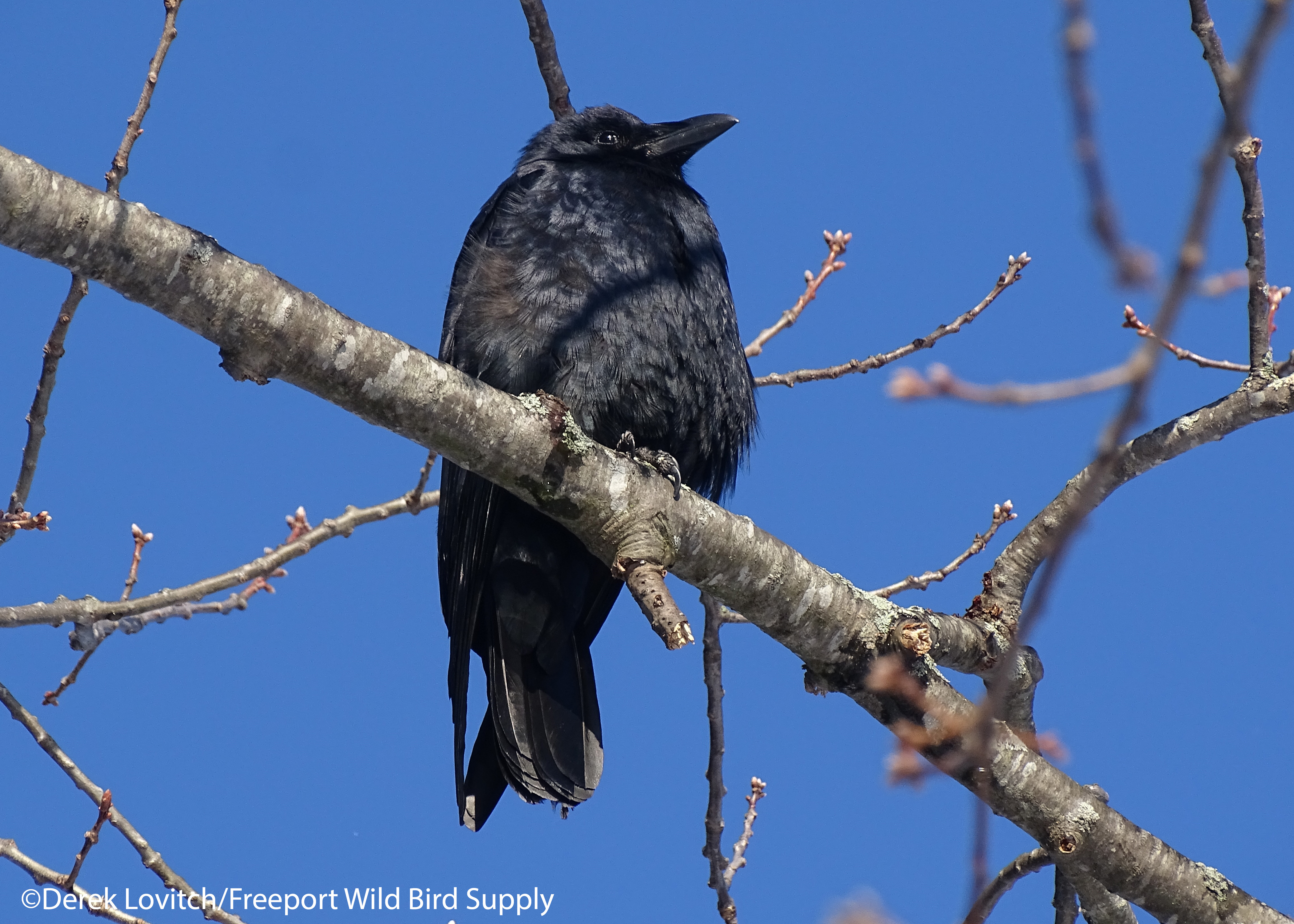
One of likely at least 7 Fish Crows that I encountered along the Auburn Riverwalk posed nicely for me on a chilly morning on the 11th. How many Fish Crows are now in the neighborhood, and how many might overwinter? I guess I’ll try and find out!
Because it wasn’t wintery enough already in Southern Maine, I drove north for my annual early-December Greater Bangor birding visit, which is always a good way to gauge the coming winter’s food resources and irruption status, for better and for worse! Here are all of my observations of note over the past seven days:
1 American Woodcock, Winslow Park, Freeport, 12/6 (with Saturday Morning Birdwalk group).
Three days, mostly in Penobscot County, didn’t produce nearly as many irruptives as I had hoped. In fact, all finches other than American Goldfinch were scarce. I encountered a few flocks of American Robins, but few other frugivores so far, despite widespread ample crabapple and other fruit crops. Visiting the same spots as I do every year, plus a few additional locations gave me some idea of food recent and current species compositions. Recent bitter cold rapidly froze up many seasonal hotspots were locked in, but my total of 42 species was nowhere near my lowest tally over the years from this route! My highlights included the following:
1 drake Ring-necked Duck, Fisherman’s Park, Brewer, 12/7.
2 continuing Fish Crows and 3-4 first-cycle Iceland Gulls, Bangor Waterfront Park, 12/7.
1 WHITE-WINGED CROSSBILL (FOS), 1 AMERICAN GOSHAWK, and 11 PINE GROSBEAKS (FOY), Stud Mill Road, 12/8.
1 Yellow-bellied Sapsucker, Littlefield Gardens, University of Maine – Orono, 12/8.
1 hen Barrow’s Goldeneyes (FOS), Shawmut Dam from River Road, Benton, 12/9.
6-7+ FISH CROWS in Auburn, 12/11. A small colony of Fish Crows have been frequenting Auburn (and sometimes across the river in Lewiston) for several years now. Two may have overwintered here last year, although I stopped seeing them mid-winter around Anniversary Park and the Auburn/Lewiston riverfront where I tend to bird at that time of year. This winter, at least 2 have been reliable at Anniversary Park, with one eating ash seeds across the Little Androscoggin, and another calling to it from the nearby neighborhood. Then, at least 2 more began calling from further up the Little Andy. All four were audible when I left, and then I walked the Auburn Riverwalk. There, two more were feeding contently in the Bradford/Callory Pears at the Hilton Garden Inn. Walking back south, I encountered another contently-feeding bird eating ash seeds near the pedestrian bridge. Crows can fly faster than I walk, but there was not a perceptible movement or flow of either the Fish or the abundant American Crows at the time. It’s possible there were only 4, but my guess is there were 7 individuals encountered today. I’ll be keeping my ears open all winter to see if they stick around! Of course, with many thousands of American Crows coalescing to roost here it can be a needle in a haystack to find them and see if they are setting up a resident population (most of Maine’s Fish Crows are migratory, but it seems that outlier colonies – like here and Bangor – seem less likely to migrate. A couple of few individuals of the larger Brunswick colony also seem to stick around now. Will it be long before Fish Crows are a widespread, year-round resident of the state? Photo of one of them above.
2 Red Crossbills in Bradbury Mountain State Park, 12/12, were my only Reds anywhere in the state this week.
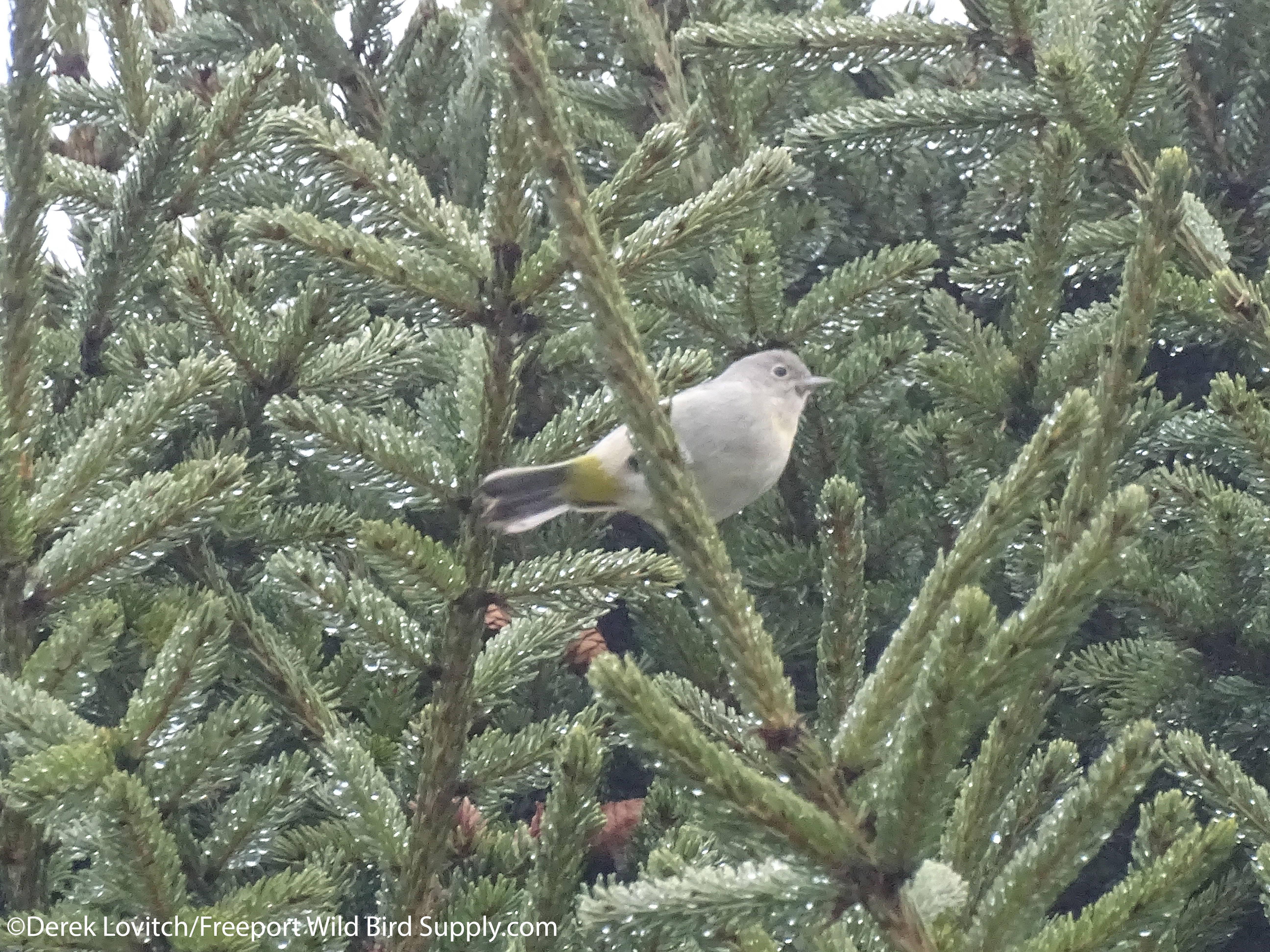
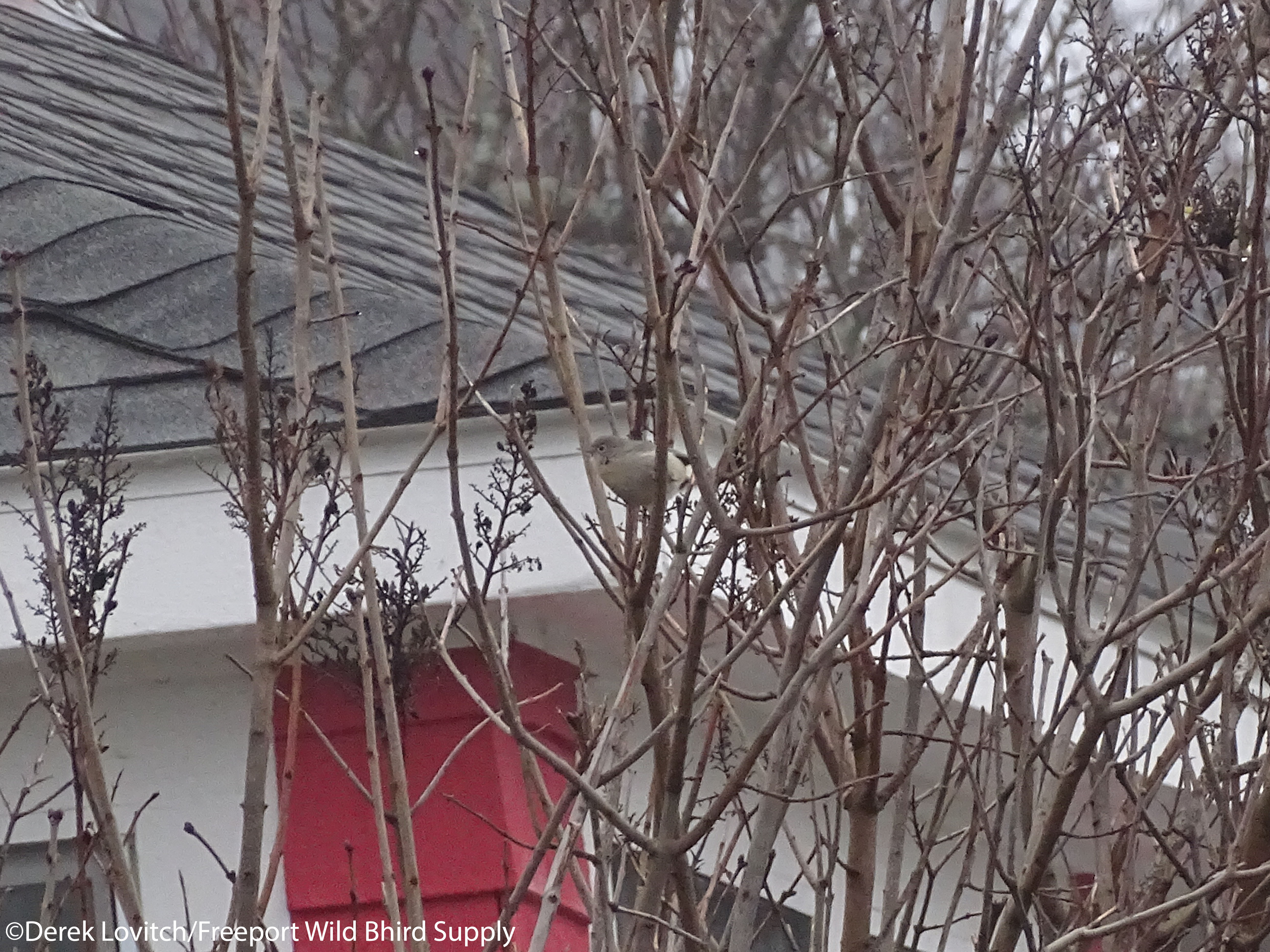
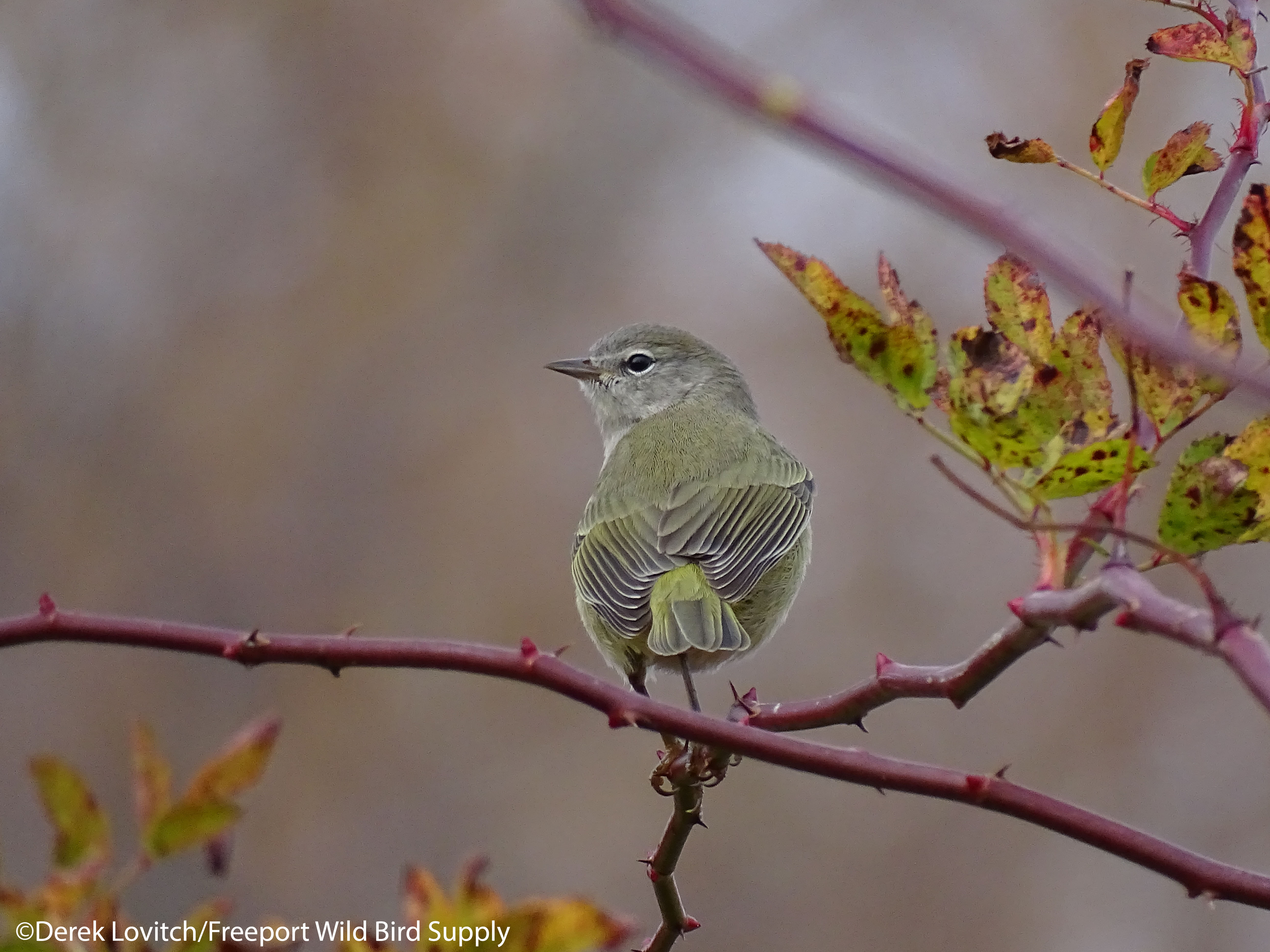
This Nashville Warbler (above) was one of two still on Peak’s Island as of the 1st, and this Orange-crowned Warbler (below) was one of four or five still on the island. Orange-crowned Warblers are pretty hardy, but if the Nashvilles are still hanging on, they would be questioning their life decision this morning! Speaking of, best wishes, wherever you are, to the Virginia’s Warbler that has not been seen since the 11/29.
Well, winter set in rather quickly this week, didn’t it? And no doubt much to the chagrin of the many vagrants, “pioneers,” and “half-hardies” that we have been enjoying recently. Despite the widespread below-zero temperatures by week’s end, I still saw four species of warblers this week. But I won’t expect that next week. Here are my observations of note over the past seven days.
2 continuing NASHVILLE WARBLERS, 3 Orange-crowned Warblers (at least 2 continuing), and 1 continuing COMMON YELLOWTHROAT, but no sign of the Virginia’s, Peak’s Island, Portland, 12/1 (with Jeannette. Photos above).
1 1st cycle Iceland Gull, Maine State Pier, Portland, 12/1 (with Jeannette).
1 ad. Red-shouldered Hawk, Ann St, Lisbon Falls, 12/4 (with Bill Thompson).
2 WILSON’S SNIPE and 4 Lesser Scaup, Lake Auburn, 12/4 (with Bill Thompson).
1 Fish Crow, Anniversary Park, Auburn, 12/4 (with Bill Thompson). 2-4 Fish Crows have been reliable here since April, including in the past few weeks.
1 Northern Flicker, our feeders in Durham, 12/4.
Scattered Evening Grosbeaks and Red Crossbills continue in the area this week as well.
The Peregrine Falcon pair of Lewiston-Auburn is back to frequenting their favorite winter perches, such as this rooftop tower near the Bernard Lown Peace Bridge. One of the pair had returned here after taking a run at a Bald Eagle.
It’s been an extraordinary rarity season in Maine this fall. Perhaps it’s been the weather patterns, widespread drought, increasing use of neonicotinoid pesticides, or perhaps – according to a recent paper – geomagnetic storms!
But whatever it is, it’s made for an active month for vagrants here in Maine. Monhegan was epic at the end of September, October was pretty good on the mainland, and November has been exceptional. And, we still haven’t fully entered the rare-birds-at-feeders season, although there have already been quite a few noteworthy feeder visitors.
Personally, I’ve had a great fall, especially on Monhegan, and as you have read in my This Week’s Highlights blog (if you’re the one or two people who actually read it!), I’ve had quite a few notable finds, some fun chases, and overall great birding recently. But I hadn’t turned up a “mega” to add to the tally. On Monday, 11/24, I continued my search by taking a day to bird Peak’s Island, one of my favorite late fall birding destinations.
Arriving on the 7:45 ferry from Portland, I began my usual circuit, working around town to Picnic Point. The wrack line here always looks prime for a vagrant!
A short while later, at about 8:30am, I paused at one of my usual thickets on Seashore Ave, diagonally opposite the 5th Regiment Museum. There are always birds here, augmented by a dense tangle, some tall trees, and a few small feeders behind it.
On Monday, it was very active as usual, with numerous Northern Cardinals, a lot of House Finches, and other typical residents. Movement caught my eye in a stand of still mostly-still-leafed willow trees towards the back right of the thicket, approximately 25 yards from the roadside.
Three warbler-like birds were chasing each other. One appeared to be an aggressor, and I was hearing repeated short, high-pitched call notes that were either, or very similar to, Nashville Warbler. It’s been an extraordinary fall for “late” Nashville Warblers (although they are likely drift vagrants, mirror vagrants, or even reverse migrants rather than just behind schedule), so this was not too surprising. But three non-Yellow-rumped Warblers in one tree? That’s notable on November 24th!
The first bird I saw well was a bright, adult male-type Nashville Warbler (NAWA). The birds, still chasing each other and not sitting still, were not easy to see, but the second bird I got my binoculars on was rather confusing. I observed it for as long as I could, but the distance was just a bit too far.
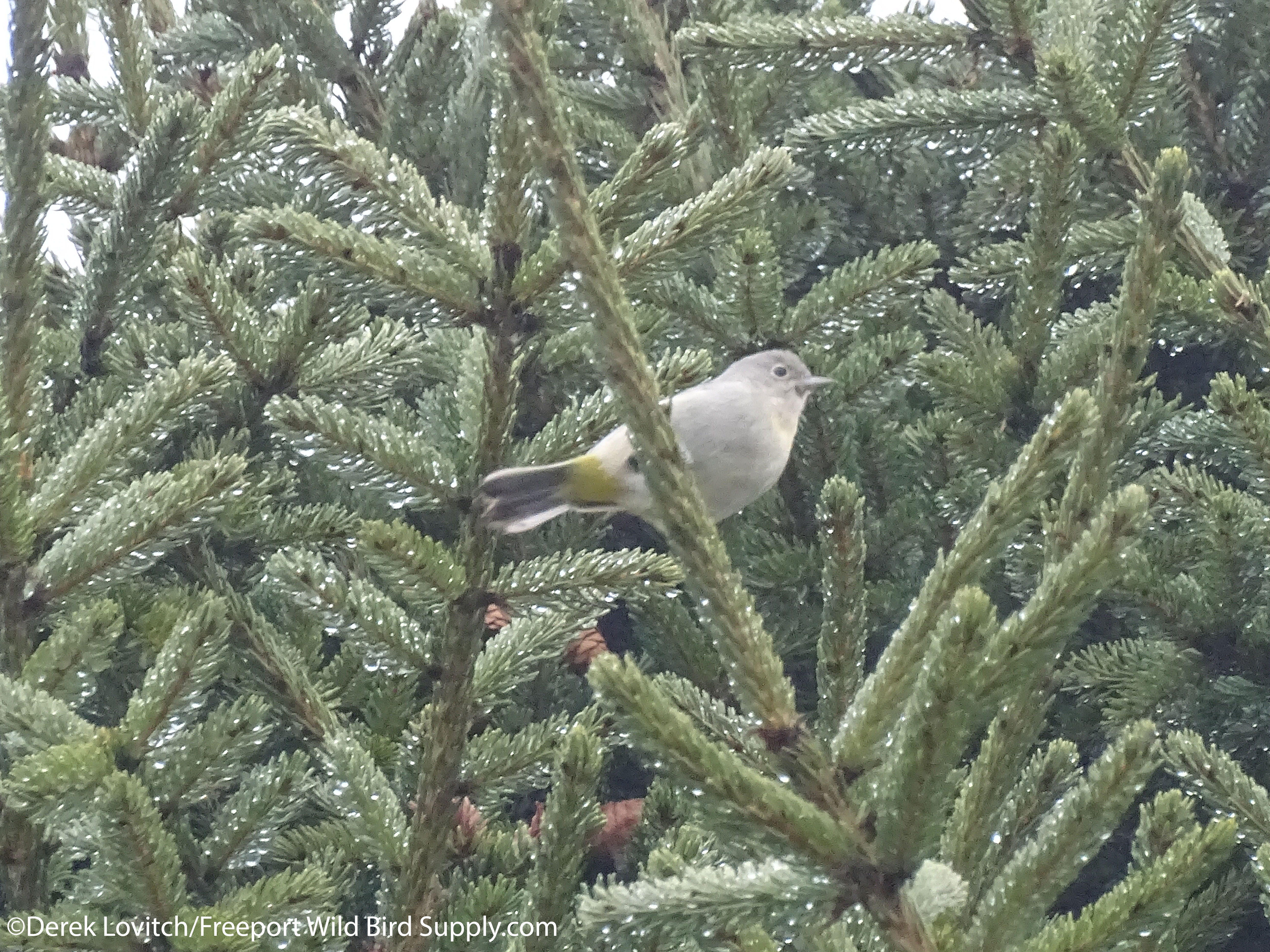
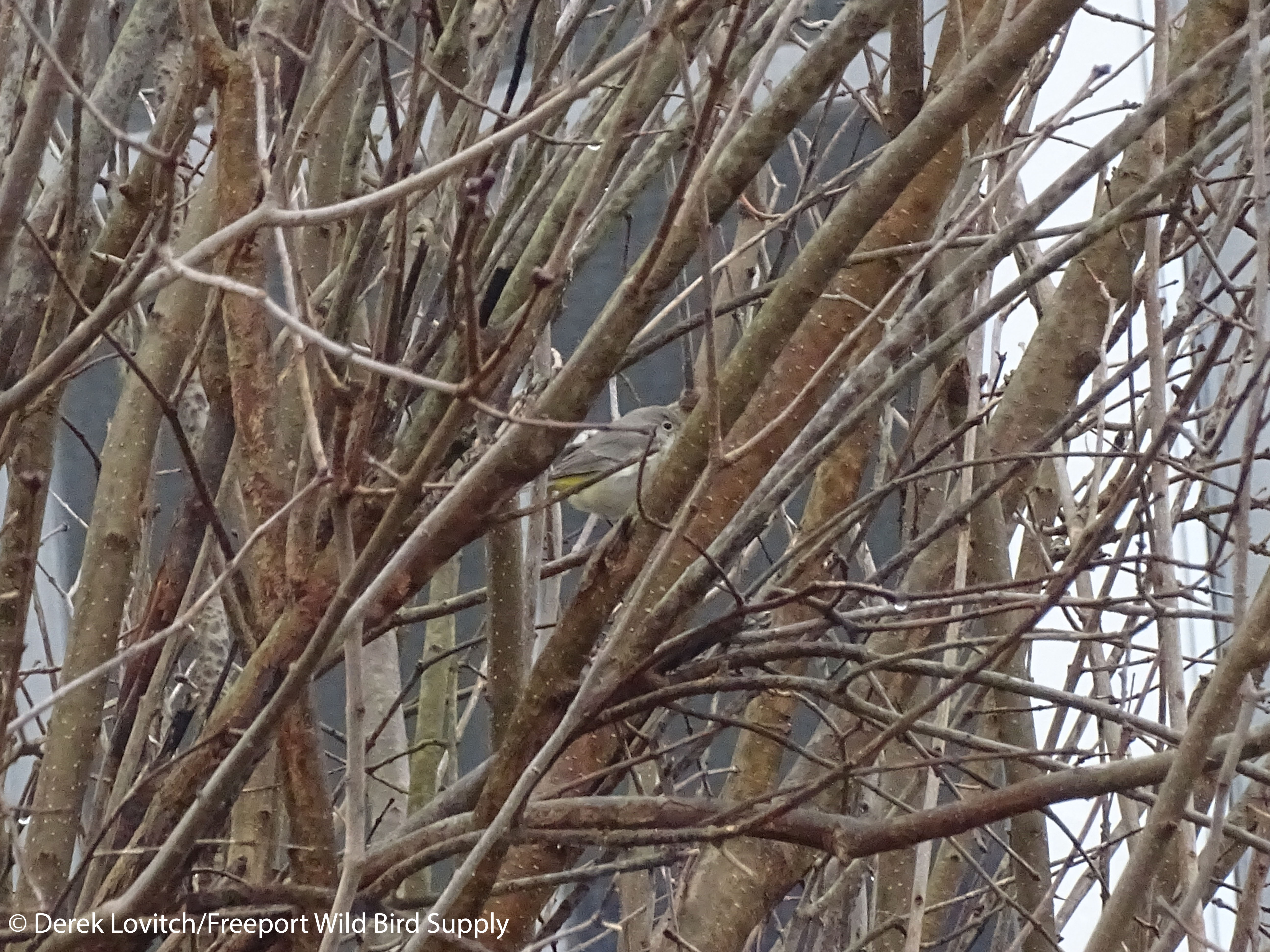
A very drab Orange-crowned Warbler (OCWA) first came to mind, especially with the yellow undertail coverts, but the bird was really, really gray. A flat, cool, not at all yellowish or greenish gray. It was flicking its tail like a NAWA, but even more emphatically. It turned around, and I saw its breast, and there was a small amount of yellow there. Wait, what!? The patch was smaller and more isolated than a drab female Northern Parula, but there were no wingbars are at all, and it was too long-tailed.
I noted an eye-ring, but the distance made it hard to tell how bold it was, whether or not it was complete, or even if it was really white like a NAWA. I went for my camera, hoping to zoom in to see detail, but the birds were far too active and in too dense of a twiggy tree, so coupled with the distance, this was a complete fail.
Two birds departed to the right, but the bird of interest remained for another minute or three, calling very similarly to a Nashville Warbler, but quite emphatic. I then lost it, too.
By now, I was putting the pieces together and was under the suspicion that this was a Virginia’s Warbler, but I was not convinced. With all three birds departing as of 8:48, I opened up my Sibley app to refresh my memory (it’s been quite some time since I have seen a VIWA!) and listen to the call. The call recording on the app included two pitches of calls, the second of which was spot-on for what I was hearing from this very drab, gray, not-quite-Nashville warbler.
Hmm…but why didn’t I notice the yellow rump? Or was I just focusing on the rest of the bird? All of the views were so painfully brief, and I never saw the complete bird at one time.
About 10-15 minutes later, the trio returned: the adult male-type NAWA, a second, drab immature-female-type NAWA, and the likely VIWA. In a brief view, I noticed the all gray head, reminiscent of a female American Redstart, and confirmed the presence of yellow in the center of the breast.
The birds departed again, to the right, across Ryefield Street, but I only glimpsed one bird and it was likely the VIWA. I walked around the block, noticed a few feeders on New Island Avenue, but I did not find any warblers. Since they had returned to the original stand of willows three times now, I stood in place now, about a full hour after my original observation and I started sending out texts and scribbling notes.
I noticed that the recycling container at the house adjacent to the thicket had been taken in. Damn; I missed the homeowner! I needed to get closer to the thicket if the bird returns, but I am absolutely unwilling to trespass or enter yards without being invited/given permission. Many of you have understood this from my tours to Monhegan, but I stand by this elsewhere. But did it cost me today?
Happily, a short while later, the homeowner was in his yard and after a brief chat, allowed me to hang out in his backyard. It was now 10:28. He even brought me a comfy chair! I was so appreciative, now that I was camped out next to the willows, no warblers reappeared. I took another loop around the block, then returned to my chair. A single Evening Grosbeak dropped into the thicket, and I glimpsed what was almost certainly a Lark Sparrow within a House Sparrow flock, but I did not pursue it to confirm.
By 11:15, I was cold and needed to get a real walk in, so I departed, birding my usual circuit out to and through Battery Steele (found a Common Yellowthroat there) and otherwise enjoyed a rather birdy day on the island. A Hermit Thrush, a couple of Swamp Sparrows, a growing cadre of Red-necked Grebes offshore, and tons of Red-breasted Nuthatches in the woods. Song Sparrows were also unusually abundant.
I walked into town for lunch to go (the wraps at Unruly Girls’ Peaks Cafe are fantastic as always, but the hot chai was even more clutch!). I was back to the thicket at 1:36. The sun that broke through while I was far away had mostly been enveloped by clouds once, and the wind was picking up. Neither was particularly helpful. I departed at 2:25 to catch the 2:45 departure (I had planned on leaving before lunch!)
I was frustrated. I knew what I saw, but was bothered by what I did not see, and how unsatisfying and conclusive my views were. I felt confident that it was indeed a VIWA, but I don’t like birding by default or identification by the sum of all parts!
I thought about going back the next day but couldn’t. I must say, the oral surgery may have been less painful than having this bird get away!
I looked at guides, viewed photos online, and concluded there was little doubt that I had seen a VIWA. But the mind can play tricks on you, and memory can be affected by the post-observation studies, so it was bothering me. Jeannette asked if I was going to “count it?”
I didn’t know. So, on Wednesday morning, I decided to be a little late for work and go back to Peak’s Island. I couldn’t help it; I had to! Jeannette agreed.
Walking to the ferry terminal, I stumbled upon a Nashville Warbler on Commercial Street, near the cruise ship terminal, which I took as a good sign. 7:45 ferry, 8:05 arrival on the island, and I was to the thicket by 8:30, after a thorough check on Picnic Point on the way (the foggy conditions had me hoping to refind the bird on the wrack line like so many late-season insectivores find sustenance).
I stared at the thicket, but overall bird activity was much slower than two days prior. At 8:55, I began walking down Seashore, towards Maple Street. I soon heard warblers! I first heard a Yellow-rumped Warbler from quite some distance, but then heard NAWA, or NAWA-like, calls.
In the side yard of 66 Seashore, I found not three, but 5 warblers: 2 NAWA, a YRWA, and a drab Orange-crowned. Very drab. Hmm…could I have blown this mystery warbler? Was this all I had seen? No, no way! And then warbler #5 popped out: Virginia’s Warbler!!!!!
Between this yard, and the first yard on Maple Street a minute later, I had several perfect views at varying distances, and all field marks were observed. With a good look, there sure wasn’t any mistaking this bird!
Thin, slim warbler with a thin bill; bold but thin white eyering; cool gray upperparts with no wingbars, and here, you can just make out part of the yellow rump.Most of my views – and all of them on Monday – were like this: small parts of a small bird between twigs! Here, however, you can see the plain gray overall color, complete, thin eye-ring, and a hint of the yellowish undertail.
I followed the flock back towards the original thicket and willow trees, but I lost their tail. I decided to be responsible and head back for the 10:00 ferry and get to work. I also had left my Tylenol in the car. Besides, my job here was done! This is the 4th or 5th record for Maine, and the first away from Monhegan.
Addendum: Several friends arrived on the next ferry, and after a short while found the bird in the same area, often returning to the original thicket from Monday. I was so focused on identification of the VIWA that I probably didn’t take a full inventory of all of the warblers that were around. They had at least 4 OCWA now, 2-3 NAWA, 2 YRWA, and crushing views of the VIWA. The bird was seen by many through the afternoon. And thanks again to the homeowners who accepted my presence in their yard and invited others in later that day!
I also can’t help but wonder if there will be a “Patagonia Picnic Table Effect” as birders descend upon and follow this possibly-growing flock of unseasonable warblers. Could I be heading back to Peak’s soon? I’ll at least be able to grab another Mediterranean wrap this time.
12/1 UPDATE: The VIWA has not been seen since the afternoon of 12/29. Birders searched for it on 12/30 and had 1+ NAWA and 4 OCWA in the area. Today, Jeannette and I spent the morning looking for it to no avail. In the Seashore Avenue area, we had 2 NAWA and 2-3 OCWA. As we widened our search, Jeannette and I had a continuing COMMON YELLOWTHROAT in the same spot as last Monday and another OCWA, both near Battery Steele.
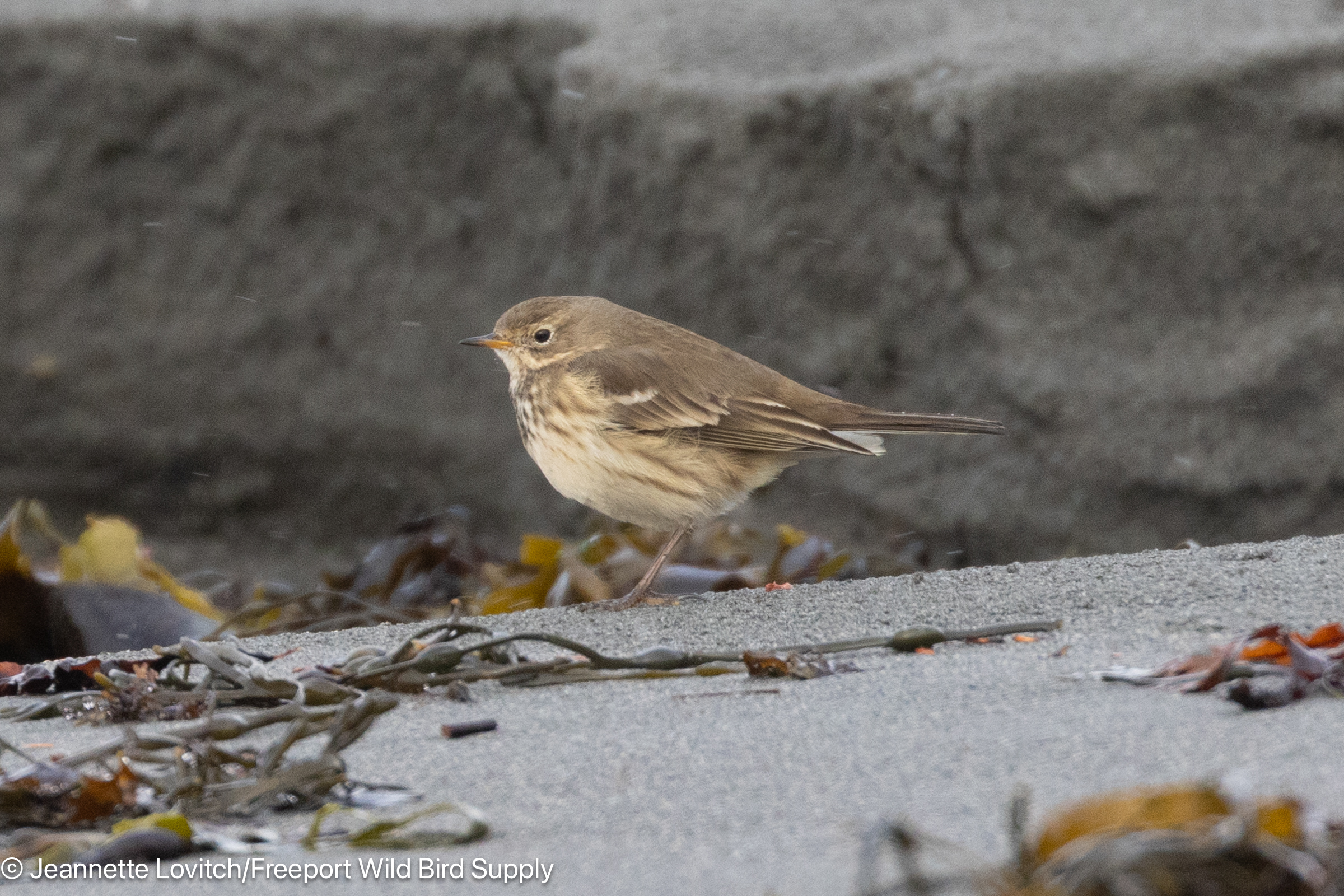
Six, somewhat-late American Pipits at Carrying Place Cove in Lubec were among the highlights of three days of dedicated rarity-searching in Washington County for our “weekend” this week. I was hoping for a wagtail though…or a Meadow Pipit.
I had a very busy week of birding, led by three days of searching for rarities in Washington County. Locally, my observations of note over the past eight days were as follows:
Scattered Red Crossbills continue in southern Maine, and Pine Siskins are increasing now.
1 Indigo Bunting, West Commercial Street, Portland, 11/13.
1 Orange-crowned Warbler (my 10th of the season!), South Portland Greenbelt Pathway, 11/13.
1 Rusty Blackbird, our property in Durham, 11/15.
1 NASHVILLE WARBLER and a variety of marginally late migrants such as 2 Hermit Thrushes and a Chipping Sparrow, etc, Bailey Island, Harpswell, 11/20.
Jeannette and I visited Washington County 11/16-18, with our priority being all of those little places we see in the summer that “looks good for rarities” in the late fall Rarity Season. So finally, we made it happen. Unfortunately, one day of rain, one day of snow, and two days of very strong winds made bird-finding rather challenging. We would have much preferred these clear and calm days of the second half of the week!
Our notable observations included:
3 continuing Gadwall, 18 American Wigeon, 8 Northern Pintail, 182 Green-winged Teal, etc, Sebasticook Lake, 11/16.
1 BARN SWALLOW, Roque Bluffs State Park, 11/16.
6 American Pipits, Carrying Place Cove, Lubec, 11/17 (photo above).
1 4th-cycle Lesser Black-backed Gull and 1 1st-cycle Iceland Gull, Mowry Beach, Lubec, 11/17.
1 1st-cycle Iceland Gull, Lubec village waterfront, 11/17.
1 ORANGE-CROWNED WARBLER, Old Farm Point Park, Lubec, 11/17.
4 Snow Buntings, Petit Manan NWR, 11/18.
1 1st-cycle Icleand Gull, Bangor Waterfront Park, 11/18.
Locally unexpected/rare: 1 Tufted Titmouse in a mixed species foraging flock at Hamilton Cove Preserve on 11/17 and two Red-bellied Woodpeckers in Lubec on 11/17 (“downtown” and Old Farm Point Park). Meanwhile, Red-breasted Nuthatches were exceptionally abundant, while both Black-capped Chickadee and Golden-crowned Kinglets seemed above average. Every mixed species foraging flock had plenty of each of the big three.
Finches: American Goldfinches were fairly widespread, and scattered small numbers of Purple Finches were around, but since finches are often detected via flight calls, the weather – especially the strong winds – did not make it easy to detect them. We also spent less time in Boreal habitats on this trip than most. So, other than those two, our finch observations were sadly limited to only 1 Evening Grosbeak and 5 Common Redpolls (FOF), Hamilton Cove Preserve, 11/17; 2 Red Crossbills and 2+ Pine Siskins, Machias River Preserve, Machias, 11/18.
Frugivores: American Robins were the only widespread frugivore so far, including an ample vismig on 11/17 with snow falling. 8 Cedar Waxwings and a distant flock of about 30 likely Bohemian Waxwings at Old Farm Point Park on 11/17. We were disappointed to not run into any Pine Grosbeaks.















 Maine Birding Field Notes