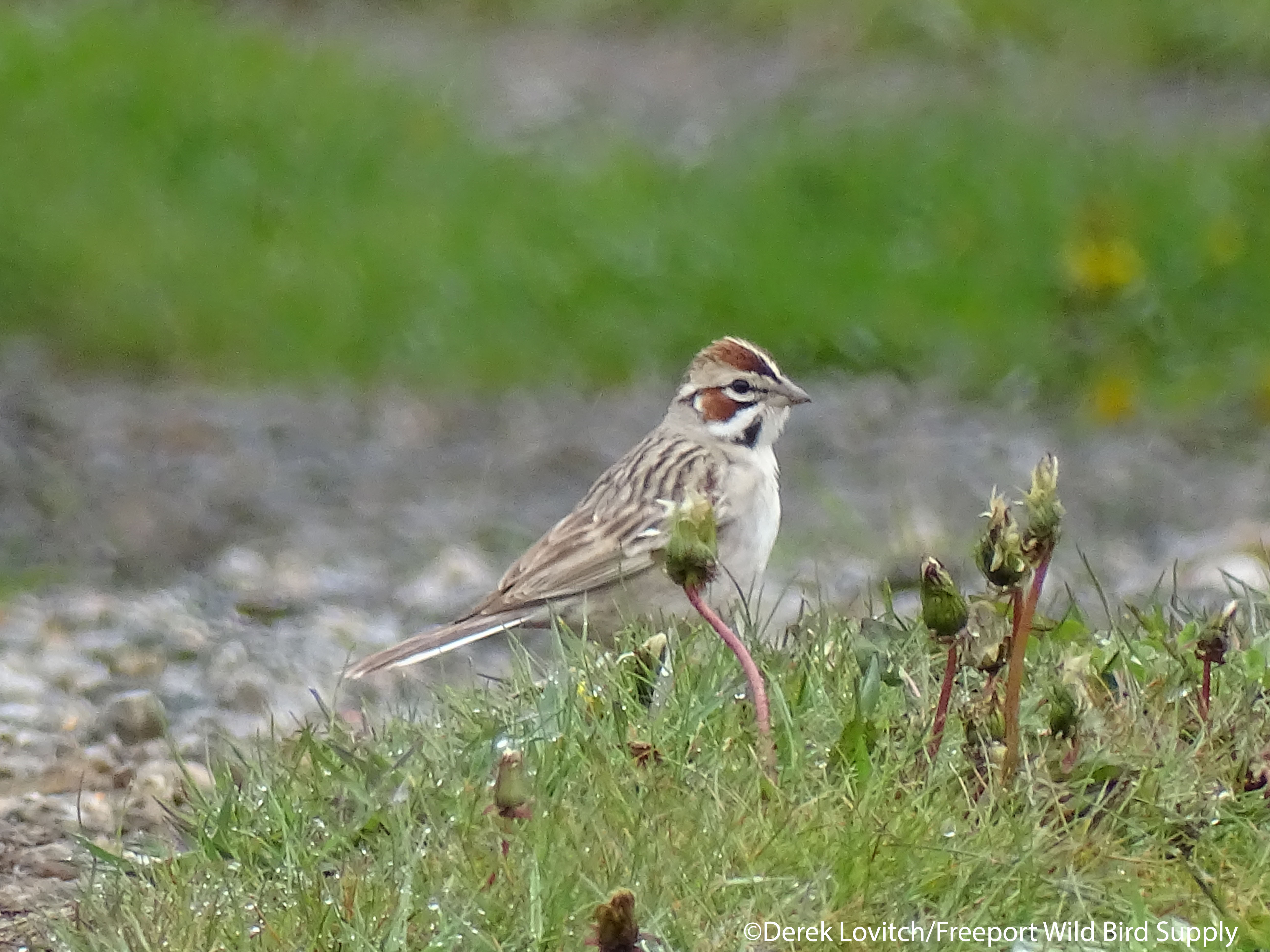
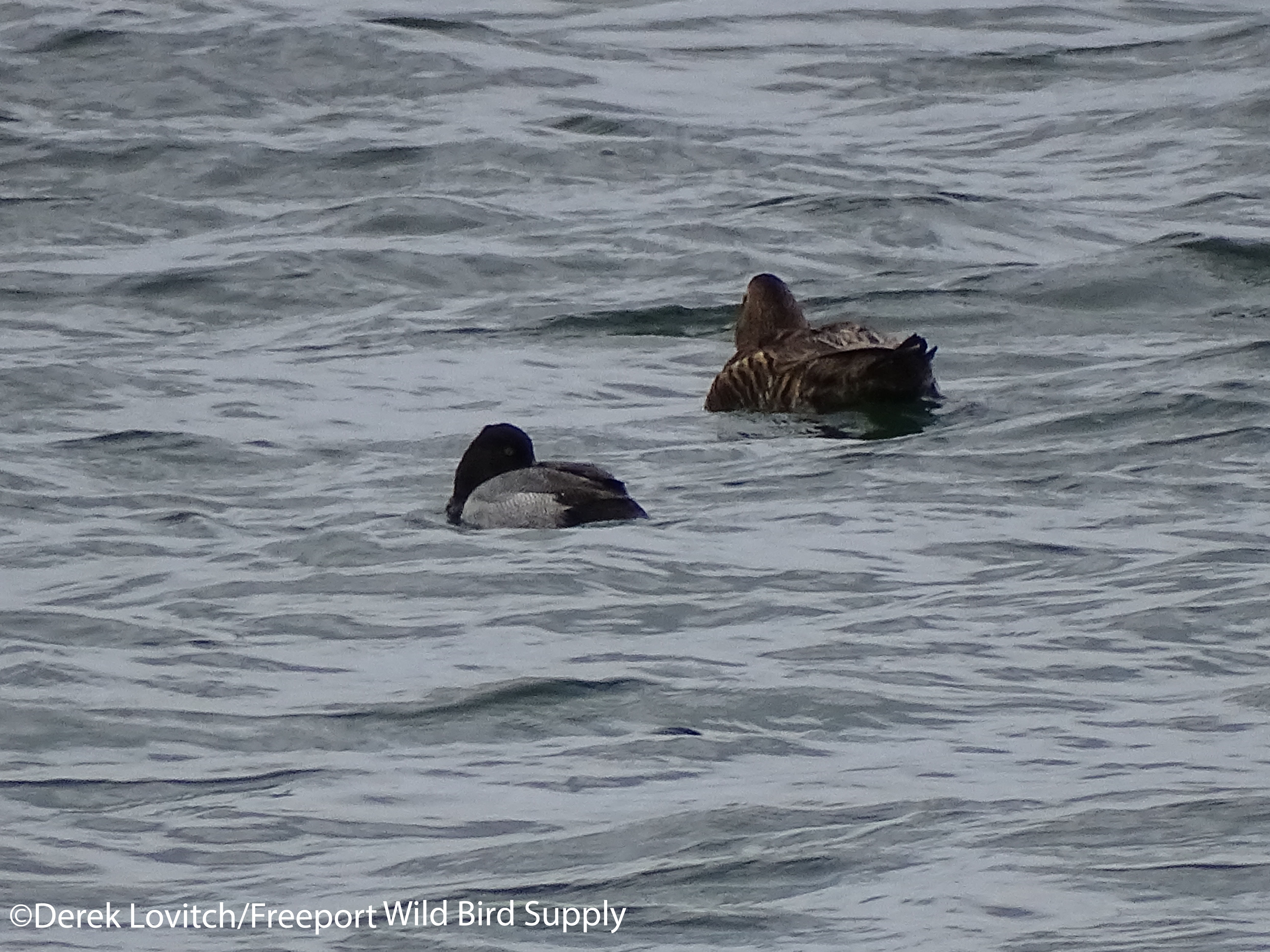
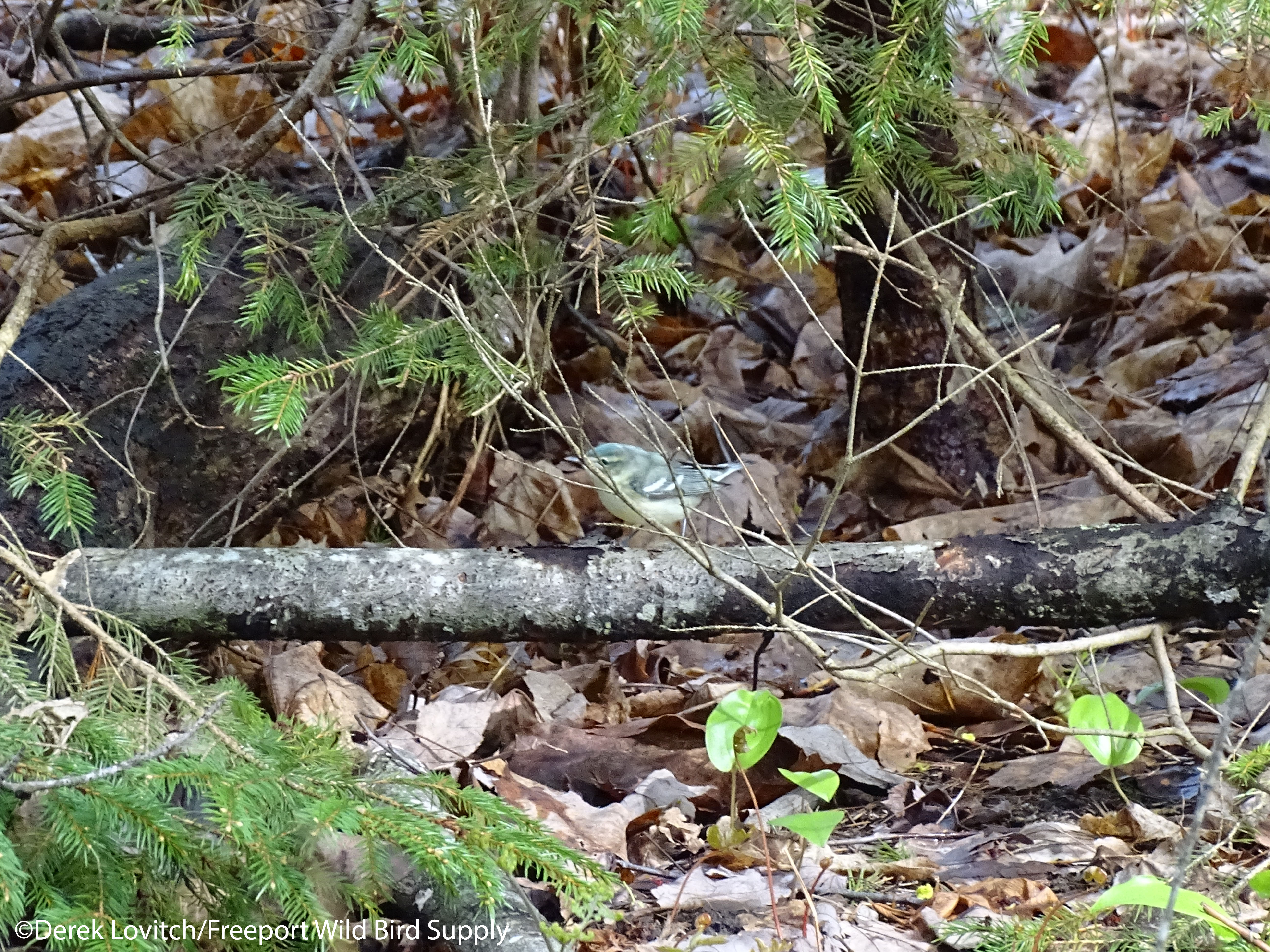
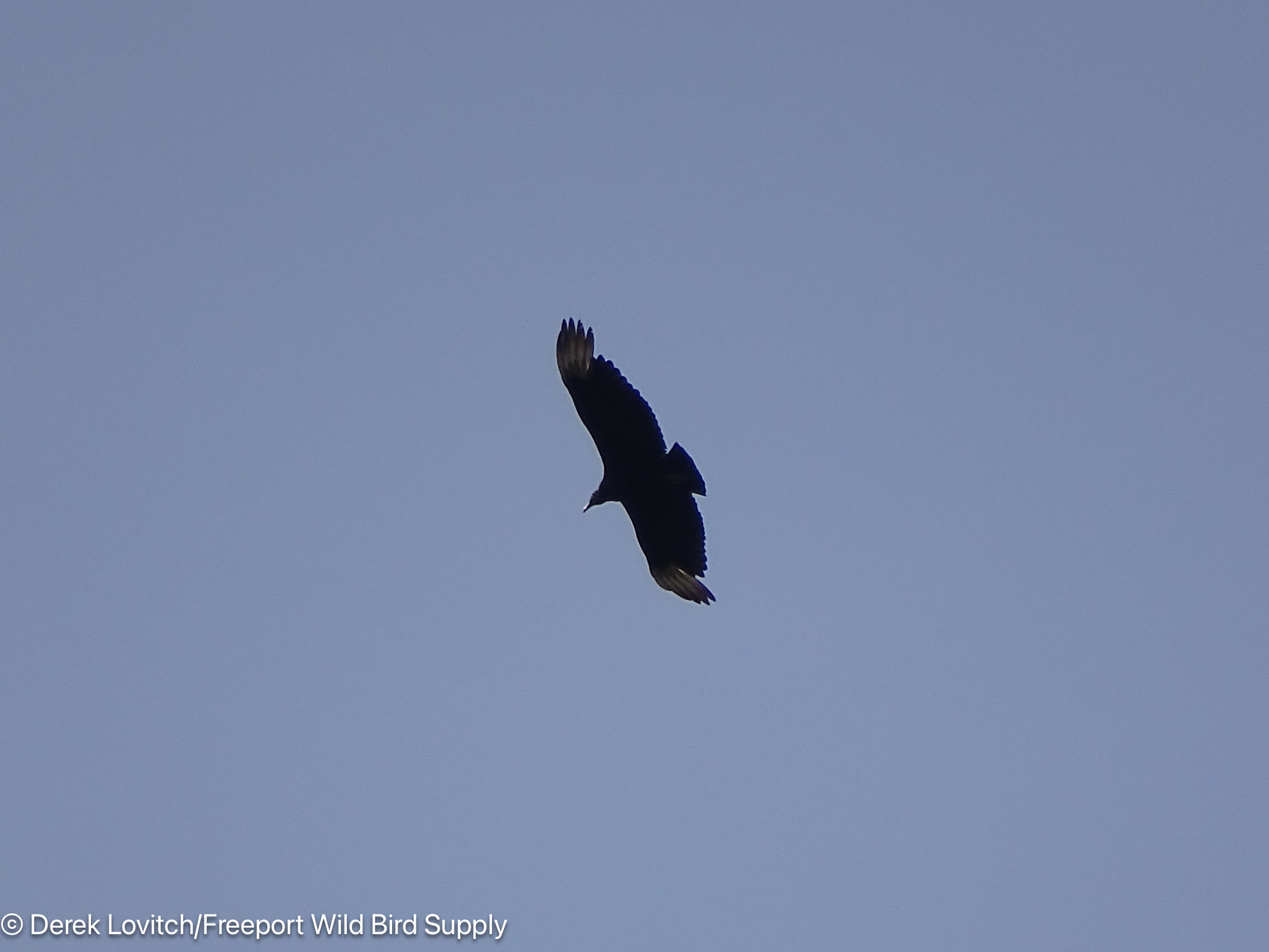
This immature Snow Goose was a surprise to find in the marsh off of the Footbridge Beach Parking lot in Ogunquit on the 15th. Later, my client and I found it much closer (although heat shimmer and distance still confounded my phone-scoping attempts) off of the North Beach parking lot across the river.
After another complex and long-duration storm system put the brakes on migration from Friday night through Tuesday, there was a huge flight of birds into the area for Wednesday morning and a great hawk flight on Friday. Here are my observations of note and new arrivals over the past seven days:
Our last Fox Sparrow at our home and here at the store departed the night of 4/15. Not seeing one on the 16th anywhere ended my streak of 120 consecutive days of seeing a Fox Sparrow when in Maine! Of course on appeared/reappeared at home on the 17th.
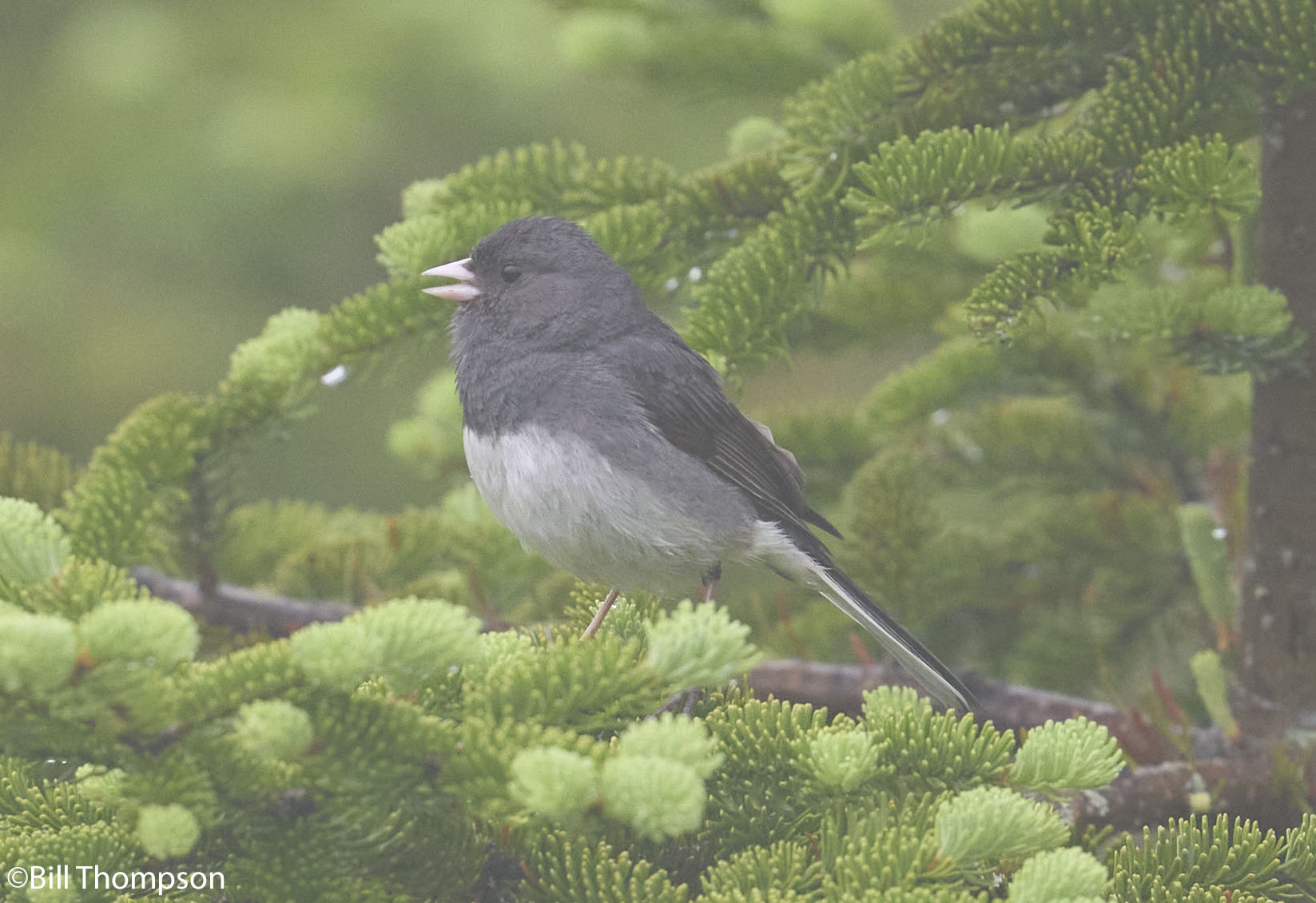
A sparrow fallout was experienced along the immediate southwestern coast of Maine on the morning of 4/15. I caught a small sample of it with 50-75 Savannah Sparrows, 150+ Dark-eyed Juncos, 30+ Song Sparrows, 1 Fox Sparrow, etc, at Beach Plum Farm in Ogunquit (with a client from New York).
7 Harlequin Ducks and 12 Purple Sandpipers, Perkin’s Cove, Ogunquit, 4/15 (with client from New York).
1 immature SNOW GOOSE, Footbridge Beach parking lot, Ogunquit, 4/15 (with client from New York). Relocated later from the North Beach parking lot. Photo above.
The large rafts of several hundred (mostly) Greater and (at least a few) Lesser Scaup, along with White-winged Scoters, continues this week at Wharton Point in Brunswick, at least through 4/17.
My personal “first of years” this week also included:
2 Palm Warblers, our property in Durham, 4/13.
10 Broad-winged Hawks, Bradbury Mountain Spring Hawkwatch, 4/16.
3 Yellow-rumped Warbler (FOS), Florida Lake Park, Freeport, 4/17.
1 Northern Rough-winged Swallow, Florida Lake Park, 4/17.
Some Greater Yellowlegs (usually males) can look very dainty, and at this time of year have a virtually all-dark bill, suggesting Lesser Yellowlegs. Luckily, this one called to confirm, which is always helpful at this season when breeding plumage is often not fully developed.
There were not a lot of days this week that felt like spring, but spring birding was in full swing this week, at least when I was actually out in the field. Rare and once-rare waterfowl led the way once again, with an increased appearance of new arrivals of a wider range of species as well. Here are my observations of note and new arrivals over the past seven days:
Three Fox Sparrows continued at our home feeders in Durham through week’s end, while at least 1 continues here at the store as well.
1 continuing Brown Thrasher, 450+ Greater with a few Lesser Scaup, 350+ White-winged Scoter, 3 Swamp Sparrows, etc, Wharton Point, Brunswick, 4/5 (with Saturday Morning Birdwalk group).
1 Eastern Phoebe at the store on 4/6 – feeding on dried mealworms from within the starling-proof bluebird feeder. This was a first for me. They rarely eat mealworms, let alone dried mealworms, and I have never seen them enter a restricted-space feeder.
1drake “EURASIAN” GREEN-WINGED TEAL, Mouth of the Abby, Bowdoinham, 4/7 (with Jeannette. Perhaps the same individual I found here on 3/27 with Bill Thompson.
An incredible 44 Gadwall in the salt pannes at the Eastern Road Trail, Scaborough Marsh, on 4/9. This is likely a new state record high count.
My personal “first of years” this week also included:
1 Yellow-bellied Sapsucker (first of spring), here at the store, 4/5.
3 Piping Plovers, Pine Point Beach, Scarborough, 4/9.
14 Great Egrets, total in Scarborough Marsh, 4/9.
18 Greater Yellowlegs, total in Scarborough Marsh, 4/9 (see photo above).
A week-long immersive skill-building seminar for beginning and intermediate birders based in Steuben.
Caption: While there have been a few nights with decent songbird migration so far this year, the night of the 10th-11th was the first one with a sizeable enough flight to be clearly detectable on the overnight NEXRAD radar. It’s on!
This Rusty Blackbird singing up a storm at Florida Lake Park on 4/2 has likely been present here since way back when I first saw it on 2/26! I don’t stop at Florida Lake very often this early in the season, but every time I have, he’s been in the same corner, often singing, making me think it’s the same individual. Even now, it’s on the early side for Rusties.
It was an up and down week of weather, to say the least, but slowly but surely spring migration was progressing. Considering fairly limited time in the field this week, I had a decent early season slate of observations of note and personal “first-of-years” over the past seven days:
Fox Sparrows at our feeders in Durham peaked at a goodly 6 on 3/30. 3 continue here at the store through week’s end.
1 continuing Rusty Blackbird (likely present here since 2/26; note and photo above), 1 Pied-billed Grebe (FOY), 2 Eastern Phoebes (FOY), and 1 Tree Swallow (FOY), Florida Lake Park, Freeport, 4/2.
One of two Eastern Phoebes at Florida Lake Park on the 2nd, this one seemed to be contemplating its life choices with yet another spring snowstorm on its way.
2 Rusty Blackbirds, our property in Durham, 4/3.
8 Double-crested Cormorants (FOY), Mailley Park, Bowdoinham, 4/3.
1 drake NORTHERN SHOVELER (FOY), Mouth of the Abby, Bowdoinham, 4/3.
It wasn’t a very photogenic week, but I did snap this phone-scoped shot of a Bald Eagle feasting on a Red-breasted Merganser through the fog off Eastern Road on the 20th.
Spring made only slow progress this week, but some early migrants and other new arrivals, along with a few seasonal highlights were among my observations of note over the past seven days:
Our overwintering Fox Sparrow at home in Durham was joined by a second on the 15th. 1-2 continued through the week’s end. Meanwhile, the overwintering Fox Sparrow here at the store continued through 3/16. With more migrants moving around now, I’ll forgo further Fox Sparrow reports. But it was quite nice to have birds overwinter at both of our feeding stations this year – a first for us at either location.
3 BARROW’S GOLDENEYES (1 pair and 1 female), Winslow Park, Freeport, 3/15 (with Saturday Morning Birdwalk group).
5 Wood Ducks (FOS), Florida Lake Park, Freeport, 3/16.
2 American Woodcocks (FOY), our property in Durham, 3/16.
1 pair Gadwall, 14 Northern Pintail (FOS), 10 American Wigeon, 75 Green-winged Teal, etc, Mouth of the Abby, Bowdoinham, 3/18 (with Jeannette).
The 19th season of the Bradbury Mountain Hawkwatch started last weekend. Free and open to the public, we welcomed Zane Baker back for his 7th season as Official Counter. 9-5 every day, weather permitting. The first week was highlighted by a great first day and two Black Vulture sightings.
Don’t panic – this wasn’t in Maine! But it was my bird photo highlight over the past two weeks. This Boreal Owl was spotted a short distance north of Duluth along the famous North Shore Road on the first day of a visit there with friends on March 1st. I don’t usually chase birds out of state, but this winter has been incredible for Boreal (and Great Gray) Owls and we just couldn’t resist any longer! Photos from this, and other recent trips, are currently being posted regularly to the store’s Facebook page.
After a quick last-minute trip to Duluth, Minnesota for a birding weekend with friends (Boreal and Great Gray Owls!), Jeannette and I did our usual pre-hawkwatch long weekend and used it to visit friends in the Lower Rio Grande Valley (Green Jay fix and other Lower Rio Grande specialties!). In between and thereafter, it’s been mostly catching up at the store and life, but in some free moments, I had a few observations of note, including the vanguard of spring migration.
Our overwintering Fox Sparrow here at the store continued through week’s end, although it has become much more sporadic at the feeders.
Our Fox Sparrow at home in Durham continues as well, often singing in the morning.
1 Red-winged Blackbird (FOS), our feeders in Durham on 3/5. Increased to 3 on the 6th. 20-25 by the 12th, etc.
1 Common Grackle (FOY), our feeders in Durham, 3/12.
3 Brown-headed Cowbirds (FOY), our feeders in Durham, 3/12.
There was a nice little arrival of Song Sparrows to the area on the morning of the 12th.
1 probable CACKLING GOOSE, Rte 136, Durham, 3/12. Among 600+ Canadas, I had to reposition for a better and confirming view and shortly thereafter all geese were flushed by an eagle. Subsequent searches failed to relocate the suspect bird.
4 Fish Crows (FOY), Anniversary Park, Auburn, 3/13.
1 Killdeer (FOY), Thornhurst Farm, North Yarmouth, 3/13.
Bradbury Mountain Spring Hawkwatch
The 19th season of the Bradbury Mountain Hawkwatch starts tomorrow! Free and open to the public, we welcome Zane Baker back for his 7th season as Official Counter. 9-5 every day, weather permitting.
These three female Greater Scaup appeared with the Mallard flock off of the Bernard Lown Peace Bridge between Lewiston and Auburn last week, and continued through the 25th
I had an excellent week of late-winter birding this week, with a nice mix of overwintering birds and some new, spring-like arrivals. Towards week’s end, birdsong from our resident species increased dramatically, and winter concentrations of waterfowl are beginning to disperse. But – at the risk of sounding a little corny – I have to say, showing people their first ever Harlequin Duck is always a winter highlight for me! It was also nice to have a tour run, and not postponed or cancelled due to weather. My observations of note over the past seven days included the following:
The single Fox Sparrows continues here at the store, and our one at our Durham feeders reappeared in the snow on the 27th after being absent for a few days.
At least 2 Turkey Vultures continue in the Cumberland-Freeport corridor of I-295. Part of the local overwintering flock (up to 15 total roosting in Brunswick at the peak), the first northbound migrants of spring are now arriving. This appears to now be a year-round species along Maine’s southern coast, as birds have overwintered locally for the last three years.
1 Northern Shrike (FOY/3rd of winter), Bridge St, Newfield, 2/24 with Jeannette).
1 RUSTY BLACKBIRD and 1 Winter Wren, Florida Lake Park, Freeport, 2/24 (with Jeannette).
2 continuing drake Green-winged Teal and 3 continuing female Greater Scaup, Anniversary Park – Bernard Lown Peace Bridge area, Auburn-Lewiston, 2/25 (with Jeannette).
1 continuing hen AMERICAN WIGEON and 3 Barrow’s Goldeneyes (1 pair plus 1 immature male), Winslow Park, Freeport, 2/26.
Bradbury Mountain Spring Hawkwatch
We’re only two weeks away from the start of our 19th season! Free and open to the public, we welcome Zane Baker back for his record 7th season as Official Counter. 9-5 every day, weather permitting. More information and a link to counts can be found here.
The waterfowl concentration in the open stretch of river between downtown Lewiston and Auburn continues to grow. On Thursday, Dan Nickerson and I had over 1700 ducks of 9 species, most of which were here, off of the Bernard Lown Peace Bridge.
Most of my birding time this week was spent driving to and from Montreal to not see a Boreal Owl on Monday and Tuesday, but away from that sojourn, my observations of note over the past seven days still included the following:
The single Fox Sparrows continue here at the store and at our feeders at home in Durham.
Speaking of feeder birds, last weekend, I posted a blog comparing feeder bird counts at our home in Durham to roughly the same ten-day period over the past two years. You can find that here:
The stretch of Androscoggin River in downtown Auburn and Lewiston continues to be exceptionally productive. Another uptick in waterfowl this week was evident, with at least 1500 Mallards now just downriver of the Bernard Lown Peace Bridge. There, on 2/20, Dan Nickerson and I teased out a drake GREEN-WINGED TEAL and 3 female Greater Scaup. A hen Bufflehead continues as well. Then, upriver at the Auburn Riverwalk, a second GREEN-WINGED TEAL (likely the continuing bird present since at least 1/30 and a drake WOOD DUCK, present in the area since at least 1/13 and at this location since 1/30.
1 Hermit Thrush, North River Road, Auburn, 2/20 (with Dan Nickerson).
A Fox Sparrow, present at our feeders in Durham since mid-December has been a welcome addition to our winter feeder watching sessions.
After beginning a “feeder watching blog” while stuck at home from shoulder surgery in the winter of 2023 (here and here), I continued the tradition last year in an attempt to gauge the difference between the two winters. A lot of folks were commenting at the store at the time about how few birds there were at feeders in the winter of 2023-24, but this was changing by the time I collected my data in February of 2024.
This year, a lack of feeder birds has most definitely not been the complaint. In fact, bird seed sales are through the roof in much of the East, and at our store, we are really, really busy. Most folks are commenting about how much birds are eating at their feeders. And while recent snowfall is part of that, this pattern began in the fall.
My perception, however, is that there is actually somewhat lower diversity at our feeders (especially the complete dearth of any “winter finches”), and perhaps the number of individuals at the feeders is a little lower than usual, but those species and individuals that are at our feeders are eating a lot more.
Let’s start with the numbers. Once again, I dedicated time to counting feeder birds at our feeding station in Durham each day for at least one hour. I was unable to dedicate the time on two dates, so I counted for 10 of 12 days between February 2nd and February 13th – a window that began three days earlier than last year. Like last year, I used the standard methodology of using “high counts” (maximum number of individuals seen at any one time, unless they were readily identifiable as being different).
February 2 – February 13(minus 2/8 and 2/11), 2025.
Species
Avg./day 2023
Avg./day 2024
Avg./day 2025
Average 3 years
Difference 24vs25
Difference 25 vs 3yr
Wild Turkey
0.2
0
0
0.07
0
-0.07
Mourning Dove
13.5
26.5
29.6
23.2
-3.1
+6.4
Sharp-shinned Hawk
0.4
0.2
0
0.2
-0.2
-0.2
American Goshawk
0
0.1
0
0.03
-0.1
-0.03
Red-bellied Woodpecker
1
1
1.2
1.07
+0.2
+0.13
Downy Wo-odpecker
2.4
2.9
2.5
2.6
-0.4
-0.01
Hairy Wo-odpecker
2
2
2
2
0
0
Pileated Woodpecker
1
0.1
0
0.37
-0.1
-0.37
Blue Jay
7.8
3.0
9.2
6.67
+6.2
+2.53
American Crow
0.7
0
1.8
0.83
+1.83
+0.97
Black-capped Chickadee
7.4
2.9
5.2
5.17
+2.3
+0.03
Tufted Titmouse
4
3
4
3.67
+1
+0.33
White-breasted Nuthatch
2
1.4
2.4
1.93
-1
+0.47
Red-breasted Nuthatch
0.7
0
0.6
0.43
+0.6
+0.17
Brown Creeper
0.4
0
0
0.13
0
-0.13
Carolina Wren
0.9
1
1.8
1.23
+0.8
+0.57
GRAY CATBIRD
0
0
0.1
0
+0.1
+0.1
European Starling
1.1
2.7
8.7
4.17
+6
+4.53
Eastern Bluebird
4.4
3
5.7
4.37
+2.7
+1.33
House Finch
2.1
0
0.4
0.83
+0.4
-0.43
Purple Finch
0.5
0.3
0
0.03
-0.3
-0.03
Pine Siskin
0
0.2
0
0.01
-0.2
-0.01
American Goldfinch
26.6
46.8
25
32.8
-21.8
-7.8
FOX SPARROW
0
0
1
0.3
+1
+0.7
American Tree Sparrow
8.0
4.2
6
6.07
+1.8
-0.07
Dark-eyed Junco
16.6
30.3
13.2
20.03
-17.1
-6.83
White-throated Sparrow
2
2.3
0
1.43
-2.3
-1.43
Song Sparrow
0
0.9
0.6
0.5
-0.3
+0.1
Northern Cardinal
5.2
3.8
6.7
5.2
-2.9
+1.5
Total individuals/day
110.9
138.6
127.5
125
-11.1
+2.5
Every year is different, and every yard is different. Controlling here for time and place, we can make some comparisons, however.
Once again, I am sure I undercounted Black-capped Chickadees, and likely Tufted Titmice and White-breasted Nuthatches as I think there could be two small mixed species foraging-flocks around. I also think there are more than one pair each of Hairy and definitely Downy Woodpeckers, but using the “high count” method, I only tabulated the maximum seen at one time.
Two seasonal rarities graced us with their presence this winter. Our Gray Catbird, present since January 2nd, made it long enough to just make it on the list. Meanwhile, a Fox Sparrow that arrived in mid-December continues through today. I won’t expect either of these species to be at our feeders every year.
When our catbird first arrived, it was growing in most of its tail feathers. When it departed, the tail was mostly restored, it survived the coldest night of the season to date, and it coincided with the depletion of the last of the Winterberry in our yard – all a good sign that it simply moved on and did not perish. Here’s it’s taking a serving of semi-frozen grape jelly, but it mostly ate suet while it was here.
American Goldfinches were down from last year in our yard, but they were extremely abundant from the fall through early winter. The difference now is most of our birch catkin crops have now been consumed. Dark-eyed Juncos were way down for us this year, and we don’t have any White-throated Sparrows around. This is likely a direct function of increasing snow depths and the lack of dense coniferous cover in the part of our property that our home and feeders are in.
I’m not going to out a lot of weight into three-year averages, but a few early trends coincide with region-wide trends, such as the steady increase in Eastern Bluebirds and Northern Cardinals. I’m not liking this trend of rapidly increasing European Starlings in our yard, however. At least for now, this is only a winter occurrence for us, however.
Eastern Bluebirds are no longer rare at feeders throughout at least the southern half of Maine in winter.
The average morning low at our home during this period was a measly 6.5F. That was 13.1 degrees colder than the ten days I looked at last year. That’s a lot more calories that need to be burned each night! While total number of individuals is down this year from last, we are going through more seed than we were at this time last year, and the cold and snow is a part of this equation.
However, I think the biggest reason for the difference between the two years can be explained in three words: Eastern White Pine. Last year, our state tree had a “generational” mast; crowns of trees were absolutely covered in cones. This year, it’s hard to find any cones anywhere in the state. Therefore, last winter our local birds had such an overabundance of their most preferred food that they spent much less time at feeders. This year, they’re eating more because there is less natural food available. And with the weather – especially with recent snowfall and ice accumulations making some food resources harder to find – birds are taking advantage of supplemental food more often. The woods, away from yards with well-stocked feeders, are exceptionally quiet this winter.
While some Black-capped Chickadees and Red-breasted Nuthatches vacated the northern woods this year, it was not a major irruption. They, and Tufted Titmice and White-breasted Nuthatches did seem to have a good breeding season, perhaps having been supplemented by caches of all of that pine seed. Meanwhile, Blue Jays are around in good numbers thanks to a very good Red Oak acorn crop that has kept them here this winter.
Like last year (and as opposed to 2023), we didn’t have a lot of accipiter presence: I only glimpsed one unidentified accipiter back on the 4th, but there were times without any birds at the feeders suggestive of an avian predator hanging around. It’s possible this might just have been due to a pair of regular Red-tailed Hawks in our yard. Despite having little interest in small birds, few birds are willing to take the chance.
Now, to really take this “study” to the next level, I would be keeping track of the amount of seed and other foodstuffs that we are putting out each year. But that’s getting to sound like work, and real research! We’re filling almost all of our feeders at least daily (often twice daily when we are home in another snowstorm), and that concurs with comments we receive at the store. But every yard is different, and not everyone has the same results. If your feeders have seemed comparatively slow, consider what you are feeding, and how fresh the seed and suet is. These are important and we can help you with that here at the store. It’s worth exploring some of my previous blog posts on the topic that discuss reasons why feeder activity ebbs and flows.
American Goldfinches and Morning Doves were once again the most common birds at our feeding station.
We’ve only lived at this location for three years, so it’s too soon to tell what an “average” winter is like in terms of volume and diversity. Furthermore, we are rapidly accelerating plantings and habitat improvement that should increase the number of birds our property sustains. Given that feeders are only a supplement to natural food supplies, I believe our habitat work will pay dividends for our feeder-watching in years to come.
I enjoy this little project, and time permitting, I’ll plan on doing it again next year. It’s only one yard, but it’s a case study that can answer some questions or at least offer a little detailed context as to what others are reporting. How does our feeder activity compare to yours? Are you seeing anything different? Or do some of our observations and hypotheses fit with your observations?
Present for several years at Timber Point in Biddeford, this stunning RED-SHOULDERED X RED-TAILED HAWK HYBRID is often seen soaring or in the distance, at least during my infrequent visits here. Bill Thompson and I went to look for it on the 11th, and were treated to a great show from it!
Another cold and wintery week with a continuing active weather pattern limited time in the field for me, but the feeder-watching was great. I’ll have a blog about it in the coming days. But for now, here are my observations of note over the past seven days:
The single Fox Sparrows continue here at the store (since 12/21) and at our feeders at home in Durham since early December. Both were frequent at the feeders this week as snow piled up.
At least 2 Turkey Vultures continue in the Cumberland-Freeport corridor of I-295.
1 female American Wigeon, Winslow Park, Freeport, 2/8 (with Saturday Morning Birdwalk group).
1 Hermit Thrush and 8 Sanderlings, etc, Reid State Park, Georgetown, 2/10 (with Jeannette).
1 Hermit Thrush, 4 Horned Larks, 1 Northern Harrier, 5 Yellow-rumped Warblers, and 4 locally-surprisingly-rare Harlequin Ducks, Biddeford Pool, 2/11 (with Bill Thompson).
1 continuing (for several years) RED-SHOULDERED X RED-TAILED HAWK HYBRID, Timber Point, Biddeford, 2/11 (with Bill Thompson). Photos above. This was my best photo session and quality time with the bird over the years, allowing for detailed study and extensive photographs, especially by Bill. See phone-scoped photos above. This really rare bird is quite gorgeous. The RSHA-like banded tail has an orange-red wash in the white stripes on the uppersides while the underside has as diffuse, partial RSHA pattern. The underparts have a dull orange blush and/or fine barring (strongest on the underwing) like RSHA, with a diffuse RTHA’s belly band. The head and bill size and shape seemed more RSHA-like, and the powered flight was very much like a RSHA. Such a cool bird!
1 THICK-BILLED MURRE, Fortunes Rocks Beach, Biddeford, 2/11 (with Bill Thompson). His photo:
Upcoming Tours:
1. Due to the weekend’s forecast, the Gull ID Workshop has been cancelled.