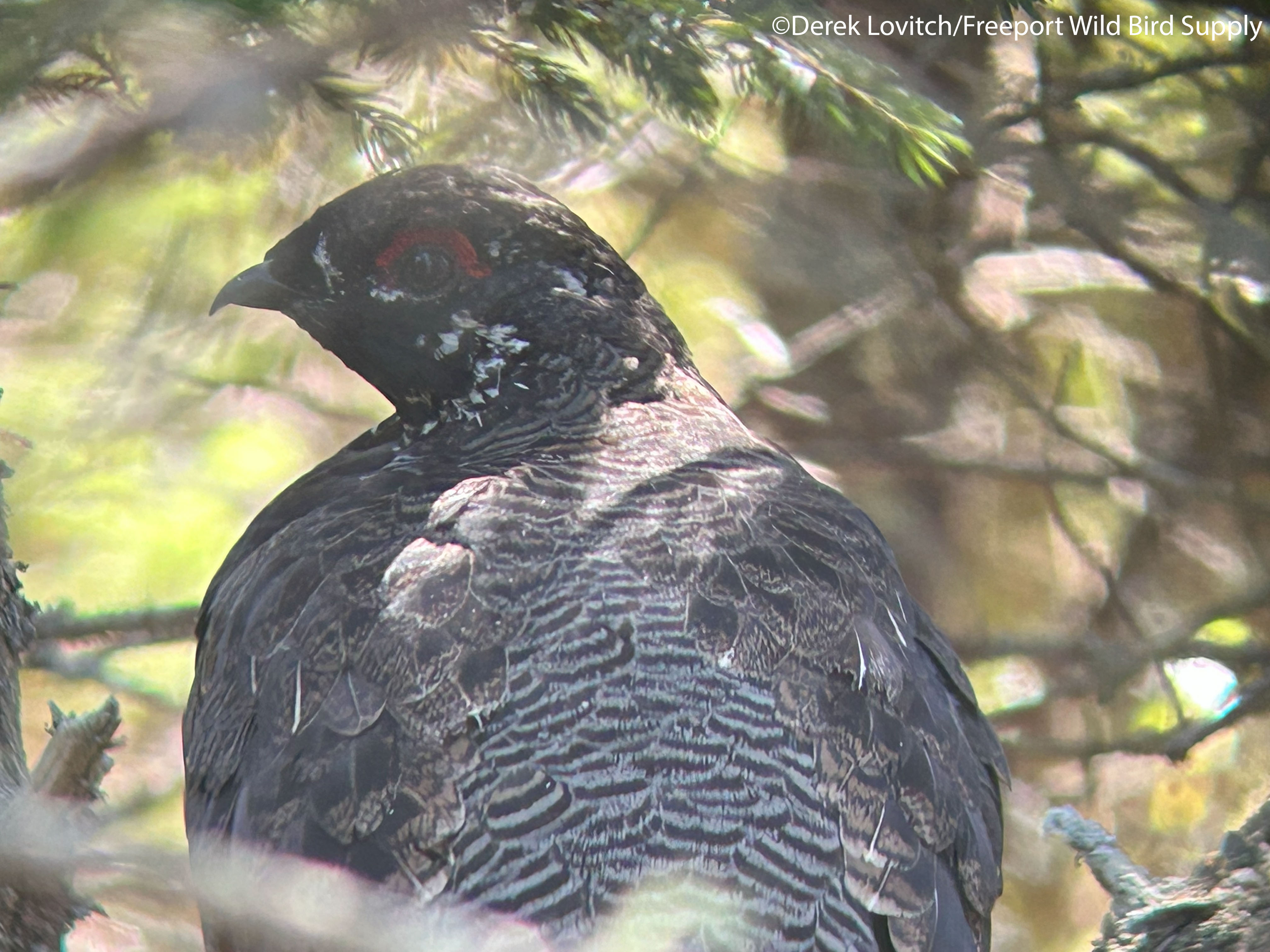
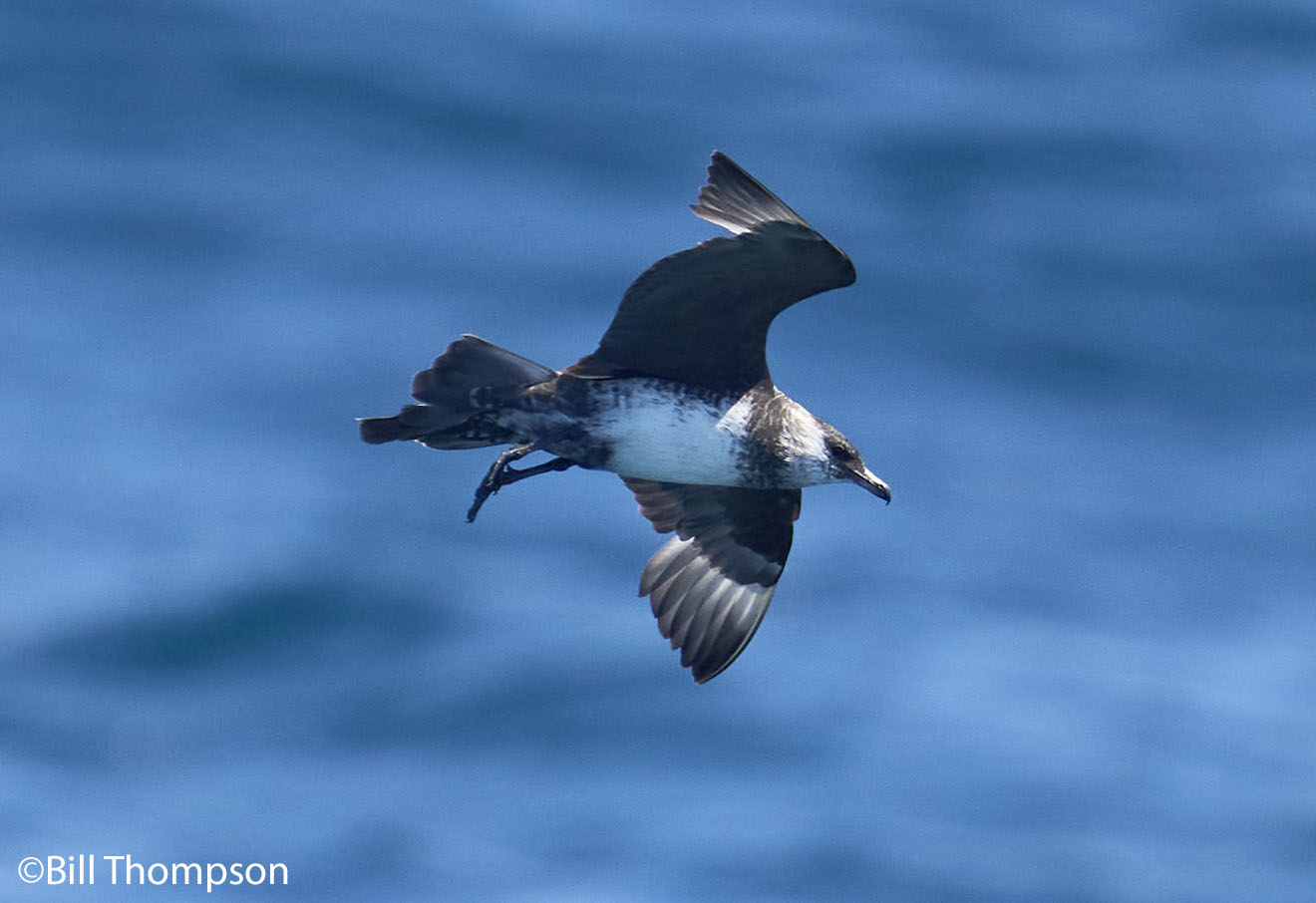
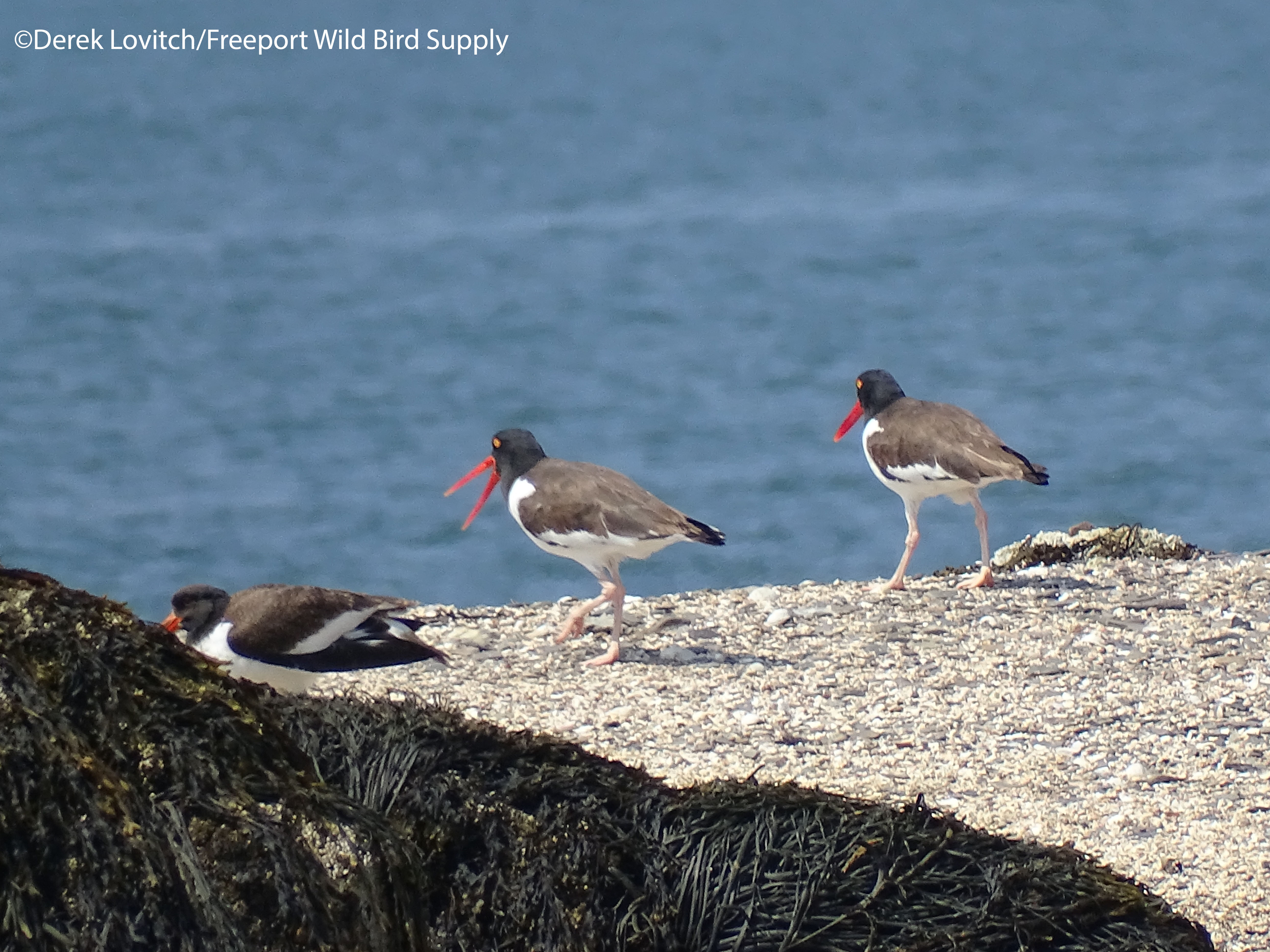
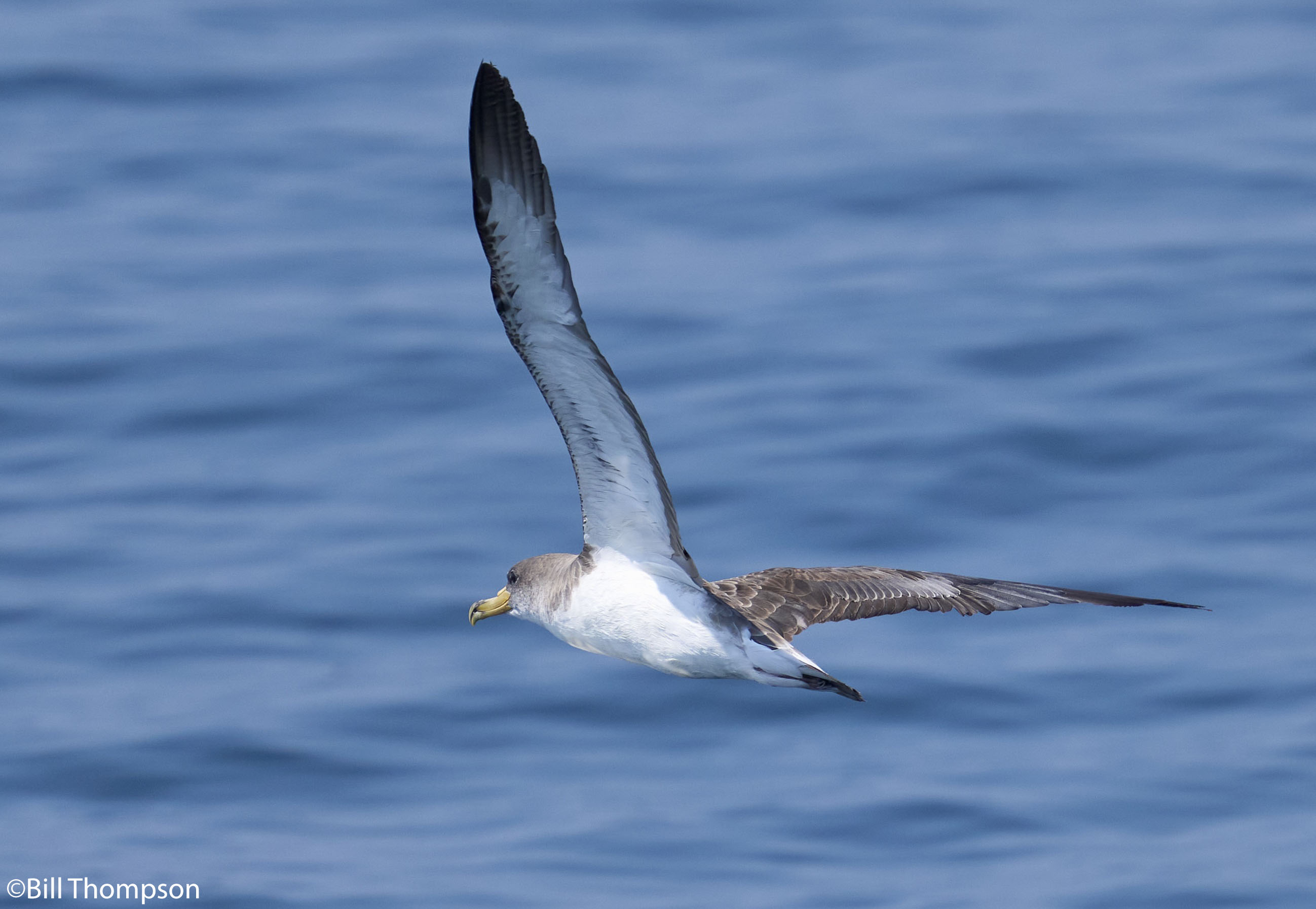
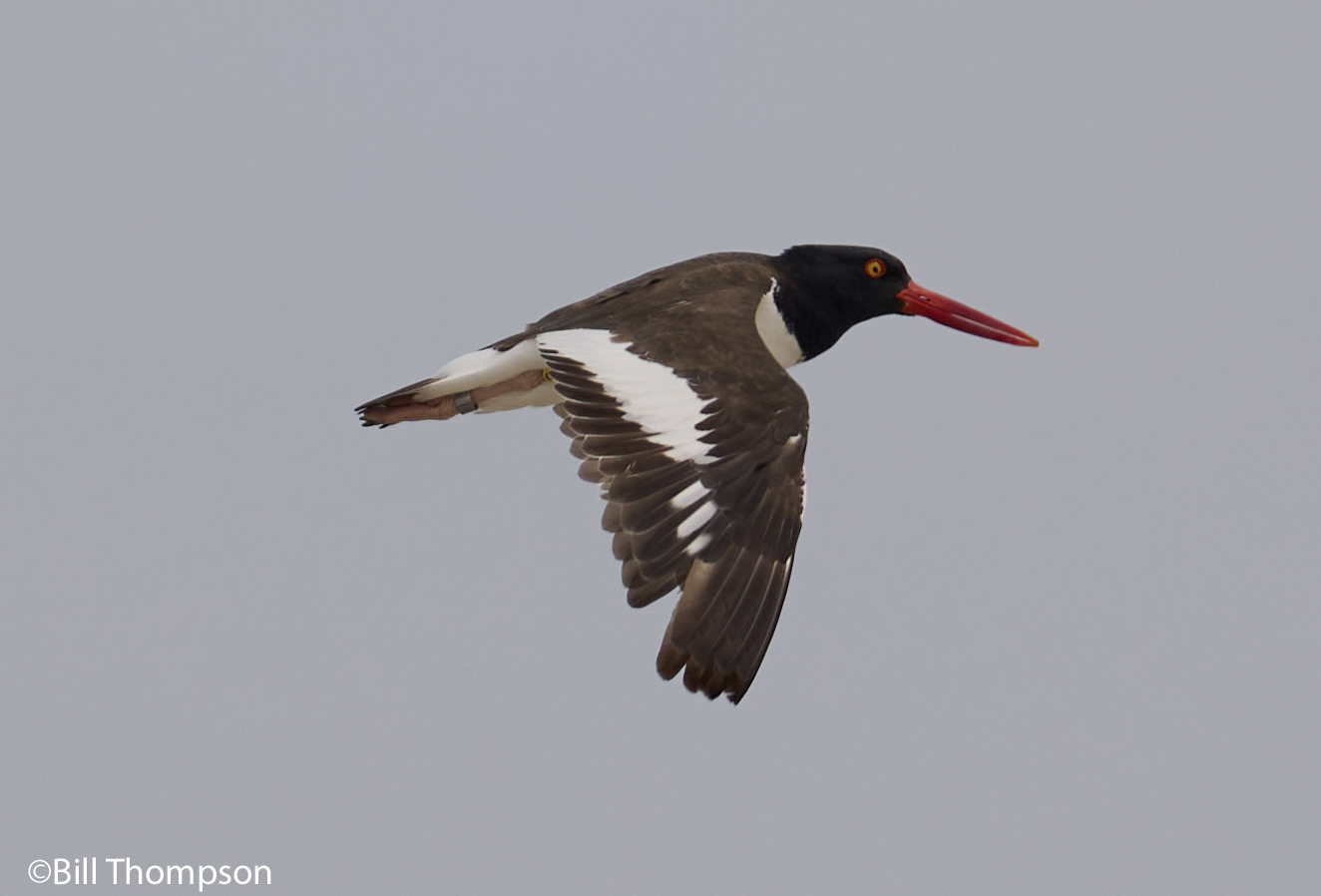
A highlight of our Bicknell’s Thrushes of New Hampshire Weekend was this Black-backed Woodpecker nest that I found on a private tour two weeks ago. By last weekend, the nestling(s?) were getting close to fledging. Thanks to Bill Thompson for the use of his photo as my camera had little interest in performing well in the low light!
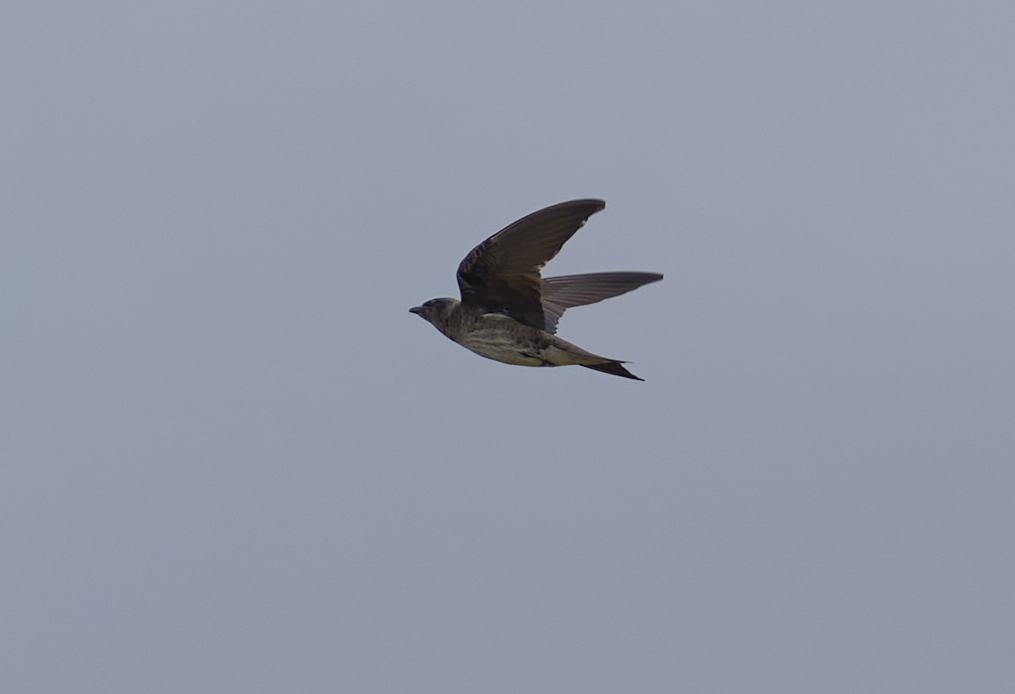
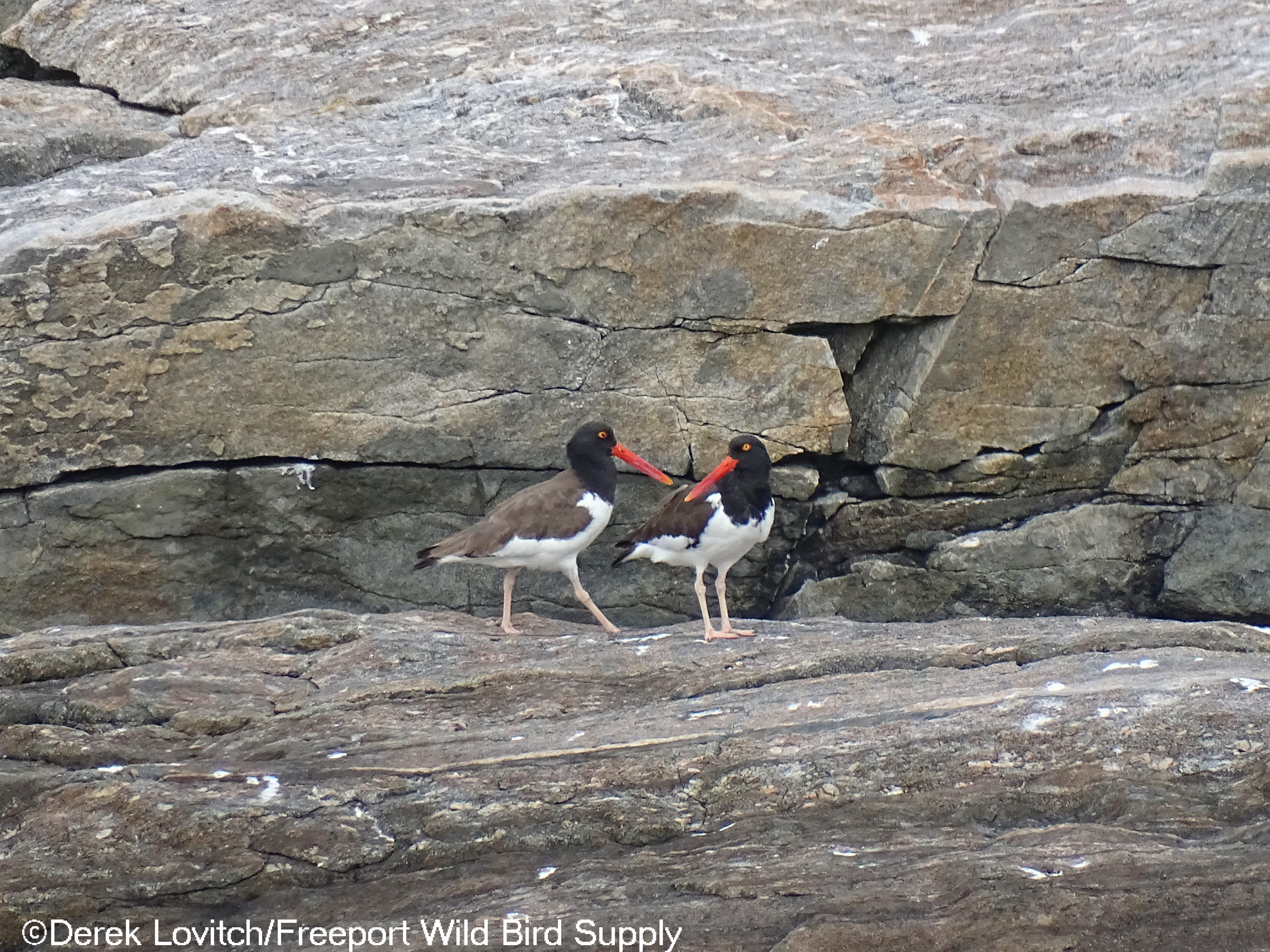
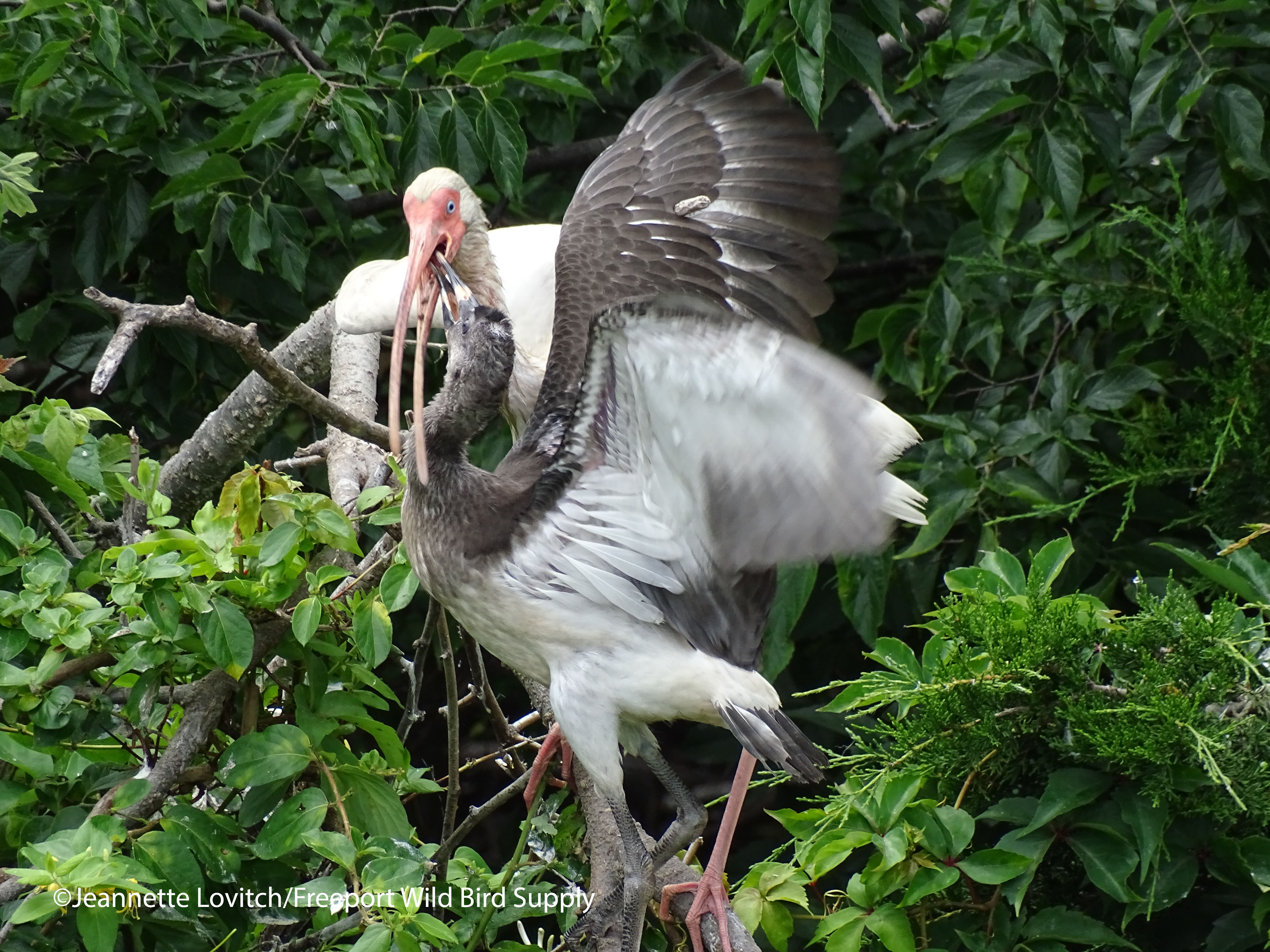
After being out of town for a few days (birding highlights in New Jersey included “southern” specialties, a huge Black Skimmer colony, and the growing, awesome White Ibis rookery), I returned to Maine and jumped right back into this record-busy guiding season. From coastal saltmarshes to mountaintops in New Hampshire, a few of my less expected observations in Maine over the past two weeks included just the following:
1 Yellow-billed Cuckoo (FOY!), our property in Durham, 6/23.
1 White-winged Scoter, Fort Popham, Phippsburg, 6/24 (with clients from Vermont).
1 Vesper Sparrow, Auburn Municipal Airport, 6/25.
And finally, for fun, here’s a selection of our favorite photos from our visit to the White Ibis rookery in Wildwood, NJ last week.
BICKNELL’S THRUSH WEEKEND TOUR REPORT
The trip report from our recent tour can be seen here.
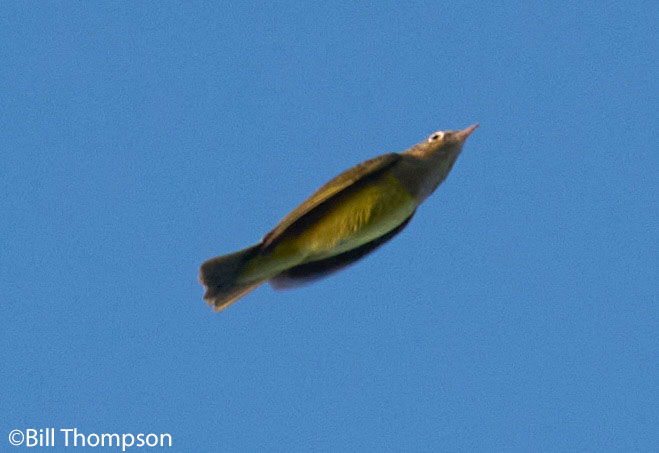
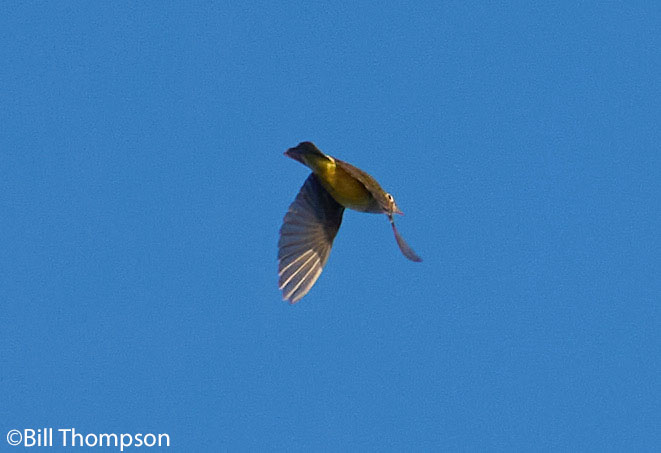
One of the stars of the show this weekend was this incredibly cooperative Mourning Warbler.
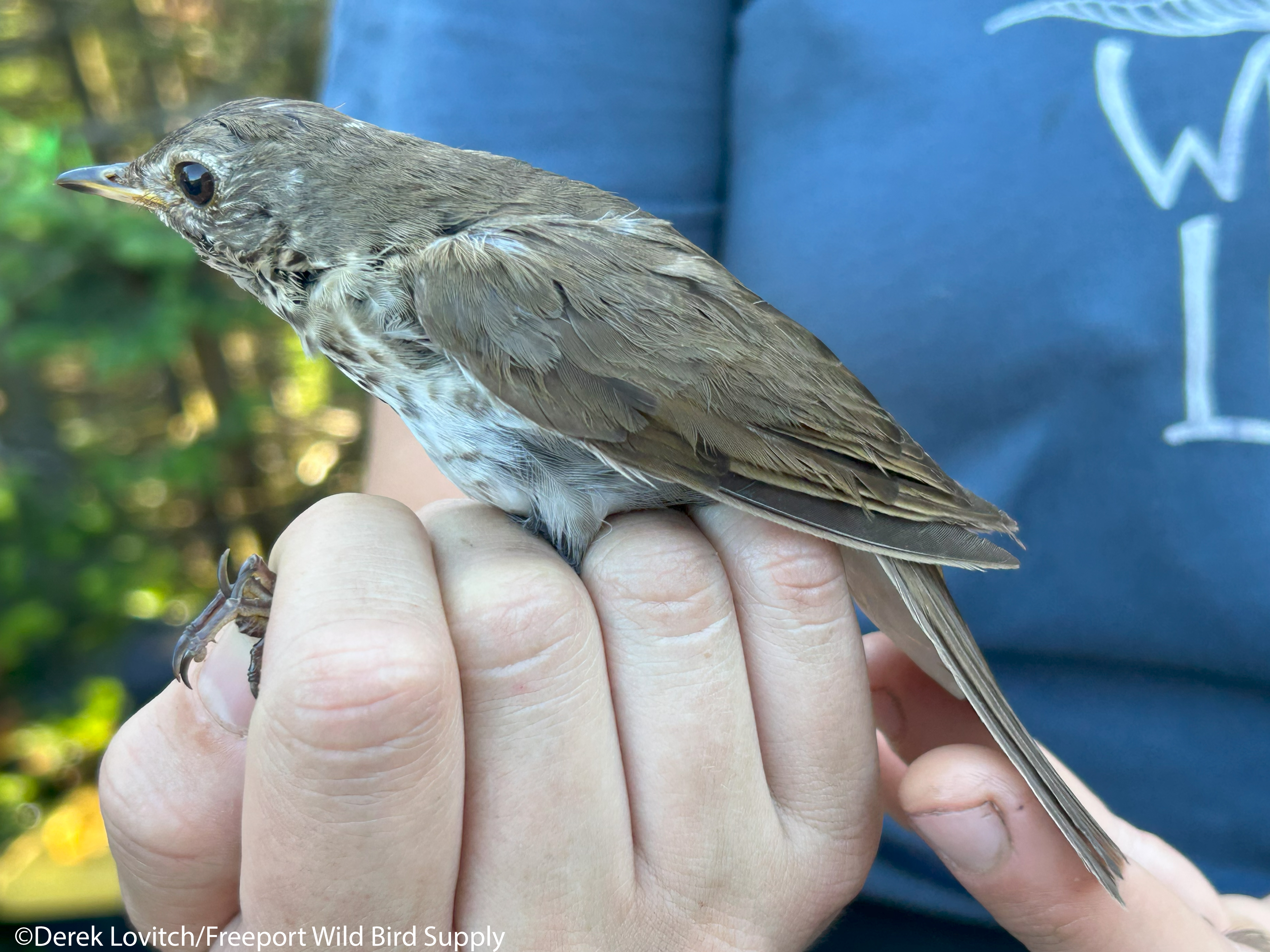
I’ll admit to having a love-hate relationship with this tour. I love taking people into the realm of the Bicknell’s Thrush, but I hate how much I have to stress about getting people to see one! Of course, weather is one of the primary impediments to enjoying a fulfilling mountaintop experience, and well, if I could only control that, too! And then there’s the bird – one of North America’s most reclusive breeding species, and with a behavior that tends to lead to sleep deprivation as well.
But we could not have asked for a better start to the weekend, with the first Saturday without rain in almost three months! In fact, it was absolutely gorgeous as we assembled in Errol, New Hampshire: sunny, a light breeze, and pleasantly warming temperatures. The relaxing morning was spent exploring the lowlands, focusing on boreal transition forest and spruce/tamarack bogs. We heard a couple of Palm Warblers – and glimpsed one in flight, listened to Yellow-bellied Flycatchers, and enjoyed common warblers such as Magnolia.
We enjoyed some botanizing as well, and stopped to look at all walks of life, such as butterflies and dragonflies.
Atlantis FritillaryRacket-tailed Emerald
After a quick but delicious lunch, we did a little more casual birding (Blackburnian Warblers!) and even a little sightseeing!
A welcome afternoon break was followed by an early dinner in town, before our first trip up the mountain. With a mostly clear evening, we had some time until dusk, so we used it to make a bee-line to what I assumed would be one of the highlights of the weekend.
On a private tour two weeks ago, I found a Black-backed Woodpecker nest. At the time, the adults were feeding young that I could not yet hear or see. I hoped they would still be in the cavity by now, and it didn’t take long for us to know they were – we heard the begging nestlings from a good 100 feet away. I found a path of least resistance to the nest hole, and we took turns rotating in small groups to watch the adults make repeated feeding visits. Everyone was so respectful of the birds – especially the adult male – who didn’t seem too pleased with our presence. After one feeding visit per group, we backed off, gave the birds a break to feed, and then visited with the next group. While the sun was now setting fast and the photography was challenging, it was truly a special experience with such a charismatic and sought-after species.
Now, it was time to get to work. And tonight, our primary target really did make me work for it! Swainson’s Thrushes continue to increase here, and they were very active and vocal this evening. Too vocal.
While we did have some great looks at them, their presence and activity likely kept the Bicknell’s quiet and in the shadows. In fact, it was getting dark by the time the Swainson’s stopped singing and we finally heard a couple of Bicknell’s calling.
By 8:45, I was starting to get a little worried, so I walked most of the group up a trail where I had activity a couple of weeks ago. One bird was calling there, but it would not come out. I began the retreat to the road when the bird flew right over my head – one person even it heard it whiz by me. We turned back up the path and settled in and eventually at least one thrush began to sing, a couple of others were calling, and surrounded by Bicknell’s Thrushes, we ended up seeing one flying back and forth across the small clearing and at least half the group saw one in silhouette on top a small tree, calling aggressively.
The aural performance was top notch, especially down at the road, and everyone was quite satisfied with at least the sum of all views had of the bird in flight or paused in a tree at the edge of the small clearing. It wasn’t the “crippling views” from last year’s weekend, but everyone agreed it was more than “good enough” and the overall experience was worthy of the effort.
I pushed it a little longer and later than usual as it was such a nice evening (too nice?), and I had my worries about even getting up the mountain the next day. We returned to our hotel at 10:15, and we departed again at 6:00 – I let the group “sleep in” due to the forecast morning rain and our late return.
And it was indeed raining in the morning when we awoke, but the forecast chance of thunderstorms had not materialized. Therefore, it was safe to head up to the mountaintop, so without any further ado, up we went once more.
Unfortunately, up top it was still raining, albeit lightly, but the wind was already howling. What a difference 9 hours makes! Light rain came and went, fog would roll in and out, and we had one 10-minute rain delay in our vehicles with a downpour. Luckily, we had just finished breakfast!
Birding tailgating!
But the morning was by no means the washout we feared, and when the rain stopped, the birding was pretty good. We decided not to bother the Black-backed Woodpeckers (the light was even worse anyway in the fog) given the conditions, but we were happy to hear the begging youngsters from afar. A few Red Crossbills flew over, Blackpoll Warblers were singing, and we heard the mountain’s Fox Sparrow in the distance.
But we did not hear a single Bicknell’s Thrush. I was about ready to give up when one finally called nearby at 8:45. And he kept calling, repeatedly, so close to us, but we never even glimpsed him. He must have been just within the dense edge – so close, yet so far!
Now this tour promises two chances to look for the thrush, not two guaranteed observations, so we took what the birds gave us last night, and with the wind howling, we began our decent.
Stopping as soon as we had some more shelter, we hopped out and soon saw a Bay-breasted Warbler and heard a pair of Boreal Chickadees. A little further down the road, we heard what was almost surely a Cape May Warbler, but could not confirm it. There wasn’t much question about this Mourning Warbler however!
See headline photo…Now that’s the kind of view we were looking for!
We dipped on Lincoln’s Sparrow, and then spent some time looking for Philadelphia Vireos. While we heard what was likely one singing from within perfect habitat, all of the vireos we saw today – and you simply must see them to identify them – were Red-eyed Vireo. Their march up the mountain and resultant displacement of Philadelphias continue.
It was instructive, however, and analogous to the issues with Swainson’s Thrushes moving uphill and pushing out Bicknell’s – these high elevation specialists have nowhere else to go as our mountains are not getting any taller, and I made sure to weave these conservation and natural history messages throughout the tour.
We looked at plants, too, such as Round-leafed Sundew.
We celebrated our success – especially with Black-backed Woodpecker and Mourning Warbler! – with a wonderful and leisurely lunch, and then half of the group joined me for a casual stroll in the lowlands of Colebrook, where we encountered numerous Veeries – just to add to our thrush tally for the weekend. Of course, our photographers had left, so birds here – especially the Veeries – were exceedingly conspicuous, with repeated views of them out in the open and with bills full of food. American Redstarts, Yellow Warblers, and a couple of singing Bobolinks were icing on the weekend cake.
Have views of our primary target, the Bicknell’s Thrush, been better on this tour? Yes. But they have also been much less fulfilling, and rarely, not even seen at all. So, we’ll take it…plus it was a great experience that fostered appreciation for the challenges of seeing this bird. Oh yeah, and a nest of Black-backed Woodpeckers!
One of up to 6 Canada Jays encountered outside of Rangeley while leading tours for the Rangeley Birding Festival included this confiding adult, part of a family group of at least 4 on 6/6. In fact, I enjoyed Canada Jays in three states in less than a week’s time this week/weekend!
This time of year, most of my birding, both personally and especially professionally, is dedicated to finding, seeing, and enjoying the wide array of breeding species this state has to off. From Saltmarsh Sparrows and Roseate Terns here along the southern coast to Bicknell’s Thrushes and “boreal specialities” in the western Maine mountains (and northern New Hampshire), it has been another extremely busy guiding season for me. Meanwhile, while home, I have been conducting two local breeding bird surveys. While my “highlights” these days are seeing the “expected” species we all seek, I did encounter some unexpected observations and noteworthy counts over the past two weeks, but mostly, I thought I would share some of my photo highlights.
1 Dunlin, 4 Semipalmated Plovers, and 1 Least Sandpiper, Sanford Lagoons, 6/2 (with Jeannette).
Rangeley Birding Festival, 6/6-6/8: Two mornings of birding Redington Road (scouting 6/6, with tour group 6/7) yielded high counts of 2 territorial CAPE MAY WARBLERS (6/6+6/7), 6 CANADA JAYS (6/7), 1 pair of BOREAL CHICKADEES (6/6), 3 Red Crossbills (6/6), 2 Olive-sided Flycatchers (6/6), 1 American Bittern (6/7), 1 Black-billed Cuckoo (6/7), etc.
I was excited to find two Cape May Warbler territories outside of Rangeley on the 6th, and then find both males in the same place the next day with my Rangeley Birding Festival tour group.
While leading a walk for the Rangeley Birding Festival at Hunter Cove Sanctuary, I found this low-level Blue-headed Vireo nest that was fascinating to observe.
2.5 day private tour in Vermont and Northern New Hampshire (I know, this is a non-Maine-birding-field-note!) yielded: Bicknell’s Thrush, Black-backed Woodpecker, Boreal Chickadee, Canada Jay, Fox Sparrow, and 22 species of warbler including Cape May, Bay-breasted, and Mourning.
As usual, I took few photos while guiding, but this Bay-breasted Warbler outside Errol, NH on the 10th (with clients) was too cooperative not to fire off a few shots!
Back home for a couple of days, it was off to my local bird surveys. This fledgling Barred Owl was in Freeport on the 12th, confirming breeding once again at one of my local patches.
Monhegan Spring Migration Weekend Trip Report.
The 2025 Monhegan Migration Spring Weekend was a shocking success. We went from having a weather forecast that made me worry if there would be any migrants to see at all, to an exceptional weekend that was by far the best Memorial Day weekend of birding out here in quite a few years. A total of 106 species were tallied in 5 days, including 91 together as a tour group, with a total of 22 species of warblers. Here’s the full trip report.
It was a great weekend for warblers, with a tour total of 19 species and a 5-day total of 22 species, including quite a lot of Wilson’s Warblers for the end of May. With 10-20 estimated per day, we were regularly treated to exceptional views, such as this adult male.
The 2025 Monhegan Migration Spring Weekend was a shocking success. We went from having a weather forecast that made me worry if there would be any migrants to see at all, to an exceptional weekend that was by far the best Memorial Day weekend of birding out here in quite a few years.
Technically, our tour was to begin on Friday with a little morning birding in Port Clyde before boarding our ferry. But it was raining. A lot. Wisely, most folks held out until the ferry meeting time. Unfortunately, that meeting time was delayed by 5 hours when the first two boats of the day were cancelled due to the storm. It was a bona fide late season Nor’Easter and it was raging out there.
We were lucky enough to get spaces on the 3:00 boat, but even luckier that the seas were dropping dramatically. OK, it was far from calm, and while I might not have thought it was “too bad,” others disagreed. But we made it! And the rain had stopped. And we went from 10-14 foot seas to a few waves that may have approached 8 feet. Not pleasant, but more than manageable. Of course, I have to admit that the “worst ferry ride” bar is pretty high for me.
By the time our luggage was organized, we didn’t have a lot of time, but we decided to try and catch up with the continuing truant Harlequin Ducks that had been seen in and around the harbor. Up to 8 had been reported, but when we arrived at the recommended spot, we found 12! While common in winter, “Harlies” are usually long gone by now, so this was a treat (it was also an island bird for me!). We also picked up a 2nd/3rd cycle Lesser Black-backed Gull for our troubles. There was even a short break of sunshine!
Noteworthy for the date, 12 lingering Harlequin Ducks diminished to just one by the end of the weekend.
By dusk, winds were light northwest and it was still cloudy. Overnight there were some scattered showers, with winds shifting to the west and then going calm. The fog and showers made the radar hard to decipher, but the wind map for offshore offered some hope.
Screenshot
Note how birds who were offshore of southern New England would be pushed out to sea, but then find a tailwind that could theoretically take them right to the Mid-coast of Maine? The Boston radar was very busy, and suggested birds were indeed well offshore to our south come dawn. We had hope.
But our pre-breakfast walk was not very productive. Uh-oh. Scattered showers had returned, and there were very, very few migrants around. We did see the 12 Harlequin Ducks again, but passage migrants were limited to a handful of Blackpoll Warblers and a Wilson’s Warbler. Was this going to be a very slow weekend?
We returned for breakfast at our respective lodges, and the showers stopped. We met at 9:00 and began our next outing. I was concerned. But then, it happened. All of it.
First, a Lark Sparrow was found – very rare in spring – and while I was going to meet the group, I relocated it in the lawn of the Trailing Yew. It wasn’t there when we returned as a group, but we elected to repeat the southern loop in the hopes of encountering it. And encounter it we did, several times, actually, as it worked its way around the lawns feeding on fresh dandelion seeds.
Meanwhile, something else was happening. Suddenly, birds were everywhere! Pocket after pocket of warbler activity was encountered, and every apple tree had birds in it! Small batches of birds giving flight calls overhead were suggestive of birds only now, at mid-morning, arriving on the island. As these birds were a very different mix of species from the last “birdy” day four days ago, according to a fellow guide, these were in fact “new birds” only now, and rather unexpectedly, arriving en masse.
As the afternoon went on, it only got better! There were warblers in every cluster of trees, with lots of Magnolia Warblers and American Redstarts, but overall good diversity. Birds must have been arriving throughout the day and therefore remained active into the evening. Birds were often low, easy to observe, and the repetition allowed for reinforcing study and comparisons.
Magnolia WarblerRed-eyed Vireo
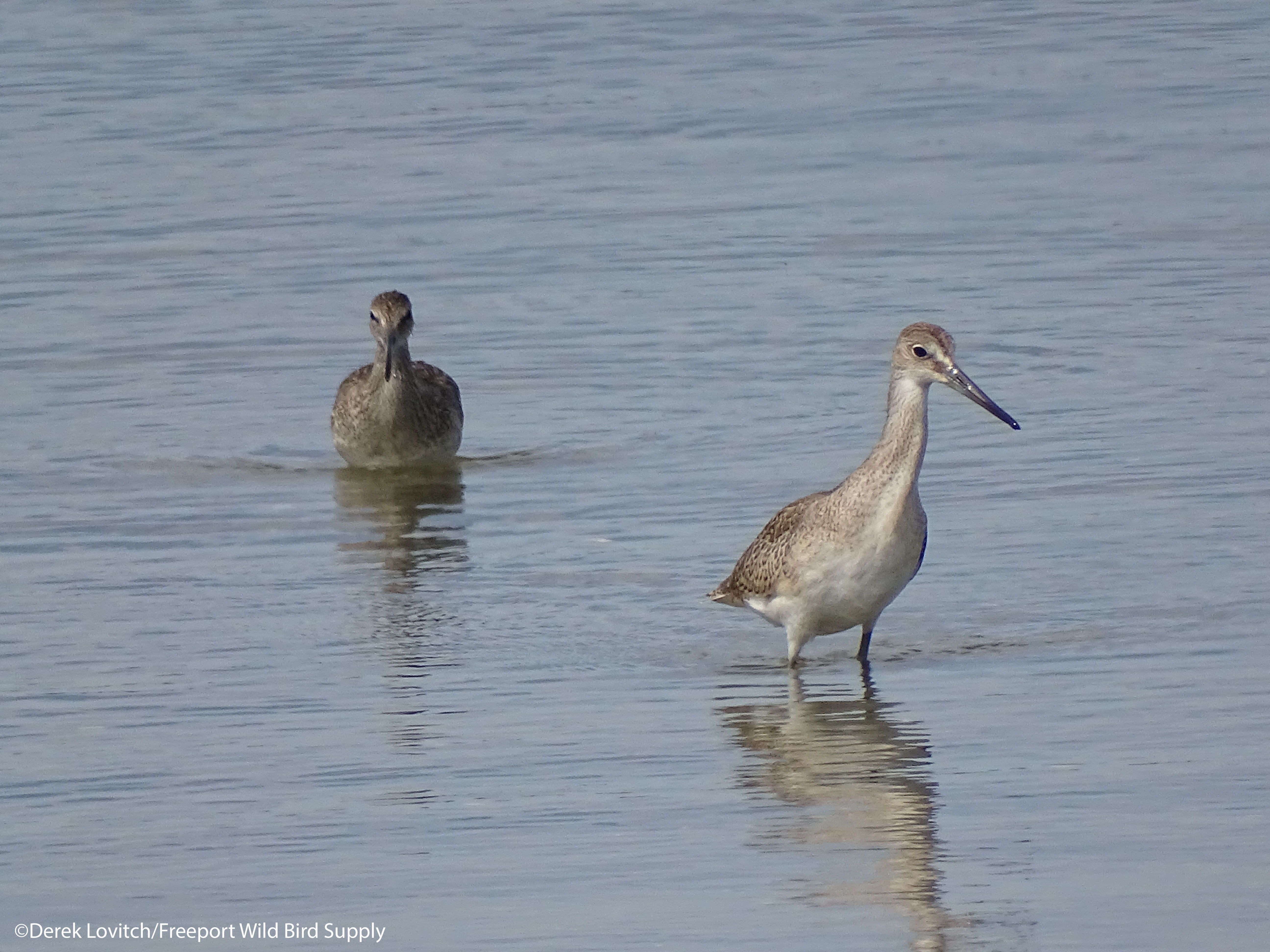
Not only was today not the forecast wash-out (just a few brief periods of drizzle and a couple of very light showers), but it was simply amazing! While warblers stole the show as expected, and the Lark Sparrow was a harbinger of things to come, our afternoon at Lobster Cove was rather exceptional, too, with two continuing “Eastern” Willets, a close pair of Harlequin Ducks, and 3 feeding Atlantic Puffins. What a way to end a spectacular day! It was like the good ol’ days out here.
By Sunday, the Low was dissipating over New Brunswick, and while the radar showed what may have been a light migration overnight, there wasn’t much happening in the “morning flight” once again. But as we began our birding day, it was actually quite good! While a lot of birds were left over from yesterday’s flight, they were augmented by some new arrivals, or at the very least, new detections. Once again, the birding was better than expected, and by late morning we already had some partial sunshine.
Unlike Saturday, activity slowly died down as the morning went on as usual, but it was just a downright delightful morning in the field. Lots of pockets of activity were still dominated by American Redstarts and Magnolia Warblers, but there were a lot more Blackpoll Warblers and fewer Wilson’s Warblers today. 8-10 Harlequin Ducks continued, and spiffy Bay-breasted Warblers were particularly cooperative. And we had three irregularly fantastic views of Lincoln’s Sparrows throughout the day.
Bay-breasted Warblers were really conspicuous this trip, and we enjoyed great looks at both males and females daily.
Lincoln’s Sparrows were unusually cooperative.
A longer walk out to Burnt Head and a check of the island’s interior in the afternoon found some of the birds that had melted away from the edges, while an uncharacteristically skulky Great-crested Flycatcher gave us a jolt of excitement until finally revealing itself.
With the storm pulling away, light northwesterly winds and mostly cloudy skies dominated the overnight Sunday into Monday, and therefore there was little or no migration overnight, and therefore almost nothing in the Morning Flight. However, it also meant that most birds didn’t leave. And while slower than the last two days, it was still decent, good views of fun species were to be had, and the sun came out for good.
Magnolia Warblers, American Redstarts, and Blackpoll Warblers continued to dominate, along with the ubiquitous Yellow Warblers. Flycatchers were up, offering ample opportunity for instruction – and for eyes to glaze over. Morning highlights ranged from a particularly good tutelage from a Willow Flycatcher, a raft of 50 Surf Scoters offshore, and a really amazing Common Nighthawk repeatedly flying low over our heads and foraging over the island as noon approached.
It was warm and sunny, and with a sea breeze pushing birds out of the edges and deeper into cover, we decided to enjoy more of the island with a visit to the lighthouse grounds and a stroll deep into the spruce woods. In addition to building our list with island residents like Golden-crowned Kinglet and breeding species such as more Black-throated Green Warblers on territory, we enjoyed the plantlife of the Acadian habitat and a healthy dose of phytoncides. And in between, the occasional pocket of migrant warbler activity to bring us back to birding.
Catching up on note-taking.
Our tour concluded with an impressive 91 total species, but I admit to being a little frustrated by having to give up with 19 species of warblers…20 sounds so much better! But given the unexpected big arrival on Saturday, and the minimal rain and wind after Friday, the tour was truly an incredibly success, far exceeded expectations, and did live up to what Monhegan birding legends are made of.
Last birders standing on the last afternoon of the tour.Staring at Eastern Egg Rock, attempting to will THE Tufted Puffin over to us.
Then, as per usual, Jeannette – who joined us late on Sunday – and I enjoyed a day off together on the island on Tuesday. Unlike the magically-appearing flight on Saturday, this was a more predictable great morning. A moderate to strong flight overnight lit up the radar on light southwesterly to west winds. That put a lot of birds in the Gulf of Maine come dawn, and the morning flight was hoppin!
Consisting mostly of Blackpoll Warblers, American Redstarts, and Magnolia Warblers, it was quite diverse overall. A few “new” species included a Pine Siskin and a Wood Duck, and 3 Red-breasted Mergansers were a fun Morning Flight fly-by.
Before and after breakfast, the birding was excellent. It was the best day by far in volume, but a lot of the birds were “on the move” and departing the island throughout the morning. But there was more of pretty much every migrant species, save for Wilson’s Warblers in particular. Birds weren’t held low by clouds and drizzle, or exhaustion, so it wasn’t as mind-blowing as Saturday, even with more birds around overall.
Baltimore OrioleThere were a lot more flycatchers around today, including quite a few Eastern Wood-Pewees.
It was also getting warm on a perfectly sunny sky, and birds took to the shadows earlier than in days past; the hotspots got much quieter by late morning with the increasing seabreeze. Nonetheless, pockets of activity continued right up through lunchtime.
The veggie burger bahn mi from The Bait Bag.
We rapidly added to our collective weekend list (which do not count for our tour total, of course), including finally reaching 20 species of warblers with an uncommon-out-here Pine Warbler. We then eclipsed it with a stunning male Mourning Warbler, and finally in the afternoon, picked up an Ovenbird for our 22nd and final species of warbler. Locally-rare Hairy Woodpecker, a truant Long-tailed Duck, at least one continuing Harlequin Duck, and we found my first Nelson’s Sparrow of the year at Lobster Cove. We even got a little hike in to try and burn a few of the extra calories we consumed from all of the islands’ scrumptious meals. And, anytime we stopped at a favorable looking patch of vegetation, migrants would appear, everywhere we went. It’s always tough to leave, but we at least went out with a bang!
Male Chestnut-sided Warbler
So back here in the Real World now, we can reflect on this past weekend as one that we will most surely always remember!
Here is the trip list four the five-day tour. I didn’t bother including the first day though, but it did net us a Lesser Black-backed Gull that we didn’t see any other day.
* = seen from ferry only.
Species
5/24
5/25
5/26
5/27 (with Jeannette) *ferry ride only
Canada Goose
0
2
4
2
Wood Duck
0
0
0
1
Mallard
15
15
x
x
Common Eider
x
x
x
x
HARLEQUIN DUCK
12
10
0
1
White-winged Scoter
0
0
0
2
Surf Scoter
0
0
50
1
Black Scoter
0
0
0
30*
Long-tailed Duck
2
0
0
1
Red-breasted Merganser
0
0
0
3
Ring-necked Pheasant
x
x
x
x
Mourning Dove
6
8
10
8
Common Nighthawk
0
0
1
0
Ruby-throated Hummingbird
3
4
5
4
Virginia Rail
0
1
1
1
WILLET
2
0
0
0
Spotted Sandpiper
0
0
0
2
Black Guillemot
x
x
x
x
ATLANTIC PUFFIN
3
0
0
0
Laughing Gull
5
6
10
6
Herring Gull
x
x
x
x
LESSER BLACK-BACKED GULL
1 (5/23)
0
0
0
Great Black-backed Gull
x
x
x
x
Common Tern
0
0
0
5*
Common Loon
2
3
3
1
Red-throated Loon
0
0
0
1
Northern Gannet
6
2
1
2*
Double-crested Cormorant
x
x
x
x
Great Cormorant
0
0
0
1*
SNOWY EGRET
0
1
0
1
Great Blue Heron
0
0
1
0
Osprey
0
1
2
0
Sharp-shinned Hawk
1
0
0
0
Bald Eagle
2
2
3
3
Yellow-bellied Sapsucker
0
0
1
0
Downy Woodpecker
1
0
0
0
HAIRY WOODPECKER
0
0
0
1
Northern Flicker
1
2
2
1
American Kestrel
0
0
0
1
Merlin
1
1
0
0
GREAT-CRESTED FLYCATCHER
0
1
0
0
Eastern Kingbird
3
1
2
2
Eastern Wood-Pewee
4
2
4
20
Alder Flycatcher
0
2
2
2
“Traill’s” Flycatcher
0
0
1
3
Willow Flycatcher
0
0
2
2
Least Flycatcher
2
2
10
12
Philadelphia Vireo
1
0
0
0
Red-eyed Vireo
6
5
4
30
Blue Jay
4
2
1
1
American Crow
2
2
4
4
Common Raven
2
2
2
2
Black-capped Chickadee
x
x
x
x
Tree Swallow
1
1
2
2
Barn Swallow
1
1
3
6
Golden-crowned Kinglet
0
2
2
1
Cedar Waxwing
80
60
60
150
Red-breasted Nuthatch
1
2
4
6
Carolina Wren
2
4
3
3
House Wren
2
2
1
2
Gray Catbird
x
x
x
x
Brown Thrasher
0
1
1
1
European Starling
x
x
x
x
Eastern Bluebird
0
2
0
1
Swainson’s Thrush
1
3
3
8
American Robin
10
10
x
8
Purple Finch
1
1
0
1
Pine Siskin
0
0
0
1
American Goldfinch
10
10
12
10
LARK SPARROW
1
0
0
0
Chipping Sparrow
2
0
0
0
White-crowned Sparrow
0
1
1
1
White-throated Sparrow
1
2
1
1
NELSON’S SPARROW
0
0
0
1
Savannah Sparrow
4
4
3
2
Song Sparrow
x
X
x
x
Lincoln’s Sparrow
0
3
3
10
Bobolink
3
4
1
3
Baltimore Oriole
2
2
3
2
Red-winged Blackbird
x
x
x
x
Common Grackle
x
x
x
x
Ovenbird
0
0
0
1
Northern Waterthrush
1
1
1
10
Black-and-white Warbler
12
10
8
15
Tennessee Warbler
2
2
6
10
Nashville Warbler
0
1
1
4
MOURNING WARBLER
0
0
0
1
Common Yellowthroat
20
20
x
x
American Redstart
55
45
40
80
Cape May Warbler
3
4
2
6
Northern Parula
15
15
45
40
Magnolia Warbler
50
45
40
70
Bay-breasted Warbler
8
10
3
15
Blackburnian Warbler
4
4
3
4
Yellow Warbler
35
30
25
x
Chestnut-sided Warbler
6
6
10
20
Blackpoll Warbler
15
35
55
100
Black-throated Blue Warbler
1
1
2
6
Pine Warbler
0
0
0
1
Yellow-rumped Warbler
3
2
0
1
Black-throated Green Warbler
10
15
20
15
Canada Warbler
1
0
0
0
Wilson’s Warbler
20
15
10
10
Scarlet Tanager
1
1
1
1
Northern Cardinal
6
10
8
6
Rose-breasted Grosbeak
3
3
3
2
Day Total
72
75
73
92
Warbler Day Total
18
18
17
21
Trip Total
91
Weekend Total inc. Tuesday
106
Warbler Trip Total
19
Warbler total inc, Tuesday
22
The above birds follow the “guide plus one” rule, meaning both me and at least one client need to see the bird for it to go onto the list. This year, the only two birds I saw without the group that we didn’t later encounter was a fly-by Belted Kingfisher and an American Woodcock at dusk, both on the the 24th, for a total of 91 with the group and a 5-day tally of a respectable 106 species.
This Lark Sparrow – always a treat in spiffy spring plumage – was among the notable birds form a stellar weekend on Monhegan.
Five days on Monhegan Friday the 23rd through Tuesday 5/27 yielded a total of 106 species, including 22 species of warblers. It was the best Memorial Day Weekend on the island in several years, and at times, it really felt like “the good ol’ days” with a flock of warblers in every tree. Back in the real world, I was mostly guiding for local breeding specialties, but did have a few observations of note. But mostly, of course, my highlights were from my time on the island.
5/23, with Monhegan Spring Migration Weekend Tour group:
12 HARLEQUIN DUCKS
1 2nd/3rd Cycle Lesser Black-backed Gull
5/24, with Monhegan Spring Migration Weekend Tour group:
12 HARLEQUIN DUCKS continued
1 LARK SPARROW (photo above)
2 continuing “Eastern” Willets
3 Atlantic Puffins
1 Philadelphia Vireo (FOY)
3 Cape May Warblers (FOY)
18 species of warblers led by 55 American Redstarts, 50 Magnolia Warblers, and 25 Yellow Warblers
5/25, with Monhegan Spring Migration Weekend Tour group:
1 continuing SNOWY EGRET
8-10 continuing HARLEQUIN DUCKS
2 Alder Flycatchers (FOY)
18 species of warblers led by 45 American Redstarts, 45 Magnolia Warblers, and 35 Blackpoll Warblers, but also including at least 10 Bay-breasted and 4 Cape May Warblers
5/26, with Monhegan Spring Migration Weekend Tour group:
2 Willow Flycatchers (FOY)
1 Common Nighthawk
17 species of warblers led by 55 Blackpoll Warblers, 45 Northern Parulas, and 40 each of Magnolia and American Redstart.
5/27, with Jeannette:
1 continuing HARLEQUIN DUCK
1 Mourning Warbler (FOY)
1 Nelson’s Sparrow (FOY)
1 Pine Warbler
1 Long-tailed Duck
1 Ovenbird (my 22nd species of warbler on the weekend)
21 species of warblers led by 100 Blackpoll Warblers, 80 American Redstarts, and 70 Magnolia Warblers, but also including at least 15 Bay-breasted, 10 Tennessee, and 6 Cape May Warblers.
1 Yellow-bellied Flycatcher (FOY), our property in Durham, 5/28.
1 continuing male Lesser Scaup, Pine Point, Scarborough, 5/29 (with clients from Arkansas).
This immature male Orchard Oriole was singing up a storm – when we wasn’t being chased by a territorial male Baltimore – at tiny, but often-productive – Lake Grove Park in Auburn on the 18th.
A sneaky good flight overnight Saturday into Sunday made for a tremendous day of birding: it took me over three hours to leave my yard! The rest of the week, however, was very slow by mid-May standards, with the exception of a very surprising morning At Fort Foster on Friday. My observations of note over the past six days before I head off to Monhegan with my tour group included the following:
17 species of warblers, led by 38+ American Redstarts and 16 Black-throated Green Warblers, our property in Durham, 5/18.
The 2025 Bradbury Mountain Spring Hawkwatch came to a close on Thursday. It did not exactly end with a bang, but we had a great flight for the this late in the season on Monday, including a good movement of immature Broad-winged Hawks and Merlins, such as this one. It, and everything else that has passed over or by the summit for the last two weeks has only added to our record-breaking season.
After last week’s rarity insanity, this was a tamer, more “normal” week for mid-May. While several great songbird flights occurred this week, concentrations were few, but there were “new” birds arriving most every day. Here are my observations of note over the past seven days.
This female Cerulean Warbler at Evergreen Cemetery on 5/6 was the first in Maine for just about every birder who raced to see it! Thanks to Bill for the photo!
Wow! What a week! Although I was out of town for the huge flight Friday night into Saturday morning, my birding with a tour group on an almost-as-productive Sunday morning made up for it. Then, with an upper level low locked into place, migration ground to a halt throughout most of the rest of the week. However, a trickle of new arrivals appeared, and an impressive array of rarities were found around the state. I did a lot more chasing than usual this week (including a personal “state bird”, but a self-found rarity on Friday was a perfect way to put the icing on the cake of a tremendous week of spring birding! My observations of note over the past seven days included the following:
15 species of warblers (FOY) between Evergreen Cemetery and Capsic Pond Park, with Northern Parula the most numerous at both, 5/4 (with Down East Adventures Spring Migrant Songbird Workshop group).
1 ROSS’S GOOSE, Thornhurst Farm/Prince Well Road, North Yarmouth, 5/5. Found by the Boardman family, there was discussion as to its ID. When I was sent photos on the morning of the 5/5, after being present for at least 3 days, I thought it was a “pure” Ross’s Goose. When Jeannette and I then visited the bird to observe it, we left with zero doubt. I posted a series of photos, a short video, and an explanation of the identification on this Facebook post.
1 female CERULEAN WARBLER, Evergreen Cemetery, Portland, 5/6 (with Bill Thompson). Found earlier in the morning by Doug Hitchcox. Bill and I ran into each other on Eastern Road and then raced north together for the twitch. His photo is above. My (and most peoples’) first in Maine, this was #11 on my personal next birds in Maine list, and one that feels long overdue.
1 continuing BLACK-NECKED STILT, Spurwink Marsh, Cape Elizabeth, 5/6 (with Bill Thompson). Well, since we were out chasing together, we figured we might as well visit this elegant rarity found by John Lorence on 5/3.
The continuing CERULEAN WARBLER at Evergreen Cemetery on 5/8 with my Birds on Tap – Roadtrip: Warblers and Wort! Tour group. I don’t generally take photos while guiding groups, but I took a few of this bird…and completely wiffed on them!
After all this “twitching,” I was due to find my own rarity, and did so on 5/9 with an adult breeding plumage female RUFF (REEVE) at Walsh Preserve in Freeport. There are only about 10 previous records for Maine.
My personal “first of years” this week also included:
2 Yellow Warblers, Evergreen Cemetery, Portland, 5/4 (with Down East Adventures Spring Migrant Songbird Workshop group).
8 Black-throated Blue Warblers, Evergreen Cemetery, 5/4 (with Down East Adventures Spring Migrant Songbird Workshop group).
2 Wood Thrushes, Evergreen Cemetery, 5/4 (with Down East Adventures Spring Migrant Songbird Workshop group).
3 Magnolia Warblers, Evergreen Cemetery, 5/4 (with Down East Adventures Spring Migrant Songbird Workshop group).
4 Chestnut-sided Warblers, Evergreen Cemetery, 5/4 (with Down East Adventures Spring Migrant Songbird Workshop group).
2 Great-crested Flycatchers, Evergreen Cemetery, 5/4 (with Down East Adventures Spring Migrant Songbird Workshop group).
2 American Redstarts, Evergreen Cemetery, 5/4 (with Down East Adventures Spring Migrant Songbird Workshop group).
2 Northern Waterthrushes, Capisic Pond Park, Portland, 5/4 (with Down East Adventures Spring Migrant Songbird Workshop group).
7 Chimney Swifts, Capisic Pond Park, 5/4 (with Down East Adventures Spring Migrant Songbird Workshop group).
1 White-crowned Sparrow, feeders here at the store, 5/4.
New arrivals and “first of years” this week often appeared right in front of us at our feeding stations, as if often the case this time of year. No matter how often we see them, it hard to not get excited about each and every “FOY,” especially when they look as gorgeous as a Rose-breasted Grosbeak!
While there were no incredible flights or fallouts this week, there was a nice steady progression of spring migration on several nights and days. Here are my observations of note over the past seven days, led by a slew of new arrivals.
4 Gadwall, Walsh Preserve, Freeport, 4/27.
It was another exceptional week at the Bradbury Mountain Hawkwatch. On 4/28, an Osprey was our 6,022nd migrant tallied this season – a new all-time record!
7 species of warblers, led by only 20-30 Yellow-rumped Warblers but including one LOUISIANA WATERTHRUSH, Morgan Meadow WMA, Gray/New Gloucester, 4/29. A single fly-over Fish Crow here the same day was my first ever for this patch.
1 BLACK VULTURE, Bradbury Mountain Hawkwatch, 4/29. Our record 6th of the season (but my personal FOY) – previous record was 3.
My personal “first of years” this week also included:
Back for yet another year, Jeannette and I refound the/one of the long-returning LITTLE EGRET X SNOWY EGRET HYBRIDS on the 20th at Tidewater Farm in Falmouth. It was nearly to the date that we relocated it here last year for the first time, and it really favors the tidal creek here at low and mid-tides. The long Little Egret-like neck plumes are highly suggestive of a Little, but they are coupled with some short, wispy neck plumes and yellowish lores indicative of Snowy Egret genes.\
The migratory floodgates opened this week, starting with a big flight Friday night into Saturday morning. Then, during the day, a huge hawk flight occurred. Furthermore, the weather of Friday through Saturday resulted in a small “overshoot” even where birds were facilitated further north than usual for the season, or at all. Locally, this resulted in several rather early dates for returning migrants. Another great hawk flight on the 21st, and good passerine movements on several other nights made for an exciting and productive week of spring birding. A coastal sparrow-heavy fallout for the morning of the 25th yielded another large arrival of birds, with sheer numbers dominated by White-throated Sparrows. Here are my observations of note over the past seven great days, from a returning hybrid heron to a local first Patch record:
35+ Palm Warblers, 30+ Yellow-rumped Warblers, and 20+ Ruby-crowned Kinglets, etc, Florida Lake Park, Freeport, 4/19 (with Saturday Morning Birdwalk group).
Saturday was an extraordinary day at the Bradbury Mountain Spring Hawkwatch. I was fortunate to be able to catch two hours of it, even if it was as the flight was waning. The record-shattering total of 2,712 migrant raptors crushed the old single-day record of 1,814 (5/3/2020). Today’s total was more than 700 birds more than we had for every previous day combined for this season to date. Not only that, but today’s tally eclipsed our two lowest SEASON totals 2,123 (2007) and 2,321 (2011)!
1 returning LITTLE EGRET X SNOWY EGRET HYBRID, Tidewater Farm, Falmouth, 4/20 (with Jeannette). Photo and details above.
2 SANDHILL CRANES, Morgan Meadow WMA, Gray/Raymond, 4/21 (with Jeannette).
~125 Palm Warblers, ~75 Yellow-rumped Warblers, and 2 Pine Warblers, Florida Lake Park, 4/23.
7 Brant, Wood Island (restricted access), Biddeford, 4/23 (with Bethany Woodworth’s UNE Ornithology class).
1 COMMON GALLINULE (FOY), Florida Lake Park, 4/25 (with Noah Gibb and Stacey Huth). First flushed by Noah and Stacey. Was a real challenge to get a look at, but eventually it came out to an edge for a handful of minutes. My 170th species at Florida Lake!
My personal “first of years” this week also included:
1 Blue-headed Vireo, Florida Lake Park, Freeport, 4/19 (with Saturday Morning Birdwalk group).
1 BANK SWALLOW (quite early), Florida Lake Park, 4/19 (with Saturday Morning Birdwalk group).
1 Barn Swallow, Florida Lake Park, 4/19 (with Saturday Morning Birdwalk group).
1 LOUISIANA WATERTHRUSH, Morgan Meadow WMA, Gray/Raymond, 4/21 (with Jeannette).
1 Eastern Towhee Wood Island (restricted access), Biddeford, 4/23 (with Bethany Woodworth and UNE’s Ornithology class).
1 Common Yellowthroat, Florida Lake Park, 4/25.
1 Black-and-white Warbler, Florida Lake Park, 4/25.
Although Black-crowned Night-Herons have likely been around for a few weeks by now, these three at Wood Island in Biddeford on the 23rd were my personal first of the year.