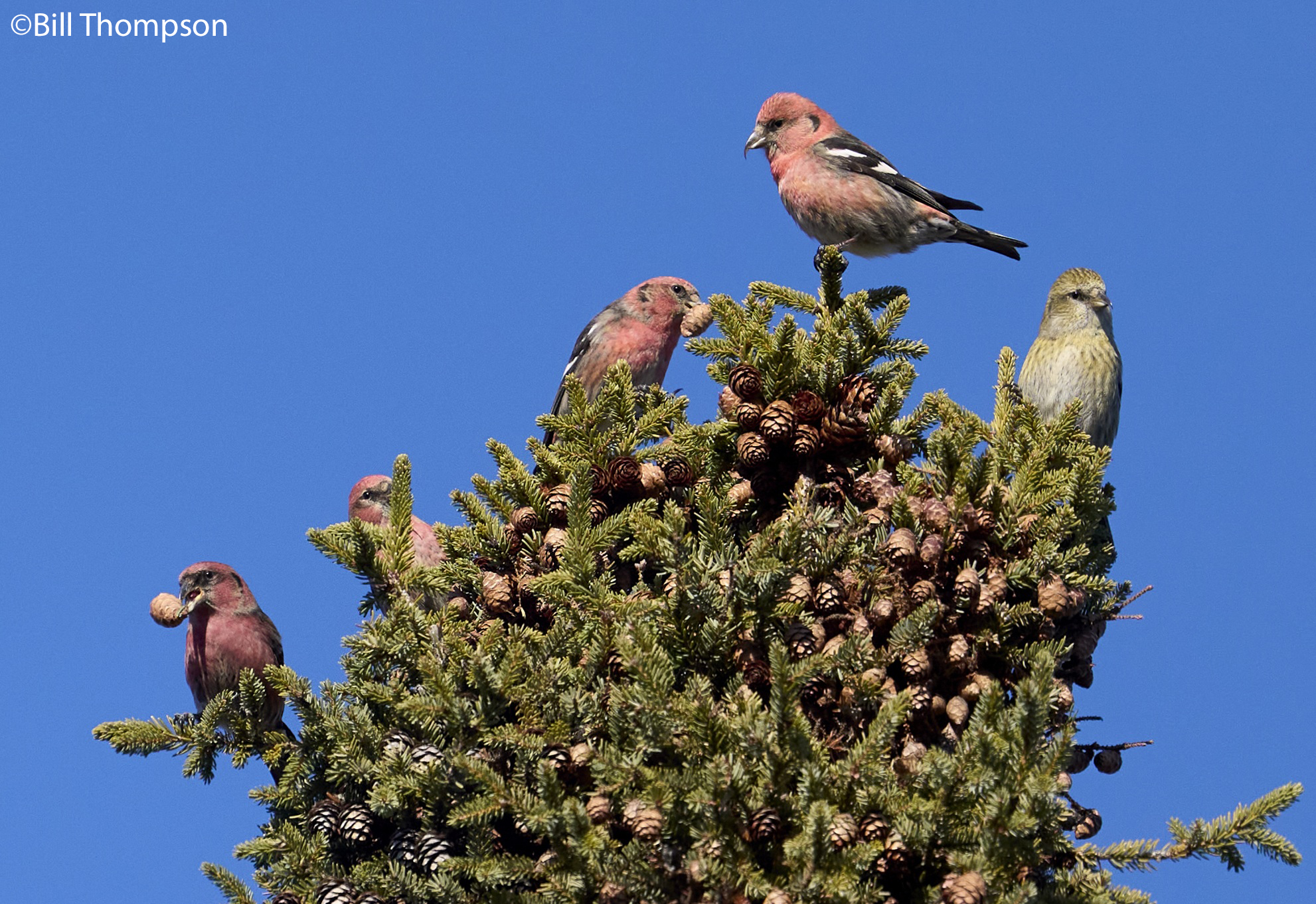
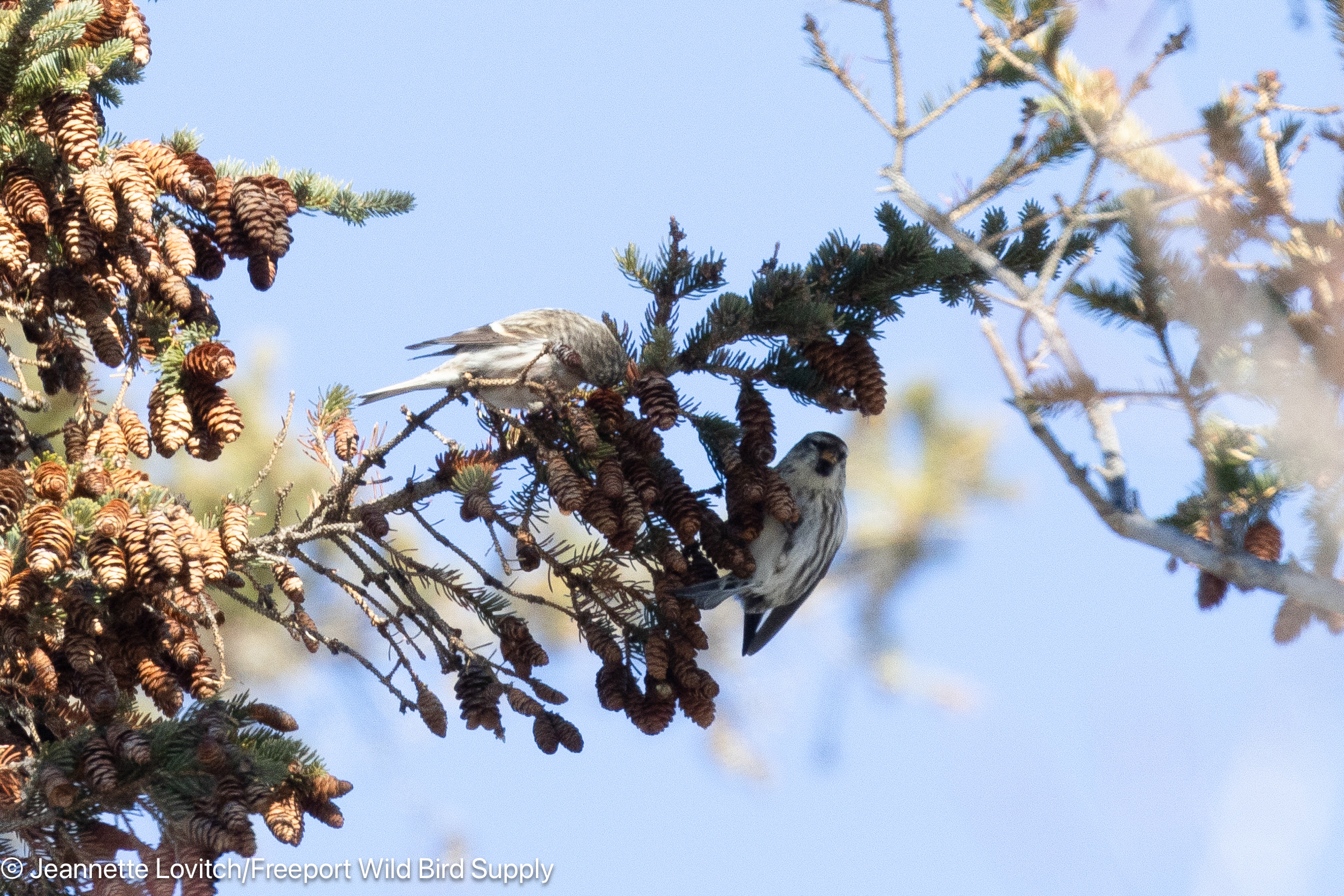
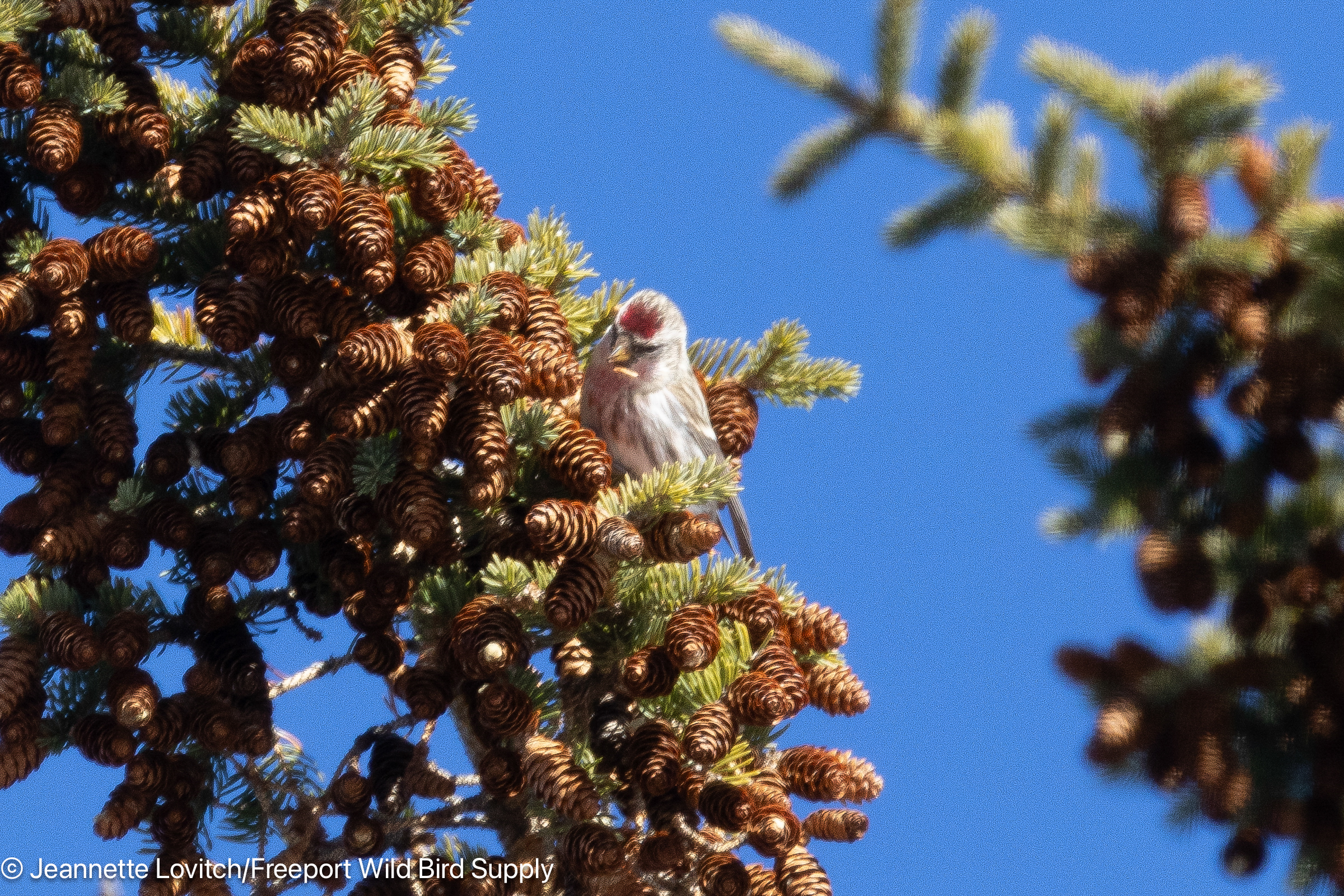
While a trek to the mountains on the 15th was not nearly as fruitful (pun intended) as we hoped, Bill Thompson and I were very surprised to find a flock of White-winged Crossbills – an irruptive species that has been virtually non-existent this winter in Maine – on South Shore Road in Rangeley.
I covered a better amount of ground this past week than I have been recently, even with relatively limited time in the field. I wanted more frugivores to show for it, but I did have a nice variety of seasonal highlights. Here are my observations of note over the past 10 days.
1 female “NORTHERN” COMMON EIDER (ssp BOREALIS), 1 drake Barrow’s Goldeneye, and 4 drake Greater Scaup, Winslow Park, Freeport, 2/14 (with Saturday Morning Birdwalk group).
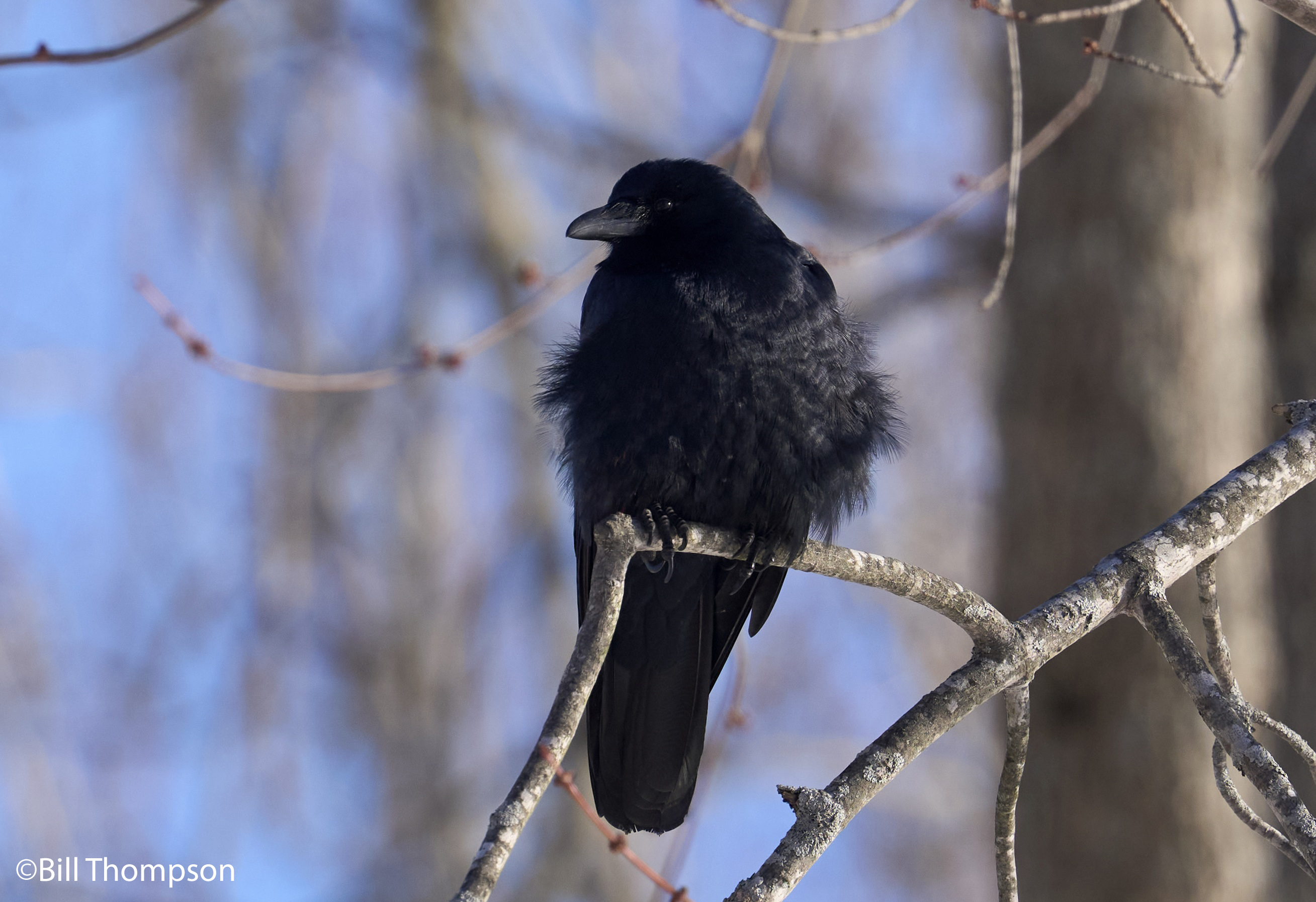
2+ continuing FISH CROWS, Auburn Riverwalk, 2/15 (with Bill Thompson).
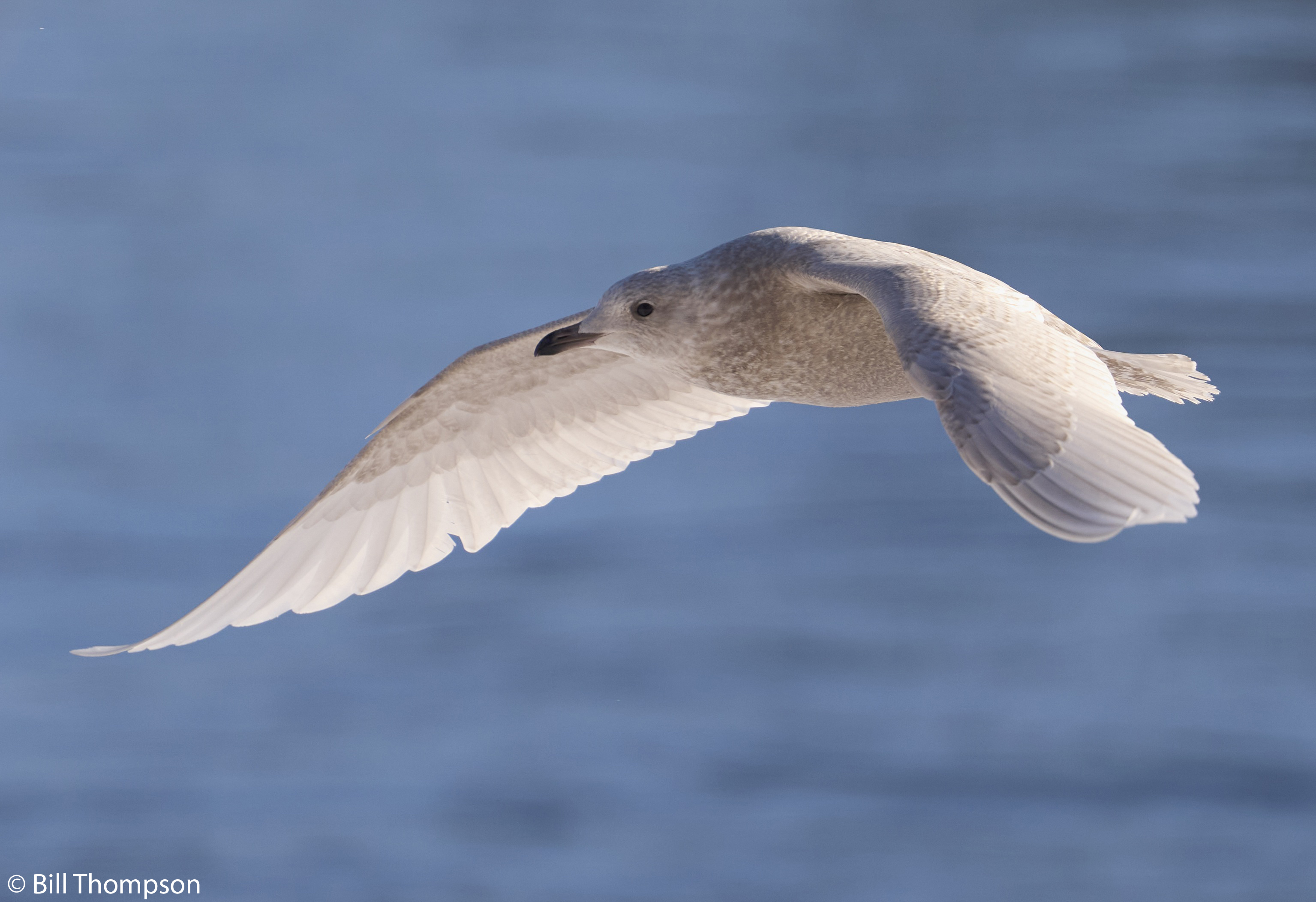
1 1ST-cycle Iceland Gull, Auburn Riverwalk, 2/15 (with Bill Thompson).
~20 Snow Buntings, moving between parking lots on Rte 4/2, Farmington, 2/15 (with Bill Thompson).
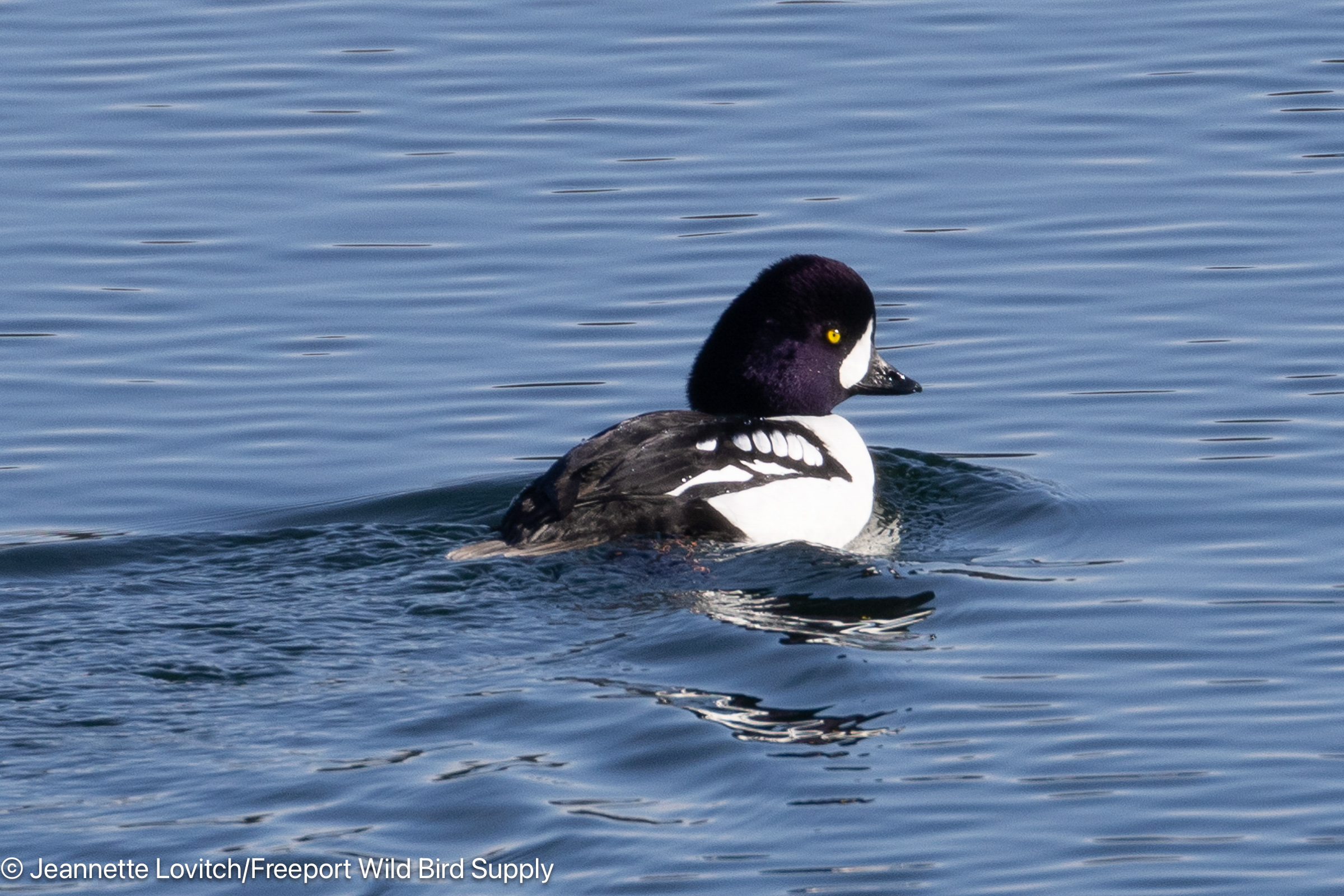
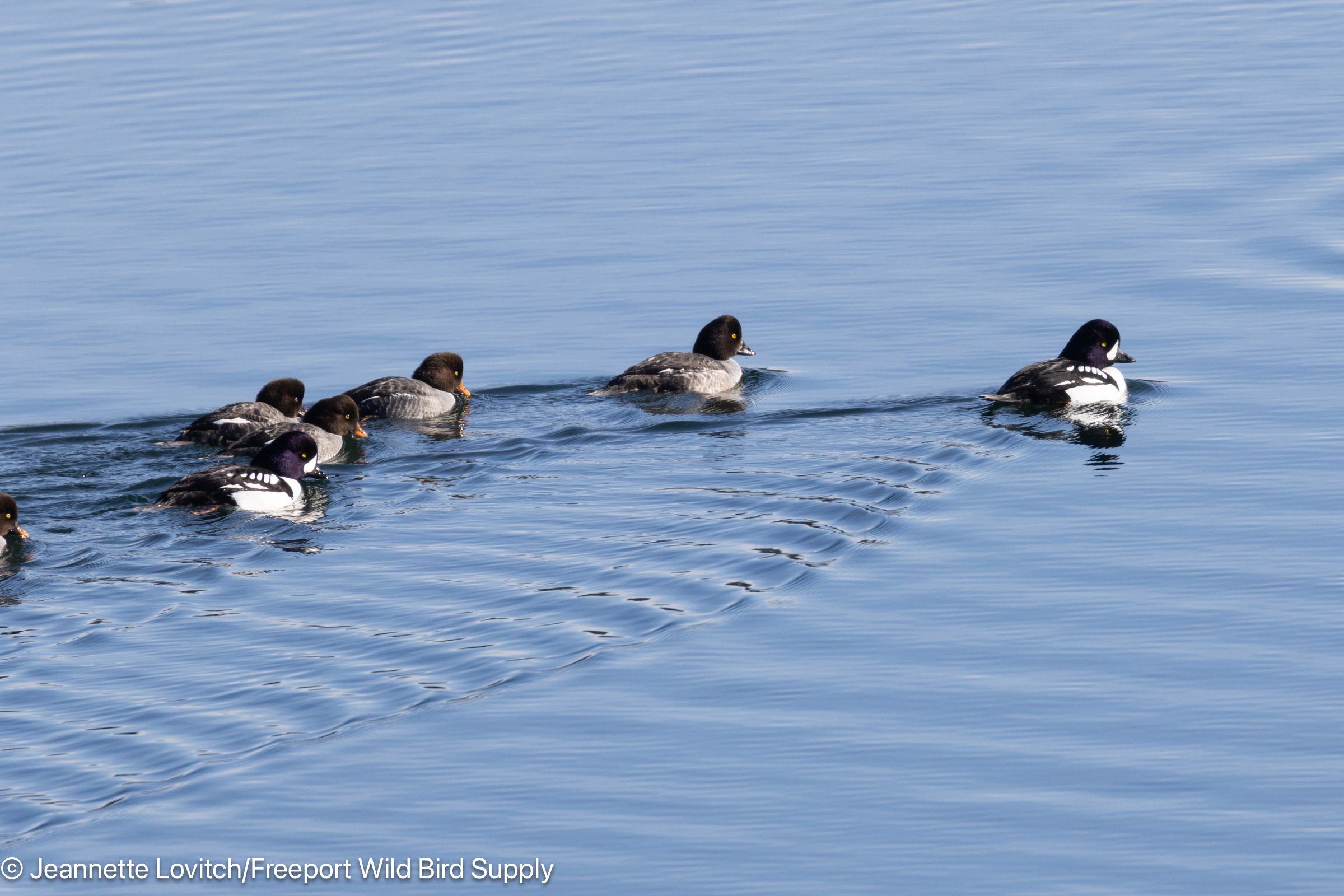
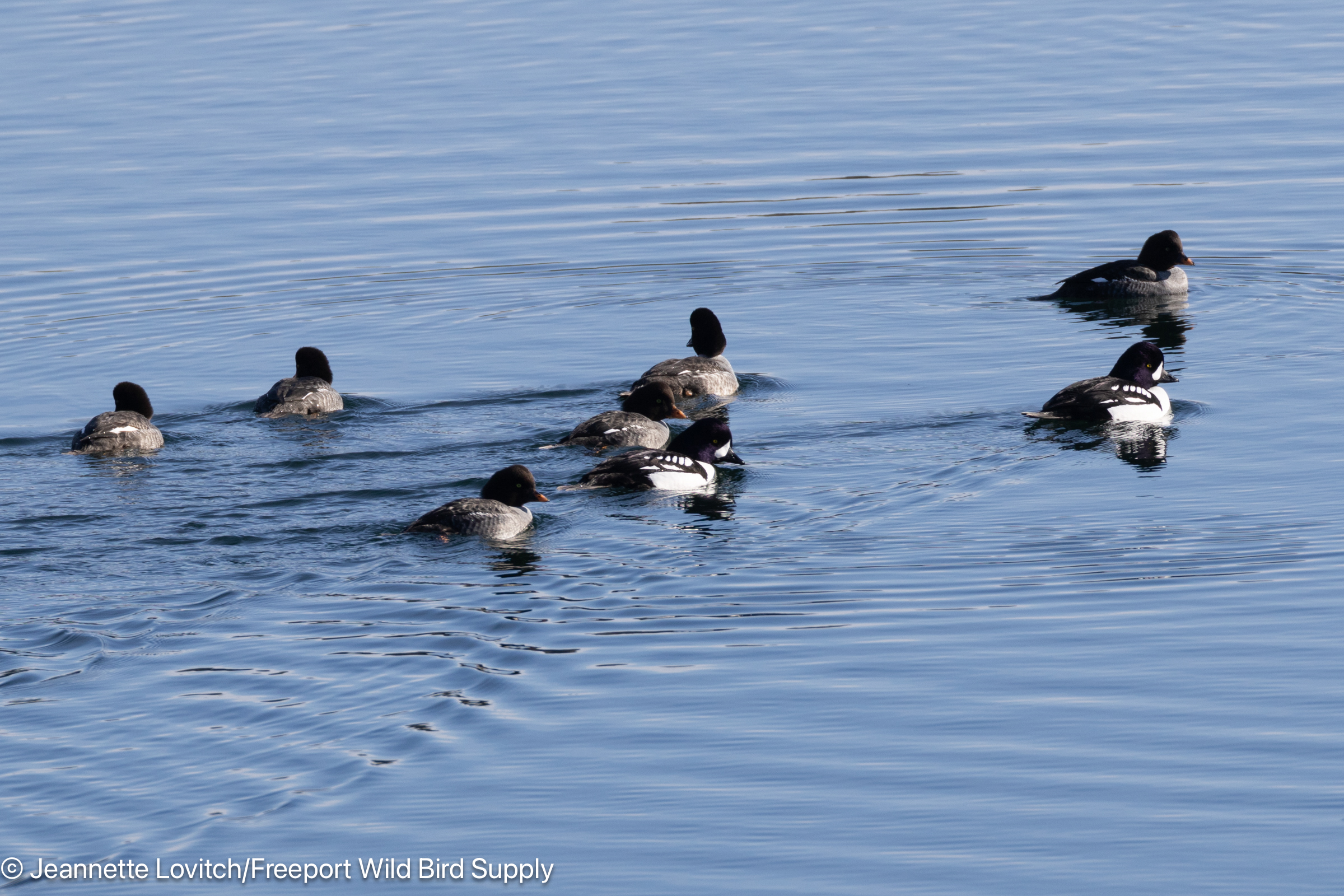
19 (10 drakes and 9 hens) BARROW’S GOLDENEYES, Gurnet Bridge, Harpswell, 2/16 (with Jeannette). This winter’s flock, which maxxed out at 26 individuals, is the largest flock in the state since about 2006. Even though we missed the peak, this was a very impressive flock and was delightful to see!
1 drake Barrow’s Goldeneye, Sandy Point Beach, Cousin’s Island, Yarmouth, 2/22.
1 pair Barrow’s Goldeneye, Cumberland Town Landing, 2/22.
At least one Turkey Vulture continues along the I-295 corridor between Cumberland and Freeport as of this week. Several scattered “TV’s” elsewhere in the area suggests the first trickle of their northbound migration.
One adult Red-shouldered Hawk continues along Rte 136 in Durham, near the Freeport Town Line.
This Week in Irruptives.
On the 15th, Bill Thompson and I birded from Auburn to Rangeley, mostly looking for irruptives. It was not the birdiest day, and the only frugivores we encountered (despite finding plenty of fruit) were a mere 4 Cedar Waxwings in Farmington. Most of our birding was in and around Rangeley, where we caught up with a flock of 28 Evening Grosbeaks at a downtown feeder, and “dipped” on a small group of Pine Grosbeaks. However, on South Shore Road, we encountered 14 WHITE-WINGED CROSSBILLS (see photo above) and a single Redpoll.
Elsewhere, Purple Finches were a little more widespread this week, although in lower numbers than last week. Jeannette and I had 3 Red Crossbills, including an apparent pair, at Long Reach Preserve in Harpswell on the 16th and one Redpoll flew over our property on the 22nd. Scattered Evening Grosbeaks in the area included one in our Durham yard on the 17th and again on the 23rd. Cedar Waxwings were also a little more numerous this week, although in small numbers (high count of 6 here at the store on the 18th).
Winter Feeder Birds Snapshot.
After beginning a “feeder watching blog” while stuck at home from shoulder surgery in the winter of 2023, I continue the tradition for the fourth year now, as I try to compare feeder activity between winters on our property in Durham, Maine, and then attempt to use it as a case-study for what the overall feeder bird activity is like in the area this winter. Here’s the 2026 Feeder Birds Snapshot. Since the “study,” we have seen a few more winter finches, and as of 2/13 are now up to 24 Dark-eyed Juncos, 11 American Tree Sparrows, and at least 45 American Goldfinches.
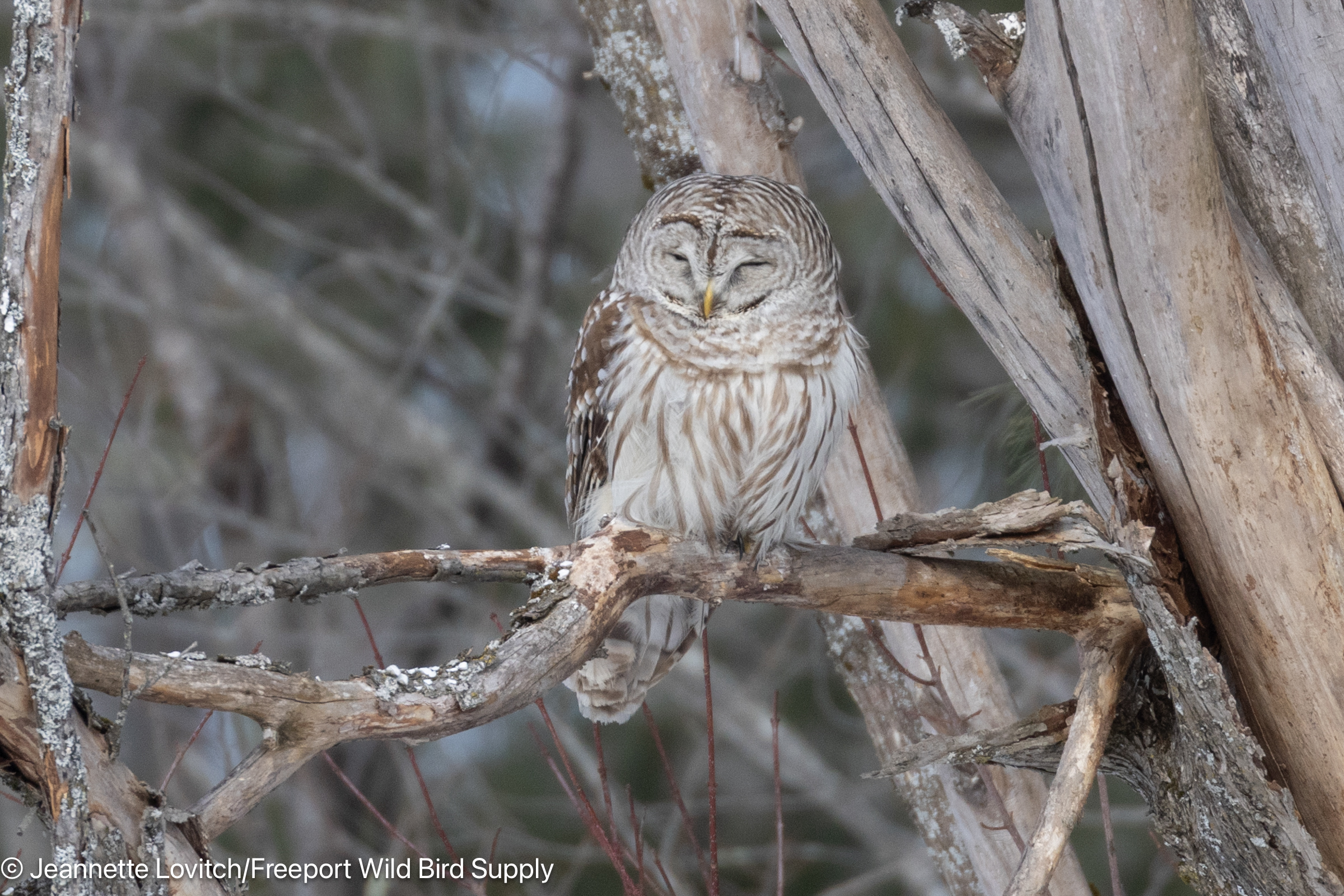
Perhaps our most exciting “feeder bird” this winter has been this Barred Owl that has been hunting the area of our yard near the feeders for the past couple of weeks.
After beginning a “feeder watching blog” while stuck at home from shoulder surgery in the winter of 2023 (here and here), I continue the tradition for the fourth year now, as I try to compare feeder activity between winters on our property in Durham, Maine, and then attempt to use it as a case-study for what the overall feeder bird activity is like in the area this winter.
Here in 2026, we have been experiencing a very long (by modern standards) and impressively cold winter, with about an average amount of snow as of now. However, the extreme cold has prevented our recent snowfalls from melting, so the snow depth is piling up (currently about 10” or more in our yard). Deep snow makes some resources (like “weed” seeds in fields) hard to find and pushes birds around in pursuit of safe cover.
Meanwhile, my birding beyond the backyard has proven that the regional abundance of irruptive winter finches is closely tied to Red Spruce, of which we have none on our property and very little here in southern Androscoggin County. Unlike last winter, there are Evening Grosbeaks around, but they cleaned out the remaining ash seeds in our yard before I started my count and had moved on from our property. Only recently has a little surge of Purple Finches especially, and to a lesser extent Pine Siskins and Common Redpolls, made it this far south. Unfortunately, not many of them have visited our feeding station in the past 10 days.
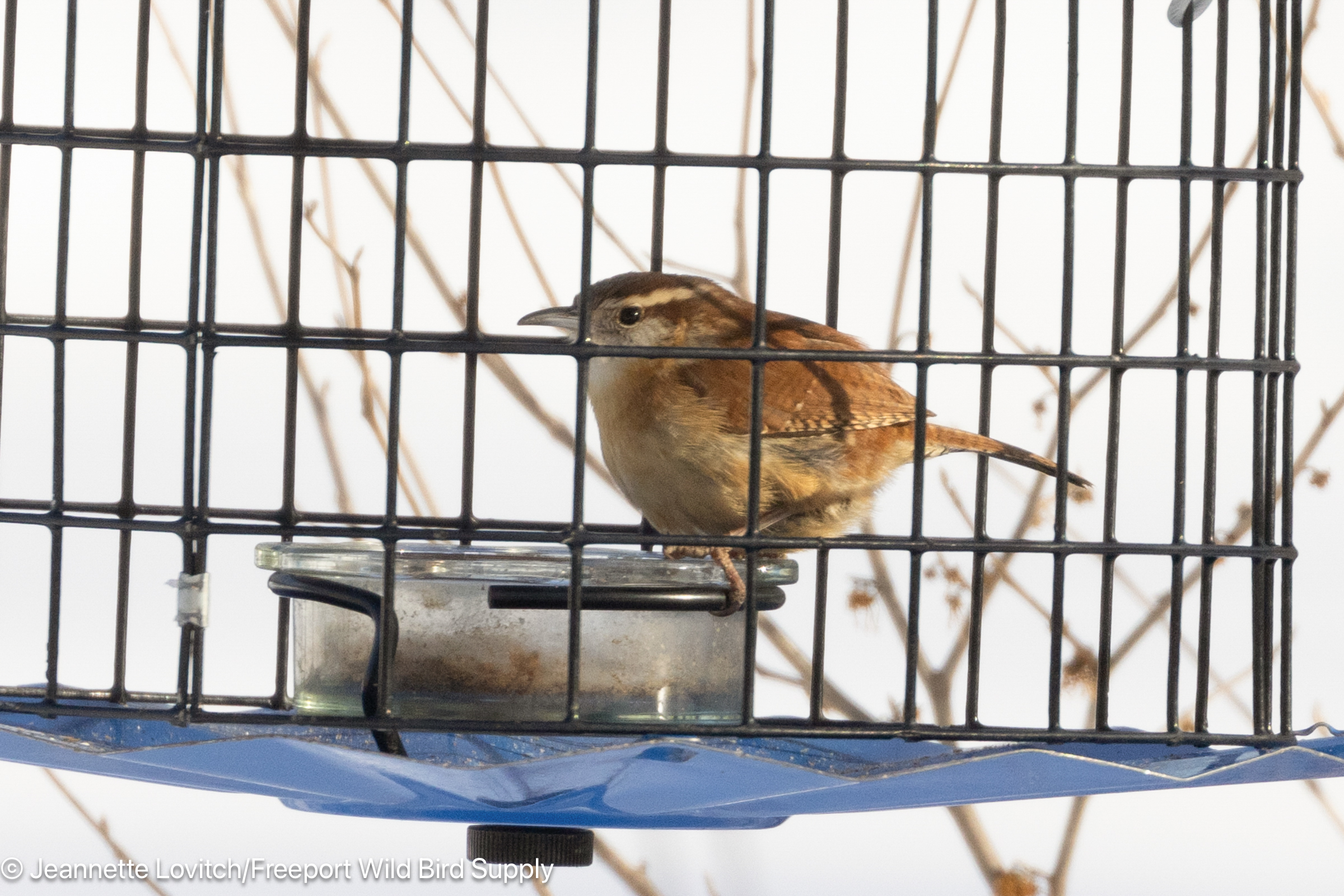
For the first time, we have had a pair of Carolina Wrens consistently at our feeders through the count period, often enjoying mealworms between visits from the Eastern Bluebirds.
Let’s start with the numbers. Once again, I dedicated time to counting feeder birds at our feeding station in Durham each day for at least one hour. I was birding elsewhere on February 3rd, so I counted for 10 of 11 days between February 2nd and February 12th – the same window as last year. And like in each year, I used the standard methodology of using “high counts” (maximum number of individuals seen at any one time, unless they were readily identifiable as being different).
Species
Avg./day 2023
Avg./day 2024
Avg./day 2025
Avg./day 2026
Average 3 years
Difference 25vs26
Difference 26 vs 3yr
Wild Turkey
0.2
0
0
1.3
0.07
+1.3
+1.23
Mourning Dove
13.5
26.5
29.6
28.4
23.20
-1.2
+5.20
Sharp-shinned Hawk
0.4
0.2
0
0
0.20
0
-.20
AMERICAN GOSHAWK
0
0.1
0
0
0.03
0
-0.03
Barred Owl
0
0
0
0.3
0
+0.3
+0.3
Red-bellied Woodpecker
1
1
1.2
1.4
1.07
+0.2
+0.33
Downy Wo-odpecker
2.4
2.9
2.5
4
2.60
+1.5
+1.40
Hairy Wo-odpecker
2
2
2
3.6
2.4
+2.00
+1.60
Pileated Woodpecker
1
0.1
0
0
0.37
0
-0.37
Blue Jay
7.8
3.0
9.2
5.6
6.67
-3.6
-1.07
American Crow
0.7
0
1.8
0.5
0.83
-1.3
-0.33
Black-capped Chickadee
7.4
2.9
5.2
4
5.17
-1.2
-1.17
Tufted Titmouse
4
3
4
4
3.67
0
+0.33
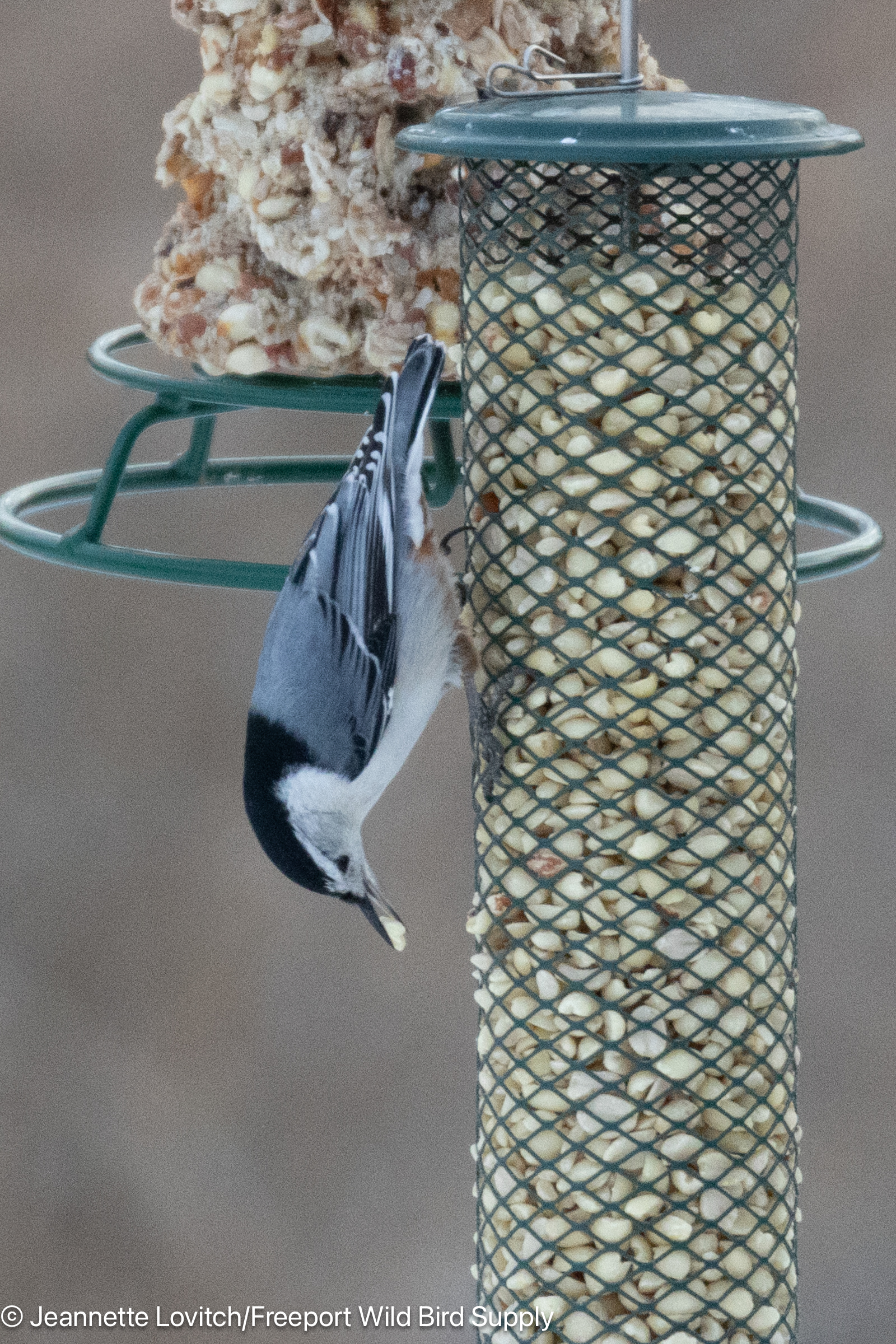
White-breasted Nuthatch
2
1.4
2.4
4
1.93
+1.6
+2.07
Red-breasted Nuthatch
0.7
0
0.6
0
0.43
-0.6
-0.43
Brown Creeper
0.4
0
0
0
0.13
0
-0.13
Carolina Wren
0.9
1
1.8
2
1.23
+0.2
+0.77
GRAY CATBIRD
0
0
0.1
0
0.03
-0.1
-0.03
European Starling
1.1
2.7
8.7
6
4.17
-2.7
+1.83
Eastern Bluebird
4.4
3
5.7
4.9
4.37
-0.8
+0.53
House Finch
2.1
0
0.4
0.1
0.83
-0.3
-0.73
Purple Finch
0.5
0.3
0
0.6
0.35
+0.27
+.33
Pine Siskin
0
0.2
0
0
0.07
0
-0.07
American Goldfinch
26.6
46.8
25
33.6
32.80
+8.6
+0.80
FOX SPARROW
0
0
1
0
0.33
-1
-0.33
American Tree Sparrow
8.0
4.2
6
6.8
6.07
+.8
+0.73
Dark-eyed Junco
16.6
30.3
13.2
14.0
20.03
+0.8
-6.03
White-throated Sparrow
2
2.3
0
0
1.43
0
-1.43
Song Sparrow
0
0.9
0.6
0
0.50
-0.3
-0.50
Northern Cardinal
5.2
3.8
6.7
5.2
5.23
-2.9
-0.03
Total individuals/day
110.9
138.6
127.5
130.4
1265.67
+2.9
+4.73
Every year is different, and every yard is different. Controlling here for time and place, we can make some comparisons, however, or at least try to.
Somewhat surprisingly, 2026 has been a rather average year at our feeders for number of individuals; I was expecting it to be a little lower. Diversity was indeed a little lower than average, as the finches have just not been frequenting our yard of late and we don’t have anything unexpected.
American Tree Sparrows are above average for us, Dark-eyed Juncos are below average, and we are sans White-throated or Song Sparrows again this winter, which makes sense based on the relatively deep and extensive snow cover. I thought Northern Cardinals might be higher due to their concentration in deeper snow, but we don’t have a lot of evergreen cover at this end of our property which they need to not be conspicuous against the bright white background (we’re working on it though!)
As usual, I am sure I undercounted Black-capped Chickadees, and perhaps also Tufted Titmice and White-breasted Nuthatches (even though they were above average) as I think there could be two small mixed species foraging-flocks around. I also think there could be more than two pairs each of Hairy and especially Downy Woodpeckers, but using the “high count” method, I only tabulated the maximum seen at one time. Same for Eastern Bluebirds; there may be two groups around visiting regularly as well.
We didn’t have any seasonal rarities like last year’s Gray Catbird and Fox Sparrow, but we have had a Barred Owl hunting the edge of our “homestead” area including near the feeders on and off for the past couple of weeks. Certainly the excitement of this count period was on the 5th, when an immature Cooper’s Hawk took a run at something. Everything flushed. Then, a Barred Owl came gliding in and either landed on the Cooper’s Hawk or immediately next to it. The Cooper’s Hawk flew away, the Barred Owl looked around in snow for a moment before flying into tree.
Was this attempted kleptoparasitism (stealing food) instead of a predation attempt? The Barred Owl has been regularly sunning itself in a spot that would provide a good sight line to where this occurred, so it was probably seeing a potential opportunity for brunch. I am just unsure what opportunity it saw.
As for finches, American Goldfinches remain about average for us with our birch-filled yard, and quite a bit higher than last year, which fits with what others are observing at feeders and what I am seeing in the field. Purple Finches are just returning to our feeder, but despite a nice little surge of finches into the area this past week, they were not reflected at our feeders. They’ll probably all show up next week! Black-capped Chickadees are low for us, and we don’t have a Red-breasted Nuthatch this winter – head into Red Spruce forest and you’ll find plenty of each, however.
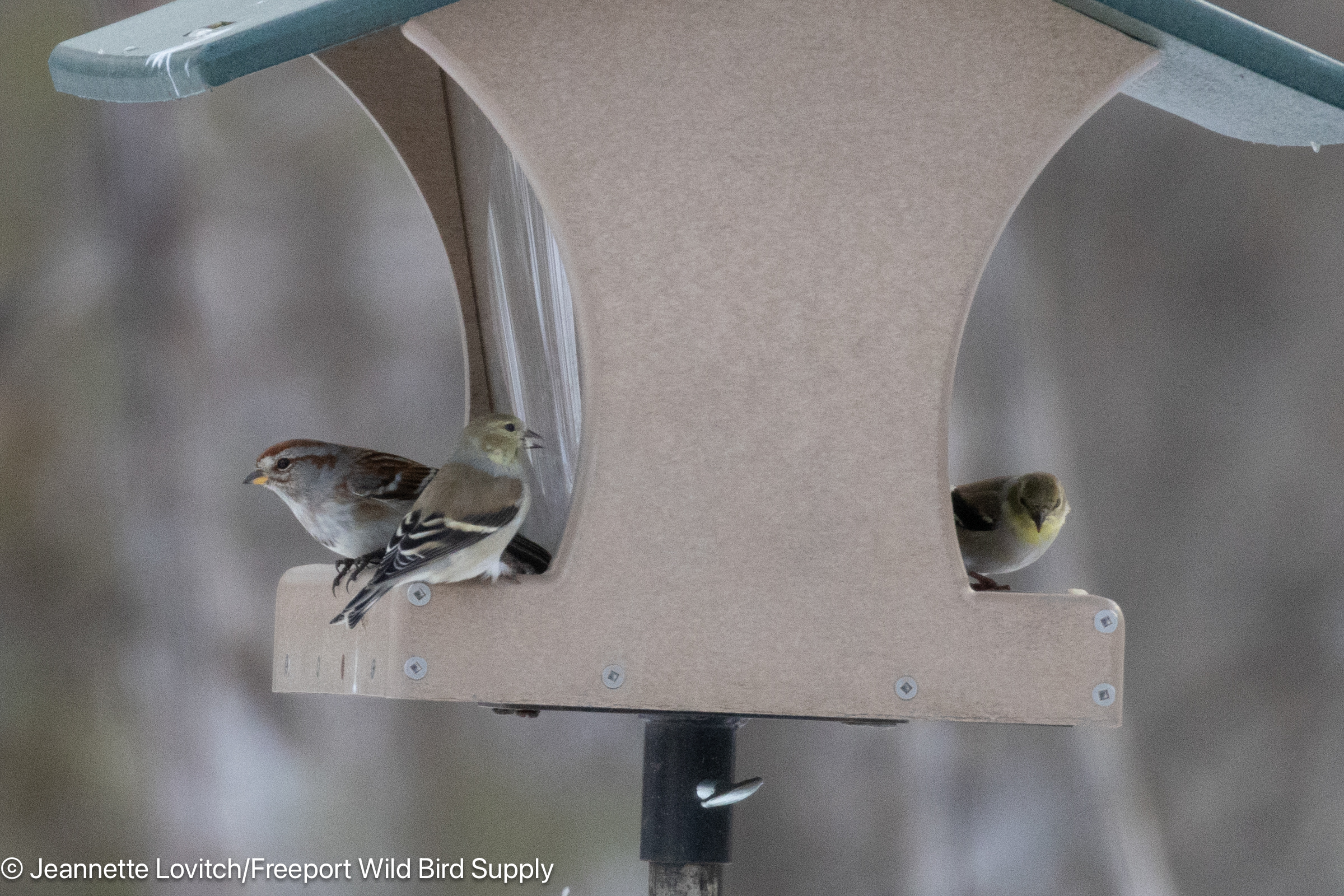
Numbers of both American Goldfinches and American Tree Sparrows have been above average at our feeding station this winter.
But despite the patchy distribution of what irruptives are indeed present in the area, and what appears to be relatively low numbers of many feeder birds in general, we are going through a LOT of birdseed (and suet, etc), and customers of our store report the same. In fact, our seed sales are up nearly 20% compared to the average for the previous 3 winters. While there may not be a ton of birds around, they are eating a lot of supplemental food at our feeders, which makes sense given the winter conditions. In hindsight, I should have calculated bird seed poundage that we used from the start of this project in 2023!
The average morning low at our home during this period was a measly +3.1 degrees F. That was 2.4 degrees colder than the ten days I looked at last year. That’s a lot more calories that need to be burned each night! While total number of individuals is slightly up from last year, it’s not particularly significant. Nonetheless, we are going through more seed than we were at this time last year, and the cold and snow are part of this equation this year. It’s clearly not just us, either, as overall seed sales (by poundage) are way up at the store, and well above its long-term average.
As usual, however, the differences from year to year are mostly based on natural food crops. We don’t have any Eastern White Pine cones in the area this year, and Red Oak was low (plus we don’t have much on our property). Eastern Hemlock cones are in good supply, but on our property, they are too far from our feeders to produce birds for this tally. We do have a lot of Paper Birch seeds this year, and that is good for all of our goldfinches.
Once again, we only had one accipiter sighting, a Cooper’s Hawk on one day, the Barred Owl, and a semi-regular Red-tailed Hawk that shows no interest in the area around the feeders but could easily disrupt activity and feeding patterns. But there were times without any birds at the feeders or massive panicked flushing, suggestive of an avian predator hanging around more often than we observed one.
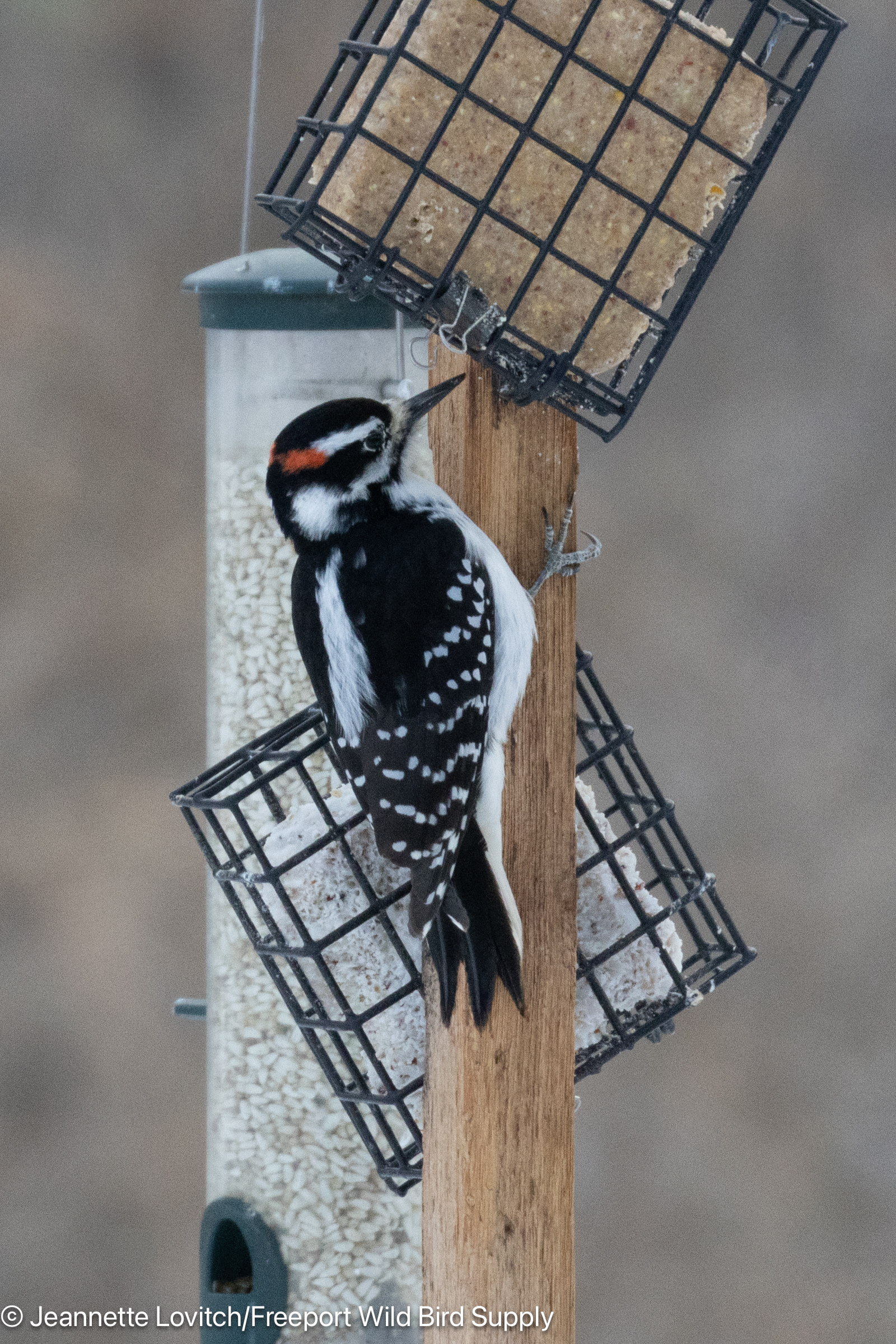
Two pairs of Hairy Woodpeckers have been daily at the feeders, and often squabbling over who gets to feed on what and when and especially for how long!
We’re filling almost all of our 11 feeders at least daily (often twice daily when we are home in another snowstorm), and that concurs with comments we receive at the store. But every yard is different, and not everyone has the same results. If your feeders have seemed comparatively slow, consider what you are feeding, and how fresh the seed and suet is. For example, a recent customer complained about how long it’s been since he had any birds at his feeders, which is shocking given what almost everyone else has been reporting. Turns out he hasn’t changed the seed since August! Would you eat that? Even if it wasn’t likely so clogged and moldy as to be inaccessible? These are important and we can help you with that here at the store. It’s worth exploring some of my previous blog posts on the topic that discuss reasons why feeder activity ebbs and flows, such as this one and this one.
We’ve only lived at this location for four years, so it’s too soon to tell what a truly “average” winter is like in terms of volume and diversity for us. Furthermore, we continue to accelerate plantings and habitat improvement that should increase the number of birds our property sustains throughout the year. Given that feeders are only a supplement to natural food supplies, I believe our habitat work will pay dividends for our feeder-watching in years to come. This is one of the trends that I hope to decipher over time.
I enjoy this little project, and time permitting, I’ll plan on doing it again next year. It’s only one yard, but it’s a case study that can answer some questions or at least offer a little detailed context as to what others are reporting. How does our feeder activity compare to yours? Are you seeing anything different? Or do some of our observations and hypotheses fit with your observations?
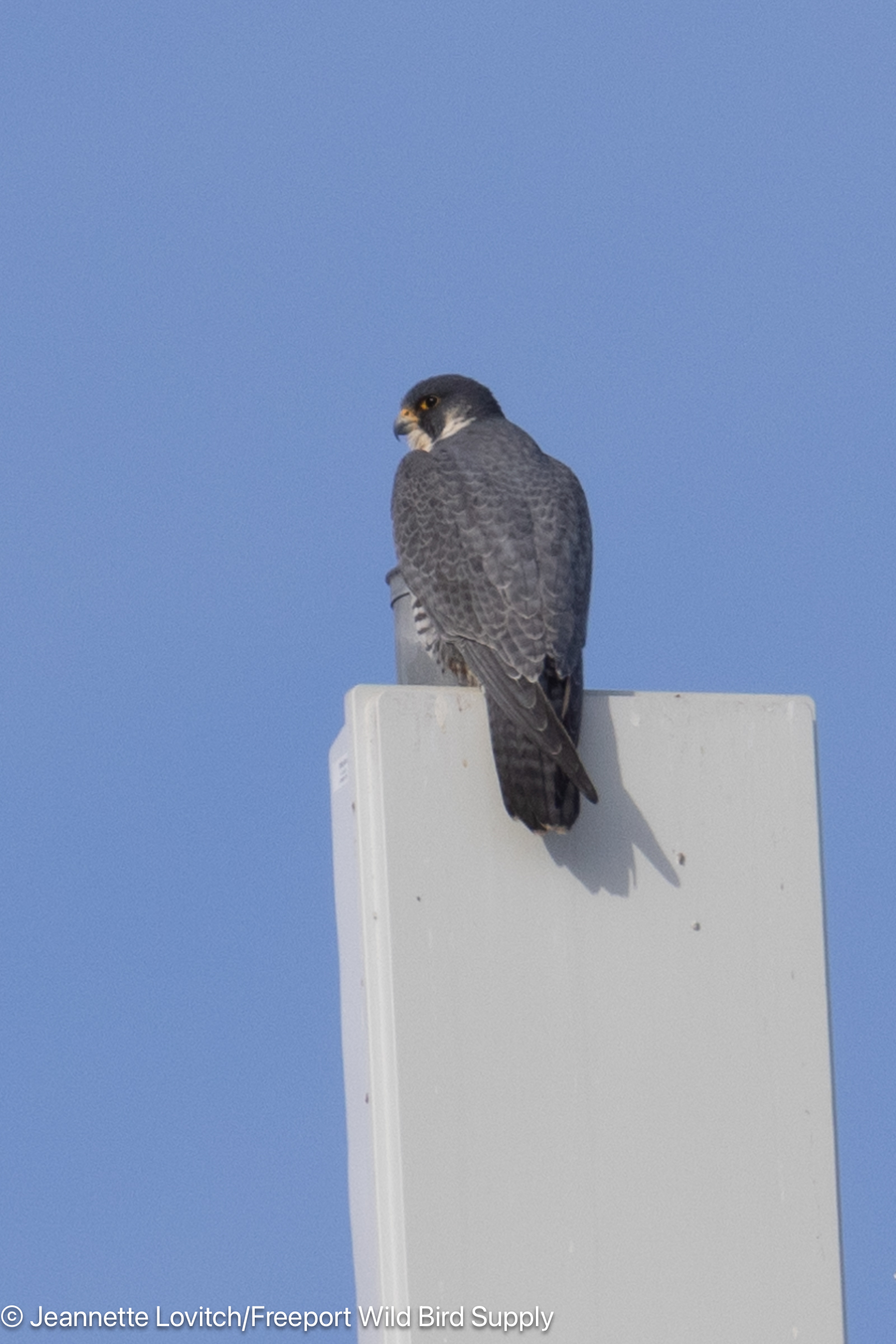
The pair of Peregrine Falcons that have been overwintering in Lewiston-Auburn for the past decade or so continue to frequent the area around the Bernard Lown Peace Bridge and Cedar Street, as here on the 10th.
I’ve been spending extended time feeder watching at home in preparation for my upcoming annual “Feeder Birds in Winter” snapshot blog. Unfortunately, we are not being frequented by as many winter finches as a lot of people are right now, but it’s been an interesting project once again. I’ll have a blog posted in the coming days. A few birding mornings elsewhere yielded some following observations of note.
1 pair Barrow’s Goldeneye, Winslow Park, Freeport, 2/13.
At least one Turkey Vulture continues along the I-295 corridor between Cumberland and Freeport as of this week.
This Week in Irruptives.
An absolutely incredible Saturday Morning Birdwalk on the 7th included a most-unexpected tally of 7 species of winter finches – which was wholly unexpected given the dearth of most finches locally! The “Winter Finch Big Day” that developed was actually a secondary goal, with the original one: 20 species of birds in Freeport, west of I-295 only (and therefore no open water) also being reached. This was an outing that will not soon be forgotten. Highlights included 8 PINE GROSBEAKS and 26 COMMON REDPOLLS at Hidden Pond Preserve in Freeport and 16 EVENING GROSBEAKS at the Old Brunswick Road/Ross Road intersection in Durham. We also had Pine Siskins at two locations, two feeders full of Purple Finches, and of course found some House Finches and American Goldfinches to pad the list. Full trip report can be seen here.
Purple Finches have increased overall this week, and Evening Grosbeaks continue to be around, but rather sporadic. One Pine Siskin flew over our Durham yard on the 12th.
Redpolls were our most numerous finch during a day of birding Long Falls Dam Road in Somerset County this week.
With three tours in 4 days, never reaching 20-degrees last week through this weekend, my face needed a couple of days break! I took one. And then, on the “warmest” day of the week, Jeannette and I drove north to spend the day in the field. Here are my observations of note over the past seven days.
1 hen “NORTHERN” COMMON EIDER (ssp borealis) and 1 drake Barrow’s Goldeneye, Winslow Park, Freeport, 1/31 (with Saturday Morning Birdwalk group).
1 continuing 1st-cycle Glaucous Gull and 4-5 1st-cycle Iceland Gulls, Old Port, Portland, 2/1 (with Gull Identification Workshop tour group).
1 pair Lesser Scaup with 4 Greater Scaup, along with 24 Brant, Kettle Cove, Cape Elizabeth, 2/1 (with Gull Identification Workshop tour group).
1 drake Barrow’s Goldeneye is back at the Bernard Lown Peace Bridge in Lewiston-Auburn as of the 6th.
2 Fish Crows, Auburn Riverwalk, 2/6.
At least one Turkey Vultures continues along the I-295 corridor between Cumberland and Freeport as of this week.
Feeder-watching at home in Durham has been the name of the game on most mornings this week. The excitement came on the 5th, when an immature Cooper’s Hawk took a run at something. Everything flushed. Then, a Barred Owl came gliding in and either landed on the Cooper’s Hawk or immediately next to it. The Cooper’s Hawk flew away, the Barred Owl looked around in snow for a moment before flying into tree.
Was this attempted kleptoparasitism (stealing food) instead of a predation attempt? A Barred Owl has been regularly sunning itself in a spot that would provide a good sightline to where this occurred, so it was probably seeing a potential opportunity for brunch. I am just unsure what opportunity it saw.
This Week in Irruptives.
Here in Greater Freeport, a few more Purple Finches have been around and we had a single Red Crossbill in our yard on the 2nd. Scattered Evening Grosbeak reports continue as well.
Meanwhile, Jeannette and I headed north to Long Falls Dam Road in Somerset County on the 3rd. Birding for most of the day, focusing on irruptives, we tallied:
43 “Common” Redpolls – scattered small flocks (largest was 12) all day. Not including the 1 roadkill.
8 Evening Grosbeaks – two small groups at feeders in North New Portland.
6 Red Crossbills – gritting on Back Road.
2 Pine Grosbeaks -flyovers at North Bowtown Road
Only 4 American Goldfinches and 1 Purple Finch
Well above average numbers of Red-breasted Nuthatches but only average – or slightly below – numbers of Black-capped Chickadees.
Red Spruce cones were abundant, Black Spruce was patchy, and there was plenty of alder and birch, but no cones of White Spruce, White Pine, or Balsam Fir.
 Maine Birding Field Notes