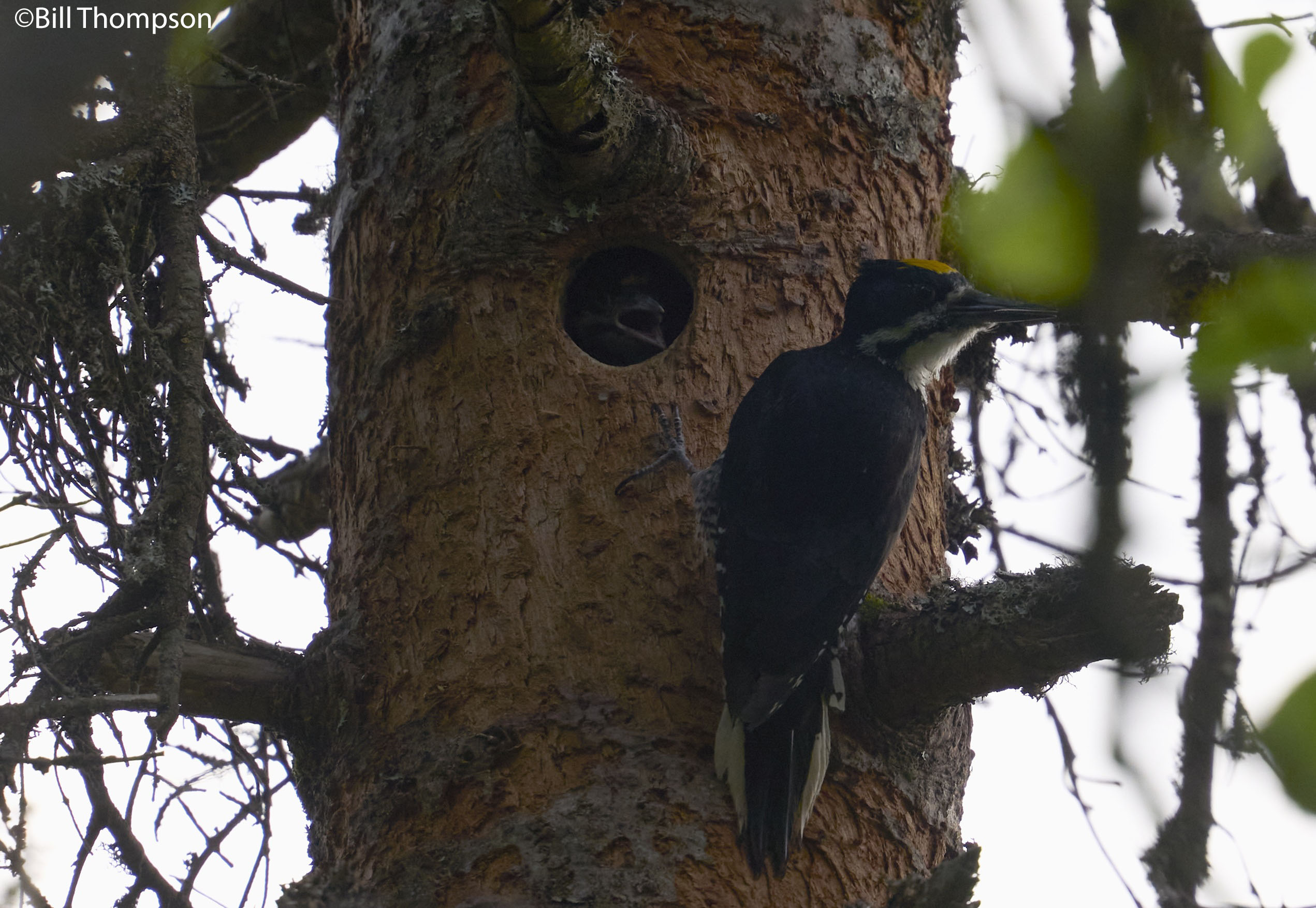
A highlight of our Bicknell’s Thrushes of New Hampshire Weekend was this Black-backed Woodpecker nest that I found on a private tour two weeks ago. By last weekend, the nestling(s?) were getting close to fledging. Thanks to Bill Thompson for the use of his photo as my camera had little interest in performing well in the low light!
After being out of town for a few days (birding highlights in New Jersey included “southern” specialties, a huge Black Skimmer colony, and the growing, awesome White Ibis rookery), I returned to Maine and jumped right back into this record-busy guiding season. From coastal saltmarshes to mountaintops in New Hampshire, a few of my less expected observations in Maine over the past two weeks included just the following:
1 Yellow-billed Cuckoo (FOY!), our property in Durham, 6/23.
1 White-winged Scoter, Fort Popham, Phippsburg, 6/24 (with clients from Vermont).
1 Vesper Sparrow, Auburn Municipal Airport, 6/25.
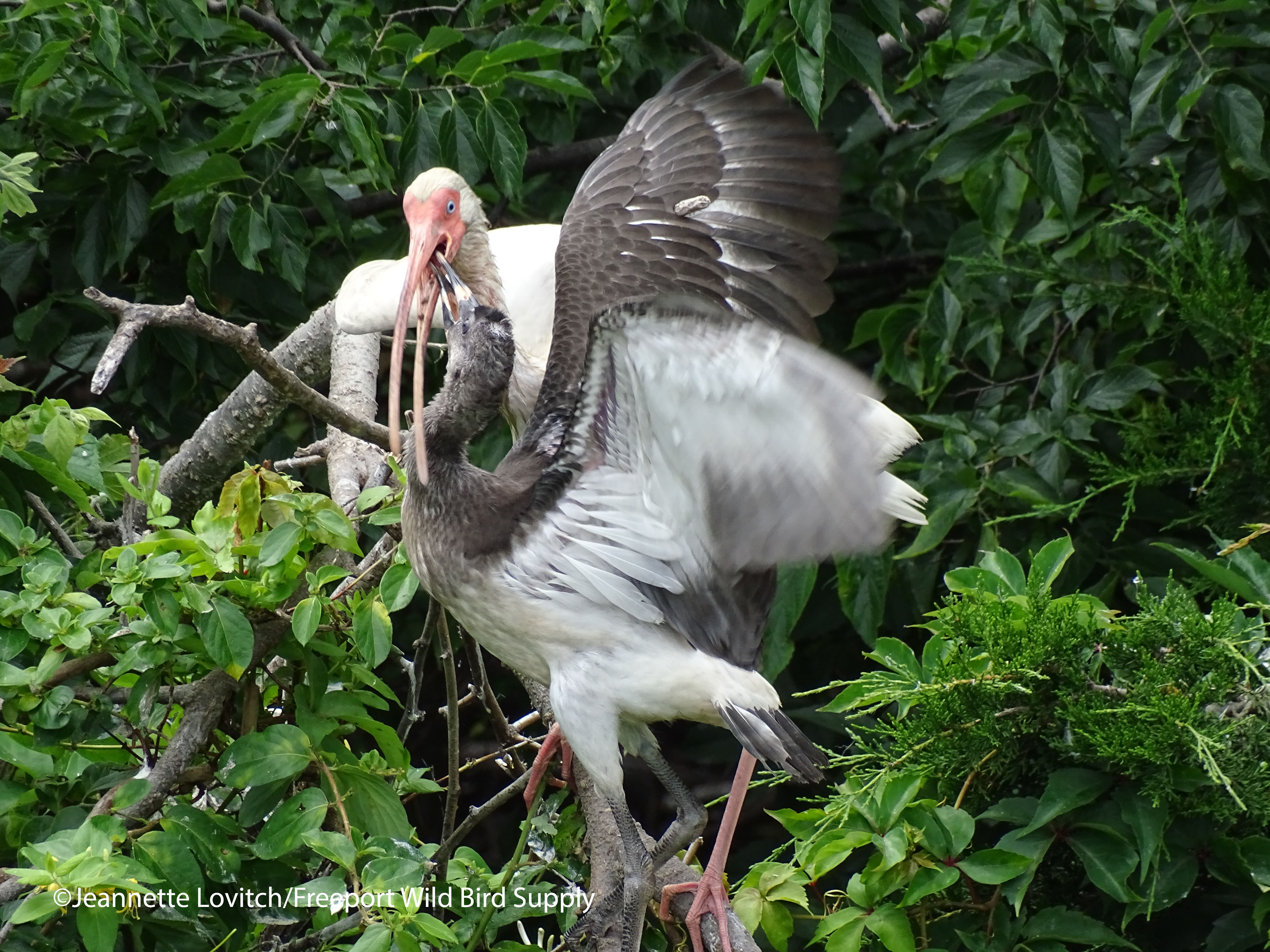
And finally, for fun, here’s a selection of our favorite photos from our visit to the White Ibis rookery in Wildwood, NJ last week.
BICKNELL’S THRUSH WEEKEND TOUR REPORT
The trip report from our recent tour can be seen here.
One of the stars of the show this weekend was this incredibly cooperative Mourning Warbler.
I’ll admit to having a love-hate relationship with this tour. I love taking people into the realm of the Bicknell’s Thrush, but I hate how much I have to stress about getting people to see one! Of course, weather is one of the primary impediments to enjoying a fulfilling mountaintop experience, and well, if I could only control that, too! And then there’s the bird – one of North America’s most reclusive breeding species, and with a behavior that tends to lead to sleep deprivation as well.
But we could not have asked for a better start to the weekend, with the first Saturday without rain in almost three months! In fact, it was absolutely gorgeous as we assembled in Errol, New Hampshire: sunny, a light breeze, and pleasantly warming temperatures. The relaxing morning was spent exploring the lowlands, focusing on boreal transition forest and spruce/tamarack bogs. We heard a couple of Palm Warblers – and glimpsed one in flight, listened to Yellow-bellied Flycatchers, and enjoyed common warblers such as Magnolia.
We enjoyed some botanizing as well, and stopped to look at all walks of life, such as butterflies and dragonflies.
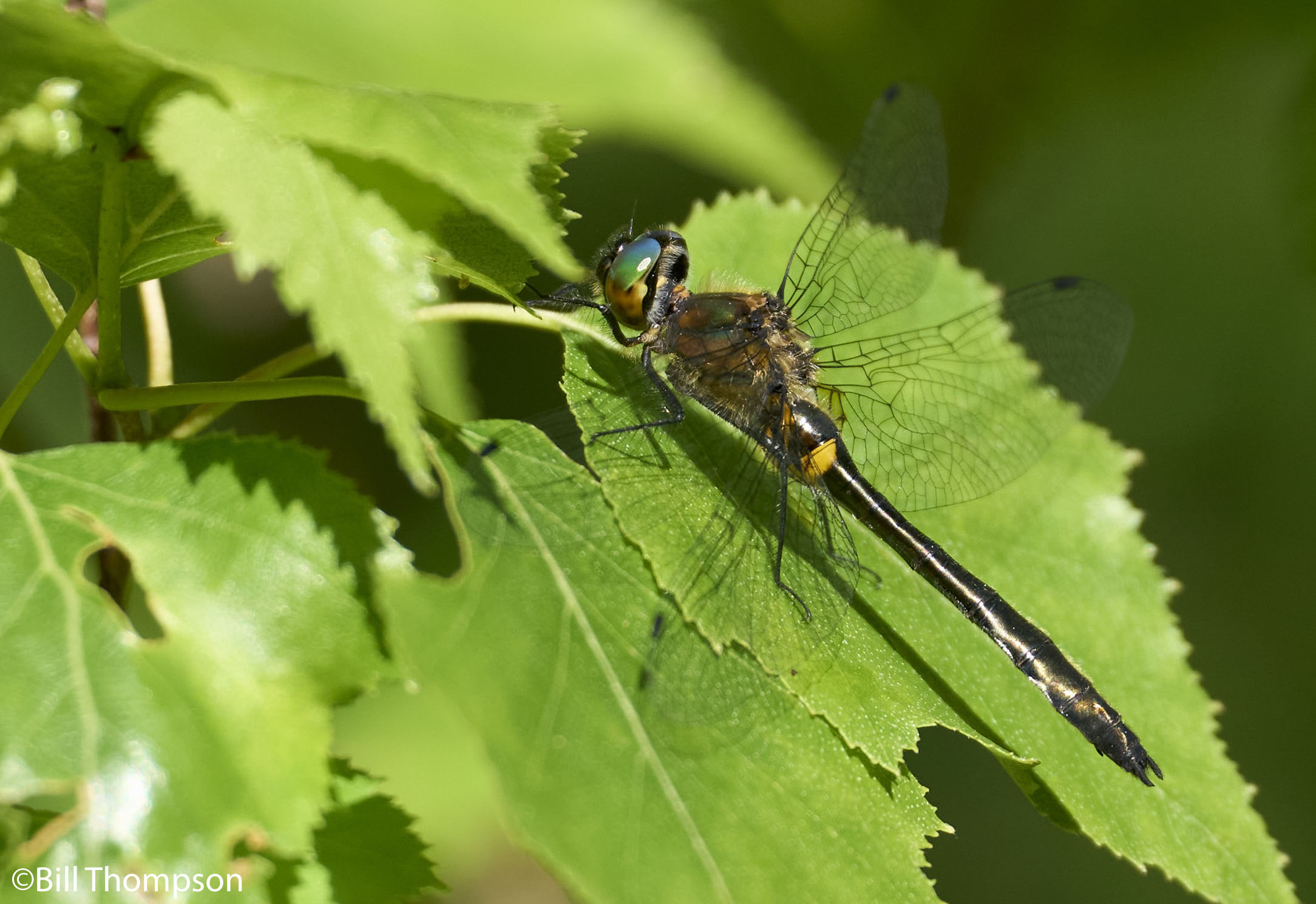
Atlantis FritillaryRacket-tailed Emerald
After a quick but delicious lunch, we did a little more casual birding (Blackburnian Warblers!) and even a little sightseeing!
A welcome afternoon break was followed by an early dinner in town, before our first trip up the mountain. With a mostly clear evening, we had some time until dusk, so we used it to make a bee-line to what I assumed would be one of the highlights of the weekend.
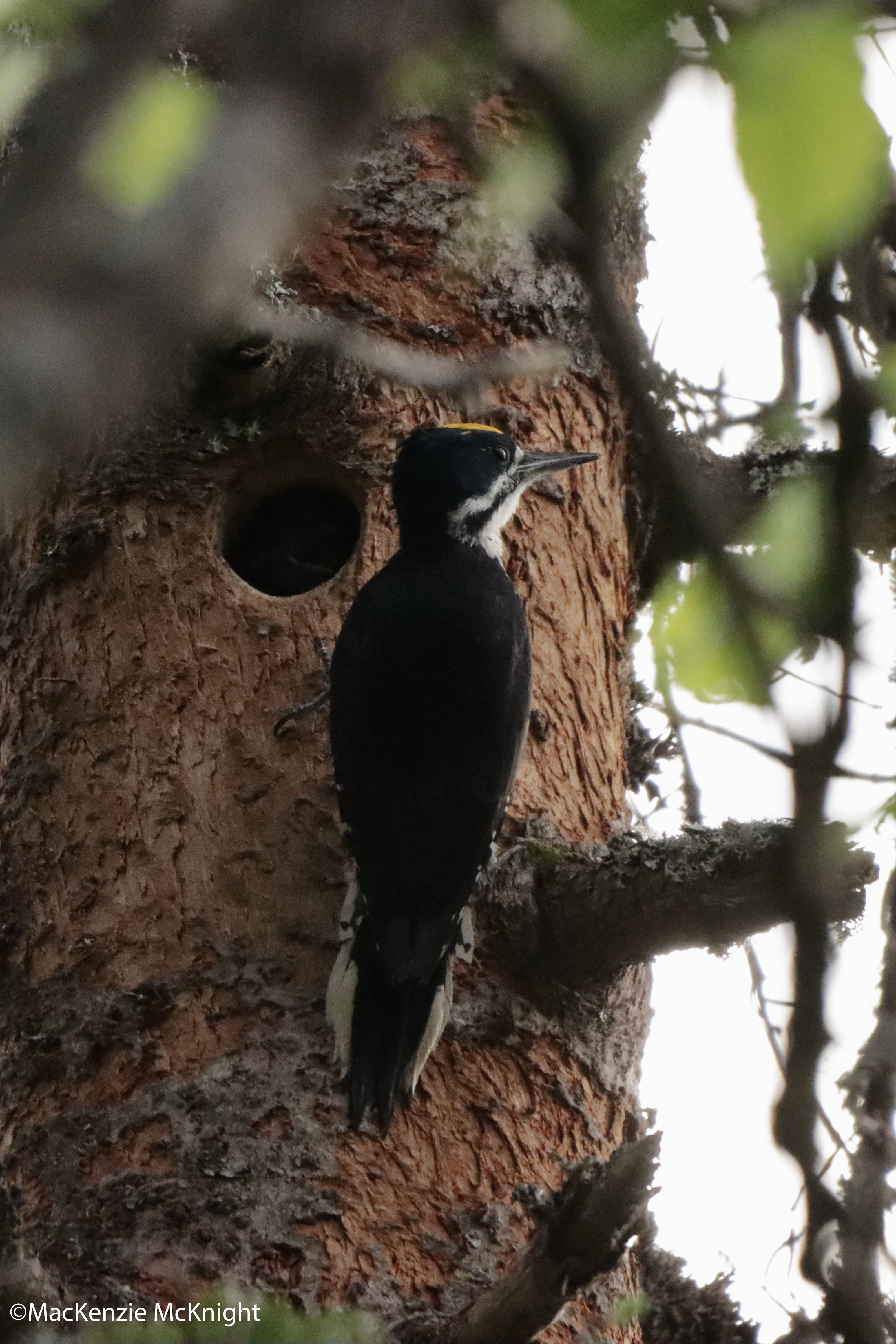
On a private tour two weeks ago, I found a Black-backed Woodpecker nest. At the time, the adults were feeding young that I could not yet hear or see. I hoped they would still be in the cavity by now, and it didn’t take long for us to know they were – we heard the begging nestlings from a good 100 feet away. I found a path of least resistance to the nest hole, and we took turns rotating in small groups to watch the adults make repeated feeding visits. Everyone was so respectful of the birds – especially the adult male – who didn’t seem too pleased with our presence. After one feeding visit per group, we backed off, gave the birds a break to feed, and then visited with the next group. While the sun was now setting fast and the photography was challenging, it was truly a special experience with such a charismatic and sought-after species.
Now, it was time to get to work. And tonight, our primary target really did make me work for it! Swainson’s Thrushes continue to increase here, and they were very active and vocal this evening. Too vocal.
While we did have some great looks at them, their presence and activity likely kept the Bicknell’s quiet and in the shadows. In fact, it was getting dark by the time the Swainson’s stopped singing and we finally heard a couple of Bicknell’s calling.
By 8:45, I was starting to get a little worried, so I walked most of the group up a trail where I had activity a couple of weeks ago. One bird was calling there, but it would not come out. I began the retreat to the road when the bird flew right over my head – one person even it heard it whiz by me. We turned back up the path and settled in and eventually at least one thrush began to sing, a couple of others were calling, and surrounded by Bicknell’s Thrushes, we ended up seeing one flying back and forth across the small clearing and at least half the group saw one in silhouette on top a small tree, calling aggressively.
The aural performance was top notch, especially down at the road, and everyone was quite satisfied with at least the sum of all views had of the bird in flight or paused in a tree at the edge of the small clearing. It wasn’t the “crippling views” from last year’s weekend, but everyone agreed it was more than “good enough” and the overall experience was worthy of the effort.
I pushed it a little longer and later than usual as it was such a nice evening (too nice?), and I had my worries about even getting up the mountain the next day. We returned to our hotel at 10:15, and we departed again at 6:00 – I let the group “sleep in” due to the forecast morning rain and our late return.
And it was indeed raining in the morning when we awoke, but the forecast chance of thunderstorms had not materialized. Therefore, it was safe to head up to the mountaintop, so without any further ado, up we went once more.
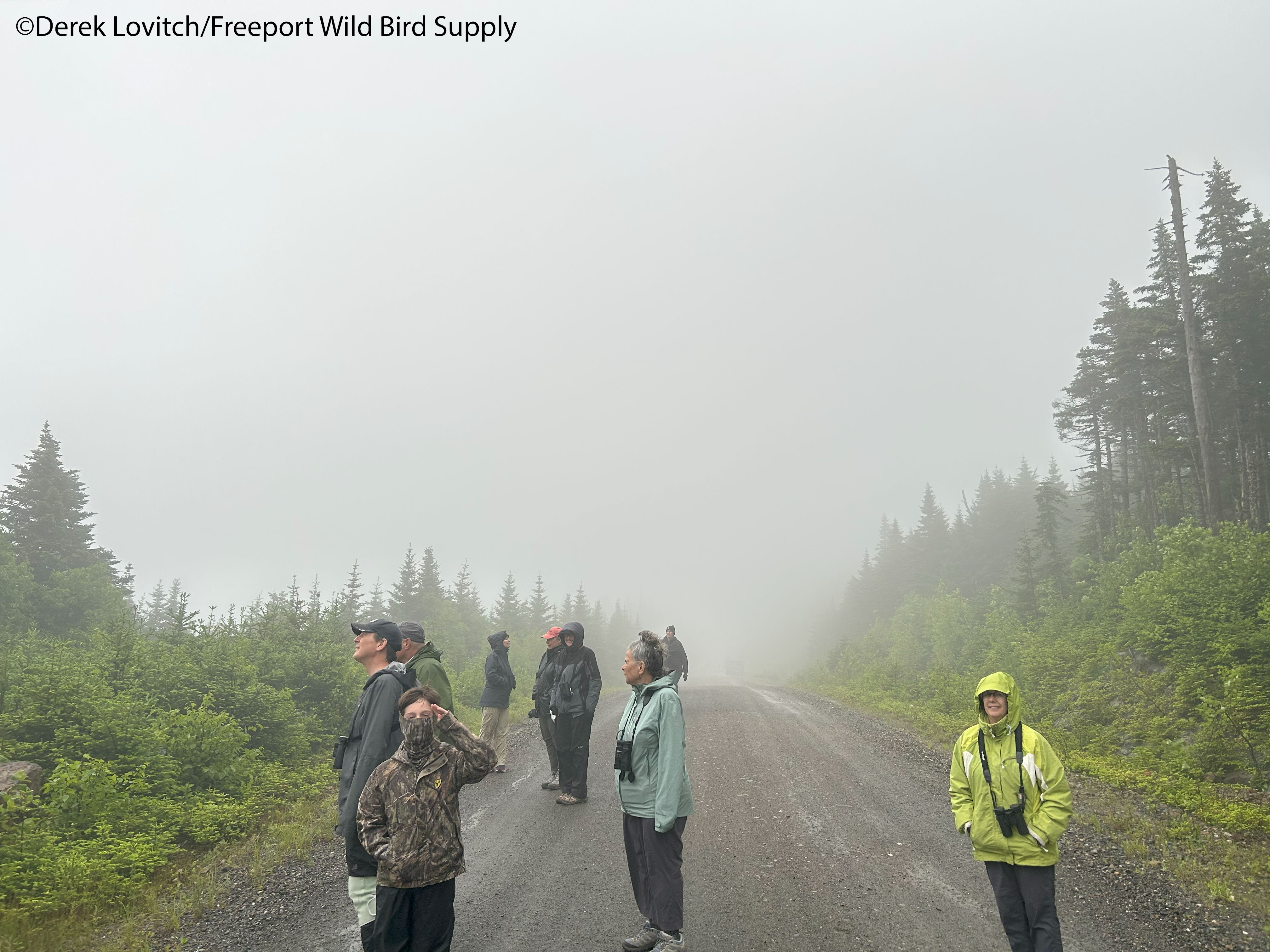
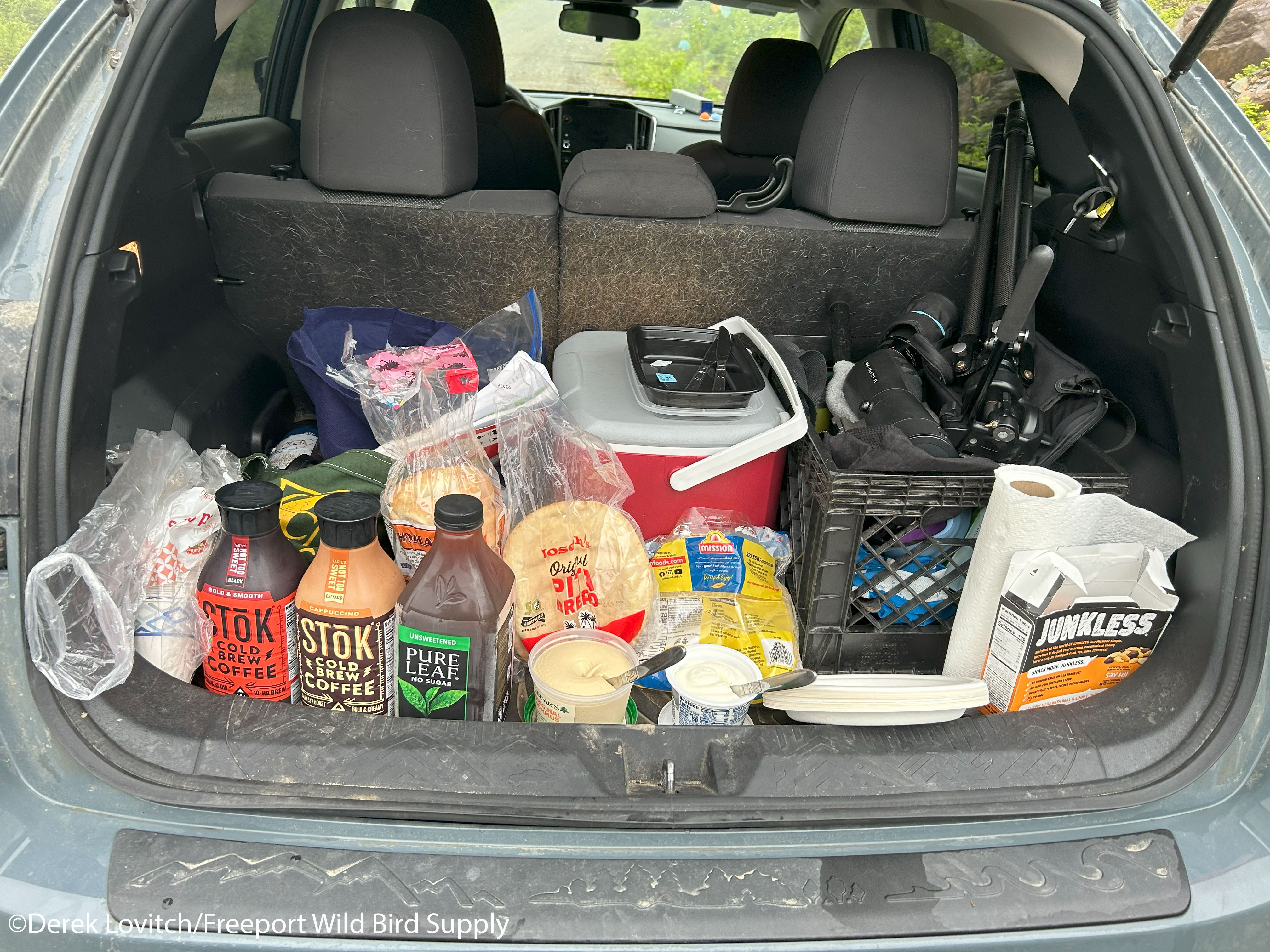
Unfortunately, up top it was still raining, albeit lightly, but the wind was already howling. What a difference 9 hours makes! Light rain came and went, fog would roll in and out, and we had one 10-minute rain delay in our vehicles with a downpour. Luckily, we had just finished breakfast!
Birding tailgating!
But the morning was by no means the washout we feared, and when the rain stopped, the birding was pretty good. We decided not to bother the Black-backed Woodpeckers (the light was even worse anyway in the fog) given the conditions, but we were happy to hear the begging youngsters from afar. A few Red Crossbills flew over, Blackpoll Warblers were singing, and we heard the mountain’s Fox Sparrow in the distance.
But we did not hear a single Bicknell’s Thrush. I was about ready to give up when one finally called nearby at 8:45. And he kept calling, repeatedly, so close to us, but we never even glimpsed him. He must have been just within the dense edge – so close, yet so far!
Now this tour promises two chances to look for the thrush, not two guaranteed observations, so we took what the birds gave us last night, and with the wind howling, we began our decent.
Stopping as soon as we had some more shelter, we hopped out and soon saw a Bay-breasted Warbler and heard a pair of Boreal Chickadees. A little further down the road, we heard what was almost surely a Cape May Warbler, but could not confirm it. There wasn’t much question about this Mourning Warbler however!
See headline photo…Now that’s the kind of view we were looking for!
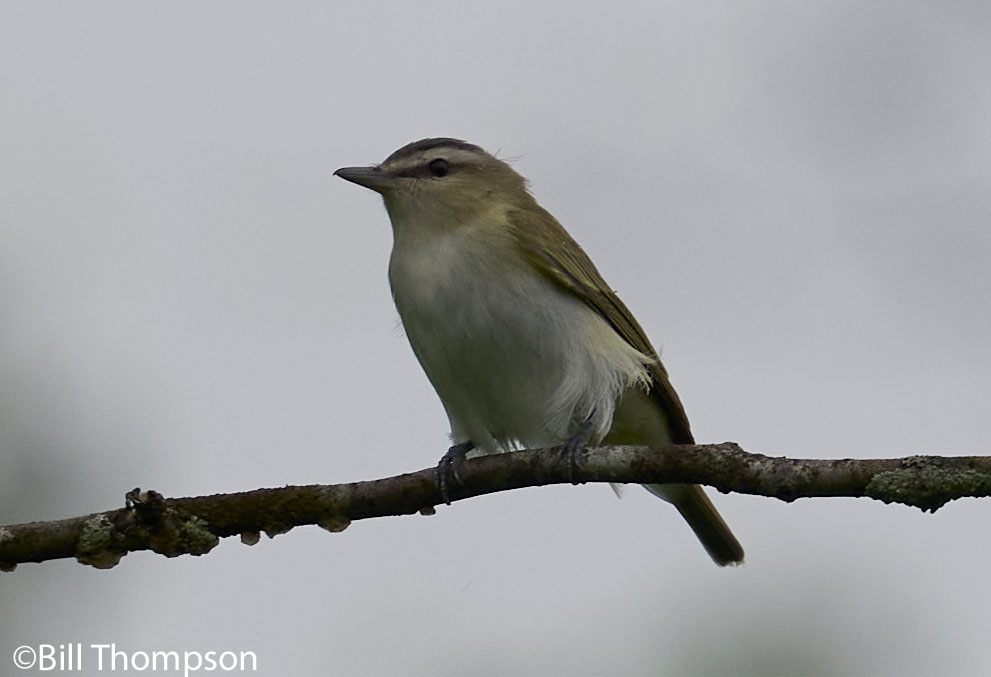
We dipped on Lincoln’s Sparrow, and then spent some time looking for Philadelphia Vireos. While we heard what was likely one singing from within perfect habitat, all of the vireos we saw today – and you simply must see them to identify them – were Red-eyed Vireo. Their march up the mountain and resultant displacement of Philadelphias continue.
It was instructive, however, and analogous to the issues with Swainson’s Thrushes moving uphill and pushing out Bicknell’s – these high elevation specialists have nowhere else to go as our mountains are not getting any taller, and I made sure to weave these conservation and natural history messages throughout the tour.
We looked at plants, too, such as Round-leafed Sundew.
We celebrated our success – especially with Black-backed Woodpecker and Mourning Warbler! – with a wonderful and leisurely lunch, and then half of the group joined me for a casual stroll in the lowlands of Colebrook, where we encountered numerous Veeries – just to add to our thrush tally for the weekend. Of course, our photographers had left, so birds here – especially the Veeries – were exceedingly conspicuous, with repeated views of them out in the open and with bills full of food. American Redstarts, Yellow Warblers, and a couple of singing Bobolinks were icing on the weekend cake.
Have views of our primary target, the Bicknell’s Thrush, been better on this tour? Yes. But they have also been much less fulfilling, and rarely, not even seen at all. So, we’ll take it…plus it was a great experience that fostered appreciation for the challenges of seeing this bird. Oh yeah, and a nest of Black-backed Woodpeckers!
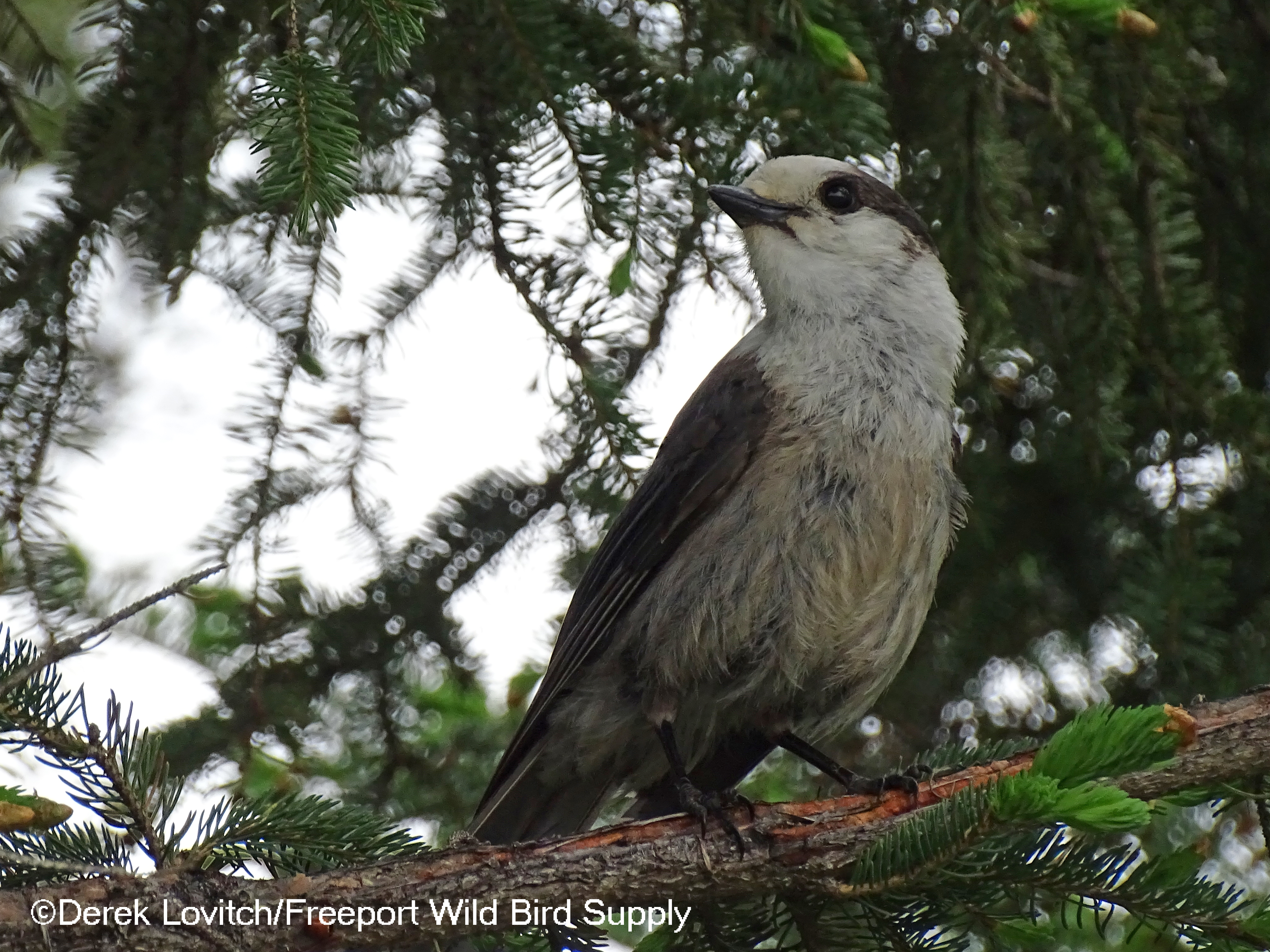
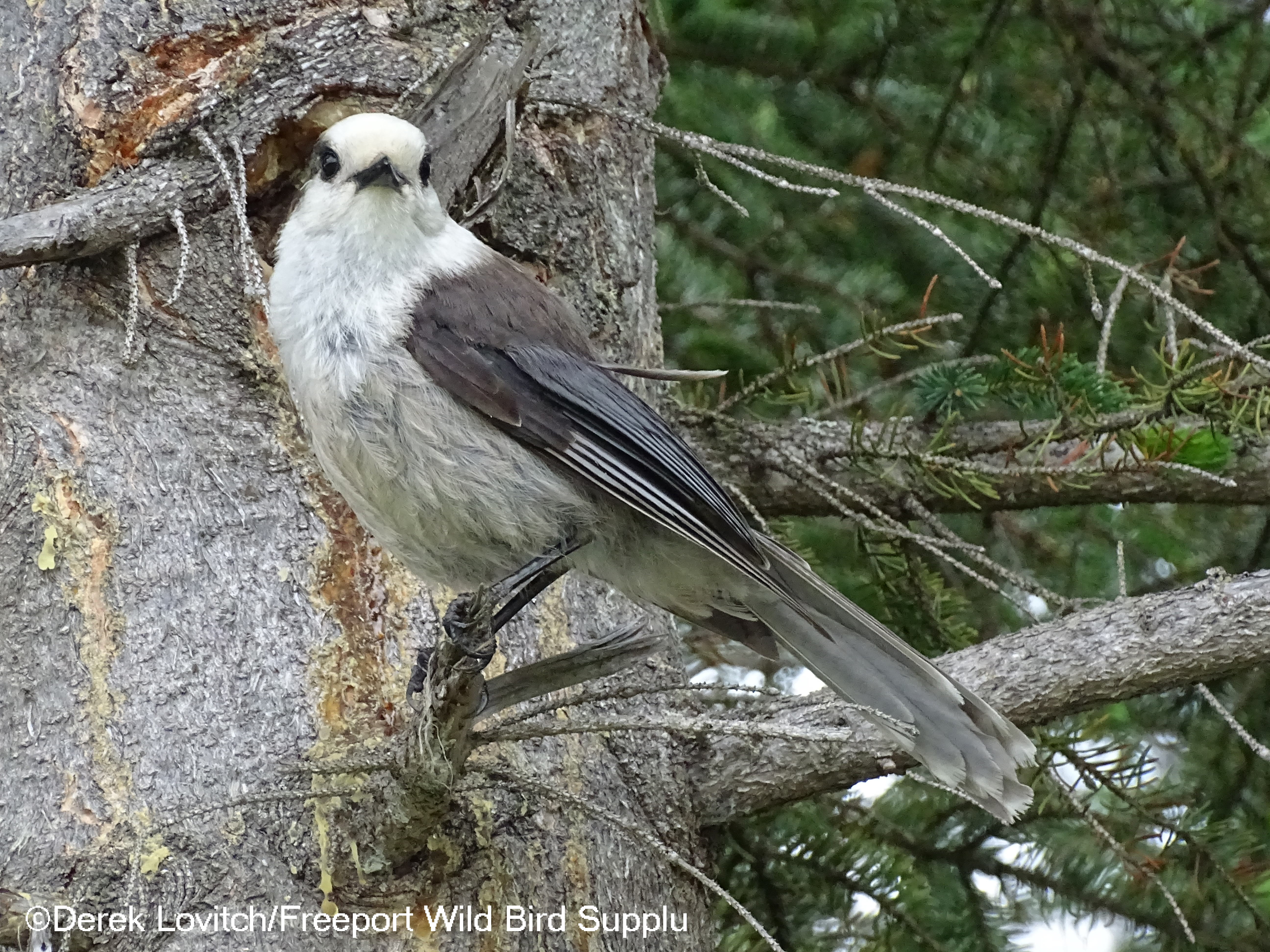
One of up to 6 Canada Jays encountered outside of Rangeley while leading tours for the Rangeley Birding Festival included this confiding adult, part of a family group of at least 4 on 6/6. In fact, I enjoyed Canada Jays in three states in less than a week’s time this week/weekend!
This time of year, most of my birding, both personally and especially professionally, is dedicated to finding, seeing, and enjoying the wide array of breeding species this state has to off. From Saltmarsh Sparrows and Roseate Terns here along the southern coast to Bicknell’s Thrushes and “boreal specialities” in the western Maine mountains (and northern New Hampshire), it has been another extremely busy guiding season for me. Meanwhile, while home, I have been conducting two local breeding bird surveys. While my “highlights” these days are seeing the “expected” species we all seek, I did encounter some unexpected observations and noteworthy counts over the past two weeks, but mostly, I thought I would share some of my photo highlights.
1 Dunlin, 4 Semipalmated Plovers, and 1 Least Sandpiper, Sanford Lagoons, 6/2 (with Jeannette).
Rangeley Birding Festival, 6/6-6/8: Two mornings of birding Redington Road (scouting 6/6, with tour group 6/7) yielded high counts of 2 territorial CAPE MAY WARBLERS (6/6+6/7), 6 CANADA JAYS (6/7), 1 pair of BOREAL CHICKADEES (6/6), 3 Red Crossbills (6/6), 2 Olive-sided Flycatchers (6/6), 1 American Bittern (6/7), 1 Black-billed Cuckoo (6/7), etc.
I was excited to find two Cape May Warbler territories outside of Rangeley on the 6th, and then find both males in the same place the next day with my Rangeley Birding Festival tour group.
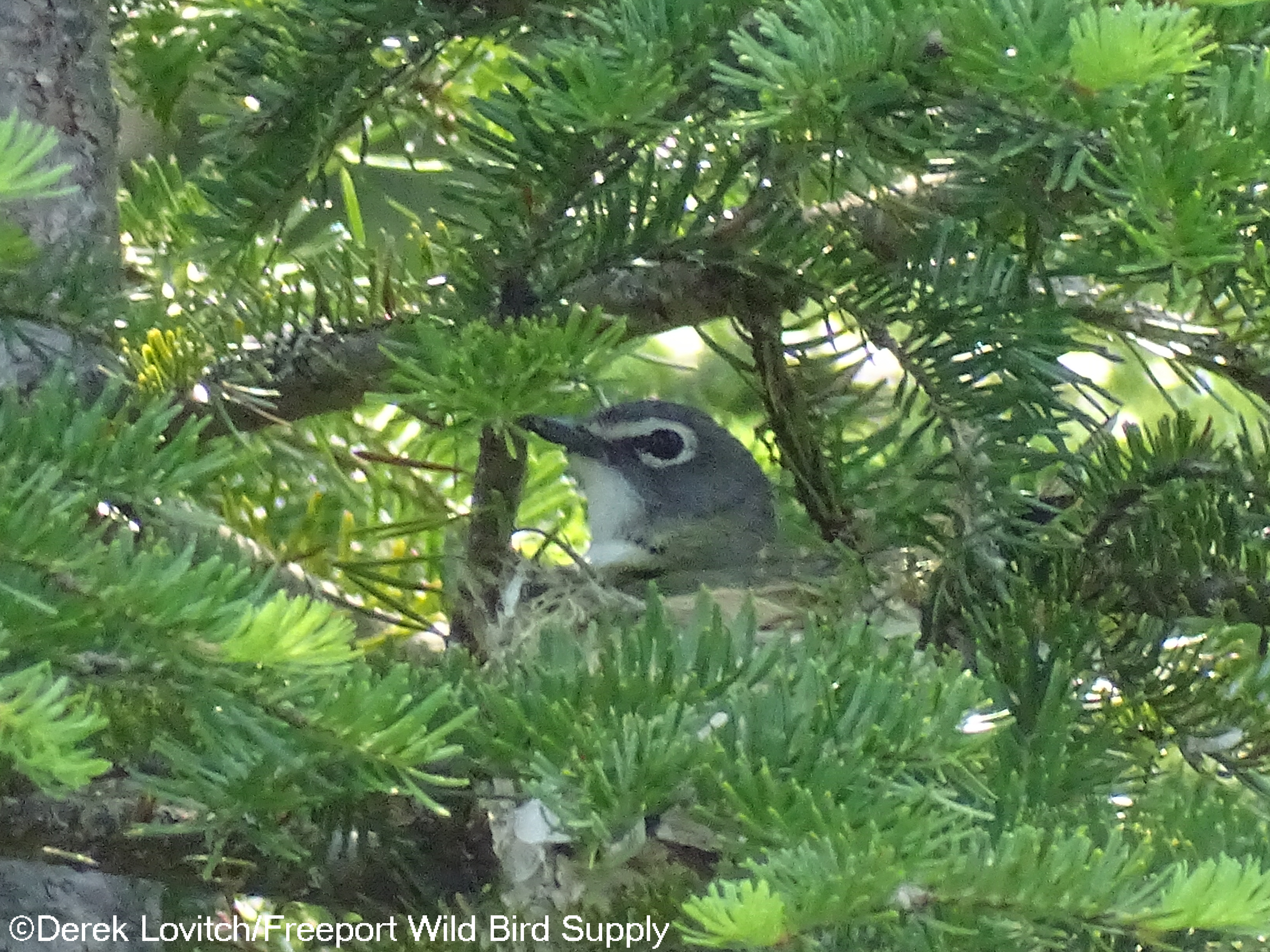
While leading a walk for the Rangeley Birding Festival at Hunter Cove Sanctuary, I found this low-level Blue-headed Vireo nest that was fascinating to observe.
2.5 day private tour in Vermont and Northern New Hampshire (I know, this is a non-Maine-birding-field-note!) yielded: Bicknell’s Thrush, Black-backed Woodpecker, Boreal Chickadee, Canada Jay, Fox Sparrow, and 22 species of warbler including Cape May, Bay-breasted, and Mourning.
As usual, I took few photos while guiding, but this Bay-breasted Warbler outside Errol, NH on the 10th (with clients) was too cooperative not to fire off a few shots!
Back home for a couple of days, it was off to my local bird surveys. This fledgling Barred Owl was in Freeport on the 12th, confirming breeding once again at one of my local patches.
Monhegan Spring Migration Weekend Trip Report.
The 2025 Monhegan Migration Spring Weekend was a shocking success. We went from having a weather forecast that made me worry if there would be any migrants to see at all, to an exceptional weekend that was by far the best Memorial Day weekend of birding out here in quite a few years. A total of 106 species were tallied in 5 days, including 91 together as a tour group, with a total of 22 species of warblers. Here’s the full trip report.













 Maine Birding Field Notes