Tag Archives: Yellow-crowned Night Heron

This Week’s (Plus) Highlights 9/22 – 9/30/2025.

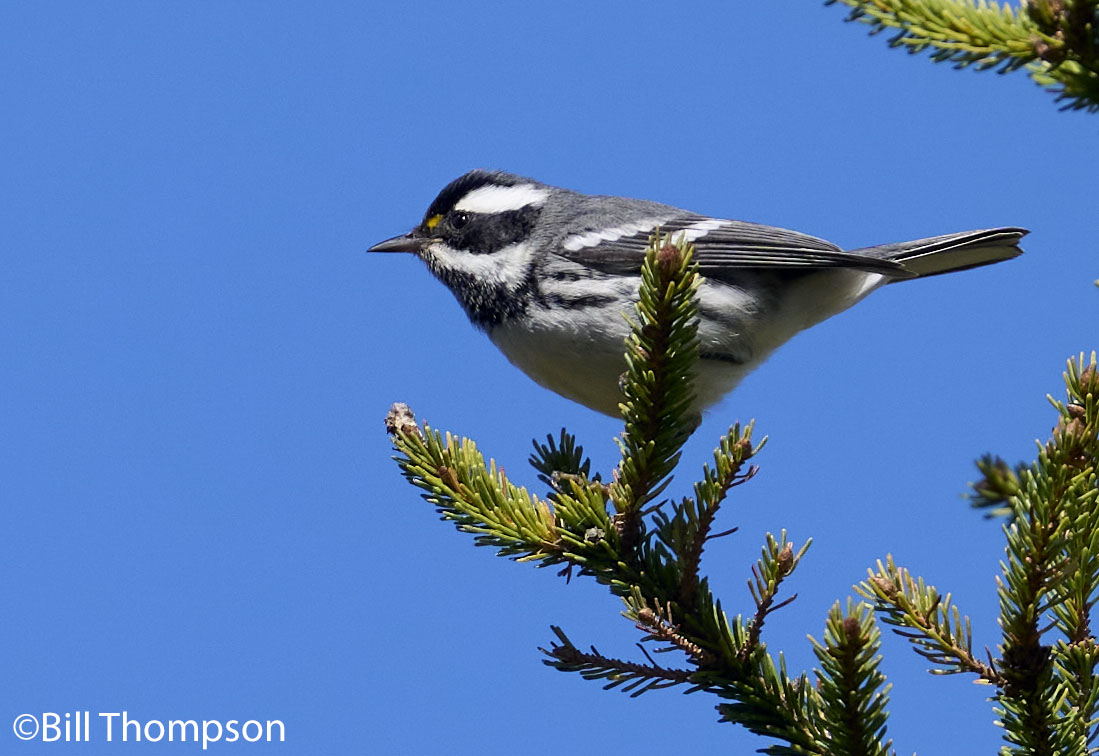
One of the stars of the show during an epic weekend on Monhegan included this Black-throated Gray Warbler that I found with my tour on 9/28. There are only 5-7 previous records of this spiffy western warbler in Maine. It was relocated by others on and off that day, and through much of the day on the 29th. The best show for everyone was when Doug Hitchcox re-relocated it a few feet from where my group and I first discovered it!
That’s when Bill Thompson got this crushing photo.

My observations of note over the last 9 days included 5 remarkable days on Monhegan Island included the following:

  • Highlights from our Durham property this period included 2 continuing Indigo Buntings and 2 Solitary Sandpipers on 9/22; 1 Ruby-throated Hummingbird 9/23-24; and 5 Lincoln’s Sparrows on 9/24.
  • An exceptional day in and around Biddeford Pool on the 23rd with Jeannette included a number of highlights and excellent counts of uncommon birds. Some of the most notable observations include an astounding 26 FORSTER’S TERNS together at Hill’s Beach (with scattered individuals elsewhere that may or may not have been part of this tally,  the shockingly large “irruption” of this tern – especially given the lack of a tropical system to cause it – continues); a juvenile YELLOW-CROWNED NIGHT-HERON at Great Pond, a late juvenile BAIRD’S SANDPIPER on Biddeford Pool Beach, single CLAY-COLORED SPARROWS in Hill’s Beach and East Point, 12 American Oystercatchers off of Ocean Avenue, a goodly 41 Red Knots in The Pool; 7 adult Lesser Black-backed Gulls at Hill’s Beach, and an arrival of fresh juvenile (technically 1st winter as most showed a couple of replaced feathers by now as expected) Dunlin in various locations (high of 30+ on Biddeford Pool Beach).
Forster’s Terns
Baird’s Sandpiper
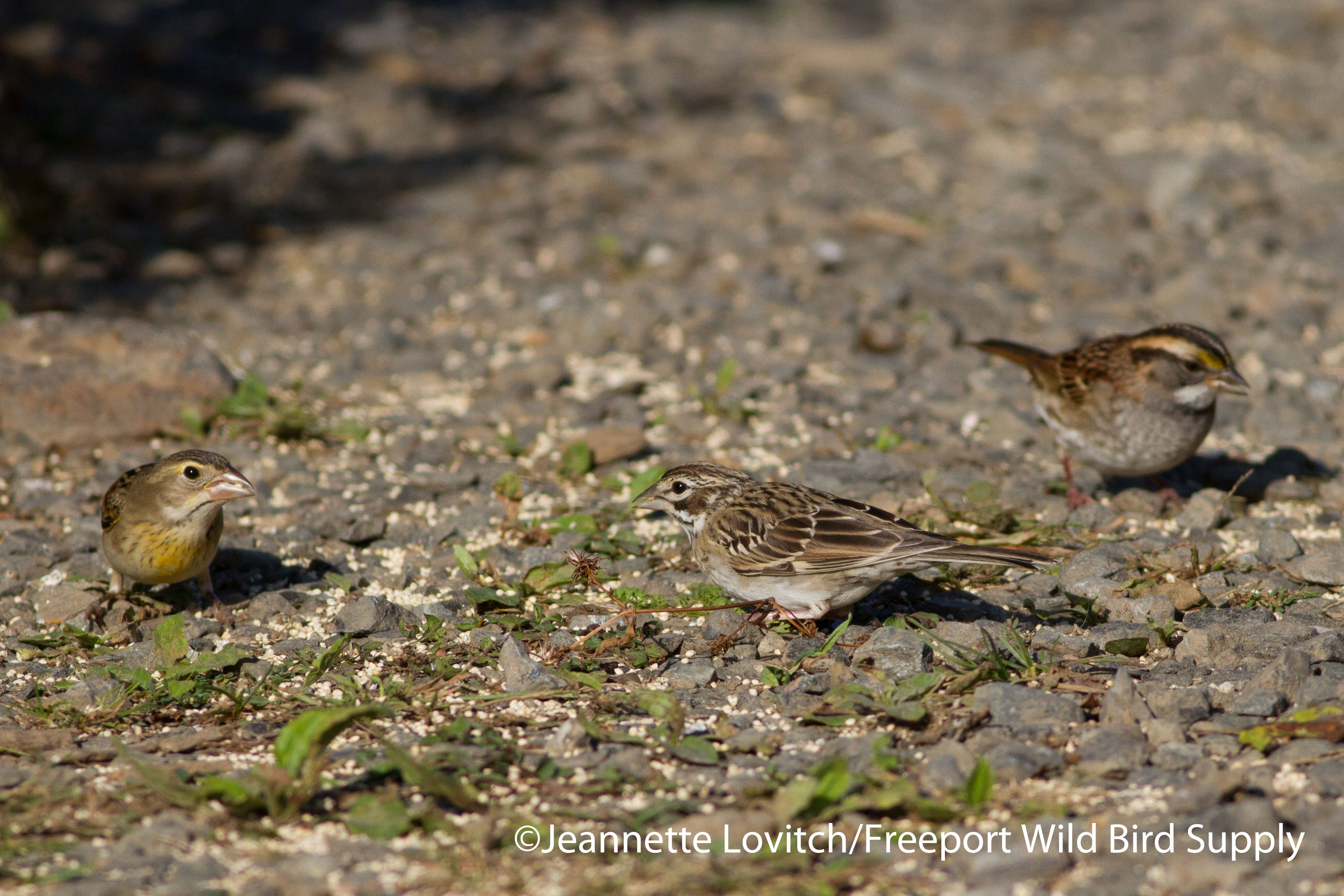
Clay-colored Sparrow
  • 2 Marsh Wrens, Florida Lake Park, Freeport, 9/24.
  • 2 Ruddy Ducks (First of fall), 1 Dunlin, 1 Pectoral Sandpipers, etc, Sabattus Pond, 9/25.
  • It was like the good ol’ days on Monhegan for my tour group this weekend. I was on the island with the tour 9/26-9/29, and then enjoyed a day off with Jeannette on 9/30. I’ll have a complete tour report posted next week (including rarity photos), but for now, the mind-blowing list of rarities and excitement for my group and I included the following:

1 BELL’S VIREO, 9/28 (refound by my group after being discovered by Jess Bishop and Bill Thompson on 9/28).

1 BLACK-THROATED GRAY WARBLER, 9/28-29 (Found by my group, on 9/28 and refound by m.obs on 9/29).

1 immature female PAINTED BUNTING, 9/26 (independently identified – eventually – by my group and Bill Thompson).

1 YELLOW-THROATED WARBLER, 9/27

1 WESTERN KINGBIRD, 9/27.

21 total species of warblers.

Up to 2 Lark Sparrows daily beginning 9/28.

Up to 6+ Clay-colored Sparrows daily.

Up to 3 Dickcissels daily

Up to 2 Orange-crowned Warblers daily beginning 9/27.

1 American Bittern, 9/26-9/27.

Up to 3 Lesser Black-backed Gulls daily.

1 Blue-gray Gnatcatcher, 9/26.

1 Red-bellied Woodpecker, 9/28.

1 Nelson’s Sparrow, 9/27.

1 Yellow-billed Cuckoo on 9/29 (with my group) and 1 Black-billed Cuckoo on 9/30 (with Evan Obercian and Jeannette).

Upcoming Tours with Limited Space Available:

October 5, 2025   – 9:00am

​Join us on a special cruise dedicated to off-shore birding: a collaboration with Cap’n Fish’s Cruises offering half-day “mini-pelagics!” We’ll seek out the rare and common seabirds that occur in our nearshore waters, but we will always have the hope for something unexpected. Derek will team up with the boat’s expert naturalists to spot, identify, and point out pelagic seabirds. Chumming efforts will provide opportunities to attract the birds in for better photo ops and viewing. While we’ll stop to look at any whales and whatever other interesting sea life we encounter along the way, it is the feathered wildlife we’re searching for, and will be focused on.​​

This annual fall excursion gives a chance at some very sought after pelagic species, such as Great and South Polar Skua. More likely species include Northern Fulmar; Black-legged Kittiwake; Pomarine and Parasitic Jaeger; shearwaters – Great, Sooty, Cory’s, and possibly even Manx; Leach’s Storm-Petrel; Razorbill and Atlantic Puffin; Red and Red-necked Phalaropes, and much more. With the later departure date this year, we hope for more jaegers and a better chance at Great Skua, along with the chance at more early-arriving alcids.

Each of our four October trips have been very different, with each year providing some unexpected highlights. Once again, we will be chumming at at least one hotspot, and we’ll have an additional spotter who will keep dedicated eBird lists for those who so desire and want it shared with them. 

October 6, 2025; 9:00 – 12:00

THREE SPACES JUST OPENED WITH A CANCELLATION.

Join the crew of Seacoast Tours and Derek Lovitch from Freeport Wild Bird Supply on a special tour of the islands and waters of Casco Bay. We’ll explore the inner islands of Freeport, Brunswick and Harpswell as we search for eagles, migrant waterfowl, and an occasional seal basking in the sun on the ledges of hidden coves. We’ll focus on the common resident and migratory water and shoreline birds of the region, including photographic opportunities whenever we can.

​Conditions and tide permitting, we’ll poke around the mouth of Maquoit Bay and especially up into Middle Bay, two of the richest areas for waterfowl concentrations.  If we can find a mass of American Black Ducks, we’ll scour them for a variety of other dabblers, such as Green-winged Teal and Northern Shovelers.  Some of our wintering and migratory bayducks, such as Surf and White-winged Scoters will just be arriving, and Common Loons begin to build in for the winter.

October 19, 2025; 9:00am – 2:00pm

​These unique, relaxed birding and beer-ing adventures that you have come to love combine great local birding at seasonal hotspots with visits to sample the delicious creations of some of our favorite local breweries. These tours are a perfect introduction to birding and/or craft beer, and a great opportunity to travel with significant others, friends, and family that have interest in one topic, while your interest is primarily in the other (for now!). But this time we’re leaving the van in the garage, and hitting the water! That’s right, we’re taking a cruise, and we’re returning to the private House Island in Porland Harbor twice in 2025. 

During last year’s wildly successful outing in which we became the first birding group ever on the island, we found oodles of Yellow-rumped Warblers, an uncommon Field Sparrow, and other migrants. But we were truly captivated by Captain Pete, who guided us through the historic fort, sharing a wealth of historical knowledge and fascinating stories. The beer was pretty darn good too, as we sampled the history of Maine’s craft beer scene. 

Building on that success, we’re visiting the private House Island in Portland Harbor twice in 2025. We’ve been granted special permission to come ashore and scour the island here in the peak of fall migration. We’ll follow well-maintained trails through the island’s mosaic of open habitats, scrub, and young woods. These are great habitats to search for a variety of migrants, and perhaps even a rarity!  

Returning in late October, once again rarities will be on our mind. While rare birds are rare, we are still going to expect the unexpected. But more likely are regular migrants of the season such as Yellow-rumped Warblers, a variety of sparrows, and a growing diversity of waterbirds. At the very least, we’ll have resident waterbirds and several species of gulls to sort through. We are having daydreams of a rare flycatcher!

As we motor back across the harbor, we’ll continue to familiarize ourselves with some of the common waterbirds, such as Common Eiders, Common Loons, and the vanguard of our winter diving ducks while enjoying a local craft beverage produced in the city of Portland. While the exact plan is subject to change, we’ll be sure to come up with a plan to adequately celebrate our discoveries – or the one that got away! 

Recent Highlights, 9/3 – 9/10/24

Although not in Maine, this spiffy adult Sabine’s Gull was the icing on the cake of an incredible day in Head Harbor Passage, New Brunswick on 9/4 (with Beth Edmonds, Dan Nickerson, Jeannette, and friends). An impressive concentration of gulls was led by 5,000-8,000 Bonaparte’s Gulls, 5,000 Herring and Great Black-backed Gulls, and also including 20+ Lesser Black-backed Gulls and 20-30 Laughing Gulls (also Ring-billeds and Black-legged Kittiwakes). It was the best concentrations of birds we have experienced here in several years.

With our annual early fall weekend with friends to Washington County, a productive eight days of birding included the following observations of note: 

  • Sandy Point Morning Flight, 9/3: 355 total migrants led by 105 Northern Parulas and 88 Cedar Waxwings, and also including a single BLUE-GRAY GNATCATCHER (Only my 4th morning flight record). Complete tally here.
  • 4 Red-breasted Mergansers, Lubec Bar and Flats, 9/5 (with Beth Edmonds, Dan Nickerson, Jeannette, and friends).
  • 1 adult Lesser Black-backed Gull, Roque Bluffs State Park, 9/6 (with Jeannette).
  • 1 juvenile YELLOW-CROWNED NIGHT-HERON, Jones Creek, Pine Point, Scarborough, 9/10 (with Jeannette).
  • Our Durham property continues to impress during migration. Another week with at least 15 species of warblers detected in the yard, and highlights including Philadelphia Vireo on several days and a Brown Thrasher at our feeders 9/8-9.

Based on the progressing season, and my upcoming schedule, this was the last week I focused on shorebirds. As always, my peak shorebird season culminates with our visit down east. There are plenty of shorebirds left to enjoy (and count), but my final shorebird “high counts” report of the season – including a goodly 20 species this week – is as follows:

  • AMERICAN OYSTERCATCHER: 4 (2 ad with 2 juv), Pine Point, Scarborough, 9/10 (with Jeannette).
  • Black-bellied Plover:  8, Pine Point, 9/10 (with Jeannette).
  • Killdeer: 14, Crystal Spring Farm, Brunswick, 9/8.
  • Semipalmated Plover: 71, Pine Point, 9/10 (with Jeannette).
  • Whimbrel: 3, Lubec Bar and Flats, 9/5 (with Beth Edmonds, Dan Nickerson, Jeannette, and friends).
  • Ruddy Turnstone: 1, Lubec Bar and Flats, 9/5 (with Beth Edmonds, Dan Nickerson, Jeannette, and friends).
  • RED KNOT: 1 juv, Lubec Bar and Flats, 9/5 (with Beth Edmonds, Dan Nickerson, Jeannette, and friends).
  • STILT SANDPIPER: 1 juvenile, Walsh Preserve, Freeport, 9/9.
  • Sanderling: 11, Carrying Place Cove, Lubec, 9/5 (with Jeannette).
  • DUNLIN: 1 juv, Lubec Bar and Flats, 9/5 (with Beth Edmonds, Dan Nickerson, Jeannette, and friends).
  • Least Sandpiper: 150+, Sanborn Cove, Machiasport, 9/3 (with Jeannette).
  • White-rumped Sandpiper: 10+, Sanborn Cove, 9/3 (with Jeannette).
  • Pectoral Sandpiper: 2, Walsh Preserve, 9/9.
  • Semipalmated Sandpiper: 3,000-4,000 (!), Machiasport, 9/3 (with Jeannette). Only 2,000 or so on 9/6 (with Jeannette).
  • WESTERN SANDPIPER: 1 juvenile, Pine Point, 9/10 (with Jeannette).
  • Short-billed Dowitcher: 15, Walsh Preserve, 9/9.
  • Spotted Sandpiper: 2, Pike Lands Preserve, Lubec, 9/5 (with Jeannette).
  • Lesser Yellowlegs: 41, Walsh Preserve, 9/9.
  • “Eastern” Willet: 2, Pine Point, 9/10 (with Jeannette).
  • Greater Yellowlegs: 6, Wharton Point, Brunswick, 9/8.

2015 MonhegZen Fall Migration Birding Weekend

As always, the last weekend in September finds me at one of my favorite birding locales in the world, Monhegan Island. My annual “MonhegZen Fall Migration Weekend” tour takes place then, and with it, a wealth of birds and good times are to be had.

Well, usually a wealth of birds are to be had! But yeah, this year was slow. As slow as I have ever seen it. But my goodness, was it nice out! Of course, this same pleasant, unseasonable warm and benign weather was exactly why there were so few (relatively speaking) birds out there. It seems that with night after night of great flying conditions, birds are proceeding unimpeded, with no fallouts, or even concentrations near the coast or offshore.

So in writing this blog, I was trying to figure out how to sugarcoat the weekend. Perhaps this will do it:
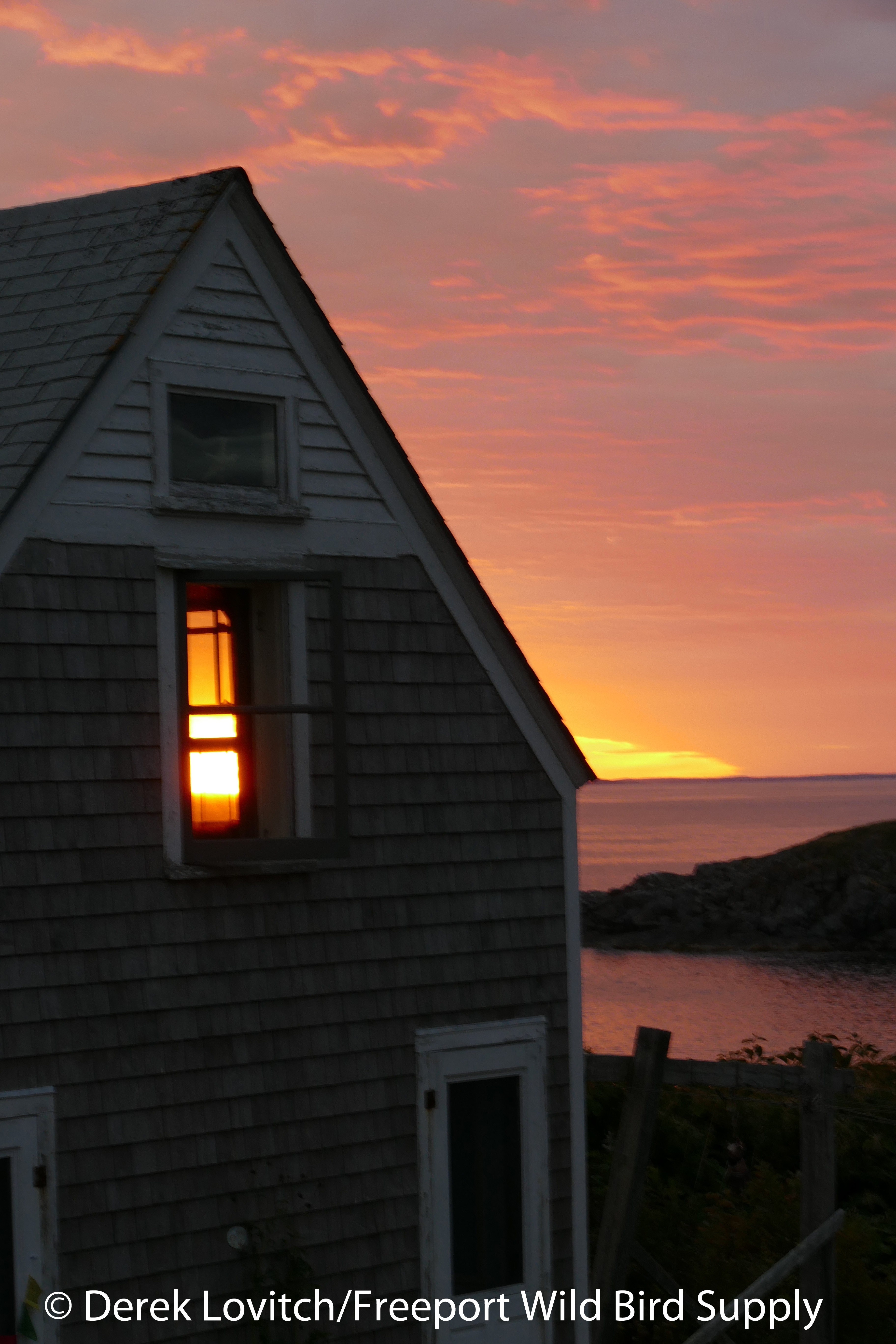
sunset1_edited-1

Or this?
Sunset2_edited-1

Beautiful sunsets, and wonderous moonrises:
group watching moonrise_edited-1

moonrise_edited-1

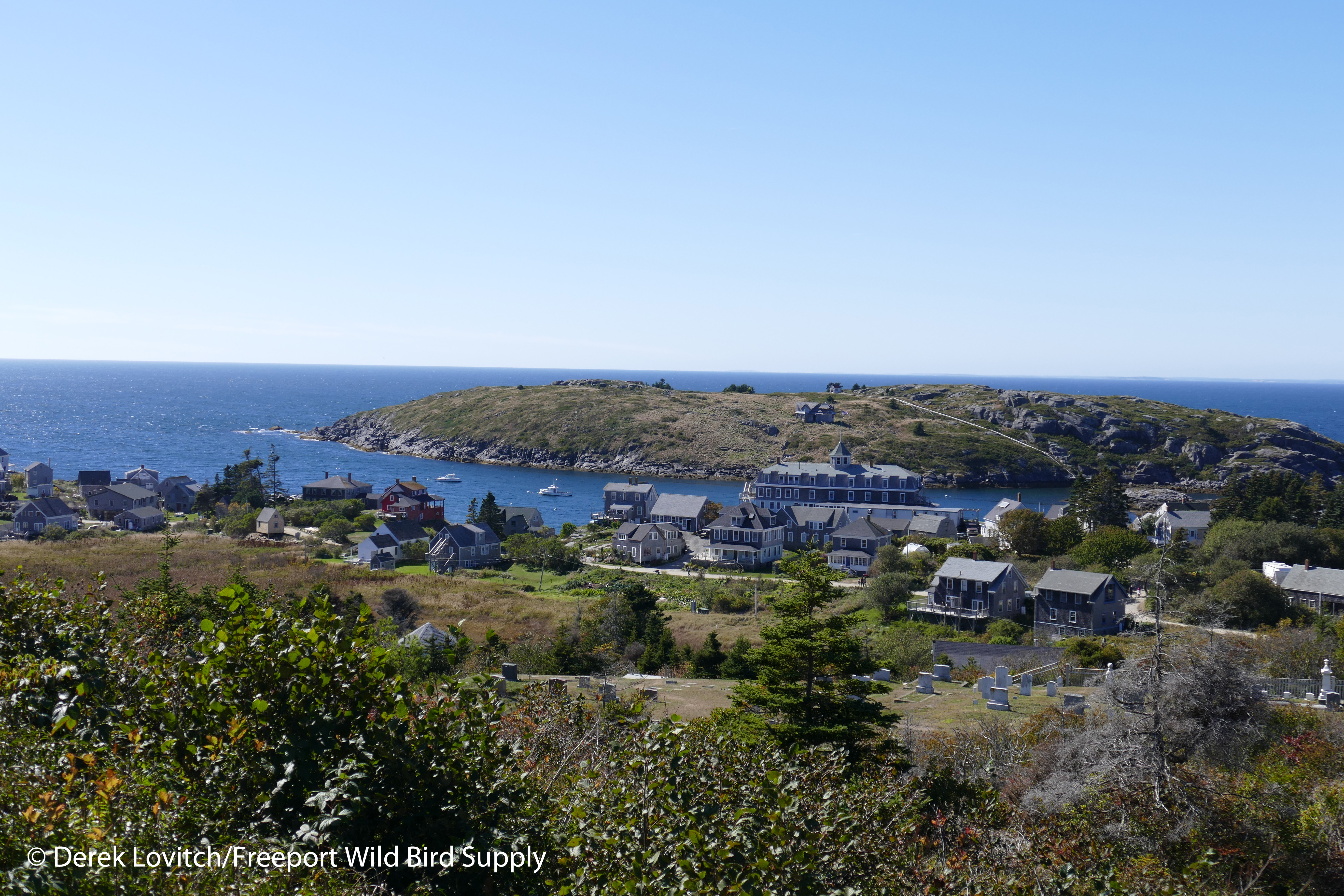
Or maybe this will help:
Monhegan_from_lighthouse_edited-1

So yeah, it was gorgeous. Beyond gorgeous. And the Novelty Pizza was just as good, and Monhegan Brewing Company’s beer was just as great.

The butterflying was good, and the wildflowers were a nice distraction, especially the Fringed Gentian as always.
Fringed_Gentian1_edited-1

Fringed_Gentian2_edited-1

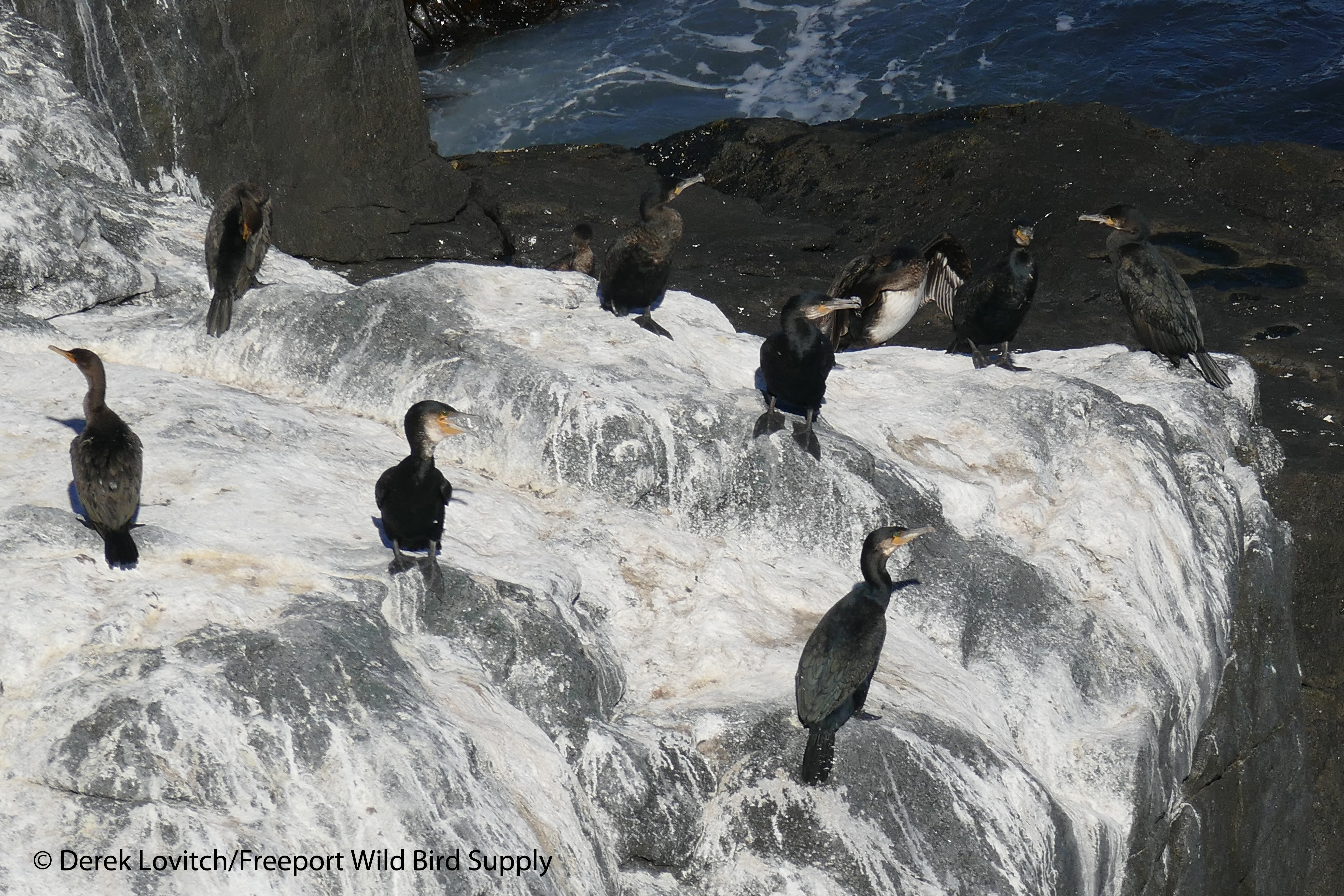
And don’t worry, there were still plenty of birds – just not as many as usual. We enjoyed some great studies of Great and Double-crested Cormorants…
GRCOs_withDCCO,Monhegan,9-26-15_edited-1

…and of course a few rarities were around. The two headliners were the two juvenile Yellow-crowned Night-Herons that would spend dawn at the Ice Pond. They would fly in just before 6 (presumably from feeding around the rocky shoreline), drink and preen a bit, and then shortly after sunrise, take off to roost in the trees. You needed to be here dark and early to get them, and on Sunday morning, the group made the lovely twilight walk (fly-by American Woodcock!) to reach the pond, and we arrived just a few minutes after the night-herons did. One lingered until it was just light enough to grab a snapshot.
YCNH,Monhegan, 9-27-15_edited-1

A Great Blue Heron kept watch as well.
GBHE_silhoutte1_edited-1

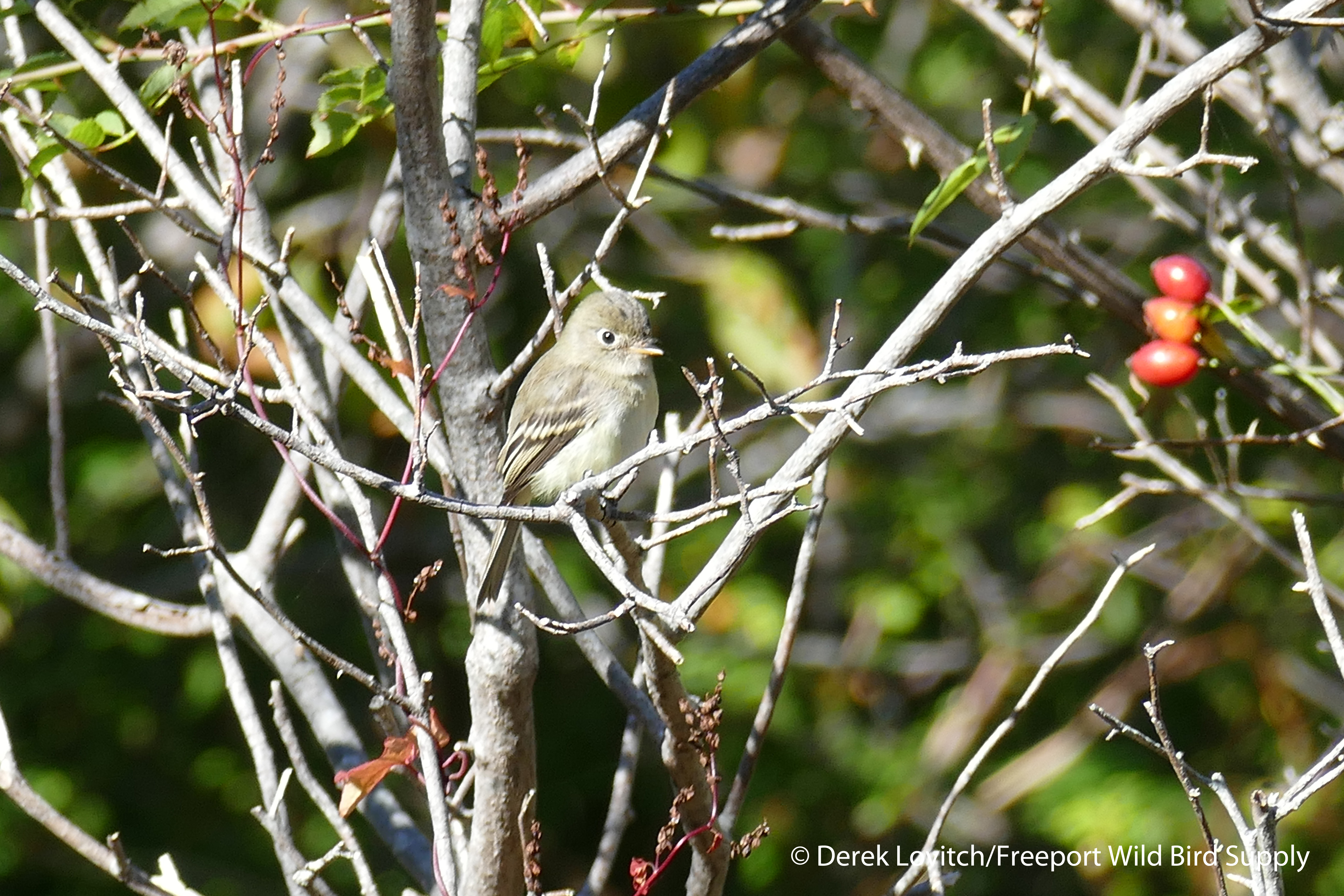
Of course, it wouldn’t be a Monhegan weekend if I didn’t attempt to string one Empidonax flycatcher. Of course, this one was a Least Flycatcher – as expected, and as usual. It did offer a very nice, prolonged study, however.
L1030231_LEFL1,Monhegan,9-26-15_edited-1

One of the other significant birding highlights was the seawatching from the tall cliffs. In the afternoon each day, we strolled over to White Head to enjoy Northern Gannets, study Great Cormorants, and do a little seawatching.
group_on_cliff,byKristen_edited-1

With northeasterly winds picking up Sunday afternoon, gannets were breathtakingly close. A little trickle of shearwaters, which included 2 Cory’s Shearwaters among a handful of Greats, were anything but near.

Here’s the three-day checklist of all birds seen:
American Black Duck: 0,1,0
Mallard: 6,6,6
American Black Duck x Mallard: 1,1,1
Green-winged Teal: 1,1,1
Common Eider: x,x,x
Surf Scoter: 0,1,8
Common Loon: 0,1,2
CORY’S SHEARWATER: 0,0,2
GREAT SHEARWATER: 0,0,6
Ring-necked Pheasant: 3,3,1
Northern Gannet: #,#,##
Double-crested Cormorant: x,x,x
Great Cormorant: 2,13,3
Great Blue Heron: 1,0,2,
YELLOW-CROWNED NIGHT-HERON: 0,0,2 (present all three days, but we only made it to the Ice Pond at dawn on the last day).
Osprey: 1,2,2
Bald Eagle: 1,2,1
Northern Harrier: 0,0,1
Sharp-shinned Hawk: 4,6,1
American Kestrel: 0,3,9
Merlin: ??,4,3
Peregrine Falcon: 0,2,1
Semipalmated Plover: 0,1,0
Laughing Gull: 1,1,0
Herring Gull: x,x,x
Great Black-backed Gull: x,x,x
Ring-billed Gull: 0,0,1
Black Guillemot: x,x,x
Mourning Dove: 6,4,6
Belted Kingfisher: 1,1,2
Yellow-bellied Sapsucker: 8,4,4
Downy Woodpecker: 0,2,2
Northern Flicker: 0,6,8
Least Flycatcher: 0,1,1
Eastern Phoebe: 0,3,3
Blue-headed Vireo: 0,1,0
Philadelphia Vireo: 0,1,0
Red-eyed Vireo: 0,6,3
Blue Jay: 4,8,15
American Crow: x,x,x
Common Raven: 3,2,2
Horned Lark: 0,1,0
Black-capped Chickadee: x,x,x
Red-breasted Nuthatch: 6,8,12
Brown Creeper: 0,1,2
Winter Wren: 0,1,0
Golden-crowned Kinglet: 15,20,40
Ruby-crowned Kinglet: 20,6,5
Swainson’s Thrush: 1,0,0
American Robin: 2,1,1
Gray Catbird: x,x,x
European Starling: 8,8,8
American Pipit: 3,1,0
Cedar Waxwing: 30,25,30
Nashville Warbler: 1,1,1
Northern Parula: 10,4,4
Yellow Warbler: 2,1,1
Magnolia Warbler: 1,0,0
Cape May Warbler: 1,2,1
Black-throated Blue Warbler: 1,0,0
Yellow-rumped Warbler: 150,75,75
Black-throated Green Warbler: 6,2,2
PINE WARBLER: 1,0,0
Prairie Warbler: 1,0,1
Palm Warbler: 4,2,2
Blackpoll Warbler: 15,10,10
American Redstart: 0,1,1
Black-and-white Warbler: 1,0,1
Common Yellowthroat: 4,x,x
Chipping Sparrow: 1,4,4
Song Sparrow: x,x,x
Lincoln’s Sparrow: 2,1,1
Swamp Sparrow: 4,2,2
White-throated Sparrow: 10,10,10
White-crowned Sparrow: 0,1,1
Northern Cardinal: 10,8,8
DICKCISSEL: 1,1,1
Common Grackle: 10,29,29
Baltimore Oriole: 2,2,2
American Goldfinch: 2,4,4

Total species = 80
Total warbler species = 15

Although this year’s tour was one day shorter than usual (since Jeannette and I had to leave for a tradeshow on Monday), the 80 total species was a whopping 22% below the average of 102 species for my usual 4-day tour, and 16% below my average of 95 species for a three-day fall tour.

But the “MonhegZen Migration Weekend” isn’t called that for some existential reason – no meditation required. Instead, it’s a suggestion of the mindset of going with the flow, taking what the island gives us, and enjoying a truly unique and remarkable place that superlatives fail to completely describe.

So yeah, it was pretty slow. But it’s not just cliché: a slow day on Monhegan is better than a “good” day almost anywhere else. And not just for the birds! Don’t believe me? Well, how about joining us next fall to see for yourself? I mean, did you see those sunsets?

P.S. To get a better idea of what it’s usually like out there, check out my blog from last fall’s weekend tour.

Monhegan Island, 9/20-22/2013

On a morning with a big overnight migration in the fall, there’s no where I’d rather be than SandyPoint.  I just wish there was a direct ferry from there right to MonheganIsland.  Any other time, I would just rather be on Monhegan.

While our annual MonhegZEN Fall Migration Weekend coming up this weekend (still some space available), Jeannette and I headed to the island Friday through Sunday for a few days of birding and visiting with friends.  It was kinda odd being there without a group!  Not surprisingly, I did not bird much less hard.

I’ll post some radar images from the weekend on a forthcoming blog entry that I hope to post by day’s end.  A decent flight Thursday night into Friday produced a fair amount of birds on the island, even after our late (relatively speaking) arrival at 10:00am, and even though it seemed – as is often the case on calm mornings – birds that arrived at dawn continued on to the mainland.  Three of our first handful of species, however, were Philadelphia Vireo, Cape May Warbler, and Yellow-billed Cuckoo.  Welcome (back) to Monhegan.

The birding improved in the afternoon, highlighted by a Western Kingbird.
_MG_9983_edited-2

A Lark Sparrow and two Dickcissels – all present for a few days – were enjoyed (here, one of the Dickcissels with the Lark Sparrow and a White-throated Sparrow in the background). Typical “Monhegan Trash Birds:” birds that are noteworthy anywhere else in the state but are fully expected in an autumn visit here.
_MG_0050_edited-2

We ended up with 67 species of birds on the day, including 11 species of warblers.  Yup, a slow day of birding on Monhegan beats a good day of birding almost anywhere else.  Light southerly winds that developed over the course of the day became calm by nightfall, and call notes early in the night were suggestive of birds departing the island.
IMG_1571

With a southerly flow aloft, I didn’t have high hopes of a lot of new arrivals for the next morning.  The radar image was, simply put, was weird – some sort of temperature anomaly or perhaps a malfunction, so I couldn’t use that to confirm or alleviate my concerns.  A mere handful of bird overhead at dawn on Saturday morning confirmed it though – there was not much on the move overnight.

Fog rolled in and out for most of the morning, clearing out in the afternoon on an increasing south to southwesterly breeze.  We beat the bush hard, and covered a lot of ground, but birds were hard to come by.  There were quite a few more Yellow-rumped Warblers around than on previous mornings, Kristen noted, and we added plenty of species to our trip list over the course of the day.  While the Dickcissels apparently departed, the Lark Sparrow continued, and the island was now up to three Clay-colored Sparrows.
_MG_0160_edited-2

Clay-colored Sparrows, Dickcissels, and Lark Sparrow, check:  the triumvirate of Midwestern regular-rarities out here.  Two adult Lesser Black-backed Gulls, a tarrying Eastern Kingbird, a Semipalmated Plover, and a good afternoon Northern Gannet show were the other highlights of what amounted to be an exceptionally slow day of birding for Monhegan in the fall.  Nevertheless, complaints were not uttered – we were on Monhegan! – and besides, I got to mooch a TV (Thanks Paul and Sue!) to watch Rutgers come from behind to defeat Arkansas in an exciting finish, and we visited the Monhegan Brewing Company.  Yup, tough day.
_MG_9963_edited-2
This young Peregrine Falcon – with a bulging crop from its last meal – also had a good day.

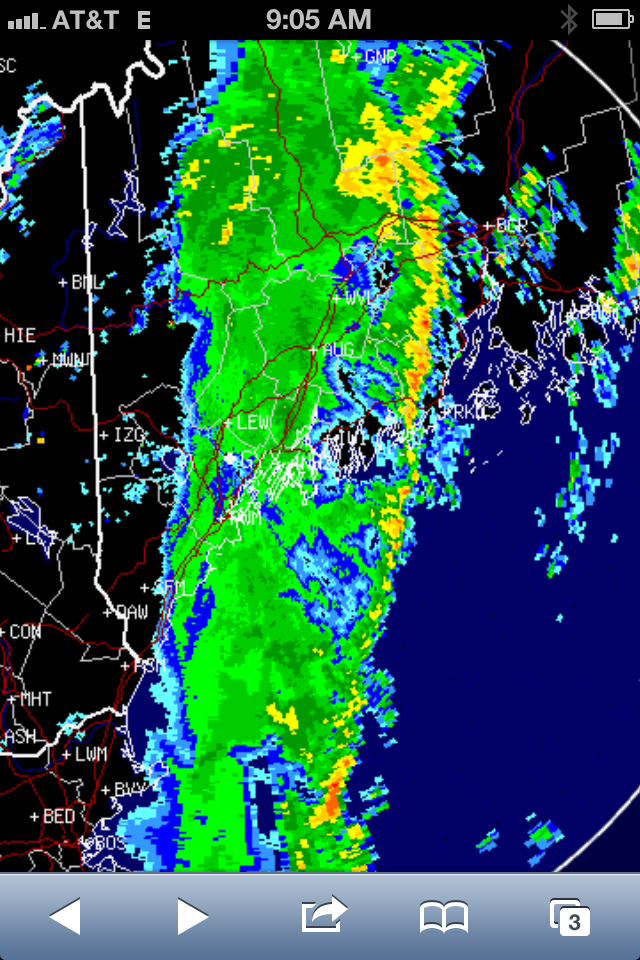
Unfortunately, an increasing southerly wind overnight precluded much in the way of any migration.  Take a look at the next blog to see what “almost nothing” looks like on a radar image.  Clouds were thick by dawn, too, but the rain held off until after breakfast.  After another fulfilling and scrumptious breakfast at the Trailing Yew, Jeannette, Kristen, and I headed down to Lobster Cove for a bit of seawatching.  We could see the wall of rain on the radar, and we could now see it on the horizon.  But as it marched closer, tubenoses joined the gannets.  In a mere 15 minutes or so, 20+ Great Shearwaters and 6+ Sooty Shearwaters zoomed through my scope.  And then the skies opened up.  This is what a line of rain – ahead of a cold front – looks like on the radar.
IMG_1573

The southerly winds were diminishing as the rain tapered off rather quickly over the course of the morning, but seawatching was less productive before lunchtime – apparently those tubenoses were all on the move just ahead of the precipitation.  But with the sun beginning to peak out after lunch, at least more birds were more visible again: two of the Clay-colored Sparrows, a Philly Vireo, etc.  Joined by Paul and Doug, we encountered a – or the – Yellow-billed Cuckoo, and then a calling flyover Lesser Yellowlegs became my 202nd species on Monhegan.

Moments later, Paul spotted a night-heron in a narrow drainage, and Doug soon relocated it.  A juvenile Yellow-crowned Night-Heron!  Once a more regular bird in Maine, and even on Monhegan, it had been about a decade since one had made an appearance on the island.  But this bird showed up a couple of weeks ago, and was often seen foraging on grasshoppers in lawns.  Rumors of its continued presence were circulated, but there were no confirmed sightings for over a week.  Until today.
_MG_0216_edited-2
Monhegan bird #203!  And two island birds in about 10 minutes.  Now that’s the way to finish strong.

When it was time to go, we were very happy to see the waves were rapidly dropping off.  Seven foot seas this morning had been reduced to 3-4 at most as we hopped on the Hardy Boat for the trip back.  A Great Cormorant on the Outer Ducks was our 88th species for the Monhegan tally for this trip, but 88 –including a mere 13 species of warblers – was a fairly low total for three days out here at this time of year.  That being said, it could have been much lower had we not continued to beat the bush.

Two juvenile Lesser Black-backed Gulls joined some hopeful Herring Gulls following the boat to shore, and westerly winds were increasing as the cold front pushed through.  There would no doubt be a lot of new birds come morning on Monhegan.  While I would be sorry to miss them, I knew fun was going to be had at SandyPoint, so I was not upset.

And I was right…