
to our winter feeder watching sessions.
After beginning a “feeder watching blog” while stuck at home from shoulder surgery in the winter of 2023 (here and here), I continued the tradition last year in an attempt to gauge the difference between the two winters. A lot of folks were commenting at the store at the time about how few birds there were at feeders in the winter of 2023-24, but this was changing by the time I collected my data in February of 2024.
In fact, I found more birds were at feeders – at least according to our Durham, Maine feeding station as a case study. Check out last year’s blog for a rundown of some of the conclusions that I reached, especially in comparison to the winter of 2022-23.
This year, a lack of feeder birds has most definitely not been the complaint. In fact, bird seed sales are through the roof in much of the East, and at our store, we are really, really busy. Most folks are commenting about how much birds are eating at their feeders. And while recent snowfall is part of that, this pattern began in the fall.
My perception, however, is that there is actually somewhat lower diversity at our feeders (especially the complete dearth of any “winter finches”), and perhaps the number of individuals at the feeders is a little lower than usual, but those species and individuals that are at our feeders are eating a lot more.
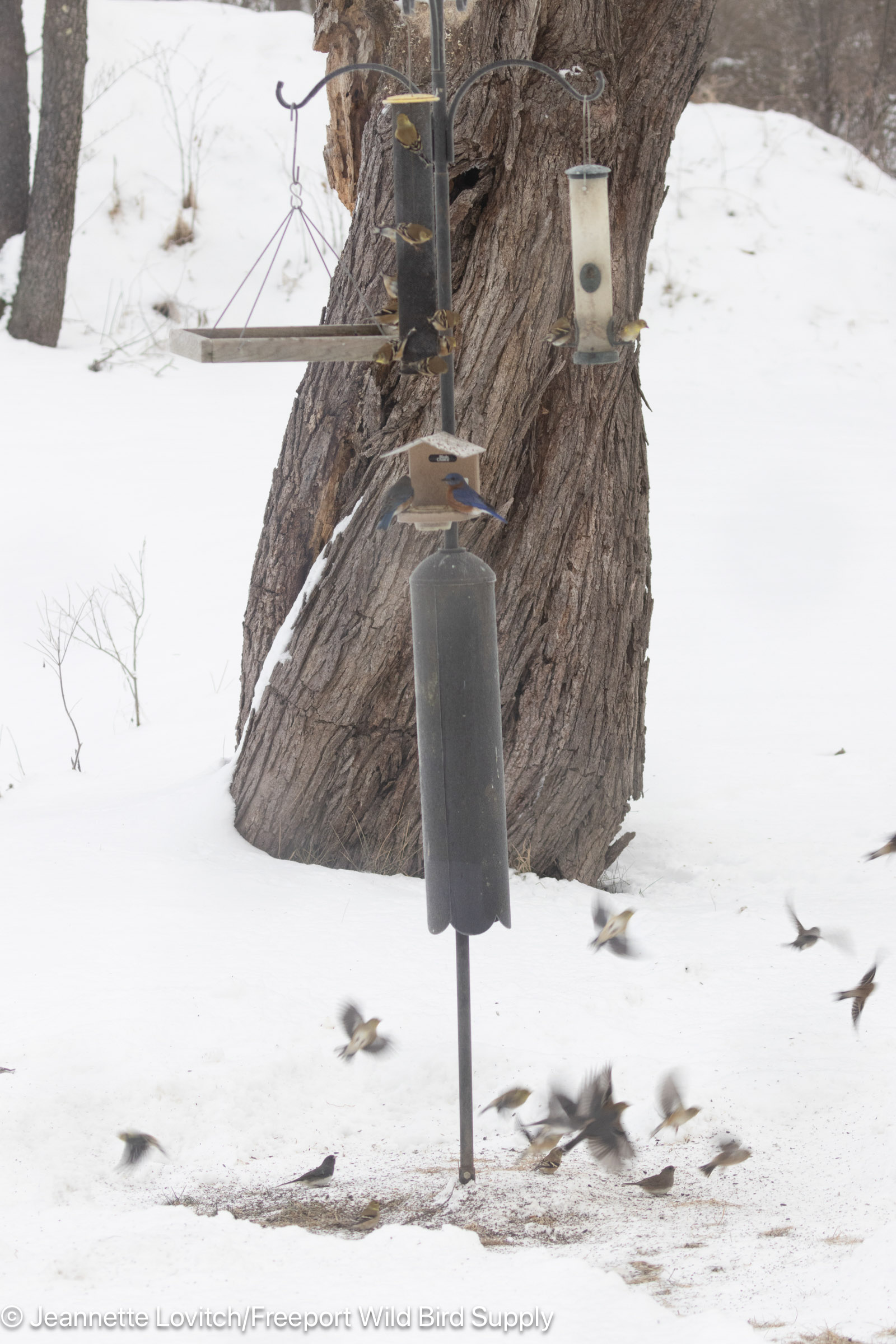
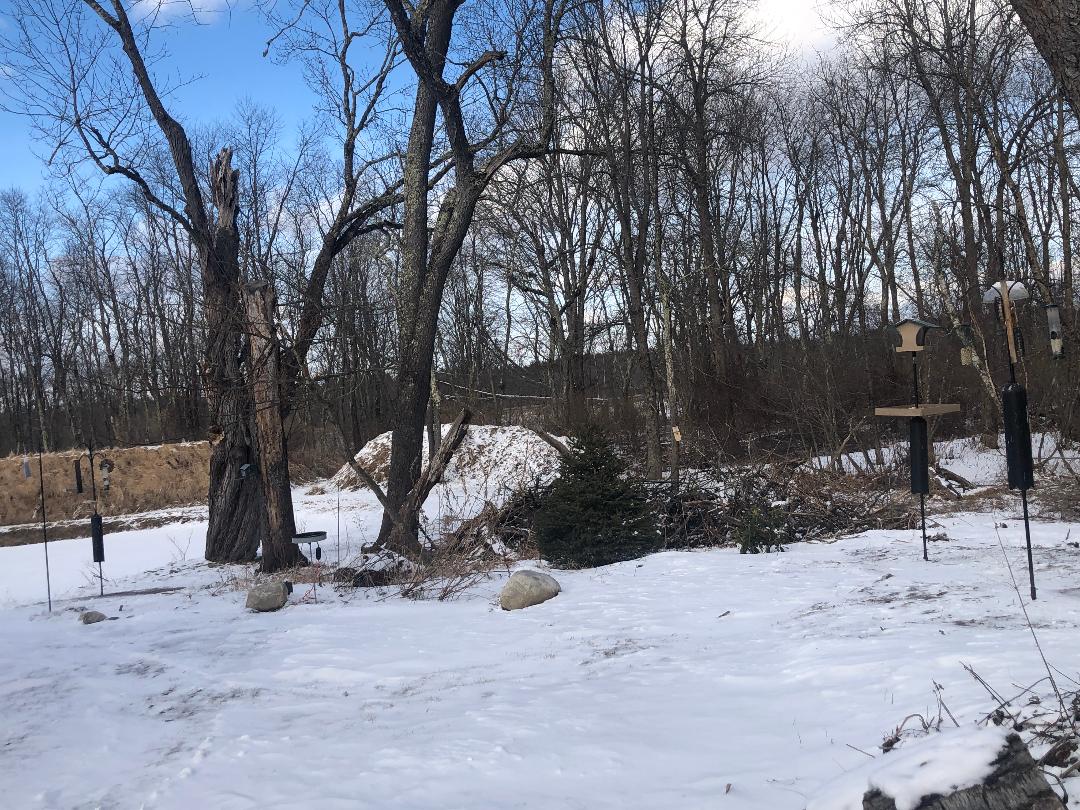
Let’s start with the numbers. Once again, I dedicated time to counting feeder birds at our feeding station in Durham each day for at least one hour. I was unable to dedicate the time on two dates, so I counted for 10 of 12 days between February 2nd and February 13th – a window that began three days earlier than last year. Like last year, I used the standard methodology of using “high counts” (maximum number of individuals seen at any one time, unless they were readily identifiable as being different).
February 2 – February 13(minus 2/8 and 2/11), 2025.
| Species | Avg./day 2023 | Avg./day 2024 | Avg./day 2025 | Average 3 years | Difference 24vs25 | Difference 25 vs 3yr |
| Wild Turkey | 0.2 | 0 | 0 | 0.07 | 0 | -0.07 |
| Mourning Dove | 13.5 | 26.5 | 29.6 | 23.2 | -3.1 | +6.4 |
| Sharp-shinned Hawk | 0.4 | 0.2 | 0 | 0.2 | -0.2 | -0.2 |
| American Goshawk | 0 | 0.1 | 0 | 0.03 | -0.1 | -0.03 |
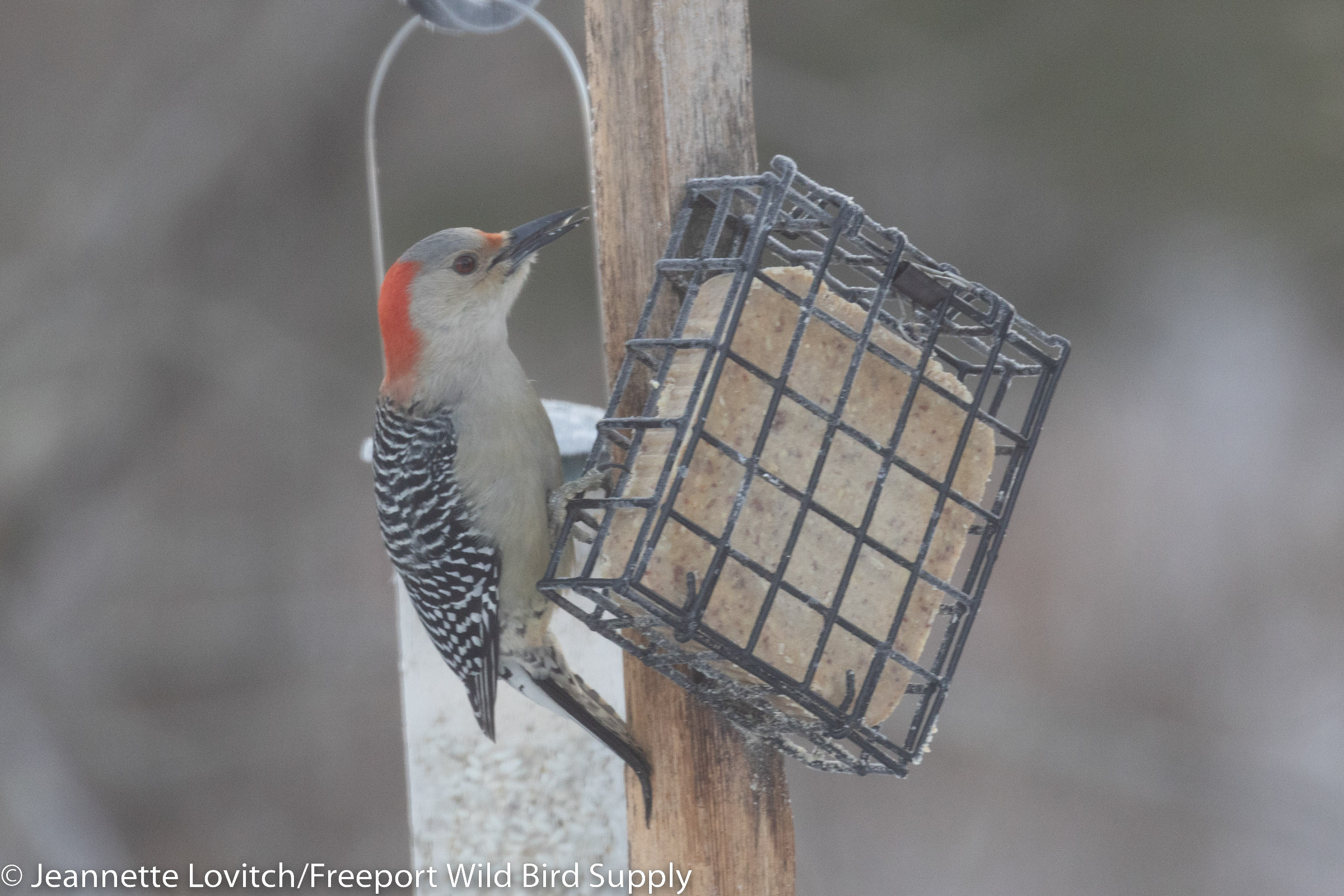
| Red-bellied Woodpecker | 1 | 1 | 1.2 | 1.07 | +0.2 | +0.13 |
| Downy Wo-odpecker | 2.4 | 2.9 | 2.5 | 2.6 | -0.4 | -0.01 |
| Hairy Wo-odpecker | 2 | 2 | 2 | 2 | 0 | 0 |
| Pileated Woodpecker | 1 | 0.1 | 0 | 0.37 | -0.1 | -0.37 |
| Blue Jay | 7.8 | 3.0 | 9.2 | 6.67 | +6.2 | +2.53 |
| American Crow | 0.7 | 0 | 1.8 | 0.83 | +1.83 | +0.97 |
| Black-capped Chickadee | 7.4 | 2.9 | 5.2 | 5.17 | +2.3 | +0.03 |
| Tufted Titmouse | 4 | 3 | 4 | 3.67 | +1 | +0.33 |
| White-breasted Nuthatch | 2 | 1.4 | 2.4 | 1.93 | -1 | +0.47 |
| Red-breasted Nuthatch | 0.7 | 0 | 0.6 | 0.43 | +0.6 | +0.17 |
| Brown Creeper | 0.4 | 0 | 0 | 0.13 | 0 | -0.13 |
| Carolina Wren | 0.9 | 1 | 1.8 | 1.23 | +0.8 | +0.57 |
| GRAY CATBIRD | 0 | 0 | 0.1 | 0 | +0.1 | +0.1 |
| European Starling | 1.1 | 2.7 | 8.7 | 4.17 | +6 | +4.53 |
| Eastern Bluebird | 4.4 | 3 | 5.7 | 4.37 | +2.7 | +1.33 |
| House Finch | 2.1 | 0 | 0.4 | 0.83 | +0.4 | -0.43 |
| Purple Finch | 0.5 | 0.3 | 0 | 0.03 | -0.3 | -0.03 |
| Pine Siskin | 0 | 0.2 | 0 | 0.01 | -0.2 | -0.01 |
| American Goldfinch | 26.6 | 46.8 | 25 | 32.8 | -21.8 | -7.8 |
| FOX SPARROW | 0 | 0 | 1 | 0.3 | +1 | +0.7 |
| American Tree Sparrow | 8.0 | 4.2 | 6 | 6.07 | +1.8 | -0.07 |
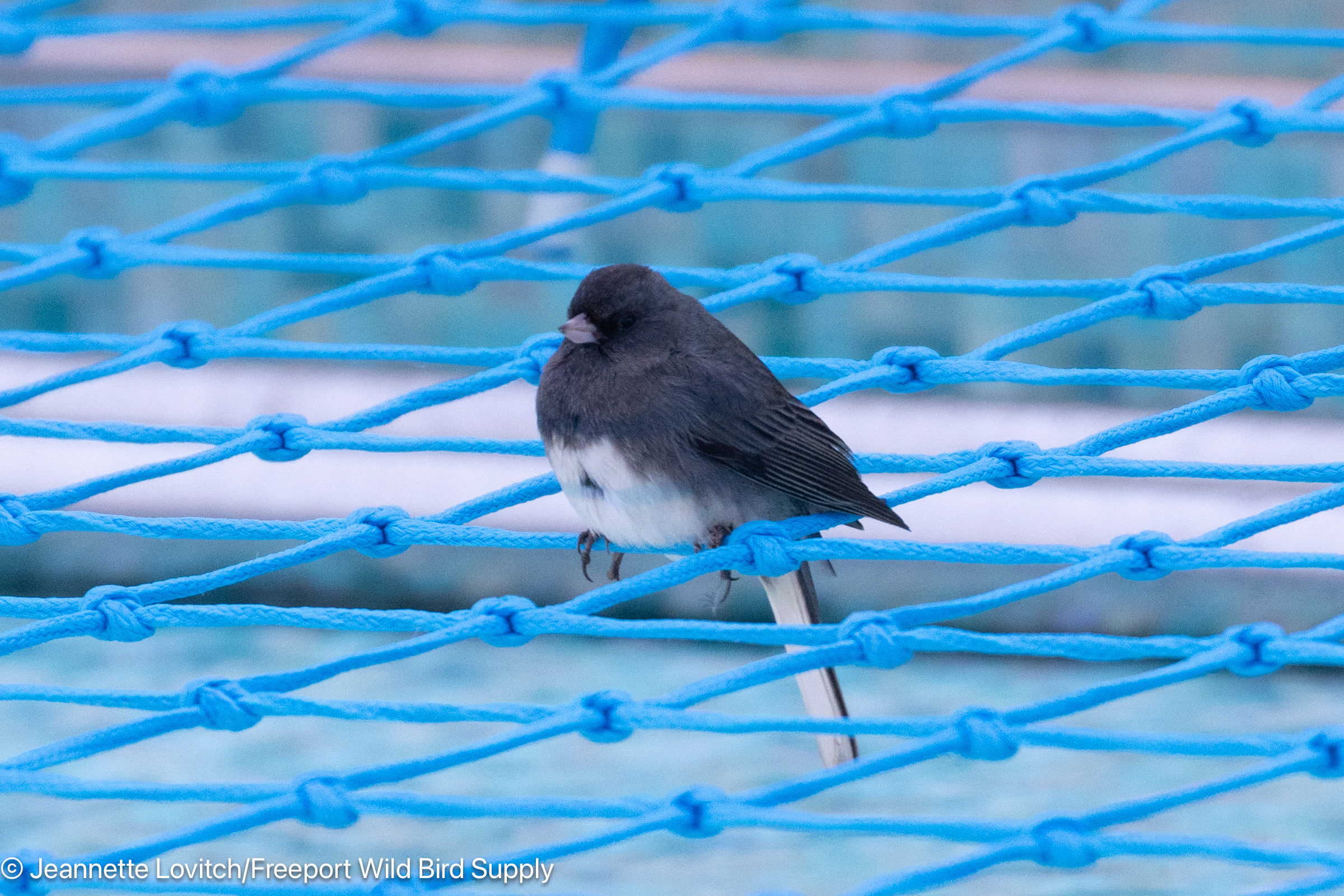
| Dark-eyed Junco | 16.6 | 30.3 | 13.2 | 20.03 | -17.1 | -6.83 |
| White-throated Sparrow | 2 | 2.3 | 0 | 1.43 | -2.3 | -1.43 |
| Song Sparrow | 0 | 0.9 | 0.6 | 0.5 | -0.3 | +0.1 |
| Northern Cardinal | 5.2 | 3.8 | 6.7 | 5.2 | -2.9 | +1.5 |
| Total individuals/day | 110.9 | 138.6 | 127.5 | 125 | -11.1 | +2.5 |
Every year is different, and every yard is different. Controlling here for time and place, we can make some comparisons, however.
Once again, I am sure I undercounted Black-capped Chickadees, and likely Tufted Titmice and White-breasted Nuthatches as I think there could be two small mixed species foraging-flocks around. I also think there are more than one pair each of Hairy and definitely Downy Woodpeckers, but using the “high count” method, I only tabulated the maximum seen at one time.
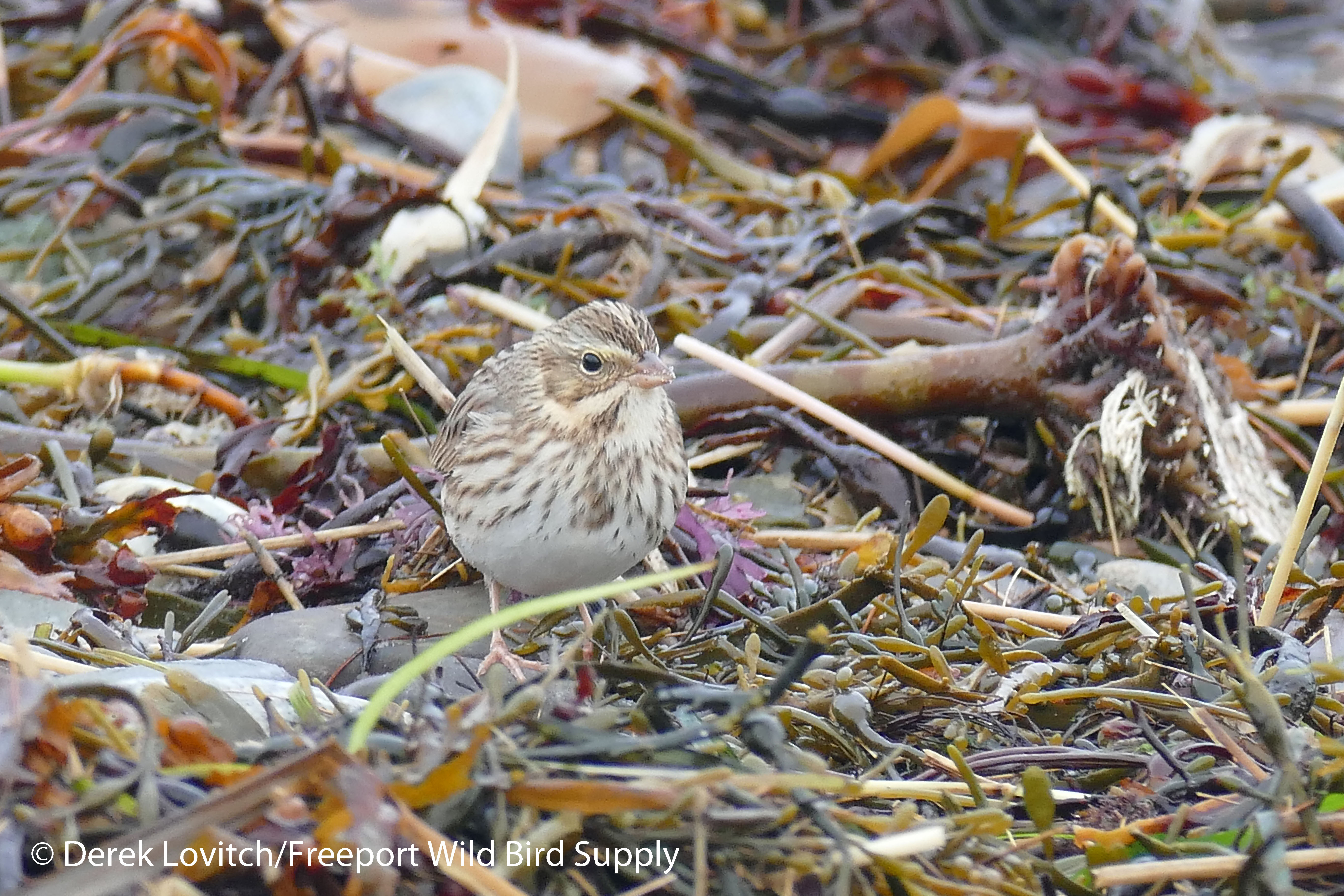
Two seasonal rarities graced us with their presence this winter. Our Gray Catbird, present since January 2nd, made it long enough to just make it on the list. Meanwhile, a Fox Sparrow that arrived in mid-December continues through today. I won’t expect either of these species to be at our feeders every year.

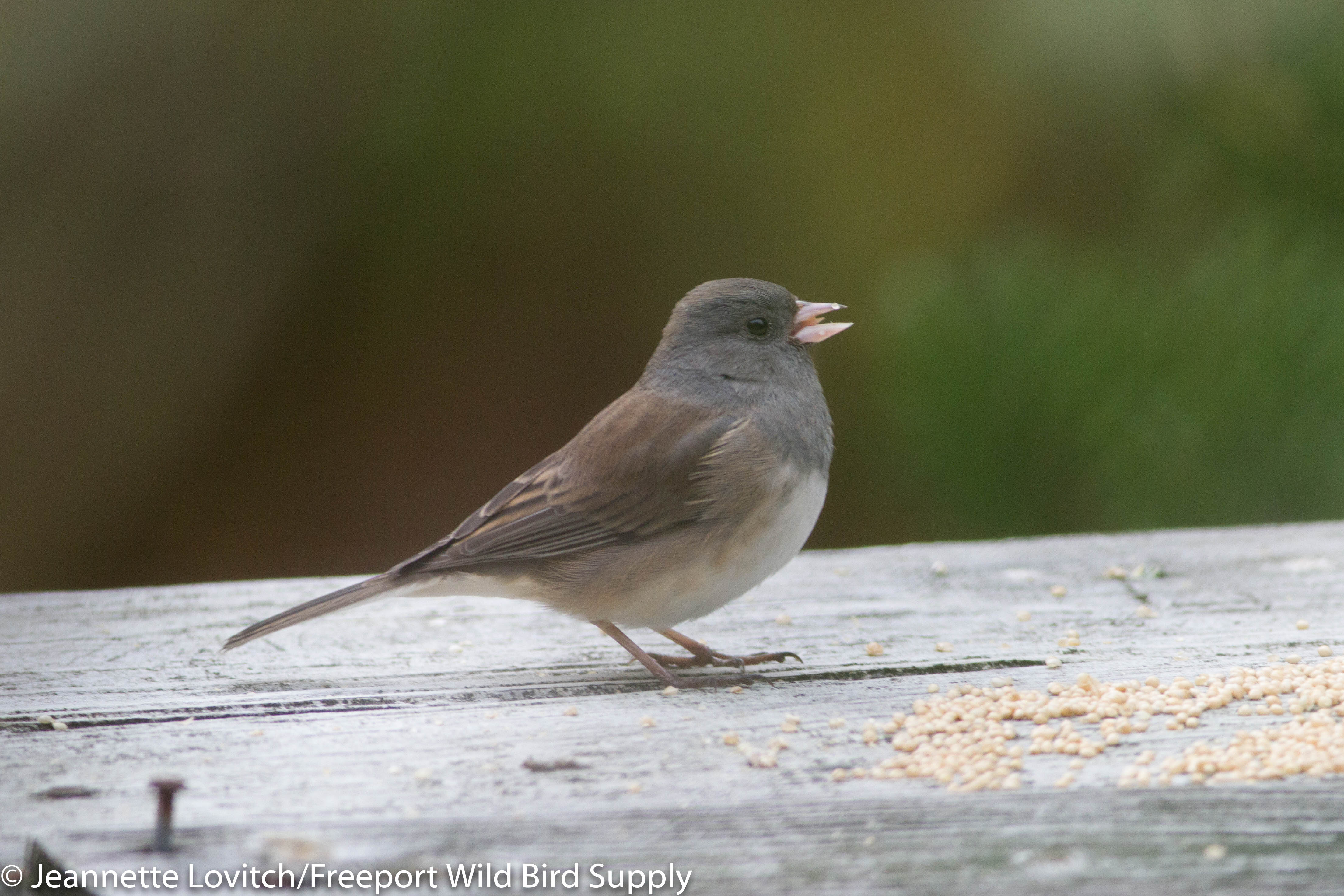
American Goldfinches were down from last year in our yard, but they were extremely abundant from the fall through early winter. The difference now is most of our birch catkin crops have now been consumed. Dark-eyed Juncos were way down for us this year, and we don’t have any White-throated Sparrows around. This is likely a direct function of increasing snow depths and the lack of dense coniferous cover in the part of our property that our home and feeders are in.
I’m not going to out a lot of weight into three-year averages, but a few early trends coincide with region-wide trends, such as the steady increase in Eastern Bluebirds and Northern Cardinals. I’m not liking this trend of rapidly increasing European Starlings in our yard, however. At least for now, this is only a winter occurrence for us, however.

The average morning low at our home during this period was a measly 6.5F. That was 13.1 degrees colder than the ten days I looked at last year. That’s a lot more calories that need to be burned each night! While total number of individuals is down this year from last, we are going through more seed than we were at this time last year, and the cold and snow is a part of this equation.
However, I think the biggest reason for the difference between the two years can be explained in three words: Eastern White Pine. Last year, our state tree had a “generational” mast; crowns of trees were absolutely covered in cones. This year, it’s hard to find any cones anywhere in the state. Therefore, last winter our local birds had such an overabundance of their most preferred food that they spent much less time at feeders. This year, they’re eating more because there is less natural food available. And with the weather – especially with recent snowfall and ice accumulations making some food resources harder to find – birds are taking advantage of supplemental food more often. The woods, away from yards with well-stocked feeders, are exceptionally quiet this winter.
While some Black-capped Chickadees and Red-breasted Nuthatches vacated the northern woods this year, it was not a major irruption. They, and Tufted Titmice and White-breasted Nuthatches did seem to have a good breeding season, perhaps having been supplemented by caches of all of that pine seed. Meanwhile, Blue Jays are around in good numbers thanks to a very good Red Oak acorn crop that has kept them here this winter.
Like last year (and as opposed to 2023), we didn’t have a lot of accipiter presence: I only glimpsed one unidentified accipiter back on the 4th, but there were times without any birds at the feeders suggestive of an avian predator hanging around. It’s possible this might just have been due to a pair of regular Red-tailed Hawks in our yard. Despite having little interest in small birds, few birds are willing to take the chance.
Now, to really take this “study” to the next level, I would be keeping track of the amount of seed and other foodstuffs that we are putting out each year. But that’s getting to sound like work, and real research! We’re filling almost all of our feeders at least daily (often twice daily when we are home in another snowstorm), and that concurs with comments we receive at the store. But every yard is different, and not everyone has the same results. If your feeders have seemed comparatively slow, consider what you are feeding, and how fresh the seed and suet is. These are important and we can help you with that here at the store. It’s worth exploring some of my previous blog posts on the topic that discuss reasons why feeder activity ebbs and flows.

We’ve only lived at this location for three years, so it’s too soon to tell what an “average” winter is like in terms of volume and diversity. Furthermore, we are rapidly accelerating plantings and habitat improvement that should increase the number of birds our property sustains. Given that feeders are only a supplement to natural food supplies, I believe our habitat work will pay dividends for our feeder-watching in years to come.
I enjoy this little project, and time permitting, I’ll plan on doing it again next year. It’s only one yard, but it’s a case study that can answer some questions or at least offer a little detailed context as to what others are reporting. How does our feeder activity compare to yours? Are you seeing anything different? Or do some of our observations and hypotheses fit with your observations?






























 Maine Birding Field Notes