Tag Archives: sparrows

2014 MonhegZEN Birding Fall Migration Weekend Trip Report

harbor,K

PHVI,ScottHarvell_edited-1Philadelphia Vireo wrasslin’ a Fall Webworm.

Ninety-seven species of birds, including 16 species of warblers. Yellow-headed Blackbird, Lark and Clay-colored Sparrows, and Dickcissel from the mid-west. Blue Grosbeak from the south. Kettles of Peregrine Falcons, clouds of Yellow-rumped Warblers, good food, great beer, and fantastic camaraderie. Yup, it’s another installment of our annual “MonhegZEN Birding Fall Migration Weekend.”

There are few places in the entire Northeast that I would rather be in fall, especially during the peak of migrant diversity. Our annual tour takes places to coincide with the last waves of warblers, first waves of sparrows, peak of raptors, and the beginning of “Rarity Season.” Check, check, check, and check…and it was hot! In fact, I believe I received the first ever complaint of a room at the Trailing Yew being “too warm in the morning.” Of course, “complaint” is used loosely here, for the record. But it was an unusually warm weekend, and although the birding was not epic by Monhegan standards, great diversity was thoroughly enjoyed – as was the weather (well, at least until the boat ride home a day after the tour ended!).

Two Red-necked Grebes just outside of the harbor were a nice way to start the trip on Friday, as were plenty of Northern Gannets, several Common Loons, and glass-calm seas on our way across. Arriving at 10am via the Hardy Boat from New Harbor, we hit the ground running, and after dropping our bags off to be taken to our inn, we immediately began to bird. Two vocal, dogfighting Peregrine Falcons got us started, and we soon spotted the single continuing Dickcissel. That’s how I like to get things started!
DSC_0054_DICK1,Monhegan,9-28-14_edited-1

IMG_8630_edited-2

Although we did find a Yellow-breasted Chat (frustrating as usual, although at least everyone saw twigs moving), the bird of the day was definitely Peregrine Falcon. A bona fide kettle of 8 were soaring overhead at lunch time, and a steady parade of birds was passing overhead throughout the day. There was a lot of swirling as well, however, which made tabulating an actual count of Peregrines impossible. We know we had at least a dozen birds, but likely multiple times that. Some birds were clearly hunting, but most were probably rising high on the thermals and then soaring off to the south, using the light headwind to efficiently move out to sea, and likely not making landfall until Cape Cod!

Unexpectedly, very light southwesterly winds shifted to west overnight, and as a result, we had a very good arrival of birds to the island. Yellow-rumped Warblers – as expected for the date – dominated, with a conservative estimate of 250 birds observed, with many dozens in the air over the Trailing Yew at sunrise. Three Cape May Warblers, including a couple at the edge of the Yew were the highlight of dozen species of warblers we recorded today. The immature male Dickcissel continued in his favorite seed pile, and we had a fly-by Yellow-billed Cuckoo over the Ice Pond. Unfortunately, a short time later, it was found dead below a nearby window, not just sobering our sighting, but punctuating the fact that up to a billion birds a year meet their death at windows each year – and that’s just in the US!

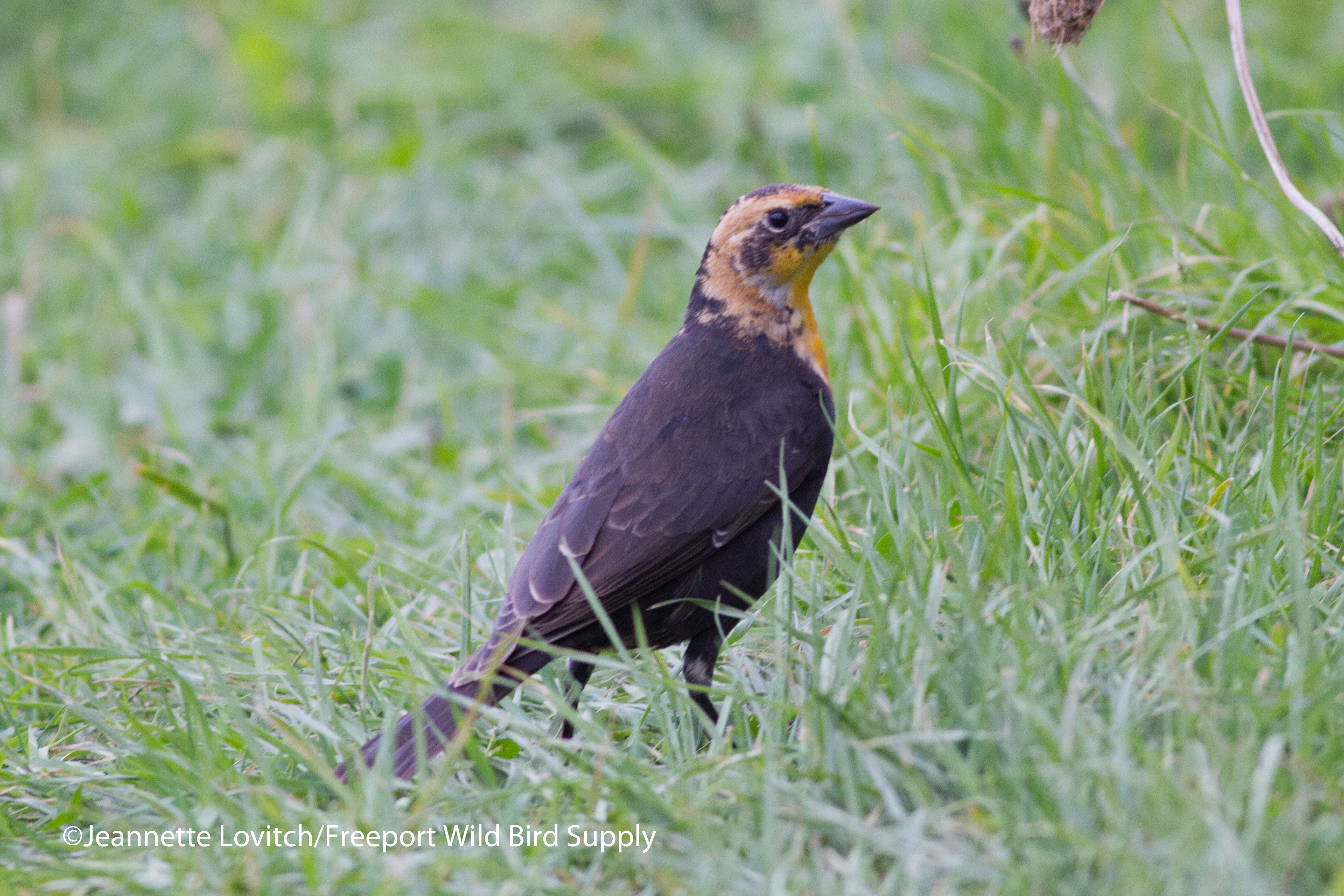
Good diversity and good (but not, by Monhegan standards, great) numbers made for a fun day of birding, but it was definitely a lot more relaxing once we finally caught up with the Yellow-headed Blackbird! This immature male (a lot of folks were calling it a female, but the blackish body, extent of yellow, face pattern, and every-so-slight touch of white on the wing point to this as being a male) had been present for about 4 days, but since it was a “State Bird” for me, and a “Life Bird” for several, it was obviously a priority.

But on Monhegan, you can only do so much to chase most rarities. In fact, more often than not, you have to simply relax and let the rarities come to you! I call this my “MonhegZEN Migration Birding Weekend” not for any existential reasons – or mandatory meditation or yoga – but simply because we (try) to kick back, focus on the bird(s) in front of us, and let good things happen.

But yeah, we wanted to see this bird, and after missing it by about 5 minutes on a brisk, pre-breakfast (but don’t worry, post-coffee!) walk, the MonhegZEN kicked in. A friend spotted the bird as it flew overhead, alighting nearby in the center of town. Good looks were had by all (I apparently said, “Oh, thank God,” in response to the bird’s arrival, feeling as much relief as joy, apparently!) but about a half hour later, we had even better views as it perched atop a spruce along Dock Road.
DSC_0022_YHBL1,Monhegan,9-27-14_edited-1

We were then able to more thoroughly enjoy the unseasonably warm day, watching Peregrines, and sorting through migrants. Oh, and a relative abundance of Monarch butterflies was heartening.
IMG_8603_edited-2

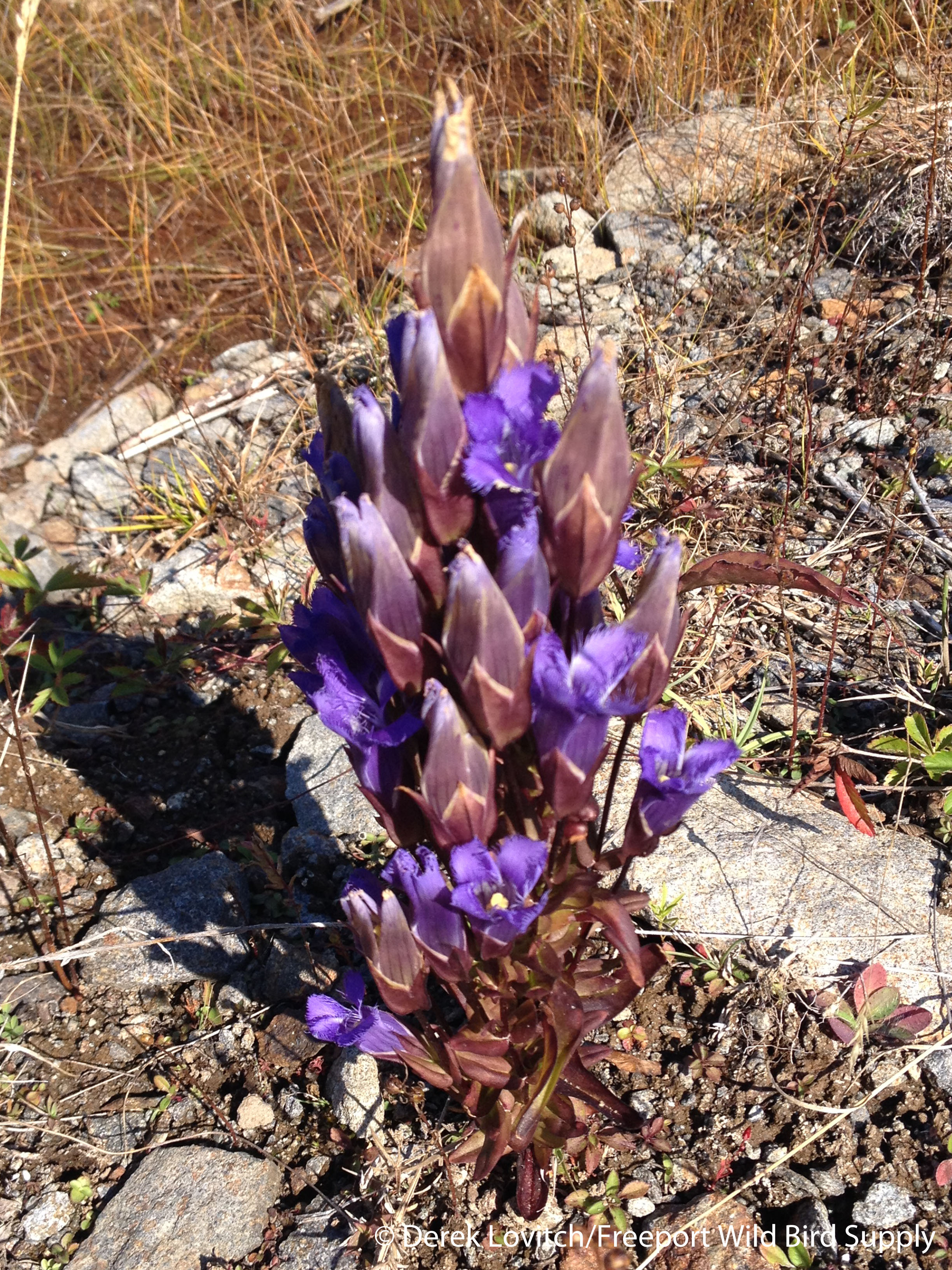
gentian,ScottHarvell

FringedGentian,Monhegan,9-28-14_edited-1
The largest Fringed Gentians I have seen.

IMG_0056_1_edited-1
Bald Eagle on the Outer Ducks as some of the participants took the short afternoon cruise around the island.
IMG_0022_1_edited-1
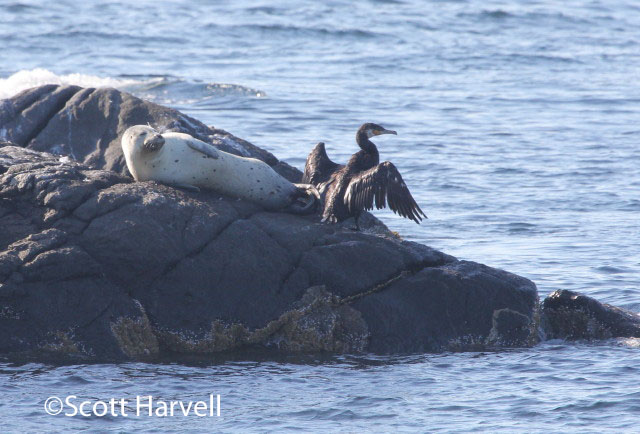
Great Cormorant and Harbor Seal.

A moderate-strong flight developed on clear and calm skies overnight, but come sunrise, the morning flight over the Yew was a little less busy than Saturday. Nonetheless, there were plenty of Yellow-rumped Warblers, Pine Siskins, and noticeable increases in Cedar Waxwings overhead and White-throated Sparrows in the woods and brush. Although overall numbers of birds were lower today, diversity was fantastic, and our trip list grew with the likes of Tennessee Warblers, a Warbling Vireo (I always wonder if these late Warblings out here are all “180-degree misoriented vagrants” as opposed to simply “lingering/late” birds – the local breeders on the mainland are long gone by now afterall), and we finally caught up with the Lark Sparrow that was visiting the seed with the Dickcissel.
LASP_and_DICK,ScottHarvell
Lark Sparrow with Dickcissel – a classic Monhegan juxtaposition.
TEWA,ScottHarvell
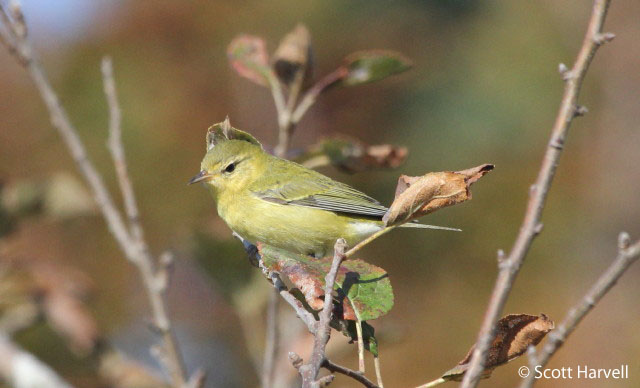
Tennessee Warbler

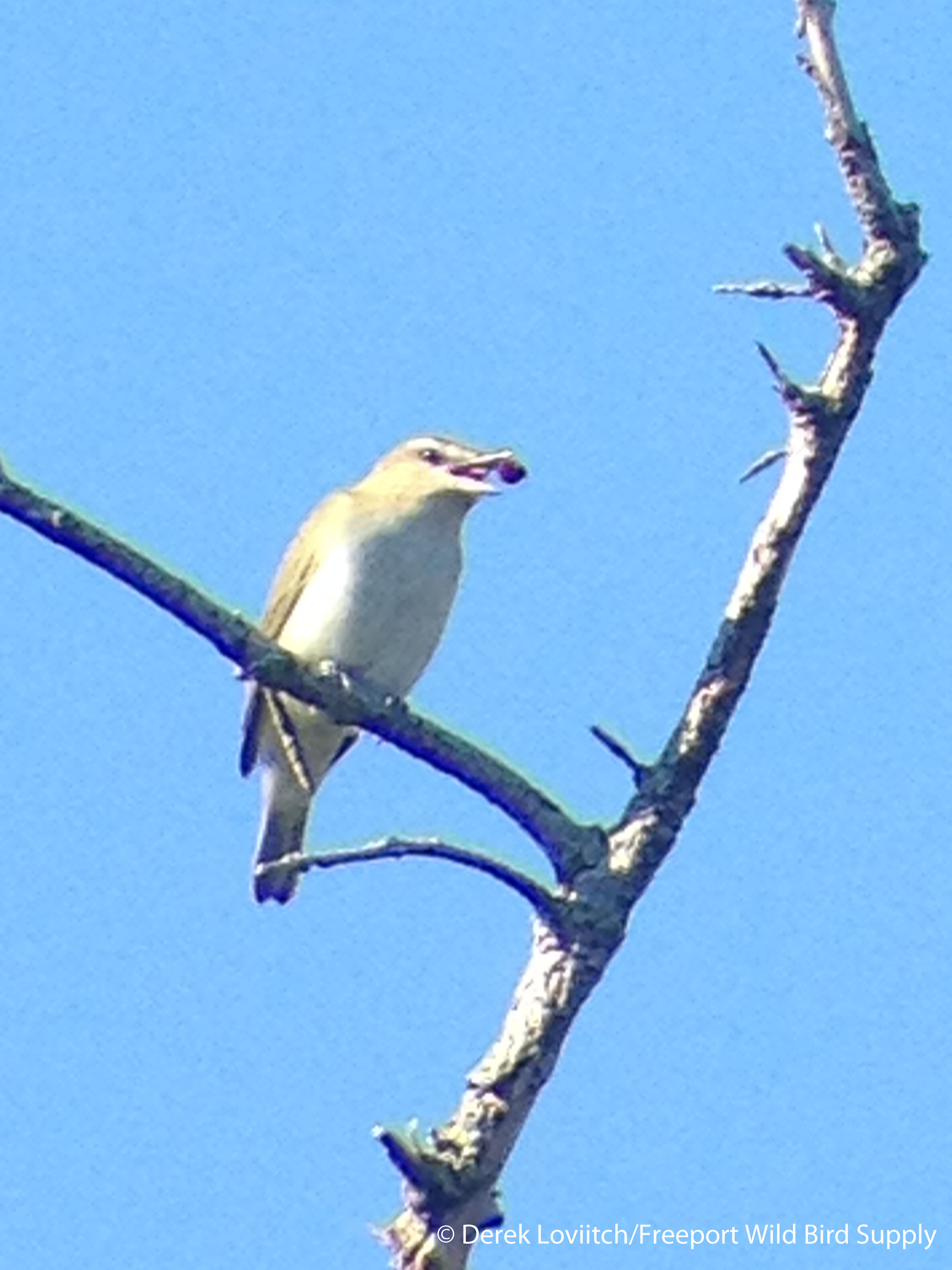
REVI_coughing_up_cherry_stone,Monhegan,9-28-14
Red-eyed Vireo coughing up a cherry stone; phone-scoped image.
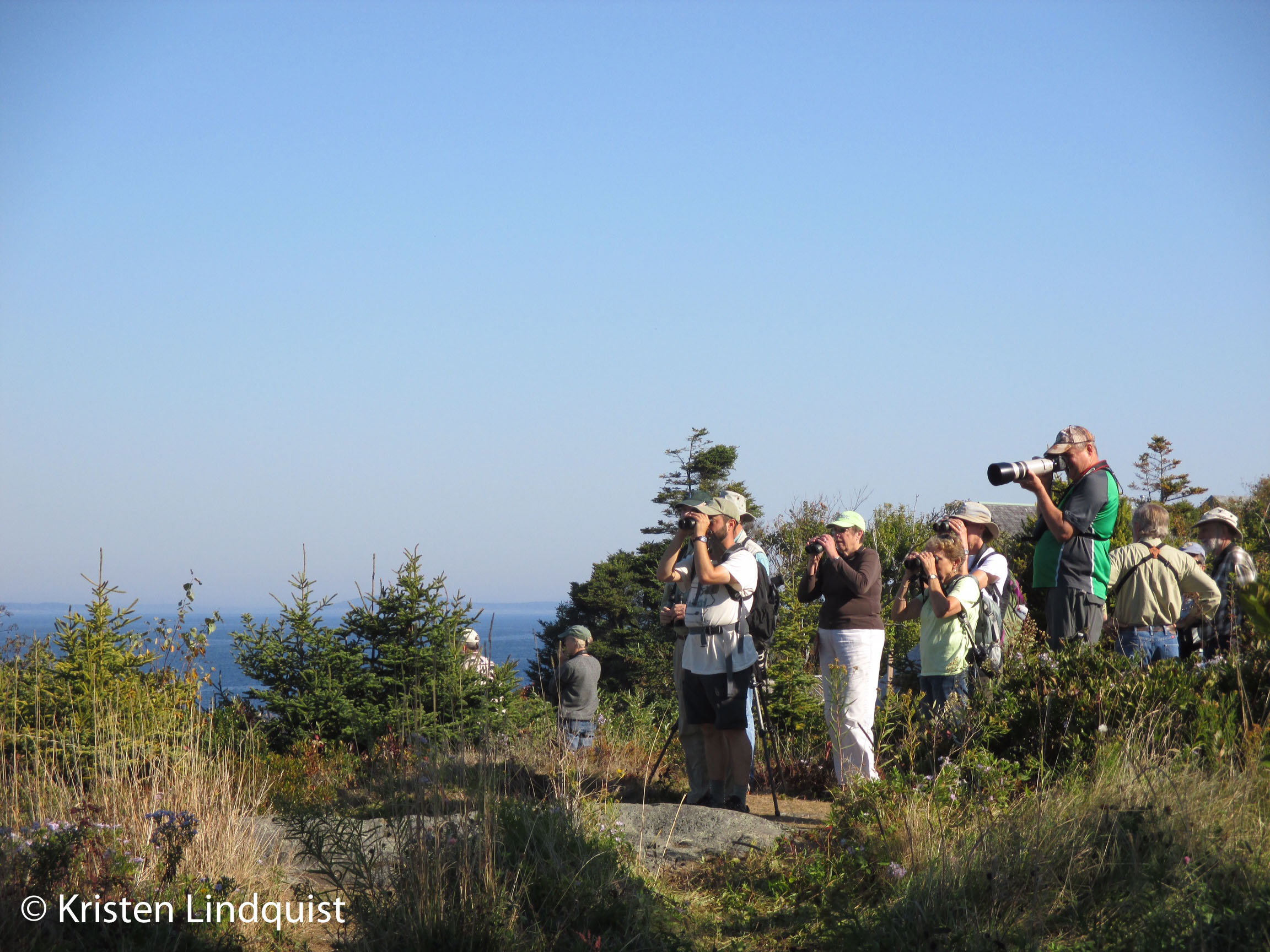
group2,K

We found a female Blue Grosbeak in the marsh behind the grocery store, and we enjoyed another short visit from the Yellow-headed Blackbird (minutes after Jeannette, arriving on the mid-day boat with Sasha, walked away of course).
IMG_8590_edited-2
The eagle was present and accounted for on the way in.

Group3,K
Trap day is coming!

Due to my schedule, the official weekend tour was only three days this year (instead of the usual four), so most of the group departed on the 3:15 ferry back to New Harbor. Al stayed until the 4:30 Port Clyde boat, and his bonus time (three leaders: me, Jeannette, and Kristen Lindquist who assisted me throughout the weekend as I added a second leader when I added a 9th participant – I, and my clients, prefer a small group, especially on Monhegan!) was partially spent watching a few of us struggle with the identity of a dull warbler who really did not want to give us a good look. It was eventually determined to be an immature female Pine Warbler (actually, quite a good warbler out here), and when Jeannette, Kristen, and I saw it later that afternoon in good light, its ID was much more readily apparent.

The always-successful “MonhegZEN Birding Fall Migration Weekend” had officially come to a close, but the birding continued for Kristen, Jeannette, and I. Another hot (80-degrees on the last weekend of September on Monhegan!) and somewhat quiet afternoon relegated our birding to the porch of the Monhegan Brewing Company. Their new delectable DIPA and Pale Ale was thoroughly enjoyed, as was “Brewery Pewee” (a single lingering Eastern Wood-Pewee that was a daily feature of our Brewery List…OK, we didn’t actually keep a brewery list this time, but if we did…and no, this was not my first visit to the brewery on the weekend – it is an important destination for the full MonhegZEN Birding experience) capped the end to a fine and productive day.

After dinner, the three of us walked to and from the dock (a big school of fish, presumably Herring (?) attracted by the lights provided the post-dinner entertainment), but the mere four migrant call notes heard overhead foreshadowed the very light flight overnight that saw many more birds depart than arrive on a diminishing southwesterly wind.

In fact, the skies were nearly devoid of birds undergoing “morning redetermined migration” or “morning flight” come Monday morning, and although there were still plenty of Pine Siskins and Cedar Waxwings overhead, the skies were the quietest that they had been all weekend. But there was little doubt more White-throated Sparrows arrived overnight, and there was not a shortage of Yellow-rumped Warblers.
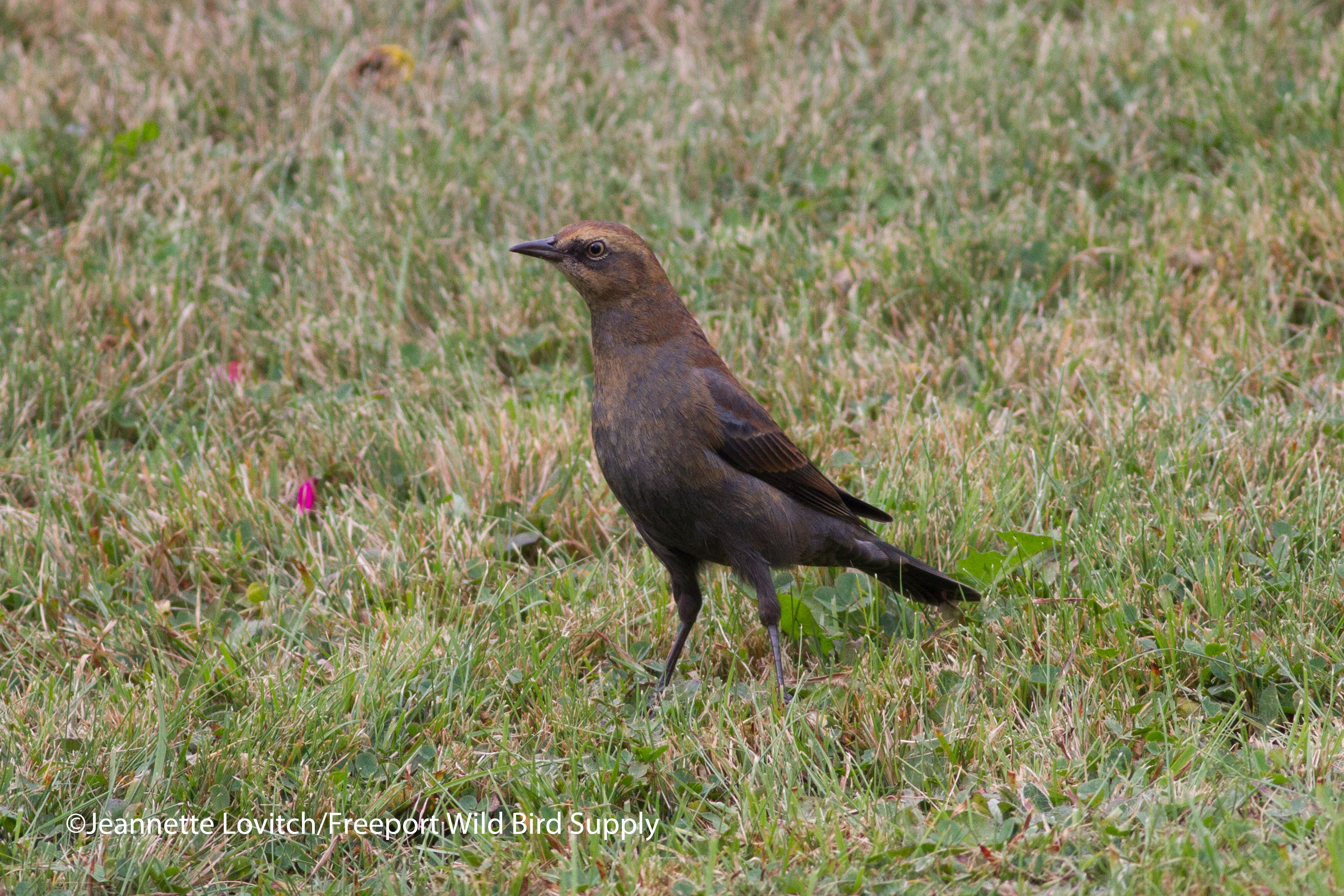
IMG_8663_edited-2

us,Monhegan,9-29-14,K
Rusty Blackbird.

We slowly added a few species to the checklist, including the Clay-colored Sparrow that we had spent all weekend trying to catch up with. The Dickcissel and Blue Grosbeak were present and accounted for as well, and a Prairie Warbler was a nice addition. But as northeast winds began to pick up, we decided to head into the woods. Cathedral Woods offered scattered Golden-crowned Kinglets and more White-throated Sparrows, but our primary destination was this “Fairy House,” or more accurately, palace, that was not to be missed.
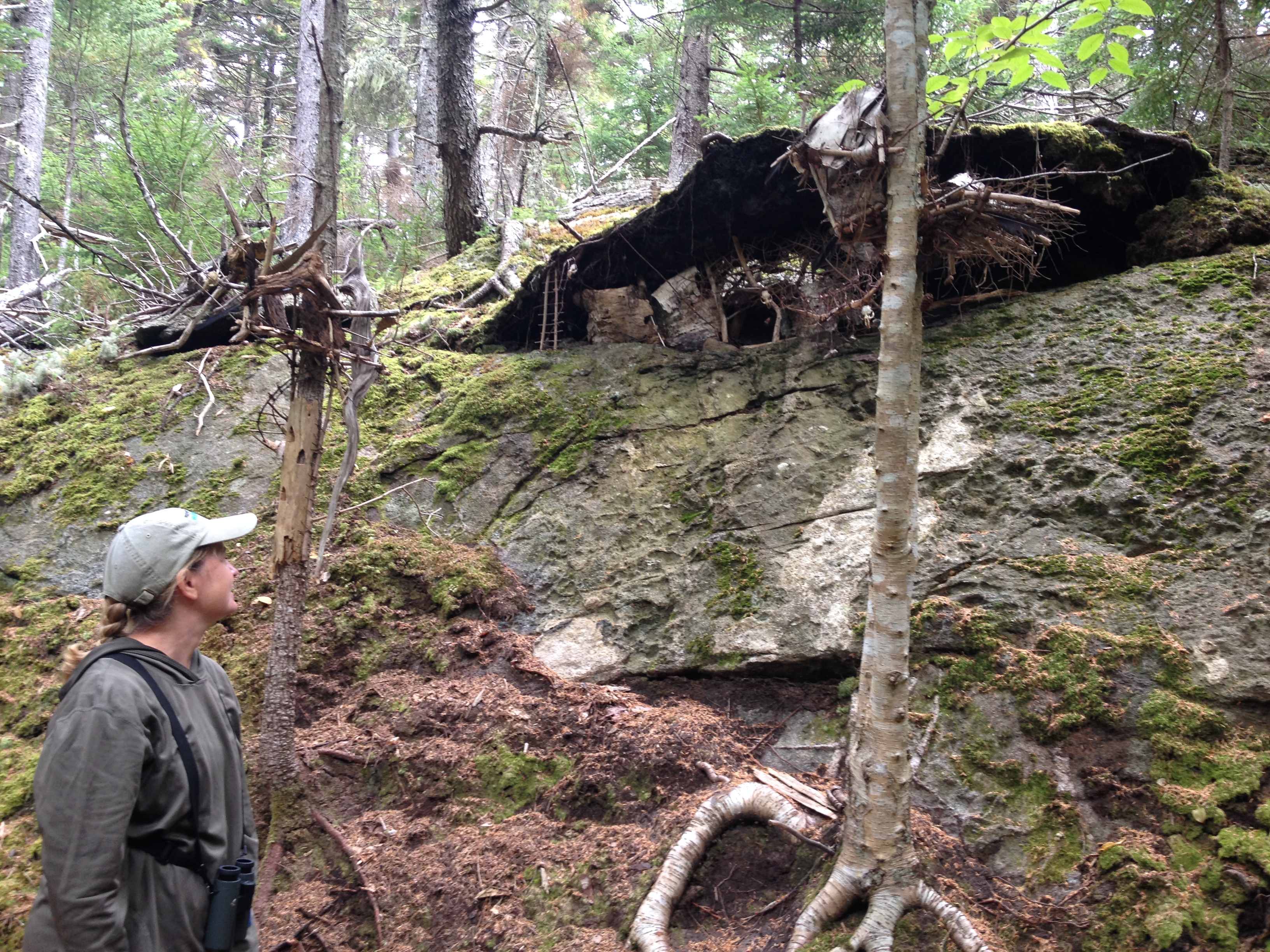
IMG_4532

IMG_4530

It was definitely worth the walk, and made even more so by how strong easterly winds were blowing (hmm, that water is looking a little choppy) upon our return to town. It was simply too windy to bird – and rather chilly – after lunch, so we relaxed with a coffee, and then later – just because we “had to” have one more DIPA… err, check of the Brewery Pewee.

The day’s birding was slow, and we had not been able to relocate the Yellow-headed Blackbird…until the literal last minute. The boat was loaded, and we were hustling to the dock, when we asked two birders what they were looking at in the yard of one of the first houses uphill on Dock Rd. “The Yellow-headed Blackbird.” Of course.

And it was, let’s say, confiding, as it walked around the lawn and in some weedy patches a mere 10-15 feet from the gawkers. Sasha even saw it (I would have had a great photo over her head, with her ears up and her face focused on the bird had my phone not just run out of power) – her 127th life bird! It was an exciting way to finish the trip, but the excitement was actually yet to come.
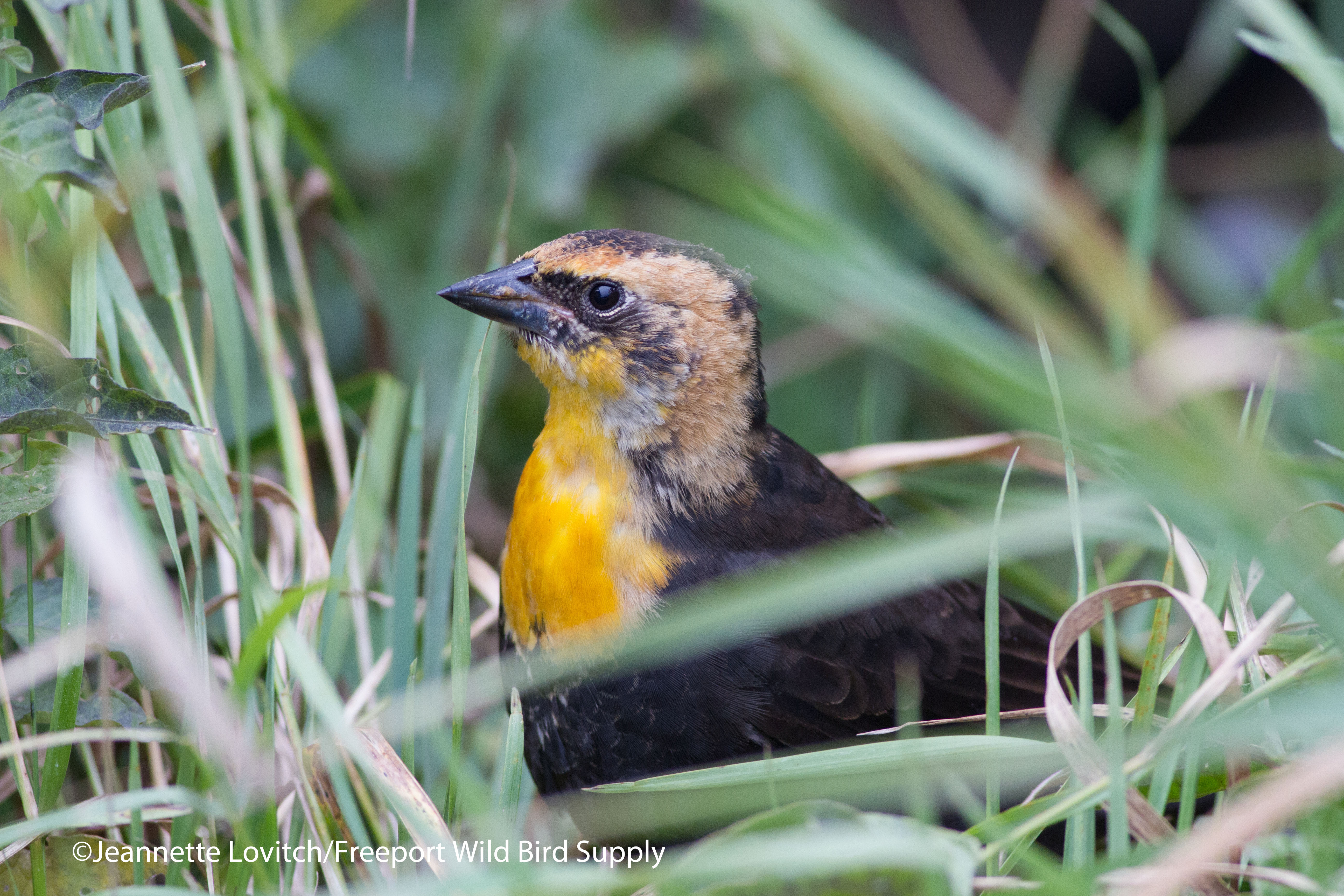
IMG_8673_edited-2

IMG_8678_edited-2

“How high are the seas running?” I asked as we boarded the boat. “6-8 feet or so, they’ah sure comin’ up fast today. It’s gonna be a wet ride.” Uh-oh; was that last beer a good idea? While Sasha has only been on a boat a few times, she has never been “tested,” but we thought it was best to keep her outside. Plus, a hot and stuffy cabin was the last place any of us wanted to be in high seas, so we donned our raingear and moved outside. We were amply warned about splash-over, but none of the four of us wanted to head inside.

Unfortunately, Sasha was not happy with the vibration on the stern, so we headed upstairs to the exposed top deck. 6-8ft seas? No, they were still growing; more in the 8-10ft range now…by far (actually, well more than double) the highest seas I have ever experienced on a Monhegan crossing. But it was surface chop, and not a deep, rolling swell, so it was actually kind of fun. Except for Sasha and except when a series of waves crashed over the boat and smacked into the four of us. I have never seen our tough dog look so miserable, and frankly, soaked to the bone, none of us were all that comfortable anymore. If any of my group had regrets about leaving on Sunday, I can assure you: be glad! It seemed like forever (OK, it was about an hour) before we passed into the lee of the outermost islands. But don’t worry, in between troughs and huddling over Sasha, I kept my eyes open as much as possible for skuas!

That was a wild ride, and very un-MonhegZEN! But once in the sheltered bay and harbor of Port Clyde, we couldn’t help but laugh with the crew. Seas like this are rare – and rarely do they come up so darn quickly – so please do not think that this is part of a Monhegan birding experience! In fact, glass-calm seas were enjoyed by every member of the group on their return trip on Sunday. I guess we might have stayed just one day too long this time.

Actually, no, we just regretted not staying just one day longer!

Kristen and I tabulated the final day’s checklist on the drive to dinner, bringing my four-day total to 99 species, including this final non-tour day. My 4-day weekend tour averages 102 species of birds, so this was just a little below average (this year’s tour officially ended on Sunday with 93 species, which is just below my 3-day average of 95 species).

Here’s the complete, daily checklist. These numbers only represent what our group observed, making no attempt to actually judge the number of birds (at least the common ones) on the island, or summarize the sightings of others and does not include birds tallied on the boat ride across either way.

Species: 9/26,9/27,9/28,9/29

Wood Duck: 1,0,3,2
Mallard: 4,15,15,15
Mallard x American Black Duck: 0,1,0,0
American Black Duck:0,2,0,0
Common Eider: x,x,x,x
White-winged Scoter: 1,0,0,0
Ring-necked Pheasant: 4,1,3,2
Double-crested Cormorant: x,x,x,x
Great Cormorant: 0,2,2,2
Red-necked Grebe: 2,0,0,0
Common Loon: 3,0,0,0
Northern Gannet: 15,50,20,50
Great Blue Heron: 1,1,1,1
Osprey: 1,8,5,2
Bald Eagle: 1,1,2,2
Northern Harrier: 1,0,0,2
Sharp-shinned Hawk: 1,4,6,3
American Kestrel: 0,2,2,1
Merlin: 4+,6+,10,6
Peregrine Falcon: 12++,10+,10+,8
Semipalmated Plover: 0,1,0,0
Greater Yellowlegs: 0,0,0,1
Ring-billed Gull: 0,0,0,2
Herring Gull: x,x,x,x
Great Black-backed Gull: x,x,x,x
Black Guillemot: x,x,x,x,
Mourning Dove: 4,4,4,3
YELLOW-BILLED CUCKOO: 0,1,0,0
Belted Kingfisher: 0,0,1,1
Ruby-throated Hummingbird: 0,2,0,0
Unidentified Hummingbird:0,0,0,1
Yellow-bellied Sapsucker: 2,12,15,4
Downy Woodpecker: 0,1,2,2
Northern Flicker: 10,12,10,20
Eastern Wood-Pewee: 0,3,1,1
Least Flycatcher: 1,2,1,0
Eastern Phoebe: 0,0,3,5
Blue-headed Vireo: 0,0,0,3
Warbling Vireo: 0,0,1,0
Philadelphia Vireo: 1,0,3,3
Red-eyed Vireo: 12,25,30,30
Blue Jay: 4,11,11,6
American Crow: 4,4,4,4
Common Raven: 0,2,2,3
Black-capped Chickadee: x,x,x,4
Red-breasted Nuthatch: 4,12,15,35
White-breasted Nuthatch: 1,0,0,0
Brown Creeper: 0,1,1,2
Carolina Wren: 5,6,8,7
Winter Wren: 0,0,1,3
Golden-crowned Kinglet: 6,8,12,25
Ruby-crowned Kinglet: 3,20,20,6
Swainson’s Thrush: 0,2,1,0
American Robin: 1,5,4,1
Gray Catbird: x,x,4,5
Northern Mockingbird: 1,0,1,0
European Starling: 10,12,12,8
American Pipit: 0,6,2,1
Cedar Waxwing: 40,40,80,50
Black-and-white Warbler: 1,1,1,3
Tennessee Warbler: 0,0,3,0
Nashville Warbler: 2,0,2,1
Common Yellowthroat: 10,6,x,x
American Redstart: 3,3,2,0
Cape May Warbler: 0,2,1,0
Northern Parula: 1,2,3,2
Magnolia Warbler: 0,3,1,1
Yellow Warbler: 0,1,1,1
Blackpoll Warbler: 1,6,5,4
Black-throated Blue Warbler: 0,0,1,1
Palm Warbler: 0,6,3,7
PINE WARBLER: 0,0,1,0
Yellow-rumped Warbler: 40,250,200,175
Prairie Warbler: 0,0,0,1
Black-throated Green Warbler: 4,10,3,1
YELLOW-BREASTED CHAT: 1,0,0,0
Scarlet Tanager: 1,0,0,0
Eastern Towhee: 1,0,0,0
Chipping Sparrow: 7,9,8,9
CLAY-COLORED SPARROW: 0,0,0,1
LARK SPARROW: 0,1,0,0
Savannah Sparrow: 0,9,6,2
Song Sparrow: x,x,x,x
Lincoln’s Sparrow: 1,0,2,1
Swamp Sparrow: 0,1,3,3
White-throated Sparrow: 8,20,100,100
White-crowned Sparrow: 0,3,4,3
Dark-eyed Junco: 0,10,6,10
Northern Cardinal: 2,3,4,4
Rose-breasted Grosbeak: 0,2,3,1
BLUE GROSBEAK: 0,0,1,1
Indigo Bunting: 2,1,1,1
DICKCISSEL: 1,1,1,2
Bobolink: 0,1,0,1
YELLOW-HEADED BLACKBIRD:0,1,1,1
Rusty Blackbird: 0,4,4,4
Common Grackle: 0,6,6,8
Baltimore Oriole: 1,2,3,1
Purple Finch: 0,2,8,6
Pine Siskin: 0,80,50,40
American Goldfinch: 2,2,4,4

Daily Total: 58,72,81,79 Total: 97

RINP,ScottHarvell
Ring-necked Pheasants – the only “countable” ones in Maine!
IMG_8624_edited-2
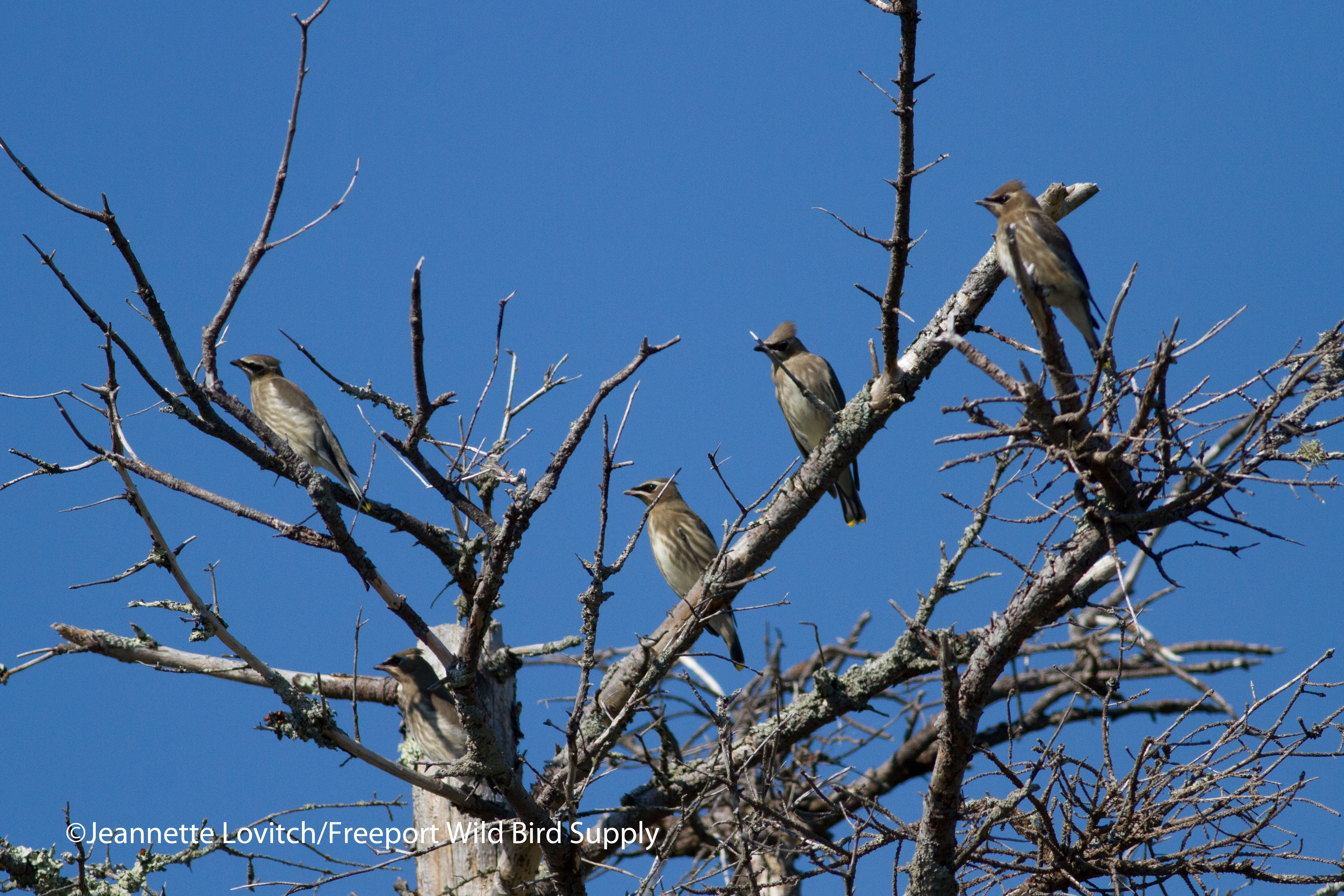
Cedar Waxwings.

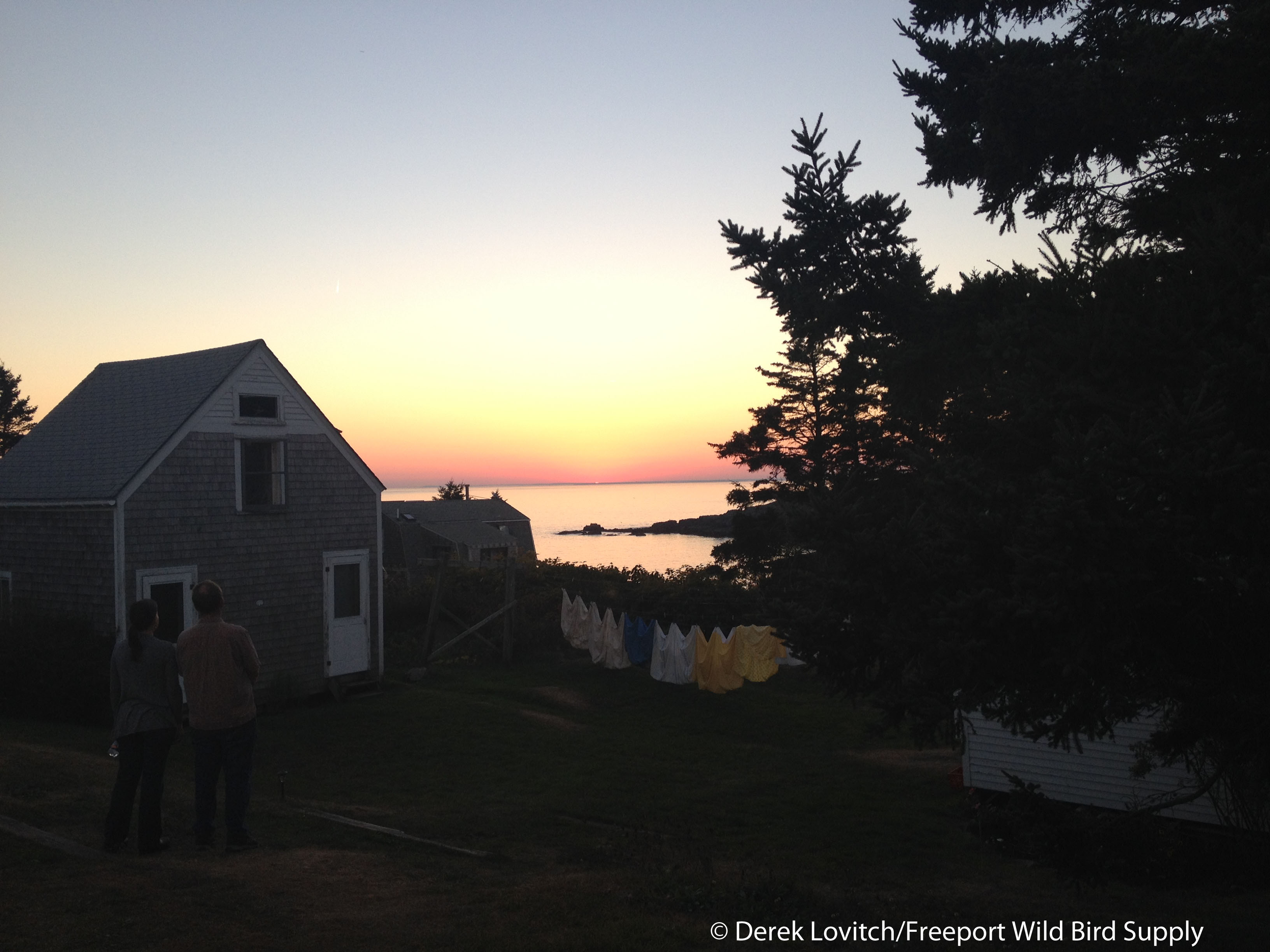
IMG_4519_Monhegan_Sunset,9-27-14
Beautiful nightly sunsets free with price of admission.
South Coastal Maine Rarity Roundup TEN!

BLPW,SheridanStreet,Portland,11-3-14
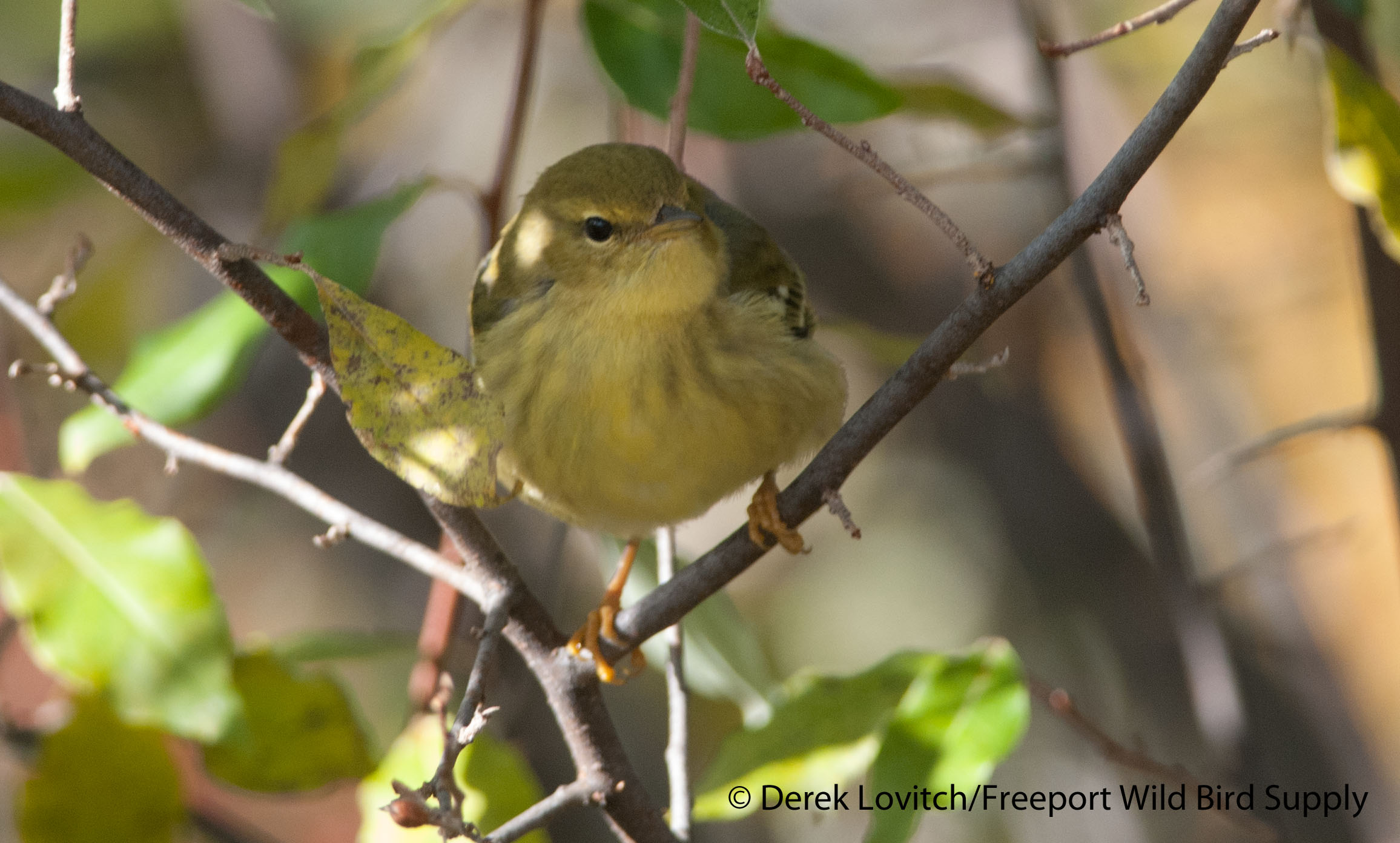
This Blackpoll Warbler was one of the record 9 species of warblers tallied on the day, and one of the top birds in my Portland territory. It was only the third time that this species was spotted by Rarity Roundup teams.

Each year on the first weekend of November, a group of us get together to scour the Southern Maine coast for vagrants, lingering migrants, pioneers, irruptive, and other seasonal highlights.  Coinciding with the peak of “Rarity Season,” we set out to use the geography of the Maine coast, coupled with knowledge of the best habitats and vagrant traps in order to find as many “good” birds as possible.  While this year failed to produce any “Megas,” we once again had a great day in the field, found lots of fun stuff, and enjoyed good food and beer at the Great Lost Bear at the end of the day (the real reason we all get together for this event!)

119 species were tallied by the 8 teams of the TENTH Annual South Coastal Maine Rarity Roundup, six species above our 10-year average, despite somewhat more limited coverage than in the past few years. The continuing “Audubon’s” Yellow-rumped Warbler was added to the cumulative checklist, while we also had our second-ever Snowy Egret, Prairie Warbler, and Nelson’s Sparrow.  Blackpoll Warbler and Clay-colored Sparrow appeared for the third time.

Most teams experienced a decidedly “birdy” day, especially from Portland through Scarborough.  A fallout of Dark-eyed Juncos, White-throated Sparrows, and Hermit Thrushes occurred with overnight northwesterly winds and a line of pre-dawn showers, with the fallout especially evident on the Portland Peninsula.  I’ll have more about the fallout on a blog entry later today.

Record high tallies were set for Pectoral Sandpiper (13), Northern Flicker (10), Carolina Wren (11), Hermit Thrush (52: the 26 in Portland alone was only one short of the previous all-time high), “Western” Palm Warbler (3), Chipping Sparrow (12), Field Sparrow (3; tie), and Lapland Longspur (37).  9 species of warblers was a new record as well, and Painted Turtle was added to our non-feather species list.  All but the longspurs can likely be explained by the unusually warm season to date.

Territory Highlights were as follows:

– Area 1, Kittery-York: Davis Finch.
1 NASHVILLE WARBLER, Legion Pond, Kittery.
1 Pine Warbler, Fort Foster.
1 PRAIRIE WARBLER, Fort Foster.
1 “AUDUBON’S” YELLOW-RUMPED WARBLER, Fort Foster.

– Area 2, Ogunquit/Kennebunport: Turk Duddy.
2 American Wigeon, Phillip’s Cove, Ogunquit.
1 Northern Pintail, Phillip’s Cove, Ogunquit.
1 Lesser Yellowlegs, Goose Rocks Beach.

– Area 3, Wells/Kennebunk: Doug Suitor, David Ladd, and Slade Moore.
2 Semipalmated Sandpipers, Webhannet Marsh
2 Gray Catbirds, Laudholm Farm.

– Area 4, Biddeford-Saco: Pat Moynahan, Marian Zimmerman, Joanne Stevens, et al.
1 NASHVILLE WARBLER, Saco Yacht Club.
1 CLAY-COLORED SPARROW, Timber Point.
1 NELSON’S SPARROW, Day’s Landing.
2 Lapland Longspurs, Day’s Landing.

– Area 5, Scarborough: Ed Hess, Noah Gibb, and Leon Mooney.
8 Great Egrets
1 SNOWY EGRET, Pelreco marsh
12 American Coots, Prout’s Pond.
8 LONG-BILLED DOWITCHERS, Eastern Road.
35 Lapland Longspurs

– Area 6, Cape Elizabeth: International Man of Mystery, Claudia, Robby Lambert.
2 “Western” Palm Warblers, private property
1 “Yellow” Palm Warbler, private property
1 DICKCISSEL, Higgin’s Beach.

– Area 7, South   Portland: John Berry and Gordon Smith.
1 Ring-necked Pheasant, Fort Williams Park.
1 Yellow-bellied Sapsucker, Calvary Cemetery.
1 Pine Warbler, Bug Light Park

– Area 8, Portland: Derek Lovitch and Kristen Lindquist; Jeannette Lovitch (Capisic and Evergreen); and a cameo by Doug Hitchcox.
2 Eastern Phoebes, Eastern Promenade.
1 BLUE-HEADED VIREO, Mercy Pond.
1 ORANGE-CROWNED WARBLER, Eastern Promenade.
1 BLACKPOLL WARBLER, Sheridan Street.
1 White-crowned Sparrow, West Commercial Street.

As usual, I exhaustively cover the Portland Peninsula and once again the most urban block in the state produced some great birds.  Kristen joined me for the second year in a row, while Jeannette (and Sasha) helped out with a few outlying patches.  Doug joined us just long enough to find the only White-crowned Sparrow of the entire day.  In addition to the goodies listed above, Kristen and I amassed 9 species of sparrows.

The fallout that I mentioned above was very evident in the morning, as we birded Portland’s East End. 150+ White-throated Sparrows and 100+ Song Sparrows littered the Eastern Promenade.  While Dark-eyed Juncos were fewer there, we encountered some big groups elsewhere, such as 60+ behind the East End School and 50+ in the lot on Sheridan Street, with 70+ later in the day in Western Cemetery. White-throats were everywhere: 50+ on Sheridan   Street for example.  And once again there was a decidedly disproportionate number of White-throated Sparrows in gardens and landscaping of downtown Portland.  A short loop from One City Center through Monument Square, behind Portland High, and back through Post Office Park yielded 35 White-throats, with the only other native migrant being 7 Hermit Thrushes.  Like the sparrow, Hermit Thrushes appear in a wildly disproportionate number to other migrants – especially all other thrushes – in downtown Portland.  I’m convinced that something causes White-throated Sparrows and Hermit Thrushes to either a) become disoriented by urban lights more often/more readily, especially under low ceilings (it was cloudy for most of the night and morning) or perhaps b) they simply don’t leave these lots in a morning flight as species such as Dark-eyed Juncos might.  In fact, I just read in an article in the Brown Alumni Magazine that a friend of the store dropped off about collisions in New York City that since 1997, more White-throated Sparrows have been found dead than any other species.  Coincidence?

Our sum of 26 Hermit Thrushes was truly amazing, as was our overall diversity on the day.  While the mild weather certainly has a lot to do with the number of lingering/pioneering birds that we, and other teams, encountered, the late-season fallout earlier in the morning certainly helped our cause.

Here are the overnight reflectivity and velocity images, with 10pm, 1am, and 4am once again used as an example.
a 10pm 11-2-13 ref

b 10pm 11-2-13 vel

c 1am 11-3-13 ref

d 1am 11-3-13 vel

e 4am 11-3-13 ref

f 4am 11-3-13 vel

At 10pm, there’s mostly rain in the area, but birds are mixed in.  By 1:00am, birds are on the move, as the rain has mostly moved into the Mid-Coast and offshore.  Birds were still on the go at 4:00am, as a narrow line of showers moved through the coast.  About an hour later, a steady rain developed (not shown) that continued until a short time before the 6:20 sunrise.  I believe this is why there were so many sparrows in and around the city come dawn.

In other words, it was another great day of birding in urban Portland in the heart of “Rarity Season!”

A Mid-Western Road Trip

When the Iowa Ornithologists’ Union invited me out to be the Keynote Speaker for their 2013 Fall Meeting, I jumped at the opportunity to get some birding in in a part of the country that I have not spent very much time exploring.  Add to that a program and book signing at Milwaukee’s Urban Ecology Center, and I had a solid excuse to work on some under-served state lists…and visit some good friends.  Each day, I posted a short synopsis of my travels and birding on my book’s Facebook page.  Here, I’ve simply edited those and added some photos for your viewing pleasure.

10/10: Travel to Des Moines, Iowa.  Departing Portland at 6:14am.

10/11: Ankeny, Iowa.
On my way to the Iowa Ornithologists’ Union‘s Fall Meeting, I spent the first day and a half of my trip birding the Des Moines-Ankeny area with my friend Danny Akers, the 2009 Bradbury Mountain Spring Hawkwatch Official Counter.

I had hoped for Smith’s Longspurs to fill in a gap on the ol’ life list, but unfortunately, we came up empty, despite a few miles of walking up and down short-cut fields at a couple of locations. While a stiff southerly wind has not helped, they just don’t seem to be “in” yet. Unseasonably warm temperatures – a high of 78 yesterday for example – has likely put quite a few fall arrivals behind schedule.

A nice consolation prize for me, however, was a fair number of LeConte’s Sparrows – a bird I really like, but don’t get to see too often. Other birds that were a treat for me include Franklin’s Gull, Sedge Wren, Red-headed Woodpecker, and American White Pelican. Our best bird, however, was probably the Pileated Woodpecker at Waterworks Park in Des Moines – a long overdue Polk County bird for Danny.

But as always, I just flat out enjoy birding new places. And since I’ve only barely birded Iowa once before, my state list is growing by leaps and bounds. I was not too happy that I was unable to bird the famous Saylorville Reservoir, however, thanks to the government shutdown. John Boehner: you owe me some state birds!

We then headed east towards Clinton, where Danny and I would be leading a field the next morning.  I very much looked forward to seeing what might be moving behind this approaching cold front. While it might not clear in time for a flight tonight, Sunday morning could be a lot of fun.
a LESPA phone-binned juvenile LeConte’s Sparrow.

b Chichaqua WMALooking for Smith’s Longspurs at Chichaqua WMA.
10/12: Clinton, Iowa – Iowa Ornithologists’ Union Fall Meeting.
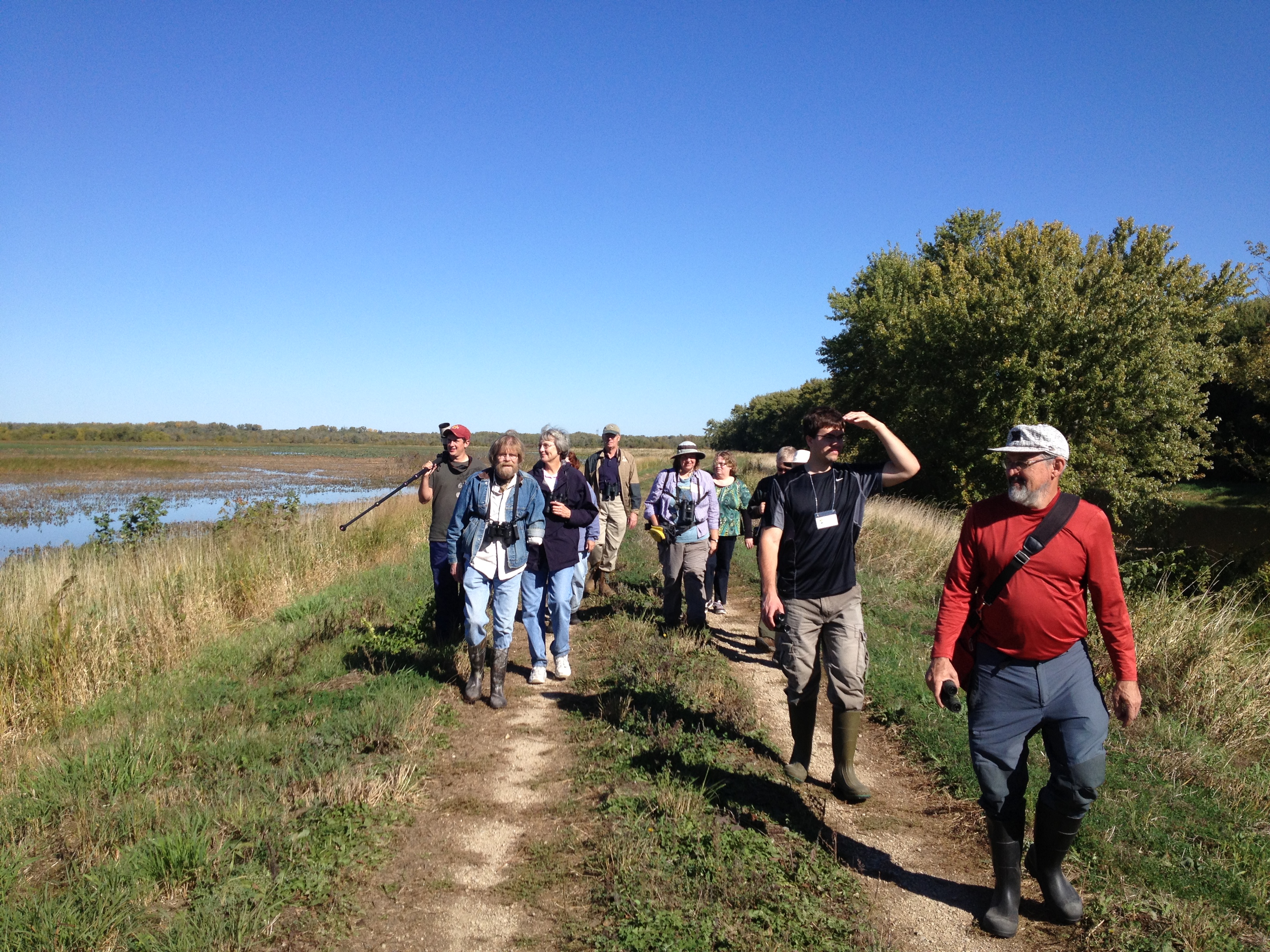
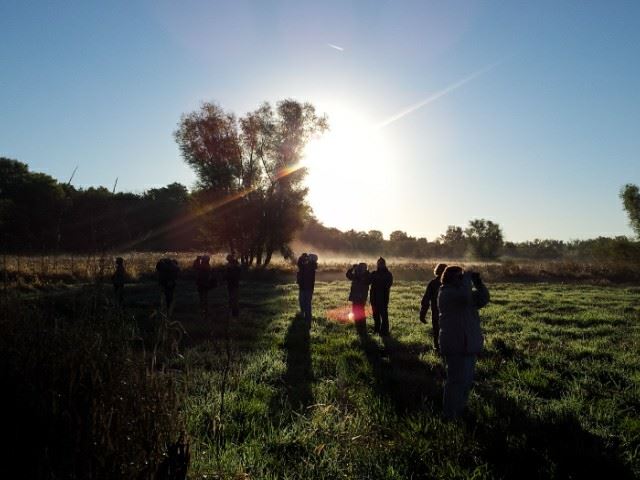
Danny and I led a field trip this morning to Princeton Marsh here in Clinton, IA. We had a great turnout – I was honored! – of birders. I just wish there were more birds than mosquitoes!

Few migrants were around in the morning; there was no morning re-determined migration today. The approaching cold front took its sweet time in getting here, and had not pushed through easternmost Iowa by dawn. It was interesting to see the huge flight on the Des Moines radar overnight, just west of the front, compared to the Davenport radar, just east of the front (where we were).

So the woods were quiet, but we had ample numbers of things like Yellow-rumped Warblers, both kinglets, and lots of Red-winged Blackbirds commuting overhead. A heard-only Pileated Woodpecker and a good look at a Winter Wren were local highlights. Oh, and I got a life frog: Cricket Frog! And lots of Leopard Frogs were around; it was not a good sign that I was ranting about bush honeysuckle and playing with frogs within the first 30 minutes of the walk.

A scrubby, weedy wetland area near the southern edge of the property was much birdier, however, highlighted by a teed-up LeConte’s Sparrow, 7 Wilson’s Snipe, and a Sora. A small group of 5 Eurasian Tree Sparrows were a little unexpected.

The front had now pushed through, dropping just a few sprinkles, but also blowing away the skeeters. That was nice. Danny and I decided to try a little river migration watching, so we headed over to a small riverfront park in Princeton that intrigued us during a quick visit yesterday.

Now we were in business! A trickle of raptors began to move overhead, as soon as the clouds cleared. A handful of Sharp-shinned Hawks, a Merlin, a few Red-tails, etc. A group of about 30 Franklin’s Gulls sitting on the sandbar took flight, soaring high and perhaps southwards. As we were about to depart, a line of 32 American White Pelicans came cruising down the river. Yay, migration in action!

In the afternoon, I presented my Russian Far East: In Search of the Spoon-billed Sandpiper program. Yeah, I apologize I went a little long there. Oops. But it was such a great experience to share, and really, is there ever such thing as too many Tufted Puffin pictures?
c Miss River Eco Center, ClintonHome base for the Meeting.

d birdwalk1, Princeton WMAEarly morning in Princeton Marsh.

10/13: Clinton, Iowa.
What a difference a day makes! A very strong flight took place overnight Saturday into Sunday, and a lot of birds arrived for Sunday morning.

Not only was I very happy to see a lot of birds on our field trip to Princeton Marsh, but I was happy to see that my predictions came to fruition. Following my evening program “A Sandy Point Case Study,” in which I concluded with a little local radar analysis, I predicted it was going to be a good morning (it’s always a risk sticking one’s neck out like that!).  And it certainly was at Princeton Marsh at least!

Large numbers of Yellow-rumped Warblers were reorienting overhead at dawn, and new arrivals included Palm Warblers and Fox Sparrow. Some waterfowl also arrived with Blue-winged and Green-winged Teals, and Gadwall becoming new entries in my state list. 2 Nelson’s Sparrows joined two LeConte’s Sparrows; both species were seen very well by all, and Nelson’s is fairly rare around here.

Very local in Iowa, a conspicuous Pileated Woodpecker was enjoyed (a lifer for some, actually), as was a spiffy adult Red-shouldered Hawk. But the bird-of-the-day was a very truant adult White-faced Ibis that was foraging in a shallow wetland.

A great morning of birding concluded a most enjoyable and productive weekend for me. I thank the Iowa Ornithologists’ Union for having me out, and I hope to see you again soon!
e birdwalk2, Princeton WMAPrinceton Marsh.

10/14: Clinton, Iowa:
Danny and I headed north this morning. Our first stop was the Goose Lake WMA.

After another good flight on the radar overnight, we found a lot of birds here. American Robins, White-throated and Swamp Sparrows, Red-winged Blackbirds, Cedar Waxwings, and Song Sparrows were all abundant, trumped only by the cloud of 500+ Tree Swallows.

A flock of Rusty Blackbirds were in the marsh, along with a single Ring-necked Duck – the last two new species for my Iowa list of the trip. The highlight for me, however, was the 60+ Wilson’s Snipe that joined ~25 Killdeer on a mudflat in the marsh; I’m not used to seeing so many snipe together.

We then drove to Madison, Wisconsin, picked up David La Puma and new friend Jessica Gorzo, and – in what, in hindsight was not a great idea – raced north to chase a long-staying White-tailed Kite. Not that an occasional chase with friends is a bad idea, but the fact that we were essentially racing the sun made us reconsider this.

Arriving in the area with about 30 minutes to sunset didn’t provide much hope, but an ultra-distant male Northern Harrier hovering over a field did – at least for a little while. Flocks of Sandhill Cranes were heading to roost, as was a massive cloud of Canada Geese. No small – in my mind – consolation prize, however, was the flock of about 30 Greater Prairie-Chickens that I spotted as they flew just over the tops of a field, before disappearing into the grass. Although known to be here – and intensively managed for them – they are not often seen, especially at this season, so that was a real treat for me. Having seen Greater Prairie-Chicken many fewer times than White-tailed Kite, I left satisfied. Mostly.
f Goose Lake WMA'Goose Lake WMA.


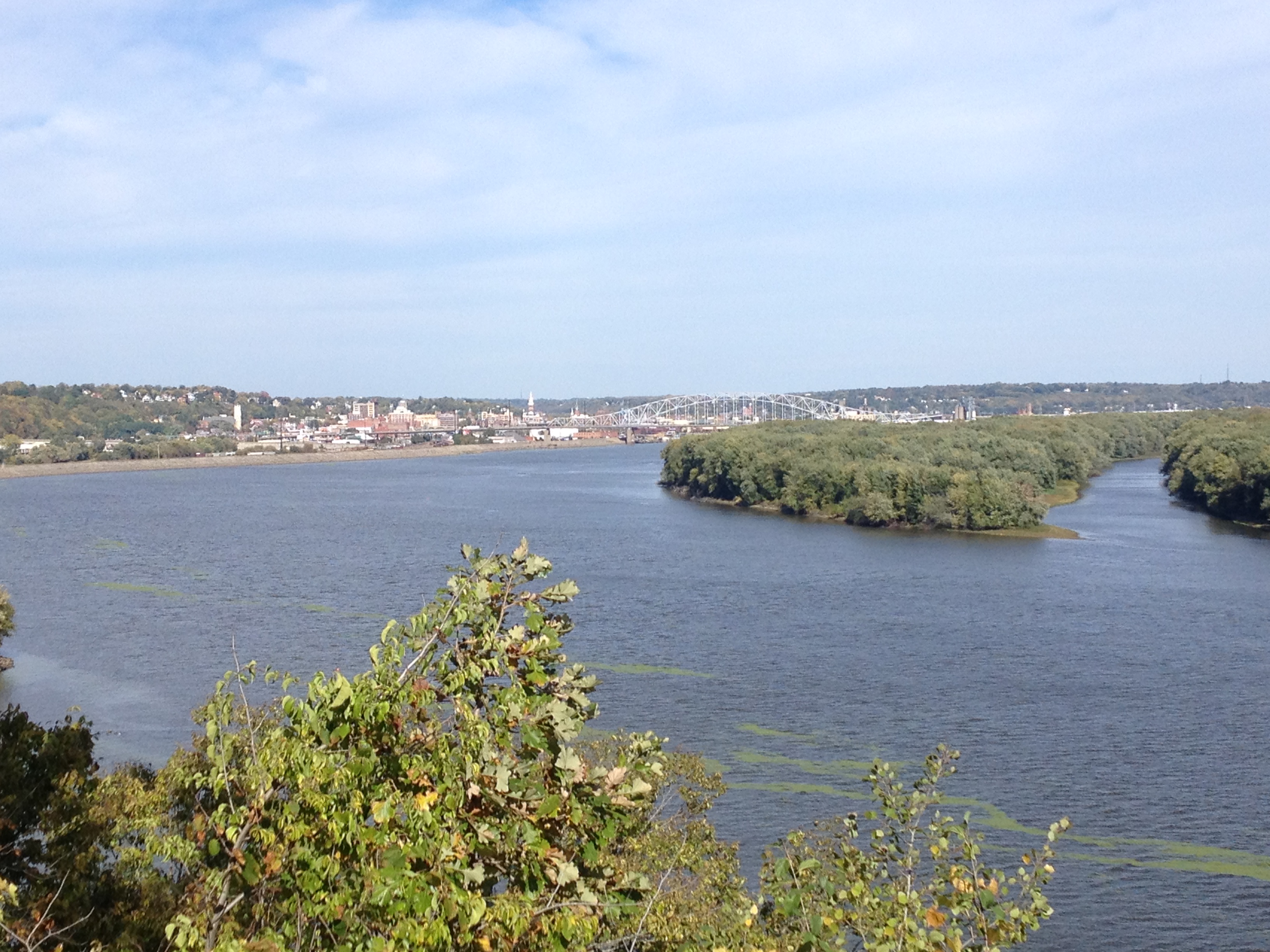
g DubuqueDubuque up the Mississippi from Mines of Spain State Recreation Area

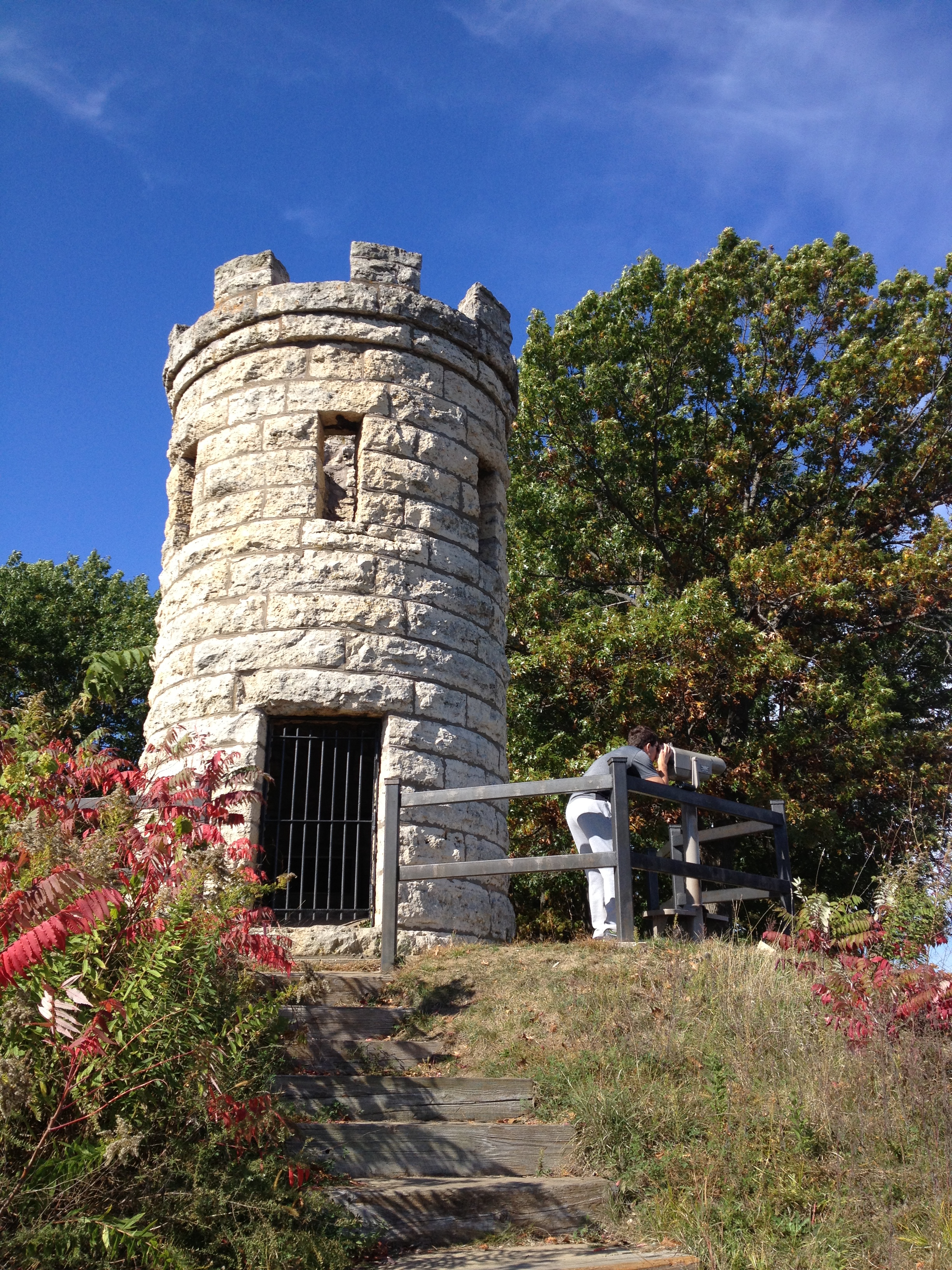
h DubuqueDubuque Monument.

i WTKI chase“I think it’s too late” – All of us.

10/15: Madison, Wisconsin.
Danny said goodbye and took off in pursuit of the White-tailed Kite once again (unfortunately, despite many people looking it was not seen, and has never been seen again. Apparently, we missed it for good by exactly one hour). David and I wished him luck, but we thought our time would be better spent birding locally in Madison before heading over to Milwaukee.

The Pheasant Branch Conservancy was our destination – after a ridiculously late start for all (our respective travels had clearly caught up with all of us!). While the radar did not suggest that this was a morning that could not be missed, we probably – it’s October afterall – should have motivated sooner, but sometimes the body makes such decisions for you.

However, even in the middle of the morning, this Middleton preserve was decidedly birdy! It was full of sparrows, and my paltry state list grew by leaps and bounds. Fox Sparrows had arrived, White-crowned Sparrows were in good numbers, and plenty of White-throated and Song Sparrows were to be found, along with a goodly number of Lincoln’s Sparrows – one of my favorites!

Before we knew it, however, it was time to head to the Urban Ecology Center for my evening program. At a pre-presentation dinner, it was great to meet some new friends, and get re-acquainted with some of the people who joined me (OK, technically, I joined them) aboard the UEC’s private charter aboard the Schooner Lewis R. French out of Camden, ME last summer. They were stuck with me for 5 days yet came back to hear me talk even more, so I guess that is a good sign!

I wanted to thank Tim Vargo of the Urban Ecology Center for inviting me over, and I thank everyone who came out last night. I hope you all enjoyed the show!

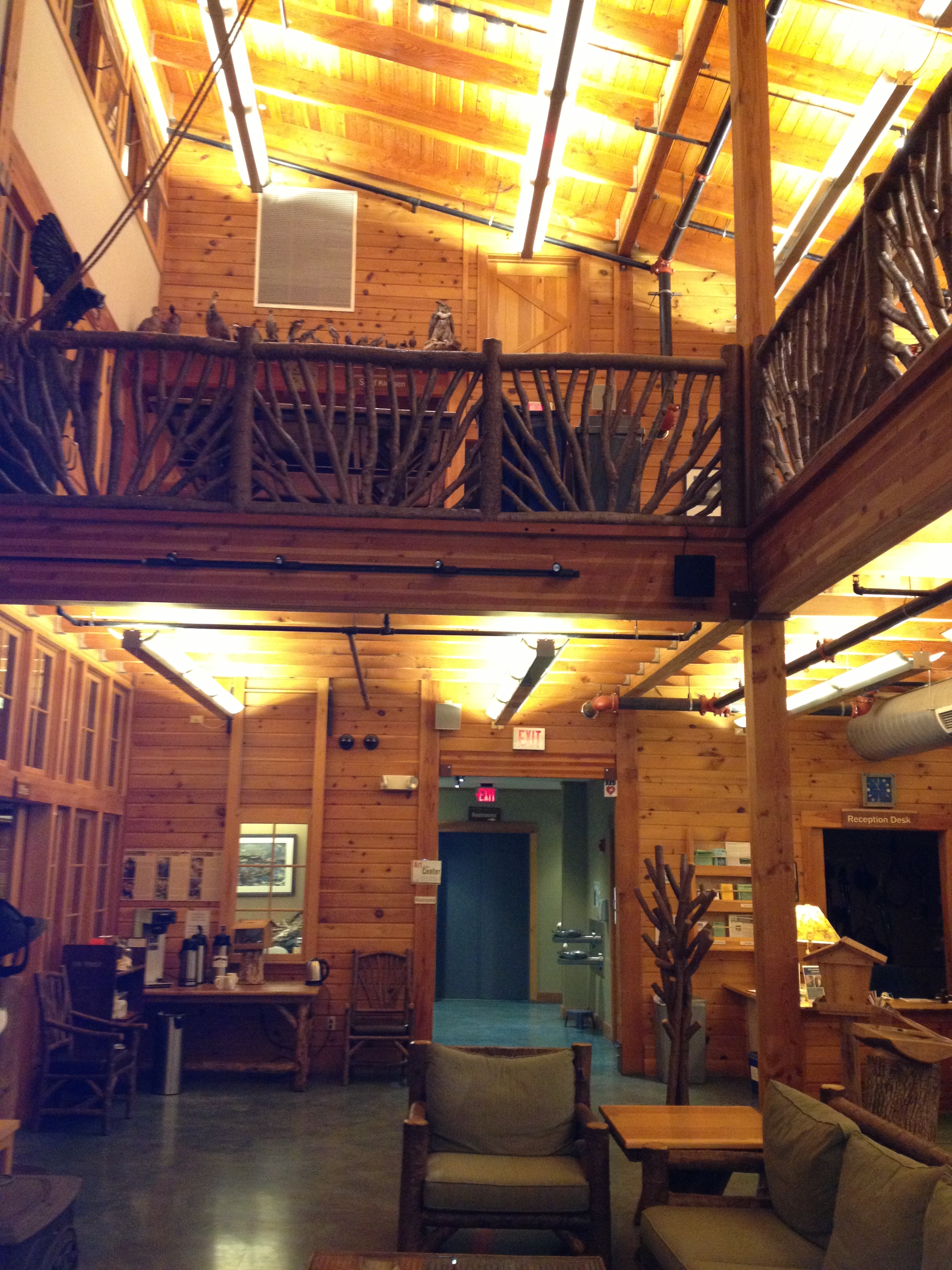
j Urban Ecology CenterInside the Urban Ecology Center.

10/16: Madison, Wisconsin.
Following my Sandy Point Case Study presentation at the IOU Meeting over the weekend, I looked at the local radar with the group and suggested it would be a very good morning in the field. And, in most places, it definitely was. After my Urban Ecology Center program last night, we looked at the radar and saw virtually nothing that suggested bird migration.

David chastised me a little bit for even hinting that “no migration on the radar” means “don’t go birding in the morning.” “It’s migration – go birding every morning!” (My point in the progrAm was simply that I would not have gone to Sandy Point that next morning). And he’s absolutely right. There are plenty of birds around in mid-October even when they have not moved in the night before.

While there might not be a Morning Flight of note without many “new” birds, there are plenty of birds in the field – literally. It’s sparrow season, and just to prove the point, local Madison birding once again proved why you go birding every day in migration! First, we walked through the woods from David’s neighborhood to the 1918 Marsh. Not much happening. A walk around and through the marsh, out to Picnic Point. A little dissapointed by the low numbers of sparrows, we instead enjoyed a nice little sampling of newly-returned migrant waterfowl (Northern Pintail, Bufflehead, Gadwall, American Wigeons, and Redhead), and lots of American Coots. Coots always amuse me. And drake Wood Ducks are always worth and extended view.

Readers of my blog and the store’s Facebook Page know I am a big fan of birding community gardens in the fall, so you could image my glee when we exited the Biocore Prairie (which itself had a goodly number of sparrows) and I stepped into the acres of the Eagle Heights Community Garden. This is where all of the sparrows were! 400+ House Sparrows, 150+ American Goldfinches, 100+ White-throated Sparrows, 75+ Song Sparrows, 50+ White-crowned Sparrows including one of the western subspecies Gambelli. A couple of dozen Lincoln’s Sparrows and Dark-eyed Juncos. A smattering of Field Sparrows, Yellow-rumped Warblers, and Chipping Sparrows. A handful of Palm and Orange-crowned Warblers, 1-2 Fox Sparrows, and my 100th Wisconsin Bird: 2 Brown-headed Cowbirds. Times flies (as in almost 3hrs here!) when you are having fun!
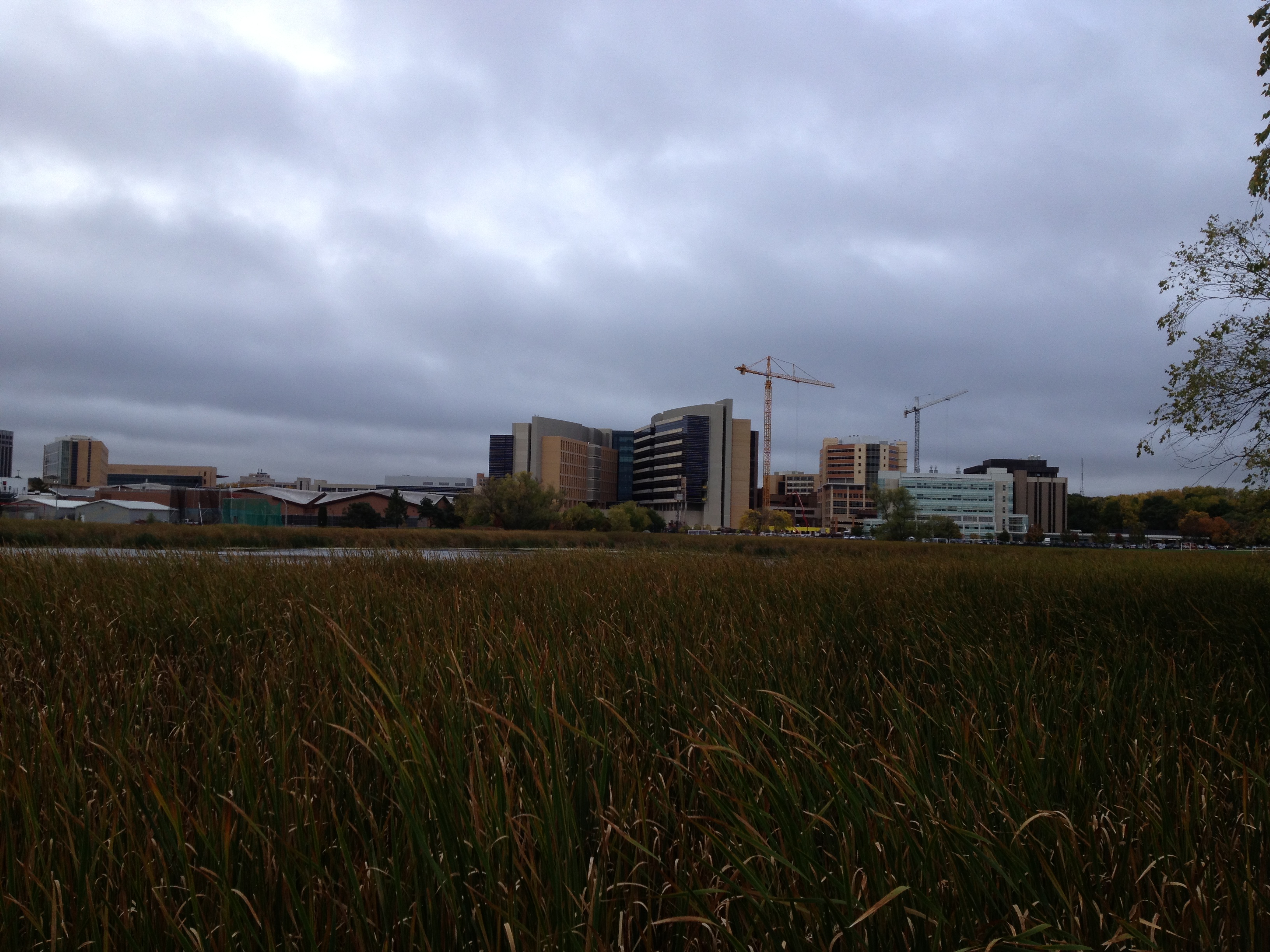
k 1918 Marsh, MadisonUniversity of Wisconsin from 1918 Marsh.

l Picnic Point, MadisonPicnic Point.

la Eagle Heights GardenEagle Heights Community Garden.

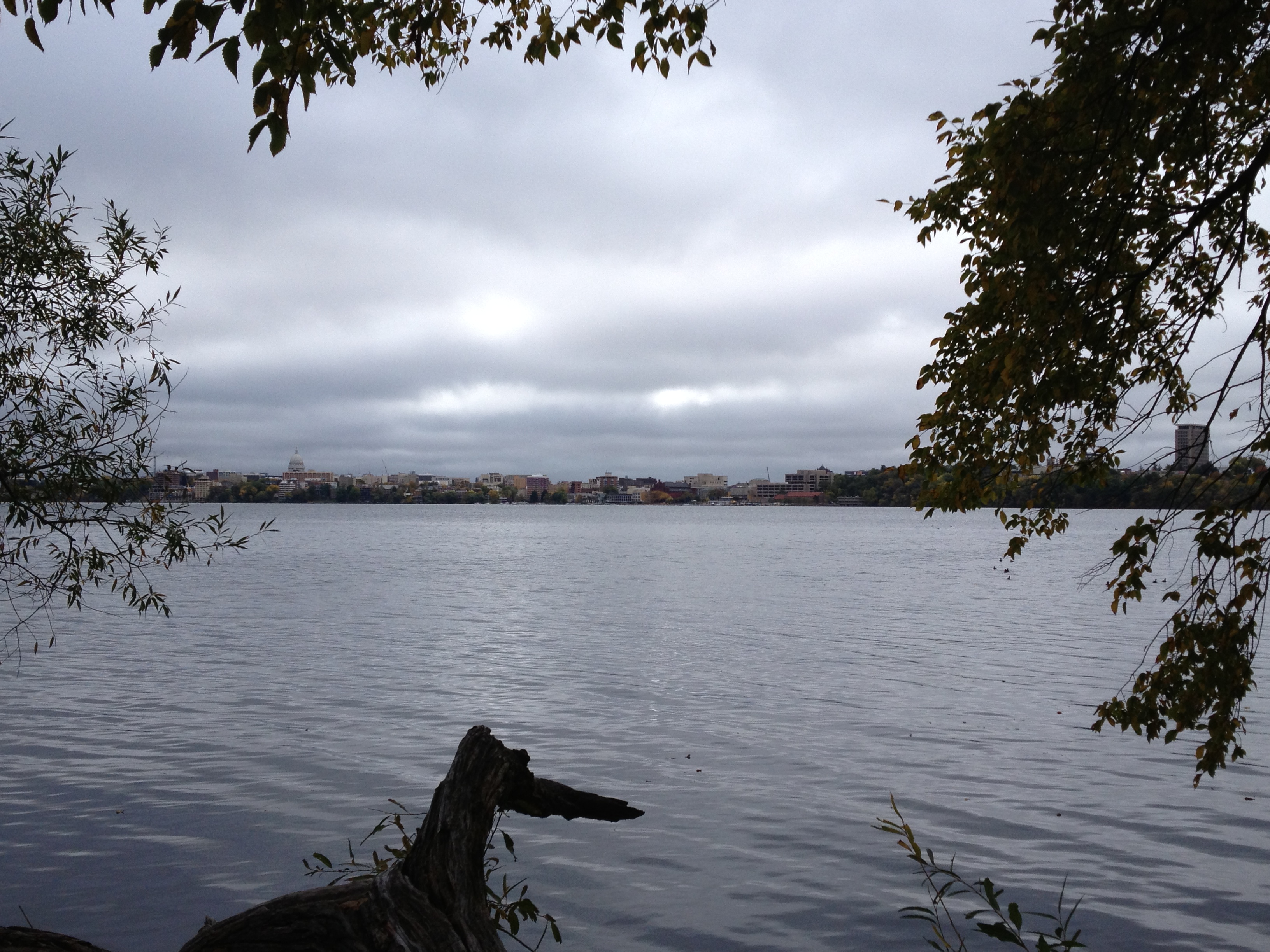
m MadisonDowntown Madison.

10/17: Madison, Wisconsin.
This was my last day of birding of my little Midwest trip. After David and I hit the Eagle Heights Community Garden in Madison (more juncos and Chipping Sparrows, 1 Nashville Warbler, multiple Orange-crowned Warblers, a late Ruby-throated Hummingbird, a continuing “Gambell’s” White-crowned Sparrows, etc), I hit the road for Minneapolis.

Visiting a non-birding friend – yeah, sometimes I tolerate hanging out with people that don’t like birding – my birding was limited to a walk around LoringPark and the art museum’s SculptureGarden. White-throated Sparrows were quite common, with a fair number of Dark-eyed Juncos, Swamp Sparrows, and a couple of Lincoln’s Sparrows. There was actually a reasonable diverse selection of migrants in this small, very manicured city park. And I do love city park birding!
a href=”https://mebirdingfieldnotes.blog/wp-content/uploads/2013/10/n-rtha1.jpg”>n RTHAQuite possibly the world’s most cooperative Red-tailed Hawk in the Eagle Heights Community Garden.  This is just a standard photo with my iPhone.
o RTHA Phone-scopingDavid works on some phone-scoping.

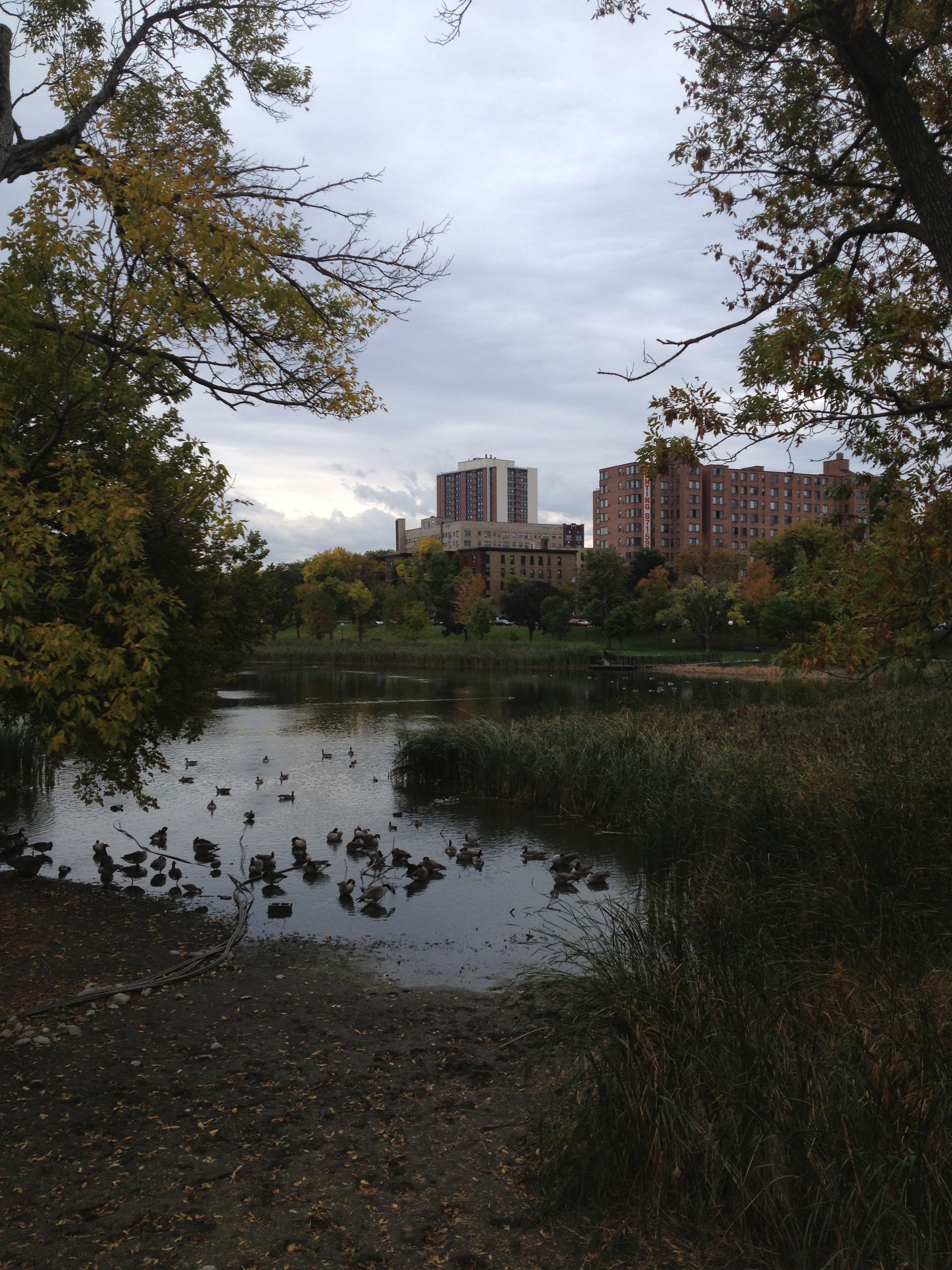
p Loring Park, MNLoring Park, Minneapolis

q Minneapolis

10/18: Minneapolis, Minnesota.
As much as I love to travel, I love to come home even more! It’s good to be back, but I thoroughly enjoyed my time birding, visiting, and chatting about “How to Be a Better Birder” in Iowa and Wisconsin. Thanks again to the Iowa Ornithologists’ Union, Tim Vargo at the UrbanEcologyCenter, Danny Akers, and David La Puma for making this tour happen.

Next up, New Hampshire Audubon in Concord on 10/24.

Black Skimmer at Sandy Point!

Well, I sure wasn’t expecting this on my Sandy Point Patch List!
DSC_0021_BLSK1,SandyPoint,10-4-13
Black Skimmer, SandyPoint #180!

An otherwise slow morning flight (more on that shortly) was interrupted by an odd call emanating from upriver of the bridge. “Hmm, sounds like a Black Skimmer, I thought.”  Uh, wait…but alas, there it was!  It alighted on what was left of a small sandbar with a couple of gulls, and as that sandbar became inundated, it took to the wing again and began to forage.  I lost sight of it as it moved up the bay, but a little pocket of Palm Warblers moving through distracted me.

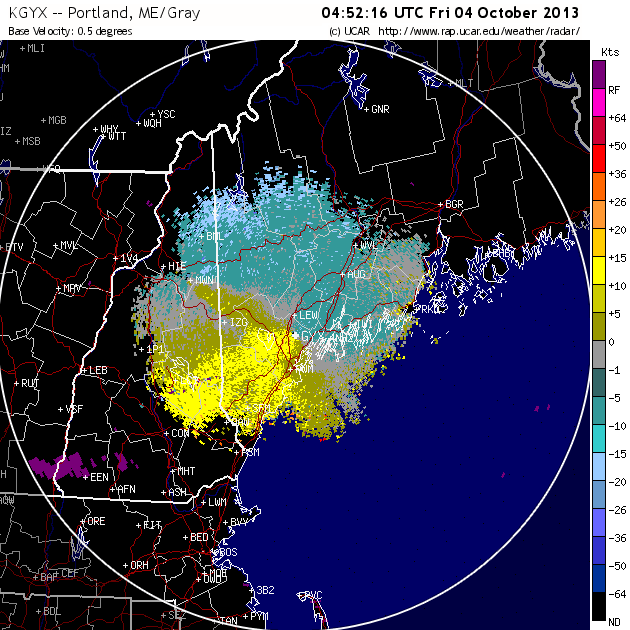
Looking at the radar last night, the flight seemed strong, but the Morning Flight was decidedly slow.  Here are the 1am radar and velocity images for example:
1am radar, 10-4-13 1am velocity, 10-4-13

A couple of things are noticeable.  For one there’s the fairly narrow diameter of the flight reflection which would suggest a low flight (the radar beams well out from the tower are above the height of birds; the “angle of elevation).  This definitely happens when birds, such as sparrows – and they’re definitely on the move right now – which tend to fly relatively low dominate the flight.  So perhaps a lot of the flight last night was of the sparrow variety.

However, the velocity image suggests the north to south motion was rather slow.  Perhaps it was just because it was so calm and slower-flying migrants were in the air and therefore were making less progress (ground speed).  Or maybe there’s a lot of dust and bugs up there; it has been warm and dry after all.

Regardless of the explanation, or lack thereof, the flight was slow.  But did I mention I had a Black Skimmer?

– 6:38-8:20
– 46F, partly cloudy, calm.

41 Yellow-rumped Warblers
31 Palm Warblers
31 Unidentified
24 Ruby-crowned Kinglets
13 Blackpoll Warblers
12 Northern Parulas
10 Green-winged Teal
9 Golden-crowned Kinglets
6 Blue Jays
6 Black-throated Green Warblers
5 Dark-eyed Juncos
4 American Robins
4 Nashville Warblers
4 Black-throated Blue Warblers
4 Chipping Sparrows
4 White-throated Sparrows
3 Common Loons
2 Blue-headed Vireos
1 Great Blue Heron
1 Osprey
1 BLACK SKIMMER
1 Northern Flicker
1 Red-eyed Vireo
1 White-breasted Nuthatch
1 American Pipit
1 Cedar Waxwing
1 Magnolia Warbler
1 Common Yellowthroat
1 Savannah Sparrow
1 DICKCISSEL (5th of season here)
1 American Goldfinch

Total = 226

Afterwards, I decided to check on my “lots of sparrows moving last night” hypothesis, so I visited Old Town House Park.  There were an ample amount of sparrows (30+ Song, 20+ Swamp, a small number of White-throated, 2 Lincoln’s, 1 Savannah, and 1 White-crowned), but not enough to conclude much about the composition of last night’s flight, or lack there of.  But it was pleasantly birdy, with a nice sprinkling of other migrants, including 11 Eastern Bluebirds, 2 Pine Warblers, and the first Purple Finch that I have had in a couple of weeks.

Meanwhile, in the goose fields, things have not yet begun to heat up.  While there may be some bona fide migrants around, my tally of 283 Canada Geese today fits right there within the 200-300 that have been present since late August, when the local resident birds began to flock up post-breeding.  This will change soon.