Rarity season is upon us, and there’s no better time for a big ol’ storm. Especially with an impressive southerly flow before and during the storm, and a strong cold front clearing things out behind it, my “Rarity Fever” symptoms got fired up.
Just look at those extensive southerly winds on Friday and Sunday, for example…
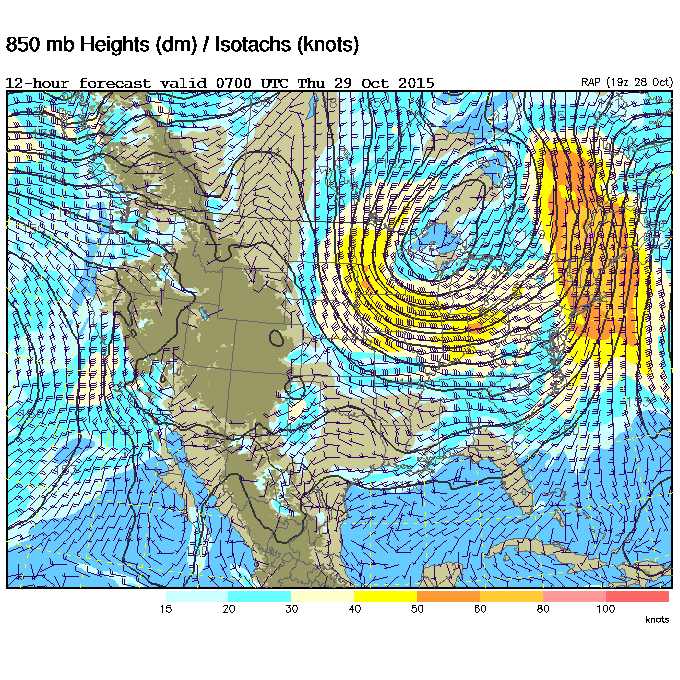
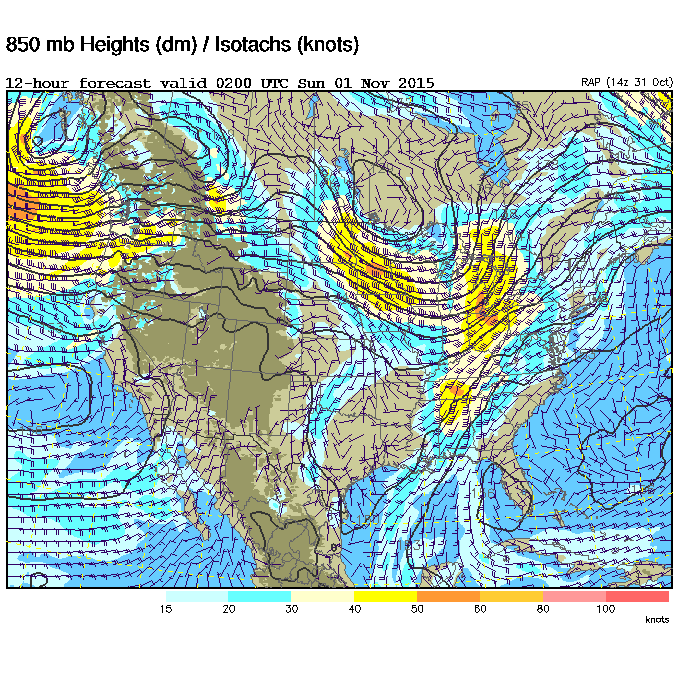
…following Thursday’s storm system.

Heavy rain Wednesday night into Thursday gave way to a few hours of well-above normal temperatures and mostly sunny skies before winds and rain began to pick up in the late afternoon ahead of the cold front. I was able to squeeze in a visit to Sabattus Pond in the early afternoon, hoping for storm-grounded waterbirds.
While it was simply gorgeous out, the waterbird numbers remained below seasonal-norms here. A continuing pair of Redheads was the highlight, and a pair of White-winged Scoters was just the type of rare-inland migrant seaduck I hope to find after some weathah’. Otherwise, waterbird counts were modest: 219 Ruddy Ducks (well, modest for Sabattus – this is an epic count for anywhere else in the state!), 164 Lesser Scaup, 75+ Ring-billed Gulls, 62 Mallards (not sure where the masses were today), 41 Bufflehead, 39 Greater Scaup, 36 Ring-necked Ducks, 16 American Coots, 13 American Black Ducks, 11 Canada Geese, 2 Common Loons, 1 Mallard x black duck hybrid, and 1 Double-crested Cormorant.
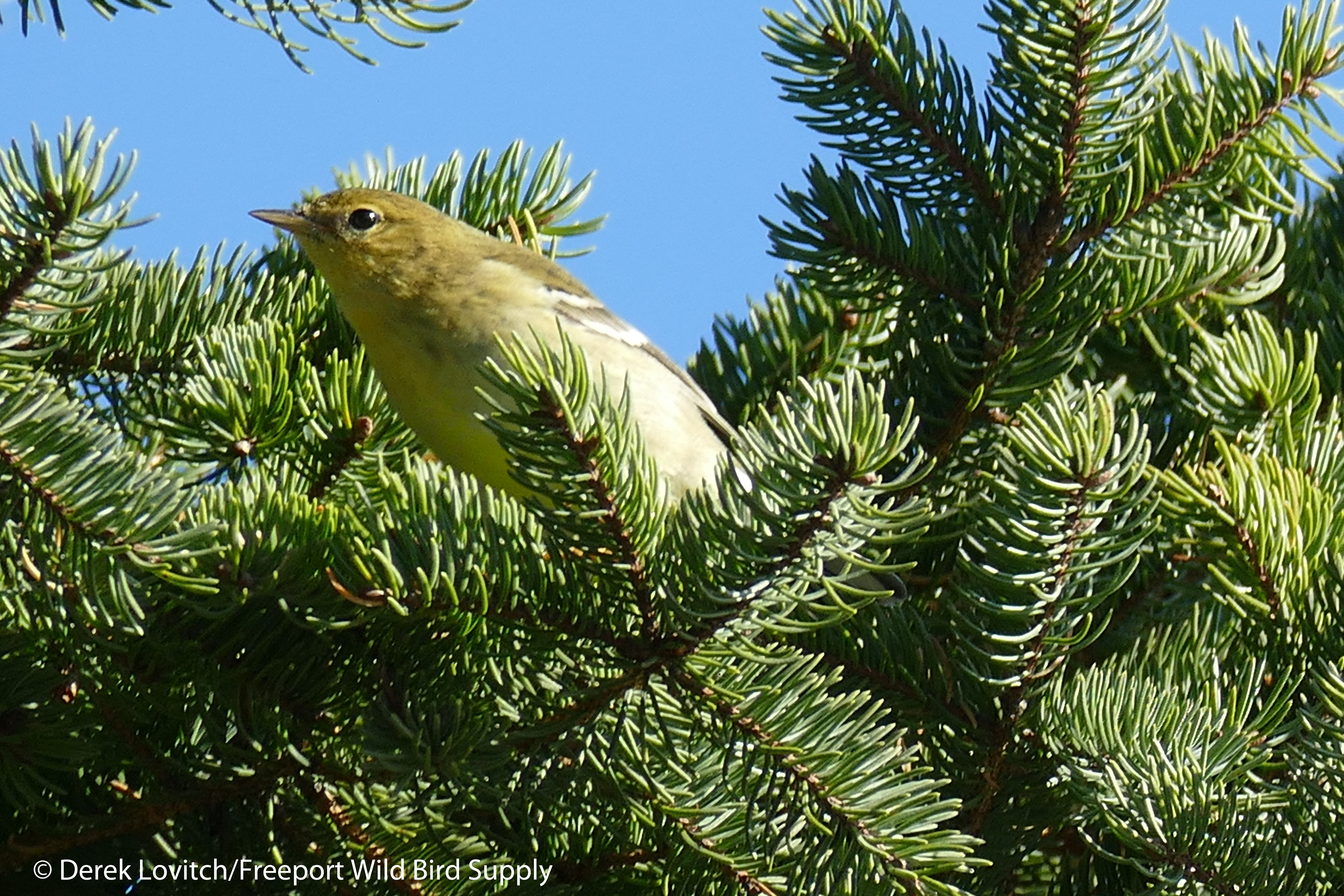
On Friday, with southwesterly winds (more rarity wind!) gusting ahead of a secondary cold front, I spent the morning in Cape Elizabeth. While I had Cave Swallow on my mind, I settled for a nice mix of late migrants, including four species of warblers (Orange-crowned at Kettle Cove, my 4th of the year; Blackpoll and “Western” Palm at Pond Cove, and scattered Yellow-rumps), a Gray Catbird at Kettle Cove, and an Indigo Bunting on private property.
With a light (but decent-for-the-date) migration overnight, I started at sunrise at “My Office” at Sandy Point to take in what’s left of the Morning Flight. Calm winds seemed to preclude as many birds from reorienting here as I would have expected based on the decent-for-the-date radar image overnight. However, it was a very pleasant morning with nice little flight featuring good late-season diversity. I tallied a total of 247 migrants, led by an even 100 American Robins, 66 Dark-eyed Juncos, and a nice total of 14 Snow Buntings. “Tardy” birds included 3 “Yellow” Palm Warblers, an Eastern Phoebe, 2 Hermit Thrushes, a Red-winged Blackbird, and best of all, a late Black-and-white Warbler that I found in the trees after my Saturday Morning Birdwalk group had joined me.
But on Sunday, vagrant-hunting was the name of the game. Although I did not organize a South Coast-wide “Rarity Roundup” this year for the first time in a decade, Kristen Lindquist, Evan Obercian, Jeannette and I ran my usual Portland Rarity Roundup itinerary, scouring the Portland peninsula for vagrants, “lingering” migrants, and other surprises. It was not exactly the birdiest of days on the Portland Pen’ but the Eastern Promenade was fairly productive, led by 2 Orange-crowned Warblers, a Palm Warbler, a Field Sparrow, and three Hermit Thrushes.

Here’s a terrible shot in the dawn dark and drizzle of one of the two Orange-crowns.
Elsewhere in the East End, we turned up a Hermit Thrush on Anderson Street, and a Gray Catbird on Sheridan Street, but then the passerines really dried up. The usually-productive stretch of woods on either side of West Commercial Street has been rendered useless, and was essentially devoid of birds.
On the riverside, there’s development, clearing a great stand of birch and scattered crabapples that once resided here:

But it’s a city, and development occurs, and there are lot worse places for trees to be cleared. The abandoned railyard and old docks along this stretch of degraded river is hardly habitat worth conserving. “There are more important places to protect,” as Evan stated. However, it was at least some habitat for tired and disoriented migrants that found themselves in the city and looking for food and shelter.
But degraded urban “brownfields” are exactly where development should occur. More frustrating – and rather perplexing – however, is the continued ravaging of quality habitat throughout the city by the City of Portland. From incredibly valuable parkland habitat at the Eastern Promenade to scattered thickets on undeveloped hillsides, it’s as if Portland doesn’t want birds to find refuge in the city. Of course, there are “other considerations” for this land mis-management, but that’s a blog for another day. But the misguided efforts to do whatever it is the city thinks it’s going to accomplish by clear-cutting what was the best strip of woods on the peninsula, reduced habitat for migrants – and resident species from Black-capped Chickadees to Hairy Woodpeckers, to Barred and Great Horned Owls (breeding) to this:
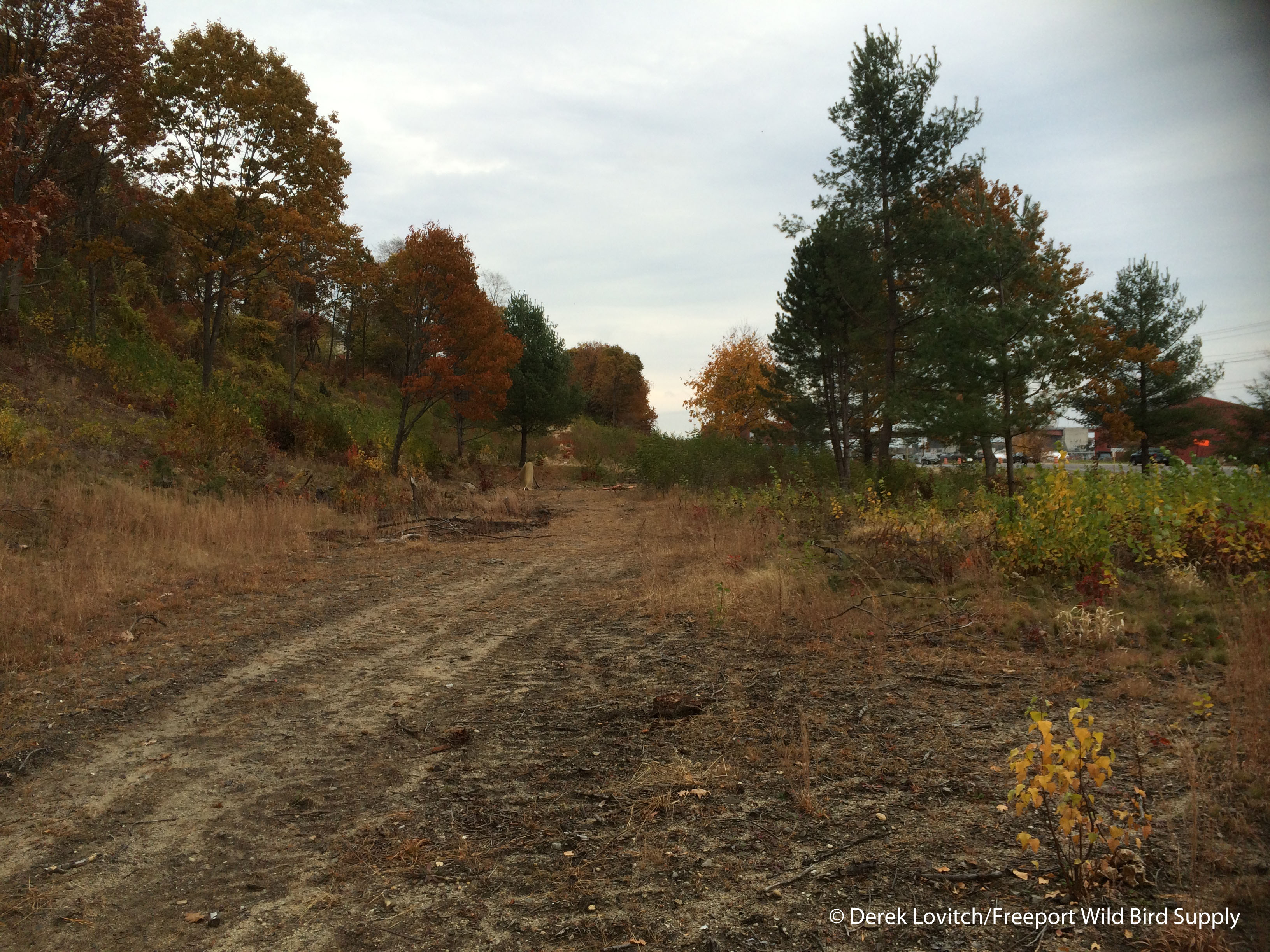
What a mess, and what an abomination! And what a waste. So yeah, there weren’t any birds here, either.
So after lunch, we gave up on the city (and crossed off several birding hotspots from the list…don’t get me started about what they have done to the Fore River Parkway Trail area!) and headed to Cape Elizabeth.
Unfortunately – especially with an increasing southerly wind in the afternoon – it wasn’t overly productive here. In fact, several of the best hotspots were incredibly slow – as slow as I have ever seen them at this time of year. However, we did hit some hotspots, led by a great amount of activity at Trundy Point. The five Snow Buntings on the beach were nice (photo below), but a feeding frenzy of 40+ Common and 6 Red-throated Loons, a single Red-necked Grebe, 1 Bonaparte’s Gull, and a goodly amount of Herring and Great Black-backed Gulls made for a fun visit. Northern Gannets were diving further offshore as well.

Maxwell’s Farm was productive, too: 17 Eastern Bluebirds, 5 American Pipits, and a Wilson’s Snipe led the way, and we had another snipe flying over little Joe’s Pond Park in South Portland. Mill Creek Park might have been the birdiest stop of the day – even if it was almost all Mallards and Ring-billed Gulls, however!
We then finished up the day, with the sun setting, at Portland’s Back Cove, with arguably the bird of the day – a late American Golden-Plover going to sleep with 9 Black-bellied Plovers and 5 Dunlin at the edge of the marsh. It was a nice way to cap an enjoyable day of birding with good friends, with the senseless optimism of Rarity Season keeping us going through nearly 14 miles of walking and searching.
No major rarities were to be found at Reid State Park on Monday morning, either, but Jeannette and I enjoyed a lovely, birdy walk on a beautiful morning. 8 late Semipalmated Plovers joined 151 Sanderlings on the beach, along with 8 American Pipits and 18 Snow Buntings. A lingering Nelson’s Sparrow (subvirgatus) was in the saltmarsh, and we spotted a Northern Harrier flying south, low over the water offshore. In the water, winter ducks and waterbirds are rapidly increasing: 31 Red-necked Grebes, 15+ Red-throated Loons, all three scoters, and a whole bunch of Long-tailed Ducks were among the growing legions today.
And then, I came into the store for a couple of hours of work this afternoon and was distracted by a Dickcissel at our feeders!
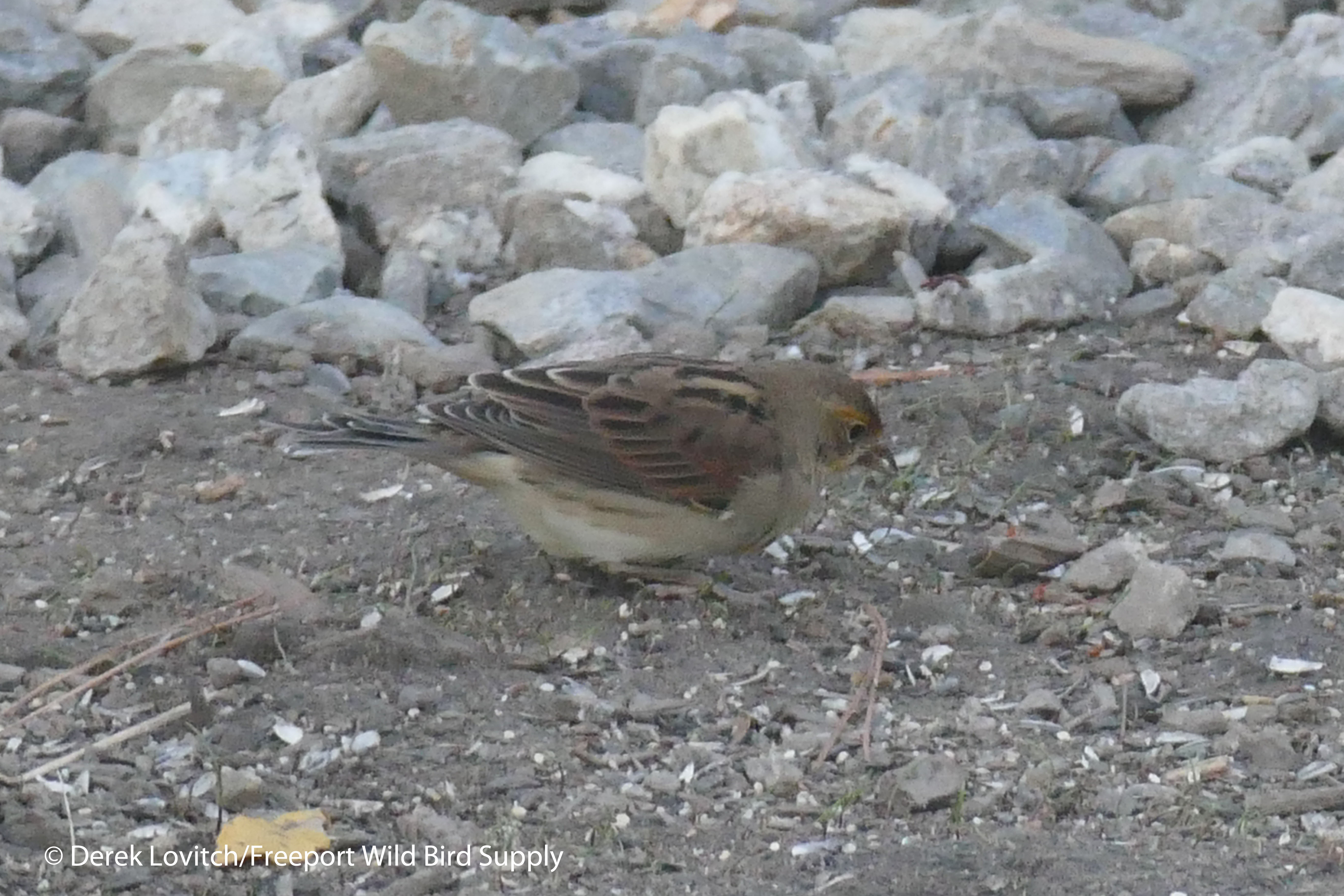
After spending so much time sifting through urban House Sparrow flocks yesterday, of course one would show up right in front of me. It was a long overdue addition to our store’s yard list – #114! And it was my 5th mainland Dickcissel of the fall.
While the appearance of a vagrant after a storm could simply be coincidence, storms can facilitate the departure of already-wayward strays (to oversimplify things a bit). It’s hard to pin any one bird down to any particular weather event, but the appearance of a Swainson’s Hawk (about 6 or 7 state records) that was nicely photographed at the Cadillac Mountain Hawkwatch in Acadia on Friday, only served to further flare my Rarity Fever Symptoms. However, despite my best efforts, I didn’t turn anything of great significance up this weekend, and nor did anyone else in Maine.
From the lack of birdlife in many Portland spots (the ones that still have vegetation that is!) and especially in the warm Cape Elizabeth microclimates that I have been checking, it’s possible that the mild weather (remember we’ve only had that once cold snap so far) has simply not yet concentrated lingering/pioneering individuals and wayward vagrants in the little nooks and crannies that we seek them in at this time of year. And with a very mild week in store, perhaps it will be a little longer before we see them concentrate.
But there is one thing we can be sure of: there will be a “Mega” rarity soon. How do I know? Because I am going away during Rarity Season!









 Maine Birding Field Notes