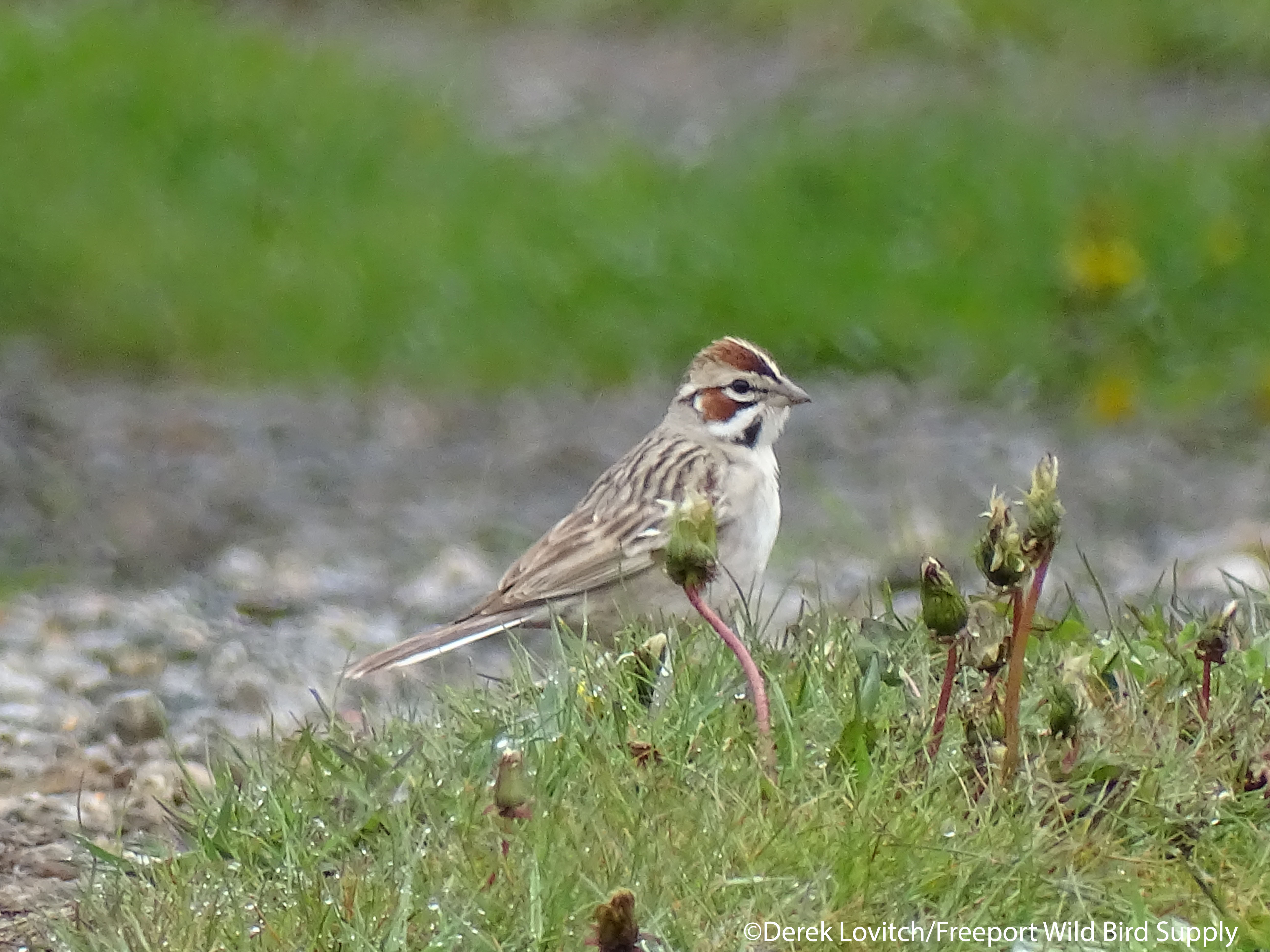
This Lark Sparrow – always a treat in spiffy spring plumage – was among the notable birds form a stellar weekend on Monhegan.
Five days on Monhegan Friday the 23rd through Tuesday 5/27 yielded a total of 106 species, including 22 species of warblers. It was the best Memorial Day Weekend on the island in several years, and at times, it really felt like “the good ol’ days” with a flock of warblers in every tree. Back in the real world, I was mostly guiding for local breeding specialties, but did have a few observations of note. But mostly, of course, my highlights were from my time on the island.
5/23, with Monhegan Spring Migration Weekend Tour group:
12 HARLEQUIN DUCKS
1 2nd/3rd Cycle Lesser Black-backed Gull
5/24, with Monhegan Spring Migration Weekend Tour group:
12 HARLEQUIN DUCKS continued
1 LARK SPARROW (photo above)
2 continuing “Eastern” Willets
3 Atlantic Puffins
1 Philadelphia Vireo (FOY)
3 Cape May Warblers (FOY)
18 species of warblers led by 55 American Redstarts, 50 Magnolia Warblers, and 25 Yellow Warblers
5/25, with Monhegan Spring Migration Weekend Tour group:
1 continuing SNOWY EGRET
8-10 continuing HARLEQUIN DUCKS
2 Alder Flycatchers (FOY)
18 species of warblers led by 45 American Redstarts, 45 Magnolia Warblers, and 35 Blackpoll Warblers, but also including at least 10 Bay-breasted and 4 Cape May Warblers
5/26, with Monhegan Spring Migration Weekend Tour group:
2 Willow Flycatchers (FOY)
1 Common Nighthawk
17 species of warblers led by 55 Blackpoll Warblers, 45 Northern Parulas, and 40 each of Magnolia and American Redstart.
5/27, with Jeannette:
1 continuing HARLEQUIN DUCK
1 Mourning Warbler (FOY)
1 Nelson’s Sparrow (FOY)
1 Pine Warbler
1 Long-tailed Duck
1 Ovenbird (my 22nd species of warbler on the weekend)
21 species of warblers led by 100 Blackpoll Warblers, 80 American Redstarts, and 70 Magnolia Warblers, but also including at least 15 Bay-breasted, 10 Tennessee, and 6 Cape May Warblers.
1 Yellow-bellied Flycatcher (FOY), our property in Durham, 5/28.
1 continuing male Lesser Scaup, Pine Point, Scarborough, 5/29 (with clients from Arkansas).
The deceiving very Little Egret-like Little Egret x Snowy Egret hybrid is back for another season on the Portland-Falmouth waterfront. Jeannette and I saw it for the first time this year at Tidewater Farm Preserve in Falmouth on the 14th. Details below.
My birding was limited during this period, unfortunately, especially considering a significant “overshooting” event from the most recent storm. Southern vagrants and some exceptionally early arrivals were detected. Unfortunately, we were out of town for the days in which most of the rarities were detected early this week. I did try to make up for it by finding something later in the week, but I struck out.
Overall feeder activity decreased as the snow receded, but we noticed an uptick in Purple Finches and Pine Siskins in our yard in Durham, along with the arrival of Pine Warblers at our feeders in Durham and here at the store. My other observations of note over the past nine days included:
1 LITTLE EGRET X SNOWY EGRET HYBRID, Tidewater Farm Preserve, Falmouth, 4/14 (with Jeannette). Back for another year, this very Little Egret-like individual is a tricky and misleading ID at any distance. Luckily, it was close to the point today, providing great studies. In the photo above, you can see the very long, LIEG-like plumes. Also apparent today in comparison to a nearby SNEG was the slightly longer and thinner bill and the somewhat thinner and more elegant neck, and it did appear to be a touch larger overall. However, up close, you can see the handful of wispy, SNEG-plumes on the back of the head and neck, and in most lights, the lores gave a distinctly yellowish appearance, especially near the eye.
Additional personal first-of-years this week were limited to:
1 Chipping Sparrow, feeders here at the store, 4/13.
1 Field Sparrow, our property in Durham, 4/14.
2 Pied-billed Grebes, Florida Lake, Freeport, 4/17.
Birds on Tap! Kick-off event at the Portland Beer Hub!
Thursday, April 25, 2024; 5:00 – 7:00pm – Portland Beer Hub – 320 Fore St. Portland, ME 04101- FREE!
Join Birding Guide and owner of Freeport Wild Bird Supply Derek Lovitch, and Brew’s Cruise owner Zach Poole, for an exclusive gathering at the Portland Beer Hub to celebrate the 10th Anniversary of Birds on Tap! and kick off our new tour lineup.
During this casual meetup, guests will mingle with other bird and beer enthusiasts, discuss the exciting lineup of upcoming Birds on Tap tours, and can enjoy flights of bird-themed local beers (for purchase).
It’s the perfect opportunity to immerse yourself in the world of birdwatching and craft beers. For a bit of fun, be prepared for some impromptu bird trivia and birding games.
2. Feathers Over Freeport!
Saturday, April 27th at Bradbury Mountains State Park and Sunday, April 28th at Wolfe’s Neck Woods State Park. All events free with park entry!
From birdwalks and a hawkwatch workshop to kids’ arts and crafts and a food truck, join us for two activity filled days in the 13th year of Feathers Over Freeport! A full schedule of events can be found here.
Note our regularly scheduled Saturday Morning Birdwalk meets at Bradbury on the 27th.
Not surprisingly for the end of May, Blackpoll Warblers were the dominate migrant on Monhegan this weekend. However, we never tired of seeing both males (above) and females (below) so well each and every day.
A point-blank Bay-breasted Warbler. Up close and personal Magnolia Warblers, Northern Parulas, and 9 other species of warblers including more Blackpoll Warblers than we knew what to do with…and we hadn’t even made it up the hill of Dock Road yet!
In other words, our 2023 Spring Monhegan Migration Weekend tour got off to a great start as we really hit the ground running. Then, a calling Evening Grosbeak. A fly-by Black-billed Cuckoo…more. Hmm… it was time to check in, and happily, shed a few layers.
After lunch, the excellent birding continued, with highlights including a flock of 10 Bay-breasted Warblers, a spiffy male Orchard Oriole, and great looks at a Philadelphia Vireo. By day’s end, we had 59 species including 13 species of warblers – not bad for a mid-morning arrival!
Yellow Warblers (above) and Common Yellowthroats (below) were common and conspicuous in and around town and other scrubby environs as expected.
It was cool and clear on Saturday morning, and the overnight radar image was a little ambiguous. Did the light westerly wind overnight push birds offshore as they approached from the south, or was that all just pollen and smoke haze in the atmosphere? However, the radar return did suggest birds offshore in the early morning, so we were excited to find out. Afterall, I did not expect yesterday to be so good, and it was excellent.
While only a few warblers were overhead by the time we assembled around the coffee pot at 6:30, it took a while for us to leave the spruces behind the Trailing Yew, as we had a nice pocket of warblers and good early-morning activity. We teased out a Blackburnian Warbler – the only one of the weekend, and the 3 White-winged Crossbills that have been on the island paid us a visit. Later in the morning, we caught up with the stunning male Dickcissel that has been around for a while, and were among the first to see a pair of recently-arrived House Finches (a surprising rarity on the island!). We also found a flock of 10 tardy White-winged Scoters and a total of 6 Surf Scoters that briefly visited Deadman’s Cove.
After lunch, we had the female/immature Summer Tanager, a female Orchard Oriole, found an Olive-sided Flycatcher, and while the afternoon was overall rather quiet, we had lots of great studies of a variety of birds, especially Blackpoll Warblers.
Although far from one of our best birding days on the island, it was noteworthy how well we saw just about everything. Even with a full group, birds were overwhelmingly cooperative, and everyone thoroughly enjoyed the birding…and another beautiful day of weather!
Many of our common warblers were easy to see, photograph, and enjoy throughout the weekend, such as this Northern Parula (above) and Black-and-white Warbler (below).
Saturday night into Sunday morning saw another ambiguous radar image, but the overall small number of new arrivals suggested that most of the return was something other than birds this day.
That being said, we started the day with one of the birds of the trip when I nearly spit out my coffee when I realized that flock of cormorants that looked strange was actually a flock of 9 Glossy Ibis. They circled the town, looked to be pondering the town marsh, and then soared up high and over Lighthouse Hill. Incredibly rare for the island, these were a new “island bird” for me, and we felt very fortunate that we were one of the only birders (I believe only one other birder saw them at all) on the island that got to see them. The “lingering around the coffee pot at the Yew” strikes again!
As expected, it was relatively slow overall, but even after the excitement of the ibis, we continued to enjoy ourselves. We had great looks at a lot of things all morning, including common warblers like American Redstarts and oodles of Blackpolls. We had our best looks yet of feeding Red Crossbills – they were all over the island this spring! – spotted a Peregrine Falcon, and continued to marvel at the growing flock of swirling Blue Jays contemplating a trip back to the mainland.
Ring-necked Pheasants kept us entertained as always, however.
After breakfast, we had another good find when a Purple Martin flew over us, and a bigger flock yet of Red Crossbills entertained us for a while. Jeannette arrived and joined the group to help carry my scope and to take photographs for this trip report, as well as help us find more birds.
Juvenile Red Crossbill.
It was warm and fairly slow, so I needed all the help I could get. Regardless, we added species to our trip list here and there in the afternoon, with quality surpassing quantity. We visited the long-staying 1st year male Blue Grosbeak that has taken up residence at Lobster Cove, where, unlike most Blue Grosbeaks, it has taken to flycatching for seaweed flies in the wrack. Why it is doing this no one knows, but it was a fascinating behavior to watch. Birds and birding on Monhegan never cease to amaze!
The Blue Grosbeak.
A little later, we found an immature Broad-winged Hawk, or again, it found us, as it passed right over us as we poked around the Underhill Trail to find some birds in the shade and in cover. It was often a struggle to find birds this afternoon, and it was downright hot! But I heard very few complaints compared to the slow days when it’s 45-degrees, windy, and raining!
We spent a lot of quality time observing birds today, getting to know their behavior and natural history, such as these courting Cedar Waxwings.
While also practicing our field ID skills, such as Eastern Wood-Pewee.
And enjoyed whatever warblers we did encounter, including this male Black-throated Green Warbler.
Monday saw even further reduced activity, with a very summer-like feel to the birding. The migrant flock of Blue Jays built up to at least 46, a Pine Siskin must have just arrived, and some of us even spotted the Virginia Rail! While passage migrants were few – almost all Blackpoll Warblers – we still had a great day of birding thanks to continued great views of most of what we were finding. There was a Northern Parula nest that a friend found for us to marvel at, and we had quality time once again with a family group of Red Crossbills. Watching them, especially the juveniles, eating buds and cones of Red Spruce at close enough distance to see if they were “righties” or “lefties” was memorable, and more than worth the visit. We had the male Orchard Oriole again, and paid the Blue Grosbeak another lengthy visit.
We took some time to scan the skies over the marsh while also enjoying “Lefty,” the Red-winged Blackbird with white outer primaries on only his left wing. He’s back for the second year.
One of the few birds we missed as a group all weekend was a long-staying but frustrating Snowy Egret that never seemed to stay in the same place long. It was reported at the Ice Pond while we were having breakfast, and Jeannette and I raced down to see it. The “racing” part after the new and ample breakfast buffet at the Trailing Yew may not have been the best decision, however, we got the bird! It was another island bird for me (#226) and I am glad I made the decision to skip the break to chase it, as it was long gone by the time our group arrived at the Ice Pond. I always like to get those chases out of my system before making a bad leadership decision and marching people across the island for a bird that only I cared about! (Since they are locally common on the mainland, only an island-lister cares about such silliness).
As the afternoon wore on, the group slowly moseyed away from the Blue Grosbeak-evolving-into-a-flycatcher and made our way back to town to catch the last ferries of the weekend, bringing the tour to a close.
A friend found a Northern Parula nest under construction that we took time to marvel at. Here, the female brings some more material in to line the nest, which is nestled in a woven basket inside of large clumps of down-hanging Old Man’s Bear lichen.
However, as usual, Jeannette and I stayed around for another 24 hours to have a day off together and with friends. Leaving the brewery with one friend, I found a male Eastern Bluebird- an odd “new bird” for the date. Where the heck has he been or where did he just come from? Another Monhegan bird mystery…their migration ended a month ago.
Later, as we walked back from dinner with other friends, we heard at least three displaying American Woodcocks. The sunset was quite the stunner, too.
I wasn’t upset to not have a group on Monday, because my goodness, it was slow! I think what was left of the passage migrants cleared out overnight, and little if nothing came in. There were a few Blackpolls here and there, and maybe a few more American Redstarts than usual in the summer, but in and around town, that was about all.
So Jeannette and I decided to take a longer hike and check some oft-productive-but-less-often-birded areas. In doing so, we found a Field Sparrow on Horn Hill, and had a singing Yellow-bellied Flycatcher between Burnt Head and White Head. An adult male Sharp-shinned Hawk was a surprise – was it breeding here? – and a visit into the shaded woods added Winter Wren and Swainson’s Thrush to our weekend list.
We got excited when we saw a gray-backed, white-bellied flycatcher over at Gull Pond, but alas, it had the expected short, not-forked tail that we were hoping for!
Not including the 7 species Jeannette and I saw between 3:00 on Monday and when we departed at 3:15 on Tuesday, the tour list for the 12th annual Monhegan Spring Migration Weekend ended up a goodly 90 total species, despite only 15 species of warblers. The overall count was better than our last two tours, but still below our long-term average. But I cannot recall four (and five) days of simply gorgeous and warm weather on any of our prior tours! While the benign weather of late reduced the volume of migrants yet to pass through, and allowed many recent migrants to pass unimpeded overhead, I was pleasantly surprised by the final tally. It was also a high-quality list, with lots of “good” birds not seen by many in Maine away from the island. Oh, and my two island birds were nice, too!
Blue Jays are not the biggest feeder bird on this island!
Even our most common and familiar birds present speciaal photographic opportunities out here!
Species
5/26
5/27
5/28
5/29
Mallard
x
10
10
8
Mallard x American Black Duck
1
0
0
0
Common Eider
x
x
x
x
White-winged Scoter
0
10
0
0
Surf Scoter
0
6
0
0
Ring-necked Pheasant
x
6
6
5
Mourning Dove
8
10
8
10
Black-billed Cuckoo
1
0
0
0
Chimney Swift
0
0
1
0
Ruby-throated Hummingbird
6
4
3
1
Virginia Rail
h.o
h.o
1
1
Semipalmated Sandpiper
0
0
1
0
Greater Yellowlegs
0
1
0
0
Black Guillemot
20
30
x
20
Laughing Gull
6*
2
1
6
Herring Gull
x
x
x
x
Great Black-backed Gull
x
x
x
x
Common Tern
1 + 5*
0
0
0
Northern Gannet
0
0
0
1
Red-throated Loon
0
1
0
0
Common Loon
3*
1
0
0
Double-crested Cormorant
x
x
x
x
Great Blue Heron
0
0
1
3
SNOWY EGRET
0
0
0
1**
GLOSSY IBIS
0
0
9
0
Bald Eagle
2
1
0
0
Osprey
0
3
2
2
Red-bellied Woodpecker
0
0
1
0
Merlin
2
2
1
0
Peregrin Falcon
0
0
1
0
Eastern Kingbird
0
0
2
2
Olive-sided Flycatcher
0
1
0
0
Eastern Wood-Pewee
2
2
2
2
“Traill’s” Flycatcher
2
0
1
0
Least Flycatcher
2
1
1
0
Eastern Phoebe
1
1
1
1
Philadelphia Vireo
1
1
0
0
Red-eyed Vireo
6
8
4
4
Blue Jay
x
48
47
52
American Crow
x
4
6
x
Common Raven
0
1
1
0
Black-capped Chickadee
x
x
x
x
Tree Swallow
0
2
2
2
PURPLE MARTIN
0
0
1
0
Barn Swallow
1
0
1
1
Golden-crowned Kinglet
0
0
1
0
Cedar Waxwing
30
50
40
30
White-breasted Nuthatch
0
1
1
1
Red-breasted Nuthatch
1
0
0
0
Carolina Wren
3 h.o.
4
4
3
Gray Catbird
x
x
x
x
European Starling
x
x
x
x
American Robin
x
x
x
x
HOUSE FINCH
0
0
2
2
Purple Finch
0
1
2
2
WHITE-WINGED CROSSBILL
0
3
3
0
RED CROSSBILL
0
2
24
20
Pine Siskin
0
0
0
1
American Goldfinch
12
10
12
12
Chipping Sparrow
0
0
1
1-2
White-throated Sparrow
2
2
2
0
Savannah Sparrow
3
0
1
0
Song Sparrow
10
X
x
x
Lincoln’s Sparrow
0
1
1
0
Bobolink
1
1
0
0
ORCHARD ORIOLE
1
1
0
2
Baltimore Oriole
1
4
3
3
Red-winged Blackbird
x
x
x
x
Common Grackle
x
x
x
x
Northern Waterthrush
0
0
1
0
Black-and-white Warbler
3
4
4
3
Tennessee Warbler
8
4
3
0
Common Yellowthroat
x
8
x
x
American Redstart
5
25
16
8
Cape May Warbler
1
0
0
0
Northern Parula
15
10
12
12
Magnolia Warbler
10
8
6
8
Bay-breasted Warbler
11
3
0
2
Blackburnian Warbler
0
1
0
0
Yellow Warbler
10
20
15
15
Chestnut-sided Warbler
2
1
1
1
Blackpoll Warbler
25
60
25
20
Black-throated Green Warbler
1
1
3
1
Wilson’s Warbler
2
2
2
0
SUMMER TANAGER
0
1
0
0
Scarlet Tanager
0
1
0
0
Northern Cardinal
x
x
x
x
Rose-breasted Grosbeak
3
2
2
0
Indigo Bunting
0
1
1
0
BLUE GROSBEAK
0
0
1
1
DICKCISSEL
0
1
1
0
Day Total
60
66
69
54
Warbler Day Total
13
13
12
10
Trip Total
90
Warbler Trip Total
15
Here is the trip list four the four-day tour. * = seen from ferry only. **=not seen with tour group.
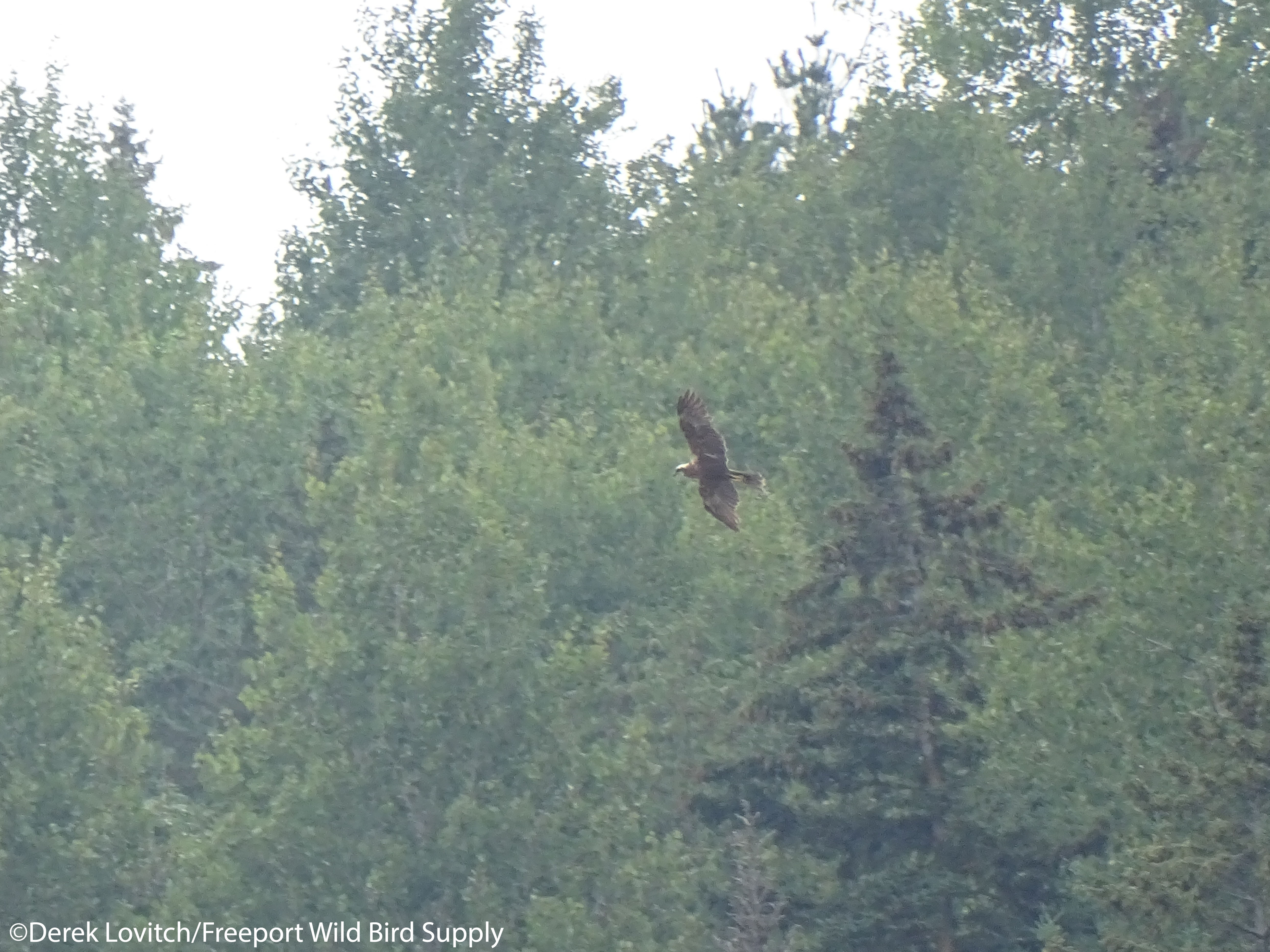
The amazing run of ultra-rare raptors in Maine continued with the all-too-short visit of a Eurasian (Western) Marsh Harrier last week. First found on North Haven on 8/25, it was then relocated the next day in Weskeag Marsh. I finished a tour that morning and raced eastward to South Thomaston. After waiting only 20 minutes (others had been waiting nearly 5 hours), it appeared and put on a show for about 30-45 minutes. After a reappearance the next morning, it has disappeared up birders up and down the East Coast are on high alert!
After returning from our summer vacation to New Brunswick and Prince Edward Island (see link)…
154 Snowy Egrets, 106 Green-winged Teal, etc, etc, Pine Point, Scarborough, 8/28.
1 continuing proposed TRICOLORED HERON X SNOWY EGRET X SNOWY EGRET hybrid, Eastern Road Trail, Scarborough Marsh, 8/28.
7 continuing WHITE IBIS in non-exhaustive search, Harbor Road, Wells, 8/30 (with Jeannette).
6 SANDHILL CRANES (two pairs with one juvenile each), Mayall Road, Gray/New Gloucester, 9/1.
SANDY POINT MORNING FLIGHT (FOY), 9/2: 482 total individuals including 2 DICKCISSELS and 20 species of warblers. Complete tally here.
And my shorebird high counts over these past ten days included some fine tallies but much reduced diversity, mostly due to recent heavy rains filling the best high-marsh salt pannes:
AMERICAN OYSTERCATCHER: 2 ad, Pine Point, Scarborough, 8/28.
Semipalmated Sandpiper: 1,000++, Weskeag Marsh, South Thomaston, 8/26. Honorary mention of 45-500 at Wharton Point on 8/27 – my highest tally here in years (with Saturday Morning Birdwalk group).
Short-billed Dowitcher: 24, Pine Point, 8/28.
Spotted Sandpiper: 2, Sebago Lake State Park, 8/25.
Solitary Sandpiper: 1, several locations this week.
Greater Yellowlegs: 15, Weskeag Marsh, South Thomaston, 8/26.
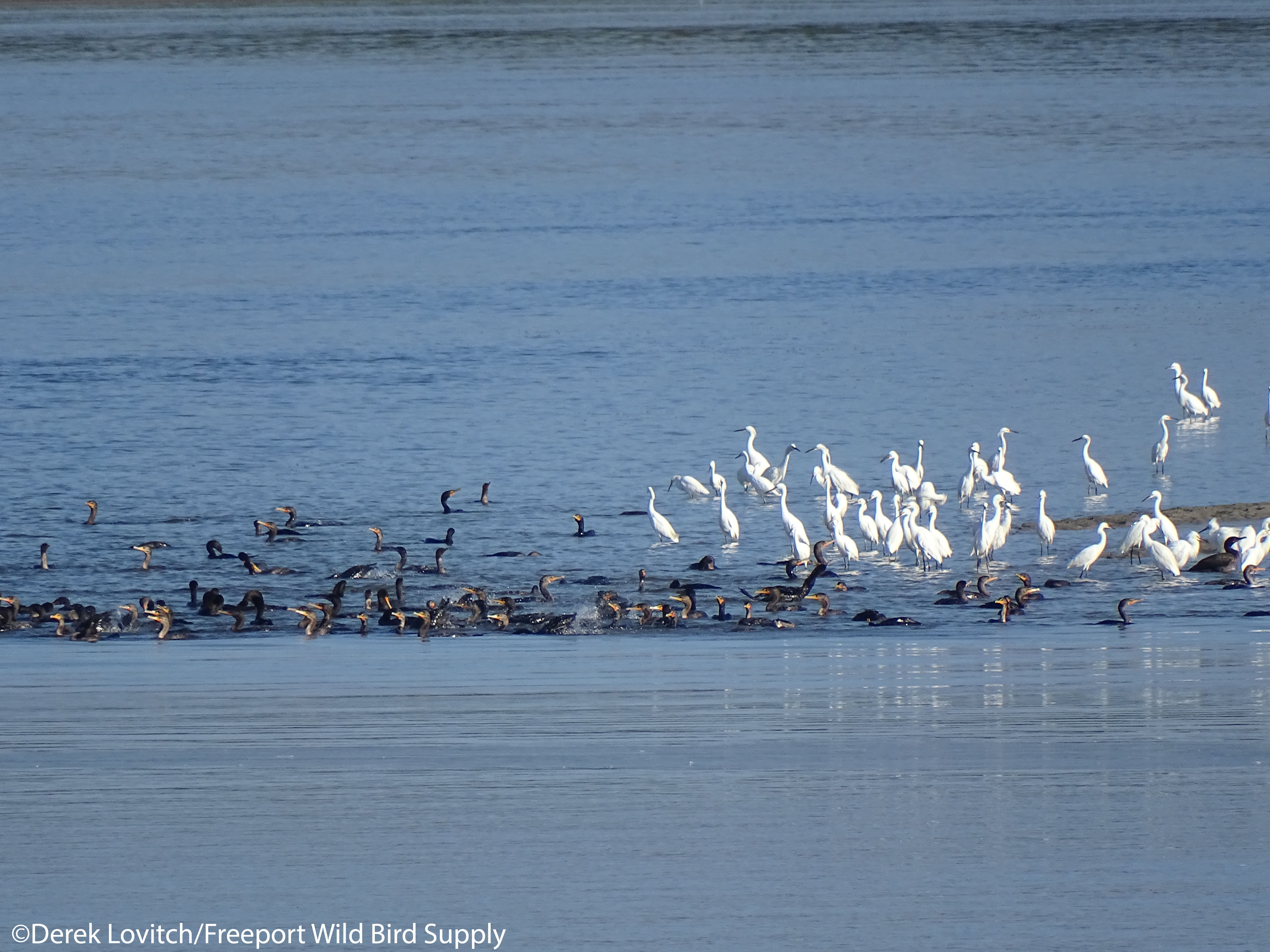
Just a very small part of an impressive feeding frenzy of Double-crested Cormorants and Snowy Egrets that were at Pine Point in Scarborough on the 25th.



 Maine Birding Field Notes